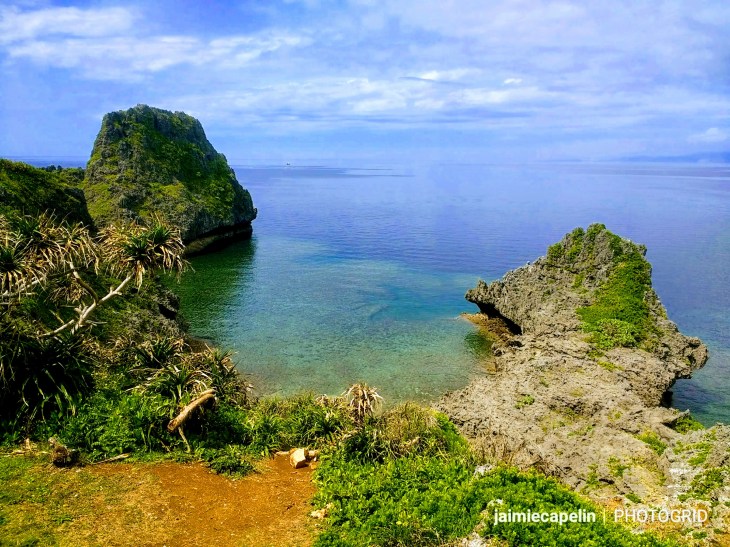
Gaijin – literally means ‘foreigner’, and contrary to popular belief, is not intended to be insulting.
After around 12 hours of being airborne, I touched down at Narita Airport and was instructed to go and wait in a small side room at passport control. Bleary eyed and dying for a shower, I observed a lot of exchanging of foreign words, and many different people asked me the same questions and scrutinized my passport, and after a long, anxious wait, I was presented with my Gaijin Card – my ticket to reside temporarily in Japan.
This is standard procedure if you are entering on a working holiday visa, and can take hours if it’s busy, so ensure that any onward travel arrangements are flexible.
Now, I’m a quiet country girl, and when I think of major cities, not only do I imagine noise and lights, polluting smells and dirtiness, and too many rowdy people, but I expect it to be EXPENSIVE! I was about to discover how delightfully wrong that preconception was. I met with Ash and Ellie in the airport, two snowsports instructors from England, who I’d eventually be travelling to Hakuba with for the winter season, and we made our way into Tokyo.
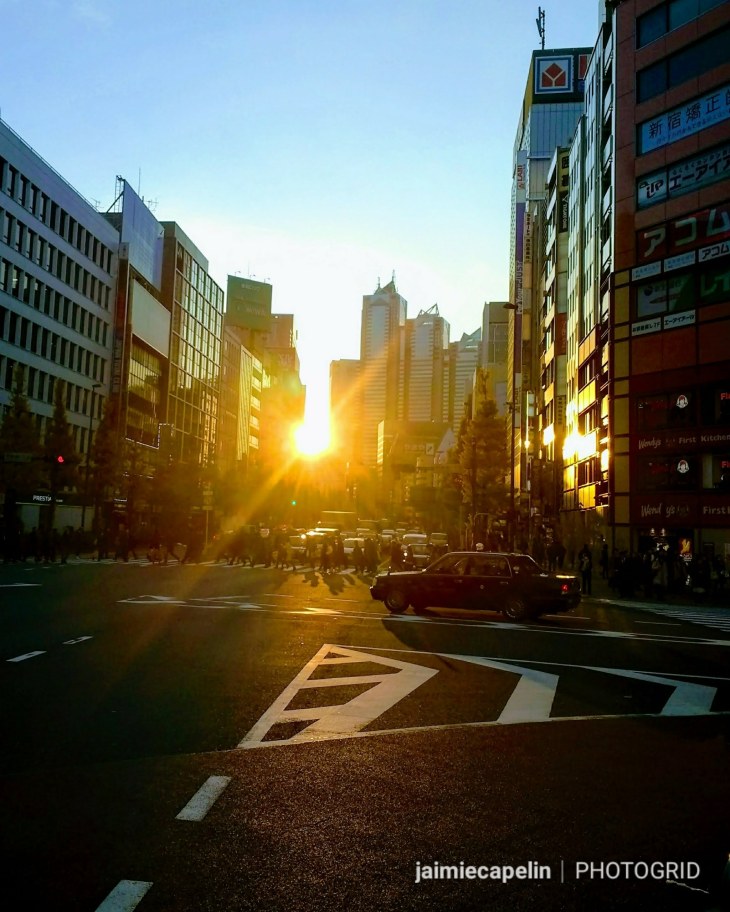
There are many budget-friendly options for transport to Tokyo from Narita, the bus to Shinjuku (right in the heart of Tokyo) generally being the cheapest. But because of the suburban location of our accommodation, it made sense for us to catch the Keisei train to Ueno. This took about an hour and a half, and the sun was shining hot on the backs of our heads, while we hugged our backpacks between our knees.
Like most major cities, Tokyo’s train network is pretty simple to get your head round. The main thing to watch out for when planning your journey is whether it is on the JR (Japan Rail), the metro, or another service, as they all use separate tickets. A typical Google Maps route will tell you what line each train operates on, but the most efficient thing to do is purchase a rail card, or ‘Passmo’, which can be topped up as often as necessary. These can be obtained from ticket machines at most stations, and will cover all train lines.
Our hotel was a short walk from Minami Senju Metro Station, only three stops from Ueno. I was lucky to be travelling with Ash who had recommended the particular hotel for its brilliant value for money. We stayed in twin tatami rooms; comprised of traditional Japanese futons laid out on woven tatami mat floors. The sound of the busy city traffic echoed up from the road several floors below as the sun streamed in through the open windows. We chose our beds and settled our belongings, freshening up after our long journey, and headed out into the afternoon city sun.
There are plenty of accommodation options to choose from in Tokyo, so it’s probably best to decide where you want to be based and go from there. But often, you will find a tatami room in a hotel or guest house cheaper than a hostel dorm. Shoes are usually left by the front door in most guest houses, but if not, they should never be worn on a tatami mat.
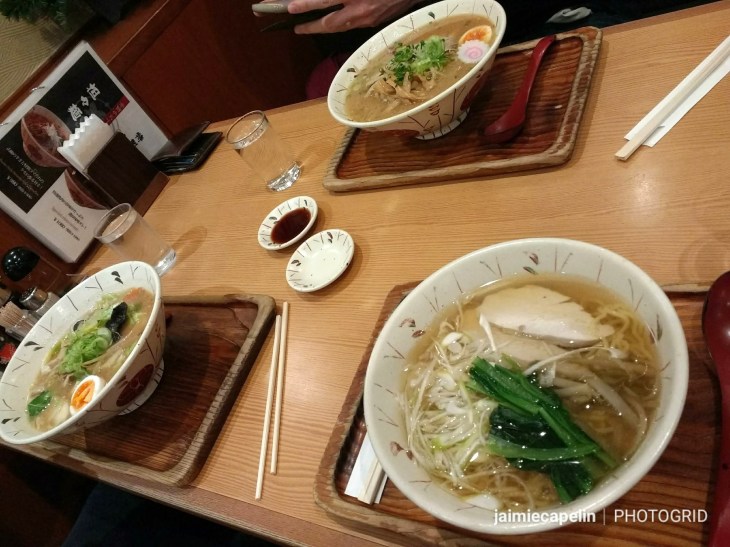
When you’re in an iconic place on a tight budget, you have to decide where you want your money to go. For instance, my budget was prioritized for food! Japanese cuisine is world renowned for being beautiful, weird and wonderfully tasty, so I wanted to try as many things as my purse would allow. Our first stop was Asukusa, to a little ramen restaurant near Nakamise shopping street. You can rarely go wrong with ramen, with different soup bases to choose from, most commonly miso, soy and salt, and many additional toppings, not to mention my favourite part – gyoza – the little fried pork dumplings, dipped in soy and vinegar. You can usually find ramen for a very reasonable price, and it makes for a good, hearty meal.
Full and satisfied, we followed Nakamise shopping street through the market, beneath the gate with enormous hanging lanterns. Colours and smells filled the air as we passed stand after stand, overflowing with unique and handcrafted goods, and bustling with people.
You can buy street food everywhere, and the more you look, the harder it is to choose. Sweets, mochi, cakes, balls of custard deep fried in pistachio batter, sweet bread, melon pan, seafood, sushi, steamed buns, you name it!
What is really noticeable about Tokyo, (and Japan in general) is how clean it is! Surprisingly, you don’t see any bins anywhere, so where does all the rubbish go!? Japanese culture is highly respectful, and everyone follows unspoken rules of general consideration to one another, carrying their trash home, keeping their voices and mobile phones quiet in public, and keeping their germs to themselves by wearing face masks.
~ Sensō-ji Temple ~
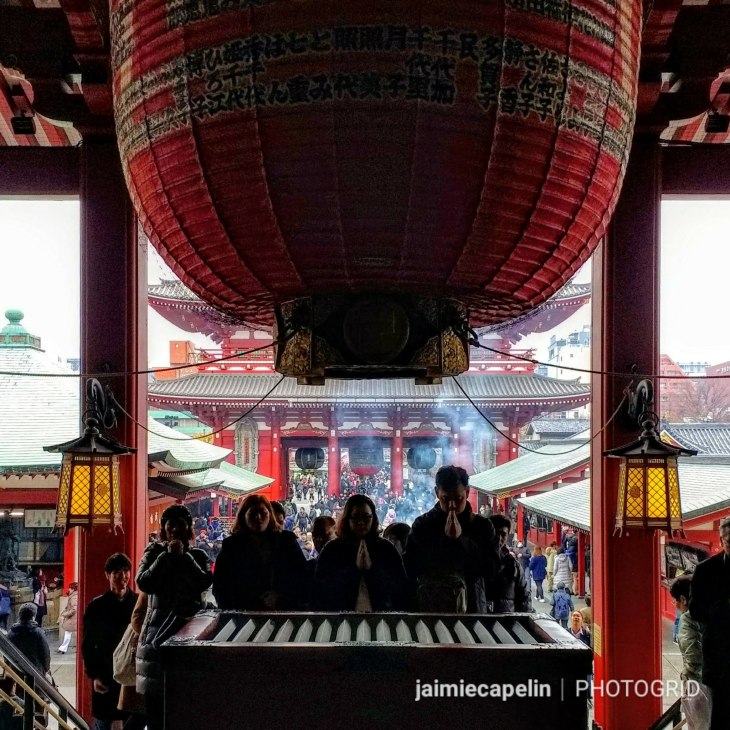
At the opposite end of the food market lies the impressive Sensō-ji Temple, brilliant red laced with gold; the five tiered Shinto pagoda standing adjacent to it like a backdrop out of an old samurai movie. Sensō-ji is Tokyo’s oldest and one of its most significant Buddhist temples. In a large basin at the front, groups of individuals burned incense, available for purchase from a nearby street vendor, wafting and bathing in the smoke as a cleansing ritual. We climbed the steps to the facade of the temple, where we joined a line of people taking it in turns to make an offering and pray to the gods.
~ Temple Etiquette ~
There are thousands of temples in Japan that can be accessed for free, but it is respectful to make an offering of small change (apparently the 5 yen coin is designed for this very purpose, and is worth less than an English penny!) The customary routine is to throw the coin into the offering box, bow twice, clap your hands twice, bow again deeply, and then pray. If there is a bell, ring it prior to this to awaken the gods. Of course, you don’t have to be a devout Buddhist to do this – plenty of tourists from other religions, or no religion at all, join in with the culture out of interest and respect.
Beyond the Sensō-ji Temple are beautiful gardens; little arched footbridges over ponds and streams teaming with colourful Koi. A multitude of different seasonal trees and plants line the path, ensuring a beautiful frame for the temple all year round.
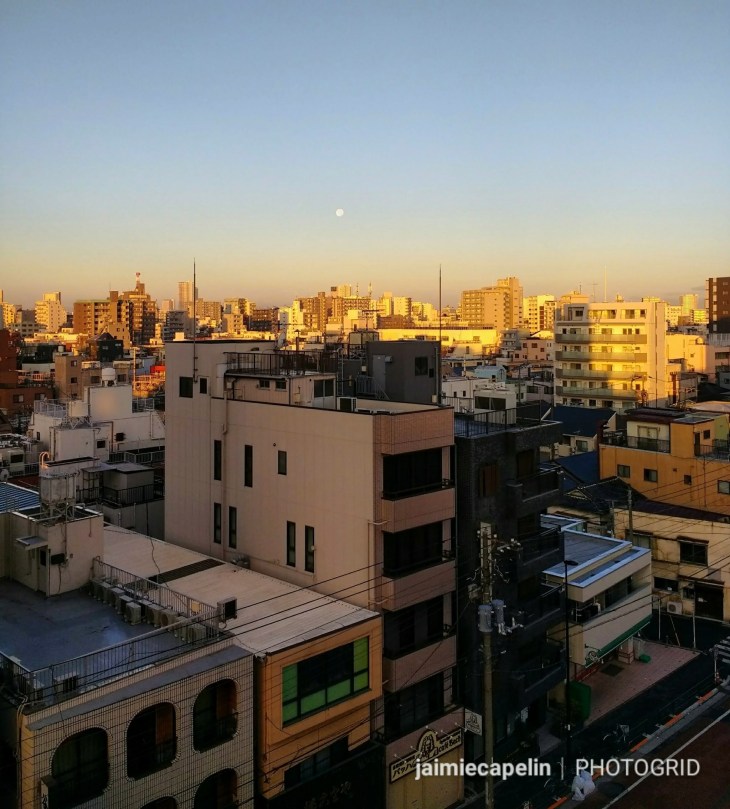
Wide awake at 5am, jet lag imminent, I saw the sun rise and the moon fade over the buildings outside the hotel window. Make your way through any town or city in Japan, and you are sure to find the streets dotted with vending machines. If you’ve forgotten your morning coffee, or need a quick refreshment, simply slot your spare change in and out pops a can of hot coffee, or tea, chocolate, cold juice, soft drinks, water, even soup! I trialled a hot can of coffee; very sweet and not very strong, but I wouldn’t knock it if nothing else was available!
Breakfast in Japan is much like dinner – rice-based, usually with fish, vegetables or salad – though most places will now offer bread and pastries. If you are self catering and want something more ‘breakfasty,’ you can buy cereal in most supermarkets.
After a cheeky cheat breakfast at McDonalds, Ash and I made our way to Ueno. Crossing the road outside Ueno station, we walked along the side streets, where vendors were setting up hundreds of market stalls all along the already buzzing shop fronts.
There were fish stalls, fruit stalls, candy, bags of dried goods and nuts, souvenirs, clothes, and much more. Arcades with loud tunes coming out of them, where grown adults sat in endless rows inside, gambling in a game called ‘Pachinko:’ little silver balls spinning round in circular basins, like a strange, up-right pinball, making an awful, clattering racket. Every other shop is a snowsports shop, or a restaurant with rich aromas wafting out. The market vendors all welcome you in their native tongue as you pass by, trying to tempt you in with their array of exotic goods.
~ Ueno Park ~
Back onto the main road, Ash led the way up some large stone steps, through a canopied courtyard, and into peaceful Ueno Park, with shrines nestled between the trees. Wandering past a museum that was showcasing some ancient British art, (and drawing quite a crowd), we climbed up a mound that had become a sacred resting place, covered in colourful trees and swarming with chirrupping birds. Out in the central area of Ueno Park, people strolled around a big peaceful water fountain, while a man played a cello beautifully, attracting a small crowd.
~ Ueno Toshogu Shrine ~
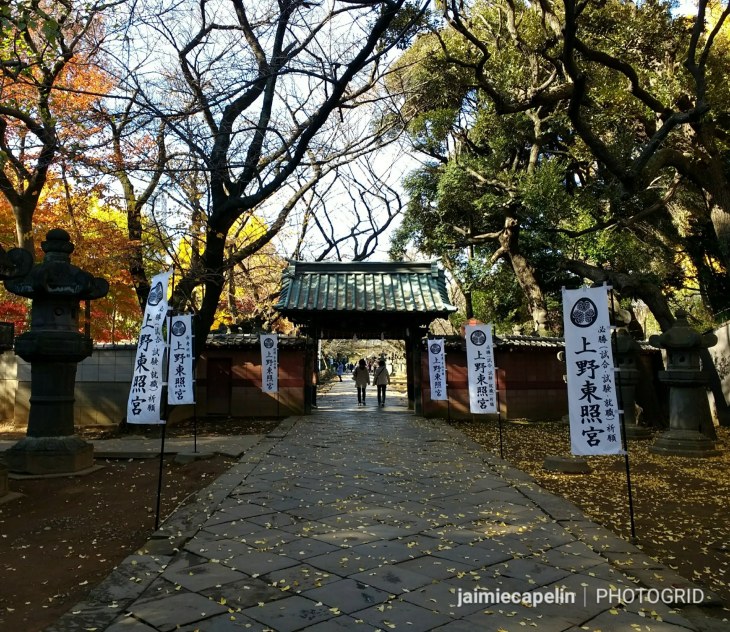
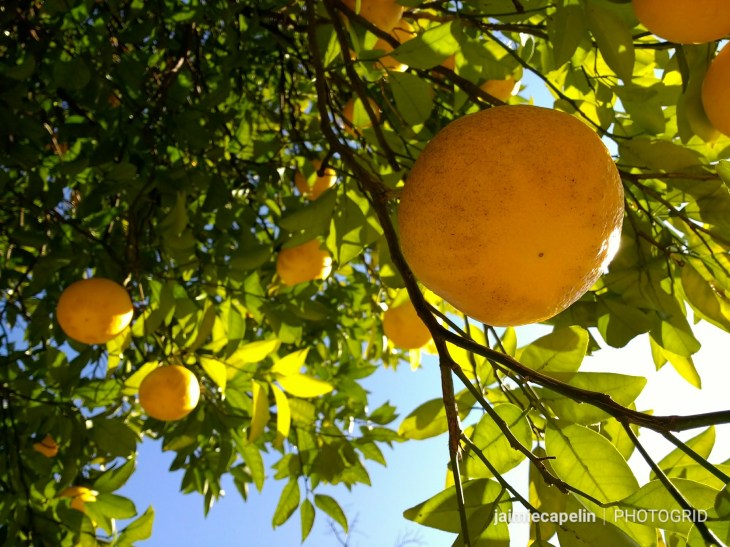
Bowing beneath a wooden torii gate, we were led down a pathway lined with hand-carved stone pillars, towards the flame of Hiroshima & Nagasaki – a haunting living-memory of the 1945 atomic bombs dropped on Japan by the US forces – preserved in a monument in the beautiful precinct of Ueno Toshogu Shrine. Yuzu trees surround the precinct, bursting with their ripening, citrus fruit. The temple itself was stunning in the midmorning, winter sun, with a solid gold facade, decorated with intricately ornate dragons, carved uniquely and coloured with shining sapphire blue and violets.
~ The HUB ~
Happy Hour was approaching fast, and our group was growing as more seasonal workers arrived from England. We met Jamie, a snowsports instructor working with Ash and Ellie for his first season in Japan, and we made our way to Akihabara to meet Dave and Clare, who also work with Ash and the others… (and who I knew from my previous snow seasons in New Zealand – small world!)
There are plenty of Japanese and multi-cultural bars all over Tokyo, but if you’re new to the city and looking for a cheap bevvy and fellow English speakers, you’re never very far from a HUB. This is a British-style pub, where quite often Japanese people go for the opportunity to practise their English with real Gaijins! HUBS have a typical pub menu, for very reasonable prices, and often, their Happy Hour is extended.
We sat on the red leather-bound bar seats, surrounded by classic stained-glass window booths, and sticky pub tables, listening to generic British rock music. A man sat nearby, smoking a cigar, giving it that real dirty local’s-pub-in-the-90s feel! We commenced our drinking of Happy Hour cocktails, confidence growing with each one, making the next one easier to order in broken Japanese!
~ Yakiniku in Shinjuku ~
With quite an appetite growing, it was time to soak up some of the booze with some delicious, Japanese Yakiniku. Taking our shoes off before we sat down, (common dining etiquette in traditional restaurants), the waitress fired up the flame grill sunk into the centre of our table, and we began to choose platters of meat off the menu.
‘Yaki’ means grilled, and ‘niku’ means meat. You simply order your cuts raw, and cook them yourself at your table. This is a more expensive dining experience, as it is usually a flat rate, where you are given a time limit. But if you have a big appetite, you definitely get more than your money’s worth, as it’s all-you-can-eat and all-you-can-drink. It is ideal for groups, for instance, not everyone in our group knew each other yet, so it made a good introduction for bonding!
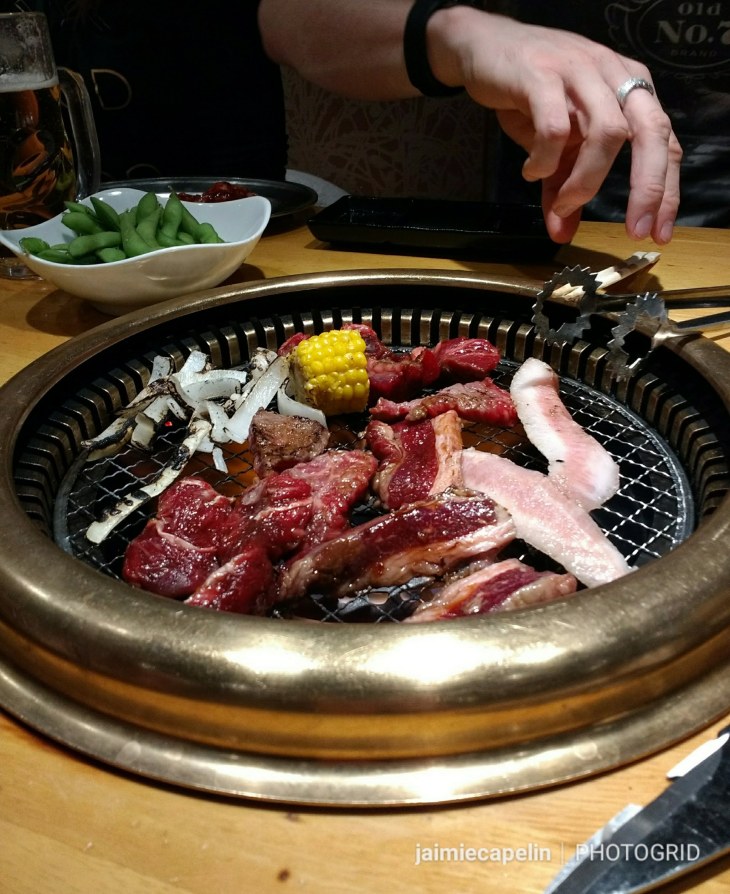
I started with cow tongue! Lucky I’d had a couple of drinks, or I might have over-thought it, and wouldn’t be able to tell you just how tender and tasty it was! Many steaks and rashers and various vegetables were brought out, along with endless drink top-ups, until our two-hours were up. Stuffed and merry, and well-bonded, we staggered starry-eyed through the city-lights of down-town Tokyo.
~ Seven Storeys of Snow Stuff ~
The morning after the night before… In down-town Tokyo, you tend to find entire streets dedicated to a certain product – for example, Ochanomizu Street near Akihabara, is lined specifically with musical instrument shops, and is any musician’s dream. We were, of course, heading into a ski season, therefore, the snowsports district was our destination! Taking a sobering walk from Ogawamachi Station, sipping on ‘tea lattes’ from a coffee shop in passing, and taking in the surroundings with sore heads, we made our way to Yasukunidori Street – shop after shop selling everything you need for winter sports. We browsed until it got dark, piling into tiny elevators that took us to every floor in these compact super stores. I found my snowboard jacket on the seventh floor of a shop called Victoria, and I don’t think any of us left empty-handed.
~ Electric Dreams in Akihabara ~
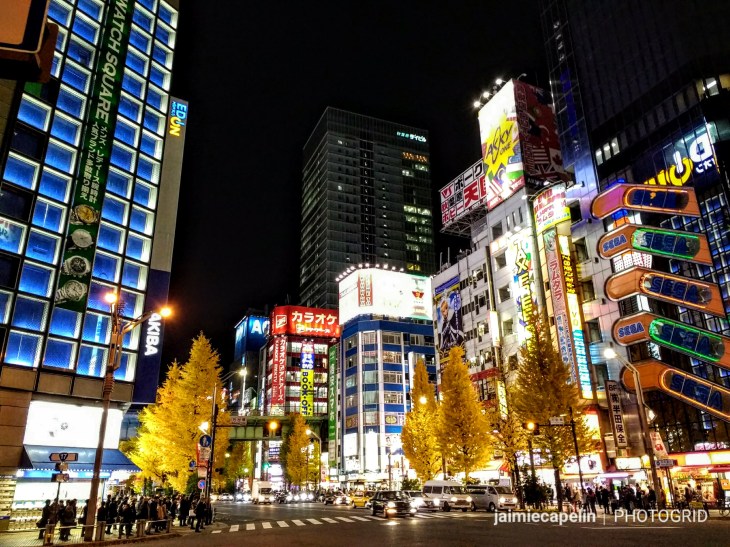 Known for its abundance of electrical, gaming and tech shops, this is the district for nerds, (and I say that fondly!) Enormous TV screens flicker and shout, animé characters flit on and off screen, their Japanese cartoon voices yelling happily. Theme tunes compete with one another, while music plays out from somewhere in the sky, and another tower block of stores is playing an advertisement loudly over it’s tannoy. It’s noisy; it’s bright; it’s a little bit overwhelming, but it’s great, and this is all before even entering any of the shops…
Crowds of people had flocked to a corner near a train station – business men and women of all ages, standing still in a small radius, all staring intently at their phones. I glimpsed their screens as I passed, wondering what they were doing, and realised they were all playing ‘Pokémon Go’, (a mobile gaming app, for those that don’t know, that uses location to find cute little Japanese monsters, “catch ’em all” and battle them against each other.)
Inside the stores, each floor again is dedicated to something specific, be it consoles by brand; every Nintendo game that ever existed, in order of production; trading cards, alphabetized by aisle; collector’s vinyl models of video games characters, etc. This really is the fanatic’s dream. Often, on the top floors, you’ll find the ‘Adult section’… Animé pornography is a thing – especially in Japan where real porn is EXTREMELY taboo – and there are trading card games, often played by men of a certain age, which depict provocative animé girls. These cards are displayed wall to wall, but most amusingly, due to Japanese modesty, it is someone’s job to go around the entire shop floor and strategically place little stickers over certain parts of each individual card! What a job!
~ Rush hour on the Tokyo Metro ~
Making our way back towards the metro station, we passed busy street food stalls, and interesting cafés such as owl and cat cafés. There were people everywhere, crowding around vendors for their supper; lining up for fresh Takoyaki (grilled octopus, rolled swiftly and skillfully into floury, seasoned balls with a pair of pointy metal sticks); and tucking into hot custard filled puff pastries, fresh from the baker. Smells filled the air, tantilising our senses, and by the time we got into the busy metro station, we’d been tempted enough to buy some cream-filled buns from a street stand. Delicious!
The train arrived. Like a tin can jam packed full of sardines. No one seemed to get off, but the entire platform of people was somehow squeezing on. Sometimes at rush hour, the station masters push the crowds of people onto the trains to fit as many as possible before the strictly timed doors close. I don’t remember how I claimed my place slap bang in the middle of the carriage, clinging on to a single hanging handle above me, with my feet barely touching the ground as bodies pressed against me from every direction. The crowd moved with the train like seaweed with the current, all joined together. Nobody talks on the train, and mobile phones are supposed to be kept off, or silent – talking on your phone on Japanese public transport is considered very rude.
~ Konbini Dinners ~
That evening, we were all too tired to think about spending money on going out for dinner, or cooking at the guest house, and so I had my first experience of a ‘konbini dinner’. Konbini is a word the Japanese have coined, meaning ‘convenience store’. We walked in the shop to a chorus of “Irasshaimase” (welcome) from all the staff, and was overwhelmed by the selection of products all sparkling in their strange, colourful packaging. Shelves of perfectly spherical cakes, and bread filled with sweet red bean paste, buns, pastries, and many things I couldn’t identify! I bought a box of gyoza, and a big bottle of Pocari Sweat – an electrolyte drink – and took it back to the hotel room for an early night.
There are three main convenience stores in Japan – 7eleven, Lawson’s, and Family Mart, and you will pretty much find everything in them: toiletries, first aid, stationery, hot & cold drinks, alcohol, snacks, groceries, even a selection of ready-meals that they will heat up for you instantly behind the counter! Not only do they provide microwaves, but there is usually use of a hot water earn for filling up your Cup-Noodles, an international cash machine, a scanner/printer, a recycling station, toilets, and pretty reliable wifi. These ‘konbinis’ are everywhere. In the city you might find two or three in a single street, but in rural Japan they are usually placed somewhere along the main road, away from residential areas.
~ Meiji Jingu Shrine ~
The morning presented blue skies and warm winter sun. Ellie, Dave and Clare left the city for the mountains, so Ash prepared Jamie and I for a long day of touristing and sightseeing. We entered the Meiji Jingu Shrine park at one of the north entrances, from Minami Shinjuku, walking beneath the first impressive gate onto a wooded, gravel path. The gates at every entrance, and throughout the park, are 1500 years old, and protect the shrine from evil spirits, and many people bow as they pass under them, often turning to bow again once through. The park is enormous and filled with a network of winding footpaths through woodland, fairytale streams, and gardens. In the centre of the park is the ancient Meiji Jingu Shinto Shrine.
‘Shinto’ is Japan’s oldest religion, and most traditional. It is mostly a practice of rituals, connecting present day with past ancestors, and is more of a collection of ancient Japanese beliefs than an organised religion. Buddhism is probably the most commonly practised religion in Japan, and though they are totally separate, the two religions stand side by side, with a lot of people practising both.
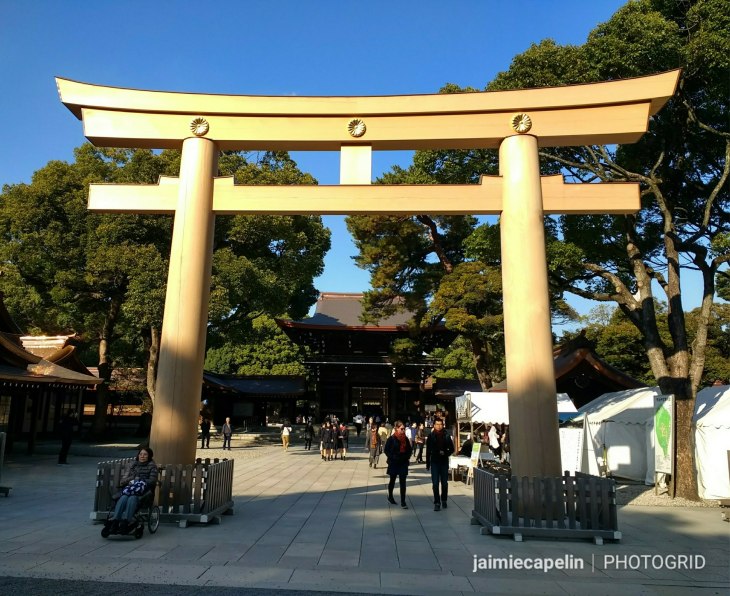
Passing through an open courtyard, we approached the purification fountain where you cleanse before entering the shrine. The water trickles from the top into a basin, equipped with wooden ladels, which you use to wash your left, then right hand. Then use the ladel to pour a little water into your cupped hand, and wash out your mouth. Rinse the ladel before replacing it.
Two perfectly round trees stand side by side outside the shrine, decorated with symbols of thunder and rain, which represent the wish for good seasons. The birds in the trees all around the shrine park create a serene and peaceful atmosphere, despite the constant influx of tourists, worshippers, and daily processions for wedding ceremonies.
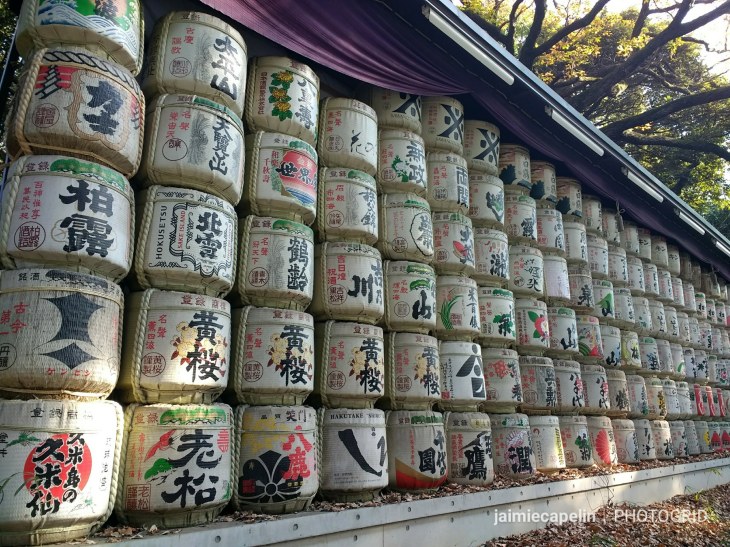
On the outer reaches of the park are two walls either side of the footpath – one is built of thousands of sake barrels; the other wines and whiskys, all donated to the emperor from around the world.
~ Harajuku ~
Exiting the Meiji Jingu park at the east gate, Ash introduced us to the Harajuku district – famous worldwide for its fashion. Harajuku girls strut the pavement like a catwalk, wearing anything ‘Kawai’ (cute), from novelty school uniforms, to animal ears and tails. Colour is key in Harajuku fashion, anything bright and sparkly, with enormous platforms and blue or pink hair. I found the style quite similar to cyber-punk, and wished I’d donned my best Gwen Stefani outfit, instead of going for the totally unglamorous ‘backpacker look!’
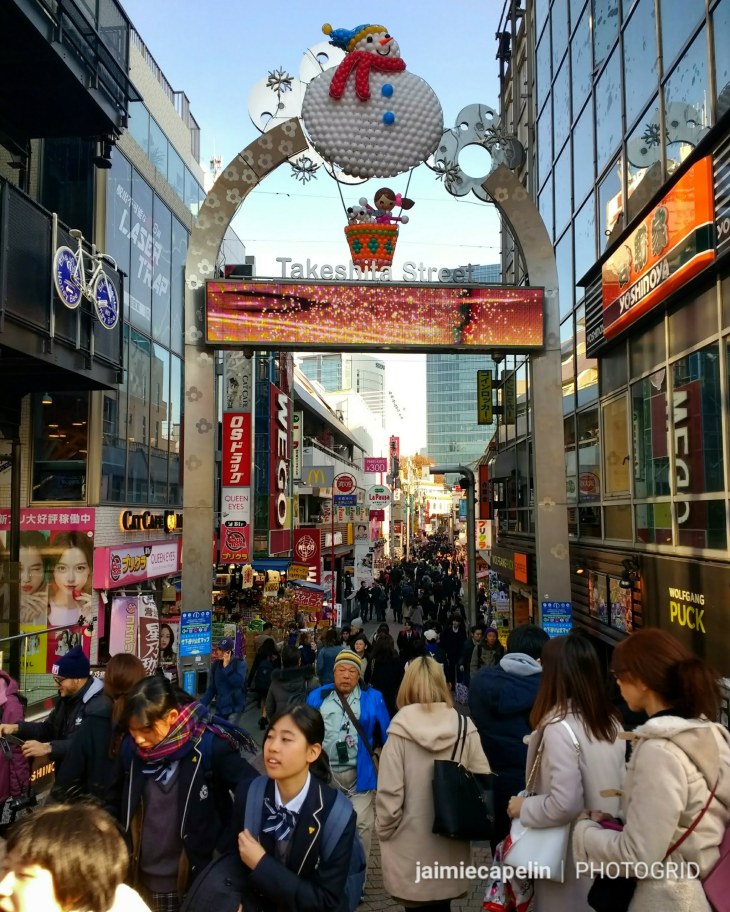
Takeshita Street is the hub of Harajuku – a narrow back street, heaving with busy clothes shops, shoe shops, and popular crepe shops! We stopped for a crepe, with strawberries, banana and cream, and marvelled at all the colour and hype happening around us. A group of girls were squealing excitedly as four identically dressed boys appeared from a building, and they had their selfies with them, while an older Western man stood on another corner, looking like a Rolling Stones extra, having his photo taken with more excited Japanese girls.
~ Shibuya Crossing ~
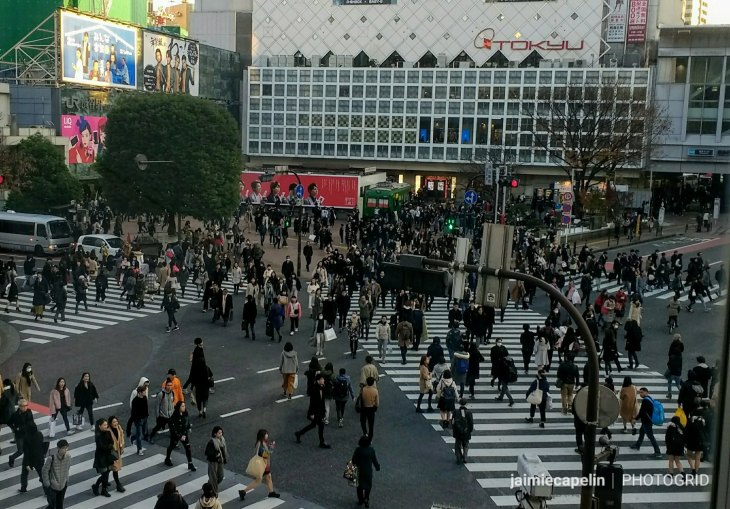
When in Shibuya, you simply must witness the crazy Shibuya Crossing, rumoured to be the world’s busiest intersection. At 2pm on a Thursday, it didn’t quite match that expectation, but was still impressive, and actually, I don’t think I’d enjoy being there at rush hour! If you don’t mind emersing yourself in a dense crowd of people just to cross the road, it’s actually quite an experience! The light turns green and thousands of people disperse across the zebra crossings in all drections like dandelion seeds.
If you’d prefer to watch from a safe distance, there is a Starbucks in the building adjacent to the crossing, which is positioned to look directly down upon it, though you will probably have to fight for a window seat.
We went for late lunch in a little restaurant Ash found, tucked secretly up on a tiny nook of a building, as most good restaurants are. Ginger fried pork and rice, and katsu chicken, served with a raw egg filled our stomachs, before we headed to Shinjuku to book our bus tickets out of town.
~ Godzilla in Shinjuku ~
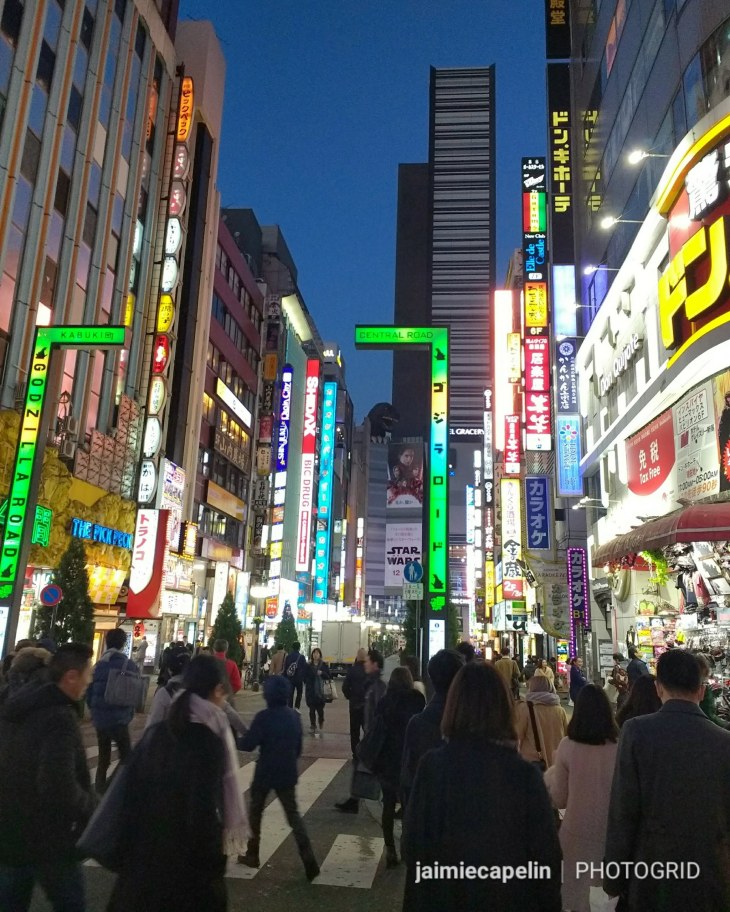
Walking from Shinjuku station, you cannot miss Godzilla, roaring down from the top of the Toho building. This is the home of the Godzilla franchise, and the studio in which it was produced, therefore it’s not surprising that the enormous, 40ft high monster guards his home, roaring occassionally into the city.
~ Pokémon Store ~
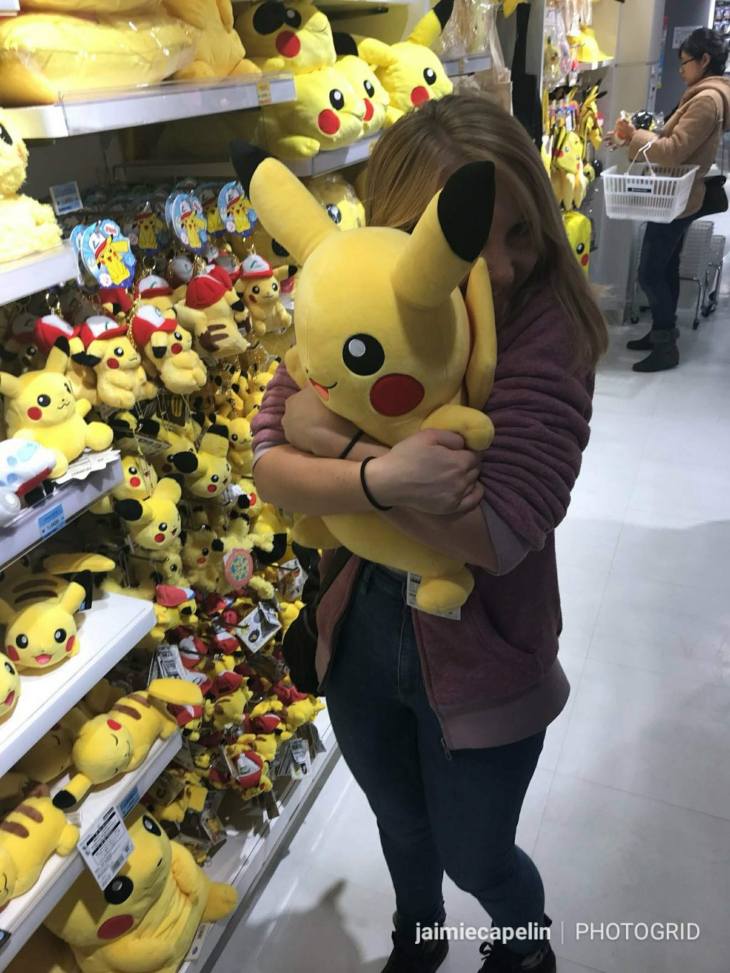
The Sunshine Building in Ikebukuro has a waterfall-wall centre-piece, surrounded by a mezzanine viewing platform, where business people sit and eat their lunch. The Pokémon Store is on the second floor, and is every 10 year old’s dream (and twenty-something year olds!) Being one of Japan’s biggest and most well-known childhood franchises, it has to be done! Plush Pikachus as far as the eye can see; key rings; T-Shirts; shoes (Pikashoes!) all lighting up the shelves with their bright colours. Ash and I cuddled every toy in the shop (completely revelling in the fact that I was watching a real life Ash choosing his pokémon,) before committing to purchase JUST ONE!
~ Tokyo Heights ~
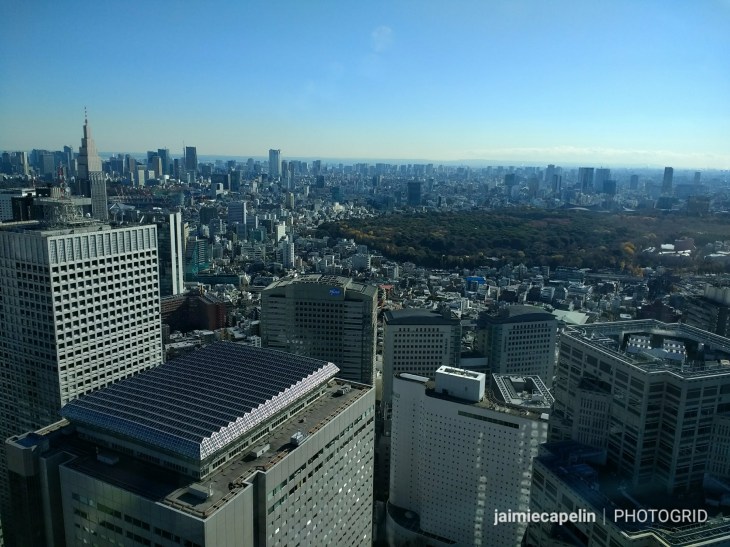
There are many famous landmarks in Tokyo from which you can take in the views of the city lights from above, two of the most iconic being the Sky Tree, and the Tokyo Tower. However, if you don’t fancy paying for the privilege of going up a famous landmark, the Tokyo Metropolitan Government Building offers 360 degree views from the 48th floor for free! The building has an East and West tower, and you can choose which side to go up, or do both!
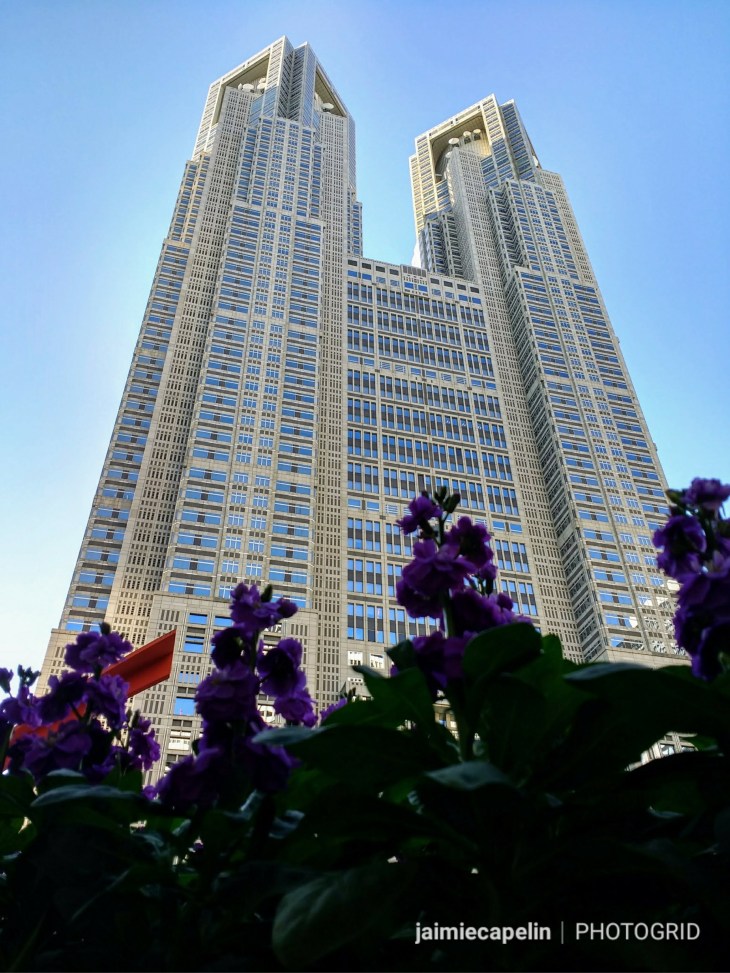
The queue for the elevator was empty, so the steward let us straight in, and up we went to the 48th floor. A huge hall, with souvenir shops in the centre, and panoramic windows all the way around the edges stood before us. The view was breath taking, and my sudden jelly legs were well worth it! Silver skyscrapers poured over the landscape for miles, with vast, green parks and gardens in between, the low, winter sun glinting off of everything it touched. Mount Fuji sat in the distant South, a lonely plump cloud sitting neatly on top. We absorbed the sights and took a hundred photos before heading back down to Earth, but not without stamping my journal with the ink stamp provided in the tower…
Most landmarks and attractions in Japan provide a unique little stamp and ink pad for tourists to put in their journals – if in doubt, look at a nearby train station or tourist information.
~ Shinjuku Bus Terminal ~
Tokyo’s main bus station is, weirdly, on top of a building, so you are required to find the elevator at street level, which I would never have looked for if Ash wasn’t there! It is located at Shinjuku Station South, (signs can be followed from inside the station). Buying tickets is relatively easy, using the multi-lingual self-service machines, and there is a large indoor waiting room, with facilities and vending machines for long waits. Finding our stop, we boarded the 3pm bus to Hakuba, and followed the setting sun into the mountains of Nagano for winter, where I’d part ways with the others, and begin my own seasonal-working adventure in Hakuba Goryu.