This blog is best viewed in Desktop format.
Mount Kilimanjaro (for the fact lovers):
- LOCATION: Tanzania, Africa
- ELEVATION: 5,895m
- MOUNTAIN TYPE: Stratovolcano
- VOLCANIC ACTIVITY: Dormant
- AGE: 3 million years
- LAST ERUPTION: 150,000 – 200,000 years ago
- VOLCANIC CONES: Shira, Kibo, Mawenzi
- SUMMIT: Uhuru Peak (Kibo Cone)
- FIRST ASCENT: 6 October 1889 by Hans Meyer & Ludwig Purtscheller
Welcome to Tanzania
It was the evening of my Birthday, and the plane touched down blowing brown dust clouds around Kilimanjaro International Airport. Stepping off the plane onto the tarmac, I followed my group across the runway, through the doors into the little airport.
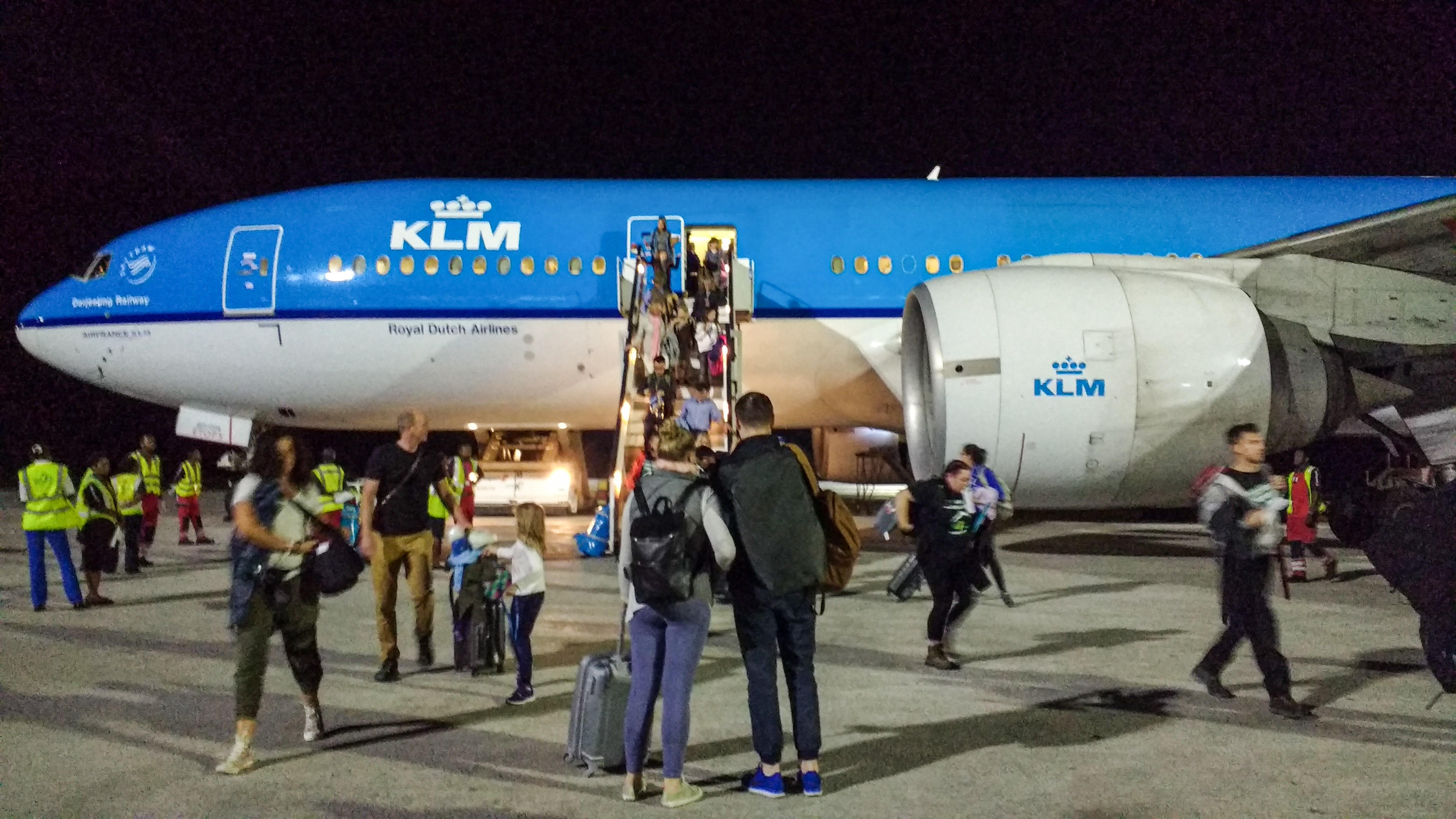
It had been a busy year, training and fundraising for my local charity, The Hampshire & Isle of Wight Air Ambulance, for which I was climbing Mount Kilimanjaro. The initial part of the challenge; the part I found most difficult (talking myself up, running public events, being ‘outgoing,’ persuading people to donate their money) was complete, and it was time for the part I was most excited about – climbing the mountain! I was part of a group of 23 British strangers, including the Air Ambulance representatives, Ian, Sophie and Tim the medic who were leading the event, but we had all become friends through months of training exercises and fundraising events. Now we’d finally arrived in Africa, and warmth greeted us beneath the night sky as we were transferred to our base at the Weru Weru River Lodge.
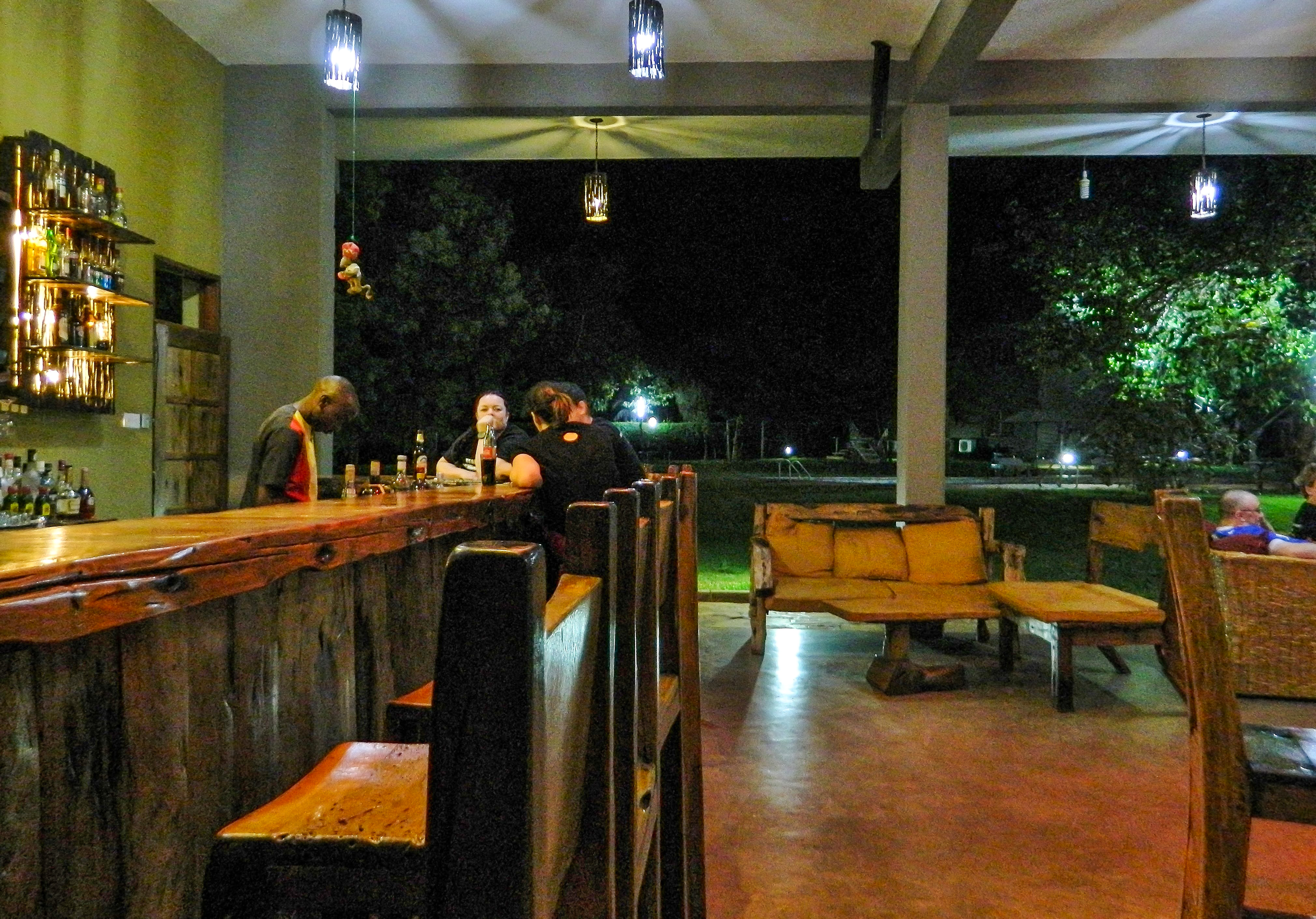
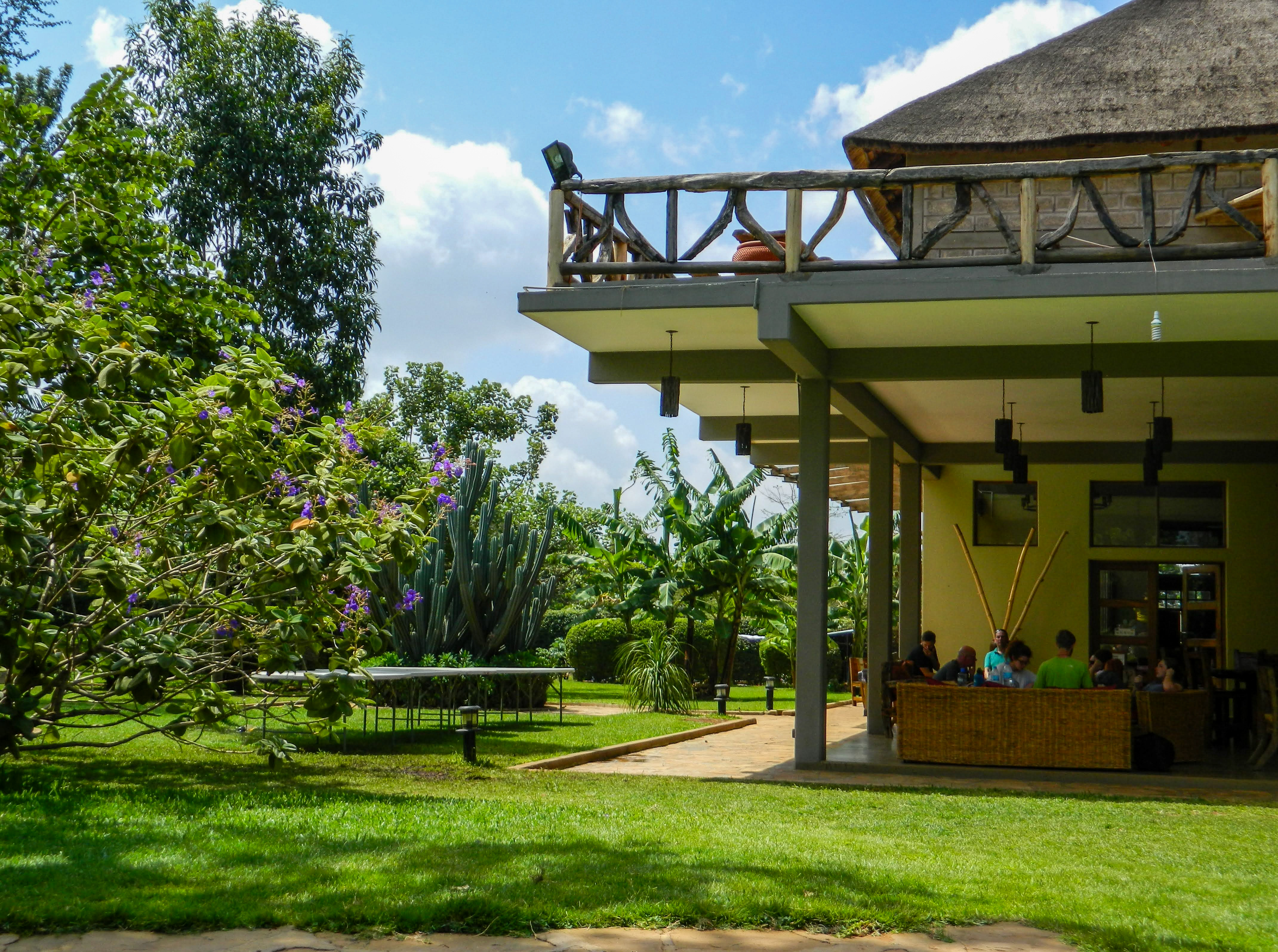
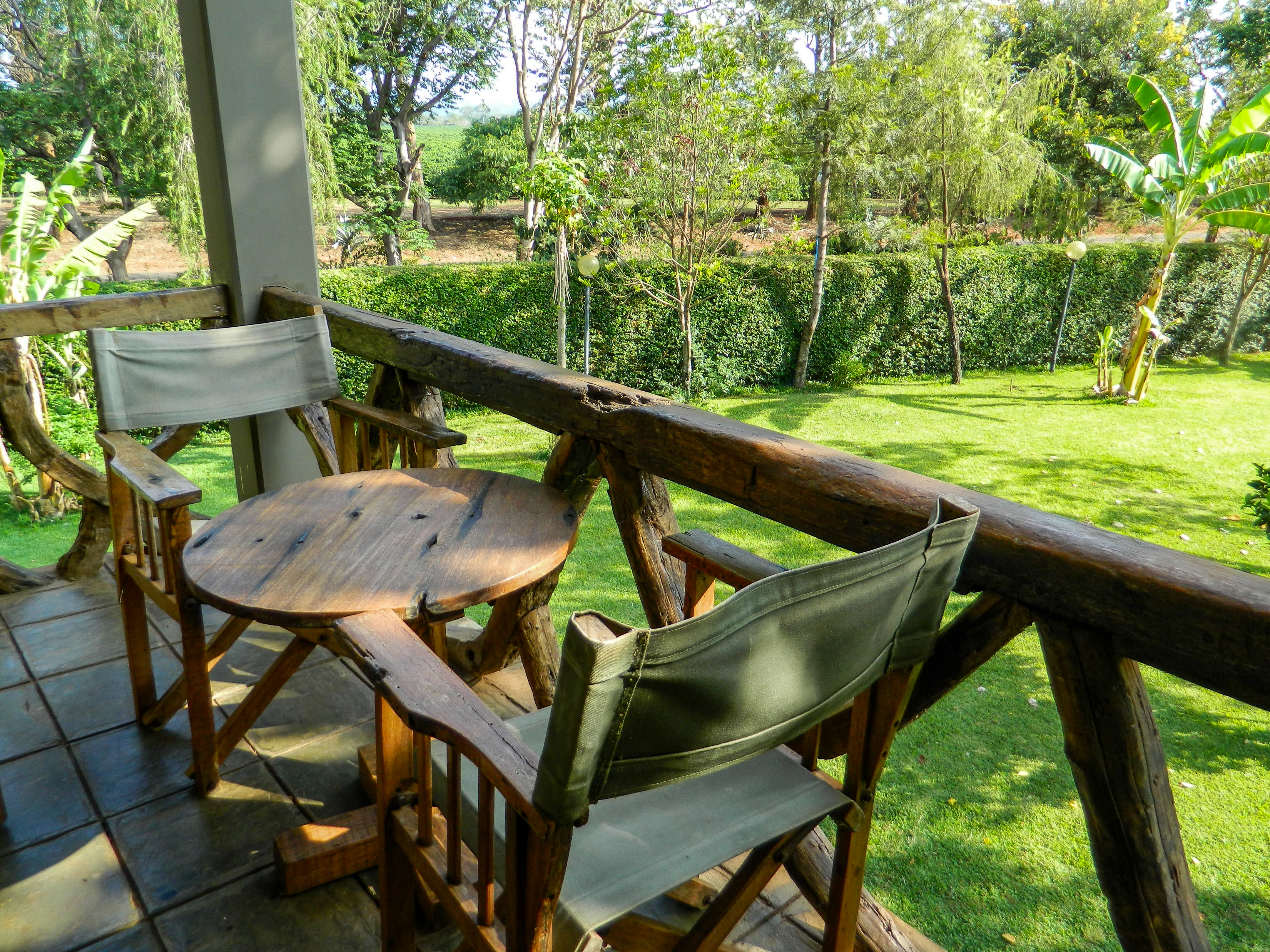
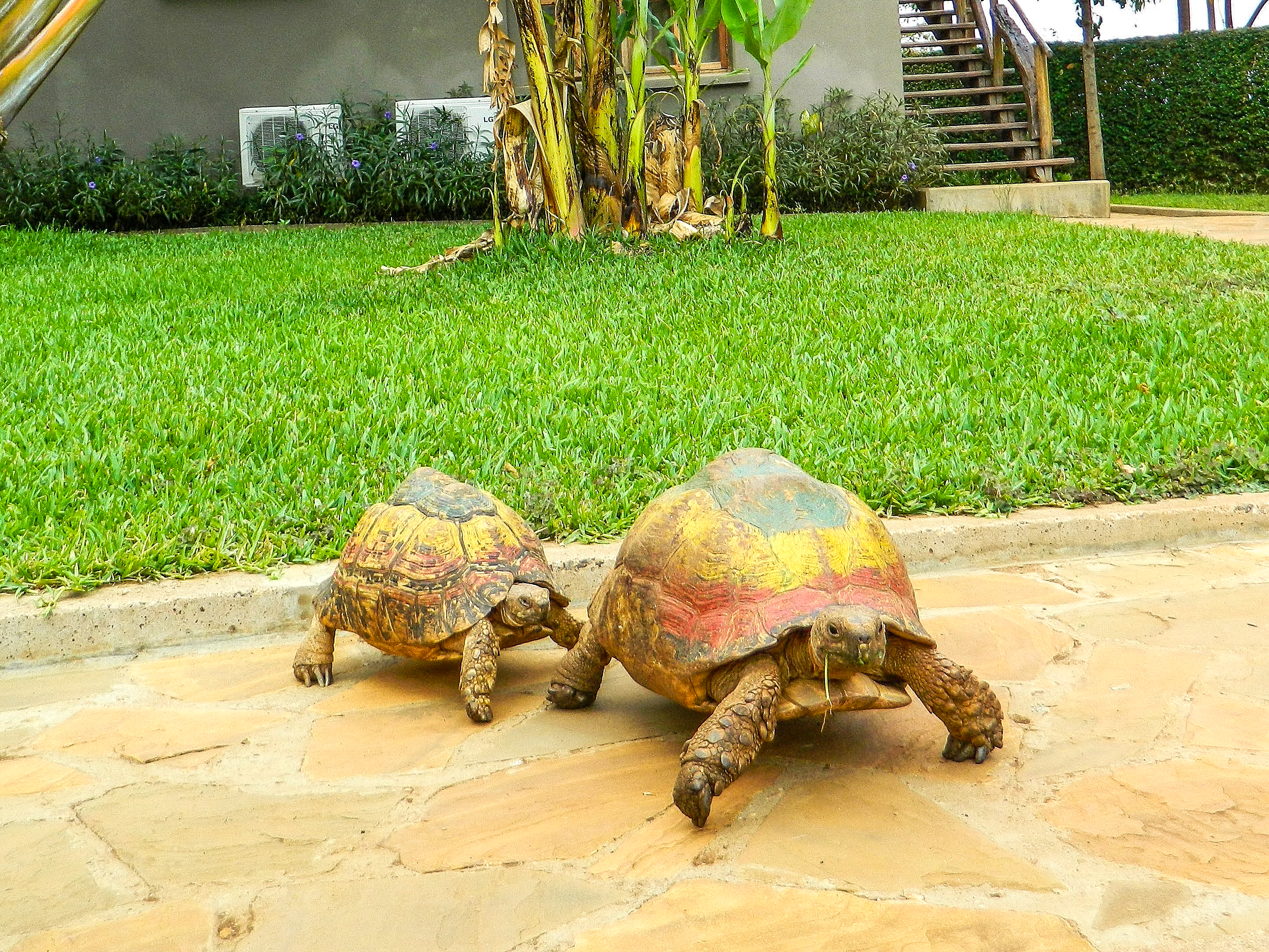
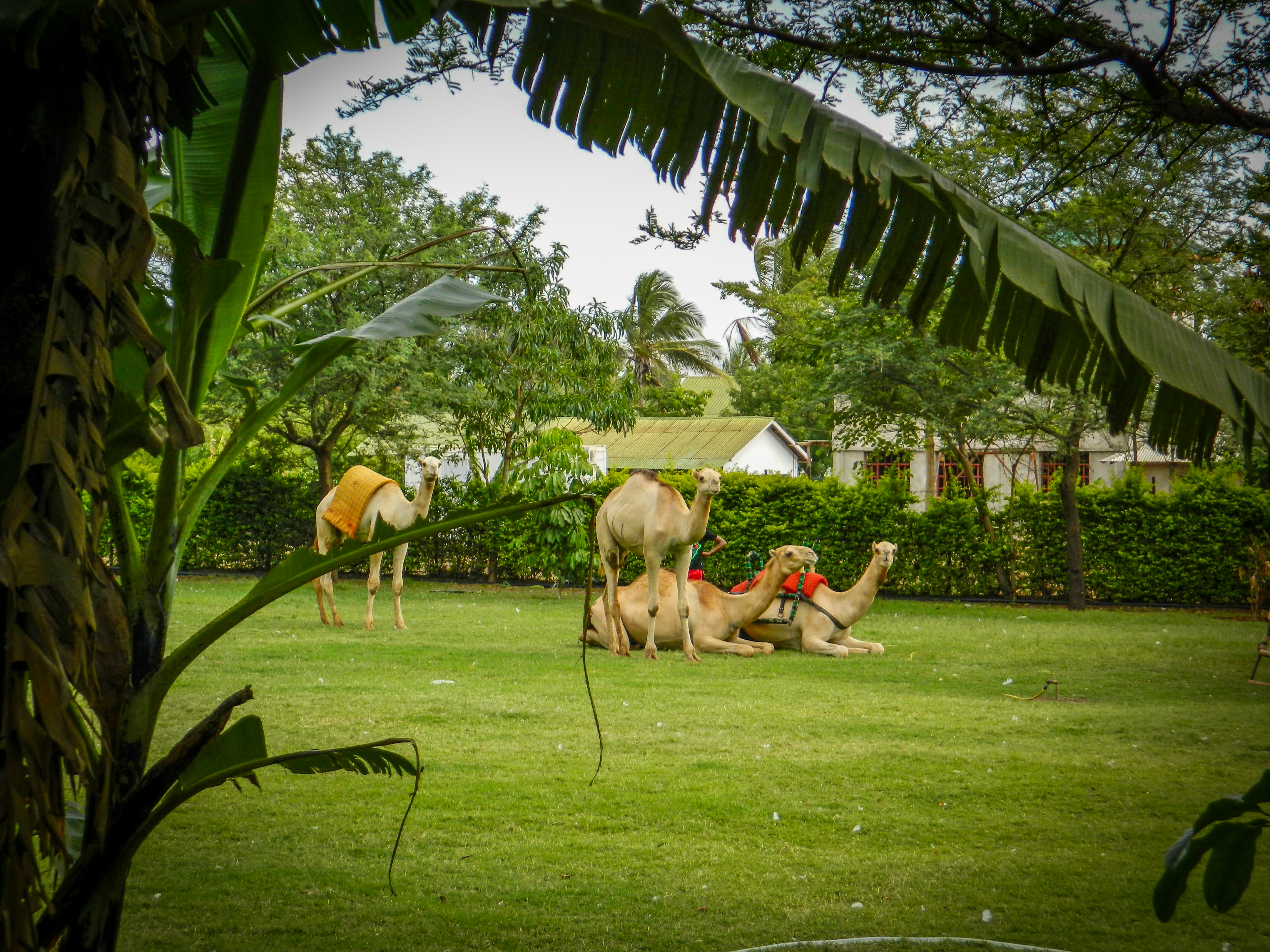
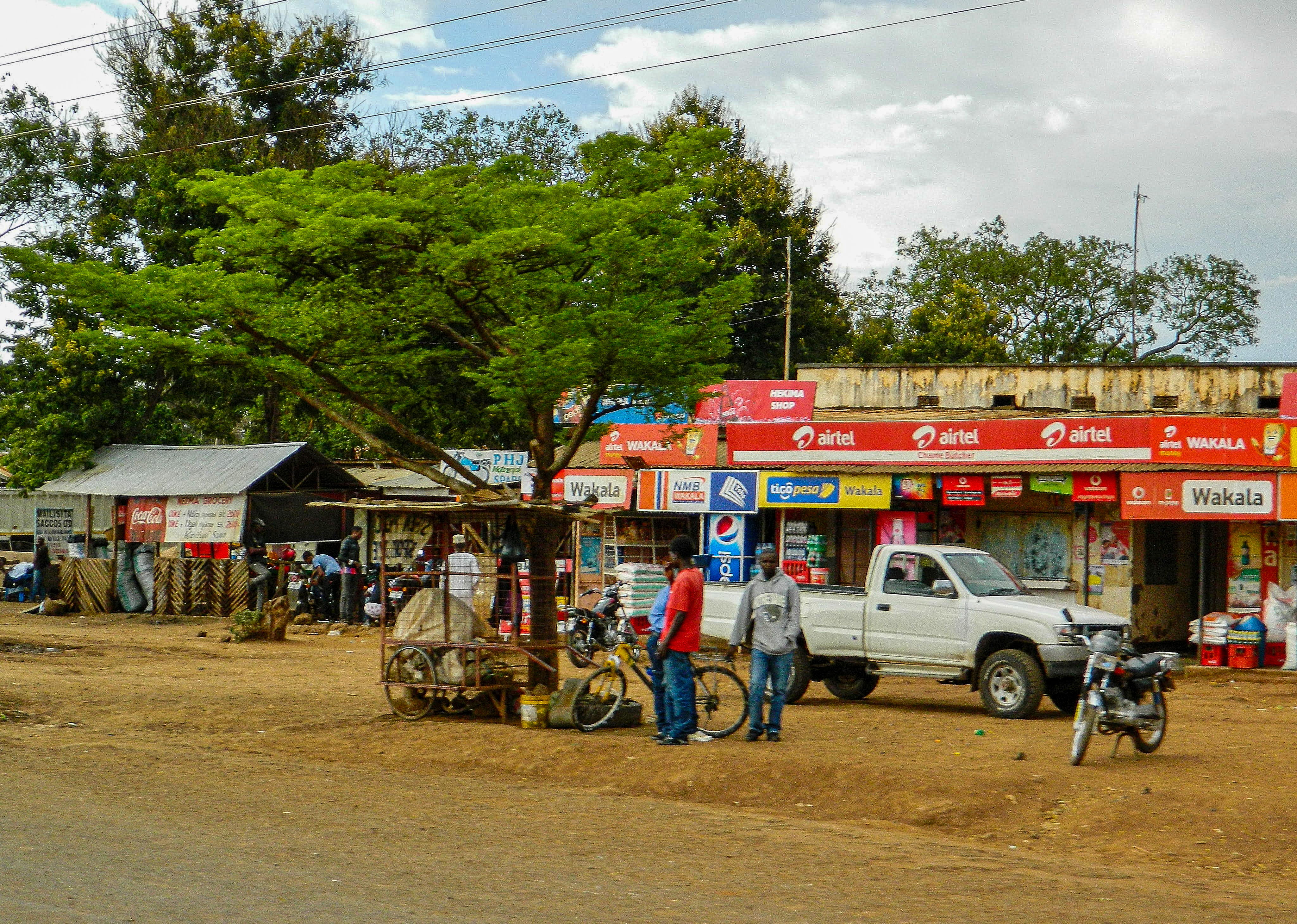
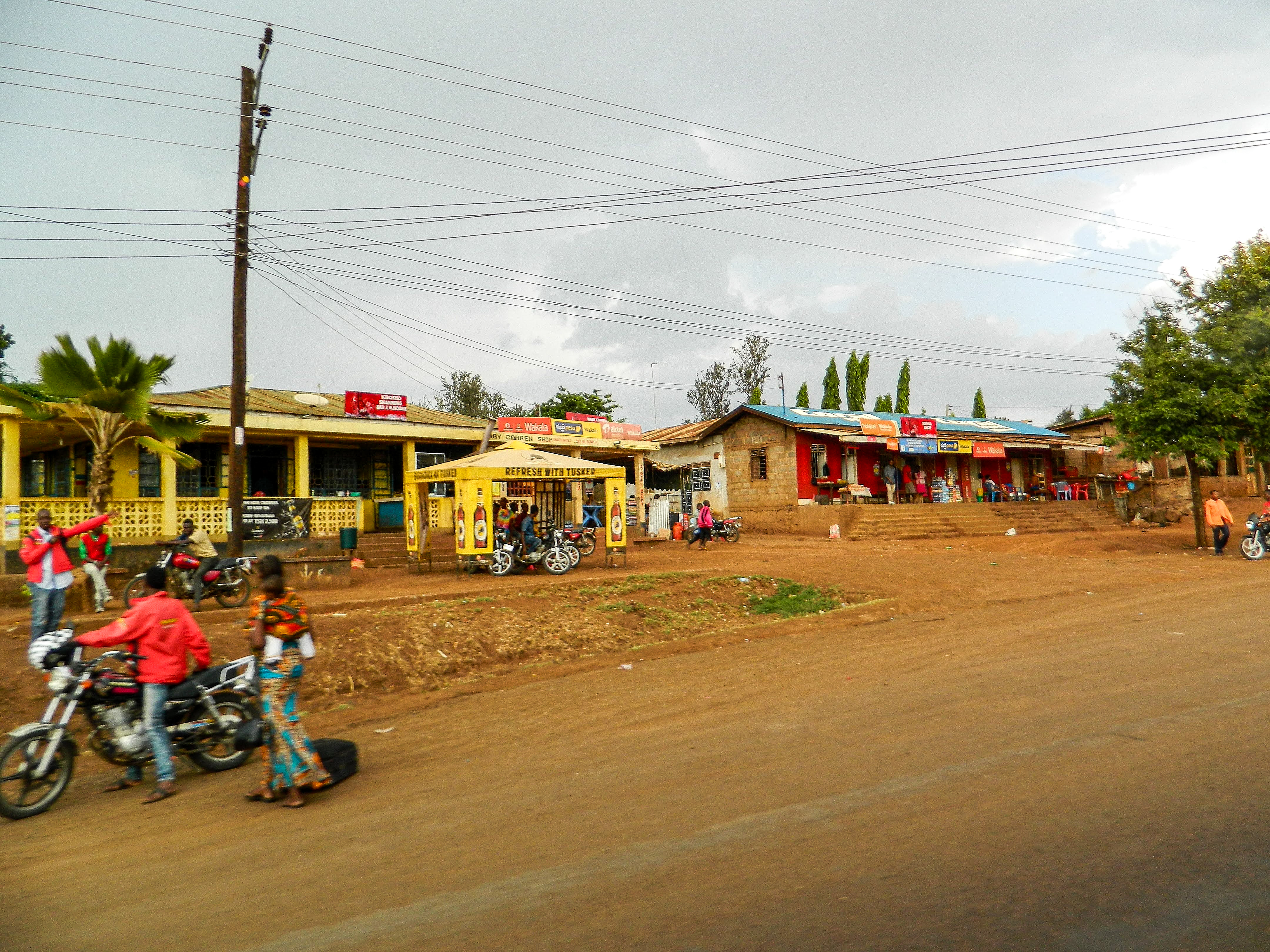
Corrugated iron shop fronts whirred past the windows, clustered between little trees on the roadside. Dogs sniffed around outside a petrol station, and people gathered on benches outside little bars, sharing a drink or evening meal. Bonfires were lit on sandy scrubland, as mopeds with 2 or 3 people on the back sped by, and occasionally a shape in the shadow turned out to be someone sitting on the verge sticking his thumb up as we drove by. The Weru Weru River Lodge was amazing – luxury I was not used to! They had resident tortoises and camels roaming about the grounds, and trees full of native birds. We were greeted by the staff with handshakes, and we enjoyed a local Kilimanjaro beer before turning in to our ensuite rooms with stylish wooden furniture and balconies overlooking the national park. A welcome bit of comfort before spending the next seven nights in a tent!
(Click on the photos to enlarge them.)
Prep Day
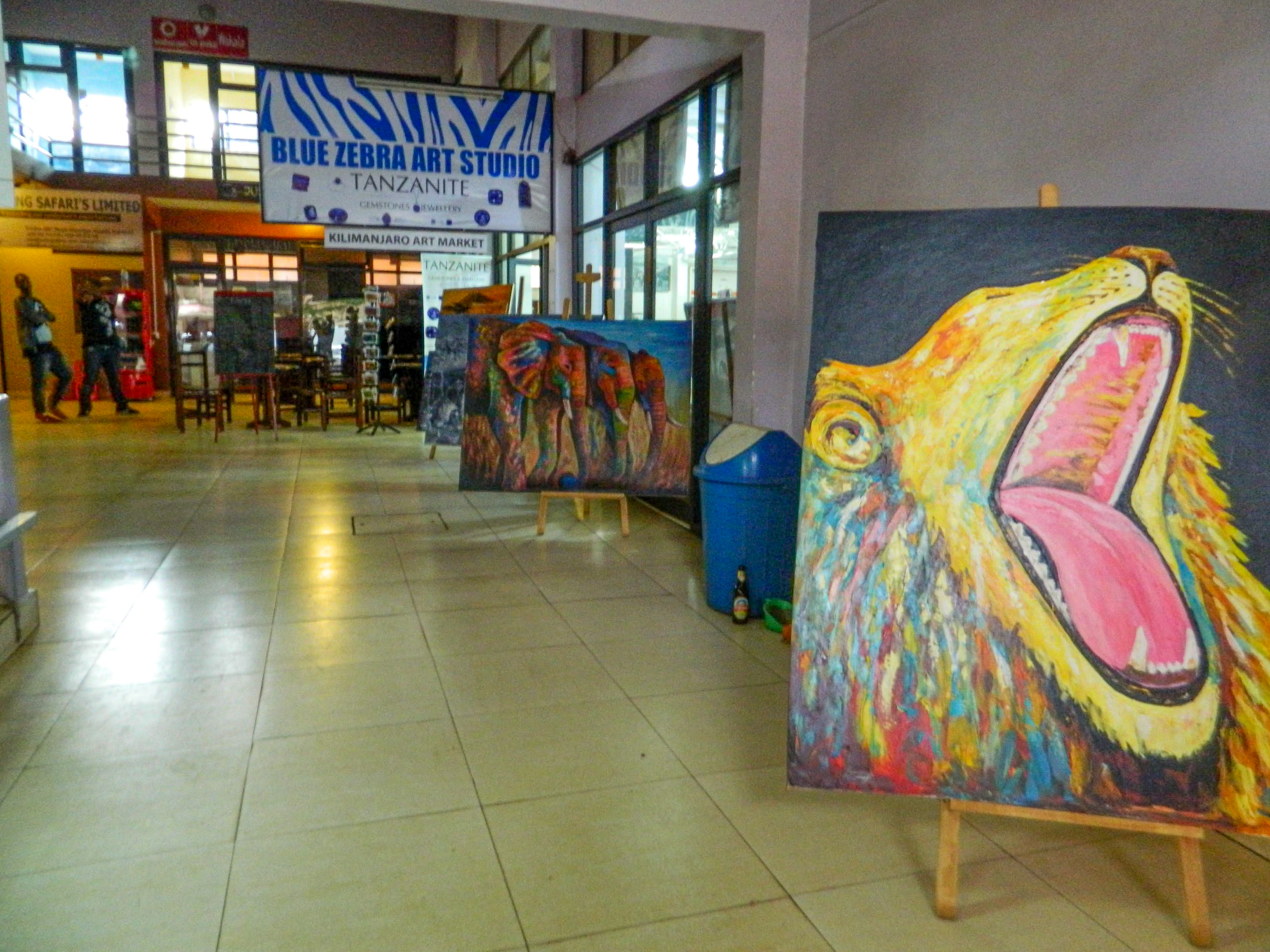
Anticipation running high, our group met with our head guide, Julio, an incredible Tanzanian man with a tonne of local experience, knowledge and wisdom. He briefed us with the itinerary, all the safety measures, and put some of our worries at ease, before individually inspecting each of our kit. Julio’s most important lesson was to ‘Respect The Mountain,’ because you can’t win when you argue with nature. Once we were all set, the guides took us into Moshi to look around a local arts market – to help take our minds off the impending Kilimanjaro challenge. There was a tremendous thunderstorm with torrential rain that tattooed the tin roof so loudly we couldn’t hear each other speak. The shop’s power went out in the storm, and we were introduced to some street vendors who were selling the classic Kilimanjaro safari hats, for which we bartered playfully while we waited for the storm to pass: “$8, come on sister!” (I wasn’t very good at bartering, but I got one for $6!)
Day One – “Polē Polē”
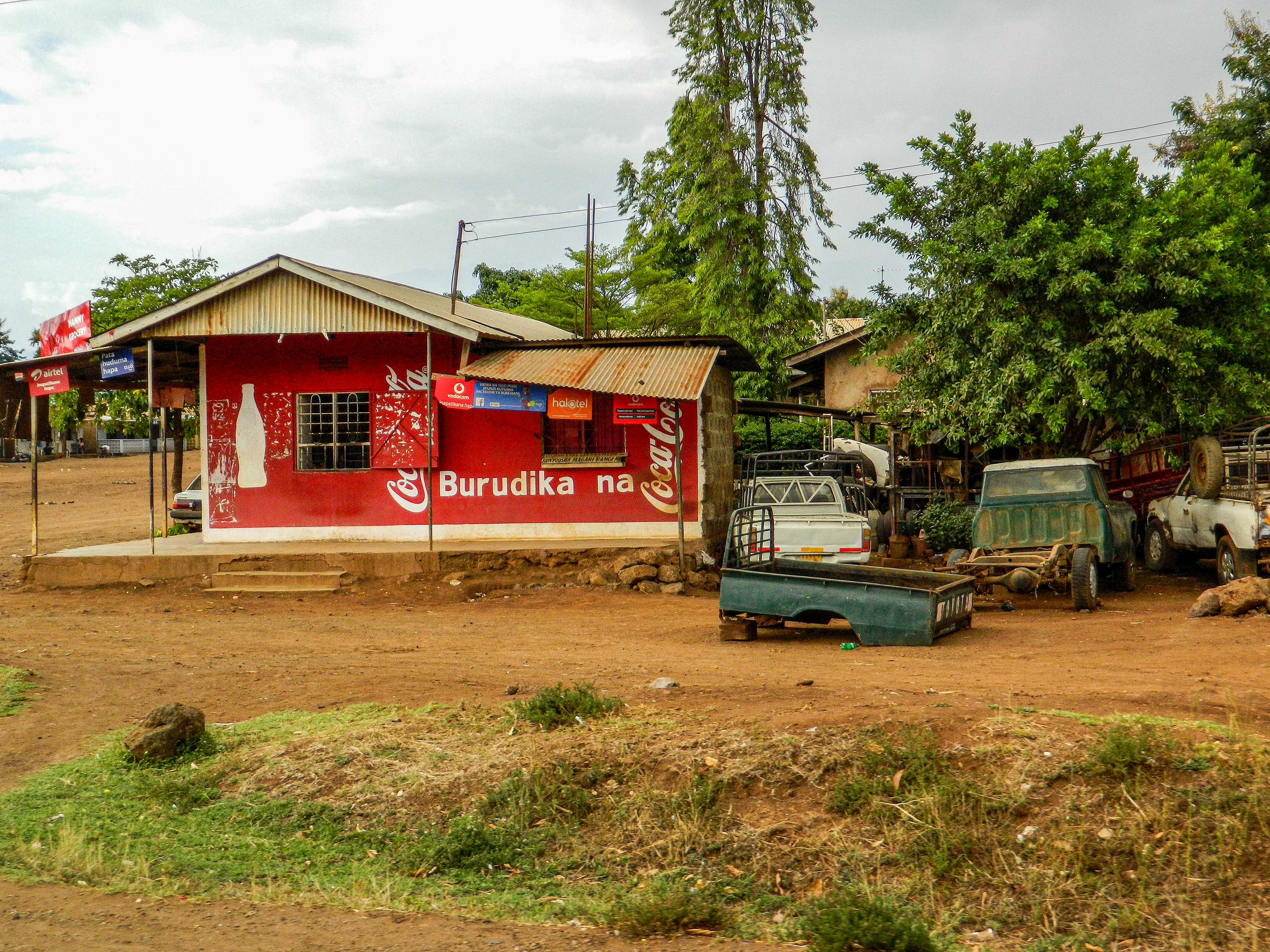
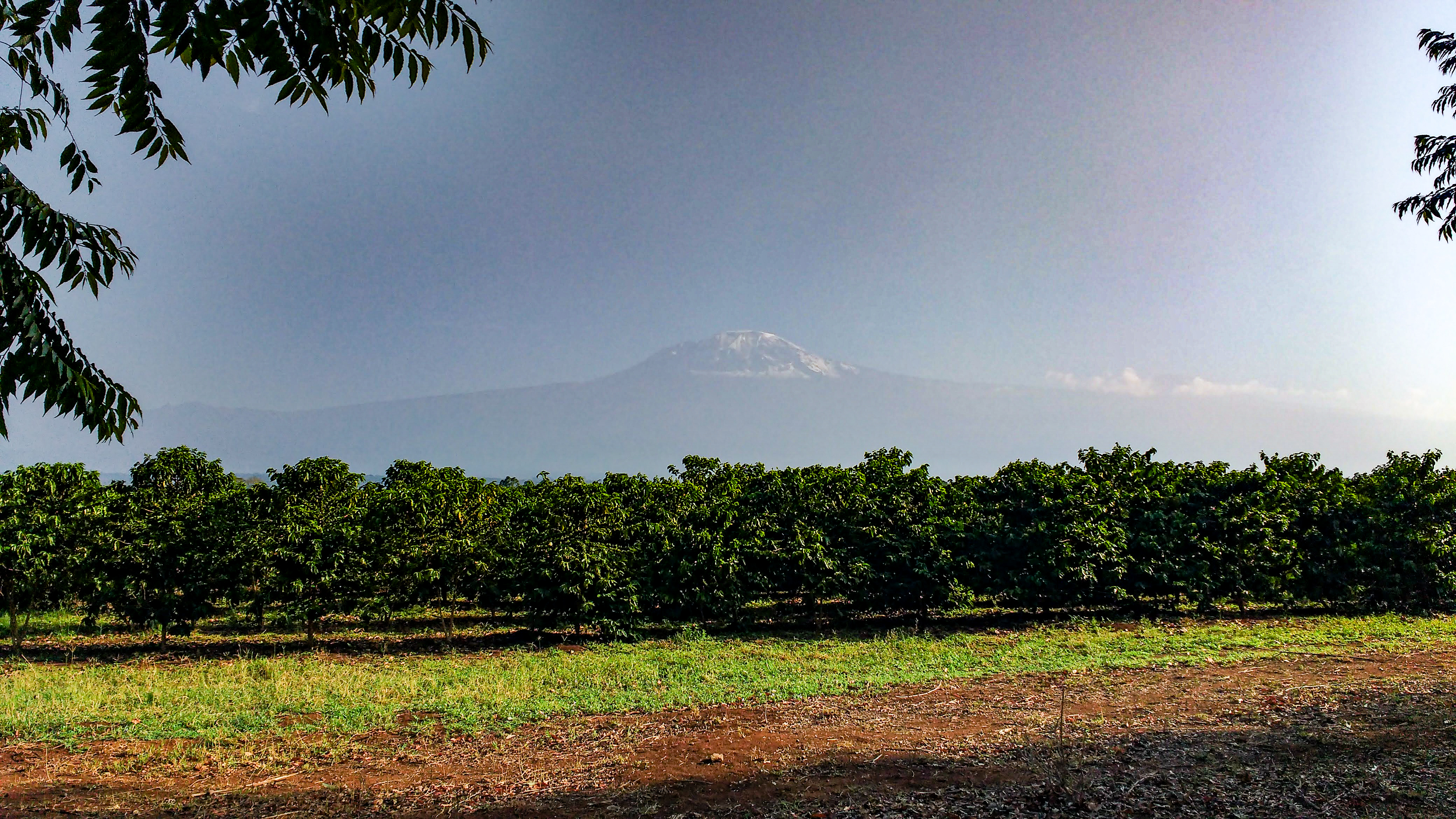
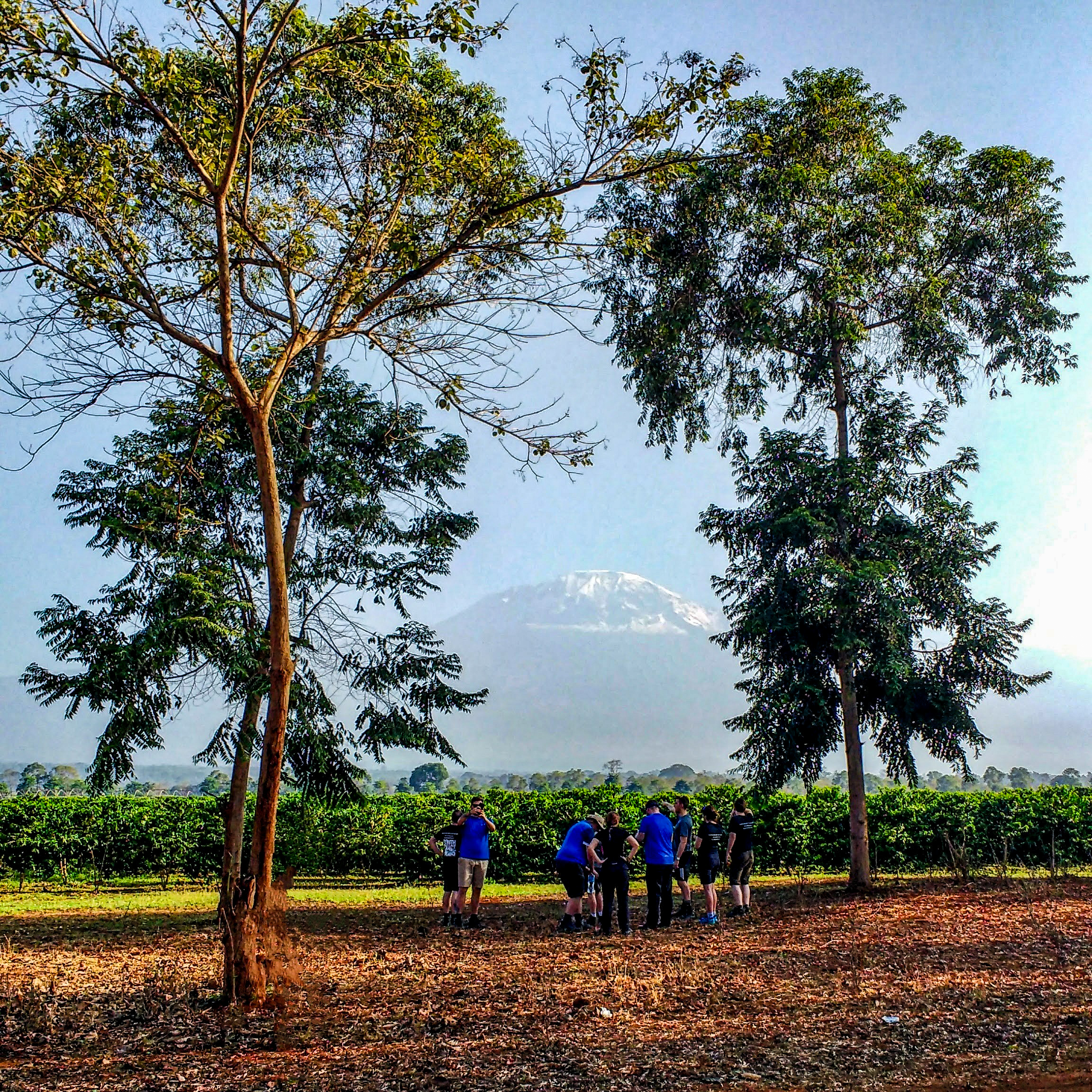
Mount Kilimanjaro made its first appearance in the morning, looming hazily over the coffee plantations surrounding the lodge. Its top was dipped in snow, bright against the blue sky. We were transferred from the lodge at 9am on a minibus, passing through bustling villages, where the locals smiled and waved, sometimes high fiving us through the bus’s open windows. Big yellow dogs lay asleep outside shops adorned with giant coca cola adverts, and workers strolled along the roadside with machetes and baskets of bananas balanced on their heads.
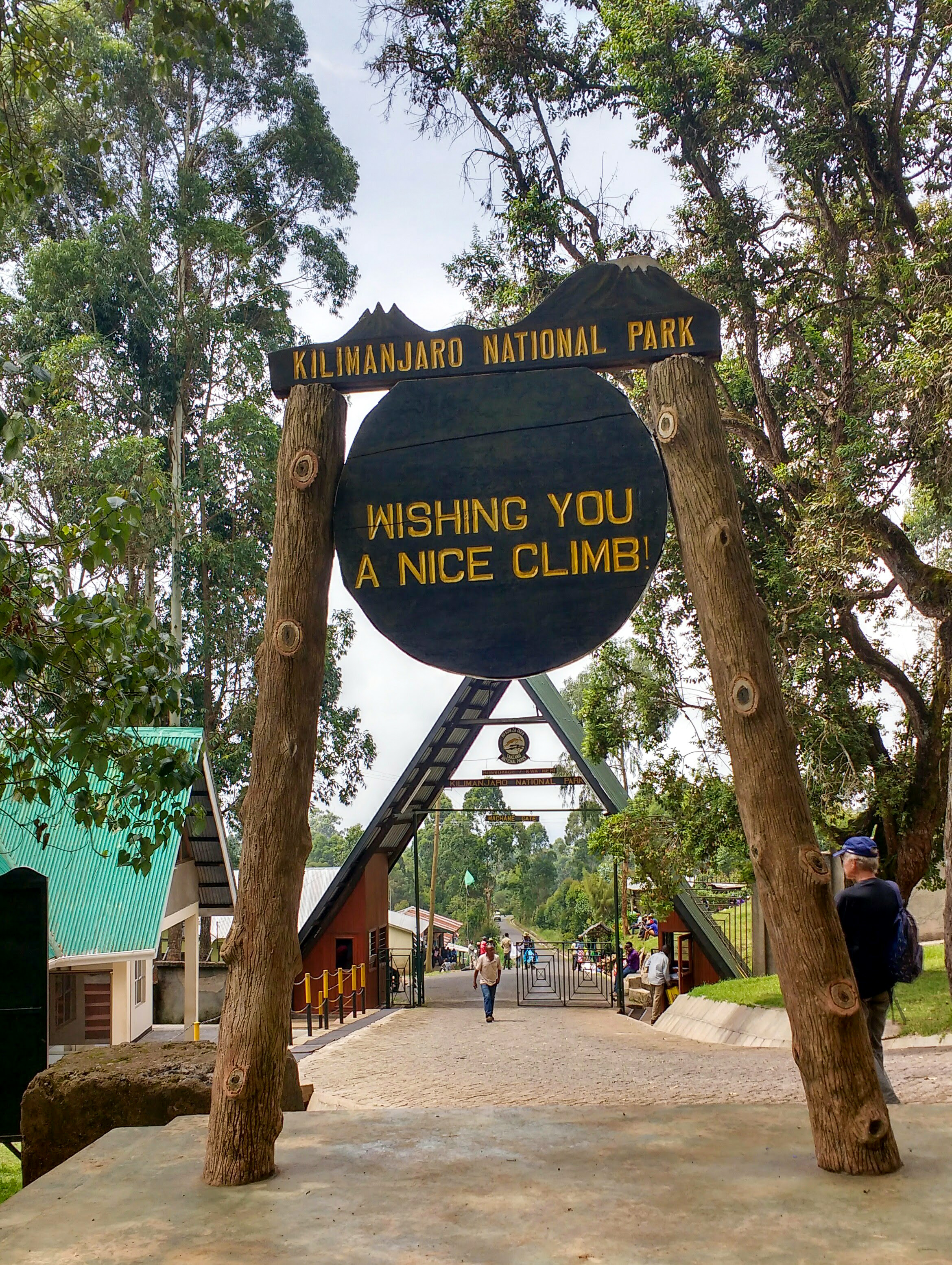
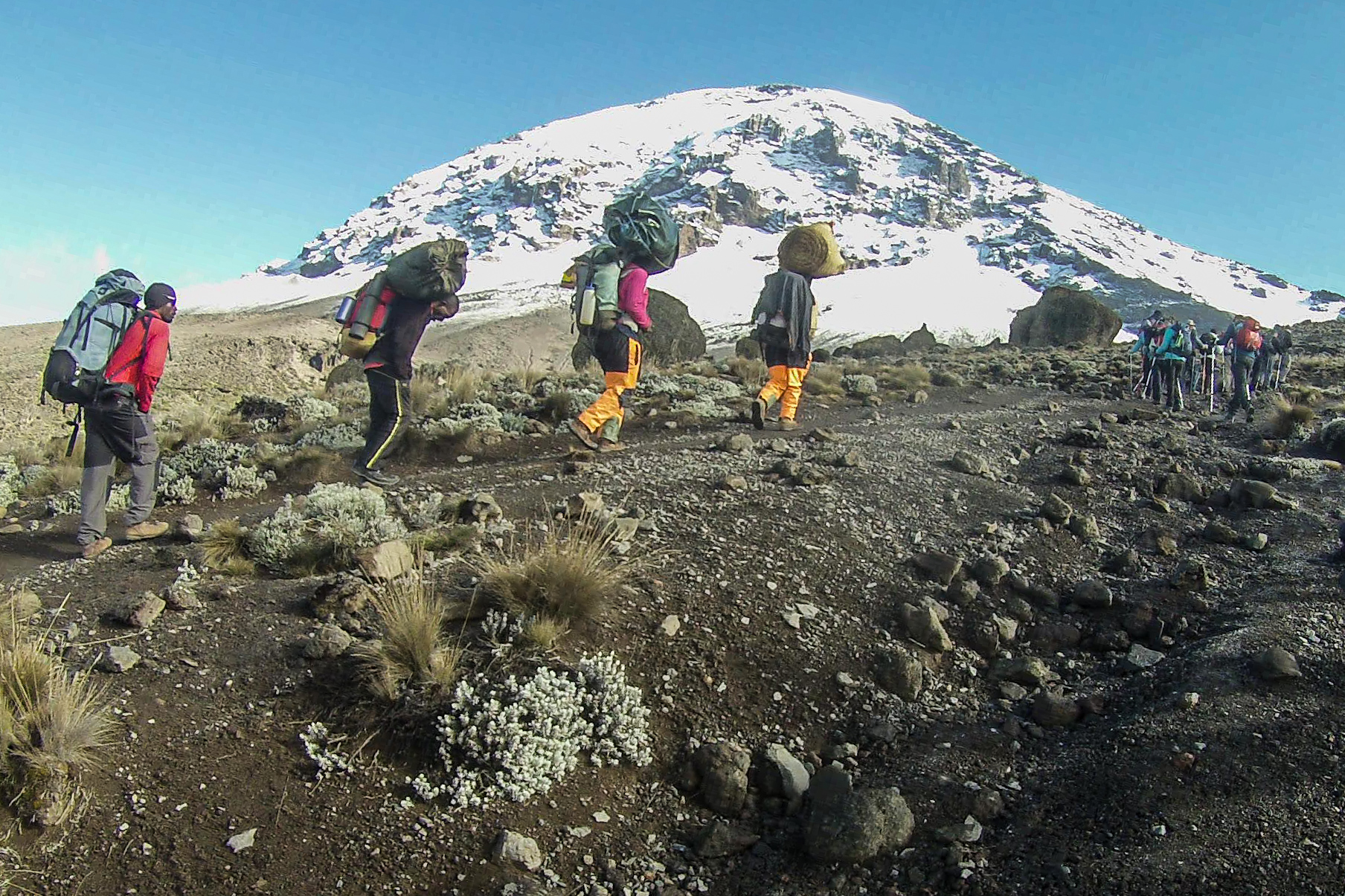
We piled out of the mini bus at Machame Gate – one of eight trailhead gates at the base of Kilimanjaro. After signing a register, we did some final kit checks and gathered with our team of local guides for a sort of pre-game huddle. Ian made sure to check in with everyone individually, despite his own nerves. Finally, we got the ‘go-ahead’, and we ceremoniously passed through the gates onto the mountain trail, the guides repeating “Polē Polē,” (Swahili for slowly slowly.) The pace felt too slow at this stage, but it was essential to acclimatise. Meanwhile, a huge team of porters – our ‘Rafiki’ (friends) – gathered all the luggage; tents, mess tents, food, kitchen equipment, chairs, tables, anything else you can think of, and carried the large packs over their heads while they traversed the mountain on foot, overtaking us at three times our speed! I found this a bit controversial at first, but the tour groups’ main priority is to have everyone back down the mountain in one piece, so they go to great lengths to look after you, so you can focus on completing your challenge safely. A tip for the porters was also included in the price of the excursion. We were extremely thankful for them!
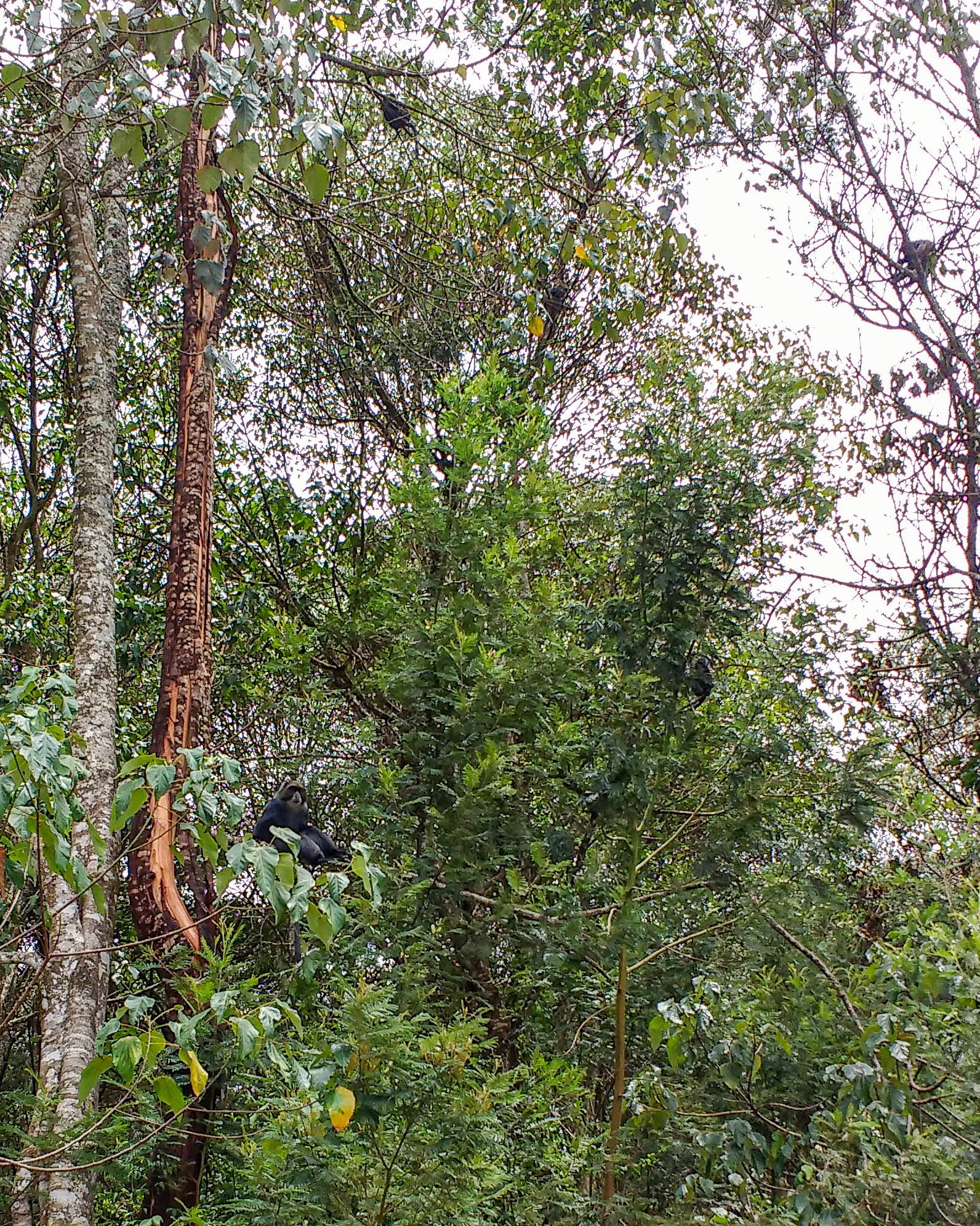
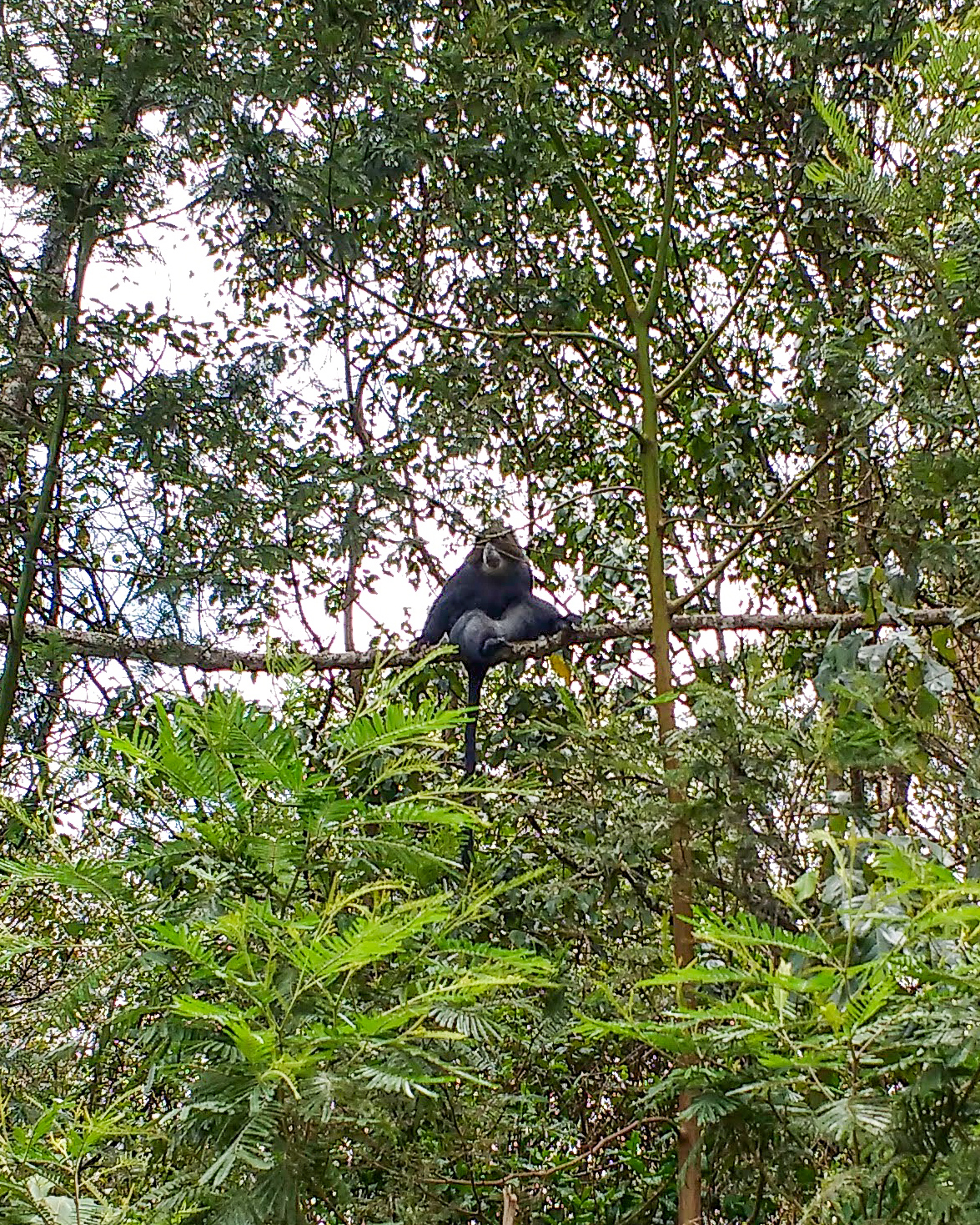
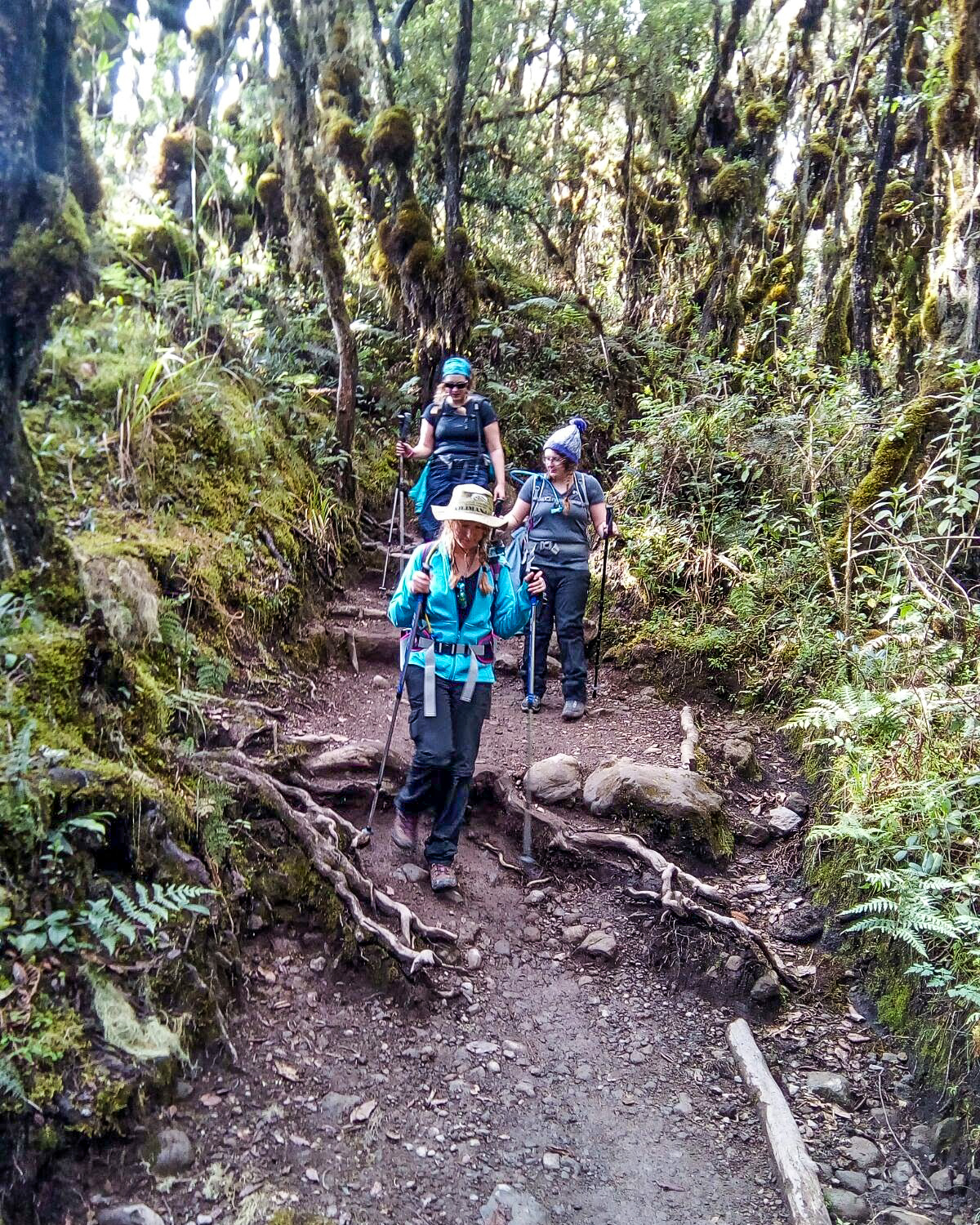
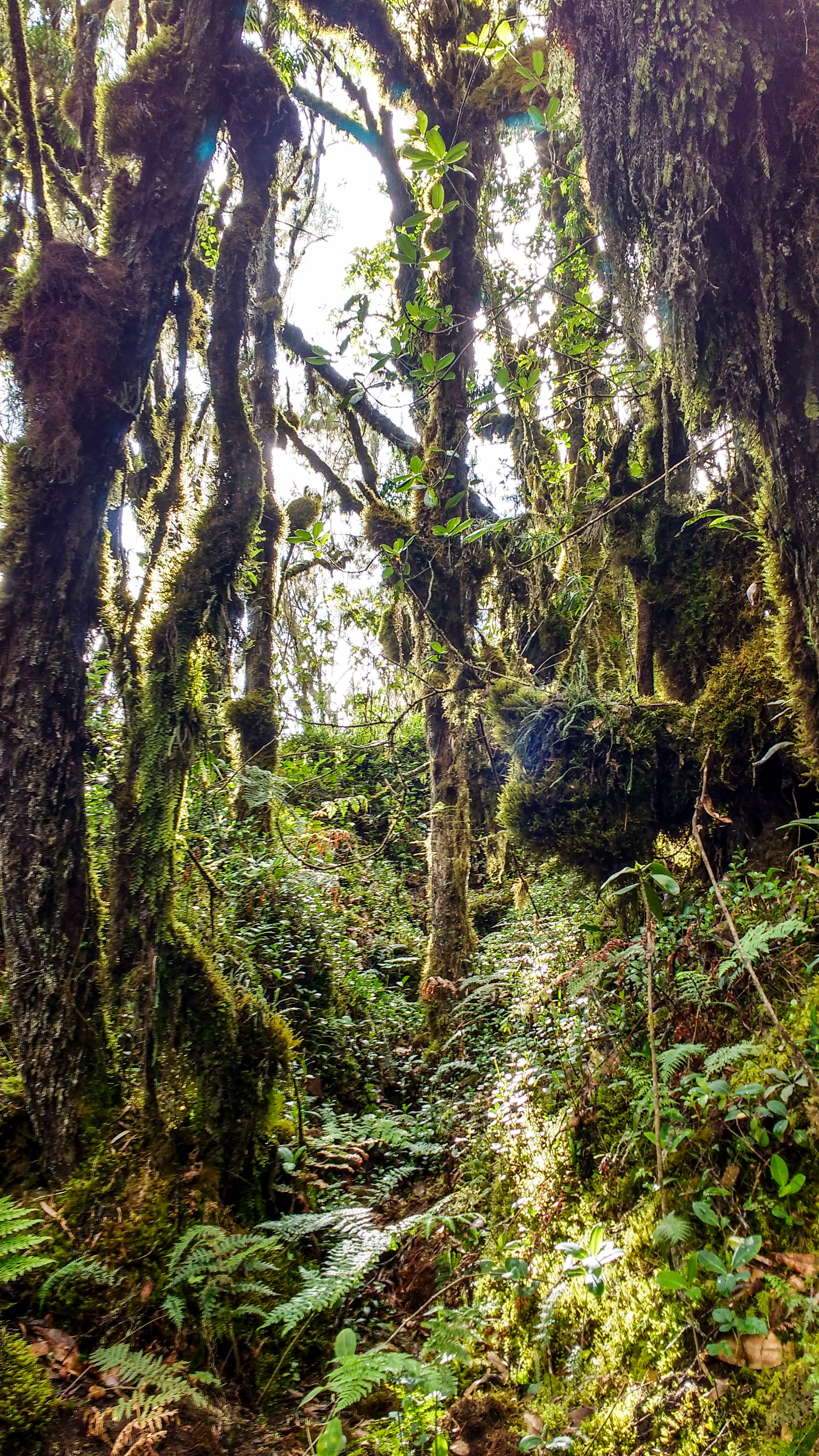
Blue Monkeys watched us curiously from the trees as we trekked into the cloud rainforest. Time was lost in the climb, as the forest grew taller and denser; the footpath becoming narrower. The first toilet stop wasn’t too traumatising – as you can imagine, the long drops get more horrendous the further you go up! After that, the heavens opened and we waterproofed up, walking to the serene soundtrack of the African rainforest.
(My mountain photos were taken on a 2015 Android phone… click to see them in their full pixelated glory!)
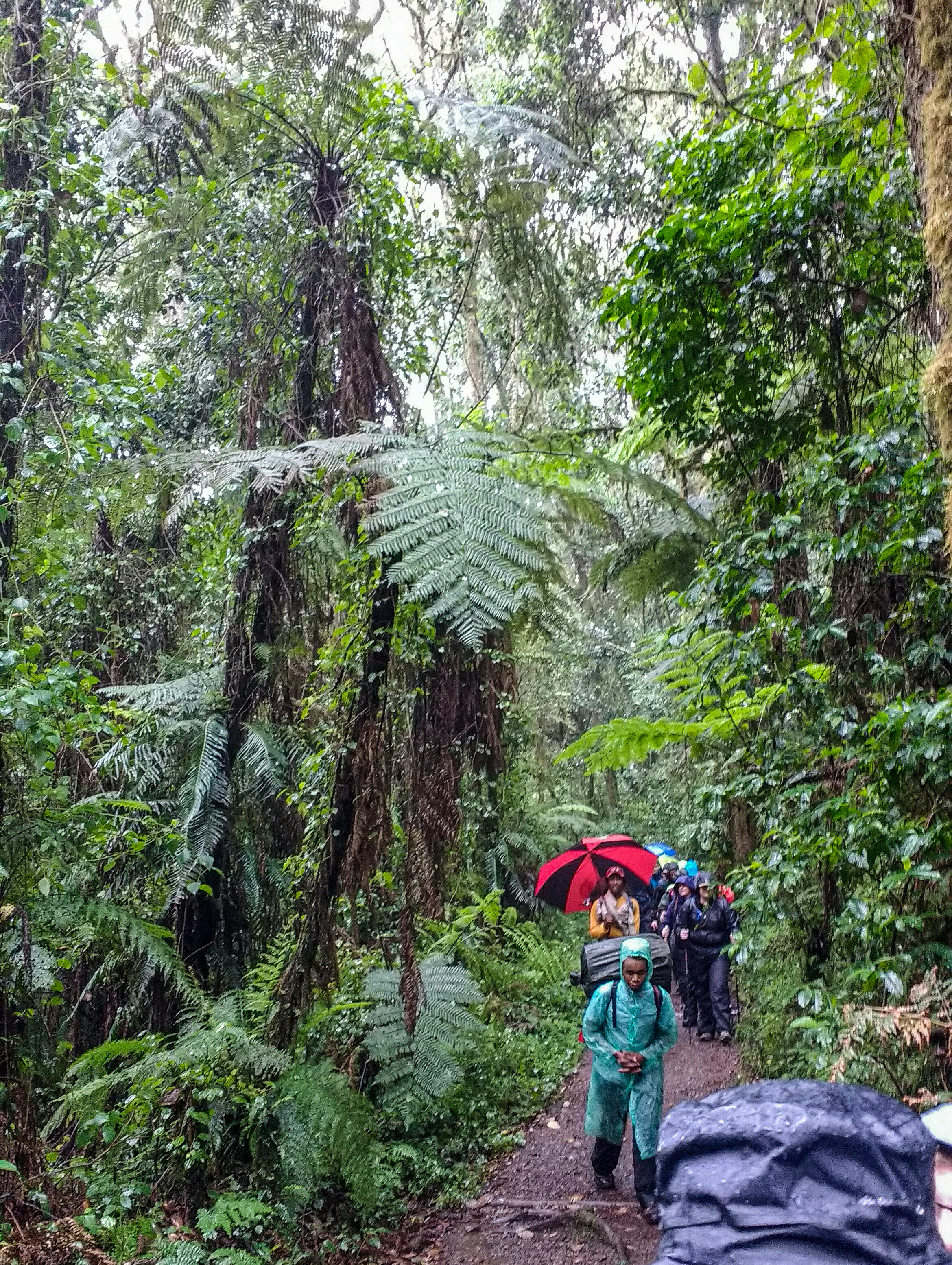
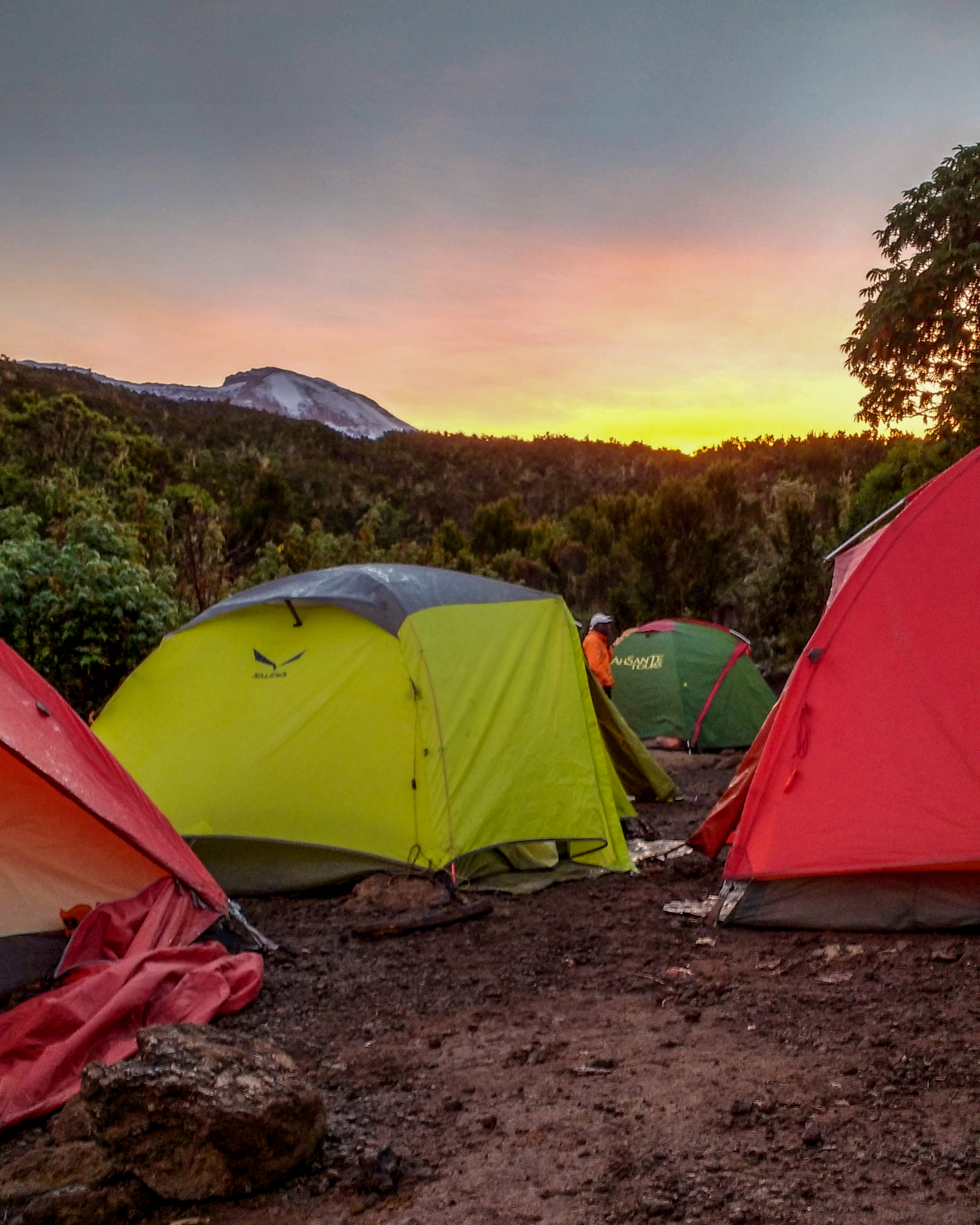
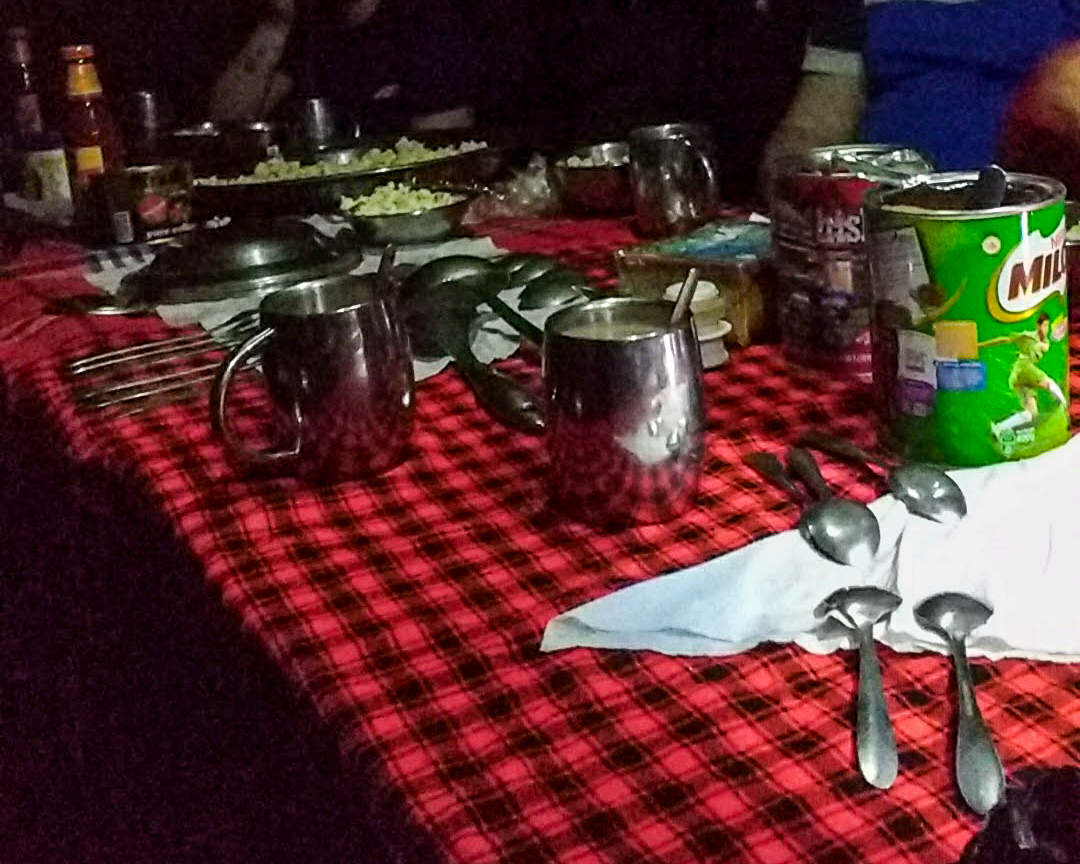
We had our first lunch stop perched on logs beneath the cloud forest canopy – miscellaneous deep fried things we couldn’t identify – regardless, it was quite tasty! Hiking up and up through the dense forest, to around 1,200m elevation, with glimpses of vast sky stretching over miles and miles of flat African plains between the trees, we finally broke out of the cloud forest and reached our first camp just before nightfall. The porters or ‘Rafiki’ had already built our fold-away settlement, and we were escorted to our respective tents to drop off our day packs. Tea, milo and popcorn was waiting for us in the mess tent, where we sat around a trestle table on fold up chairs, barely believing our tired eyes that we were receiving such luxuries from the amazing team of Rafiki. Then dinner was served… skin soup to start, followed by beef stew with roast potatoes on the side, with sliced avocado for afters before staggering back to our tents for our first night’s rest on the mountain.
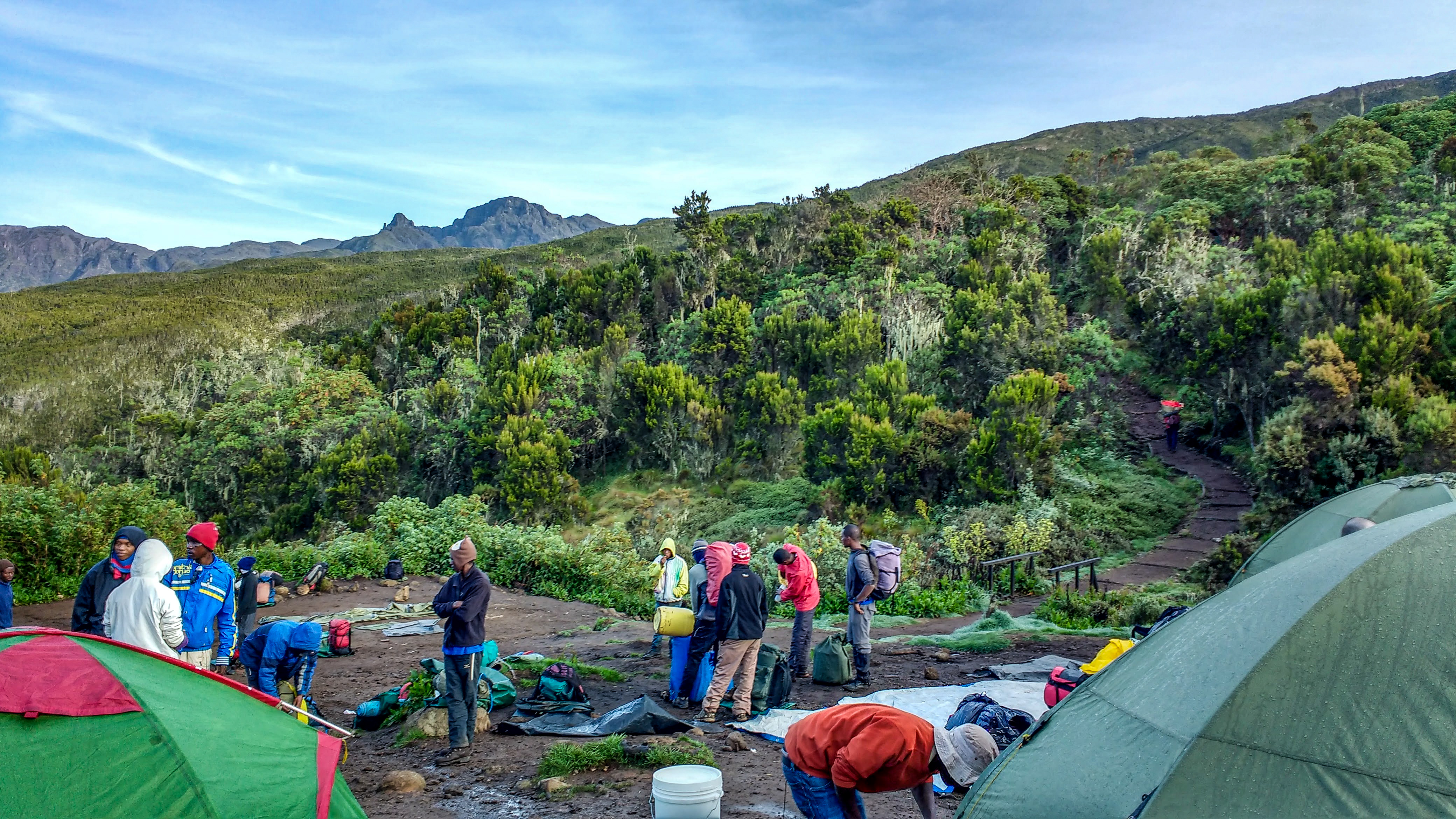
Day Two – “Kilimanjaro, Hakuna Matata”
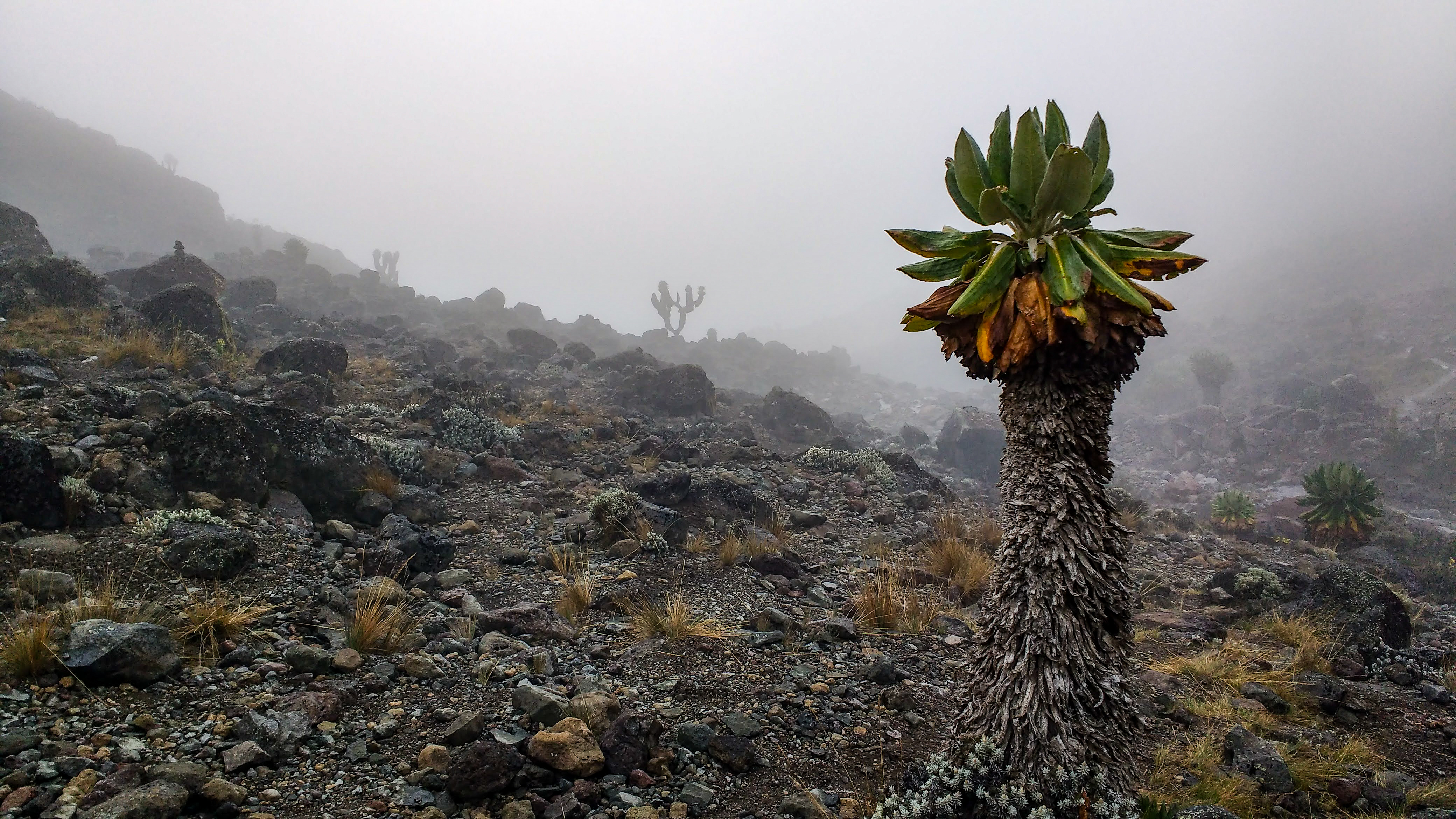
Our 5:30am wake up call came with a cup of Kilimanjaro tea delivered straight to our zip up door! “Asante Sana!” (Thank you very much!) Daylight lapped at the edges of the sky as we dressed and packed our things. The sky turned pink over the snowy peak above us and the sun began to rise. After a bowl of porridge and a sausage, we set off around 7:30am, climbing in glorious sunshine. Spirits were high for most of the group, and we rose up out of the bush to a pristine view of the cloud rainforest below and breaking the horizon was Mount Meru – Tanzania’s second highest volcano. As we climbed into the afternoon, clouds rolled in, engulfing the scenery in patches of fog. The plant life around us changed, with unique flowers and trees popping up between rocks and moss. One of our guides, ‘Prof’ passed the time chatting about the local wildlife in Tanzania’s plains, comparing their hunting techniques. Prof also carried a vuvuzela, which he intermittently trumpeted on to boost morale and give us all a giggle!
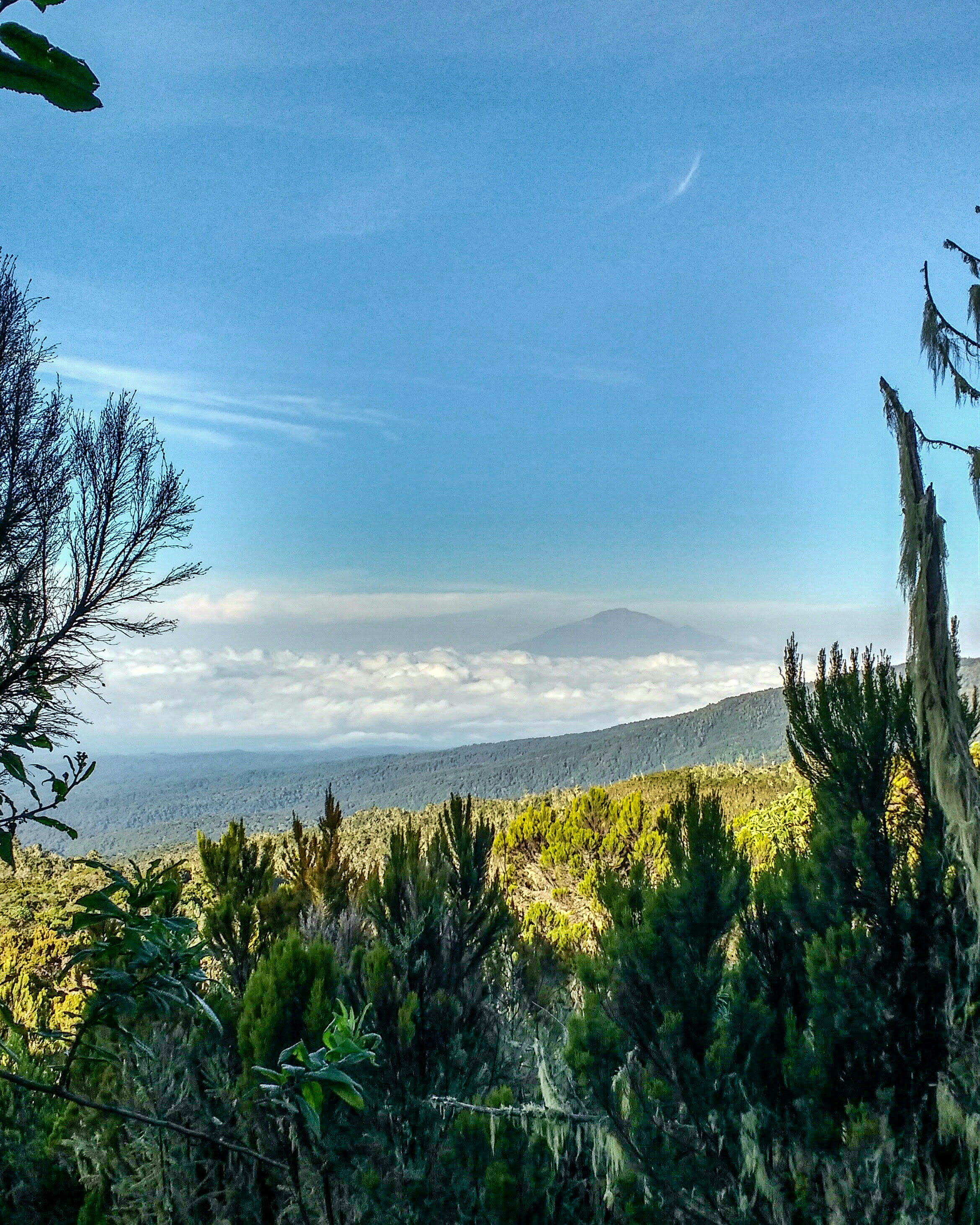
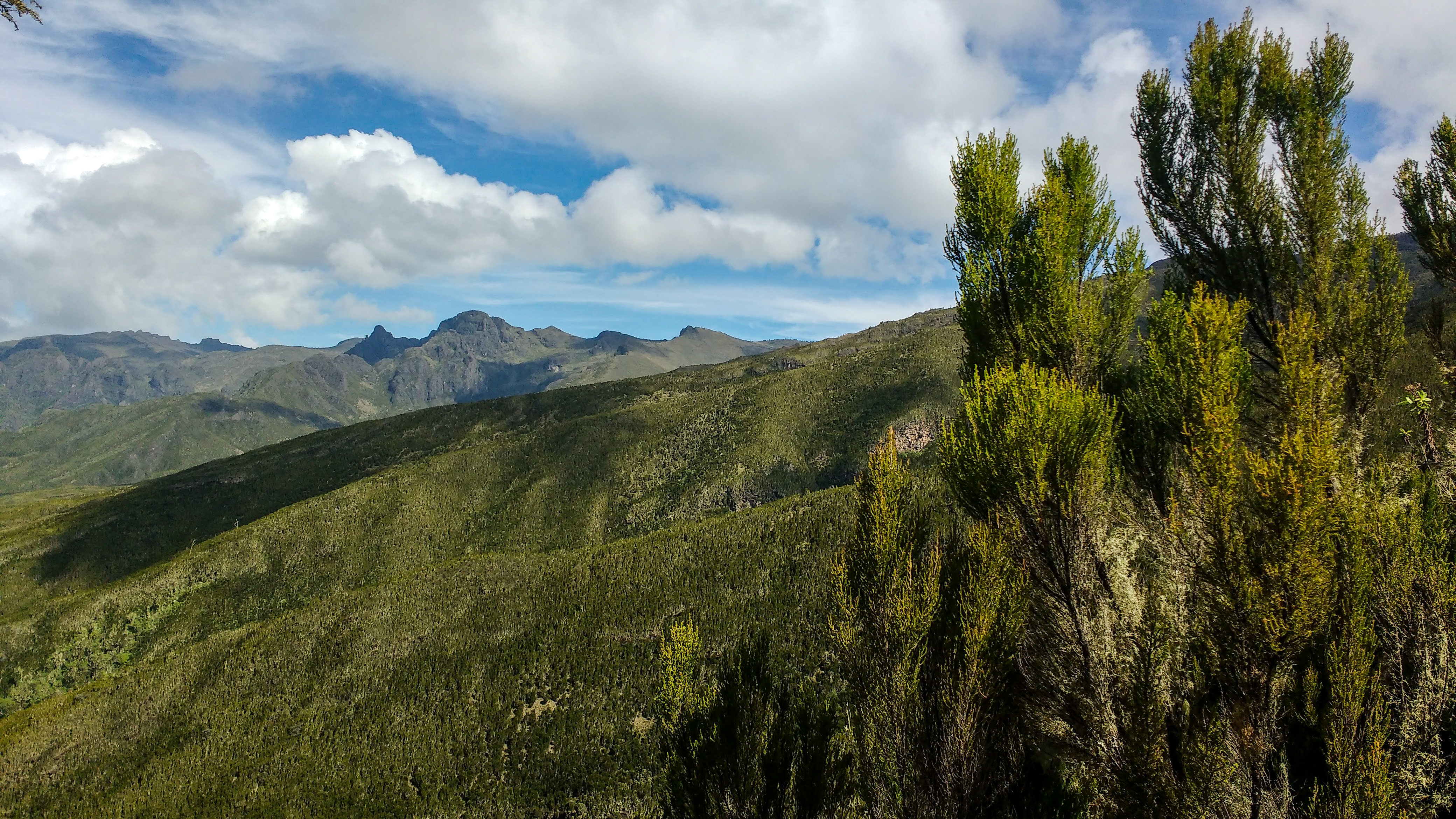
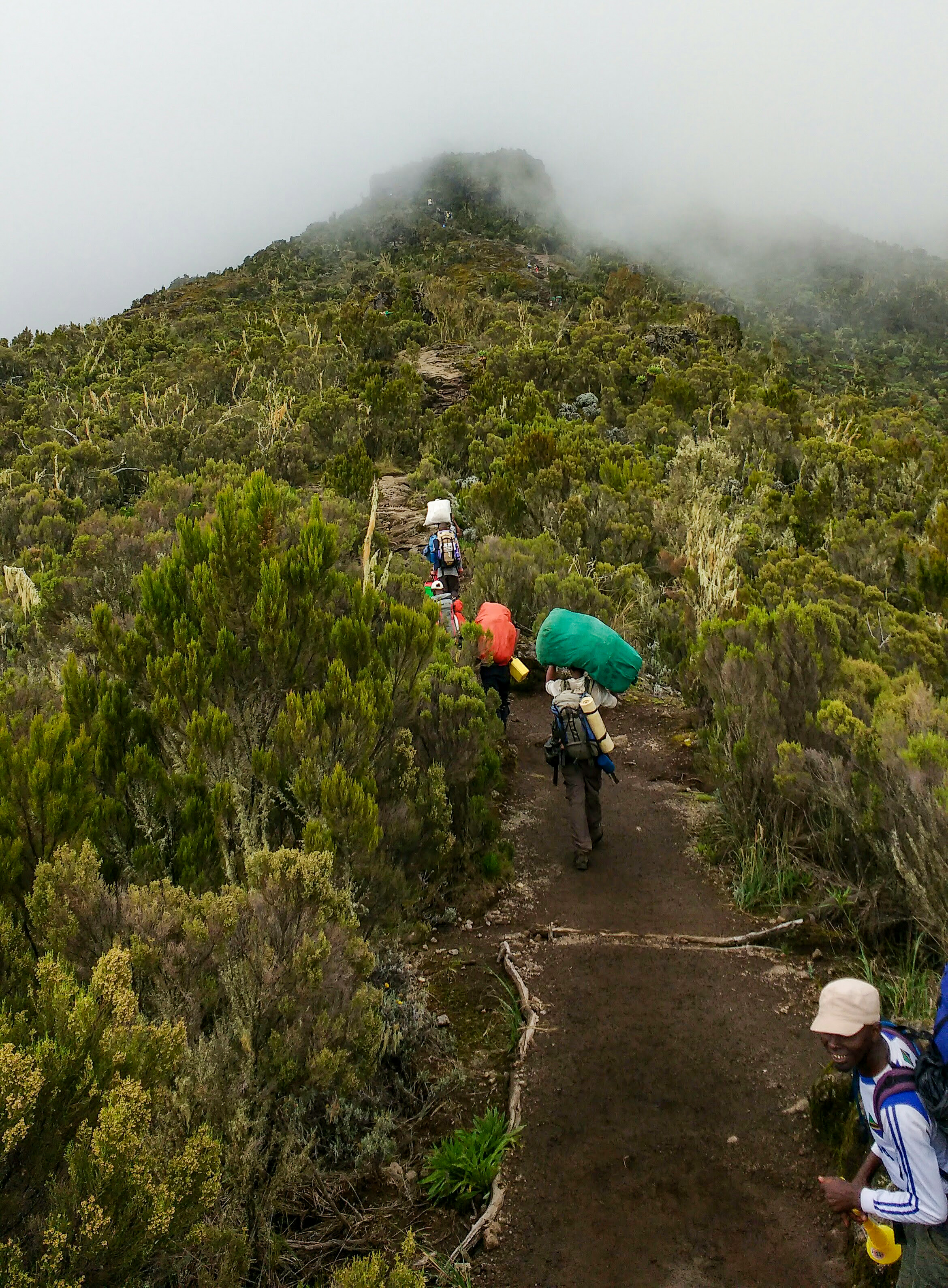
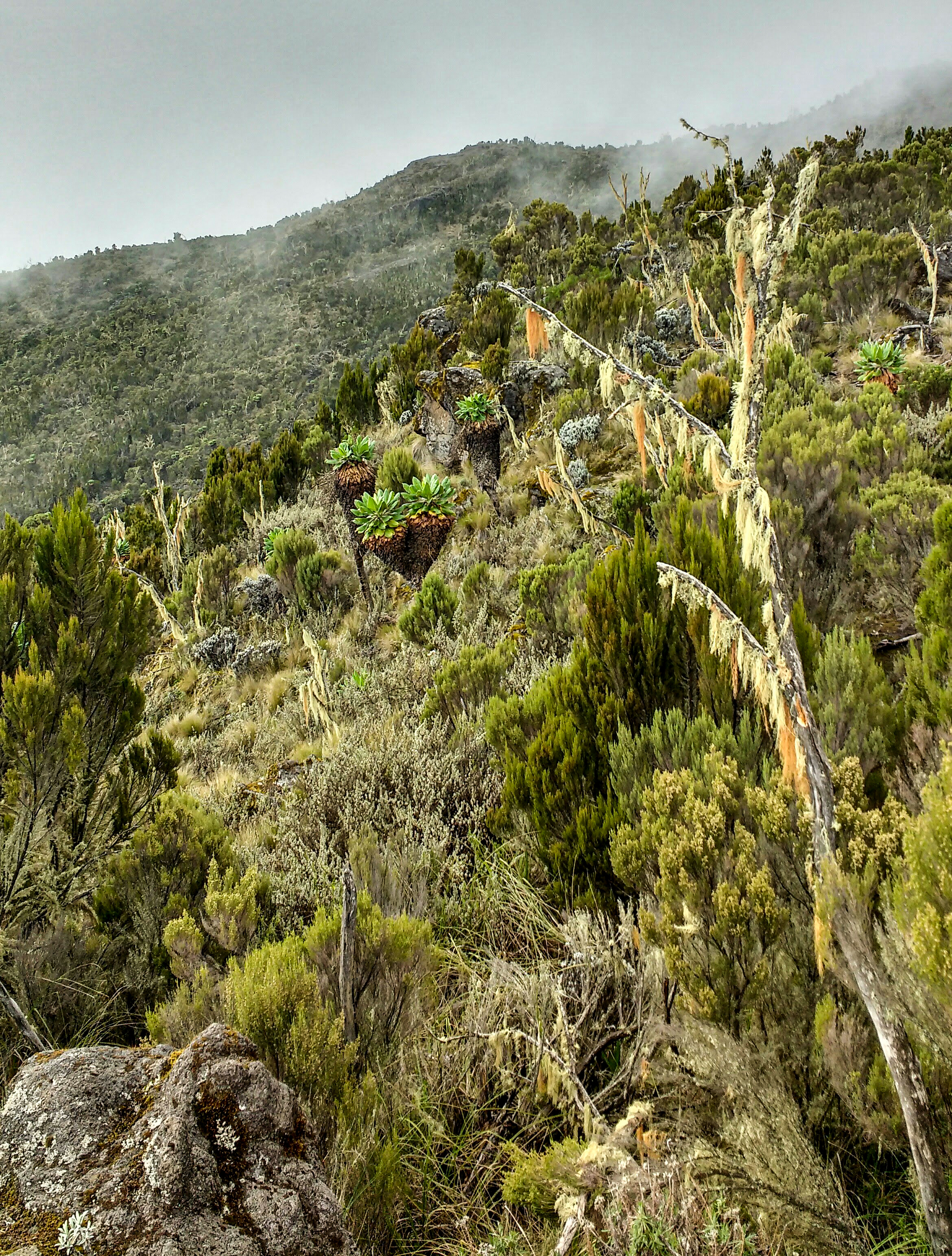
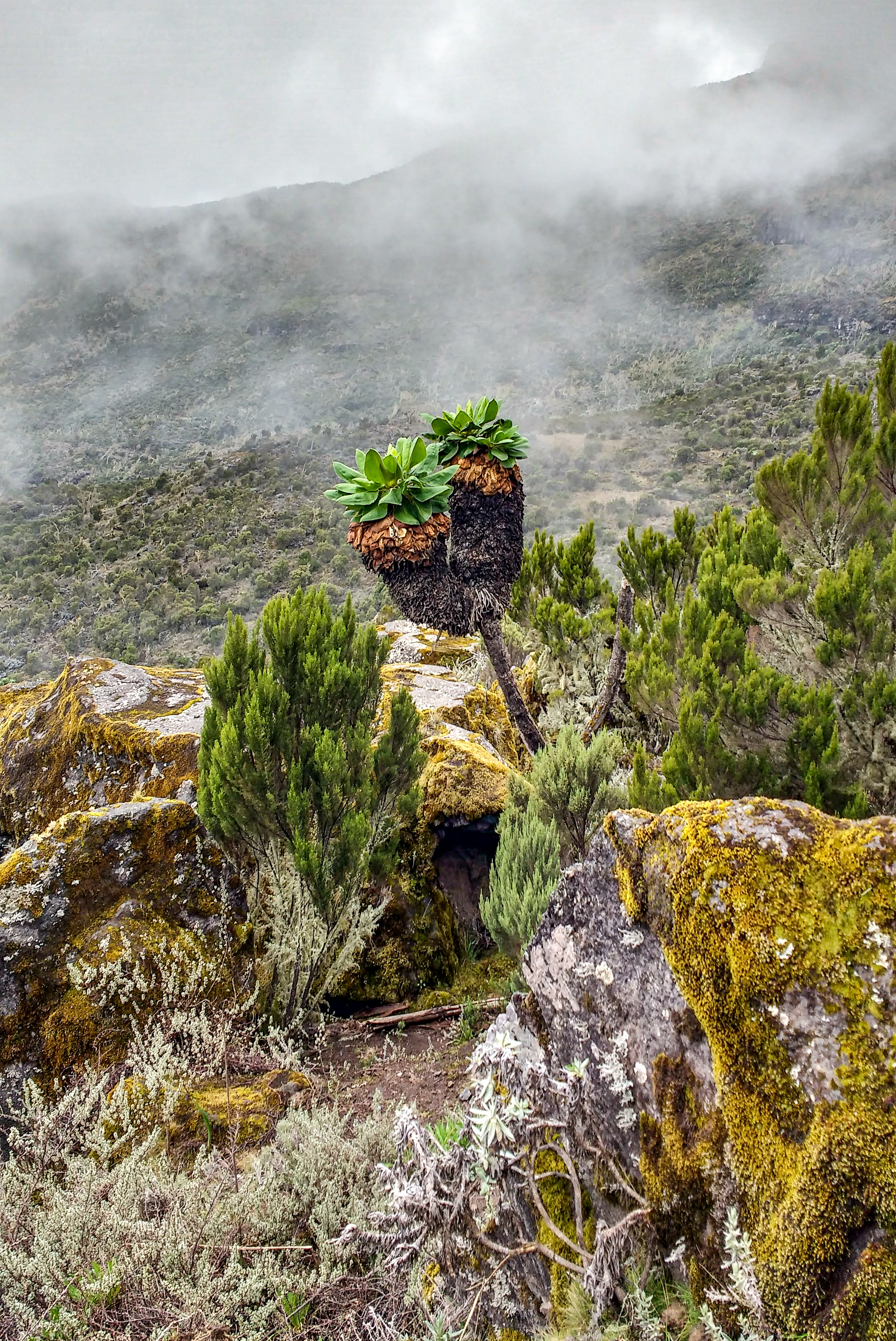
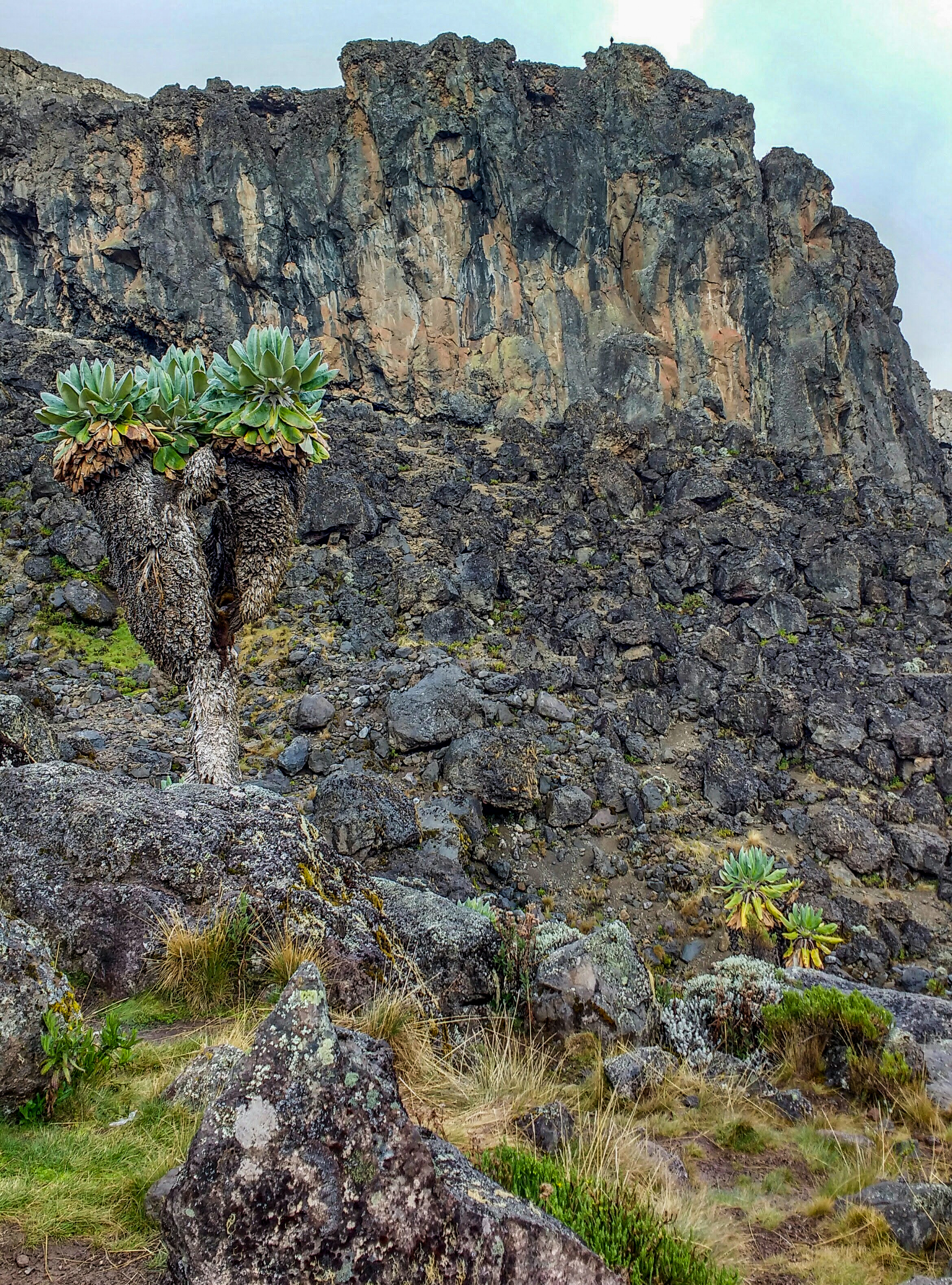
After a snack stop in the company of Aaron, Si, Steph, and Tom, (the others were scattered further ahead and behind) we scaled the steepest bit of the day, scrambling up a rock face and passing other-worldly caves with miniature waterfalls and rockpools high in the mountain mist. Prof reminded us that the cloud was dangerous for UV: he carefully painted some of Si’s sun cream on his own cheeks and nose and said that Masai men wear white paint like that for ceremonies as a mark of manhood! We met with two other guides, Henry and Ibra, and collectively they taught us some Swahili phrases:
- Nina Njaa – I’m hungry
- Ndio – Yes
- Mbu – Mosquito
- Poa kichizi kama ndizi kwenye friji – Cool & crazy like a banana in the fridge!
- kazi nzuri – Good job
We descended into the misty Shira Cave Camp, where we were greeted with high fives and fist bumps from our Rafiki, and shown to our tents. Enormous White-necked Ravens hopped about the landscape, pecking at the dirt with their bulbous beaks. A couple of them were preening themselves in a tree, silhouetted on the fog. Lunch was served in the mess tent; spaghetti and vegetable curry with cheese on top – we gave the Chefs a round of applause.
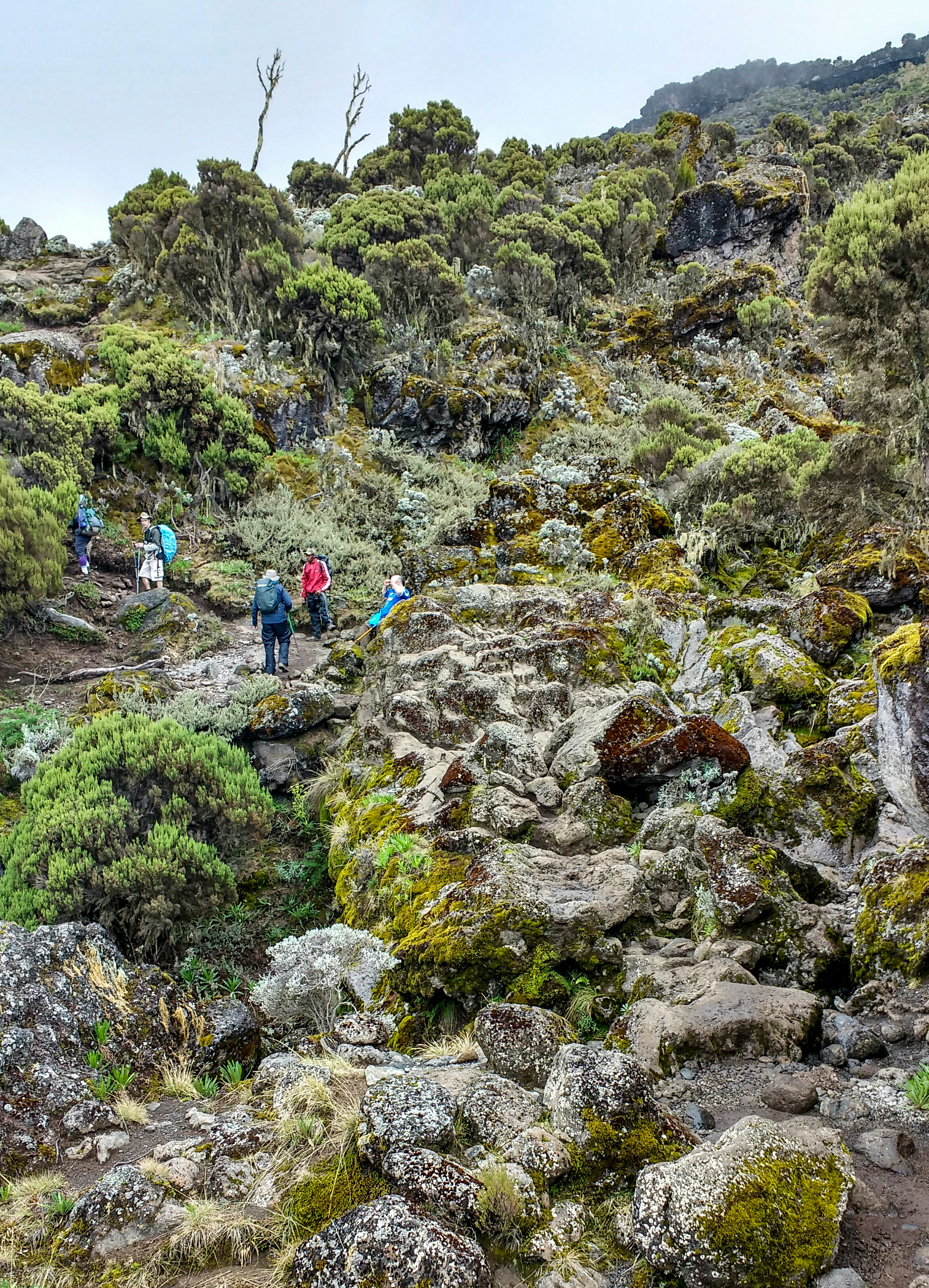
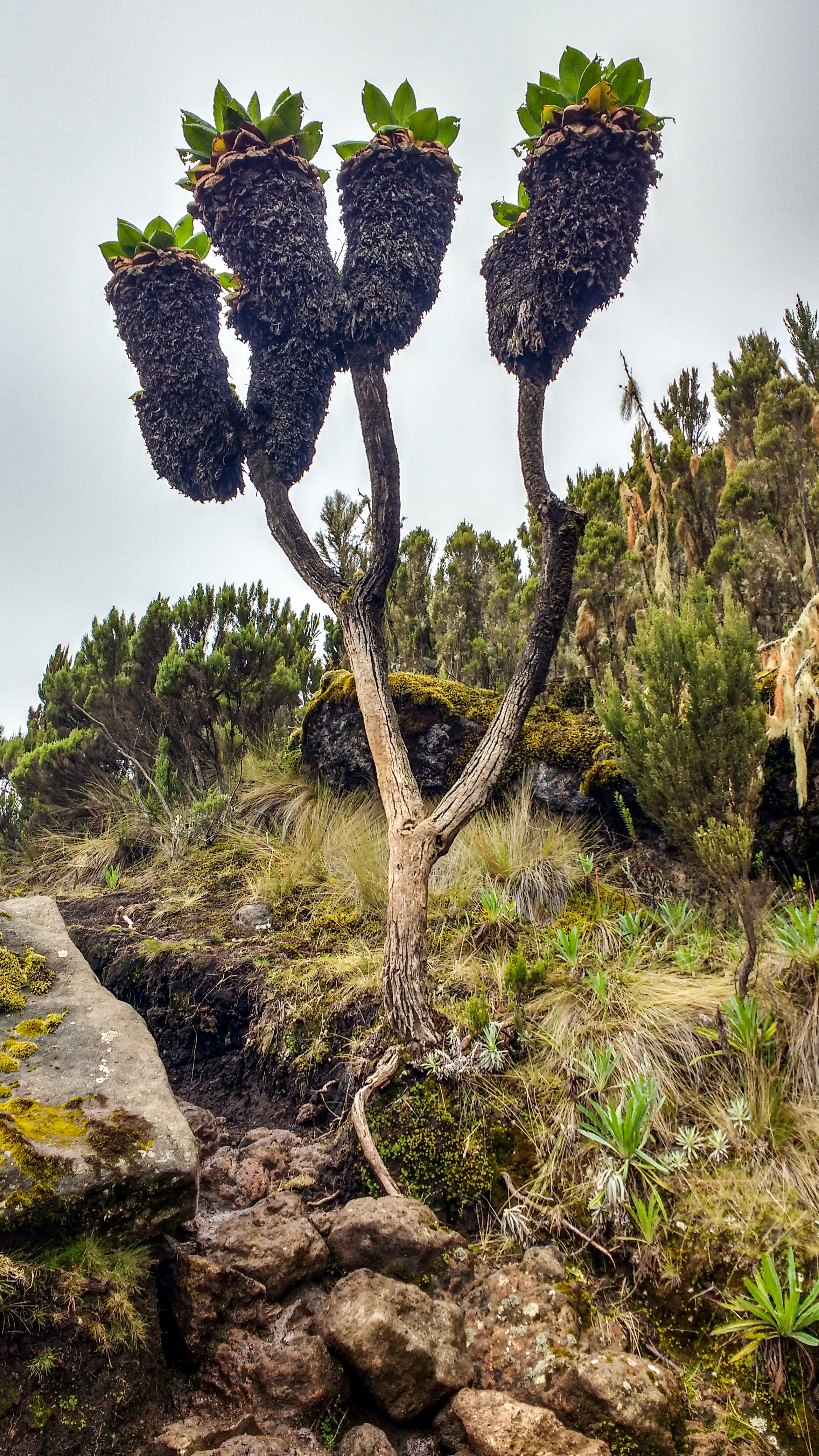
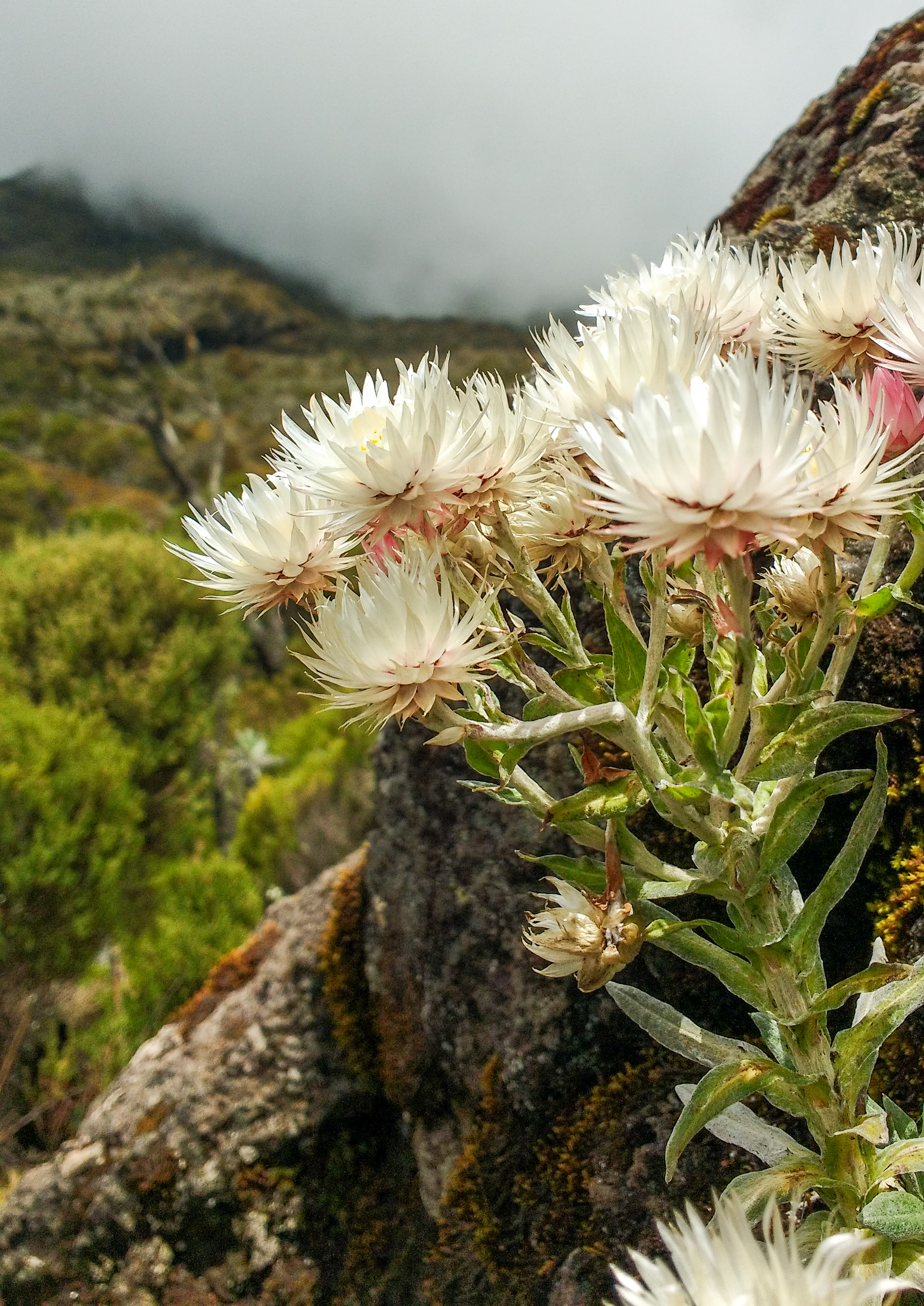
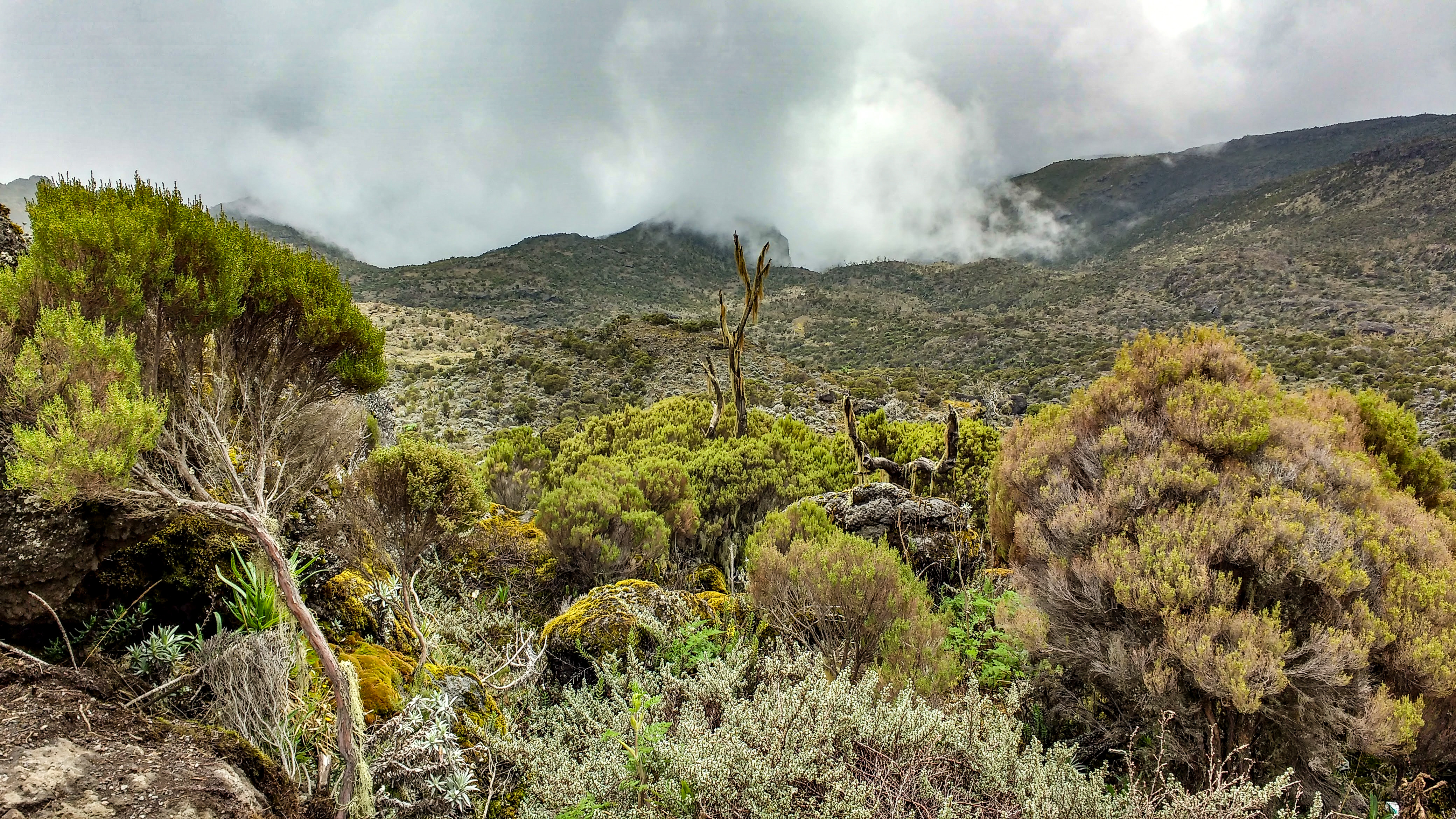
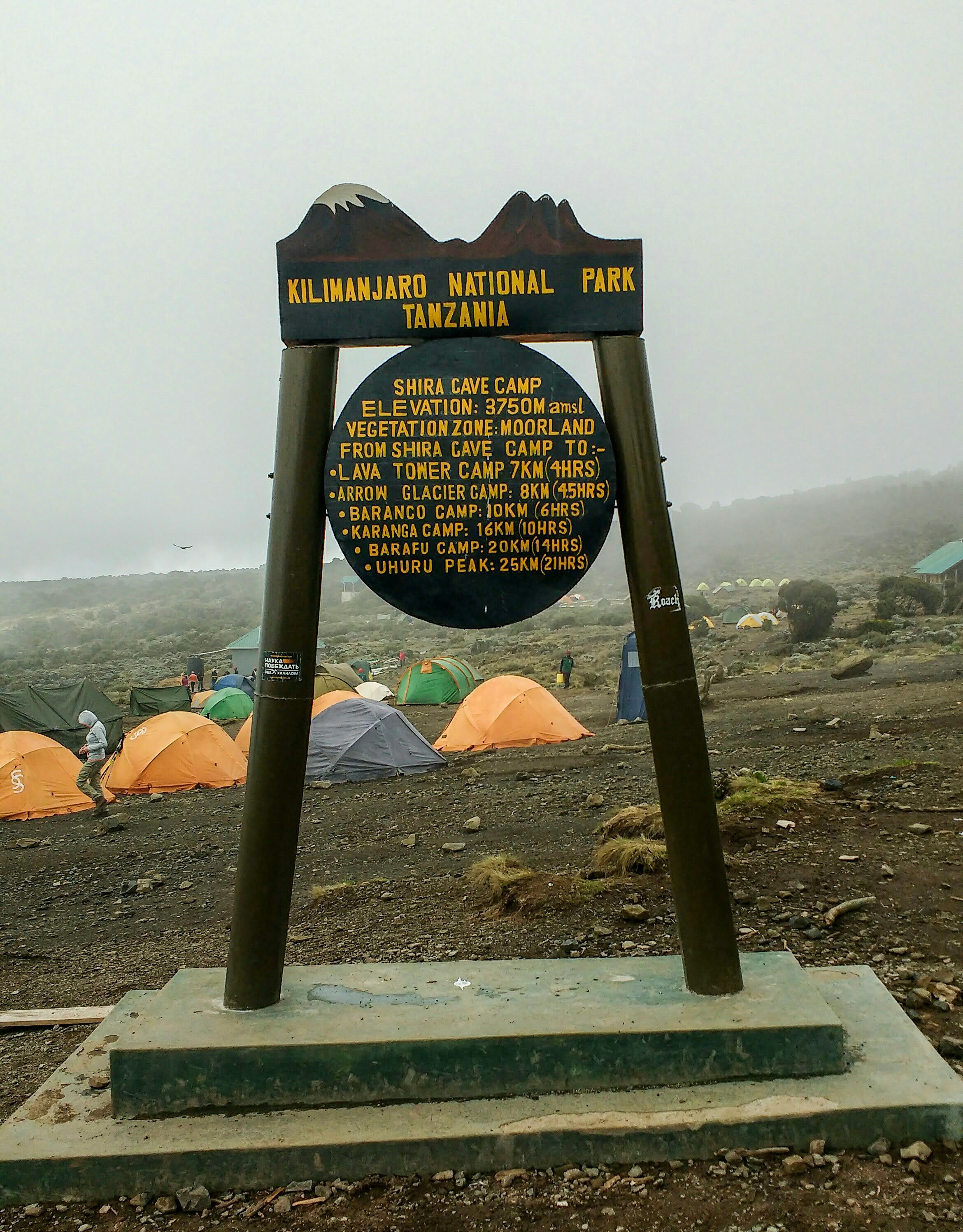
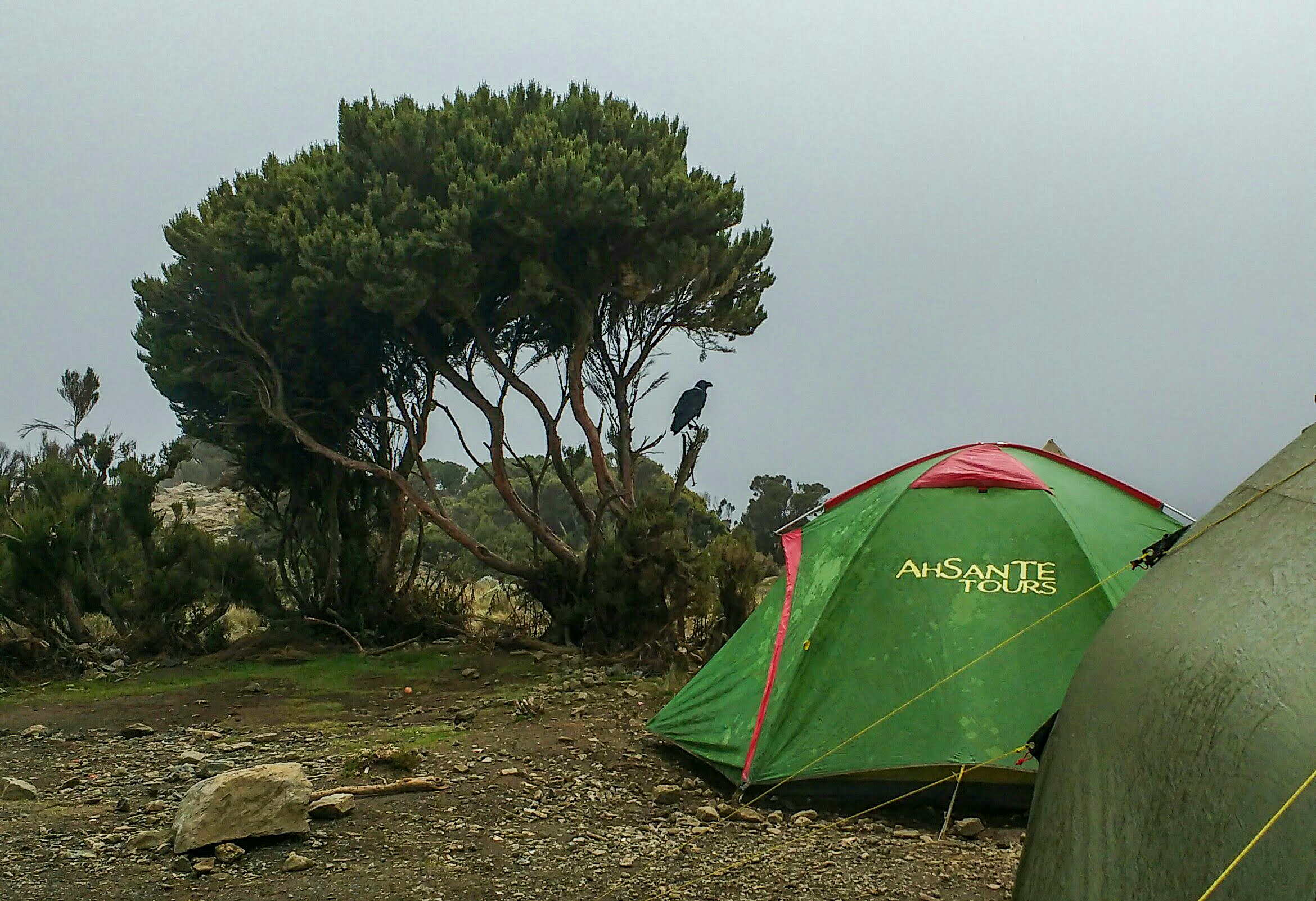
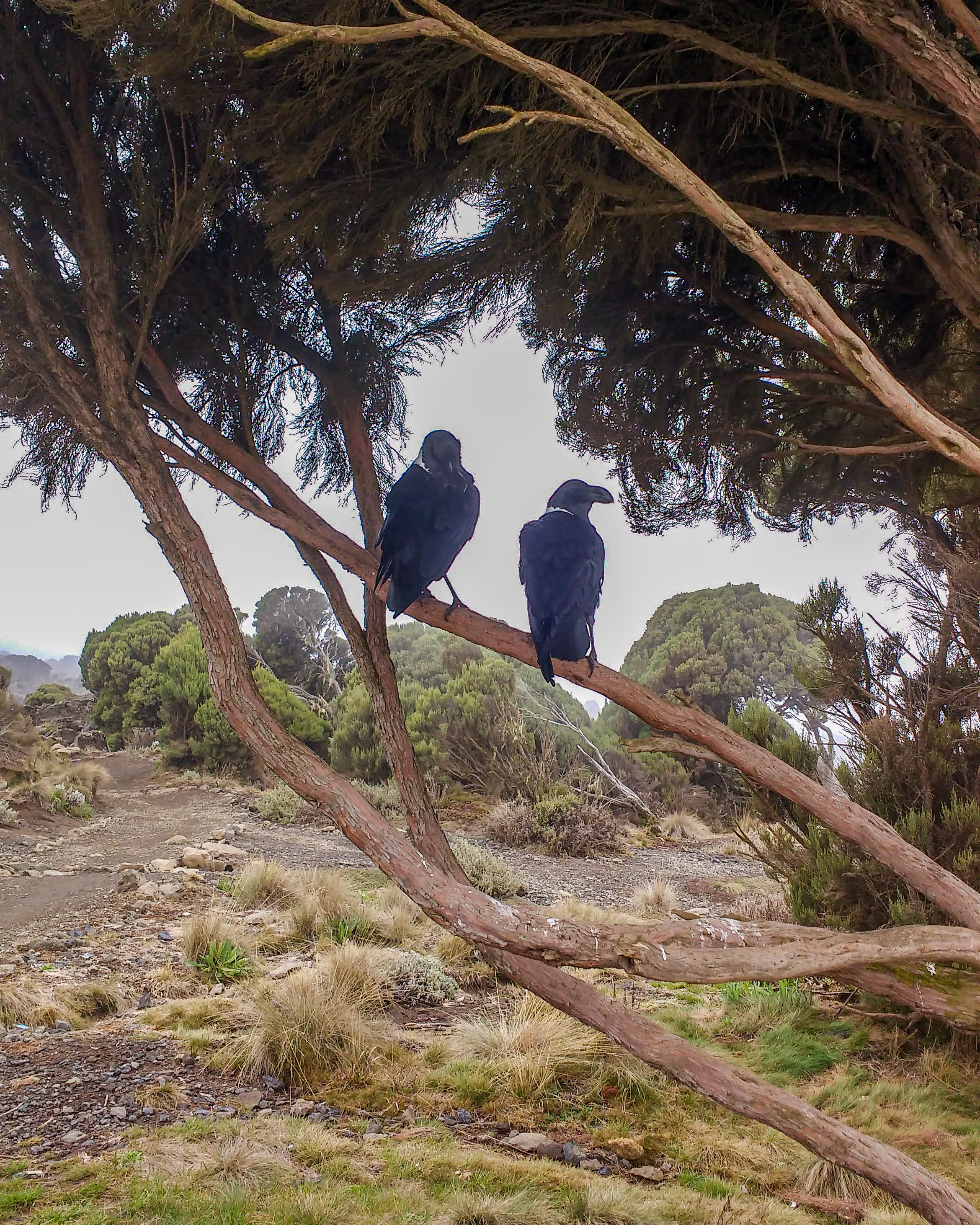
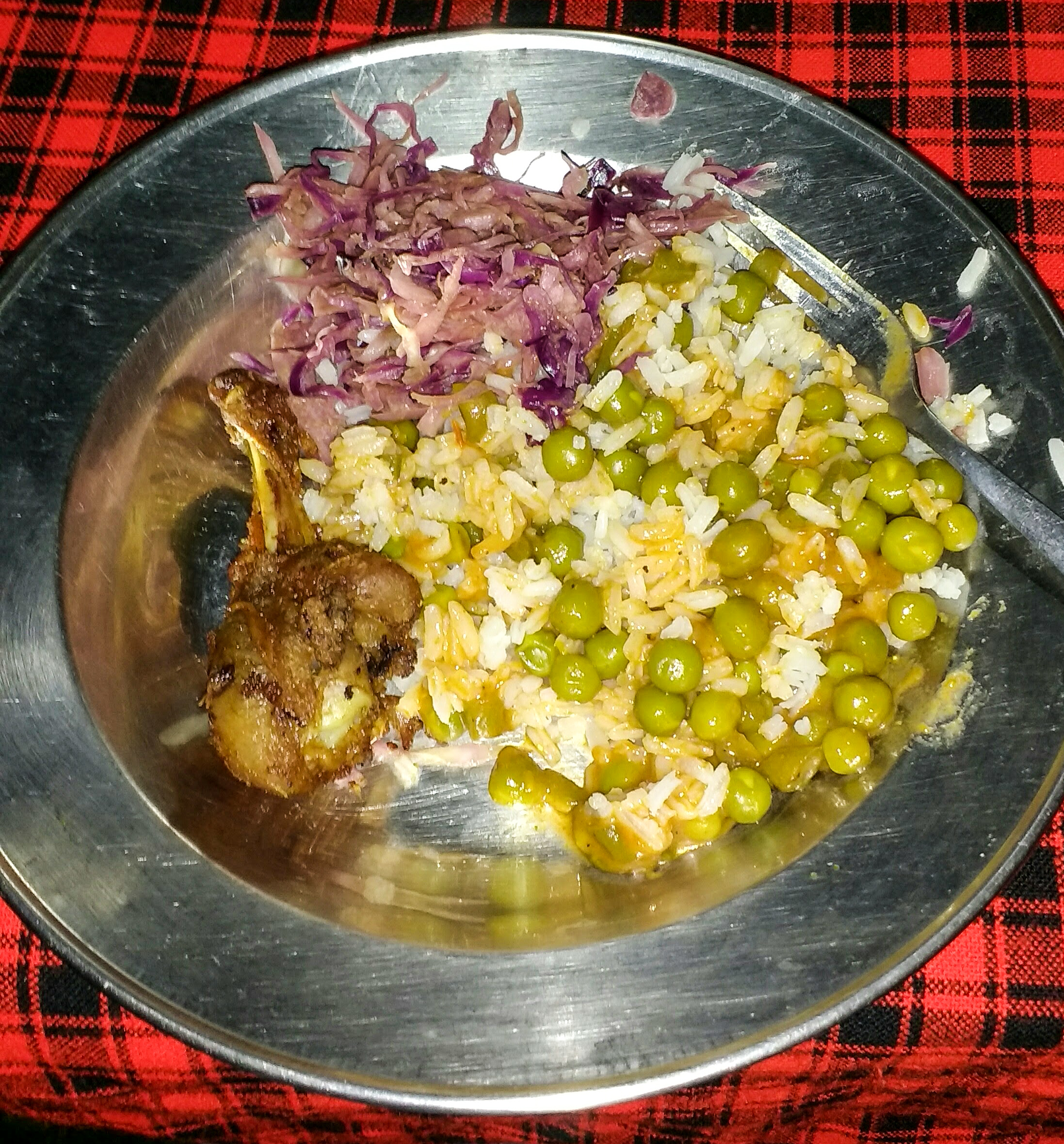
The afternoon at Shira Cave Camp was a bit different to the usual schedule – after a shorter day of walking, we had time to rest in anticipation of tomorrow’s big day of acclimatisation. Before dinner, the entire team of guides and porters began a dancing and singing circle, giving us some motivational African entertainment. We learned the words to ‘Jambo Bwana’ and we sang and danced until we had all gone silly!
Jambo, jambo Bwana (Hello, hello Sir)
Habari gani (How are you?)
Mzuri sana (Very fine)
Wageni, mwakaribishwa (Foreigners, you’re welcome)
Kilimanjaro, hakuna matata (Kilimanjaro, there is no problem)
Tembea pole pole, hakuna matata (Walk slowly, slowly, no problem)
Utafika salama, hakuna matata (You’ll get there safe, no problem)
Kunywa maji mengi, hakuna matata (Drink plenty of water, no problem)
There was a small matter of our guides asking us to sing a song from England for them, and we all had some sort of brain paralysis and mutually started singing ‘Freed from Desire,’ but as a football chant… let’s pretend that didn’t happen! That evening, the clouds rolled away and the stars shone so brightly over camp. Somewhere in the distance beyond Mount Meru a storm lit the sky in silent purple strobes, and I slept well.
Day Three – “Headaches and Fried Potatoes”
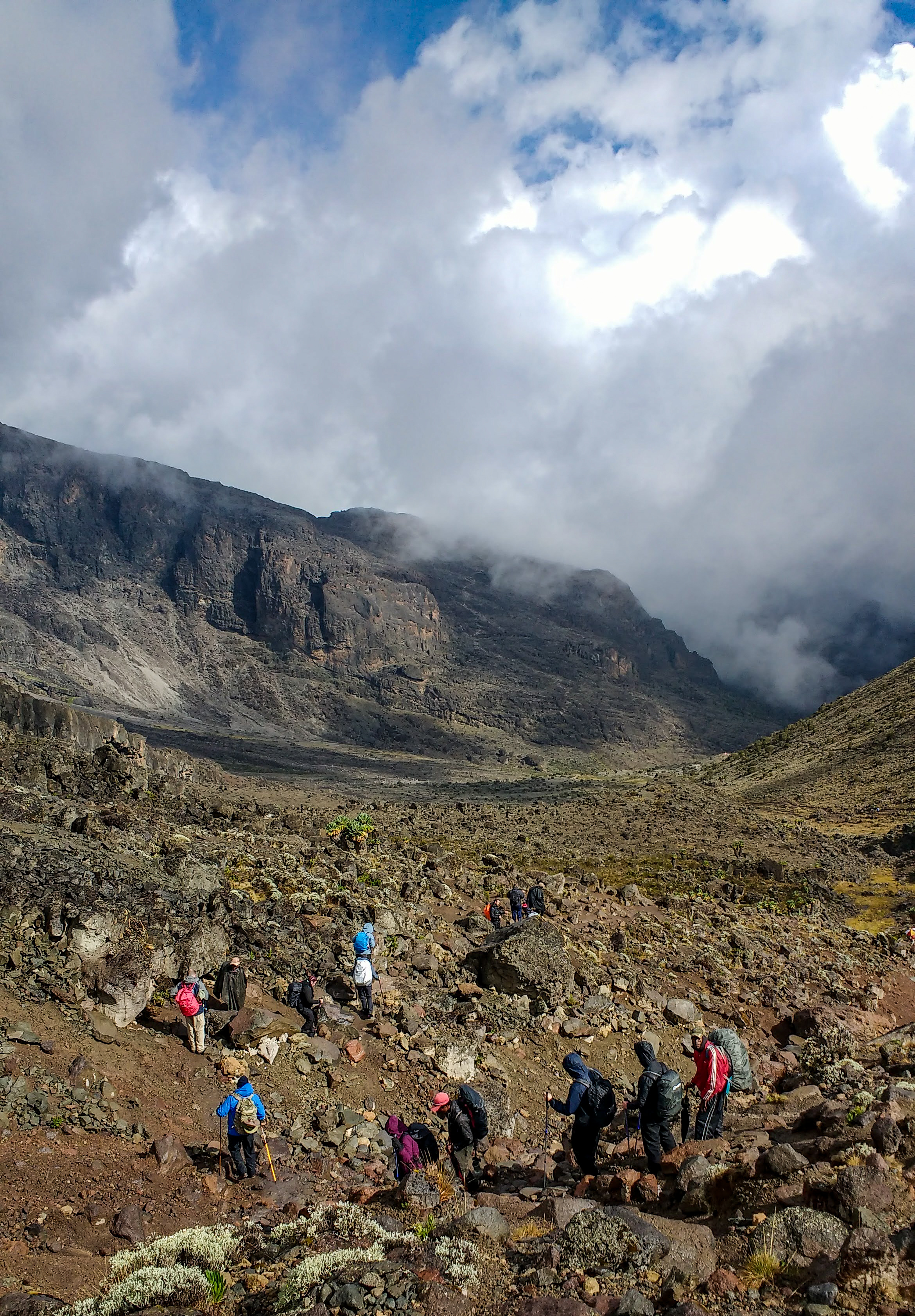
We said farewell to two of our group this morning – it was sad to break up the group, but they decided they’d reached their limits, which is a difficult and respectable thing to do. We had risen before dawn for a quick breakfast and began the tough trek into the beautiful rising sun at 7:30. It was glorious and warm, but as the hours passed and we climbed higher into cloud, the chill crept in quickly. We were gaining altitude fast, and the land became very bleak as we crossed into the Alpine Desert, with nothing but huge boulders and red mud. Much of the group began to feel the effects of altitude, suffering with pressure headaches and struggling to catch our breath. It really made me sensitive to the cold and the exhaustion, but with a piece of ginger and some ibuprofen, I managed to stay on top of it. The guides made sure we stopped regularly and sipped our water steadily.
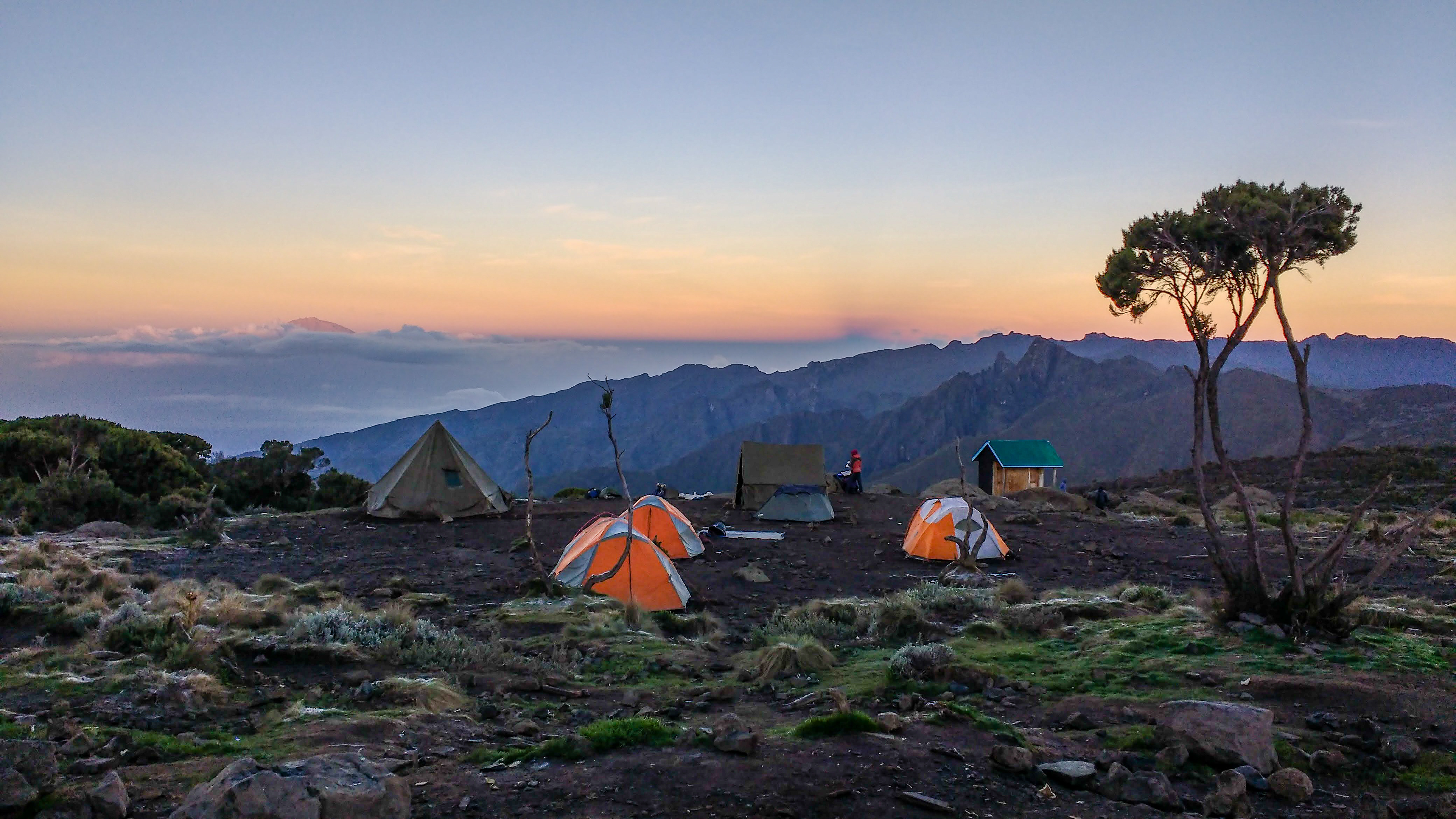
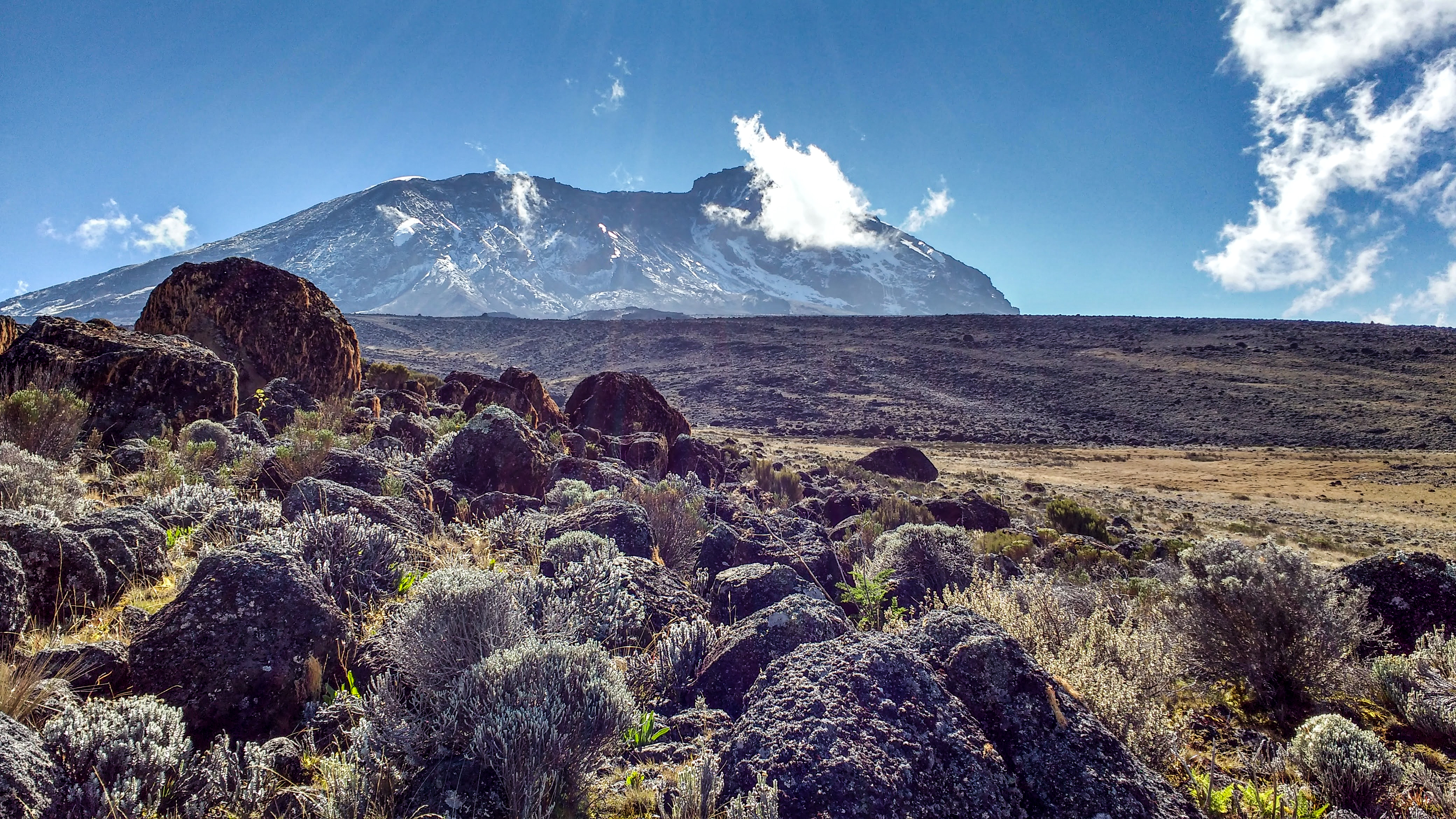
We climbed the vast, rocky landscape up to the Lava Tower, mist skimming the ground beneath our feet, finally reaching an altitude of 4,600m. This was our acclimatisation hike, and the highest point of our trek until we reached the Kibo Cone. From here we’d descend again – this exercise would, in theory, make our summit attempt much easier in terms of getting our bodies used to the altitude. Our Rafiki had already arrived and put up the mess tents beneath the tower of solidified lava, where we were treated to hot fried potatoes, cheese toasties and cake! Since altitude sickness feels a bit like a hangover, hangover food was extremely welcome! Even those who were sick to their stomach felt better after the feed, and we continued hiking down the other side of the Lava Tower, across streams and little waterfalls on this strange barren landscape.
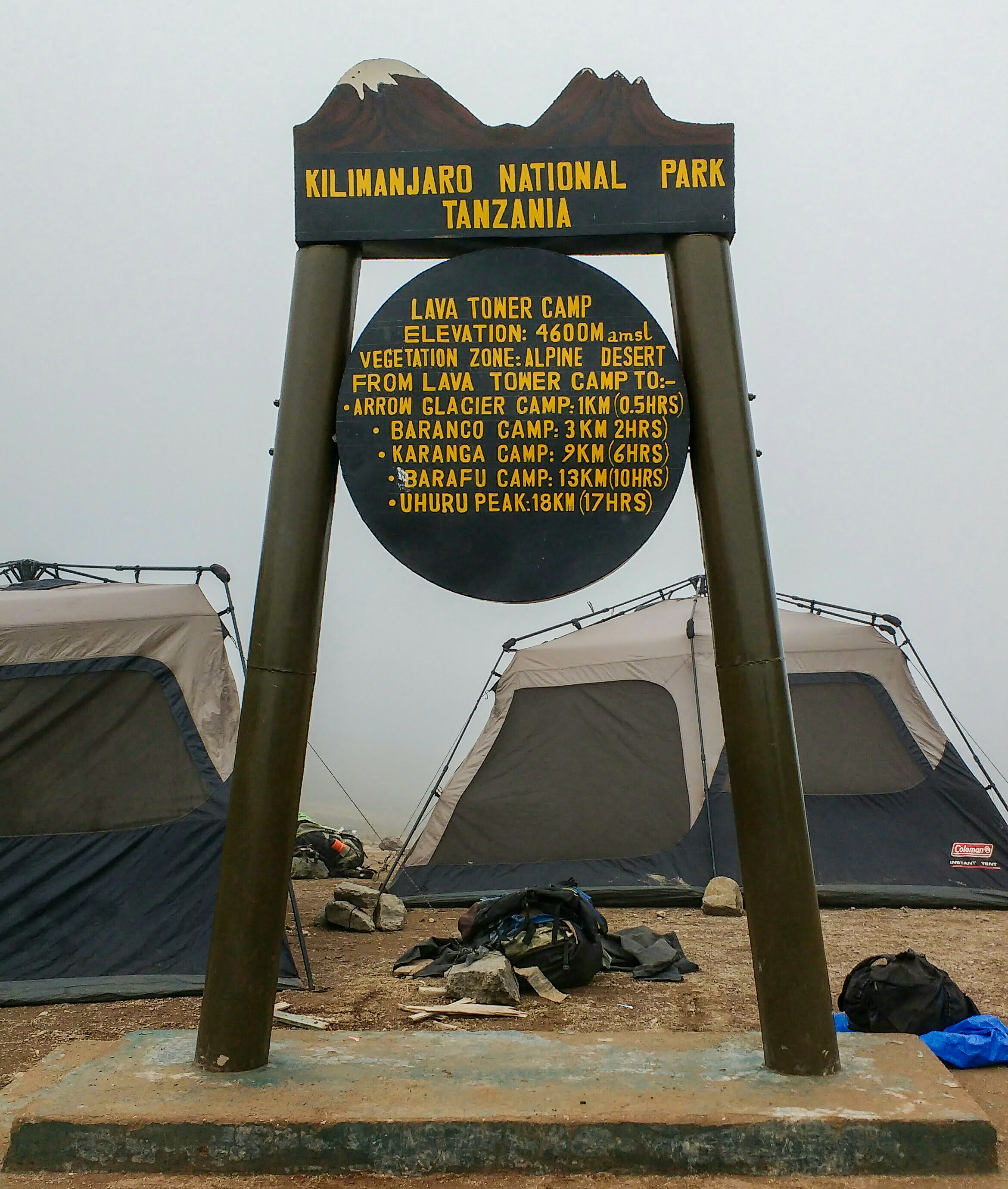
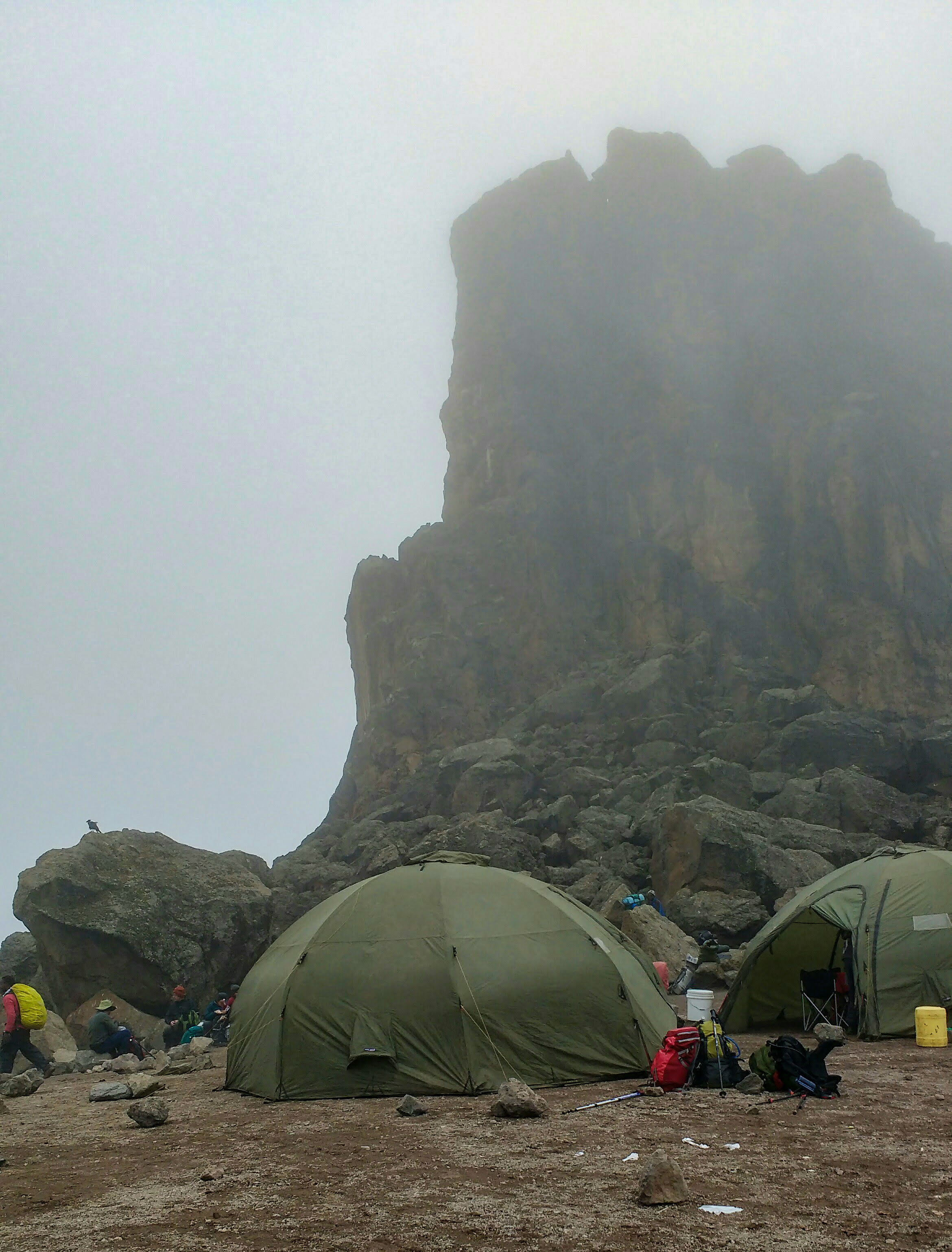
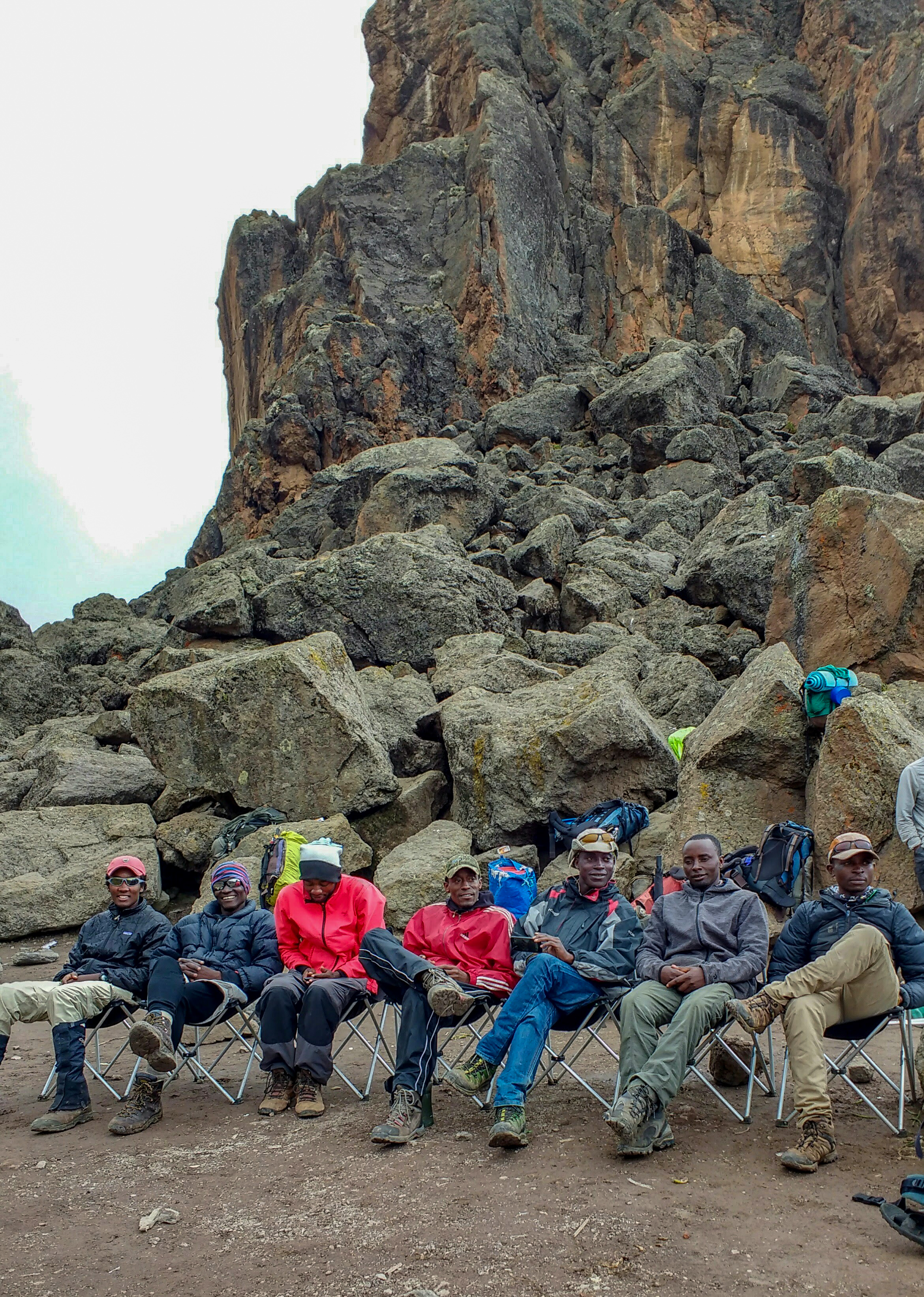
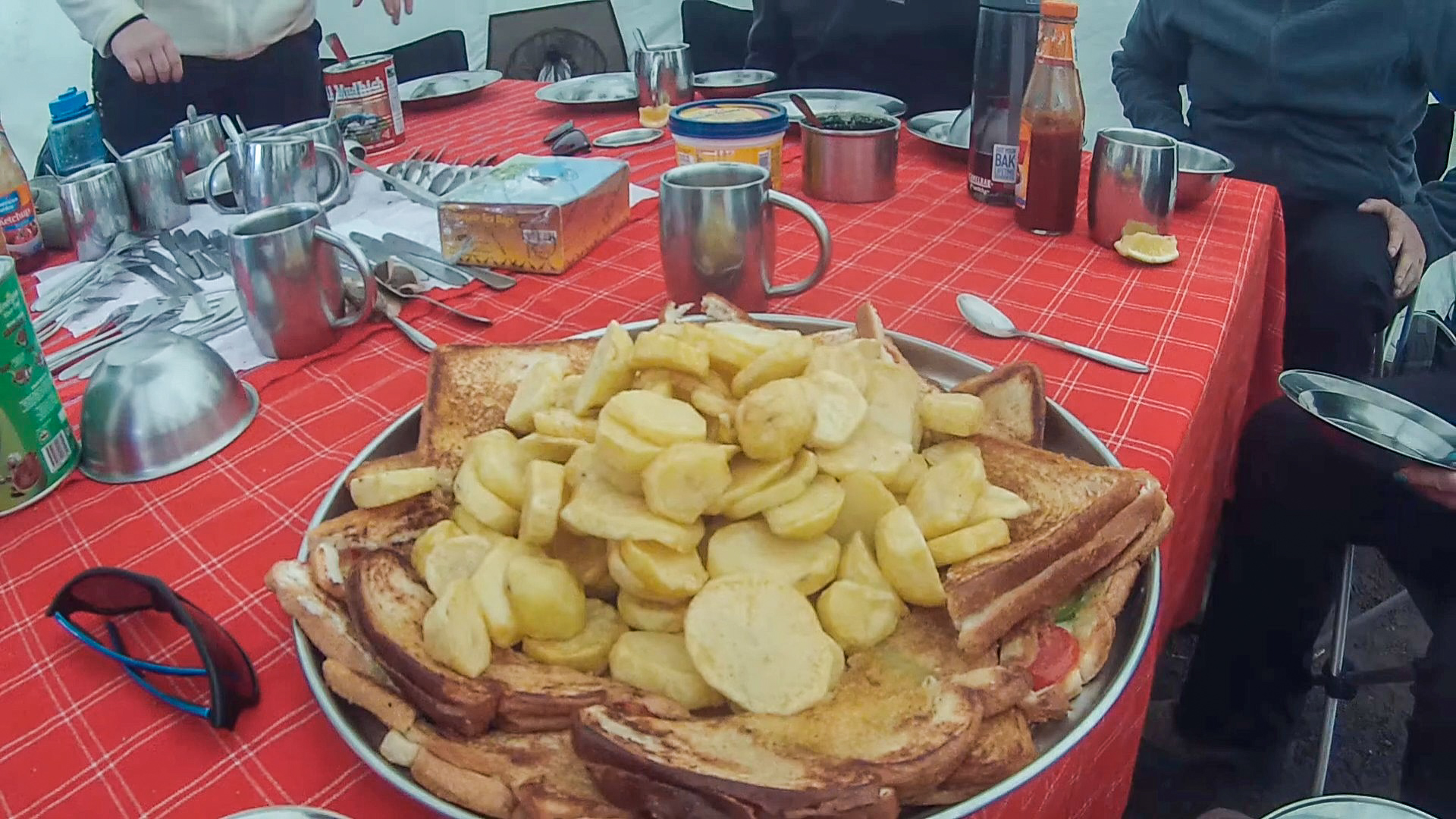
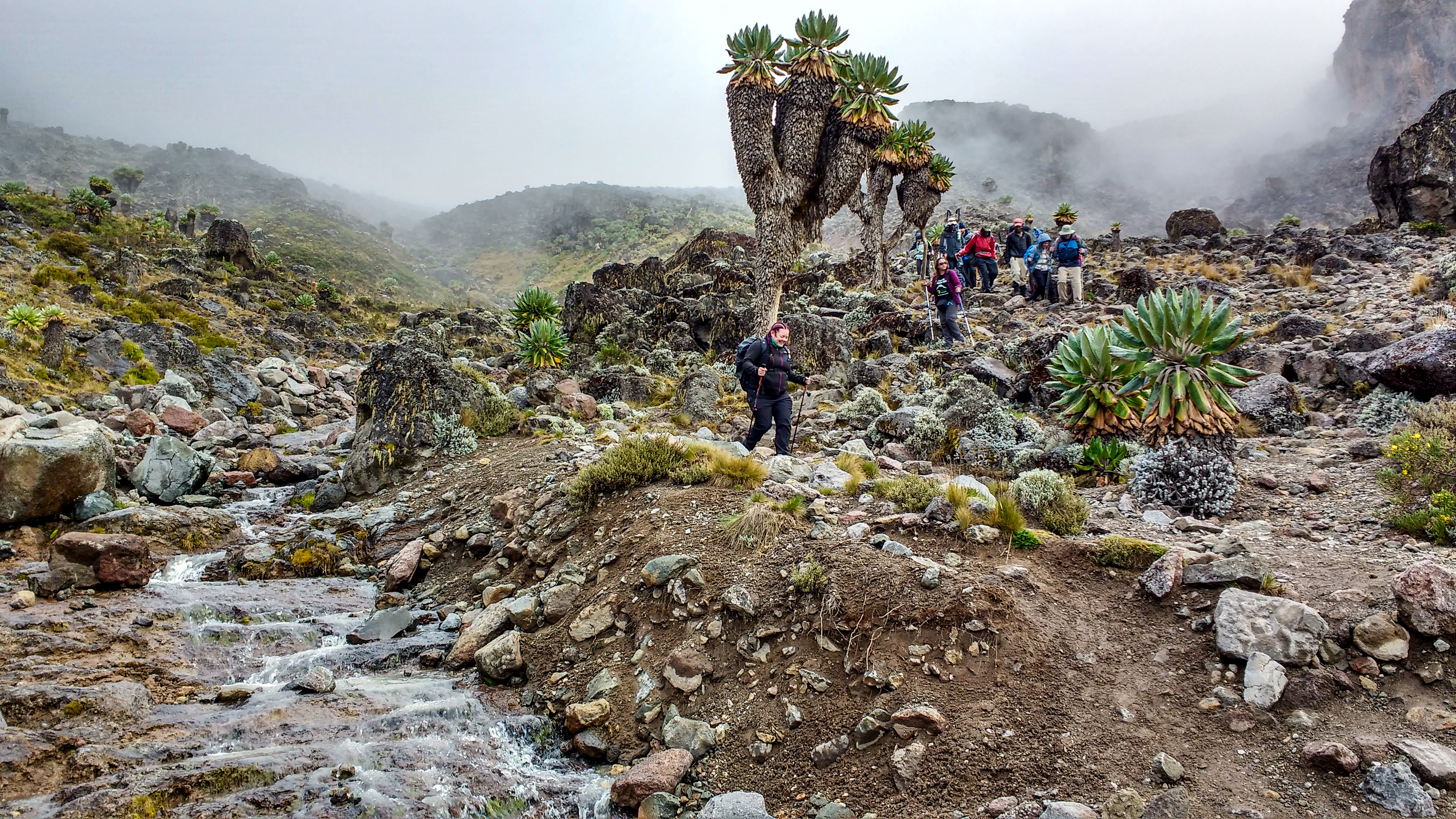
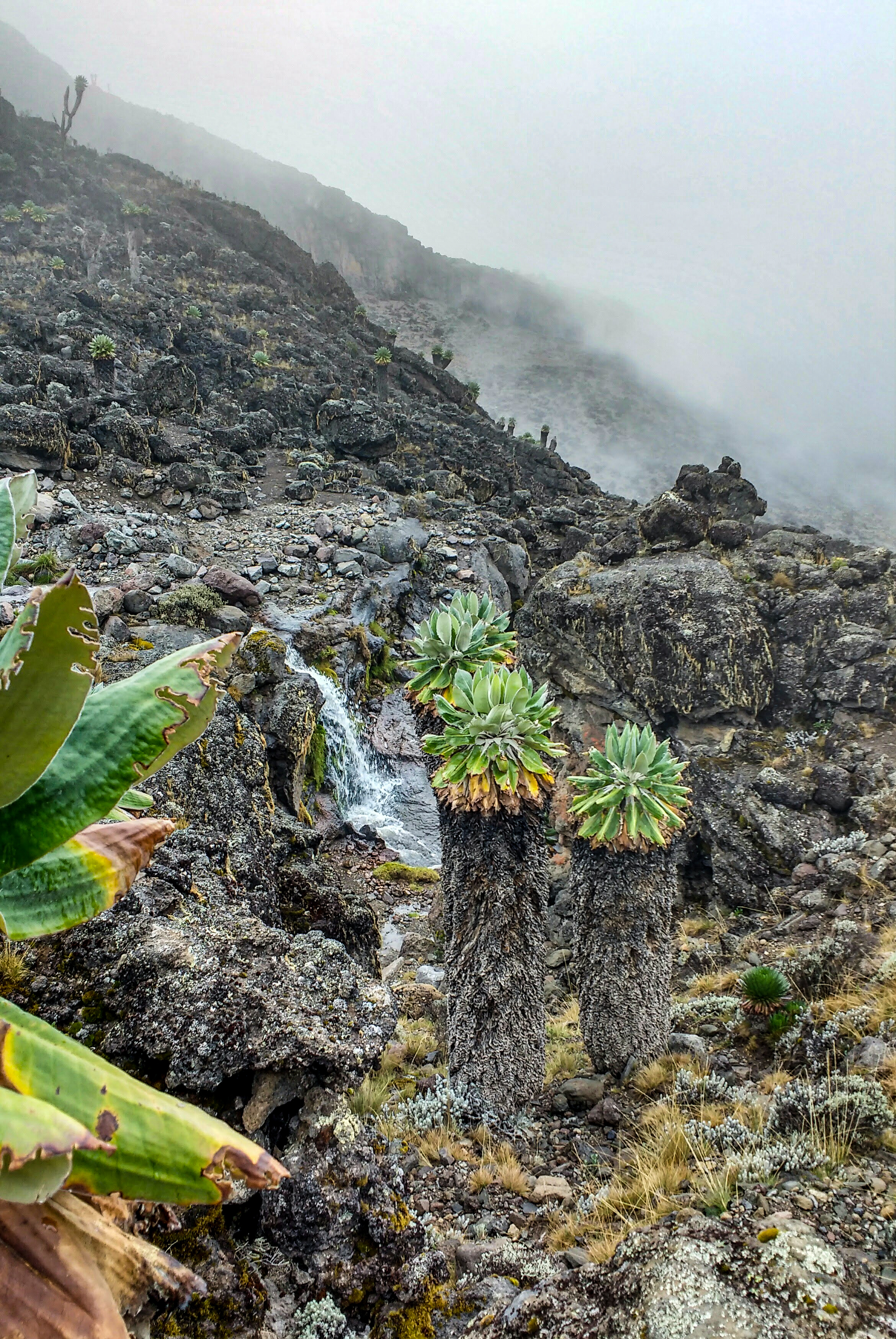
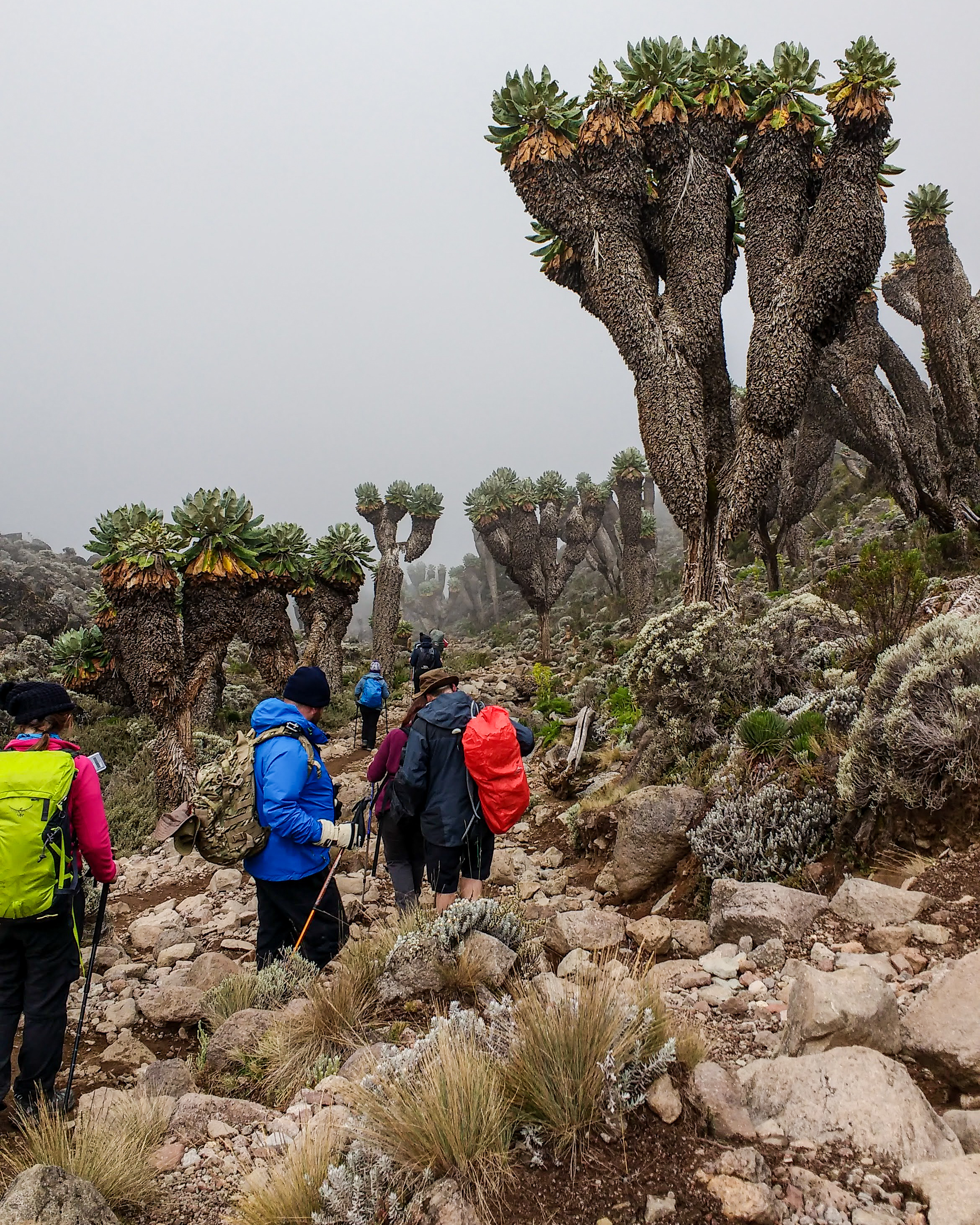
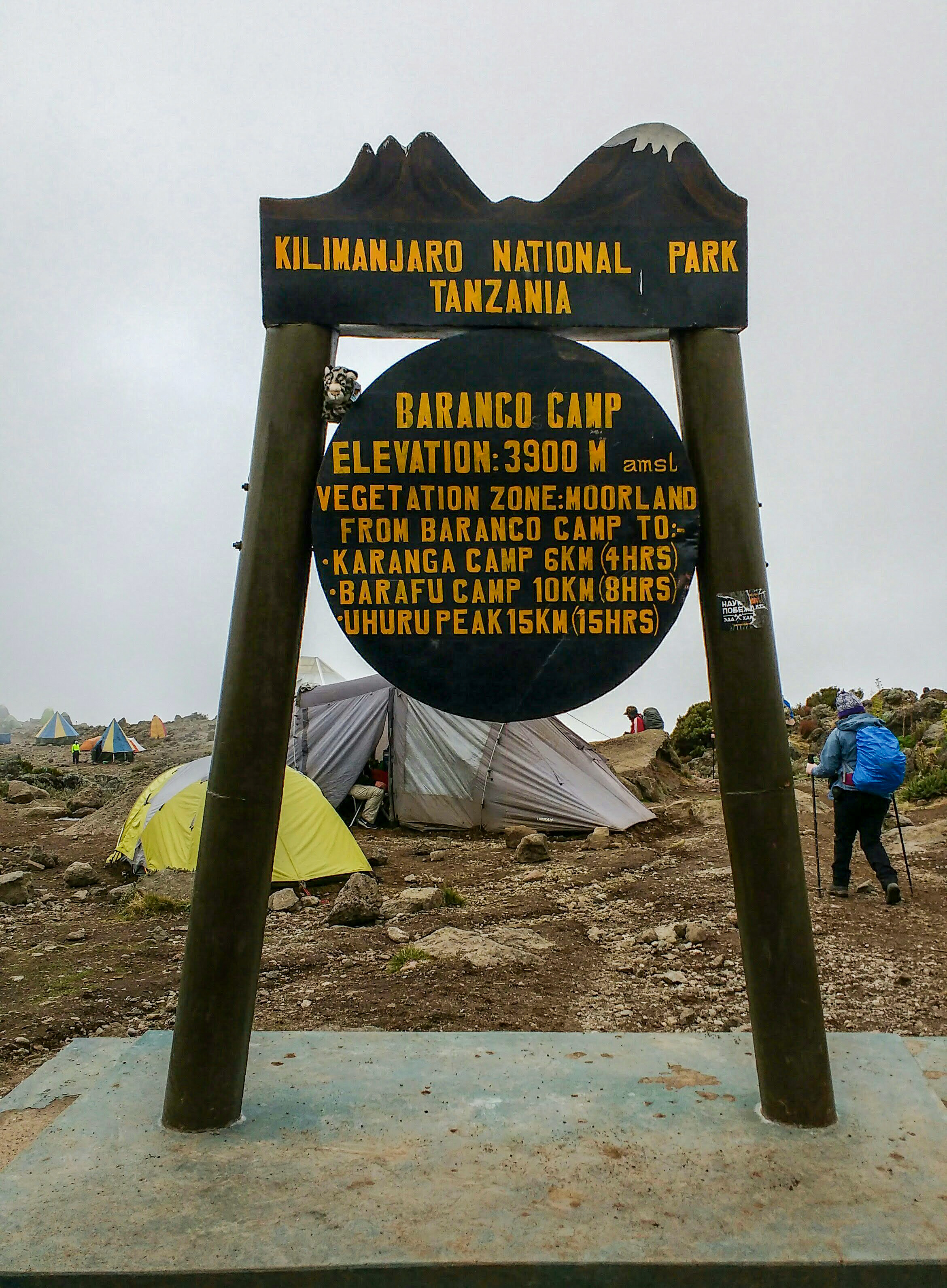
It began to hail quite heavily as we trekked, which then turned into snow, and we plodded ever onwards until we started to see vegetation again. Strange, almost cactus-like trees, and flowers growing in the mist, surrounded by little rocky waterfalls. Eventually, we found ourselves gladly at Barranco Camp, where Macaroni and Bolognese went down a treat for dinner. We were informed that Barranco Camp was the highest point for rescue helicopters to land on our route – from here on up, if we got injured, we’d have to rely on being wheeled back down on a ‘Mountain Taxi,’ which we’d discover in a day or two… Once again, the stars were stunning and we could see lights far below in the real world. I watched a little Four-Striped Grass Mouse hopping around outside the tent under the looming Barranco Wall; the infamous cliff we would be scaling in the morning.
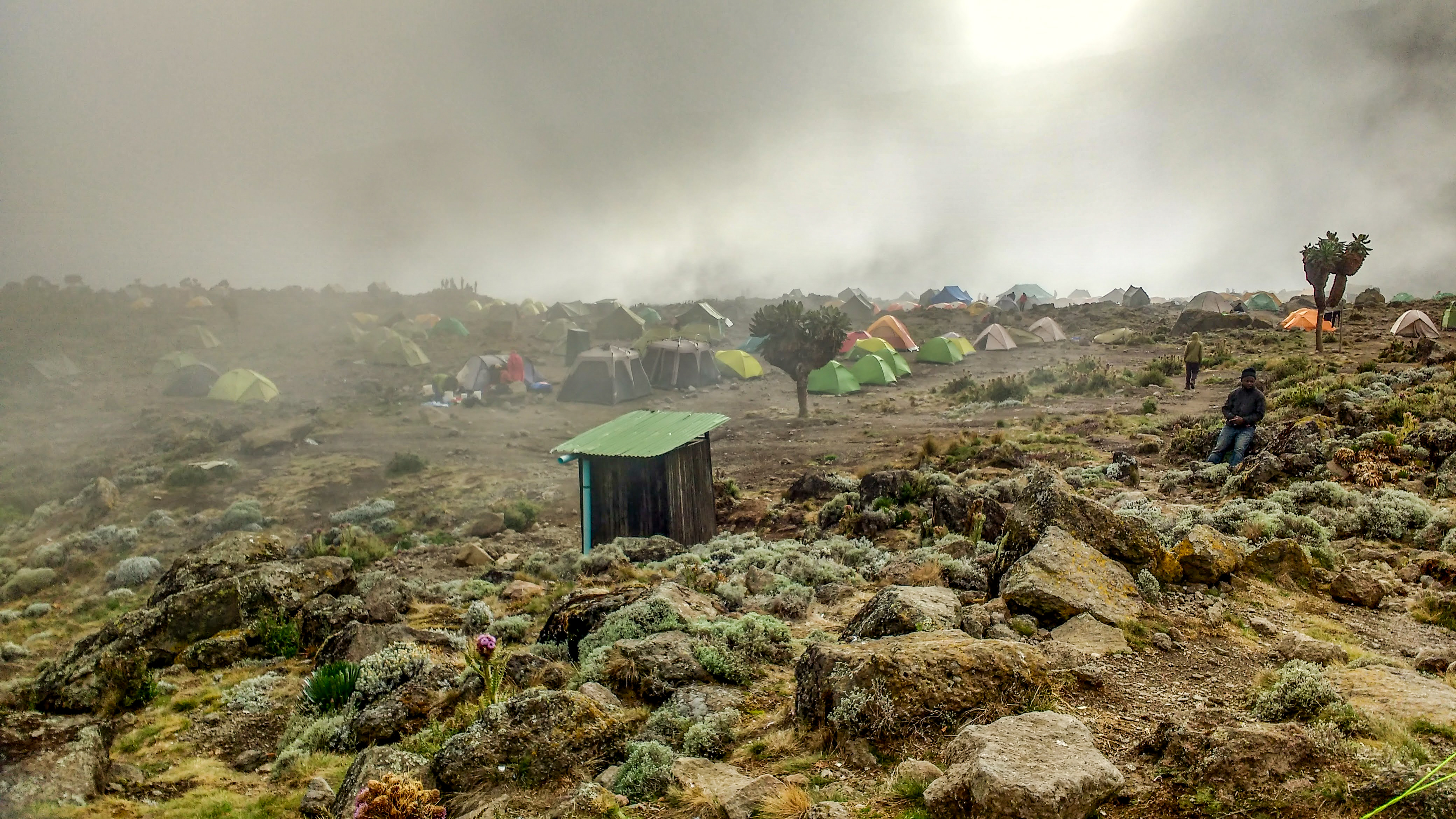
Day Four – “On Top Of The World”
We were ready to leave Barranco Camp at 7am, with the sky just lighting up at the edges, and we sang Happy Birthday in Swahili to Grace. I had awoken with a painful, swollen red face, which I think was a combination of yesterday’s morning sun, and an allergic reaction to my SPF50 sun cream – great combination! Tim – our group medic – advised me to borrow a different sun cream and keep applying tea tree gel. The group reacted very sympathetically to my appearance, which in turn made me feel very self conscious. In all this commotion, I didn’t get a chance to fill my water bottles, leaving camp with under 2 litres of water – not ideal. As we began climbing I was forcing back tears, feeling on the back foot, but I was soon brought back to reasoning by the stunning surroundings.
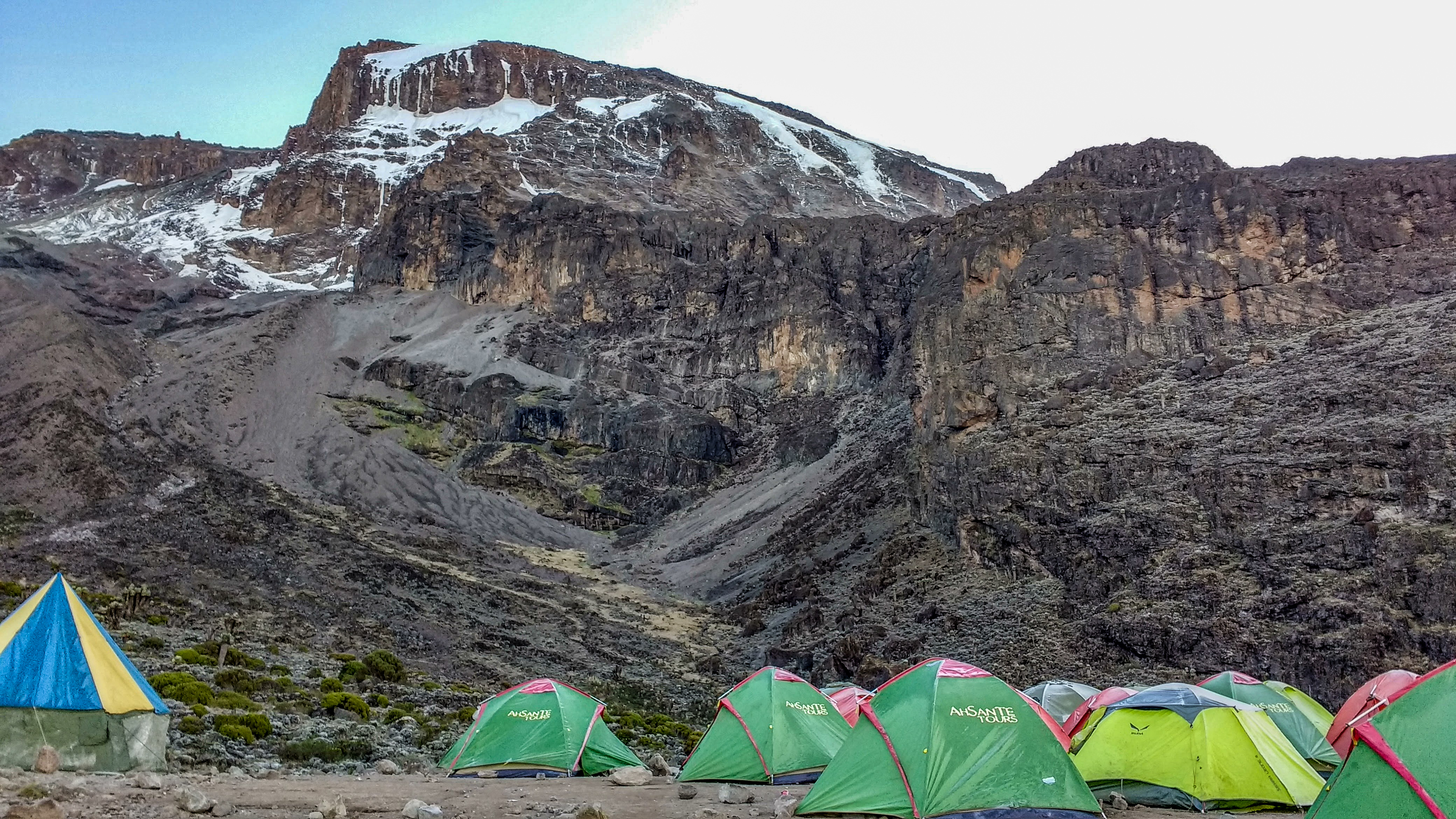
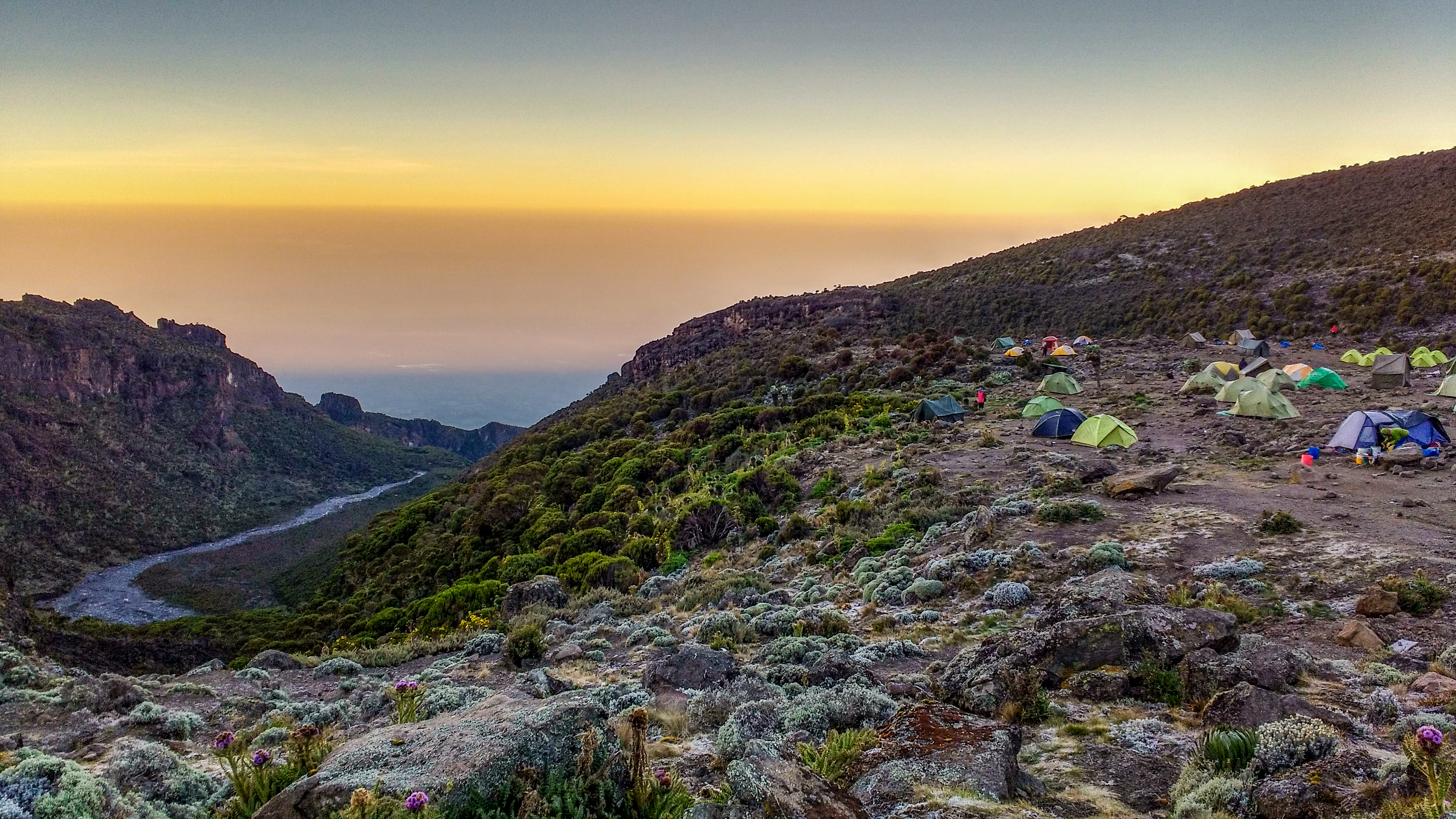
More than two hours of hoisting ourselves up sheer cliffs, edging along narrow ledges, giving one another leg ups, and even climbing on our guides’ knees, the camp was slowly falling into the distance beneath us, tiny green tents dotted on a real-life map. The valley and rainforest stretched out to blurry lines towards Mount Meru on the horizon, and the sun rose up over the wall to meet us. We sang and danced the ‘Barranco Shake’ while our Rafiki trooped past us with bags and baskets balanced on their heads. Grace stopped to tie a shoelace for one of them so he didn’t have to put down his pack! Maximum respect!
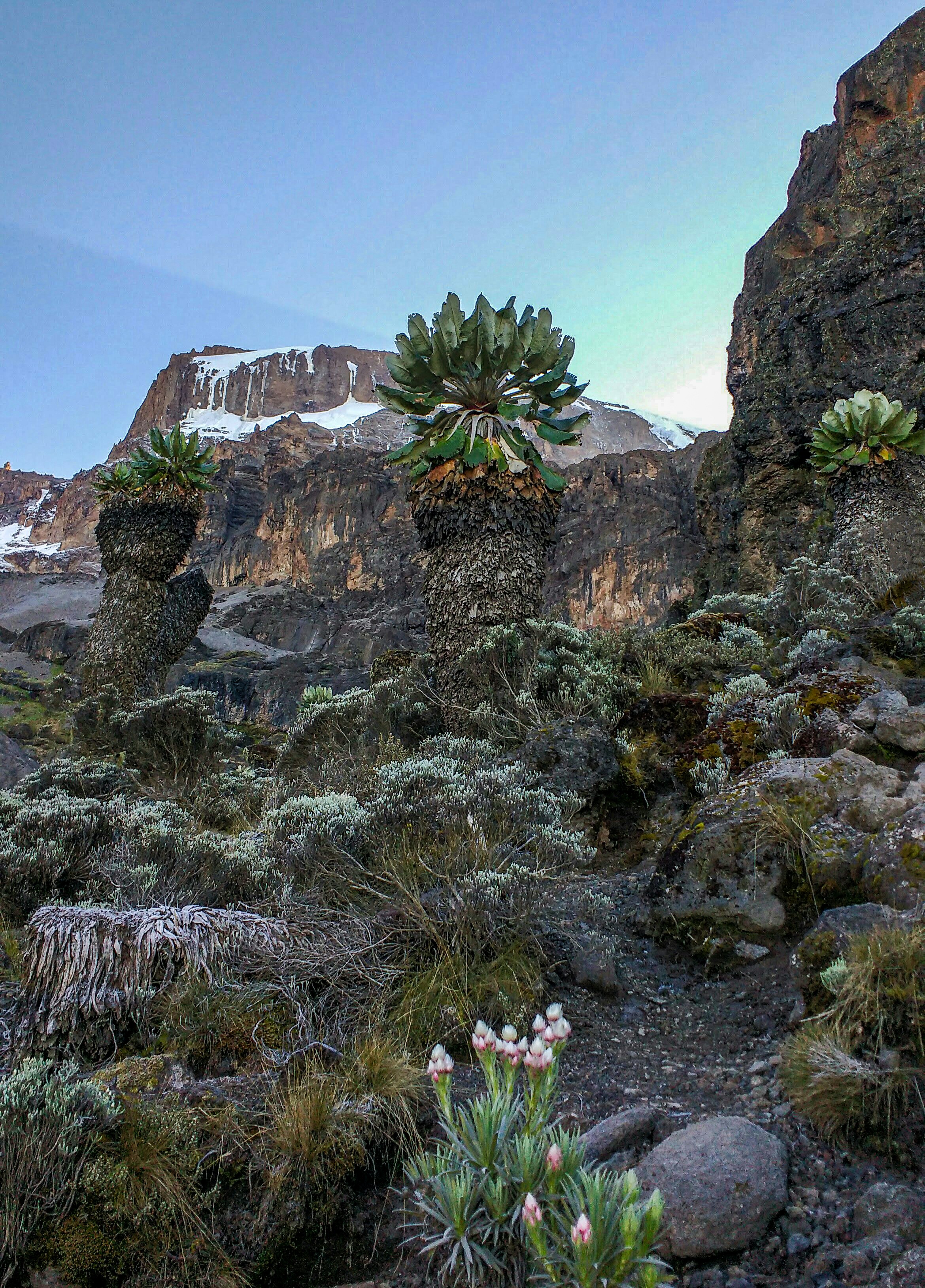
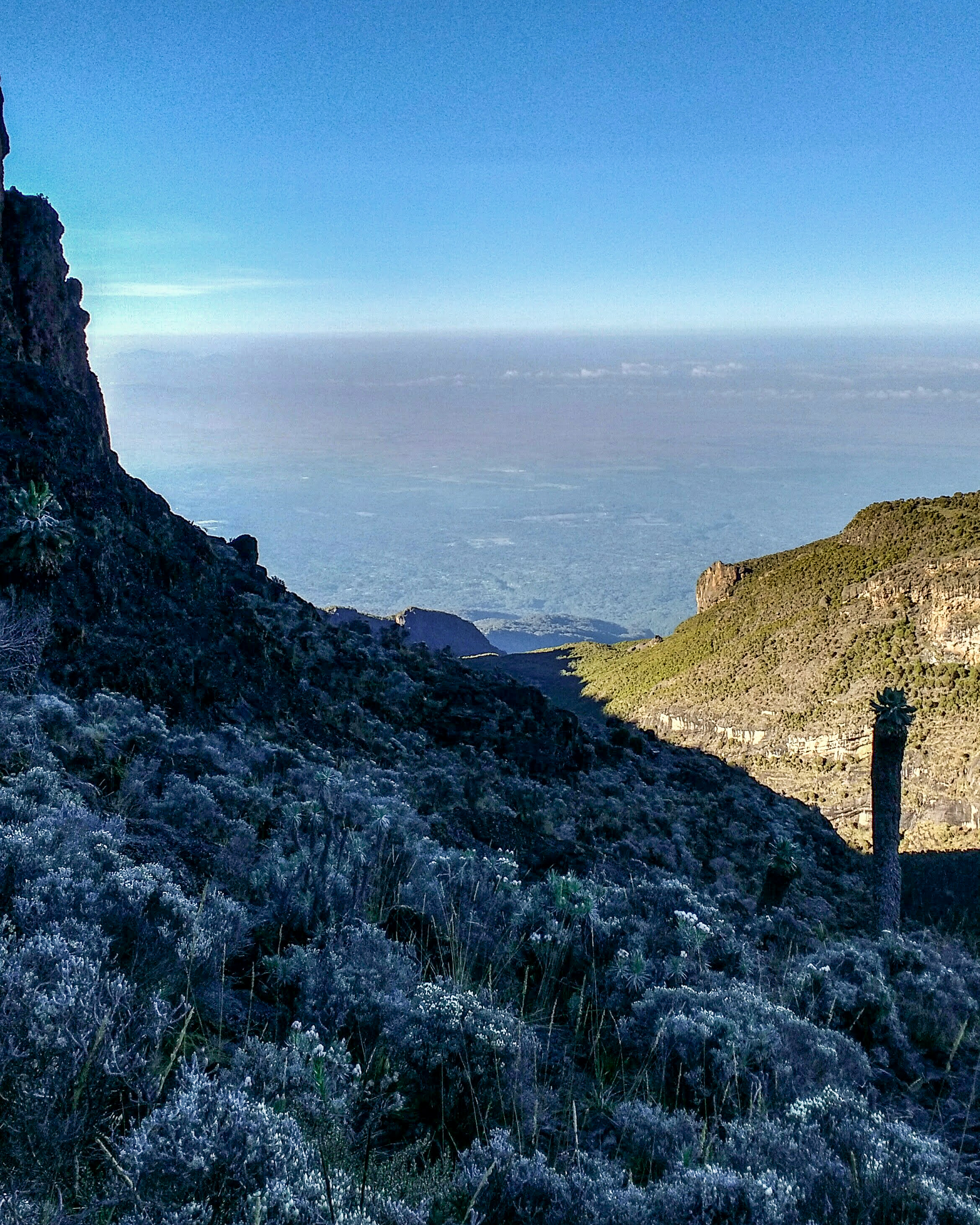
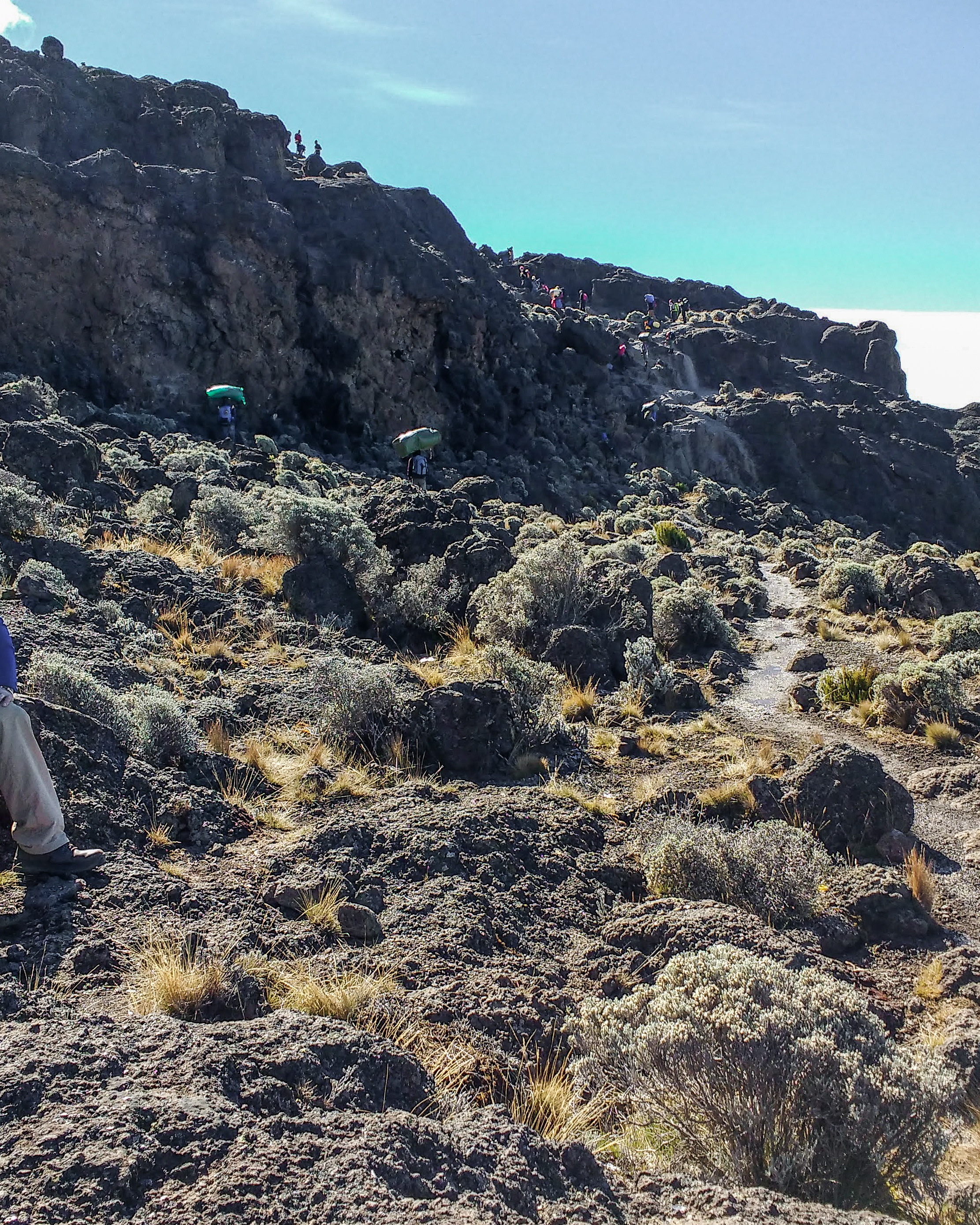
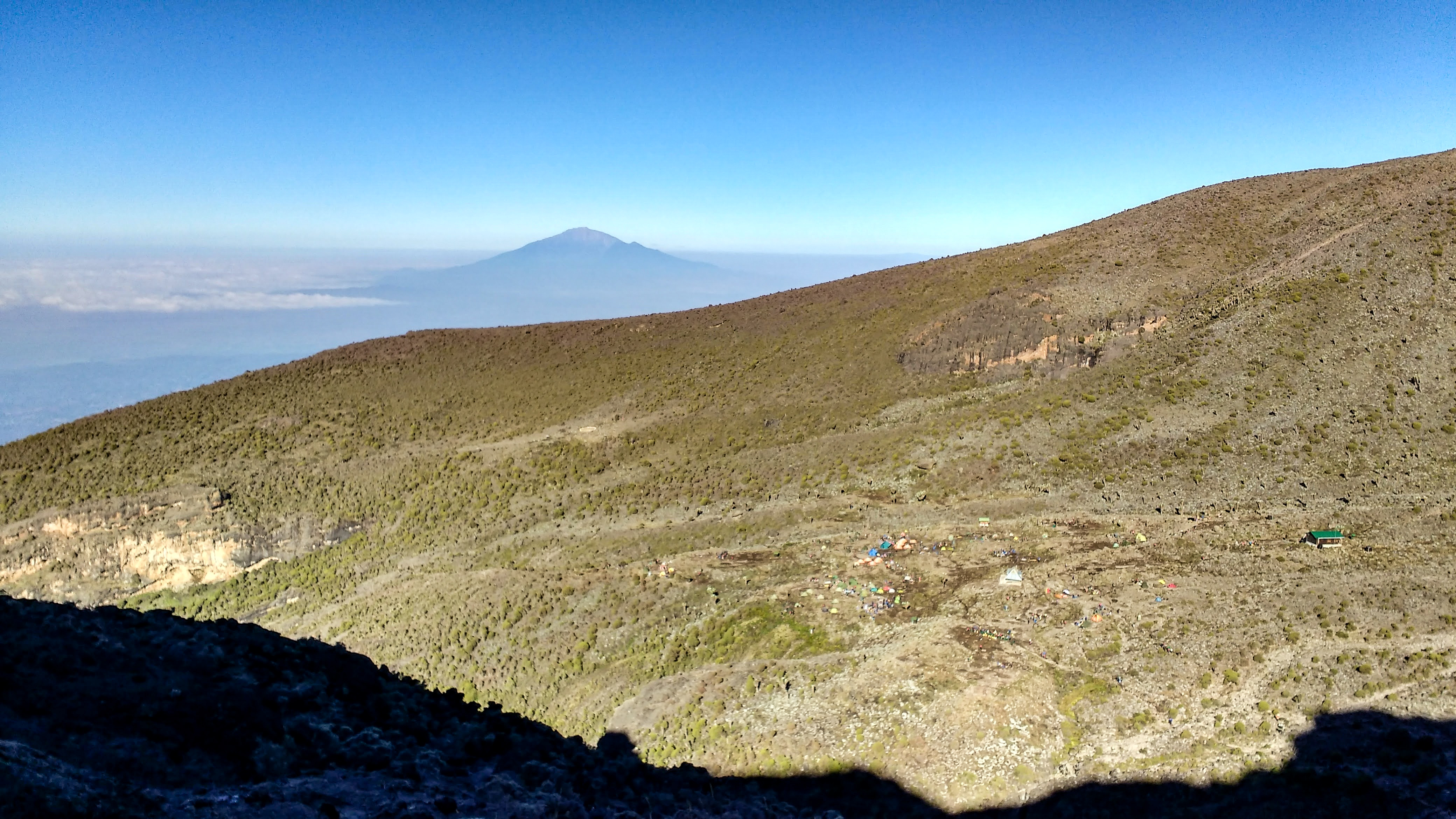
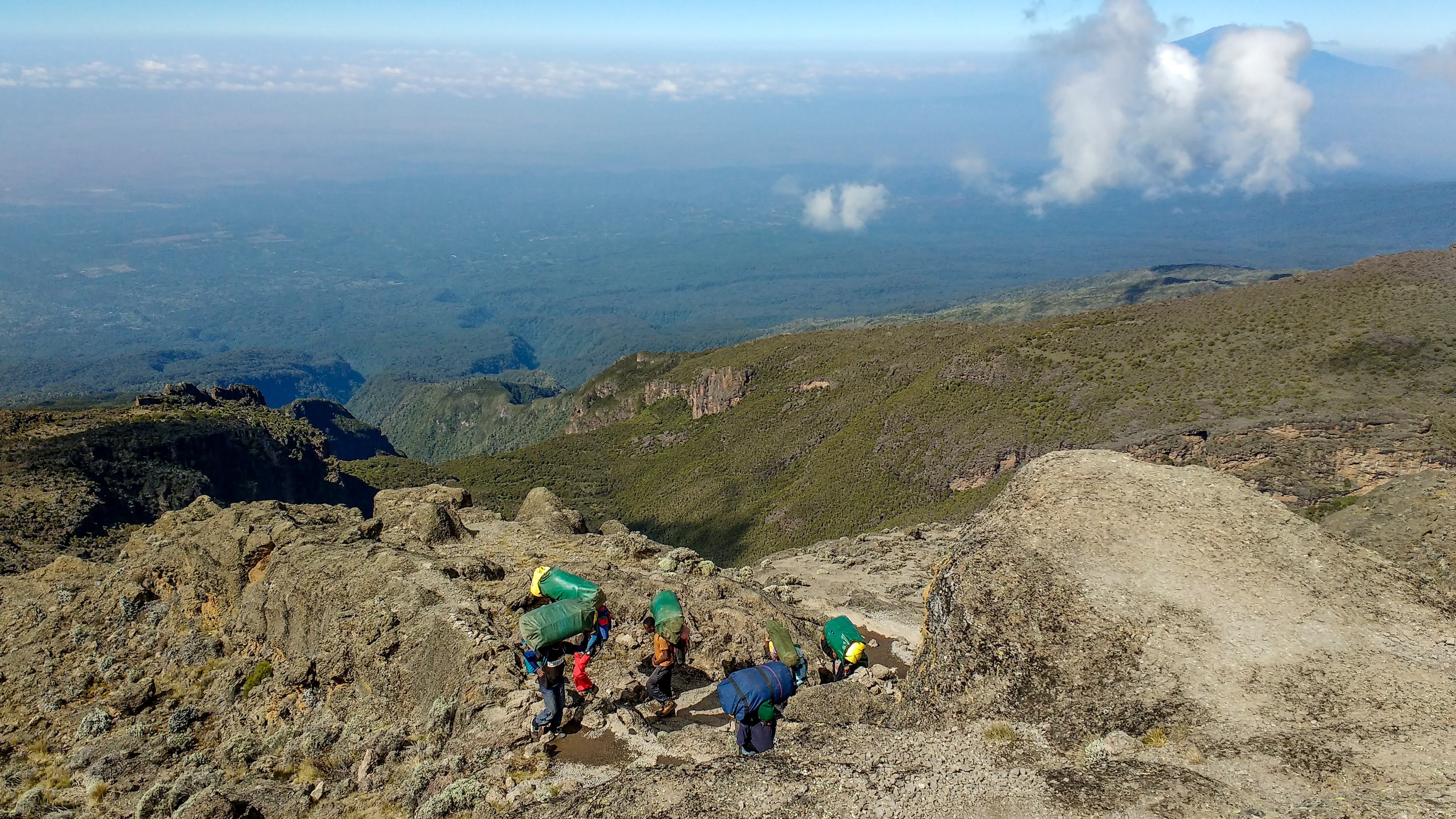
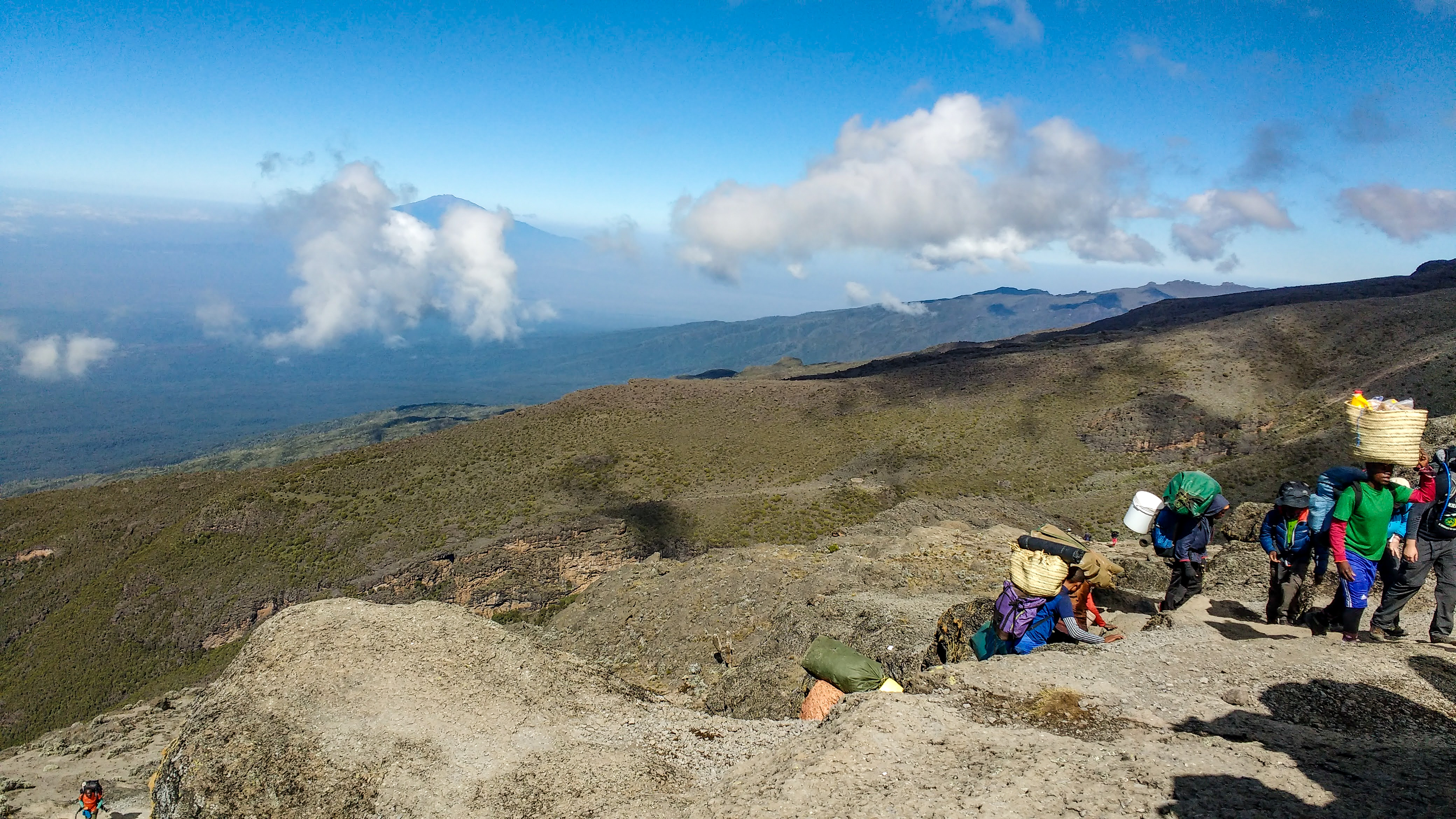
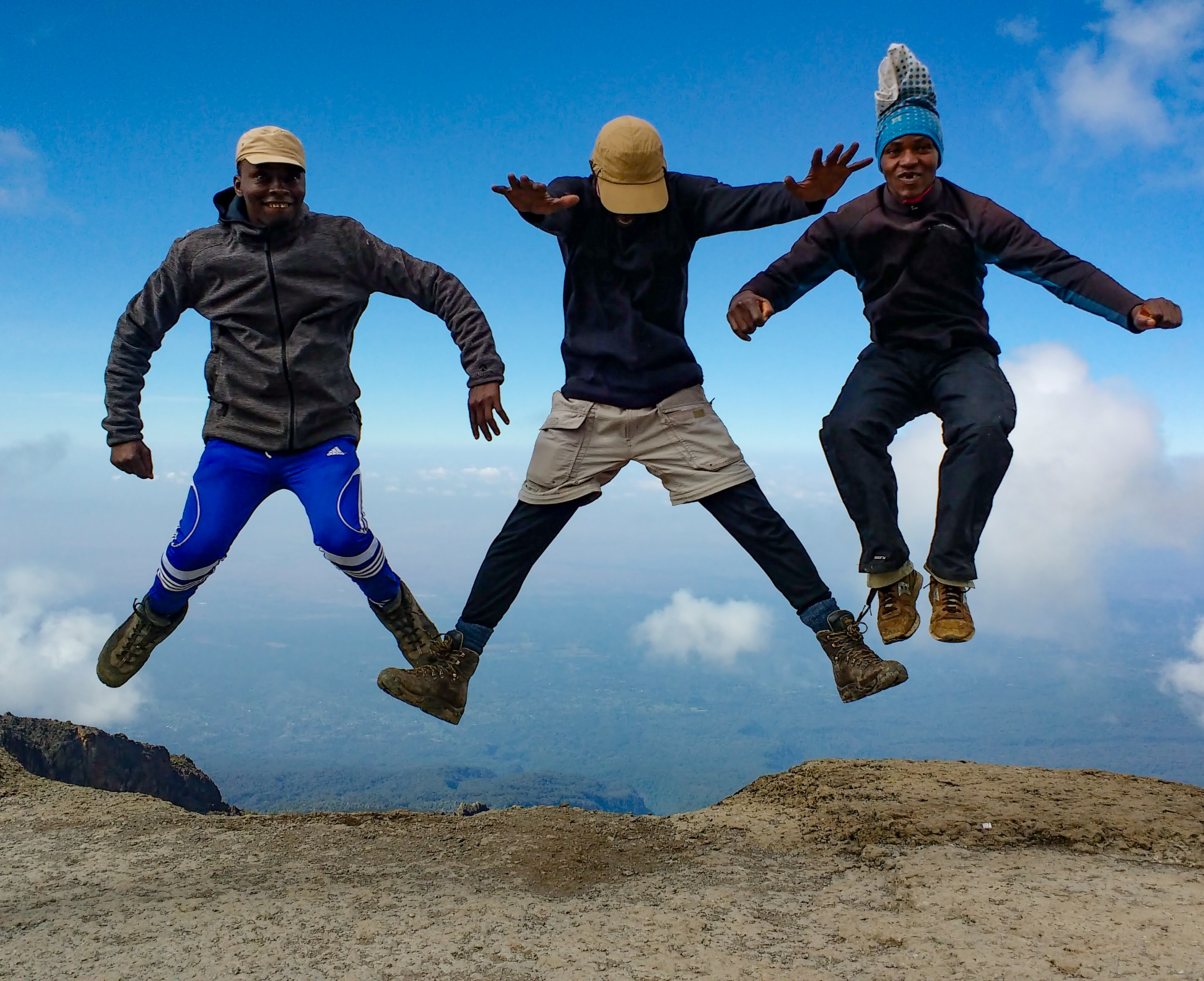
At the top of the wall the way ahead levelled out beneath the blazing sun, and the view was glorious, like looking out of an air plane! We took lots of photos, jumping in the air with our guides, and gave ourselves a moment on top of the world to take it all in.
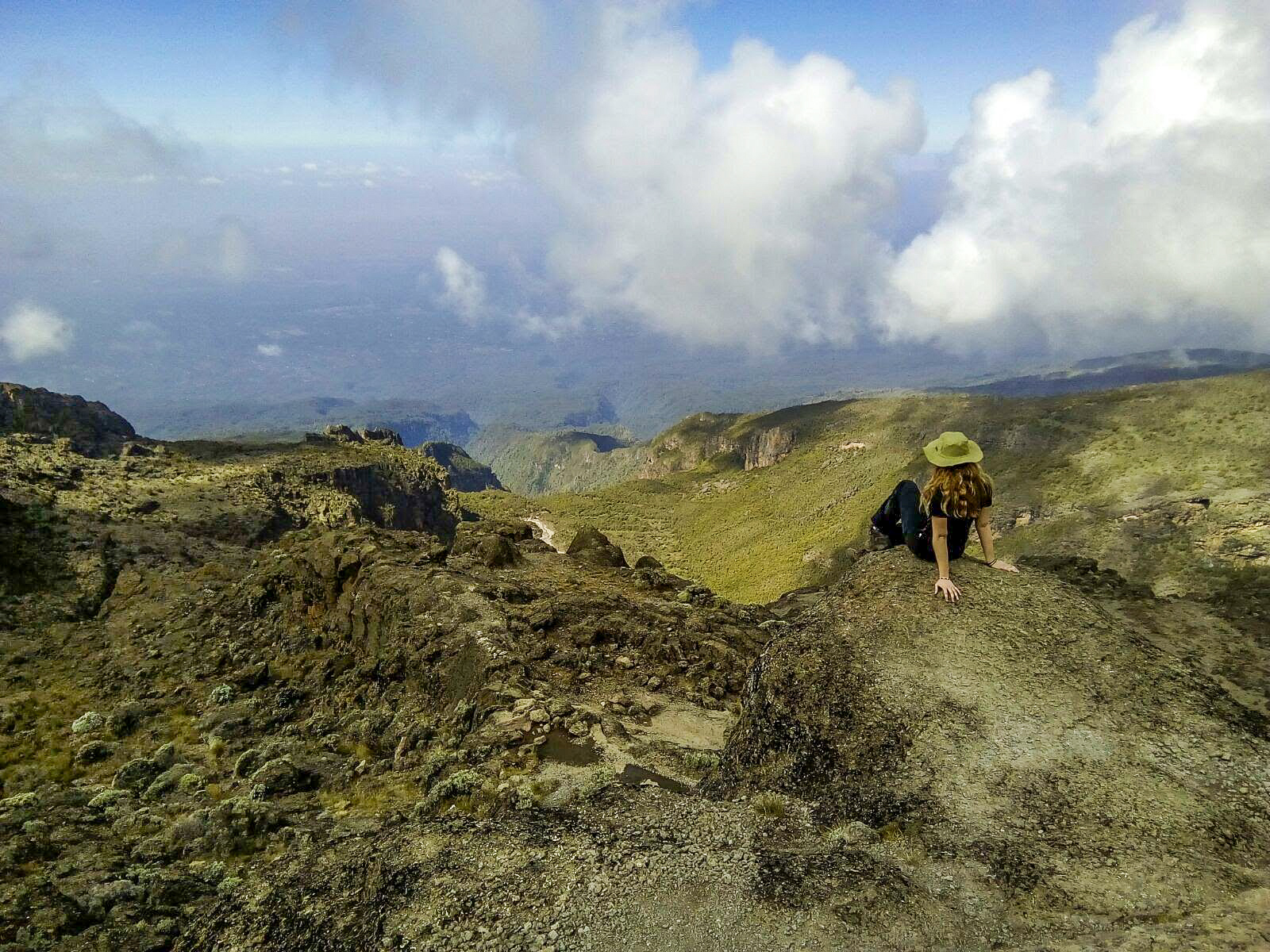
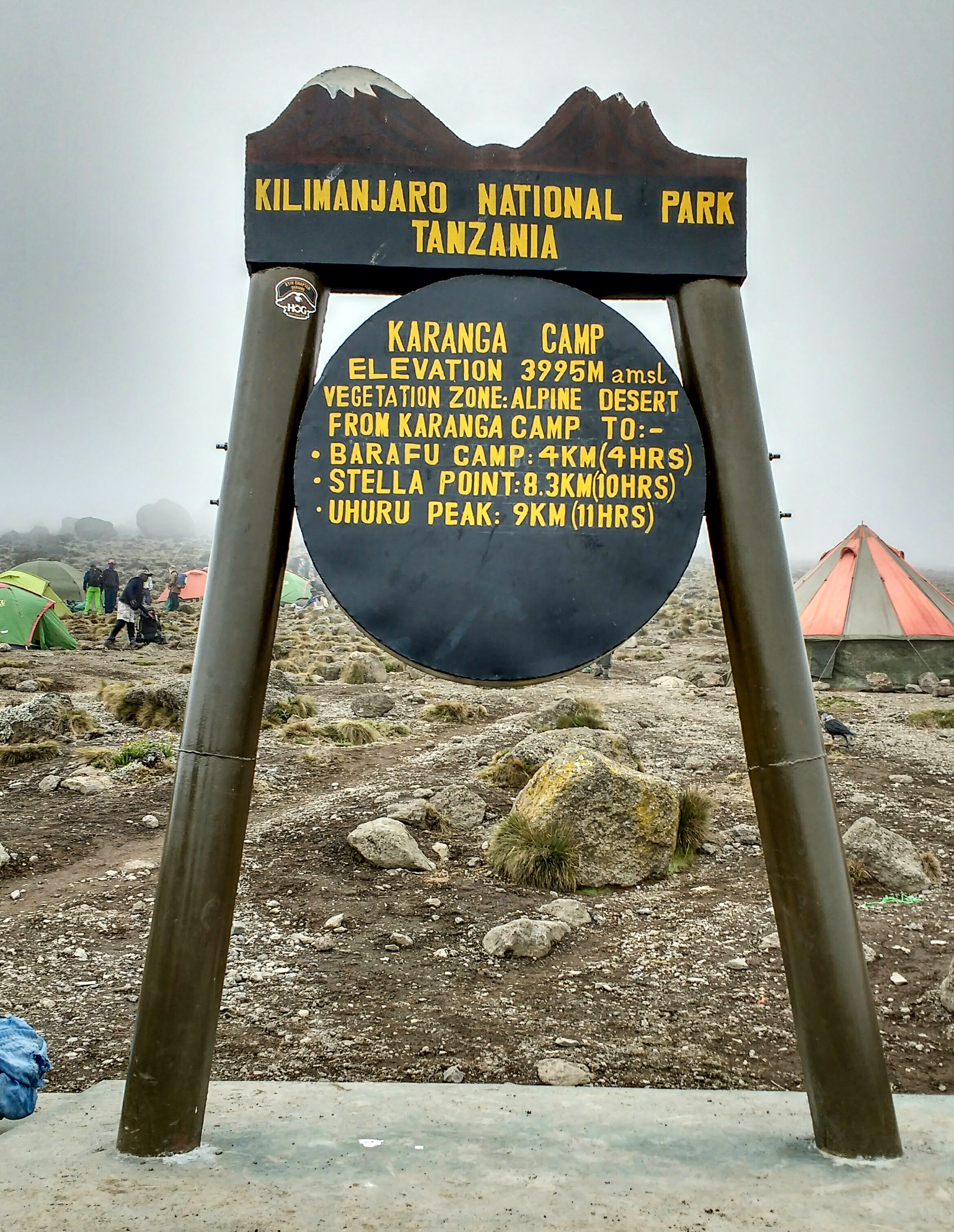
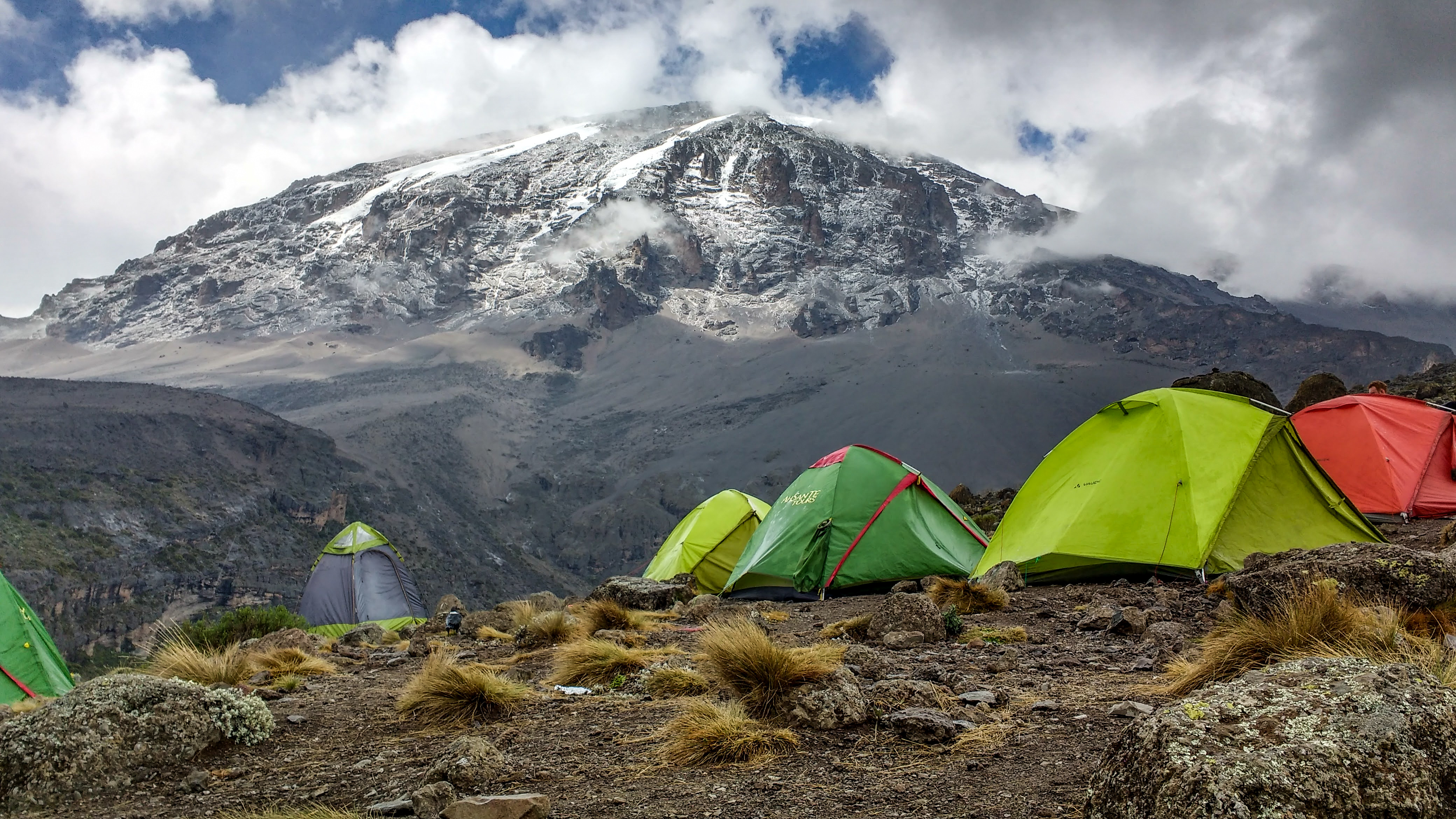
As cloud started to pour in again, we took the zig-zagging path up through the valley to Karanga Camp, all singing as we went. After we arrived, there was an epic thunderstorm and the mountain summit drifted in and out of view in the mist. Then it hailed! We had dinner and Birthday cake, and then we all ran back to our tents through the torrential rain to settle down for a long sleep.
Day Five – “Way of the Stone Stacks”
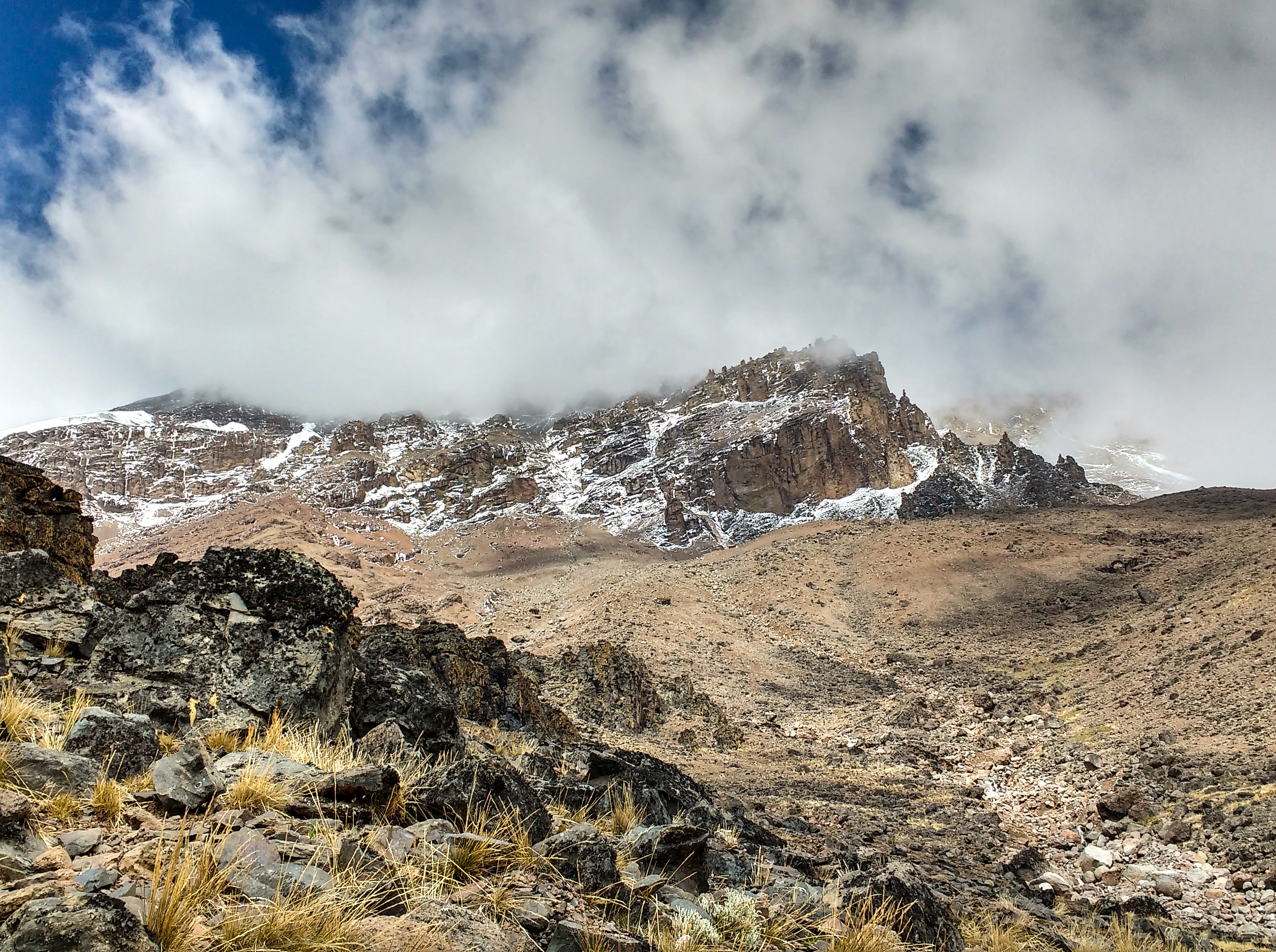
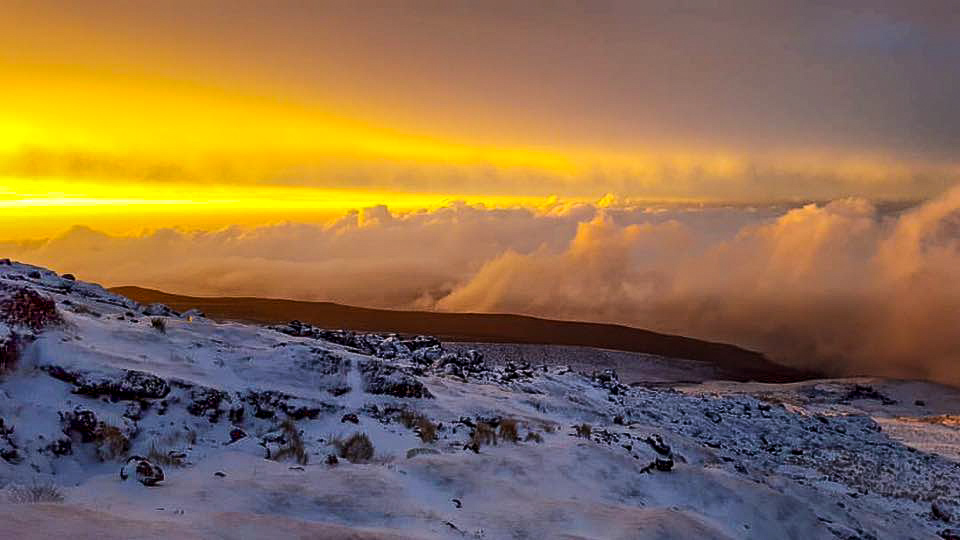
We were granted a lie in until 7am! But we were all up at 5:30 anyway. Our Rafiki brought tea to our tents as usual, saying “Habari za Asubuhi,” (Good Morning) and we went for breakfast, which today included some waxy yams that were quite interesting… We bid farewell to one more of the group, who left valiantly and proud, and some tears were shed. The summit loomed over Karanga Camp, and the snow line was lower than the day before, but the sky was blue and the sun was rising, making the snowy peak look like candy.
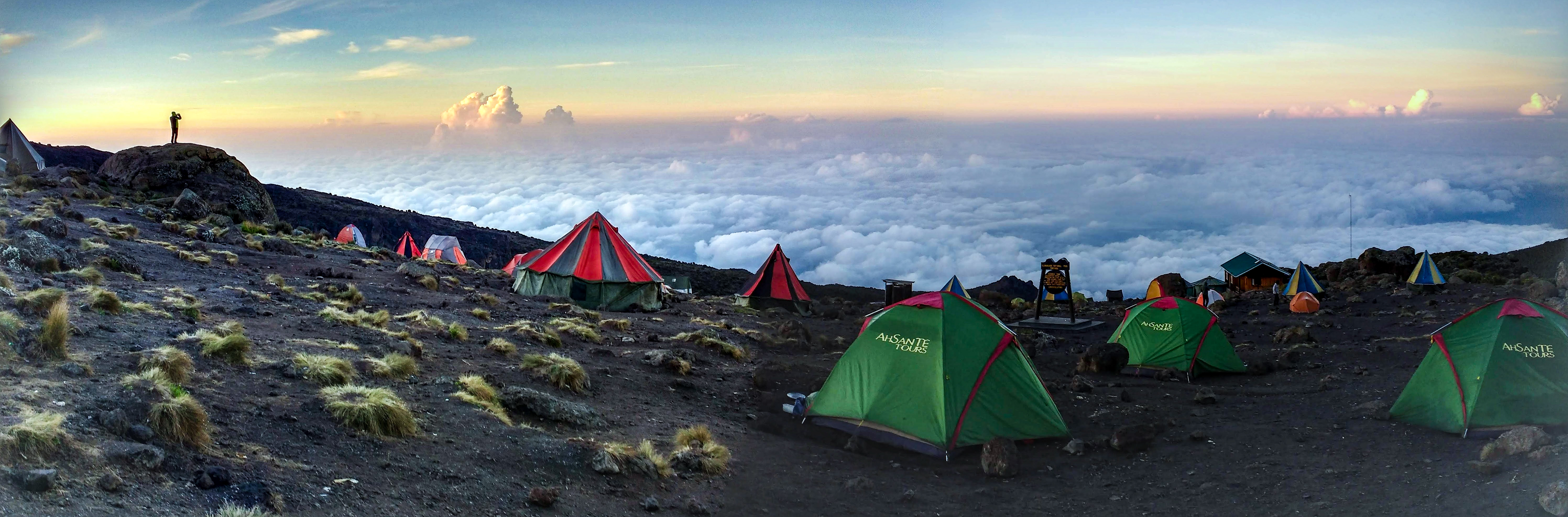
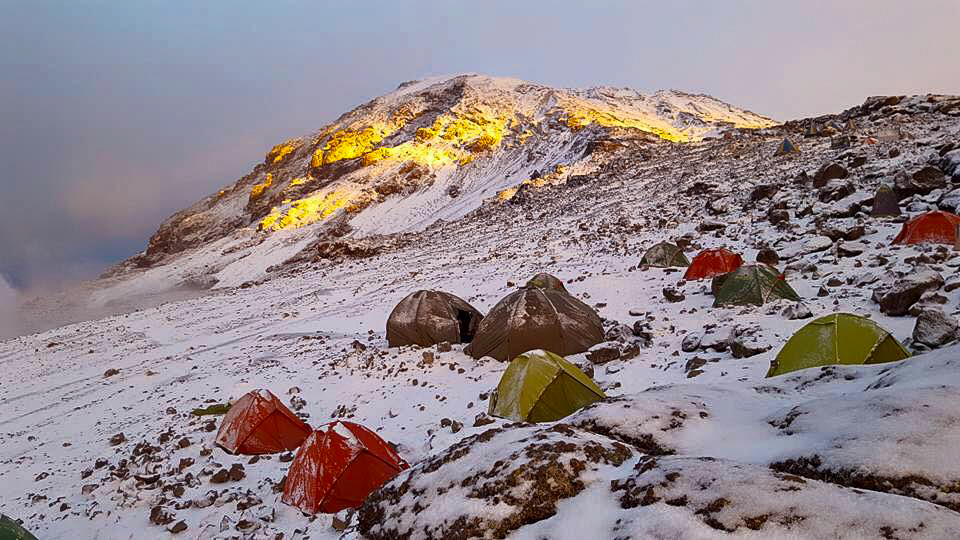
Today’s hike was short, but extremely “Polē Polē” due to the thin air. We crossed the stark, desert-like slope between strange walls of cloud, where hundreds of previous hikers had made stone stacks all around us, like something from another world. A couple of people in our group were really struggling – it wasn’t an easy ride – but we all made it up across the steep, rocky plain around the base of Kibo Cone to Barafu Camp by 1pm. Lunch was at 1:30pm – mashed potato and lentil curry, followed by one last briefing before our summit attempt began at 11pm.
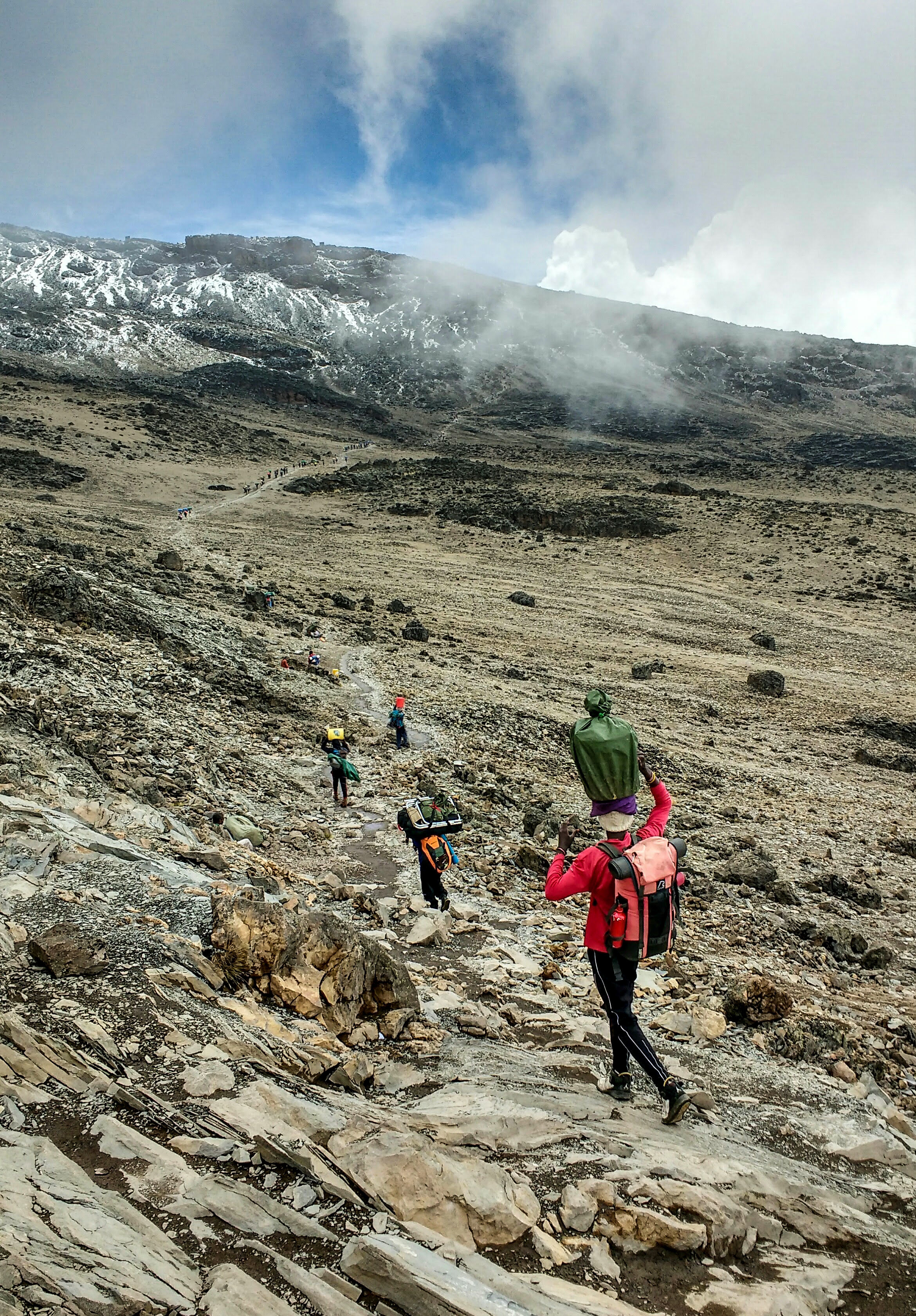
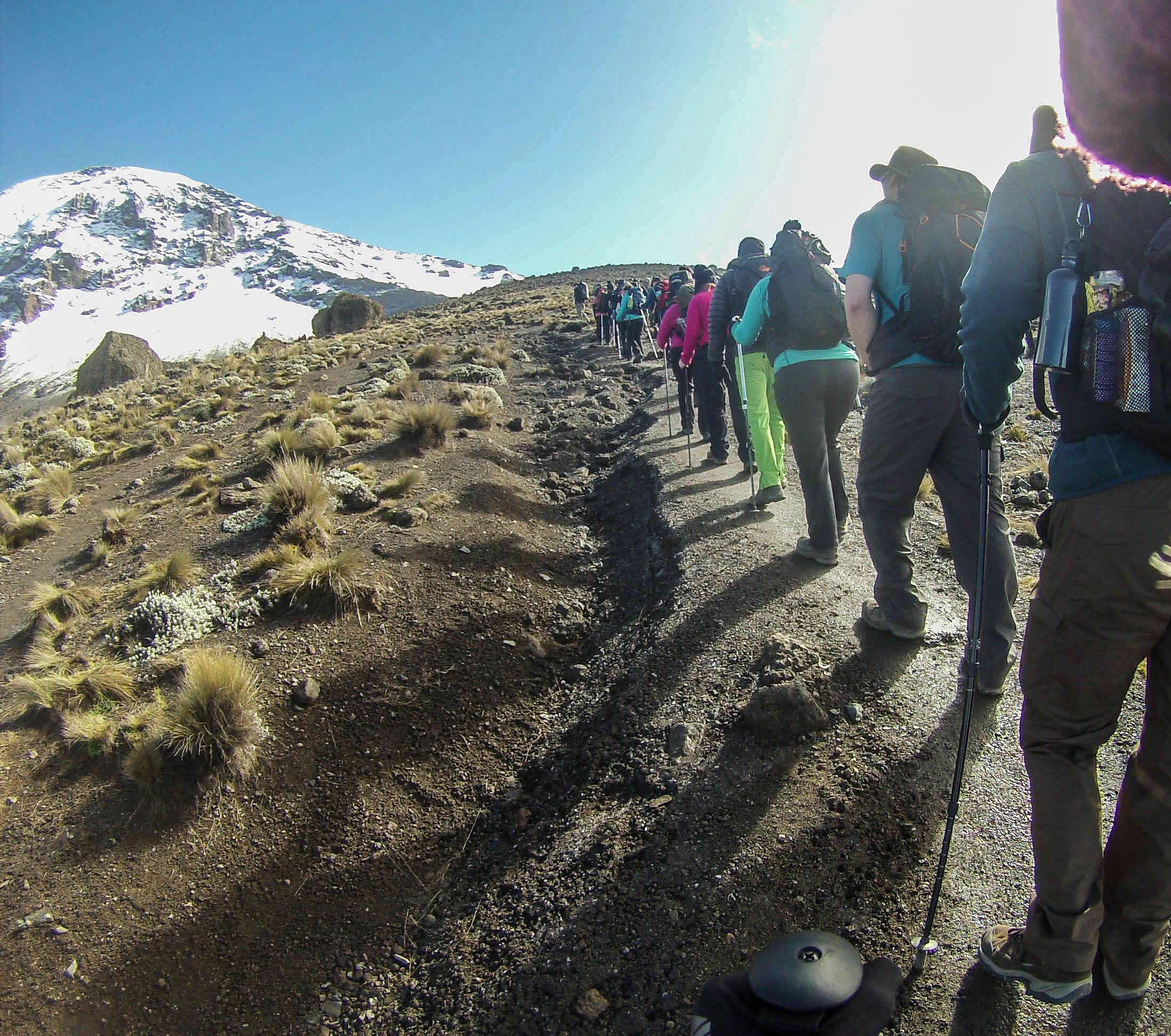
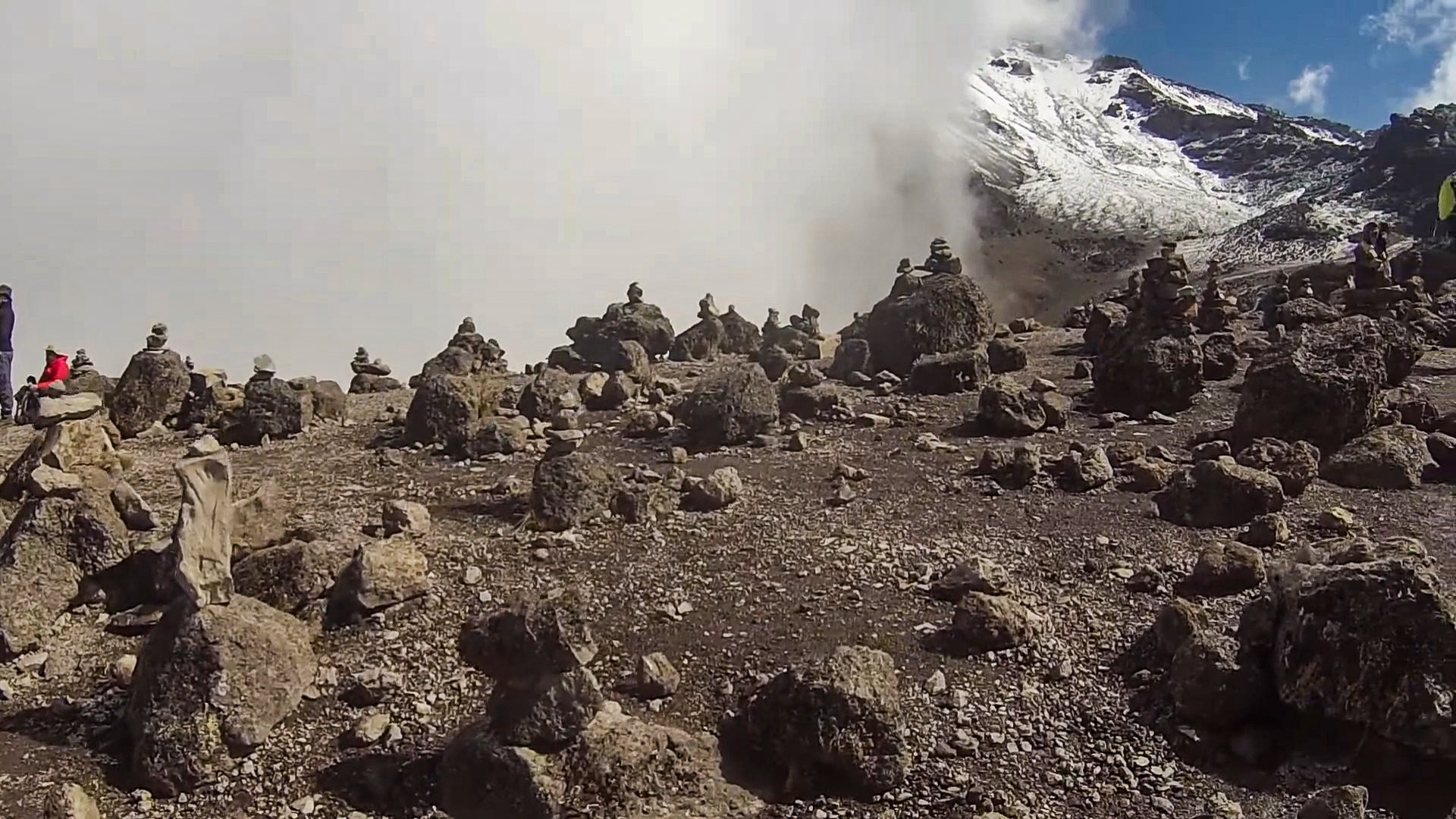
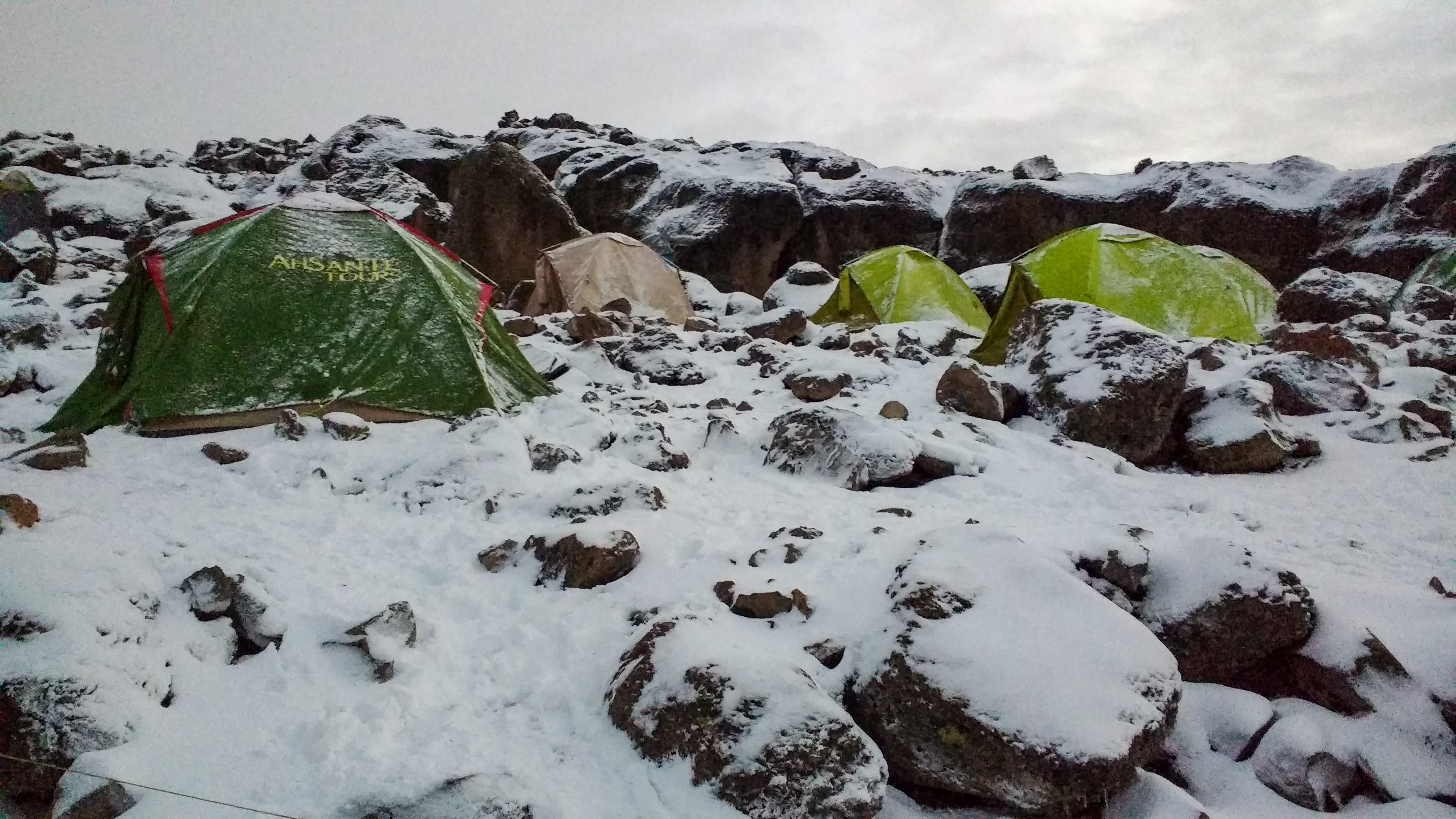
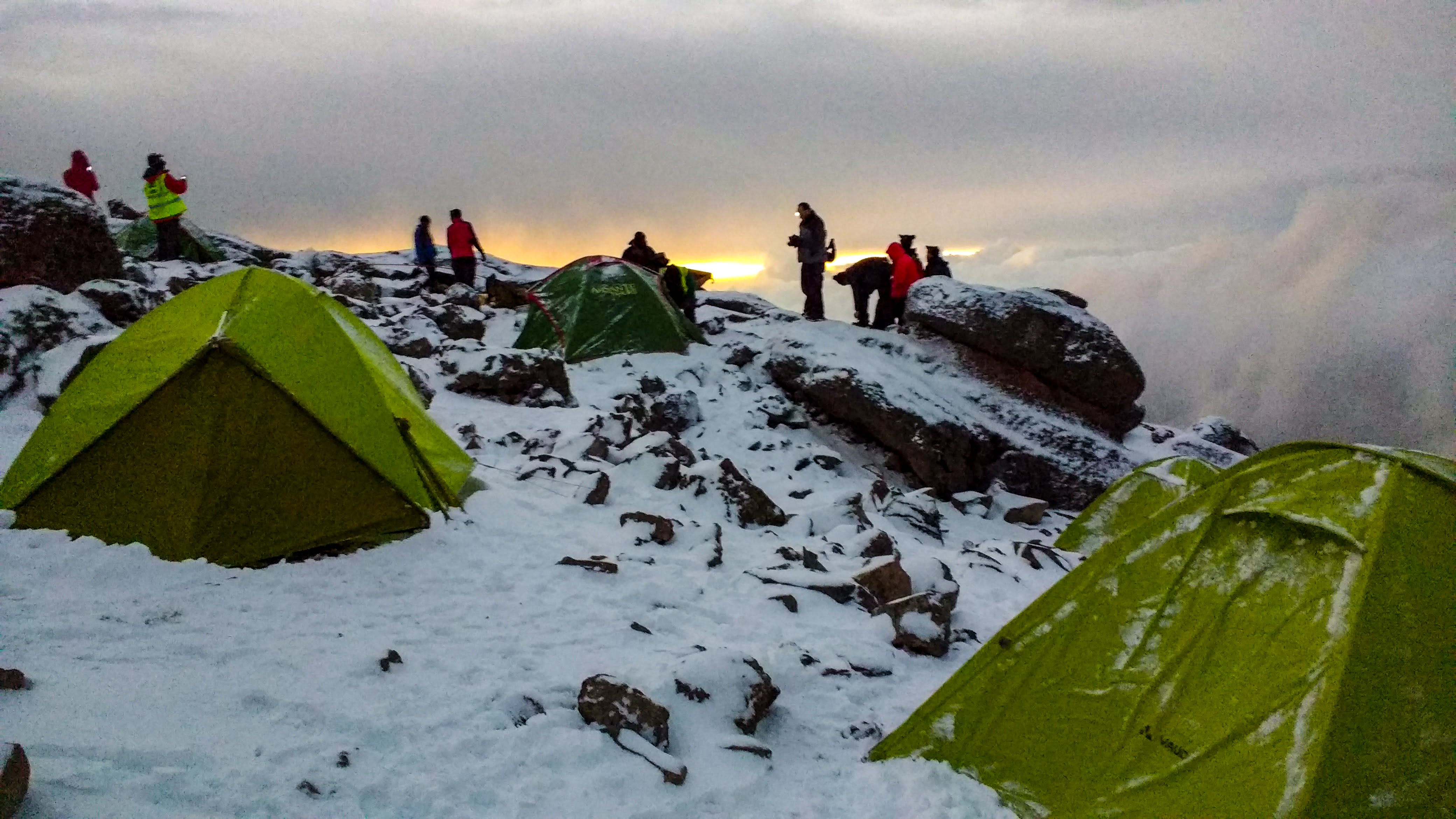
Barafu Camp sits at the base of Kibo Cone at around 4,673m, on a sparse, windswept slope. Even as I sat talking with Si, wind gusts punched into the tent, howling and rattling the door zips. The temperature here typically ranges between 4°C and -29°C, so high quality kit and a certain level of fitness are requirements. From here, it is a shuffling 6-7 hour hike, 1,255 metres to the top of Kibo Cone to Uhuru Peak – The Roof of Africa: the highest volcano outside of South America, and the top of the tallest free-standing mountain in the world.
“Up”
After a long, anxious afternoon rest, we were summoned from our tents at 10pm. Wearing every layer I’d brought with me, my pockets were stuffed with food and medication for easy access; phones and cameras buried deep in our layers to keep the batteries from freezing so we could get that long-awaited sunrise shot at Uhuru Peak. We congregated in the mess tent for our last supper – a massive plate of spaghetti – and made sure to fill our water containers. We followed our guides single file through Barafu Camp by head torch light, quiet anticipation buzzing through us. It had already begun to snow before we left camp, a light, gentle snow, and I sensed a subtle twinge of concern on Julio’s face. Maybe this bit was always stressful for the guides. Flashes of lightning from the clouds below us lit the snow pink and thunder rumbled around the mountain, and we grinned at one another through our face coverings. We trooped in a neat line through the darkness, a guide positioned between every second or third person – experienced pioneers of the mountain, who had become our friends – making sure nobody got left behind.
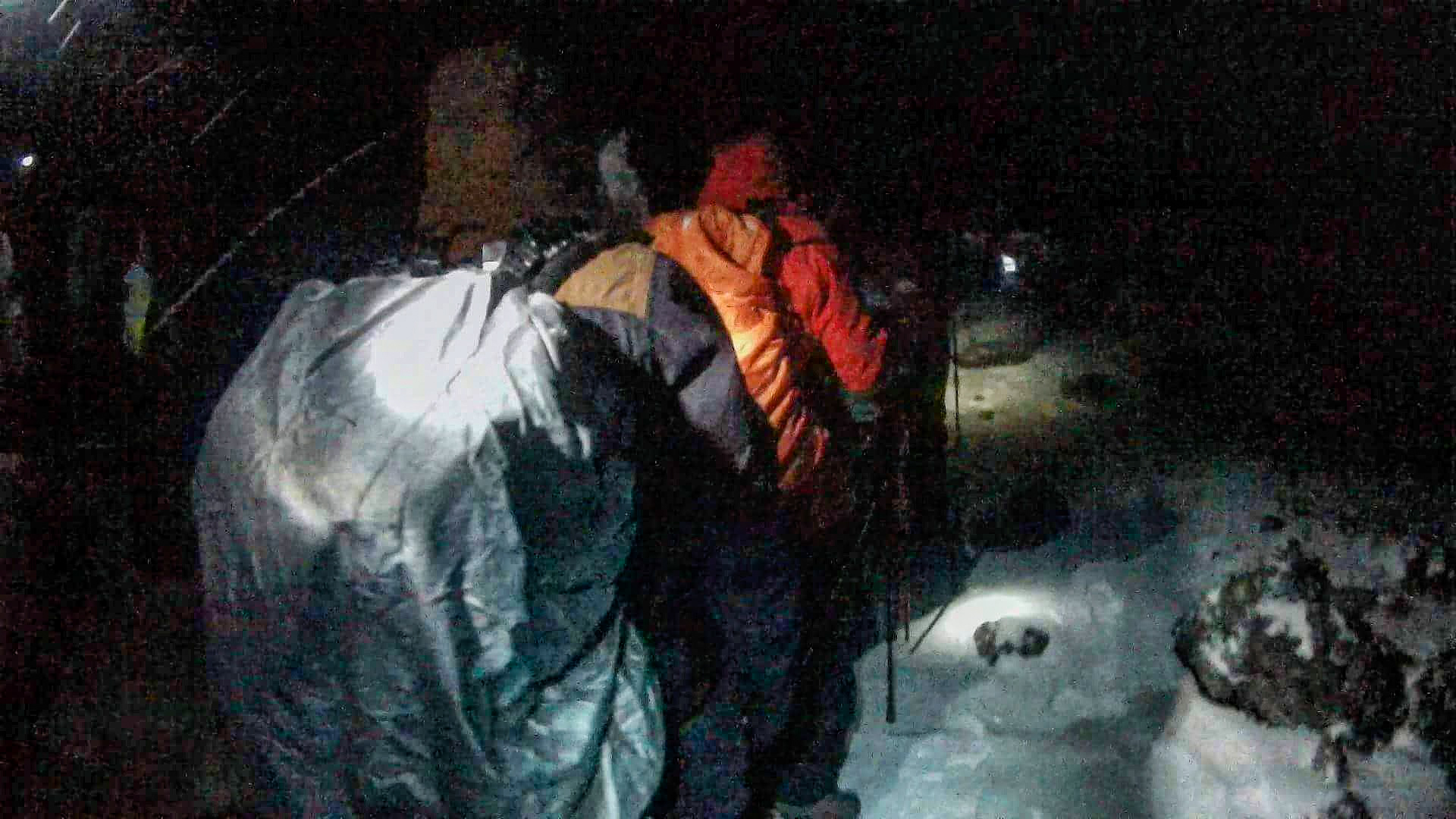
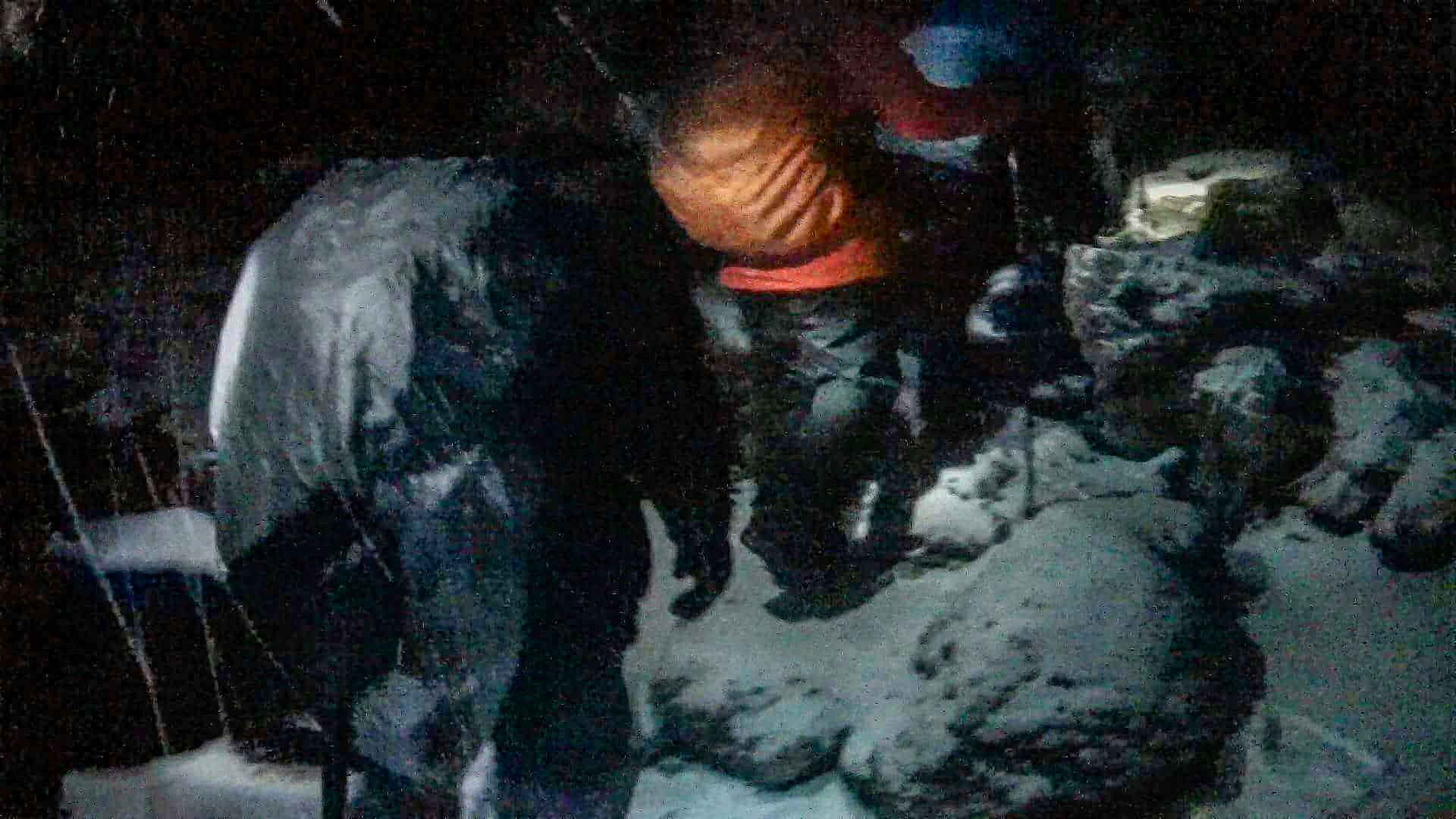
The snow was falling fast and thick now, coating the path ahead as we crossed into what is known as ‘The Arctic Zone’, so we were relying solely on the direction of the guides. Freezing wind whipped our faces while the lightning grew more frequent, shedding ultraviolet flashes on the snowy summit above, and thunder applauded loudly, echoing around the volcano cone. The whole group stopped in the shelter of a large rock, as the guides wanted to make sure we were all coherent, and taking in enough fluid and sustenance. But one of our group members wasn’t ok, acting delirious from altitude sickness, so Ian and Julio made the tough call to send him back to camp with another guide. We’d stopped for a moment too long and everyone was feeling the brutal cold as the wind grew stronger. Pushing forwards into the dead of night, the wind picked up more and more energy as we climbed closer to the summit. Snow was lashing down in sharp stones of ice, blowing sideways into our faces, fusing the fabric of our hats and face covers to our skin. Miniature icicles stuck to my eyelashes, and despite layers of thermal gloves, my fingertips were getting so cold they were painful. I had to stop to find a handwarmer – Julio helped me, rubbing my hands to get the blood flowing, but eventually we decided to just keep trekking on as we risked getting even colder by just standing there.
The weather was horrendous now. Snow somehow covered our tracks before our feet had left the ground. We couldn’t see, could barely breathe for the wind, and our faces stung. Si was close behind me, and Gemma was ahead, her poles skidding as the gale-force wind whipped the icy ground from beneath her feet. But we were determined! Heads down, one foot after another, all muttering little pep-talks under our breath, thinking about that first glimmer of sunrise.
We reached a change in the path and Julio halted us in our tracks, telling us to wait in the shelter of another big rock. We followed his orders, it was probably just another drink stop, or to let the rest of the group catch up, but he’d disappeared from our sight. Si, Gemma and I shivered, agreeing that we’d have to get moving soon or we’d freeze to death. As we stared up at the line of lights walking ahead of us, searching for Julio, our hearts dropped. The line of head torches were all facing us, coming back towards us. I froze, and Gemma and Si shared my silence. What did it mean? Julio re-appeared, gesturing for us to turn back.
“We have to go back. The storm is too bad; it’s too dangerous,” he was serious, rushing on to convey the message to the others. I couldn’t turn around. I simply watched as our team walked back past me in the wrong direction; I couldn’t make my feet move. We’d been walking for over four hours – just 600 metres to go! We couldn’t be quitting, not now!
“Down”
Everyone’s water had frozen hours ago. I saw people melting their eyelashes between their fingertips in order to see. My hat was literally frozen on to my forehead. I couldn’t feel my feet. But all of this felt numb compared to the feeling in my chest. I didn’t want to return to camp, not with just a few more hours to struggle through until we reached the top. It was in our grasp, so close, the closest we’ll ever be – we’d been walking for five days, what’s five hours more!? I wasn’t thinking rationally, and everything in my soul was fighting against what was happening, but my limbs just plodded on, numbly following the group back to camp, dragging my hiking poles behind me. I didn’t want to be alone, but at the same time I couldn’t talk to anyone. I placed myself behind Ben and Luke, and in front of Katie and Jack. No one spoke. A few of us shared glances of mutual disappointment. Luke was sobbing and Sophie quietly walked with him for a bit. Even our guides looked devastated – not for themselves, they do this frequently – but for us. They’d worked so hard to get our group this far, seen our relationships grow and our determination to reach the top. Now all they could see was our dream shattered across our faces. A year of hard work, training, fundraising and mentally preparing, convincing ourselves, ‘we can do this!’ Building a huge expectation and failing… it all came crashing down like an angry avalanche.
The path back down was very treacherous with the constant battling snow, and the never-ending stream of feet shuffling down made the path like an ice rink. Several people fell several times. Sophie slipped and just kept going as if she were on a slide, while a guide yelled ‘Polē Polē’ as she went shooting past him. She was ok, a bit bruised, but in a few days we’d be able to look back and find it hilarious. Not right now. Jack slipped behind me, unfortunately doing a number on his ankle, making it difficult for him to walk at all. Julio and all the other guides were incredible, running back and forth, asking individuals if they were OK, fashioning themselves into human railings, sometimes physically lifting us to a safer foot hold. Prof appeared behind me, I glanced at him and he was looking at me with concern. “You OK?” he asked. I shrugged, “Just sad,” I said. Prof just gave a little nod, took my hand and walked beside me for a little while, until he needed to help someone else.
Tents gradually started to come into view as we made our way slowly into the higher reaches of Barafu Camp. The weather had subsided; it was no longer snowing down here and the wind only came in occasional gusts. We arrived at our camp at the time we should have been arriving at the summit, and all our Rafiki were applauding and cheering, which we didn’t want to hear. The sun was rising, dangerously orange through the lingering storm clouds. Some people stayed up to watch it, but for the first time in my life, it was the last thing I wanted to see.
Day Six – “An Emotional Rollercoaster”
Si appeared at the tent with instructions from Julio, to rest for an hour and regroup in the mess tent. I must have slept, for when I opened my eyes I felt that sense of impending doom, of reality falling back into my consciousness. It wasn’t a bad dream. It was quiet and I was alone – immediate negativity flooded me – they’re reattempting the summit and have left without me! But I snapped myself out of it, pulled on my damp shoes and went to the mess tent. There were only seven of the group there, all sitting extremely quietly. I edged in and found myself a seat, forcing myself to eat a piece of fried bread the cooks had somehow mustered up (we weren’t supposed to be there for breakfast.) Conversation was sparse, and tears were flowing around the group, catching on to the next person as we exchanged eye contact. Suddenly, Tim appeared in the entrance and said we have three options. None of them were to have another go, so I didn’t hear the rest. Everyone went to pack their bags and prepare for the descent down the mountain, but Si and I just sat there.
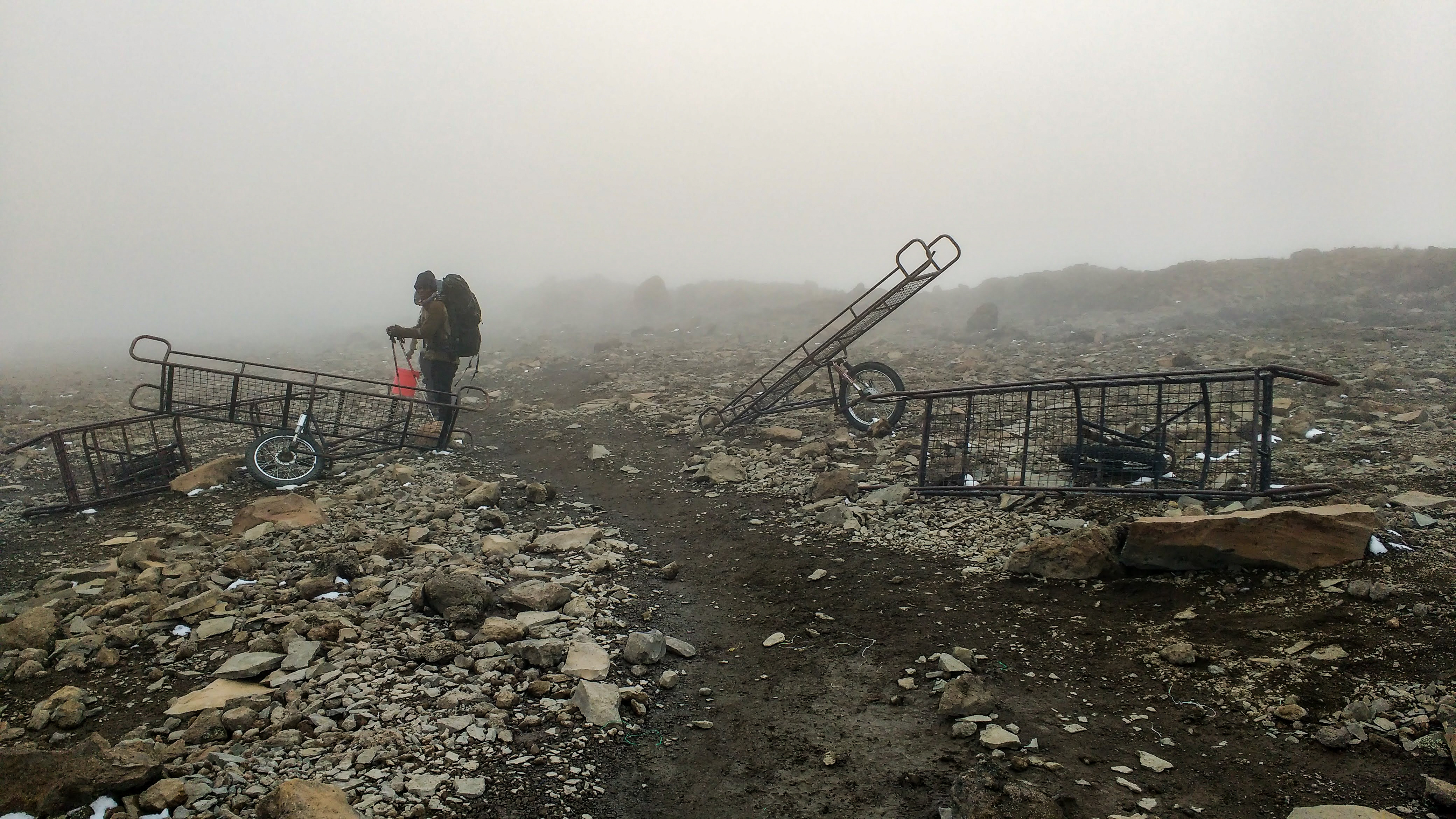
Julio sent some of our Rafiki to get a ‘mountain taxi’ or ‘Kilimobile’ for Jack, who was struggling to walk on his busted ankle. They returned with a big mesh wheelbarrow, like a metal stretcher with a bicycle wheel on the bottom! Wrapped in his sleeping bag, they laid Jack on the ‘Kilimobile’ and strapped him in, so just his smiling face was showing, and a small group of Rafiki grabbed all sides of the stretcher and wheeled him down the mountain. He was probably back at the lodge with a nice cold beer within half an hour!
Meanwhile, me and Si agreed that we really weren’t ready to pack it all in. I went back to my tent and started throwing things haphazardly into my bag, when Si appeared at the tent again. “If there’s any possible chance, would you want to try again?” he said, fire in his eyes. “Hell yes.” I responded without a second thought, and with a nod, Si disappeared again. I followed him back into the mess tent, where we sat down with Tim and Ian. Si made his pitch, raw with emotion, and they understood how important it was to us, but they were talking us out of it – there were too many complications. By this stage it would be near impossible to pull off. The guides and porters were doing a job, and they no doubt had to be back in time for their next tour, and if we took an extra day we’d have to pay for it too, which isn’t cheap. Not to mention the unprecedented snowstorm up there. This was just the harsh reality of nature.
“I had to ask,” Si kept saying as we packed our bags. I was ever so glad he did. At least we’d fought to try. As we could hear the group starting to leave outside, I rushed to put my shoes back on. Julio came to our tent, calling for us, “Yep, just coming!” I called, but he popped his head in and put his hand on my shoes to stop me. He told us he wanted to try anything to get us to the summit and told us to just wait a couple of minutes so he could check the options. He acknowledged that we were both strong enough and well acclimatized. Julio made a few calls on his radio and spoke to various people, suggesting we could join another tour group who were summiting today. We’d have to leave now, and we’d reach Uhuru Peak at 7pm, in the dark. Then we’d have to get all the way back down the mountain the following day. It was a lot, with no time for any more rest. I was exhausted, and Si looked it too, though adrenaline had us both wired. Julio got back on his radio to confirm, but the final answer came. “OK, I think we have to go down now,” he relayed to us, “they just told me there was a fatality up there, so we’ll go down.” That was the final decision. We didn’t argue with that. I’d been so hyper focused on completing the challenge, that I almost neglected to Respect The Mountain.
“Safe”
Julio led me and Si down at his quick pace, so we were able to catch the rest of the group within half an hour. We stopped at Millennium Camp for our last cooked lunch from the amazing chefs and continued the steep descent through the rainforest on the Mweka Route – the mountain’s shortest and steepest trail. Sunshine pouring through the rainforest (and potentially extreme fatigue) seemed to lift the world from our shoulders as we got closer to the bottom, and a few of us had already begun planning Kilimanjaro Challenge ‘Take Two,’ which made us feel better. At Mweka Camp, a medical car picked us up in shifts, taking us to a coach that would bring us back to the Weru Weru River Lodge.
Having descended a day early, we had an extra day at the Lodge, where we all got together and had a pool party in beautiful Lodge grounds! Together we reflected on the journey, marvelled at the guides and porters, and praised Ian and Tim for making very hard but necessary decisions for the safety of the entire group. Julio revealed that there hadn’t been a snowstorm like that on Kilimanjaro in many years, and it wasn’t normal for the season. We were all very thankful that we had each other, and that we came back as a team; grateful that we were all safe. It would have felt very wrong summitting without the rest of the group, and as we blew off some steam, I was able to appreciate what we had achieved. Later, the River Lodge threw us a celebration dinner in the garden, and we received certificates because we’d exceeded 5,200m elevation. Everyone was there, including our guides, and we all had a merry amount to drink!
In hindsight, the real challenge for me was the fear of not being able to complete it. I already don’t like building up other people’s expectations if I can’t fulfil them, which was my initial fear in the fundraising part of the challenge. Then I had to face that fear, and sit with it, which I had done everything in my control to avoid. Myself and a few others in the group always said we’d get together one day and try again, and that was a comforting prospect as we felt we had unfinished business! It has taken years, but I am finally content with my attempt. We might not have touched the frozen sign on top of Uhuru Peak, but we DID climb Kilimanjaro. We DID see the plains of Africa from above the clouds. We DID catch our breath at the highest altitudes we’ve ever stood. We DID hike into the Arctic Zone in an adverse snow storm in the middle of the night. We DID see the violent, pink lightning illuminating the clouds beneath us. We DID watch the sunrise from the highest volcanic cone in Africa. We DID witness the power of the Mountain, and we DID survive to tell the tale.
Maximum Respect!
If you enjoyed this blog, please share, & consider making a one-off donation to my ‘Buy Me A Coffee’ page, where you can also check out my art works inspired by my travels. Copy & paste the link below into your browser! And thank you for reading.
buymeacoffee.com/jaimiescapers: The Roof of Africa: Climbing Kilimanjaro