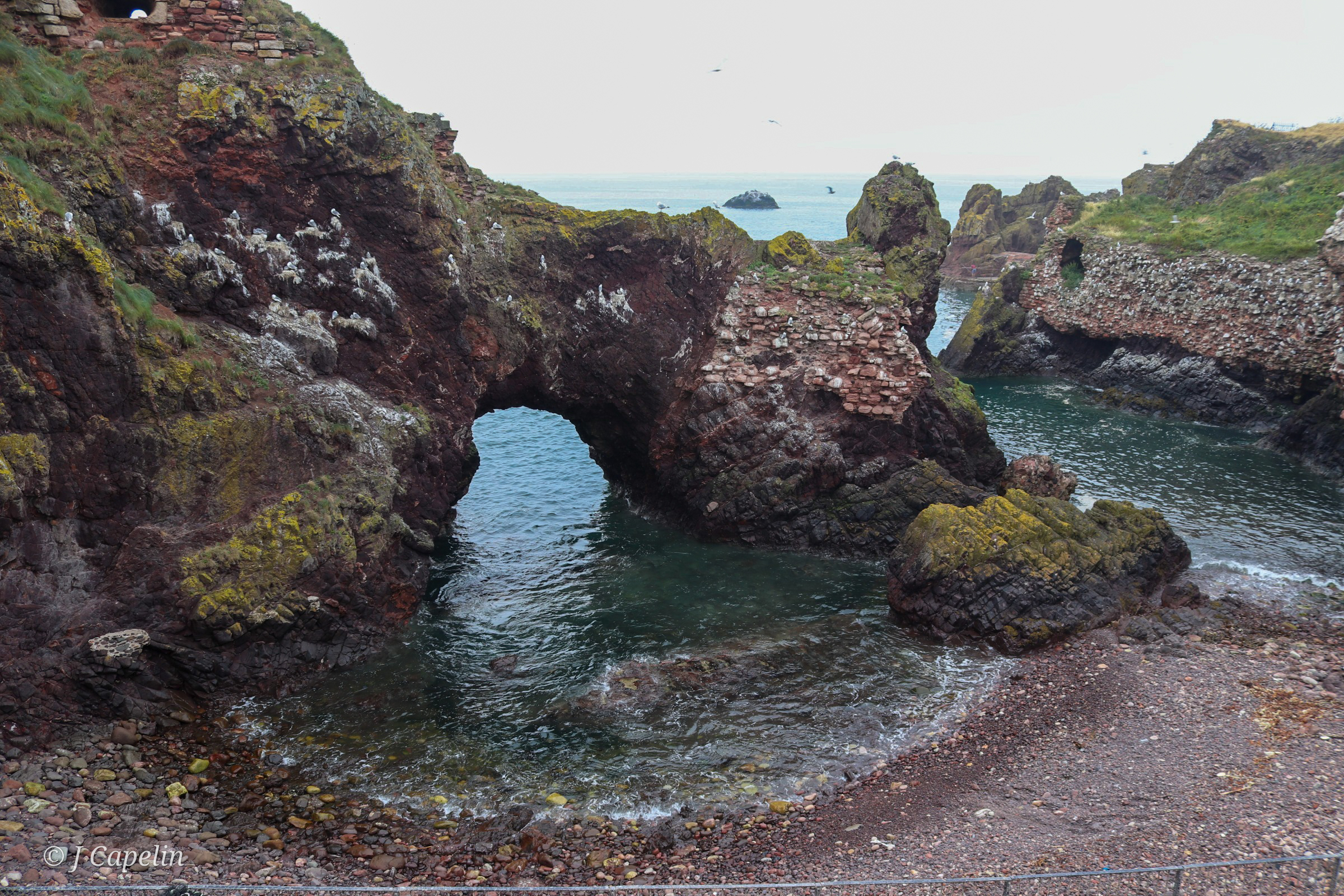
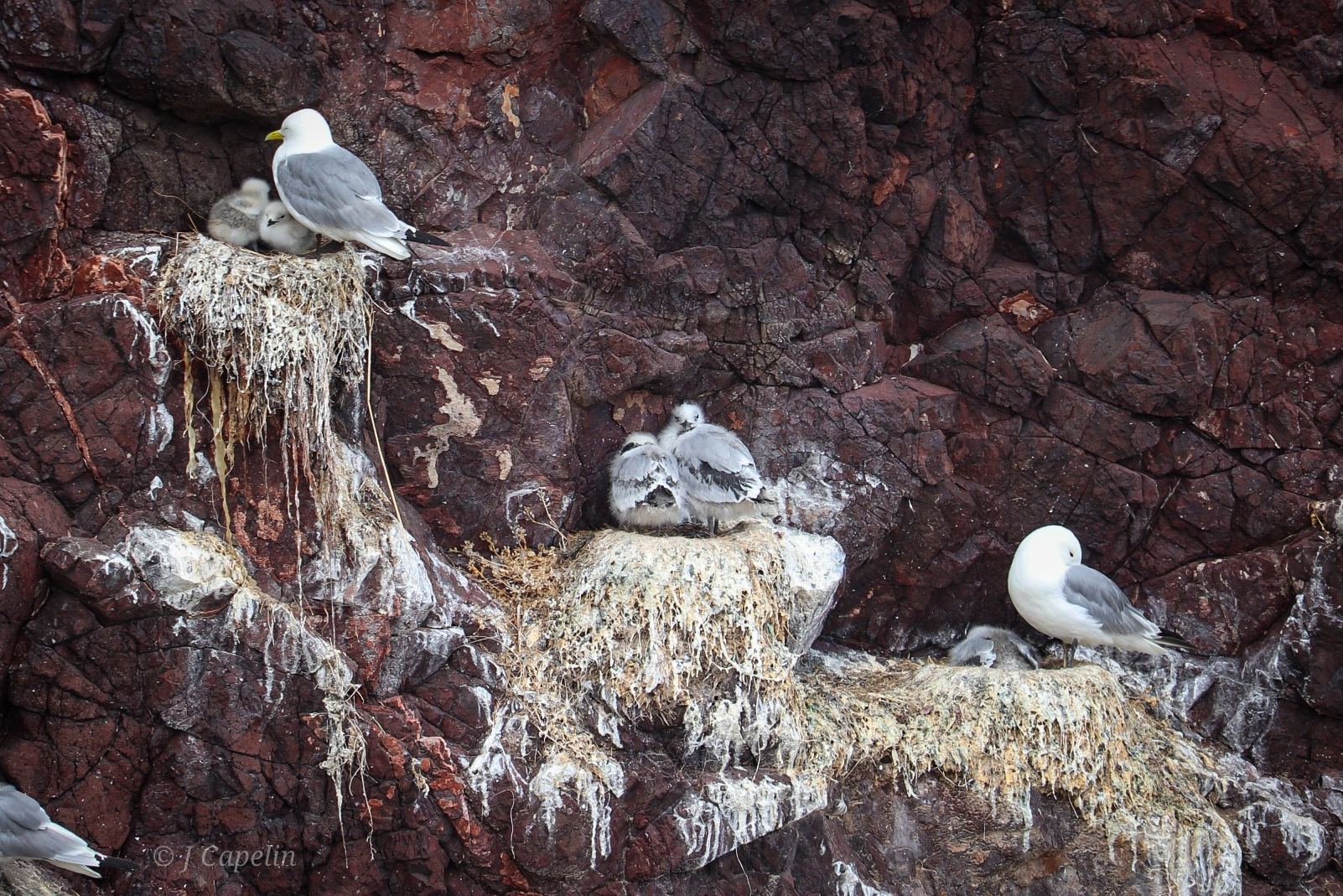
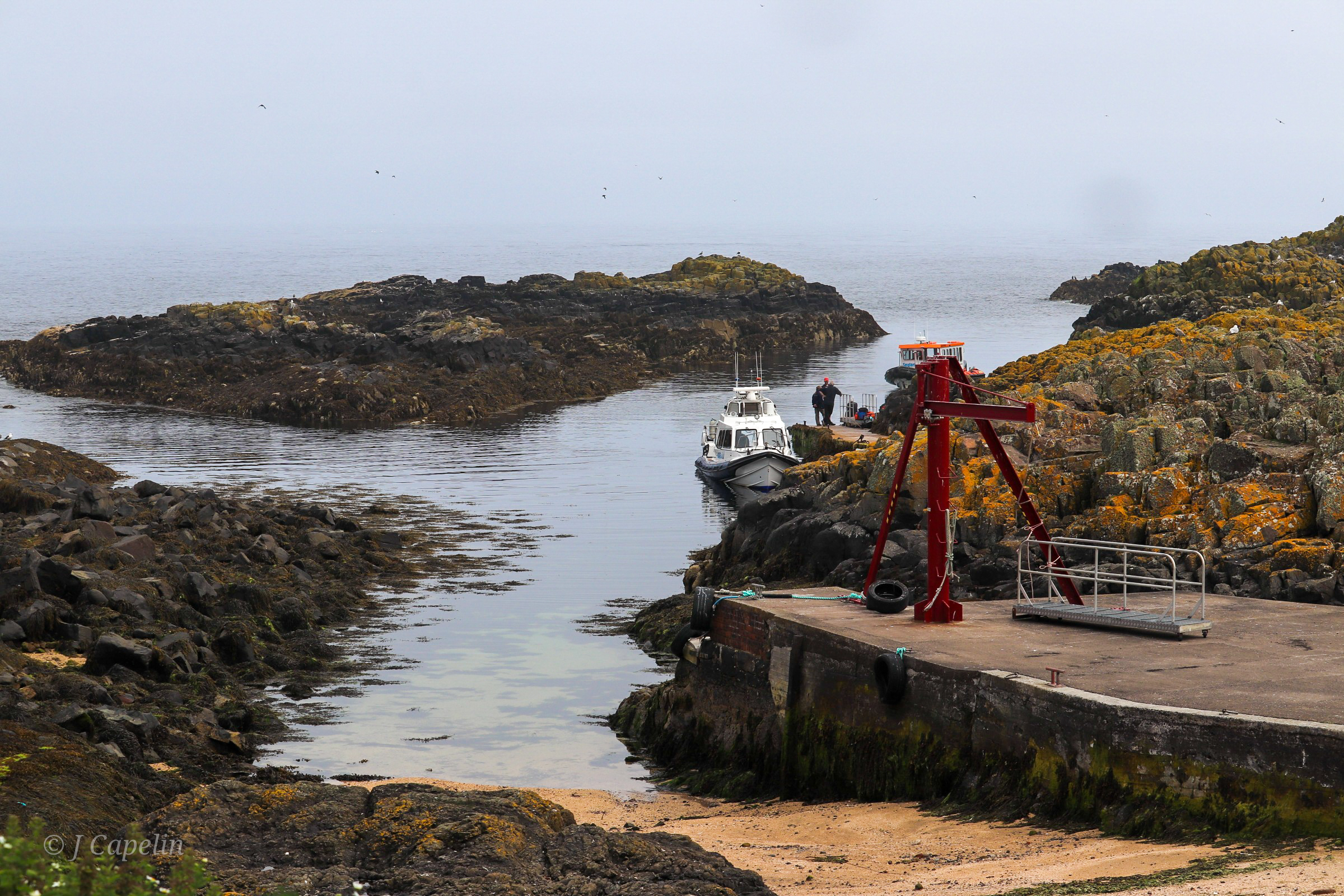
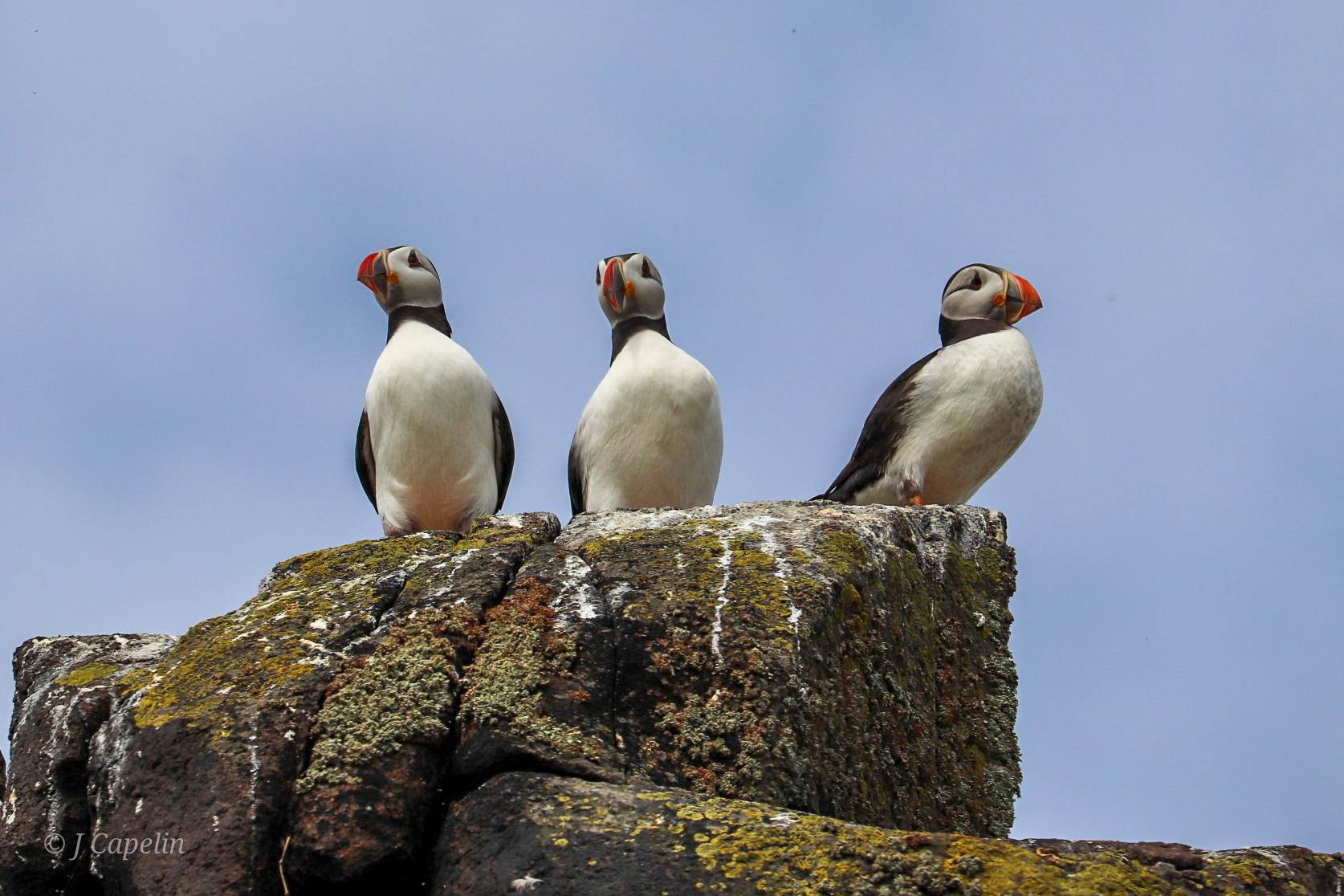
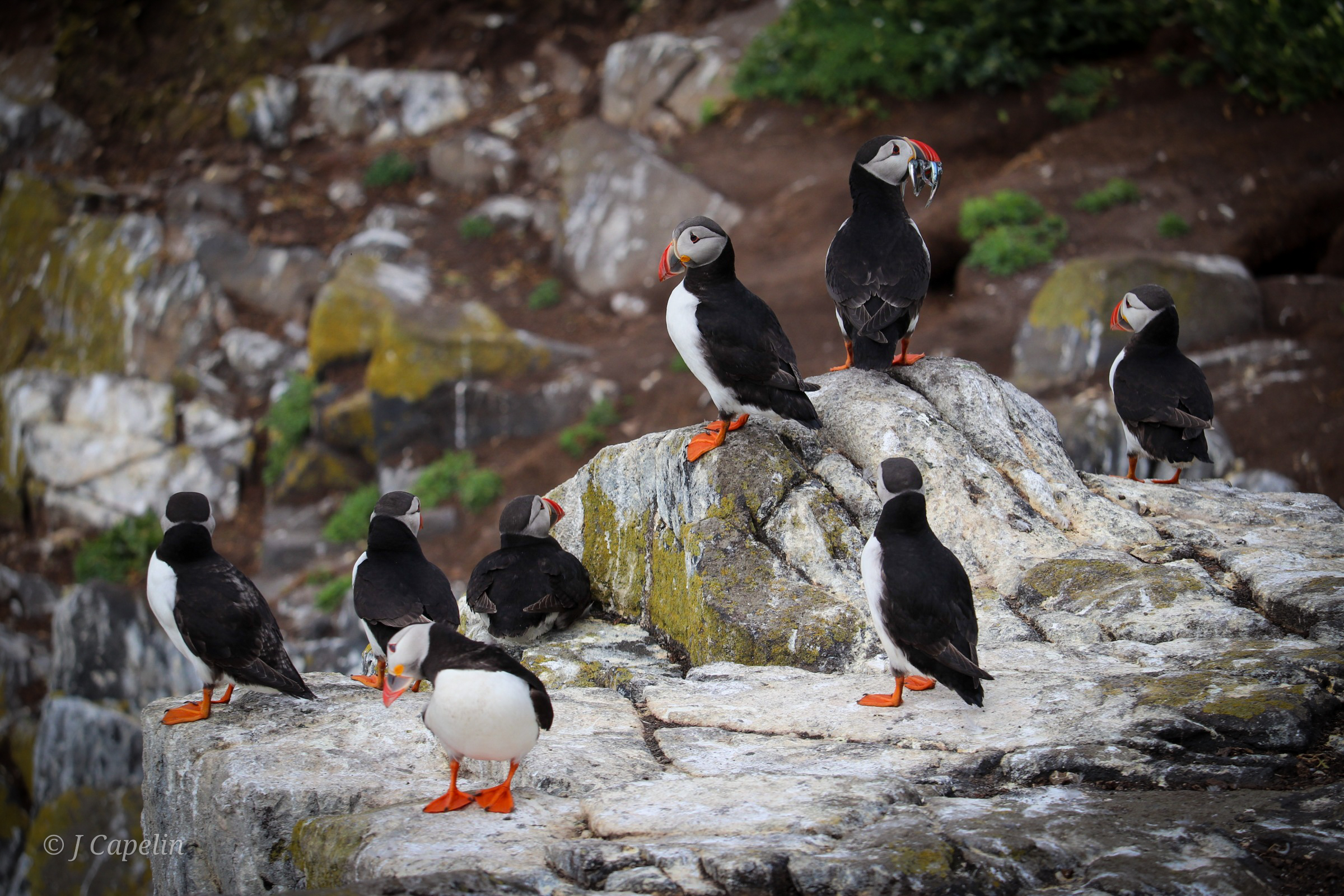
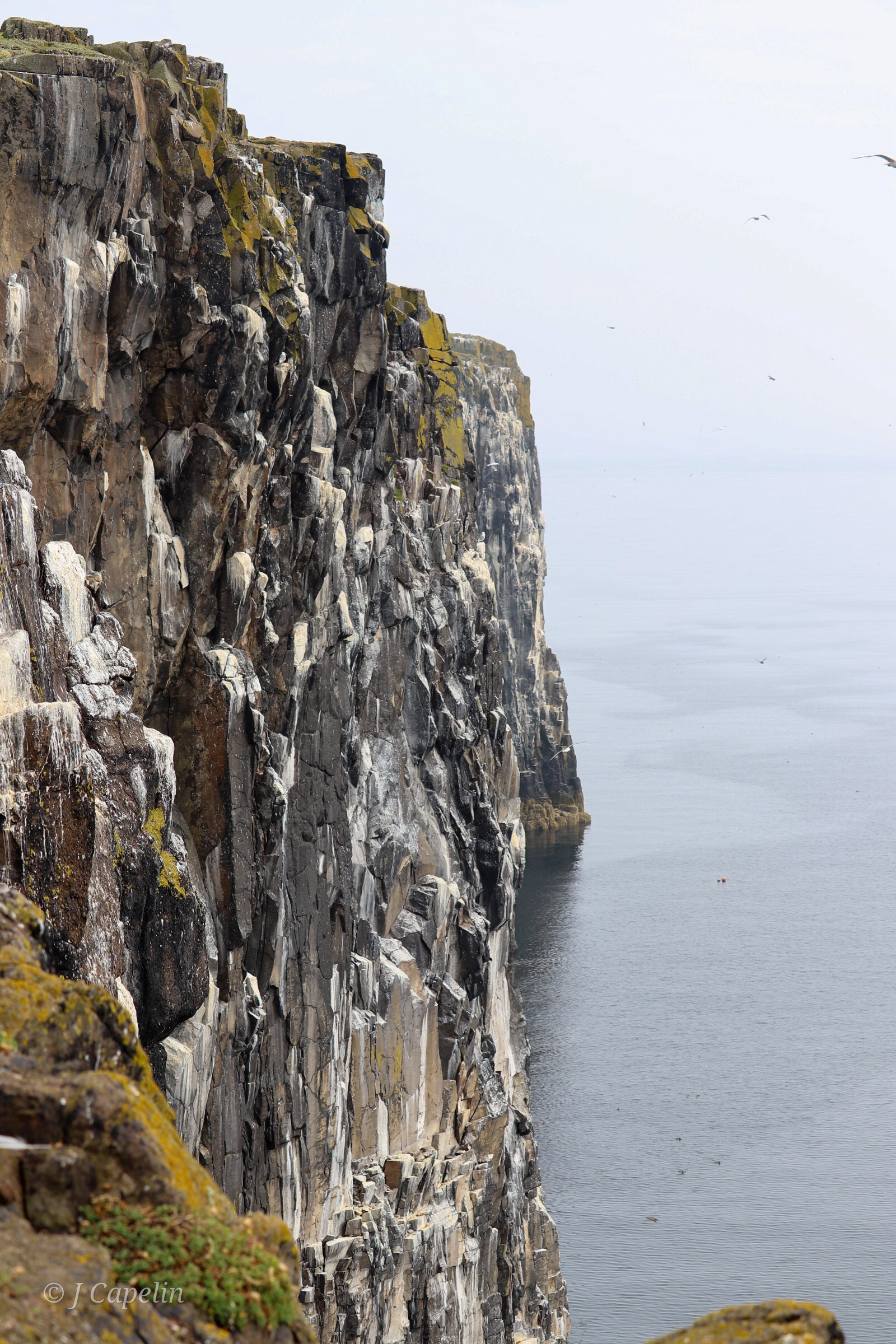
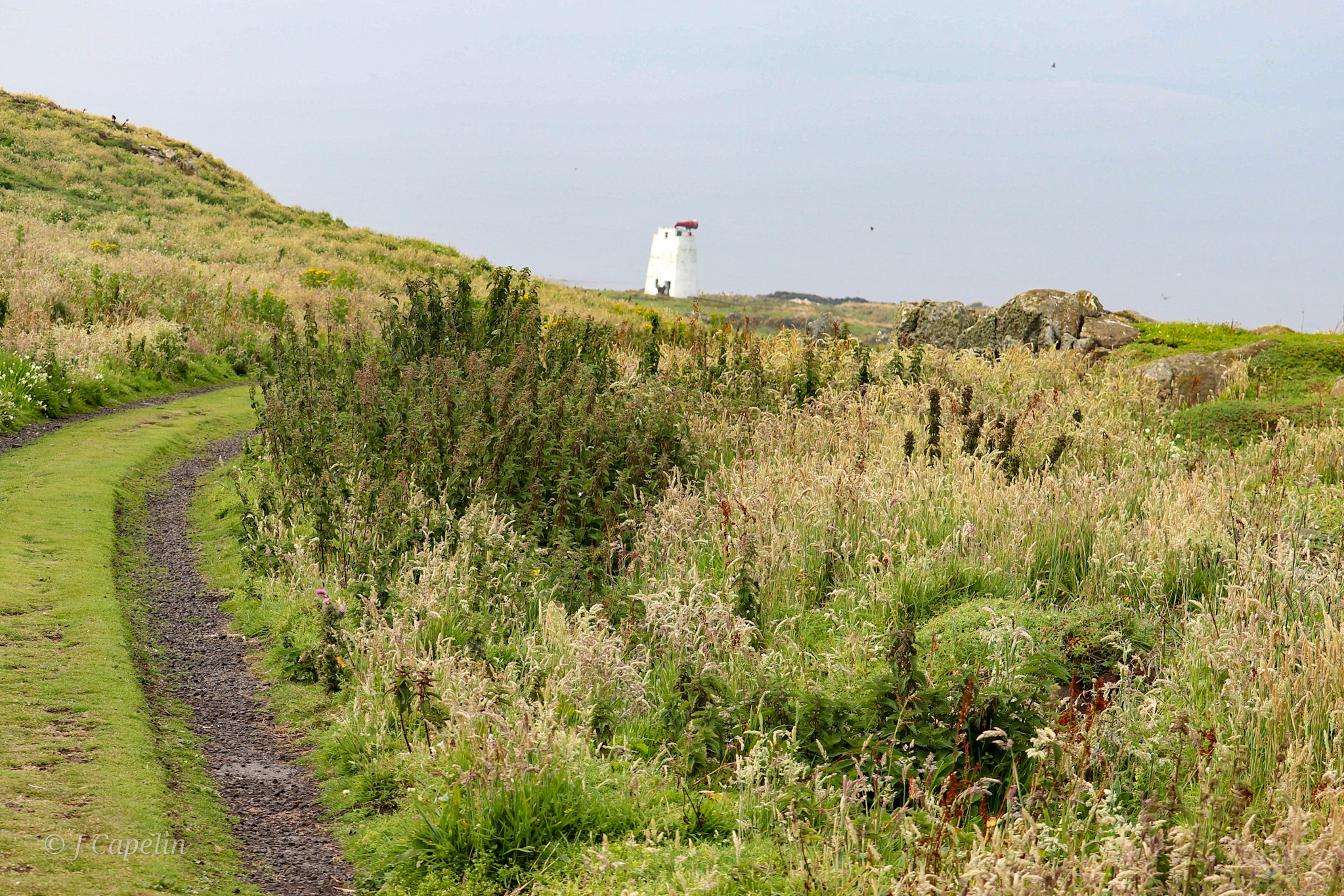
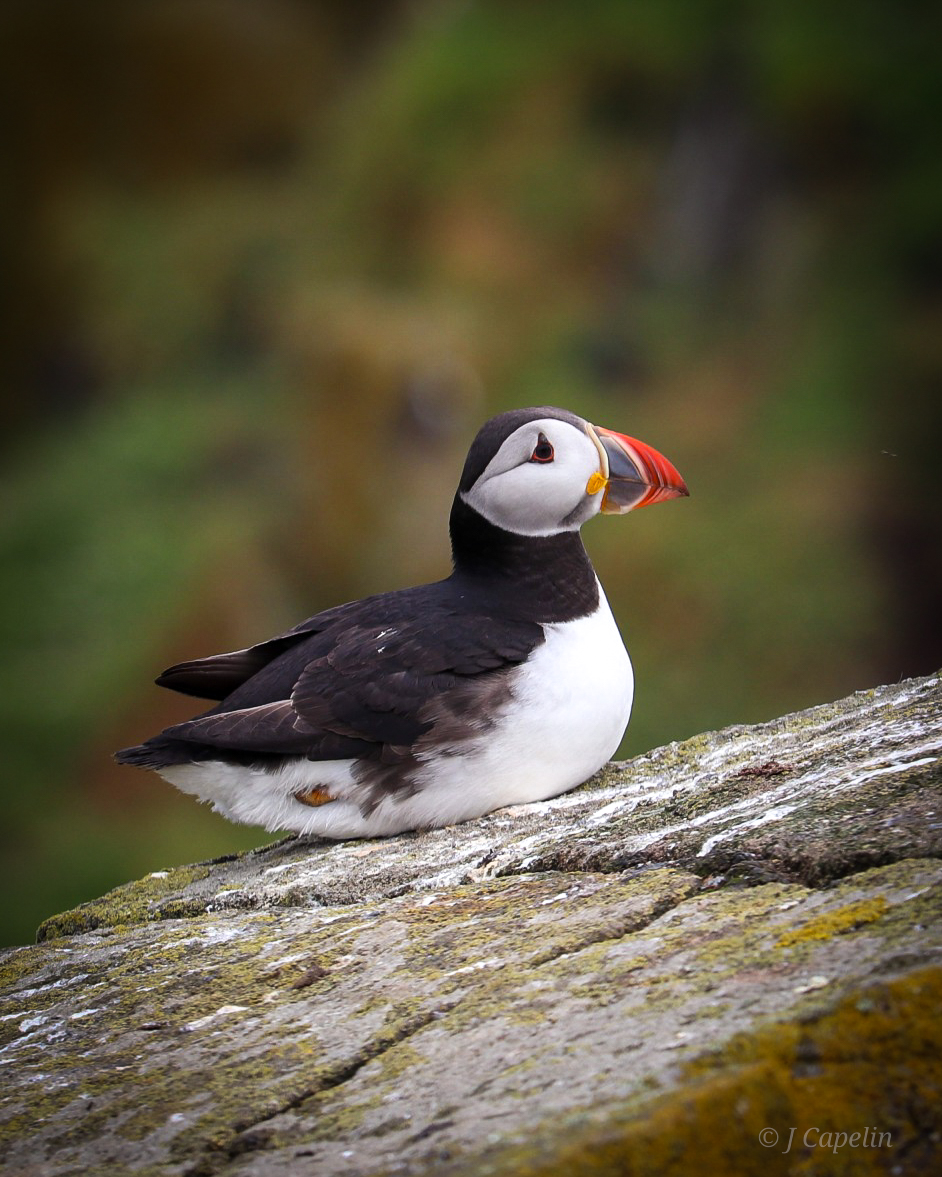
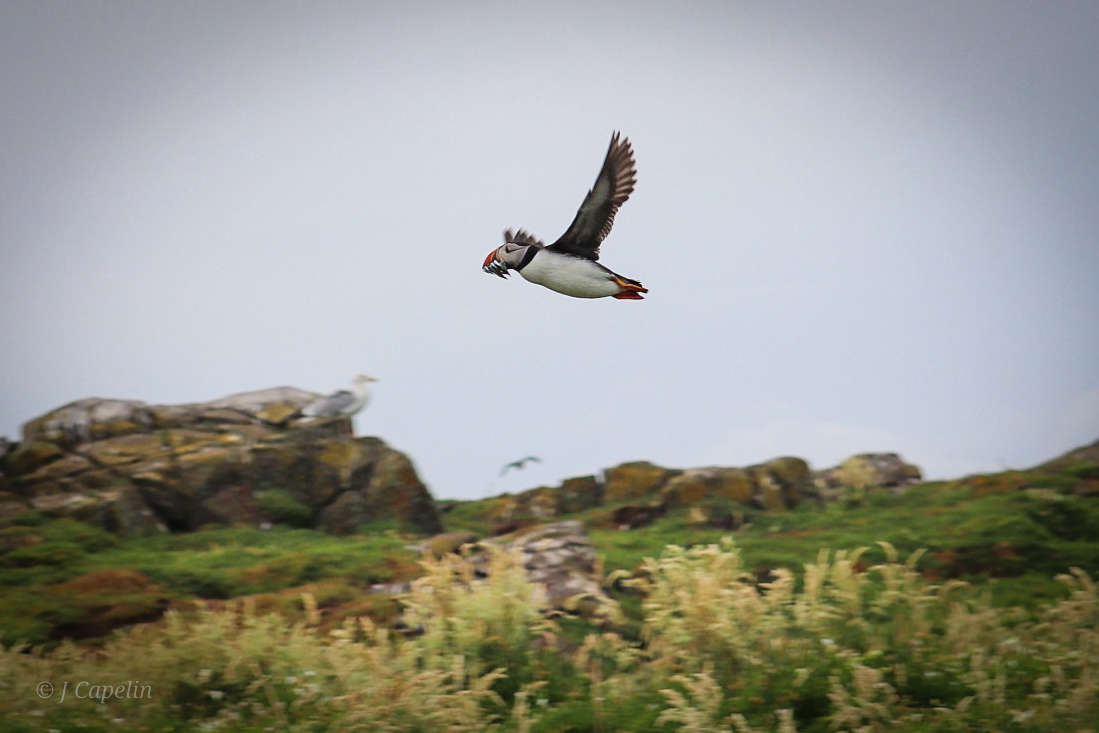
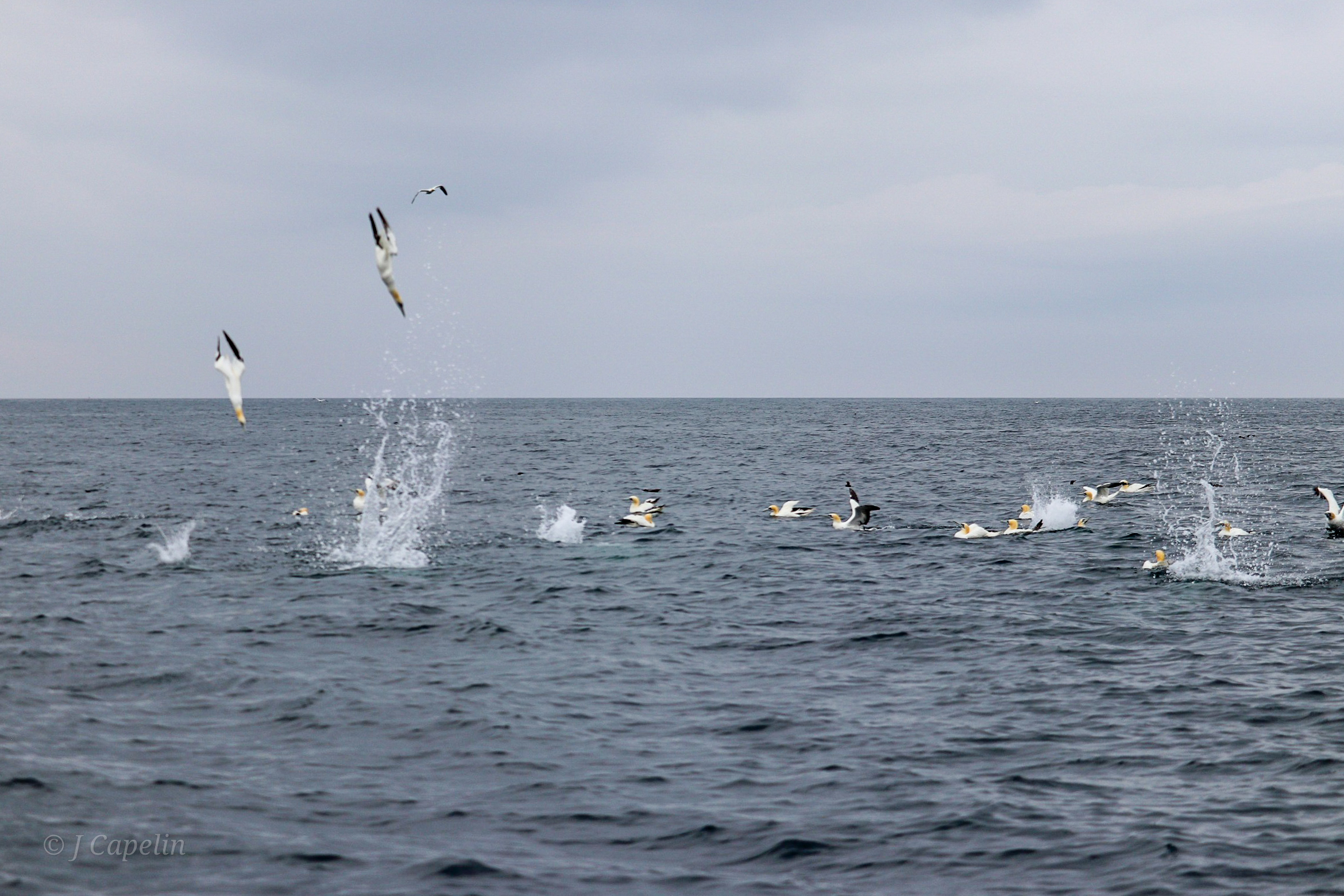
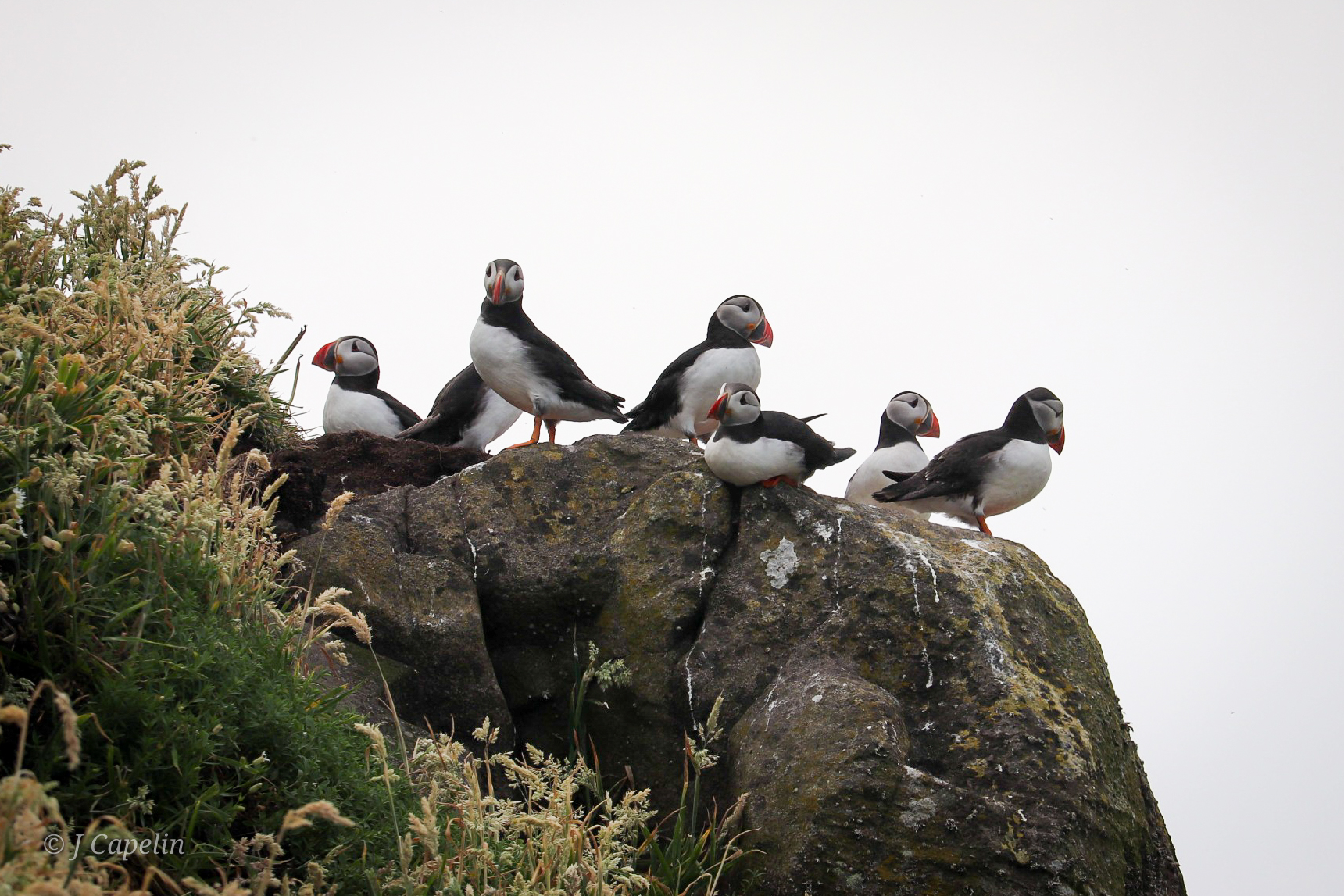
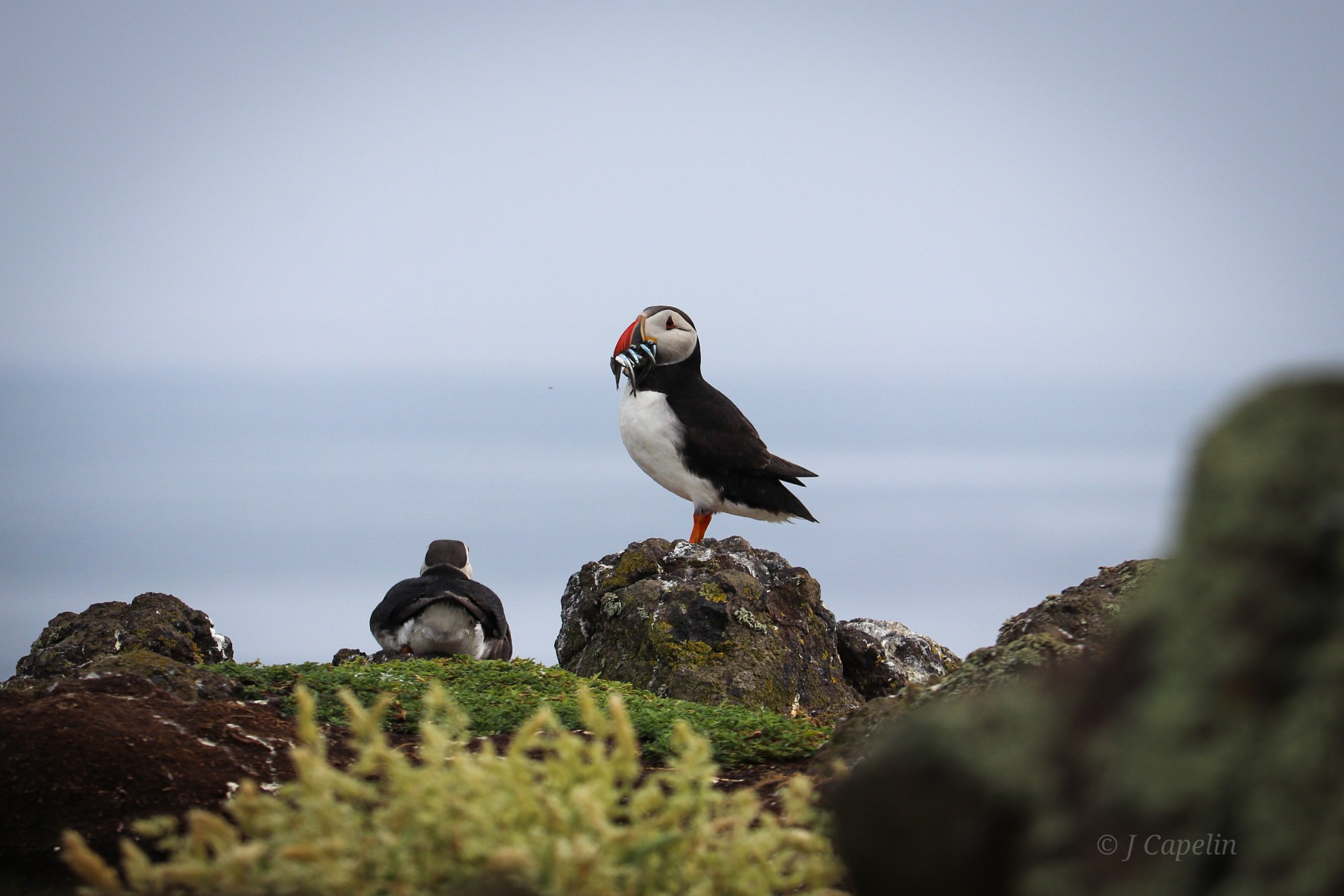
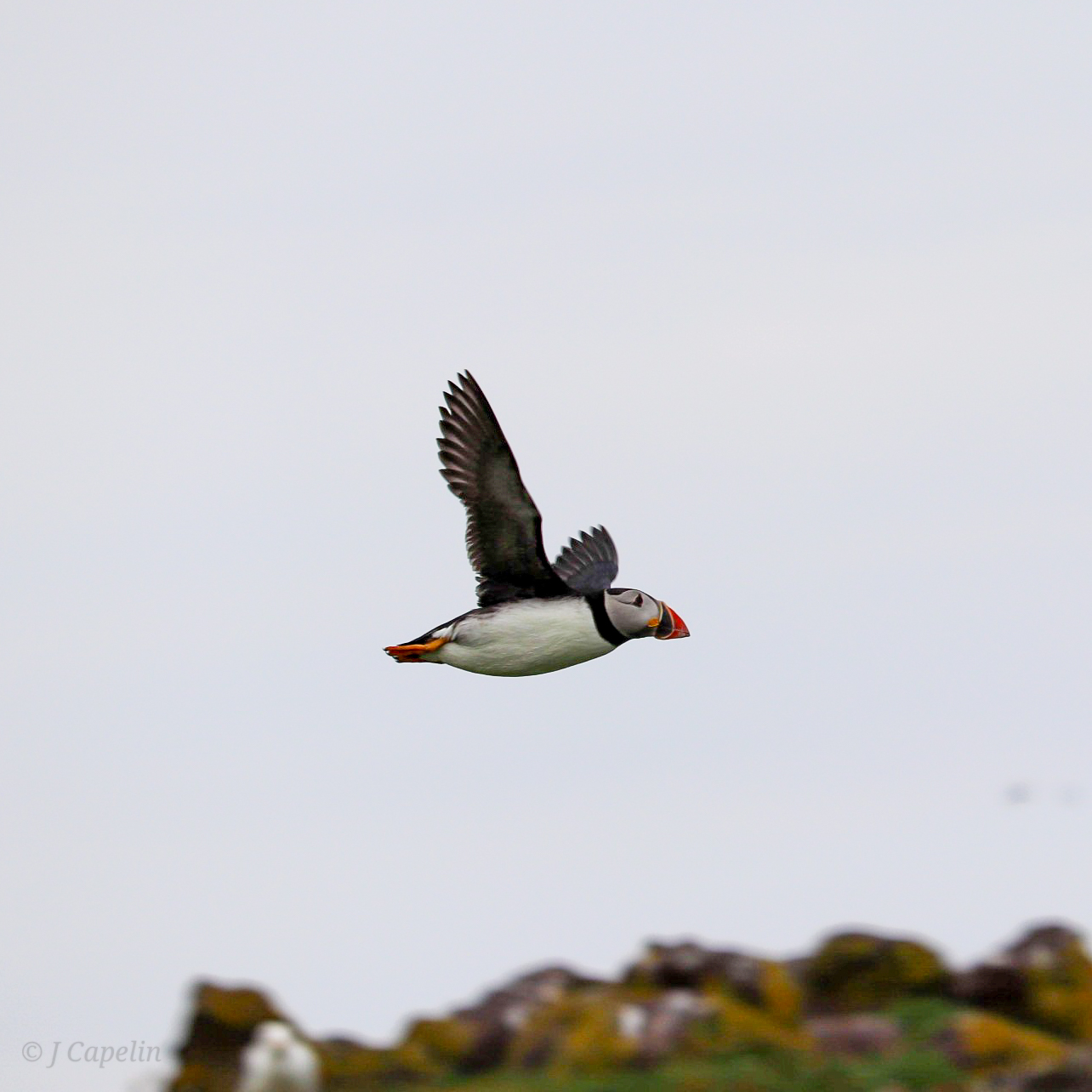
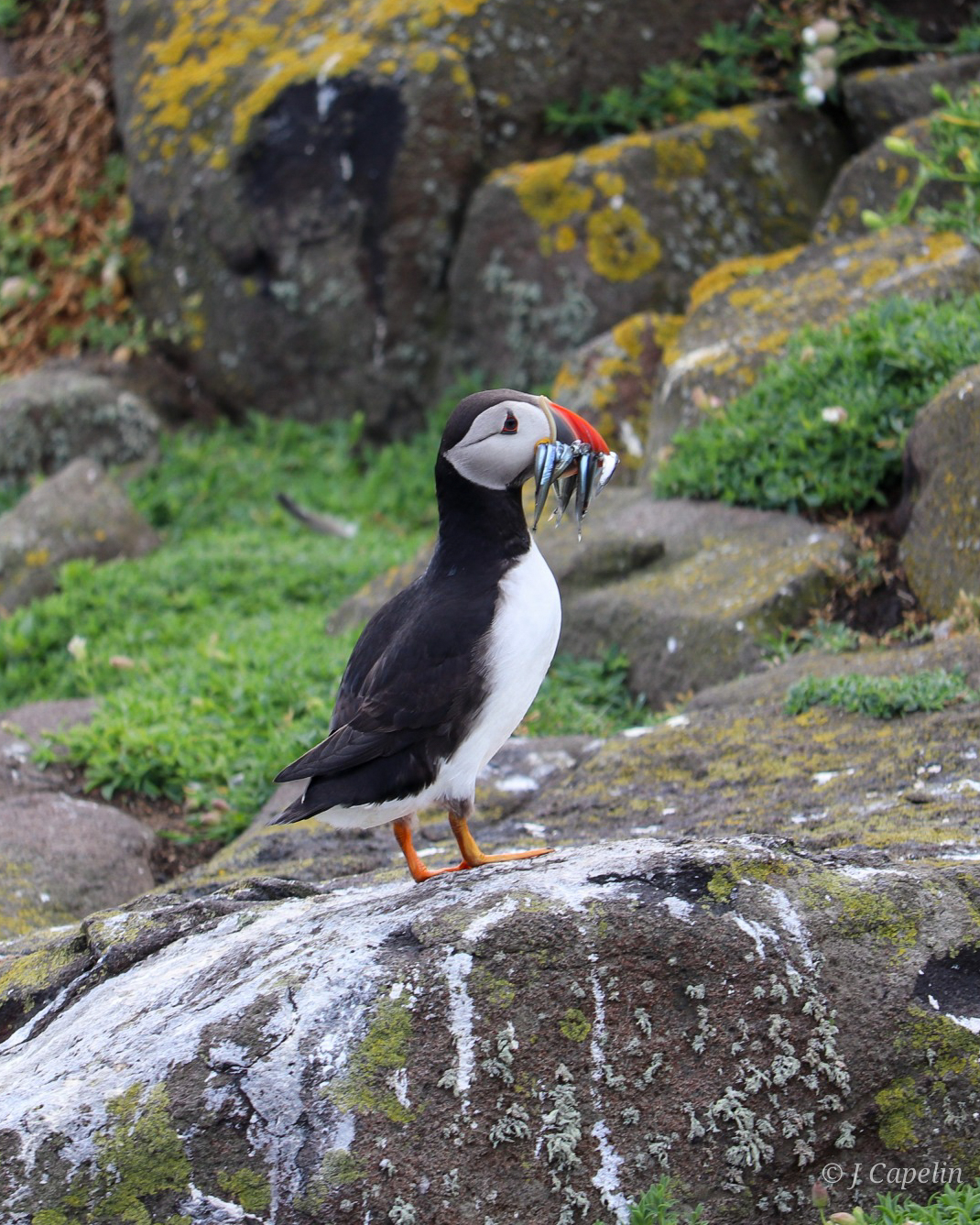
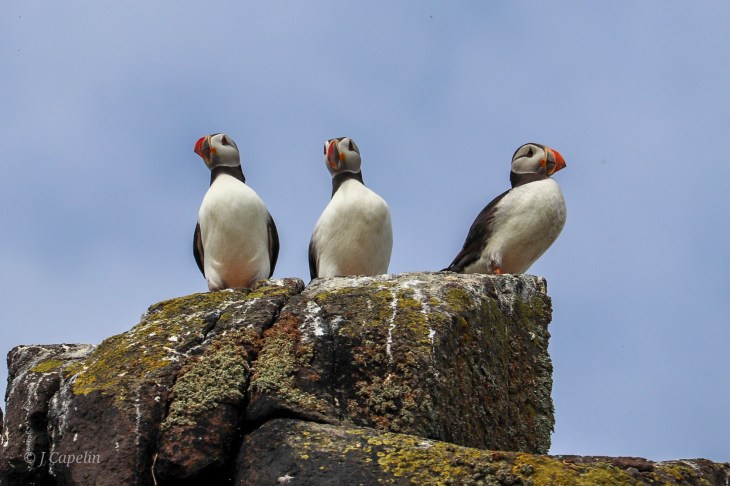
Fog veiled the harbour of Dunbar in Scotland the morning I arrived for the boat trip out to the Isle of May, and my heart sank at the prospect of spotting any wildlife. I’d been planning this trip for months, hoping to photograph the island’s birdlife, including everyone’s favourite – Puffins!
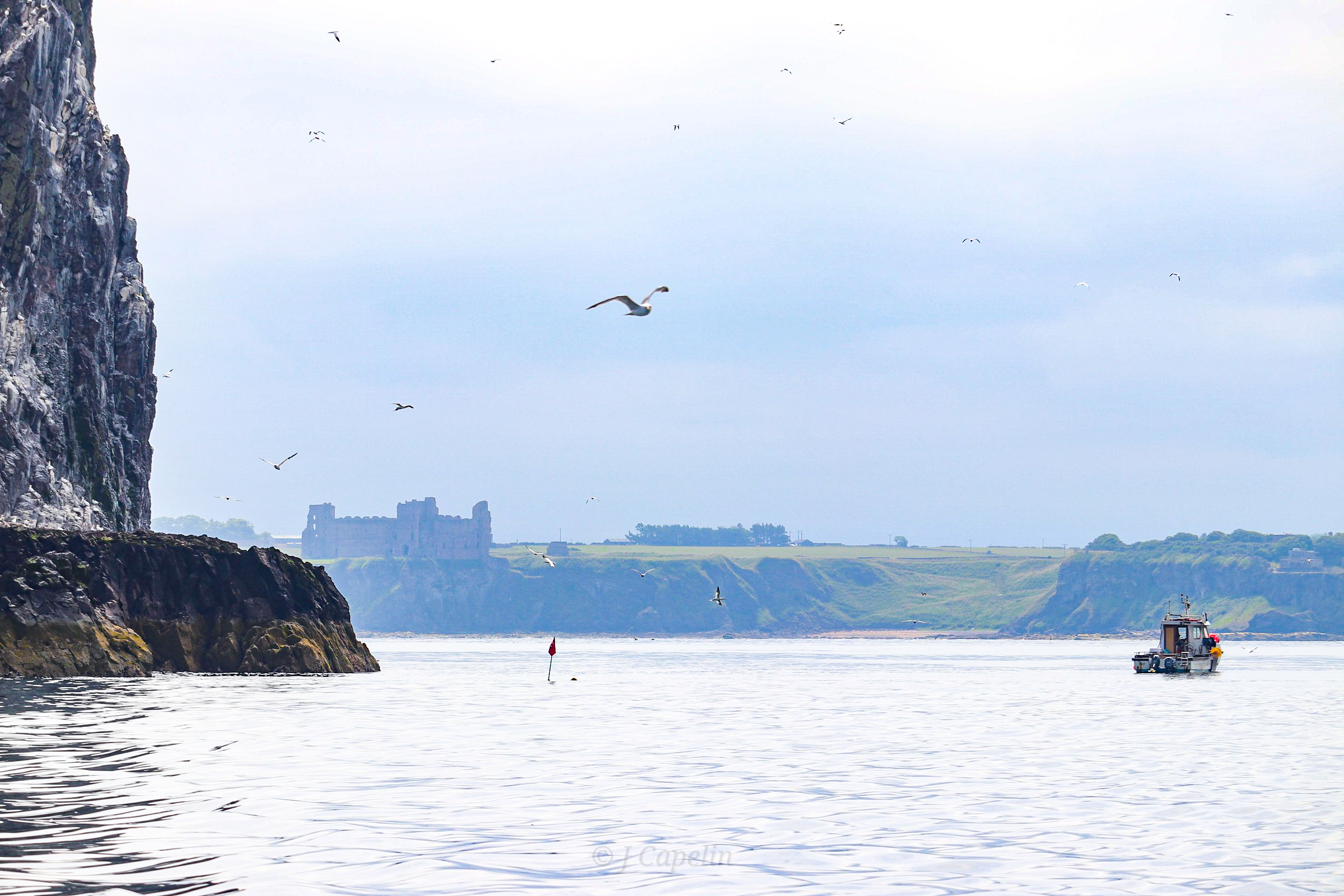
Dunbar Castle remains over harbour entrance
I wandered up Dunbar’s quietly bustling high street, with its blue and yellow bunting zig-zagging between the historical buildings, and strolled around the old harbour, admiring its ruined castle perched on the edge in the sea mist. Hundreds of seagulls and their fluffy chicks were nesting all over the ruins, like an apartment block for birds!
The ‘Blue Wild’ boat tour set sail from the ancient harbour at 1pm – at the tide’s convenience. It was a little 12 seater speed boat, and when the captain told us we were lucky to have these still conditions because 50% of the tours had been cancelled due to the weather, and that the waves could normally reach 2 metres high, my heart lifted again.
It is best to give yourself some leeway when booking, in case of bad weather. I gave 3 days grace, and planned things that could be swapped around if needed, but even this was cutting it fine, as the weather we got was much better than what was forecast!
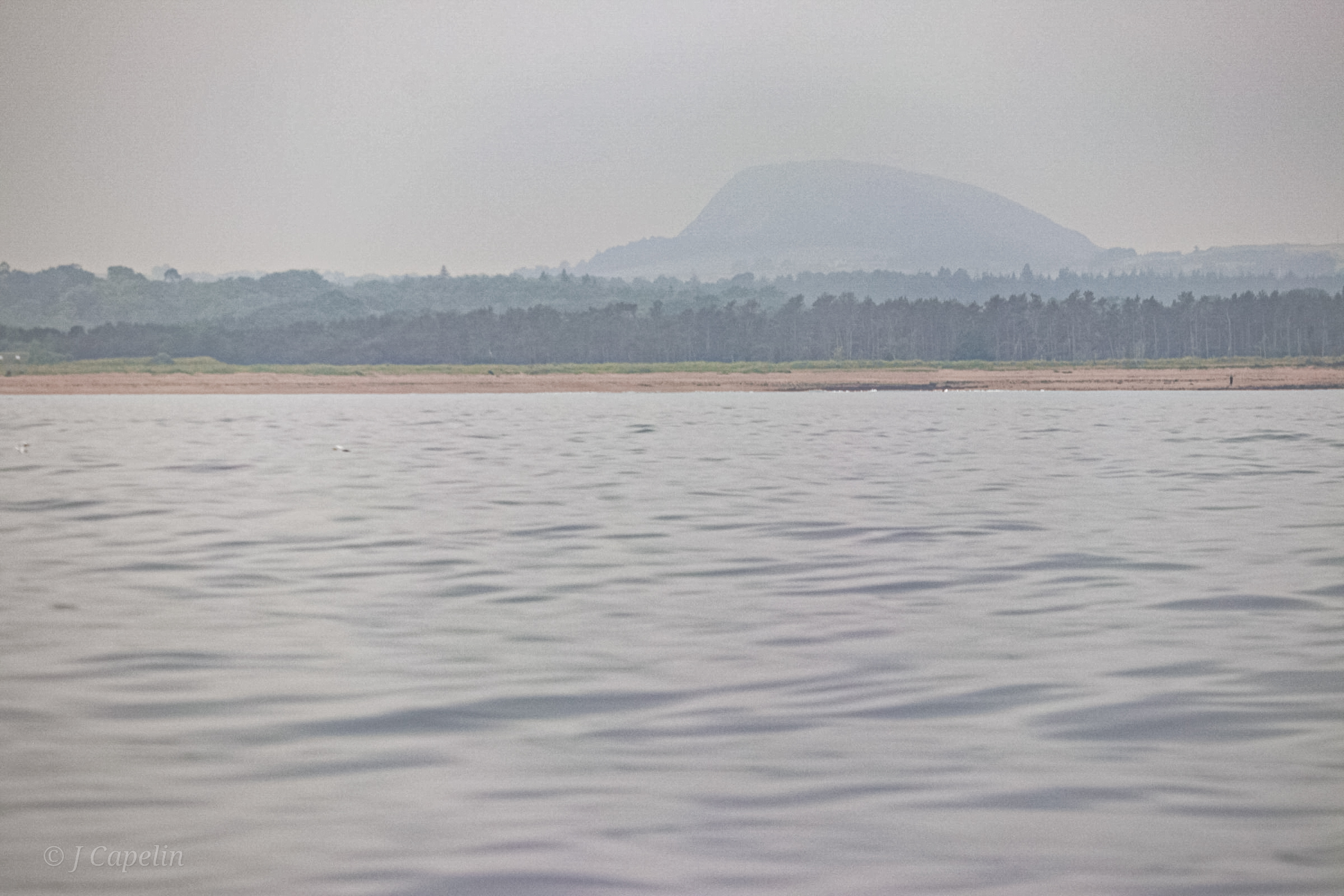
We slid out of the harbour on a white sheet of smooth sea glass that blended into the foggy sky. The sight out of the window was like an abstract painting as we skimmed across Scotland’s abnormally flat Firth of Forth, with silhouetted layers of grey landscape whizzing past in the distance.
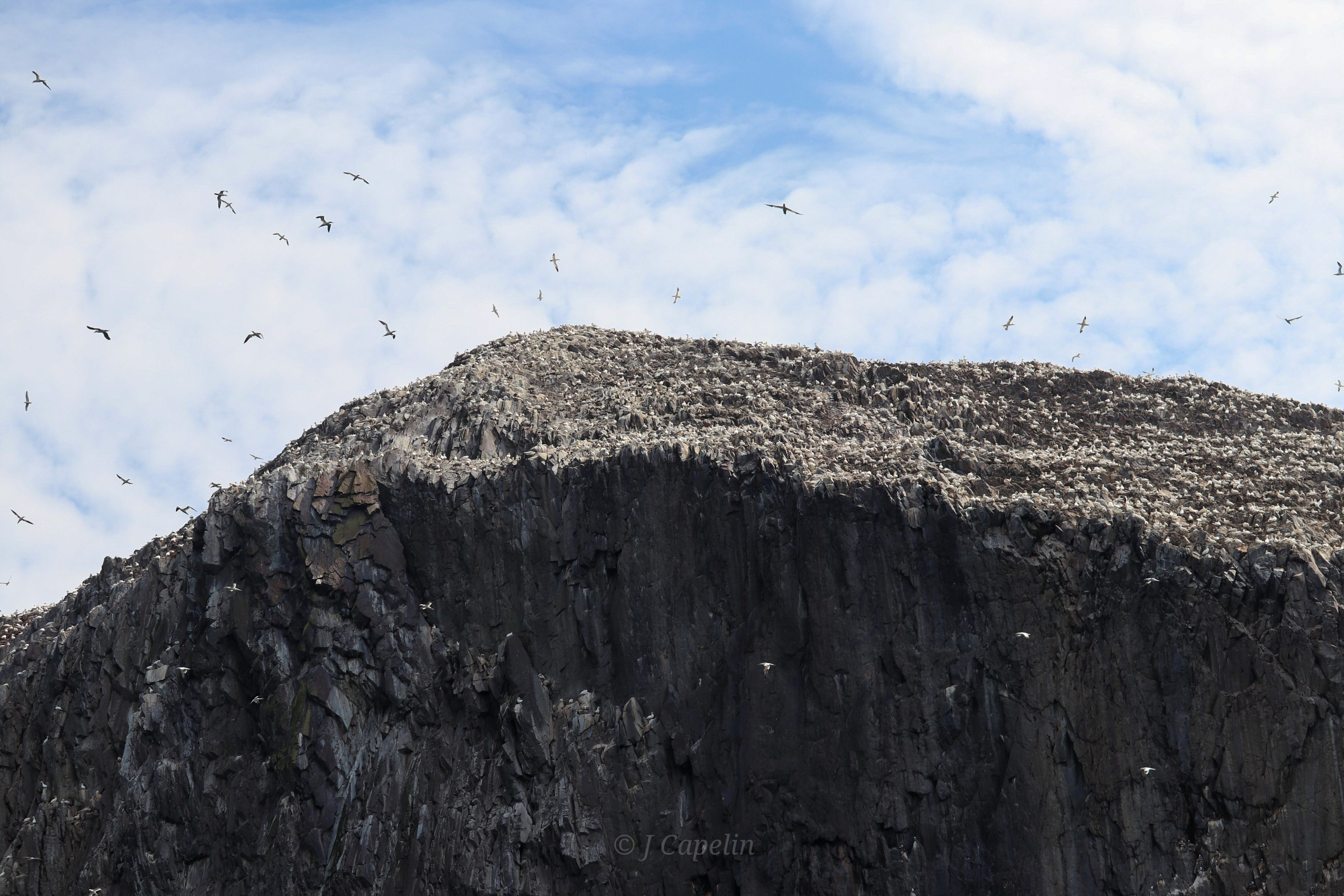
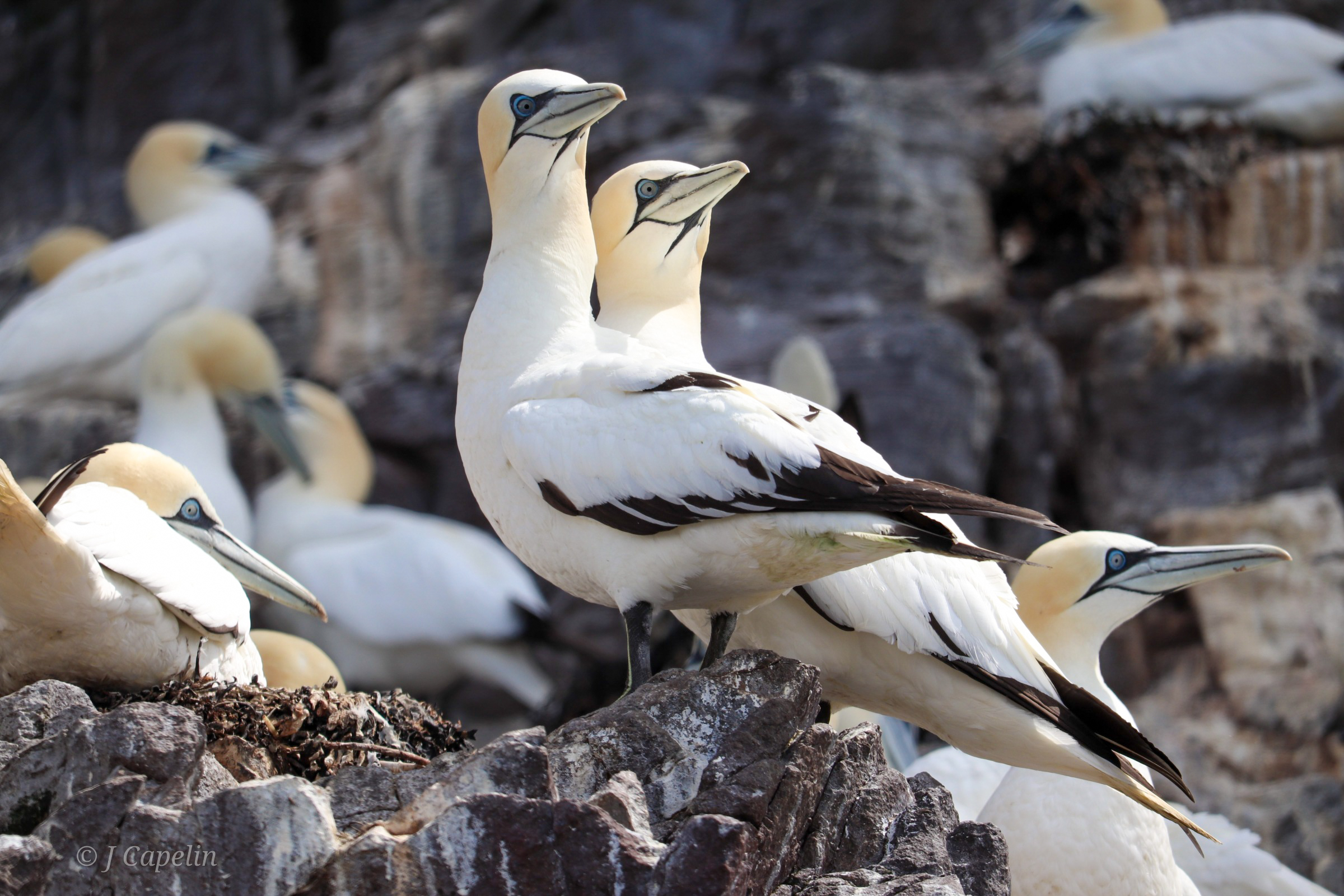
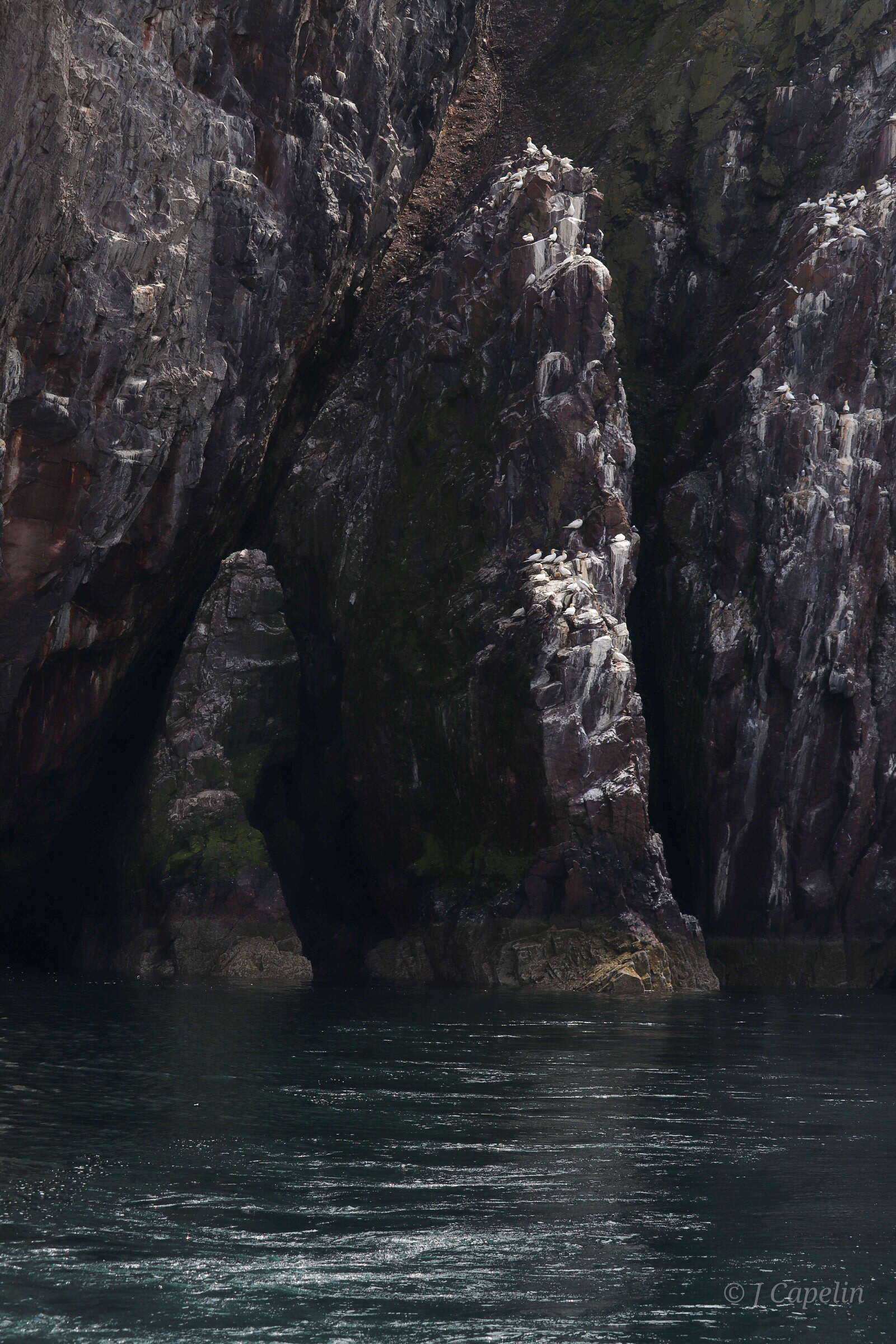
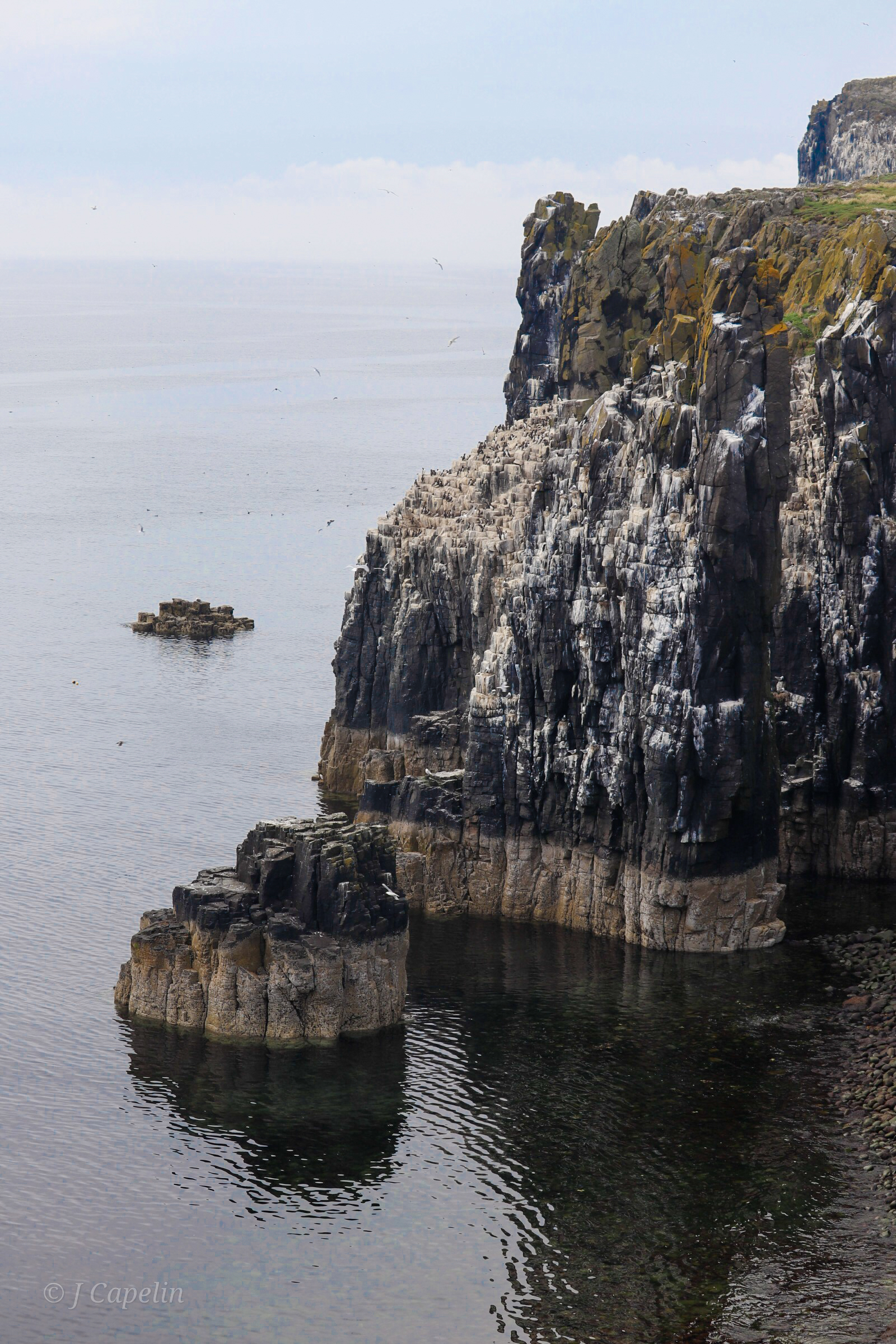
Azure brushstrokes began to appear on the surface of the water as the fog thinned, and seabirds came into abundance, floating and diving around the boat. The Bass Rock loomed up ahead, a giant rock island, famously home to the world’s largest colony of Northern Gannets. As we slowly circulated the island, the sheer magnitude of the colony became evident. The entire surface of the rock was like an ice cream dipped in sprinkles, only the sprinkles were Gannets! Over 150,000 of the birds nest here between Feb and October. I’ll be honest with you, I didn’t have much thought or feeling about Gannets before, but this was amazing to see and I could appreciate how beautiful they are with their blushed heads and piercing blue eye shadow, lined with black.
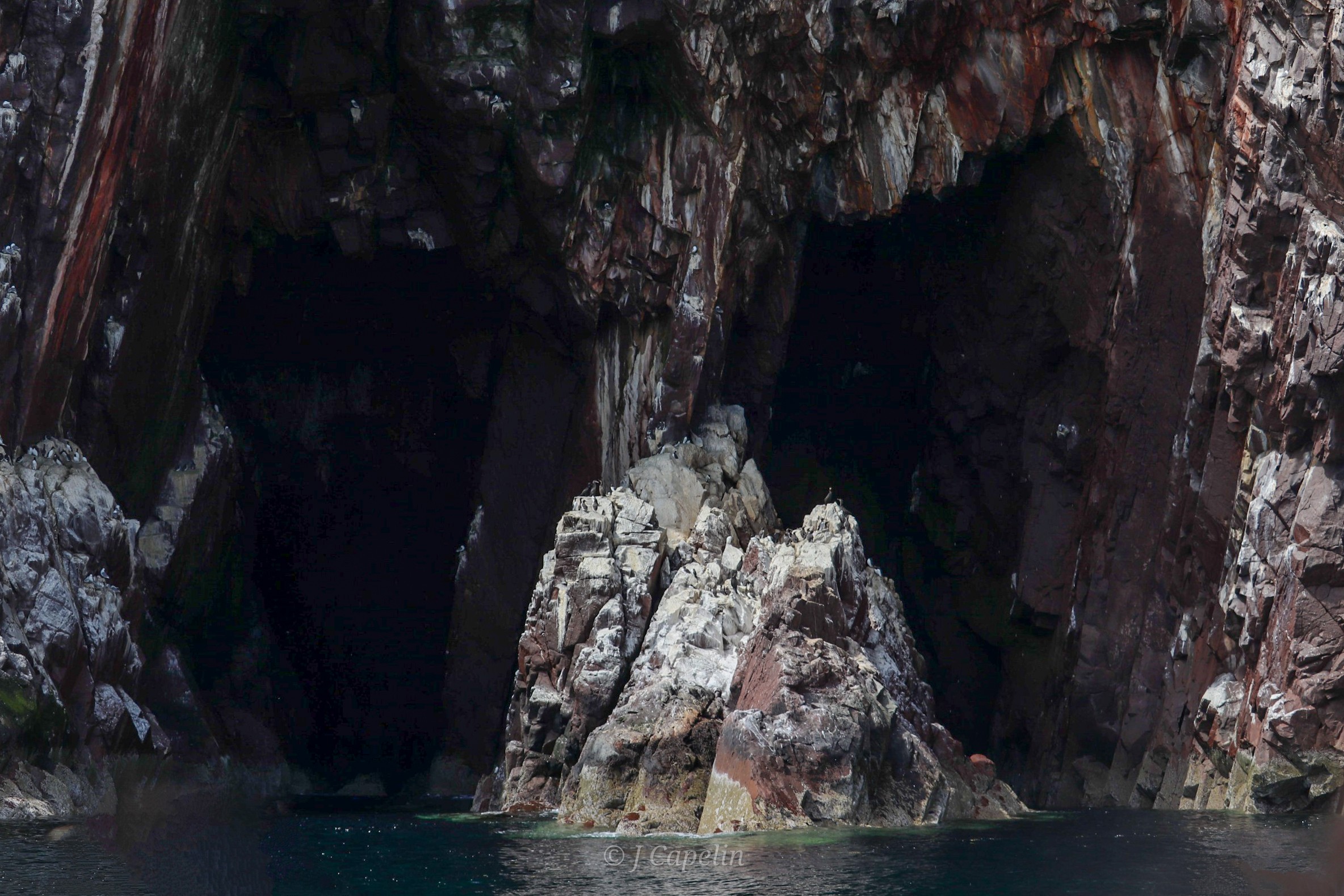
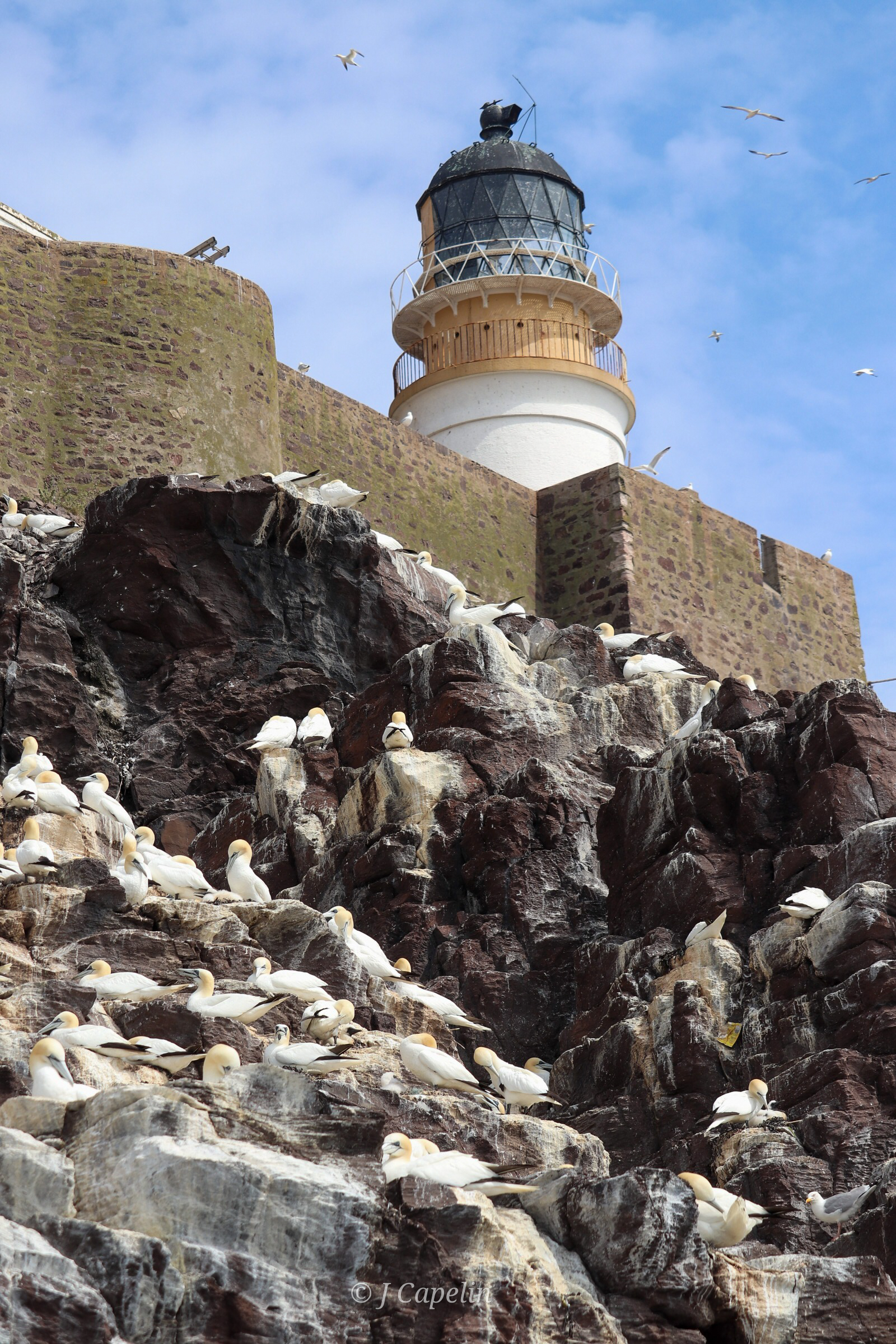
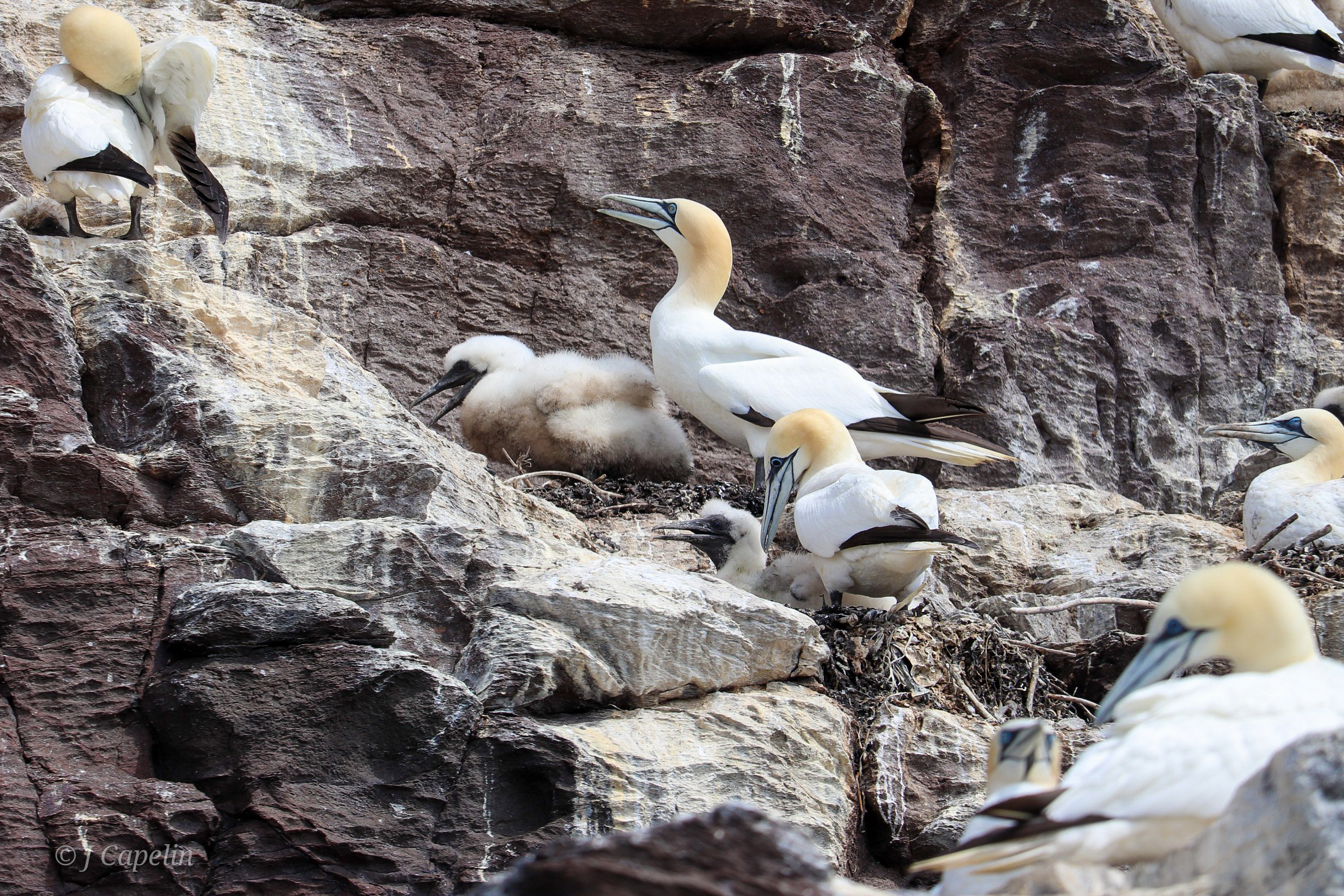
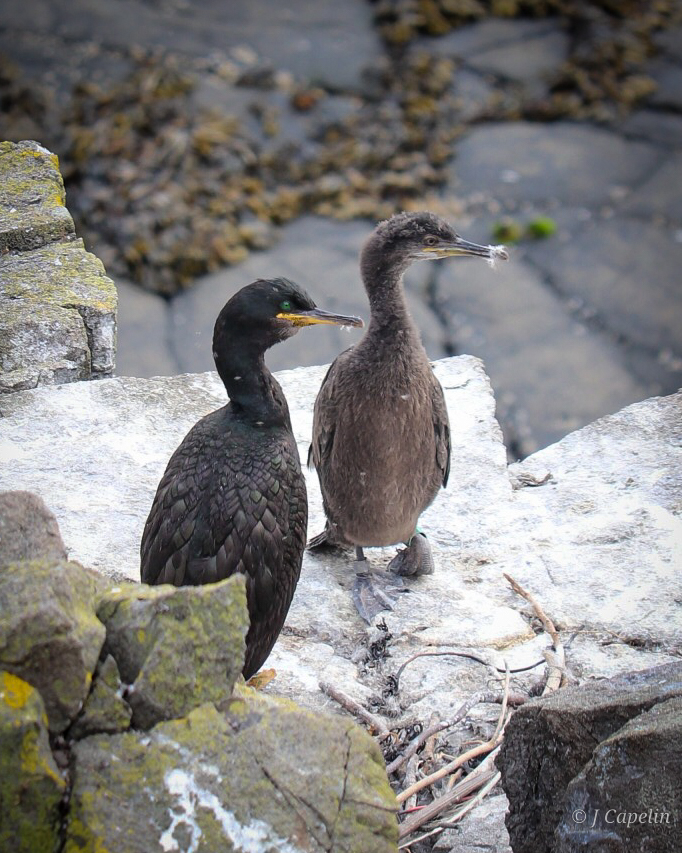
Enormous sea caves etched deep under the island were guarded by Shags, standing atop shards of rock, their outstretched wings drying under the freshly cleared sky. We bobbed beneath the Bass Rock Lighthouse, craning our necks to take in the vast amount of Gannets. Their monstrous fluffy, white chicks were littered all over the cliff, which was dripping with their waste like candle wax, and the cacophony of the birds filled the air.
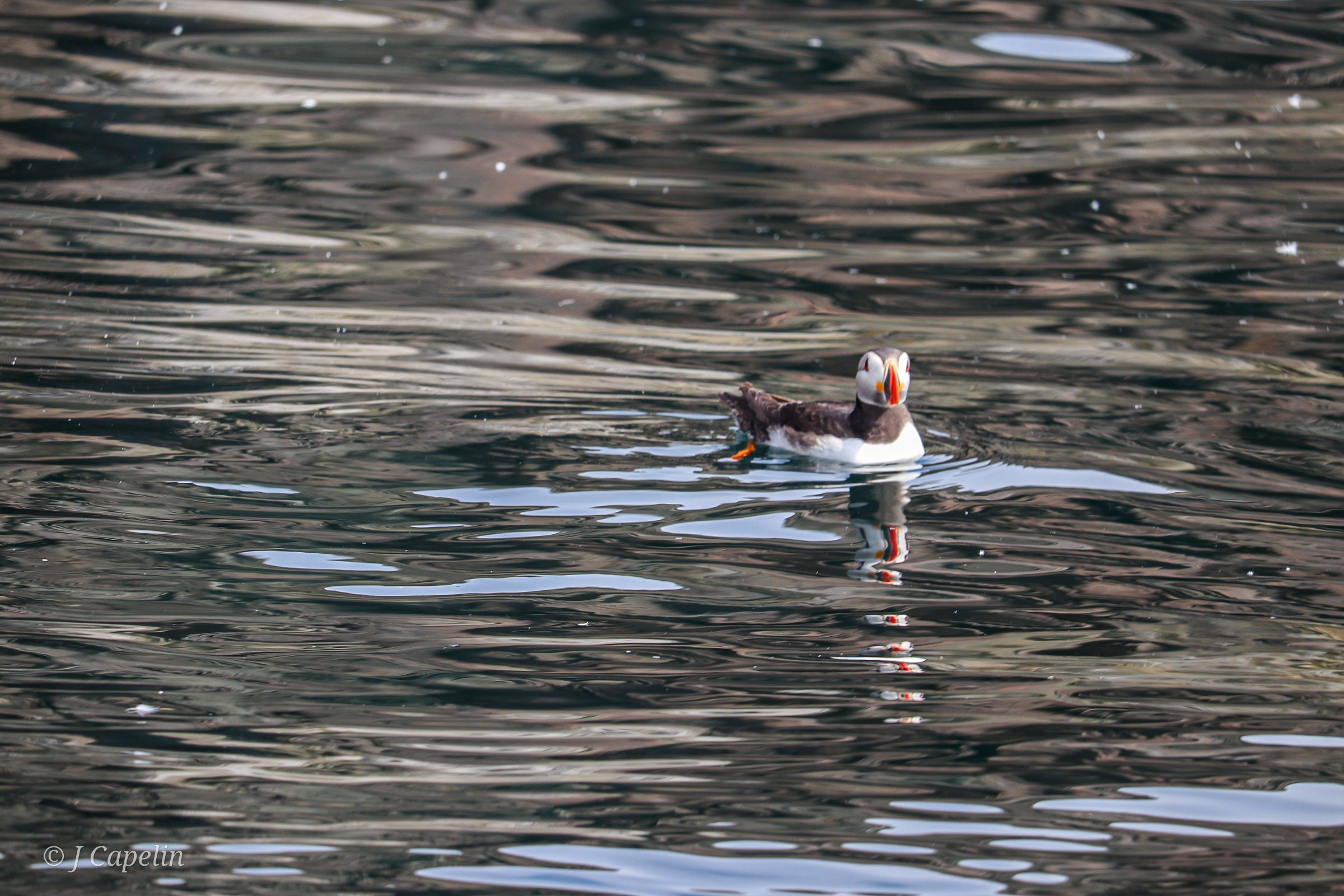
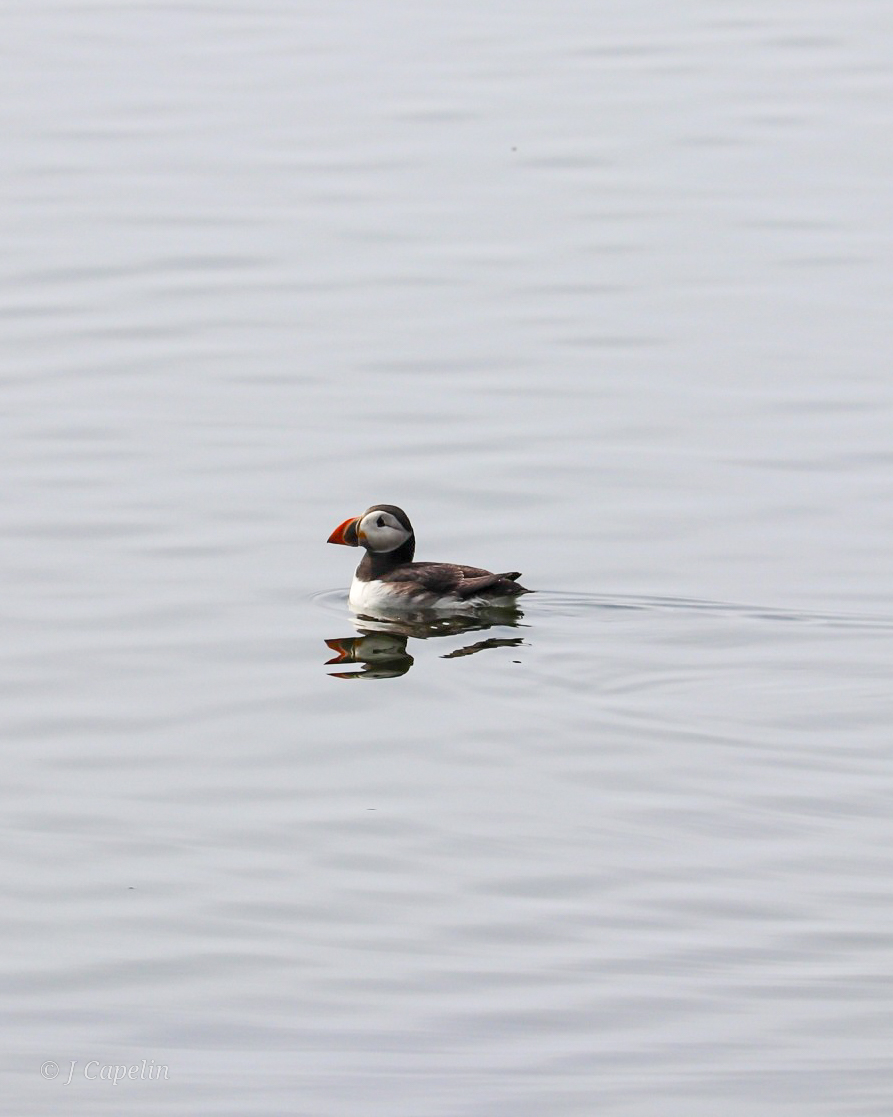
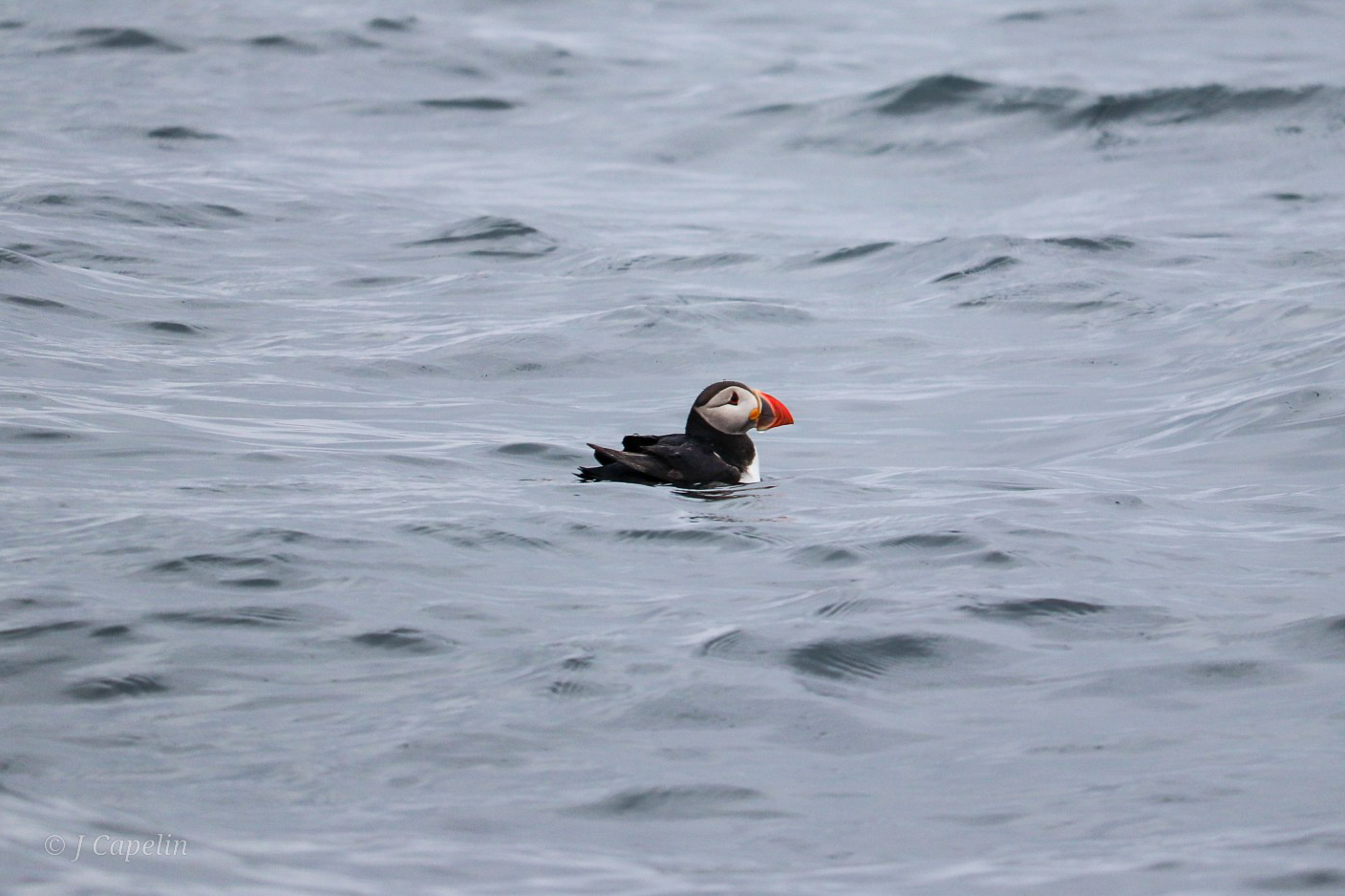
Then one of our group yelled and pointed to the back of the boat – a single Puffin was paddling along behind us, on an idyllic backdrop of Tantallon Castle on the coastline beyond. Very demure.
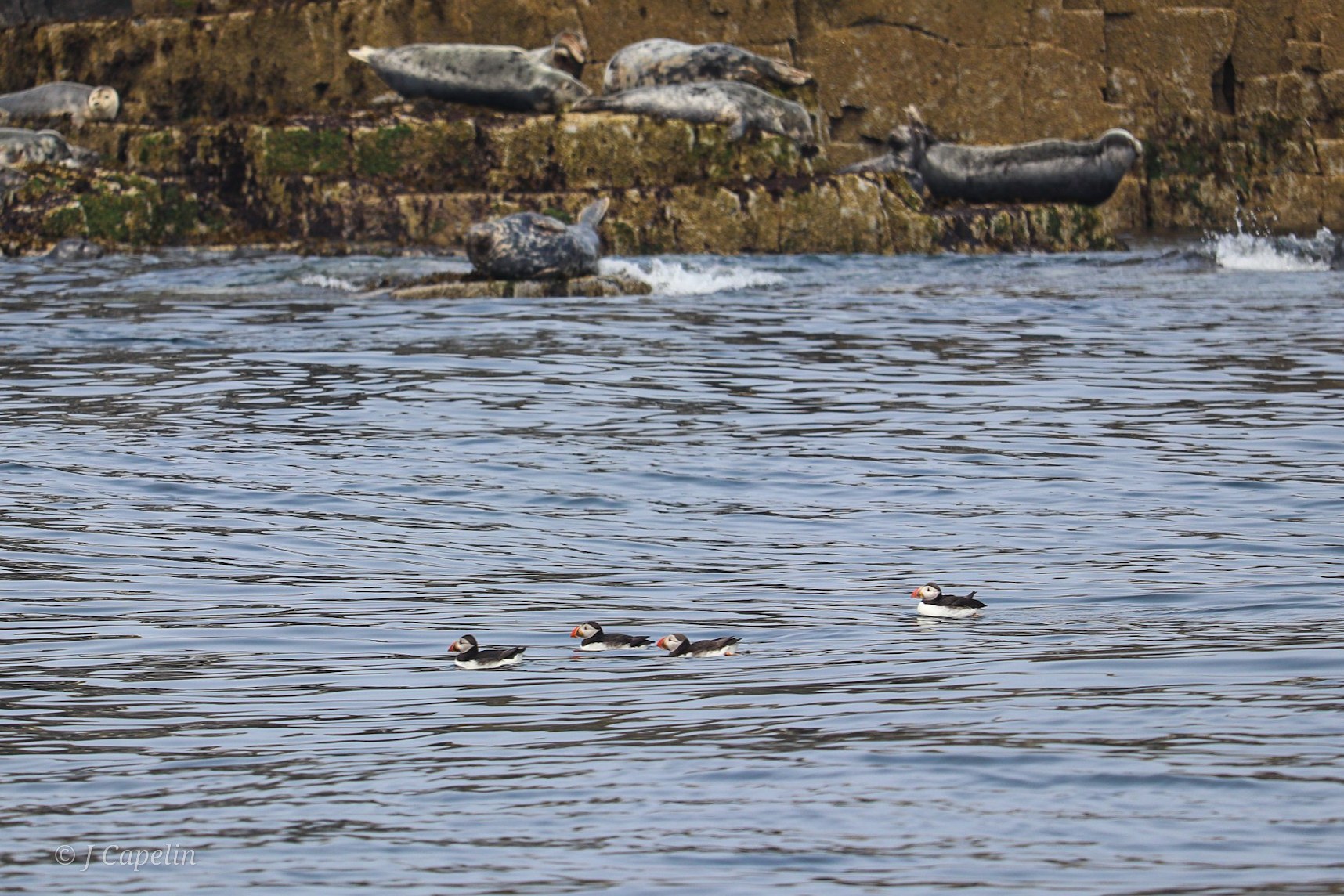
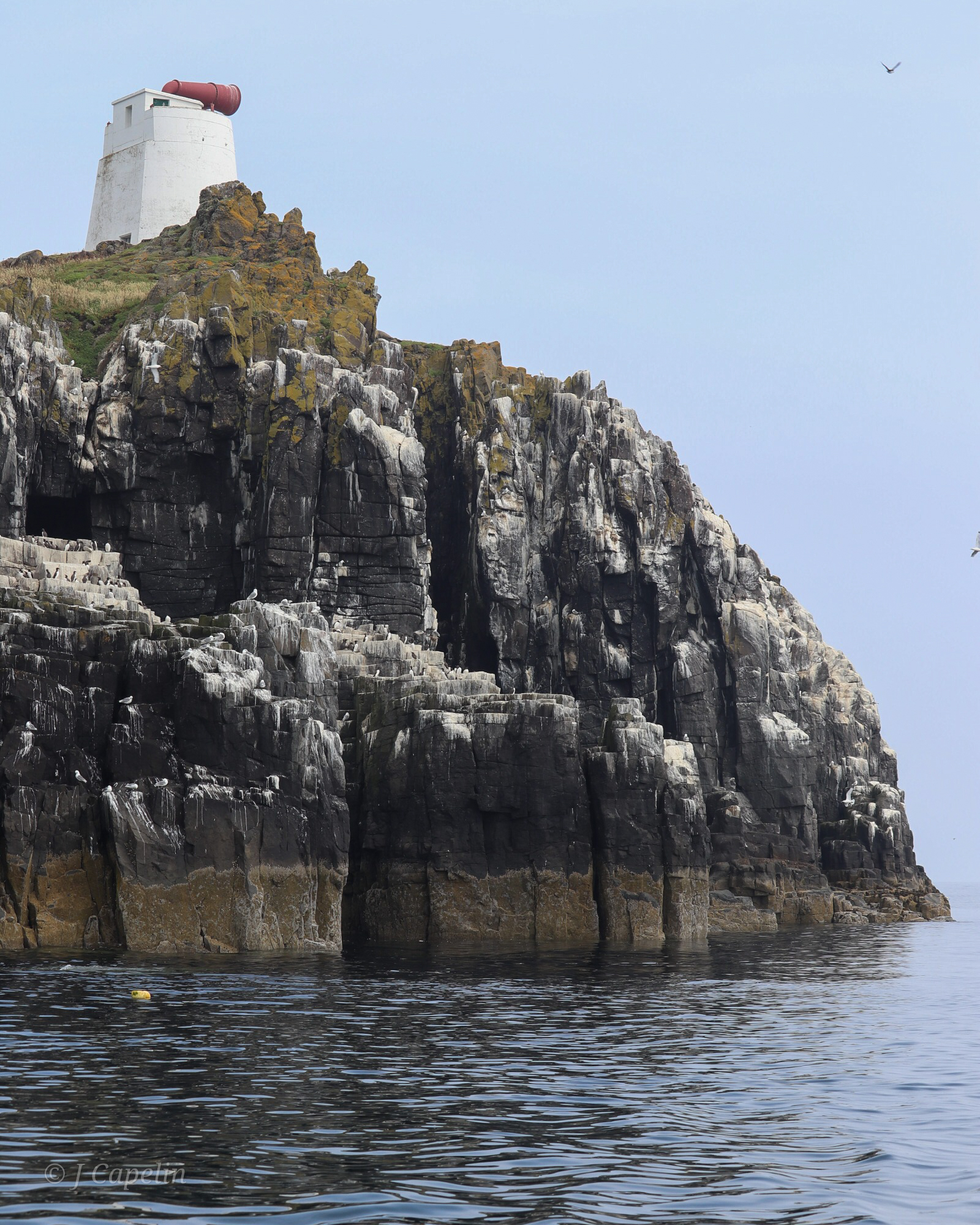
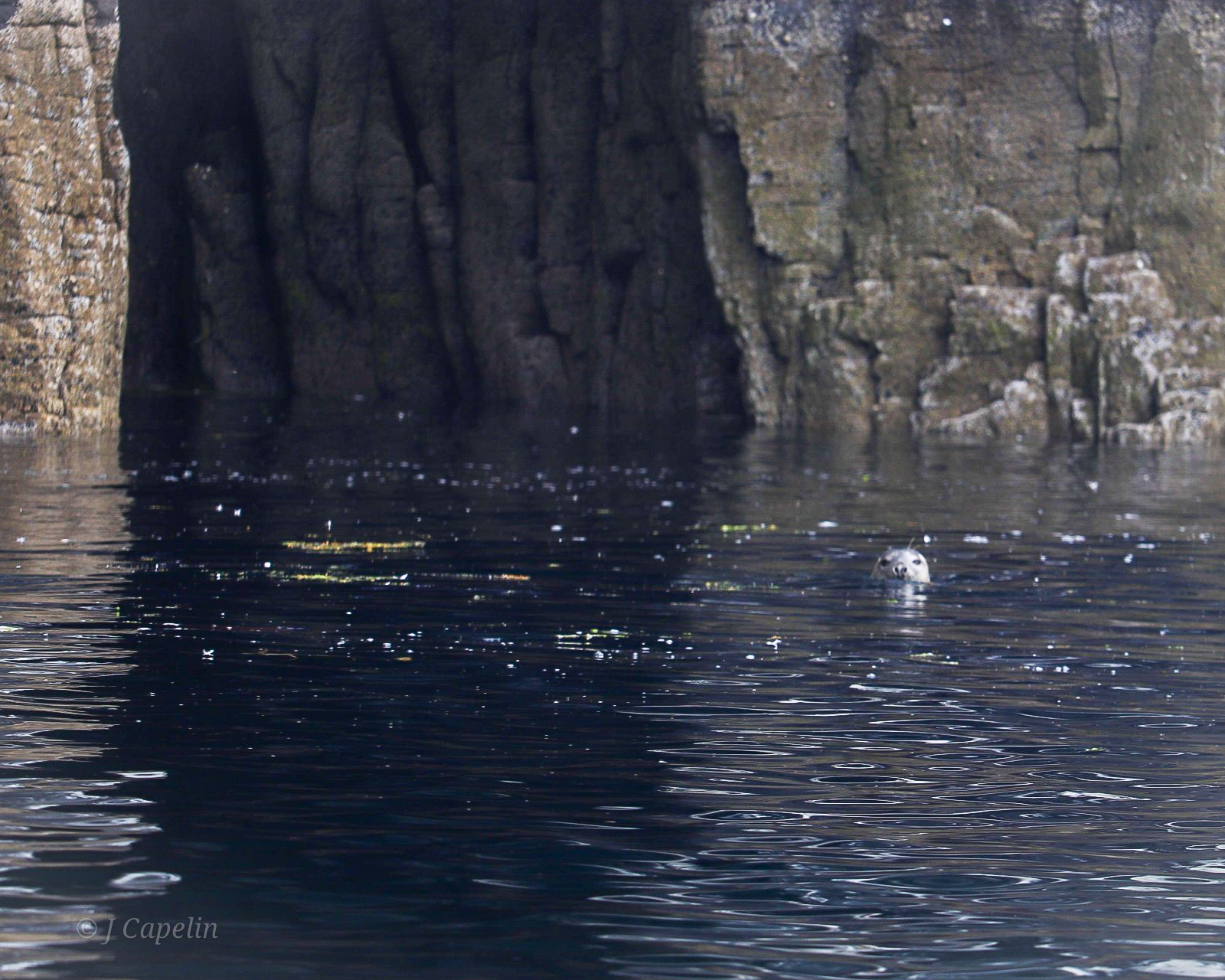
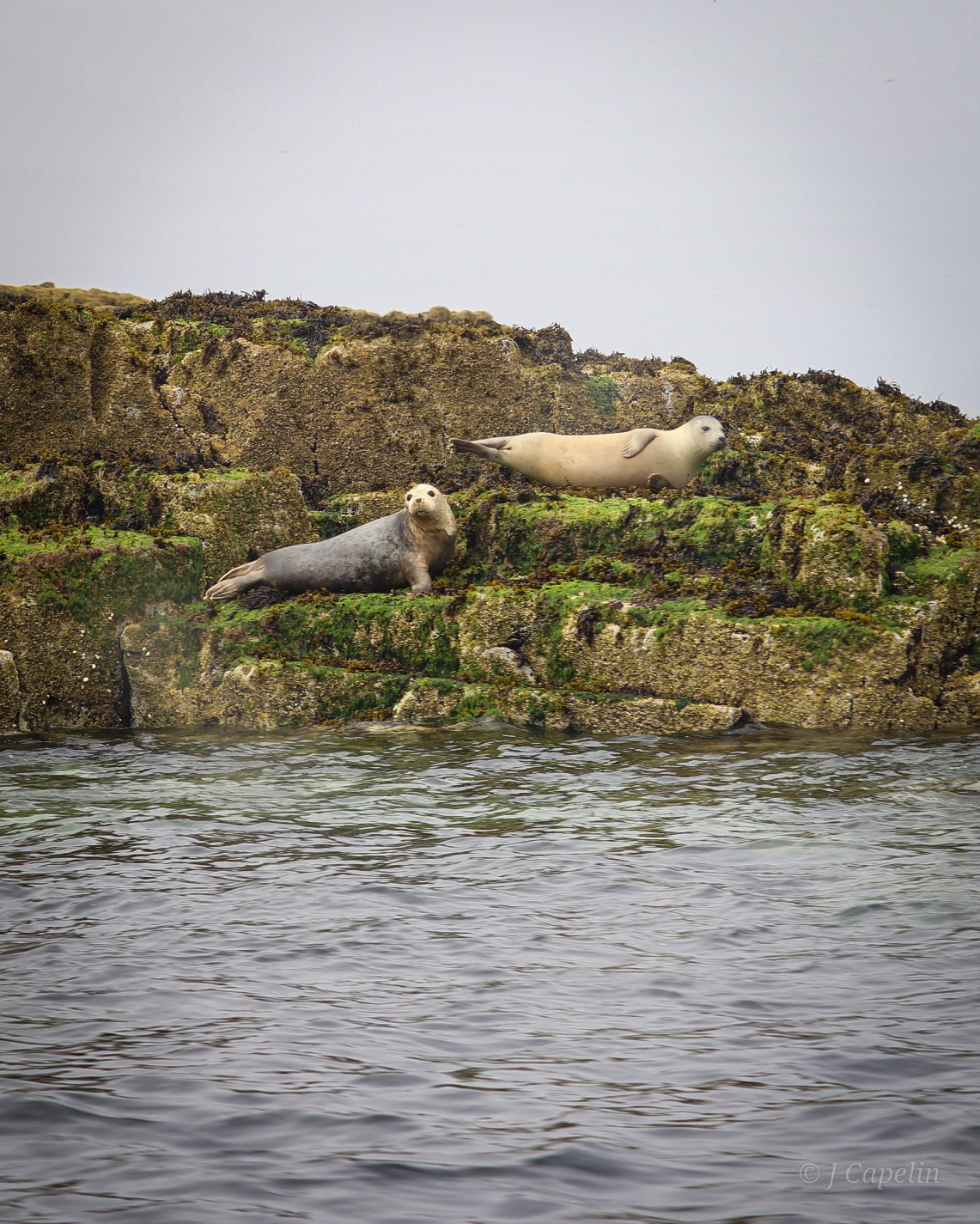
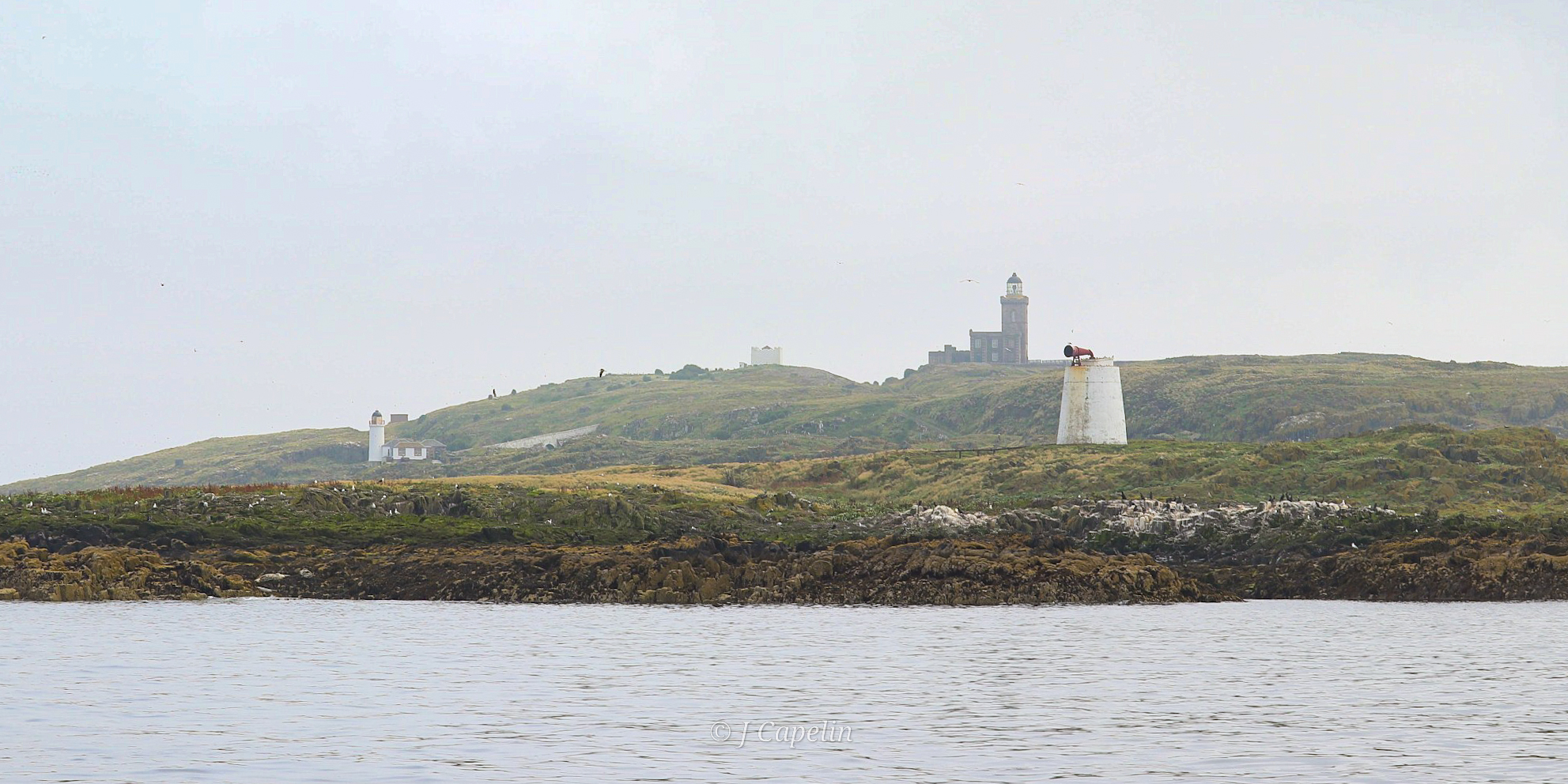
We sailed on to the Isle of May, which was surrounded by Grey Seals lounging around on the rocks and twirling in the watery mouths of the sea caves. As we came around the island to make port we could already see puffins on the cliff ledges and on the water, along with Terns, Kittiwakes, Shags, Gulls and Jellyfish.
There was still a layer of fog on the sea as we circled the island, but once we stepped off the boat the July afternoon sun was burning through.
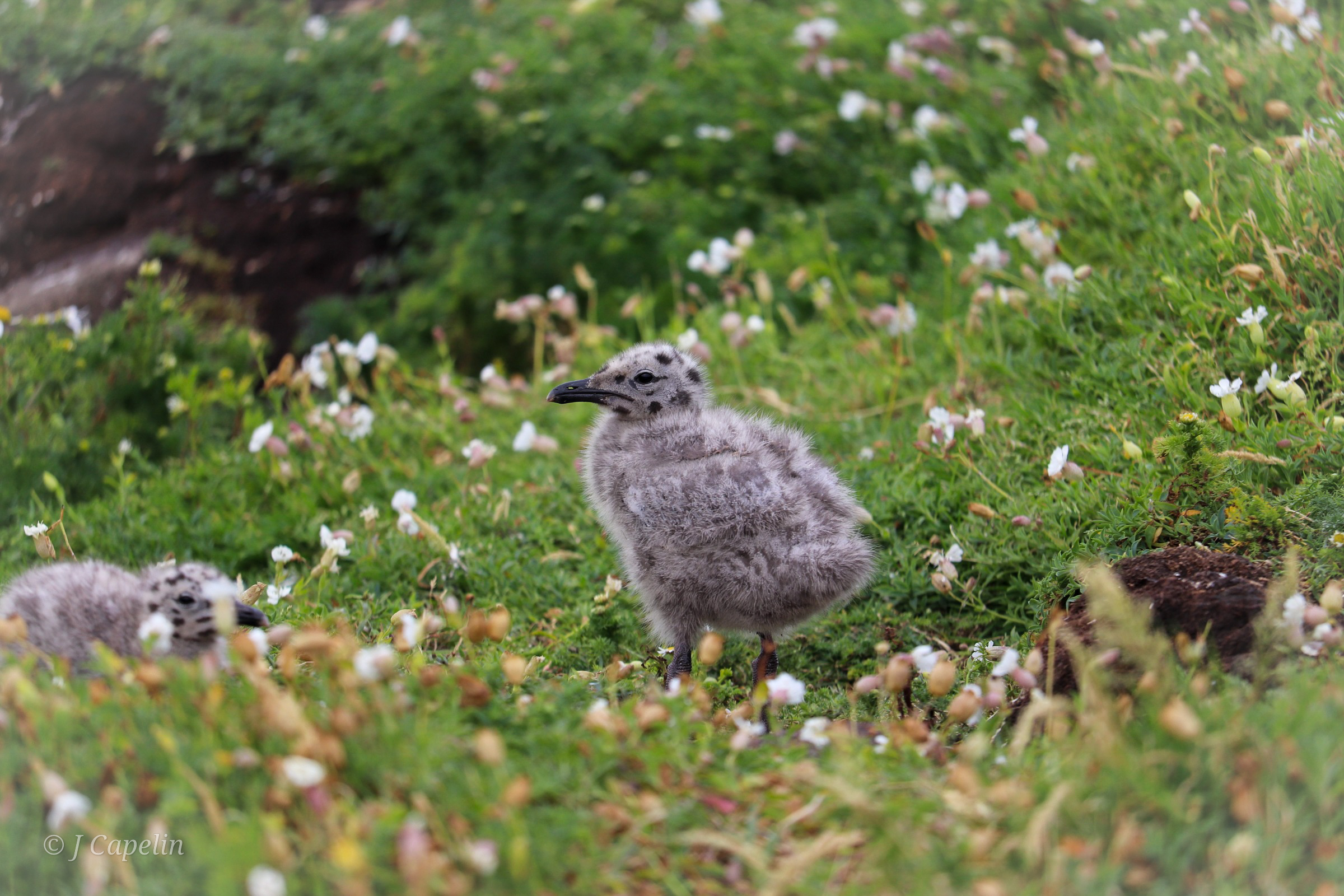
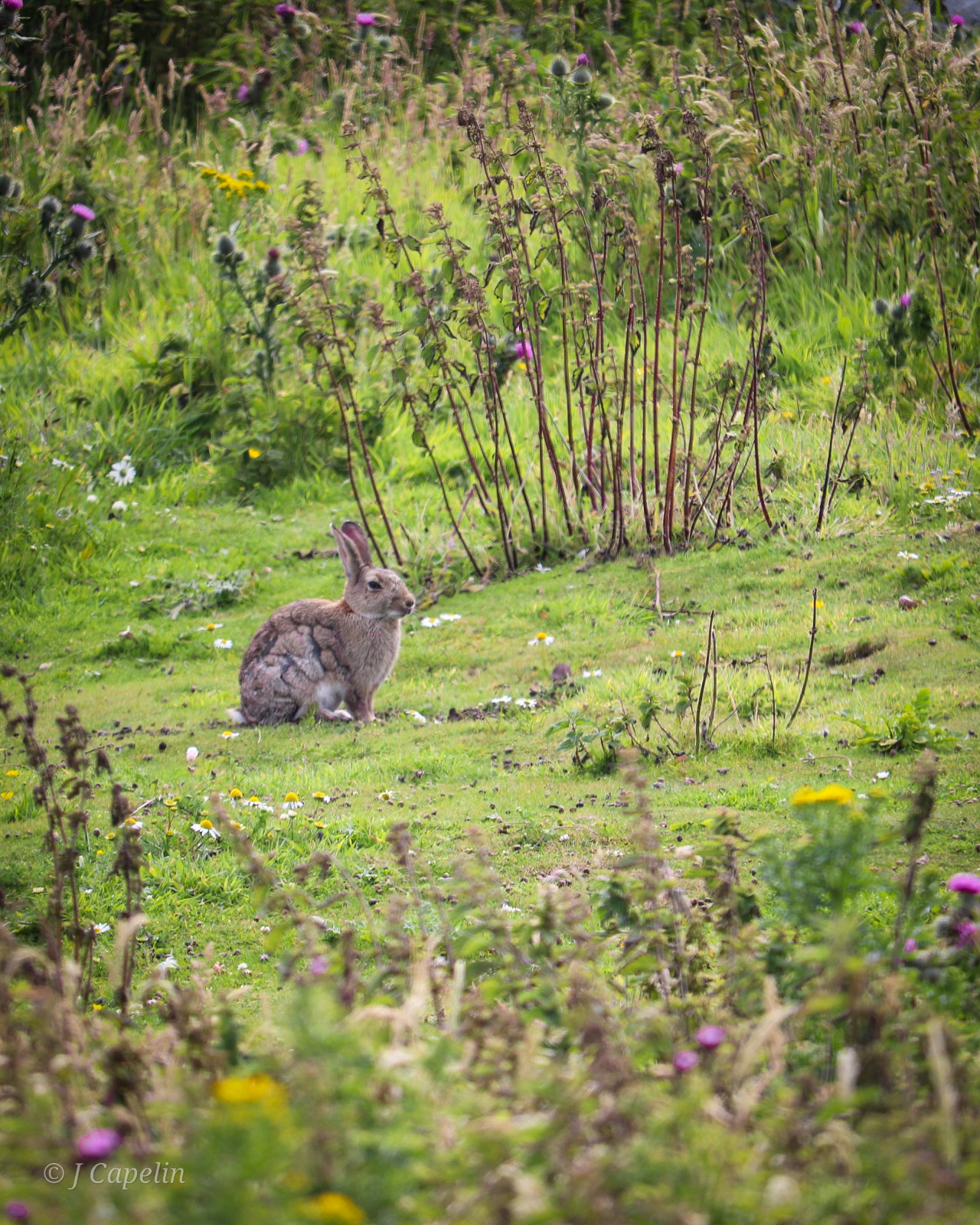
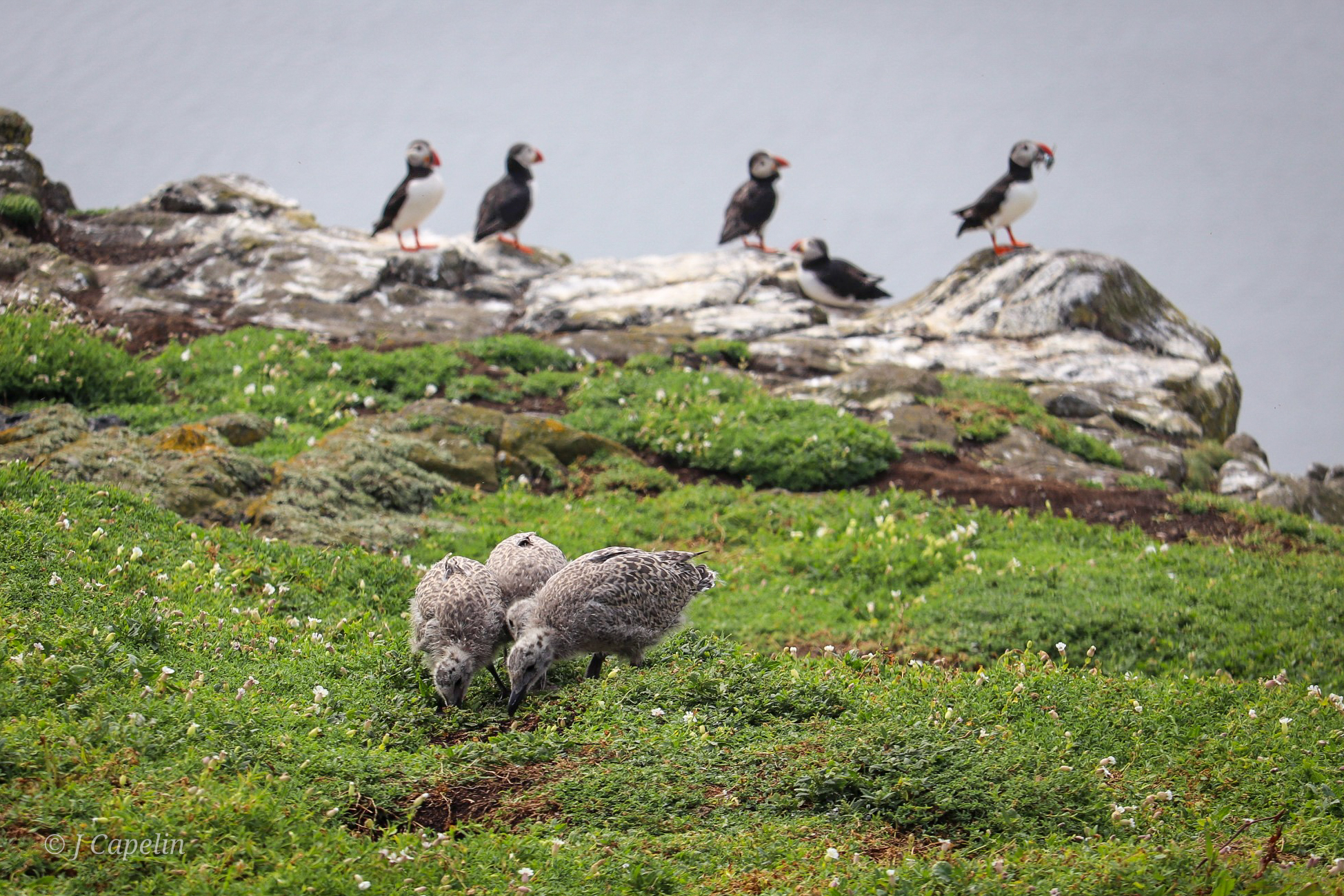
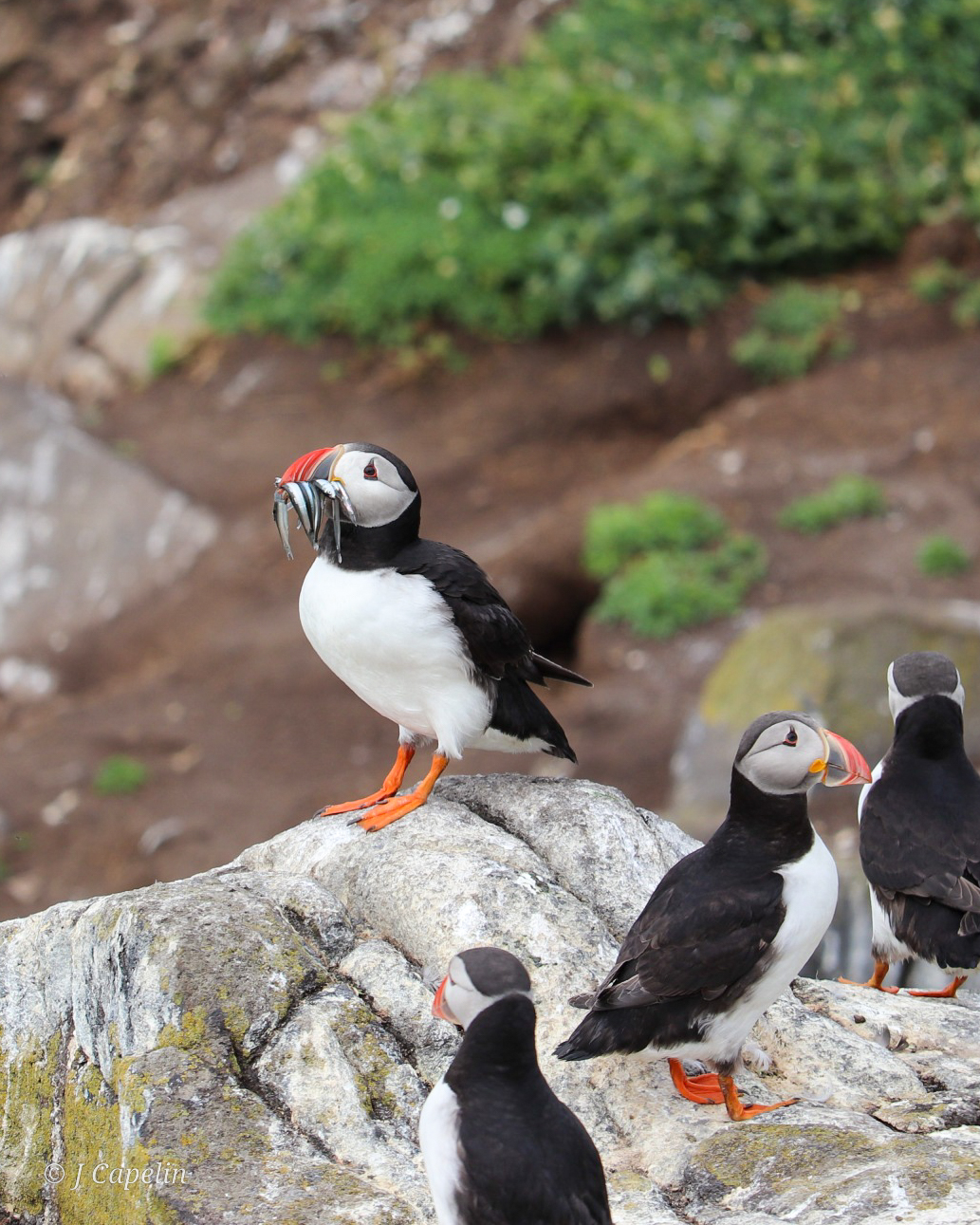
Fluffy grey seagull babies toddled around between tussocks, like butter wouldn’t melt, but the guide informed us that there were no Arctic Terns nesting here because those cute little baby gulls had eaten all their chicks. We strolled up the hill to the Main Lighthouse spotting big rabbits lolloping in the long grass and thistles, stopping at the Loch on the way. Puffins were watching us from all around as the footpath cut between high banks, and as they flew over I noticed the fish hanging out of their beaks and their big orange feet sticking out behind them!
Meandering down the headland to Bishop Cove there were Puffin burrows absolutely everywhere, highlighting the importance of sticking to the footpath. I watched three baby seagulls putting their heads in the burrows, while the parent Puffins waited anxiously from a distance. It was hard to watch the sad reality that some of these Puffins might be coming back to an empty burrow.
The spectacular cliffs of Bishop Cove were alive with birds, the grand white pillars holding the island up out of the crystal water below. We followed the path down to a cove known as Alterstanes, where we got some nice Puffin close ups. Then we looped back along the lower boardwalk, ‘Holyman’s Road’ along a vast, rocky coastline, to the south point of the island.
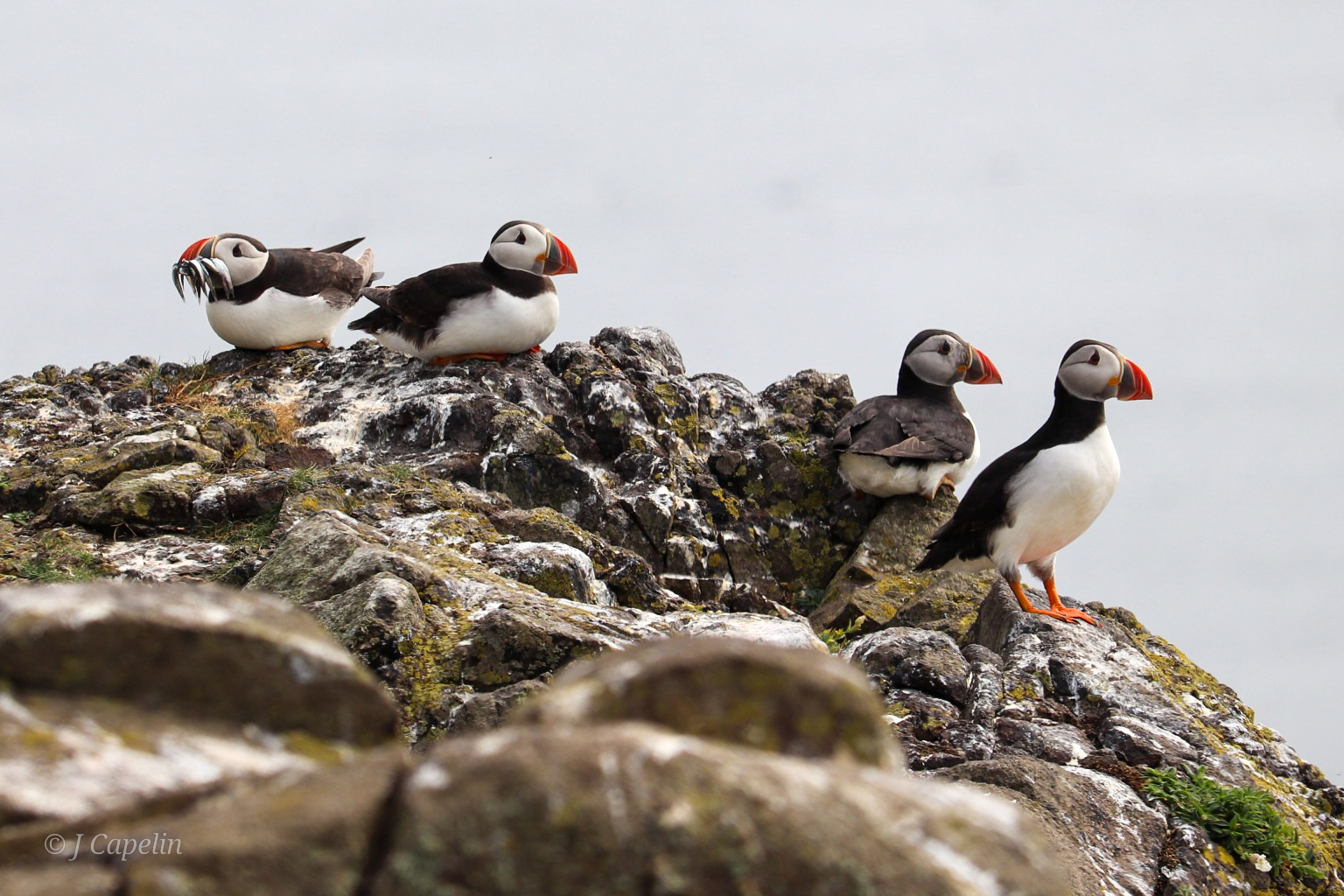
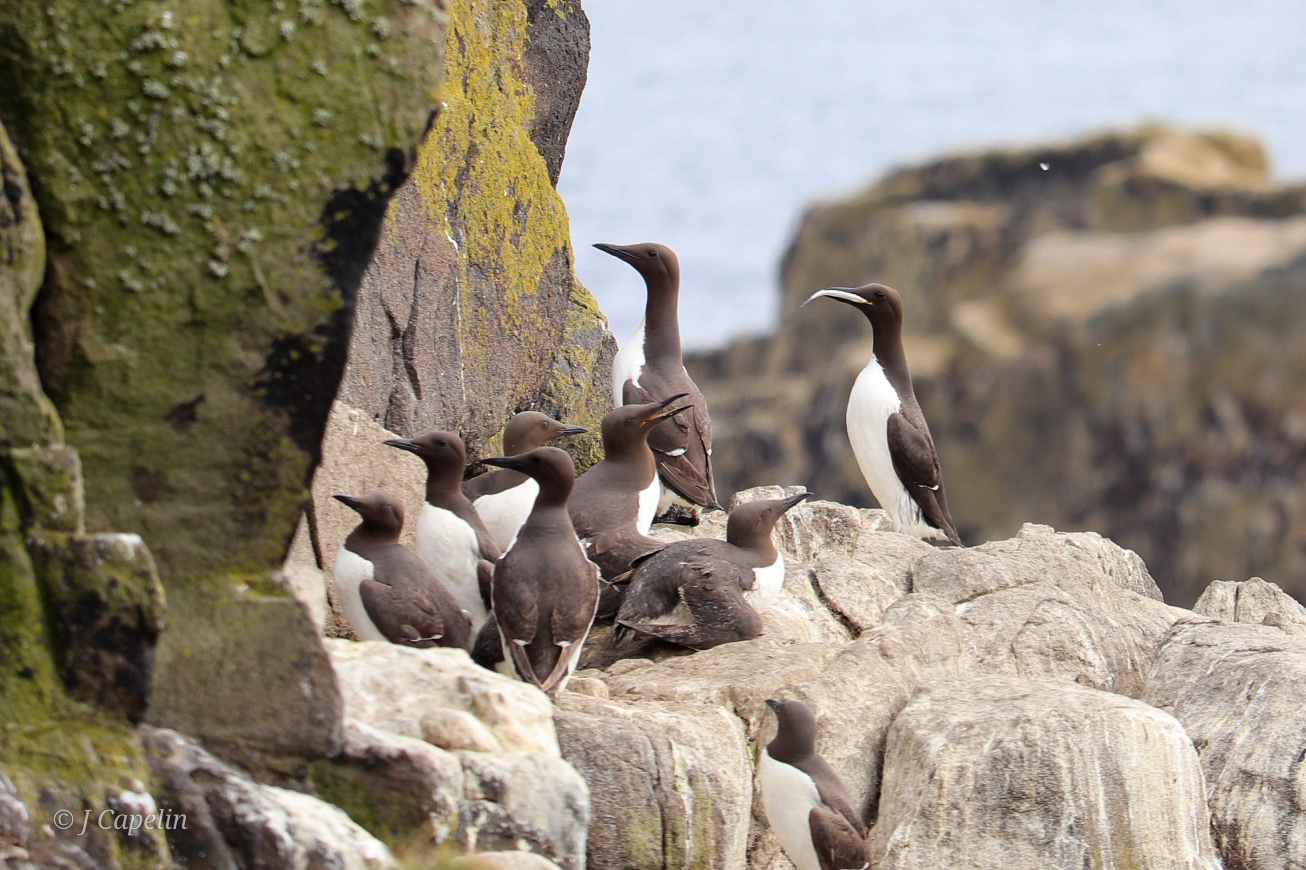
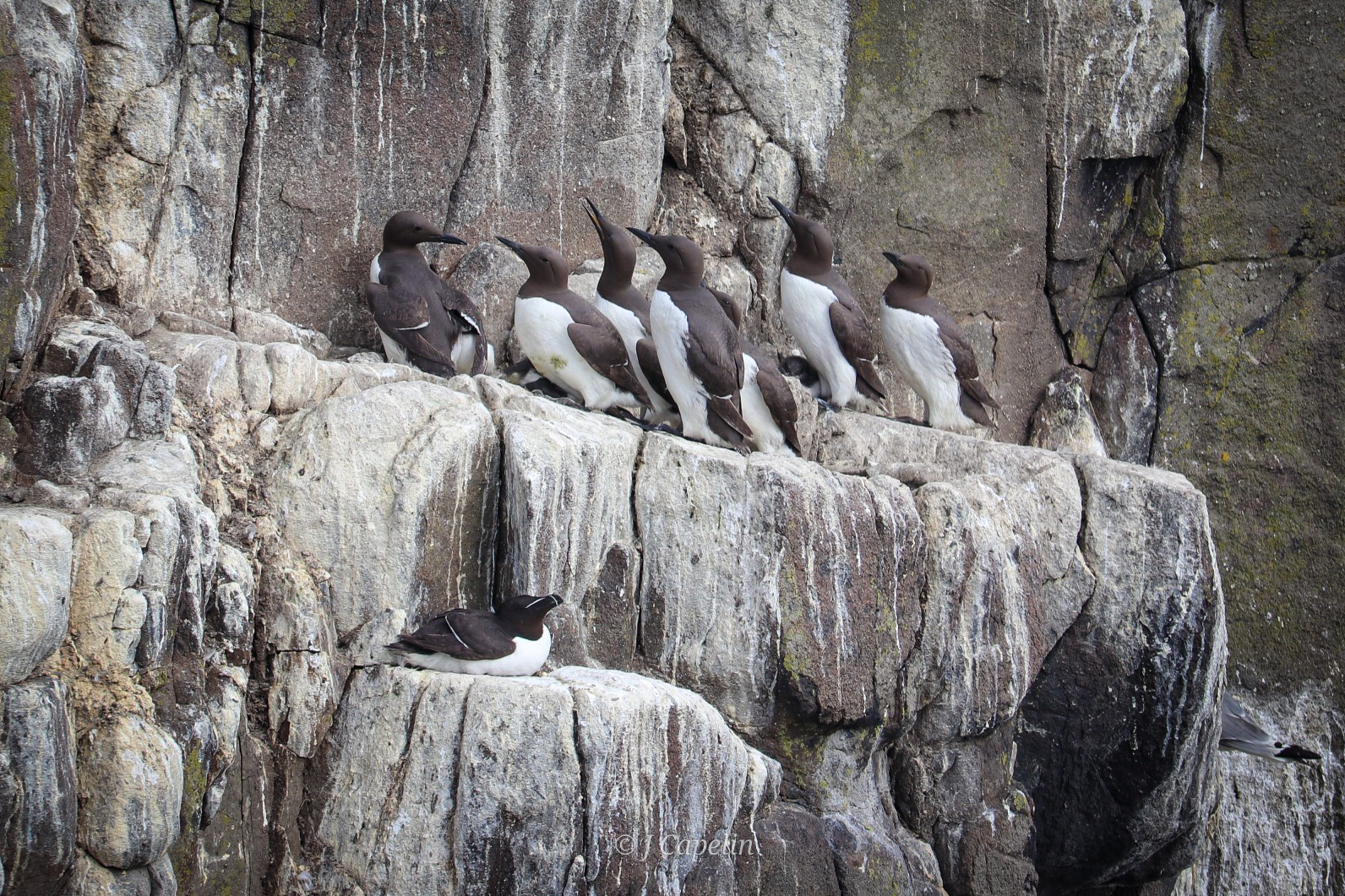
The high cliffs around the South Horn were teeming with Kitiwakes, Shags, and Guillemots and Razorbills, nicknamed the Penguins of the North. A North Sea wind began to gust in, bringing dark clouds, so I donned my jacket and crouched on the rocks, watching as Puffins flew in from the sea, fish spilling from the edges of their beaks.
It had started to rain by the time we got back on the boat and departed back to Dunbar. On the journey back, I could swear I saw something big and grey breach the water – a dolphin or a whale – but no one else noticed. Moments after, the boat was stopped so we could watch a large number of Gannets diving. The captain was telling us that sometimes Minke Whales could be spotted amongst diving birds, as they feed on the same fish, and just as we began to pull away, there it was again – a Minke Whale! It breached two more times, and this time everyone saw! It was a magical moment to end a perfect day, and with the driving rain setting in, I was happy to get back to the cosy accommodation in Edinburgh and look through my photos.
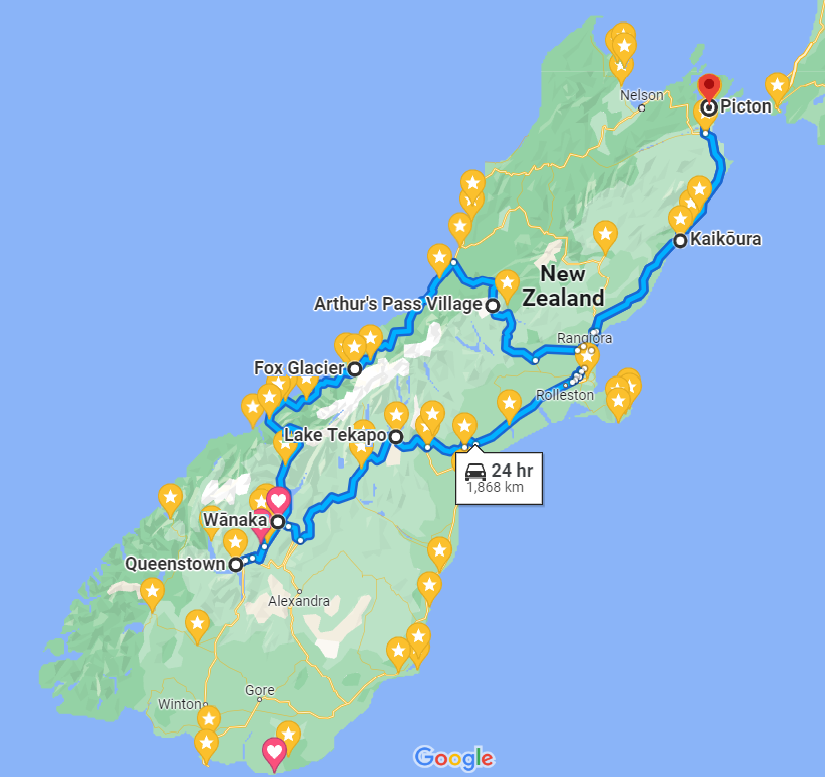
15 nights on New Zealand’s South Island, travelling to some of my favourite parts of the World for the first time since Lockdown.
Te Waipounamu is South Island’s official name; ‘wai’ meaning ‘waters,’ and ‘pounamu’ meaning ‘greenstone.’
We drove around 2,000km in 14 days! (Click for more info whenever you see this little black arrow.)
The original plan was to drive all the way up the West Coast to Nelson, but devastating floods took out most of the roads during the start of our trip, so we had to make a last minute detour through Arthur’s Pass.
Budget
Our overall budget in New Zealand Dollars was around $5,800 between two of us. To save money, I pre-booked all our accommodation and transport, and got early bird ski passes.
Interislander Ferry – Flexible Return for 2 adults: $256 NZD
Omega Car Rental, Picton – 14 days: $773 NZD
Accommodation for 15 nights (through Booking.com): $1,778 NZD
We spent around $290 on petrol, which left us with around $2,000 for general supplies. This went mostly on food and drink, which was definitely the most expensive part of our trip.
Starting in Wellington, we caught the Interislander ferry to Picton – a 3.5 hour crossing in good weather – arriving late in the evening. We stayed overnight, collecting our hire car from Picton Omega the following morning, and made our way to Kaikōura.
Kaikōura
Who doesn’t love a good seaside town? Where a storm is always imminent; the ceaseless rush of the Pacific Ocean gently fills your ears, gulls call distantly on the wind, and with the snow-capped mountains hugging its perimeter, you can always expect the unexpected in Kaikōura. Kai means food and kōura means crayfish, and you can find plenty of places in and around the area serving up this classic NZ dish.
Fur Seal Colony
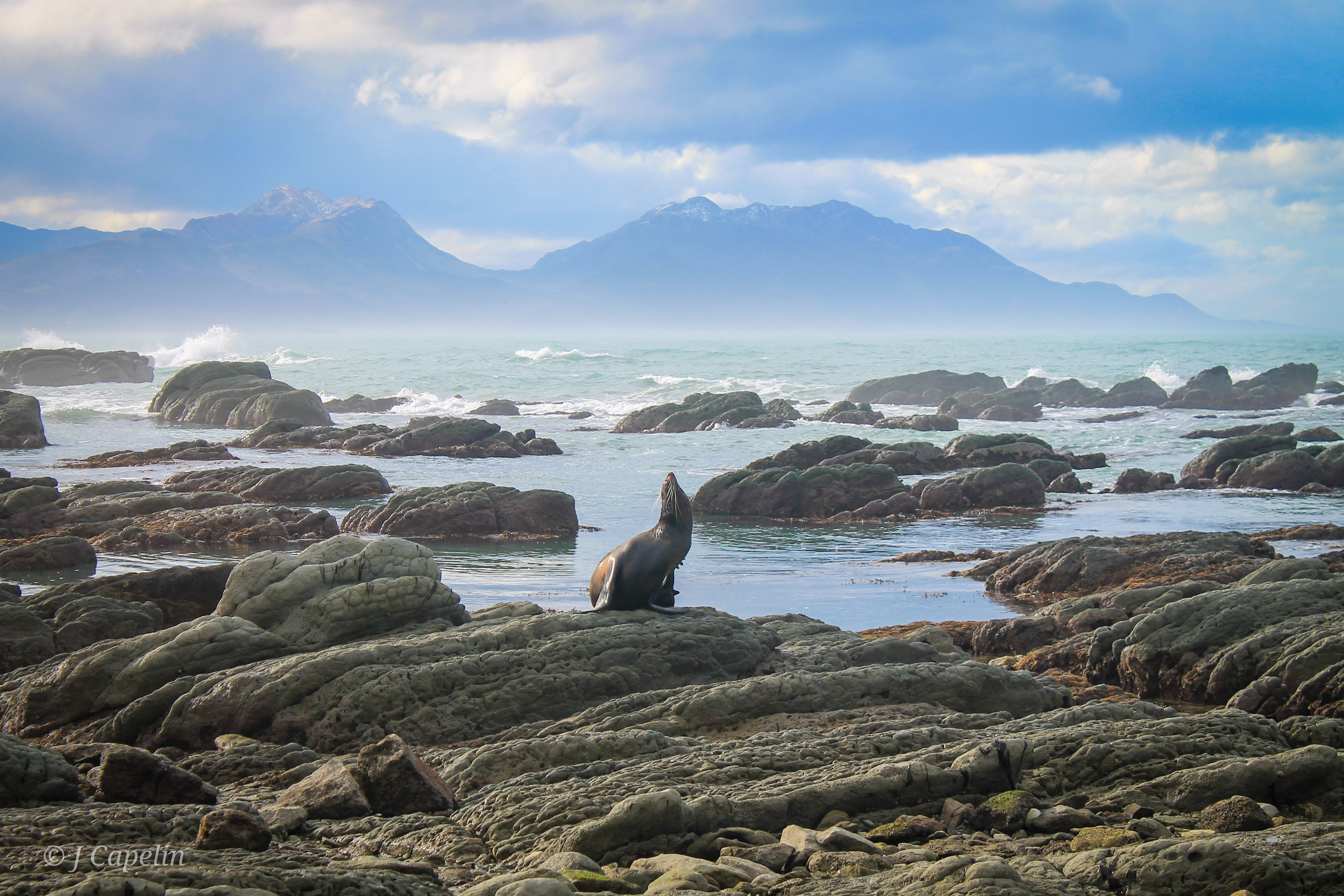
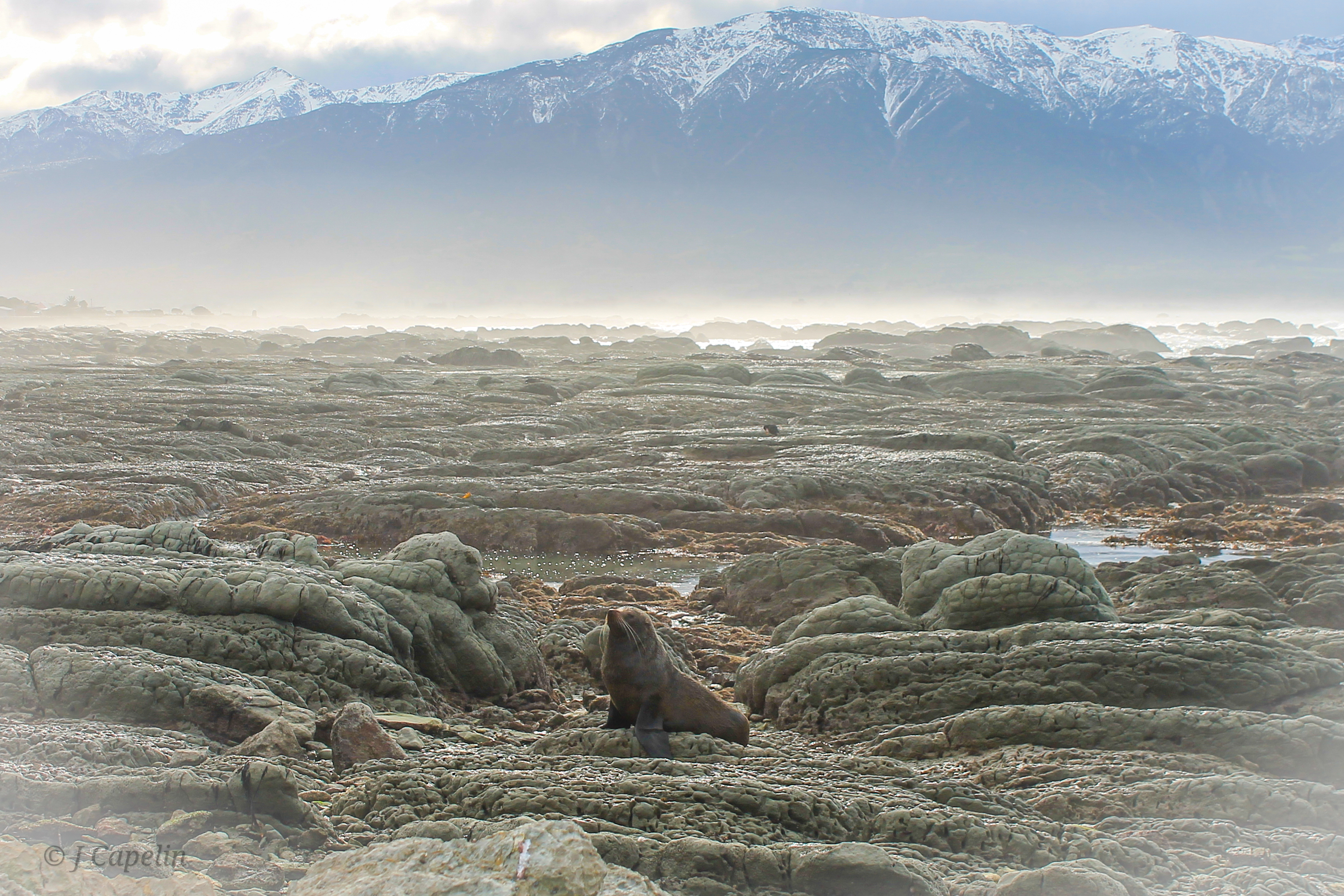
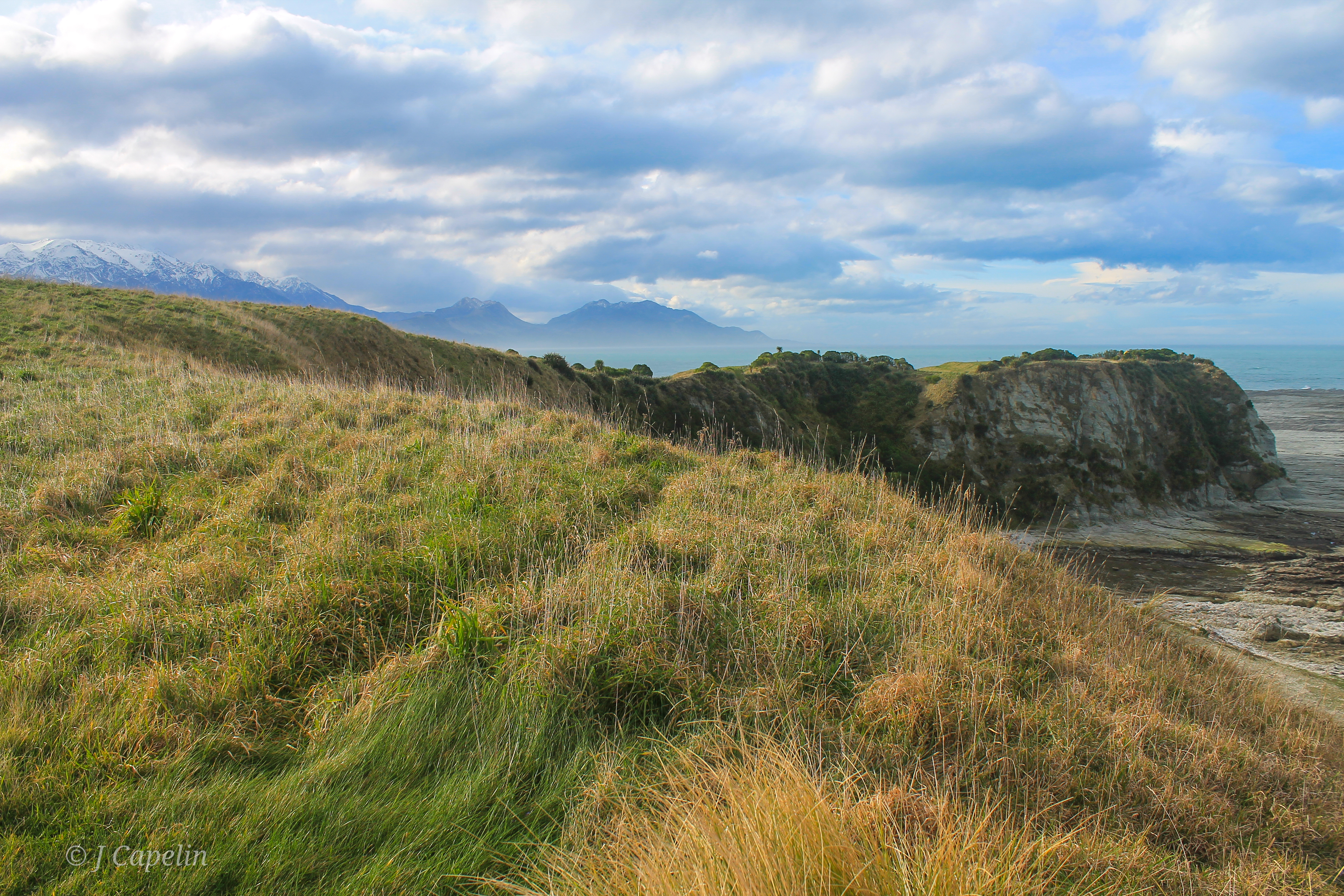
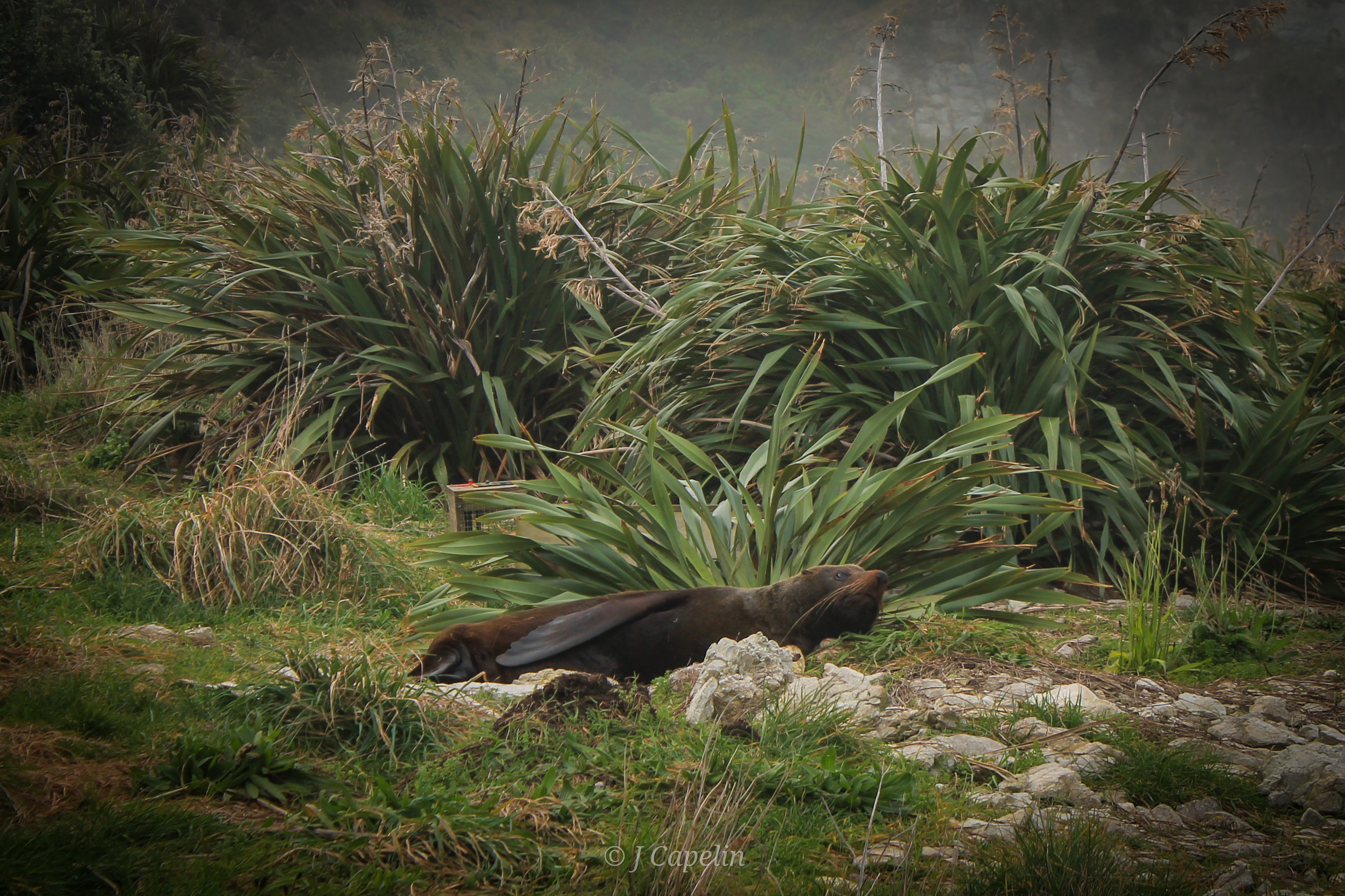
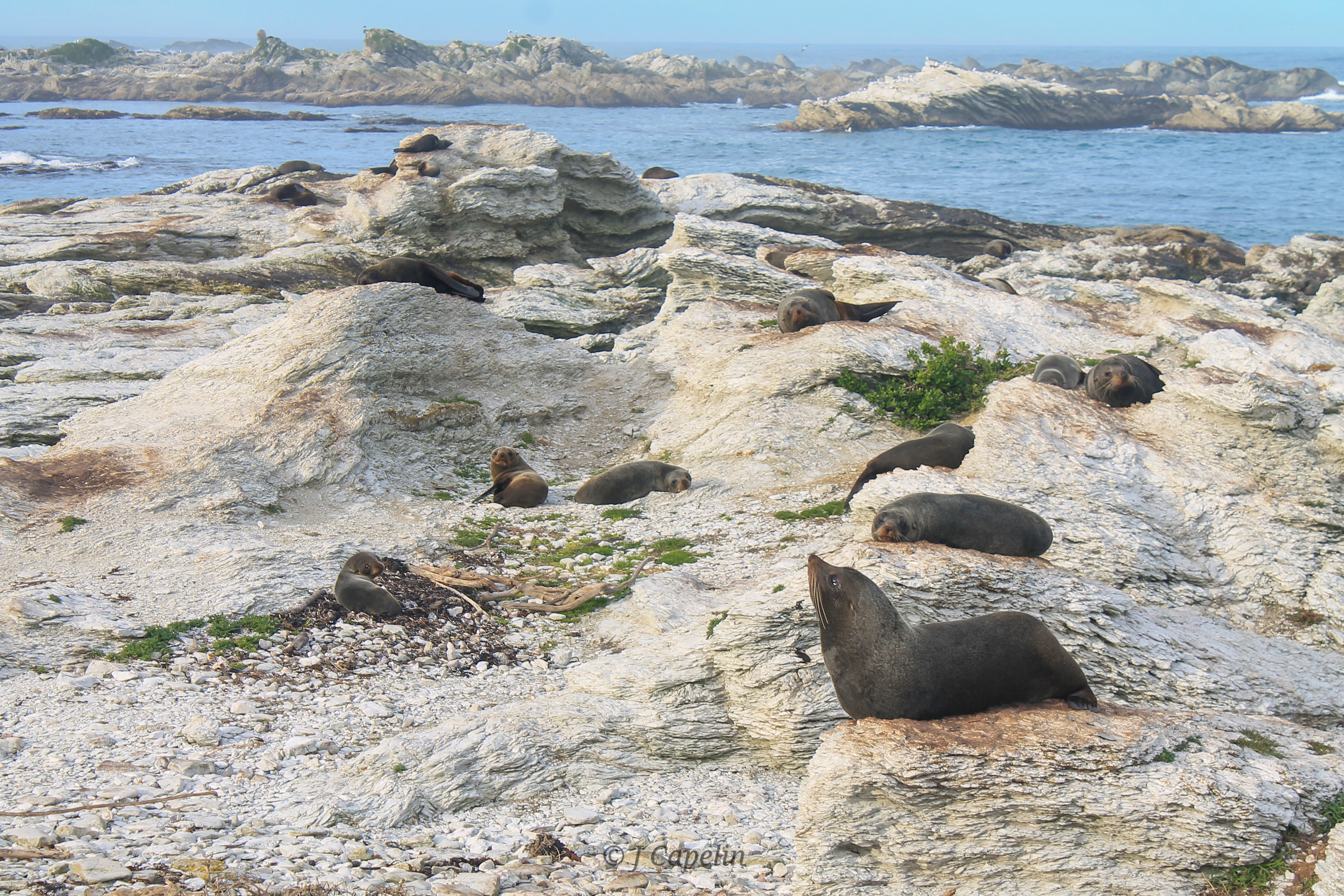
We took an afternoon walk along the Kaikōura Peninsula Walkway, (11.7km – allow a generous 3 hours) which climbs up over the headland, past lush pastures full of cows, with panoramic views of the Kaikōura coast and mountains, and a bird’s eye view of hundreds of fur seals scattered below the cliff.
The walkway loops back down the cliff and along the beach, back towards the carpark. It’s recommended you keep 20 metres away from the fur seals, and watch where you step! The path took us through some long grass at the top of the beach, and before I knew it I had an enormous fur seal at my knees, roaring at me tremendously. I gave it lots of space, and by the time my heart had started beating again, it laid back down and we were able to give it a wide birth!
There were hundreds of fur seals sprawled all over the rocks, up the beach, in the grass, and on the path! (We made sure to find a safe route around them, because you really don’t want to get yourself cornered by these beasts!) We witnessed a couple of large males having a fight; thrashing their heads around and letting out rumbling roars. During the winter months (May-September) you can see seals with their pups all along the rocky peninsula.
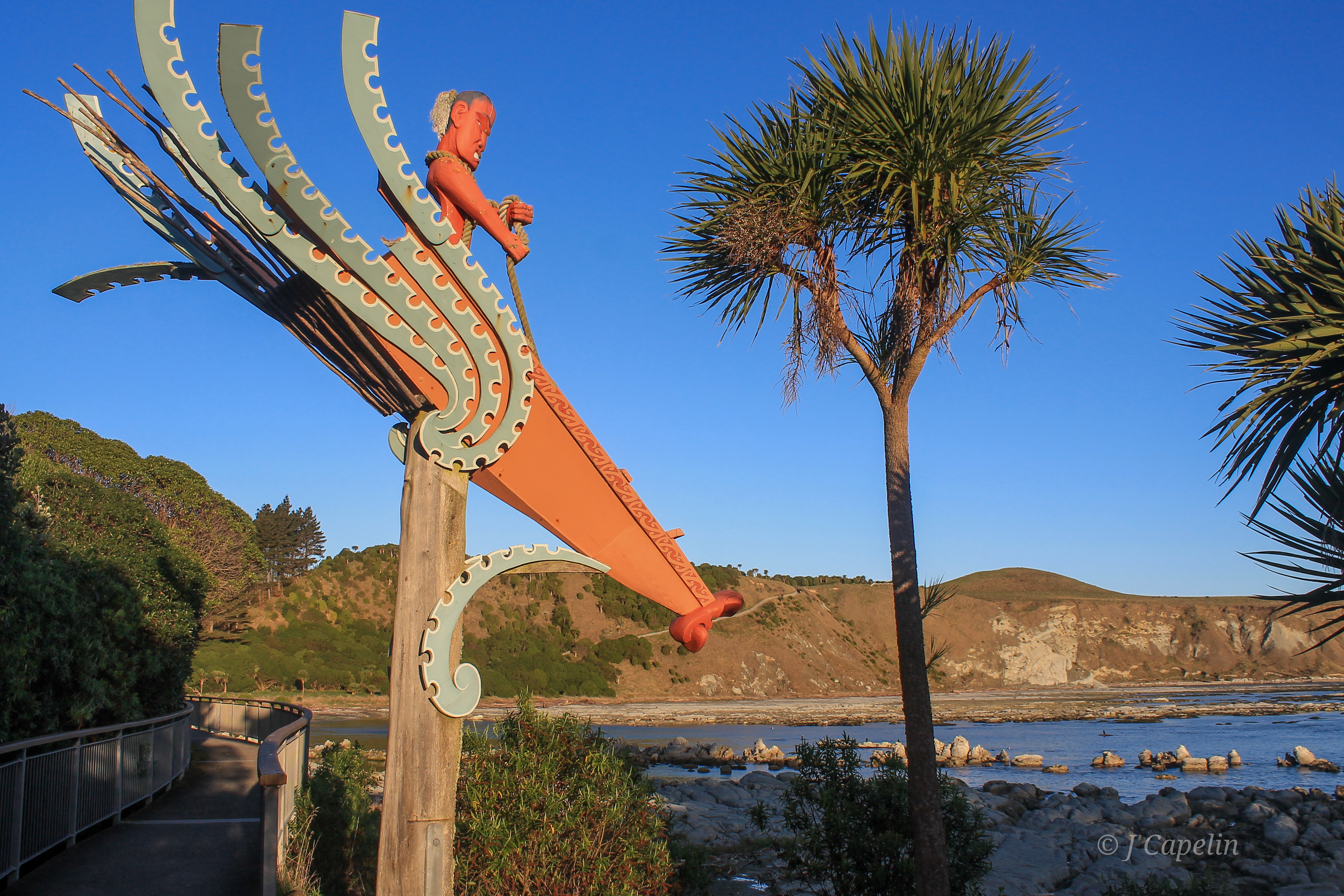
South Bay is another pretty reserve to explore on the south side of the Kaikōura peninsula. Stunning views across the bay lead your eyes up to the mountains, and there’s plenty of wildlife to be seen. You can follow the boardwalk across the coastline; there were shags nesting noisily in the trees, and the setting sun cast a lovely orange glow on the sea.
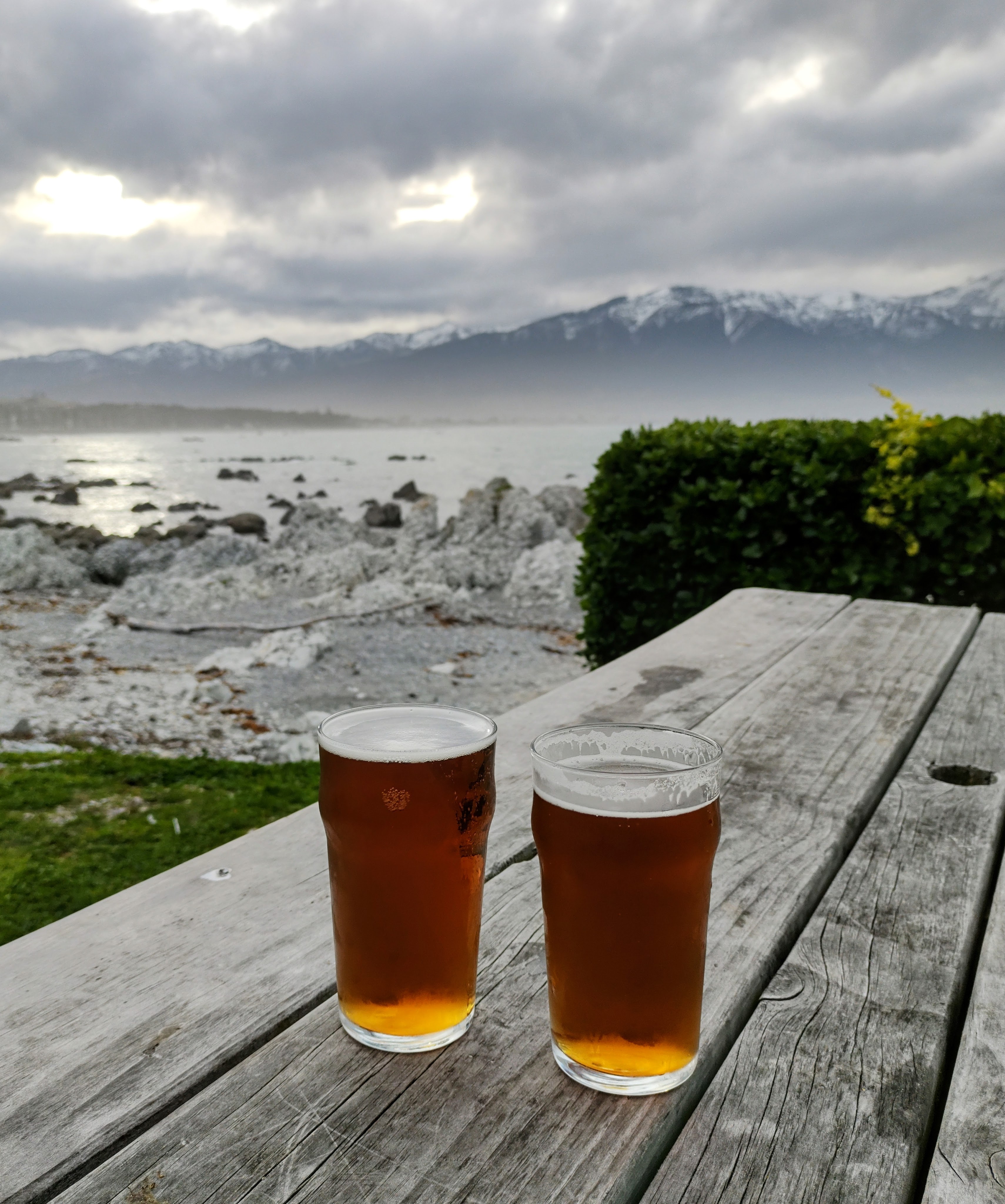
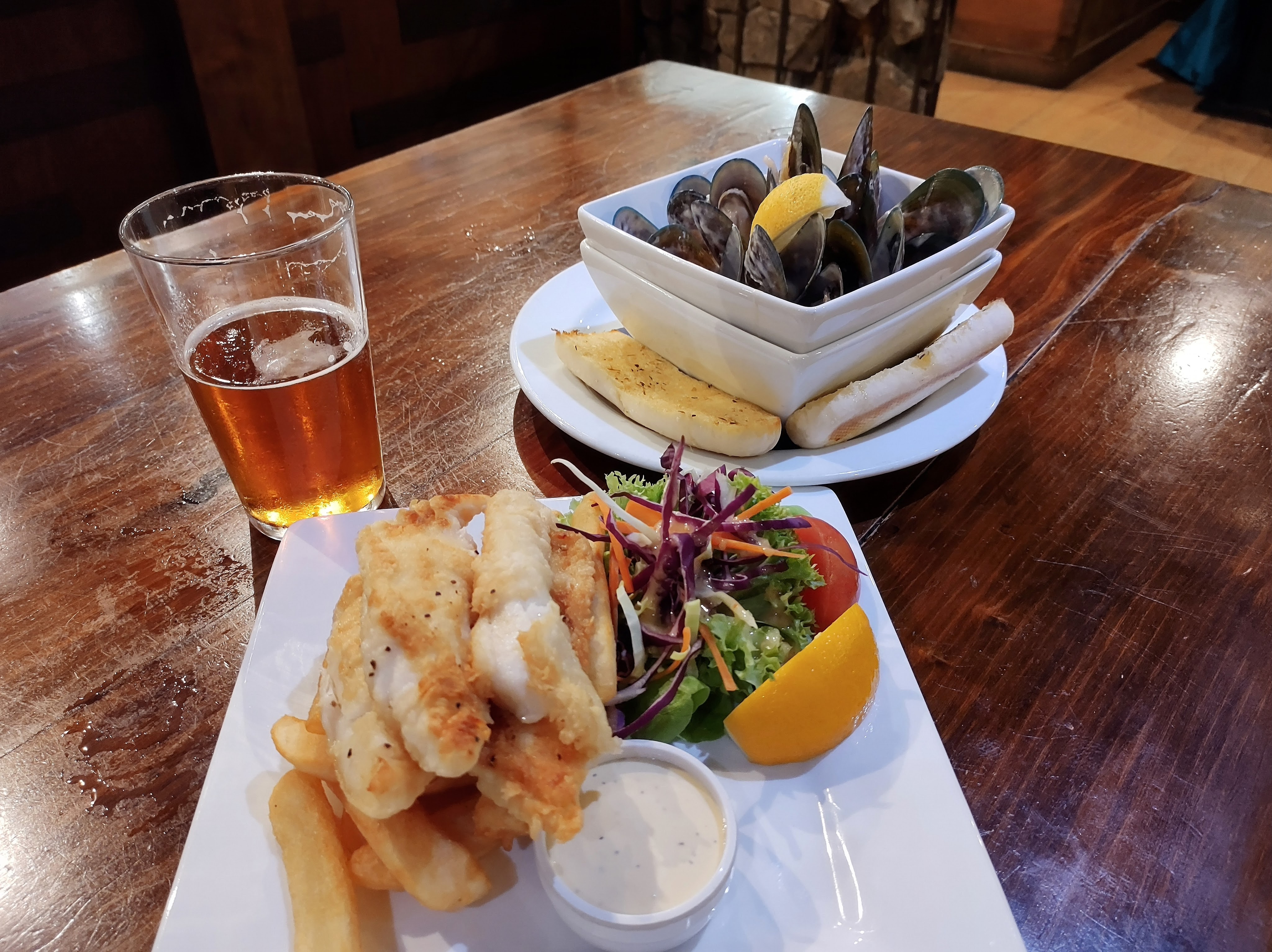
Accommodation: Sierra Beachfront Motel <$100 NZD – 1 night Food & Drink:The Pier (pub/restaurant), The Whaler Bar & Restaurant (Local seafood, pub food, beer), Bee Box (Coffee) Drive Time: Picton – Kaikōura: 2 hours
The PierThe Whaler Bar & RestaurantThe Whaler Bar & Restaurant
Lake Tekapo
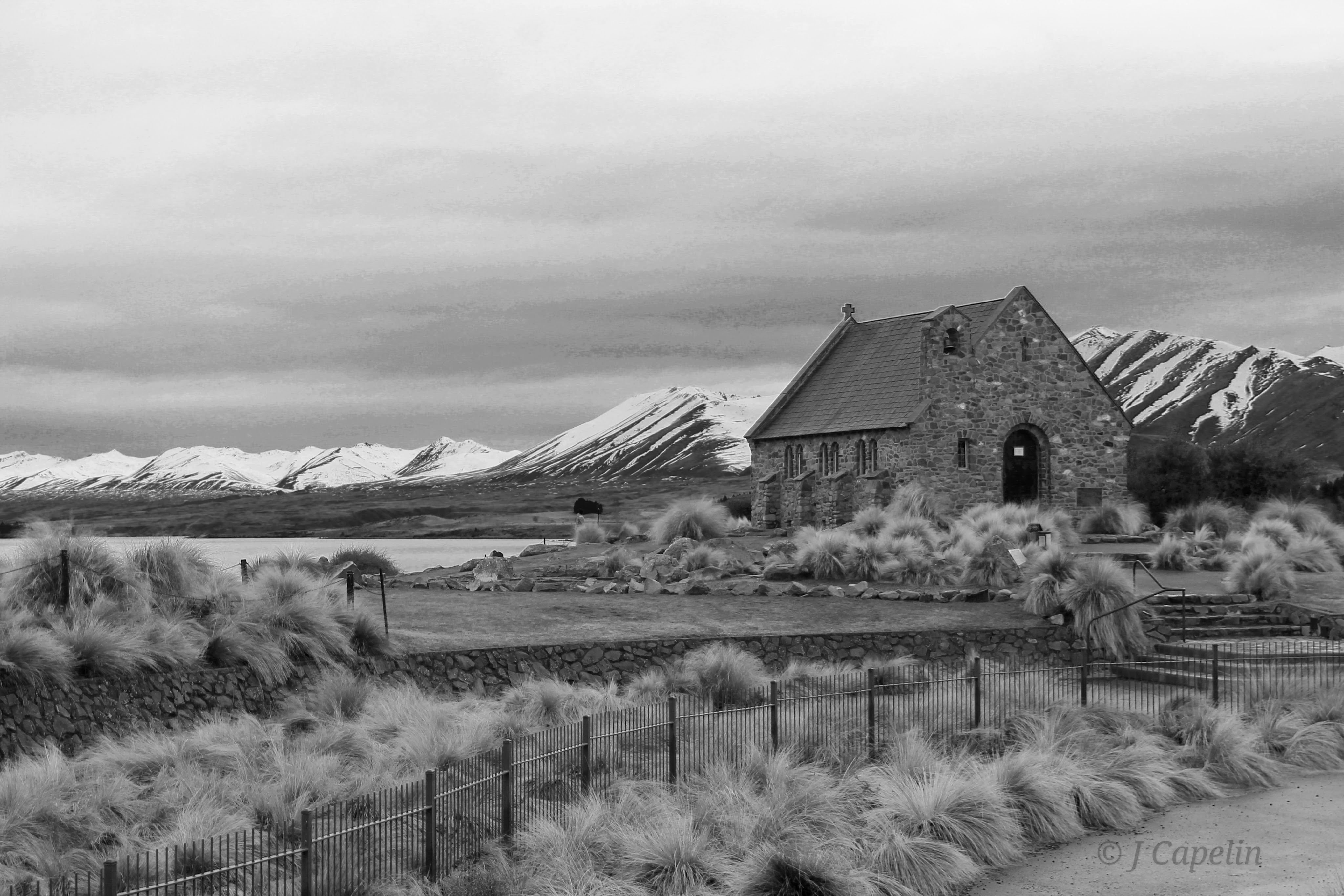
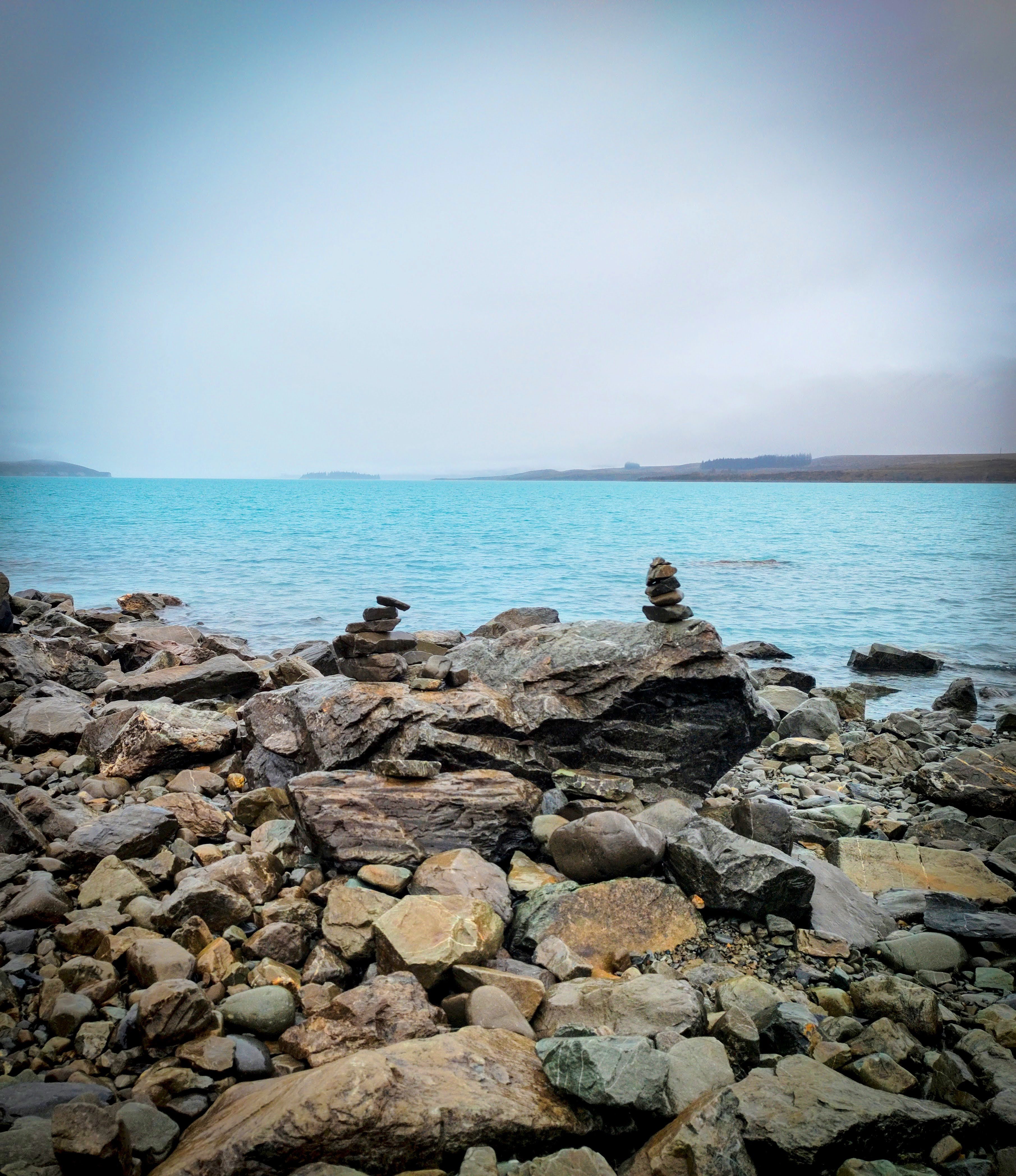
A long drive south with the sun peeping between rain clouds over the earthquake-broken landscape. As we veered inland the sky turned black and heavy rain lashed the windscreen while we wound our way up the treacherous mountain pass towards Mackenzie Country. Set amidst the mountain wilderness, Lake Tekapo was wet and murky, low cloud shrouded the lake; a veil concealing the spectacular backdrop. We strolled down to The Good Shepherd Church – a pretty, little stone building by the lake, where stacks of silver stones and sepia tussocks surround the brilliant turquoise lake front.
Church of The Good Shepherd
Lake Tekapo’s brilliant turquoise colour comes from rock minerals ground up in glaciers, which are deposited in the surrounding rivers and lakes when the glaciers melt and move. This is why most of the South Island’s lakes and rivers have such stunning water.
Lake Tekapo is famous for its night-sky. The small township’s proximity to the mountains (and not much else) means it has zero light pollution, bringing tourists from all over the World to look at the milky way. So, of course, it rained the night I brought my partner here, after telling him about it for so many years! But mountain weather like this brings its own atmosphere and mysterious beauty. It was still night at 5am when the rain stopped, so we wrapped ourselves up and ventured down to the lake. The cloud had lifted, revealing the wintery mountains that frame Lake Tekapo, but a cold mist still lingered across the sky, covering the stars. The moon glared through, its halo lighting up the snow on the mountains as they slowly turned purple, and we sat on the cold rocks with a hot coffee waiting for it to get light.
A bright sky led us South through Mackenzie Country to Lake Pukaki, and I thoroughly enjoyed driving this leg. The open road in the early morning; jagged touches of snow between icy lakes and streams – New Zealand was beginning to show us the Winter Wonderland it could be. The road to Aoraki (Mt Cook) skirts the Western edge of Lake Pukaki, and Aotearoa’s tallest mountain rises up over the lake before you as you approach. There is a small community at the end of the road, and a tourist information centre about as big as the village, complete with an Edmund Hillary exhibition (it’s no surprise that one of the first people to summit Everest grew up with this as his back yard.)
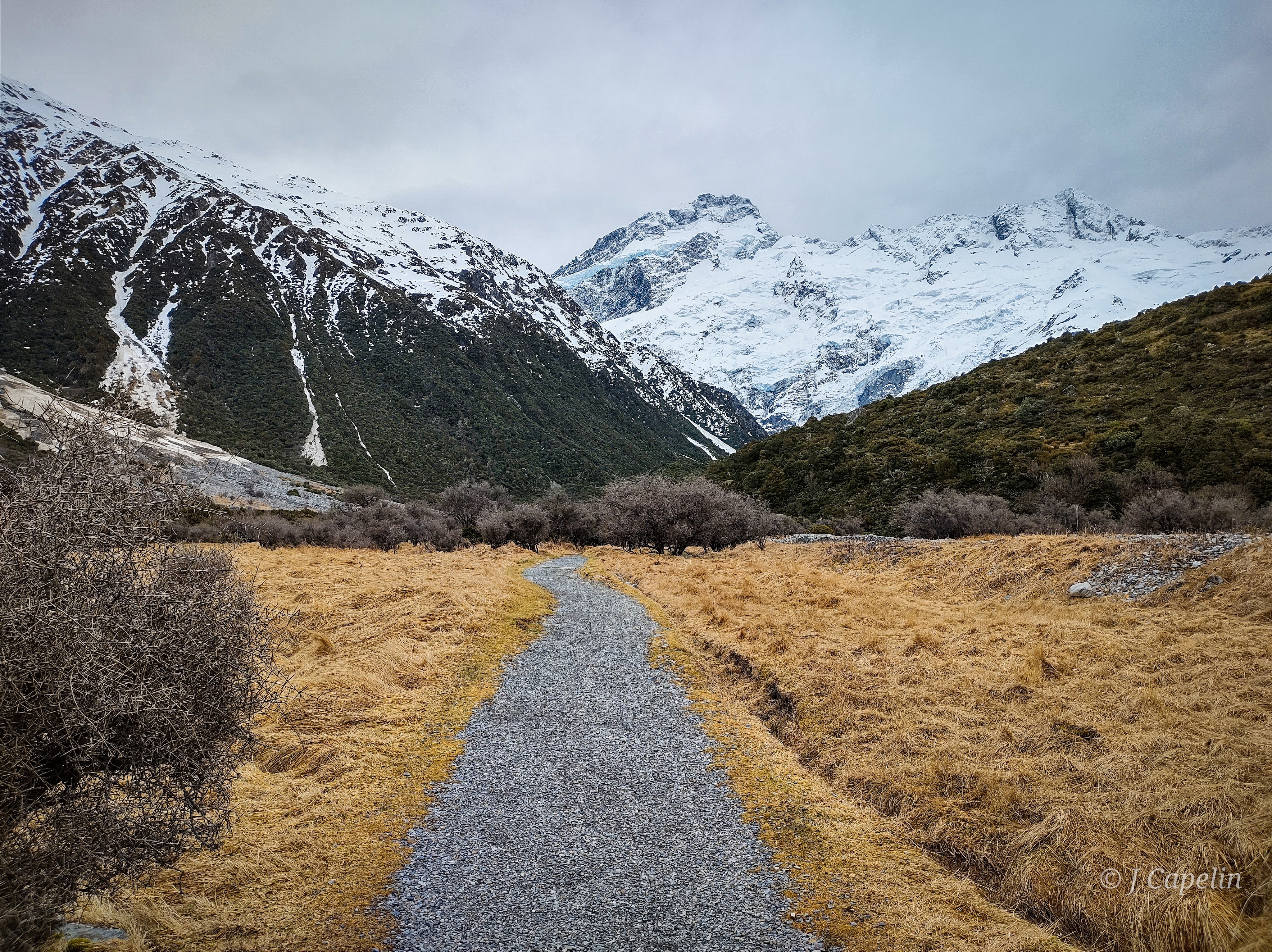
Scenic flights are an option to see this iconic landscape, along with things like heli-skiing and mountain climbing, but hiking (or ‘tramping’ as they say in NZ) is the most popular activity (and it’s free!) There are at least 12 hikes in the national park, ranging from 10 mins to 3 days. We chose two short hikes; one in each section to get the most out of our time.
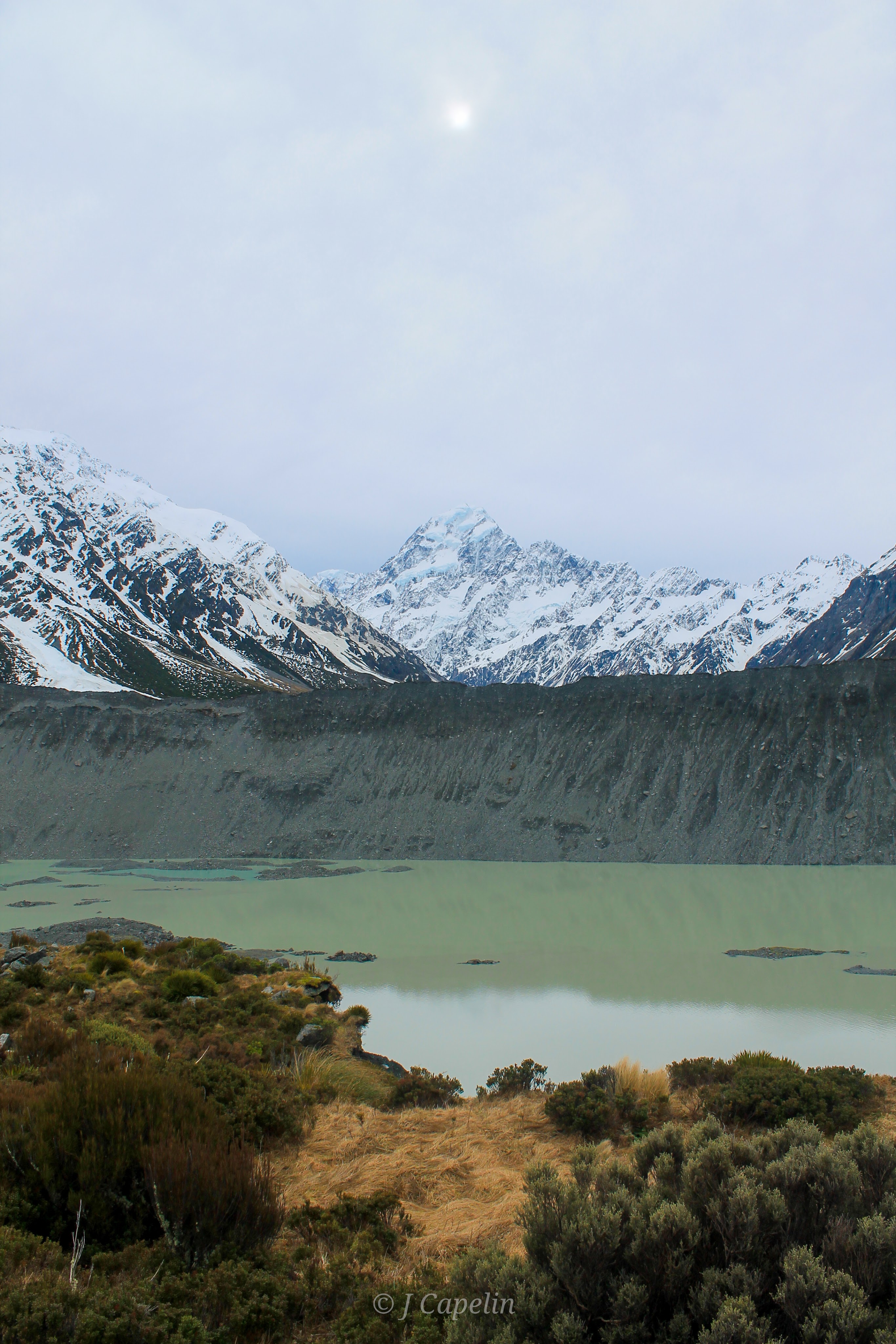
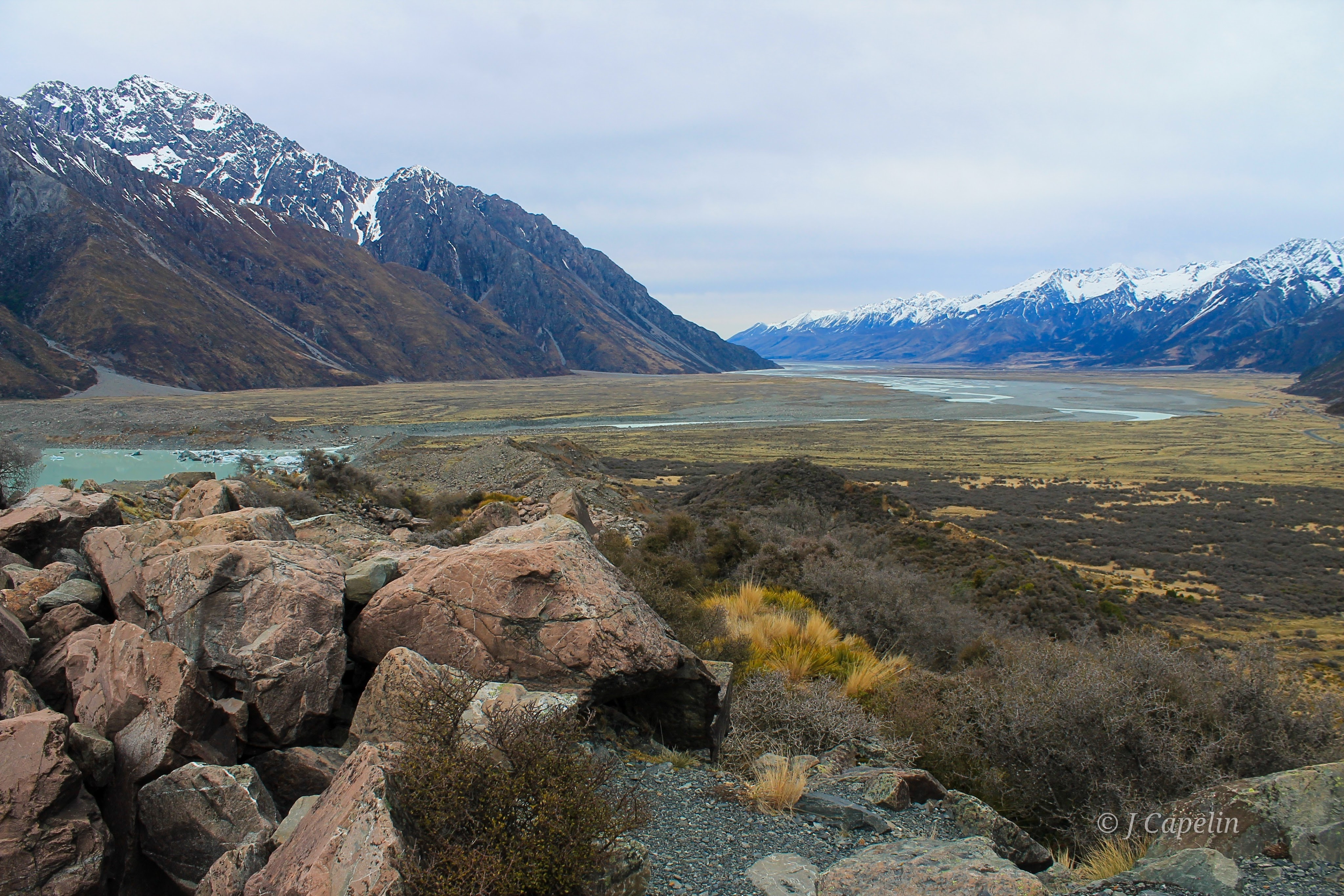
Gently ascending through Alpine scrubland around the foothills, the path opens out into a 180 degree viewing platform over The Hooker Valley. The light was flat and glaring, but at least the clouds were high enough to see the mountain peaks. Mueller Glacier and Mt Sefton stand across the milky hues of the Glacier Lake, while Aoraki (Mt Cook) looms in the background. Walking Time: 50 mins return from White Horse Hill Campground.
Blue Lakes & Tasman Glacier – Tasman Valley Section
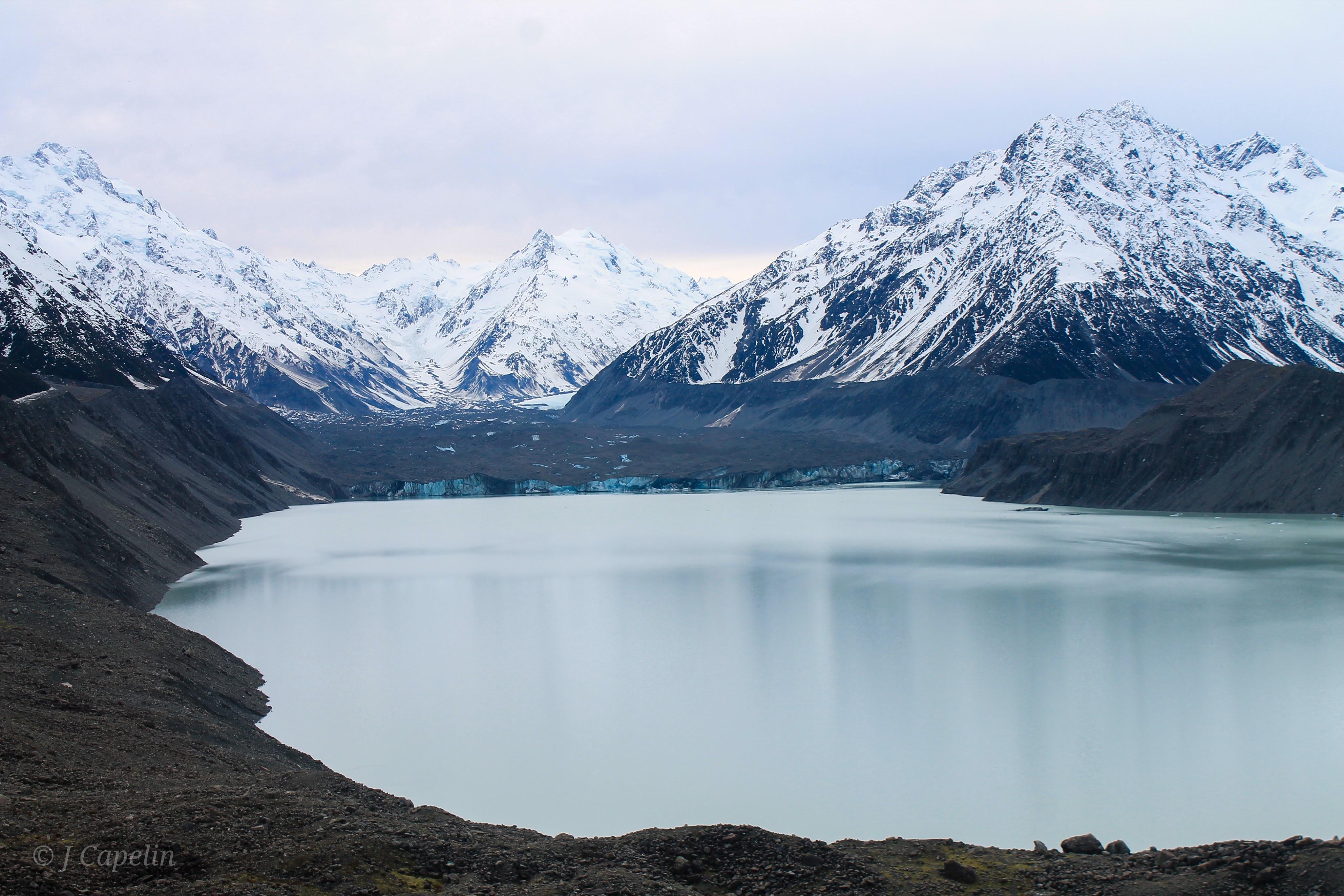
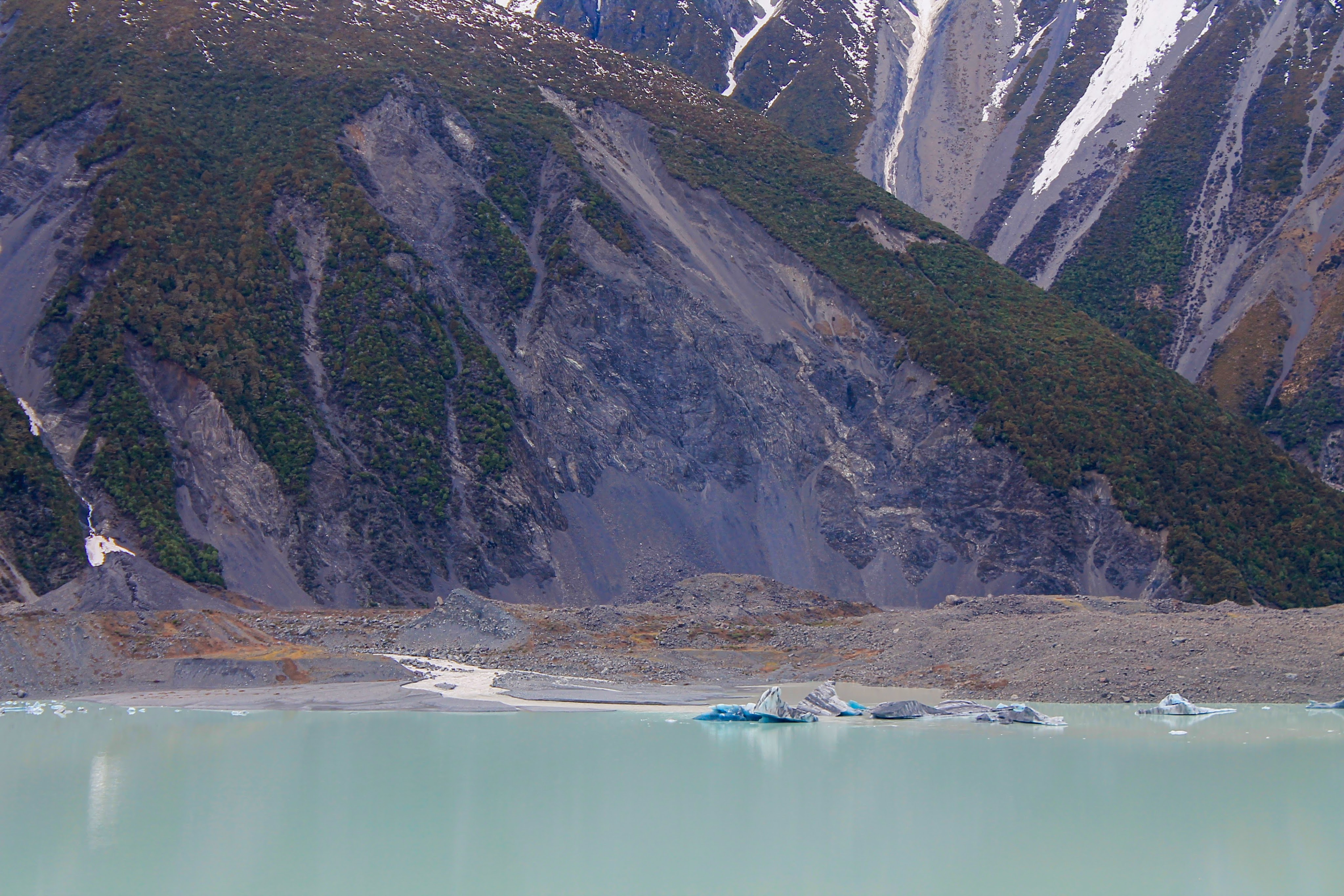
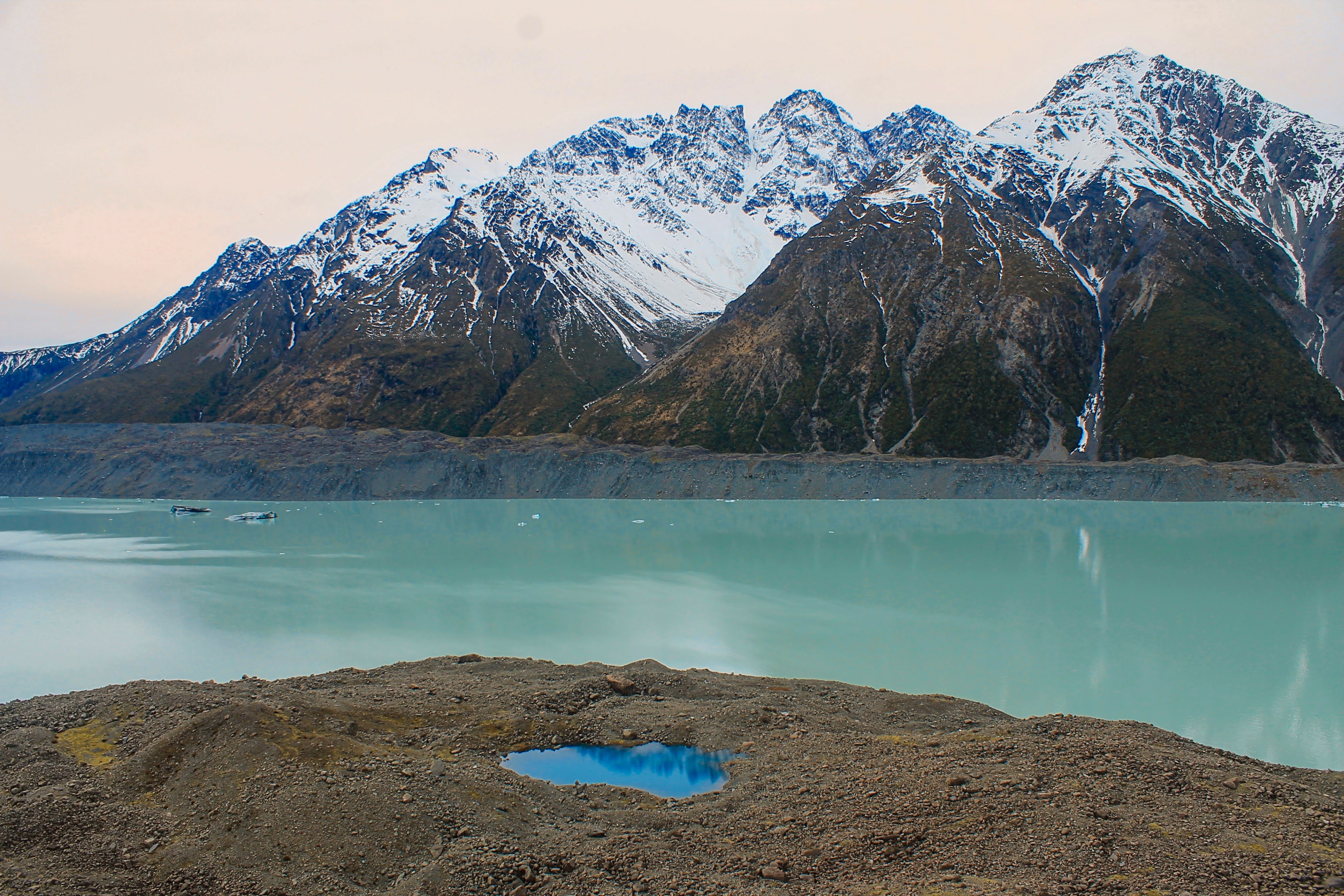
A rocky staircase winds up the moraine wall, revealing an other-worldly panorama at the top. Haupapa Glacier encroaches from the mountains into its lake, where blue-dipped icebergs drift. Back to the South, the Tasman River meanders through the valley where it eventually fills Lake Pukaki.
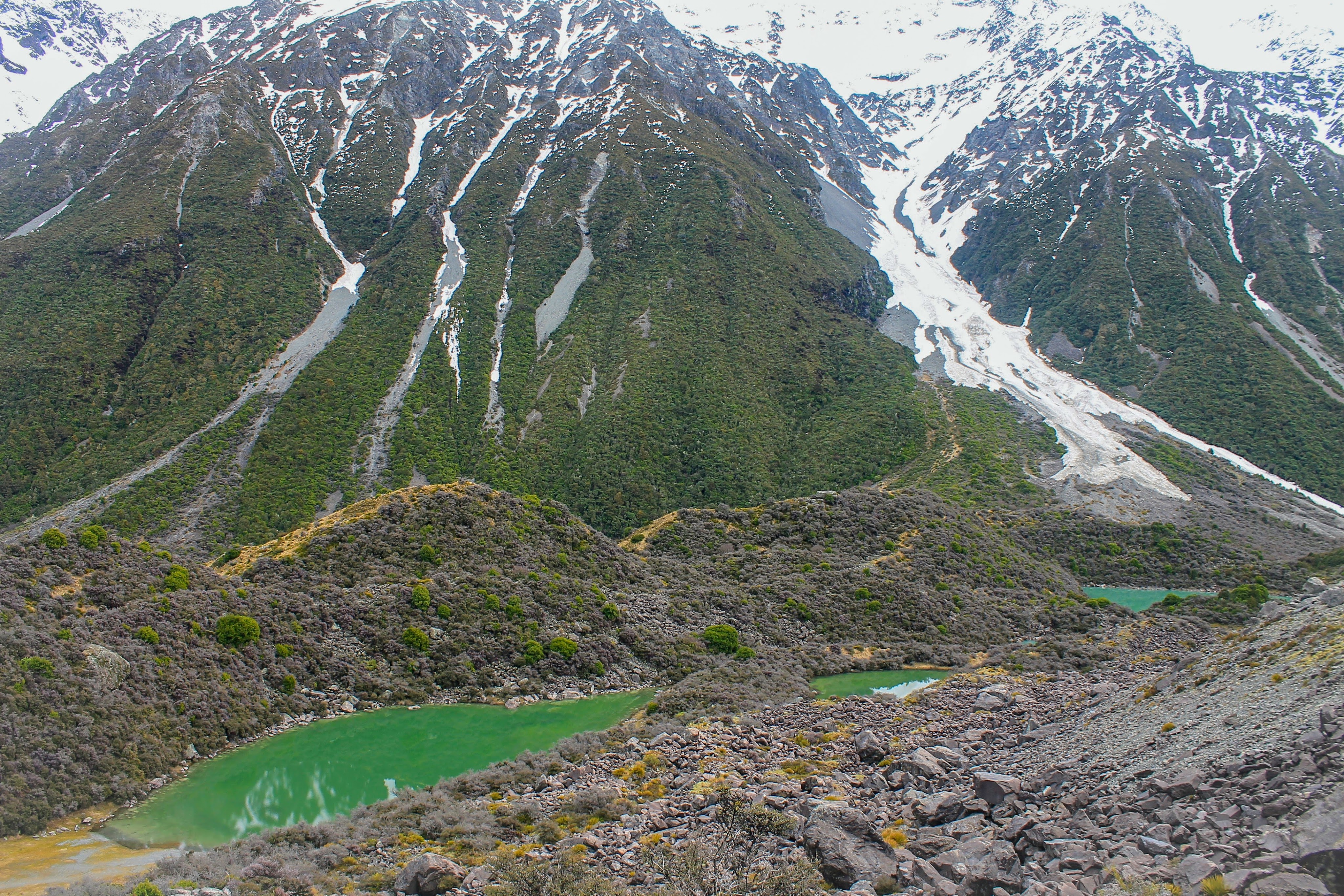
On the return walk, we stopped to admire the contrasting reflections in the Blue Lakes, nestled between snow peaks.
The Blue Lakes are actually green since the freezing glacial water no longer feeds them, due to shrinking glaciers. This has made the water warmer, and allowed green algae to grow. Despite this, the Department of Conservation still deem the pools safe to swim in during summer.
Walking Time: 30 mins return from Blue Lakes Carpark.
(Click on any photo to enlarge.)
Drive Time: Lake Tekapo – Aoraki: 1 hour 15 mins
Wānaka
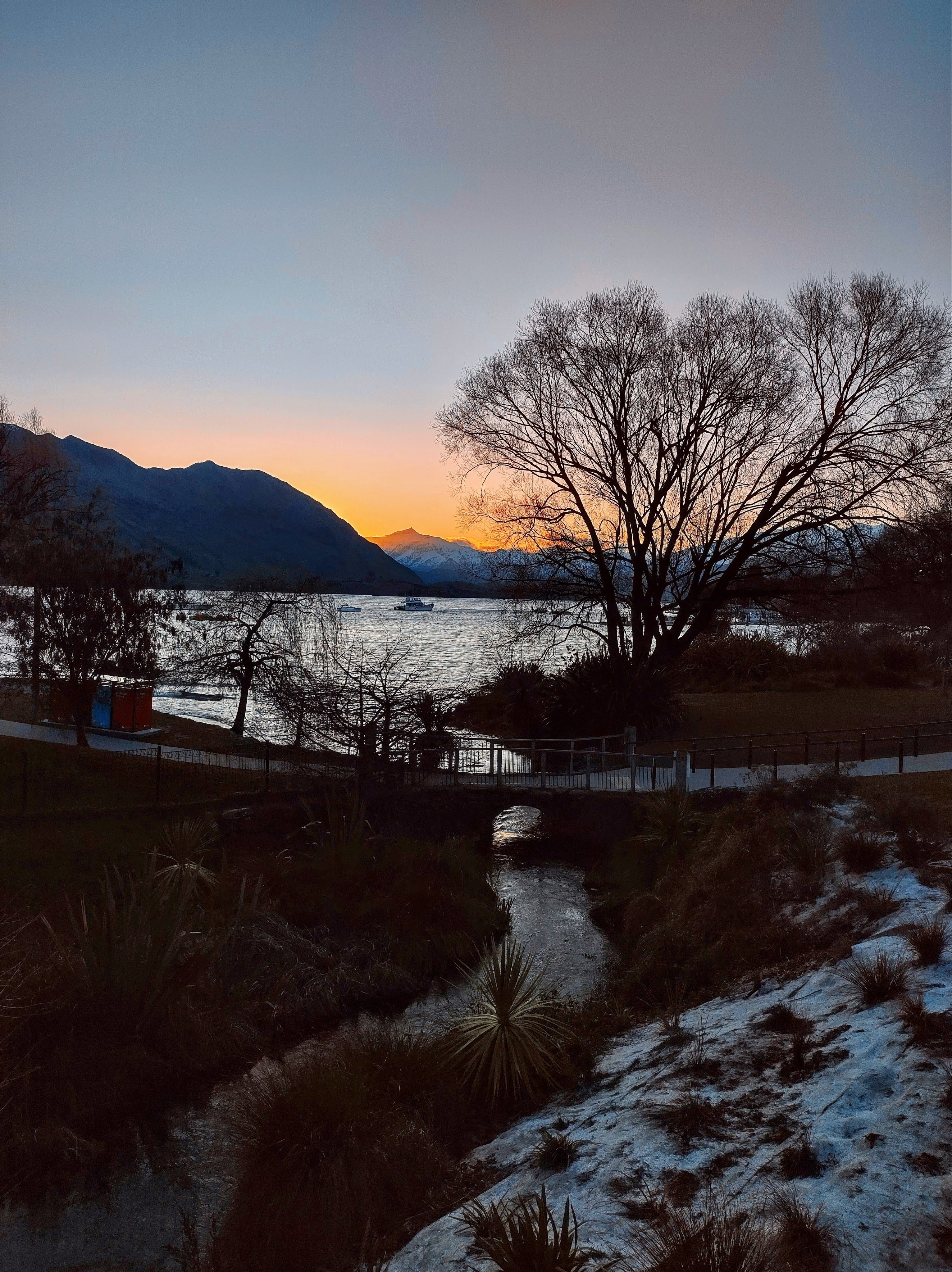
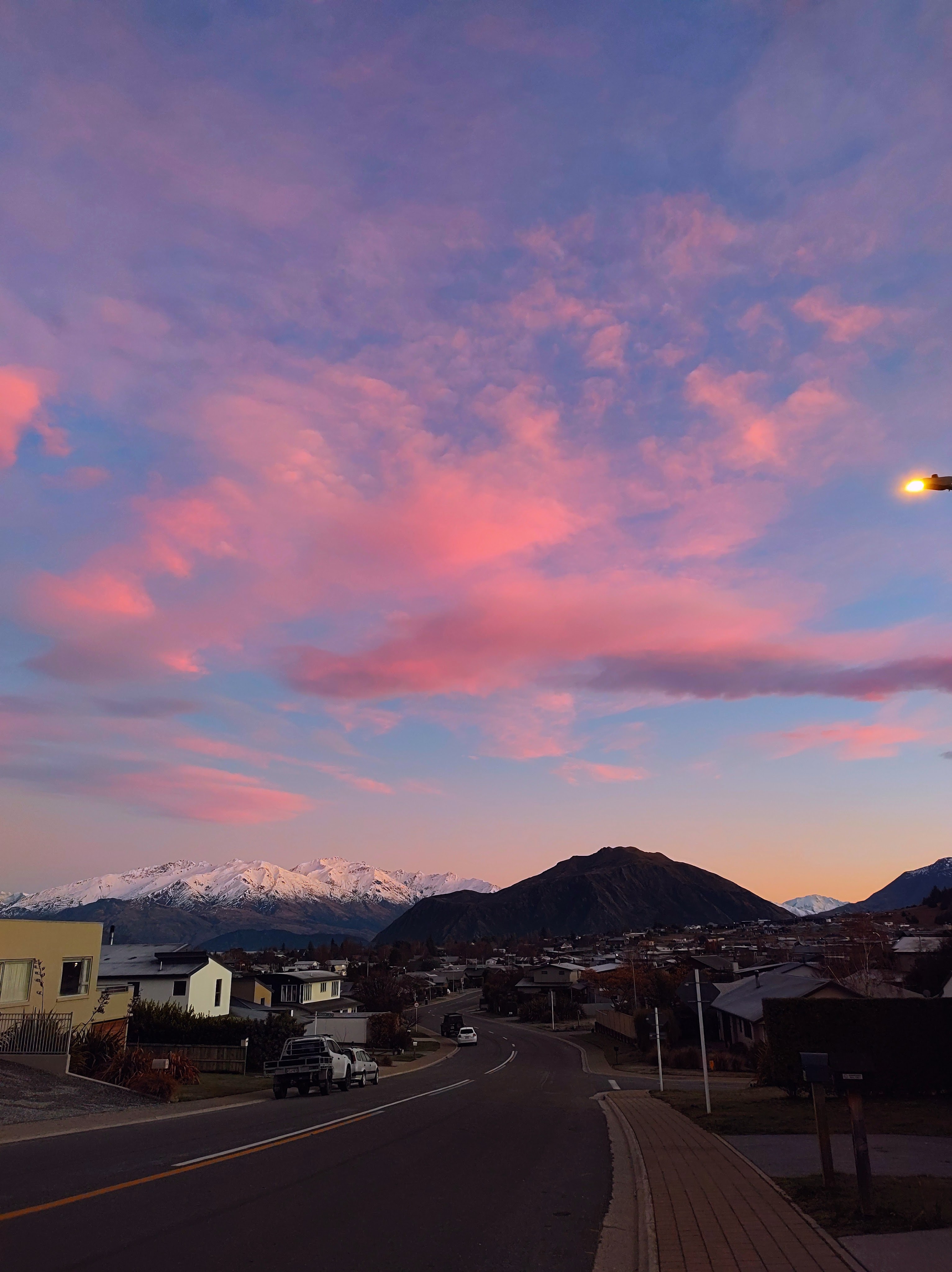
When I came to Wānaka to live many years ago, I described the season as a ‘crisp, colourful winter, in which every sunset paints the lake a different story.’ I vividly remember the smell of wood smoke from the chimneys beneath dark snow clouds, and the stacks of firewood under the coloured lights in Post Office Lane. Well none of that has changed, and coming back to visit always makes part of me feel like I’m home.
We used Wānaka as a base for snowboarding, visiting the nearby towns, and of course taking in the local sights. There are several stunning hikes around Wānaka and Mt Aspiring National Park, but we didn’t have the hiking gear for winter, so we stuck to the more local walks.
Mount Iron
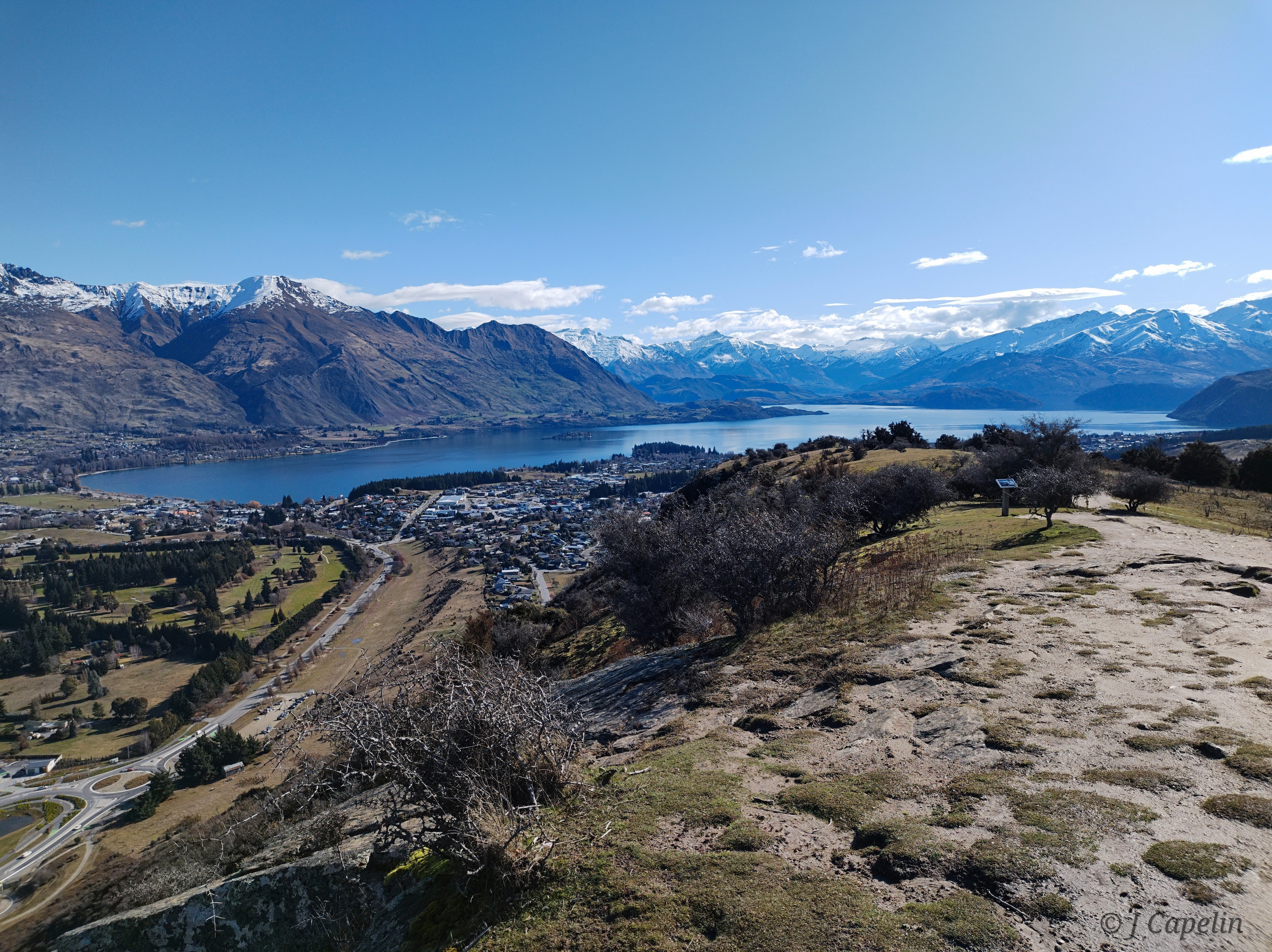
The local exercise hill, Mt Iron, is a fairly short but steep walk. The sun had the warmth of spring on its breath as we climbed and we were soon in our T-shirts, quads burning by the time we reached the top. The spectacular view across the town and the lake stole the fresh mountain air from our lungs.
Waterfall Creek Track
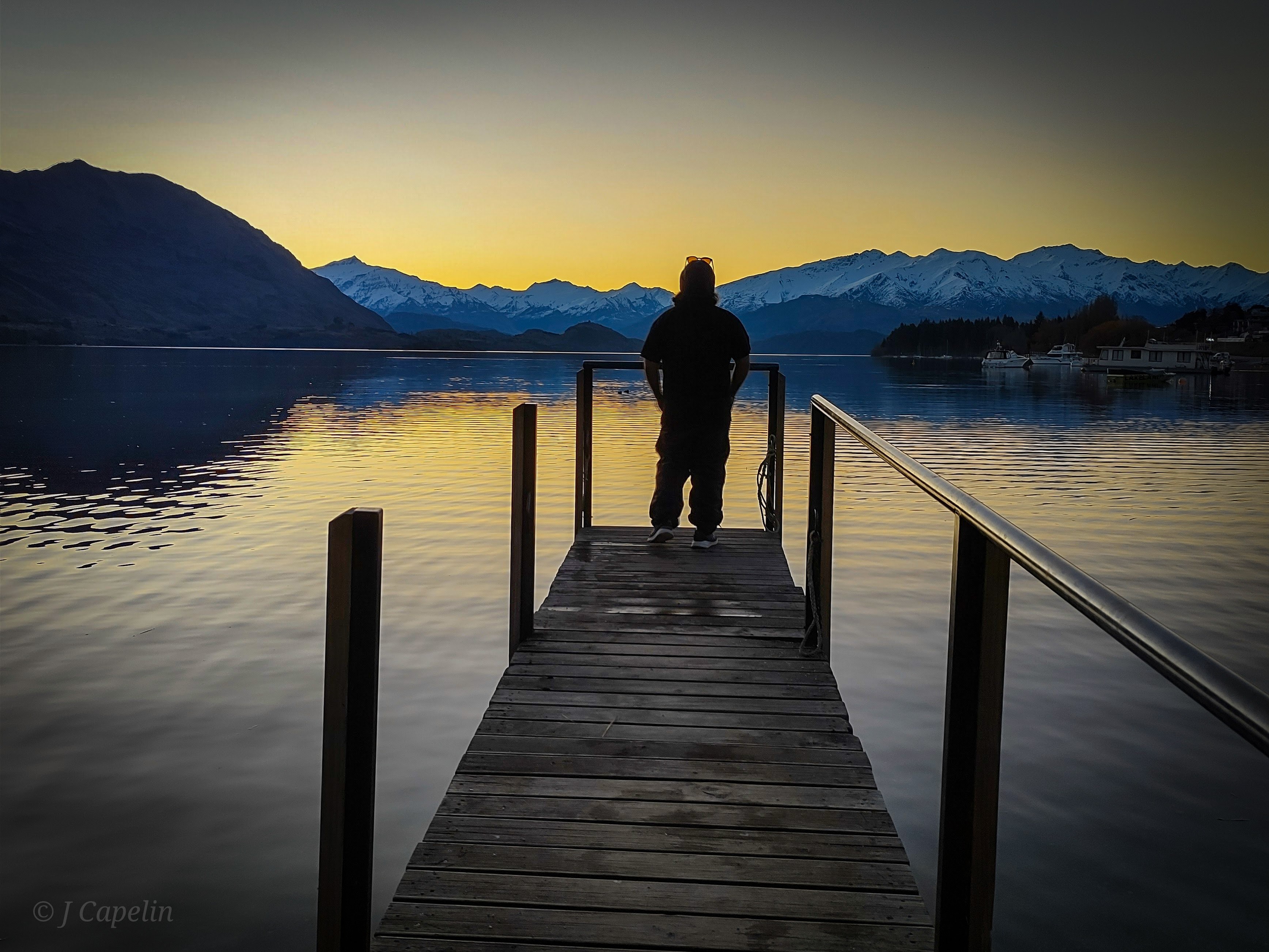
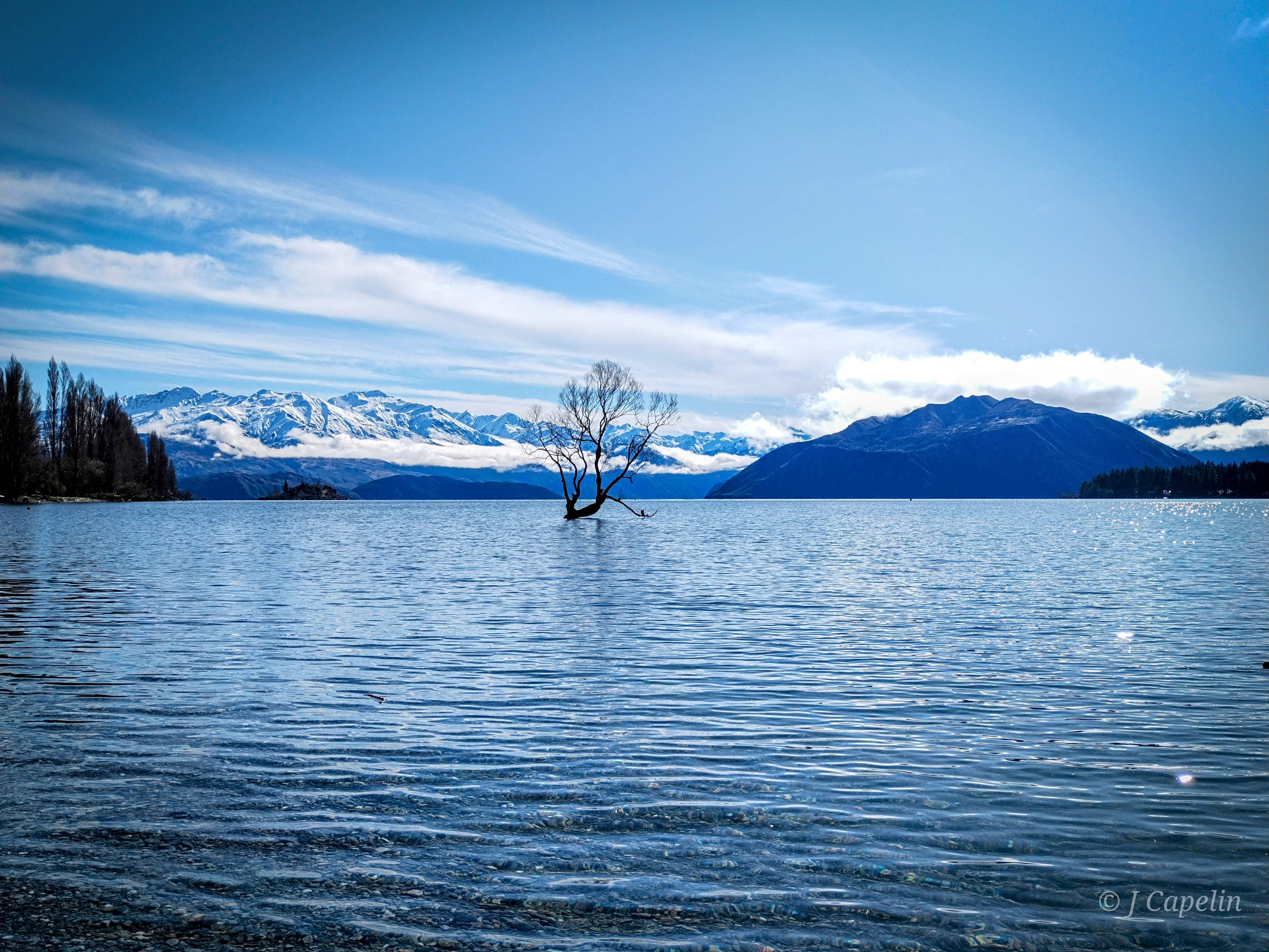
A gorgeous flat walk around Lake Wānaka, which takes you along side the pebbly waterfront, and past the tapering vines of Rippon Vineyard. This walk provides good views of Ruby Island, and of course, the Wānaka Tree – thanks to instagram, this tree in the lake is famous, and nowadays it attracts many tourists aiming for that perfect shot.
Beacon Point
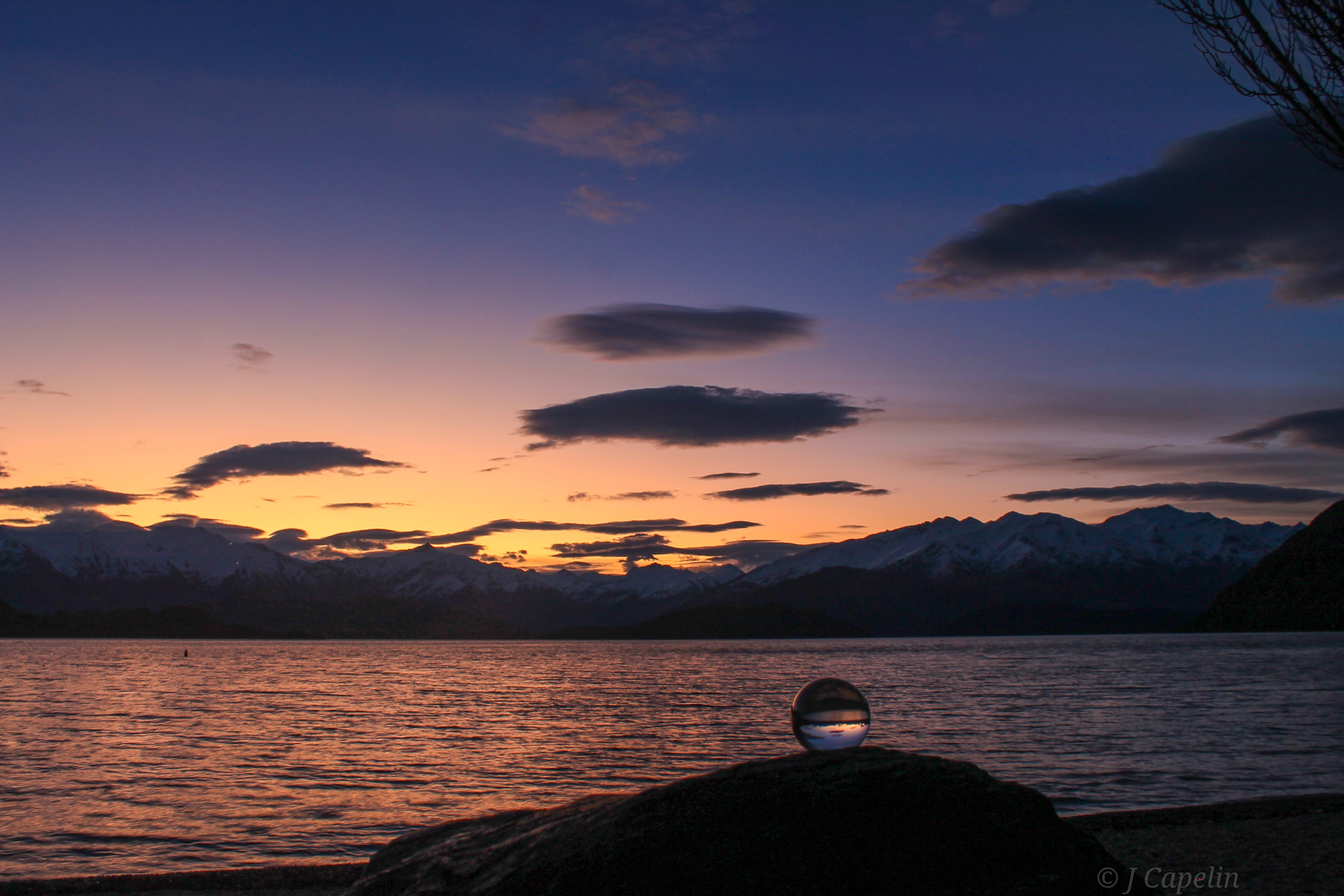
One evening we headed to Beacon Point for sunset. It was freezing, but the view of Mt Aspiring National Park across the lake was perfect under the setting sun.
Around Town
We spent hours wandering around the little town, window shopping for local crafts and stopping in bars and pubs for refreshment. All the while that stunning lake is right there, tempting your eyes for a glance, and every time you look it seems to get more beautiful. There is so much variety of food, drink, fashion and gifts in Wānaka, there’s something for everyone.
The cost of living is generally high in NZ, and eating out can get expensive. Wānaka’s supermarkets may be some of the more expensive in the country, but it’s a cheaper alternative. We found that New World does takeaway style meals for two – much better than your average ready meal – and all you need in your accommodation is a microwave. We also utilised their bakery section for quick on-the-go lunches.
It’s worth mentioning the impact of the pandemic on the hospitality sector. Every food & drink venue was either fully booked or closed due to staffing. The hospitality staff were holding on by their fingertips, battling understaffing, and the isolation restrictions in place at the time. There were signs in windows screaming out for employees, or asking for your patience because they simply didn’t have enough staff. Unfortunately due to rent inflation, travellers were less likely to take these seasonal jobs because there was nowhere affordable to live, which is an ongoing issue globally.
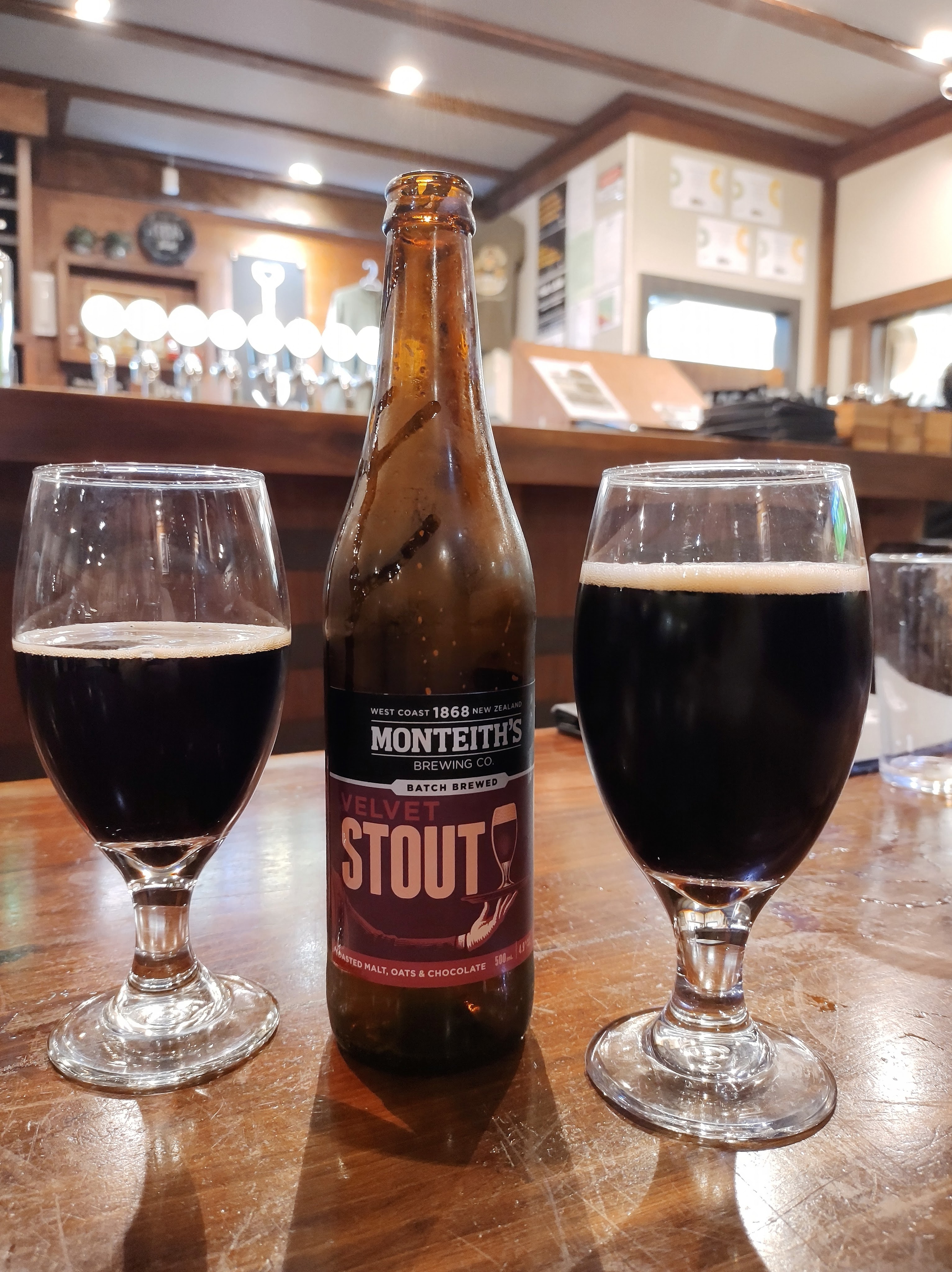
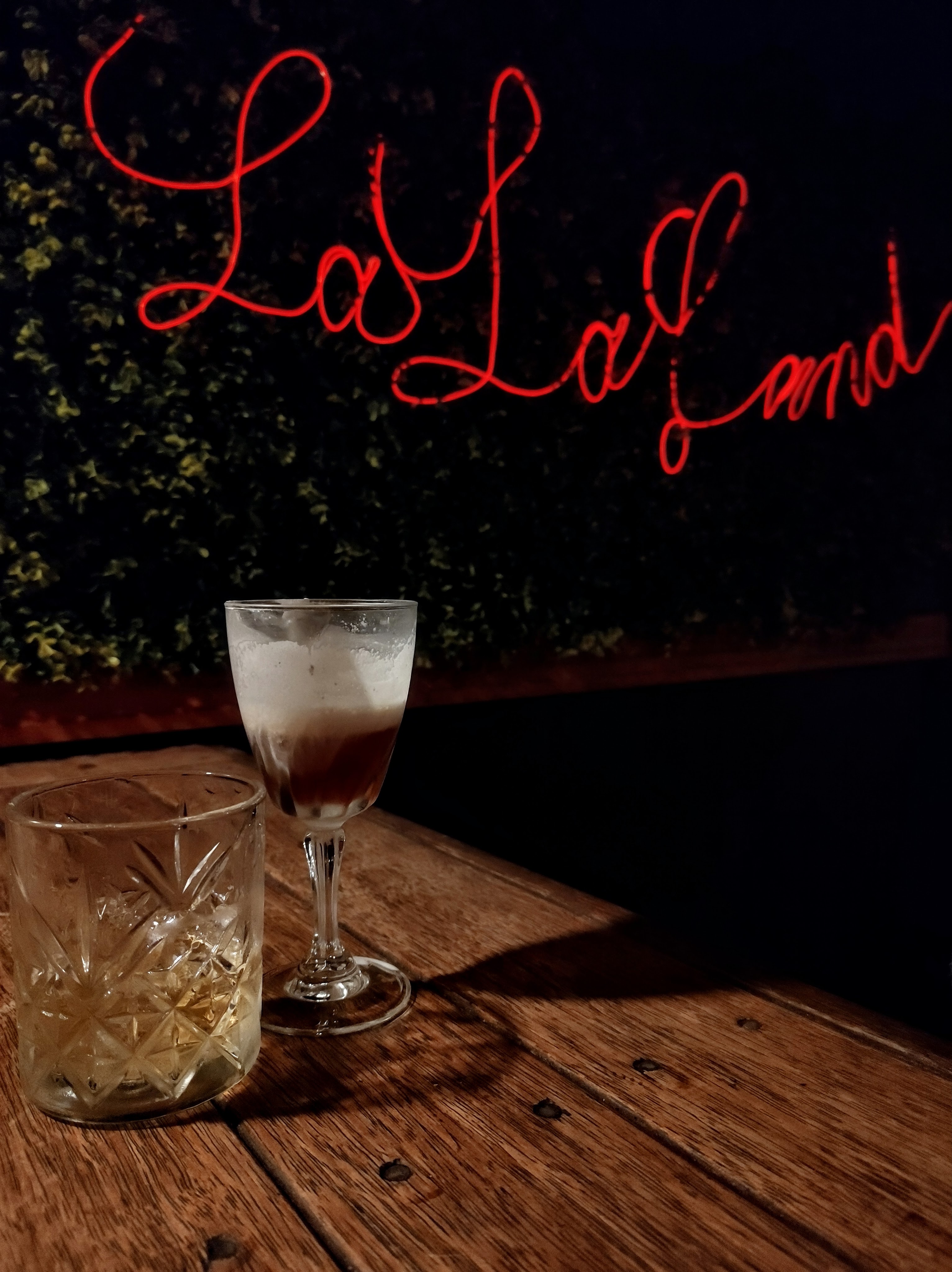
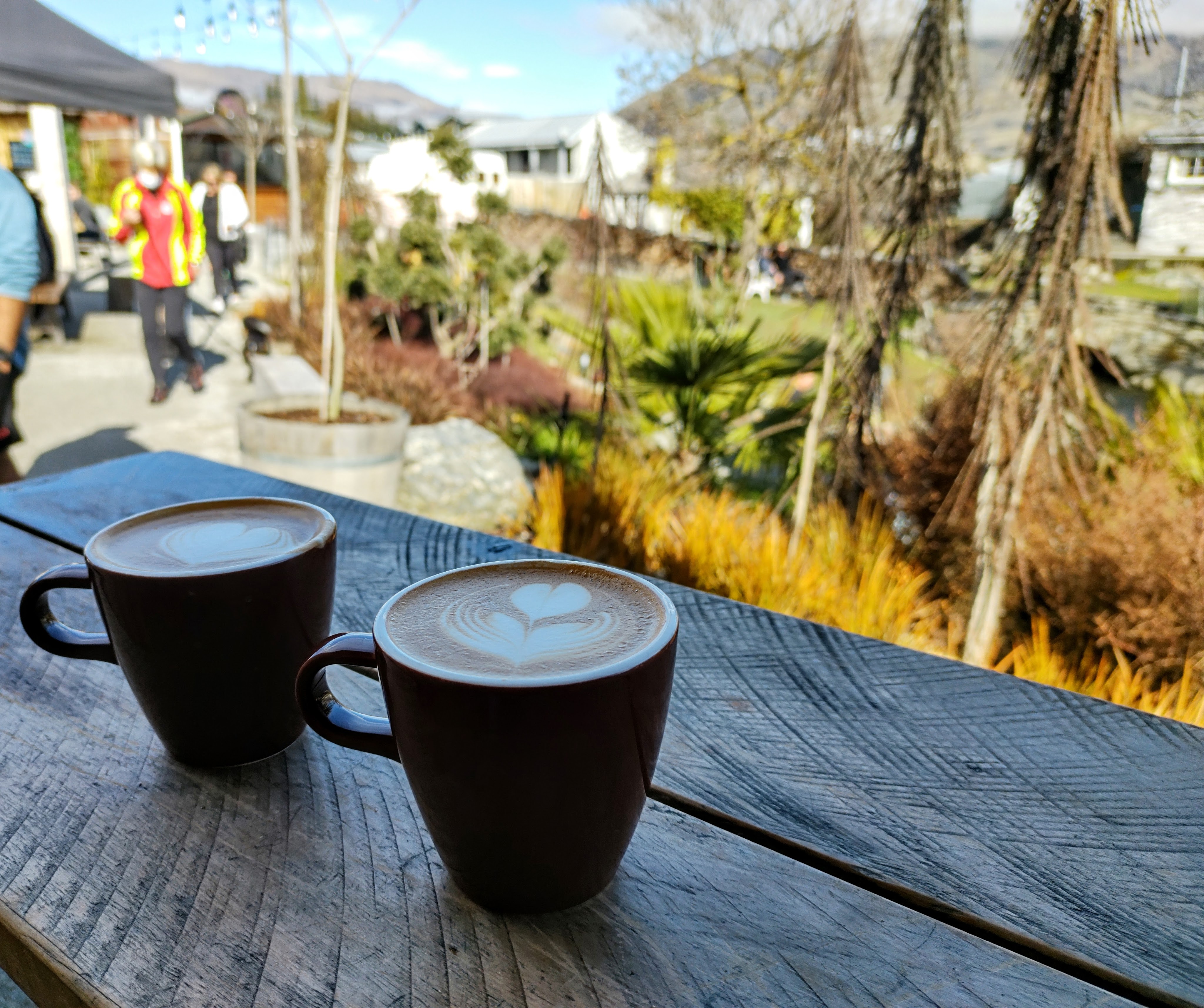
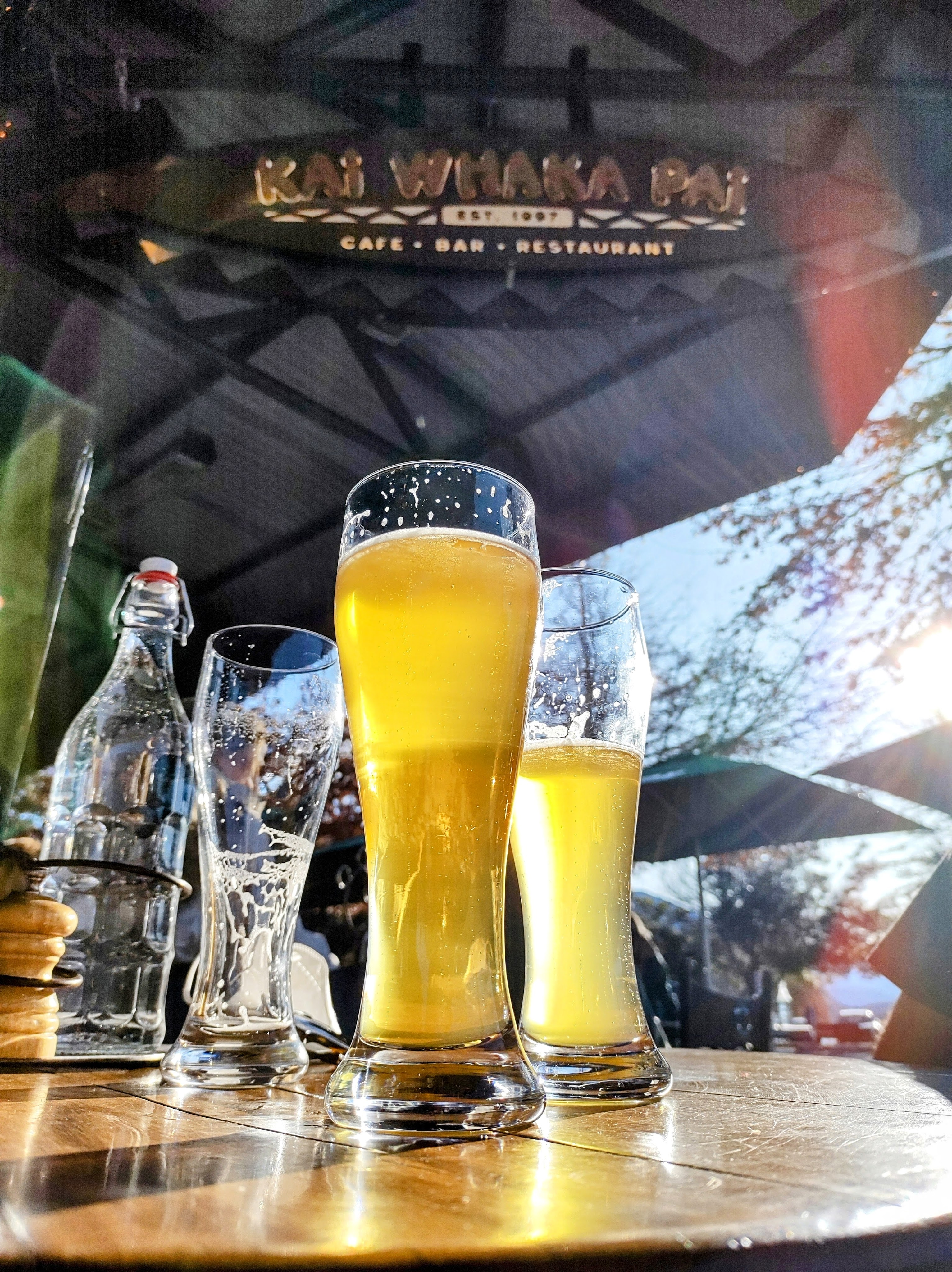
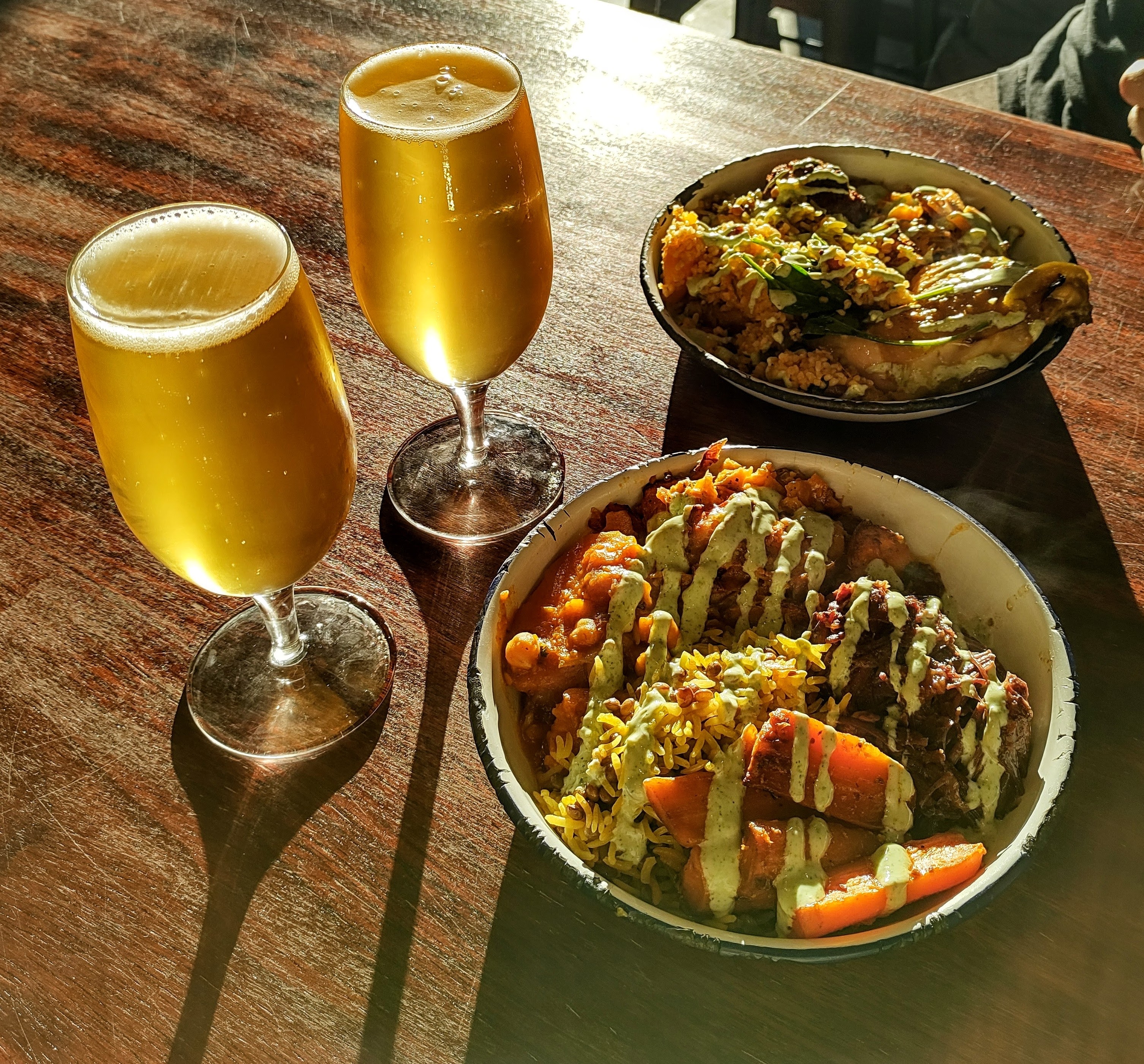
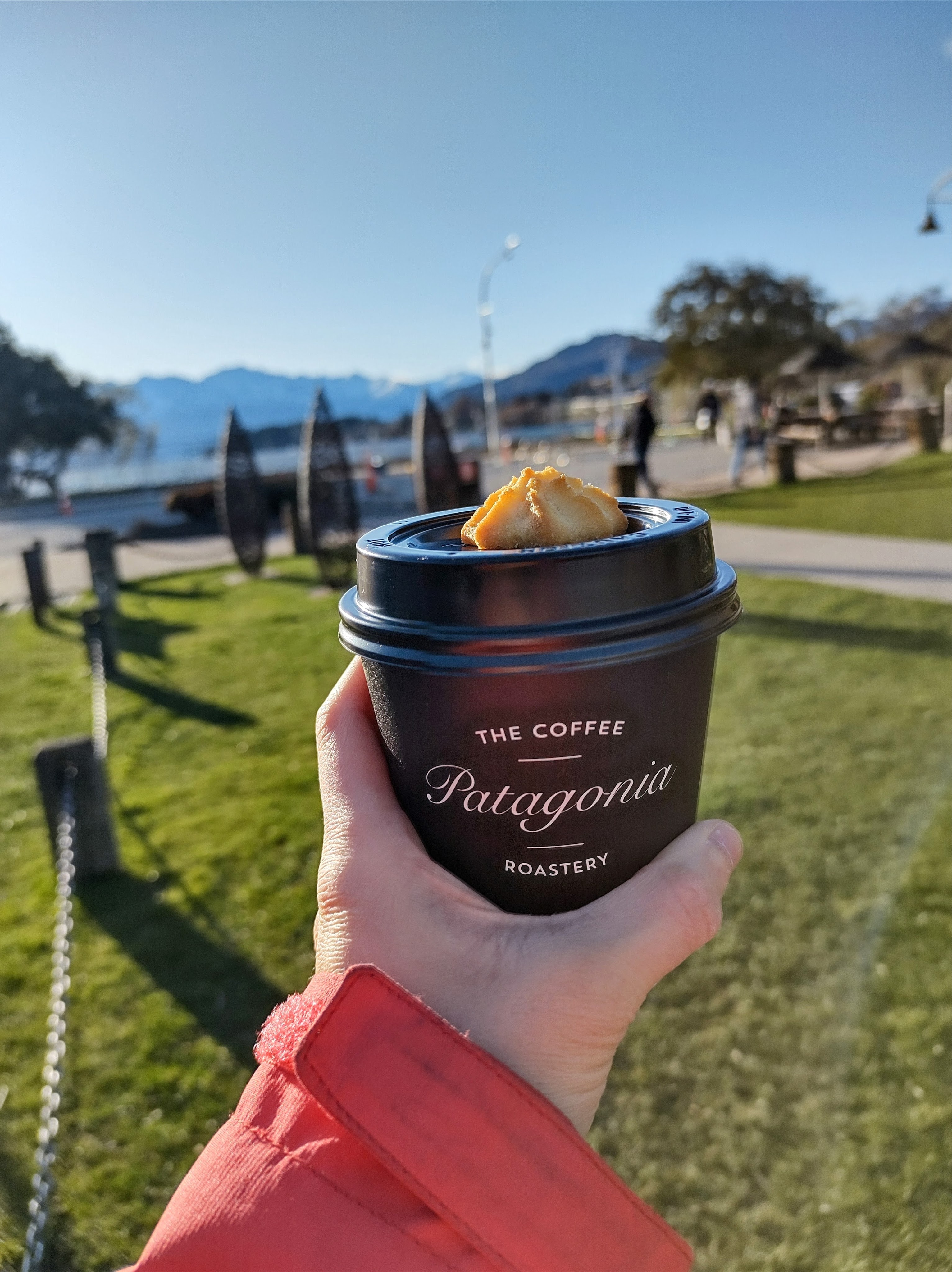
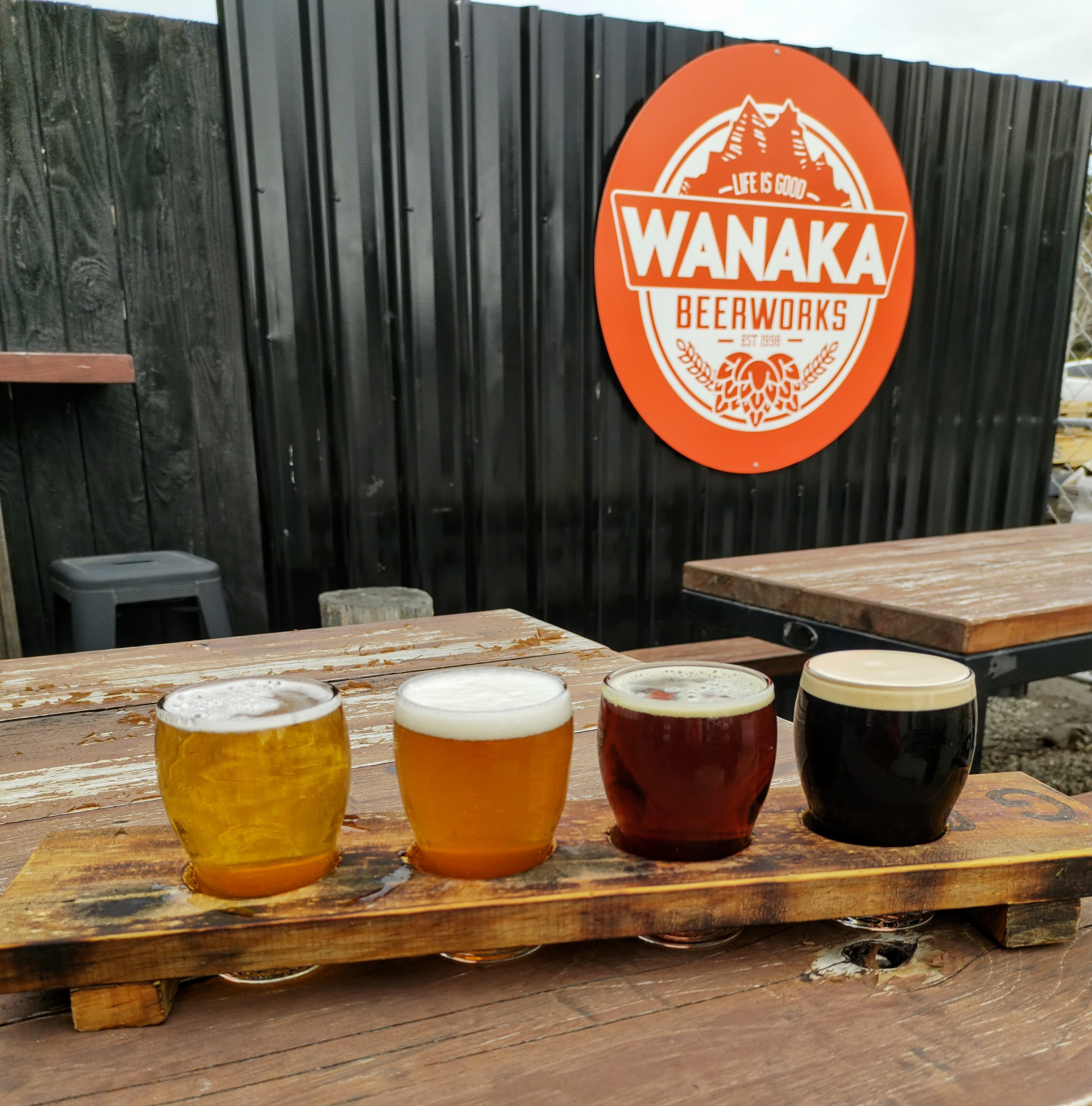
Accommodation: Private Studio on Kings <$1,190 NZD – 8 nights Food & Drink:Water Bar (Pub food), La La Land (Cocktails), Curbside Coffee & Bagels (Coffee cabin), Kai Whakapai (All day cafe/bar), Big Fig (All day cafe, hearty home style food), Patagonia (chocolate shop – best chilli hot chocolate), Burrito Craft (Mexican food trailer), Wanaka Beerworks (Brewery) Drive Time: Aoraki – Wānaka: 2 hours 20 mins
La La Land Cocktail BarCurbside Coffee & BagelsKai WhakapaiBig FigPatagoniaWanaka Beerworks
Cardrona & Treble Cone
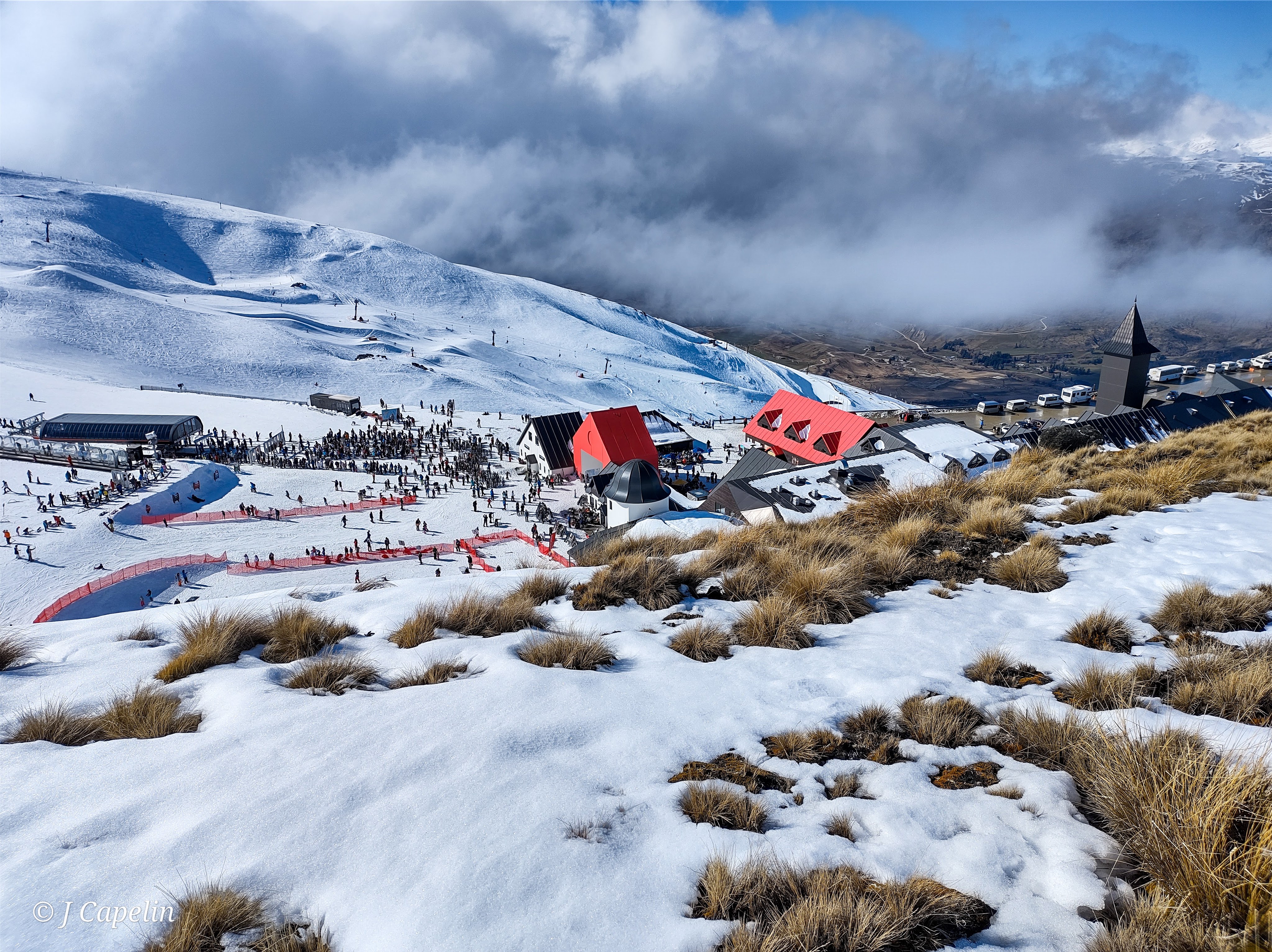
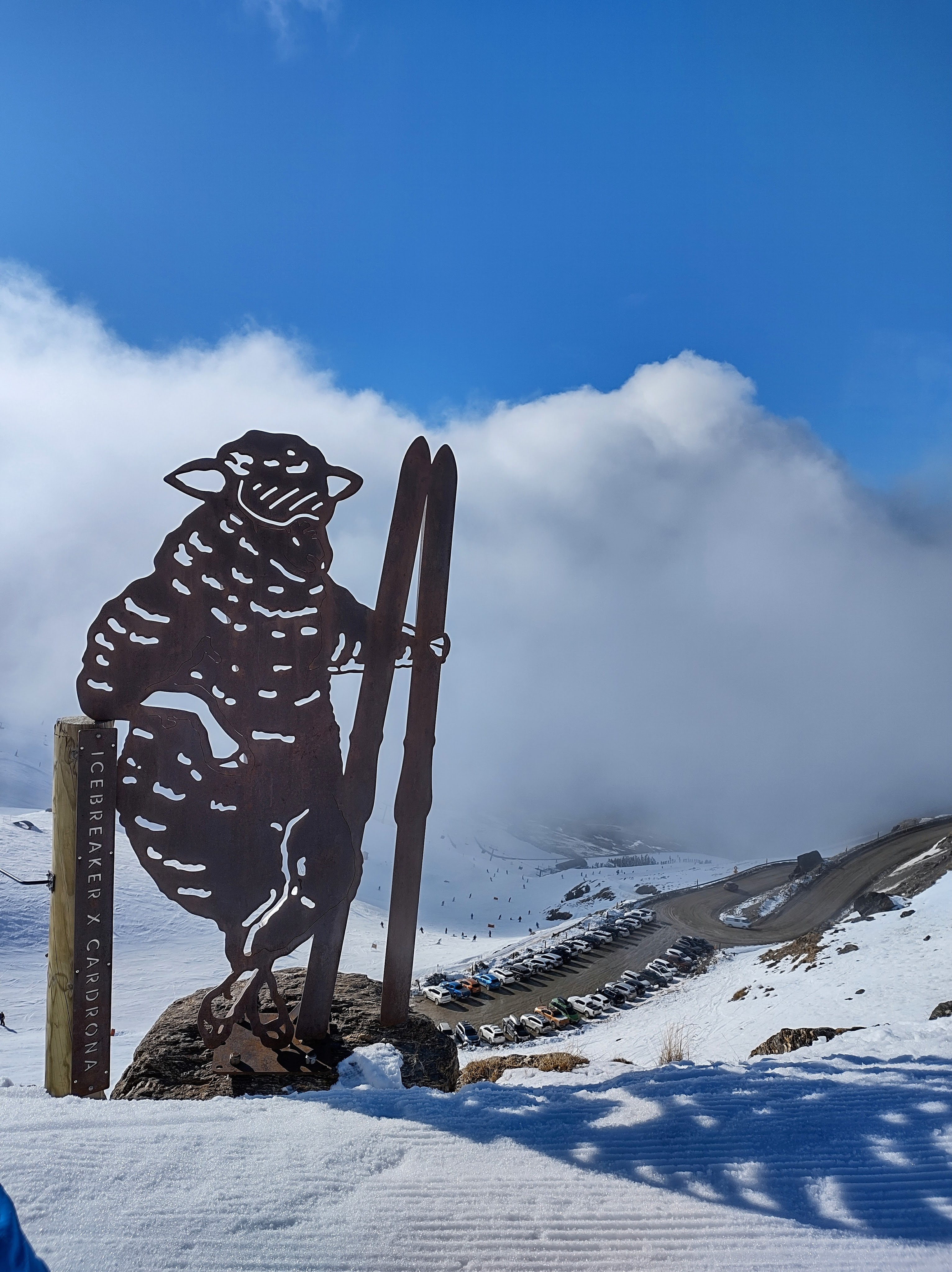
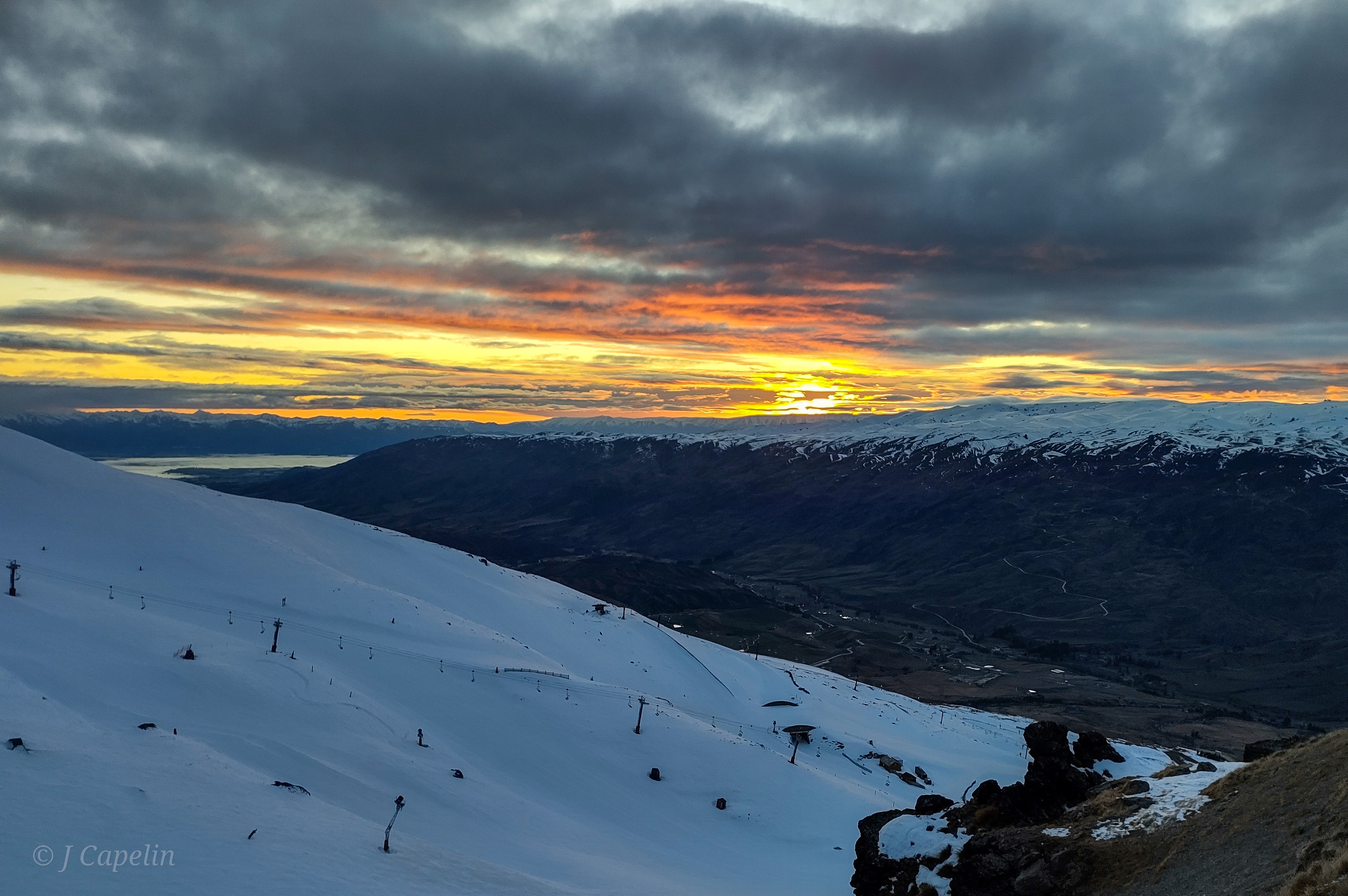
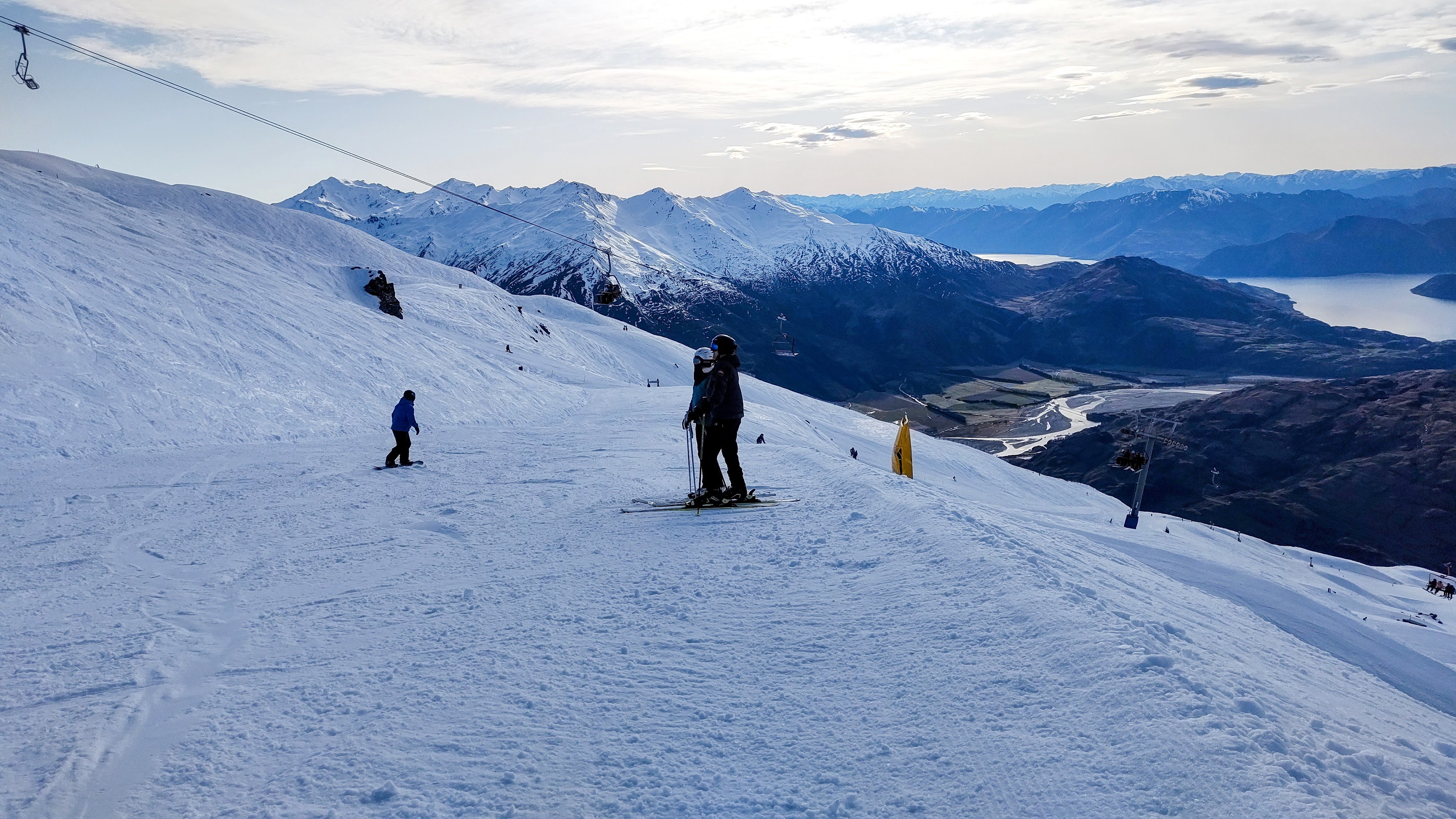
Cardrona and Treble Cone are two separate ski fields, both about a 40 minute drive from Wānaka, who have teamed up so you can use their lift passes at both locations. Cardrona is located on the Crown Range road and is a great, family friendly ski resort for all abilities, though it is notoriously busy these days. Cardrona is an old haunt for me, and we got treated to a nostalgic ‘Cardie’s’ sunrise on my return.
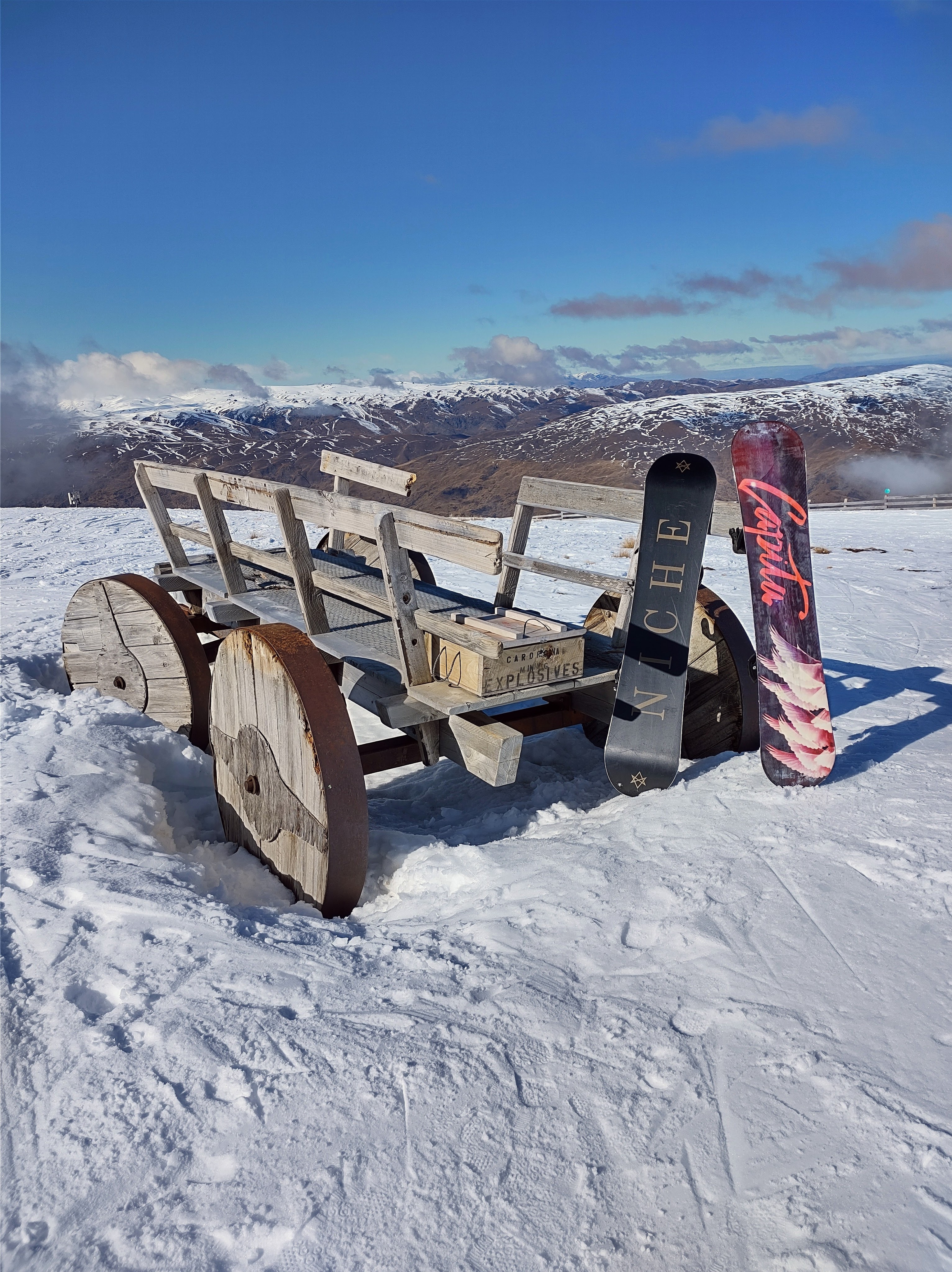
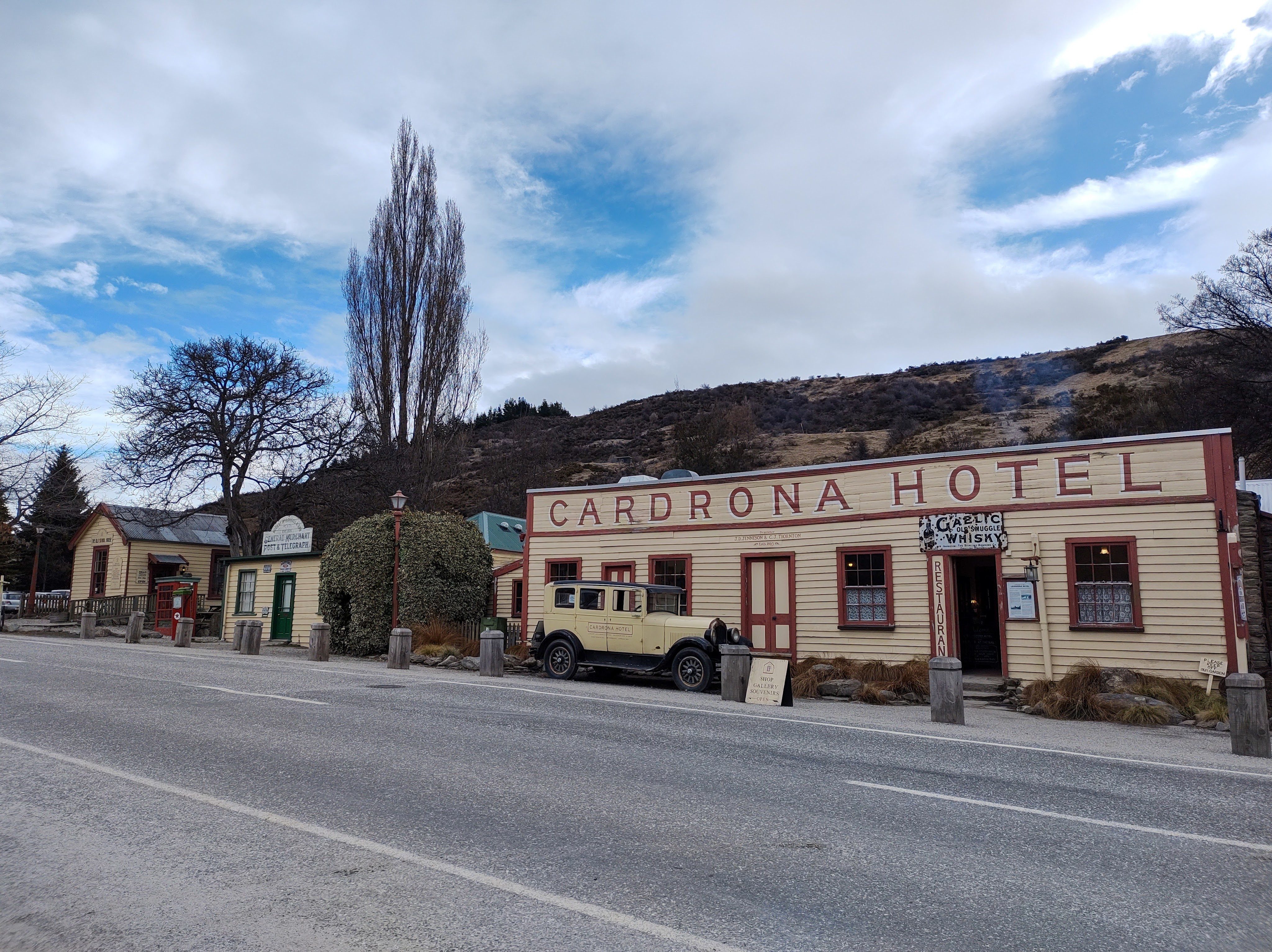
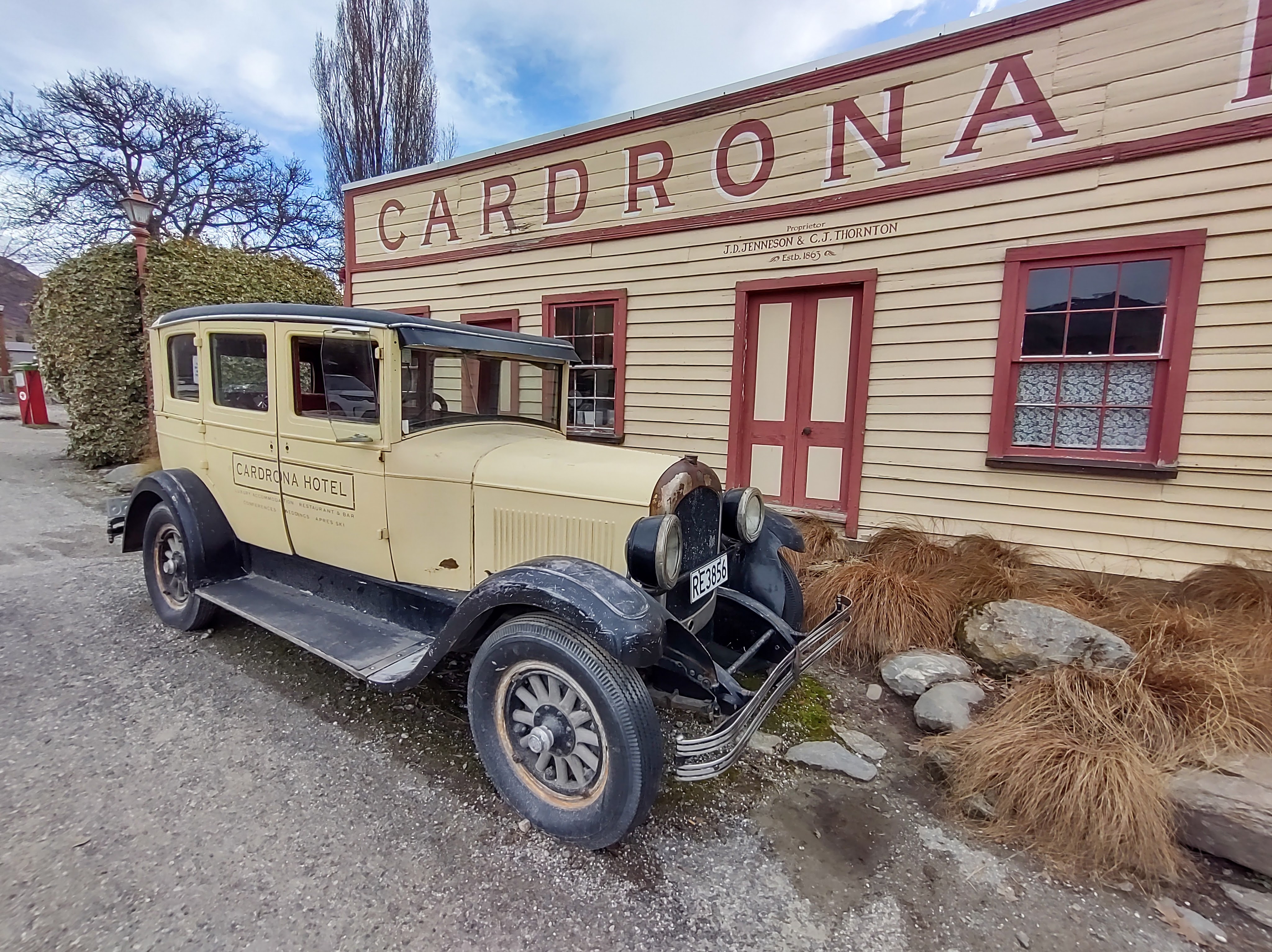
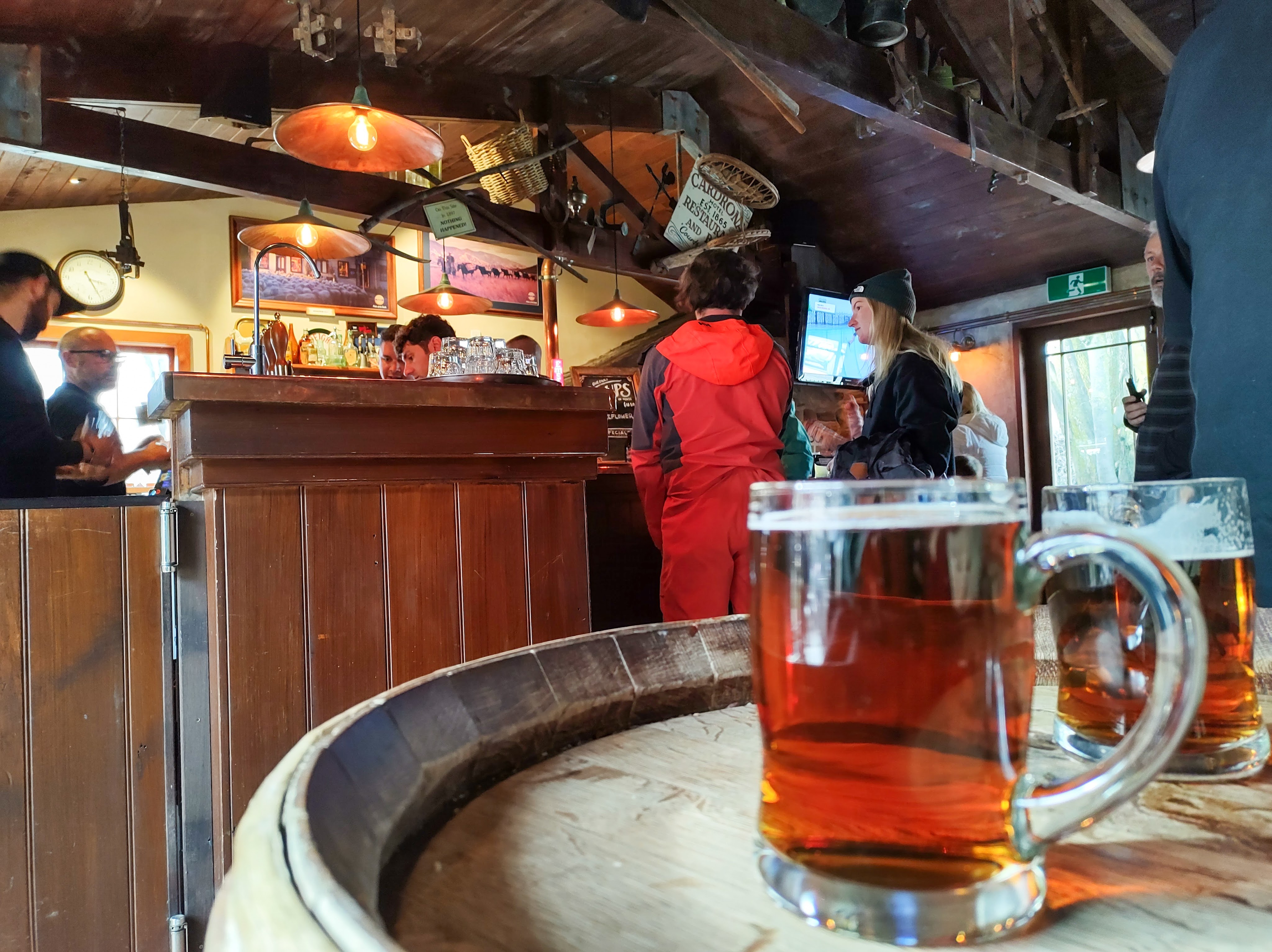
After a big day of sliding around in the early spring snow, we paid a visit to Cardrona’s old gold mining village at the bottom of the mountain, and the beautiful Cardrona Hotel, where the atmosphere was pumping and Après Ski beers were flowing.
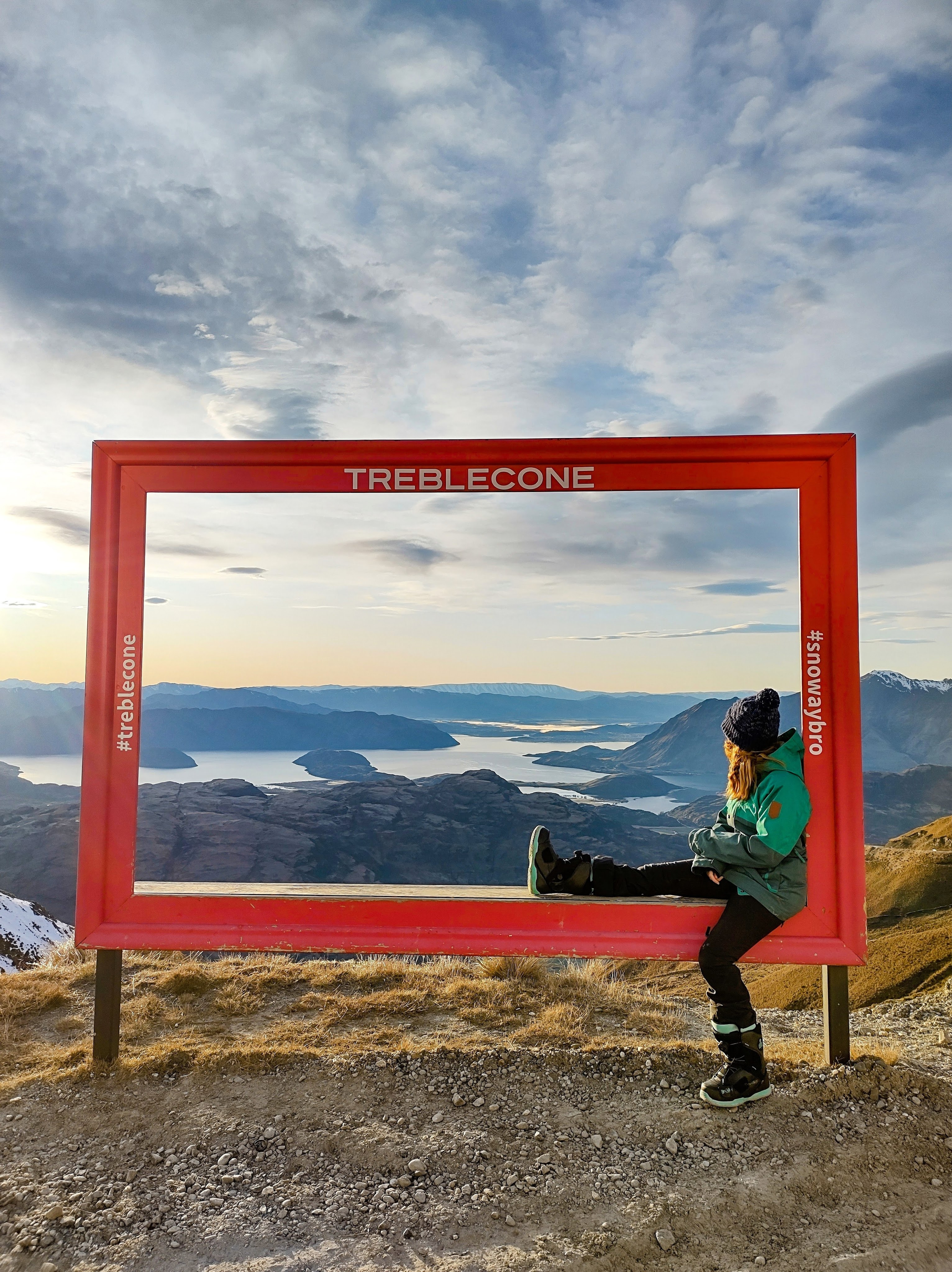
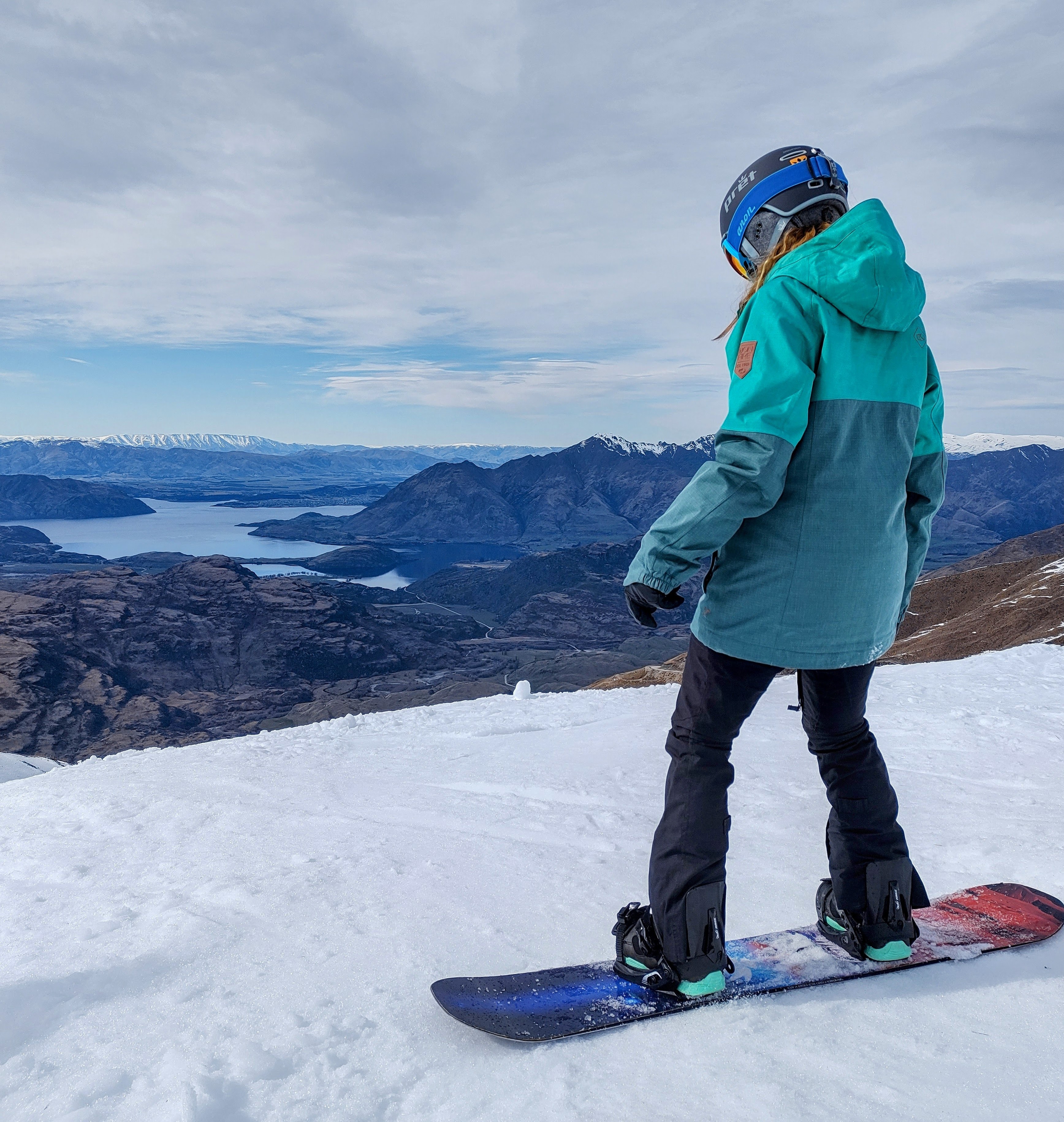
Treble Cone is located in the Aspiring National Park, and has the most stunning views across Lake Wānaka. The terrain is steeper than Cardrona and is better for more experienced skiers and snowboarders. They used to say Treble Cone was the locals’ mountain, and it still felt that way for the most part. The staff seemed more ‘at home’ here, and while the skiing was more serious, the whole place had an heir of casual familiarity, like walking into your local pub.
Arrowtown
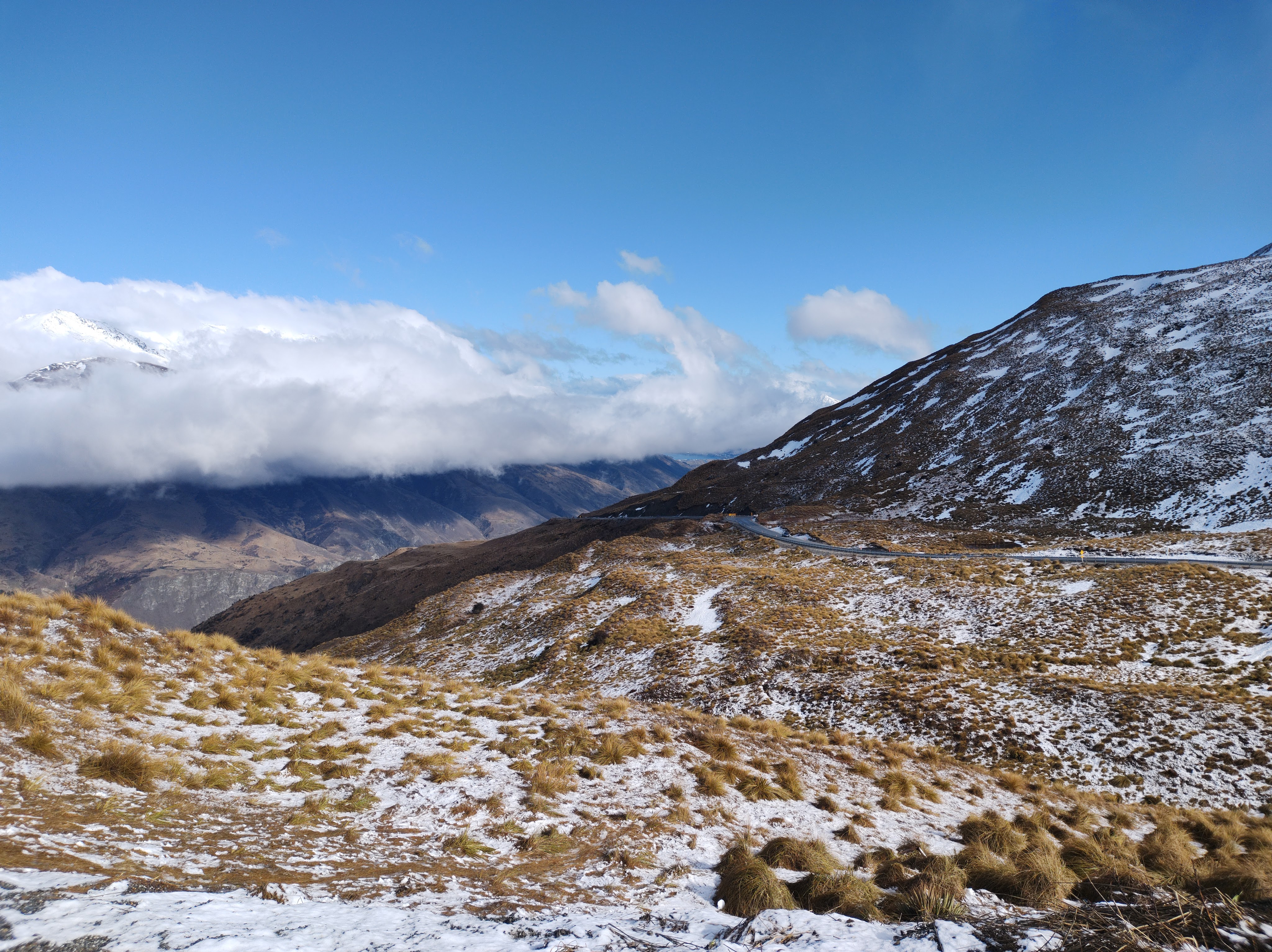
Over the Crown Range Pass, about 20 minutes from Queenstown, is a pretty little gold mining town from the 1860s – Arrowtown. The Crown Range road is an adventure in itself, winding through the mountain peaks before weaving down the opposite side with valley views on every hairpin bend.
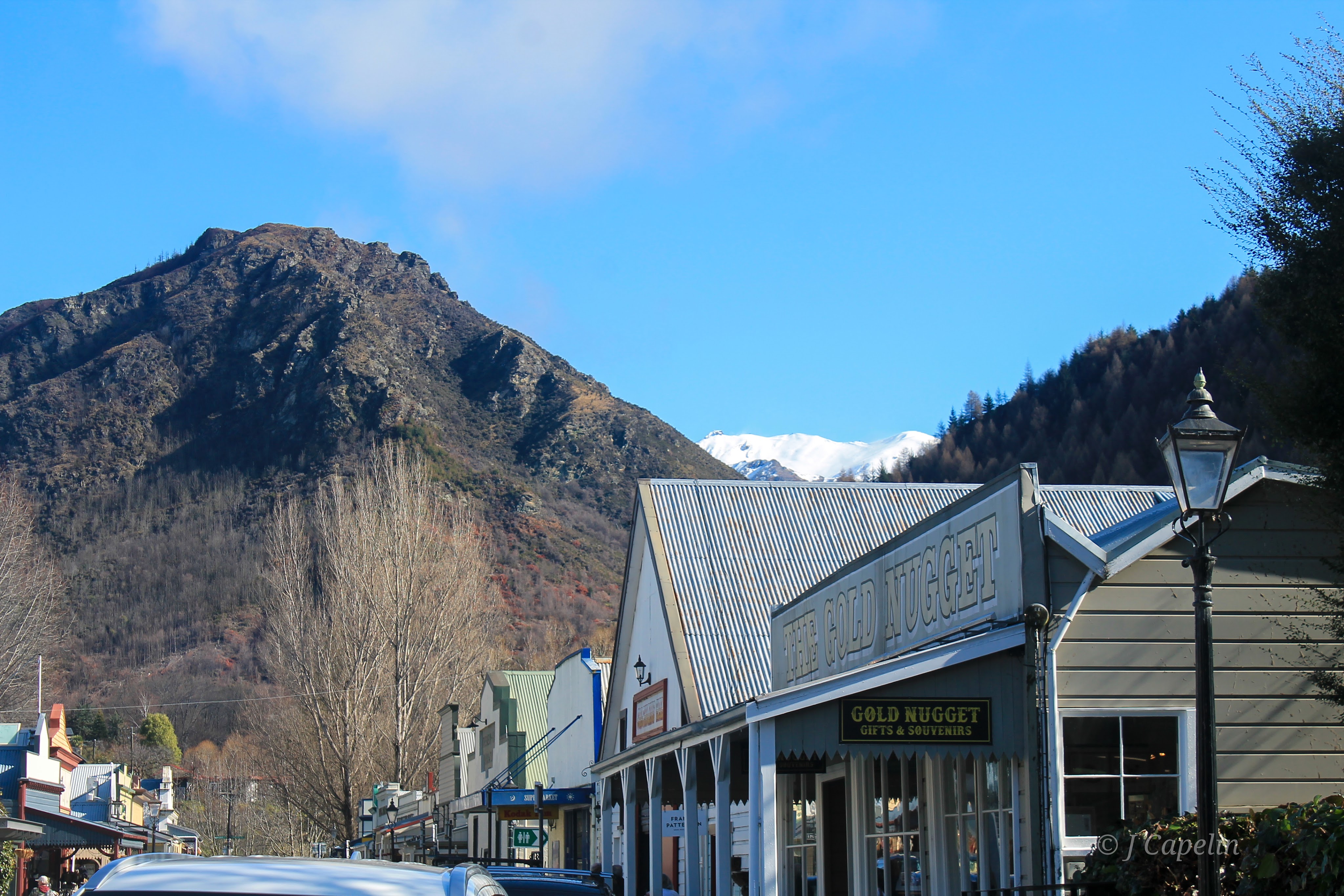
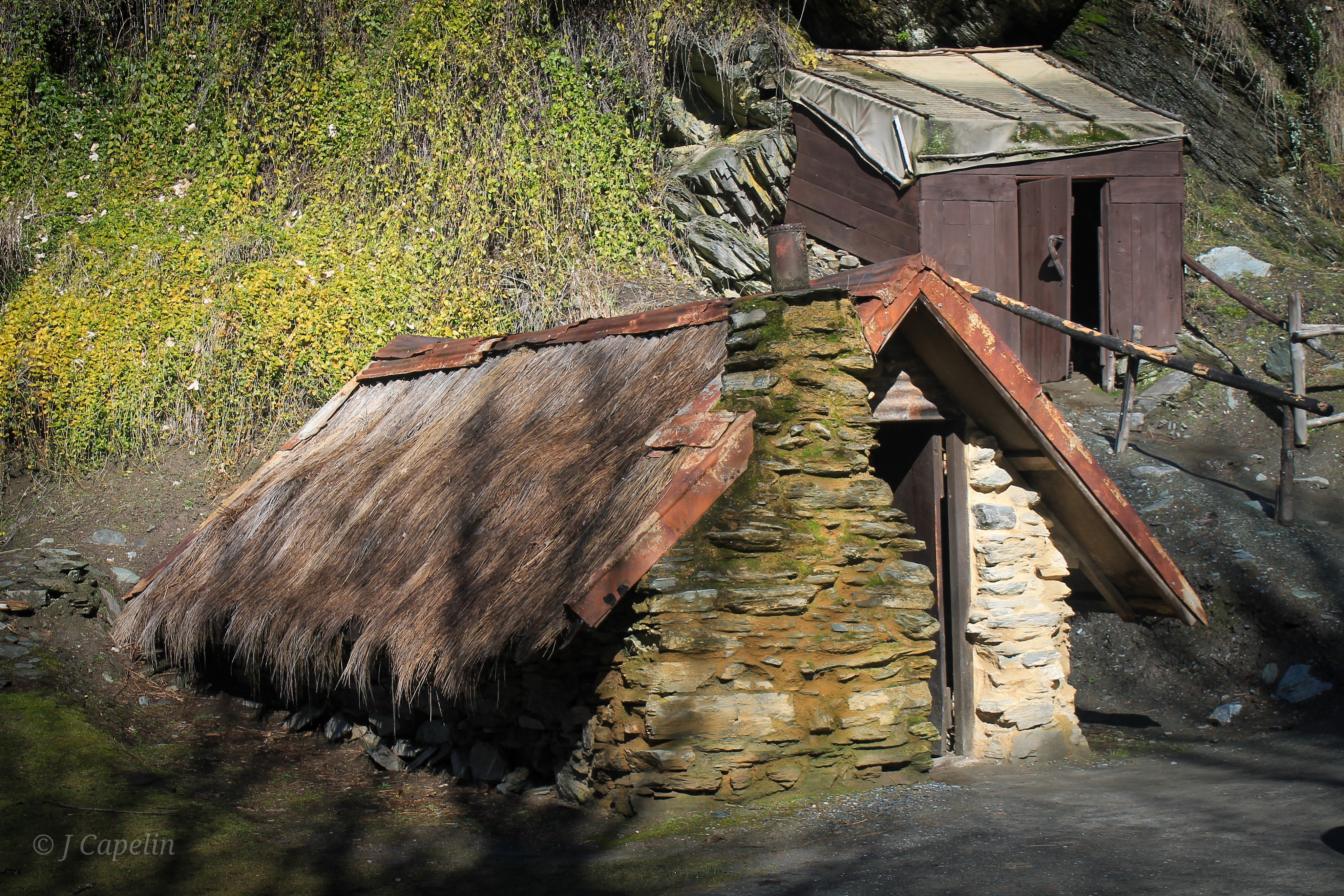
We arrived in Arrowtown mid-morning and the little colonial high street lined with gold shops was already bustling. We walked around the Chinese village – where some of the first migrant miners lived, finishing with a stroll along the river, before making our way onwards to Queenstown.
Drive Time: Wānaka – Arrowtown: 1 hour
Queenstown
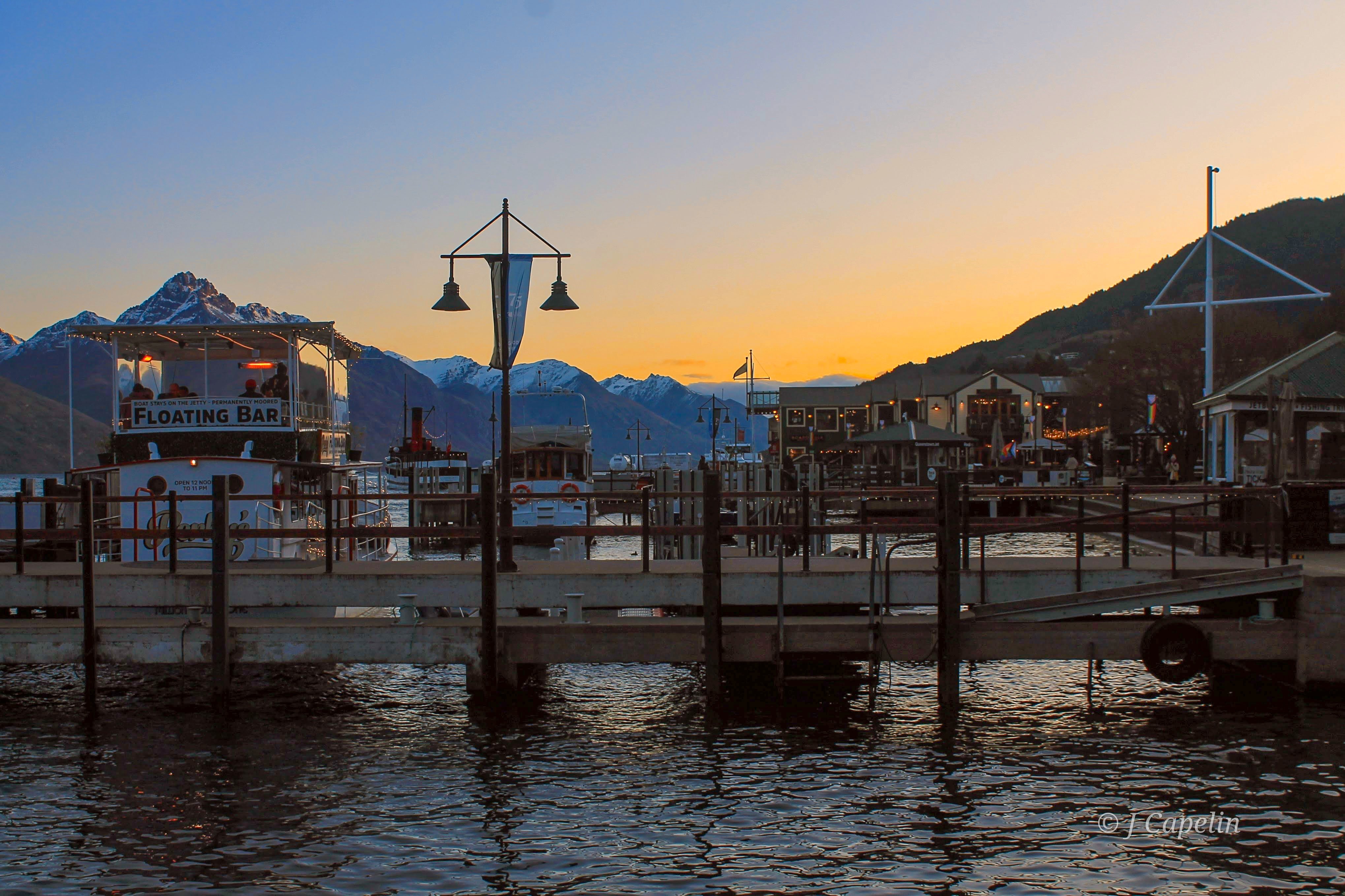
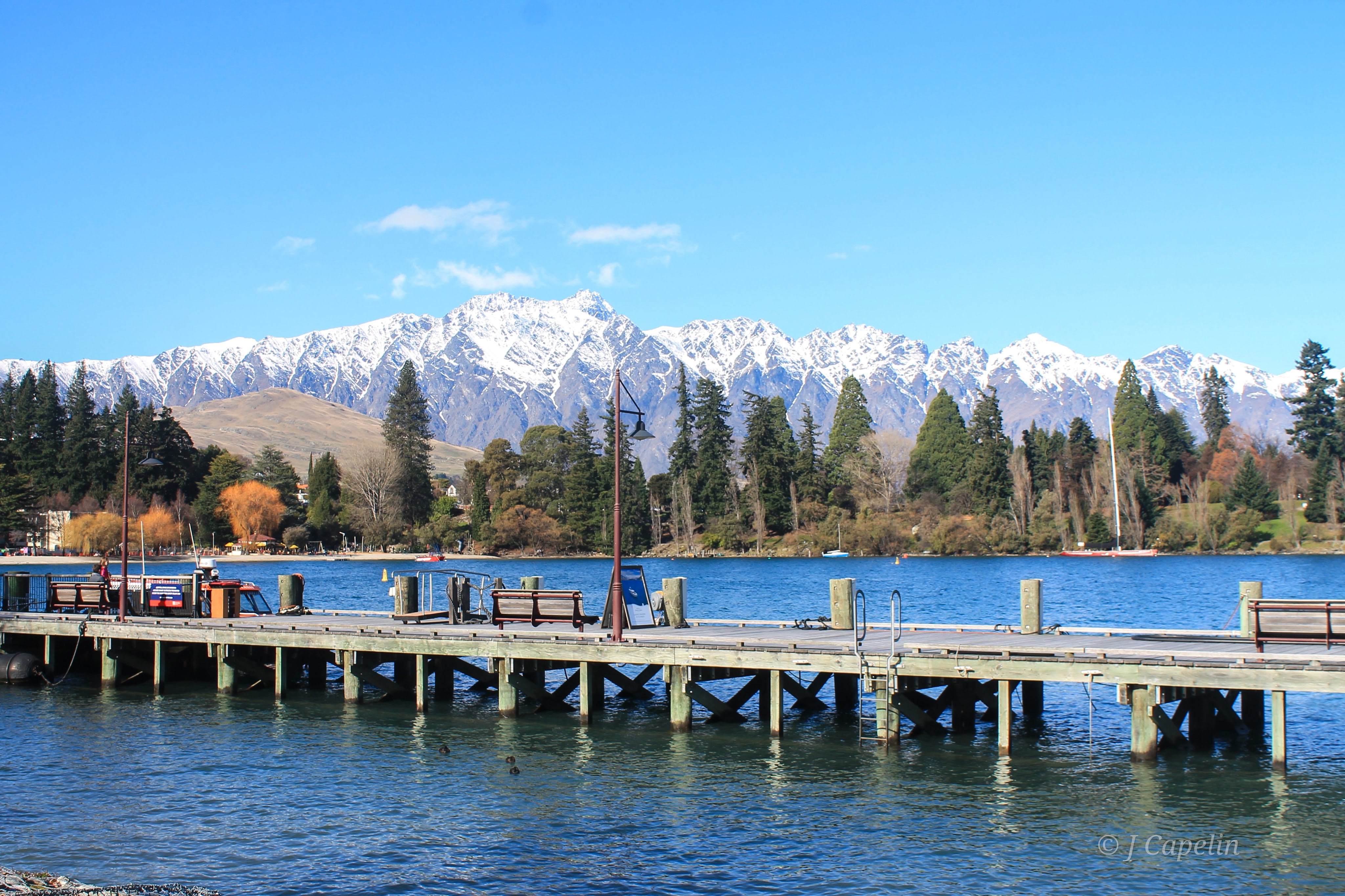
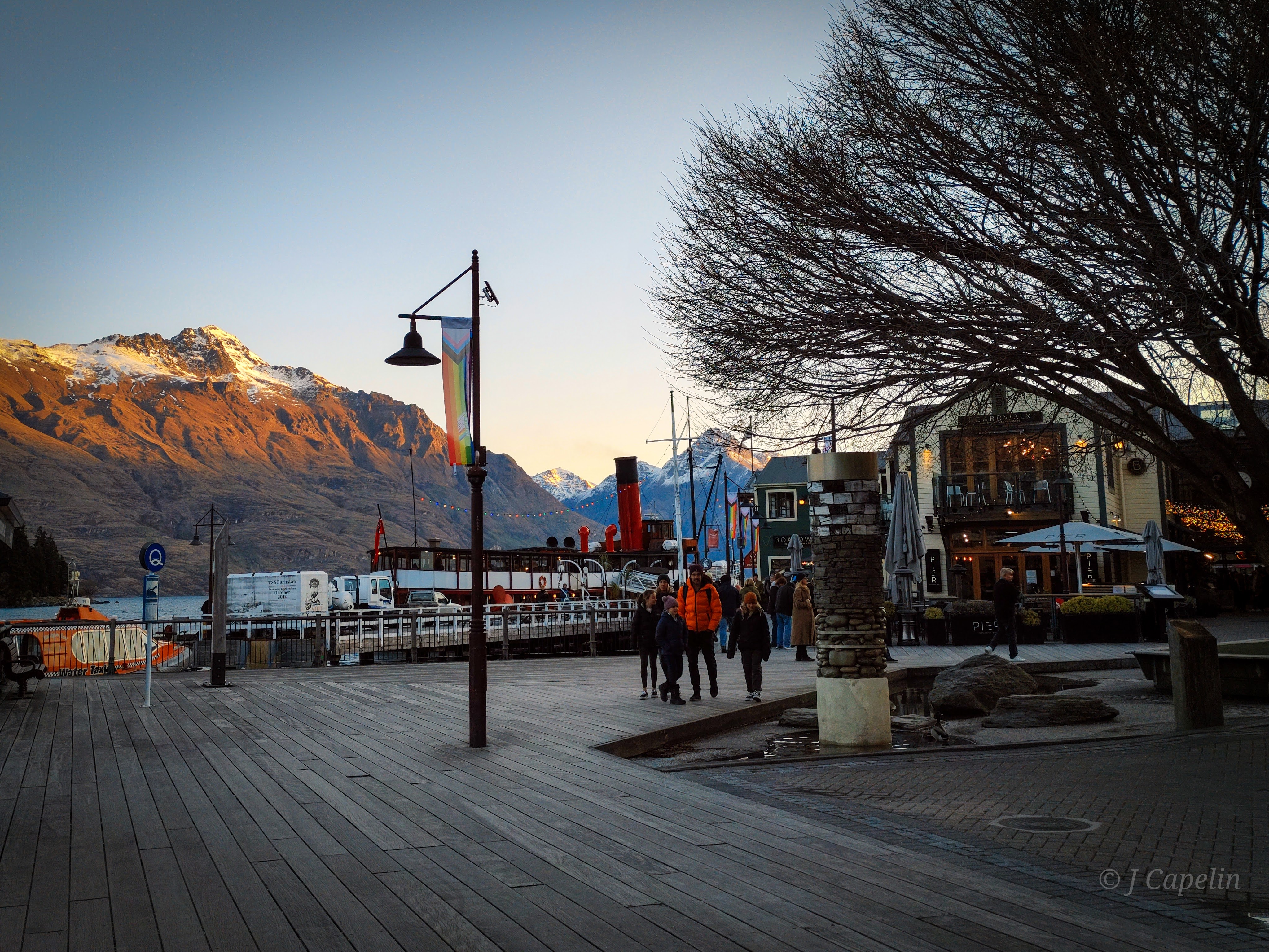
The place to be during NZ winter. The air is crisp, the pubs have their log burners crackling, and the line outside Fergburger is 3 miles long. Queenstown is an easy day trip from Wānaka (mountain road conditions providing) and it’s the adventure hub of New Zealand. There are a lot of tourist attractions and thrill seeker activities in this part of the world, with information and booking centres dotted all over town. However, we were quite content with just soaking up the atmosphere. We watched the old steamboat, the T.S.S Earnslaw, chug back and forth across Lake Whakatipu; admired The Remarkables (the impressive mountain range,) trod the boardwalks and browsed the abundance of bars and souvenir shops until the sun disappeared and turned the whole town pink and sparkly.
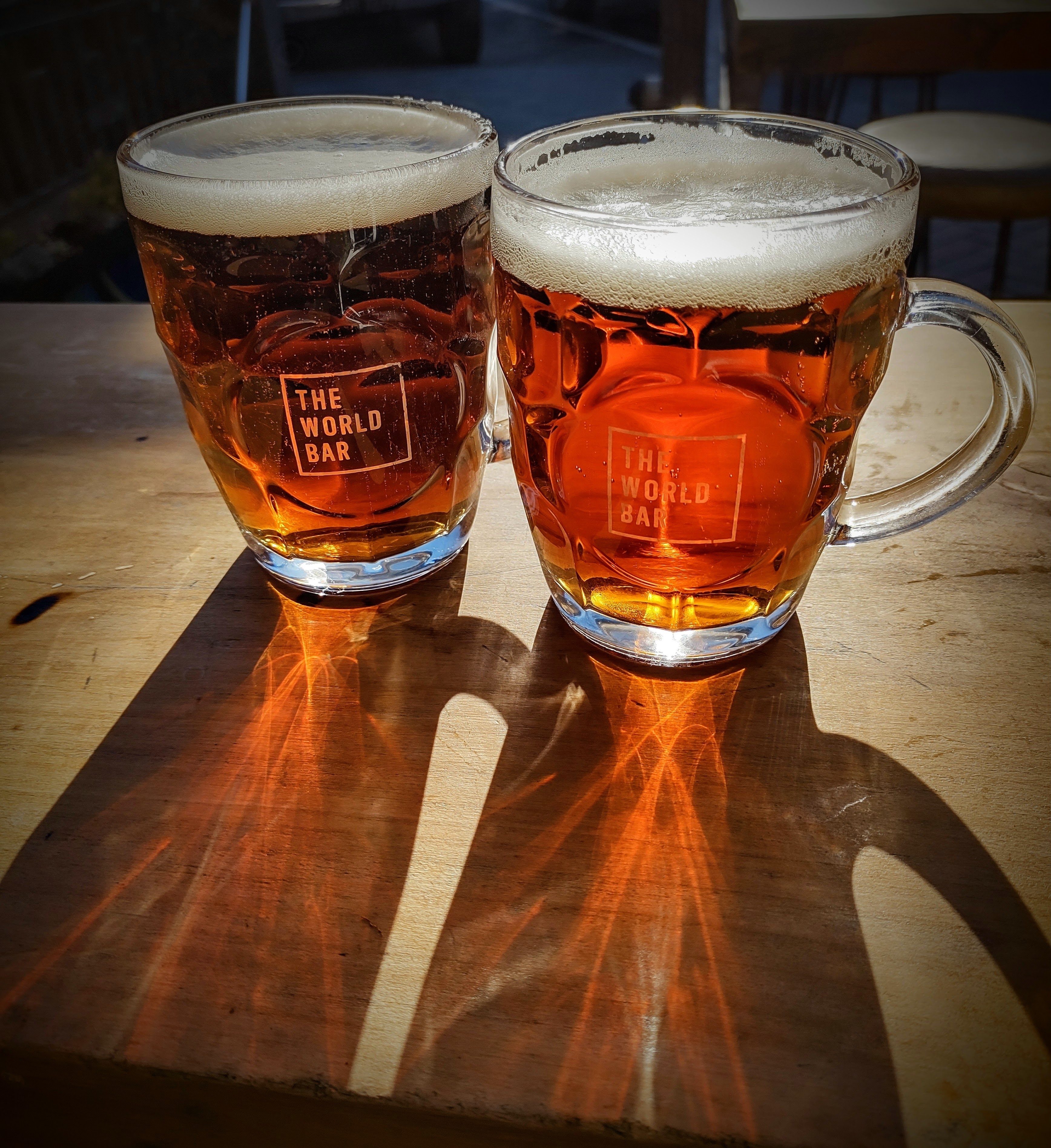
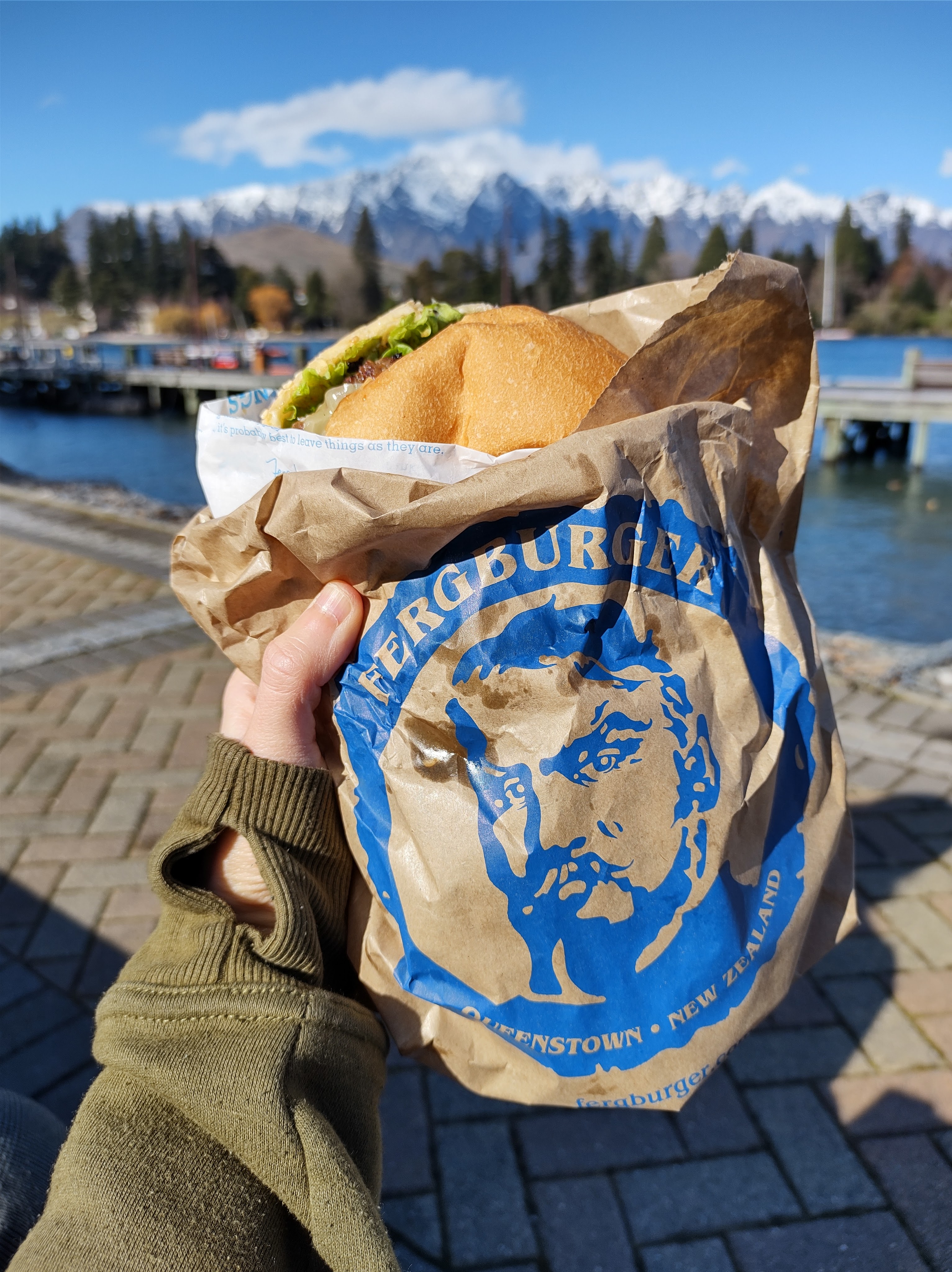
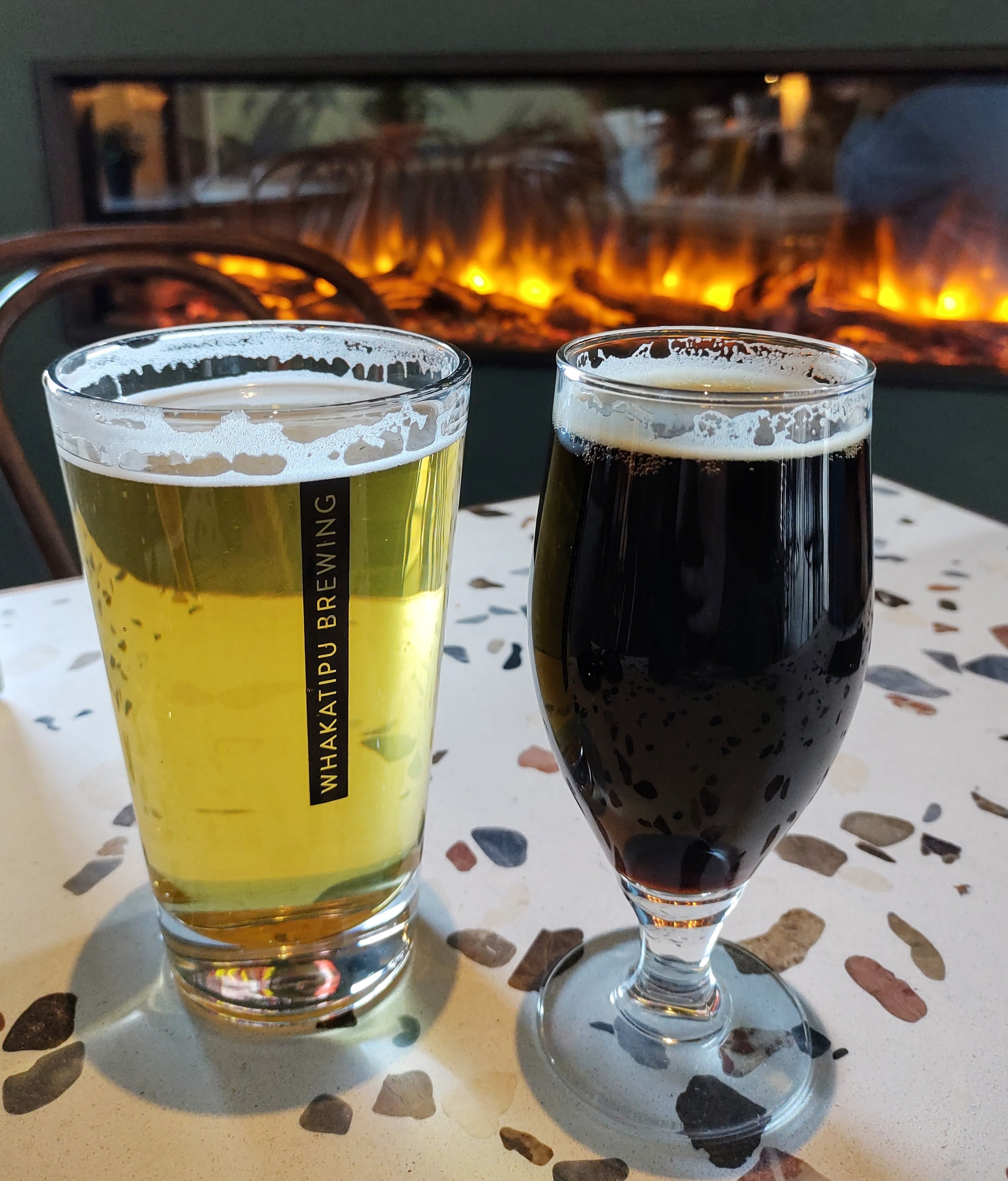
Food & Drink:Fergburger (quality burger bar,) The World Bar (pub,) Whakatipu Brewing (Tap room.) Drive Time: Wānaka – Queenstown: 1 hour 15 mins
The World BarFergburgerWhakatipu Brewing
Mount Aspiring National Park – Haast Pass
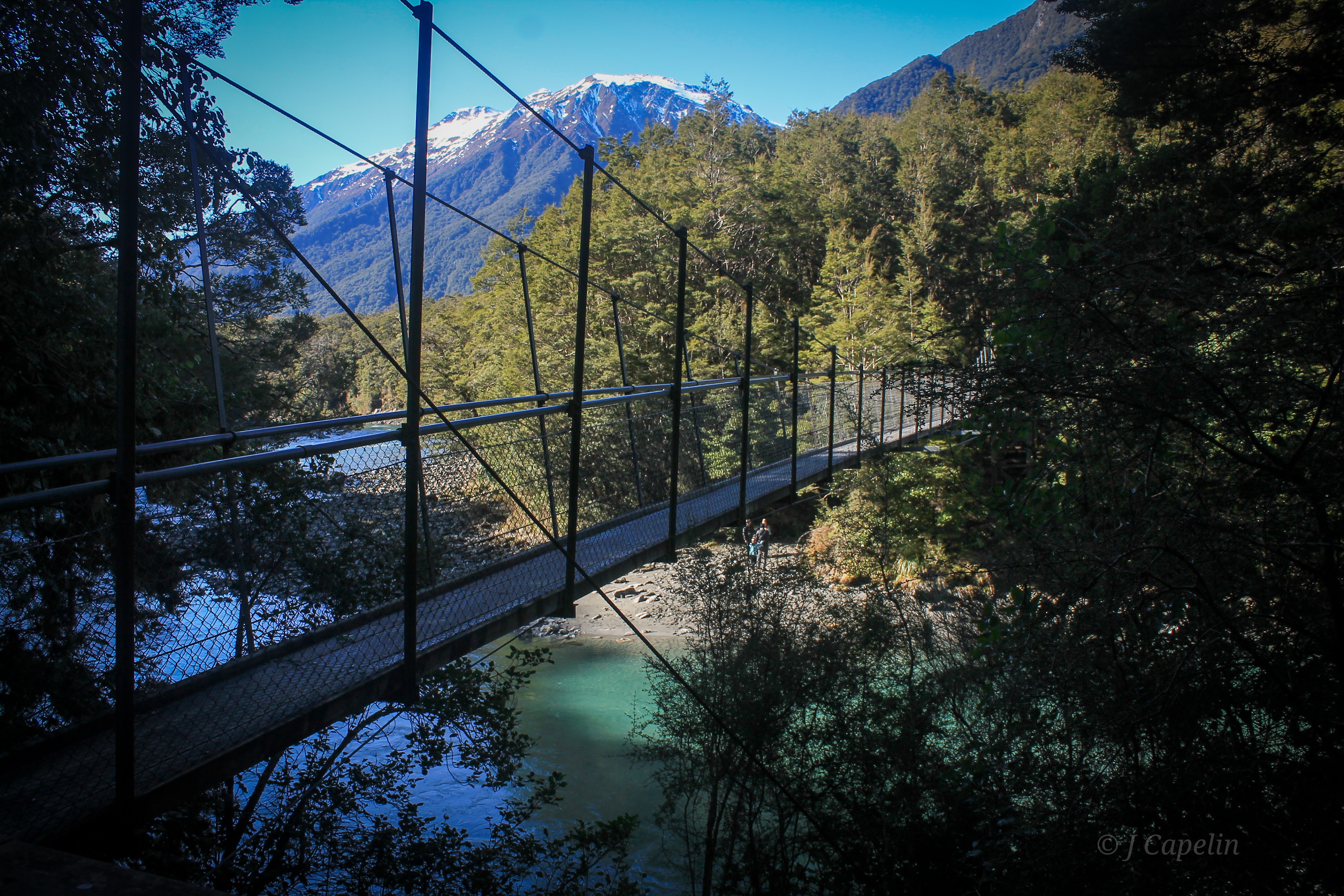
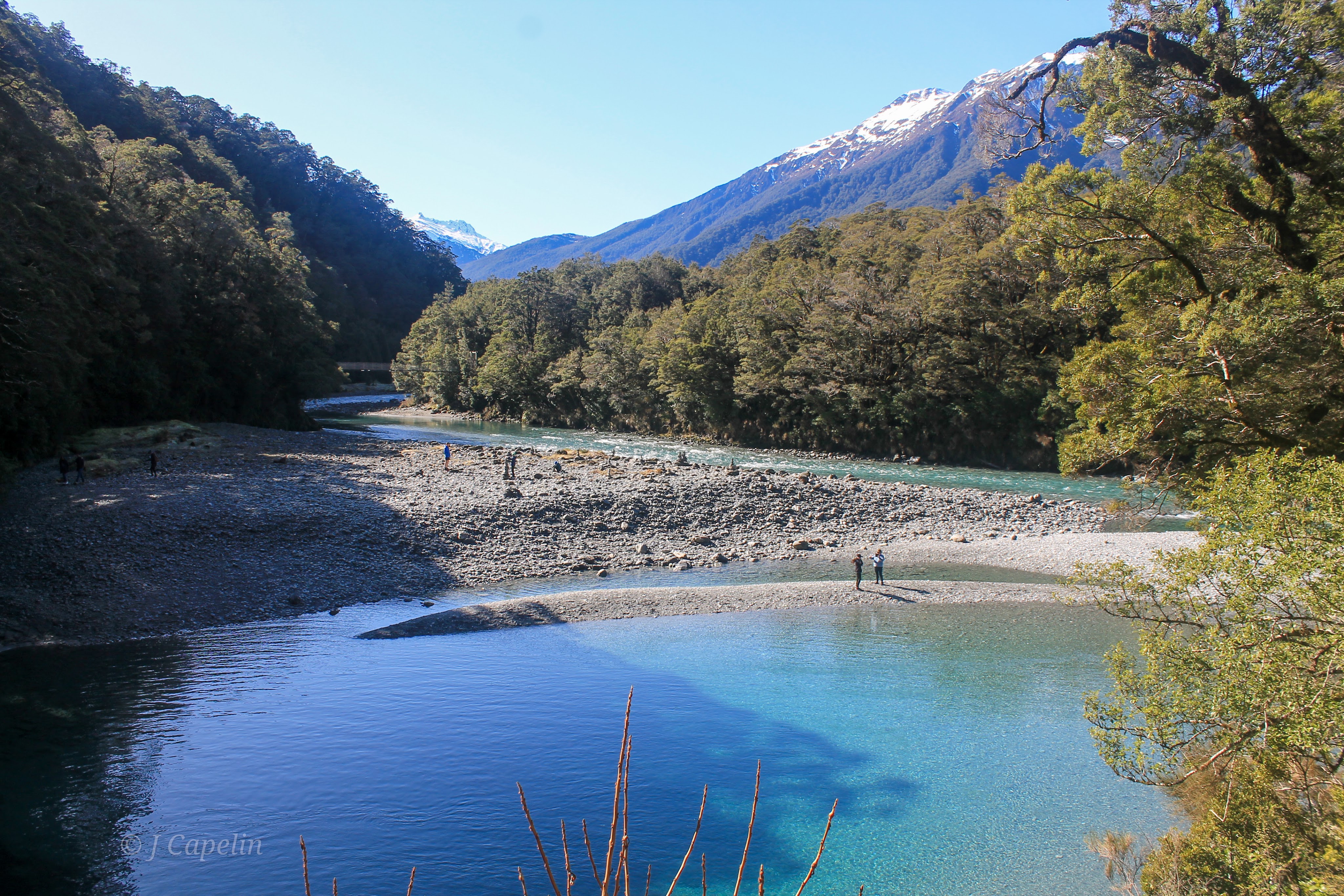
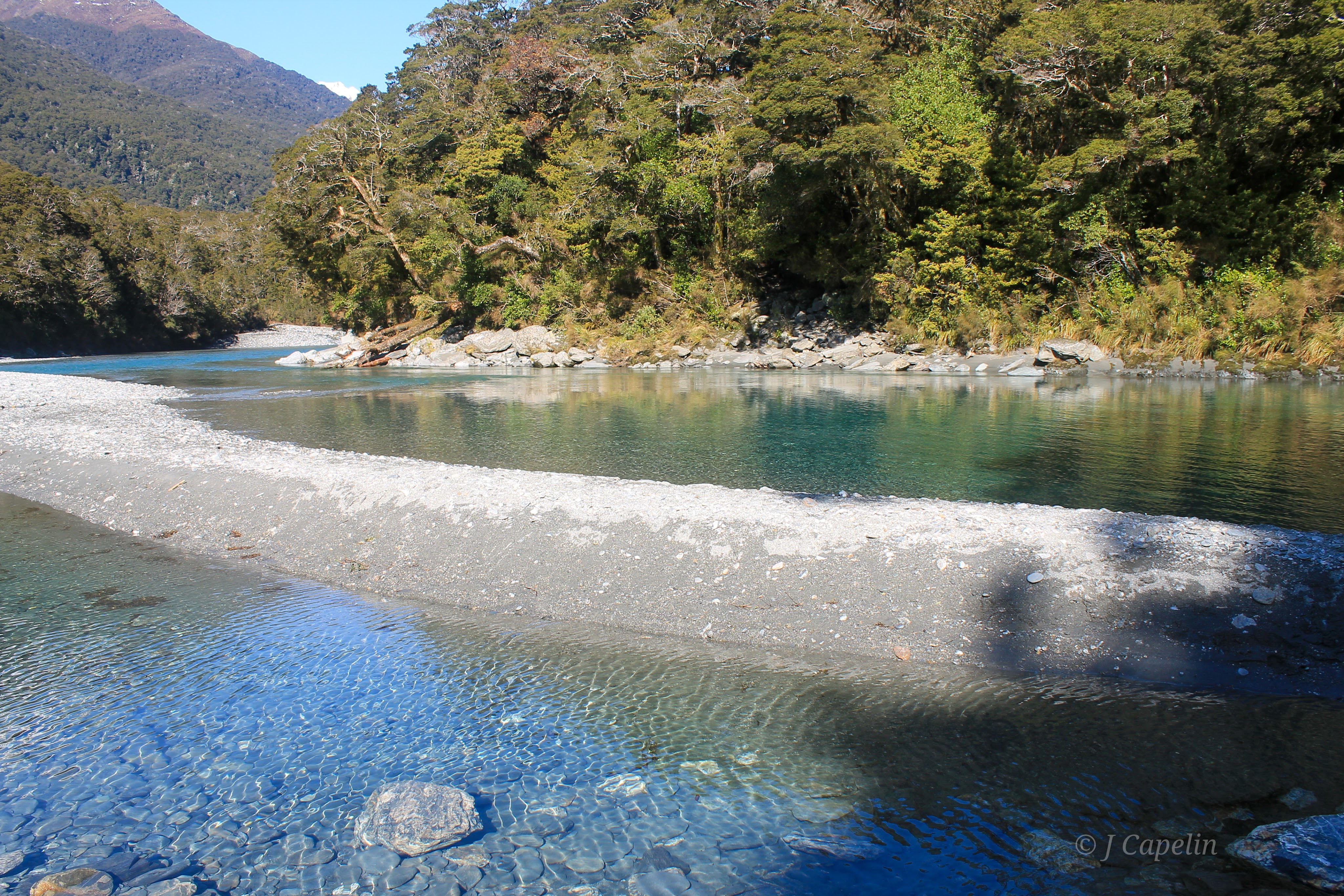
Leaving Wānaka for the West Coast, we drove alongside the neighbouring Lake Hāwea, and up the ridge between the two lakes into Mt Aspiring National Park. Passing through the tiny community of Makarora at the top of Lake Wānaka, we came to The Blue Pools Track – a beautiful short walk, and a popular swimming destination in the summer. We crossed the suspension bridges over the glacial river that gushes down from the Mt Aspiring Range through a forest-covered gorge, gently pooling before pouring its magical, clear blue water into Lake Wānaka. Walking Time: 1 hour return
Continuing to the Otago / West Coast border, we drove through the Haast Pass, where the driving views become more and more like Jurassic Park. There are view points and short walks dotted all along the Pass, each one as beautiful as the next, so it’s worth giving yourself plenty of time. You’re completely in the back country wilderness here, so bring a picnic!
West Coast
We finally reached Haast, where the river meets the wild ocean. Beautifully desolate beaches sit at the foot of the ever changing mountains, home to nothing but sandflies, and the West Coast road winds through a variety of landscapes with more viewpoints along the way.
Fox Glacier
Finally, we reached our destination for the night – Weheka (Fox Glacier village.) I don’t know if it was the time of year, or the time of the week, but we felt like the only people in the village – the road there had been pretty deserted too, which is unusual. But with the place to ourselves, and a few hours of daylight left, we went exploring.
Fox Glacier – traditionally ‘Te Moeka o Tuawe,’ can be glimpsed from the village all the way to the coast. The glacier streaks down the western valley between Aoraki (Mt Cook) and Mt Tasman, ending 250m above sea level in the lush rainforest of Westland’s Tai Poutini National Park.
Gillespies Beach
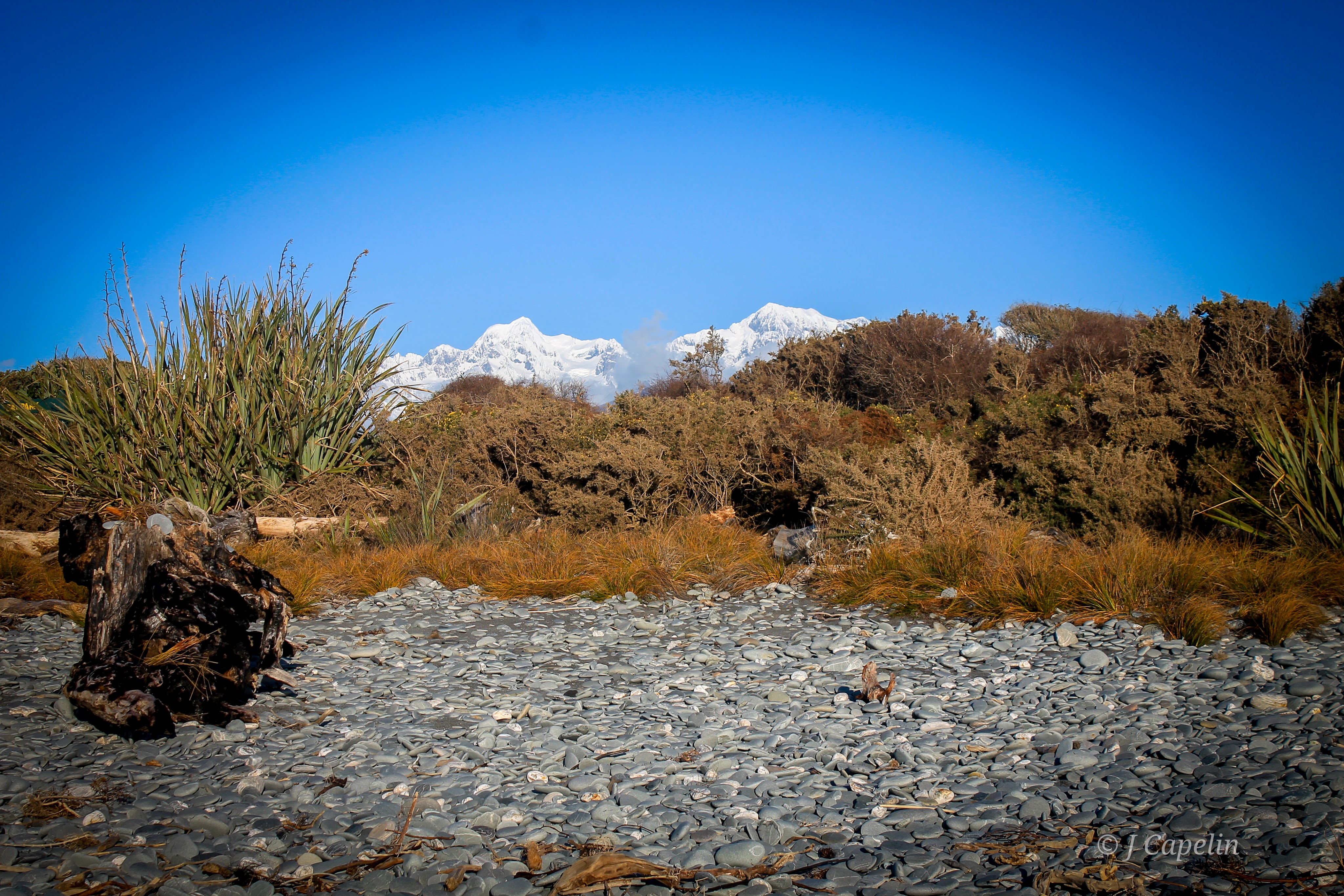
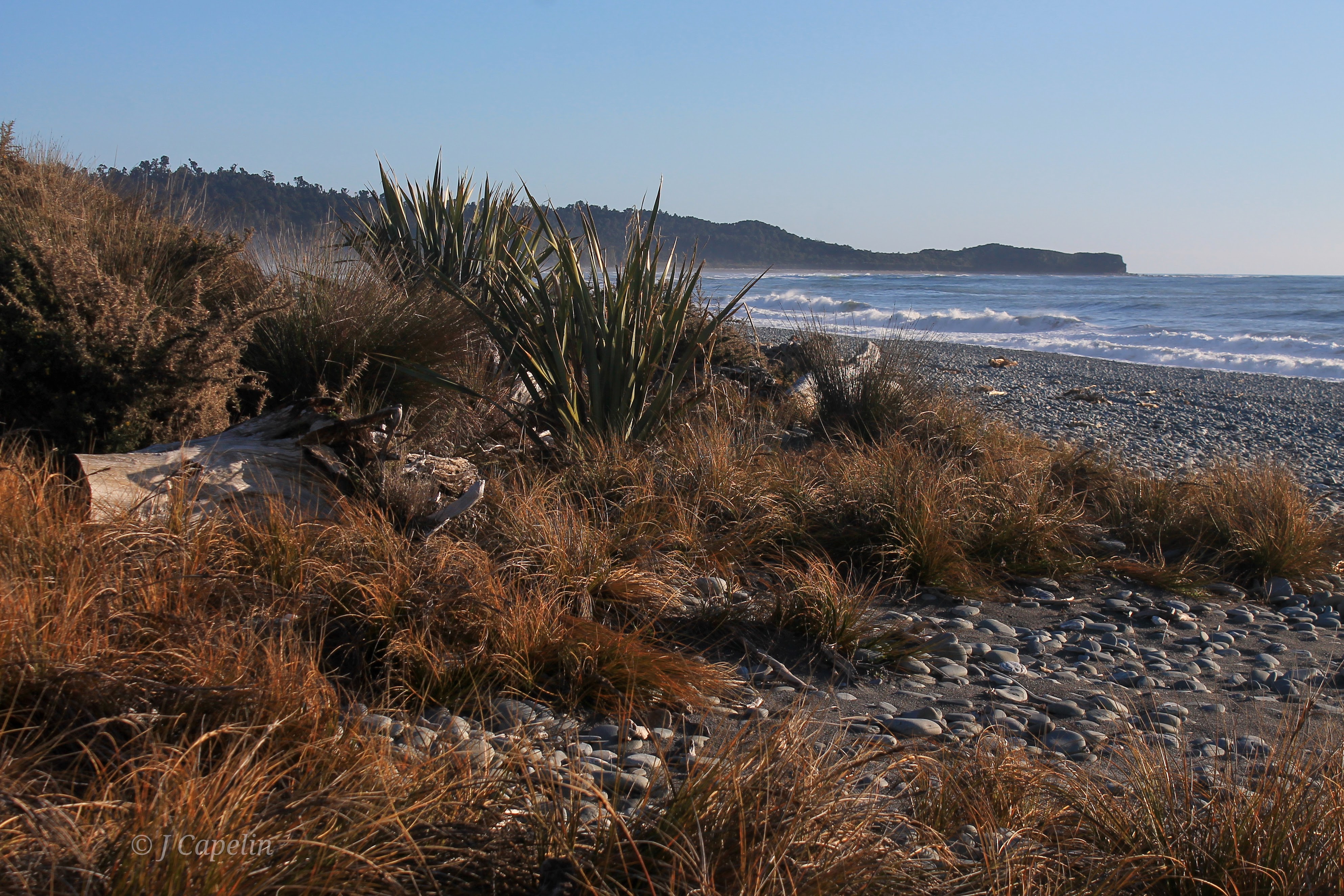
11km down a narrow, unsealed road, which curves and twists and bumps through the forest of Westland Tai Poutini National Park, is Gillespies Beach. A Department of Conservation Campsite sits at the end of the road, leading over the grass and to the ocean. Stones smoothed by the sea lay scattered all over the black sand between driftwood logs and sturdy tufts of Flax, and through the sea spray you can see Fox Glacier shimmering between the peaks behind the beach.
Lake Matheson
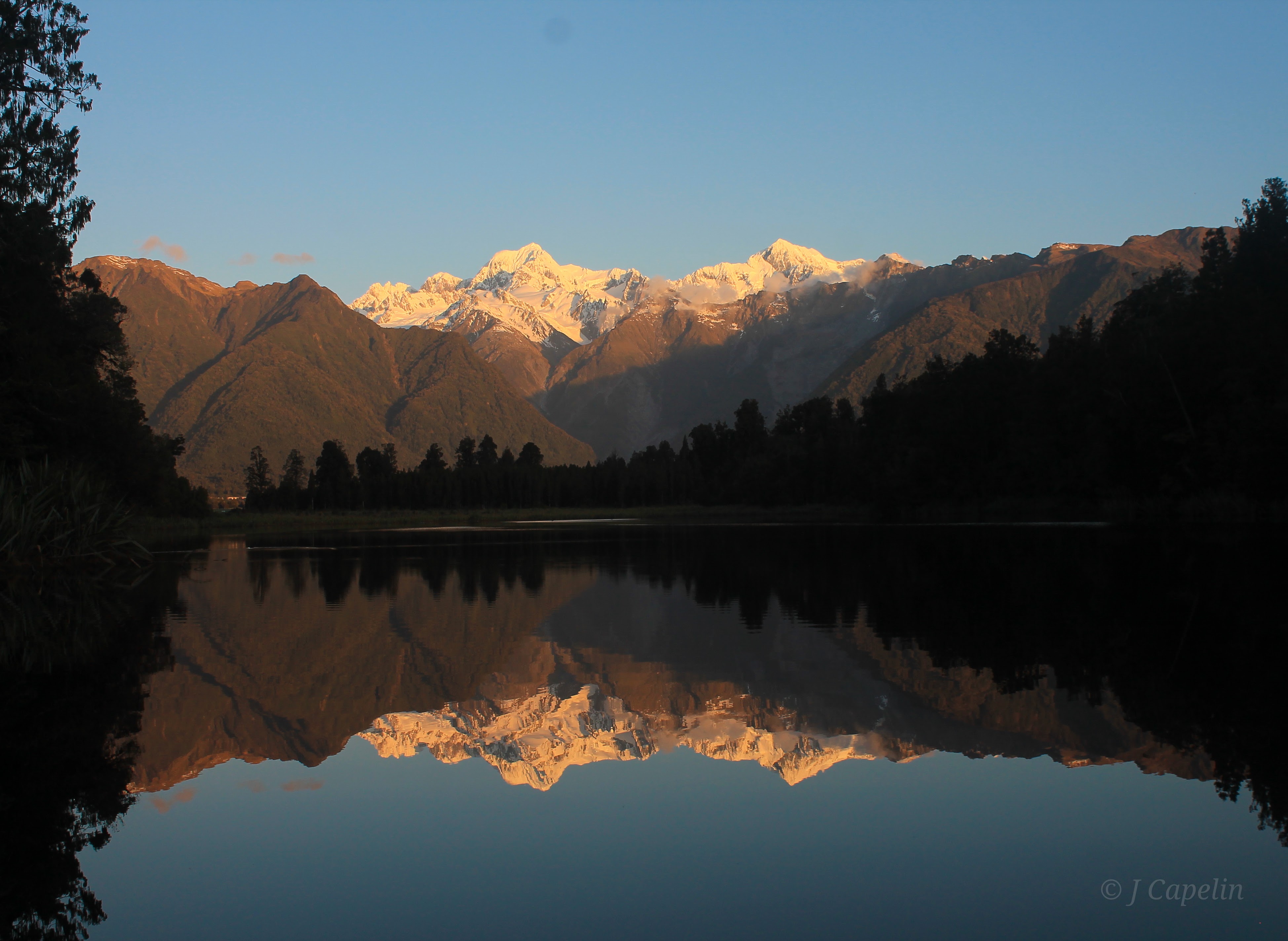
On the way back to Weheka village from Gillespies Beach, we visited Lake Matheson. It is a small lake by Queenstown and Wānaka standards, but with an impressive view. We walked the complete circuit around the lake as the sun set, making it very dark in the ferny rainforest that surrounds it, but the changing colours reflected in the water off the snowy peaks were breath taking. Endangered Kiwis live in this forest, so as it grew dark we listened out for their high pitched trill in the trees. Walking Time: 1 hour 30 mins
Accommodation: Sunset Motel <$83 NZD – 1 night Driving Time: Wānaka – Fox Glacier: 3.5 hours
Franz Josef Glacier
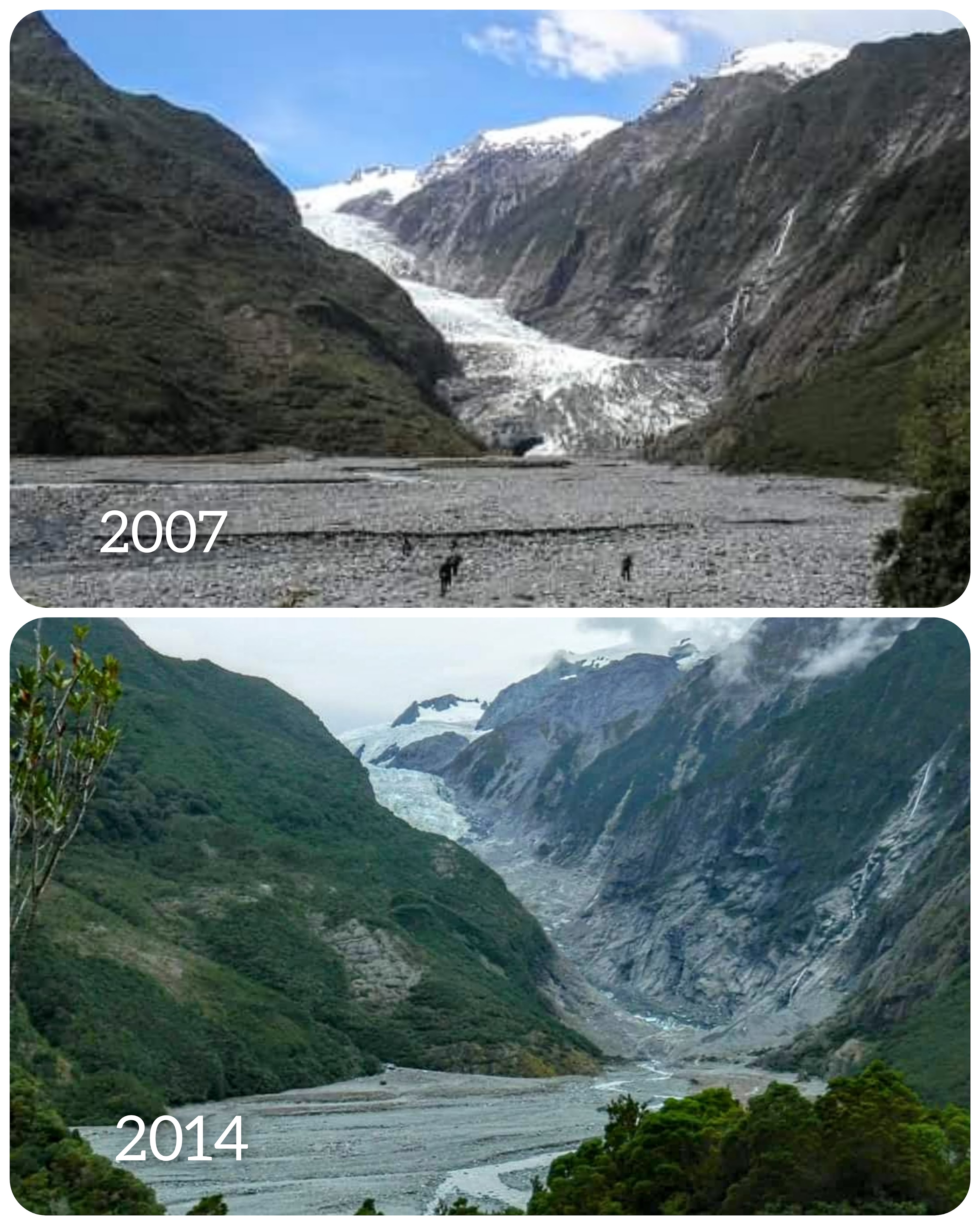
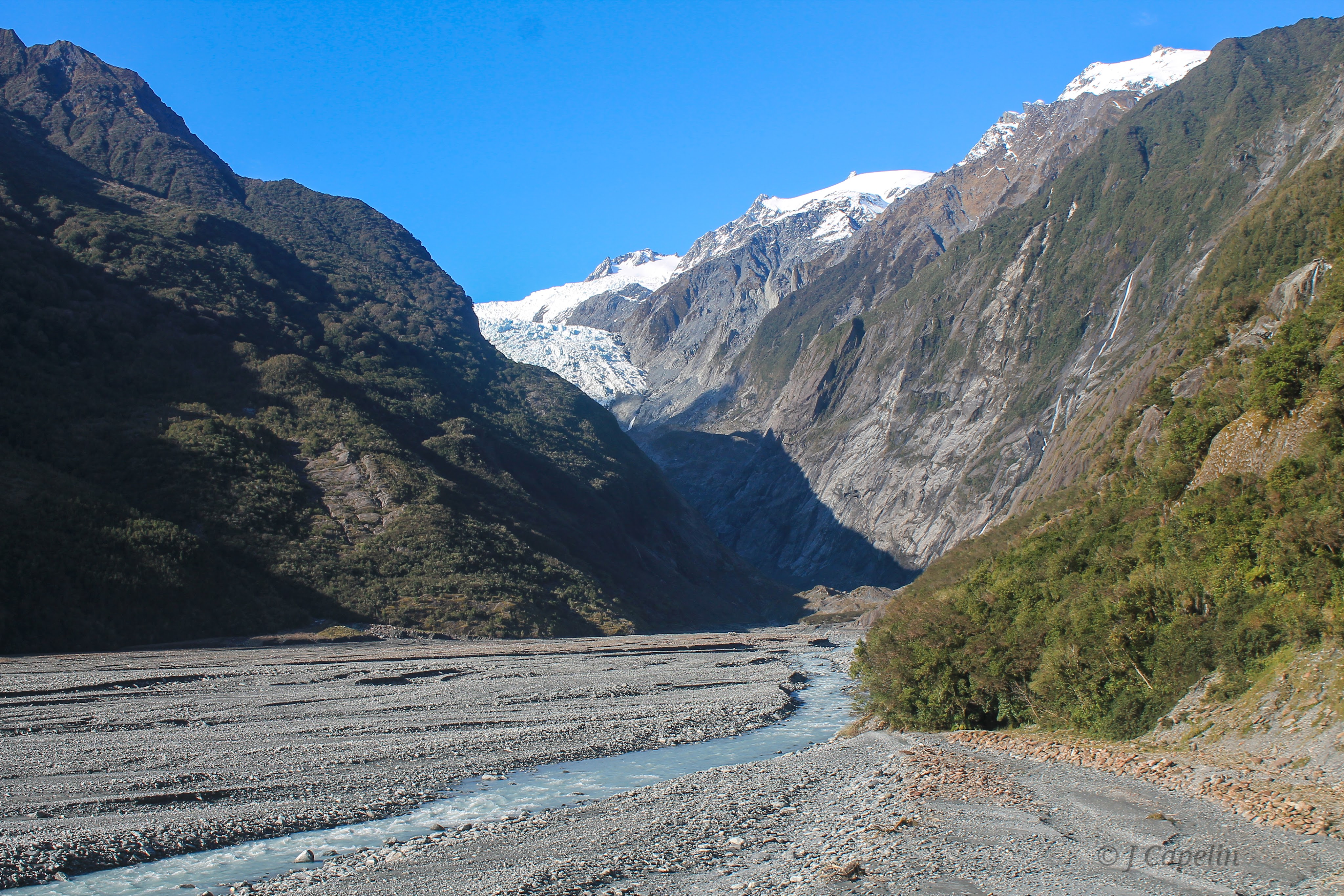
The following morning, we continued our journey up the West Coast, stopping at Franz Josef Glacier, traditionally ‘Ka Roimata o Hine Hukatere.’ I found it interesting to visit this glacier and compare the photos from my previous visits; it’s an eye-opener just how quickly the glaciers are shrinking.
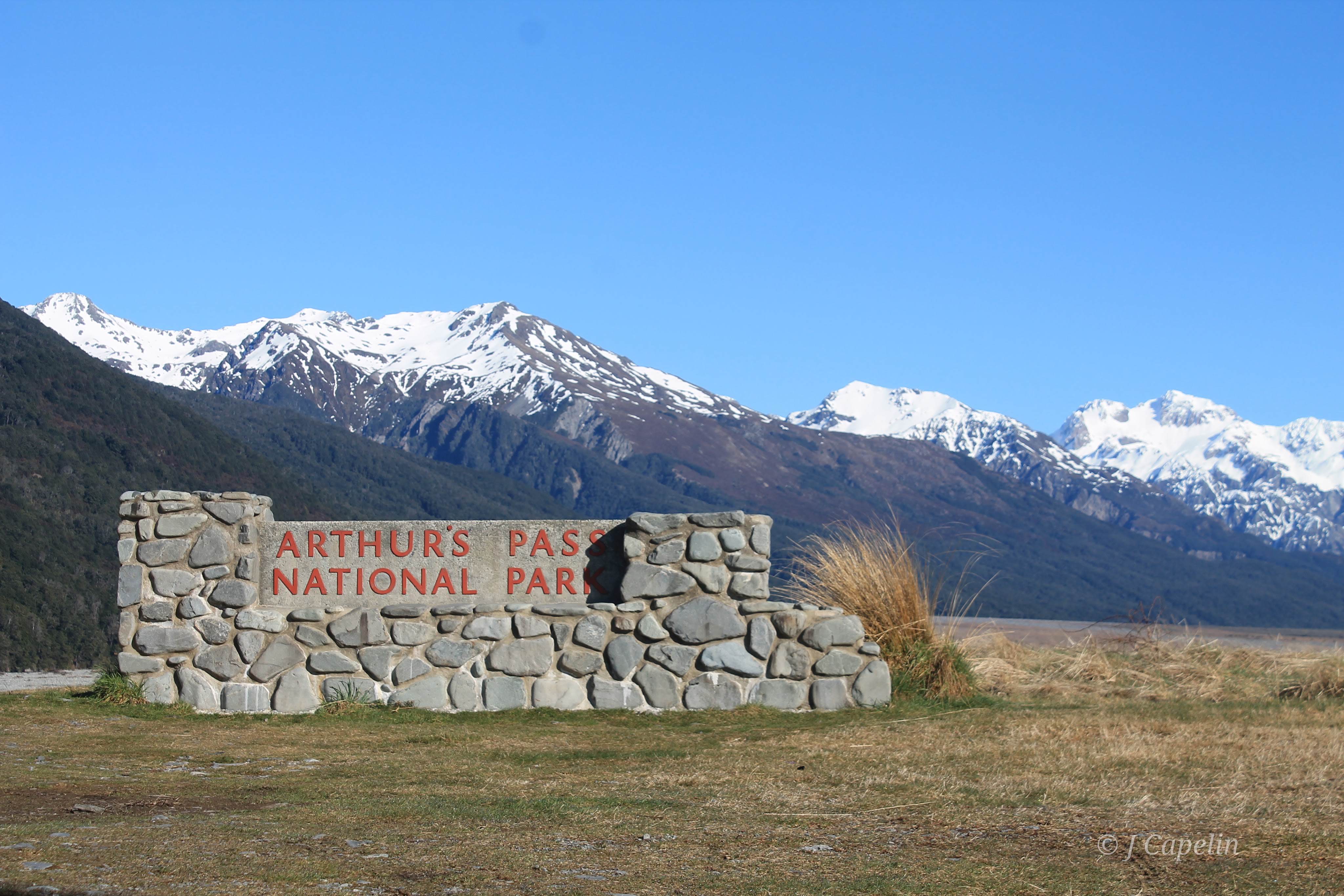
Arthur’s Pass
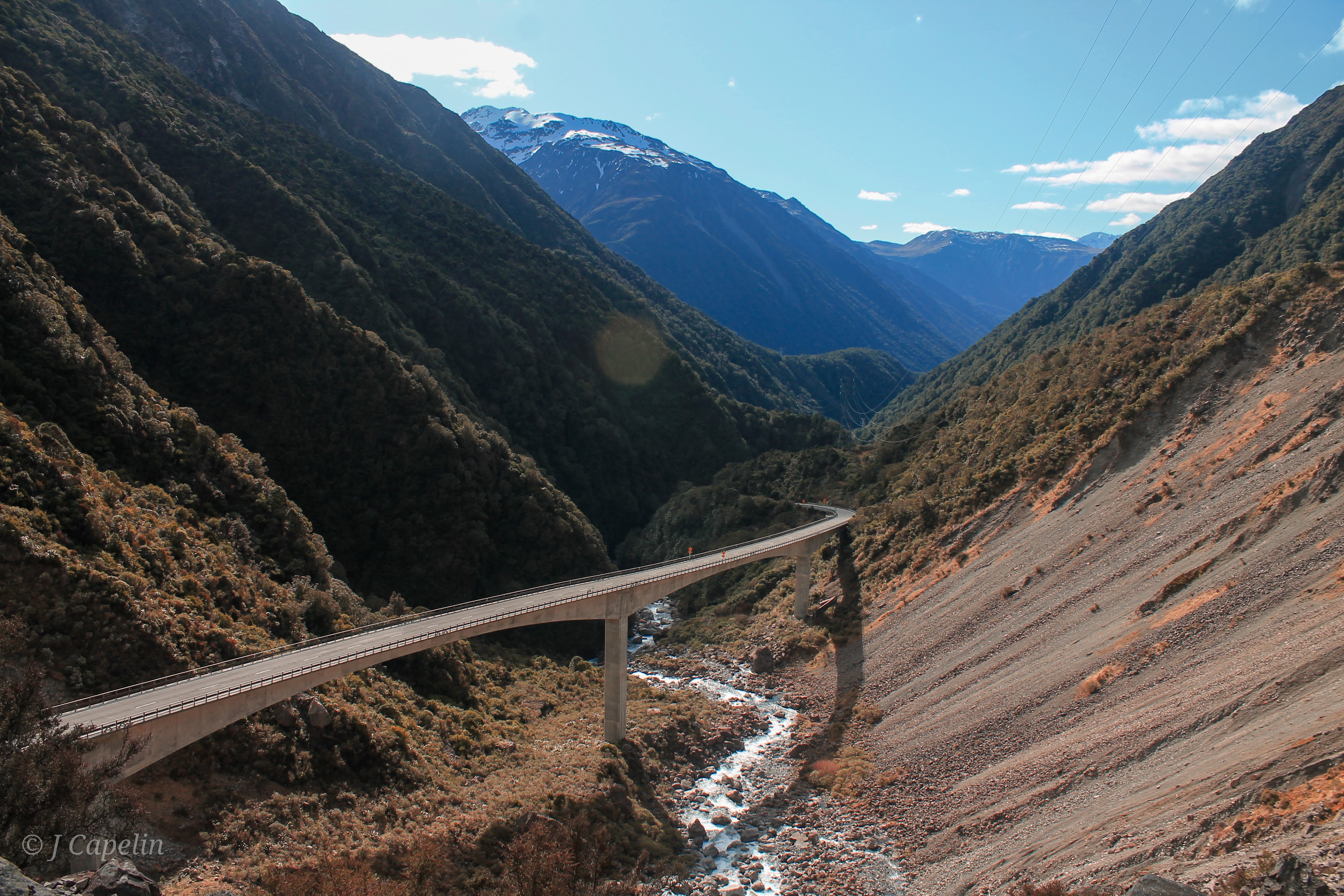
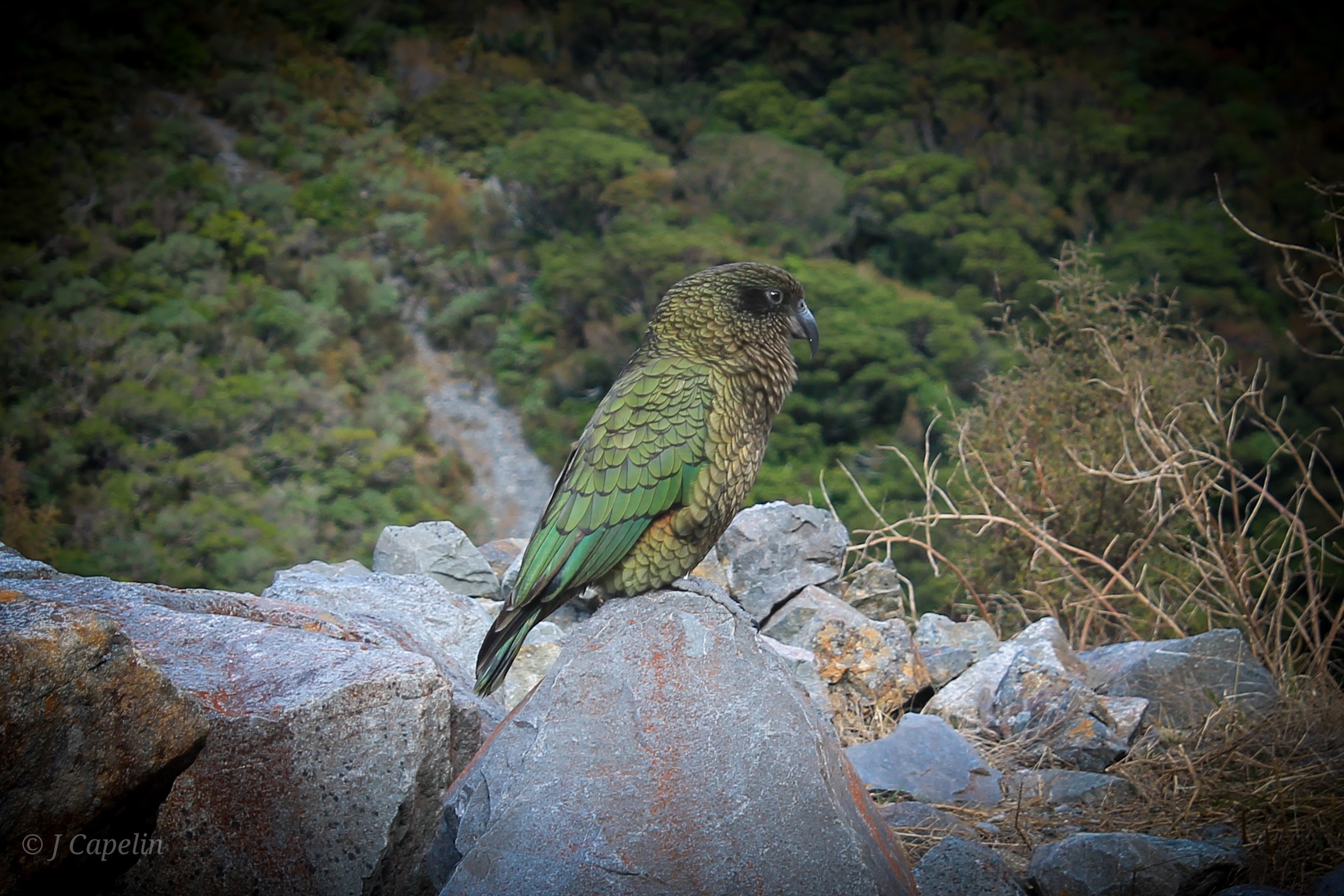
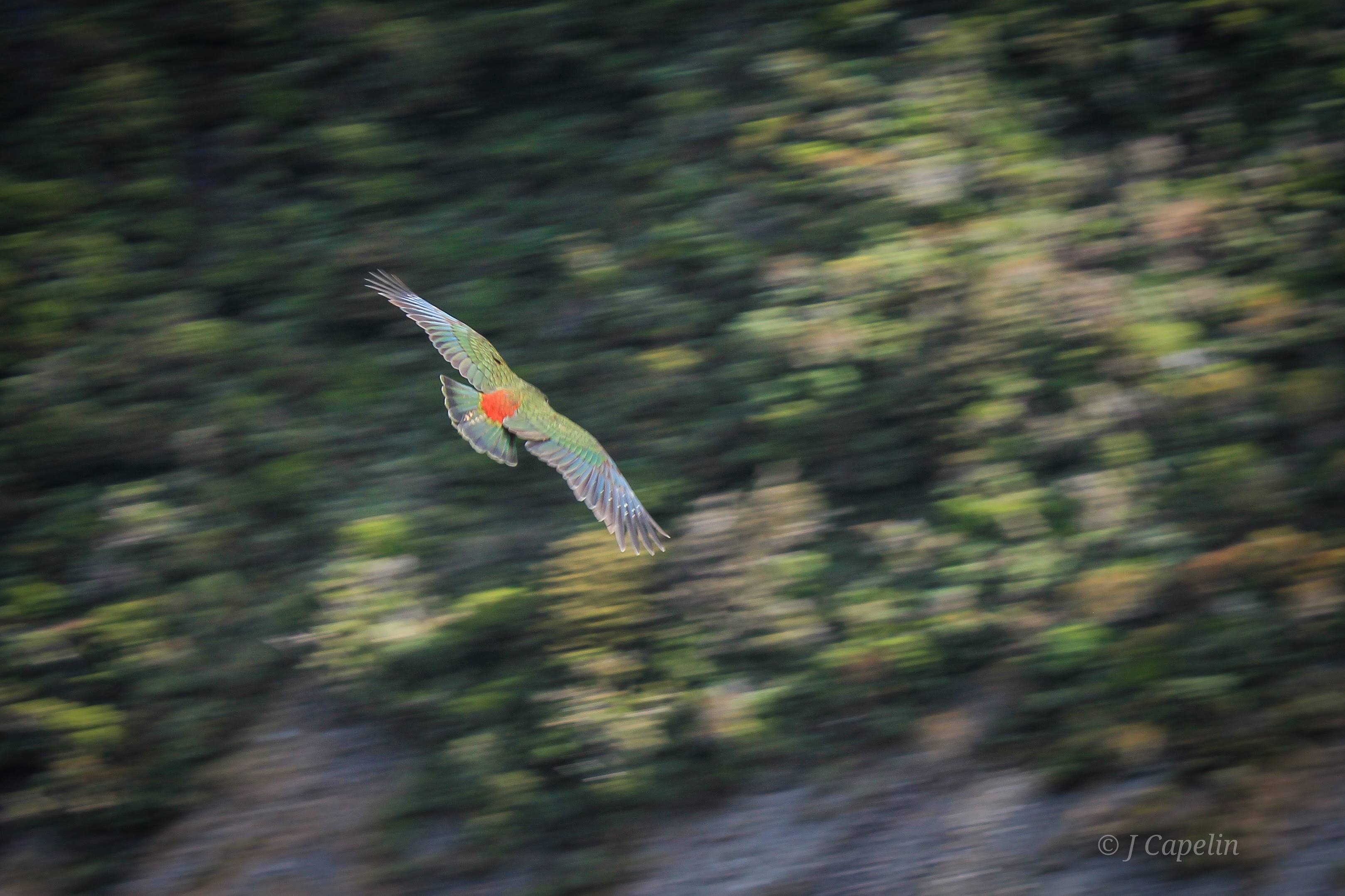
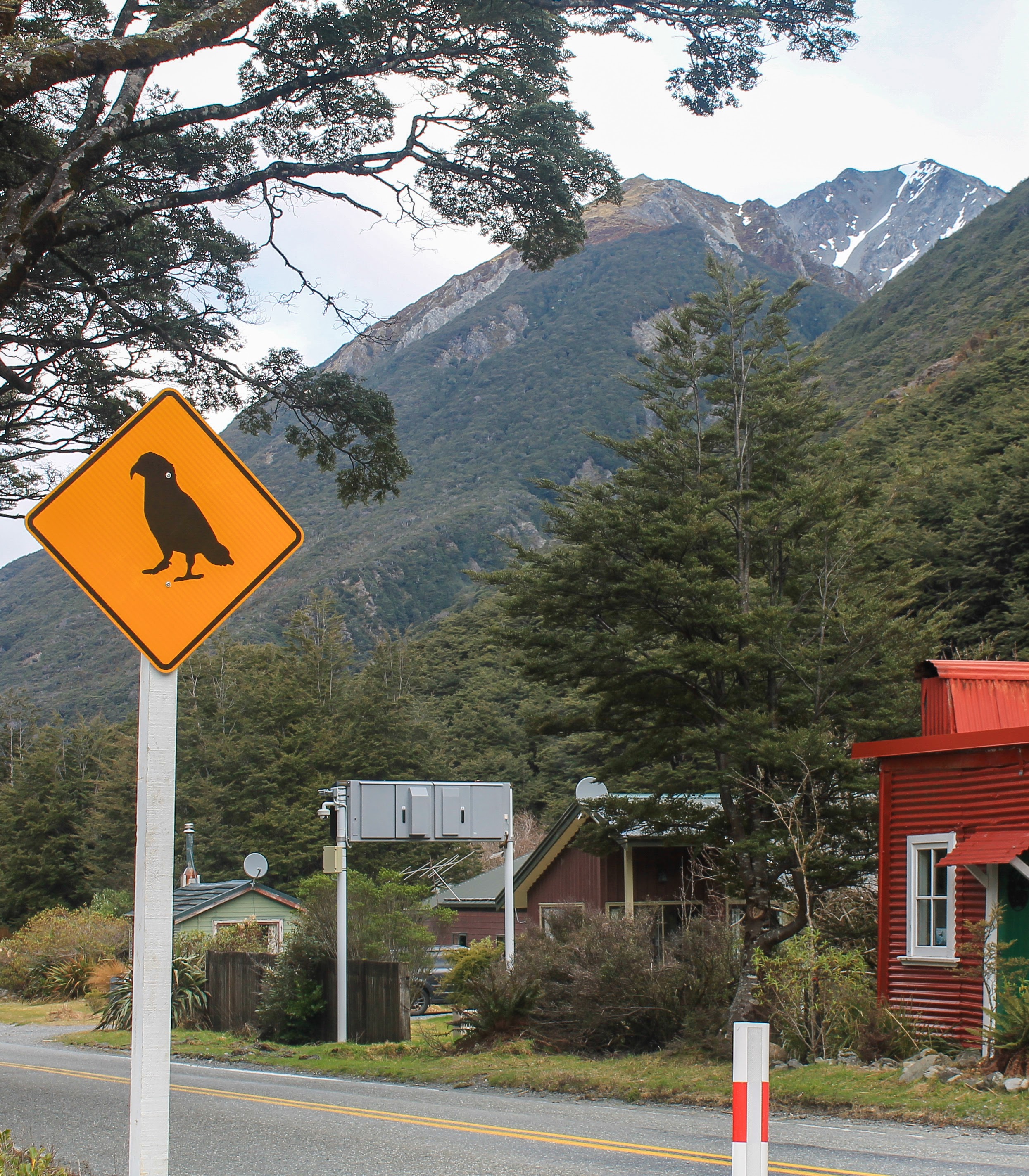
As if the mountains so far hadn’t been dramatic enough, we ventured inland to Arthur’s Pass. The road climbs, getting gradually more extreme as you scale the sheer ledges, suspended in the mountains by some feat of engineering. This mountain wilderness is home to Kea – the alpine parrots endemic to New Zealand’s South Island. These cheeky fellas are very curious and tactile, and if you stop too long they may peel the rubber seals off your car windows just for fun! We encountered a pair with their baby fledgling at the Otira Viaduct Lookout, where I was lucky enough to capture their beautiful feathers in flight. (Click on the images below.)
Devil’s Punchbowl Falls
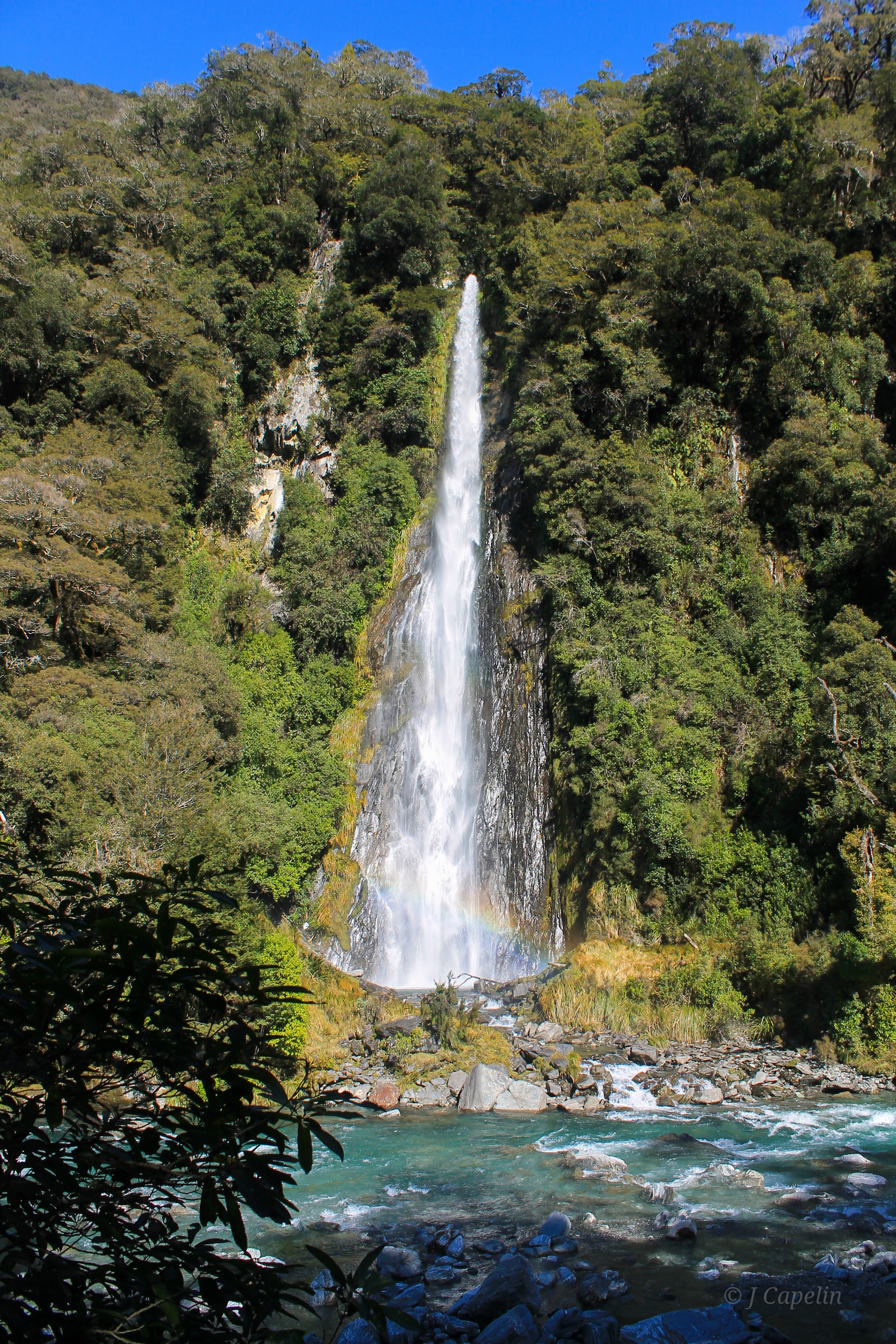
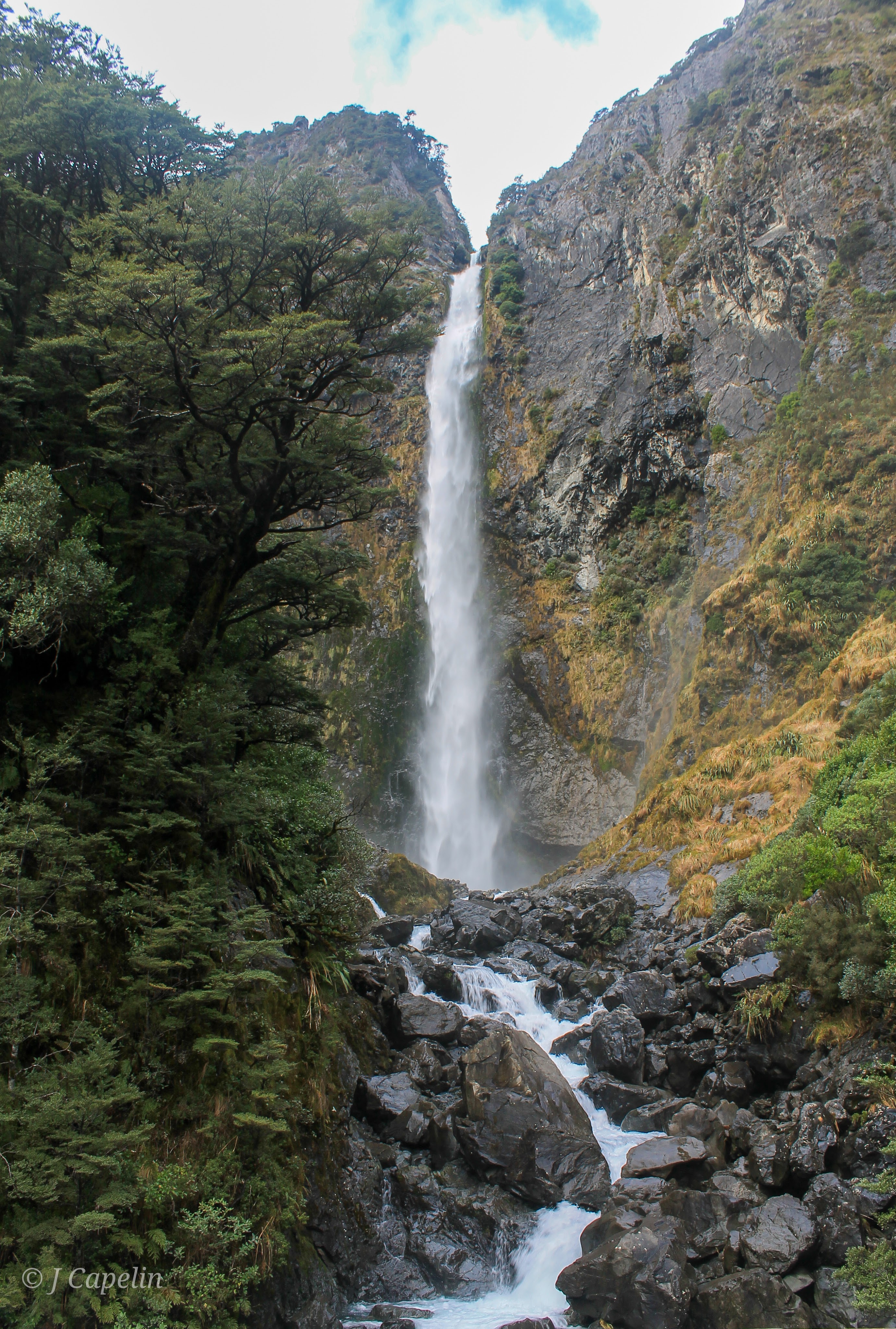
This short walk crosses the river from Arthur’s Pass Village, and climbs through beech forest to a viewpoint at the foot of the waterfall. All the way we could hear the rushing force of water crashing down the mountainside, and feel the cool spray clinging to our skin.
Walking Time: 1 hour return
Kura Tawhiti / Castle Hill
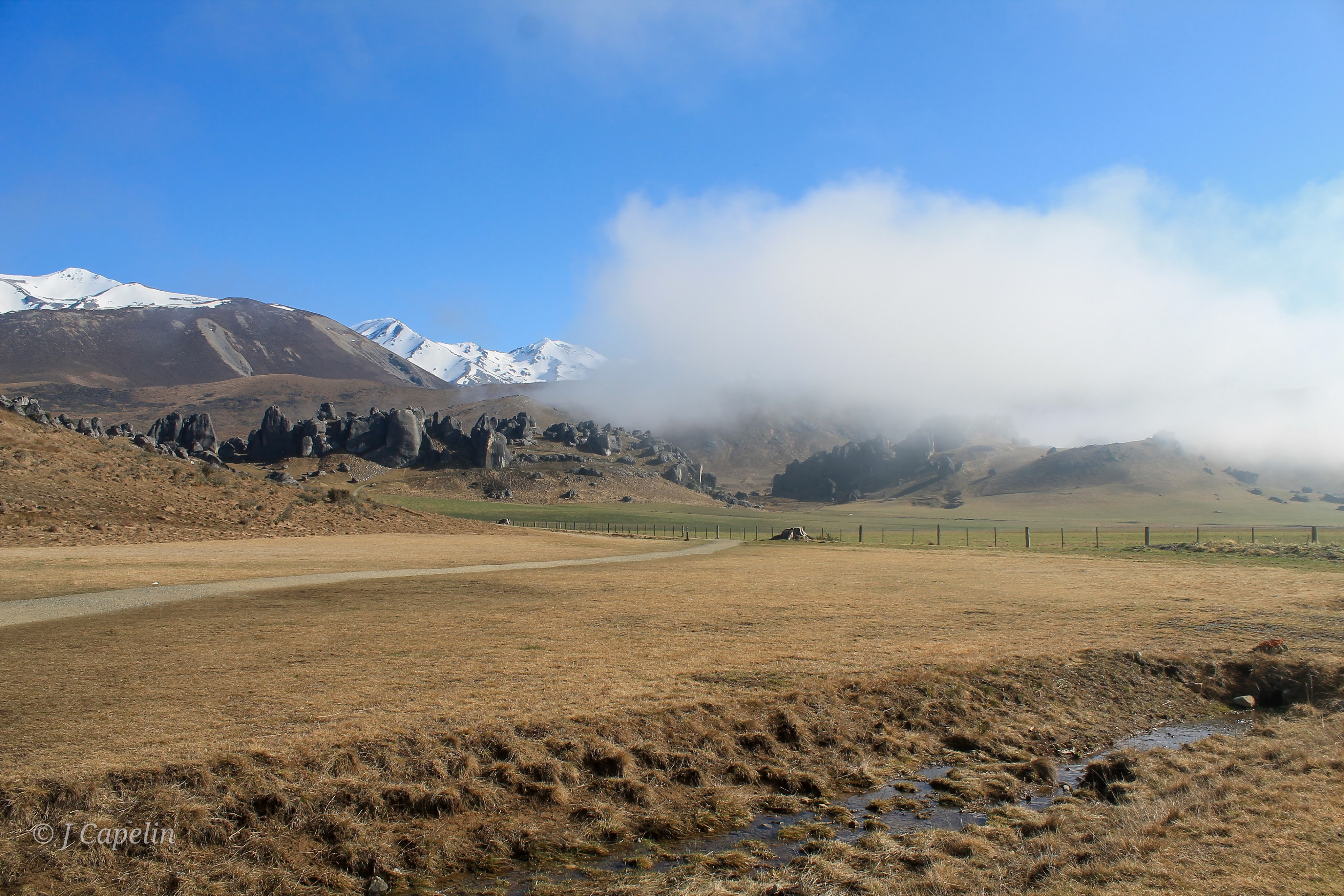
Rolling plains expand into the foothills below the mountains, covered in limestone rock formations. This is an official ‘tōpuni’ site; a symbolic cloak of protection to the local Māori, and has always been a significant meeting place. Nowadays Kura Tawhiti attracts rock climbers and walkers to admire the strange land. Walking Time: 20 mins
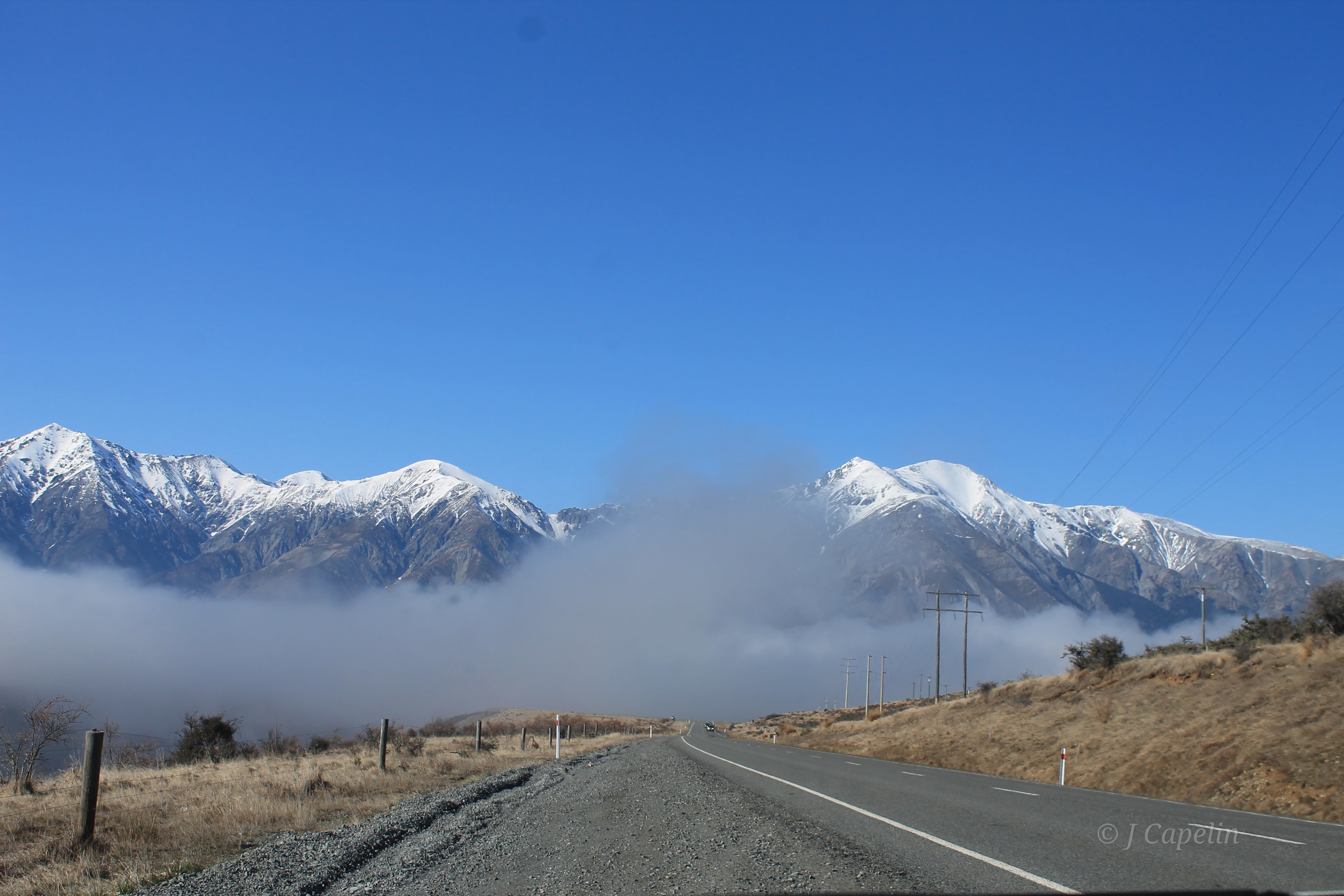
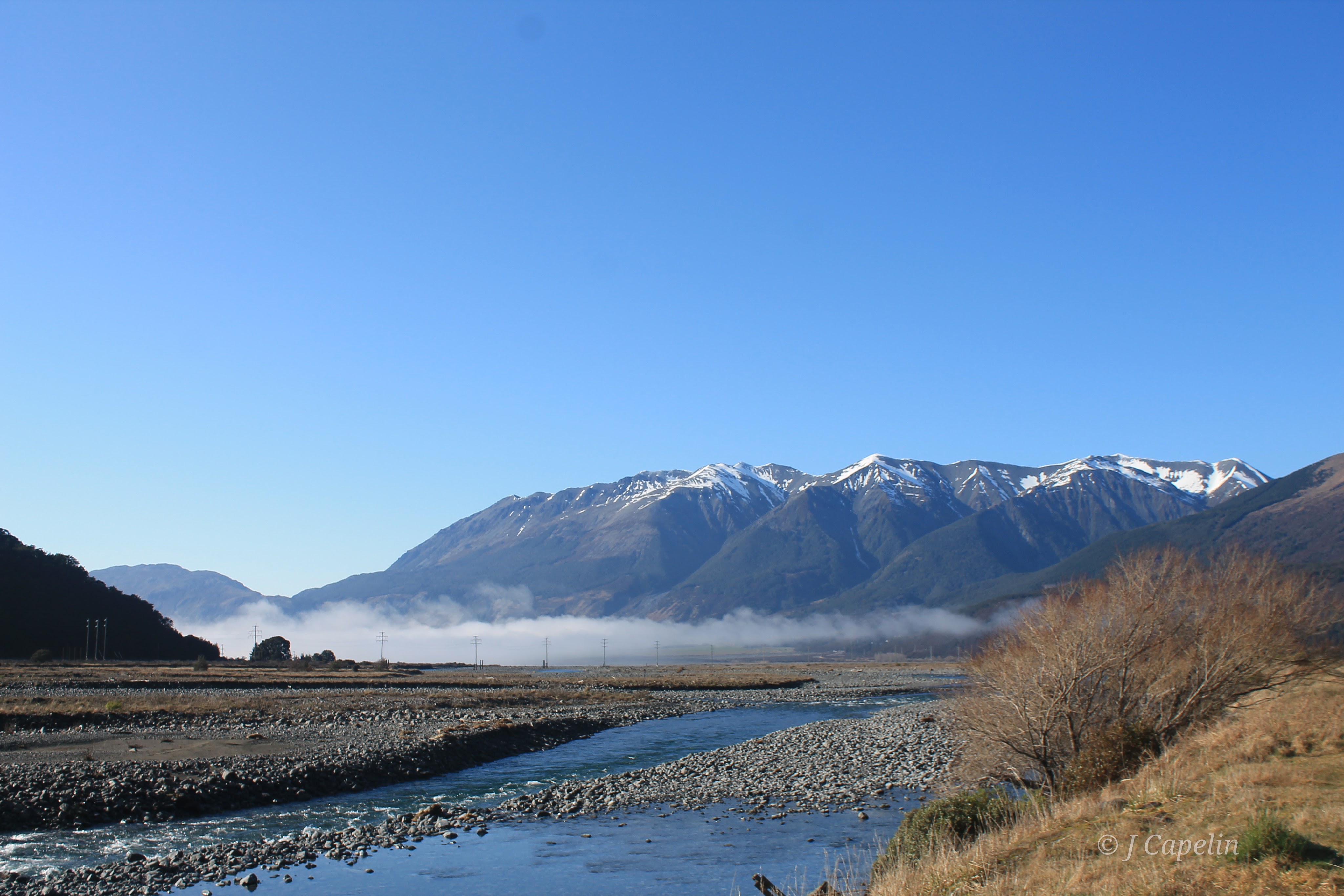
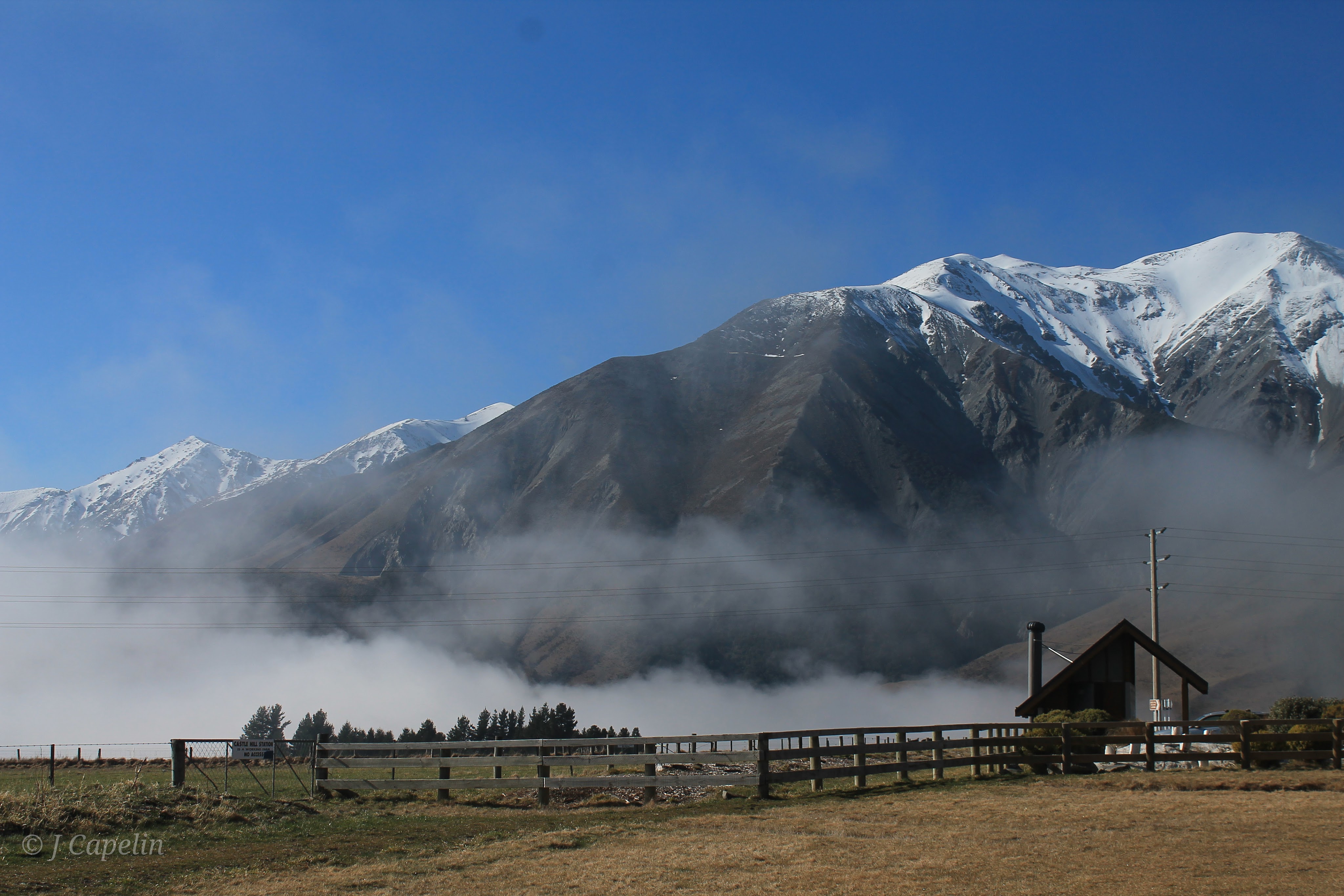
Just the drive itself through the mountain pass is stunning, but there are many side tracks, hikes and ski resorts to explore along the way if you have time. Morning mist slithered through the valleys, plunging the road into darkness every so often, a great contrast to the brilliant blue sky reflected in the river.
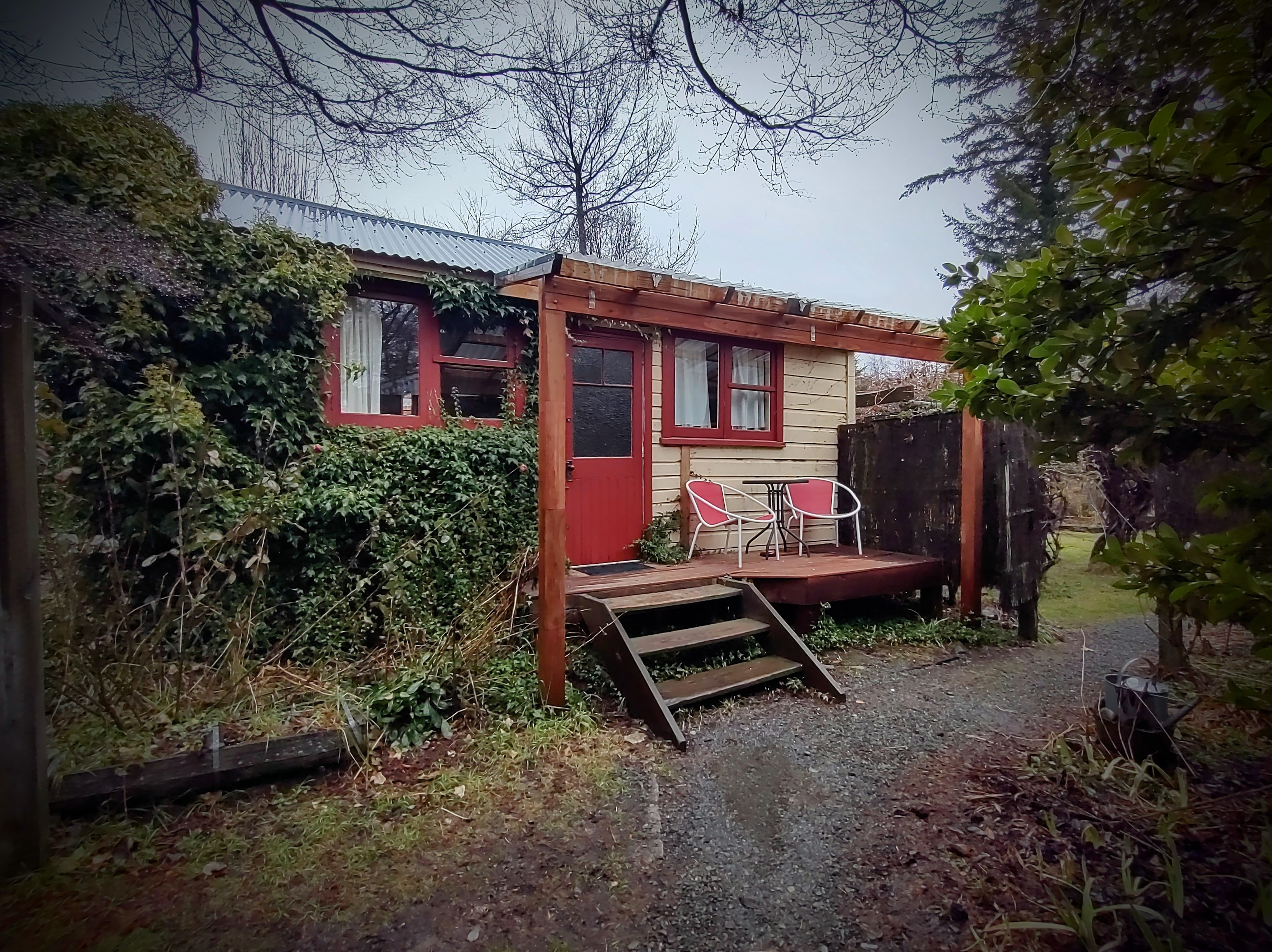
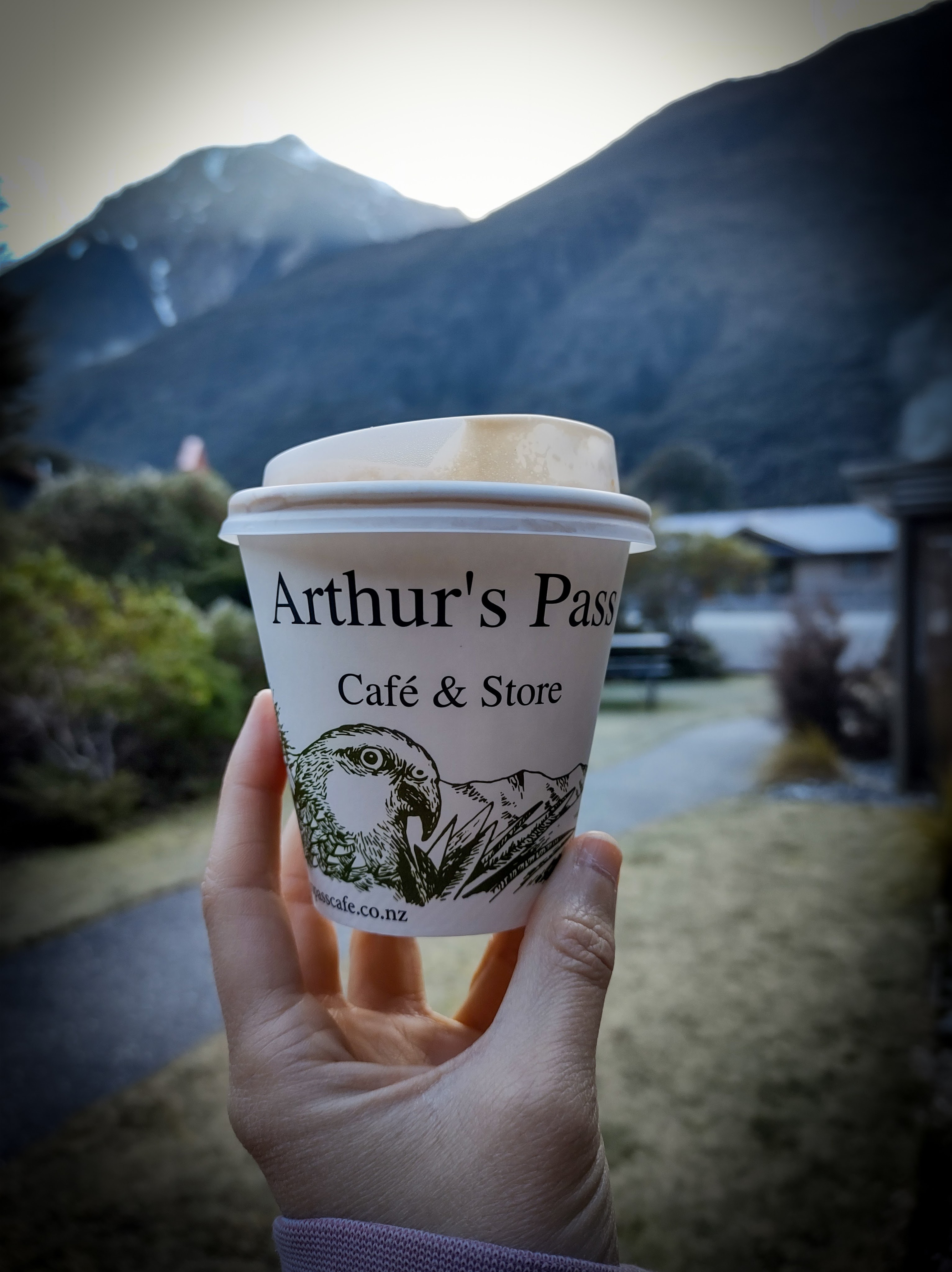
Accommodation: Mountain House YHA < $95 NZD – 1 night Food & Drink:Bealey Hotel (Pub,) Arthur’s Pass Store (Cafe / general store) Drive Time: Fox Glacier – Arthur’s Pass Village: 3.5 hours
Arthur’s Pass VillageBealey HotelArthur’s Pass Store
Picton
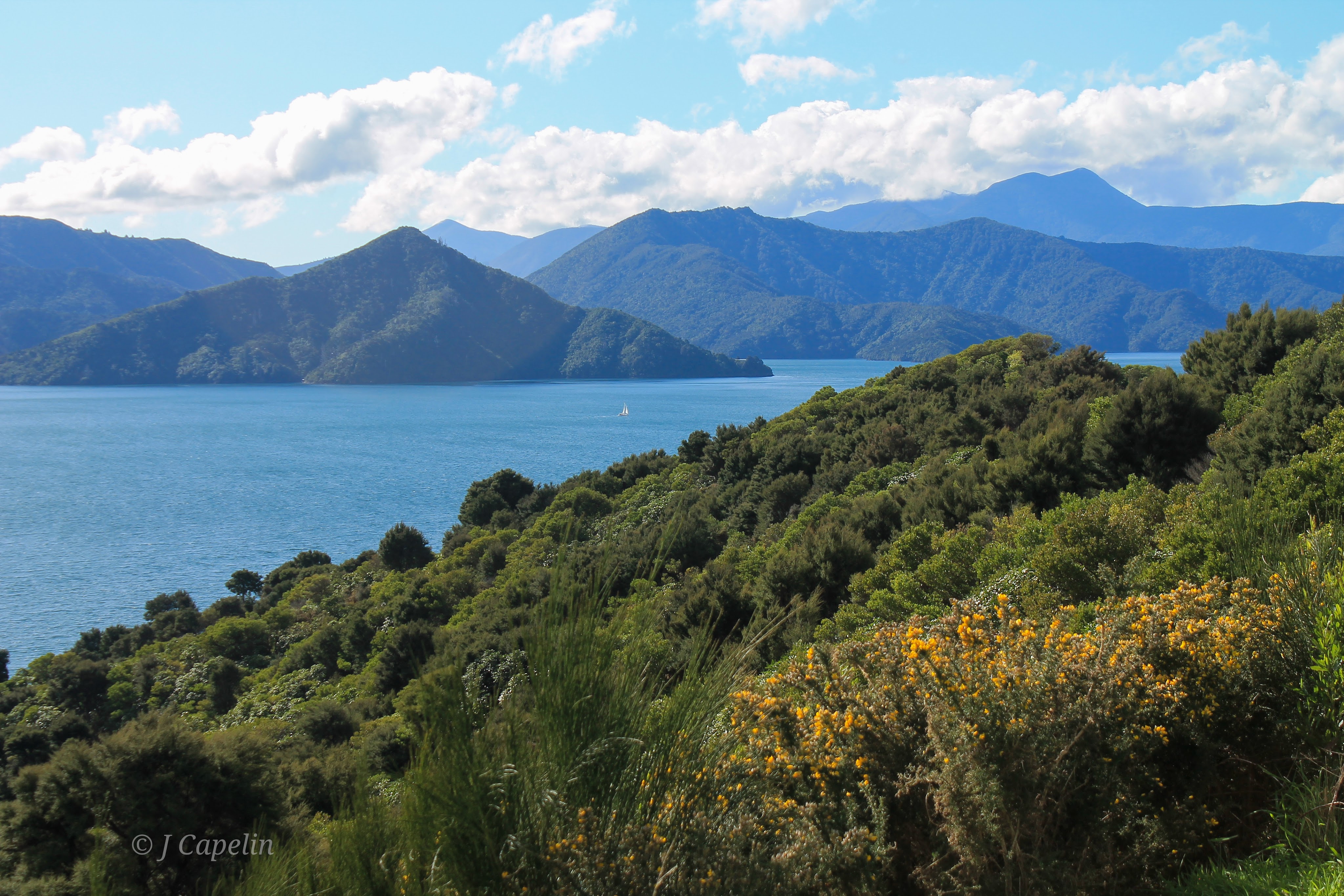
As the road descended into the Canterbury flats, and the snow-capped mountain peaks grew smaller in the wing mirrors, I couldn’t help but feel a little sad. There’s a certain magic in the mountains of Te Waipounamu that I crave, but Spring was officially in the air and a change of scenery was waiting for us in the Marlborough Sounds.
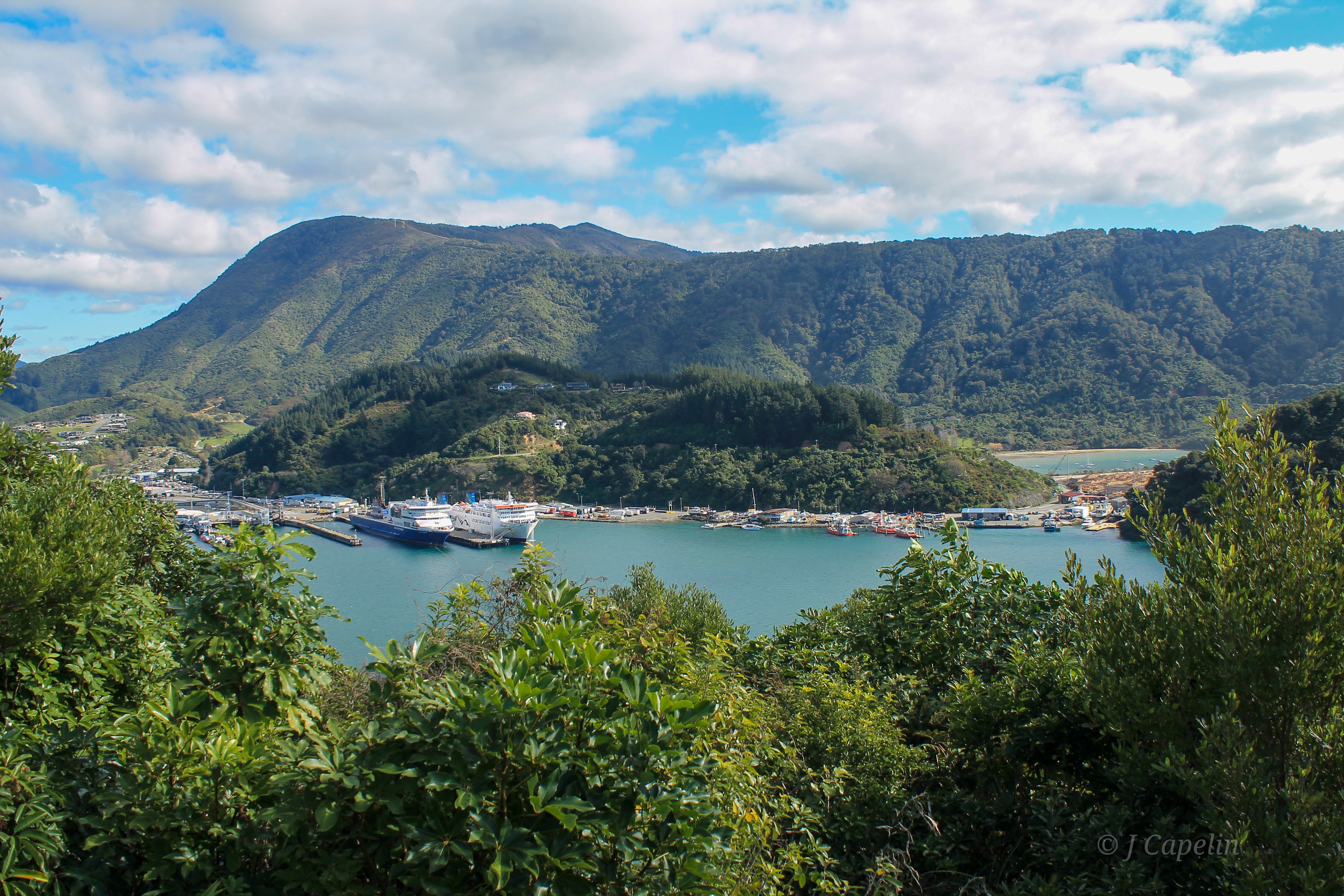
We drove back up the east coast, via Kaikōura for a night, and were greeted with warm sunshine at Picton – the gateway between North and South Island. It was like two different worlds, a day apart, going from the cold blues of bleak mountain wilderness to the sub-tropical greens of the Sounds and their beaches. This is why I love New Zealand!
Snout Track
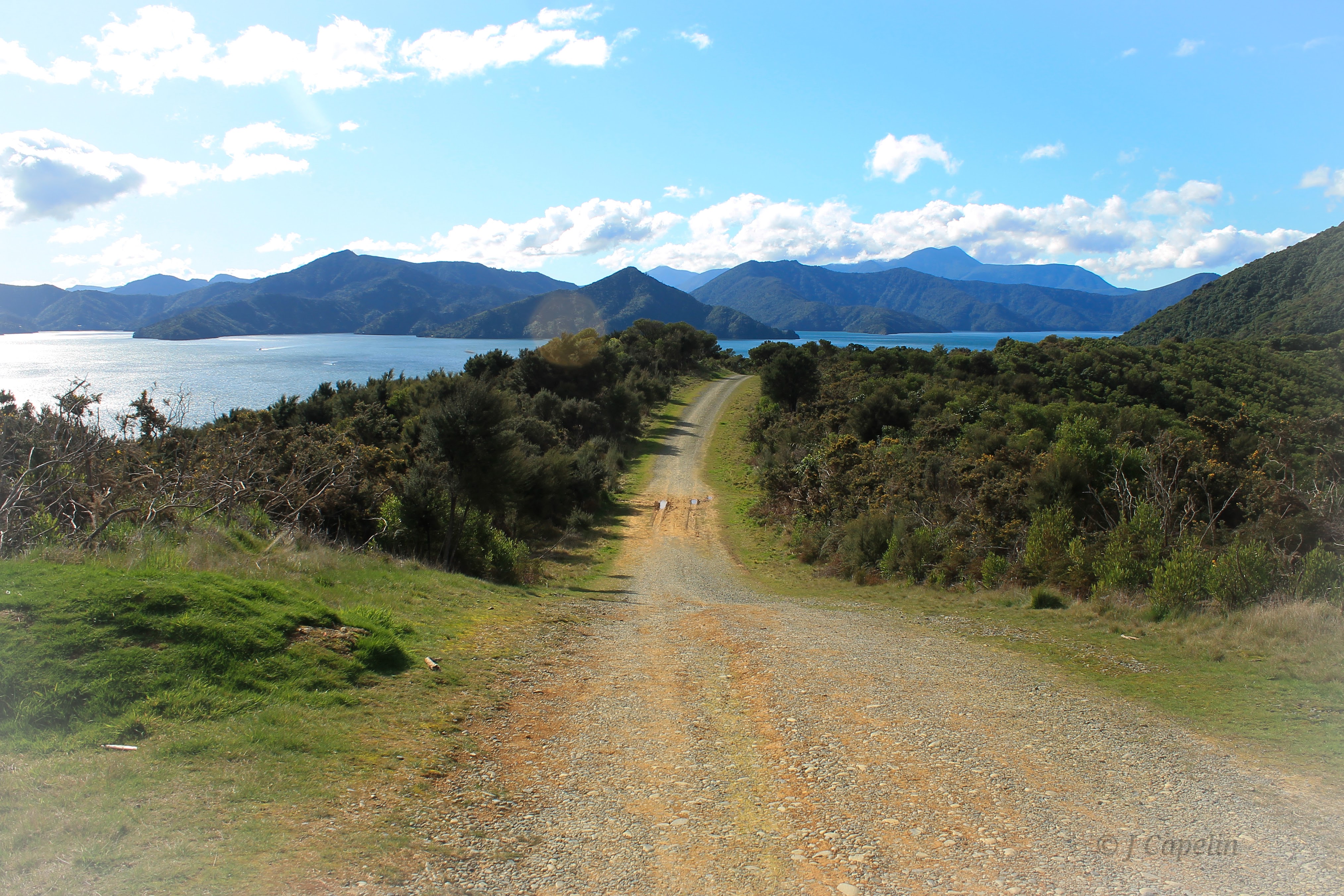
The carpark for the Snout Track is situated on Victoria Domain Road, and is in itself, a viewpoint. The walk took us along the ridge of the peninsula that encases Waikawa Bay, with gorgeous views of the Marlborough Sounds and islands. We walked through the sub-tropical rainforest, fantails following our trail as we stirred up mosquitoes, all the way down to the tip of ‘The Snout.,’ where the blue sea lapped at the rocks while large sea birds soared above.
Walking Time: 2 hours 15 mins
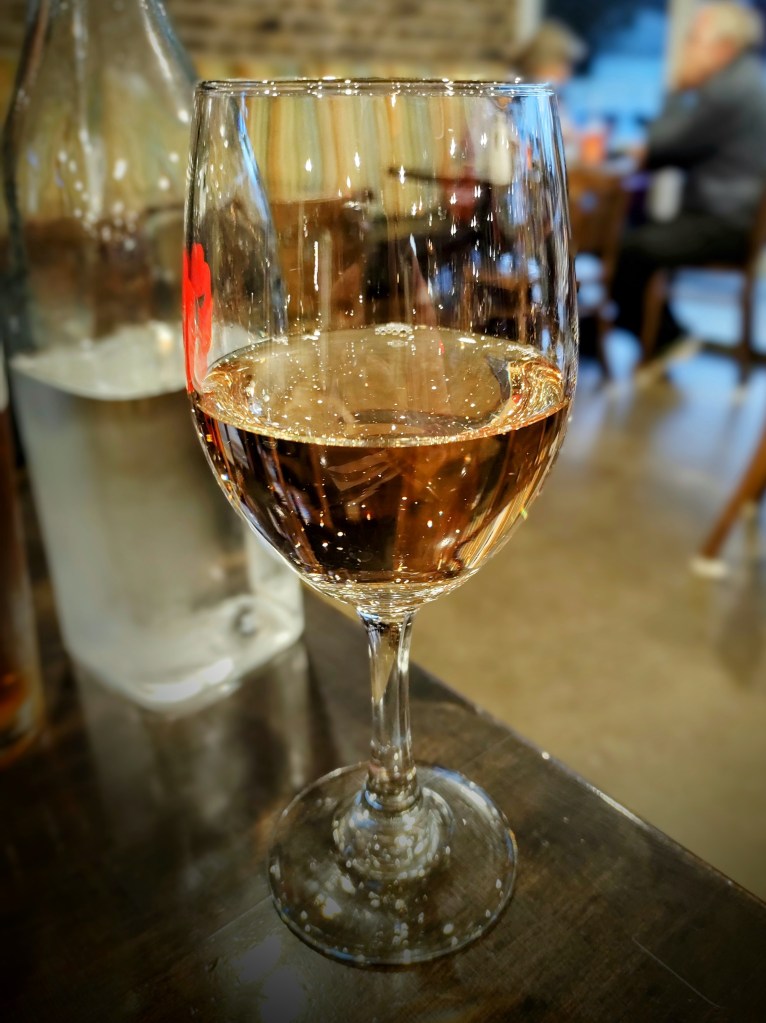
The Marlborough region is famous for its wine, so while in the area, it would be rude not to try some! In the morning, we watched the Interislander ferry come in on the shimmering Sounds, before boarding back to Wellington.
A scorching sun rolls skyward into the haze as we leave our hostel (and its resident mosquitoes) in the "Haiya" subdistrict of Chiang Mai city. It's 8:30 am, on an October Saturday in 2018. The 12 seater shuttle bus we board is clammy, and stuffed with tourists, our mutual excitement is thick in the air. We chug north bound for an hour, finally stopping at the edge of the jungle, in a village in San Pa Yang.
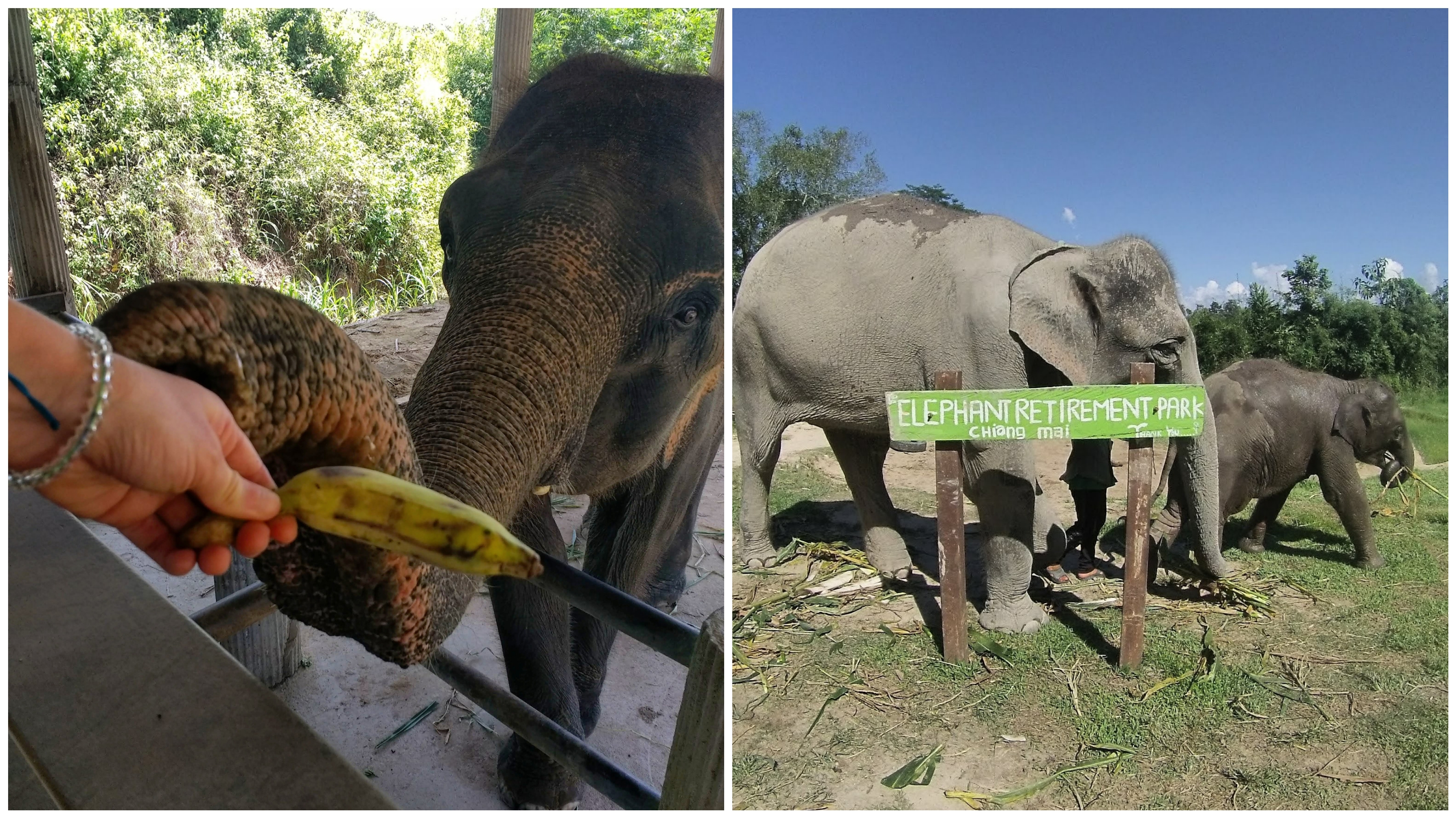
One by one, we step out of the mini van onto the dusty driveway, and there they are, beautiful, gentle giants. A few of the elephants come plodding quickly over to our van, swinging their trunks as they come - they know our arrival means feeding time!
Meet The Elephants
When I was there in October 2018, there were 6 elephants living at the park, all female, with a lot of history between them.
Bella – 20 years old
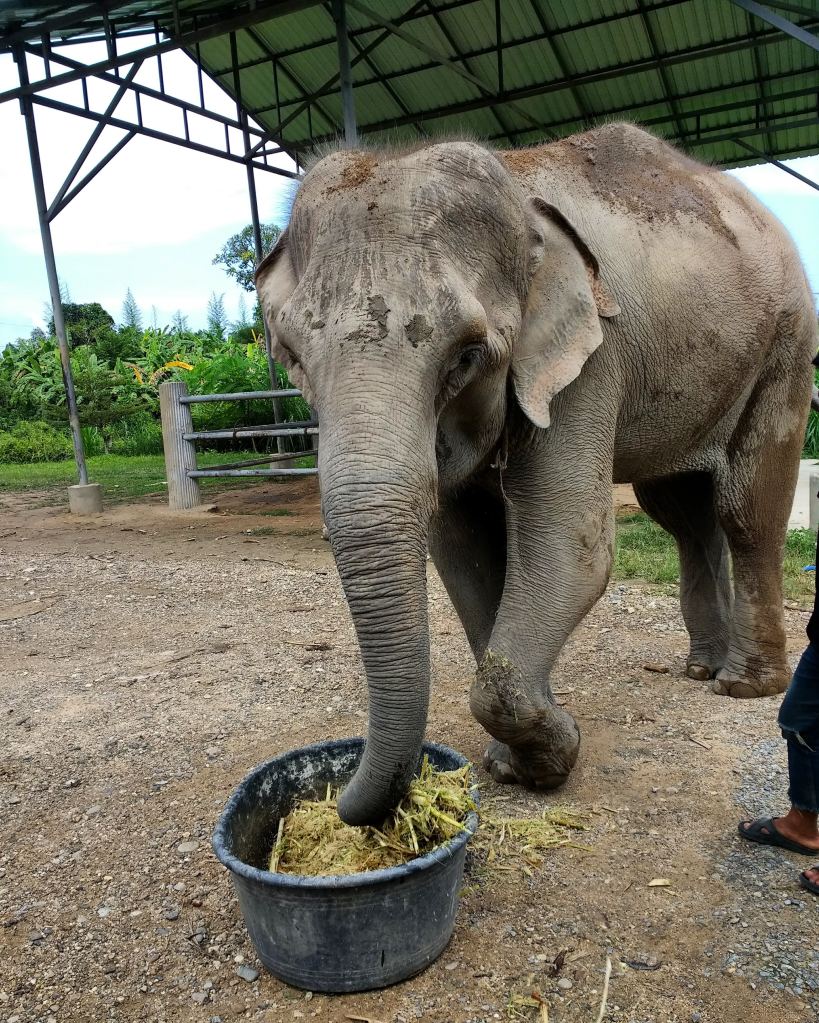
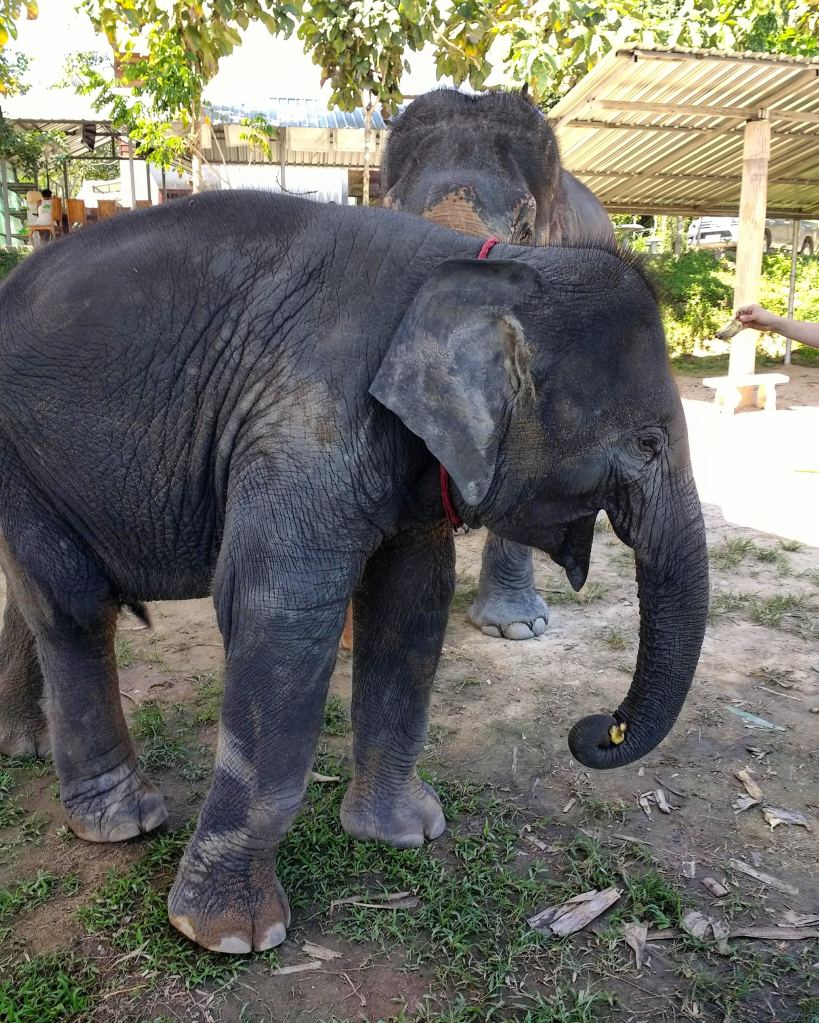
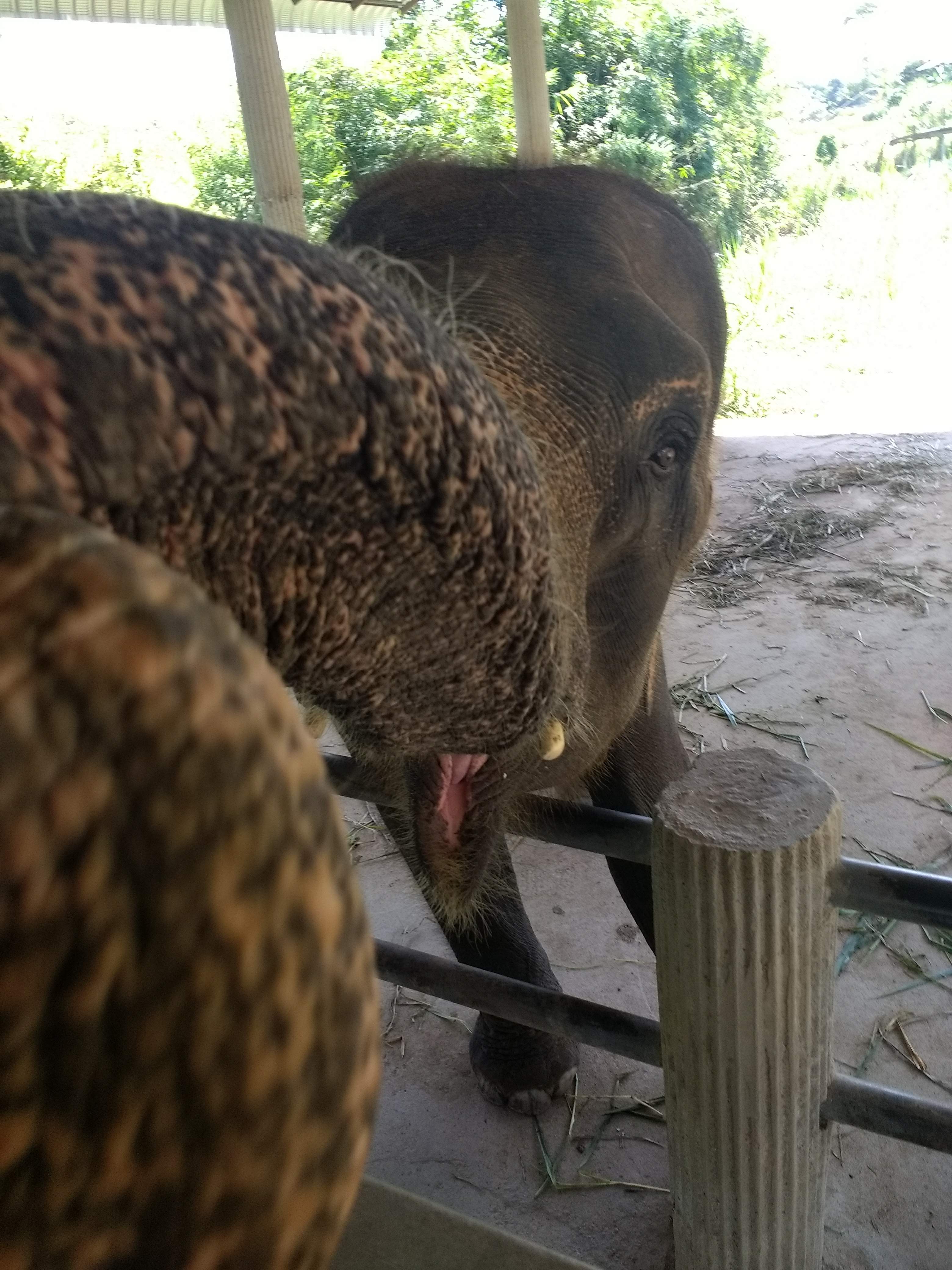
The park’s longest member, Bella had been living there for 4 years. She’d been rescued from a show where she’d play ball games like golf and football, and performed dances and tricks like sitting on chairs. This resulted in her left leg being damaged. A happy retirement was the safest option for Bella, over a complicated procedure that could cause more unnecessary trauma and be extremely costly. Bella could still walk on her leg, but the disfigurement caused her to limp, which put stress on her spine and shoulders. There are plenty of shaded areas built in the park, like this one, where Bella could rest at her will.
Bella had a calm and mothering nature, and was the adoptive mother of Lanna, one of the park’s baby elephants. Bella sadly passed away in June 2021.
Jao-nang – 31 years old
Born in 1987, Jao-nang is a beautiful elephant in the prime of her life. She was rescued from 20 years in the riding industry for tourism. At the time I was there in October 2018, she was 6 months pregnant, after entering a breeding program with one of E.R.P’s sister park’s bulls. Jao-nang had her baby in 2020, that’s right, elephant pregnancies last 18-22 months!
Jao-ying – 36 years old
Born in 1982, Jao-ying was the park’s oldest elephant, but she isn’t old at all, as an average Asian elephant’s life span is 60-80 years. She worked for 20 years in the logging industry, before being sold for riding, and was rescued by E.R.P in 2016.
Lanna – 3 years old
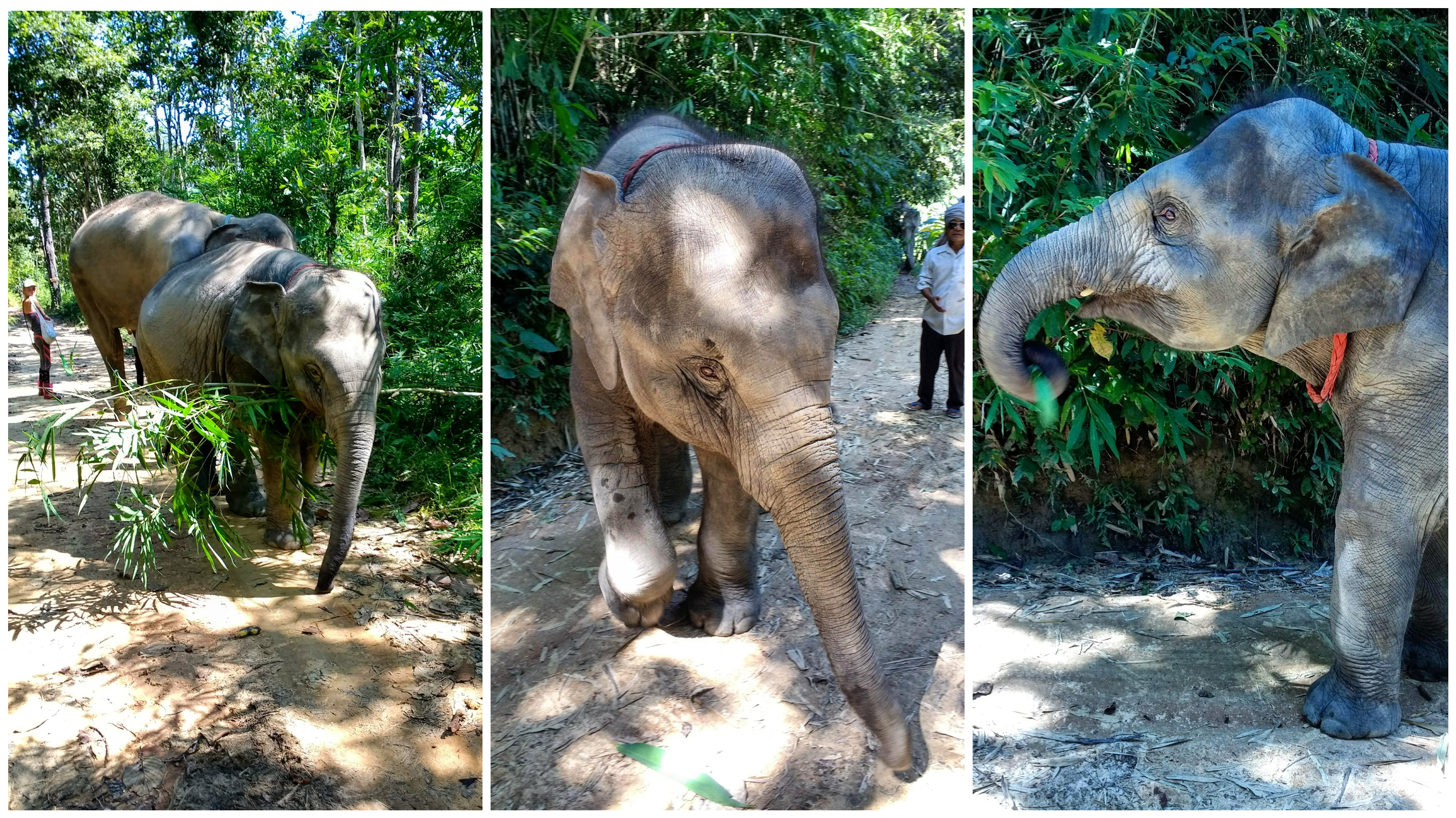
A clear favourite among tourists, Lanna is sociable, curious, and a fast learner. She was born at the Elephant Retirement Park in 2015, and when she was 2, her mother was moved to a sister park in the south for further breeding. Her and Bella developed a mother-daughter like connection.
Ping & Tong – 2 years old
These cheeky twin sisters moved into E.R.P in 2018 from a nearby camp who did not have the means to support two calfs. They are bright and playful, and have been known to be quite naughty!
The Staff
The Elephant Retirement Park is not only home to elephants. It is also home to the mahouts and their families, who live onsite, close to the elephants at all times. These mahouts have a close bond and special understanding with the elephants – they do not ride them, or control them using sticks or chains; they oversee the safety of everyone. The staff onsite all help out with gathering food for the animals, cooking, cleaning and maintenance at the park, building new additions to the park, and also helping out in the local community.
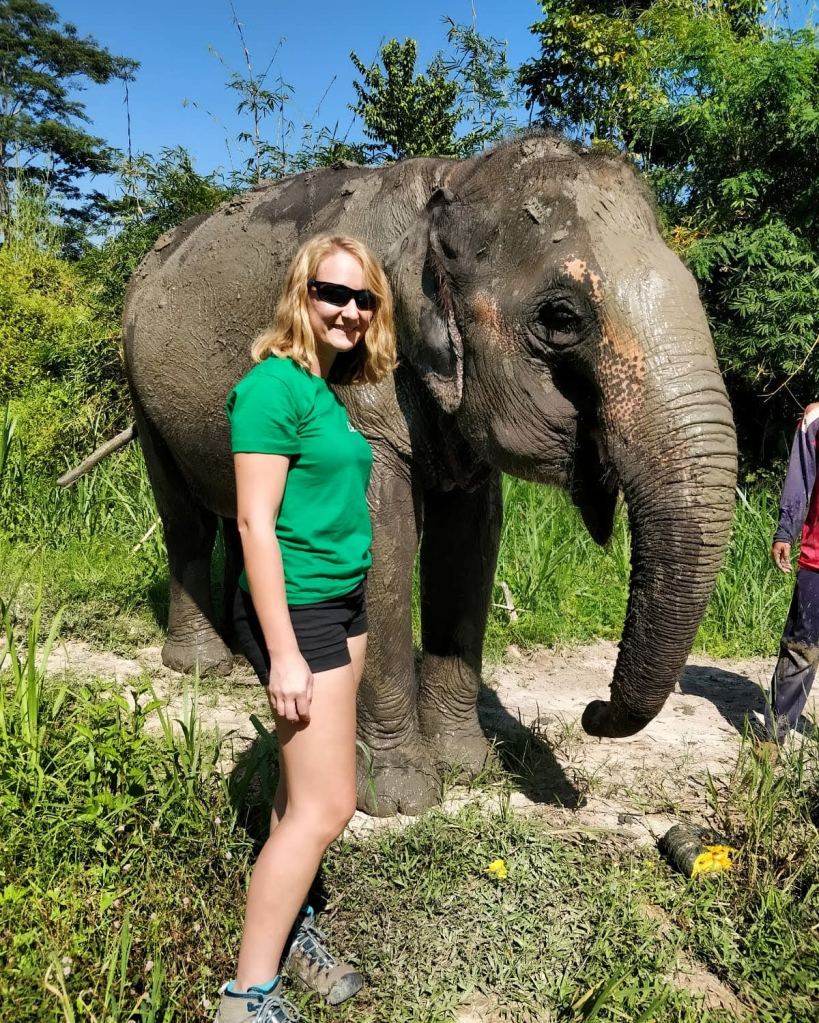
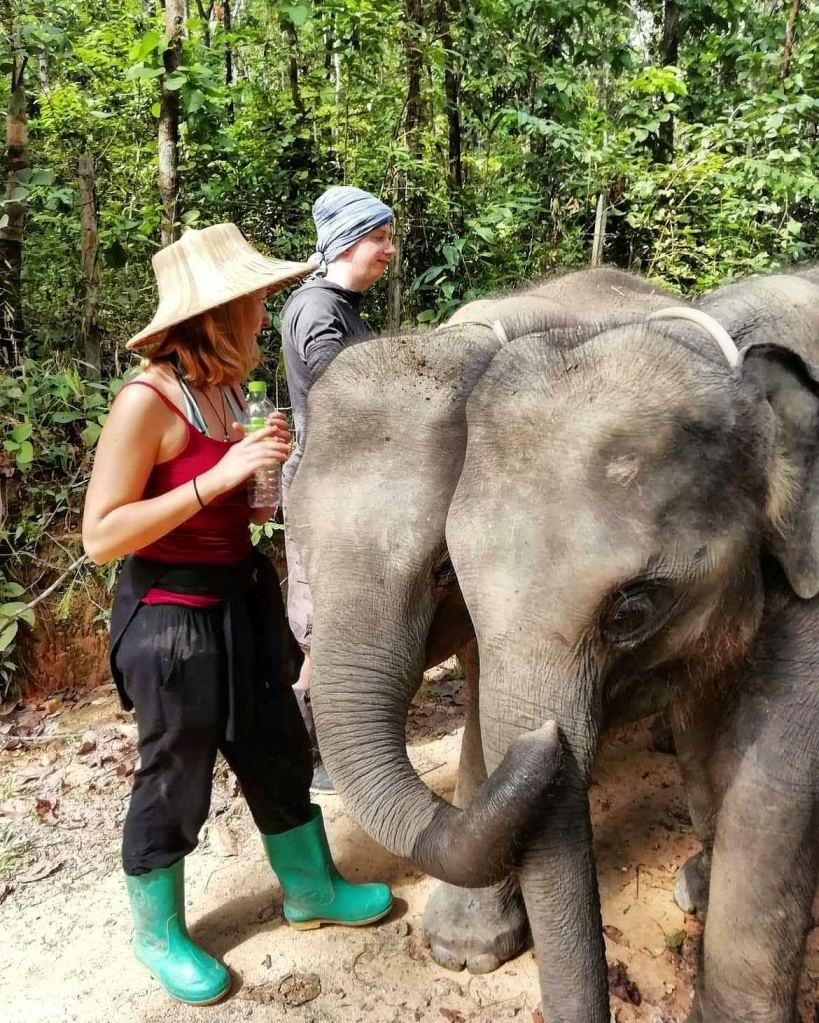
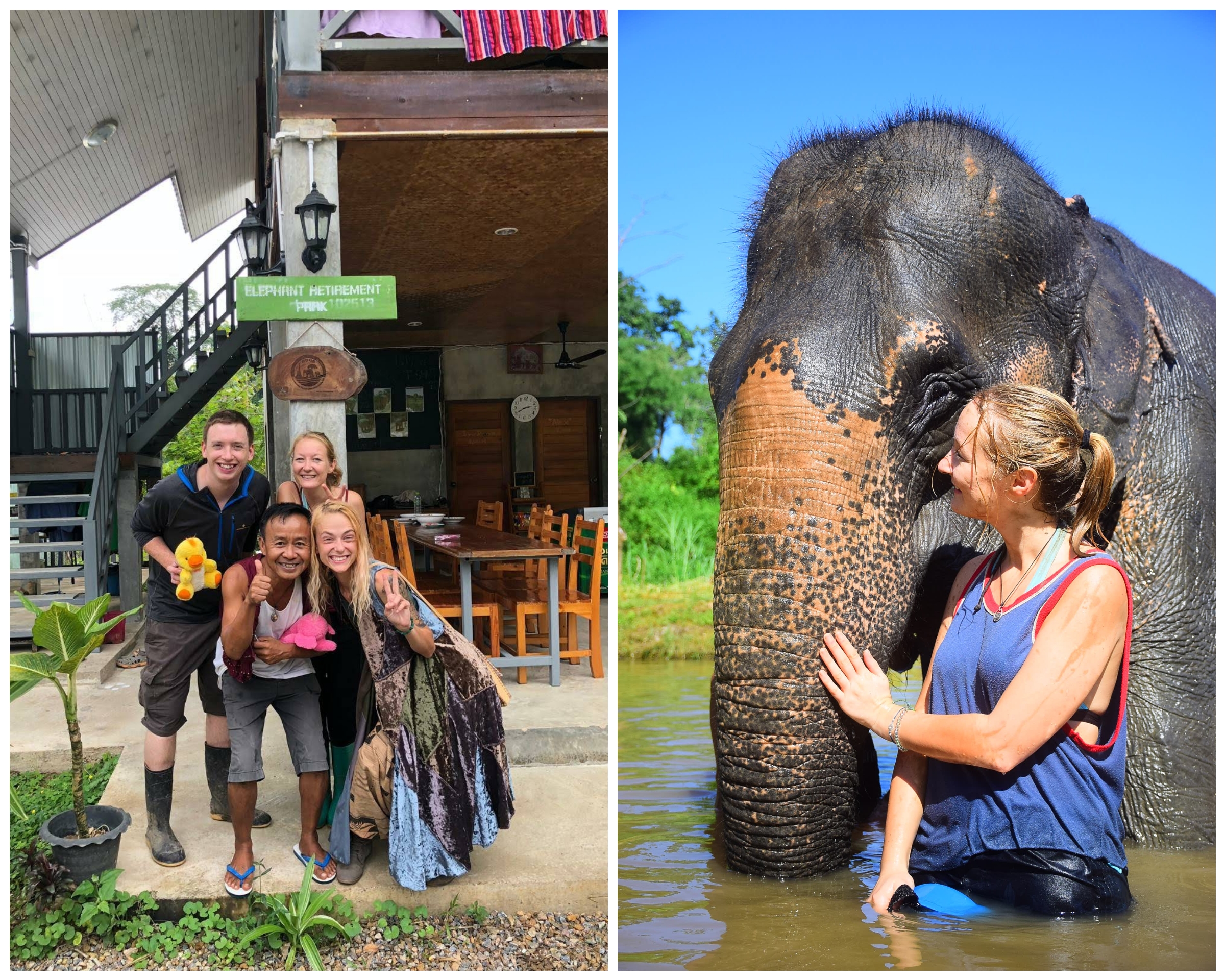
And then of course there are the volunteers. Pictured are Meli, Simon and me.
Alex was our fantastic host, he managed the park and all the volunteering tasks for us. He looked after us well, and once the working part of the day was done, he loved taking us out for dinner, showing us the sights, and introducing us to his friends. He showed us how to party once or twice too!
First thing first – we needed to meet the elephants! Simon and I arrived with a half-day tour group, so we got to experience the tour and get a good introduction to the park and its residents. The elephants knew the schedule by heart, and yep, it was feeding time!
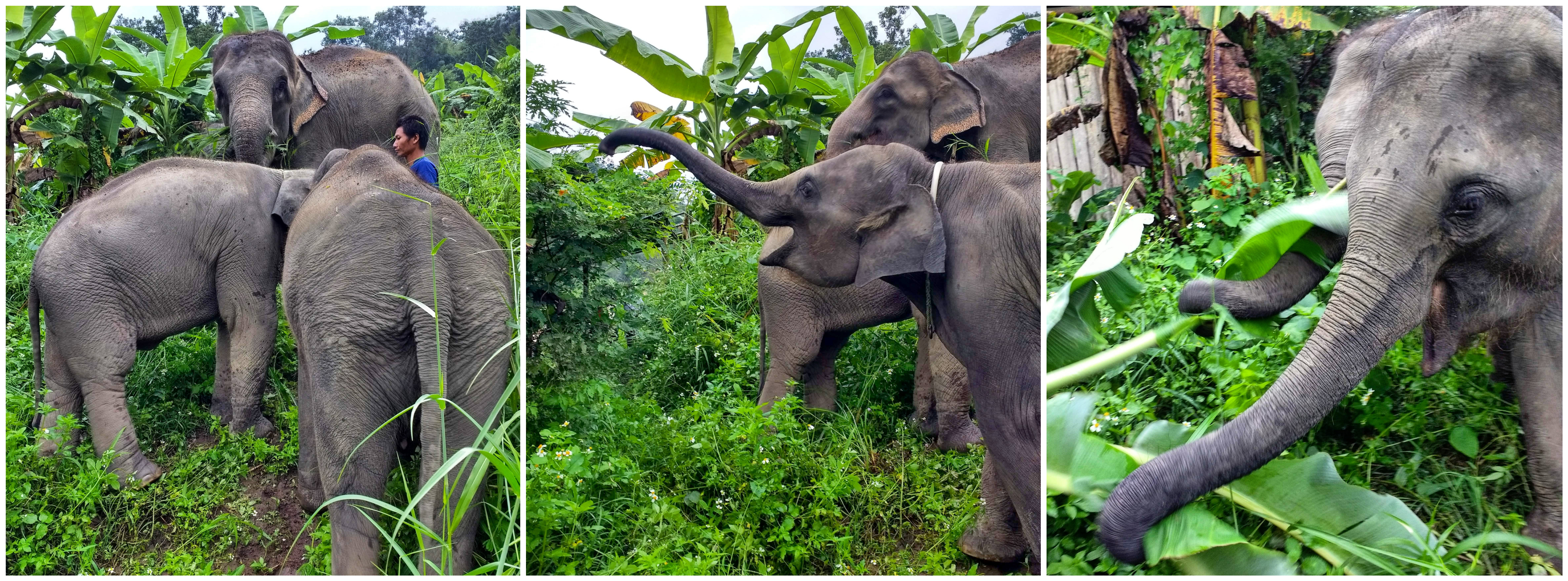
The food store was stocked chock-a-block with bananas, sugar cane, and banana leaves. Each of us was given a tote bag to fill, and a couple of people were given bottles of milk for the babies. As we emerged from the food store, the elephants were waiting, holding their trunks out! At first, they took anything we gave them, often trying a cheeky trunk dip in our bags, (we were instructed to keep the tote bags firmly under our arms, as they would try and take the whole thing) but it wasn’t long before they started rejecting sugar cane, throwing it on the floor and asking for bananas instead!
Feeding Time
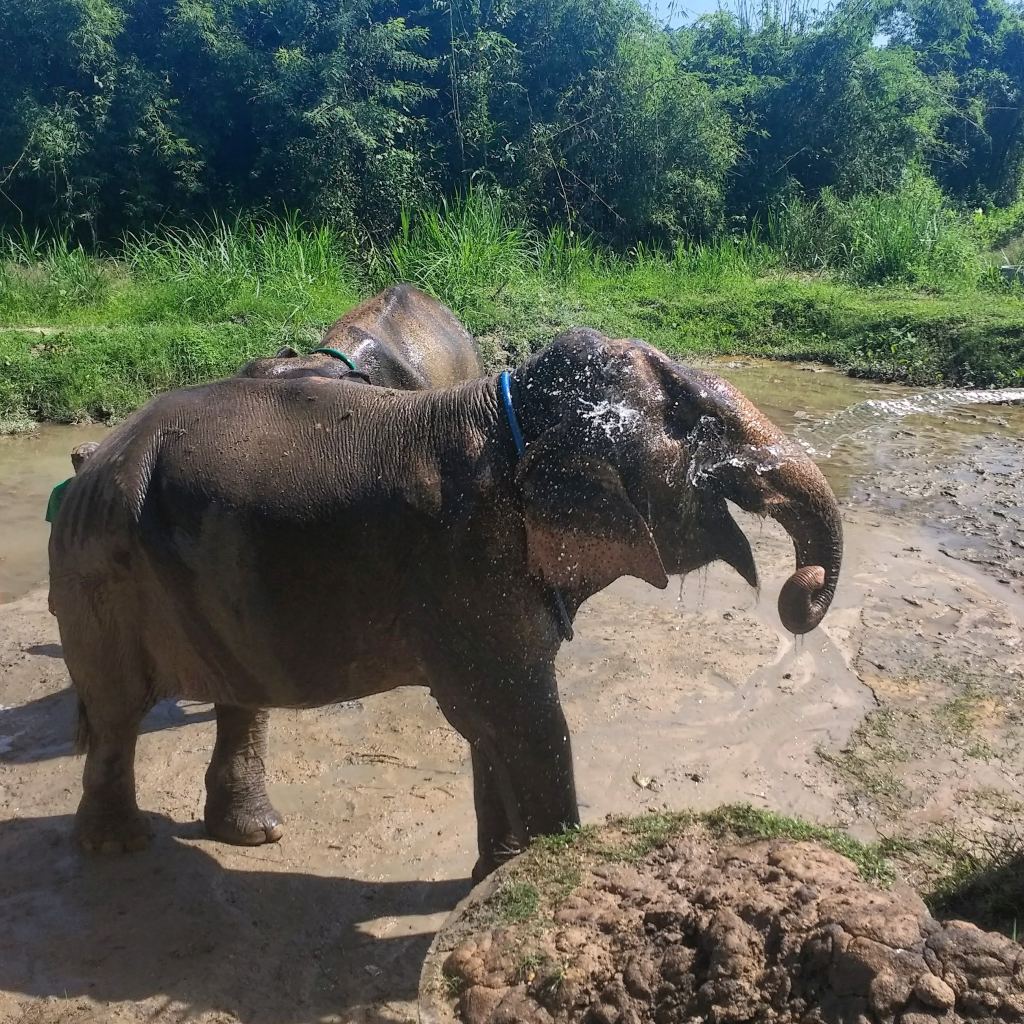
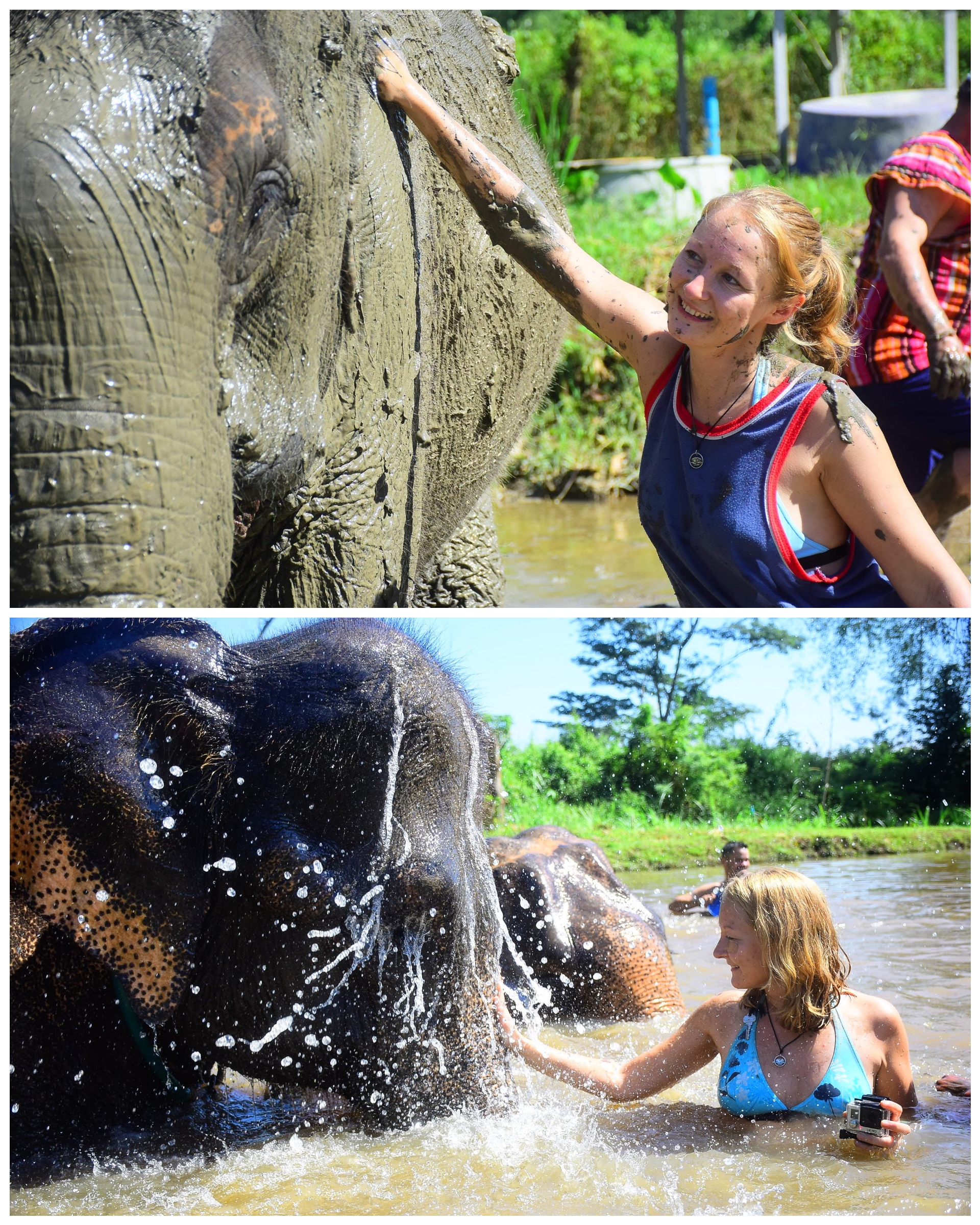
Once all the food was gone, we were taken further down into the park, towards the mud bath and pool, and that’s where the real fun began! Elephants like to roll in mud, or throw it over themselves with their trunks. Mud baths help cool them down, and protect them from common ticks. The mahouts started a mud fight, and we all ended up throwing clumps of wet mud at each other, laughing, slipping and sliding, so by the end of it everyone and everything was a monochrome of mud!
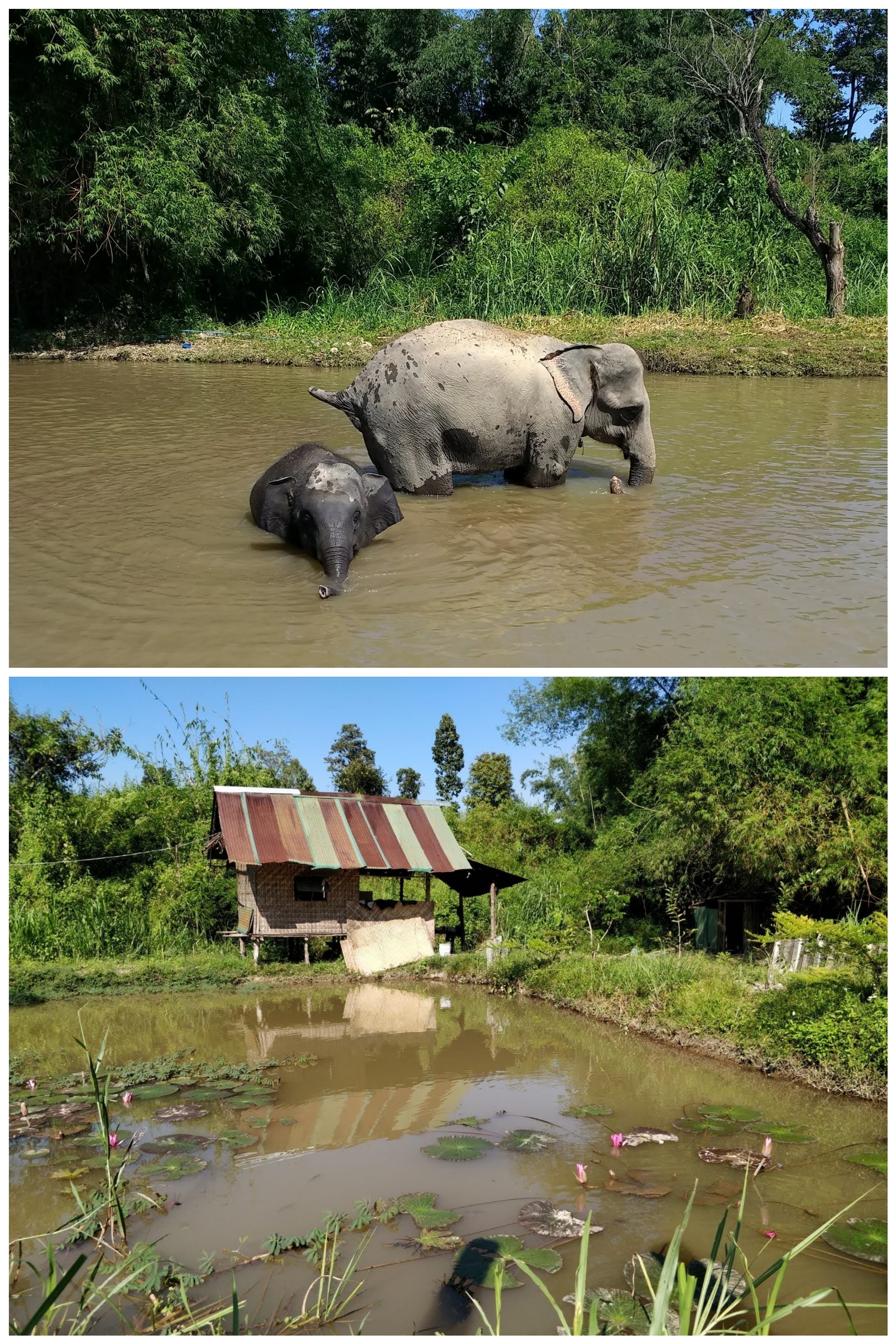
Time for a wash! The elephants had already wandered off to the pool, seemingly rolling their eyes at the silly humans, and we followed, splashing water with little plastic dishes we were given to wash the elephants.
One of the Mahout huts next to the elephant pool
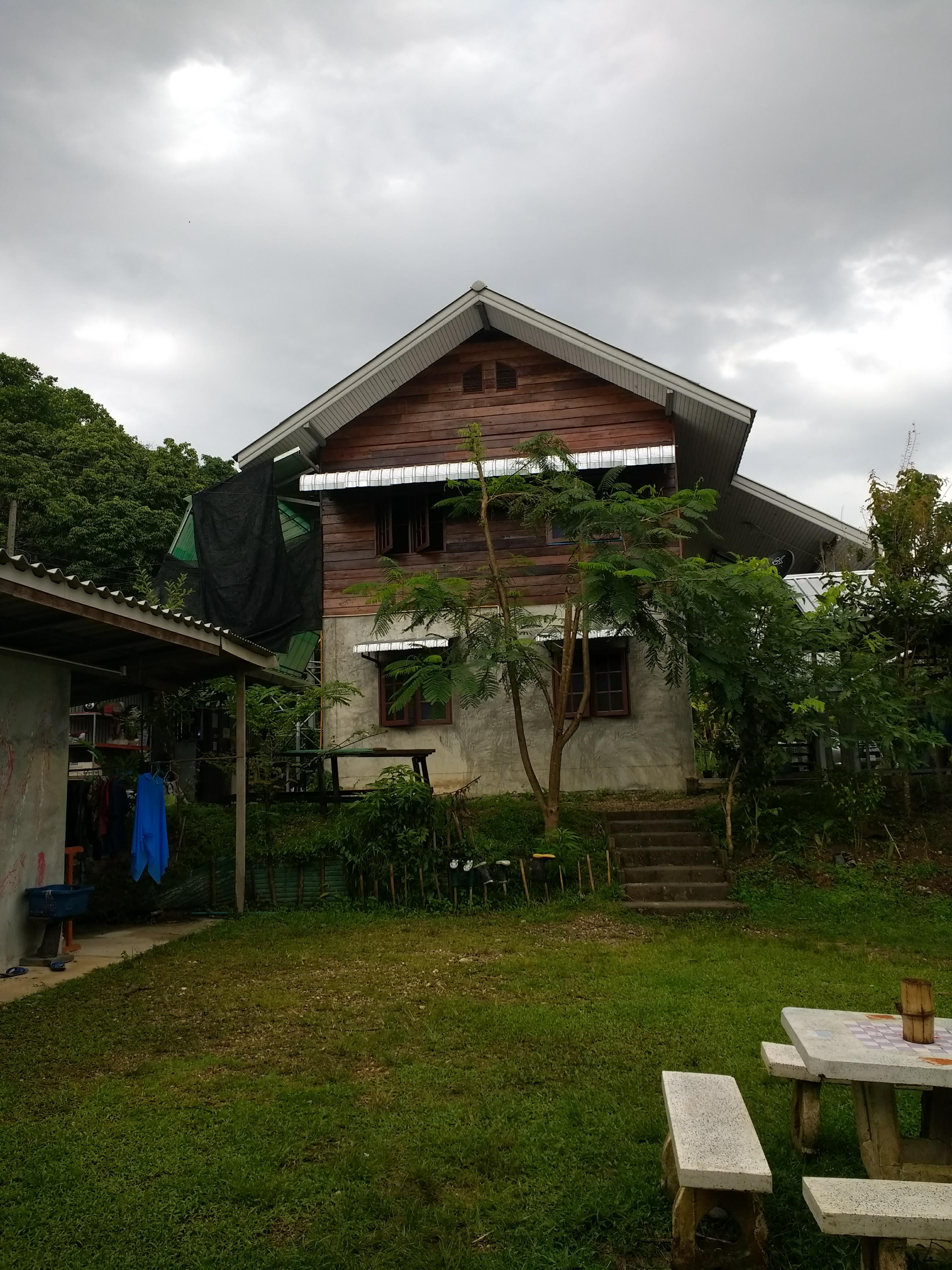
Our Dorm – bottom right window
Once everyone was washed, dried and fed, the mini-bus was ready to leave, and it was time to wave off the half-day tour group, and get settled in our dorm. The room was a cosy twin, right in the heart of the sanctuary, with a big ceiling fan, and geckos on the windows to eat the mosquitoes.
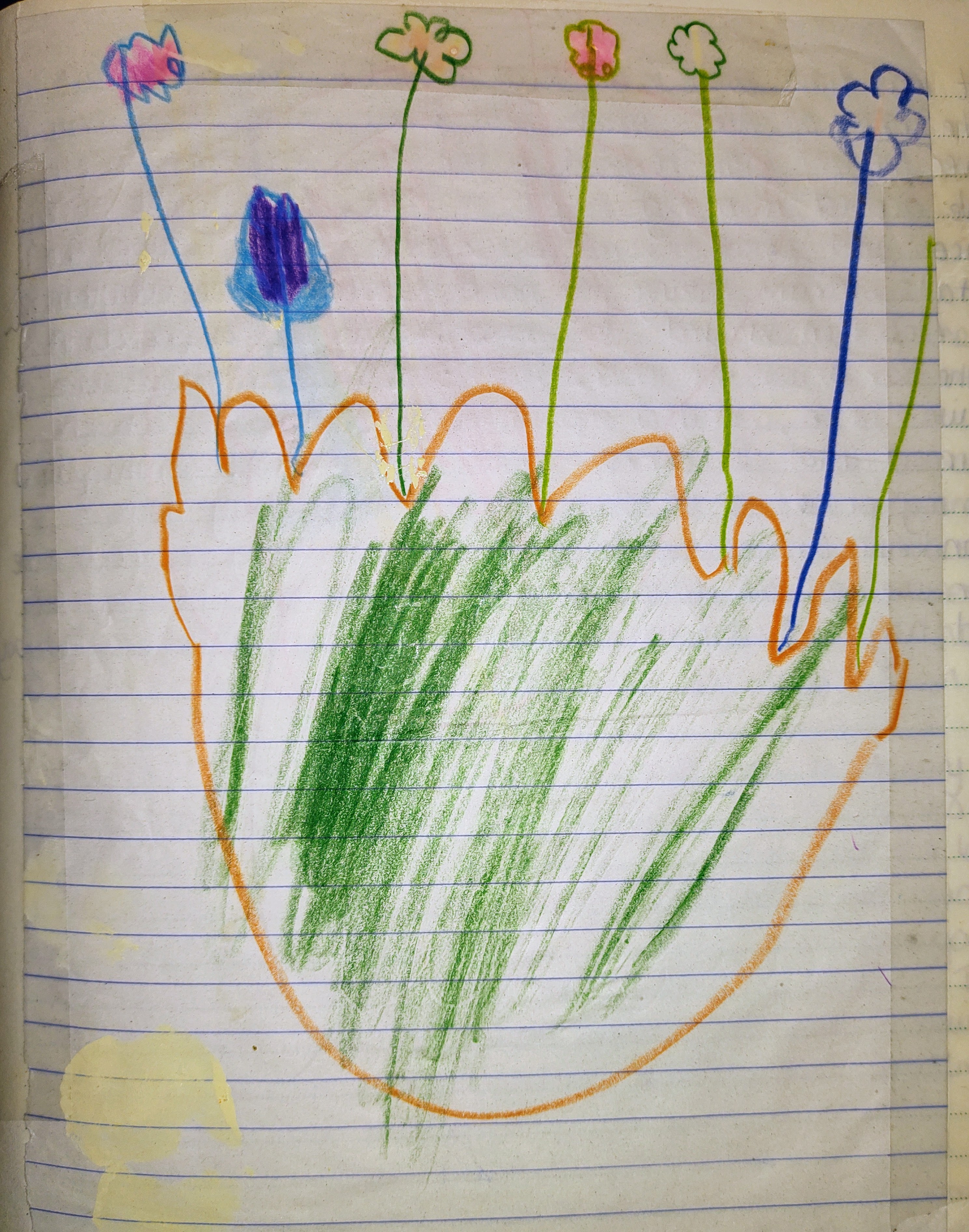
Aruni’s Flowers
Peace. Simon and I finally find a moment to sit down on the communal veranda and breathe in our surroundings with a Chang beer from the vending machine. Afternoon sunshine paints the trees with licks of gold. Through the gentle breeze, we hear a little "hello!" and a small girl appears from the mezzanine deck, an inquisitive grin on her face, and she repeats, "hello!" Quite confidently, she pulls up a chair beside me, produces a drawing book, and the three of us proceed to draw and colour flowers together! She's the daughter of a mahout, and is home from school for the weekend. She's learning English, and is able to tell us her name is Aruni, and she's four years old.
Aruni’s Flowers
I had an unfortunate accident on my first evening, through no fault but my own, and I can only sing the praises of Alex and the others who helped. I managed to cut open my cheek, just under my eye, on some very large barbed wire – elephant sized, you might say. Alex quickly sourced some “Lemon Bush Grass” from his herb garden, he chewed it into a pulp and told me to press it on the cut for about 3 minutes. Amazingly it stopped the bleeding, and bought time for Aruni’s mum to find the first aid kit. She washed it with iodine and redressed it every day for a week, refusing to let me look at the damage! I still have a small scar, barely visible now, and a surprisingly fond memory to go with it!
A Day in the Life of a Volunteer
A typical day at the Elephant Retirement Park on the volunteer program looked something like this:
6:30am
Clean the elephants’ night enclosures
7:30am
Gather elephant food: typically cutting down banana trees in the park’s nearby plantations
8:30am
Breakfast
9:30am
Elephant care / Community volunteering
12:30pm
Lunch
1:30pm
Park maintenance and upkeep
2:30pm
Hottest part of the day – time to rest
6pm
Feed the elephants
6:30pm
Dinner – cooking with Alex or going to village for food with the locals
Early Morning Duties
Each morning we’d rise with the sun, waking with the soft trumpets of the nearby elephants, singing for their breakfast. Pulling on our baggy work clothes, we’d step outside into the rising sun, and into our one-size-fits-all wellington boots. It’s a refined look, one that I embraced, with my scarred cheek and borrowed wicker hat… There was a coffee station in the common area outside, and some mornings the mahouts and workers would gather there before the sky was lit, and we would sip quietly until work began.
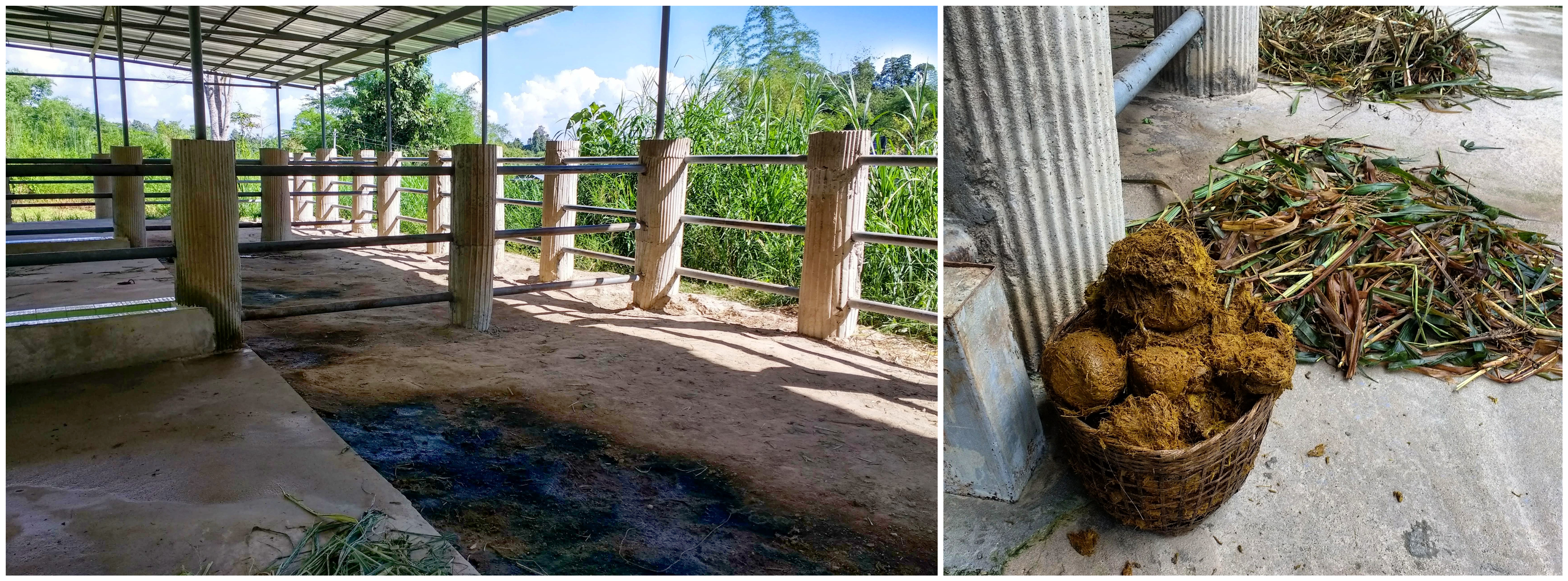
It is essential for the night enclosures to be cleaned every morning. At 6:30am we’d go around with a giant basket, filling it with elephant dung (really heavy, like grassy, brown bowling balls!) We’d sweep all the old leaves and bits of food away, hose down the floors, and clean and refill the water trough – often with the help of Lanna!
Night Enclosure / Elephant Dung
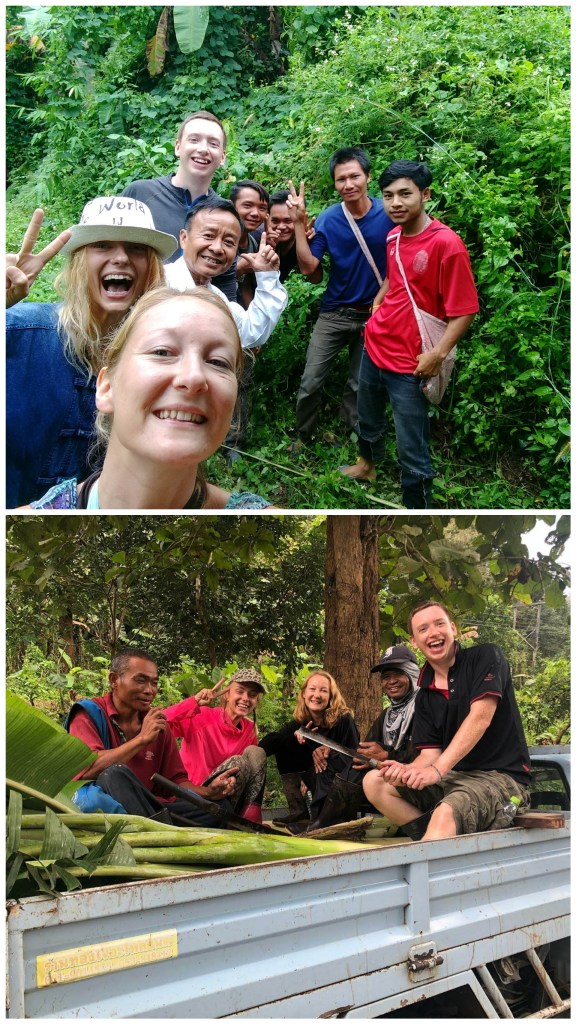
Then the Utility Truck would start up, the mahouts would beckon “come, come,” and we’d all jump into the open trailer of the Ute. Rumbling along the narrow, uneven road, skirting the jungle, with wind buffering our ears, we made our way to one of the park’s nearby banana tree plantations to harvest food for the elephants.
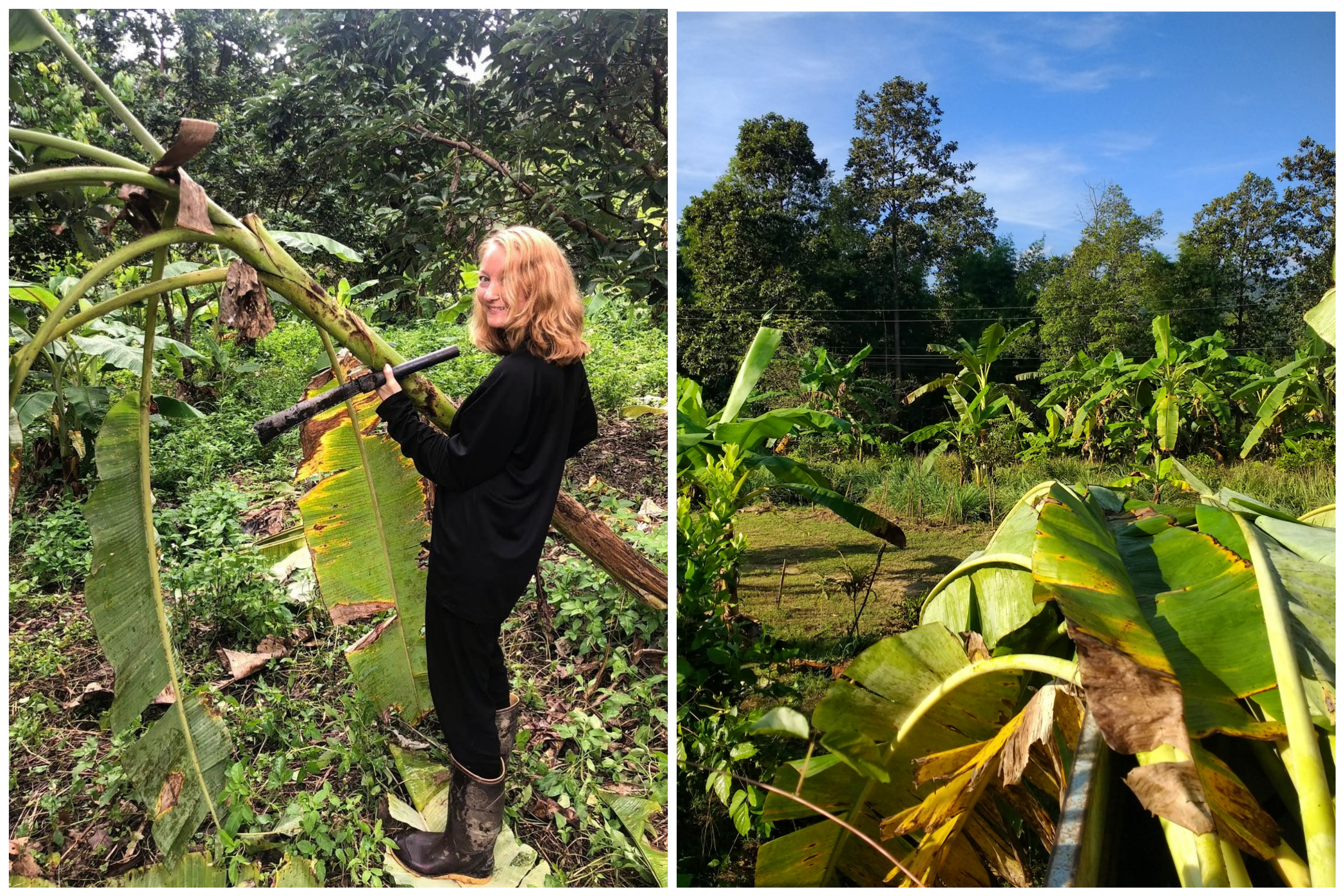
On arrival, it was straight to work. The mahouts showed us that banana trees grow back super quickly, producing baby green shoots straight out of the stump, which makes them a perfect renewable food source for the elephants. We were told to leave any trees with bananas growing on them, and any young trees, watching for snakes and spiders all the while. The mahouts taught us how to use a machete to cut the tall trees down – a two-handed swing, angled into the lower part of the trunk. They made it look extremely easy, felling trees in a single swipe, while I seemed to be hacking away ungracefully for hours! But I got my trees, and we carried them back to the Ute, loading them in and climbing on top of our loot for the journey home for breakfast.
Banana Tree Harvest
Community Volunteering
Everyday was different after breakfast. Somedays we’d help around the park, or go to another location to help out in the local farming scene. These are some of the tasks we took part in:
Unloading Deliveries
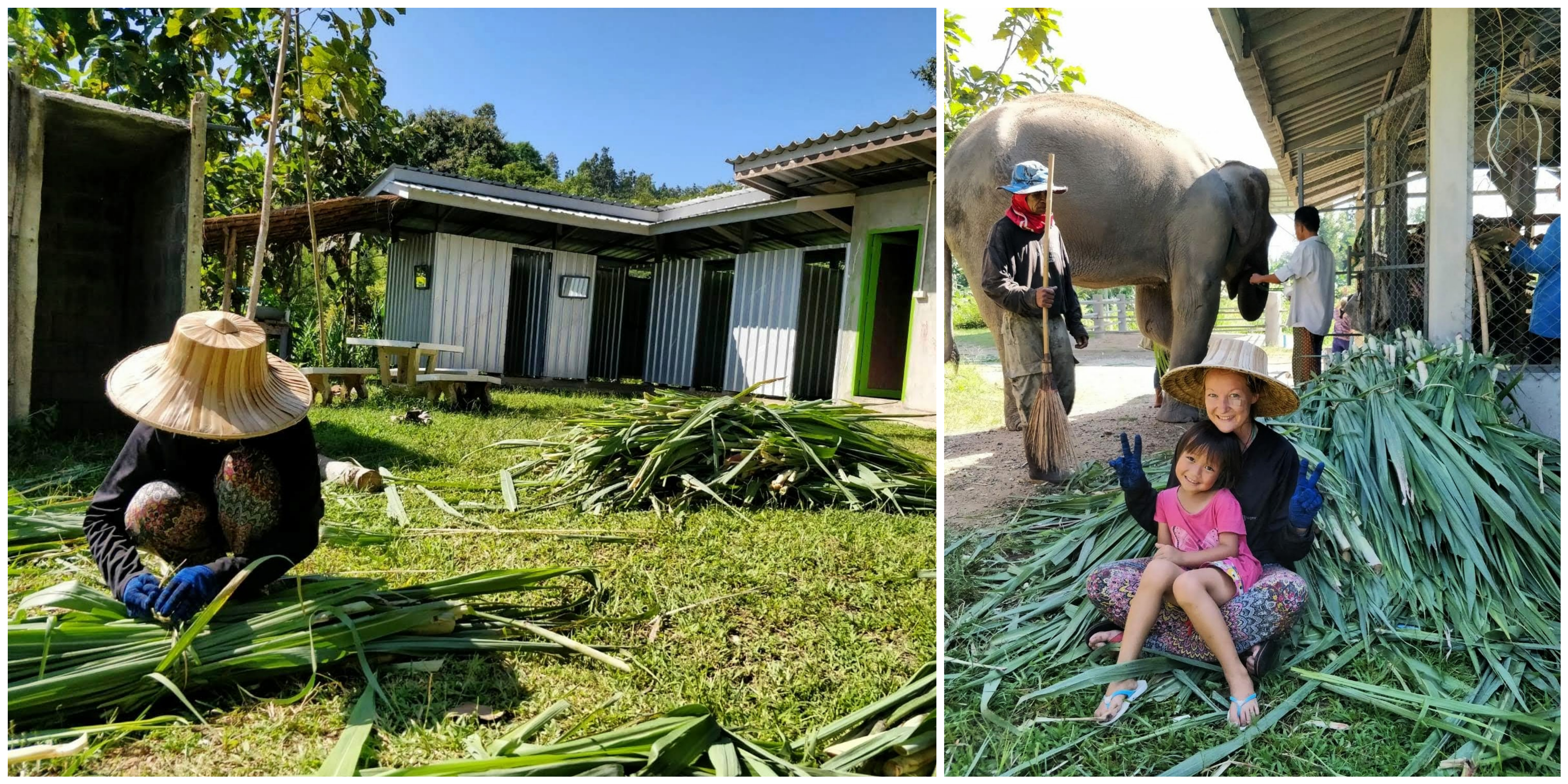
A large delivery of Sugar Cane arrived on the back of a ute, and we had to strip all the leaves, and bind it in bunches with bamboo ties to pack into the food store.
Tying bundles of sugar cane
Elephant Healthcare
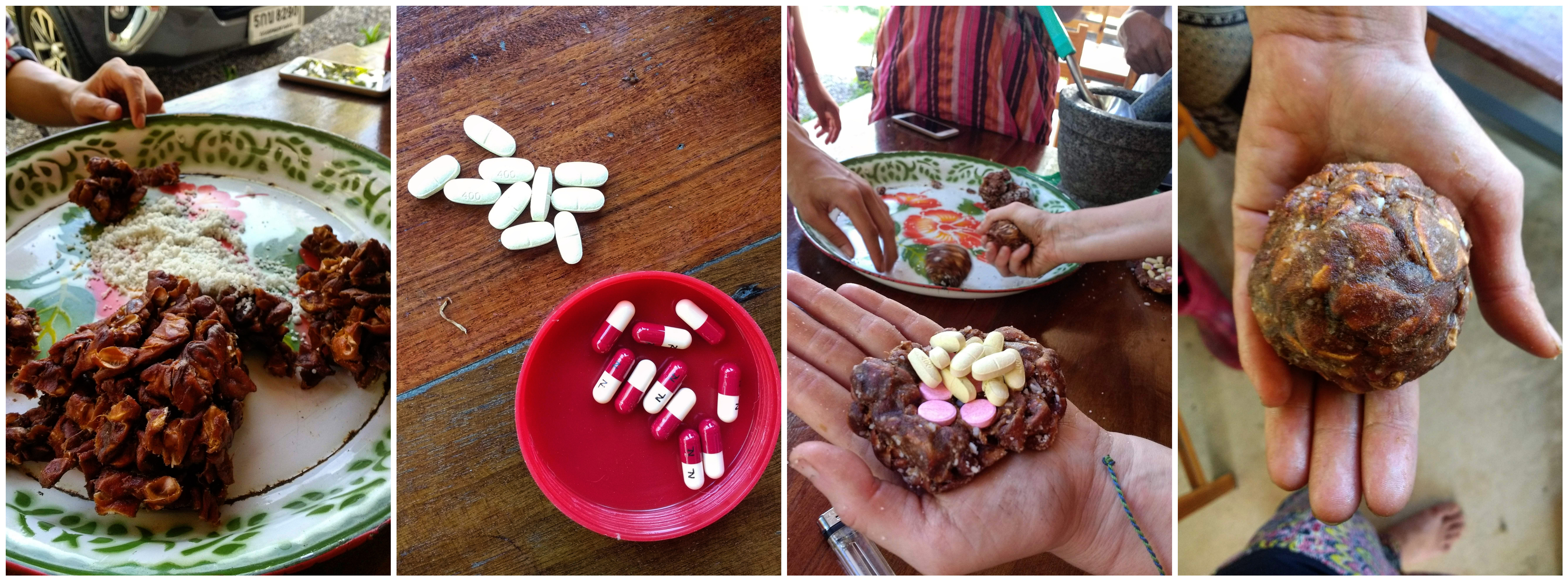
We learned how to make vitamin balls for the elephants, by crushing dried papaya and salt crystals in a pestle and mortar. We then squished the pulp together, placing deworming tablets and essential vitamins inside, and rolled them into balls, ready to feed the elephants.
Making elephant medicine
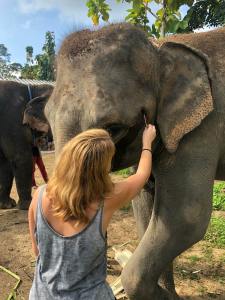
I was tasked with treating a tick wound on Bella’s cheek. Ticks are a common problem for elephants, and can leave big wounds, vulnerable to infection. I took a giant cotton tip, dipped in iodine, and Bella and I had a little bonding session over our matching cheek wounds!
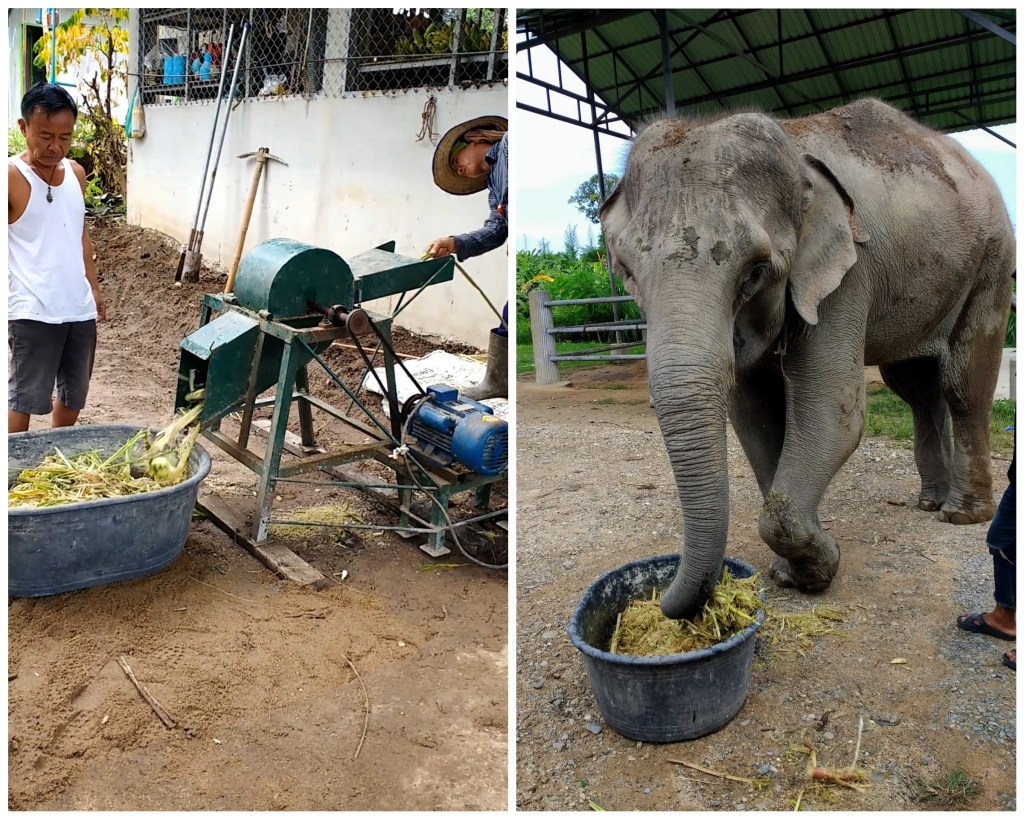
Elephants eat for up to 16 hours a day, but they have an inefficient digestive system, and are prone to digestive issues, so it’s essential their diet is balanced and full of fibre. We used an old shredding machine to make a fibrous mulch, with sugar cane, papaya, banana, salt water, and medicinal herbs. Bella was our taste tester; she took a mouthful with her trunk, and then threw the next trunkful on the floor and flapped her ears! I’m still unsure whether that meant she hated it or loved it!
Deep Cleaning
The enclosure area had a concrete floor, which had become covered in moss over time, making it dangerously slippery for the elephants. We spent two mornings scrubbing it clean with caustic soda, with Alex’s help, and were rewarded with pancakes from the village later!
Working in Rice Fields
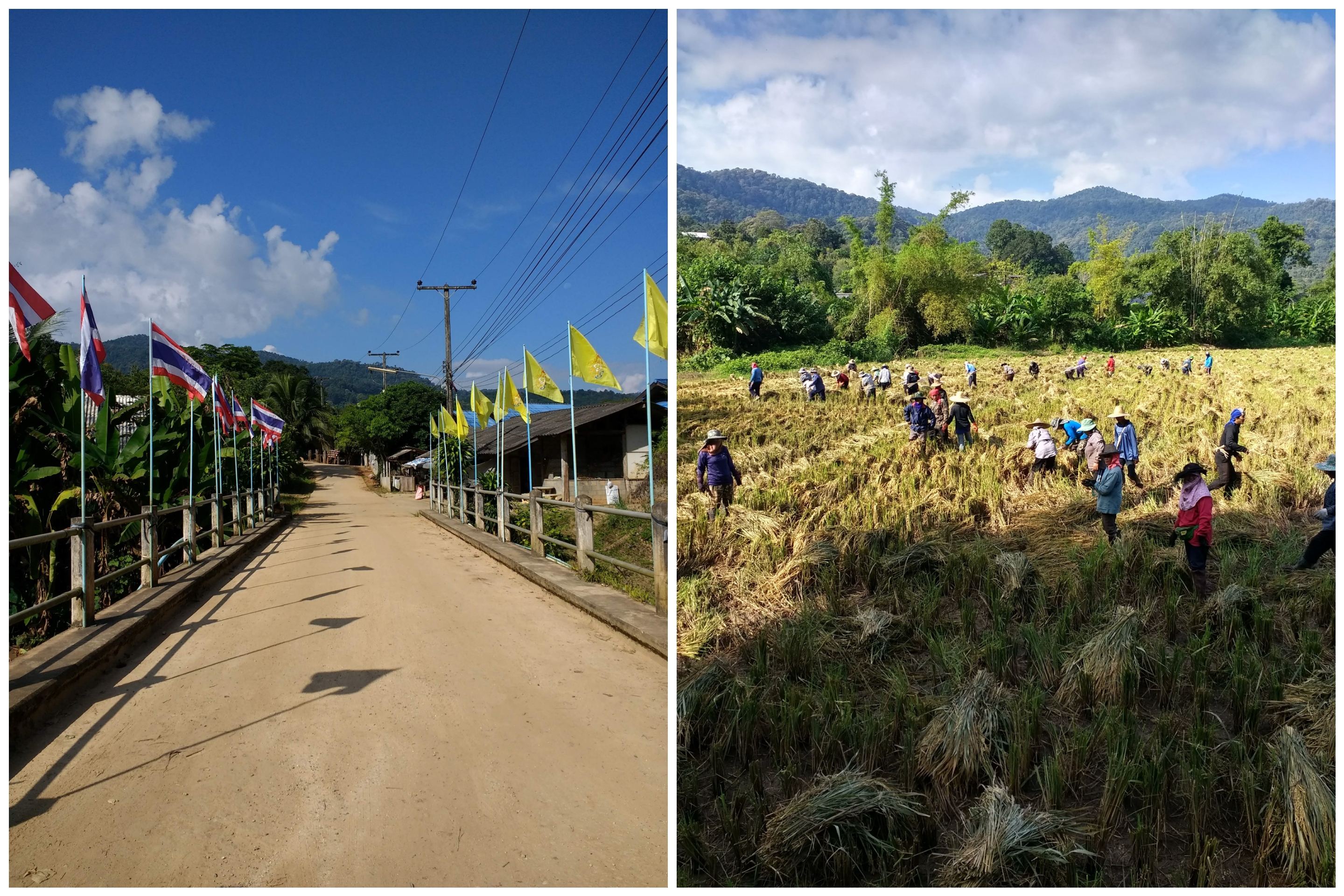
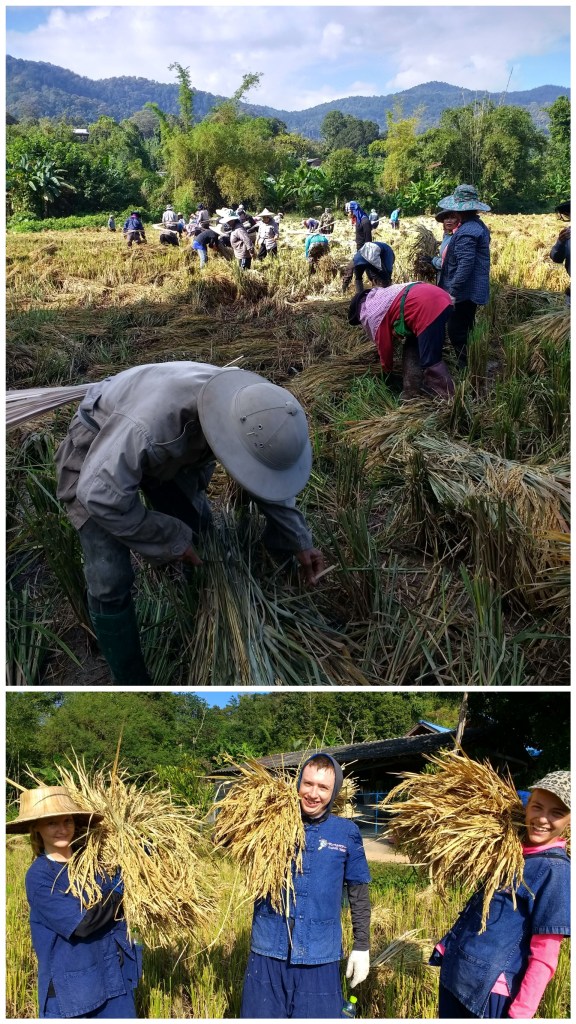
One morning after breakfast, we piled into the trailer and Alex drove us to the nearby village “Ban Iek”. The jungle thinned out, and we crossed a bridge lined with Thai flags, until we saw dozens of people all working in the rice fields, on a green back drop of mountains.
Ban Iek Village, San Pa Yang
We were each given a bunch of long bamboo ties, and shown how to gather the pre-cut rice bundles and tie them efficiently, though I’m not sure we were very efficient or helpful to the cause! Everyone was friendly and good humoured, keen to help teach us, and laughing at us every time we got a boot stuck in the thick, wet mud! They taught us to stomp down on the rice stalks and use them as a foundation to stop ourselves sinking.
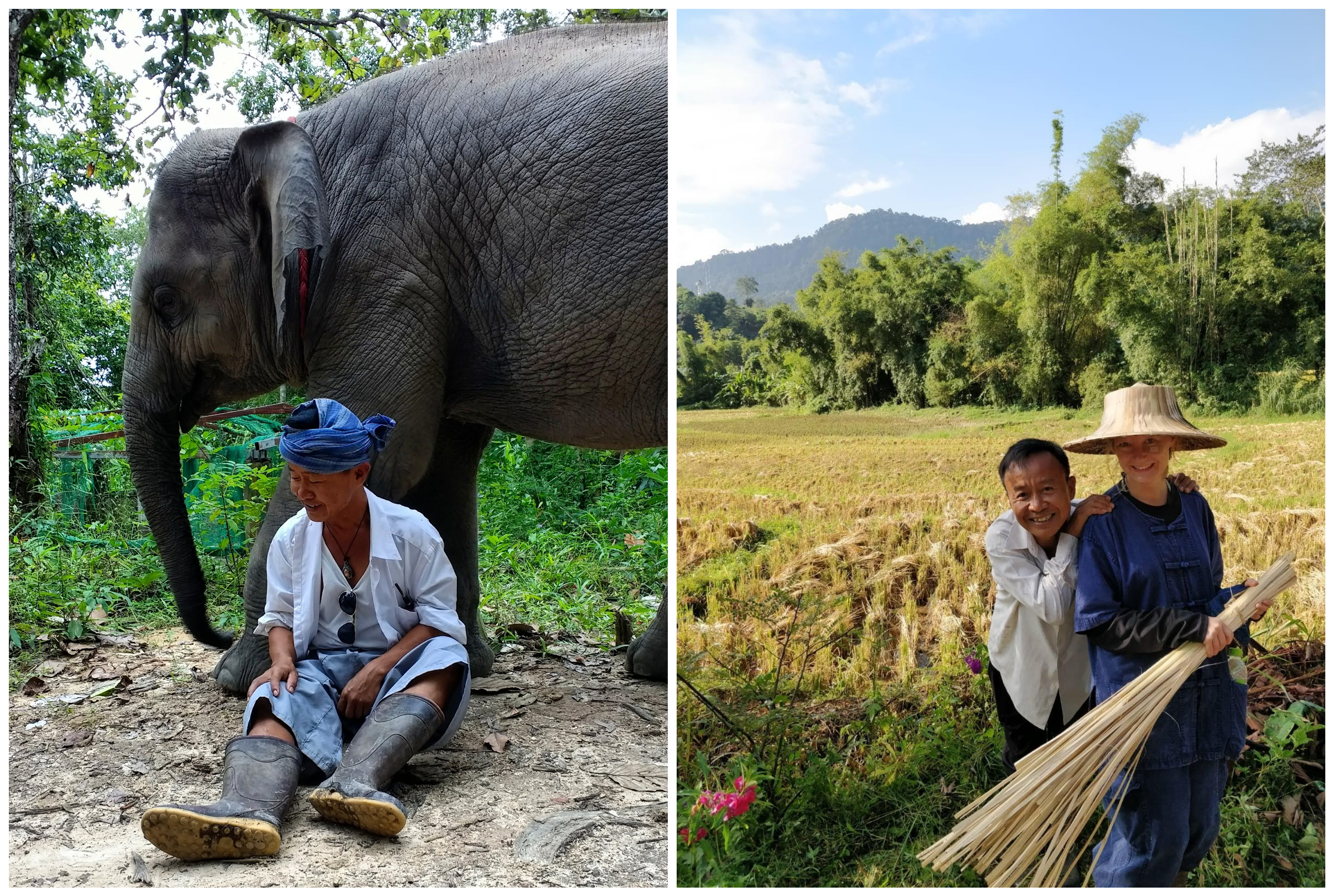
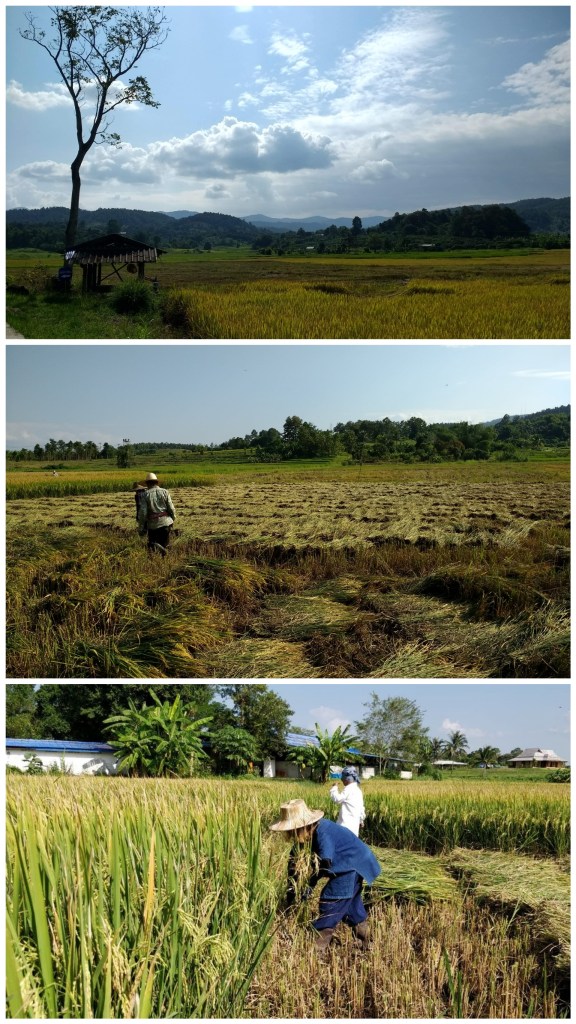
Another day, Alex brought us to another beautiful location, an independent rice farm, where we helped a couple cut the rice from their fields, using traditional long scythes. It was very hot work, but between the 5 of us, we got the job done.
Harvesting Corn
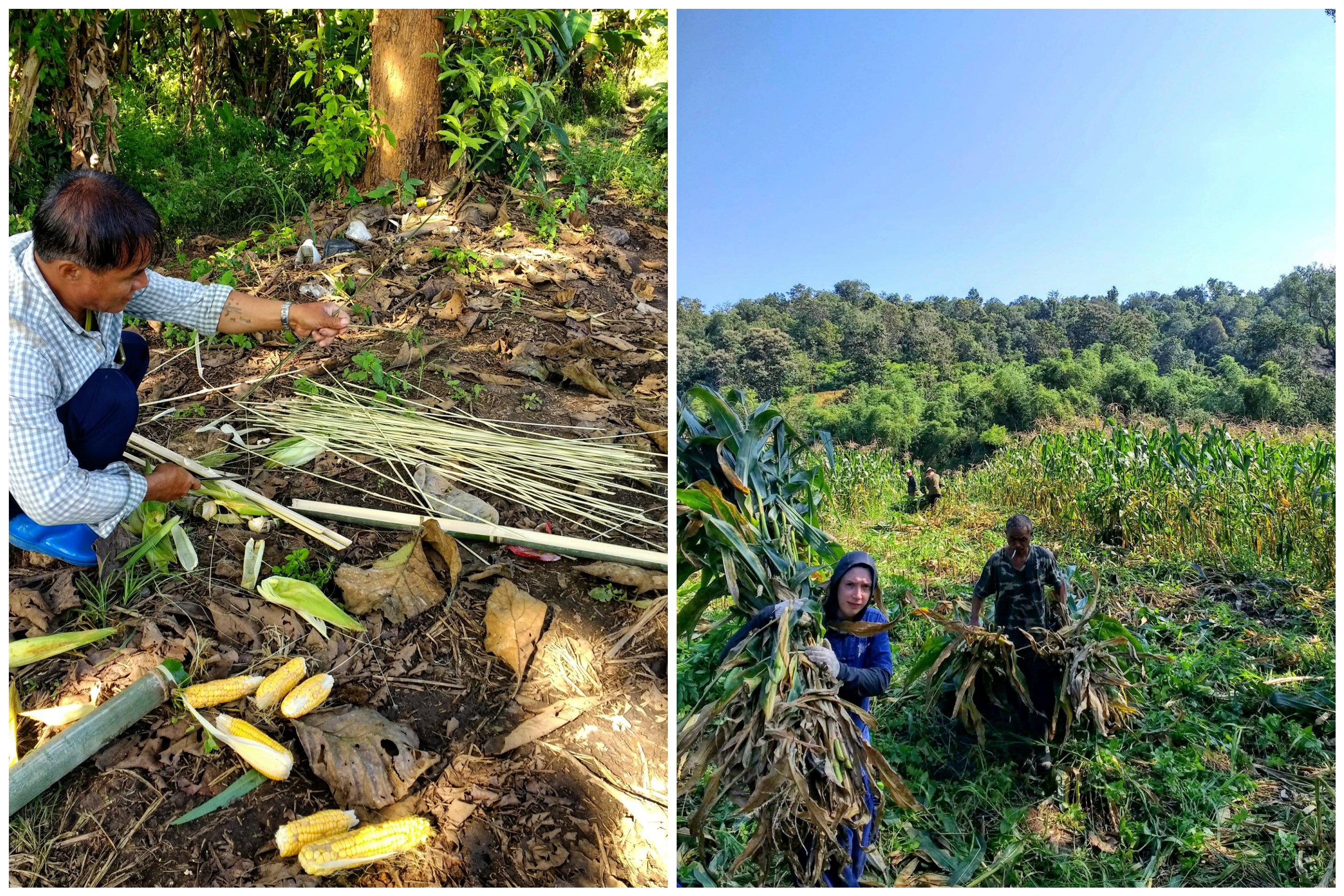
Making bamboo ties / harvesting corn for food
Landscaping the Park
The Elephant Retirement Park is a constant work in progress, and one of the things they were raising money for was extending the food store. We helped in levelling the ground by hand, preparing it for laying foundations. We also planted herbs and shrubs, for decoration & to expand their renewable resources onsite.
Elephant Walkies
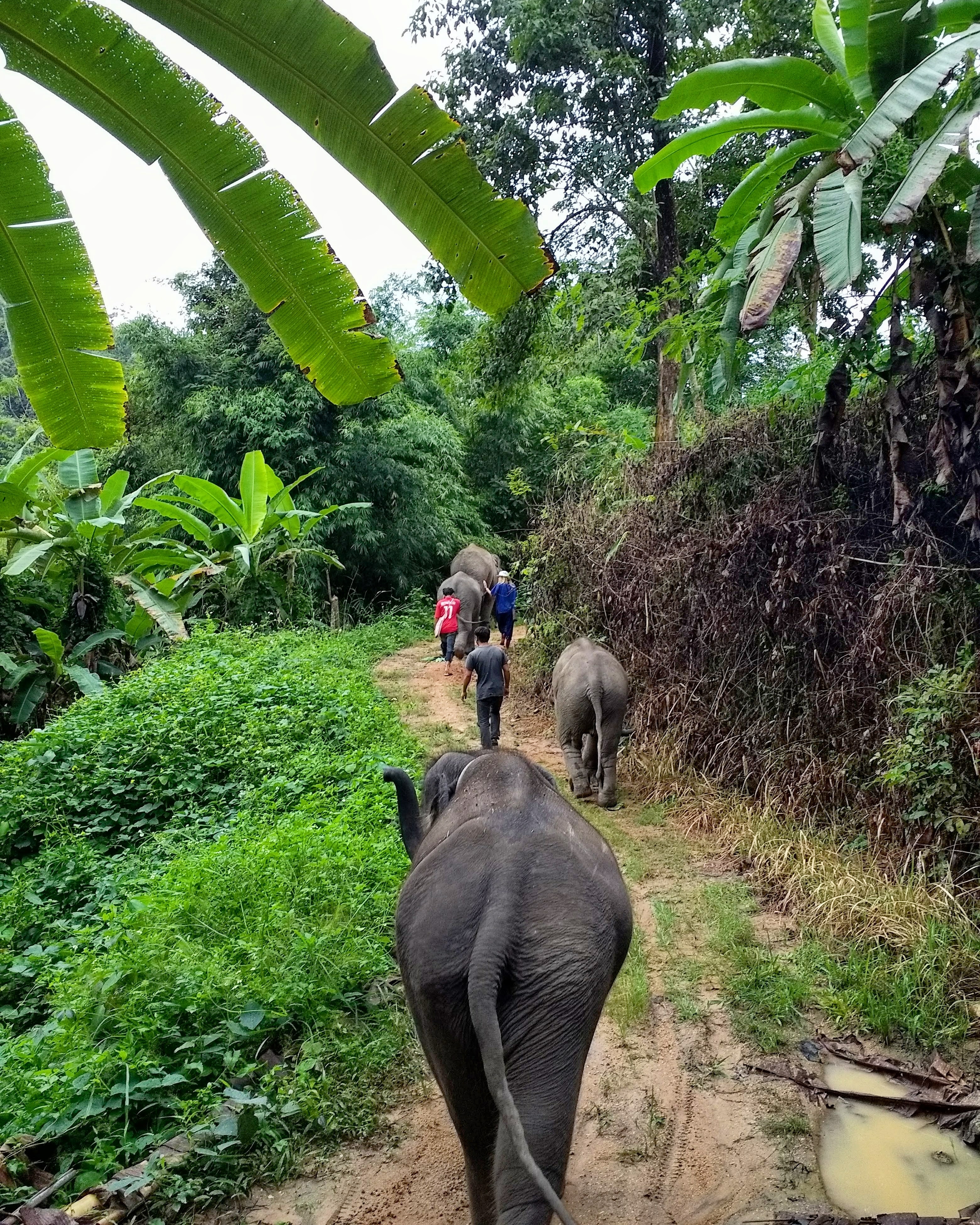
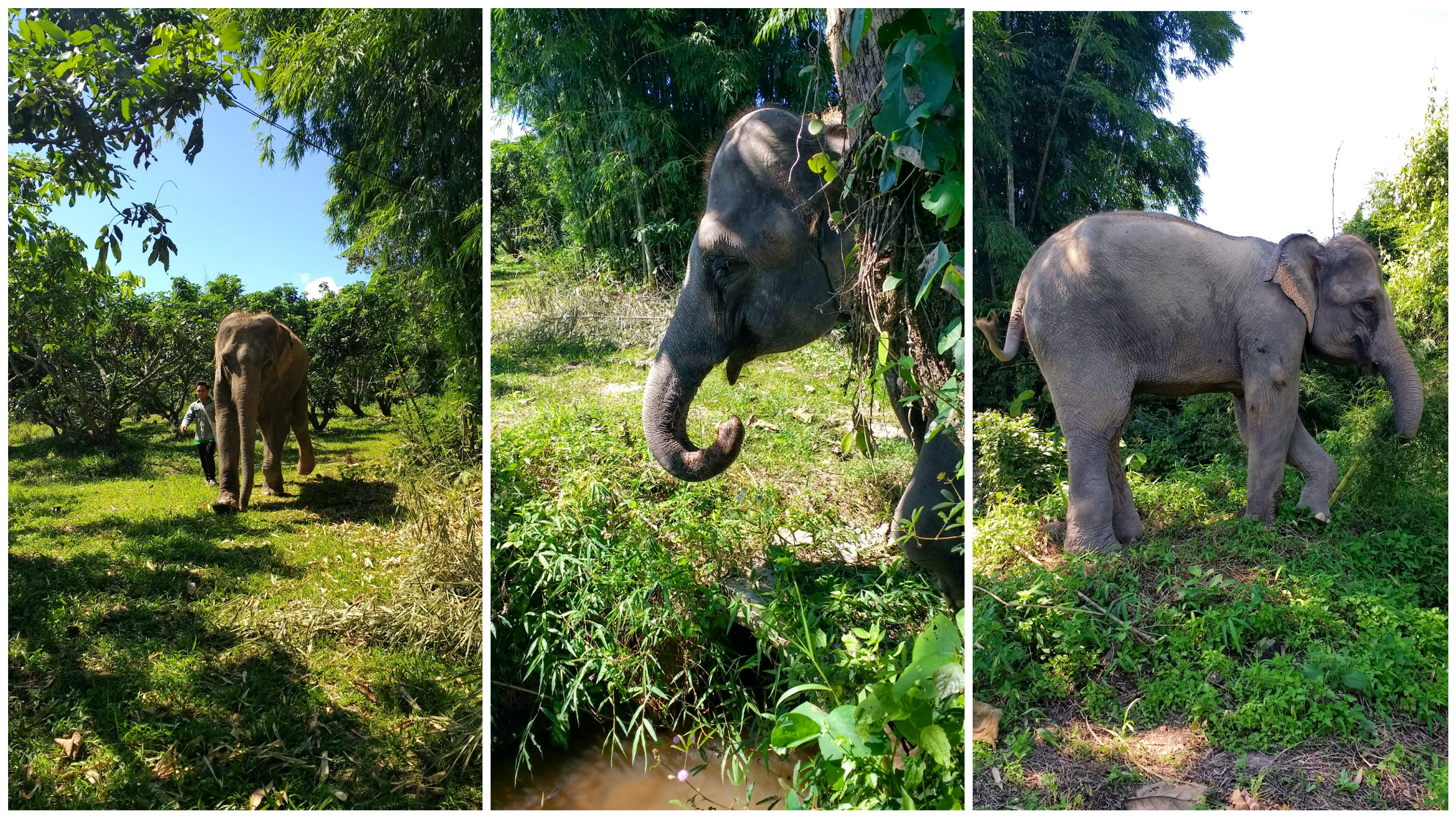
The elephants know, just like dogs when it's time for walkies. They lift up their trunks and frolic up the driveway to the front gates. The first part of the walk follows the dusty road, so we surround the elephants & make ourselves visible to any traffic. We are reminded that you mustn't stand behind an elephant as they don't have good peripheral vision, and if you startle them you'll suffer a hefty kick or a whip from their wiry tail.
The road leads into the jungle. The woodland is immediately thick and humid - the elephants know the way, and help themselves to the vegetation. There are farmers who live on the outskirts of the jungle, their crops backing onto the footpath where the elephants walk. The mahouts have their work cut out, trying to distract the elephants from the fields of corn, but they are intelligent creatures, and of course, they never forget. The mahouts break off an ear of corn to try and entice the elephants away from the crops, but the distraction doesn't last for long, and there's a five minute pandemonium with a group of naughty, stubborn elephants. Despite the fact it's a public path, Alex tells us it's a worry for them, and is a growing difficulty all over Thailand, since humans are occupying more and more space, encroaching on the elephants' wild habitat. The farmers here have already complained, and if there are more complaints they run the risk of turning it into private land, taking away a lot of freedom for the elephants here.
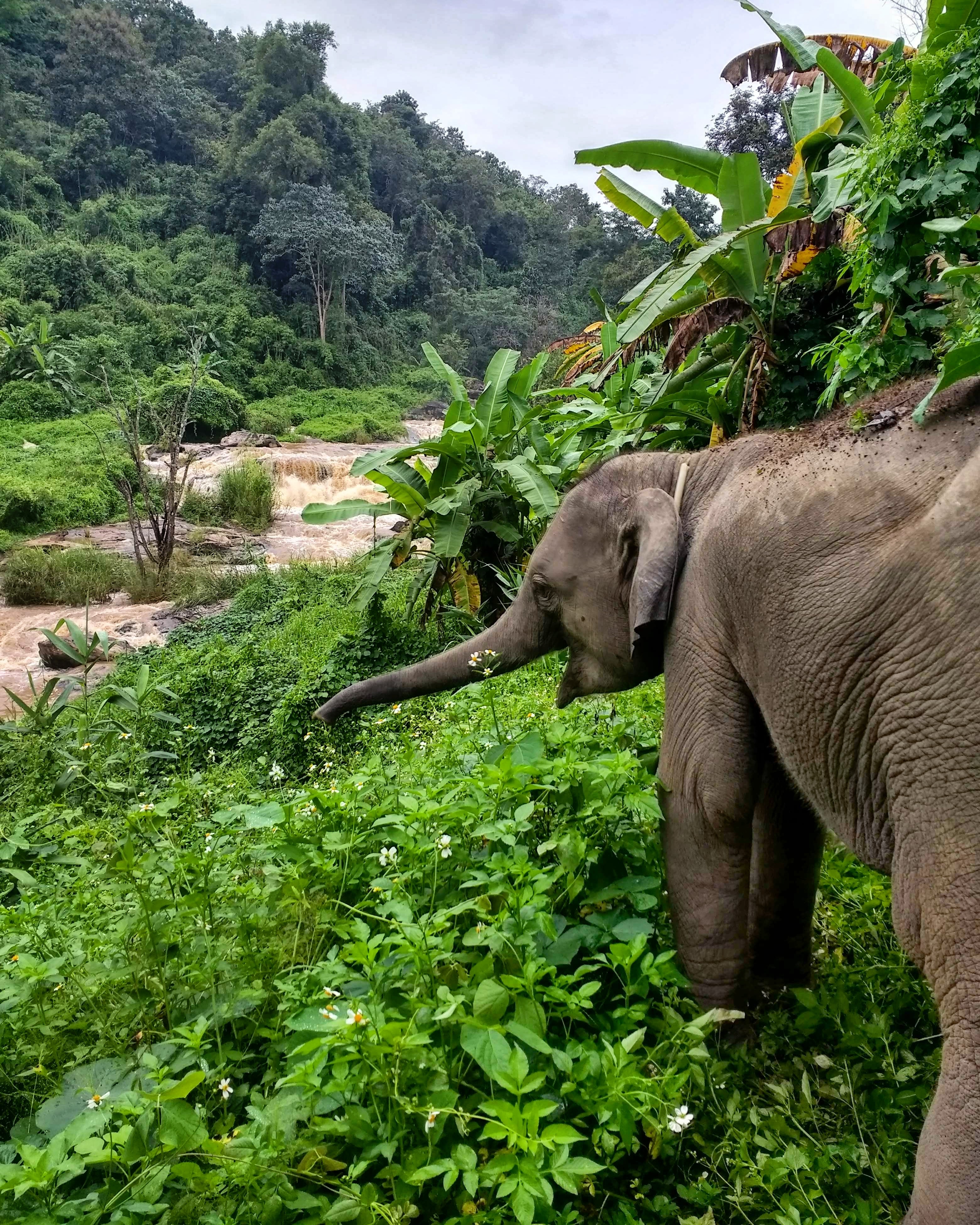
The jungle path grows wilder and less inhabited, with banana trees dotted around that the elephants love to munch. The path winds upwards and comes out on the high banks of an enormous river, with cascades the colour of chocolate tumbling down from the jungle beyond. Usually the elephants will swim in the river, but heavy rain has made it full and roaring, and so the elephants stay clear of it, seeking out bananas instead.
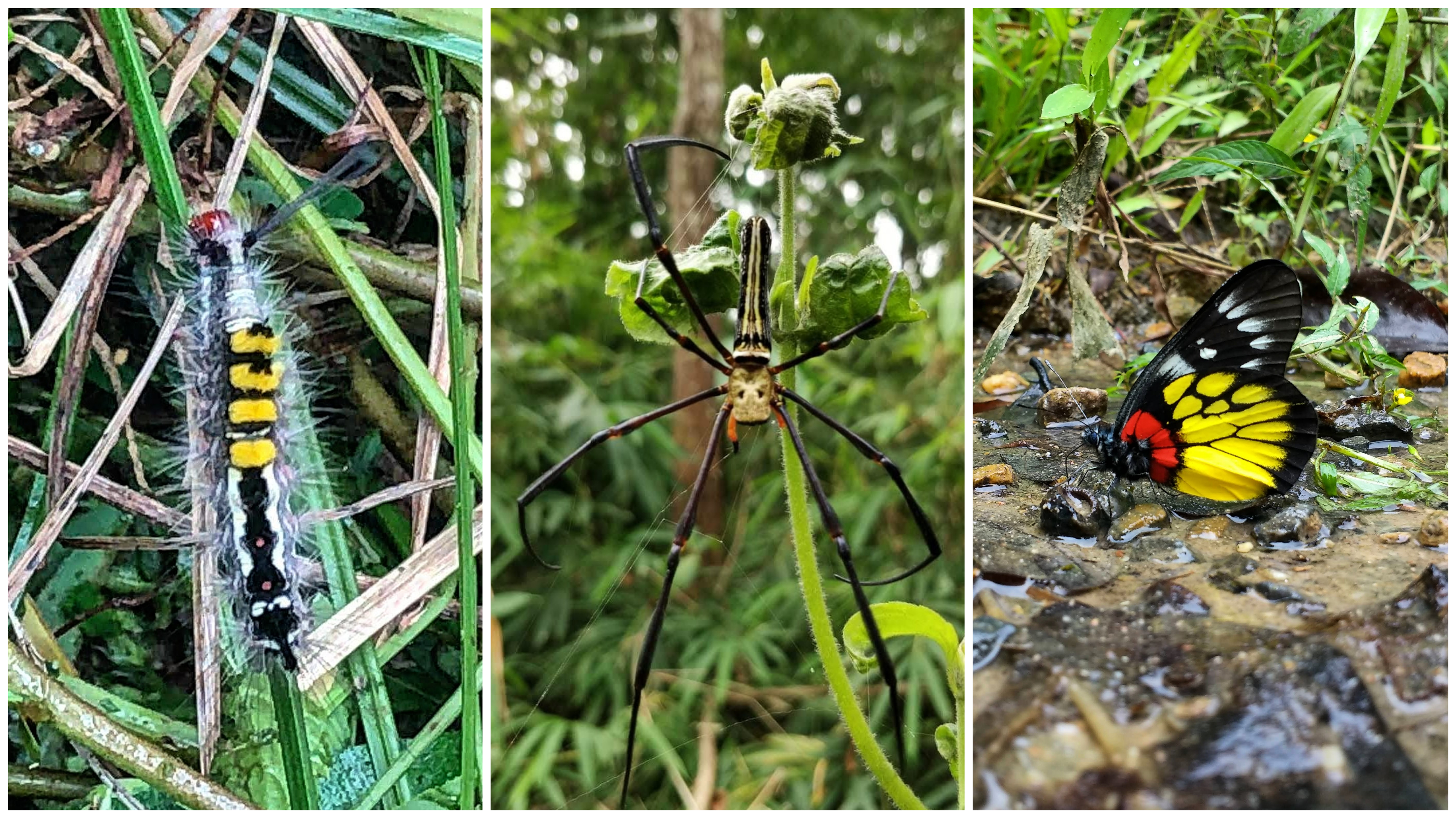
Continuing, the path loops, re-entering the sanctuary through the back. We see some impressive bugs - dung beetles, butterflies, and a giant spider strung up in the tall grasses. I spend a lot of the walk dodging the cheeky twins, Ping & Tong, who keep trying to make me into an elephant sandwich! We come to a stream, which Bella decides she wants to drink from, and when an elephant decides something, you can't argue with her! She slurps water through her trunk like a giant bendy straw, framed by ancient trees and bamboo.
Time to Relax
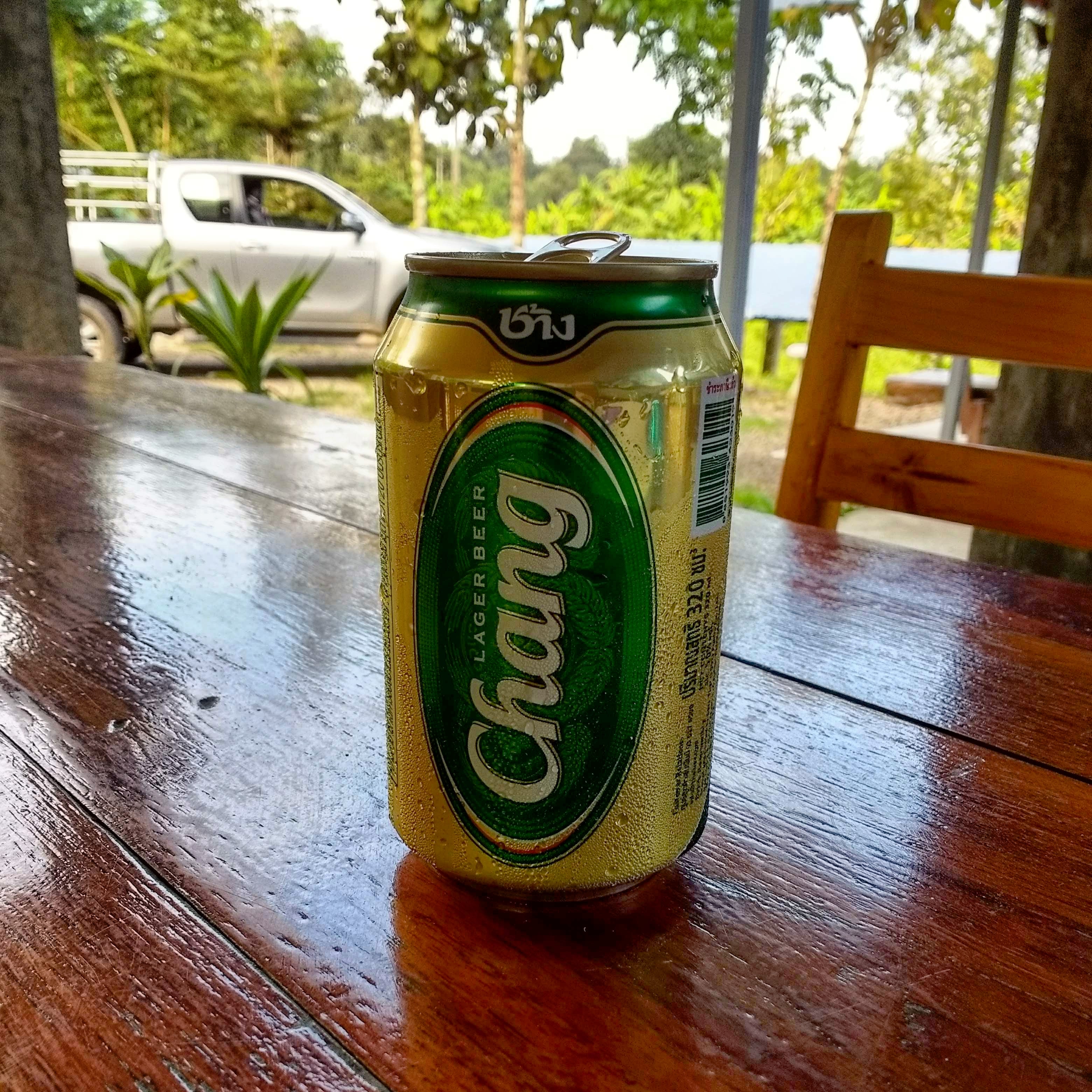
After a big day of learning and working hard, it was a luxury to have a hot shower, kick back on the veranda under the heat of the mid-afternoon sun, and crack open a can of Chang beer from the vending machine.
Chang means Elephant in Thai
The Temple in the Mountains
One particularly warm afternoon, Simon, Meli and I had just sat down, when Alex said, “Let’s go, I want to take you to the temple!” We quickly made sure we were dressed respectfully, (covering our knees and shoulders) and we piled into the trailer, beers in hand. It was about a 40 minute drive, climbing narrow mountain roads, winding through old villages, beneath the deafening hum of cicadas. Panoramic views and waterfalls passed by on each hairpin bend, until we reached the mountain-top village. A pack of stray dogs chased us through the enormous entrance archway into the precinct, and as we passed, a local monk in an orange robe shouted, “where are you from?” Meli, Simon and I all responded with our respective countries, and then Alex shouted “Thailand!” from the driver’s window, making the monk laugh.
Wat Phra Phutthabat Si Roi – Ubosot (Ordination Hall)
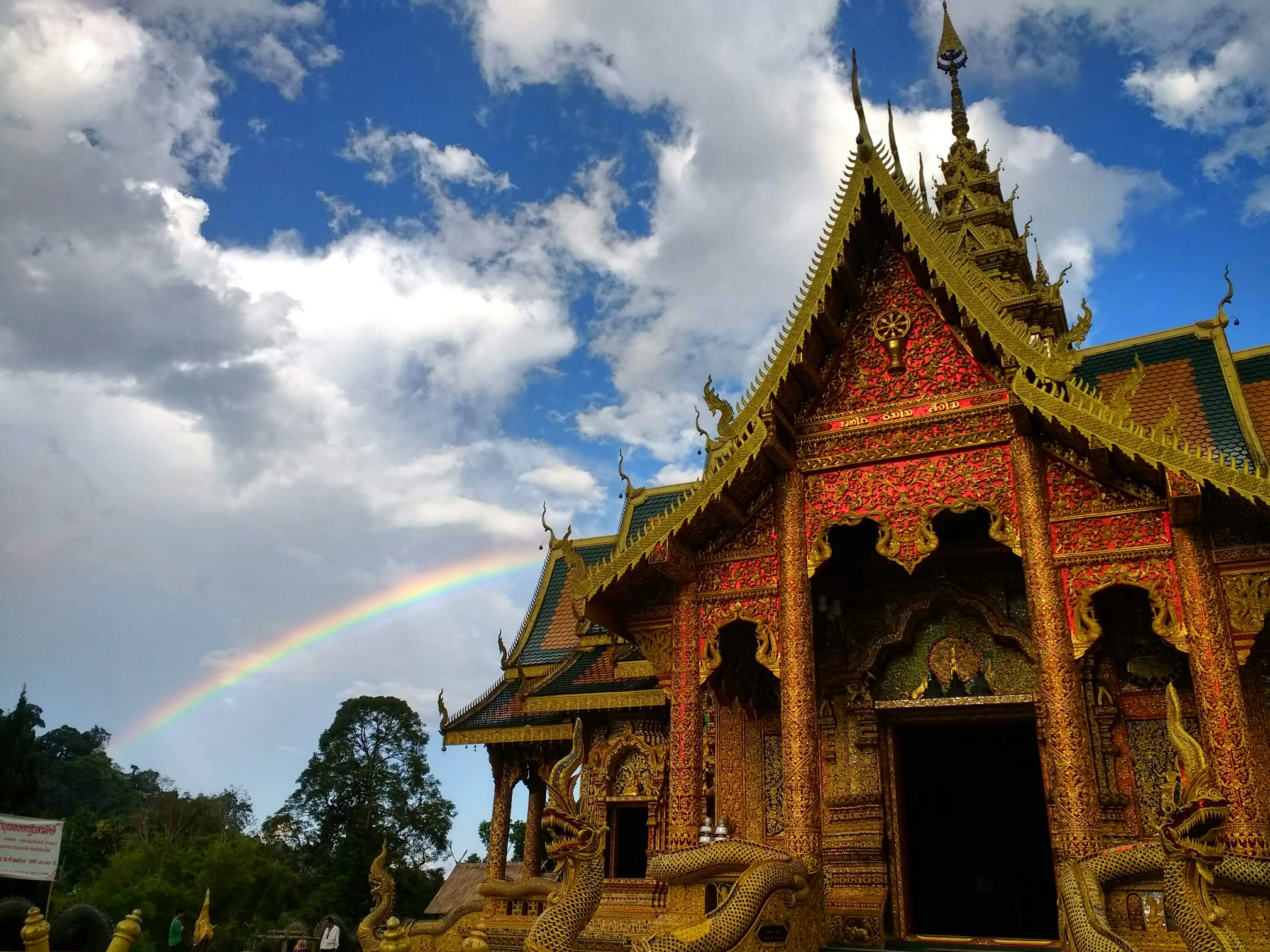
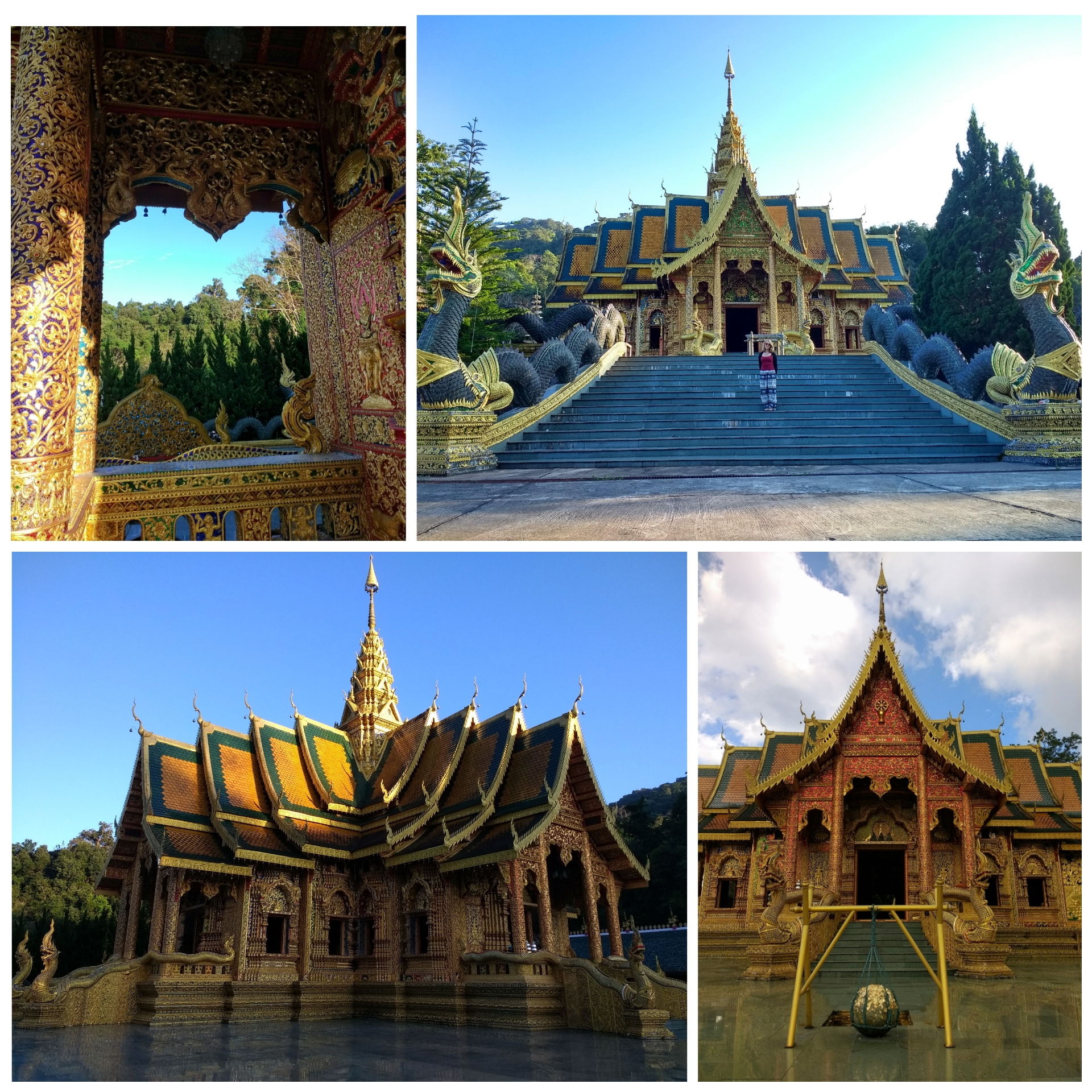
“Wat Phra Phutthabat Si Roi” is dedicated to the four sacred footprints of Buddha, and is said to be a perfect example of a Thai temple. We visited the ‘Ubosot’ or Ordination Hall, (place of mass worship and ritual ceremonies.) The architecture is incredible, with multiple tiers, smothered in jewels, and guarded by enormous, shimmering basilisks at every corner. It was very quiet, just the cicadas in the distance; the forest swaying gently, and a rainbow streaked the sky behind as we pulled up, adding to the atmosphere.
The Ubosot exterior
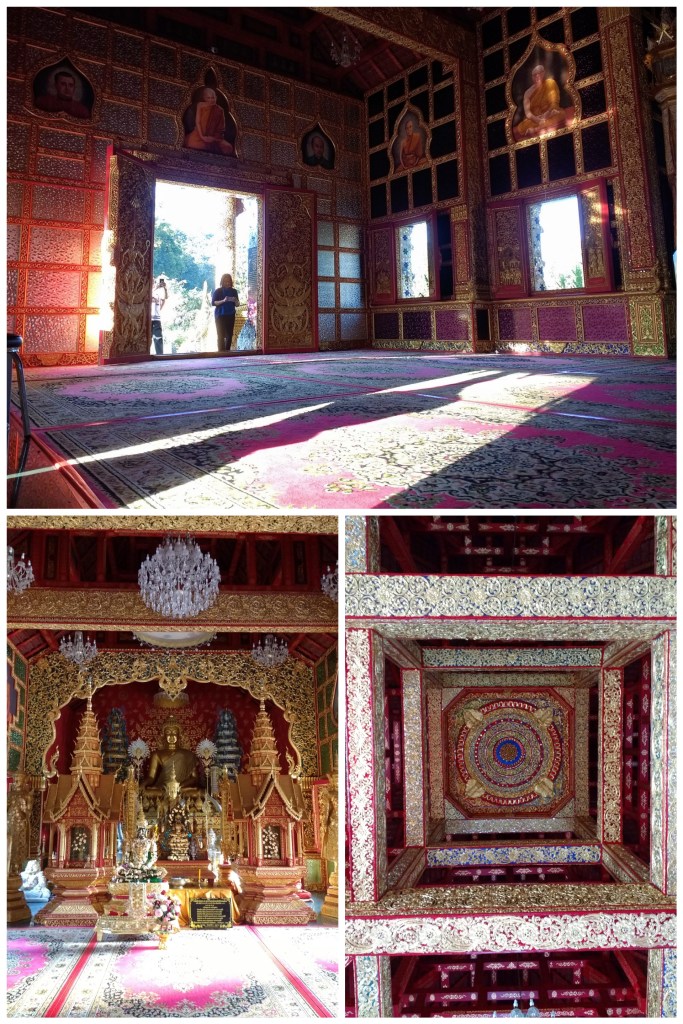
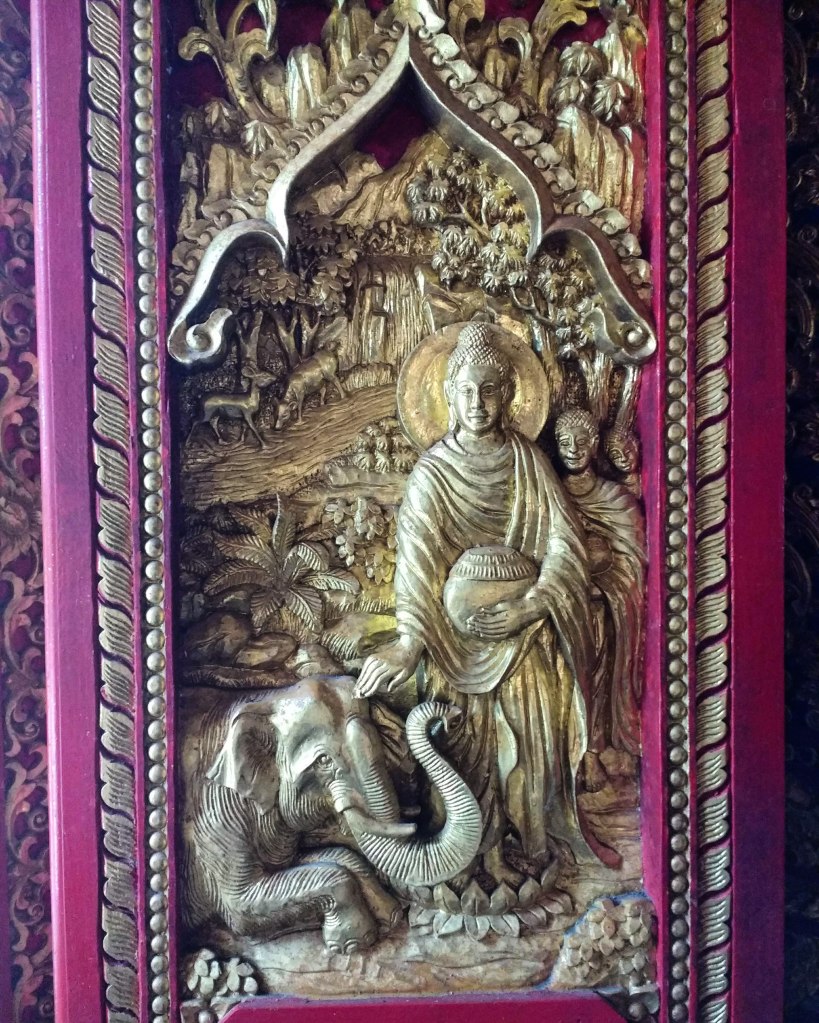
Inside was just as impressive, everywhere you looked, a thousand more intricate details. There were golden carvings on each of the windows of Buddhist figures, and Alex had brought us here to show us one in particular…
Nalagiri the Elephant
Nalagiri was a fierce elephant, deliberately angered & used as a weapon by jealous people. He was sent to kill the Buddha but when the elephant charged, he was stopped in his tracks by the Buddha’s belief in kindness and ability to suffuse all beings. Nalagiri the elephant lowered his trunk and fell at the Buddha’s feet, released of his anger. Alex told us of a later chapter he described as “Buddhist Lent”, when the Buddha spent three months in the jungle. Nalagiri remembered him, and stayed by his side during the Buddha’s exile. After three months the Buddha returned to his temple, and Nalagiri died of a broken heart.
Alex was filled with emotion; the importance of protecting elephants ran so deep and that resonated with us. He showed us how to ring the gong, and said a prayer before we went on our way.
Evenings of Leisure
Aside from making sure the elephants had enough food at dusk, the evenings were all about socialising, eating, drinking and having fun! Some nights Alex would take us to the market to buy ingredients for dinner, and then we’d all cook together back at the park kitchen.
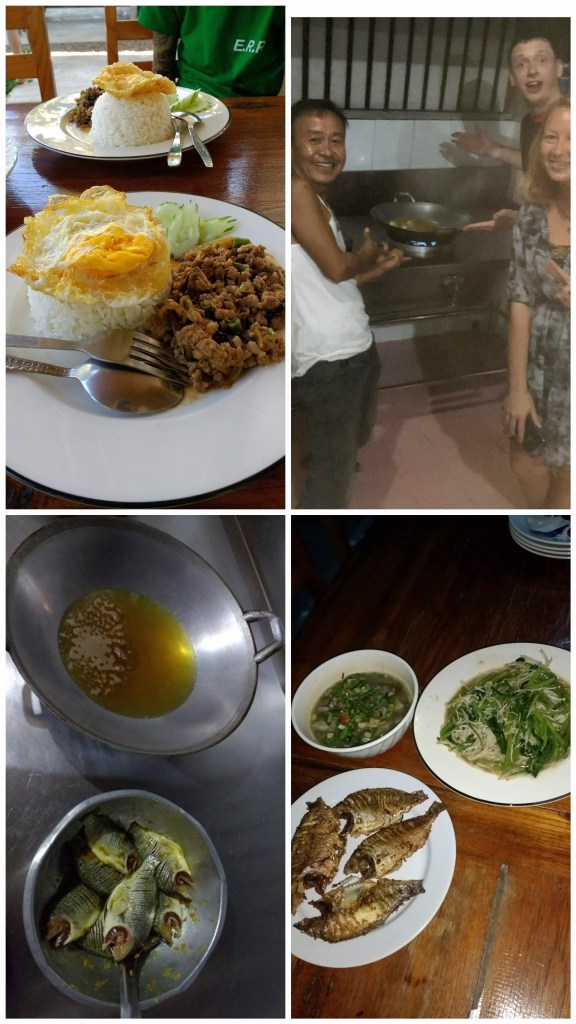
We learned how to cook traditional home dishes: fried black fish, garlic & onion salad, tomato, chilli & fish sauce soup, and rice noodles, using a pestle & mortar and a wok. We toasted our dinner with a tot of Hong Thong Whiskey! Also pictured is a classic Pad Kra Pao (Thai Basil Beef) which we had for lunch.
Other nights we had Pad Thai with the locals in the village, or street food banana pancakes. We were introduced to Alex’s friends and spent an evening drinking Leo & Chang beers in a local bar, with dried fish and chicken feet snacks! We even went to a party with an exquisite buffet, dancing ladies, many drinks, and a strange raffle where everyone won cuddly plush elephants!
Party Food
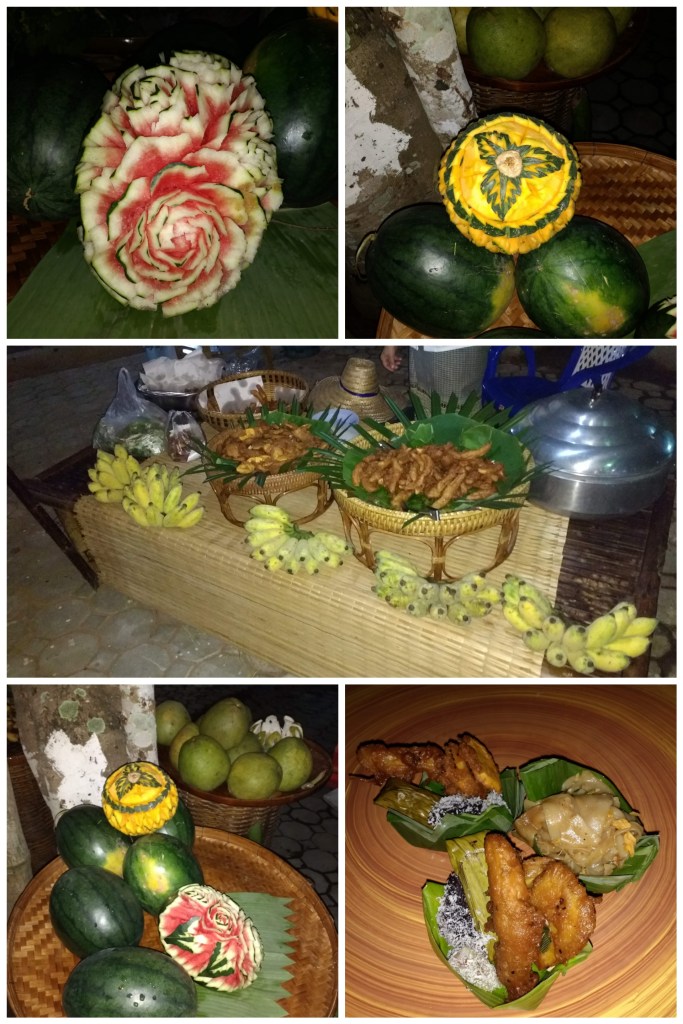
Fruit carving is an ancient Thai tradition, which was once performed exclusively for Royalty, nowadays they can be carved for any special occasion. Other treats are fried banana, Pad Thai, and coconut, sugar & rice starch sweets, served on banana leaves.
Tour Guide for a Day
At the end of our E.R.P experience, myself, Meli and Simon led the half-day tour! We spent the morning touching up on our elephant knowledge, ready for the tour bus to arrive at 8:30 am. We did an introduction, talking about the park and its efforts in protecting elephants, held a little Q&A session, and then took the guests to meet and feed the elephants. We got the group chopping sugar cane with machetes, (demonstrated by one of the real tour guides) fed it to the elephants, then took the guests down to meet Bella who was chilling under the shade. There were a lot more questions about Bella, her injury, and her mothering instincts towards Lanna, which I really enjoyed as I felt I’d bonded well with Bella. It felt terrifying and awesome all at once; we were supervised the whole time, and the staff jumped in whenever we needed help. Then we all went to the mud bath and pool for a play with the elephants.
Leaving was hard. We’d been like a family for a short time, and after going round the park to feed each elephant a pumpkin as a parting gift, Alex blessed us and our families with good luck in Thai. We rode the stuffy mini van back to Chiang Mai old city, feeling a little bit sad, like I’d acquired a lifetime of new knowledge and fond memories, but it was all over in the blink of an eye. Someday, I will visit the elephants again.
A real desert island, complete with a tropical lagoon and reef oasis, sits around 95km off the coast of Bundaberg in Queensland. Lady Musgrave Island. Part of the Bunker Group, this is the southernmost section of the famous Great Barrier Reef and plays host to a magical menagerie of sea life.
Ok, David Attenborough voice aside, this was my favourite Great Barrier Reef experience so far. Taylor and I booked the ‘Lady Musgrave Experience’ Day Tour for late February, and I was not disappointed! Between January and March is turtle hatching season, and many mother turtles are still laying their eggs through February. The tour did get cancelled on the day I’d booked it for due to dangerous offshore wind conditions (went to the Bundaberg Rum Distillery instead – never a bad thing!) The tour was easily rescheduled for the following day, at no extra cost, and went ahead as planned.
6:45am: Checked in at Bundaberg Port Marina 7:00am: Boarded the “Reef Empress” ready for departure
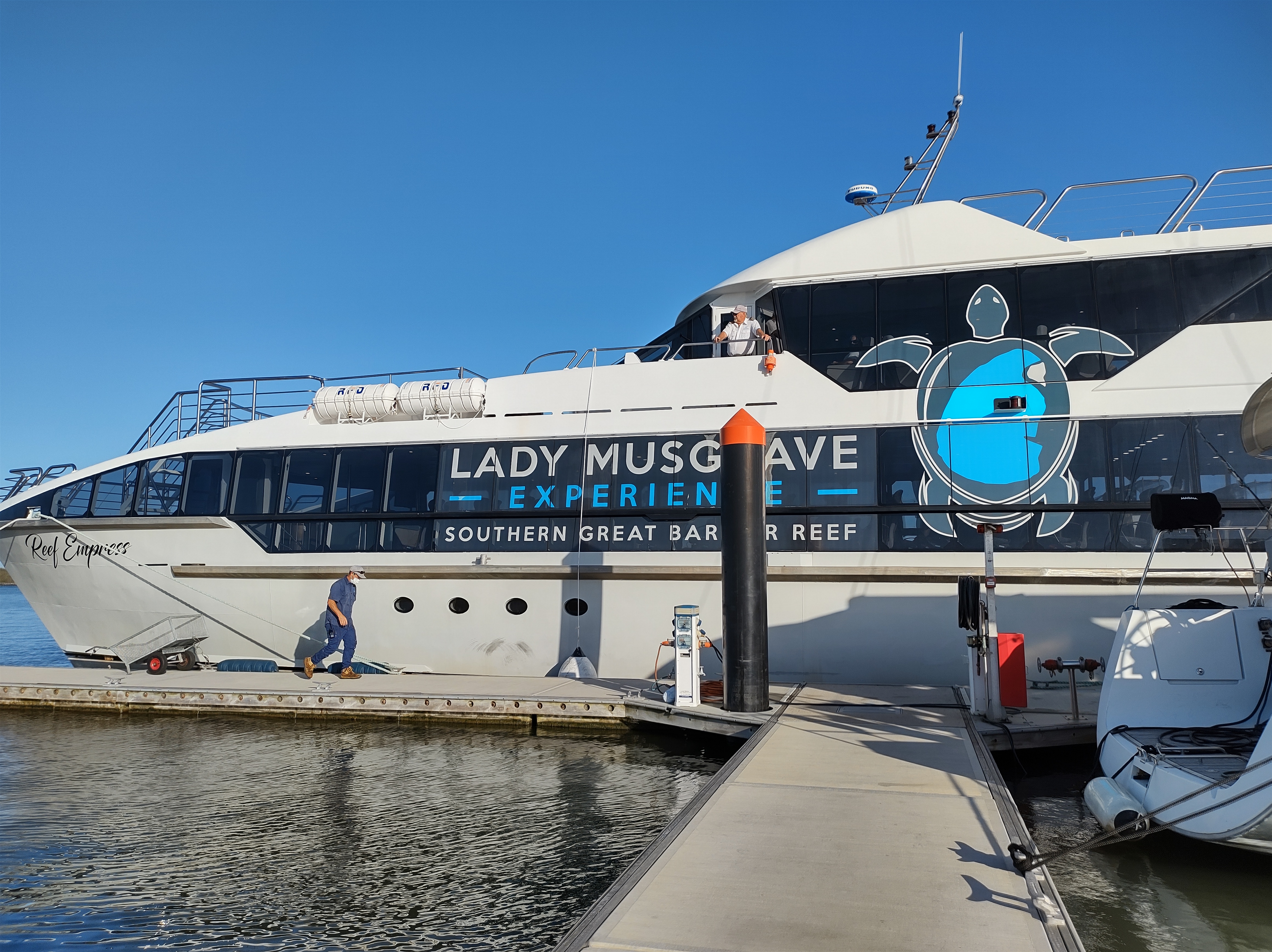
Boarding the “Reef Empress”

The morning was warm, full of promise, with the first blue sky we’d seen in days. All passengers were assigned to a group as we boarded the boat; Turtles, Clownfish and Dolphins – we were Dolphins. This was simply for the rotation of activities once we reached the island. The crossing was a rough 2 hours, the majority of passengers needed paper bags, clutching their heads and holding on for dear life. We took our ginger tablets and sat watching the crew running around cleaning patches on the floor and disposing of used paper bags. They were incredible, remaining upbeat and cheerful the whole time.
A rough crossing
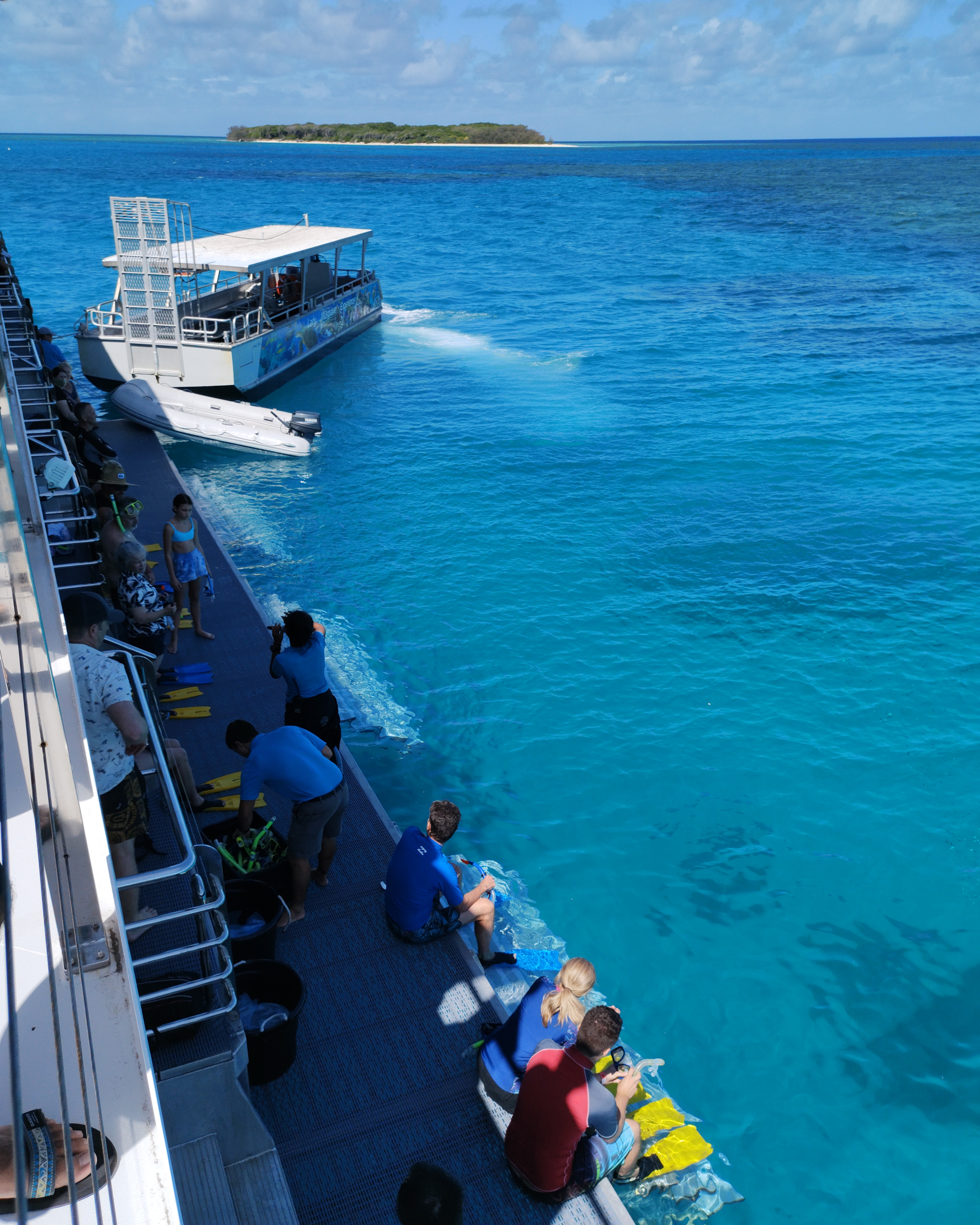

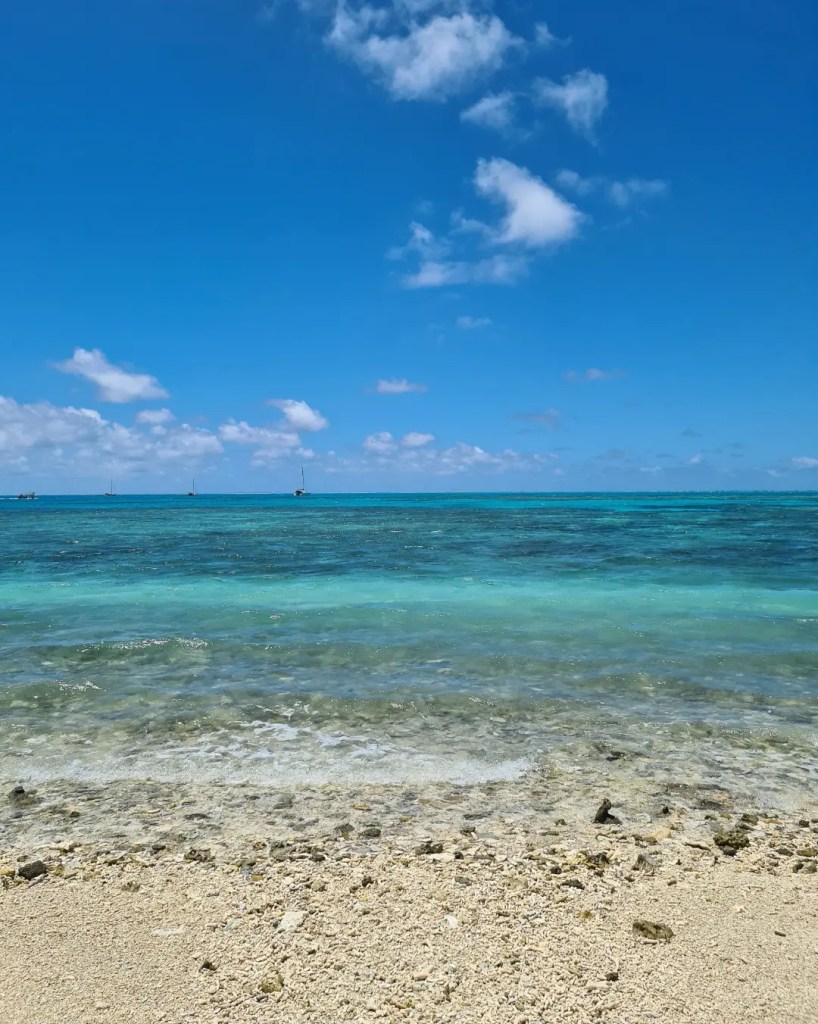
2 hours later, we pulled into a big semi-circular reef lagoon, with the gold and green island in the centre. Firstly, I need to talk about the colour of the sea. You couldn’t even paint it. It was blue, yes, a light, bright blue with stripes of turquoise and green wherever the reef lay below, but it was iridescent, backlit if you will, shining like fluorescent light!
On the Pontoon
Anyway, we stepped off the boat onto the enormous three-storey pontoon, (with an underwater viewing room below deck, and glamping style beds on the top deck for the overnight experience) and the first thing I saw as I gazed out across the reef was a turtle! It was just floating on the surface about 20 metres away, its shell all clean and beautiful.
The Glass-Bottomed Boat
After a brief snorkeling run-through, the 3 groups broke off. The Dolphin group were on the glass-bottomed boat first. Our guide was Tyson, and he floated us over the different types of coral: staghorn, brain, boulder, plated, finger…. As he was explaining that the white tips on the coral is actually regrowth, not bleaching, a Brown Booby Bird swooped low next to the boat, majestically stealing our attention.
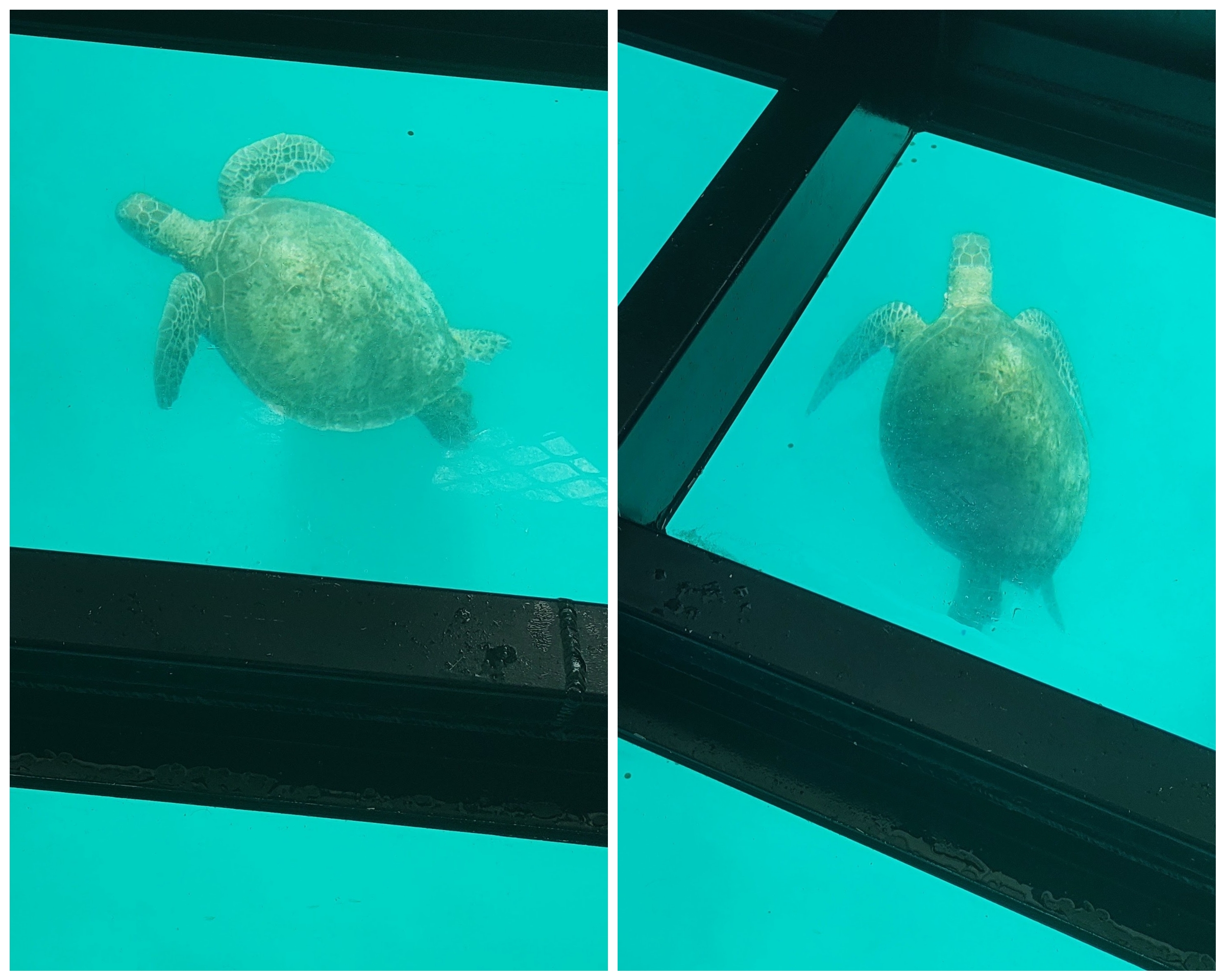
Next, Tyson steered us over a ‘turtle cleaning station’, a part of the reef where little fish nibble all the algae off the turtles’ shells. We could see the silhouettes of 4 turtles being cleaned far beneath the surface, and as we drifted over, one swam right up to the glass, giving us all a clear glimpse of its beautiful pristine shell, before popping its head up right beside the boat! Tyson said that was the closest he’d ever seen a wild green turtle and was pretty stoked himself!
Green Turtle under the Glass Bottomed Boat
Lady Musgrave Island
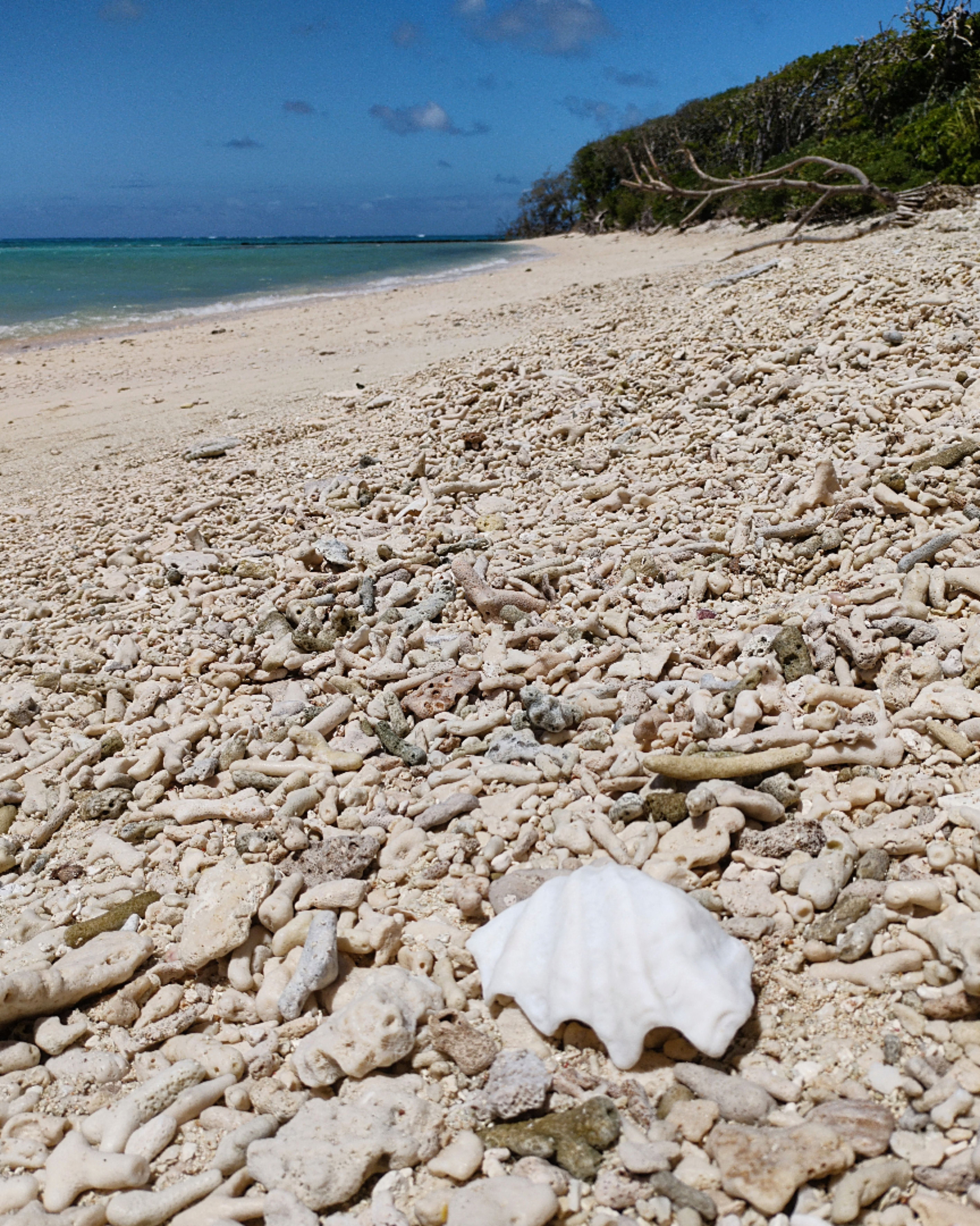
We pulled up on Lady Musgrave Island, where another guide, Jordan, met us for a walk around Capricornia Cays National Park. The sand is white, broken coral, with flecks of pink, and is so sharp you are advised to wear footwear at all times. One of the deadliest creatures of the ocean can be found on this beach – Cone Snails, which might look like a pretty, pink shell to collect, but the creature has a tiny barb that it fires through an opening in its shell, which has the ability to kill a person in half an hour. It wouldn’t be Australia if something wasn’t trying to kill you…
Iridescent Waters
Coral Beach

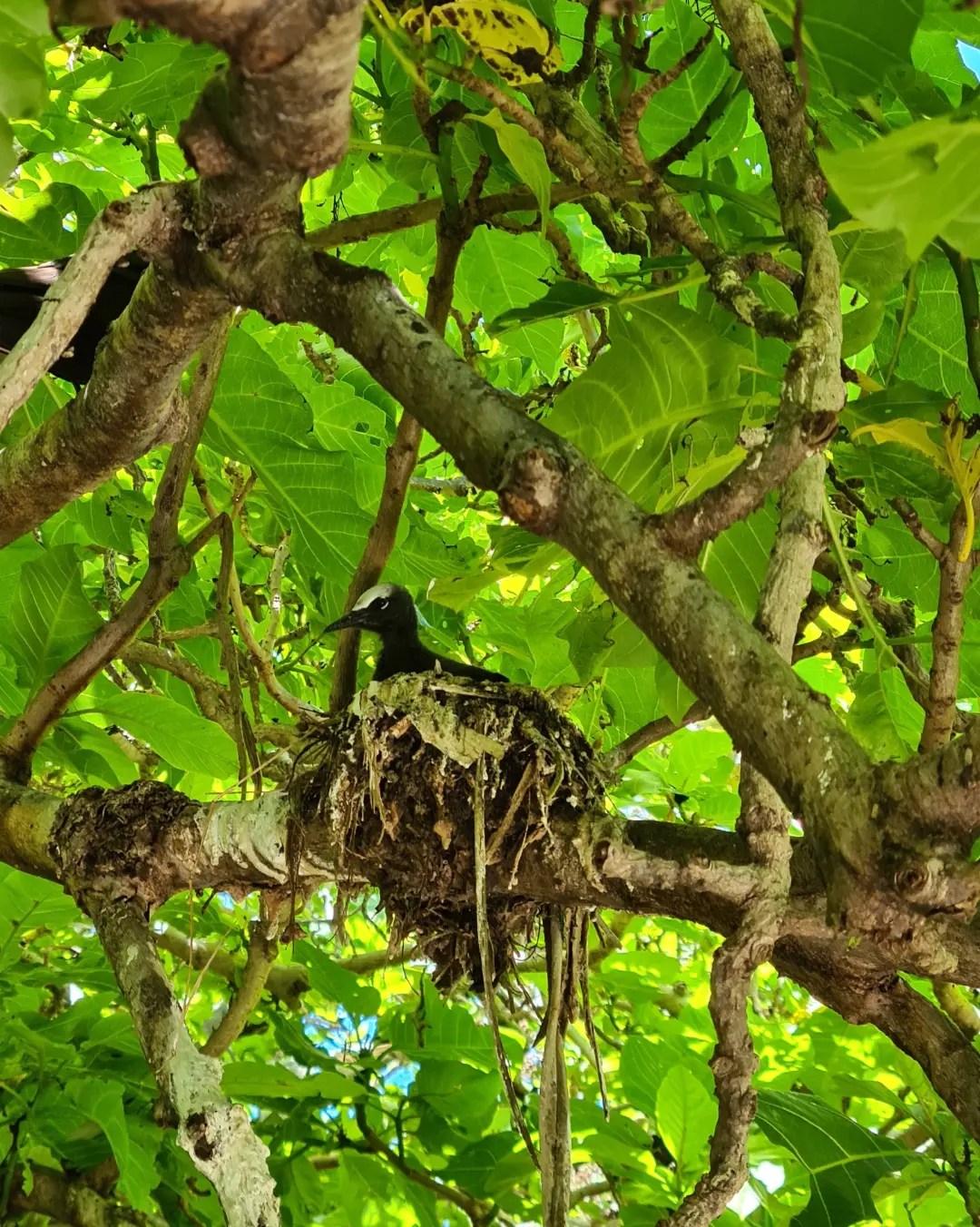
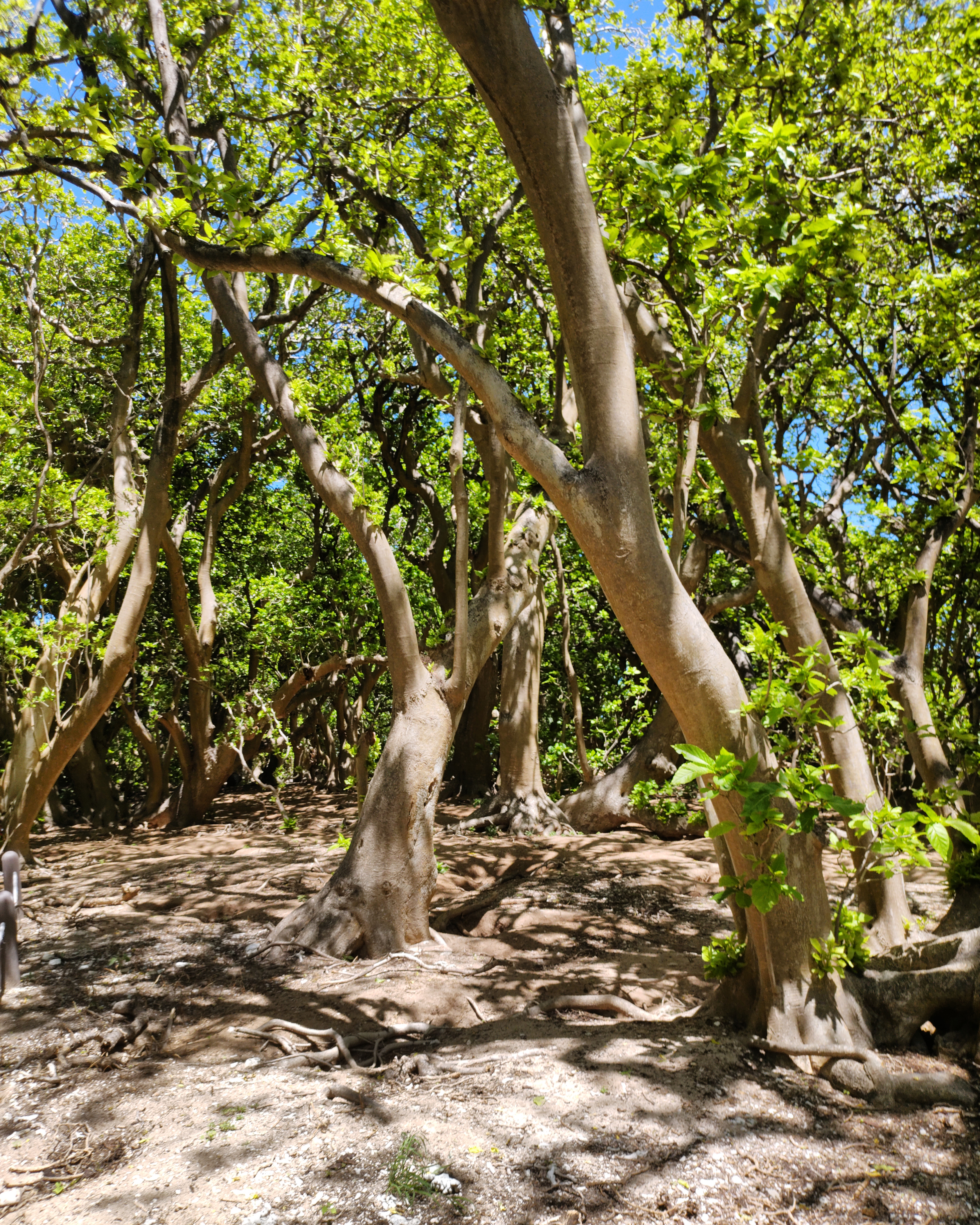
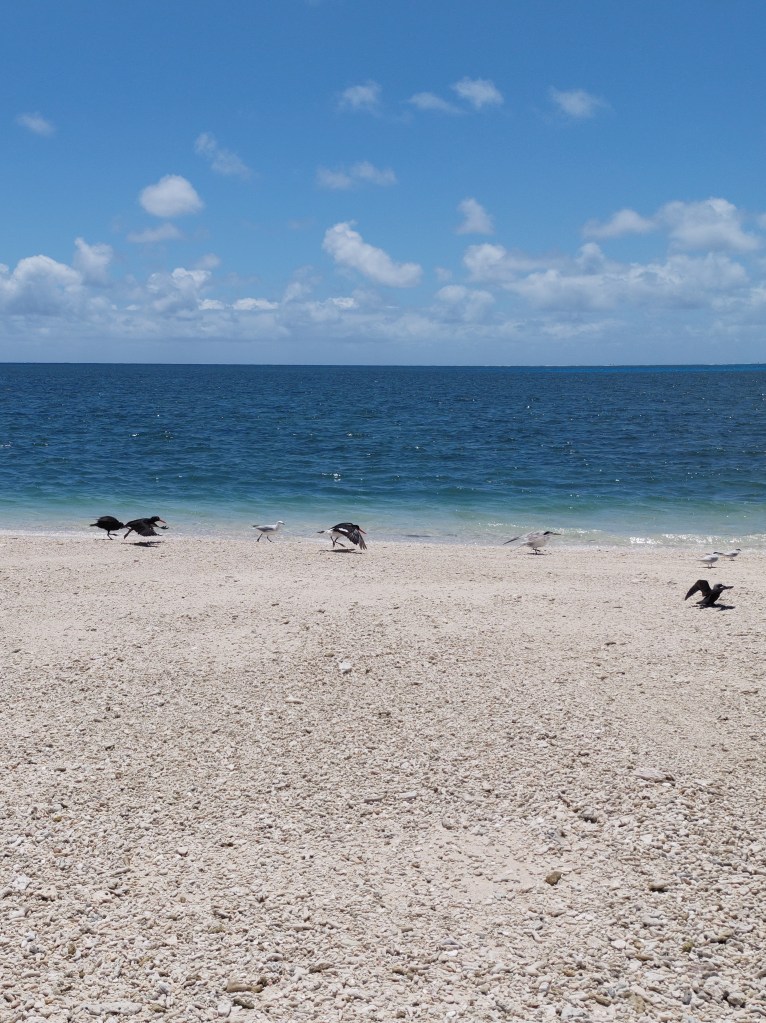
Behind the beach is a dense canopy of green Pisonian Grandis trees, and then you notice the birds. I’m not sure if the noise or the smell hits you first, but when you notice the sheer amount of little black sea birds nesting in the trees, you really get a sense of the wildness of this island. They have no predators here, and they’re everywhere, diving, swooping, pooping, screaming, and they appear to wear little white hats, hence their name: White Capped Noddy Terns. They inhabit the Pisonian forest, and are part of an intense circle of life, see, the island is basically a pile of coral; the birds nest in the trees, and their poop helps fertilise the trees. The trees also produce these sticky, sappy traps, which capture some of the Terns in a slow and sticky death, essentially using the birds as plant food. Gnarly.
The Edge of the Pisonian Forest
A White Capped Noddy Tern Chick in its nest
Pisonian Forest
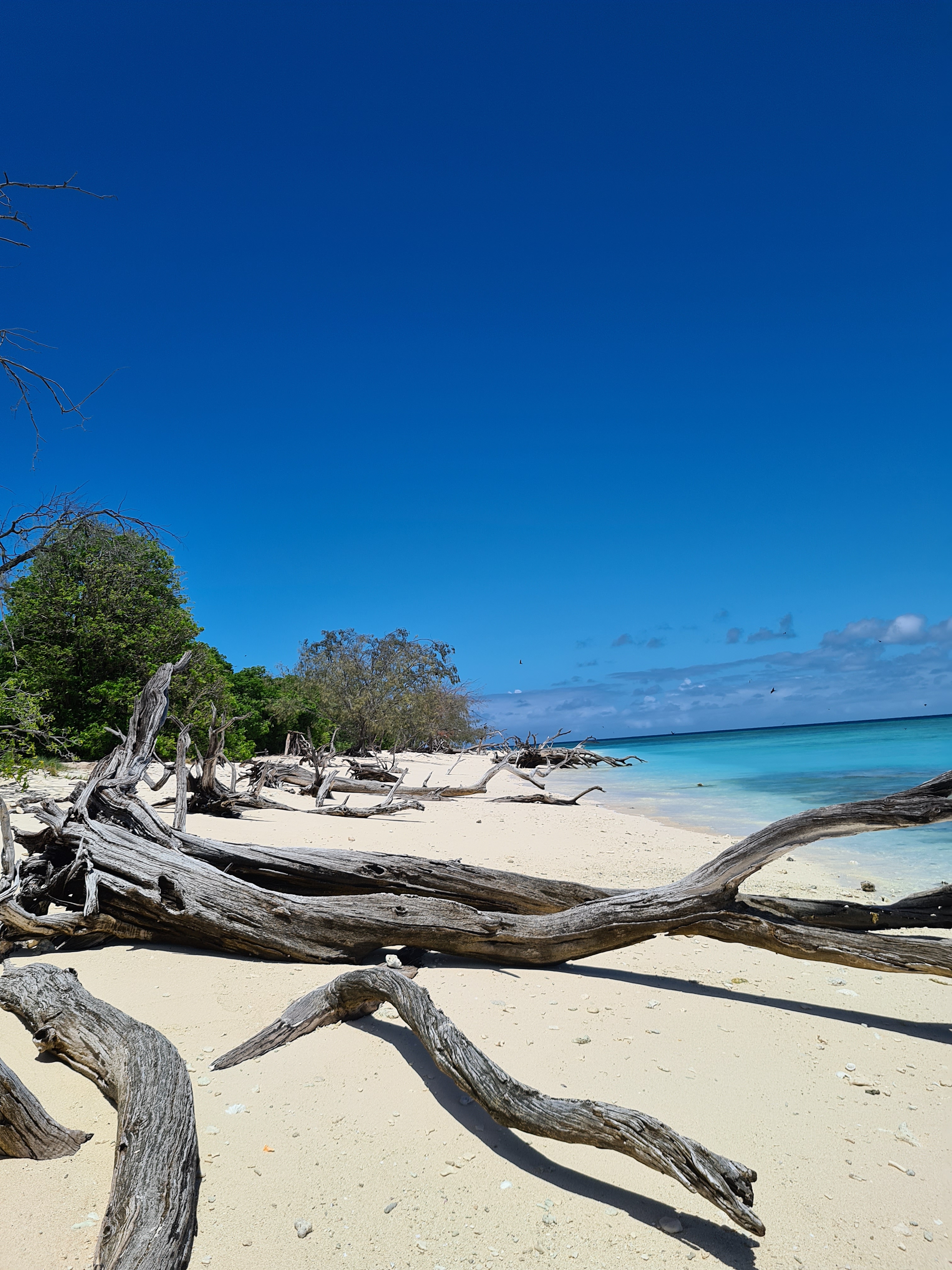
But aside from the stench, the forest was beautiful to walk through. I also spotted a couple of Buff Banded Rail birds scratching about on the ground, and some tiny Capricorn Silver Eyes darting about the branches. We came out on the other side of the island, onto the beach, where sun bleached logs litter the coral sand.
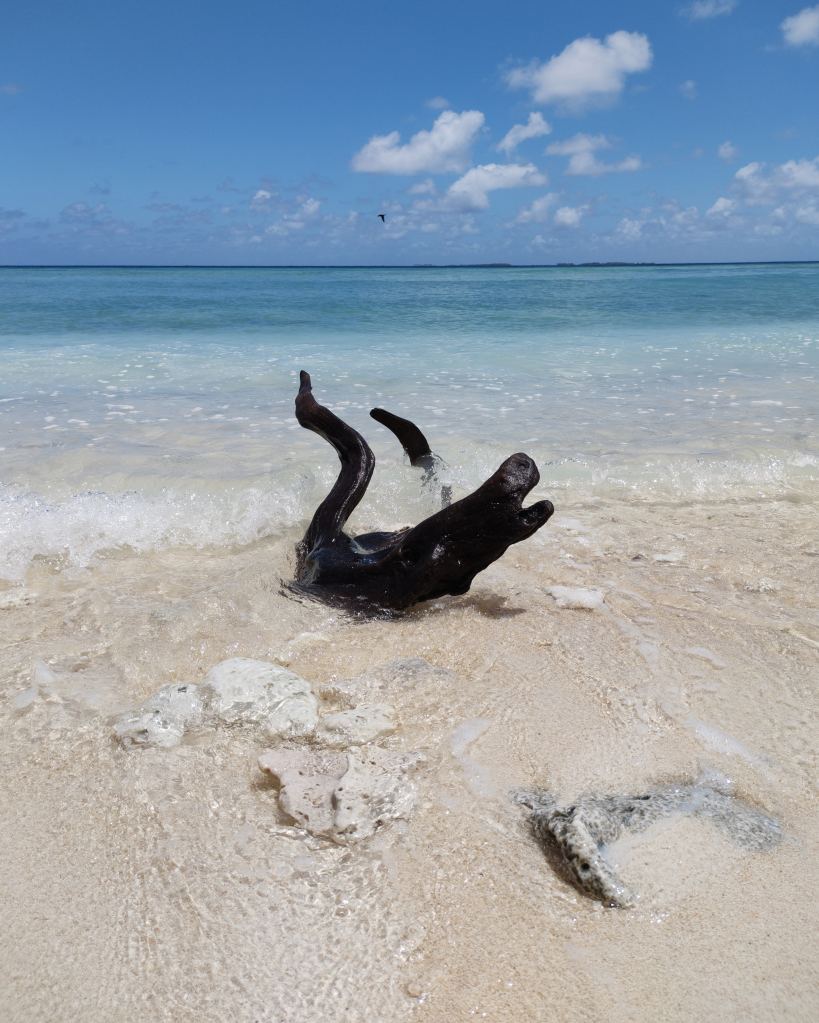
A wild beach
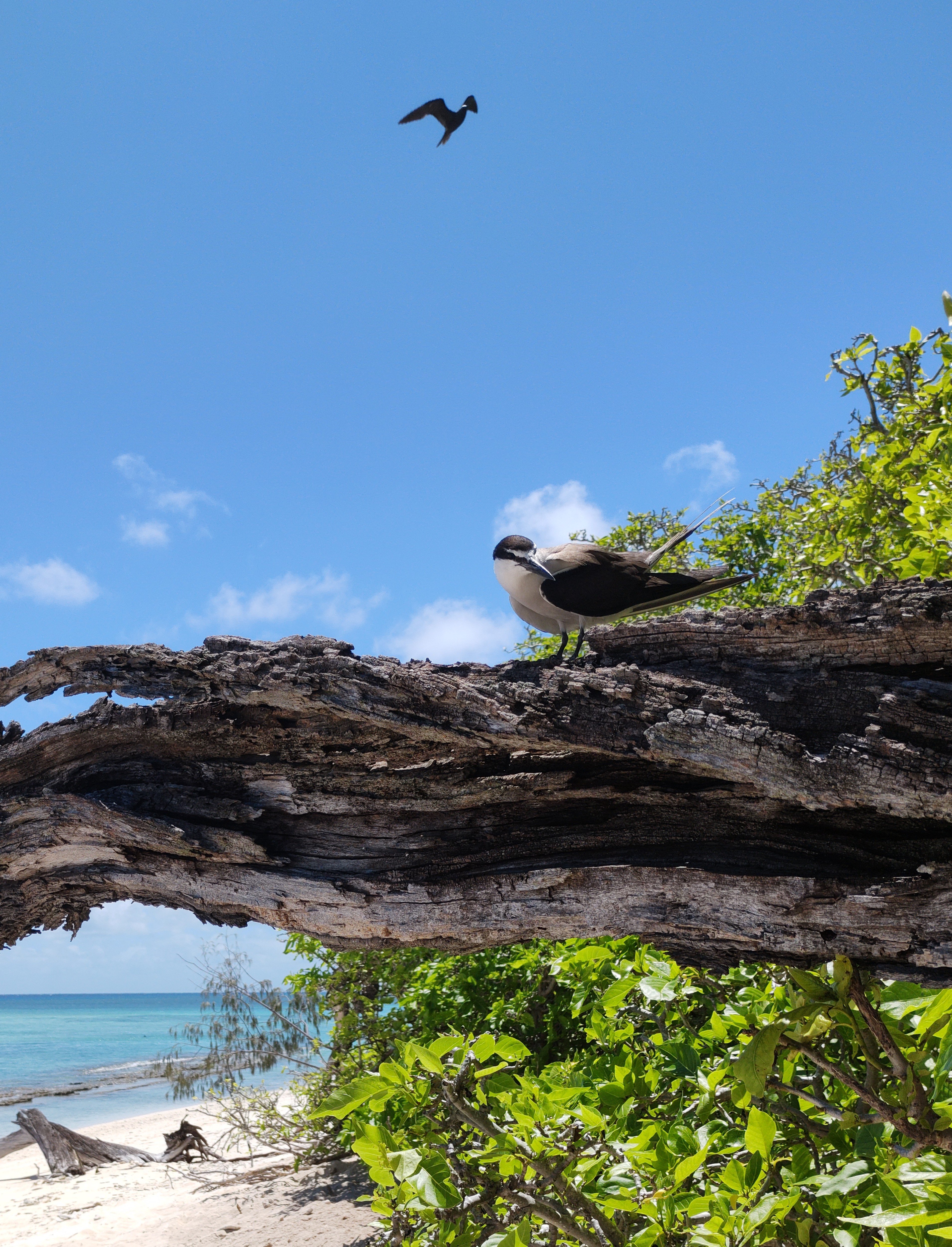
A Bridled Tern rests on a log; a White Capped Noddy Tern flies overhead
Then came a turtle, just a dark shape in the shallow water, moving closer to the beach. Then came another, and another! They didn’t leave the water, but one came so close to the shore that Jordan identified that it wasn’t big enough to be of nesting age (30), so she must have just been curious! We strolled back around the island along the beach, and hopped back on the glass-bottomed boat, back to the Pontoon for lunch.
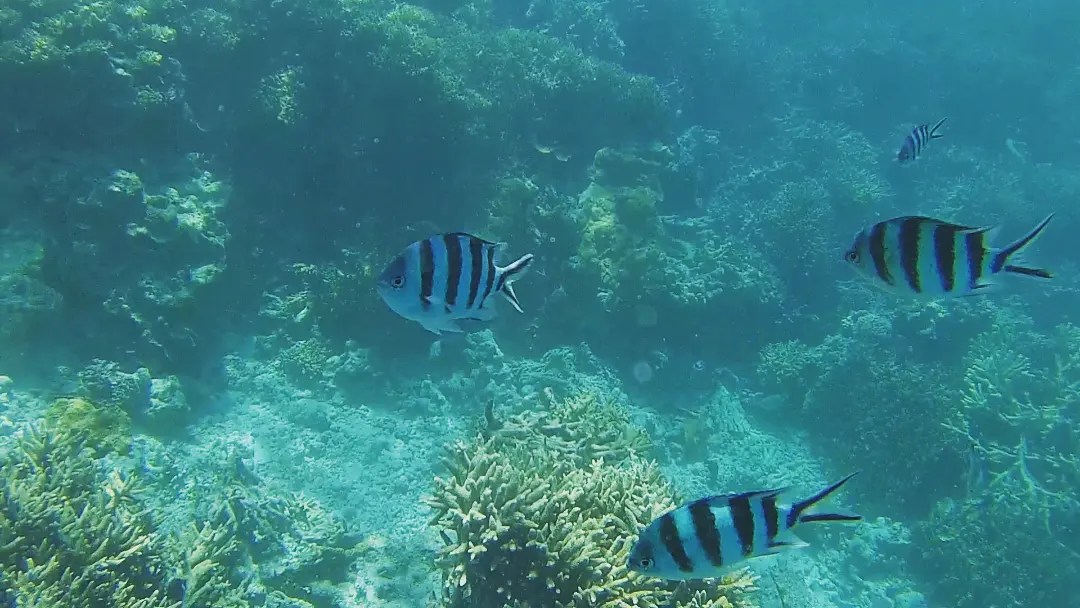
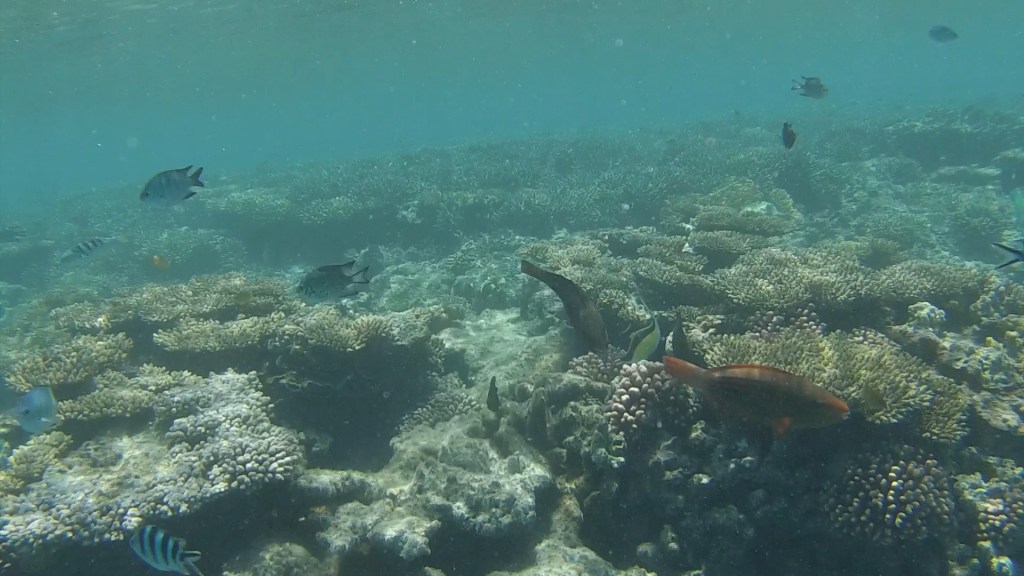
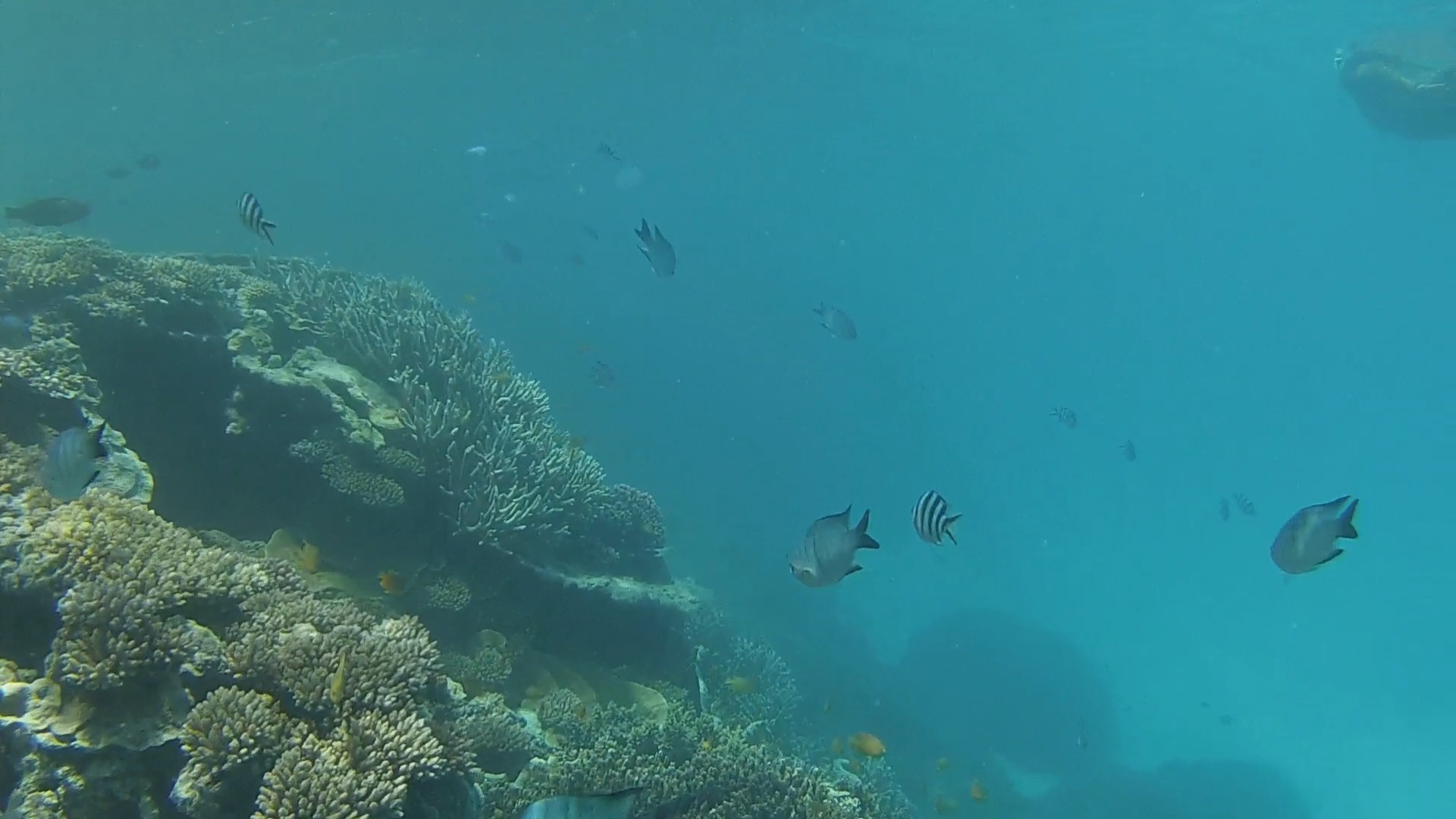
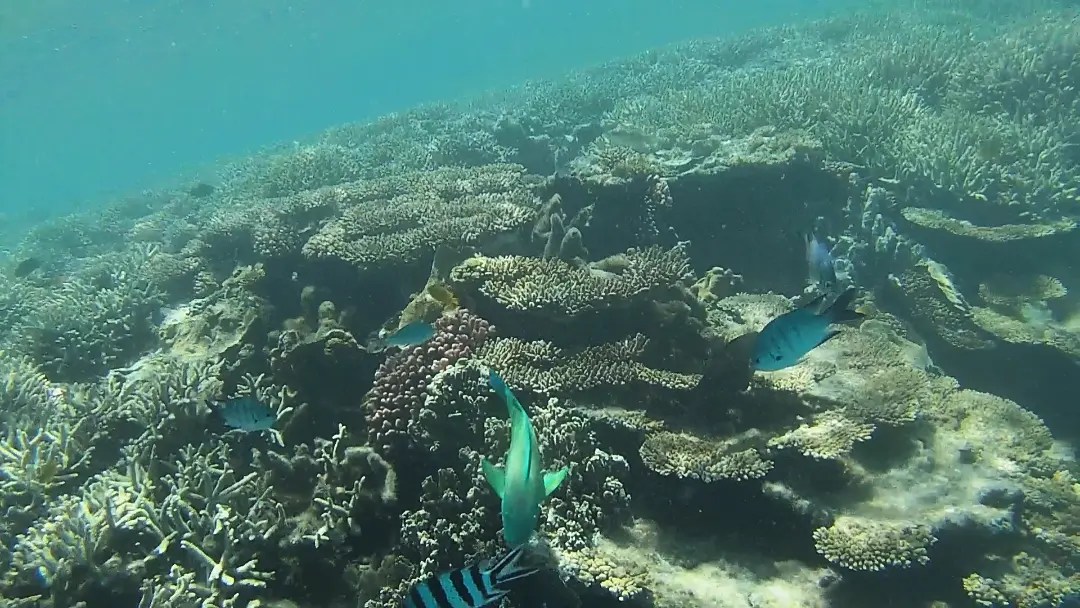
Finally it was our turn to snorkel, the part I’d been looking forward to all day. After a quick lunch of salads and cold meats, we quickly got our gear on and jumped in the reef lagoon. The first thing you see are little groups of little black and white fish, swimming for a close up of your funny goggles. As you get closer to the coral shelf, schools of tiny blue fish shimmer like a glittery curtain as they dart back and forth in unison.
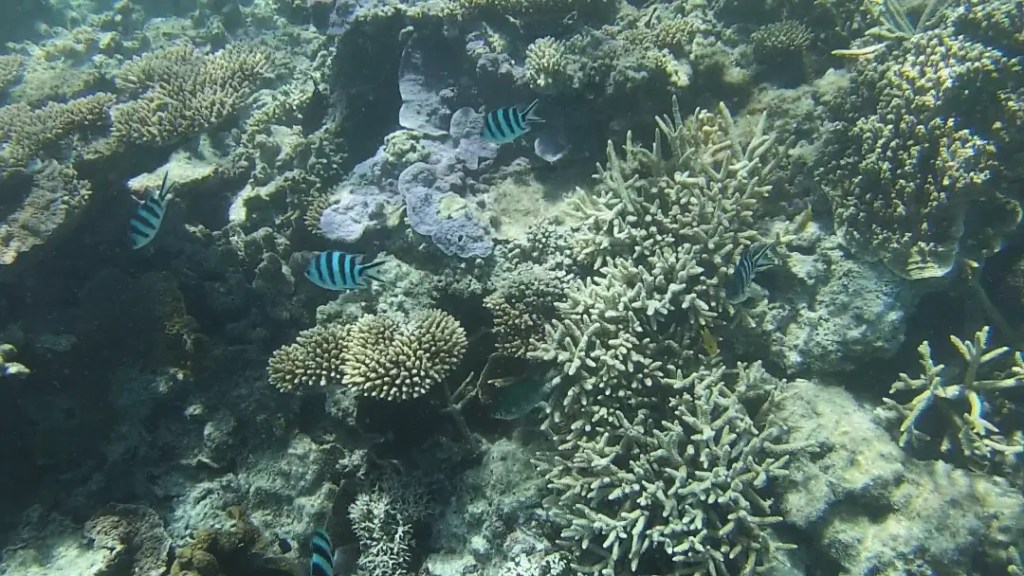
Scissortail Sergeant Fish
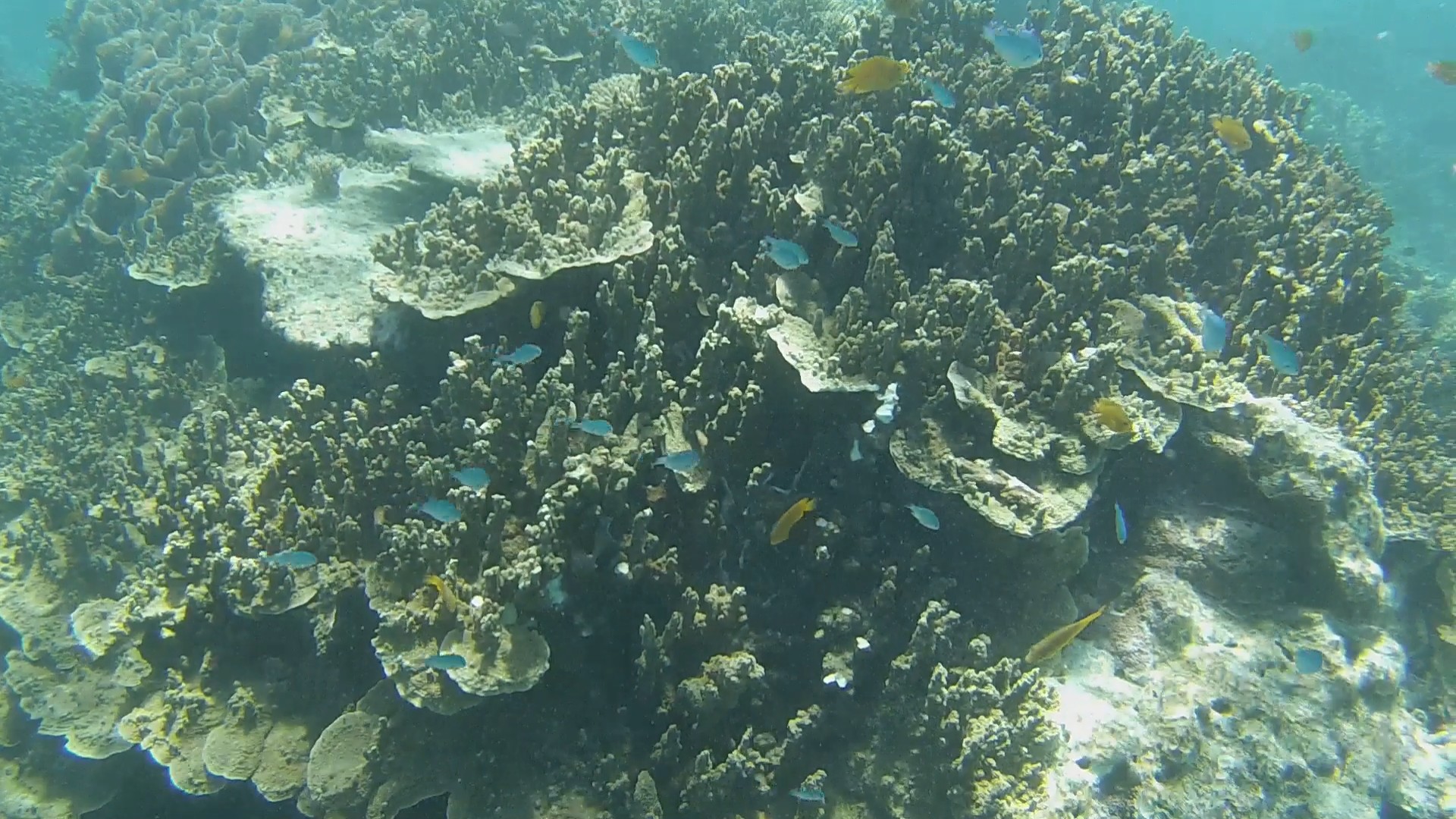
Blue Green Chromis & Lemon Damsels
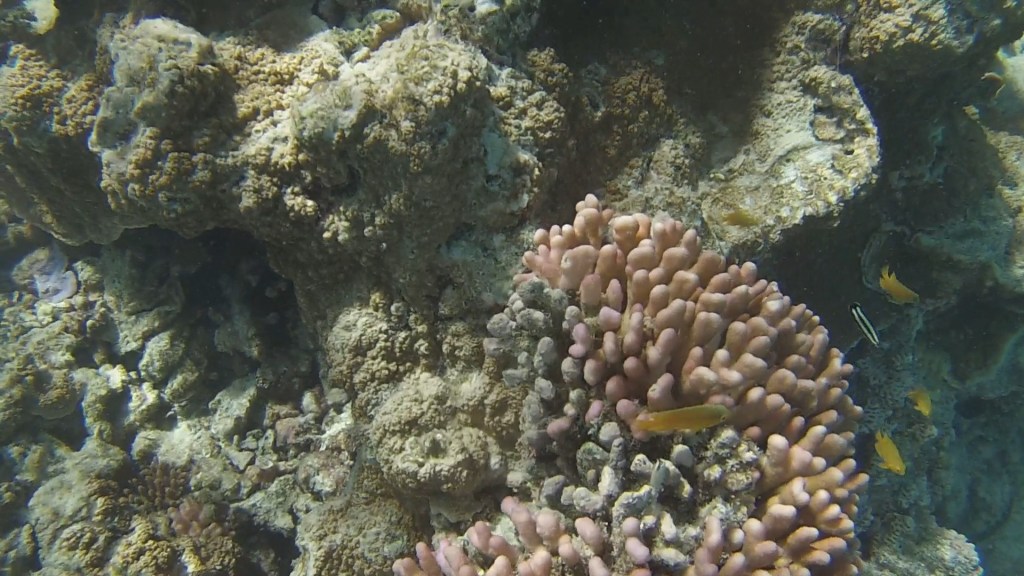
Whitley’s Sergeant Fish around purple coral
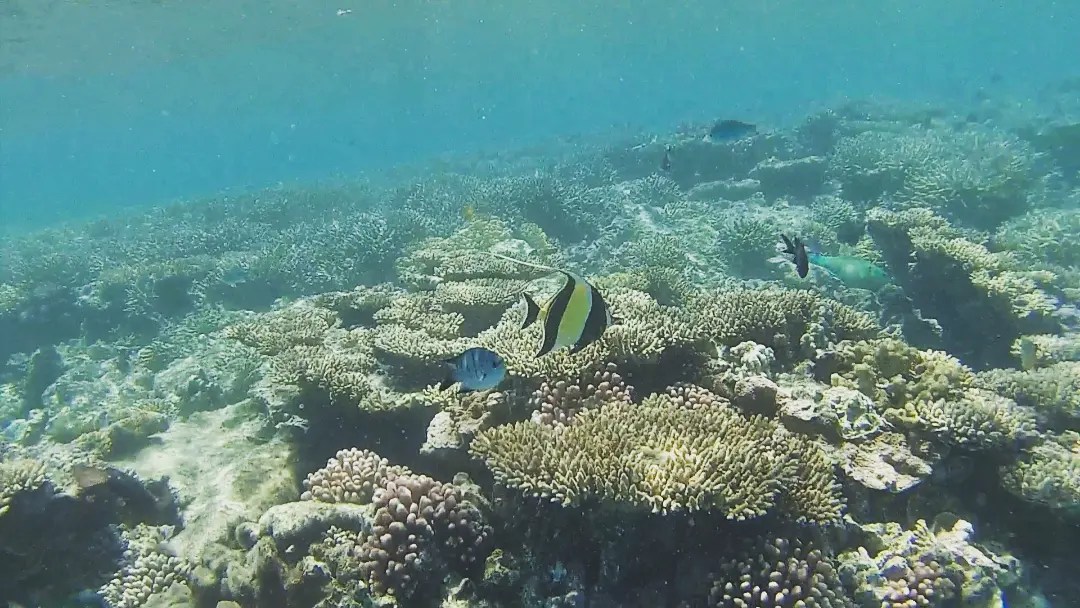
Moorish Idol
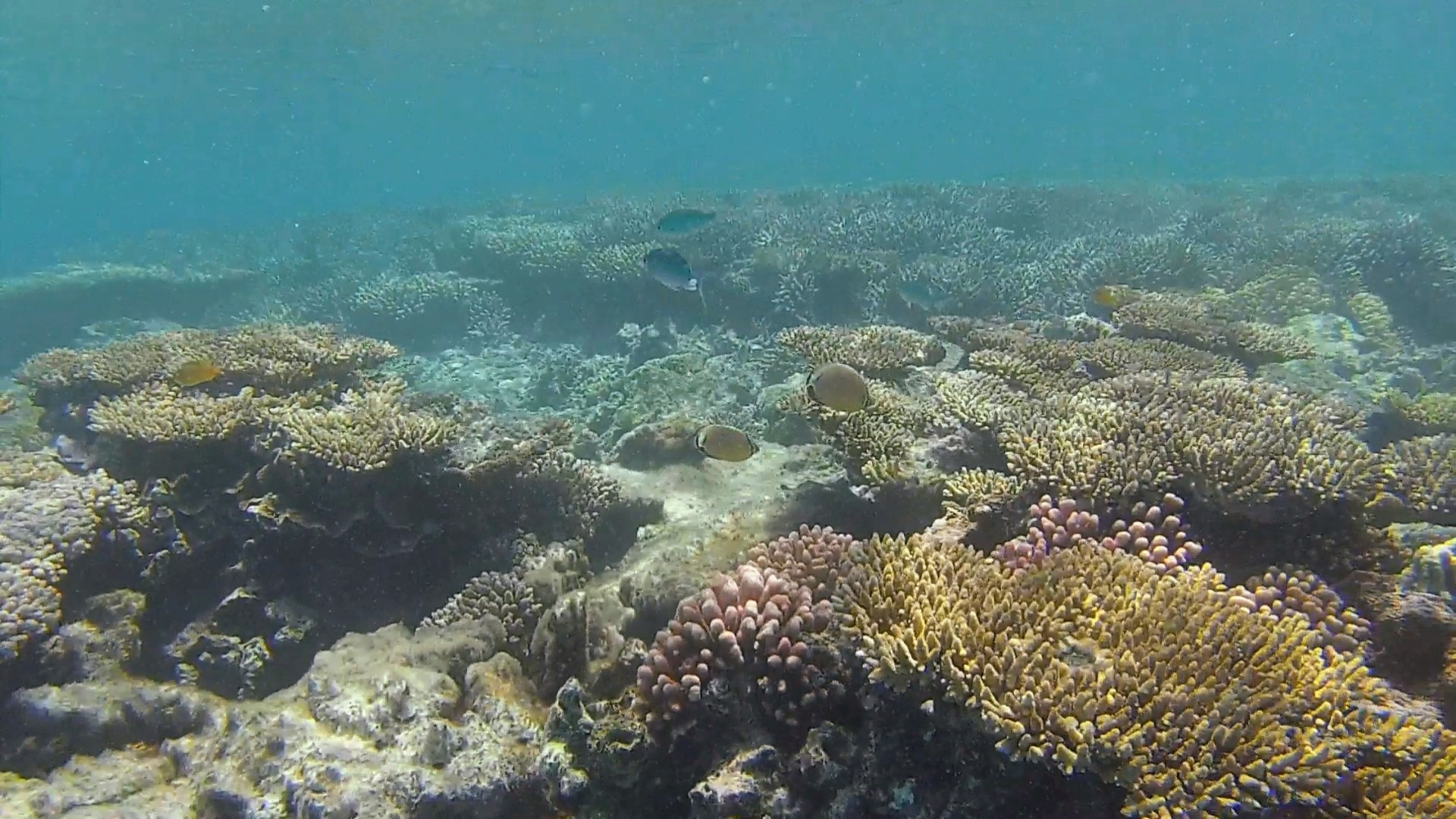
Butterflyfish
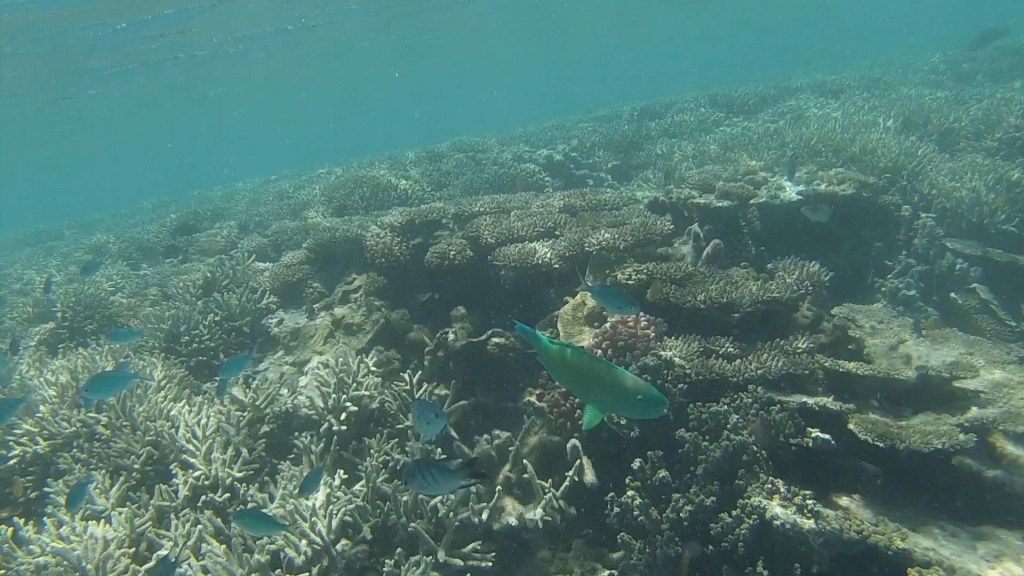
Parrot Fish have beaks that enable them to feed on the coral.
They come in a huge array of colours, you can see the orange one’s teeth-like beak.
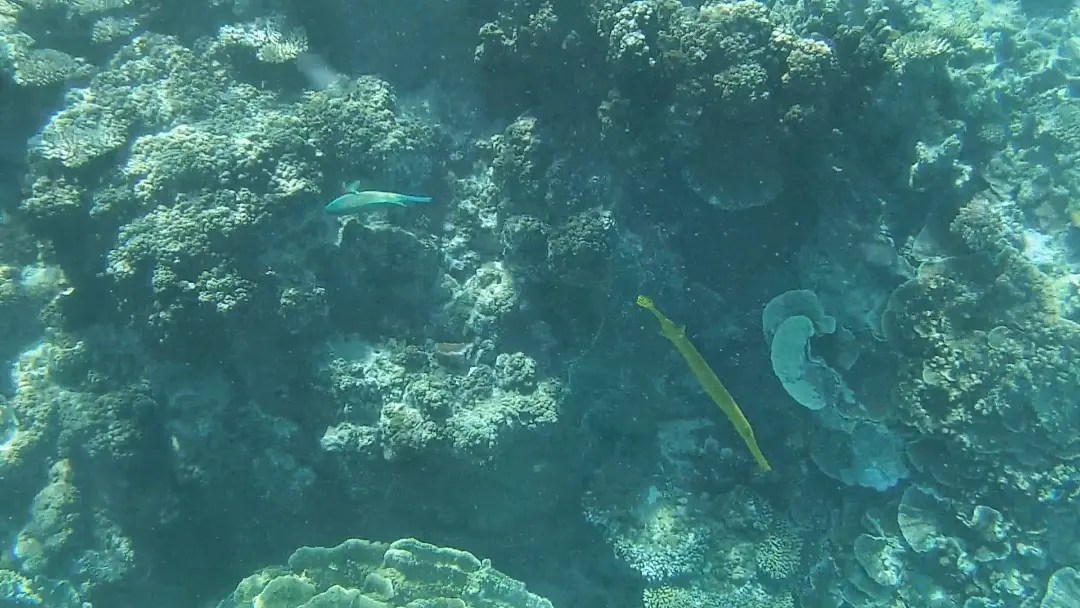
Chinese Trumpet Fish
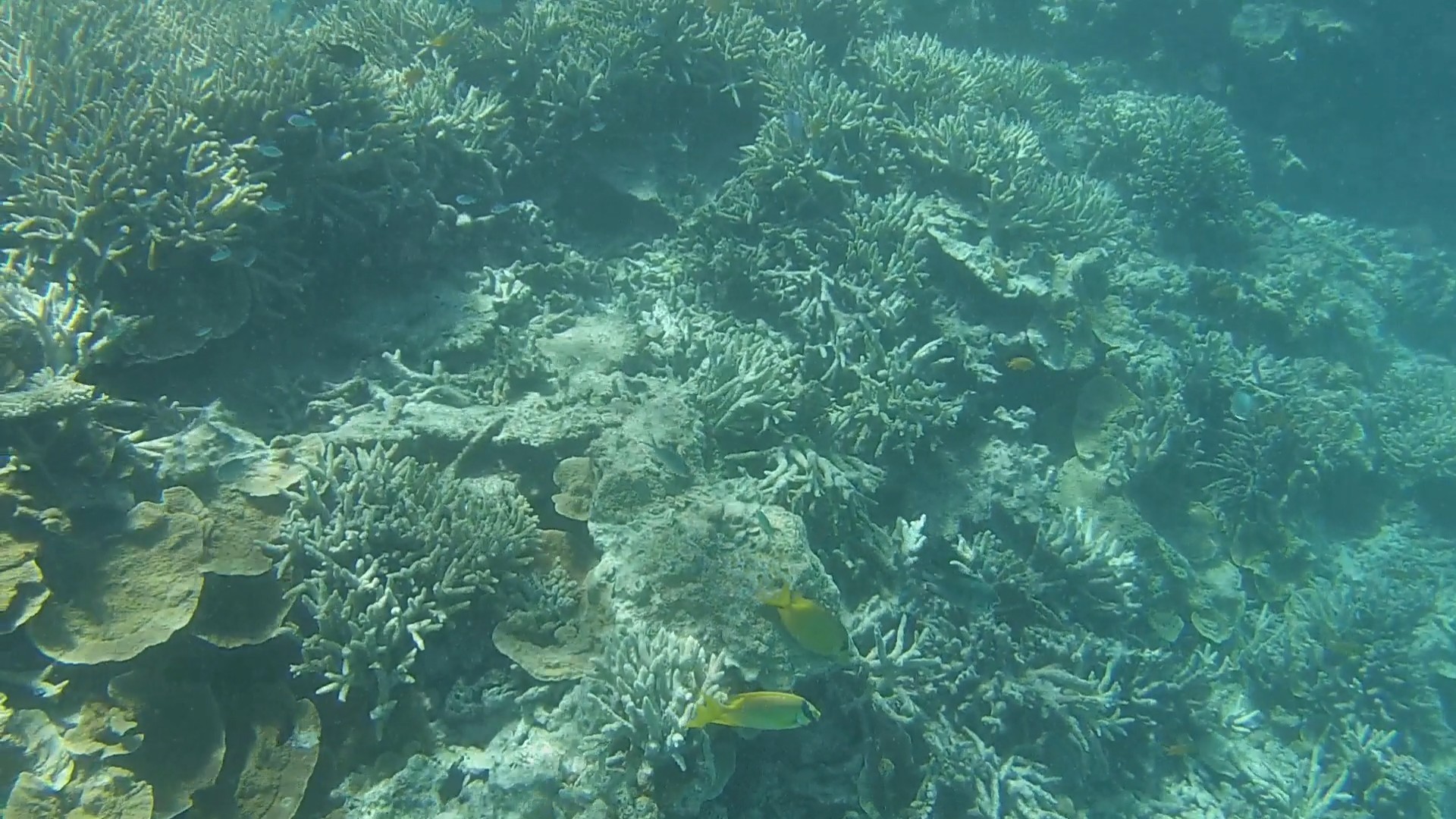
Fox Face Rabbit Fish
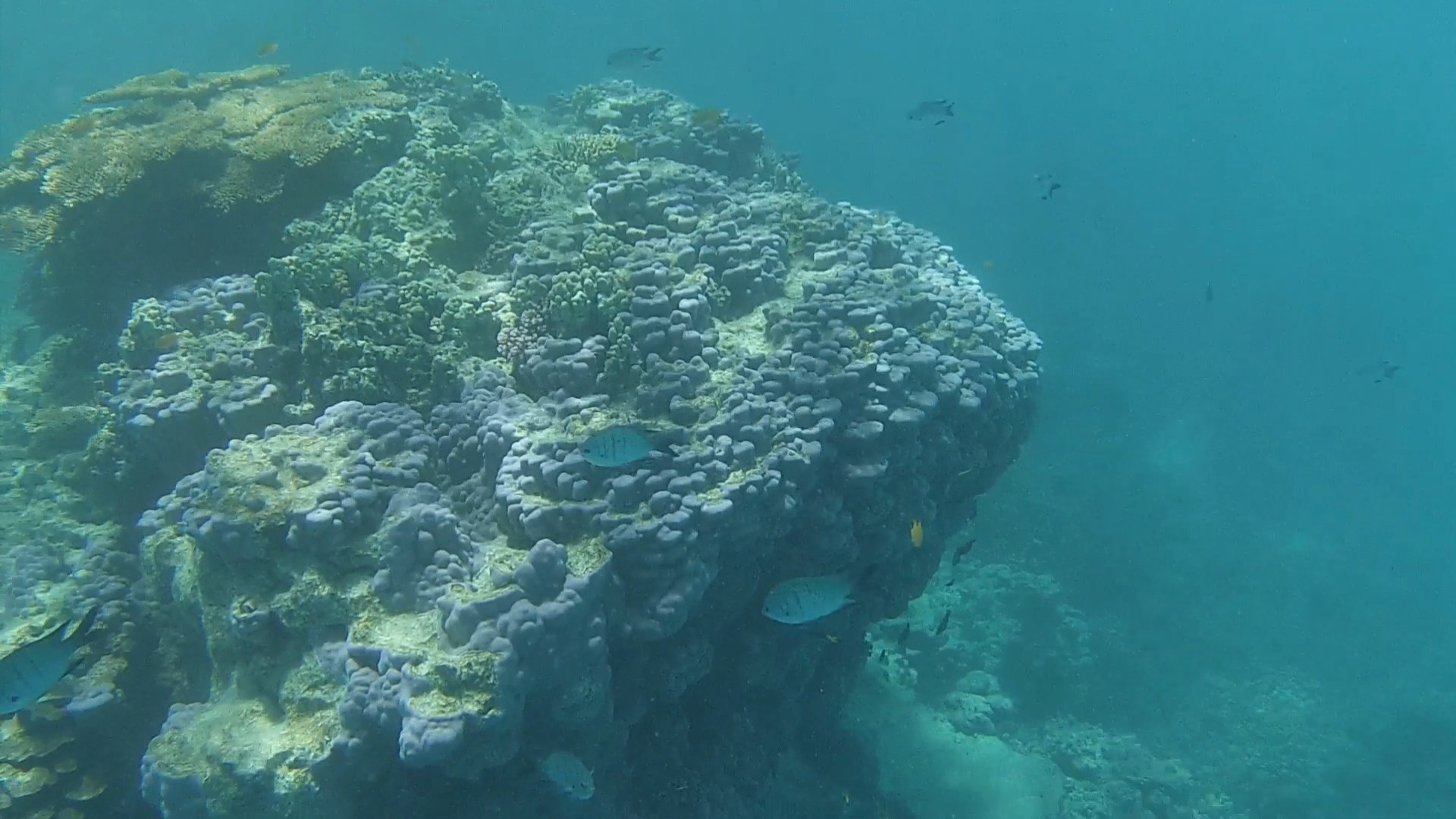
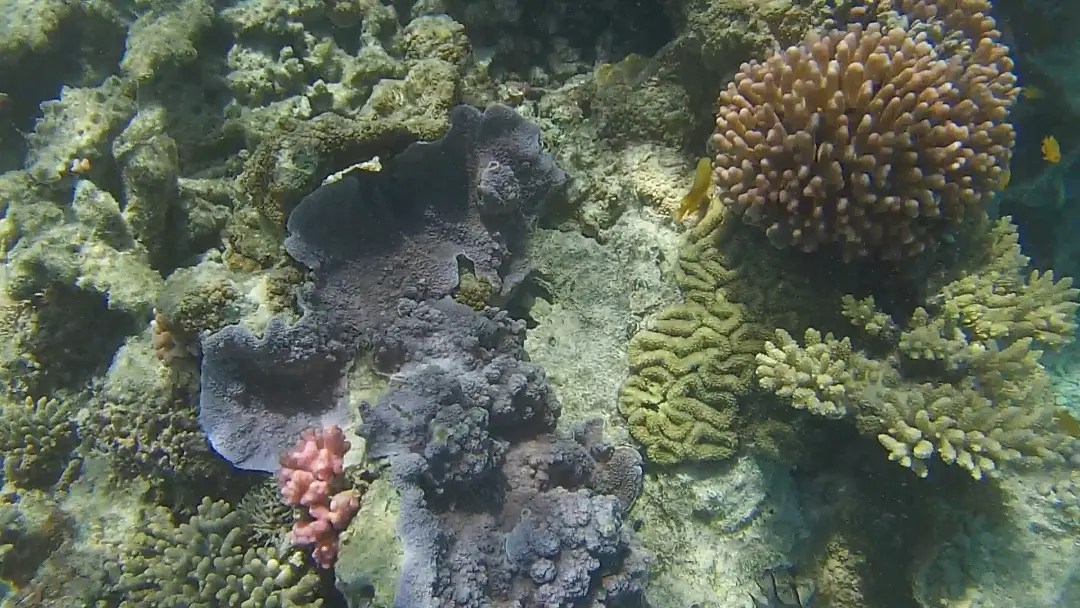
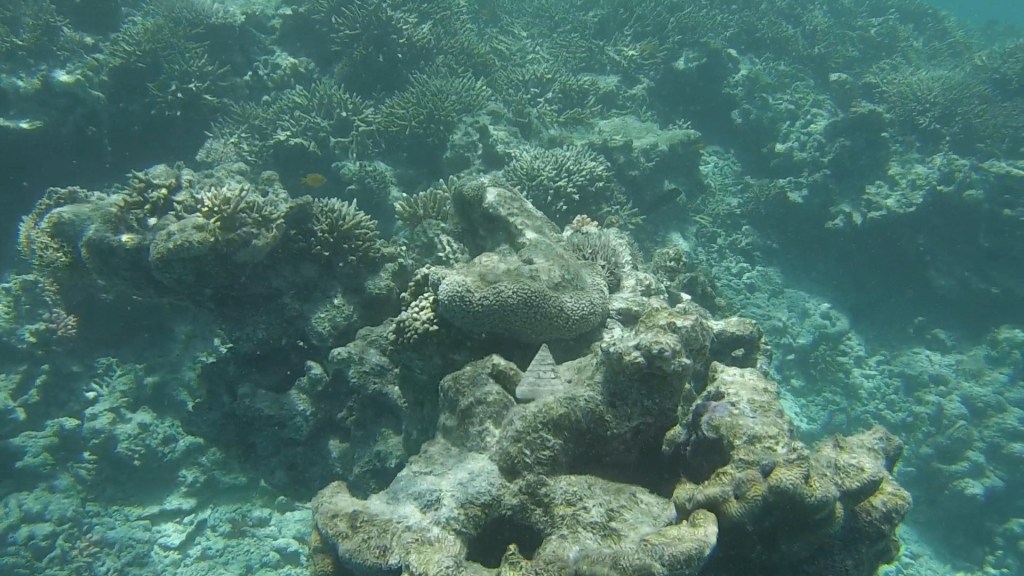
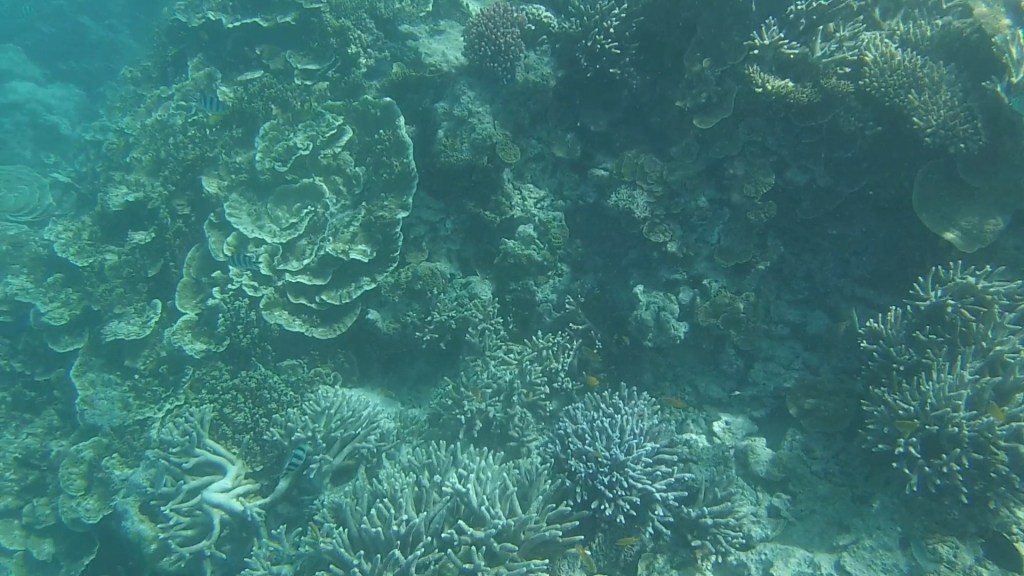
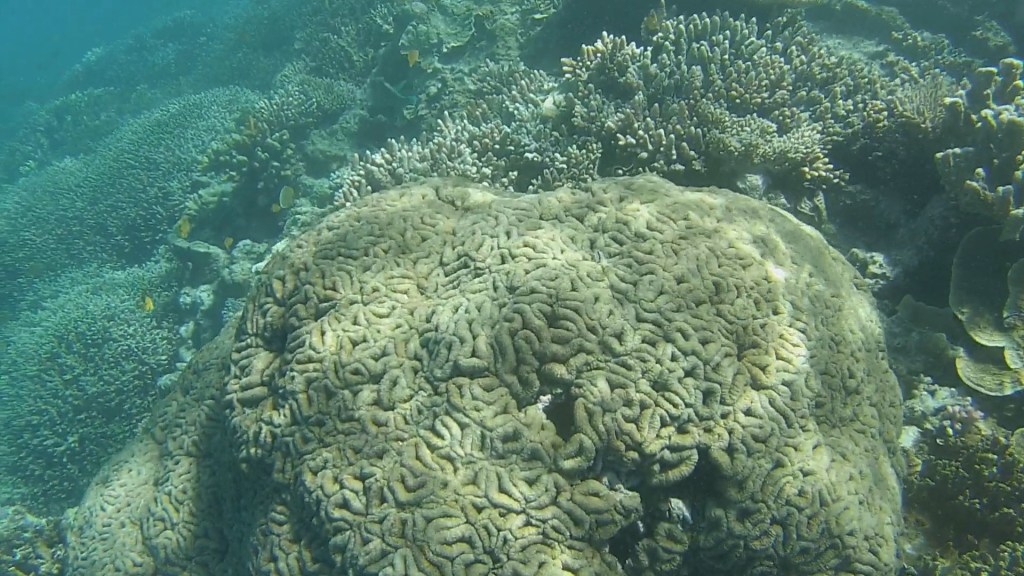
Plated, Staghorn and Brain coral
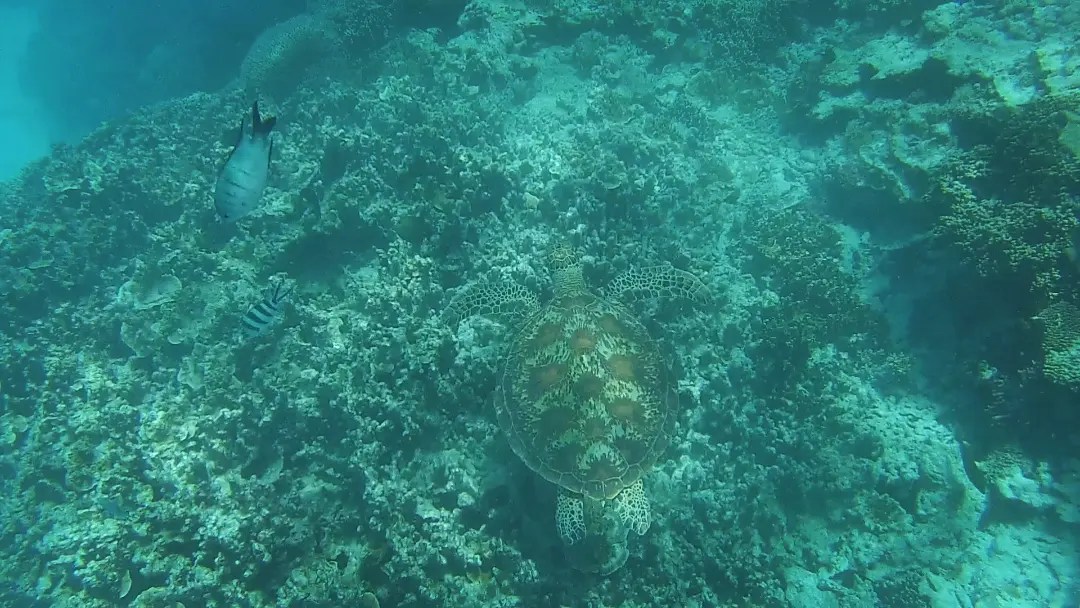
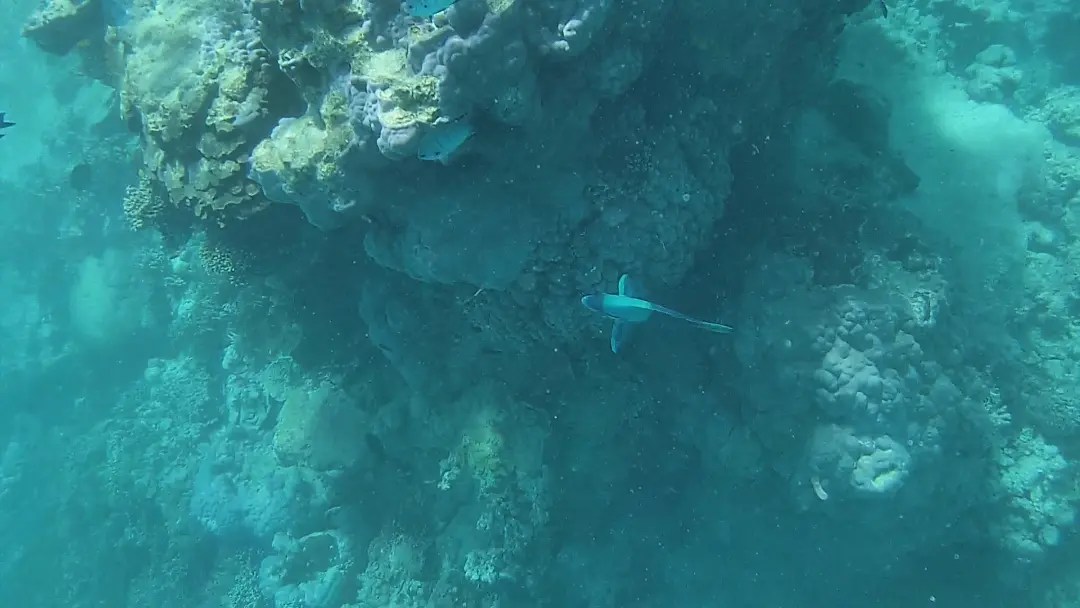
The coral is beautiful here, splashes of colours somehow pop under the water. I was so engrossed in watching interesting fish appearing from the reef that the turtles caught me off guard! Taylor caught my eye, signalling to me under the water, and pointing ahead; there it was, appearing out of the murkiness, coming towards us, so majestic, as though flying beneath the waves. This Green Turtle was about the size of a grown man’s torso. Her tail was barely visible, showing she was female, and she swam right underneath us. I turned and followed her for a short while, before she dived into the depths of the reef.
Female Green Turtle
The second turtle was skimming along a shallow shelf of reef at my eye level, flapping her flippers, and surfacing a few metres away. I popped my head up too and saw her floating on the surface!
Brain Coral
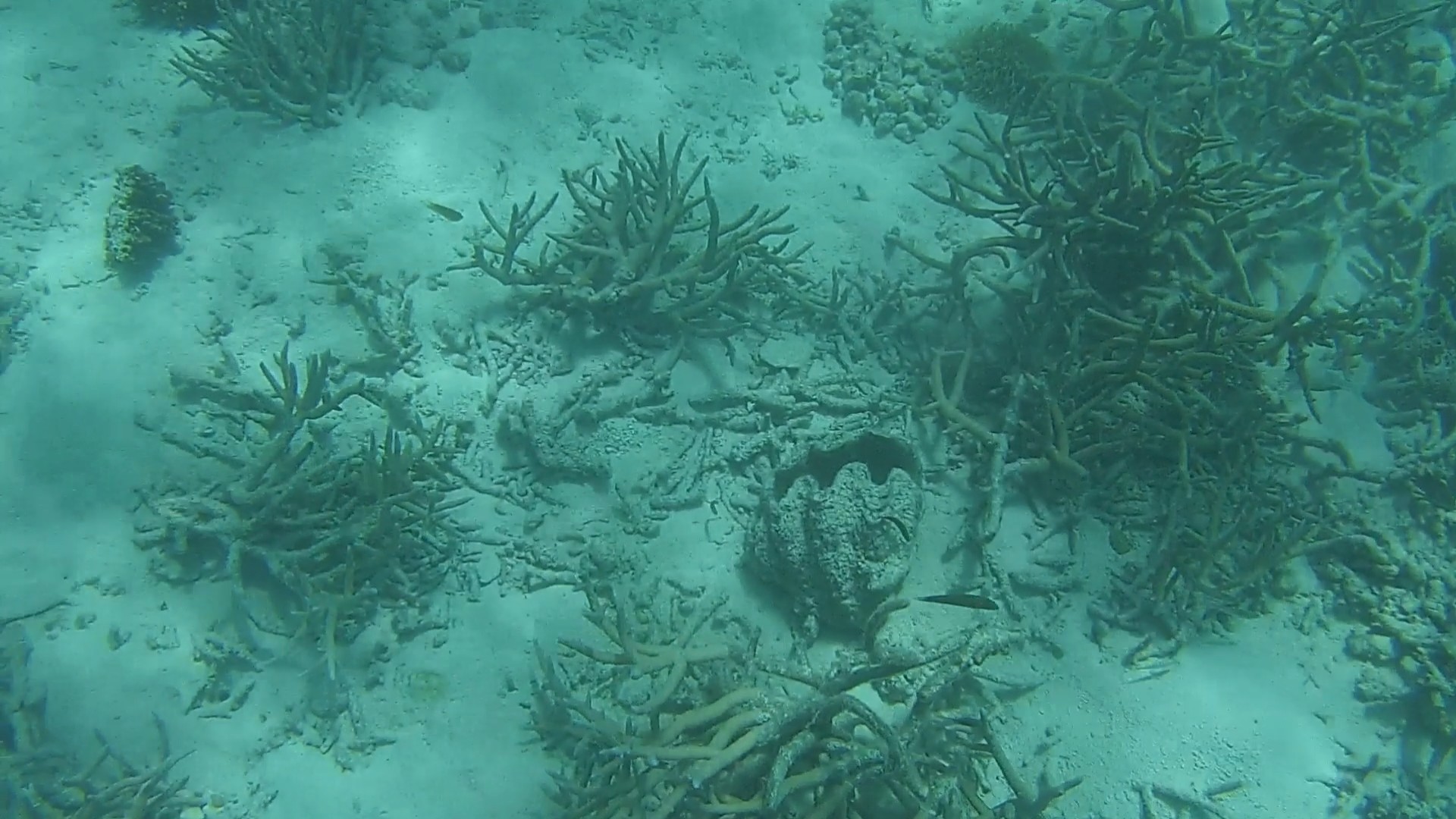
Giant Clam
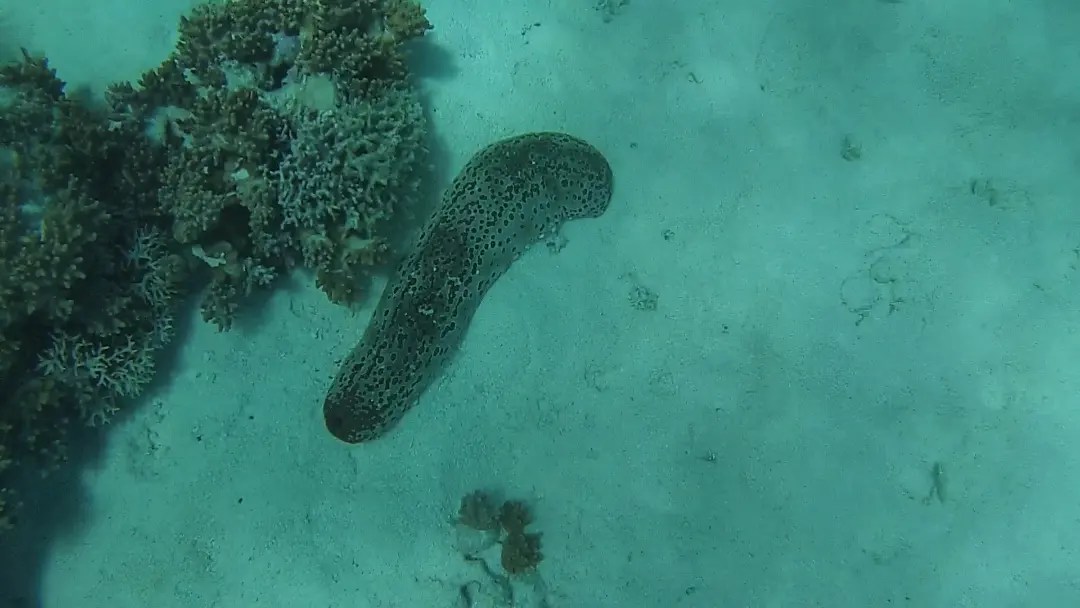
Sea Cucumber
Green Parrot Fish
Blue Parrot Fish
After an hour of solid snorkelling, we sat on the edge of the pontoon sipping on a Gin Mule, dangling our feet in the ocean. On the boat ride back, we saw an Olive Sea Snake wriggle by in the waves, and several dolphins.
Facts of the Day:
The Great Barrier Reef is roughly the same size as Japan.
You can’t visit the adjacent Fairfax Islands because they were used for target practice by the Australian Military in the 1940s, and there is likely to be live ammunition still scattered on the islands.
Without the birds, there would be no trees on Lady Musgrave Island, and without the trees there would be no birds. Without either of these, the island would be a bank of dead coral, and may have been washed or eroded away.
Corals are actually living invertebrates related to jellyfish and anemones.
Coral relies on its resident algae to survive. Photosynthesis in the algae creates food for the coral.
Some corals actually catch small fish and plankton to feed on.
The tiny white tips you see on the coral reef is not bleaching; it is in fact regrowth.
The colour you see on coral is actually produced by the algae as a form of sun protection. The deeper the coral, the less colour it will have, as it will have less sun exposure.
Coral Bleaching is caused by rising temperatures and pollution that kills the coral’s algae. When the algae is gone, the coral dies.