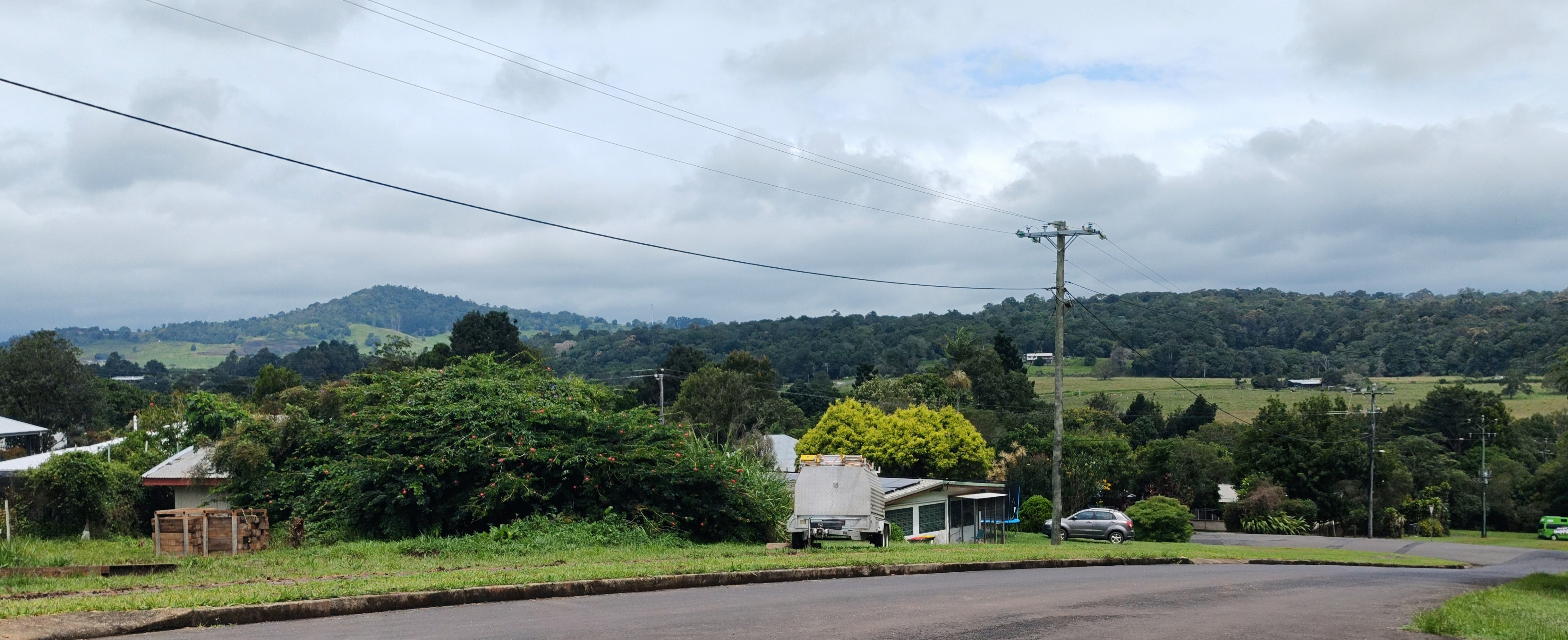
Leaving Queensland’s Bruce Highway north of Tully, between endless banana plantations, and veering left into farming territory, we headed along the narrow road towards The Misty Mountains. Banana trees whizzed by the windows on either side, while the mountains rose ever closer before us, their looming clouds crawling black across their peaks. Eventually, we joined the Palmerston Highway west, where the road climbed and twisted through rainforest and waterfalls, until we levelled out onto a rolling, green plateau.
Millaa Millaa Falls Circuit
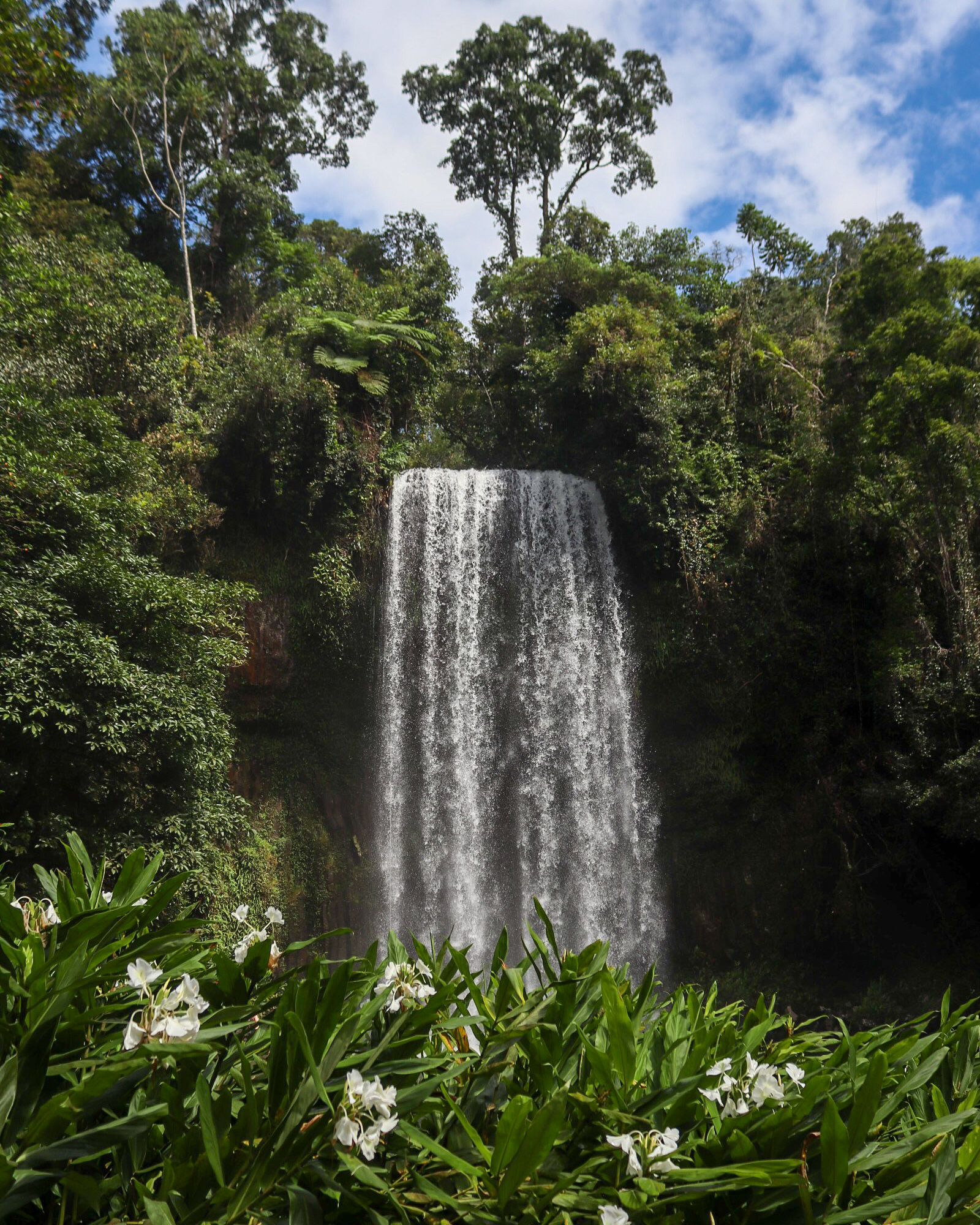
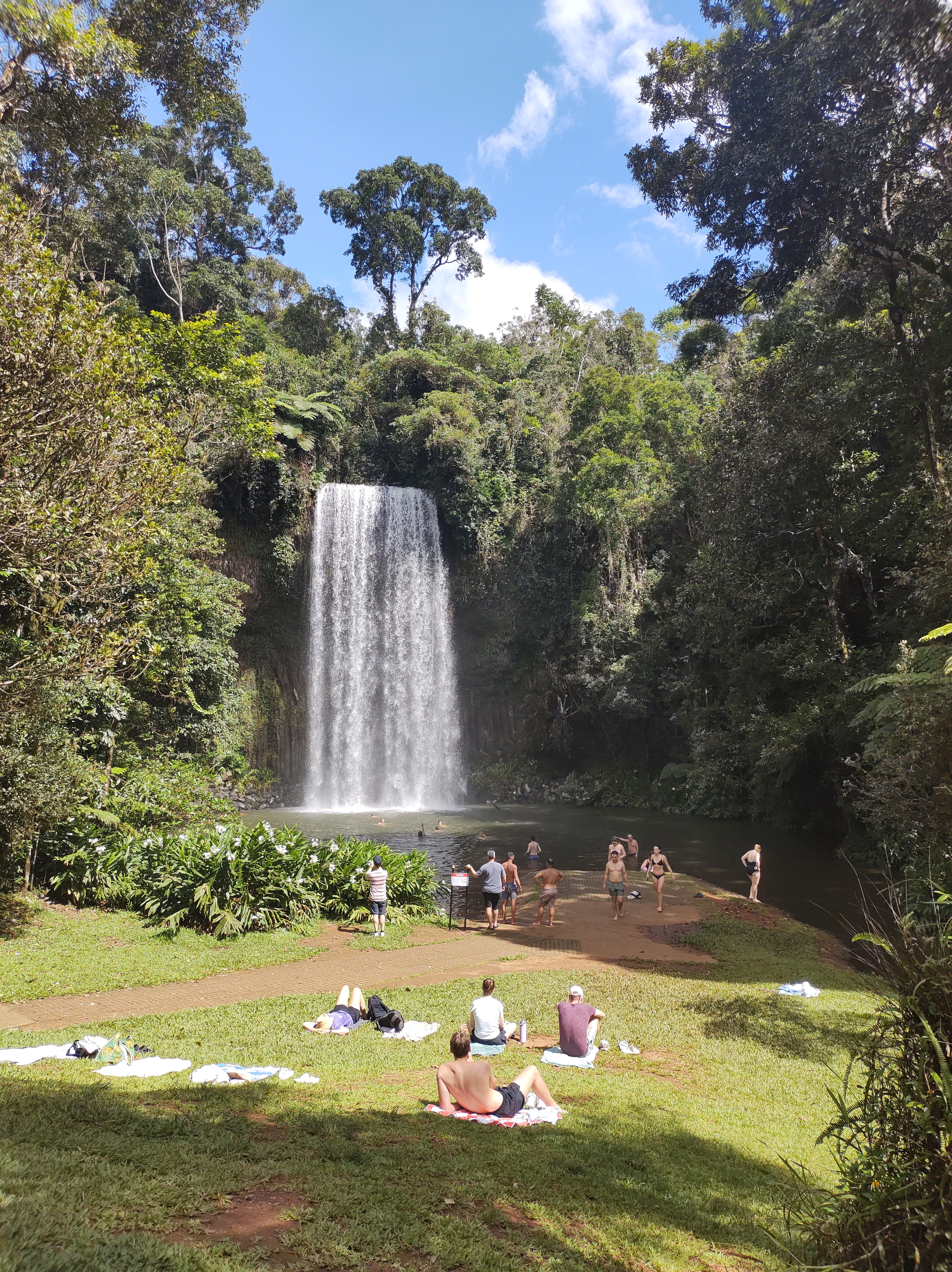
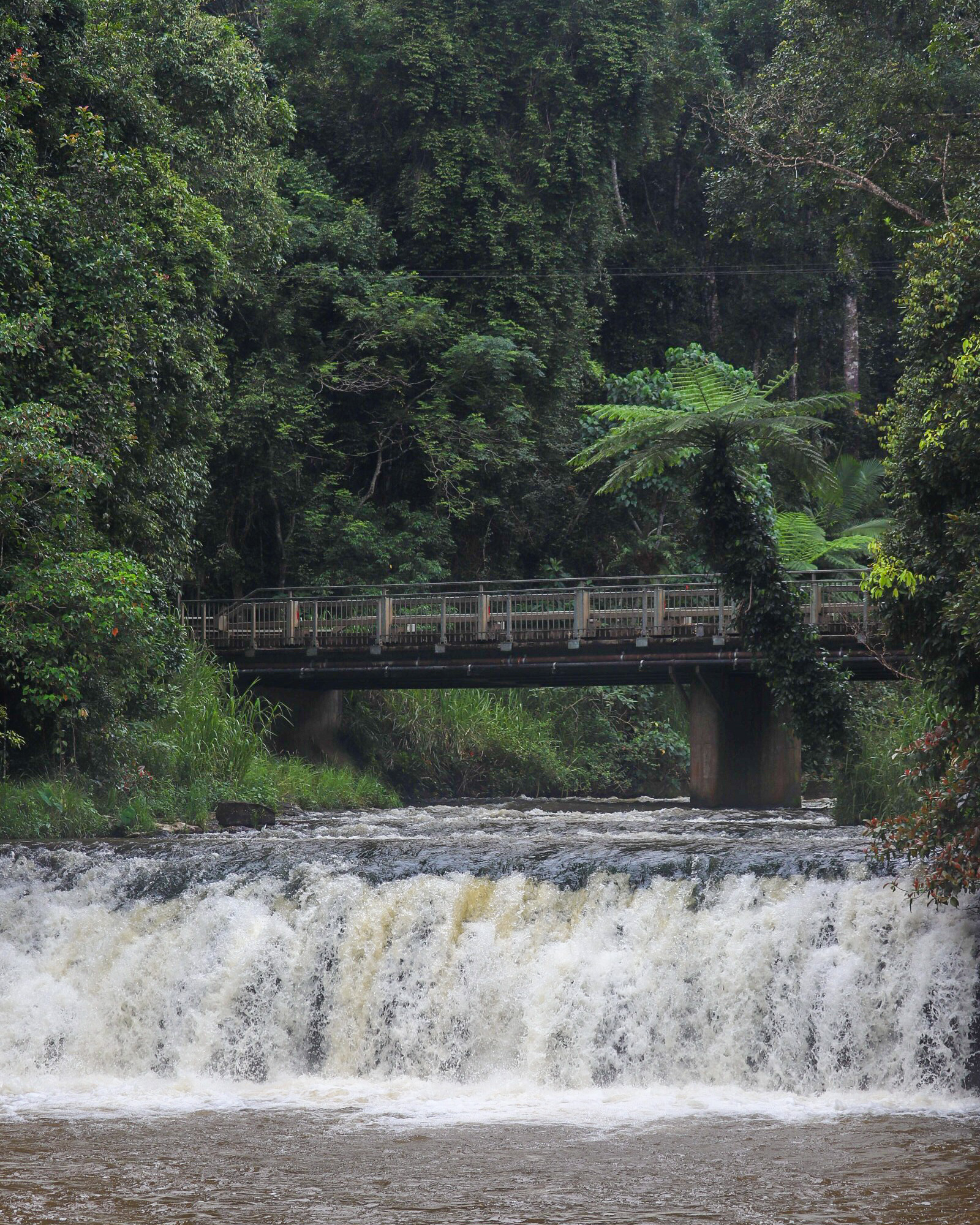
A 17km scenic drive just off the Palmerston highway took us to three waterfalls. Firstly, Millaa Millaa Falls, the most famous for swimming, sunbathing and picnicking.
Over hills and through farmland, with rolling views that reminded me of the English countryside, we drove to the next waterfall. The Zillie Falls viewpoint from the top of the waterfall was quite overgrown, with no clear path down, so I couldn’t tell you how big it was, but it sounded impressive!
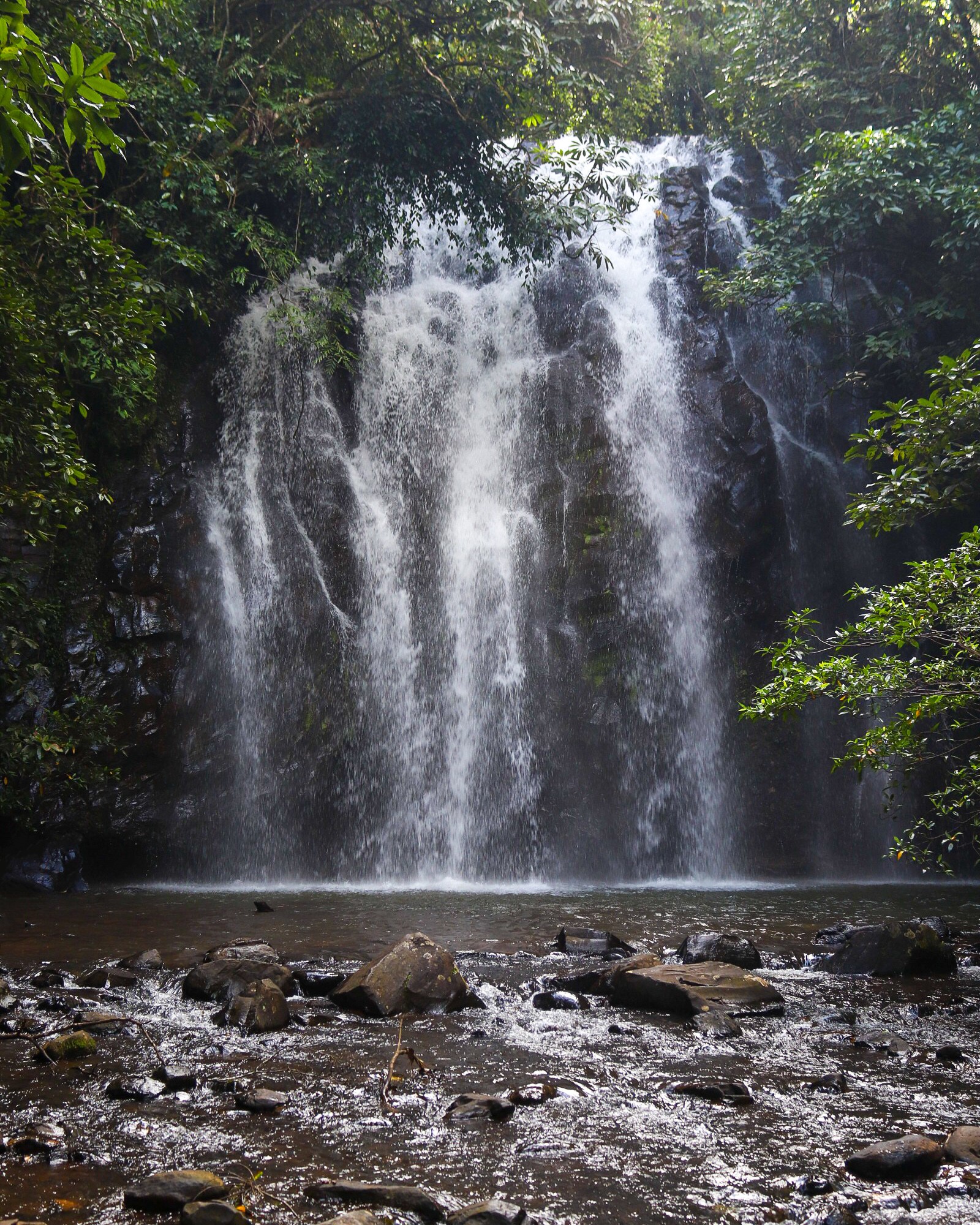
Thirdly, Ellinjaa Falls, where we descended on foot through ancient rainforest. The path met the dark, rocky creek, and plenty of people were swimming and crossing the rocks for photo opportunities, while the waterfall rushed on the backdrop.
Crater Lakes National Park
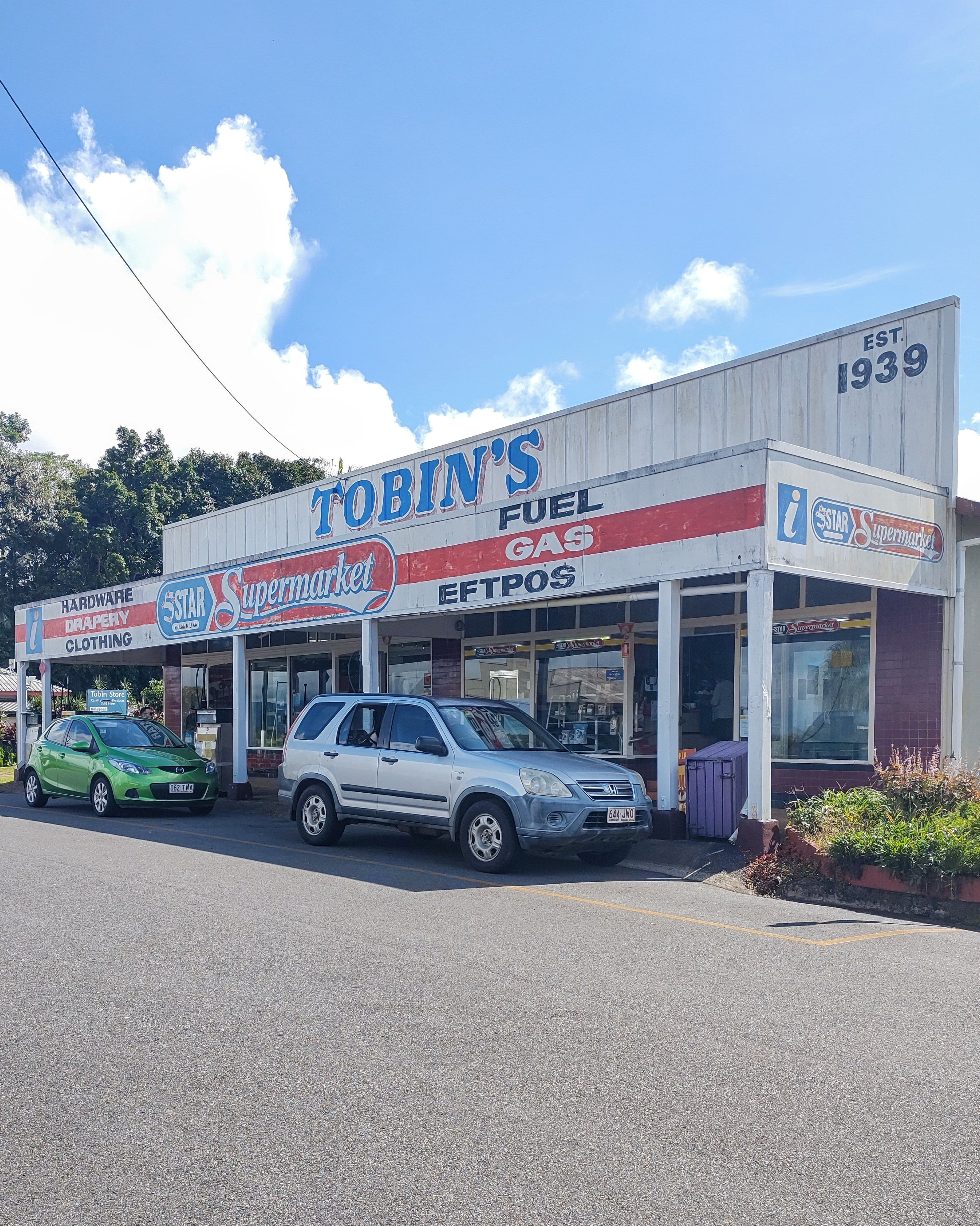
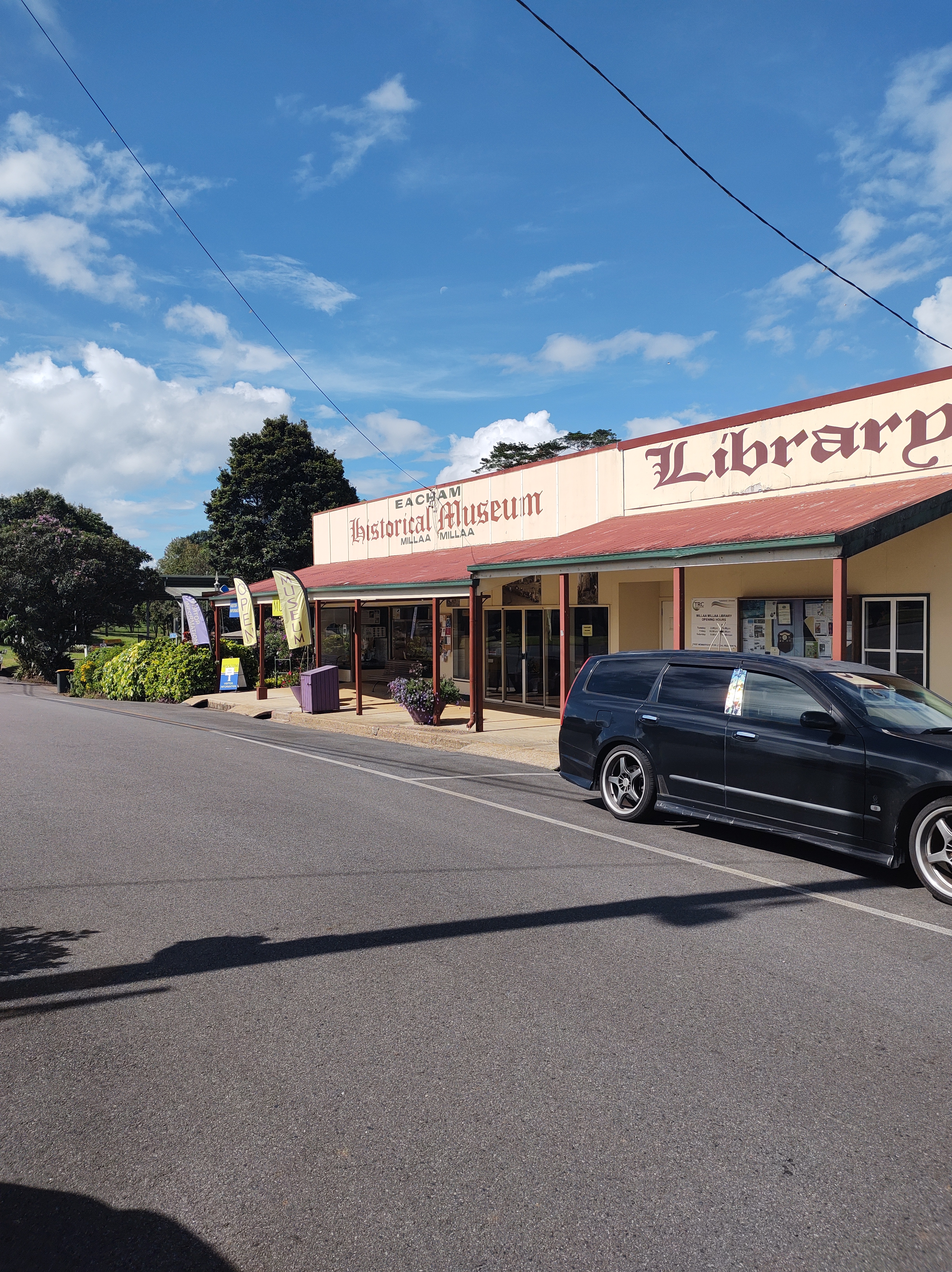
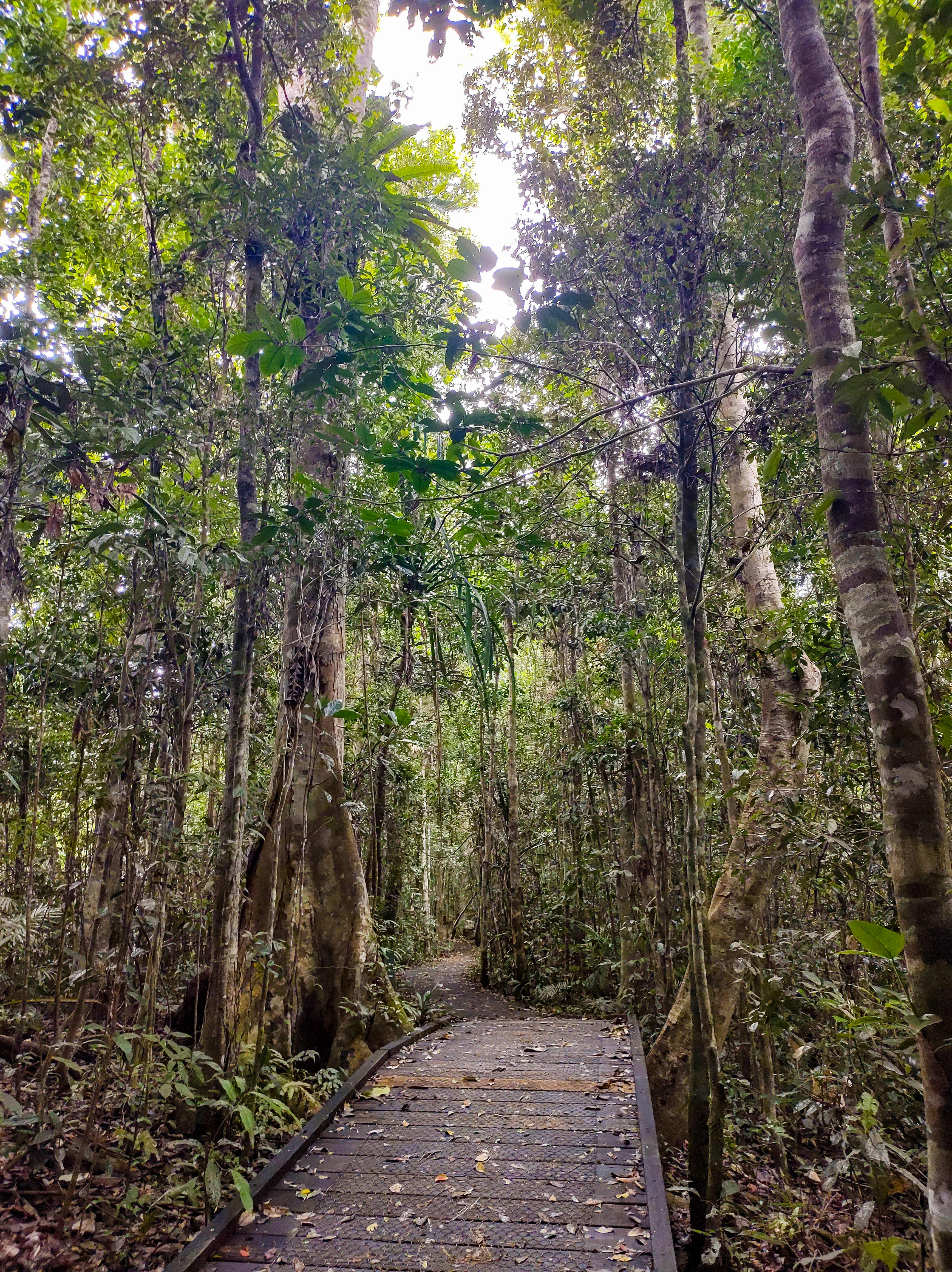
After stopping for fuel in the old village of Millaa Millaa, we drove north, through Malanda, towards Eacham and our accommodation on the edge of Crater Lakes National Park. Down a long, unsealed driveway through the trees, we arrived at Chambers Wildlife Rainforest Lodges. Big wooden huts on stilts stood nestled in the rainforest, with open decks perfect for wildlife spotting. Inside, we had a kitchen, living space, and a cosy ensuite bedroom at the back.
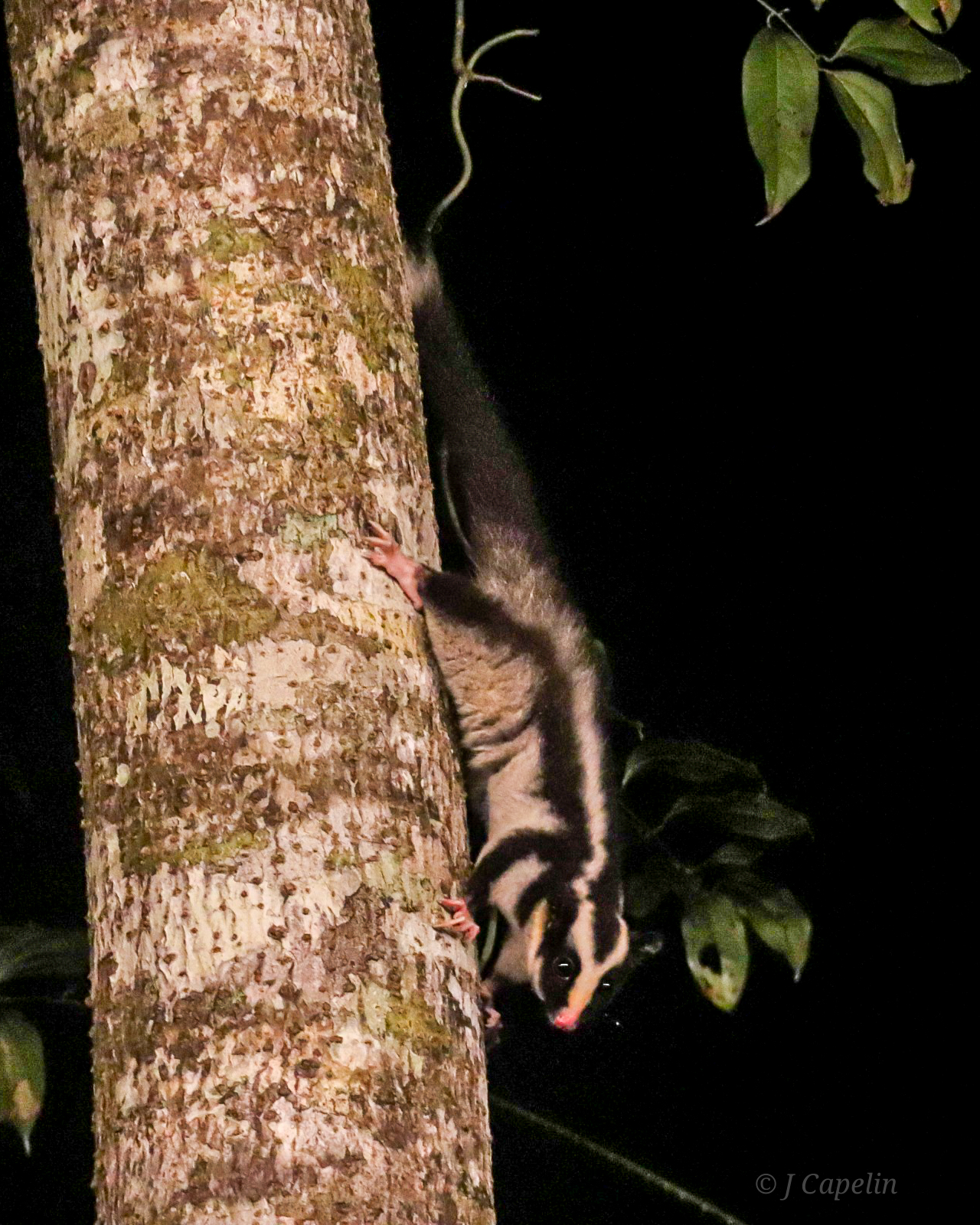
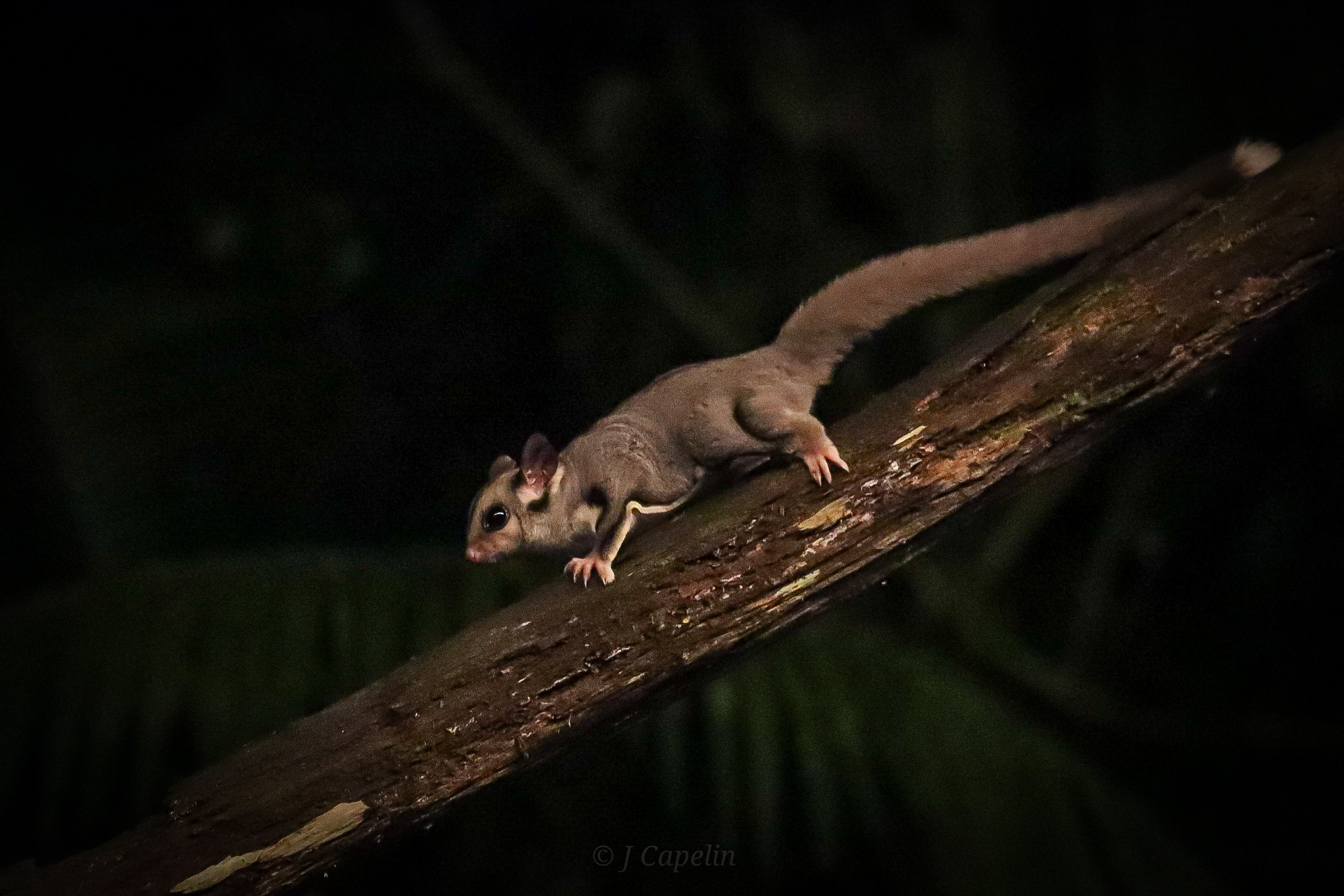
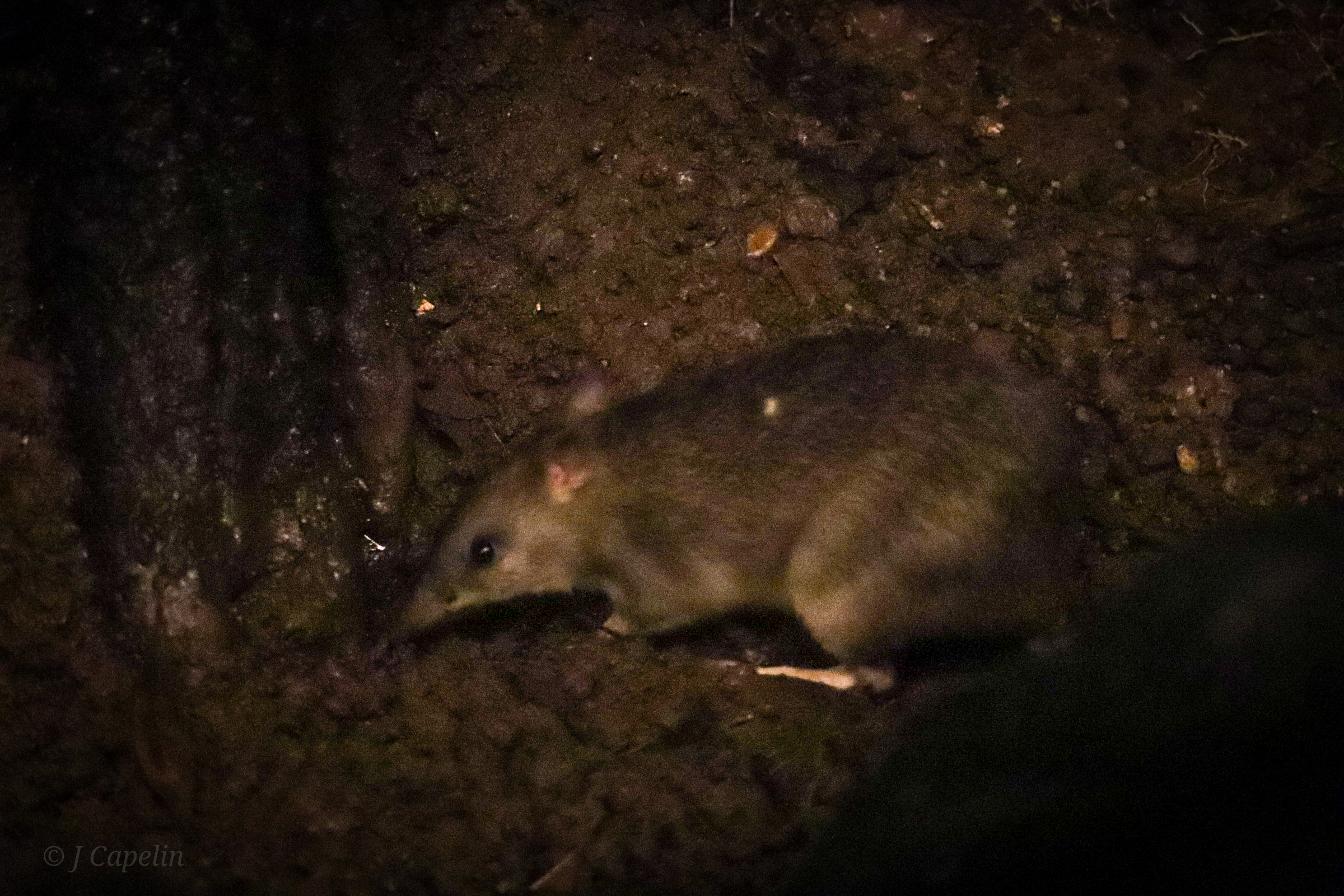
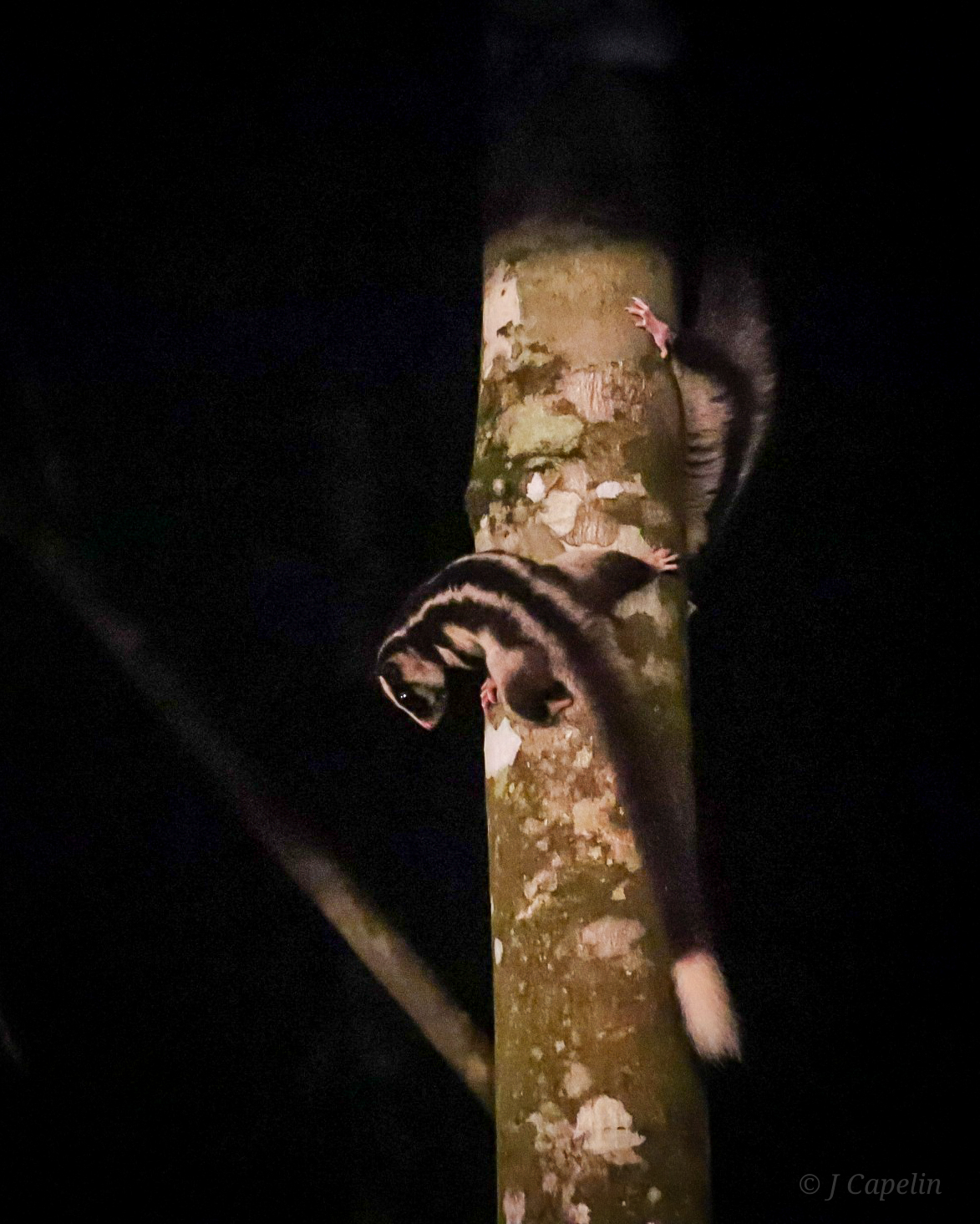
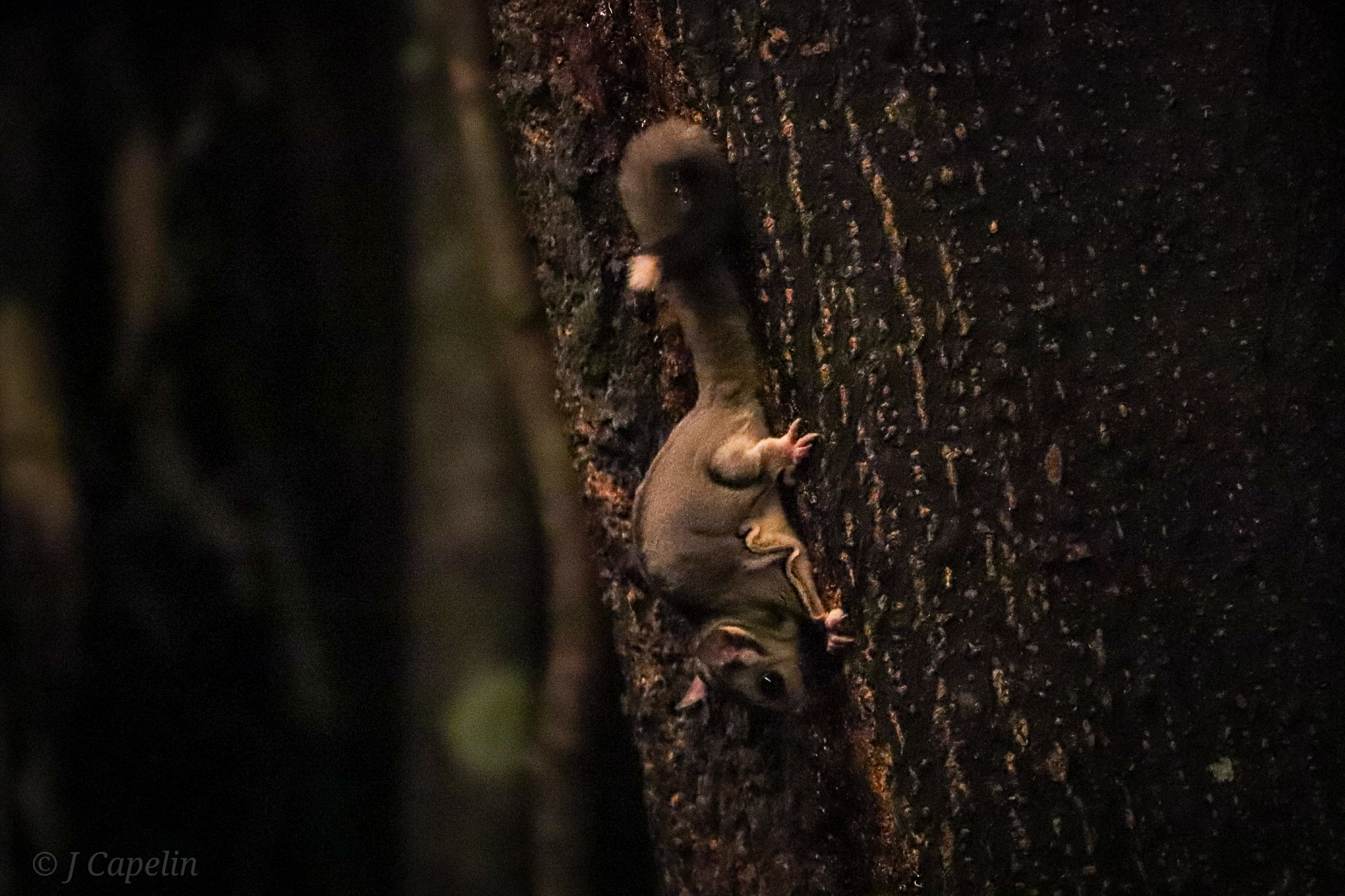
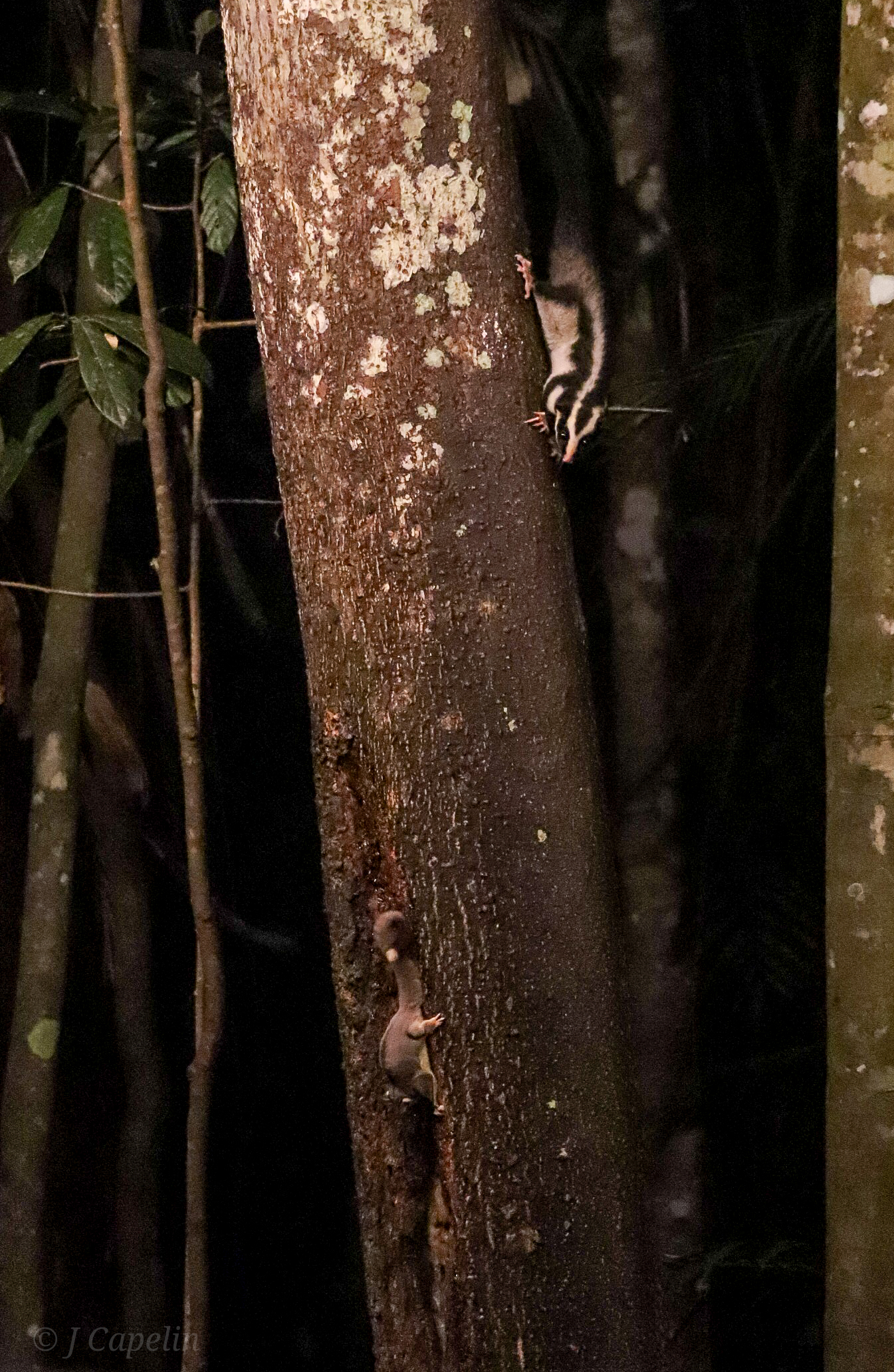
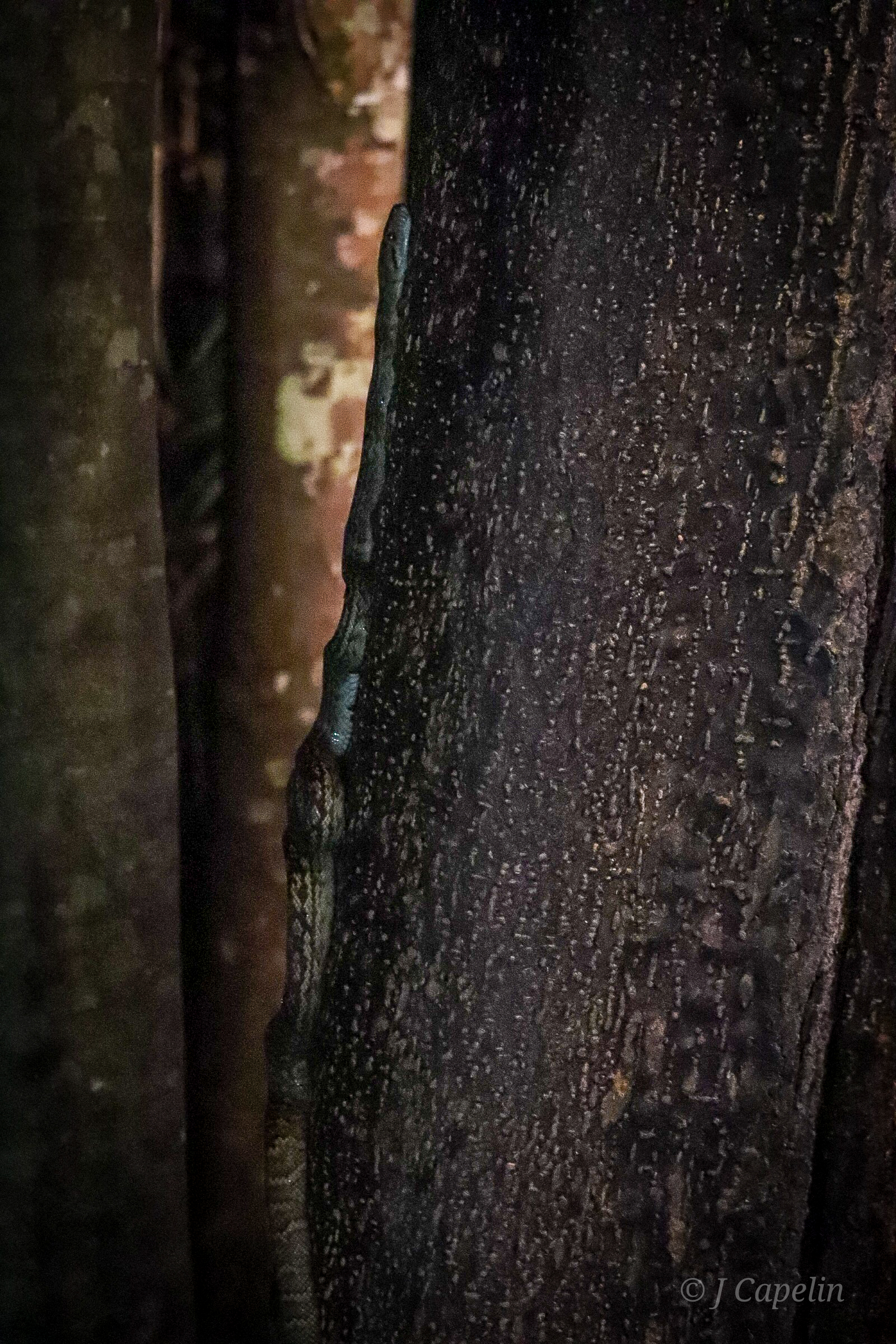
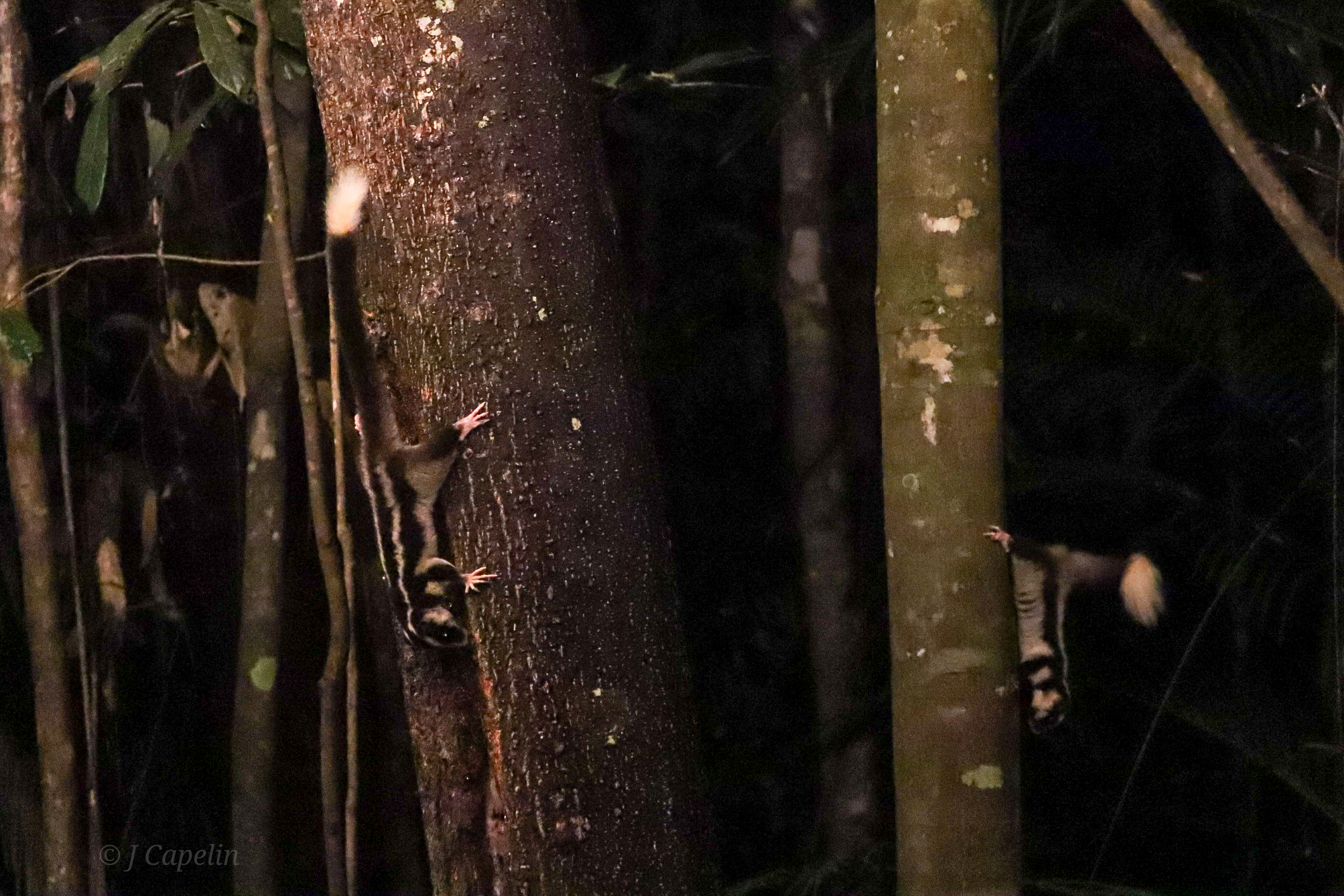
When nightfall landed, we made our way to the retreat’s viewing deck; my favourite thing about the accommodation. A little wooden hut (like an old bus shelter with rows of benches inside) sat on the edge of the rainforest, with a soft, amber light shining into the trees. Most nights shortly after sunset, one of the staff members would put some natural sweet nectar concoction on the nearby trees to entice the local wildlife. We sat there, silent and still, among other guests, until we heard a gentle rustling in the canopy above us. Then, out of the shadows, quiet and cautious, a Striped Possum appeared on the tree trunk, staring back at us! Everyone froze, and the possum went about its business. More rustling from above, and a pale shape glided past like a small ghost, landing wide-eyed and sprawled on the branch – a Krefft’s Glider, better known as a Sugar Glider! Once the tree-dwellers left, a Long-Nosed Bandicoot came snuffling around the base of the tree, while an Amethystine Python waited keenly on the neighbouring tree trunk…
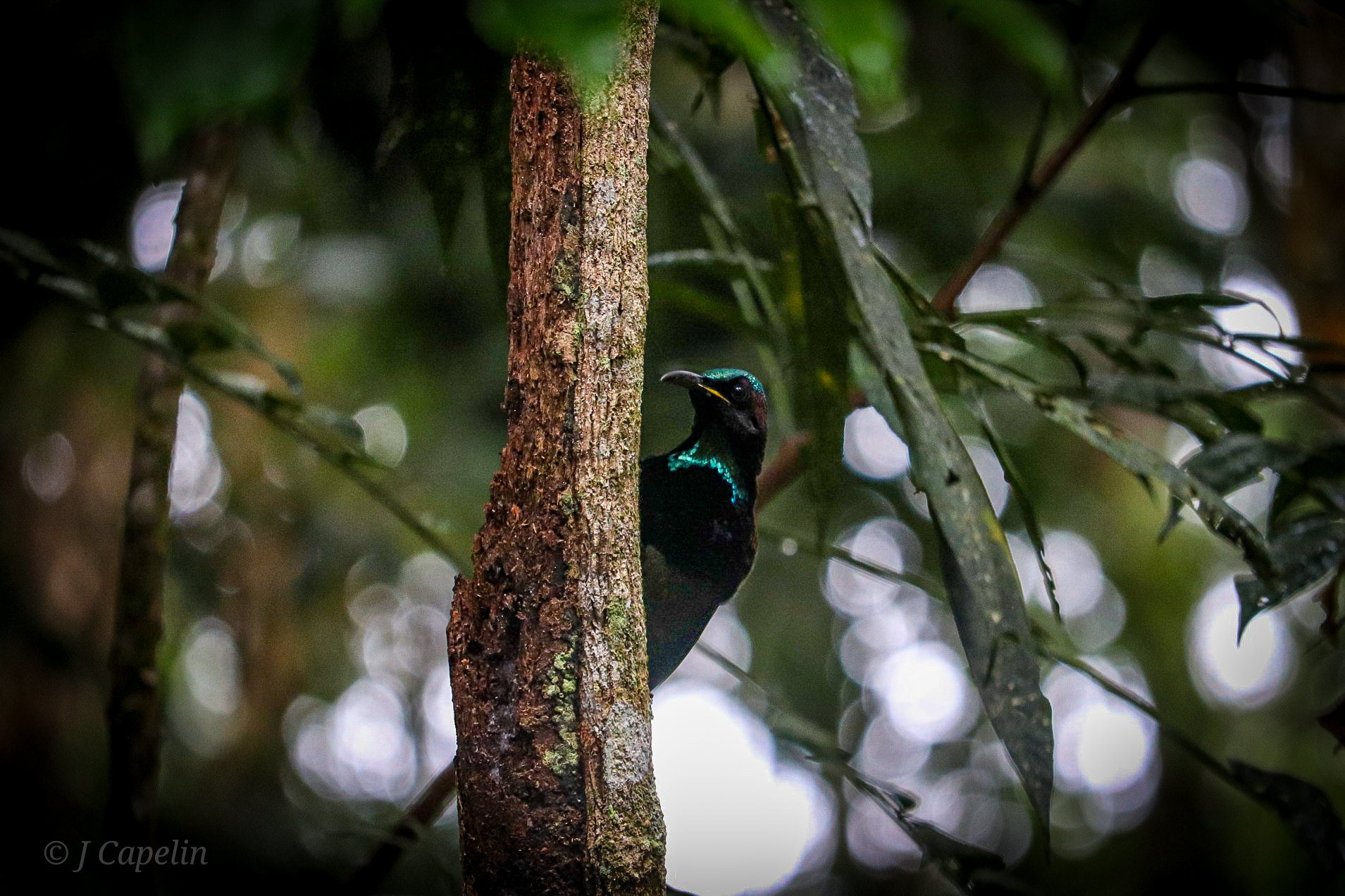
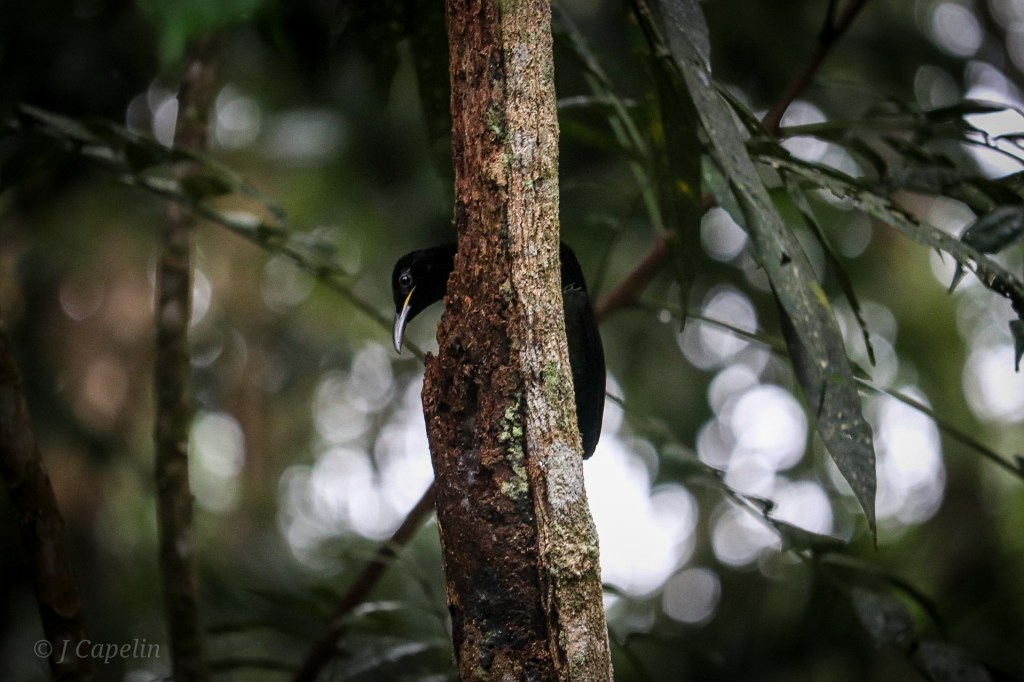
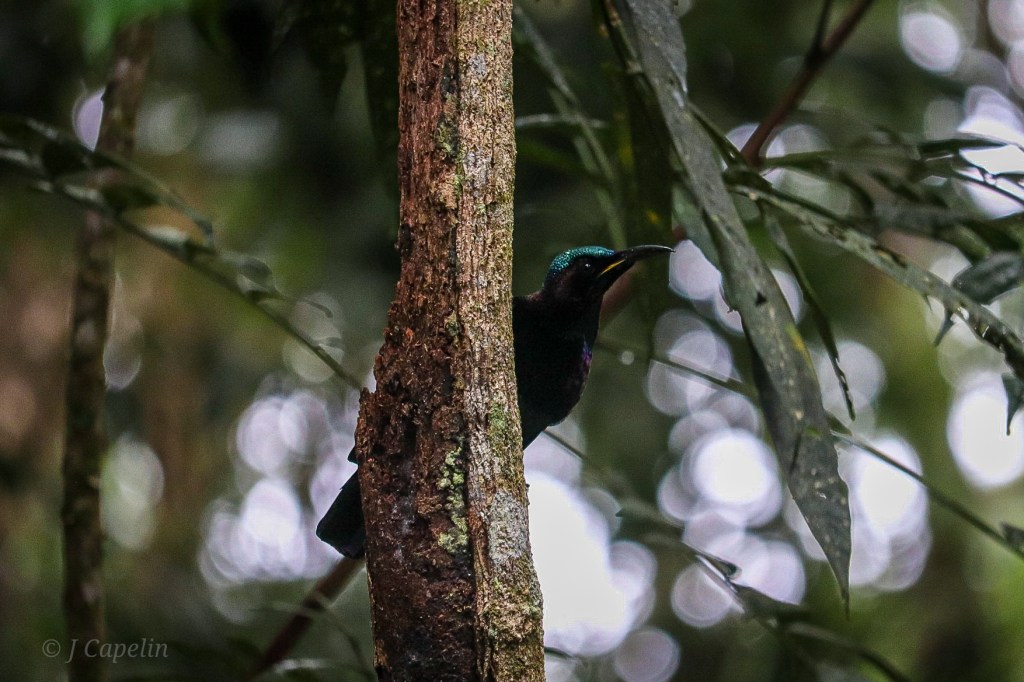
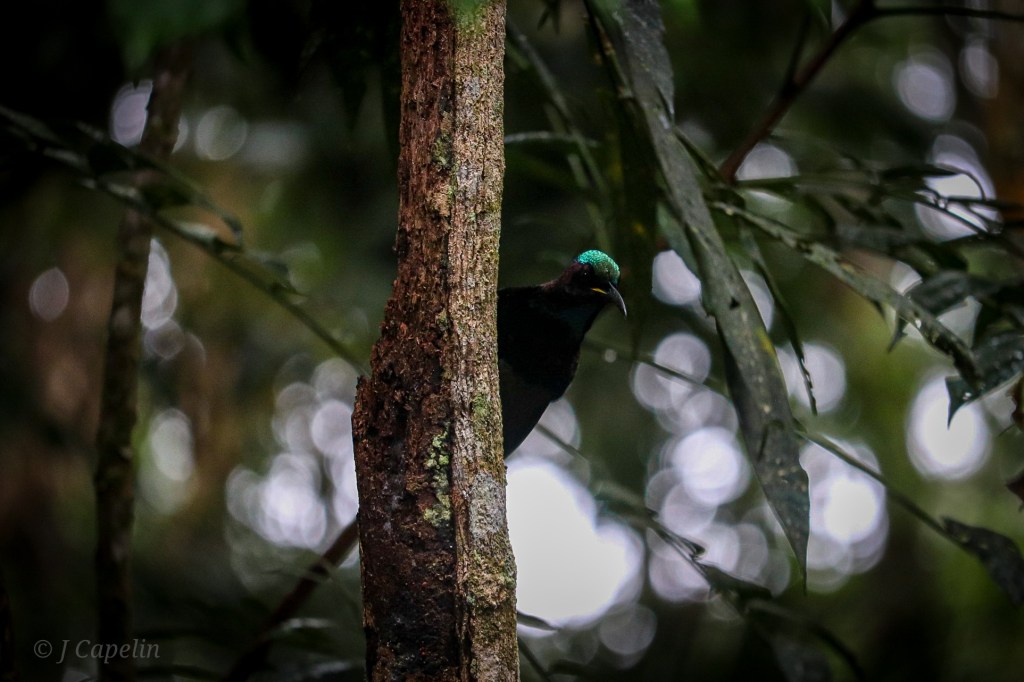
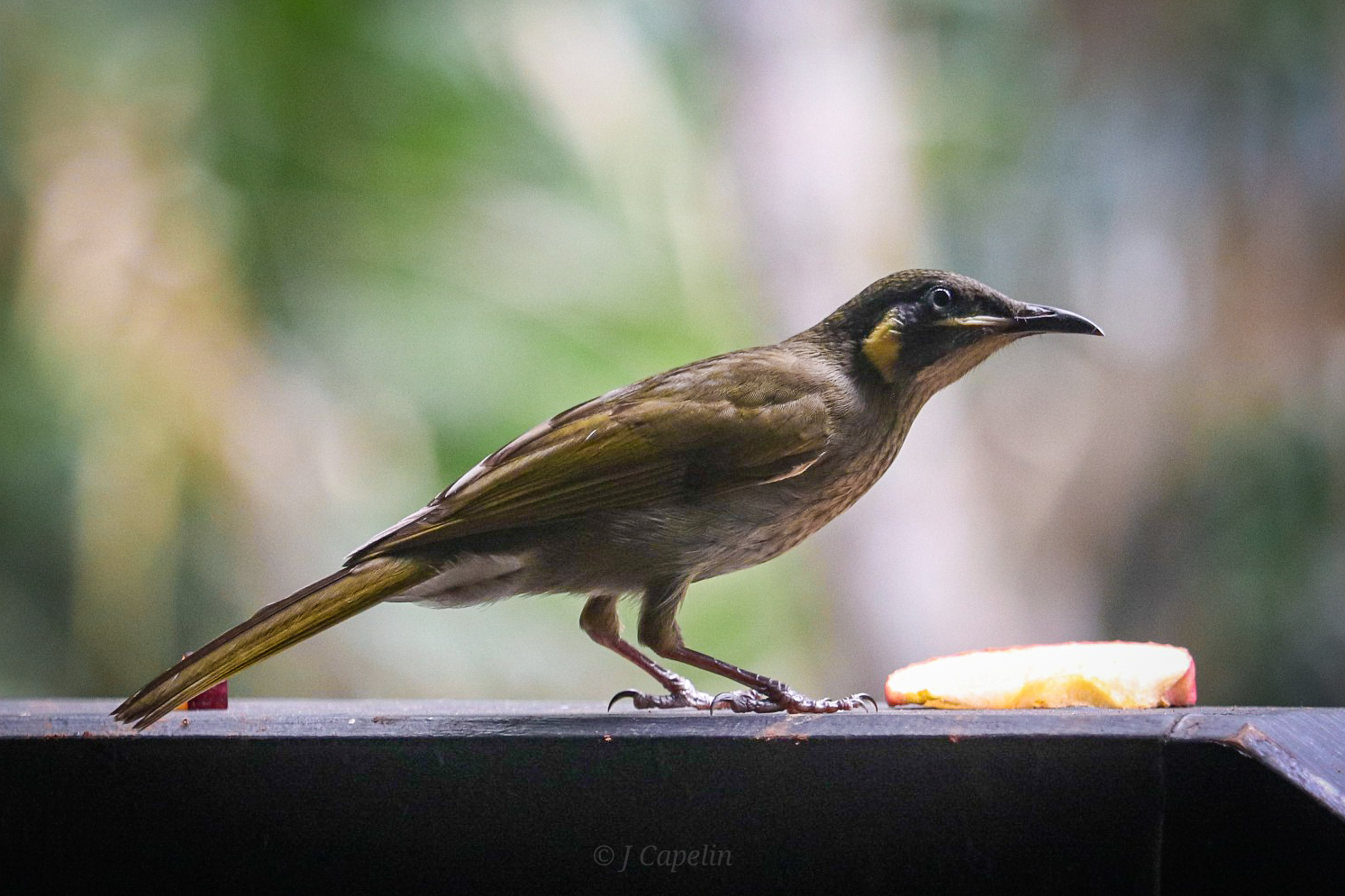
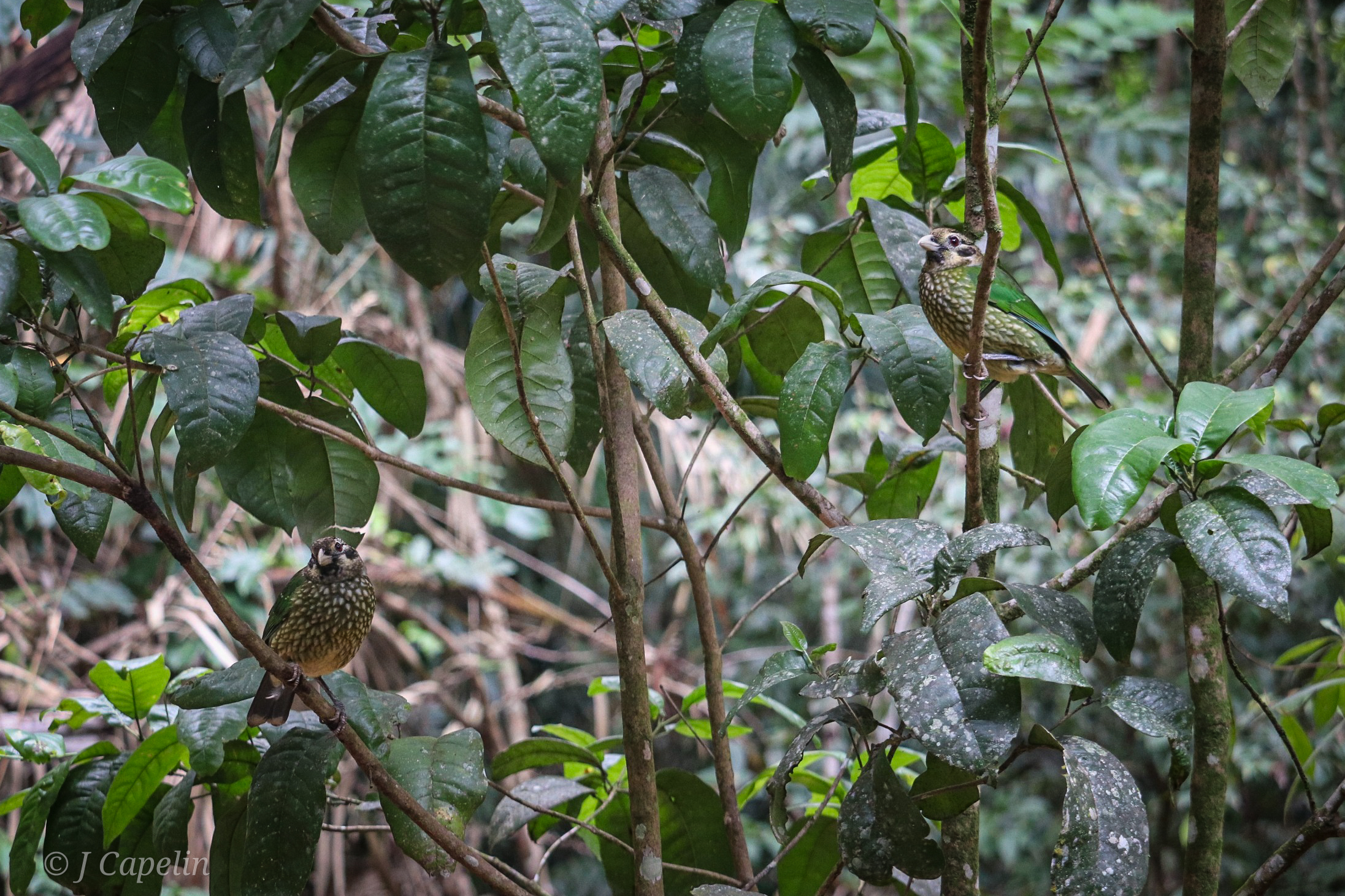
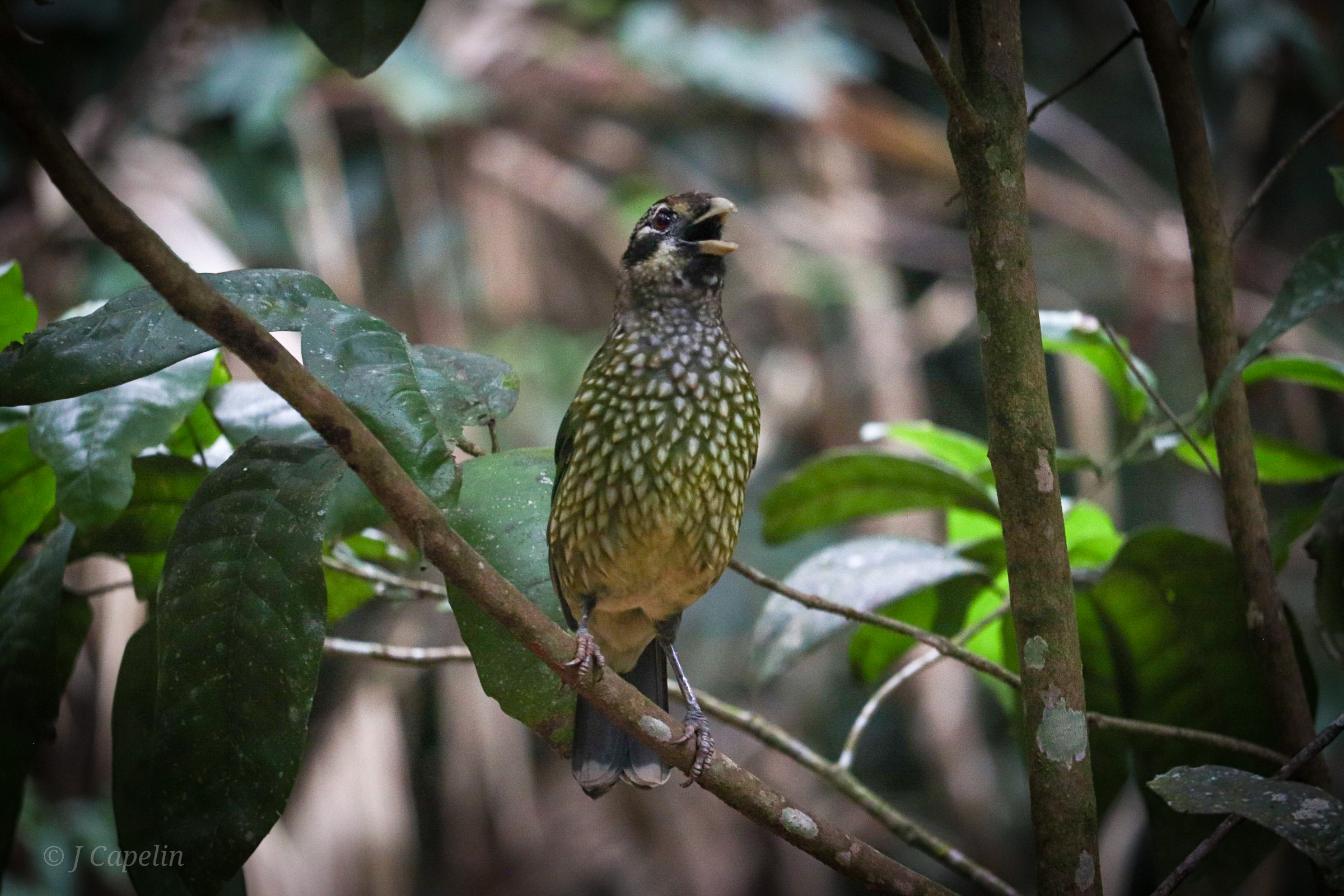
Waking up to a sound collage of bellbirds and whipbirds echoing through the patter of rain in the trees, I spent the morning on the deck, as Rifle Birds, Catbirds and Lewin’s Honey Eaters came to steal some of my apple.
The many angles of the Victoria’s RiflebirdLewin’s Honey EaterA pair of Green CatbirdsHave you ever heard a Green Catbird’s cry?
From the Rainforest Lodges, there was a walking circuit along the border of Crater Lakes National Park, which led down to the creek where platypus live, and through the dense rainforest. We only managed half the walk before the leeches found their way onto our socks!
Yungaburra
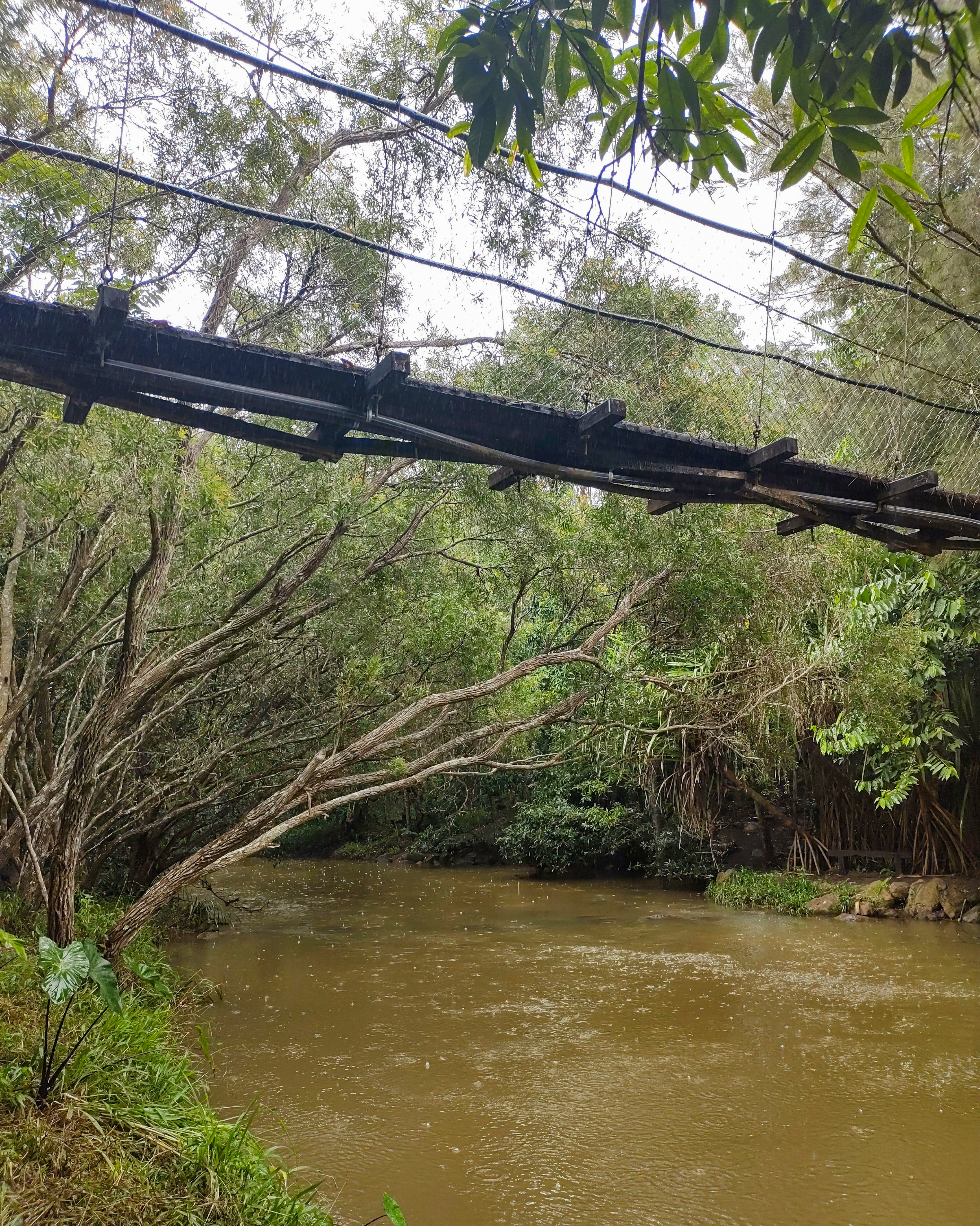
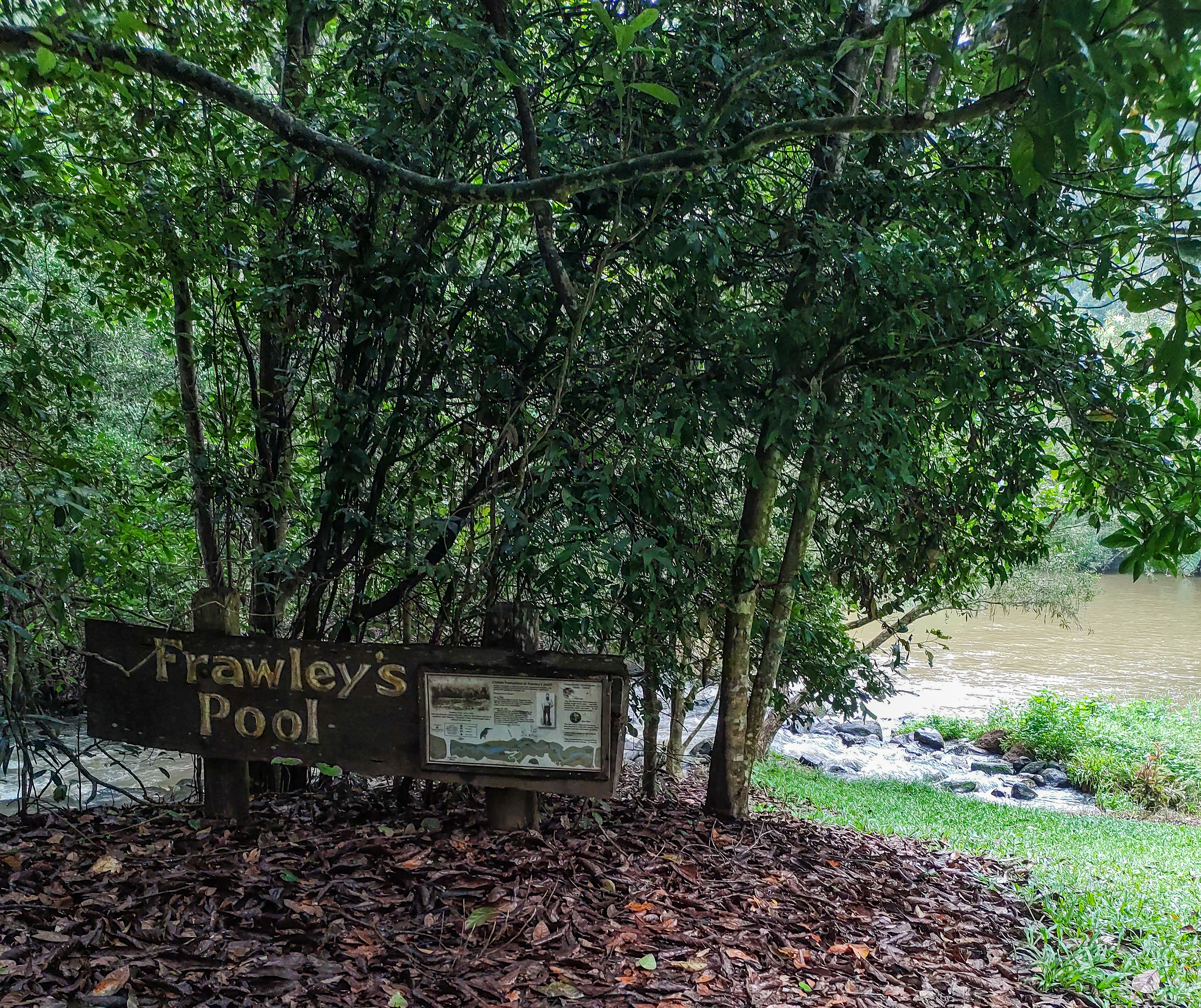
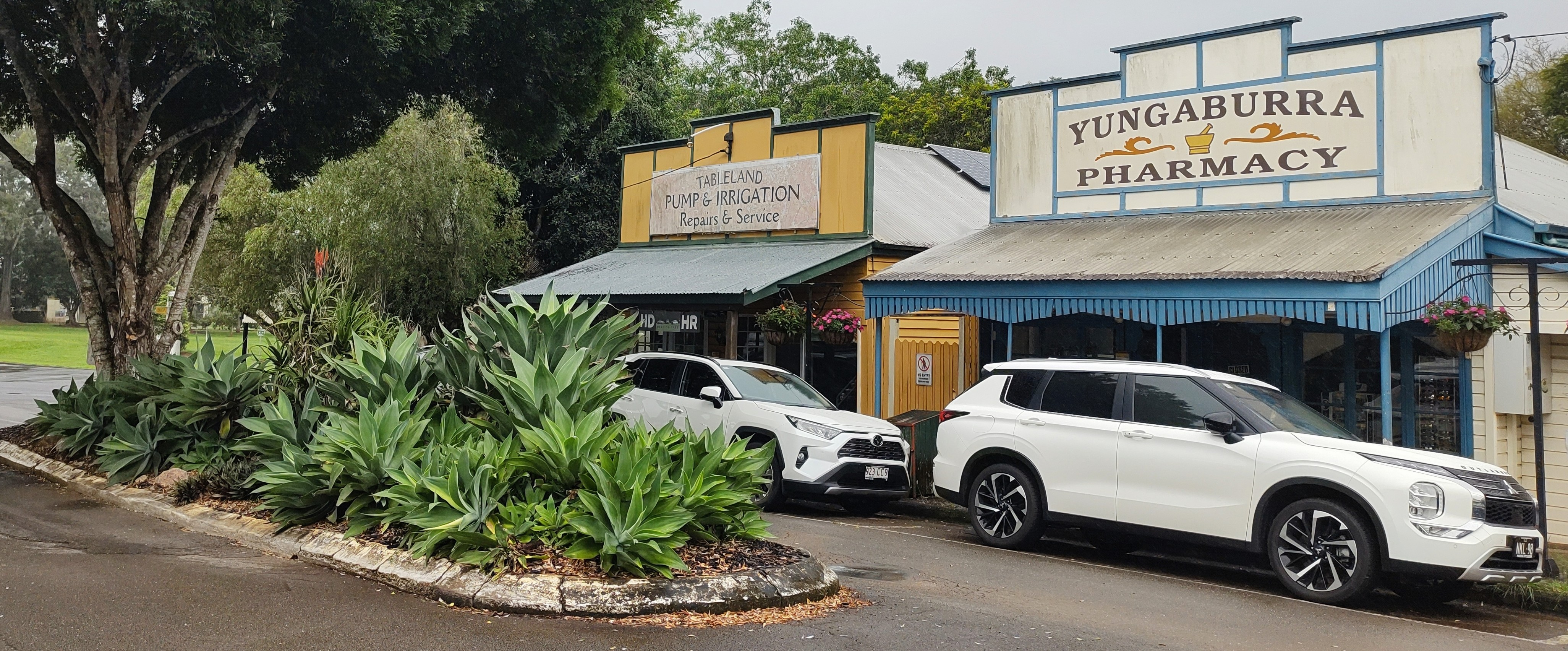
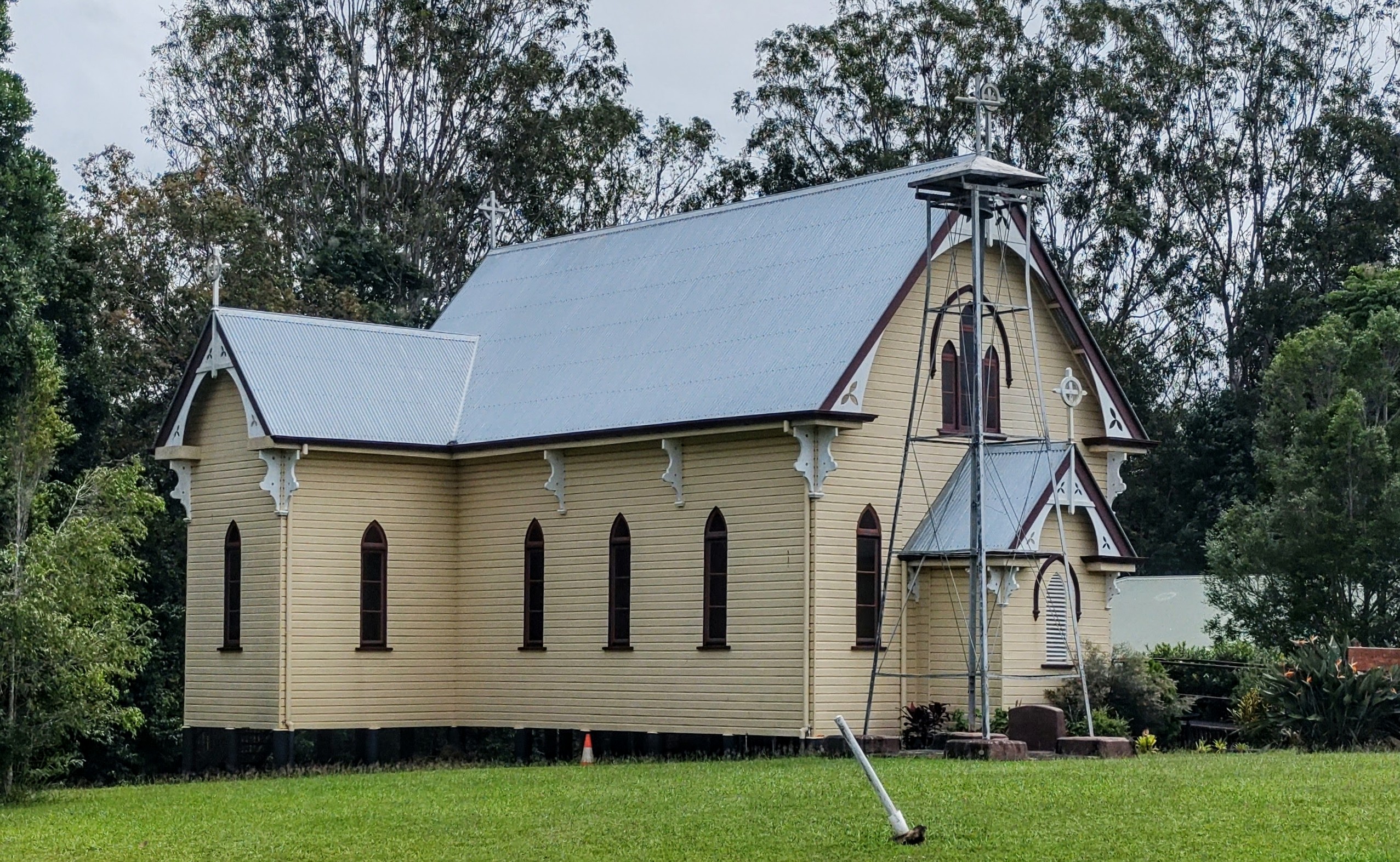
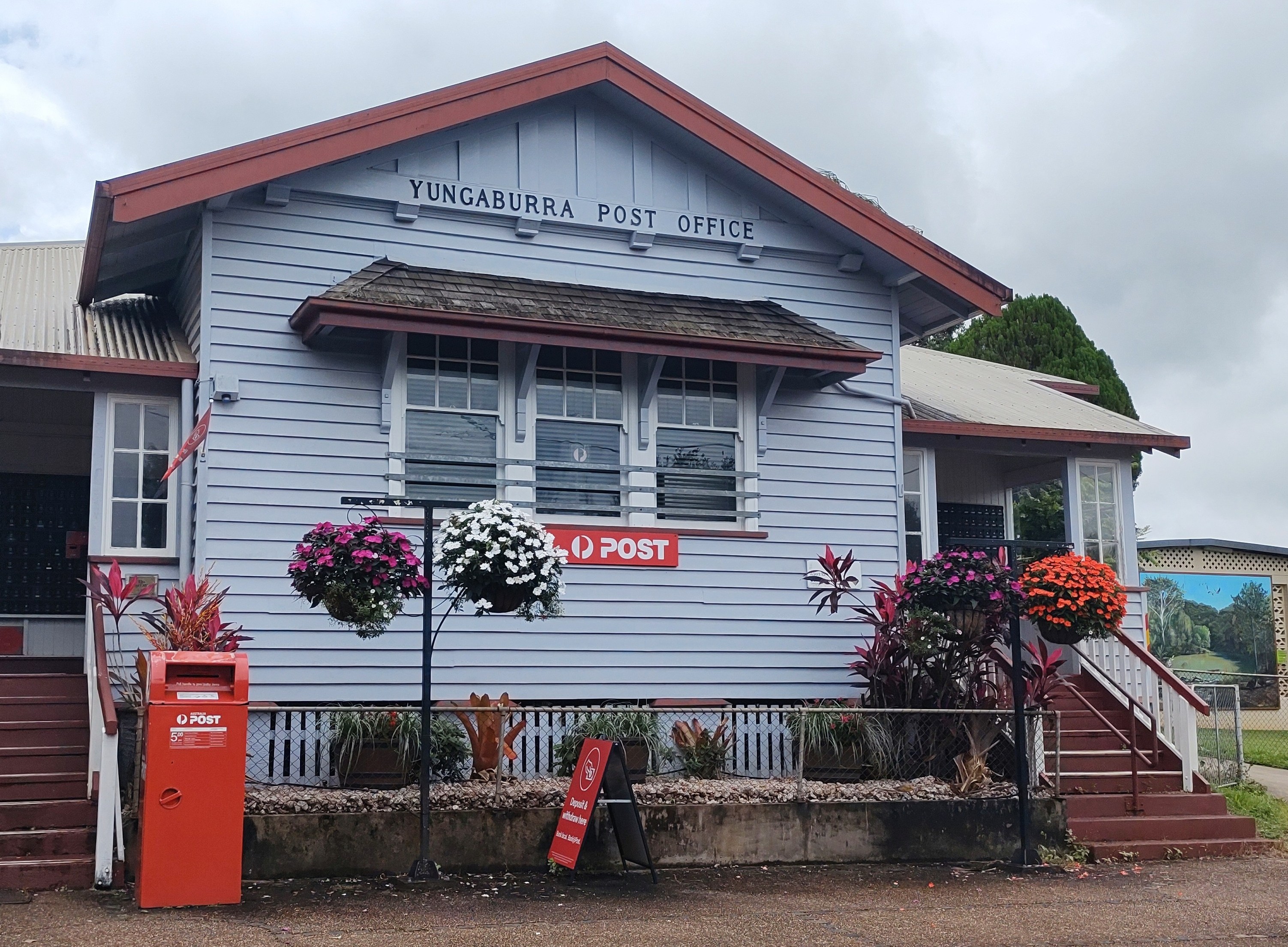
The tranquil little village of Yungaburra is known as the heart of the Tablelands, with its heritage late 1800s – early 1900s shopfronts and churches. We spent a serene, rainy morning walking along Peterson Creek, which runs along the edge of the village, through a pocket of native Mabi rainforest; an endangered ecosystem that can only be found in the Atherton Tablelands. Keeping our eyes peeled for the illusive platypus as the rain gently tattooed the surface the of the water, while birds watched us from between the leaves.
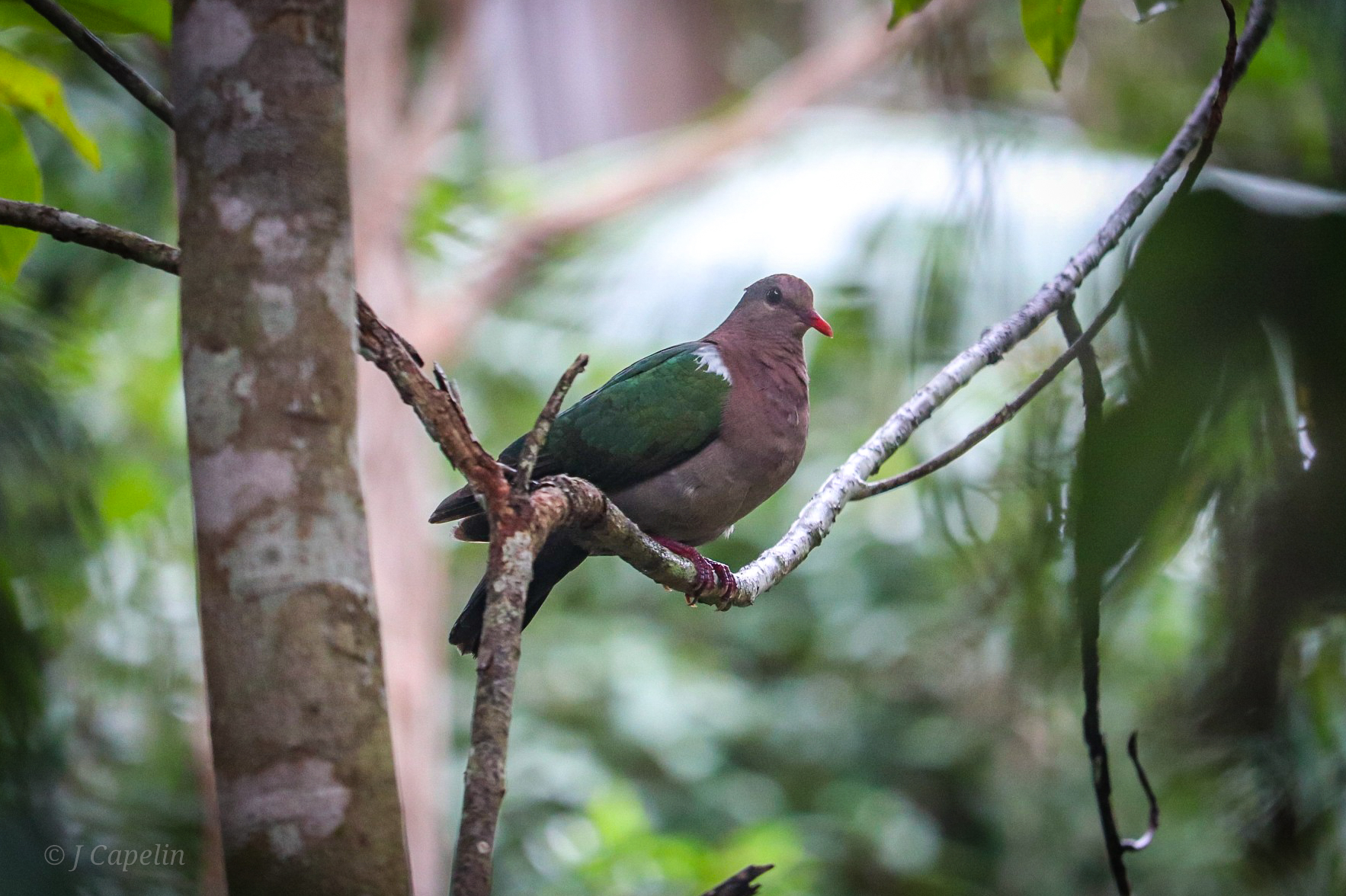
Emerald Dove
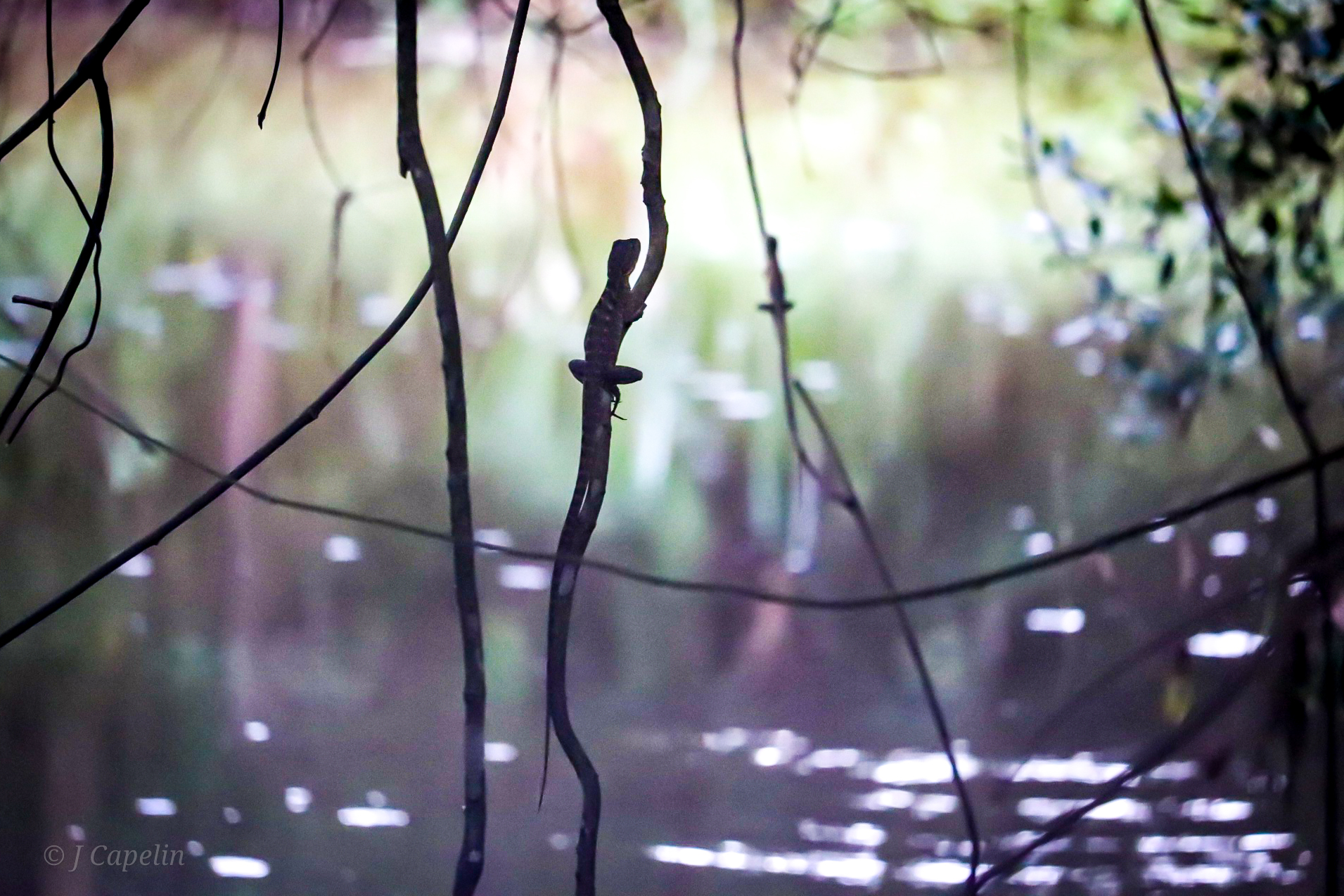
There is a platypus viewing platform further downstream, which takes you under the road bridge for a closer glimpse at the water, but we weren’t lucky there either. There were baby water dragons dangling from tree vines over the creek here, which I’ve never seen before!
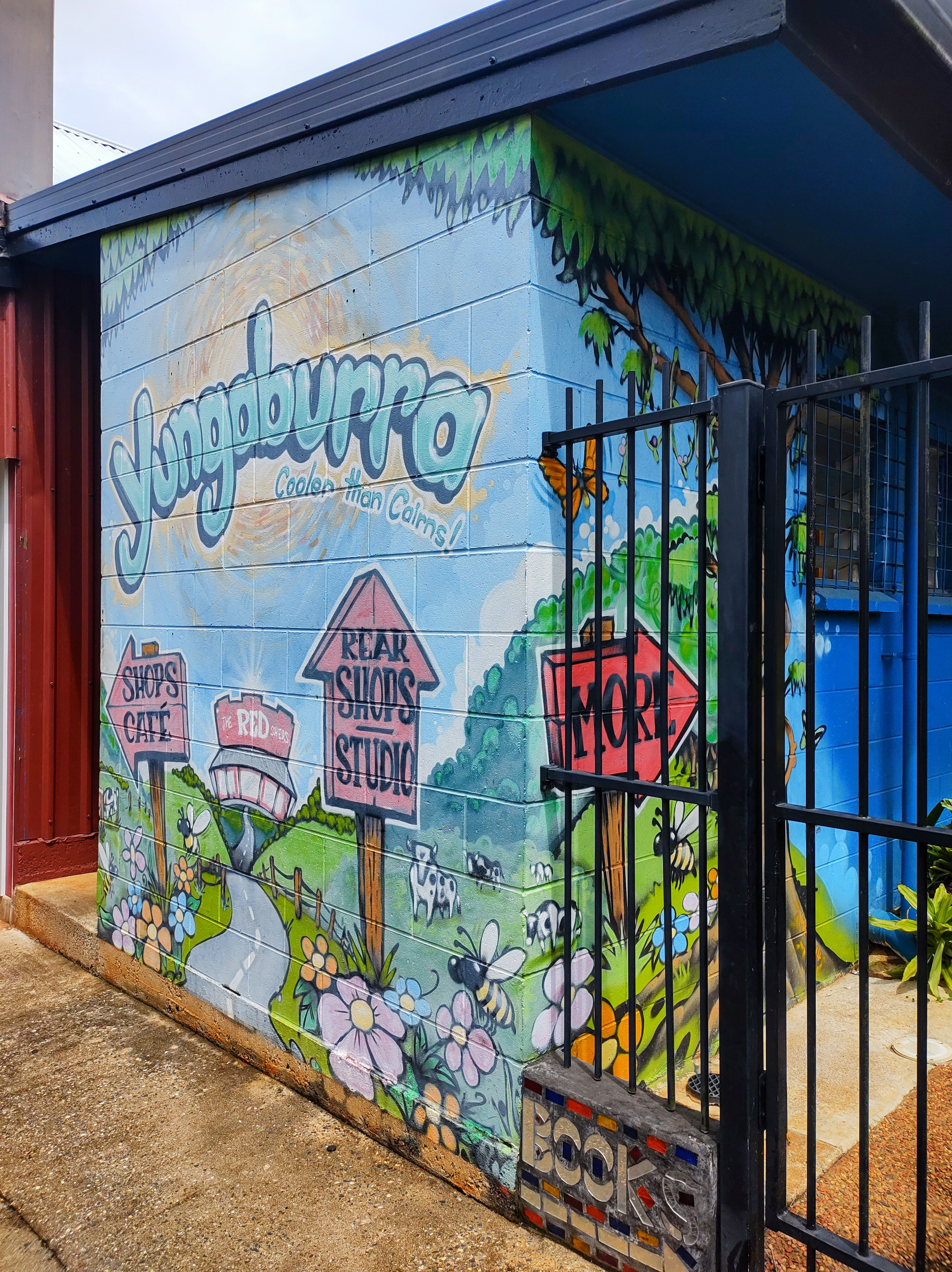
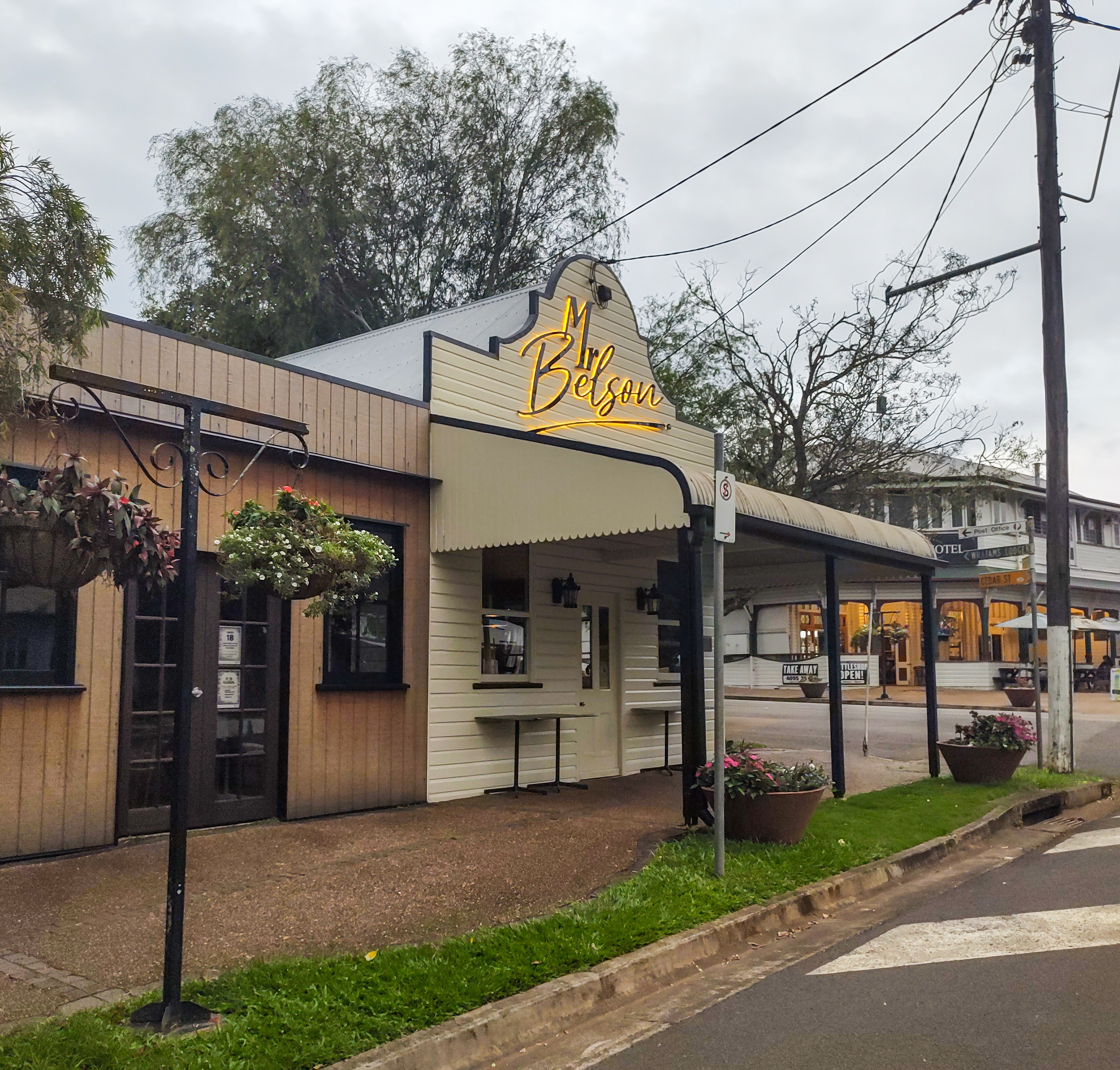
The streets of Yungaburra village were lined with flower-filled hanging baskets and native plants, bringing so much colour to the grey weather, and attracting big Ulyses Butterflies with their bright azure wings. Little boutique shops welcomed us in for a mosey, with local art on display and handcrafted things, and while the dark sky continued to drizzle outside, we enjoyed a cosy brunch in the café on the corner – ‘Mr. Belson,’ which was originally the old bank, built in 1912 by Arthur Herbert Belson.
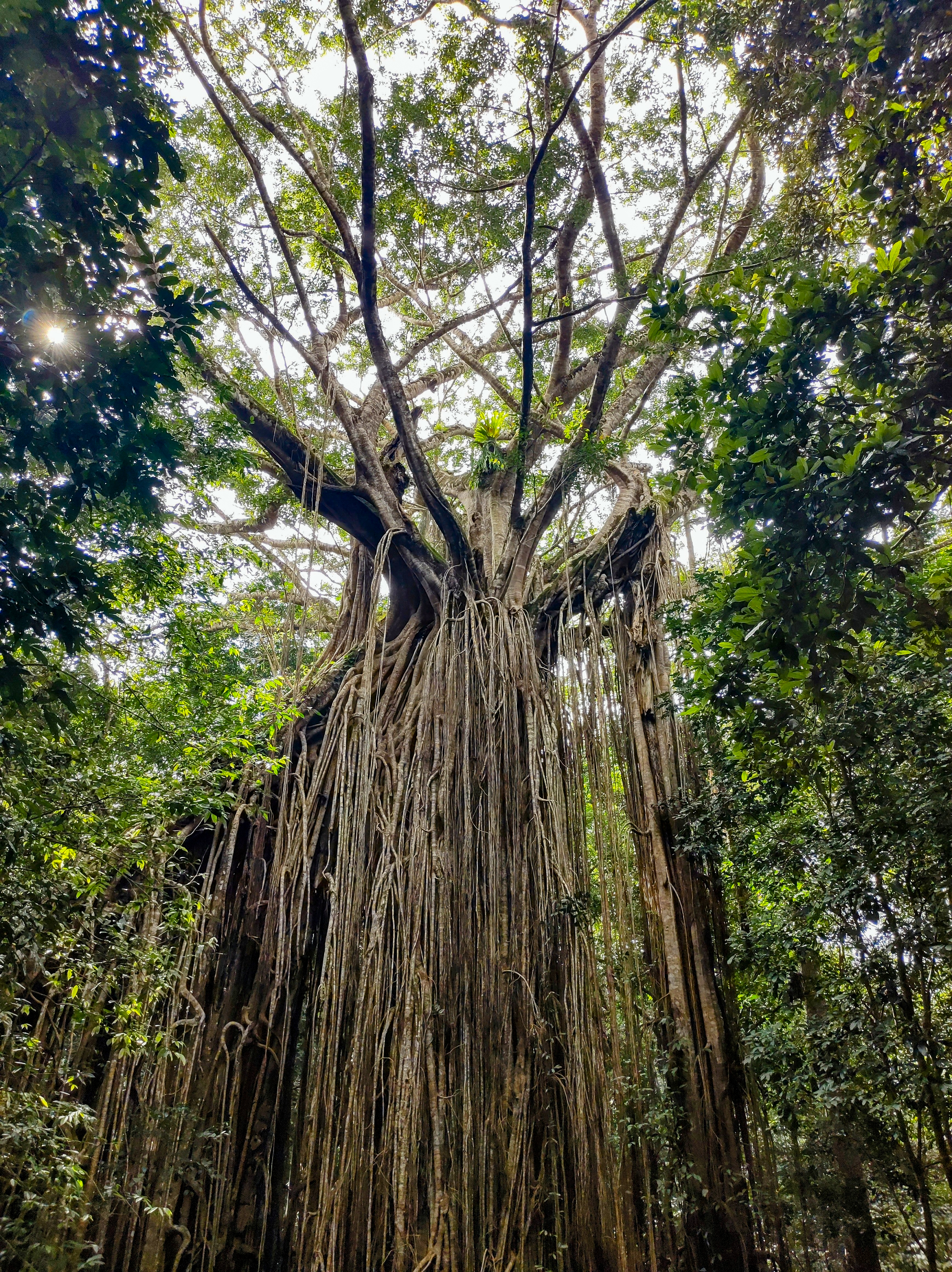
A short drive from Yungaburra village, we found the Curtain Fig Tree. This is just one spectacular example of Australia’s fig trees, which are huge, natural sculptures of the rainforest.
Malanda
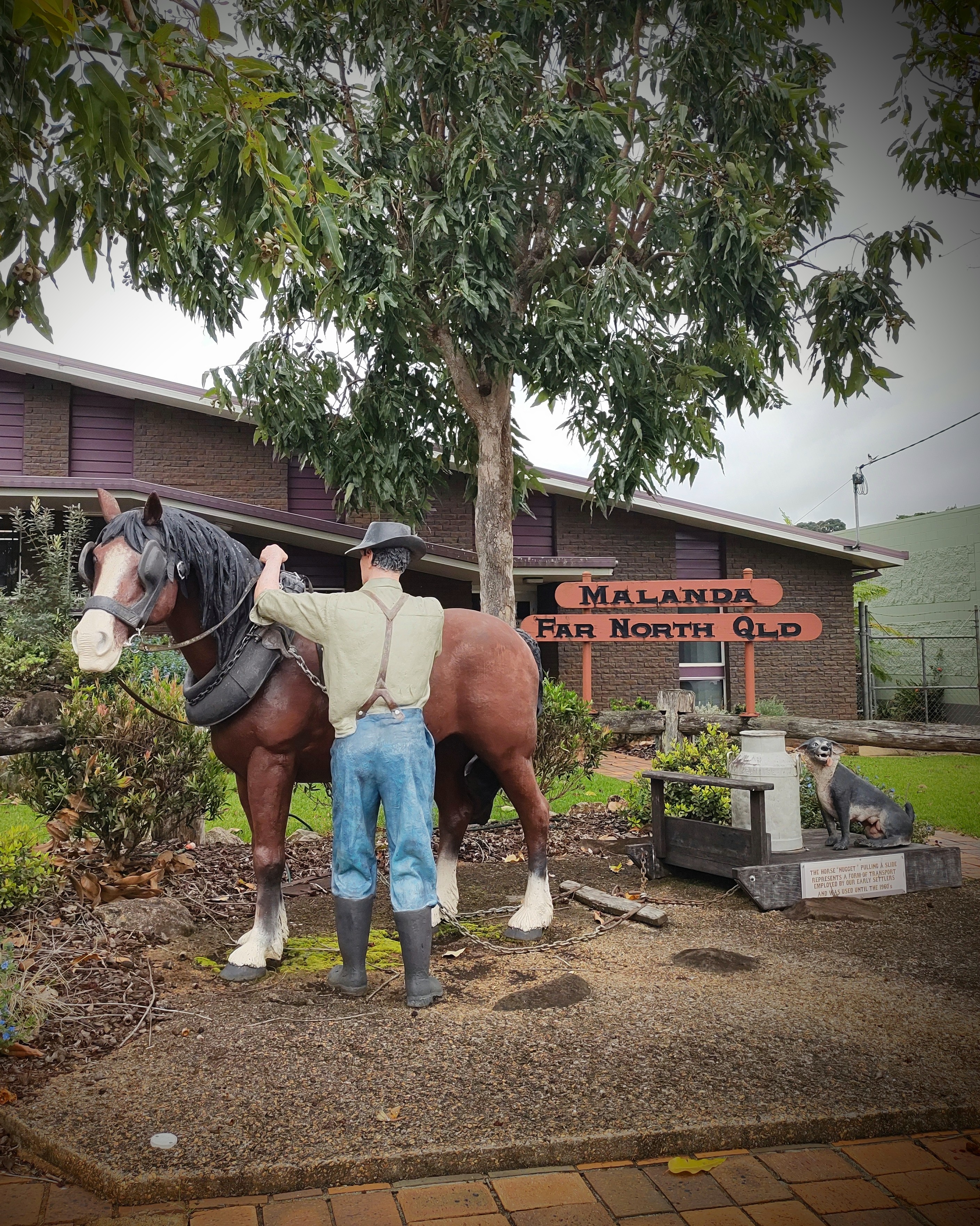
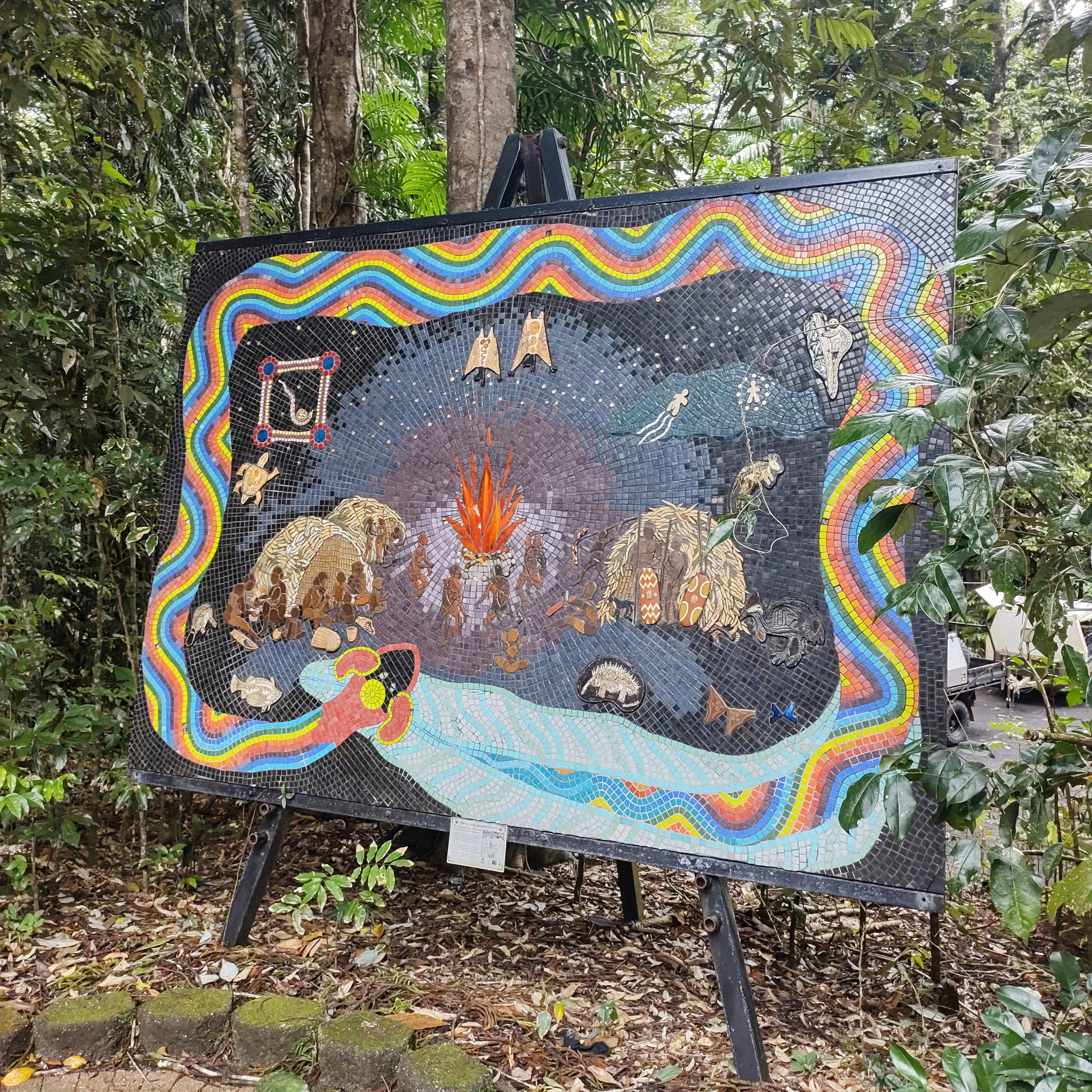
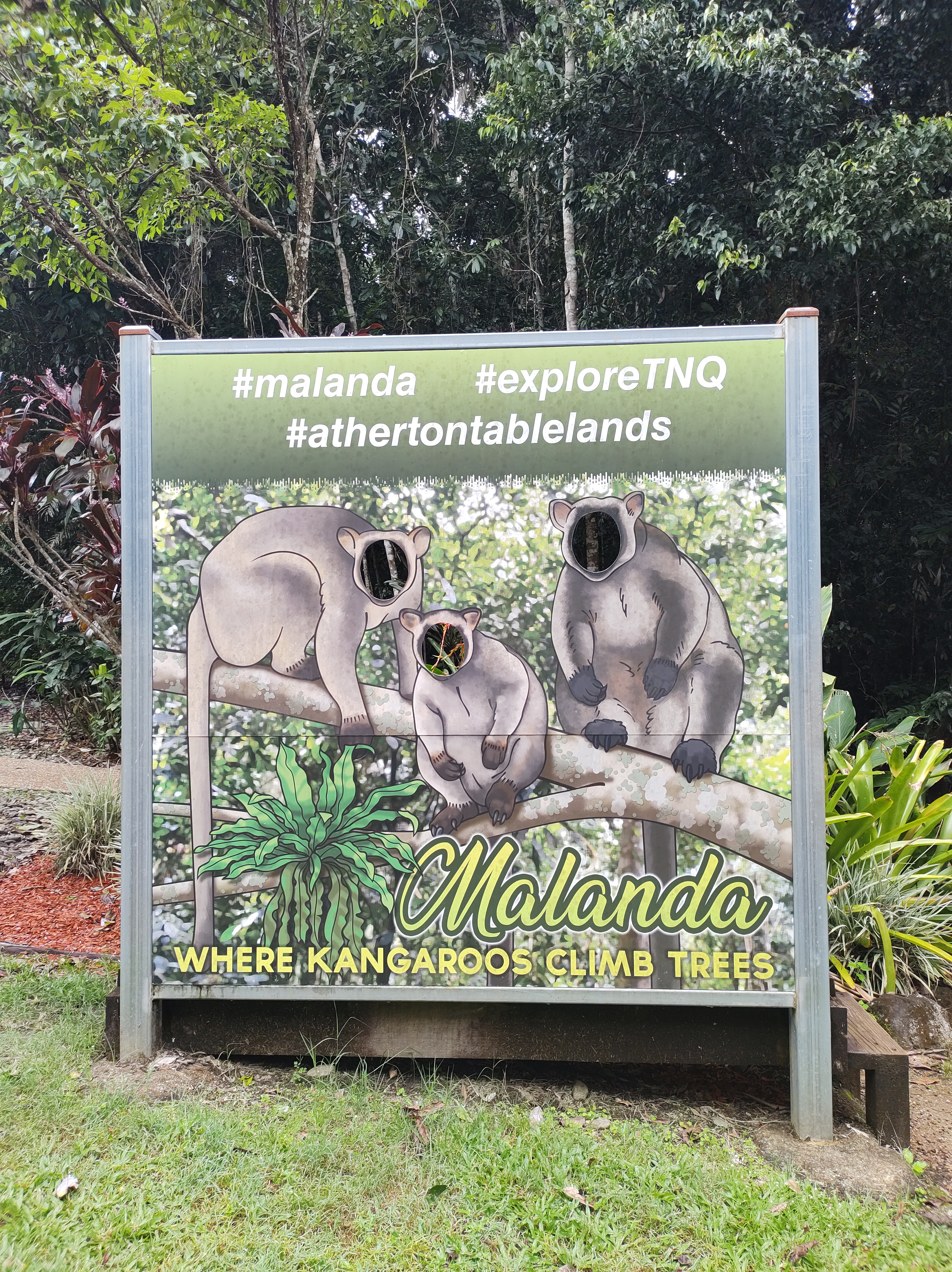
This sleepy little town steeped in natural history and dairy farming, is surrounded by lush rainforest. Malanda Falls pours through the forest, which has local indigenous heritage, and so much wildlife, including the Lumholtz Tree Kangaroo.
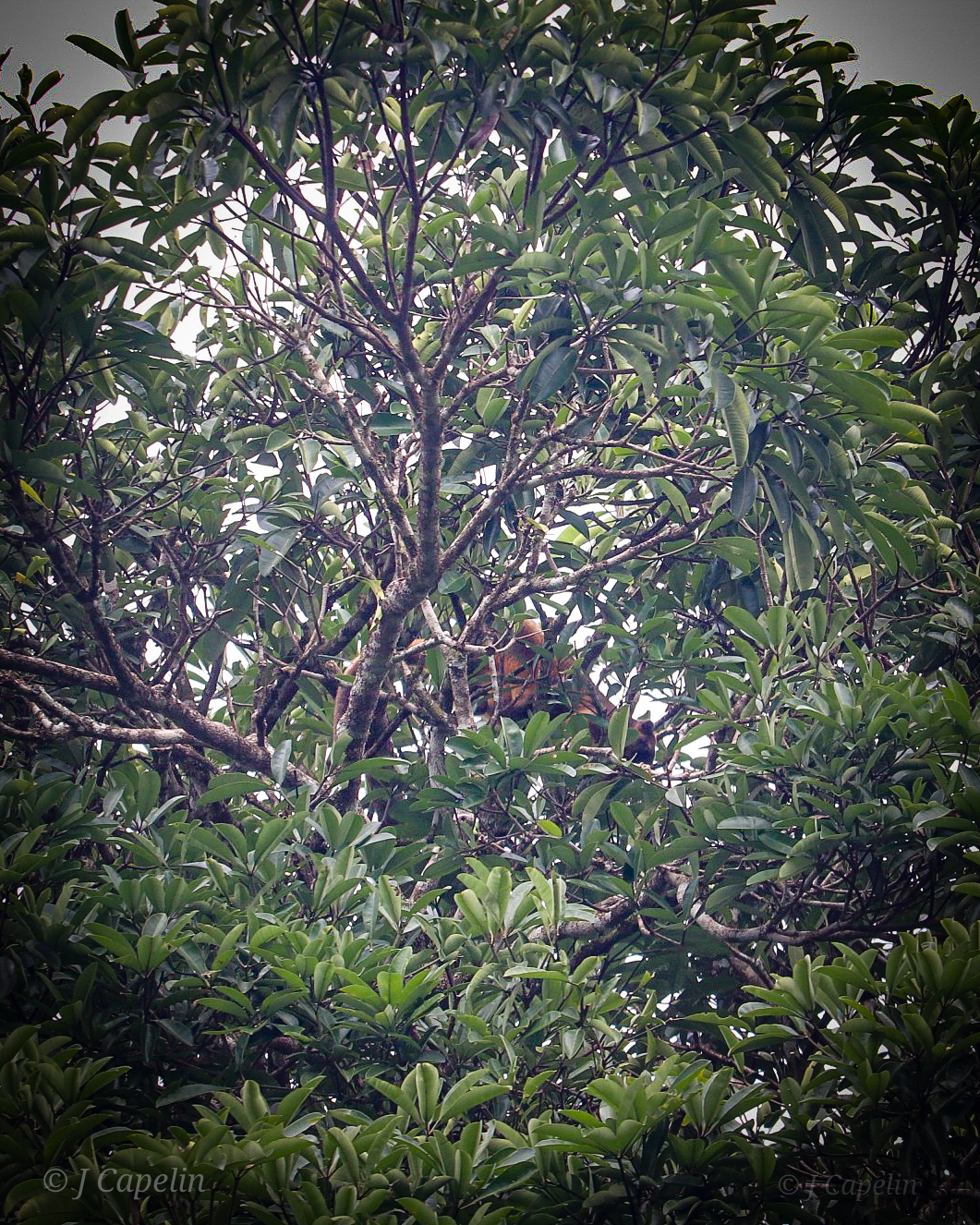
We followed the rainforest trail along the creek and through the trees, glimpsing catbirds and pademelons, but it was difficult to spot anything directly above us in the dense, high canopy. It wasn’t until we got back to the carpark on the other side of the road, we saw a group of people staring up at the edge of the rainforest. Low and behold, well hidden in the branches at the very top of a tree was a Lumholtz Tree Kangaroo!
Malanda FallsA Pademelon
Can you make out the Tree Kangaroo’s head facing to the right, and the tail hanging down through the branches to the left?
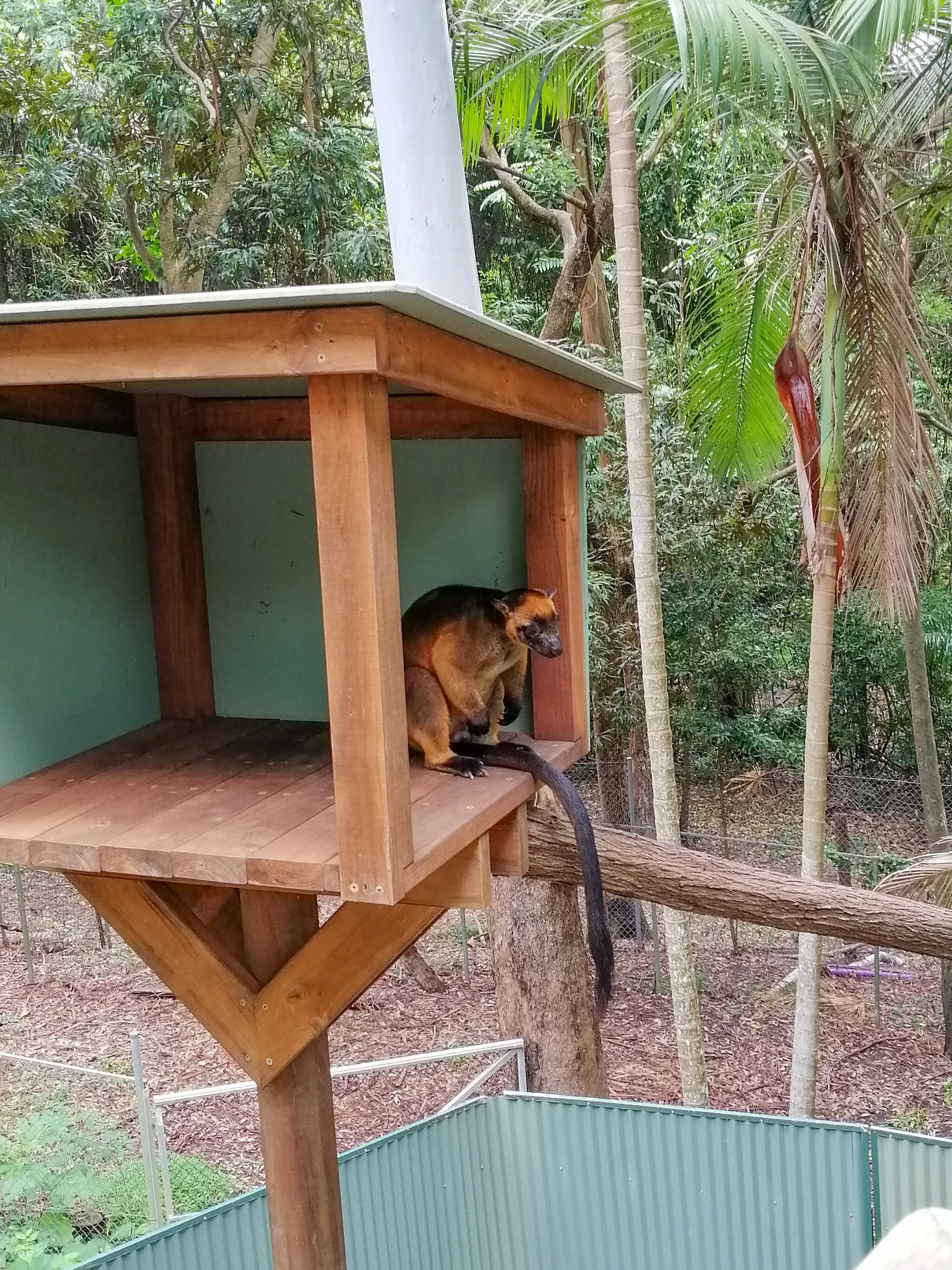
Here is a clearer photo of one I saw at Currumbin Wildlife Sanctuary a few years ago.
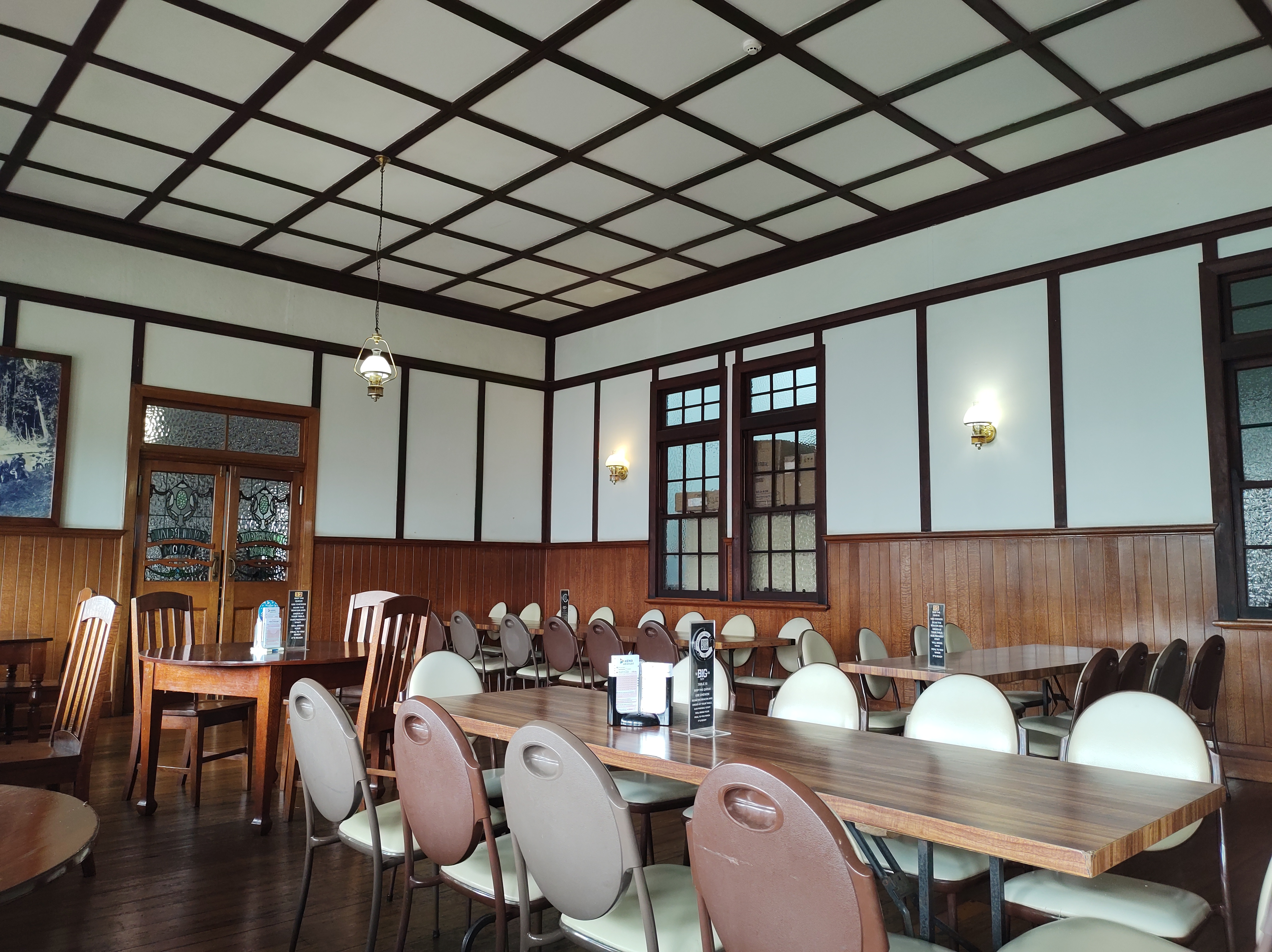
Back in the town, we enjoyed a classic pub lunch in The Big Pub – Australia’s largest wooden hotel, built in 1911 in just six months! The pub is still under the management of the original family, and maintains its original design.
Lake Eacham
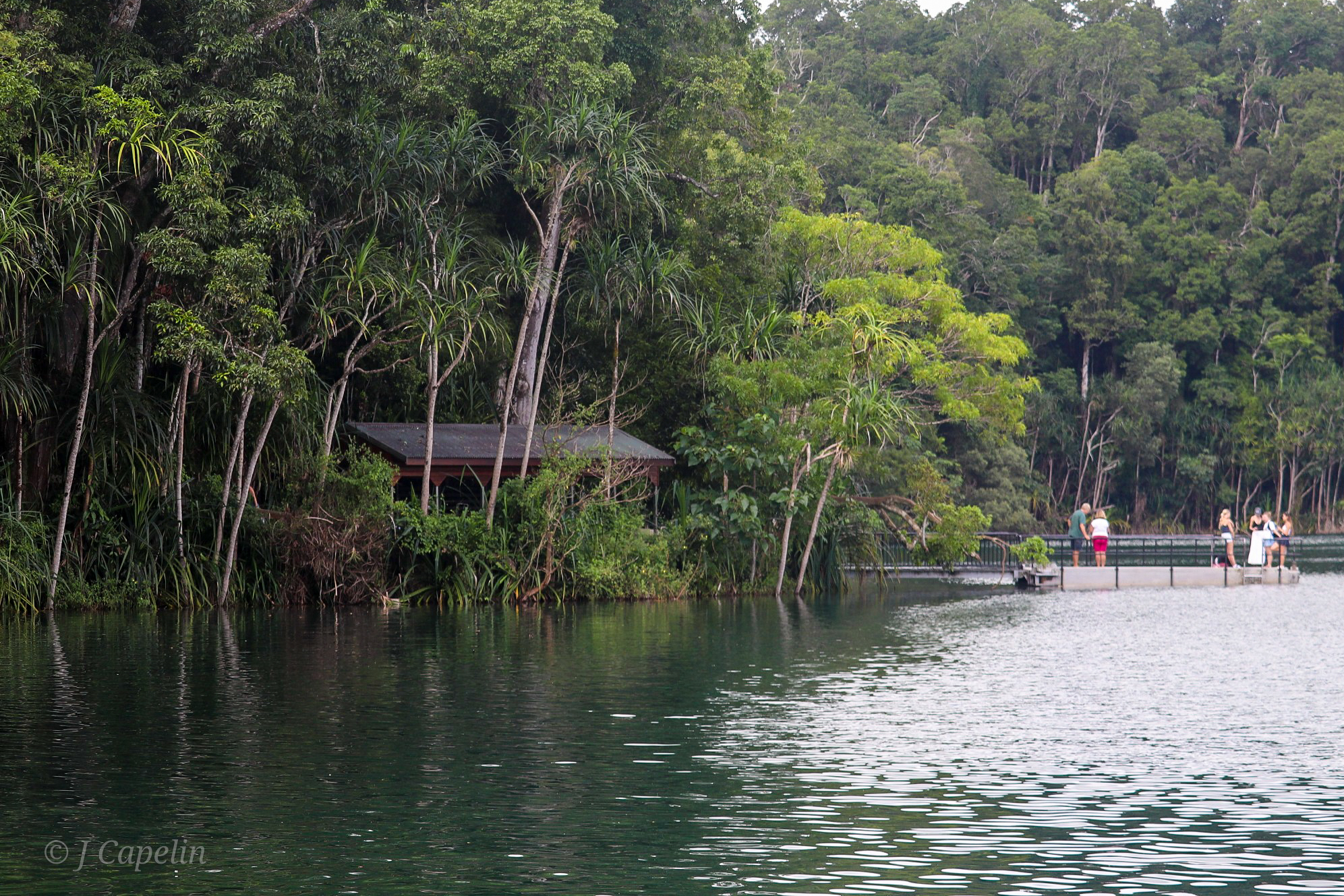
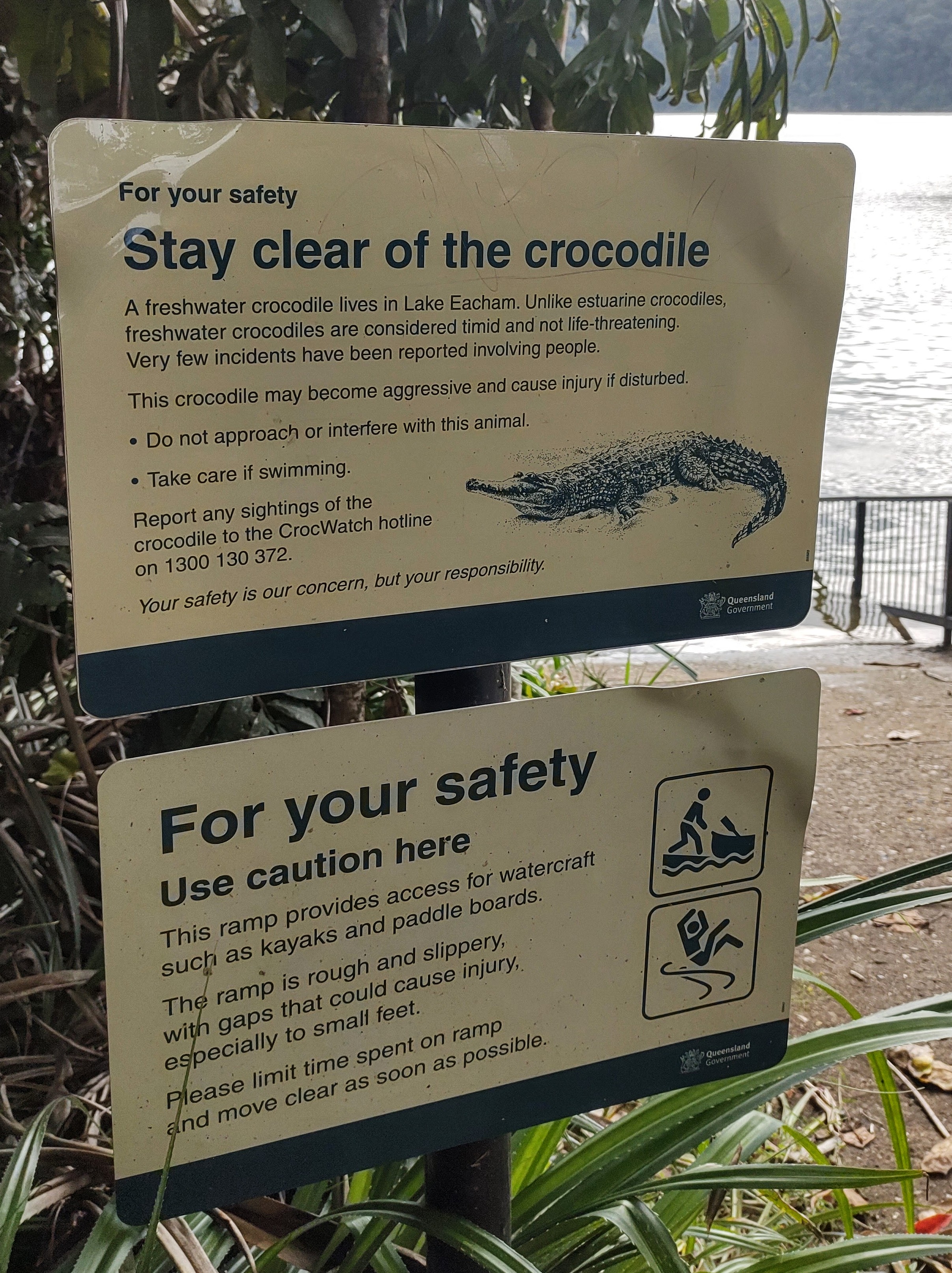
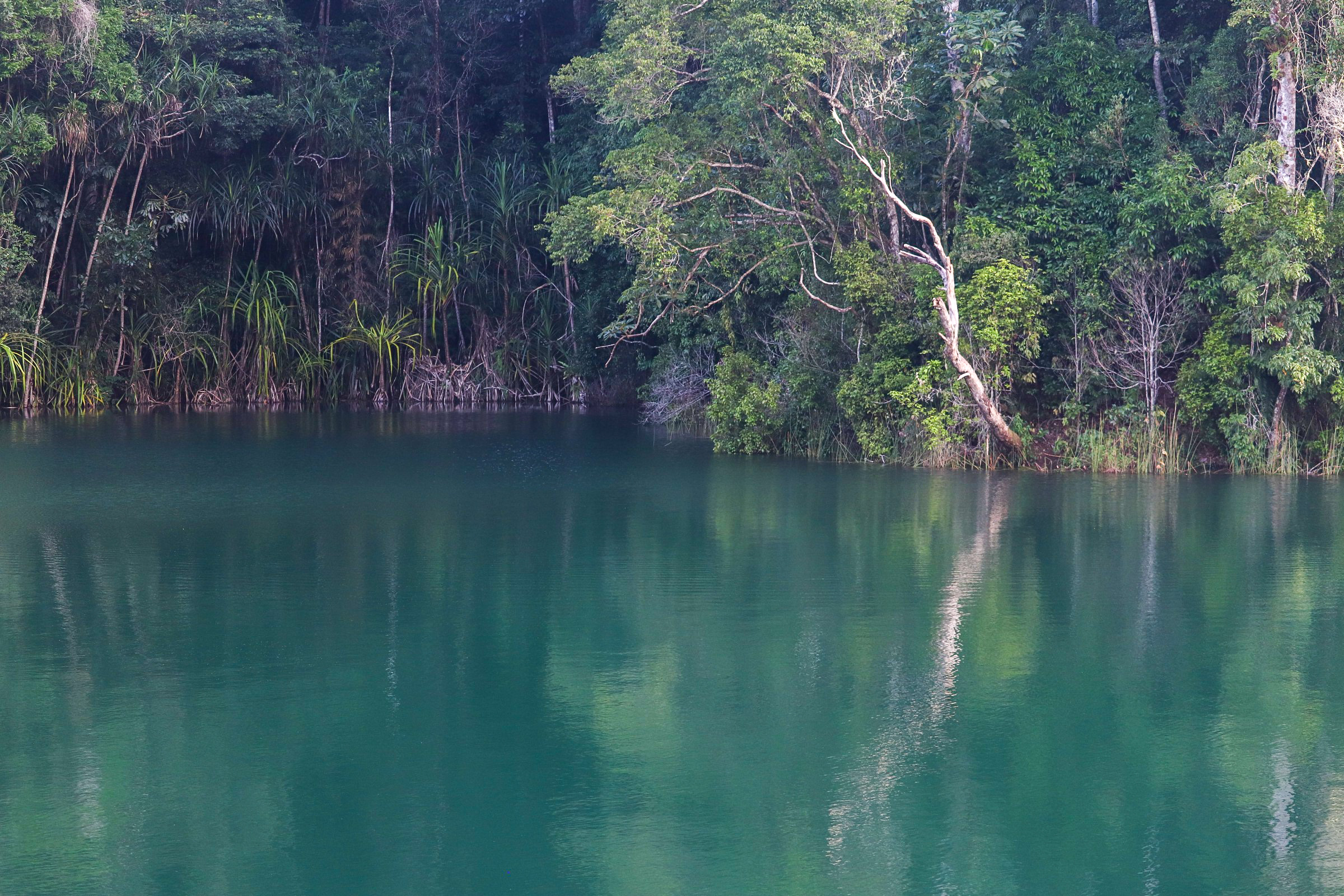
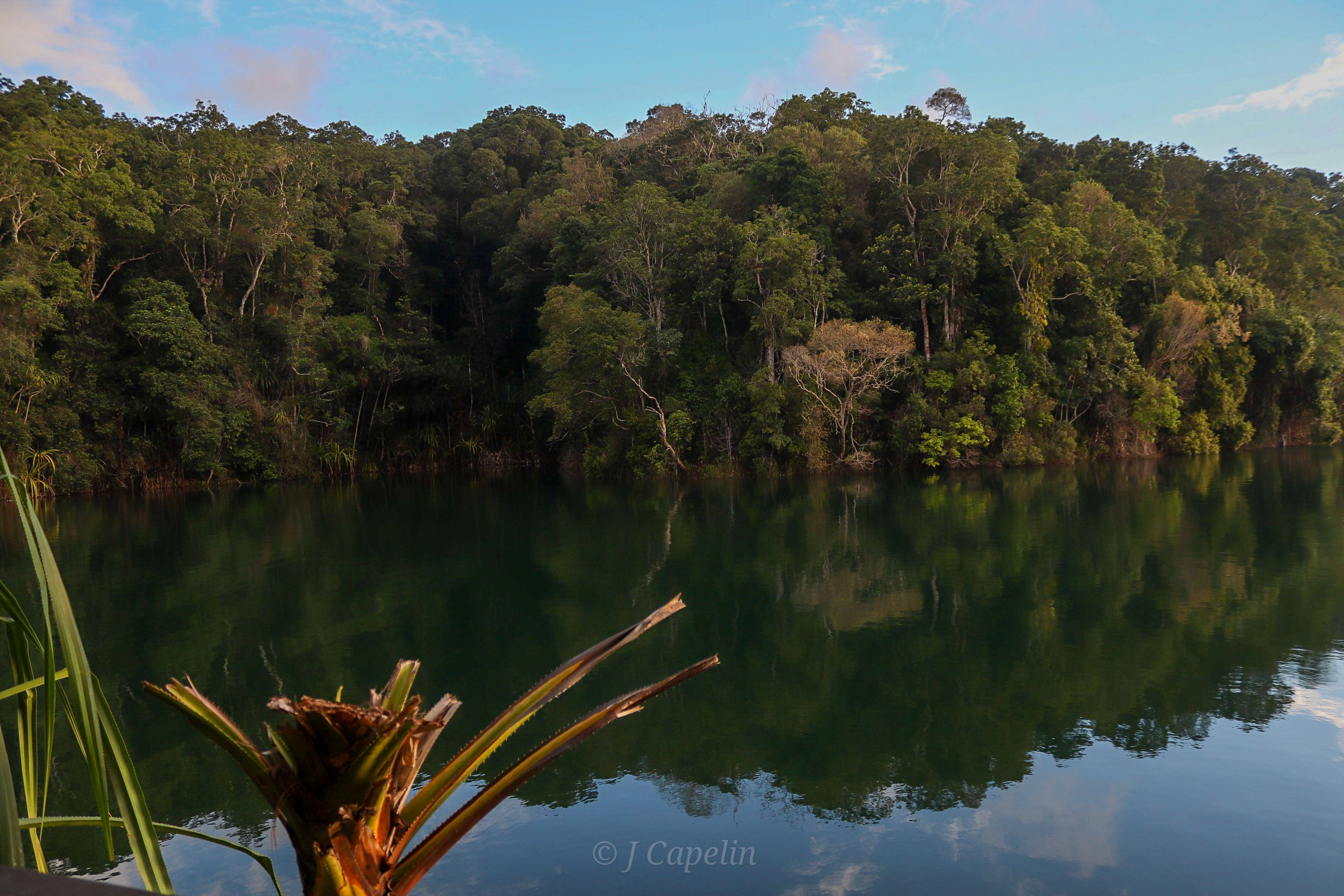
In the heart of the Crater Lakes National Park lies Lake Eacham, a beautiful ecosystem formed by volcanic activity, surrounded by rainforest and shared by humans and wildlife. The picnic area on the lakefront was busy in the morning. It was overcast, but the sun kept peeping through, and the air was warm. Children played in the water, swimming and launching kayaks and paddleboards, despite the large sign warning of the resident crocodile!
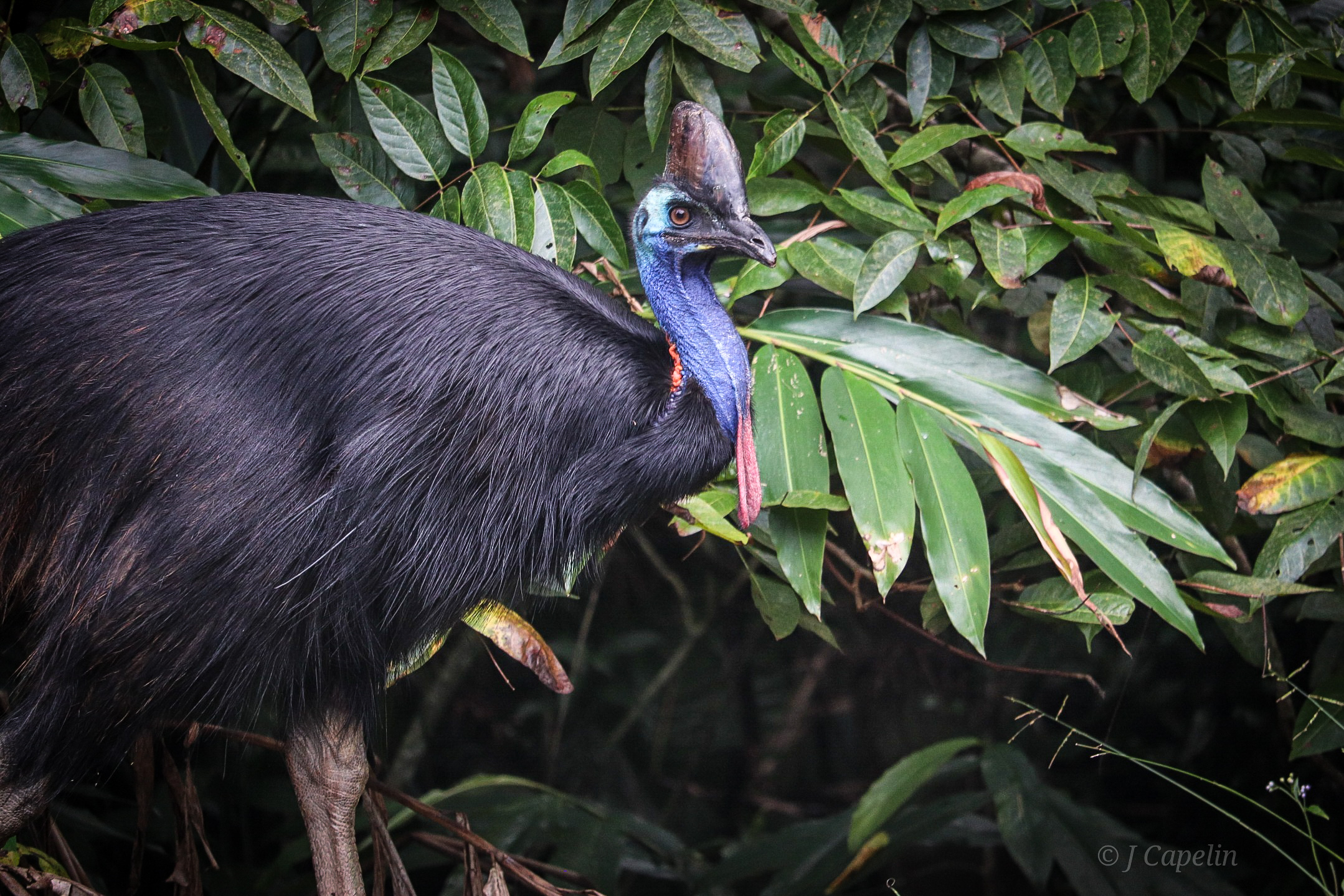
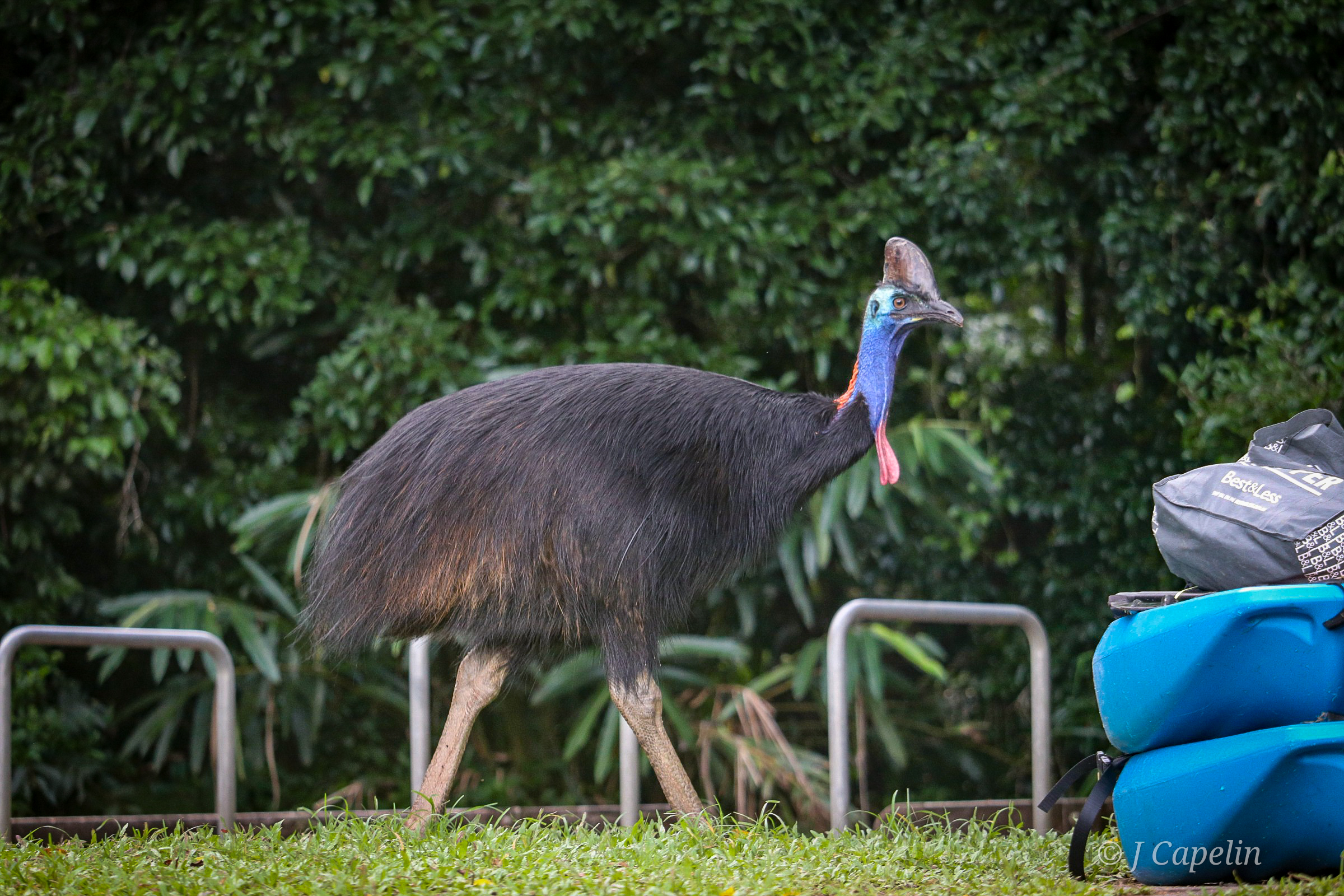
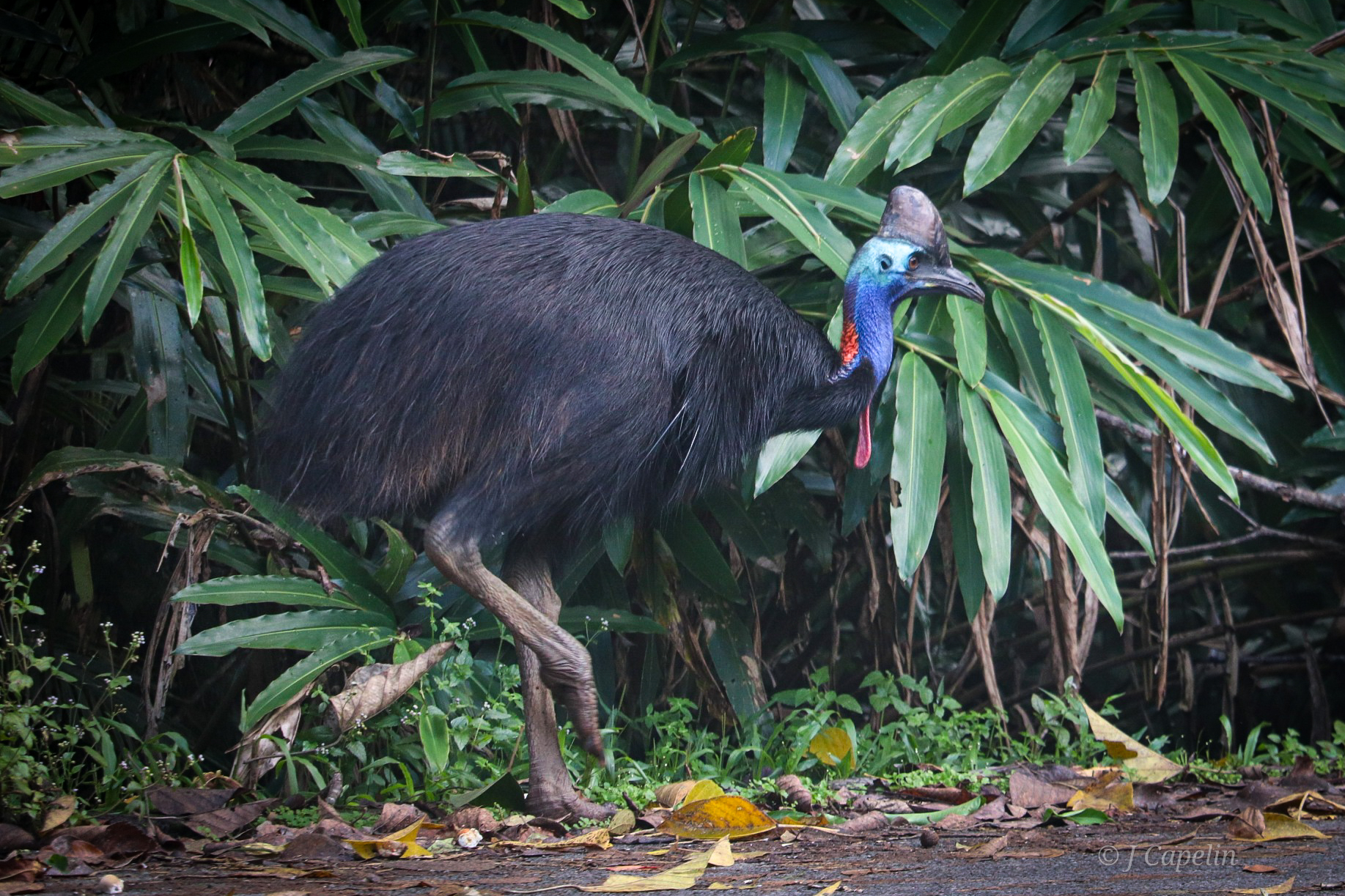
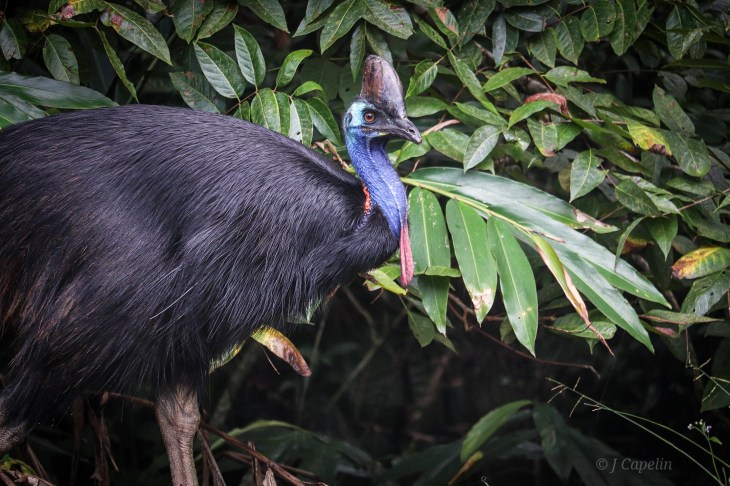
Families prepared breakfast picnics on the grass, with fruit and pastries and coffee flasks, when suddenly I heard a child yell, “Cassowary!” I whipped around, and there was the giant bird, plodding into the grass area, pausing to peruse the picnics on display. It was interesting to see how everyone reacted, and quite evident that these were mostly locals and not tourists. Those who could moved away to a safe distance, while the others who didn’t have time simply stayed still and calm until the Cassowary moved on. The whole park went quiet, everyone just watching until the Cassowary slowly plodded away. I waited until it was on the other side of the carpark before I took a picture with my zoom lens. Even then, when it turned and looked directly at me, I knew it was time to disappear!
Southern Cassowary
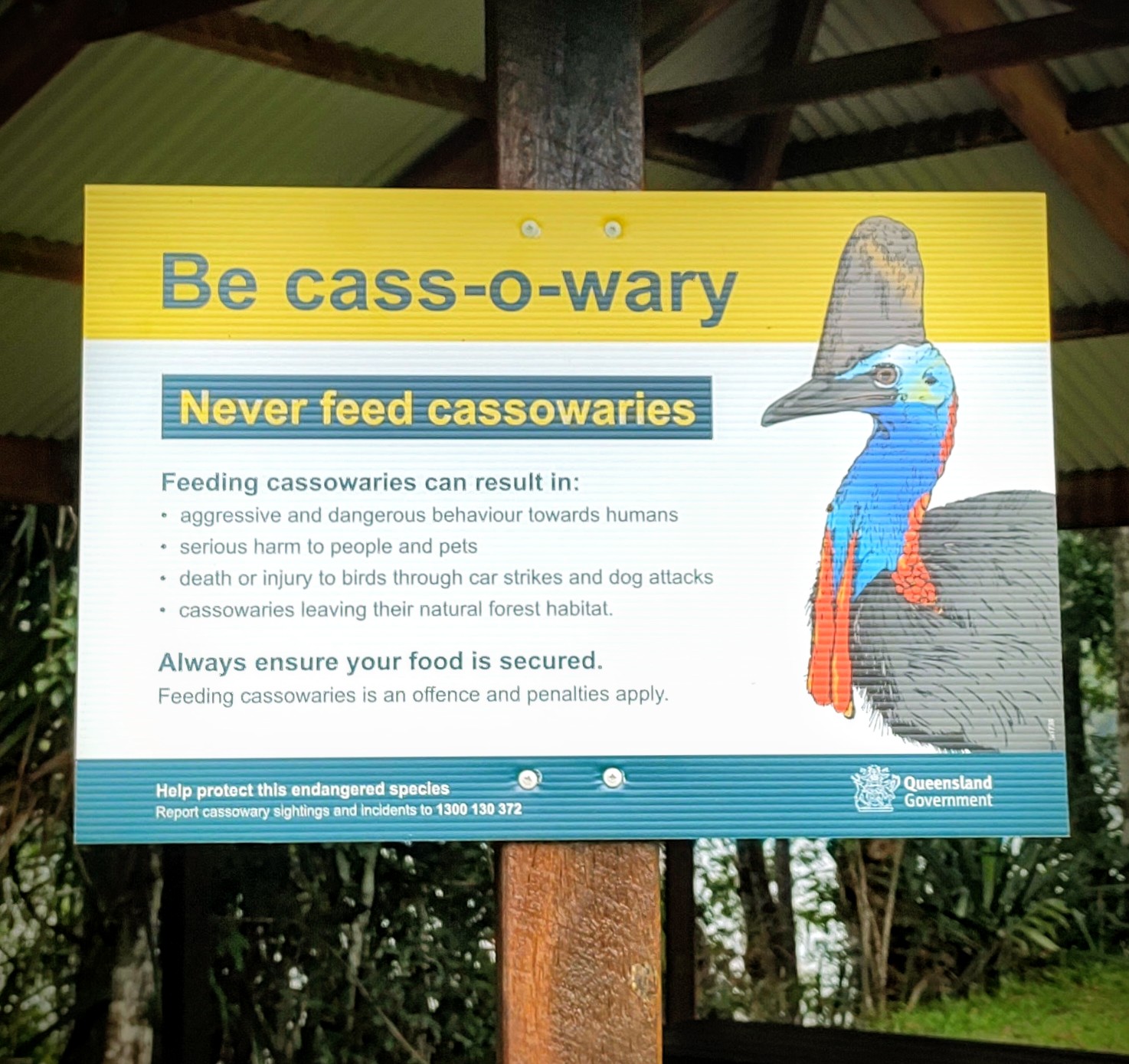
Southern Cassowaries can grow to 6ft tall and are Australia’s largest bird by mass; the second largest in the world after the ostrich. Emus can be just as tall, but weigh considerably less. Cassowaries are endangered and declining, therefore are rare to see, being confined to a very small area of Far North East Queensland. They need a very specific habitat and don’t mix well with humans. Though they can be curious, especially around food, they can quickly become skittish and territorial, with the capacity to fatally harm with those long talons and powerful legs.
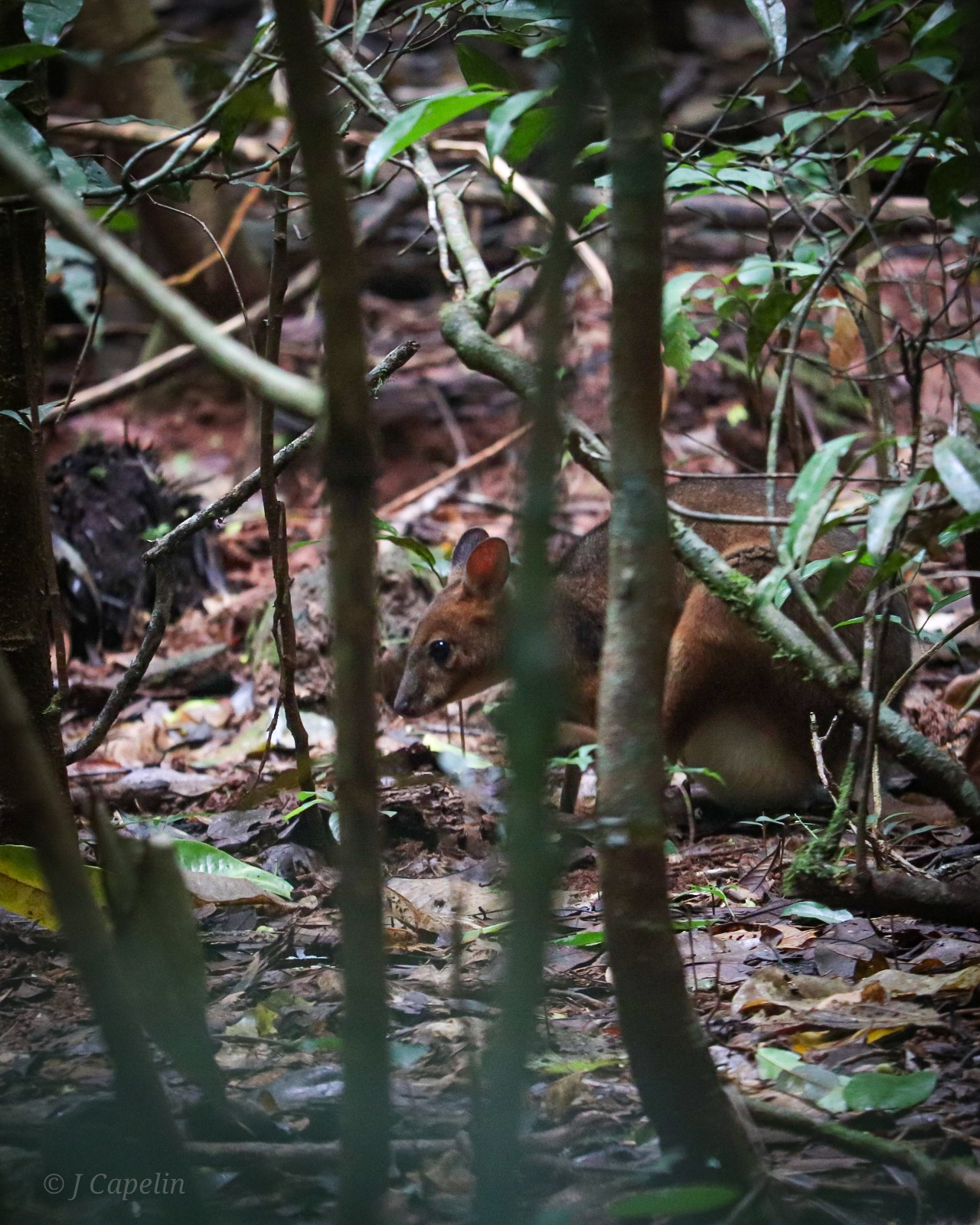
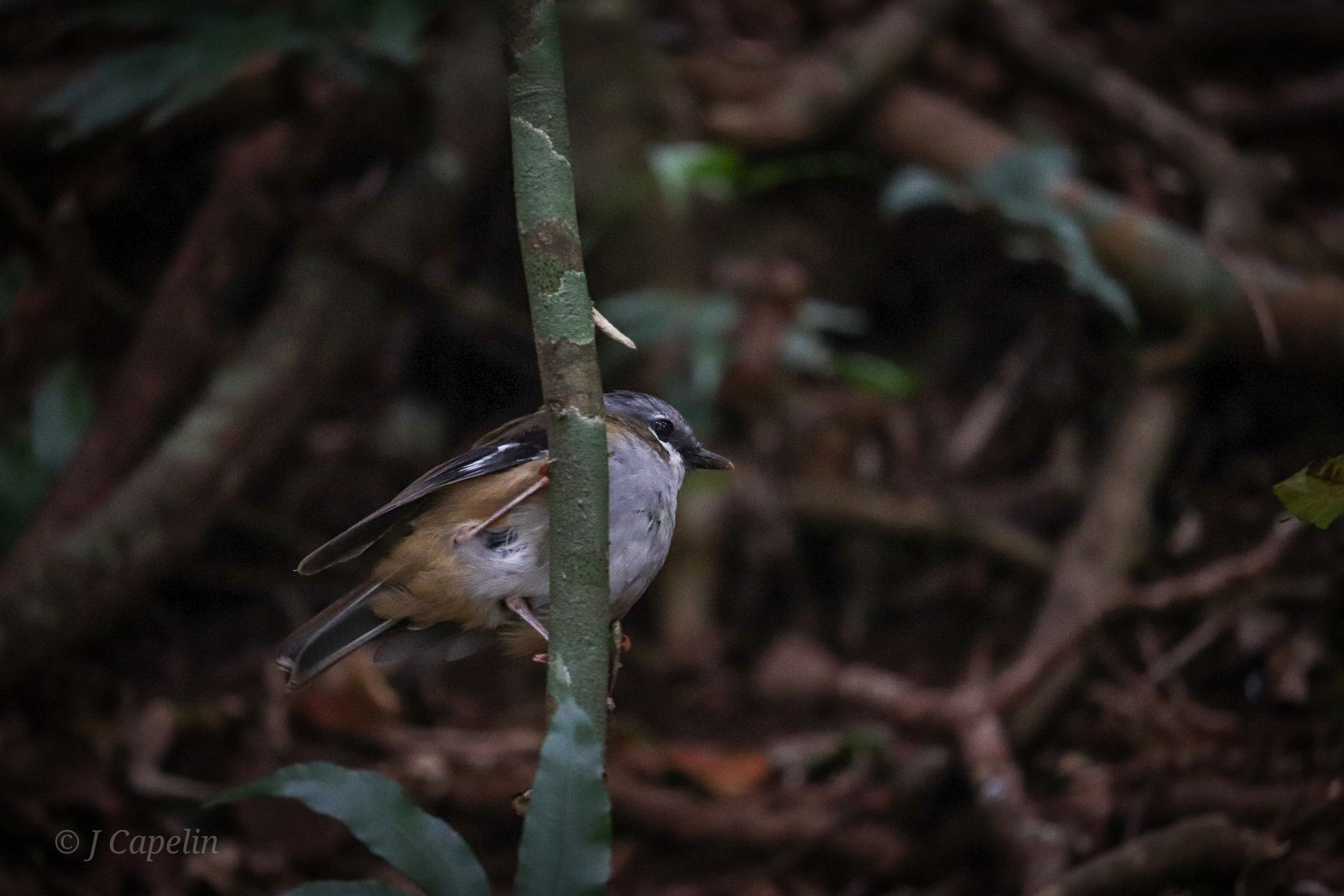
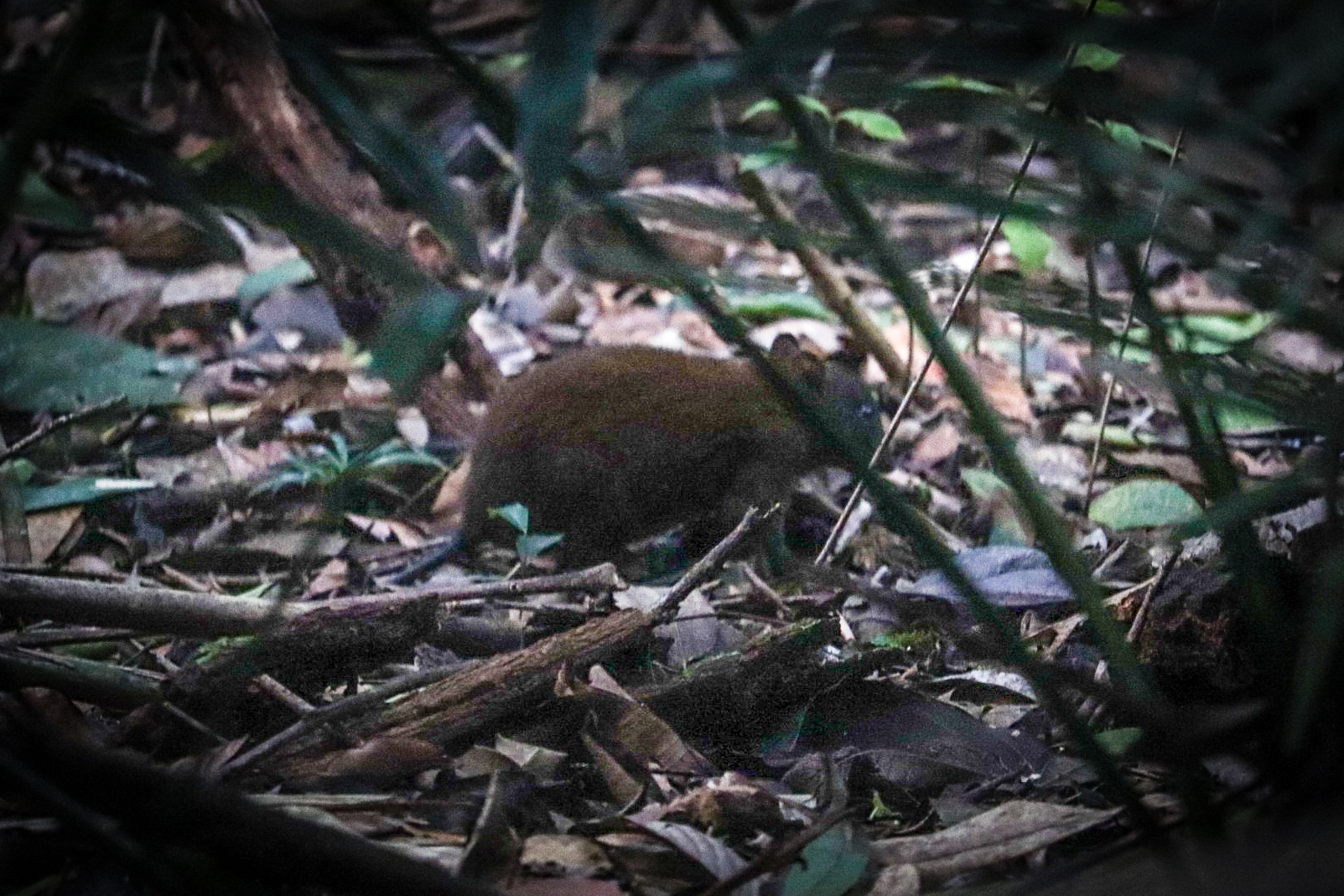
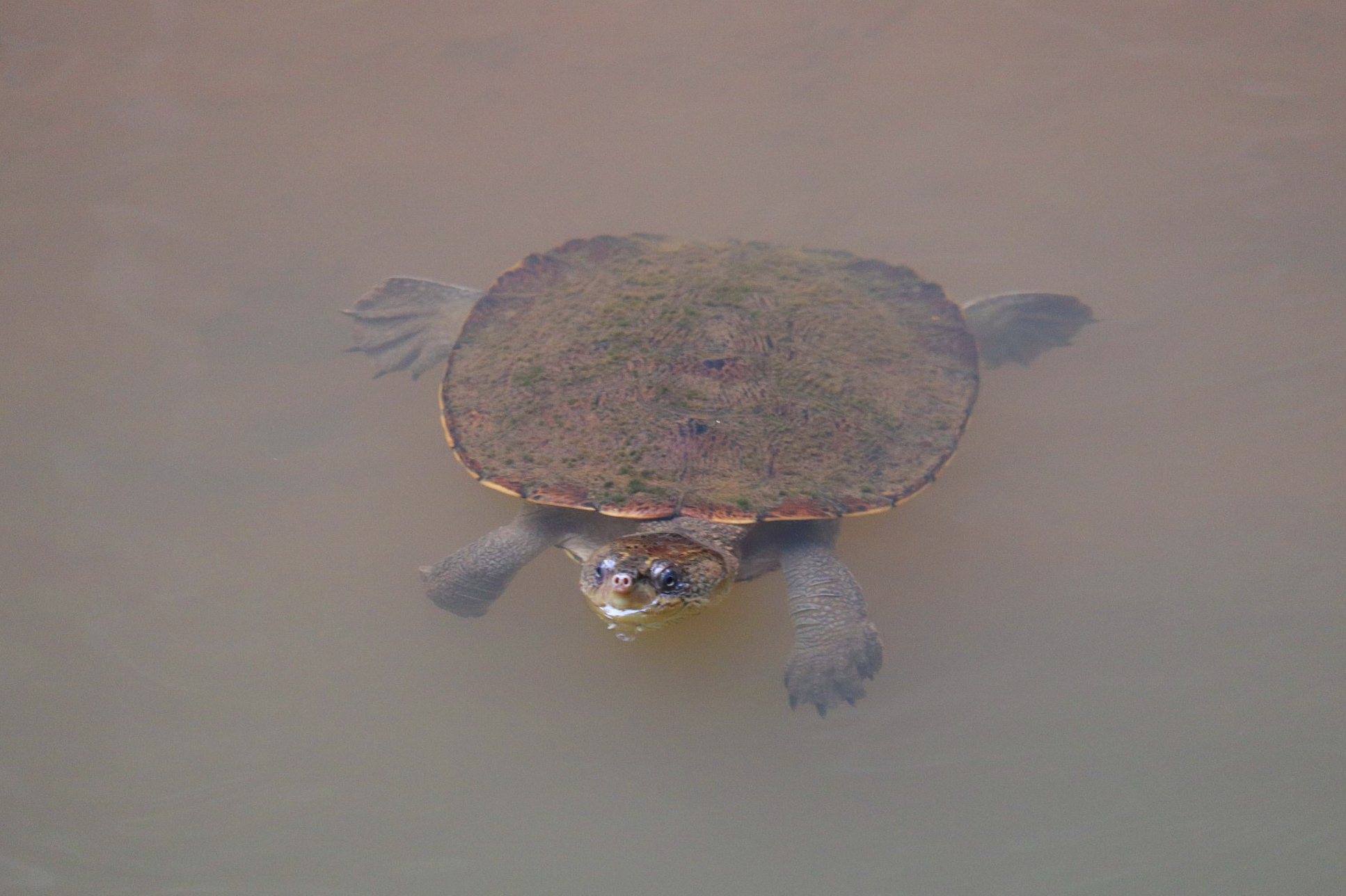
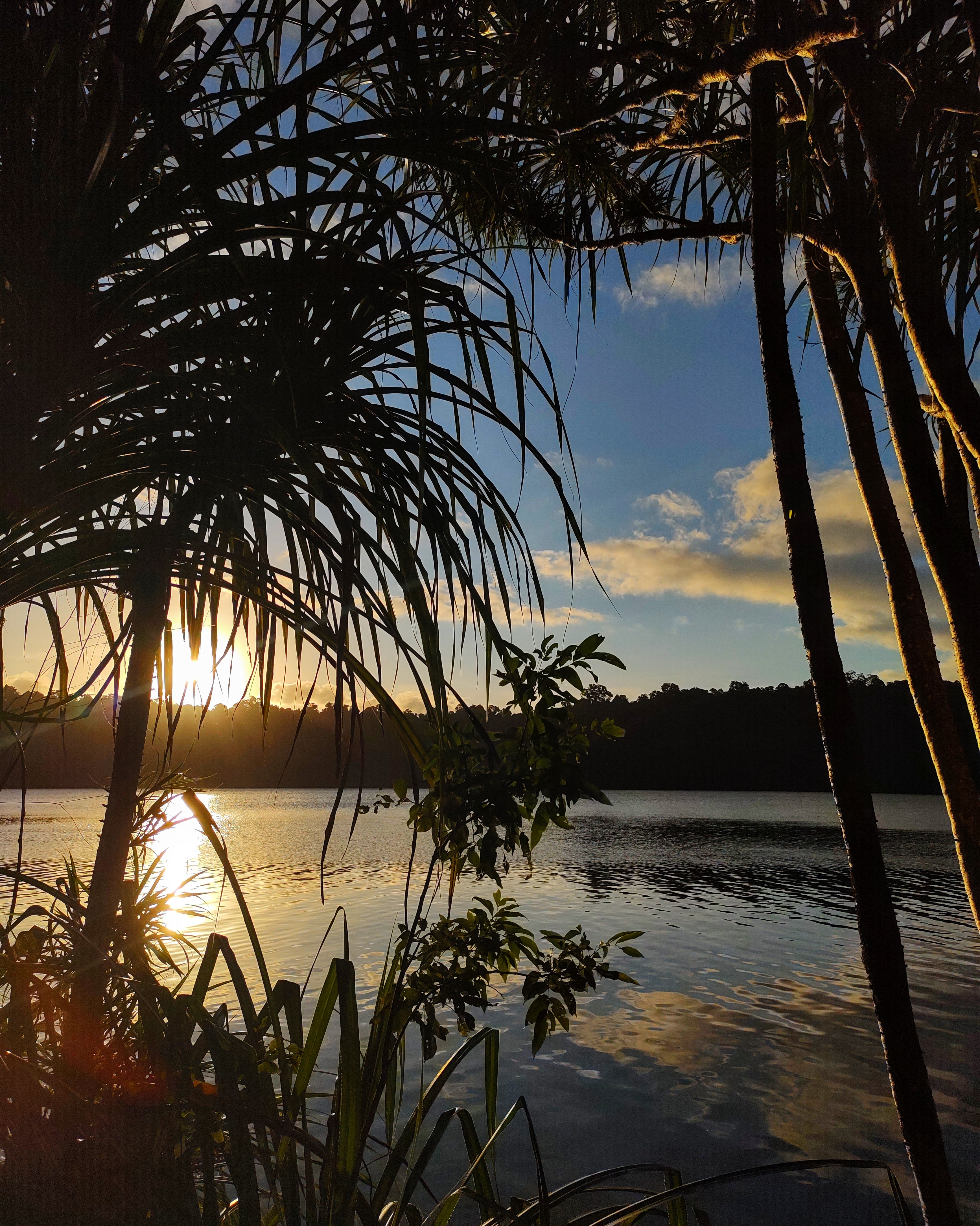
Later in the evening, we walked the Lake Eacham Circuit; a beautiful, relaxing walk, which took around an hour, circling the volcanic lake through the rainforest. The evening sun began to sink lower in the sky beneath the clouds, pouring gold over the trees and the ripples on the water. A little Grey-headed Robin followed us through the woods, and I saw a tiny Musky Rat-Kangaroo hop into the bushes, which is only found in this pocket of North East Queensland. Cormorants and turtles surfaced in the shallows, while people jumped into the lake and enjoyed a sunset swim.
A Grey-headed RobinA blurry glimpse of a Musky Rat-Kangaroo
Atherton
The morning we left the Tablelands was dark and moody again; drizzle smudging the windows slightly while the windscreen wipers screeched. We went through Atherton – the main town in the region, with an agricultural history making it a prime location for backpackers looking for farm work. The town’s main street stood strong with colonial and art deco buildings lining the road. Hostels and pubs advertised their lodgings and lunch specials, and there seemed to be plenty of cafes and banks, and even a shopping centre. It is said to have a vibrant culture with an abundance of community arts and sports, while the surrounding land is prolific with crops such as sugar cane, mangoes, coffee, peanuts, tea, corn, macadamia nuts, avocados, berries, and there are also cattle and dairy farms. Here we left the gloomy highland skies behind us, along with the enchanting rainforests and their mythical animals, and we continued into the North to our next destination…
Atherton
If you enjoyed this blog, please like & share, & consider making a one-off donation and ‘Buy Me A Coffee.’ Click the link below!
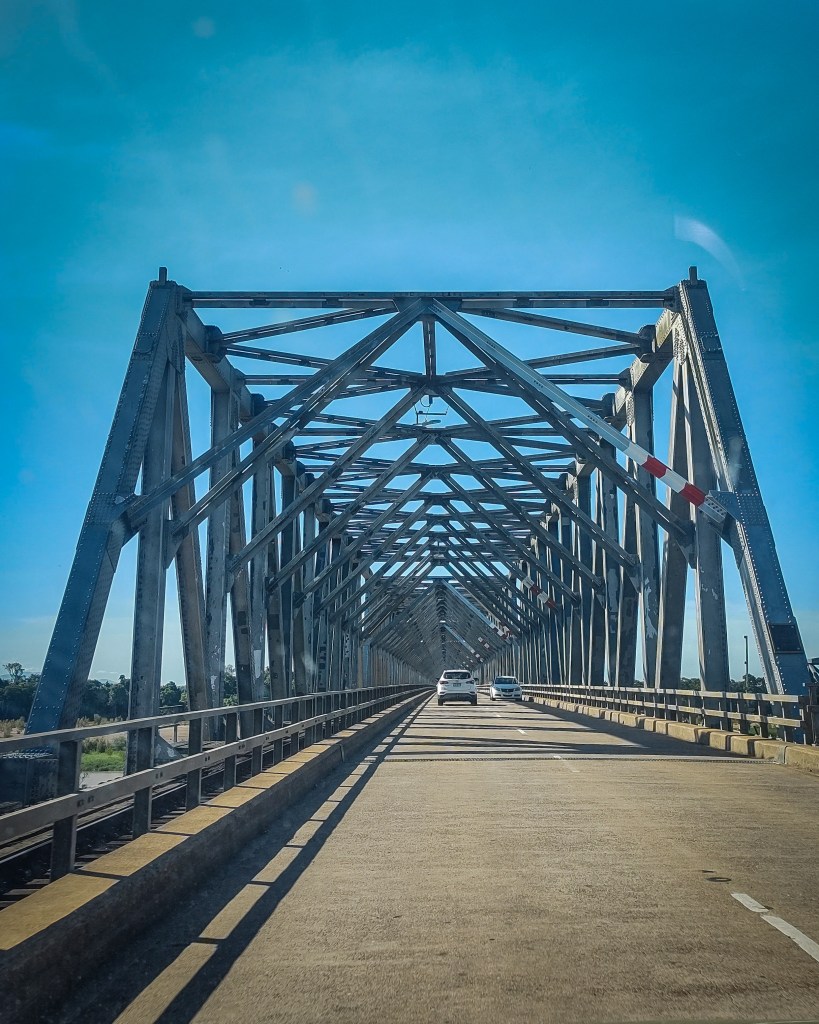
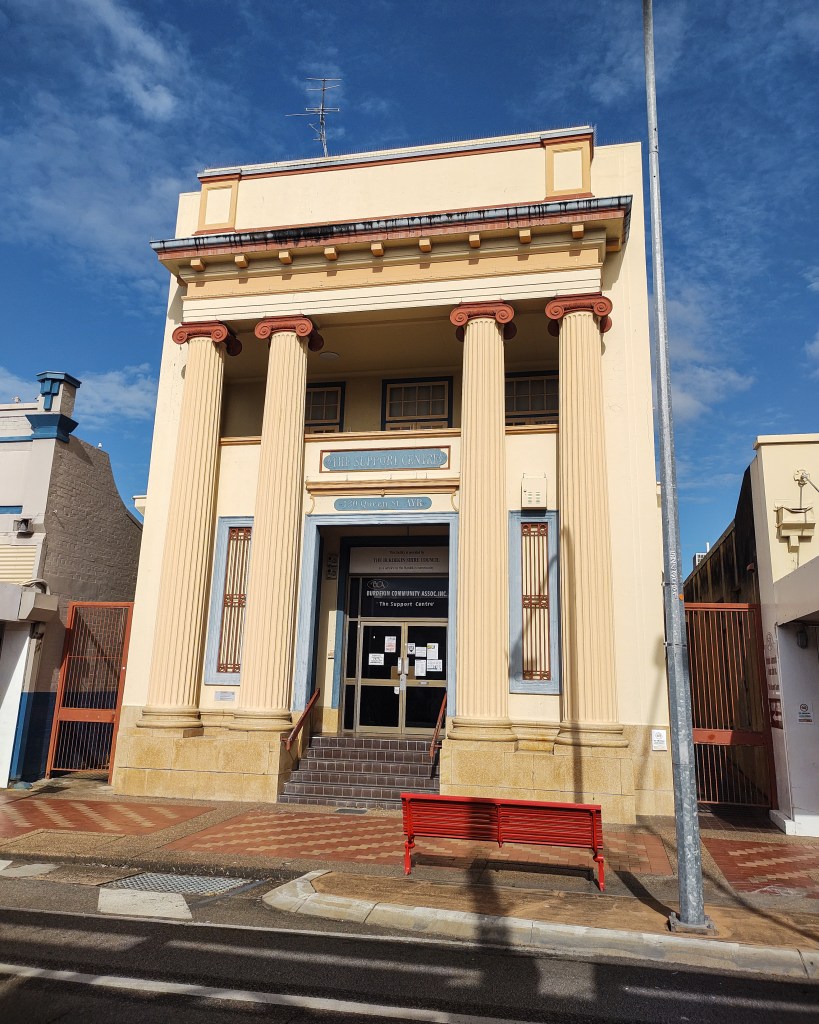
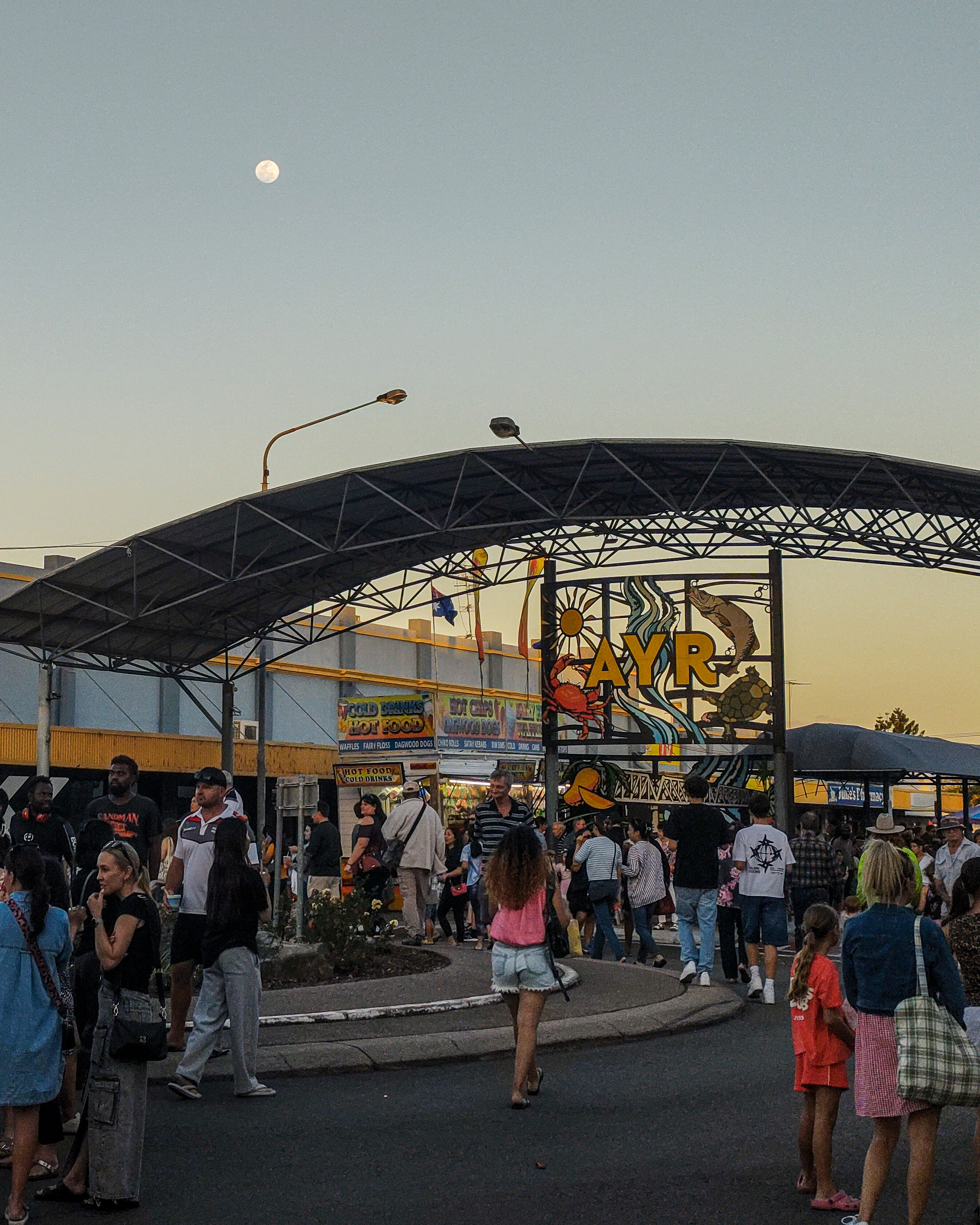
A two day drive – brown, grassy plains and eucalyptus trees reeling past the car windows. The same image repeated, over and over. At the end of day two, we reach the landmark we’ve been looking for – the ‘Silver Link’ Burdekin bridge. This road-rail link carries us over the near-dry, sandy bed of the Burdekin River, and we finally reach Ayr, our home to be, driving through the town centre for the first time in the hot, January sun. The old town clock on the roundabout tells us we’ve made good time, as we pass the terrace of art deco era buildings, cream with faded blue trims, flaking with heat & age.
Ayr has a population of between 8 and 10,000 over a space of about 29 square kms, and outside of that are mostly sugar cane farms, some cattle, mango orchards, and other crops. The next major stops are Townsville, 88km north, and Bowen 116km south on the edge of the Whitsundays. There are many tiny farming communities dotted around the Burdekin Shire, covering over 5000 square kms in North Queensland’s dry tropics, all for which Ayr is the main hub.
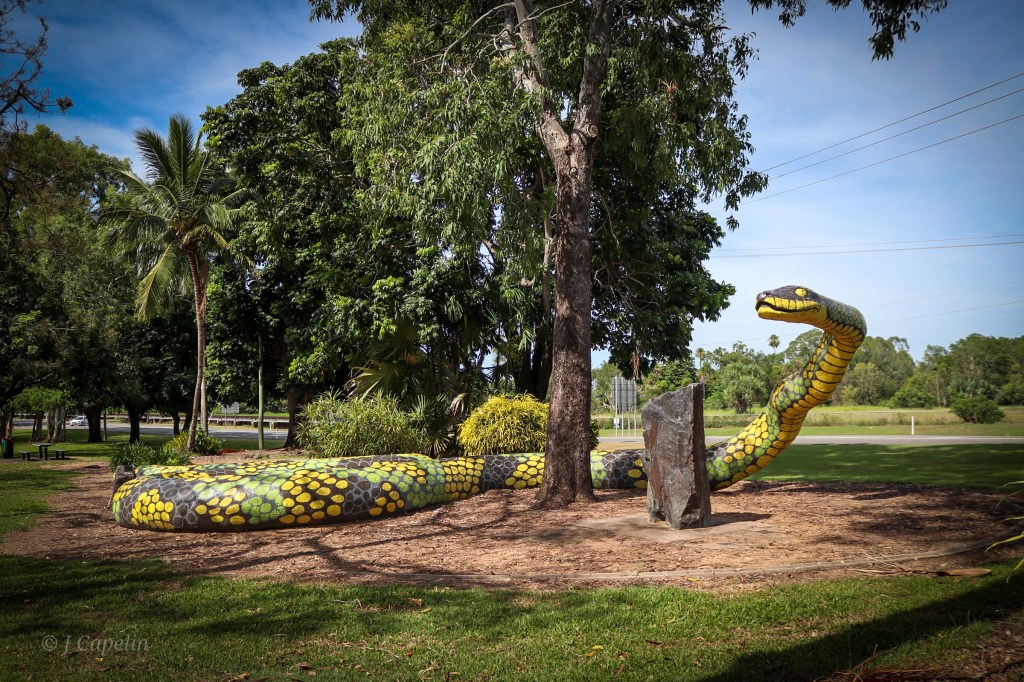
The Burdekin Bridge, AKA ‘The Silver Link’Gubulla Munda – the giant snake totem for the Juru people of the Birri-Gubba nation.Queen Street architecture
My thermometer under the porch reads 50°c, and the blistering sun scorches the grass. It’s Australia Day, which we don’t celebrate, but boredom drags us to the Queens Hotel in town, where I witness my first Cane Toad race. Cane Toads are an introduced toxic pest, which North Queenslanders have learnt to live with by using them as entertainment! Toads with silly names like ‘Frogzilla’ and ‘Donald Jump’ are released into the centre of a big target drawn on the floor, and the first one to leave the target wins, as punters place their bets. These toads are not particularly cooperative, and we spend a good five minutes watching them sit there, not moving!
While my partner gets stuck into his new teaching job, which brought us here, the days drift by slowly and monotonously for me and I quickly realise that finding work here is about who you know, not what you know. There are a few cafés, but most of them are run by small family teams, or hire kids from the high school, who are much cheaper to employ than a seasoned barista such as myself. Everyone says, ‘There’ll be more when the wet season’s over, that’s when the town really comes to life.’ Opportunities may be easier to come by in the industrial trades, but I hear that even the sugar mills can be cliquey, despite the fact they’re always advertising for work. The locals seem friendly and welcoming, they love their Burdekin and they want you to love it too, but it’s not easy to break past their pleasantry façade and become a trusted member of the community – there are people who have lived here for decades who are still considered outsiders.
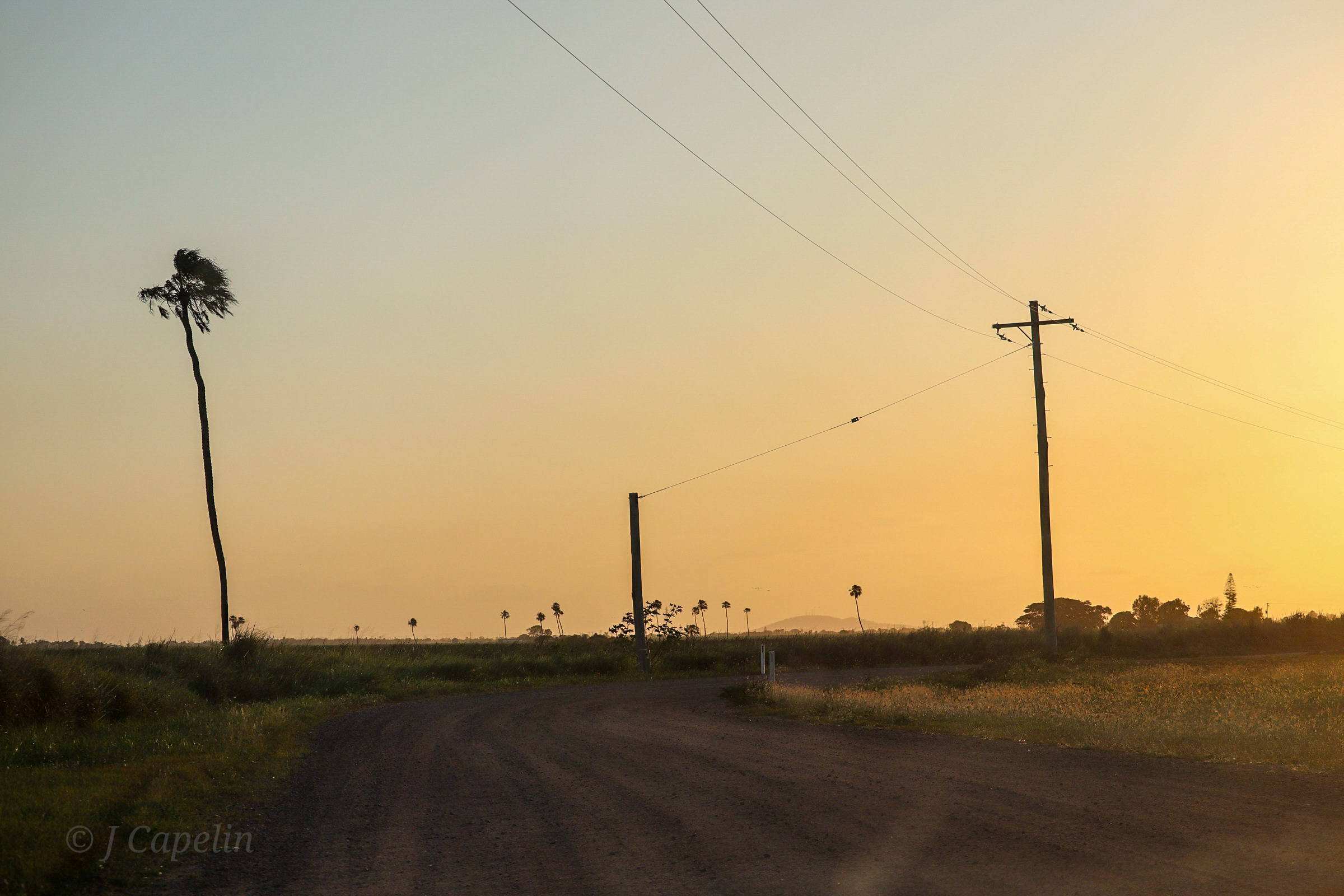
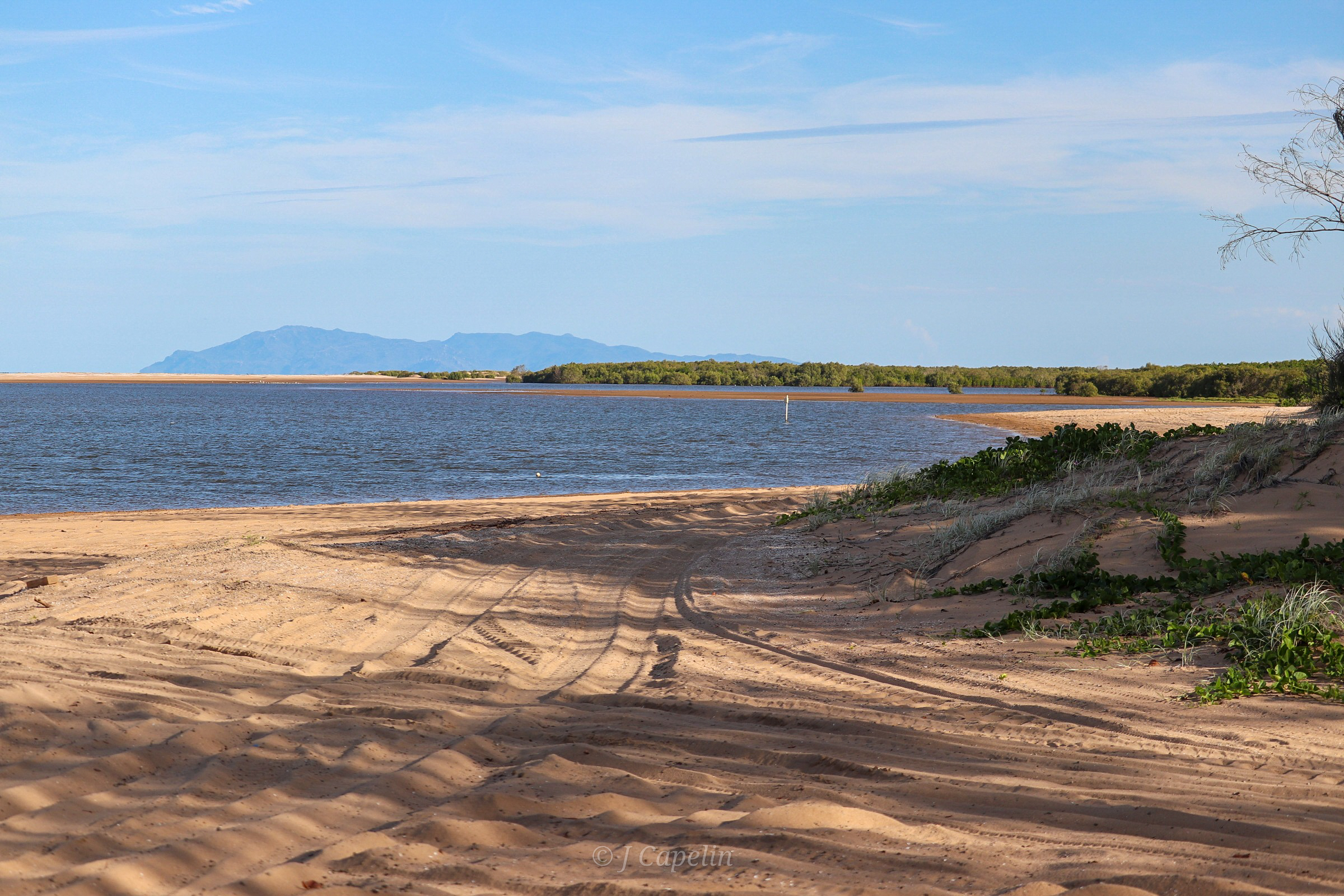
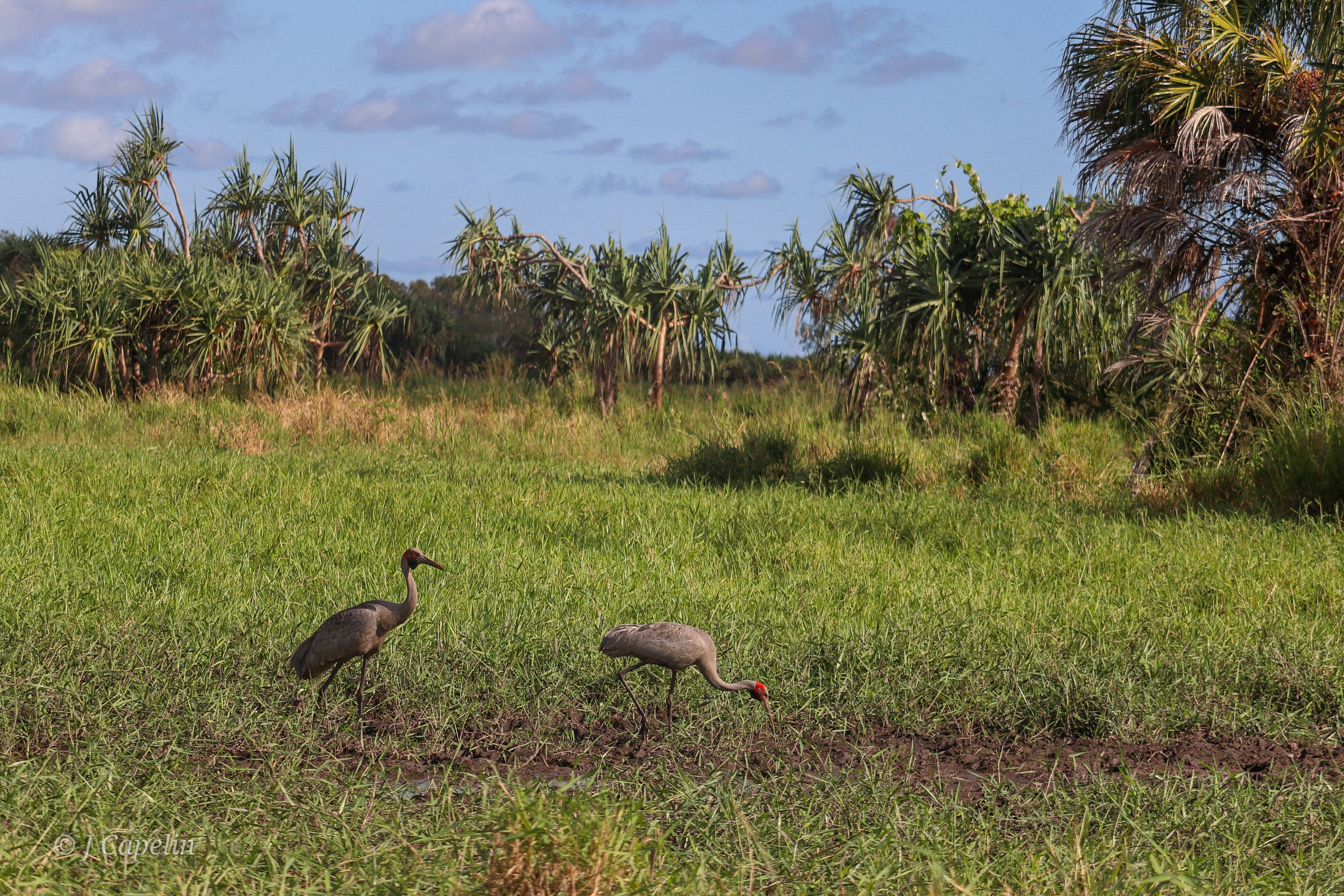
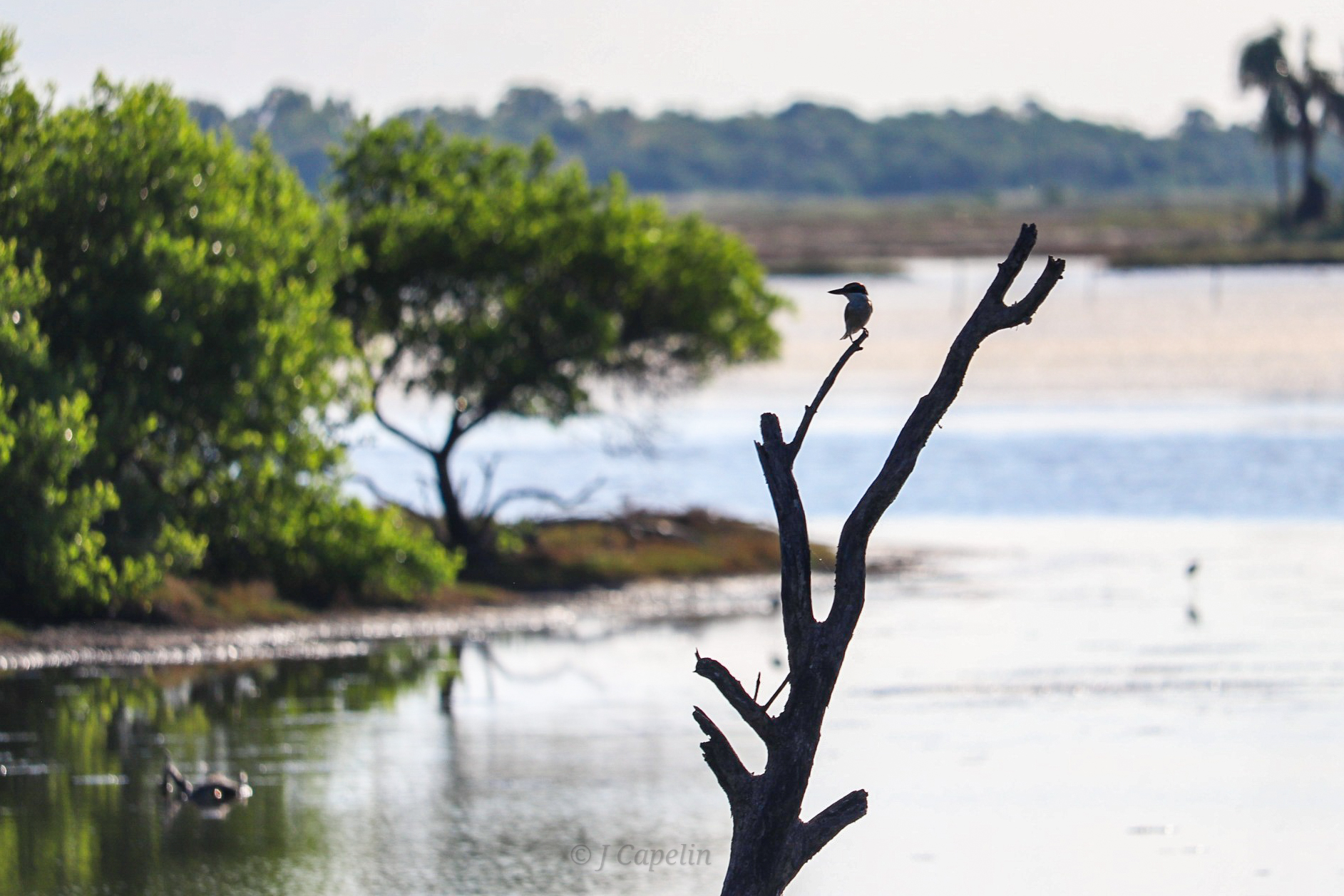
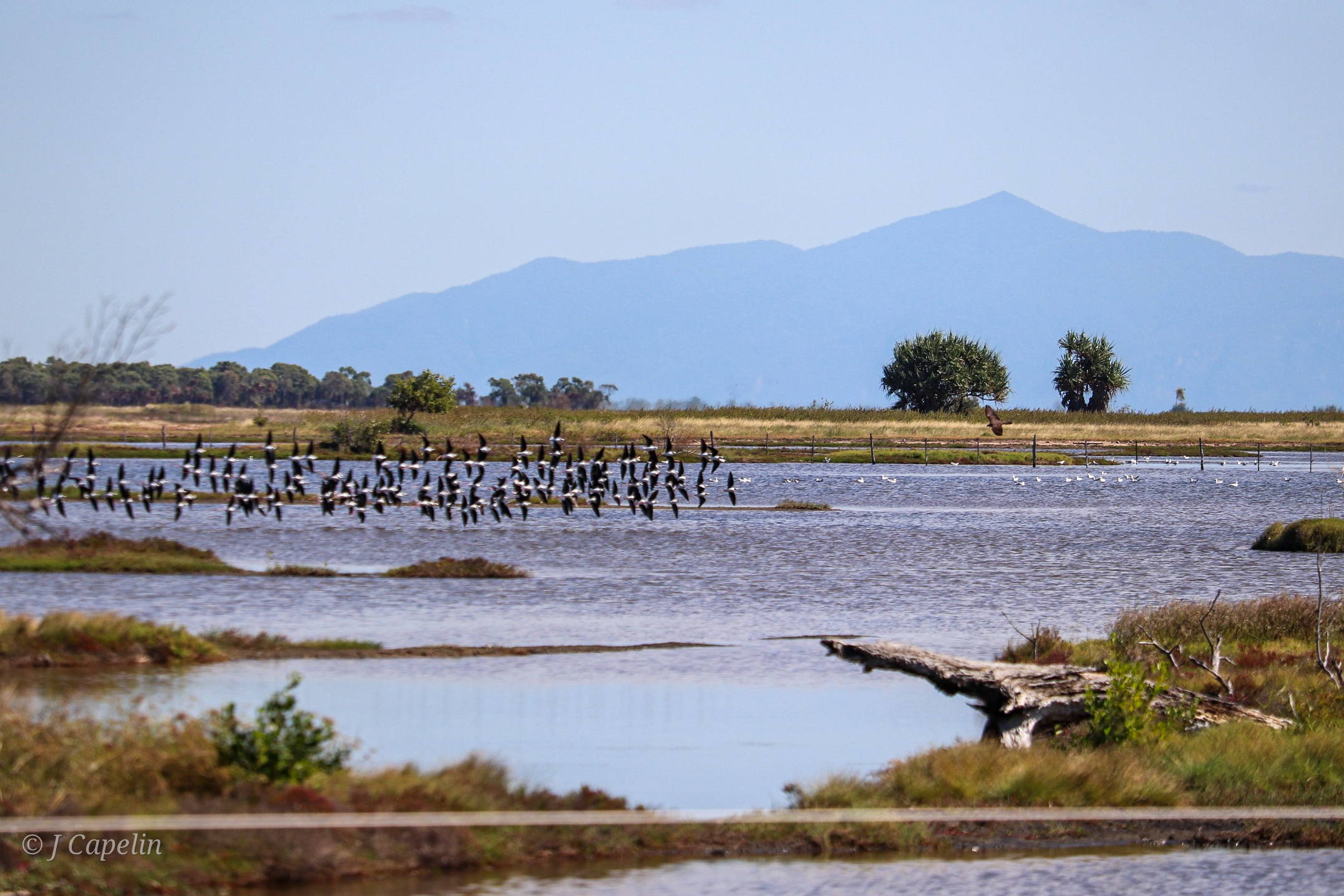
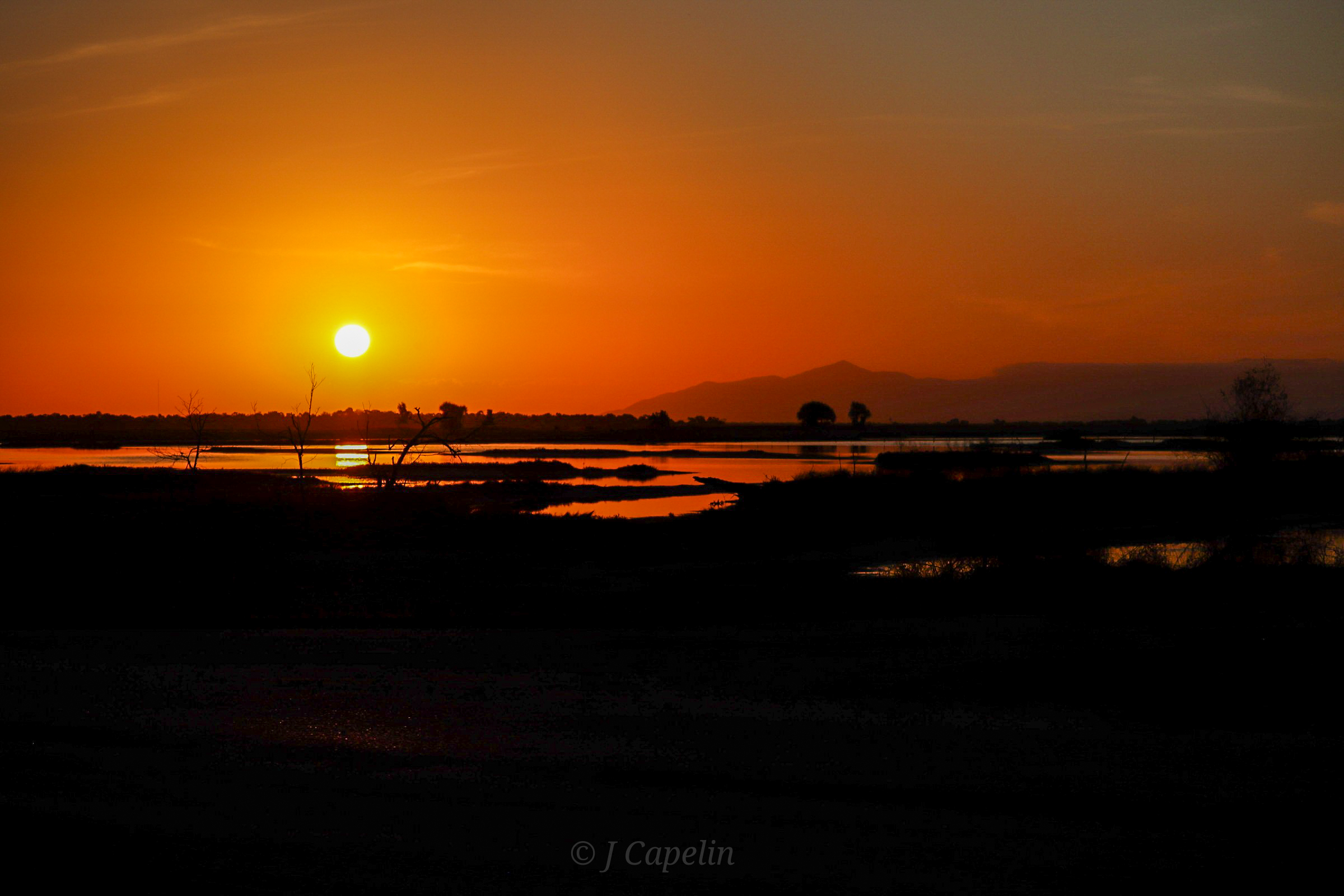
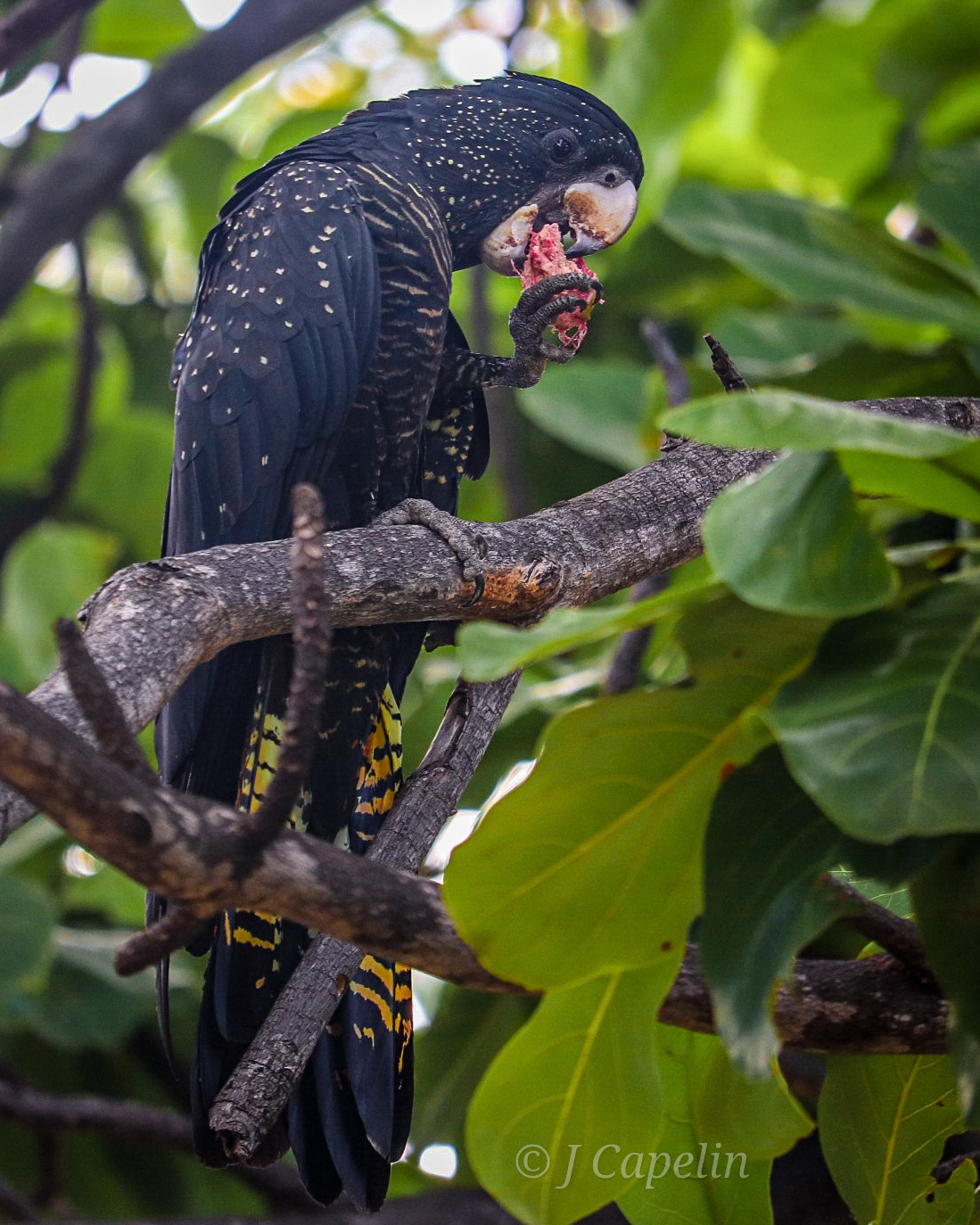
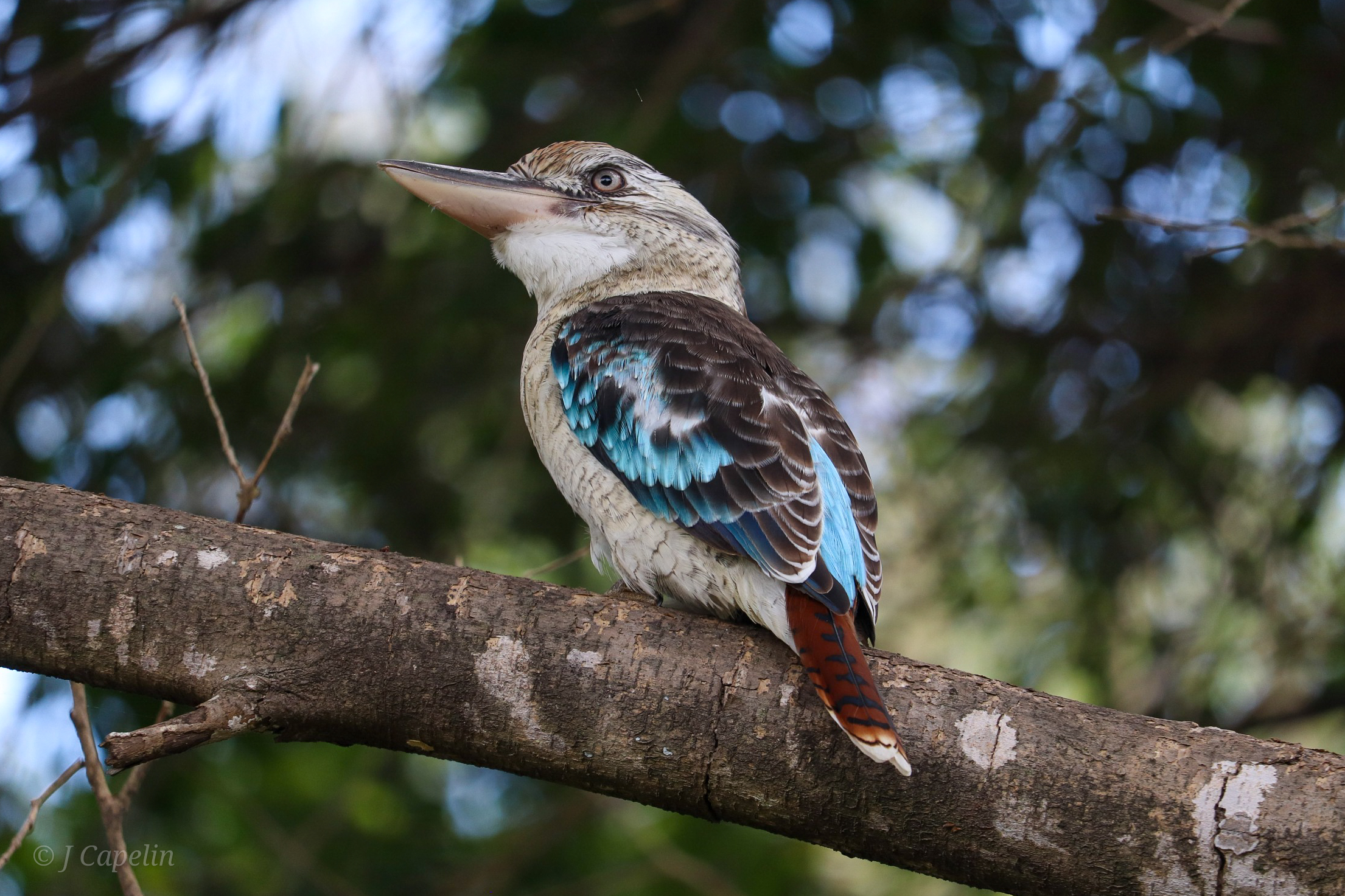
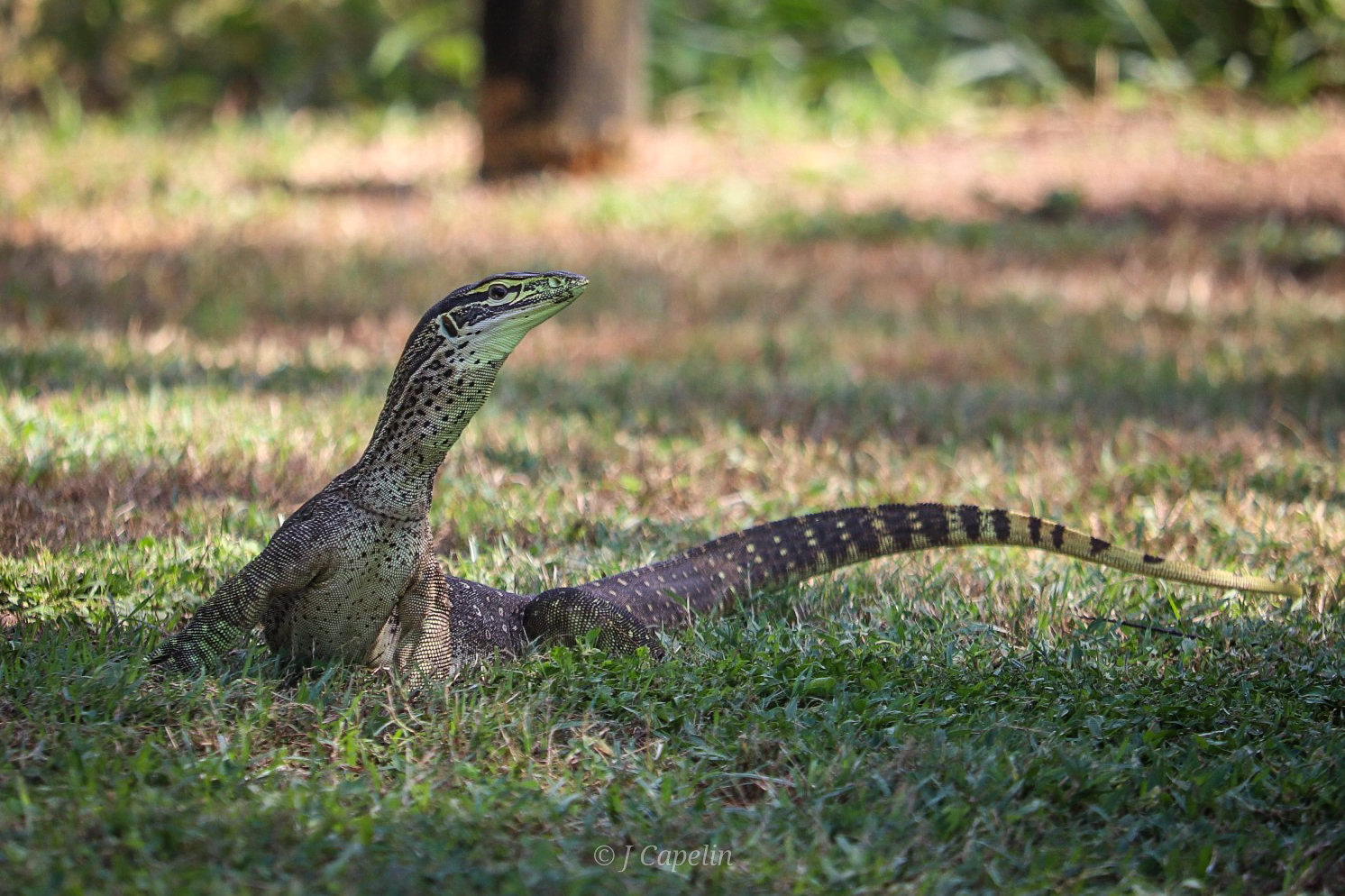
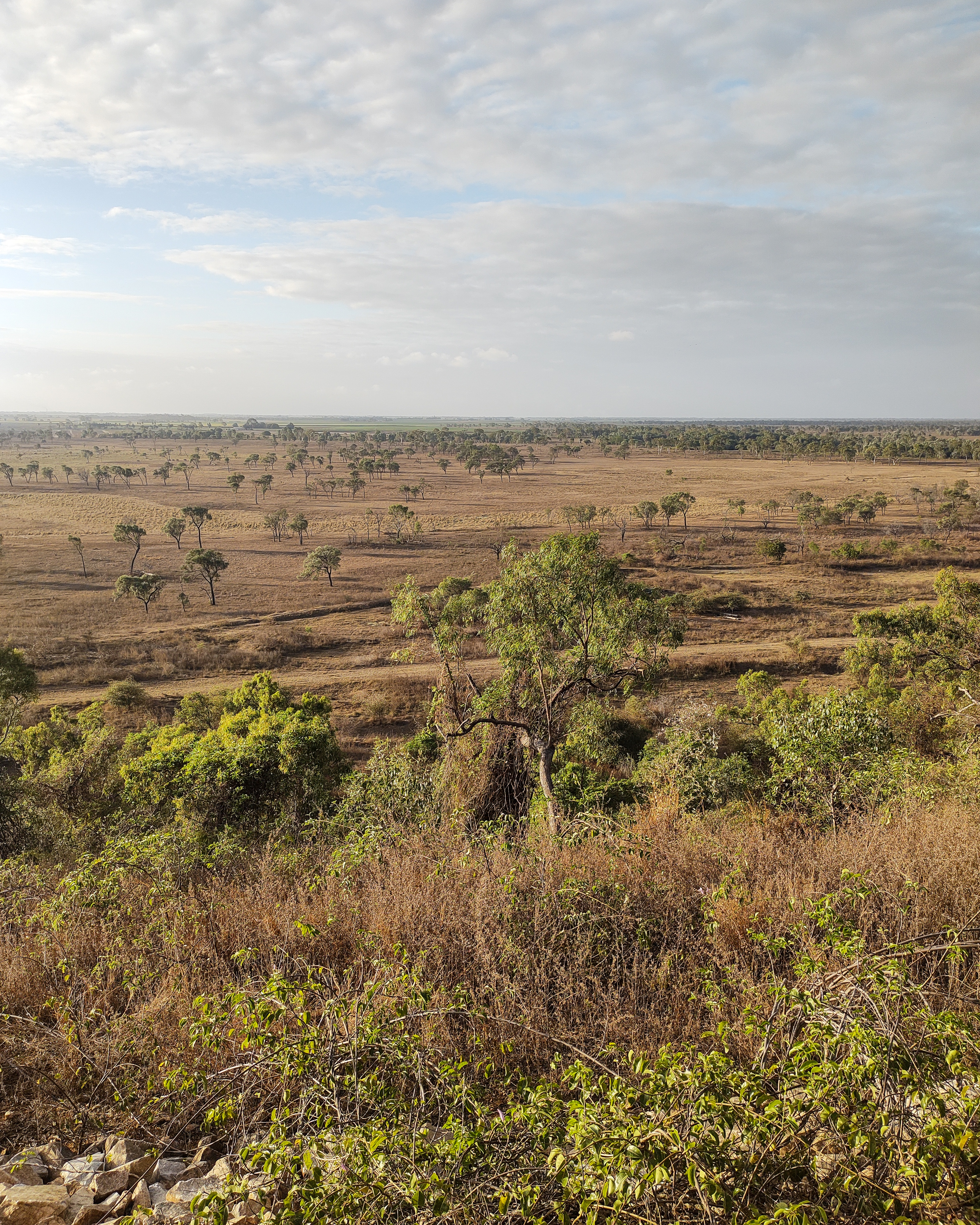
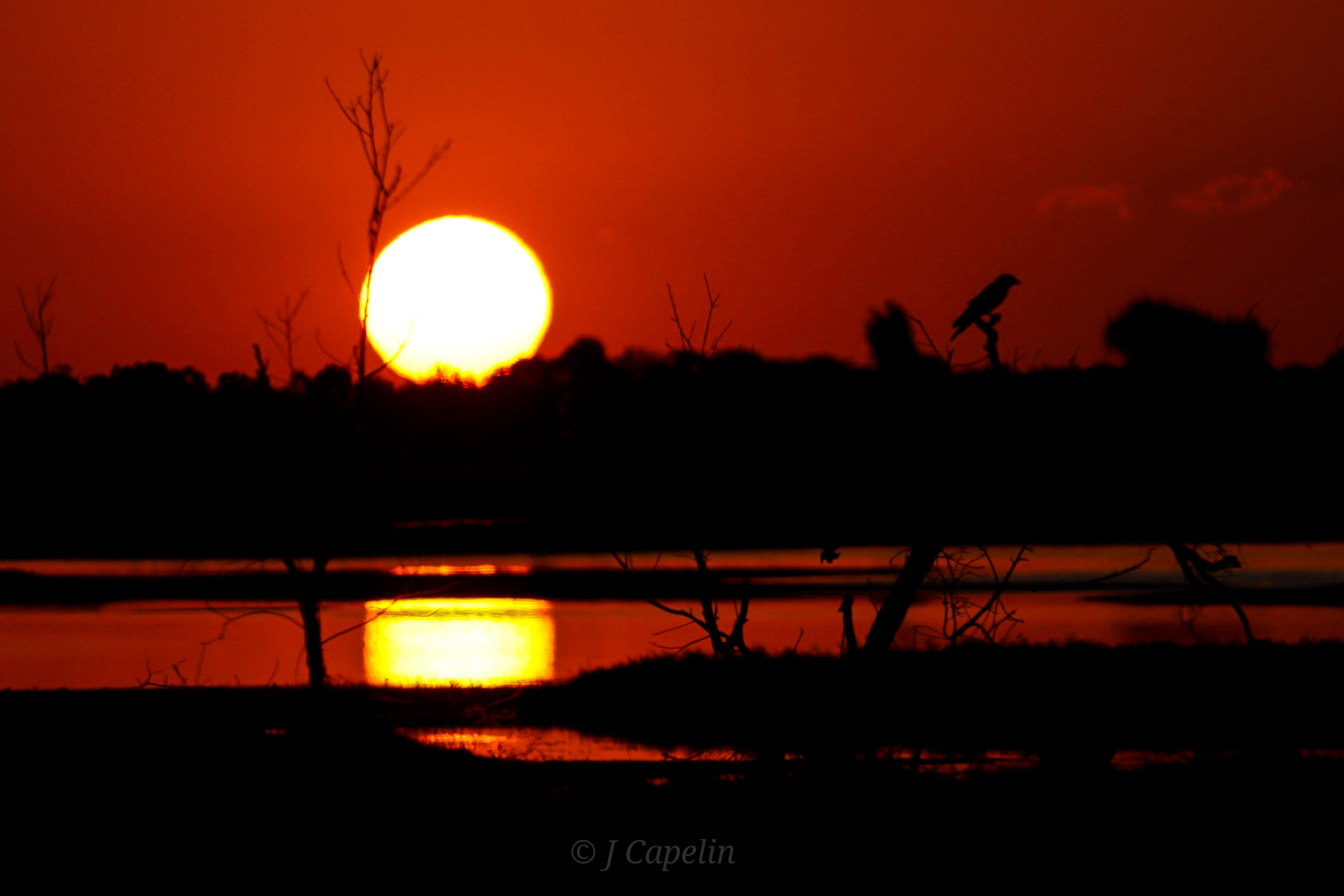
I look forward to the afternoons, when we drive fifteen minutes to the coast, through wide, grass plains like an African Savannah, where tall cabbage palms litter the landscape, dusty mountains silhouetted behind. Sometimes you can spot Brolgas in the fields. Alva is the tiny community on the beach, surrounded by wetlands and abundant with birdlife. Massive sand dunes roll around the muddy banks of Lynch’s Beach, creating an inlet of calm water separated from the waves of the Pacific. We’re in crocodile and stinger territory, so it’s unusual to see people swimming here, but the locals love to fish from the shoreline, and will always give a wave as they zoom by on their quadbikes. Hot wind stirs up the sand and burns your skin, while the palm trees along the coast flutter their leaves. Kingfishers dart to and from the trees; kites and ospreys glide high above with gulls and terns, and for the first time I hear the coughing call of a stunning Blue-winged Kookaburra. The shallows play host to egrets and oyster catchers, and in the park behind the beach a Pheasant Coucal hides in a bush, while a Yellow-spotted Monitor catches grasshoppers. Red-Tailed Black Cockatoos squeak high in the canopies of the Almond trees, eating the seeds with their claws. In summer, the sun sets perfectly over the wetland behind the beach, like a postcard of Country Queensland. There isn’t much of a walk here, but it’s always nice to see the nature.
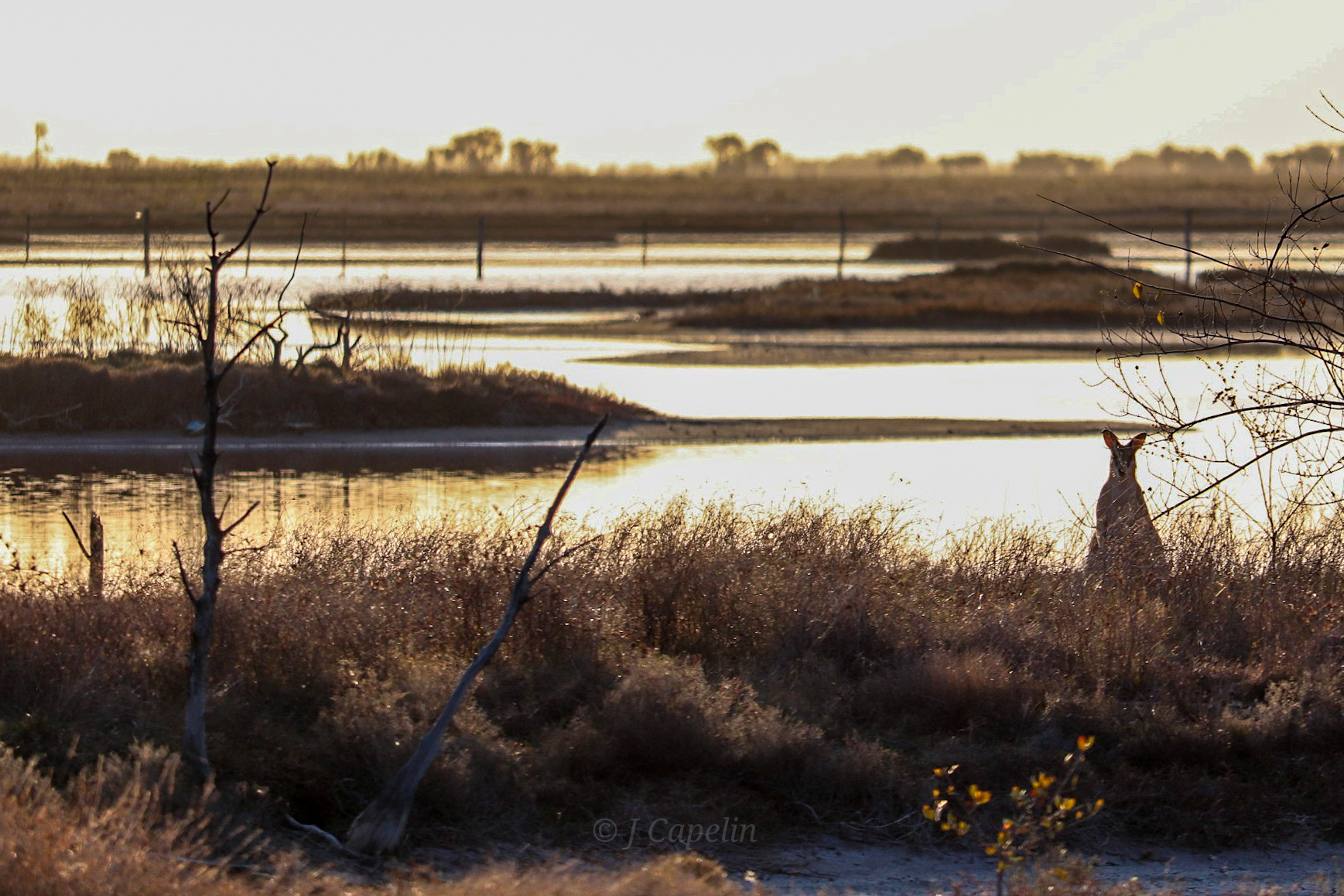
Wallaby watches from the wetlandSparse plains & Cabbage treesLynch’s Beach, AlvaBrolga foraging on the plainsKingfisher in the wetlandPied Stilts flying in formationWetland sunsetRed-tailed Black Cockatoo (female)Blue-winged KookaburraYellow-spotted Monitor (Goanna)
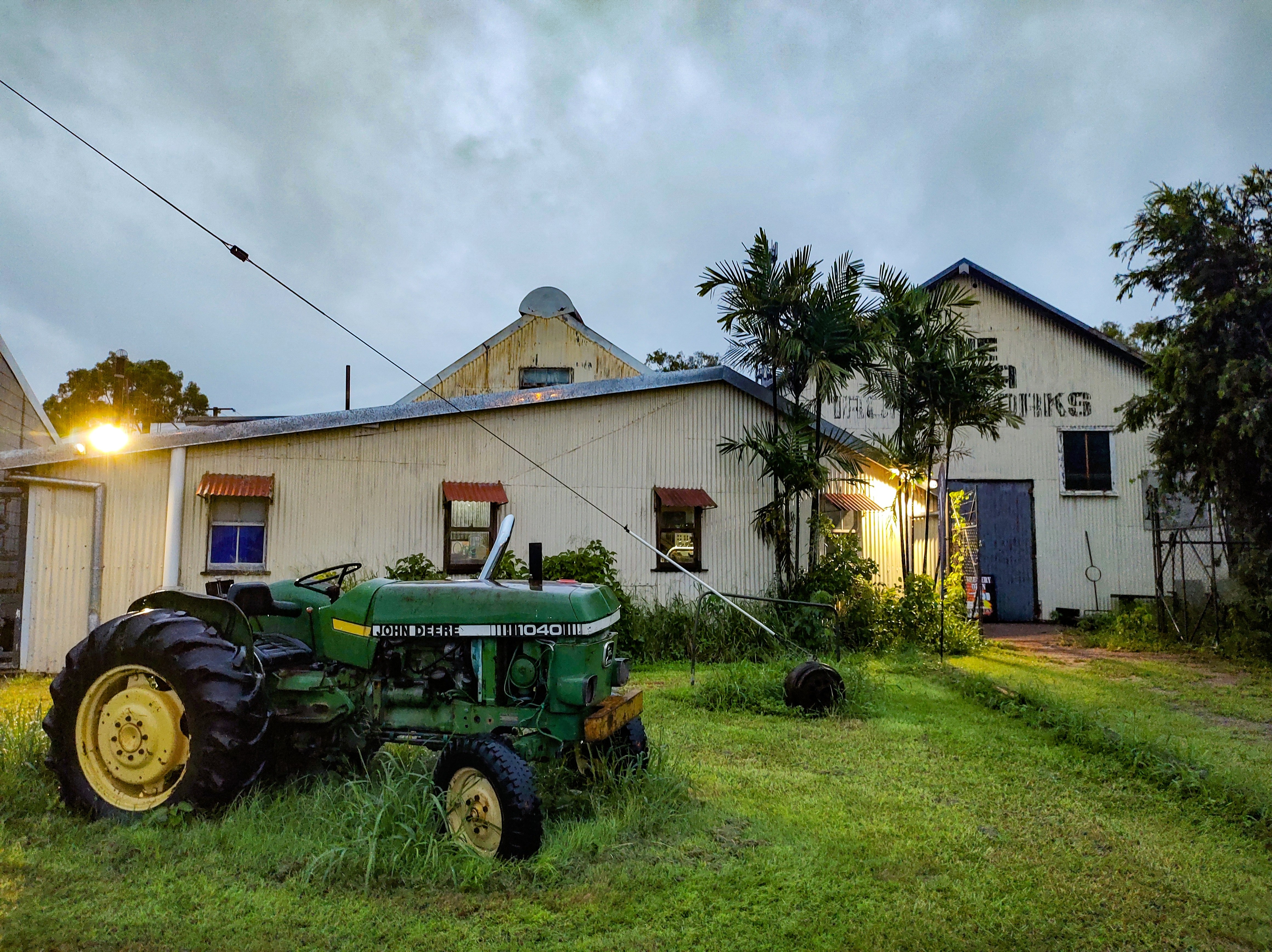
On a wet Friday evening, I find myself sitting in a hot tin shed in cane country, sipping homemade beer while a cyclone brews outside. This is the Iron Works Micro Brewery in Brandon, just five minutes up the Bruce highway, where they make a handful of different beers and do pizzas and cheese boards on Friday nights. The historic Delta iron works shed is set up with a hand built bar sporting the beer taps, with the brewing equipment in view behind. It’s dark and dusty, but cosy chairs and tables fill the space, decorated with vintage farming paraphernalia on the walls.
The old Delta Iron Works in Brandon
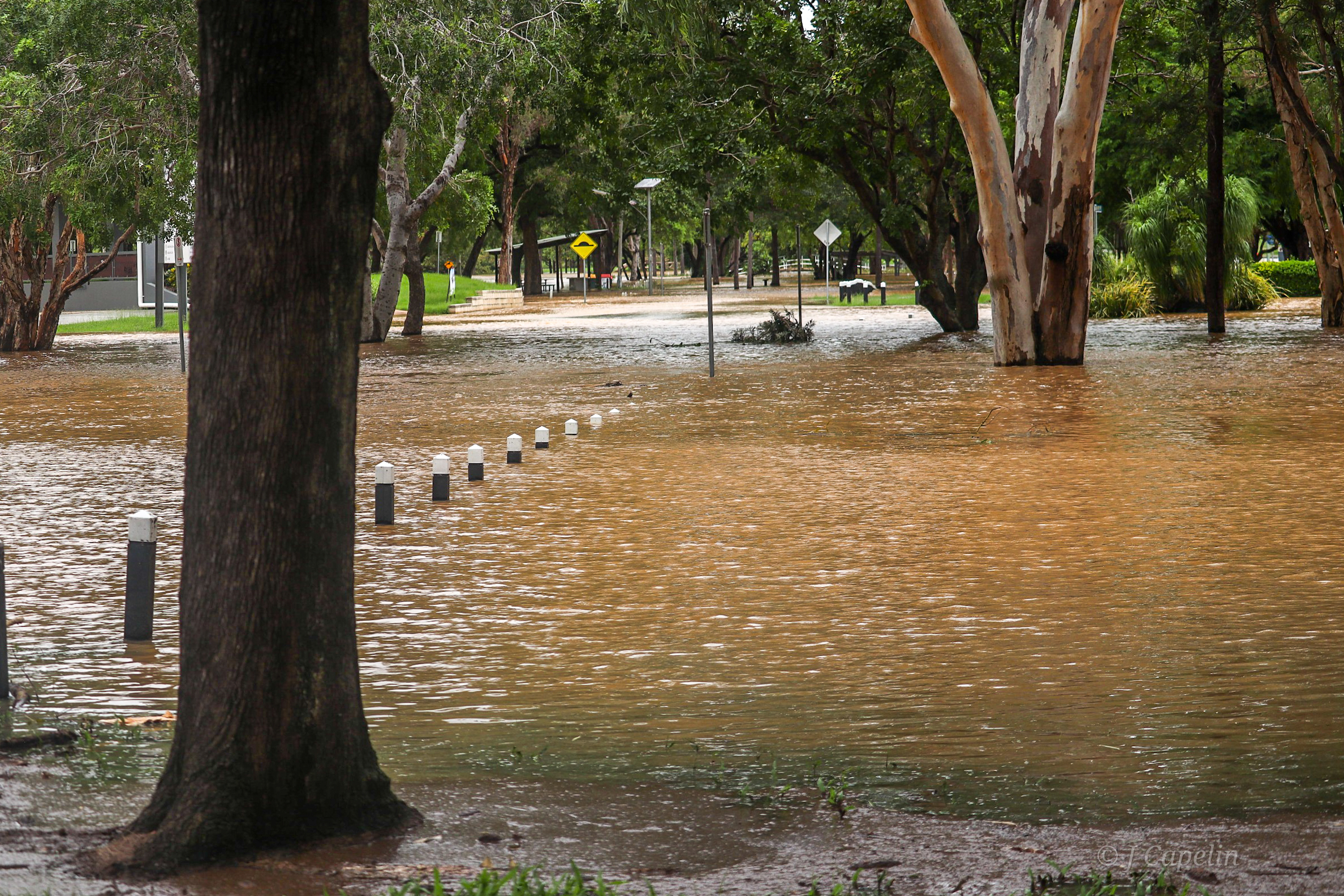
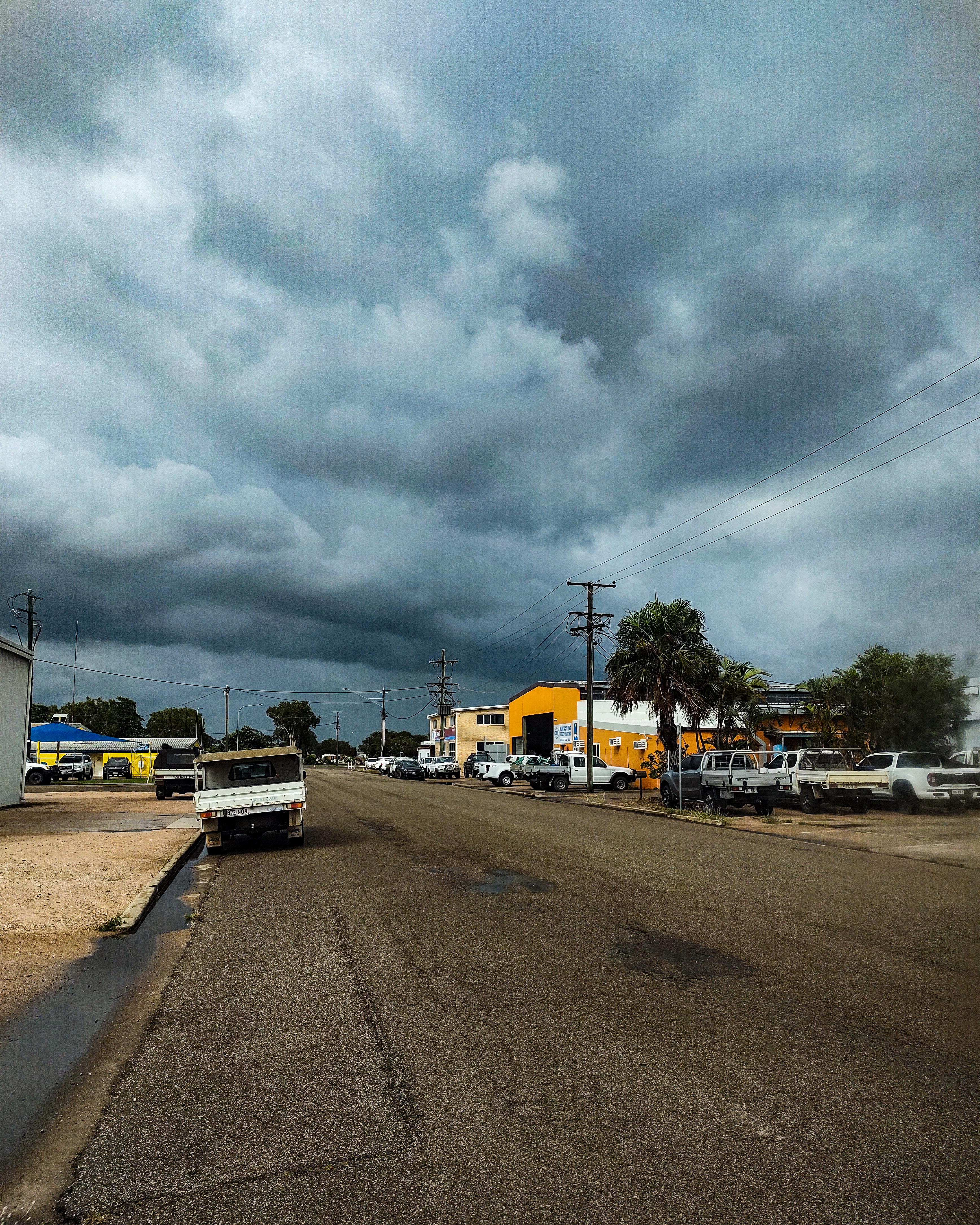
The soundtrack of thunder plays constantly over the land, and as the days go by, black clouds with electric blue luminance linger on the sky, drawing out the light like a veil being pulled across the window. An aggressive gust of wind shakes the power lines, and two or three fat raindrops stain the asphalt. Then it comes, in one heavy gush, the rain drenches everything. Ferns dance as the downpour tattoos their leaves, glimmering glass beads rolling along a green slip ‘n’ slide. When the rushing of the rain stops, and the pitter of the drops on the tin roof eases, crickets gently fill the quietness. A Green Tree Frog chirps somewhere close by, and the trees shiver their leaves, shaking off the rain before the next deluge. By the time February arrives, the entire town is cut off from its neighbouring communities, as the river rises and the creeks spill over the Bruce highway. The community tunes into the local radio station for emergency updates, which sounds like it’s coming to you live from 1945, and plays old Italian music between weather reports. Meanwhile, the stock on the supermarket shelves wanes, and printed out notices begin to appear apologising for the shortage because the deliveries can’t get here. Eventually, a morning comes and a fresh brightness lifts the sky while a Butcher Bird whistles from a rooftop aerial. The trees are still, the ground washed from the night before, glistening in the daylight, and somewhere, the hum of a lawnmower grumbles.
Plantation Creek flooding over the Bruce Highway
Easter comes quietly, and I’m running out of places to drop my resumé, when I’m finally offered a job as the food truck driver for a small café/convenience store. Just like that, I’m spending my mornings prepping hot dogs, breakfast wraps, steak sandwiches and roast meat and gravy rolls, and driving around the industrial businesses in town to sell them for ‘smoko.’
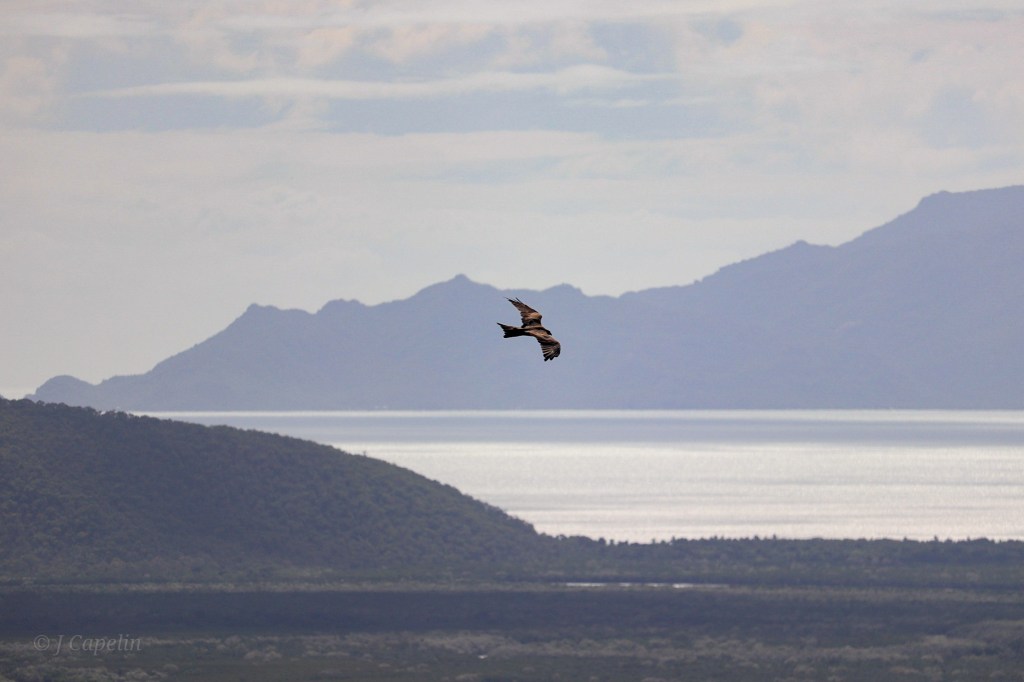
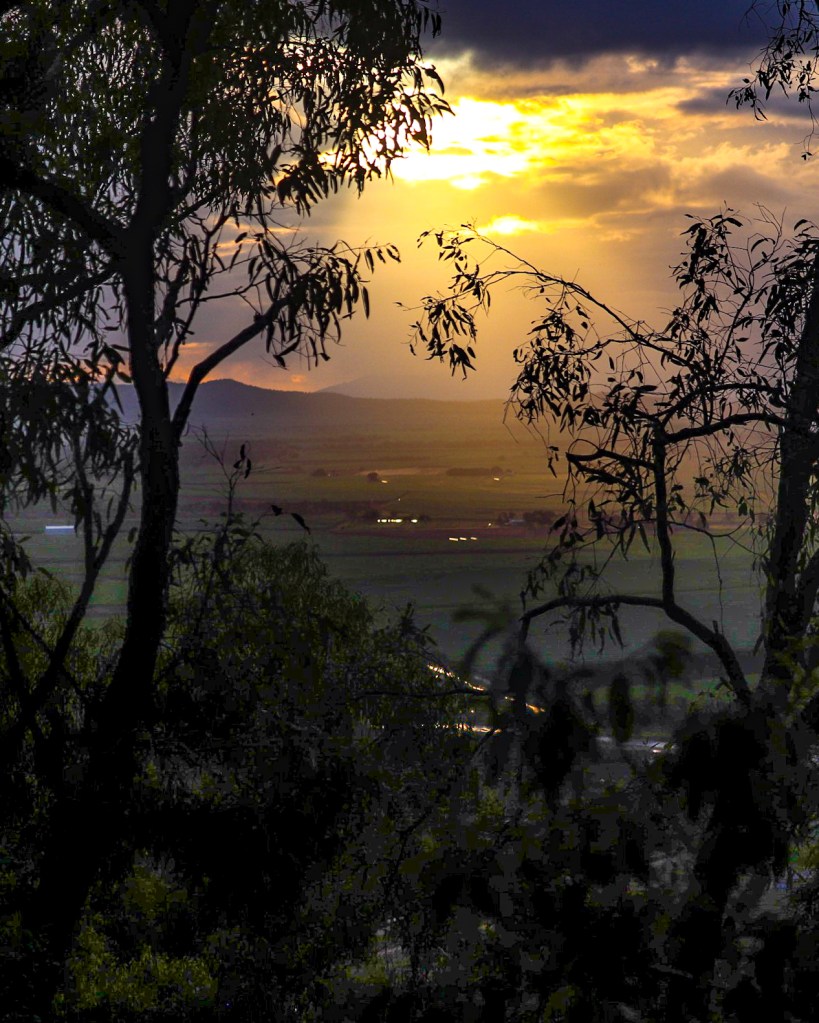
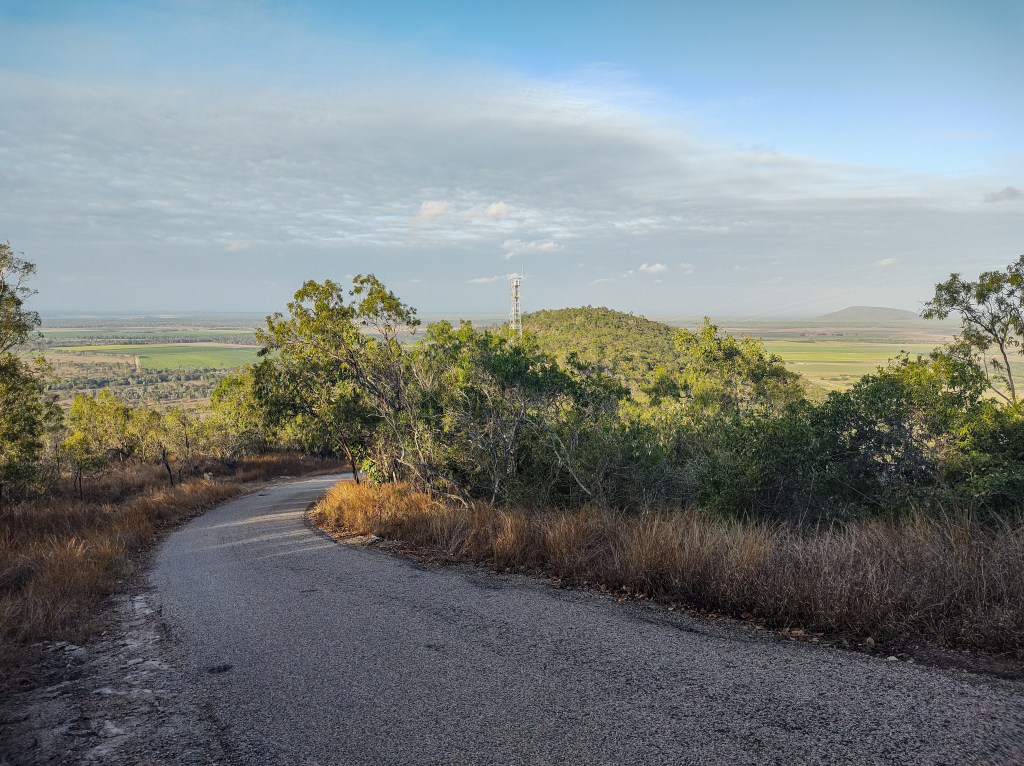
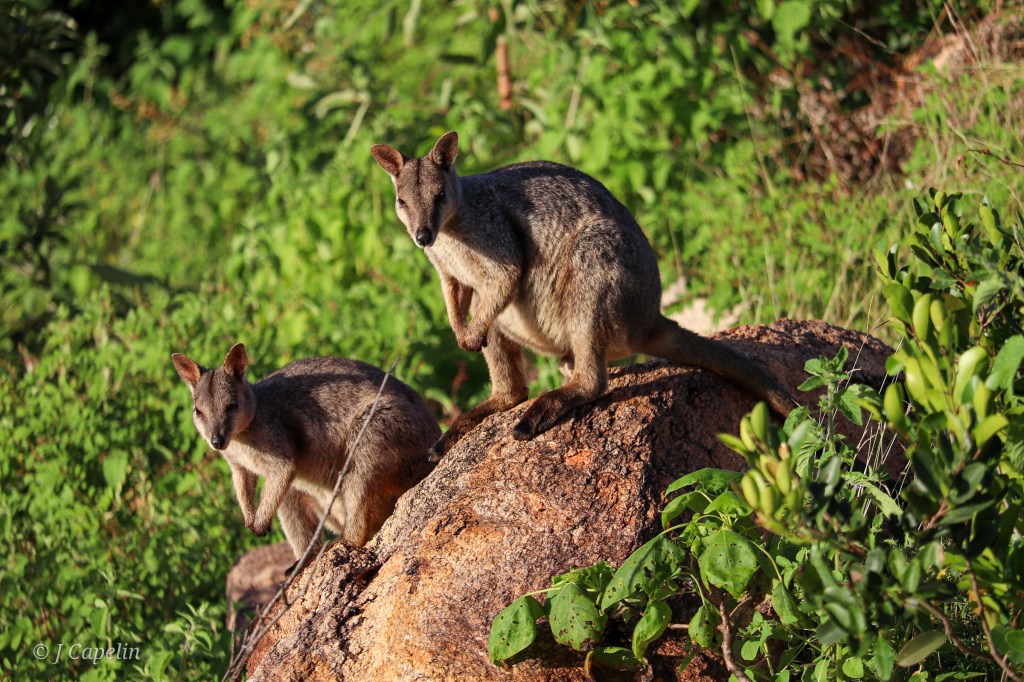
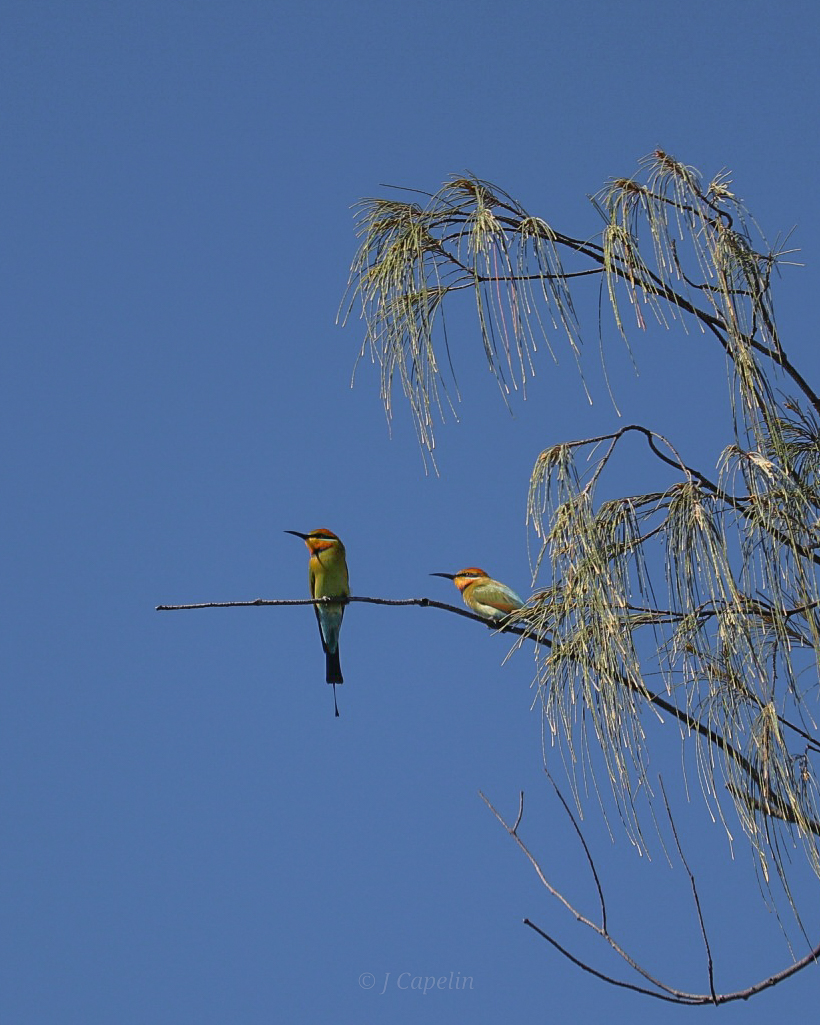
It finally becomes cool enough (around 30°c) to climb Mount Inkerman – the Burdekin’s only walking track just south of Home Hill. The Mount Inkerman Nature Trail is relatively short and steep, about 3km return. From the base of the mount, steps rise up from the grass plains, into the wooded hillside. Rainbow skinks scatter on the rocks, cocking their tiny orange heads to fix you with their beady stare as you climb. Eucalyptus trees frame the view of the vast landscape below, where cane fields stretch further than the eye can see, towards the vague shape of distant mountains. Shrikes and drongos call from the branches, while tiny martins and Rainbow Bee Eaters flit about. Dragonflies hover, their black and white fluttering wings a blur as they play in a patch of sunlight that pours through the trees, and the dry grass rustles, perhaps a skink, or a Brown Snake. At the top, the Rotary Lookout draws your eyes north across the sugar canes, and east to the cape in the haze, surrounded by the glittering glare of the ocean. Black-shouldered Kites swoop and dive above the trees, and in the evenings, little Allied Rock Wallabies hop about the rocks.
Kite in flightComing down Mount InkermanAllied Rock WallabiesRainbow Bee Eaters
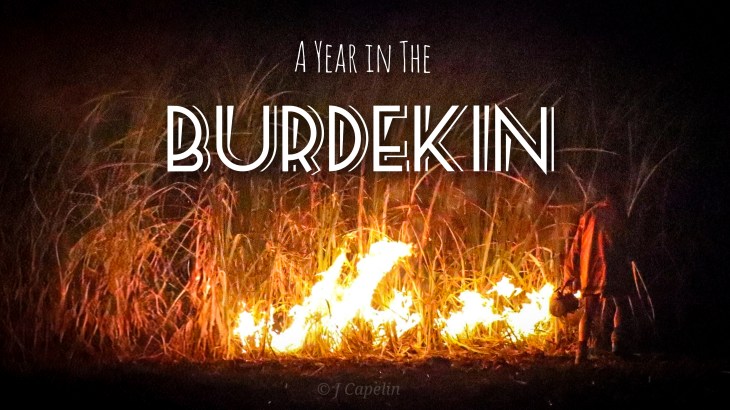
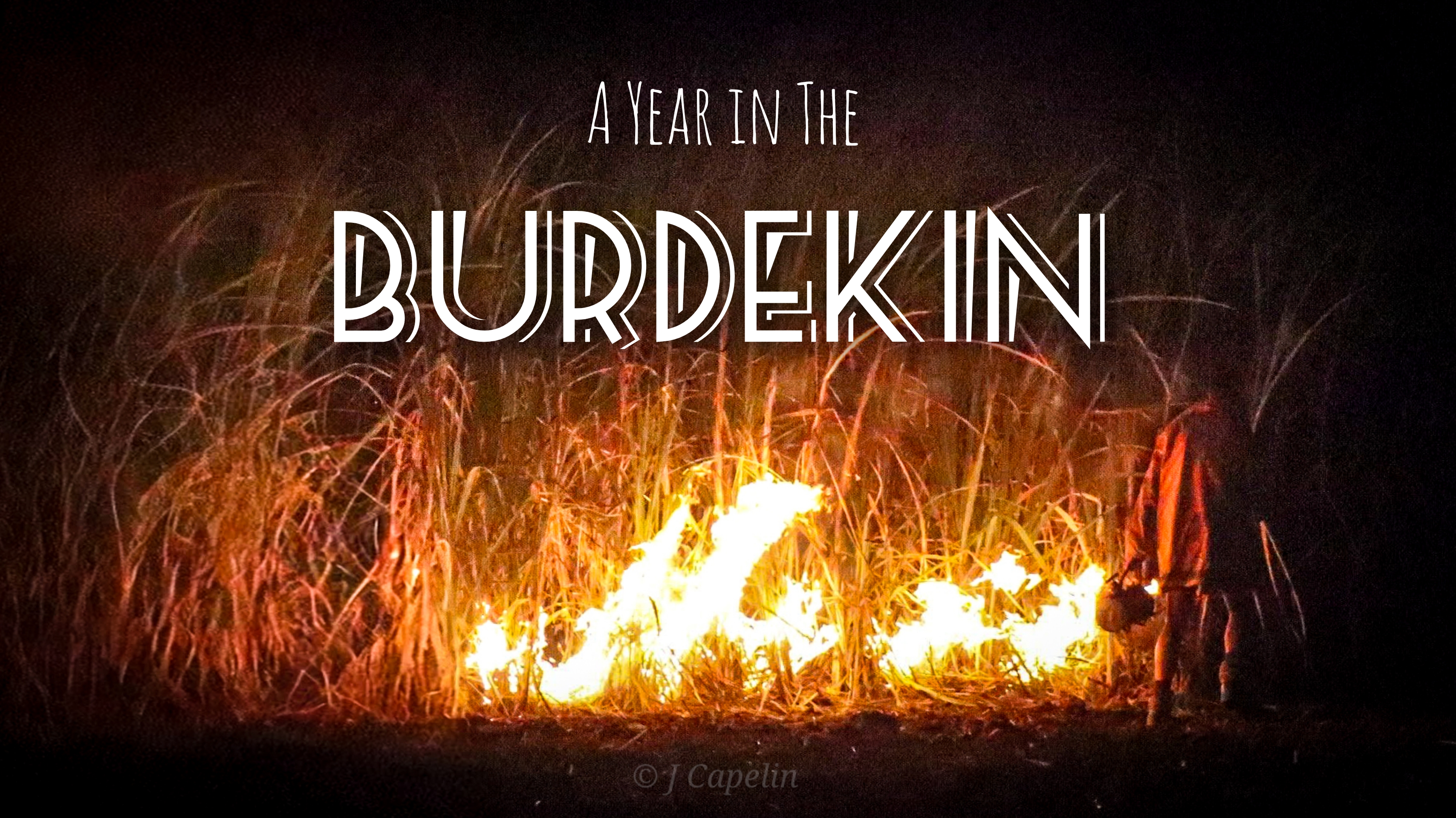
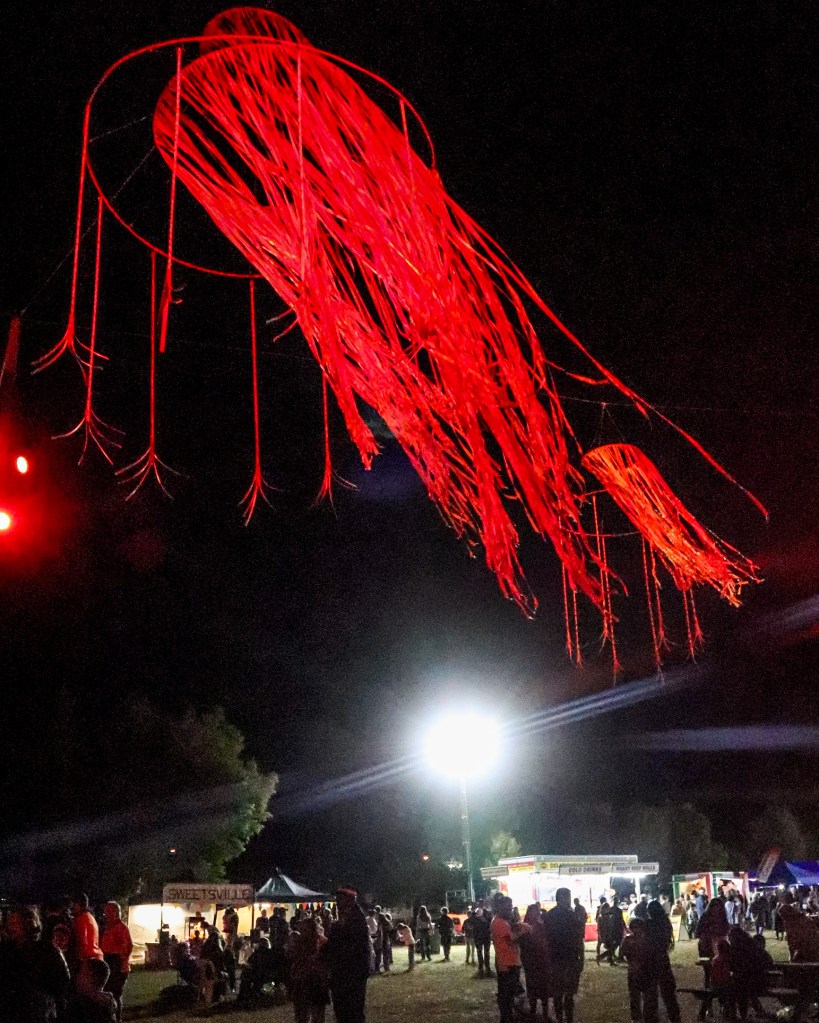
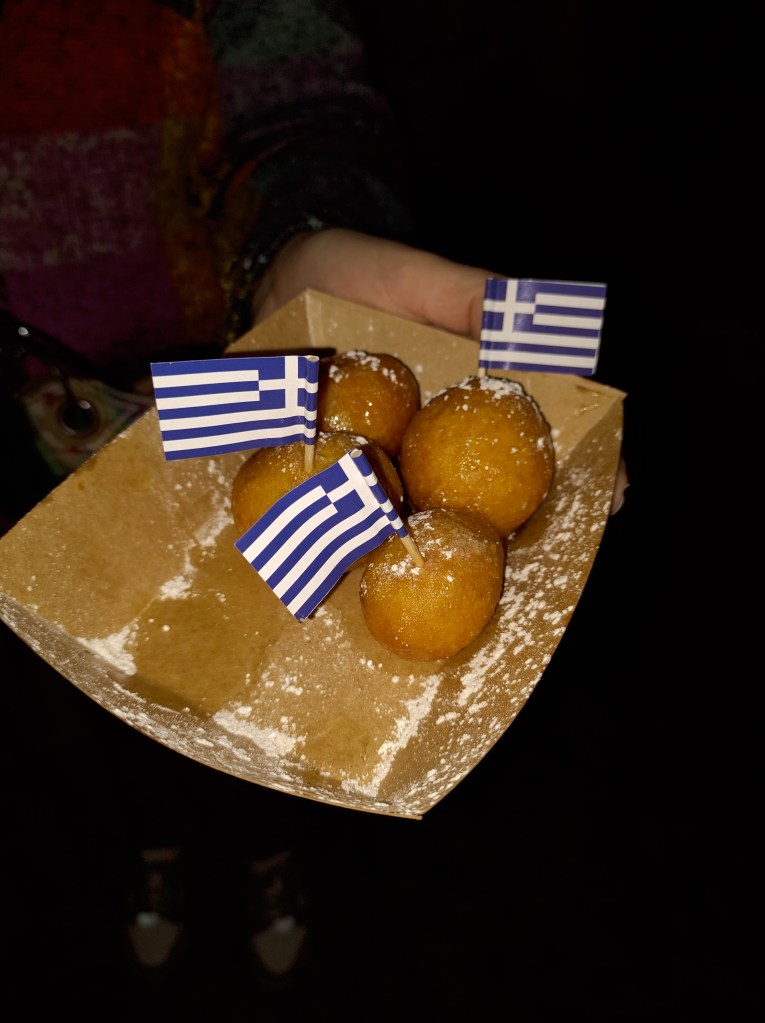
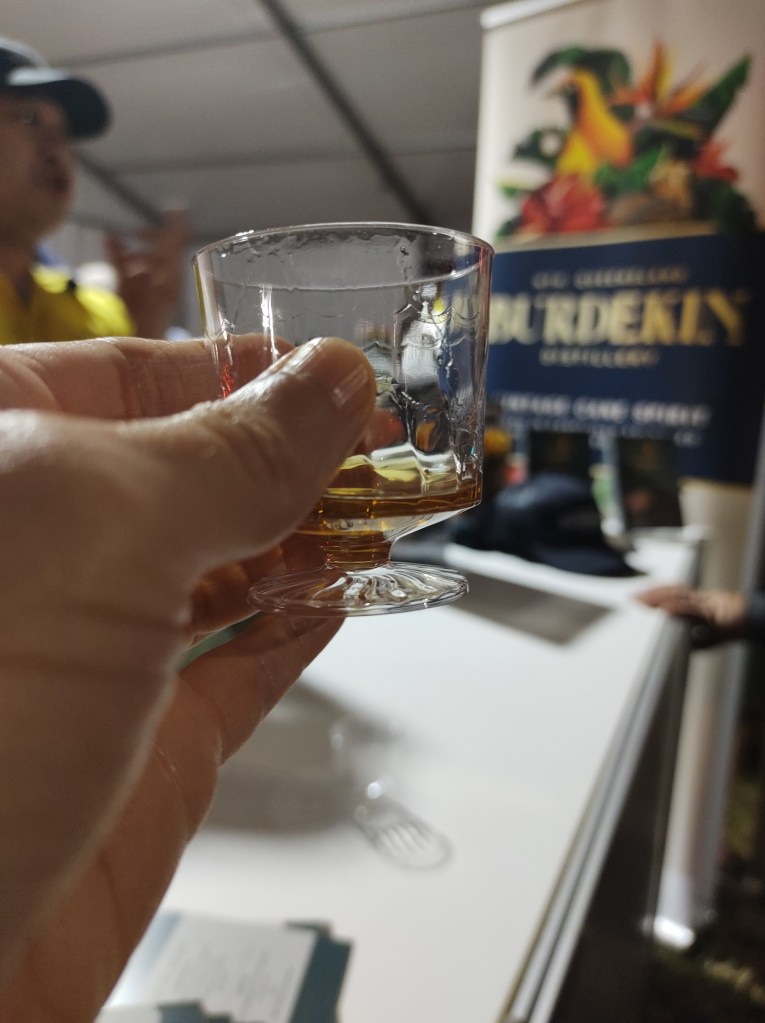
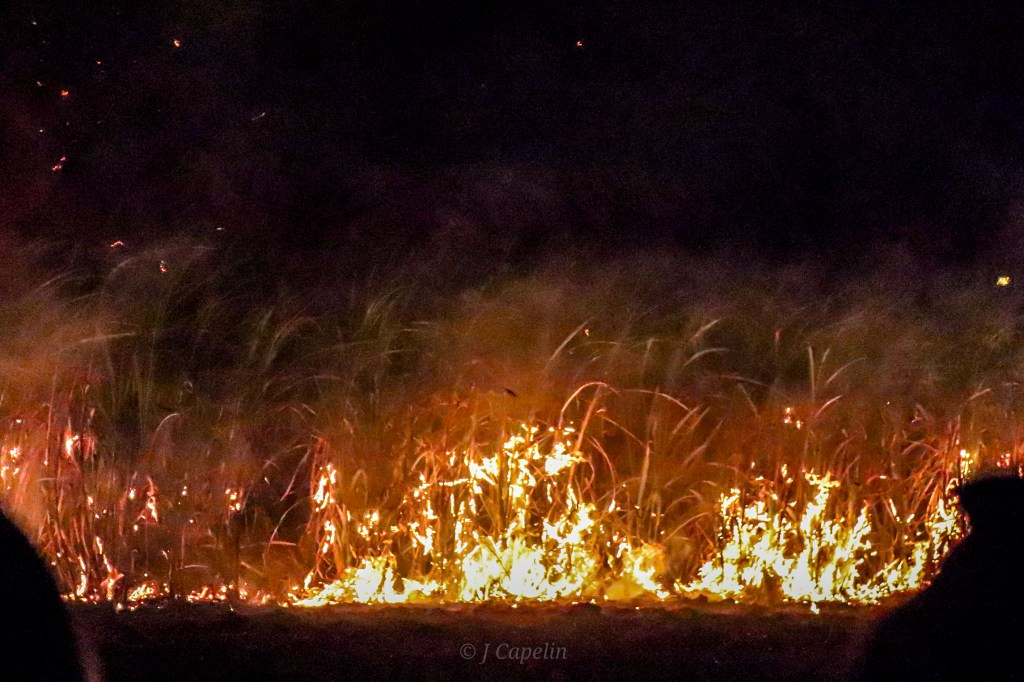
Winter draws closer, and on a fresh, clear night at the end of May we join the crowds at Home Hill showgrounds for the biennial Sweet Days Hot Nights Festival. This celebration of Burdekin culture and sugar cane features the first cane burn of the season, a tradition the region holds onto. The showgrounds are decorated with red streamer art flowing in the breeze above us, depicting fire and sugar cane, and a drumming circle jams on the grass while we browse the array of worldly food trucks. In the entertainment marquee the Iron Works Brewery have a bar set up next to the Burdekin Rum stand, and behind it, a crowd of people gather beside the cane field in anticipation. The farmer walks along the perimeter of the crop, lighting it with a flamethrower. The flames rise quickly, crackling and sending bursts of cane trash into the air like fireworks. The atmosphere is reminiscent of bonfire night, with the fire shedding a warm glow across the crowd with flames in their eyes. Cane burning is a dying tradition, because while it gets rid of the excess foliage efficiently, which could otherwise clog up the machinery and slow down the harvest, many cane farming regions have stopped doing it because of its bad impact on the environment. When the fire is done, the entertainment stage lights up with local cultural performances; Italian music, Indigenous dance and didgeridoo, songs and dancing from the local Pacific Islanders, Scottish bagpipes and Highland dancing, Greek plate smashing, and Afro-Cuban performance.
Fire & Cane decorationsGreek honey puffsTasting the local Burdekin cane spiritFirst Cane Burn of the season
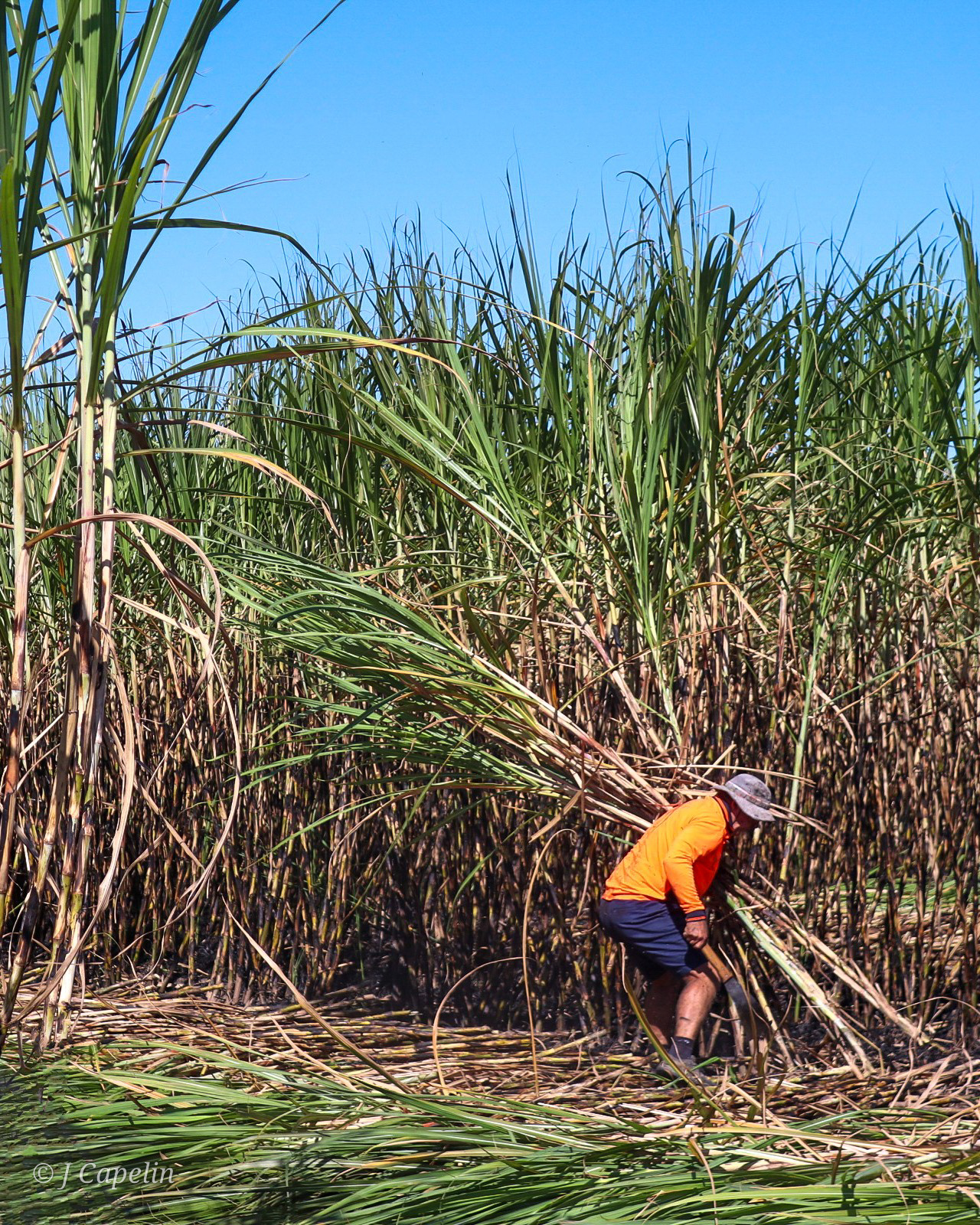
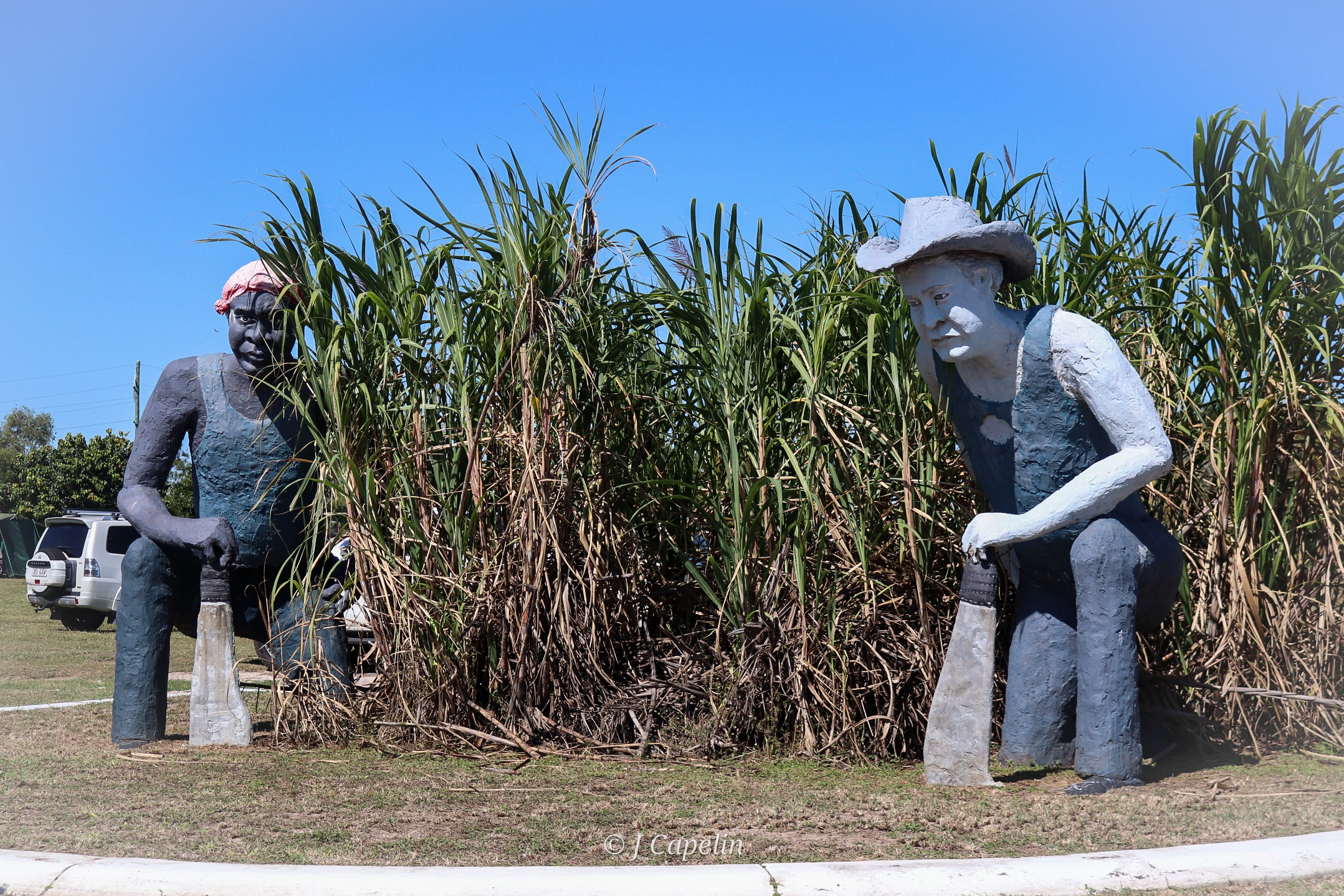
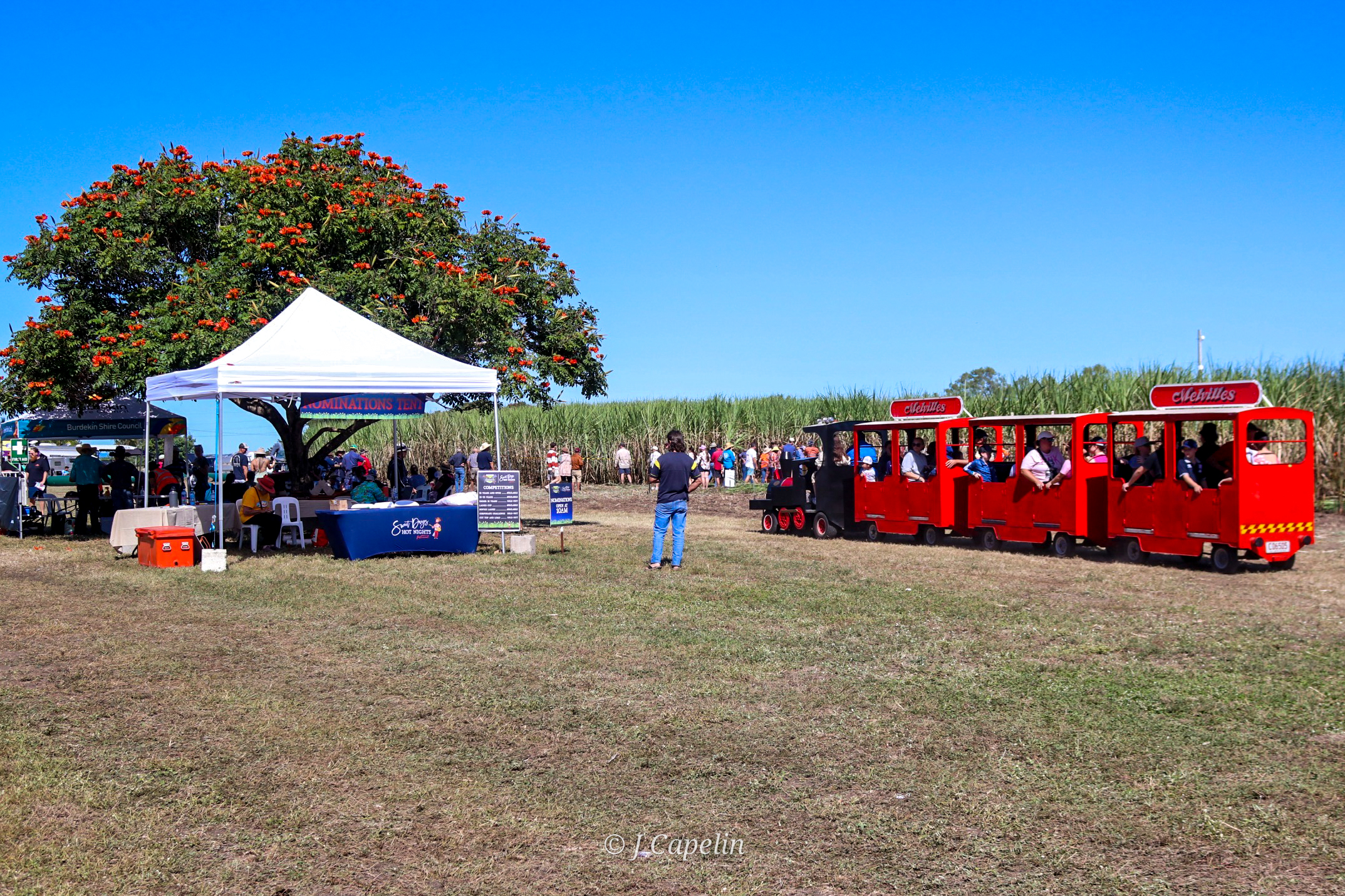
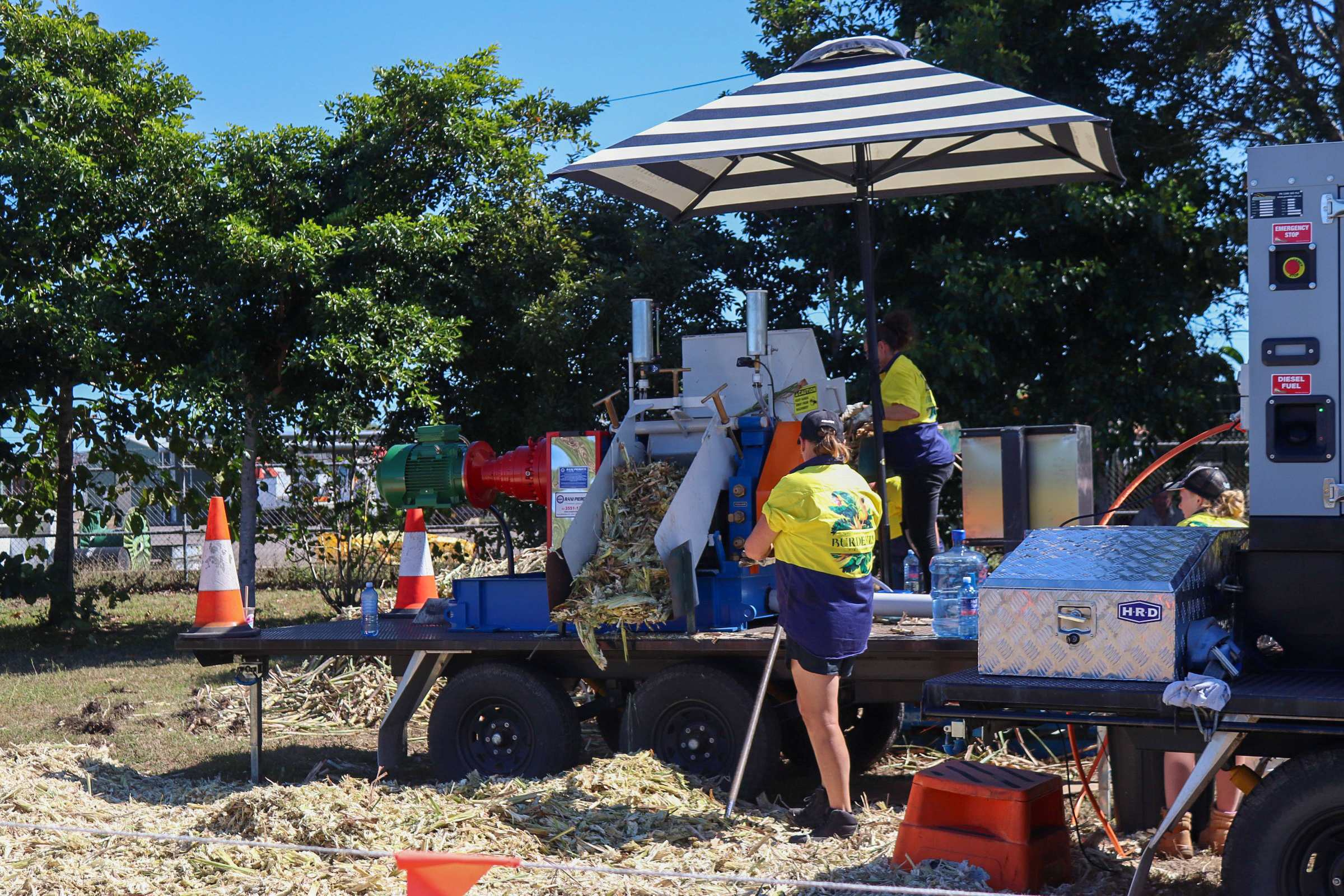
Day two of the festival brings a dry heat, and the Cane Cutting Championship is well underway. There is a category for everyone, and they dive in the freshly burnt off crop with their machetes and compete to see who can cut their section the fastest. The competitors come out covered in black cane trash and sweat, and the freshly cut cane goes straight into the shredder for Burdekin Rum! Meanwhile, the street food stalls continue to trade in the neighbouring field, and families enjoy a local pop-up petting farm, complete with a dotto train.
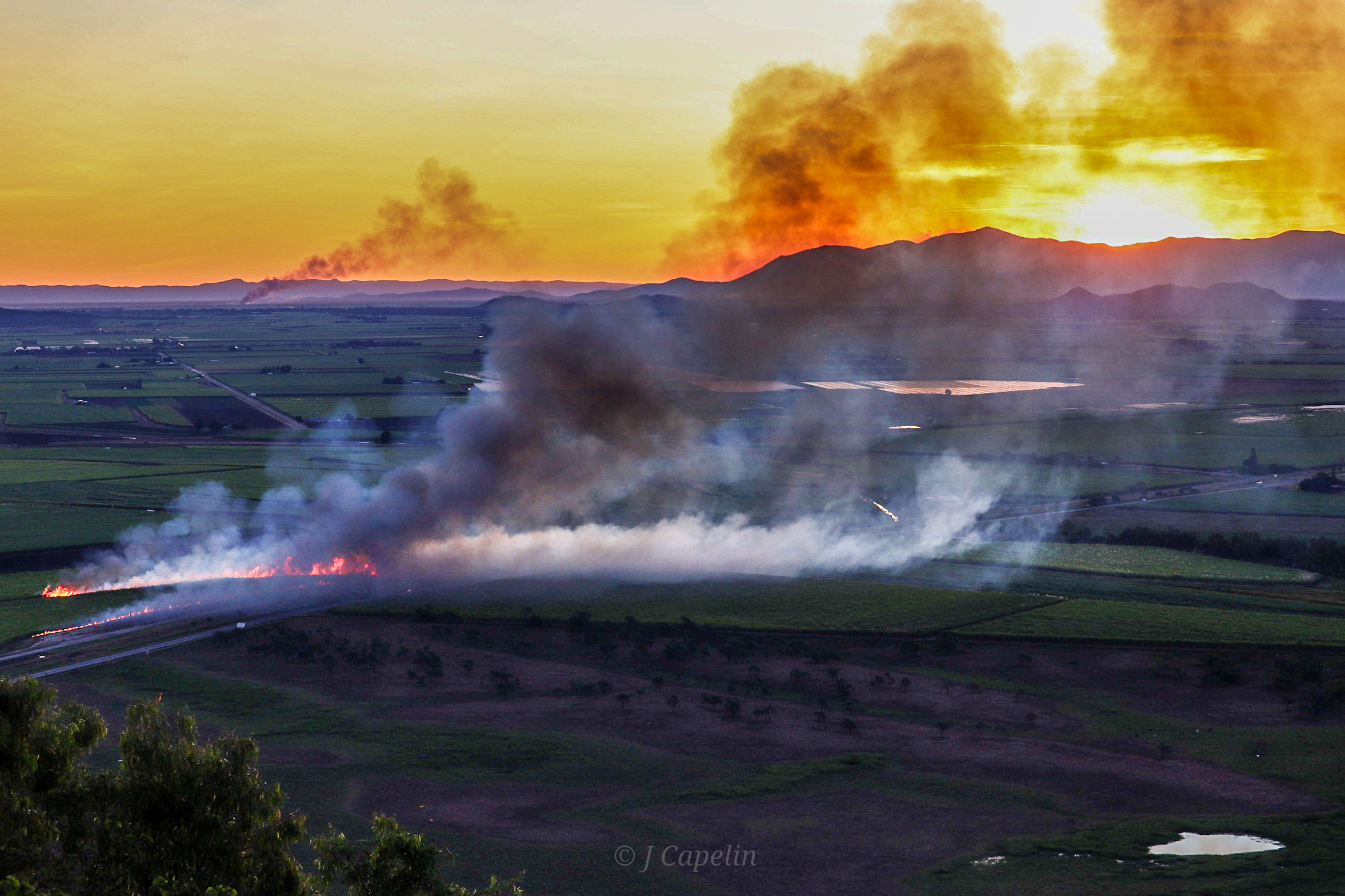
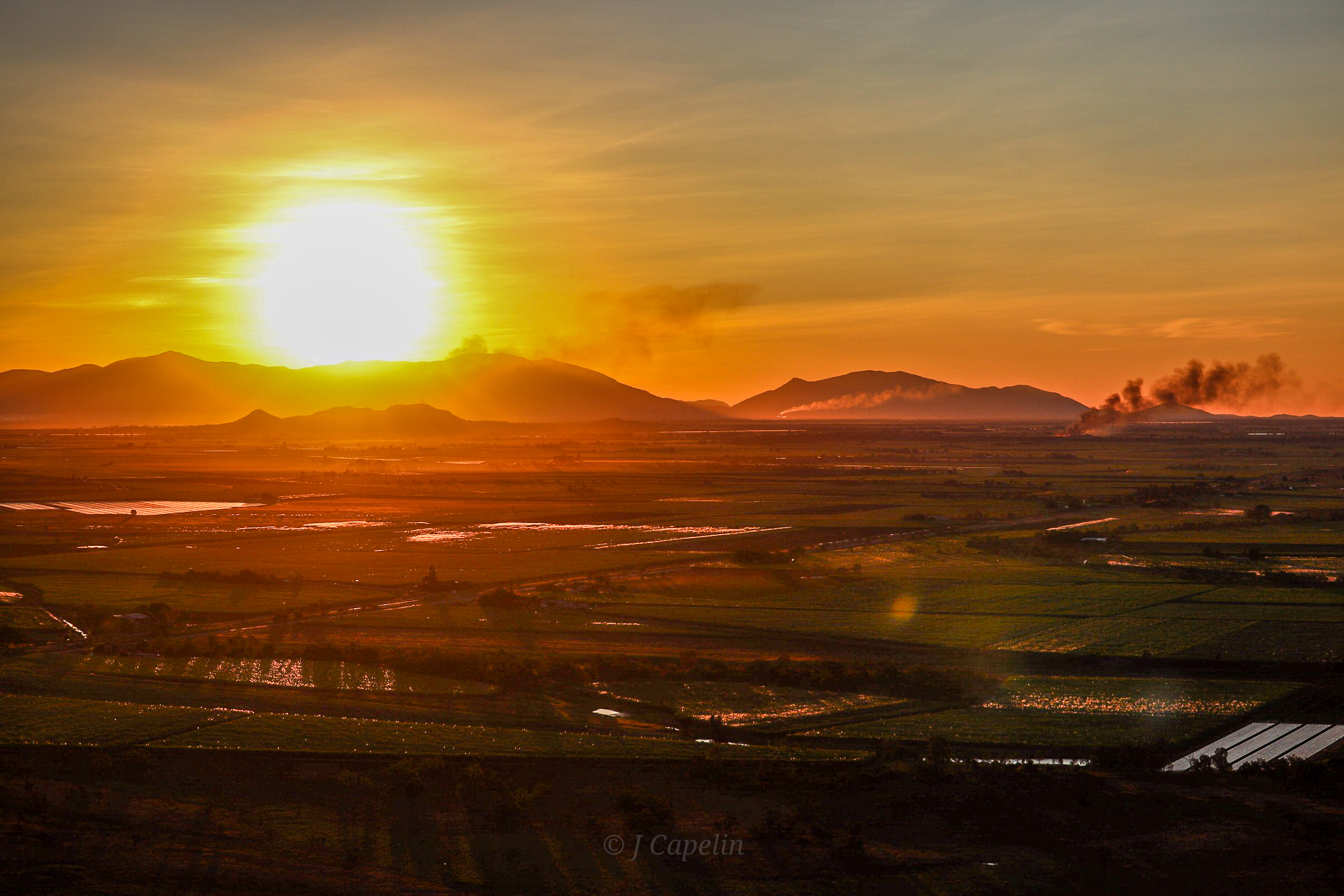
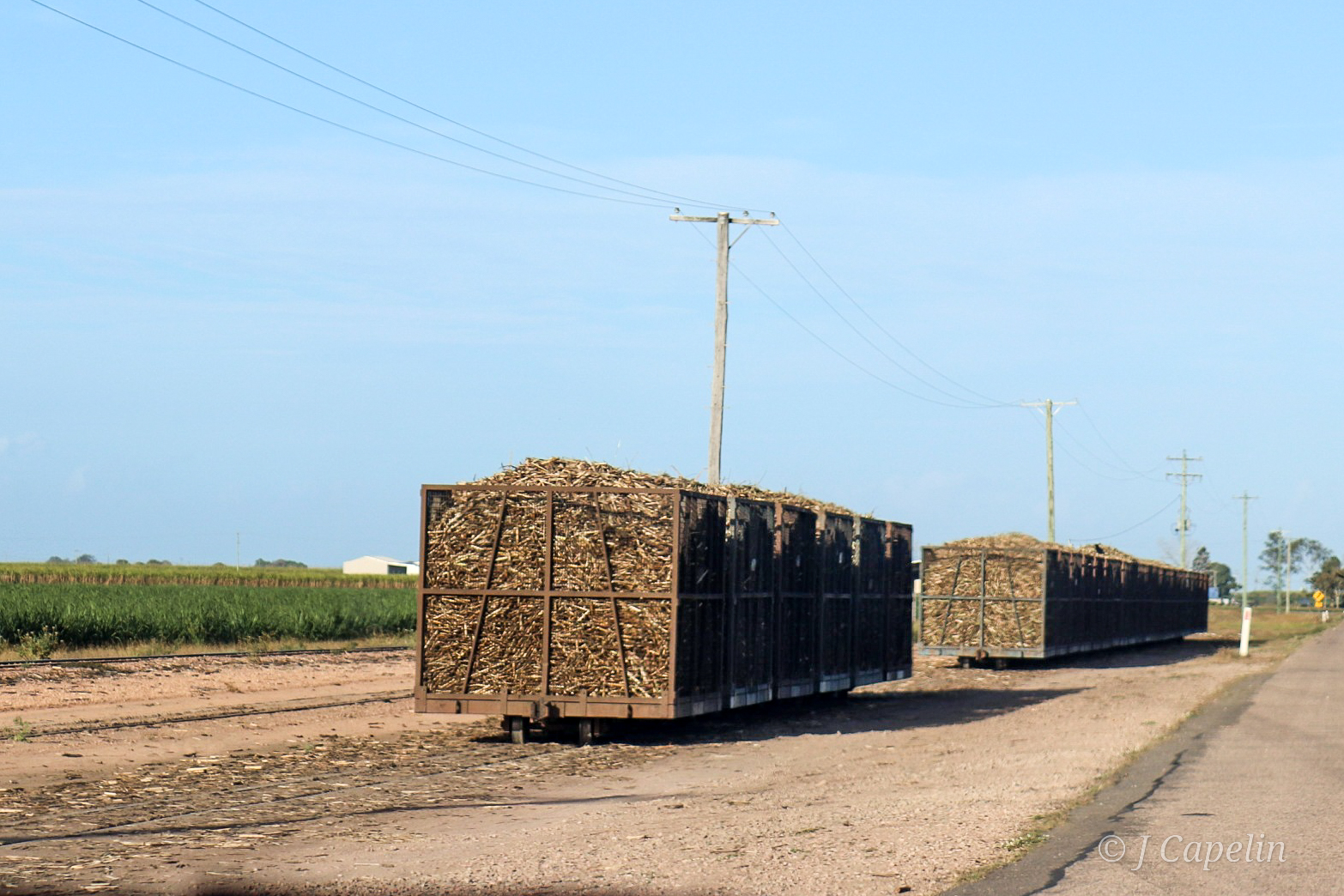
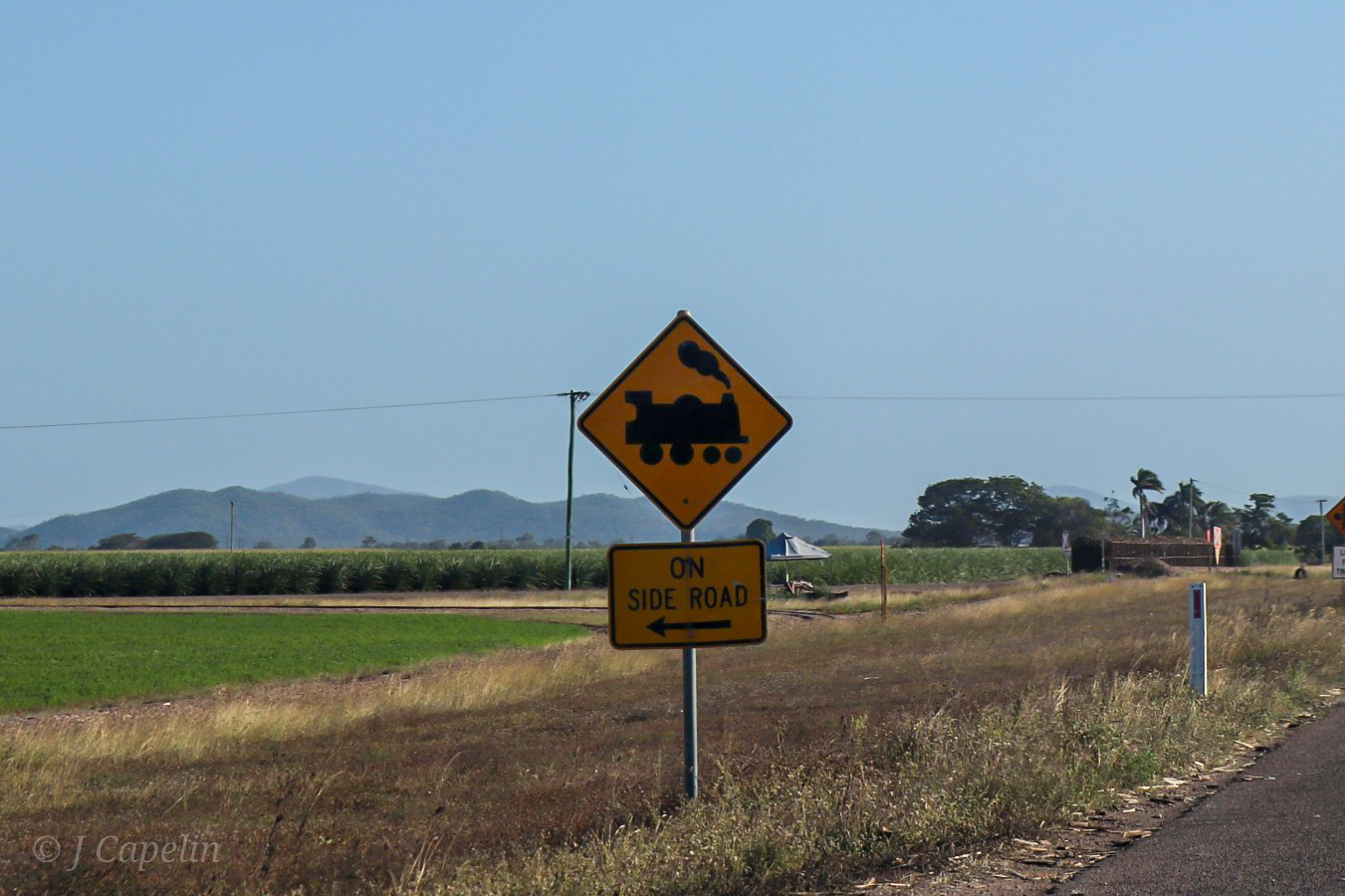
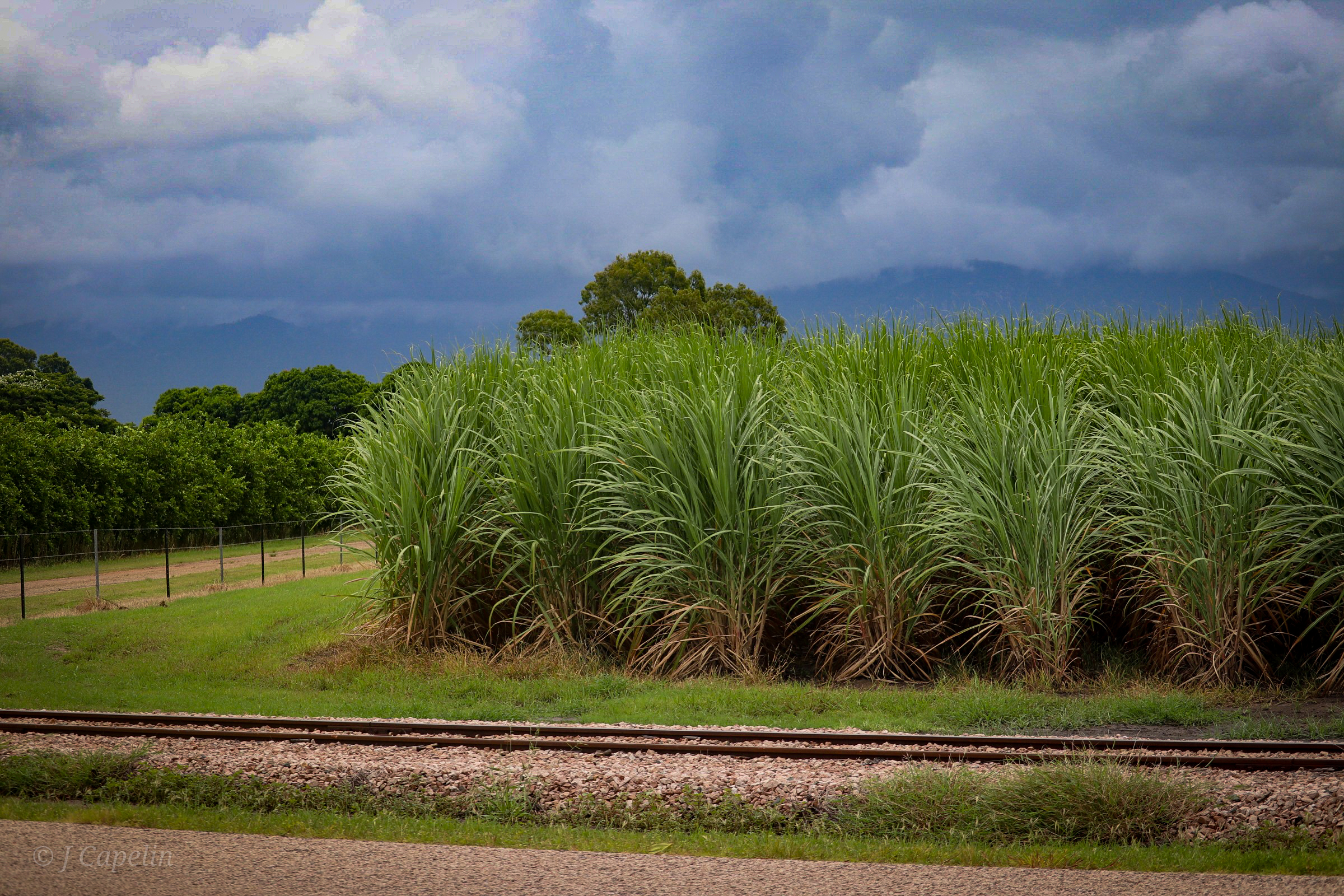
It’s not so much ‘winter’ as it is the dry season, or the slightly-cooler-and-calmer-than-the-wet-season. It’s the bearable-to-live-in season. If you’re really lucky, you might see the temperature drop below 10°c for a night or two, but I wouldn’t bother digging out the winter quilt. The sky is a rich sapphire, glazed with a smoky haze. The horizon is red and black with fire; smoke clouds grow like giant mushrooms over the town. The air smells like toasted marshmallows and burnt grass, and everyday it snows; gentle, black ash tumbling like feathers out of the sky – cane burning season is in full swing. The sun hangs low in the sky, gathering warmth slowly as it rolls along the top of the sugar canes, little cane trains trundle along the network of tracks, carrying trailers full of freshly harvested sugar cane to a nearby mill. A freshness blows in on an unfamiliar breeze after the humid months. Kookaburras laugh somewhere on a power line, drifting through the open window on a scent of liquorice and treacle from the sugar mill.
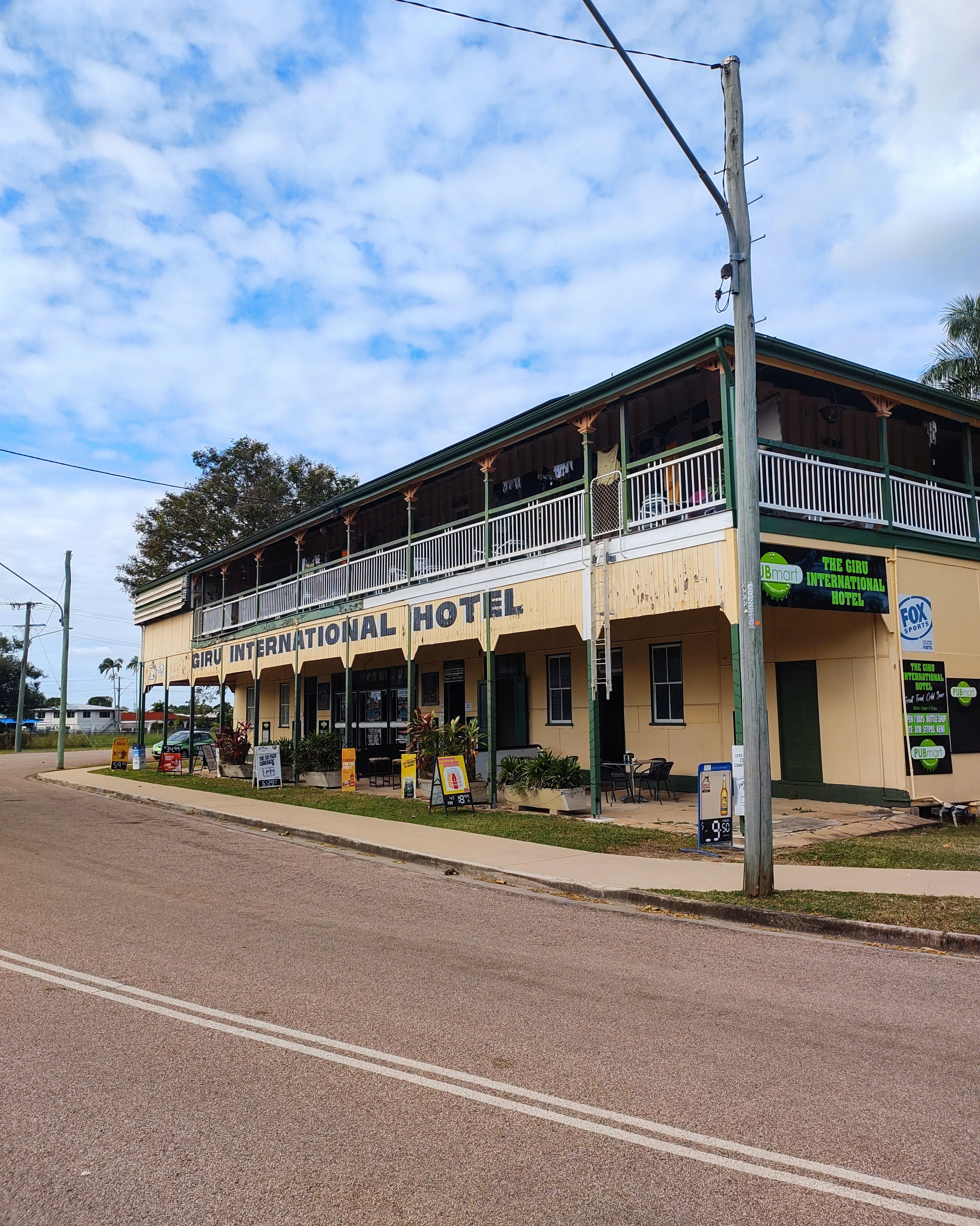
Giru is one of The Burdekin’s major cane farming communities. Despite the town’s tiny population of less than 400 people, and its semi-remote proximity to anything, Giru is home to Australia’s largest sugar mill, and provides more than 2000 jobs each year. The Burdekin is home to four sugar mills in total.
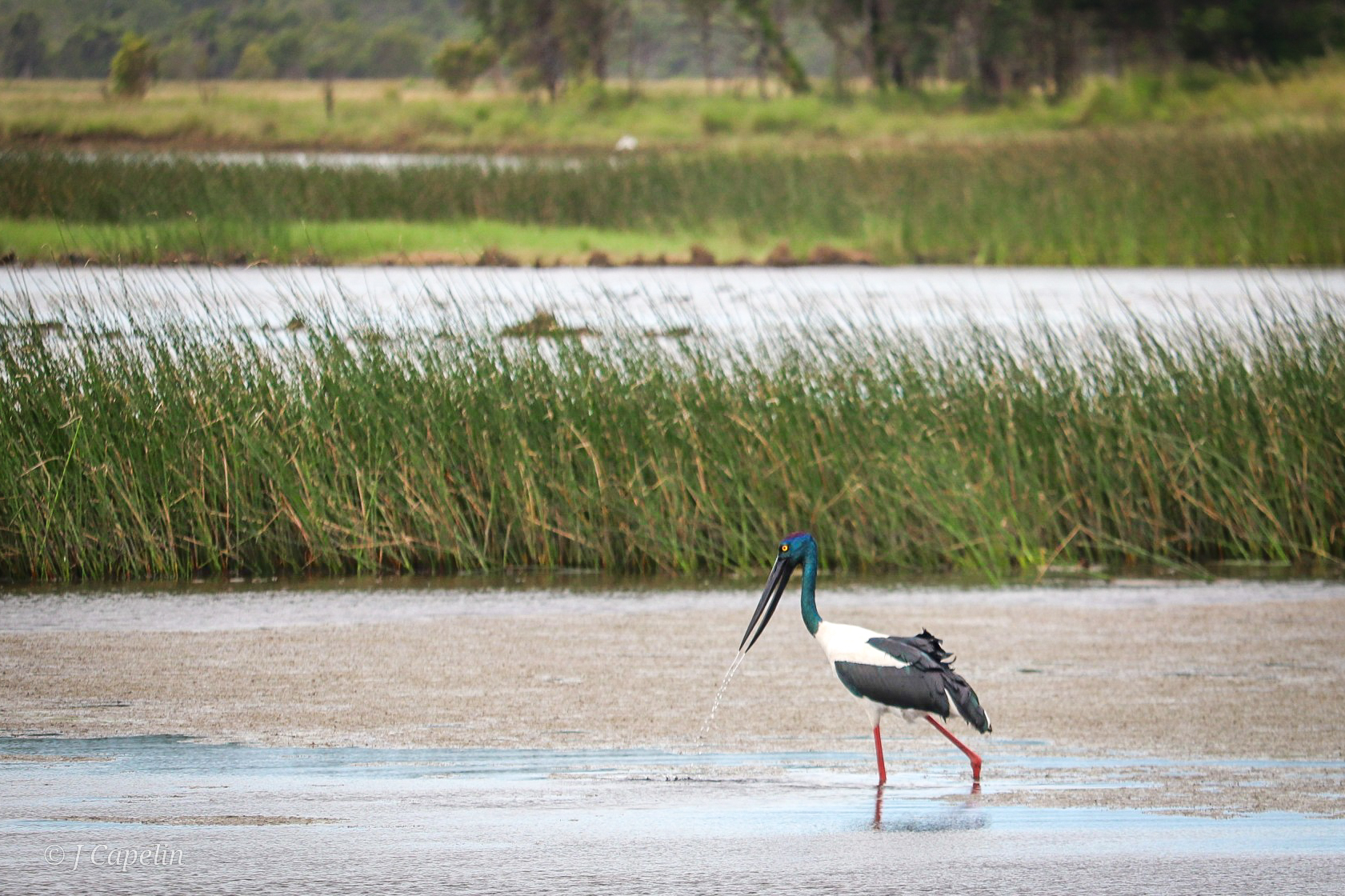
Giru historic pub – popular with the local farmers & millersA Jabiru hunting in the wetland near Giru
Driving up a dark road on a Saturday night, seemingly to nowhere but cane fields, you reach the sign for the Stardust Drive-In Movie Theatre pointing up a long driveway. A little old ticket booth covered in fairy lights stands half way up and a man sticks his head out and trades you a paper admission stub in exchange for cash. You drive on and the big screen appears before you, on a backdrop of cane fields and endless night sky. Posts stick out of the ground in rows, each with a little old-fashioned speaker attached, playing 1950s music. You can reverse your ute up next to one of these speakers and cosy up with the family in the tray, or you can tune your radio to 95.1 and watch the movie inside your car. You pull up in your spot and head out to the café for burgers, hotdogs, popcorn and choc tops. The café is painted with bright murals and decorated with all manner of vintage things and movie themes. More twinkling lights line the fairy garden and mini golf course, all centred around a big old Gum Tree. The movie begins with local adverts from years gone by, and the stars in the Milky Way above shine as bright as the movie stars.
We’re well into June; the heart of winter, (29°c) and the region has a public holiday for the Burdekin Show. Now, I am expecting some significant cultural festival to warrant a public holiday for everyone, and instead I am baffled! Giant trailers travel from show to show, with target practice games where you can win an enormous plushie hanging from the ceiling, or fishing for rubber ducks, or selling candy floss and Dagwood dogs, or playing loud sound clips from Michael Jackson’s Thriller to entice you onto the fold up ride that looks like it might fall over! These funfairs are reminiscent of 1980s teen horror movies, and as we stroll around, every single stall holder heckles us, trying to force us to play their game. These Shows happen all across the country, and apparently the goal is to get a Show Bag. Again, I imagine this to be a fun souvenir you get, either as a prize or on the entrance gate. I think it’s going to be a locally branded bag saying “Burdekin Show” filled with miscellaneous things relevant to the Burdekin, or at least branded specifically for the Show. I couldn’t be more wrong. These are more like gifts you buy from the Disney Store. More than half of the trailers here are simply selling Show Bags, thousands of them, with every fictional character you can think of. Some of them just have a school backpack in it with your favourite character on it, or a Frozen drink bottle, a Harry Potter replica Quidditch set, or a Simpsons lunchbox. And these Show Bags are around $50! I don’t mean to offend anyone who grew up with these fond memories, but it looks to me like gross, unnecessary consumerism and I don’t get it. A public holiday and a day off school to go to a dodgy funfair to get heckled and pay $50 for a bag of landfill? I need to get my introverted, non-thrill-seeking butt out of here!
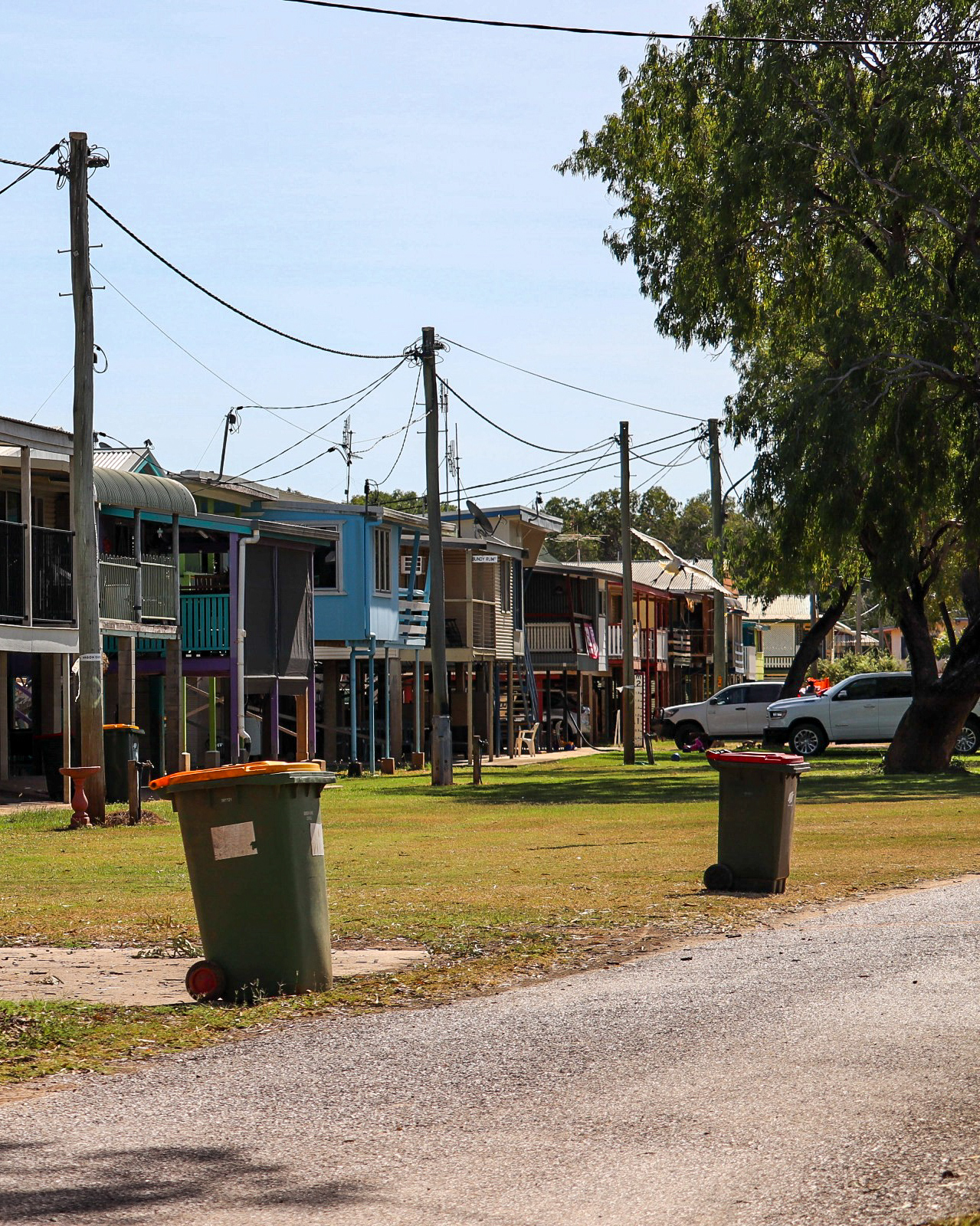
Groper Creek – The Burdekin’s tiny fishing settlement with colourful dwellings on very tall stilts due to its annual flood risk. Groper Creek is a popular camping and fishing destination for many North Queenslanders during the dry season. Just watch out for crocodiles!
Work is a struggle – each day is identical, from the timings and route of my round, to the customers I see and the items they buy, and even the things they say – if they speak at all. The same one-liners are made each day, as the same blokes buy their sixth Red Bull of the day just to try and feel something. No one laughs, as usual. I work alone on my smoko rounds, so other than that there’s no conversation. Even the radio plays the same thing every single day. I don’t know if it’s Tuesday, Thursday, May or October, it’s all the same.
The Burdekin Water Festival is an annual celebration of the region’s abundance of natural underground waterways, which is part of what makes the Burdekin ‘The Sugar Cane Capital of Australia.’ This festival was first held in 1958, which makes it one of Queensland’s longest running festivals. There are many ticketed events held throughout July and August; performances, dinners, etc, all fundraising in the lead up to the main celebration, The Grand Parade, which occurs in early September. Queen Street lights up with marching bands and carnival floats, followed by a ‘Mardi gras’ with lots of street food, local craft stalls, music, funfair rides, games and entertainment. The whole community comes out, and the town centre turns into a lively, bustling street party.
‘Summer’ approaches – the land is dry; scorched, the air is dusty. There is no respite from it, no countryside trails to clear your head. You don’t go outside for fresh air because it’s smoky; there’s ash falling from the sky, and the heat is relentless. It’s not the clean, fresh countryside like I am used to, it’s industrial, dirty, rugged and its beauty is dangerously striking in contrast. Between unimaginably vast stretches of private farmland, where you risk being shot for trespassing, and wild grasslands where you might collapse from sun stroke or be torn apart by dingoes, lie great, uninviting dirt yards with broken machinery or abandoned cars strewn about them. Even the river is inaccessible to those who don’t own high clearance 4X4s and boats. We’re in a time capsule; living out a Stephen King psycho-thriller, trapped in a snow globe filled with black cane trash, separated from the rest of the world, and nobody on the outside understands.
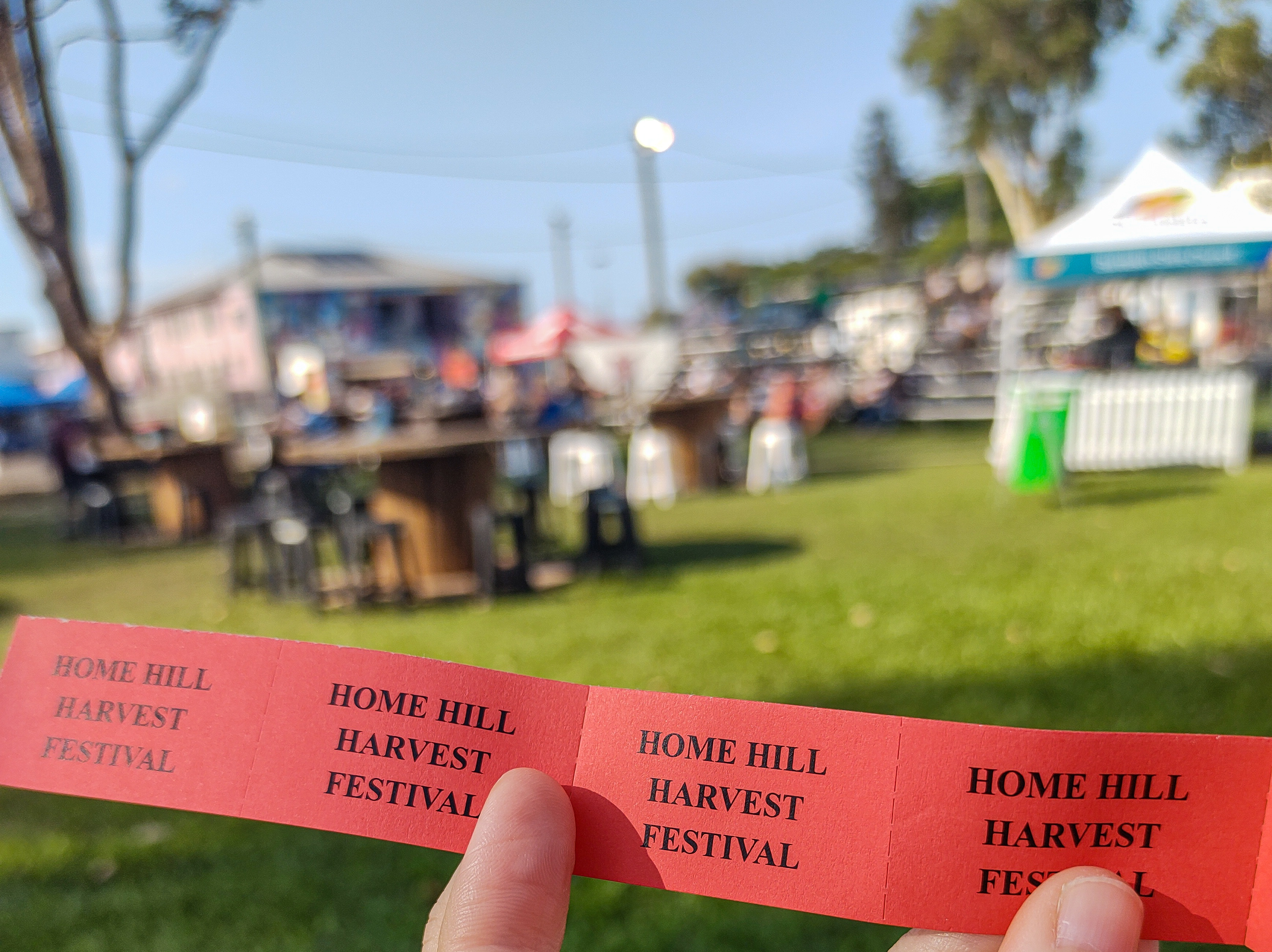
By November, the bushes and trees around town are covered in flowers, and the temperature is climbing rapidly. We start to see some rain showers and the odd thunderstorm as the wet season creeps up again. The sugar mills are on the home stretch as the harvest draws to an end, and soon the town will be very quiet again as the workers leave. Across the river in Home Hill, we sit under a tall eucalyptus in the park and watch a country music band warm up for the Harvest Festival. Behind us a twister funfair ride whirs, and the scent of a sausage sizzle lingers under the hot afternoon sun. The final grand parade of the year comes down the Bruce Highway that runs through Home Hill, showcasing the Burdekin’s businesses and sponsors, along with school debutantes and prom kings and queens. My favourite float is the person dressed as a prawn standing on the back of a Ute, and of course, it wouldn’t be a parade without a few old tractors and a Scottish marching band!
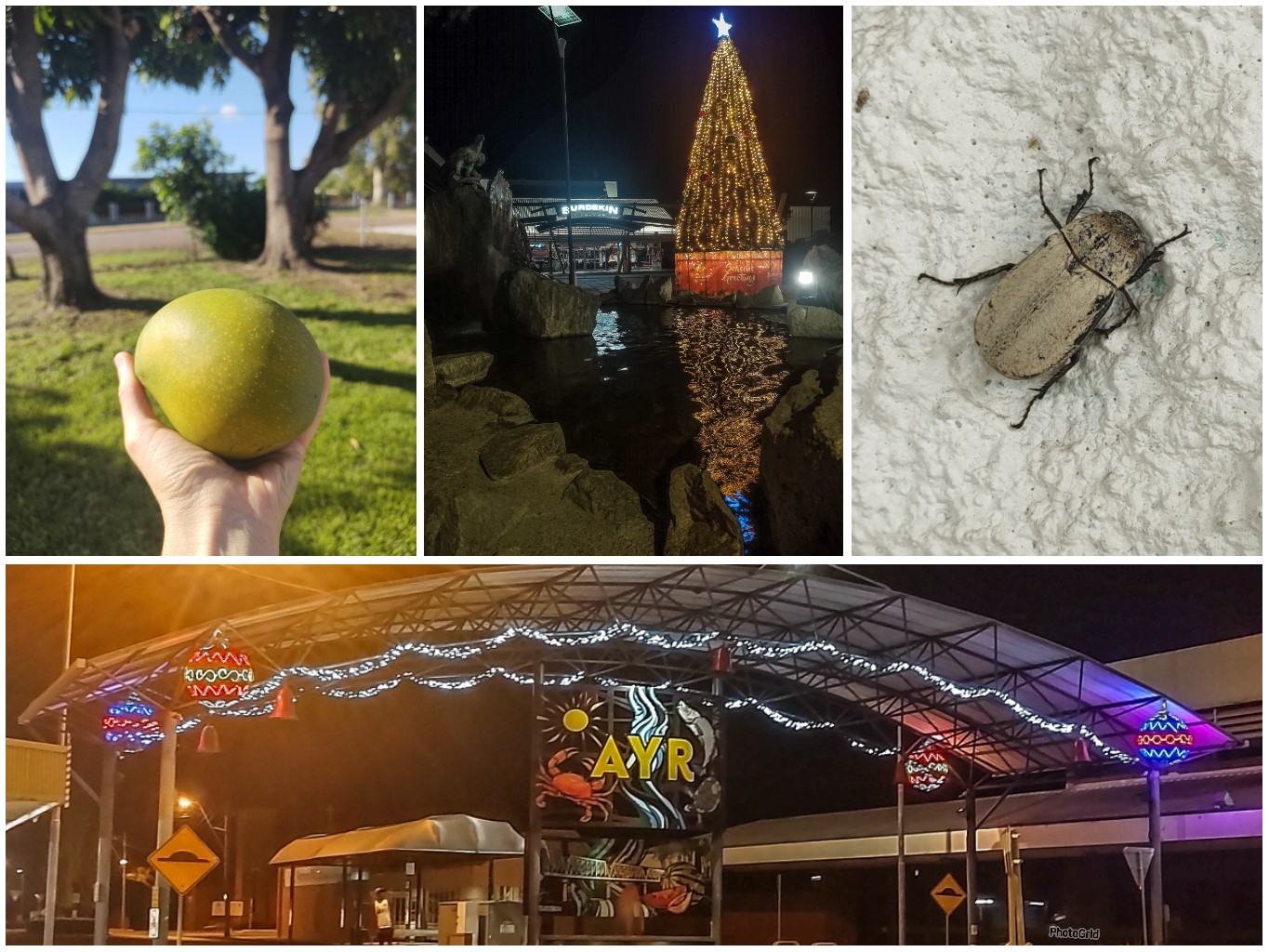
December brings bright glimmers of hope in the form of mangoes! The atmosphere all over town feels relieved; we’ve survived! The workers are finished for the year, most of them preparing to leave town; many businesses are getting ready to close for the wet season, and the mango trees all over The Burdekin are brimming with fruit. There are so many mangoes, not even the bats can get to them all! We manage to harvest some from the trees in our yard, and their sweetness is like nothing I’ve tasted from a supermarket. As the next season’s sugar cane begins to grow, closing in the town once again, Cane Beetles flood the place, like stone scarabs tacked to every wall and pavement. Our house is bare, as the removalists transport our belongings to our next destination, and there is nothing here now but the orange sun shining through the mottled glass windows, making rainbows all over the white tiles of what was once our living room.
If you enjoyed this blog, please share, & consider making a one-off donation to my ‘Buy Me A Coffee’ page, where you can also check out my art works inspired by my travels. Copy & paste the link below into your browser!
A real desert island, complete with a tropical lagoon and reef oasis, sits around 95km off the coast of Bundaberg in Queensland. Lady Musgrave Island. Part of the Bunker Group, this is the southernmost section of the famous Great Barrier Reef and plays host to a magical menagerie of sea life.
Ok, David Attenborough voice aside, this was my favourite Great Barrier Reef experience so far. Taylor and I booked the ‘Lady Musgrave Experience’ Day Tour for late February, and I was not disappointed! Between January and March is turtle hatching season, and many mother turtles are still laying their eggs through February. The tour did get cancelled on the day I’d booked it for due to dangerous offshore wind conditions (went to the Bundaberg Rum Distillery instead – never a bad thing!) The tour was easily rescheduled for the following day, at no extra cost, and went ahead as planned.
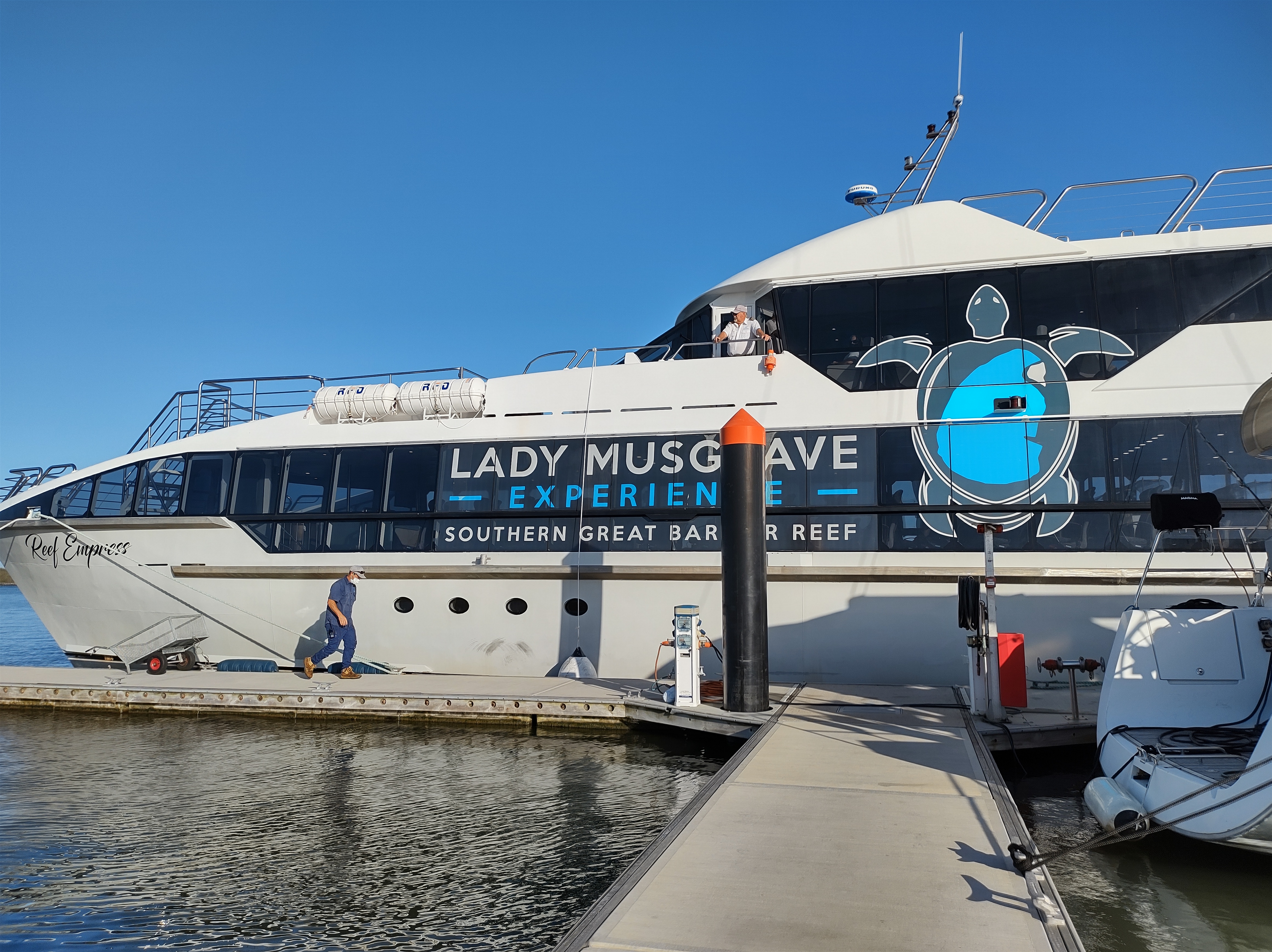
6:45am: Checked in at Bundaberg Port Marina 7:00am: Boarded the “Reef Empress” ready for departure
Boarding the “Reef Empress”

The morning was warm, full of promise, with the first blue sky we’d seen in days. All passengers were assigned to a group as we boarded the boat; Turtles, Clownfish and Dolphins – we were Dolphins. This was simply for the rotation of activities once we reached the island. The crossing was a rough 2 hours, the majority of passengers needed paper bags, clutching their heads and holding on for dear life. We took our ginger tablets and sat watching the crew running around cleaning patches on the floor and disposing of used paper bags. They were incredible, remaining upbeat and cheerful the whole time.
A rough crossing
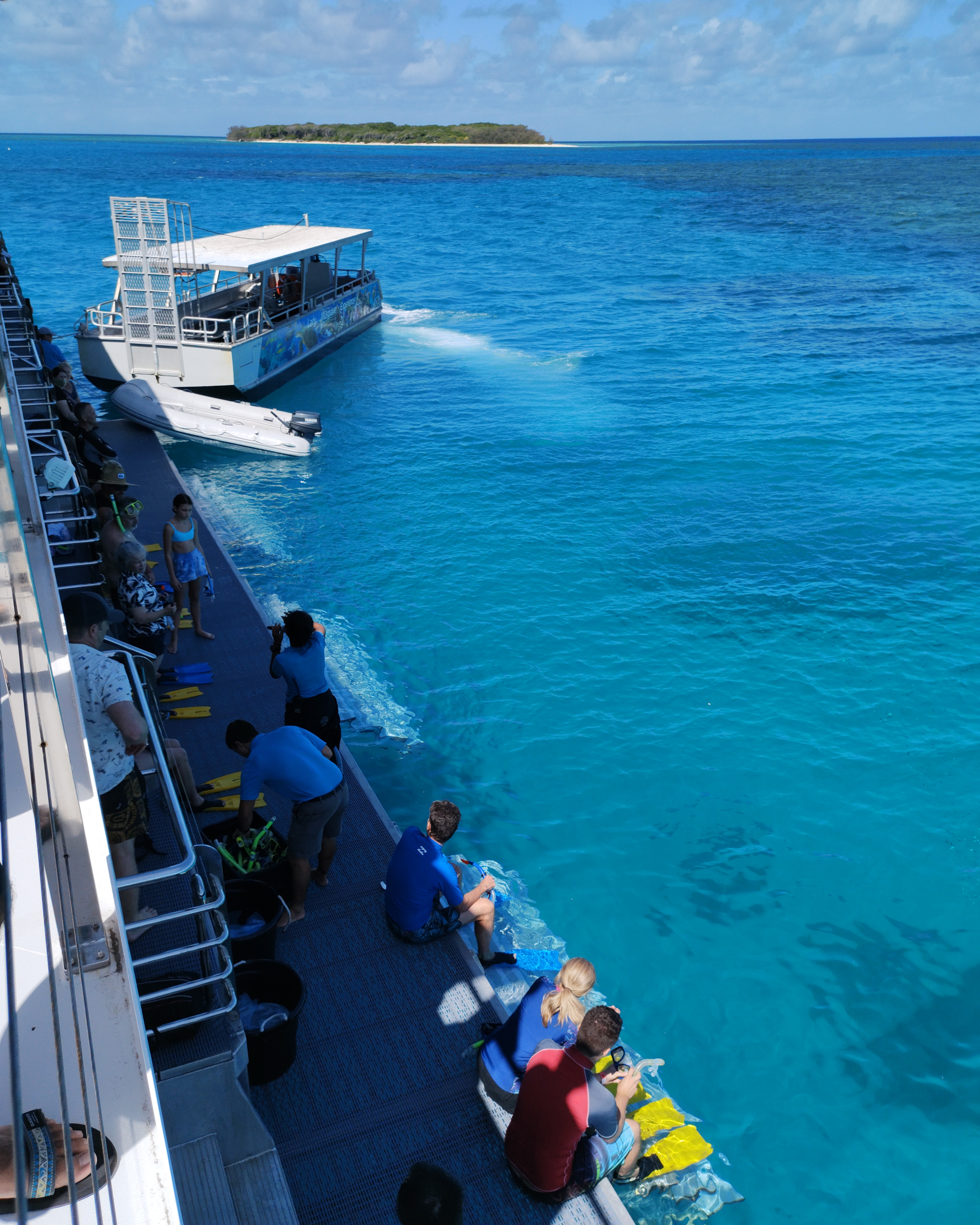

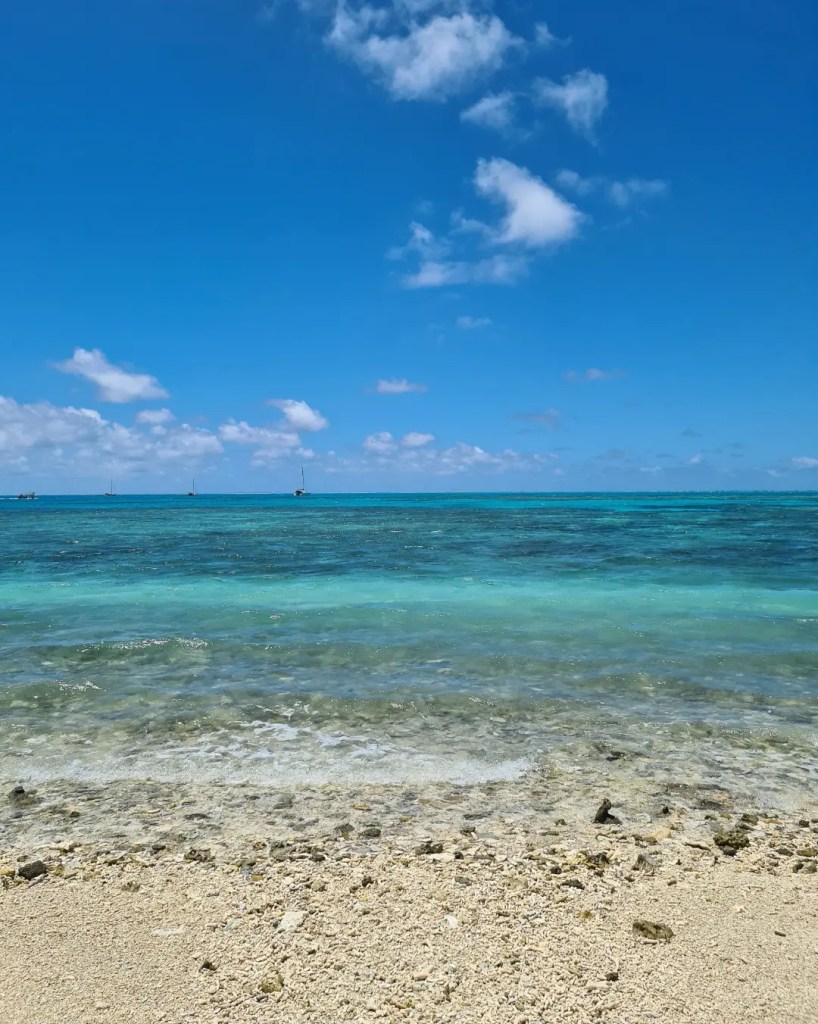
2 hours later, we pulled into a big semi-circular reef lagoon, with the gold and green island in the centre. Firstly, I need to talk about the colour of the sea. You couldn’t even paint it. It was blue, yes, a light, bright blue with stripes of turquoise and green wherever the reef lay below, but it was iridescent, backlit if you will, shining like fluorescent light!
On the Pontoon
Anyway, we stepped off the boat onto the enormous three-storey pontoon, (with an underwater viewing room below deck, and glamping style beds on the top deck for the overnight experience) and the first thing I saw as I gazed out across the reef was a turtle! It was just floating on the surface about 20 metres away, its shell all clean and beautiful.
The Glass-Bottomed Boat
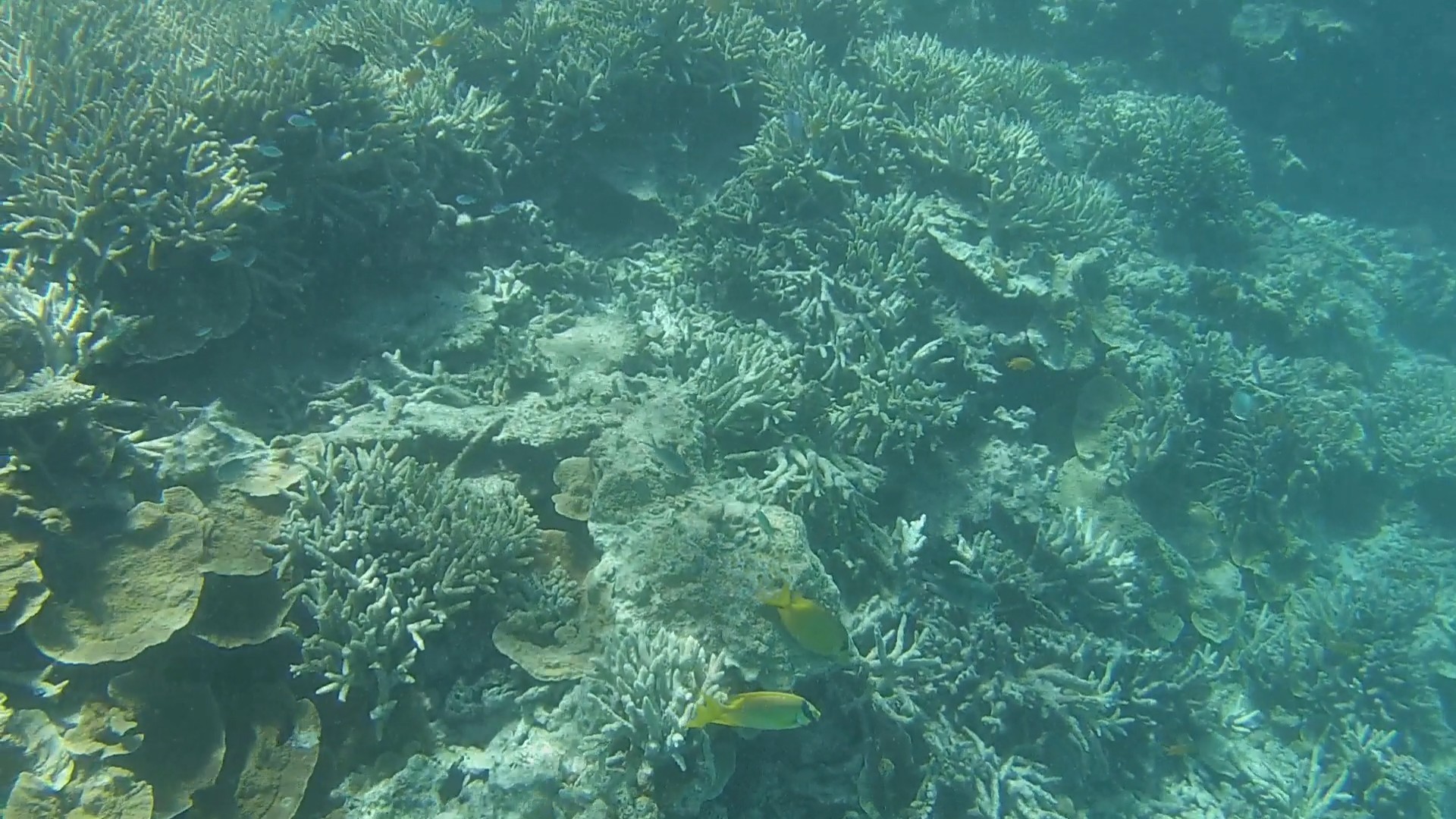
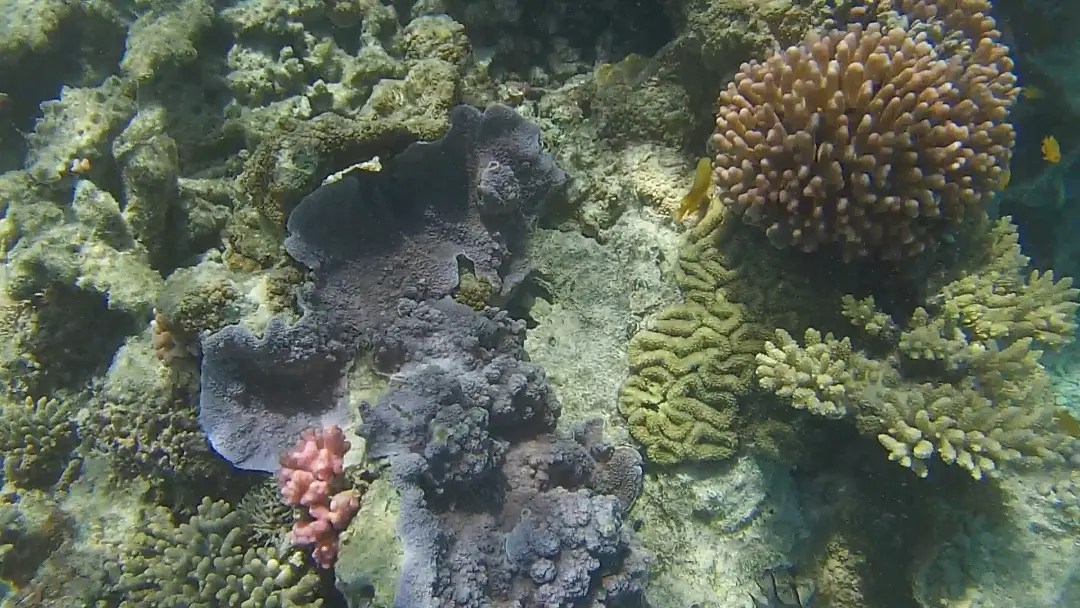
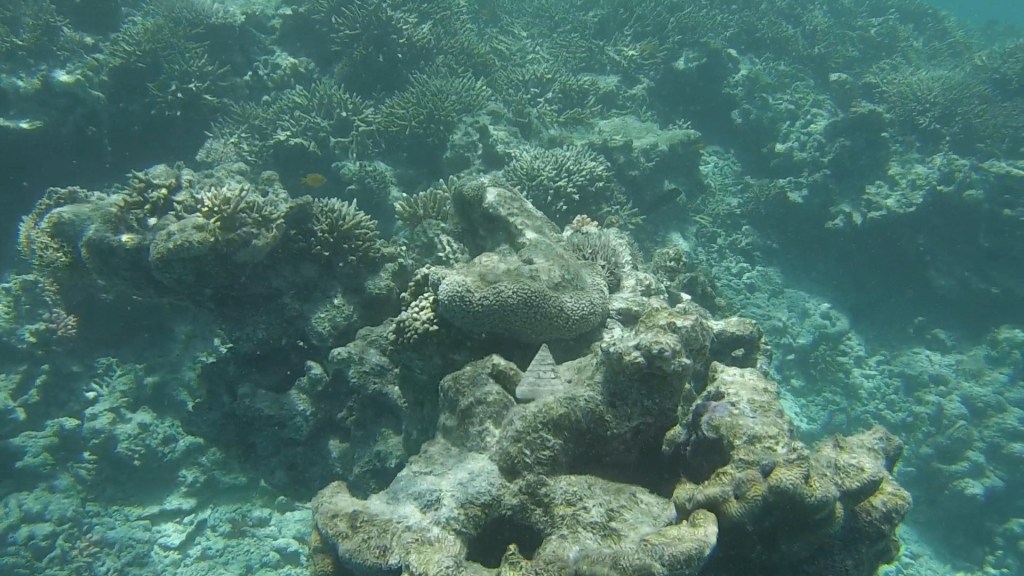
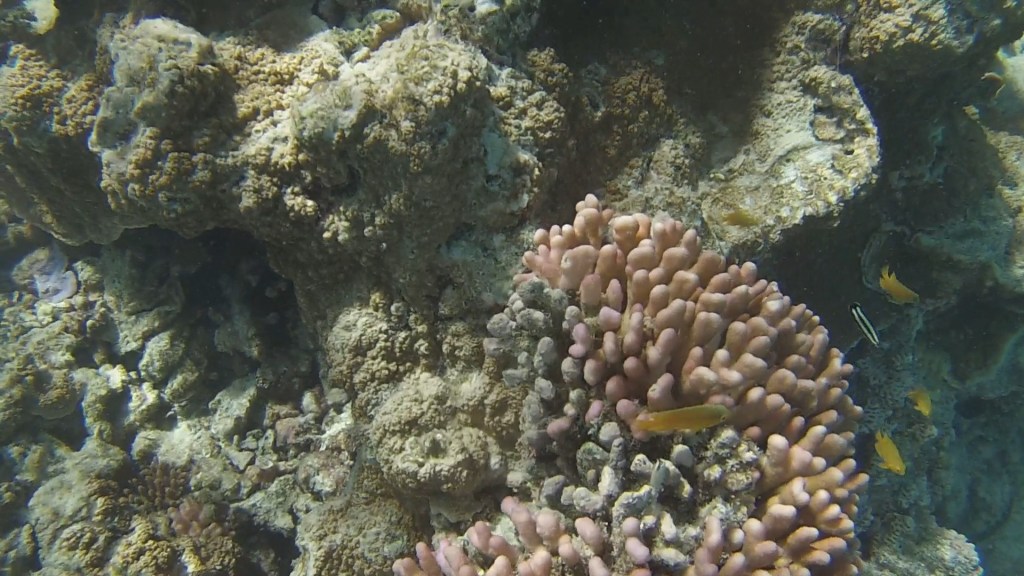
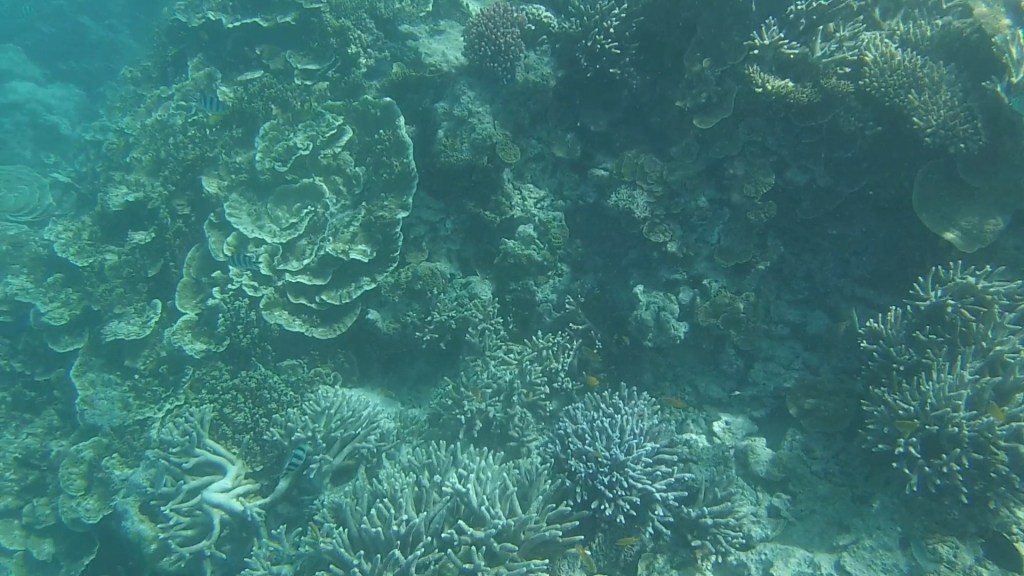
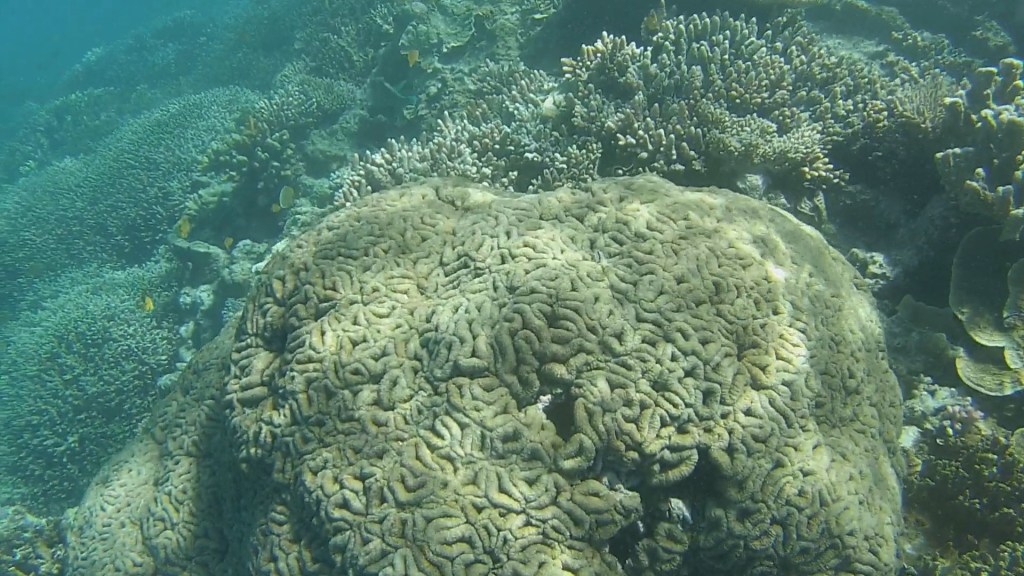
After a brief snorkeling run-through, the 3 groups broke off. The Dolphin group were on the glass-bottomed boat first. Our guide was Tyson, and he floated us over the different types of coral: staghorn, brain, boulder, plated, finger…. As he was explaining that the white tips on the coral is actually regrowth, not bleaching, a Brown Booby Bird swooped low next to the boat, majestically stealing our attention.
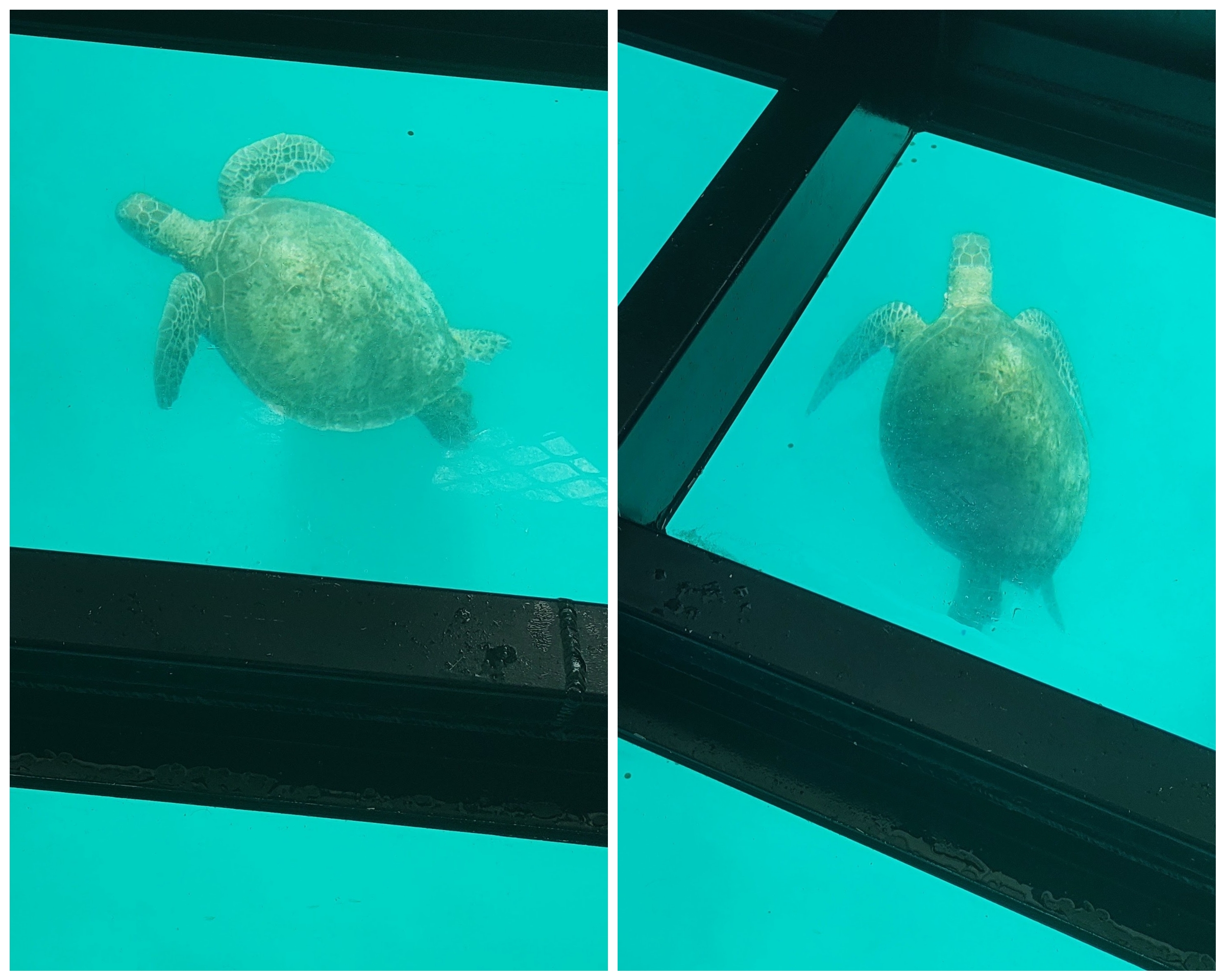
Next, Tyson steered us over a ‘turtle cleaning station’, a part of the reef where little fish nibble all the algae off the turtles’ shells. We could see the silhouettes of 4 turtles being cleaned far beneath the surface, and as we drifted over, one swam right up to the glass, giving us all a clear glimpse of its beautiful pristine shell, before popping its head up right beside the boat! Tyson said that was the closest he’d ever seen a wild green turtle and was pretty stoked himself!
Green Turtle under the Glass Bottomed Boat
Lady Musgrave Island
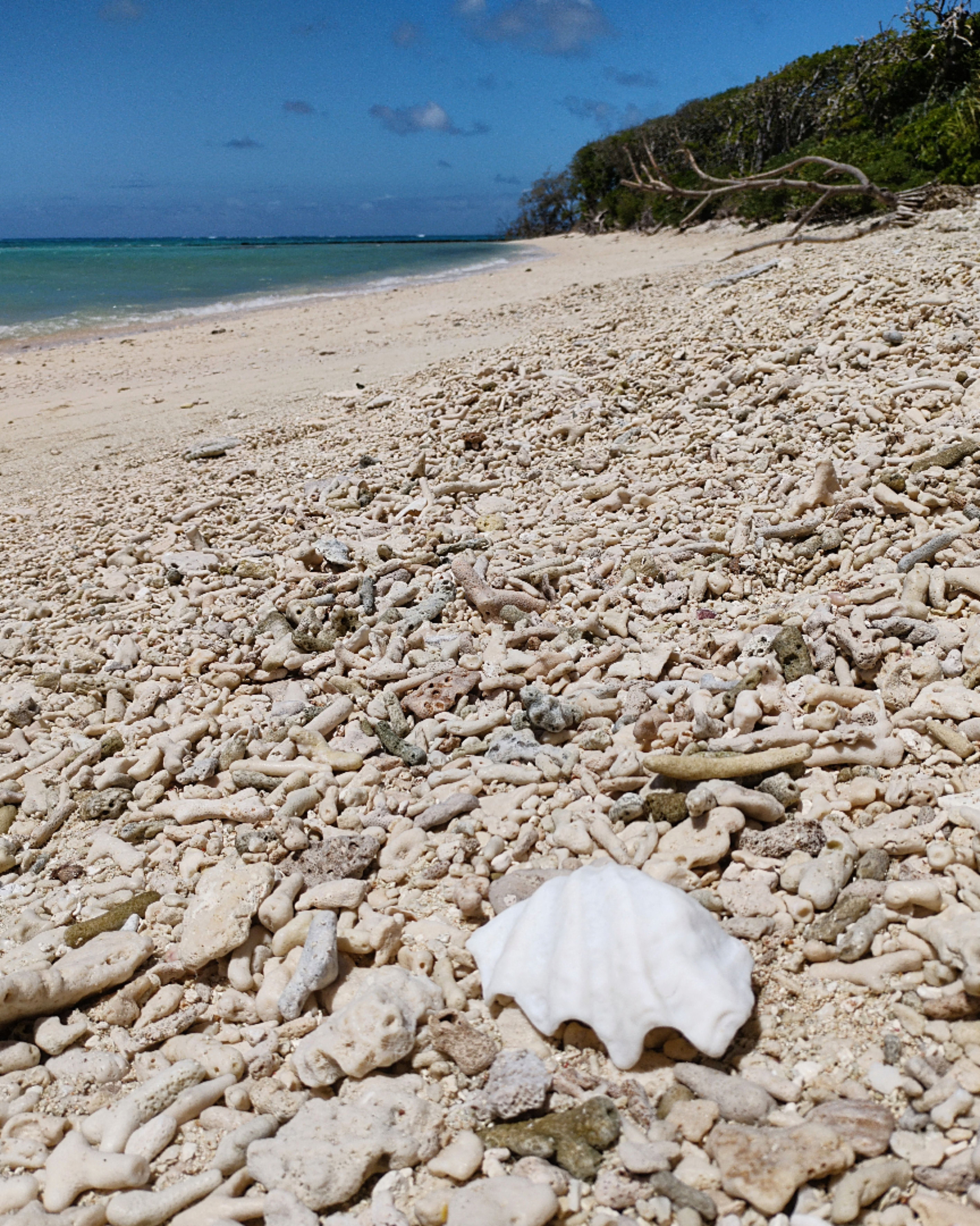
We pulled up on Lady Musgrave Island, where another guide, Jordan, met us for a walk around Capricornia Cays National Park. The sand is white, broken coral, with flecks of pink, and is so sharp you are advised to wear footwear at all times. One of the deadliest creatures of the ocean can be found on this beach – Cone Snails, which might look like a pretty, pink shell to collect, but the creature has a tiny barb that it fires through an opening in its shell, which has the ability to kill a person in half an hour. It wouldn’t be Australia if something wasn’t trying to kill you…
Iridescent Waters
Coral Beach

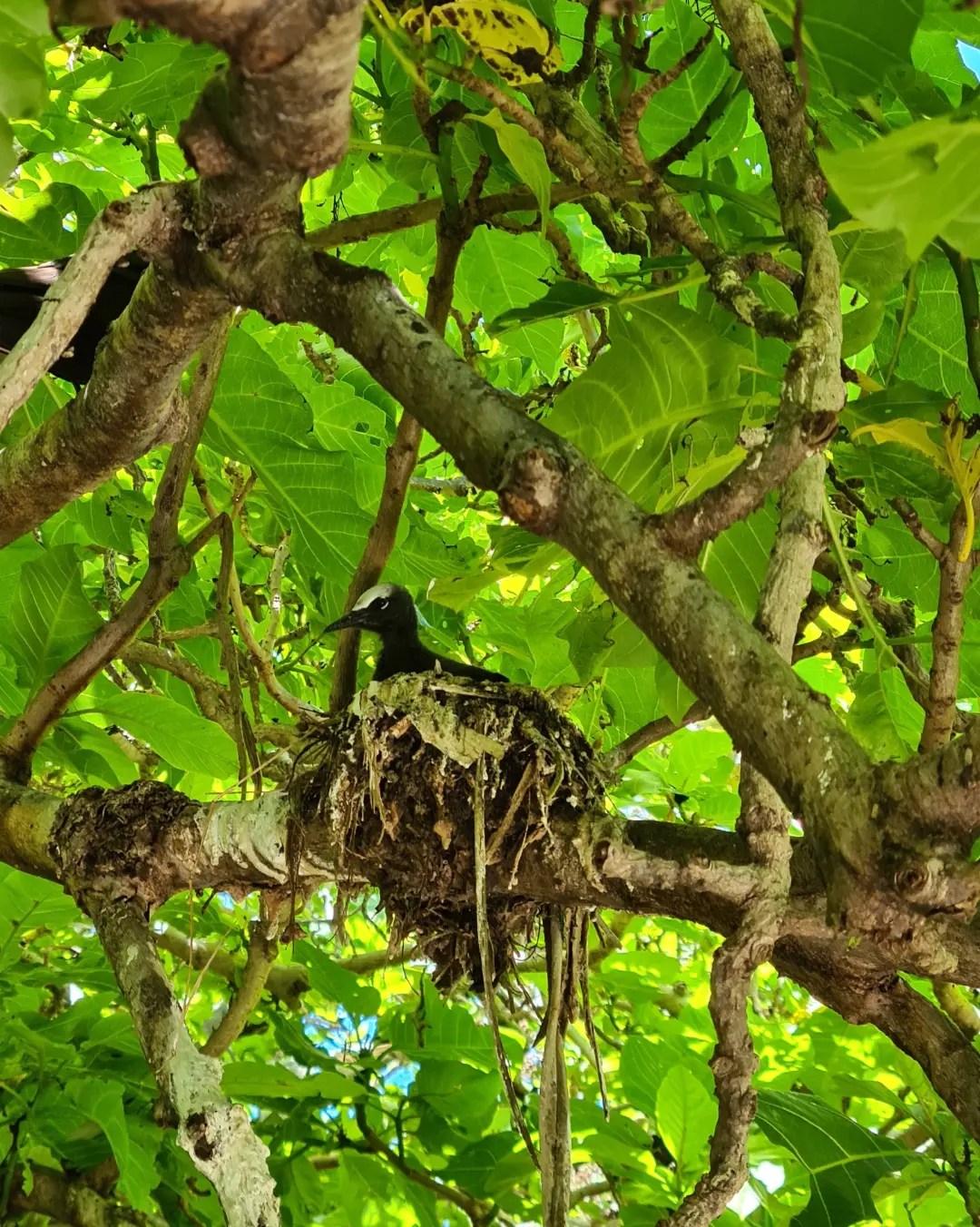
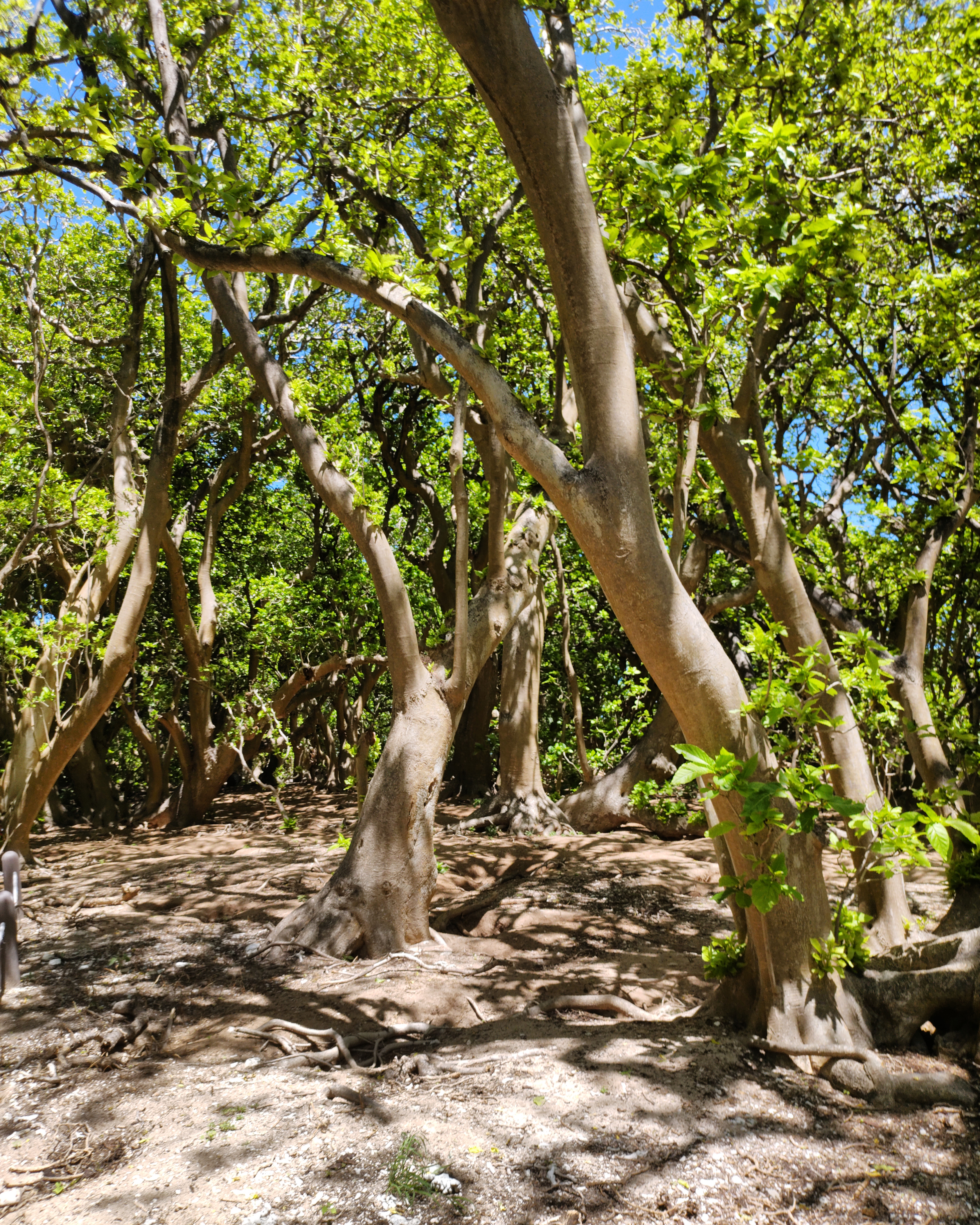
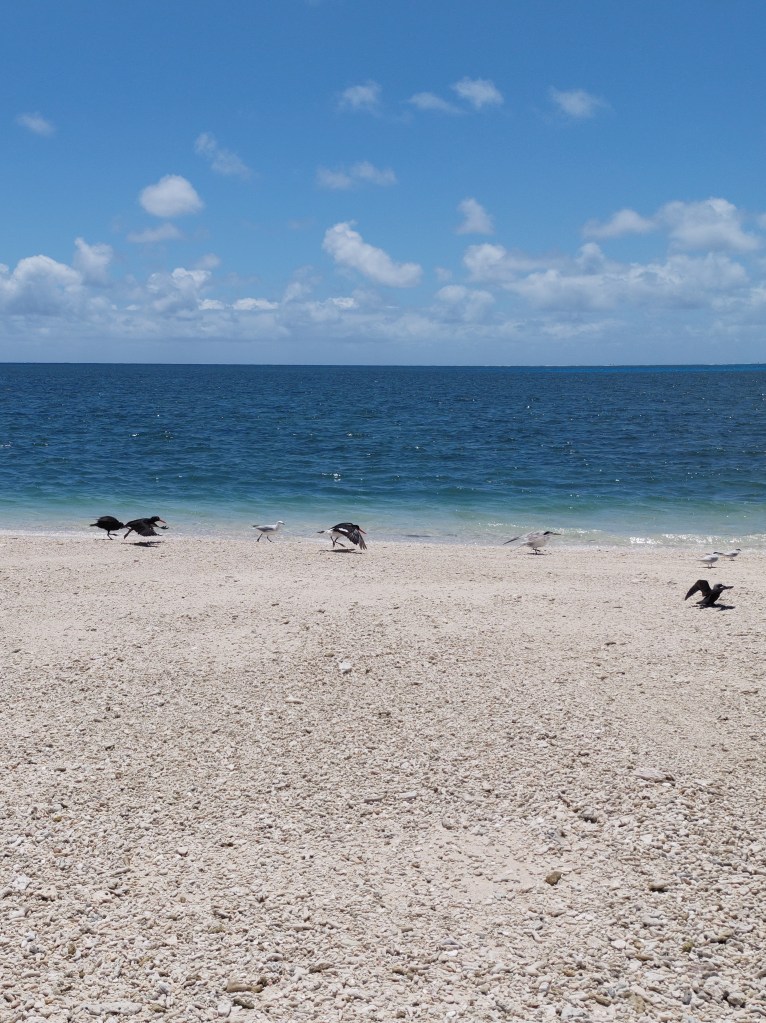
Behind the beach is a dense canopy of green Pisonian Grandis trees, and then you notice the birds. I’m not sure if the noise or the smell hits you first, but when you notice the sheer amount of little black sea birds nesting in the trees, you really get a sense of the wildness of this island. They have no predators here, and they’re everywhere, diving, swooping, pooping, screaming, and they appear to wear little white hats, hence their name: White Capped Noddy Terns. They inhabit the Pisonian forest, and are part of an intense circle of life, see, the island is basically a pile of coral; the birds nest in the trees, and their poop helps fertilise the trees. The trees also produce these sticky, sappy traps, which capture some of the Terns in a slow and sticky death, essentially using the birds as plant food. Gnarly.
The Edge of the Pisonian Forest
A White Capped Noddy Tern Chick in its nest
Pisonian Forest
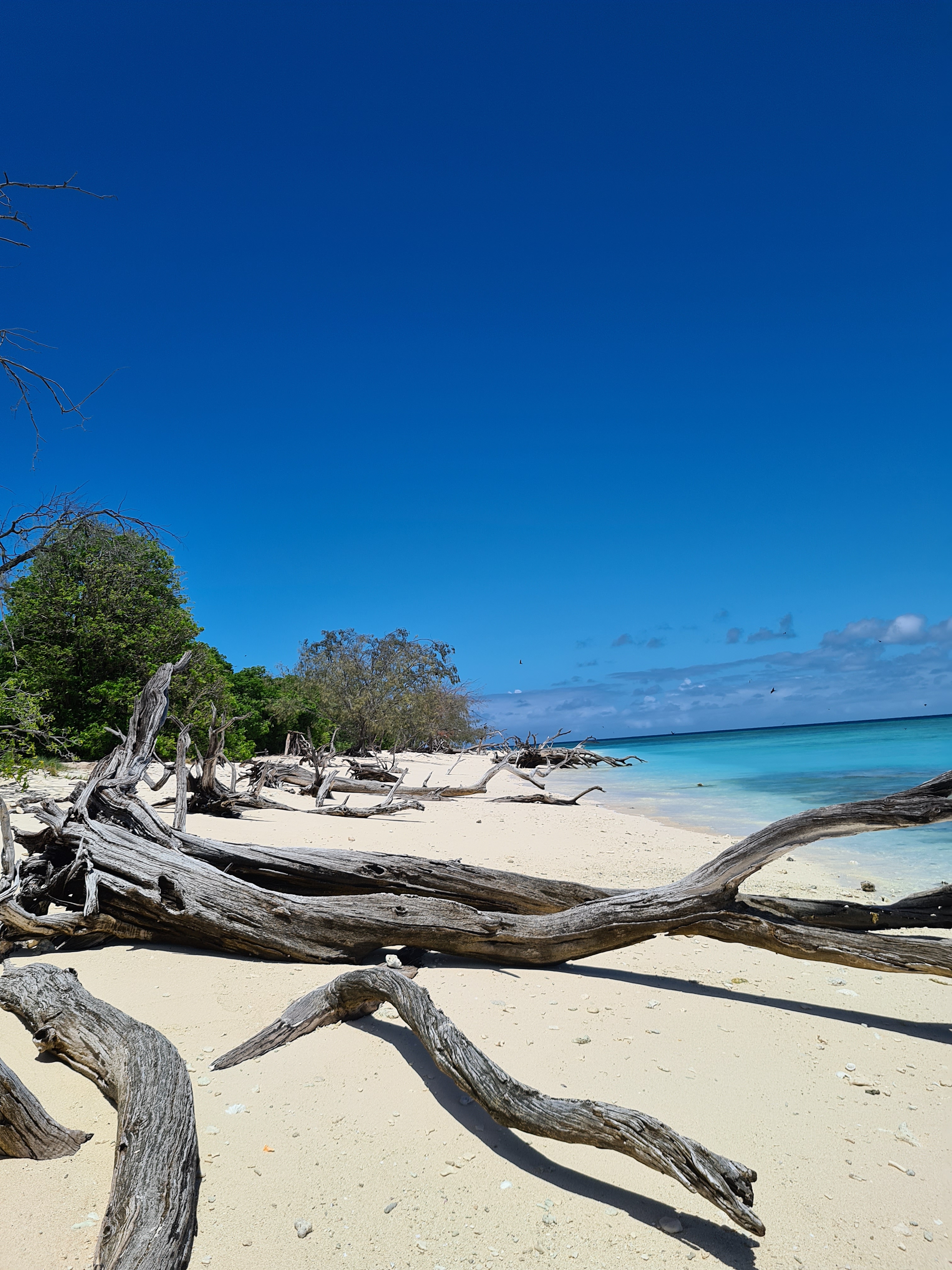
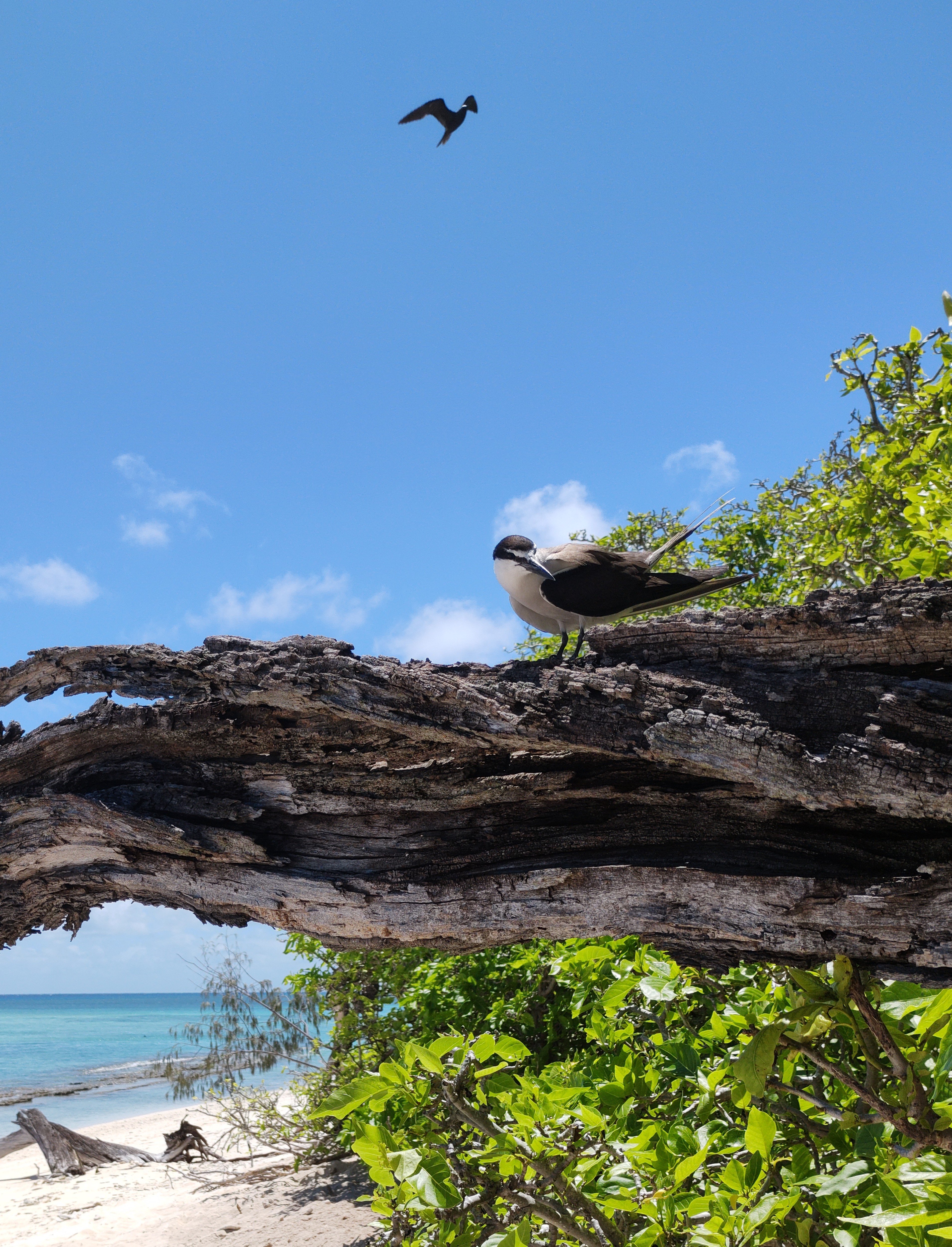
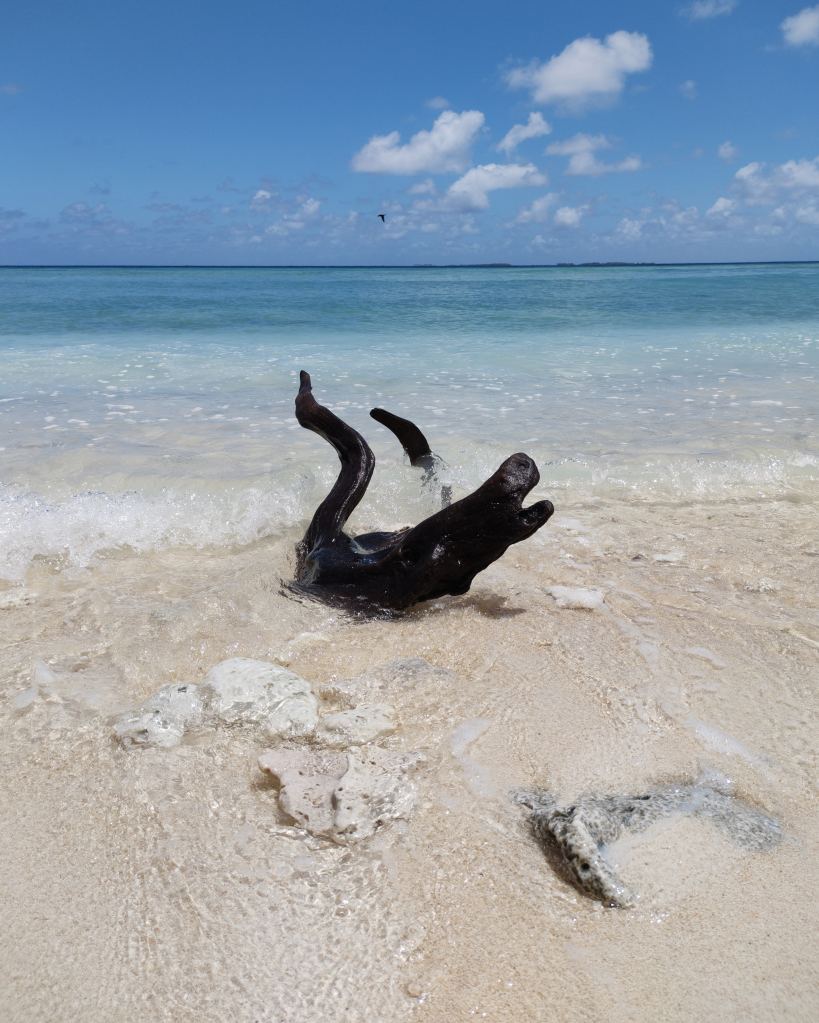
But aside from the stench, the forest was beautiful to walk through. I also spotted a couple of Buff Banded Rail birds scratching about on the ground, and some tiny Capricorn Silver Eyes darting about the branches. We came out on the other side of the island, onto the beach, where sun bleached logs litter the coral sand.
A wild beach
A Bridled Tern rests on a log; a White Capped Noddy Tern flies overhead
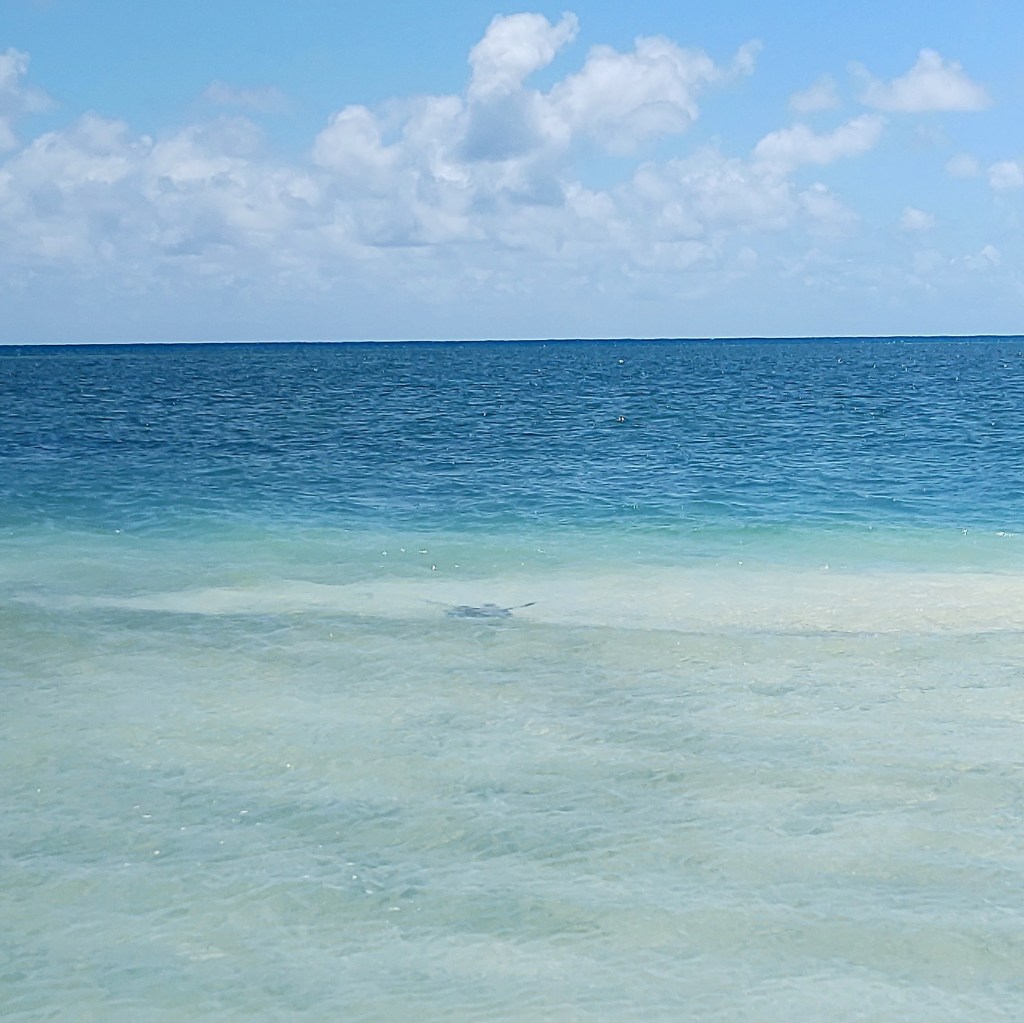
Then came a turtle, just a dark shape in the shallow water, moving closer to the beach. Then came another, and another! They didn’t leave the water, but one came so close to the shore that Jordan identified that it wasn’t big enough to be of nesting age (30), so she must have just been curious! We strolled back around the island along the beach, and hopped back on the glass-bottomed boat, back to the Pontoon for lunch.
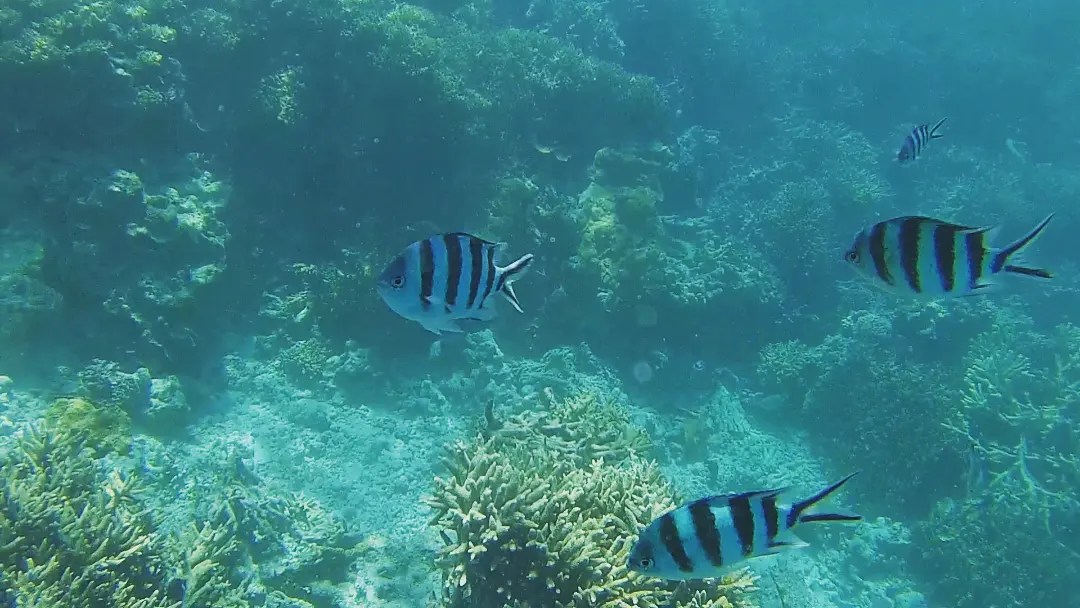
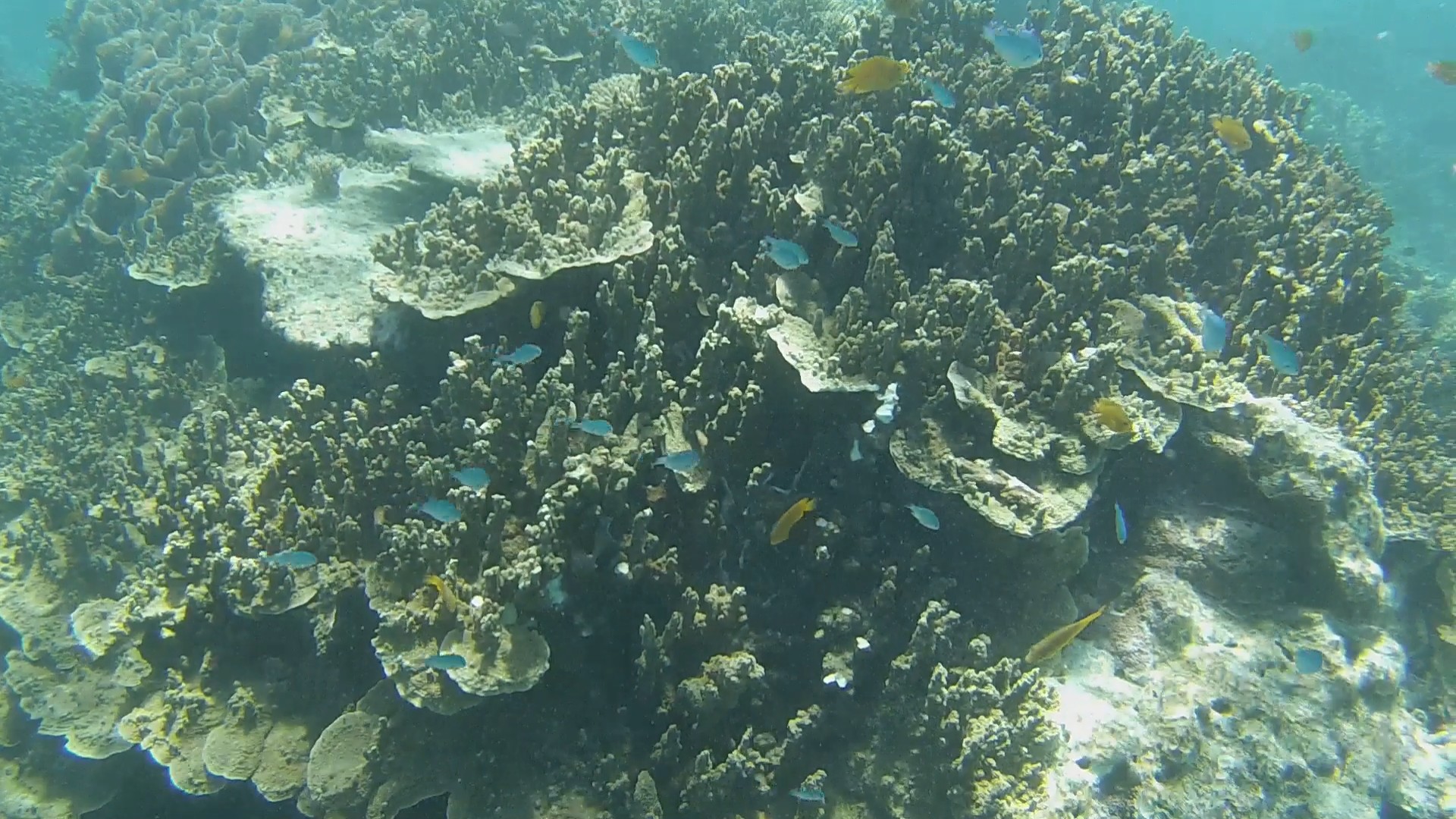
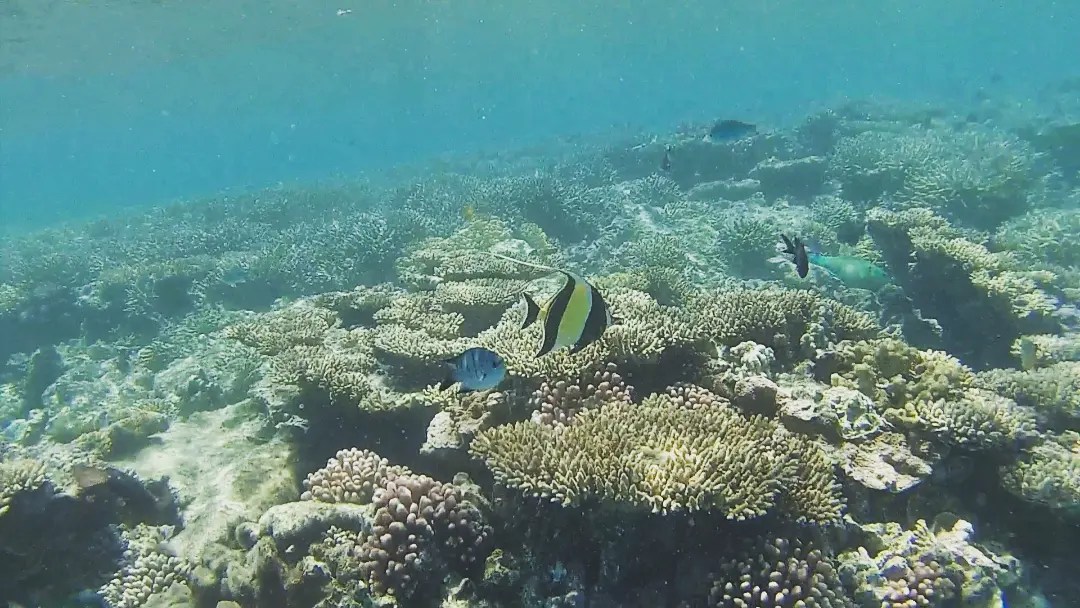
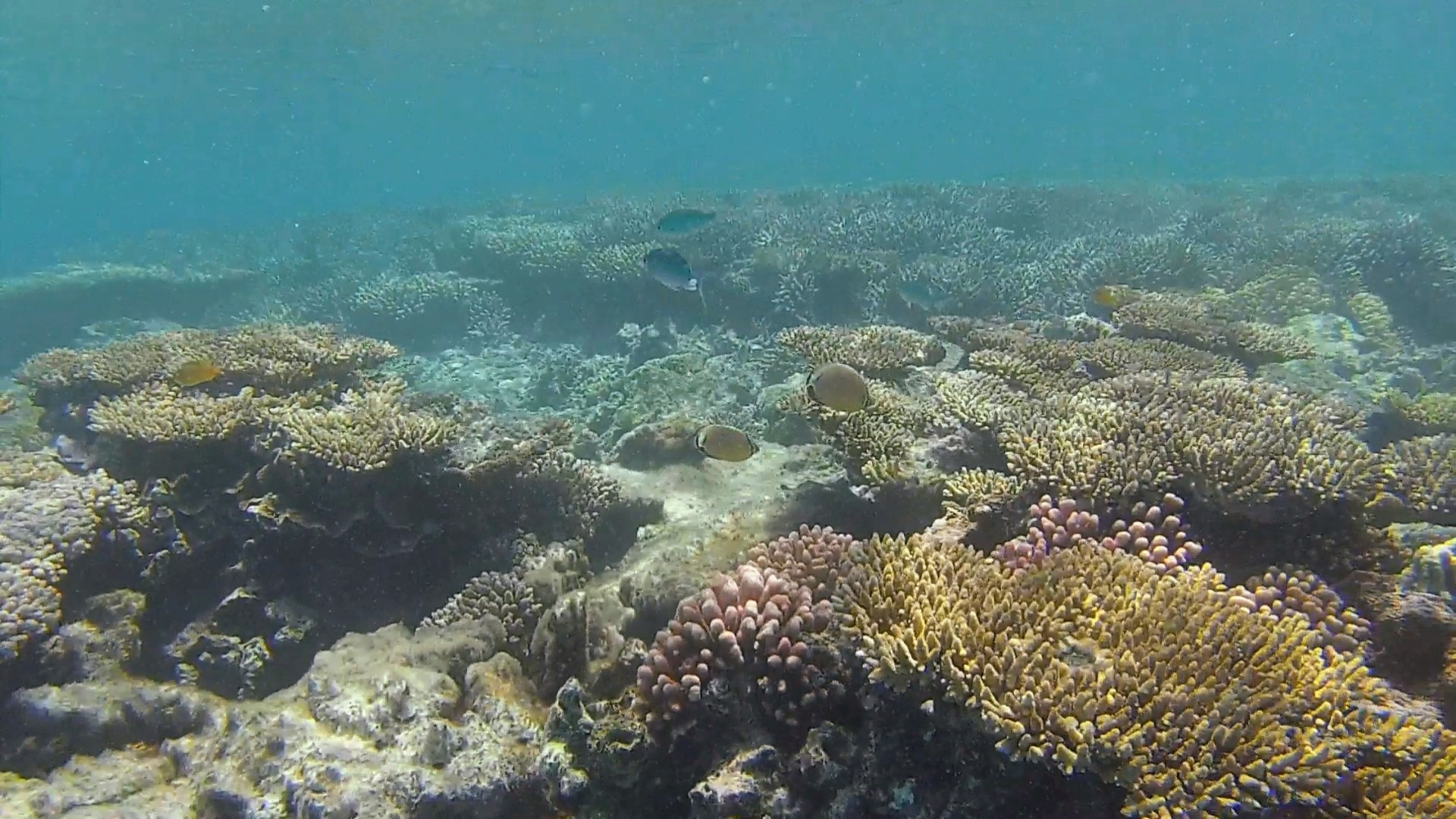
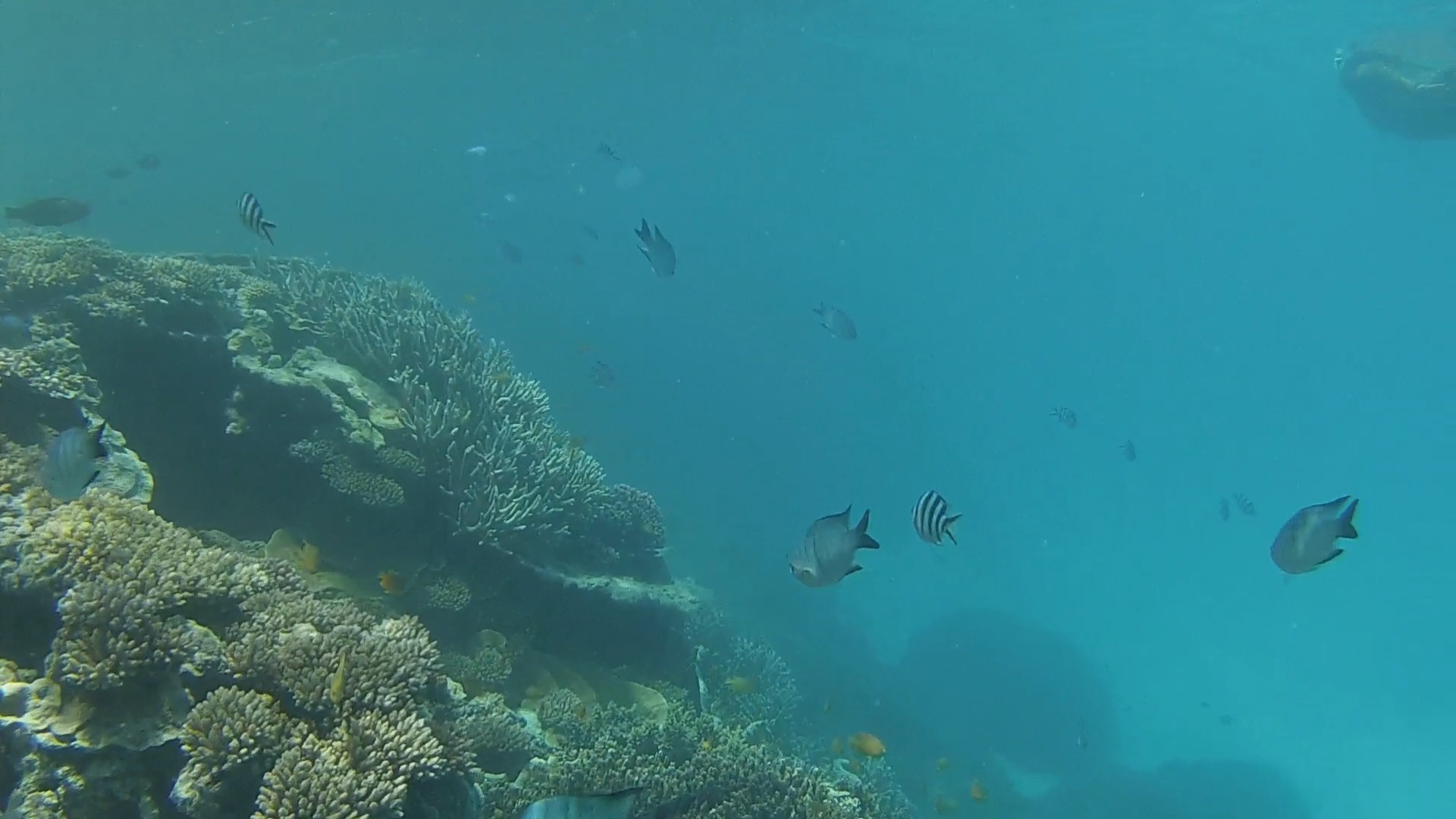
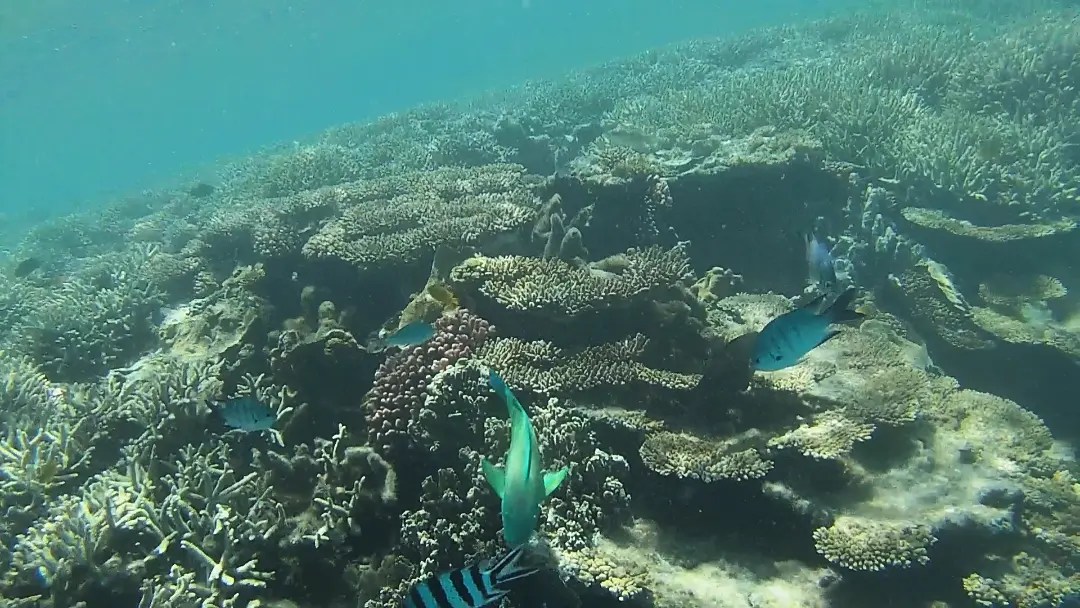
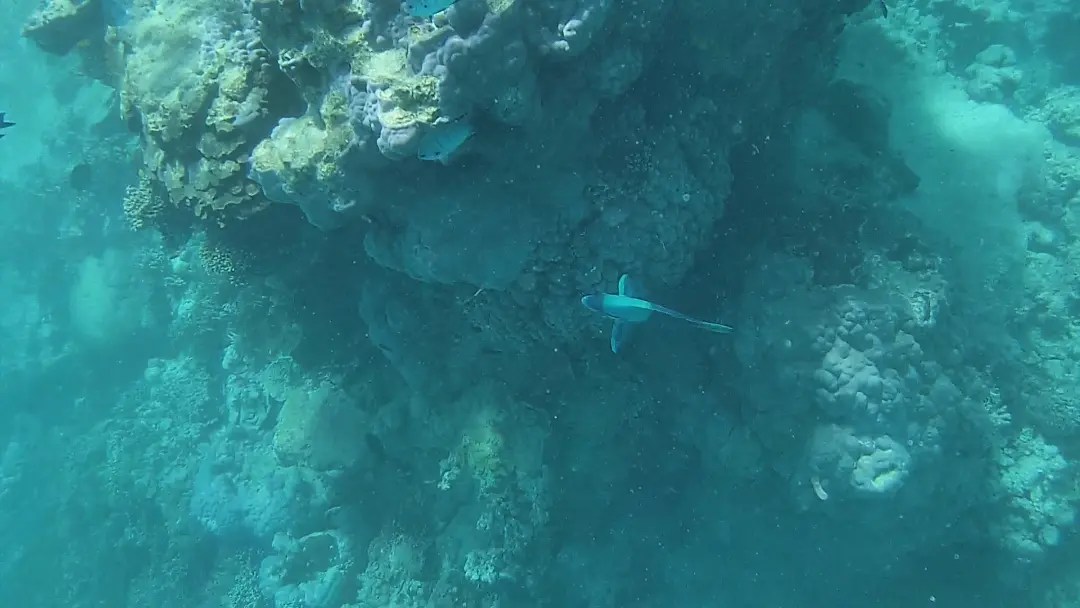
Finally it was our turn to snorkel, the part I’d been looking forward to all day. After a quick lunch of salads and cold meats, we quickly got our gear on and jumped in the reef lagoon. The first thing you see are little groups of little black and white fish, swimming for a close up of your funny goggles. As you get closer to the coral shelf, schools of tiny blue fish shimmer like a glittery curtain as they dart back and forth in unison.
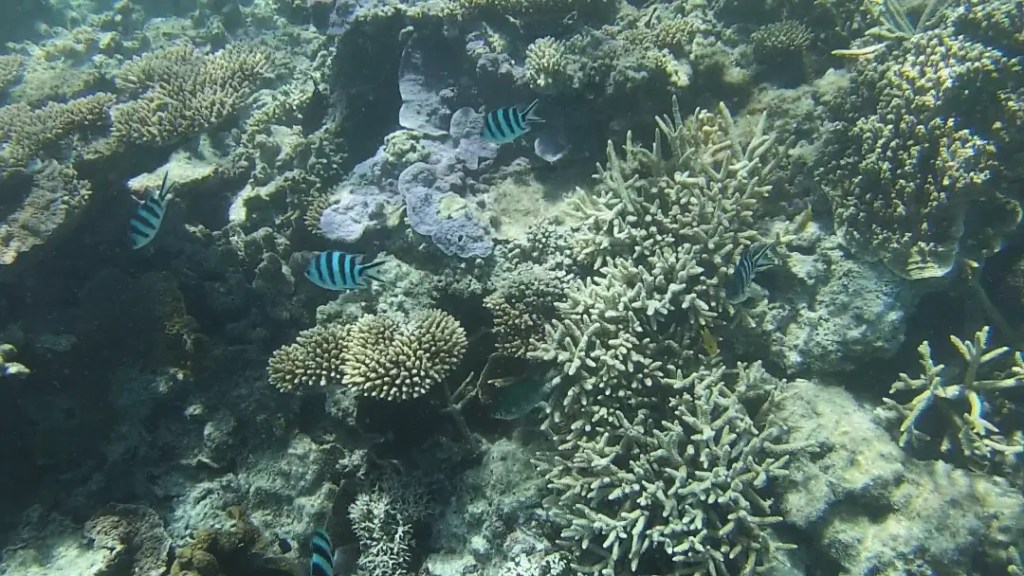
Scissortail Sergeant Fish
Blue Green Chromis & Lemon Damsels
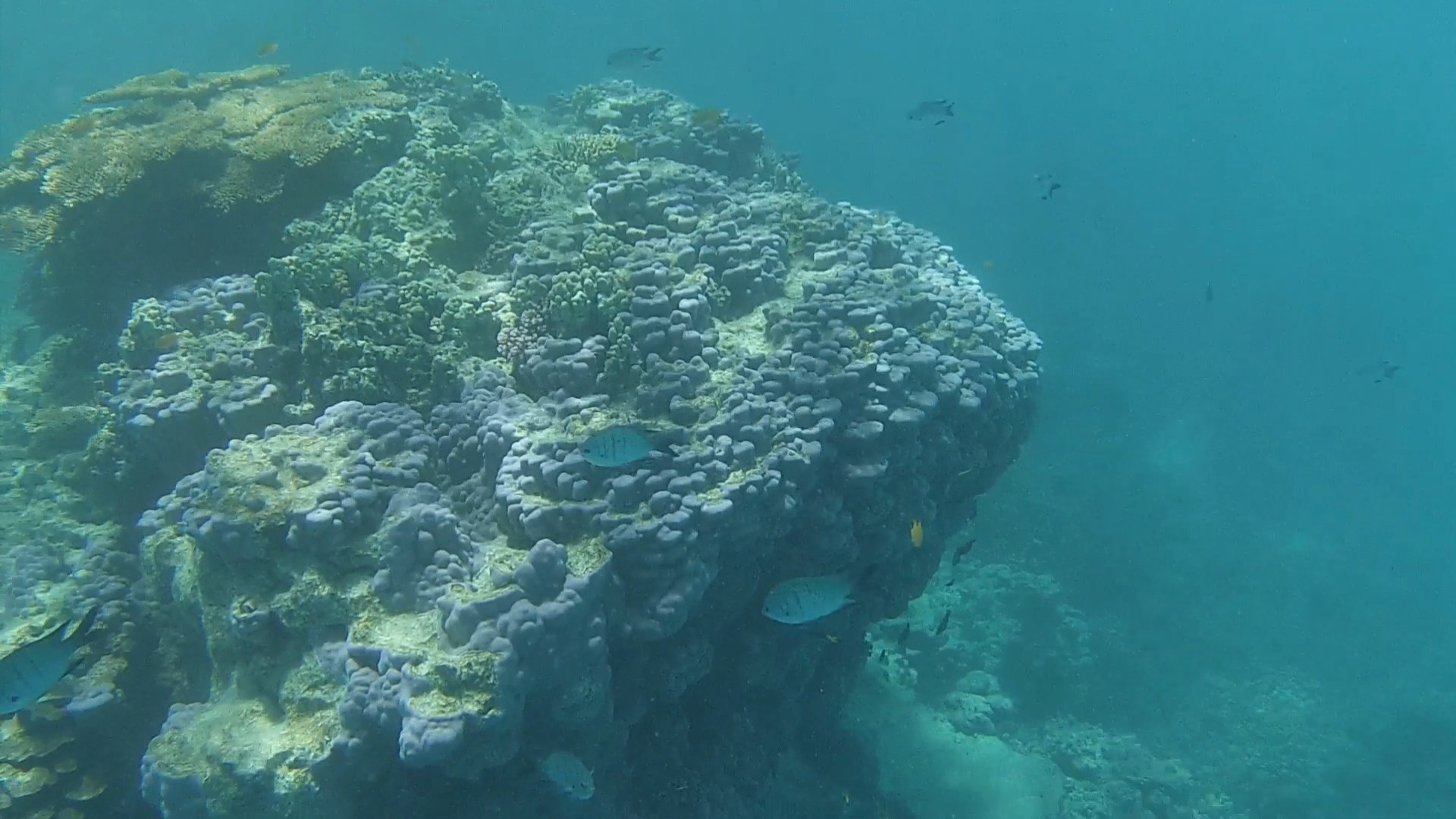
Whitley’s Sergeant Fish around purple coral
Moorish Idol
Butterflyfish
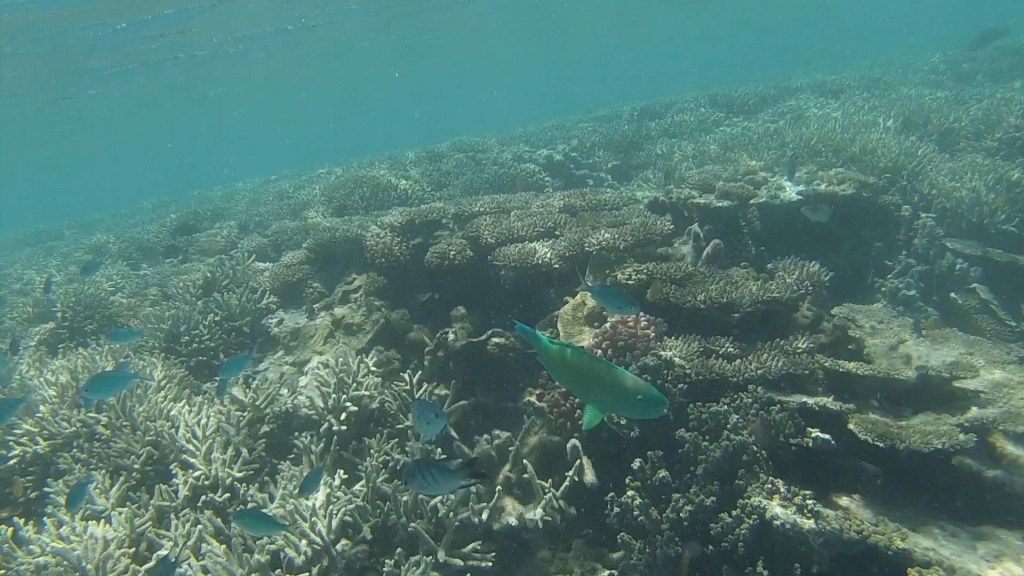
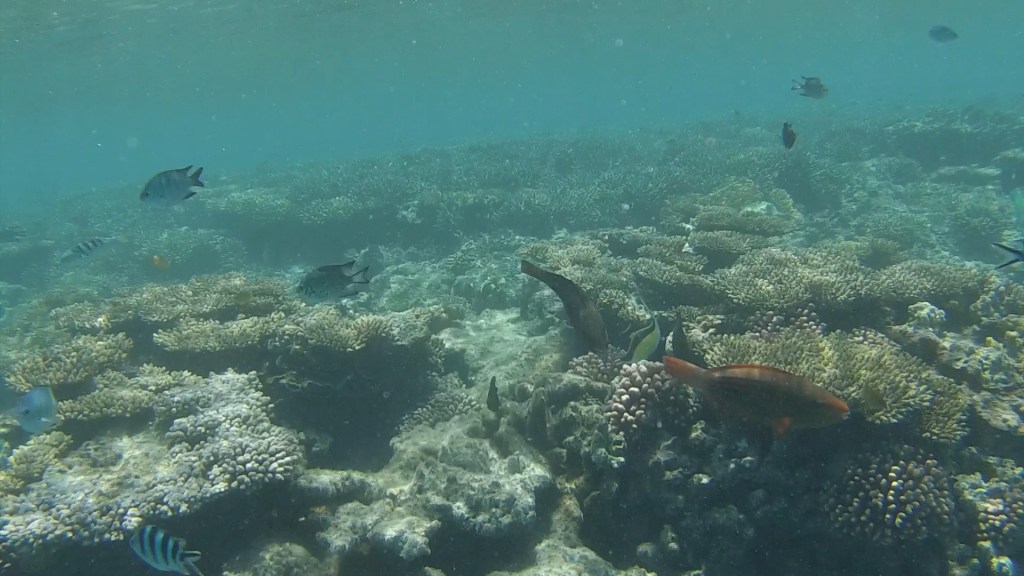
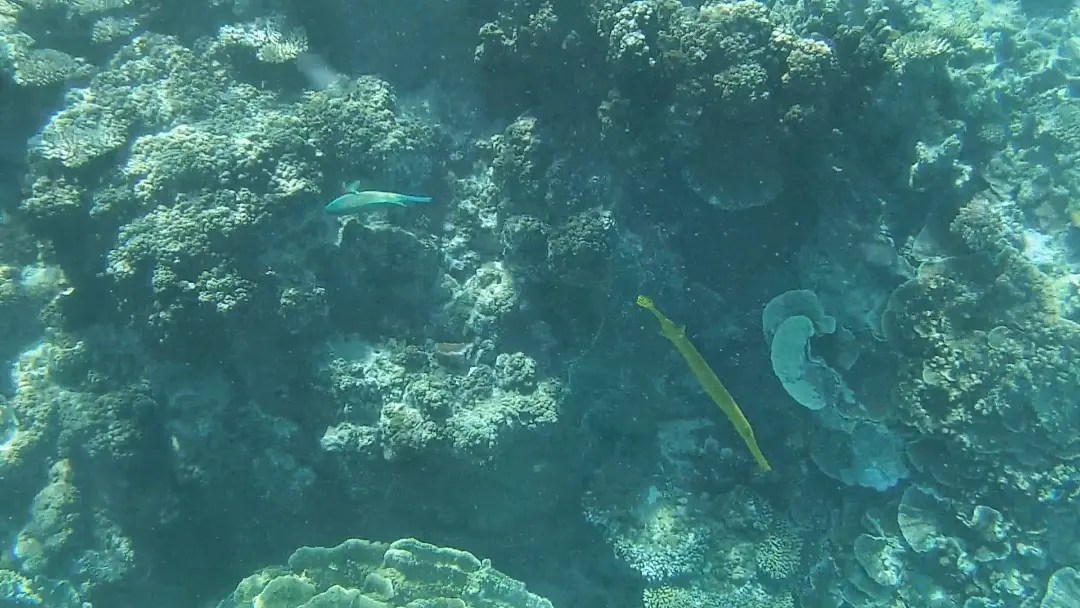
Parrot Fish have beaks that enable them to feed on the coral.
They come in a huge array of colours, you can see the orange one’s teeth-like beak.
Chinese Trumpet Fish
Fox Face Rabbit Fish
Plated, Staghorn and Brain coral
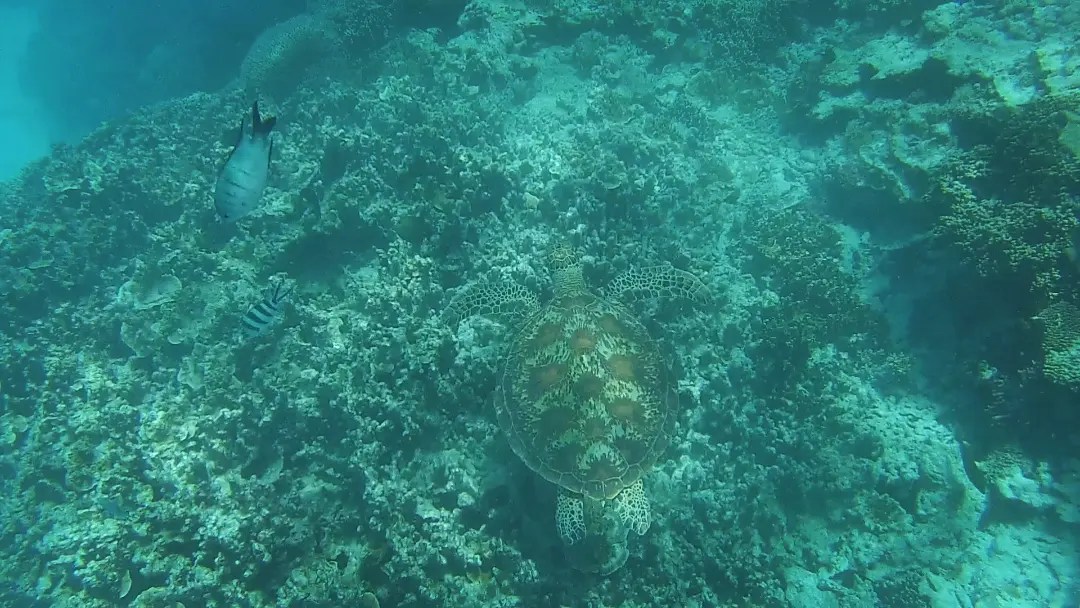
The coral is beautiful here, splashes of colours somehow pop under the water. I was so engrossed in watching interesting fish appearing from the reef that the turtles caught me off guard! Taylor caught my eye, signalling to me under the water, and pointing ahead; there it was, appearing out of the murkiness, coming towards us, so majestic, as though flying beneath the waves. This Green Turtle was about the size of a grown man’s torso. Her tail was barely visible, showing she was female, and she swam right underneath us. I turned and followed her for a short while, before she dived into the depths of the reef.
Female Green Turtle
The second turtle was skimming along a shallow shelf of reef at my eye level, flapping her flippers, and surfacing a few metres away. I popped my head up too and saw her floating on the surface!
Brain Coral
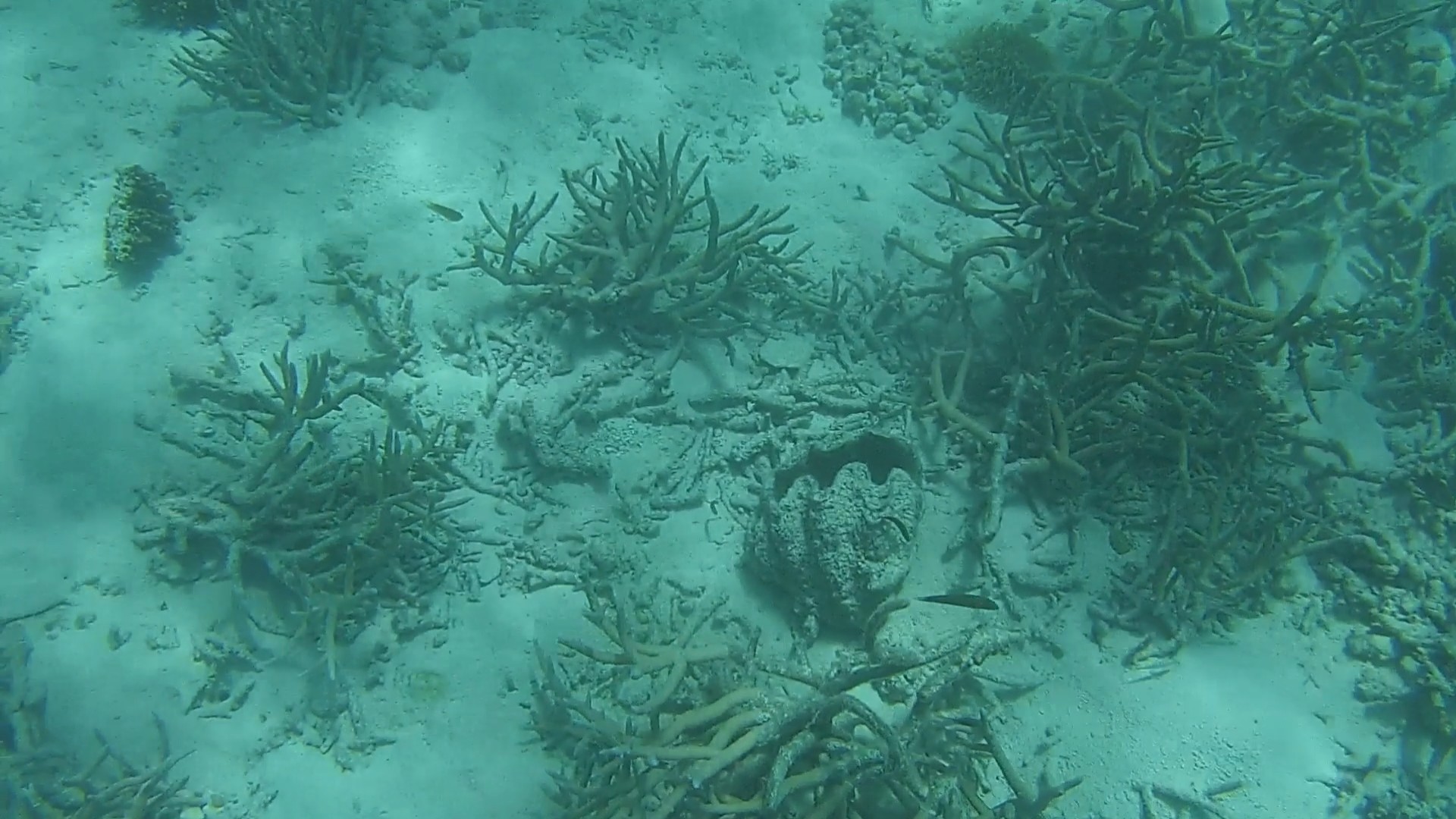
Giant Clam
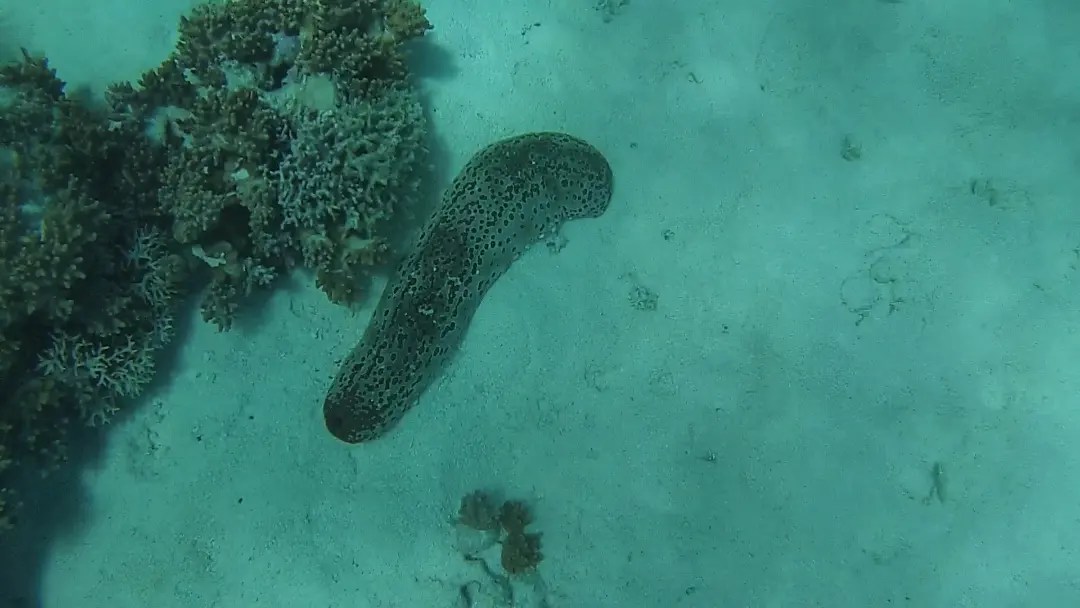
Sea Cucumber
Green Parrot Fish
Blue Parrot Fish
After an hour of solid snorkelling, we sat on the edge of the pontoon sipping on a Gin Mule, dangling our feet in the ocean. On the boat ride back, we saw an Olive Sea Snake wriggle by in the waves, and several dolphins.
Facts of the Day:
The Great Barrier Reef is roughly the same size as Japan.
You can’t visit the adjacent Fairfax Islands because they were used for target practice by the Australian Military in the 1940s, and there is likely to be live ammunition still scattered on the islands.
Without the birds, there would be no trees on Lady Musgrave Island, and without the trees there would be no birds. Without either of these, the island would be a bank of dead coral, and may have been washed or eroded away.
Corals are actually living invertebrates related to jellyfish and anemones.
Coral relies on its resident algae to survive. Photosynthesis in the algae creates food for the coral.
Some corals actually catch small fish and plankton to feed on.
The tiny white tips you see on the coral reef is not bleaching; it is in fact regrowth.
The colour you see on coral is actually produced by the algae as a form of sun protection. The deeper the coral, the less colour it will have, as it will have less sun exposure.
Coral Bleaching is caused by rising temperatures and pollution that kills the coral’s algae. When the algae is gone, the coral dies.