Puffin Island

A Trip to Scotland’s Jewel of the Forth

4–7 minutes

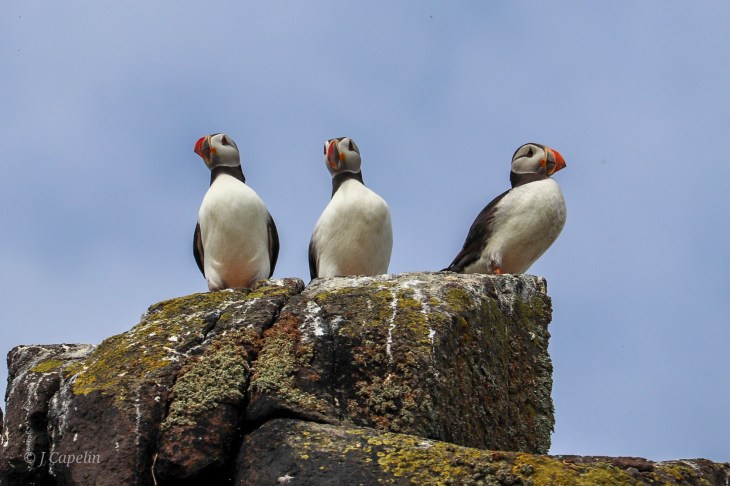
Fog veiled the harbour of Dunbar in Scotland the morning I arrived for the boat trip out to the Isle of May, and my heart sank at the prospect of spotting any wildlife. I’d been planning this trip for months, hoping to photograph the island’s birdlife, including everyone’s favourite – Puffins!
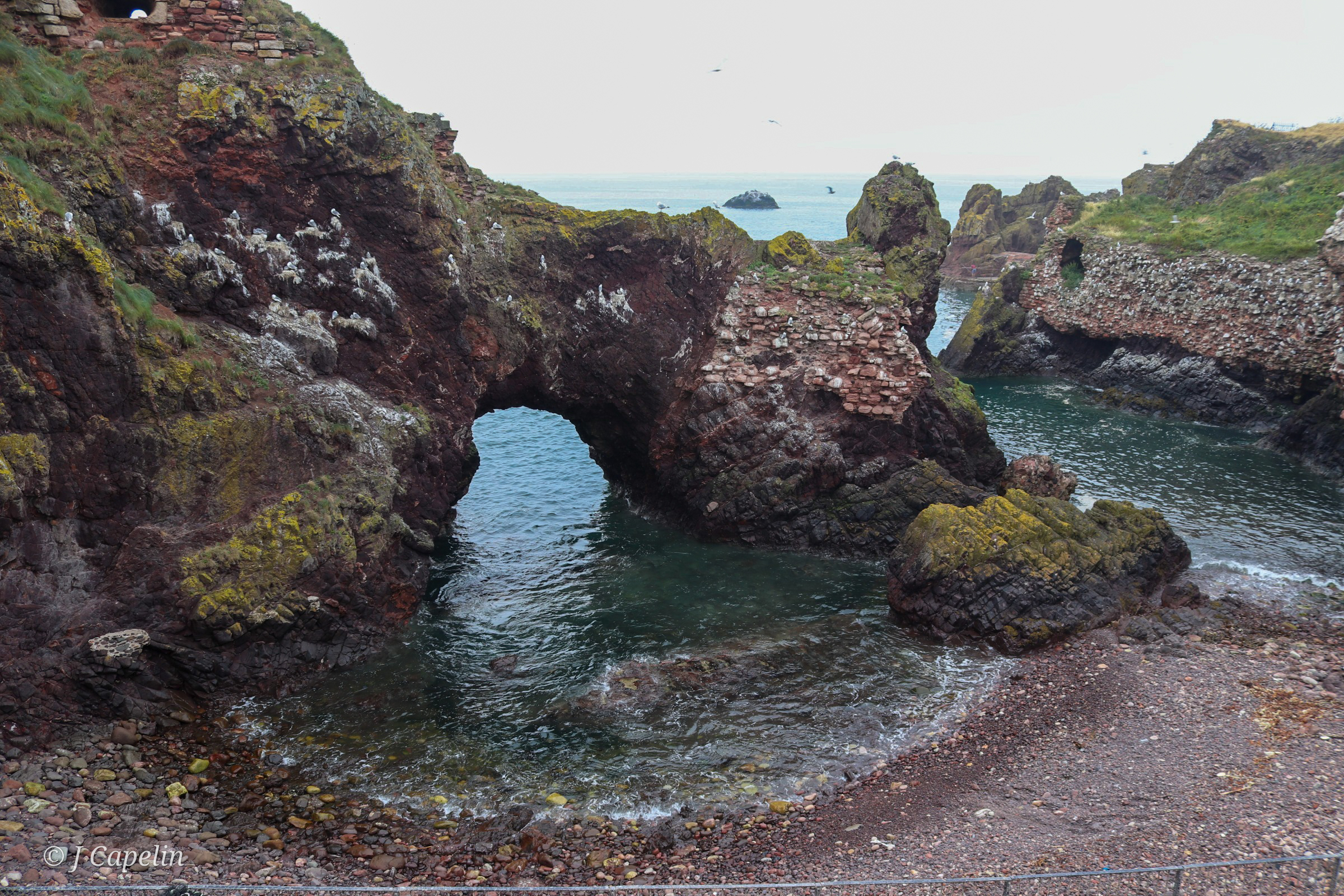
Dunbar Castle remains over harbour entrance

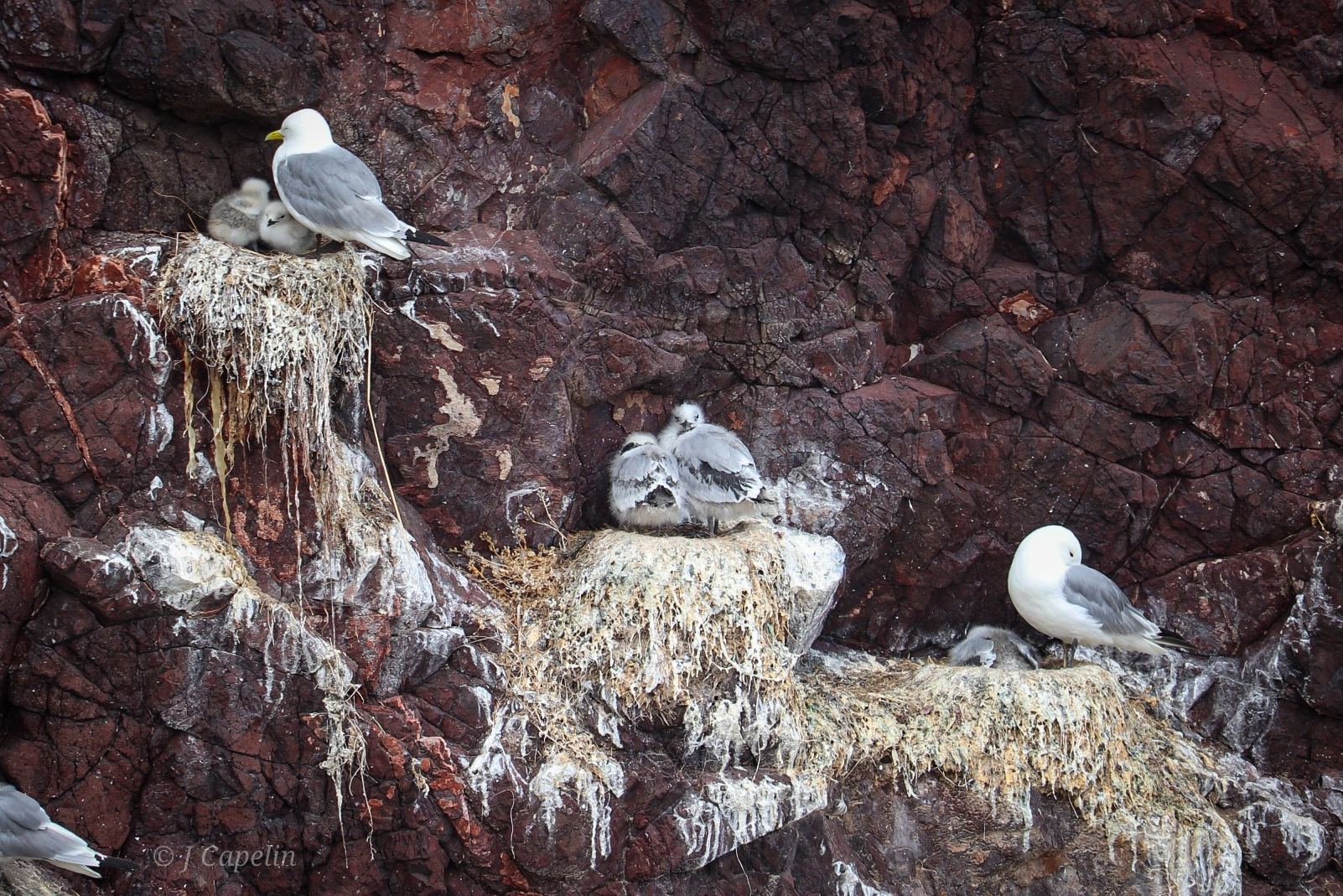
I wandered up Dunbar’s quietly bustling high street, with its blue and yellow bunting zig-zagging between the historical buildings, and strolled around the old harbour, admiring its ruined castle perched on the edge in the sea mist. Hundreds of seagulls and their fluffy chicks were nesting all over the ruins, like an apartment block for birds!
The ‘Blue Wild’ boat tour set sail from the ancient harbour at 1pm – at the tide’s convenience. It was a little 12 seater speed boat, and when the captain told us we were lucky to have these still conditions because 50% of the tours had been cancelled due to the weather, and that the waves could normally reach 2 metres high, my heart lifted again.  

It is best to give yourself some leeway when booking, in case of bad weather. I gave 3 days grace, and planned things that could be swapped around if needed, but even this was cutting it fine, as the weather we got was much better than what was forecast!

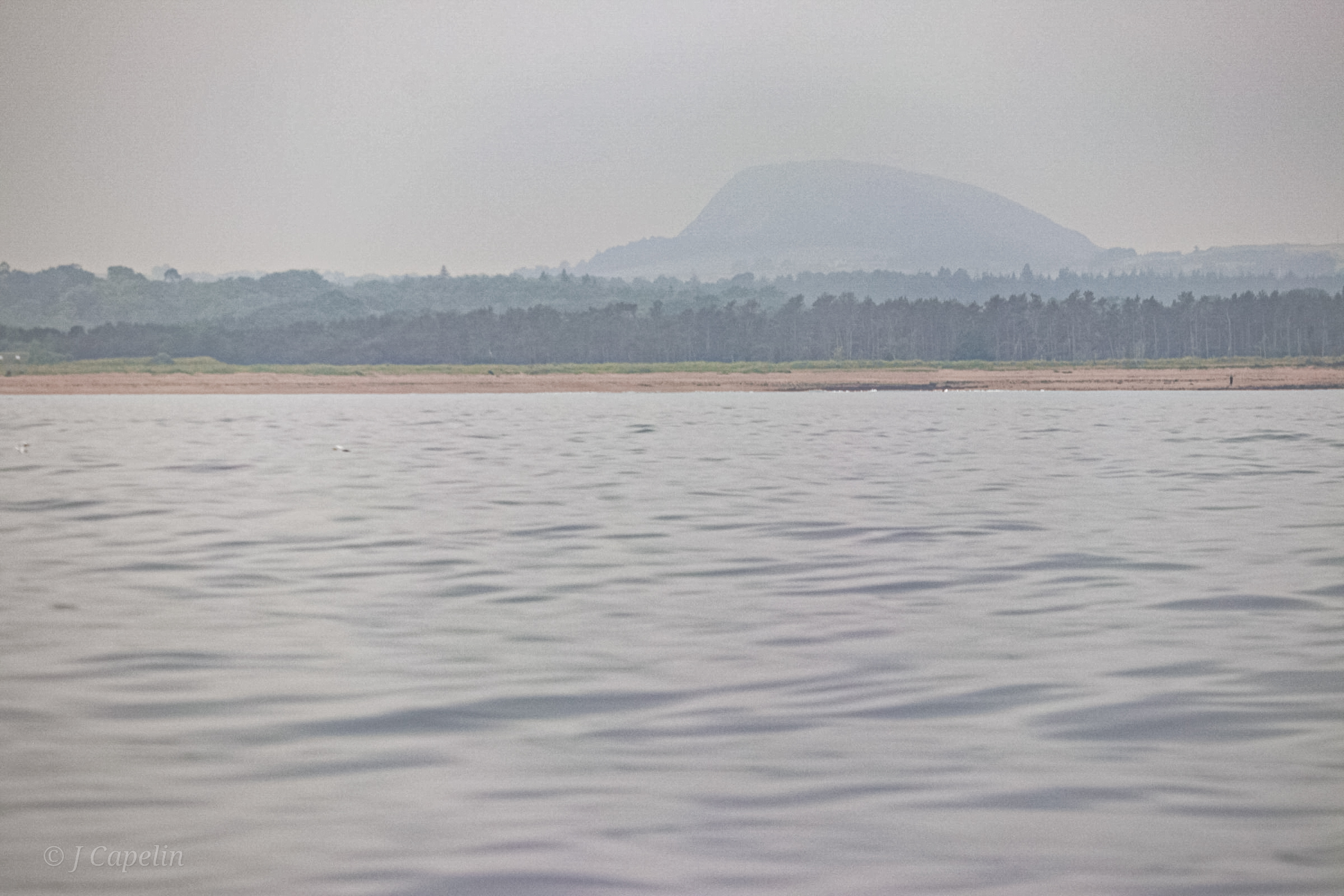
We slid out of the harbour on a white sheet of smooth sea glass that blended into the foggy sky. The sight out of the window was like an abstract painting as we skimmed across Scotland’s abnormally flat Firth of Forth, with silhouetted layers of grey landscape whizzing past in the distance.
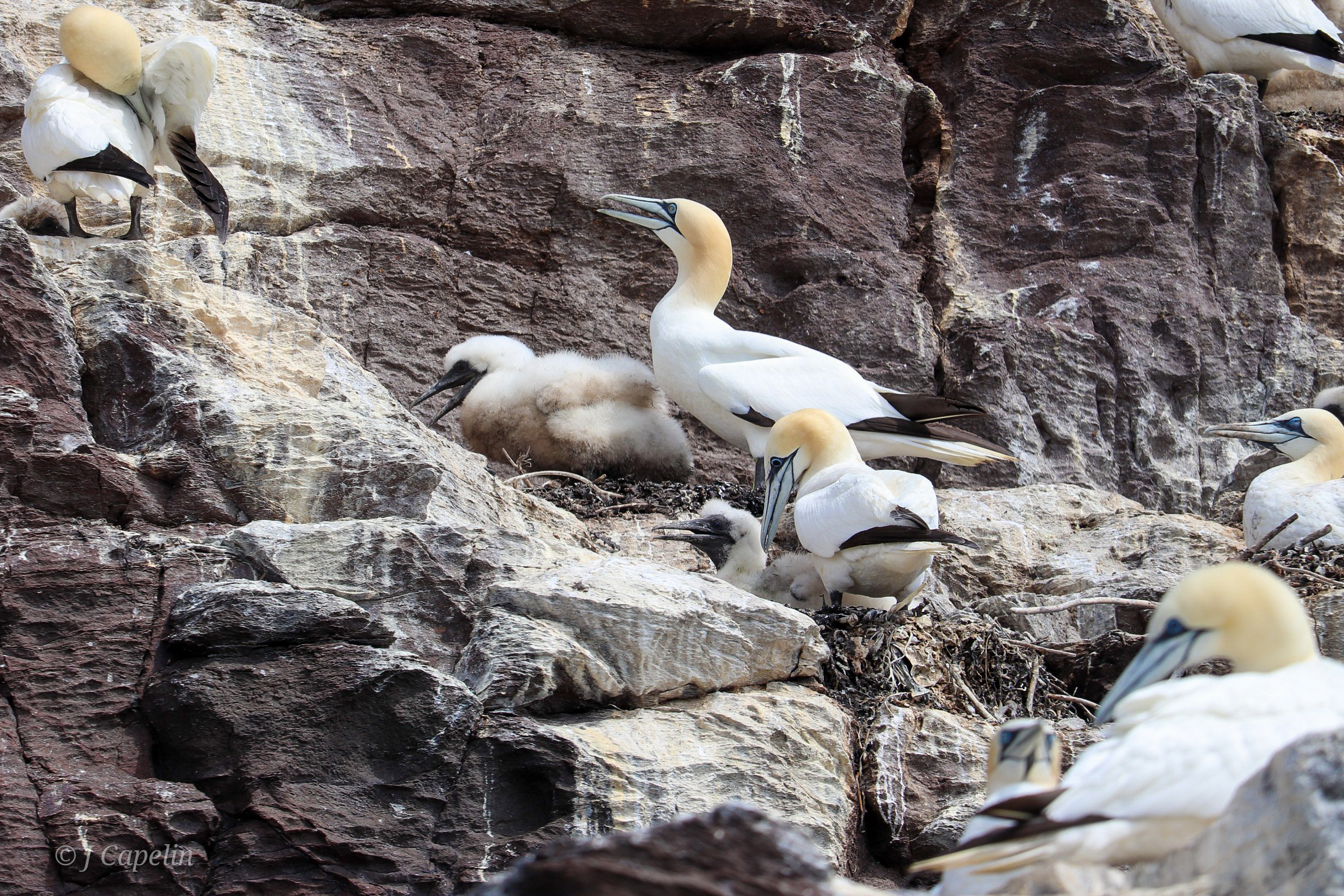
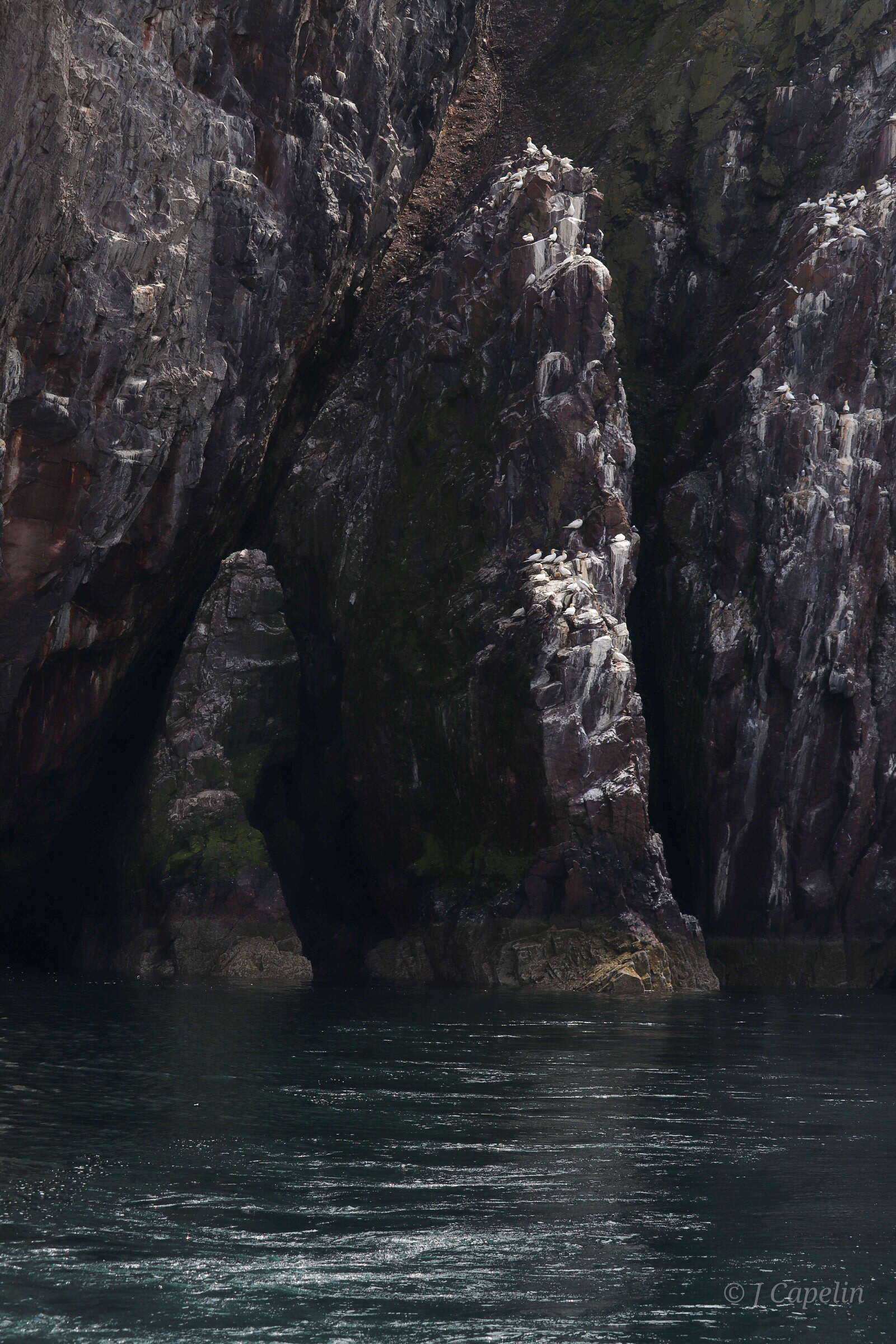
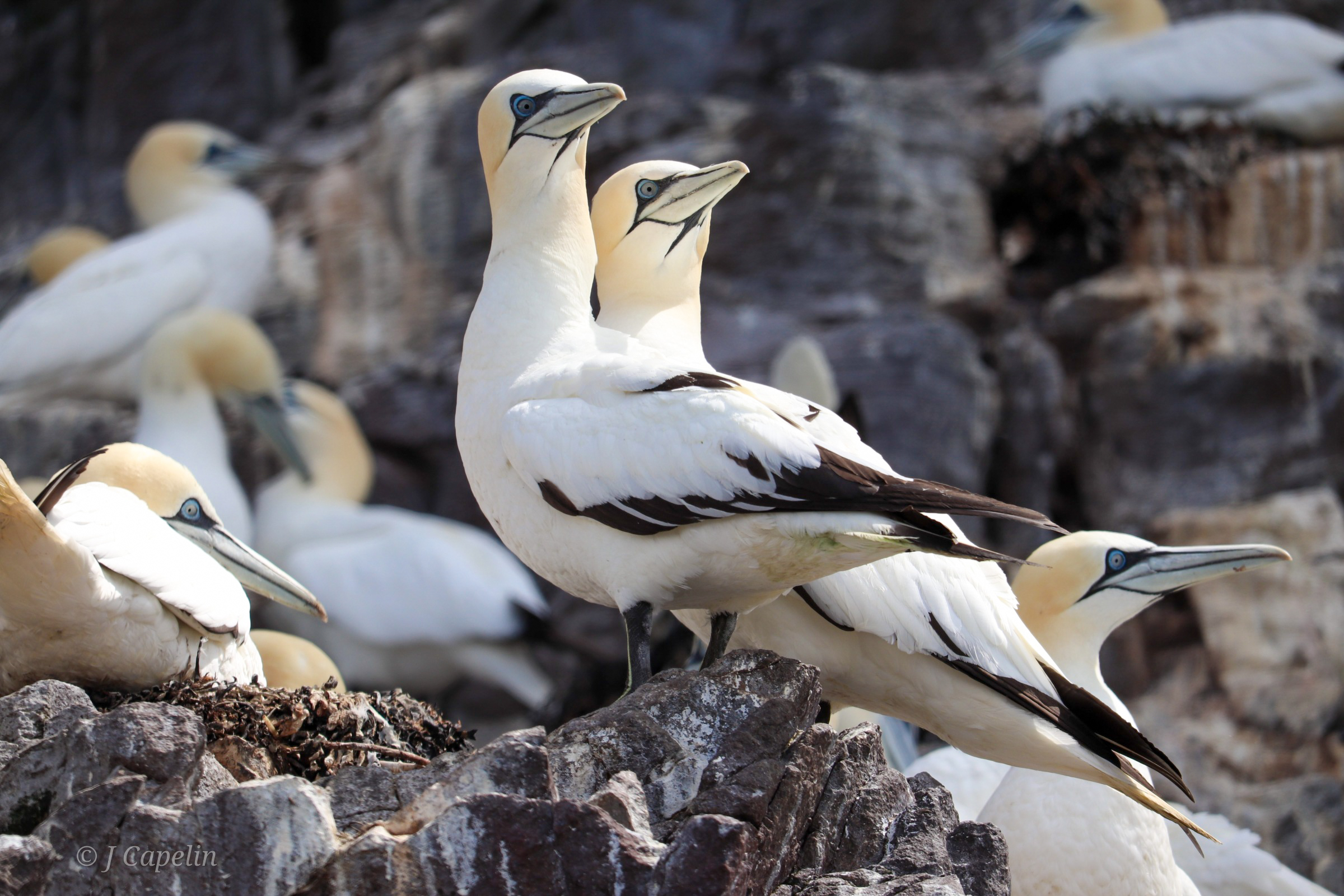
Azure brushstrokes began to appear on the surface of the water as the fog thinned, and seabirds came into abundance, floating and diving around the boat. The Bass Rock loomed up ahead, a giant rock island, famously home to the world’s largest colony of Northern Gannets. As we slowly circulated the island, the sheer magnitude of the colony became evident. The entire surface of the rock was like an ice cream dipped in sprinkles, only the sprinkles were Gannets! Over 150,000 of the birds nest here between Feb and October. I’ll be honest with you, I didn’t have much thought or feeling about Gannets before, but this was amazing to see and I could appreciate how beautiful they are with their blushed heads and piercing blue eye shadow, lined with black.
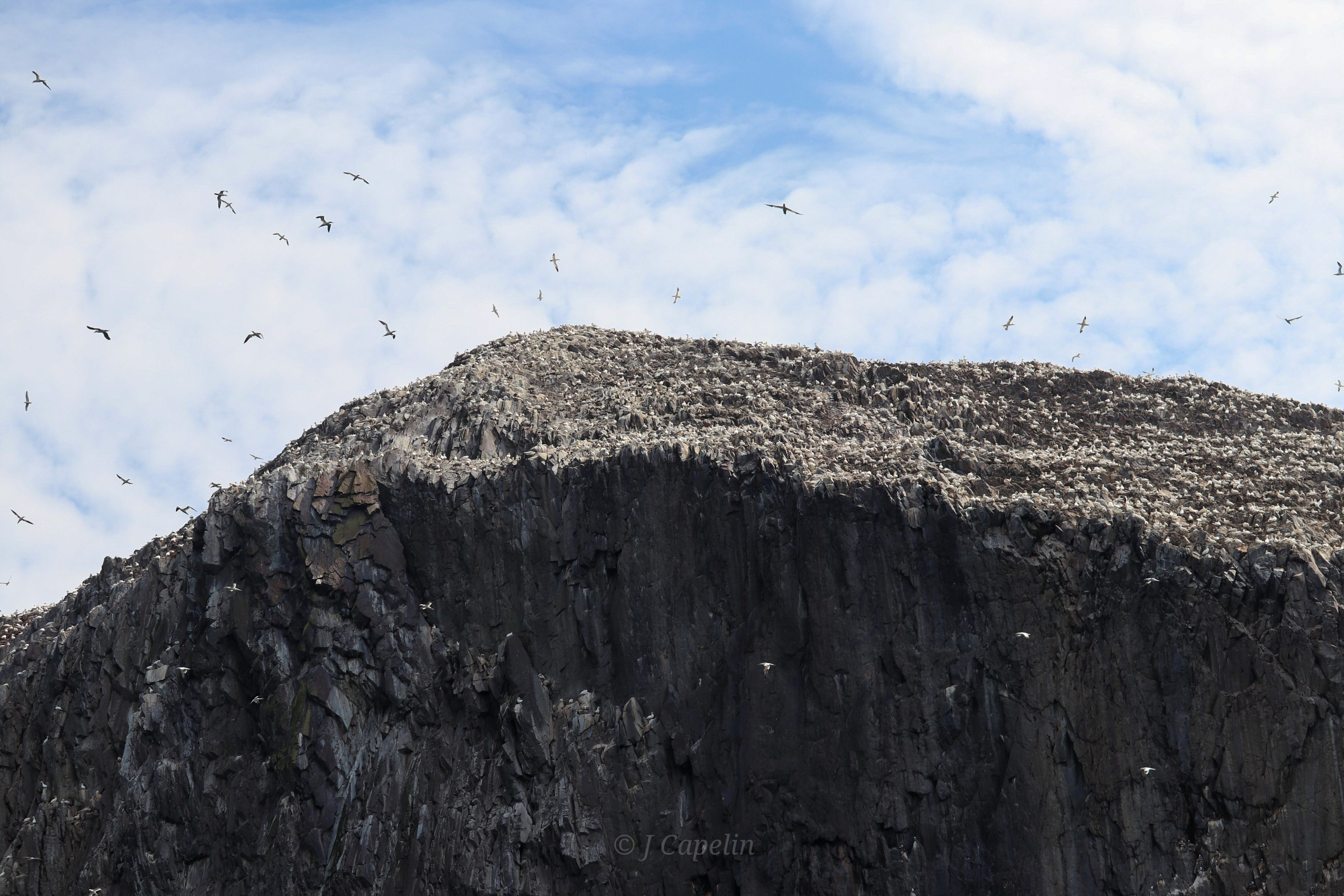
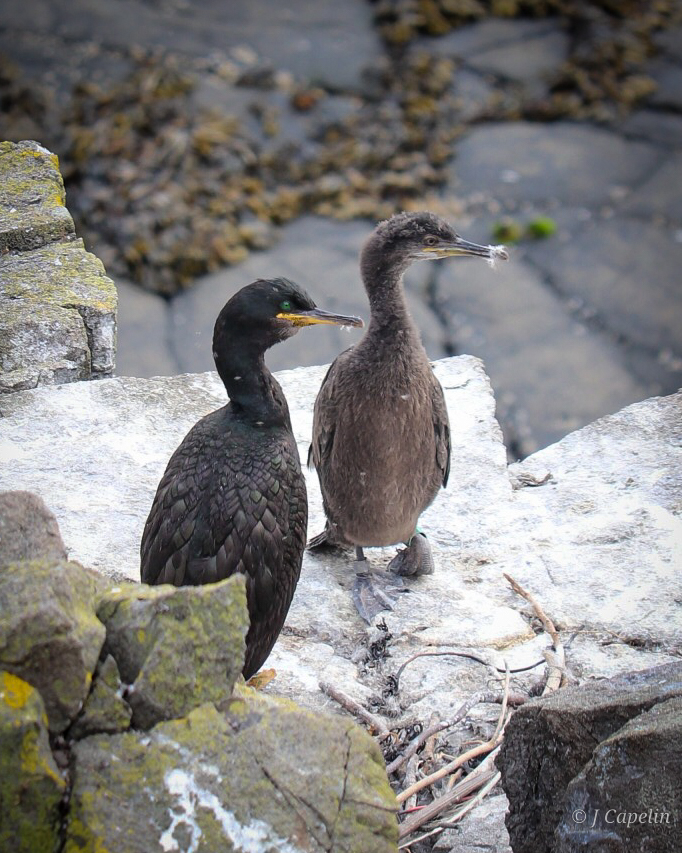
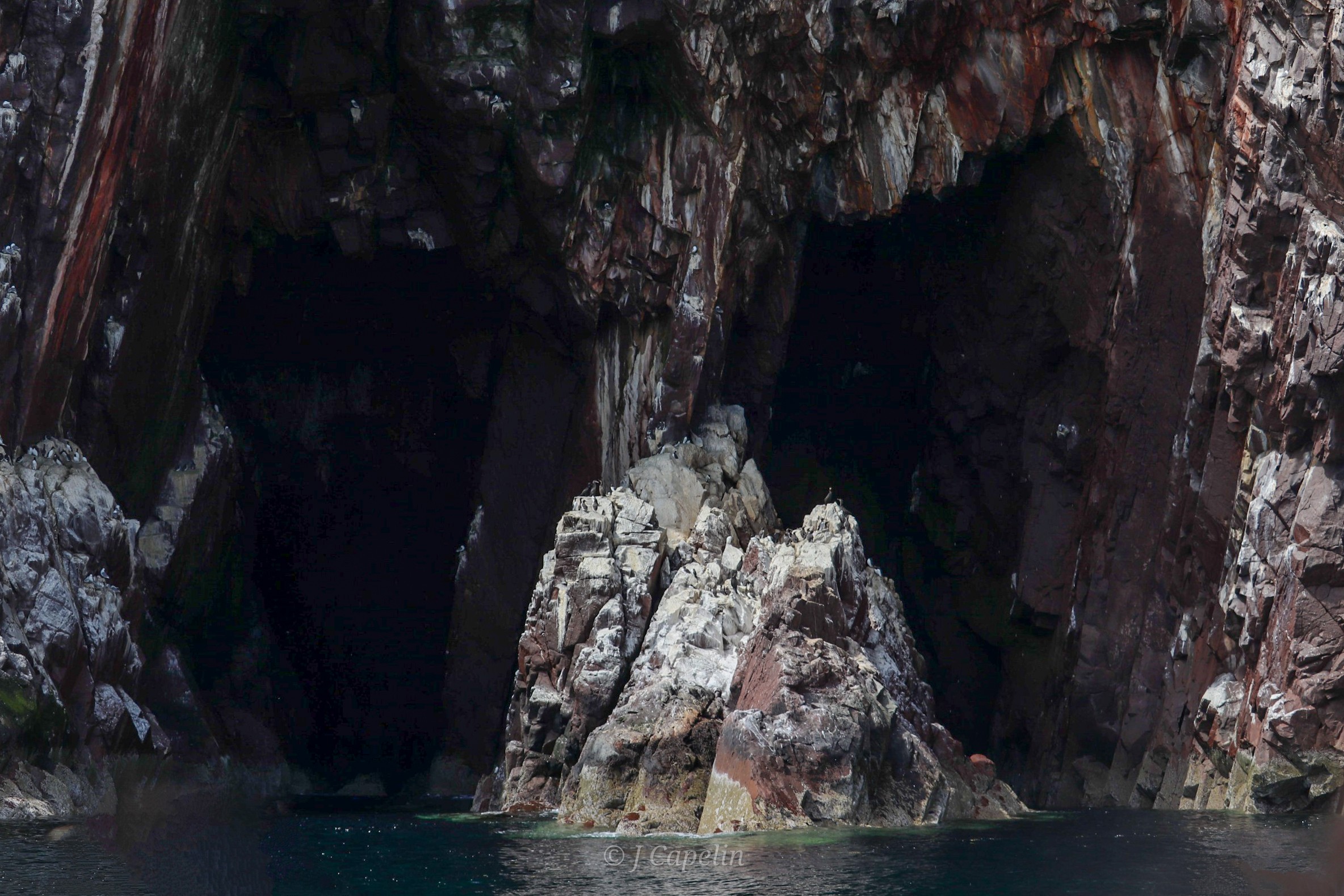
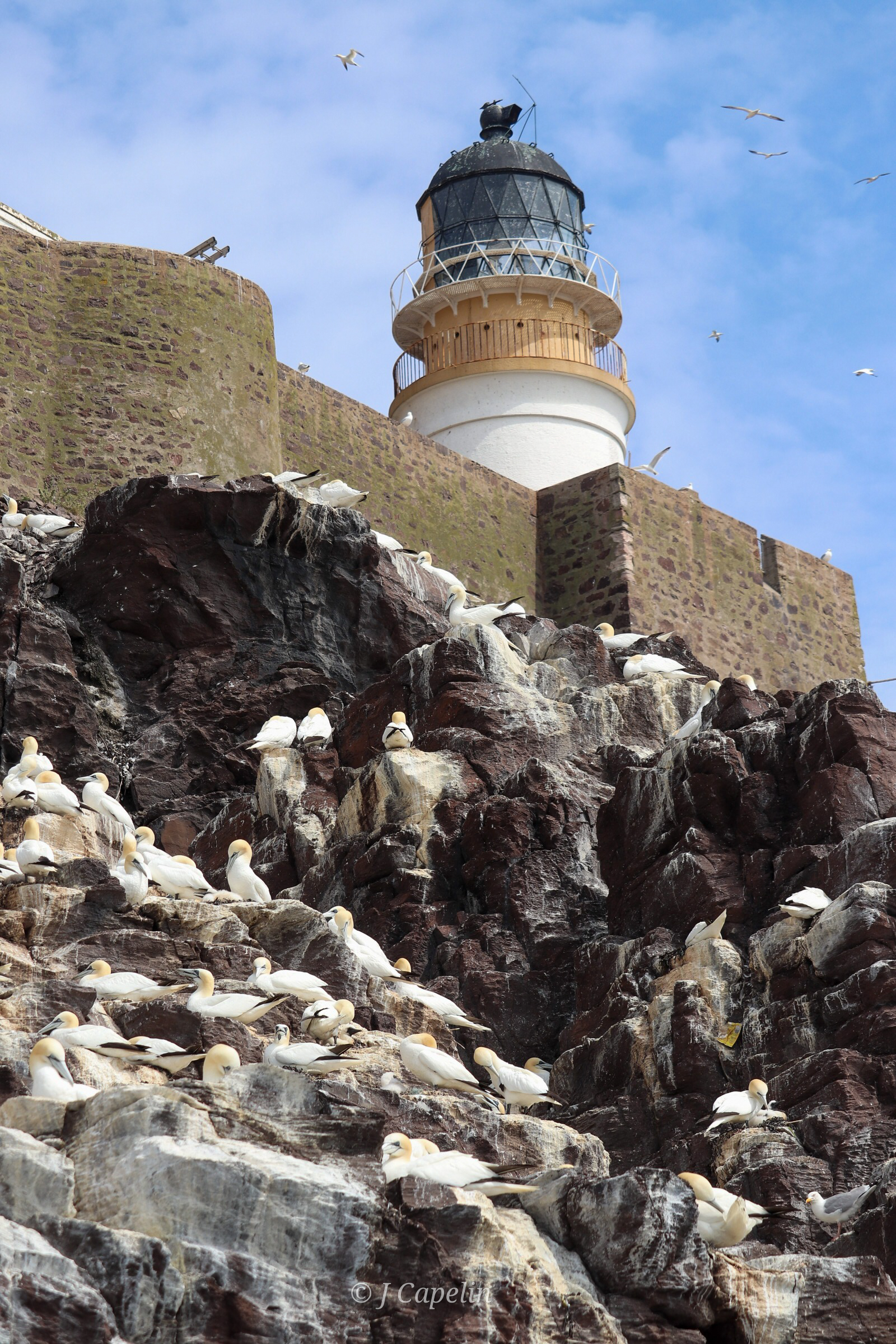
Enormous sea caves etched deep under the island were guarded by Shags, standing atop shards of rock, their outstretched wings drying under the freshly cleared sky. We bobbed beneath the Bass Rock Lighthouse, craning our necks to take in the vast amount of Gannets. Their monstrous fluffy, white chicks were littered all over the cliff, which was dripping with their waste like candle wax, and the cacophony of the birds filled the air.
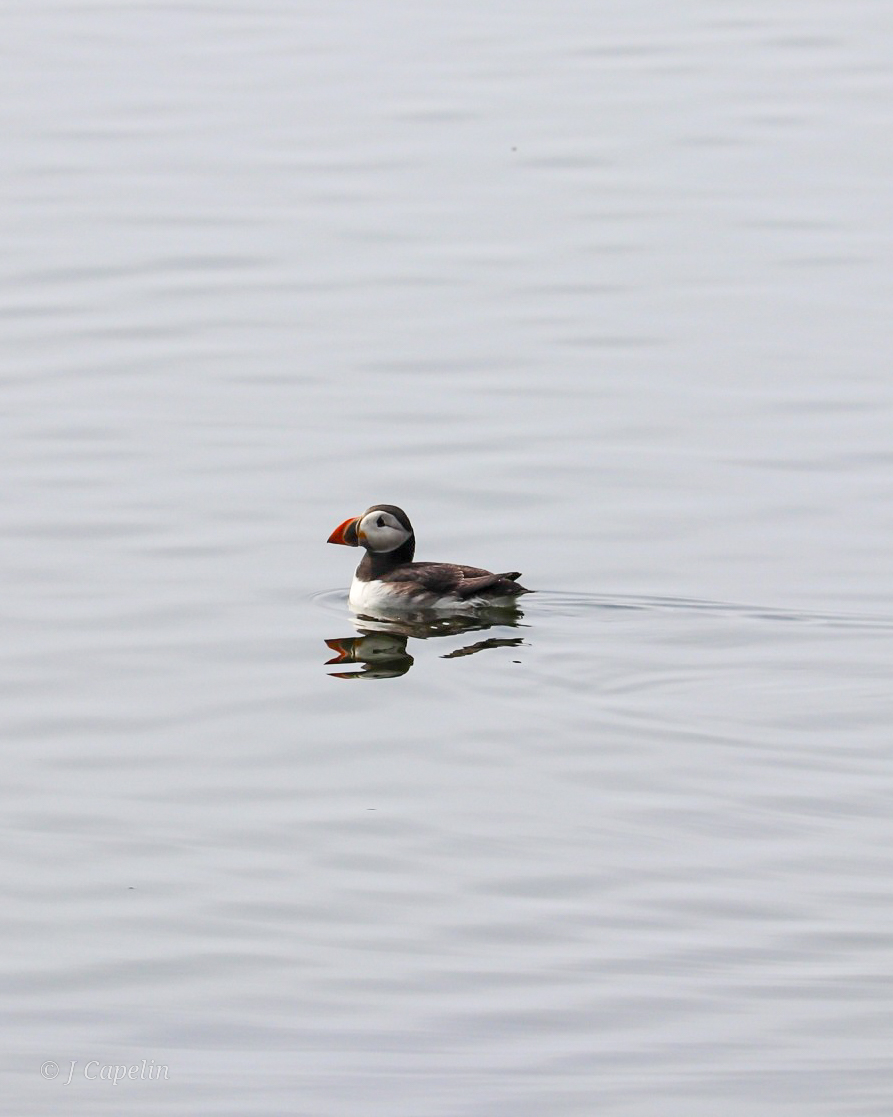
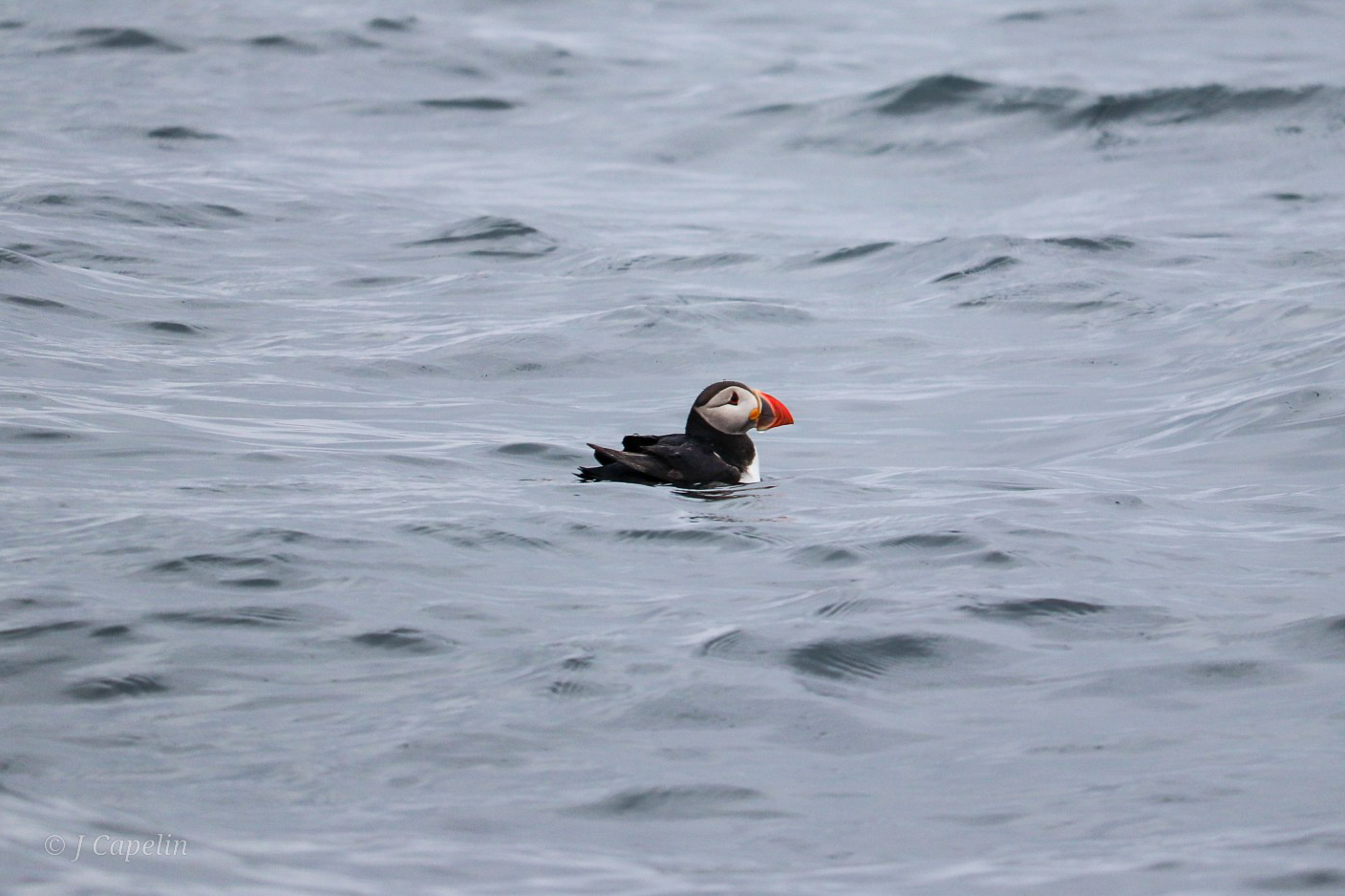
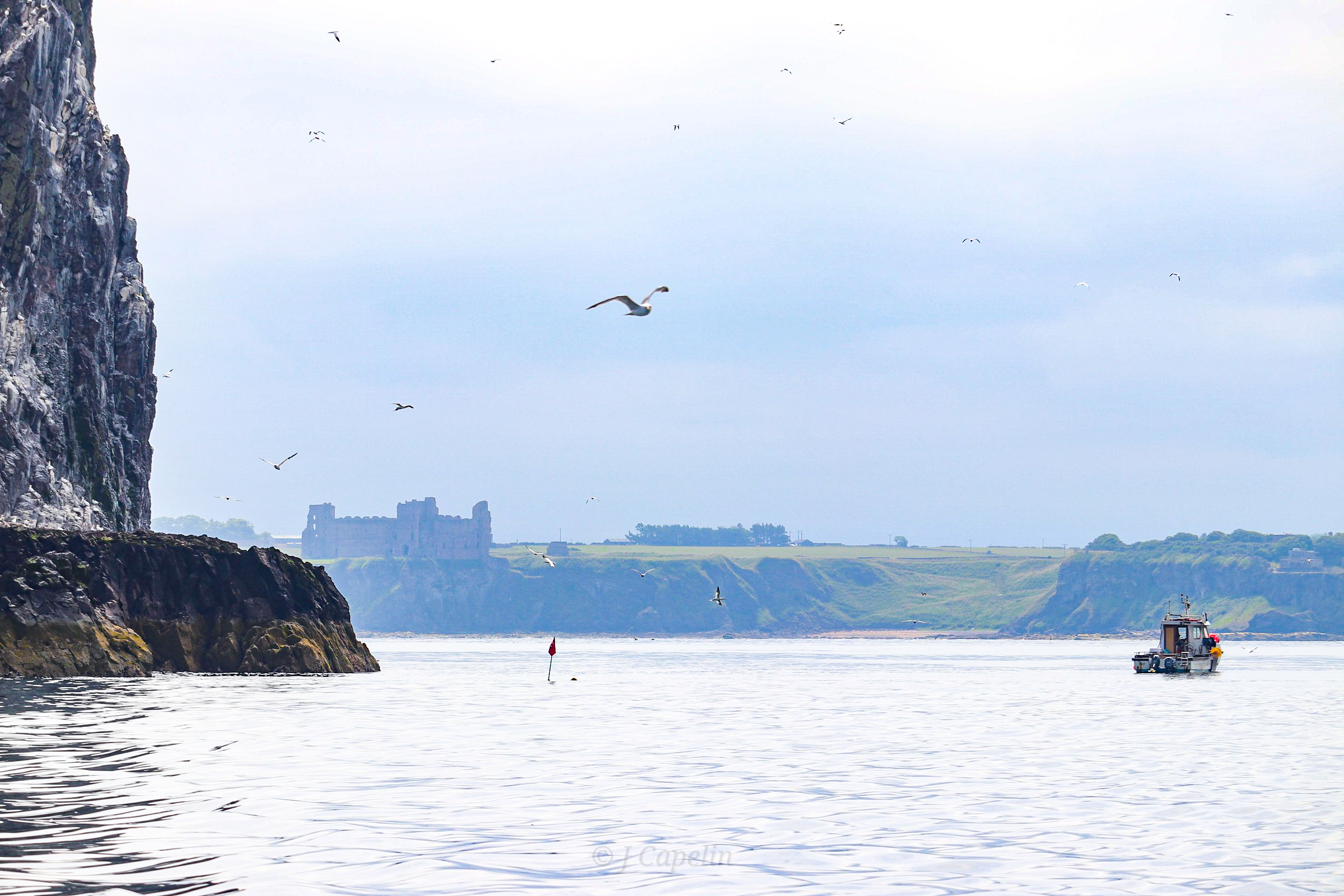
Then one of our group yelled and pointed to the back of the boat – a single Puffin was paddling along behind us, on an idyllic backdrop of Tantallon Castle on the coastline beyond. Very demure.
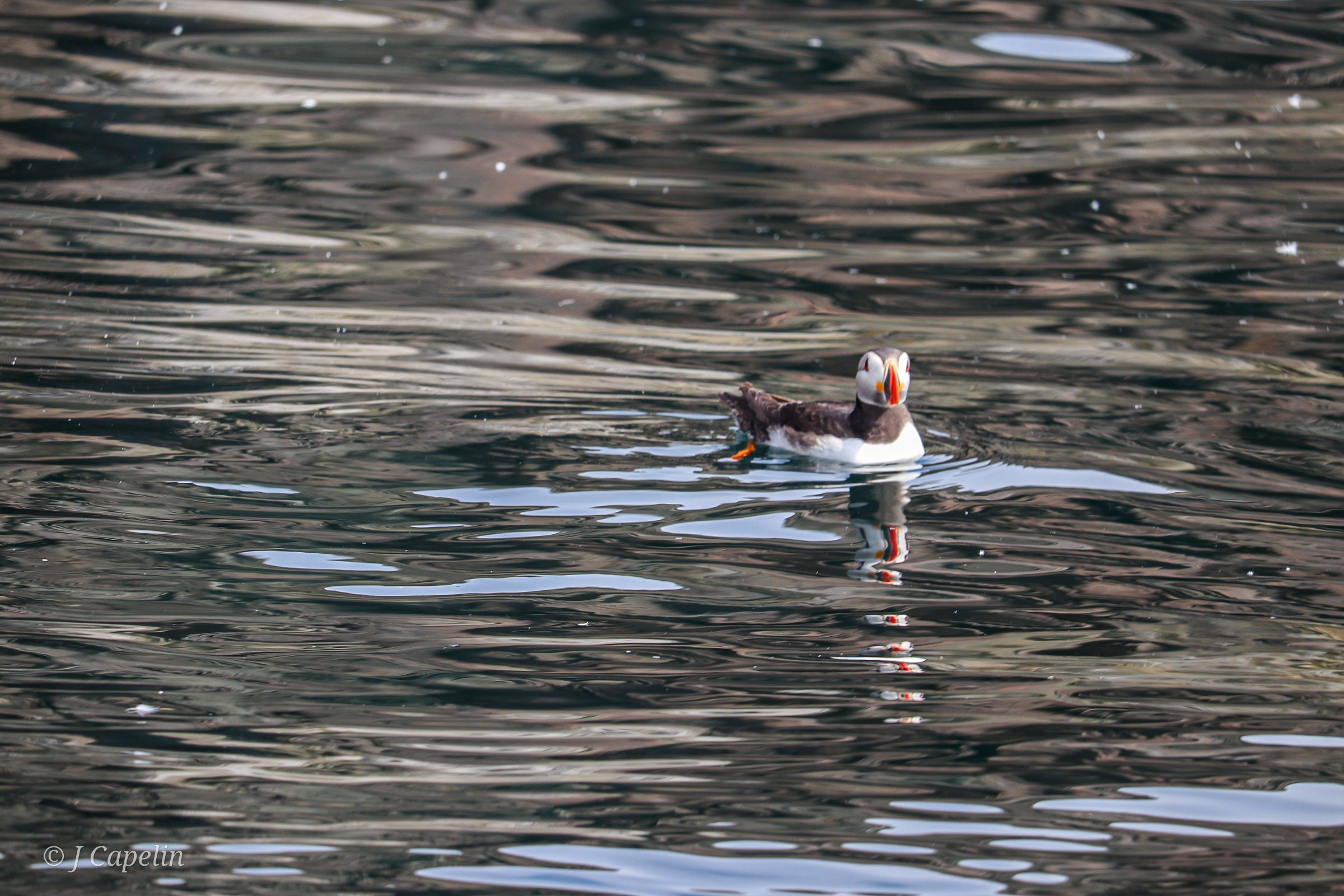
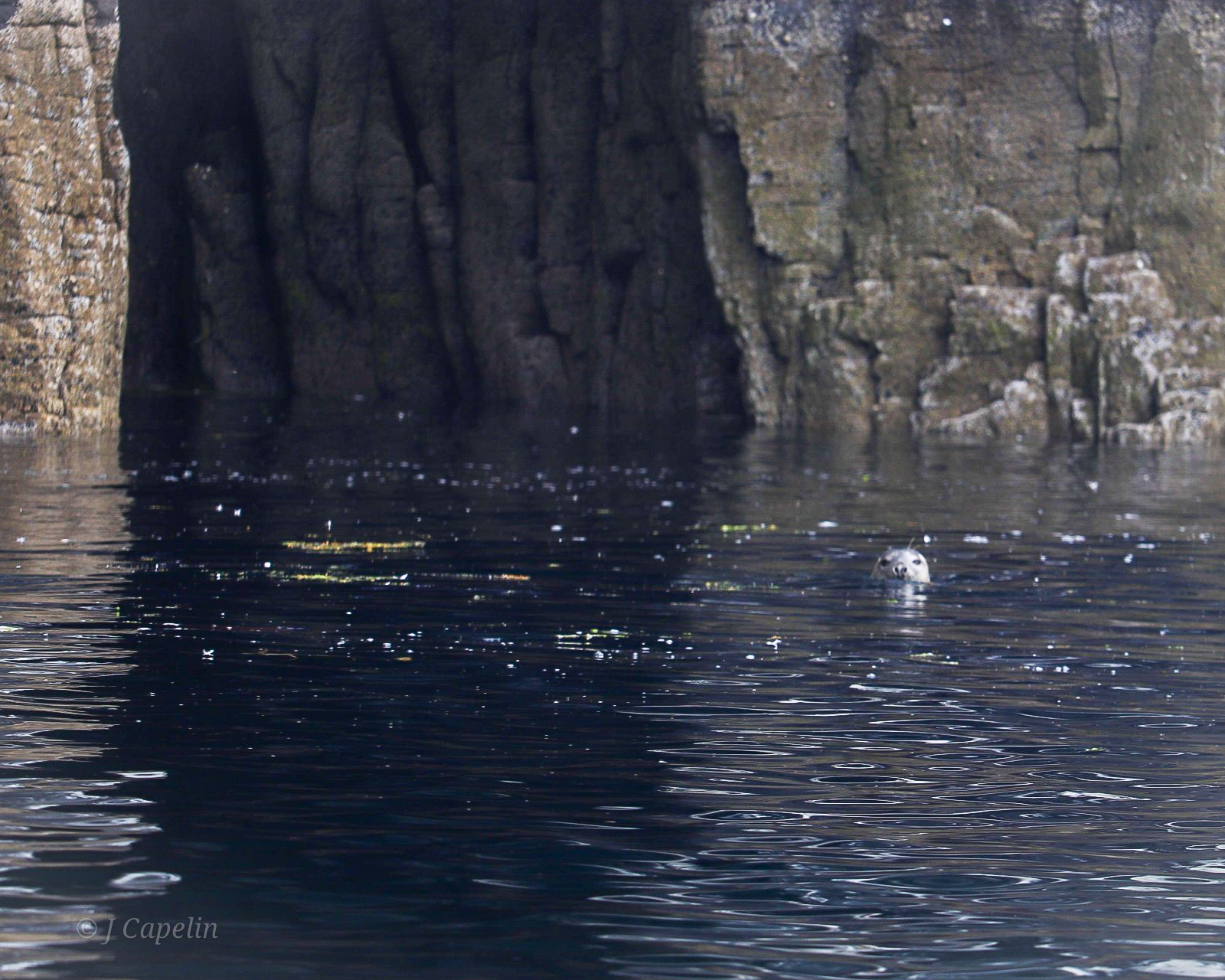
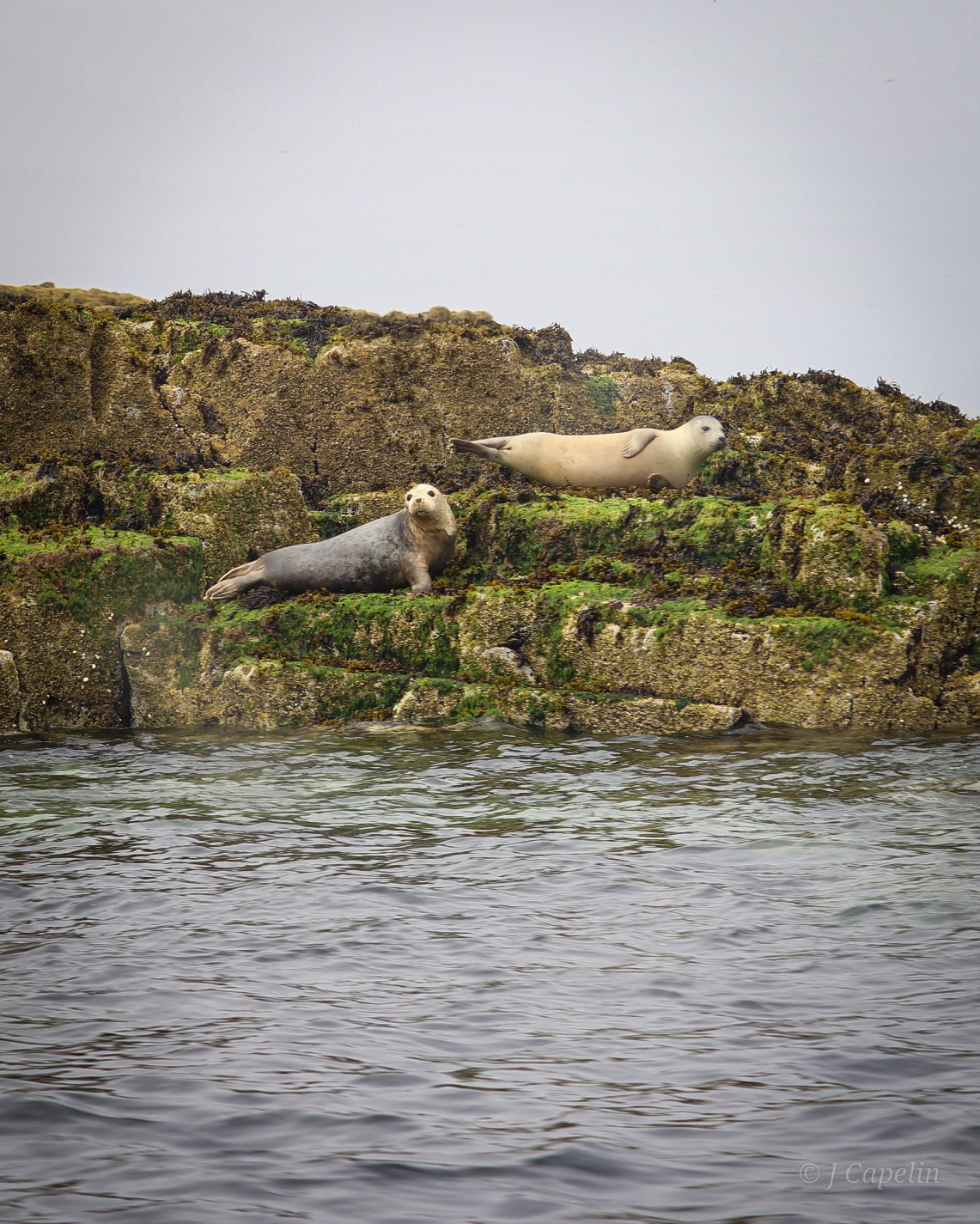
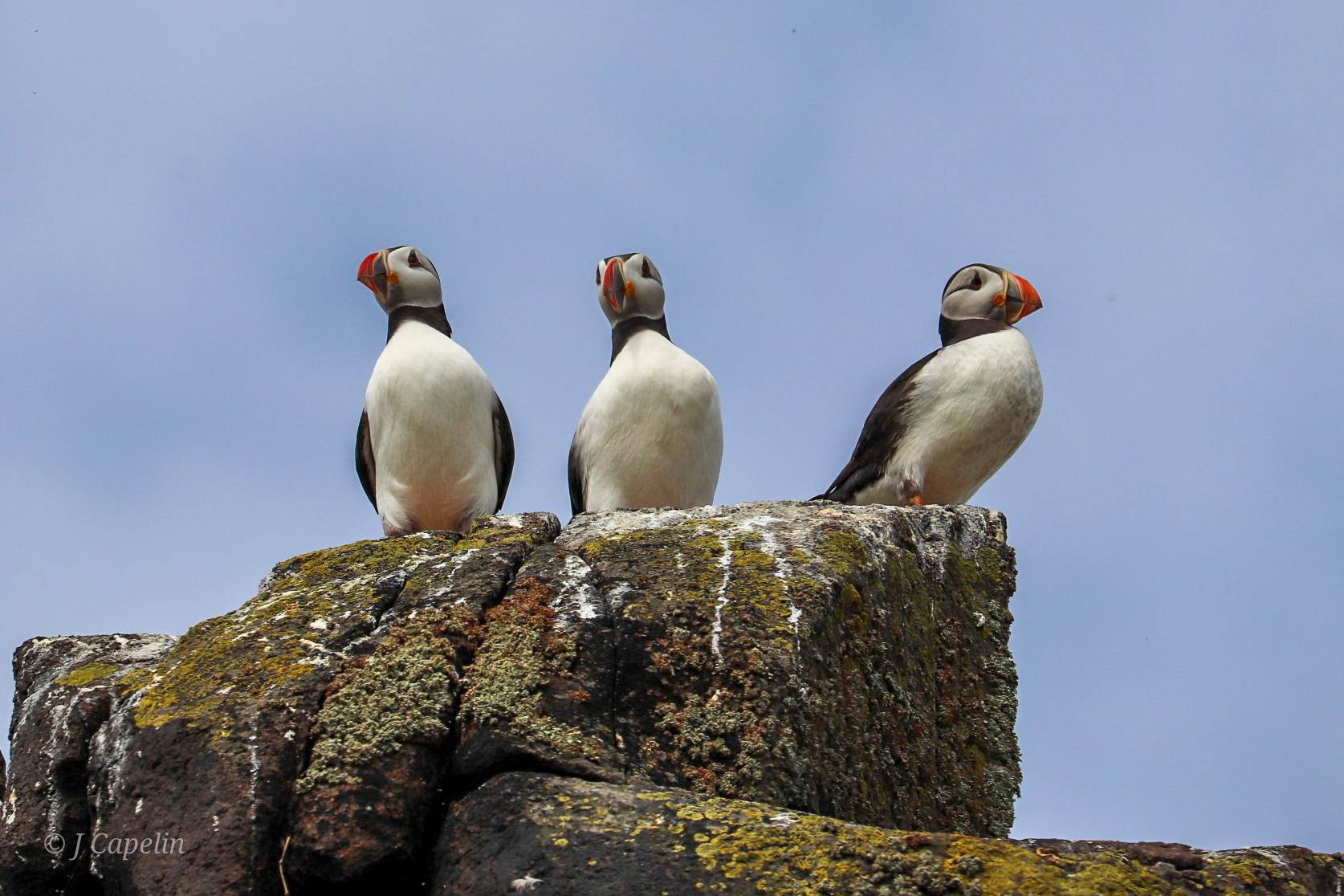
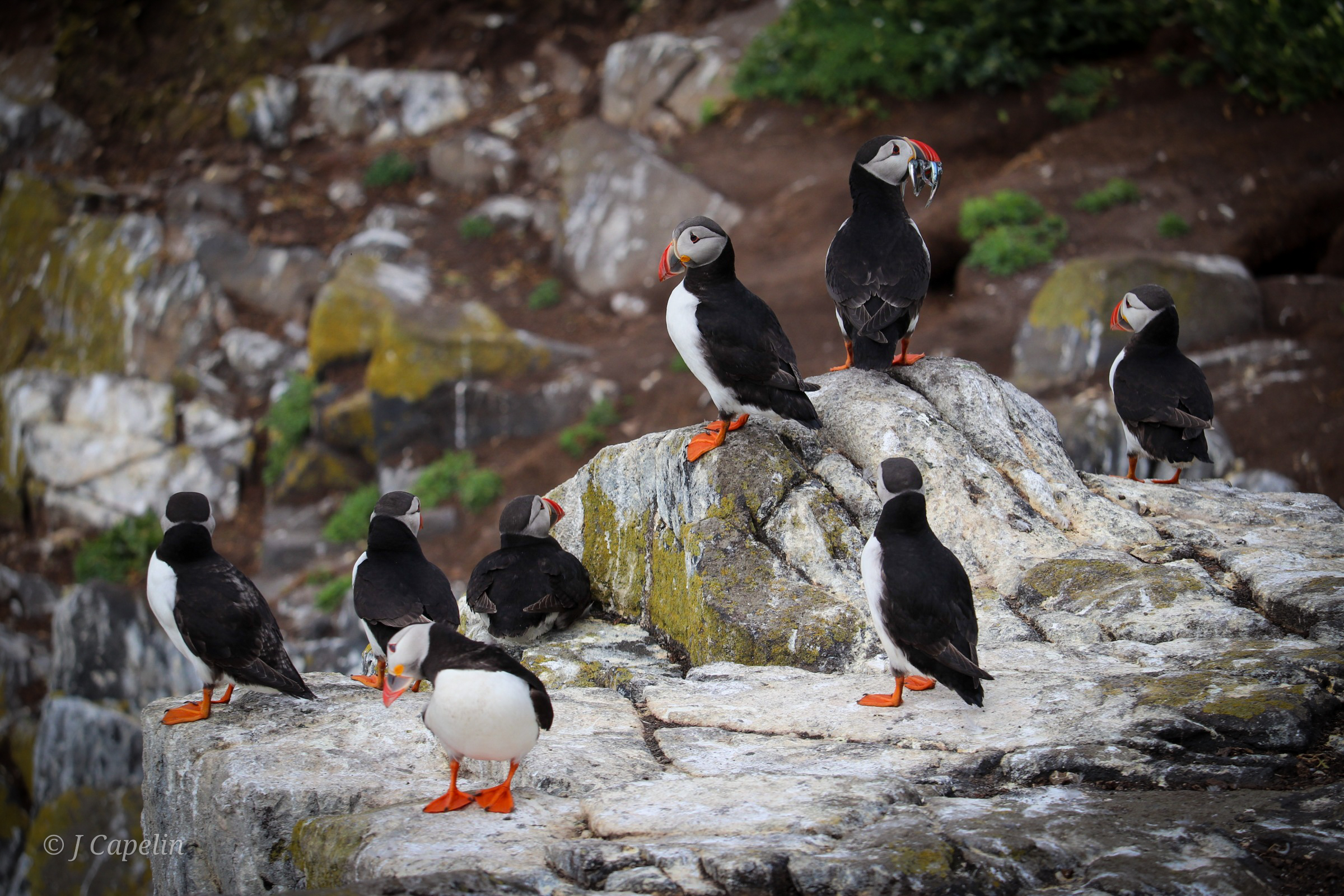
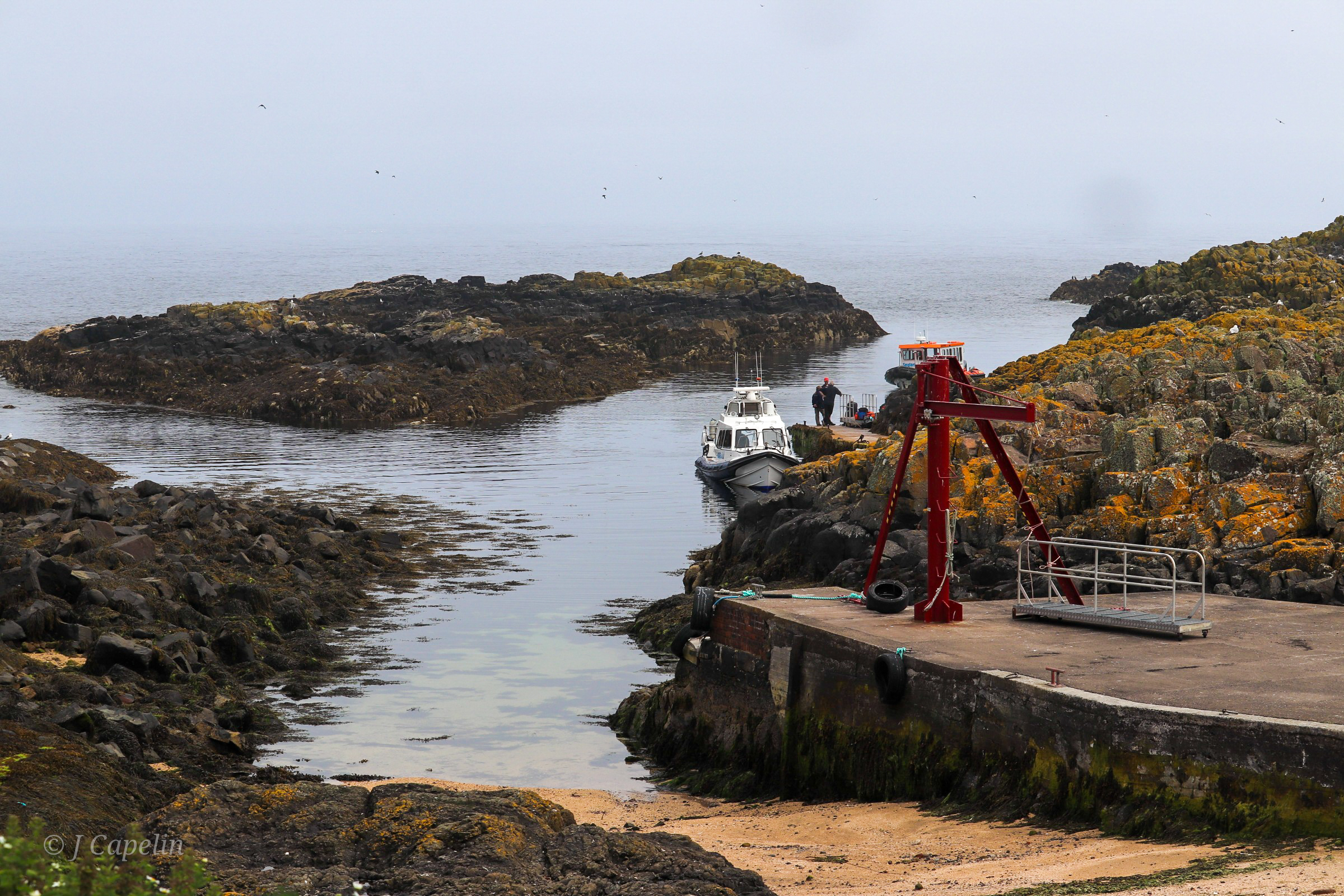
We sailed on to the Isle of May, which was surrounded by Grey Seals lounging around on the rocks and twirling in the watery mouths of the sea caves. As we came around the island to make port we could already see puffins on the cliff ledges and on the water, along with Terns, Kittiwakes, Shags, Gulls and Jellyfish.
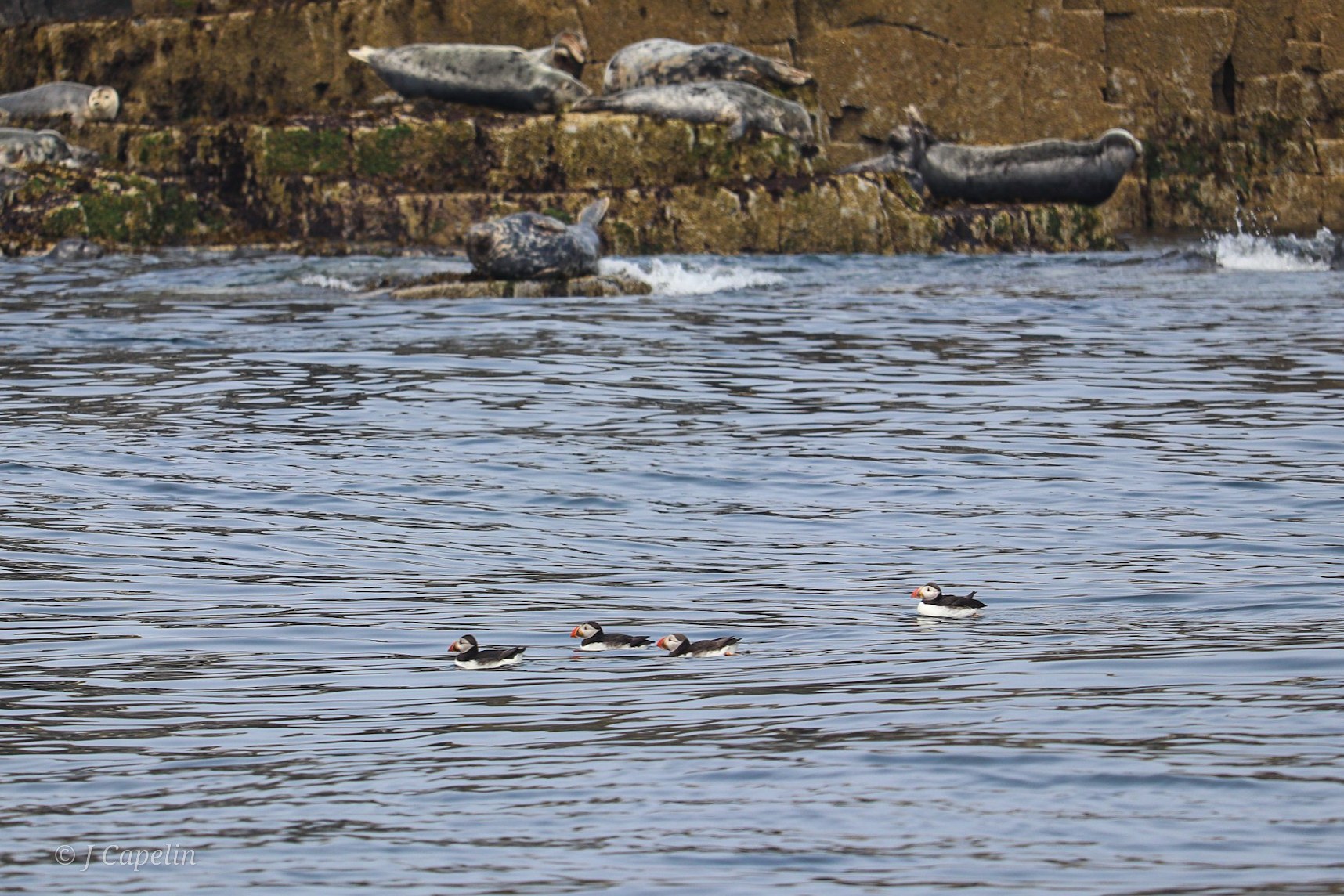
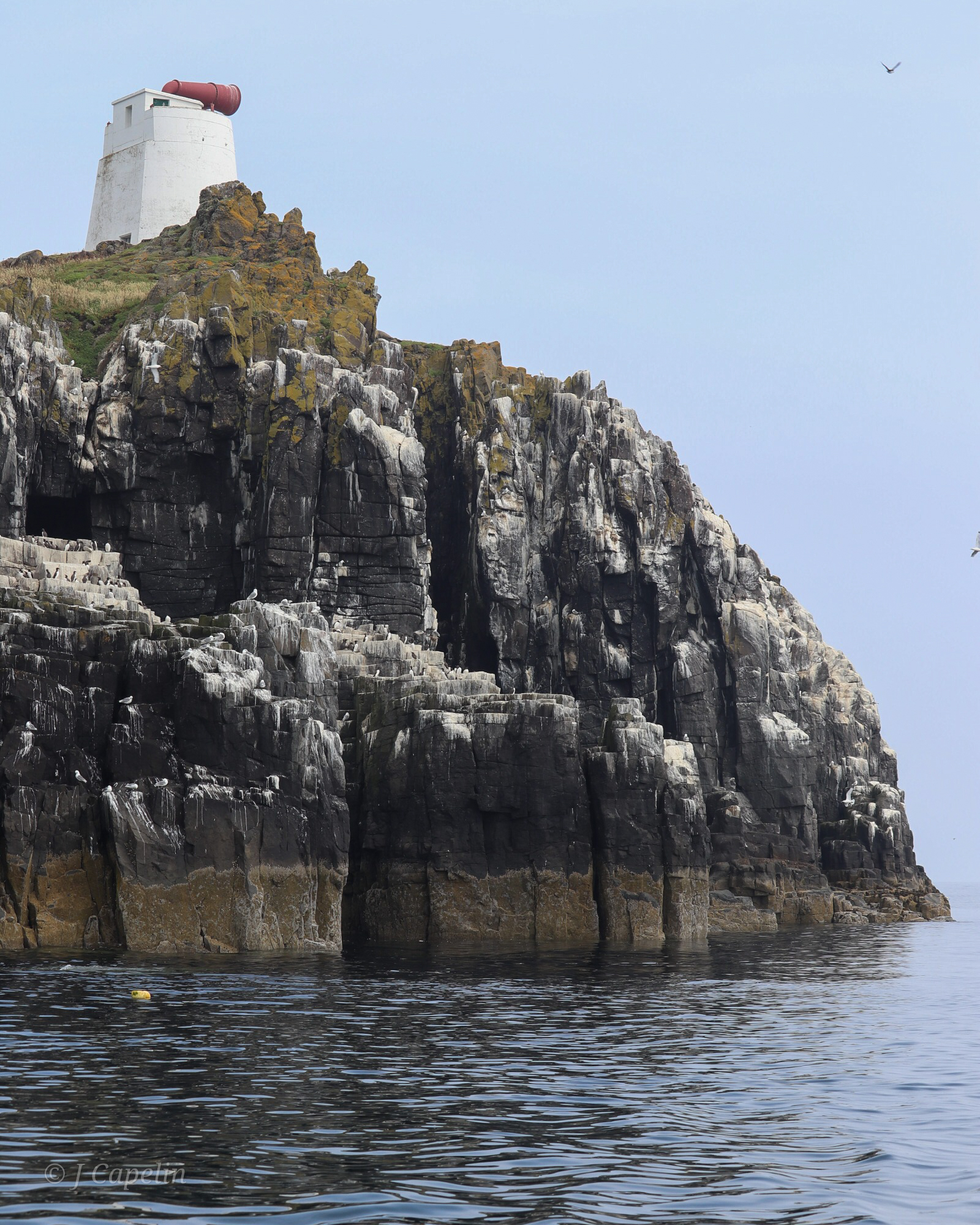
There was still a layer of fog on the sea as we circled the island, but once we stepped off the boat the July afternoon sun was burning through.
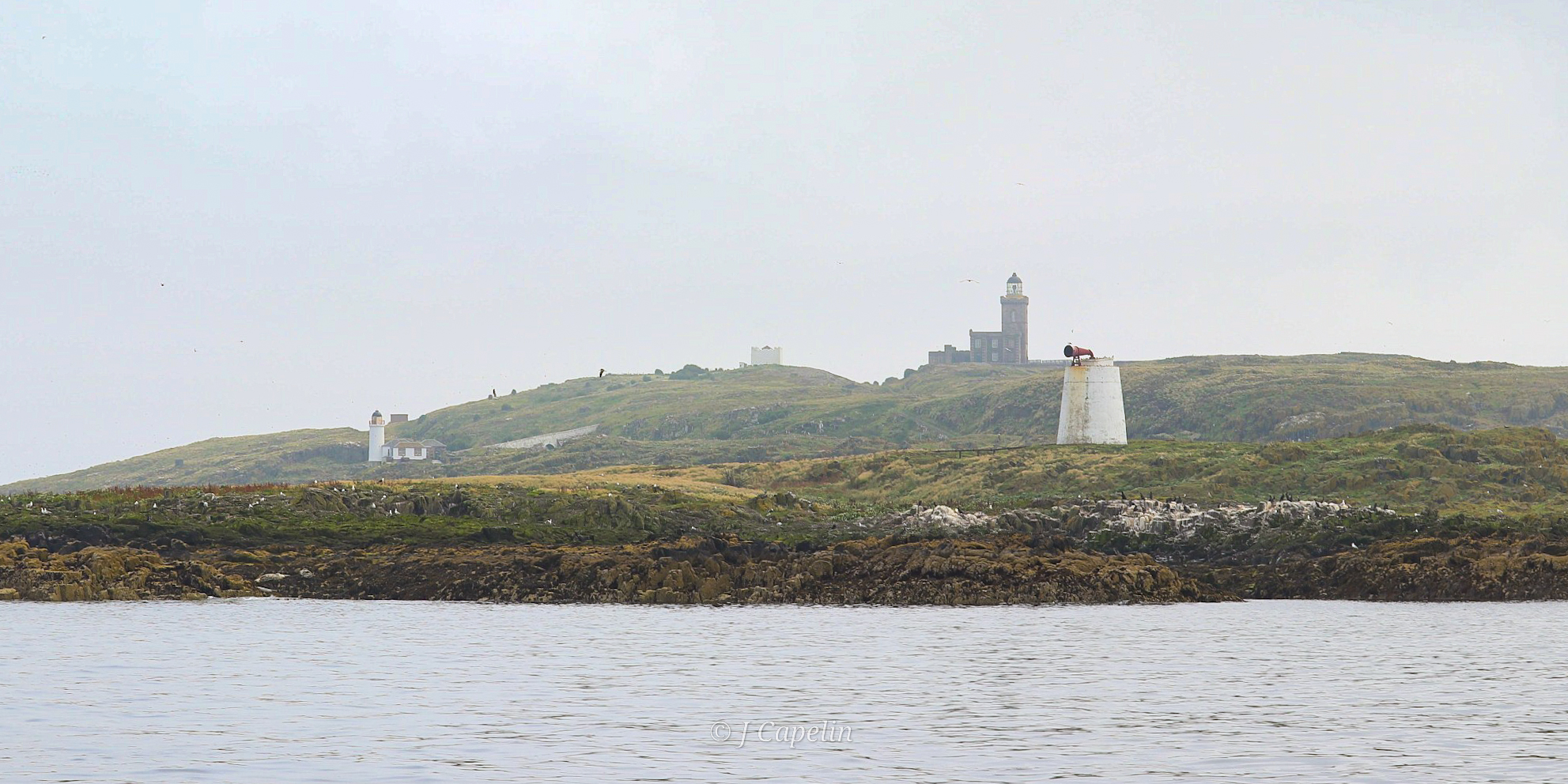
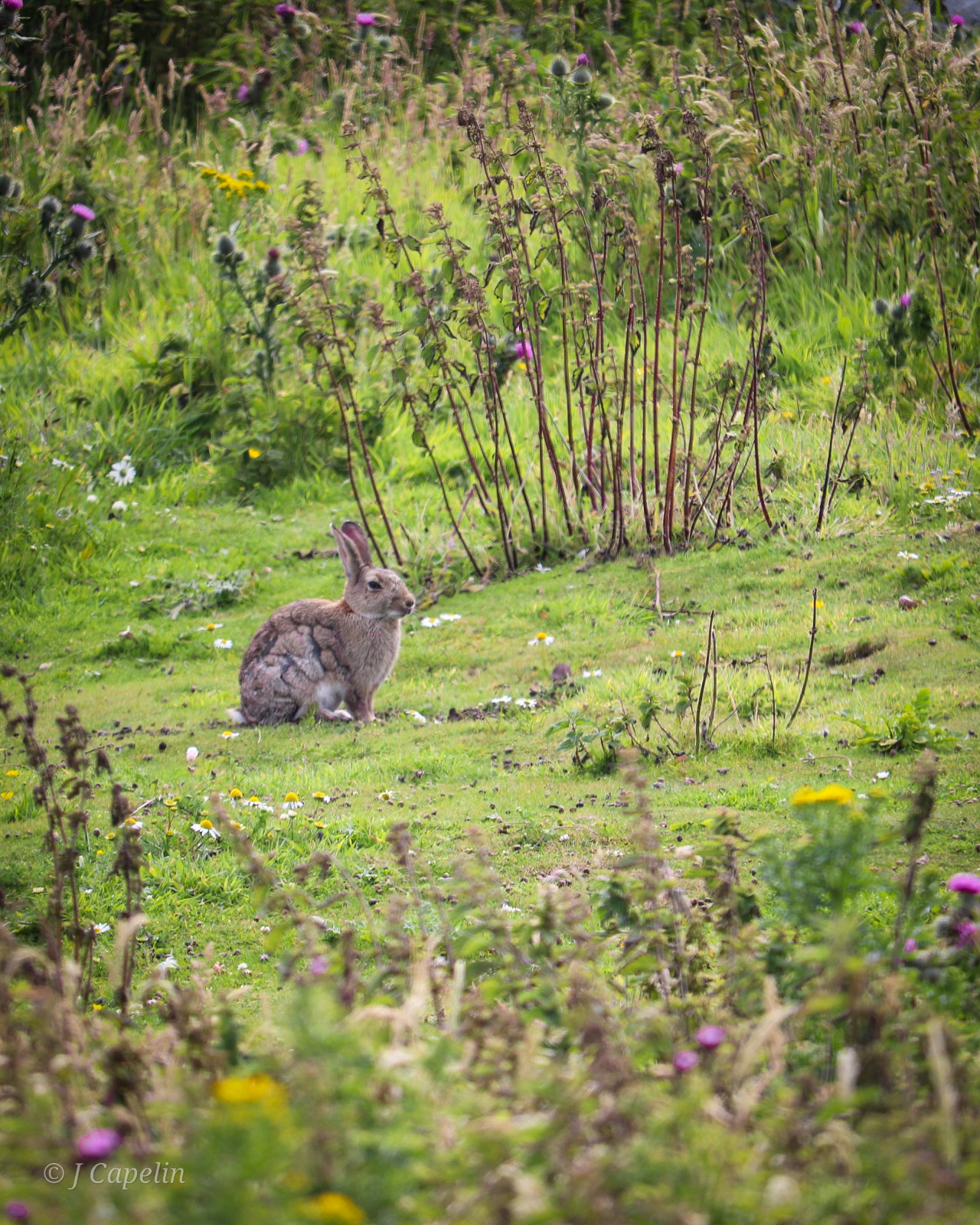
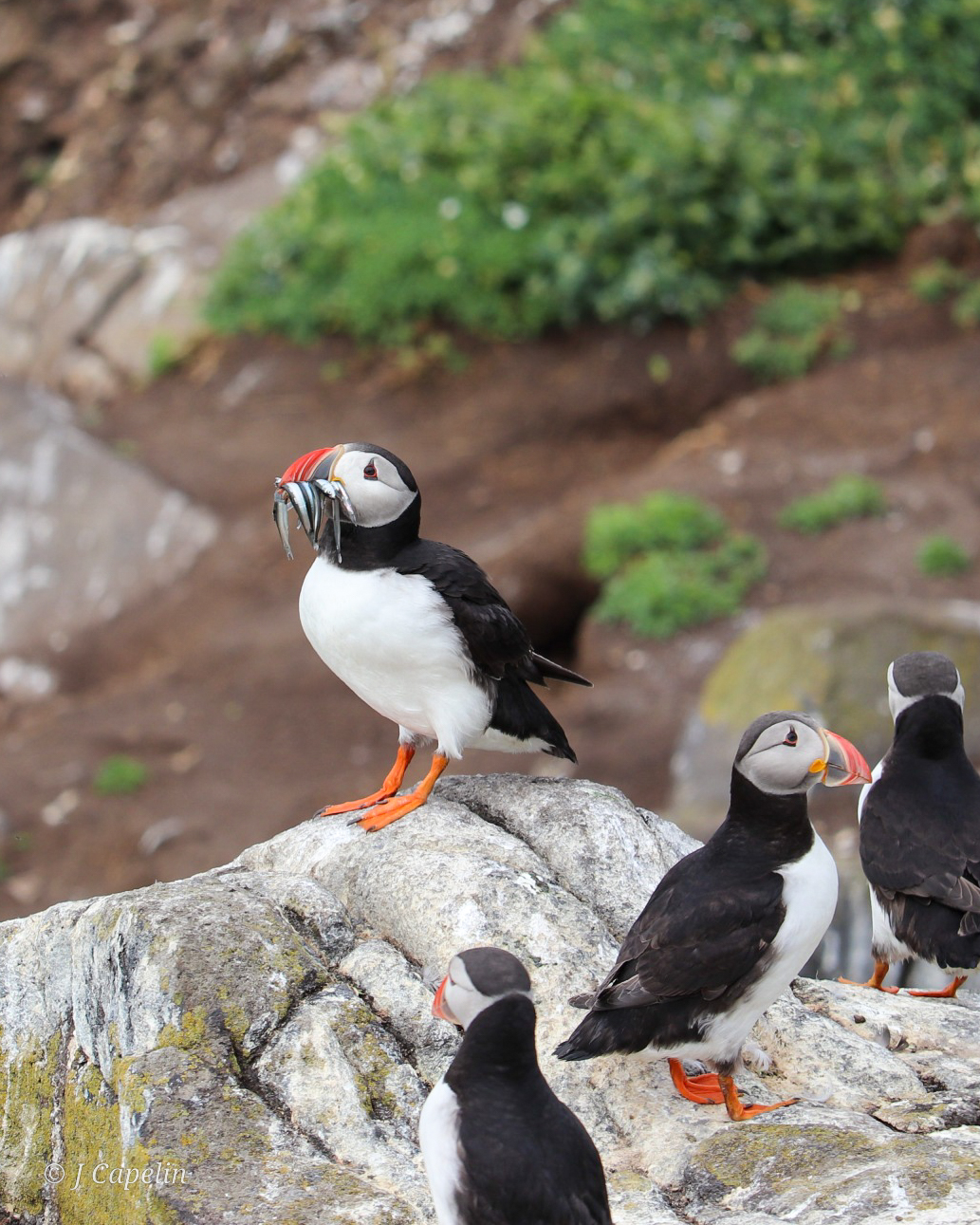
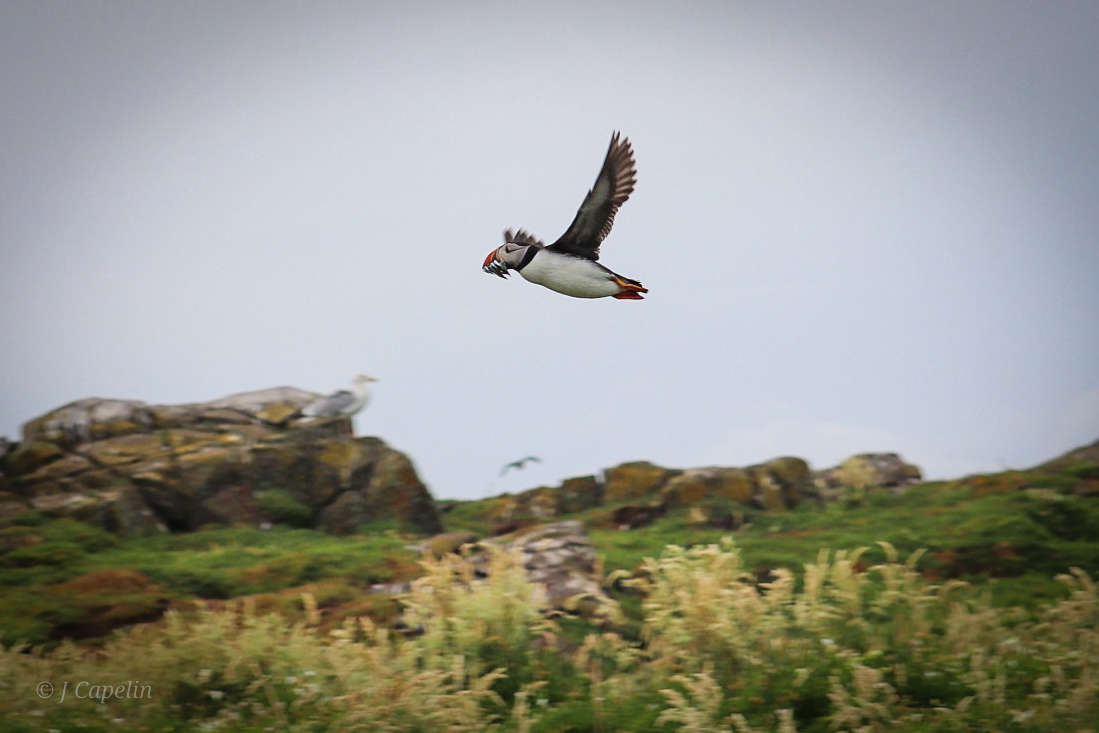
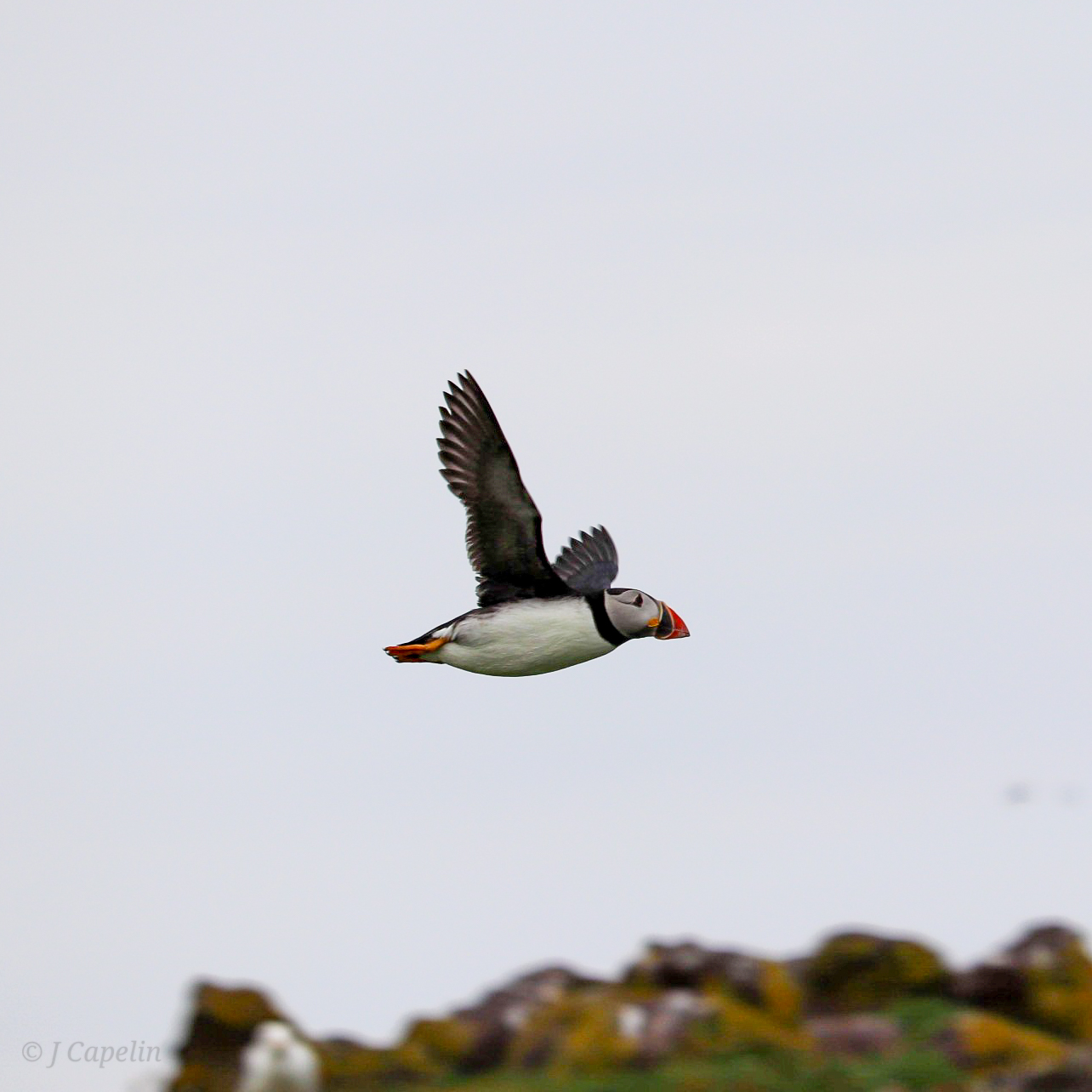
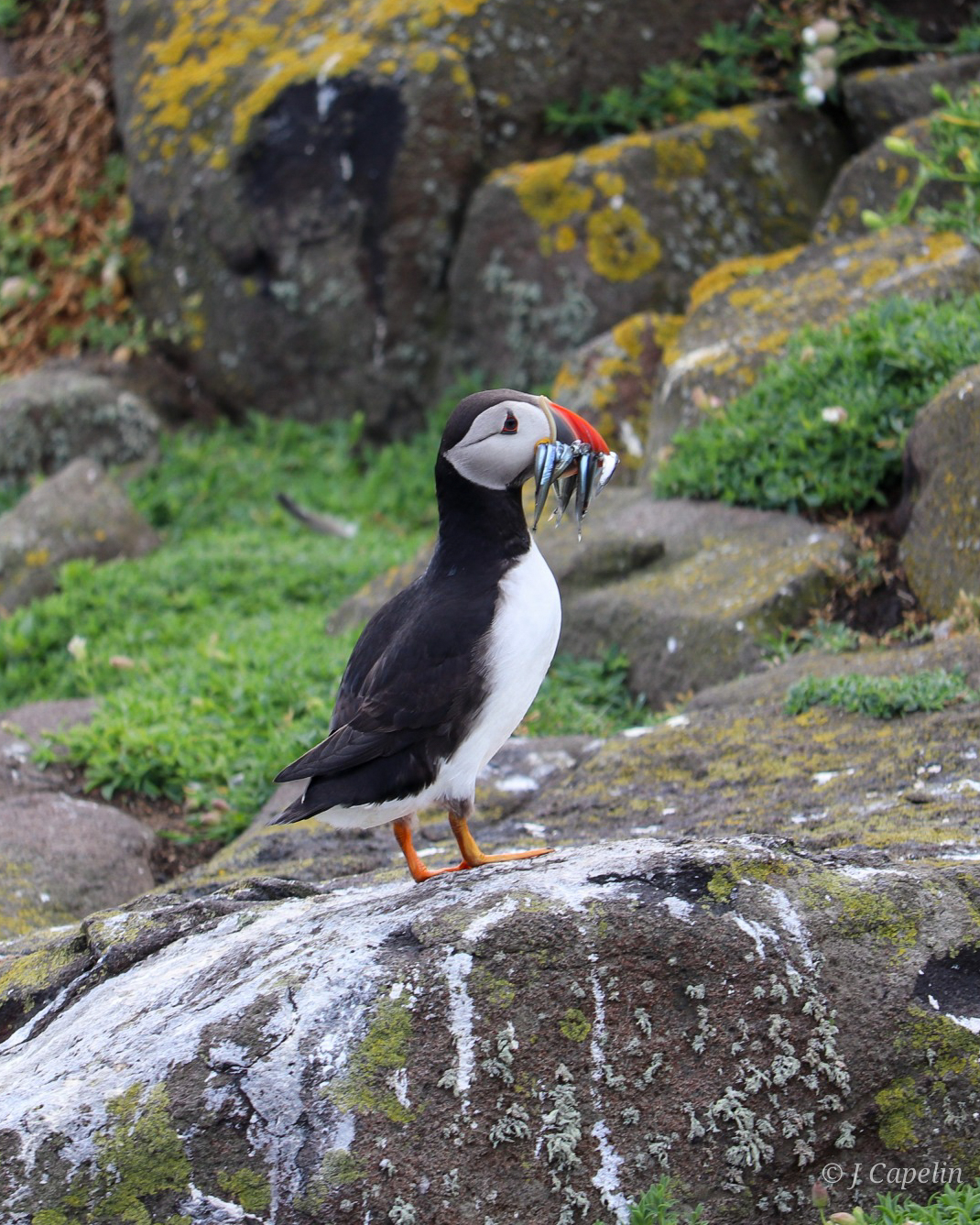
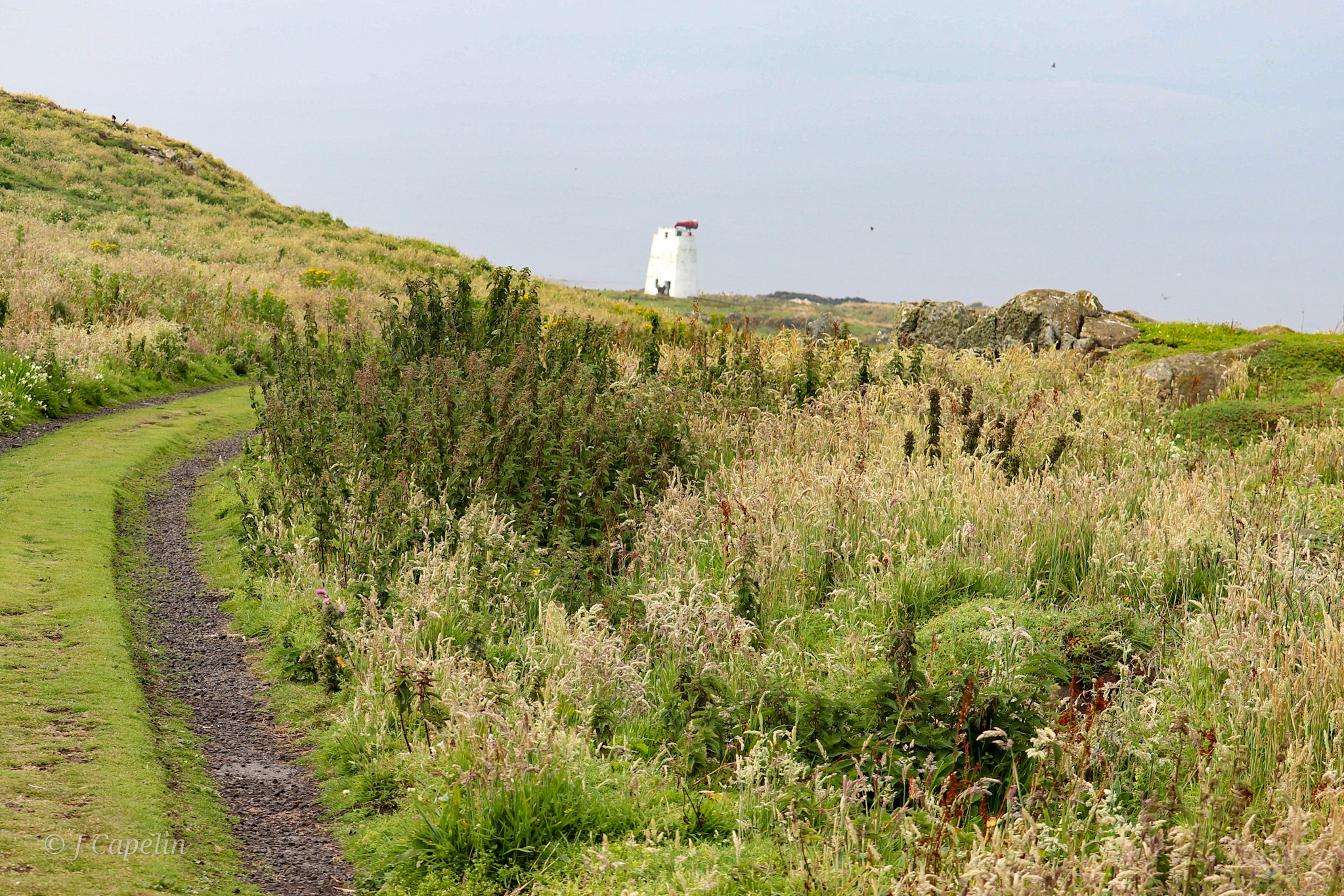
Fluffy grey seagull babies toddled around between tussocks, like butter wouldn’t melt, but the guide informed us that there were no Arctic Terns nesting here because those cute little baby gulls had eaten all their chicks. We strolled up the hill to the Main Lighthouse spotting big rabbits lolloping in the long grass and thistles, stopping at the Loch on the way. Puffins were watching us from all around as the footpath cut between high banks, and as they flew over I noticed the fish hanging out of their beaks and their big orange feet sticking out behind them!
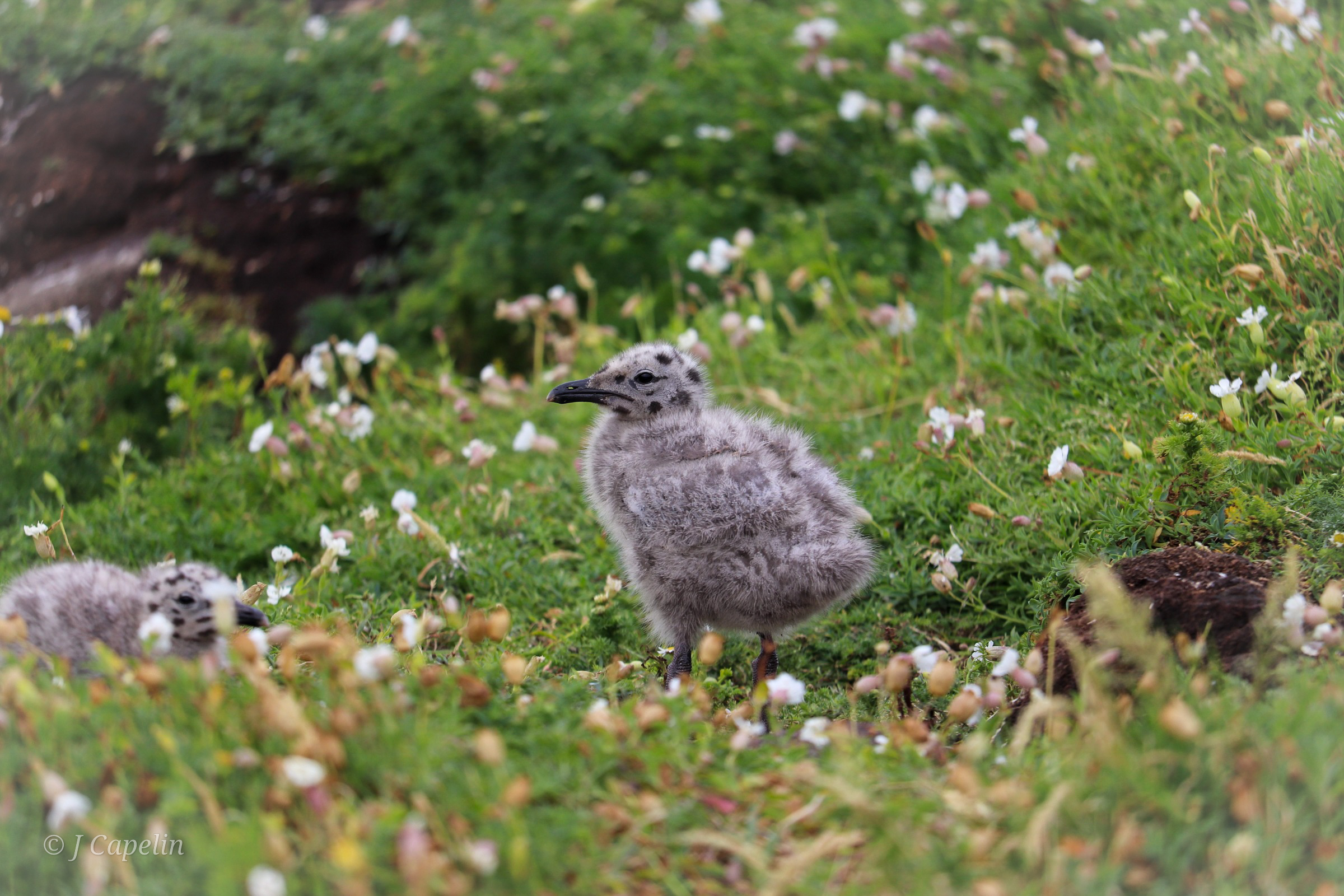
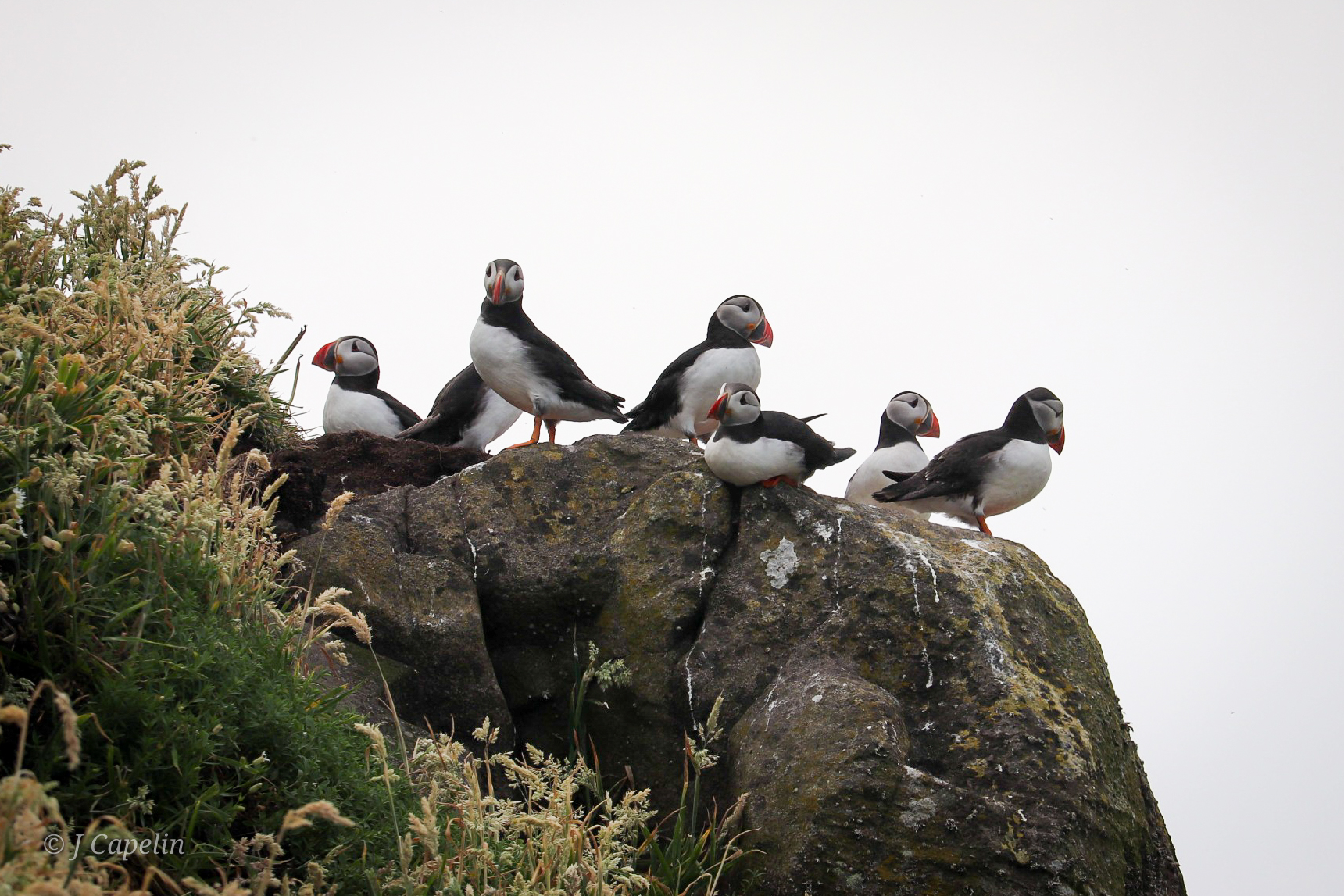
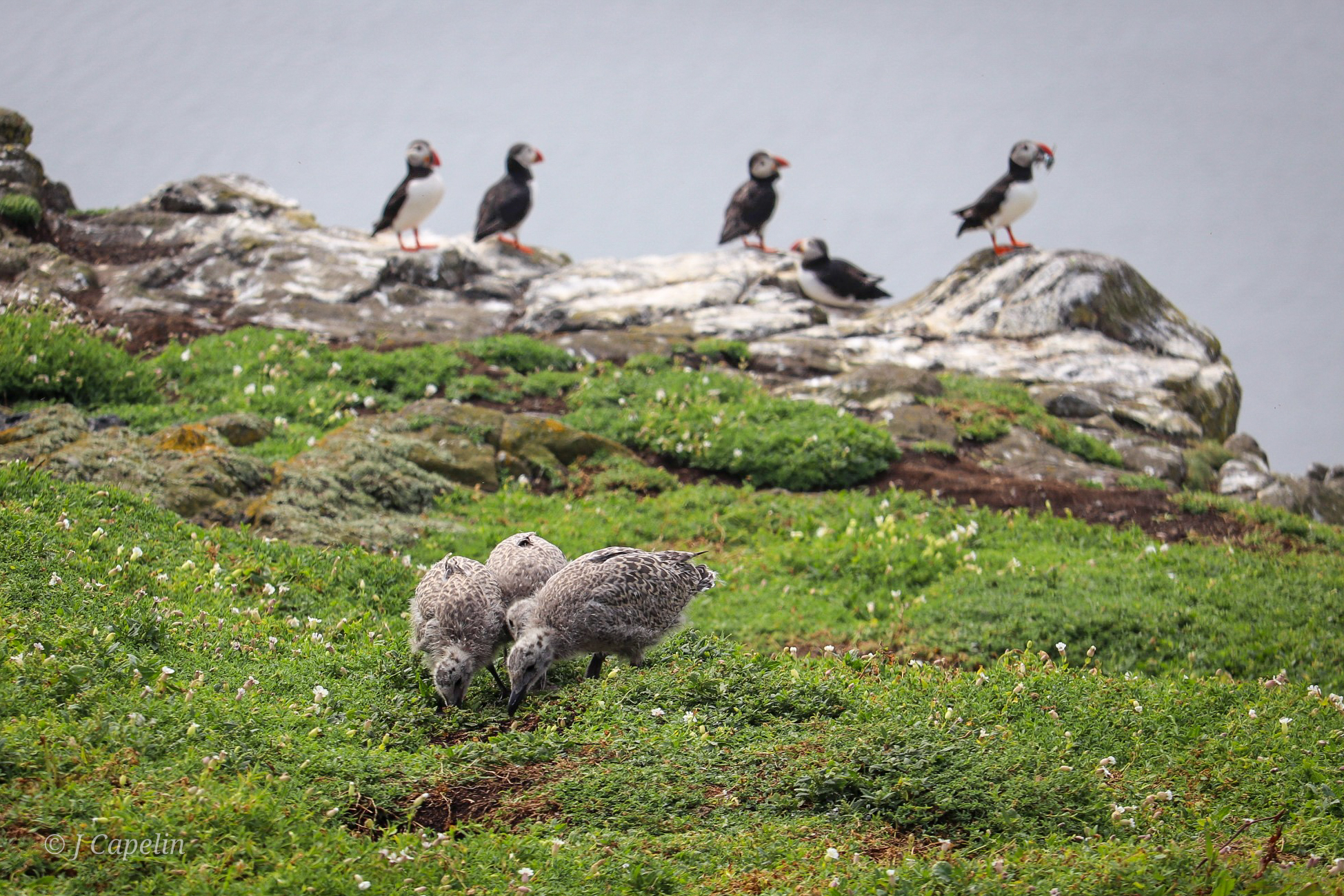
Meandering down the headland to Bishop Cove there were Puffin burrows absolutely everywhere, highlighting the importance of sticking to the footpath. I watched three baby seagulls putting their heads in the burrows, while the parent Puffins waited anxiously from a distance. It was hard to watch the sad reality that some of these Puffins might be coming back to an empty burrow.
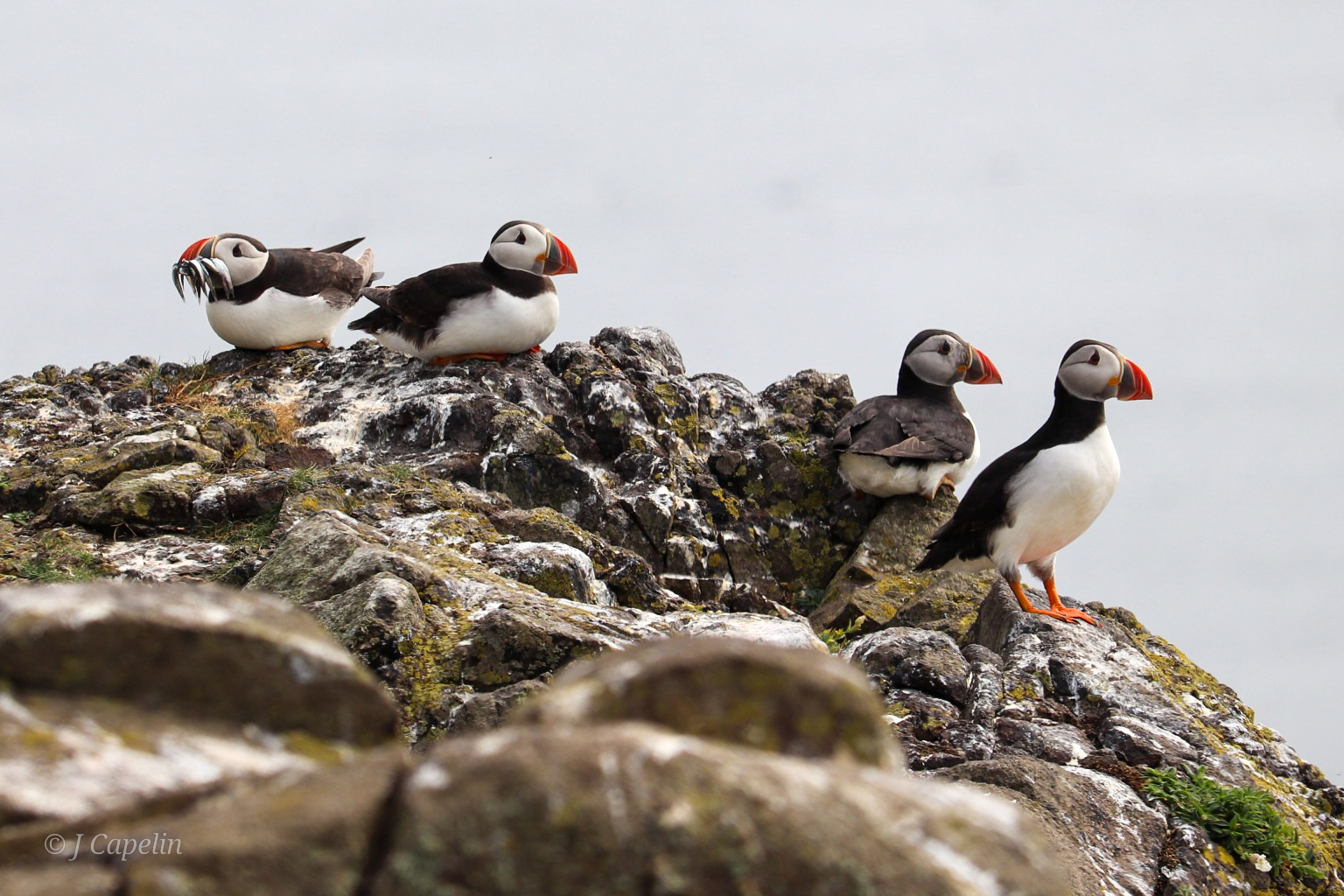
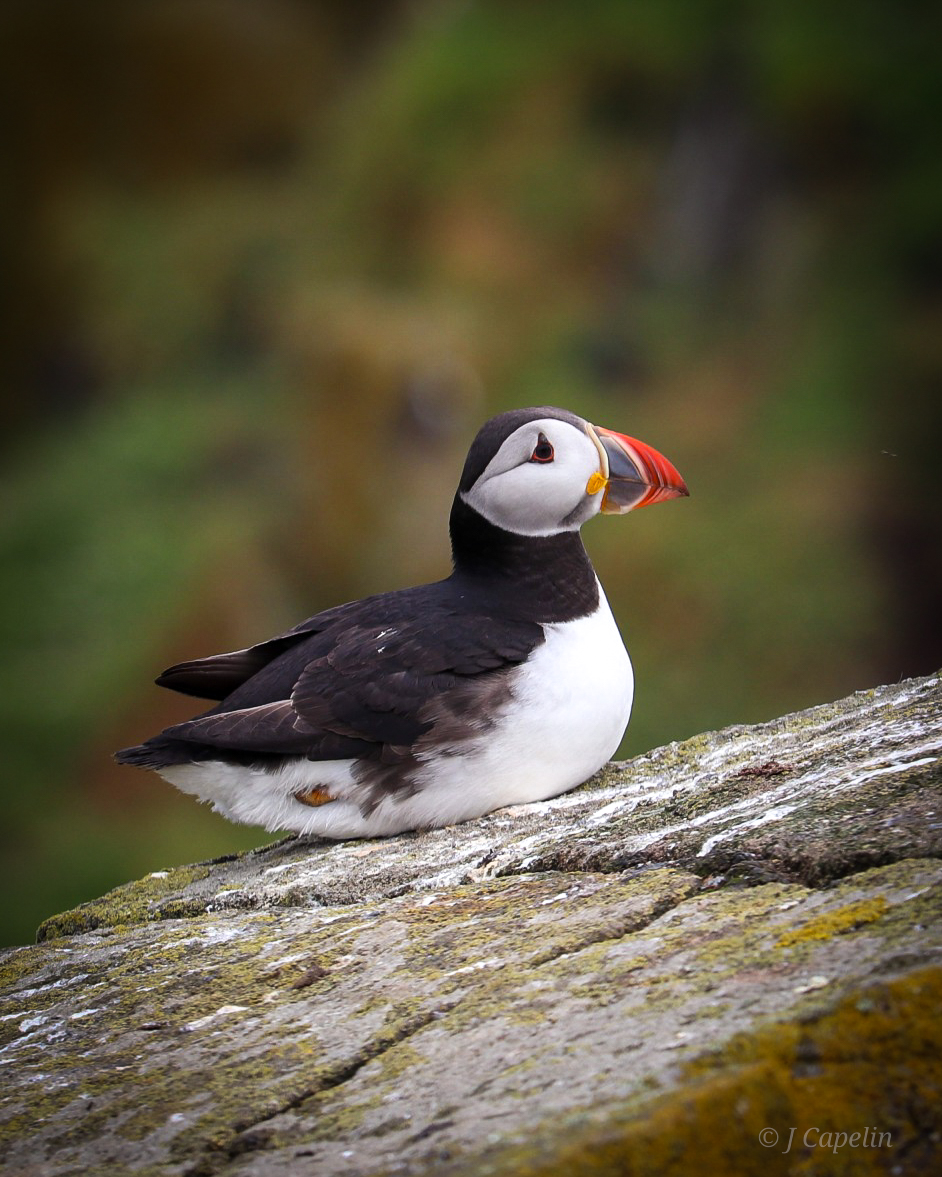
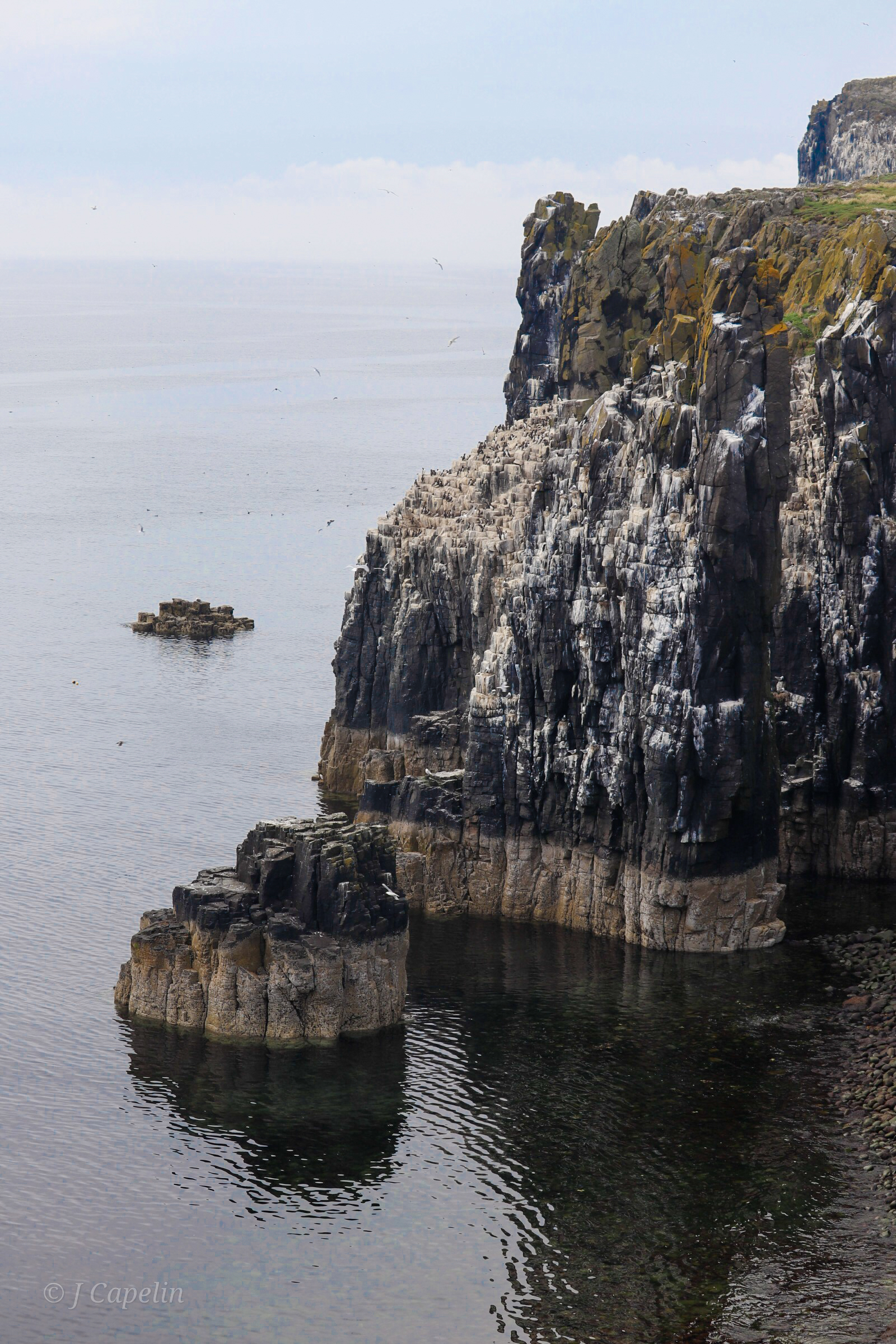
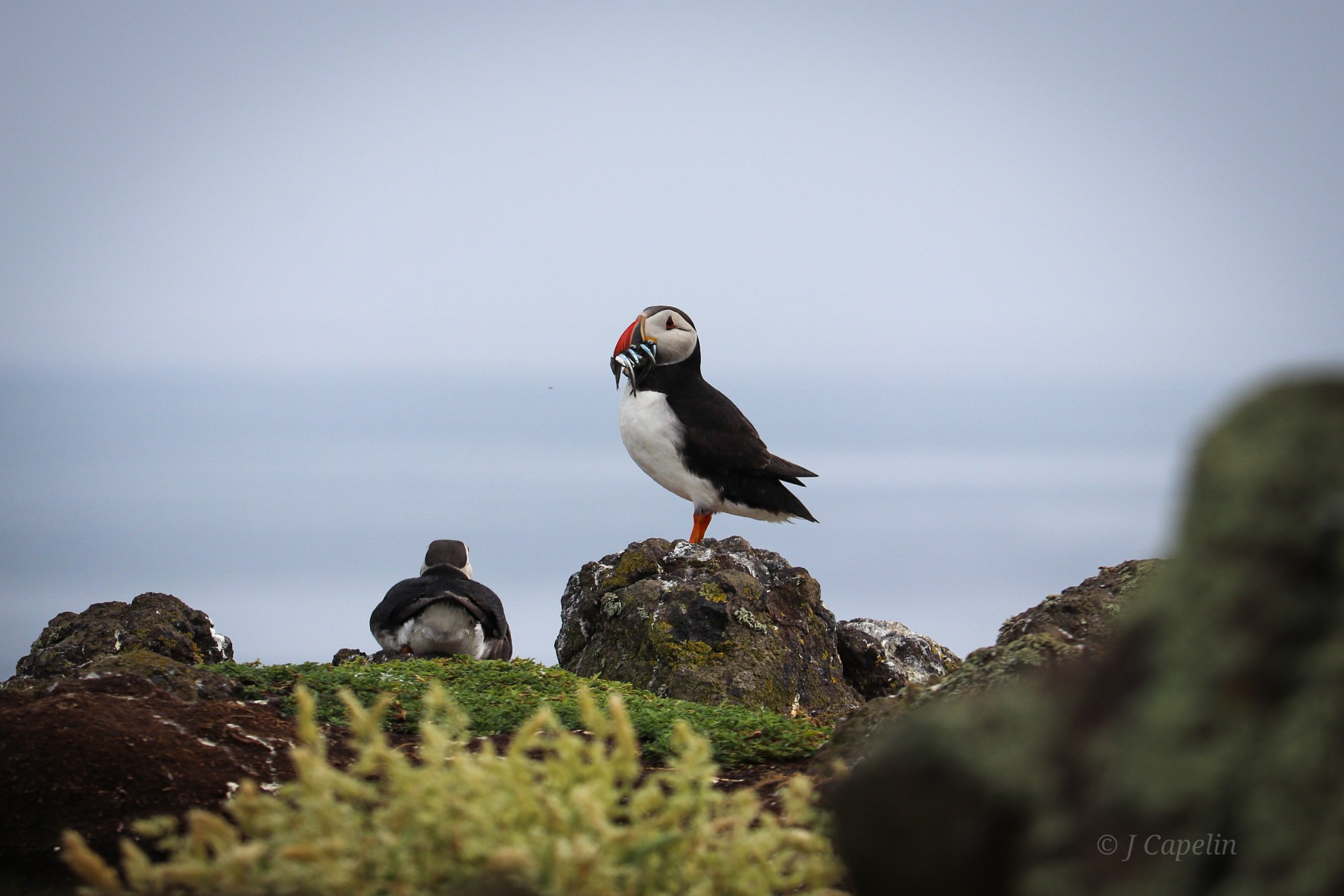
The spectacular cliffs of Bishop Cove were alive with birds, the grand white pillars holding the island up out of the crystal water below. We followed the path down to a cove known as Alterstanes, where we got some nice Puffin close ups. Then we looped back along the lower boardwalk, ‘Holyman’s Road’ along a vast, rocky coastline, to the south point of the island.
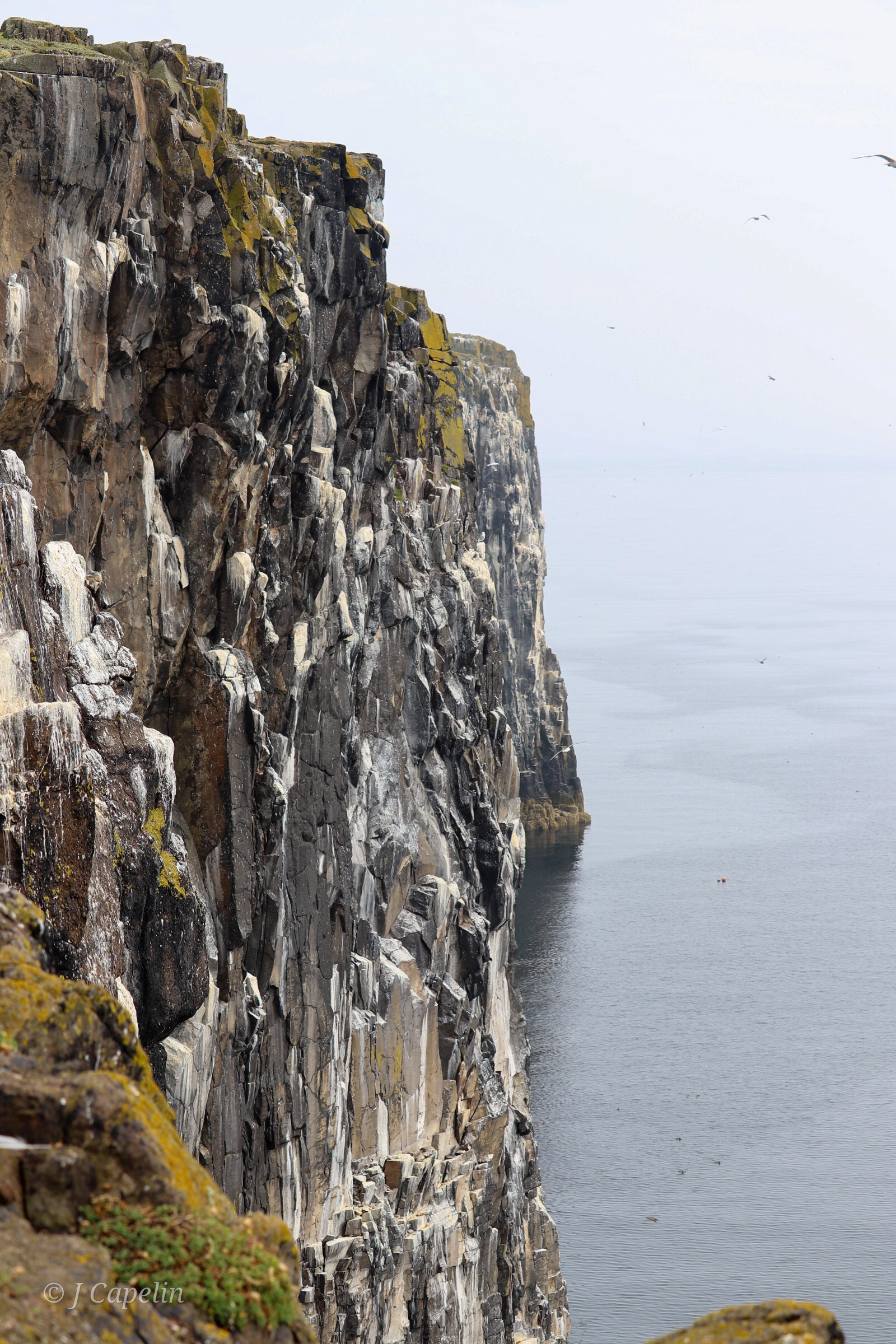
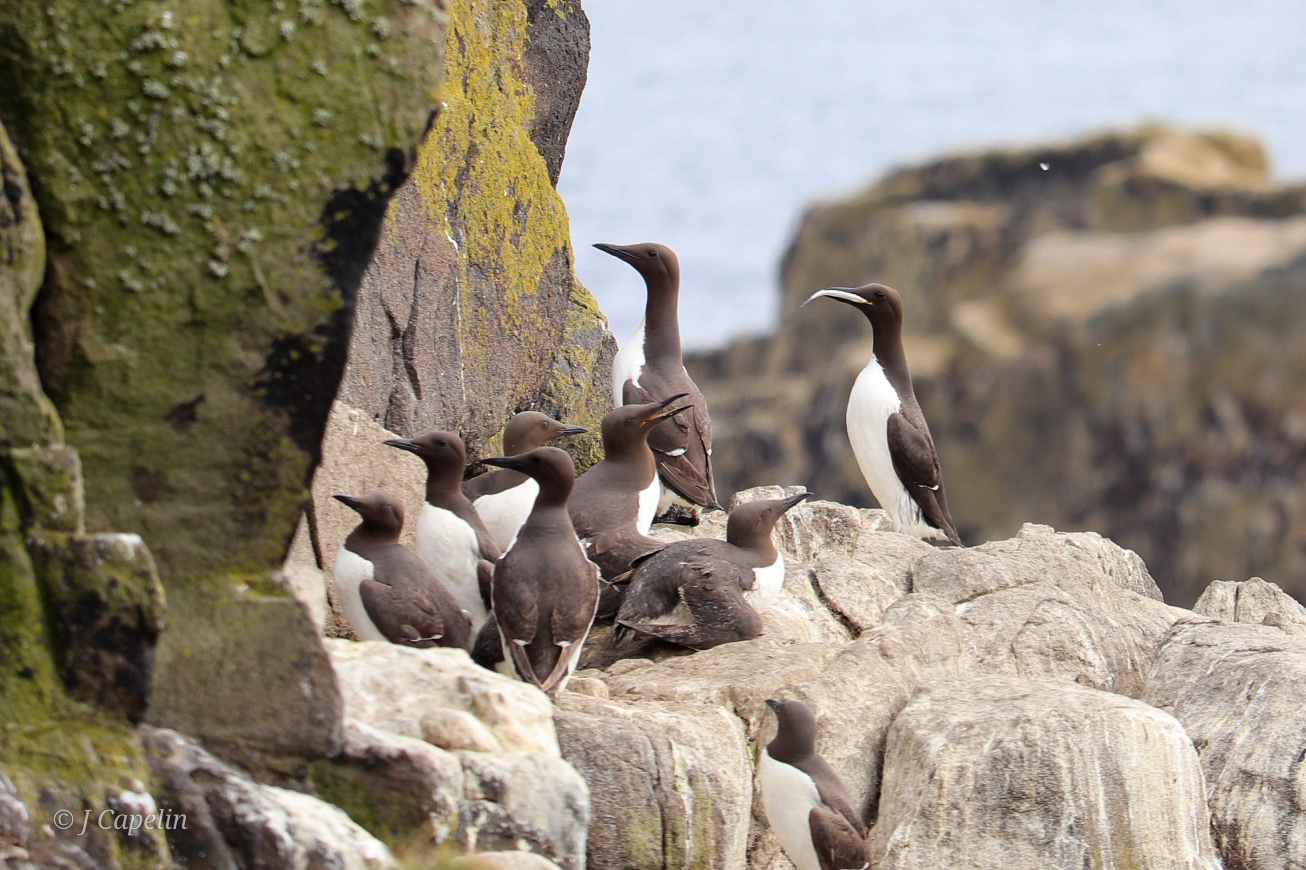
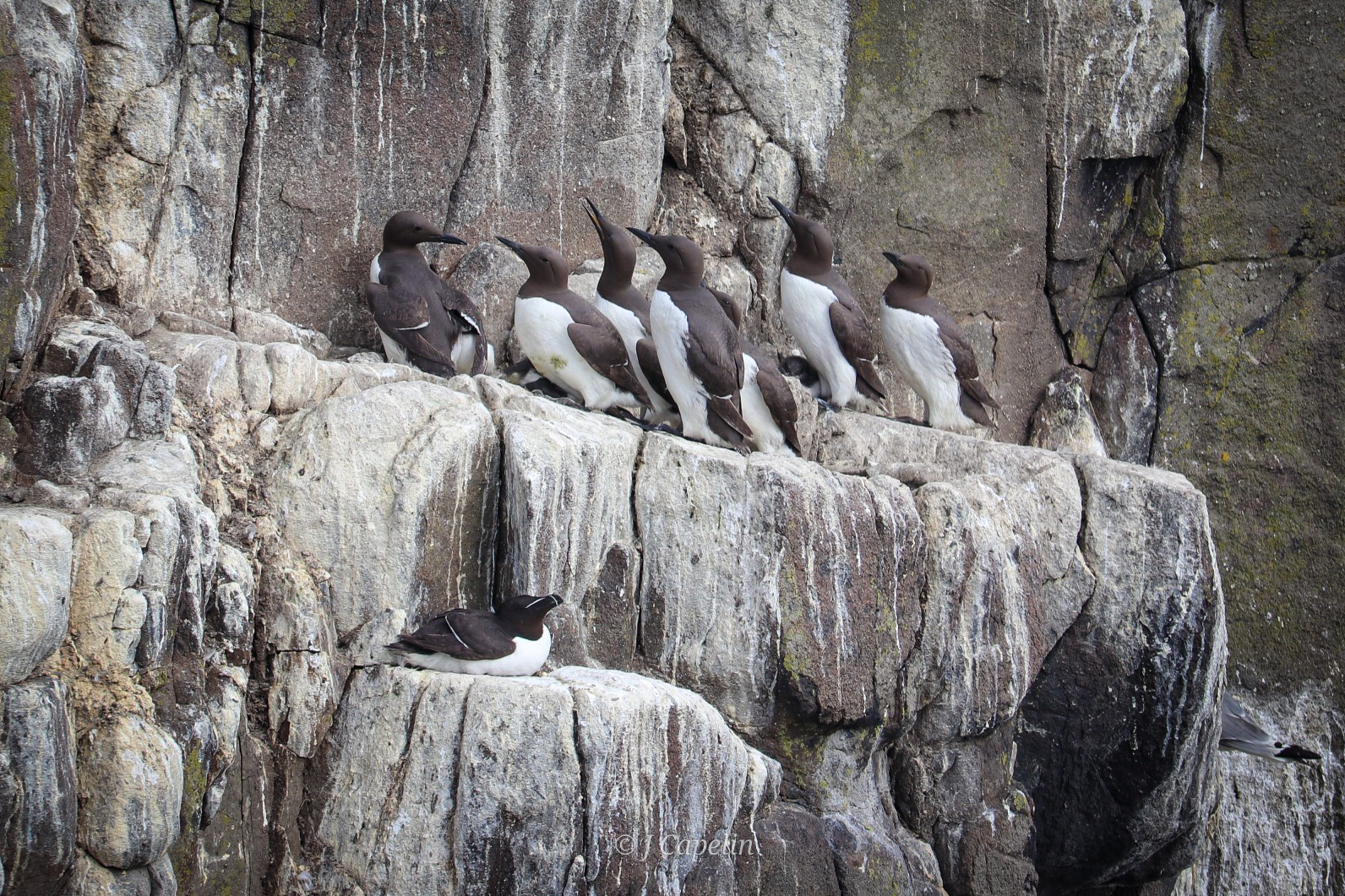
The high cliffs around the South Horn were teeming with Kitiwakes, Shags, and Guillemots and Razorbills, nicknamed the Penguins of the North. A North Sea wind began to gust in, bringing dark clouds, so I donned my jacket and crouched on the rocks, watching as Puffins flew in from the sea, fish spilling from the edges of their beaks.
It had started to rain by the time we got back on the boat and departed back to Dunbar. On the journey back, I could swear I saw something big and grey breach the water – a dolphin or a whale – but no one else noticed. Moments after, the boat was stopped so we could watch a large number of Gannets diving. The captain was telling us that sometimes Minke Whales could be spotted amongst diving birds, as they feed on the same fish, and just as we began to pull away, there it was again – a Minke Whale! It breached two more times, and this time everyone saw! It was a magical moment to end a perfect day, and with the driving rain setting in, I was happy to get back to the cosy accommodation in Edinburgh and look through my photos.     
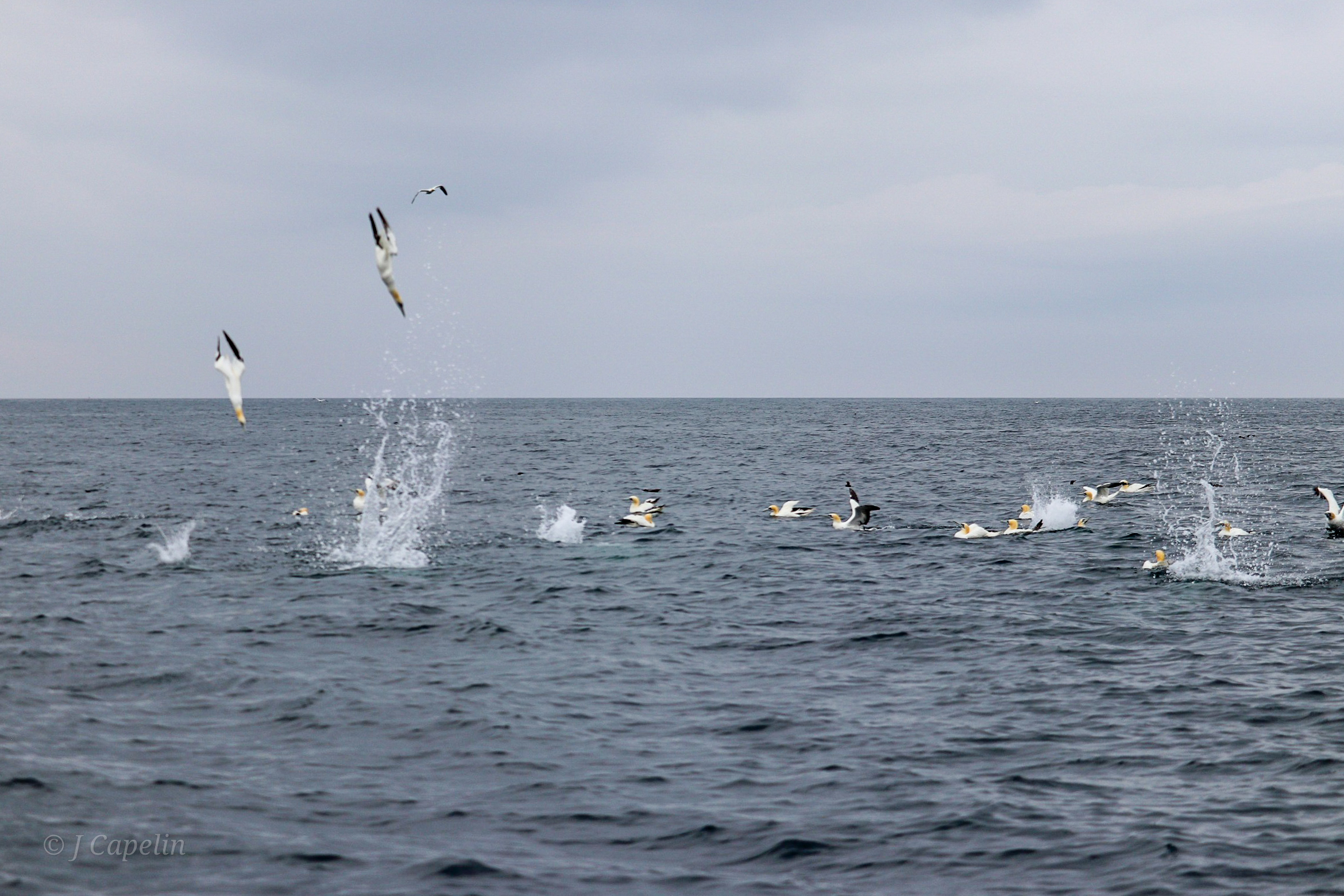
Diving Gannets

Great Barrier Reef – Lady Musgrave Island

A real desert island, complete with a tropical lagoon and reef oasis, sits around 95km off the coast of Bundaberg in Queensland. Lady Musgrave Island. Part of the Bunker Group, this is the southernmost section of the famous Great Barrier Reef and plays host to a magical menagerie of sea life.

Ok, David Attenborough voice aside, this was my favourite Great Barrier Reef experience so far. Taylor and I booked the ‘Lady Musgrave Experience’ Day Tour for late February, and I was not disappointed! Between January and March is turtle hatching season, and many mother turtles are still laying their eggs through February. The tour did get cancelled on the day I’d booked it for due to dangerous offshore wind conditions (went to the Bundaberg Rum Distillery instead – never a bad thing!) The tour was easily rescheduled for the following day, at no extra cost, and went ahead as planned.

6:45am: Checked in at Bundaberg Port Marina
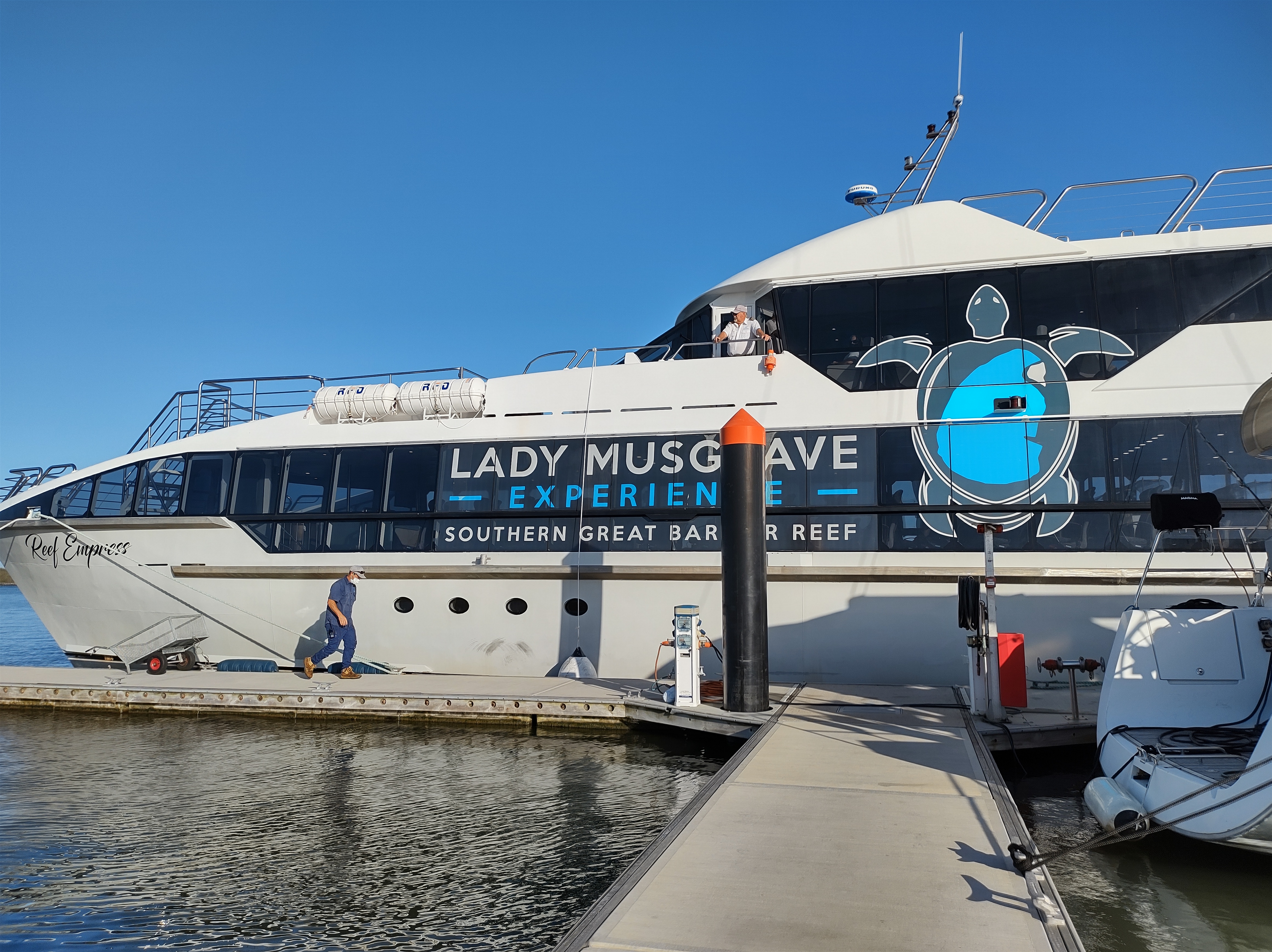
7:00am: Boarded the “Reef Empress” ready for departure

Boarding the “Reef Empress”

The morning was warm, full of promise, with the first blue sky we’d seen in days. All passengers were assigned to a group as we boarded the boat; Turtles, Clownfish and Dolphins – we were Dolphins. This was simply for the rotation of activities once we reached the island. The crossing was a rough 2 hours, the majority of passengers needed paper bags, clutching their heads and holding on for dear life. We took our ginger tablets and sat watching the crew running around cleaning patches on the floor and disposing of used paper bags. They were incredible, remaining upbeat and cheerful the whole time.
A rough crossing


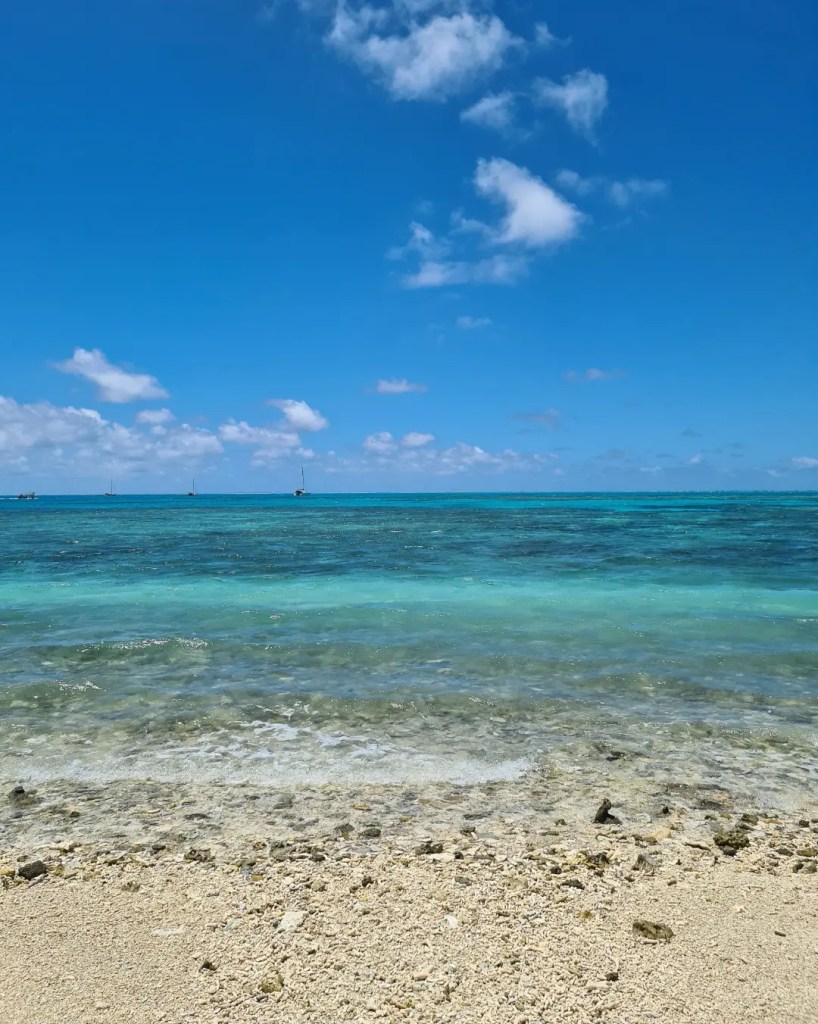
2 hours later, we pulled into a big semi-circular reef lagoon, with the gold and green island in the centre. Firstly, I need to talk about the colour of the sea. You couldn’t even paint it. It was blue, yes, a light, bright blue with stripes of turquoise and green wherever the reef lay below, but it was iridescent, backlit if you will, shining like fluorescent light!

On the Pontoon

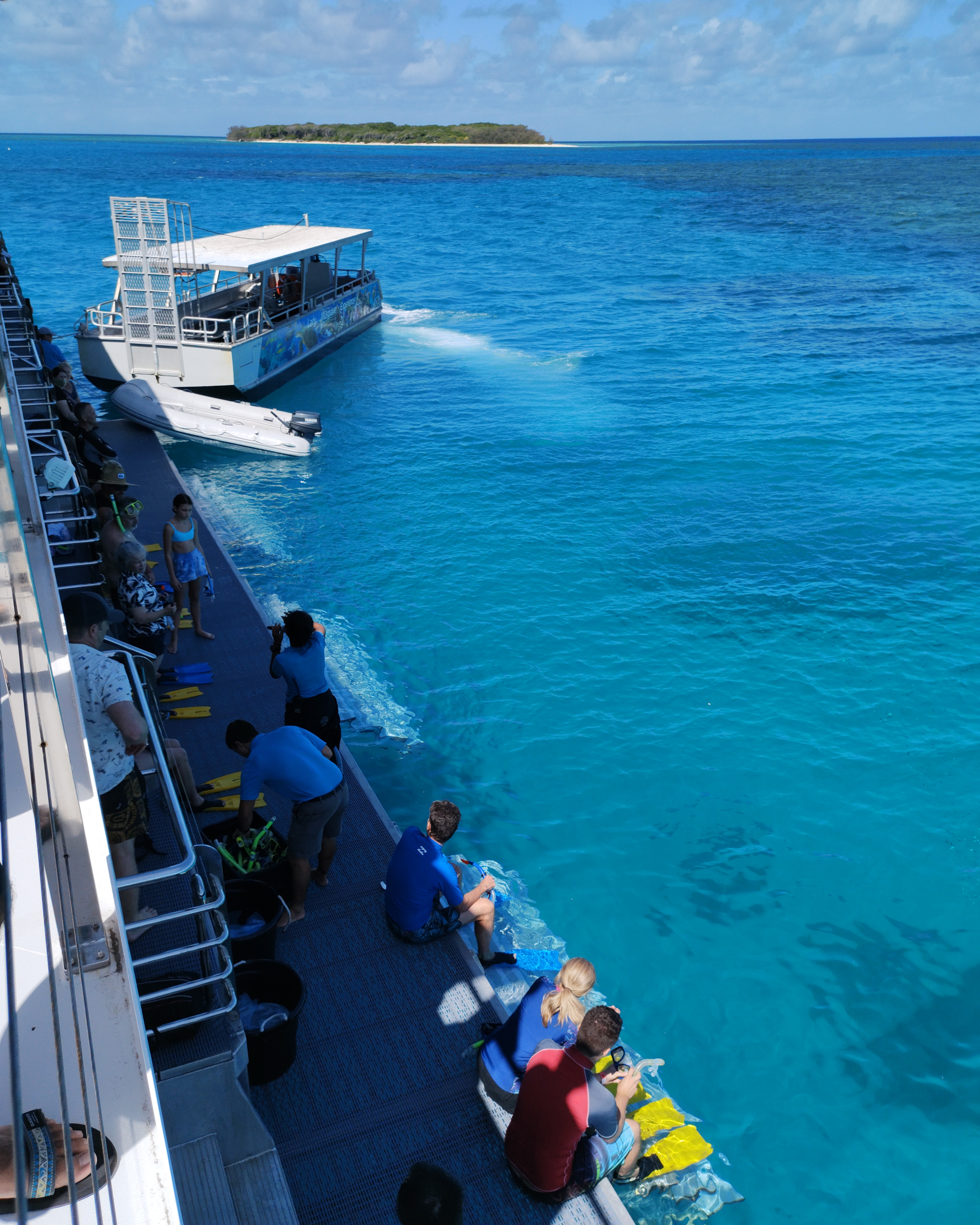
Anyway, we stepped off the boat onto the enormous three-storey pontoon, (with an underwater viewing room below deck, and glamping style beds on the top deck for the overnight experience) and the first thing I saw as I gazed out across the reef was a turtle! It was just floating on the surface about 20 metres away, its shell all clean and beautiful.

The Glass-Bottomed Boat

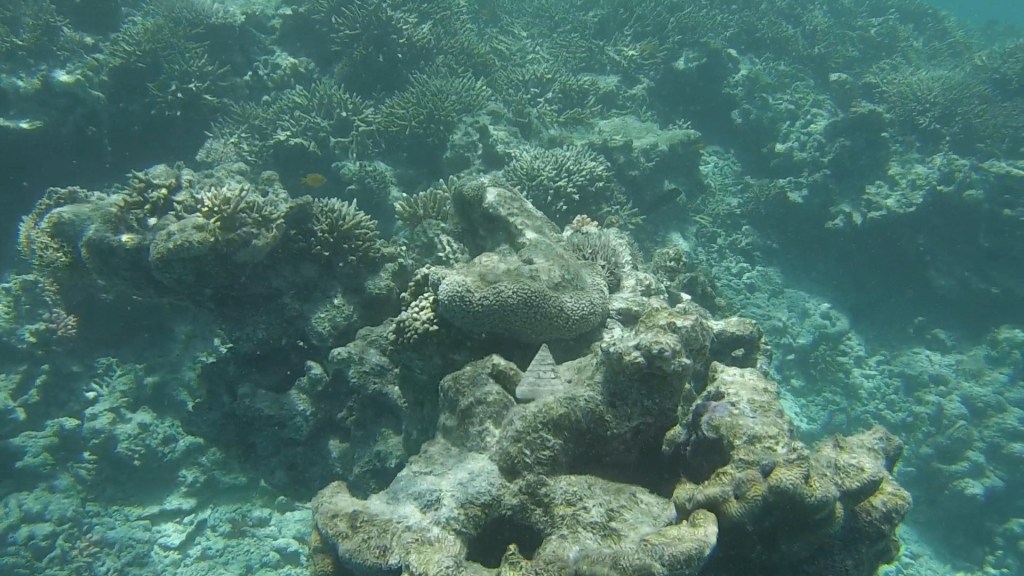
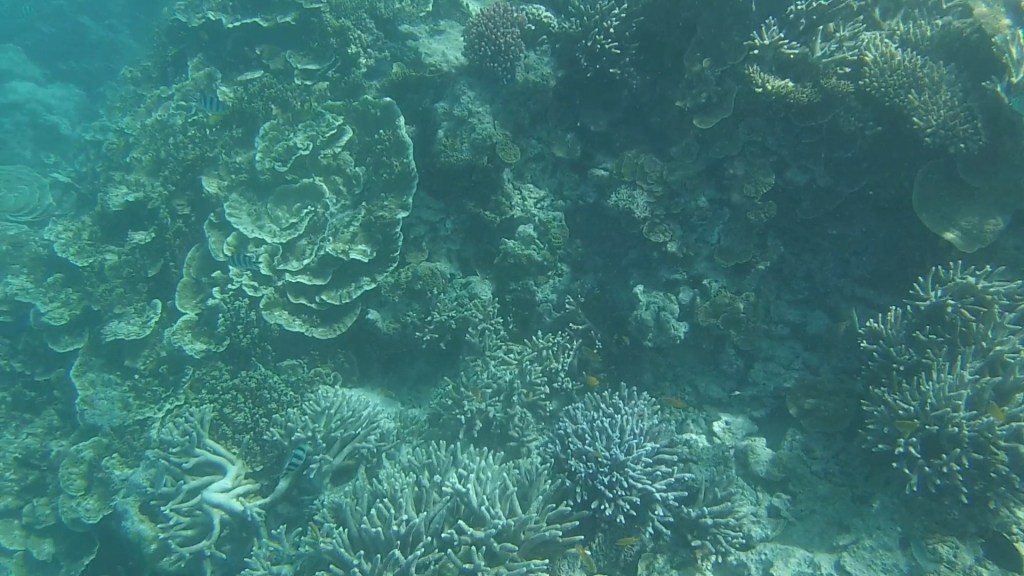
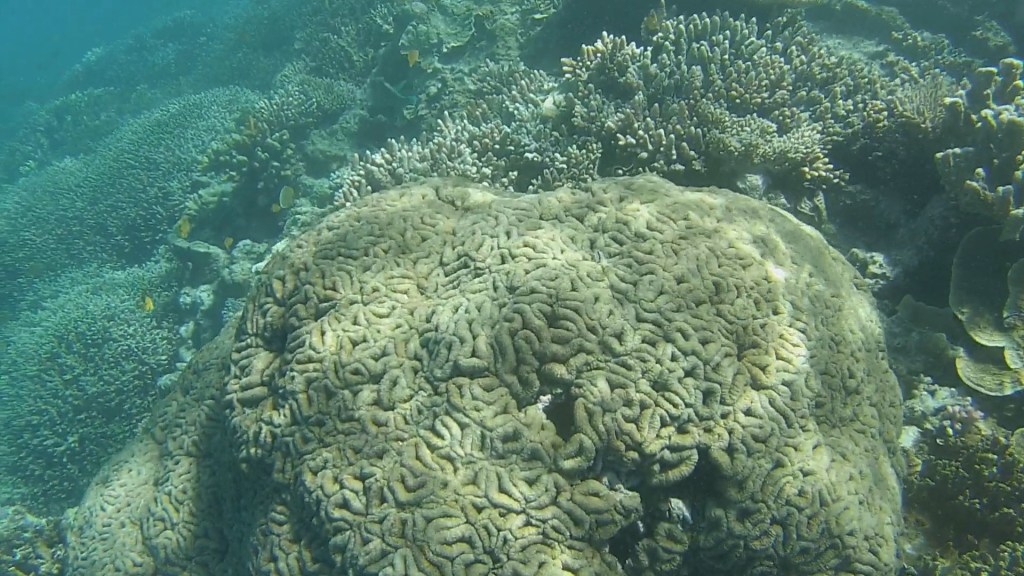
After a brief snorkeling run-through, the 3 groups broke off. The Dolphin group were on the glass-bottomed boat first. Our guide was Tyson, and he floated us over the different types of coral: staghorn, brain, boulder, plated, finger…. As he was explaining that the white tips on the coral is actually regrowth, not bleaching, a Brown Booby Bird swooped low next to the boat, majestically stealing our attention.

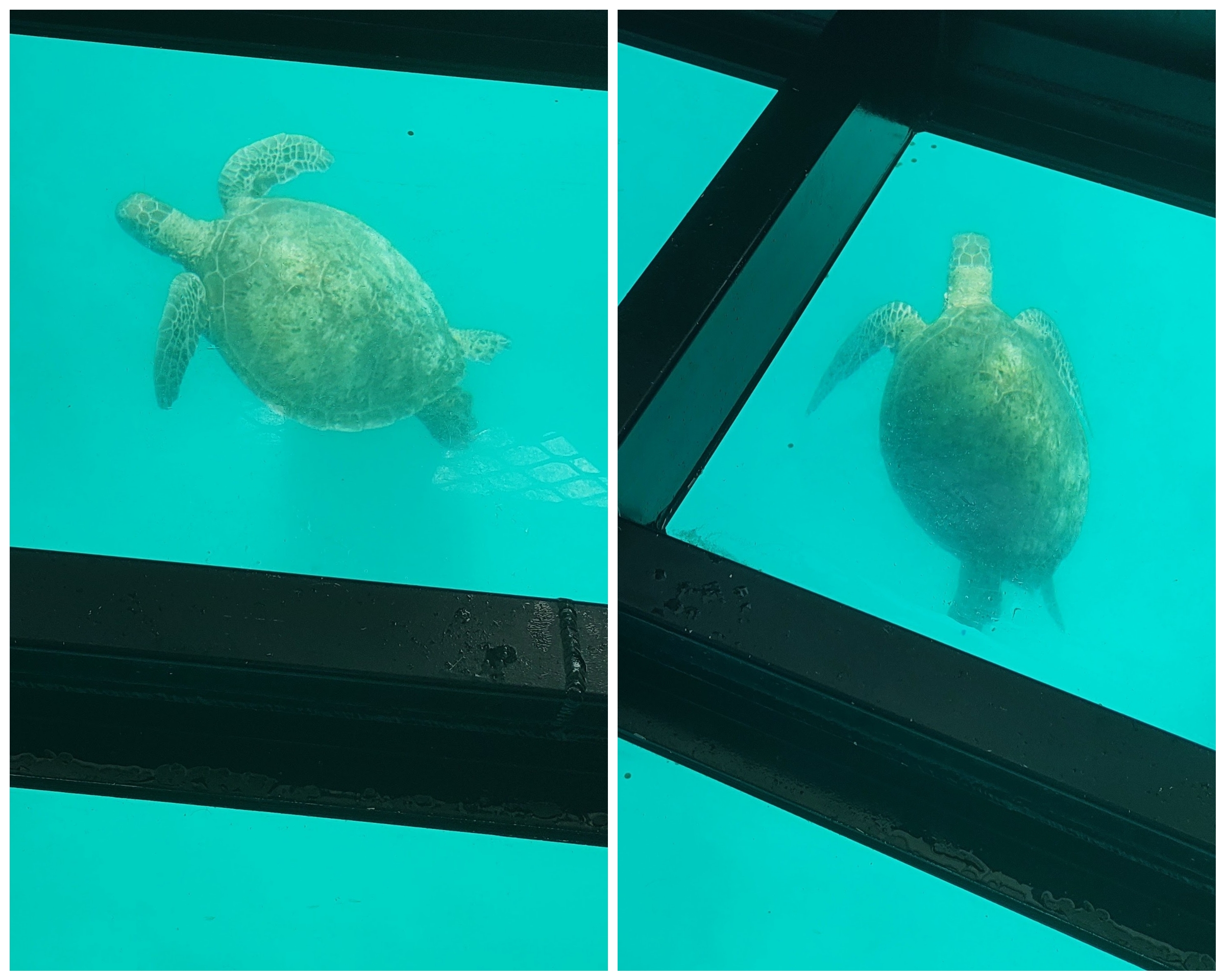
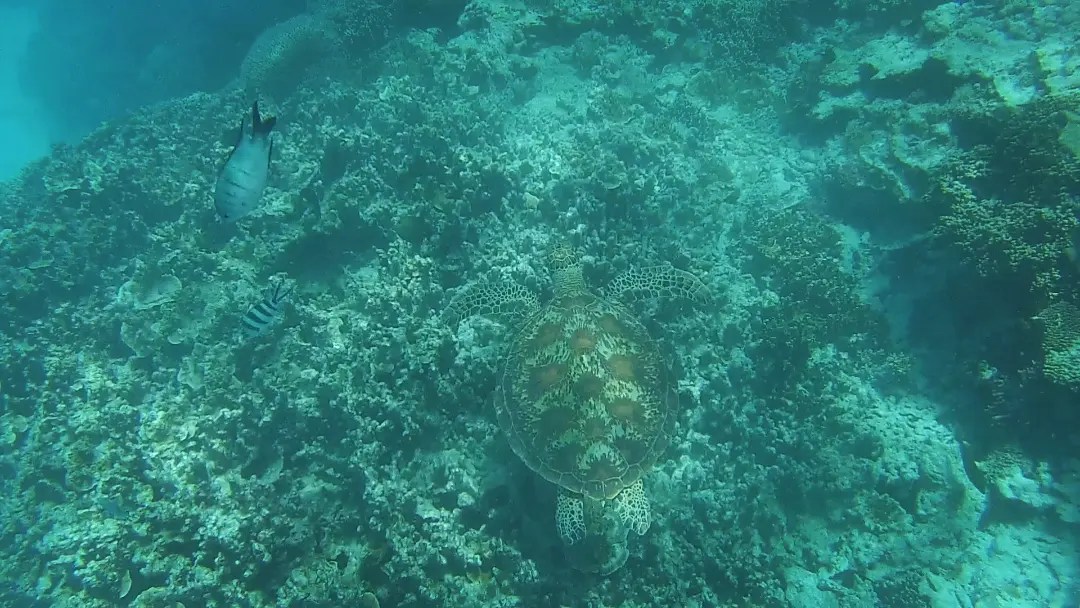
Next, Tyson steered us over a ‘turtle cleaning station’, a part of the reef where little fish nibble all the algae off the turtles’ shells. We could see the silhouettes of 4 turtles being cleaned far beneath the surface, and as we drifted over, one swam right up to the glass, giving us all a clear glimpse of its beautiful pristine shell, before popping its head up right beside the boat! Tyson said that was the closest he’d ever seen a wild green turtle and was pretty stoked himself!

Green Turtle under the Glass Bottomed Boat

Lady Musgrave Island

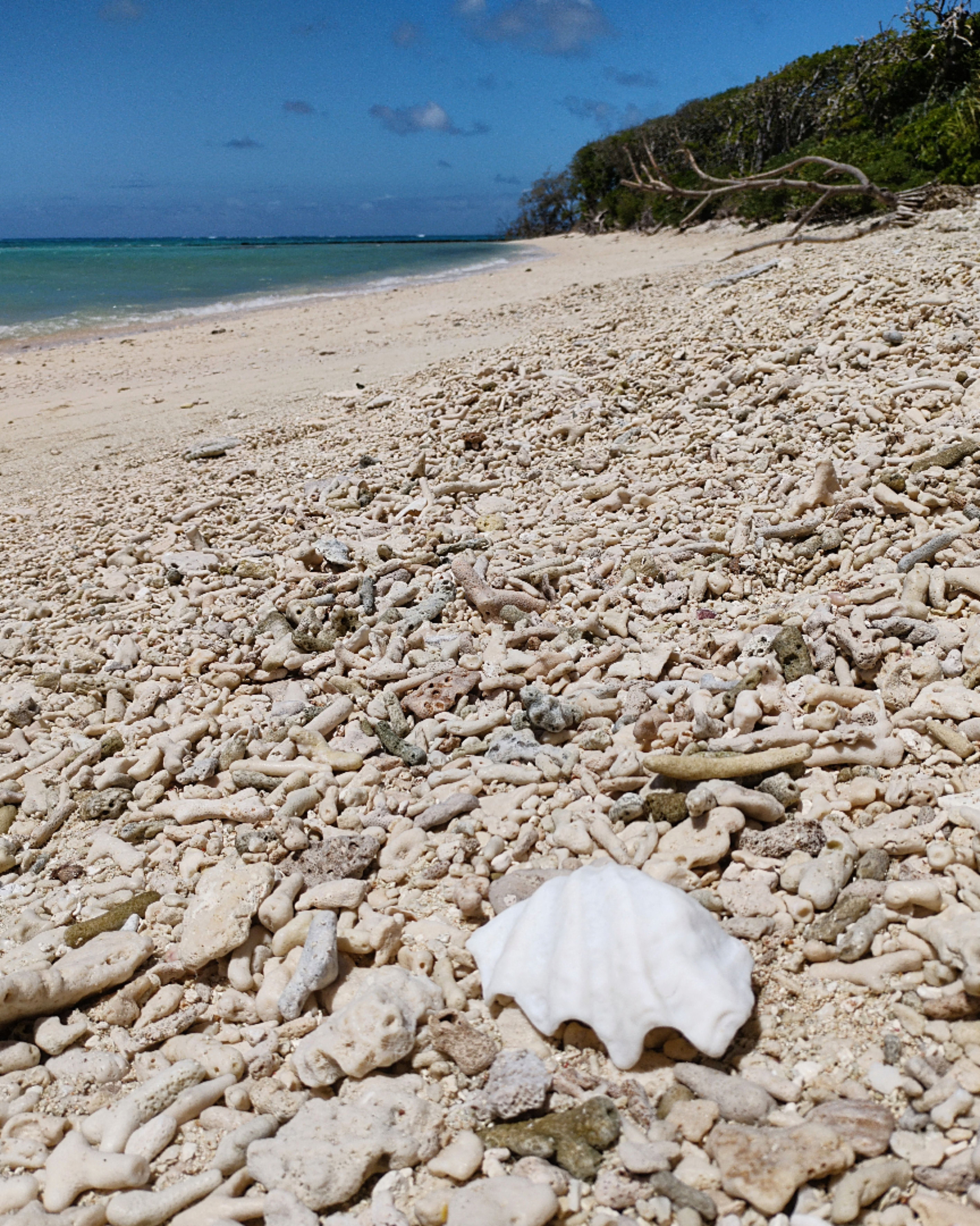
We pulled up on Lady Musgrave Island, where another guide, Jordan, met us for a walk around Capricornia Cays National Park. The sand is white, broken coral, with flecks of pink, and is so sharp you are advised to wear footwear at all times. One of the deadliest creatures of the ocean can be found on this beach – Cone Snails, which might look like a pretty, pink shell to collect, but the creature has a tiny barb that it fires through an opening in its shell, which has the ability to kill a person in half an hour. It wouldn’t be Australia if something wasn’t trying to kill you…

Iridescent Waters
Coral Beach


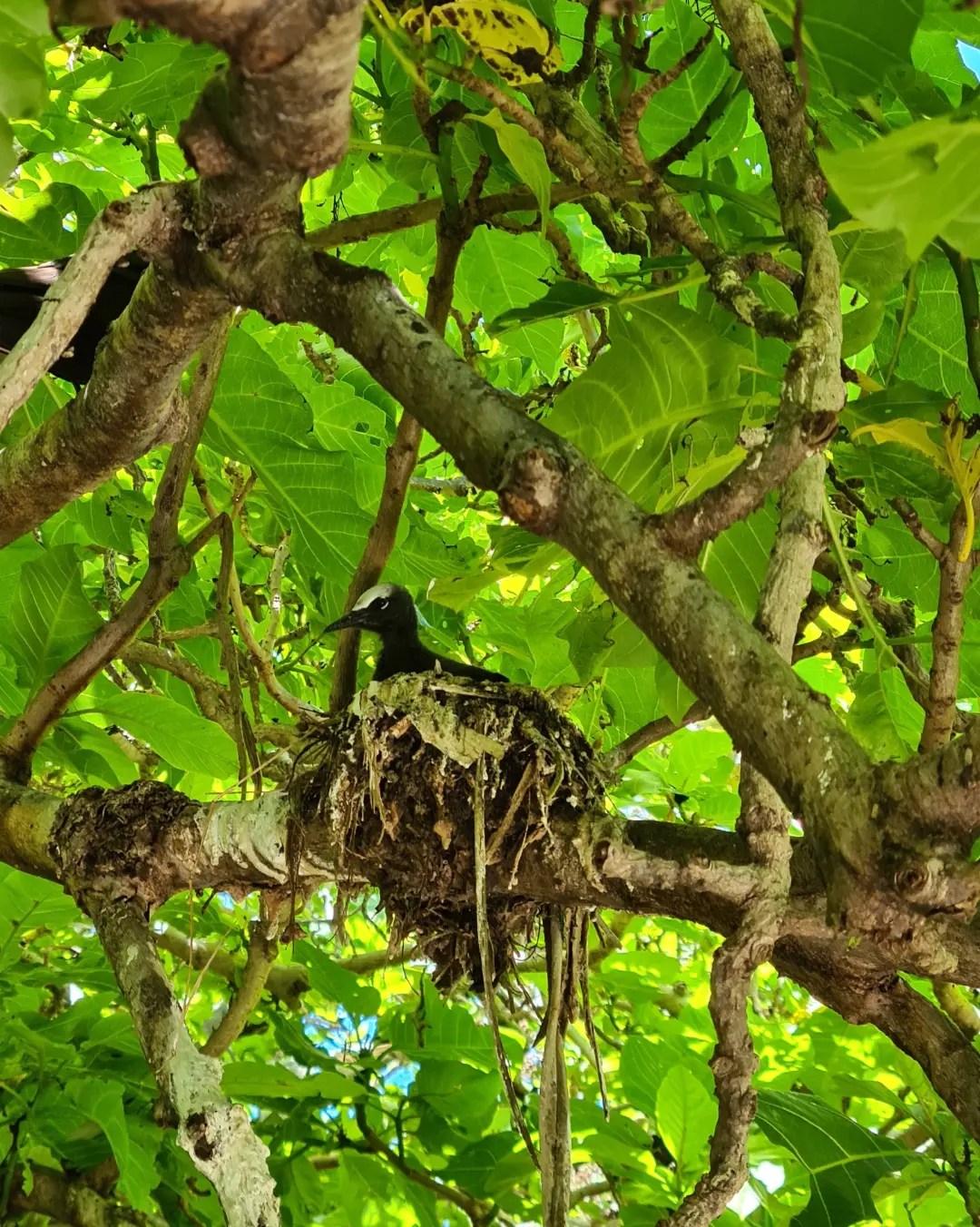
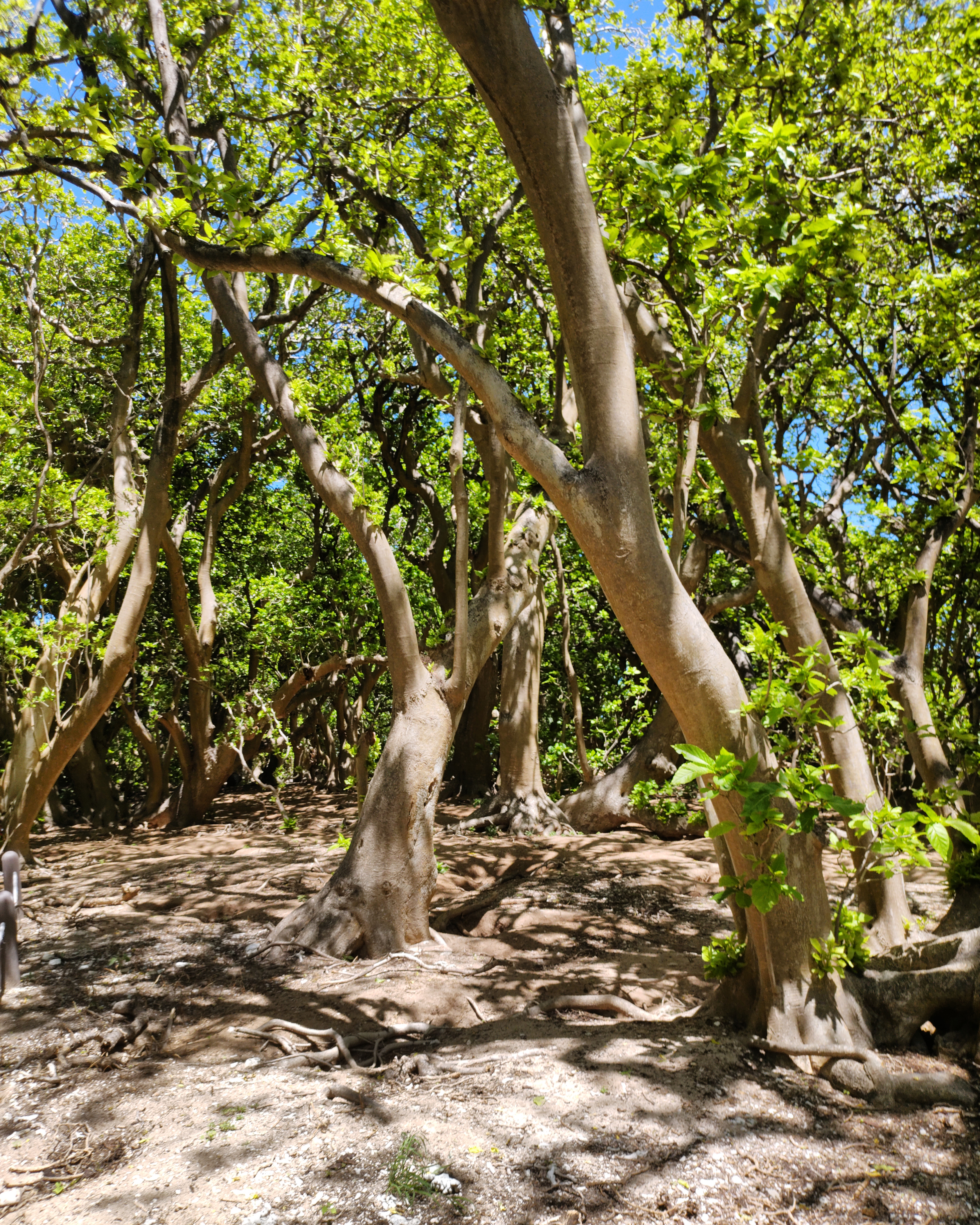
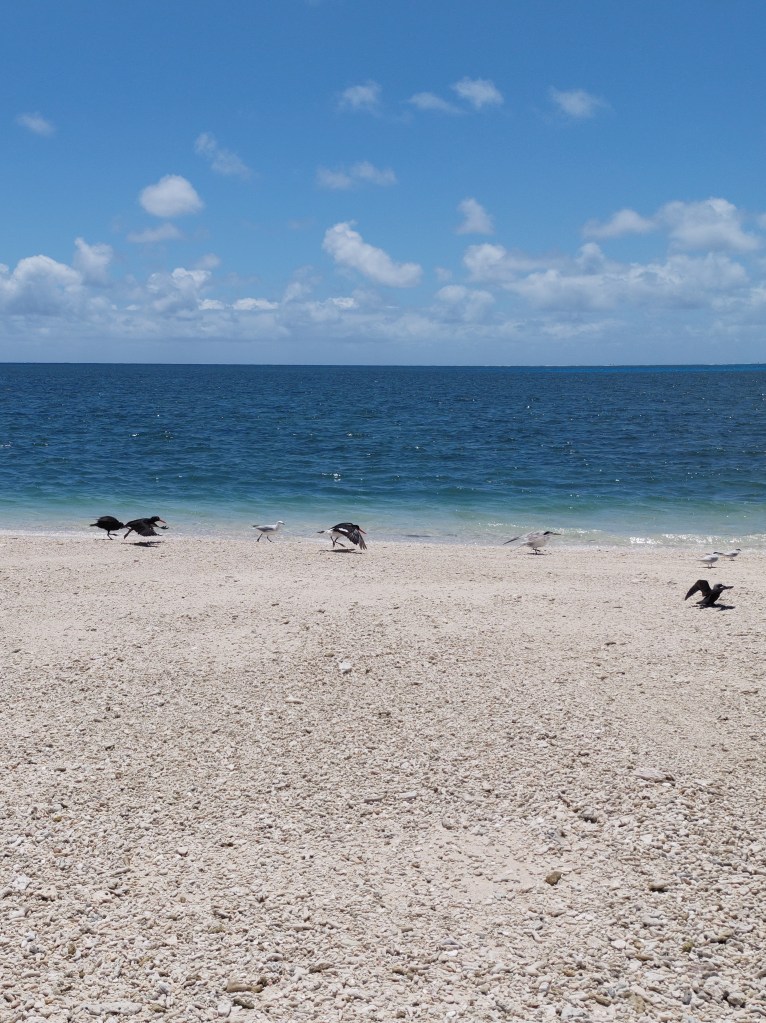
Behind the beach is a dense canopy of green Pisonian Grandis trees, and then you notice the birds. I’m not sure if the noise or the smell hits you first, but when you notice the sheer amount of little black sea birds nesting in the trees, you really get a sense of the wildness of this island. They have no predators here, and they’re everywhere, diving, swooping, pooping, screaming, and they appear to wear little white hats, hence their name: White Capped Noddy Terns. They inhabit the Pisonian forest, and are part of an intense circle of life, see, the island is basically a pile of coral; the birds nest in the trees, and their poop helps fertilise the trees. The trees also produce these sticky, sappy traps, which capture some of the Terns in a slow and sticky death, essentially using the birds as plant food. Gnarly.

The Edge of the Pisonian Forest
A White Capped Noddy Tern Chick in its nest
Pisonian Forest

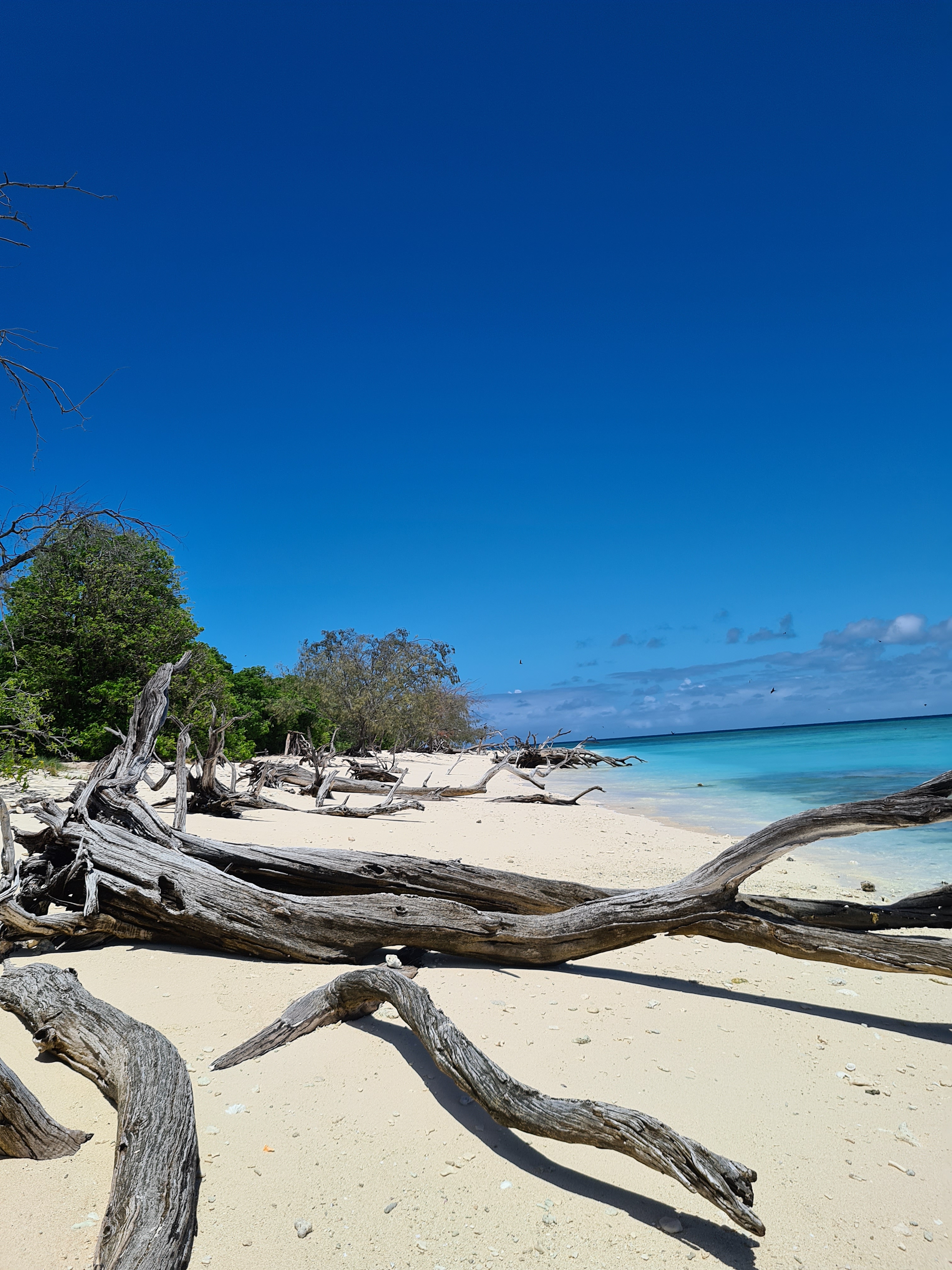
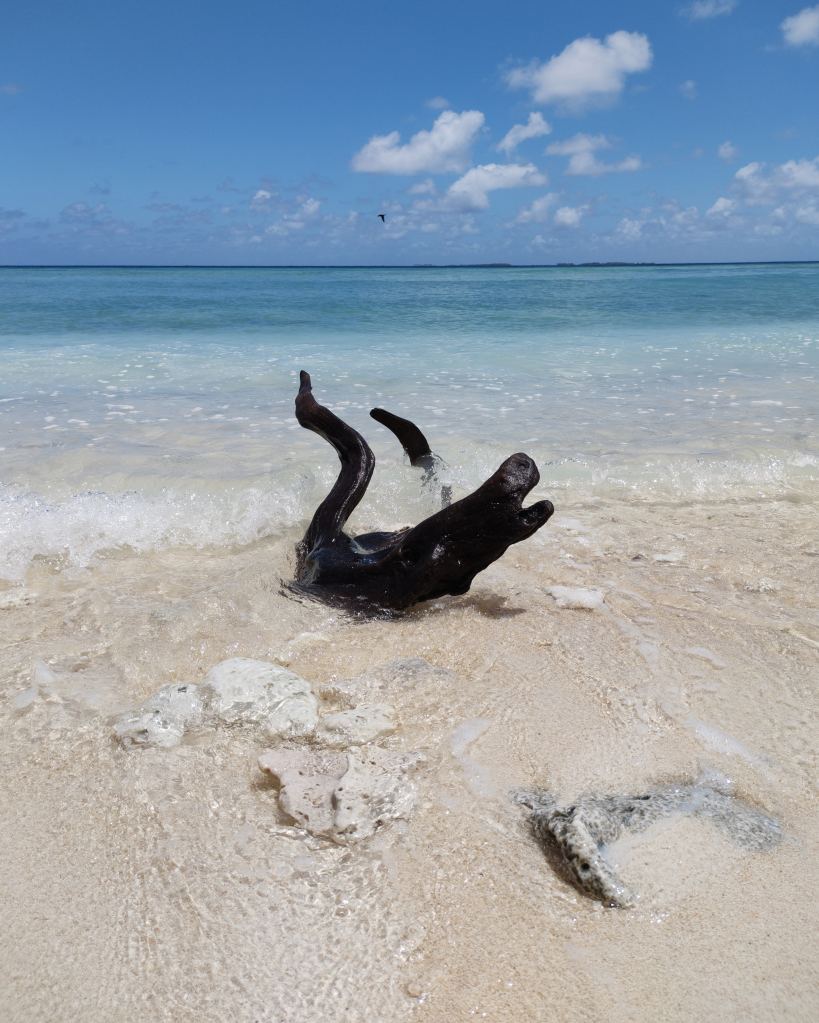
But aside from the stench, the forest was beautiful to walk through. I also spotted a couple of Buff Banded Rail birds scratching about on the ground, and some tiny Capricorn Silver Eyes darting about the branches. We came out on the other side of the island, onto the beach, where sun bleached logs litter the coral sand.

A wild beach
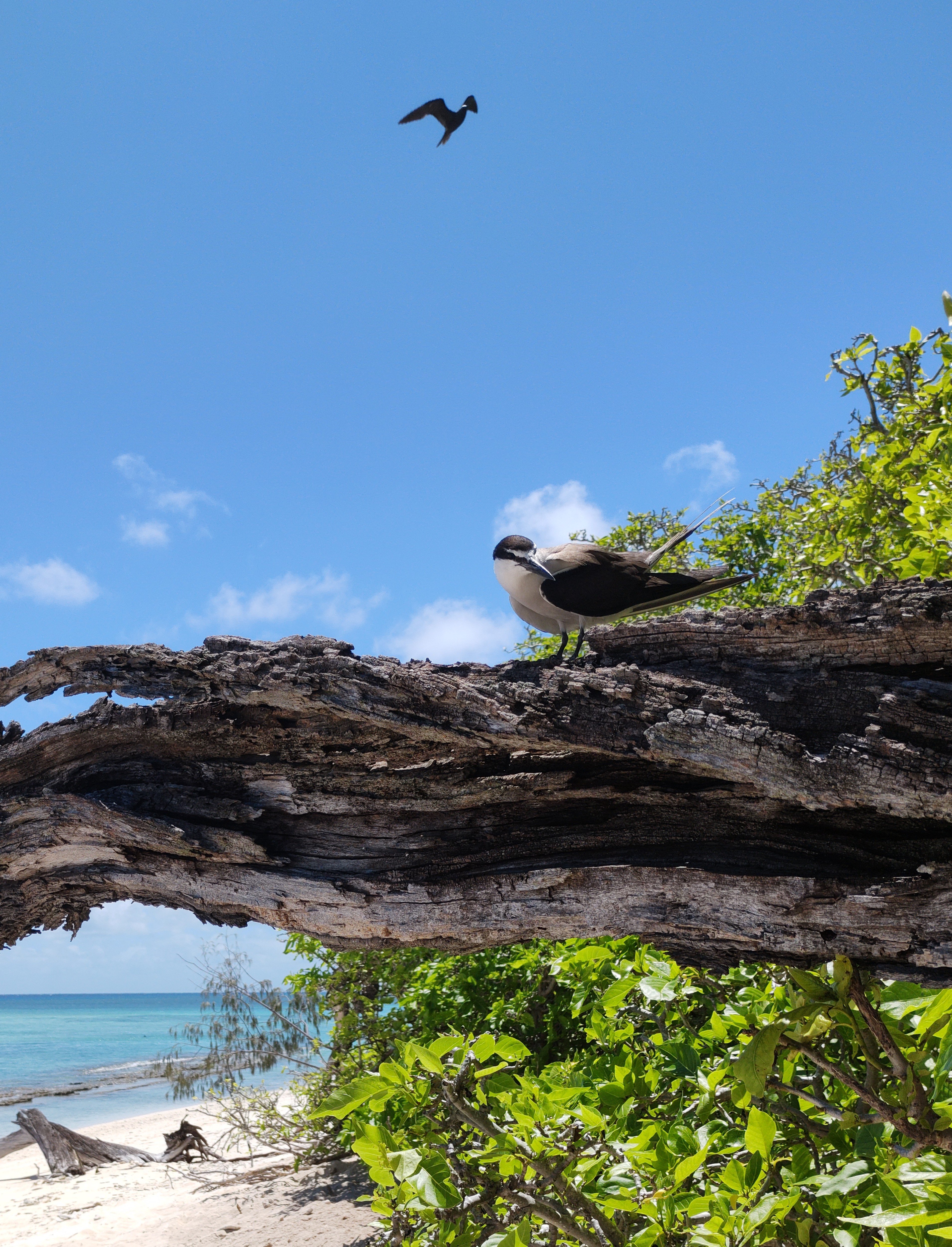
A Bridled Tern rests on a log; a White Capped Noddy Tern flies overhead

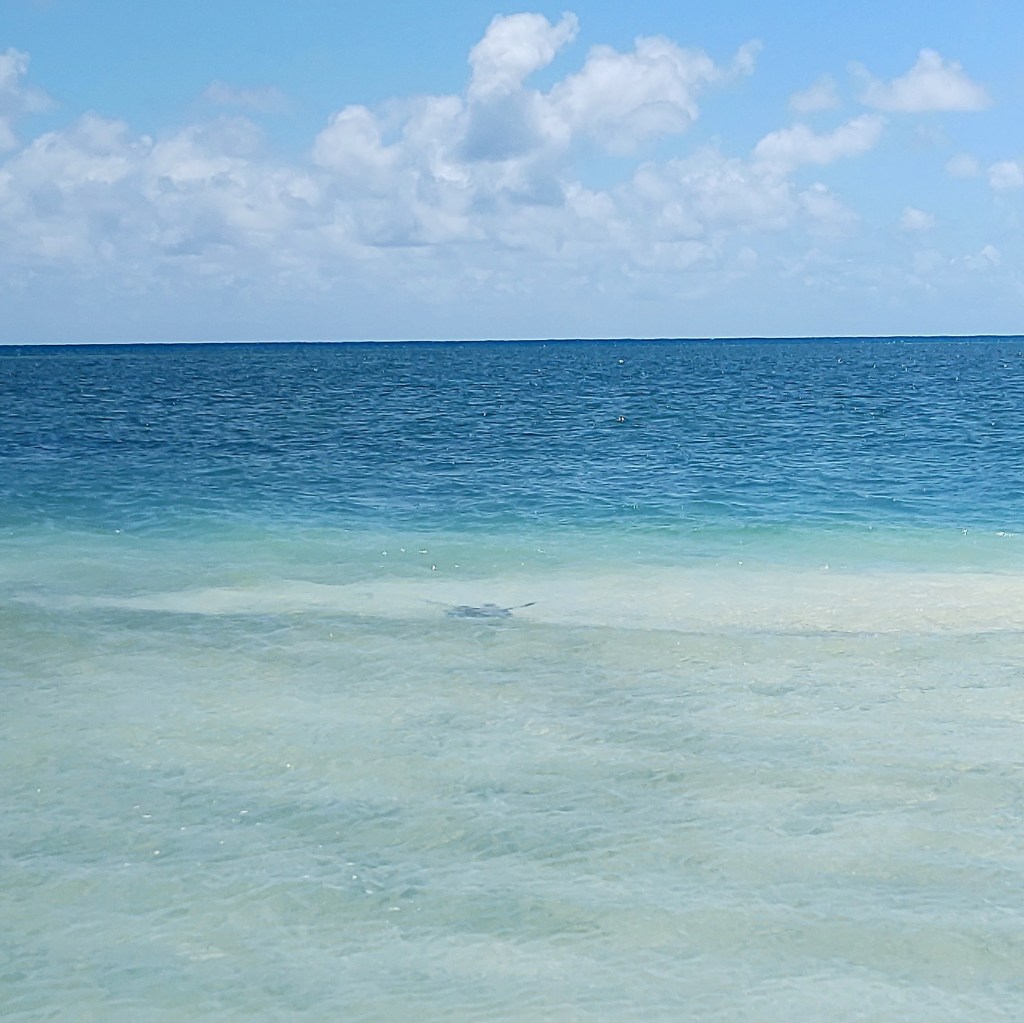
Then came a turtle, just a dark shape in the shallow water, moving closer to the beach. Then came another, and another! They didn’t leave the water, but one came so close to the shore that Jordan identified that it wasn’t big enough to be of nesting age (30), so she must have just been curious! We strolled back around the island along the beach, and hopped back on the glass-bottomed boat, back to the Pontoon for lunch.

Snorkelling on the Reef

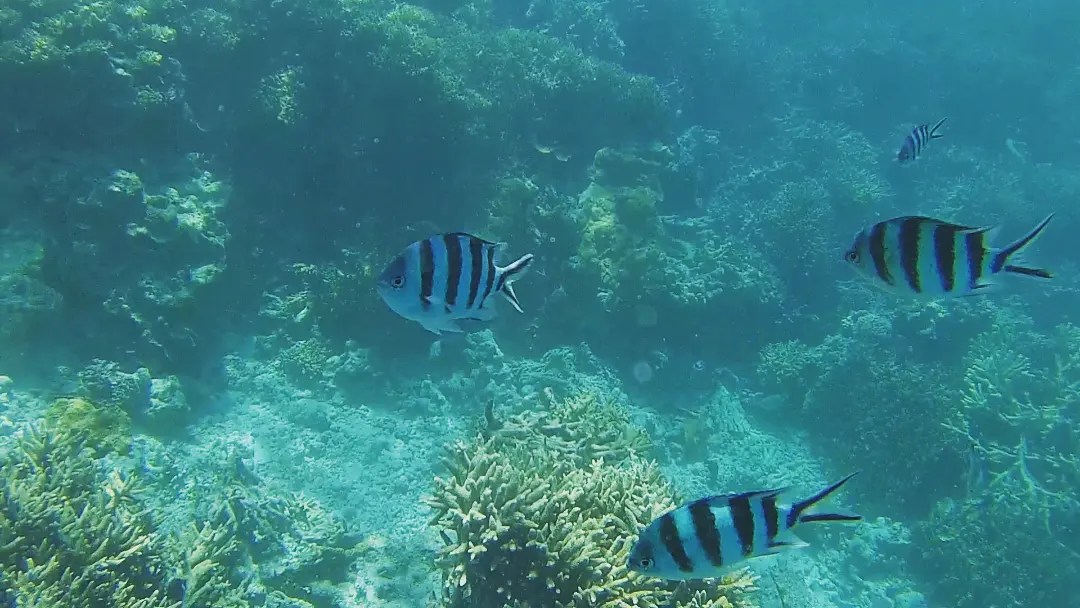
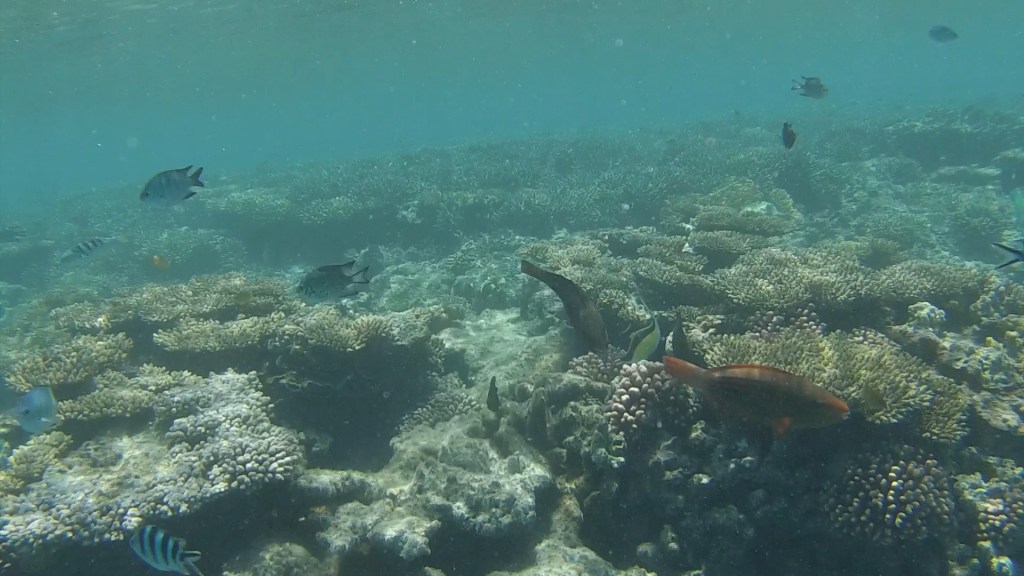
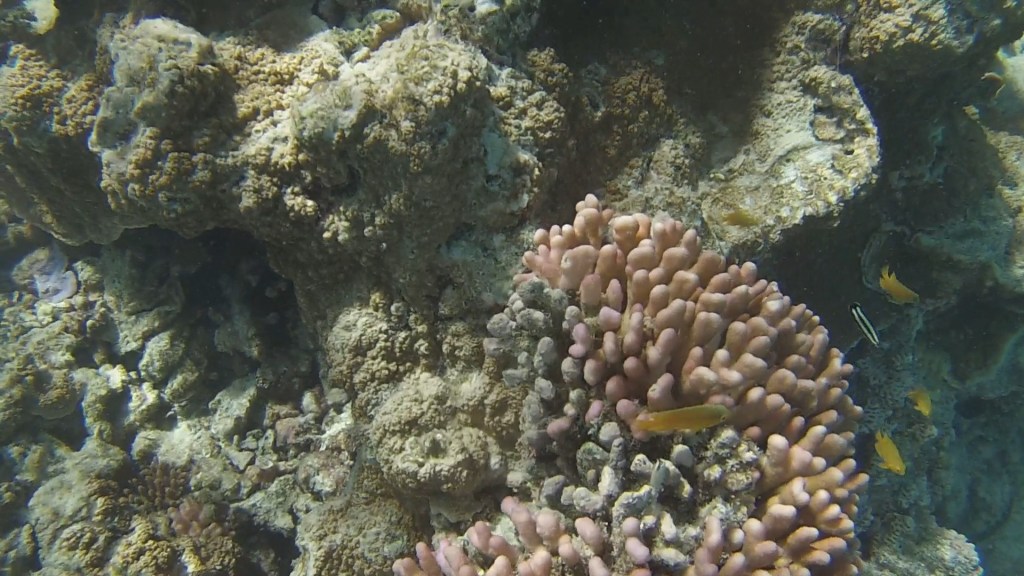
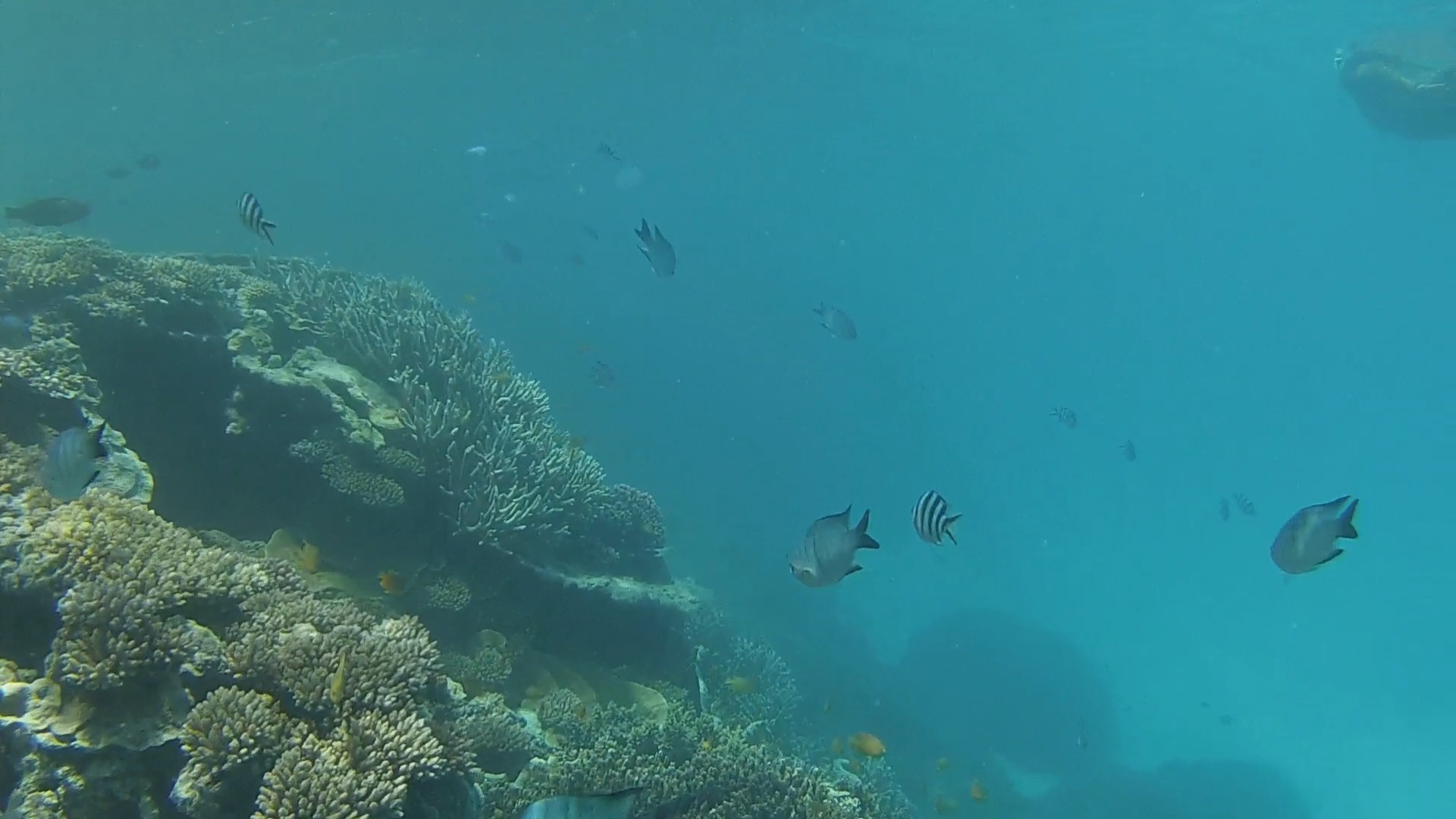
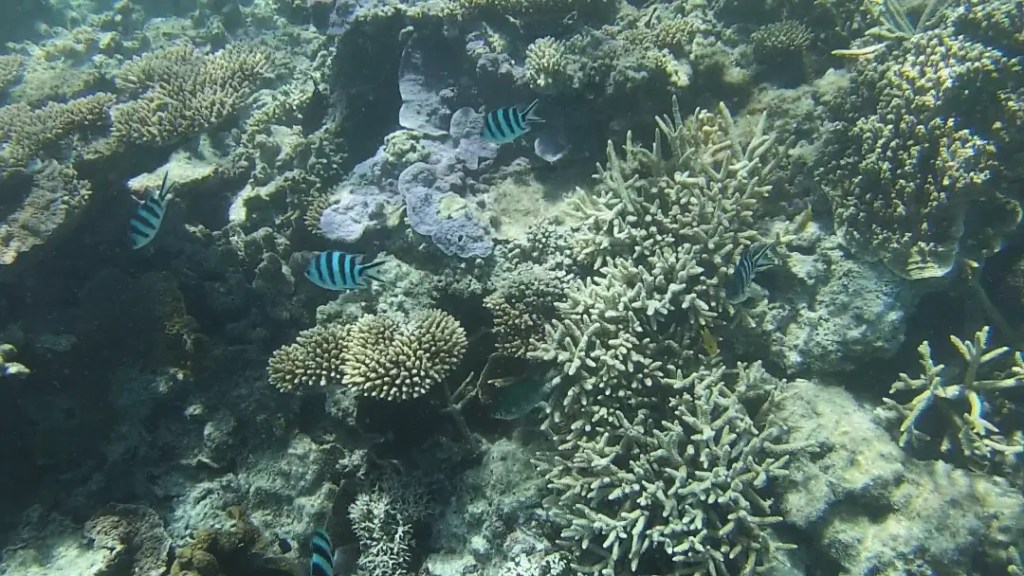
Finally it was our turn to snorkel, the part I’d been looking forward to all day. After a quick lunch of salads and cold meats, we quickly got our gear on and jumped in the reef lagoon. The first thing you see are little groups of little black and white fish, swimming for a close up of your funny goggles. As you get closer to the coral shelf, schools of tiny blue fish shimmer like a glittery curtain as they dart back and forth in unison.

Scissortail Sergeant Fish
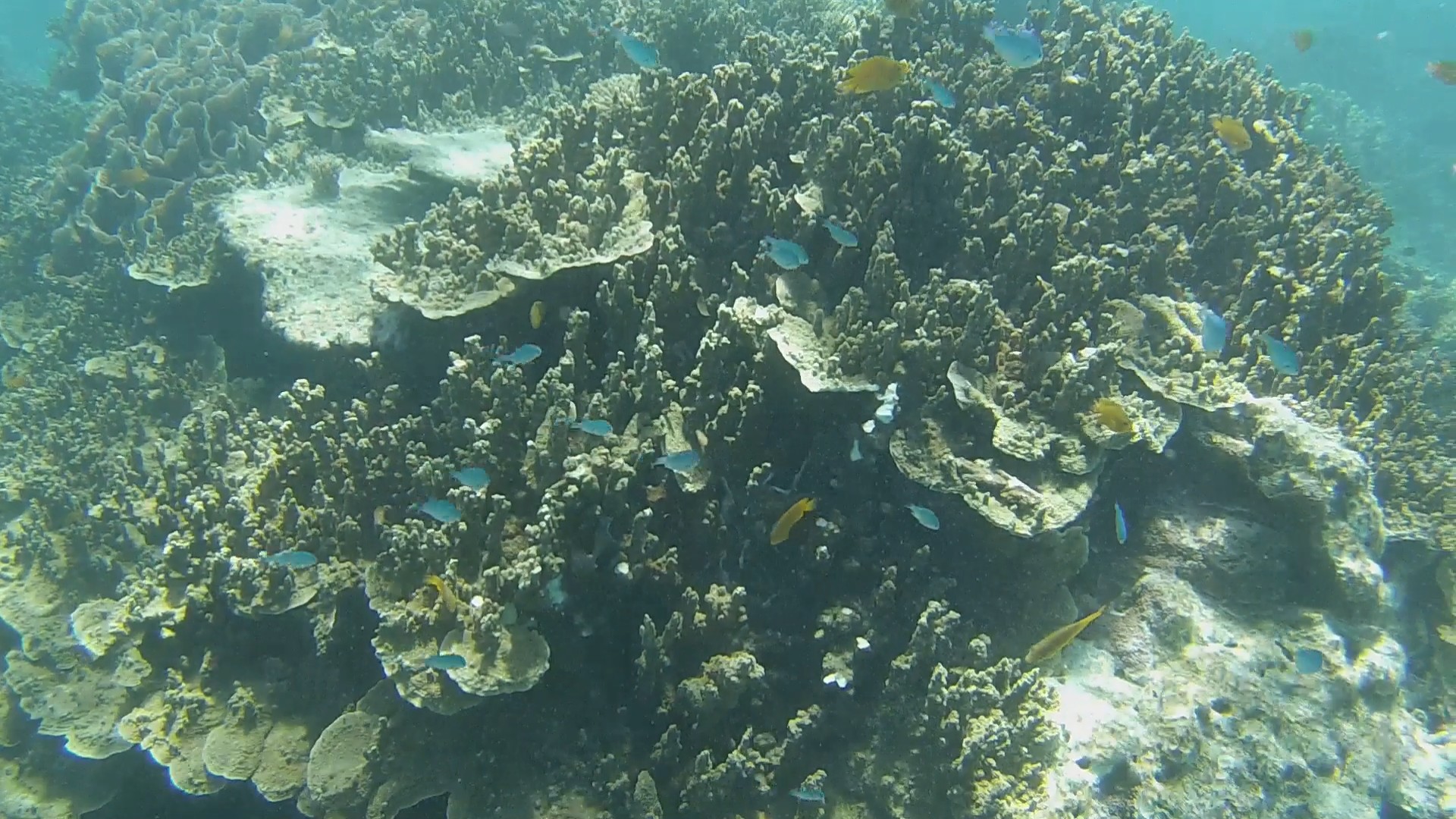
Blue Green Chromis & Lemon Damsels
Whitley’s Sergeant Fish around purple coral
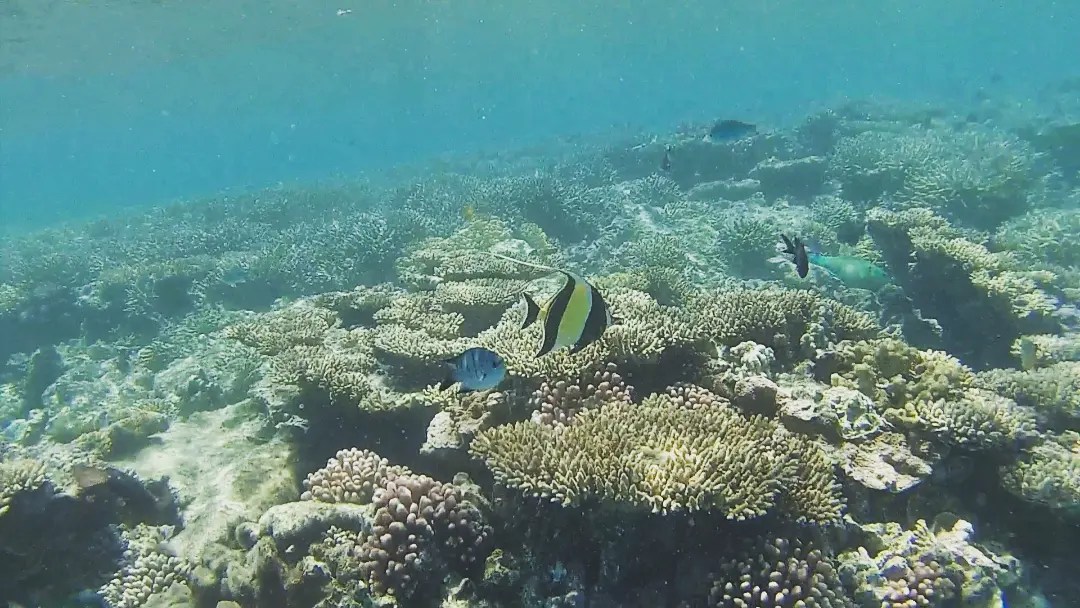
Moorish Idol
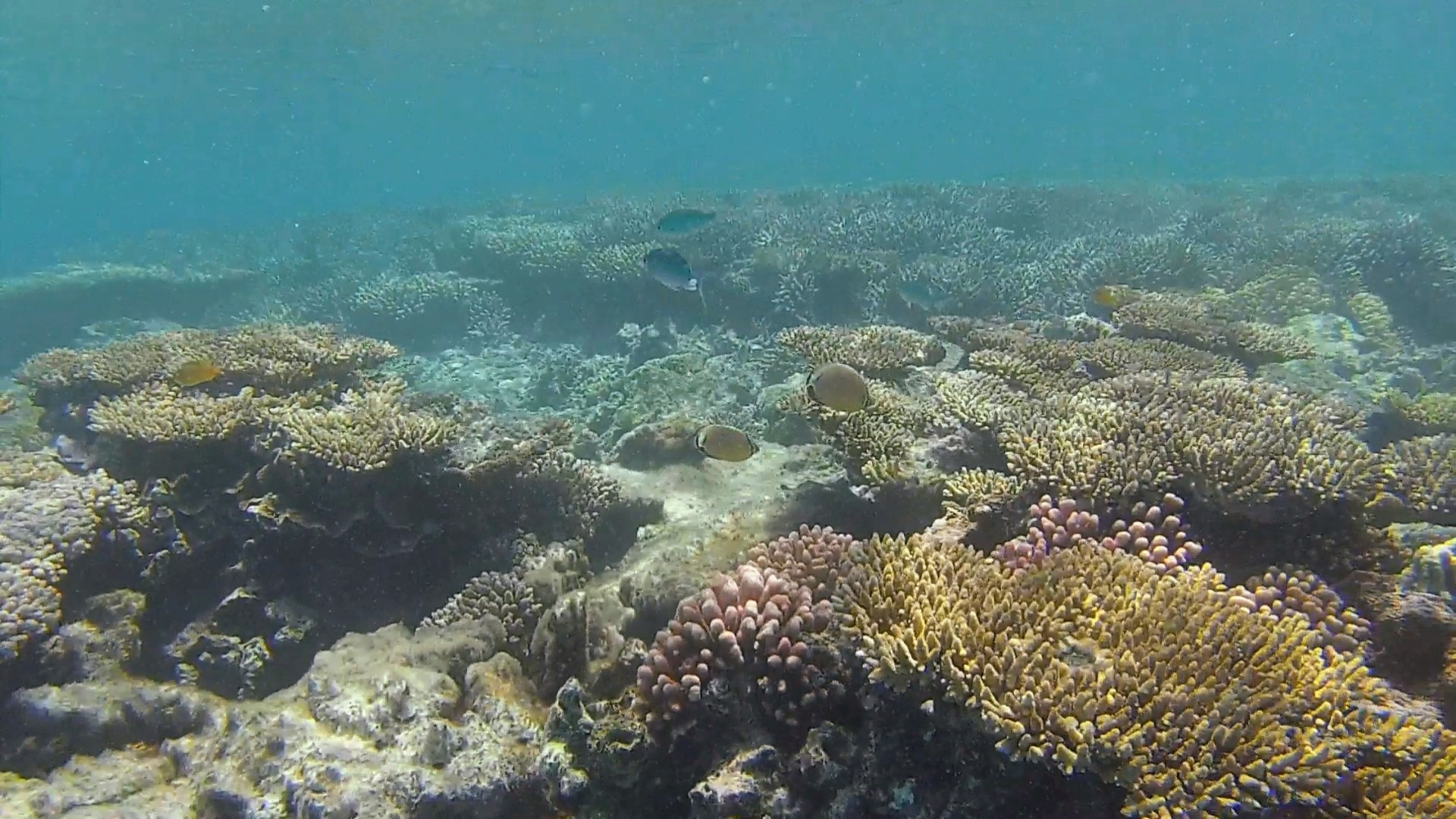
Butterflyfish

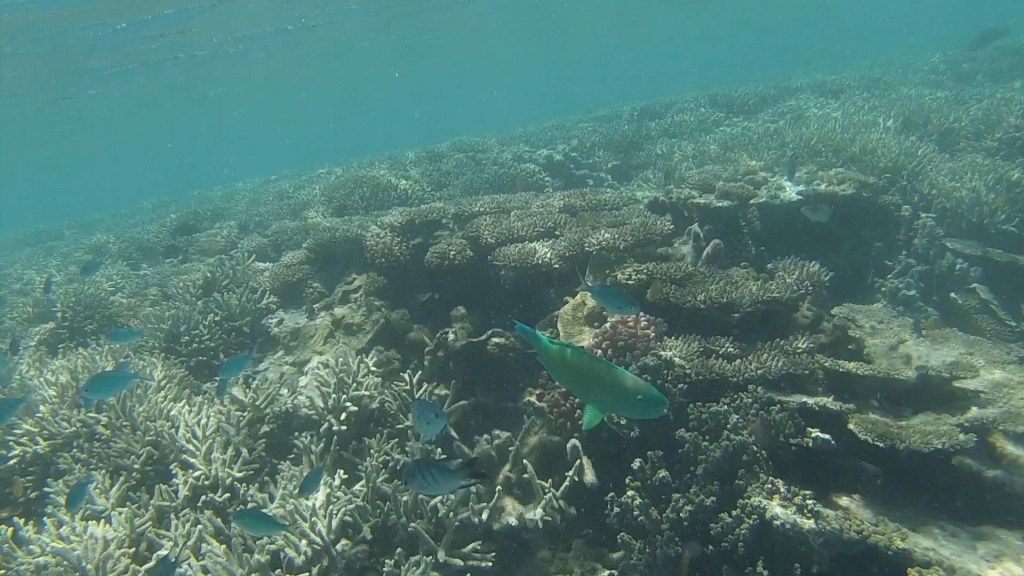
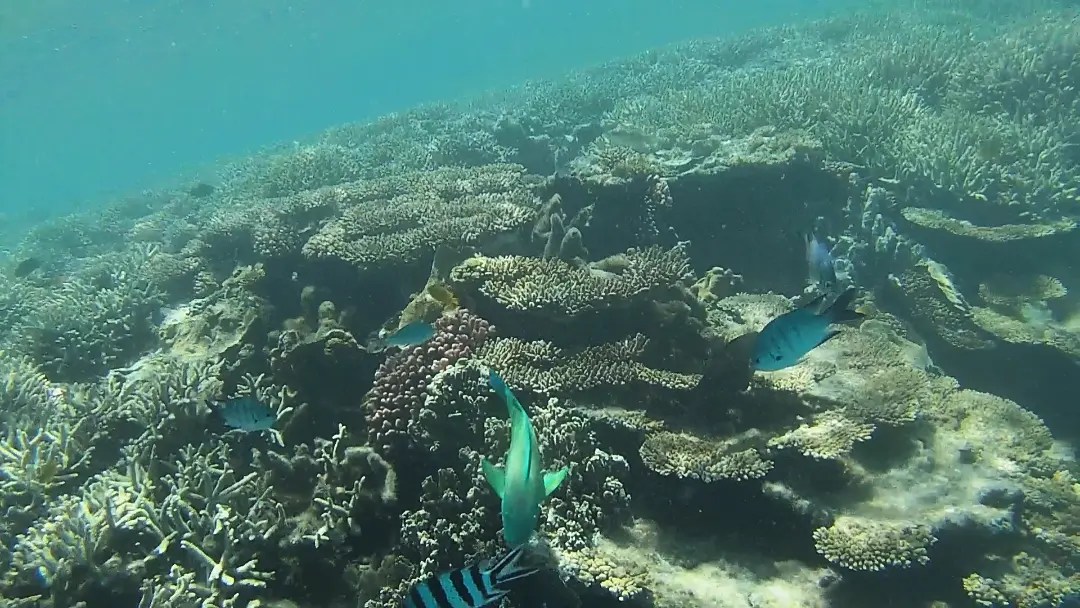
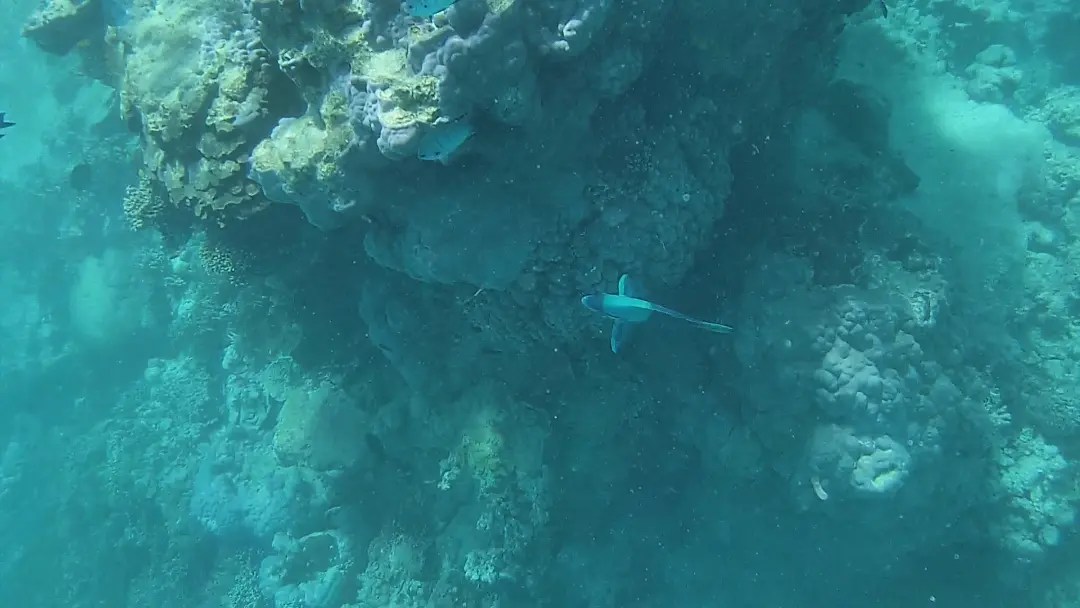
Parrot Fish have beaks that enable them to feed on the coral.

They come in a huge array of colours, you can see the orange one’s teeth-like beak.

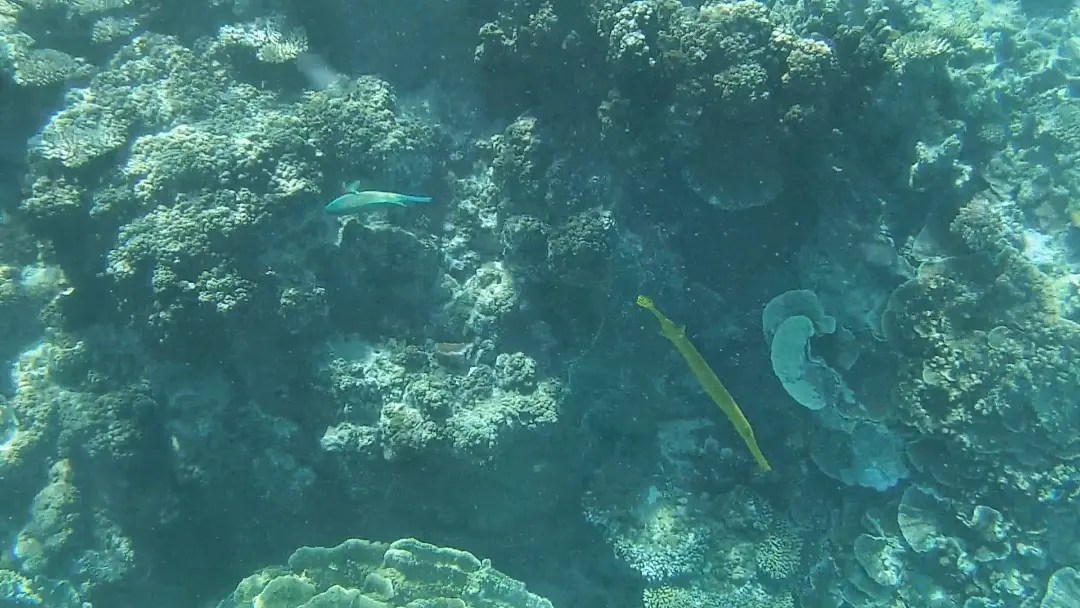
Chinese Trumpet Fish
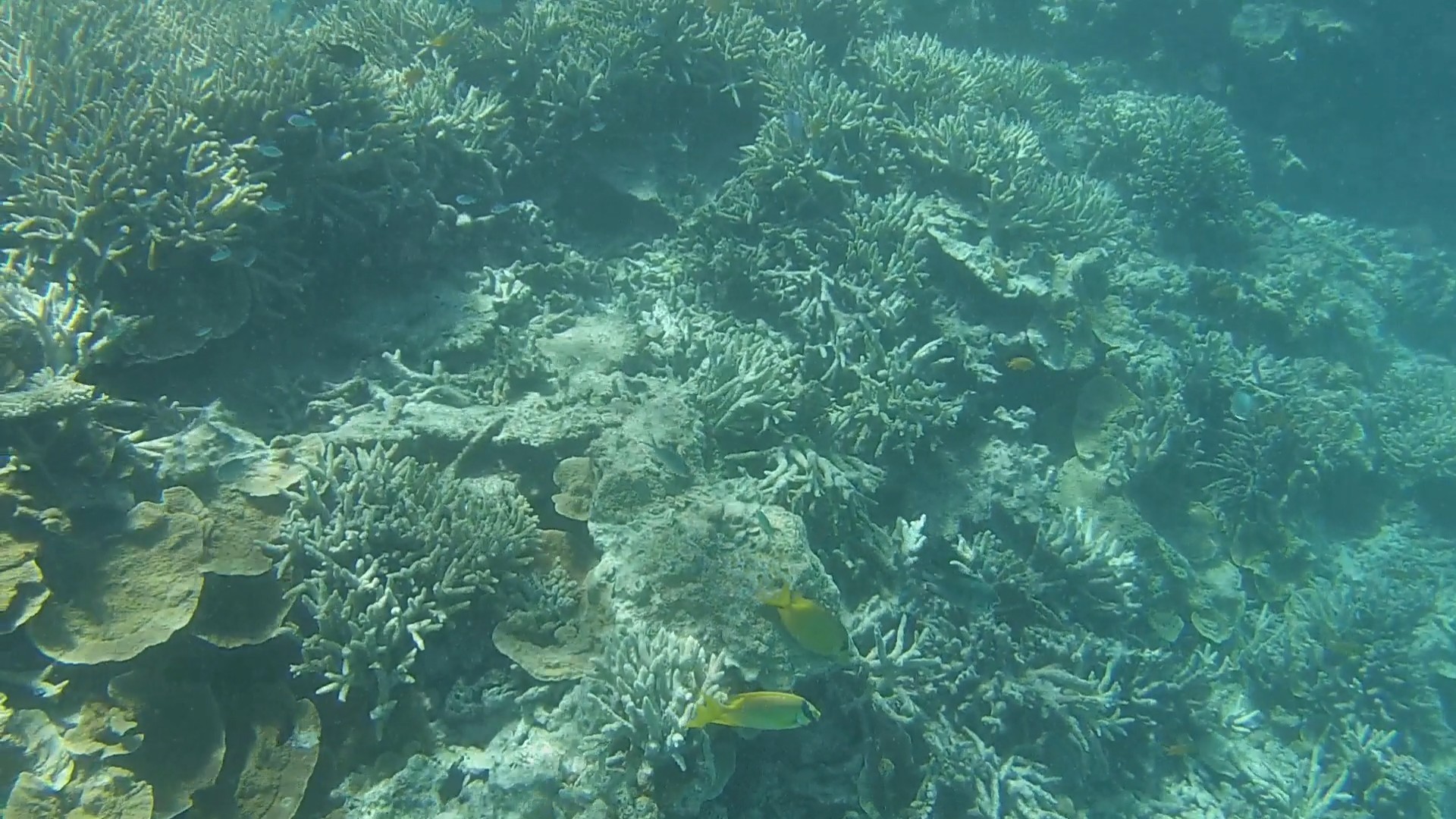
Fox Face Rabbit Fish
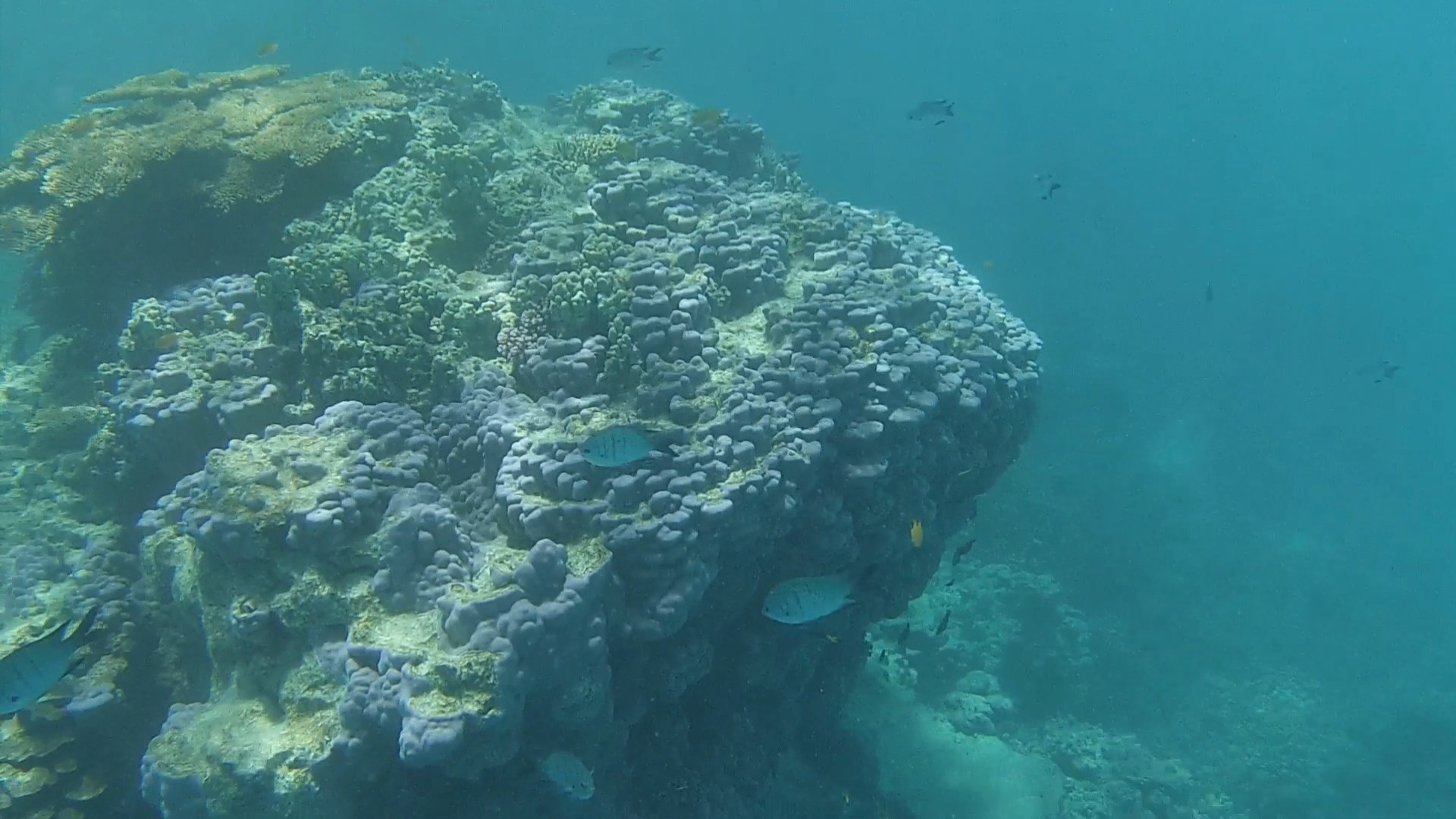
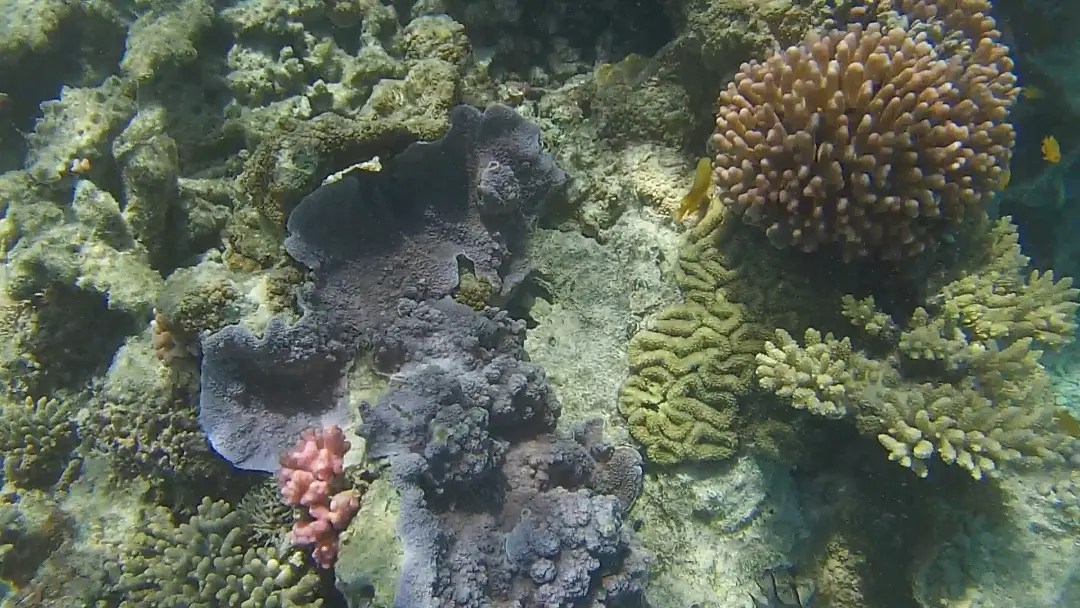
Plated, Staghorn and Brain coral

The coral is beautiful here, splashes of colours somehow pop under the water. I was so engrossed in watching interesting fish appearing from the reef that the turtles caught me off guard! Taylor caught my eye, signalling to me under the water, and pointing ahead; there it was, appearing out of the murkiness, coming towards us, so majestic, as though flying beneath the waves. This Green Turtle was about the size of a grown man’s torso. Her tail was barely visible, showing she was female, and she swam right underneath us. I turned and followed her for a short while, before she dived into the depths of the reef.

Female Green Turtle

The second turtle was skimming along a shallow shelf of reef at my eye level, flapping her flippers, and surfacing a few metres away. I popped my head up too and saw her floating on the surface!

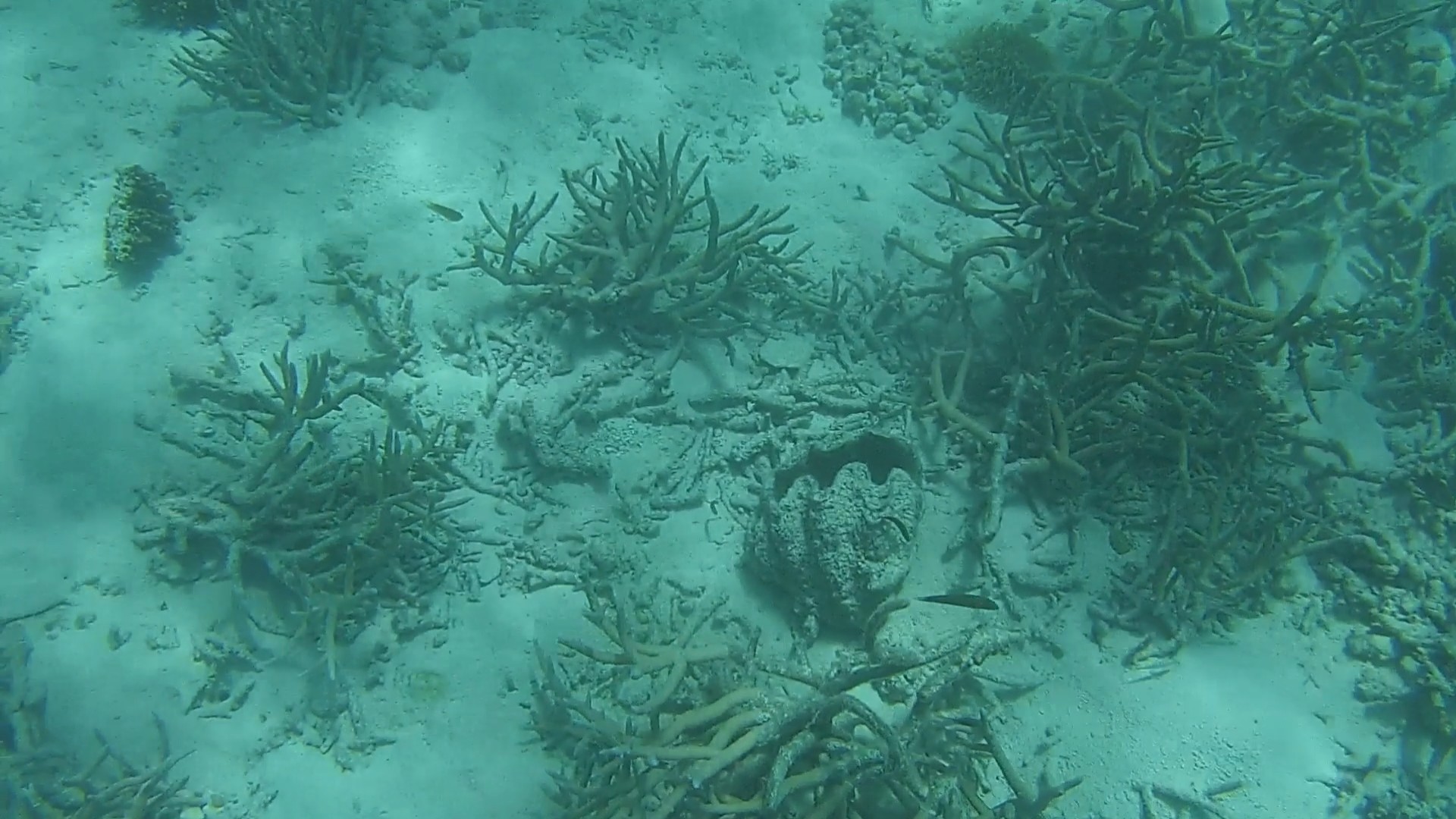
Giant Clam
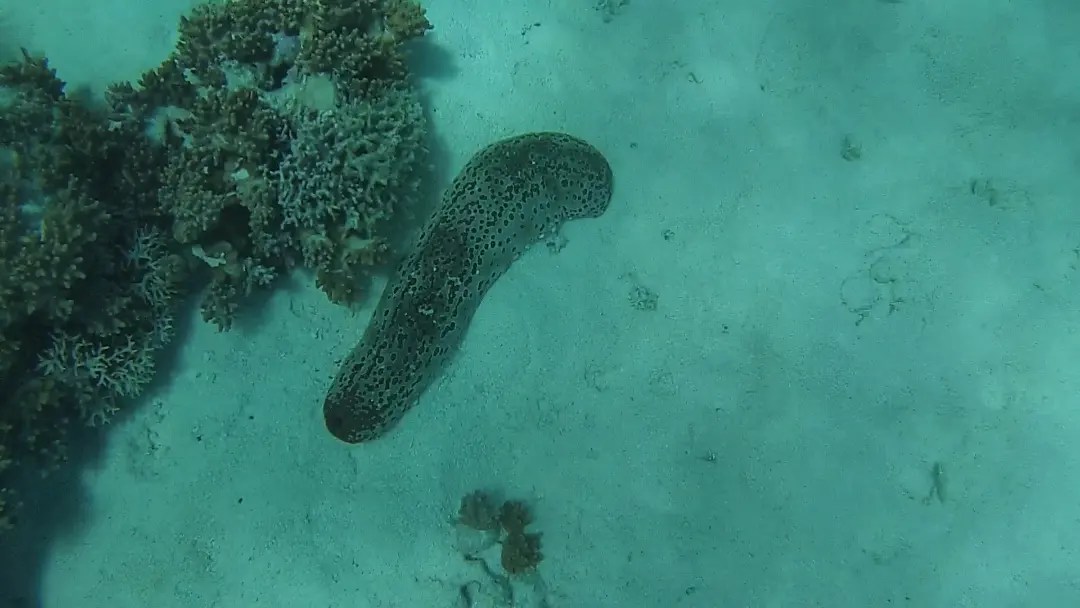
Sea Cucumber
Green Parrot Fish
Blue Parrot Fish

After an hour of solid snorkelling, we sat on the edge of the pontoon sipping on a Gin Mule, dangling our feet in the ocean. On the boat ride back, we saw an Olive Sea Snake wriggle by in the waves, and several dolphins.

Facts of the Day:

  • The Great Barrier Reef is roughly the same size as Japan.
  • You can’t visit the adjacent Fairfax Islands because they were used for target practice by the Australian Military in the 1940s, and there is likely to be live ammunition still scattered on the islands.
  • Without the birds, there would be no trees on Lady Musgrave Island, and without the trees there would be no birds. Without either of these, the island would be a bank of dead coral, and may have been washed or eroded away.
  • Corals are actually living invertebrates related to jellyfish and anemones.
  • Coral relies on its resident algae to survive. Photosynthesis in the algae creates food for the coral.
  • Some corals actually catch small fish and plankton to feed on.
  • The tiny white tips you see on the coral reef is not bleaching; it is in fact regrowth.
  • The colour you see on coral is actually produced by the algae as a form of sun protection. The deeper the coral, the less colour it will have, as it will have less sun exposure.
  • Coral Bleaching is caused by rising temperatures and pollution that kills the coral’s algae. When the algae is gone, the coral dies.

The Bay of Plenty Memoirs

Image

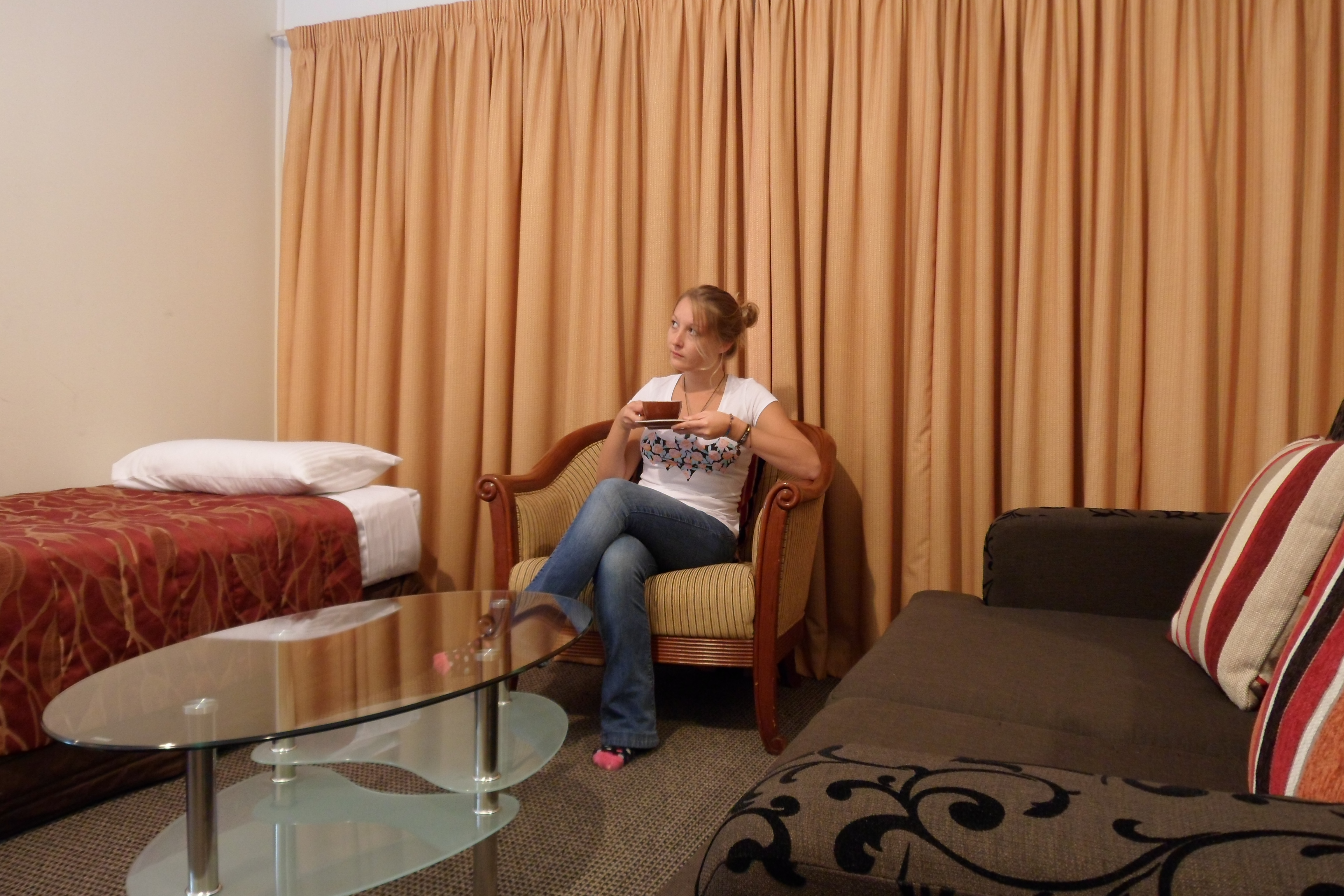
Tonight I feel like your stereotypical writer. Sitting in a motel room in Auckland, wondering where the next pay packet is coming from; sipping tea made with a kettle that doesn’t fit under the tap, and those tiny pots of milk that never seem to be enough, but always turn out to be the perfect amount… I can hear the traffic outside; the fridge is whirring like the tardis, and the man in the room next door has a rasping cough. I’ve eaten all my satsumas, but I’ve got plenty of tea.

I’m trying to decide which bed to sleep in. The double provides sufficient ‘starfish’ space, and it’s closest to the light switch, (there’s nothing worse than stubbing your toe during the scramble-run-dive to the bed in the dark after switching off the light), however the single has, more than likely, seen a lot less ‘action’.

Speaking of ‘action’, I had my first experience in a strip club the other night. Having finished my job in the posh hotel, “The leading hotel in the Bay of Plenty…” (blah blah) I had leaving drinks with some of my work mates. It was a typical friday night on The Strand, and there were a few Mid-Christmas parties going on, which made it slightly rowdier, (Mid-Christmas is a mid-winter celebration, which often involves turkey and tinsel because Christmas falls in the middle of the busy summer period). We started in the usual fashion with a beer or two in the local, when some of the guys began talking about how they always used to go to the strip club. I let slip that I’d never been to a strip club: mouths fell open and that was that! They took me to ‘Route 67’, where we sat along a bench and watched a couple of dances. It was a lot more tasteful than I expected, (and possibly more tasteful than it would be in London), and the girls were really natural, down to earth and friendly. We had a nice chat about wine with a topless girl in the middle of her dance, and then she asked if we would like to spank her. One of my mates even got to motorboat her! The boys weren’t allowed to touch though. I never imagined seeing myself write this, but I was pleasantly surprised!

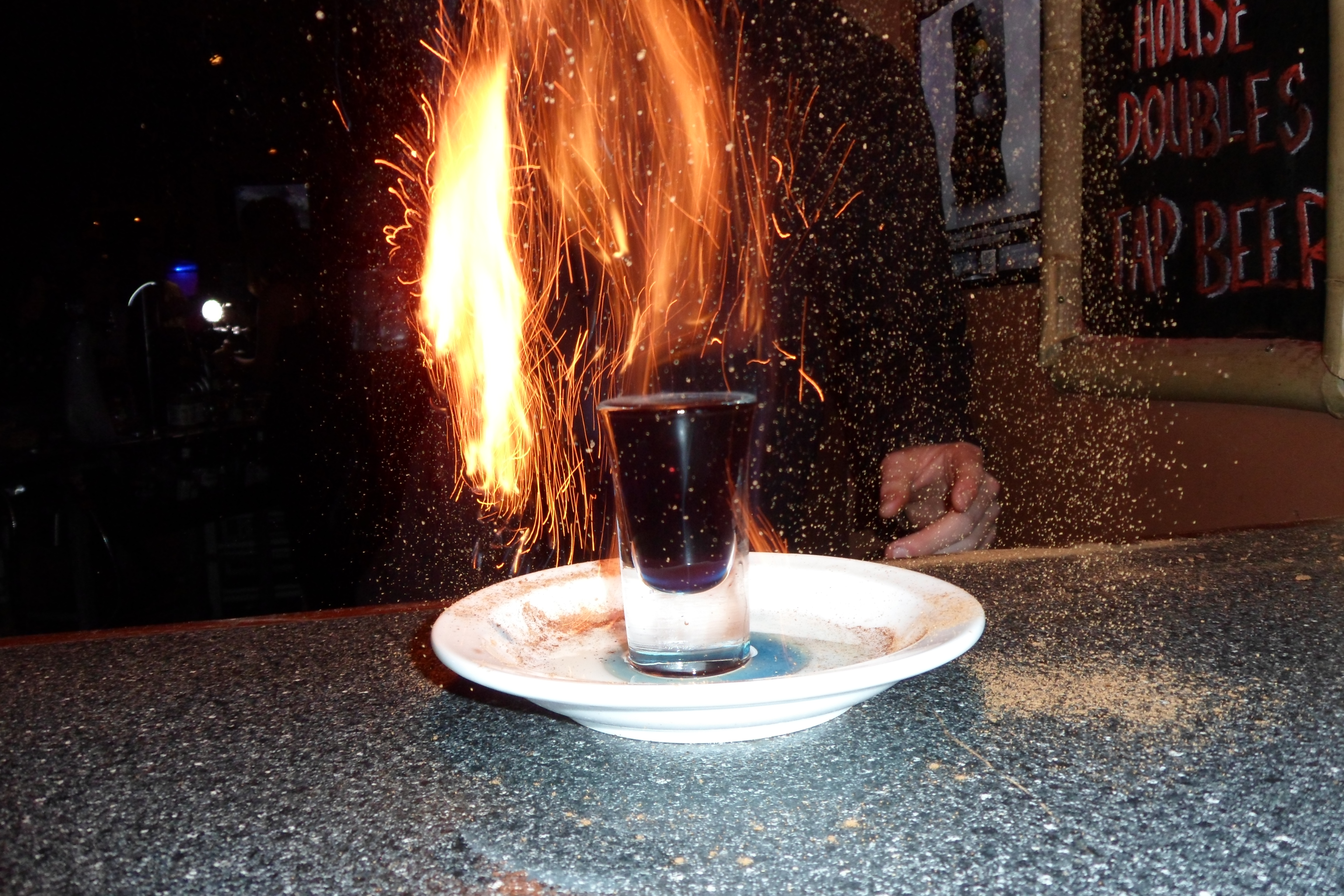
Shortly after, we moved on to The Bahama Hut, where we danced to generic music and drank Backdraft shots…

Image

The shot was set on fire, and sprinkled with cinnamon to create sparks, then the barman put a cup over it to catch the smoke and put the flames out. I had to take the shot with a straw and then breathe the smoke out of the cup.

We sat on the swings in the seating area, just for the novelty of it, and we danced around the palm tree until the club shut, and as the cops made their closing time arrests, we shared taxis home, marveling at the crystal clear stars blinking down at us through the rear windows.

The clarity of the sky here never fails to impress me. I was sitting on the deck back in Tauranga the other day; the sun was shining, it must’ve been about 20 c, and I just sat and listened. In the distance I could hear the faint whoosh of the highway; someone was mowing the lawn in a nearby neighbourhood; a dog was barking in multiples of 3 somewhere in the valley, and the goat on the hill bleated here and there, but the sound that filled my ears the most, was the sound of the birds. Not just one bird; not even one type, but a colourful collage of maybe 10 or 20 different songs, filling the blue sky with music. It got me thinking about how close we are to nature in this part of the world, and all the things I’ve seen in Tauranga and The Bay of Plenty…

Image

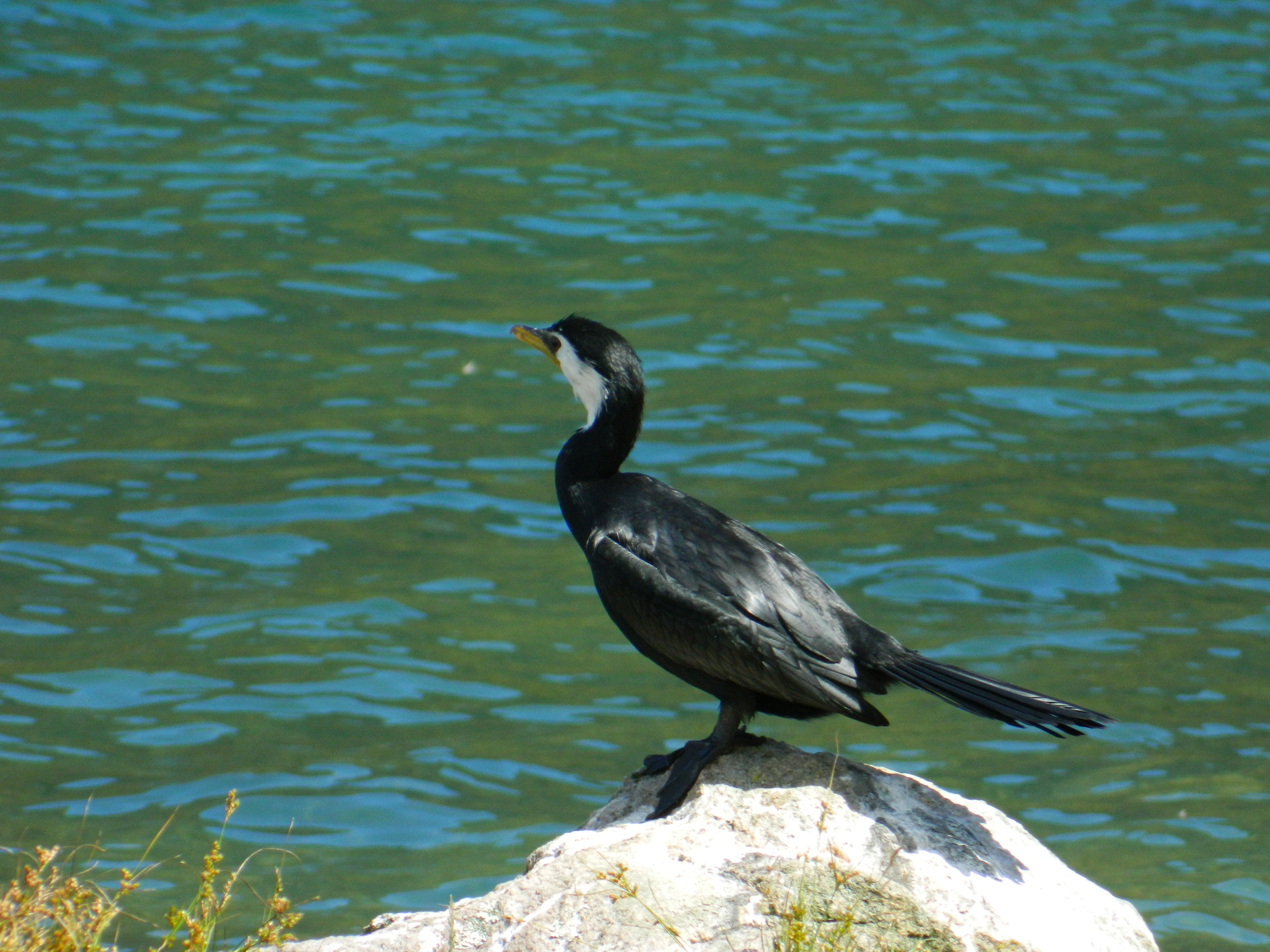
A Shag at The Blue Lake, Rotorua (sounds rude)

Image

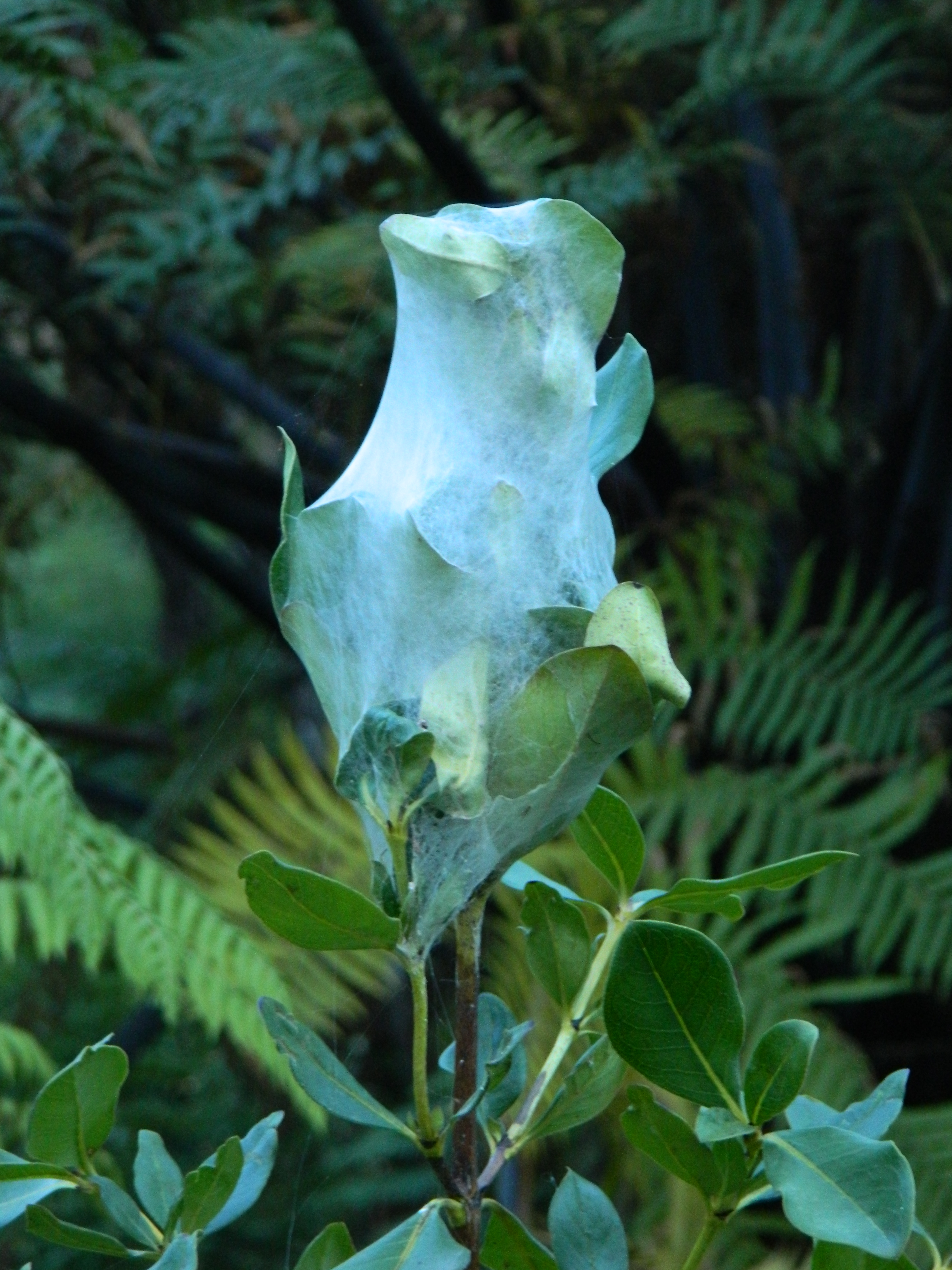
Creepy spider’s web in The Bay of Plenty

Image

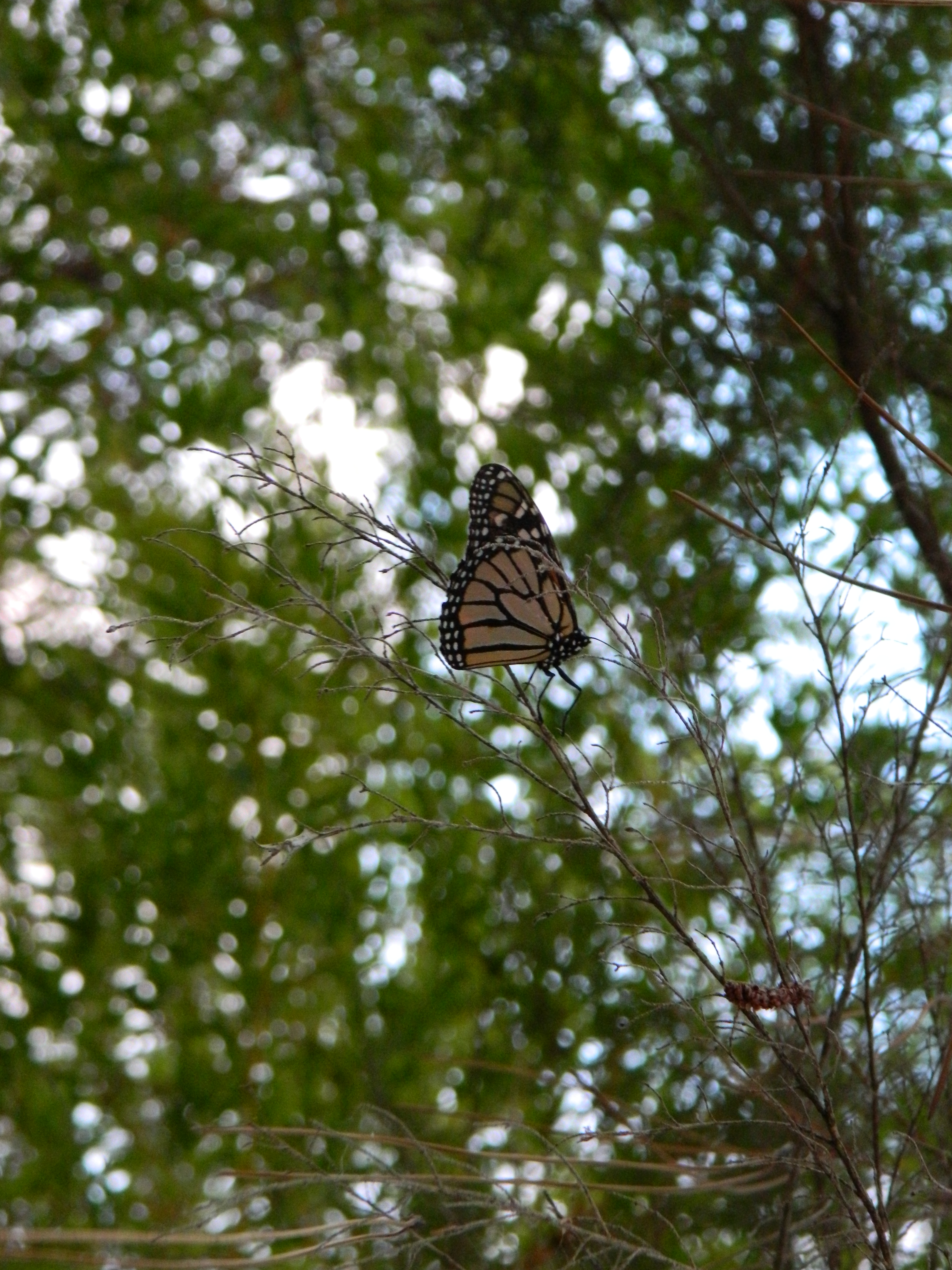
Admiral Butterfly in The Bay of Plenty

Image

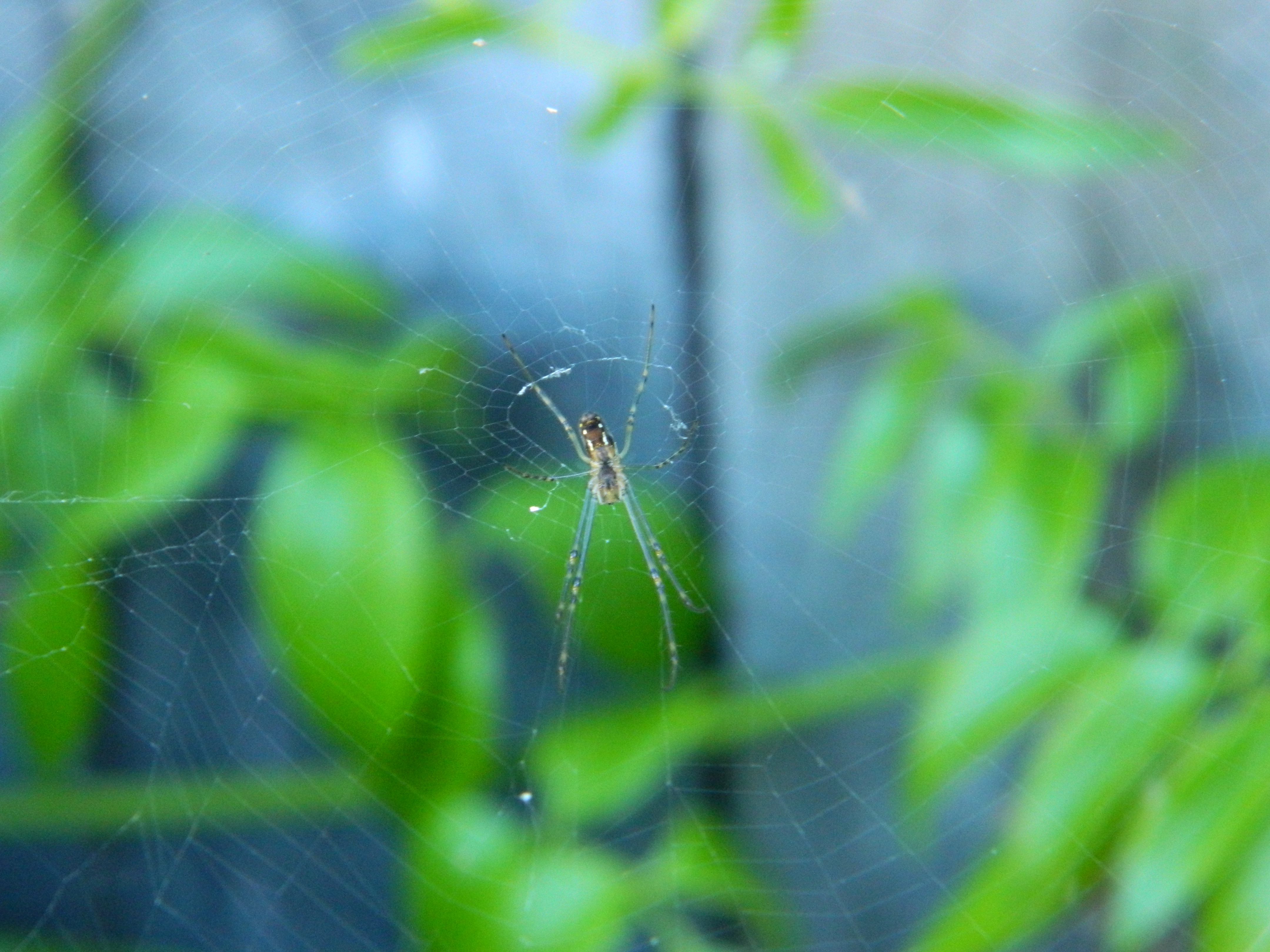
An Orb Spider in the garden

Image

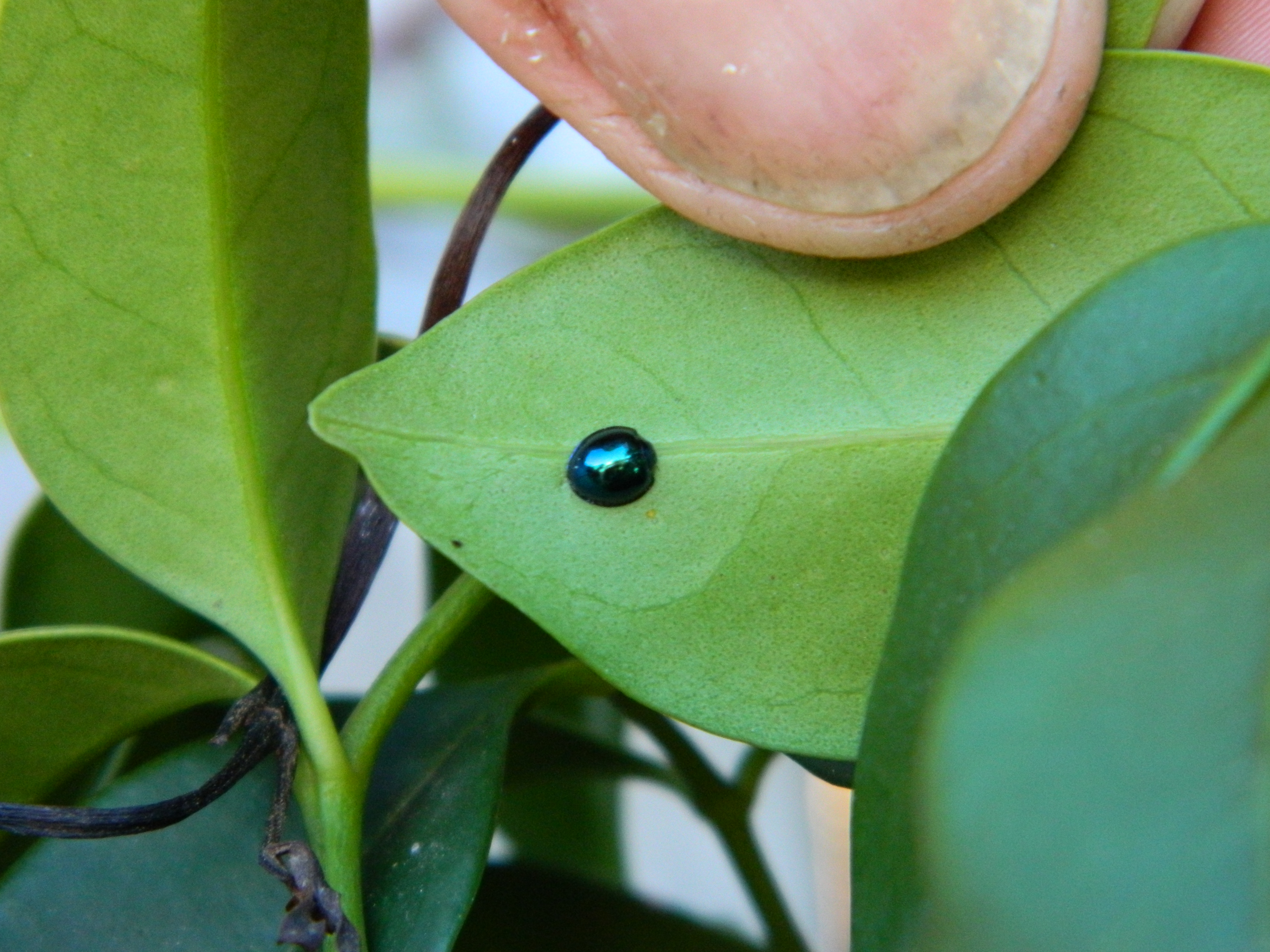
A shiny green ladybird in the garden

Image

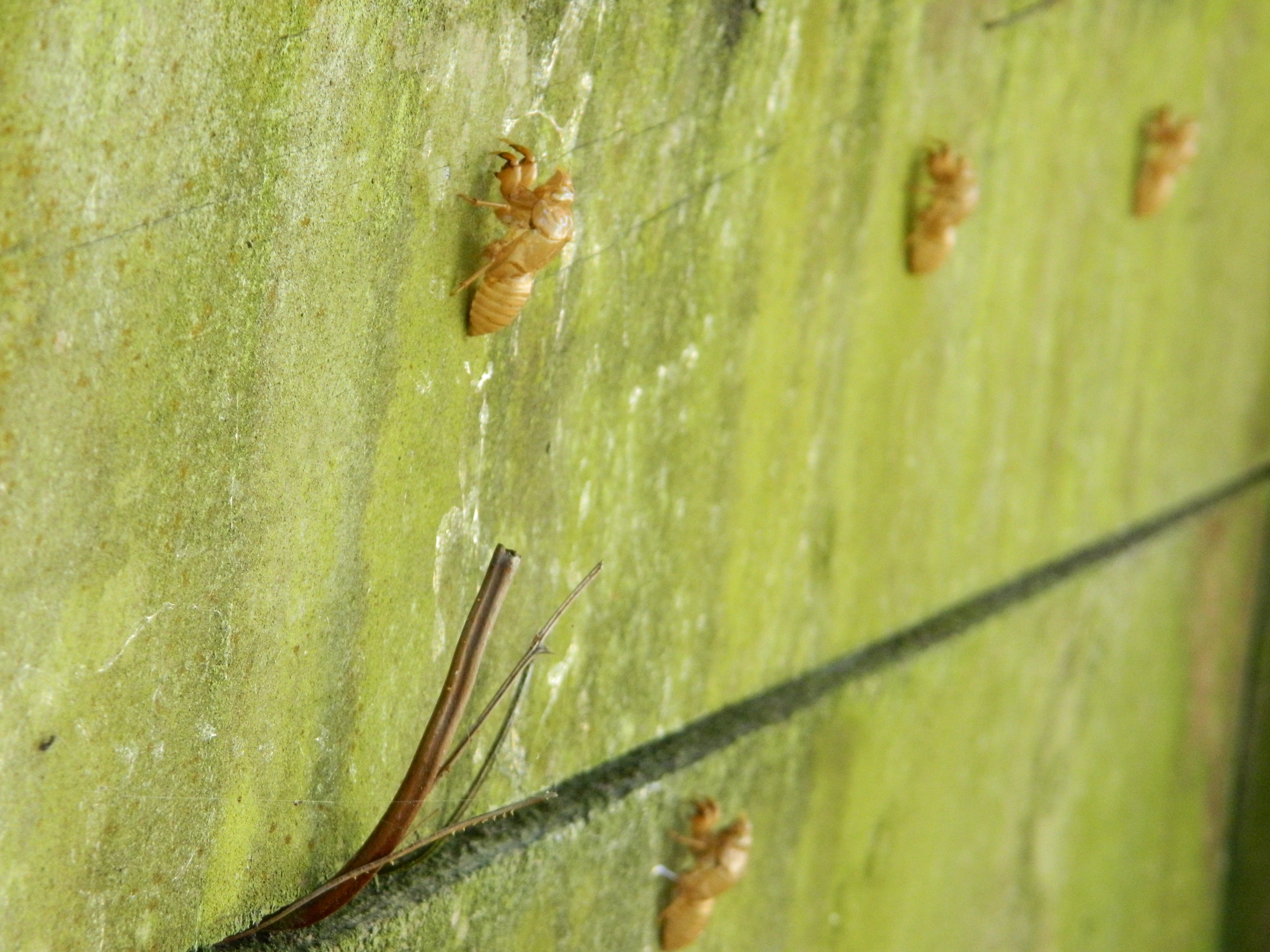
 Cicada skeletons – throughout the summer months, these big fly-like insects shed their skins, sounding similar to a field full of crickets, and leave them scattered about the landscape like a graveyard.

Image

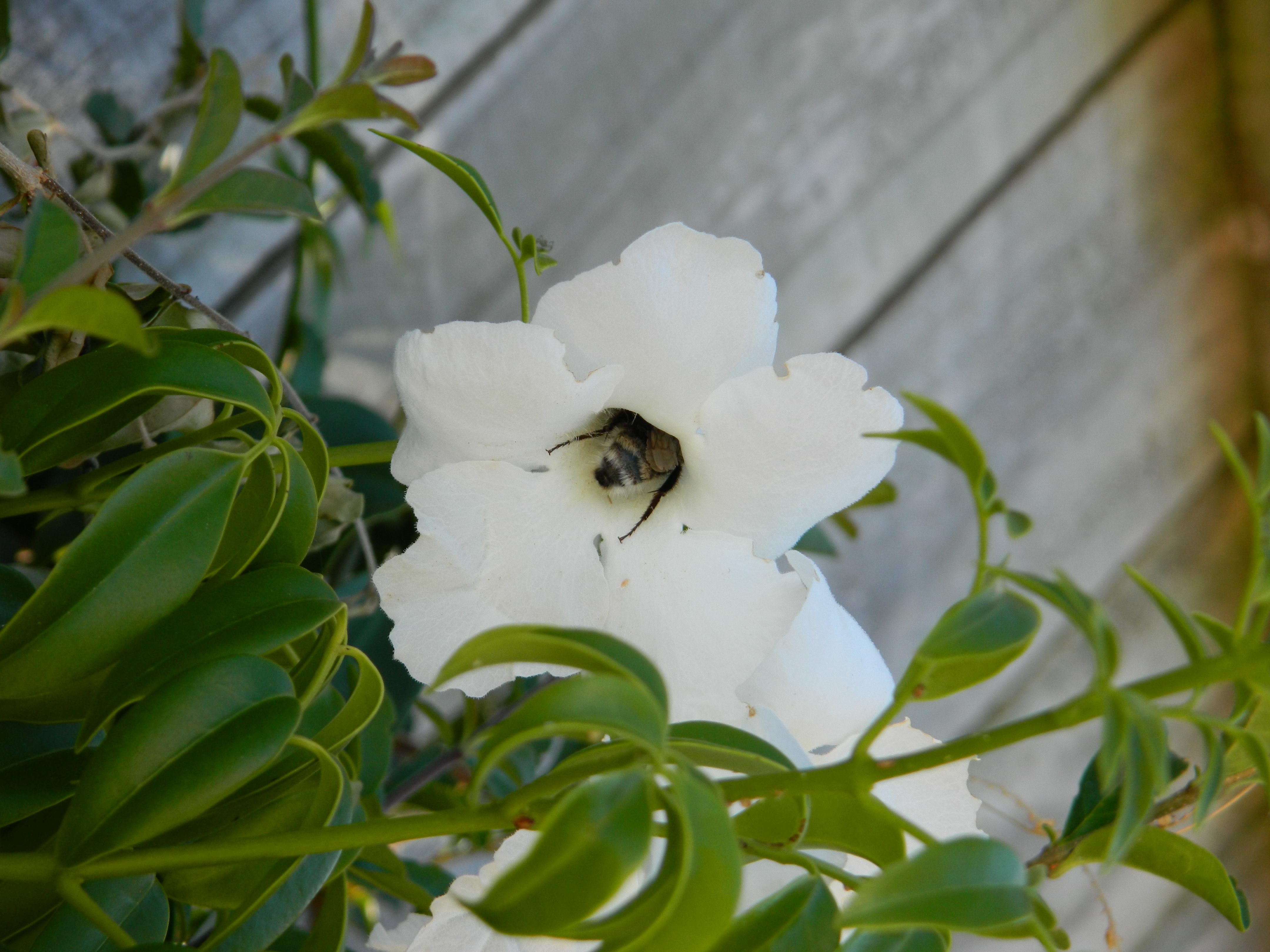
Bumble bee in the garden

Image

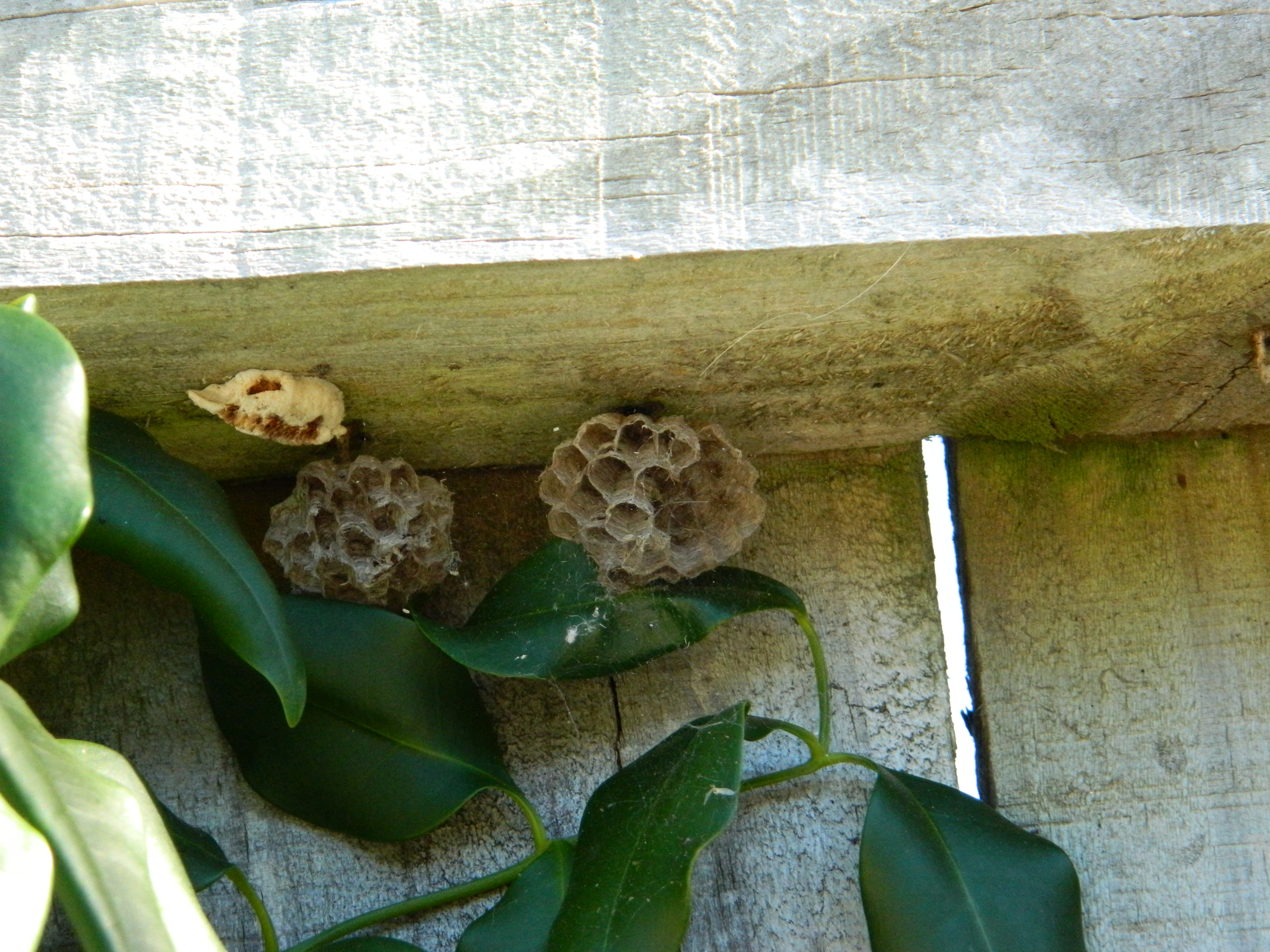
Paperwasp nests in the garden

ImageImage

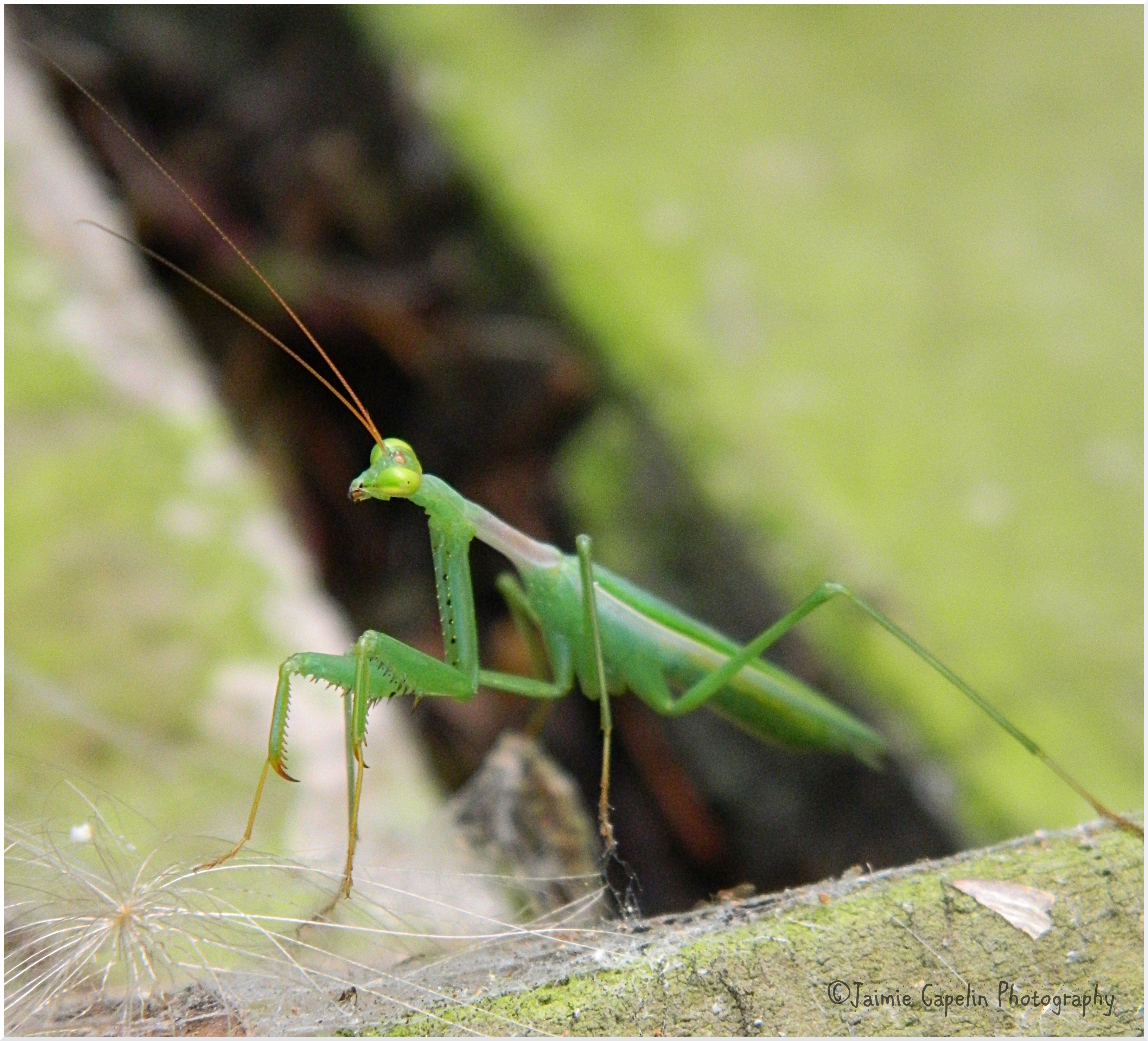
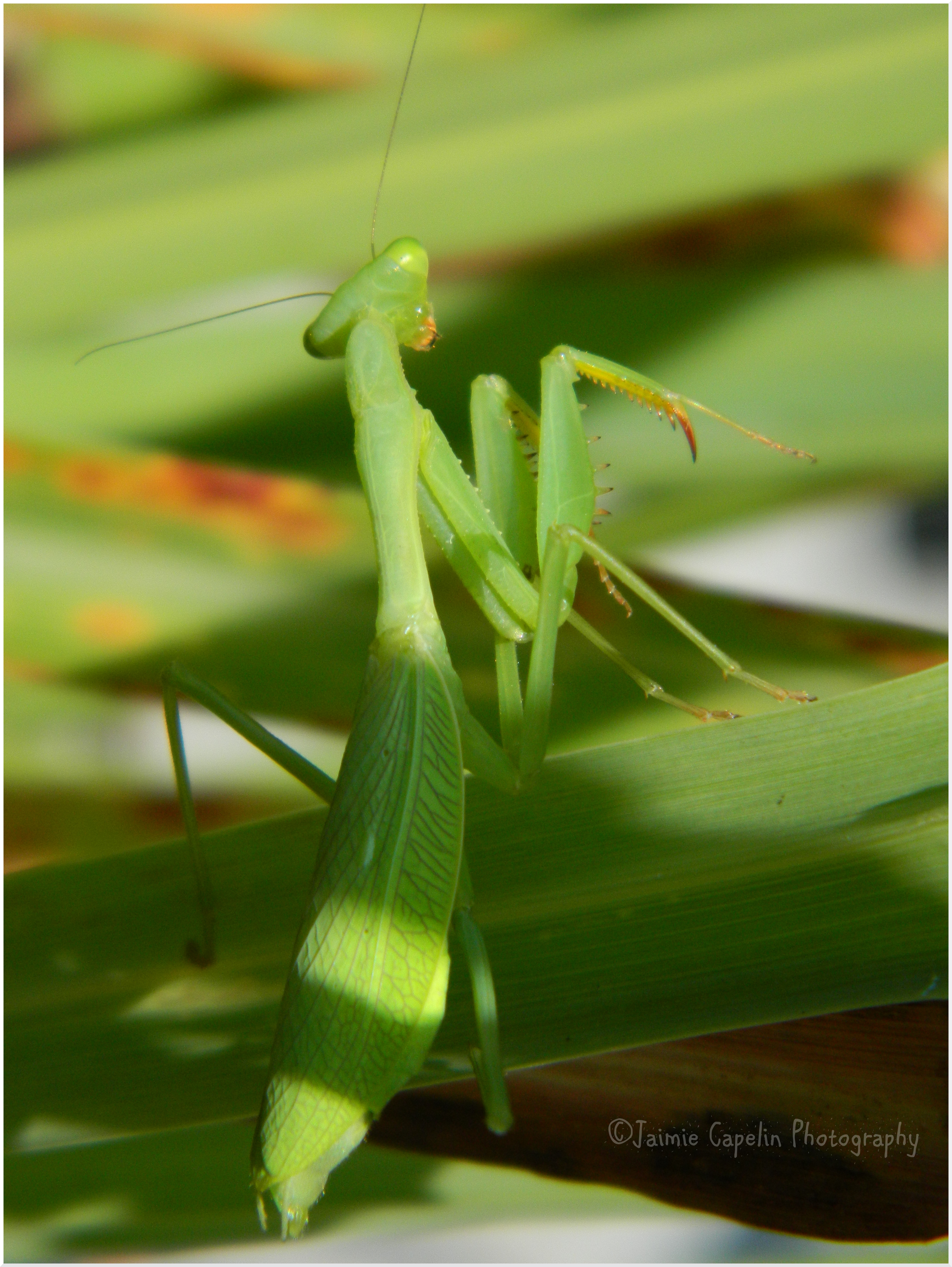
Praying Mantis – these guys are everywhere! In the shower, on my long board, climbing through the window… they’re awesome, and when you hold them, they swivel their eyes at you!

ImageImage

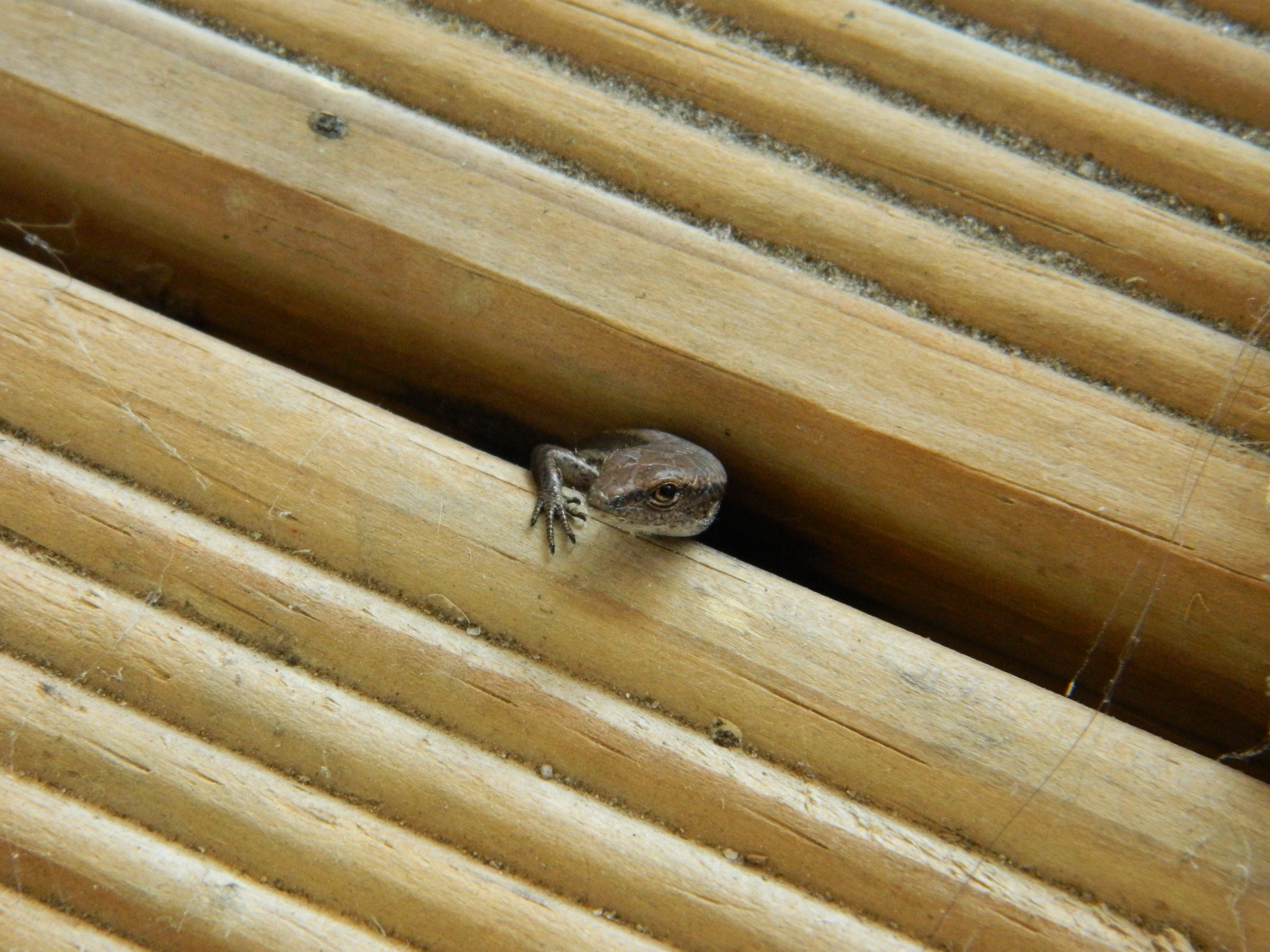
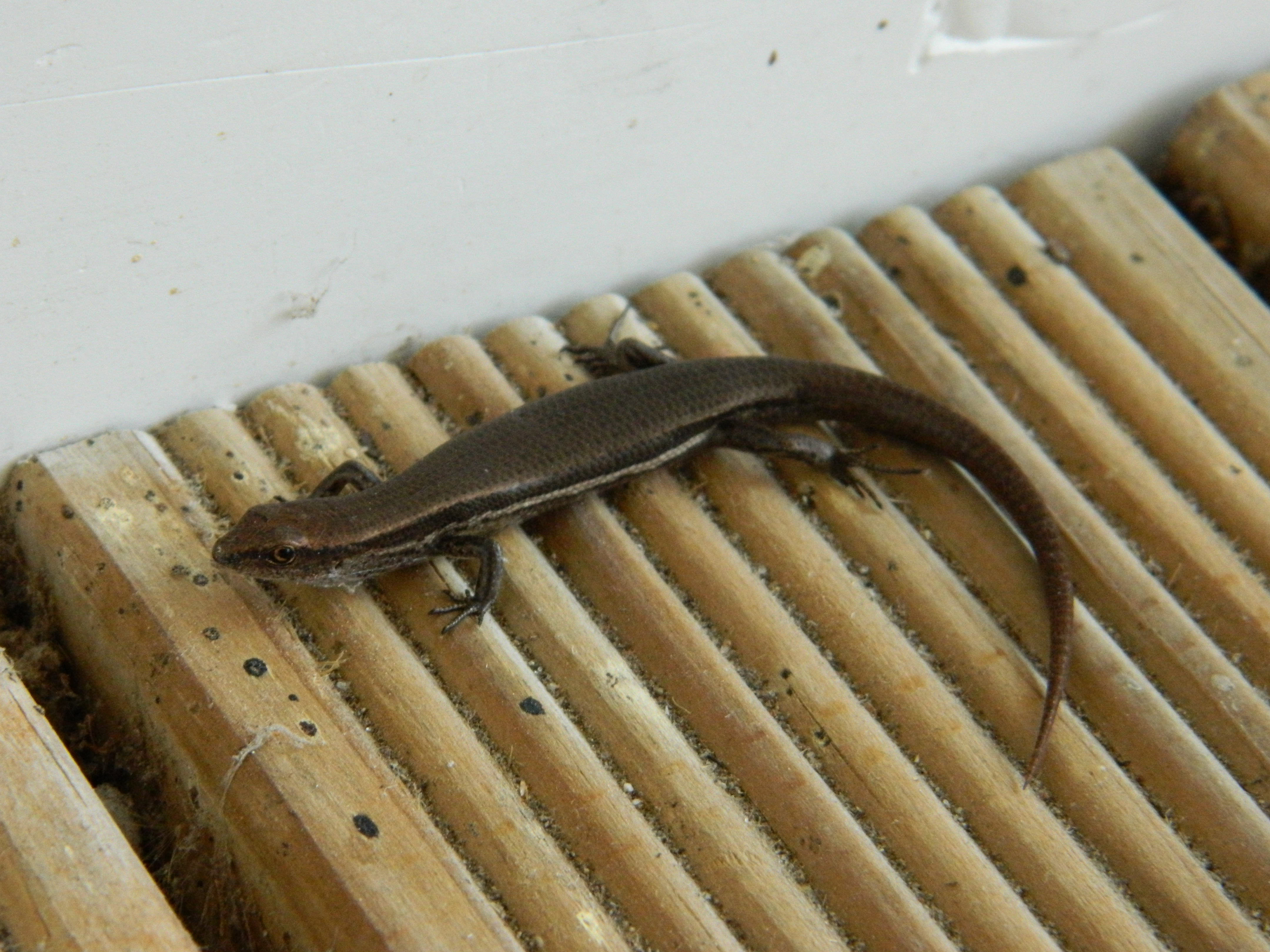
Skinks – these little lizards are cute too. They run super fast, but if you’re quiet, you can see them basking in the sun in the garden

Image

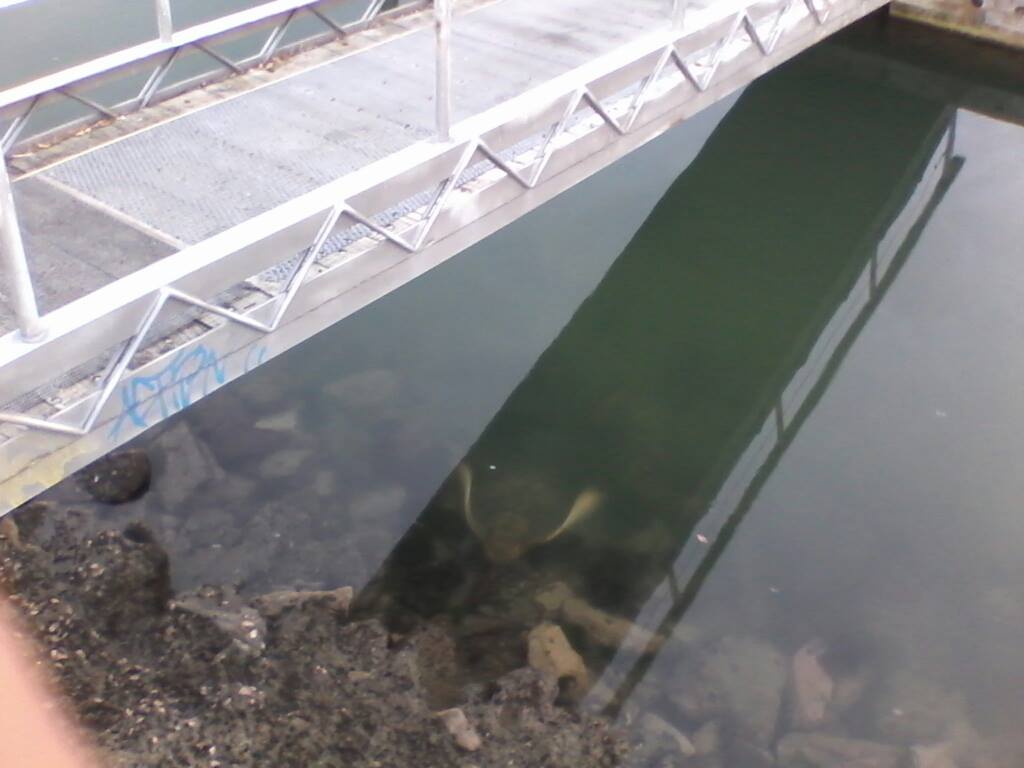
Sting Ray in Tauranga (dodgy camera phone)

ImageImage

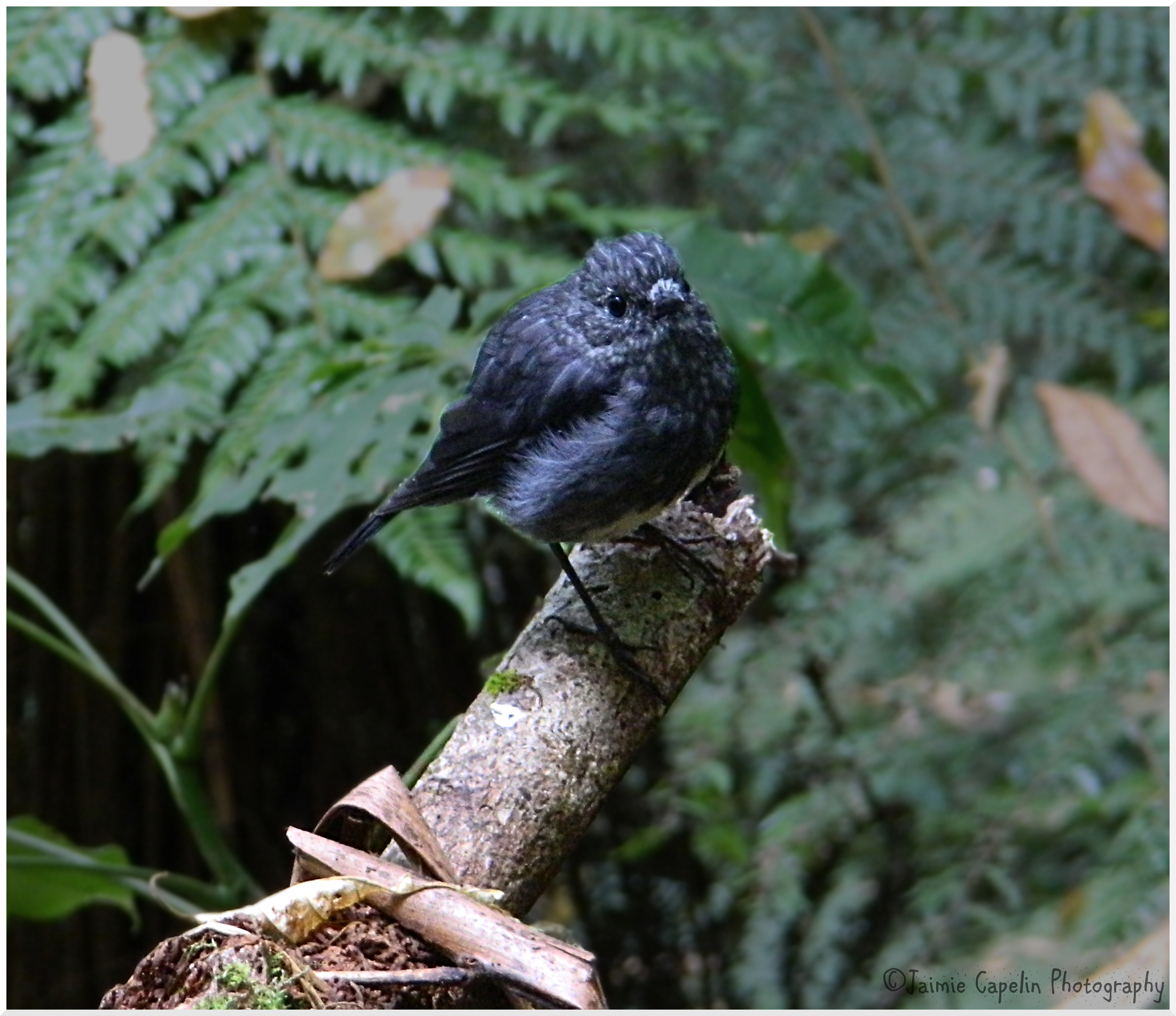
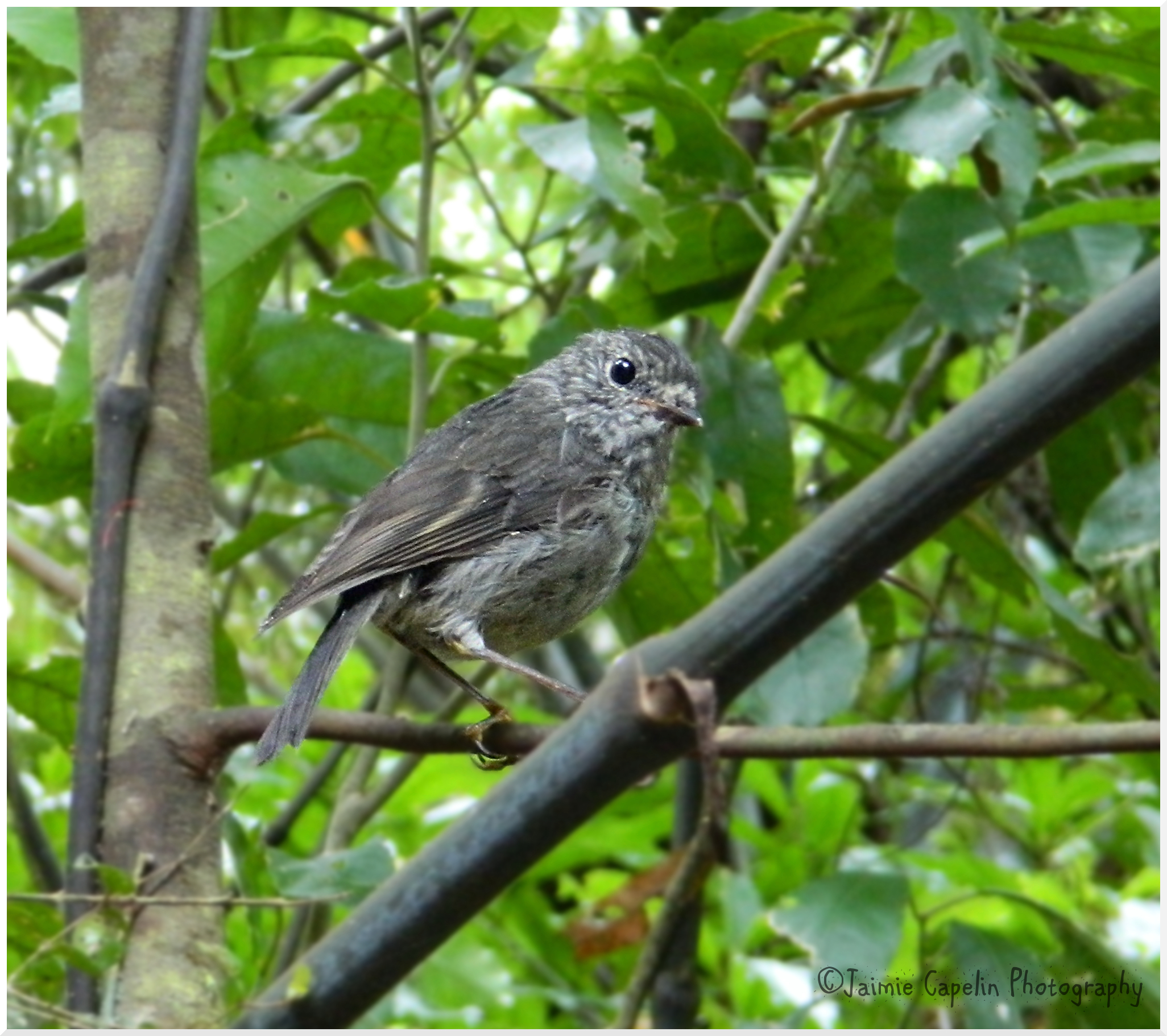
Male and female New Zealand Robins – (they really are All Blacks) in The Bay of Plenty

Image

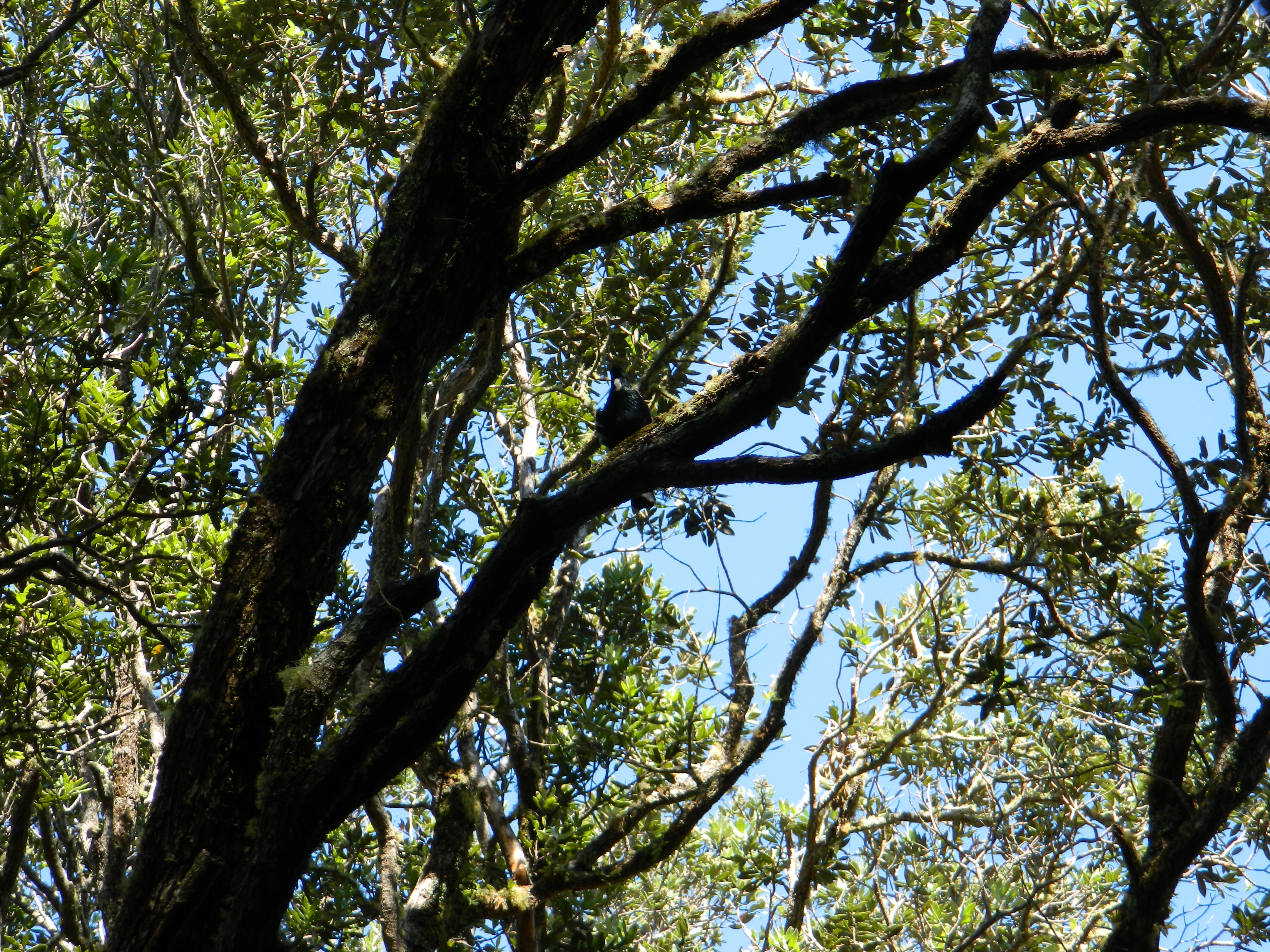
A Tui in Whangamata

Image

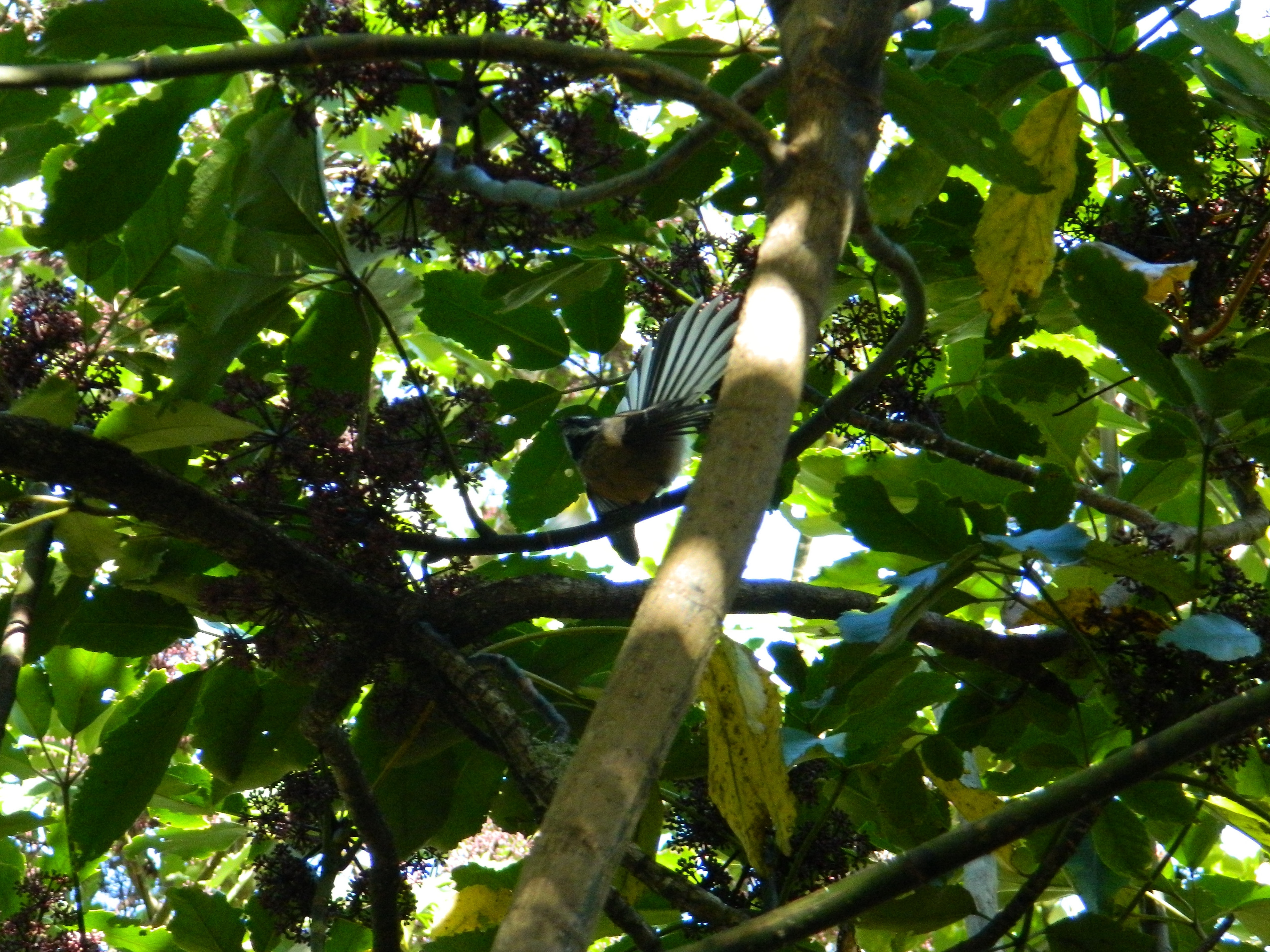
A Fantail in Taupo, such flitty little birds – difficult to photograph

Image

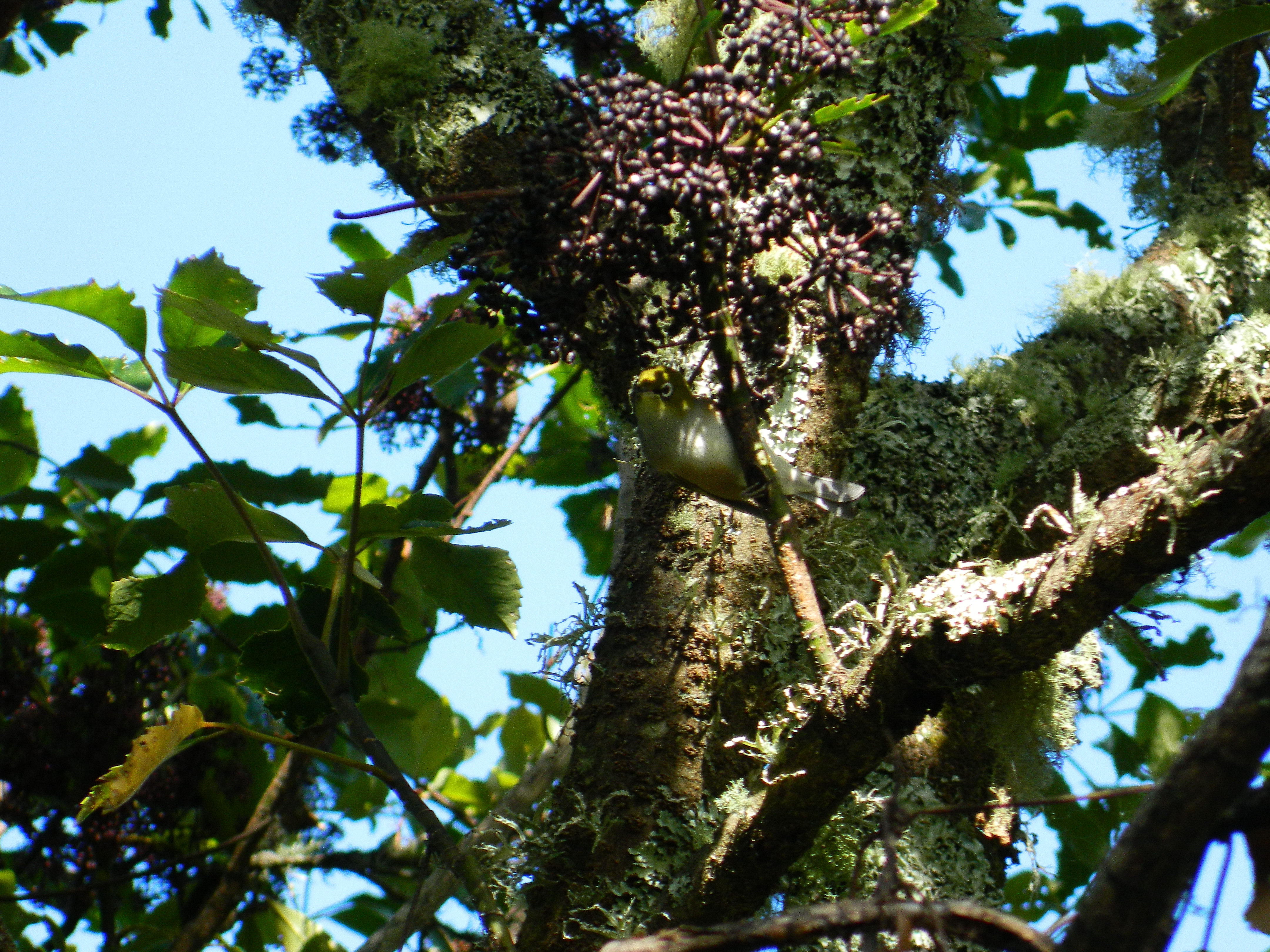
A Silvereye in Taupo

ImageImage

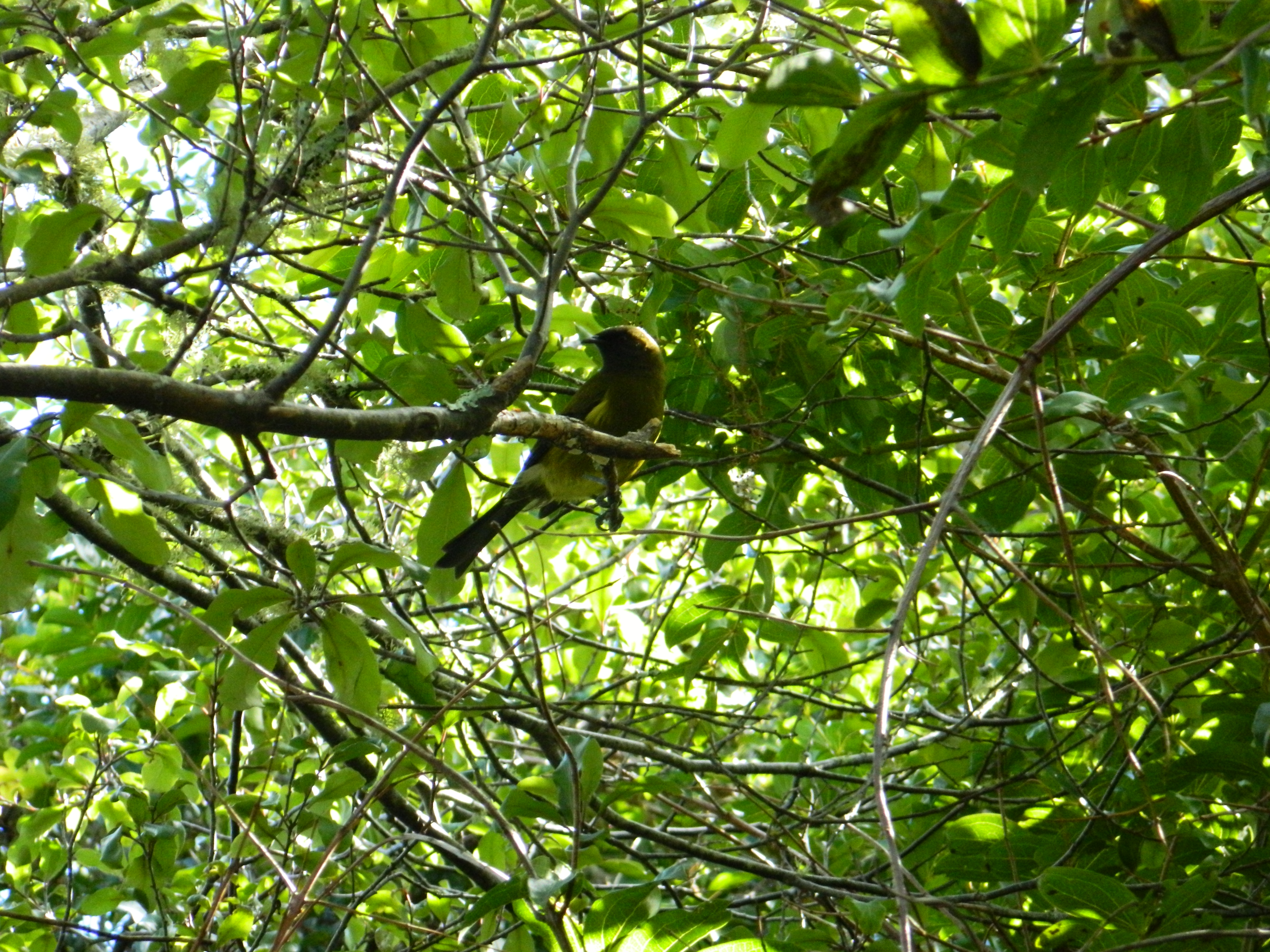
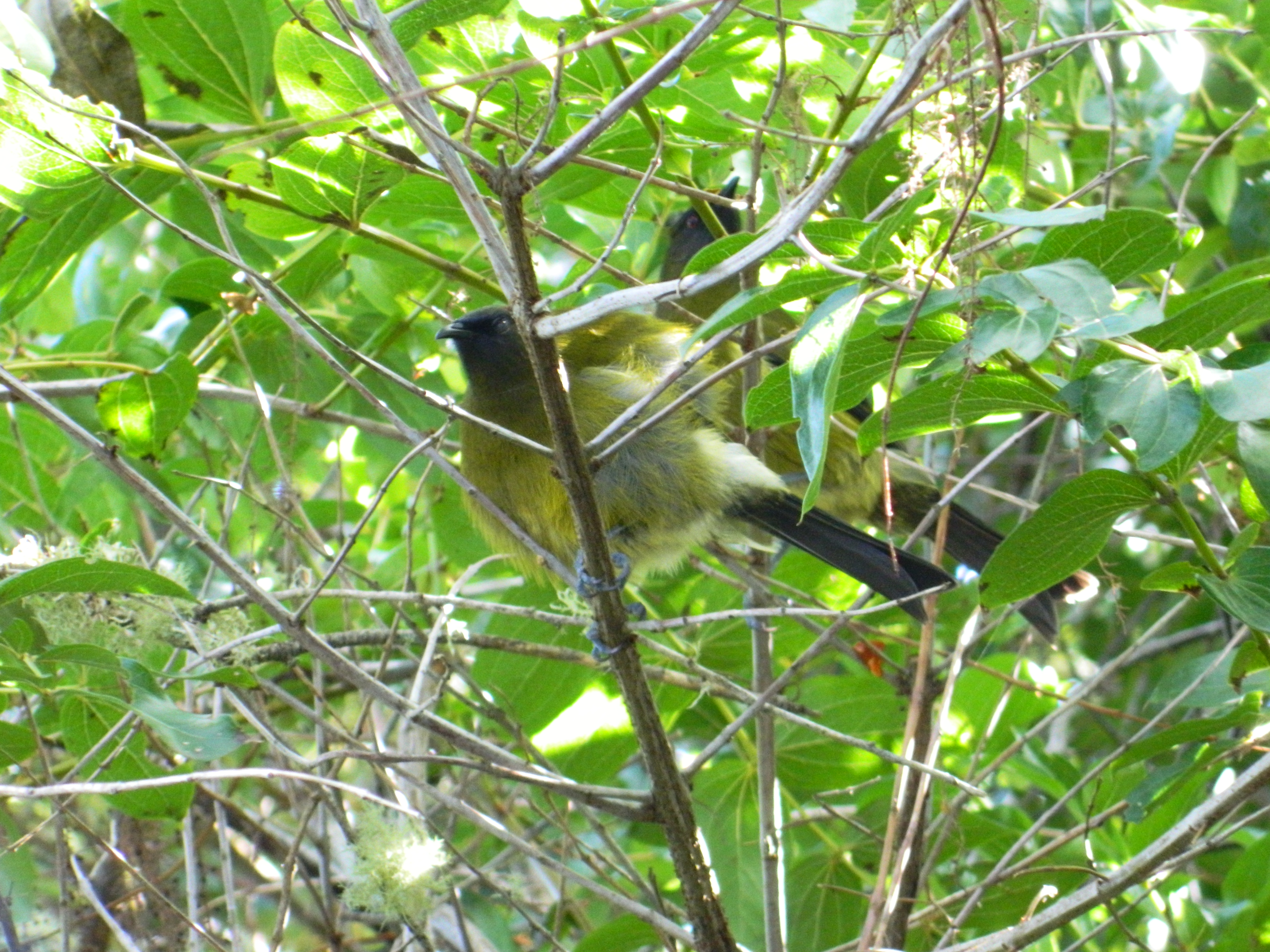
Male and female Bellbirds in Taupo – quite rare to see

Image

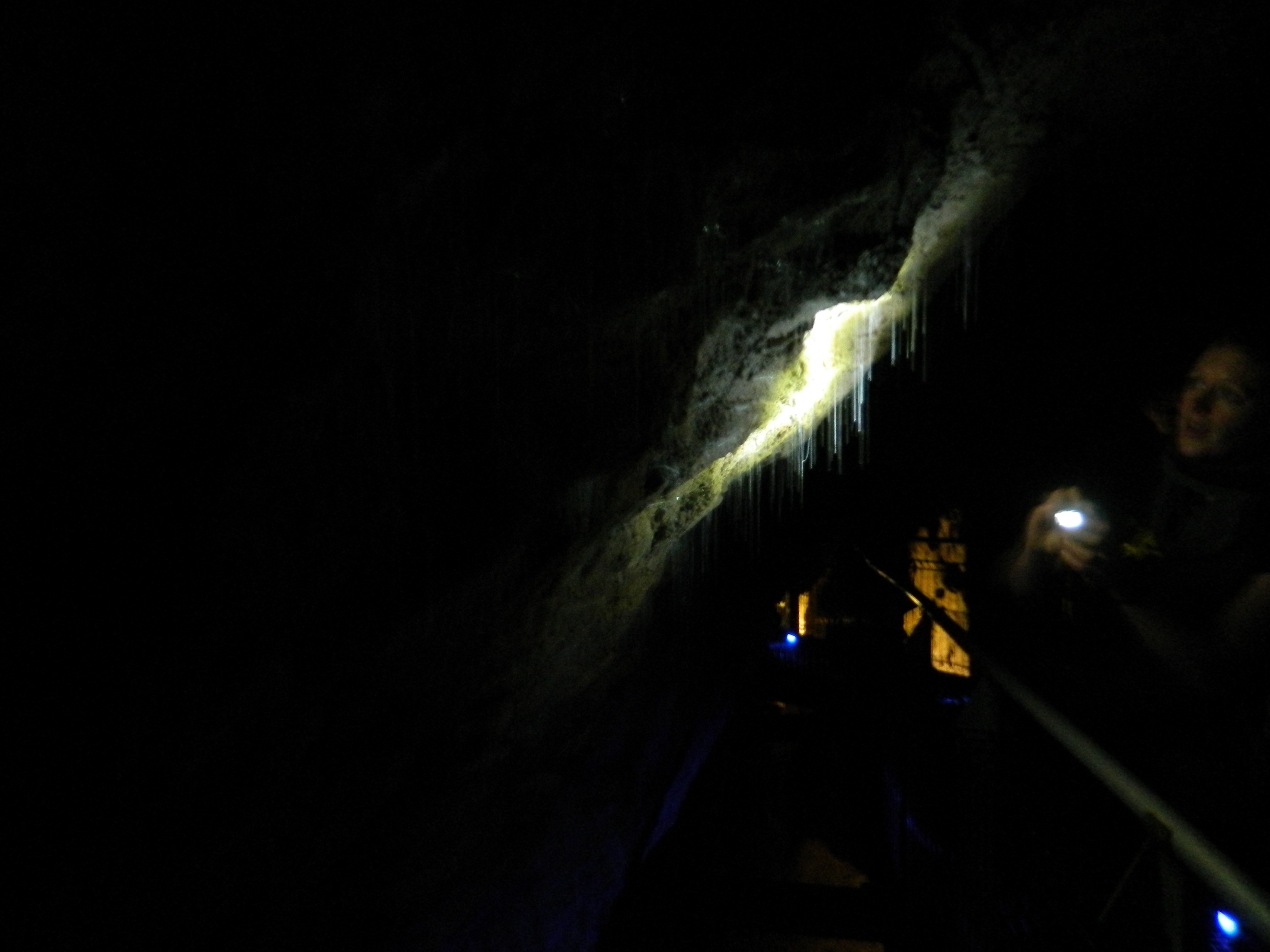
Glowworms in Waitomo

Image

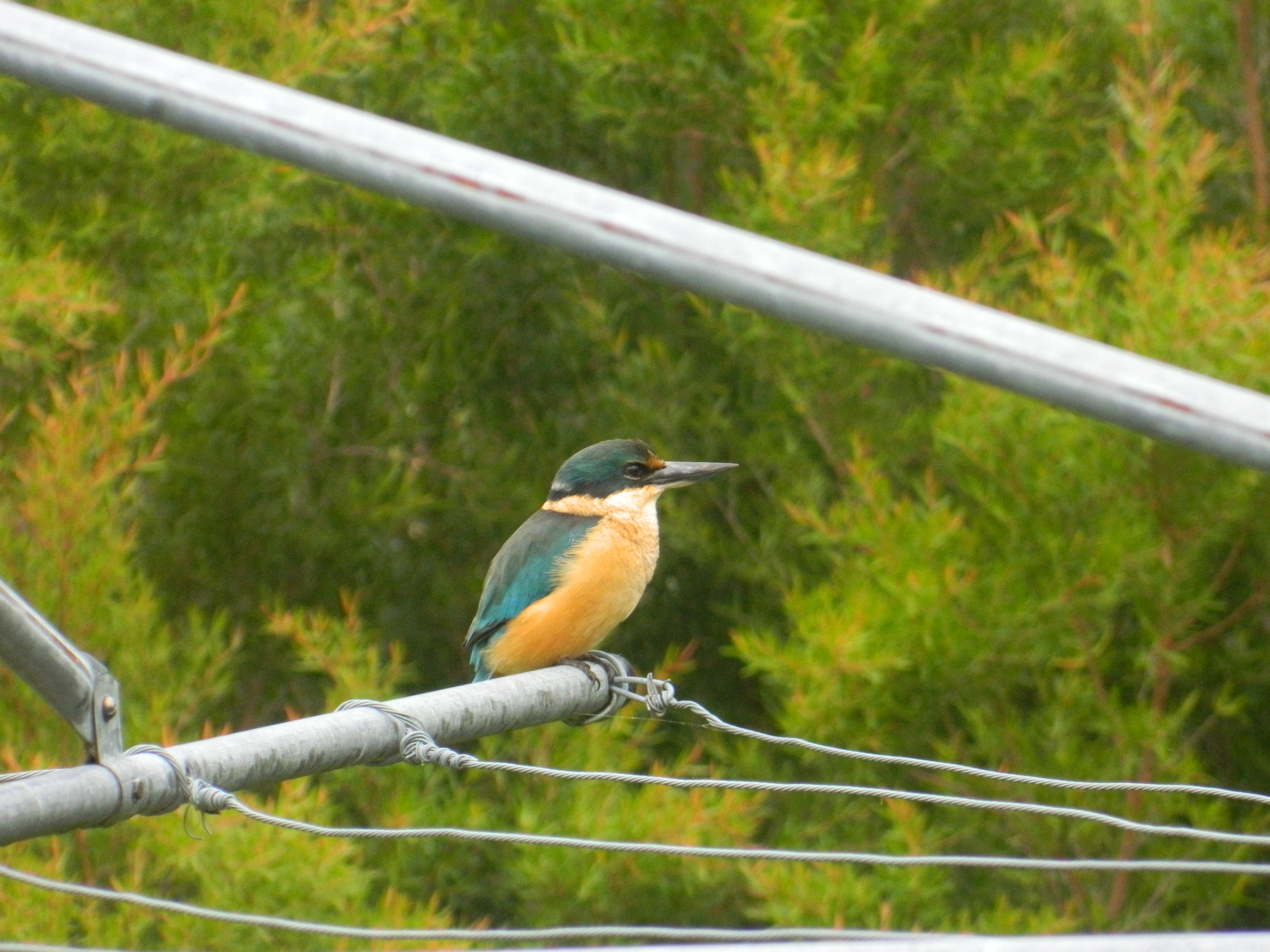
A Kingfisher in the garden

Image

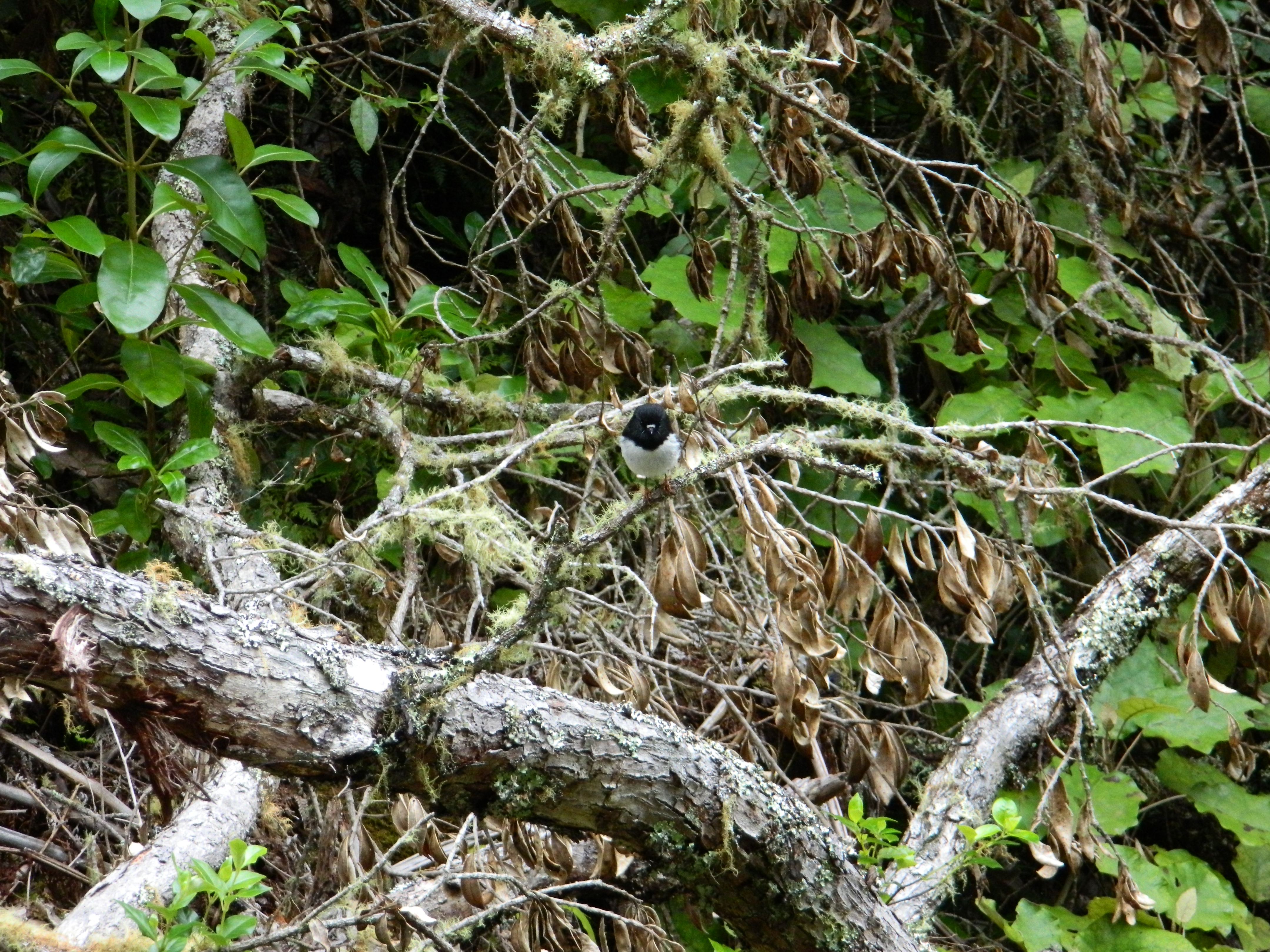
A Tomtit in Whakatane

Image

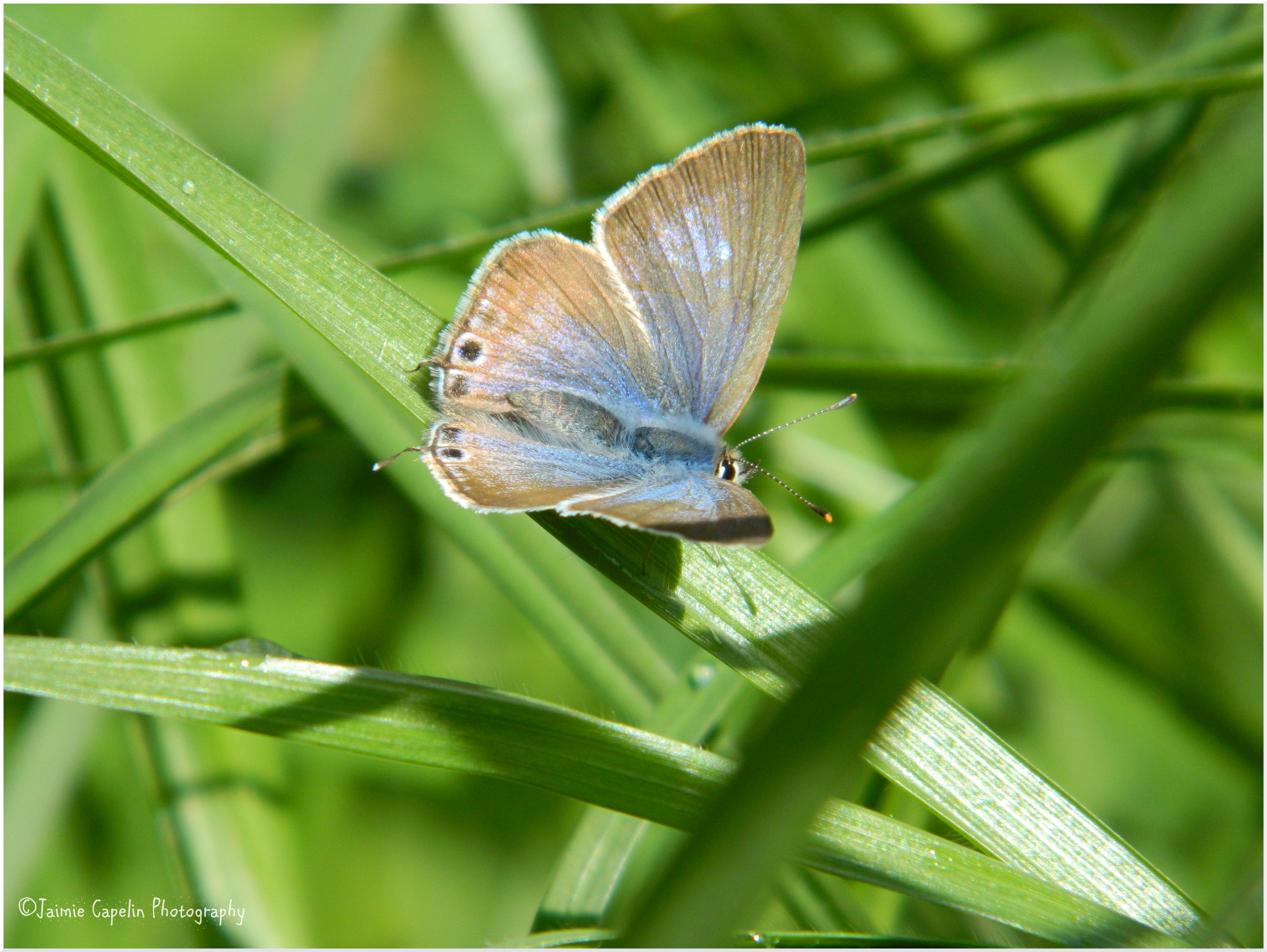
A fluffy butterfly in the garden…

But in contrast to the abundance of beautiful birds, trees and insects, Tauranga city itself has been a marvelous place to spend these past months. I’ll never forget the day I walked home from work and saw a balding man in a business suit, scooting along on a little fold up scooter. And when I witnessed a fight between a man and a woman outside the church while a christening was going on. The little quirks of urban life, matched up with the serene harbour views and coffee shop culture, it’s definitely given me something to miss.

Image

Image

However, with the end of one chapter comes the beginning of the next. I’m flying to Queenstown in the morning, so it’s farewell sub-tropic, volcanic shire land, and hello dramatic snowy mountains!

The stars are shining for my last night on North Island. Good night!

…And I think I’ll choose the double bed…