Layover in Singapore

2015 – I’d spent the last two years travelling and making a wonderful life in New Zealand, but sadly my working holiday visa was coming to its ultimate end, and it was time to head back to Europe (back when we Brits could call Europe our home). The best flight I could find had a 2 night layover in Singapore. I was nervous – I didn’t know anything about Asia, but I soon realised I had nothing to fear. The city is very convenient for a short stopover, and because people from all the surrounding countries unite here, Singapore is the perfect place for first time travellers to dip their toes in a multitude of Asian cultures.   

Flying with Singapore Airlines

My experience began in the taxi-to-take-off on the tarmac of Auckland International Airport. Singapore Airlines were classes above any of my previous experience with budget airlines. They truly live up to their highly professional reputation, and the cabin crew were masters at concealing their distaste towards “yet another sweaty traveller”. Each procedure was a well-rehearsed routine, performed with silver-screen smiles.

There was turbulence over the Java Sea, terrible, shaking, dropping turbulence that made the passengers gasp and grab their seats. I exchanged glances with the young Indian girl sat next to me as we both went to clutch the same armrest, and we burst into a fit of nervous giggles, identifying the mutual flame of fear in each other’s eyes.   

I lifted the shutter on the reinforced porthole window, and through the glare of brilliant white light bouncing off the 747’s gargantuan wing, my eyes adjusted onto the glistening shipping lanes of Singapore below. A connect-the-dots of white boats, scattered on the vast swirling sea, just visible through the chalky haze.

Journey to Bussorah Street

Arriving in the hustle and bustle of a new city can be overwhelming, but getting around is made pretty simple in Singapore. I hopped on the Mass Rapid Transit (MRT) straight from the airport. The MRT is a similar concept to the London Underground, with 4 different lines that will take you anywhere you need to go in the city. This ran between 6am and midnight and was far less expensive than the tube!

There are MRT maps in the carriages and at most stations, and each stop is announced in 4 languages (usually all at the same time!) English is the official language of the city, although you will equally see or hear Malay, Mandarin and Tamil, as these languages constitute the 3 main cultures of the city.

From the word go, it was evident that locals were friendly and happy to help. The moment I stepped out of Bugis station into the open air, a man asked if I needed any help. He pointed me in the right direction of my hostel and I thanked him. Then, as I waited to cross the busy street, a man zooming past on his fold up scooter shouted, “Thank you, my darling!” I continued to walk through quieter streets, until I came to a lit arch, leading to a beautiful mosque. I could already hear the dull babble of Kampong Glam nightlife, and followed the glow of light to Bussorah Street.
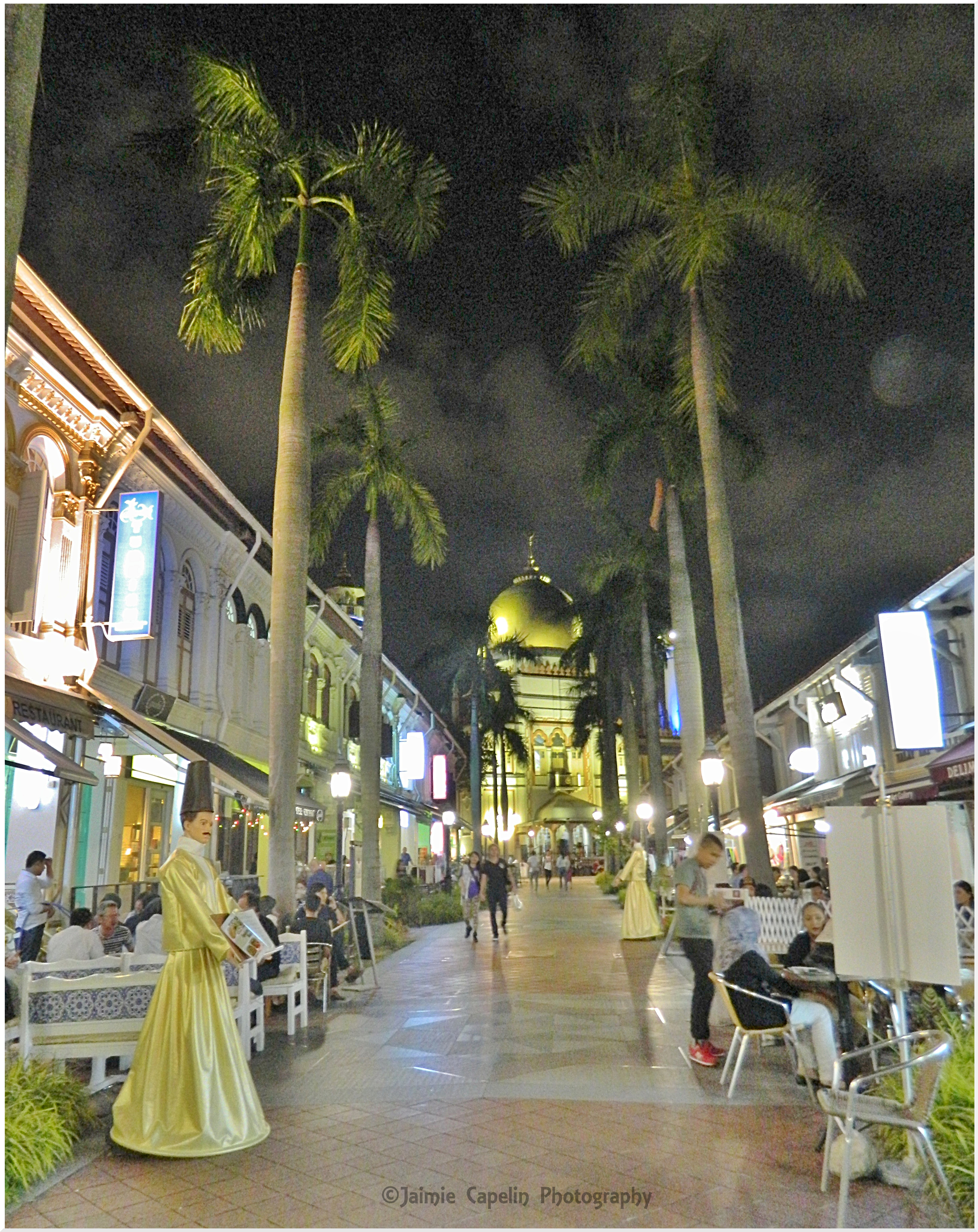
Bussorah Street

A pretty, pedestrianised street, fronted by the spectacular Sultan Mosque; tall, green palm trees rise up either side, while below, bars and restaurants thrive, spilling onto the paving in chatter and laughter. Right there amongst it all was the Sleepy Kiwi Backpackers, its own tables and chairs outside, scattered with happy travellers enjoying a beer and a laugh. (In my recent research, I found this backpackers is permanently closed, but there are plenty of hostels dotted around the city.)

A Night in Singapore

It’s 28 degrees at night, and the city has no breeze. The hostel lacks carpets and exterior doors, and even windows, but they’re luxuries that are certainly not missed! You raise the bamboo blind in the communal bathroom, to find a large, window-framed hole in the wall. The showers are little wet-rooms through pretty, mosaicked archways, and the wooden shutters in the dorm open straight out onto the street, pigeon spikes lining the ledge. Every dorm has a ceiling fan, which may sound daft in a place that has no glass in its windows, but it is all in the aid of keeping cool.
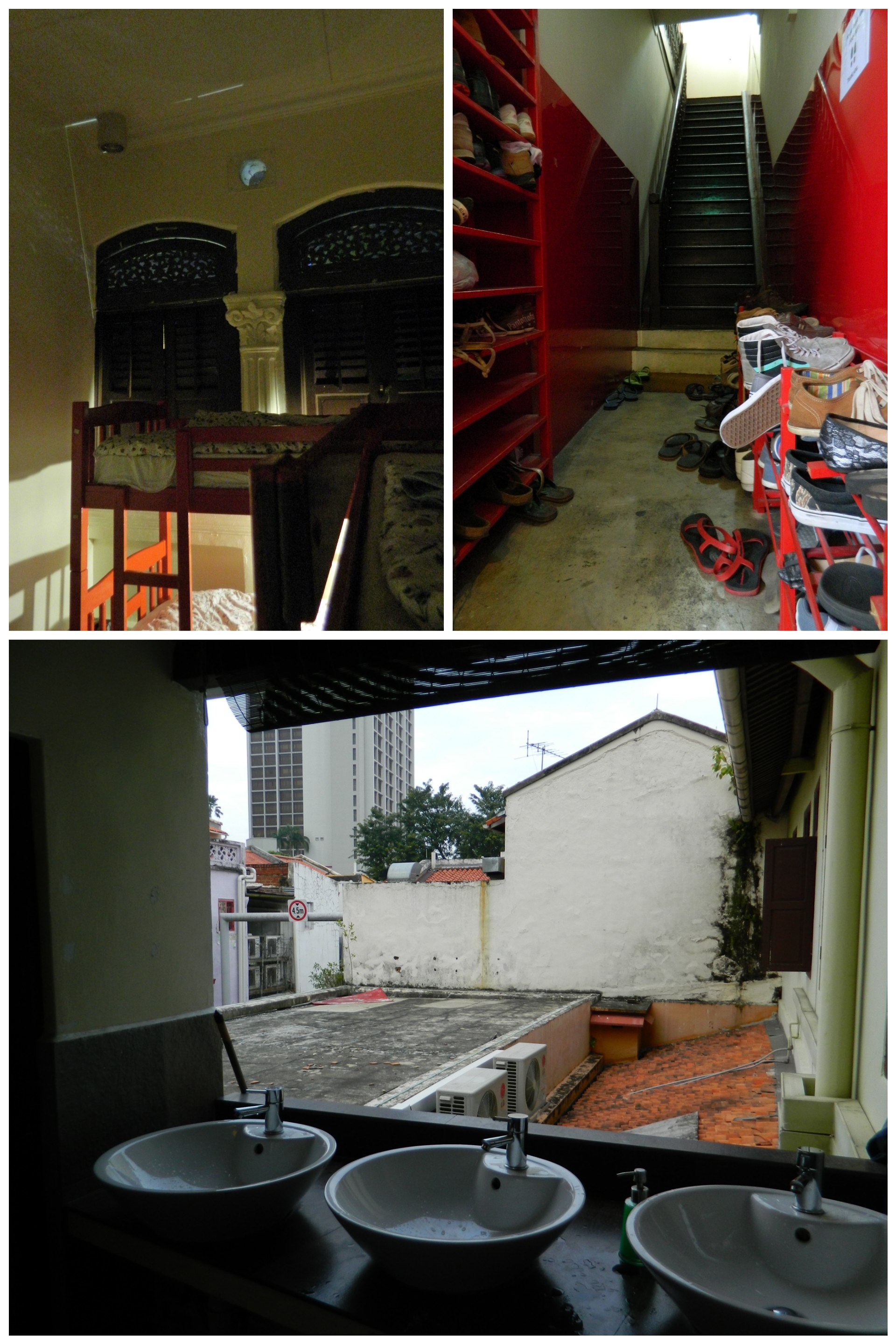
Inside the Hostel

 5 am. The sky shows no relief from night, and the air outside is still and silent. I am awoken suddenly by songs from the mosque before dawn. Haunting and poignant, the Islamic call echoes through the darkness, calling local Muslims to prayer. The night is filled with a voice of incredible compassion that resonates an ache for peace, for just a few minutes, before resuming dark silence.
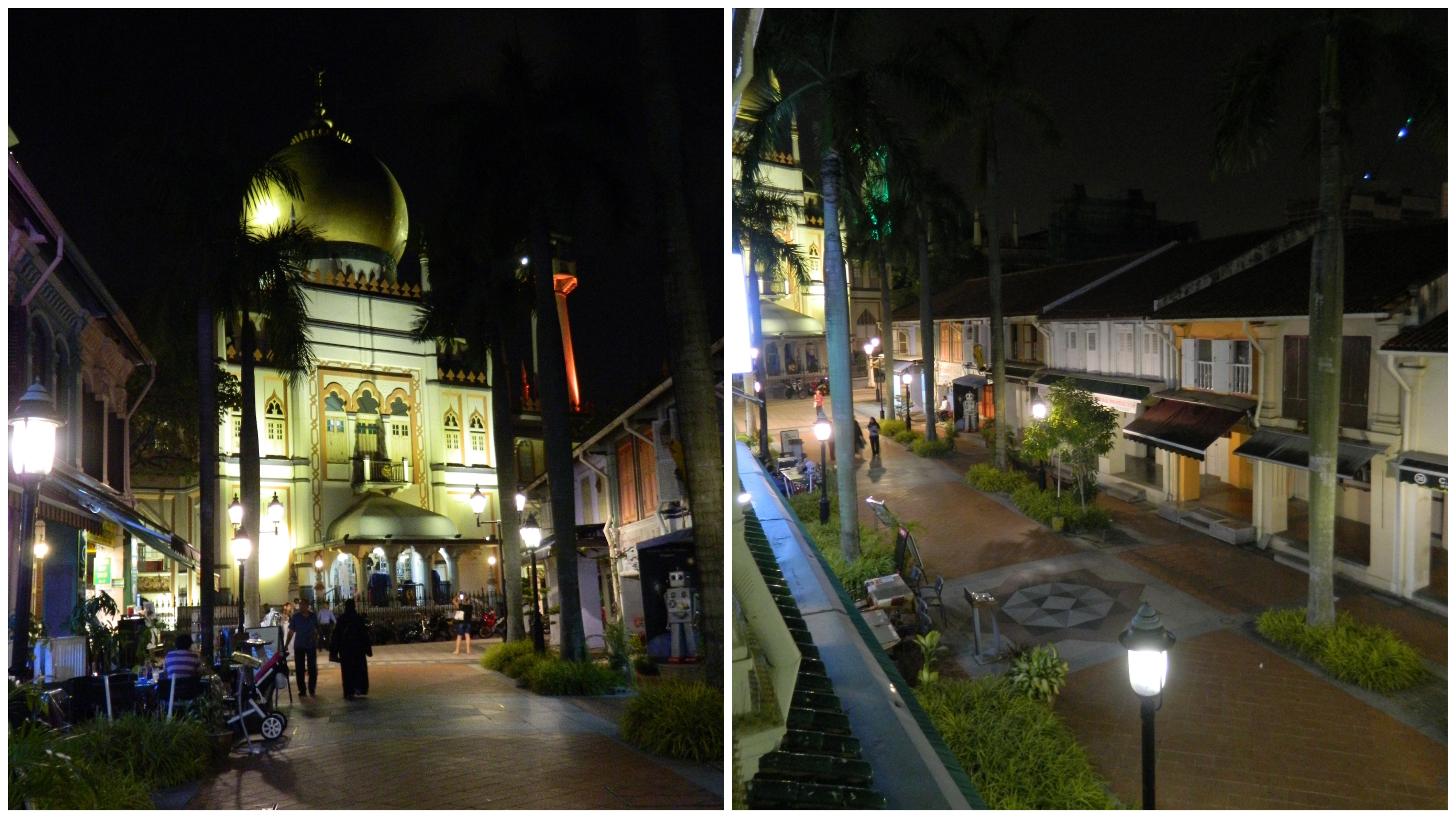
Outside the Hostel

The Sultan Mosque is a fine work of architecture, not to mention the sacred role it plays in the heart of Singapore’s Muslim community.
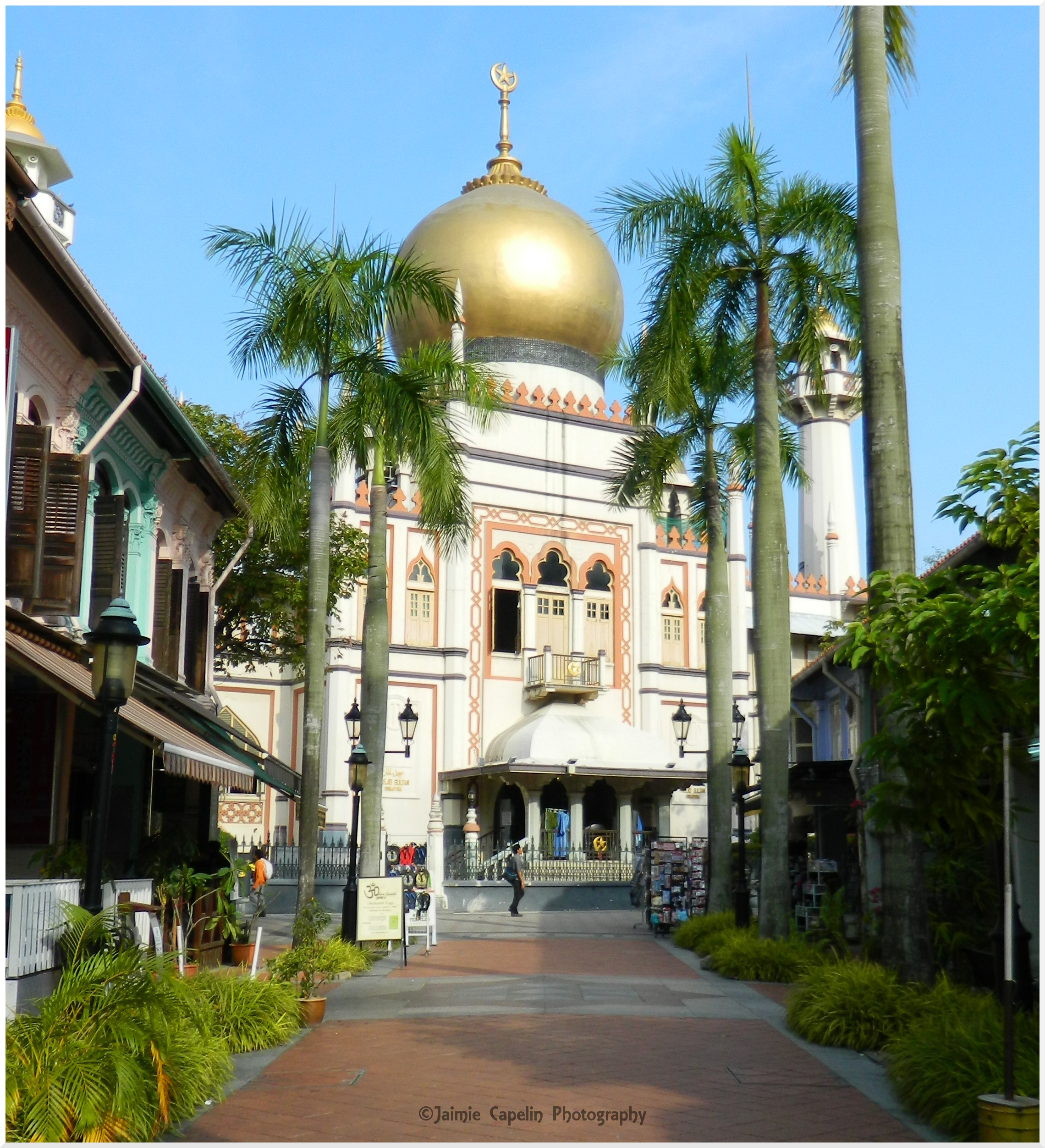
Sultan Mosque

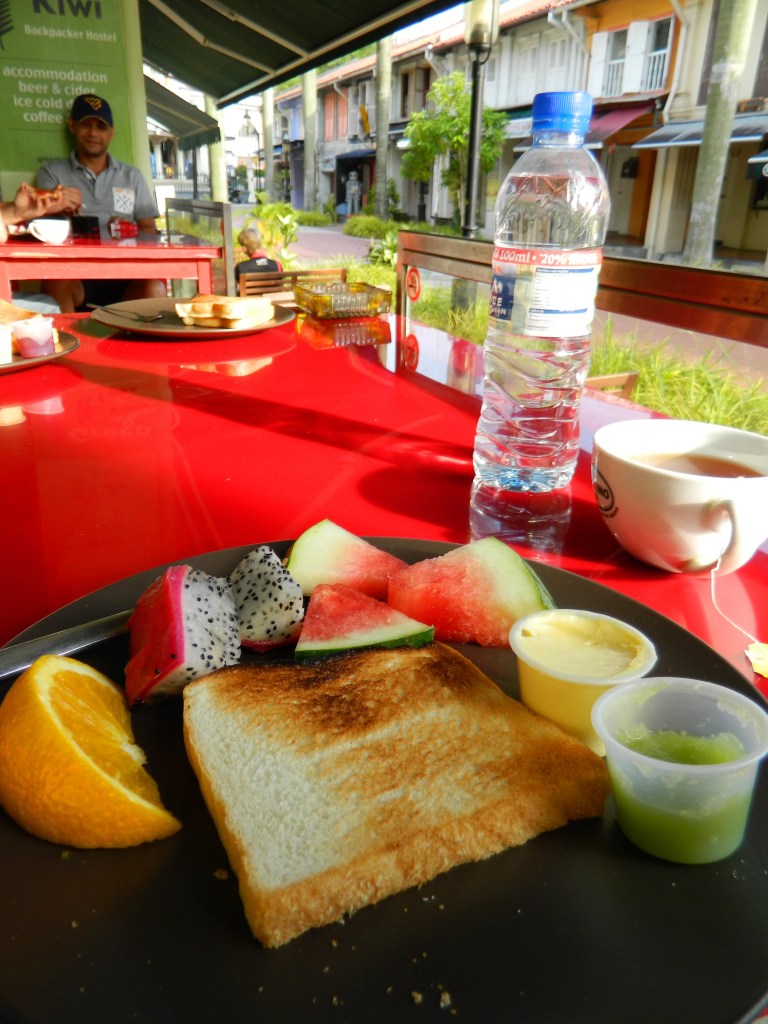
When dawn finally broke, the streets were alive with birds, hopping from building to building, and singing in strange and exotic tones. I went downstairs for the all inclusive breakfast – a buffet of fresh dragon fruit, watermelon, juicy orange, and sweet green jam on toast! Tea, coffee and milo were also made on request, and I sat outside to enjoy it.

I met two of the girls in my dorm – Karen and Fan, who were on holiday from Taiwan, hoping to enjoy a beach day on Sentosa (Singapore’s get-away island) and shopping at Orchard Road. They were sweet, curious girls, eager to practise their English.

There is plenty to see in Singapore, and more than enough guides and friendly people to point you in the right direction, but I was lucky enough to have a couple of friends I’d met on my travels, who had agreed to show me around.

Lunch at Marina Bay

I met my friend Tze in the train station at around 11, and we went downtown to Marina Bay where he treated me to some delicious Chinese cuisine in one of the enormous shopping malls. We had sliced duck in pastry, “drunken” chicken, and steamed pork dumplings, refreshing our pallets with ginger and chamomile tea.

After lunch, we took a stroll along the river to the Gardens in the Bay, where we stared up at the “Super Trees” – amazing metal structures, entwined with plants and flowers, up to 50 metres high. Tze told me that the artificial trees are not just there to look good, but are actually solar panelled and at the time supplied 20% of the city’s power.
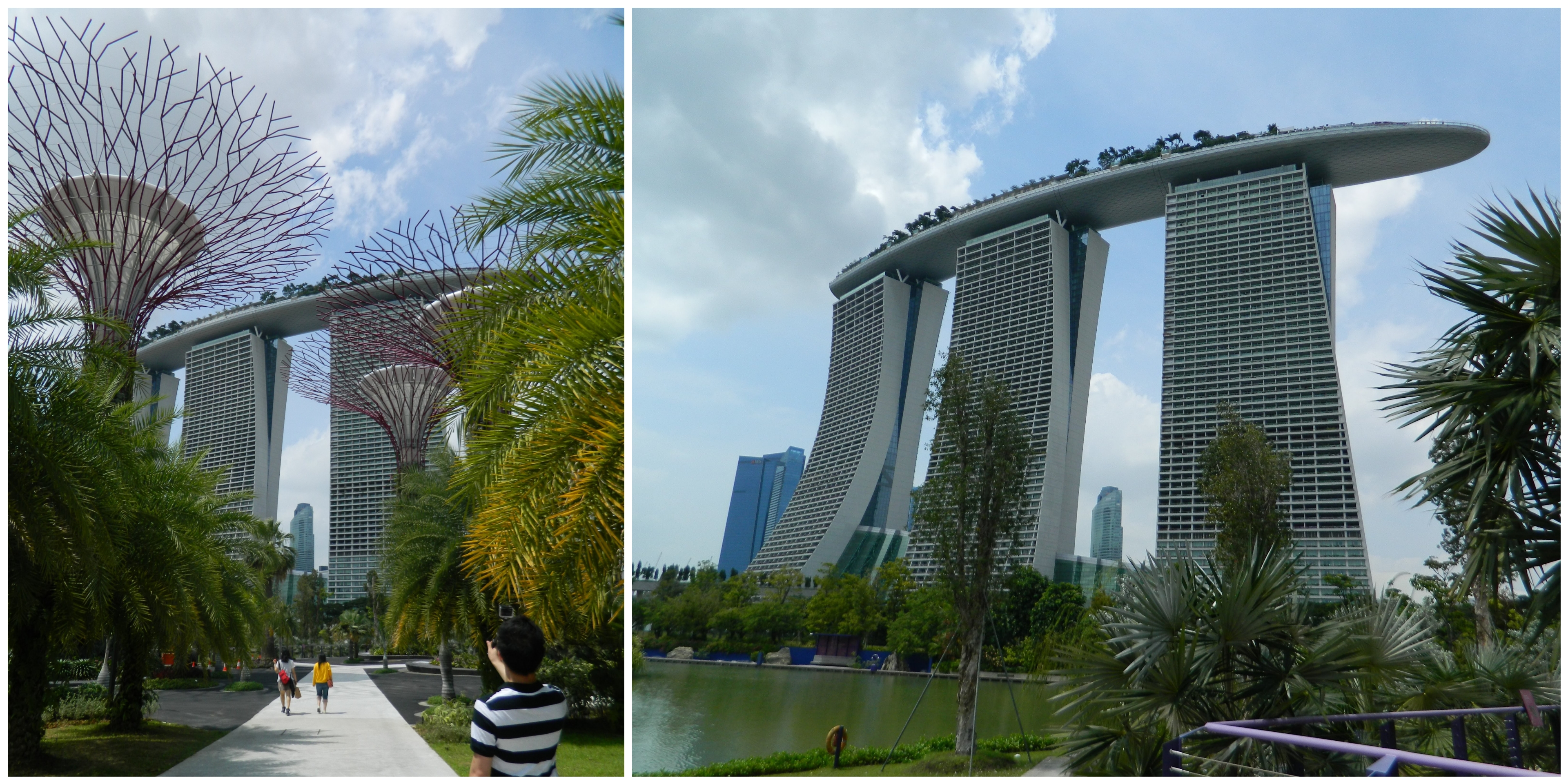
Super Trees / Marina Bay Sands

Looming over the gardens like a zeppelin, (or a giant silver sausage on a fork) is Marina Bay Sands – the world’s second most expensive building in 2015. With 57 floors, this extravagant hotel is 194 metres high, and a room would have cost anything between 500 and 5,000 Singapore dollars per night! One of the building’s many features, is its Infinity Pool – a swimming pool located on the roof, which gives the illusion of just dropping off the edge.
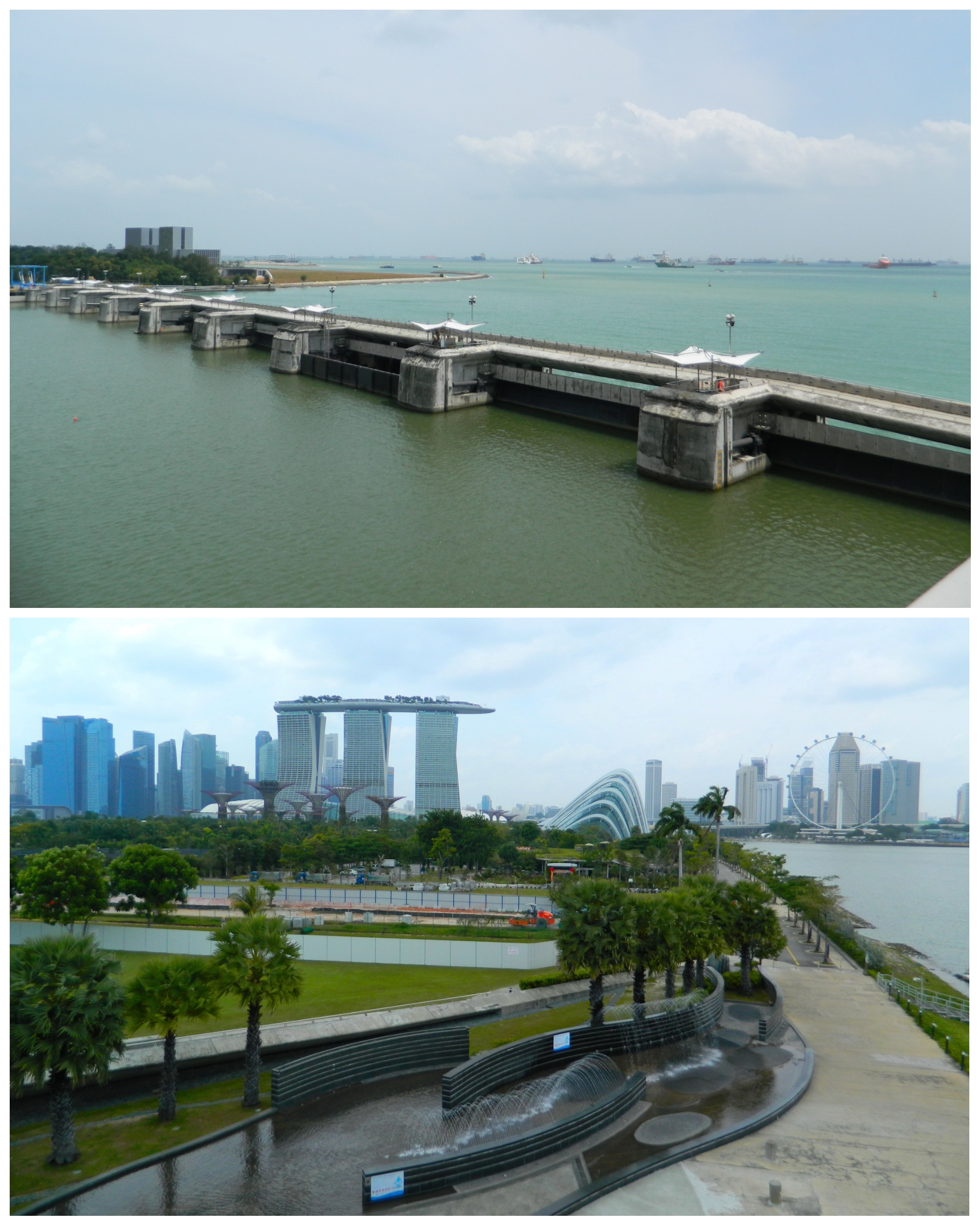
Singapore Dam / Singapore City Skyline

At the end of the river walkway is the Pump House, from which we got a splendid view of the dam, the shipping lanes, and the city skyline behind. You can see everything from the Super Trees to the Singapore Flyer – a 165metre high observation wheel, inspired by the London Eye.

The Merlion

Feeling refreshed by the sea air, it was time to head back towards the CBD for some proper tourism! The 8.6m tall Merlion stands proudly on the edge of the harbour at Merlion Park, spewing 20,000 litres of sea water into the harbour per hour. It was the era of selfie sticks, and everyone wants a selfie with the Merlion, as it’s Singapore’s icon.
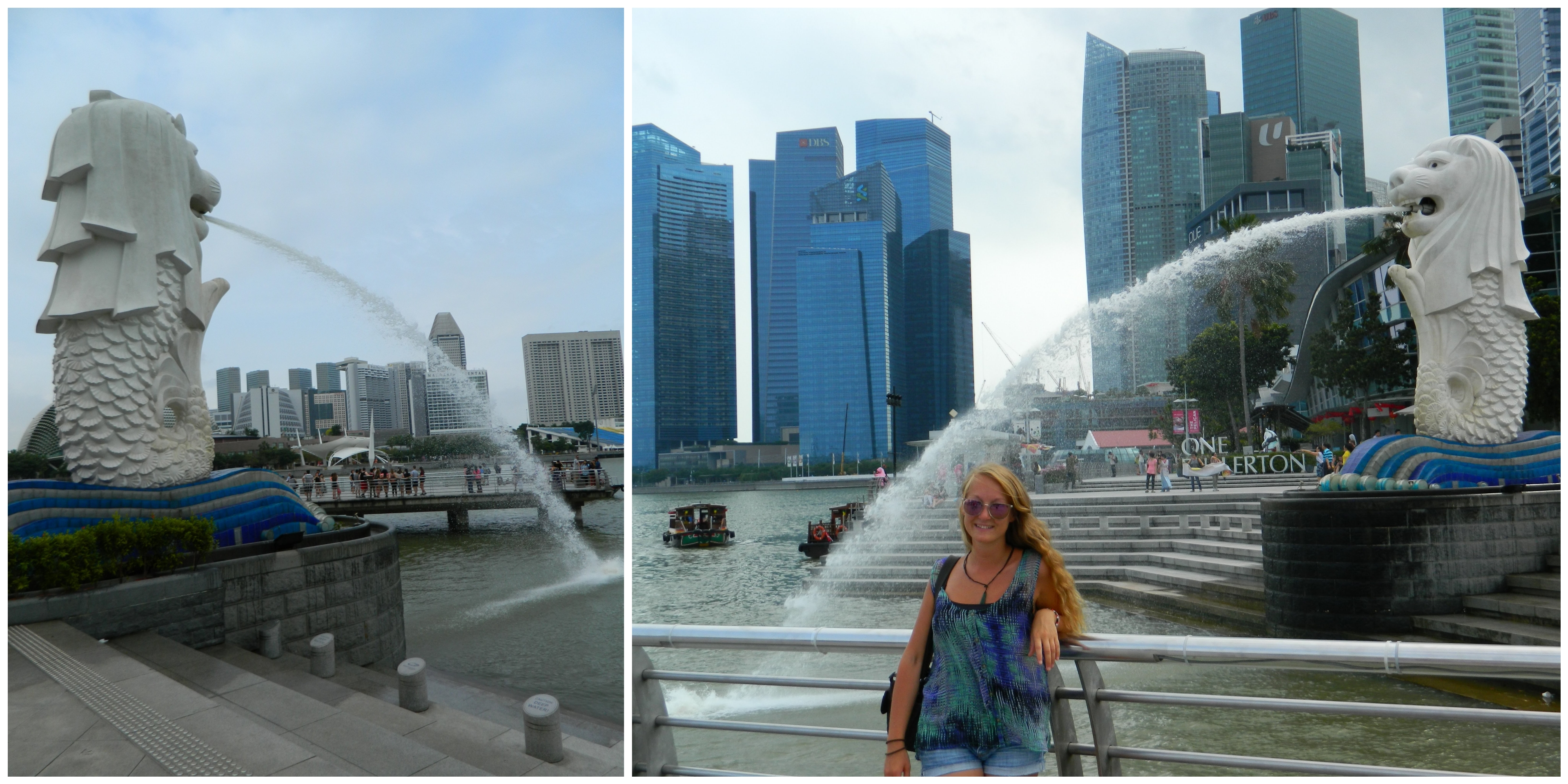
Merlion

The Merlion represents Singapore in many ways; there are a few vague links to Indian folklore, but Tze’s explanation was that Singapore is a gateway to the ocean, and surrounding countries, and so a creature that is half king of land, half king of sea, represents unity. The island is not divided by the sea, but instead connected by it. It is also said that the fish’s body symbolises the origins of a fishing village, Temasek, and the lion’s head symbolises the original name ‘Singapura’ – ‘Lion City’ in Sanskrit.

Beer on Boat Quay

We made our way back around the marina, past the only ‘floating’ Louis Vuitton outlet in the world, and walked around to Boat Quay for a much needed beer. Bartering is not uncommon in Singapore; every seller is out to offer you the ‘best’ deal, and every buyer is out to find the best price. We walked along Boat Quay, bar after bar, in the shells of old Chinese merchant Godowns. There was a string of riverside marquees all laid up with silver service and decorated with red cloths and orange lanterns, on a backdrop of little water taxis going back and forth along the river. Tze finally found a bargain he was happy with, and we sat beside the river and enjoyed a Chang beer.
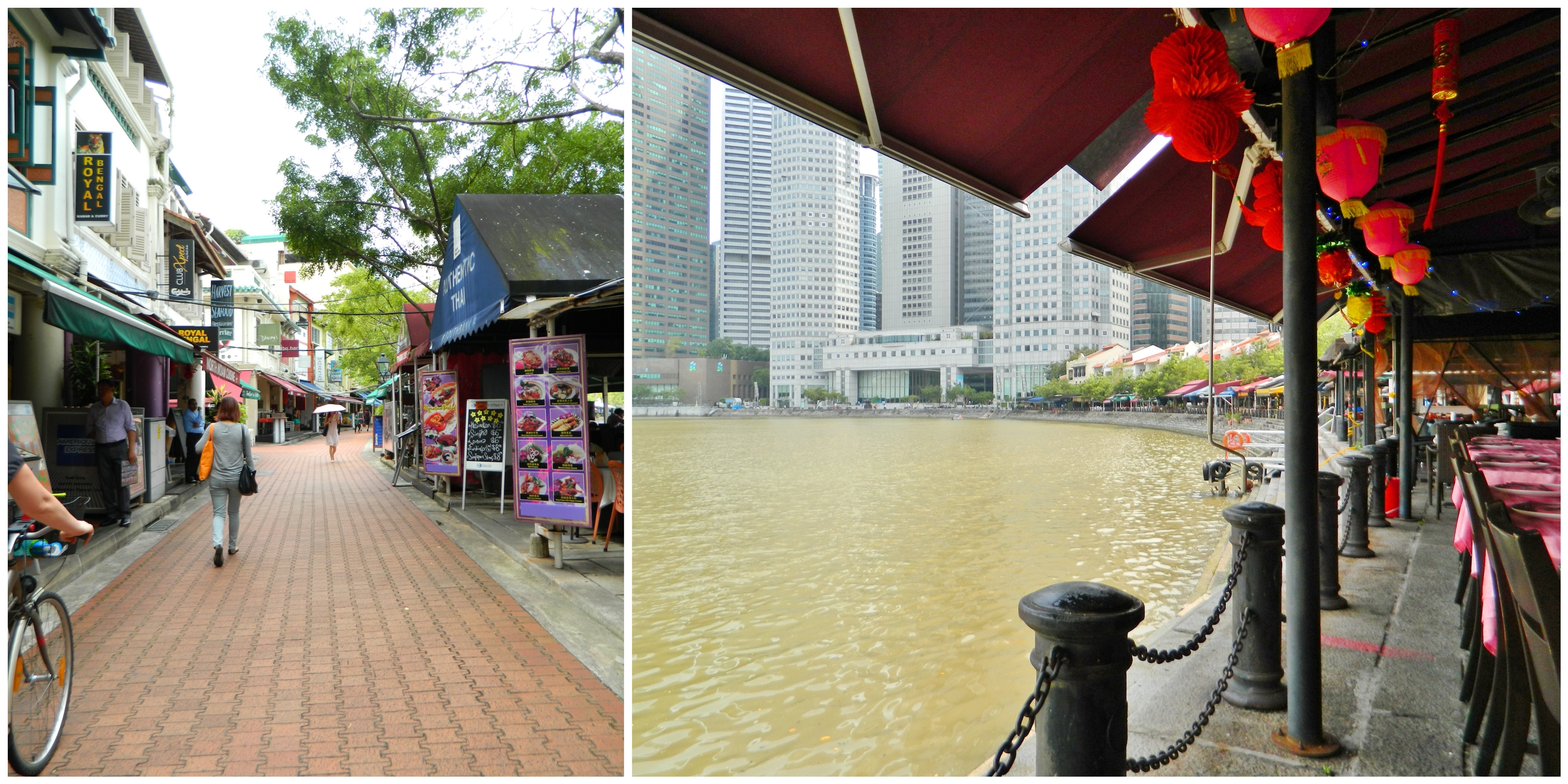
Boat Quay

Train Hopping

We spent the afternoon train hopping through the city districts. One of the most colourful parts of Singapore that I saw was Little India.
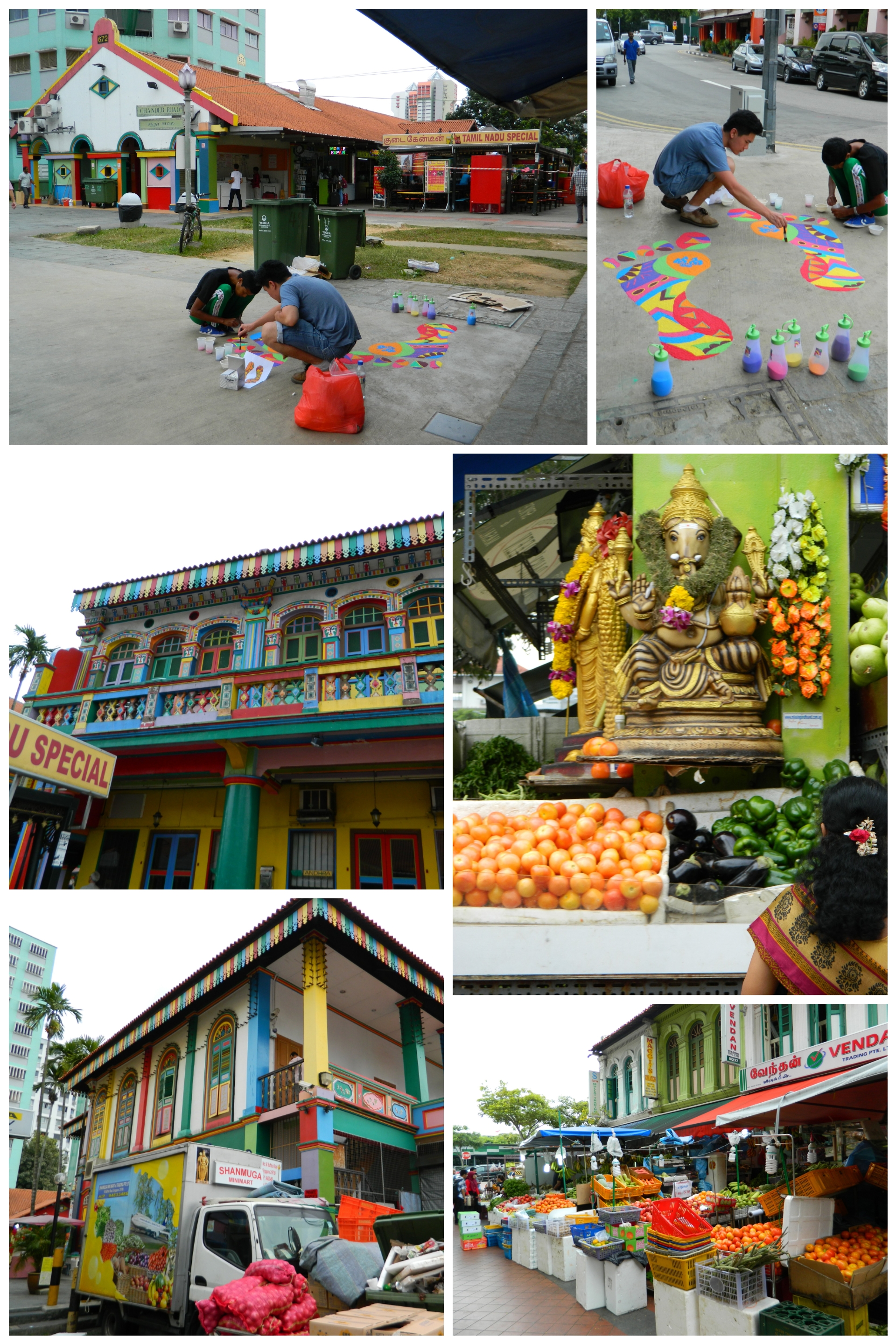
Little India

Here is where you’ll find one of Singapore’s oldest Hindu temples – Sri Veeramakaliamman – try saying that after a few bottles of Chang! The temple is a visual treat as you approach, a cornucopia of Hindu Gods and Goddesses peering down from the colourful tiers of the roof. Tourists can enter the temple, but must practice the same respect as worshippers, removing all footwear and washing your feet before going inside. Every inch of the interior is dedicated to a shrine, representations of Gods on every wall. Worshippers chant and pray, seemingly unaware of the tourists encroaching on their beloved sacred place.
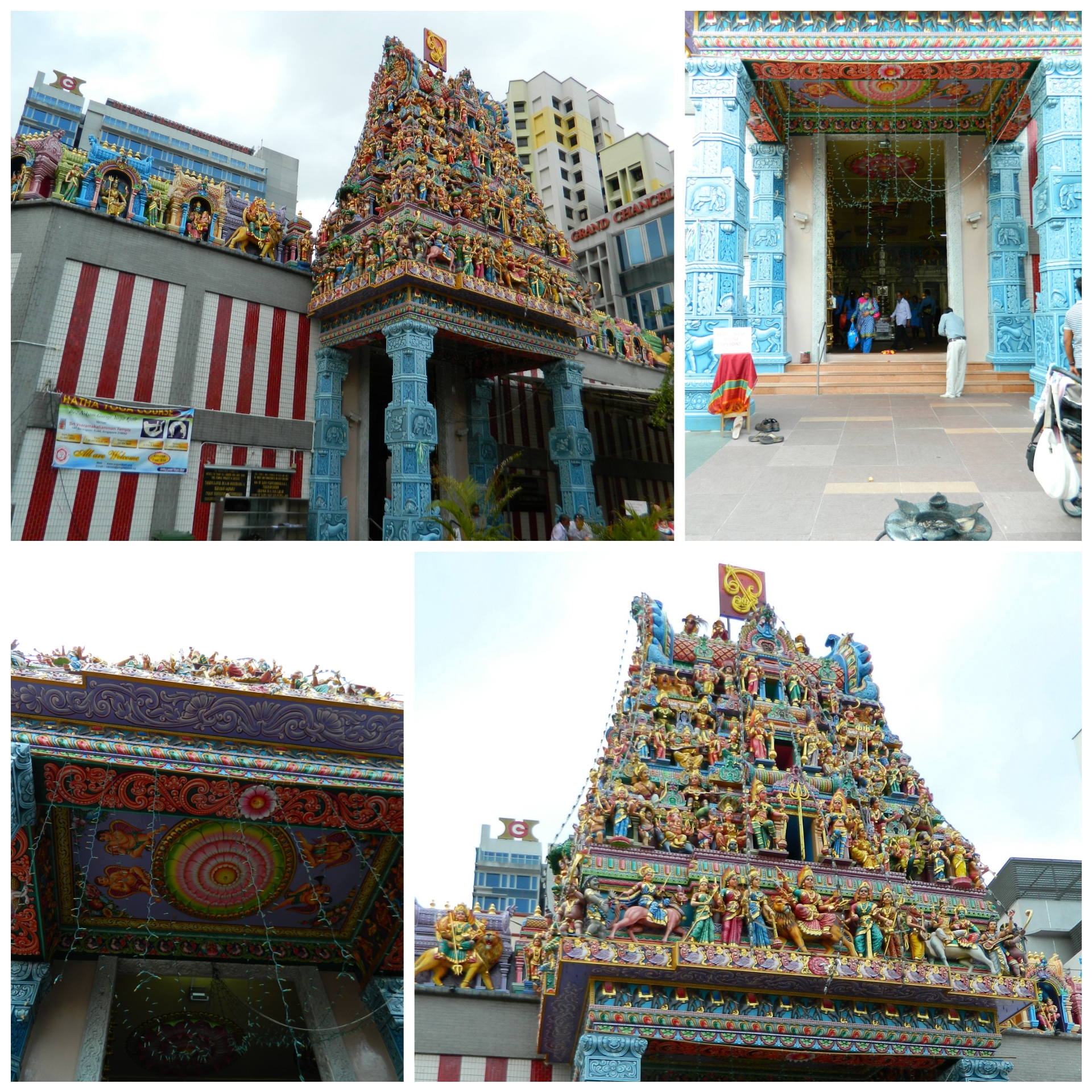
Sri Veeramakaliamman Hindu Temple

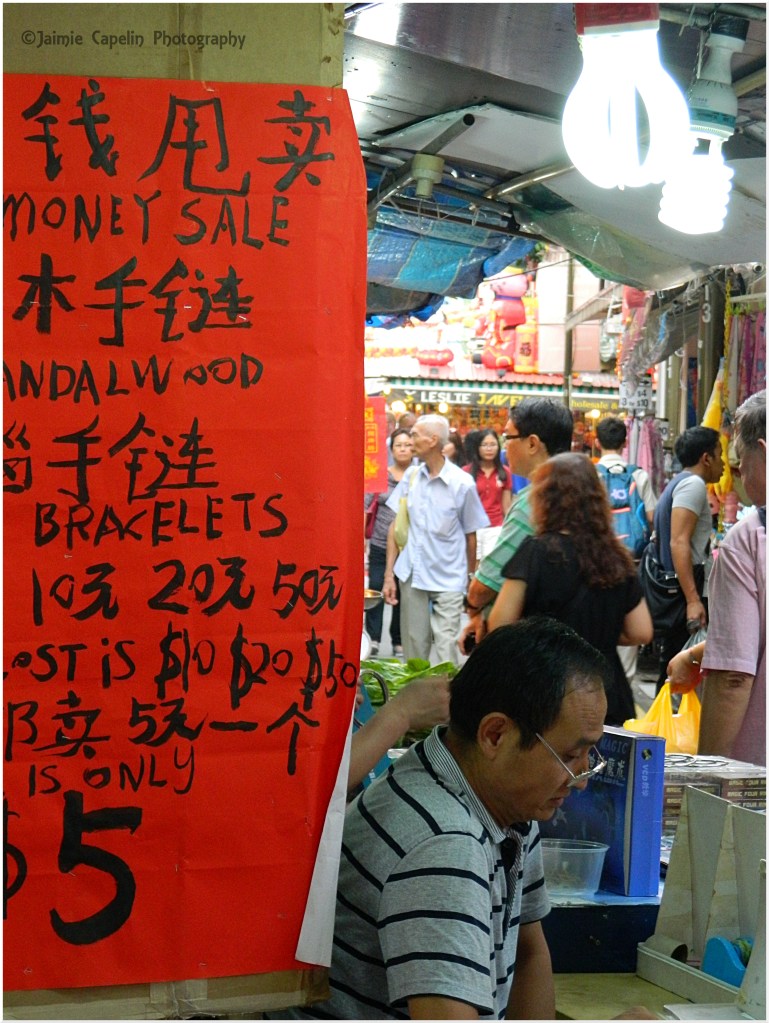
Next we explored China Town, walking through the bustling markets, little laughing Buddha trinkets and wooden bracelets as far as the eye could see.

It was a stifling, muggy afternoon, and at the China Town gate, Tze bought us a little ice cream sandwich each from a street vendor to cool us down.
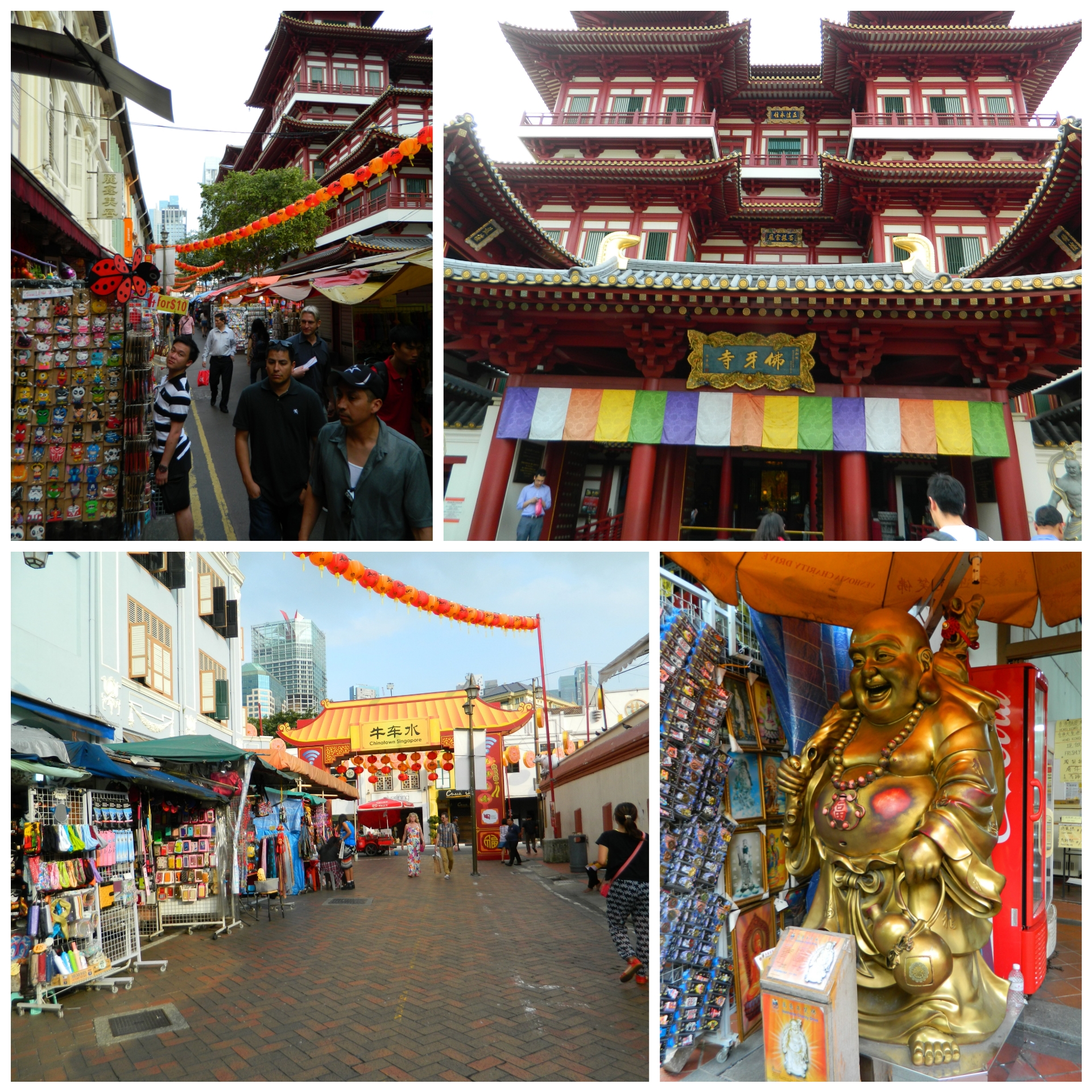
Buddha Tooth Relic Temple, China Town

Dinner in the City

As darkness settled above the city, the markets and food stalls of Bugis started to come to life. I met another friend, Boon, who took me to a Japanese restaurant for dinner. He was quite the connoisseur, and had so many recommendations, so I let him order for me. The dish he ordered was called ‘Summer’, and was a beautiful ramen, rich with spices and topped with nori. Boon also ordered a bowl of hardboiled eggs for the table, completely over estimating my appetite! One of the cool things about this restaurant was the pestle and mortar on the table to grind our own fusion of spices to taste.
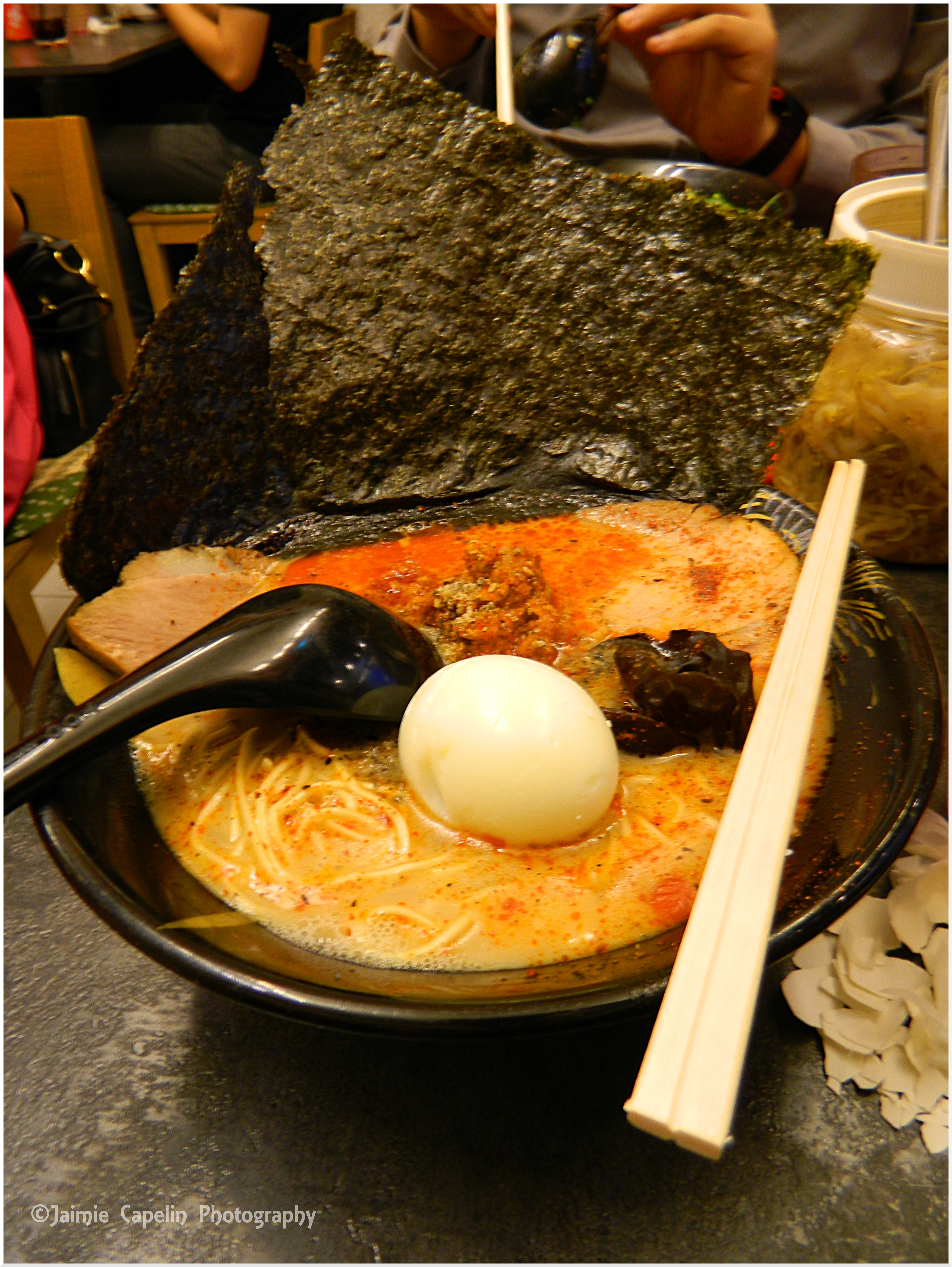
‘Summer’ Ramen

After dinner, we went into one of the great shopping halls to a Kopi tiam – coffee shop. Boon explained the cultural significance of this style of coffee, and that everyone from all ethnicities orders in the Chinese Hokkien dialect. Now, perhaps it was my training as a barista in New Zealand that peaked my interest, or the fact that it was practically a Singaporean tradition, but this was a definite highlight.
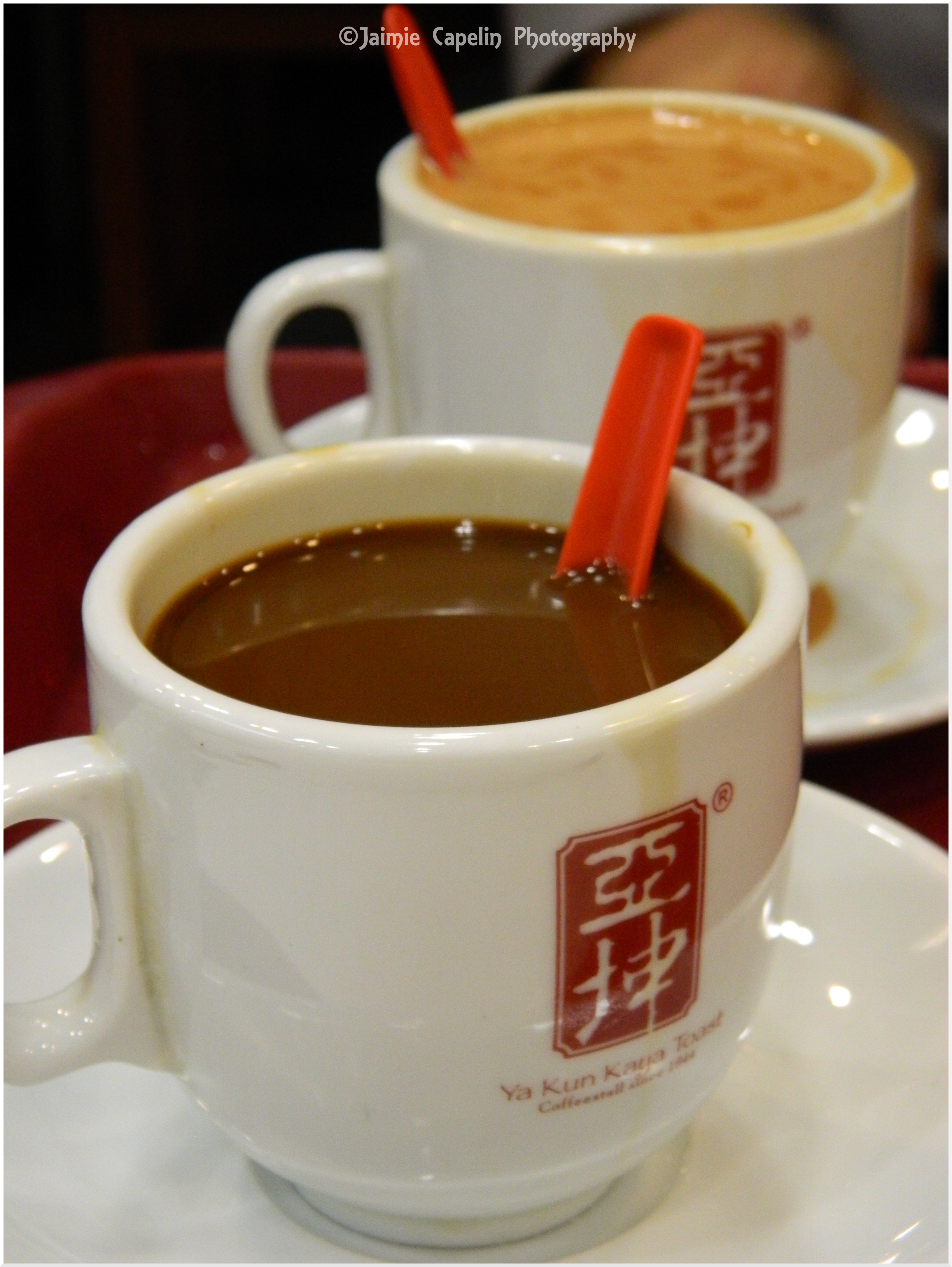
Kopi & Teh

He ordered a ‘kopi’ for me, a ‘teh’ for himself, some kaya toast, (a crisp, sugary toast, with a layer of the yummy green jam I’d had at breakfast, which is made from coconut milk, eggs and sugar,) and some soft boiled egg, (because apparently we hadn’t had enough egg already!) They prepared it all before us, and laid it on a tray for us to take to one of the communal benches. The kopi was thick; filtered from jug to jug, and poured over condensed milk, sugar and soya milk, with water poured on top. It was dark, rich and syrupy, I’d never tasted anything like it, and it was well complimented by the crisp, sweetness of the kaya toast. Having since been to Vietnam, I can liken the taste to Vietnamese coffee, but it isn’t the same. Singaporean ‘Kopi’ is unique in its roasting process: a glaze of sugar is added to the beans, giving it that caramelised sweetness. It is highly caffeinated, and dangerously sugary, so despite being a traditional drink, it’s not recommended for frequent consumption.

The Ideal Layover

Singapore is conveniently situated between Oceania and Europe, making it a common layover spot for long haul flights. In 2015, I found the city so accessible, with a wide variety of food choices, plenty of nearby places to visit, and unless you’re visiting to shop the designer outlets, it wasn’t overly expensive.
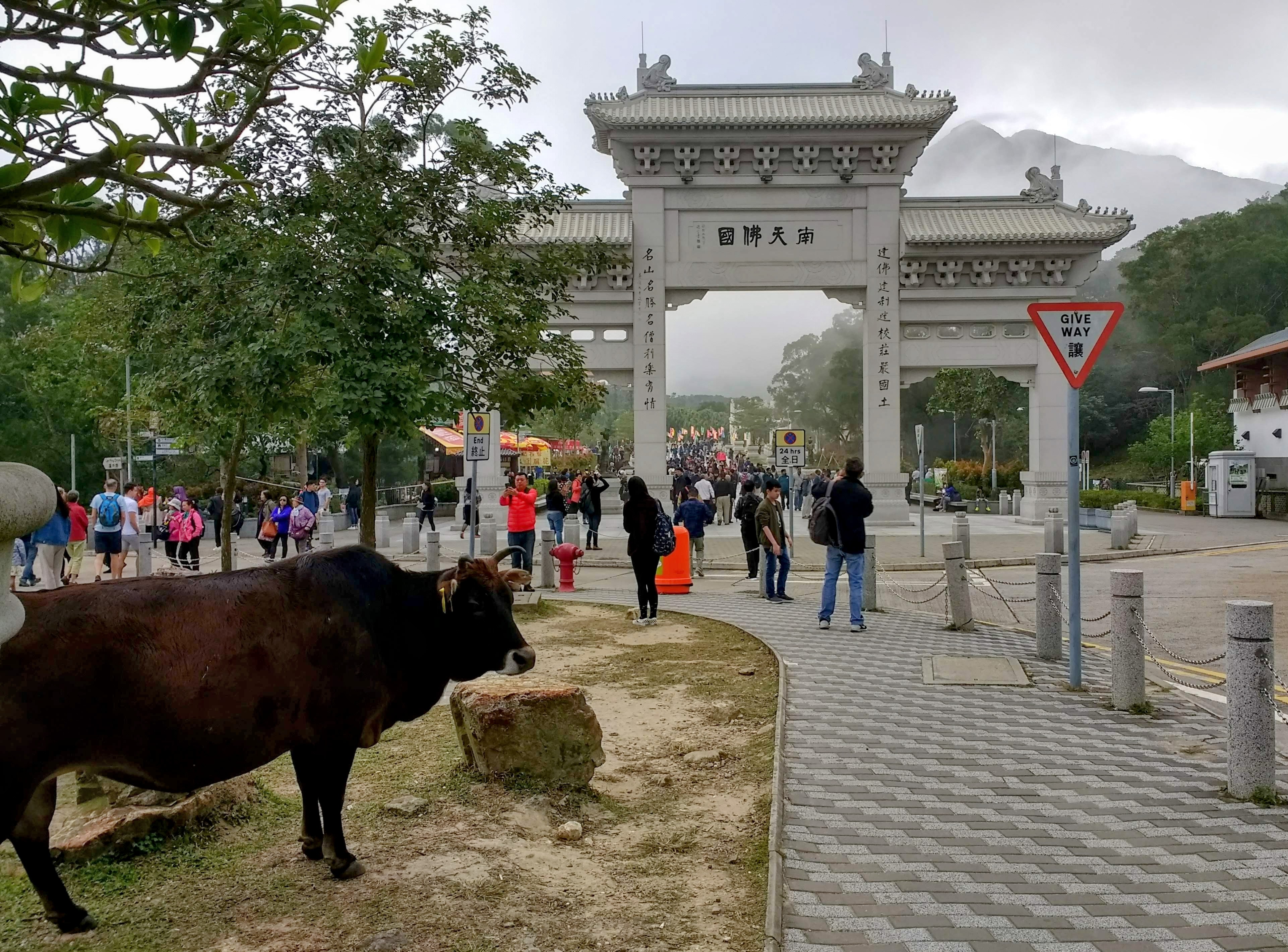
Lantau Island – Hong Kong

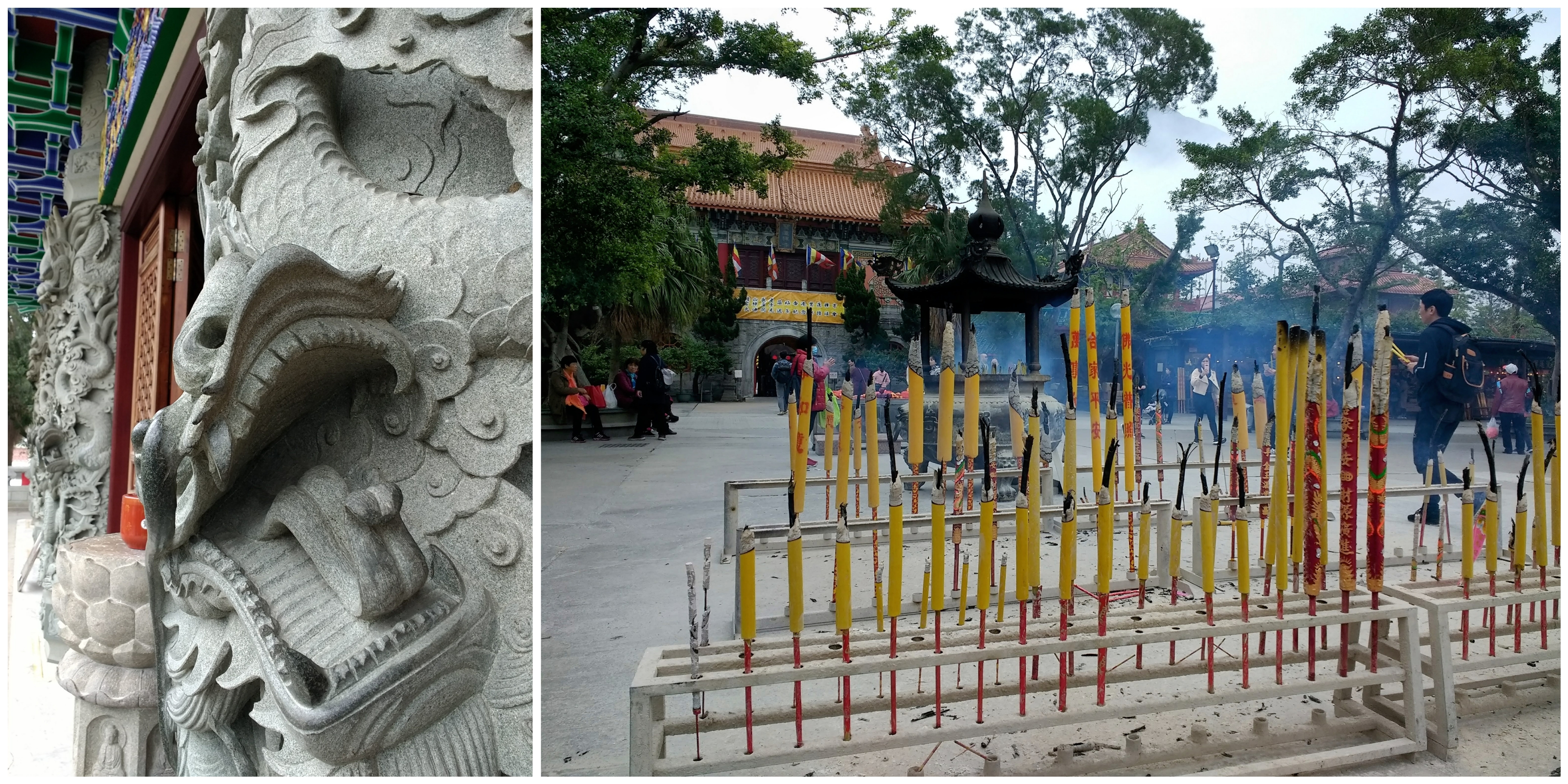
Po Lin Monastery

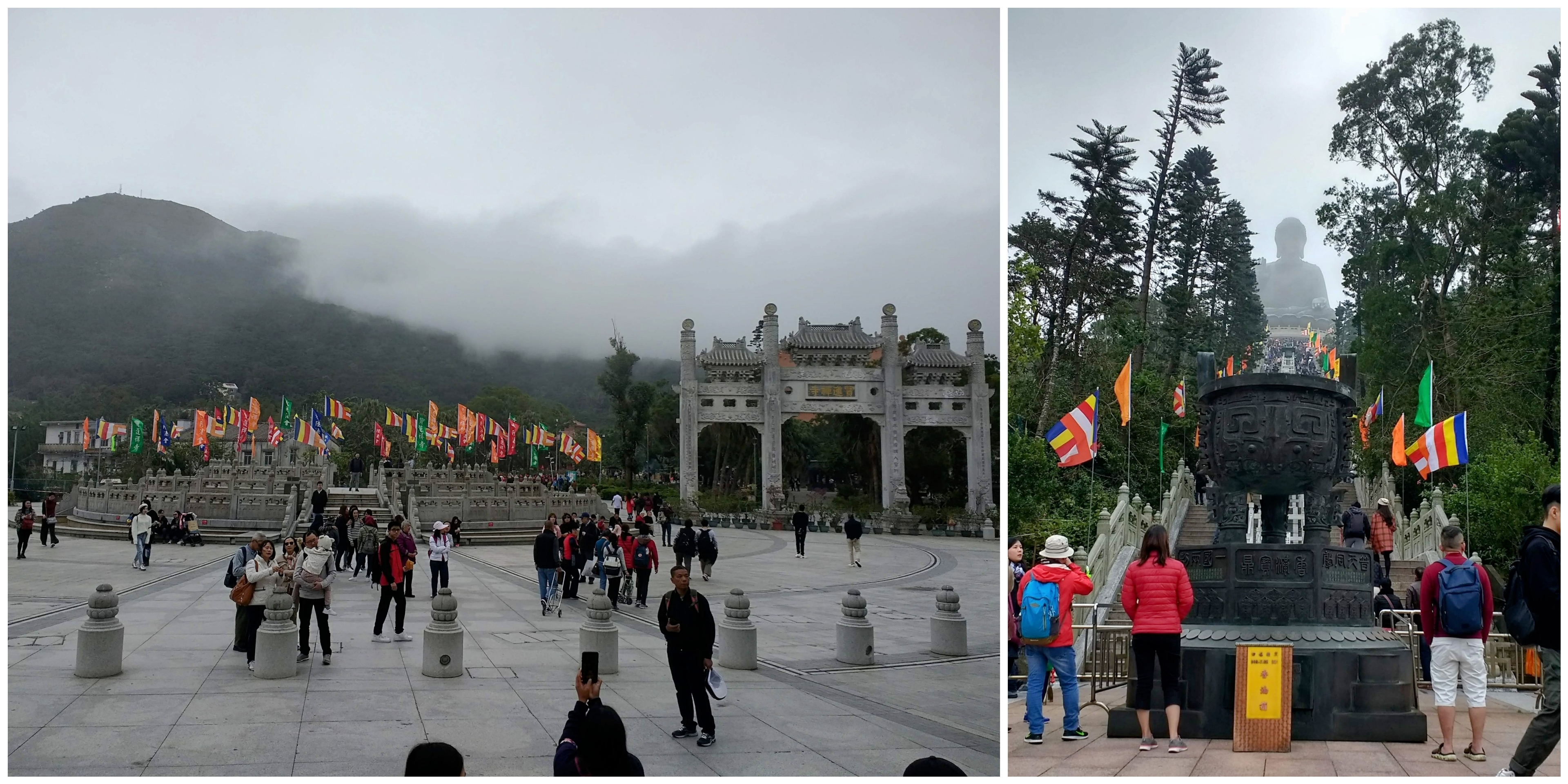
Hong Kong’s largest island is Lantau. This is where Hong Kong International Airport is situated, along with Disney Land, plenty of beaches, national parks, and traditional fishing towns. The island is a popular summer holiday escape, but remains a tourist hotspot even in the middle of winter, as I discovered! While staying in Hong Kong in December 2018, our host, Cecilia took us for a day trip to Lantau Island. We left Kowloon City early in the morning commencing our 3 hour journey, via hydrofoil and bus, to the Po Lin Monastery and Tian Tan Buddha in the heart of Lantau Island. This giant bronze Buddha is one of the biggest in the world, and sits on an enormous lotus flower plinth atop the mountains, seen for miles around. I could see it from the bus as we wound through the mountains, glimpses of beaches in the distance between curls of mist that floated in from the sea. By the time we arrived at the Big Buddha, a thick fog had plunged the mountain into grey soup. At the gate, street-wise cows wandered around, perusing the available snacks and terrorising picnics!

Lantau Cow at the Entrance Gate

With the Big Buddha entirely obscured by fog, we went to check out the temple. Wisps of incense rose up into the white sky, where mountain peaks made ghostly appearances through the mist. The beautiful architecture of the 1920s Buddhist buildings splashed colour onto the bleakness, dragons carved into the stonework roaring silently. There was peacefulness in the fragrant air, despite the number of visitors.

Po Lin (Precious Lotus Zen Temple)

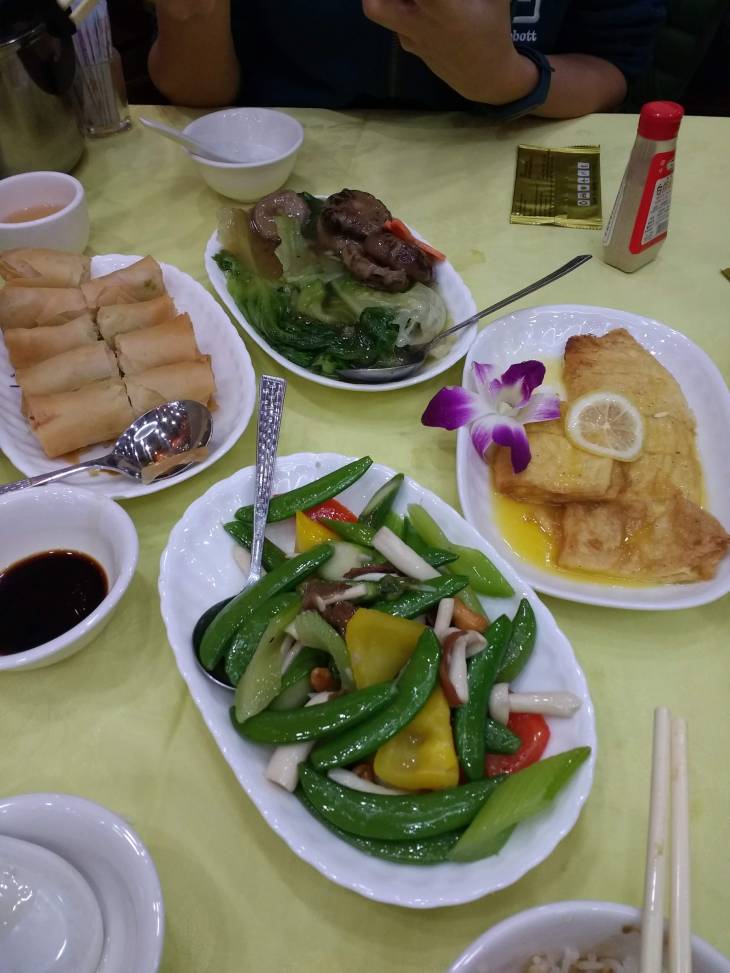
Inside the Po Lin Monastery there is a vegetarian restaurant where you can eat like a Buddhist monk. The dishes are classic Chinese meals, however, in contrast to the meals we’d had in the city (see ‘Flavours of Hong Kong’ blog) Buddhist monks eat modestly, therefore they don’t use any kind of flavours like garlic, chilli or ginger, or spices that may be regarded as rich or frivolous. That said, the lunch was deliciously simple!

Buddhist Lunch at Po Lin Monastery Restaurant:
Vegetable spring rolls, Shiitake mushrooms, tofu roll pancakes with lemon & honey, glazed vegetables, and steamed white rice. There was also a fortune cookie each for good luck!

Content with lunch, Cecilia showed us the “Ngong Ping 360”, a 5.7km long cable car system, which is usually an ideal way to view Lantau Island and all its shore lines, mountain peaks and landmarks. We stood at the Ngong Ping Terminal, watching the gondolas launch off into the cloud, disappearing into nothingness – it wasn’t the day for it!

Tian Tan Buddha

Admitting defeat by the weather, we decided to just go up to the Big Buddha anyway. We climbed the 268 stone steps to the invisible Buddha, and entered beneath the giant Lotus plinth. Inside is a mausoleum, which was unexpected, and families have paid huge sums of money to join the waiting list to be brought here after they die. Cecilia told us the mausoleum was almost full, so the remaining spots were in high demand. There is also a museum of Buddhist artefacts, including the Buddhist Bone Relic, which brings worshippers from far and wide.

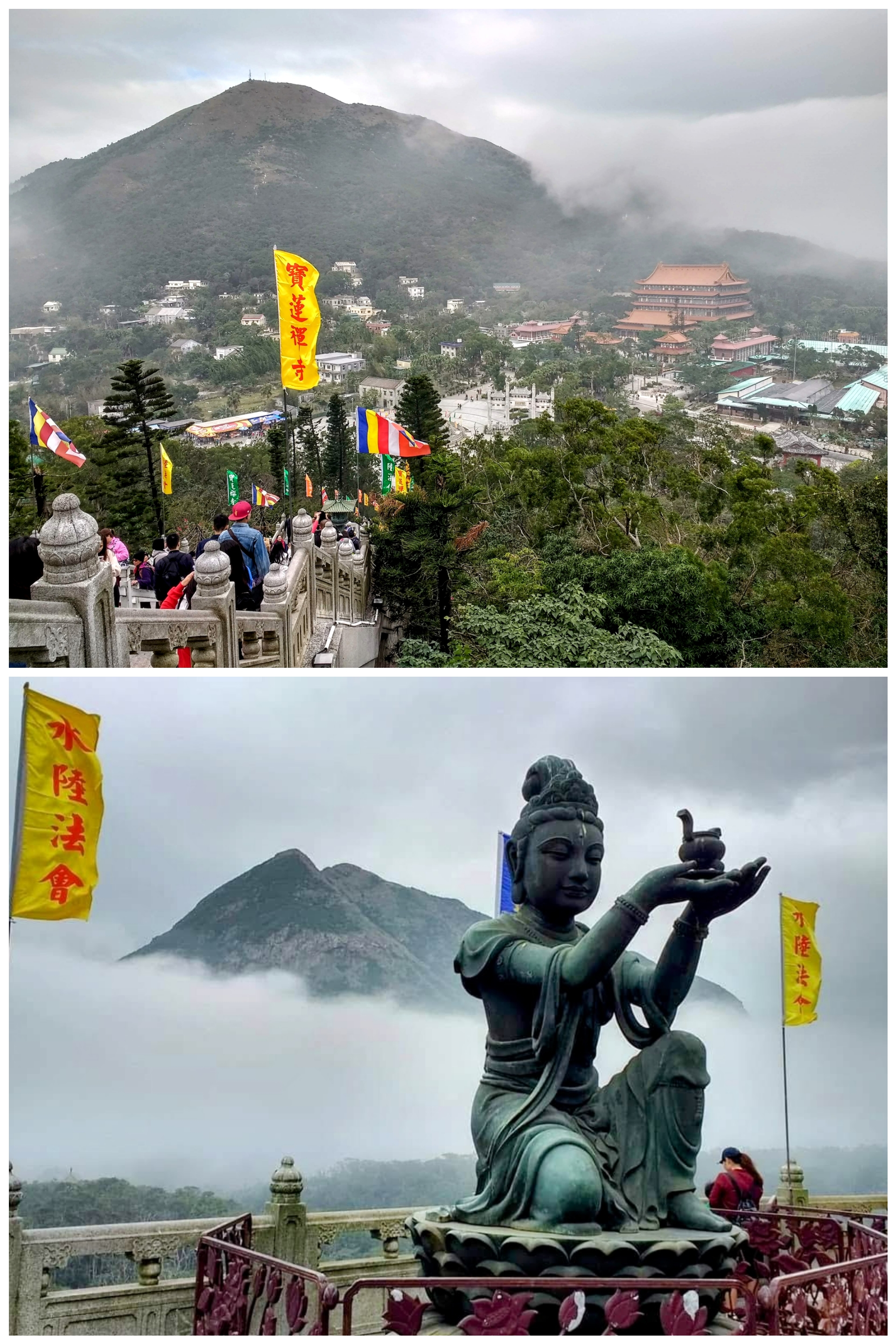
When we stepped back outside onto the platform beneath the Big Buddha, the fog had cleared, revealing moody views all around! Lantau Peak rose up, touching the clouds beside the Big Buddha.

Po Lin Monastery down the 268 steps / Lantau Peak behind Buddhist statue

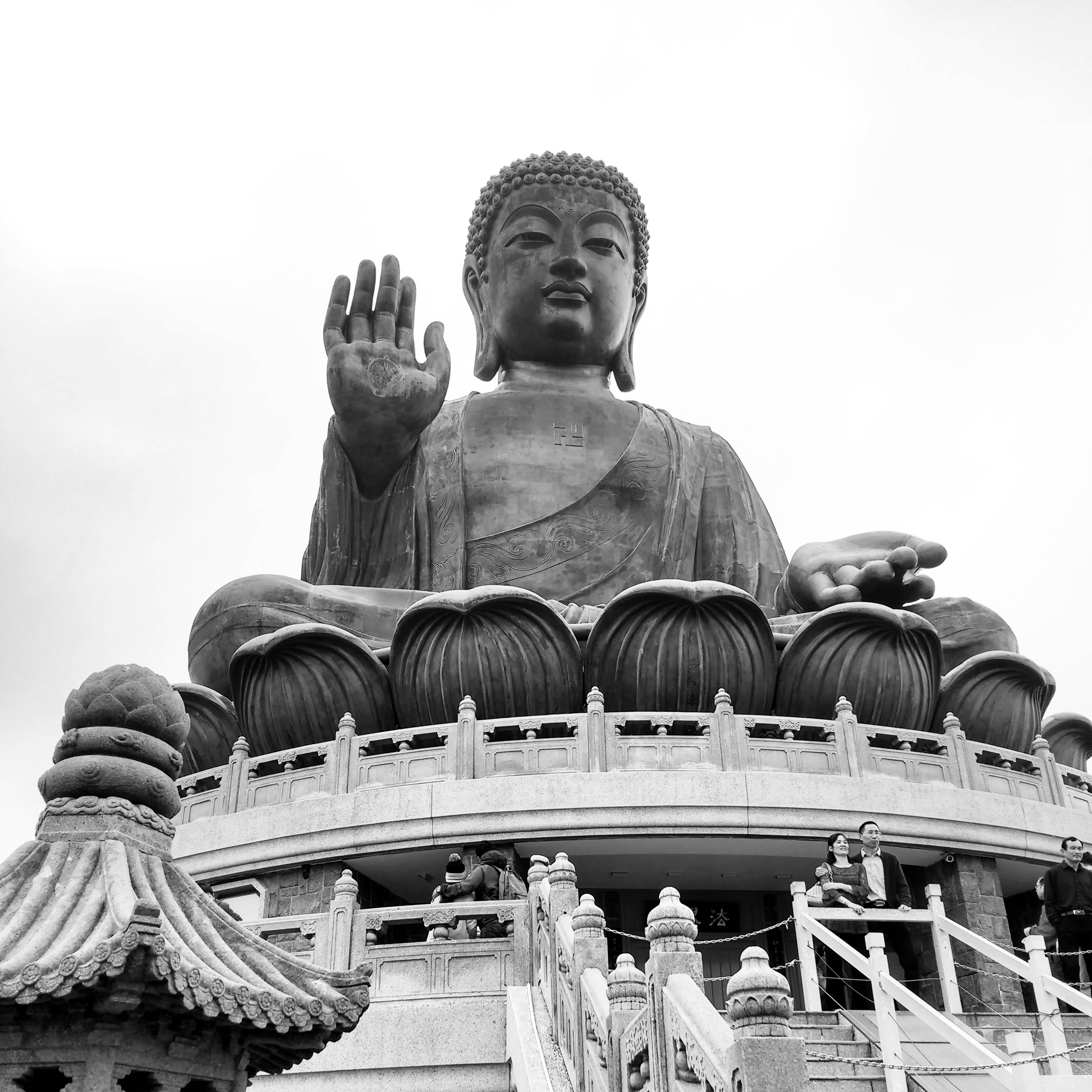
We ran down to the platform below to finally catch a clear glimpse of the Tian Tan Buddha in all his glory.

Tian Tan Buddha – completed in 1993

Tai O Fishing Village

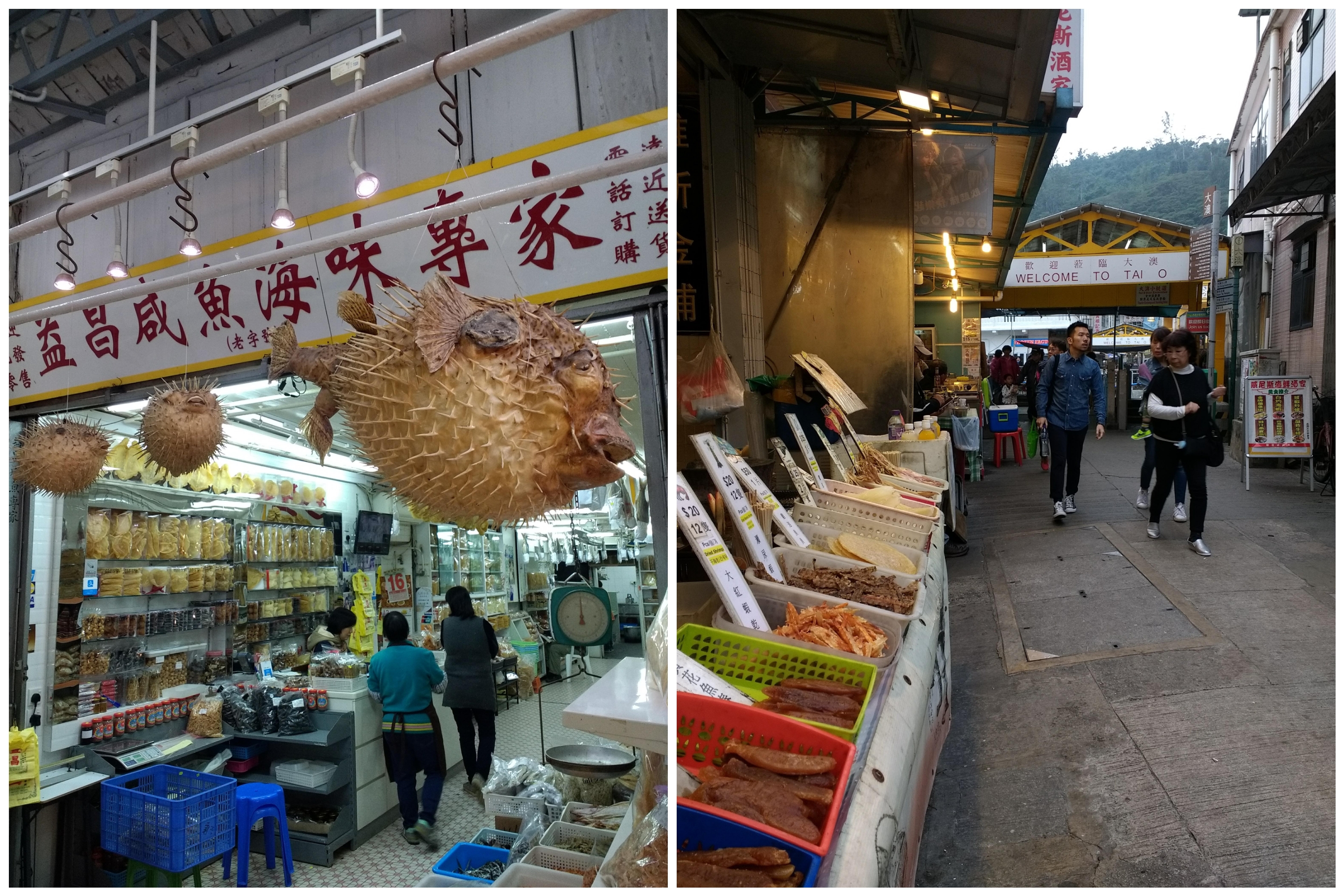
A 30 minute bus ride from the Po Lin Monastery brought us to the West coast of Lantau Island, to a traditional fishing village – Tai O. This is an island in itself, and once you get off the bus, you walk up to the inlet, which is full of tourist boats that, for a fee, will take you out to spot the native pink dolphins. Walking over the pedestrian bridge onto the island and into the narrow streets is like going back in time to some ancient village. Shops line these streets; seafood stores, fishing stores, whole food stores, local fast food stores, everything sea related. Dried Puffer fish and sharks hang from the windows, while mini aquariums display the catch of the day. Grills and deep fryers are constantly on the go outside shop fronts, ready for you to taste some fresh, local seafood.

Streets of Tai O

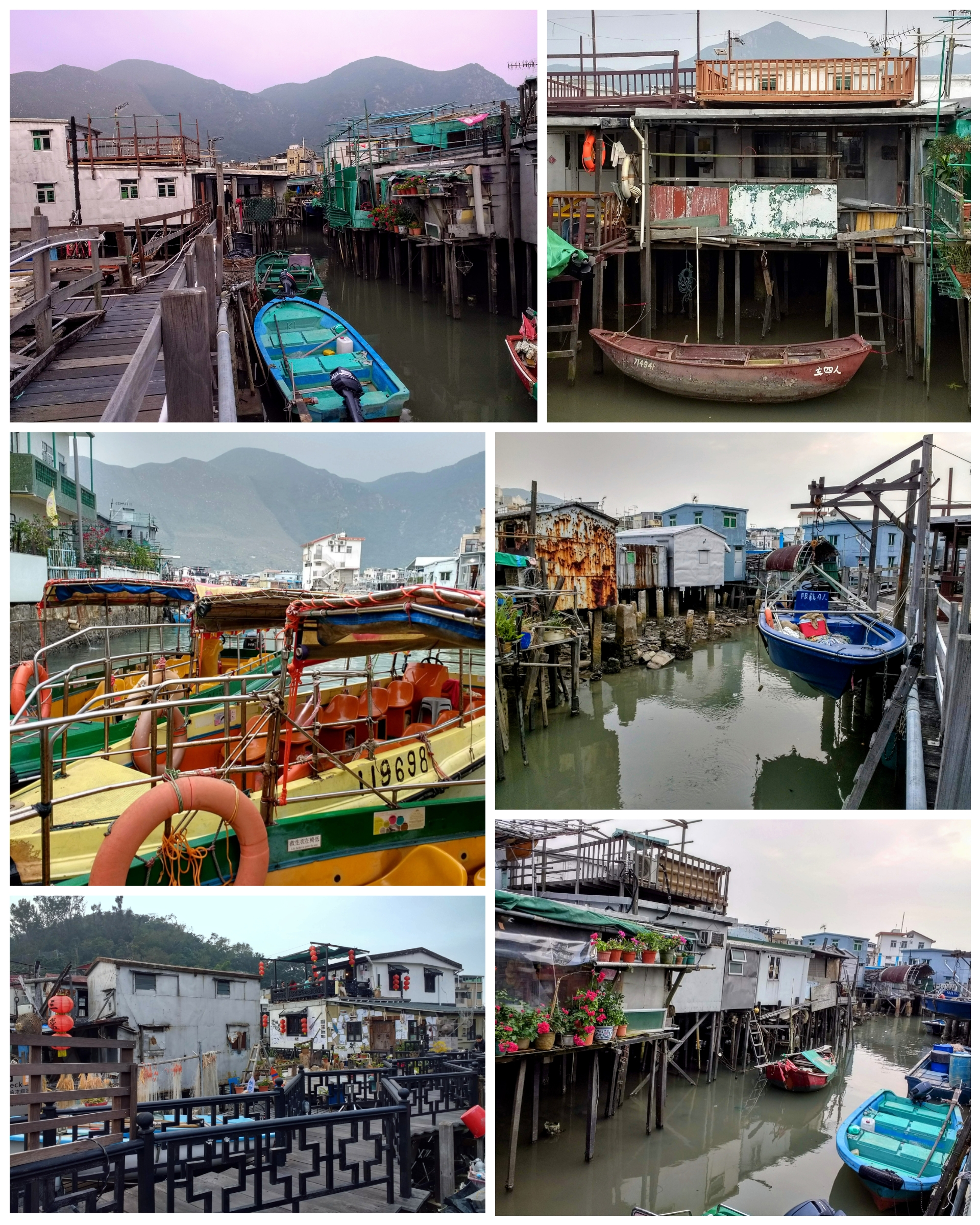
We came to the edge of the village, where the streets meet the sea, and the old residencies stretch out over the water on wood & bamboo stilts. Nicknamed the Venice of Hong Kong, a pier maze of wooden walkways lead across the water, old houses, fisheries and restaurants clinging to the edges, all weathered by the sea. Instead of driveways or garages, the houses have their little boats suspended from winches outside, ready to be lowered into the water whenever they need to leave. Many of these buildings were in ruins due the adverse weather conditions of this extreme location. A year prior to our visit, Super Typhoon Hato (August 2017) had destroyed much of Tai O’s stilt village, and sadly, modern lifestyle meant that it was more cost efficient and practical to simply move away, rather than try to rebuild in such a temperamental place. Still, that which remains represents the traditional nature of Tai O fishing village, and maintains its weathered charm.

Tai O Traditional Fishing Village

Keep Reading….

Patagonia | Dipping a Toe in Chelenko

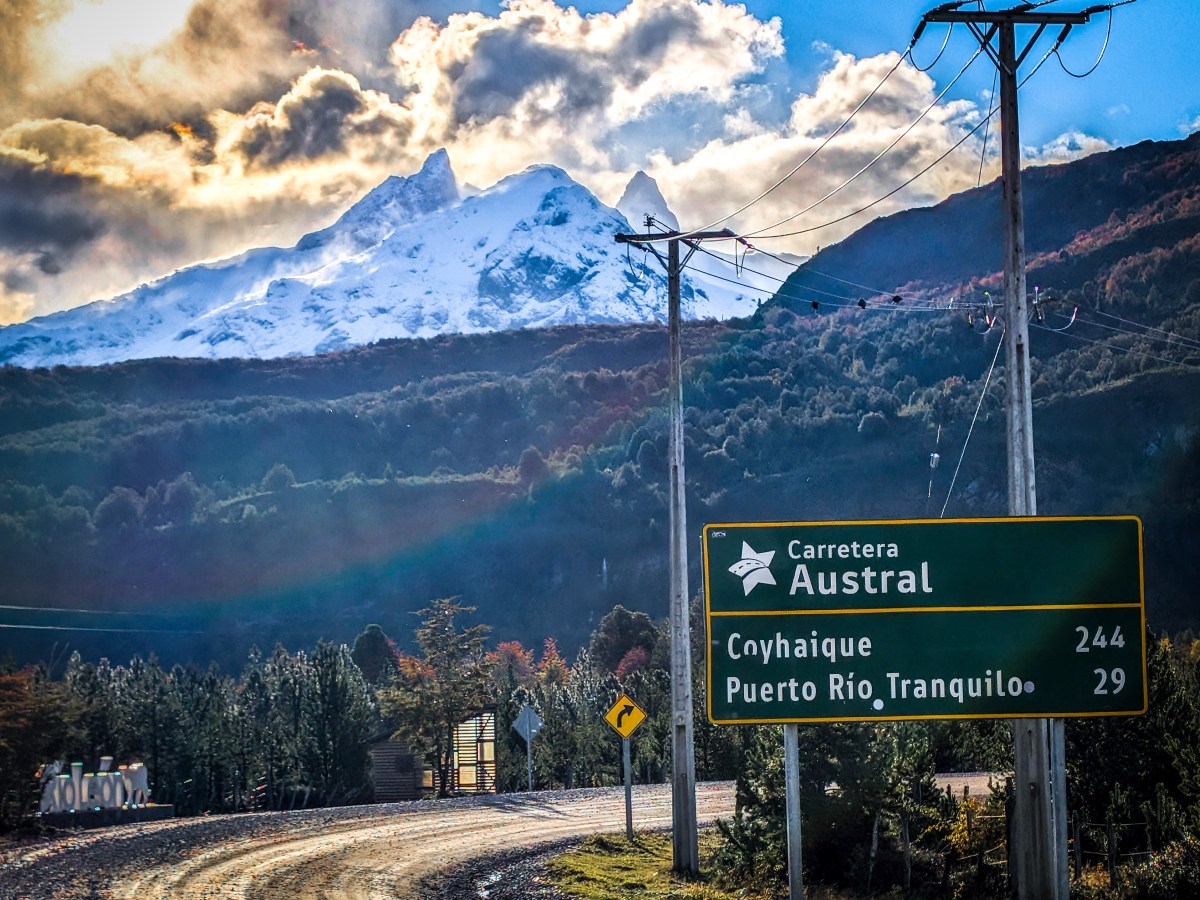
Dust clouds billow behind the car, pursuing us and clinging to the rain soaked rear window. Another corner of mud and loose gravel, and another minor slide out as the tyres lose their traction. We haven’t seen another car for a while, does anyone else know about this “famous” highway? Carretera Austral – the great…

The Black Snow Globe

The horizon is red and black with fire; smoke clouds grow like giant mushrooms over the town. The air smells like toasted marshmallows and burnt grass, and everyday it snows; gentle, black ash tumbling like feathers out of the sky – cane burning season is in full swing.

Flavours of Hong Kong

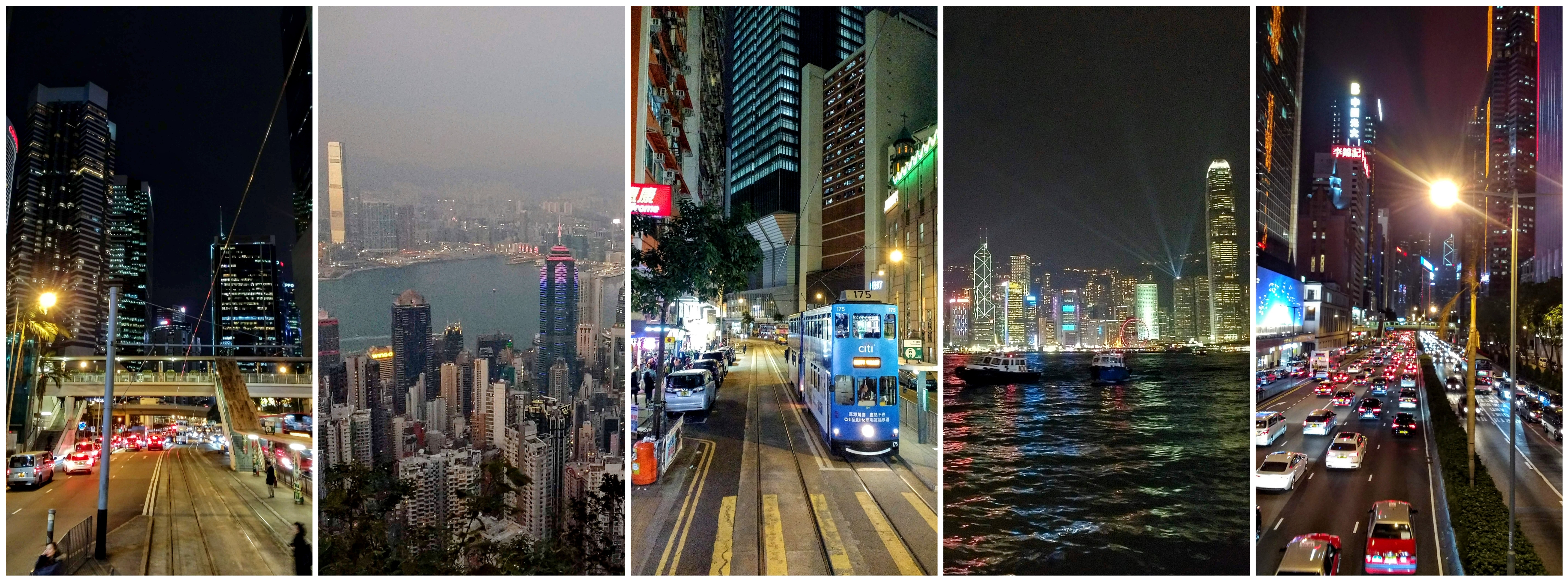
It was December, 2018, and Hong Kong was chilly and damp. I saw the city as a futuristic London; the British colonisation influenced the double decker buses, and fusions of architecture, old and new, crammed together in narrow streets teaming with diverse culture, but the double decker trams, and wide highways cutting through the skyscrapers, more lights than Piccadilly Circus, made it like London 2.0. Of course, Hong Kong certainly has its own identity, with its idyllic location, surrounded by sea and mountains; it is stunning to look at from a distance. But when you’re in the heart of it all, dwarfed by buildings, traffic noise filling your head while you try to navigate the 7.4 million people around you, it’s the glowing lanterns of restaurants and food stands, and the rich smells of Chinese cooking that remind you where you are, warming your cockles in the cold December chaos.

Breakfast

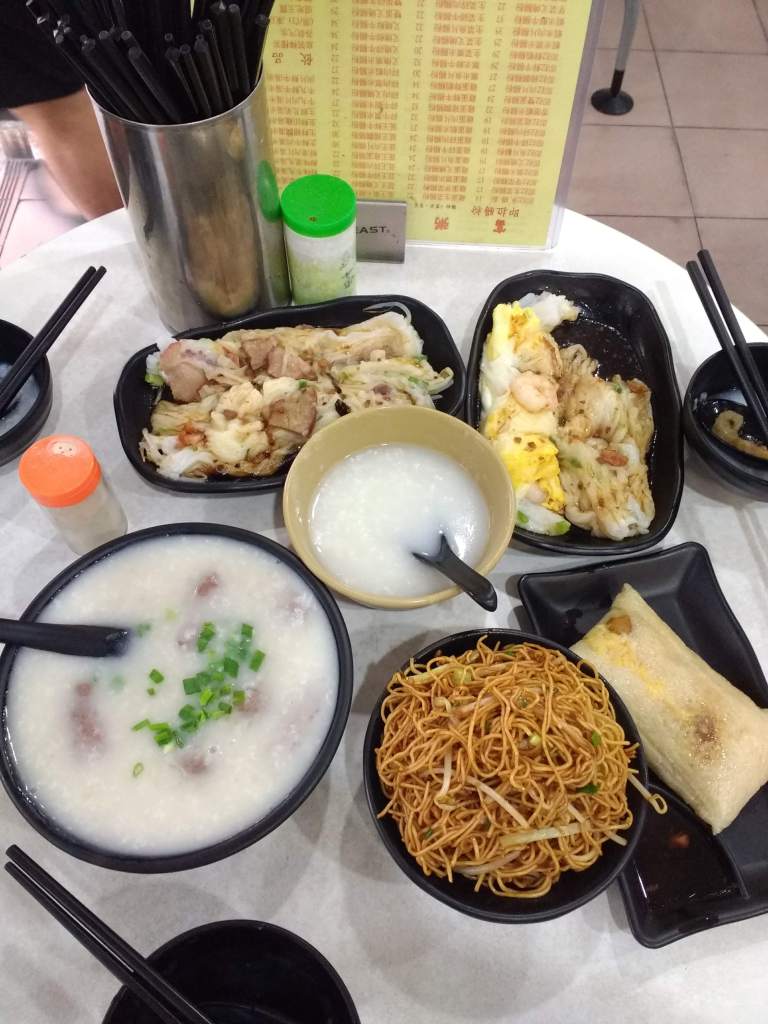
We were hosted by a friend, Cecilia, who lived in a typical tiny flat in Kowloon City. The first meal of our visit was brunch, so Cecilia took us to a small cafe around the corner from her place to try Hong Kong style breakfast.

Congee – a Chinese porridge made with white rice. We tried it with and without beef, (I preferred it without) it was fairly bland and savoury, unlike Western oat porridge. We also tried Cheung Fun – Cantonese steamed rice noodle rolls, with seafood or pork, and on the side we had some egg rolls and stir fried noodles. It was a heavy breakfast for me, and Cecilia admitted that she would usually have fruit and toast, and save this kind of breakfast for special occasions!

Symphony of Lights

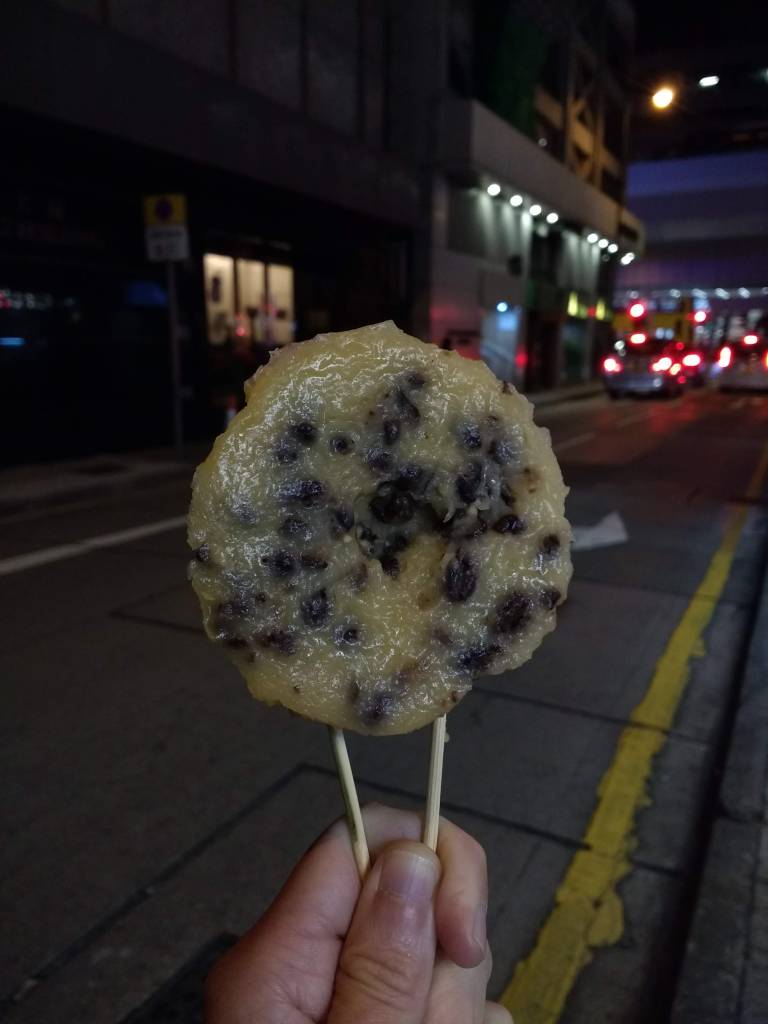
A short ferry ride across to Hong Kong Island brings you into the shopping district and tourism hub. We rode the double decker tram around the city, which was all lit up and filled with crowds. Christmas was in the air, and once again I was reminded of the dark, winter afternoons in London, Christmas shopping in Oxford Street. It was on Hong Kong Island that Cecilia introduced us to a sweet treat from a roadside food stand – Put Chai Ko.

Put Chai Ko is a traditional Cantonese desert, popular in Hong Kong. A starchy rice pudding with sweet red beans, it is sugary and creamy with the texture of soft Turkish Delight.

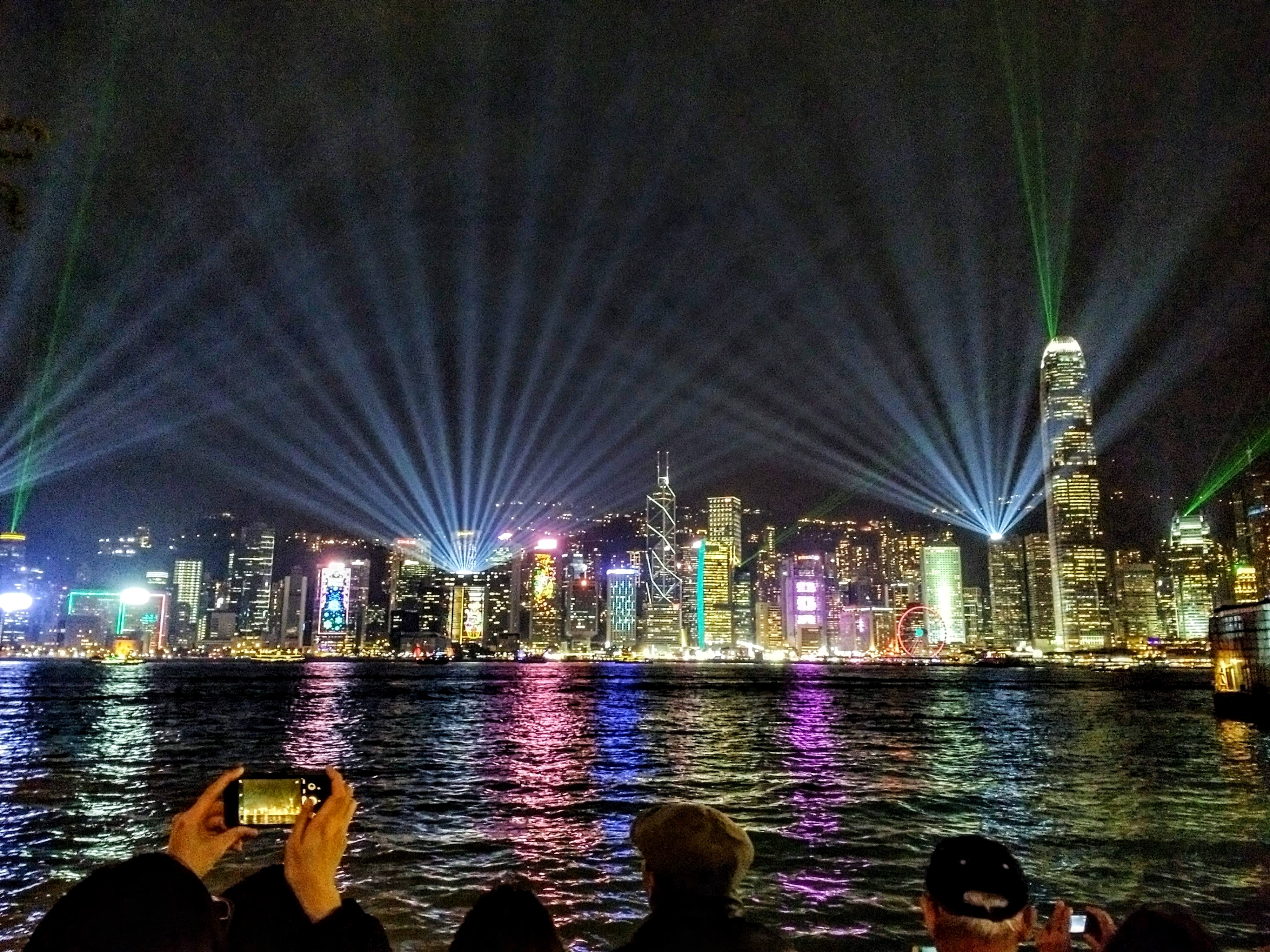
Every evening after sunset, Hong Kong Island puts on a musical light display, which you can view from across the water, at the Tsim Sha Tsui Waterfront. Thousands of people flock here every evening to see the Symphony of Lights, and it’s free to watch, so it’s a great way to end a big day of maxing out your credit card in the shopping district!

Symphony of Lights

To top the evening off, Cecilia took us to a Taiwanese Craft Pub where we met a friend of her’s. Hong Kong’s multi-cultural history means that it’s taken the best bits from its influences over the years, and the pub scene is roaring. There are many craft beer pubs and tap rooms scattered all over Hong Kong, and there is such a diverse amount of different beers from different places, it’s hard to be disappointed. I was too busy ordering tasting paddles with every beer on the menu to take any photos!

Lunch

Cecilia wanted to show us an authentic food hall for lunch, where groups of people go for casual banquet style dining. This can be a business lunch, or just an outing with family or friends, where dishes are shared around the table, rather than ordering a meal per person.

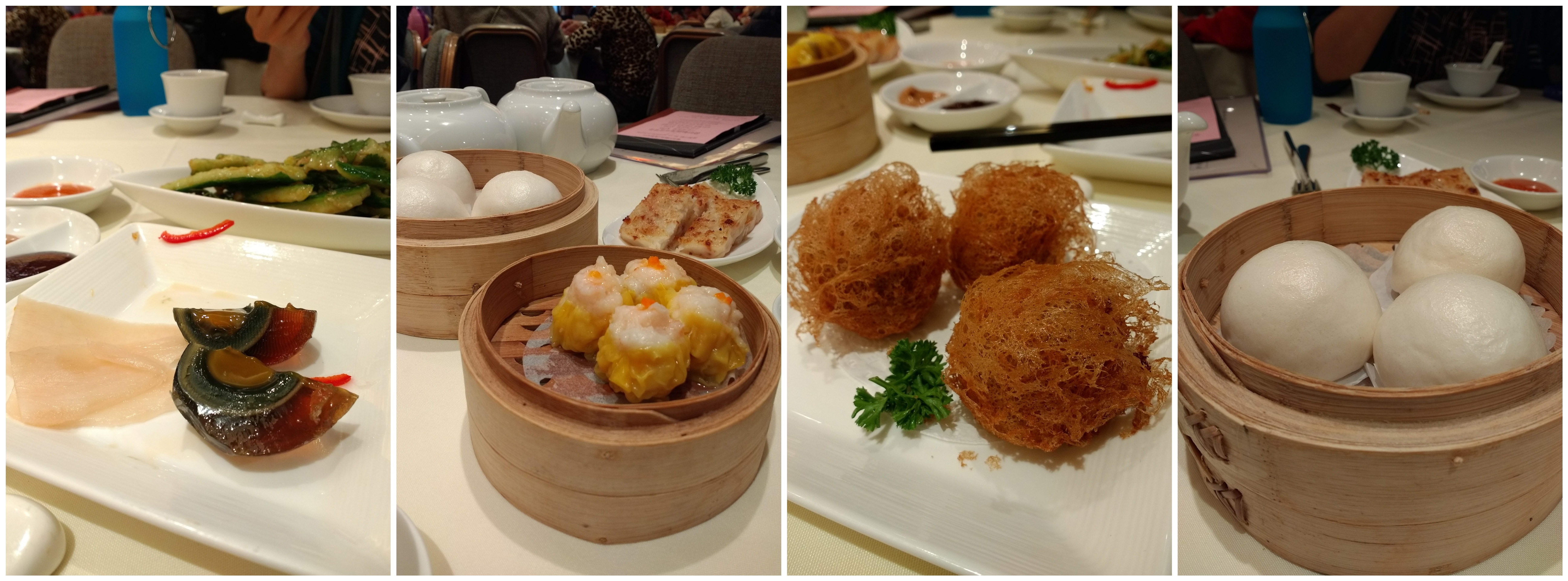
We had some classic steamed shrimp Dim Sum, crispy, crumbly taro nests, and of course Cecilia had to get us a Millennium Egg to try! The egg isn’t really 1000 years old, but it can take weeks to months to complete the curing process. It came with plenty of pickled ginger, which helps disguise the strong flavour of the egg, which had turned to salty jelly. Millennium Eggs are safe to eat, and surprisingly, don’t taste too bad! We finished with something scrumptious – fluffy steamed custard buns.

Millennium Egg / Shrimp Dim Sum / Taro Nests / Steamed Custard Buns

Victoria Peak

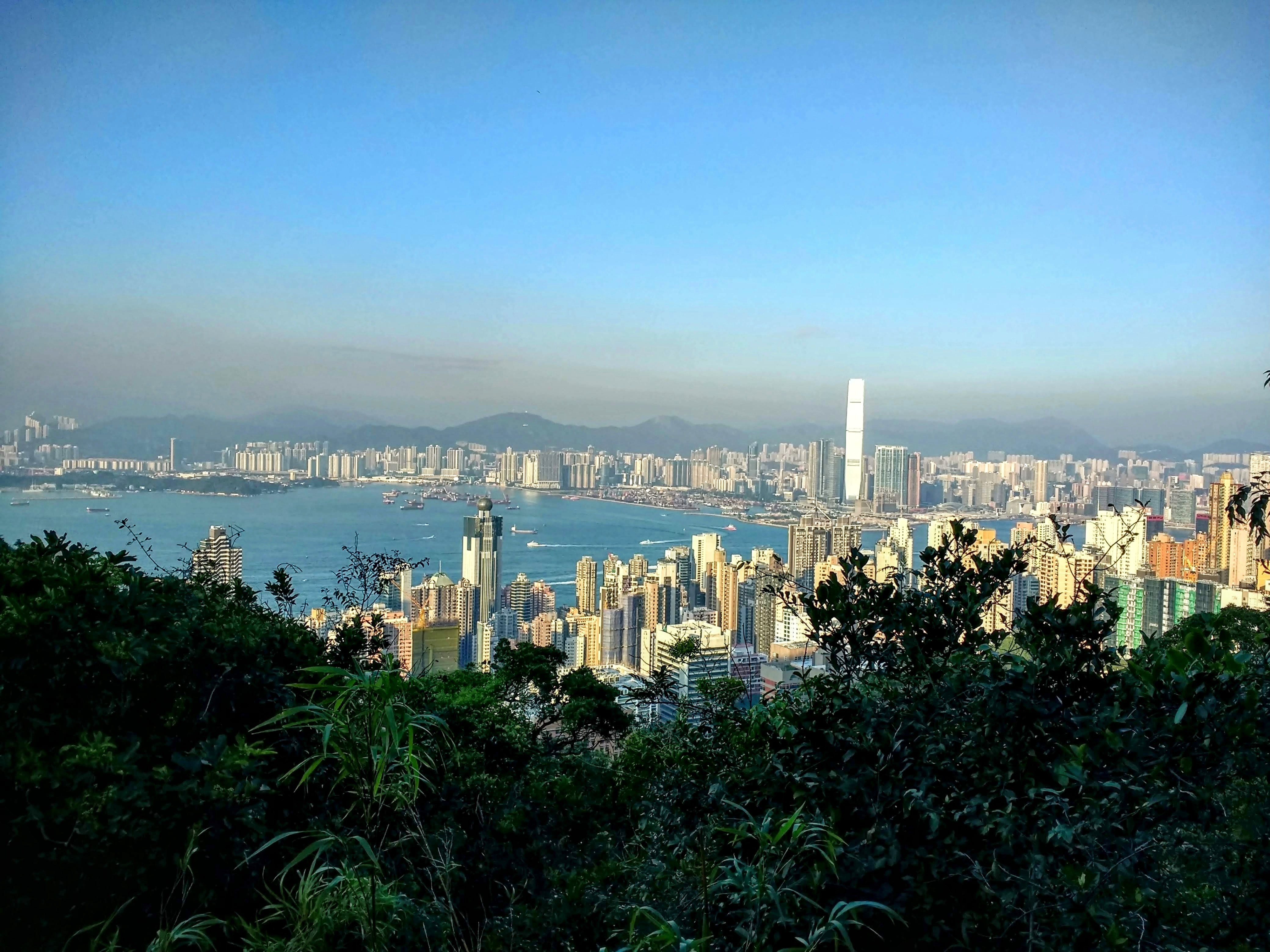
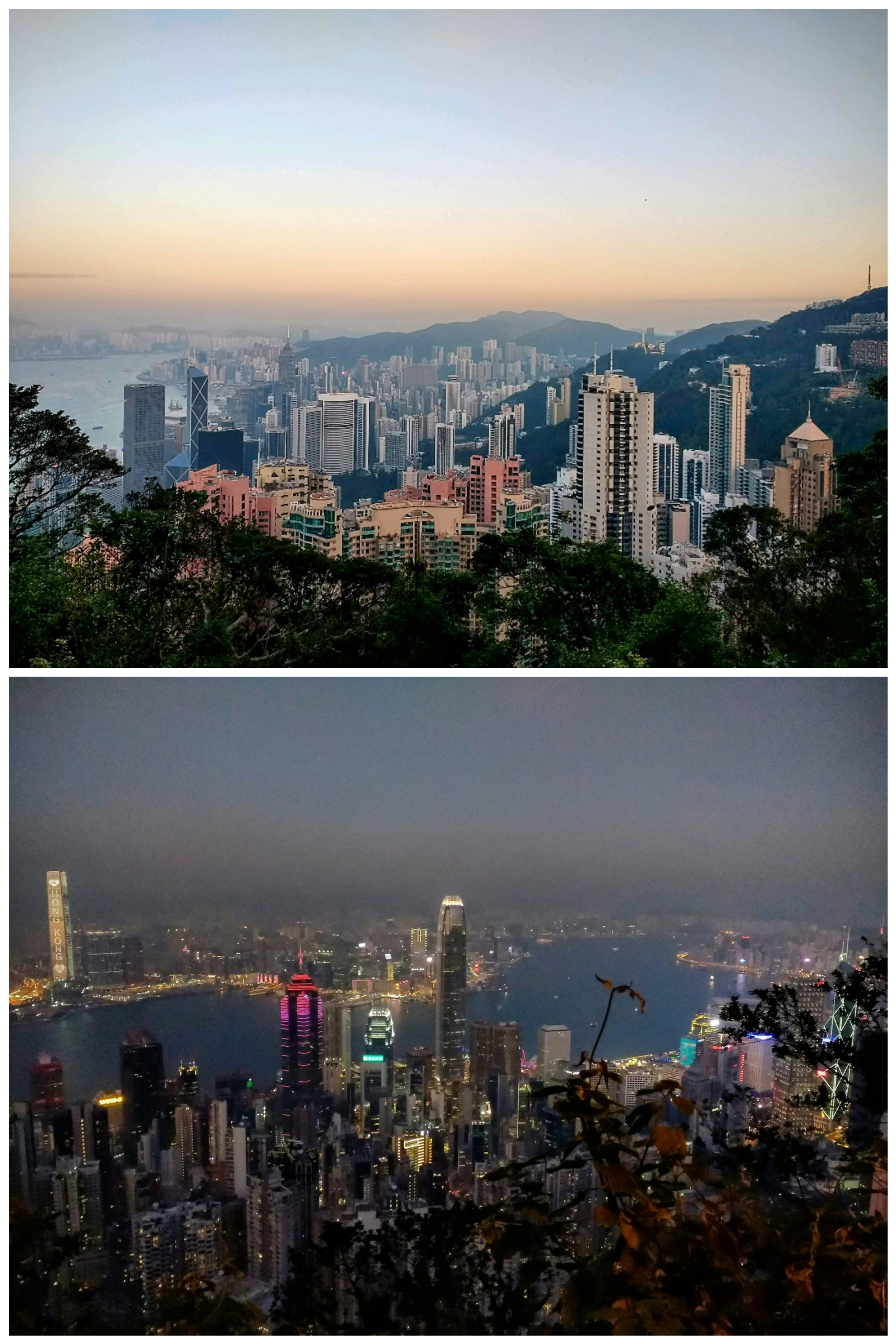
If there is one thing I could say is a ‘must do’ in Hong Kong, it would be to climb Victoria Peak. There are so many national parks in Hong Kong to explore, that it can become overwhelming trying to figure out the best way to use a short amount of time. So, go simple! Victoria Peak is easily accessible, and is probably one of the most trodden paths in Hong Kong. At 552m, it’s Hong Kong Island’s highest hill, and the views at the top are a beautiful showcase of the contrasting landscapes.

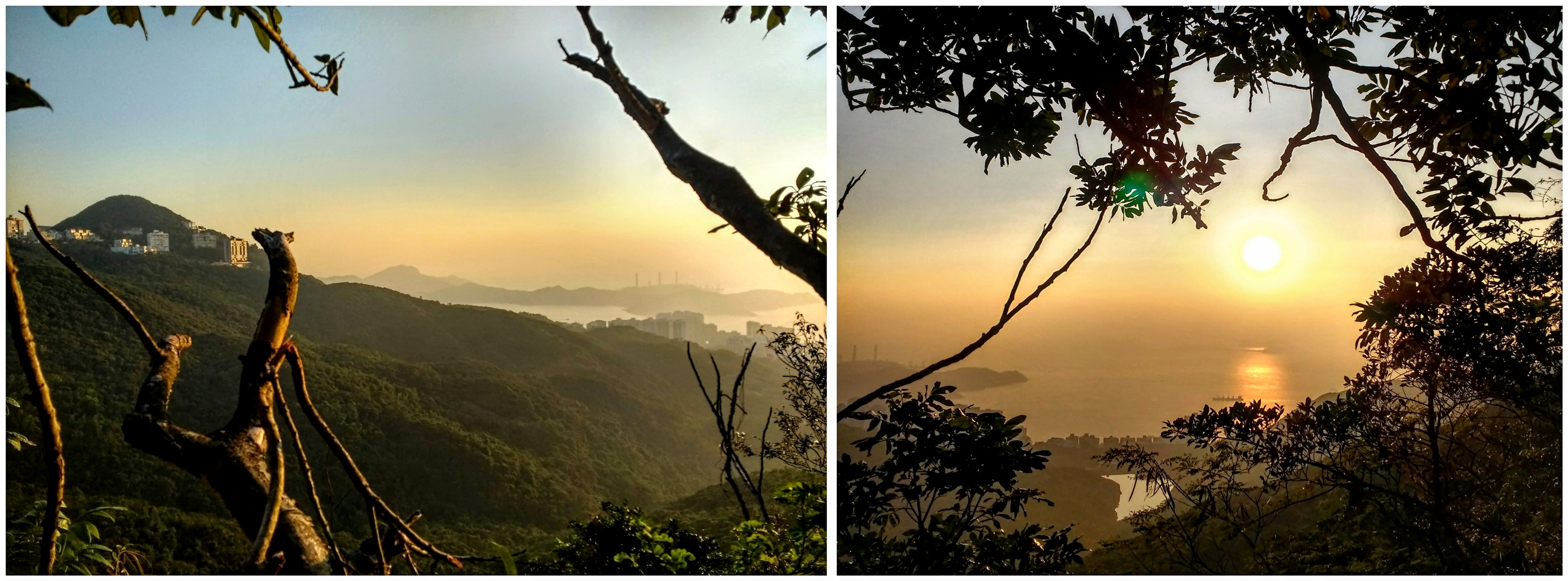
As you climb the paved footpath of the ‘circular walk’ you get glimpses through the bushes unveiling views on either side. Victoria Harbour towers up from below and the mainland districts frame the mountains beyond, while country parks and oceans on the other side give you two totally different views.

Sunset is a popular and busy time to go up Victoria Peak, but as the sun sets the ocean on fire in one direction, the skies and mountains over the city are painted with ever changing pastels, reflected in the shining buildings, and as the colours fade the lights come on.

I was surprised to find a tower at the top of the peak, with a cafe inside, open ’til late, and a bus and tram station underneath! Public transport was welcoming, now the sun had set and taken all its warmth with it, but the queue was insane. Once we made our way back down to the city on a busy bus, (which took twice as long as walking) we’d built up quite the appetite.

Dinner

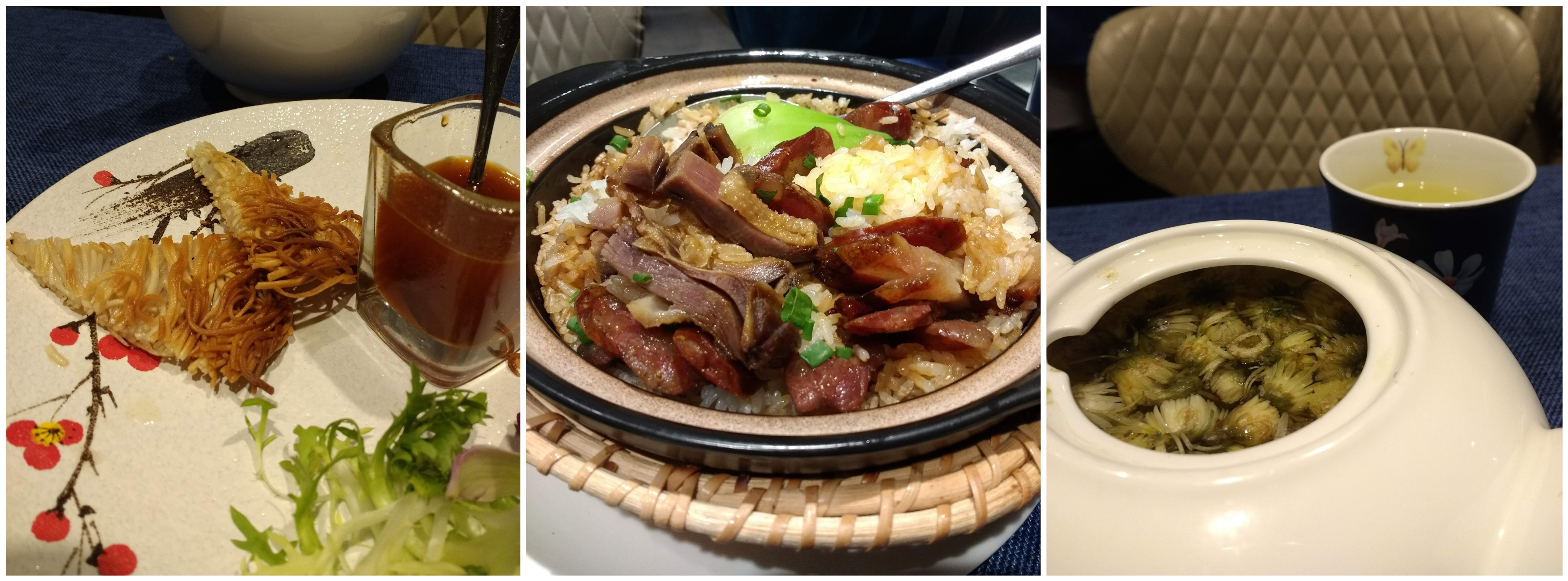
Cecilia took us to a Szechuan restaurant for dinner. Szechuan cuisine is popular due to its bold flavours, with liberal use of garlic and chilli, which is warming when you’re cold, tired and hungry. We had a slow roasted duck and rice claypot, with Chinese kale and fried noodle crackers on the side. During my time in Asia, claypots turned out to be some of my favourite dishes, old fashioned and wholesome with varying spices. The meal was served with real Chrysanthemum tea, which was beautiful and florally refreshing.

Noodle Crackers / Duck Claypot / Chrysanthemum Tea

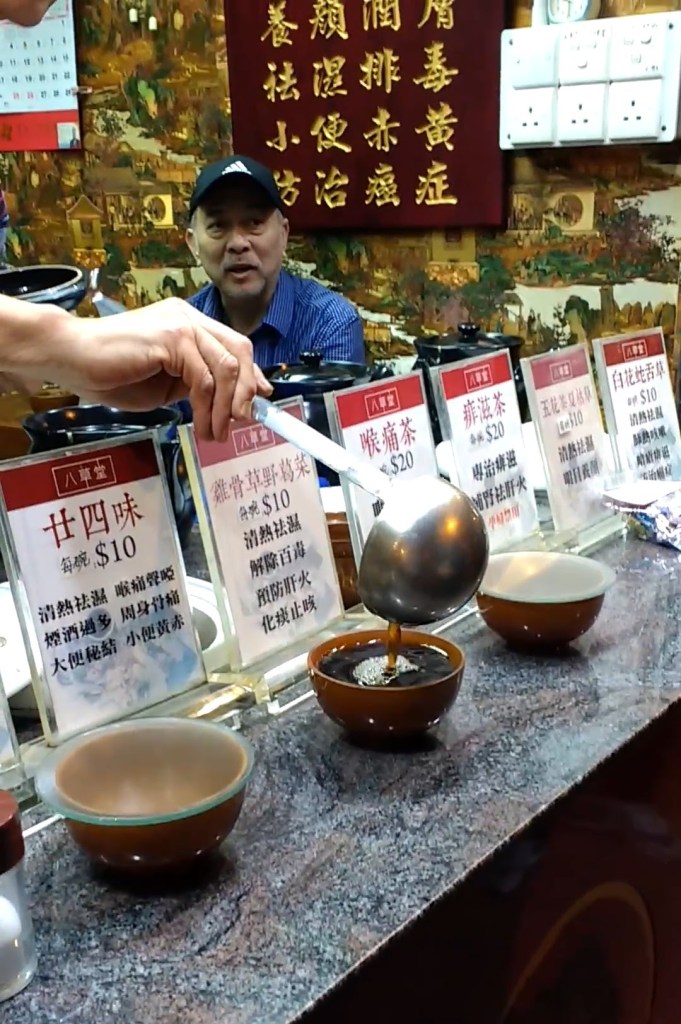
Herbal tea is drunk regularly in Chinese culture, as an accompaniment with meals, for general health, or a pick-me-up when you’re feeling run down. Chinese tea shops are all around the city, usually a stand or window with various cauldrons filled with steaming herbal teas lined up on display. You can choose your tea according to your ailments, or simply by flavour, and they either serve it in a little plastic bowl for you to drink there, or in a takeaway cup. Cecilia took us to one of these windows, and we tasted a medicinal tea for general colds & hangovers.

Night Cap

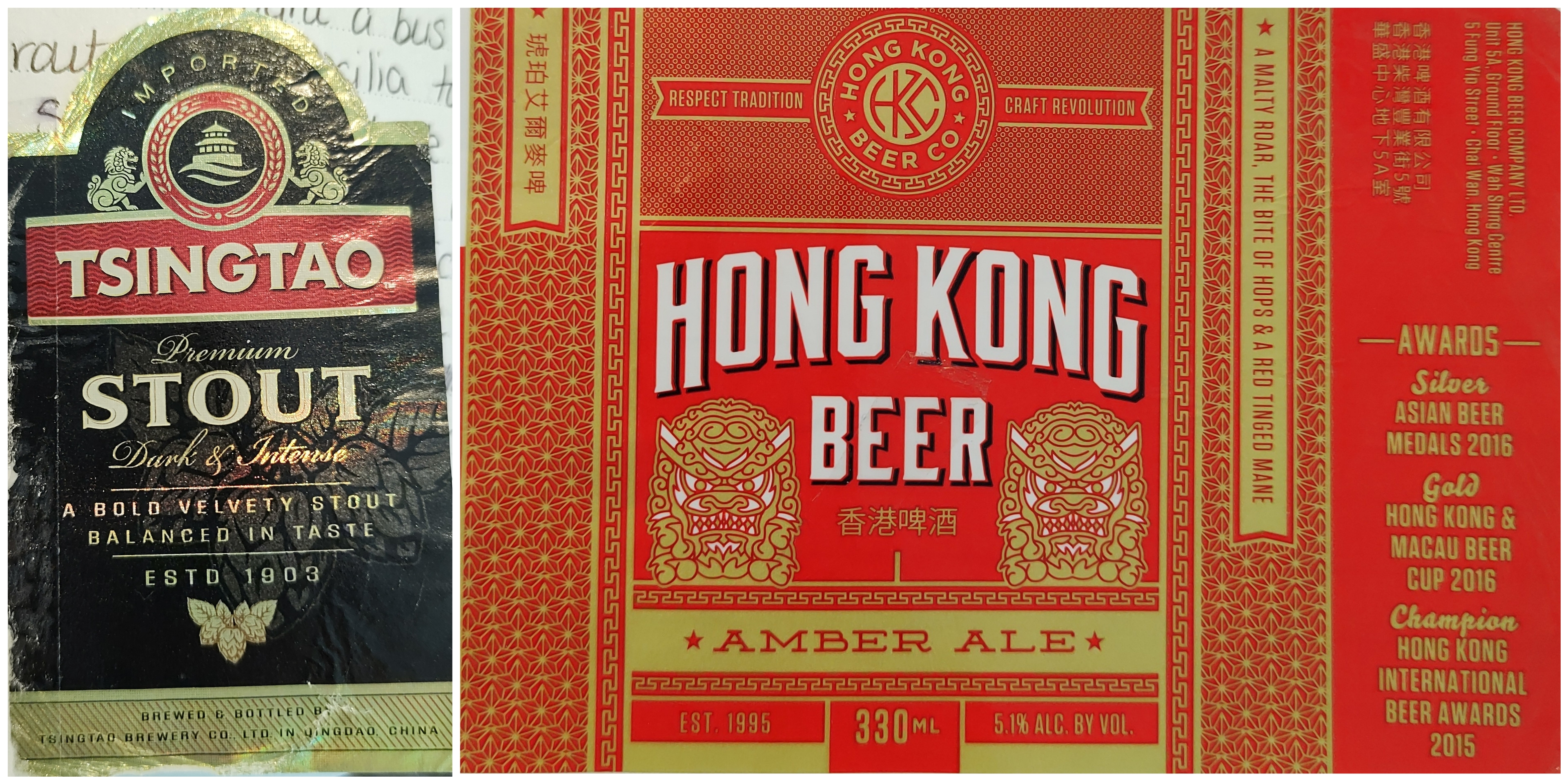
An evening in Hong Kong wasn’t complete without a trip to the local supermarket to pick out a beer to take back to Cecilia’s. The supermarkets are similar to British supermarkets, in that you can purchase alcohol from them, and the range is quite extensive. I chose to try a TsingTao Stout, which is a classic dark beer with bold flavours, and the next night I got a Hong Kong Amber Ale, which was delightfully malty. It was the perfect end to the day, before falling asleep to the subtle city sounds in the streets below.

Chinese Beers