Wellington ~ Te Whanganui-a-Tara

9–13 minutes

How I made the most of 4 nights in New Zealand’s capital city at the end of winter without a car.

  1. Budget
  2. Must Do Experiences
    1. Wellington Cable Car
    2. Zealandia
    3. Wētā Workshop Experience
  3. Free Things To Do
    1. Cuba Street
    2. Wellington Botanic Gardens
    3. Waterfront Walk – Oriental Bay
    4. Wellington Museum
    5. Te Papa Tongawera – Museum of New Zealand
  4. Cafés & Dining
    1. Buenos Aires Café
    2. Gemini Café & Eatery
    3. The Hangar
    4. Mexico, Wellington
    5. Puro Chile
  5. Craft Pubs & Bars
    1. Garage Project
    2. Fortune Favours
    3. The Library
    4. Little Beer Quarter
  6. Read Next…

Revisiting the south of New Zealand for the first time since I lived and backpacked there in 2014, I realised that I’d always just passed through the country’s windy capital without really seeing anything! So when Lockdown ended I decided it was time – without the constraints of a backpack and tent – to actually get to know Wellington.

Te Whanganui-a-Tara means ‘the great harbour of Tara;’ Tara being the son of a Polynesian explorer whose descendants made this their home.
Budget

Total: $1,150 NZD between two, (end of winter, 2022.)

My partner and I pre-booked a small studio apartment through Air BnB, situated on The Terrace in Te Aro – a quiet, hillside road surrounded by trees, just a 7 minute walk to Cuba Street.
Accommodation: < $600 NZD for 4 nights

We allowed ourselves a semi-flexible spending budget in Wellington, but I don’t think we did too badly over four days!
General Spending: $550 NZD between two

Must Do Experiences

Wellington Cable Car

The first thing on my to-do list was catch the Wellington Cable Car; I don’t know why I’d missed the opportunity in the past! Operating since 1902, the cable car boasts some of the city’s best views, and the destination terminal – Kelburn has some worthwhile attractions to see, including the Wellington Botanic Gardens & Carter Observatory. We used Wellington’s public transport card – ‘Snapper’ – to ‘tap on’ the cable car (from Lambton Quay only) with a significant discount. Note: this payment method is due to change in October 2023.
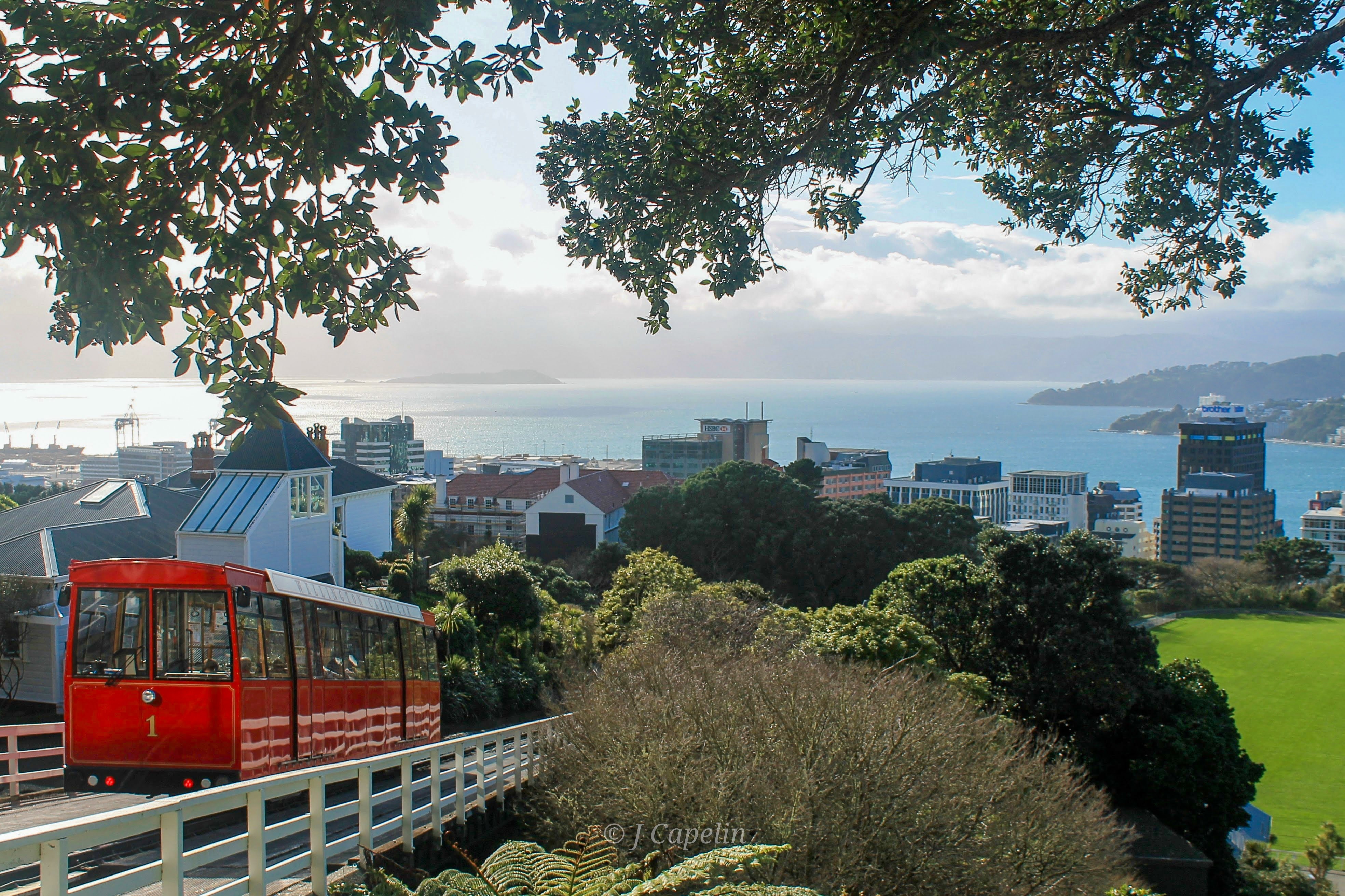
Location: Cable Car Lane, Lambton Quay, Wellington
Cost: $6 NZD one way, $11 NZD return
Time Allowance: 5 mins

Zealandia

After being woken in the night by the cheeky squeaks and squawks of Aotearoa’s endangered parrots – the kākā – flying through the neighbourhood, fomo got the better of me and I had to go and find these incredible birds at Wellington’s renowned nature reserve: Zealandia. The rain was already setting in as we caught the bus from the city, and when we arrived we were seemingly the only people there. With our boots and raincoats donned, we enjoyed the rainforest ambiance, and the hazy broken surface of the lake where Pied Shag nestlings shook the rain off their downy feathers in their giant lakeside nests.  We were lucky enough to meet the reserve’s pair of takahē, who were happily plodding about in the rain, stripping grass with their stout beaks like a couple of little blue dinosaurs!
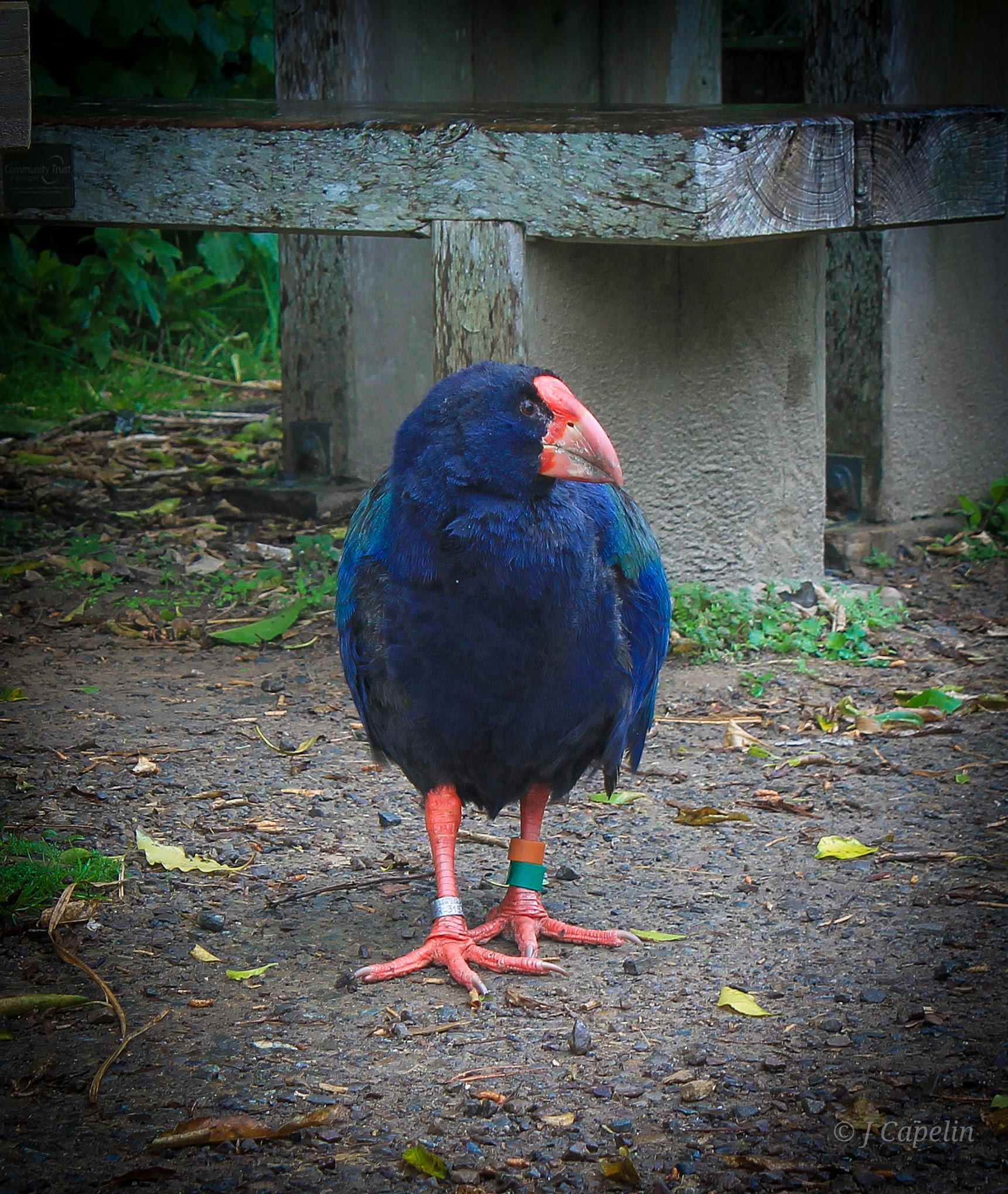
Takahē were actually thought to be extinct until a pair were discovered in Fiordland in 1948, and since then the Department of Conservation have been on a mission to carefully restore their population. Adult pairs will only have 1 or 2 chicks per year, and because they are such territorial birds that require up to 100 hectares of space per brood, it’s a slow process! I count ourselves pretty lucky to have stumbled across this pair.

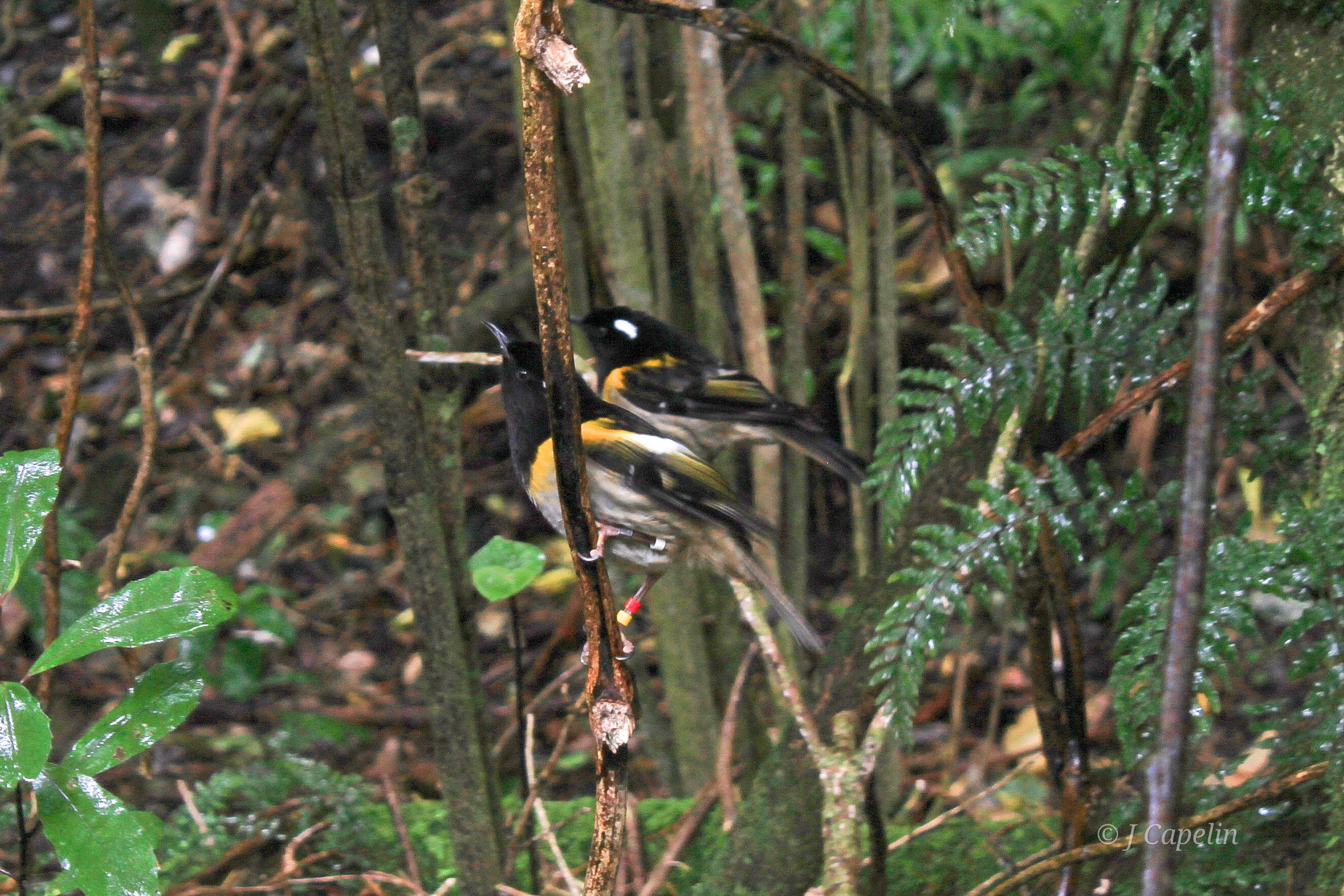
Tui and Bell Birds sounded their music through the pitter-patter in the canopy, and we saw a couple of little black & yellow hihi (Stitch Birds) bouncing between twigs in the bush, but still no sign of the illusive kākā.
The cold rain made my clothes cling to my skin, and just as I was about to give up on seeing a kākā, one landed near the feeders, then another, and another! Soon there were several large, native parrots hopping around the feeders, opening the specially built mechanisms with their claws and beaks to get to the food. Their feathers aren’t as bold as their personalities, but they do have brilliant scarlet under-wings and pretty splashes of yellow on their cheeks.
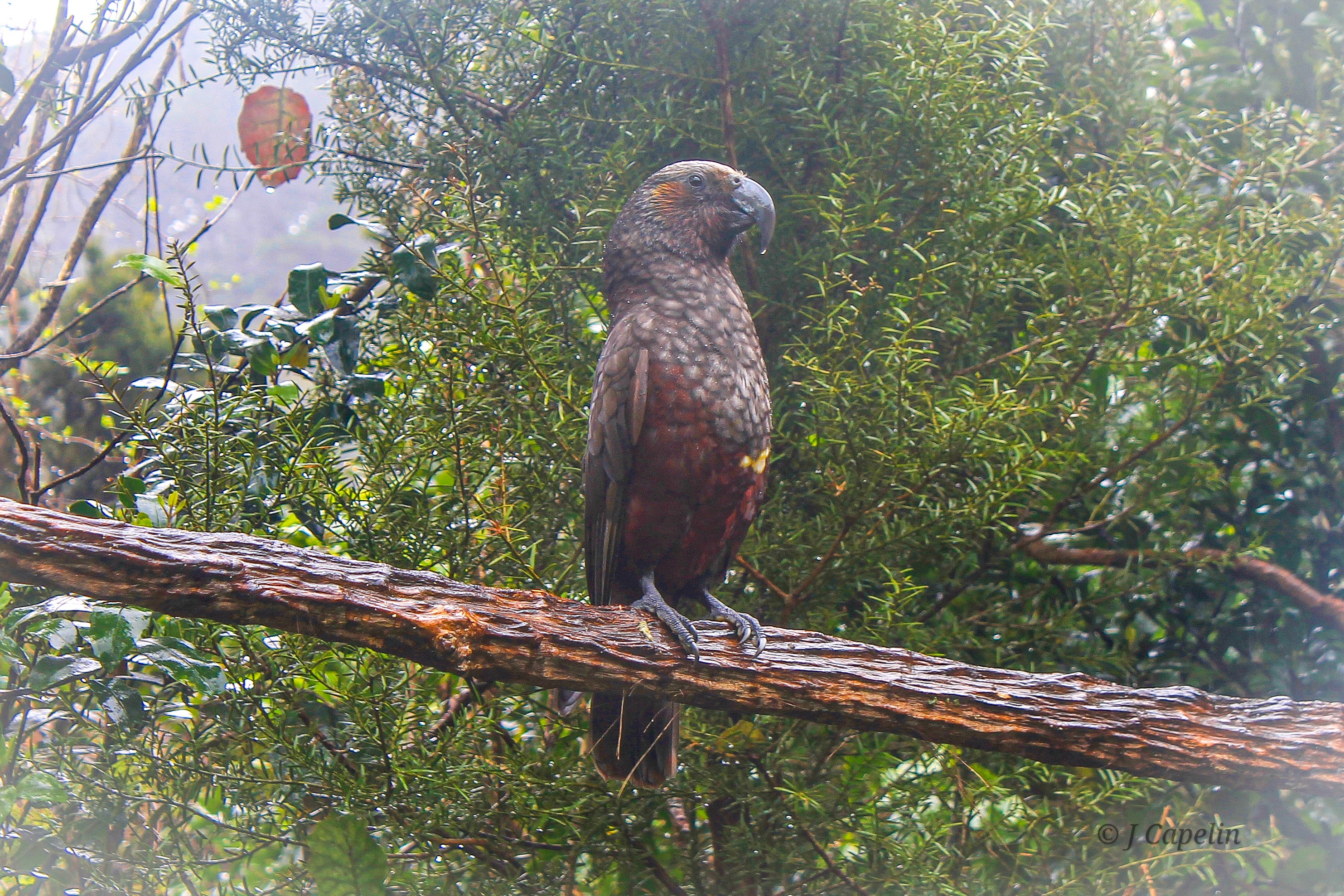
A close relative of the South Island kea, kākā are endangered and a rare sight, but Zealandia’s project to reinstate the parrots into Wellington is working, and they are finally beginning to thrive again around the city (though you tend to hear them more than you see them!)

Location: Waiapu Road, Karori, Wellington
Cost: $24 NZD general admission
Time Allowance: 2 – 4 hours

Wētā Workshop Experience

The Lord of the Rings franchise is what made The Wētā Cave internationally famous, but you don’t need to be a Lord of the Rings fan to appreciate this special effects studio. In fact, you might be surprised at how many productions they are involved in. On The Wētā Workshop Experience you get a full tour of the studios, where there are movie artefacts you can hold, interesting models and original body suits to see; masks, miniatures, and plenty of sneak peaks at how they made them. You’re only allowed to take photos in certain areas, and mine are no different, which is even more of a reason to go see for yourself!
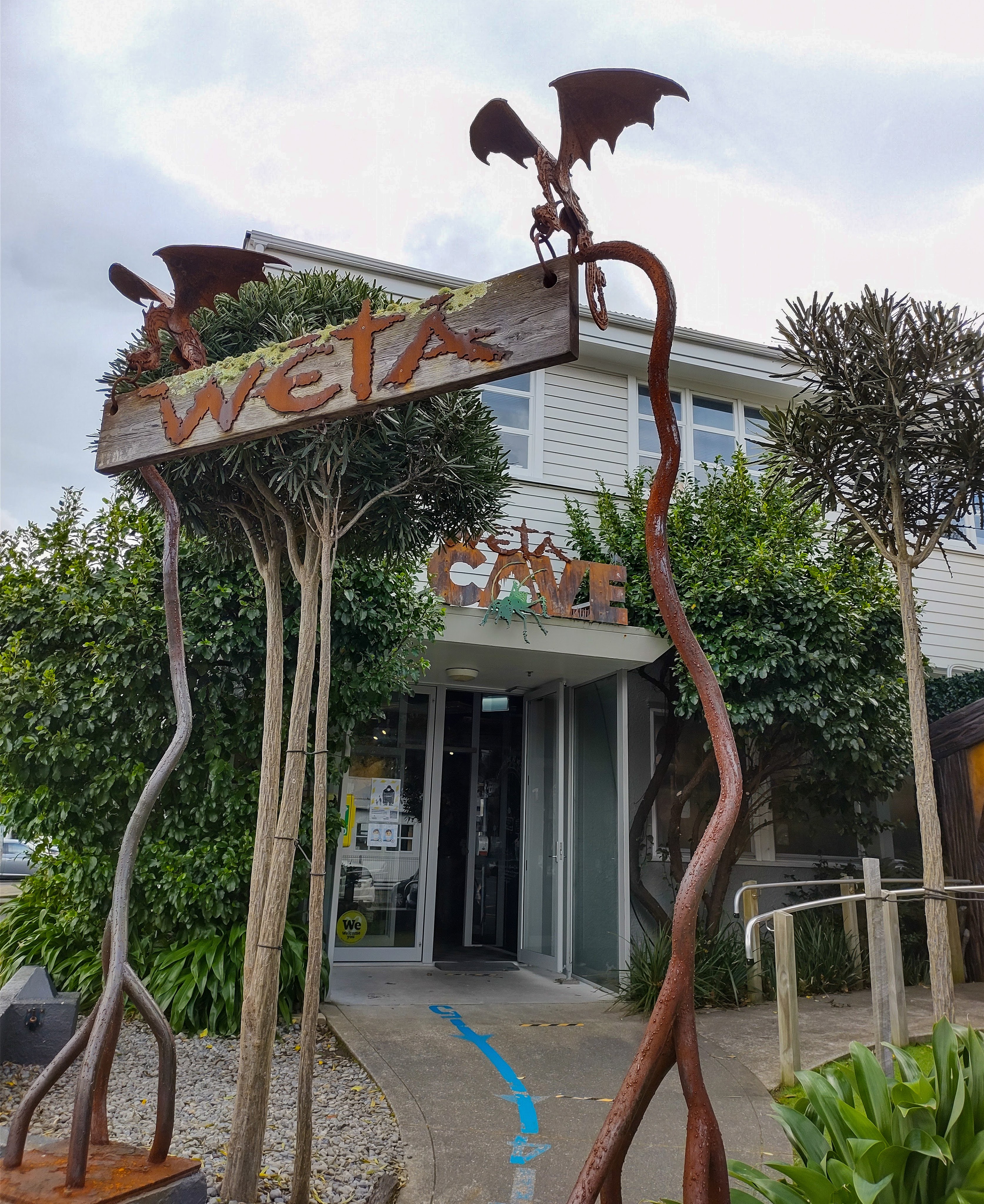

There is also a free mini-museum and gift shop to look around at the entrance to The Wētā Cave, and you can buy tour tickets on the door depending on how busy it is.

Location: Weka Street, Miramar, Wellington
Cost: $50 NZD online, $55 NZD in-store
Time Allowance: 1.5 hours

Free Things To Do

Cuba Street

As Wellington’s cultural centre, Cuba Street is a colourful pallet of diversity, lined with bars, restaurants, cafés, fashion & art, with galleries and music venues, and space for buskers and street artists. The Precinct stretches along to Dixon Street and round to Victoria Street, filling the whole block with arts. While I was there I spotted one of Wellington’s well known and beloved street artists at work; a longboarding, saxophone and flute playing Tree Man! There is plenty in the Cuba Precinct to spend money on, but it’s free to look first!
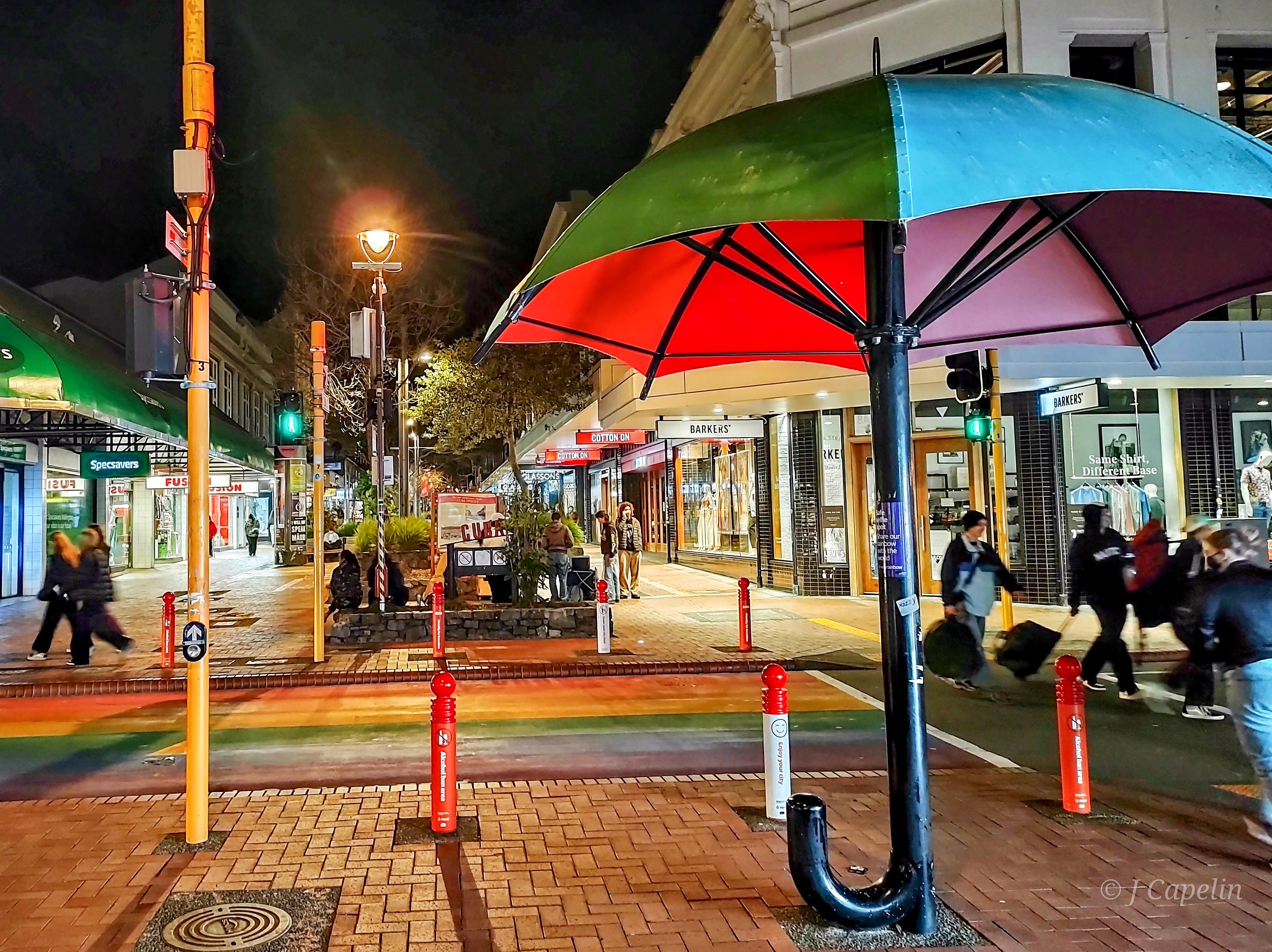
Time Allowance: 30 mins – 2 hours
Location: Cuba Street, Te Aro, Wellington

Wellington Botanic Gardens

At the top of the Cable Car at Kelburn is the Wellington Botanic Gardens. With stunning views over the city and harbour, there are plenty of paved footpaths leading through an array of flora, and open spaces for picnics. I was lucky enough to see the early blossoms of spring, which attracted native tui to feed on them. Sometimes the squawks of the kākā can be heard from the canopies, and if you’re really lucky you might see them here.
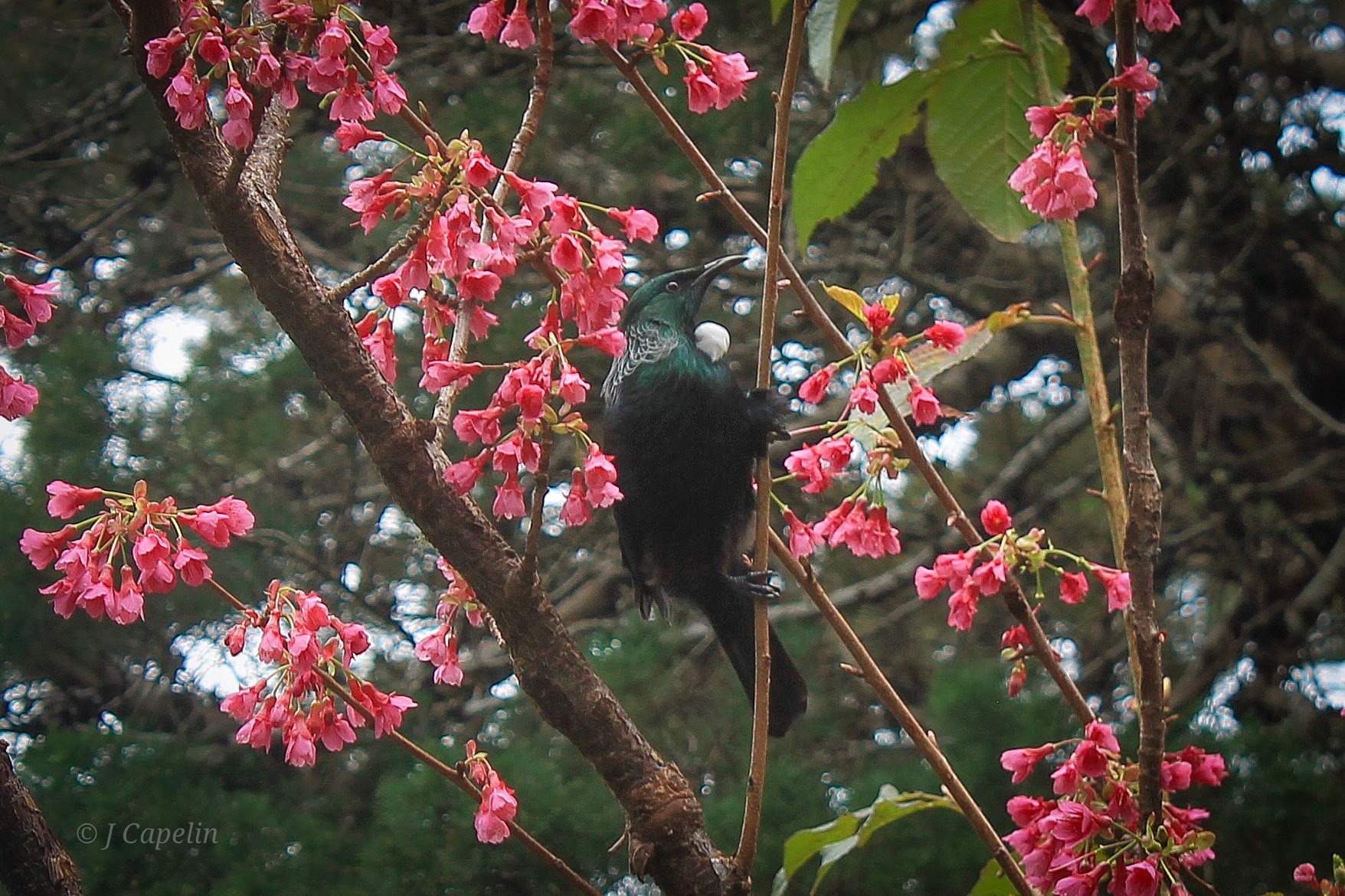
Time Allowance: 1 – 2 hours
Location: Glenmore Street, Kelburn, Wellington

Waterfront Walk – Oriental Bay

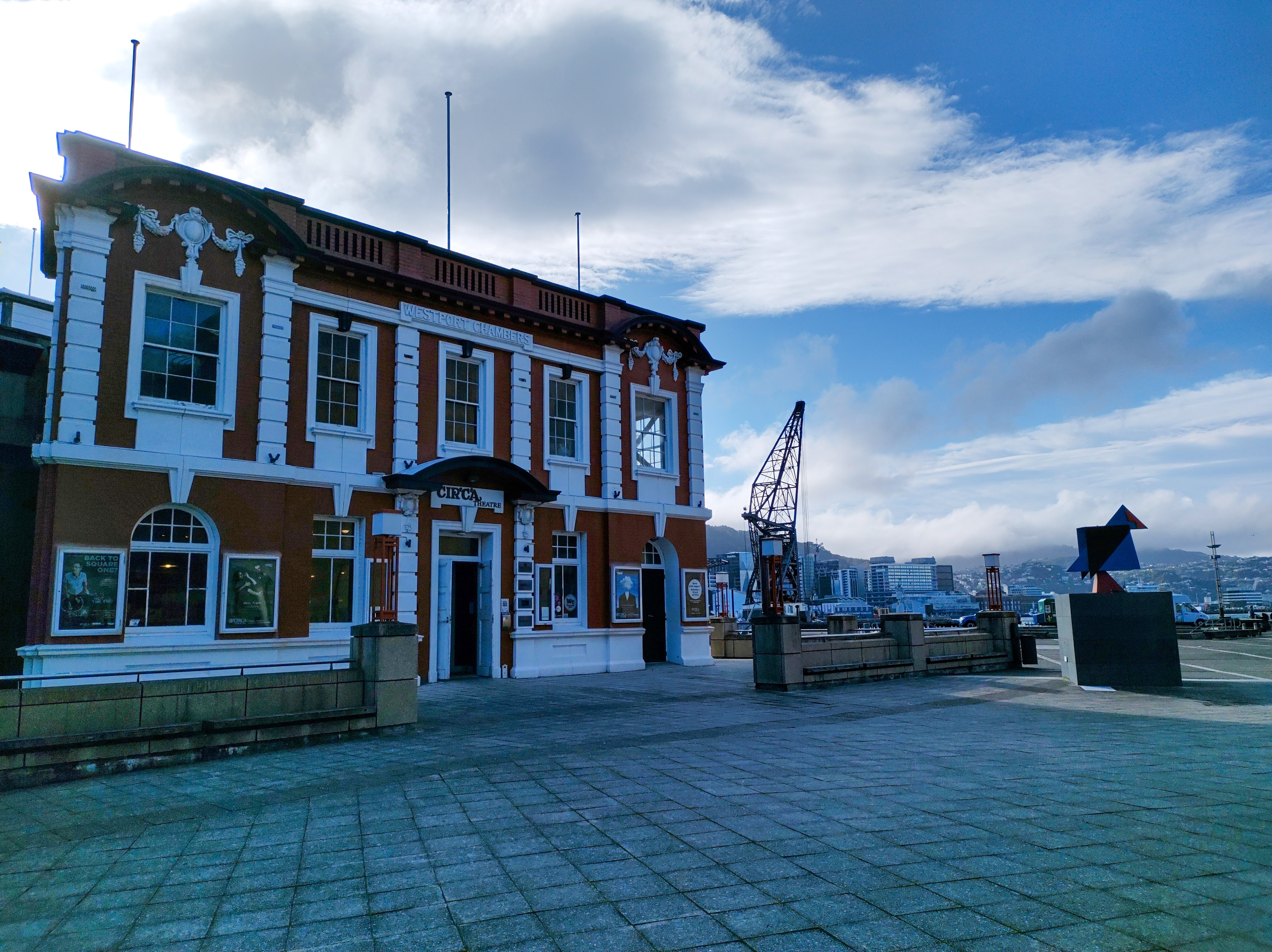
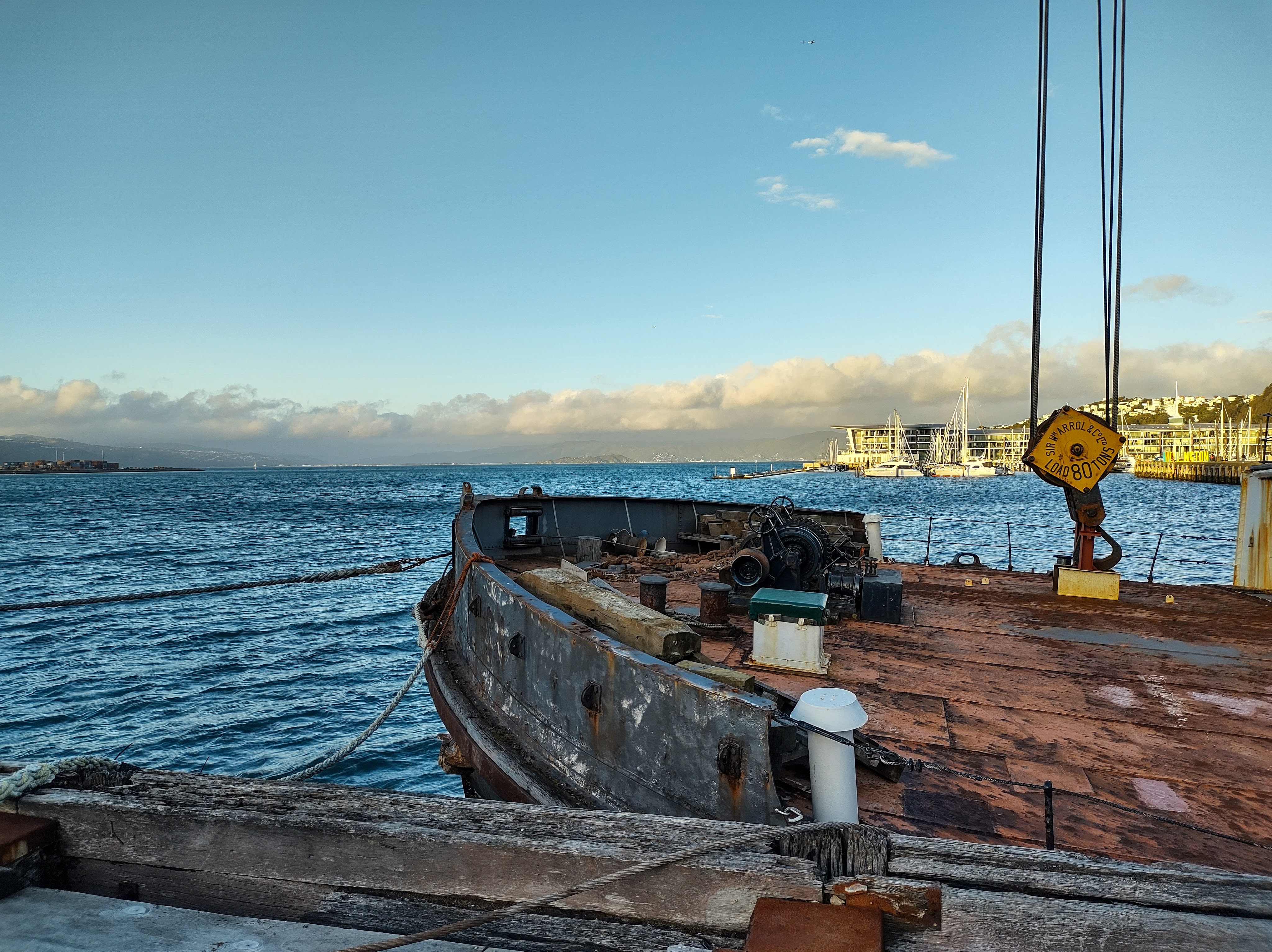
Wellington’s waterfront is a playground of boardwalks, cobbled squares, pontoons, sculptures and heritage landmarks, not to mention the modern markets and arts & crafts that pop up at certain times. We began our walk at Queen’s Wharf, which is easily accessible from the city centre, walking under the huge shade-sails towards the choppy sea. We headed east along the waterfront, spotting the S.S Hikitia – an original floating steam crane built in Scotland in the early 1920s.

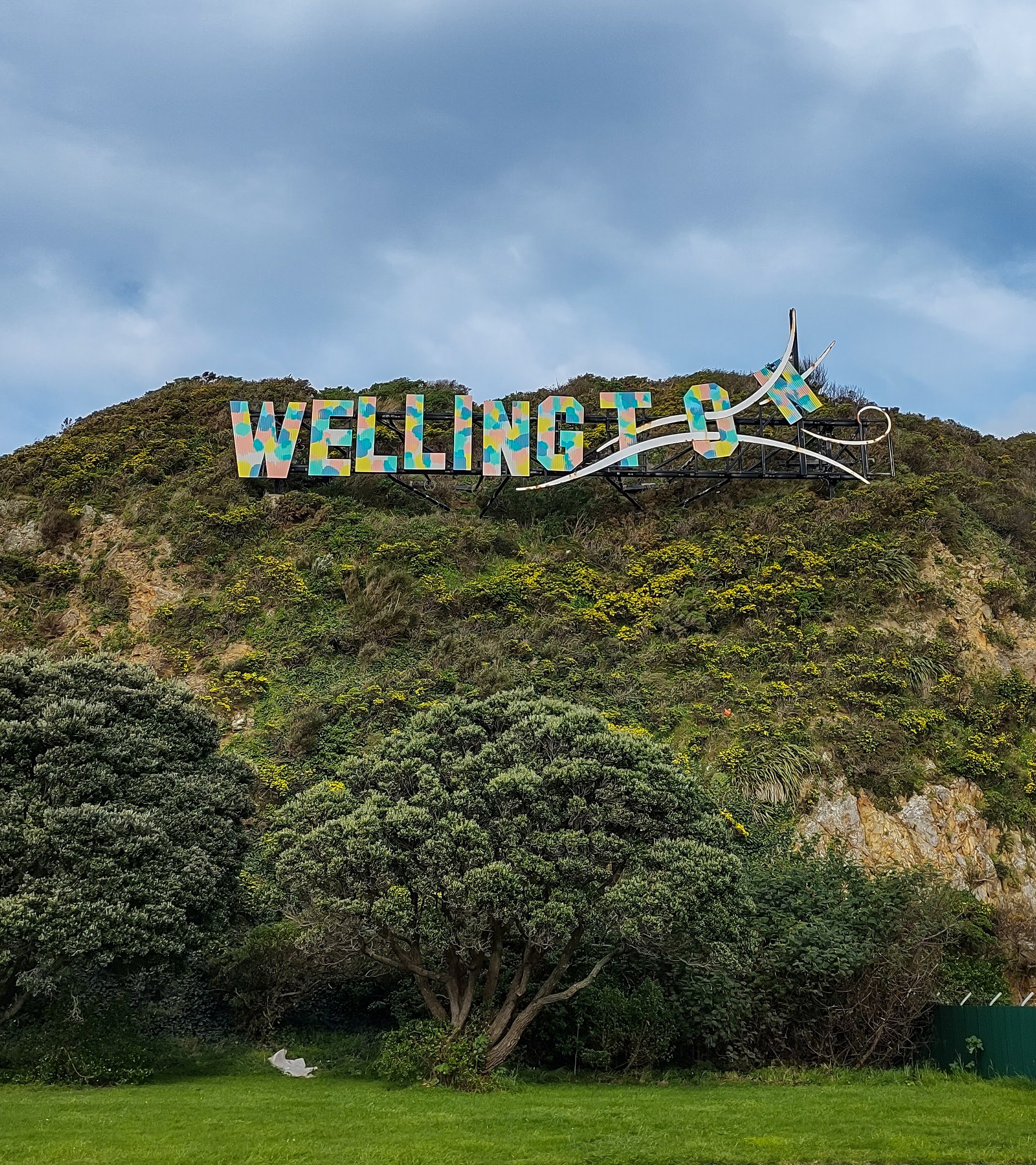
As we rounded the corner by Te Papa Museum we saw the giant origami sculptures by local artist, Ben Pearce; part of a public art exhibit that renews at least every two years. We passed many more statues along the way, including ‘Solace in the Wind’ (the naked man) and the 3D standing ‘Wellington.’ Eventually we could see the iconic row of boatsheds at Clyde Quay, on a classic Wellington backdrop of hillside houses, and we continued around to Oriental Bay – a pretty little suburban beach where dolphins, orca and stingray can be sighted.
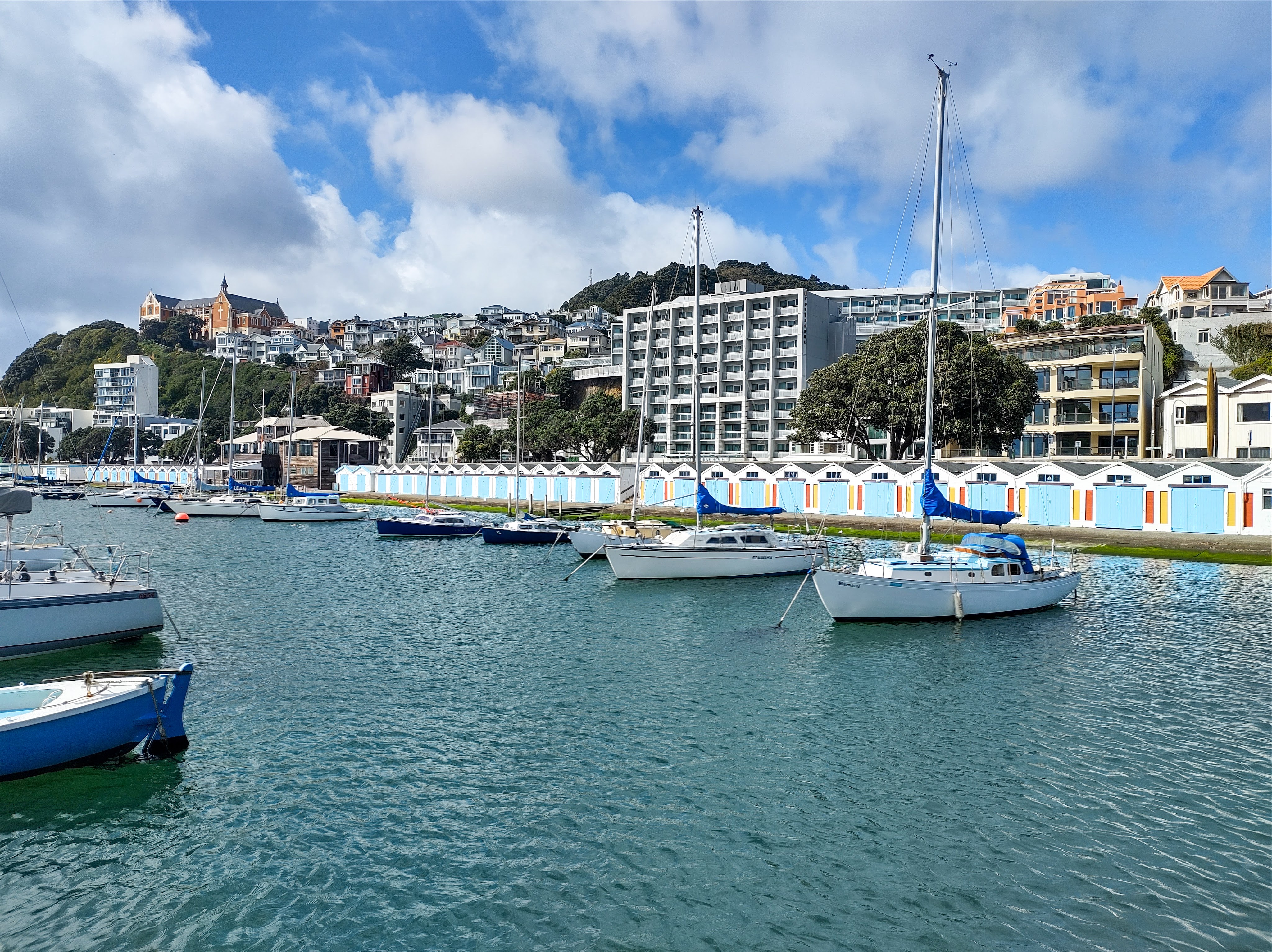
Time Allowance: 30 mins one way
Location: Start – Queen’s Wharf, Wellington Central Finish – Oriental Bay, Wellington

Wellington Museum

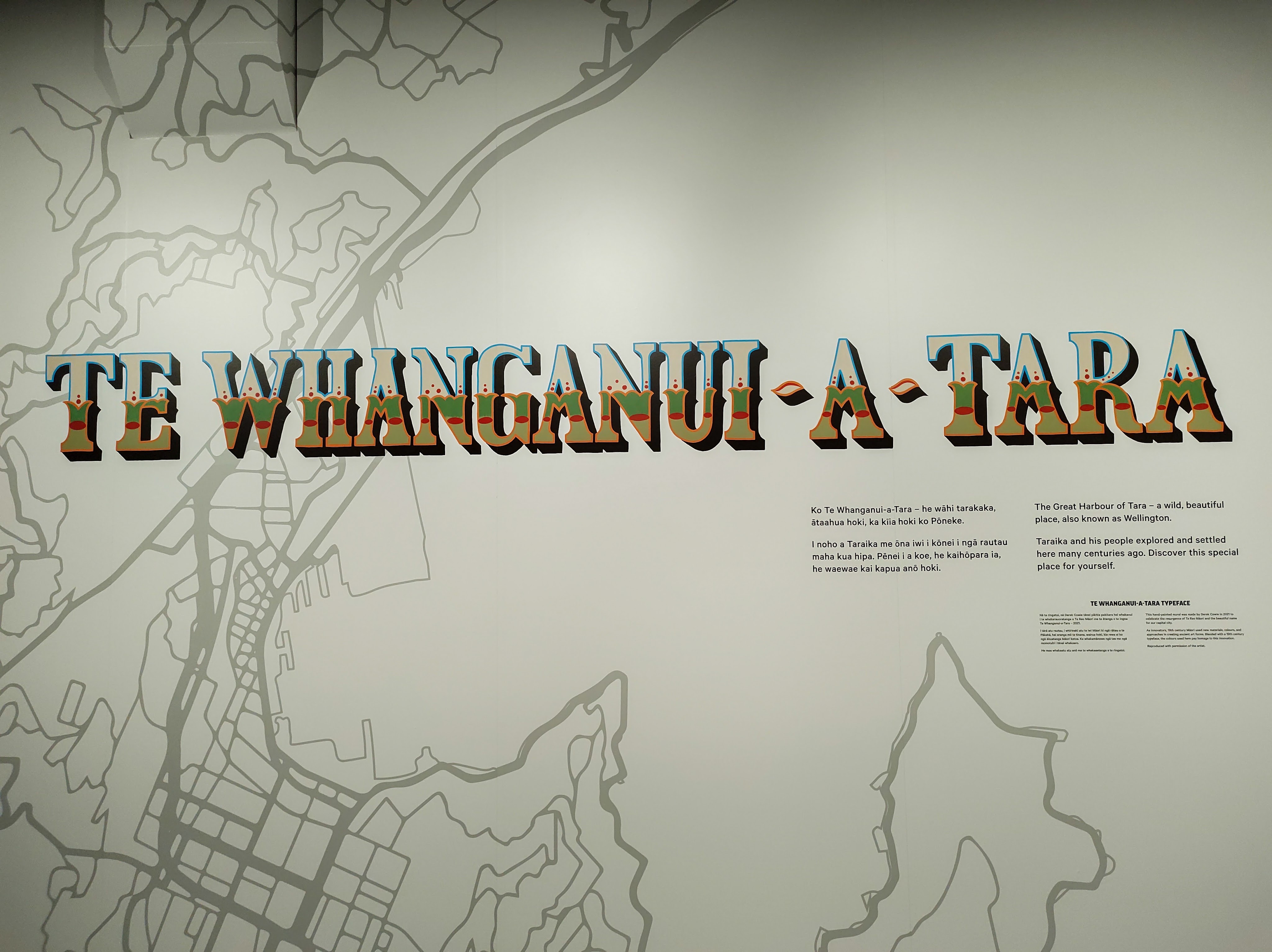
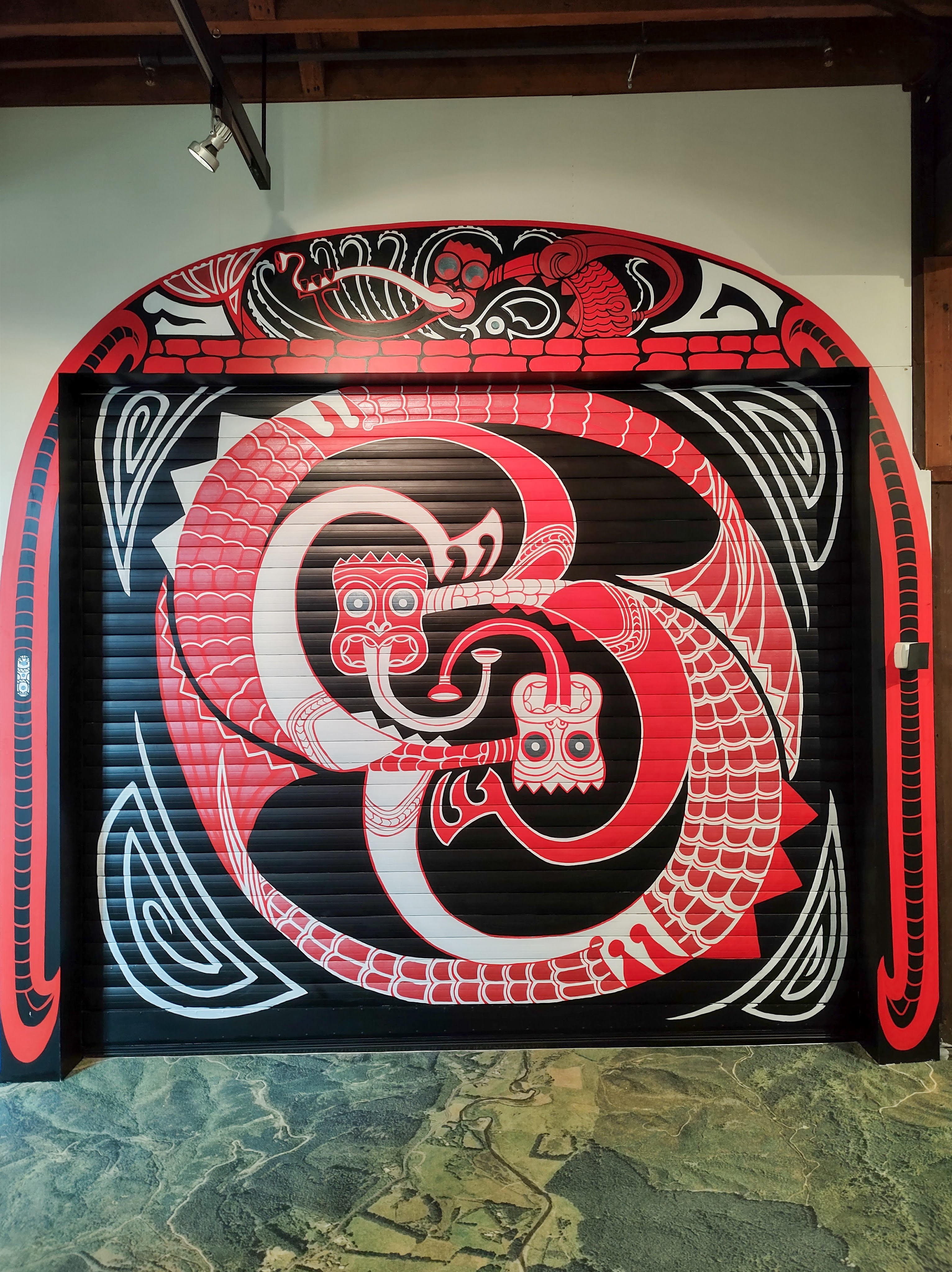
Not to be confused with Te Papa Tongawera – The Museum of New Zealand, Wellington Museum presents a more local story. Located in The Bond Store – a heritage cargo warehouse from the late 1800s, it is reminiscent of its shipping days, with dark wooden beams, barrels and hoists and muslin sacks full of goods. This museum tells the stories of how Wellington came to be, along with immersive & personal tales of the sea, and an attic full of interesting collections from over the years.
Time Allowance: 1 – 2 hours
Location: Jervois Quay, Wellington Central

Te Papa Tongawera – Museum of New Zealand

We spent a good hour exploring the natural & cultural history of Aotearoa in Te Papa Museum, with interactive pieces including an earthquake simulator. With plenty to keep kids busy (and big kids like us,) this truly is a memorable museum.


First opening in April 2015, “Gallipoli – The Scale of Our War” was only set to be a short term exhibition, but it proved so popular that the museum kept extending its dates; they are currently extended to April 2025. The exhibition is free, and takes you on a heart-wrenching journey through World War II Gallipoli, through the eyes of 8 real individuals who found themselves on the front line. The incredible larger-than-life sculptures were crafted by The Wētā Workshop artists and altogether this is a very sensory experience, with the realistic sound effects of war, true artefacts, textures, smells and visuals. (Parental guidance is recommended for this exhibition. It is wheelchair accessible, audio description is available, and sensory accessible times are available out of hours by booking.)

Time Allowance: 1 – 2 hours
Location: Cable Street, Te Aro, Wellington

Cafés & Dining

Buenos Aires Café
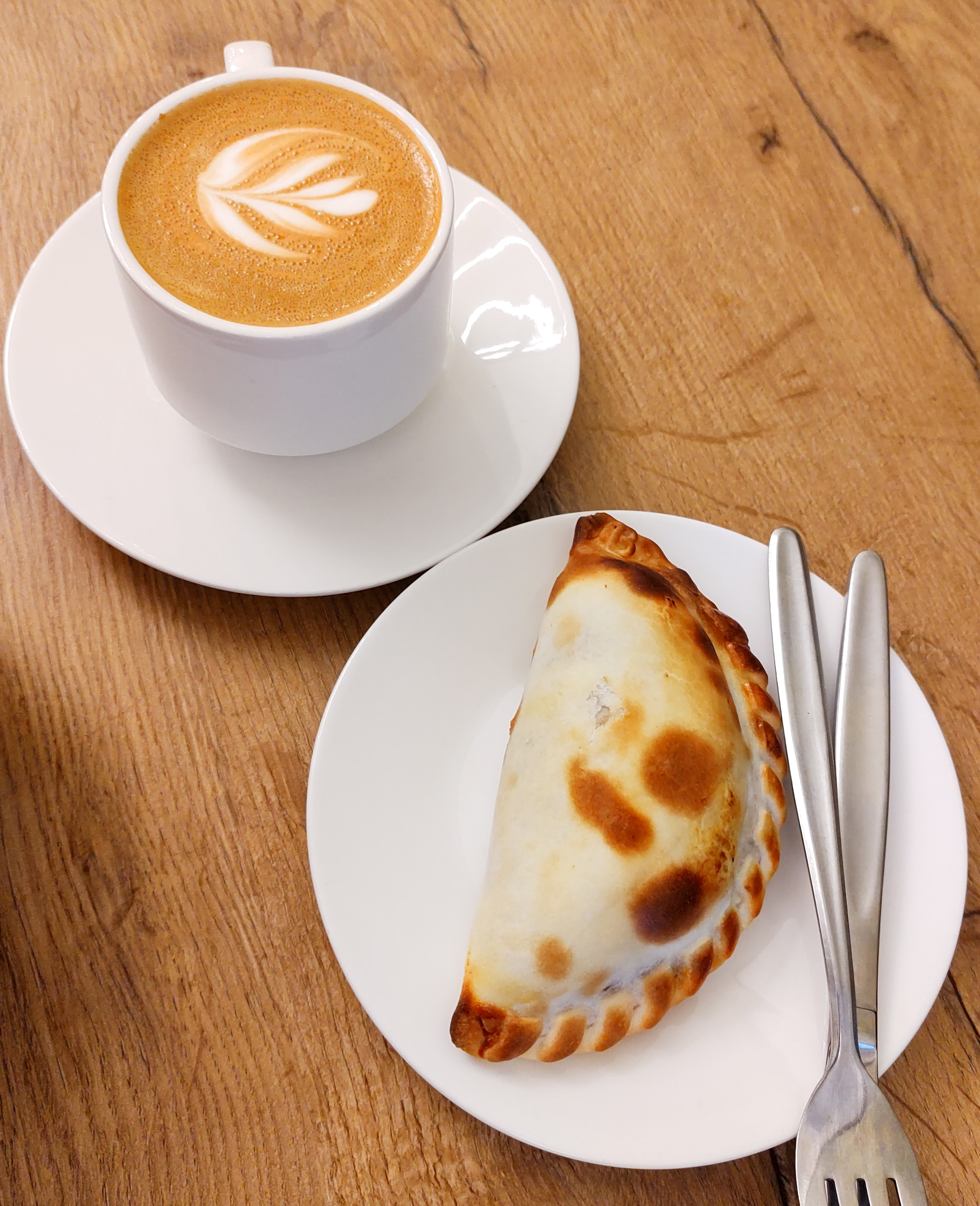
A discovery we made in Wellington was there are lots of authentic South American delicacies around the city. We stopped in this tiny Argentinian café for a delectable, house made Empanada and one of the best flat whites we had in Wellington.

Location: Grey Street, Wellington Central

Gemini Café & Eatery
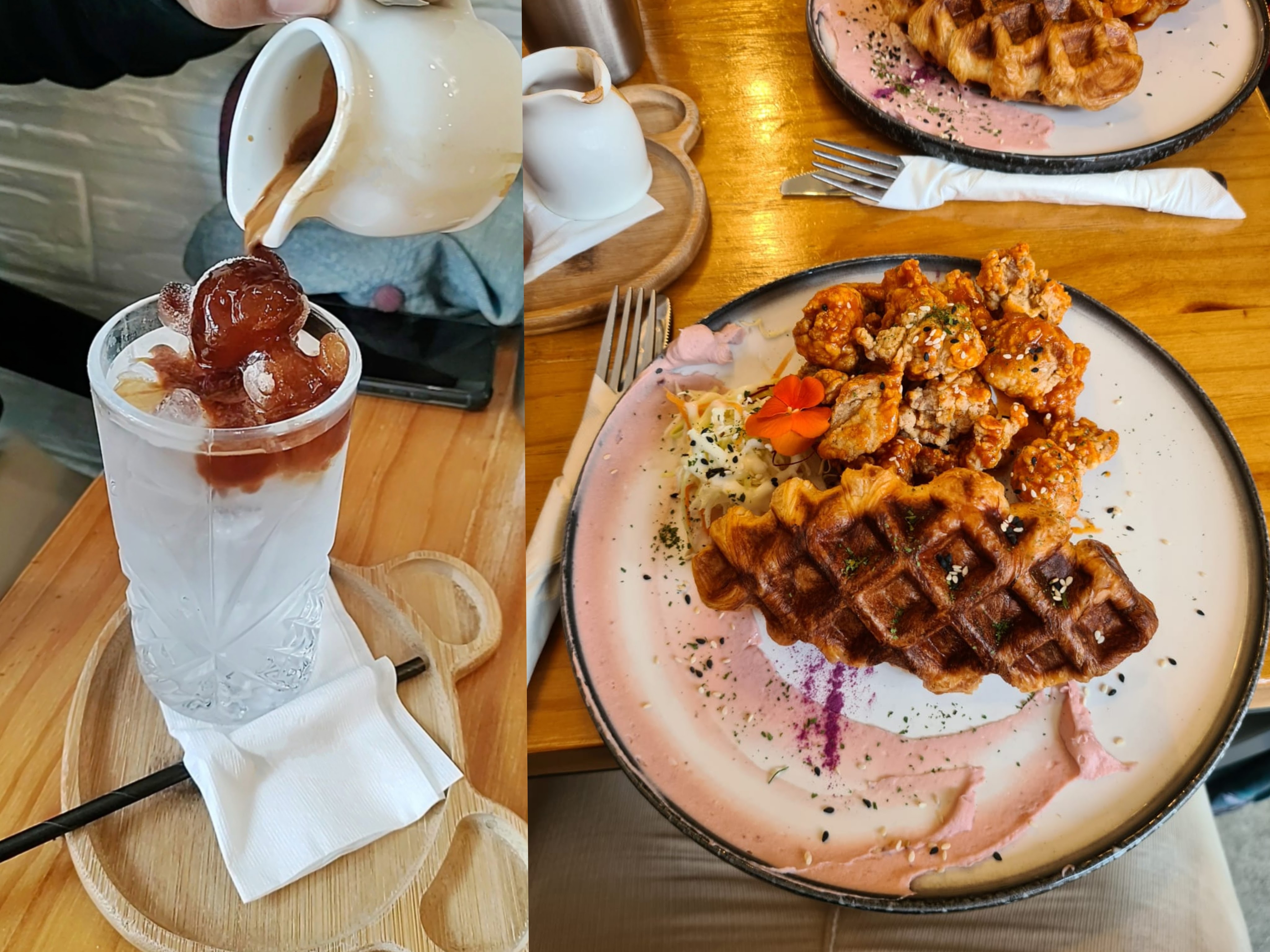
This little café served up flavoursome Asian inspired brunch, and their signature iced coffees with teddy-shaped espresso ice cubes were a really cute addition to the experience.

Location: Tory Street, Te Aro, Wellington

The Hangar
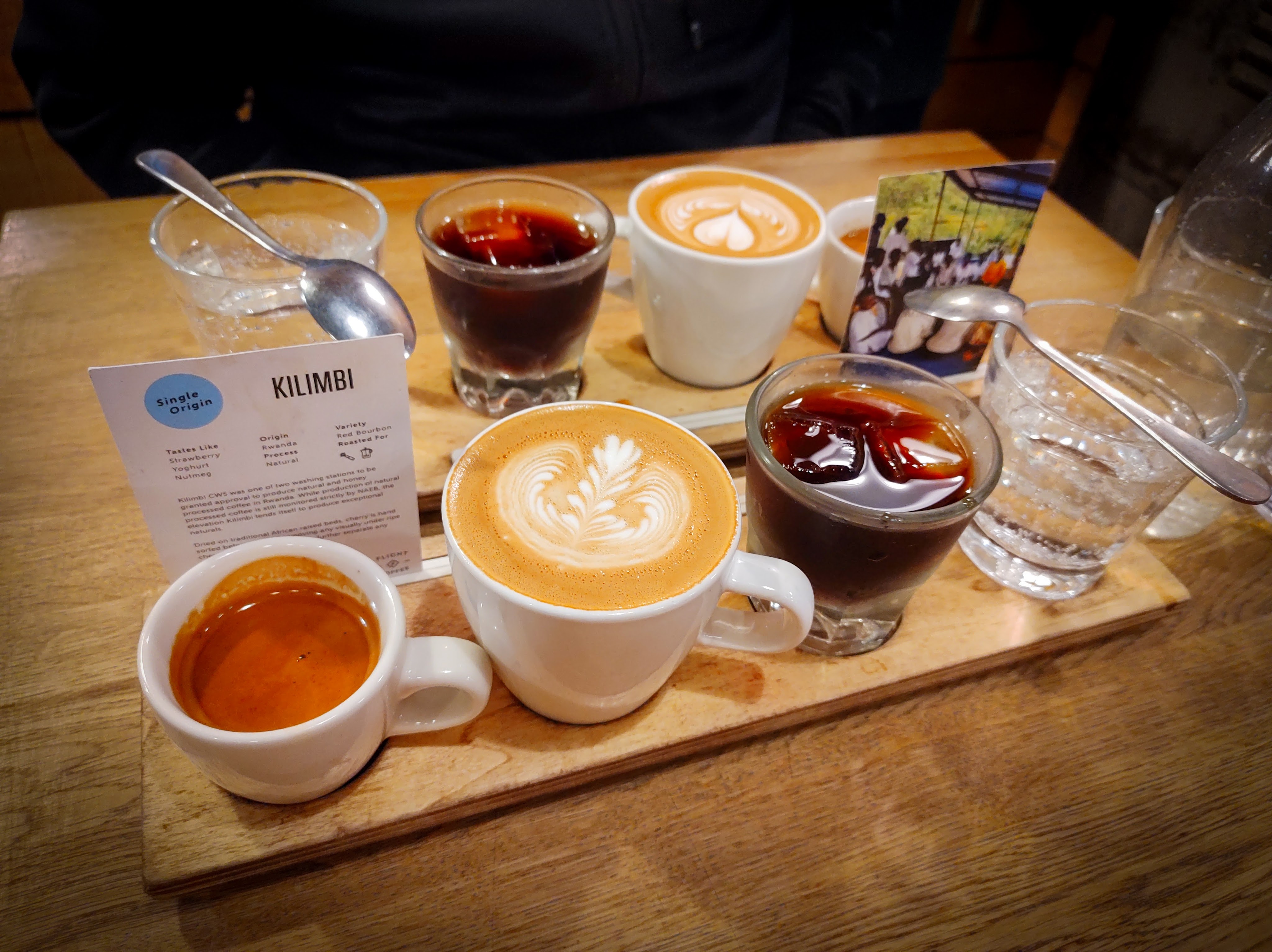
For those who love coffee, The Hangar uses house roasted coffee and, as photographed, they do flights! Not to mention their seasonal menu, which is worldly and creatively homely – for instance, we had a roast beef eggs benedict served on a Yorkshire pudding!

Location: Dixon Street, Te Aro, Wellington

Mexico, Wellington

This is your classic American style Mexican restaurant, with really tasty favourites on the menu and pitchers of margaritas for everyone. The venue is rustic with gothic yet colourful Day of the Dead style décor, and long beer hall style tables.

Location: Dixon Street, Te Aro, Wellington

Puro Chile
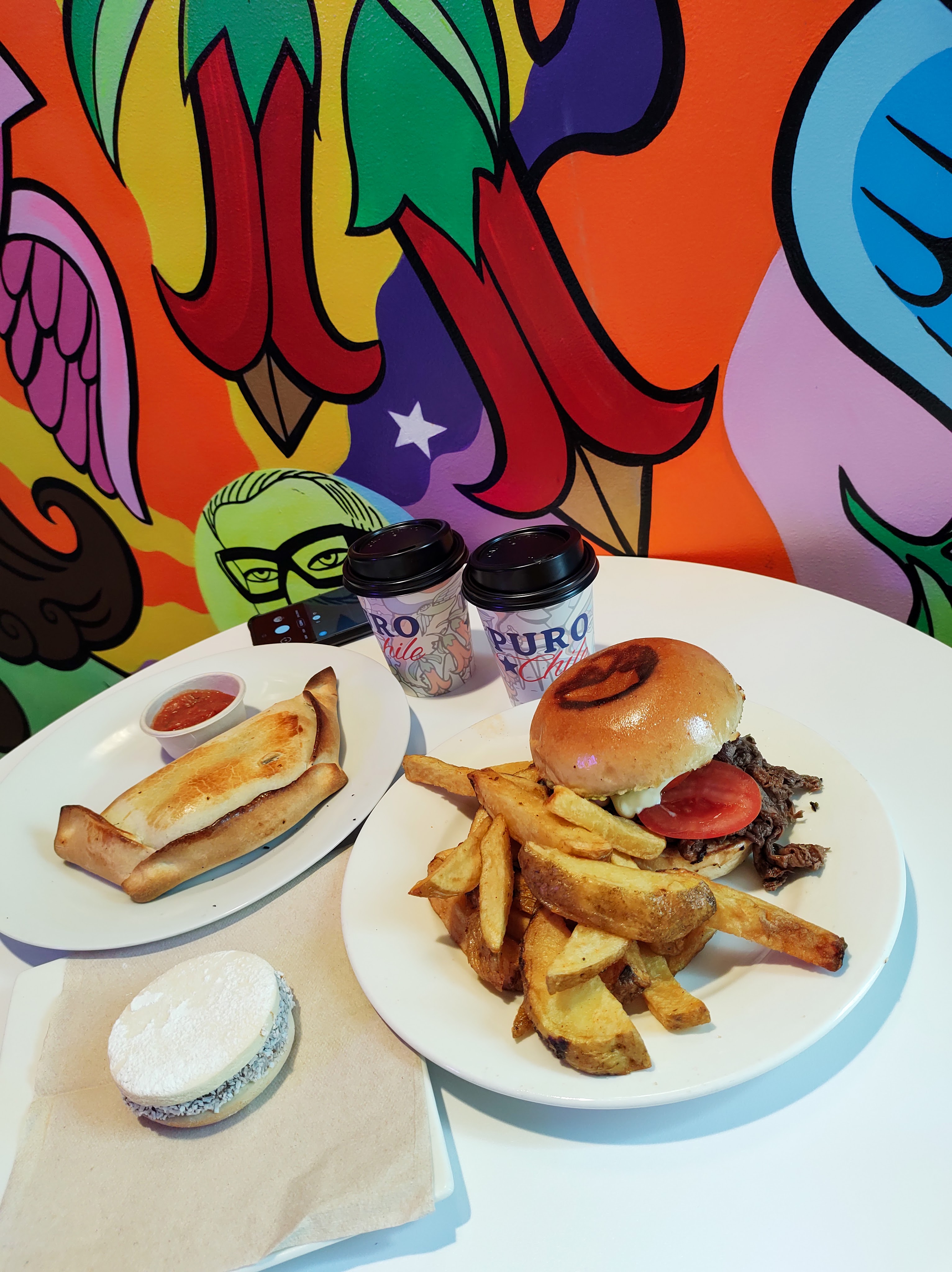
At the window end of an upstairs food court, this family run café / diner served delicious classics from Chile. We had an authentic Chilean Empanada, and a Churrasco Italiano sandwich; slow cooked beef with avocado, tomato and mayonnaise. We couldn’t finish without an Alfajor, the signature shortbread biscuit with Dulce de Leche centre.

Location: Willis Street, Te Aro, Wellington

Craft Pubs & Bars

Garage Project
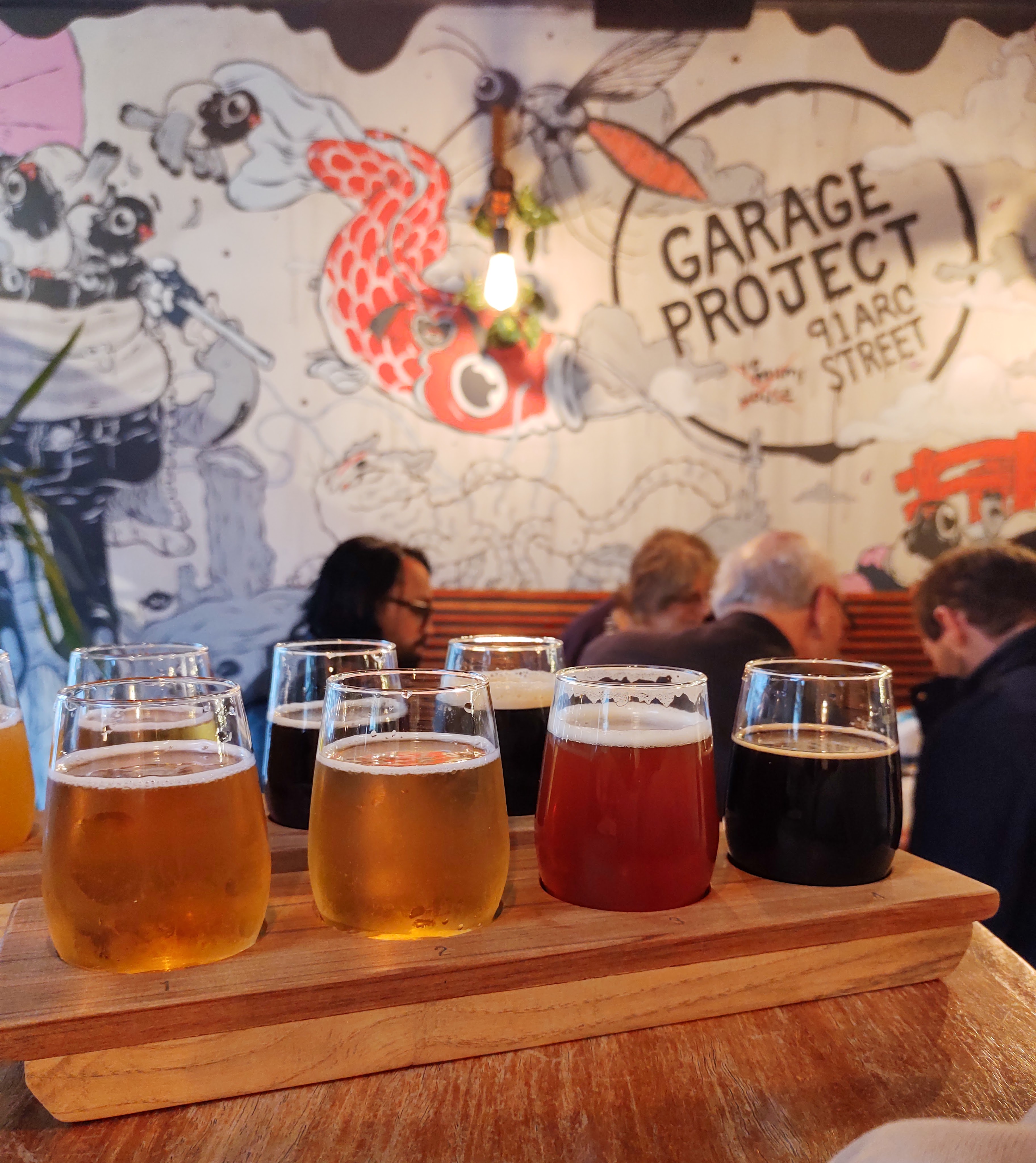
This award-winning craft beer range began in an old garage across the road from the tap room, where you can now buy your take-home beers. They really know how to make good beer with immaculate attention to detail, and if you’re partial to a flavour adventure, there are always several party beers with creative infusions and satisfying mouthfeels. My only tip if you visit – don’t drive!

Location: Aro Street, Aro Valley, Wellington

Fortune Favours
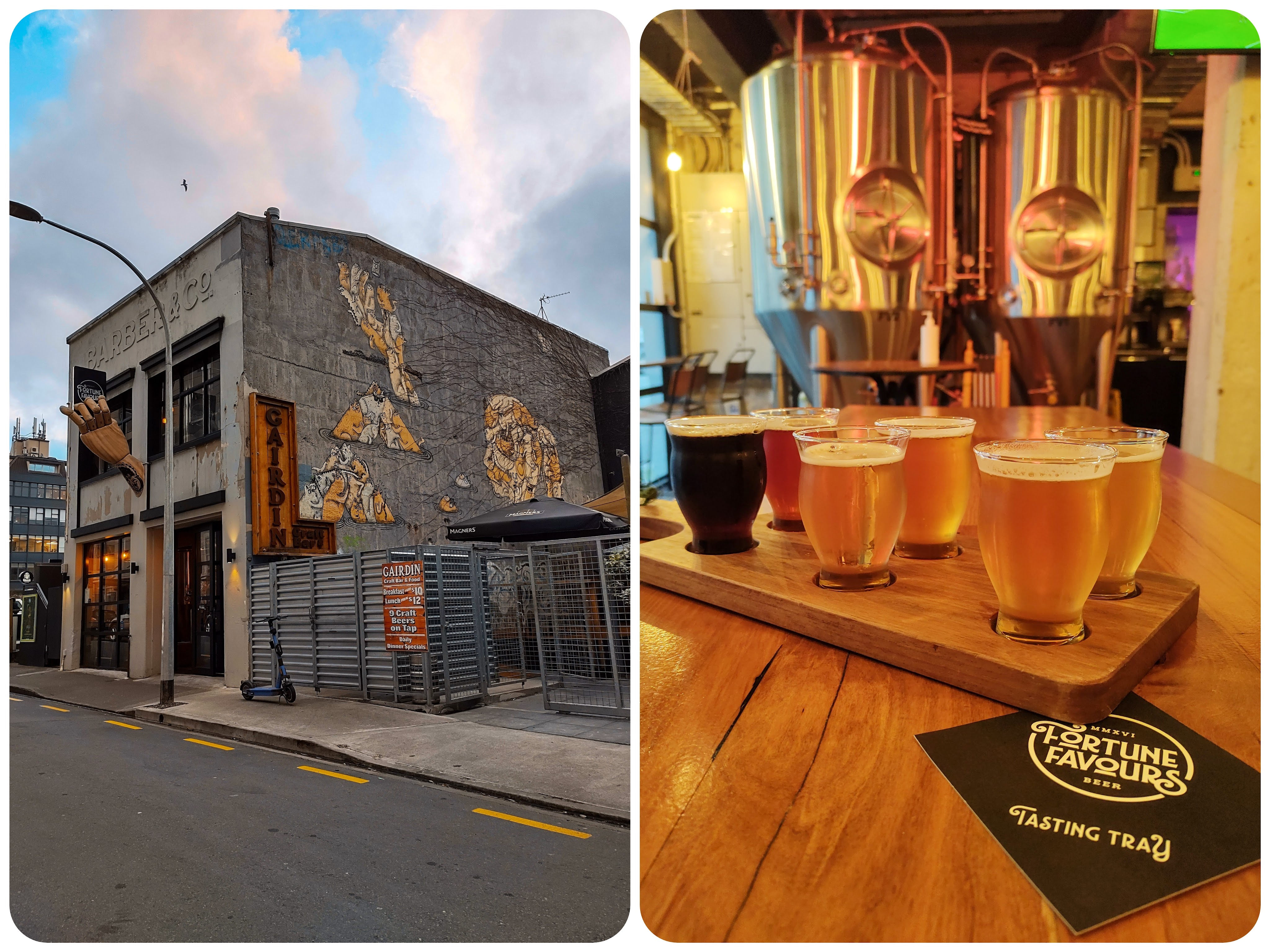
The artist’s wooden hand protruding from this brewpub beckoned us to try a paddle and we weren’t disappointed. Partnered with Gorilla Burgers, there’s plenty to soak up the beer, and there’s also rooftop seating to soak up the cityscape.

Location: Leeds Street, Te Aro, Wellington (also in Park Rd, Miramar & Wellington Airport)

The Library
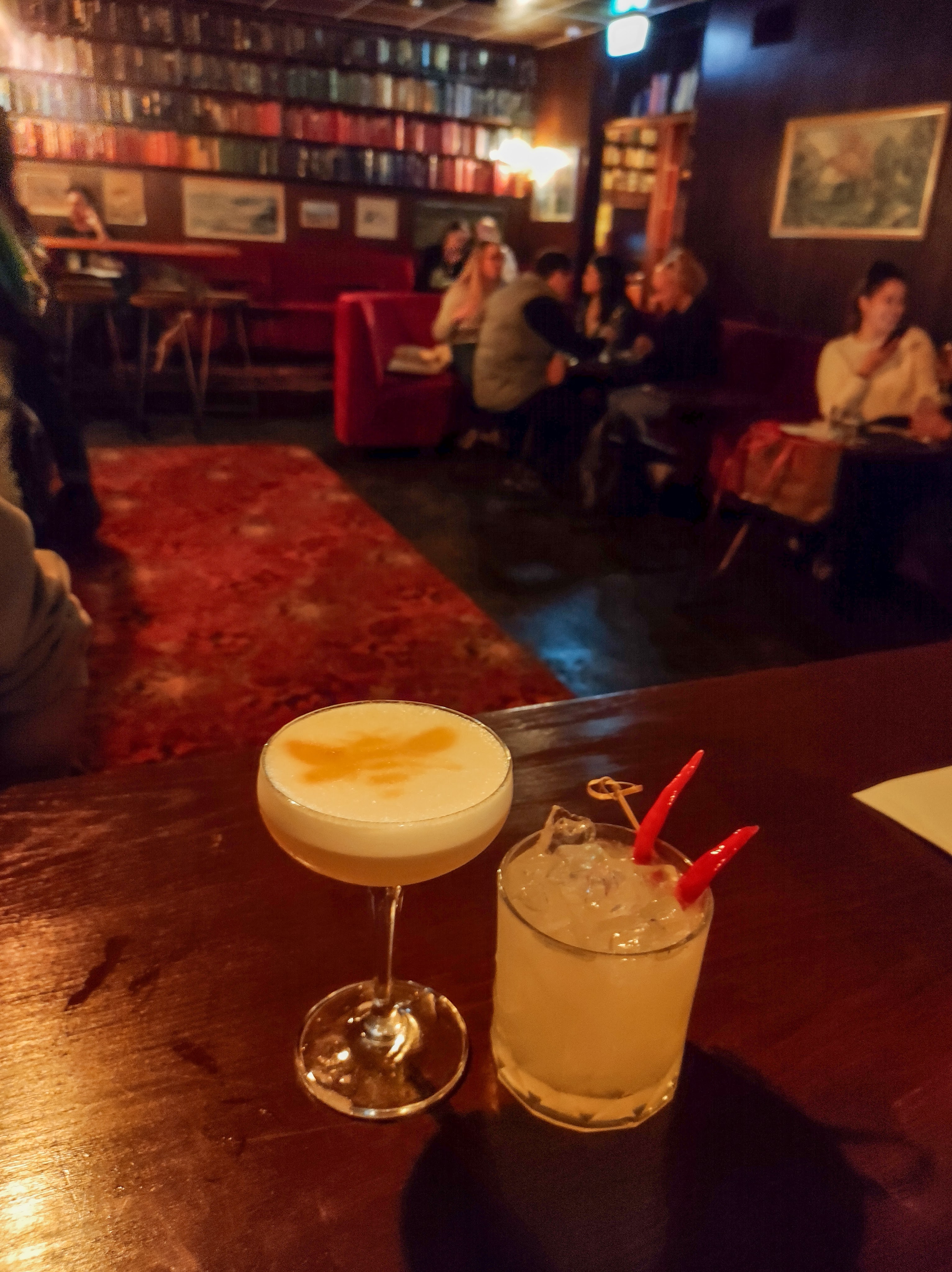
We found this semi-secret bar following a sandwich board that pointed us up some stairs to what looked like residential flats. Going through what seemed to be a fire door, we were welcomed into this quirky cocktail bar. An instrumental Jazz trio was playing live music, and with the drinks menu following a theme of stories, movies and shows, our curiosity had us spending more than we intended. Every cocktail is a uniquely delicious spin on a classic, my favourite was named “Inner City Pressure” for us Flight of the Conchords fans.

Location: Courtenay Place, Te Aro, Wellington

Little Beer Quarter
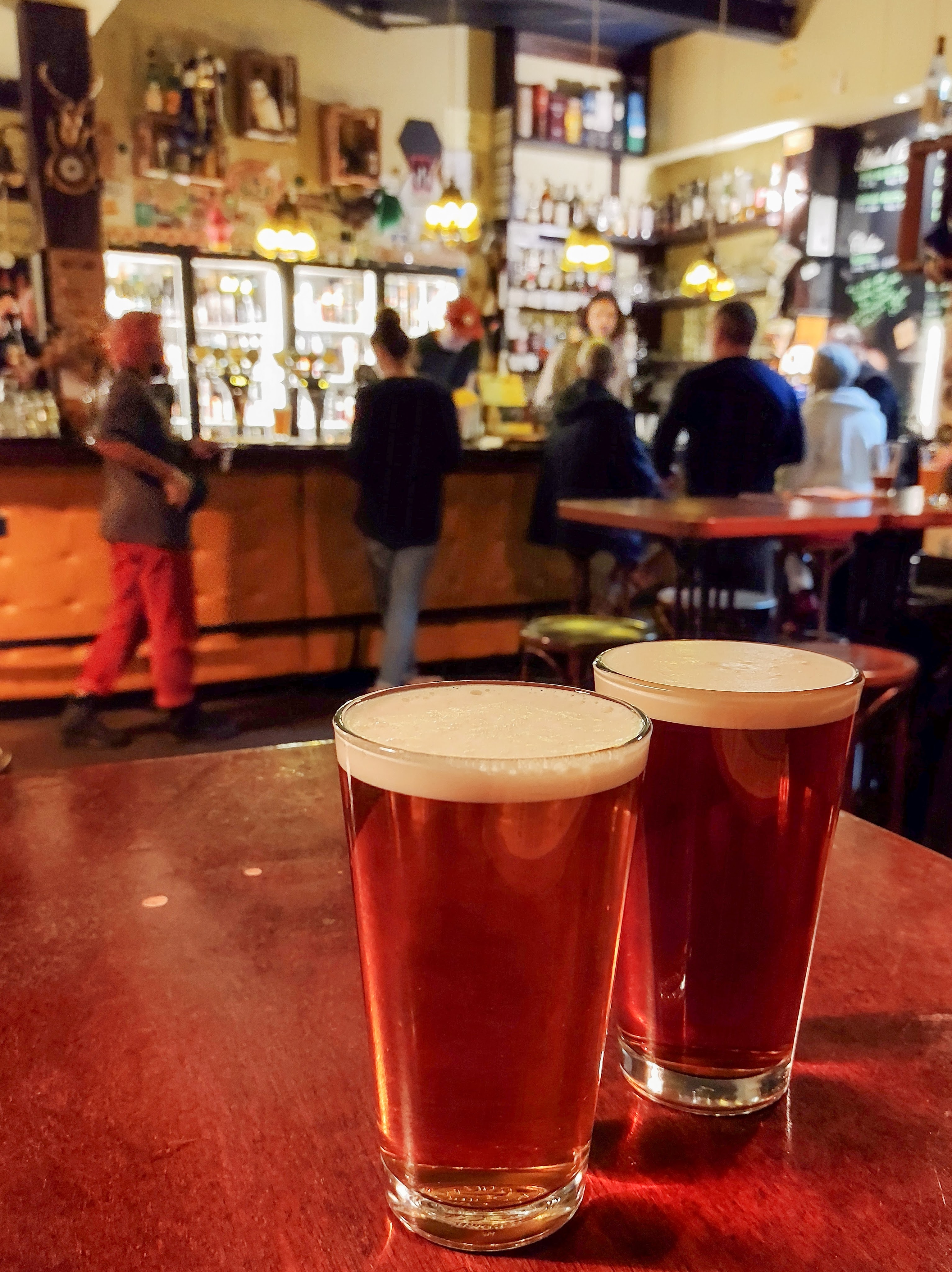
This proper little pub has an extensive list of guest beers that change regularly, along with house classics including wines, spirits and cocktails. The hospitable but casual atmosphere makes you feel like a local even if you’re not.

Location: Edward Street, Te Aro, Wellington

9–13 minutes

Volunteering with Elephants – Chiang Mai, Thailand
A scorching sun rolls skyward into the haze as we leave our hostel (and its resident mosquitoes) in the "Haiya" subdistrict of Chiang Mai city. It's 8:30 am, on an October Saturday in 2018. The 12 seater shuttle bus we board is clammy, and stuffed with tourists, our mutual excitement is thick in the air. We chug north bound for an hour, finally stopping at the edge of the jungle, in a village in San Pa Yang.   
ERP image
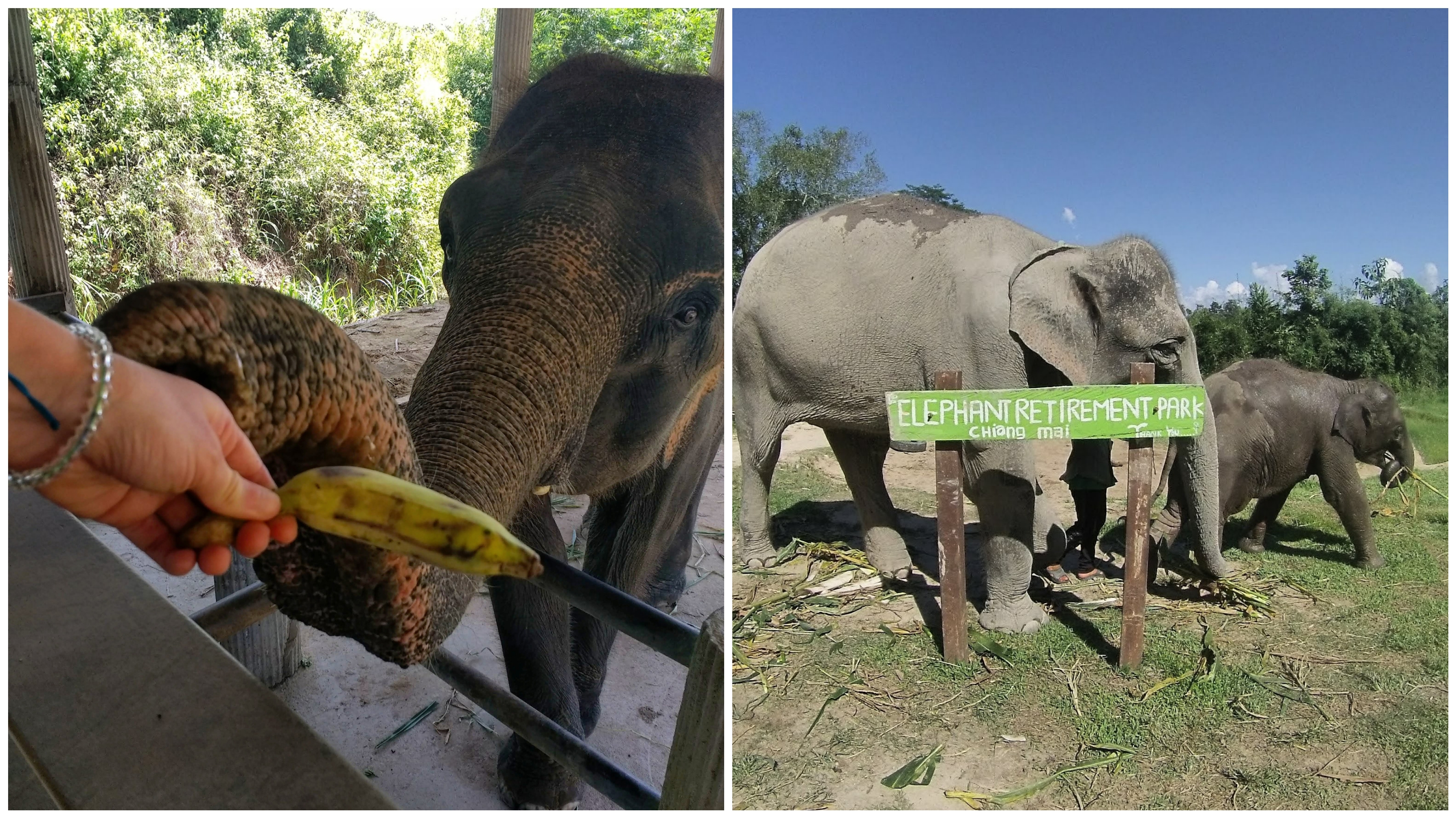
One by one, we step out of the mini van onto the dusty driveway, and there they are, beautiful, gentle giants. A few of the elephants come plodding quickly over to our van, swinging their trunks as they come - they know our arrival means feeding time!   

Meet The Elephants

When I was there in October 2018, there were 6 elephants living at the park, all female, with a lot of history between them.

Bella – 20 years old

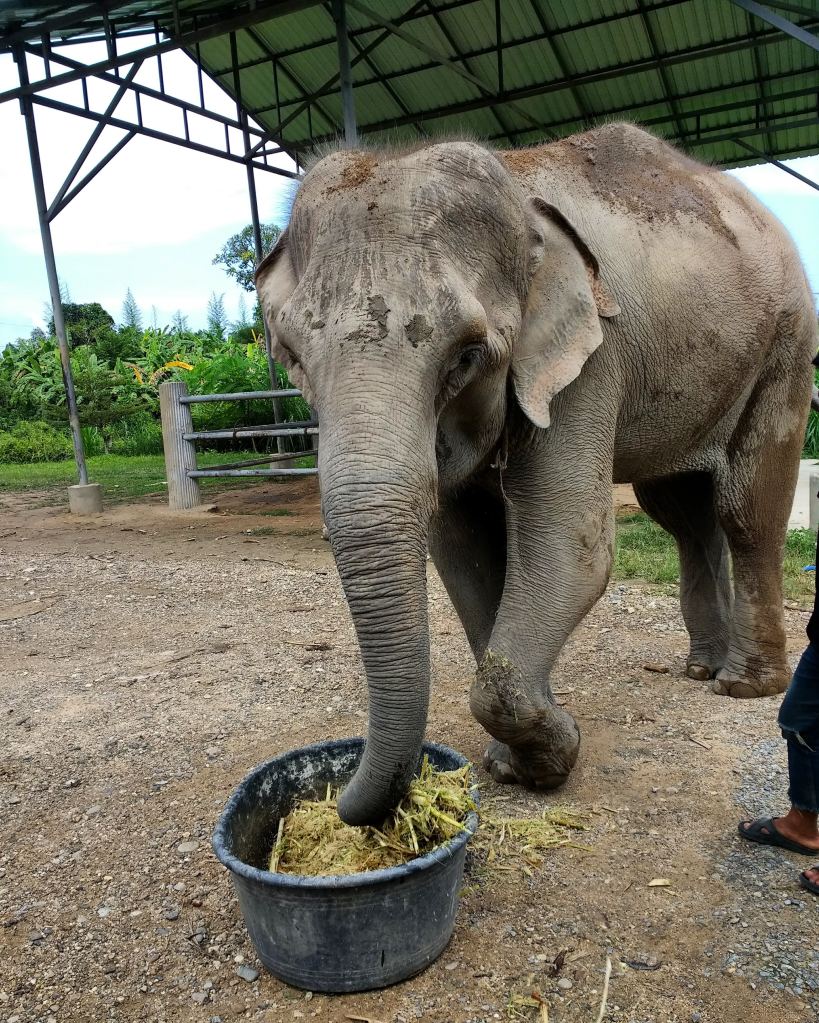
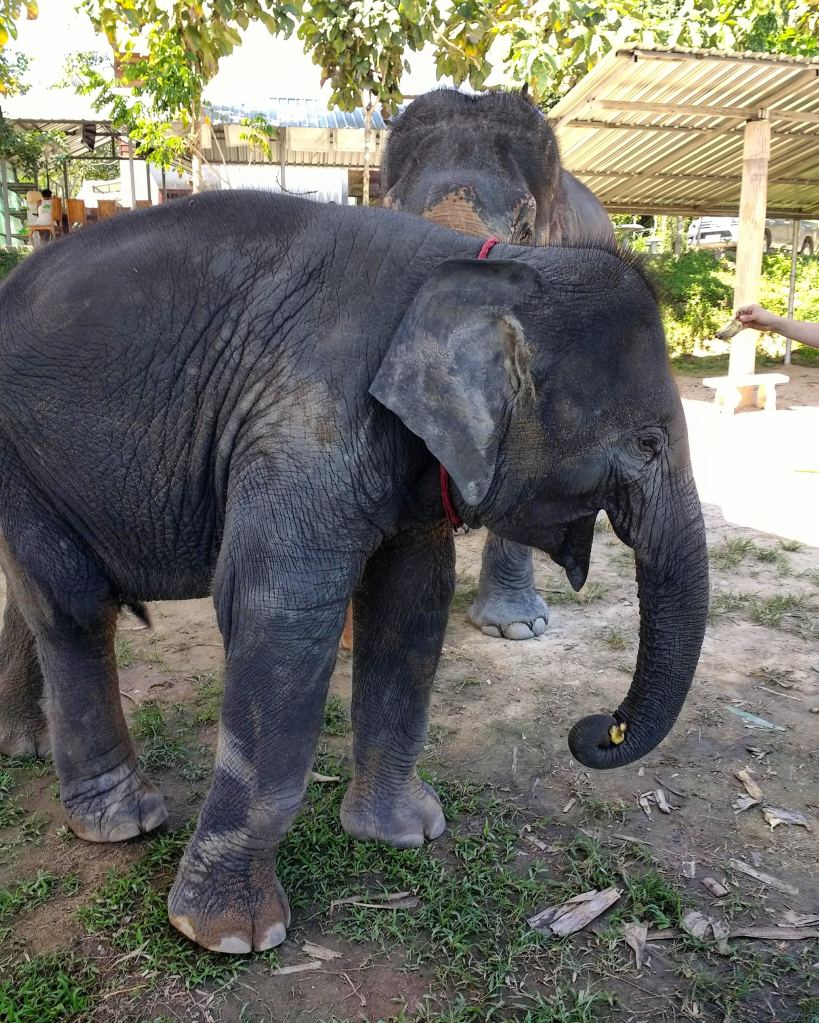
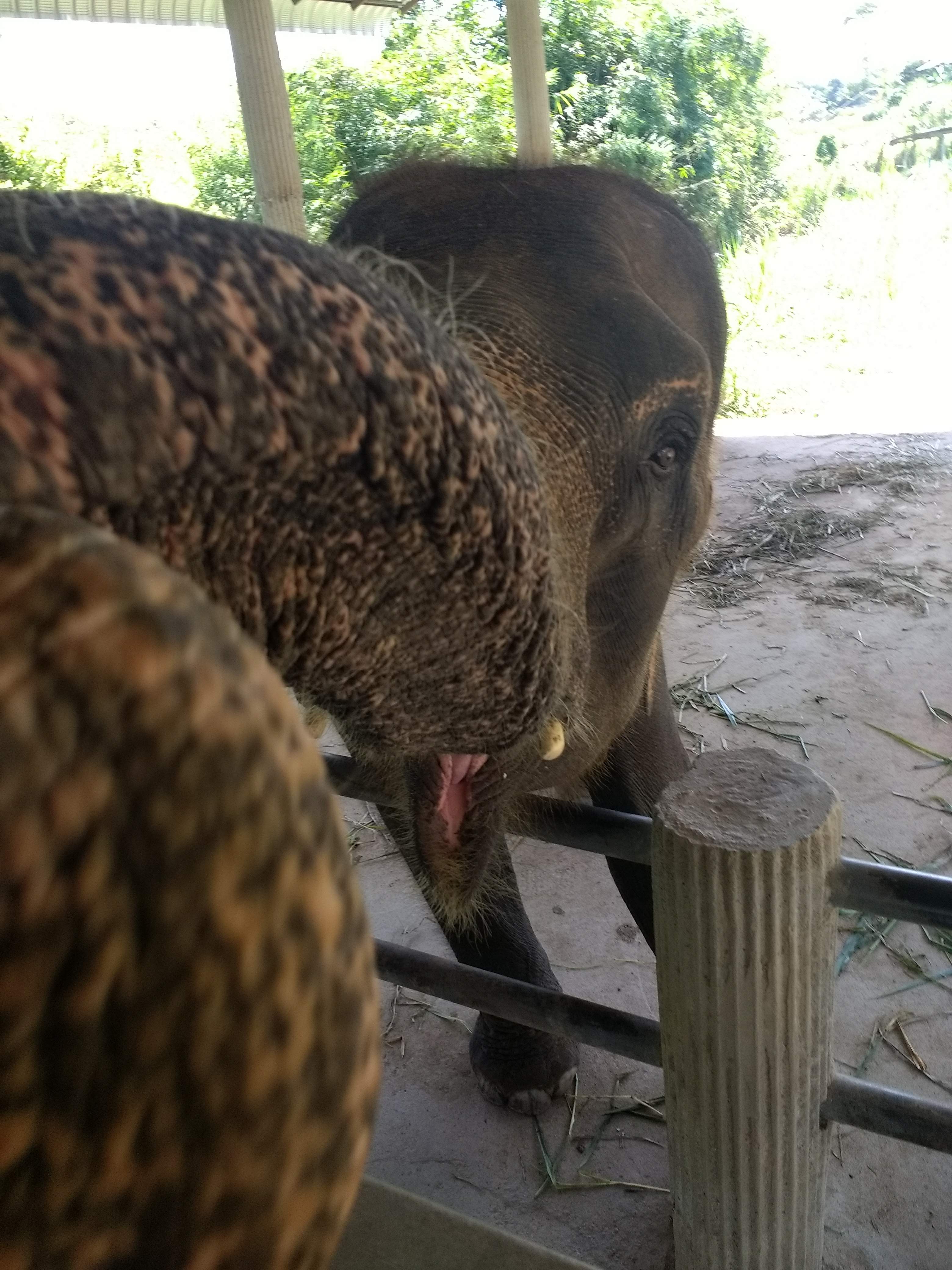
The park’s longest member, Bella had been living there for 4 years. She’d been rescued from a show where she’d play ball games like golf and football, and performed dances and tricks like sitting on chairs. This resulted in her left leg being damaged. A happy retirement was the safest option for Bella, over a complicated procedure that could cause more unnecessary trauma and be extremely costly. Bella could still walk on her leg, but the disfigurement caused her to limp, which put stress on her spine and shoulders. There are plenty of shaded areas built in the park, like this one, where Bella could rest at her will.

Bella had a calm and mothering nature, and was the adoptive mother of Lanna, one of the park’s baby elephants. Bella sadly passed away in June 2021.

Jao-nang – 31 years old

Born in 1987, Jao-nang is a beautiful elephant in the prime of her life. She was rescued from 20 years in the riding industry for tourism. At the time I was there in October 2018, she was 6 months pregnant, after entering a breeding program with one of E.R.P’s sister park’s bulls. Jao-nang had her baby in 2020, that’s right, elephant pregnancies last 18-22 months!

Jao-ying – 36 years old

Born in 1982, Jao-ying was the park’s oldest elephant, but she isn’t old at all, as an average Asian elephant’s life span is 60-80 years.
She worked for 20 years in the logging industry, before being sold for riding, and was rescued by E.R.P in 2016.

Lanna – 3 years old

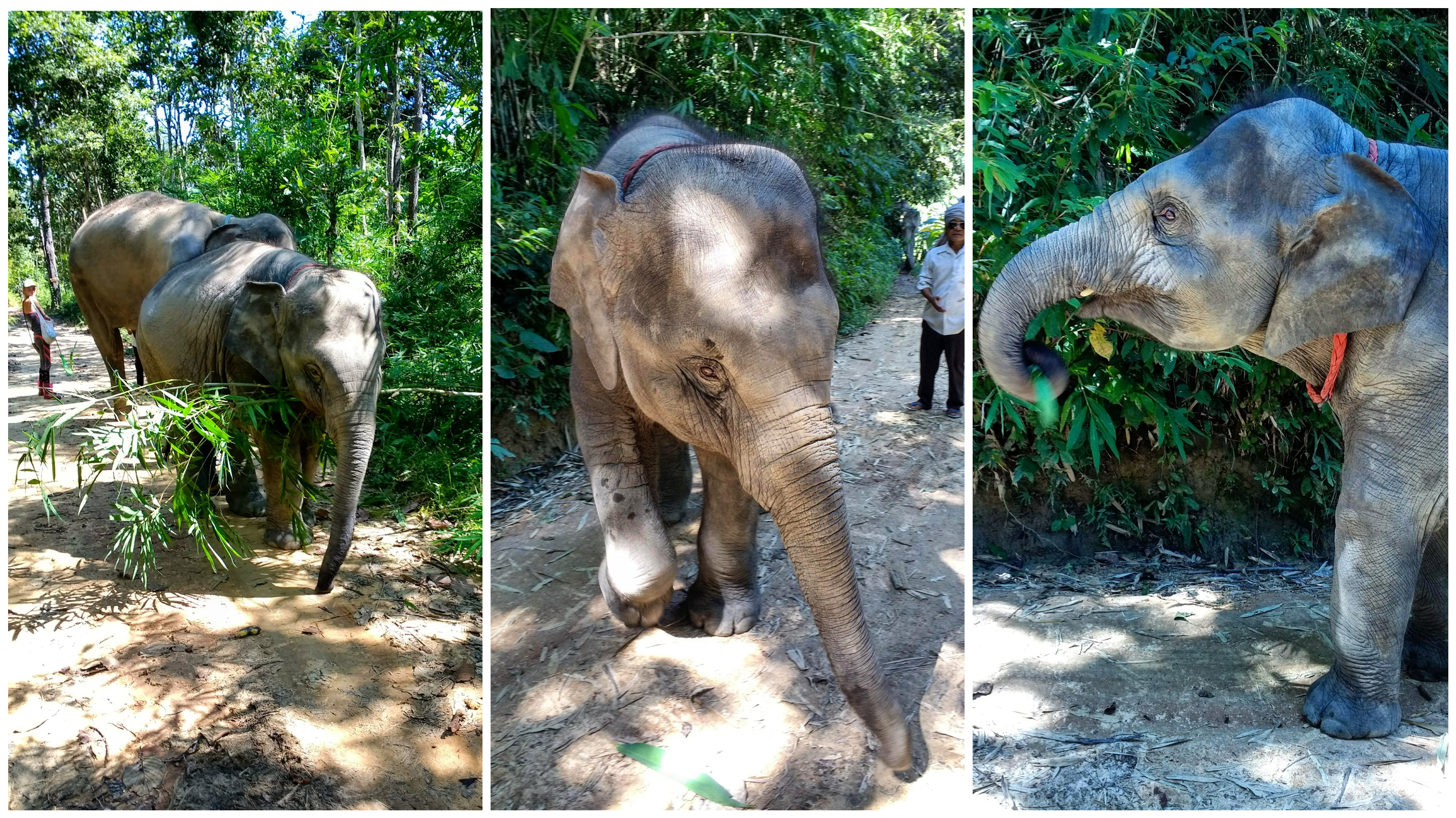
A clear favourite among tourists, Lanna is sociable, curious, and a fast learner. She was born at the Elephant Retirement Park in 2015, and when she was 2, her mother was moved to a sister park in the south for further breeding. Her and Bella developed a mother-daughter like connection.

Ping & Tong – 2 years old

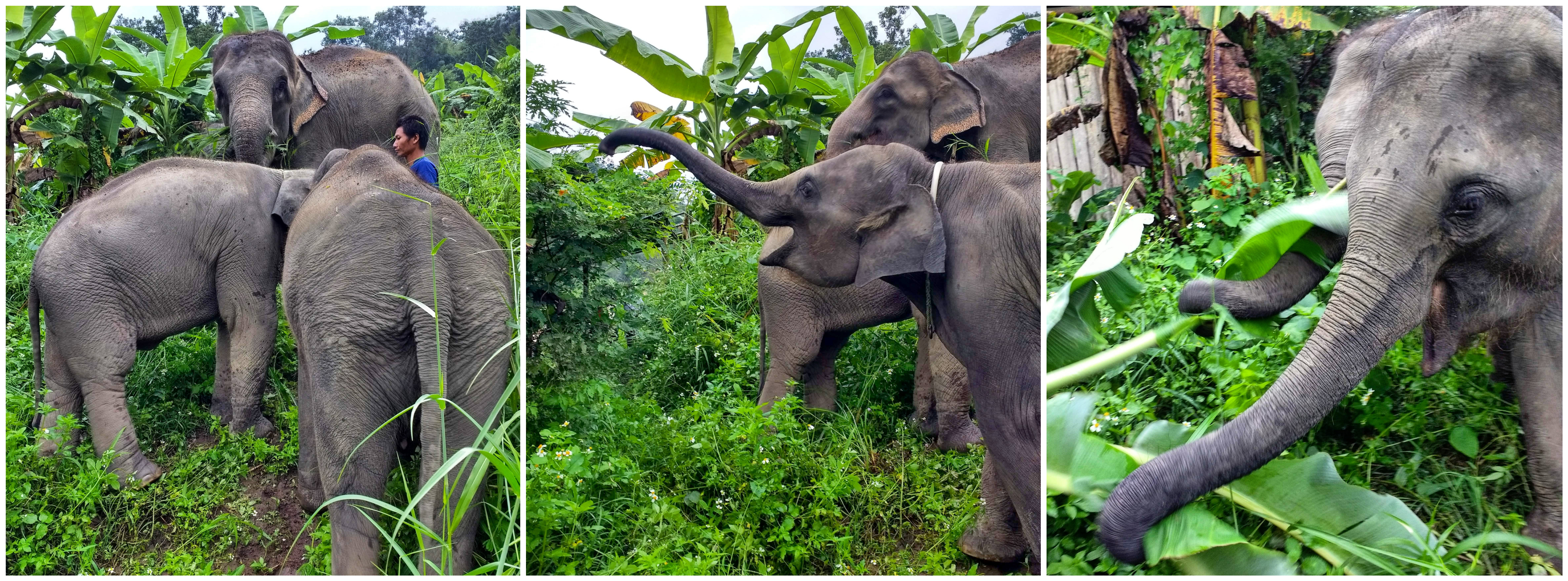
These cheeky twin sisters moved into E.R.P in 2018 from a nearby camp who did not have the means to support two calfs. They are bright and playful, and have been known to be quite naughty!

The Staff

The Elephant Retirement Park is not only home to elephants. It is also home to the mahouts and their families, who live onsite, close to the elephants at all times. These mahouts have a close bond and special understanding with the elephants – they do not ride them, or control them using sticks or chains; they oversee the safety of everyone. The staff onsite all help out with gathering food for the animals, cooking, cleaning and maintenance at the park, building new additions to the park, and also helping out in the local community.


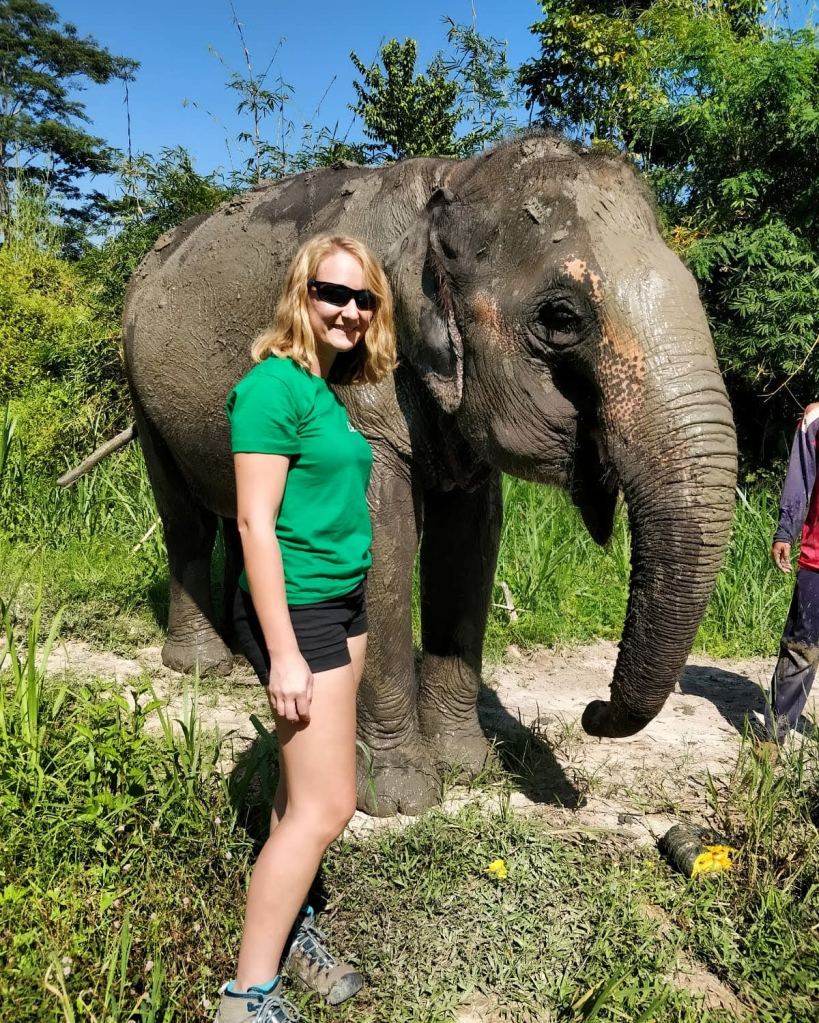
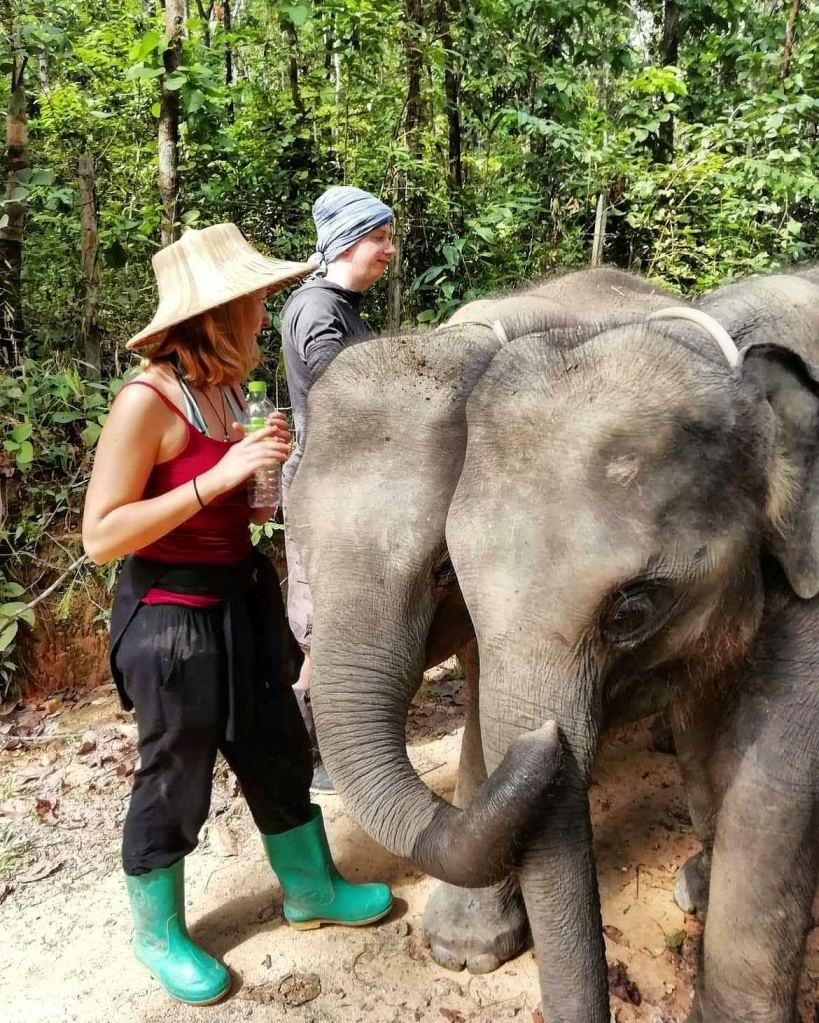
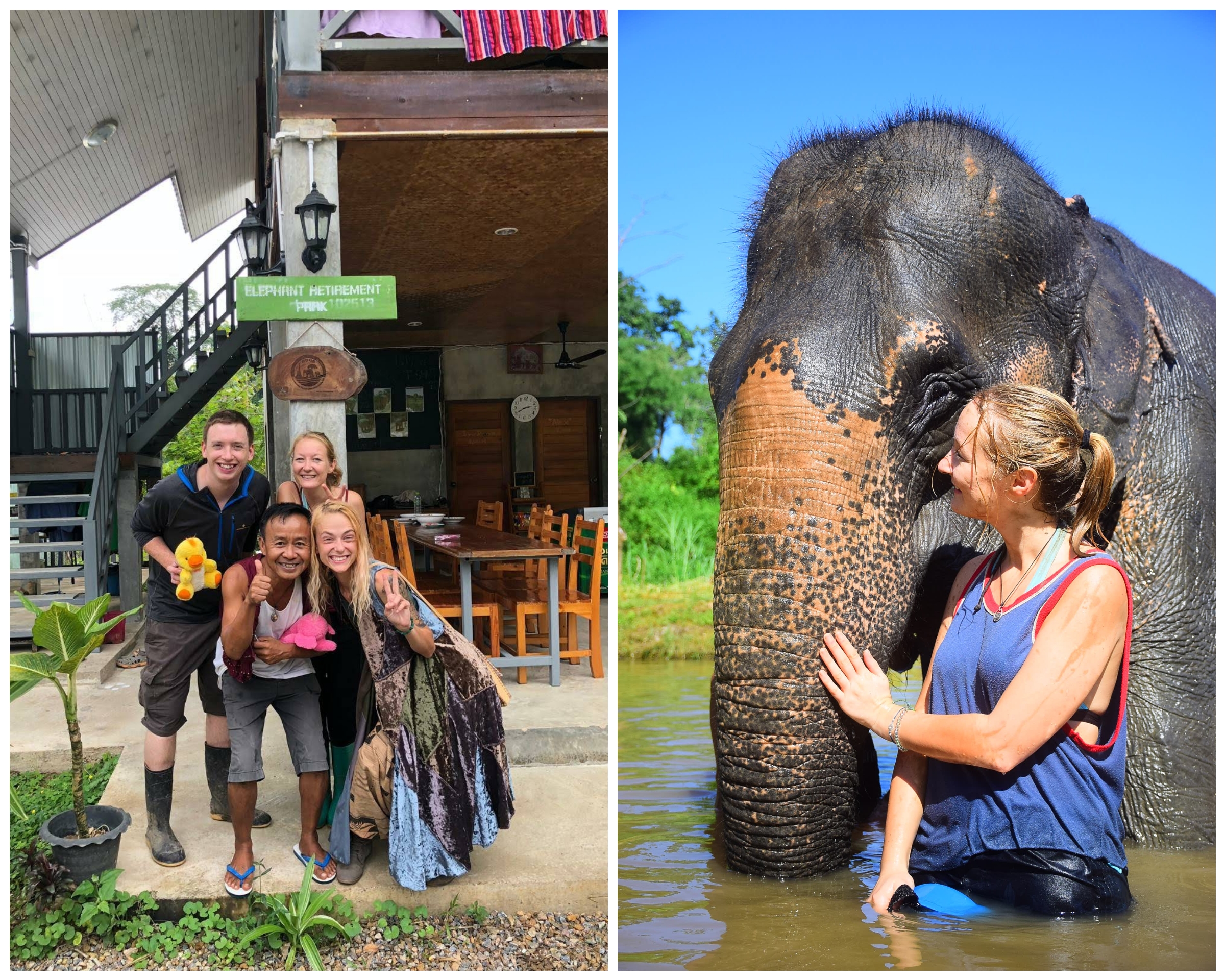
And then of course there are the volunteers. Pictured are Meli, Simon and me.

Alex was our fantastic host, he managed the park and all the volunteering tasks for us. He looked after us well, and once the working part of the day was done, he loved taking us out for dinner, showing us the sights, and introducing us to his friends. He showed us how to party once or twice too!

First thing first – we needed to meet the elephants! Simon and I arrived with a half-day tour group, so we got to experience the tour and get a good introduction to the park and its residents. The elephants knew the schedule by heart, and yep, it was feeding time!

The food store was stocked chock-a-block with bananas, sugar cane, and banana leaves. Each of us was given a tote bag to fill, and a couple of people were given bottles of milk for the babies. As we emerged from the food store, the elephants were waiting, holding their trunks out! At first, they took anything we gave them, often trying a cheeky trunk dip in our bags, (we were instructed to keep the tote bags firmly under our arms, as they would try and take the whole thing) but it wasn’t long before they started rejecting sugar cane, throwing it on the floor and asking for bananas instead!

Feeding Time

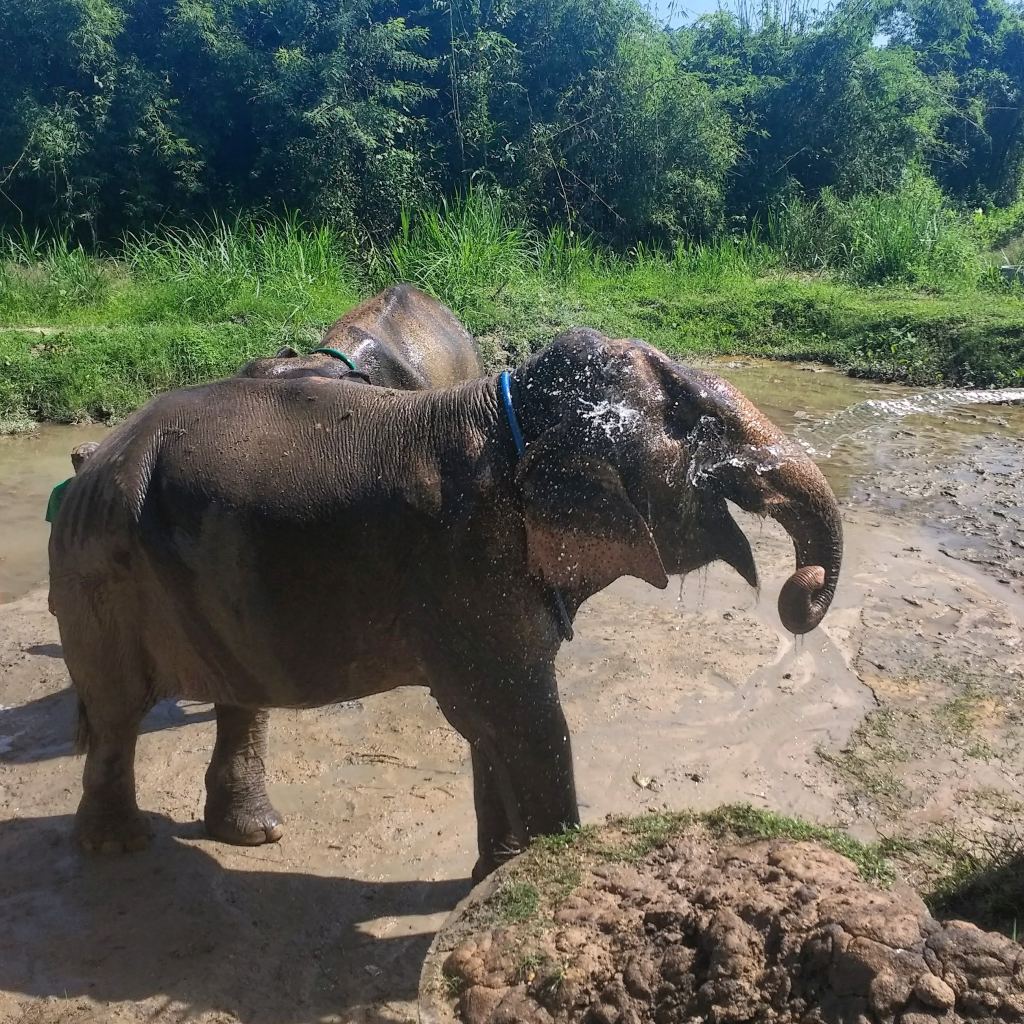
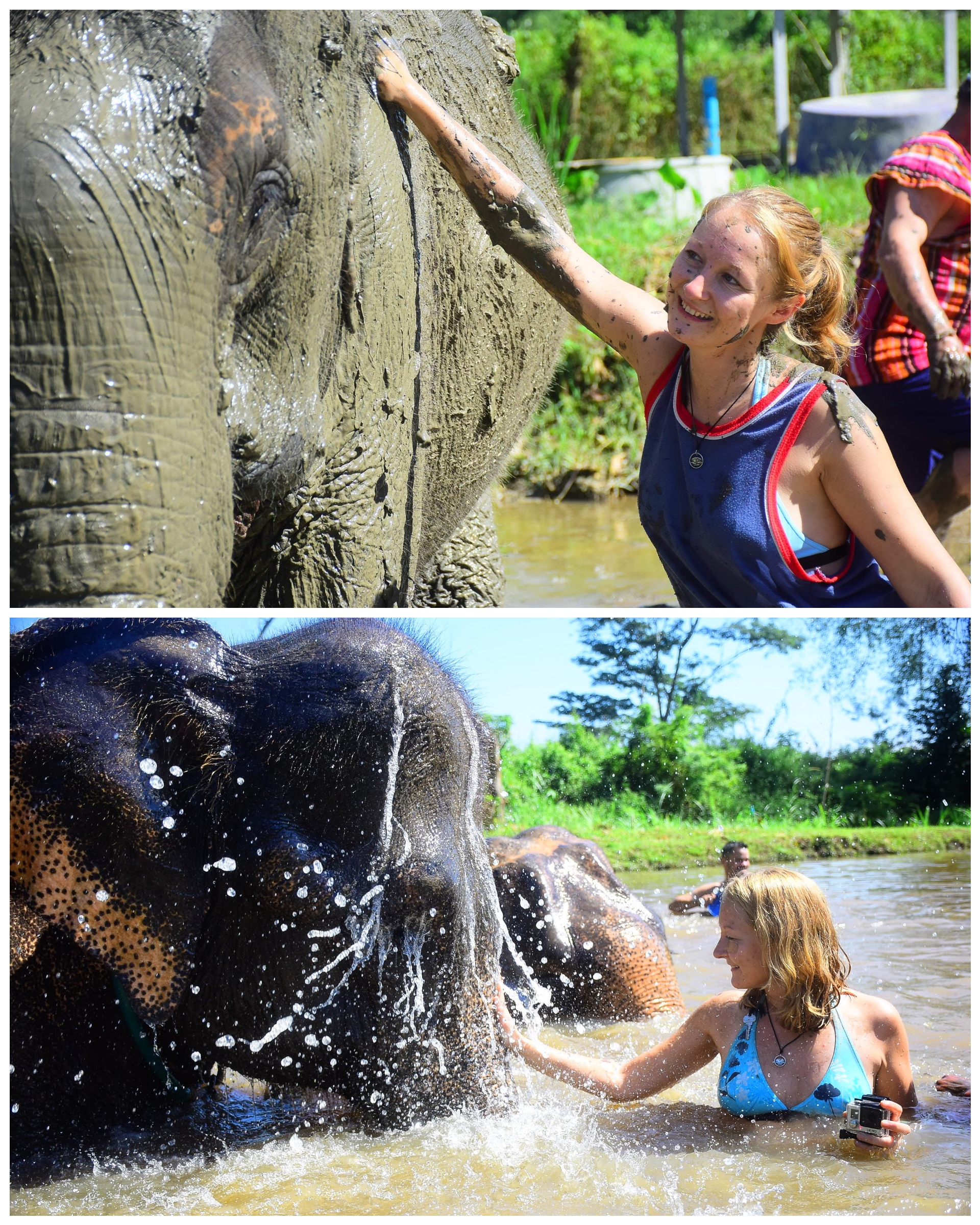
Once all the food was gone, we were taken further down into the park, towards the mud bath and pool, and that’s where the real fun began! Elephants like to roll in mud, or throw it over themselves with their trunks. Mud baths help cool them down, and protect them from common ticks. The mahouts started a mud fight, and we all ended up throwing clumps of wet mud at each other, laughing, slipping and sliding, so by the end of it everyone and everything was a monochrome of mud!

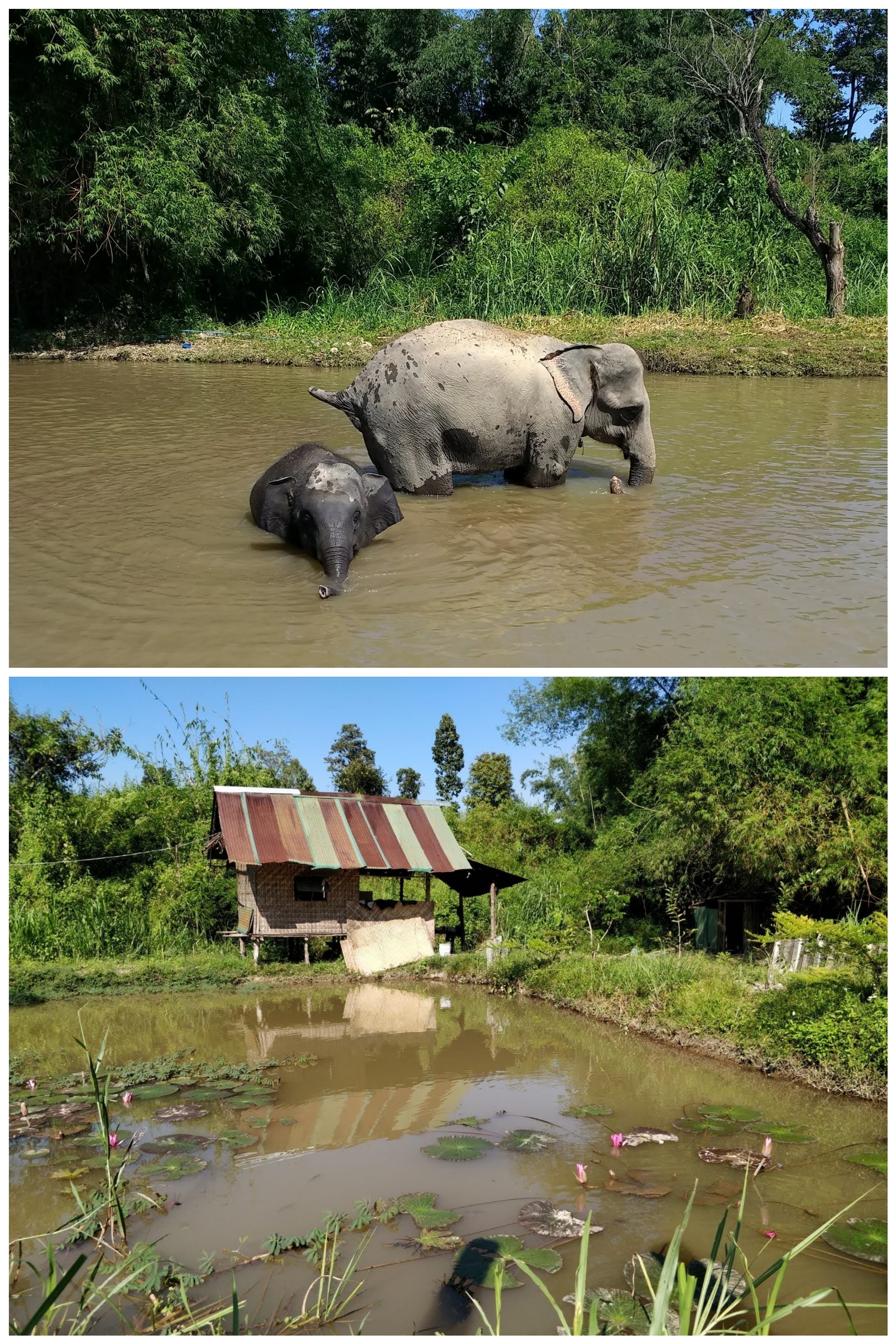
Time for a wash! The elephants had already wandered off to the pool, seemingly rolling their eyes at the silly humans, and we followed, splashing water with little plastic dishes we were given to wash the elephants.

One of the Mahout huts next to the elephant pool
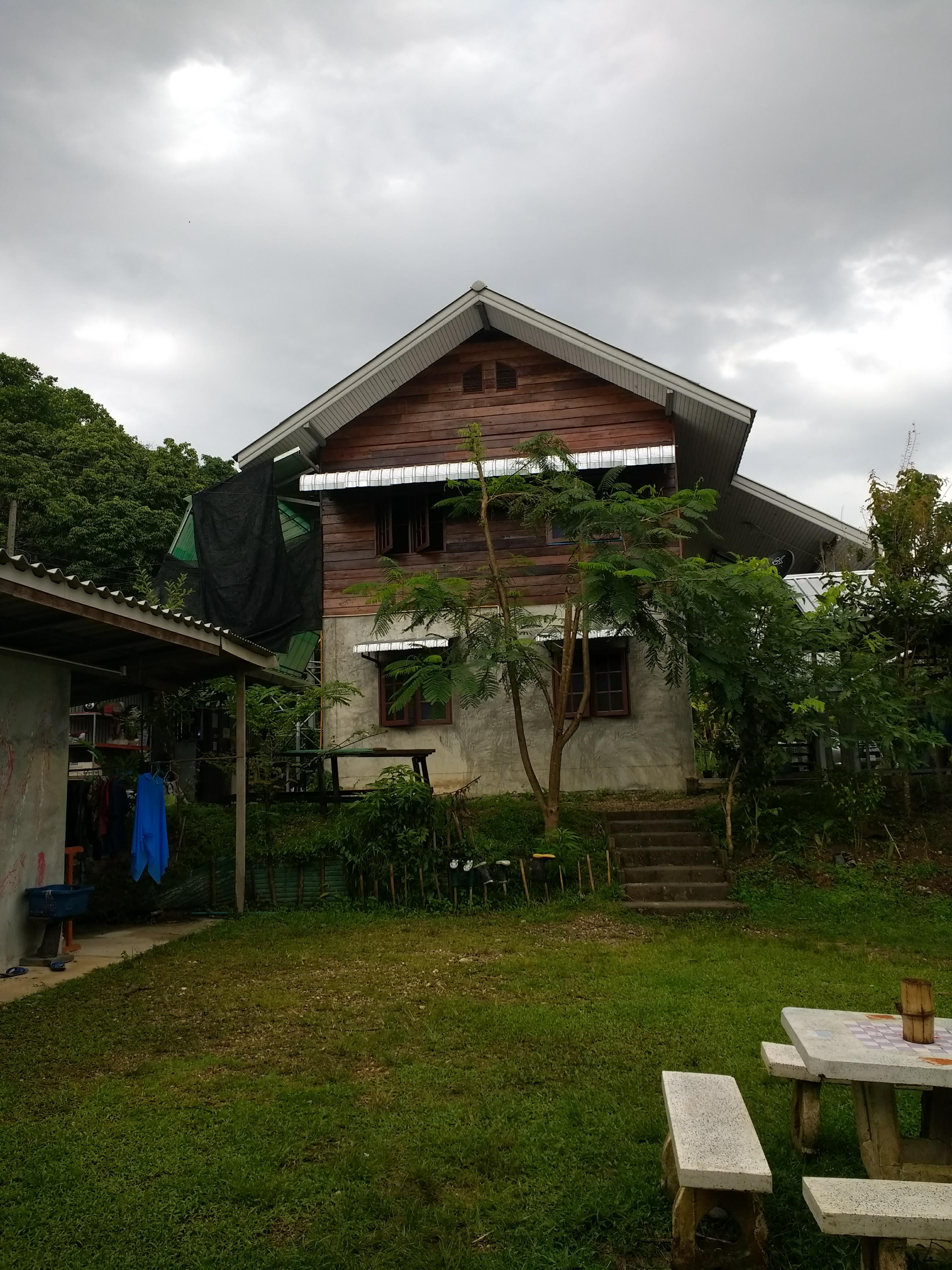
Our Dorm – bottom right window

Once everyone was washed, dried and fed, the mini-bus was ready to leave, and it was time to wave off the half-day tour group, and get settled in our dorm. The room was a cosy twin, right in the heart of the sanctuary, with a big ceiling fan, and geckos on the windows to eat the mosquitoes.

Aruni’s Flowers

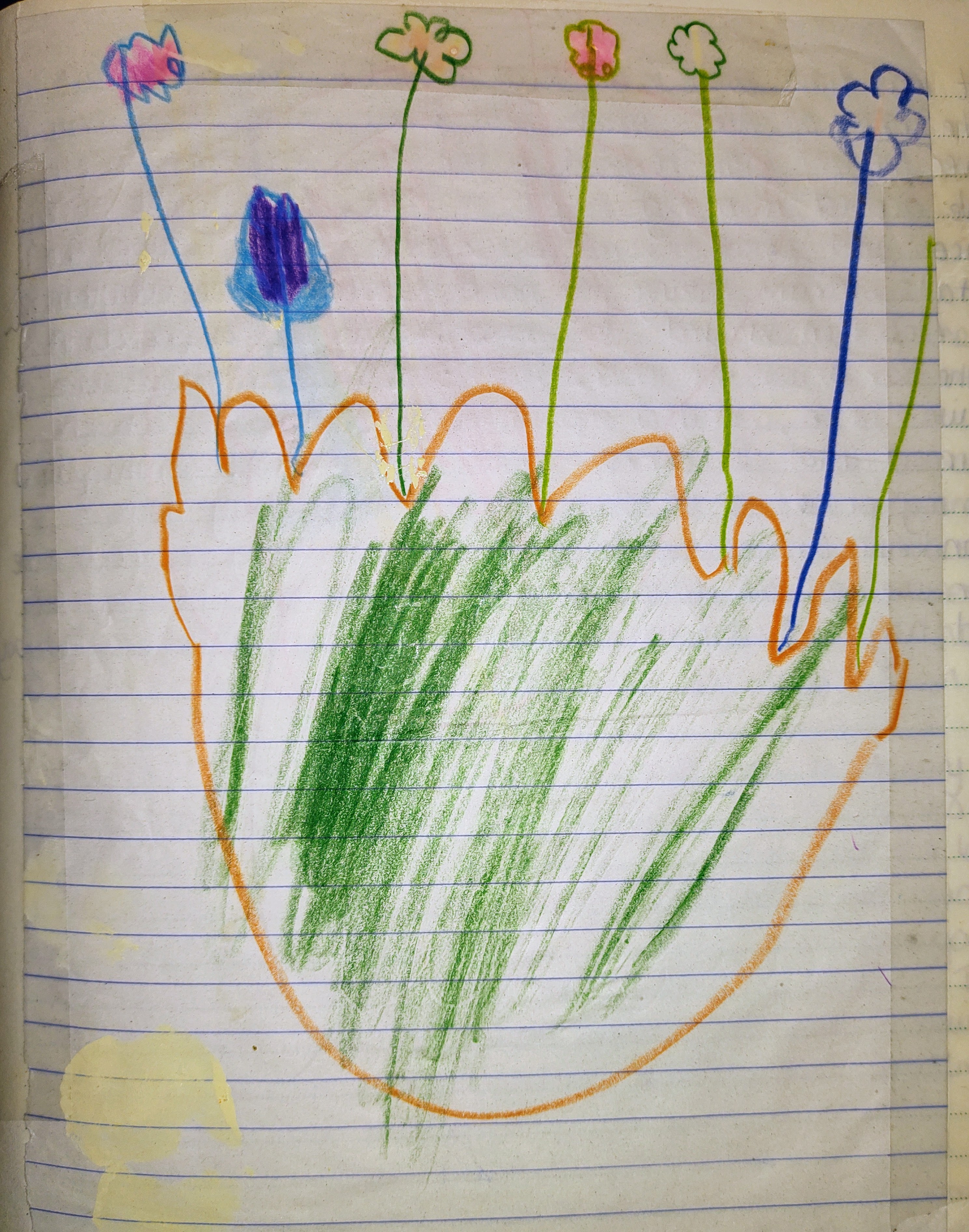
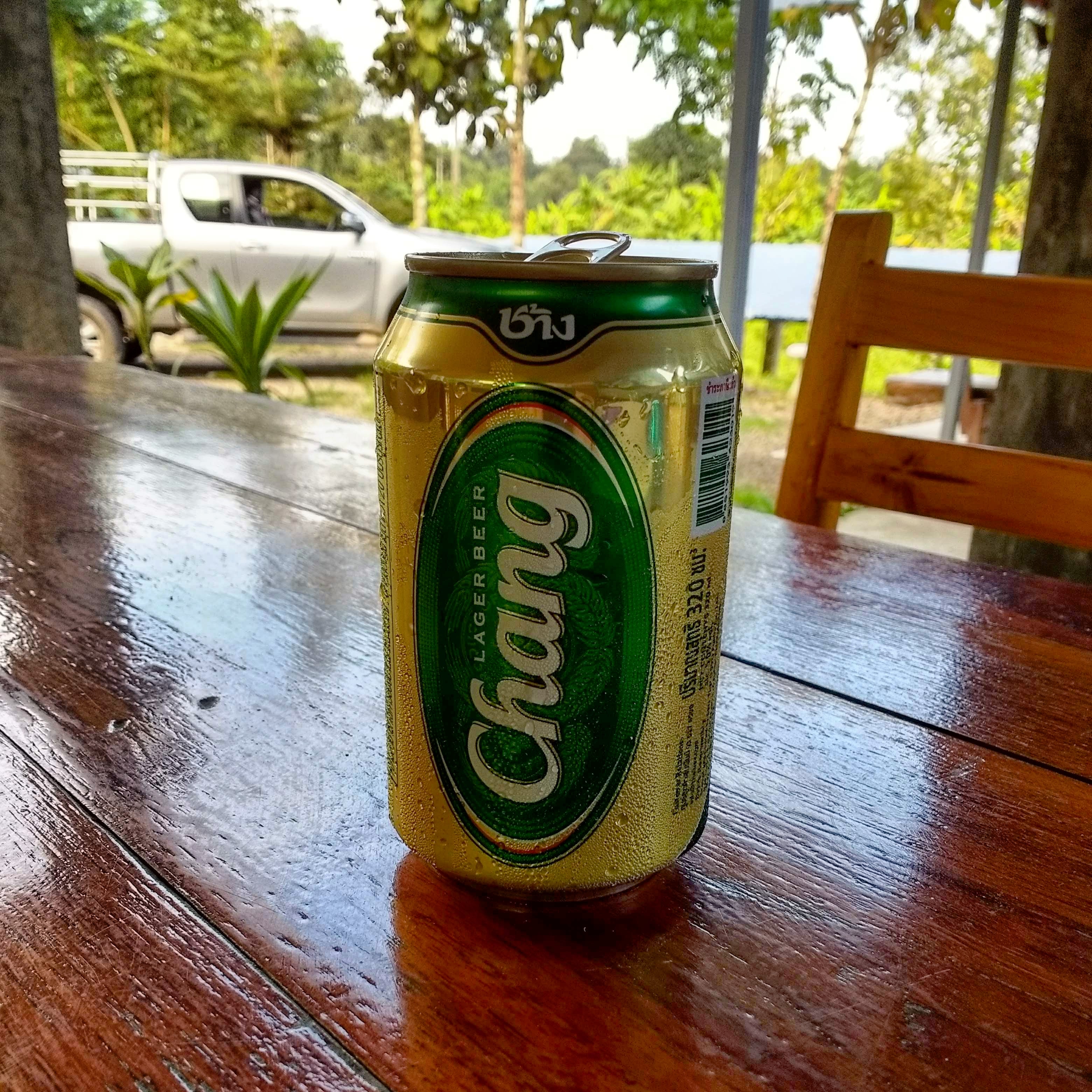
Peace. Simon and I finally find a moment to sit down on the communal veranda and breathe in our surroundings with a Chang beer from the vending machine. Afternoon sunshine paints the trees with licks of gold. Through the gentle breeze, we hear a little "hello!" and a small girl appears from the mezzanine deck, an inquisitive grin on her face, and she repeats, "hello!" Quite confidently, she pulls up a chair beside me, produces a drawing book, and the three of us proceed to draw and colour flowers together! She's the daughter of a mahout, and is home from school for the weekend. She's learning English, and is able to tell us her name is Aruni, and she's four years old.  
Aruni’s Flowers

I had an unfortunate accident on my first evening, through no fault but my own, and I can only sing the praises of Alex and the others who helped. I managed to cut open my cheek, just under my eye, on some very large barbed wire – elephant sized, you might say. Alex quickly sourced some “Lemon Bush Grass” from his herb garden, he chewed it into a pulp and told me to press it on the cut for about 3 minutes. Amazingly it stopped the bleeding, and bought time for Aruni’s mum to find the first aid kit. She washed it with iodine and redressed it every day for a week, refusing to let me look at the damage! I still have a small scar, barely visible now, and a surprisingly fond memory to go with it!

A Day in the Life of a Volunteer

A typical day at the Elephant Retirement Park on the volunteer program looked something like this:

6:30amClean the elephants’ night enclosures
7:30amGather elephant food: typically cutting down banana trees in the park’s nearby plantations
8:30amBreakfast
9:30amElephant care / Community volunteering
12:30pmLunch
1:30pmPark maintenance and upkeep
2:30pmHottest part of the day – time to rest
6pmFeed the elephants
6:30pmDinner – cooking with Alex or going to village for food with the locals

Early Morning Duties

Each morning we’d rise with the sun, waking with the soft trumpets of the nearby elephants, singing for their breakfast. Pulling on our baggy work clothes, we’d step outside into the rising sun, and into our one-size-fits-all wellington boots. It’s a refined look, one that I embraced, with my scarred cheek and borrowed wicker hat… There was a coffee station in the common area outside, and some mornings the mahouts and workers would gather there before the sky was lit, and we would sip quietly until work began.

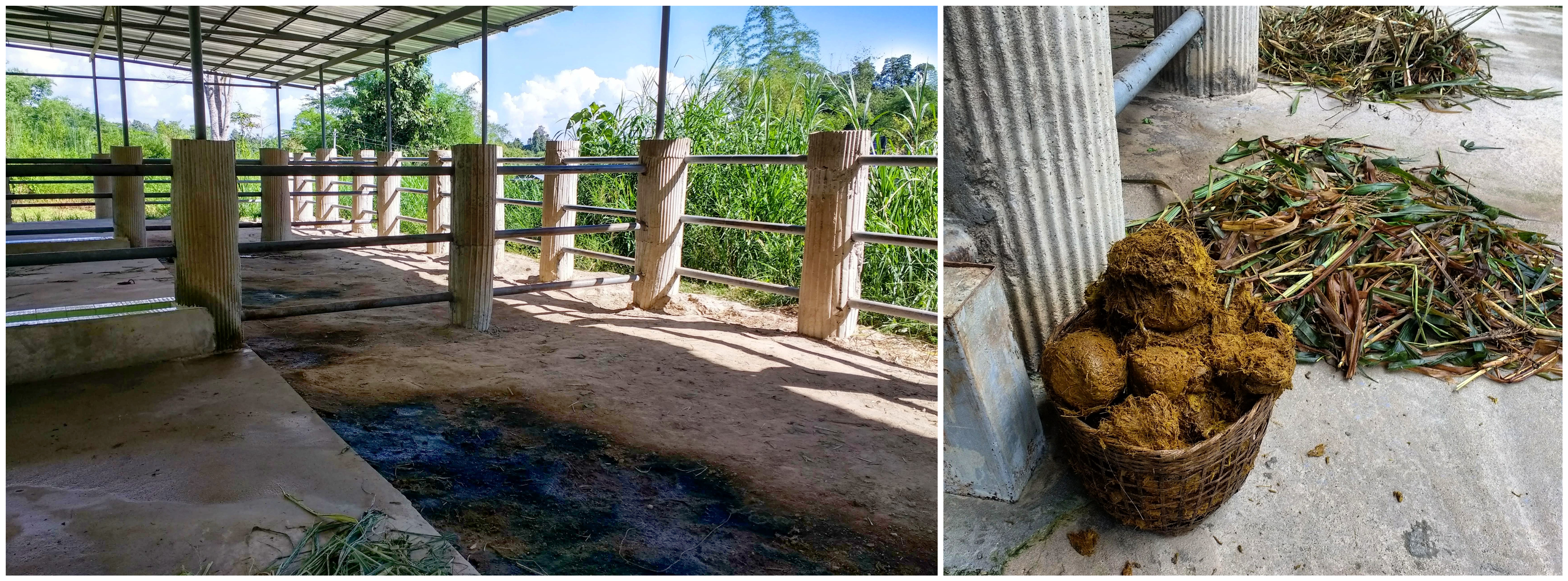
It is essential for the night enclosures to be cleaned every morning. At 6:30am we’d go around with a giant basket, filling it with elephant dung (really heavy, like grassy, brown bowling balls!) We’d sweep all the old leaves and bits of food away, hose down the floors, and clean and refill the water trough – often with the help of Lanna!

Night Enclosure / Elephant Dung

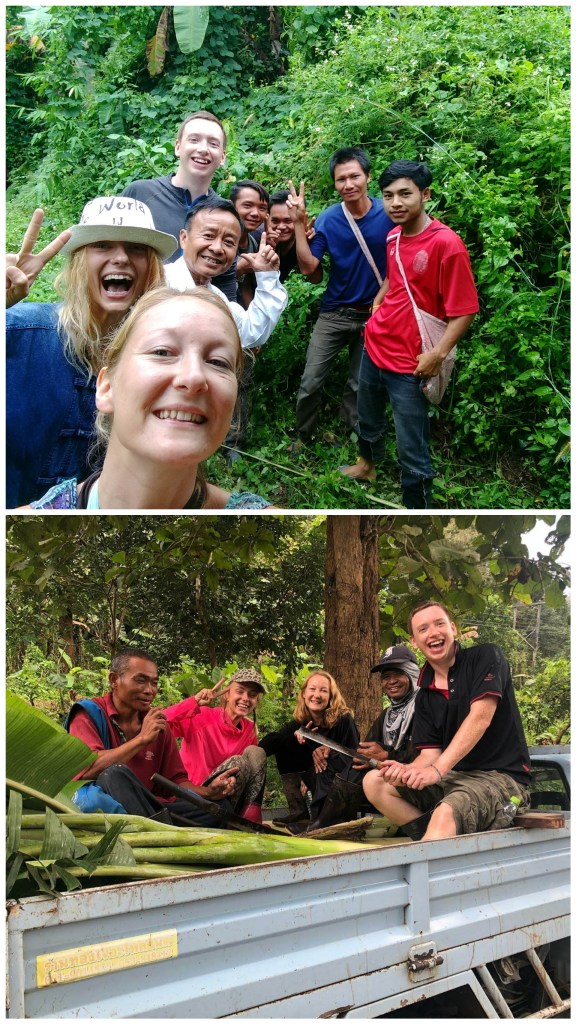
Then the Utility Truck would start up, the mahouts would beckon “come, come,” and we’d all jump into the open trailer of the Ute. Rumbling along the narrow, uneven road, skirting the jungle, with wind buffering our ears, we made our way to one of the park’s nearby banana tree plantations to harvest food for the elephants.

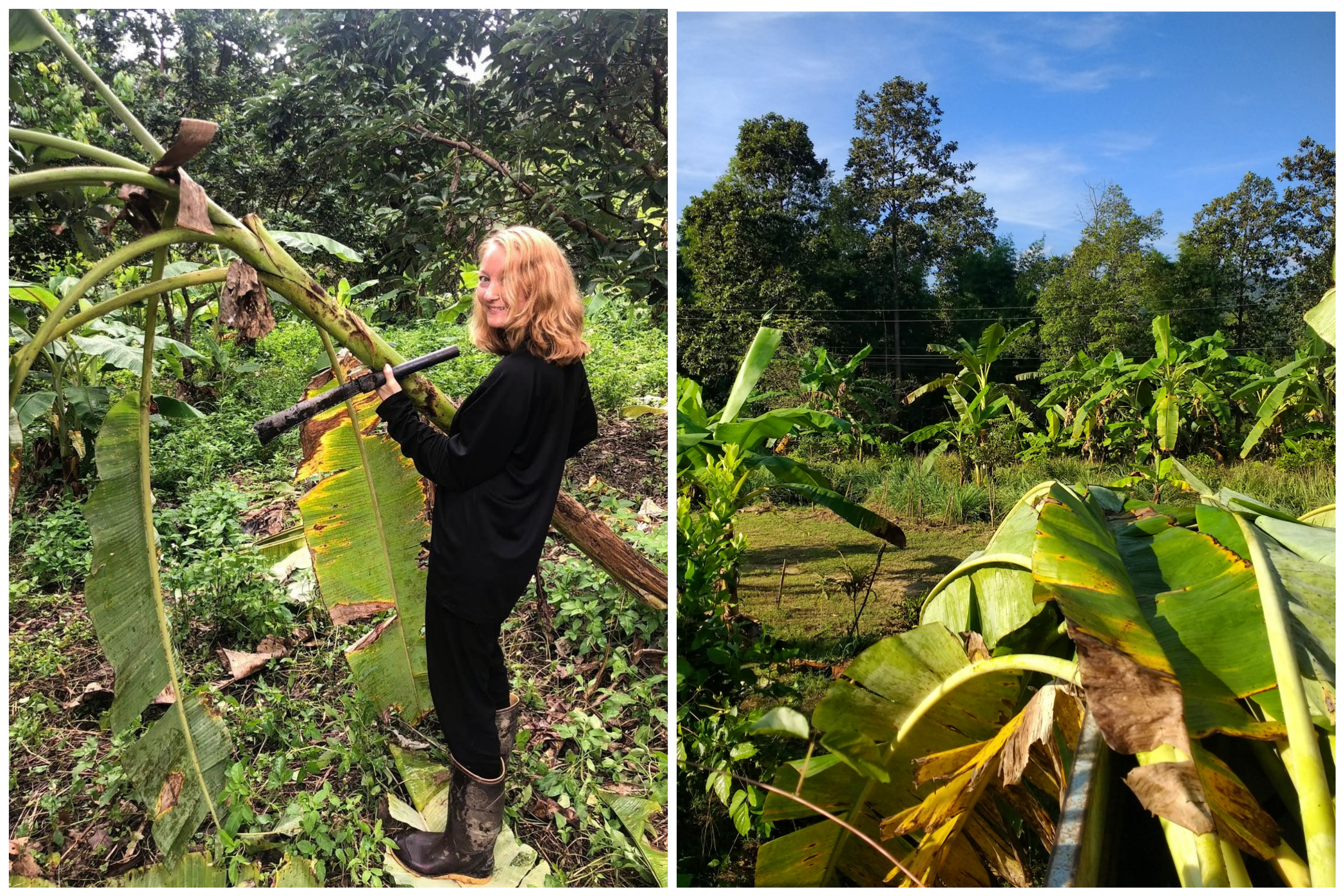
On arrival, it was straight to work. The mahouts showed us that banana trees grow back super quickly, producing baby green shoots straight out of the stump, which makes them a perfect renewable food source for the elephants. We were told to leave any trees with bananas growing on them, and any young trees, watching for snakes and spiders all the while. The mahouts taught us how to use a machete to cut the tall trees down – a two-handed swing, angled into the lower part of the trunk. They made it look extremely easy, felling trees in a single swipe, while I seemed to be hacking away ungracefully for hours! But I got my trees, and we carried them back to the Ute, loading them in and climbing on top of our loot for the journey home for breakfast.

Banana Tree Harvest

Community Volunteering

Everyday was different after breakfast. Somedays we’d help around the park, or go to another location to help out in the local farming scene. These are some of the tasks we took part in:

Unloading Deliveries

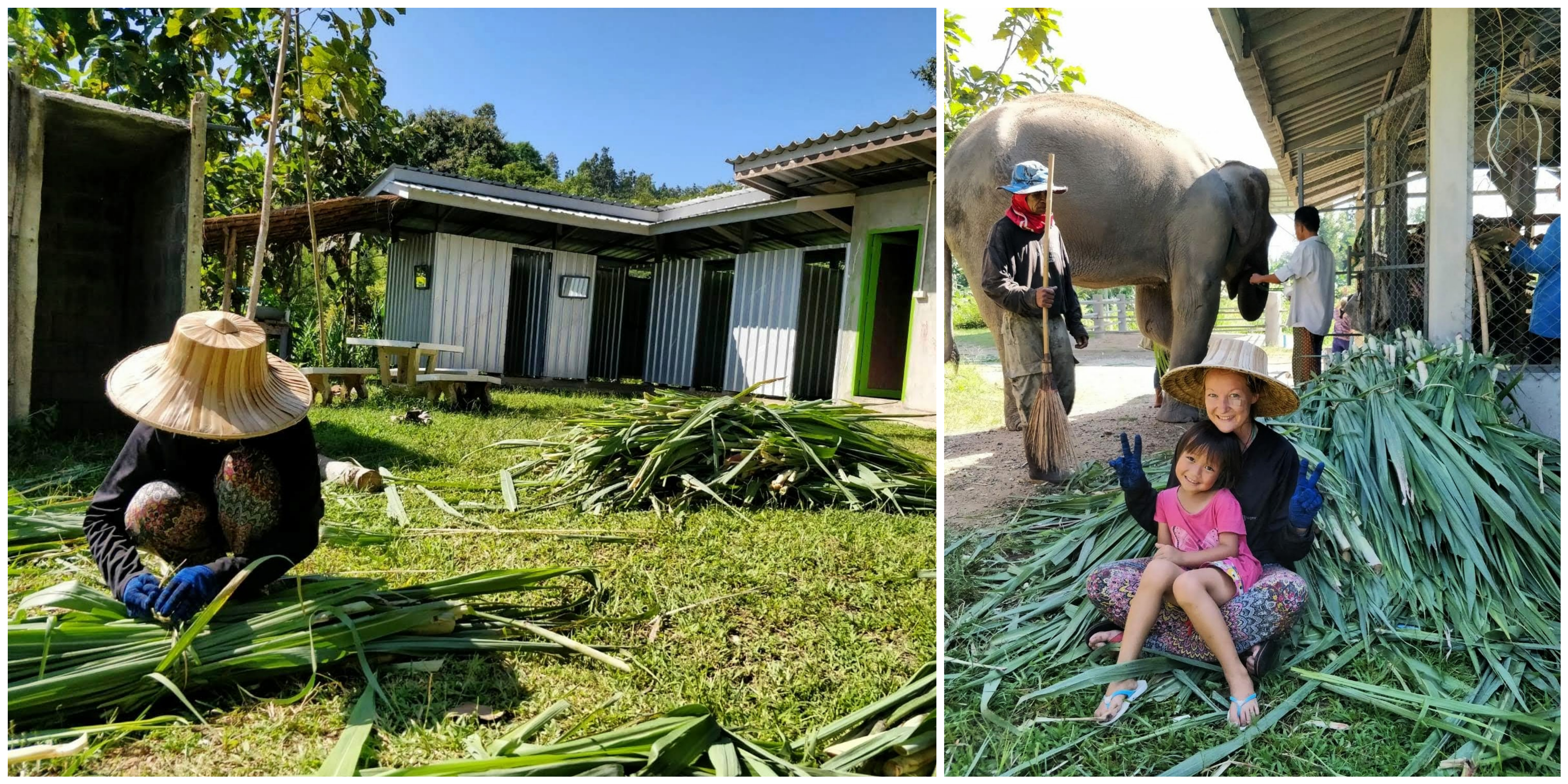
A large delivery of Sugar Cane arrived on the back of a ute, and we had to strip all the leaves, and bind it in bunches with bamboo ties to pack into the food store.

Tying bundles of sugar cane

Elephant Healthcare

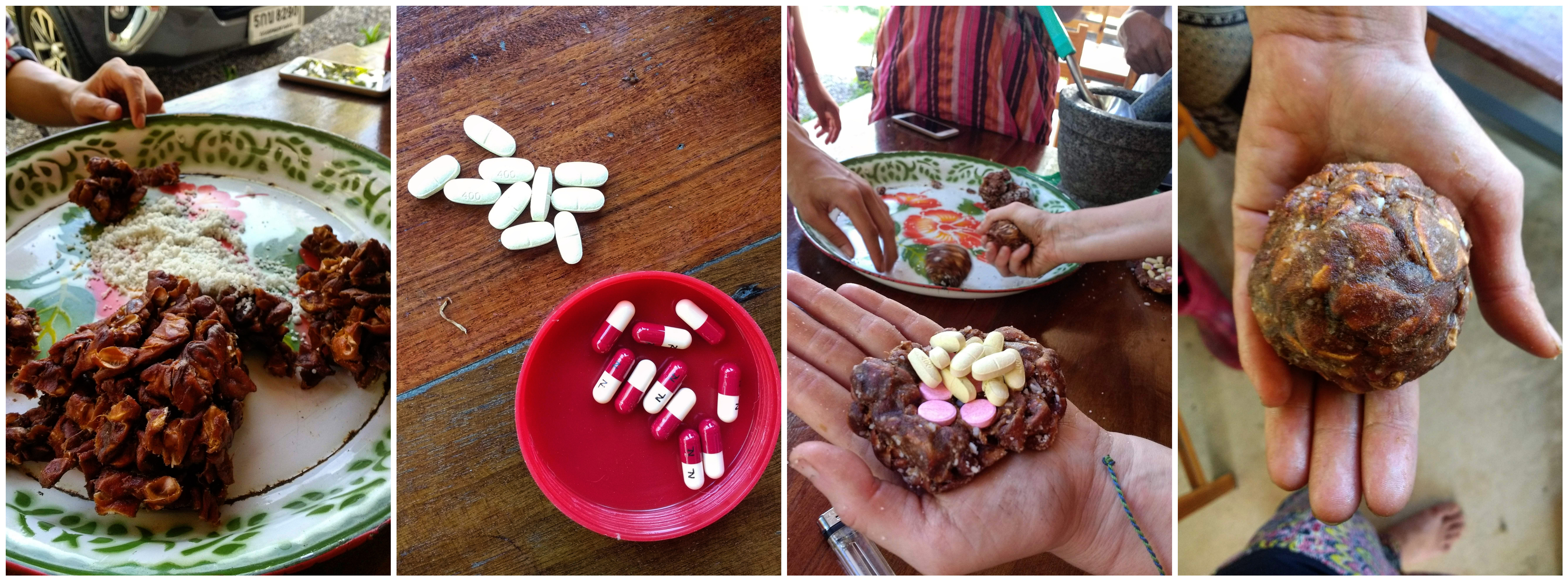
We learned how to make vitamin balls for the elephants, by crushing dried papaya and salt crystals in a pestle and mortar. We then squished the pulp together, placing deworming tablets and essential vitamins inside, and rolled them into balls, ready to feed the elephants.

Making elephant medicine

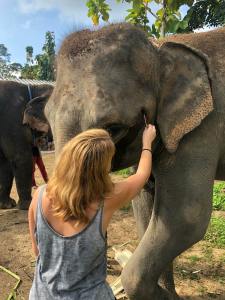
I was tasked with treating a tick wound on Bella’s cheek. Ticks are a common problem for elephants, and can leave big wounds, vulnerable to infection. I took a giant cotton tip, dipped in iodine, and Bella and I had a little bonding session over our matching cheek wounds!

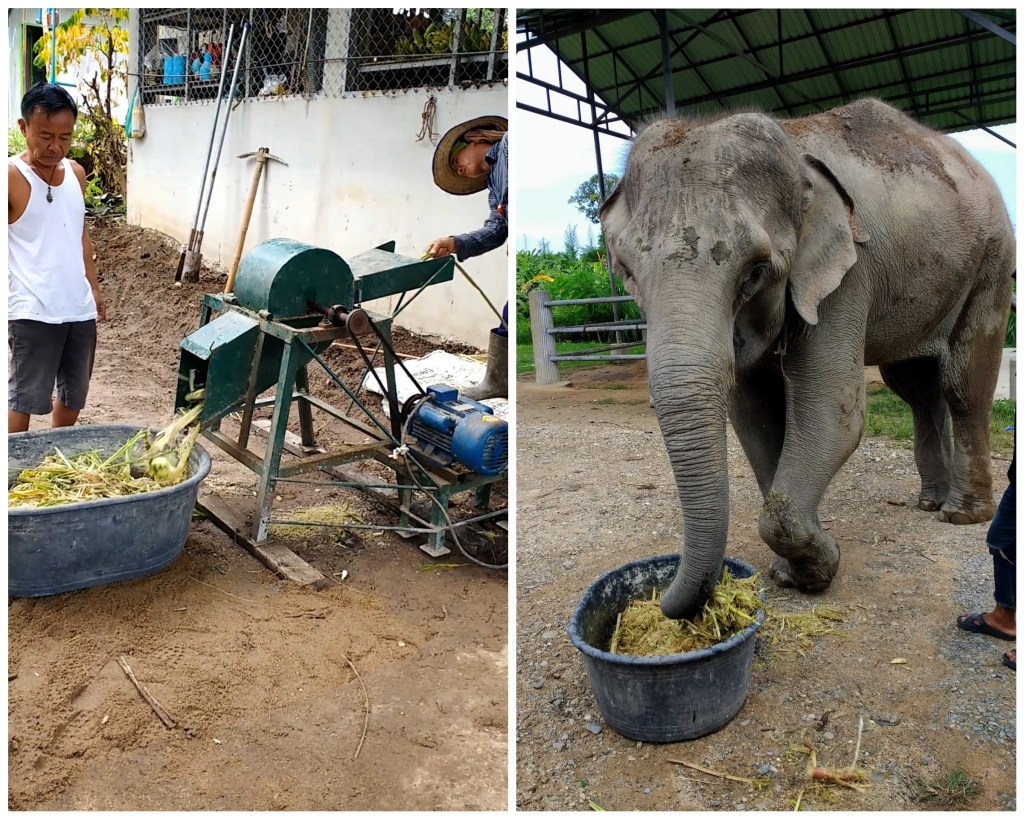
Elephants eat for up to 16 hours a day, but they have an inefficient digestive system, and are prone to digestive issues, so it’s essential their diet is balanced and full of fibre. We used an old shredding machine to make a fibrous mulch, with sugar cane, papaya, banana, salt water, and medicinal herbs. Bella was our taste tester; she took a mouthful with her trunk, and then threw the next trunkful on the floor and flapped her ears! I’m still unsure whether that meant she hated it or loved it!

Deep Cleaning

The enclosure area had a concrete floor, which had become covered in moss over time, making it dangerously slippery for the elephants. We spent two mornings scrubbing it clean with caustic soda, with Alex’s help, and were rewarded with pancakes from the village later!

Working in Rice Fields

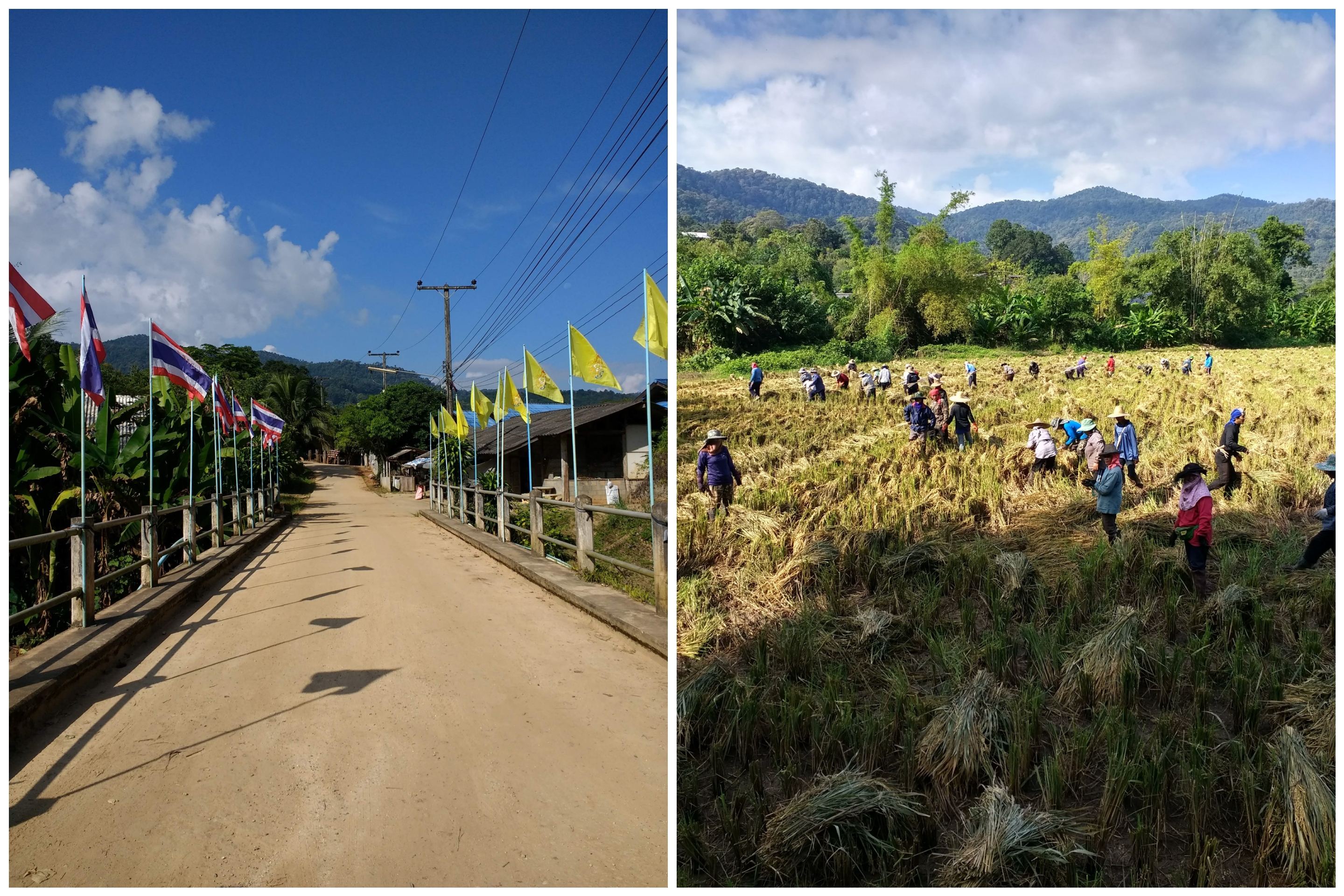
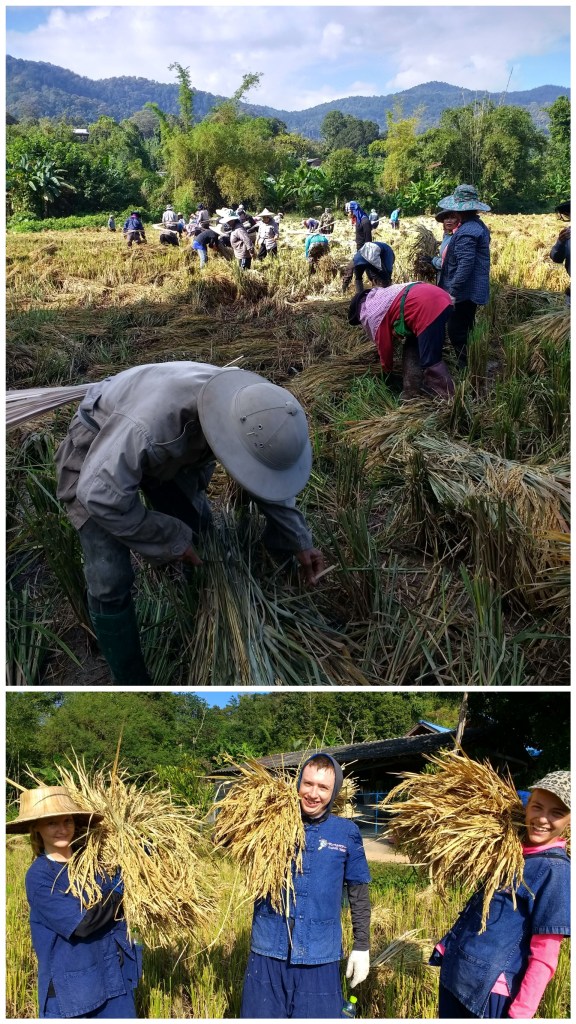
One morning after breakfast, we piled into the trailer and Alex drove us to the nearby village “Ban Iek”. The jungle thinned out, and we crossed a bridge lined with Thai flags, until we saw dozens of people all working in the rice fields, on a green back drop of mountains.

Ban Iek Village, San Pa Yang

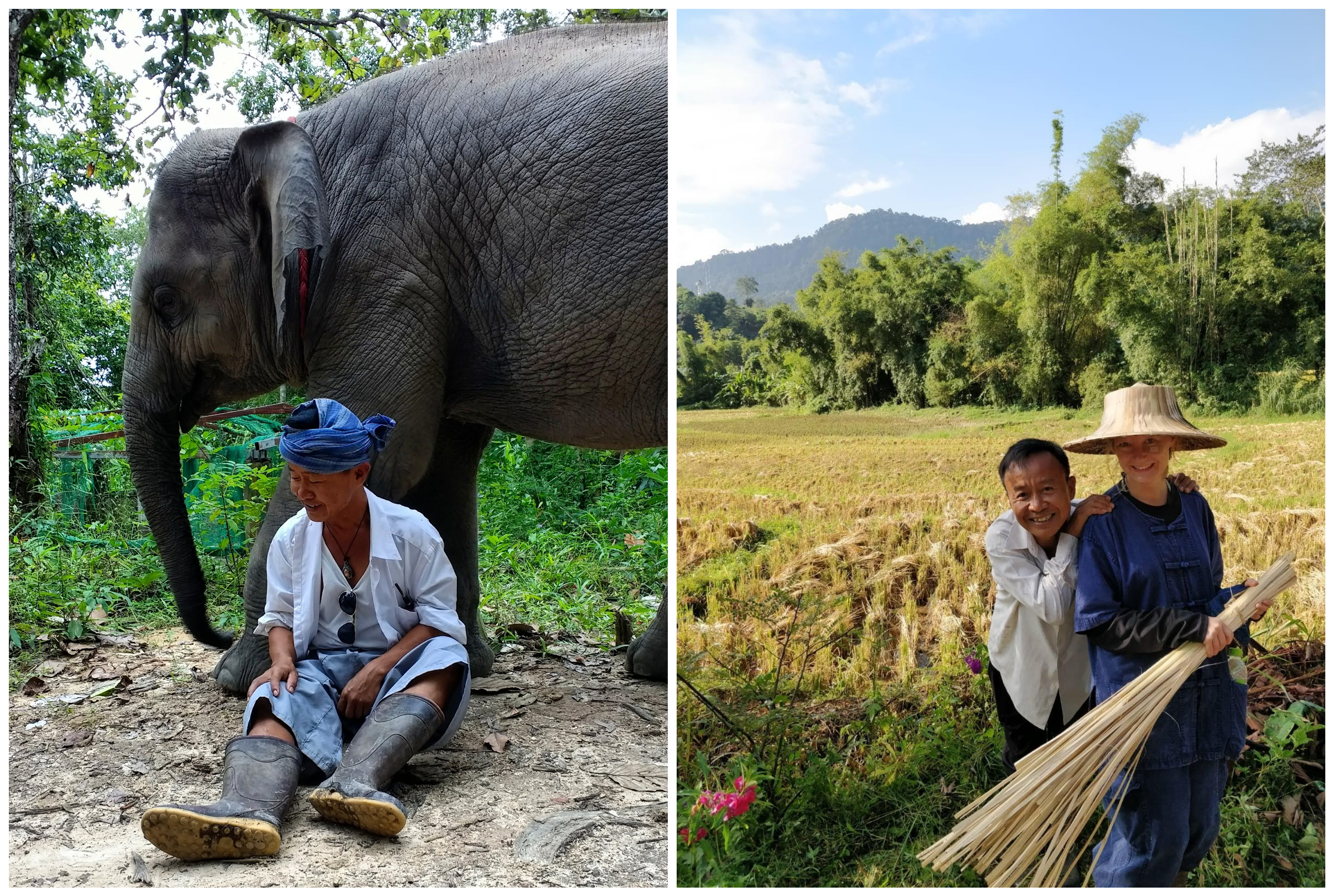
We were each given a bunch of long bamboo ties, and shown how to gather the pre-cut rice bundles and tie them efficiently, though I’m not sure we were very efficient or helpful to the cause! Everyone was friendly and good humoured, keen to help teach us, and laughing at us every time we got a boot stuck in the thick, wet mud! They taught us to stomp down on the rice stalks and use them as a foundation to stop ourselves sinking.

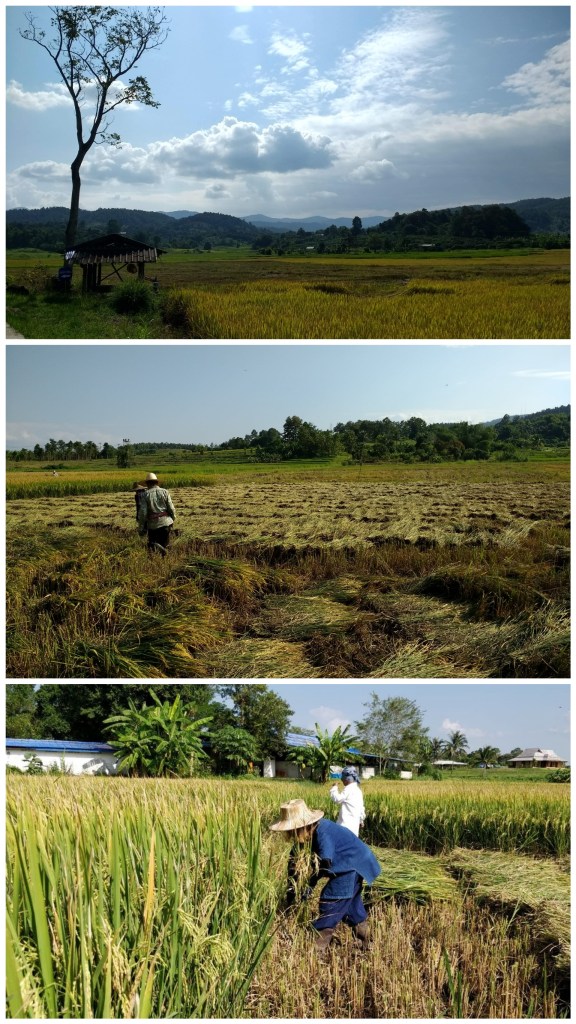
Another day, Alex brought us to another beautiful location, an independent rice farm, where we helped a couple cut the rice from their fields, using traditional long scythes. It was very hot work, but between the 5 of us, we got the job done.

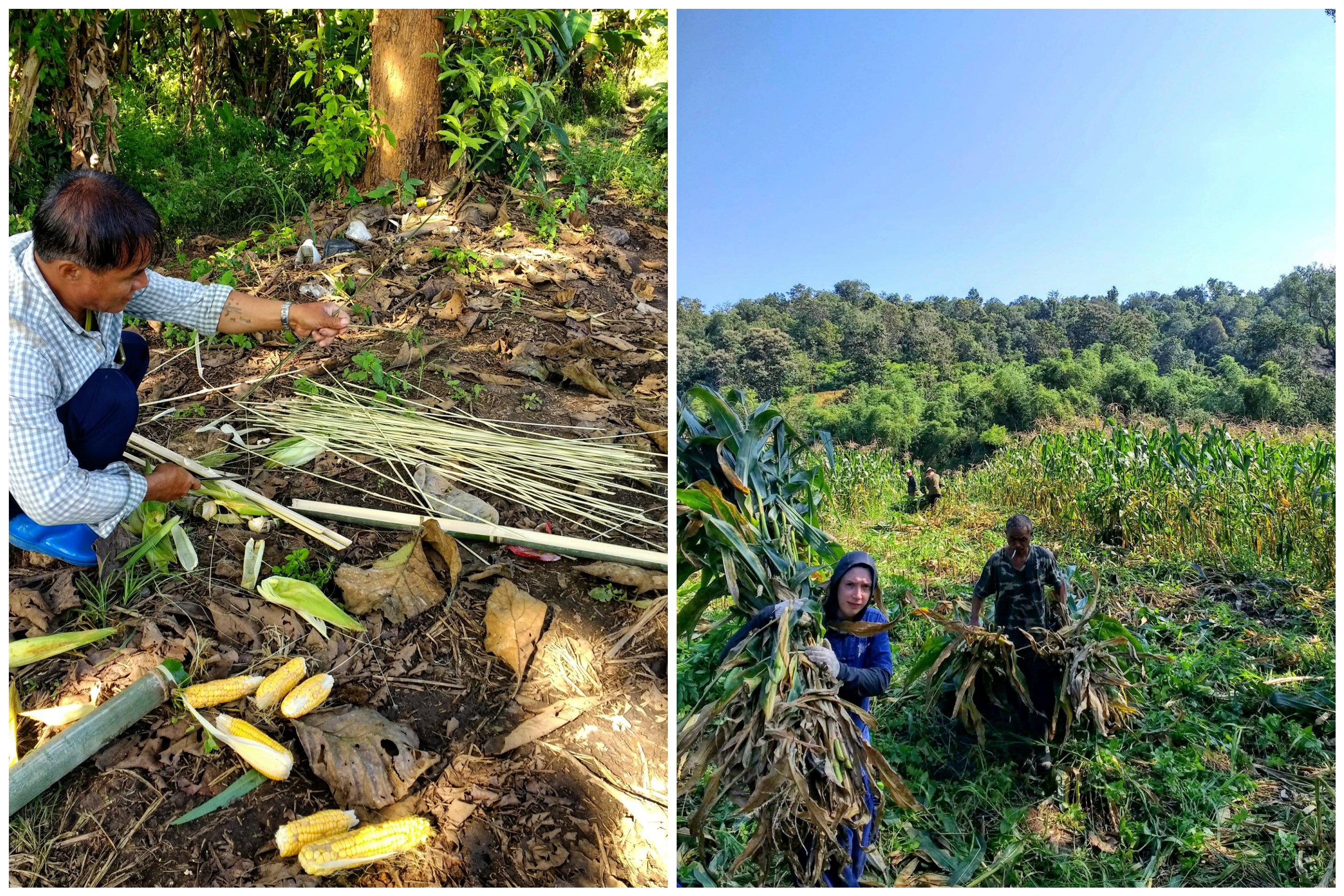
Harvesting Corn

Making bamboo ties / harvesting corn for food

Landscaping the Park

The Elephant Retirement Park is a constant work in progress, and one of the things they were raising money for was extending the food store. We helped in levelling the ground by hand, preparing it for laying foundations. We also planted herbs and shrubs, for decoration & to expand their renewable resources onsite.

Elephant Walkies

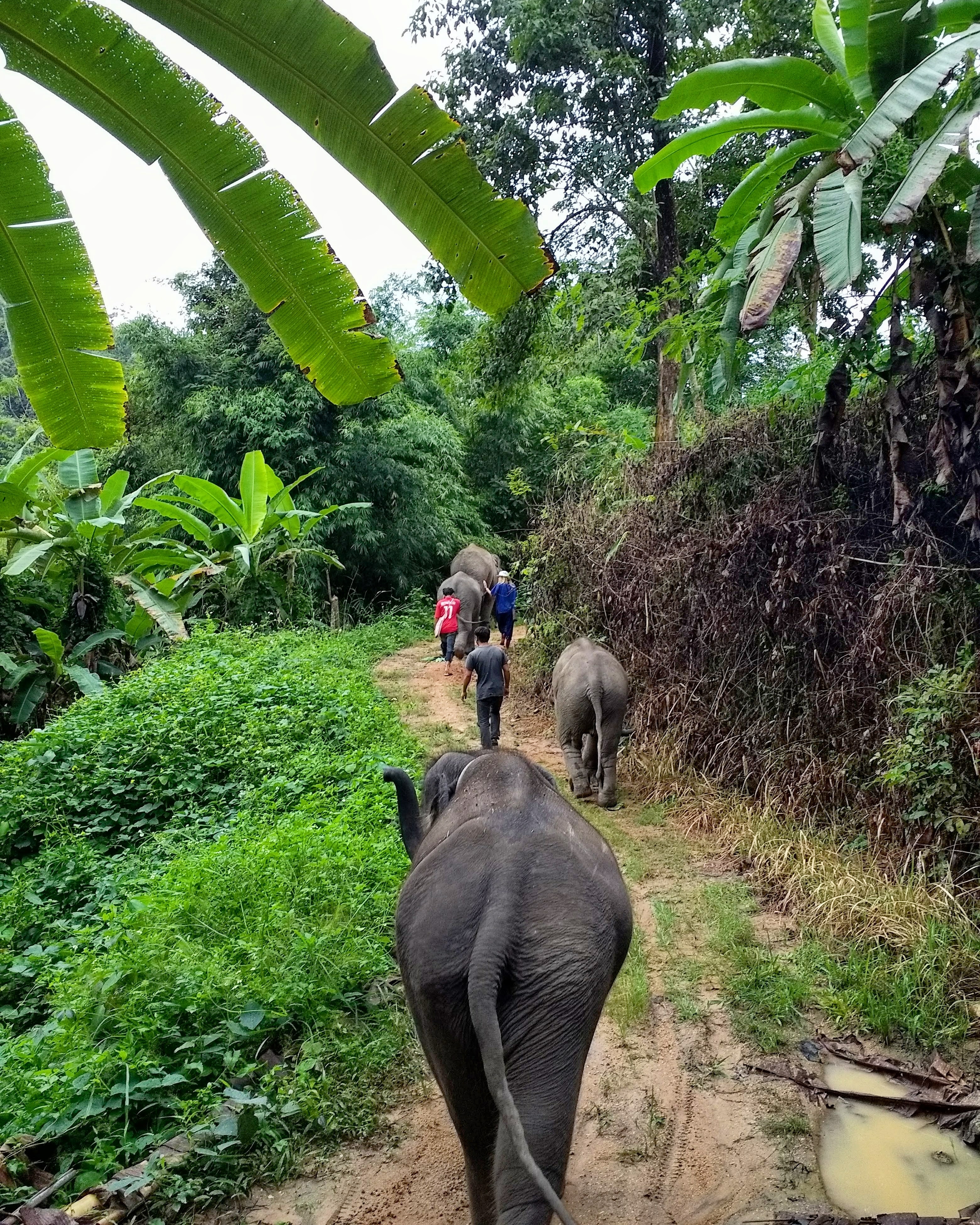
The elephants know, just like dogs when it's time for walkies. They lift up their trunks and frolic up the driveway to the front gates. The first part of the walk follows the dusty road, so we surround the elephants & make ourselves visible to any traffic. We are reminded that you mustn't stand behind an elephant as they don't have good peripheral vision, and if you startle them you'll suffer a hefty kick or a whip from their wiry tail. 
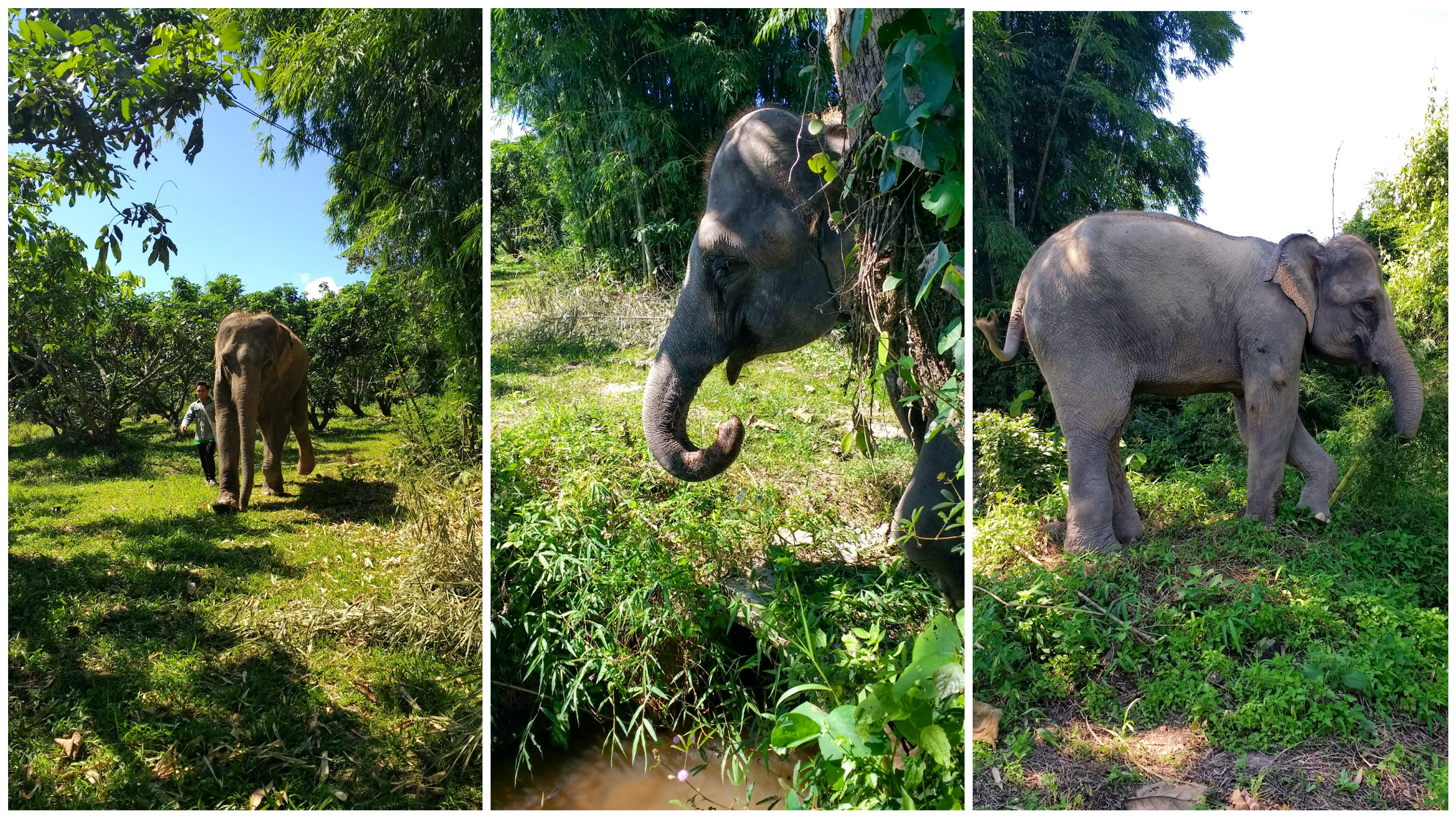
The road leads into the jungle. The woodland is immediately thick and humid - the elephants know the way, and help themselves to the vegetation. There are farmers who live on the outskirts of the jungle, their crops backing onto the footpath where the elephants walk. The mahouts have their work cut out, trying to distract the elephants from the fields of corn, but they are intelligent creatures, and of course, they never forget. The mahouts break off an ear of corn to try and entice the elephants away from the crops, but the distraction doesn't last for long, and there's a five minute pandemonium with a group of naughty, stubborn elephants. Despite the fact it's a public path, Alex tells us it's a worry for them, and is a growing difficulty all over Thailand, since humans are occupying more and more space, encroaching on the elephants' wild habitat. The farmers here have already complained, and if there are more complaints they run the risk of turning it into private land, taking away a lot of freedom for the elephants here.  
   
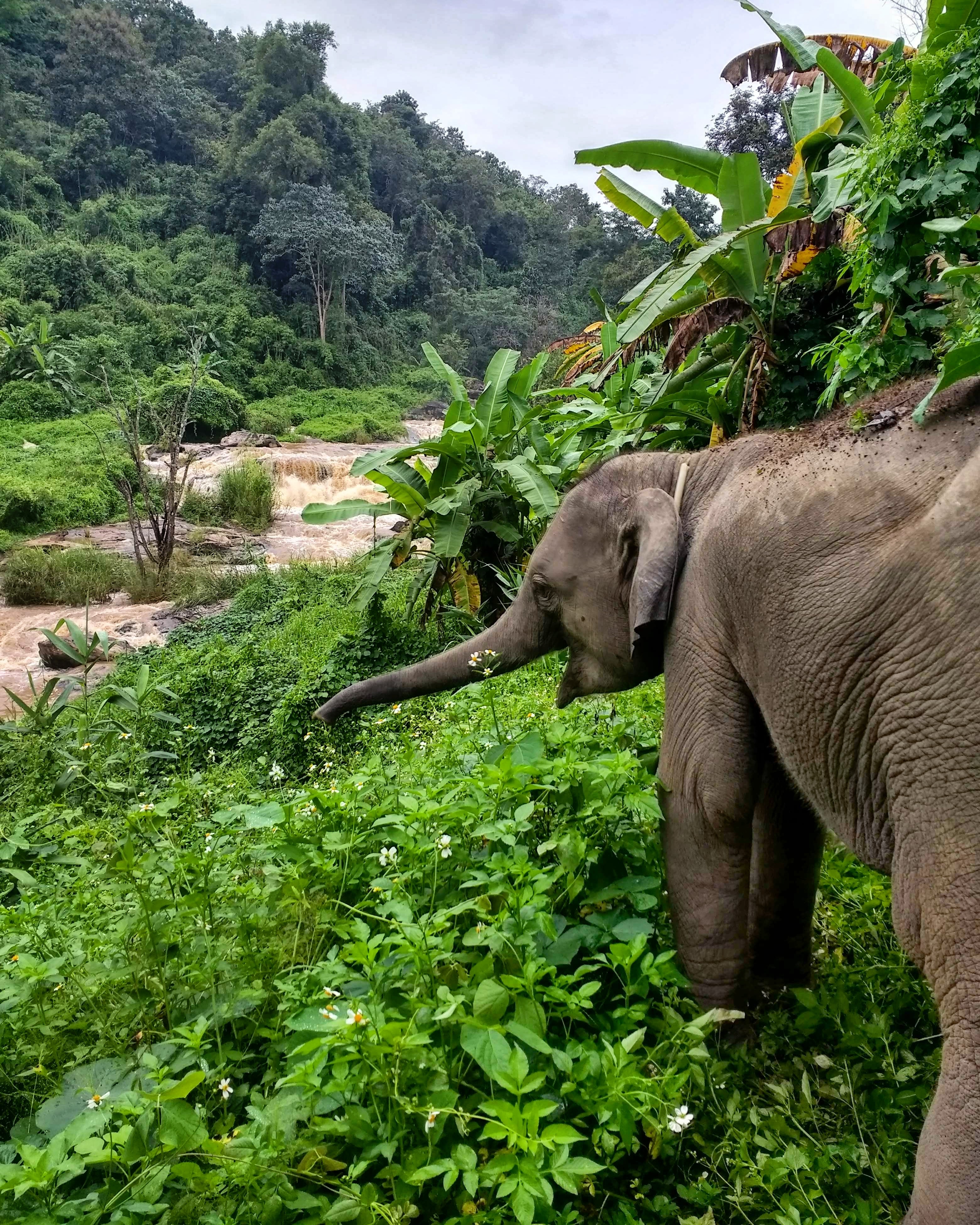
The jungle path grows wilder and less inhabited, with banana trees dotted around that the elephants love to munch. The path winds upwards and comes out on the high banks of an enormous river, with cascades the colour of chocolate tumbling down from the jungle beyond. Usually the elephants will swim in the river, but heavy rain has made it full and roaring, and so the elephants stay clear of it, seeking out bananas instead. 
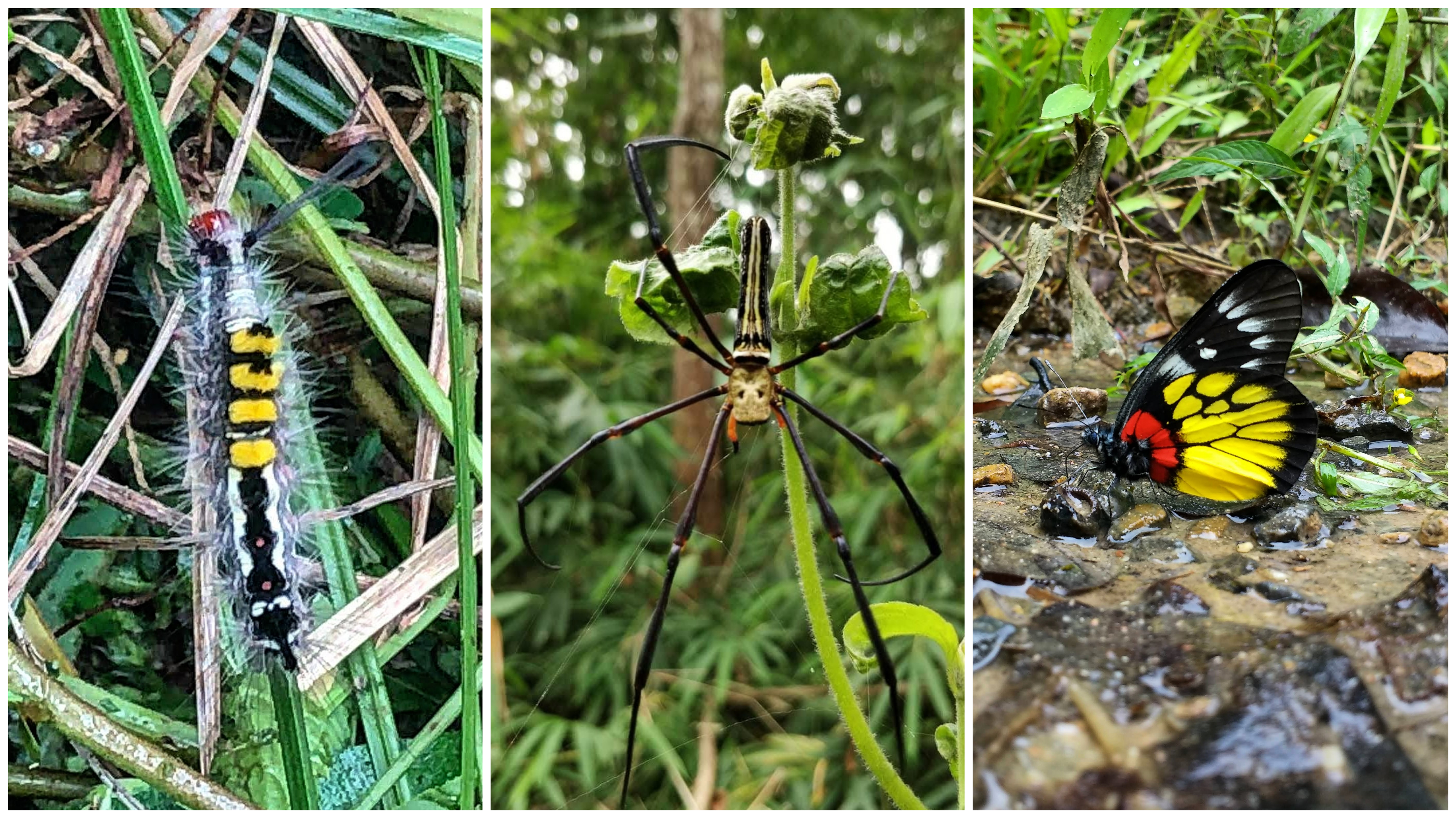
Continuing, the path loops, re-entering the sanctuary through the back. We see some impressive bugs - dung beetles, butterflies, and a giant spider strung up in the tall grasses. I spend a lot of the walk dodging the cheeky twins, Ping & Tong, who keep trying to make me into an elephant sandwich! We come to a stream, which Bella decides she wants to drink from, and when an elephant decides something, you can't argue with her! She slurps water through her trunk like a giant bendy straw, framed by ancient trees and bamboo. 

Time to Relax

After a big day of learning and working hard, it was a luxury to have a hot shower, kick back on the veranda under the heat of the mid-afternoon sun, and crack open a can of Chang beer from the vending machine.

Chang means Elephant in Thai

The Temple in the Mountains

One particularly warm afternoon, Simon, Meli and I had just sat down, when Alex said, “Let’s go, I want to take you to the temple!” We quickly made sure we were dressed respectfully, (covering our knees and shoulders) and we piled into the trailer, beers in hand. It was about a 40 minute drive, climbing narrow mountain roads, winding through old villages, beneath the deafening hum of cicadas. Panoramic views and waterfalls passed by on each hairpin bend, until we reached the mountain-top village. A pack of stray dogs chased us through the enormous entrance archway into the precinct, and as we passed, a local monk in an orange robe shouted, “where are you from?” Meli, Simon and I all responded with our respective countries, and then Alex shouted “Thailand!” from the driver’s window, making the monk laugh.

Wat Phra Phutthabat Si RoiUbosot (Ordination Hall)

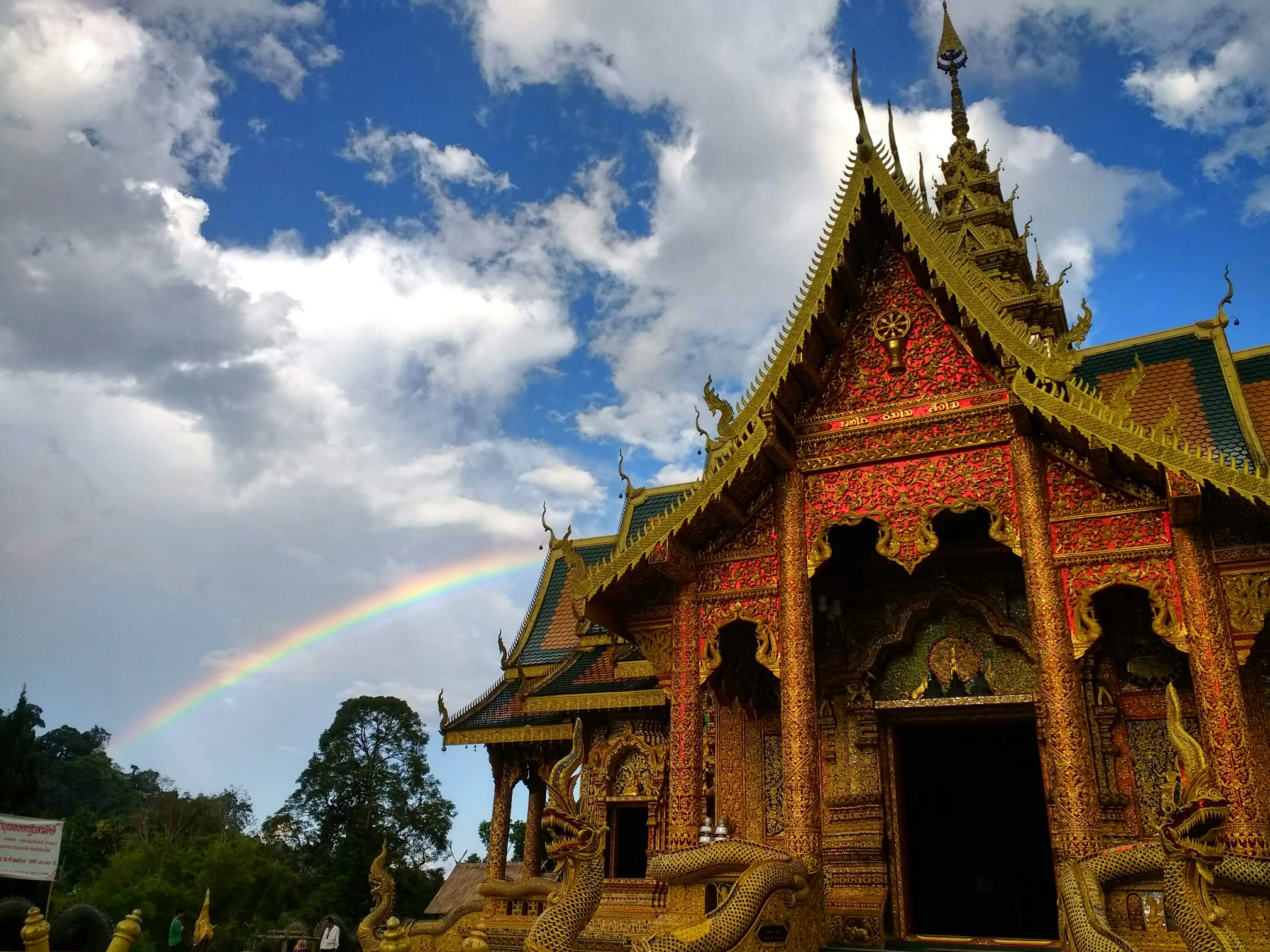
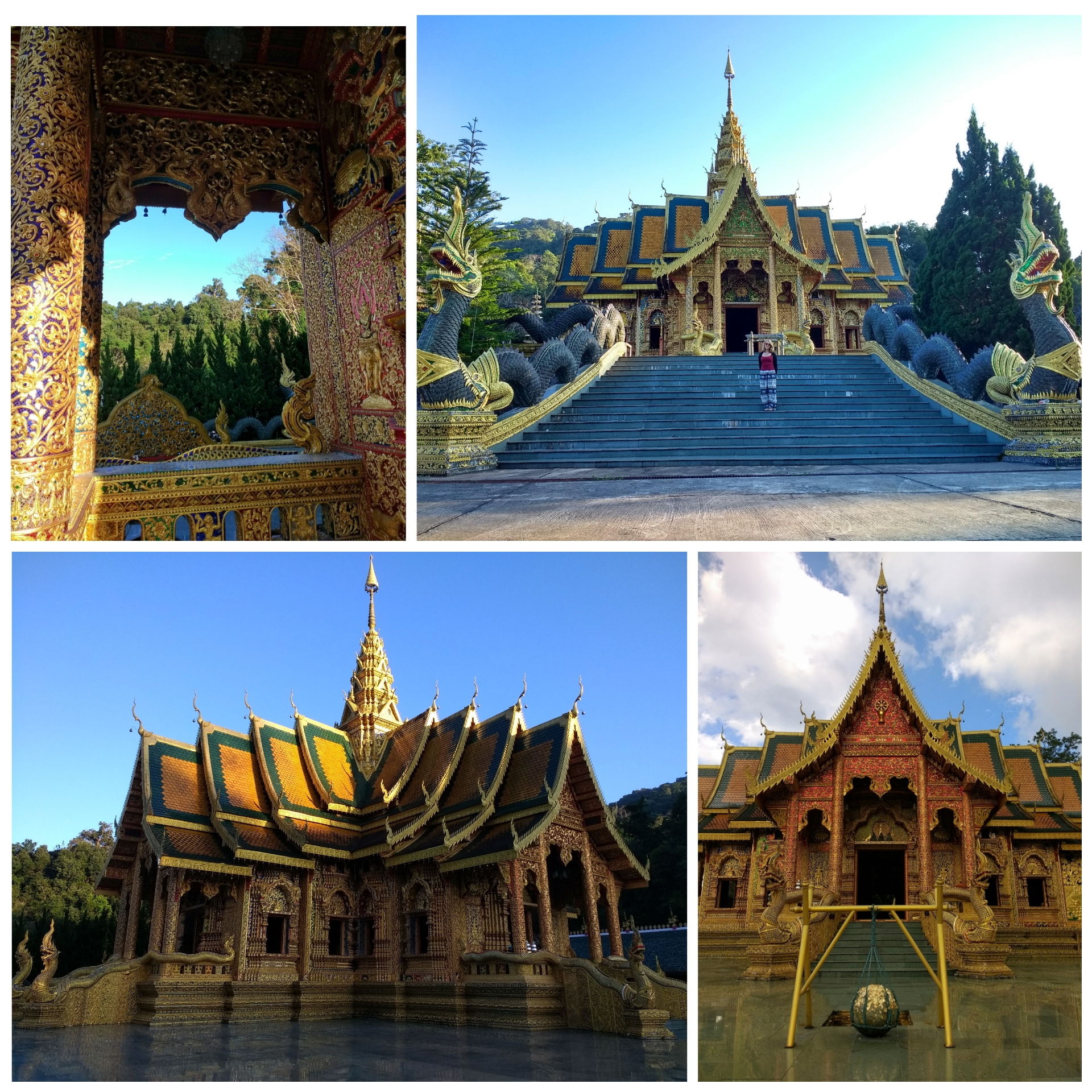
“Wat Phra Phutthabat Si Roi” is dedicated to the four sacred footprints of Buddha, and is said to be a perfect example of a Thai temple. We visited the ‘Ubosot’ or Ordination Hall, (place of mass worship and ritual ceremonies.) The architecture is incredible, with multiple tiers, smothered in jewels, and guarded by enormous, shimmering basilisks at every corner. It was very quiet, just the cicadas in the distance; the forest swaying gently, and a rainbow streaked the sky behind as we pulled up, adding to the atmosphere.

The Ubosot exterior

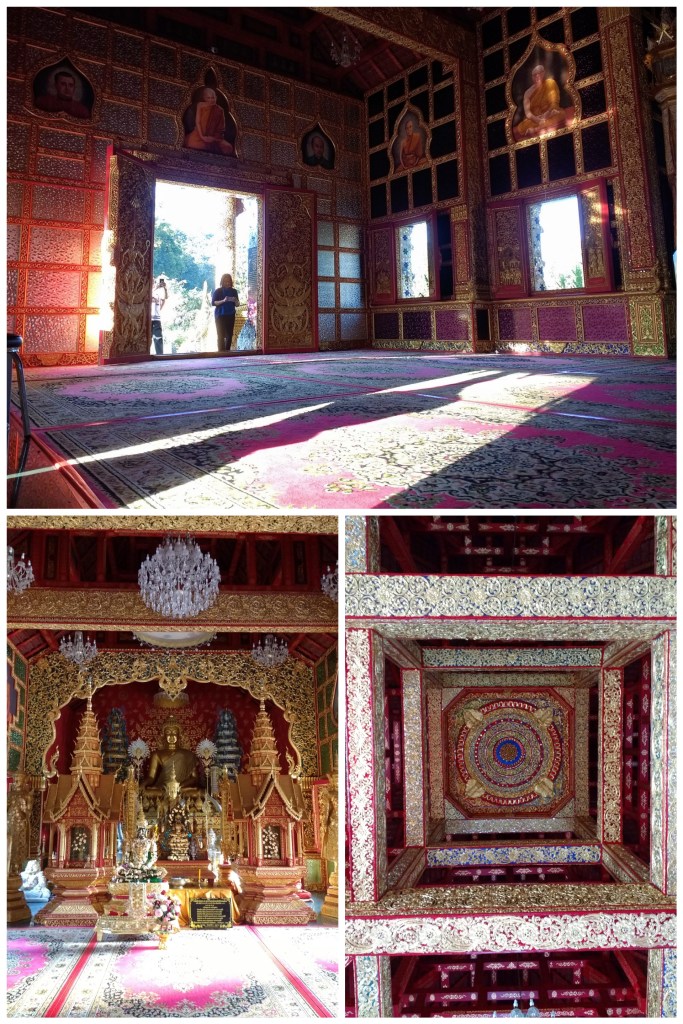
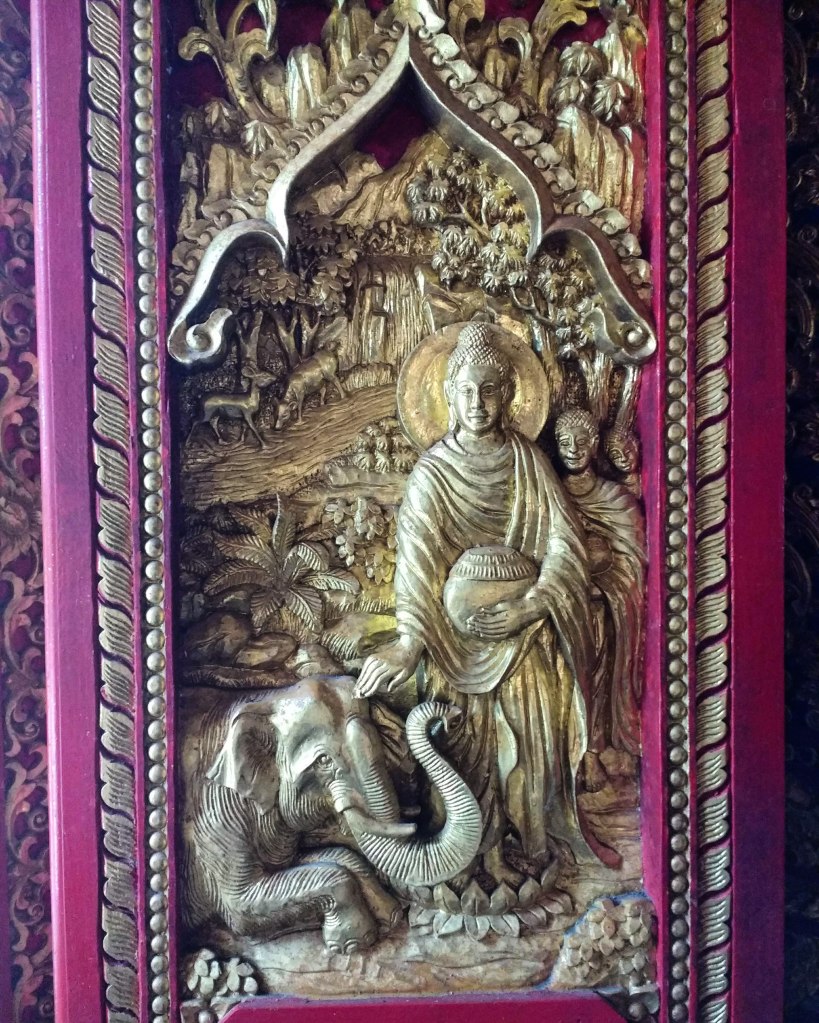
Inside was just as impressive, everywhere you looked, a thousand more intricate details. There were golden carvings on each of the windows of Buddhist figures, and Alex had brought us here to show us one in particular…

Nalagiri the Elephant

Nalagiri was a fierce elephant, deliberately angered & used as a weapon by jealous people. He was sent to kill the Buddha but when the elephant charged, he was stopped in his tracks by the Buddha’s belief in kindness and ability to suffuse all beings. Nalagiri the elephant lowered his trunk and fell at the Buddha’s feet, released of his anger. Alex told us of a later chapter he described as “Buddhist Lent”, when the Buddha spent three months in the jungle. Nalagiri remembered him, and stayed by his side during the Buddha’s exile. After three months the Buddha returned to his temple, and Nalagiri died of a broken heart.

Alex was filled with emotion; the importance of protecting elephants ran so deep and that resonated with us. He showed us how to ring the gong, and said a prayer before we went on our way.

Evenings of Leisure

Aside from making sure the elephants had enough food at dusk, the evenings were all about socialising, eating, drinking and having fun! Some nights Alex would take us to the market to buy ingredients for dinner, and then we’d all cook together back at the park kitchen.

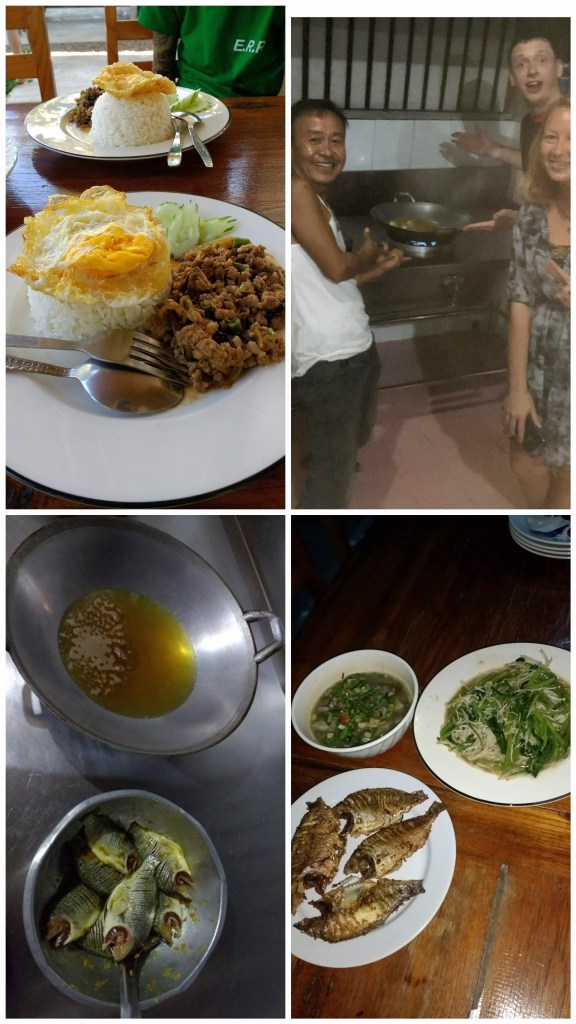
We learned how to cook traditional home dishes: fried black fish, garlic & onion salad, tomato, chilli & fish sauce soup, and rice noodles, using a pestle & mortar and a wok. We toasted our dinner with a tot of Hong Thong Whiskey! Also pictured is a classic Pad Kra Pao (Thai Basil Beef) which we had for lunch.

Other nights we had Pad Thai with the locals in the village, or street food banana pancakes. We were introduced to Alex’s friends and spent an evening drinking Leo & Chang beers in a local bar, with dried fish and chicken feet snacks! We even went to a party with an exquisite buffet, dancing ladies, many drinks, and a strange raffle where everyone won cuddly plush elephants!

Party Food

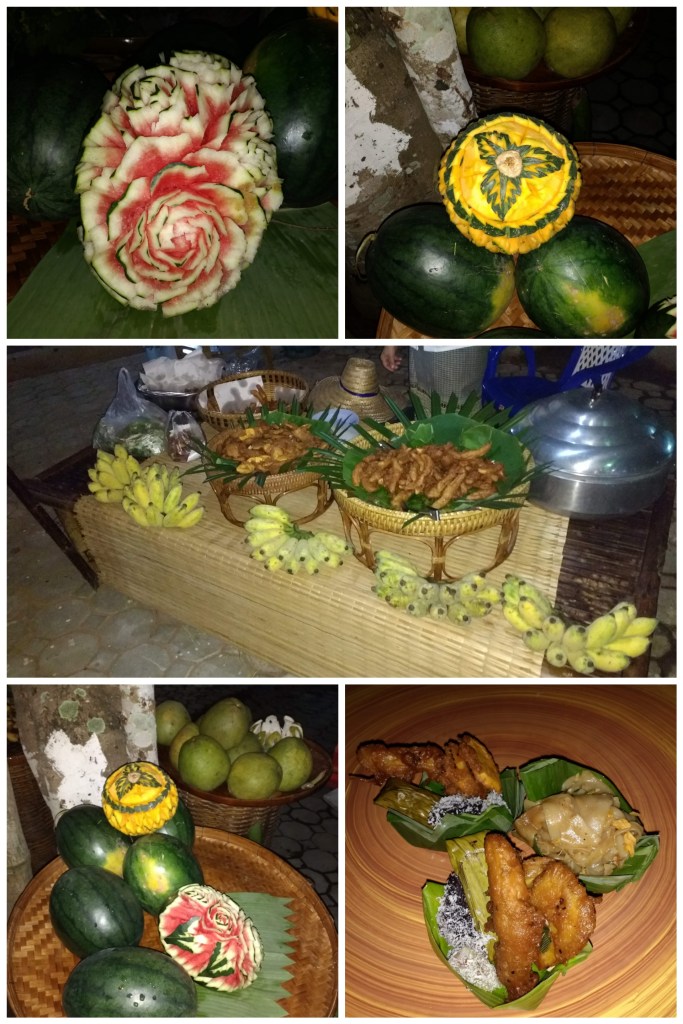
Fruit carving is an ancient Thai tradition, which was once performed exclusively for Royalty, nowadays they can be carved for any special occasion. Other treats are fried banana, Pad Thai, and coconut, sugar & rice starch sweets, served on banana leaves.

Tour Guide for a Day

At the end of our E.R.P experience, myself, Meli and Simon led the half-day tour! We spent the morning touching up on our elephant knowledge, ready for the tour bus to arrive at 8:30 am. We did an introduction, talking about the park and its efforts in protecting elephants, held a little Q&A session, and then took the guests to meet and feed the elephants. We got the group chopping sugar cane with machetes, (demonstrated by one of the real tour guides) fed it to the elephants, then took the guests down to meet Bella who was chilling under the shade. There were a lot more questions about Bella, her injury, and her mothering instincts towards Lanna, which I really enjoyed as I felt I’d bonded well with Bella. It felt terrifying and awesome all at once; we were supervised the whole time, and the staff jumped in whenever we needed help. Then we all went to the mud bath and pool for a play with the elephants.

Leaving was hard. We’d been like a family for a short time, and after going round the park to feed each elephant a pumpkin as a parting gift, Alex blessed us and our families with good luck in Thai. We rode the stuffy mini van back to Chiang Mai old city, feeling a little bit sad, like I’d acquired a lifetime of new knowledge and fond memories, but it was all over in the blink of an eye. Someday, I will visit the elephants again.

In Loving Memory of Bella