
A real desert island, complete with a tropical lagoon and reef oasis, sits around 95km off the coast of Bundaberg in Queensland. Lady Musgrave Island. Part of the Bunker Group, this is the southernmost section of the famous Great Barrier Reef and plays host to a magical menagerie of sea life.
Ok, David Attenborough voice aside, this was my favourite Great Barrier Reef experience so far. Taylor and I booked the ‘Lady Musgrave Experience’ Day Tour for late February, and I was not disappointed! Between January and March is turtle hatching season, and many mother turtles are still laying their eggs through February. The tour did get cancelled on the day I’d booked it for due to dangerous offshore wind conditions (went to the Bundaberg Rum Distillery instead – never a bad thing!) The tour was easily rescheduled for the following day, at no extra cost, and went ahead as planned.
6:45am: Checked in at Bundaberg Port Marina
7:00am: Boarded the “Reef Empress” ready for departure
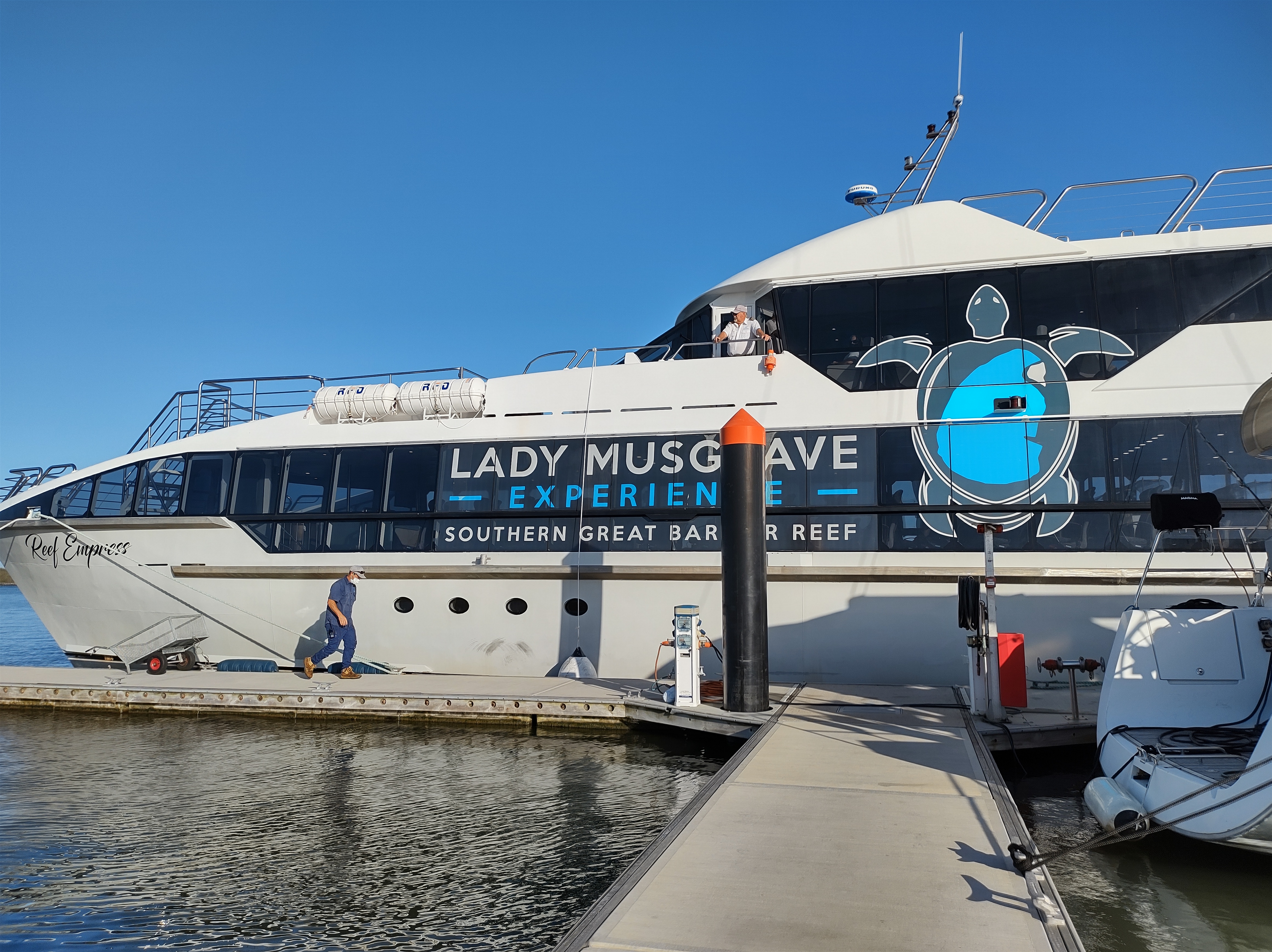
The morning was warm, full of promise, with the first blue sky we’d seen in days. All passengers were assigned to a group as we boarded the boat; Turtles, Clownfish and Dolphins – we were Dolphins. This was simply for the rotation of activities once we reached the island. The crossing was a rough 2 hours, the majority of passengers needed paper bags, clutching their heads and holding on for dear life. We took our ginger tablets and sat watching the crew running around cleaning patches on the floor and disposing of used paper bags. They were incredible, remaining upbeat and cheerful the whole time.


2 hours later, we pulled into a big semi-circular reef lagoon, with the gold and green island in the centre. Firstly, I need to talk about the colour of the sea. You couldn’t even paint it. It was blue, yes, a light, bright blue with stripes of turquoise and green wherever the reef lay below, but it was iridescent, backlit if you will, shining like fluorescent light!
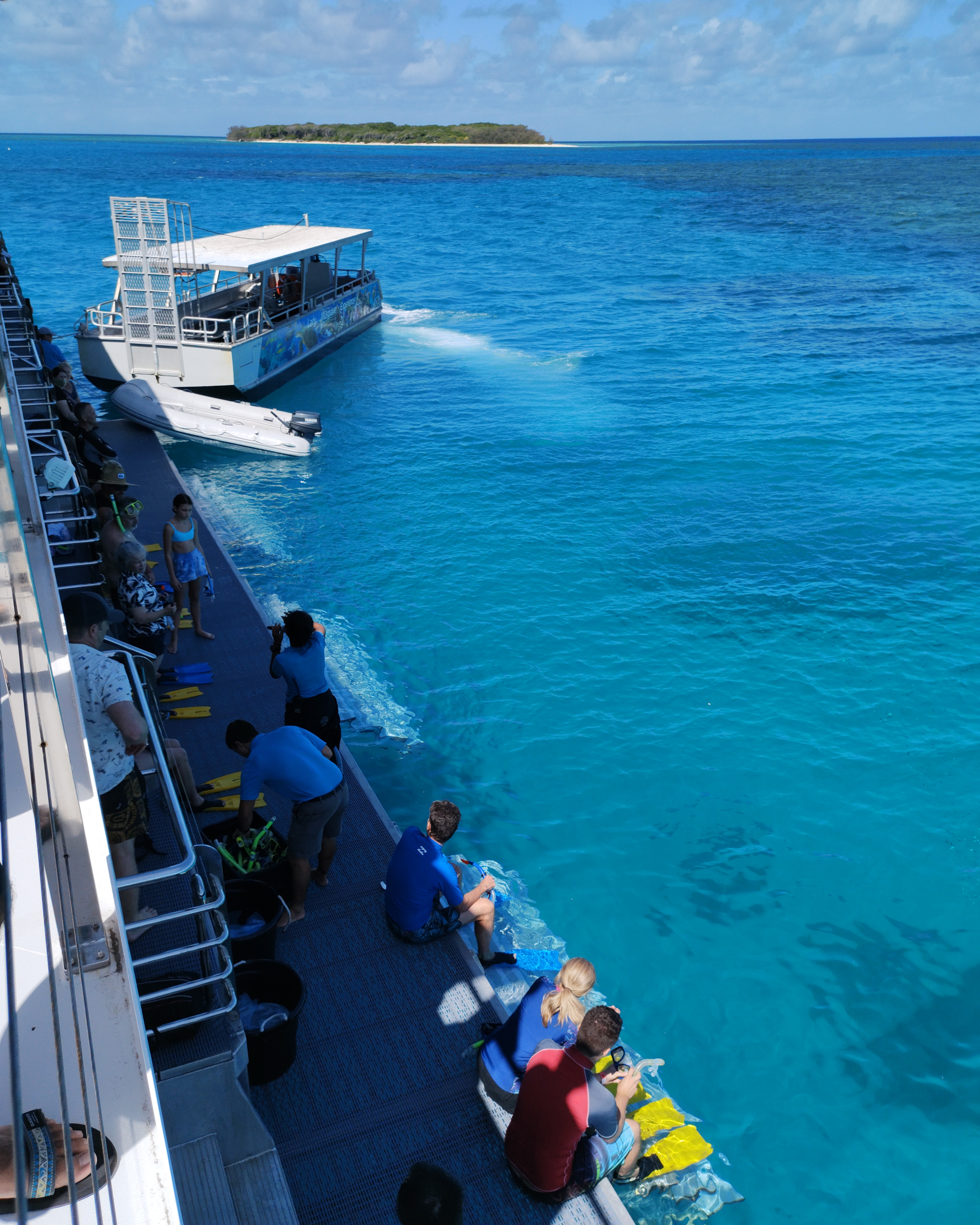
Anyway, we stepped off the boat onto the enormous three-storey pontoon, (with an underwater viewing room below deck, and glamping style beds on the top deck for the overnight experience) and the first thing I saw as I gazed out across the reef was a turtle! It was just floating on the surface about 20 metres away, its shell all clean and beautiful.
The Glass-Bottomed Boat
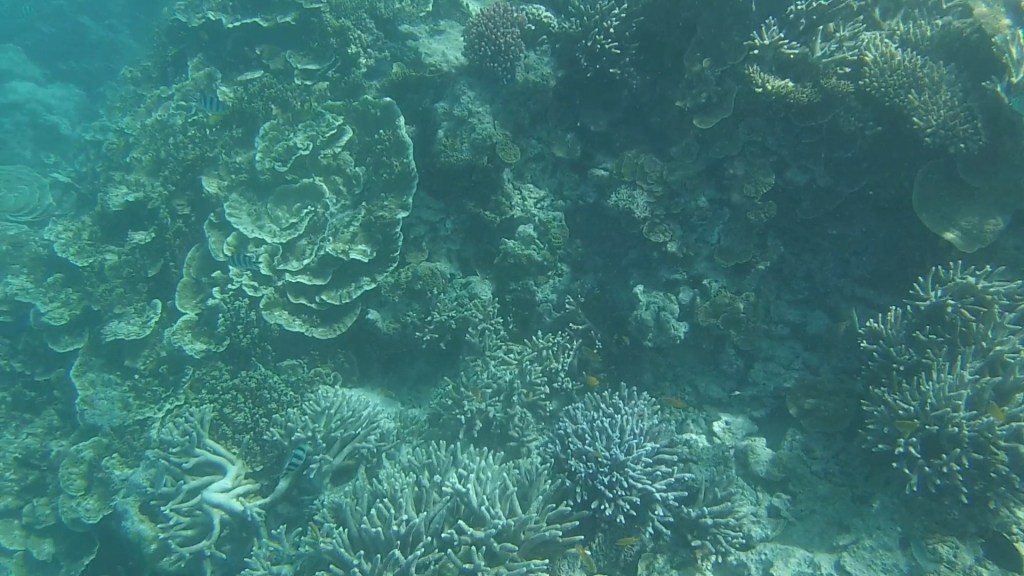
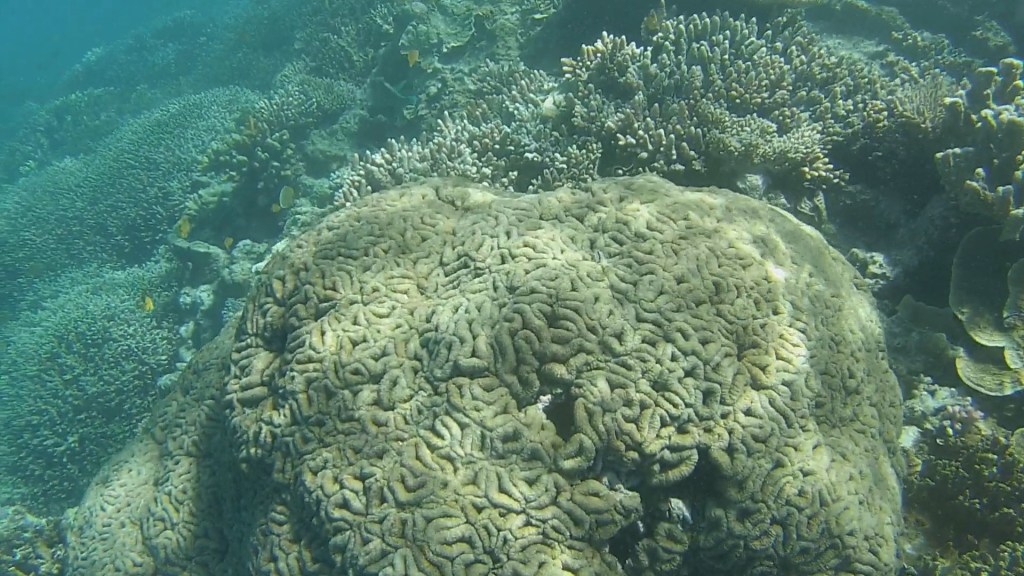
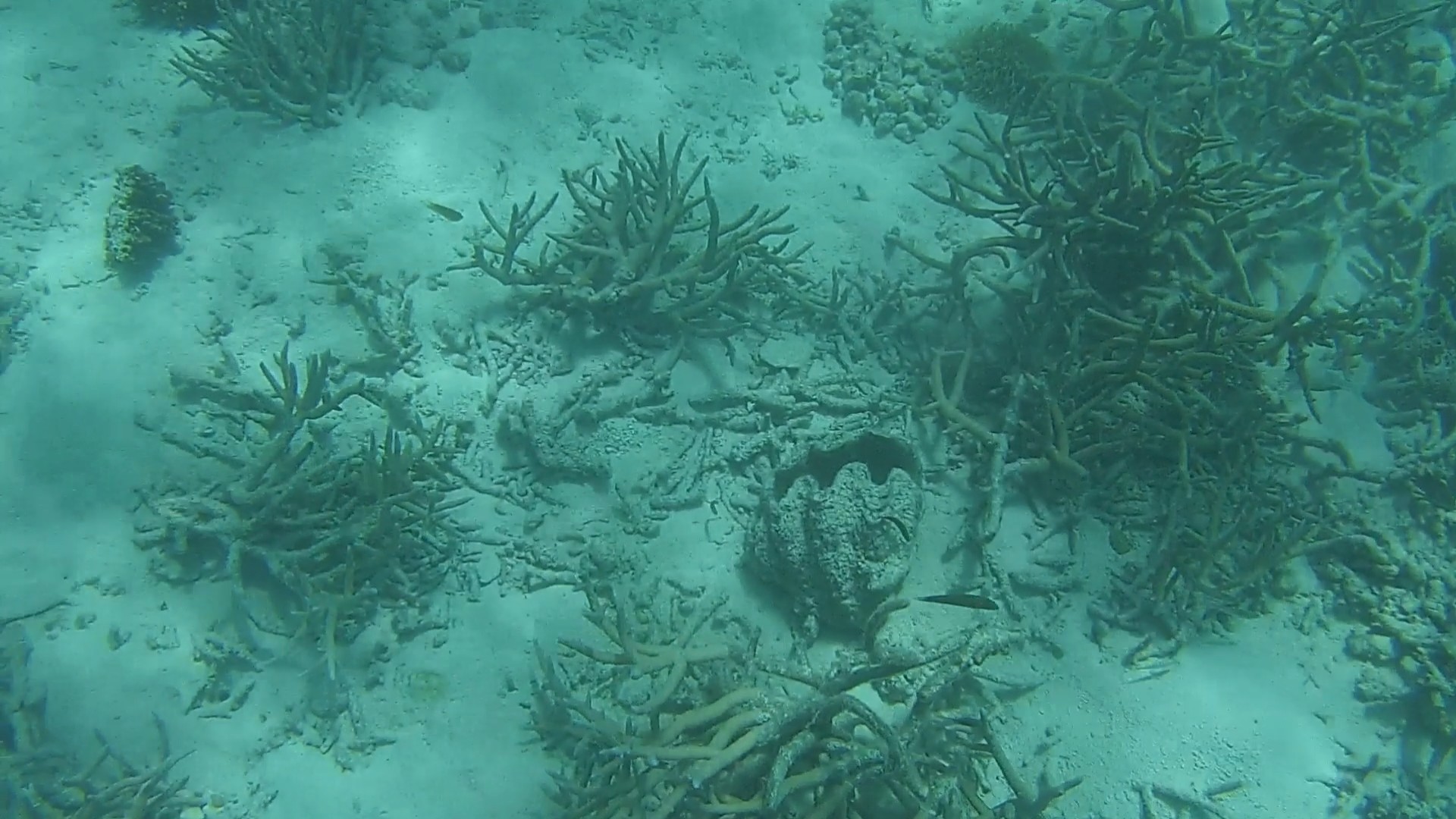
After a brief snorkeling run-through, the 3 groups broke off. The Dolphin group were on the glass-bottomed boat first. Our guide was Tyson, and he floated us over the different types of coral: staghorn, brain, boulder, plated, finger…. As he was explaining that the white tips on the coral is actually regrowth, not bleaching, a Brown Booby Bird swooped low next to the boat, majestically stealing our attention.
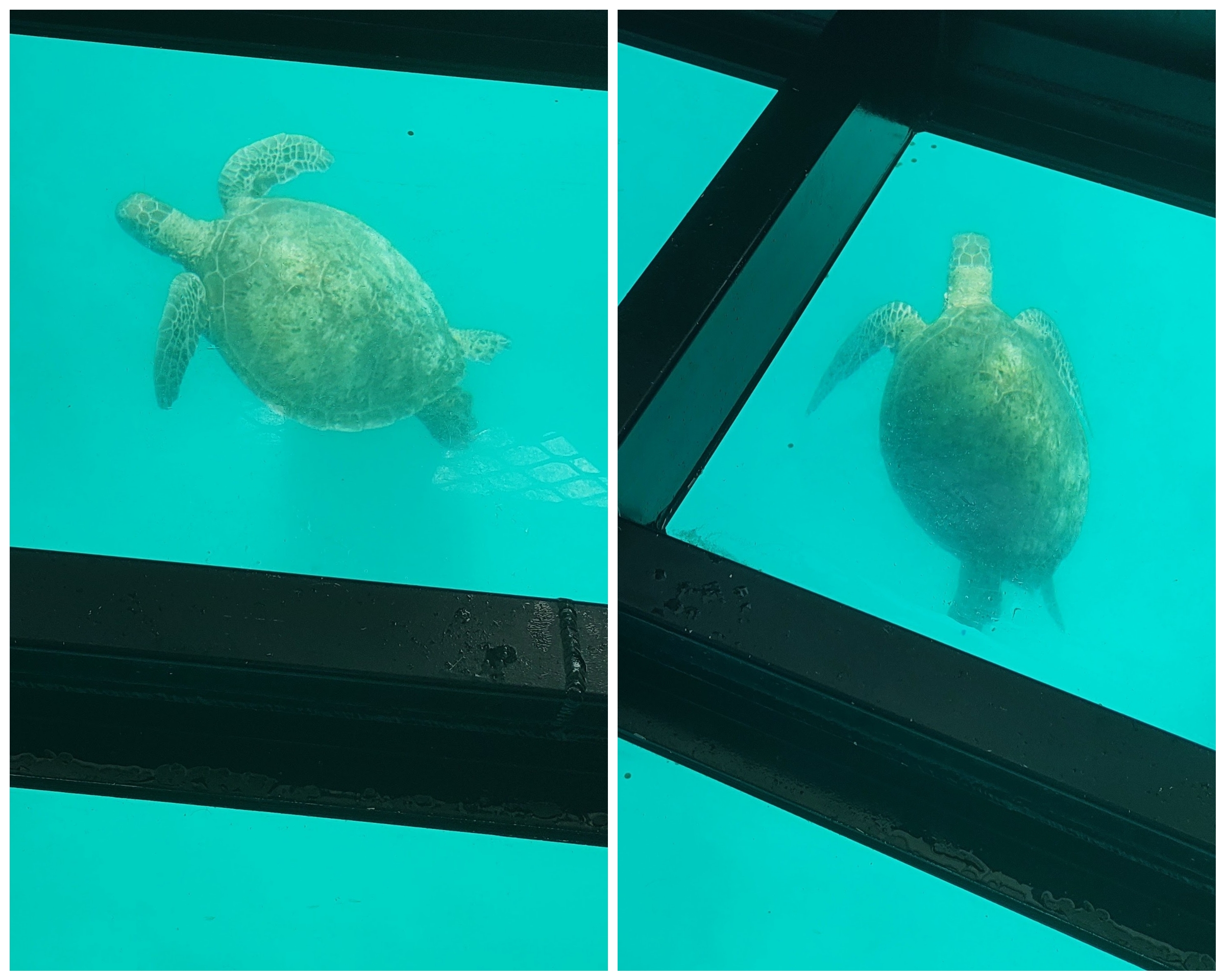
Next, Tyson steered us over a ‘turtle cleaning station’, a part of the reef where little fish nibble all the algae off the turtles’ shells. We could see the silhouettes of 4 turtles being cleaned far beneath the surface, and as we drifted over, one swam right up to the glass, giving us all a clear glimpse of its beautiful pristine shell, before popping its head up right beside the boat! Tyson said that was the closest he’d ever seen a wild green turtle and was pretty stoked himself!
Lady Musgrave Island
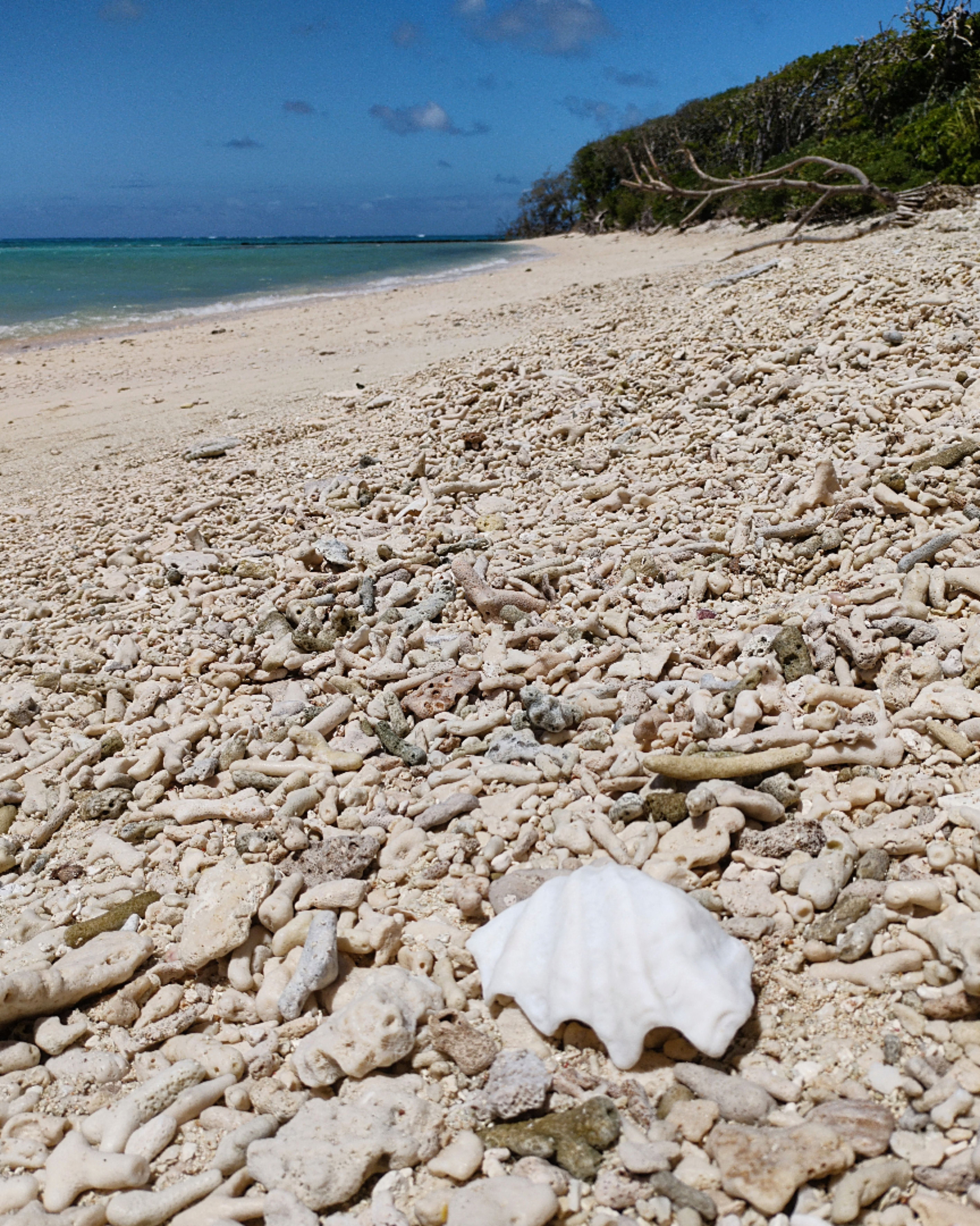
We pulled up on Lady Musgrave Island, where another guide, Jordan, met us for a walk around Capricornia Cays National Park. The sand is white, broken coral, with flecks of pink, and is so sharp you are advised to wear footwear at all times. One of the deadliest creatures of the ocean can be found on this beach – Cone Snails, which might look like a pretty, pink shell to collect, but the creature has a tiny barb that it fires through an opening in its shell, which has the ability to kill a person in half an hour. It wouldn’t be Australia if something wasn’t trying to kill you…
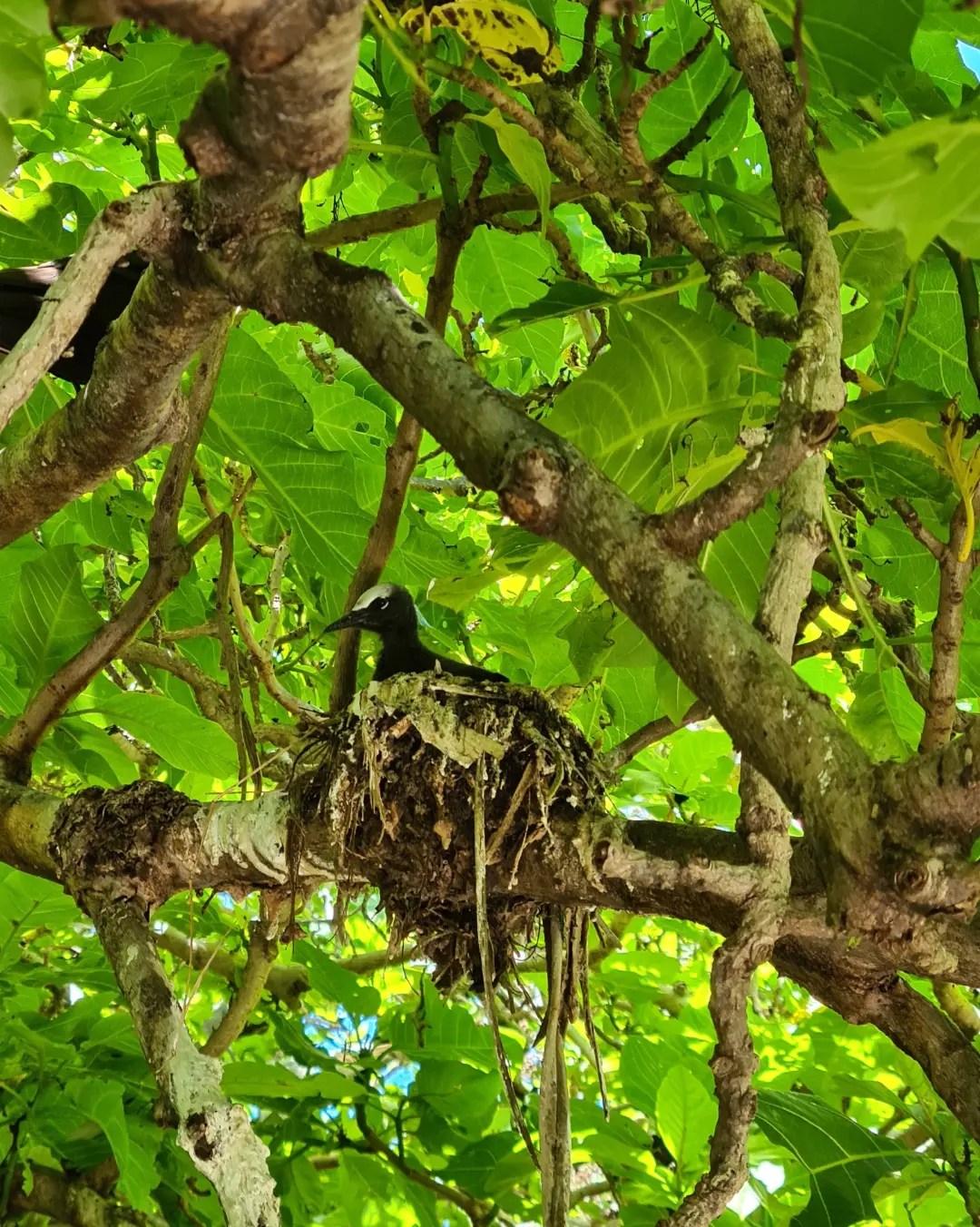
Behind the beach is a dense canopy of green Pisonian Grandis trees, and then you notice the birds. I’m not sure if the noise or the smell hits you first, but when you notice the sheer amount of little black sea birds nesting in the trees, you really get a sense of the wildness of this island. They have no predators here, and they’re everywhere, diving, swooping, pooping, screaming, and they appear to wear little white hats, hence their name: White Capped Noddy Terns. They inhabit the Pisonian forest, and are part of an intense circle of life, see, the island is basically a pile of coral; the birds nest in the trees, and their poop helps fertilise the trees. The trees also produce these sticky, sappy traps, which capture some of the Terns in a slow and sticky death, essentially using the birds as plant food. Gnarly.

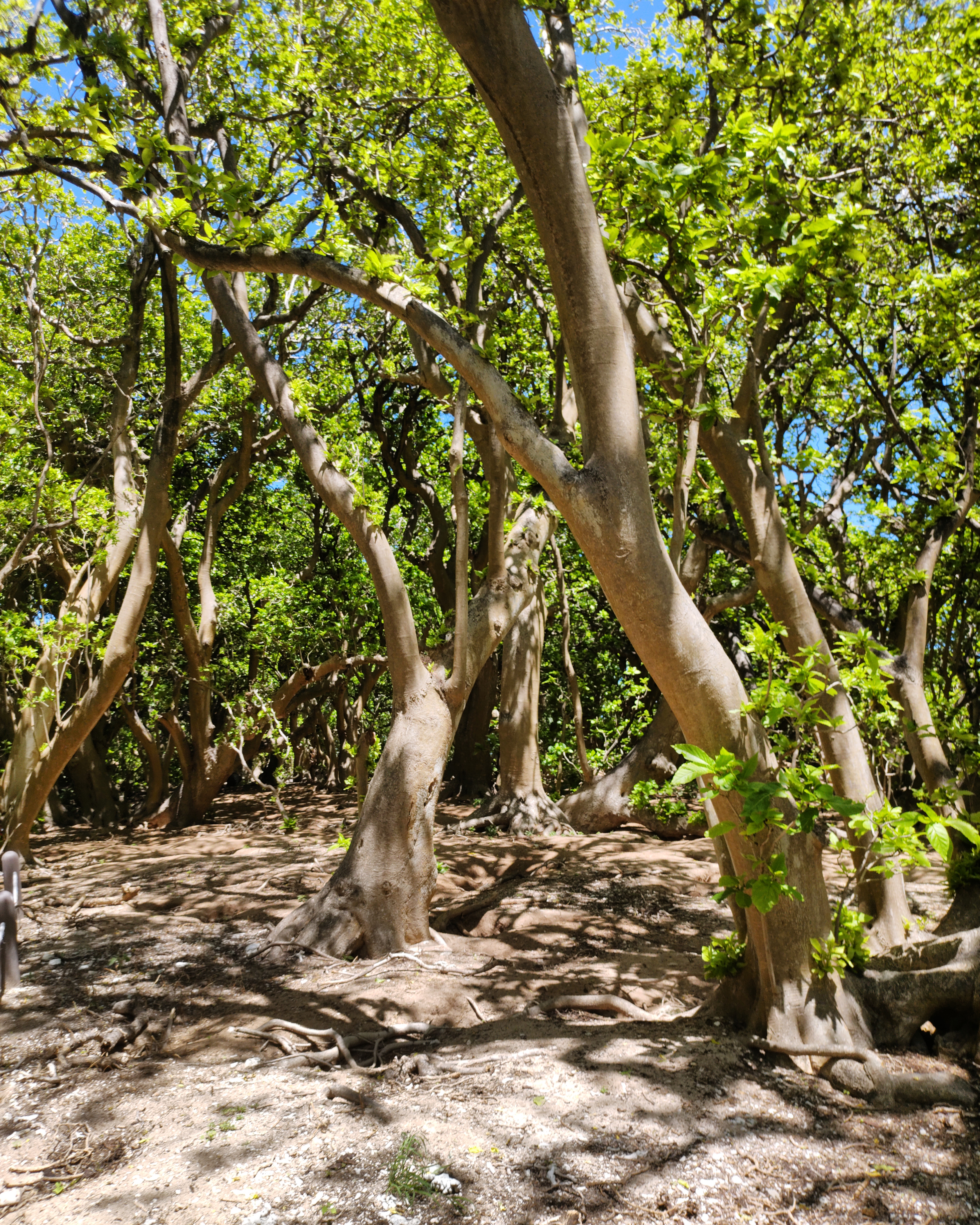
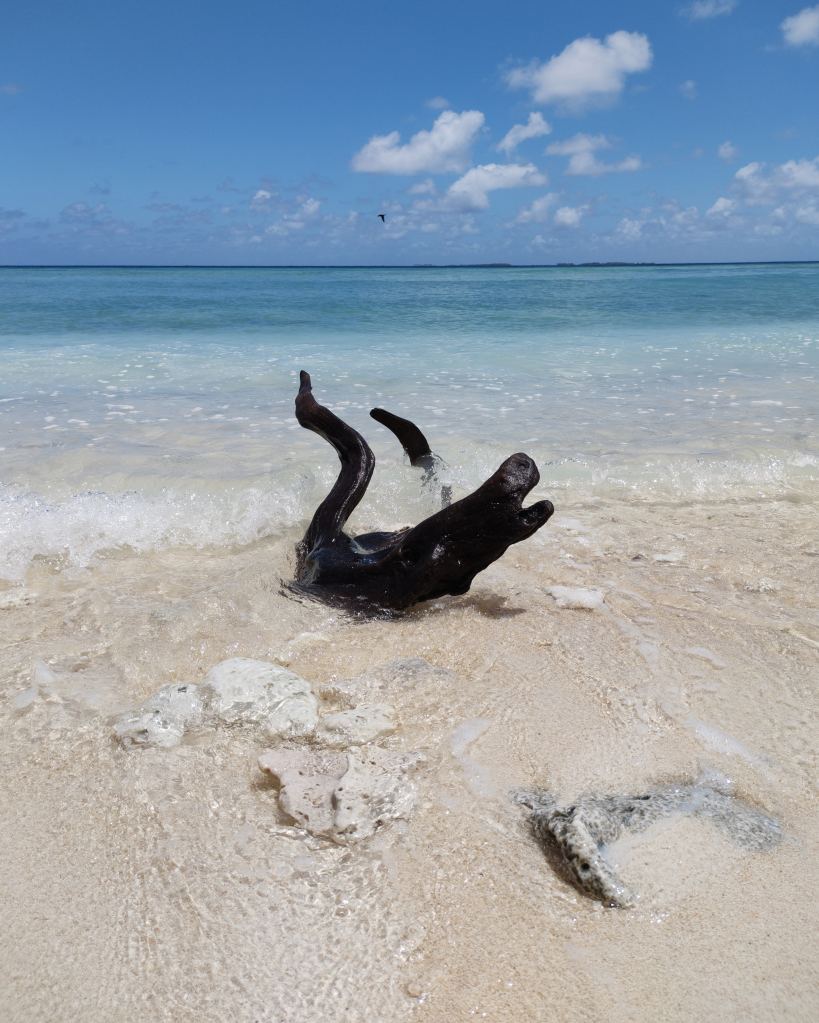
But aside from the stench, the forest was beautiful to walk through. I also spotted a couple of Buff Banded Rail birds scratching about on the ground, and some tiny Capricorn Silver Eyes darting about the branches. We came out on the other side of the island, onto the beach, where sun bleached logs litter the coral sand.
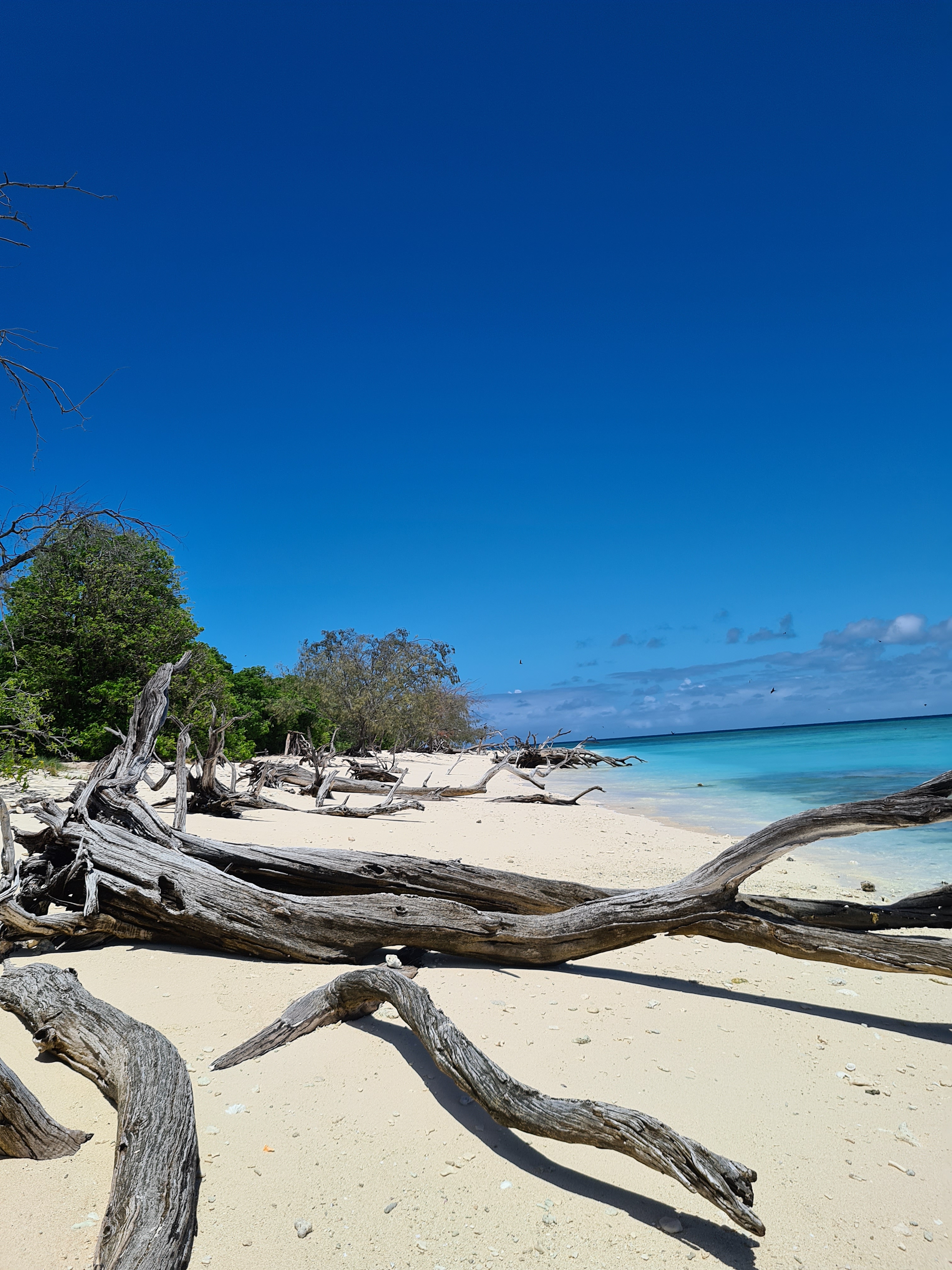
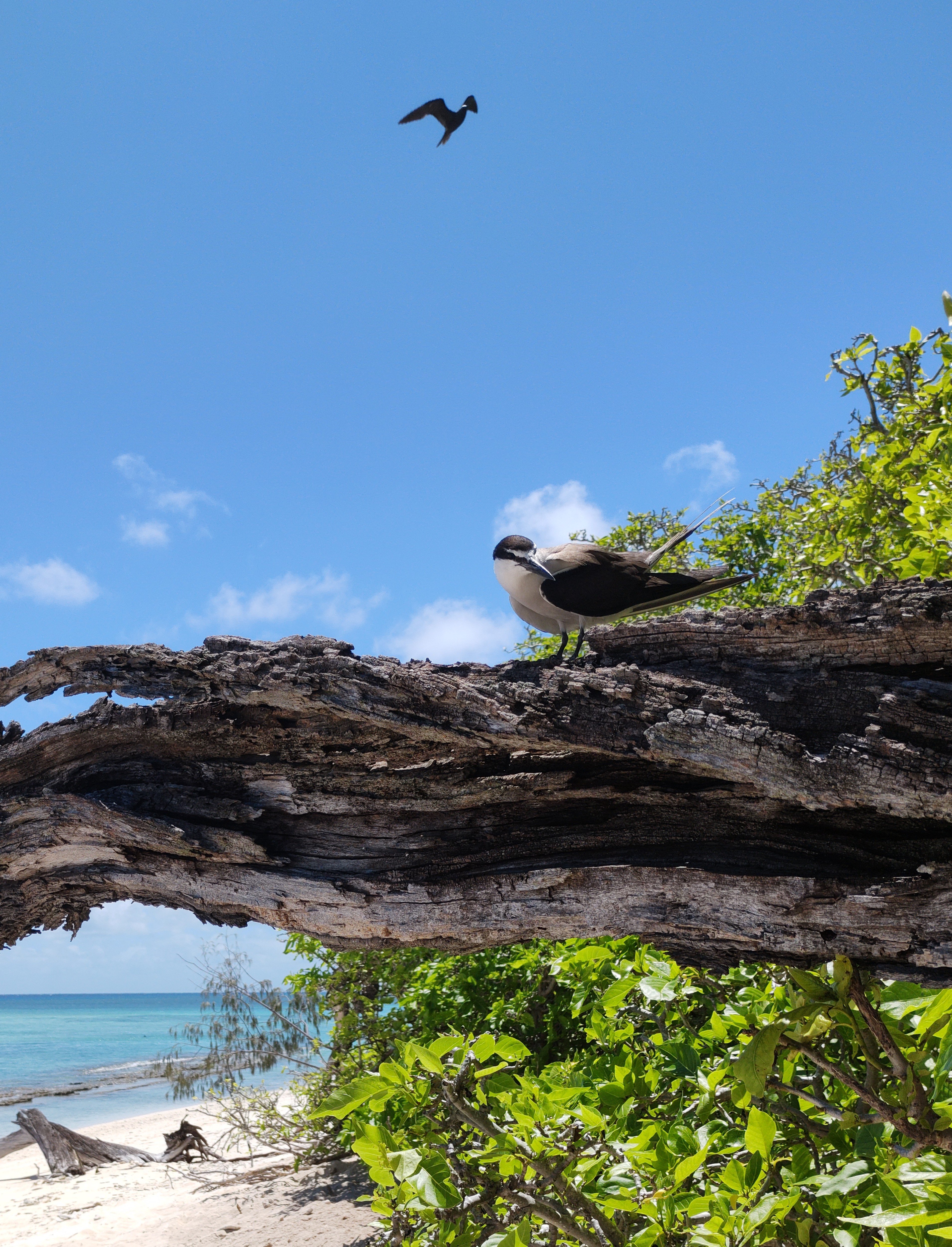
Then came a turtle, just a dark shape in the shallow water, moving closer to the beach. Then came another, and another! They didn’t leave the water, but one came so close to the shore that Jordan identified that it wasn’t big enough to be of nesting age (30), so she must have just been curious! We strolled back around the island along the beach, and hopped back on the glass-bottomed boat, back to the Pontoon for lunch.
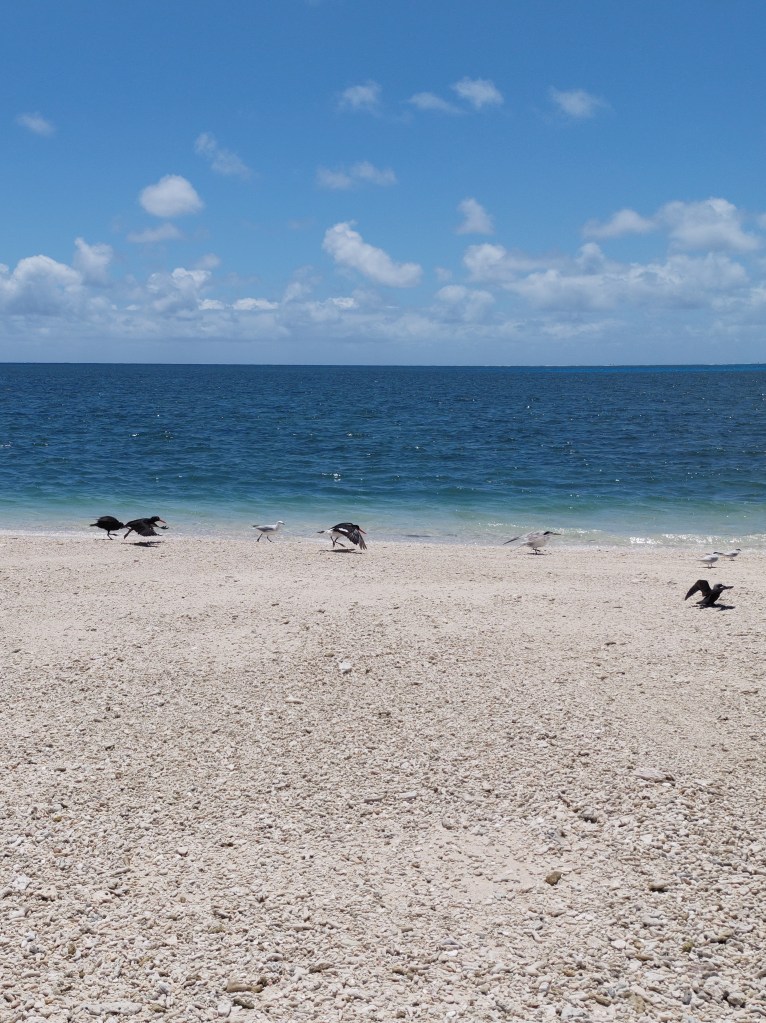
Bridled Terns, Greater Crested Terns, Sooty Oyster Catchers, Pied Oyster Catchers & Seagulls 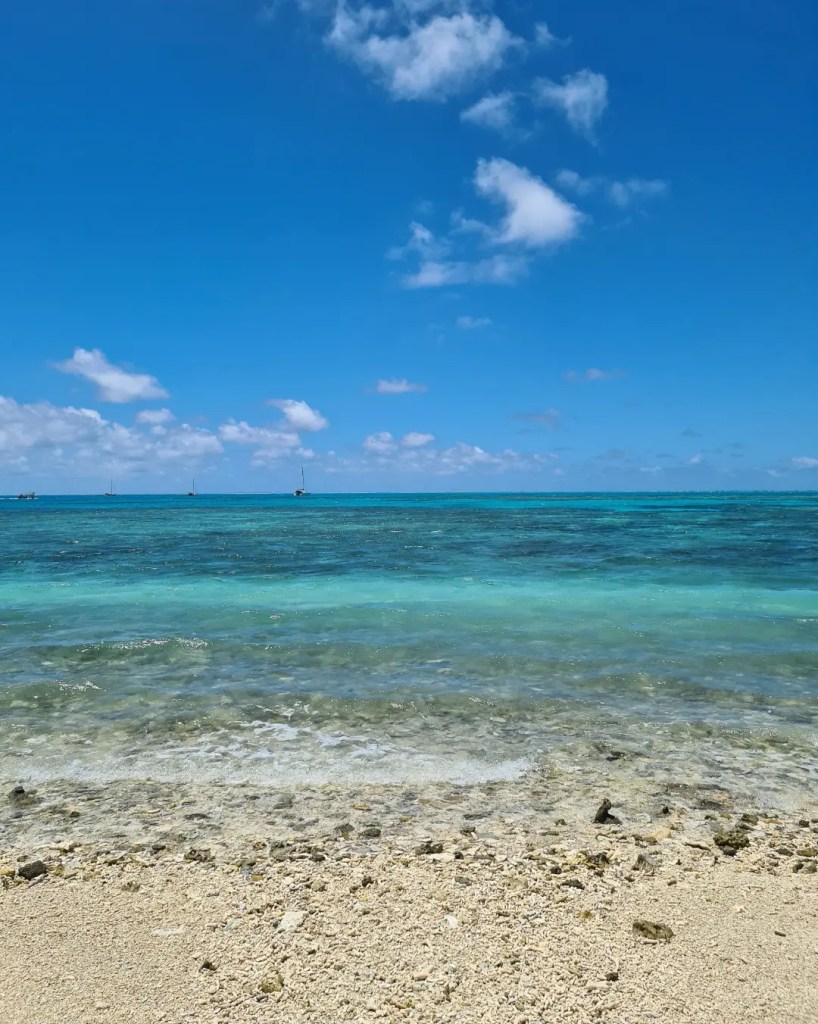
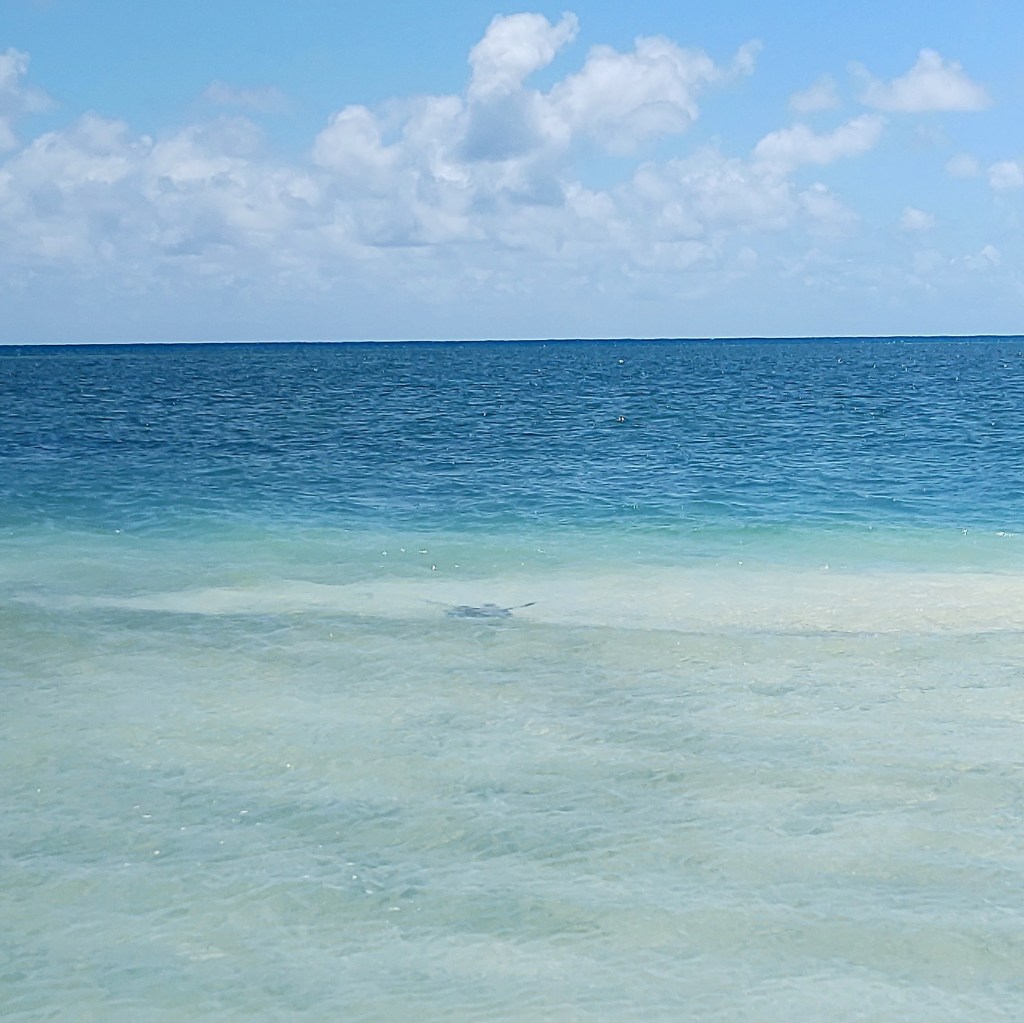
Turtle Swimming up to the Beach
Snorkelling on the Reef
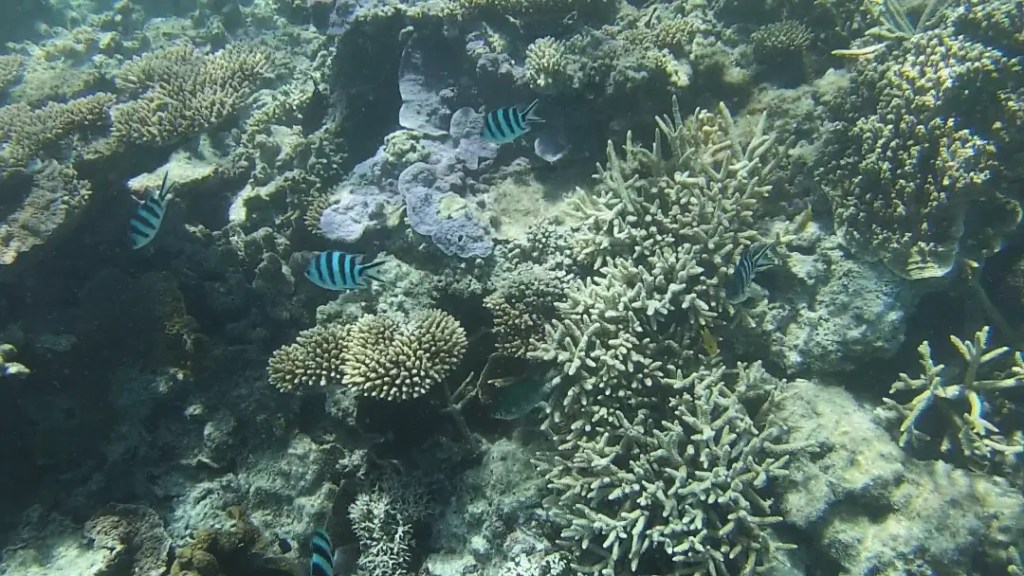
Finally it was our turn to snorkel, the part I’d been looking forward to all day. After a quick lunch of salads and cold meats, we quickly got our gear on and jumped in the reef lagoon. The first thing you see are little groups of little black and white fish, swimming for a close up of your funny goggles. As you get closer to the coral shelf, schools of tiny blue fish shimmer like a glittery curtain as they dart back and forth in unison.
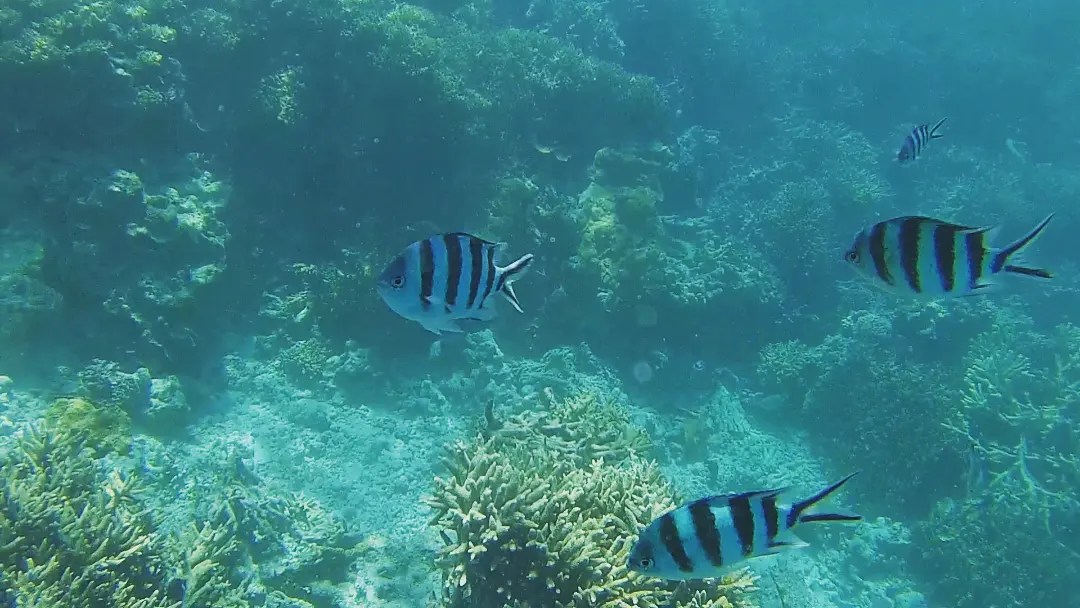
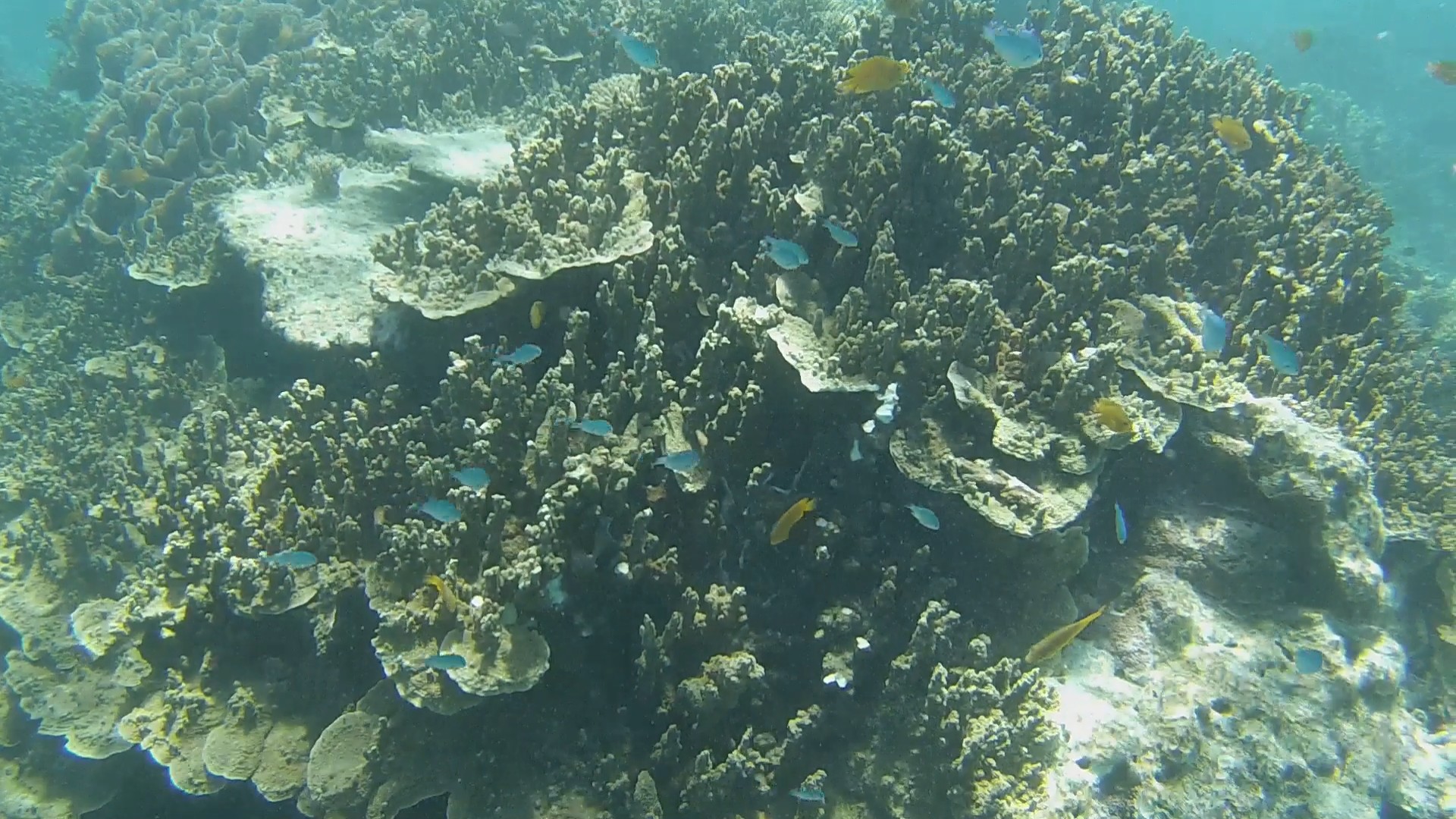
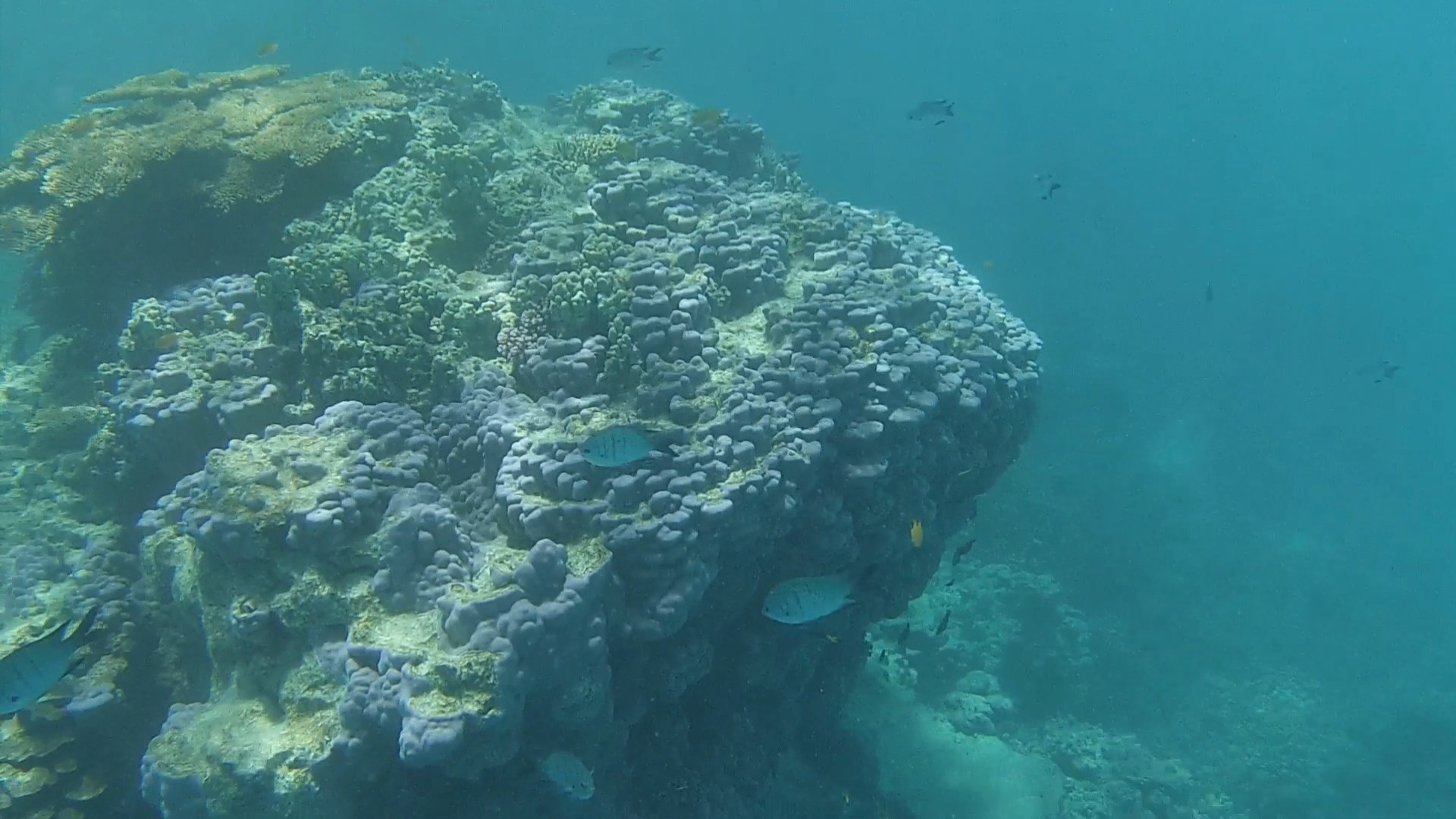
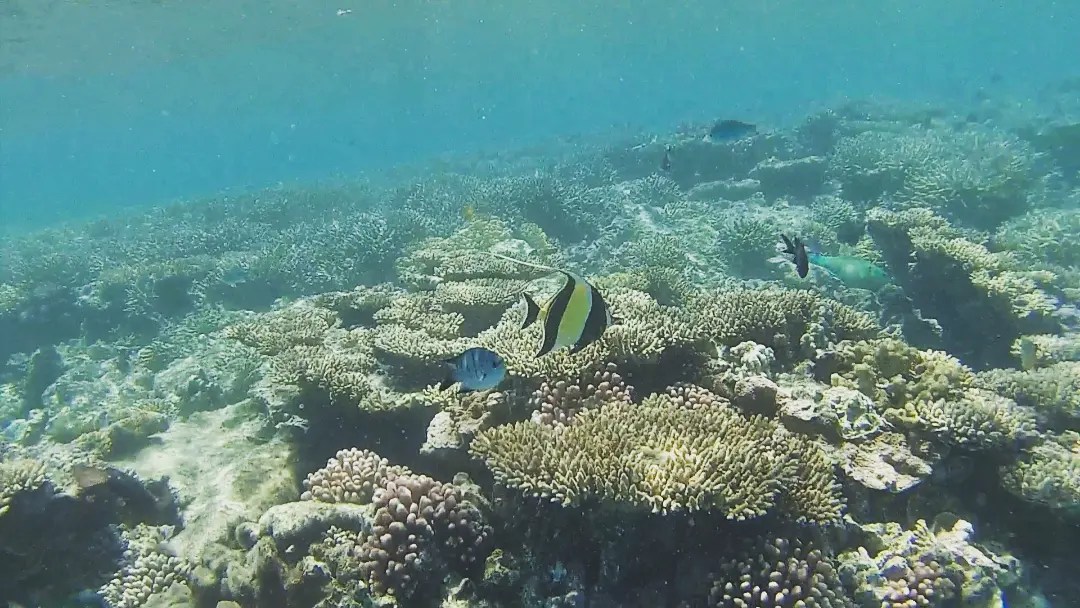
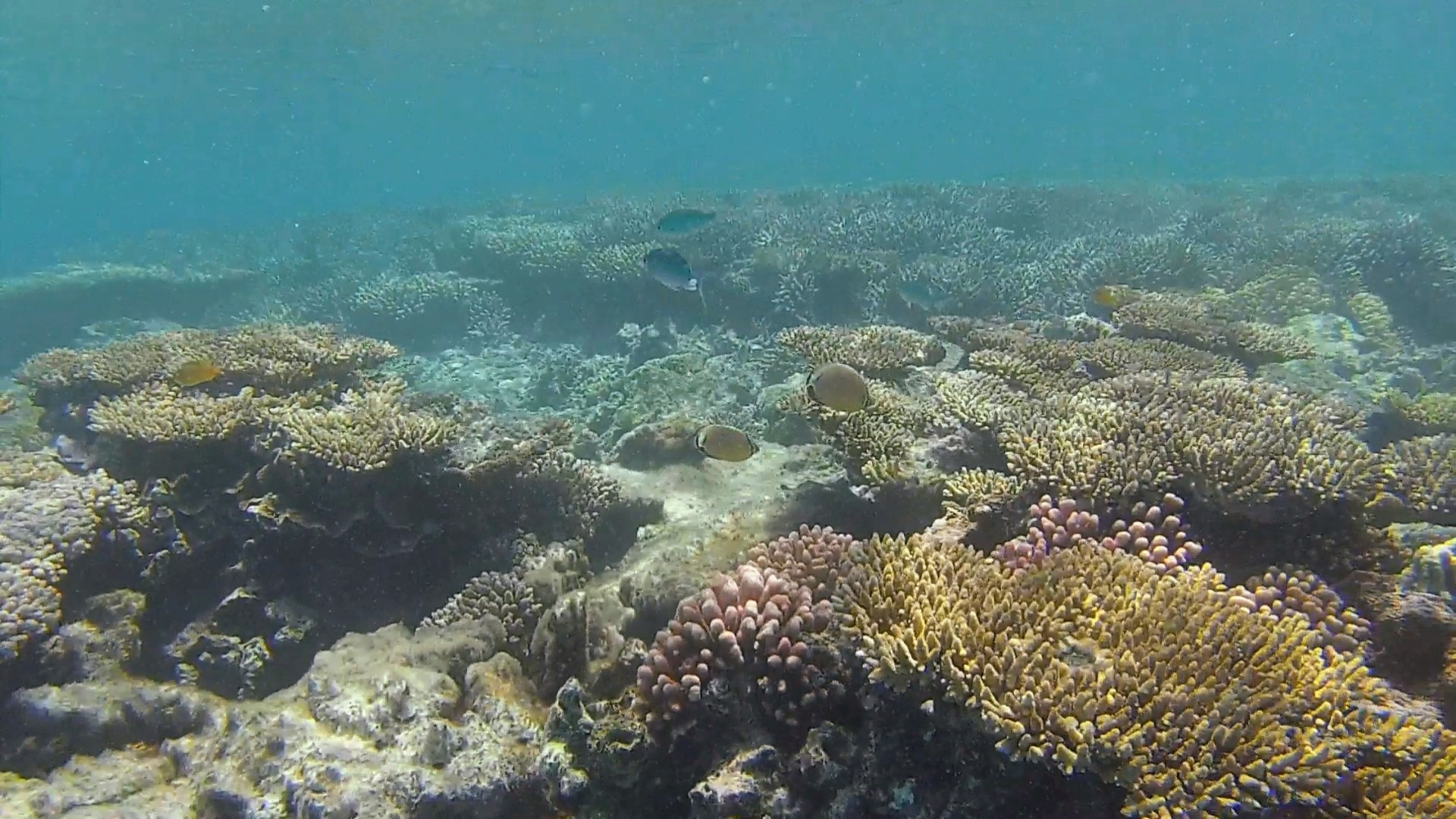
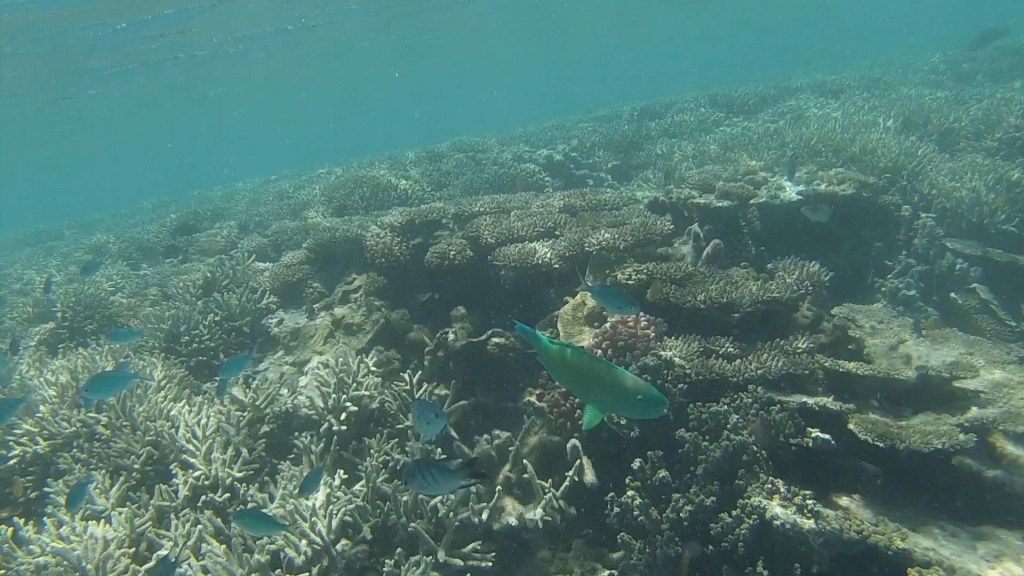
Parrot Fish have beaks that enable them to feed on the coral.
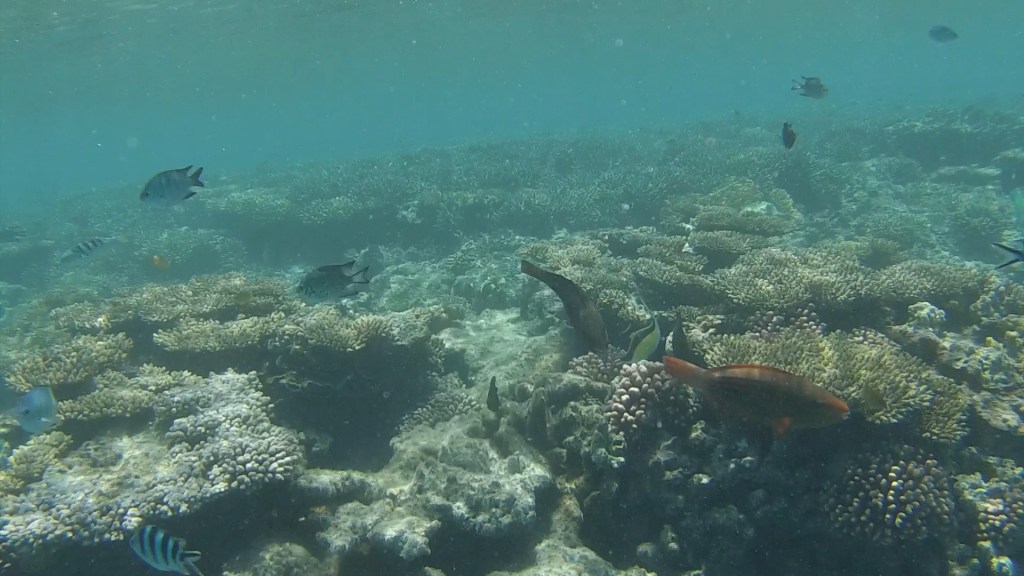
They come in a huge array of colours, you can see the orange one’s teeth-like beak.
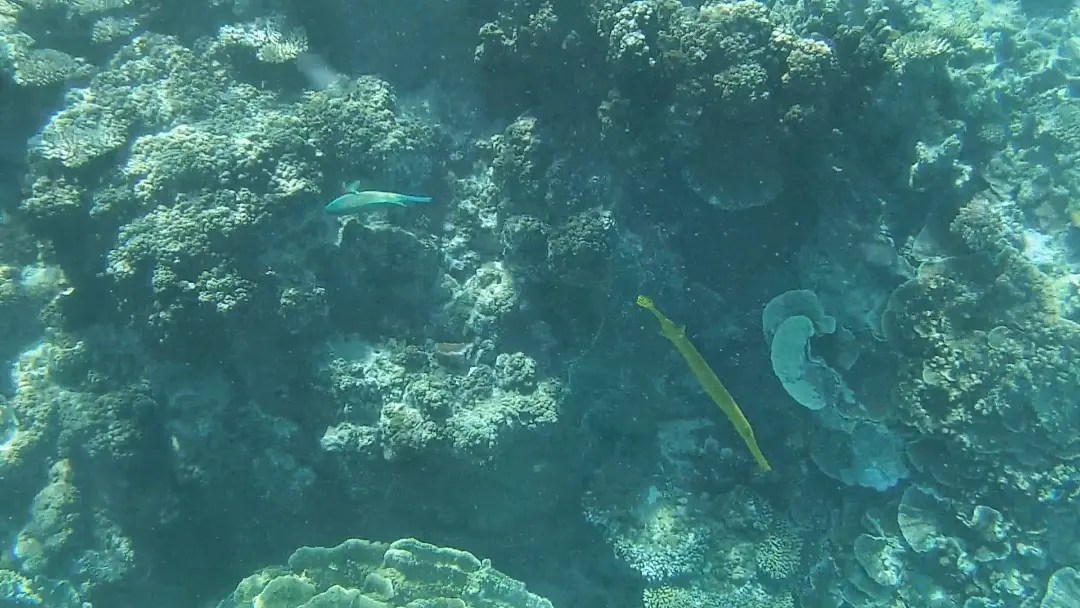
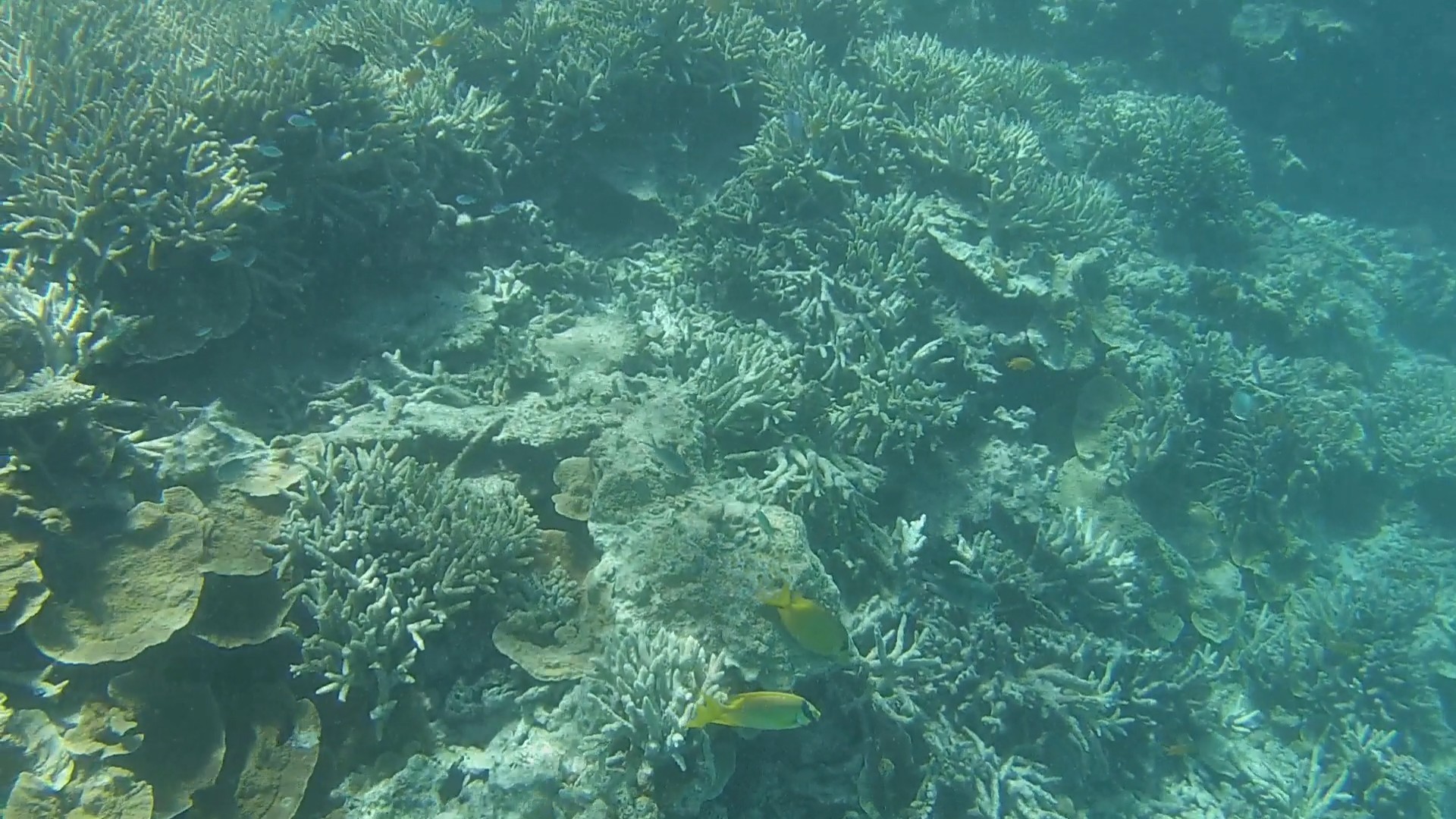
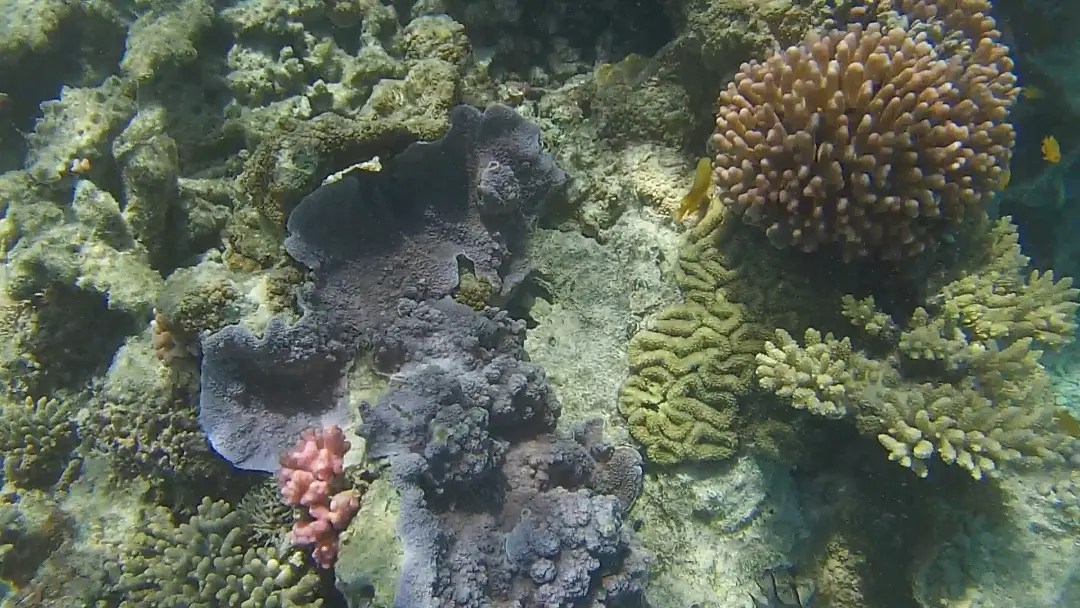
The coral is beautiful here, splashes of colours somehow pop under the water. I was so engrossed in watching interesting fish appearing from the reef that the turtles caught me off guard! Taylor caught my eye, signalling to me under the water, and pointing ahead; there it was, appearing out of the murkiness, coming towards us, so majestic, as though flying beneath the waves. This Green Turtle was about the size of a grown man’s torso. Her tail was barely visible, showing she was female, and she swam right underneath us. I turned and followed her for a short while, before she dived into the depths of the reef.
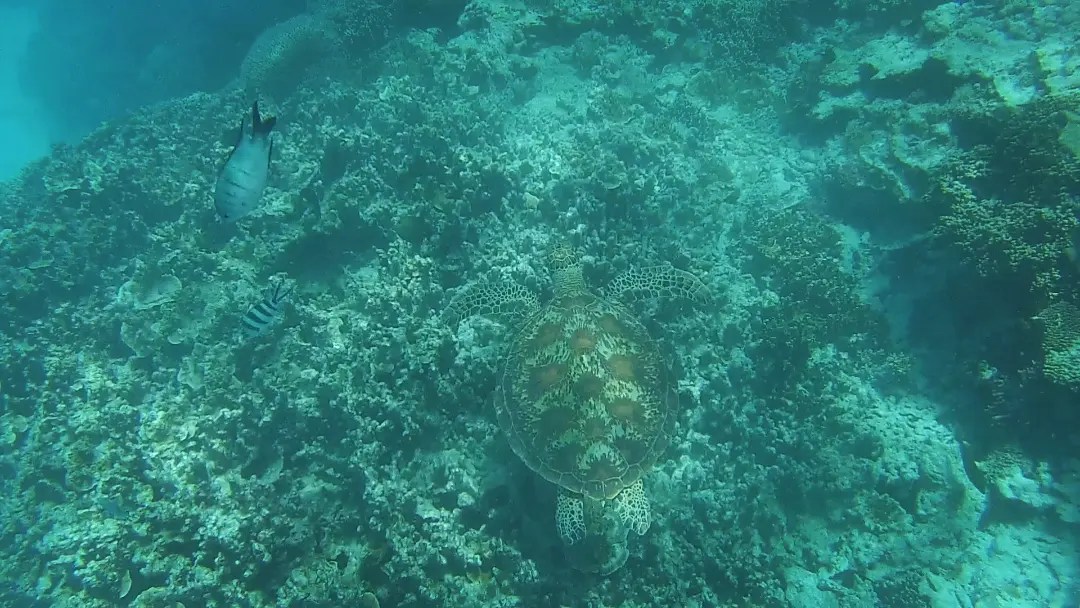
The second turtle was skimming along a shallow shelf of reef at my eye level, flapping her flippers, and surfacing a few metres away. I popped my head up too and saw her floating on the surface!
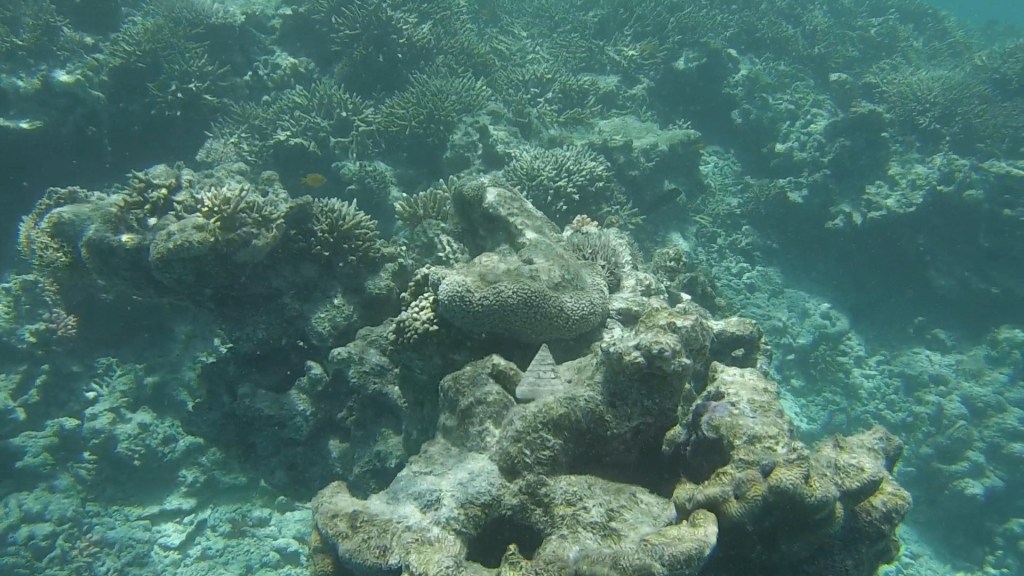
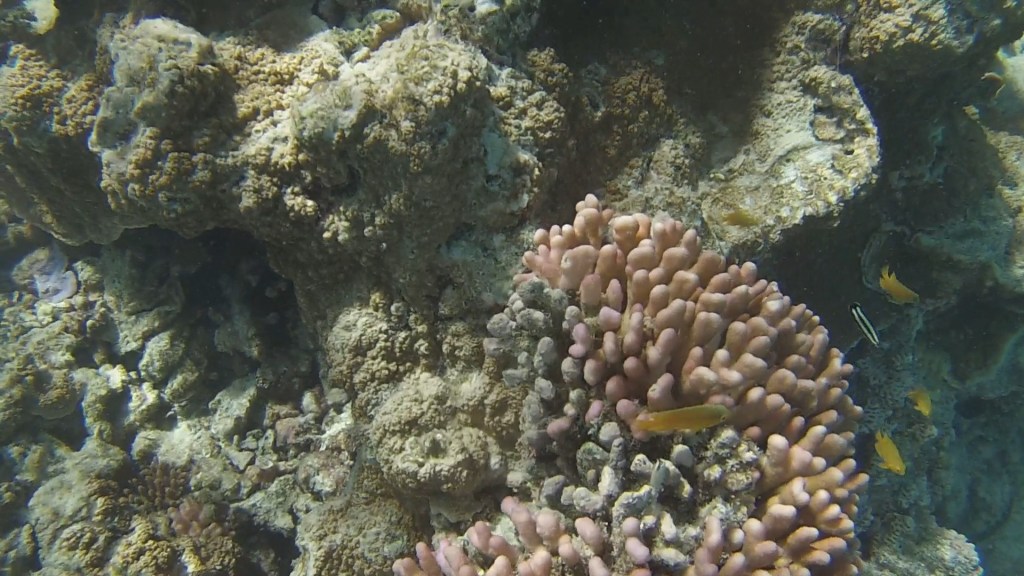
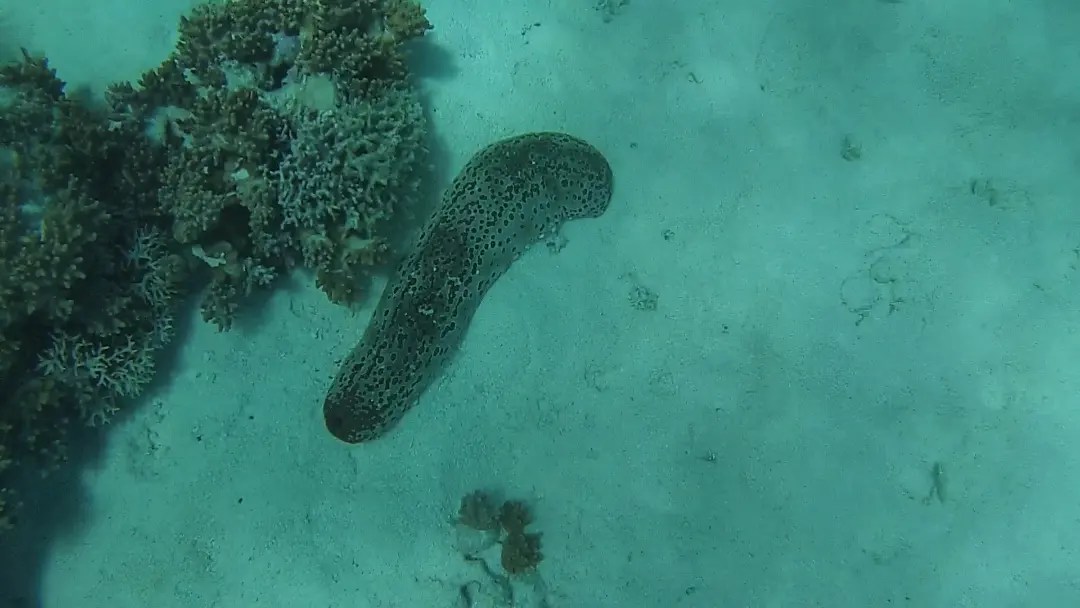
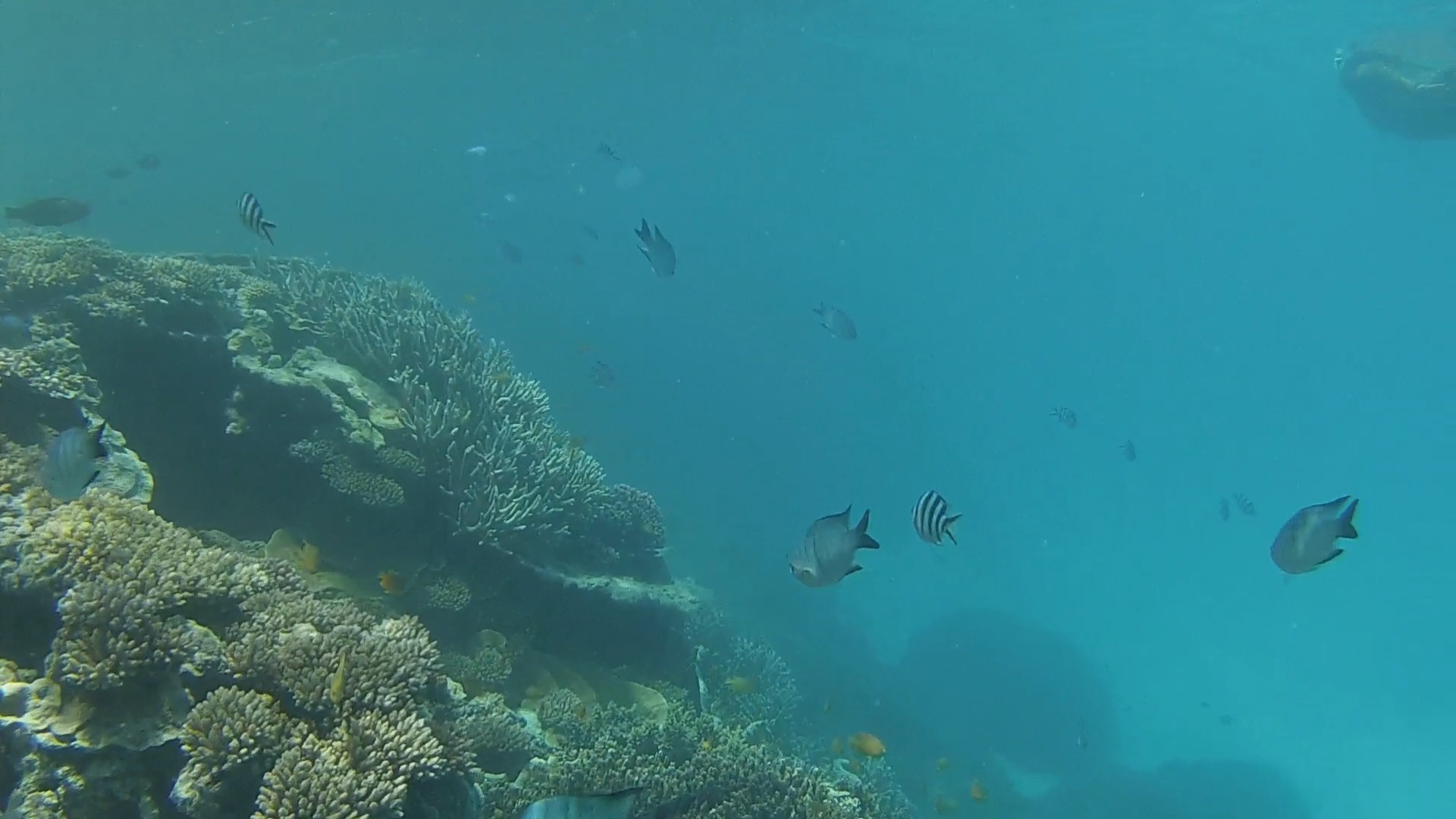
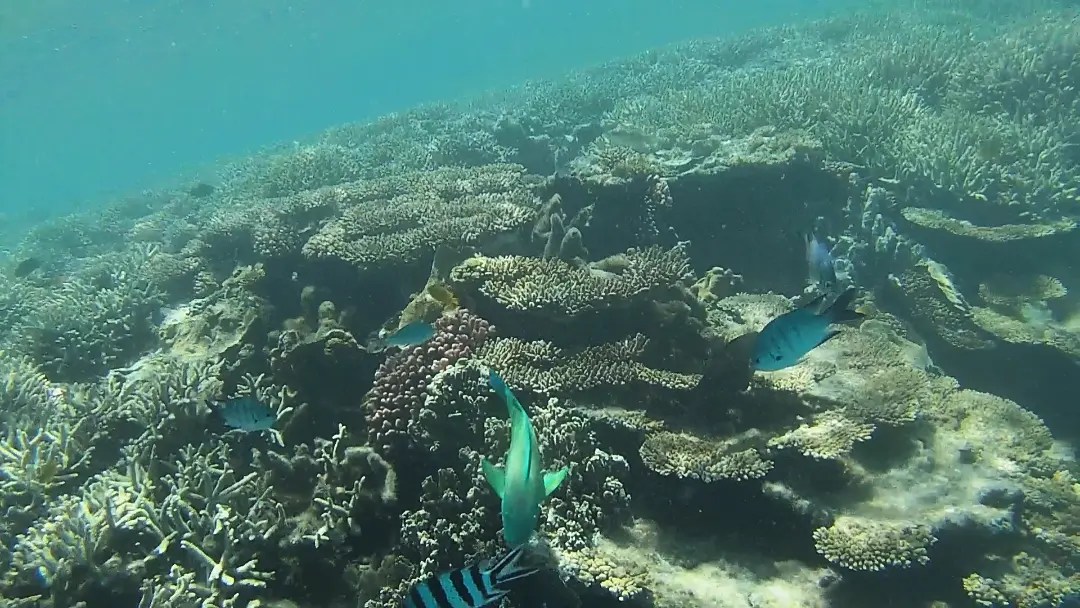
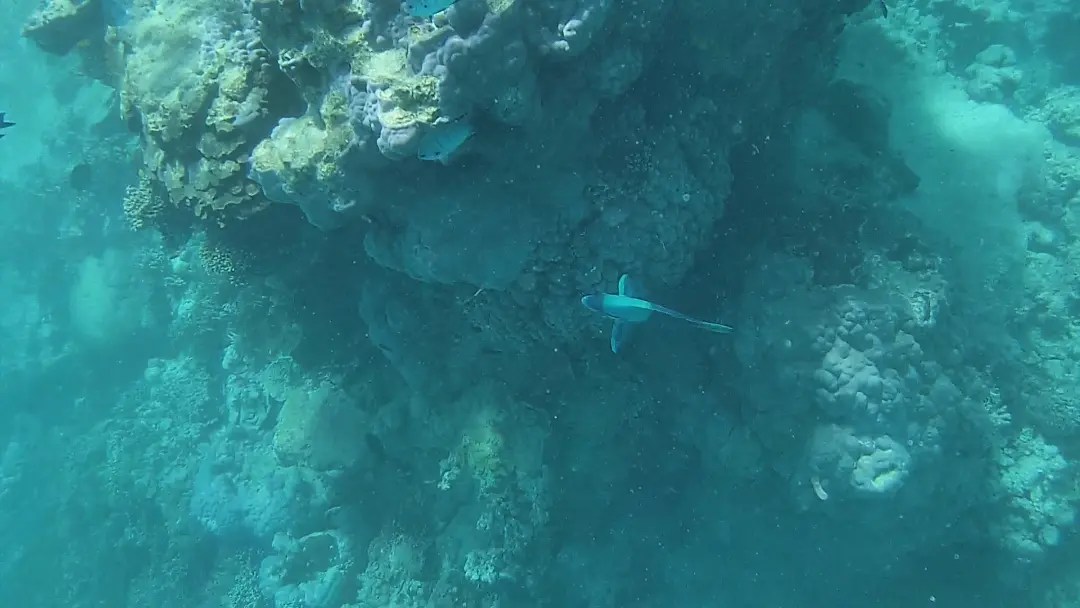
After an hour of solid snorkelling, we sat on the edge of the pontoon sipping on a Gin Mule, dangling our feet in the ocean. On the boat ride back, we saw an Olive Sea Snake wriggle by in the waves, and several dolphins.
Facts of the Day:
- The Great Barrier Reef is roughly the same size as Japan.
- You can’t visit the adjacent Fairfax Islands because they were used for target practice by the Australian Military in the 1940s, and there is likely to be live ammunition still scattered on the islands.
- Without the birds, there would be no trees on Lady Musgrave Island, and without the trees there would be no birds. Without either of these, the island would be a bank of dead coral, and may have been washed or eroded away.
- Corals are actually living invertebrates related to jellyfish and anemones.
- Coral relies on its resident algae to survive. Photosynthesis in the algae creates food for the coral.
- Some corals actually catch small fish and plankton to feed on.
- The tiny white tips you see on the coral reef is not bleaching; it is in fact regrowth.
- The colour you see on coral is actually produced by the algae as a form of sun protection. The deeper the coral, the less colour it will have, as it will have less sun exposure.
- Coral Bleaching is caused by rising temperatures and pollution that kills the coral’s algae. When the algae is gone, the coral dies.

