
~ Breakfast in Tsumago ~
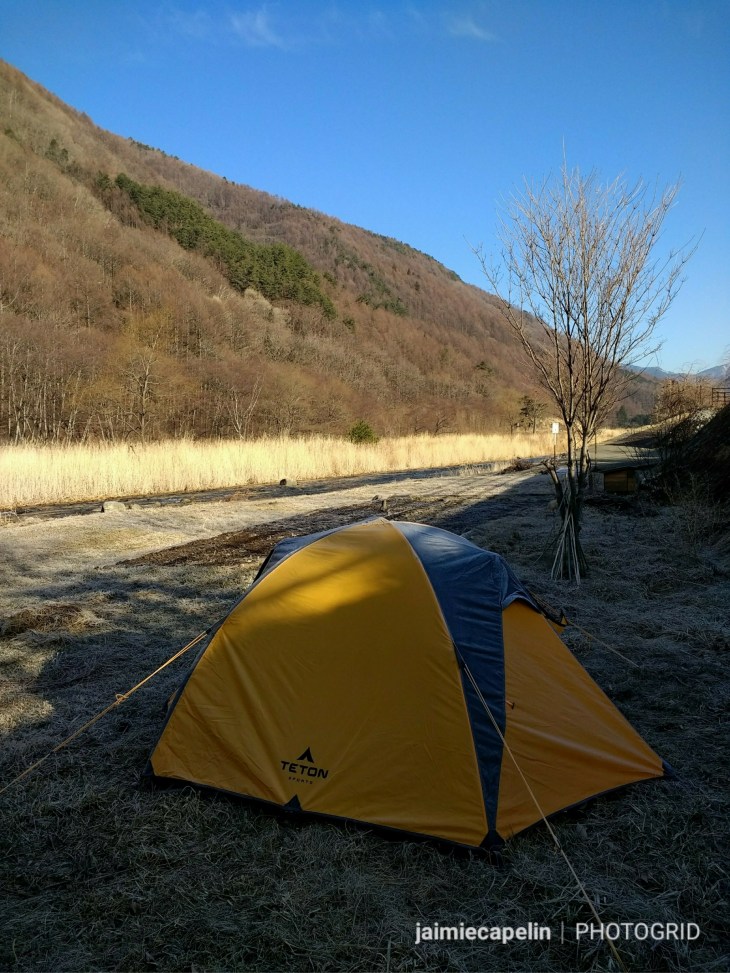
I awoke with the birds at sunrise, beneath the warm yellow canvas of the tent, somewhere in the woodland surrounding the ancient Japanese post town of Tsumago. It had been the first night camping so far that I hadn’t woken up shivering in the night, and the quietness of the castle ruins was unreal underneath the clear stars, surrounded by mountains.
Mic, my travel partner, had a noticeable spring in his step as we began to pack up camp, and we both felt fresh and excited to complete the final (and most historical) leg of the Nakasendo Trail. Ensuring we’d left no mess or litter in the ancient countryside, we made our way into Tsumago-juku for breakfast.
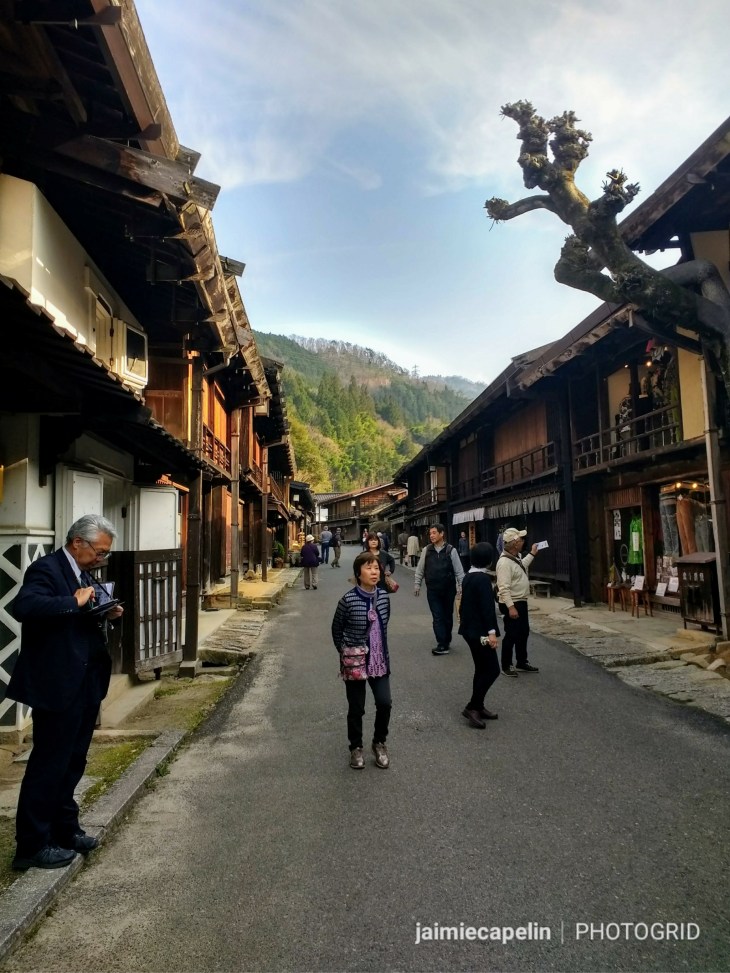
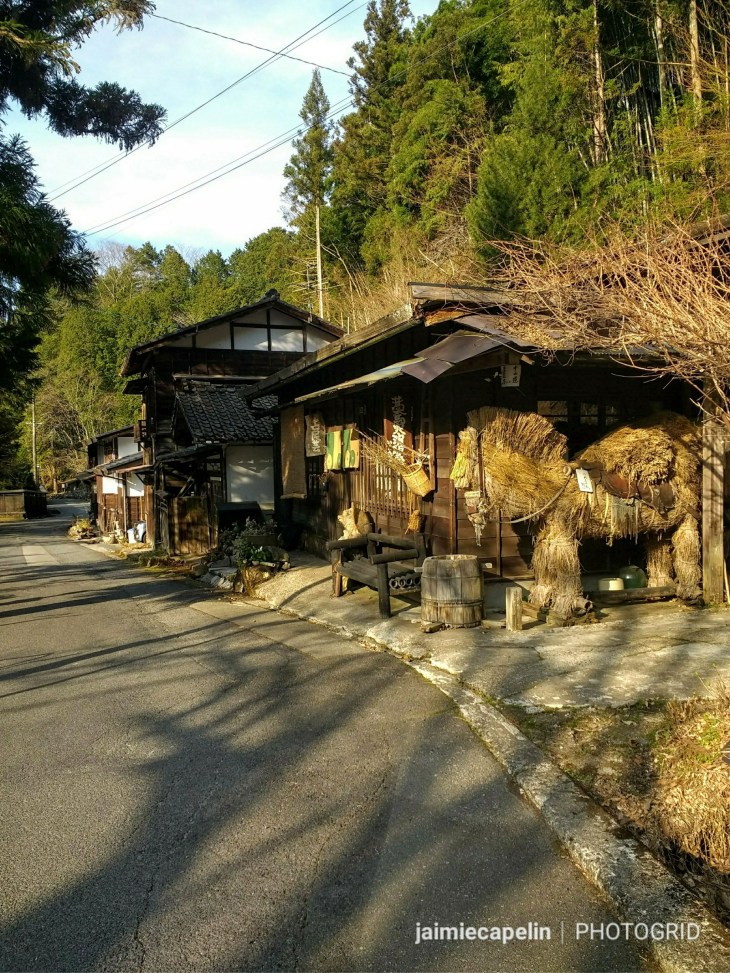
Tsumago-juku was just as bustling in the early morning, with fresh tourists and hikers just arriving off the first shuttle bus from Nagiso station, bright eyed and ready to sight see. We went to a tea house, taking off our shoes at the door, and sitting down crossed-legged on the tatami mat floor next to the fire. The lady who lived there brought two strong coffees, placing them on the little table, before scurrying off back to her living room, from which we could hear the radio.
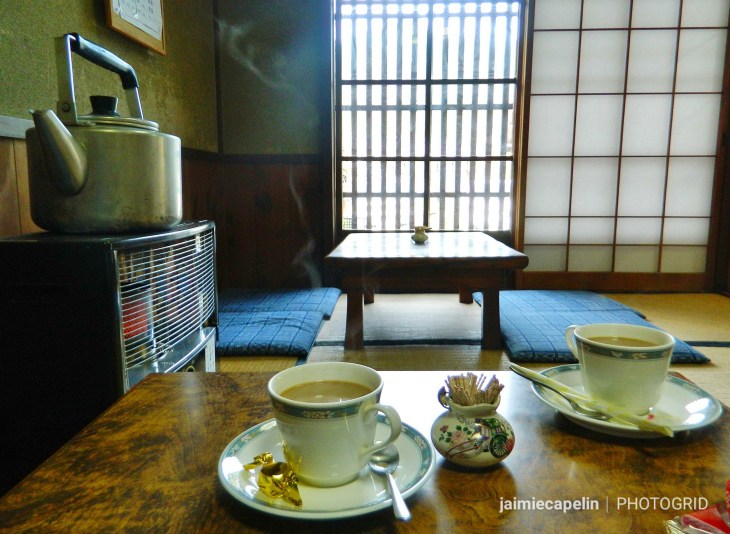
Traditional Japanese Tea Room
Suddenly, the radio program was intersected by a loud instructive voice, which was also echoing outside in the street. Mic and I looked at each other, concern crossing my mind and his face, but we couldn’t understand the words (and even if we did speak fluent Japanese, I think we’d have struggled through the fuzz and crackle), and there was no reaction from the residents.
I remembered hearing something similar in the mornings when I was living in Hakuba – at the time I put it down to the local train station, but in hindsight, it was probably too far away to hear, and I’m not sure they even made announcements. I read about the “5pm Bell”: a nickname for what is formally known as Sichoson bosai gyosei musen hoso, which is just as much of a mouthful in English – “Local government disaster administration wireless broadcast!” This is a daily test of an emergency broadcasting system, which is blasted out of old-fashioned loud speakers attached to poles in the streets, at the same time everyday. It was introduced in the late 1960s, following a deadly earthquake, and has run like clockwork ever since, with each town having it’s own broadcast, tune and time schedule. Although this is an efficient safety measure in a land of earthquakes, volcanoes, tsunamis, and potential Korean missiles, it still sends shivers down my spine, as it reminded me that for such a beautiful, kind-natured culture, it has such a dark and harrowing history, and still has so much to fear. I find it quite boggling that a country that excels in advanced technology, still uses old fashioned, traditional methods, and will continue to until they stop working. It is like something out of a futuristic, sci-fi apocalypse war movie!
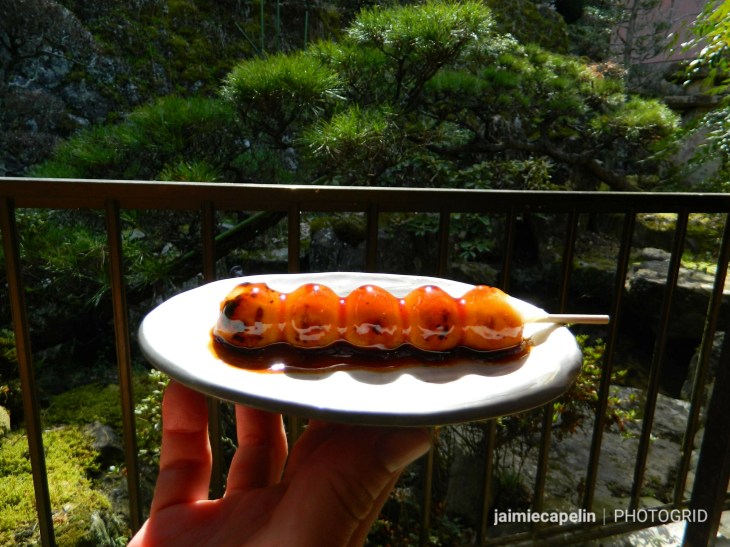
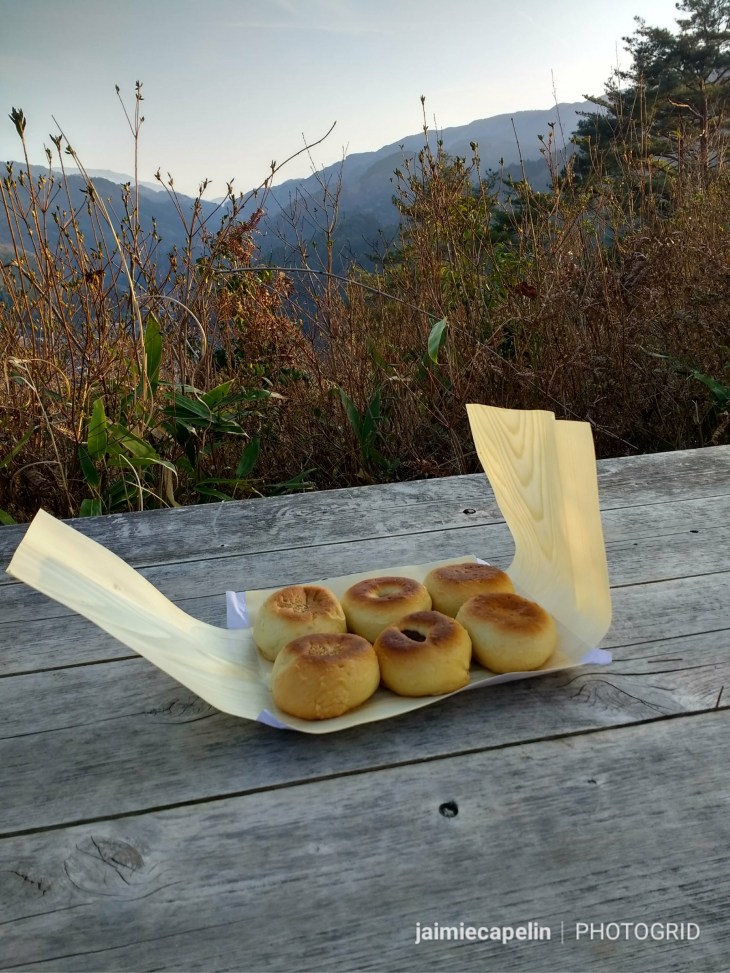
Mochi Skewer (or Dango) – sweet snack made of rice starch
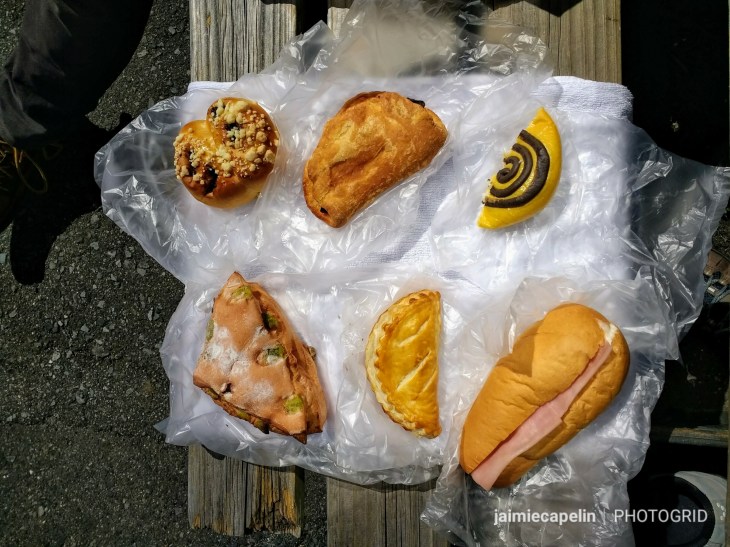
With this revelation, we drank our coffee, paid the lady, and went to the next shop to sit in its little ornamental garden in the morning sun, and eat beef skewers and mochi while watching the koi swim around in a pretty fish pond.
~ The Original Nakasendo ~
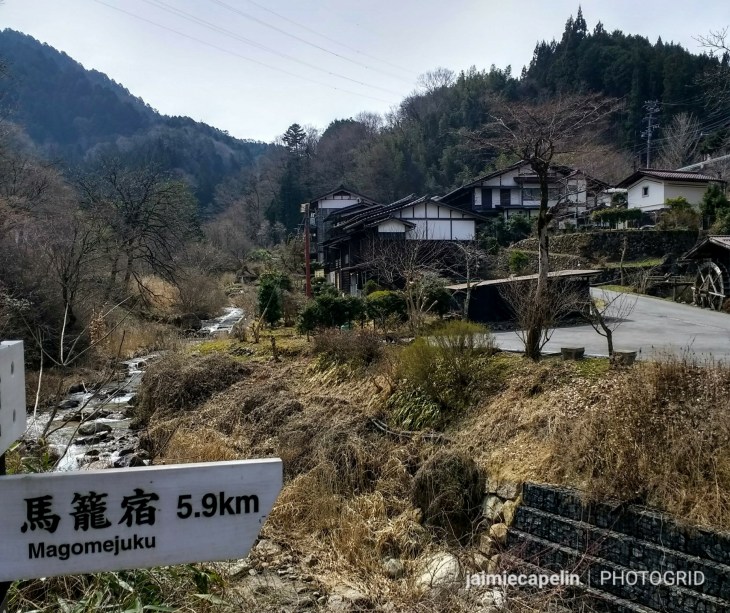
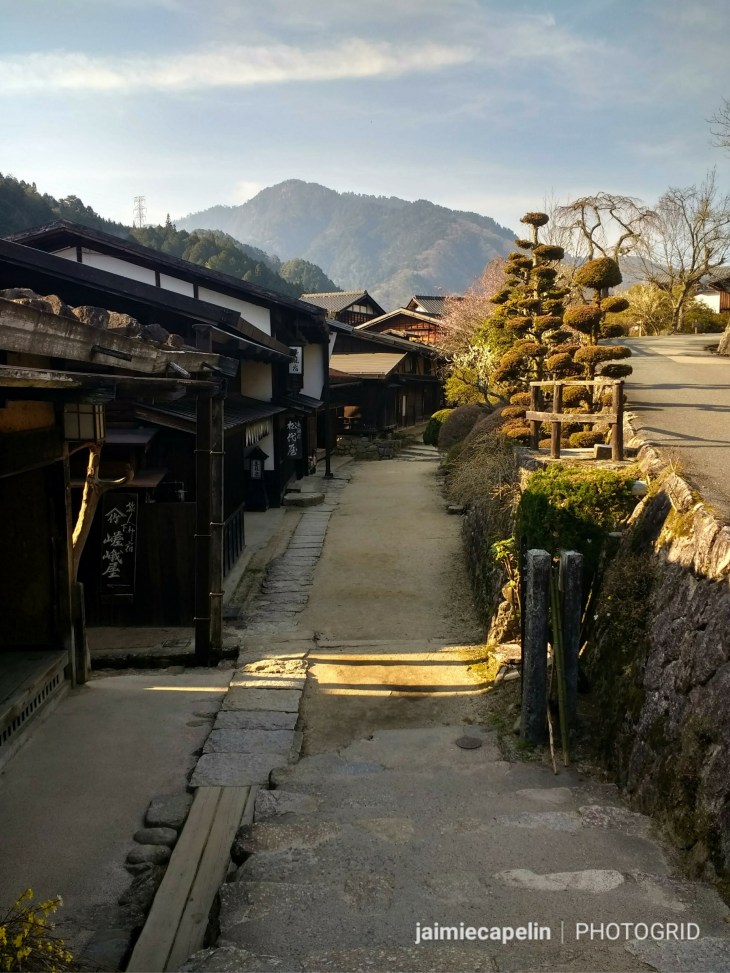
Leaving Tsumago-juku on the Nakasendo
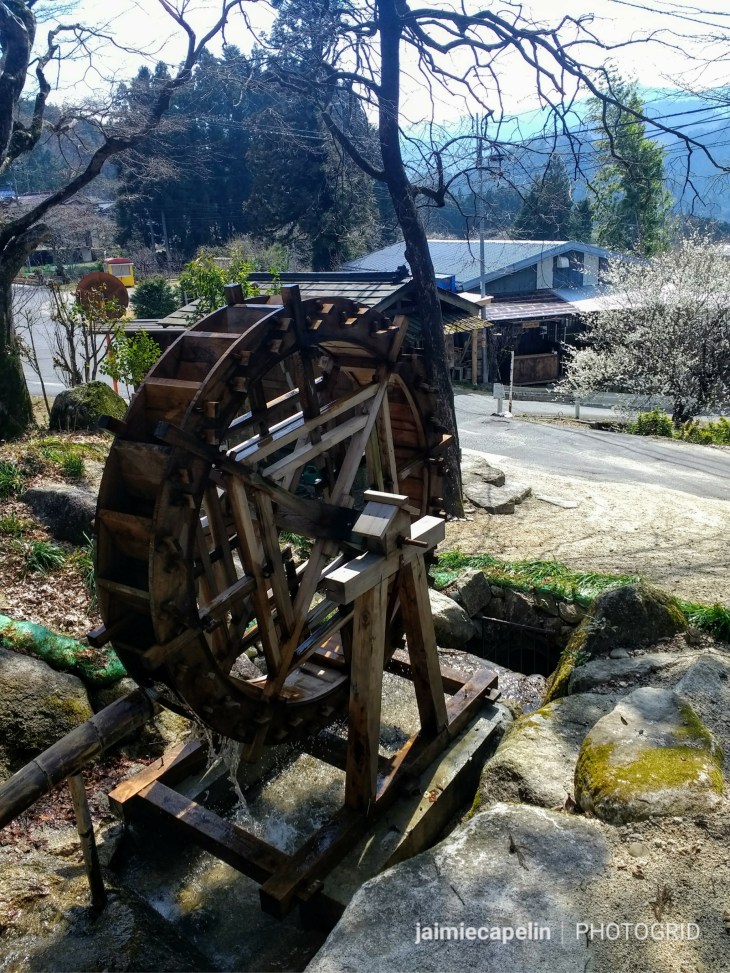
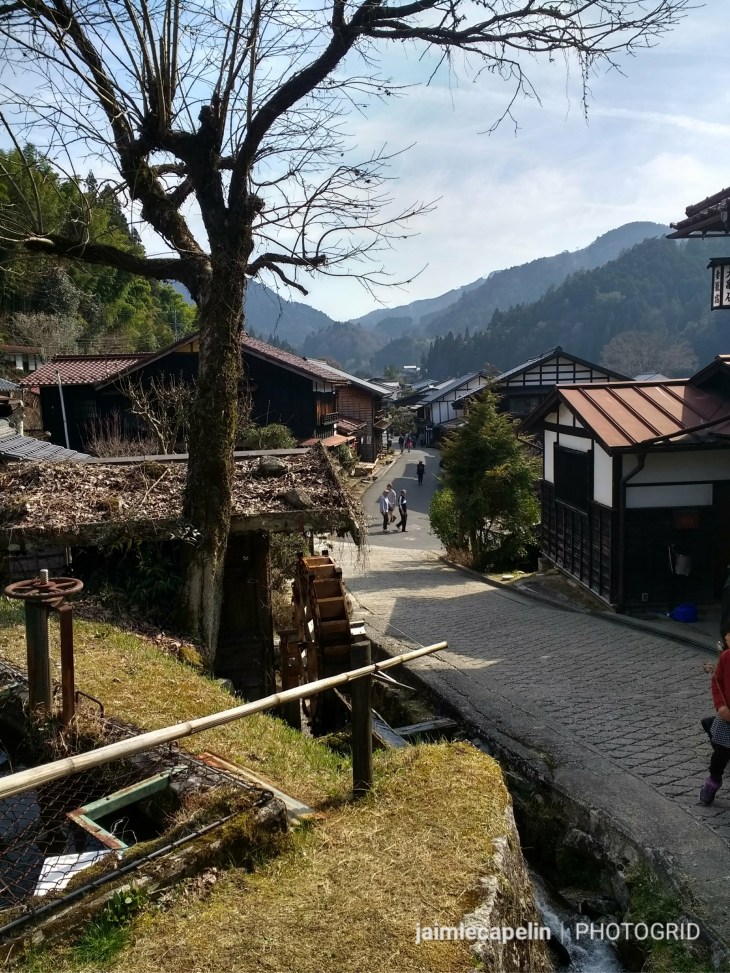
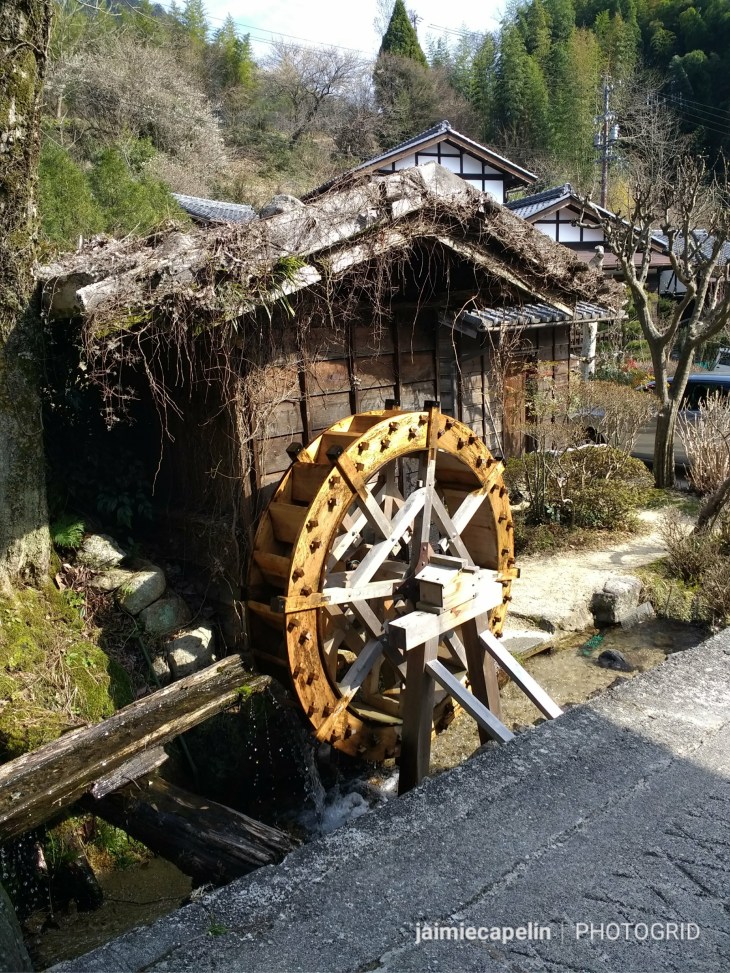
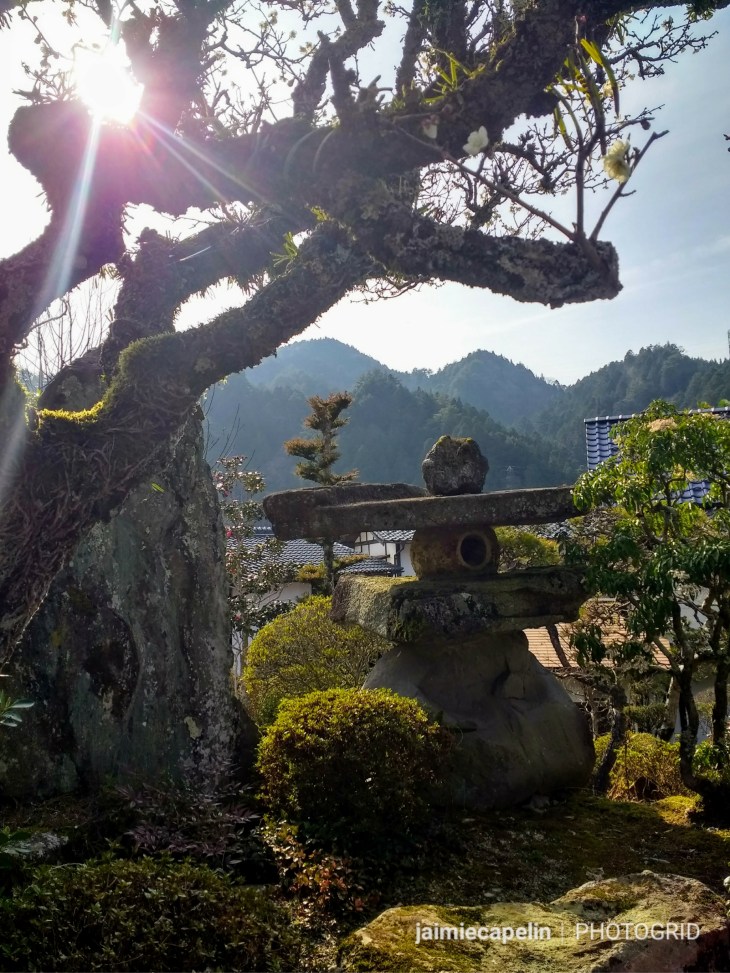
The Kanji symbols for Nakasendo literally translate as 中 = central; 山 = mountain; 道 = route. Following the roaring river out of Tsumago, we passed through more Edo style villages, fully inhabited, with pretty gardens making use of the water flow in many creative and useful ways. Some had little fish farms in their gardens, and there were quirky, homemade water features incorporating the ancient stream, along with more original, wooden water wheels.
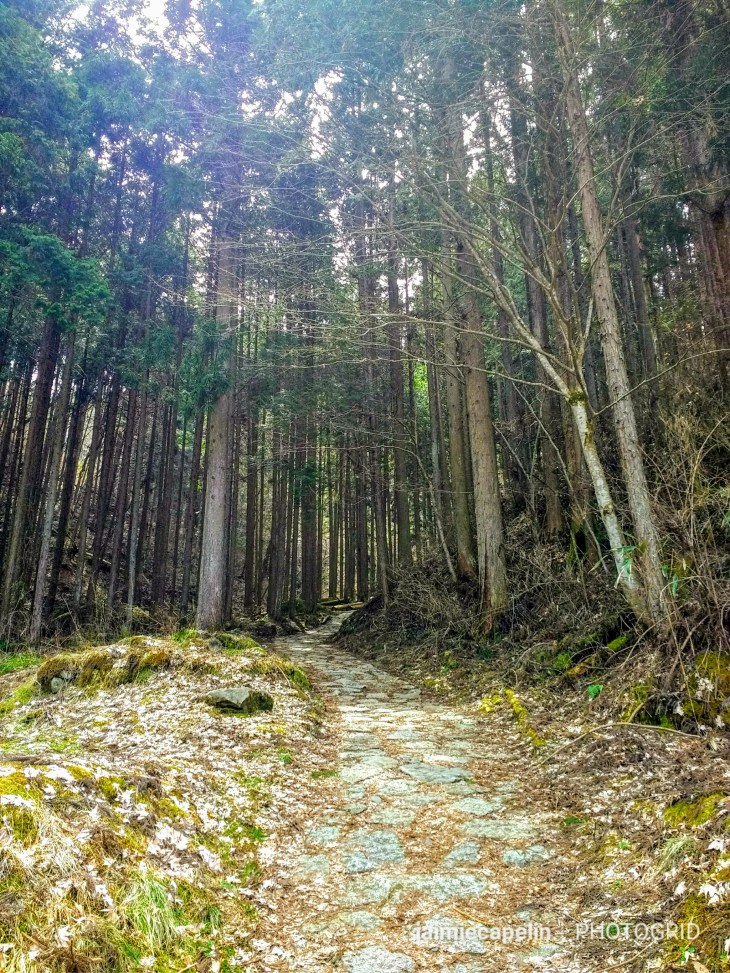
Original Nakasendo Way
Climbing into the mountains towards the river’s source, we began the ascent up the original cobbled path into the forest. Part way up the incredibly steep incline, we came across an Ishibotoke – a ‘rest-in-peace pagoda’ dedicated to the black cattle that used to carry the merchants’ heavy loads up the steep hills of the Nakasendo. And here we were lugging our own heavy packs!
~ Bear Bells ~
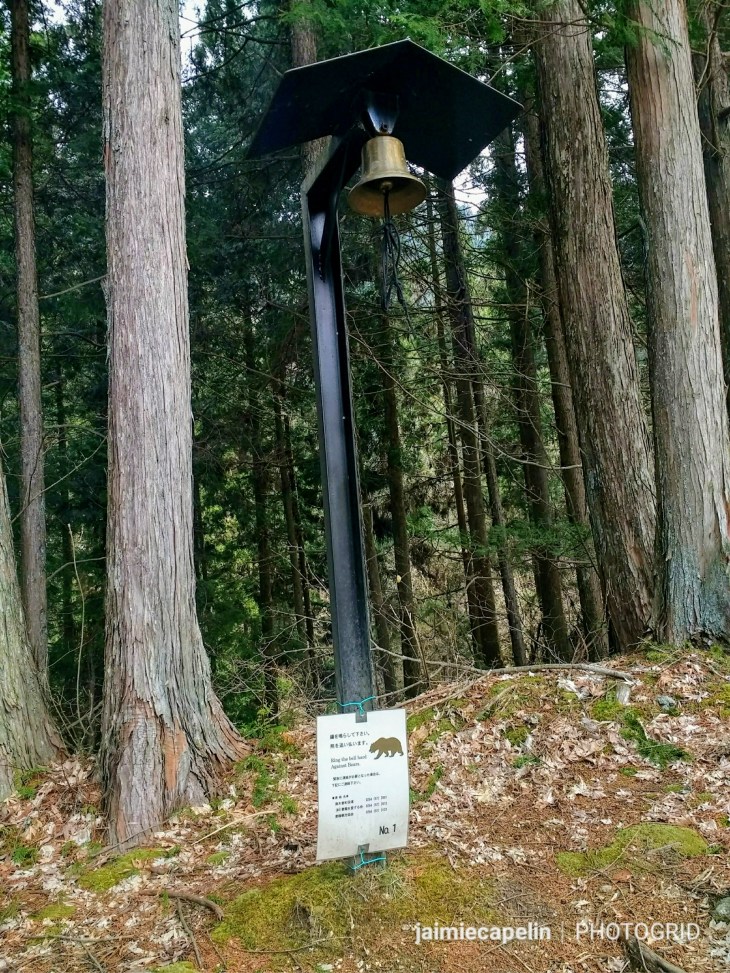
First Bear Bell
Every few hundred metres you come across a bell at the side of the path – these are bear bells – you are supposed to ring them to scare off any nearby bears… (apparently there are brown bears, and black grizzly bears in Japan, and all reliable sources confirm this… but I’m still skeptical!) I counted 12 bear bells between Tsumago and Magome, which are fun to ring loudly and deafen your fellow hikers!
~ Odaki & Medaki Waterfalls ~
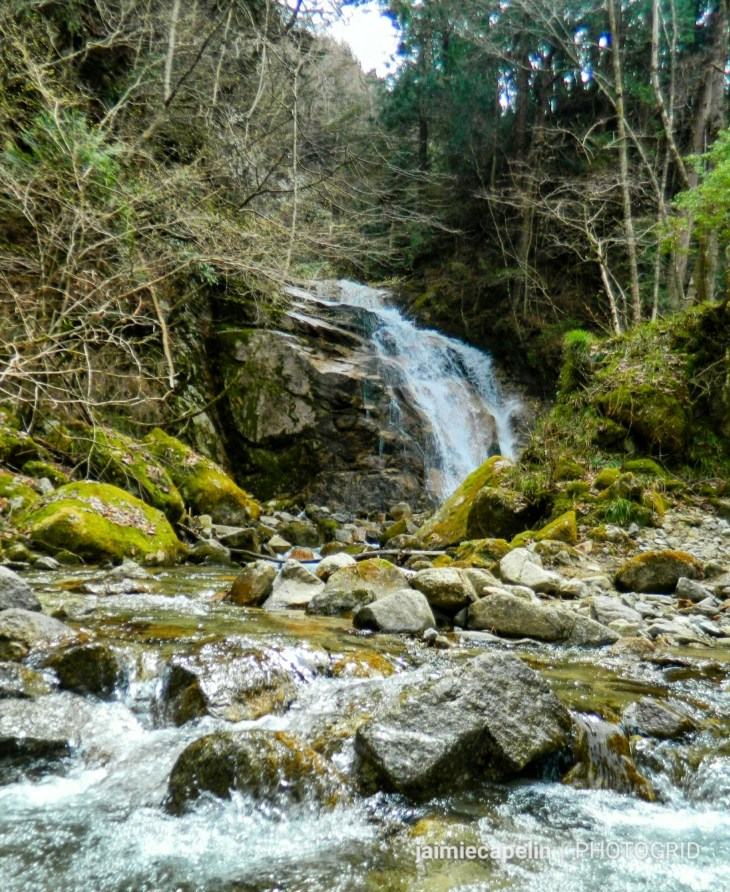
Odaki Waterfall
On the border between Nagano and Gifu, a little road takes you down towards the roaring sound of the Odaki and Medaki waterfalls. Legend has it that the larger, more impressive fall is male, and the serene and modest one is female. It is said that travellers in the Edo era would bathe in the falls for good fortune before continuing their journey to the next post town. This was a beautiful place to pause and take in the nature, especially as we were lucky enough to get a moment without any other tourists. The light beams through the woodland, while birds twitter somewhere above, to the sound of rushing, bubbling water, trickling over rocks and swirling into the river.
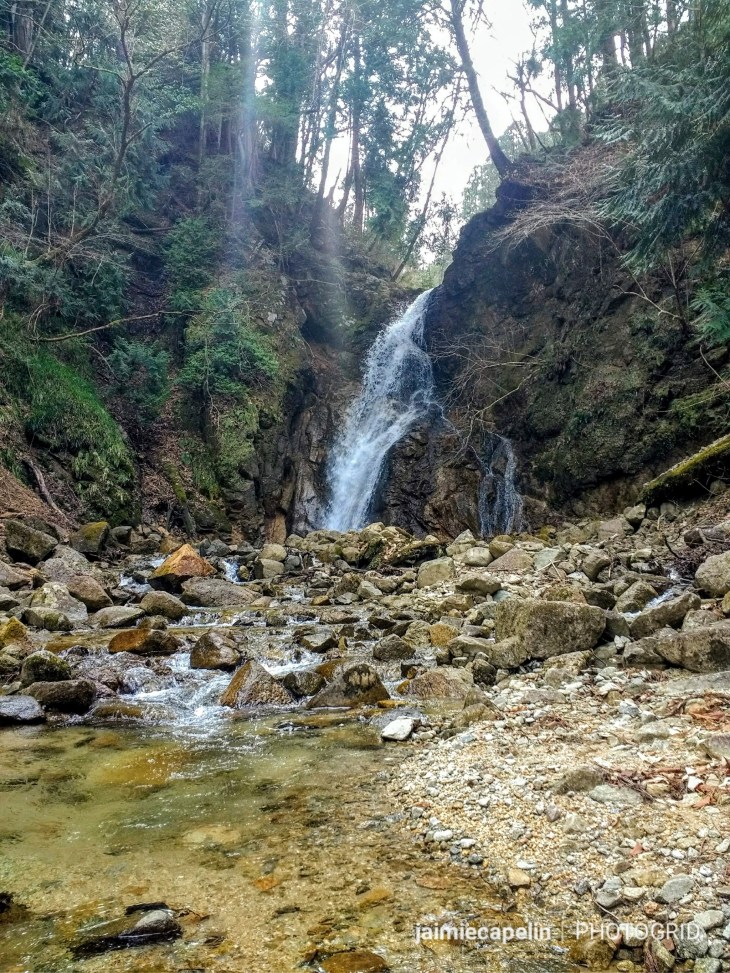
Medaki Waterfall
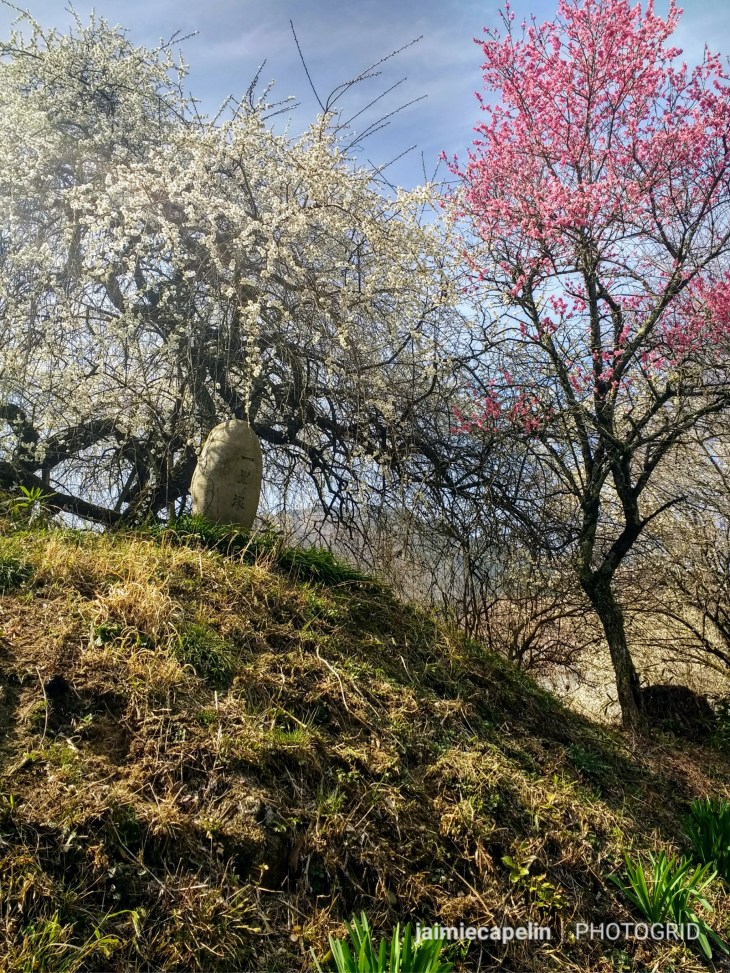
Soon we came to an ancient rest house, with a 200 year old weeping cherry blossom beside it. As I stood admiring the beautiful drooping blooms, an old man wearing traditional robes and a rice farmer’s hat invited us into his traditional house, which was open to the public. He was giving out free Ocha tea for tourists hiking the Nakasendo.
We welcomed the break, and the opportunity to get out of the scorching valley sun for ten minutes, and sat down enjoying the refreshment, chatting with some fellow English and Aussie travellers who were doing the route in the opposite direction. They warned us of a big climb to come, and they weren’t lying!
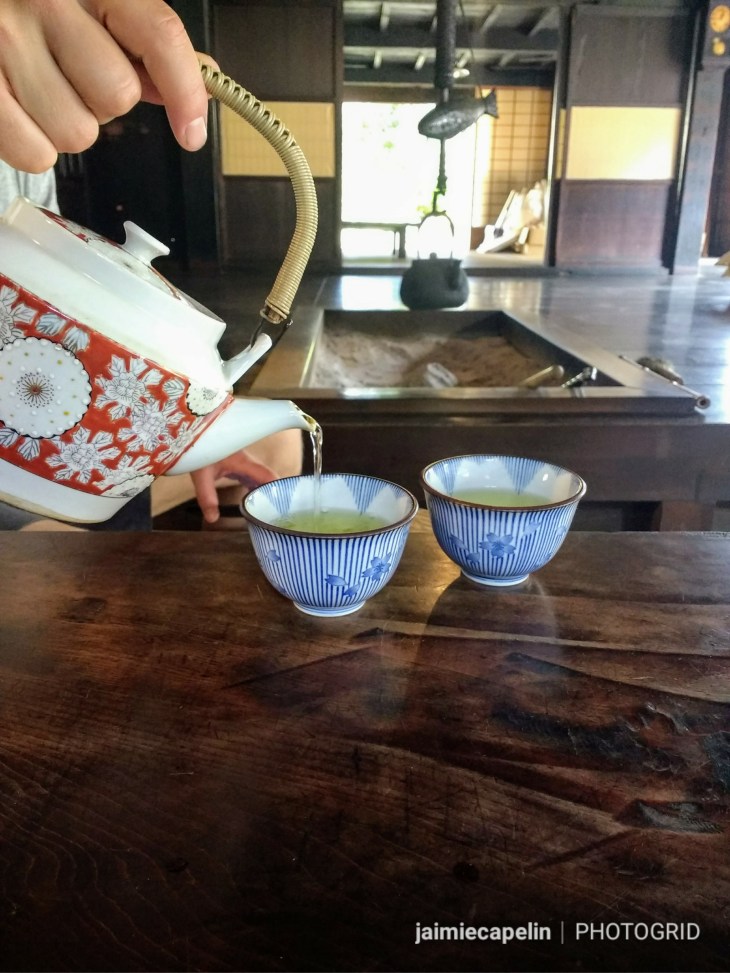
Pouring Ocha in the Traditional Rest House
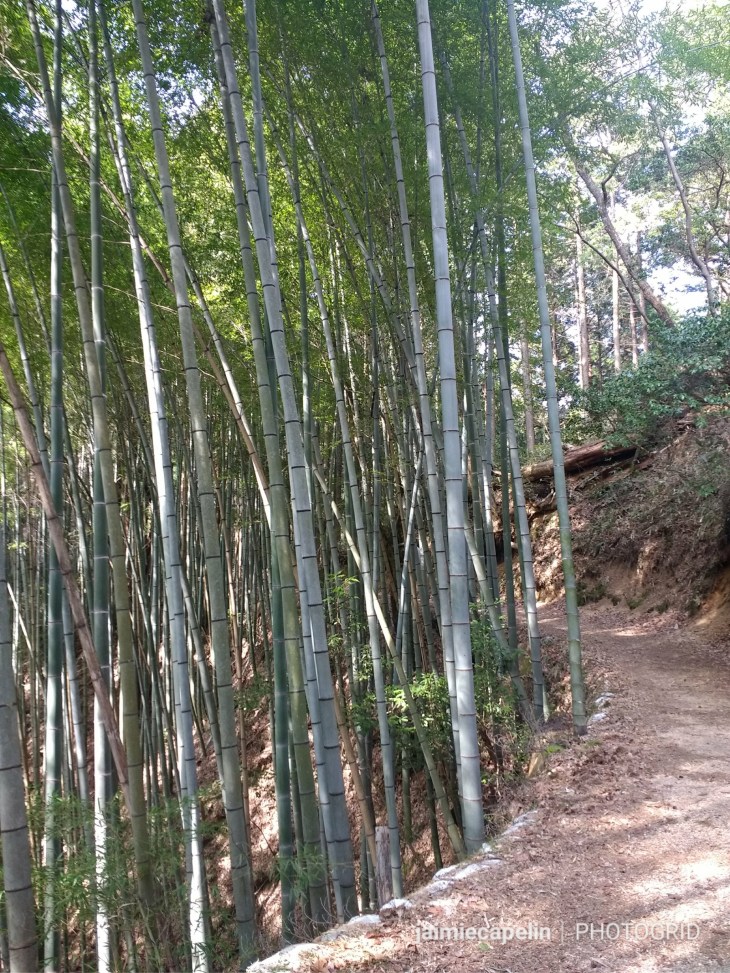
The hike up to the ridge continues along the original cobbles, which are rugged and warn, and don’t necessarily make the trek any easier on your feet. The path follows through thick, ancient woodland, with enormous trees, some of them protected and even worshipped. The river still flows down in the opposite direction beside the path, babbling rockery and green moss bringing music and colour to the scene.
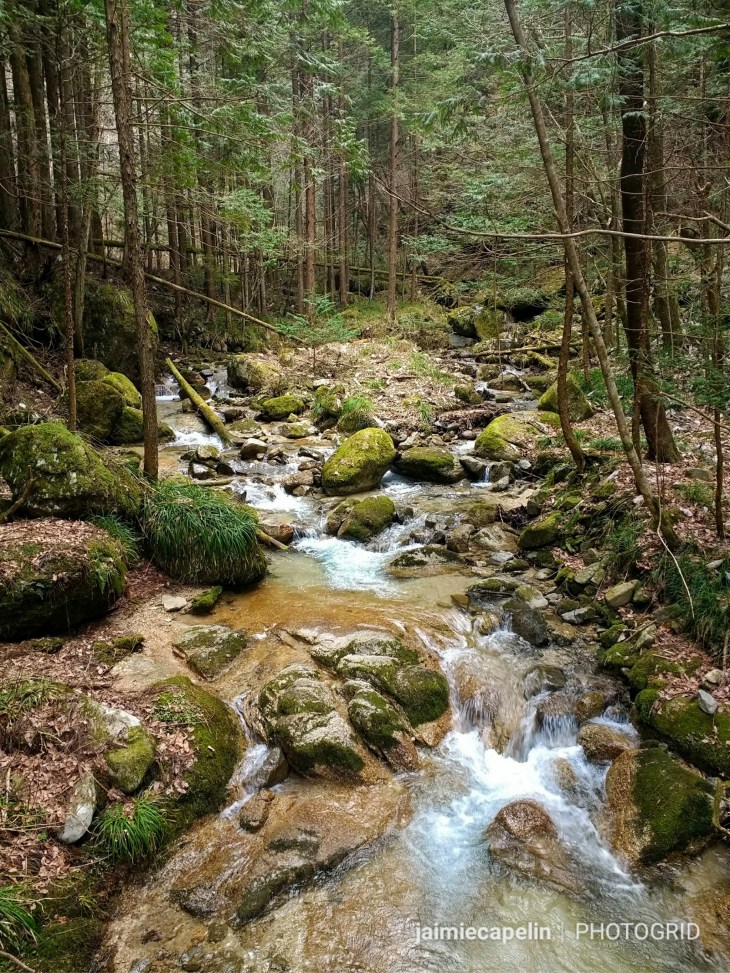
Following the River
~ Magome-juku ~
Following the long road winding down from the ridge, we finally reached the iconic post town of Magome-juku, with its dramatic mountain backdrop. The little winding street etches down the hill; paved with wooden buildings either side, trees and flowers decorating the edges, and between houses, you can look down over crops and rice paddies, Mt. Ena looming impressively over the scenery. To me, Magome appeared slightly more modern than Tsumago, which could be due to its location – closer to the main highway, and only a short drive from Nakatsugawa, therefore easily accessible and closer to modern civilization.
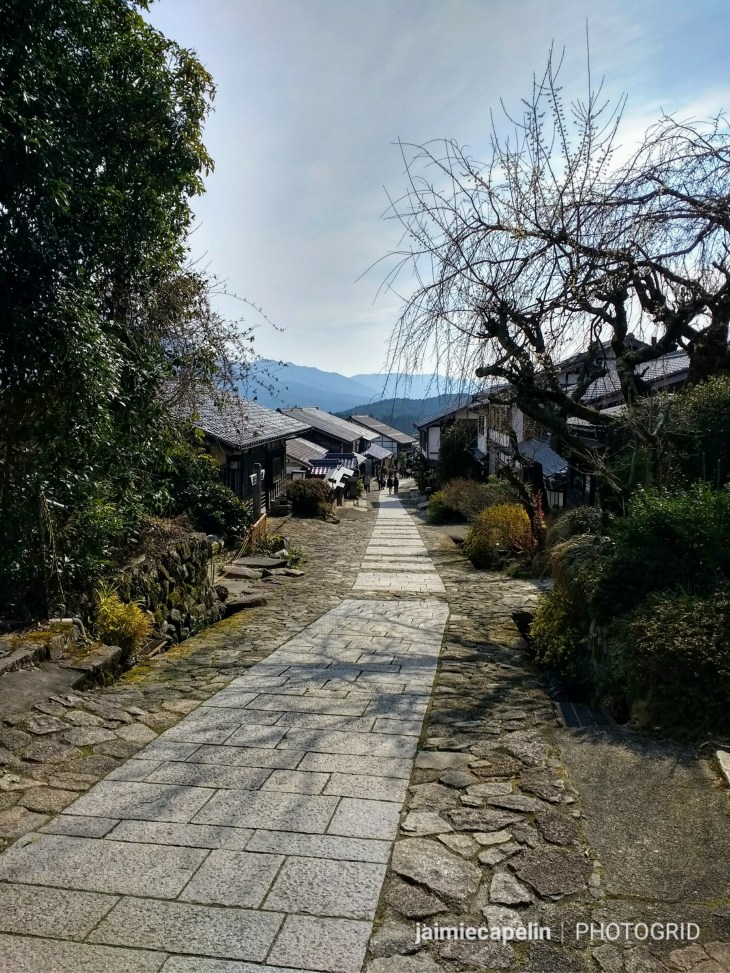
Magome-juku
We followed our noses towards a tantalising smell coming out of a busy restaurant. The board outside boasted of ‘Chef’s Special Hot Curry Soba’, and we were sold! Taking our shoes off (gladly, and a little self-consciously) we sat down on the tatami mats and ordered two well-earned beers, and Mic finally got his Soba noodles!
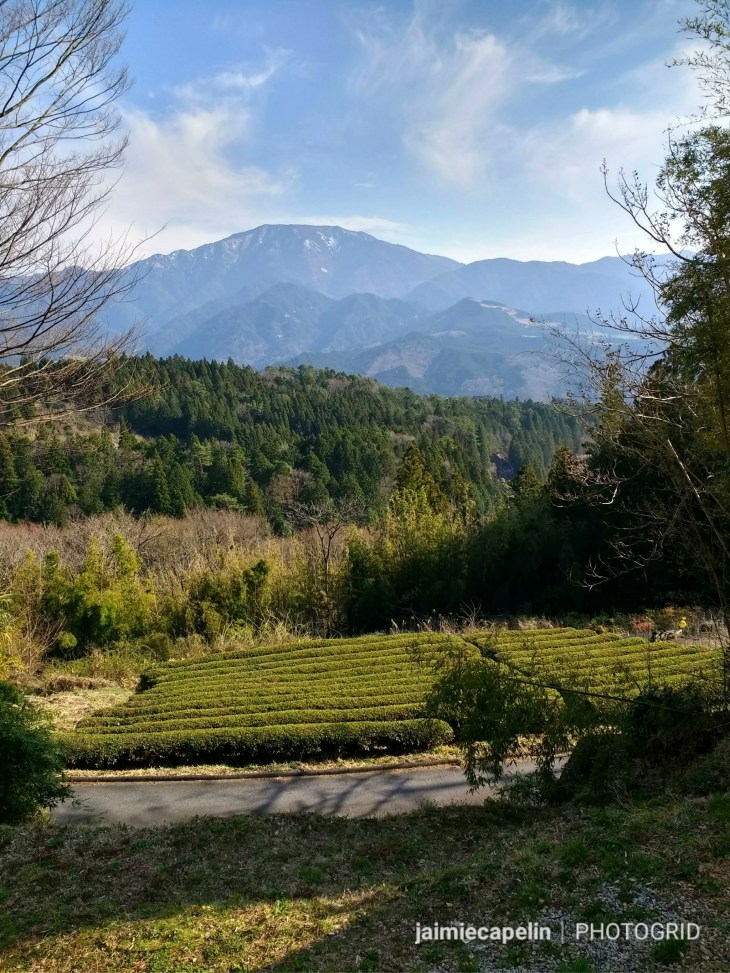
Mt. Ena
After basking in the sun and making use of the local wifi -researching where to camp and browsing the local shops, we bought a couple of deliciously malty, local dark beers – Kisoji Beer – and cracked them open for our final hike of the day. There was a river with an onsen complex down in the valley, about an hour away on foot. The walk was pleasant, following along the Old Nakasendo, which has been converted into the main highway, carving through the stunning Ena-Yama mountains, the evening heat reaching 24 degrees celsius. We came to the small village of Misaka on the Ochiai River, about a 20 minute drive from Nakatsugawa, where we set up camp on the river bank, and spent our evening relaxing in the onsen of the nearby ‘Kua Resort Yuzawa’ complex.
~ The Shinkansen Bullet Train ~
The following morning was bright and warm once again, and we were able to catch the free shuttle bus from the ‘Kua Resort Yuzawa’ complex to Nakatsugawa Station. From here we caught a train to Nagoya: Chubu region’s largest city, where the sun was unbearable, and we realised it was time to change out of our winter attire for good, and dig out the summer clothes from the bottom of our backpacks!
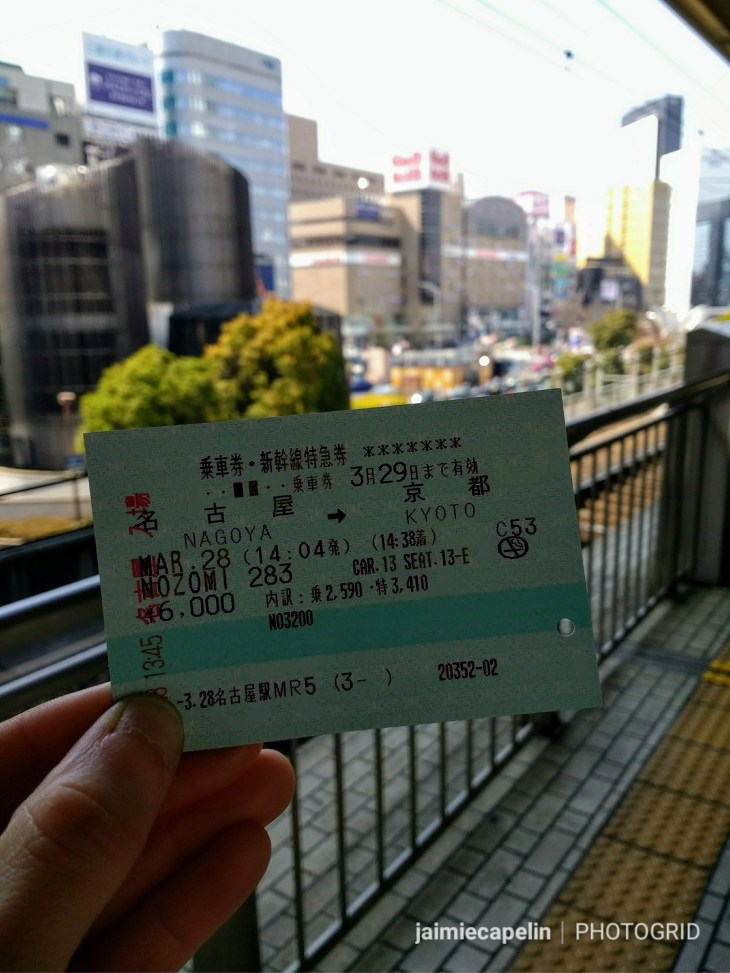
Shinkansen Ticket – Nagoya
Nagoya station is an underground network of ticket machines and passages leading to various platforms. Mic and I joked about catching the Shinkansen – the Japanese Bullet Train – and then both realised there was nothing actually stopping us! But where to? We knew we wanted to head for Kyoto, and it was the cheapest and quickest route from Nagoya, so we went to the nearest ticket machine and bought two tickets. Only, they weren’t complete tickets. We couldn’t get through the barrier; the train was going to leave without us! So, to prevent a terrible Harry Potter parody, Mic went straight to the ticket office to sort it out.
If you are buying a ticket for the Shinkansen, and aren’t machine savvy, I’d recommend cutting out the moment of panic, and going straight to the ticket office, as they are usually English speaking and very helpful.
Notably, the Shinkansen is definitely the more luxurious way to travel, with our short trip costing 6,000yen each – that’s £42 at the current exchange rate.
At 200mph, the Japanese Bullet Train pushes you into the back of your seat, and blurs your eyes as it accelerates across the country. It is incredibly smooth for something so fast, and the journey from Nagoya to Kyoto only takes 30 minutes. That’s 84 miles, the equivalent to a 2 hour drive, past towns and mountains and the south side of Lake Biwa.
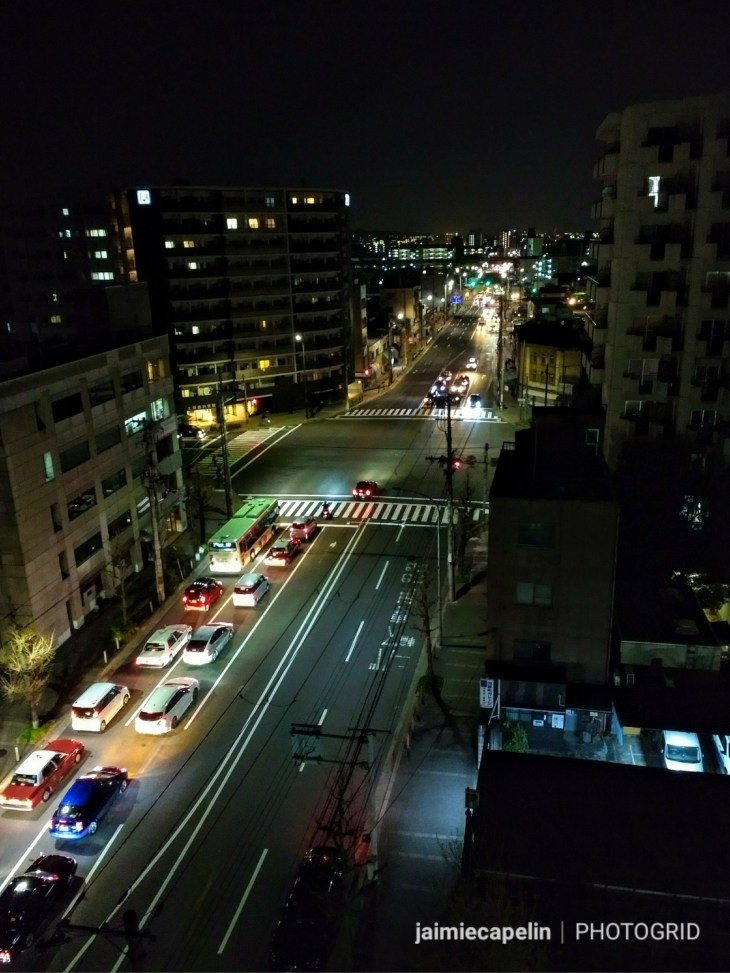
We were soon arriving in Kyoto, at the end of the Nakasendo, where Gerry, Cam and Zac were already staying. After quickly finding a very reasonable Air BnB, it was time to reunite with our friends and compare our stories of tough climbs and freezing nights in tents, before falling asleep in a comfortable bed above the warm glow of down town Kyoto.
 Jaimie's Travels