Wellington ~ Te Whanganui-a-Tara

9–13 minutes

How I made the most of 4 nights in New Zealand’s capital city at the end of winter without a car.

  1. Budget
  2. Must Do Experiences
    1. Wellington Cable Car
    2. Zealandia
    3. Wētā Workshop Experience
  3. Free Things To Do
    1. Cuba Street
    2. Wellington Botanic Gardens
    3. Waterfront Walk – Oriental Bay
    4. Wellington Museum
    5. Te Papa Tongawera – Museum of New Zealand
  4. Cafés & Dining
    1. Buenos Aires Café
    2. Gemini Café & Eatery
    3. The Hangar
    4. Mexico, Wellington
    5. Puro Chile
  5. Craft Pubs & Bars
    1. Garage Project
    2. Fortune Favours
    3. The Library
    4. Little Beer Quarter
  6. Read Next…

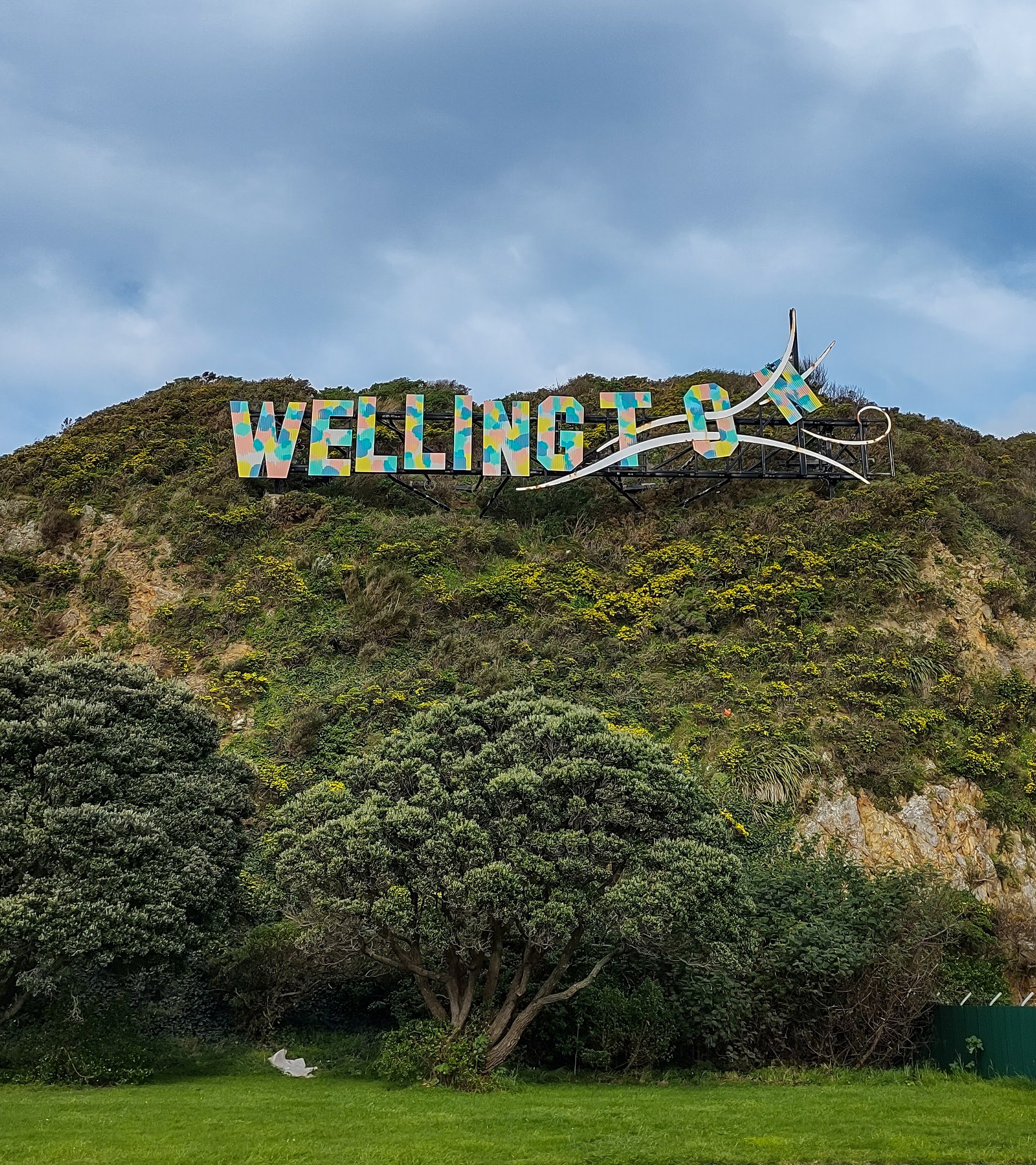
Revisiting the south of New Zealand for the first time since I lived and backpacked there in 2014, I realised that I’d always just passed through the country’s windy capital without really seeing anything! So when Lockdown ended I decided it was time – without the constraints of a backpack and tent – to actually get to know Wellington.

Te Whanganui-a-Tara means ‘the great harbour of Tara;’ Tara being the son of a Polynesian explorer whose descendants made this their home.
Budget

Total: $1,150 NZD between two, (end of winter, 2022.)

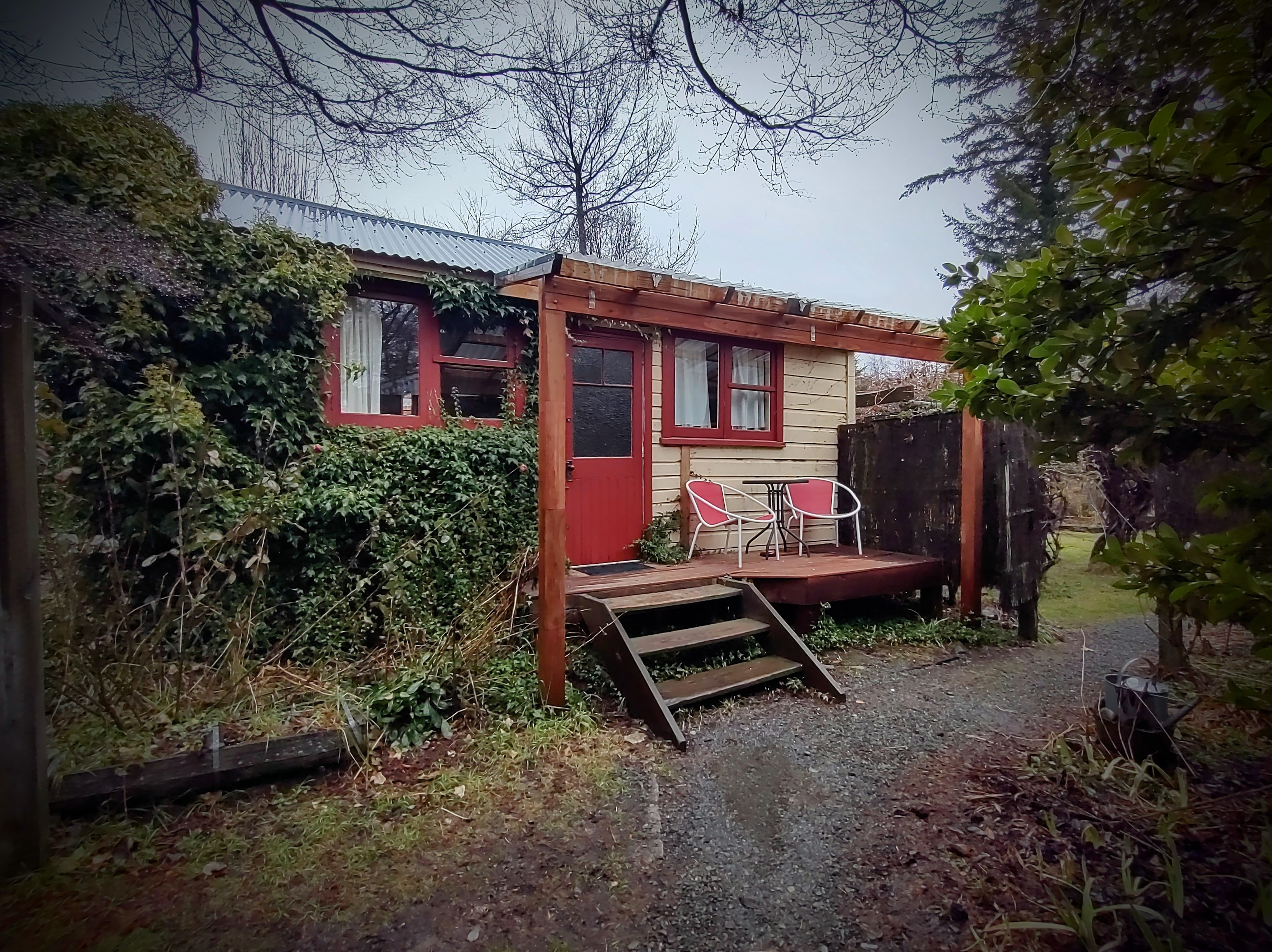
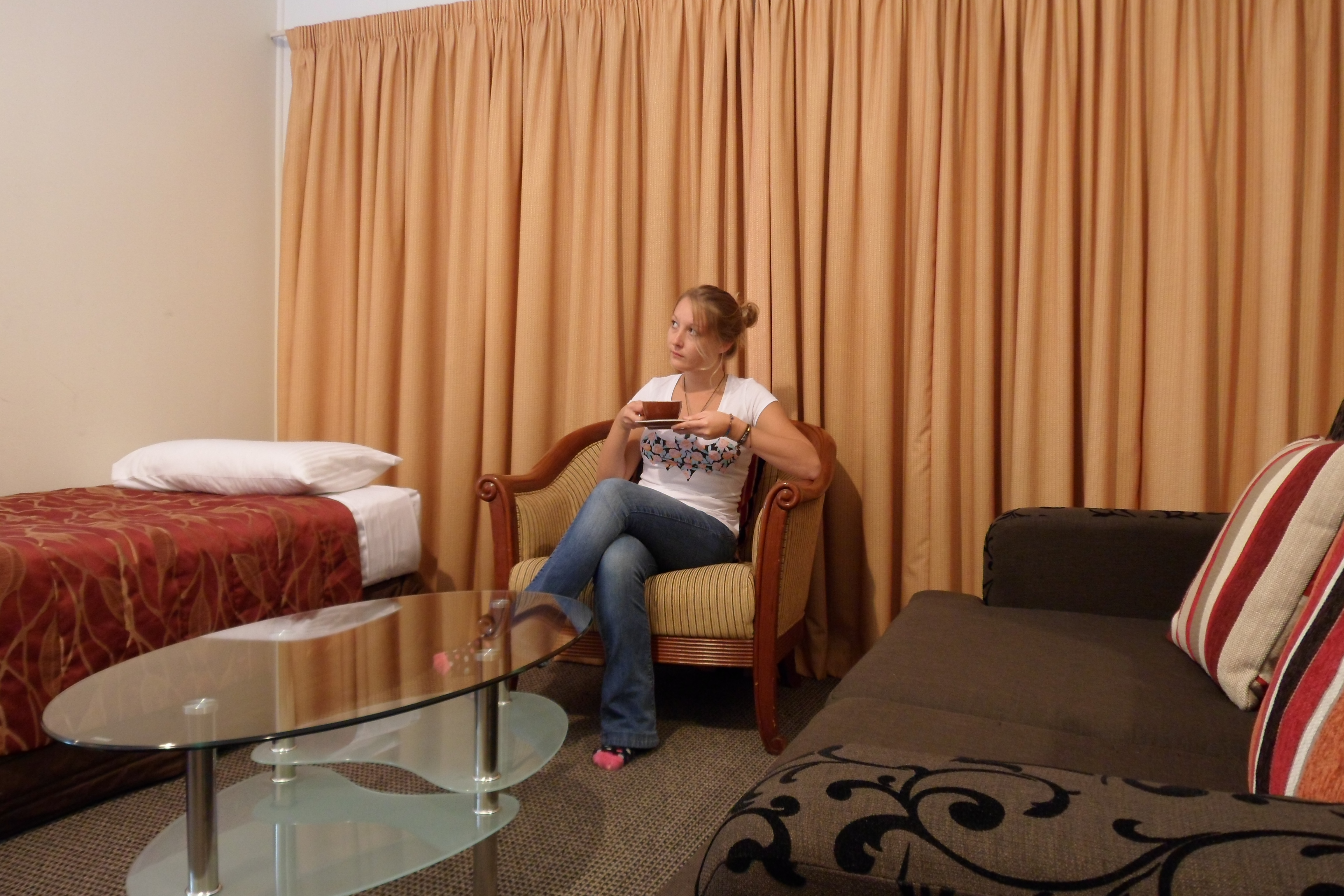
My partner and I pre-booked a small studio apartment through Air BnB, situated on The Terrace in Te Aro – a quiet, hillside road surrounded by trees, just a 7 minute walk to Cuba Street.
Accommodation: < $600 NZD for 4 nights

We allowed ourselves a semi-flexible spending budget in Wellington, but I don’t think we did too badly over four days!
General Spending: $550 NZD between two

Must Do Experiences

Wellington Cable Car

The first thing on my to-do list was catch the Wellington Cable Car; I don’t know why I’d missed the opportunity in the past! Operating since 1902, the cable car boasts some of the city’s best views, and the destination terminal – Kelburn has some worthwhile attractions to see, including the Wellington Botanic Gardens & Carter Observatory. We used Wellington’s public transport card – ‘Snapper’ – to ‘tap on’ the cable car (from Lambton Quay only) with a significant discount. Note: this payment method is due to change in October 2023.
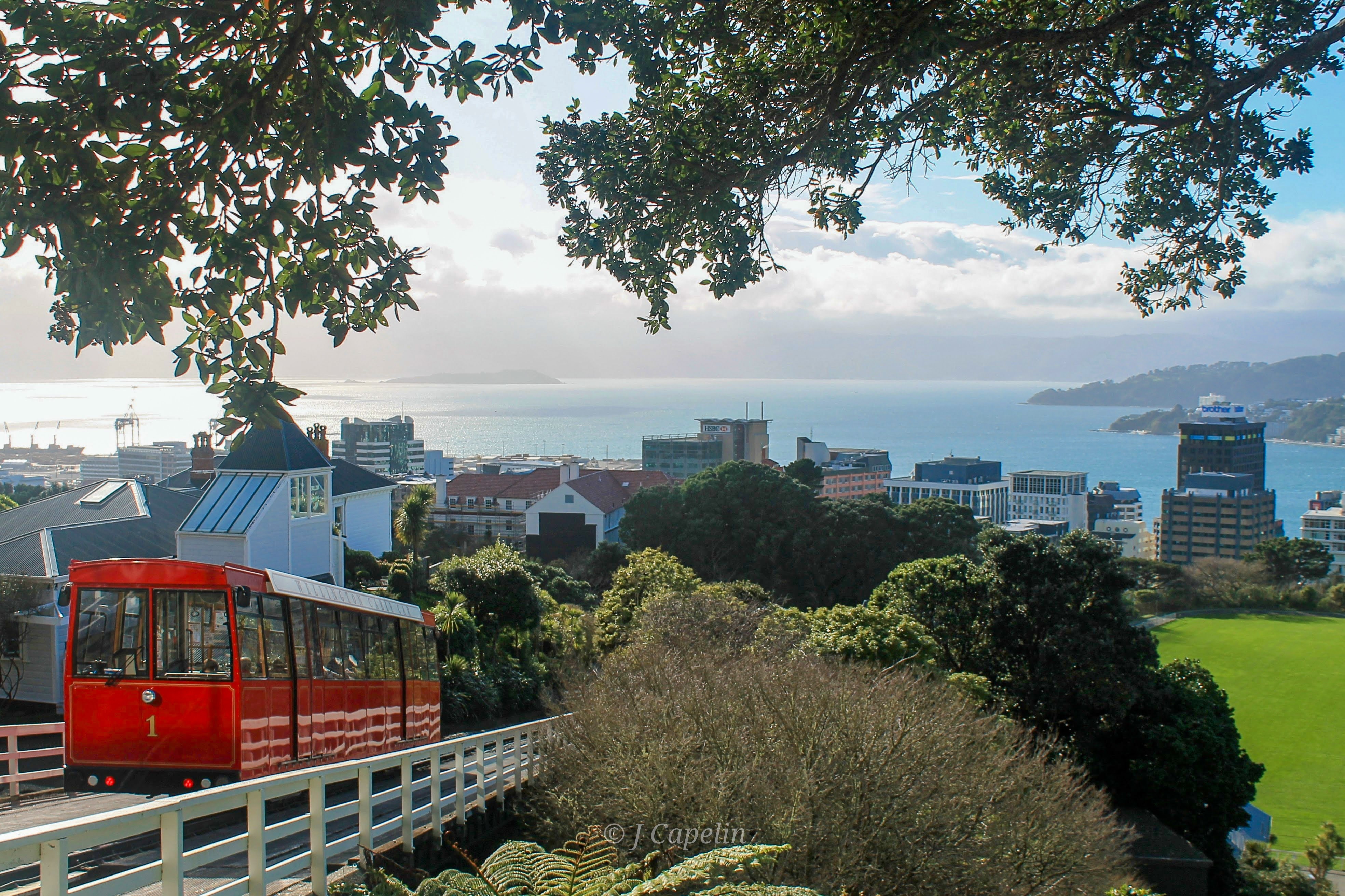
Location: Cable Car Lane, Lambton Quay, Wellington
Cost: $6 NZD one way, $11 NZD return
Time Allowance: 5 mins

Zealandia

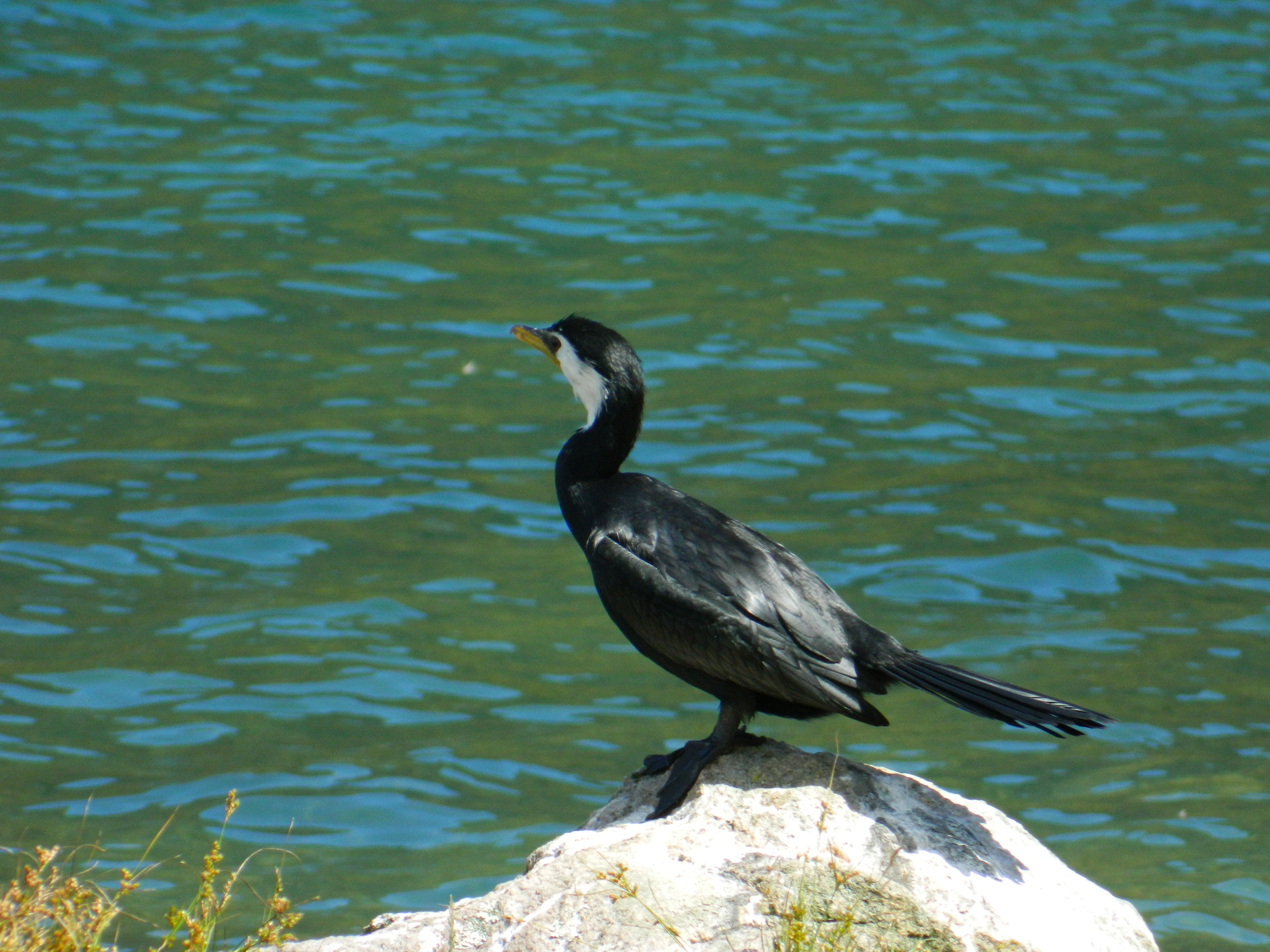
After being woken in the night by the cheeky squeaks and squawks of Aotearoa’s endangered parrots – the kākā – flying through the neighbourhood, fomo got the better of me and I had to go and find these incredible birds at Wellington’s renowned nature reserve: Zealandia. The rain was already setting in as we caught the bus from the city, and when we arrived we were seemingly the only people there. With our boots and raincoats donned, we enjoyed the rainforest ambiance, and the hazy broken surface of the lake where Pied Shag nestlings shook the rain off their downy feathers in their giant lakeside nests.  We were lucky enough to meet the reserve’s pair of takahē, who were happily plodding about in the rain, stripping grass with their stout beaks like a couple of little blue dinosaurs!
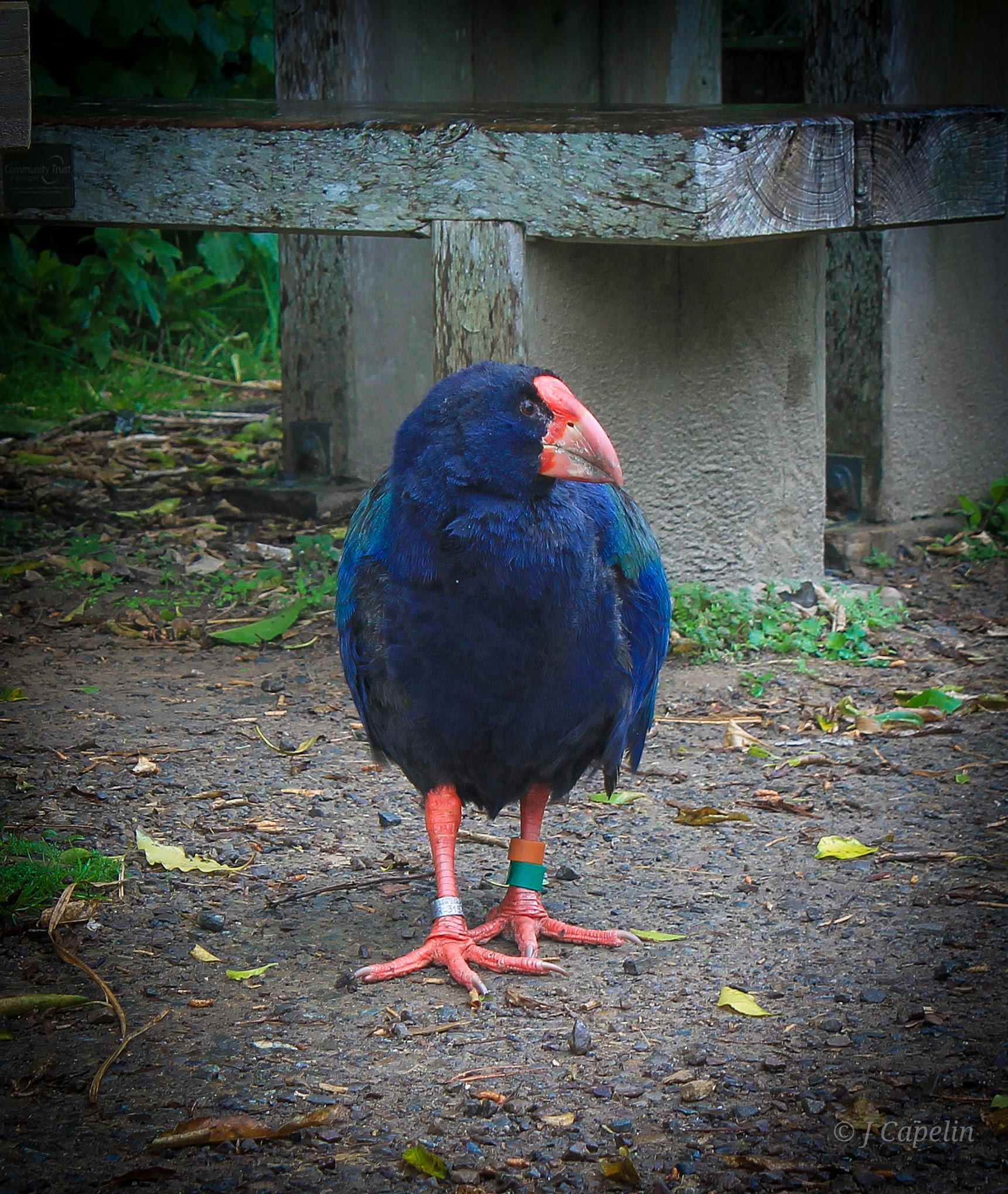
Takahē were actually thought to be extinct until a pair were discovered in Fiordland in 1948, and since then the Department of Conservation have been on a mission to carefully restore their population. Adult pairs will only have 1 or 2 chicks per year, and because they are such territorial birds that require up to 100 hectares of space per brood, it’s a slow process! I count ourselves pretty lucky to have stumbled across this pair.

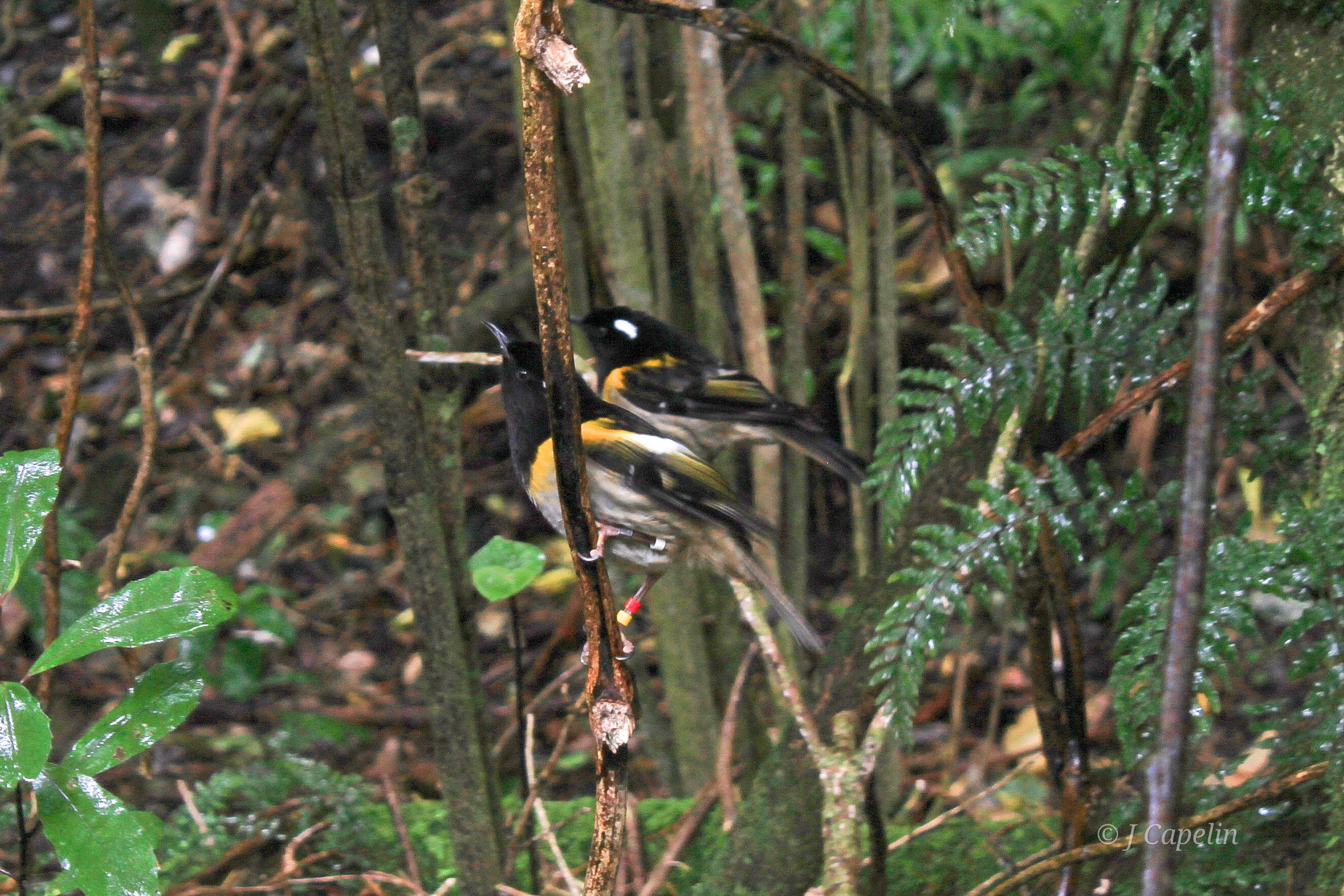
Tui and Bell Birds sounded their music through the pitter-patter in the canopy, and we saw a couple of little black & yellow hihi (Stitch Birds) bouncing between twigs in the bush, but still no sign of the illusive kākā.
The cold rain made my clothes cling to my skin, and just as I was about to give up on seeing a kākā, one landed near the feeders, then another, and another! Soon there were several large, native parrots hopping around the feeders, opening the specially built mechanisms with their claws and beaks to get to the food. Their feathers aren’t as bold as their personalities, but they do have brilliant scarlet under-wings and pretty splashes of yellow on their cheeks.
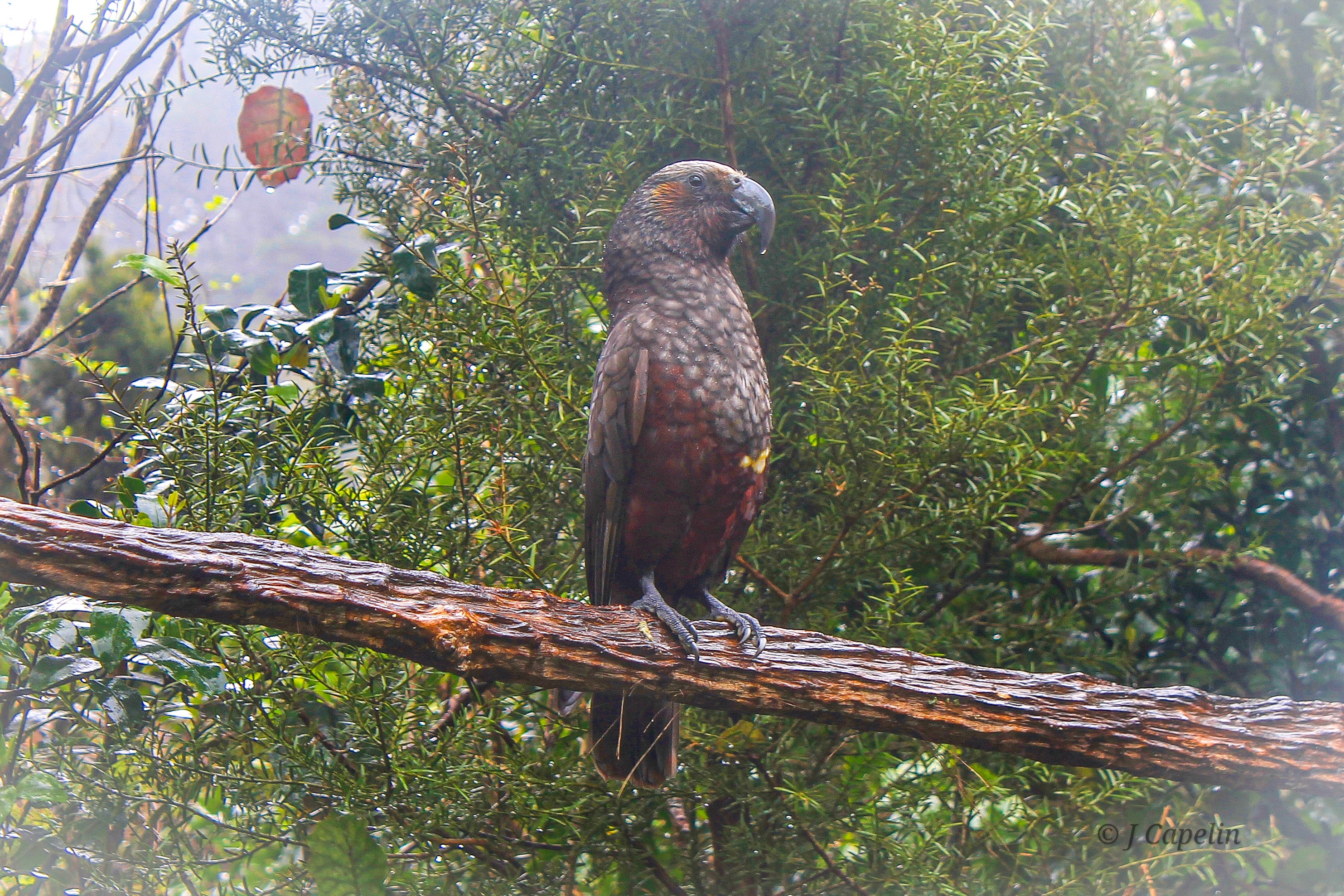
A close relative of the South Island kea, kākā are endangered and a rare sight, but Zealandia’s project to reinstate the parrots into Wellington is working, and they are finally beginning to thrive again around the city (though you tend to hear them more than you see them!)

Location: Waiapu Road, Karori, Wellington
Cost: $24 NZD general admission
Time Allowance: 2 – 4 hours

Wētā Workshop Experience

The Lord of the Rings franchise is what made The Wētā Cave internationally famous, but you don’t need to be a Lord of the Rings fan to appreciate this special effects studio. In fact, you might be surprised at how many productions they are involved in. On The Wētā Workshop Experience you get a full tour of the studios, where there are movie artefacts you can hold, interesting models and original body suits to see; masks, miniatures, and plenty of sneak peaks at how they made them. You’re only allowed to take photos in certain areas, and mine are no different, which is even more of a reason to go see for yourself!
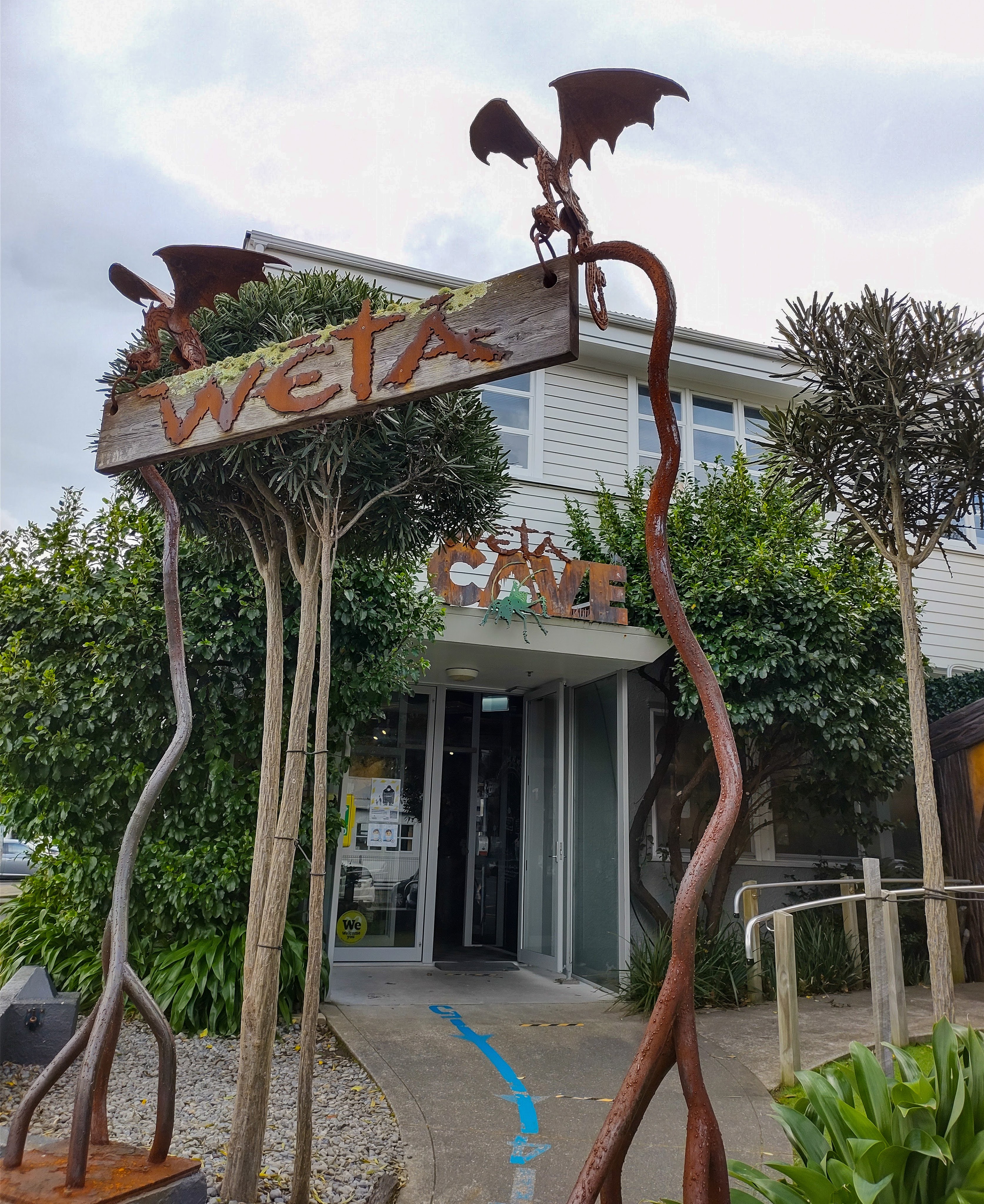
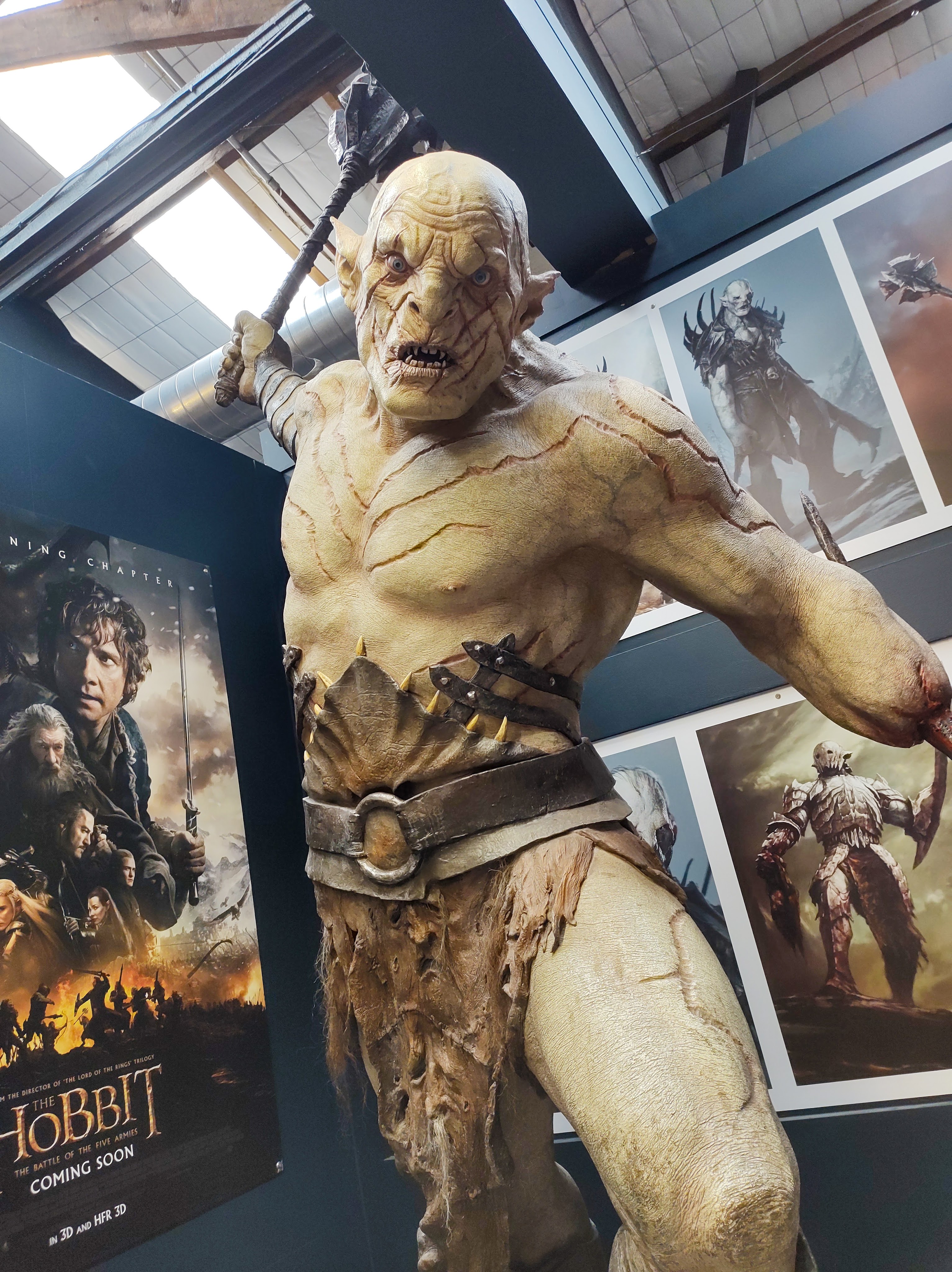
There is also a free mini-museum and gift shop to look around at the entrance to The Wētā Cave, and you can buy tour tickets on the door depending on how busy it is.

Location: Weka Street, Miramar, Wellington
Cost: $50 NZD online, $55 NZD in-store
Time Allowance: 1.5 hours

Free Things To Do

Cuba Street

As Wellington’s cultural centre, Cuba Street is a colourful pallet of diversity, lined with bars, restaurants, cafés, fashion & art, with galleries and music venues, and space for buskers and street artists. The Precinct stretches along to Dixon Street and round to Victoria Street, filling the whole block with arts. While I was there I spotted one of Wellington’s well known and beloved street artists at work; a longboarding, saxophone and flute playing Tree Man! There is plenty in the Cuba Precinct to spend money on, but it’s free to look first!
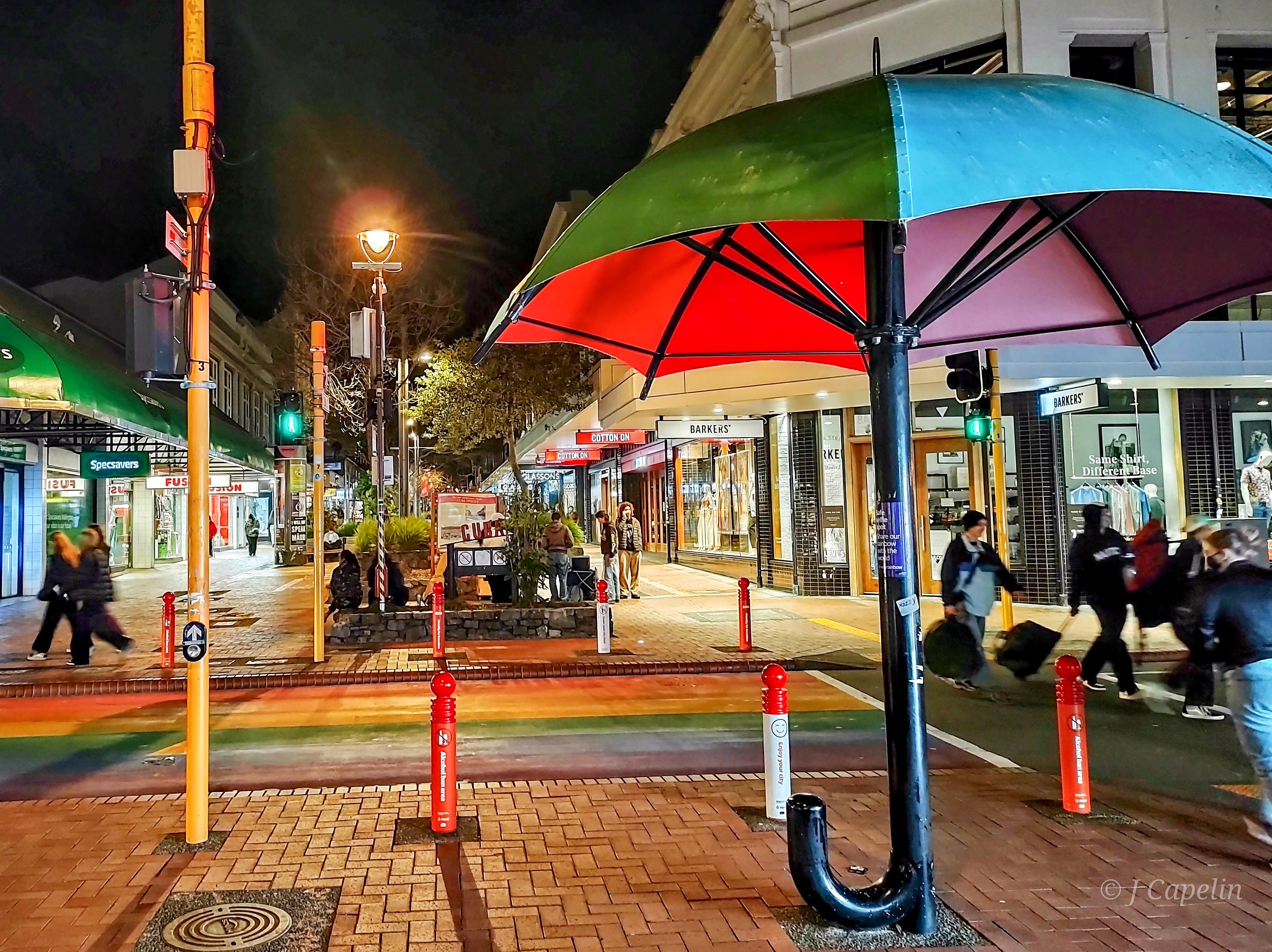
Time Allowance: 30 mins – 2 hours
Location: Cuba Street, Te Aro, Wellington

Wellington Botanic Gardens

At the top of the Cable Car at Kelburn is the Wellington Botanic Gardens. With stunning views over the city and harbour, there are plenty of paved footpaths leading through an array of flora, and open spaces for picnics. I was lucky enough to see the early blossoms of spring, which attracted native tui to feed on them. Sometimes the squawks of the kākā can be heard from the canopies, and if you’re really lucky you might see them here.
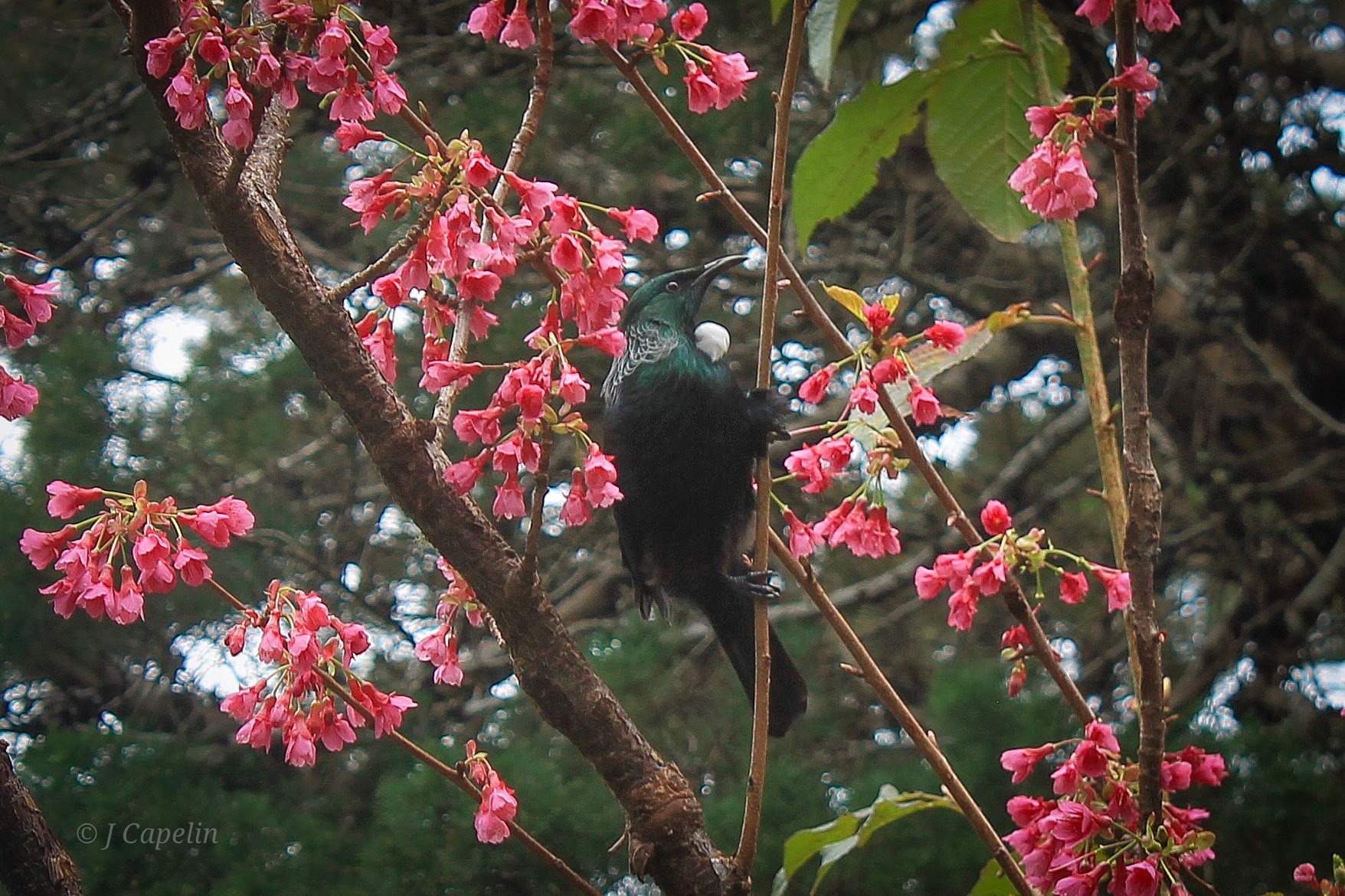
Time Allowance: 1 – 2 hours
Location: Glenmore Street, Kelburn, Wellington

Waterfront Walk – Oriental Bay

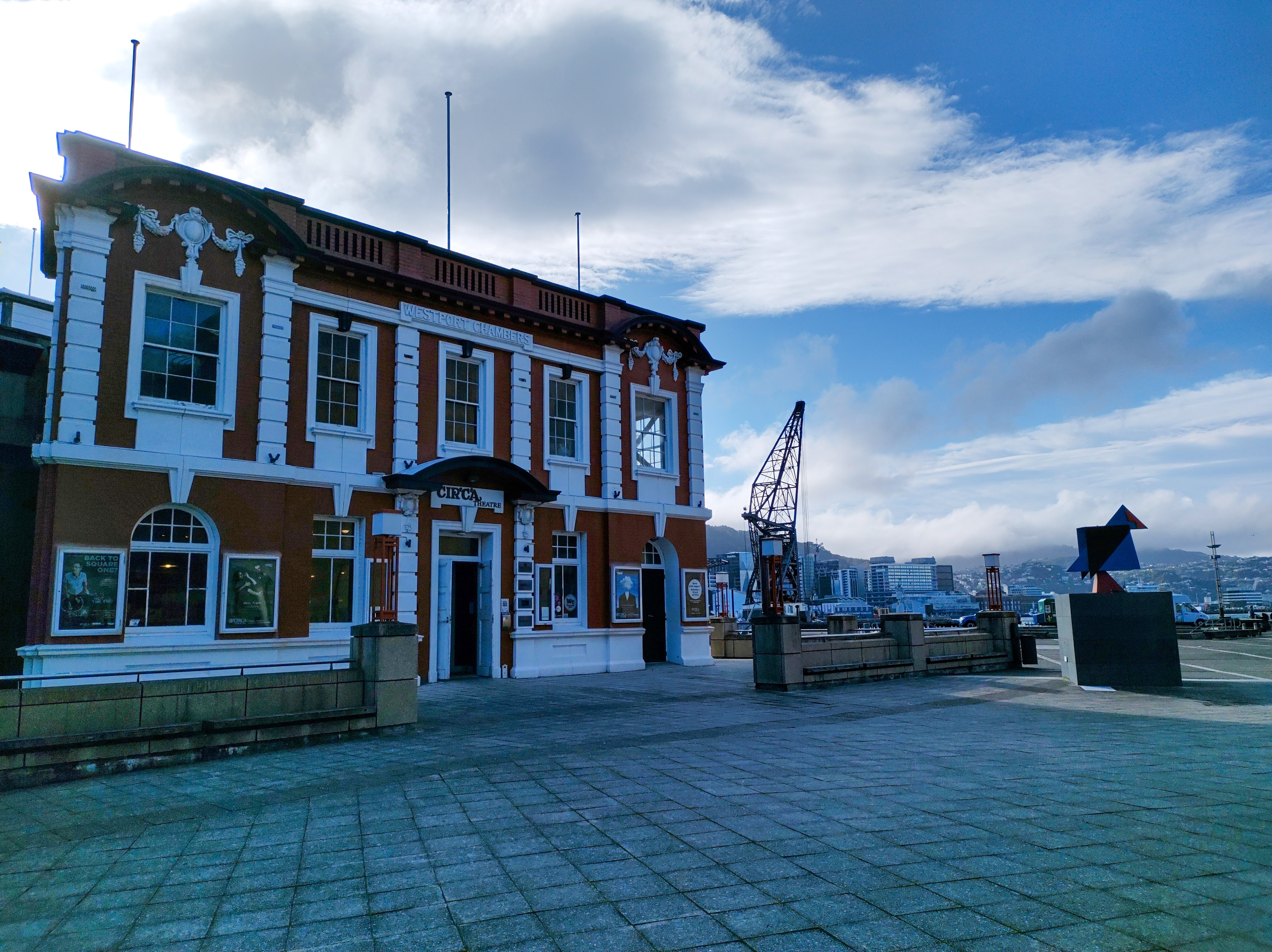
Wellington’s waterfront is a playground of boardwalks, cobbled squares, pontoons, sculptures and heritage landmarks, not to mention the modern markets and arts & crafts that pop up at certain times. We began our walk at Queen’s Wharf, which is easily accessible from the city centre, walking under the huge shade-sails towards the choppy sea. We headed east along the waterfront, spotting the S.S Hikitia – an original floating steam crane built in Scotland in the early 1920s.

As we rounded the corner by Te Papa Museum we saw the giant origami sculptures by local artist, Ben Pearce; part of a public art exhibit that renews at least every two years. We passed many more statues along the way, including ‘Solace in the Wind’ (the naked man) and the 3D standing ‘Wellington.’ Eventually we could see the iconic row of boatsheds at Clyde Quay, on a classic Wellington backdrop of hillside houses, and we continued around to Oriental Bay – a pretty little suburban beach where dolphins, orca and stingray can be sighted.
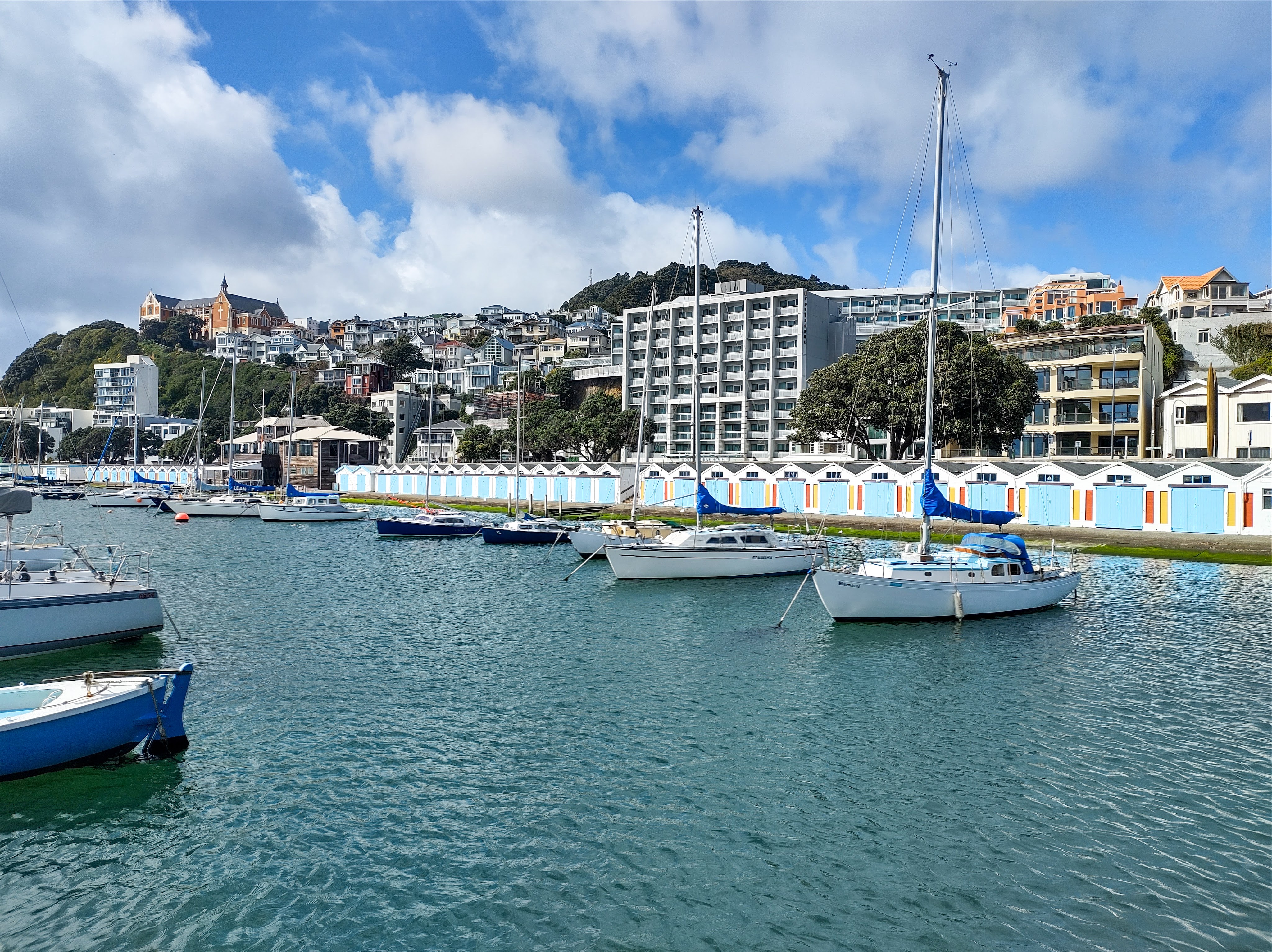
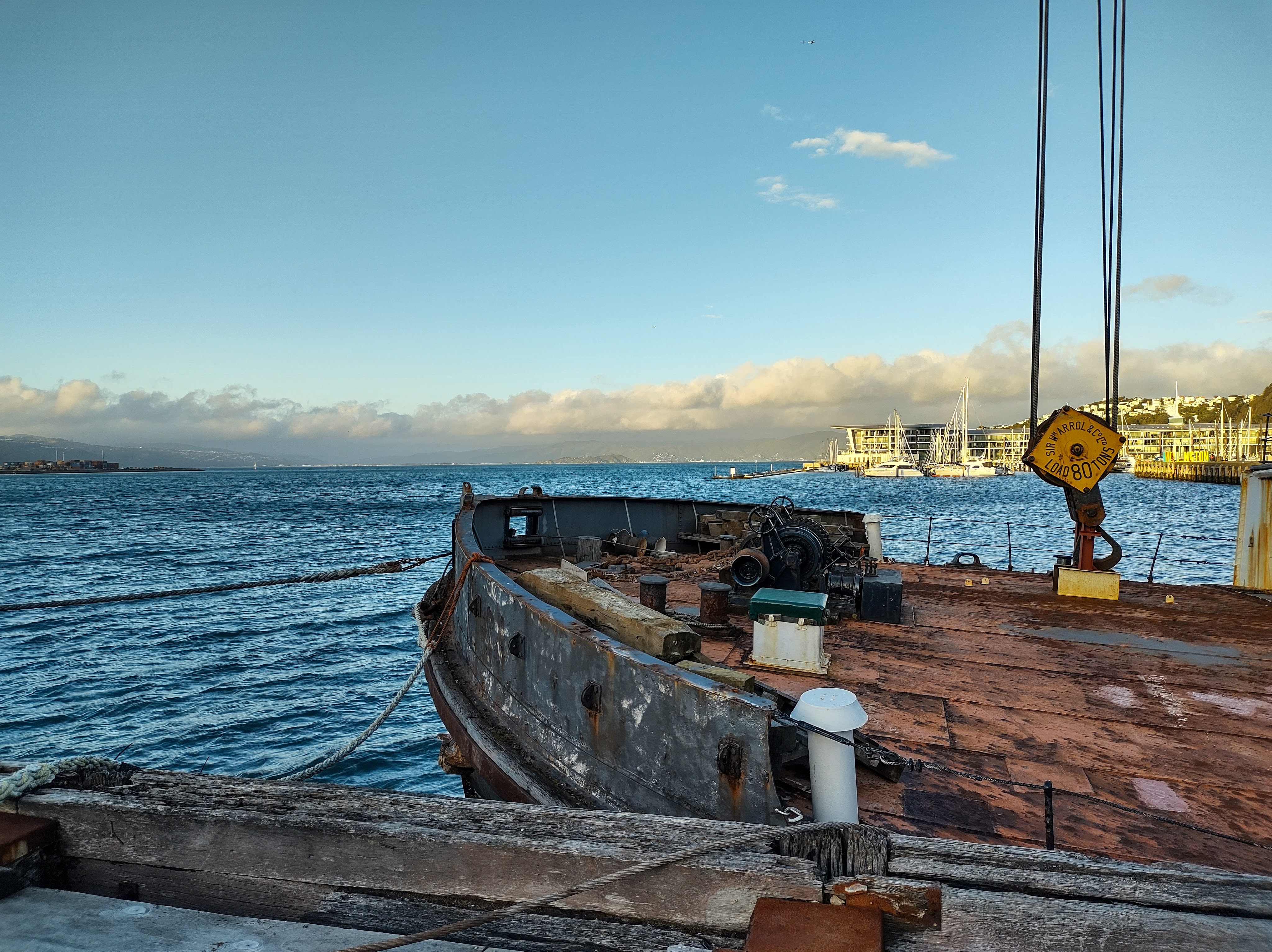
Time Allowance: 30 mins one way
Location: Start – Queen’s Wharf, Wellington Central Finish – Oriental Bay, Wellington

Wellington Museum

Not to be confused with Te Papa Tongawera – The Museum of New Zealand, Wellington Museum presents a more local story. Located in The Bond Store – a heritage cargo warehouse from the late 1800s, it is reminiscent of its shipping days, with dark wooden beams, barrels and hoists and muslin sacks full of goods. This museum tells the stories of how Wellington came to be, along with immersive & personal tales of the sea, and an attic full of interesting collections from over the years.
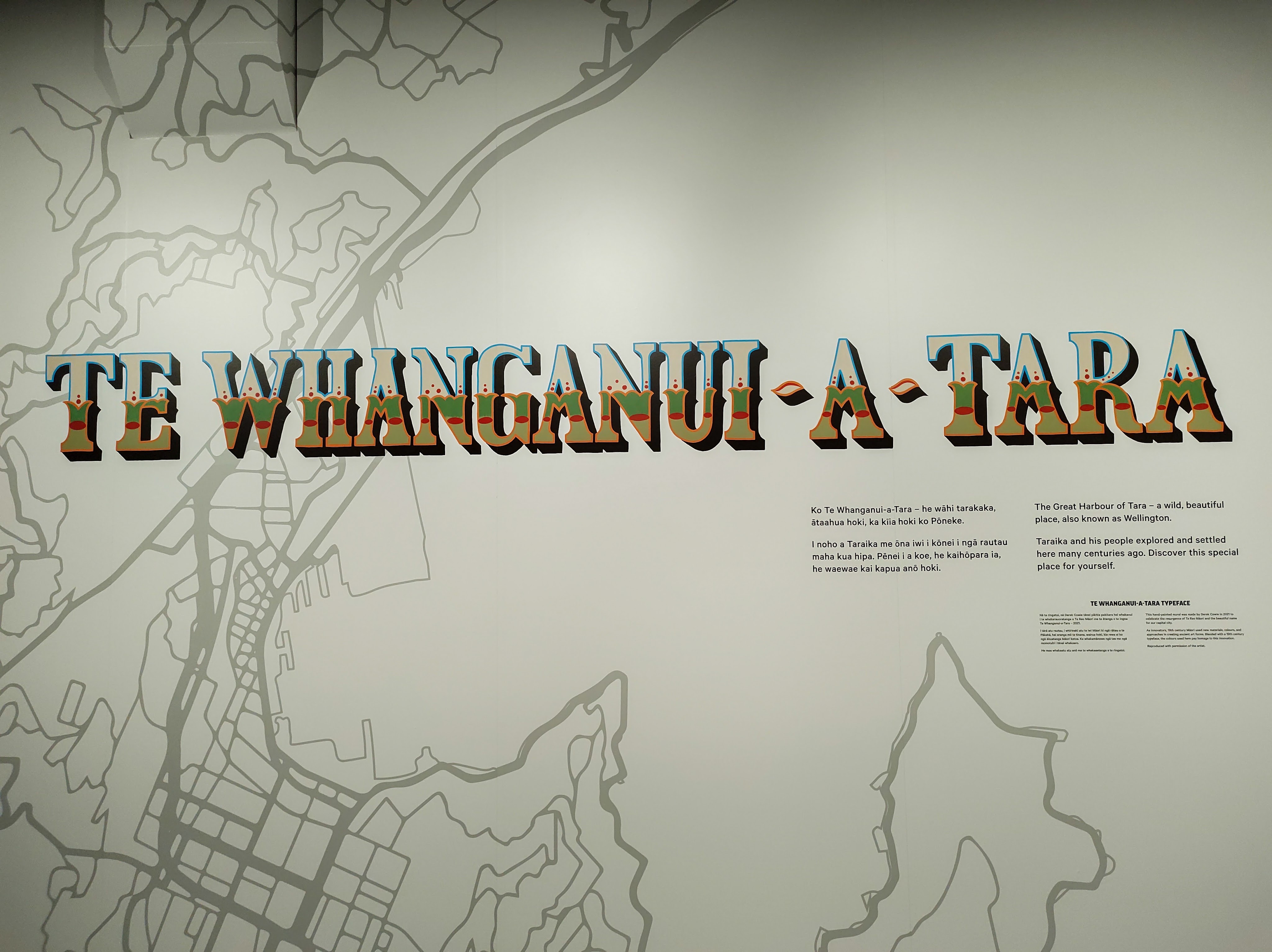
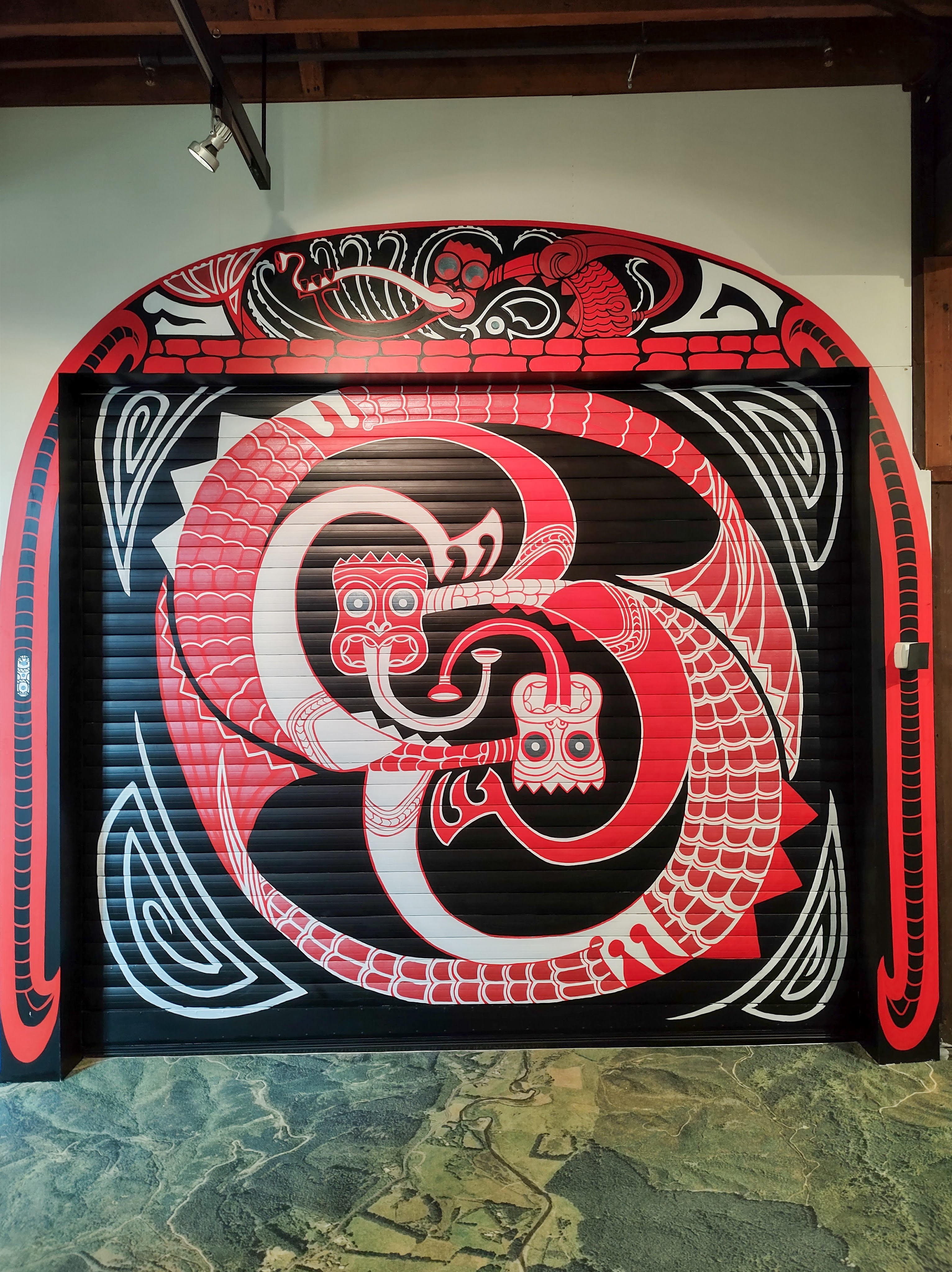
Time Allowance: 1 – 2 hours
Location: Jervois Quay, Wellington Central

Te Papa Tongawera – Museum of New Zealand

We spent a good hour exploring the natural & cultural history of Aotearoa in Te Papa Museum, with interactive pieces including an earthquake simulator. With plenty to keep kids busy (and big kids like us,) this truly is a memorable museum.
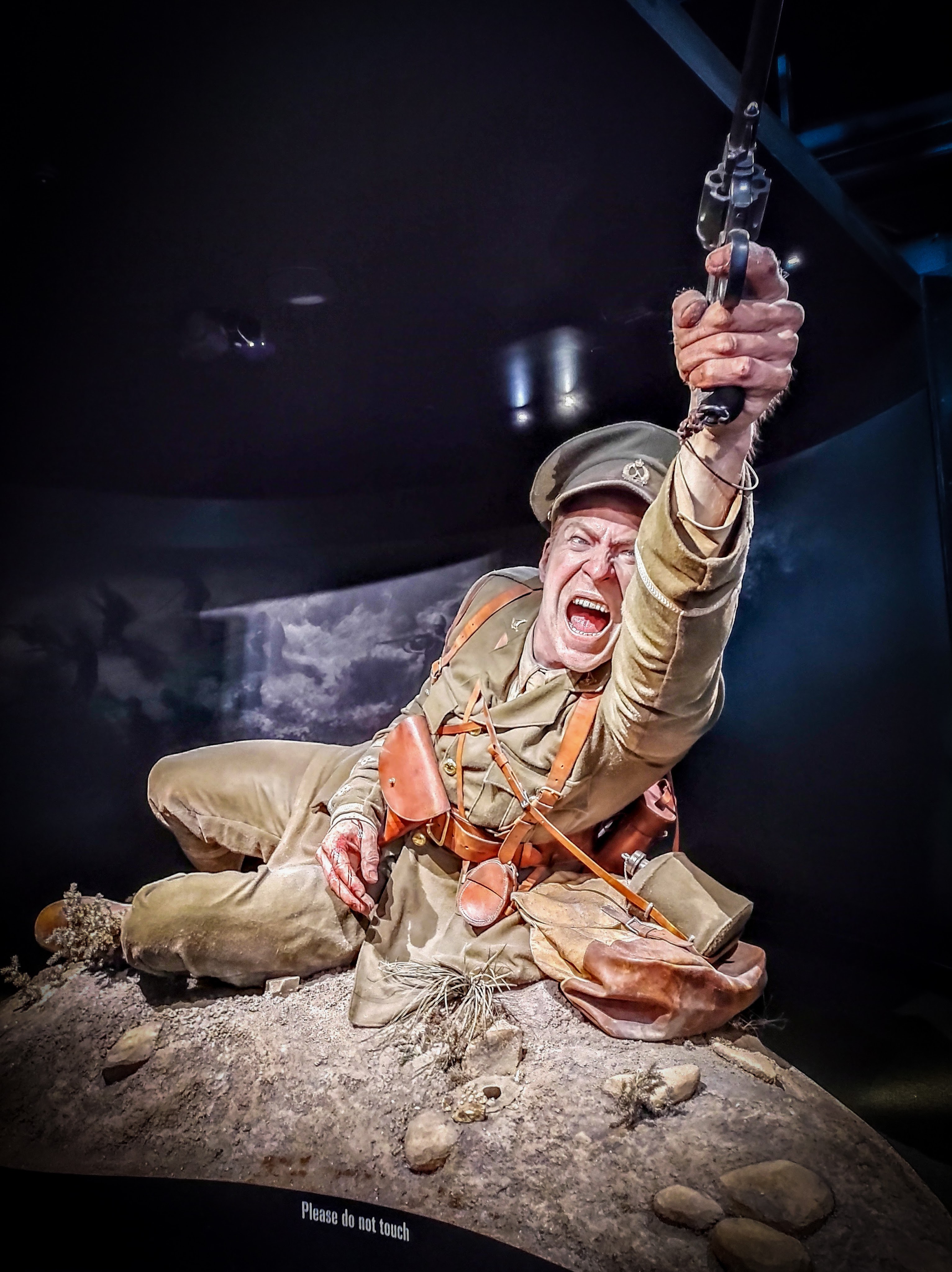
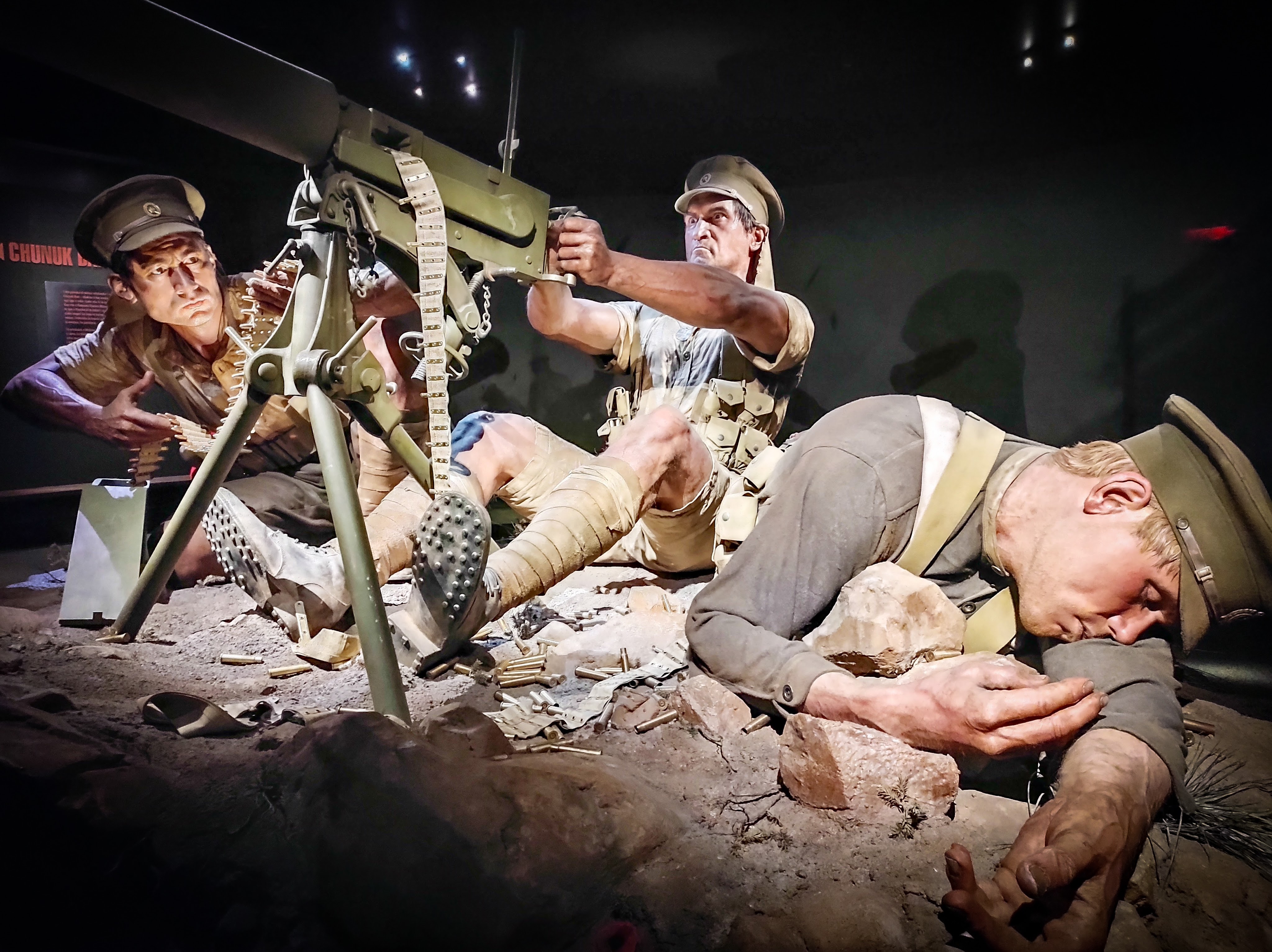
First opening in April 2015, “Gallipoli – The Scale of Our War” was only set to be a short term exhibition, but it proved so popular that the museum kept extending its dates; they are currently extended to April 2025. The exhibition is free, and takes you on a heart-wrenching journey through World War II Gallipoli, through the eyes of 8 real individuals who found themselves on the front line. The incredible larger-than-life sculptures were crafted by The Wētā Workshop artists and altogether this is a very sensory experience, with the realistic sound effects of war, true artefacts, textures, smells and visuals. (Parental guidance is recommended for this exhibition. It is wheelchair accessible, audio description is available, and sensory accessible times are available out of hours by booking.)

Time Allowance: 1 – 2 hours
Location: Cable Street, Te Aro, Wellington

Cafés & Dining

Buenos Aires Café
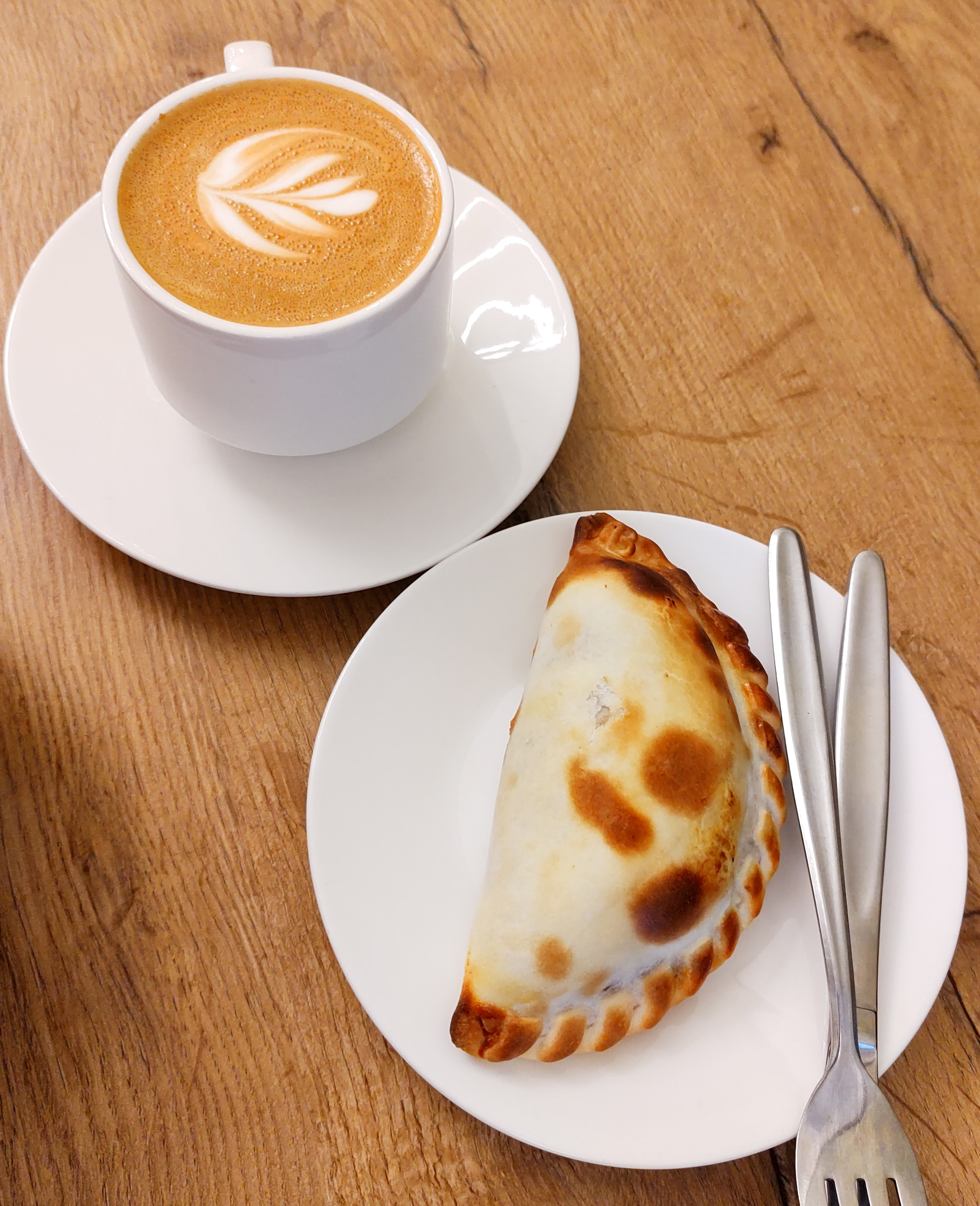
A discovery we made in Wellington was there are lots of authentic South American delicacies around the city. We stopped in this tiny Argentinian café for a delectable, house made Empanada and one of the best flat whites we had in Wellington.

Location: Grey Street, Wellington Central

Gemini Café & Eatery
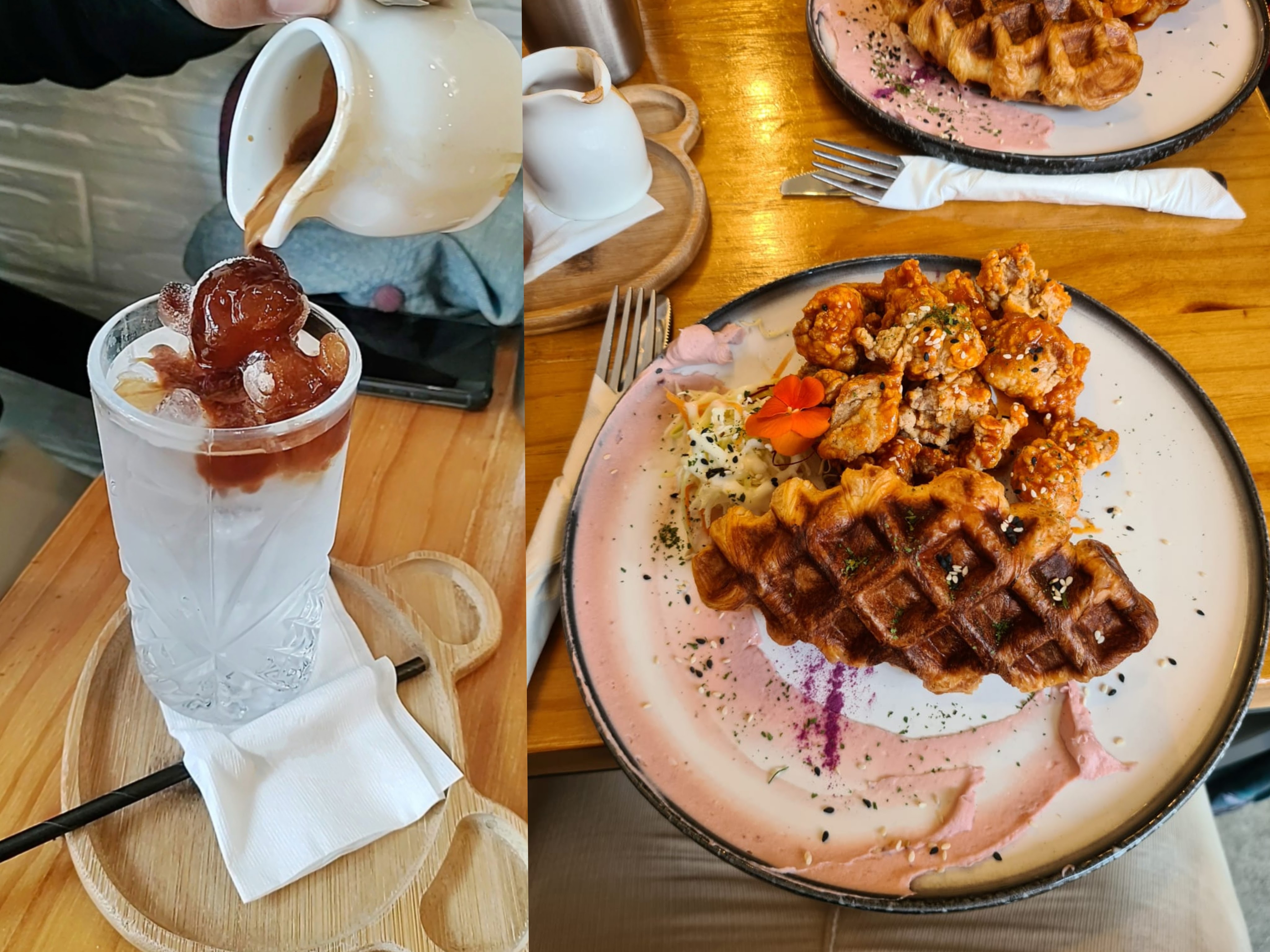
This little café served up flavoursome Asian inspired brunch, and their signature iced coffees with teddy-shaped espresso ice cubes were a really cute addition to the experience.

Location: Tory Street, Te Aro, Wellington

The Hangar
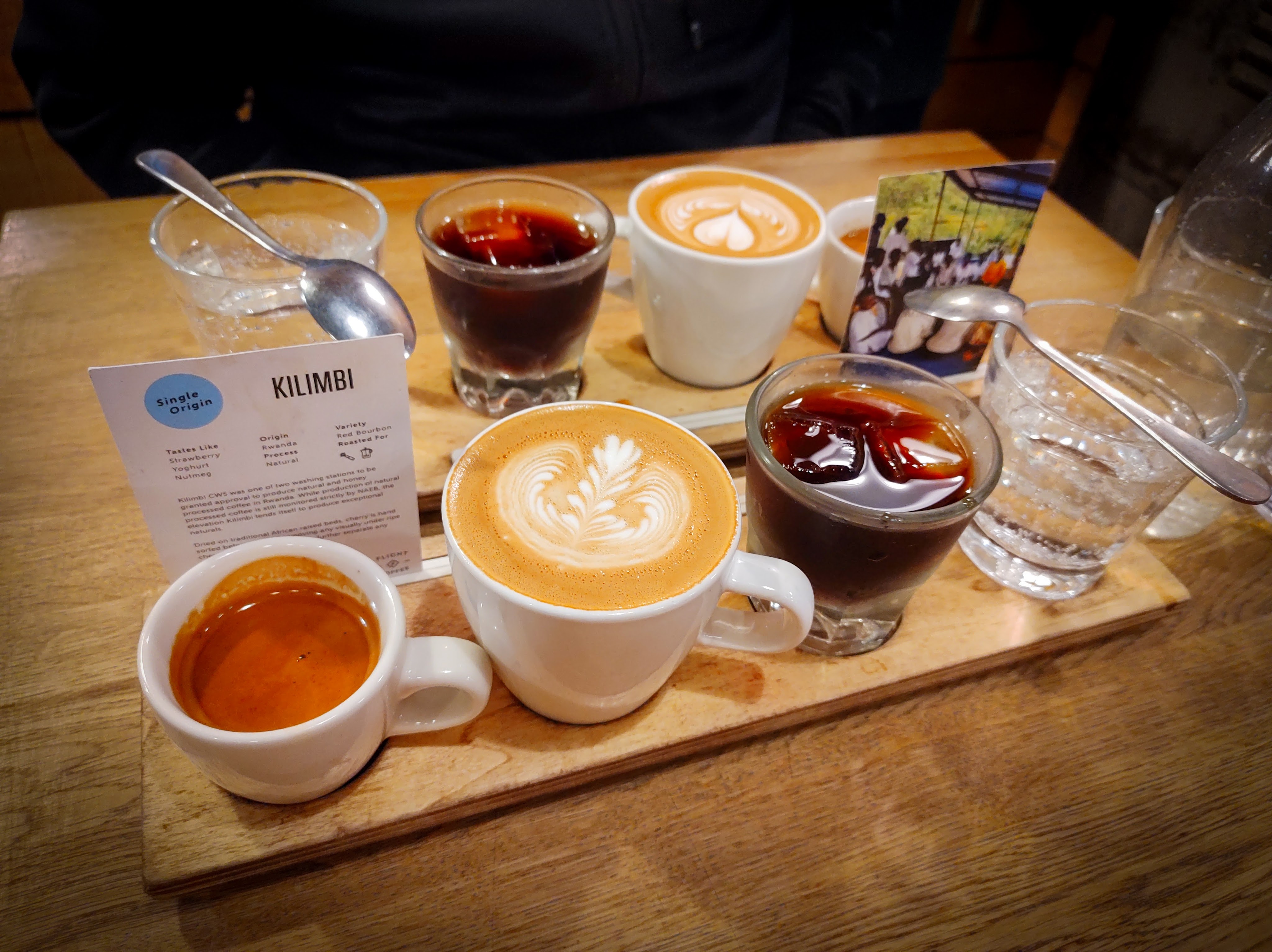
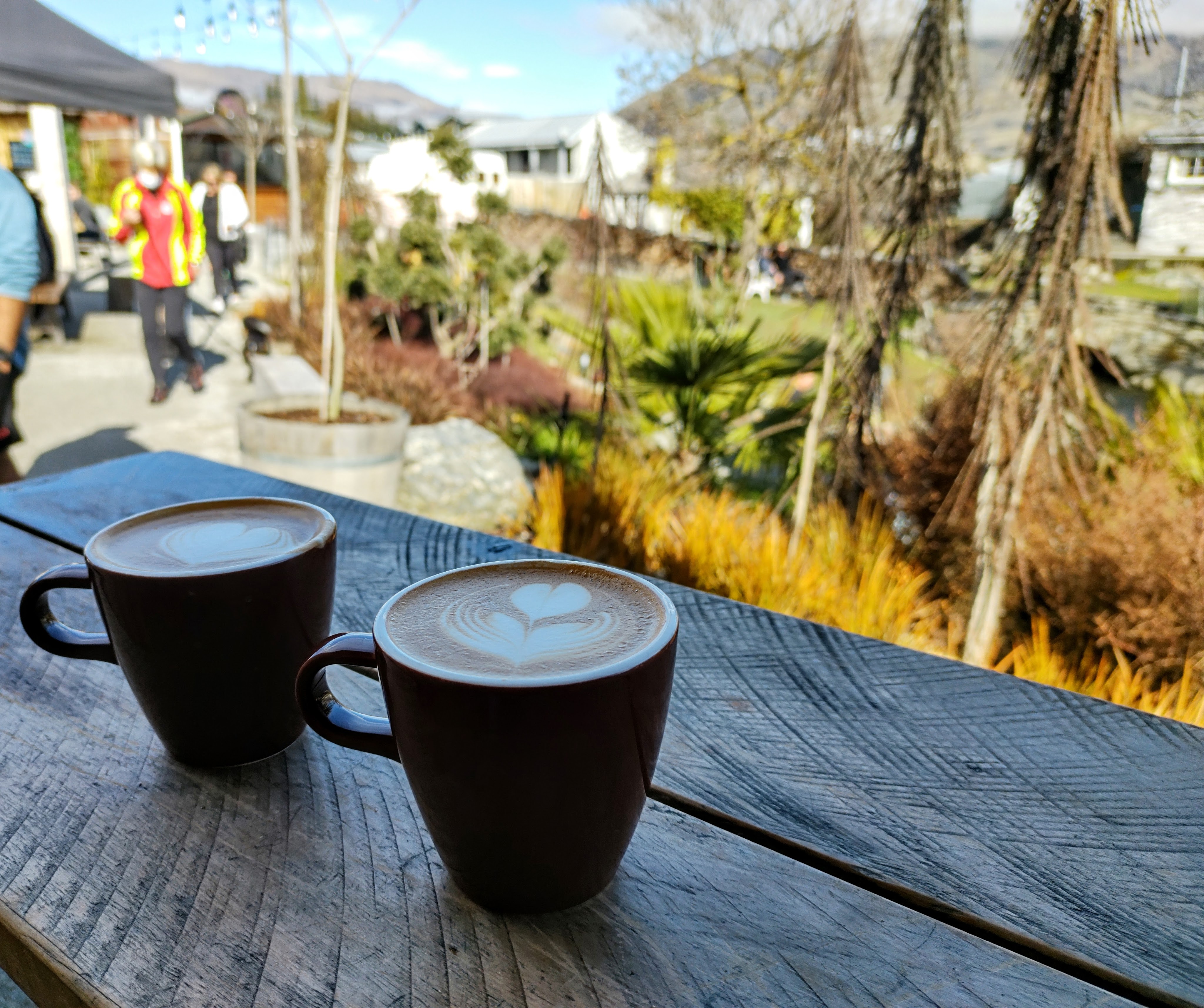
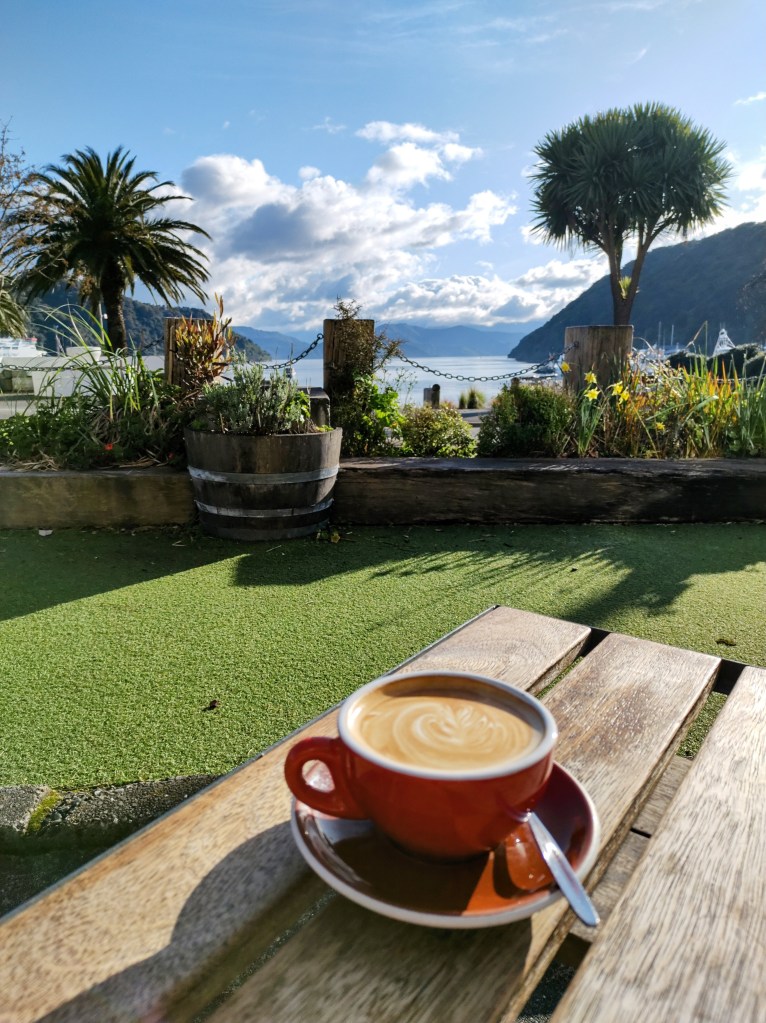
For those who love coffee, The Hangar uses house roasted coffee and, as photographed, they do flights! Not to mention their seasonal menu, which is worldly and creatively homely – for instance, we had a roast beef eggs benedict served on a Yorkshire pudding!

Location: Dixon Street, Te Aro, Wellington

Mexico, Wellington

This is your classic American style Mexican restaurant, with really tasty favourites on the menu and pitchers of margaritas for everyone. The venue is rustic with gothic yet colourful Day of the Dead style décor, and long beer hall style tables.

Location: Dixon Street, Te Aro, Wellington

Puro Chile
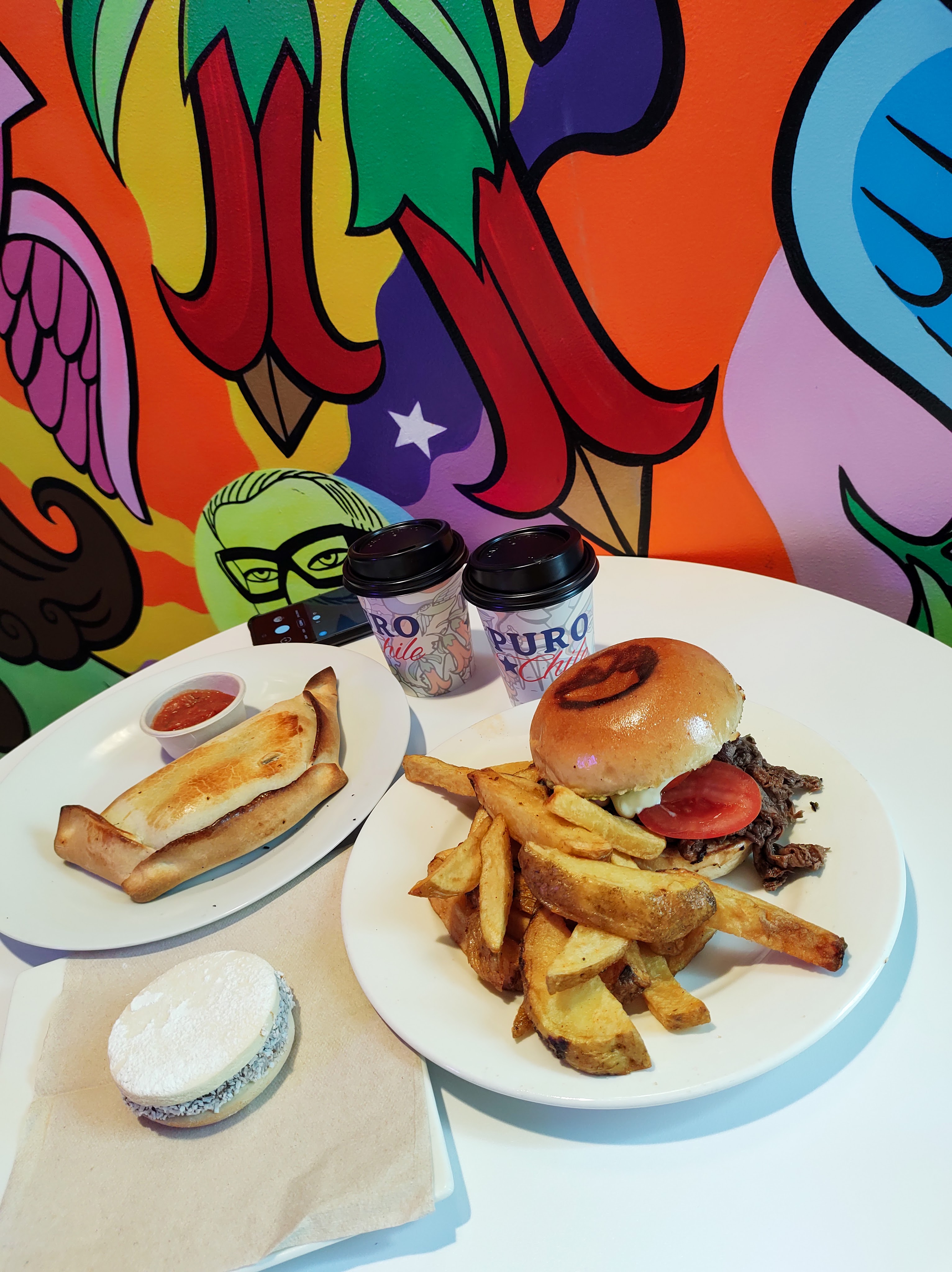
At the window end of an upstairs food court, this family run café / diner served delicious classics from Chile. We had an authentic Chilean Empanada, and a Churrasco Italiano sandwich; slow cooked beef with avocado, tomato and mayonnaise. We couldn’t finish without an Alfajor, the signature shortbread biscuit with Dulce de Leche centre.

Location: Willis Street, Te Aro, Wellington

Craft Pubs & Bars

Garage Project
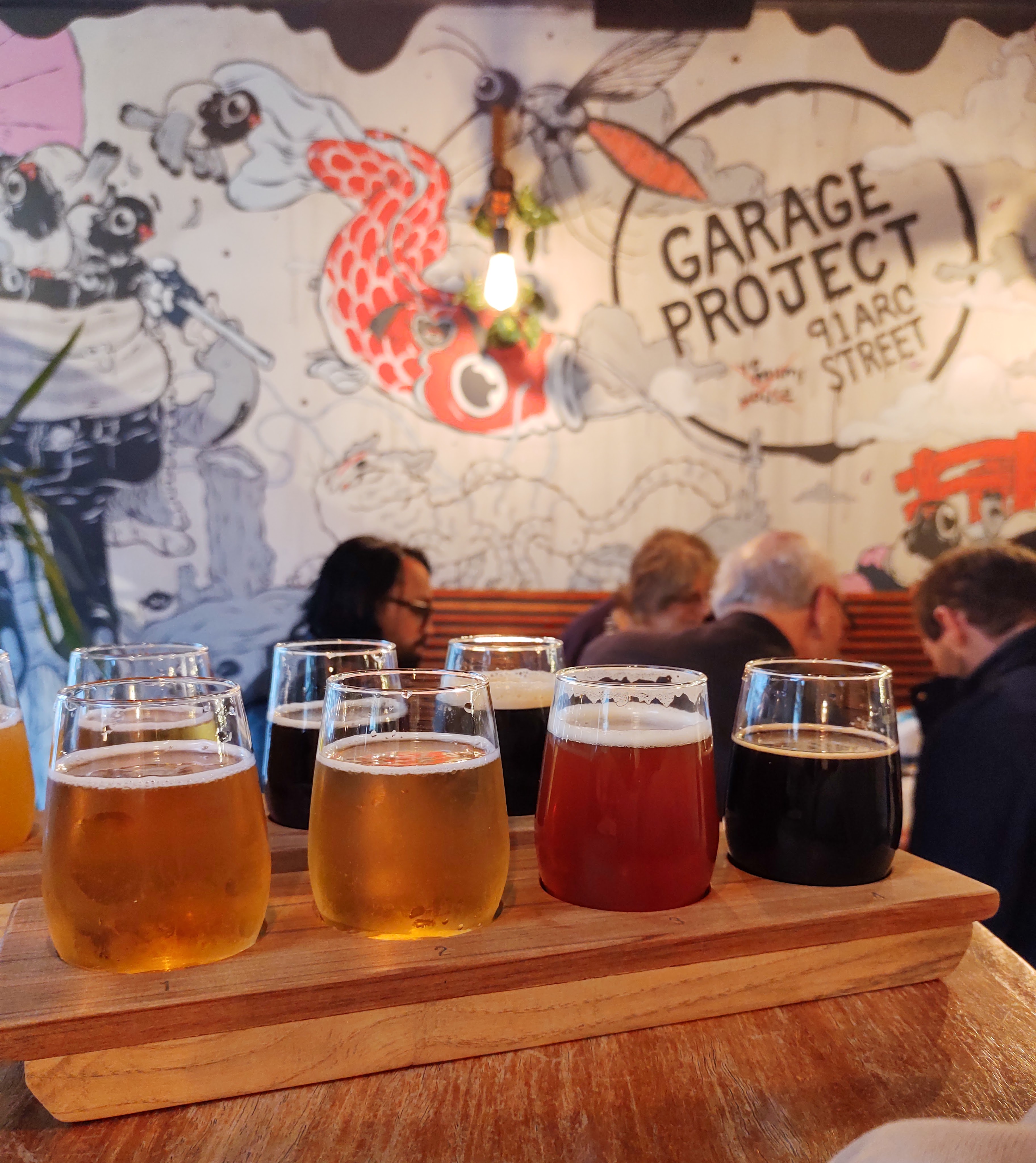
This award-winning craft beer range began in an old garage across the road from the tap room, where you can now buy your take-home beers. They really know how to make good beer with immaculate attention to detail, and if you’re partial to a flavour adventure, there are always several party beers with creative infusions and satisfying mouthfeels. My only tip if you visit – don’t drive!

Location: Aro Street, Aro Valley, Wellington

Fortune Favours
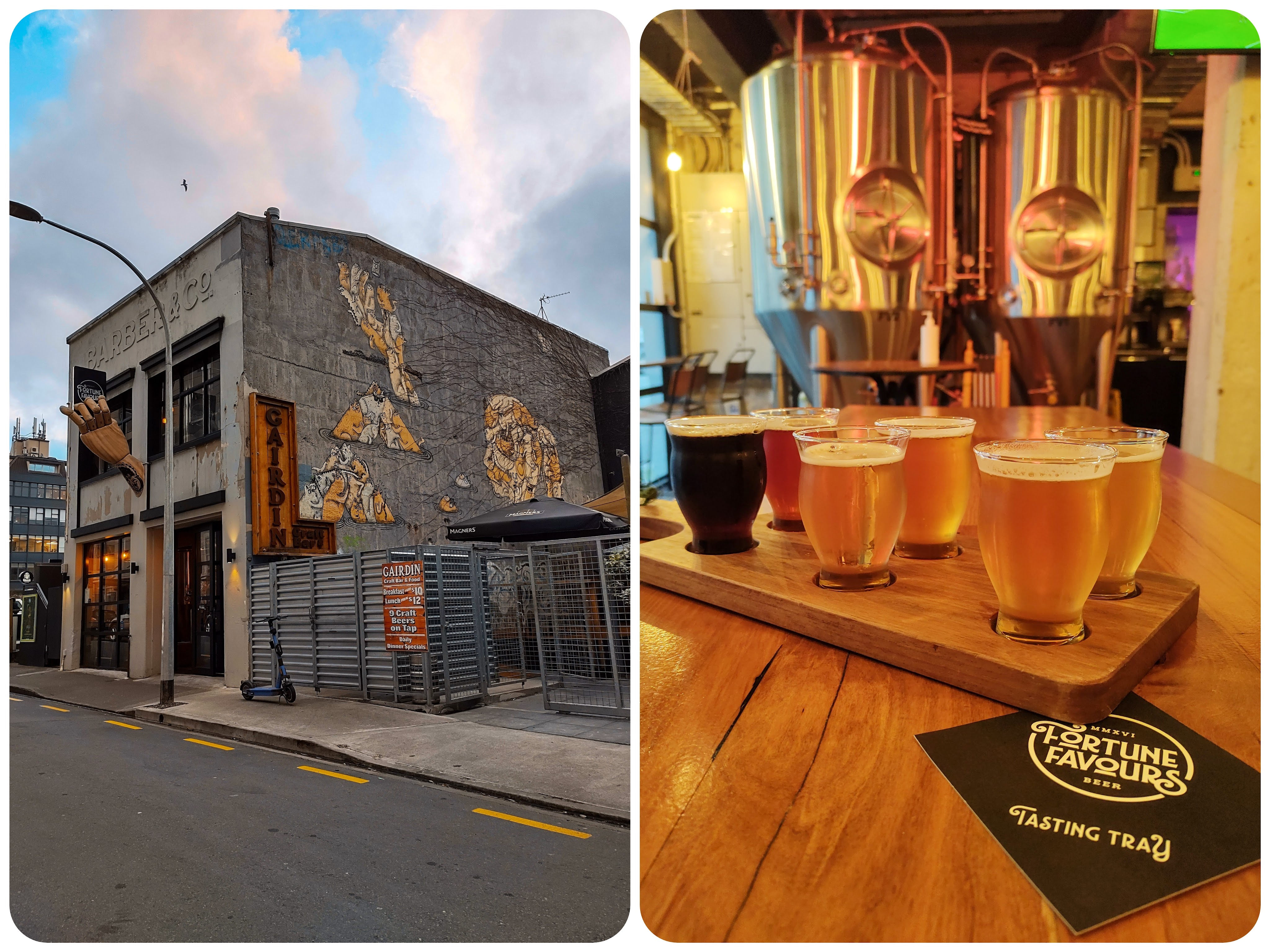
The artist’s wooden hand protruding from this brewpub beckoned us to try a paddle and we weren’t disappointed. Partnered with Gorilla Burgers, there’s plenty to soak up the beer, and there’s also rooftop seating to soak up the cityscape.

Location: Leeds Street, Te Aro, Wellington (also in Park Rd, Miramar & Wellington Airport)

The Library
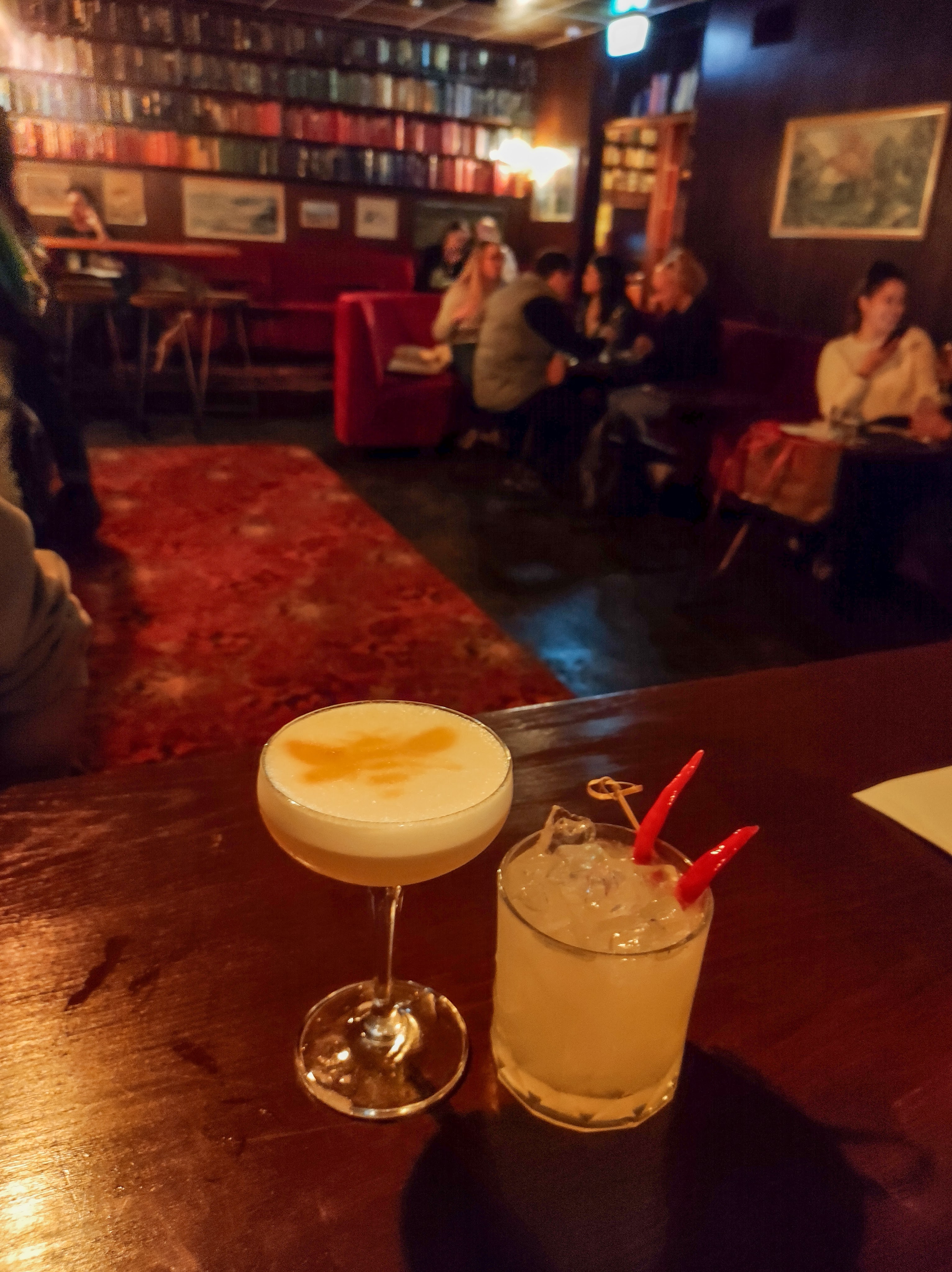
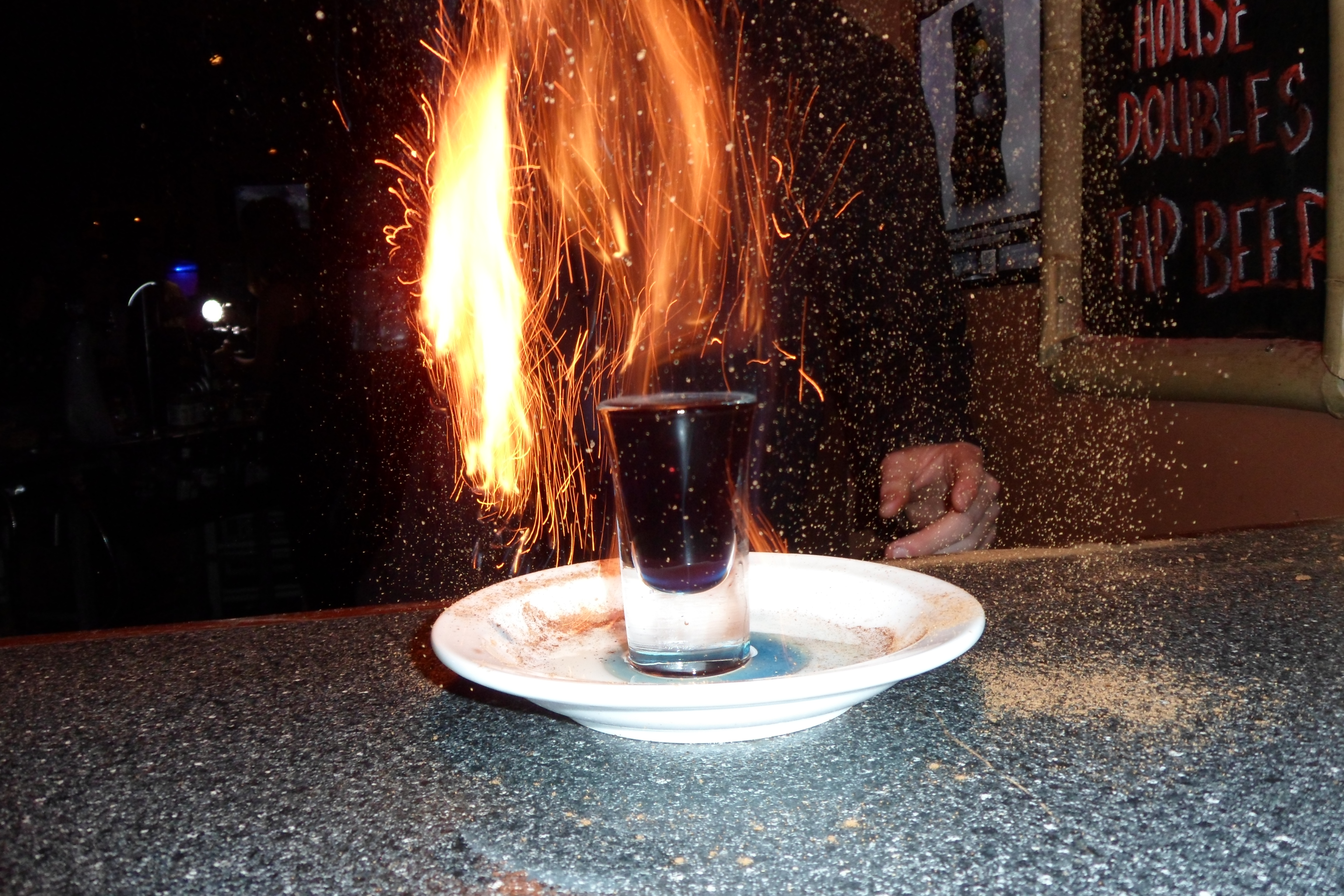
We found this semi-secret bar following a sandwich board that pointed us up some stairs to what looked like residential flats. Going through what seemed to be a fire door, we were welcomed into this quirky cocktail bar. An instrumental Jazz trio was playing live music, and with the drinks menu following a theme of stories, movies and shows, our curiosity had us spending more than we intended. Every cocktail is a uniquely delicious spin on a classic, my favourite was named “Inner City Pressure” for us Flight of the Conchords fans.

Location: Courtenay Place, Te Aro, Wellington

Little Beer Quarter
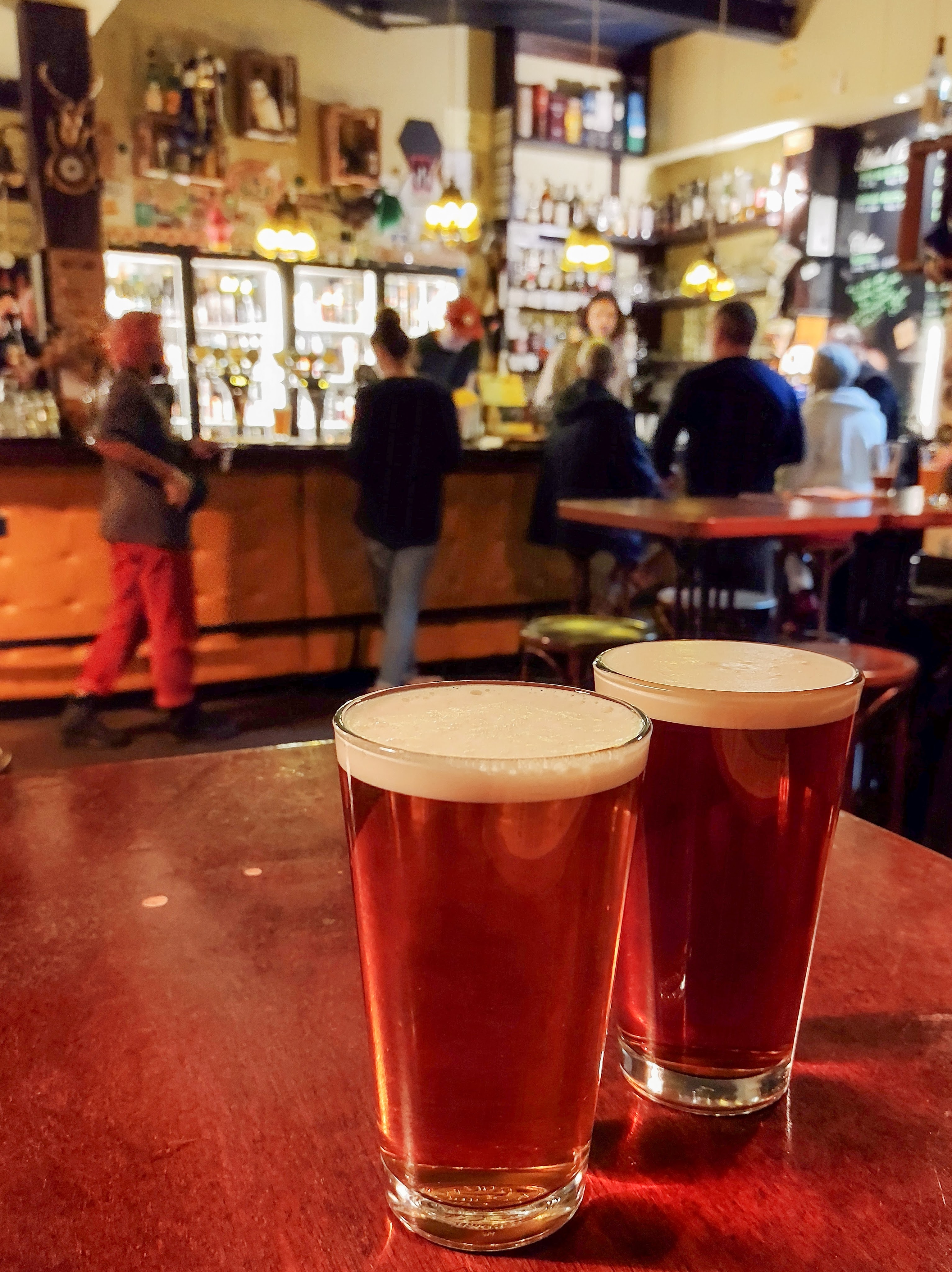
This proper little pub has an extensive list of guest beers that change regularly, along with house classics including wines, spirits and cocktails. The hospitable but casual atmosphere makes you feel like a local even if you’re not.

Location: Edward Street, Te Aro, Wellington

9–13 minutes

Te Waipounamu ~ A Winter Road Trip

15–23 minutes

15 nights on New Zealand’s South Island, travelling to some of my favourite parts of the World for the first time since Lockdown.

Te Waipounamu is South Island’s official name; ‘wai’ meaning ‘waters,’ and ‘pounamu’ meaning ‘greenstone.’

We drove around 2,000km in 14 days!
(Click for more info whenever you see this little black arrow.)

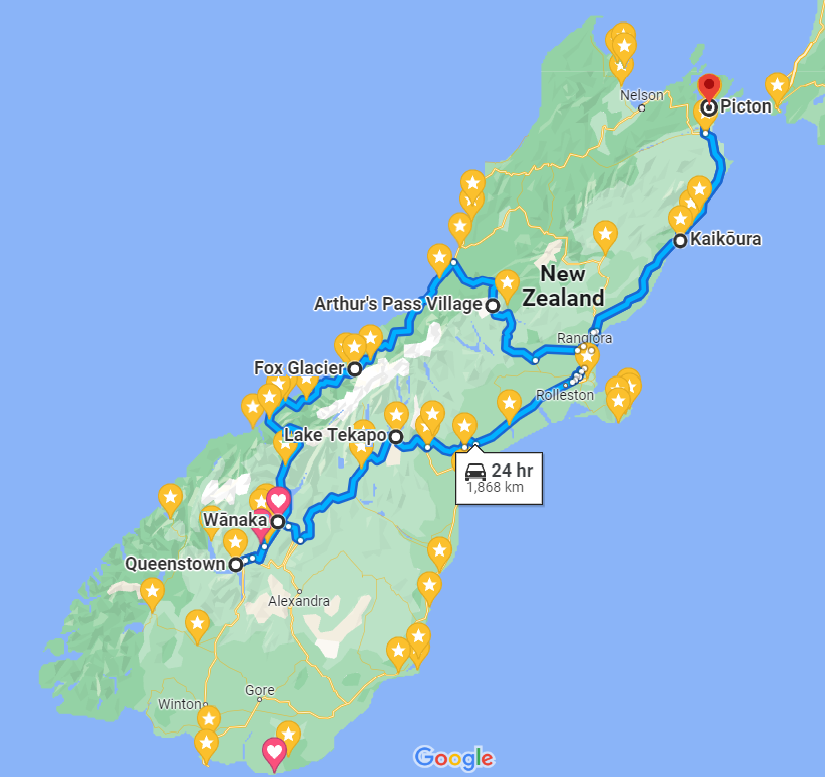
The original plan was to drive all the way up the West Coast to Nelson, but devastating floods took out most of the roads during the start of our trip, so we had to make a last minute detour through Arthur’s Pass.

Budget

Our overall budget in New Zealand Dollars was around $5,800 between two of us.
To save money, I pre-booked all our accommodation and transport, and got early bird ski passes.

  • Interislander Ferry – Flexible Return for 2 adults: $256 NZD
  • Omega Car Rental, Picton – 14 days: $773 NZD
  • Accommodation for 15 nights (through Booking.com): $1,778 NZD
  • Cardrona & Treble Cone Ski Resorts – x2 Earlybird Multiday Passes for 4 days: $680 NZD

We spent around $290 on petrol, which left us with around $2,000 for general supplies. This went mostly on food and drink, which was definitely the most expensive part of our trip.

Starting in Wellington, we caught the Interislander ferry to Picton – a 3.5 hour crossing in good weather – arriving late in the evening. We stayed overnight, collecting our hire car from Picton Omega the following morning, and made our way to Kaikōura.

Kaikōura

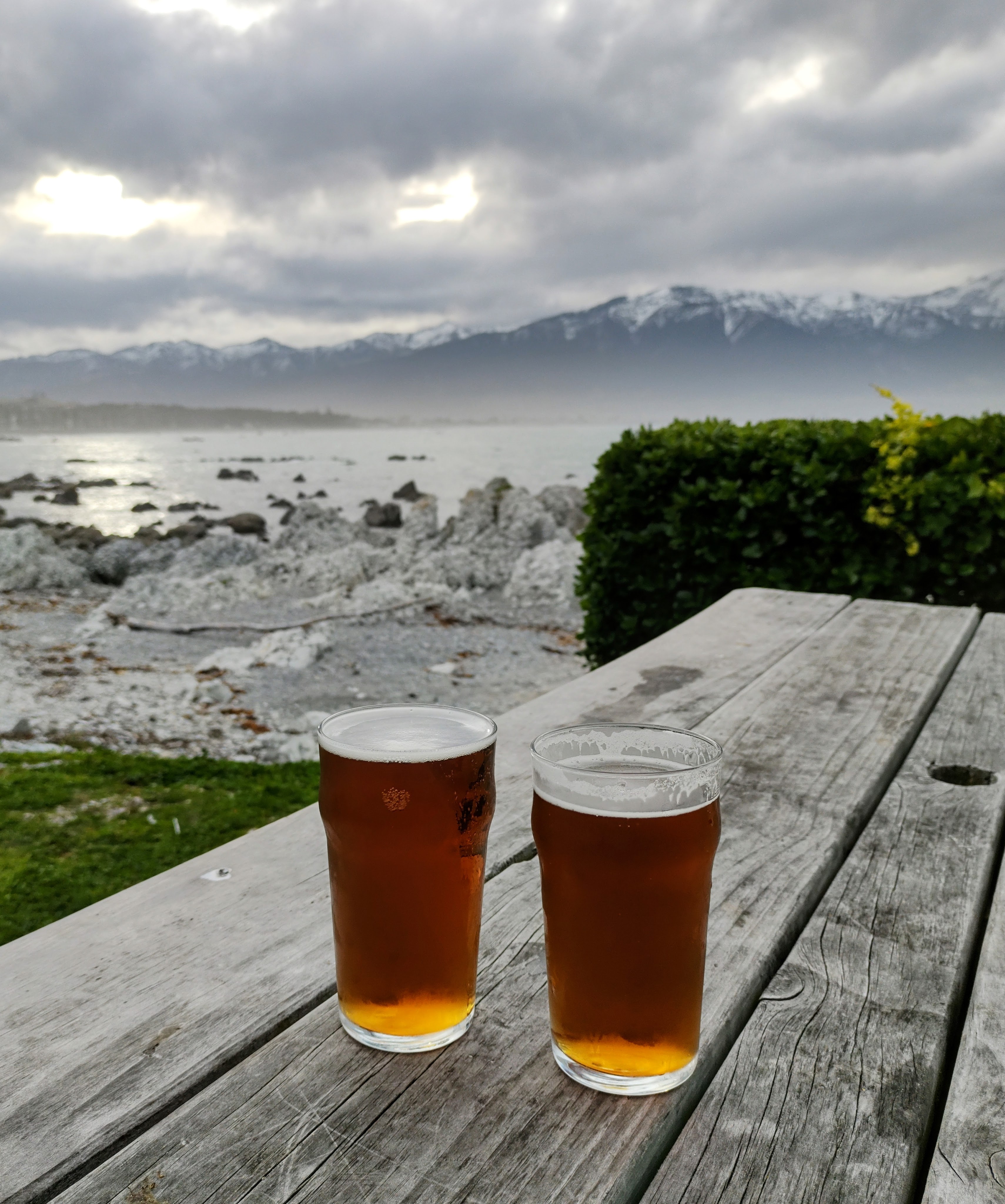
Who doesn’t love a good seaside town? Where a storm is always imminent; the ceaseless rush of the Pacific Ocean gently fills your ears, gulls call distantly on the wind, and with the snow-capped mountains hugging its perimeter, you can always expect the unexpected in Kaikōura. Kai means food and kōura means crayfish, and you can find plenty of places in and around the area serving up this classic NZ dish.

Fur Seal Colony

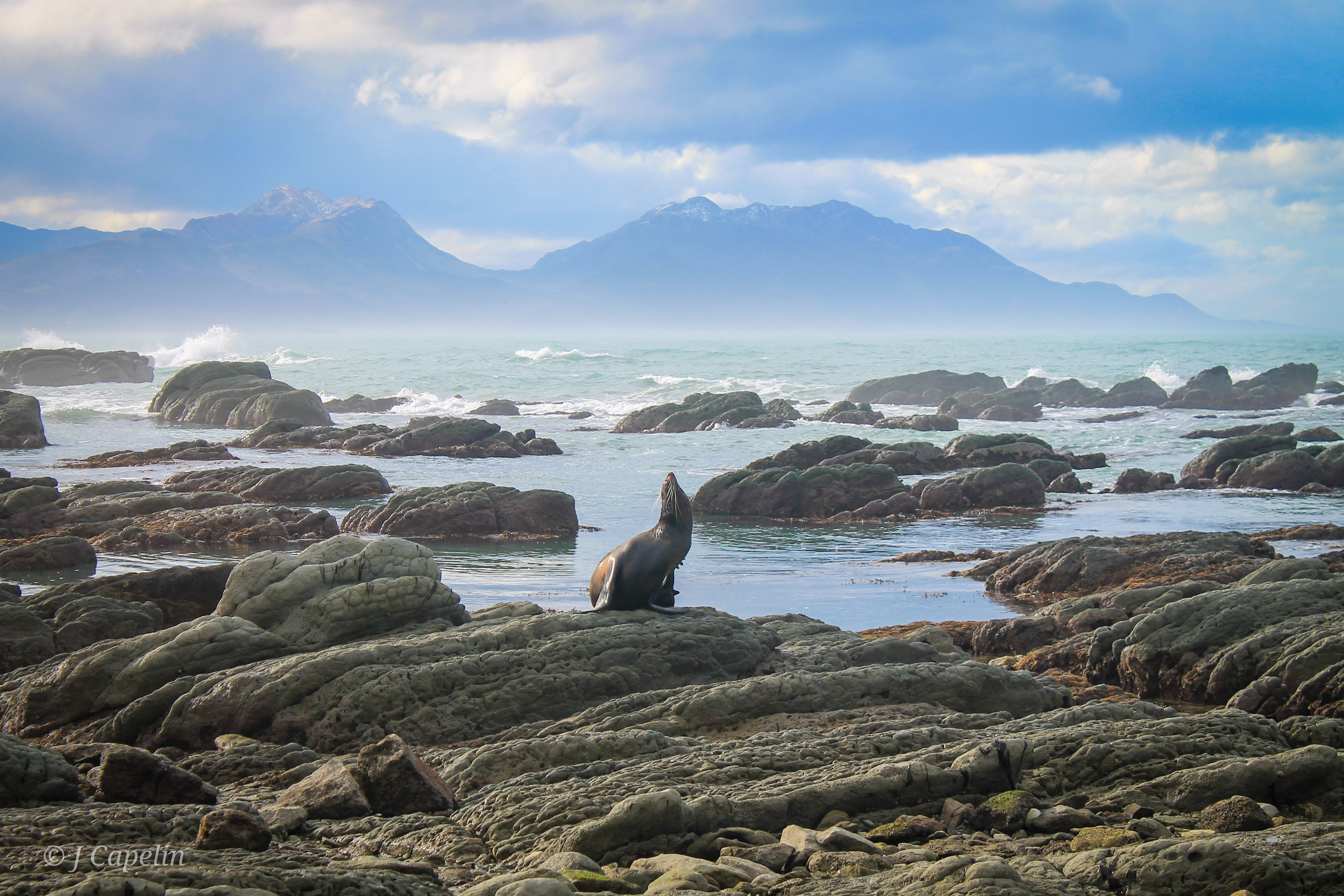
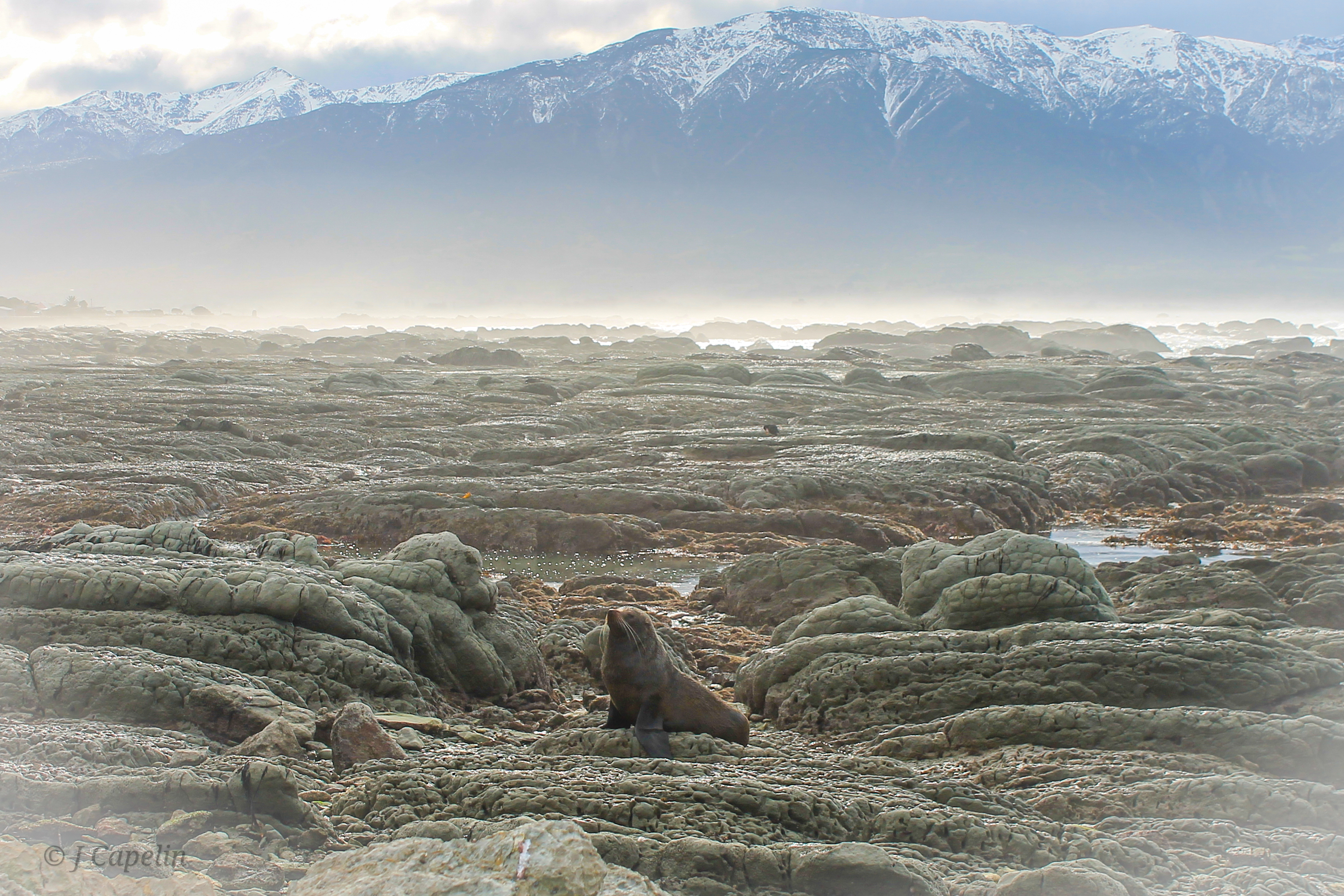
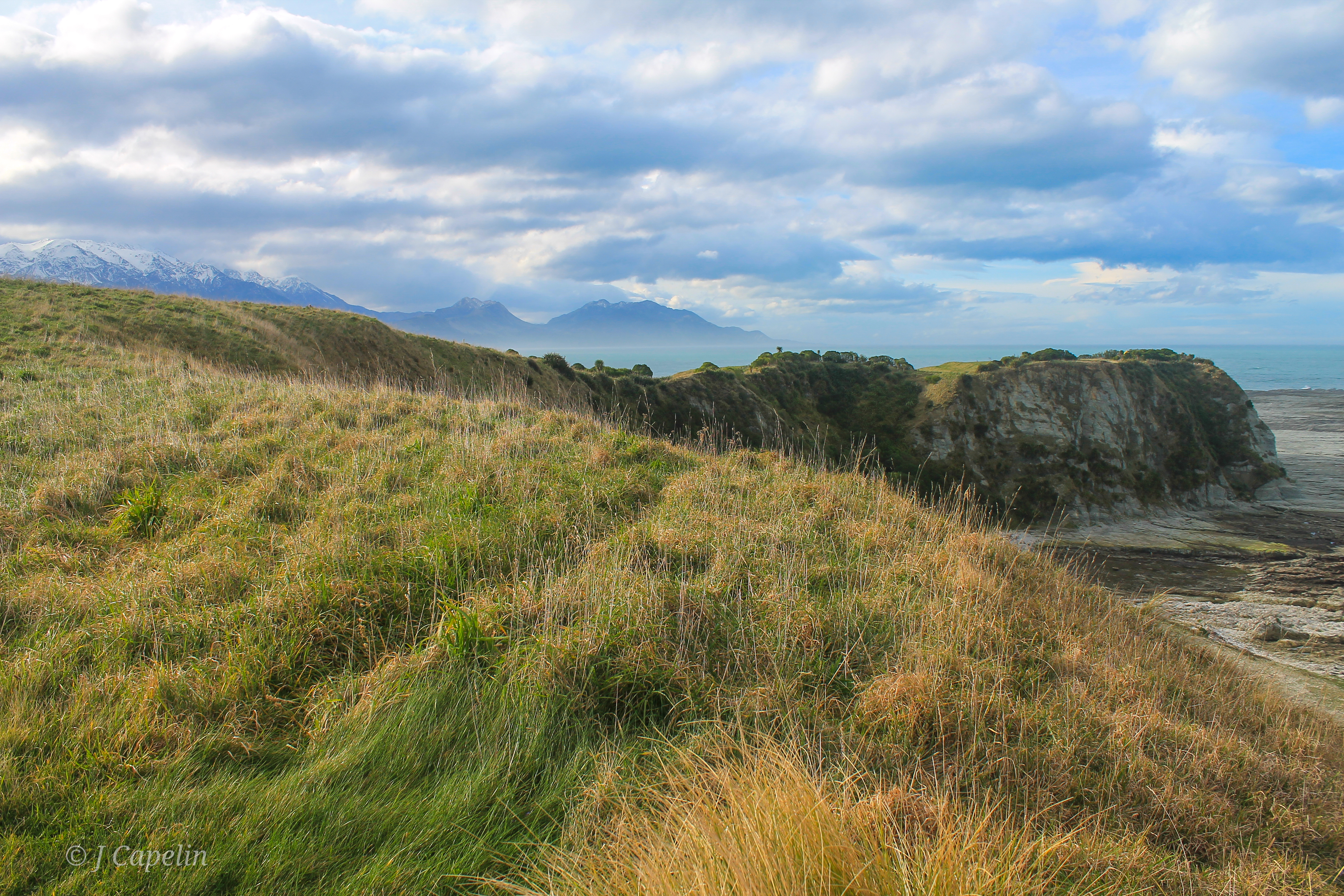
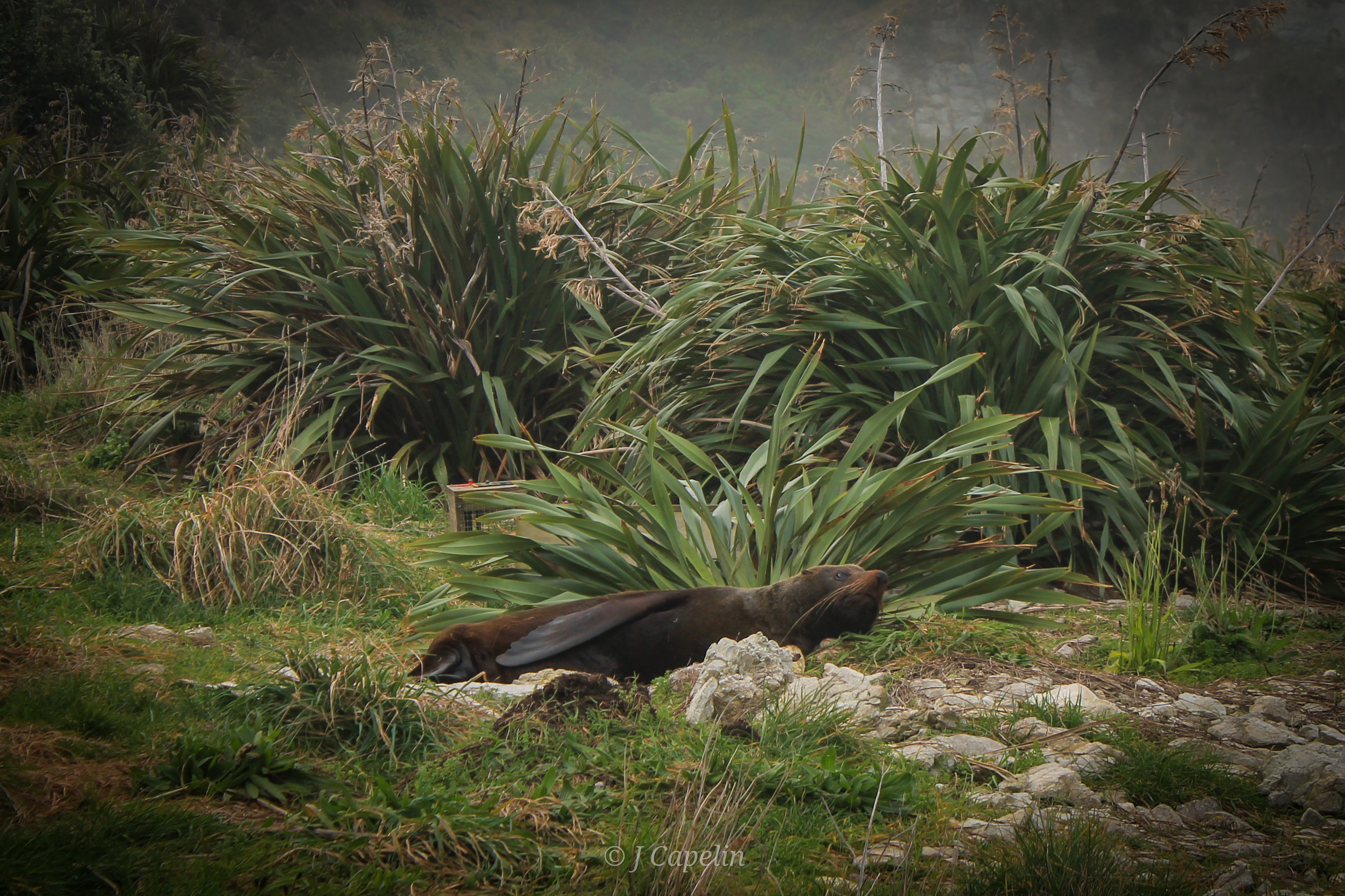
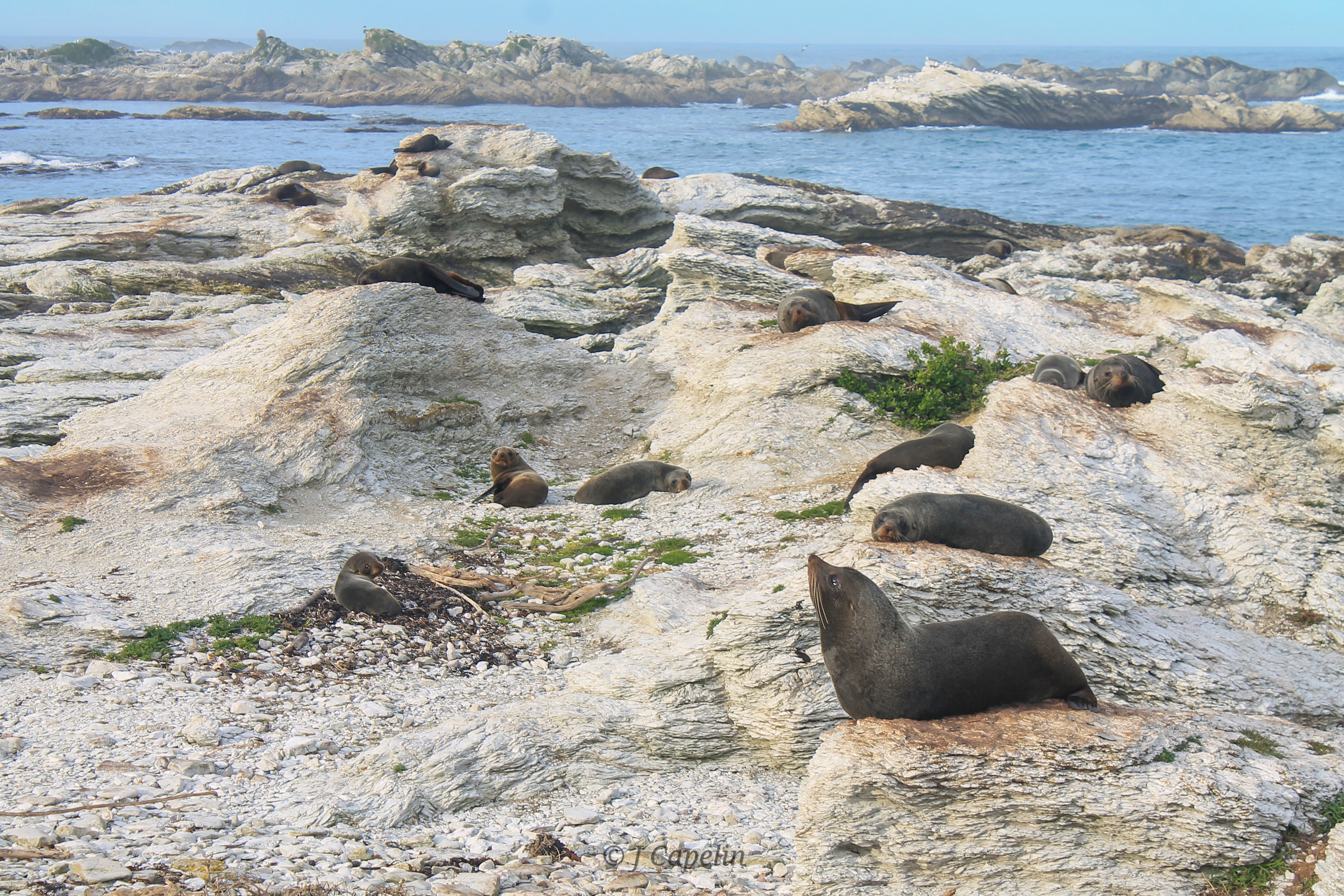
We took an afternoon walk along the Kaikōura Peninsula Walkway, (11.7km – allow a generous 3 hours) which climbs up over the headland, past lush pastures full of cows, with panoramic views of the Kaikōura coast and mountains, and a bird’s eye view of hundreds of fur seals scattered below the cliff.

The walkway loops back down the cliff and along the beach, back towards the carpark. It’s recommended you keep 20 metres away from the fur seals, and watch where you step! The path took us through some long grass at the top of the beach, and before I knew it I had an enormous fur seal at my knees, roaring at me tremendously. I gave it lots of space, and by the time my heart had started beating again, it laid back down and we were able to give it a wide birth!

There were hundreds of fur seals sprawled all over the rocks, up the beach, in the grass, and on the path! (We made sure to find a safe route around them, because you really don’t want to get yourself cornered by these beasts!) We witnessed a couple of large males having a fight; thrashing their heads around and letting out rumbling roars. During the winter months (May-September) you can see seals with their pups all along the rocky peninsula.

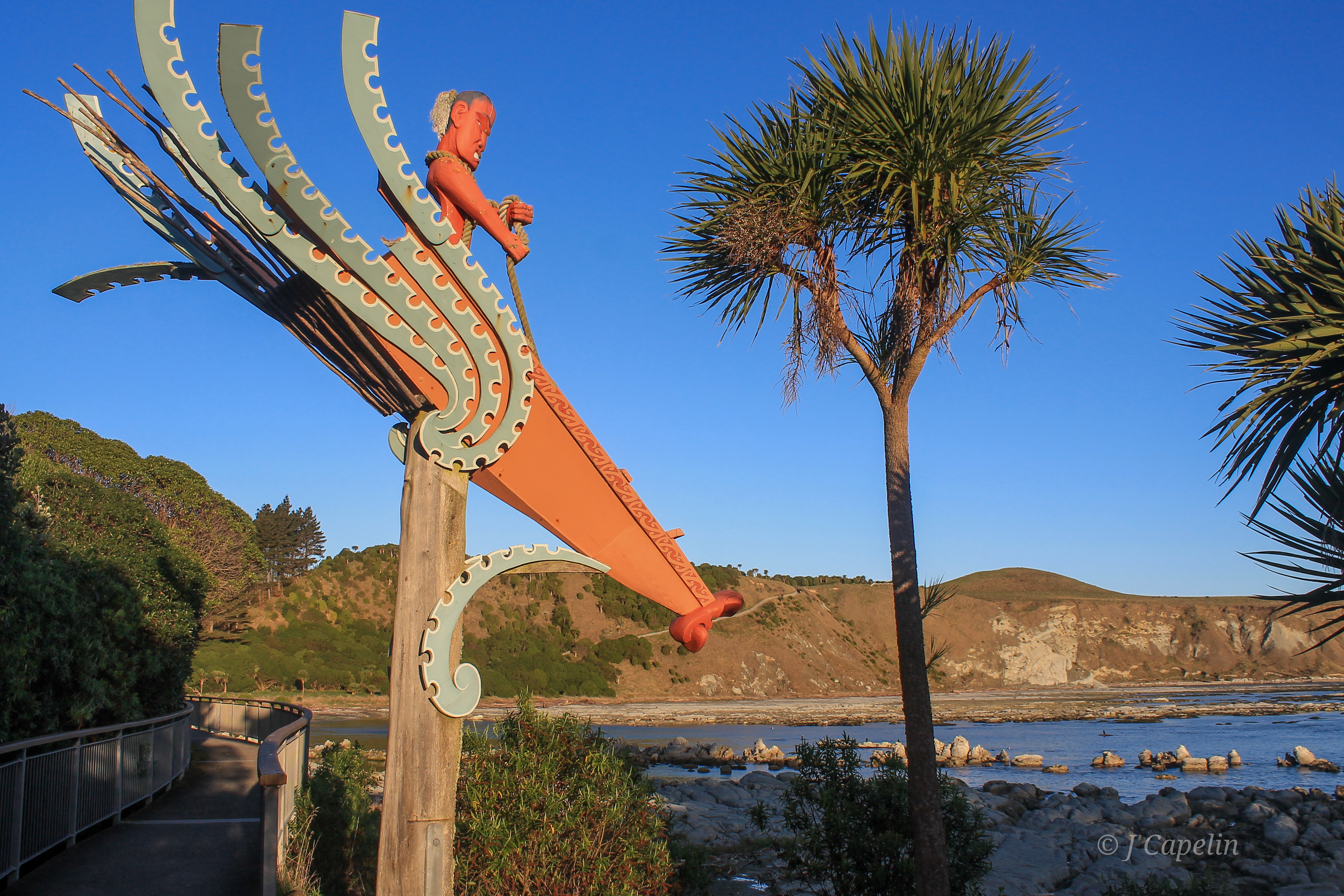
South Bay is another pretty reserve to explore on the south side of the Kaikōura peninsula. Stunning views across the bay lead your eyes up to the mountains, and there’s plenty of wildlife to be seen. You can follow the boardwalk across the coastline; there were shags nesting noisily in the trees, and the setting sun cast a lovely orange glow on the sea.

Accommodation: Sierra Beachfront Motel <$100 NZD – 1 night
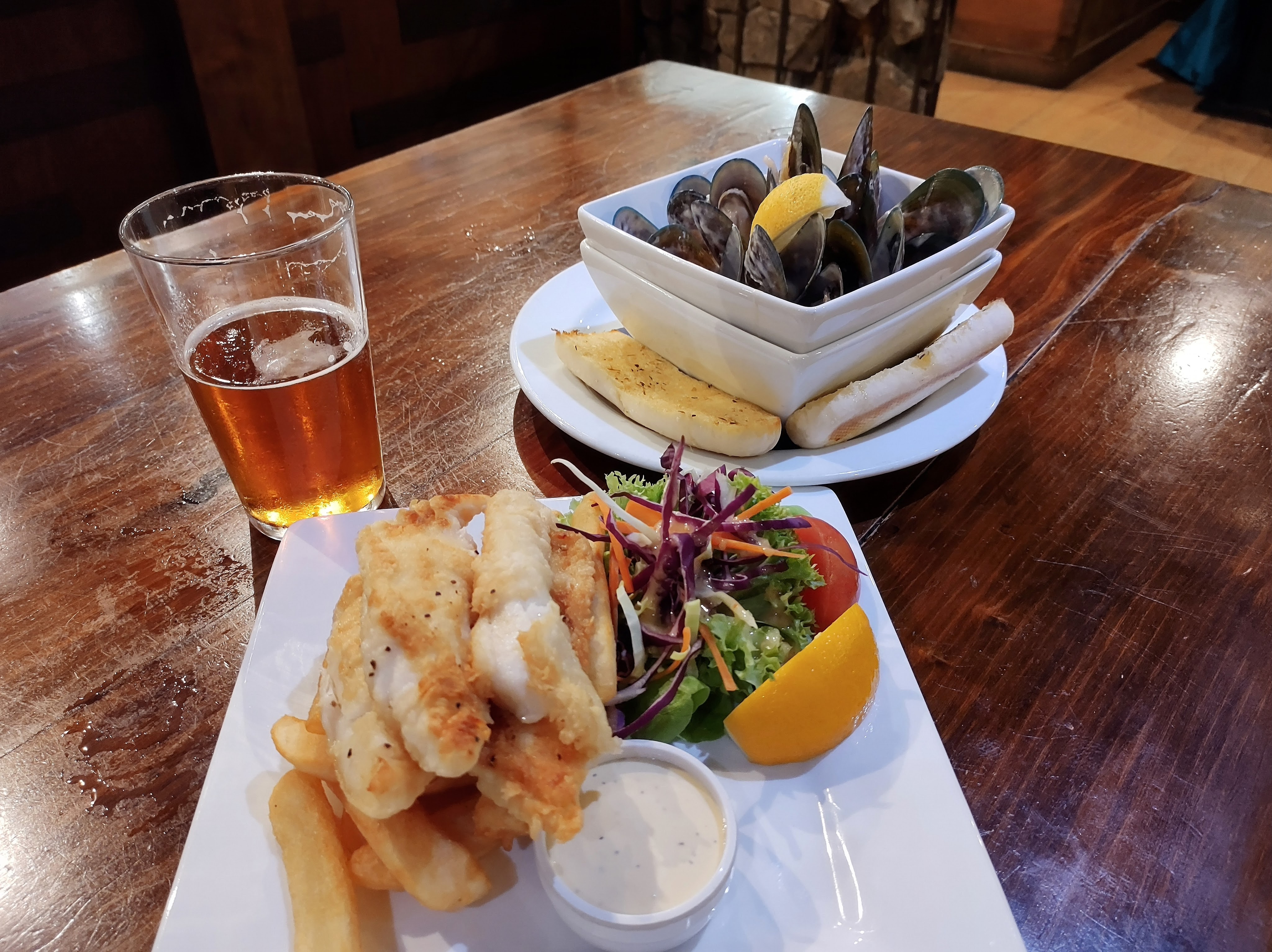
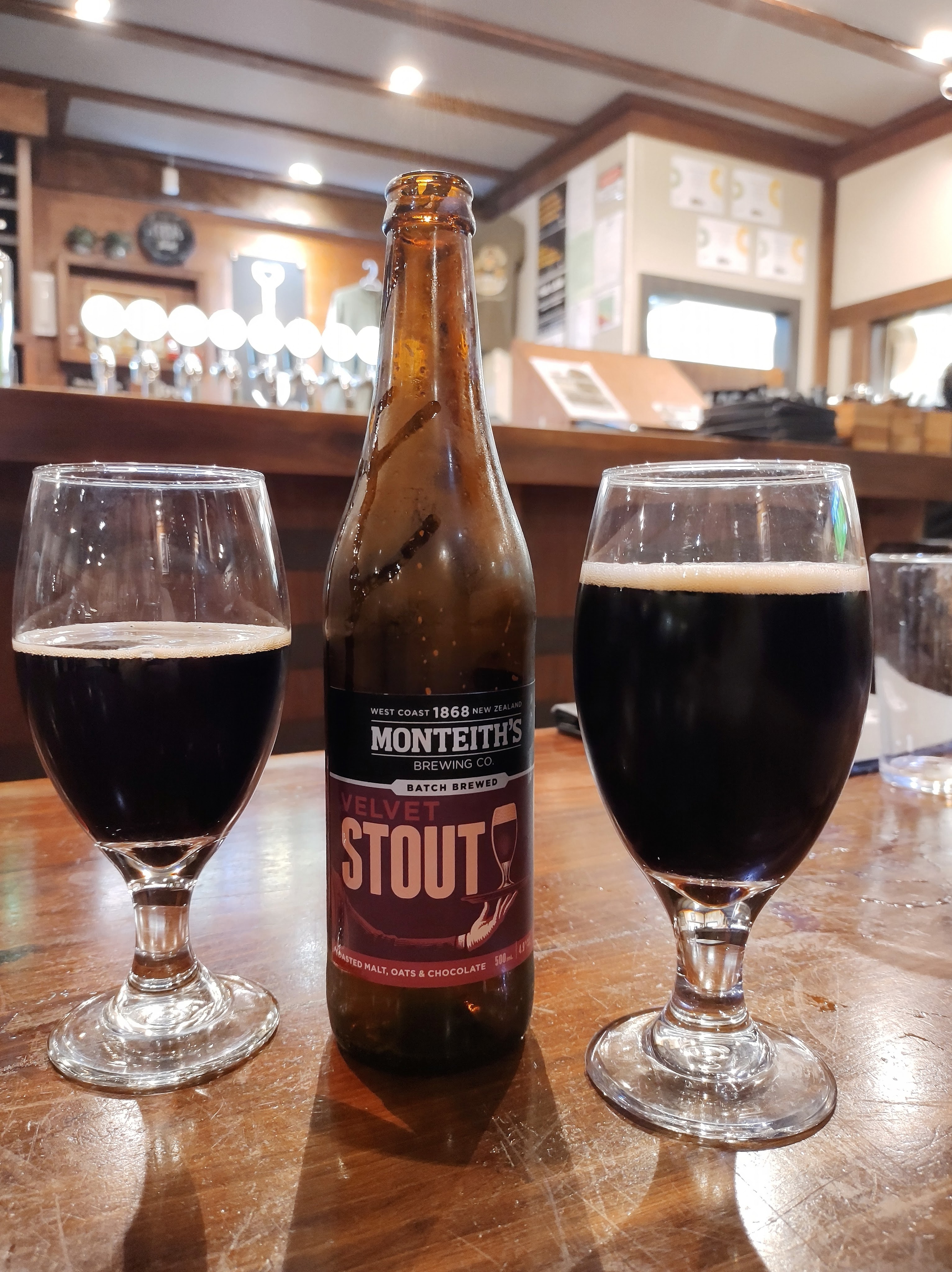
Food & Drink: The Pier (pub/restaurant), The Whaler Bar & Restaurant (Local seafood, pub food, beer), Bee Box (Coffee)
Drive Time: Picton – Kaikōura: 2 hours

Lake Tekapo

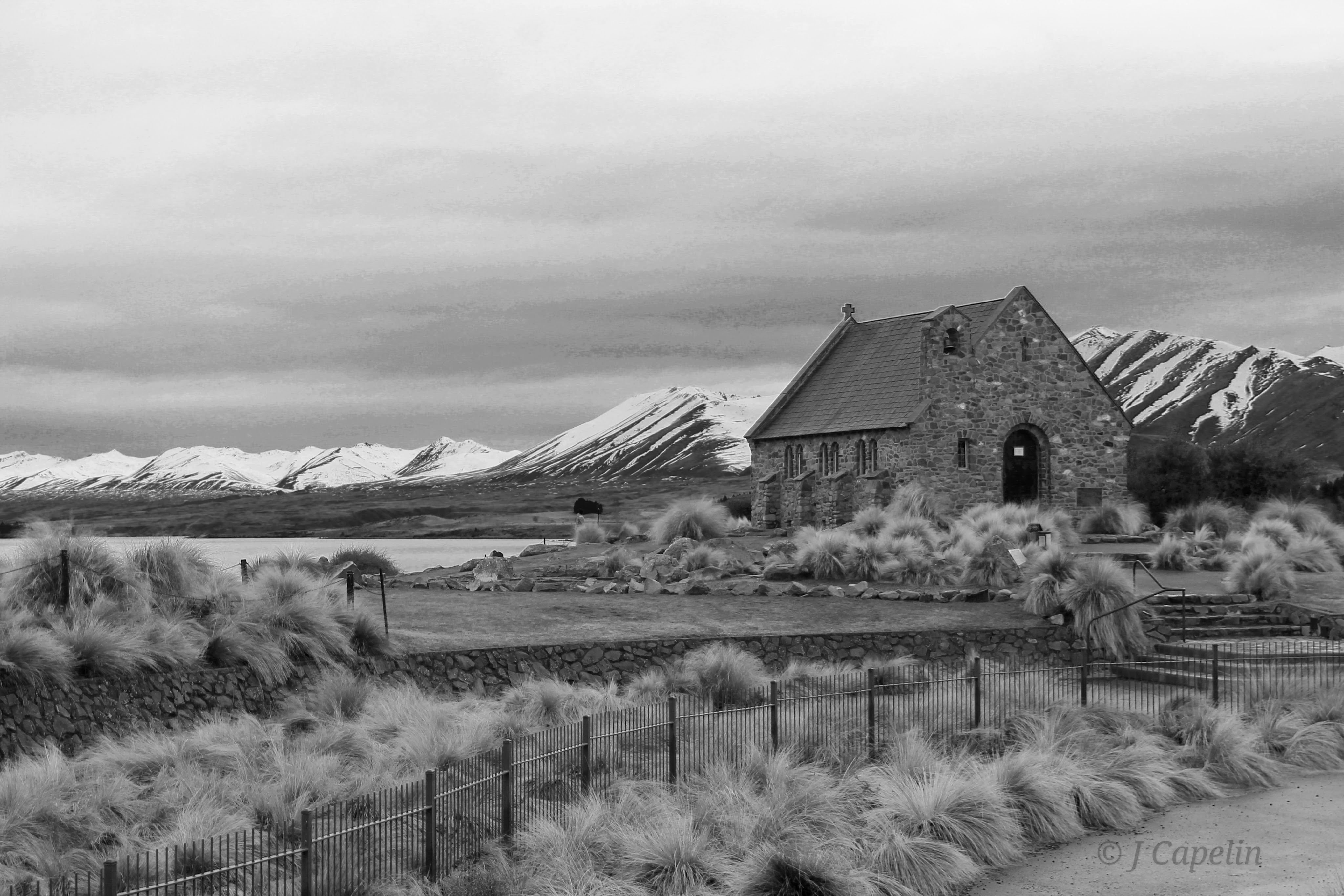
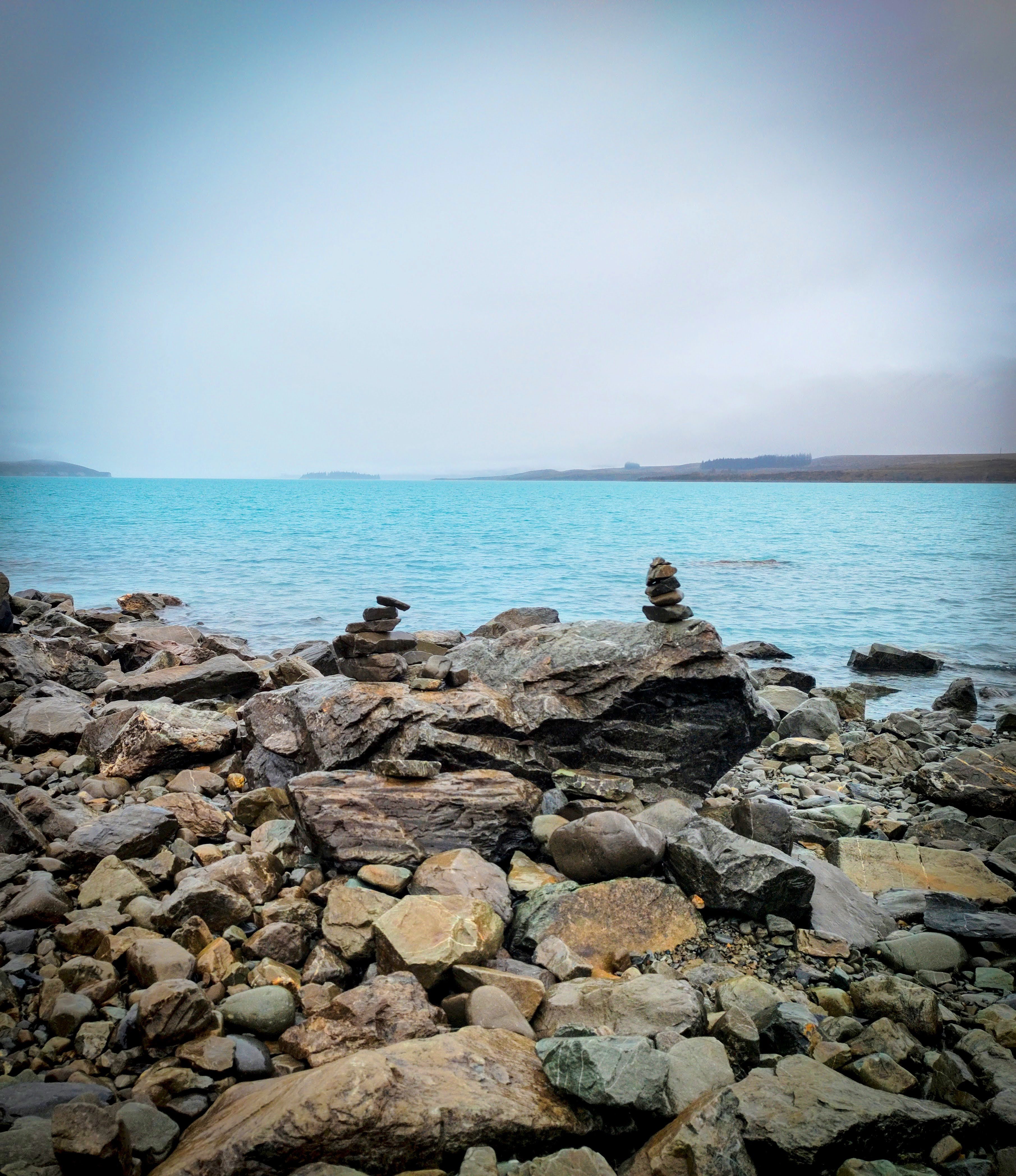
A long drive south with the sun peeping between rain clouds over the earthquake-broken landscape. As we veered inland the sky turned black and heavy rain lashed the windscreen while we wound our way up the treacherous mountain pass towards Mackenzie Country. Set amidst the mountain wilderness, Lake Tekapo was wet and murky, low cloud shrouded the lake; a veil concealing the spectacular backdrop. We strolled down to The Good Shepherd Church – a pretty, little stone building by the lake, where stacks of silver stones and sepia tussocks surround the brilliant turquoise lake front.

Church of The Good Shepherd

Lake Tekapo’s brilliant turquoise colour comes from rock minerals ground up in glaciers, which are deposited in the surrounding rivers and lakes when the glaciers melt and move. This is why most of the South Island’s lakes and rivers have such stunning water.

Lake Tekapo is famous for its night-sky. The small township’s proximity to the mountains (and not much else) means it has zero light pollution, bringing tourists from all over the World to look at the milky way. So, of course, it rained the night I brought my partner here, after telling him about it for so many years! But mountain weather like this brings its own atmosphere and mysterious beauty. It was still night at 5am when the rain stopped, so we wrapped ourselves up and ventured down to the lake. The cloud had lifted, revealing the wintery mountains that frame Lake Tekapo, but a cold mist still lingered across the sky, covering the stars. The moon glared through, its halo lighting up the snow on the mountains as they slowly turned purple, and we sat on the cold rocks with a hot coffee waiting for it to get light.

Accommodation: Lake Tekapo Cottages <$120 NZD – 1 night
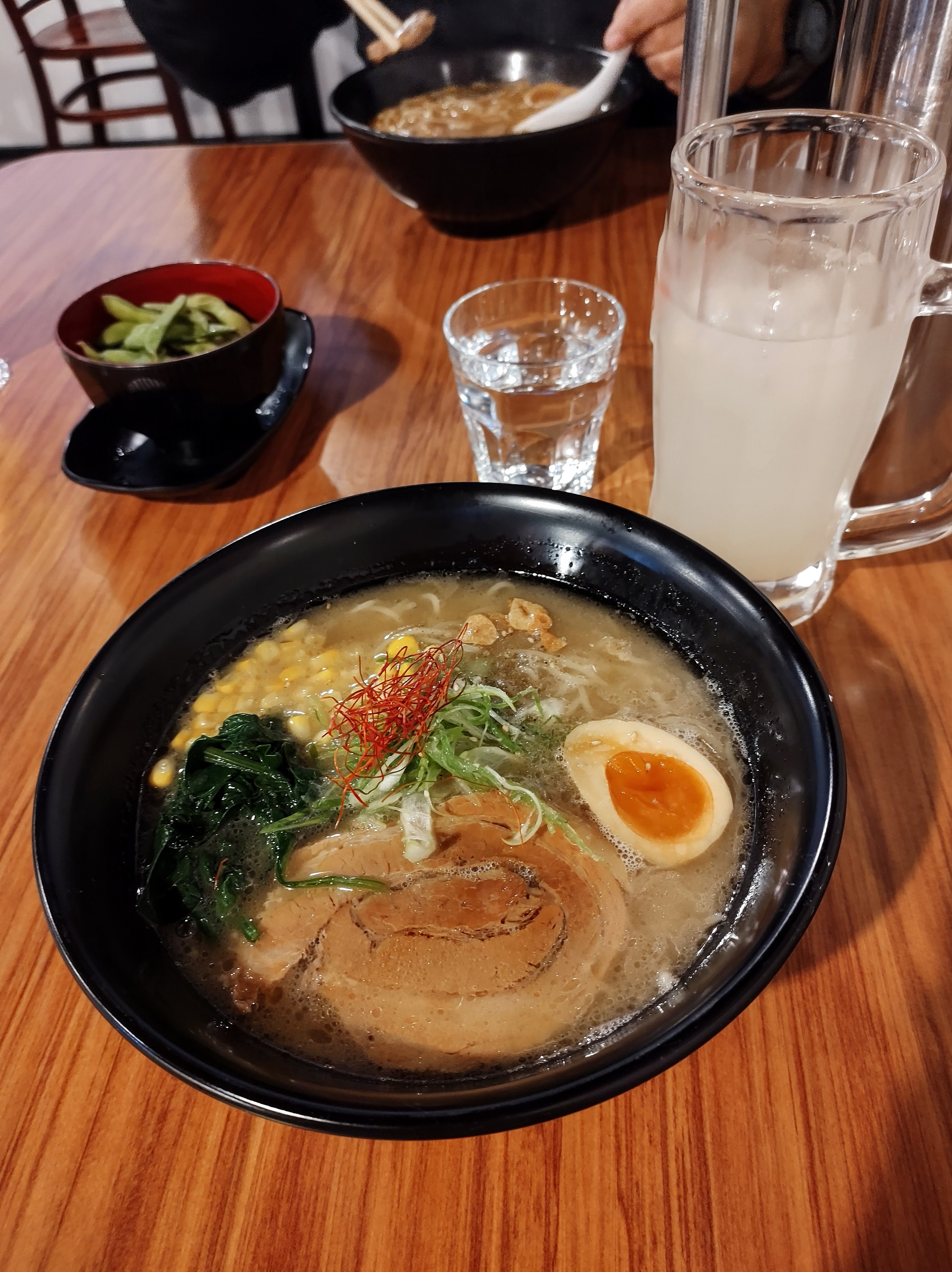
Food & Drink: Ramen Tekapo (Japanese ramen), Doughboys Bakery (early morning coffee), Greedy Cow Cafe (brunch)
Drive Time: Kaikōura – Lake Tekapo: 5.5 hours

Aoraki

A bright sky led us South through Mackenzie Country to Lake Pukaki, and I thoroughly enjoyed driving this leg. The open road in the early morning; jagged touches of snow between icy lakes and streams – New Zealand was beginning to show us the Winter Wonderland it could be. The road to Aoraki (Mt Cook) skirts the Western edge of Lake Pukaki, and Aotearoa’s tallest mountain rises up over the lake before you as you approach. There is a small community at the end of the road, and a tourist information centre about as big as the village, complete with an Edmund Hillary exhibition (it’s no surprise that one of the first people to summit Everest grew up with this as his back yard.)

Scenic flights are an option to see this iconic landscape, along with things like heli-skiing and mountain climbing, but hiking (or ‘tramping’ as they say in NZ) is the most popular activity (and it’s free!) There are at least 12 hikes in the national park, ranging from 10 mins to 3 days. We chose two short hikes; one in each section to get the most out of our time.

You can download the Department of Conservation walking track guide here > https://www.doc.govt.nz/parks-and-recreation/places-to-go/canterbury/places/aoraki-mount-cook-national-park

Kea Point – Village Section

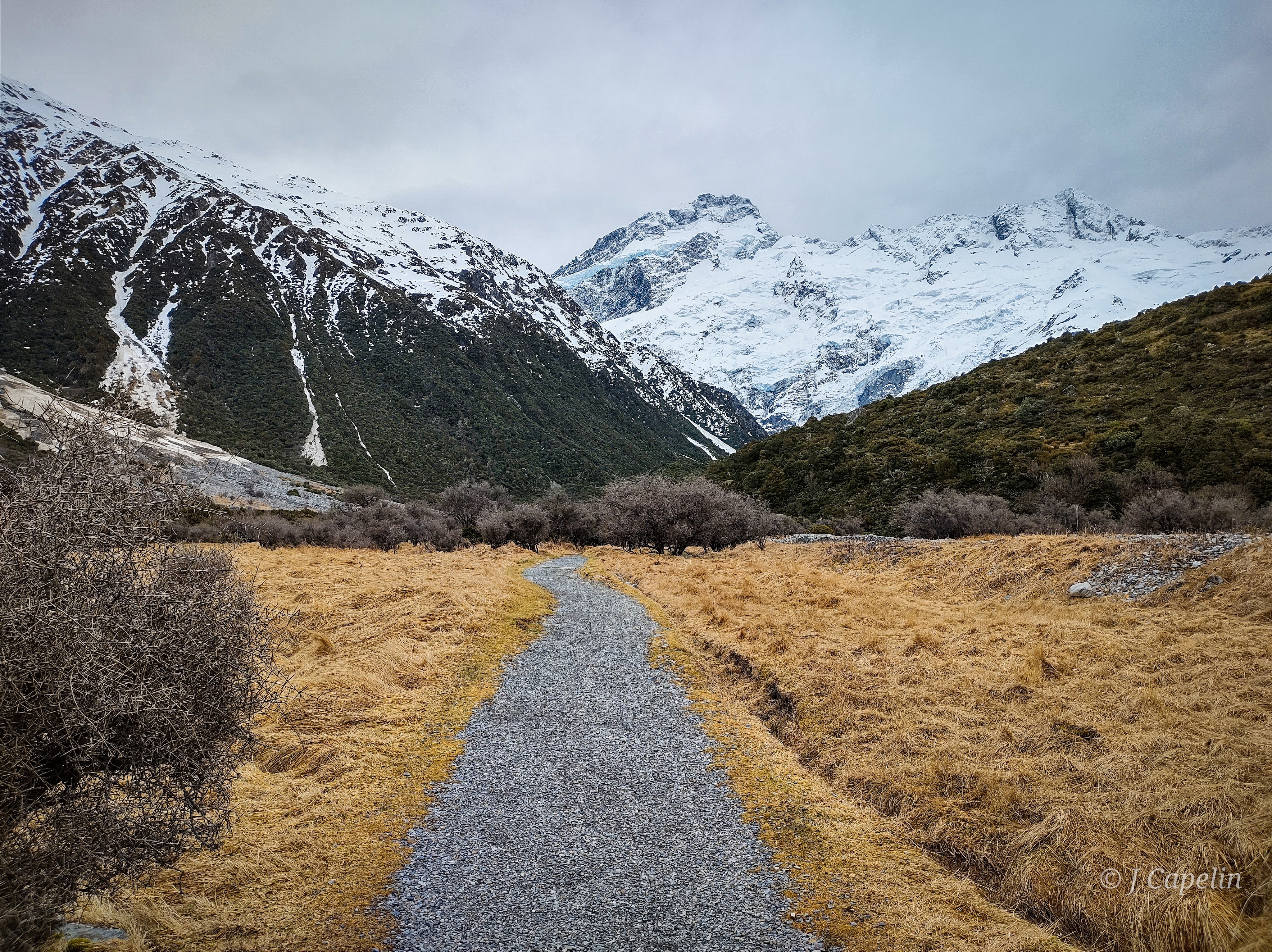
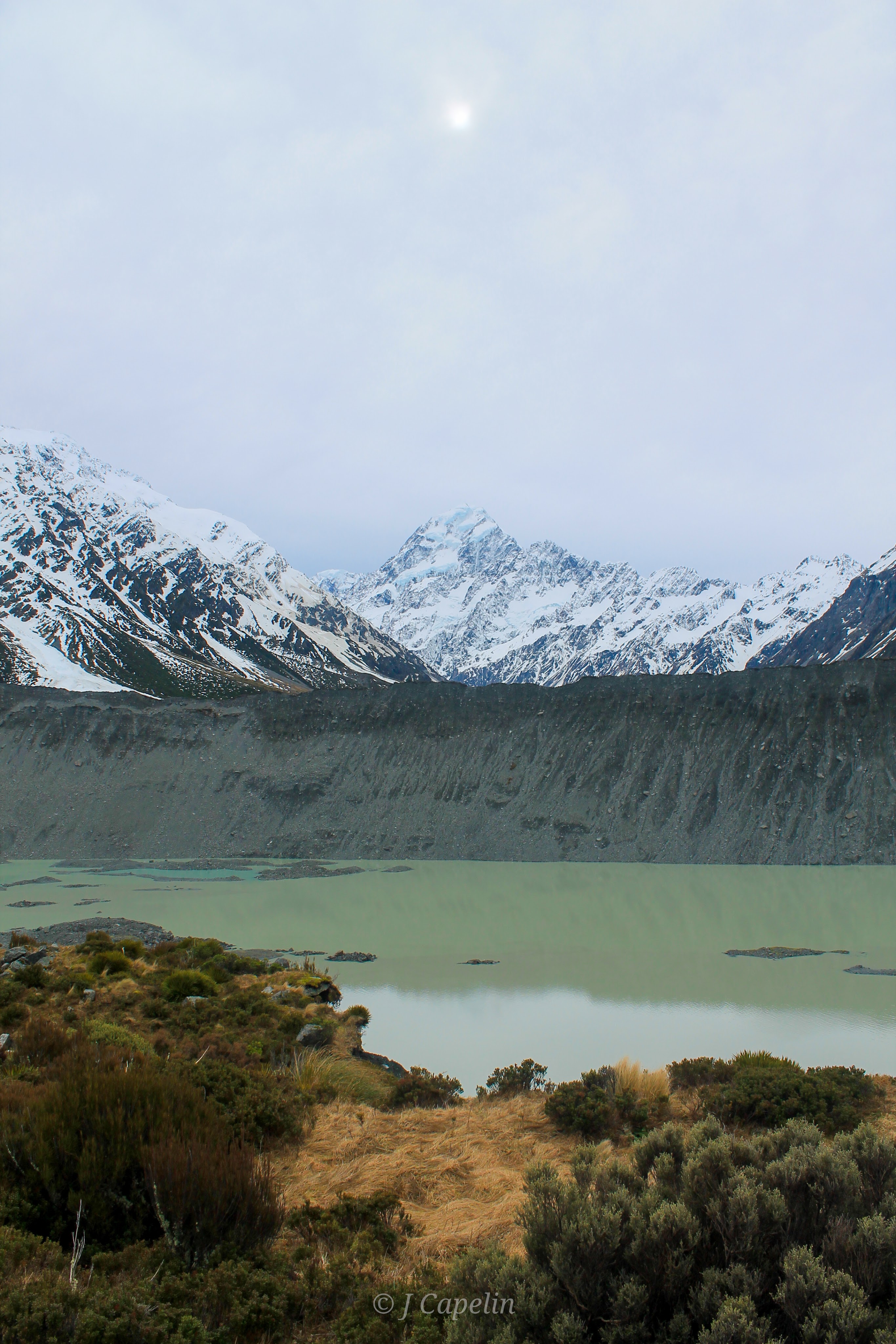
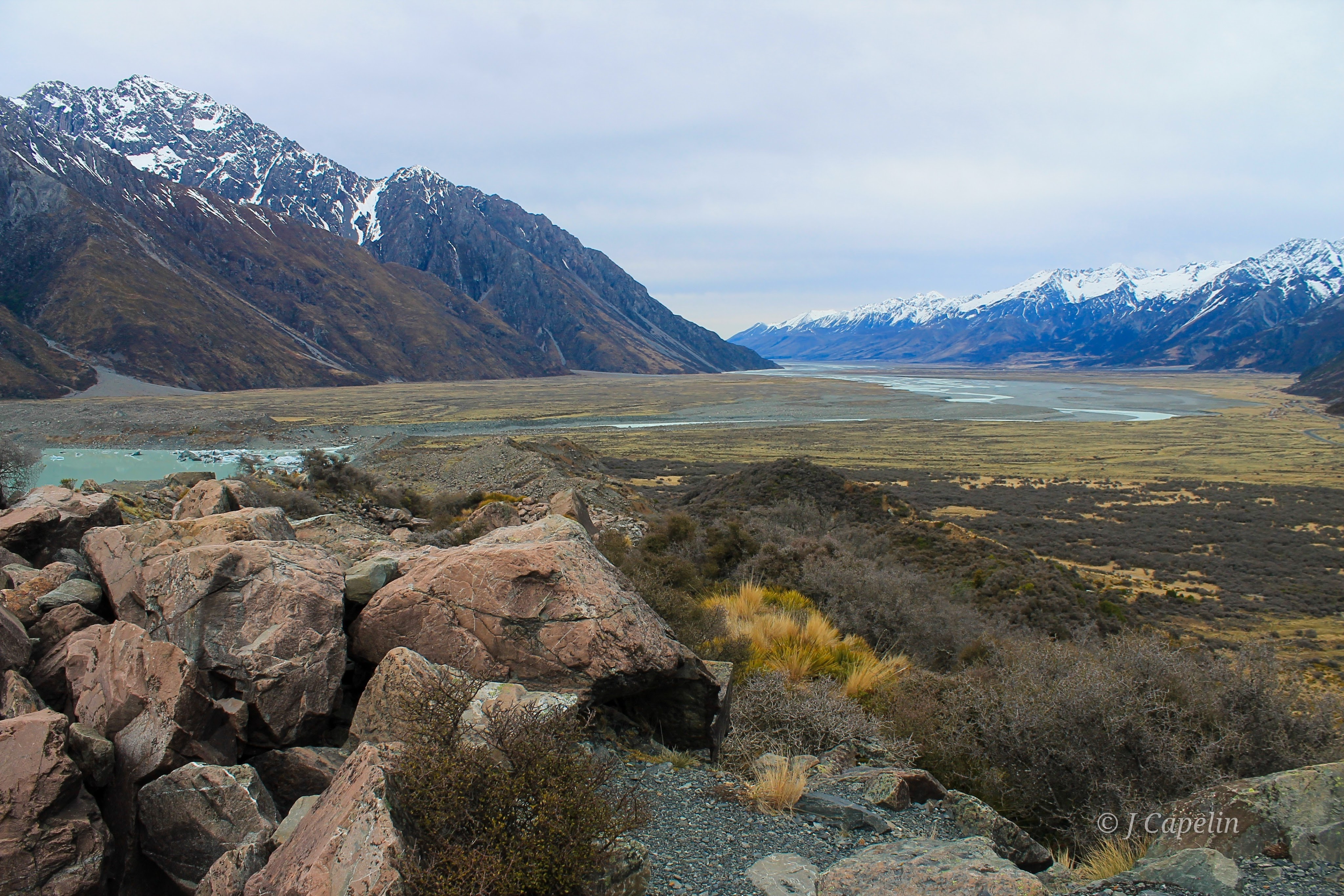
Gently ascending through Alpine scrubland around the foothills, the path opens out into a 180 degree viewing platform over The Hooker Valley. The light was flat and glaring, but at least the clouds were high enough to see the mountain peaks. Mueller Glacier and Mt Sefton stand across the milky hues of the Glacier Lake, while Aoraki (Mt Cook) looms in the background.
Walking Time: 50 mins return from White Horse Hill Campground.

Blue Lakes & Tasman Glacier – Tasman Valley Section

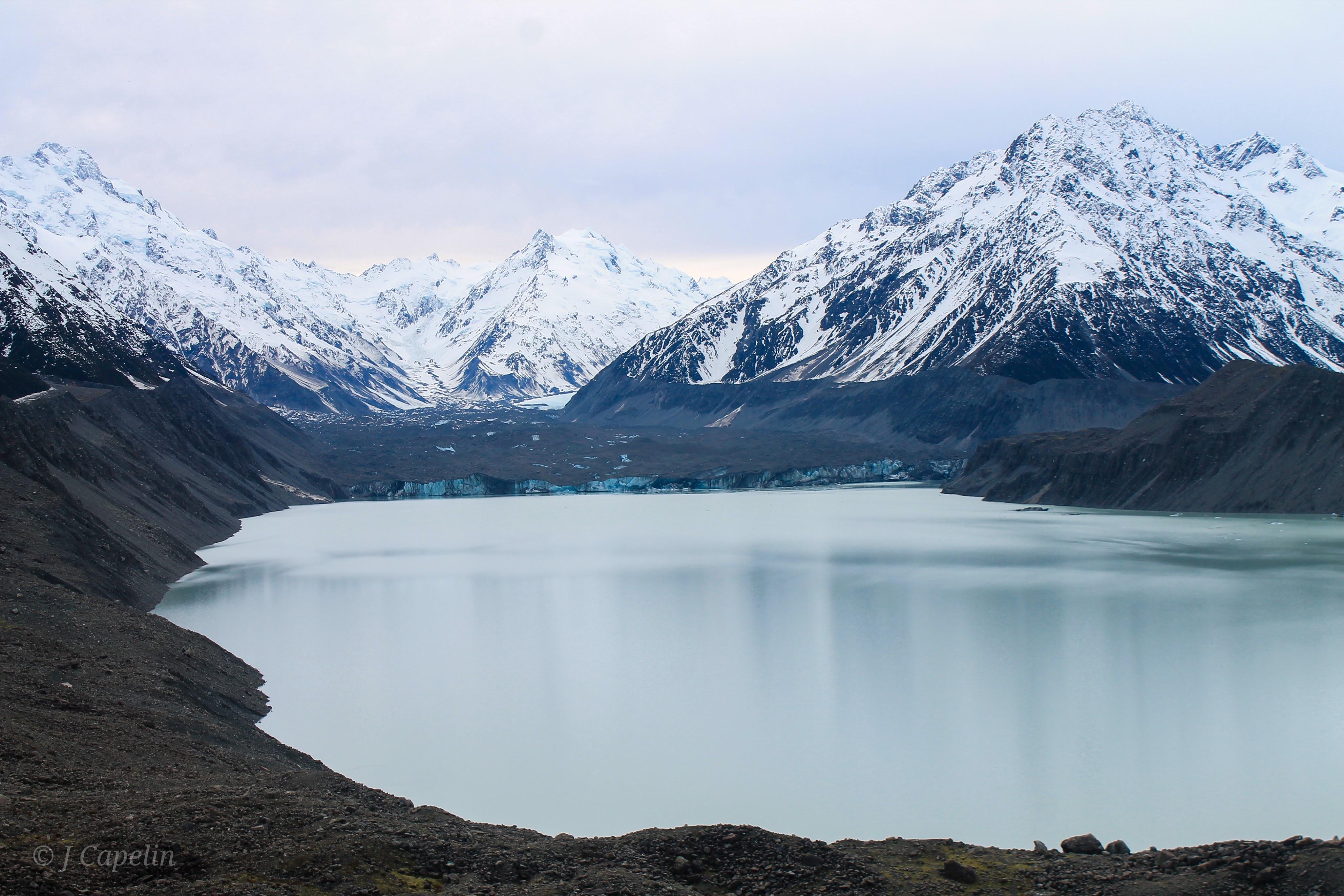
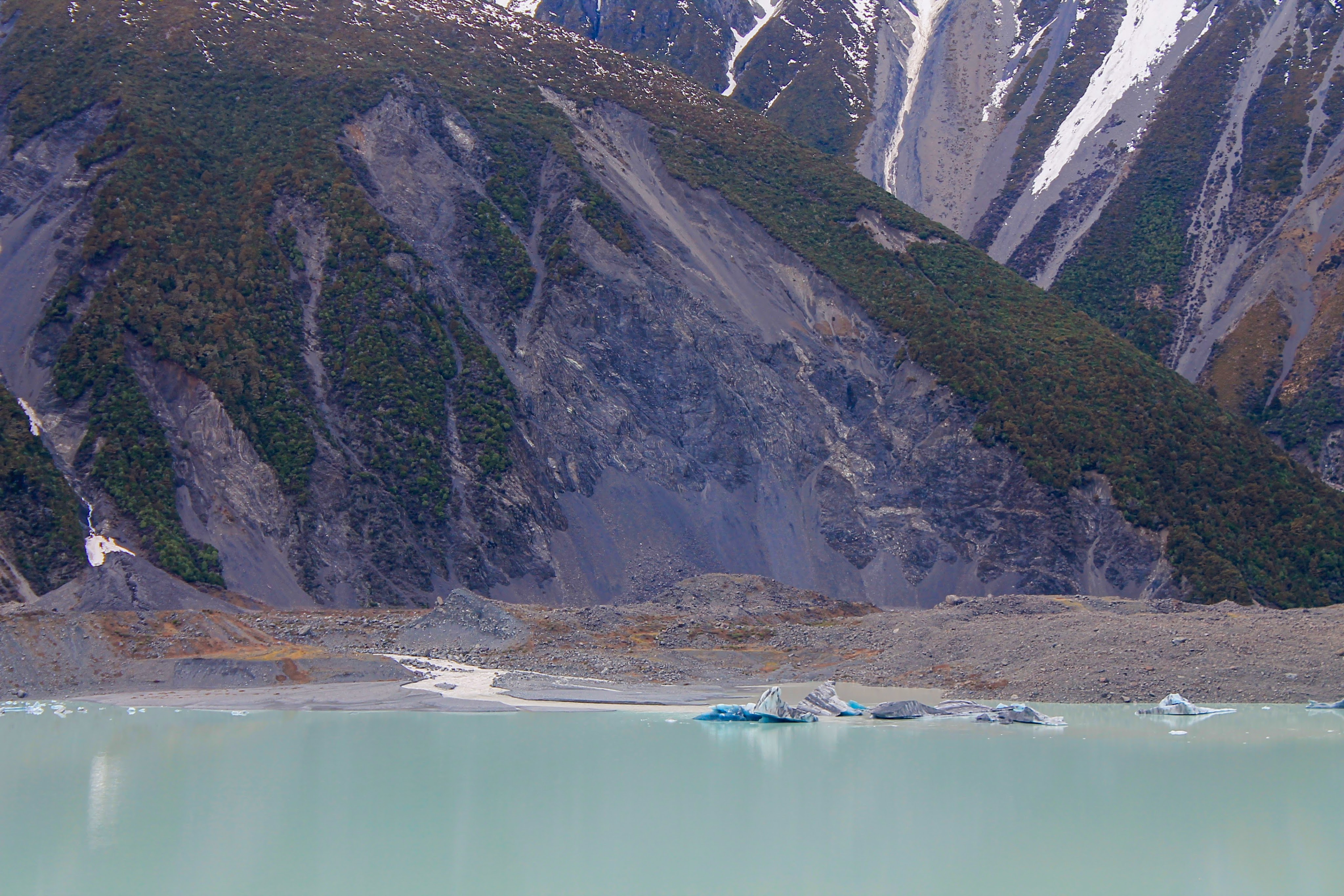
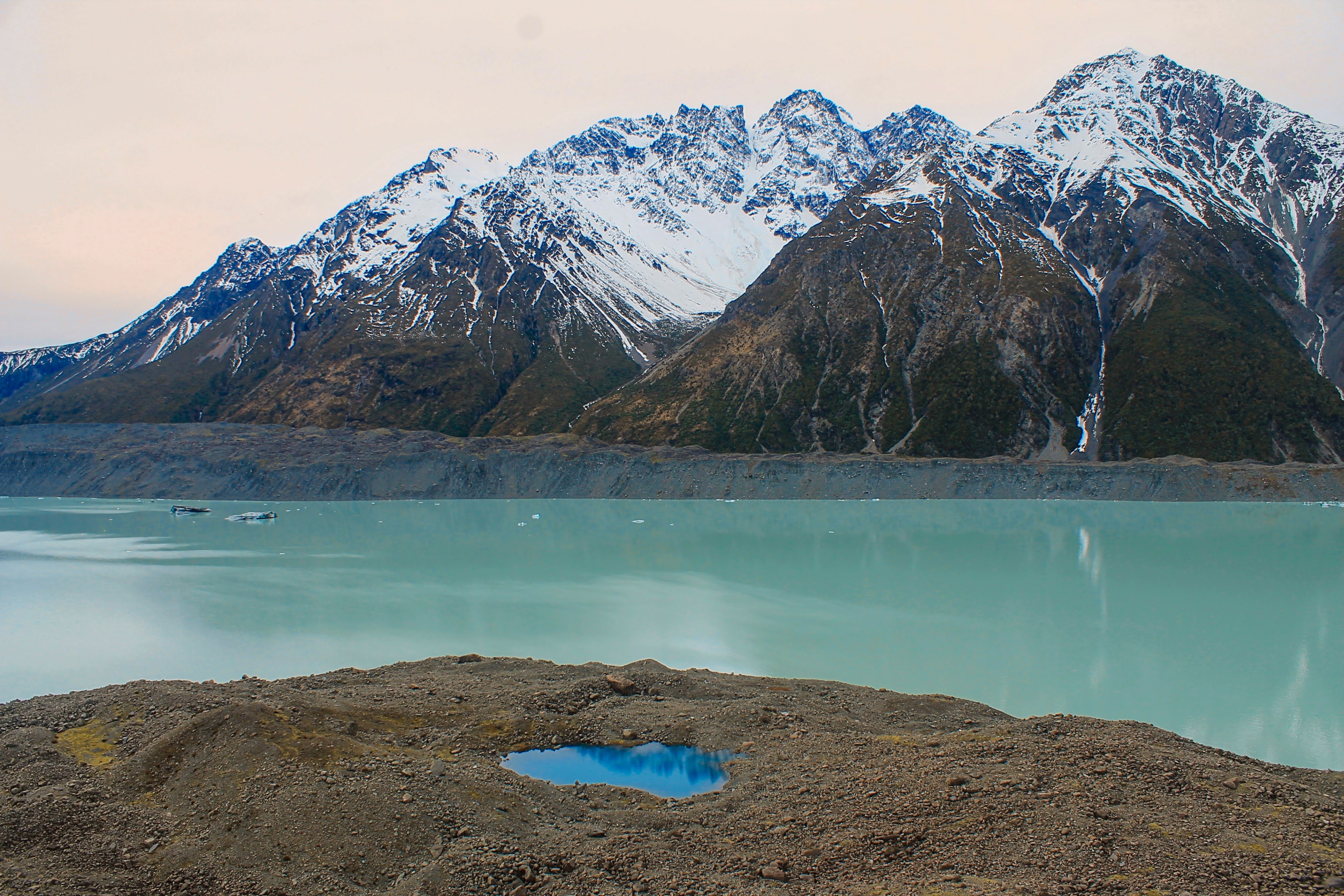
A rocky staircase winds up the moraine wall, revealing an other-worldly panorama at the top. Haupapa Glacier encroaches from the mountains into its lake, where blue-dipped icebergs drift. Back to the South, the Tasman River meanders through the valley where it eventually fills Lake Pukaki.

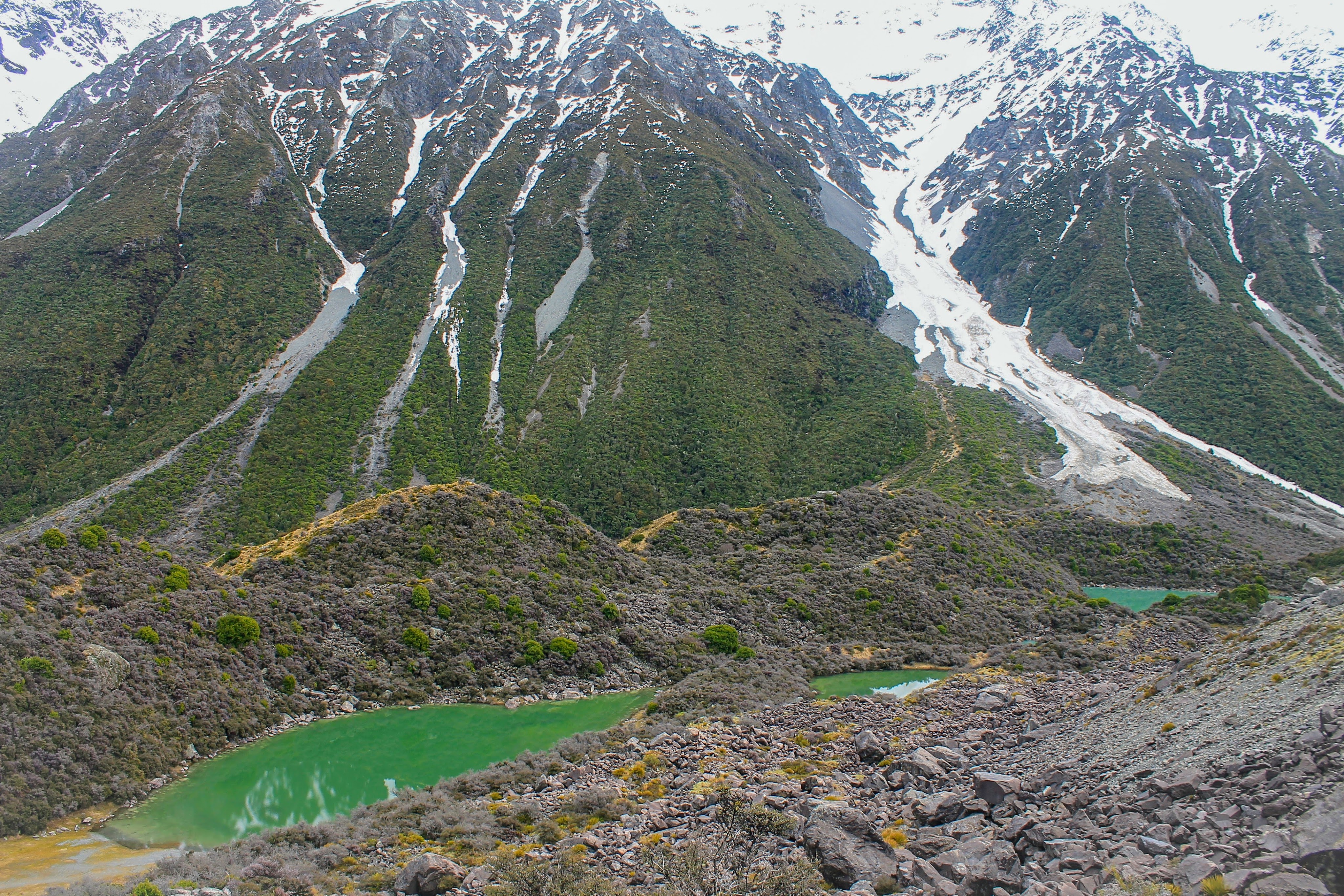
On the return walk, we stopped to admire the contrasting reflections in the Blue Lakes, nestled between snow peaks.

The Blue Lakes are actually green since the freezing glacial water no longer feeds them, due to shrinking glaciers. This has made the water warmer, and allowed green algae to grow. Despite this, the Department of Conservation still deem the pools safe to swim in during summer.

Walking Time: 30 mins return from Blue Lakes Carpark.

(Click on any photo to enlarge.)

Drive Time: Lake Tekapo – Aoraki: 1 hour 15 mins

Wānaka

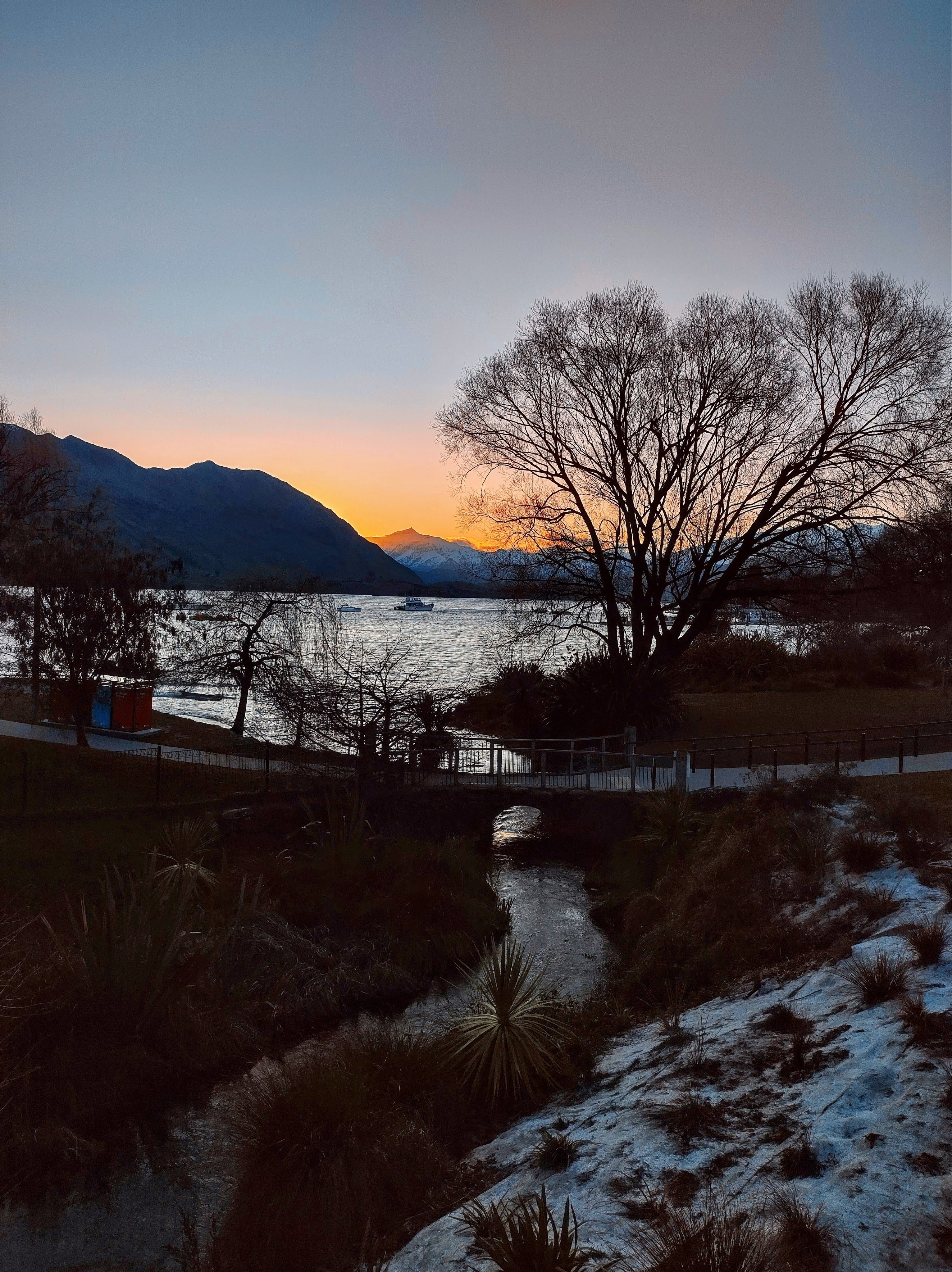
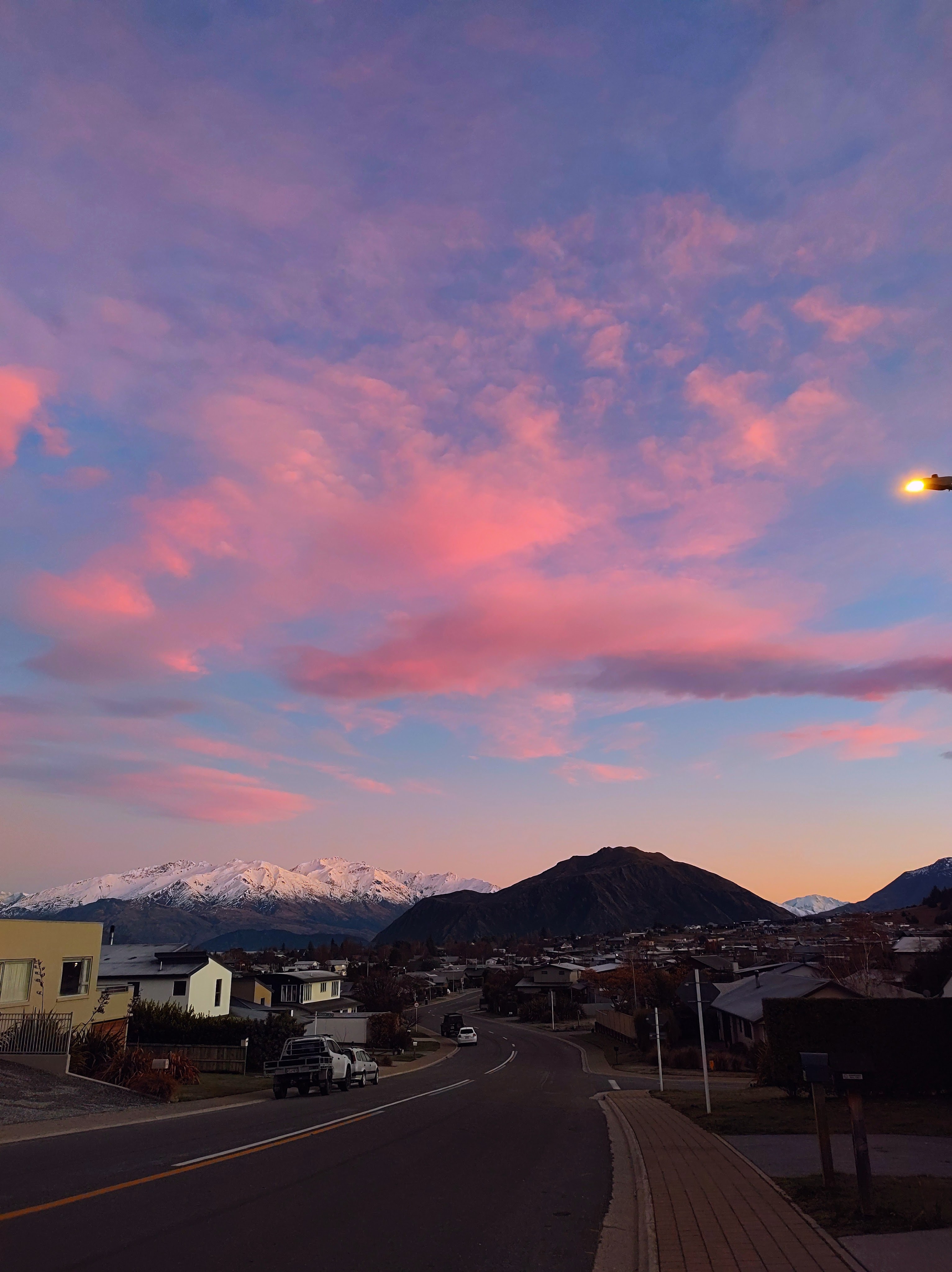
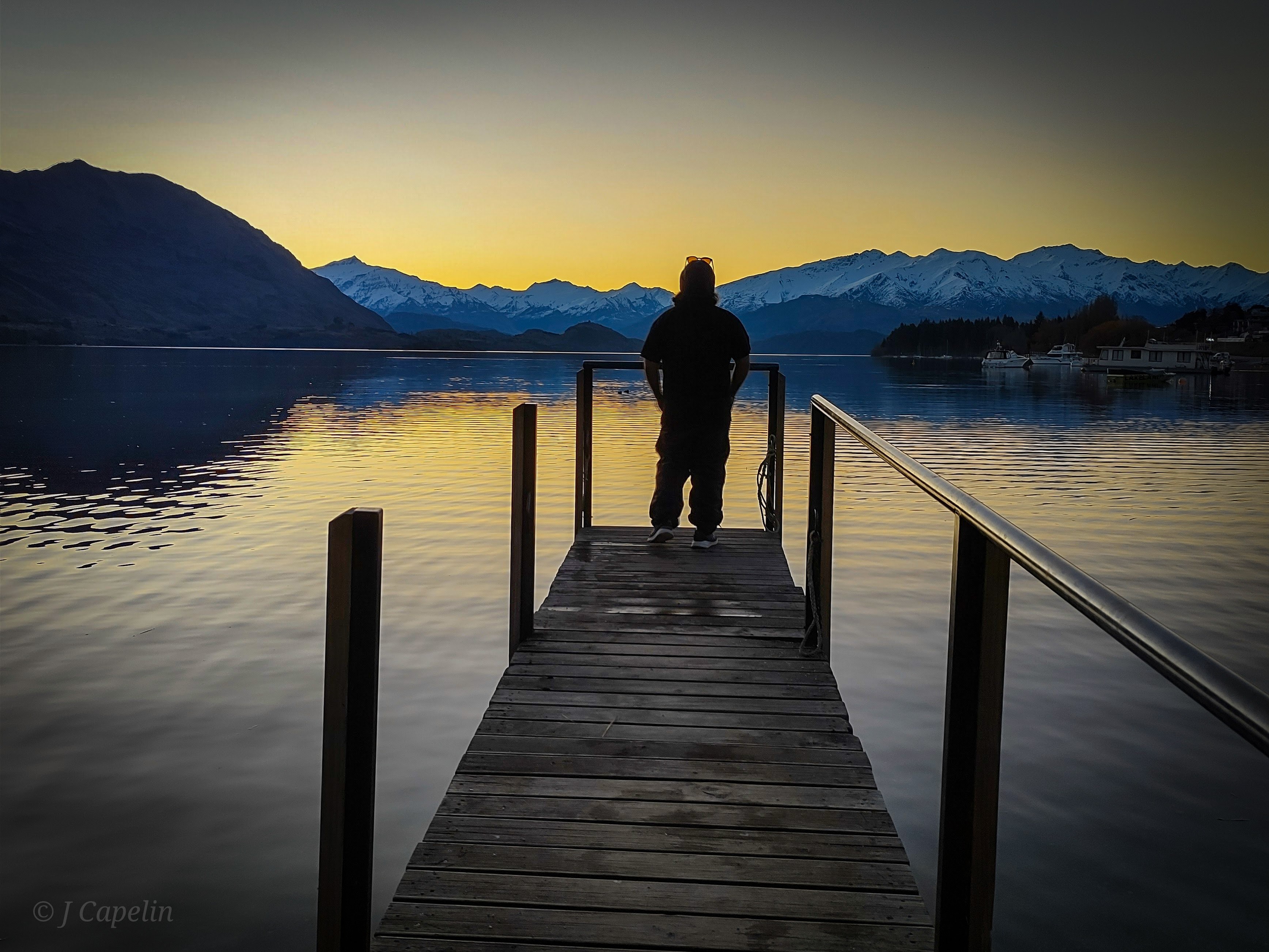
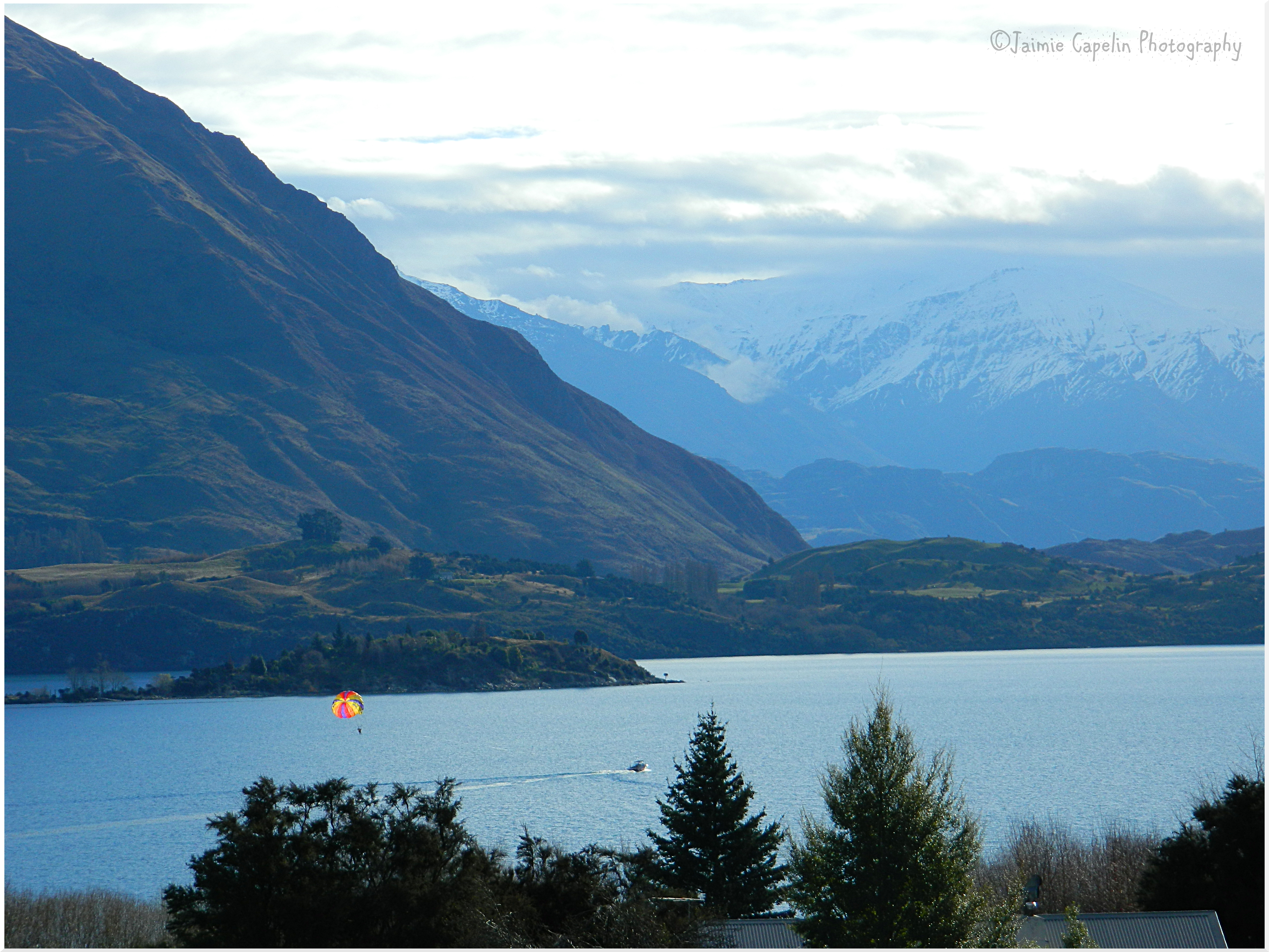
When I came to Wānaka to live many years ago, I described the season as a ‘crisp, colourful winter, in which every sunset paints the lake a different story.’ I vividly remember the smell of wood smoke from the chimneys beneath dark snow clouds, and the stacks of firewood under the coloured lights in Post Office Lane. Well none of that has changed, and coming back to visit always makes part of me feel like I’m home.

We used Wānaka as a base for snowboarding, visiting the nearby towns, and of course taking in the local sights. There are several stunning hikes around Wānaka and Mt Aspiring National Park, but we didn’t have the hiking gear for winter, so we stuck to the more local walks.

Mount Iron

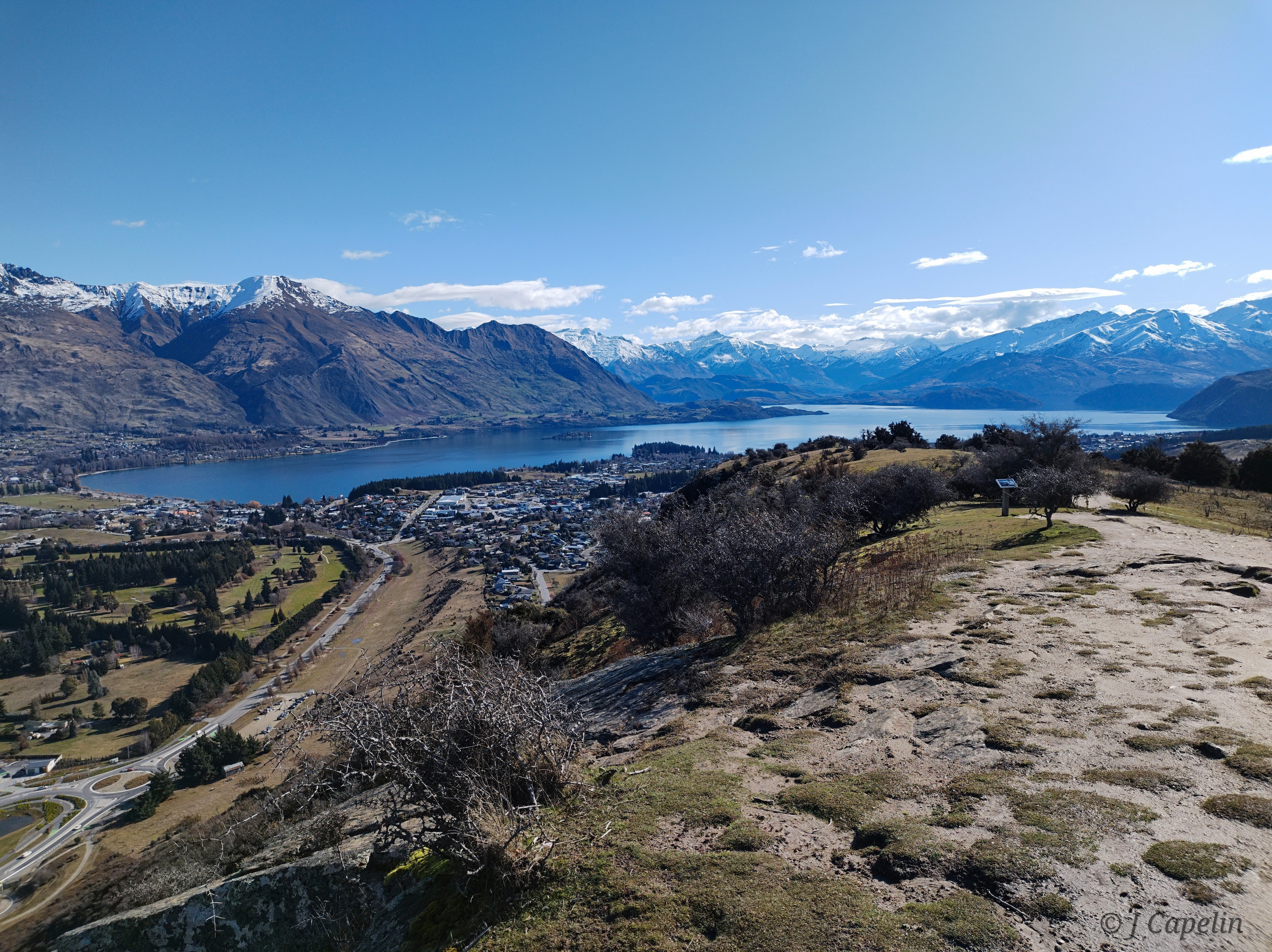
The local exercise hill, Mt Iron, is a fairly short but steep walk. The sun had the warmth of spring on its breath as we climbed and we were soon in our T-shirts, quads burning by the time we reached the top. The spectacular view across the town and the lake stole the fresh mountain air from our lungs.

Waterfall Creek Track

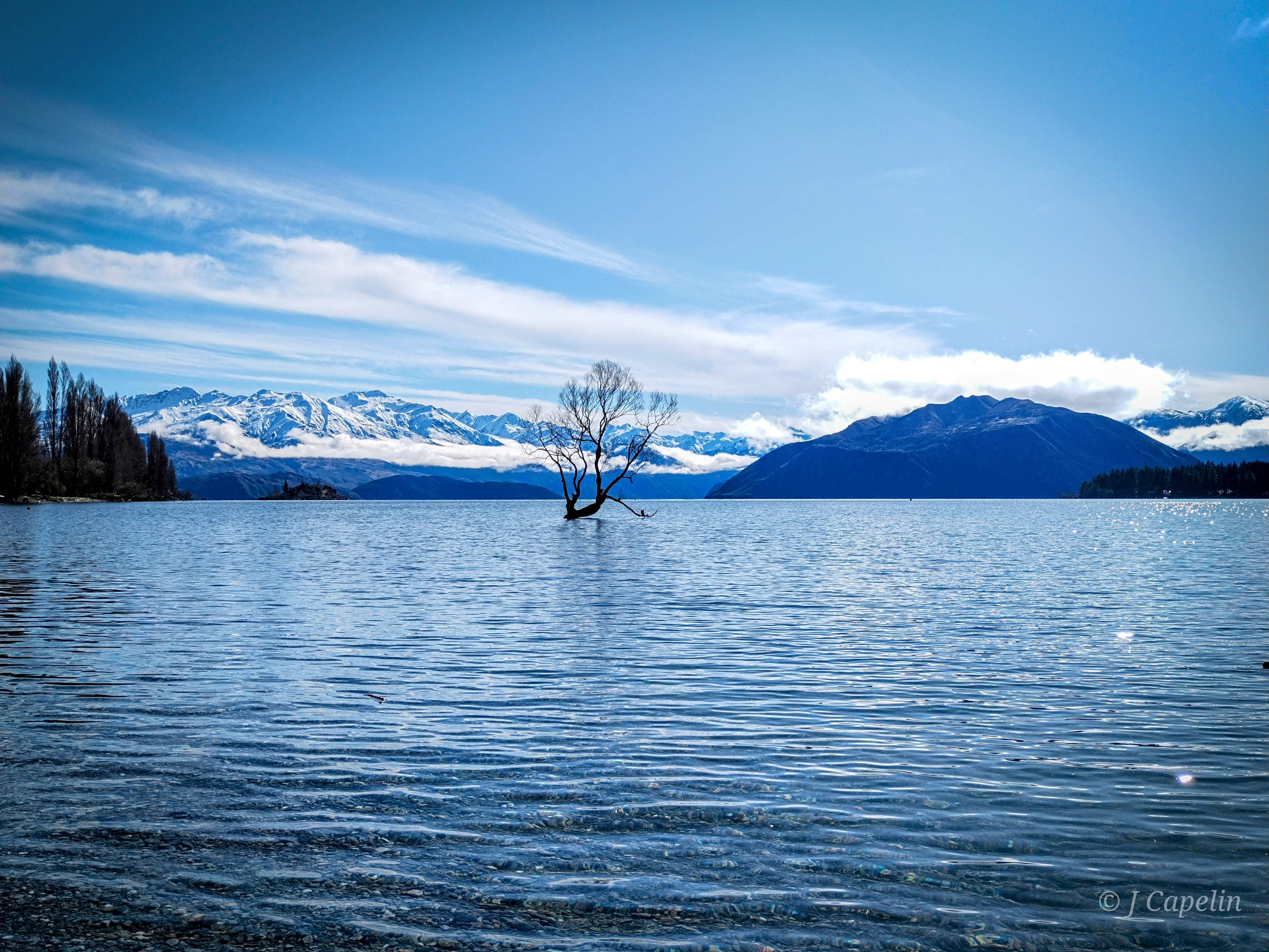
A gorgeous flat walk around Lake Wānaka, which takes you along side the pebbly waterfront, and past the tapering vines of Rippon Vineyard. This walk provides good views of Ruby Island, and of course, the Wānaka Tree – thanks to instagram, this tree in the lake is famous, and nowadays it attracts many tourists aiming for that perfect shot.

Beacon Point

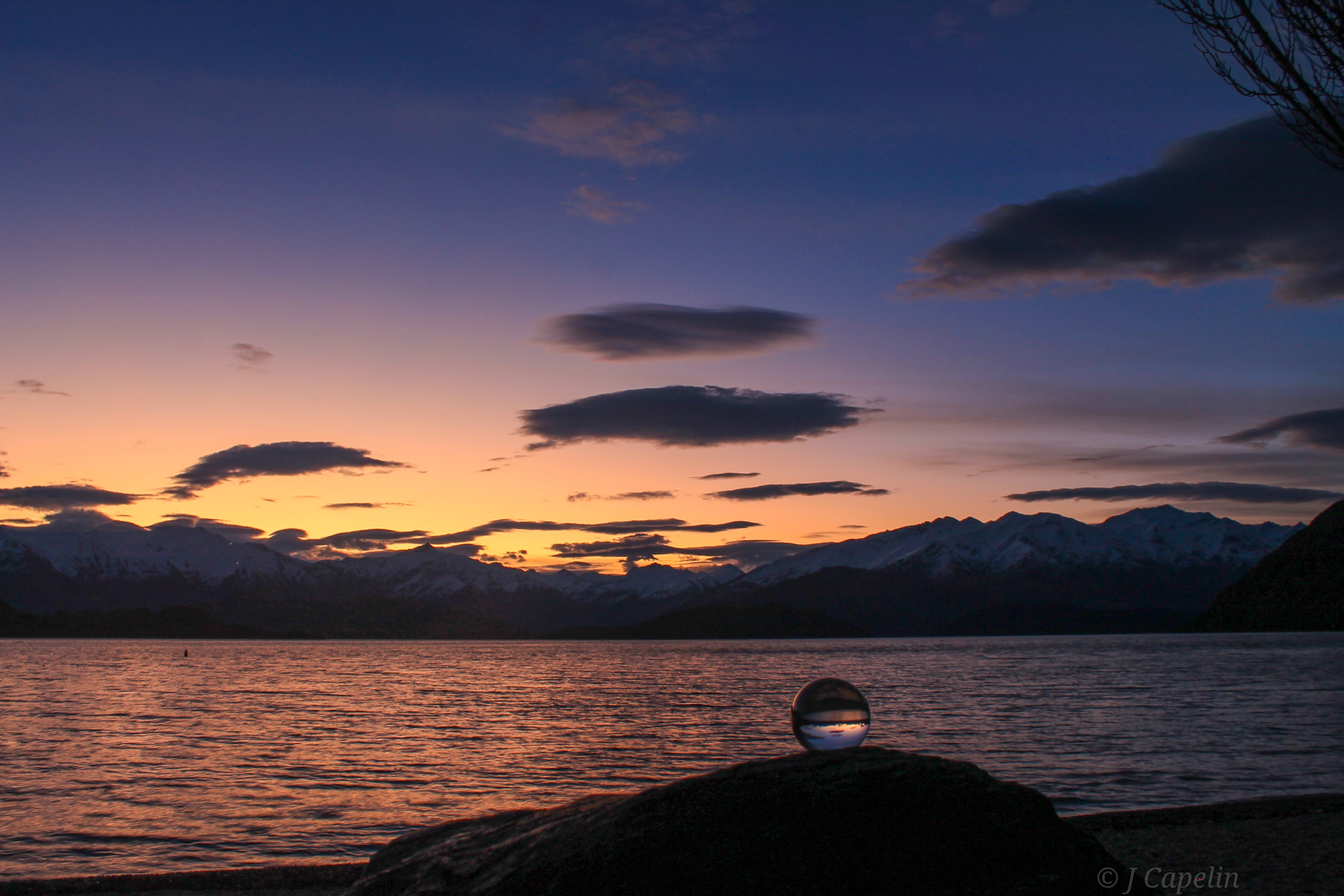
One evening we headed to Beacon Point for sunset. It was freezing, but the view of Mt Aspiring National Park across the lake was perfect under the setting sun.

Around Town

We spent hours wandering around the little town, window shopping for local crafts and stopping in bars and pubs for refreshment. All the while that stunning lake is right there, tempting your eyes for a glance, and every time you look it seems to get more beautiful. There is so much variety of food, drink, fashion and gifts in Wānaka, there’s something for everyone.

The cost of living is generally high in NZ, and eating out can get expensive. Wānaka’s supermarkets may be some of the more expensive in the country, but it’s a cheaper alternative. We found that New World does takeaway style meals for two – much better than your average ready meal – and all you need in your accommodation is a microwave. We also utilised their bakery section for quick on-the-go lunches.

It’s worth mentioning the impact of the pandemic on the hospitality sector. Every food & drink venue was either fully booked or closed due to staffing. The hospitality staff were holding on by their fingertips, battling understaffing, and the isolation restrictions in place at the time. There were signs in windows screaming out for employees, or asking for your patience because they simply didn’t have enough staff. Unfortunately due to rent inflation, travellers were less likely to take these seasonal jobs because there was nowhere affordable to live, which is an ongoing issue globally.

Accommodation: Private Studio on Kings <$1,190 NZD – 8 nights
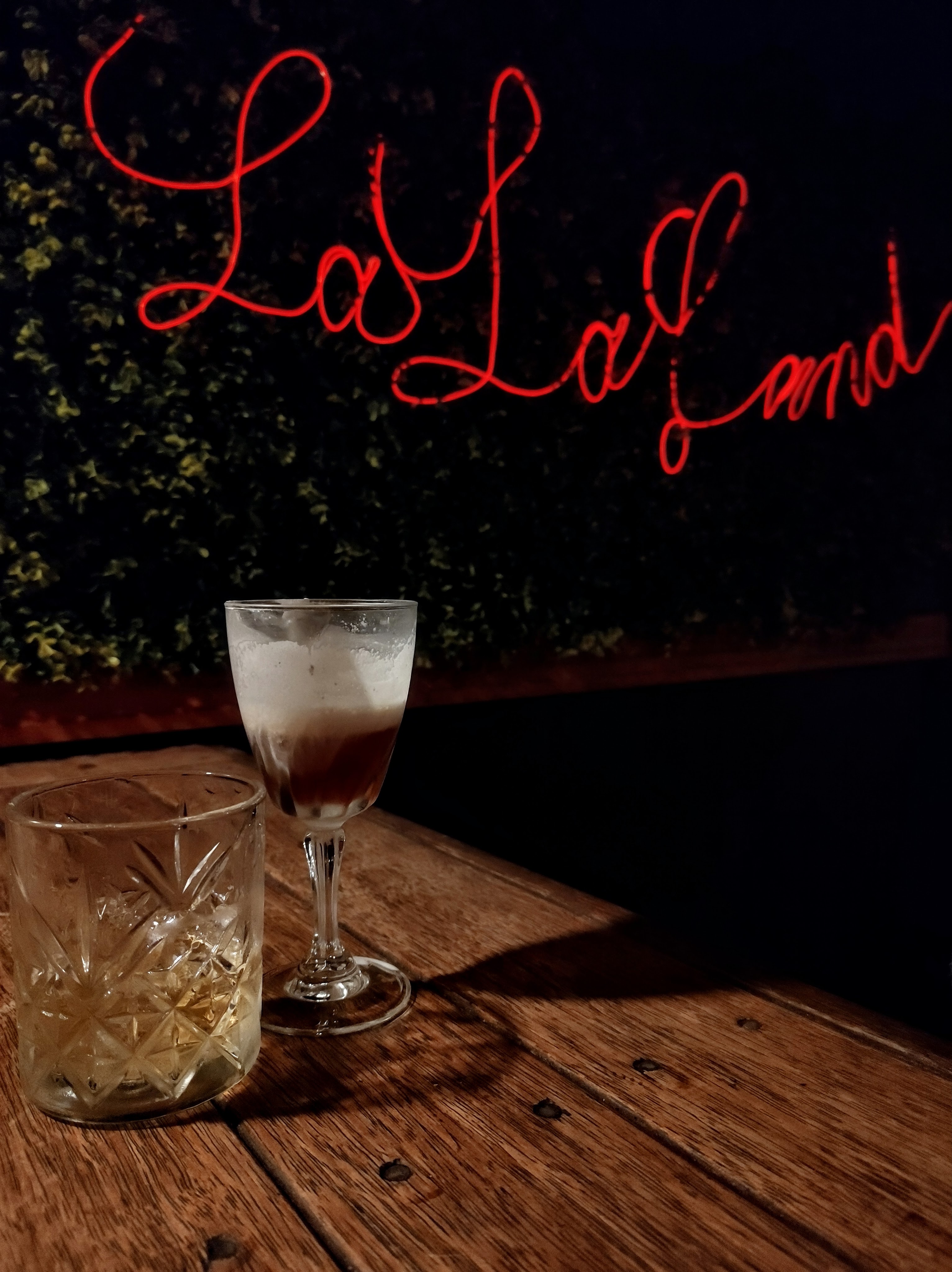
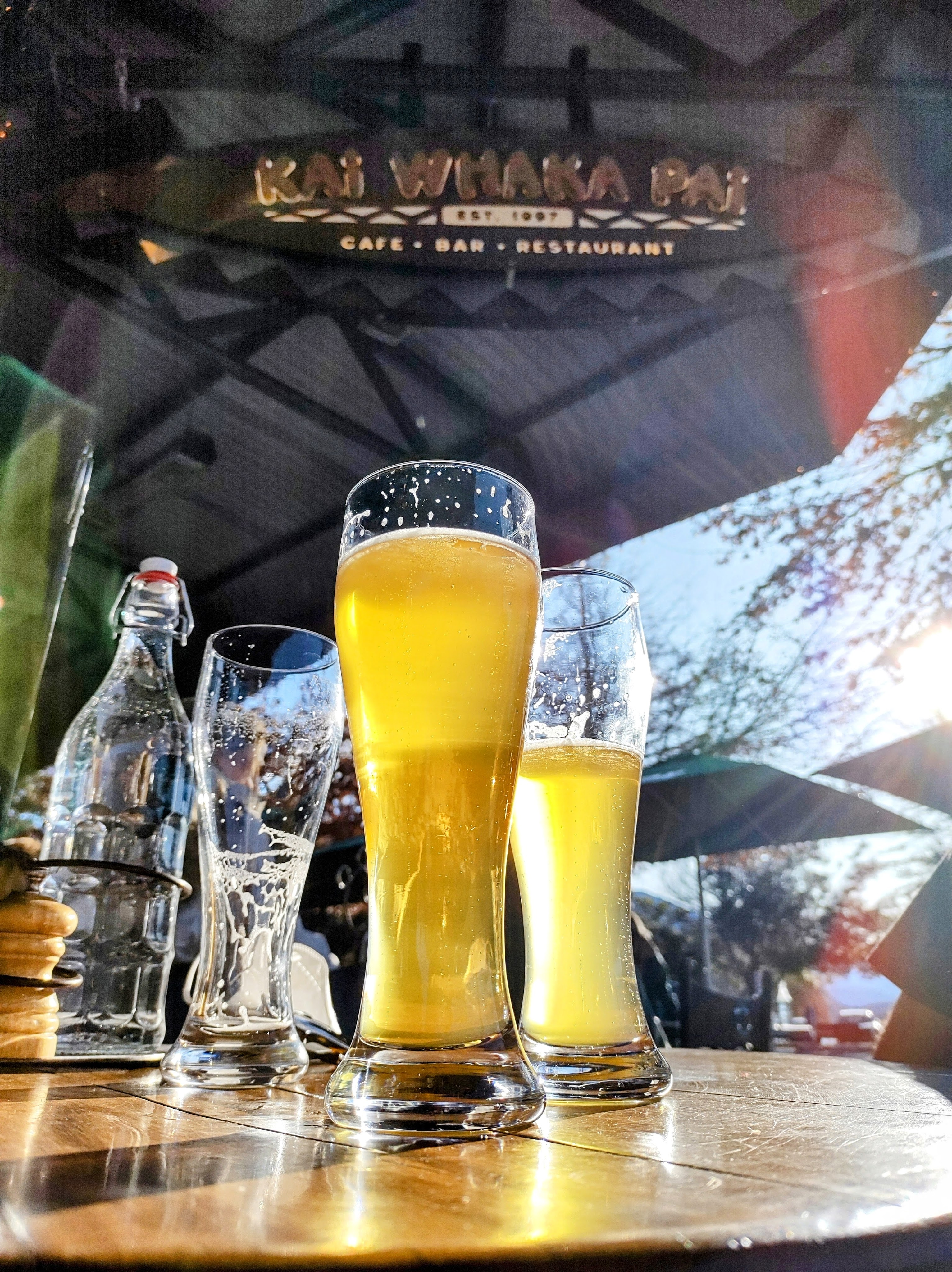
Food & Drink: Water Bar (Pub food), La La Land (Cocktails), Curbside Coffee & Bagels (Coffee cabin), Kai Whakapai (All day cafe/bar), Big Fig (All day cafe, hearty home style food), Patagonia (chocolate shop – best chilli hot chocolate), Burrito Craft (Mexican food trailer), Wanaka Beerworks (Brewery)
Drive Time: Aoraki – Wānaka: 2 hours 20 mins

Cardrona & Treble Cone

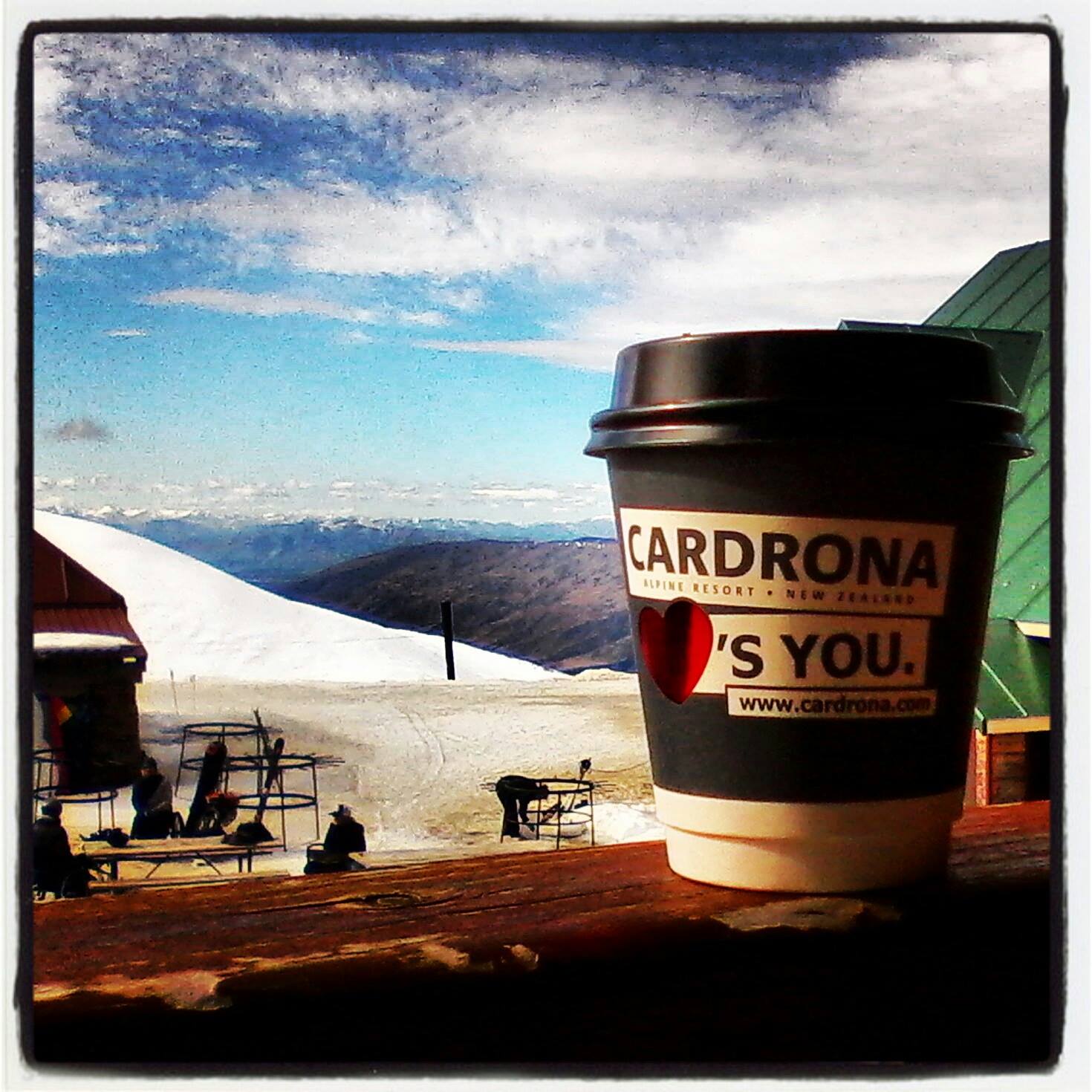
Cardrona and Treble Cone are two separate ski fields, both about a 40 minute drive from Wānaka, who have teamed up so you can use their lift passes at both locations. Cardrona is located on the Crown Range road and is a great, family friendly ski resort for all abilities, though it is notoriously busy these days. Cardrona is an old haunt for me, and we got treated to a nostalgic ‘Cardie’s’ sunrise on my return.

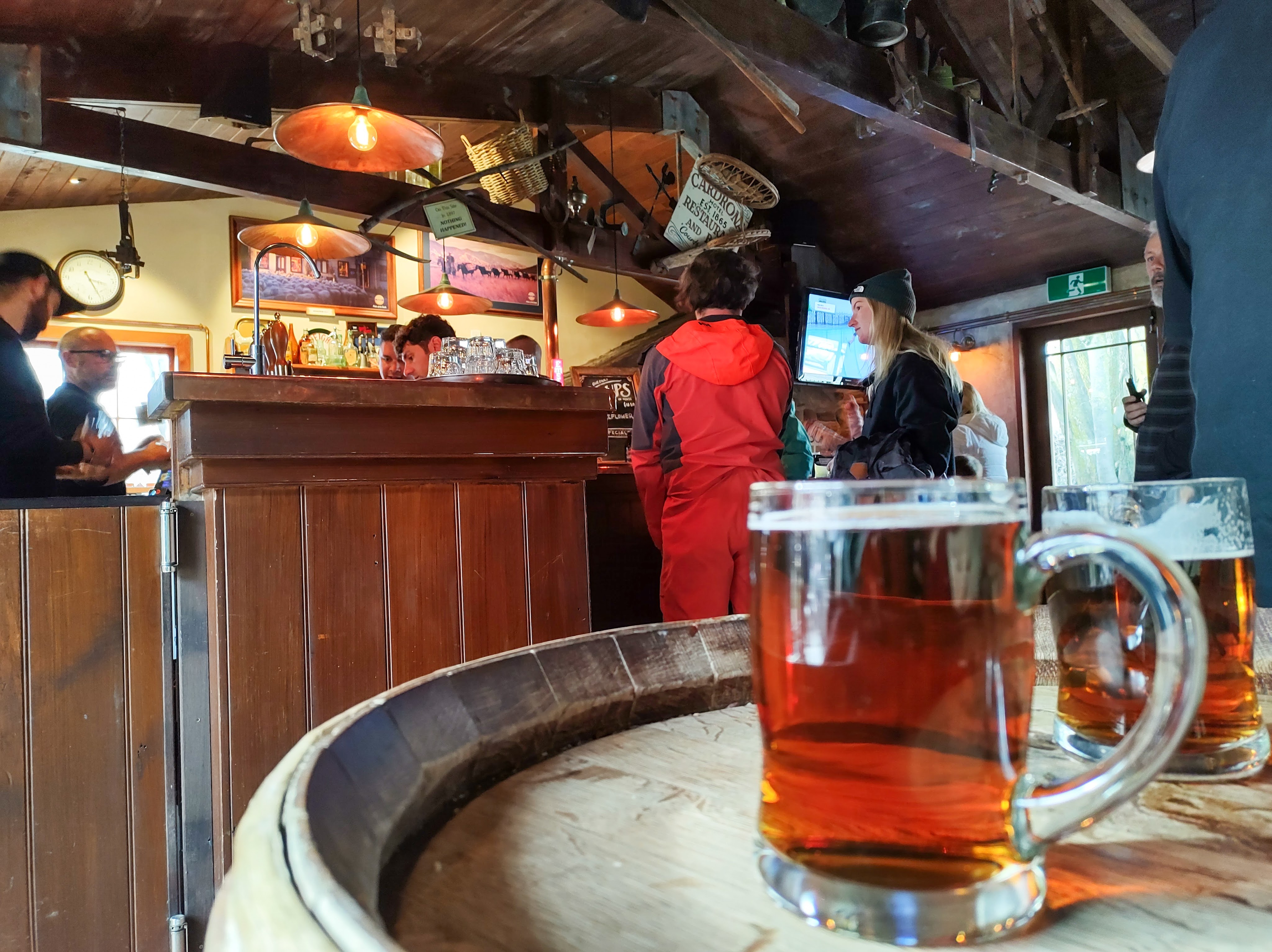
After a big day of sliding around in the early spring snow, we paid a visit to Cardrona’s old gold mining village at the bottom of the mountain, and the beautiful Cardrona Hotel, where the atmosphere was pumping and Après Ski beers were flowing.

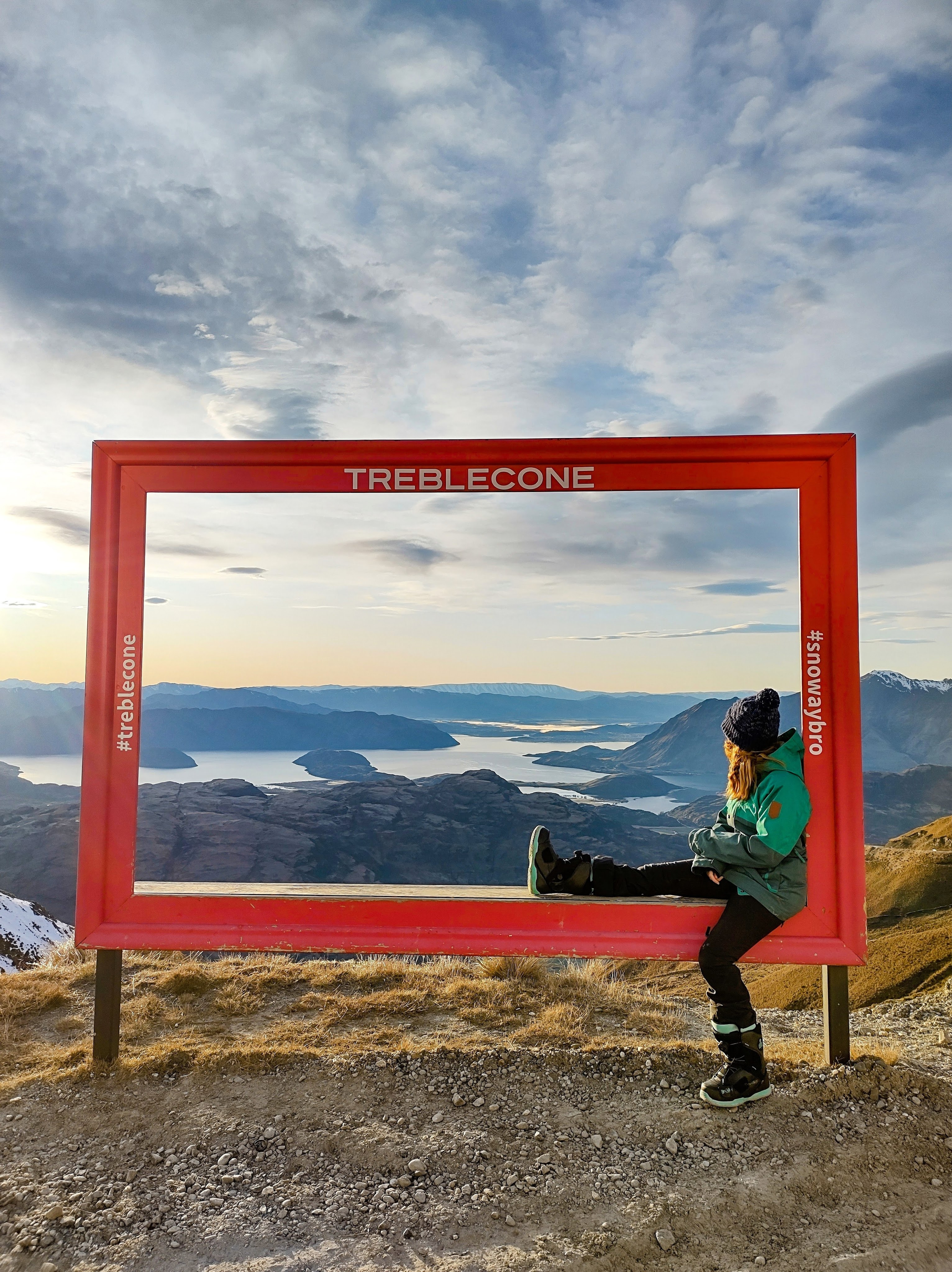
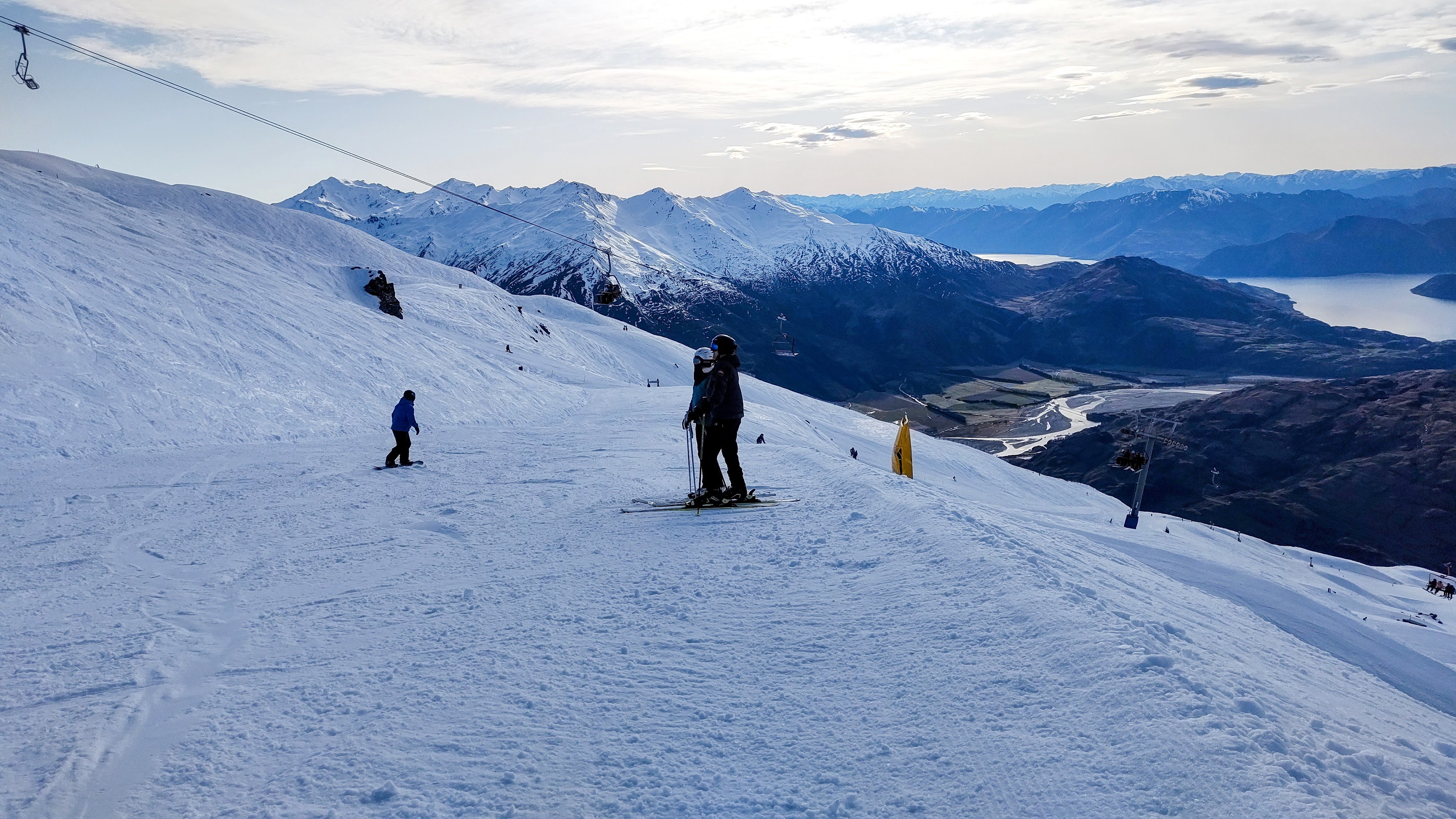
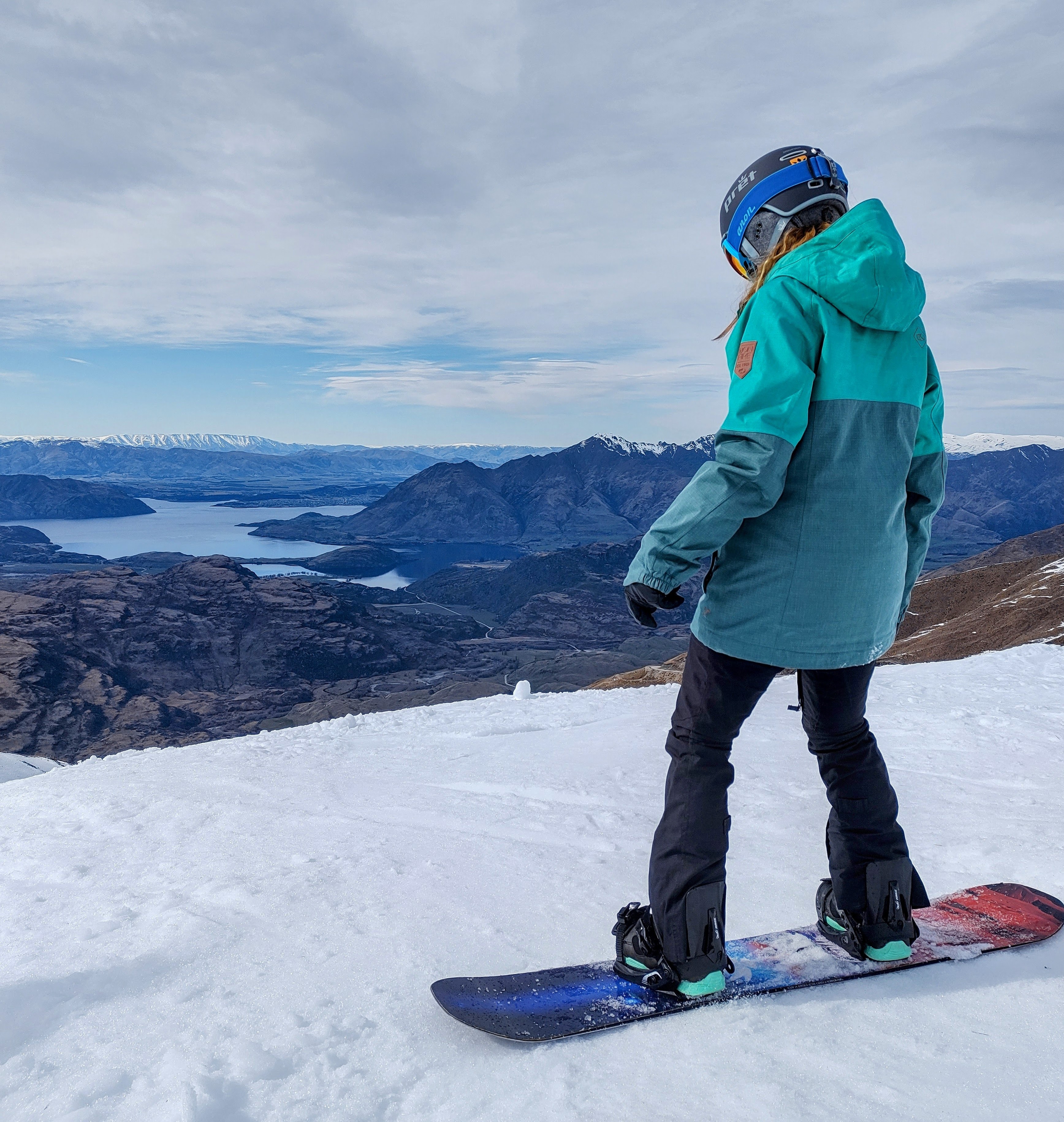
Treble Cone is located in the Aspiring National Park, and has the most stunning views across Lake Wānaka. The terrain is steeper than Cardrona and is better for more experienced skiers and snowboarders. They used to say Treble Cone was the locals’ mountain, and it still felt that way for the most part. The staff seemed more ‘at home’ here, and while the skiing was more serious, the whole place had an heir of casual familiarity, like walking into your local pub.

Arrowtown

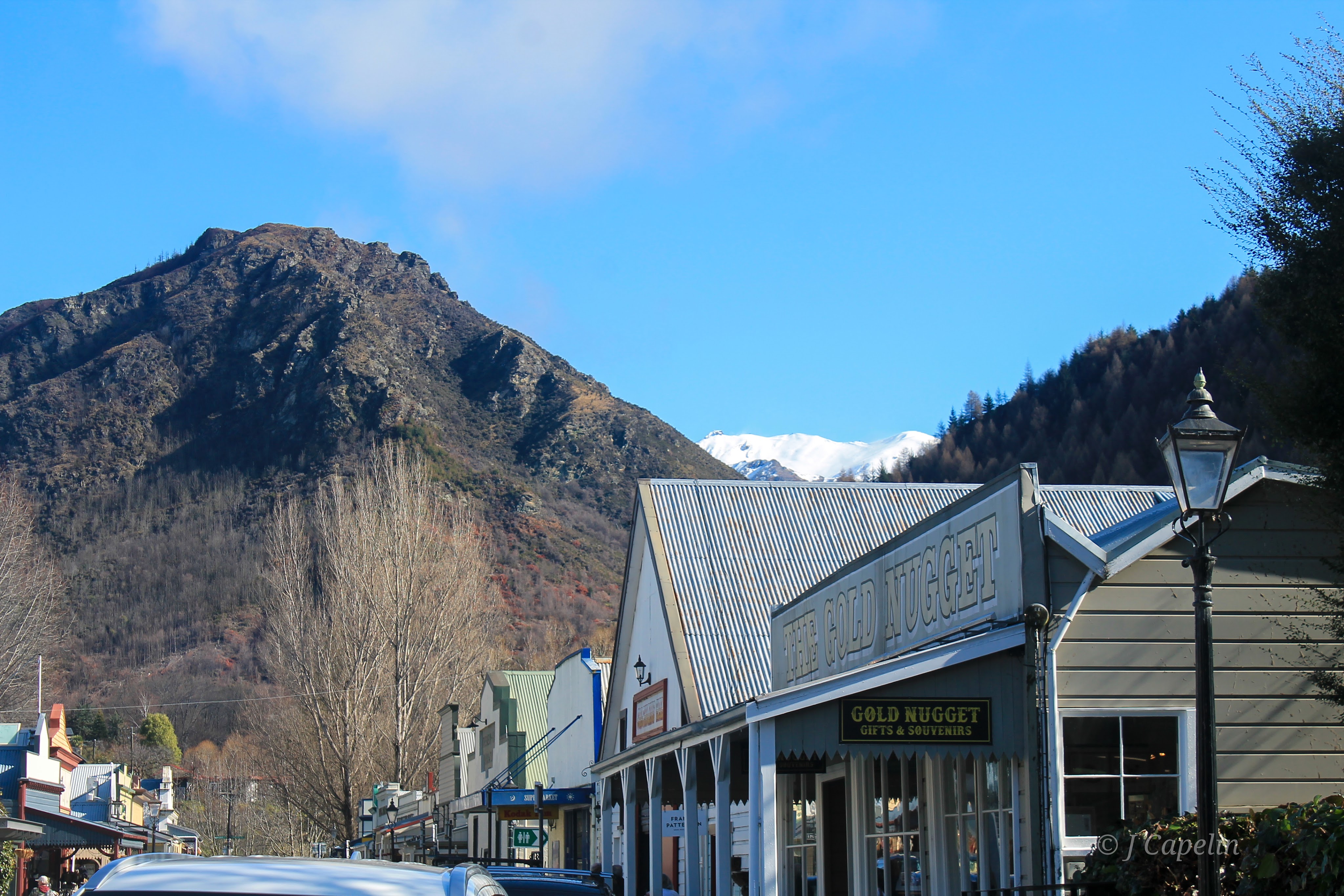
Over the Crown Range Pass, about 20 minutes from Queenstown, is a pretty little gold mining town from the 1860s – Arrowtown. The Crown Range road is an adventure in itself, winding through the mountain peaks before weaving down the opposite side with valley views on every hairpin bend.

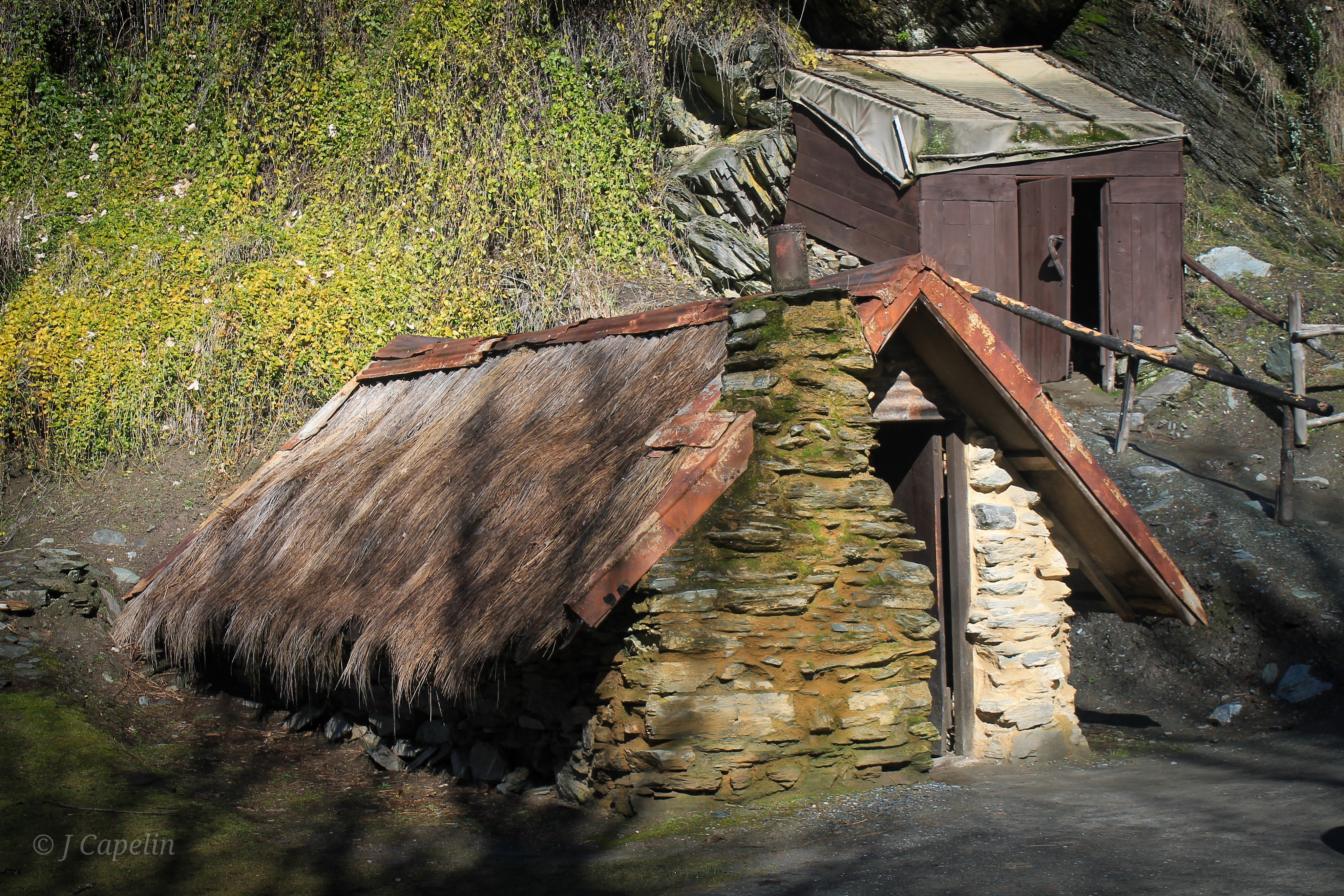
We arrived in Arrowtown mid-morning and the little colonial high street lined with gold shops was already bustling. We walked around the Chinese village – where some of the first migrant miners lived, finishing with a stroll along the river, before making our way onwards to Queenstown.

Drive Time: Wānaka – Arrowtown: 1 hour

Queenstown

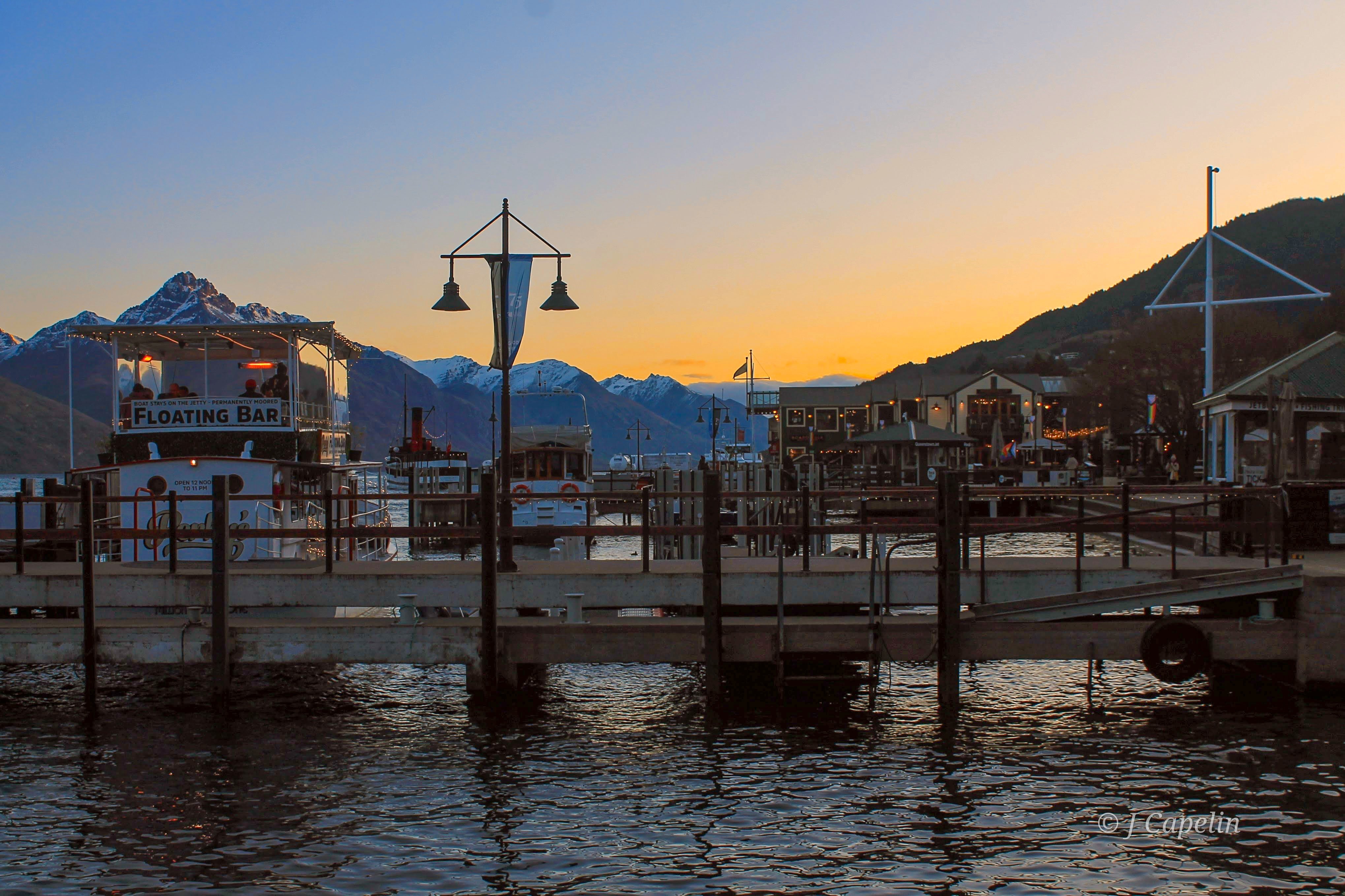
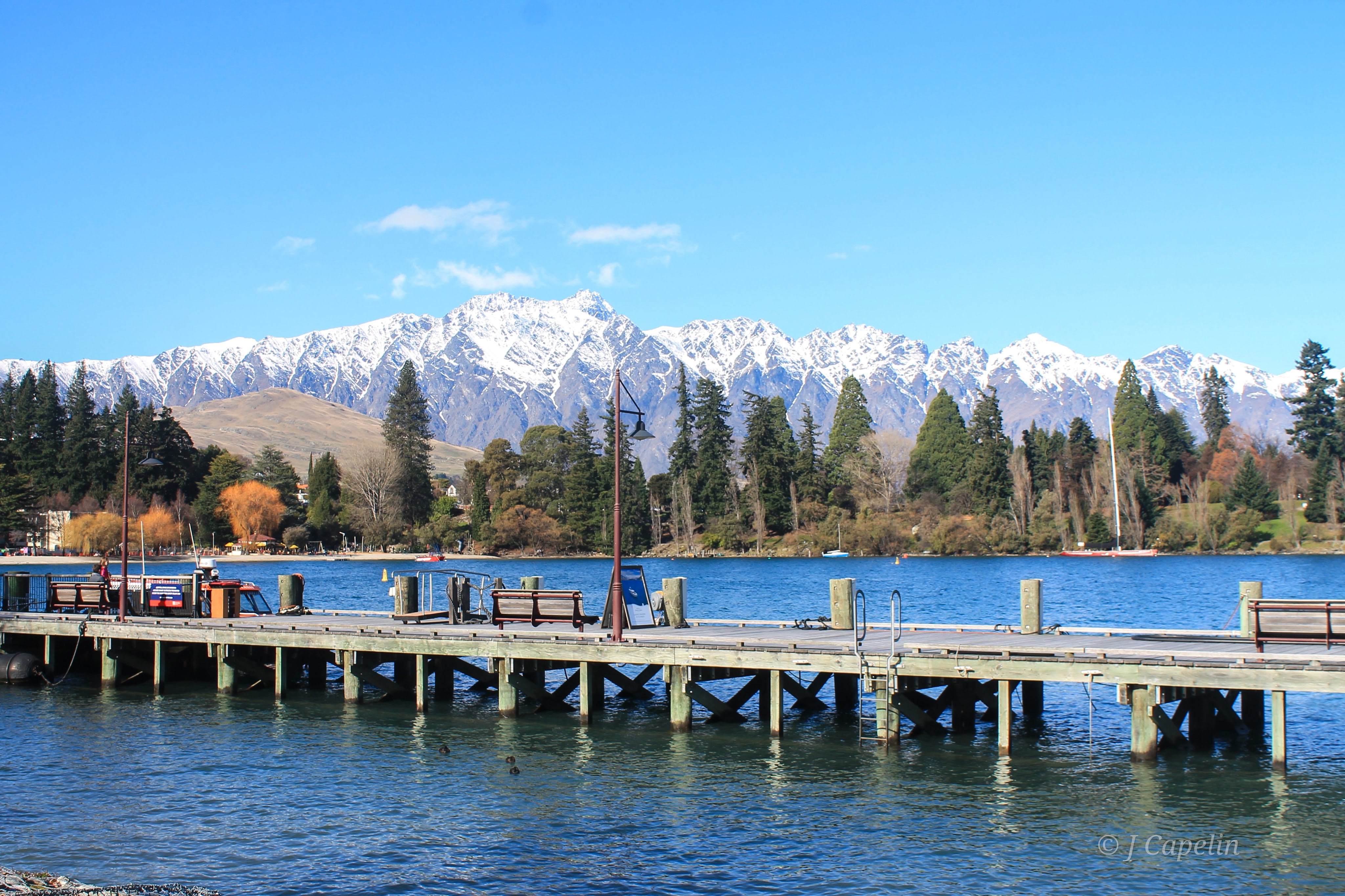
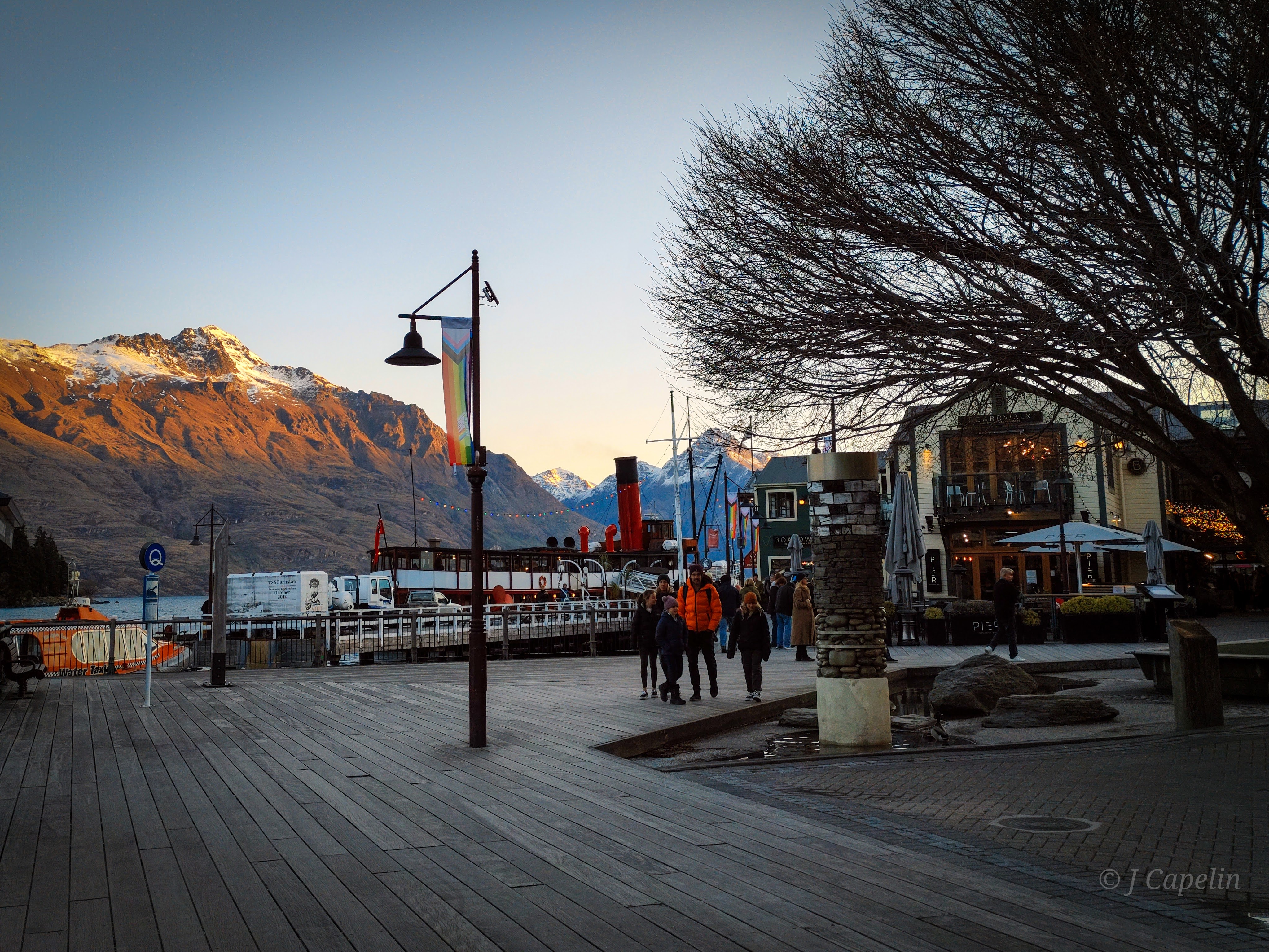
The place to be during NZ winter. The air is crisp, the pubs have their log burners crackling, and the line outside Fergburger is 3 miles long. Queenstown is an easy day trip from Wānaka (mountain road conditions providing) and it’s the adventure hub of New Zealand. There are a lot of tourist attractions and thrill seeker activities in this part of the world, with information and booking centres dotted all over town. However, we were quite content with just soaking up the atmosphere. We watched the old steamboat, the T.S.S Earnslaw, chug back and forth across Lake Whakatipu; admired The Remarkables (the impressive mountain range,) trod the boardwalks and browsed the abundance of bars and souvenir shops until the sun disappeared and turned the whole town pink and sparkly.

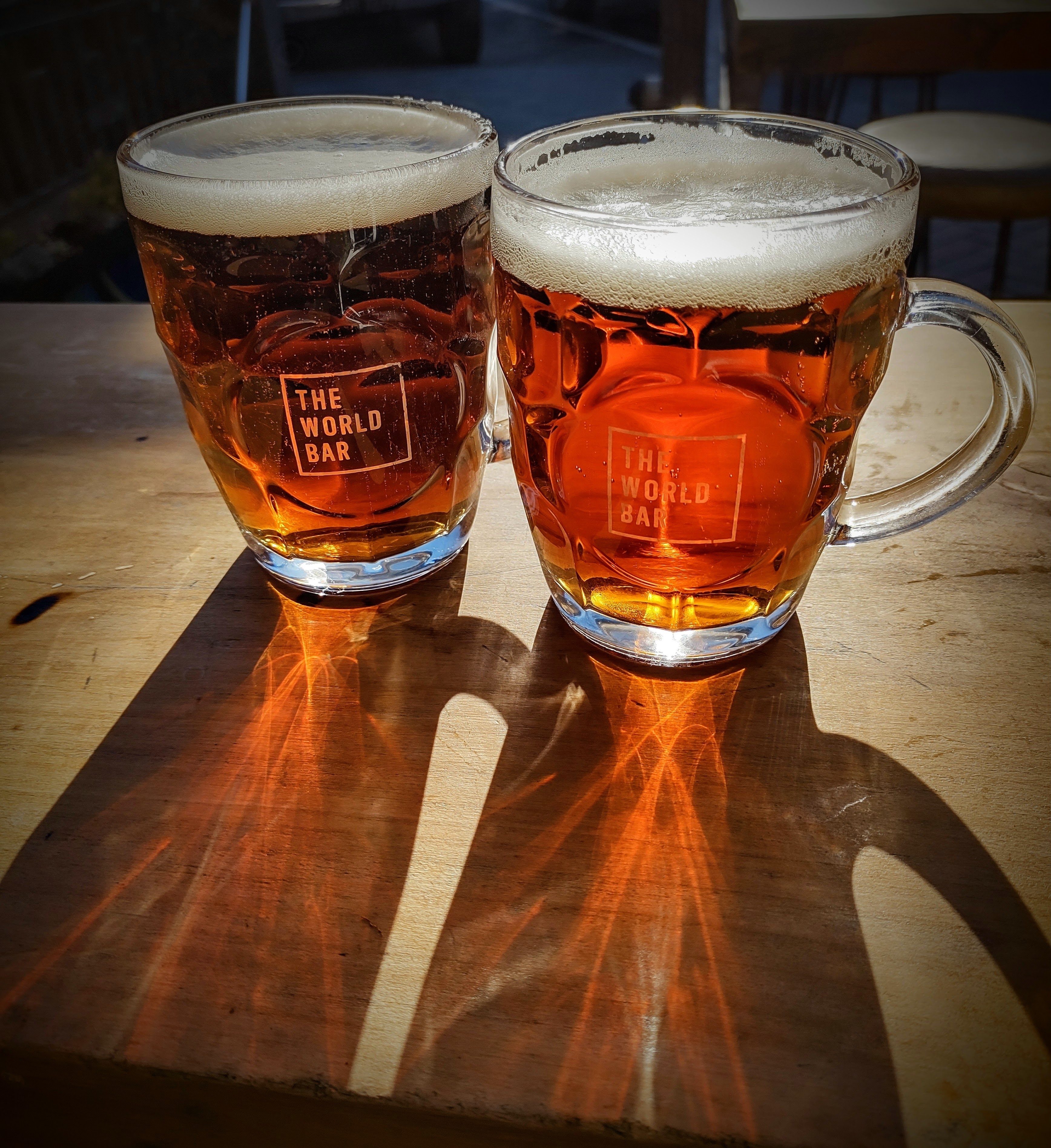
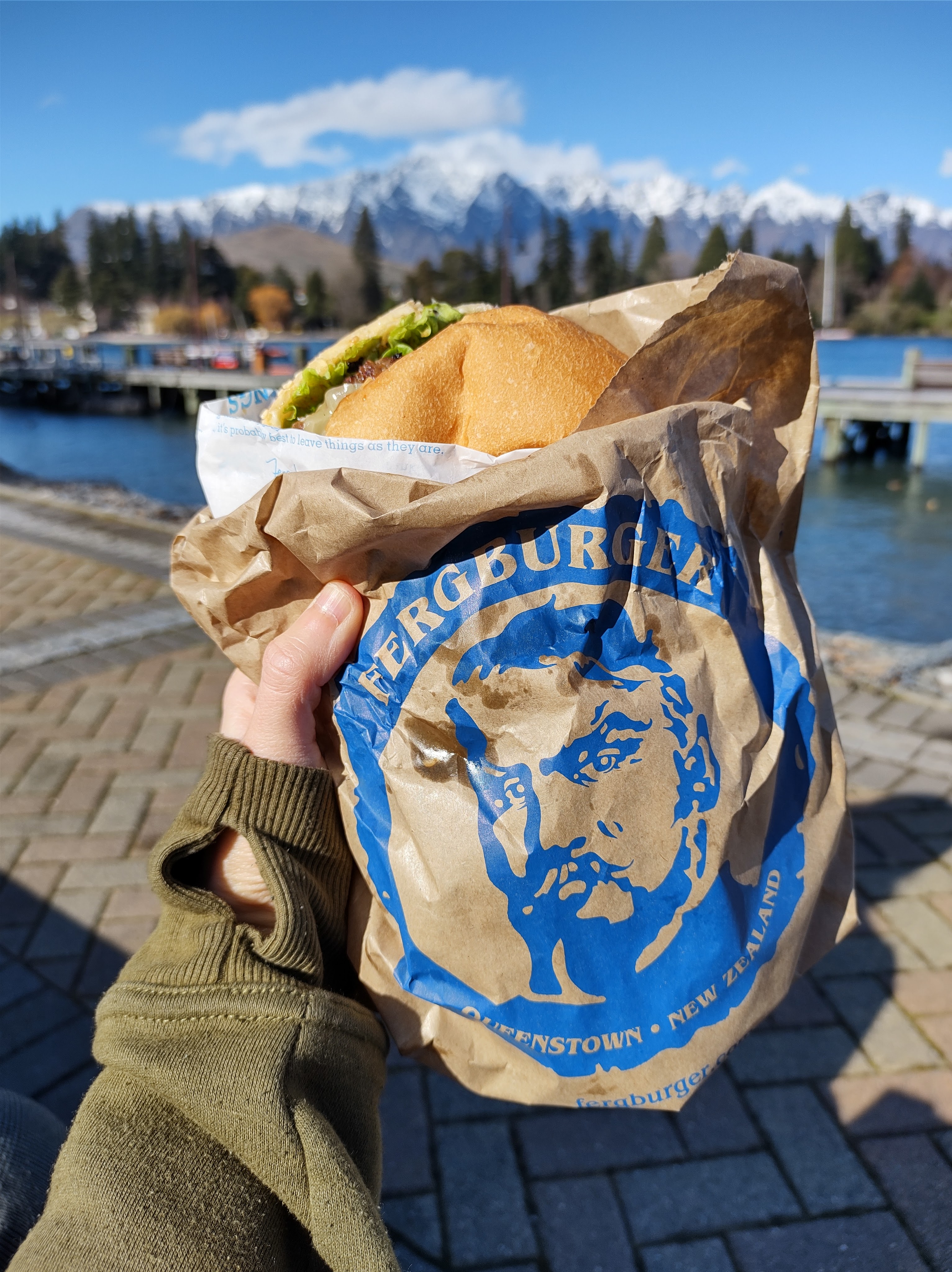
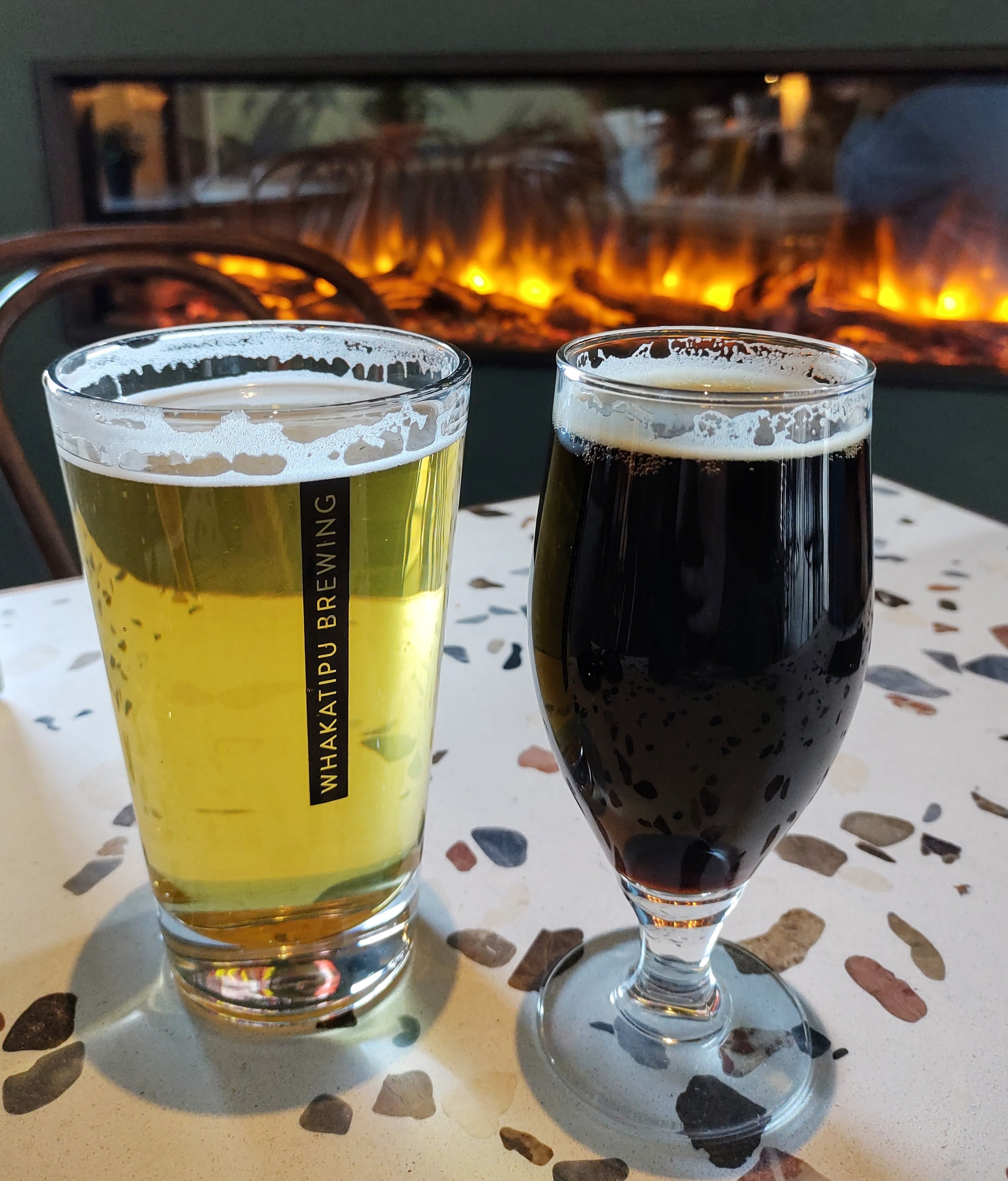
Food & Drink: Fergburger (quality burger bar,) The World Bar (pub,) Whakatipu Brewing (Tap room.)
Drive Time: Wānaka – Queenstown: 1 hour 15 mins

Mount Aspiring National Park – Haast Pass

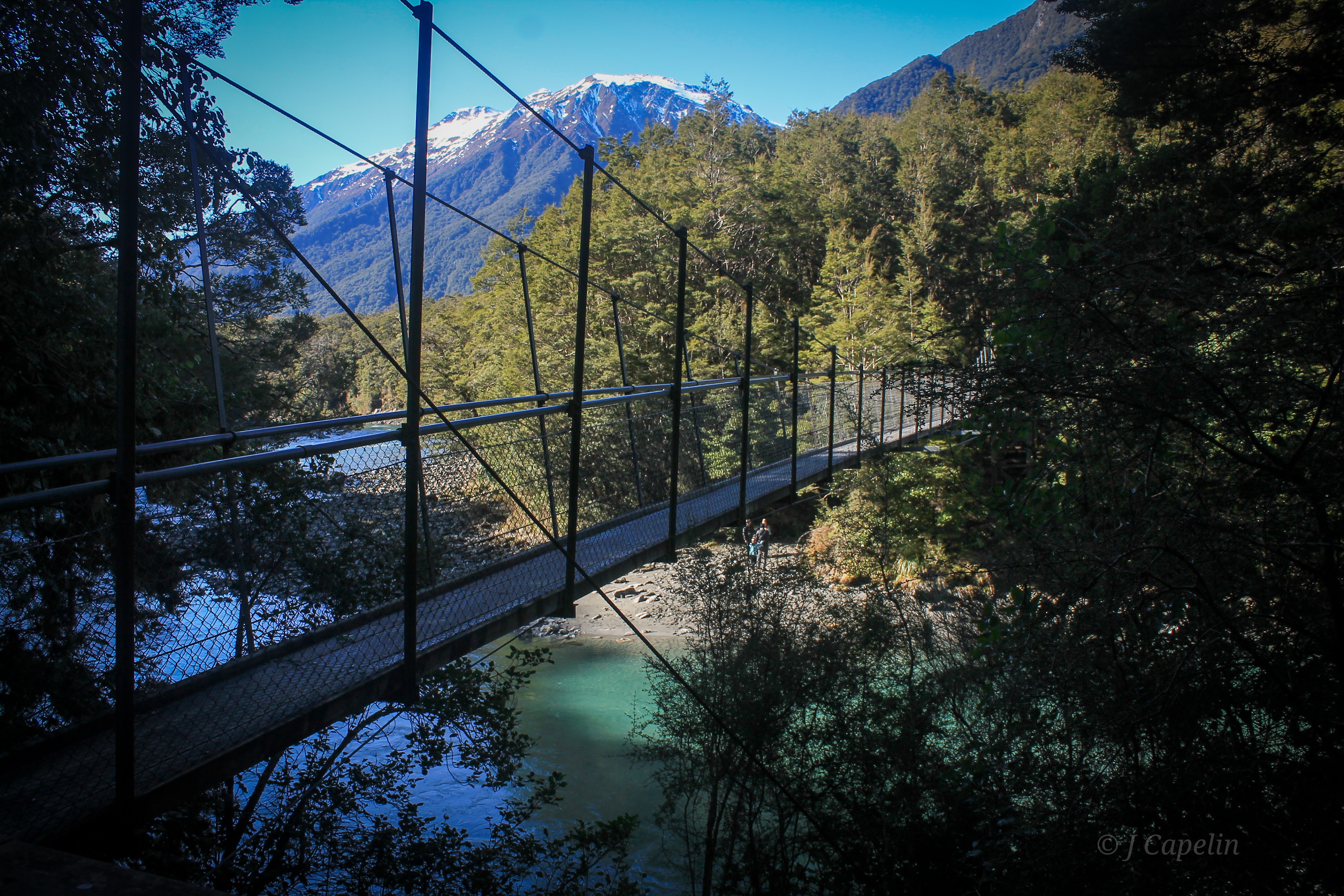
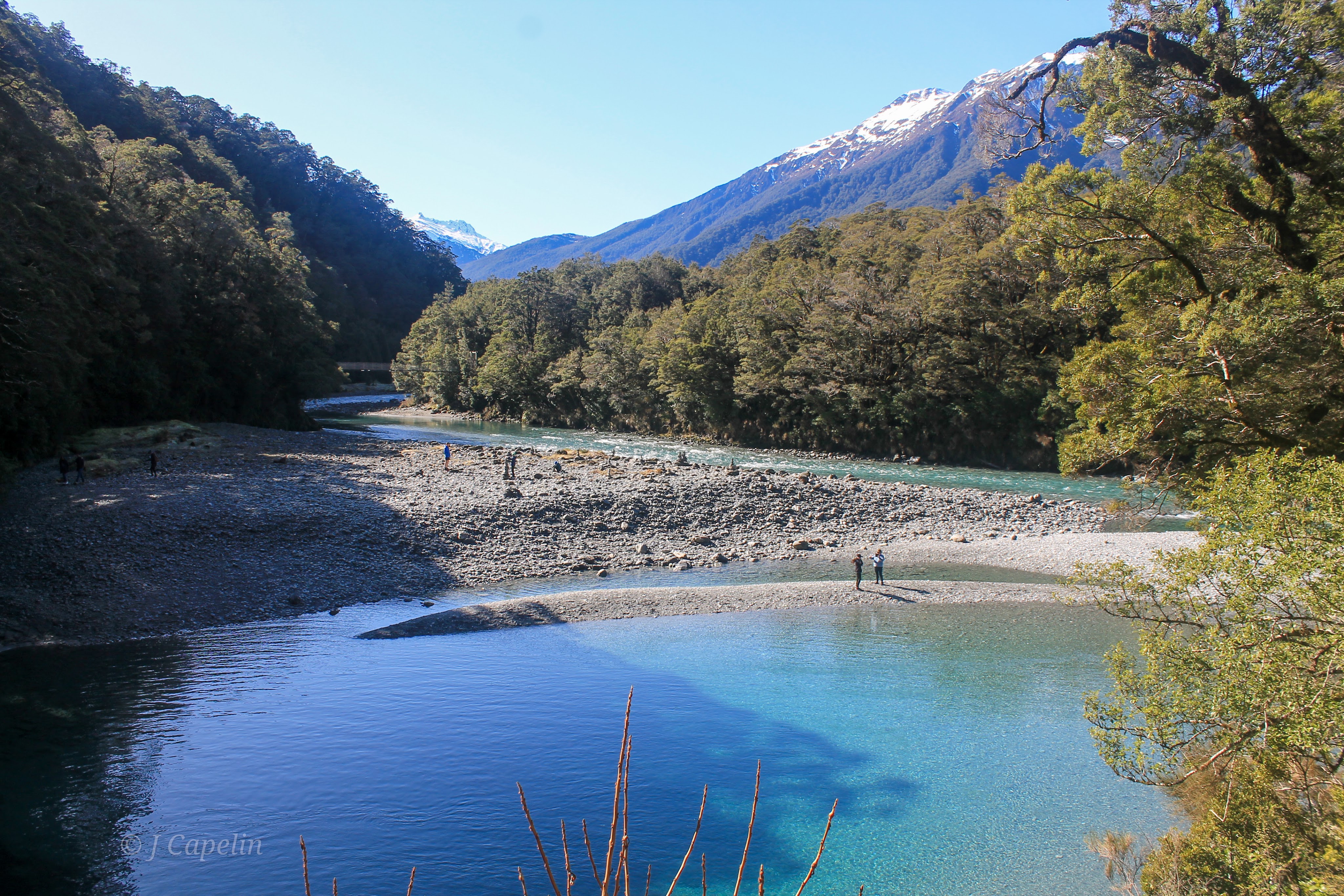
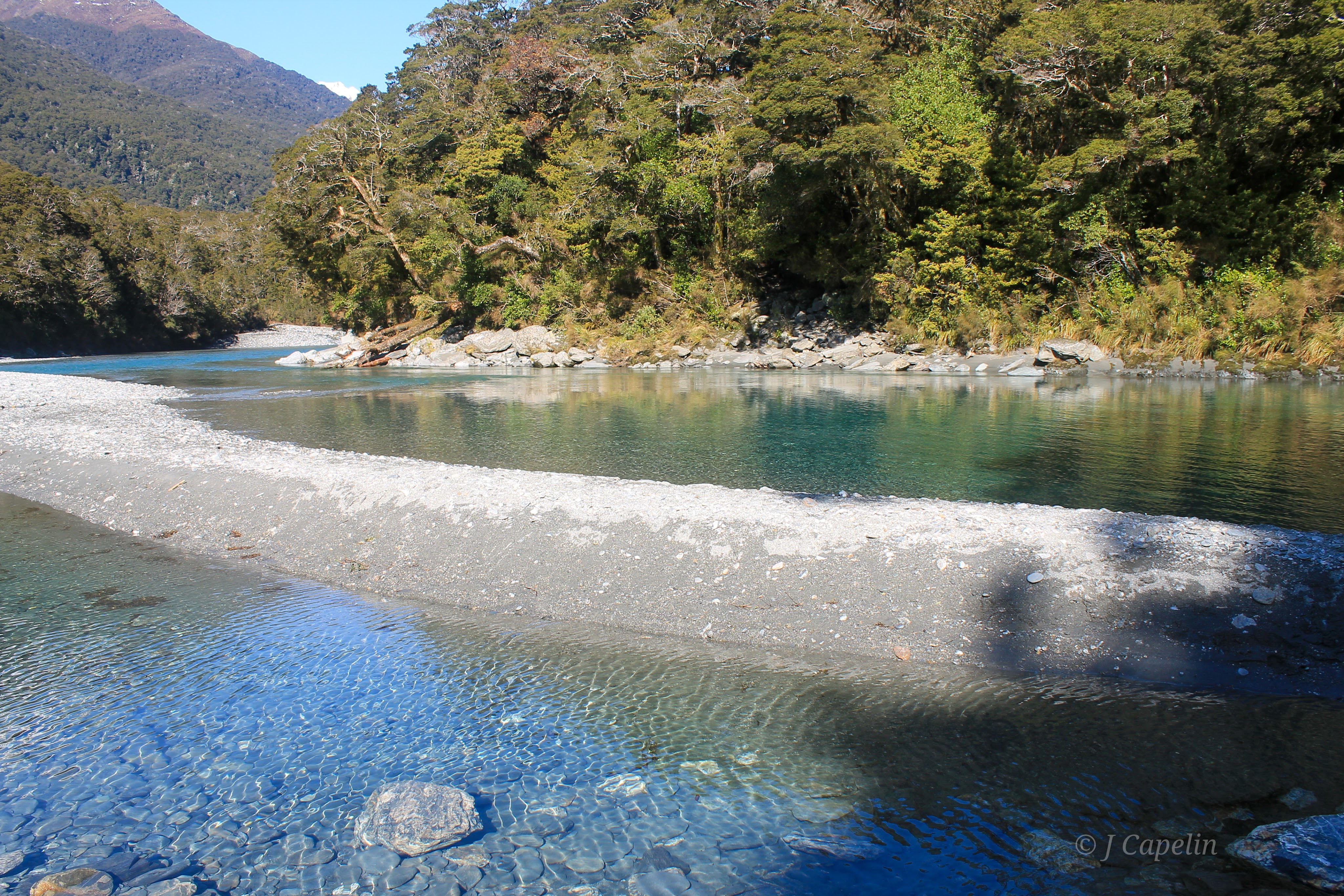
Leaving Wānaka for the West Coast, we drove alongside the neighbouring Lake Hāwea, and up the ridge between the two lakes into Mt Aspiring National Park. Passing through the tiny community of Makarora at the top of Lake Wānaka, we came to The Blue Pools Track – a beautiful short walk, and a popular swimming destination in the summer. We crossed the suspension bridges over the glacial river that gushes down from the Mt Aspiring Range through a forest-covered gorge, gently pooling before pouring its magical, clear blue water into Lake Wānaka.
Walking Time: 1 hour return

Continuing to the Otago / West Coast border, we drove through the Haast Pass, where the driving views become more and more like Jurassic Park. There are view points and short walks dotted all along the Pass, each one as beautiful as the next, so it’s worth giving yourself plenty of time. You’re completely in the back country wilderness here, so bring a picnic!

West Coast

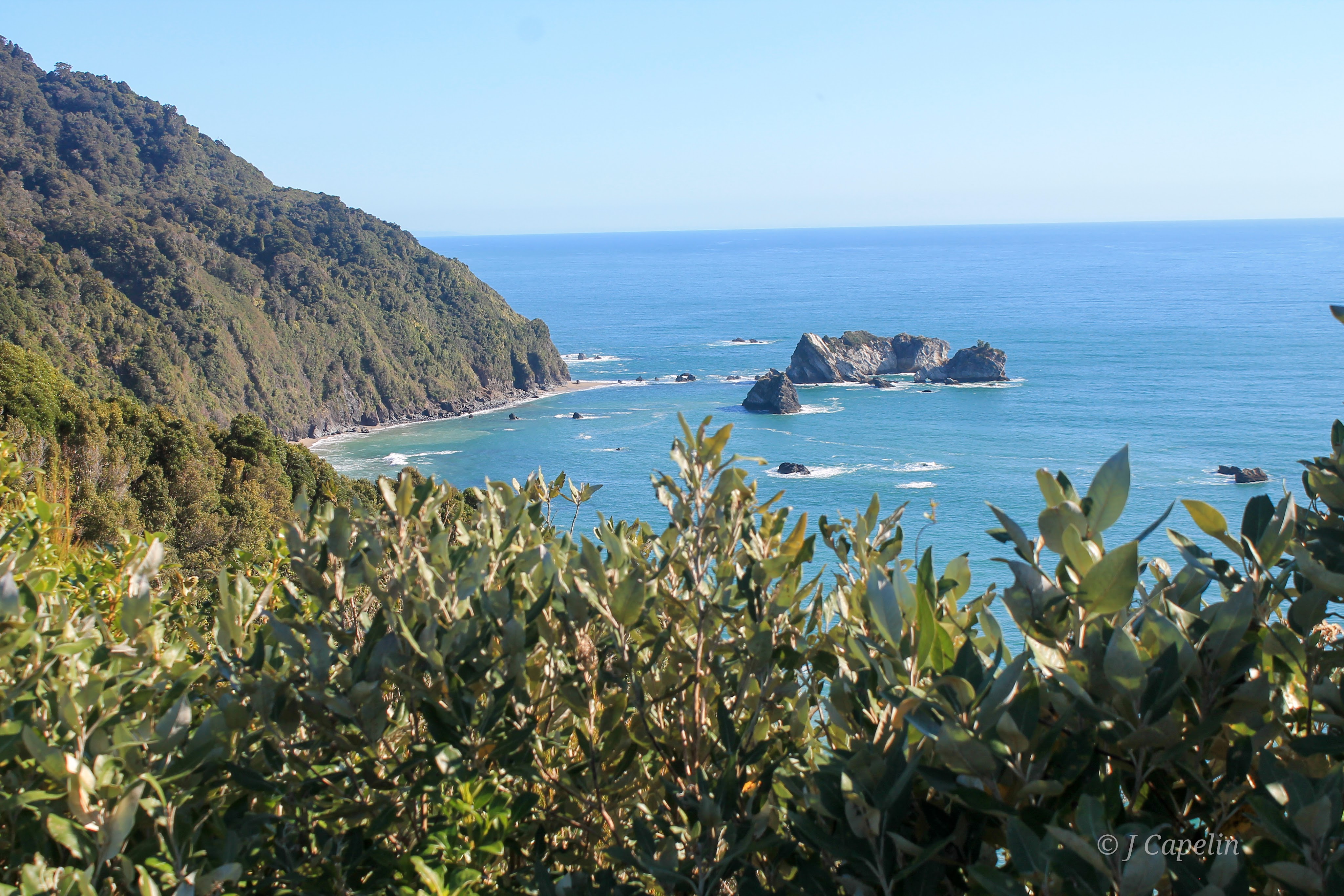
We finally reached Haast, where the river meets the wild ocean. Beautifully desolate beaches sit at the foot of the ever changing mountains, home to nothing but sandflies, and the West Coast road winds through a variety of landscapes with more viewpoints along the way.

Fox Glacier

Finally, we reached our destination for the night – Weheka (Fox Glacier village.) I don’t know if it was the time of year, or the time of the week, but we felt like the only people in the village – the road there had been pretty deserted too, which is unusual. But with the place to ourselves, and a few hours of daylight left, we went exploring.

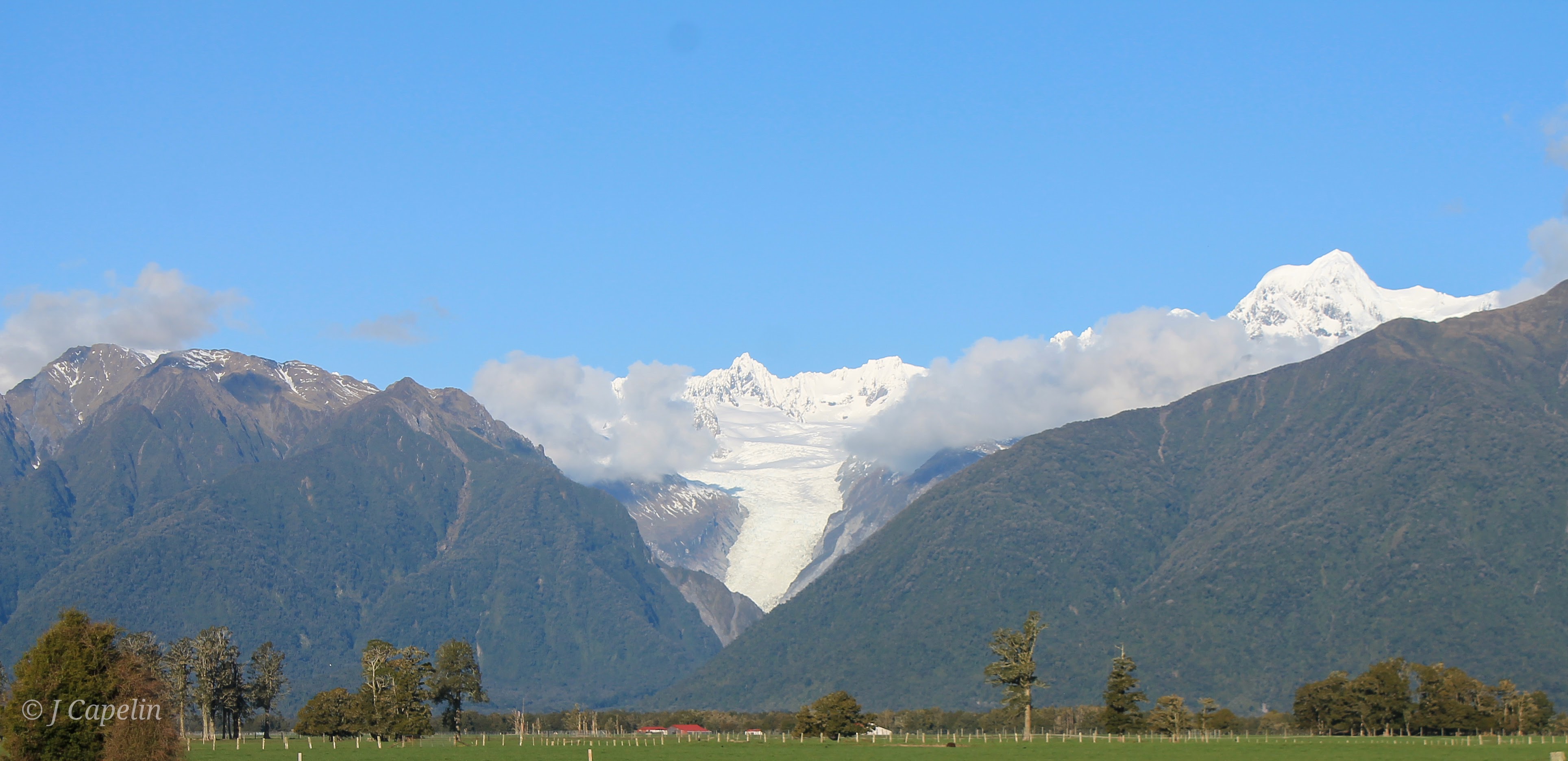
Fox Glacier – traditionally ‘Te Moeka o Tuawe,’ can be glimpsed from the village all the way to the coast. The glacier streaks down the western valley between Aoraki (Mt Cook) and Mt Tasman, ending 250m above sea level in the lush rainforest of Westland’s Tai Poutini National Park.

Gillespies Beach

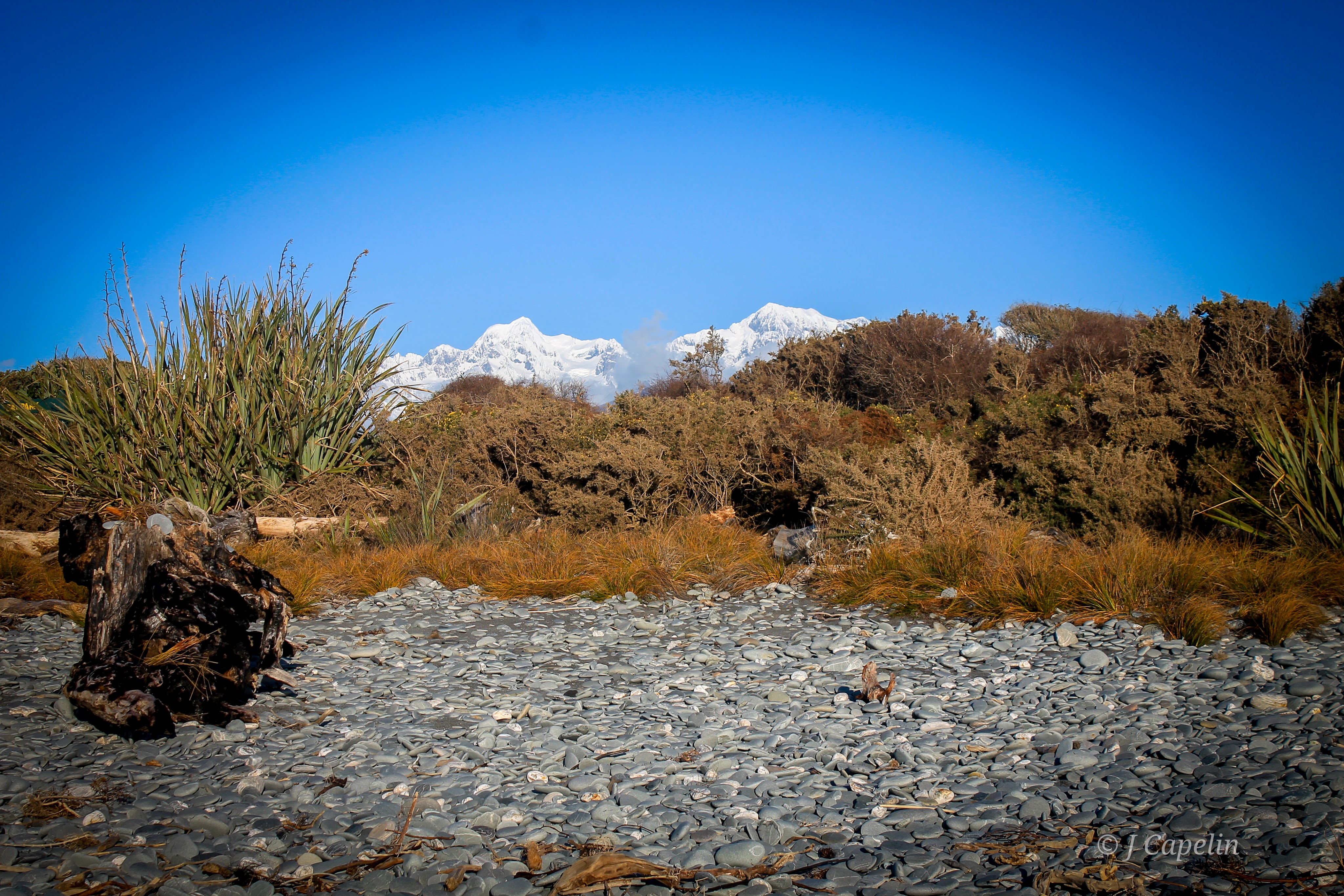
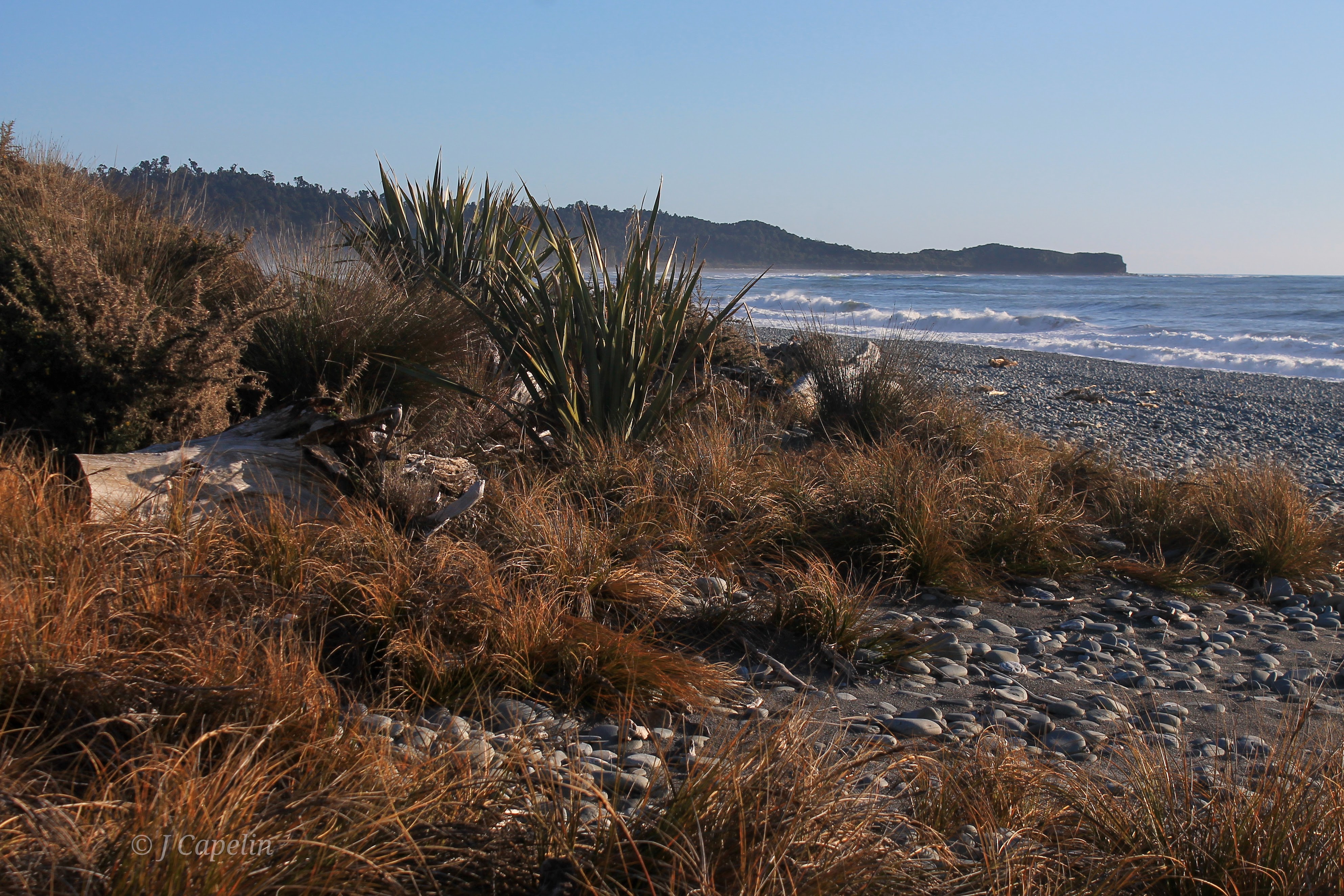
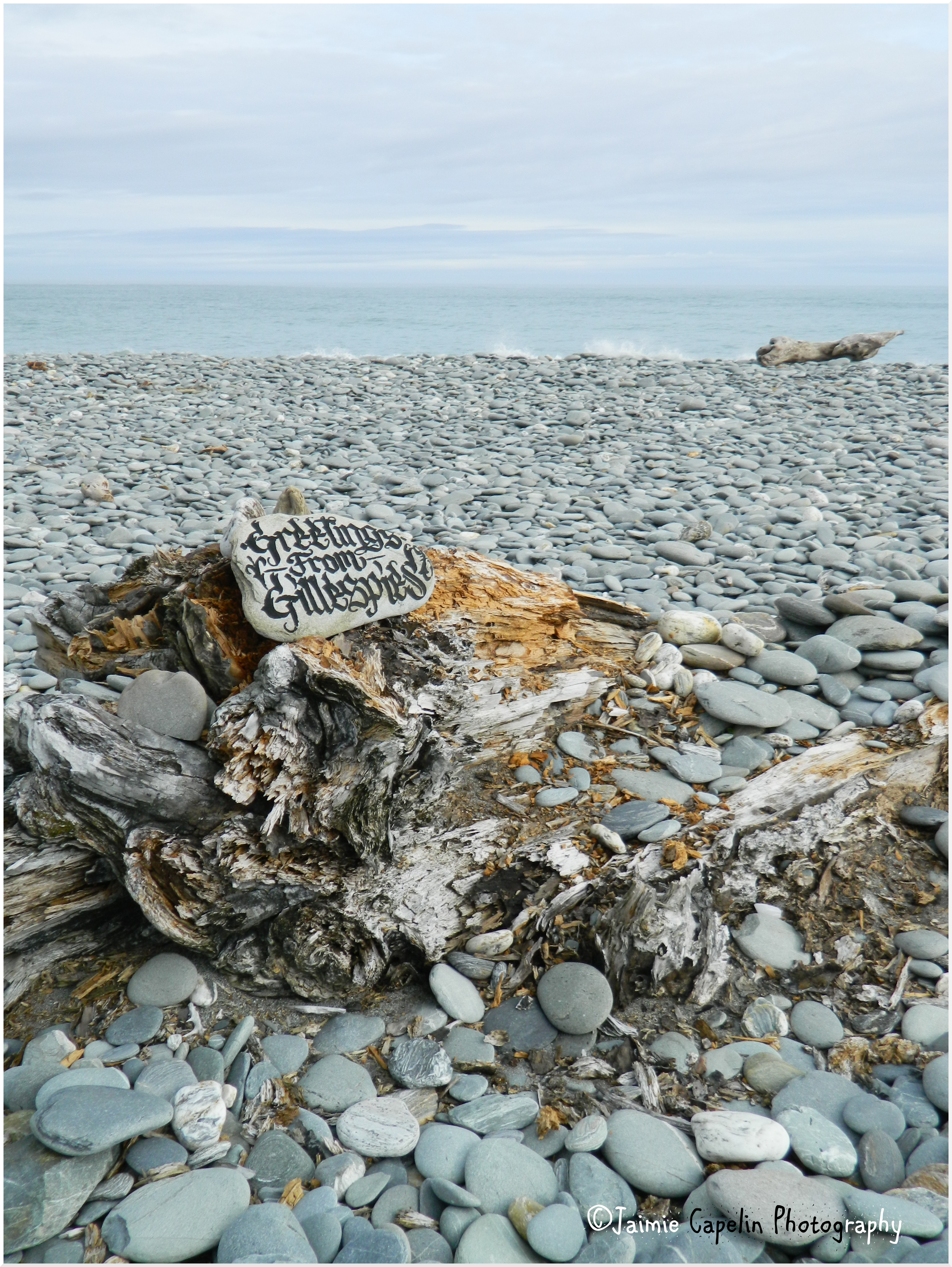
11km down a narrow, unsealed road, which curves and twists and bumps through the forest of Westland Tai Poutini National Park, is Gillespies Beach. A Department of Conservation Campsite sits at the end of the road, leading over the grass and to the ocean. Stones smoothed by the sea lay scattered all over the black sand between driftwood logs and sturdy tufts of Flax, and through the sea spray you can see Fox Glacier shimmering between the peaks behind the beach.

Lake Matheson

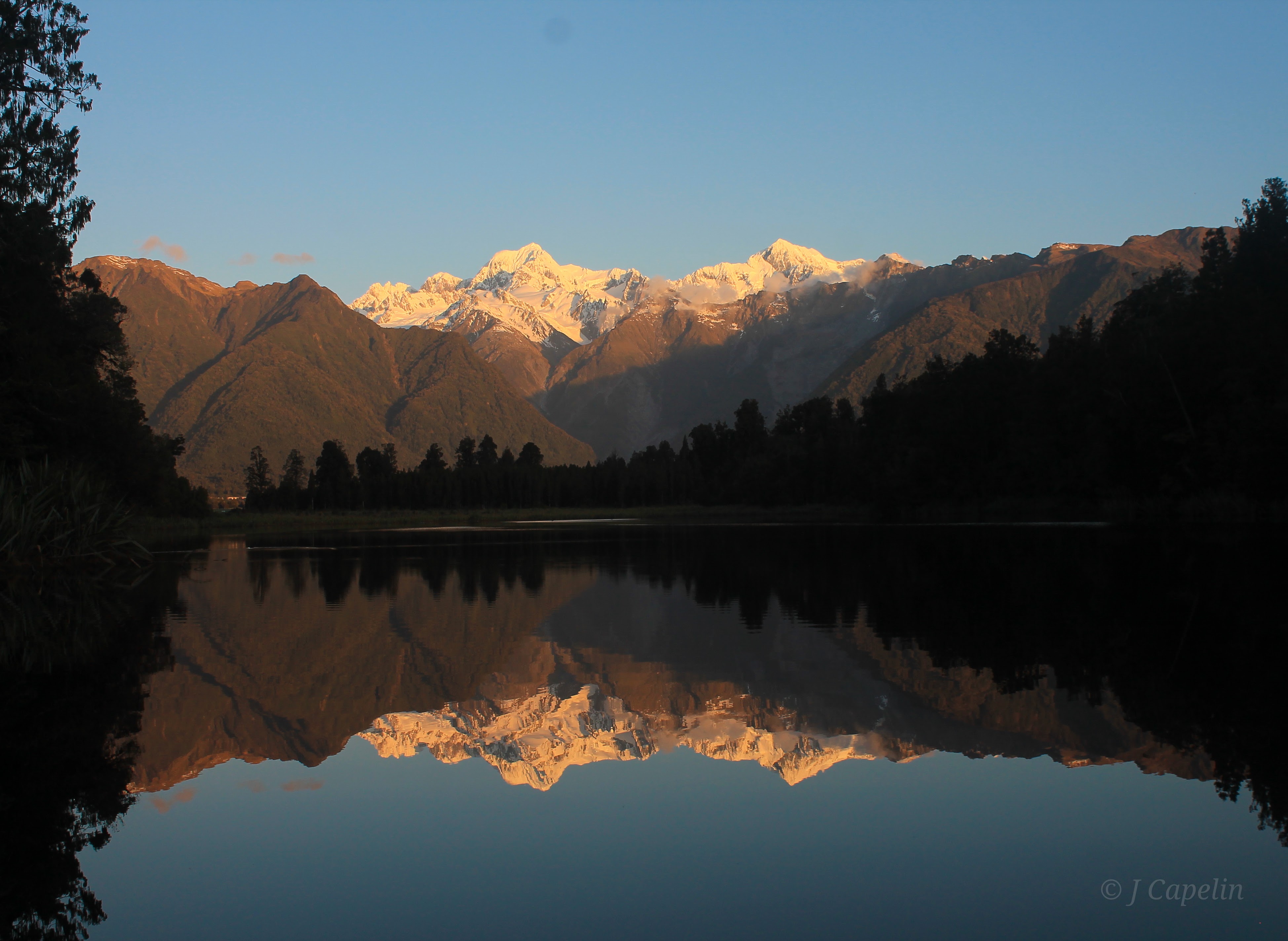
On the way back to Weheka village from Gillespies Beach, we visited Lake Matheson. It is a small lake by Queenstown and Wānaka standards, but with an impressive view. We walked the complete circuit around the lake as the sun set, making it very dark in the ferny rainforest that surrounds it, but the changing colours reflected in the water off the snowy peaks were breath taking. Endangered Kiwis live in this forest, so as it grew dark we listened out for their high pitched trill in the trees.
Walking Time: 1 hour 30 mins

Accommodation: Sunset Motel <$83 NZD – 1 night
Driving Time: Wānaka – Fox Glacier: 3.5 hours

Franz Josef Glacier

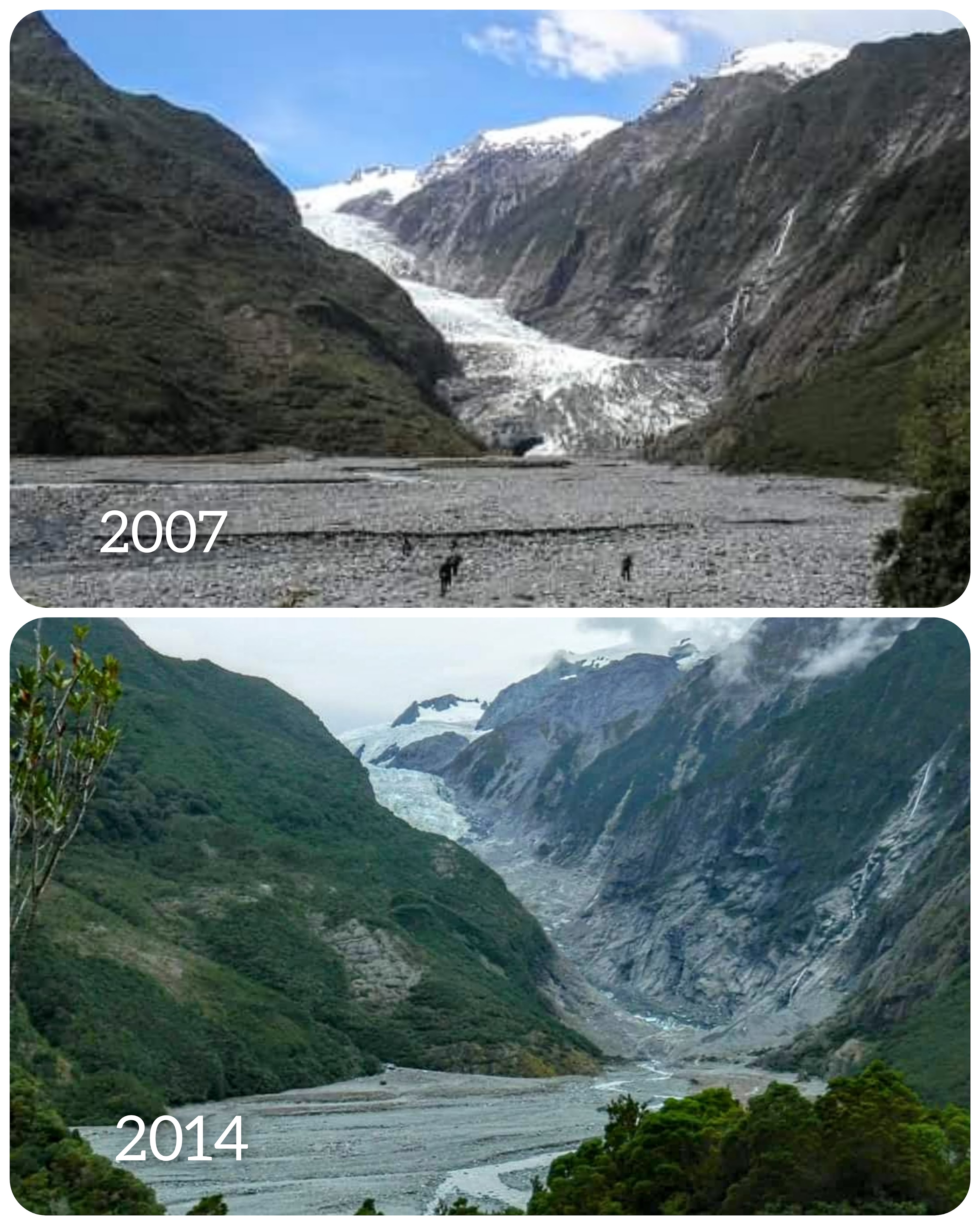
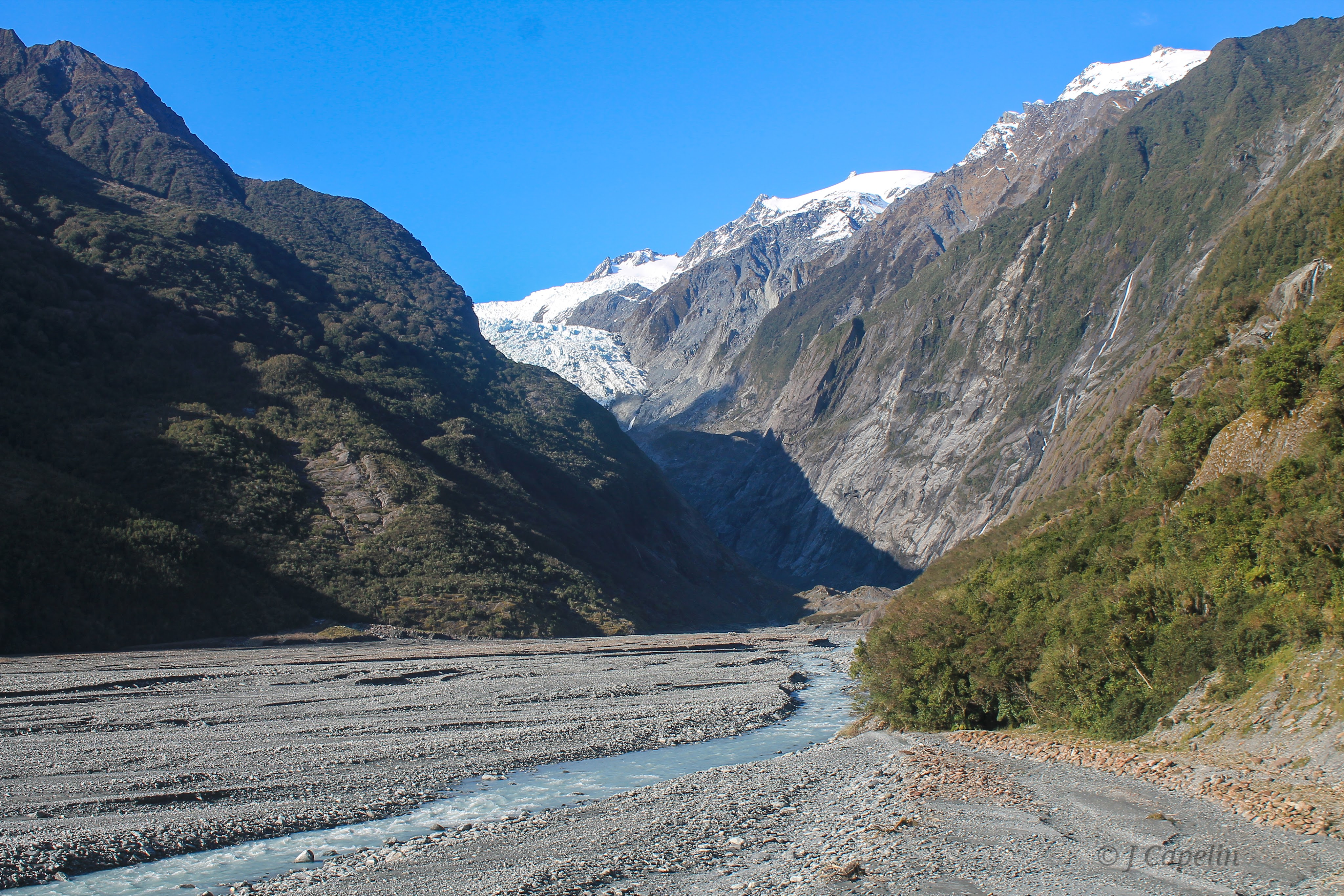
The following morning, we continued our journey up the West Coast, stopping at Franz Josef Glacier, traditionally ‘Ka Roimata o Hine Hukatere.’ I found it interesting to visit this glacier and compare the photos from my previous visits; it’s an eye-opener just how quickly the glaciers are shrinking.

Arthur’s Pass

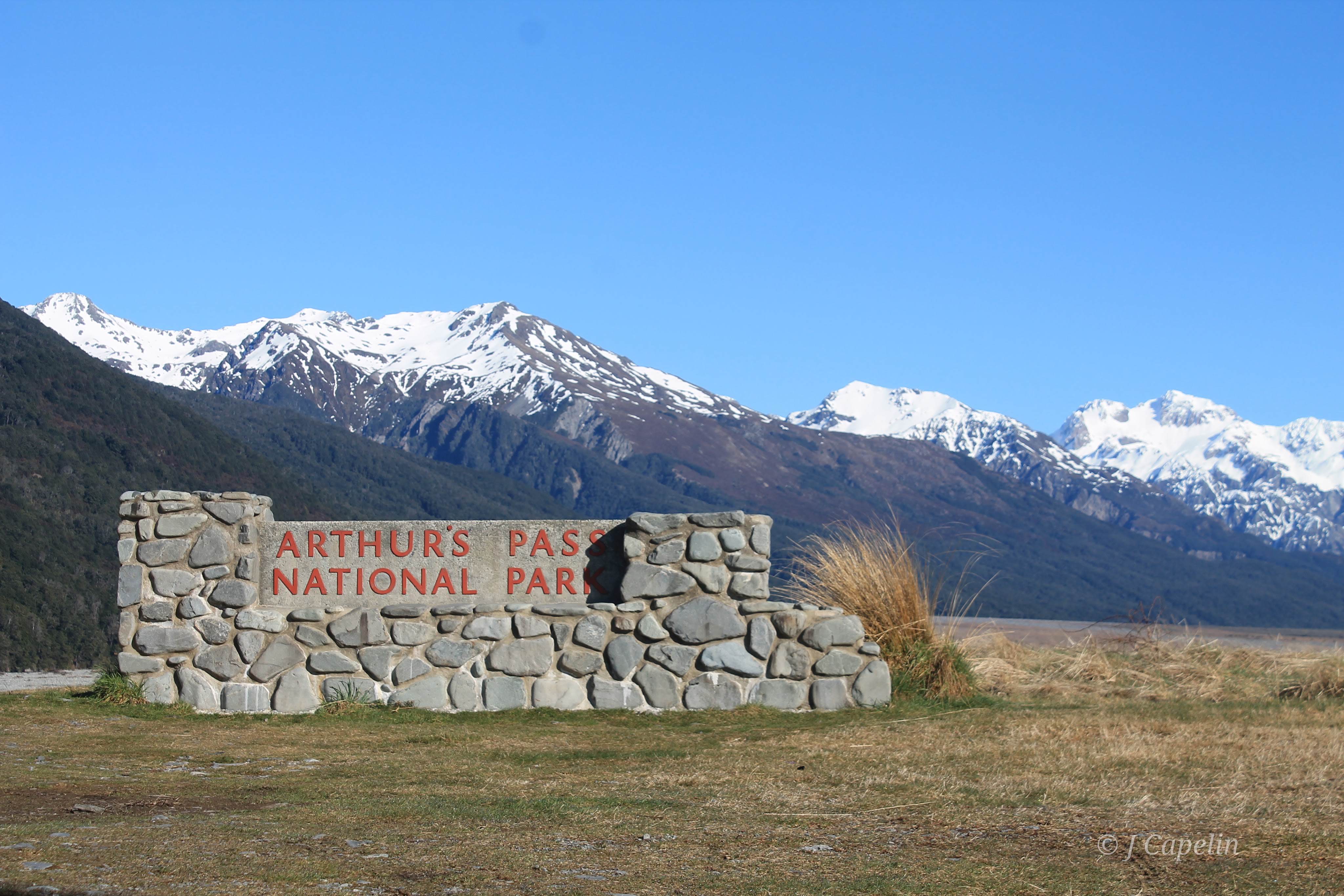
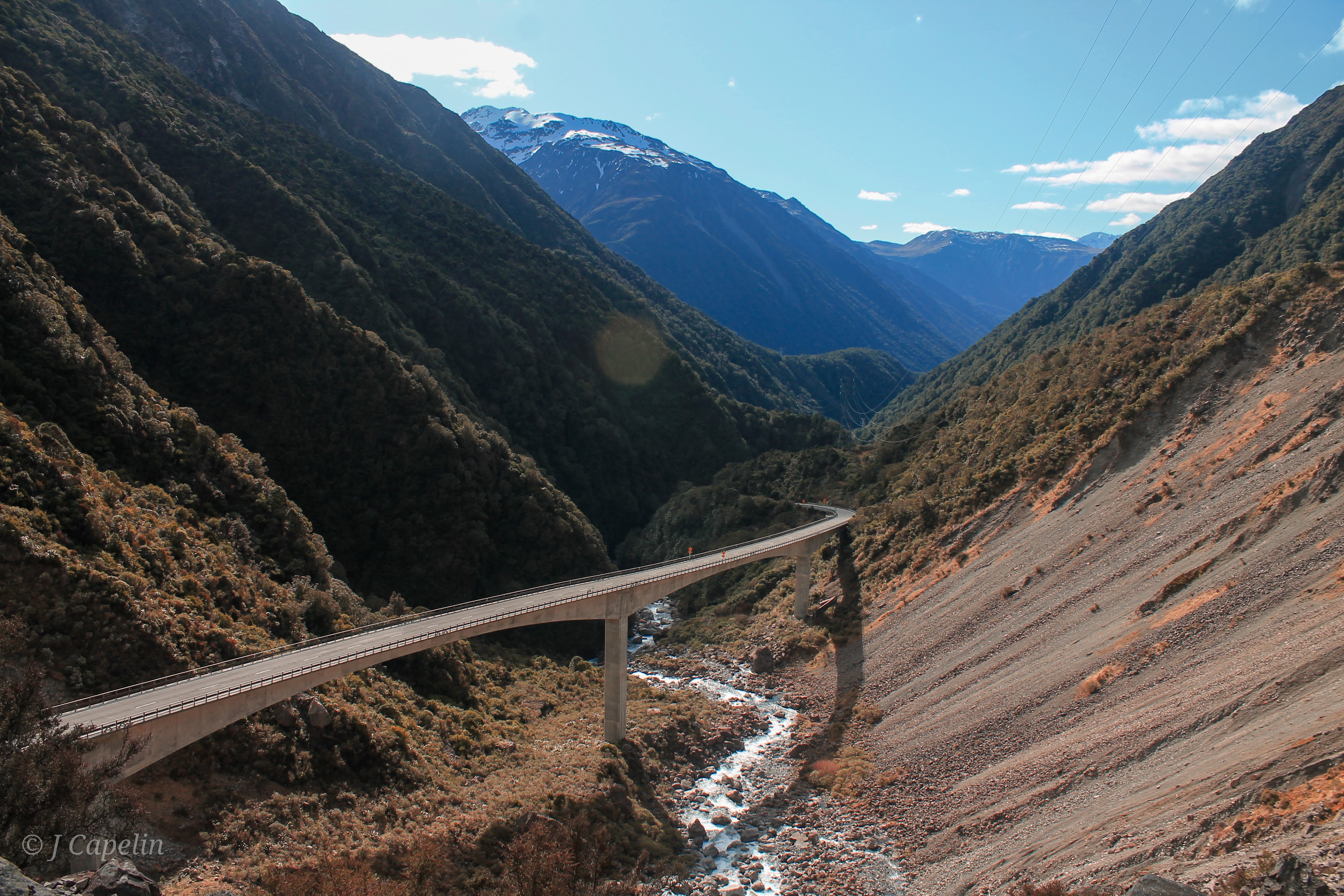
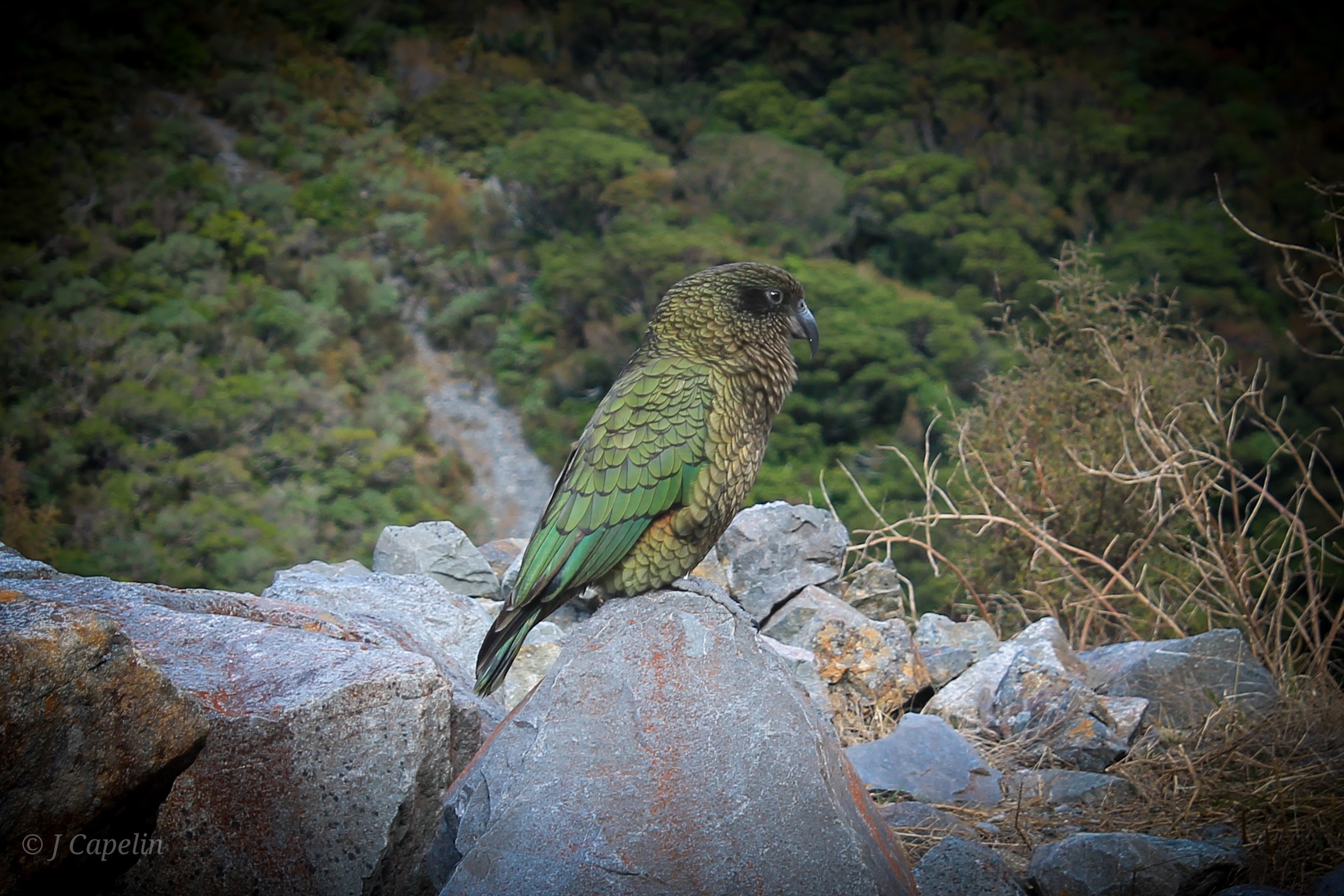
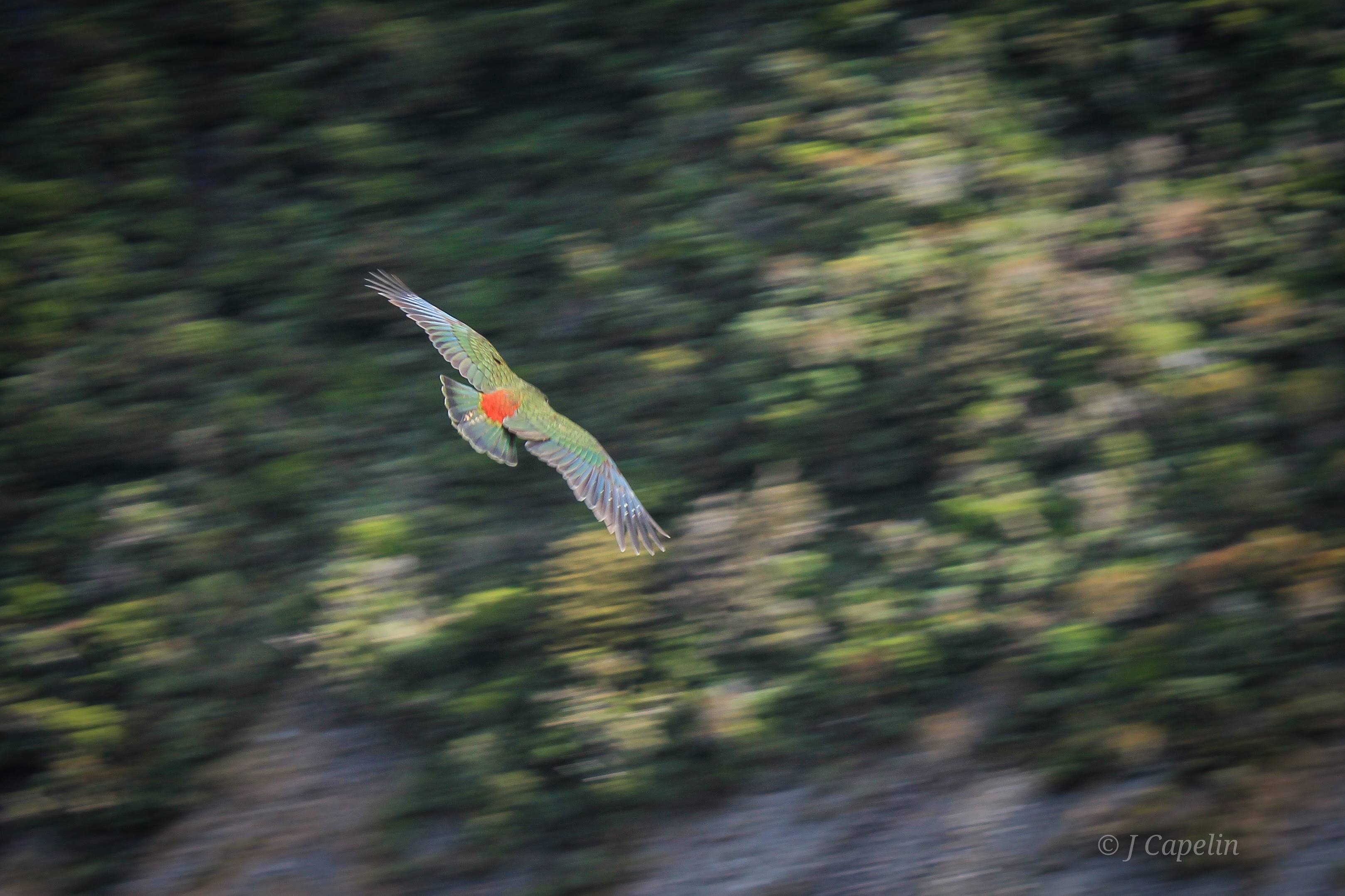
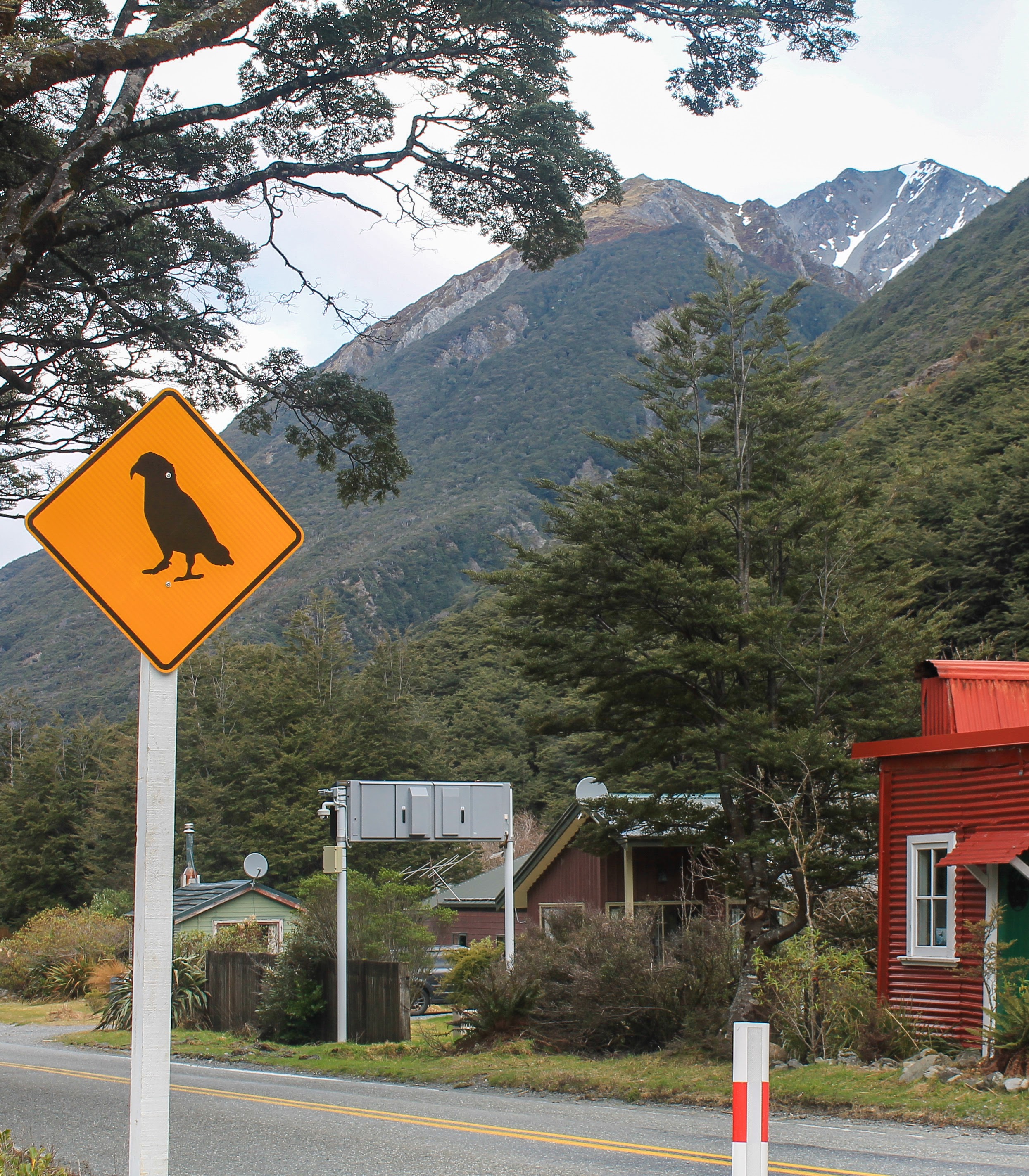
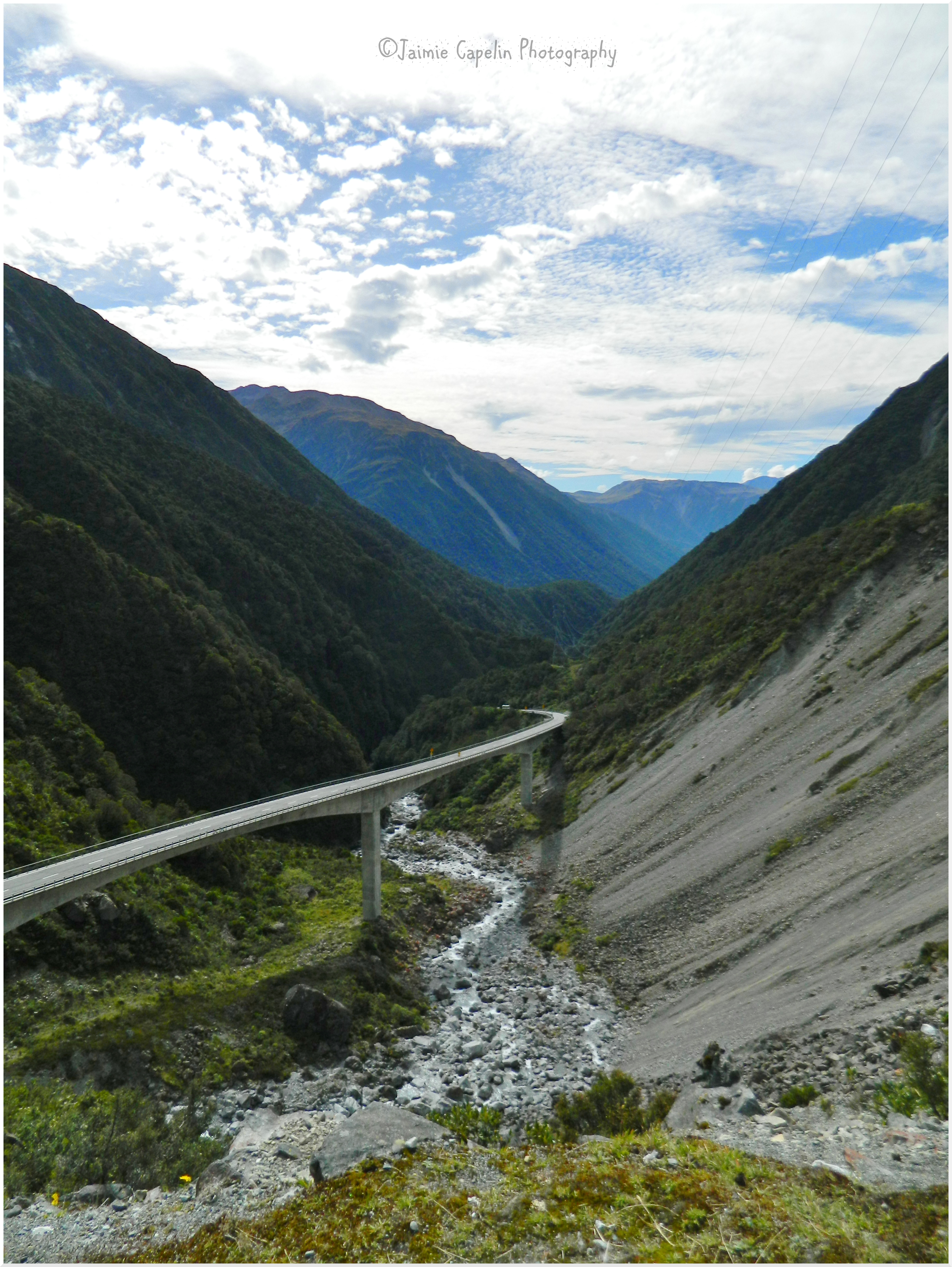
As if the mountains so far hadn’t been dramatic enough, we ventured inland to Arthur’s Pass. The road climbs, getting gradually more extreme as you scale the sheer ledges, suspended in the mountains by some feat of engineering. This mountain wilderness is home to Kea – the alpine parrots endemic to New Zealand’s South Island. These cheeky fellas are very curious and tactile, and if you stop too long they may peel the rubber seals off your car windows just for fun! We encountered a pair with their baby fledgling at the Otira Viaduct Lookout, where I was lucky enough to capture their beautiful feathers in flight. (Click on the images below.)

Devil’s Punchbowl Falls

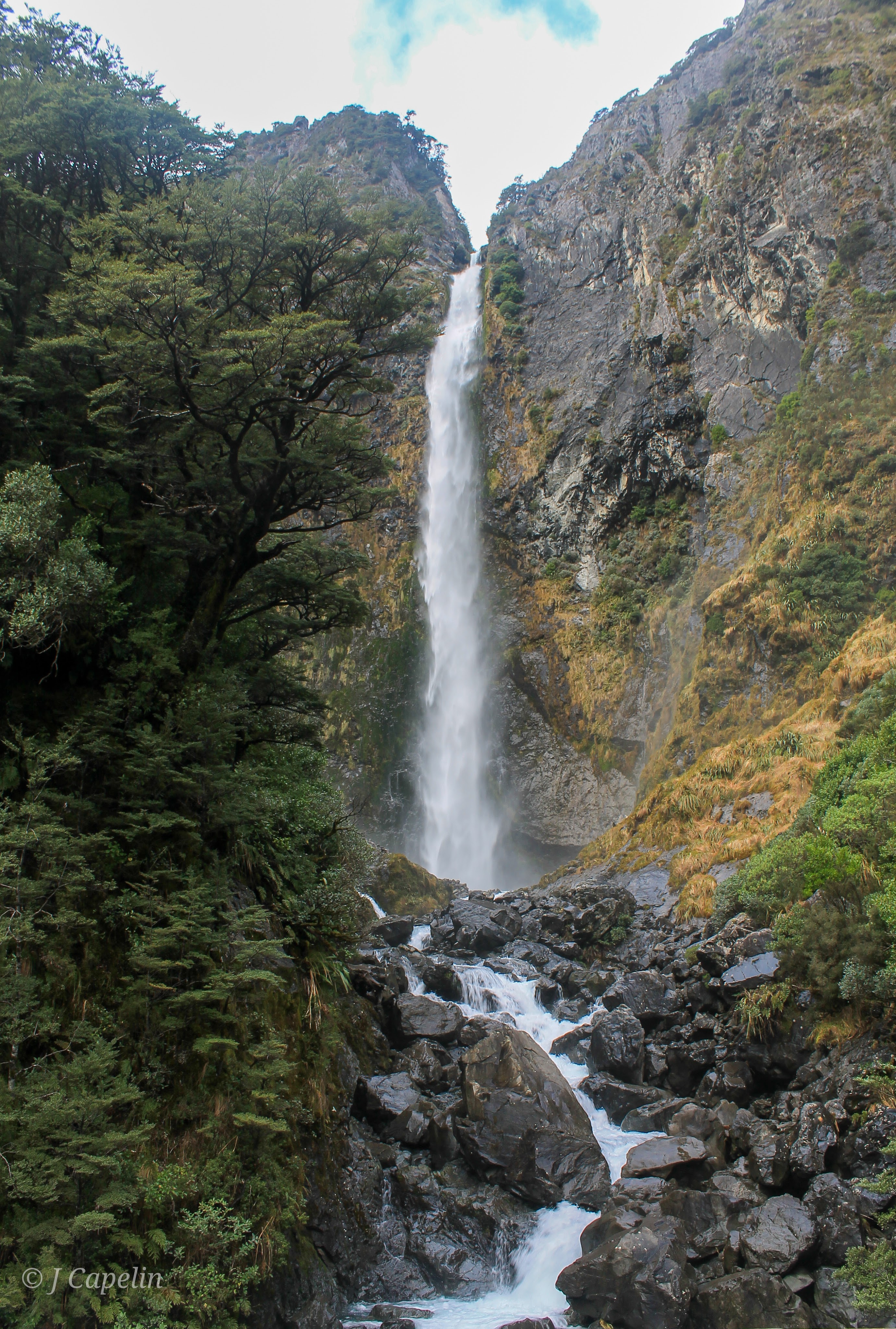
This short walk crosses the river from Arthur’s Pass Village, and climbs through beech forest to a viewpoint at the foot of the waterfall. All the way we could hear the rushing force of water crashing down the mountainside, and feel the cool spray clinging to our skin.

Walking Time: 1 hour return

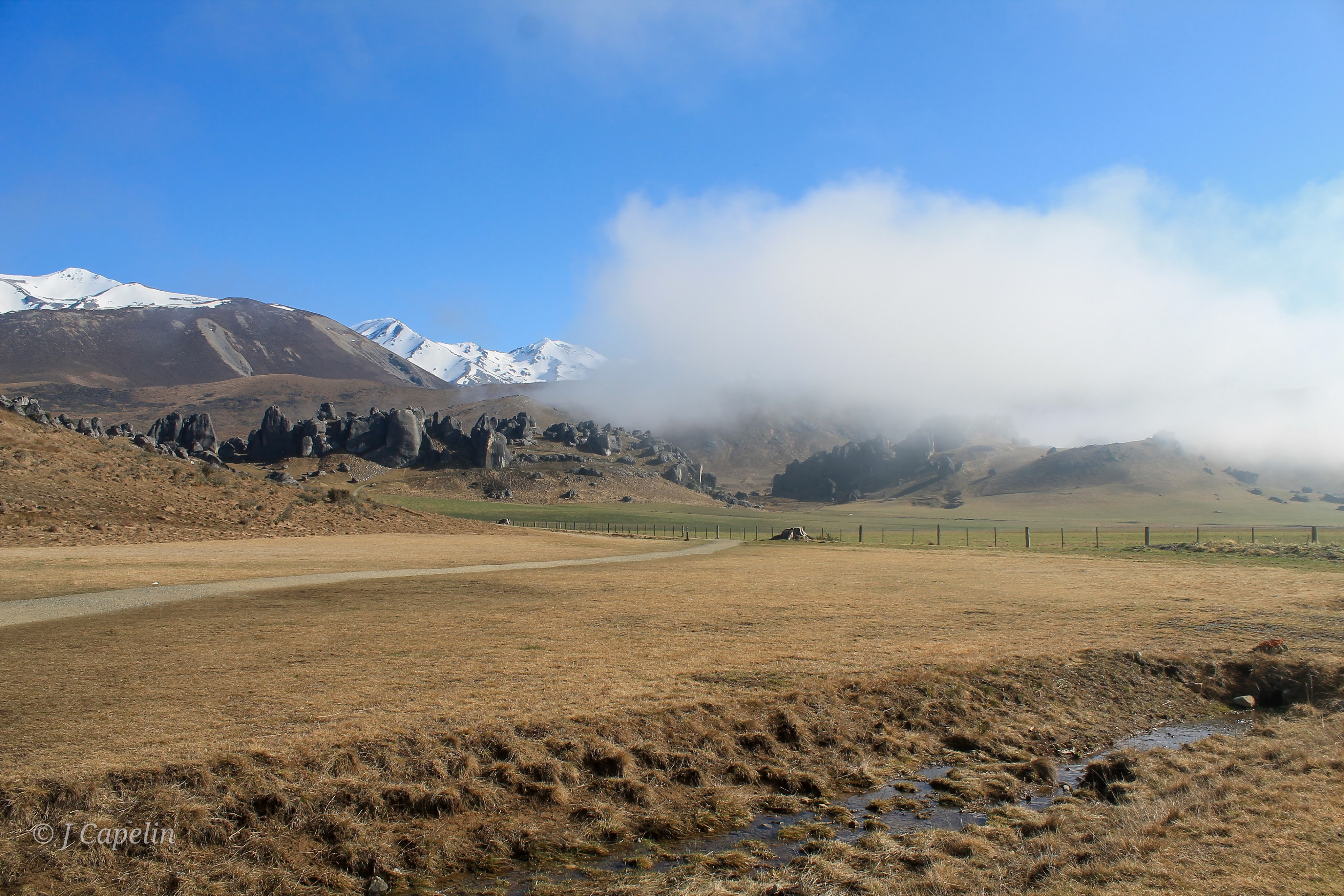
Kura Tawhiti / Castle Hill

Rolling plains expand into the foothills below the mountains, covered in limestone rock formations. This is an official ‘tōpuni’ site; a symbolic cloak of protection to the local Māori, and has always been a significant meeting place. Nowadays Kura Tawhiti attracts rock climbers and walkers to admire the strange land.
Walking Time: 20 mins

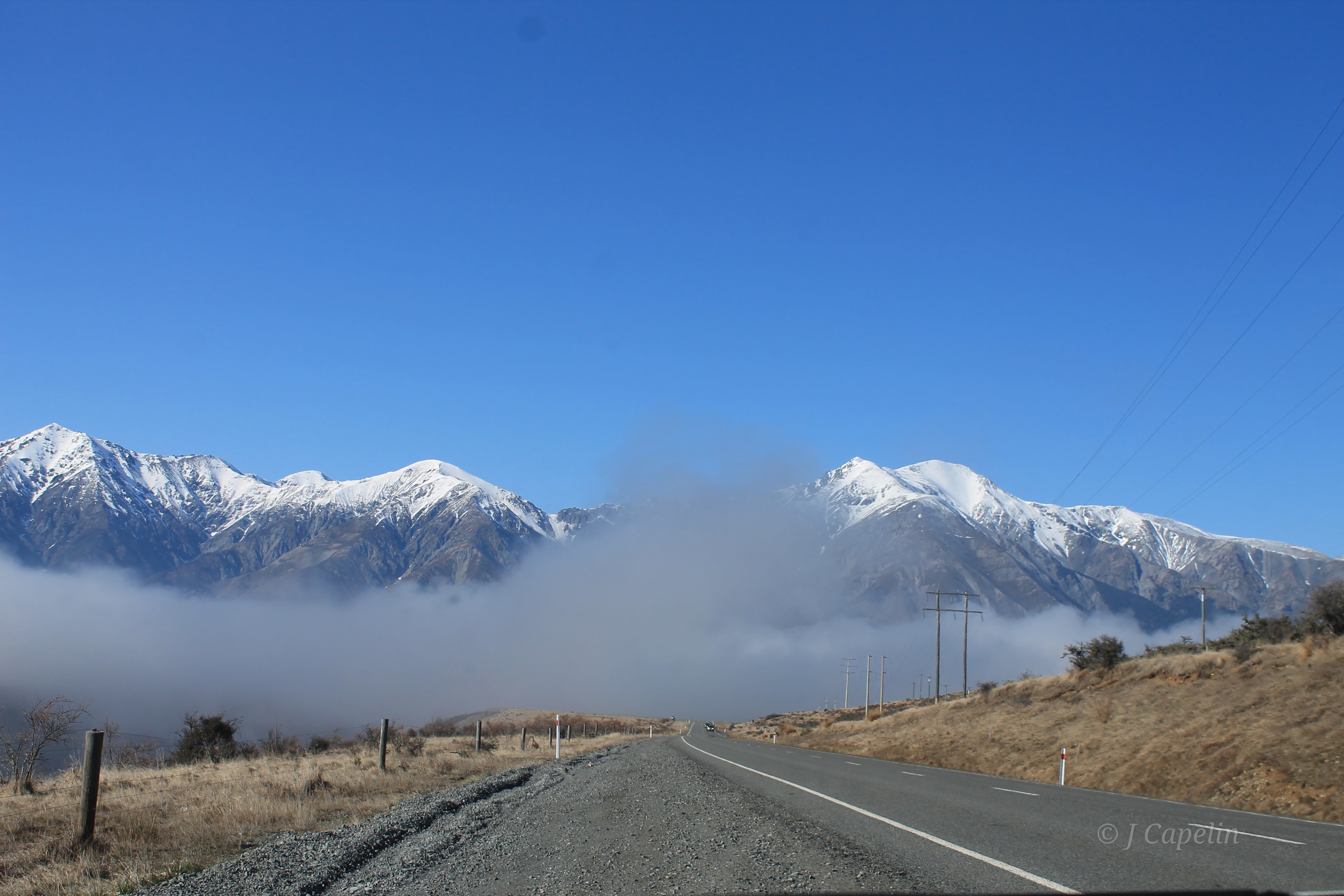
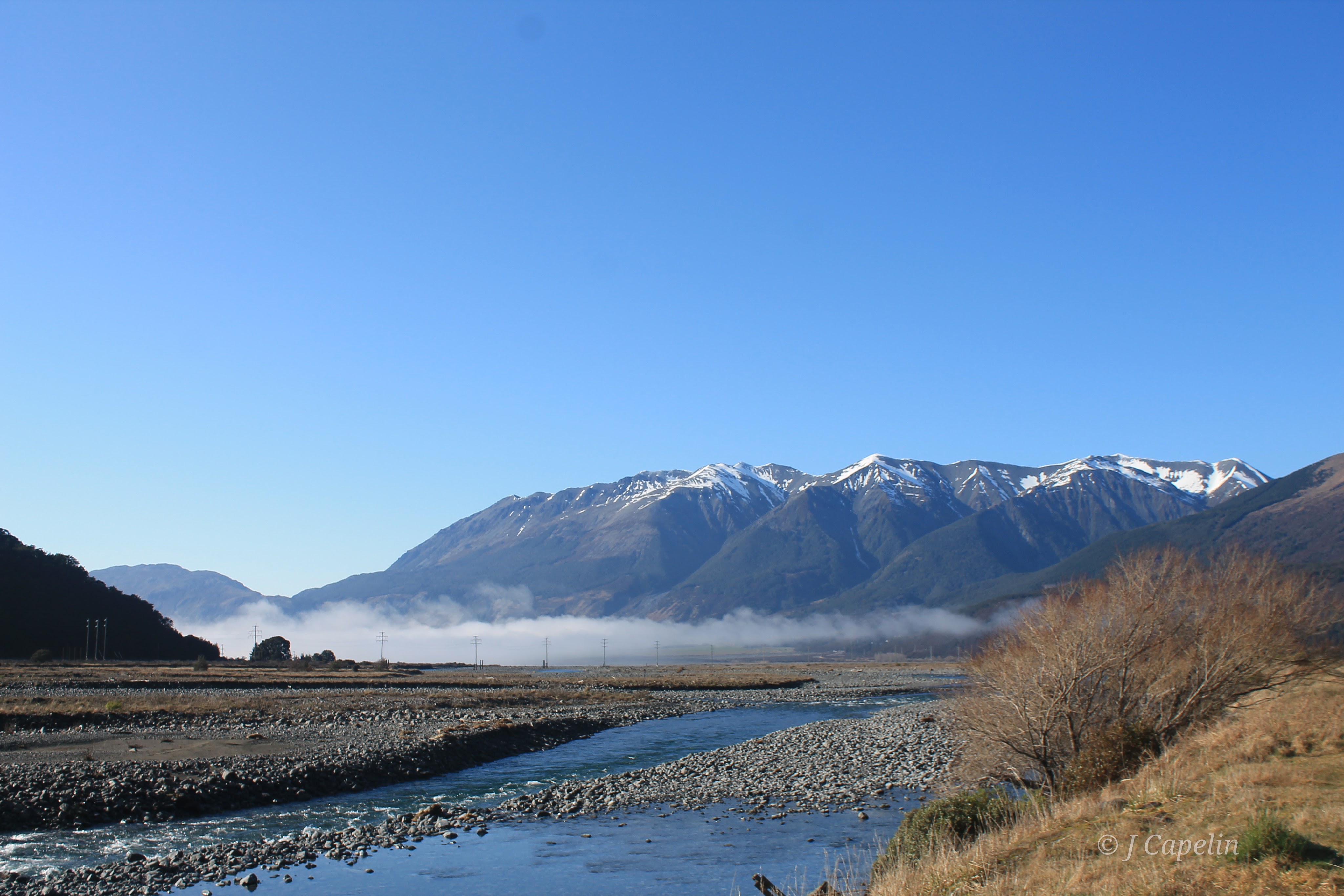
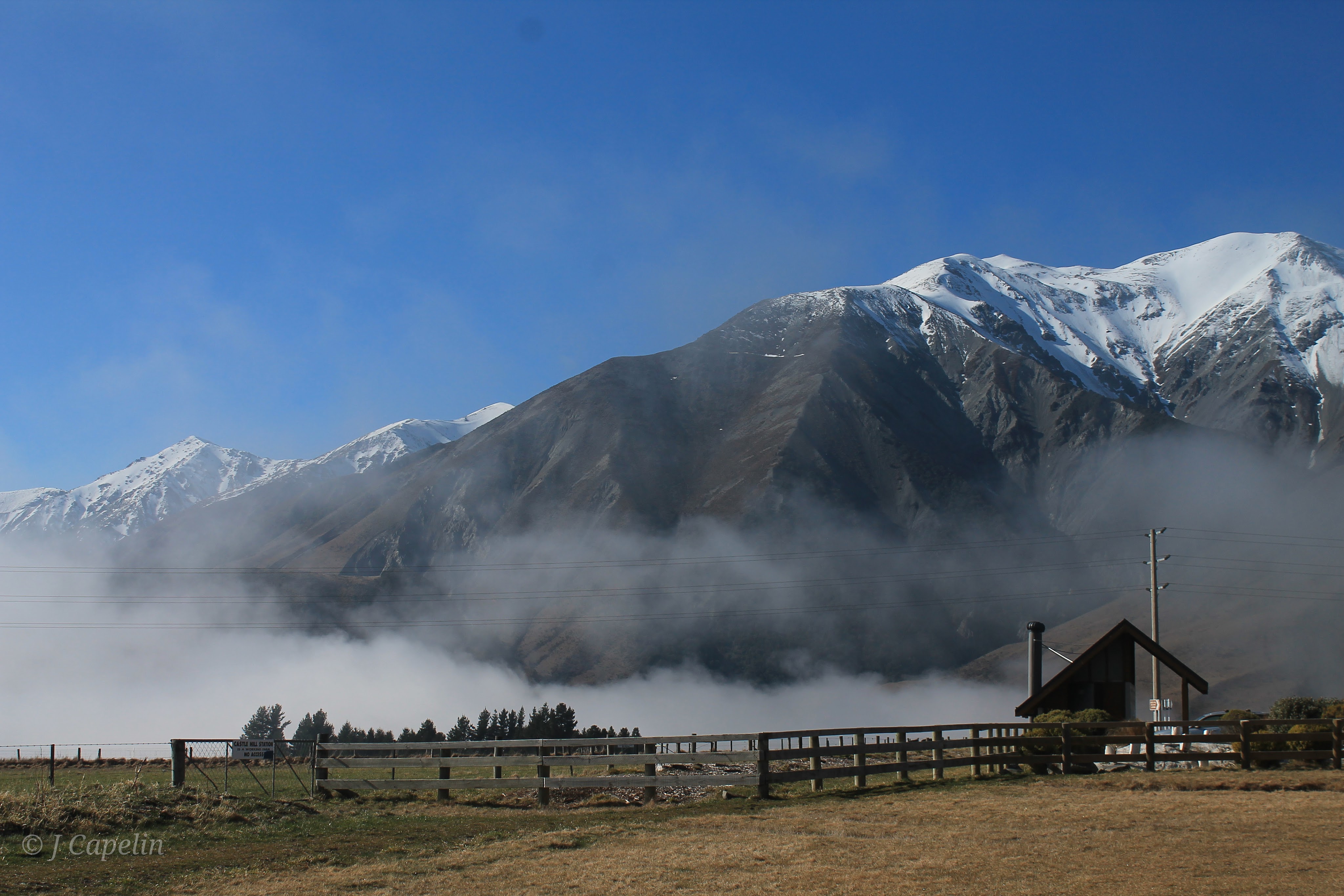
Just the drive itself through the mountain pass is stunning, but there are many side tracks, hikes and ski resorts to explore along the way if you have time. Morning mist slithered through the valleys, plunging the road into darkness every so often, a great contrast to the brilliant blue sky reflected in the river.

Accommodation: Mountain House YHA < $95 NZD – 1 night
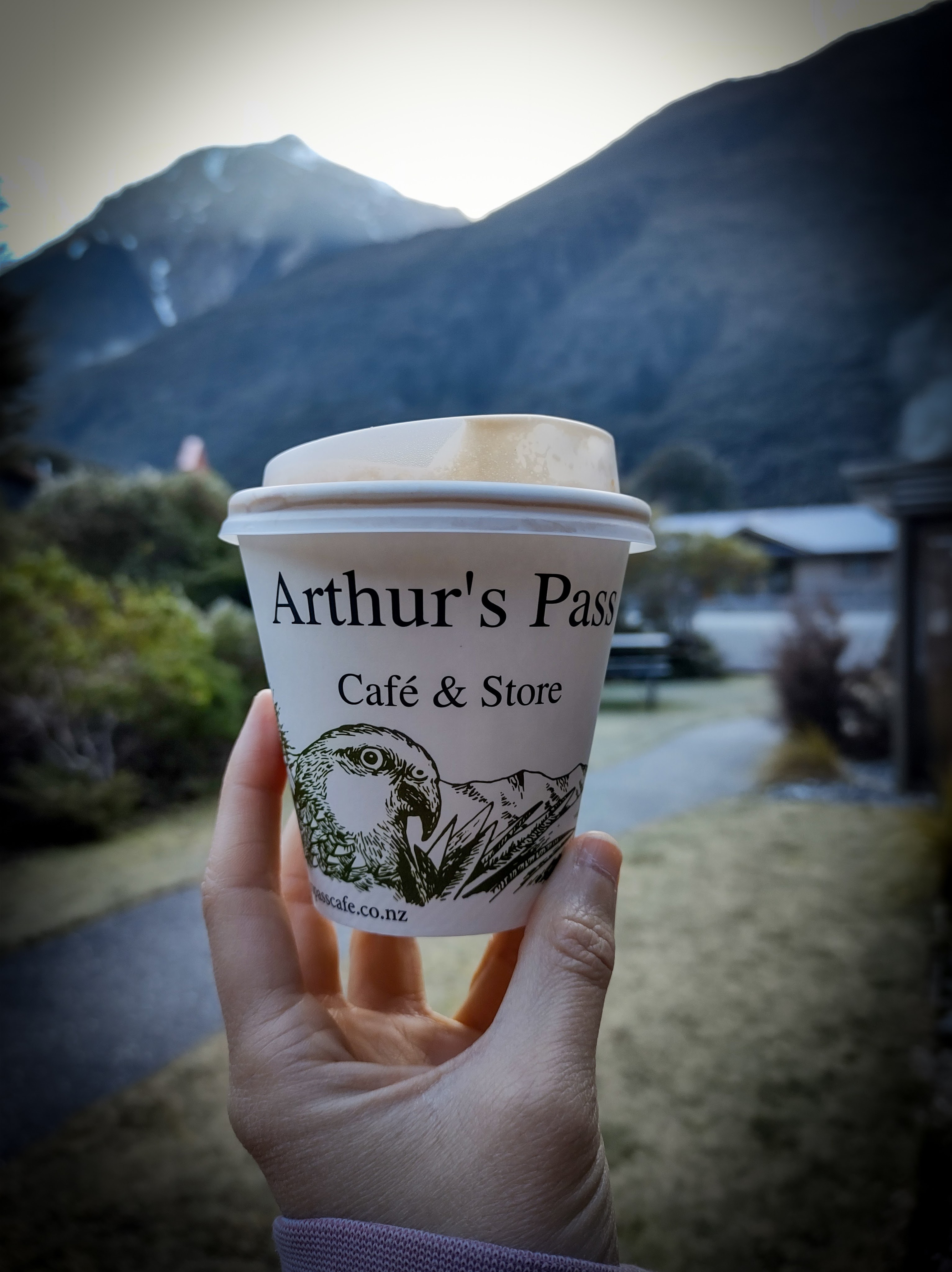
Food & Drink: Bealey Hotel (Pub,) Arthur’s Pass Store (Cafe / general store)
Drive Time: Fox Glacier – Arthur’s Pass Village: 3.5 hours

Picton

As the road descended into the Canterbury flats, and the snow-capped mountain peaks grew smaller in the wing mirrors, I couldn’t help but feel a little sad. There’s a certain magic in the mountains of Te Waipounamu that I crave, but Spring was officially in the air and a change of scenery was waiting for us in the Marlborough Sounds.

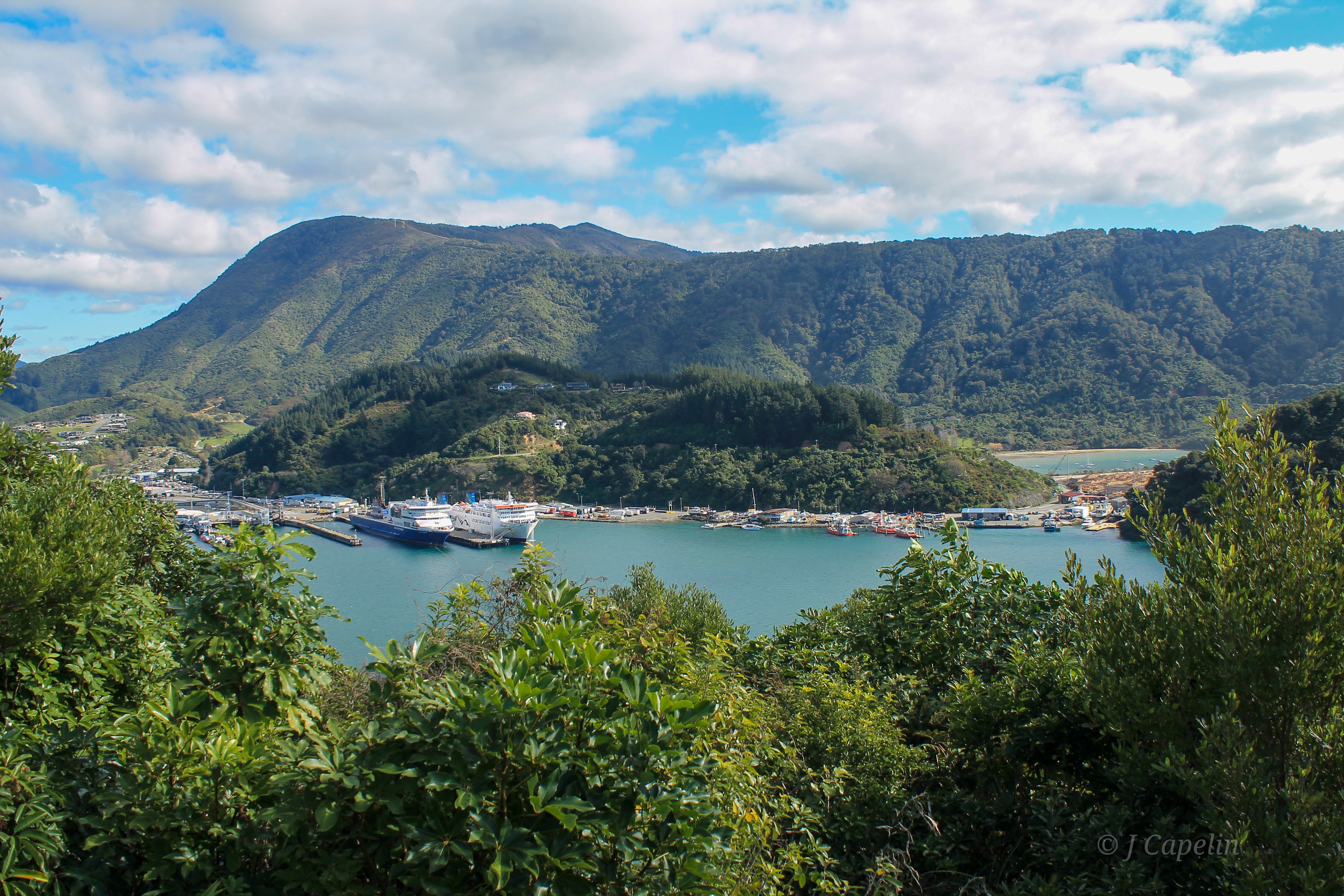
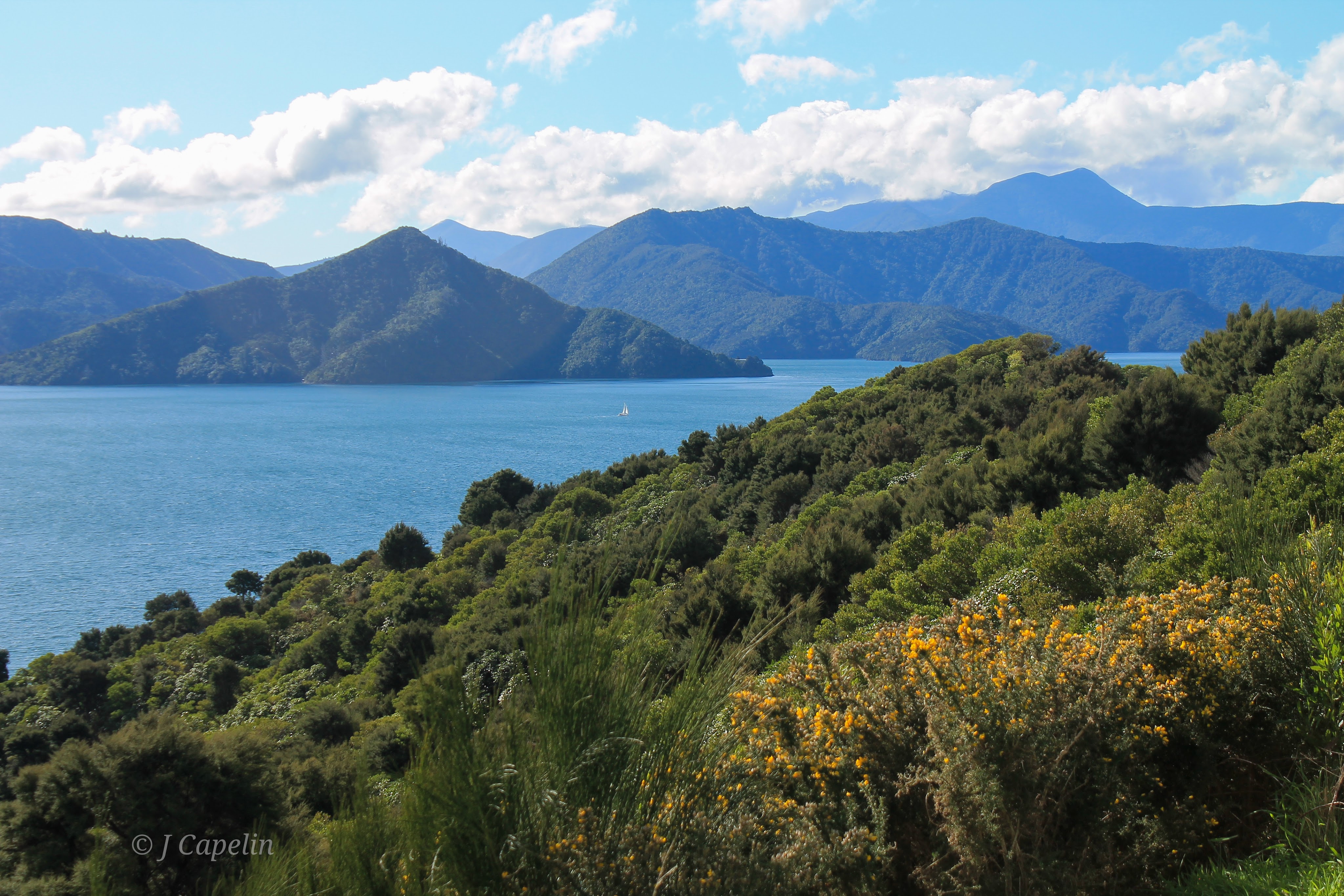
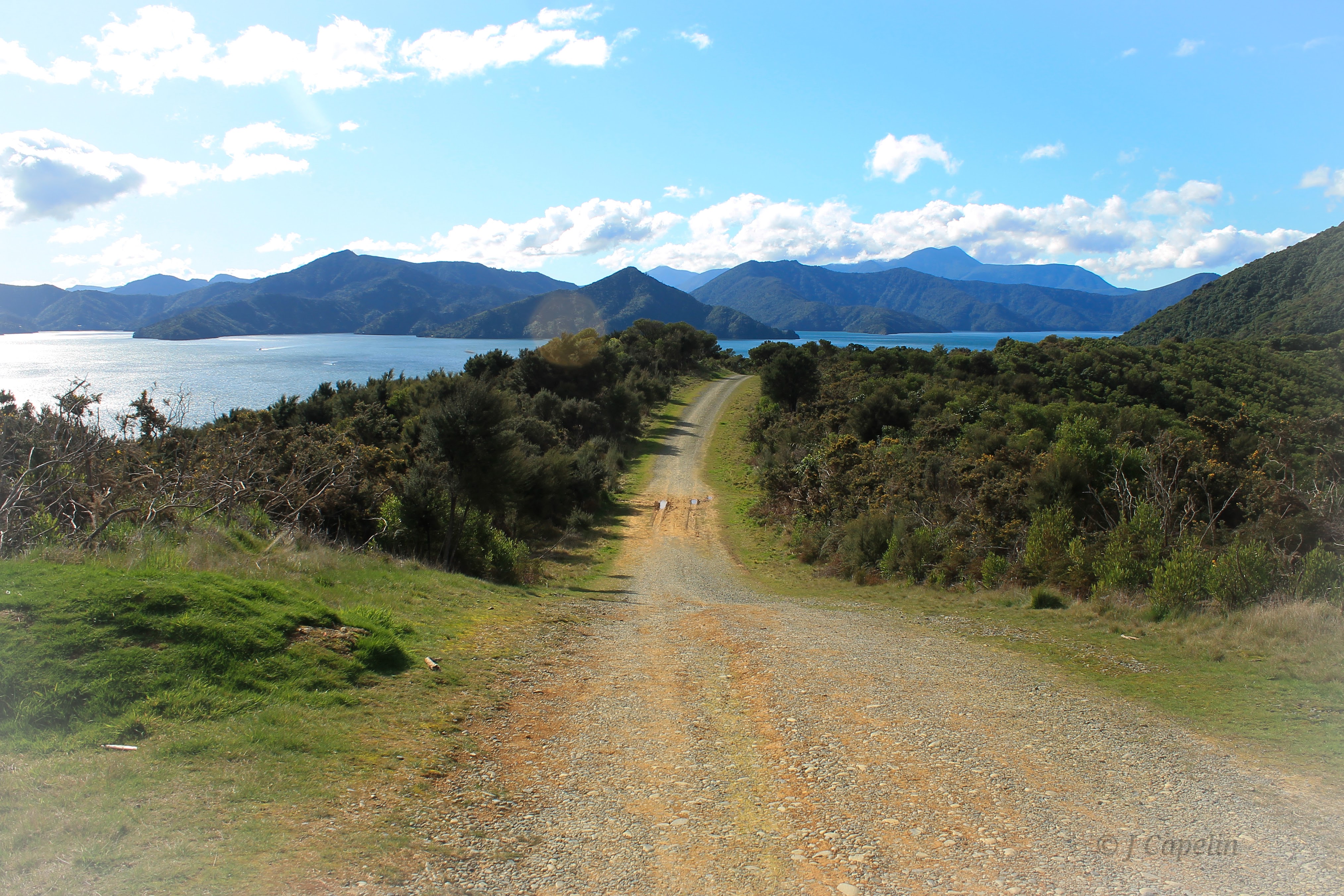
We drove back up the east coast, via Kaikōura for a night, and were greeted with warm sunshine at Picton – the gateway between North and South Island. It was like two different worlds, a day apart, going from the cold blues of bleak mountain wilderness to the sub-tropical greens of the Sounds and their beaches. This is why I love New Zealand!

Snout Track

The carpark for the Snout Track is situated on Victoria Domain Road, and is in itself, a viewpoint. The walk took us along the ridge of the peninsula that encases Waikawa Bay, with gorgeous views of the Marlborough Sounds and islands. We walked through the sub-tropical rainforest, fantails following our trail as we stirred up mosquitoes, all the way down to the tip of ‘The Snout.,’ where the blue sea lapped at the rocks while large sea birds soared above.

Walking Time: 2 hours 15 mins

The Marlborough region is famous for its wine, so while in the area, it would be rude not to try some! In the morning, we watched the Interislander ferry come in on the shimmering Sounds, before boarding back to Wellington.

Accommodation: Atlantis Backpackers < $90 NZD – 1 night
Food & Drink: Cortado (Pizza restaurant,) Le Café (café,)
Drive Time: Arthur’s Pass – Kaikōura: 4 hours. Kaikōura – Picton: 2 hours

Tongariro Alpine Crossing – New Zealand

The Tongariro Crossing had been on my bucket list for about 6 years, and finally, in January 2019, my opportunity arrived. Friends of mine, Simon & Mike, two brothers from back home, happened to be visiting New Zealand while I was staying with family there, and so we decided to take on the crossing together. According to my Strava app (which may or may not be accurate) it is about 14 miles (22km), with an elevation gain of about 2,762ft (850m), and crosses between 3 of New Zealand’s iconic active volcanoes. It is recommended that you fully plan the journey, with plenty of water, snacks, sun protection, good hiking shoes with support, and layers of clothing. Always check the weather, as whatever the weather is doing at ground level, it changes fast and will be at least 5 degrees colder at the crater.

A January Day, 2019

5:30am – Summer Bellbirds ‘pinged’ outside the Turangi motel, on the south side of Lake Taupo, as my hiking buddies and I awoke to make bacon sarnies. After breakfast, we packed up the car and set off beneath the grapefruit sky to Ketetahi Long Stay Car park, about half an hour’s drive from Turangi.

7:00am – We boarded the shuttle bus from Ketetahi Long Stay Car Park to Mangatepopo Hut – the opposite side of Tongariro National Park, to the start of the Tongariro Crossing.

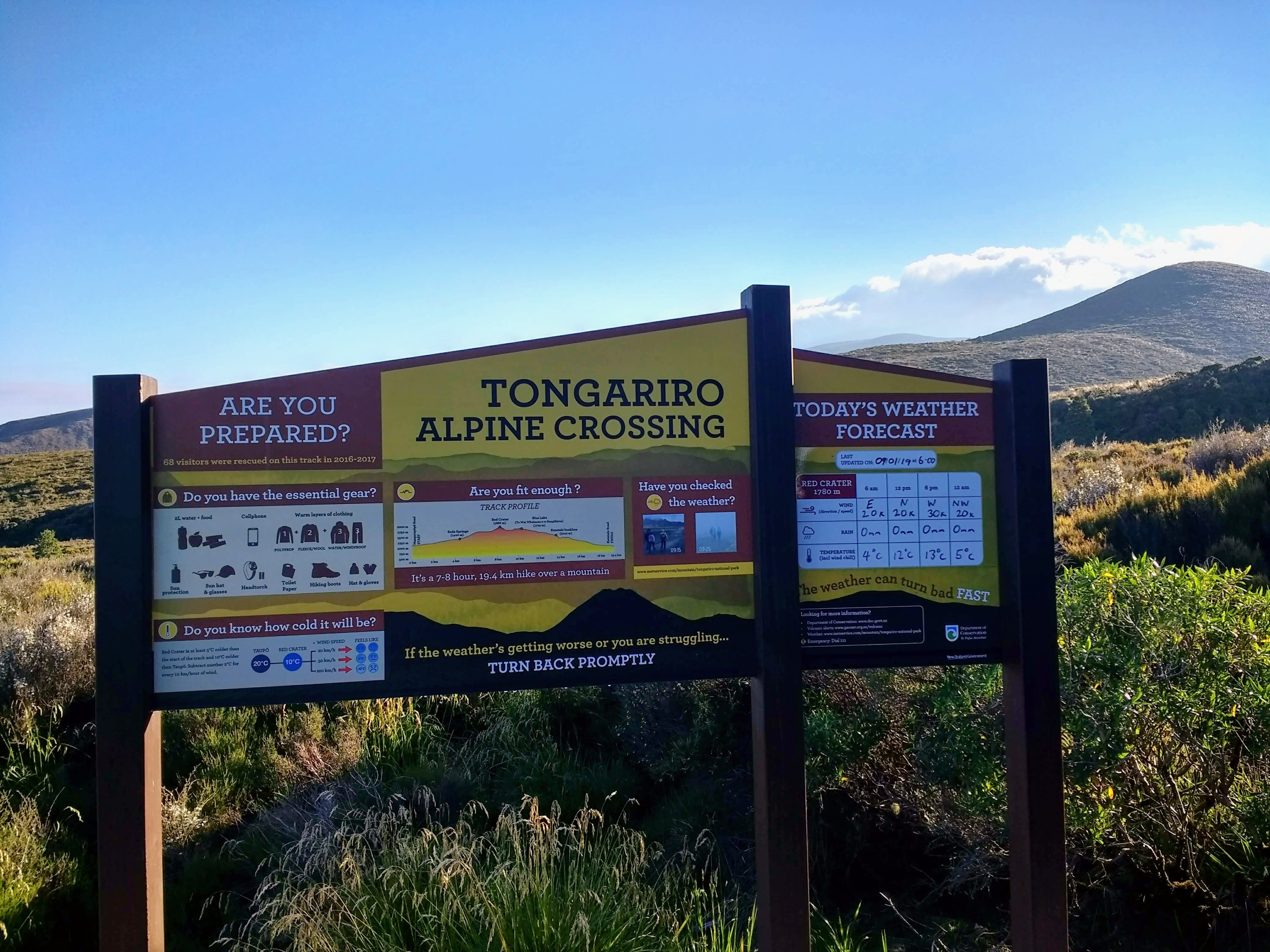
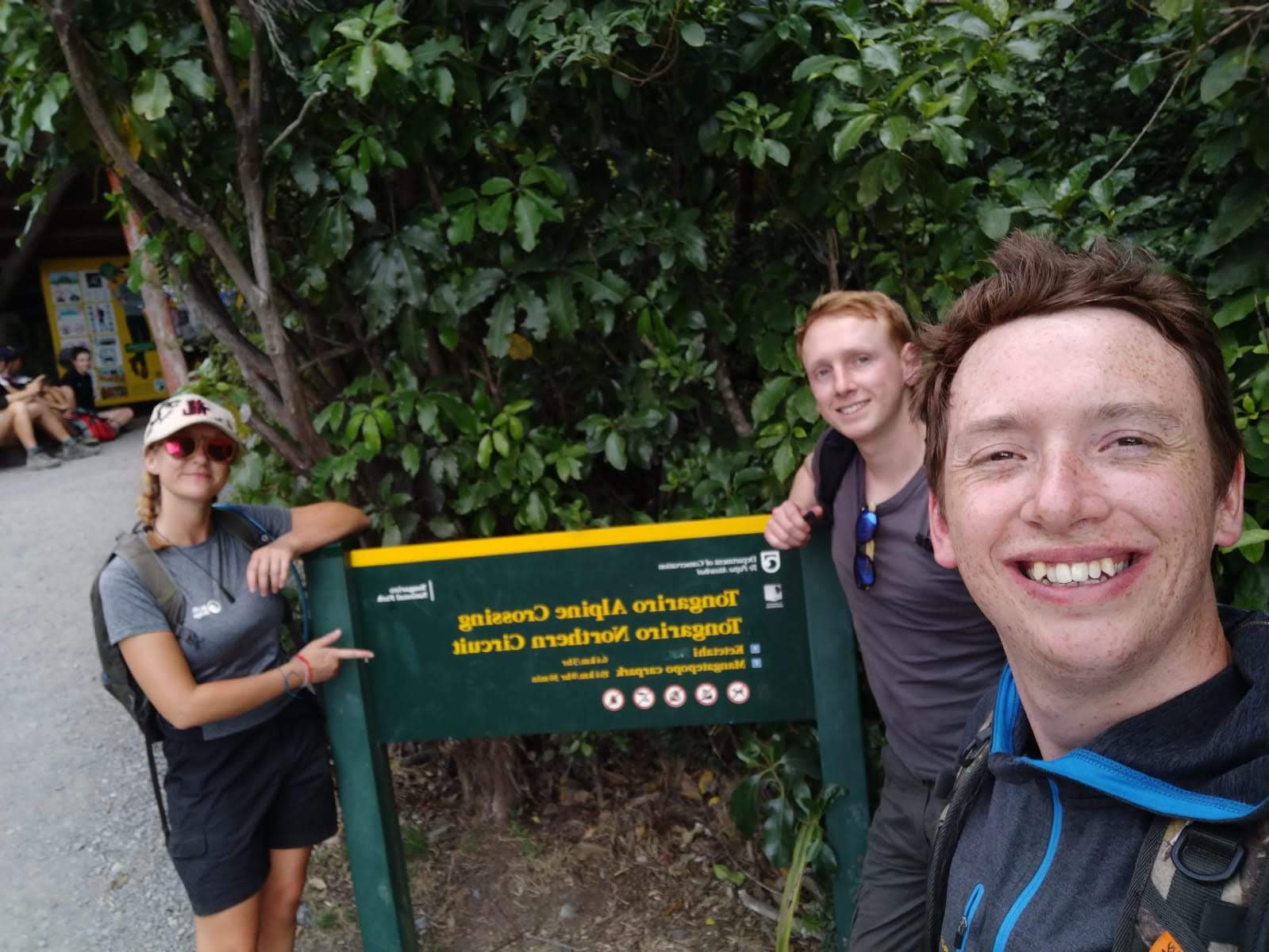
^Prep & Conditions Board at the start of the track, Mangatepopo^

7:30am – 5°c, clear, light winds – As the sun hid behind the mountains before us, we checked all our gear, stretched our legs and used the facilities. We began hiking, gently climbing the grassy hillside, the sun making its glaring appearance over the crest and quickly raising the temperature to T-shirt weather. Through the sulphurous pumice fields, we hiked, where white daisies sprout from the rough, black earth.

^Pumice Fields^

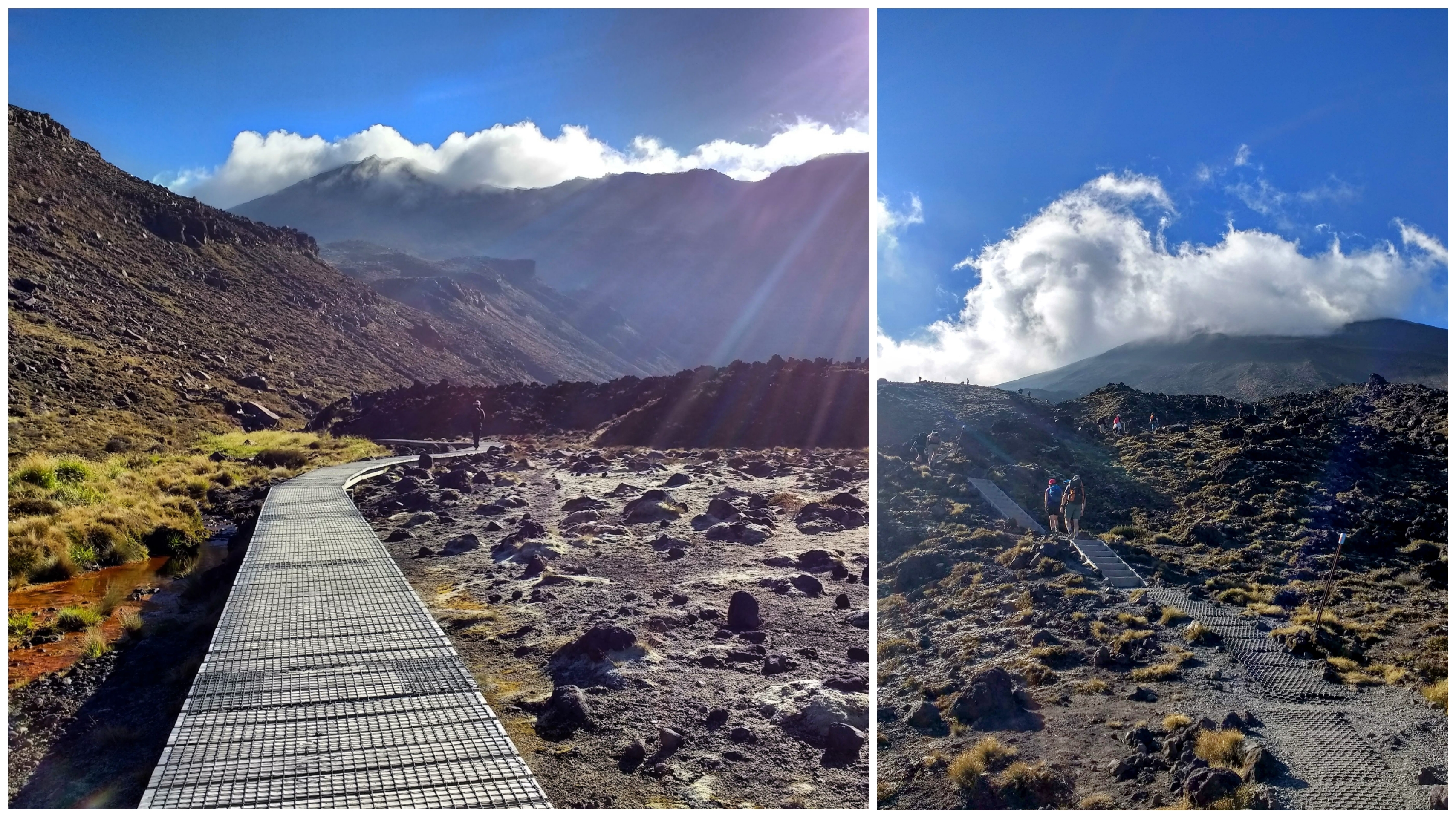
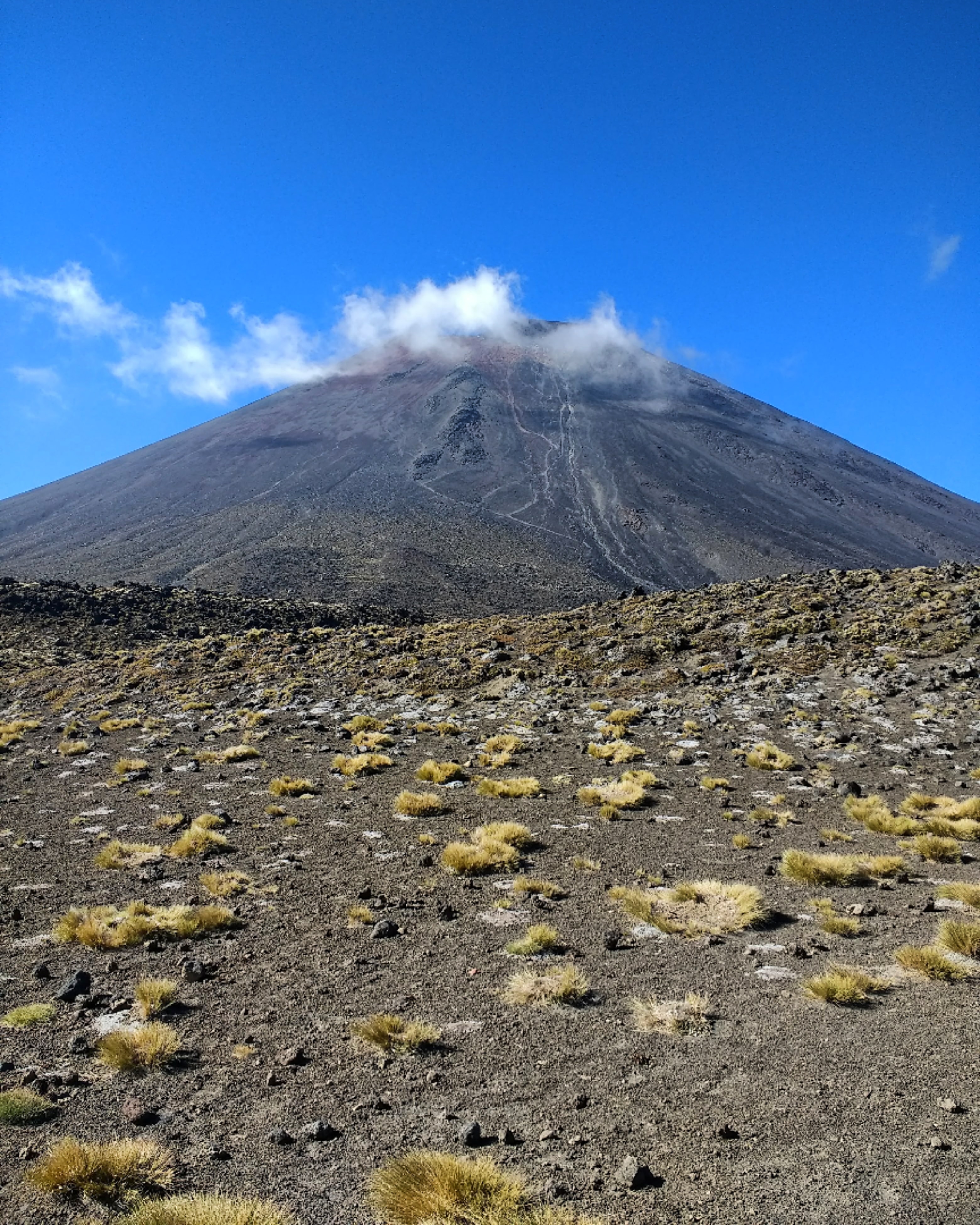
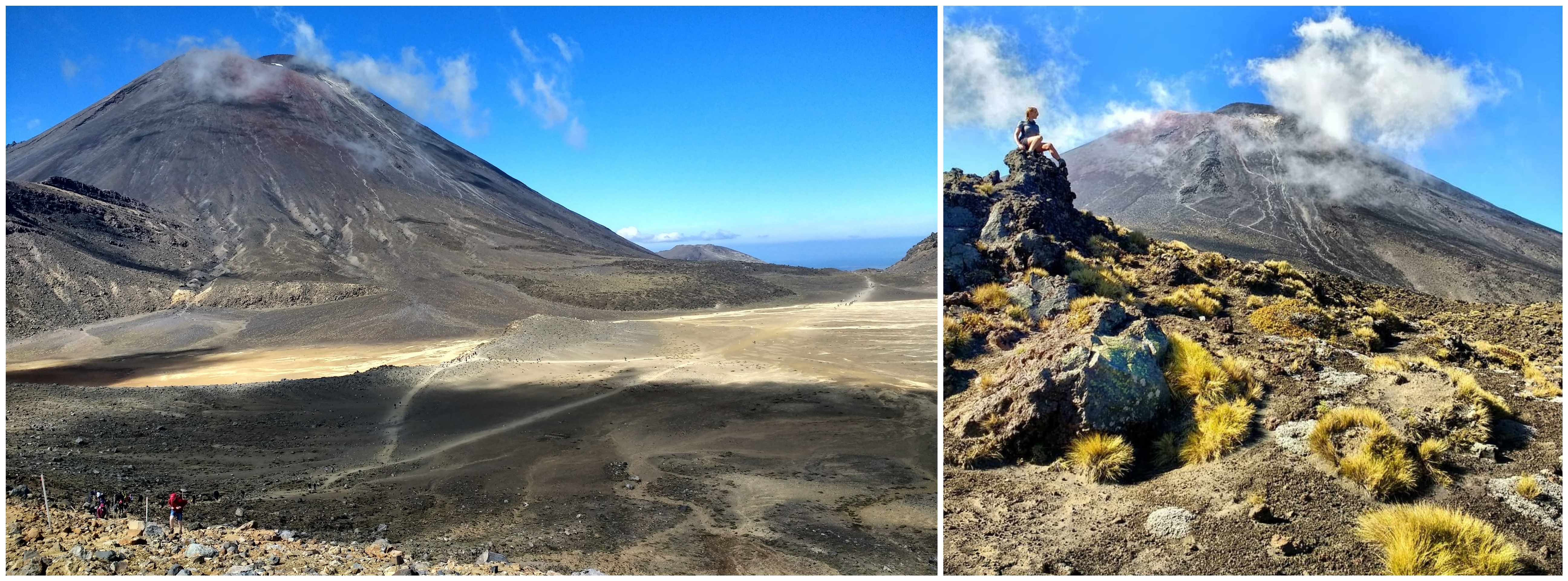
The path led onto a boardwalk, which crossed the silty plains of strange moss, framed by dark, jagged rock. Mount Ngauruhoe – known for portraying Mt. Doom in Lord of the Rings – loomed over the pathway, puffs of mist unfurling from its craters, casting its long, morning shadow over the landscape.

^Mount Ngauruhoe – the youngest & most active vent in the area – last erupted in 1977^

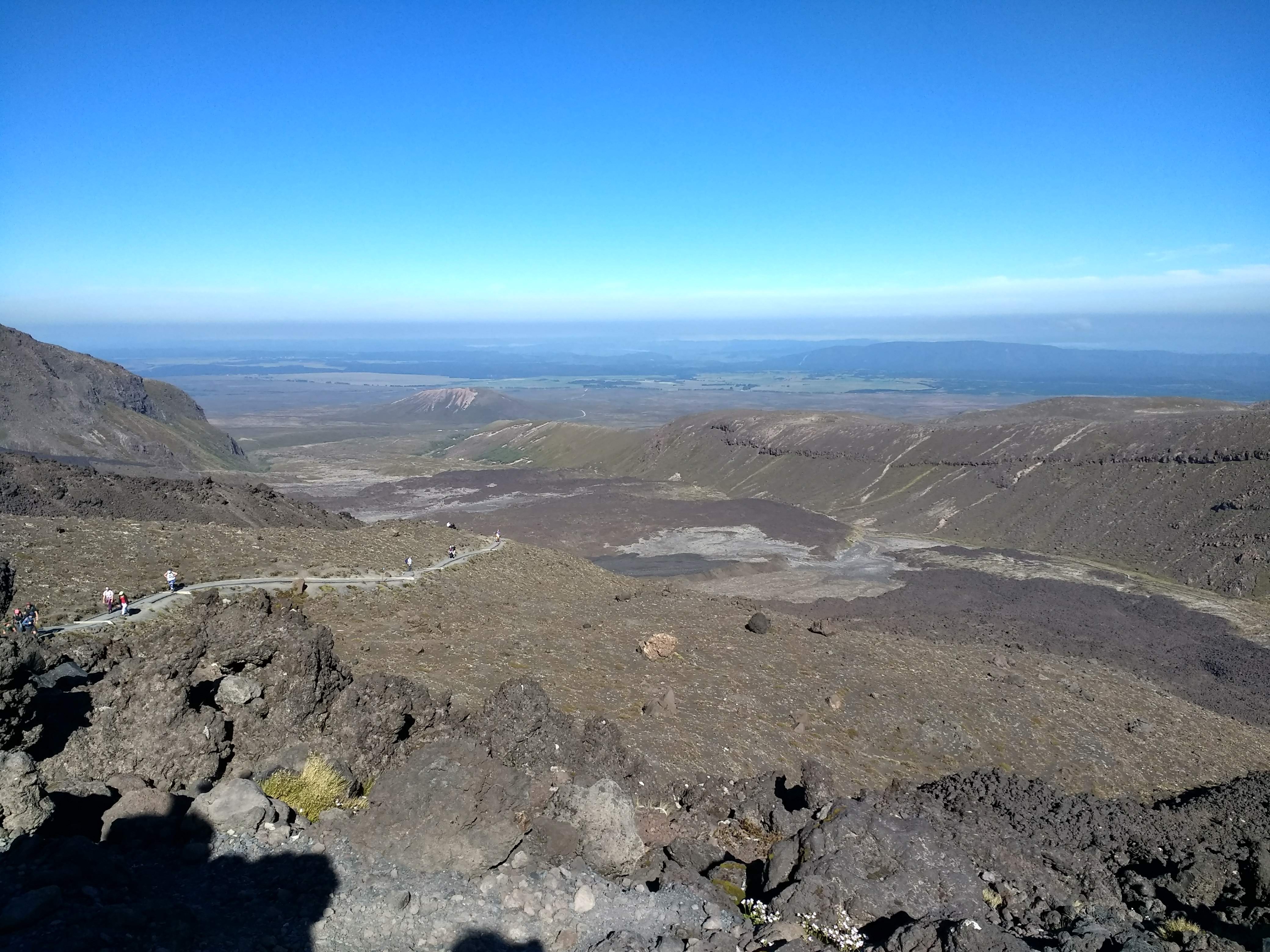
We began to climb; rock and man-made steps paving the lung-squashing incline. As we did, a panoramic view of the vast national park stretched out behind us.

^Tongariro National Park looking West^

Suddenly we were level and a giant plateau of sandy rock appeared before us, surrounded by an uneven black rim. We followed the trickle of hikers across the plateau, at the foot of impressive Ngauruhoe, and began to scale the lip on the other side.

^View back across the plateau & Mt. Ngauruhoe^

A fast, thick fog was moving over the summit, so we paused on the steep side of the lip for lunch. The air quickly became cool and dark, and it wasn’t long before we, and fellow hikers around us, had donned thermal jackets.

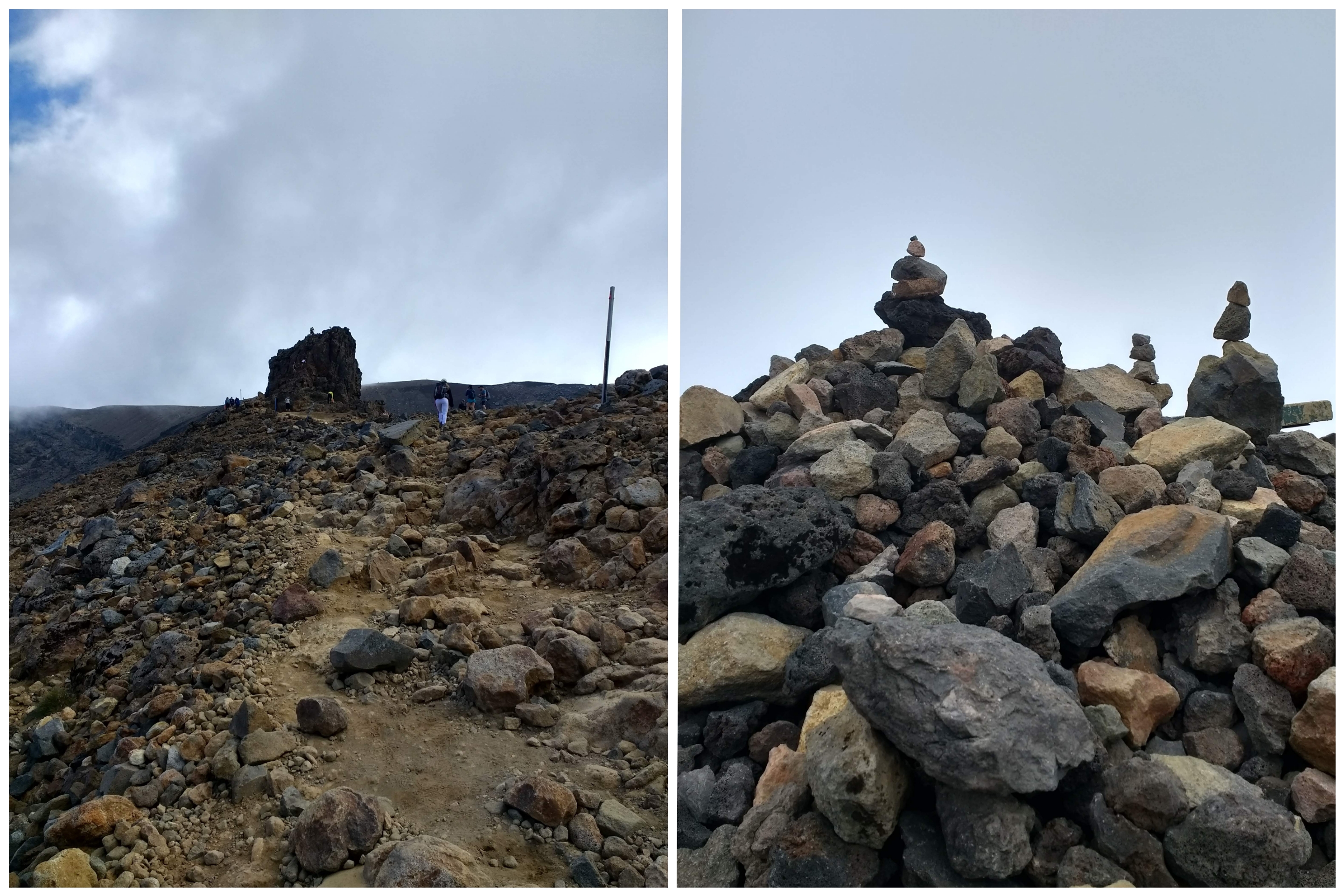
^The skiddy ascent to Red Crater / Mound of lucky stone stacks at the summit^

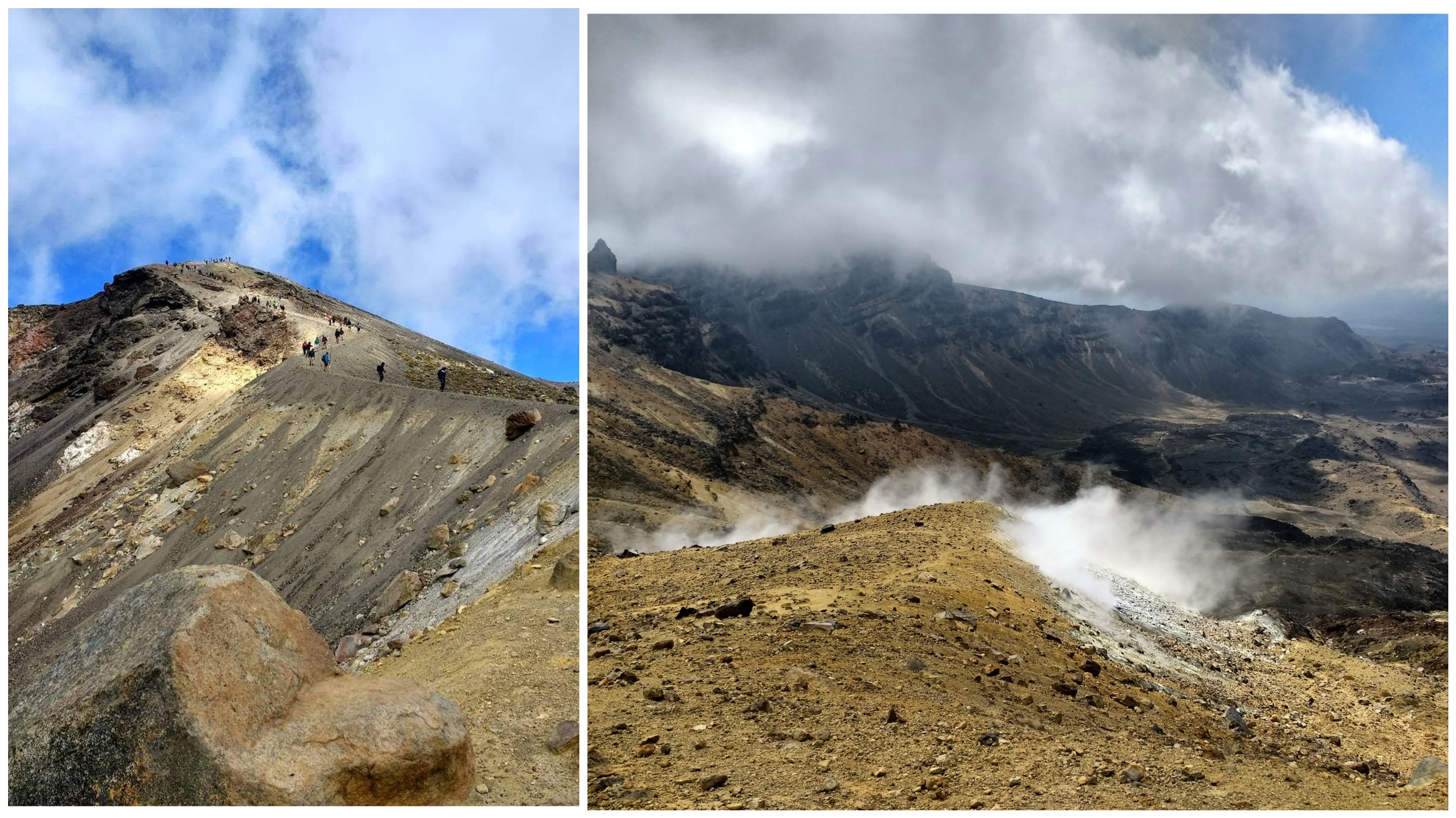
The route up is a treacherous combination of loose scree and sand, on both sides of the summit of Tongariro’s Red Crater, making footing impossible, and you have to kind of cross country ski your way over. At the top, a huge mound of rocks and pebbles marks the summit, built over the years by each hiker adding a stone. You feel like you’re on the edge of the world, especially when you can’t see through the dense fog!

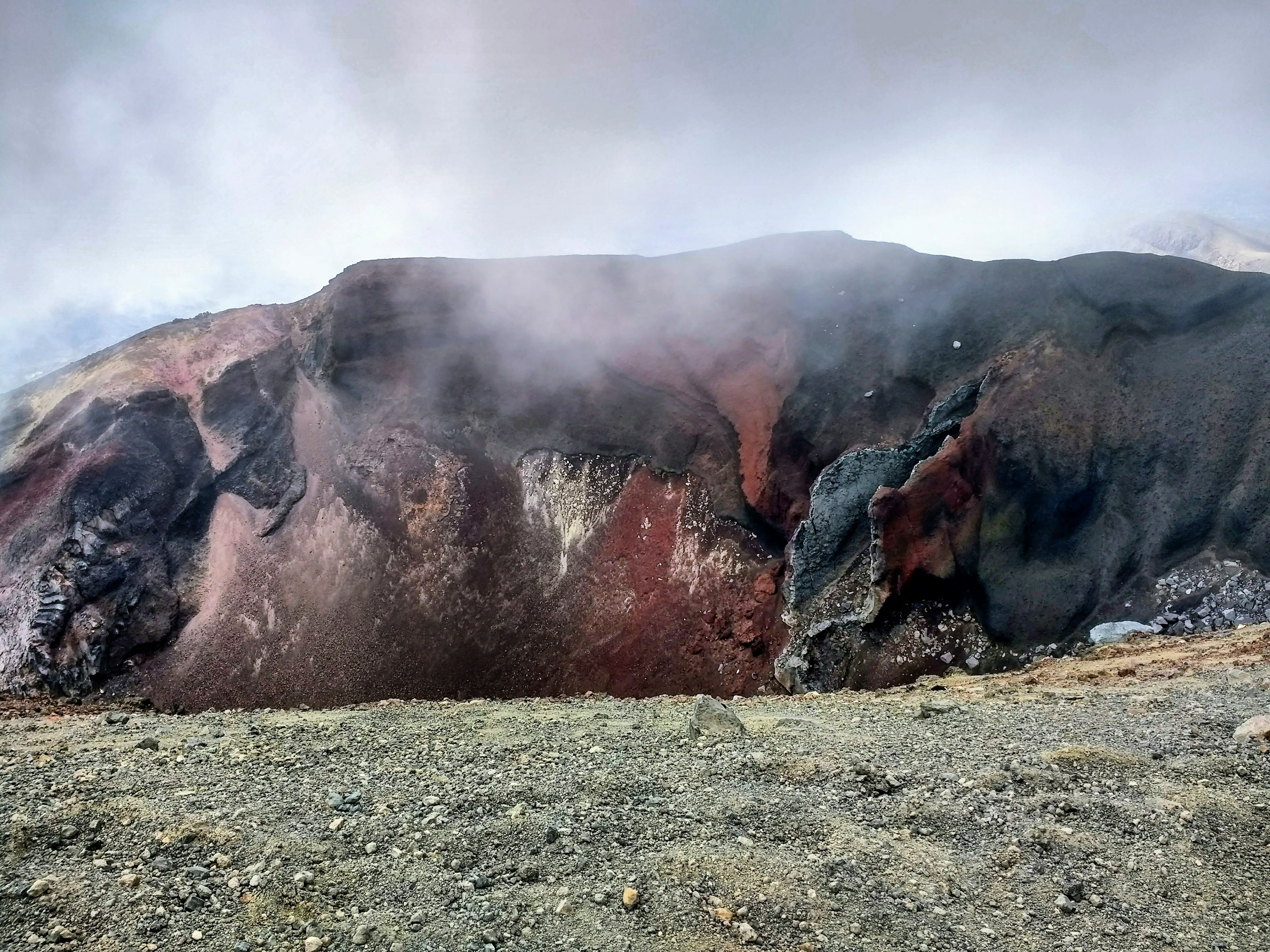
^The Red Crater, formed around 3000 yrs ago, coloured due to oxidised iron in the rock – last erupted 1926, but Tongariro has many craters, some of which last erupted in 2012^

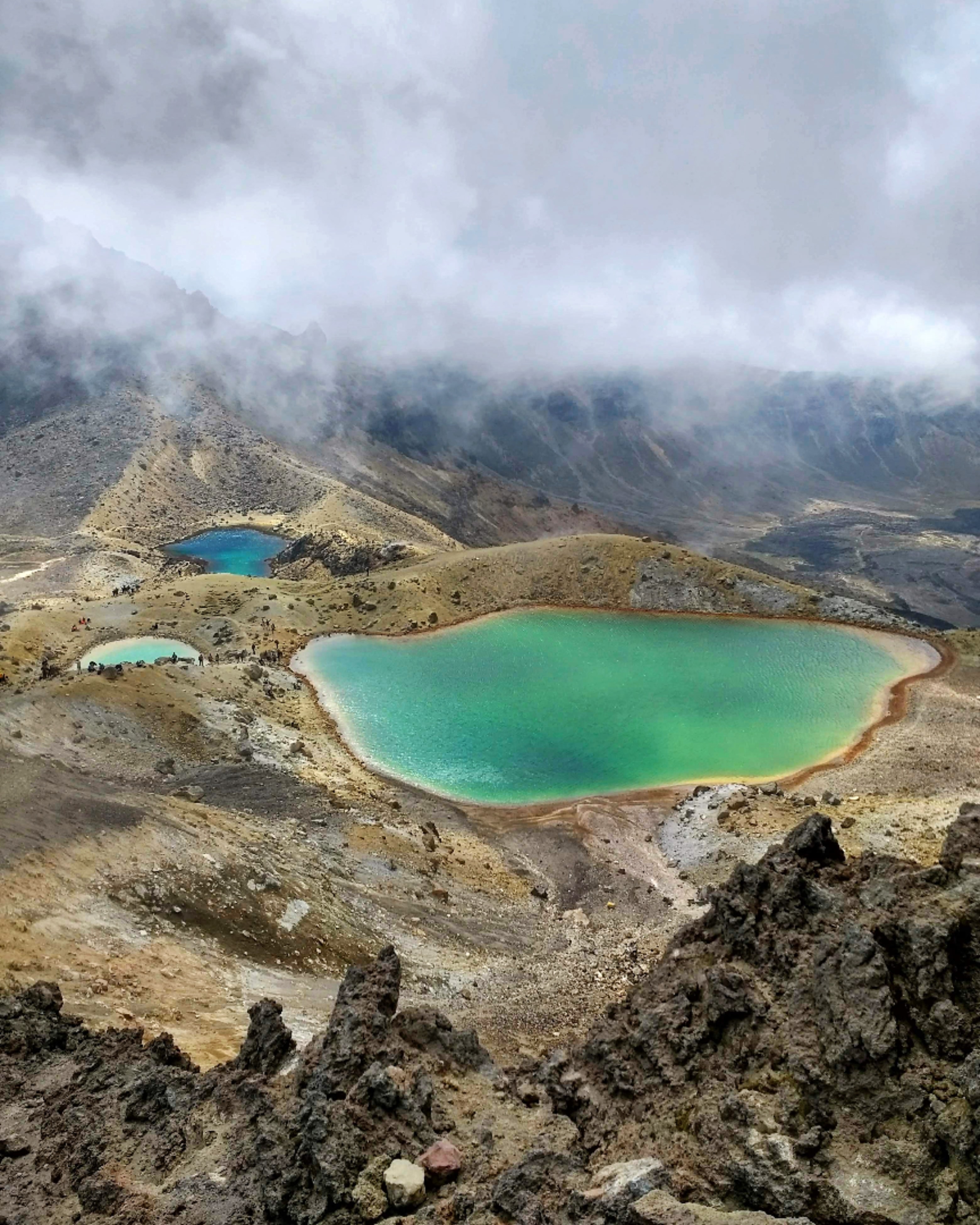
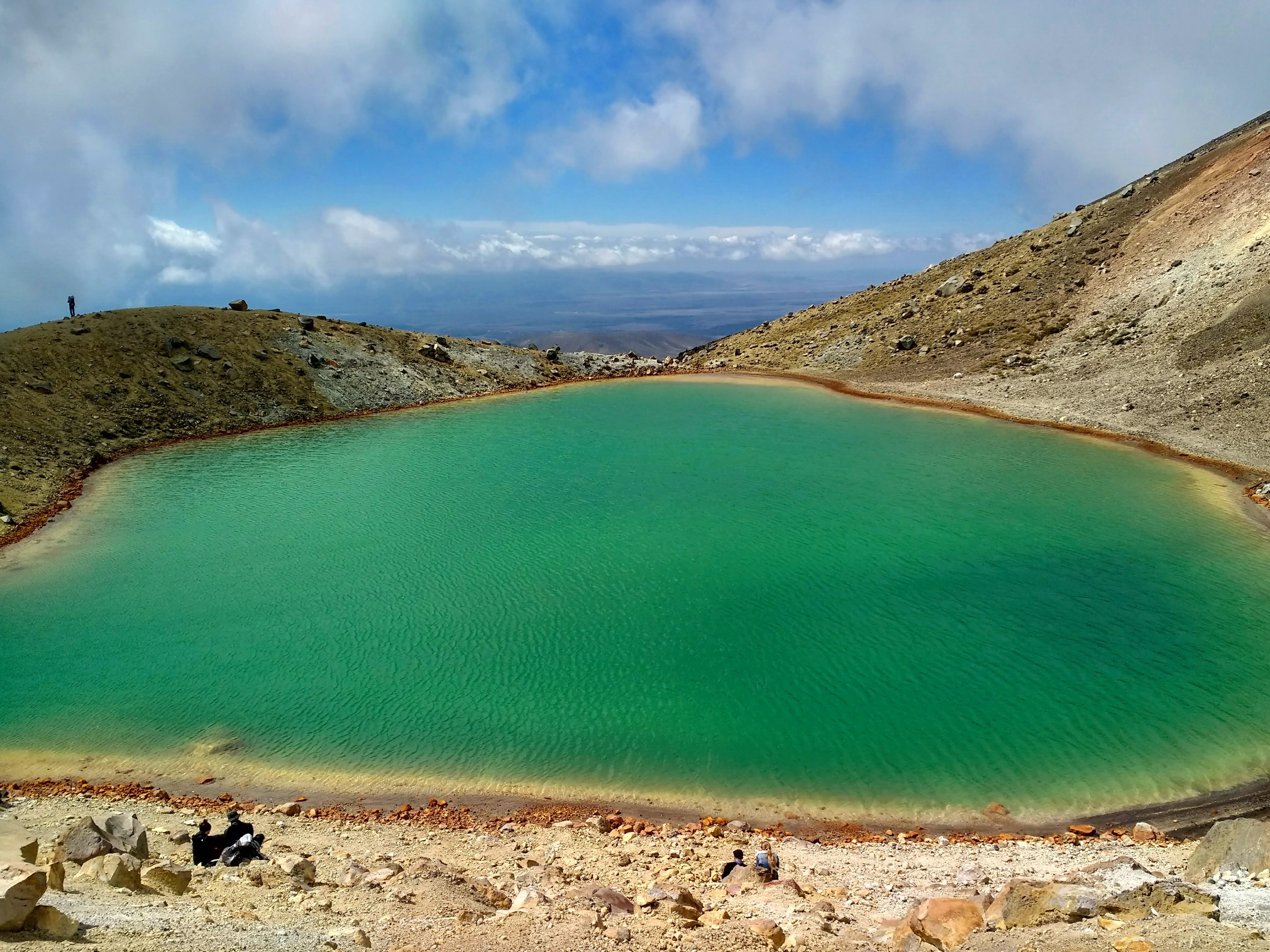
Skidding down the other side, the fog began to break, revealing the dramatic Red Crater. Clouds rushed over the landscape, thinning more and more until the brilliant Emerald Lakes shone through, patchy sunlight glistening on their surface.

^Emerald Lakes, Tongariro^

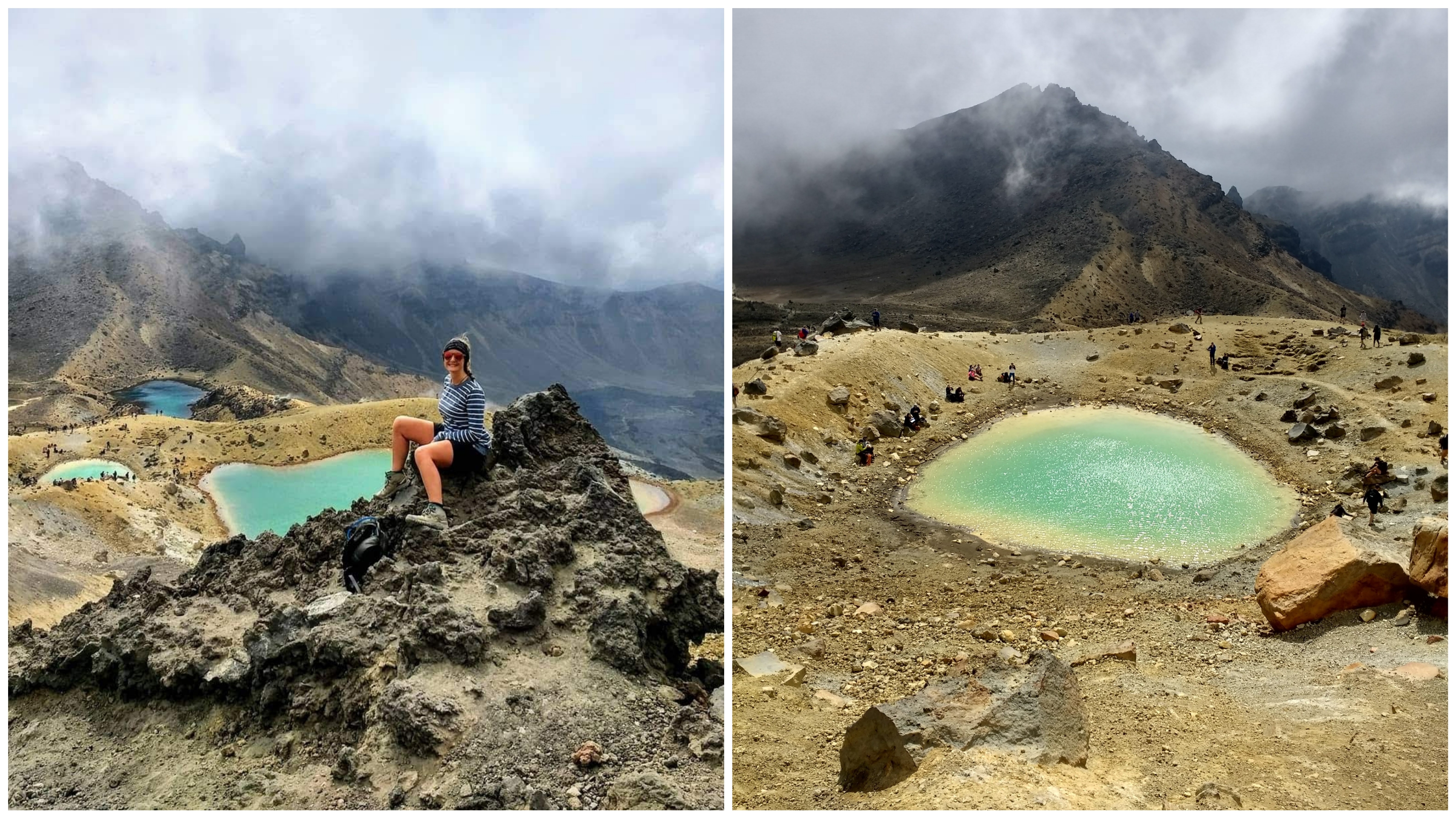
This is it – the iconic view of the Tongariro Crossing. The national park is a stretch of green, far and wide, all the way to the horizon where it meets the blue, fluffy clouded sky. Mountains drop down to hills, rainforests, rivers and vast plains. On the edge of the foreground three emerald and blue lakes stand out from the grey, volcanic rock, regardless of the weather. Curls of steam rise from the rock all around, that rich, boiled egg smell filling your nostrils.

^Emerald Lake, Tongariro^
^Emerald & Blue Lakes, Tongariro^
^Descent from the Red Crater / Steam rising from volcanic rock^

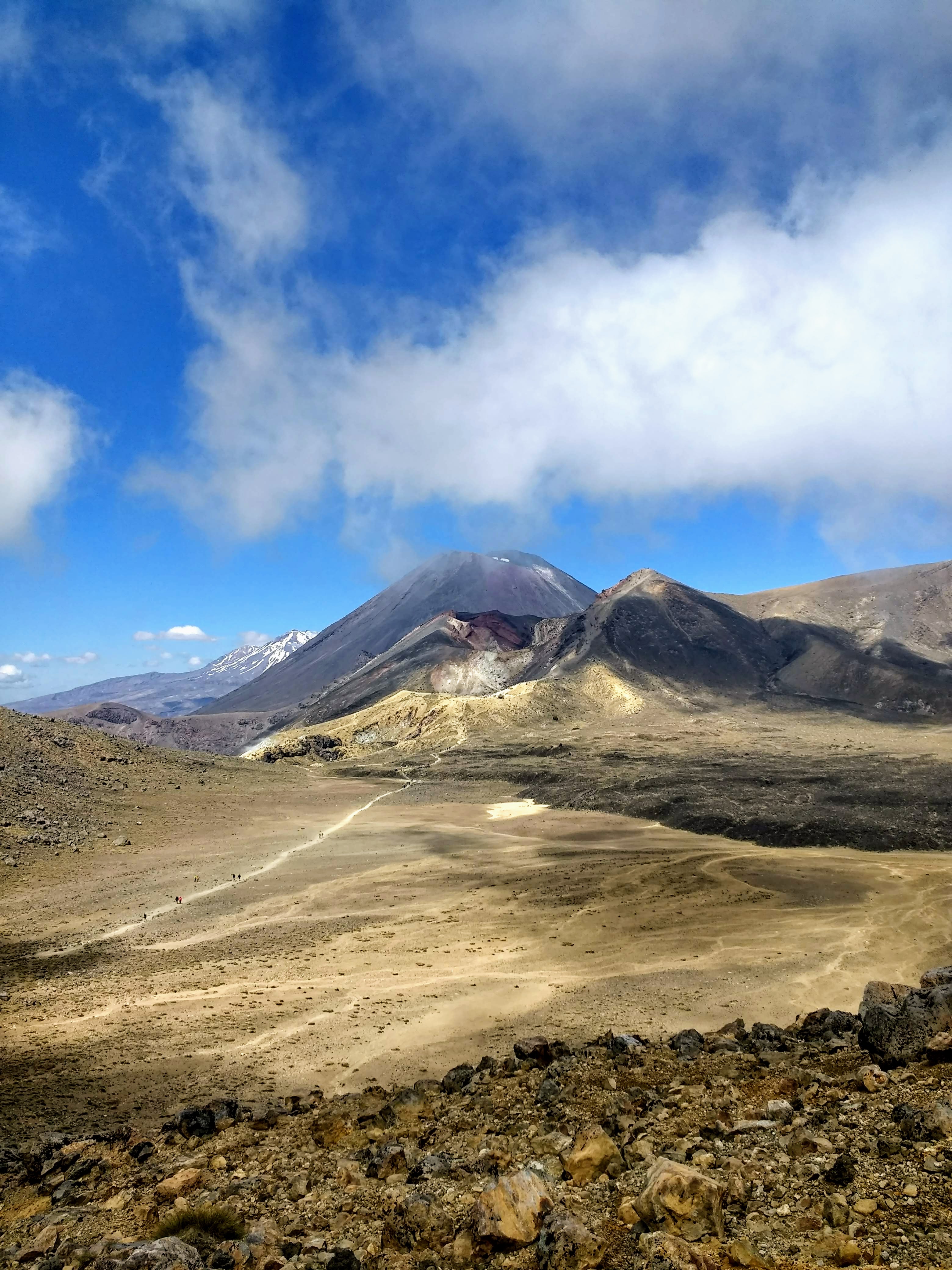
We continued across the next plain, looking back on the three iconic volcanoes lined up like a postcard; Tongariro – jagged and broken at the forefront, Ngauruhoe – the perfect volcano shape in the centre, and snowy Ruapehu peeping out from behind.

^Trio of Volcanoes – Ruapehu, Ngauruhoe, and Tongariro^

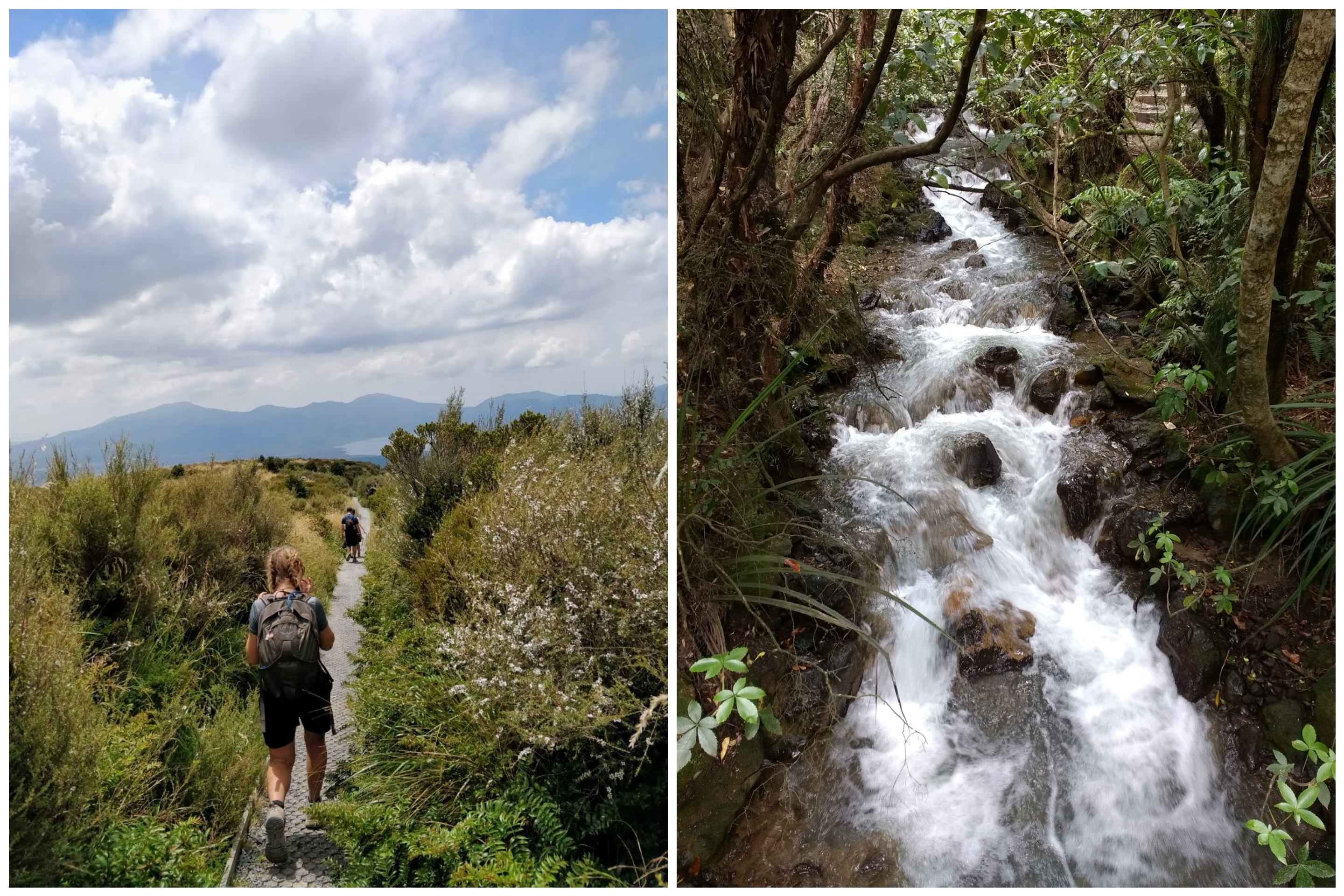
The walk down to Ketetahi is a neverending zig-zag, through bushland and rock, which never seems to get closer to the end. Lake Taupo shines on the horizon below, before the path eventually drops into rainforest, and quickly descends down wooden steps, joining a cascading river down to Ketetahi.

^Descent to Ketetahi^

2:00pm – 13°c, sunny – Once we reached the Ketetahi end of the Tongariro Crossing, it was another 20min walk along the dusty road to the Long Stay Carpark. The hike back to the car felt long, but far from disappointing! The landscape is marvellous, and there’s plenty of nature to see; we were three satisfied & very happy hikers. Our moving time was about 5 hours, all the photo stops and snack breaks made it much longer, but why rush through an experience like that?

^Reaching the end of the crossing at Ketetahi^

Our Tongariro adventure ended at the car park, where the car wouldn’t start, and the next adventure began – getting home!

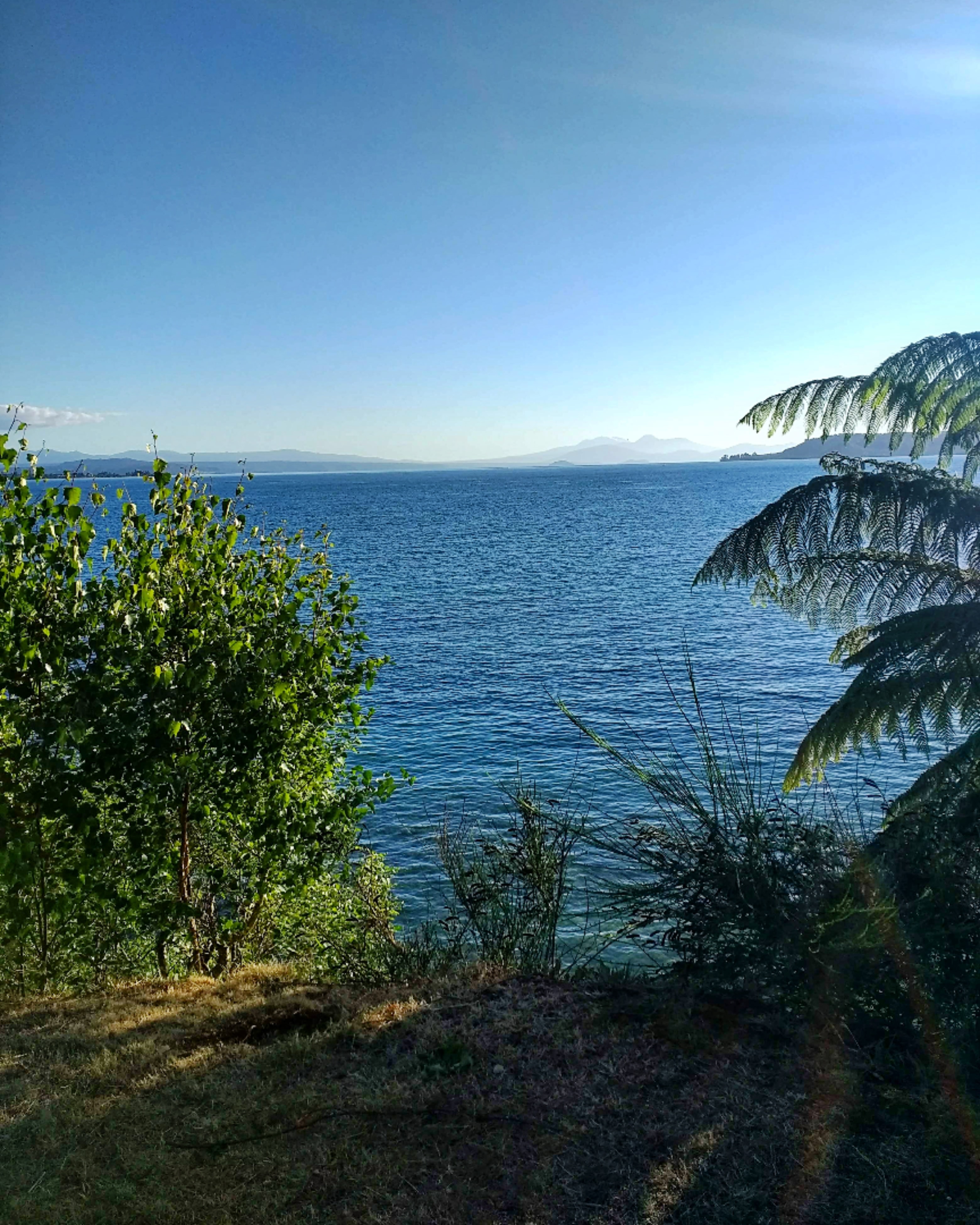
^View across Lake Taupo to Tongariro National Park, from Taupo^

Sailing to Smokehouse Bay

Gunpowder, Treason & Plot

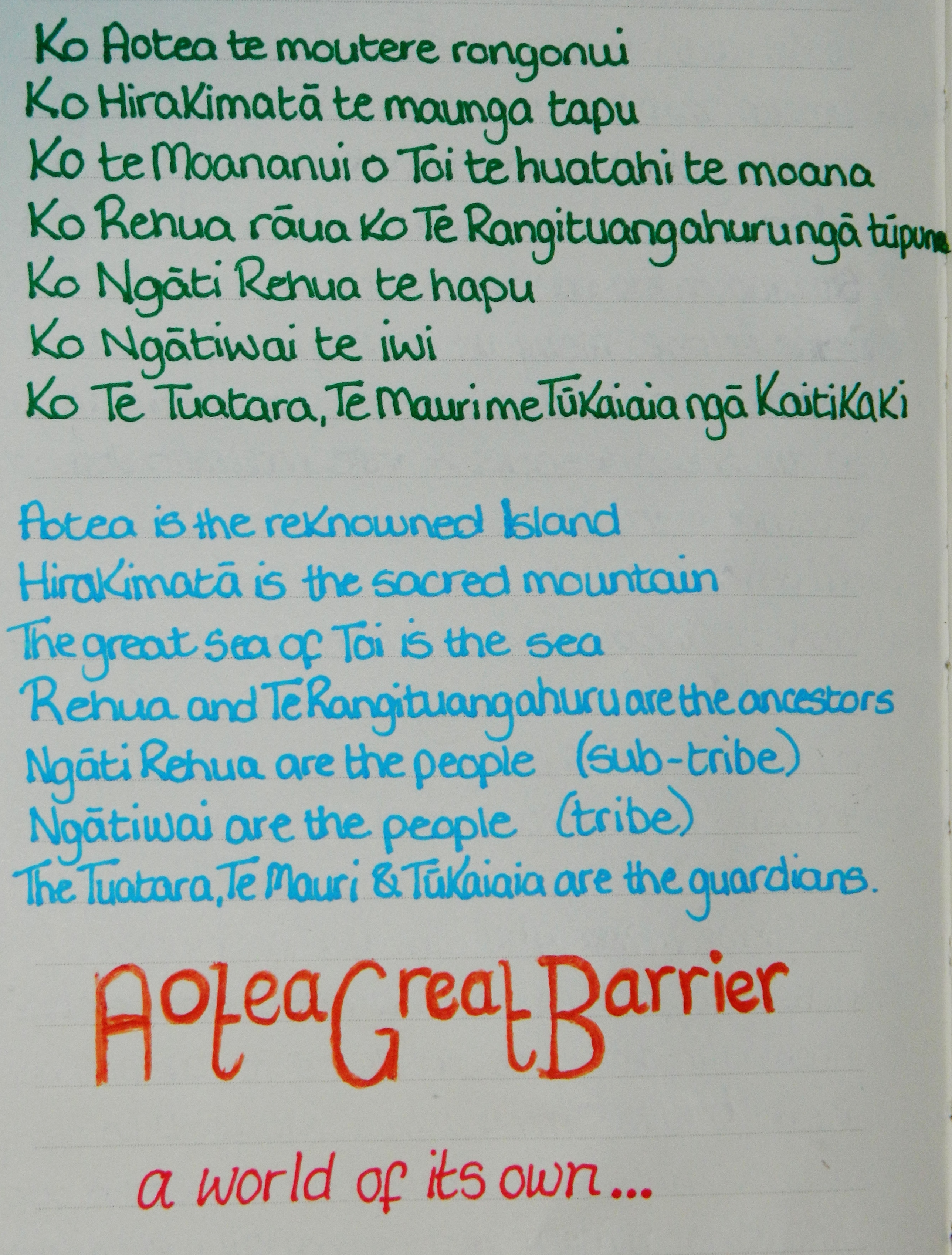
It’s the night of November the 5th. Bonfires line the beach like beacons from Hastings to Napier, and we laugh and drink under a drizzling, red sky. Finn hands out fireworks to his new companions, and the brave ones shoot them upwards, like young wizards defending their school. In two days, we are to set sail on Finn’s boat from Napier to Aotea – The Great Barrier Island, and then on to Auckland.

Finn is a local Napier boy, who has sailed hard to get where he is today at the age of 22. His friend Kyle is American, an experienced sailor, and the two met working as sailing instructors in the Caribbean. My first impression of Kyle was that he kind of resembles Leonardo DiCaprio, but I pushed aside any Titanic references circling my head. That makes up the 30% of our crew who can actually sail!

Then there’s us – the couch-surfers. Dani is a bright and bubbly chick from München; Fabian is a food passionate from Stuttgart; Luca is the quiet one from Köln, and Simon is an artistic dude from Bavaria. Then there’s me, the Pom.

Napier Harbour Moonrise

Napier Harbour Moonrise

The Dulcinea

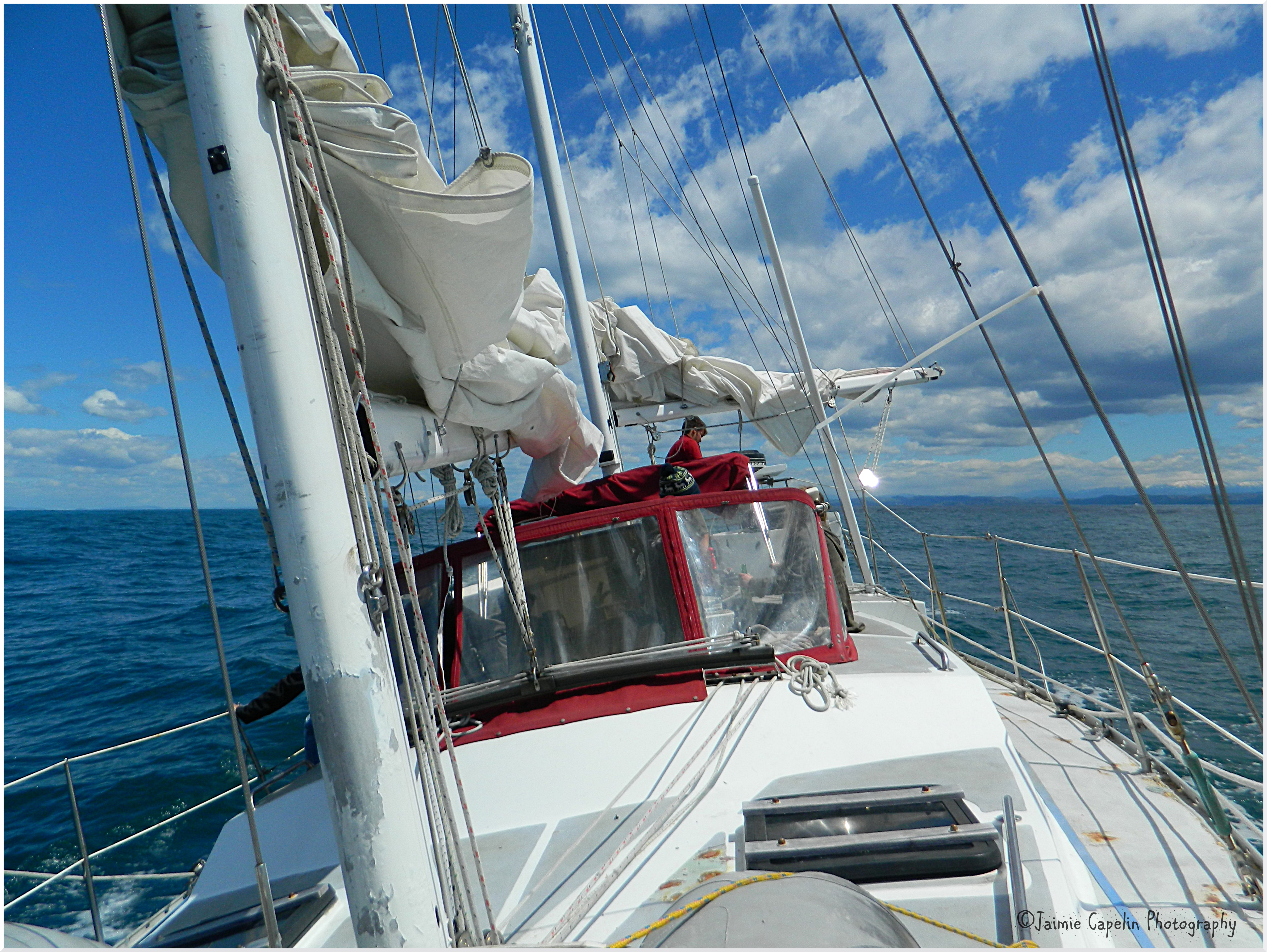
The Dulcinea is a 44ft Steel Ketch yacht with 2 masts. She has three sails: Jib – front; Main – middle, and Mizzen – rear. She sits just 2m below the surface, and her led-weighted bottom makes her a ‘Knock over’, meaning no matter how much she keels she is near impossible to capsize. The Dulcinea was custom built in California in 1986, and was sailed across the Pacific to New Zealand by Finn in 2013. She can sleep up to 10 people, but 7 is cosy enough.

'Night Sailing' - one from my sketchbook

‘Night Sailing’ – one from my sketchbook


Bananas On Board
7th November

Today we set sail, leaving Napier midmorning after the boys went for a HUGE shop. Before we left, we ate all the bananas that had been brought on board, because it’s bad luck to sail with bananas. Kyle told us that when shipwrecks were discovered, bananas were the only things they could salvage, floating around amongst the debris, so the general consensus became that bananas were bad luck. Also, they were known to bring cockroaches and rats on board, spreading famine.

As we prepared to leave the harbour, we met a character on one of the neighbouring houseboats. He is an old Maori fella, who has lived on his little boat for years. The fascinating thing is, he is blind. Kyle heard him calling out to us, “Is that Finn and his crew? You off today?” The old man got chatting about the goings on in the harbour – the other boats being washed and maintained and who’s boat was where. He knew everything just by the sound, and he moved around the harbour as though he could see perfectly well.

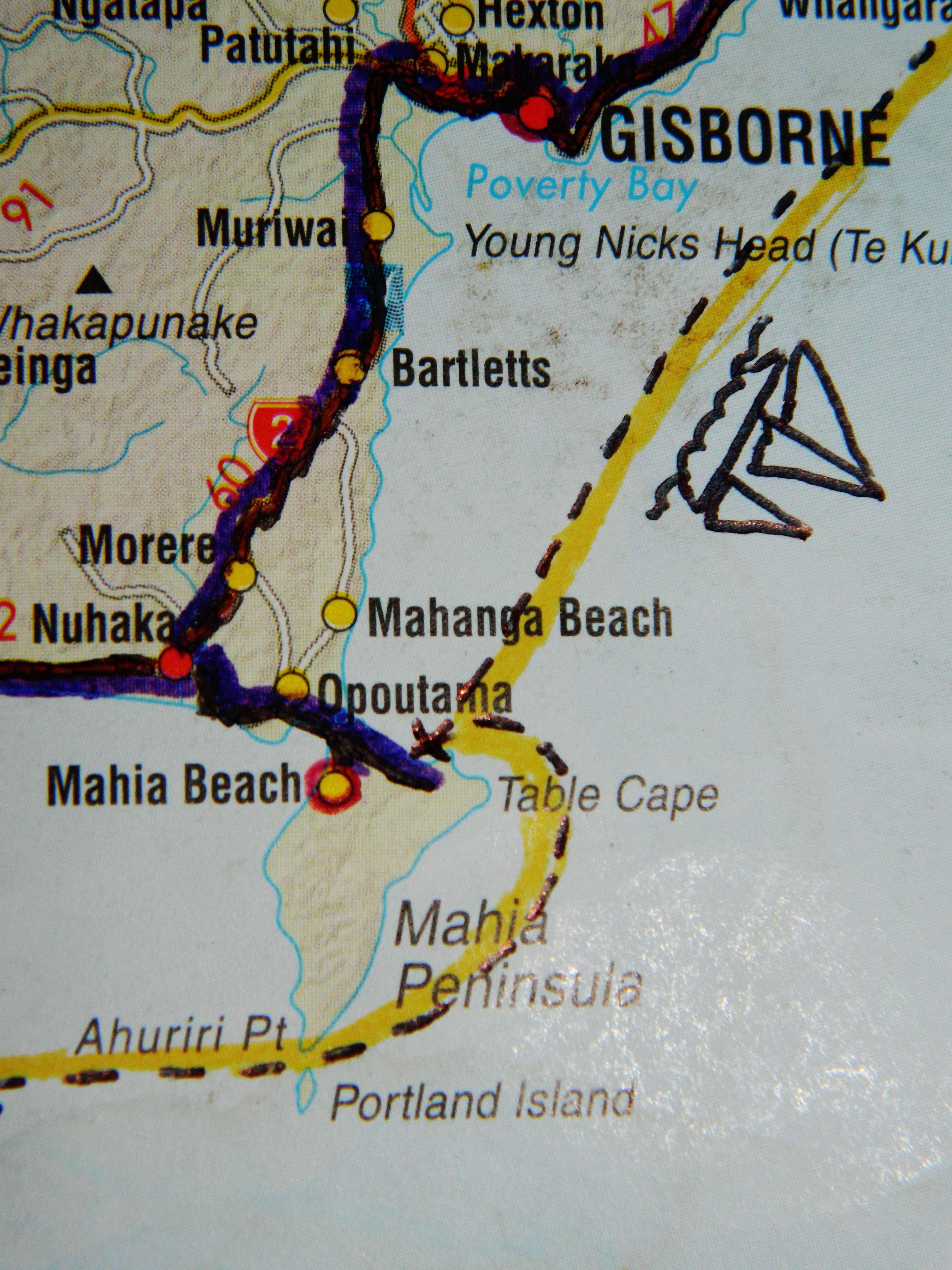
We are heading N.E, destination East Cape. We’ve seen gannets and dolphins already, cruising alongside the boat as we passed their feeding spot. The sea is rolling, but the weather seems to be holding so far, with sunny spells and a light wind.

Dolphin Offshore Napier

Dolphin Offshore Napier

DSCN0235Mid-afternoon. It is quite rough, half the crew are seasick. We had to navigate shallow, rocky waters between Mahia Peninsula and Portland Is. The swell was huge, making the enormous waves vertical. The boys are spewing alternately off each side as the sails pop and the boom swings. Dani and I seem to be fairing pretty well, enjoying the ride, if not a little sunburnt. Albatross have been following us most the way; spectacular birds that swoop and run along the surface of the waves. Fabian is particularly taken by them. He’s been at the bow for hours, watching and photographing them.

A long 8 hours of sailing and we’ve finally dropped anchor in a small, sheltered bay between Mahia and Gisborne. Fabian has cooked rice and mince with veggies and the guys are having a few beers and playing cards. Finn’s teaching the crew how to play a card game called Presidents and Arseholes – a bit of a sailing tradition for him – and they keep yelling ‘SCUM’ at one another. The Germans are pretty good, naturally. Tonight the moon is like a burning nectarine rising from the horizon.

Rolling on the Swell

Rolling on the Swell

Tolaga Bay

After a late start yesterday, waking up to the likes of Six60 and Katchafire, and a breakfast of scrambled eggs, we sailed past GDSCN0236isborne and up towards the East Cape. The sea was still fairly lively, and the bitter south wind blew so we were able to sail at a fair speed. The boys were much better after a night’s sleep. We all settled on deck, Dani engrossed in her journal, while Luca, Simon, Fabian and I discussed such things as the pronunciation of the German ‘Z’, and I learnt things like, “Wie spät ist es?” and “Das Boot ist am Ozean.”

Kyle opened a packet of dry ramen (instant noodles) and started breaking it apart and crunching on it, to which Luca’s gaze was transfixed. Shortly after, Luca had a packet of ramen and was emptying the sachets of flavouring over the raw slab, lamenting at what a good idea it is!

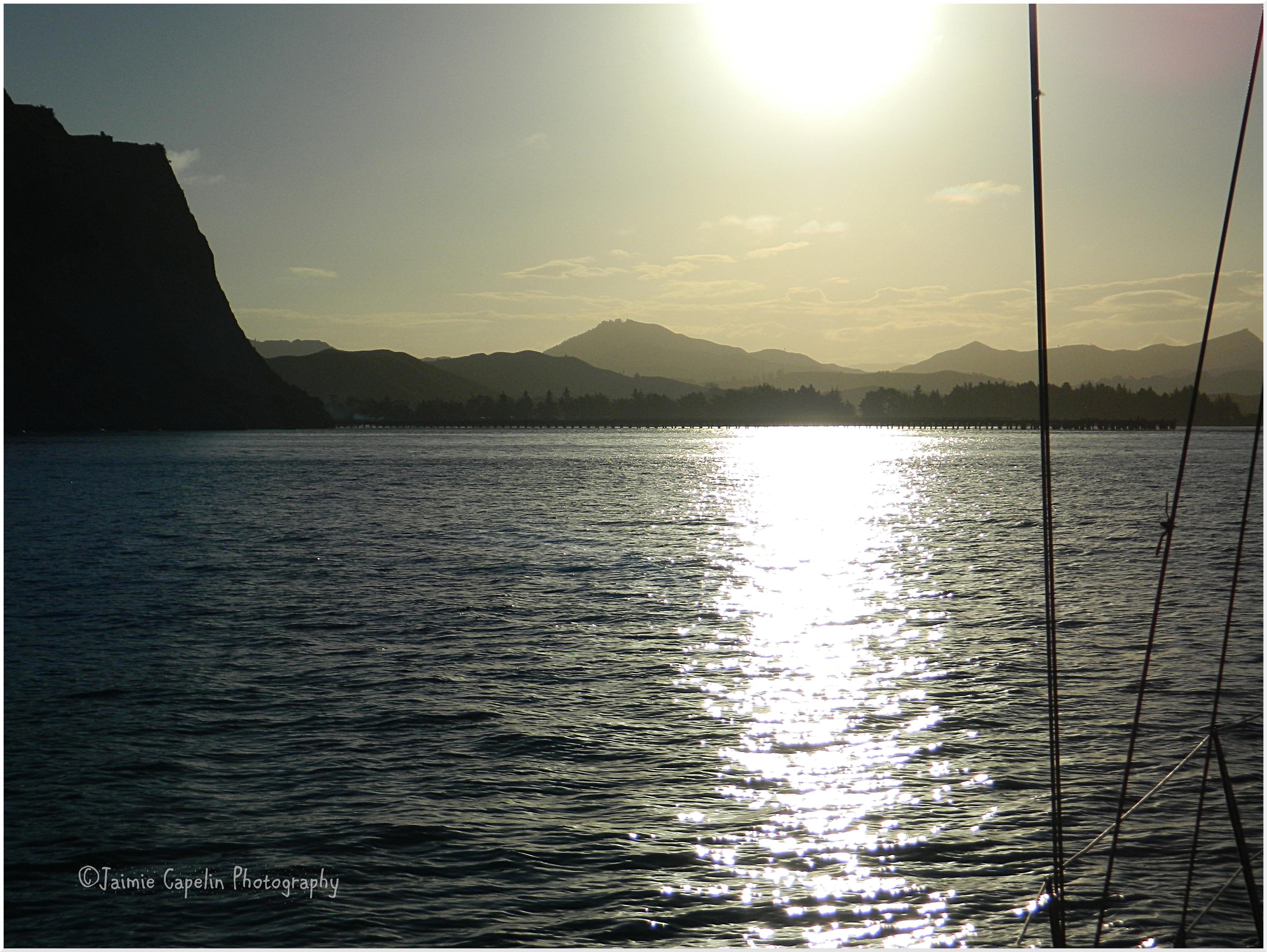
We anchored at Tolaga Bay around 6:30pm and got the BBQ fired up. A beer by sunset and steaks on the barbie, Tolaga Bay pier silhouetted in the silver sunlight.

Tolaga Bay Pier

Tolaga Bay Pier

It was a rougher night than the last, but it’s something to get used to, as we’ll be sailing through tonight. This morning we arose early, everything stiff and aching, but 5 minutes on deck, calmer waters, cuppa tea in hand and the smell of bacon coming up from below, and everything felt bliss again. The occasional dolphin or albatross passes by, but mostly there’s just shimmering ripples and sunshine.

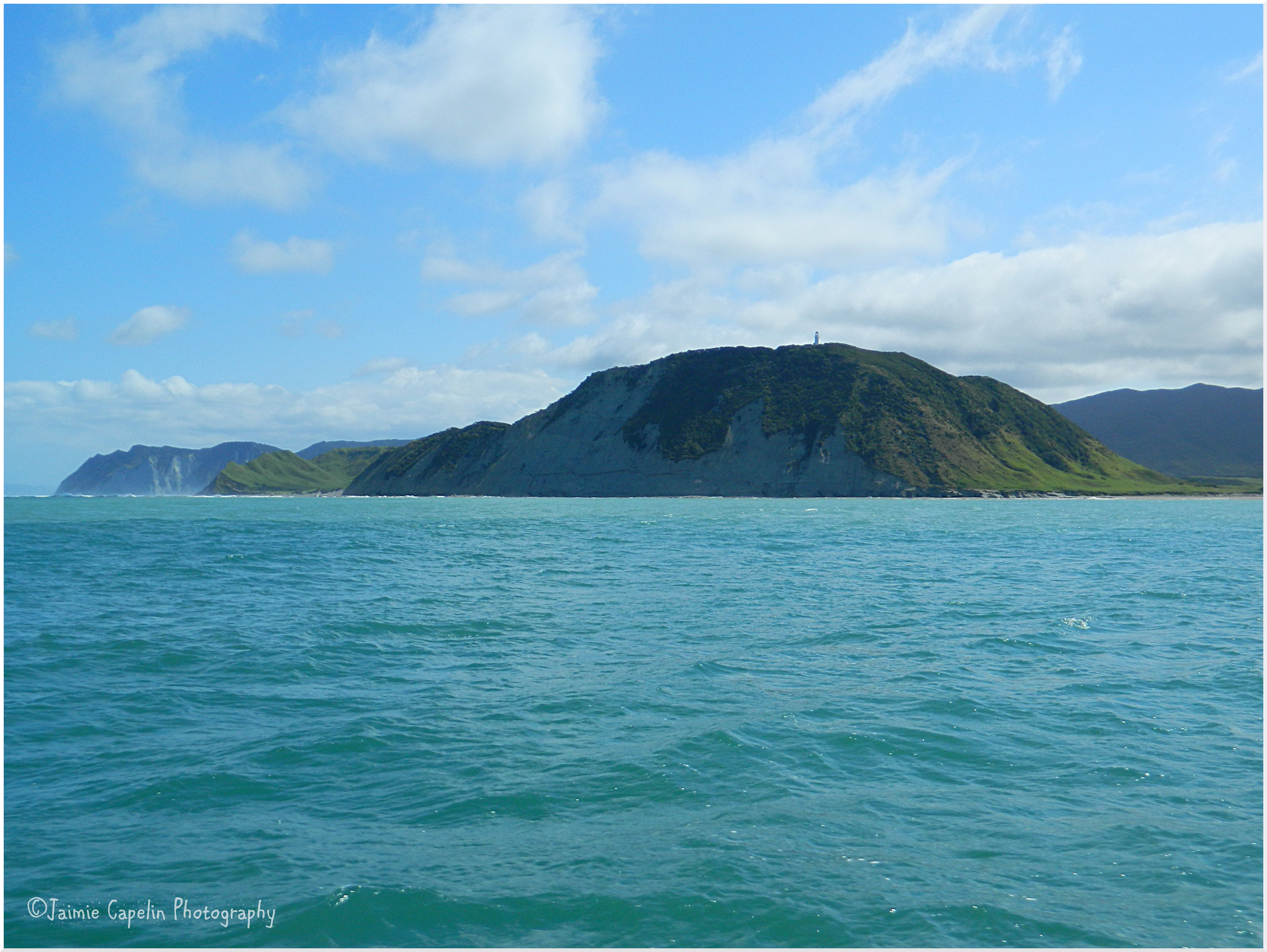
We made our way around the East Cape by mid-afternoon today, sailing between the lighthouse and the island. It looked pretty incredible from the sea, with dusky layers of landscape framing the skyline.

East Cape Lighthouse

East Cape Lighthouse

The engine’s sprung an oil leak, so we’ve been plain sailing while Finn fixes it. As we passed the East Cape lighthouse the wind died completely so the boat was just sitting, slowly turning with the current. Fabian jumped on the ropes, pulling the Jib sail round to find the wind. He made some difference, but for the first 10 minutes we were just going round in circles with Luca yelling, “Turn right! Turn right!” Eventually, Finn’s head popped up and directed Fabian, telling him to sail straight out east, or the wind would make us stall if we tried to sail directly into it, and soon enough, Fabian was sailing successfully!

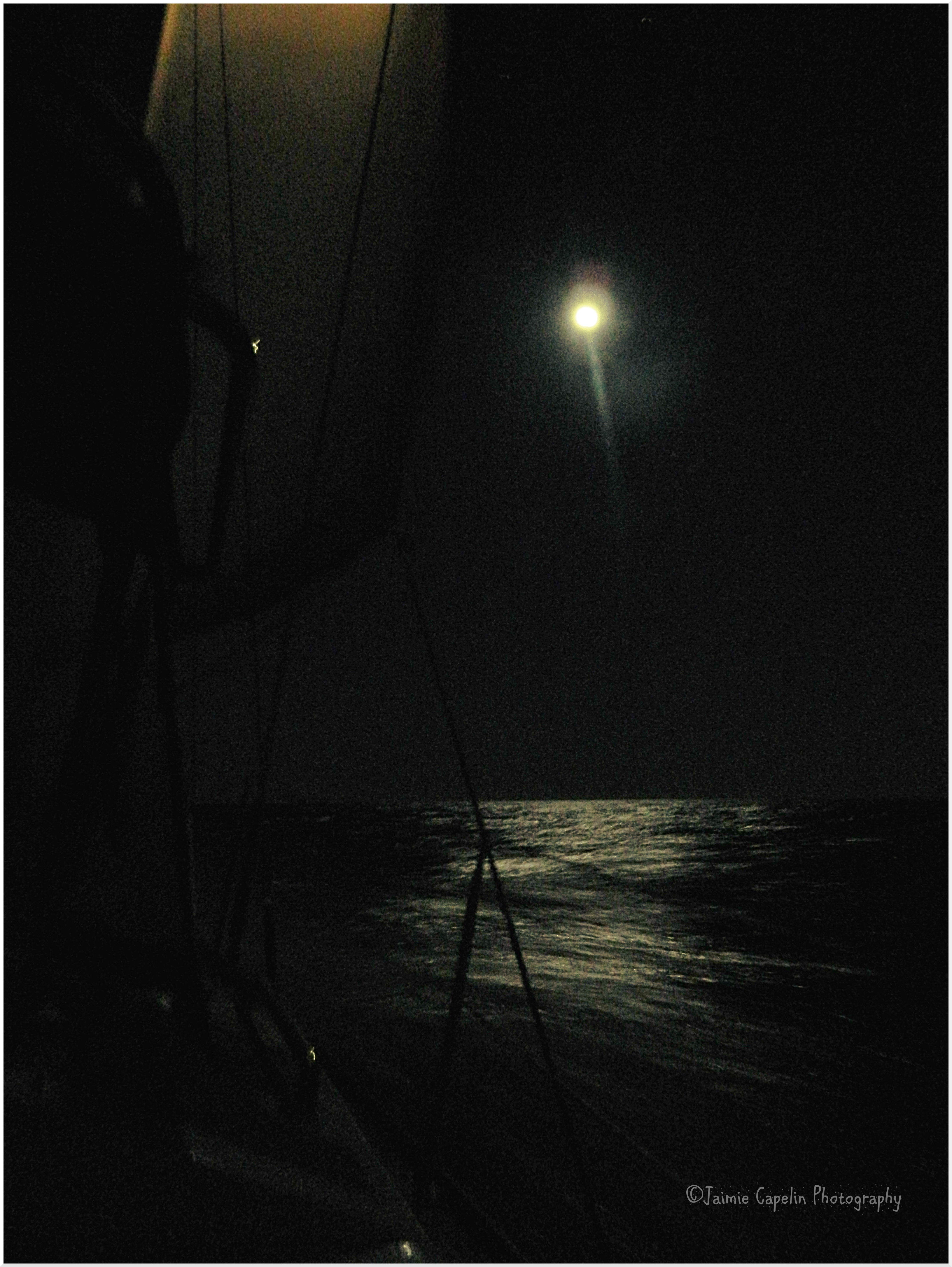
Sailing by Moonlight

It’s been a long night with broken sleep. Finn and Kyle have been taking watch, swapping every 2 and half hours, while the bright moon lights up the ocean and the Southern Cross shines above. I’d be lying if I said it’s a tranquil experience – with music playing all night, waves slapping the boat about; sails flapping and banging and the motor roaring away down below. None the less, we’re growing accustomed to the rolling and roaring and sleep comes in dazed installments.

Sailing by Moonlight

Sailing by Moonlight

We passed White Island at sunrise; a smoky lump on the horizon to the west, and we continue to sail N.W, straight to Great Barrier Island. We hope to reach there around 11pm tonight and make berth. It is warmer today, and we are 50 miles from land, completely surrounded by blue sea.

We have anchored at Red Mercury Island, just off the Coromandel Peninsula. DSCN0230We’re a bit sore, sleeping on benches and in corners like human Jenga. All our stuff is drenched as there is a crack in the hatch in the front of the boat – right above our bunk. But it’s an excuse to get the guitar out of its damp case. As the sun set, leaving scuds of brilliant red on the ‘Eye of Sauron’ horizon, we saw a couple of whales spraying up jets of water from their blowholes in the distance. Hopefully tonight we’ll hear some Morepork and Kiwi birds. A Morepork was flying around as we weighed anchor, and shortly after, something flew into the side of the boat in the darkness, letting out a terrible cry as it thudded! I hope it wasn’t the Morepork.

At night, just before bed, Kyle gets his best epiphanies. Cracking open another beer after a round of cards, we laugh, amused by his ramblings, half agreeing, if only we knew what he was talking about! Perhaps it’s just the remarks of a smoking capsicum.

Land Legs

Day 5 of sailing. We left our little cove on Red Mercury Island after sunrise. All groggy and bleary eyed after a wet and noisy night of creaking and leaking hatches. The weather improved heaps and we passed the tip of Coromandel. Finn and Dani counted about 60 various islands we’ve passed, and there are more to come.

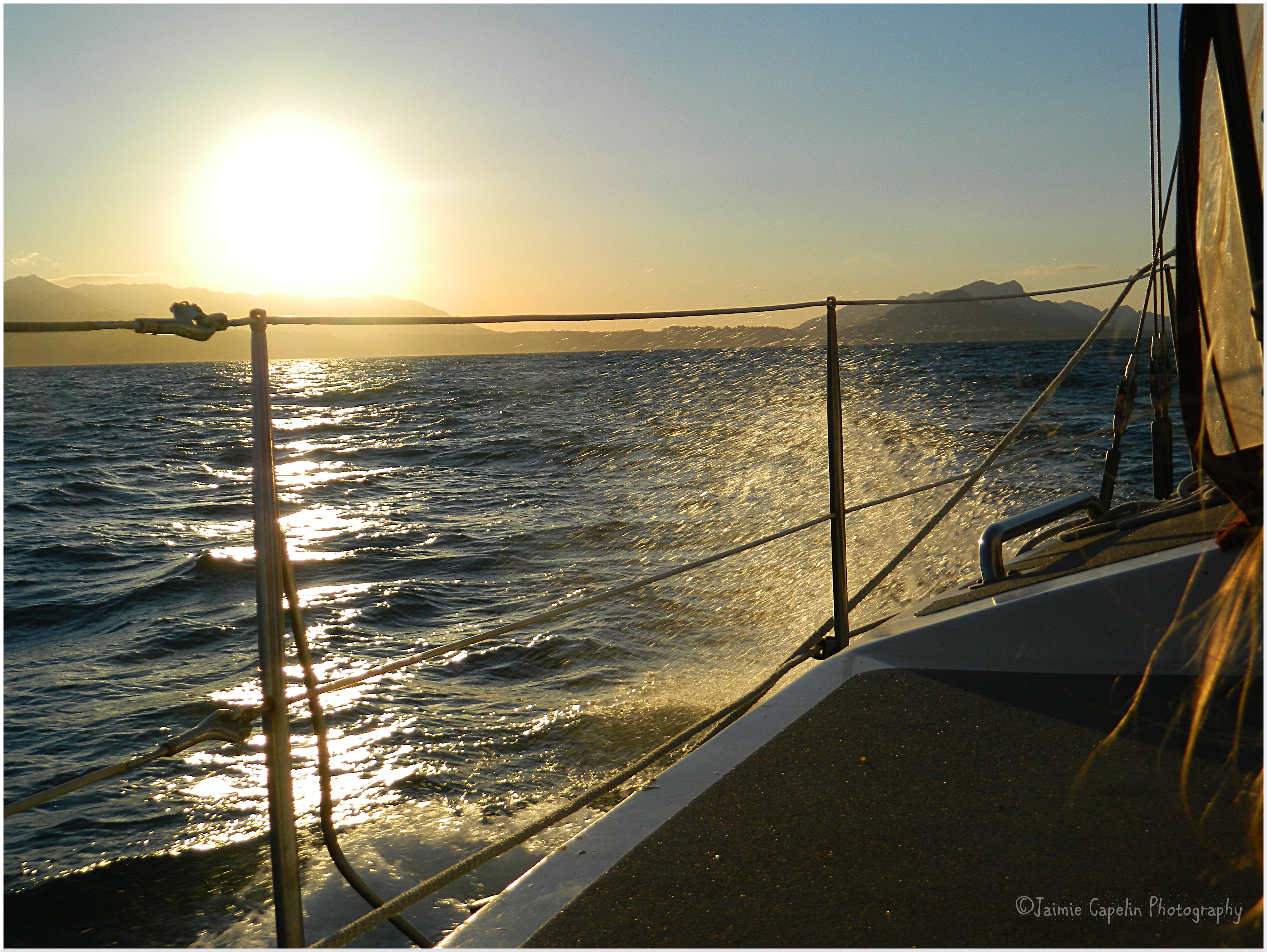
Golden Seaspray

Golden Seaspray

Luca has developed quite a love affair with raw ramen. We rarely see him without his hand in an open packet. It might be a serious addiction. I caught Simon playing the harmonica this morning when he thought no one could hear him. He was playing ‘Love Me Do’ by The Beatles, really beautifully. I then learnt that it is a ‘Mundharmonika’ in German, and ‘harmonika’ by itself means accordion.

After 4 or 5 hours of calm ocean bliss, Great Barrier Island is in our sights; its south coast straight ahead. Big green hills rolling up out of the sea, over a red-grey cliff, with little bays and coves everywhere, it’s another Jurassic Park.

We’ve sailed up around the west of the island, past Tryphena and into an inlet with yet more tiny islands. There were rocks of all shapes and sizes; some with big open caverns where the waves eroded the walls; some the shape of turtles. We passed miniature civilizations on the beach – just a wharf and a couple of boats tied up, no one around, and craypots dotted everywhere. Giant jellyfish with pink heads float by, tentacles like unravelling brains.

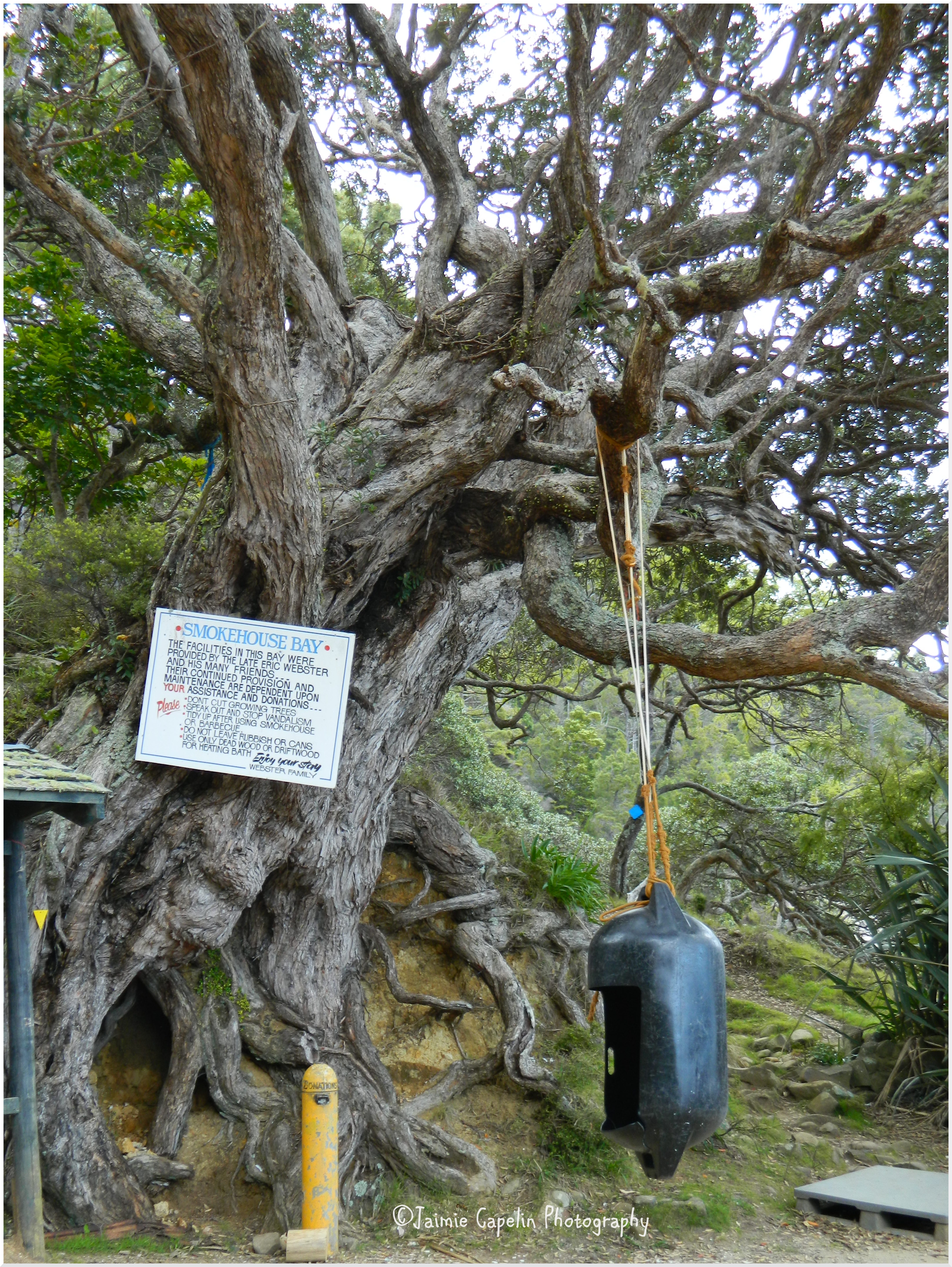
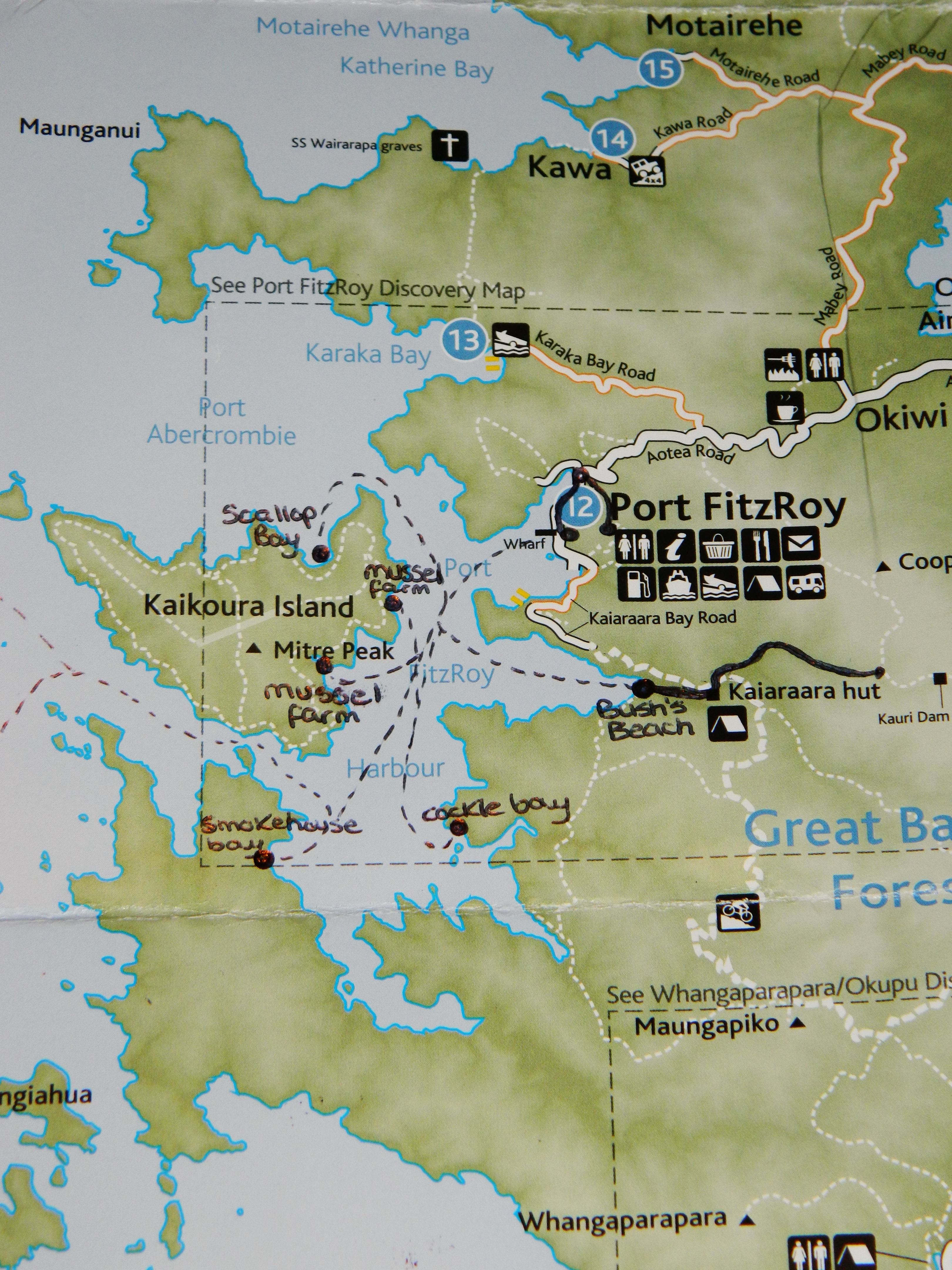
We turned starboard into a narrow harbour entrance to a hidden bay, sheltered by islands and headland all around. Smokehouse Bay.

Smokehouse Bay

Smokehouse Bay

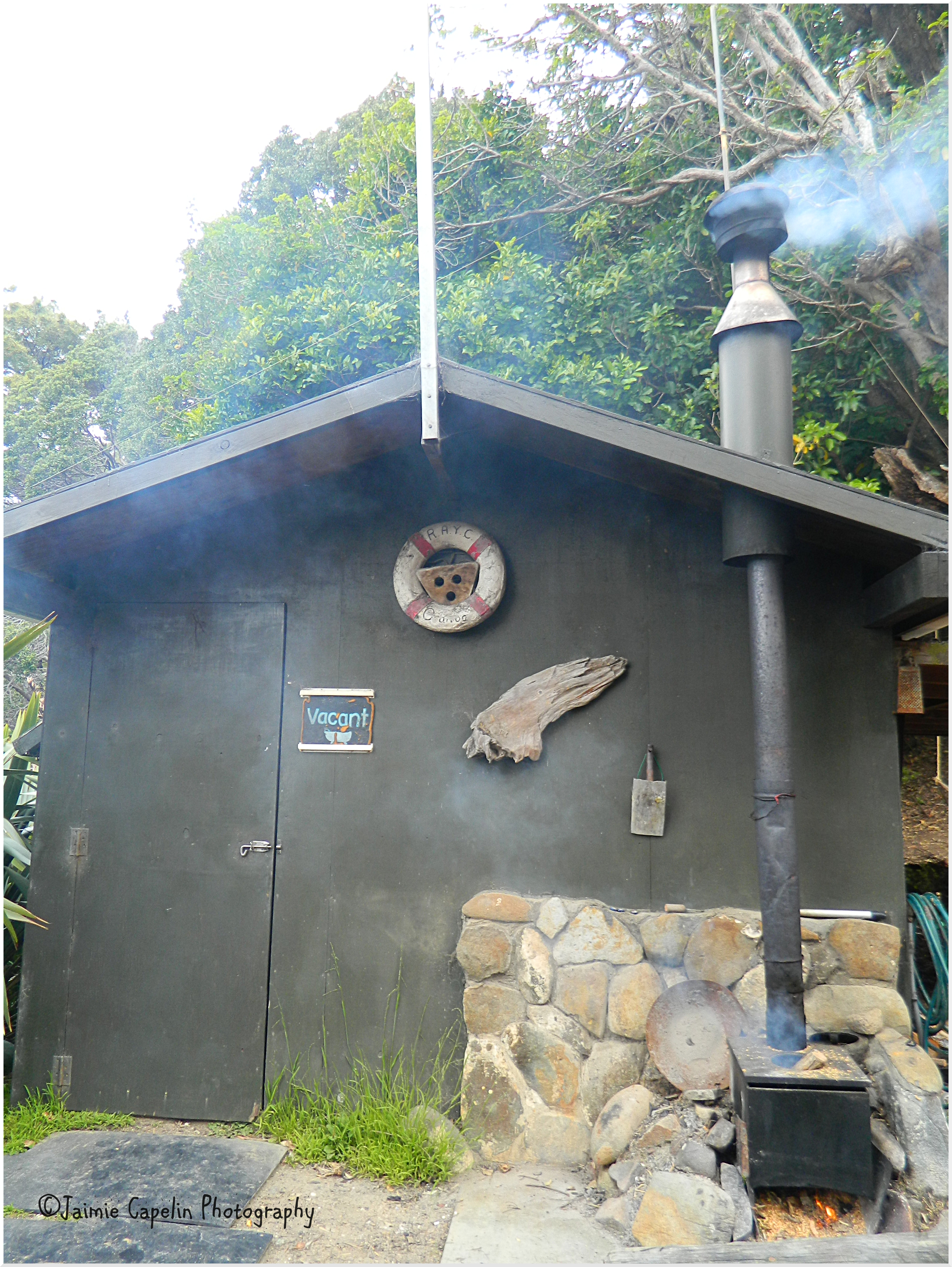
This is Finn’s favourite spot in the whole world.The bay has been adapted by sailors over the years, who built a smoke house for their fish. As

The Bath House

The Bath House

time went on, they built a wood-burner powered bath house, complete with bars of soap and

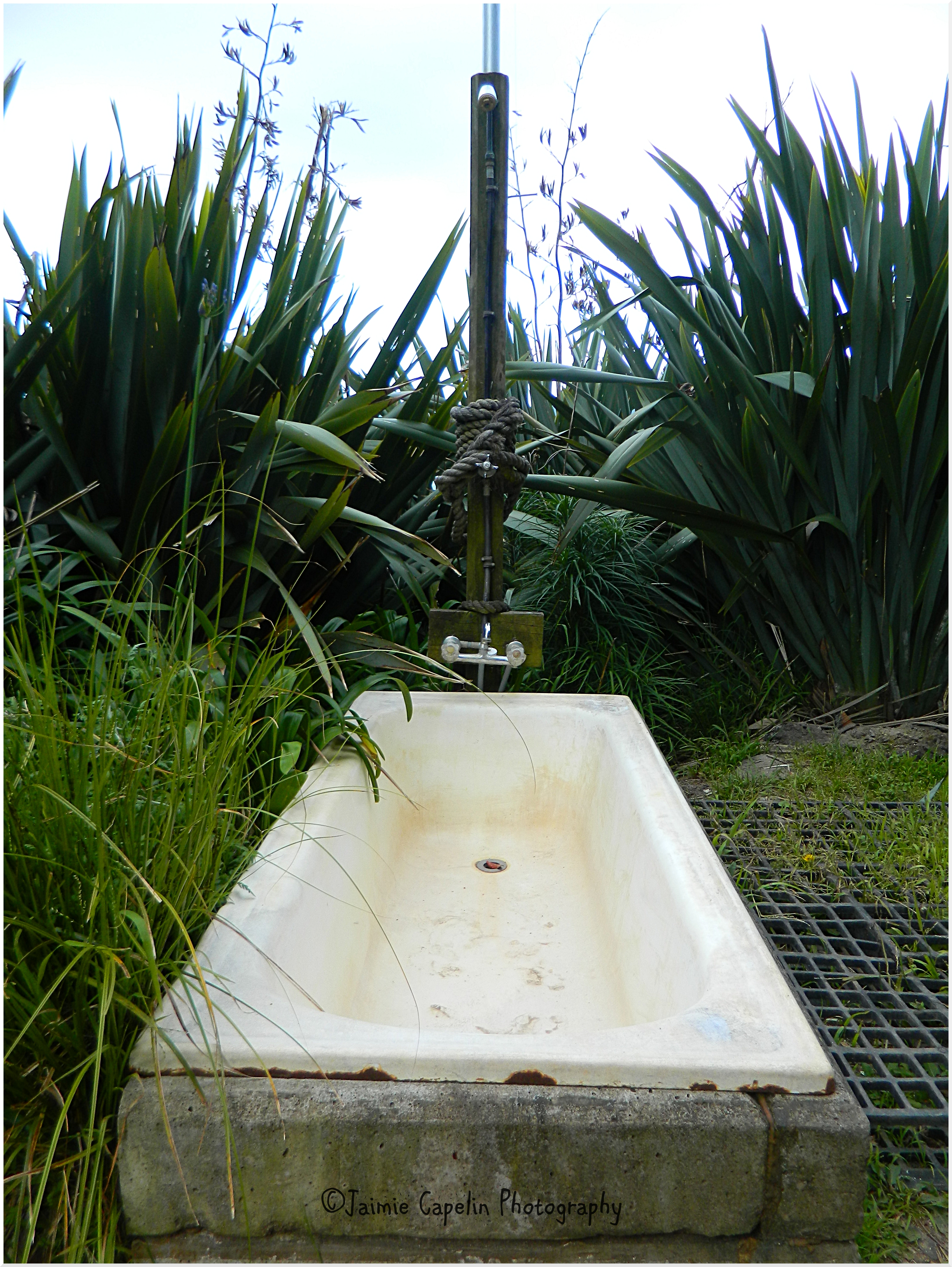
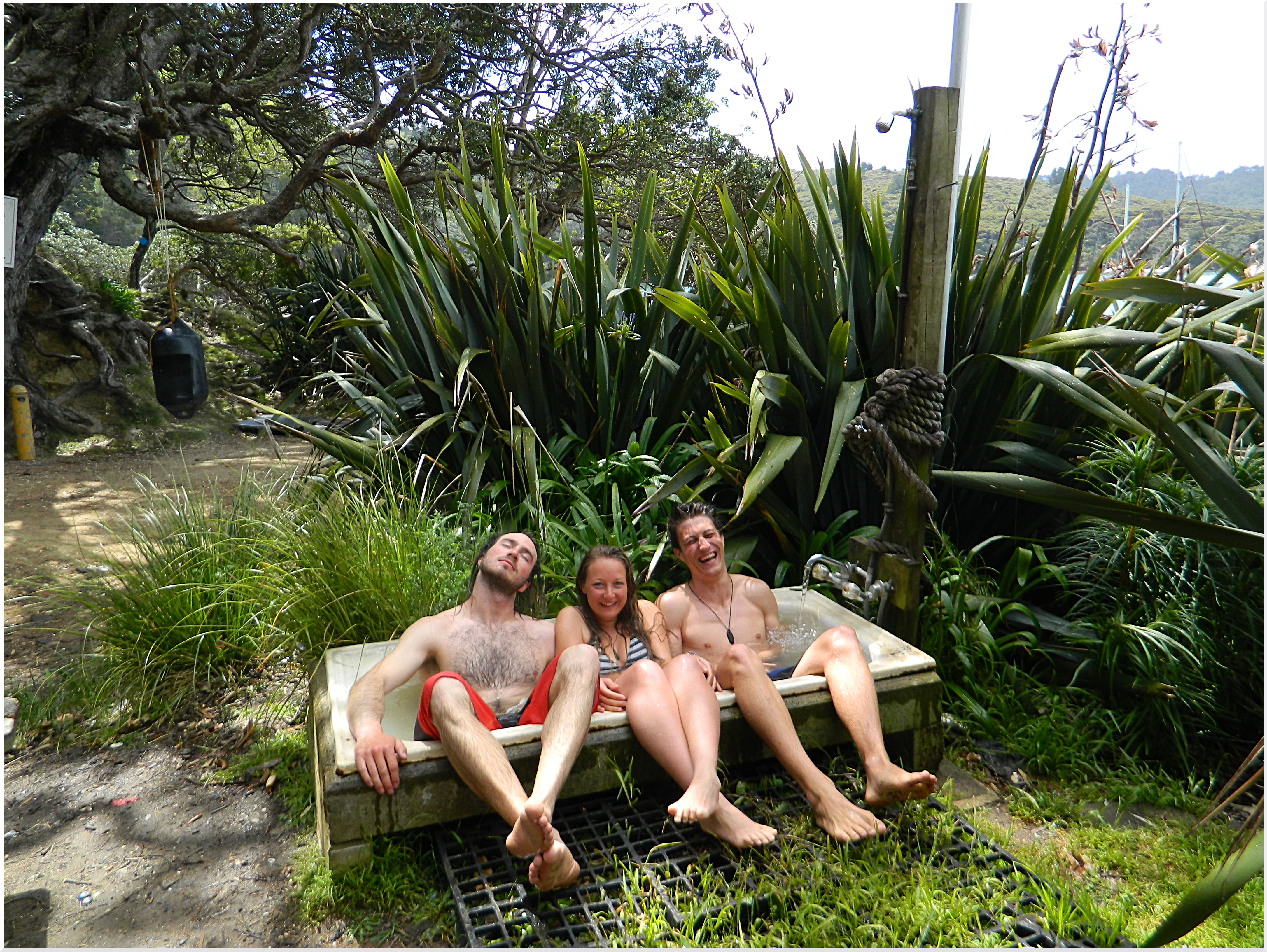
Beach Tub

Beach Tub

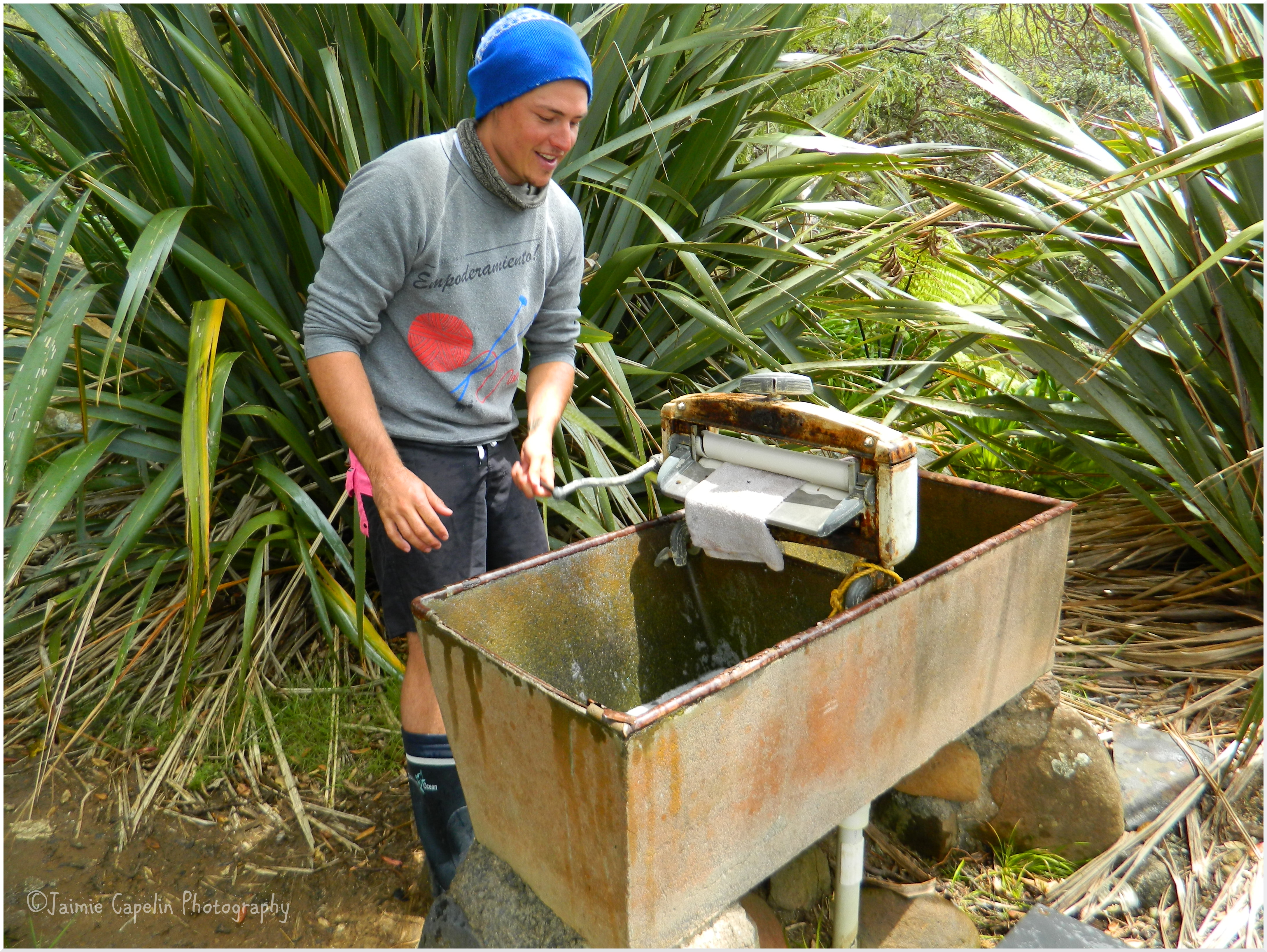
books to read, and even placed a set of mangles and washing lines along the shore to do their washing! There are homemade swings hanging from the Pohutukawa trees, and benches around a big fire pit. Even a long-drop loo nestles in the hill with a set of instructions on the door to keep it hygienic and natural.

Finn chopped some wood and got the wood-burner going and we took it in turns to shower, while sitting around the fire drinking beers. It was one of the best showers I’ve ever had. Straight from the spring in the cliffs, heated by woodfire, on a beach overlooking the coves of Great Barrier Island, in the middle of the Pacific. As I write, a Kereru has landed in the tree, a big clumsy pigeon, checking us out with his inquisitive sideways glance.

Seafood Seconds

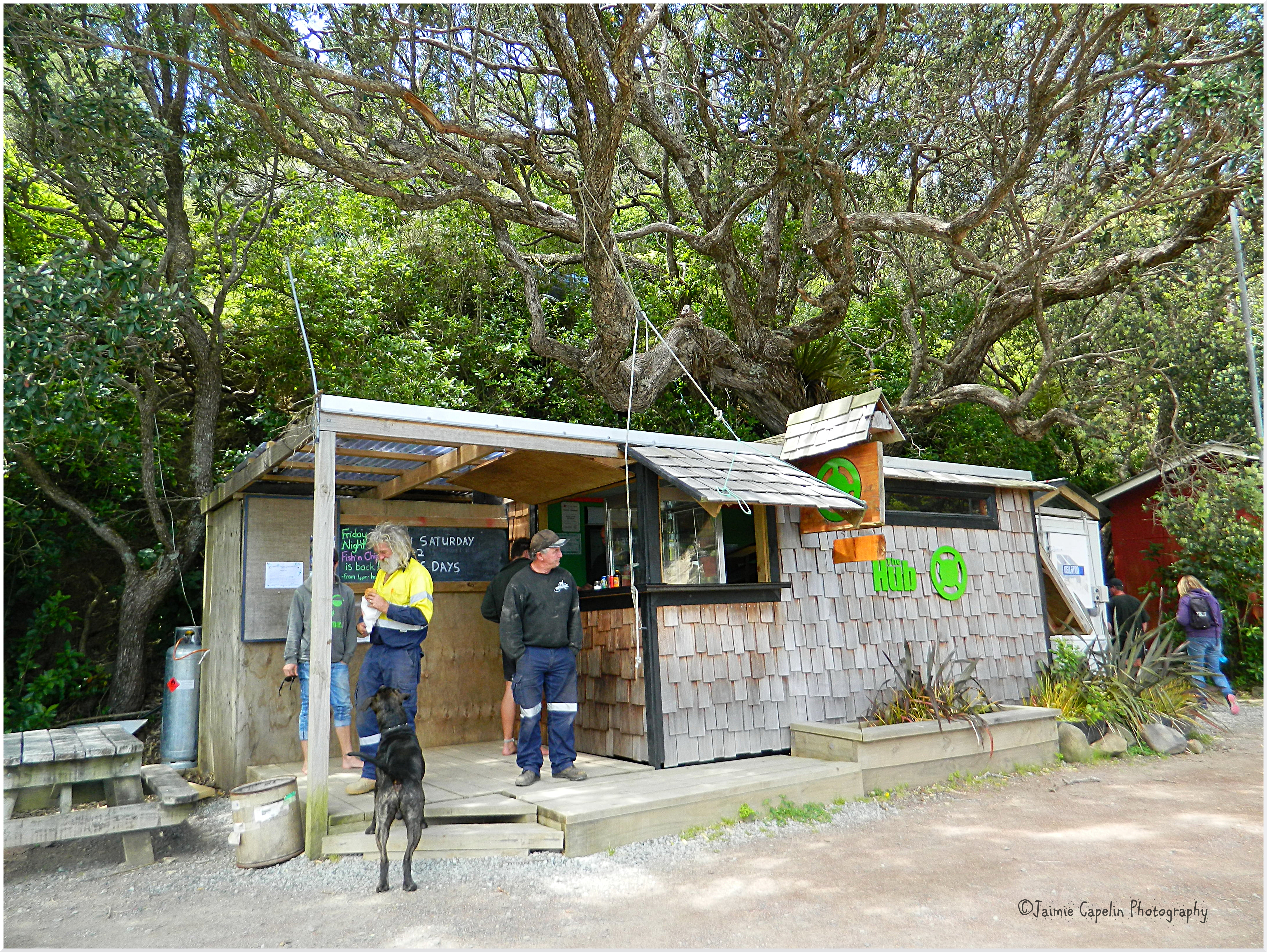
We made way to Port Fitzroy this morning, setting anchor and hanging around until the wharf was free to fill up our water tank. We took the dinghy to shore and the boys got chips and burgers from a little shack in the port called ‘The Hub’. The side of the hut is tied to a Pohutukawa tree and the hatch is on a winch over a branch to open and close it.

The Hub - Port Fitzroy

The Hub – Port Fitzroy

We watched as the car ferry from Auckland pulled in after its 6 hour crossing, and three people in an inflatable dinghy driving continuously into the side of it to no avail, presumably trying to push the ferry into port!

A short walk up the hill takes you to the Port Fitzroy shop – a humble little grocery store with fresh produce in baskets that doubles up as a bottle shop.

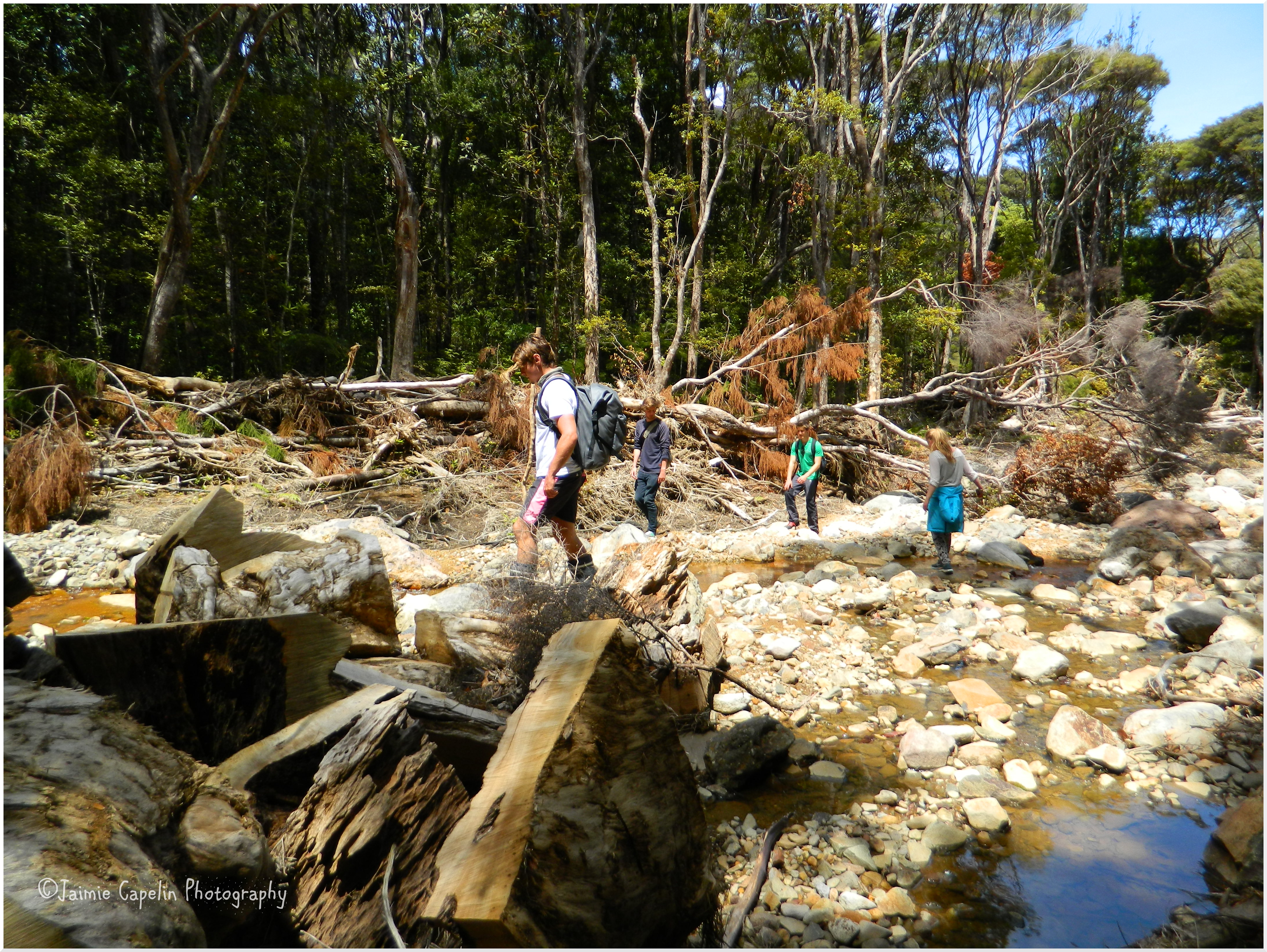
We attempted to go on a short walk to a waterfall, but an endless line of felled trees blocked the path. After climbing over a few of them – most of the guys barefoot – we decided to turn back. There were silver ferns and Koru and skeletal leaves all over the path.

Cockling

Cockling

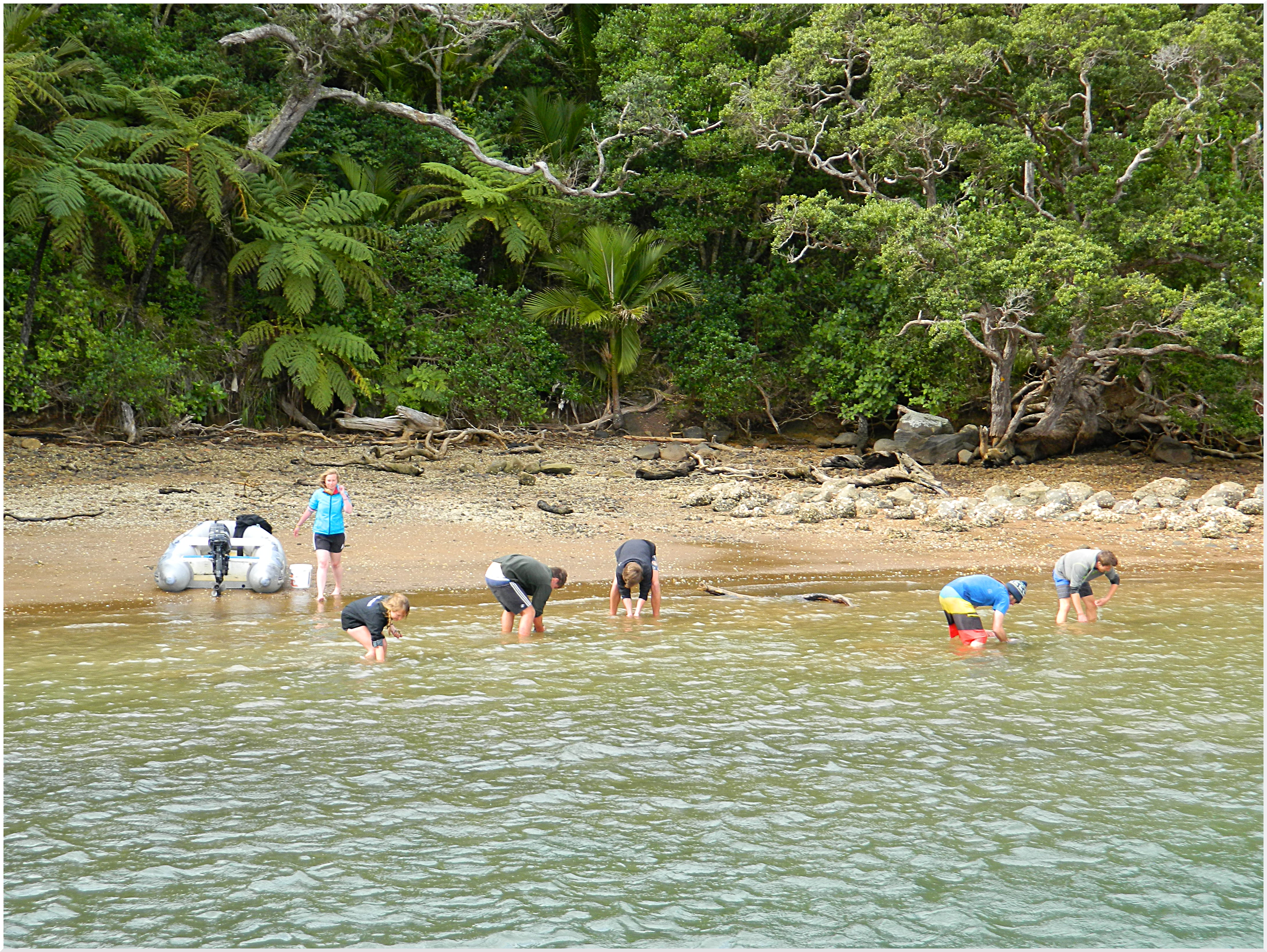
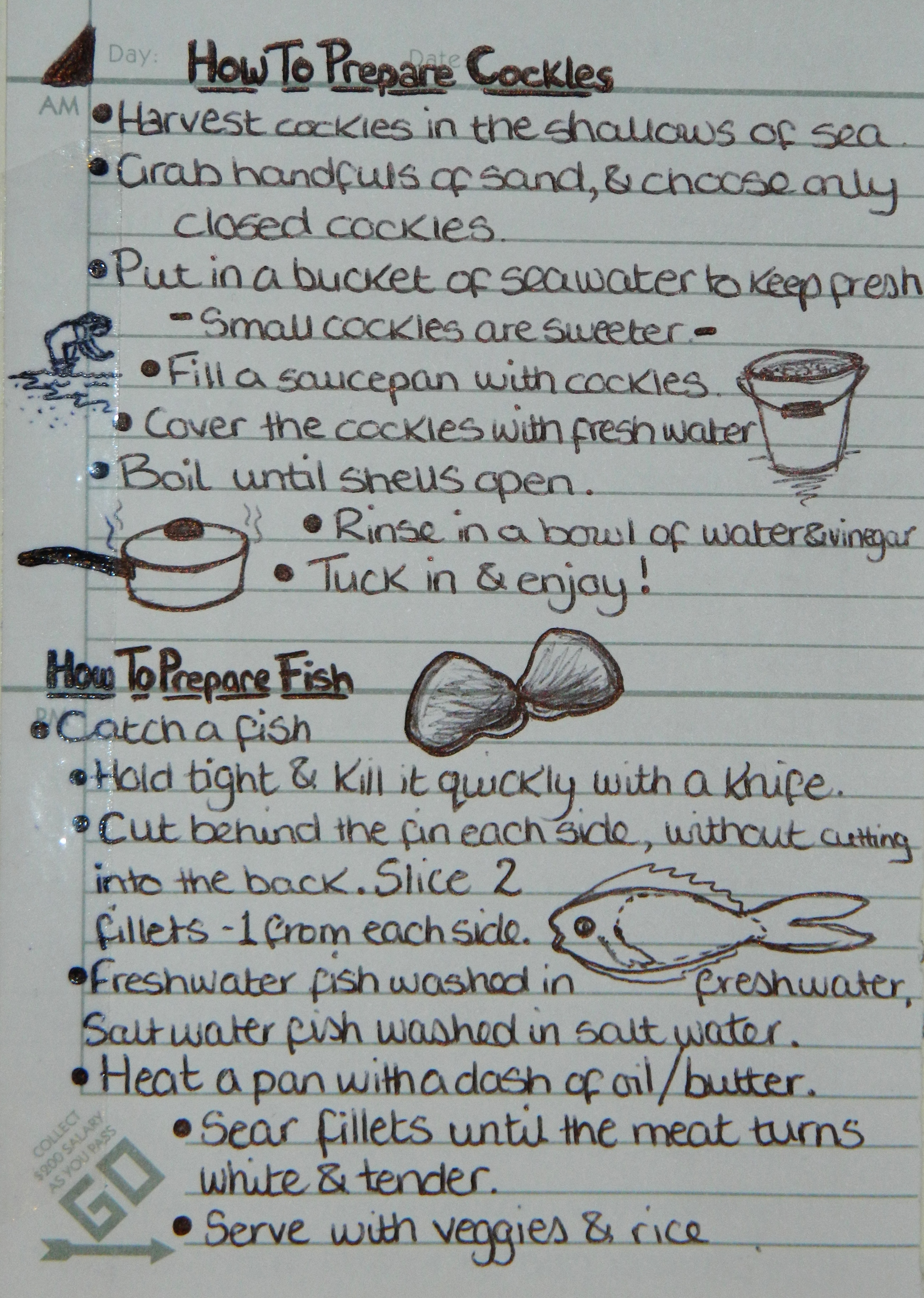
We filled the boat’s tanks with fresh water, got some groceries, and then motored down to the estuary to a bay filled with cockles. Putting on our stubbies, we climbed into the dinghy (or falling off it and getting wet in Fabian’s case) and went ashore. Up to our knees and elbows in the sea, foraging in the wet sand under water and picking out handfuls of cockles, we collected heaps in a big bucket of seawater to keep them fresh. We brought them back to the boat, cooked them in a big pot, and ate them on the deck, dipping them in vinegar and water. They were surprisingly flavoursome, even without seasoning.

DSCN9999(2)

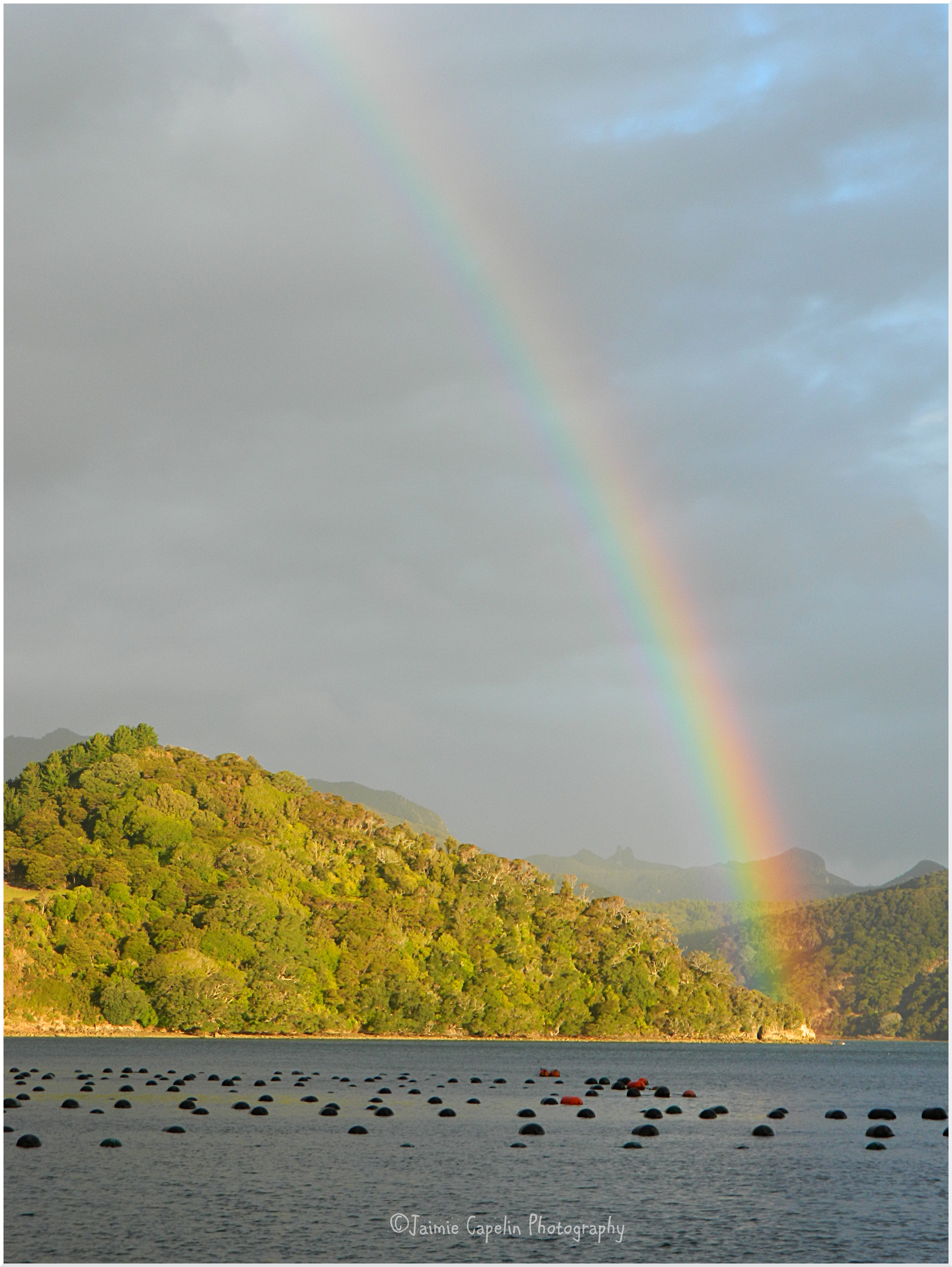
Mussel Bay Rainbow


We’ve anchored on the inside coast of Kaikoura Island, where mussel farms litter the sea, and we spent the afternoon fishing beneath a double rainbow, arcing across the bay with both ends dipped in the sea. We were spoilt with the amount of fish; it was actually easy, and we threw at least half of them back in. I caught two Snapper; the first was young, so we threw him back, but the second was a biggun.

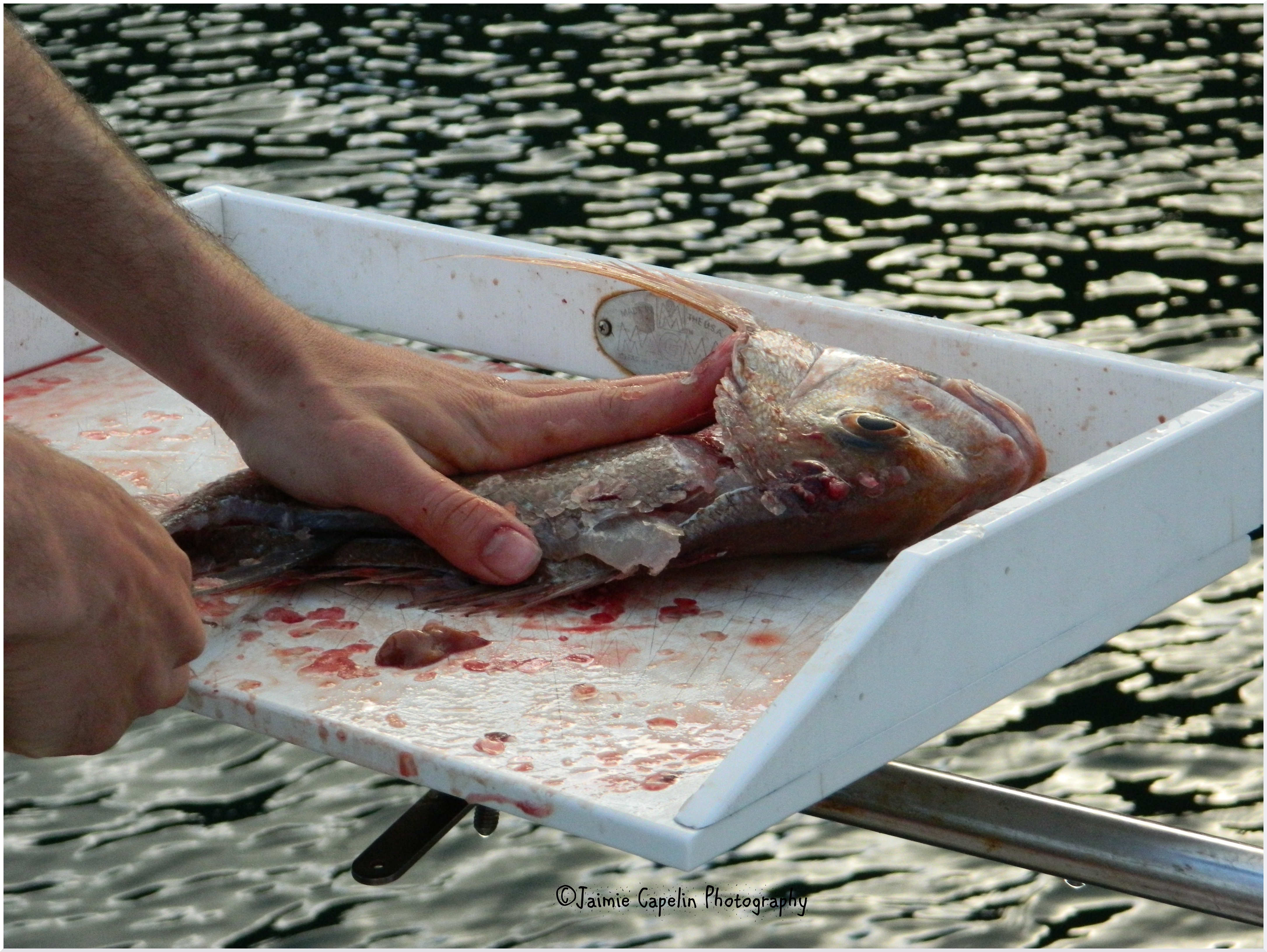
Gutting the Snapper

Gutting the Snapper


We ended up with 5 Snapper and 1 Trevally, which Fabian gutted and scaled.

He diced up about a third of the fish, marinating it raw in lemon and chilli, and then wrapped the pieces in spinach leaves for a sashimi entrée. The raw fish was so fresh it didn’t even taste like fish. Next he prepared pan-seared Snapper and Trevally with veggies and rice, which was delicious.


DSCN0214

Bath on the Beach

The weather had been on and off all morning, so our original plan to go on a hike was sabotaged. But Finn had gotten up early and caught a Kowhai fish, so after a quick stop at Port Fitzroy, we made way back to Smokehouse Bay. Fabian made some bread dough, which he put in the smokehouse to bake, and we still had some cockles left over, which we boiled in sugar water and smoked in the smokehouse. Finn basted his Kowhai in chilli, lime and brown sugar and smoked that too. The cockles were sweet and firm; the kowhai was rich and tender, it was all gone within seconds!

DSCN0010(2)Kyle washed the teatowels with the mangle and hung them out to dry, and we whiled away the hours talking and sheltering from the rain showers. Simon had the urge to run into the sea, so we turned the taps on in the outside bath tub, and we ran splashing into the water. The water was around 17/18˚c, and almost felt warmer than the air. We swam around for a bit, and when we got out, the bath was hot and ready, so Simon, Fabian and I got into the hot water and soaked. Sharing a bath on the beach, surrounded by flax, quite an odd but delightful thing!

DSCN0022(2)

Later we cooked some beef steaks on the fire, and took the bread out of the smokehouse. The bread had cooked well, but let me tell you, it tasted like fire! Soon, a couple arrived from their boat and we sat nattering to one another while they took turns to shower.

After the feed, Finn and Fabian took the dinghy and a battered surfboard they found washed up on the beach, and attempted to wakeboard. After 3 attempts of face-planting the sea, Fabian had it, slowly skimming around the bay, low in the water and passing the on-looking yachts so slowly it was comical. Next, Finn tried, but Fabian kept driving the dinghy round in circles, so they gave up and Finn had a bath. I found a copper teapot and made tea on the fire, but Finn had run out of hot water, so we ended up marinating him in the tea. He got out and joined us by the fire before things got too close to Lord of the Flies!

Some of the flax leaves at Smokehouse Bay have been plaited traditionally, and I tried to mimic the patterns. Flax were anciently used for weaving bags for hunting and gathering, and their strong fibres mean they are good for ropes. We sat around the fire, sipping tea and making jokes until the cold nestled in. We washed our utensils, tidied up, collected our washing and went back to the boat, where Finn cooked mini cheeseburgers and the guys played cards until they got sleepy.

The night was noisy – the anchor seemed to be trying to break free, and the tarpaulin we’d used to stop the rain coming in the hatch was flapping and knocking, but eventually, sleep came.

Hirakimatā Hike

DSCN0215

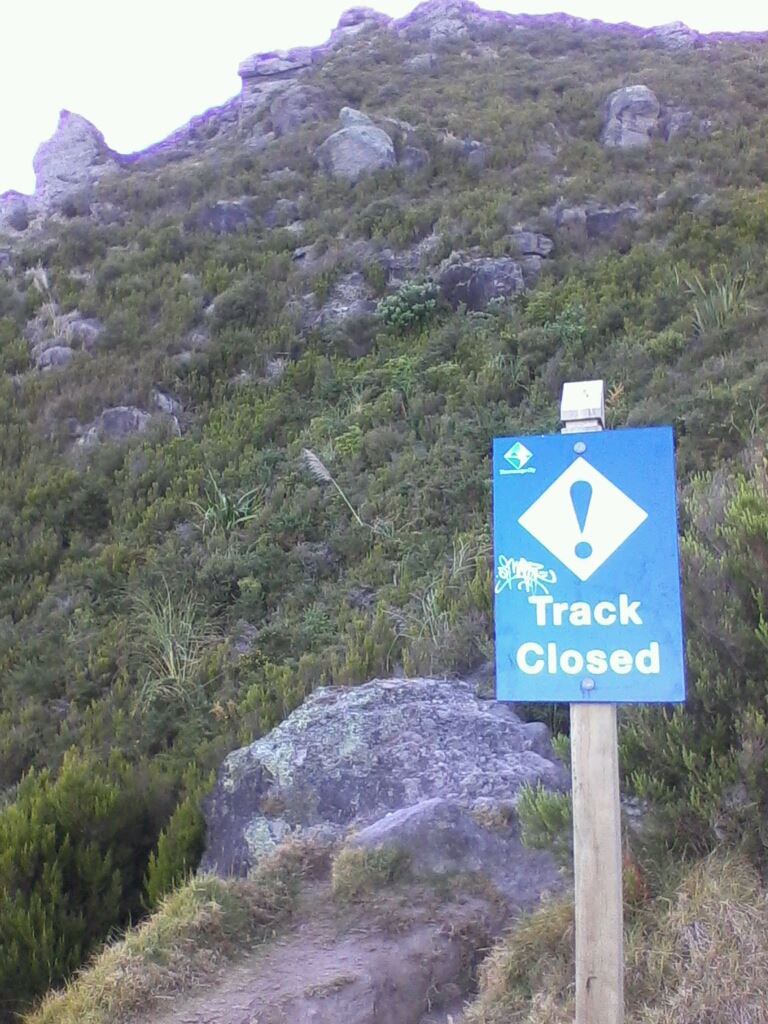
It was another late morning. After breakfast, we went to Bush’s Beach, where we took the dinghy to shore to go hiking. Finn stayed on board to do some maintenance, while the rest of us went to explore. Pulling up onto the little bay, we put on our hiking shoes and then realised the entrance to the track was blocked off by a red mesh fence and a sign saying, “WARNING – TRACK CLOSED”. We’d come this far, so we mutually agreed to jump the fence and see how far we could get. (Please do not follow this example!)

There were a few landslips as the track went up, through typical rainforest, silver ferns lining the path, and a river running down the gorge. We crossed the first two swing bridges, and came to where a third bridge should be. But it was gone, washed away down the river. The river had barely any water in it now, so we back-tracked, found a safe route down, and crossed the river by the rocks.


Collapsed Bridge - Bush's Beach Reserve

Collapsed Bridge – Bush’s Beach Reserve

On the other side, the path was demolished by a landslide, so we kept going until we were reunited with the path again. Eventually, we came to another bridge point with no bridge. Luckily the river was low, so again, we crossed it by foot pretty easily. Climbing higher and higher into the bush, the path suddenly disappeared off a sheer drop. A landslip had completely taken the path this time and there was no way around, so we turned back.

Simon and Dani made jokes, Kyle sang and yodelled while Luca snacked on ramen, and we detoured to a little pool in the river, where tiny waterfalls poured from. We all climbed a fallen tree that bridged over the pool, and Kyle jumped in. We hiked back down to the beach and went back to the boat.

This evening, Finn caught a Snapper in a Kaikoura Island cove, which we’re eating raw with soy sauce and wasabi.

Party at Smokehouse Bay

Around 7:30 am. The clouds cast a dull, grey coldness over the bay. Shorts and jumpers on, we all hop into the dinghy. Time to go cockling.

We foraged for some time until our bucket was brimming with cockles, Kyle humming ‘Silver bells & cockle shells’ all the while. A huge stingray lingered in the bay; a dark shadow darting about in the shallows.DSCN0240

Back to the boat with our loot, and we motored over to the mussel farm, where Finn fished. A young local boy was free diving from another boat, so Finn gave him $10 to dive down and get a bag of mussels. The kid brought an enormous bag up, and Kyle and Finn between them caught 7 Snapper! Now, with our seafood feast, we are heading back to Smokehouse Bay to prepare.

Chopping trees, starting the fires and getting the food ready; our hunting, gathering mission is well on its way to a party. Dani is quite the wood-chopper, with Luca helping with the kindling, and Fabian and Simon are washing and cracking the mussels ready to smoke. Fabian has filleted the Snapper, and I basted them in brown sugar, chilli and lime – Finn style. They’re also saving the egg sacks to try and make smoked caviar, which we have to guard from sneaky thieving seagulls.

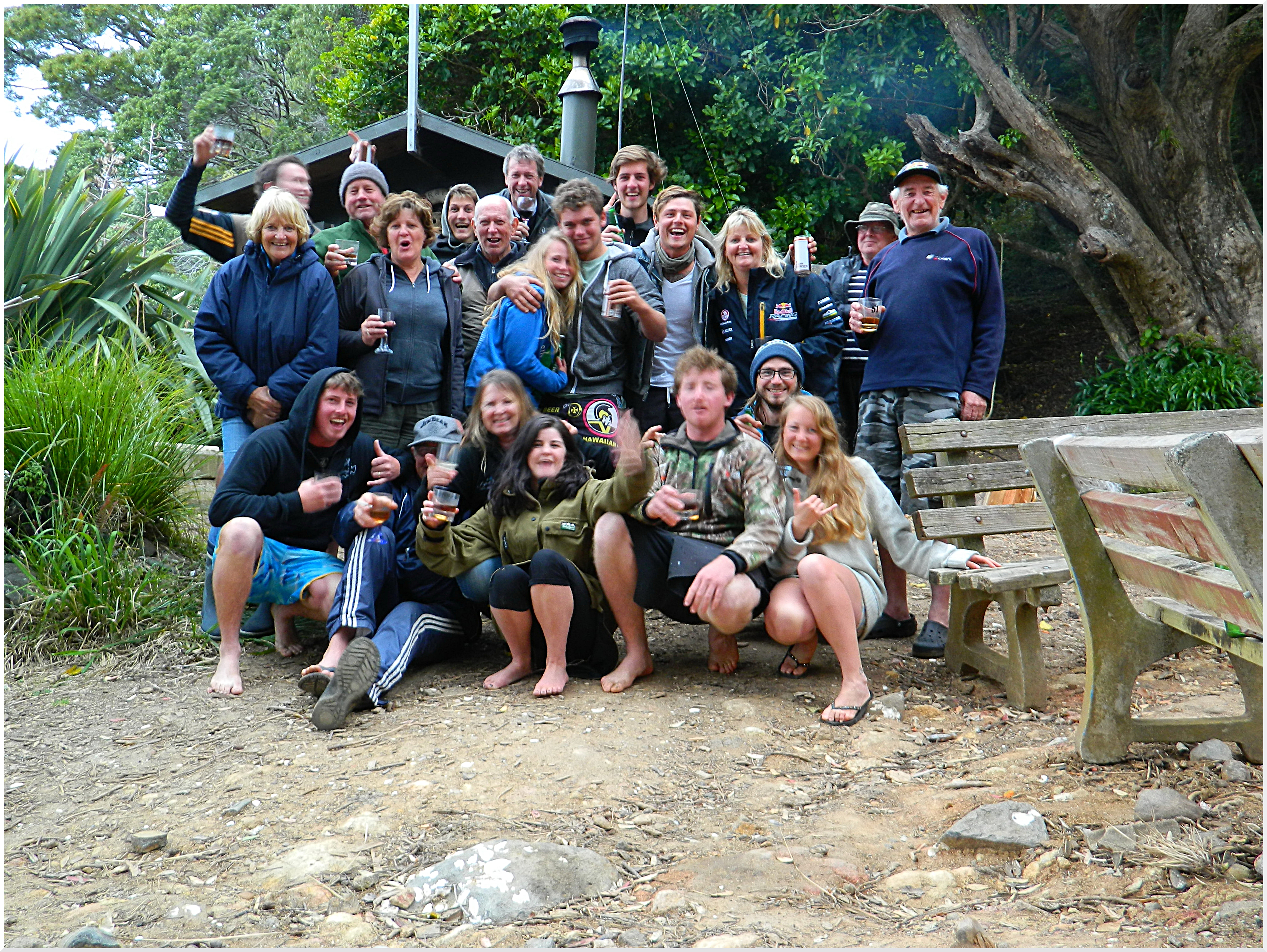
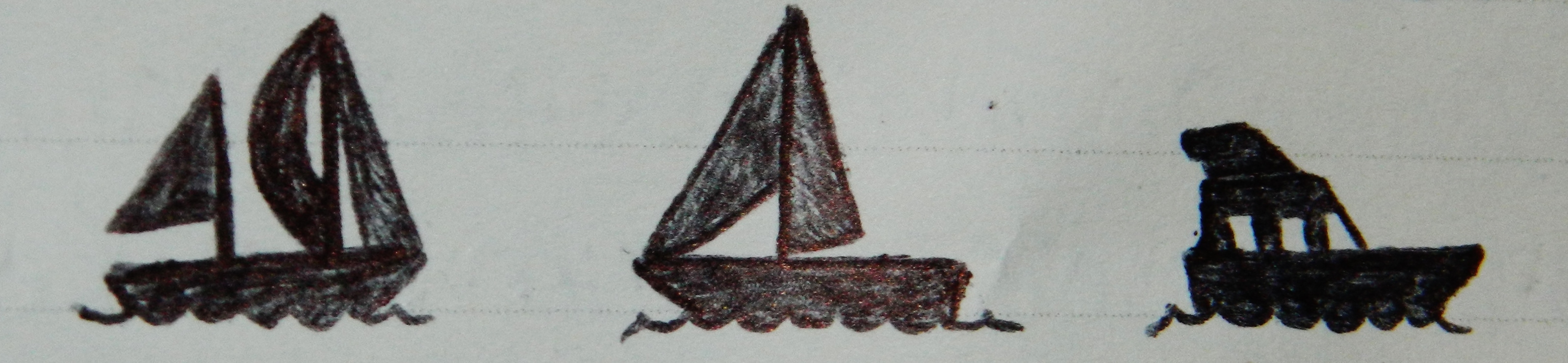
With all the cooking underway, we take it in turns to shower, and gradually the other boaties come ashore. There’s Captain Bill and the golden oldies from The Caramba, who’ve been coming here for 30/40 years and are so proud to have a new generation following in their footsteps. Then there is Geoff from Plymouth; a little mole-like man with round glasses and a proper Plymouth accent. Him and his wife sail a lovely little green yacht, which he has kitted out for their every need. Then there are the youngsters, Grace, Phillip, Sam and Brad from Christchurch and Hamilton, and their parents, all aboard The Shasa; a big fancy power boat. Phillip’s dad, Mark, is extremely kind – he brought us a crate of beer for going to the trouble of fishing and cooking.

We’ve shared around the cockles, mussels and Snapper, along with crisps donated by the others, and Captain Bill has raised toast after toast for appreciating such a beautiful place. They gave the name ‘Smokehouse’ a whole new meaning inside the bath house, and everyone is more than merry. Dani was forced to have a ‘Western Wash’ (her head dunked in the sea to sober up.) It didn’t work.

Party at Smokehouse Bay

Party at Smokehouse Bay

The party continued on the boats into the night – steak and beers on The Shasa, and Rum and music on The Dulcinea – sailors all chanting, “I’m on a Boat” by The Lonely Island, until we were so worn out, we crawled into our blankets and fell asleep.

DSCN0217

Snorkelling and Scallops

A stunning morning greeted our heavy heads, and we began the day by jumping off the back of the boat into the cool, refreshing sea. Finn cooked egg fried rice with bacon for brunch, which hit the spot, and we shared the last cans of coke, waving as the other boats slowly awoke to enjoy the warm sun.

I steered the boat as we headed over to another bay on the north of Kaikoura Island. The wheel feels heavy, and I can imagine how much hard work it is to steer in real weather and waves.

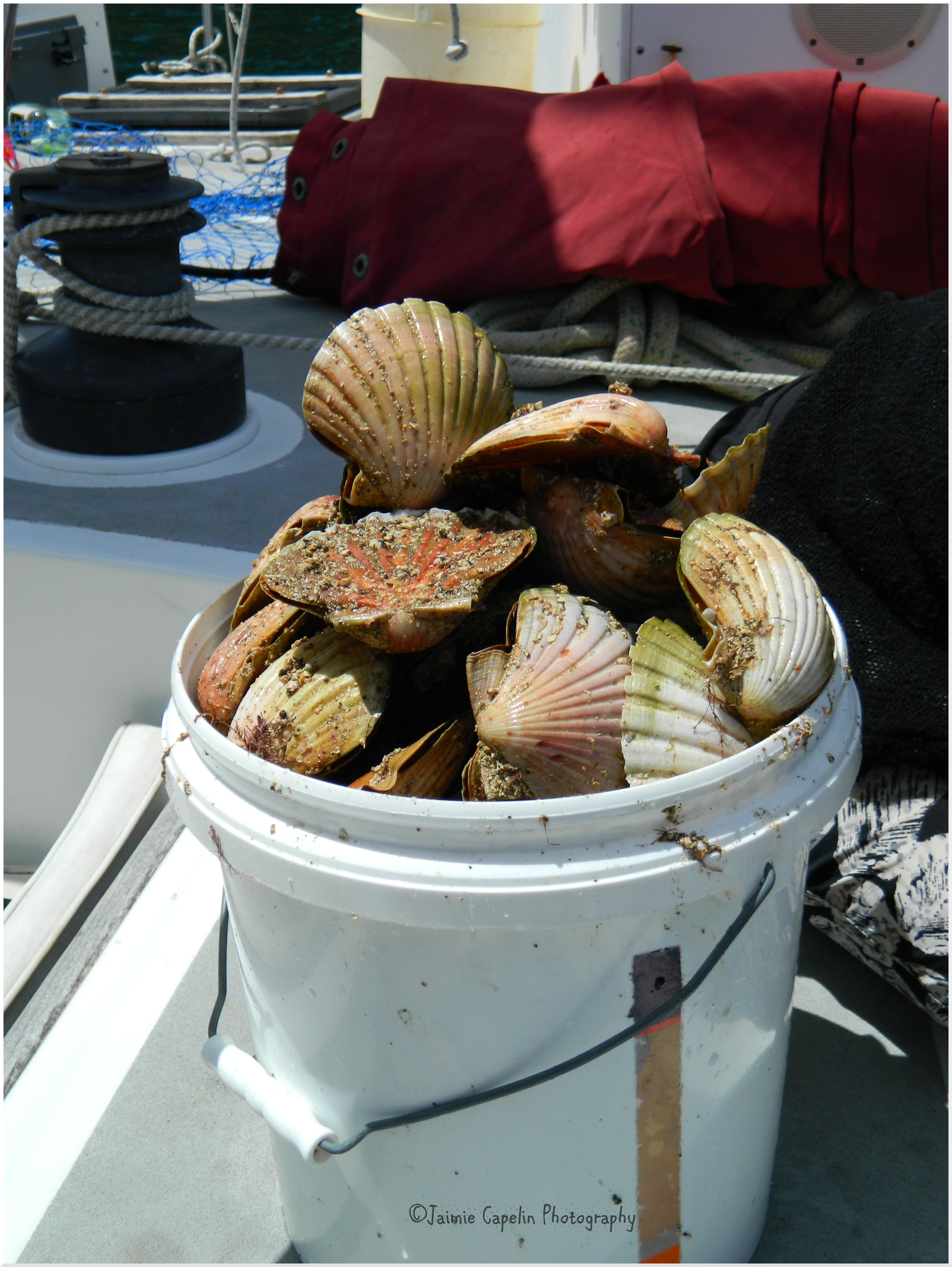
Bringing up the Scallops

Bringing up the Scallops

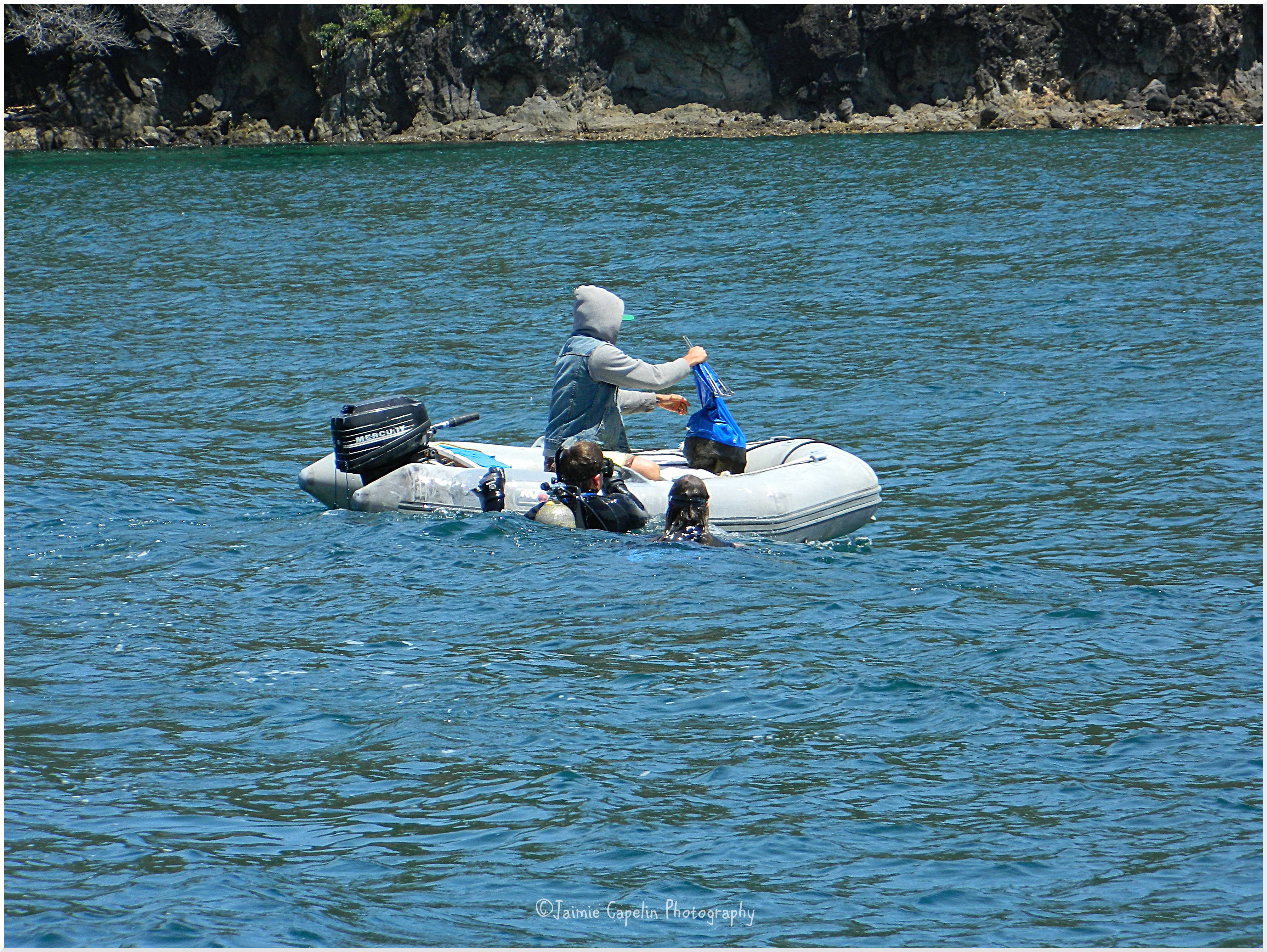
We anchored up and Finn got his scuba diving gear on, with a tank borrowed from Captain Bill, and went diving for scallops. Luca and Fabian went snorkelling too, while the rest of us were “ground control” – watching for bubbles to make sure Finn was still breathing!

He finally popped his head up, shouting and beckoning, so Kyle jetted over in the dinghy and brought back a huge bucket of scallops. Finn was so excited; he cracked one open right away and ate it raw, trying to persuade us to eat them too. Kyle suggested he’d come up to surface too quickly and the air had gone to his head.

DSCN0107(2)

Freshly Harvested Scallops

The Fishermen’s Feast

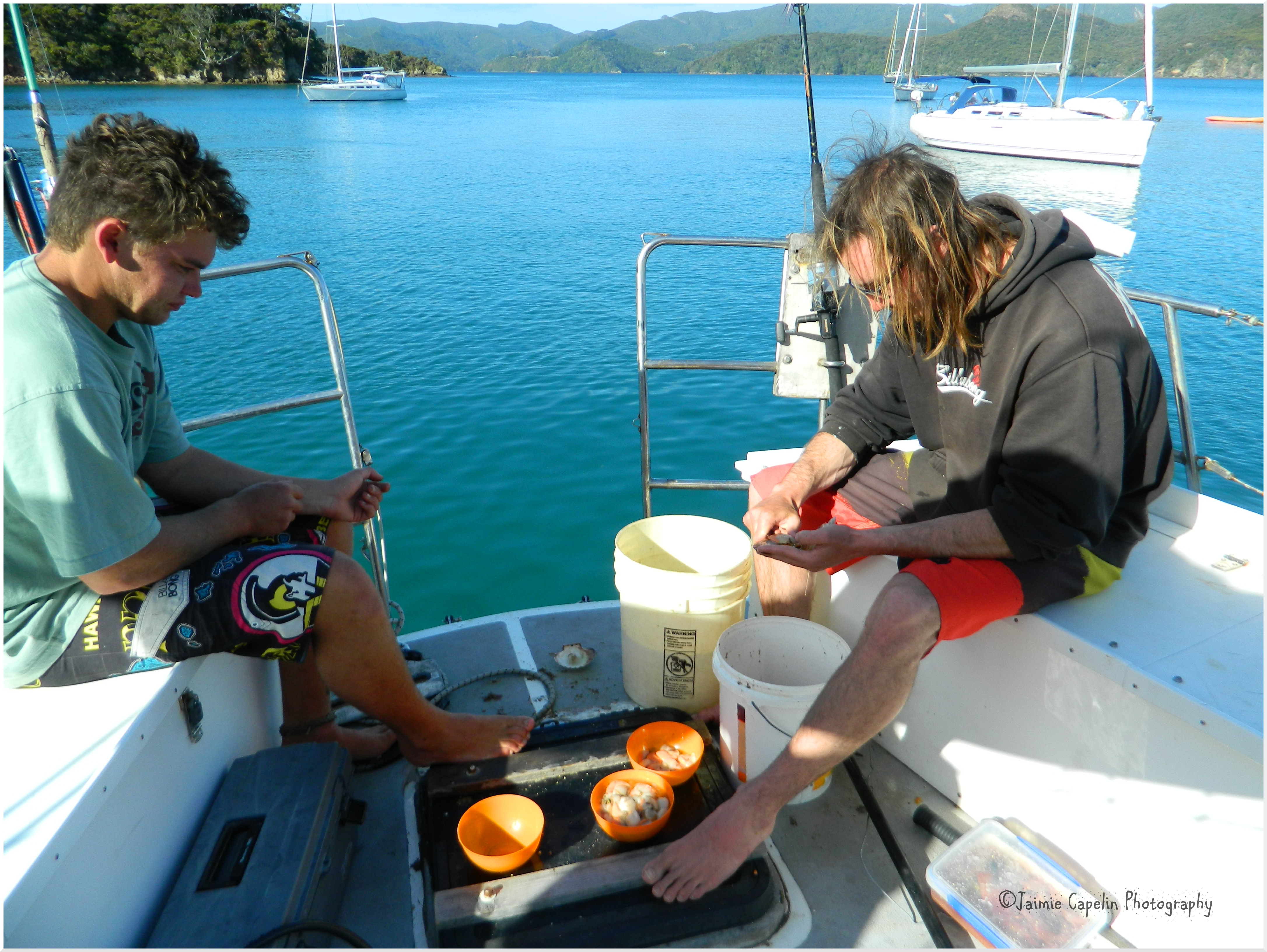
Back in the bay, Captain Bill came over to get his air tank, and sat on the deck with Finn and Fabian, showing them how to properly fillet the

Preparing the Feast

Preparing the Feast

scallops. Fabian then prepared them with curry powder and made spaghetti with onions and herbs – “Great Barrier Bolognese.”

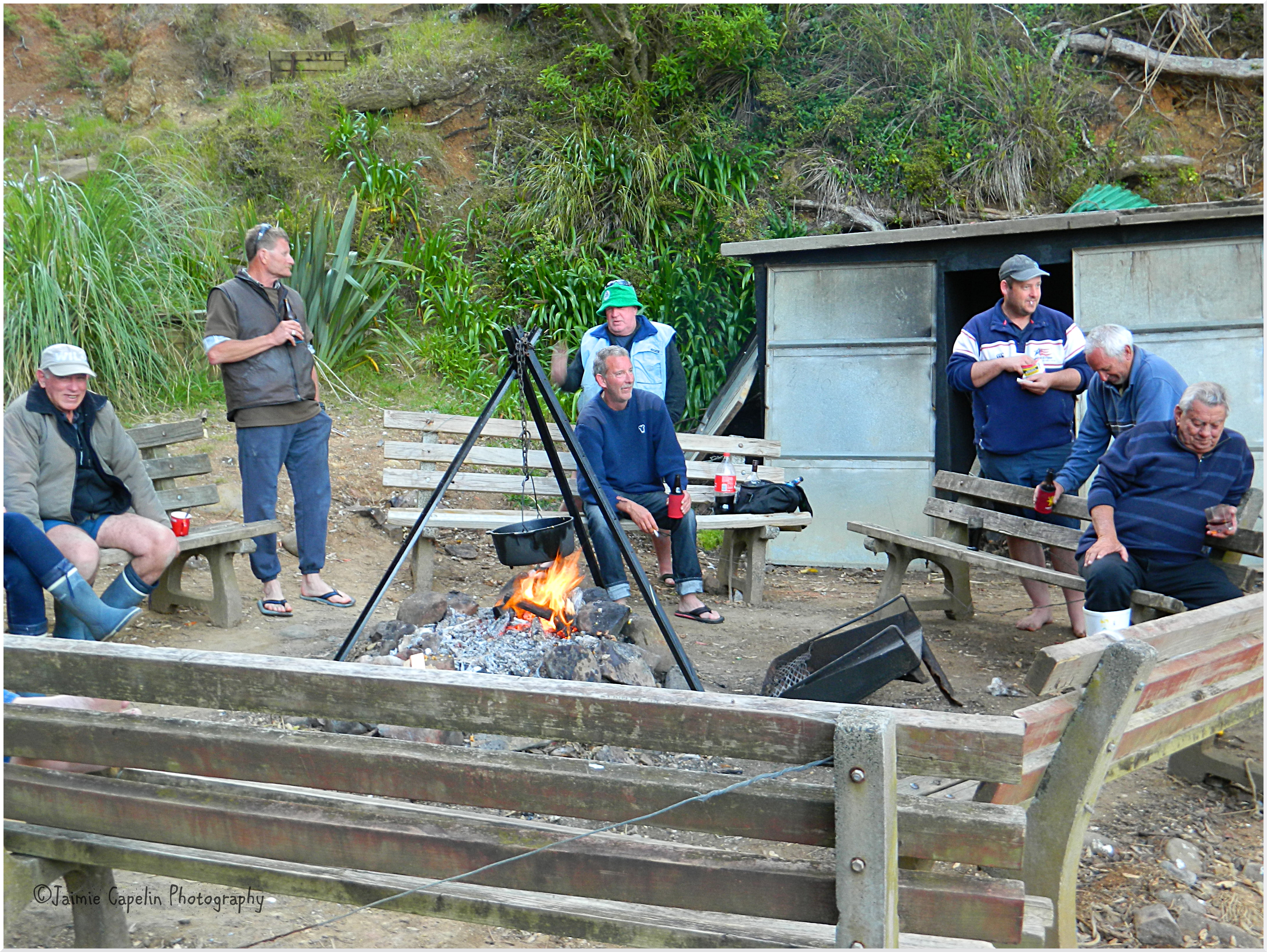
We took the food to Smokehouse Bay, where the old boys had already begun the feast. A few boats from a sailing club had got together with freshly caught Snapper and a washing-up bowl full of batter. They battered and cooked the fish in a cast iron pot hanging over the fire. The folks from The Caramba made a beautiful fish curry with Snapper and Porai they’d caught, and we all shared our feasts, complimenting each other.

Battered Fish Cooking over the Fire

Battered Fish Cooking over the Fire

One of the old boys explained how the Porai fish was always the one the Maori chief got first pick of, so it’s pretty special. We ate, trying everything, the other boaties being so generous and welcoming, offering us their food for our hungry young German boys! Fabian’s Great Barrier Bolognese went down a treat with everyone.

Full and content, we went back to the boat for an early night, leaving the party to unravel on the beach.


To The City

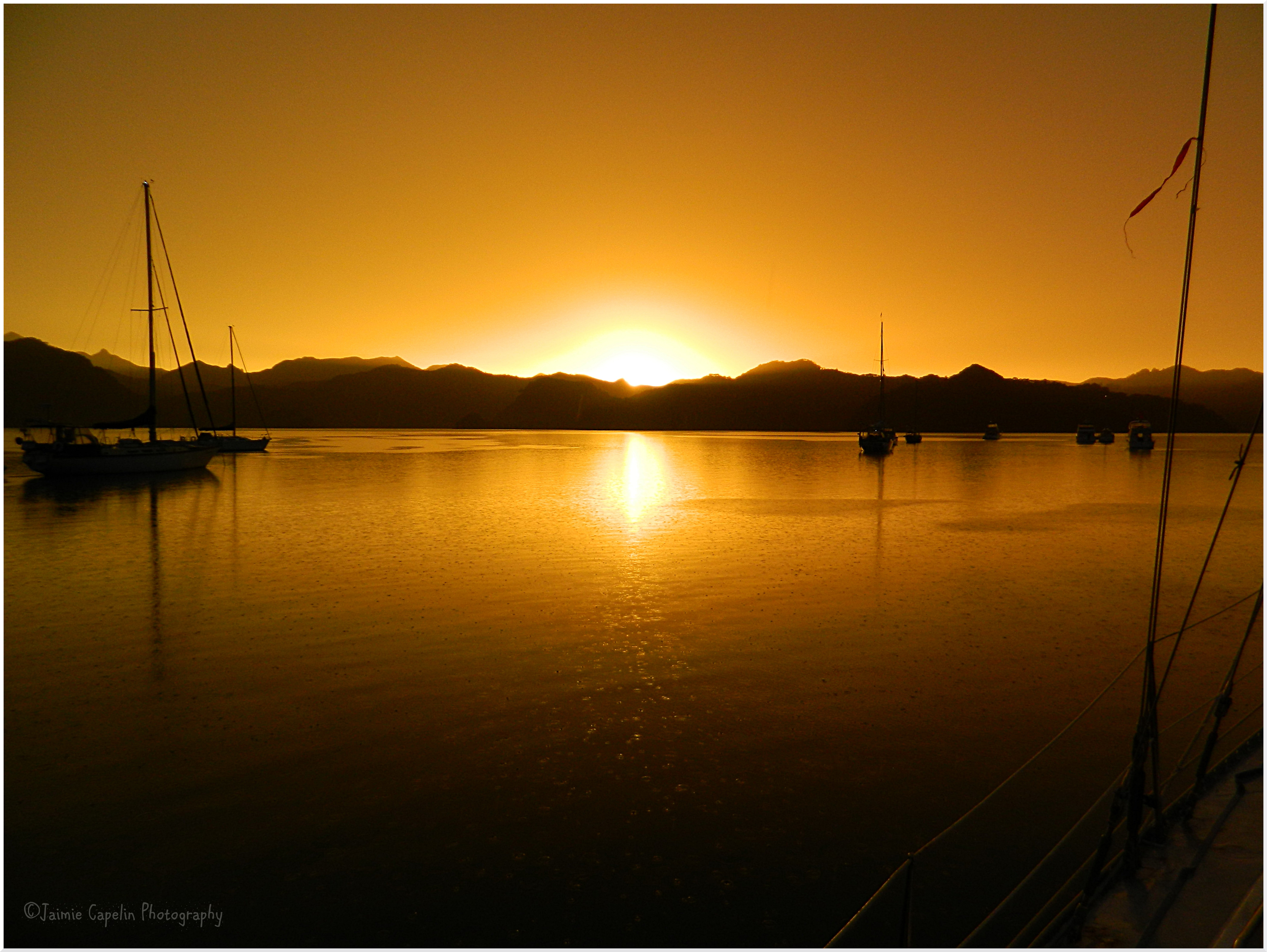
A gold leaf sunrise at Smokehouse Bay, raindrops decorating the glassy sea, everything washed in a shade of ochre yellow.

Sunrise at Smokehouse Bay

Sunrise at Smokehouse Bay

The final leg of the journey threw wind and rain at us, Finn and Kyle in all their waterproof gear, sailing hard into the weather while the waves smashed the boat from side to side. Meanwhile below, we played heavy music that seemed fitting to the weather outside. Dani braided bracelets while Simon & Luca drifted in and out of sleep, and Fabian successfully challenged himself to build a house of cards. The boys outside saw blue sharks and epic cloud-drifted scenes, washed with rain.

DSCN0233

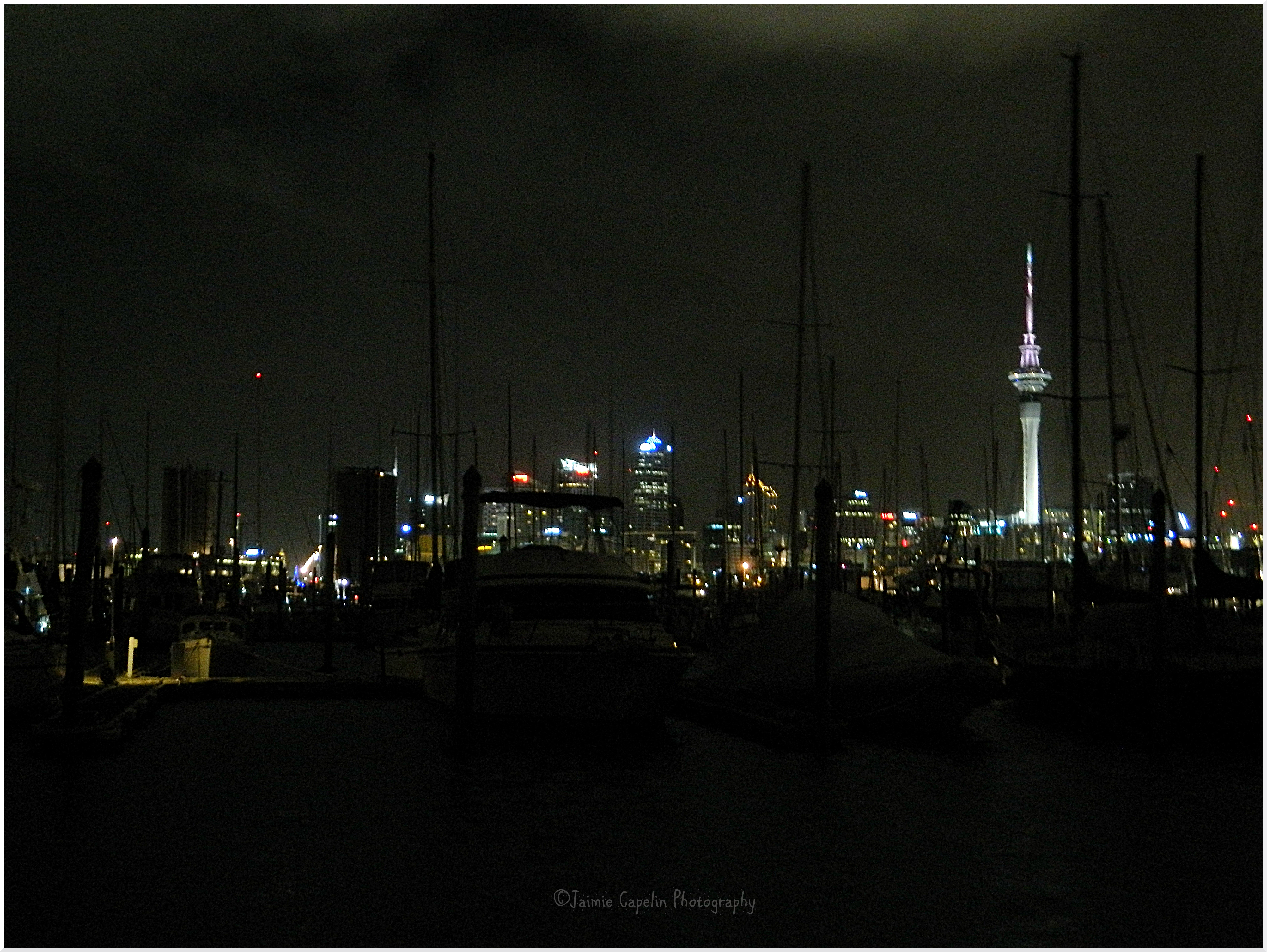
We all stood out on deck approaching Auckland, the grey city spiking the low cloud. Rain soaked us as we slowly came into civilization, cranes working fast to load cargo onto enormous ships; catamarans zooming back and forth, carrying passengers across the water; bank names labelling the skyline, and the sky city tower barely visible in the cloud. We berthed at the marina, and with feet back on (slightly damp) land, it was to The Swashbucklers Inn for a welcome pint.

Journey's End

Journey’s End

A Tent with a View – Camping New Zealand

“Most folks are tourists – they bumble around NZ hoping to ‘see the sights’ without expending much effort to find the truly unique uncommercialized spots. Travellers, on the other hand, are fewer. Travellers attempt to find good info about wonderful spots and experiences.” (Cook. S, NZ Frenzy Guidebook, p.91)

In March 2014, while I was living in Wanaka, New Zealand, I was invited on a roadie.

The trip was planned for 10 weeks, and we would mostly be camping.

Our crew was Jonny from Edinburgh, Scotland, Yogi from Bayern, Germany, Gian from Saronno, Italy, and myself, from the Isle of Wight, England.

IMG_1688

We packed:

3 tents

4 sleeping bags

4 backpacks

2 tarps

a box of cooking equipment

a gas canister

a chair

a fishing rod

climbing gear

4 cameras of various description & a GoPro

a library of Travel Guides, leaflets and maps

and a Nissan Bluebird with a flat battery.

It was cosy to say the least.

It’s difficult to estimate how much money to take on an unplanned journey like this one, but calculating the costs of fuel, food and accommodation is the best place to start. Department of Conservation (DOC) campsites are pretty much everywhere on South Island, and are usually $6 per head, if not free; the fuel for the Nissan was about $100 between the four of us every 2-3 days; and food was mostly budget stuff we could share and cook easily on the camp-stove. All in all, Jonny recommended taking about $3000 (£1500) for a 10 week trip. I managed to save about half that, and travelled for a month, but it depends on your personal itinerary.

Although the majority of this journey was unplanned, some extent of planning is essential. Having a Plan A and Plan B and a Backup is a good way of planning without actually planning! We were always checking out alternatives in our DOC campsite guide and Lonely Planet books.

The journey began on Tuesday 18th March.

A strange mist started to engulf Wanaka’s Mt Iron, as if erasing it from the horizon of my future. But I would be back.

Milford Sound

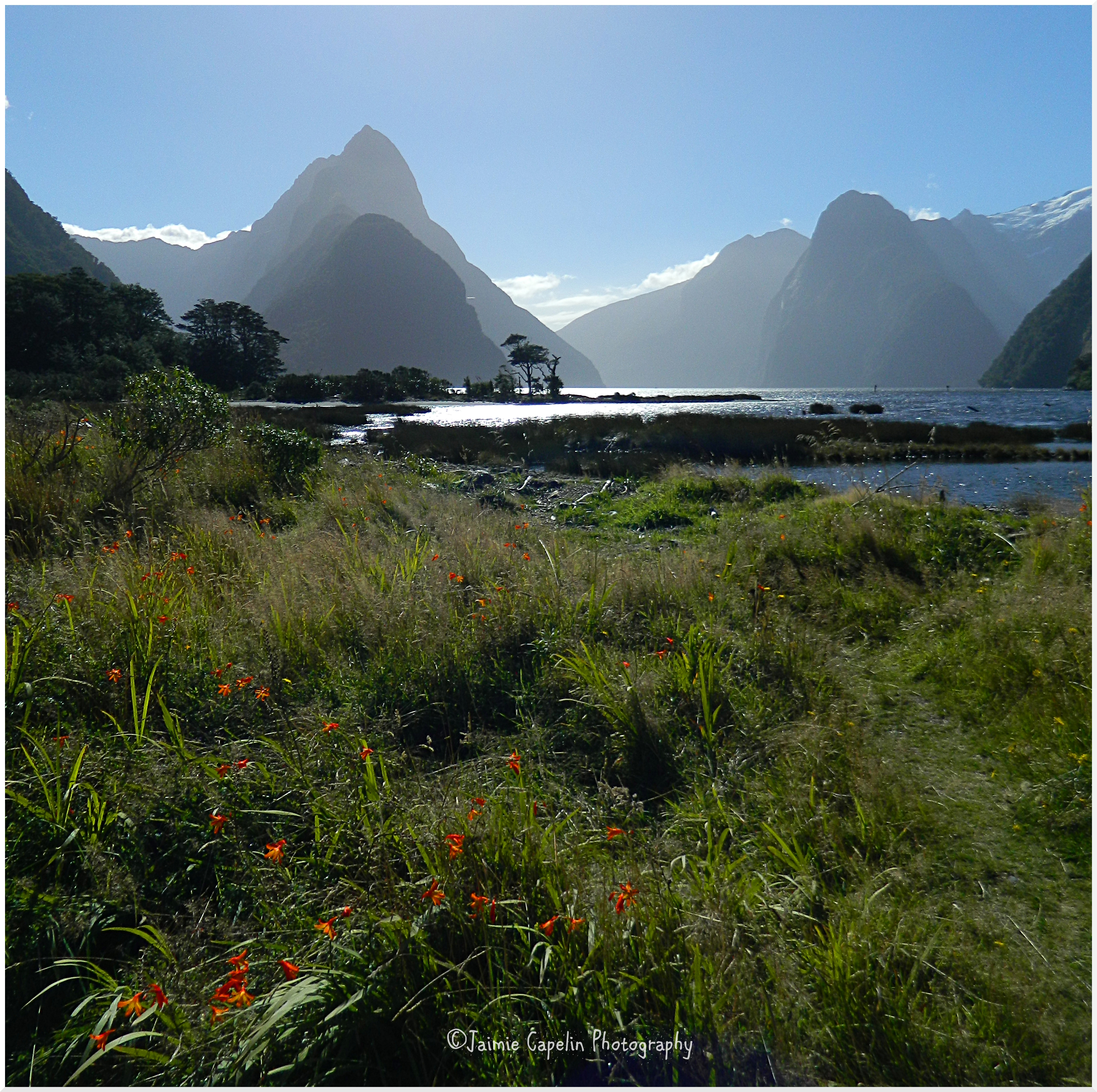
Milford Sound is one of New Zealand’s most iconic locations. We camped in the wet and humid fiordland, where there was nothing but rain and sandflies, and a sense of uncertain magic in the air. Steamy mist engulfed the green sea mountains, and the four of us sheltered in the car beneath a tree, relying on a bag of wine to keep us warm! This place is also known as Ata Whenua, (Shadowland), where between the boggy planes are rushing rivers and twisted goblin forests.

DSCN6776(2)

The 120km drive from Te Anau to Milford Sound is “a visual cornucopia of delight,” (Cook, S. NZ Frenzy Guidebook, p.196). The mountains begin to approach you on the horizon through the Eglinton Valley, rising up around you, craggy and piercing and belittlingly big. Then you go through damp woodland, passing glacial rivers and pools, finally breaking out at the entrance to Homer’s Tunnel. We simply had to pull over and get out. 360degrees of rocky mountain faces, with fresh waterfalls cascading from sheer mile high drops.

Homer’s Tunnel itself was eerie and quiet. It goes right through the heart of the mountain, and you can see each chisel and pickaxe mark in the walls from when it was dug in the late 1930s; the signatures of over a decade of hard labour.

We emerged out the other side, suspended high up among mountains on a road that winds down to sea level. All around are glistening rocks and dramatic peaks and even New Zealand’s only mountain parrot – the Kea – came out to play, terrorising family picnics at the viewpoints.

On arrival at the gateway to Milford Sound, we celebrated with a compulsory cider from the pub, and then went on the foreshore walk. This is well worth it – especially if you’re on a budget and want to avoid tourists! The walk loops around the shore line, not even 20 minutes, with perfect unspoilt views. The sun hovered over Mitre Peak, casting a dense haze over the seascape with a golden tinge, and The Bowen Falls projected water off the side of the mountain as the spectacular sailing ships drifted across the foreground.

DSCN6814(2)

We made our way back from Milford Sound in neutral, clenching our buttocks every time we went up hill, as we’d all forgotten that Te Anau is the last place to fill up the petrol tank!

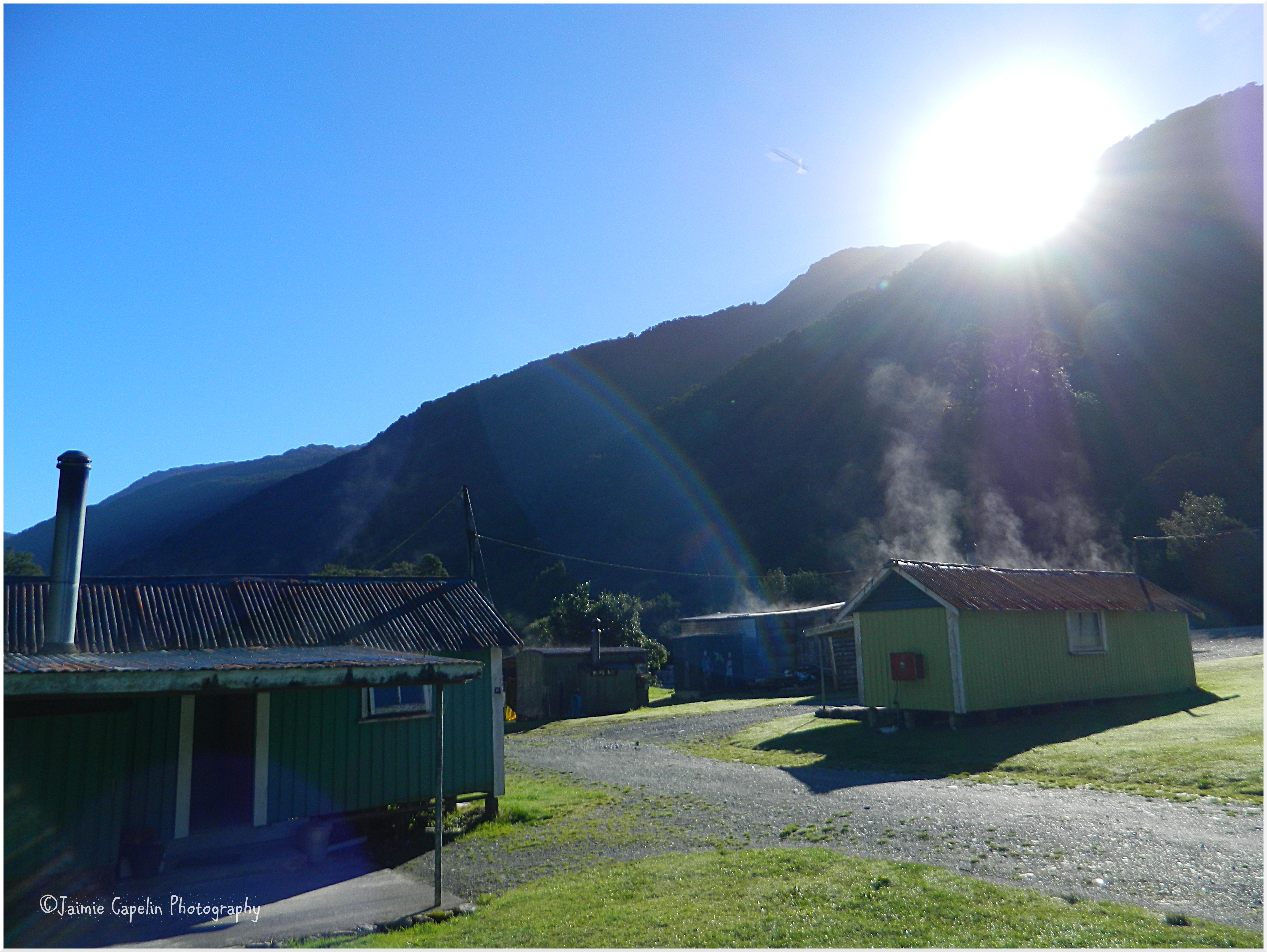
That night, we found a beautiful campground in The Hollyford Valley, with wood-burner powered shower huts and a crystal river running right through. It was here that Jonny befriended a character called Ludwig – a French fisherman with a bottle of cognac… but that story’s for another time…

DSCN6828(2)

The Lost Gypsy Gallery

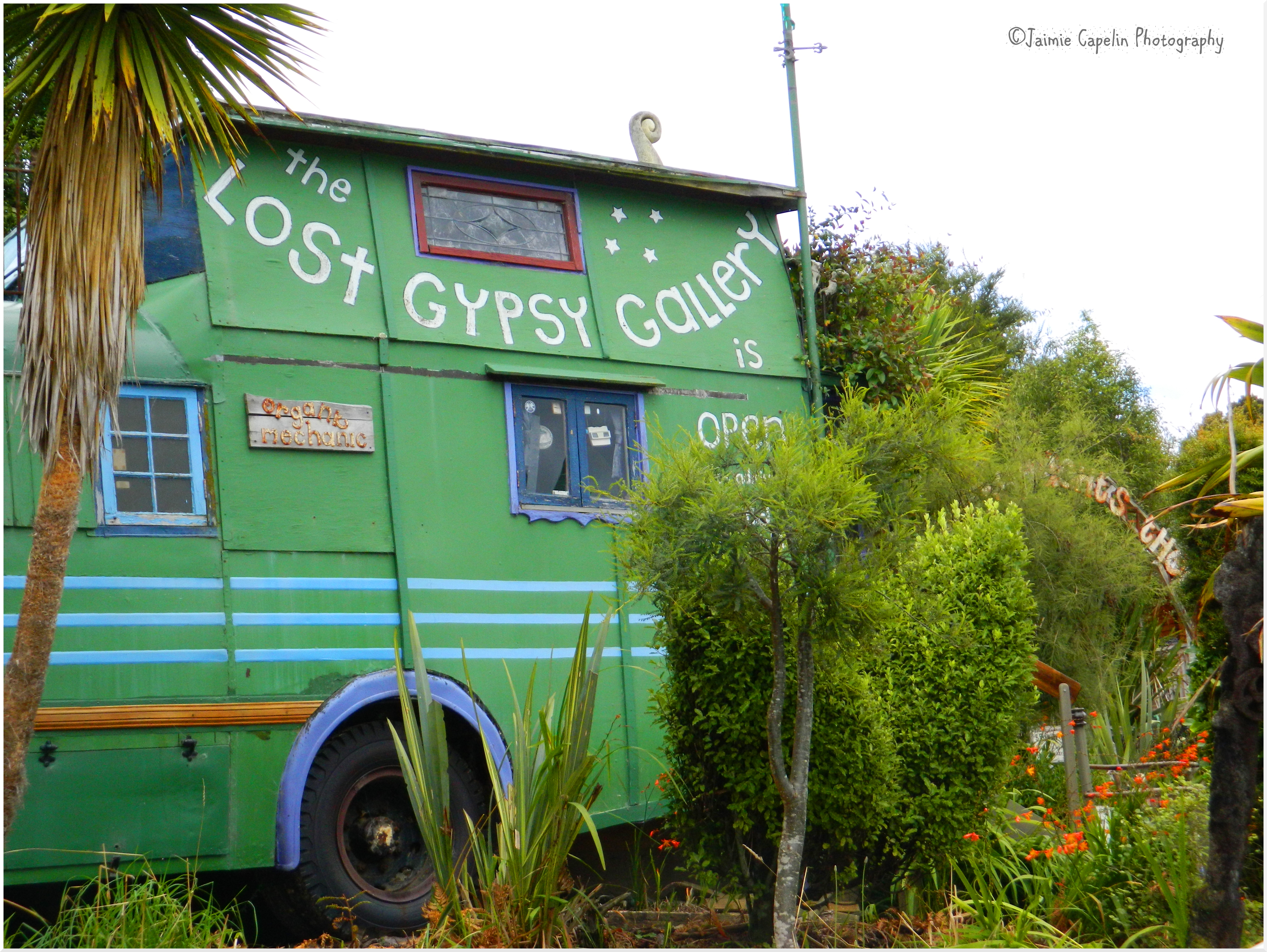
In The Catlins Forest, New Zealand’s far south, we camped at a place called Curio Bay, where we spent the morning of a crimson sunrise surfing with Hector Dolphins. Our surf instructor, a local man called Nick, advised us to go to The Lost Gypsy Gallery, just up the road in Papatowai.

A small group of artists and inventors have put together a compilation of strange, interactive works, mainly made out of recycled junk. An old gypsy caravan, which appears to have grown into the bushland, is choc full of gadgets, experiments and puzzles, while the garden behind – “The Winding Thoughts Theatre” – which you can enter for a donation of $5, is a cornucopia of clever, tactile mechanisms that make you feel like you’re back at the water tray in kinder garten!

DSCN7012(2)

Dunedin

This topsy turvy old city is twinned with Edinburgh, and while Jonny ceremoniously wore his kilt the whole time we were there, the only real likeness to Scotland was the weather! It was however, a fantastic place to meet people and enjoy the Gaelic bar culture, with real pints on pump, and of course, New Zealand’s very own Speights Brewery.

Moeraki Boulders

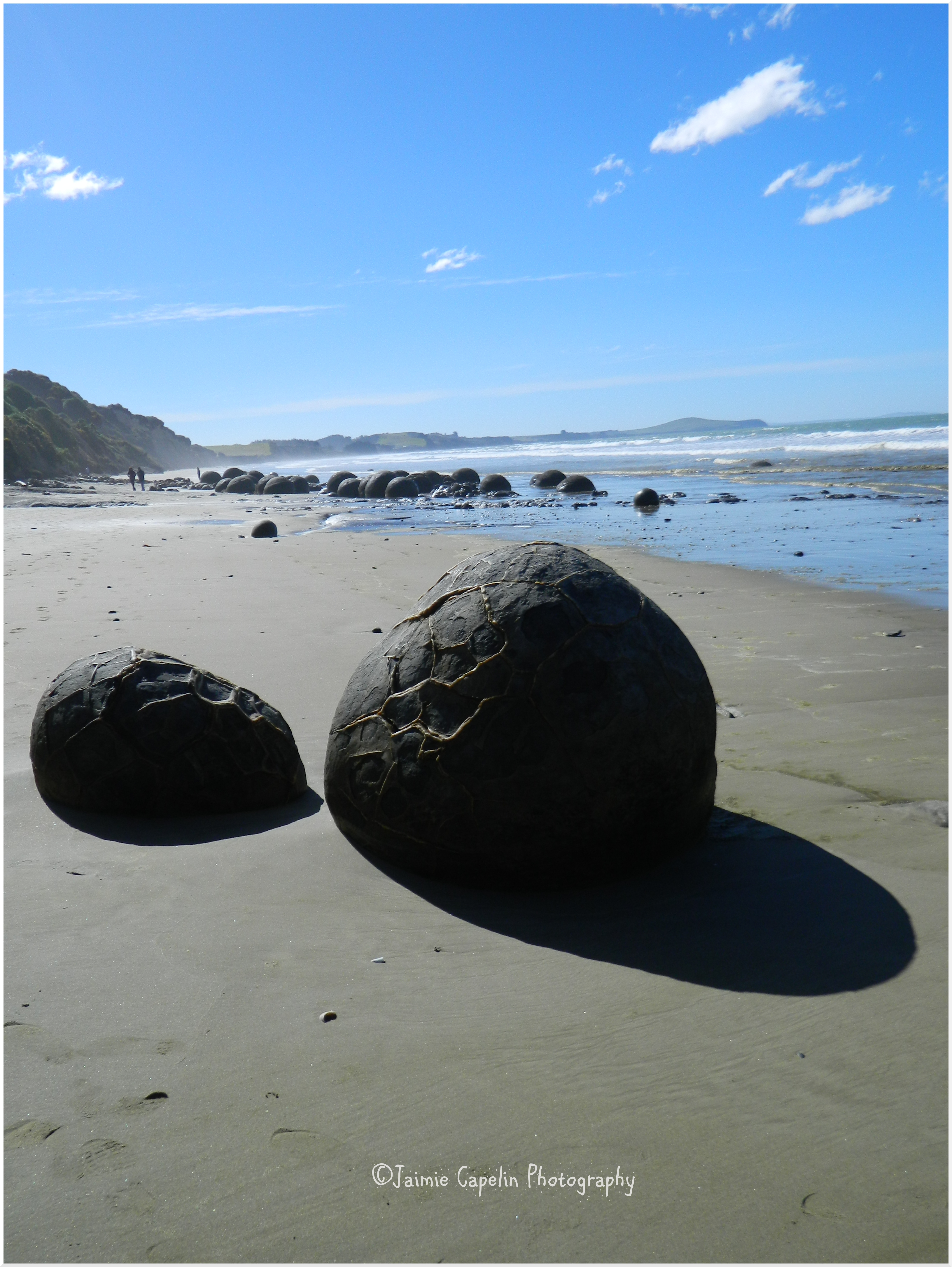
North of Dunedin, along the East Coast highway, lie the science phenomenon, the Moeraki Boulders. Huge round dinosaur eggs of rocks, all clustered together on the beach with waves crashing against them. Maori legend has it that the ancient canoe, Arai-te-uru, sailing from Hawaiki, was wrecked, and the boulders are the fossilized eel baskets and kumara washed up from the wreck. Scientists say that they are concretion formations eroded from the cliffs.

DSCN7119(2)

West Coast

From the calm and quiet east coast, we cut inland across Mckenzie Country and the Lakes, sleeping mainly in fields hours from any tarmacked roads, where the stars outshone our campfire. Stopping for breaks at the spectacular Lake Tekapo, and Mt Cook – home of Sir Hilary Edmund – we made our way to the wild West Coast.

We got through the bleak village of Haast and headed south along the coast, through rainforest, windy trees, and mountain views, until we reached a little place called Jackson’s Bay. It’s a desolate place with just the ocean and a tiny cabin called The Cray Pot, where fresh fish and crayfish are caught, cooked and served with chips in baskets. Jonny and I enjoyed huge helpings of butterfish, while the boys cowered in the car from the ferocious sandflies.

Making our way north along the hair-raising cliff-edge road, we passed little bays and houses built on the edge of wild beaches. We took the scenic walks to both Fox Glacier and Franz Josef Glacier, which have decreased in size a lot since the last time I saw them in 2007. We passed through the quaint little town of Hokitika, filled with galleries and greenstone factories, and made for Arthur’s Pass.

DSCN7230(2)

Arthur’s Pass

Lush mountains that look like they’re wearing big woolly green fleeces line the horizon; with rivers running in between. The road criss-crosses with the Alpine Train track before winding up the steep ascent into the pass. Through the mountains, the road is a high-raised flyover, cutting right through the scenery. We stopped at the top, where a group of Kea came to investigate our car, picking and pulling at the rubber seals on the doors and tapping on the back window. They are extremely intelligent mountains parrots; curious and tactile, with a beautiful rainbow of colours on the underside of their wings.

DSCN7303(2)

We lost Jonny further up the Pass, at Castle Rocks, a top climbing destination. These formations loom over the dusty grasslands, framed by grey mountains that look oil painted. They are sacred and were once home to Maori tribes, serving as good shelter and protection.

Akaroa

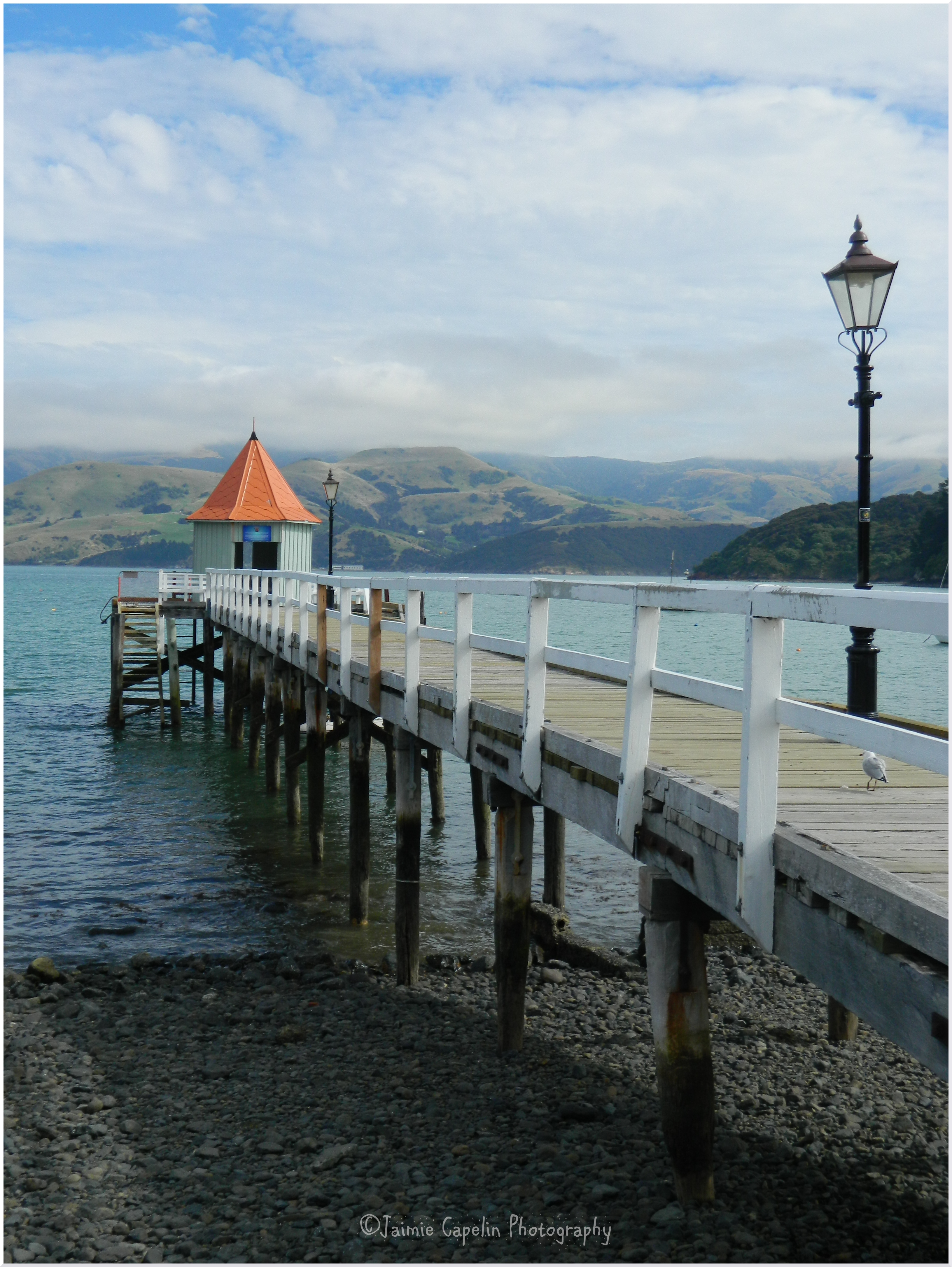
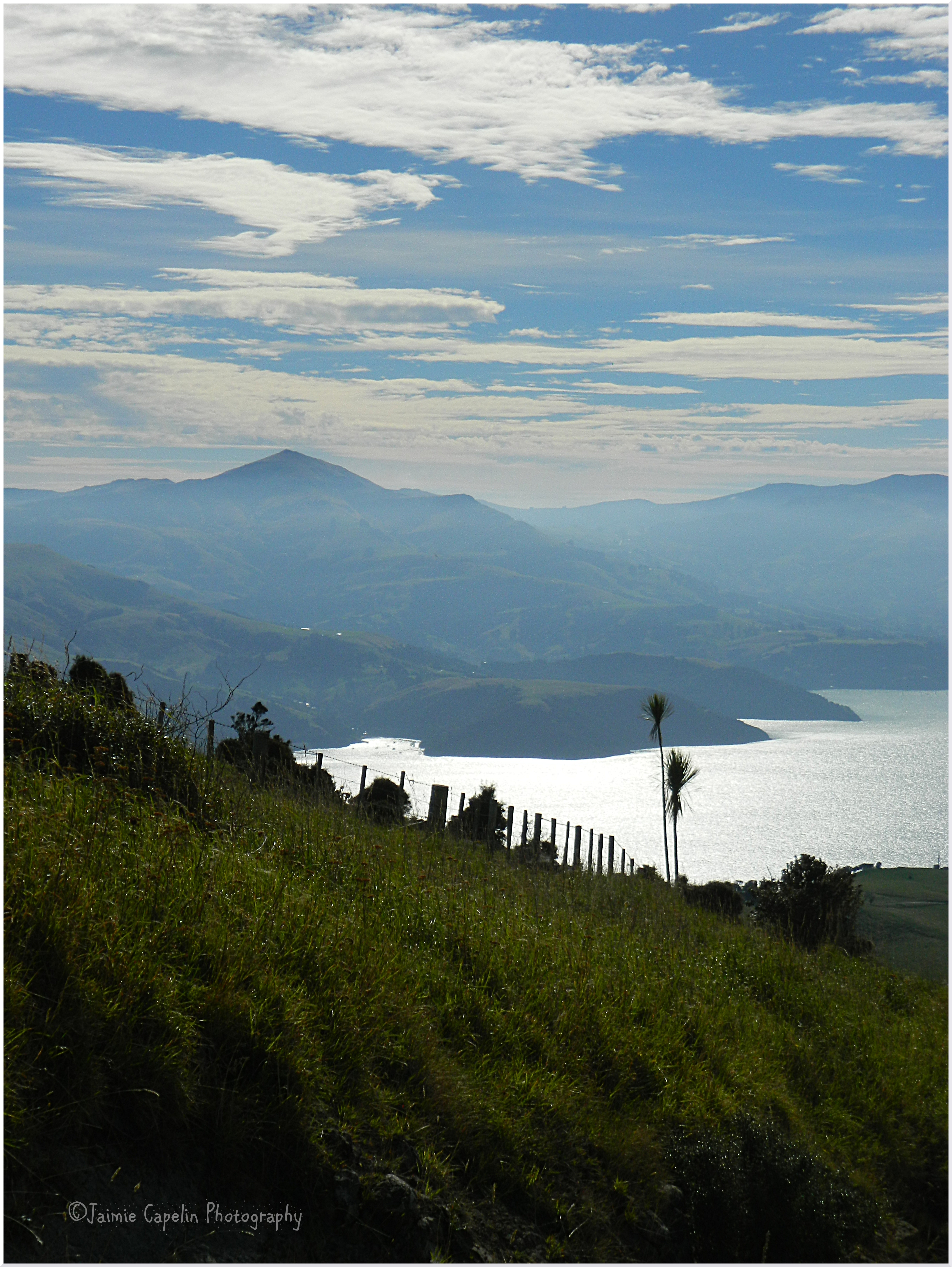
Matt – a good friend Jonny and I know from Cardrona – offered us a place to stay at his home in the little French town of Akaroa. Akaroa is a sheltered harbour on the south of Banks Peninsula near Christchurch. Occupied by the French in 1840, this pretty town has French road names, French shops and cafes, and a generally French look about it, with window boxes and blue, white, red striped flags on the buildings.

DSCN7338(2)

Matt shared a quirky house with a few local lads he worked with. They had a stream filled with eels running through their garden, which they’d feed leftovers, and in the evenings they’d light the BBQ and play darts in their garage where they’d built a little bar, and get up to boyish shenanigans.

Matt took us to the Bay Heads – the southern tip of Akaroa, reached by driving off-road and through private farmland, (we had to stop and ask the farmer). With a couple of friends and a few beersies, we sat on top of the blustery cliff, watching dolphins playing in the ocean below.

DSCN7378(2)

Abel Tasman – Paddling Paradise
Abel Tasman was probably one of the most beautiful and worthwhile adventures. There are many 1-5 day journeys to choose from – we chose to kayak for 2 days and hike for 1. There are even water taxis, which will transport you from bay to bay.
We booked the excursion at the i-Site centre in Motueka, and met at the water taxi base the following morning for instructions. A guide provides you with your kayaks, running you through launching, berthing and safety procedures. You are also provided with a map and instructions on where to leave your kayak while camping, and then you’re off!

DSCN7459(2)

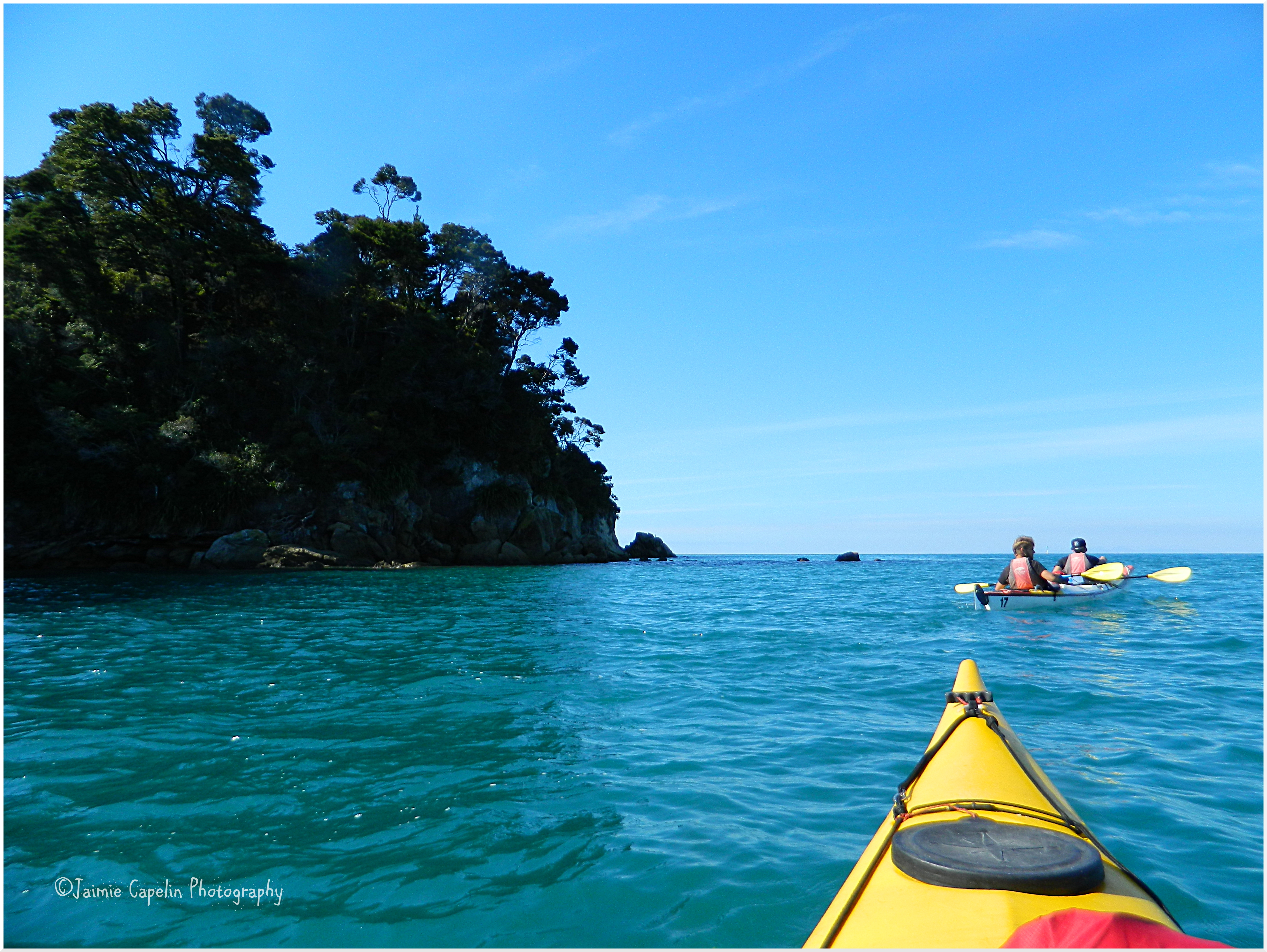
Beautiful blue ocean; lush green mountains; golden bays only accessible by boat; natural rockery smothered with wildlife; unexplored islands dotted along the coastline. Complete serenity, just the salty breeze on your skin, and the ripples of the sea gently lapping the side of the kayak. As you paddle up to various bays, you are overcome by the twittering in the trees; a cornucopia of different sounds, from the Fantail to the Tui to the Bellbird. Shags dive in the shallows, disappearing and then popping up somewhere else. A couple may perch on the rocks, wings outstretched to dry in the sun. If you’re lucky, you’ll see the baby seals, lolloping along the rocks, then slipping into the sea and swimming over to investigate, twisting and dancing in the water.

DSCN7452(2)

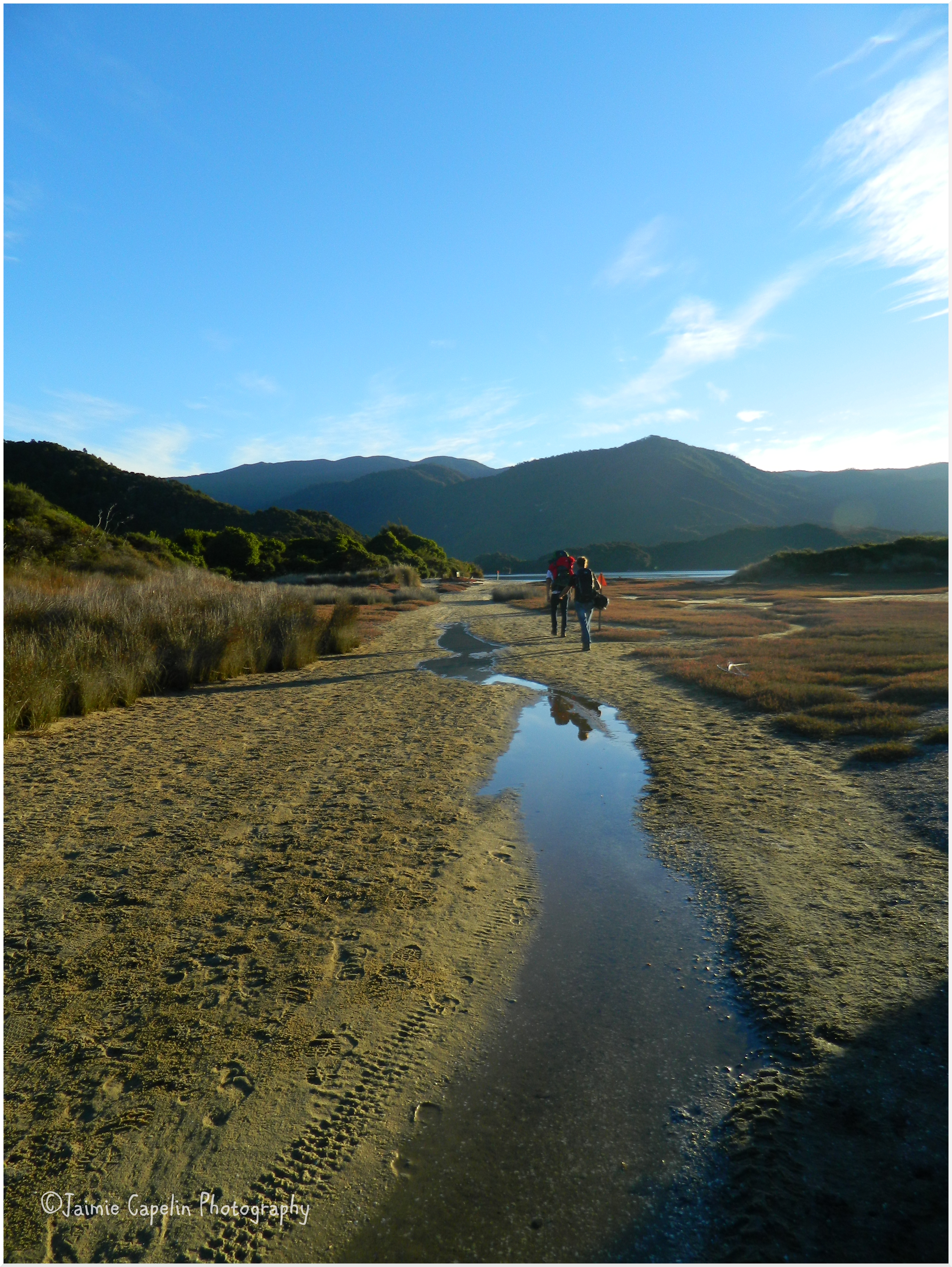
We camped by the beach, setting our tents in the shelter of trees, and rising with the sun and the birds to pack up and carry our kayaks down to the water’s edge. On the second night, we stayed at Awaroa Bay, where the beach is only accessible at low tide. Packing up early in the morning, we tied our boots to our backpacks, rolled up our trousers, and made the beach crossing. Even at low tide I was wading through knee deep water, with tiny seashells spiking the soles of my feet. Any later and we’d be swimming!

DSCN7534(2)

The hike crosses from boardwalks, to bushland paths, to soft, sandy beaches. It is challenging terrain, climbing up cliff side mountains, and then sinking in sand, but every step is more than worth it. The colours alone are breath taking, and the only people you see are there for the exact same reason as you.

Barrytown

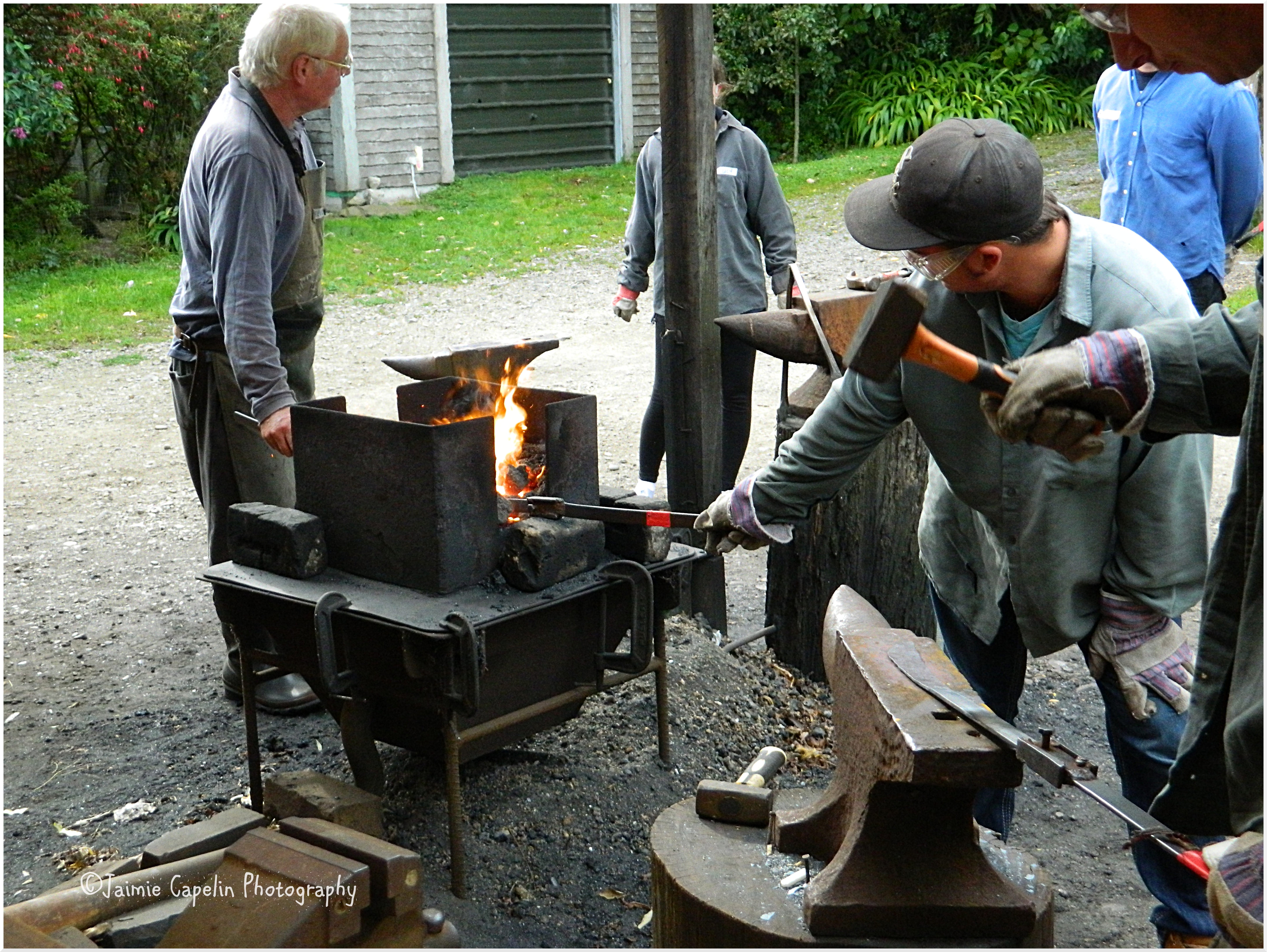
In a house on the cliffs of Barrytown, on the West Coast near Punakaiki, live Steven and Robyn the blacksmiths. Yogi and I went to the knife making workshop the couple have been running for years, welcoming travellers into their house and teaching them how to make knives! Here we met 3 Canadians; Joe, Justin and Danielle, a Dublin guy called Adam, a Dorset girl called Lucy, and a German called Raphael. We all donned big shirts, (like the paint shirts you have to wear at primary school), heat protective gloves, and a pair of googles.

We forged the steel in the forge fire, hammering the blade into shape on huge anvils before cooling it for 10 seconds in a bucket of water and duck poo! After sawing and essential sanding, we moved onto the handle, which we cut from New Zealand Rimu wood.

Steven took an interest in each of his clients, remembering each one’s name and making jokes all the time. He remembered me as ‘The Mighty Mouse’, and had an association for everyone. Shoes and work shirts off, it was time to break for lunch. Robyn invited us all into her kitchen for a smorgasbord of toastie goodies and tea, where we nattered and played with the dog before going to see the other animals and play on the enormous 30ft swing. It was like being at Grandma’s house!

After lunch, we perfected our individual knives, giving them a mirror shine, and finally protected the handles with Kiwi polish, topping off the day with a glass of homemade “Barrypagne” champagne.

DSCN7585(2)

Our exploration of South Island was complete, so it was time to make the transition to the North Island. We took the Bluebridge ferry from Picton to Wellington; about a 4 hour crossing, and began a week of Autumnal weather in New Zealand’s windy capital. From there we went up the east coast, through Palmerston North, Wanganui, up the Surf Highway to Taranaki, along the Forgotten Highway inland towards Taraunui, Waitomo, and Aroha, and ended in Tauranga.

The North Island has a larger population, less open space (but still heaps), and therefore DOC campsites are hard to come by. Camping is more expensive, and the weather confined us to shelter and so we moved quickly from town to town. Eventually, in Aroha, the main tent was taken down in the night by the monsoon and the camping trip came to a harsh end.

Some of the best moments while travelling are in uninteresting places, and while they stand bold in memory, they are not captivating to an audience. Evenings in strange campgrounds, sometimes infused with wine, sometimes not; or moments of car madness from simply sitting too long. When you’re with a new group of people so diverse, you cherish those moments where you laugh and share little nuggets of togetherness that only those who were there will understand.

One of my favourite spots was Lake Ianthe on the West Coast. It took us a while just to find the D.O.C campground, which was hidden down a track to the water’s edge. There’s only room for about 8 tents there, but the location suggests not many people go there.

DSCN7288(2)

The evening was so serene. Yogi tried his luck fishing, while the sun lowered in the sky, casting some gorgeous colours across the water. Another group of campers built a big fire and cooked their fish and potatoes on it, and I sat on the edge of the little pontoon taking it all in.

Another of my favourite spots was Kakanui on the East Coast, right on the edge of the Pacific ocean. We camped on the cliff just above the beach, which had drift logs strewn across it. The waves were beautifully ferocious, and we watched as people surfed and kayaked them.

There was a little tree in the corner of this camp area, with branches all low and twisted. For some reason I was drawn it, and kept finding myself perched on the overhanging branch, legs swinging, watching the other campers. We sat for ages here, picnic blanket out, music playing, sunshine blazing, Jonny carving driftwood with his penknife. I put my tent up early, so the sun would warm it up. The boys, however, waited until the sun was faded and the wind picked up. It was amusing watching them try and pitch their tent when the canopy kept flying away! After all that, the evening drew in cold, and I ended up sleeping in their tent anyway to keep warm.

That was the night Yogi sat in his fold-up chair with his pipe, and said; “In years to come, we’ll all meet up again, and we’ll bring our kids and they’ll play together, while we try to remember everything about this trip!” We laughed a lot, and Gian made flatbreads on the campstove, and we sang and joked.

The next morning we unzipped the tent onto a glorious scene of crashing blue waves under a yellow sky, and we drove away from the campsite with a light and airy feel of content.

Yet another of my favourite places was Orepuki, down on the south coast between Invercargill and the Catlins. It reminded me of a little village back home on the Isle of Wight called Brooke. The characters we met in the local pub, mixed with the sunset on the beach, and the stargazing, and the French cyclist who let me play his tiny guitar around the campstove, made this tiny place very significant.

DSCN6928(2)

Thanks for reading! You can watch the video documentary I made on this journey at https://www.youtube.com/watch?v=Lqs7xMVCaPY

There and Back Again – A Tramper’s Tale

Image[Rainbow in the eastern valley, from Routeburn Falls Hut – 19/10/13]

In October, I went on my first tramping experience. The Routeburn Track is one of New Zealand’s ‘Great Tracks’ in the Fiordlands on the south/west corner of South Island. It is an estimated 2 – 4 day trek, (32km), which takes you across the Southern Alps with epic views of Mt Aspiring National Park. There are a number of tramping tracks situated in New Zealand’s back country, miles from any roads or civilization, which wind through vast landscapes, of which so much has yet to be discovered.

If you want to go tramping you are required to purchase a back country pass from New Zealand’s Department of Conservation (DOC), which you can do online or in most major towns. This pass entitles you to use any of the huts situated in the back country (which only have power and water supply between November and April), and also ensures you’re supported by the back country wardens should anything go wrong. You should always:

  • Plan your trip
  • Tell someone
  • Be weather conscious
  • Know your personal limits
  • Take sufficient supplies

The DOC recommends the following equipment:

  • Appropriate footwear, clothing and spares
  • Sleeping bag
  • Matches/lighter
  • Torch/flashlight
  • Cooking utensils
  • Toiletries
  • First aid kit
  • 1 – 2L drink container

…And for the winter months, May to October:

  • A mountain radio
  • Whistle
  • Personal locator beacon
  • Ice axe
  • Crampons
  • Snow shovel
  • Avalanche flare

A good friend of mine, Parker, who I can only describe as a loveable ‘quirk’ from Florida, organised the trip with Guillermo, a Chilean snowboard instructor who we befriended while working at Cardrona, and two lovely lady friends of theirs, Hanka from Czech Republic and Anne from Germany.

We left Wanaka early, driving across the Crown Range to Queenstown, (where we deposited a Hitchhiker and picked up a Fergburger) and continued east towards Glenorchy. The road was long and winding as we drove around Lake Wakitipu, stopping once to admire the view of Pigeon Island and Pig Island on the lake, with the Remarkables stretching alongside. 
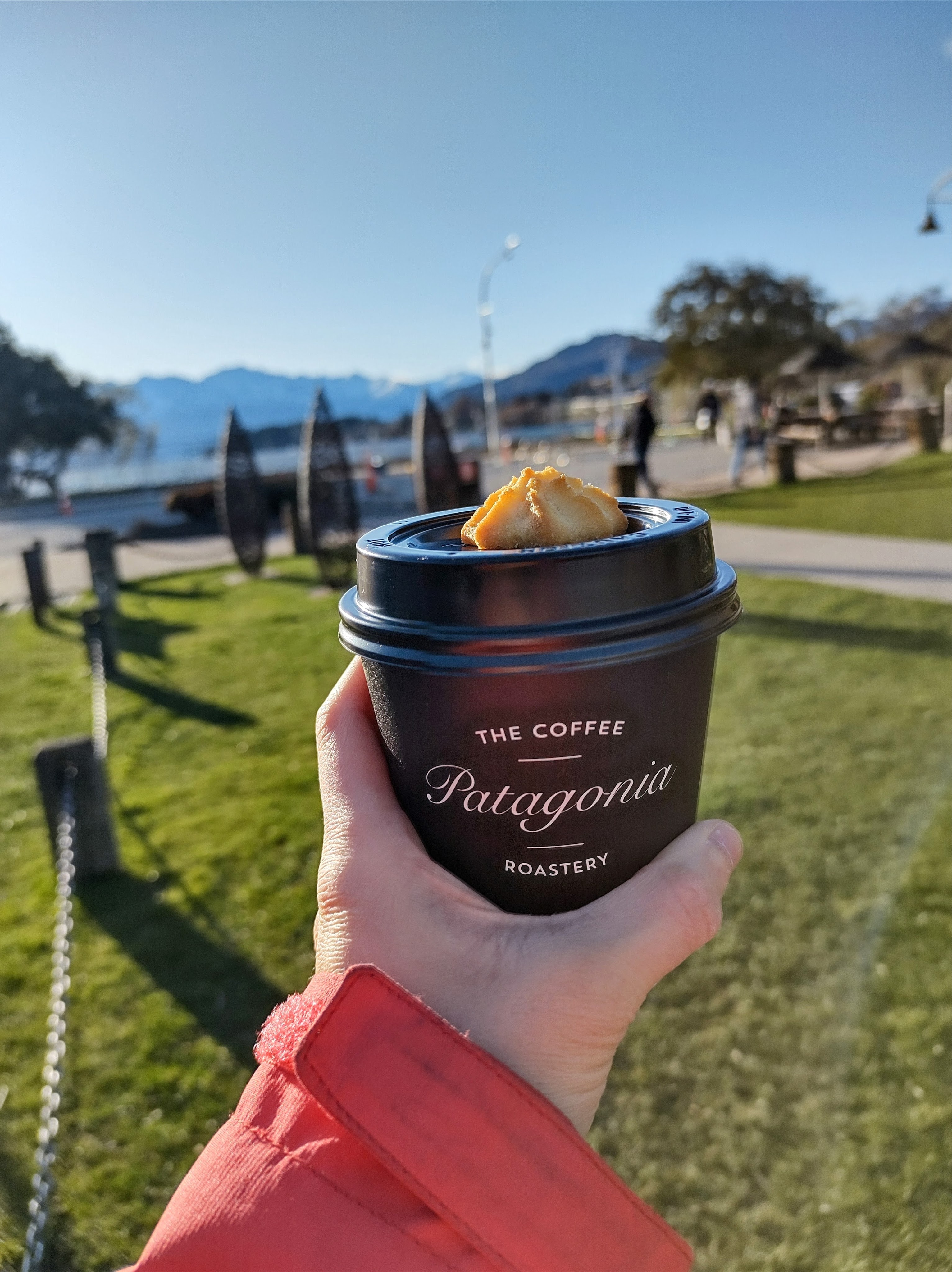
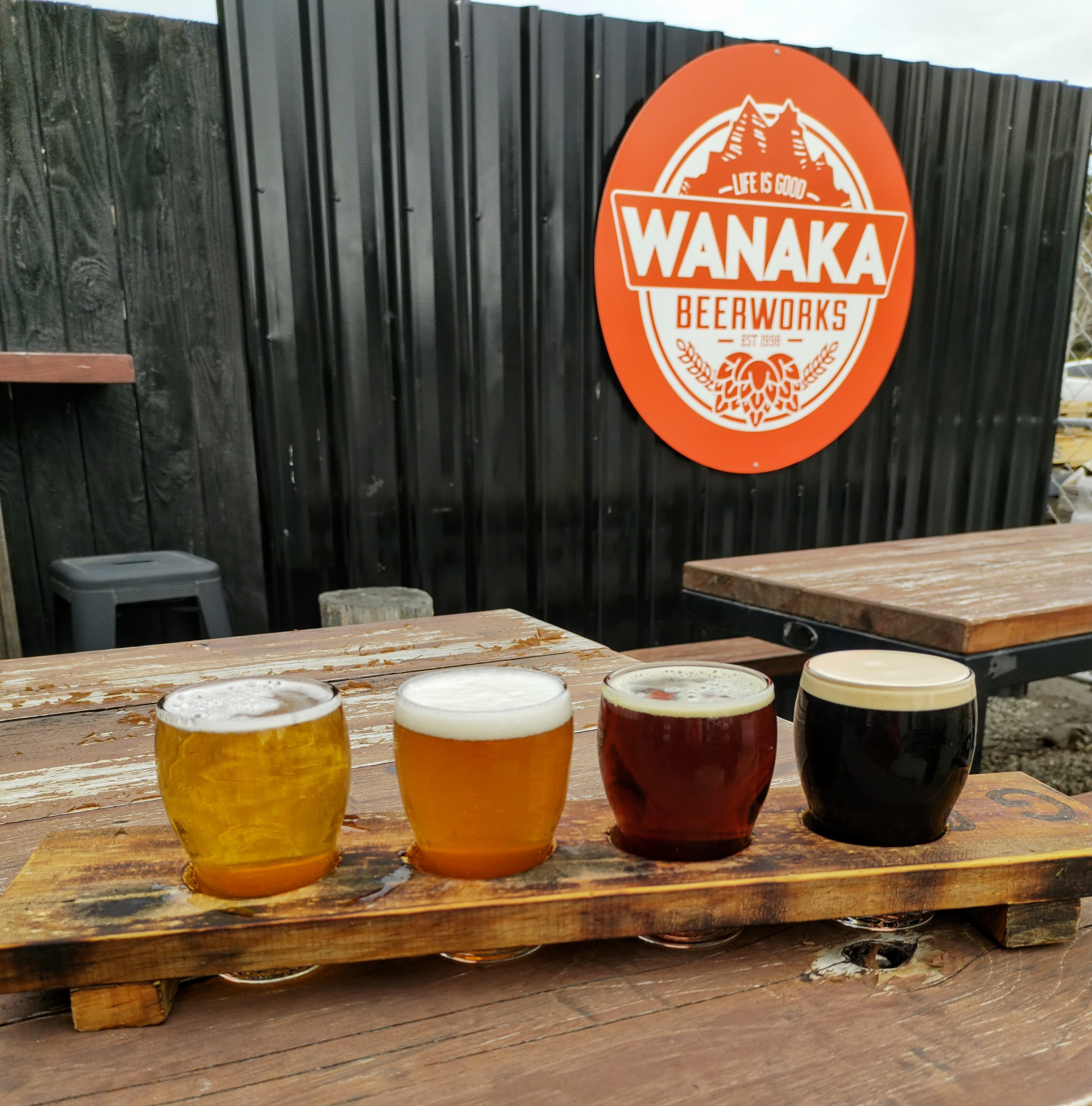
Log Entry #1

I cannot describe the colour of the water here, but I can try to explain the fierce intensity of it. Like all the shades of turquoise and purple in a paua shell thrown together and turned up. Like the sky has fallen into a pot of poster paint.
            “A blueclear bomb,” – Parker.
The mountains are dramatic here too, a monochrome divide between the powder sky and aquamarine lake. There is still a lot of snow on the top, speckled with black rock and dappled yellow sunlight. 

Image[Pigeon & Pig Island, Lake Wakitipu – 19/10/13]

Eventually we reached the tiny farming town of Glenorchy, at the other end of Lake Wakitipu. Here we joined a dirt track that wound through glorious green farmland, where hundreds of lambs were learning to skip.

The road ended at a car park, overlooked by a looming snowy peak, and we spent a little while preparing, double-checking, stretching and using the facilities, before leaving civilization and setting foot into the forest at the bottom of the mountains.Image

Log Entry #2

The track winds deep into dense, green woodland, where enormous felled trees look like the feet of fallen Ents. Moss and fungi grow on everything and you half expect a fairy castle to emerge around the next bend. The moist floor glistens with hints of blue slate and greenstone, but like any shell you find at the beach, they lose their sparkle as soon as you pick them up and dry them off. Eventually, the track joins up with one of the many gorges, and follows it up to a great gushing river. 

We crossed several rope-suspension bridges, following signs that read “Maximum capacity, 2 people”, jumping and swaying them dangerously as we walked over the raging rapids and rocks below. We reached a dry, rocky flat, where we climbed a huge tree that had fallen neatly across it, and a passer-by told us that it had been a raging river just the day before, which reminded us how unpredictable the backcountry can be.   Image

Hours passed as we trekked through advancing landscapes and terrain. An enormous clearing opened itself up, with panoramic views of the river snaking down in the valley between the mountains, so close and so clear that the perspective was lost in their vast reality. Gazing at the view made me feel dizzy, as though everything was moving like the focussing of a camera lens – maybe it was from walking and gaining altitude, or maybe it was the sheer scale of untouched World that was literally at my toe-tips.Image

We climbed over fallen trees and through complex networks of bush, feeling the incline growing steeper as we went. Waterfalls tumbled out of the cliffs onto the path, and sheer drops and landslides threatened us round each corner. We puffed and paced ourselves as the climb grew steep and uneven, each footstep placed with care on the crumbling rocks. Rainfall had caused a light waterfall running down the steep climb towards us, and we hauled ourselves up against the rushing water, until suddenly we looked up and saw buildings among the trees – The Routeburn Falls hut.  

It looked more like a fort than a hut; set around 1000 metres high in the Mt Aspiring range, with enormous corrugated iron rooftops stretching over huge wooden lodges, scattered up the mountain side on gigantean stilted decks. At first I felt relief, then disappointment that it wasn’t going to be the cosy little wooden hut in the wilderness that I’d imagined. But once we explored and greeted the crowds of others who’d be spending the night there, I was glad it was so big!

There are three large huts at Routeburn Falls. The main one has two dorms, each with 24 bunks, and a common room fitted with a log burner, lots of tables and a handful of cooking areas with sinks. There was no water or power supply at the time we went, as the wardens only maintain during the summer months. The second hut is where the wardens stay in the summer, and the third is situated further up the hill and is reserved for private groups.  

After claiming our bunks and setting down our backpacks; unrolling the sleeping bag I borrowed from my partner, and attempting to make our lodgings cosy, we walked out into the rain and discovered the Routeburn Falls. We heard it before we saw it – roaring somewhere just behind the hut, and after a short climb up the rock, we saw it, pouring down into a beautiful spring and overlooking the never ending view of the valley.

Parker and I ate a meal of 2 minute noodles, cooked on a stove he’d handcrafted out of beer cans, and we spent the evening sitting in a mossy green tree at the bottom of the waterfall, talking of home and history and meeting new people. Back at the hut, I sat down to sketch the view, while a French man sat beside me and watched, proclaiming that he wished he could put pen to paper and produce more than a stick man.

Log Entry #3

It is so still here. Nothing but the gentle rain and the mountains and his sleeping bag. The sky changed at least four times this evening; dusted with cloud wisps that obscured the mountain tops… patched up with blue that lightened the snow… striped with raincloud while a fat little rainbow peeped into the valley… mountains topped with peach powder puffs just after sunset… Now the grey mist of rain and looming darkness has settled in.

It was lonely and daunting that night, and I discovered that I kind of like home comforts; of having people nearby, and streetlights at the end of the road, and internet and phone signal. I didn’t realise how uncomfortable or scared I felt without those things I believed I could live without. But it was also exciting and challenging, and I was able to embrace the fear and appreciate every second, knowing that all these other strangers were here for the same reason as me.

Log Entry #4

The moon just rose, full and glowing over the valley. Yellow-orange and blurred by mist rain. A circular beacon for only a minute or two before fading behind the blue-black rainclouds of night time. 

Image

Log Entry #5

The morning has awoken us with more pattering rain, hitting the corrugated iron roof and tumbling onto the mountain woodland below. The waterfall rushes in the distance, intense in the foresty wet weather, while a lone Tui calls out over the valley; its sad “ding-dong” a simple melody overlaid on the percussion of the rain. Everything is fresh green with a powder-purple haze between the gaps.

After a breakfast of ‘gawp’ (a name Parker invented for trail mix) we waterproofed our bags and clothes and regrouped outside on the deck. The plan was to trek up to the saddle – the highest point of the track – with Parker and the girls, and then Guillermo and I would bid them farewell and return to the car park. This would add a further 6 hours to our return journey, and the torrential weather was holding out, so unfortunately we were forced to abort this mission. Guillermo and I saw off the others at the waterfall, saying our goodbyes “until next time”, and we set off back the way we came. The weather improved as we descended; the sun shining through the damp rainforest, humid and clammy. We stopped to watch people canyoning in one of the rivers, followed a little nature trail close to the start of the track, and finally arrived back at the car with tired satisfaction and a massive sense of achievement in the afternoon sun.

Wanaka in Winter

DSCN5321(2)

“Far over the misty mountains cold…”

Down on South Island, nestled on the lip of the lake in the Mt Aspiring Range, is a little town called Wanaka…

~The Sweet Smell of Wood Smoke~

            Back roads of Wanaka.
            Snow peaks, fog faded
            Rooftop scuds of chimney smoke
            Pine trees, winter leaves
            Logs piled up to the windowsill
            Icy fingers, frozen toes
            Pompom hats, rosy nose
            Streetlights glimmer, Pavements shimmer
            Frost bites
            Breath spirals rising
            Precious moments round the burner 

When I first arrived in Wanaka, I stayed with Grainne (an old friend from uni) and her friend Jess, in a cosy little house, stacked up to the windowsills with firewood, tucked in on the top road by the BMX track. We stayed with a handful of other travelers, where we spent a week drinking tea; circling room ads in ‘The Messenger’, and taking Jake (the slightly crazy resident chocolate Labrador) for walks. It was Corey – a Canadian friend of Jess’s – who picked us up from Queenstown airport on the 10th of June in his white converted camper van, and drove us to Wanaka along the Crown Range. Grainne and I sprawled on the bed he’d installed in the back of the van, watching the clouds and mountain tops float by the draped back windows.

We arrived at the snug little house at 4pm, where we met Corey’s girlfriend and lady of the house – Britney; Nick, a quiet fitness fanatic who quickly became everyone’s personal trainer, and Matt (Jake the dog’s dad) a hard working businessman from Auckland. They were an unrelated family unit, and some of the loveliest people I’ve met. A little later, two more arrived: an arty Canadian surfer chick – Janelle, and her Finnish travelling companion, Anna. We got the wood burner going, (which Jake the dog hogged like a hearth rug) and sat around drinking earl tea. Later, we filled the living area with duvets and pillows and watched one of Janelle’s films called ‘Like Crazy’, which taught us we shouldn’t fall in love on a holiday visa…

The clouds didn’t lift for the entire first week we were there, leaving us in some vague belief that our plane had never left Auckland and we were living in some ‘Truman Show’ parody with an unfinished set. But then one day, Grainne and I were strolling by the park, and up in the sky before us appeared a cut out of mountain peaks through a gap in the cloud – eerily faint as though covered with a sheet of tracing paper. The Mount Aspiring Range are some of the most spectacular mountains I’ve ever seen. They look how mountains should look – pointy and jagged and covered in snow, filling up the sky.

~Family Values~

1294518_10151586376345800_254982647_o
Cardrona Alpine Resort has been feeding Wanaka’s snow-lust for 35 years, with a terrain of 345 hectares, ranging from 1670m to 1860m high. People travel from all over the world to play in the snow at Cardrona, and the field plays host to many national events, which this year included the Winter Games; Snowsports International Paralympic World Cup; Snowsports NZ Freeski; Snowboard Junior Nationals, and Winter Olympics Spring Camp.

 DSCN4442(2)    [The Women’s Half Pipe World Cup Finals, Winter Games]

In the beginning a string of headlights would snake up the mountain track against a moody backdrop of the mountain silhouettes. The peaks would glow in the morning moonlight as the convoy of rental vans drove us to work, reaching the top in time for the bloody-Mary sunrise. Now that spring is approaching the sun has already bleached the landscape before we’ve left our front doors, and it seems the hills are always on fire.

Back in June – about a week before the mountain opened to the public – it all started. The 2013 Cardrona F&B team spent the week getting acquainted and building ‘the family’. We did lots of paperwork, learnt to fit chains, gave mouth-to-mouth to a plastic dummy, got shown around the mountain, did more paperwork, had various training sessions, did more paperwork, played in the snow and partied hard. The work vans picked us up from the town office at 7am every morning, and we’d be back in town at around 5, just in time for happy hour at Water Bar.

Eventually, I was able to quit my couch-surfing career. Kai, Sean and Christian – lads from work – moved into a motel with an Australian called Tom, and shortly the neighbouring motel became free. I moved in with a ‘Despicable Me’ German called Bastian; a Michael Jackson obsessed Malaysian called Tze, and a small Welsh sci-fi artist called Rhys (who quickly adopted me as his sister and liked to bully me in a very brotherly manner). Within weeks the whole block of motels became a Cardrona staff hotel!

There is a series of snapshot images on the road I go along everyday between Cardrona and Wanaka. A scattering of bee boxes littered on the grass beneath a tree. Behind runs a babbling stream, coursing over miniature rockery with the mountains rising on the backdrop. Sheep dabble in the grass lands around, grazing lazily as we gaze out of the van windows, hardly noticing each other. Usually, a brilliant blue sky canopies the view, leaving a crystal tint every unique colour. The second snapshot is of little wooden fences and neatly cropped copse – possibly an orchard, but there’s no fruit at this time of year to clarify that. The icy, silver-yellow sunlight falls dappled on the ground between the leaves and twigs, and the little wooden fences cast criss-cross shadows. The drive back towards Wanaka presents you with sun-stricken panoramas of countryside, which pans out onto snowy peaks beyond. Before you reach the town, you glimpse a vast stretch of Lake Wanaka drenched with golden light and framed with the jagged mountainous horizon, a different shade of sky everyday.

~Snowboarding~

SAM_5252(2)
The heart of winter. Not what you normally think about at home, in the middle of August, when you’re clinging on to every last ray of summer, and each last grain of sand that sticks between your toes. But here it’s winter. Not damp, shivery, grey winter, but crisp, colourful winter, in which every sunset paints the lake a different story. If you’ve ever been on a ski holiday, you will appreciate the sheer thrill of zooming down a mountain side with nothing but bluebird skies and crystal views, spraying up waves of fresh powder around you with every turn; cool speed brushing your face… If, like me, you grew up on a small island on the edge of a country corrupt with money and politics, you may not have even seen a ski field, and learning is the most challenging fun you can have.

Waste Busters is a recycling centre on the outskirts of town, which funnily enough recycles things. You can buy practically anything for under $10, so, naturally, I got my first snowboard gear there. My actual snowboard came from Will and Esther, a lovely couple who lived next door to Corey and Britney. Grainne and I surfed on their couch a couple of nights and Esther happened to be selling her old board – a little Rossignol, red and blue, with a hooded creature holding a lantern on the tail end, which always reminded me of a Ra’zac out of Christopher Paolini’s ‘Eragon’. It served me well all season, until it mysteriously vanished on the last day…

Adrenaline pumped through me, getting on that chairlift for the first time. Nervously sliding up to it and letting it take control, for I knew that once I was on that chair, that was it, there was no going back. At first it felt like trying to ride a tea tray downhill over ice cubes, but with a touch of practice and encouragement from friends (a hard shove and endless amounts of laughter) I learnt to control my board.

The first time I got stuck in a whiteout was fairly early on in the season; one of the first times I went over the other side of the mountain to Captains. The mist came in while we were having coffee in Captain’s Cafe ($2.50 with staff discount!) By the time we’d realised how bad it was, they’d already closed the lifts, so we were forced to take the lower cat track back across the Whitestar lift. Now, I wasn’t very confident, especially on cat tracks. People were zooming past me, vanishing into the fog, and my friends were long gone. (You can’t stop to wait for people on a cat track, as they are flat, if you stop you can’t start again). The wind was pushing me back, slowing me down and blowing me off course. I couldn’t see the edge of the track where the sheer drop would surely kill me, and no matter how low I got, I couldn’t pick up any speed. Frustrated, I took off my bindings and attempted to walk, but with sheet ice beneath my feet and my board under my arm acting as a wind-sail, I was simply blown backwards with ever step I took. It ended with me sitting on the bank, arms folded, refusing to move, while Greg tried to coax me along from a few meters ahead. But at least I know I’m not the only one who had a cat track tantrum… (Miss Stokes!)

But snowboarding wasn’t all hardwork and horror. On the whole it is the most exhilarating sport I’ve tried so far. You’re out there in this beautiful landscape with brilliant people who just want to have fun. You skate up to the chairlift, do the barrier dance (a kind of gyrating motion against the barrier so it can detect your lift pass in your pocket), sit on the chair anticipating where you’ll ride, chatting with others on the lift and watching the pros in the park below. You weave down the slopes, racing your mates (or just trying to keep up), bunny hopping over mogles left by skiers, carving edges up the sides and stopping occasionally to throw a snowball or two. At the end of the season, we had to take a snowboarding assessment, and now I am an intermediate snowboarder!

(Thanks to Bez who gave me that first push at the top of McDougals and never failed to catch me all the way down my first run. Thanks to “Dutch” Sam for teaching me to turn and giving me that kick of confidence. Thanks to Wilko for taking me over the kickers in McDougals Park and being my witness for my first air. Thanks to TimTam and Lauren for giving me heaps of ride breaks. And thanks to Greg for believing I was better than I was.)

~Living For The Weekend~

DSCN4302(2)

The drive up the Cardrona track is hairy at the best of times, but when you’re in the passenger seat of your friend’s well-loved, well-used Ford Escort, with no chains and no brake pads, you can do nothing but laugh and hope. Greg and I would meet on our days off and drive up the mountain, teeth clenched, buttocks tensed, swerving away from the cliff edge on globules of mud and ice, or spinning out on fresh, unplanned snow. I think of cold, sunny drives and loud hip-hop and rock; singing along to the likes of Will Smith, Slim Shady and Foo Fighters to drown out the sound of the wheel bearings shaking to pieces. I think of sunglasses and laughing at nothing and all those threats of handbrake turns.

Occassionally, we would give the mountain a miss, and spend our day off in town eating gellato icecream by the lake and chilling on the deck, go for lunch and shopping in Queenstown, or go for a drive in the countryside…

~A Picnic at Glendhu Bay~

Blues of oceans, far out in the midst of clear-sky-nowhere. Sunshine breathes through the silent chill of winter. Spring on the horizon. A curve of sand stretches around the lake, curling into the distance where the leafless trees merge into the carvings of the mountain. White peaks brightly shard the sky, dazzling like new knives. The water laps my ears between songs of Muse and Metallica, while little yellow-faced birds scamper about the stones. A twist of smoke rises up and licks the cold while the car bonnet toasts our bottoms. White puff-ball clouds on the sky; avocado and strawberries on our lips.

DSCN4501(2)


Out in the depths of Lake Wanaka lies Ruby Island – a tiny nature reserve, which you can only reach by boat, or in our case, one kayak, one punctured dinghy and a blow-up bed… a good group of us made it over, Bez, Stokes, Sean, Paul, Olivia, Greg and myself. We walked around the island, jumped off the jetty into the lake, and had a BBQ feast before the paddling mission back to land.
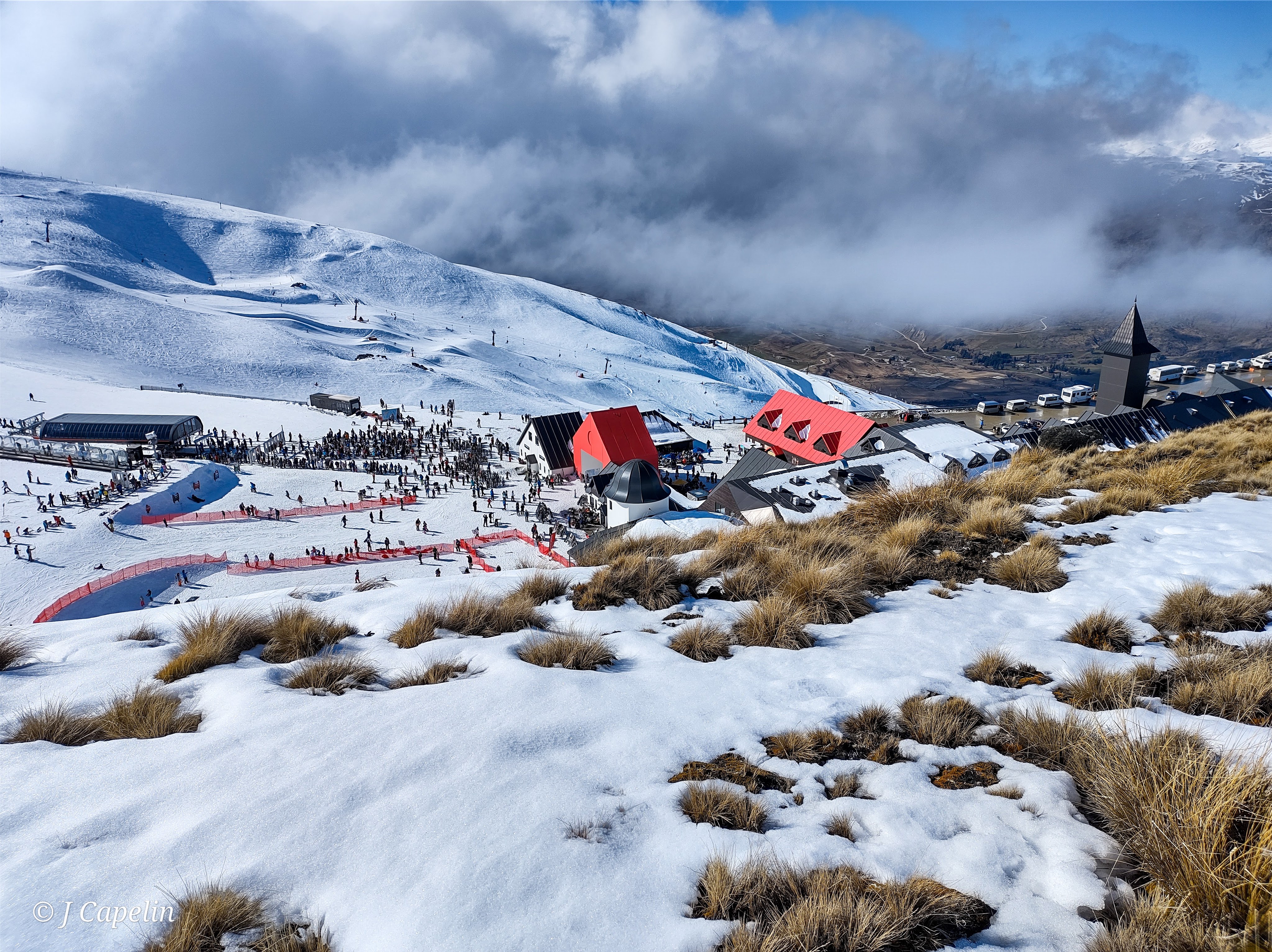
The season is over now and I have begun spring work in a vineyard just outside of town. But I’ve learnt a lot, achieved more and made friends for life. See you next year Cardrona!  
DSCN5226(3)


The Bay of Plenty Memoirs

Image

Tonight I feel like your stereotypical writer. Sitting in a motel room in Auckland, wondering where the next pay packet is coming from; sipping tea made with a kettle that doesn’t fit under the tap, and those tiny pots of milk that never seem to be enough, but always turn out to be the perfect amount… I can hear the traffic outside; the fridge is whirring like the tardis, and the man in the room next door has a rasping cough. I’ve eaten all my satsumas, but I’ve got plenty of tea.

I’m trying to decide which bed to sleep in. The double provides sufficient ‘starfish’ space, and it’s closest to the light switch, (there’s nothing worse than stubbing your toe during the scramble-run-dive to the bed in the dark after switching off the light), however the single has, more than likely, seen a lot less ‘action’.

Speaking of ‘action’, I had my first experience in a strip club the other night. Having finished my job in the posh hotel, “The leading hotel in the Bay of Plenty…” (blah blah) I had leaving drinks with some of my work mates. It was a typical friday night on The Strand, and there were a few Mid-Christmas parties going on, which made it slightly rowdier, (Mid-Christmas is a mid-winter celebration, which often involves turkey and tinsel because Christmas falls in the middle of the busy summer period). We started in the usual fashion with a beer or two in the local, when some of the guys began talking about how they always used to go to the strip club. I let slip that I’d never been to a strip club: mouths fell open and that was that! They took me to ‘Route 67’, where we sat along a bench and watched a couple of dances. It was a lot more tasteful than I expected, (and possibly more tasteful than it would be in London), and the girls were really natural, down to earth and friendly. We had a nice chat about wine with a topless girl in the middle of her dance, and then she asked if we would like to spank her. One of my mates even got to motorboat her! The boys weren’t allowed to touch though. I never imagined seeing myself write this, but I was pleasantly surprised!

Shortly after, we moved on to The Bahama Hut, where we danced to generic music and drank Backdraft shots…

Image

The shot was set on fire, and sprinkled with cinnamon to create sparks, then the barman put a cup over it to catch the smoke and put the flames out. I had to take the shot with a straw and then breathe the smoke out of the cup.

We sat on the swings in the seating area, just for the novelty of it, and we danced around the palm tree until the club shut, and as the cops made their closing time arrests, we shared taxis home, marveling at the crystal clear stars blinking down at us through the rear windows.

The clarity of the sky here never fails to impress me. I was sitting on the deck back in Tauranga the other day; the sun was shining, it must’ve been about 20 c, and I just sat and listened. In the distance I could hear the faint whoosh of the highway; someone was mowing the lawn in a nearby neighbourhood; a dog was barking in multiples of 3 somewhere in the valley, and the goat on the hill bleated here and there, but the sound that filled my ears the most, was the sound of the birds. Not just one bird; not even one type, but a colourful collage of maybe 10 or 20 different songs, filling the blue sky with music. It got me thinking about how close we are to nature in this part of the world, and all the things I’ve seen in Tauranga and The Bay of Plenty…

Image

A Shag at The Blue Lake, Rotorua (sounds rude)

Image

Creepy spider’s web in The Bay of Plenty

Image

Admiral Butterfly in The Bay of Plenty

Image

An Orb Spider in the garden

Image

A shiny green ladybird in the garden

Image

 Cicada skeletons – throughout the summer months, these big fly-like insects shed their skins, sounding similar to a field full of crickets, and leave them scattered about the landscape like a graveyard.

Image

Bumble bee in the garden

Image

Paperwasp nests in the garden

ImageImage

Praying Mantis – these guys are everywhere! In the shower, on my long board, climbing through the window… they’re awesome, and when you hold them, they swivel their eyes at you!

ImageImage

Skinks – these little lizards are cute too. They run super fast, but if you’re quiet, you can see them basking in the sun in the garden

Image

Sting Ray in Tauranga (dodgy camera phone)

ImageImage

Male and female New Zealand Robins – (they really are All Blacks) in The Bay of Plenty

Image

A Tui in Whangamata

Image

A Fantail in Taupo, such flitty little birds – difficult to photograph

Image

A Silvereye in Taupo

ImageImage

Male and female Bellbirds in Taupo – quite rare to see

Image

Glowworms in Waitomo

Image

A Kingfisher in the garden

Image

A Tomtit in Whakatane

Image

A fluffy butterfly in the garden…

But in contrast to the abundance of beautiful birds, trees and insects, Tauranga city itself has been a marvelous place to spend these past months. I’ll never forget the day I walked home from work and saw a balding man in a business suit, scooting along on a little fold up scooter. And when I witnessed a fight between a man and a woman outside the church while a christening was going on. The little quirks of urban life, matched up with the serene harbour views and coffee shop culture, it’s definitely given me something to miss.

Image

Image

However, with the end of one chapter comes the beginning of the next. I’m flying to Queenstown in the morning, so it’s farewell sub-tropic, volcanic shire land, and hello dramatic snowy mountains!

The stars are shining for my last night on North Island. Good night!

…And I think I’ll choose the double bed…

At The Hop

Image

Saturday, 23rd March, 7:30am.
A blazing sunrise burns through the gap in the curtain as we squint our bleary eyes, getting ready to commence the 2 hour drive to the Whangamata Beach Hop. 

Every year, the seaside town north of Tauranga, hosts The Beach Hop; a festival dedicated to mid-20th Century cars and the era of Rock & Roll. 

We drove North, into the midst of the Coromandel Mountains, through tiny towns and farmlands, and along zig-zag roads where little lost clouds claimed the views.

Image

The sun was shy as we parked up in Whangamata mid-morning, and those little lost clouds drifted in the puddles beneath our feet. 

Image

We joined the troops, tramping up the road towards the hustle and bustle, until we came we across an events hall, whose car-park was filled with an array of classic cars.

I was on a mission to find a powder blue Ford Anglia – The Weasley’s car. One that could fly if possible, but not necessarily.  

Image

There were Corvettes; there were Mustangs; there were Fords and Chevrolets in all shapes and sizes; there were cars with V8s so spotless they were the colour of the sky and everything around them; there were engines with superchargers growing out of them, and little spouted pipes that looked like they should play merry-go-round music. There were bright green cars; luminous yellow cars; red cars; black cars; cars that were pink from one angle and purple from the other, and all on a dramatic backdrop of the Coromandels behind.

Image

Further into town crowds of people had begun to line the road, all bobbing up and down on their toes to see. A quiet rumble grew into a roar and the rally began. The beautiful sound of old, chugging engines, beeping their horns and revving, with their big beaming faces and grinning grills.

Image

American cars as wide as the road, filled with girls with their tops tied up and their hair in rollers; Elvis booming on the stereo. Little Hotrods grumbled along, chased by beastly chevvies with mean faces. Beautiful ‘Bugsy Malone’ cars chundled along, high off the ground and proudly humble, sounding their ‘AWOOGA’ horns to the cheering crowds.

Down a quiet road on the left, we escaped momentarily and followed the smell of the sea to the beach, with canopies of forest land on the left, and perfect curves of sand on the right. 

 Image

By now, the weather was blazing, and I was wondering why I’d brought my jumper with me at all! What with all the engine heat blasting at my ankles and the sun gaining its confidence back, it was time for refreshment. 

We sat on the grass verge with some lunch we’d managed to get in a very hectic pie shop. I had a delicious chicken wrap; unfortunately, I wore more of it than I actually ate, and this very flattering photo was taken while an old man continued to point and laugh at me…

Image

Recovering from the food fiasco, it was time to venture into the heated crowds. The sun had brought with it about a thousand more people, and with the rally cars all freshly parked up along the road, the local rock and roll bands were in full swing on their trailers.

Lines of cars led us to the top of town as we played Spot-the-Camaro, (they were everywhere) when a contrasting view stretched out before our eyes…

Image

A paint-pallet of cars layered up upon this natural beauty, with the main street leading back towards the Coromandels behind, it’s moments like this that really make you appreciate where you are.

Image

I spotted two little bug-eyed Beetles, sat mulling over life. One looked sad for having lime green glitter sprinkled all over its roof; the other looked far too hot to drive on a day like that!

Image

Wandering back down the main street, I found a Ford Anglia! Such a lovely car, but with such a worried facial expression!

Image

It wasn’t the Weasleys’ though…  

A crowd started to gather around a jacked up motor, with the body rising up off the engine and wheels like a huge, gaping mouth. 

Image

Edging away from the monstrous mechanical crocodile, we followed the sound of rock & roll, as another band played atop a trailer on the roadside. The drummer smashed his signature on our eardrums as the singer and guitarist’s melodies glided over the bass line. The bassist grinned to his band as he tossed his dreads, and the horse’s head atop his magnificent instrument bobbed from side to side.  

Image 
[Bassist of The Recliner Rockers]

 We took refuge from the heat in a busy pub, sipping Grizzly Beer in the shade, and sharing a picnic bench with strangers. Noise all around us – laughter; people meeting and greeting; guitars bass lining the rhythm of growling engines.

Quirky roadside stalls sold every type of toy car imaginable; original number plates, and tin-plaques. I spotted a pretty nice Batman wall plaque, but told myself I didn’t actually need it, much to the seller’s disappointment. 

Strange bric-a-brac was set out on wooden tables, like a brightly coloured garage sale. They even had boxes of American filtered cigars, which the seller offered to us to try! 

Image

In a local playing field, a bucking bronco frolicked about on its inflatable stand, surrounded by a vast display of classic caravans that matched their cars. The little round 1950s ones were my favourite; vibrant and cute, and quite compact. One set even had a nice little matching scooter; sky blue and perfectly unlittered with excessive mirrors or bling.

Image

It looked more Lambretta than Vespa, but on closer inspection, it turned out to be a Puch. I fell in love with a tiny yellow caravan called a Teardrop. The interior consisted of a cosy double bed, with a flush wooden storage cabinet installed above it. I should imagine you’d have to be careful sitting up in bed, and if you were much taller than 6ft it might be a squeeze, but I could’ve lived in it.

As we left, we found this double-fronted mini parked up opposite. I wouldn’t want to pull up behind it along a dark road!

Image

We left Whangamata, without seeing the Weasley’s flying car, but far from disappointed! Heading northwards, we crossed through more of the Coromandels; their spectacular pointed peaks reminding me of the Grinch’s mountain.

It was about mid-afternoon when we arrived at a town called Tairua, where we took a steep walk up a mount called Paku. The walk was short, and much of it was covered by a canopy, and accompanied by a chirping Tui. Climbing up to the very top, we came to a trig (the marker of the highest point) and were rewarded with the most stunning view.

The ocean was licked with light, sparkling below, and the inlets of land were surrounded by estuaries that looked like they’d been painted with unmixed watercolours. In the distance the Coromandels spiked the horizon with their uneven heads, and tiny boats decorated the water like beads.

Image

Taking a short detour in Tairua town, we got some ice creams and sat in the park to eat them, before heading back home via Thames.

The roads were long and their surroundings were bare – yellow fields stretched on rolling hills as far as the eye could see; cattle grazing on parched grass as dust sprang up from their cloven feet. With the sun beating down on the tarmac ahead, the signs of drought were alarmingly obvious here, even coming into autumn.

In the back end of nowhere, we passed a young man wearing a pair of round glasses and a baseball cap. He was hitch hiking – unsuccessfully I might add – holding a sign that simply said ‘Free Hugs!’ He was going the other way to us. Shame.

In a village somewhere on the outskirts of Thames, we stopped at a cheese barn, where chickens, goats and alpaca were roaming the yard. There was a big stone plant pot outside, but instead of plants, it held a lot of water and some goldfish. There were guinea-wigs in a hutch too and a little aviary full of tiny colourful birds.

Image

We got some cheesey supplies and continued home.

Passing through Karangahake Gorge, about an hour away from home, we were listening to Metallica and enjoying the cruise, when around the mountain on the other side of the road, came a powder blue Ford Anglia, flying around the corner!

I’m pretty sure Fred and George were in the front, too. 😉

You don’t have to be a car fanatic to enjoy Beach Hop! It’s definitely worth a look, even just to appreciate the atmosphere. 

And here I shall leave you with a few more photographs from the day… 

ImageImage

ImageImage

Image

Image

Image

Image

Image

Image

Image

Image

The Volcano on the Beach

Image

[Photograph: View of The Mount taken from Papamoa Hills]

On the end of a 20km strip of sand, piled with civilization and surrounded by ocean, sits Mauao, the volcano on the beach. 

This spectacular peninsula, known popularly as ‘Mount Maunganui’, is a more recent addition to Tauranga, made directly accessible to the city in 1988 by the harbour bridge. The Mount peak (Mauao is its Maori name) is 761ft high. 

9am and the sun is already beating down upon Mount Maunganui as we walk along Pilot Bay; the harbour glistening on the left; The Mount looming ahead. The volcano itself is extinct, (so they say) and serves locals as a scenic exercise apparatus, and already the regular keep-fitters are jogging up between the trees that line the path. 

A short stretch of steps lead us upwards to a wider footpath, where sheep stand and stare, chewing over-elaborately. The path climbs gently, unveiling a gradual view of the port as we rise above the trees.

We pass through a gate, where the path tunnels beneath a green canopy, getting steeper and steeper as it spirals closer to the peak, stealing the breath from our lungs. The climb grows tough on our calves and just as the lactic acid starts to burn, the trees clear and open out onto a vast screen of blue.

Image

Glitter beads the surface of the ocean, blending with the clearest sky. Matakana Island slips off the horizon, its white beaches and emerald trees layered against the dusky mountains beyond. The path levels out for a moment, and then we reach The Goat Track.
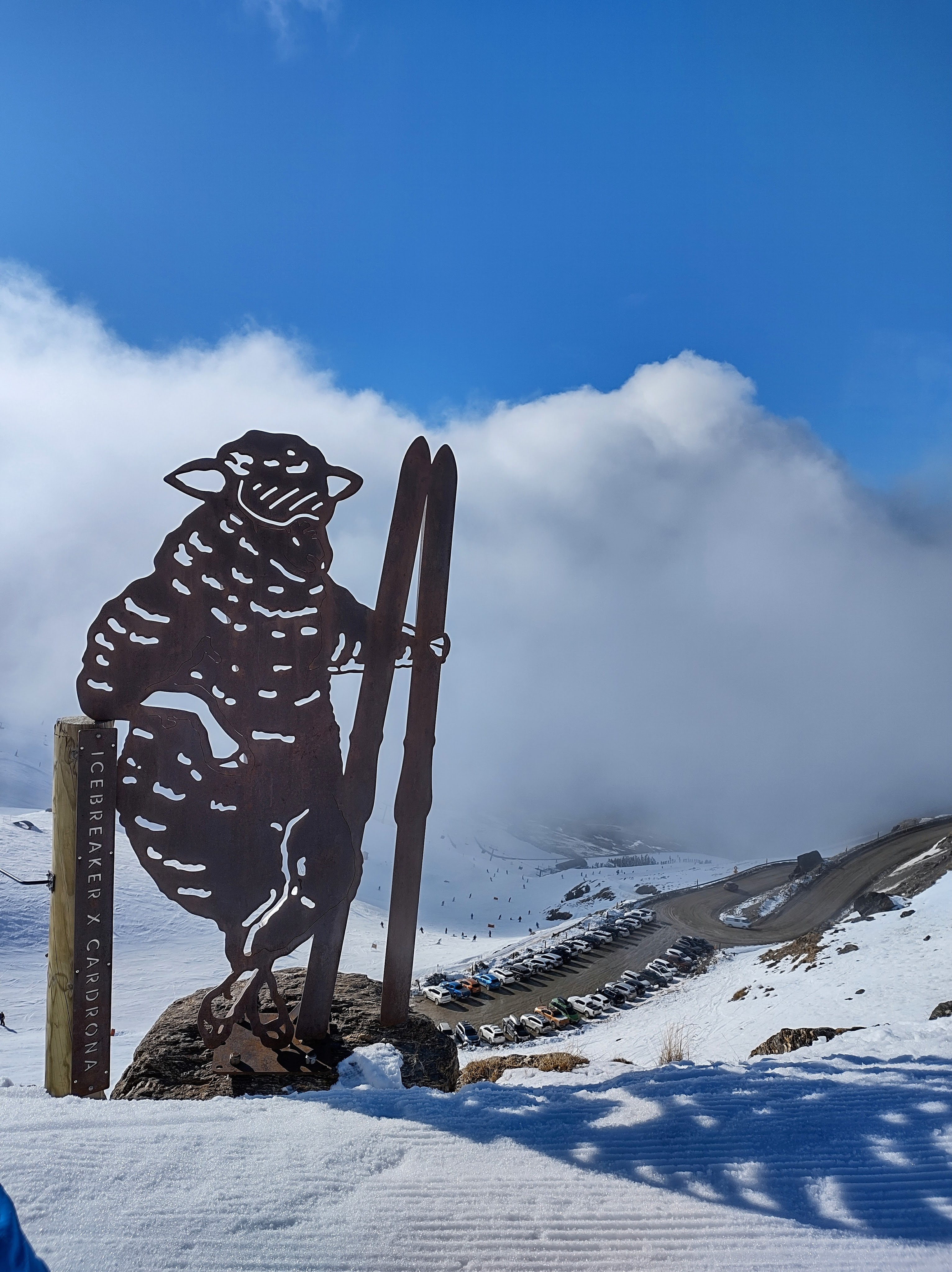
Image

A rocky cliff with a vague track carved jaggedly upwards. The sign may as well not be there! Hands and knees in full action, we climb the side of The Mount, keeping our heads from swooning as we glance down the sheer drop to the Pacific ocean below.

Finally, the top is in sight. Staggering up over the edge, and feeling pretty glad to have our feet back on solid ground, we catch our breath, hands on hips and throats thrust at the sky. We pass a random picnic bench (how did it get there?) and under an arch of trees, and before us, a spectacular view unfolds.      

Image

You can see Mount Maunganui Beach on the left, famous for its surf and 20km stretch of beach. On the right is Pilot Bay, the humble harbour beach, which faces inland towards Tauranga city port. In the distance is Papamoa and the Papamoa Hills rising up from the horizon. Then there’s the little mound of rocks and greenery jutting out from the beach on the left – that’s Leisure Island. You can walk out to the rocks at the end and feel like you’re floating in the sky. 
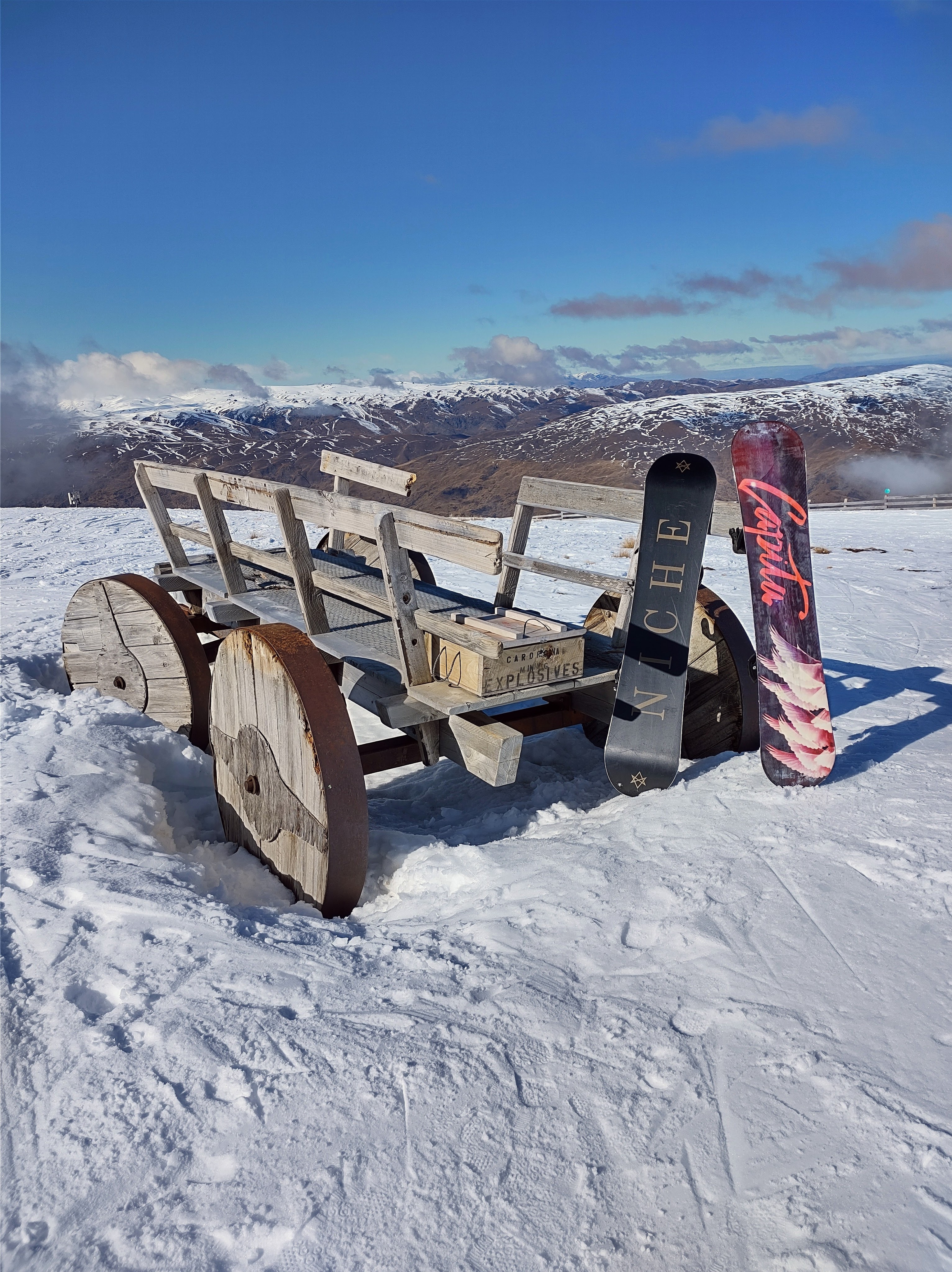
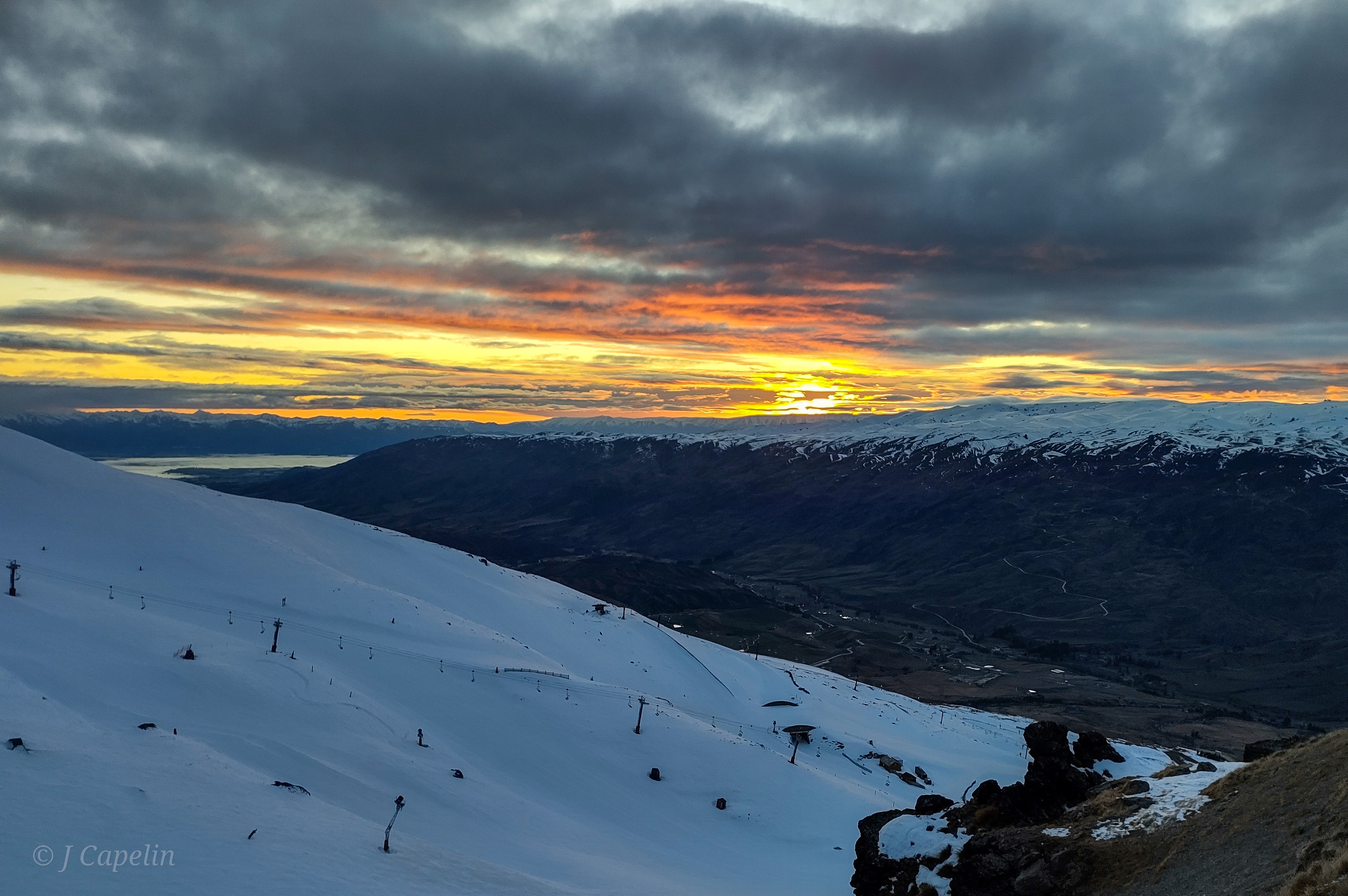
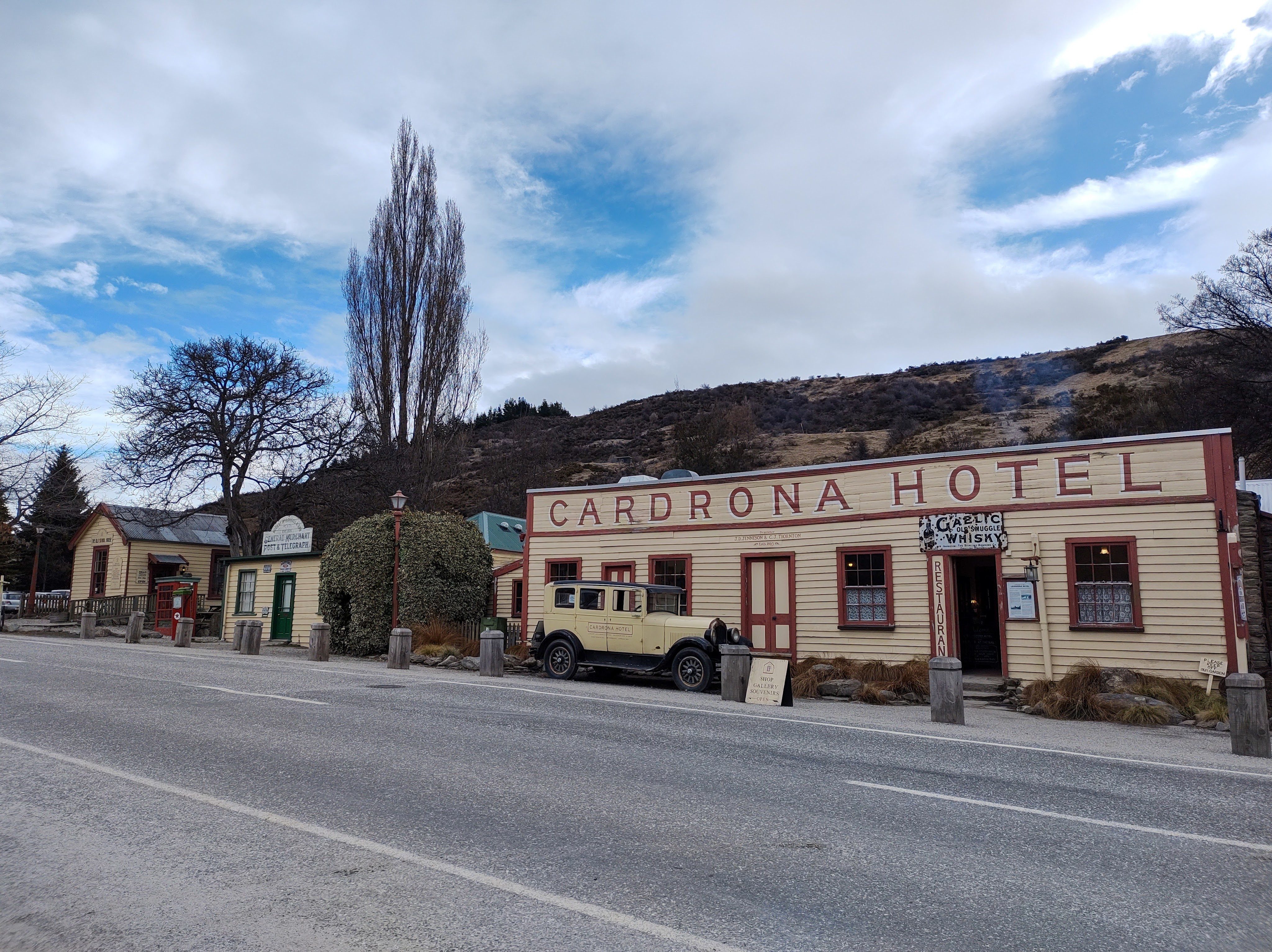
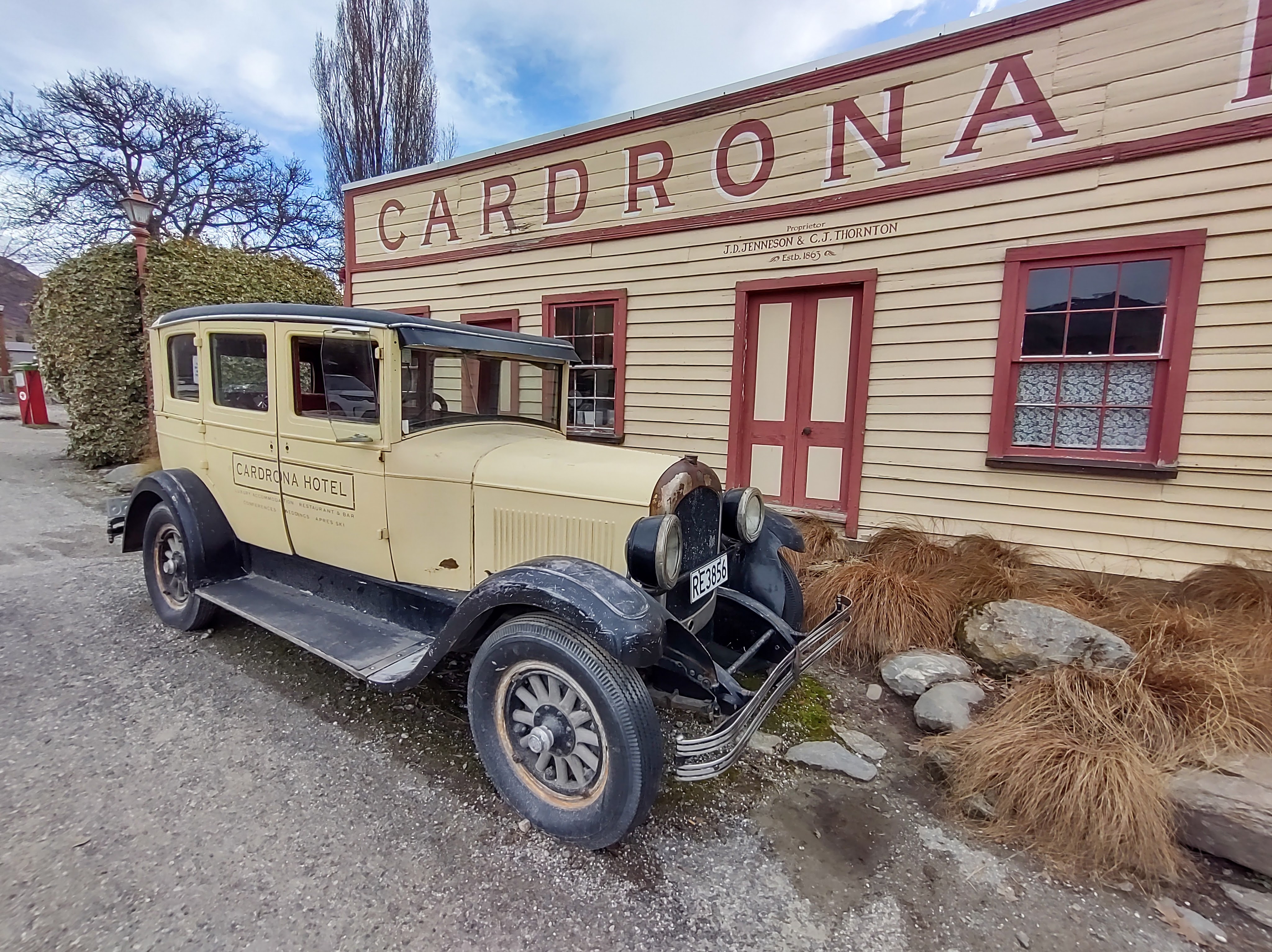
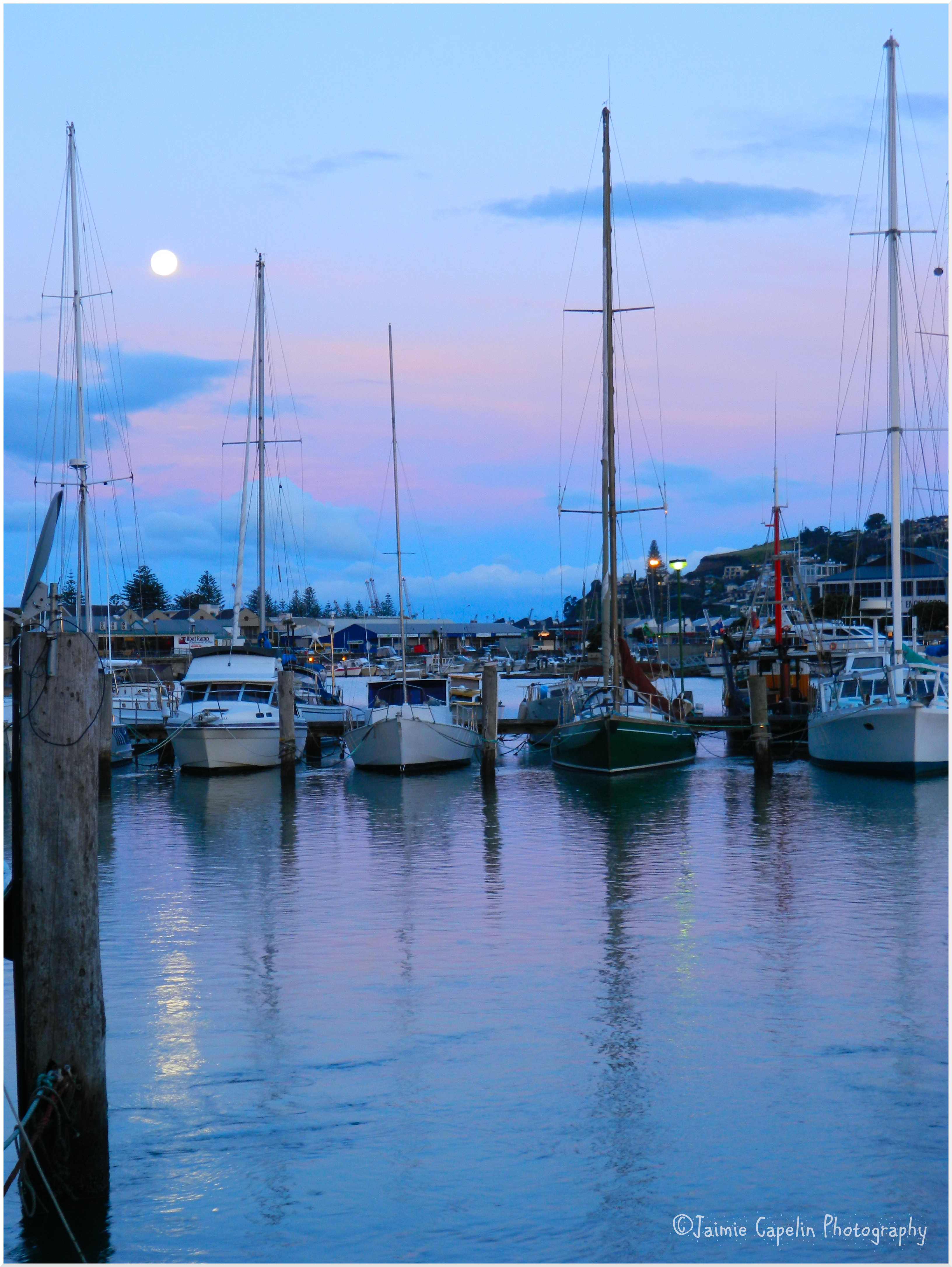
I touch the trig at the top of The Mount, which marks the highest point, just as a ceremonial ‘I made it to the top’ sort of thing, and then we venture back down again… a slightly more sensible route this time. 
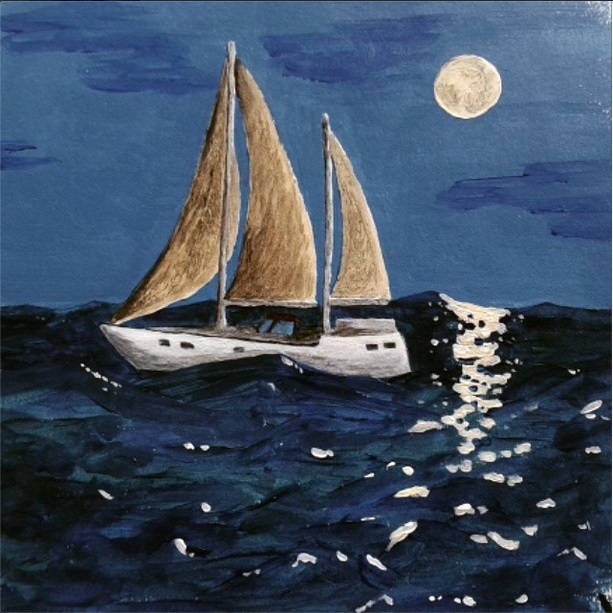
Image

“Of course, there’s the coming down too” – Tiggers Don’t Climb Trees 

Twisting back around the side of The Mount, feeling almost as though we are about to walk off the edge of the Earth, we give our knees a good pounding, greet some more sheep, and take the scenic route back towards Pilot Bay.  
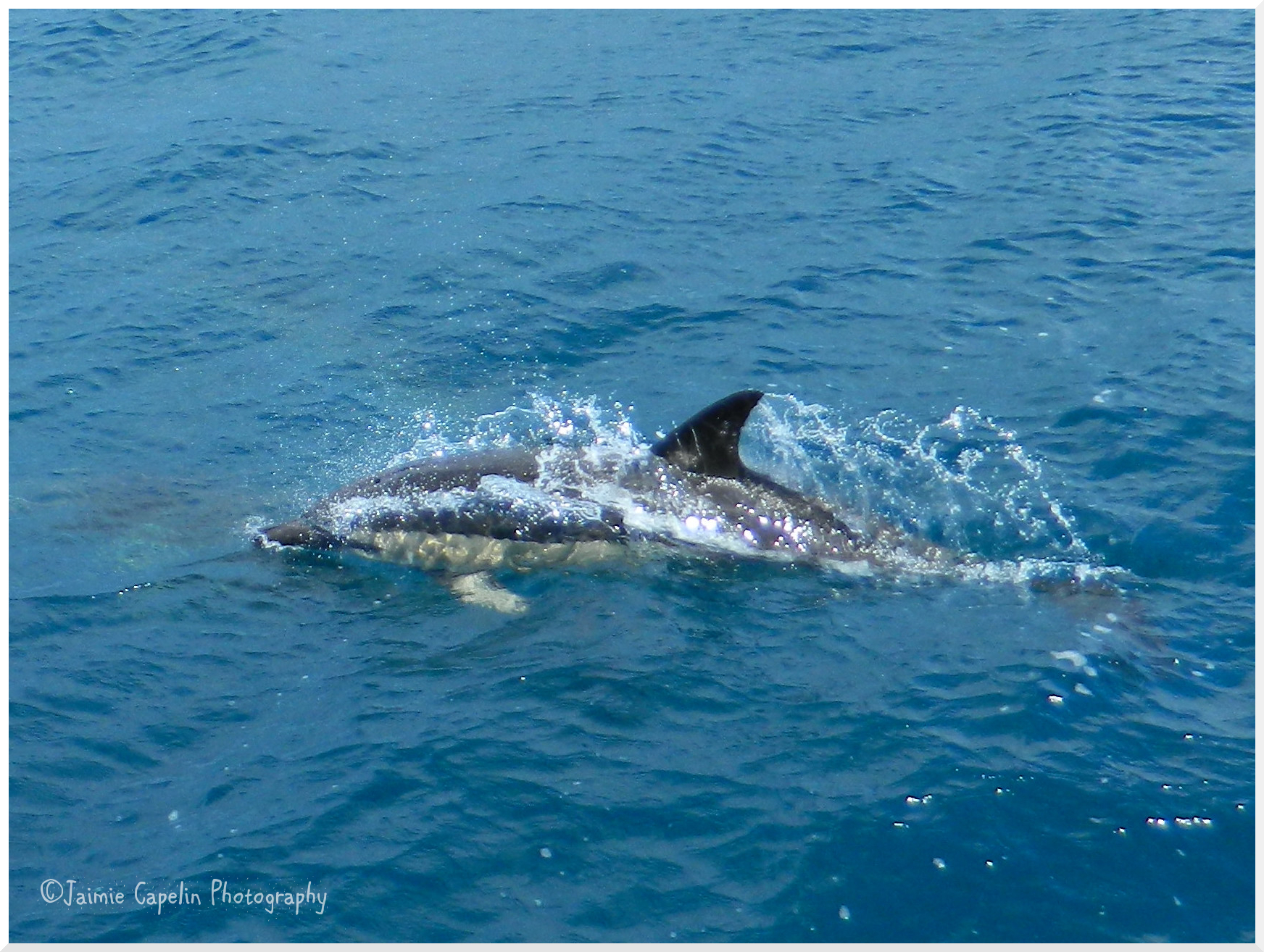
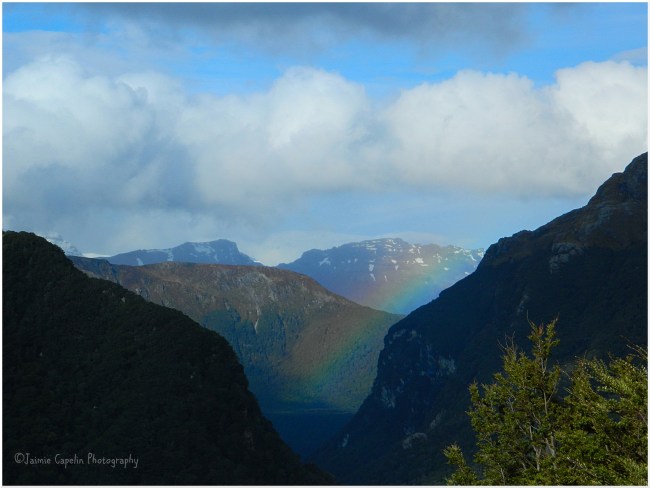
Many an afternoon has been spent walking around Mount Maunganui, browsing the funky high street; reading on the beach; exploring and mouse spotting on Leisure Island; swimming and people-watching … it’s only three bucks away, or a scenic bike-ride, and the perfect place to be on a sunny afternoon with nothing to do.   

The Mount has a population of around 30,000, and the town is well equipped for young people and holiday makers, with cafes, bars and surf/skate shops lining the ‘mainstreet’. Mount Maunganui Beach thrives from day-to-day with various water sports: surfing; paddle-boarding; kayaking; swimming… and you certainly won’t fail to see a handful of tourists strolling or making their sunbeds on the sand.

Stick around for less than five minutes and you are bound to see hang gliders soar from the top of The Mount: giant arcing shapes that weave and somersault across the sky, landing in a cloud of sand on the beach nearby. In the evenings, the town’s long boarders congregate by the beach and take over the road that eventually leads towards Papamoa, and they skate barefooted without a care in the world.