Nakasendo Trail pt.1 – ‘Samui’ in Ancient Japan

Work had come to an end. The snow was melting, and the ski lift queues had disappeared. The season was over, and it was time to leave Jimmy’s House in Hakuba, with all its inhabitants the winter had collected. Moving out was sad, saying goodbye to the family of strangers I’d adopted over the last 4 months, all going separate ways; but it wouldn’t be bye for good.

The Nakasendo Trail is the ancient road between Tokyo and Kyoto, which was used by Samurai and merchants in the Edo era, between the 1600s and 1800s. Small parts of the old road still remain intact, and are open to tourists to hike and experience all year round. Mic (also from Jimmy’s House) and I both desired to backpack the trail, so we set off on our adventure at the end of the snow season in mid-March…

~ Camping in Matsumoto ~
PhotoGrid_1528323906118.jpg

Road to Matsumoto

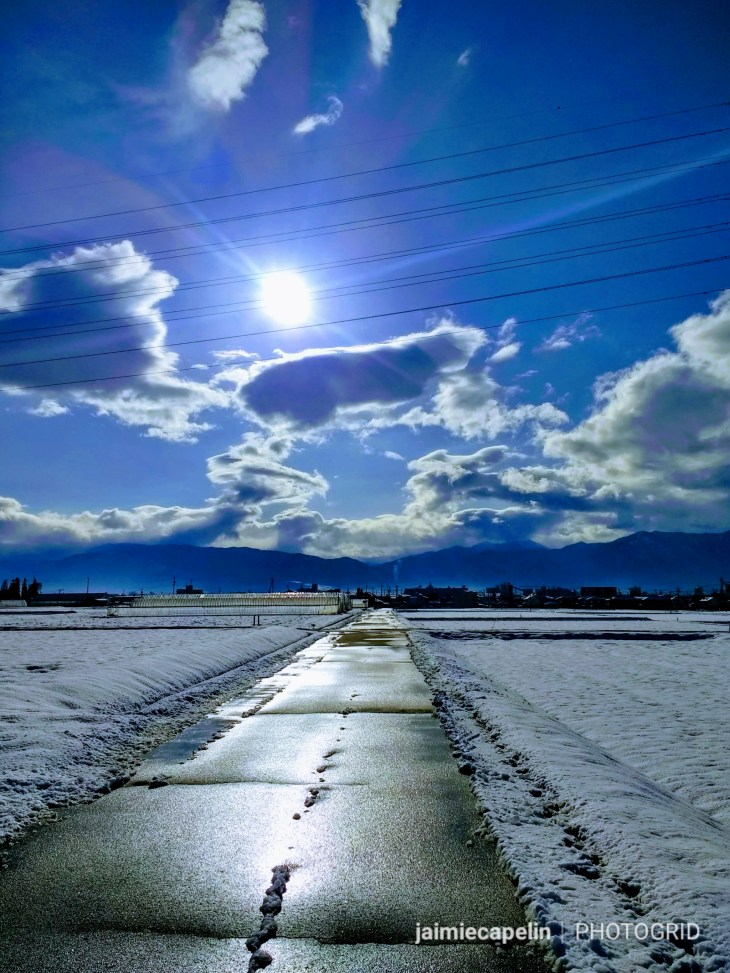
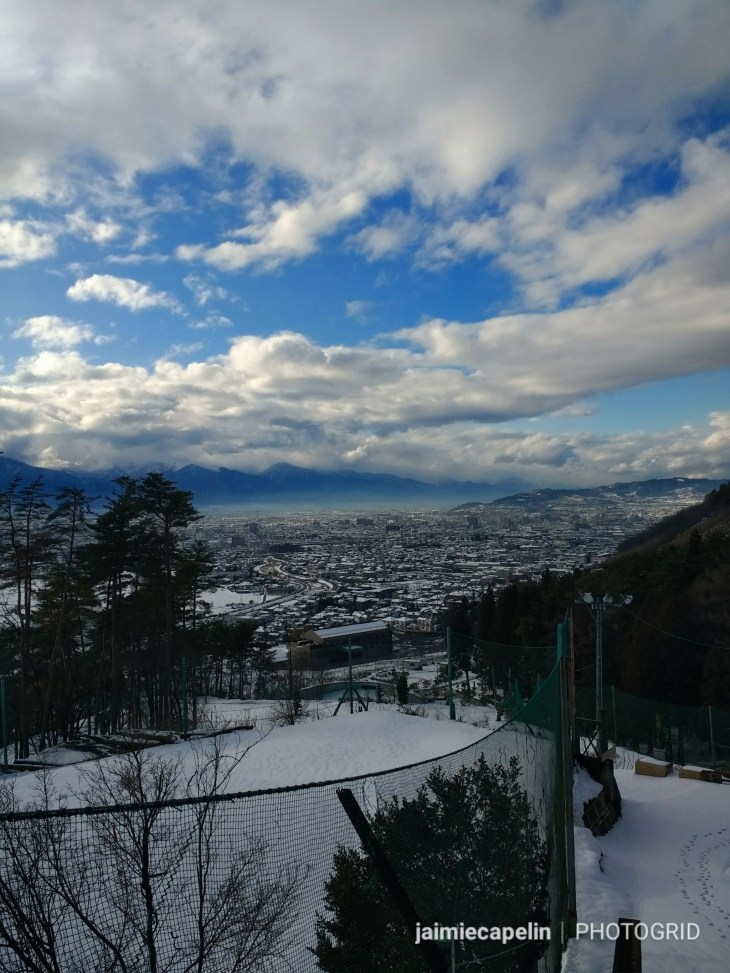
Somewhere on a hill near Minami-Matsumoto Station, across a vast stretch of paddies and crops, we set up camp. Our view was of the Matsumoto suburbs across the valley, to the dramatic mountains on the other side. Mic and I had left Jimmy’s House, catching the 12:30pm train from Kamishiro station to Matsumoto, with fellow housemates, Gerry, Cam and Zac somewhere closely behind. (Zac had recommended the camping spot, and the three of them were to meet us there on their bicycles, commencing their own bike-packing journey.) We’d walked for around 45 minutes in the warm sunshine through a network of rice fields until we reached the foot of the mount. Passing two shrines, and some of the first cherry blossoms of the season, we climbed the steep, snowy path to the plateau, which was to be our home for the next two nights.
PhotoGrid_1528323931733.jpg

Room with a View

As dusk began to creep at the edges of the horizon, and our camp set up, we gave up waiting for the three boys, assuming they’d found somewhere else for the night, and we walked in twilight to the nearest 7eleven convenience store for dinner. An hour later, we traipsed back up the hill to our tent, finding ourselves following three tyre tracks in the snow! “Bikes! Three of them!” Mic exclaimed, and as we climbed, torch light beamed down the hill, and we heard Zac, Cam and Gerry cheering.

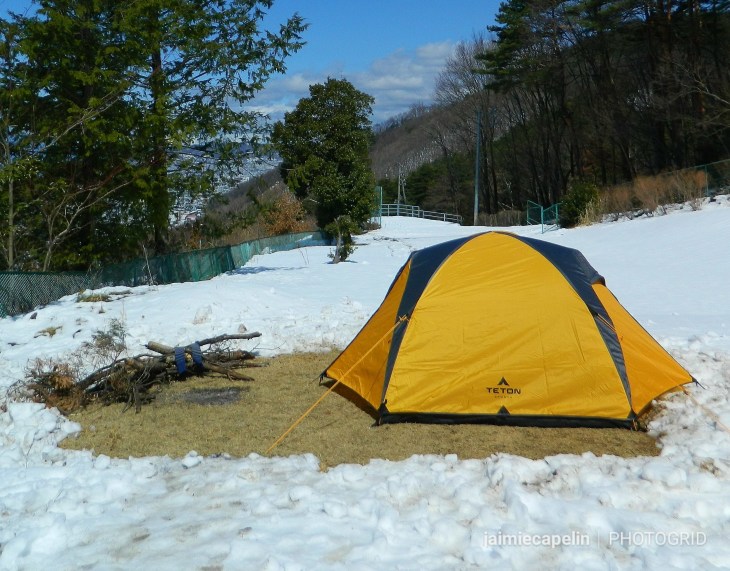
Our tents floated on the snow, lit from within like wish lanterns, with the stars strewn across the clear sky competing with the lights from the city below. Sitting around Mic’s campfire, spinning yarns and trying to keep warm, one by one we turned in, and endured our first freezing cold night, sleeping on the snow.

That was the coldest I have ever been in memory. We’d somehow convinced ourselves that snow was an insulator, but alas. It was anything but! The boys were all up at dawn, having given up on sleep; Zac, Gerry and Cam preparing for an early departure on their bikes. Meanwhile I was still huddled in a ball in my sleeping bag, with some deluded belief I’d stop shivering and fall asleep soon. Though they were the worst two nights, the mornings that followed were beautiful.

The sun rose behind the trees, slowly spreading a thawing warmth over us. I sat in the tent, packing and readying for the day ahead, while Mic did his yoga stuff outside on a patch of grass. Two birds of prey circled above us, calling to eachother, gliding and diving gracefully against a sapphire sky. The town clocks chimed from somewhere below, as the sun melted the snow, and all felt peaceful. This is a very tranquil, happy place in my memory.
PhotoGrid_1528324032933.jpg

First Camp

~ Matsumoto Castle ~

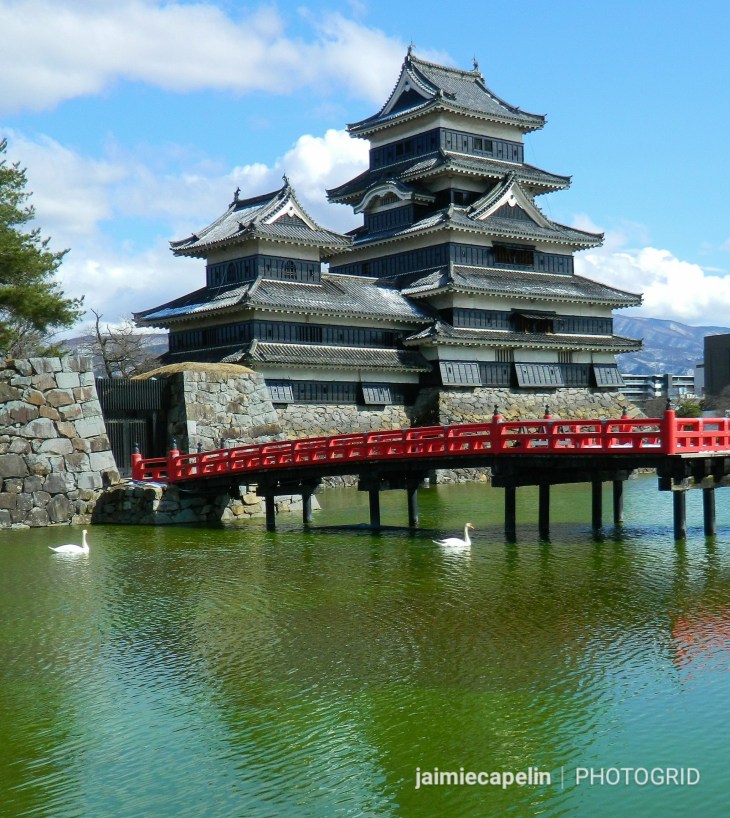
Standing bold between water and mountain, Matsumoto-jo is a premier historic castle, dating back to 1594, and is a Japanese national treasure. You can walk around the castle’s moat for free, passing beneath the impressive defensive gate, and through the park with a pictoresque red bridge that arches over the vibrant green moat. As with many important buidings, hundreds of Koi swim around in the waters, multi-coloured, enormous and gawping. As well as sharing their name with a Japanese synonym for ‘affection’, Koi are an important symbol of strength. In Japanese folklore, the little Koi in the Golden River wanted to swim in the Blue River, beyond the Great Waterfall. Any fish that showed the courage to swim upstream into the waterfall, grew wings and was transformed into a dragon by the gods.
PhotoGrid_1528323970696.jpg

Matsumoto-jō

We wandered through the sunny city and met with another Jimmy’s Housemate – Jake, who took us to an onsen before dinner.

~ Japanese Onsen ~

These luxurious public bath houses are definitely something you should try at least once! I have to admit, it took me ages to go to my first onsen, because I was nervous. After all, you have to be naked! Men and Women are separated in public onsens: women enter through the red veil, and men enter through the blue. When I finally went to my local onsen in Hakuba Goryu, I had the whole place to myself, which is great if you’re feeling uncomfortable about waltzing about in a public space with no clothes on, but it meant I had no one to follow and learn the etiquette from. So, when I strolled into the onsen in Matsumoto with my towel wrapped around my torso, with at least 20 Japanese women – who had clearly left their towels in the locker room – pretending not to look at me, I felt very Gaijin! Quickly stuffing my towel on a nearby shelf and submerging myself up to my neck in the hot water, I subtly watched the other women. They were simply relaxing, washing, quietly chatting and laughing among themselves, totally naked and totally comfortable, not judging another soul, and I quickly realised I had nothing to worry about. I thoroughly enjoyed the array of different spas, including a jet stream massage seat, and multiple outdoor spas. Relaxing in an outdoor lounger, submerged in warm water beneath a beautiful magnolia tree, I watched dusk fade the sky, breathing a cool breeze on my face.

~ Yakitori and Beer with Jake ~

I met with Jake and Mic in the lobby, and we headed across to a nearby Yakitori resaurant. Yaki means grilled, and tori means bird, but Yakitori can cover just about any meat or vegetable that can be skewered and grilled. We ordered everything on the menu and washed it down with a mug of Asahi, raising our glasses to ‘Kampai’ (cheers) to good food and good times.

~ A Train to the Middle of Nowhere ~

Our second morning in our tranquil camping spot was severely interrupted… I’m going to be totally honest here – if you’re a fellow traveller, and you’re planning on free camping, that’s great! We searched the web on free camping in Japan before embarking, and it is accepted, provided you are respectful and discreet. But, DO NOT LIGHT A FIRE, unless you are in a place with a designated fire pit, or you could be fined up to 30,000yen. We learnt this the hard way. Now we know.

Leaving Matsumoto on the sunny March morning, trudging through rapidly melting snow, we caught the train on the Chuo Mainline Railway to Kiso-Hirasawa. It felt like we were back in the Hakuba Valley, where the tracks cut round mountain bases and through evergreen trees, passing occassional communities of a few houses in the woods.

A cold wind blew, though the sky was deceivingly blue. There wasn’t a soul in sight as we got off the train, yens at the ready to pay at the ticket booth in the station, but there was no one there! The tiny village of Kiso-Hirasawa was deserted too, and we found a small park nestled between houses, to sit and enjoy our 7eleven sandwiches out of the wind. The village had a narrow street lined with old Japanese buildings – which were all closed for lunch – Mic likened it to Nizawa Onsen: another ski town, famous for its hot springs. The street eventually met with the main road, adjacent to the Kiso river.

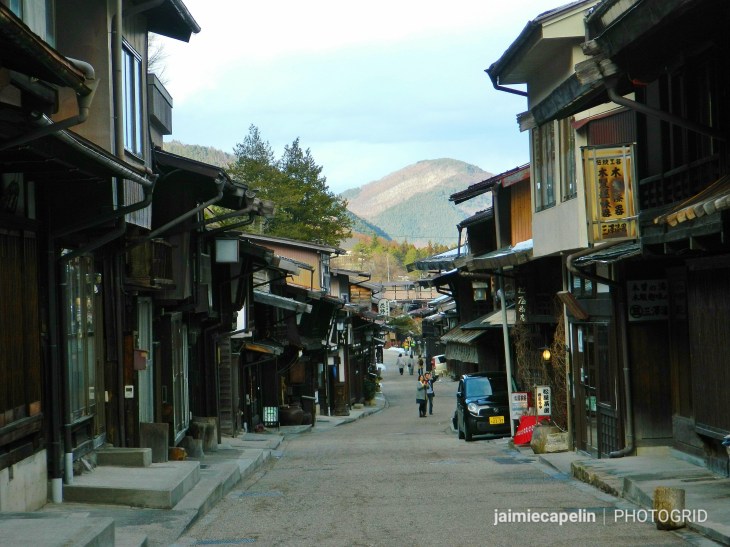
We walked along the highway to the next town – Narai – which took around 30 minutes, and while the walk was rather dull, with trucks passing at high speed and our backpacks cutting into our shoulders, the traditional Post Town was worth it on arrival!
PhotoGrid_1528324048403.jpg

Evening in Narai-juku 

Narai (Narai-juku) is the midpoint of the Nakasendo highway, which connected Tokyo and Kyoto in the Edo era. It is also the northern most Post Town, and still resembles it’s authentic purpose from that period.

~ An Unplanned Detour ~

I really wanted to stay and emerse myself in the ancient Japanese culture, but most places were already closed, and with no space to camp, and no available accommodation, we were forced to move on for the night. The man at the Narai tourist information centre was very helpful, firstly telling us we were crazy for wanting to camp because it was “samui” (cold), and secondly recommending a nearby Chinese restaurant where we could eat before our journey. Mic found a guesthouse two stops away on the train, and although it was a little more than our desired budget, we knew we’d thank ourselves for it later. …Or would we?

Darkness had fallen fast and heavy by the time we’d had dinner, and we caught the train to Harano. “It’s about an hour’s walk from Harano station,” Mic said, consulting Google Maps on his phone. Rubbing my sore shoulders, I smiled and nodded. “No problem!”

More than two hours later, we more or less collapsed through the lobby. The guesthouse was nestled in mountain peaks, at the top of a very long, very steep, very dark winding road. We’d hiked it in the pitch black of night, with just the aid of my head torch, passing nothing but ominous woodland, a few uninhabited houses, and what sounded like mountain rivers and rapids in the dark. Both of us ached; my shoulders and hips were bruised from my backpack, and I was very concerned about the rest of my backpacking plans. It felt like the longest two hours of my life, and there were moments when I didn’t know if I’d ever make it to the guesthouse.

The worst feeling of dread, and fear of letting us both down, was quickly turned into the best feeling of relief, and hope yet. A hot bath, and soft, white linen, fresh on an actual bed with an actual mattress, and a cosy wall lamp mounted above. My head hit the pillow and I was gone.

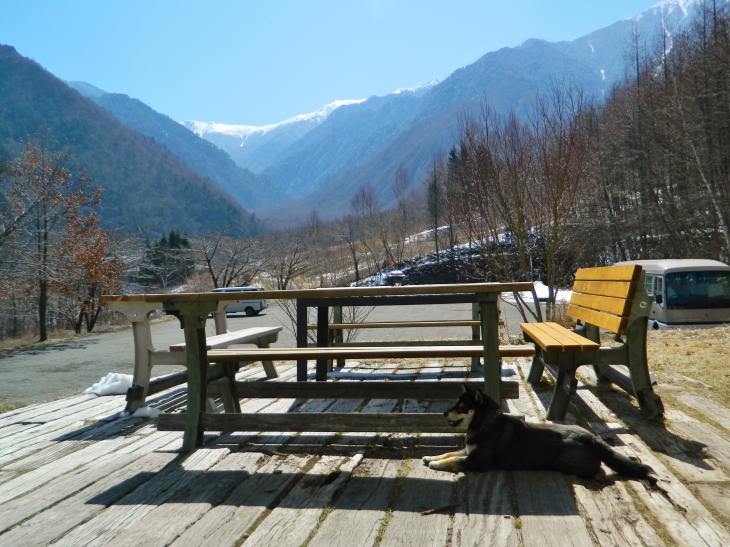
Morning came, bringing fresh sunshine into the room through the white curtains. We made the most of the included breakfast, realising as we stared out the dining room window, that we were quite literally somewhere in the mountains. A young shiba-inu who’d barked at us the night before, was sunbathing on the porch, and the kind hotel owner agreed to drive us back down the mountain to the train station.
DSCN0204.JPG

Sunbathing Shiba-inu

We drove for at least 20 minutes, past peaks and ridges and enormous dams; rivers cascading down into the valley. Our host pointed out a huge, white-capped mountain peak – Mt. Ontake – the second tallest active volcano in Japan, at 3067m. He told us we were in the Central Alps, and we would have had quite a long walk ahead of us to get back on track!

Back at Harano station, we soaked in the warm, valley sun, and gazed up at the mountains we’d hiked the night before, in awe of ourselves! Had it been light when we arrived and we’d known that was where we were going, I don’t think either of us would have even attempted it! The train took us back to Narai, and we continued where we left off.

~ Narai- juku ~
PhotoGrid_1528753052347.jpg

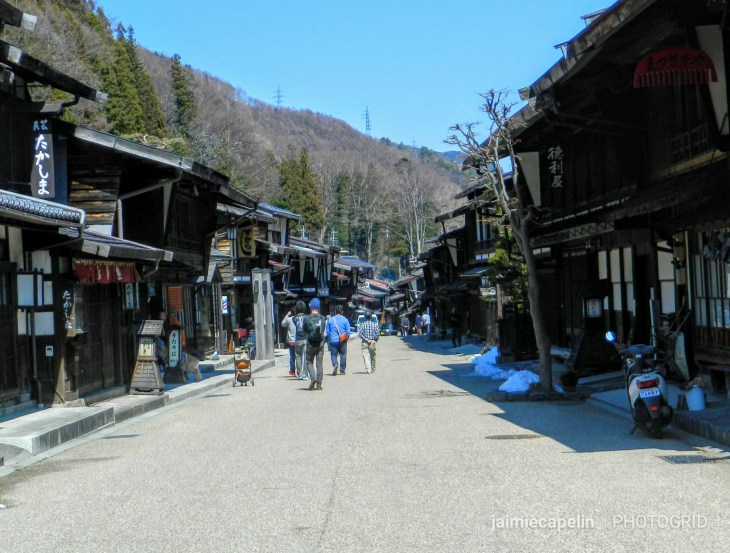
Exploring Narai-juku

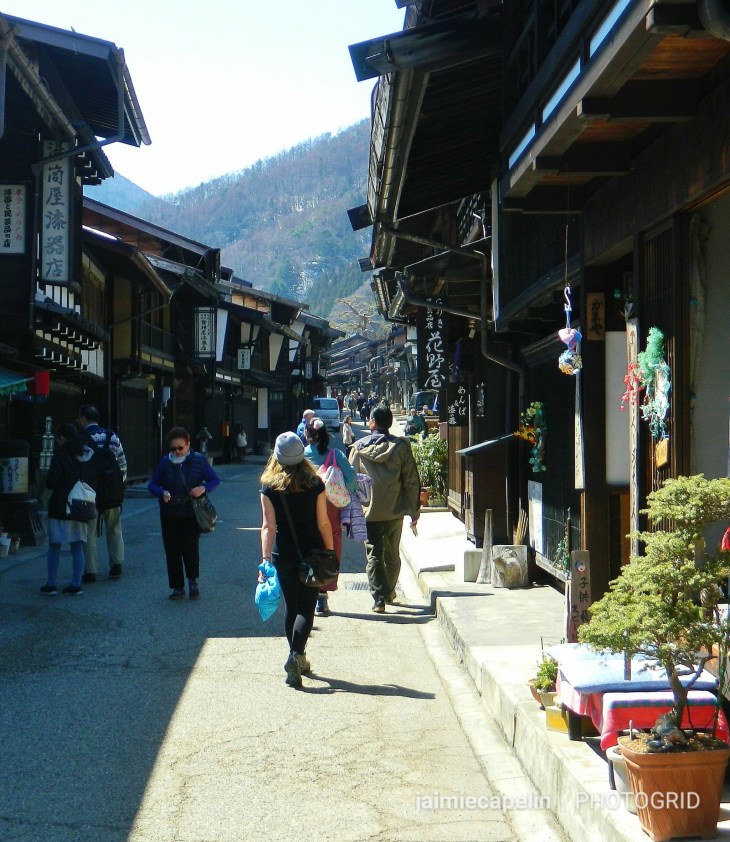
The little Post Town was thriving in the morning sun. All the little wooden shops were open, and tourists were bustling up and down the narrow street, checking out the authentic goods for sale. You can buy lots of traditional, hand crafted lacquerware in the Kiso valley, as that is the region’s oldest trade, and you’ll see it displayed in almost every shop you pass in Narai, as well as homemade flavoured rice crackers, perfect energy snacks for hiking.
https__lh3.googleusercontent.com_-cIYjCuzKt0c_Wx7nv6X-lUI_AAAAAAAA1Iw_fqO8Utr5bLQC4hr271SPWIH-IPdzPamtACHMYBhgL_DSCN0201.JPG

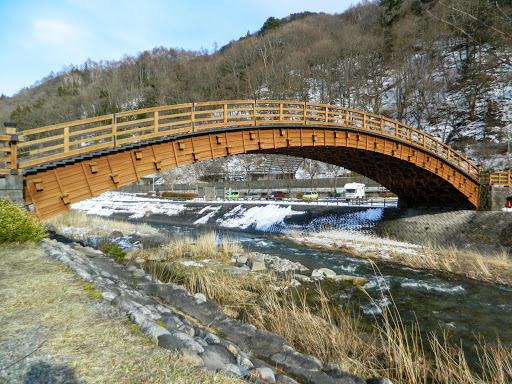
Narai Bridge

We checked out the arch bridge, inspired by a Japanese drum, and built out of 300yr old Cypress trees, and walked the length of the town, passing six ancient water fountains. We originally thought these fountains were linked to hidden shrines, but on further research, discovered that they are the original water fountains that supplied water to travellers and villagers in the Edo era, and are still very much used today.
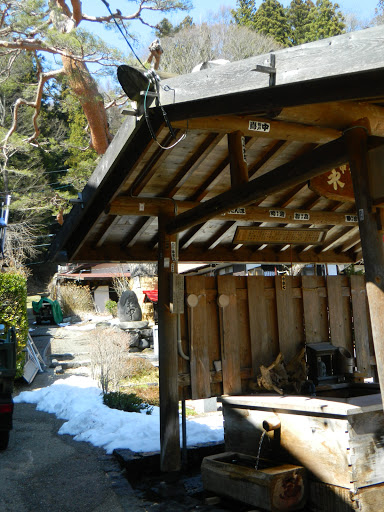
https__lh3.googleusercontent.com_-eiqipBBPQ88_Wx7nv6TMHrI_AAAAAAAA1Hc_RqoGFleOGekwOqcyxO9qmUmMjP9Uxzd4QCHMYBhgL_DSCN0225.JPG

Traditional Water Fountain

Finding a tiny coffee shop along the street, with a door shorter than me, and flowers in baskets decorating the exterior, we decided to go in. We enjoyed some fresh drip coffee and marvelled at the miniature architecture inside the old building.

After purchasing some rice crackers for the road, we headed to the far end of Narai-juku, following signs for the Torii Pass.
PhotoGrid_1528324074432.jpg

~ Torii Pass ~

The Torii Pass crosses the mountains between Narai and Yabuhara – the next Post Town on the Nakasendo Trail – and is a steep ascent. It is most popular to do the route in the other direction, as it is slightly more downhill, but it made sense for us to do it backwards from our starting point in the Nagano Prefecture.

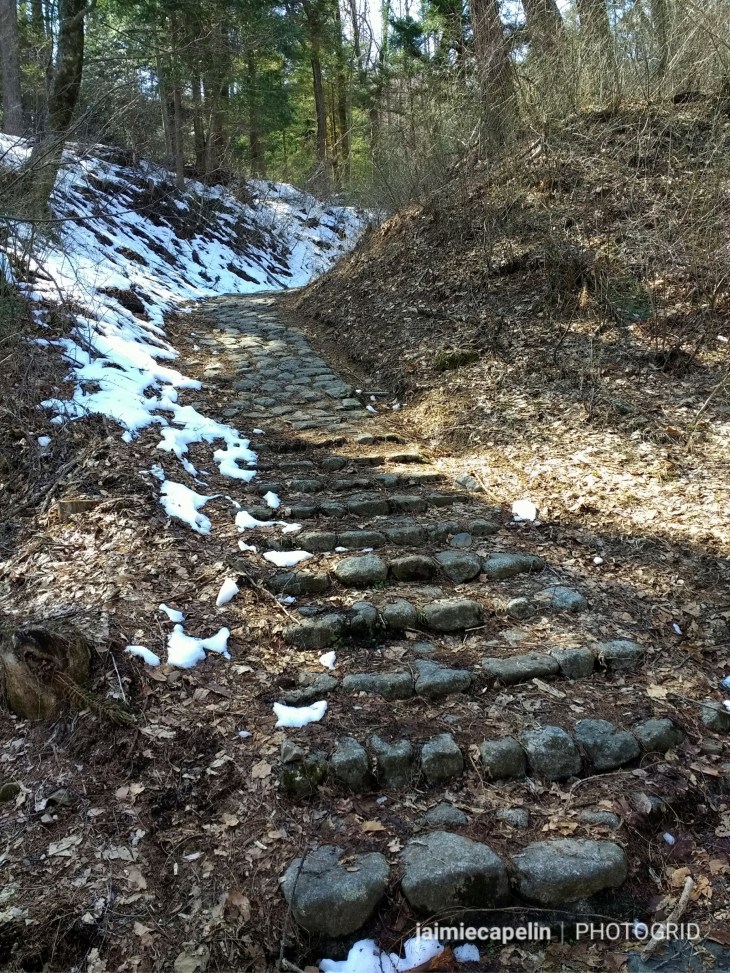
Leaving from Narai-juku late morning, we hiked up the stone-cobbled path, ascending into evergreen woodland, and crossing a gully with a river flowing down it. There was compacted snow on the path from the get go, so with our heavy packs on our backs, (Mic and I had swapped for the day, as his was a slightly better fit, even though they weighed the same) and careful footing, we were slow-going.
PhotoGrid_1528843477737.jpg

Start of the Torii Pass

Despite the snowy alpine altitude on the cusp between winter and spring, the sun beat down through the trees and we were in shorts and singlets in no time! We passed some Japanese locals who laughed at us, exclaiming that word again, “samui” (cold) while in their thermal fleeces, but in our defence, they weren’t carrying 18kilos on their backs, and they were going down hill! Another couple of hikers passed by, telling us to keep our eyes open for snow monkeys, as they’d just seen some crossing the gorge.
PhotoGrid_1528843497934.jpg

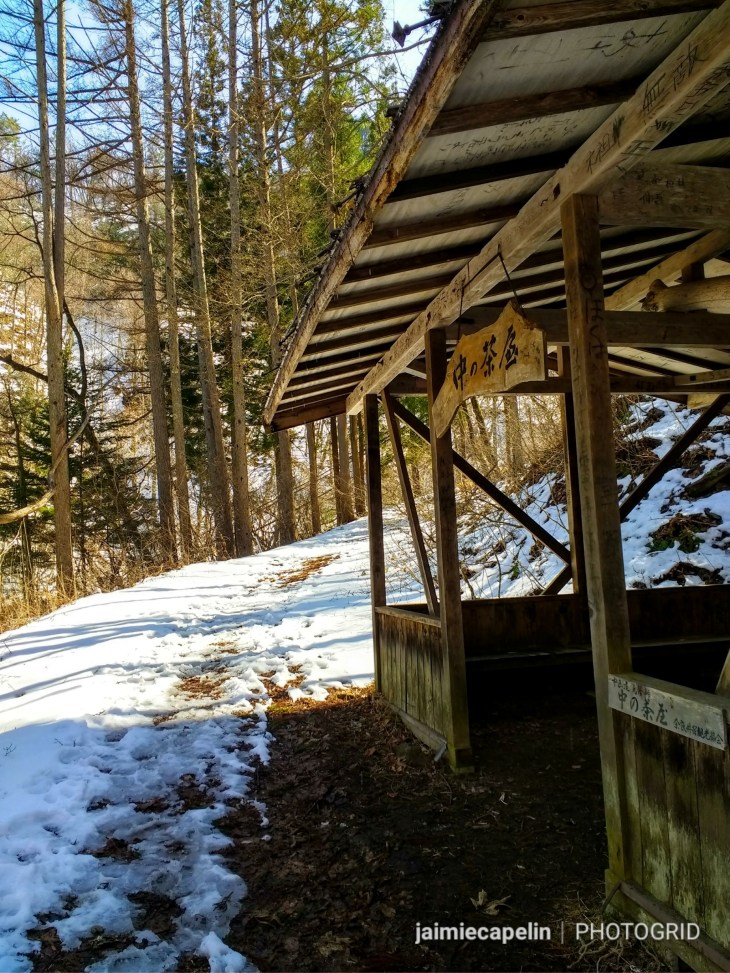
Old Rest House

Passing an original rest house – an old wooden structure like a bus shelter – we paused for a drink before continuing up the strenuous footpath. We turned a corner, and sure enough, there was a snow monkey, clinging to an overhanging branch right beside us, looking right at us before fleeing. Then I started noticing them everywhere, flying down the banks by the dozen, scampering over logs across the river to the other side, screaming to each other, babies in tow. Mic wasn’t as lucky – he wasn’t wearing his glasses.
PhotoGrid_1528843515875.jpg

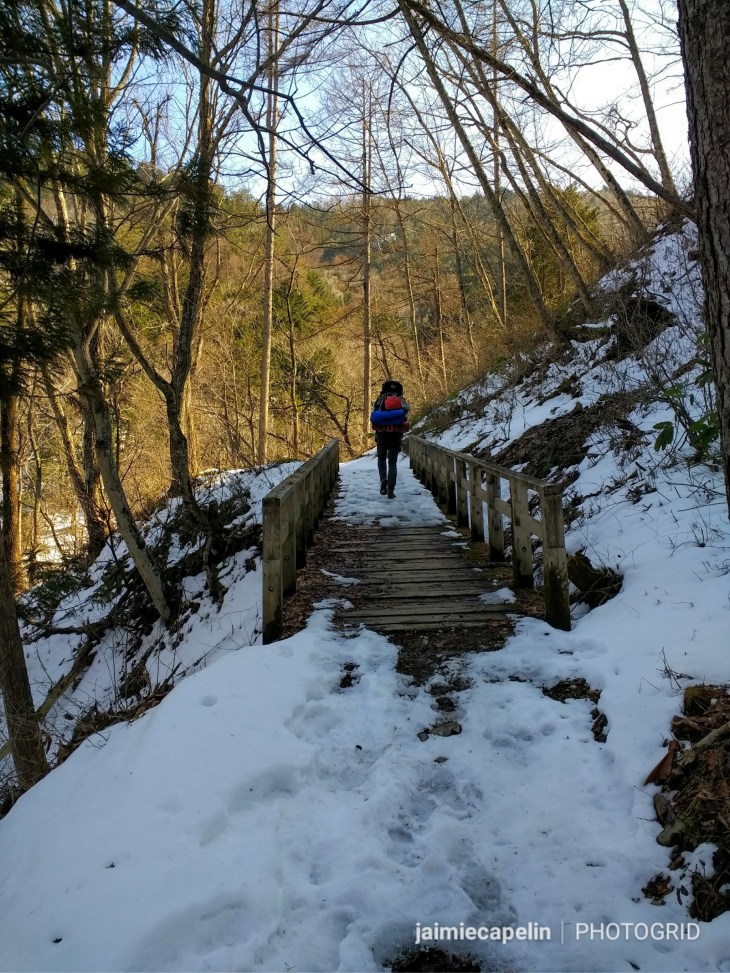
Climbing the Torii Pass

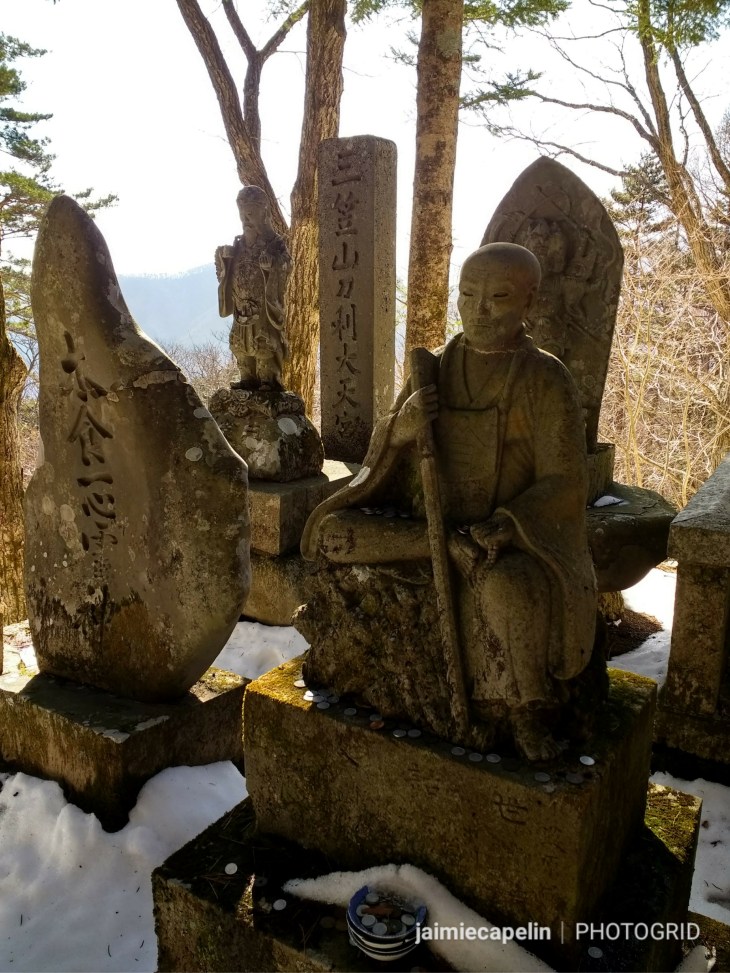
The path zig-zagged higher and steeper yet into the reaches of the mountain, snow and ice underfoot, up to the ridge where the road forked and began to descend to Yabuhara. From the path, we saw a big, stone torii gate, standing atop a mound covered in cedar trees. Climbing the stone steps up, we discovered an ancient, sacred Shinto shrine, overlooking Mt. Ontake volcano in the distance. There is a collection of ancient structures, surrounded by stone figures of samurai and monks, each figurine scattered with silver yen, and silhouetted against the golden mountain backdrop, in the light falling through the cedar trees.
PhotoGrid_1528843545766.jpg

Ancient Monk Statue

The path curved downwards, past postcard views of the Kiso Valley, along treacherous puddles of ice and frozen moss, until it flattened out into a cobbled woodland path, eventually widening into a road that meets up with the highway at Yabuhara. We’d successfully completed the first leg of our Nakasendo journey.

~ Yabuhara ~

Evening was approaching early as the sun threatened to disappear behind a peak, leaving us in the shadow of the mountains. Our backpacks were heavy, our bodies tired, and ducking down a steep, narrow residential road, Mic and I could almost taste dinner on our tongues, following the Westernized signposts for Yabuhara Post Town. Mic had already spotted a sign for a soba noodle restaurant, written in English, and was hungrily saying that he could smash a bowl of noodles!

We arrived at the top end of Yabuhara’s main street, to find it deserted, and the soba restaurant closed. “That’s alright, we’ll find something else!”

Yabuhara Post Town, like Narai, is a narrow, winding street lined with old wooden buildings. However, unlike Narai, it was more residential, with genuine houses, grocery shops, a clothes shop, a few barbers and a bottle shop. Everything was closed. We decided it was because it wasn’t 5pm yet, and usually restaurants open then for dinner, so we set off to find a camping spot.
PhotoGrid_1528927340229.jpg

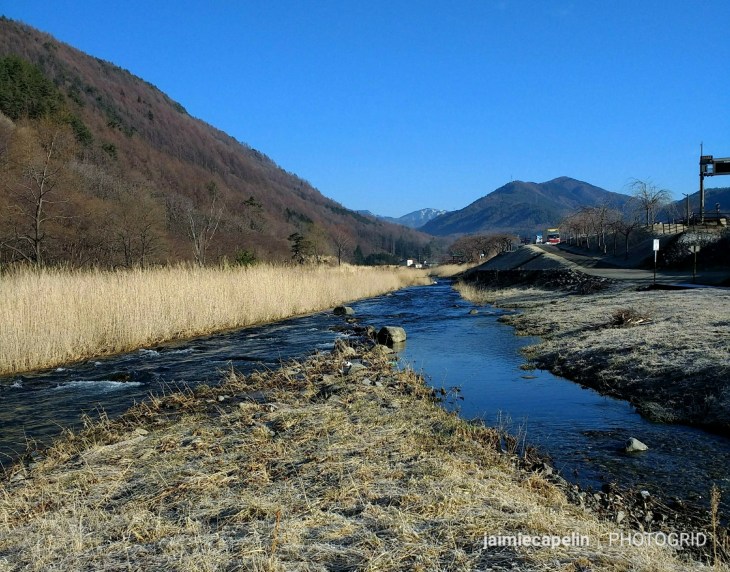
Second Camp

We scoped out an ideal patch on the river bank, and as we pitched our tent, a local dog walker stopped to ask if we were camping there. Mic and I looked at each other nervously, “Hai,” (yes) we responded, and tried to ask if it was alright: “Kyampu OK?” The dog walker wafted the question away with his hand, “Yes, yes, OK, OK!” making an ‘OK’ symbol with his hand. Phew! But then he laughed and shook his head, “samui!” (cold). We all laughed, and he wished us good luck and continued with his walk.

He wasn’t lying. The sun was setting and the temperature was dropping rapidly. Stomachs growling, we walked the length of Yabuhara – we hadn’t eaten since our hotel  breakfast in the mountains – even the traditional guest houses were closed. Concern growing, we came across a man who’d just stumbled out of a doorway leading upstairs to the sound of people laughing and singing. “Sumimasen!” (excuse me) Mic said, grabbing his attention, and asking him where we could find dinner. The man doubled over, laughing, shaking his head. “No dinner! No shop!” he said, and then, pointing up the stairs, “Drink! Come, come!” he insisted, and with a shrug, we followed him up into a little bar.

~ Dinner with the Locals ~

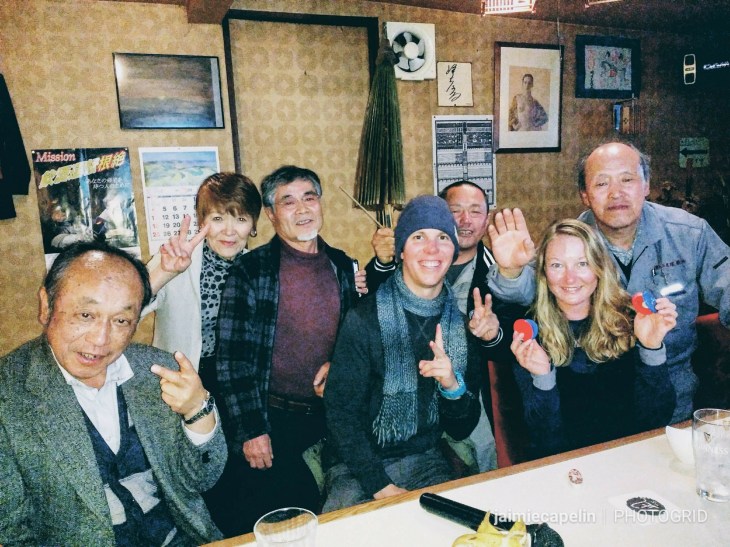
Five senior men sat in a line at the bar, each with their own entire bottle of Suntory whisky. The bar lady welcomed us, introducing herself as Mayumi, and the men all budged up so we could sit down between them. Mayumi poured us a glass of whisky each, donated kindly by the man I’d sat next to, and gave us both half a banana. She asked if we liked Yakisoba, and 15 minutes later, she produced two large bowls of noodles, filled with vegetables, seafood, pork, and delicious flavours, and watched with a warm, satisfied smile as we tucked in. I felt like a lost orphan in a story who’d just been taken in by a sweet grandmother!

The evening went on in swigs of whisky, with several phonecalls to wives, telling them to set up the spare beds for a couple of Gaijins they’d just found, repeating that word “samui” over again – too cold to camp. Then the microphones came out, and suddenly it was a karaoke bar! The old chap next to me did a Frank Sinatra duet with Mic, while I clacked some castanets, stifling my histerics!

As the hour grew late, Mic and I put on our jackets and asked Mayumi-chan what we owed. She looked at the chaps, and they all agreed, nothing! A gift from them! Shaking hands and saying “Arigato Gozaimas” (thank you very much) many times, we bid farewell to our new friends, overwhelmed by their limitless kindness, and made our way back to the river for another chilly night. At least there was no snow.
PhotoGrid_1528928011558.jpg

Dinner with the Locals

… To Be Continued …
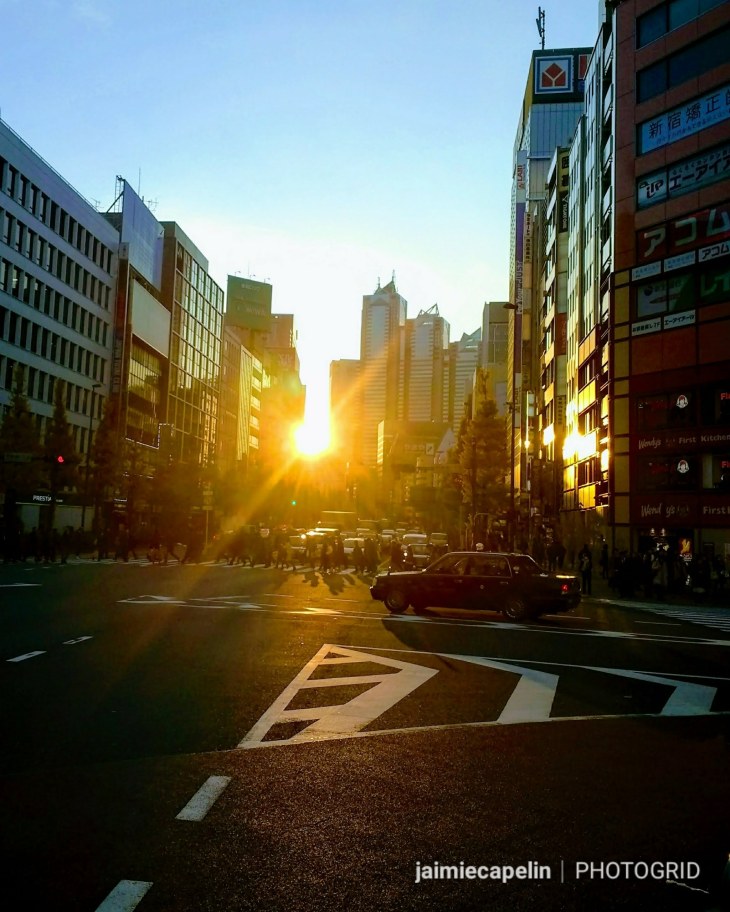
Tokyo – Memoirs of a Gaijin

 Gaijin – literally means ‘foreigner’, and contrary to popular belief, is not intended to be insulting.

After around 12 hours of being airborne, I touched down at Narita Airport and was instructed to go and wait in a small side room at passport control. Bleary eyed and dying for a shower, I observed a lot of exchanging of foreign words, and many different people asked me the same questions and scrutinized my passport, and after a long, anxious wait, I was presented with my Gaijin Card – my ticket to reside temporarily in Japan.

This is standard procedure if you are entering on a working holiday visa, and can take hours if it’s busy, so ensure that any onward travel arrangements are flexible. 

 Now, I’m a quiet country girl, and when I think of major cities, not only do I imagine noise and lights, polluting smells and dirtiness, and too many rowdy people, but I expect it to be EXPENSIVE! I was about to discover how delightfully wrong that preconception was. I met with Ash and Ellie in the airport, two snowsports instructors from England, who I’d eventually be travelling to Hakuba with for the winter season, and we made our way into Tokyo.

PhotoGrid_1525465443893

There are many budget-friendly options for transport to Tokyo from Narita, the bus to Shinjuku (right in the heart of Tokyo) generally being the cheapest. But because of the suburban location of our accommodation, it made sense for us to catch the Keisei train to Ueno. This took about an hour and a half, and the sun was shining hot on the backs of our heads, while we hugged our backpacks between our knees.

Like most major cities, Tokyo’s train network is pretty simple to get your head round. The main thing to watch out for when planning your journey is whether it is on the JR (Japan Rail), the metro, or another service, as they all use separate tickets. A typical Google Maps route will tell you what line each train operates on, but the most efficient thing to do is purchase a rail card, or ‘Passmo’, which can be topped up as often as necessary. These can be obtained from ticket machines at most stations, and will cover all train lines.  

Our hotel was a short walk from Minami Senju Metro Station, only three stops from Ueno. I was lucky to be travelling with Ash who had recommended the particular hotel for its brilliant value for money. We stayed in twin tatami rooms; comprised of traditional Japanese futons laid out on woven tatami mat floors. The sound of the busy city traffic echoed up from the road several floors below as the sun streamed in through the open windows. We chose our beds and settled our belongings, freshening up after our long journey, and headed out into the afternoon city sun.

There are plenty of accommodation options to choose from in Tokyo, so it’s probably best to decide where you want to be based and go from there. But often, you will find a tatami room in a hotel or guest house cheaper than a hostel dorm. Shoes are usually left by the front door in most guest houses, but if not, they should never be worn on a tatami mat.  

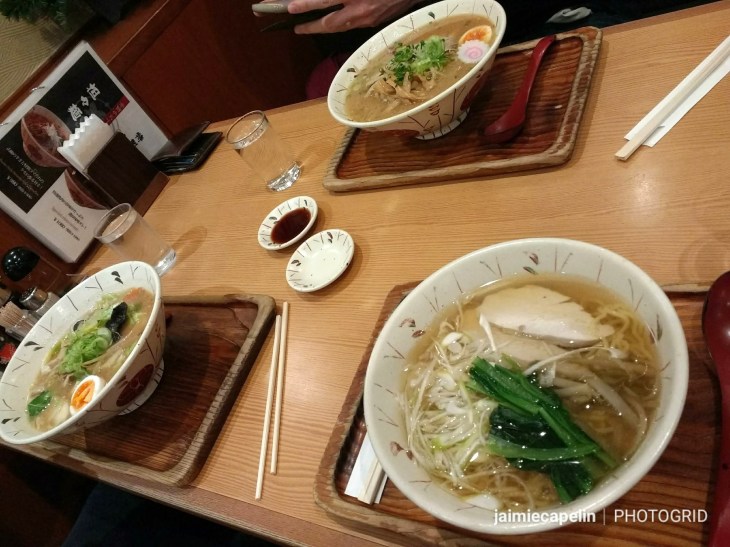
   When you’re in an iconic place on a tight budget, you have to decide where you want your money to go. For instance, my budget was prioritized for food! Japanese cuisine is world renowned for being beautiful, weird and wonderfully tasty, so I wanted to try as many things as my purse would allow. Our first stop was Asukusa, to a little ramen restaurant near Nakamise shopping street. You can rarely go wrong with ramen, with different soup bases to choose from, most commonly miso, soy and salt, and many additional toppings, not to mention my favourite part – gyoza – the little fried pork dumplings, dipped in soy and vinegar. You can usually find ramen for a very reasonable price, and it makes for a good, hearty meal.

PhotoGrid_1527282071207

Full and satisfied, we followed Nakamise shopping street through the market, beneath the gate with enormous hanging lanterns. Colours and smells filled the air as we passed stand after stand, overflowing with unique and handcrafted goods, and bustling with people.

You can buy street food everywhere, and the more you look, the harder it is to choose. Sweets, mochi, cakes, balls of custard deep fried in pistachio batter, sweet bread, melon pan, seafood, sushi, steamed buns, you name it! 

What is really noticeable about Tokyo, (and Japan in general) is how clean it is! Surprisingly, you don’t see any bins anywhere, so where does all the rubbish go!? Japanese culture is highly respectful, and everyone follows unspoken rules of general consideration to one another, carrying their trash home, keeping their voices and mobile phones quiet in public, and keeping their germs to themselves by wearing face masks.

~ Sensō-ji Temple ~

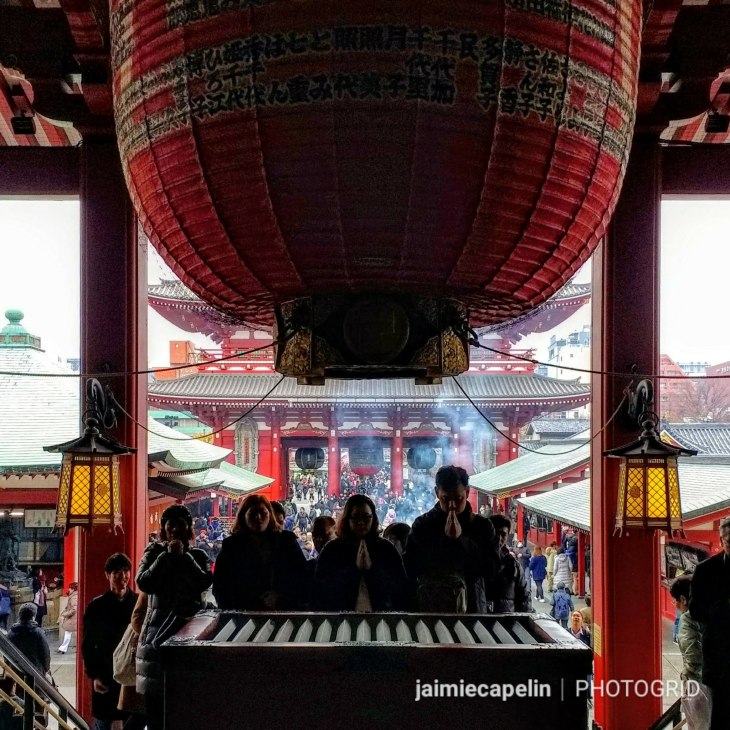
 At the opposite end of the food market lies the impressive Sensō-ji Temple, brilliant red laced with gold;  the five tiered Shinto pagoda standing adjacent to it like a backdrop out of an old samurai movie. Sensō-ji is Tokyo’s oldest and one of its most significant Buddhist temples. In a large basin at the front, groups of individuals burned incense, available for purchase from a nearby street vendor, wafting and bathing in the smoke as a cleansing ritual. We climbed the steps to the facade of the temple, where we joined a line of people taking it in turns to make an offering and pray to the gods.

PhotoGrid_1525463905908

~ Temple Etiquette ~

   There are thousands of temples in Japan that can be accessed for free, but it is respectful to make an offering of small change (apparently the 5 yen coin is designed for this very purpose, and is worth less than an English penny!) The customary routine is to throw the coin into the offering box, bow twice, clap your hands twice, bow again deeply, and then pray. If there is a bell, ring it prior to this to awaken the gods. Of course, you don’t have to be a devout Buddhist to do this – plenty of tourists from other religions, or no religion at all, join in with the culture out of interest and respect.

  Beyond the Sensō-ji Temple are beautiful gardens; little arched footbridges over ponds and streams teaming with colourful Koi. A multitude of different seasonal trees and plants line the path, ensuring a beautiful frame for the temple all year round.

PhotoGrid_1527282032951

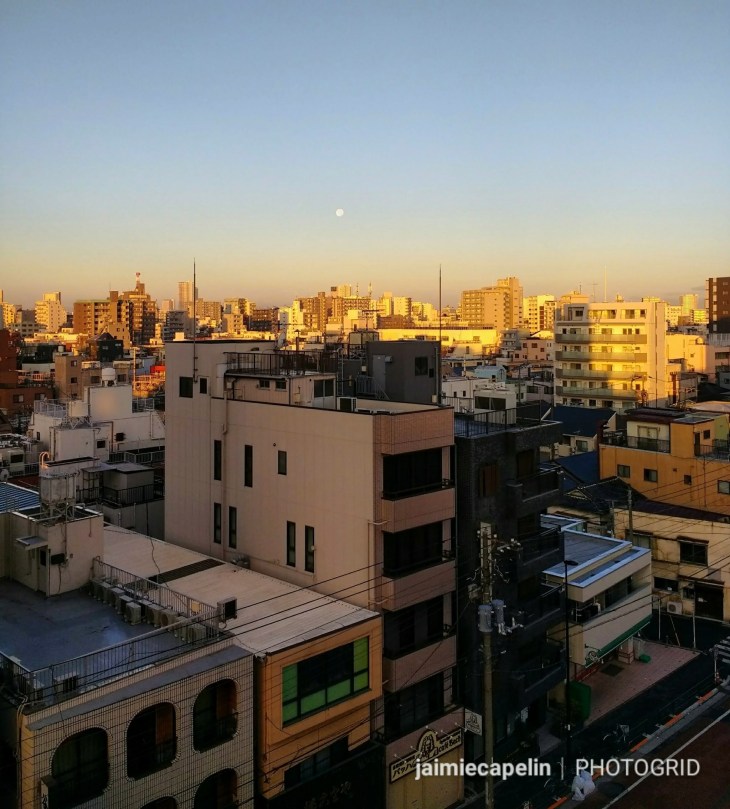
 Wide awake at 5am, jet lag imminent, I saw the sun rise and the moon fade over the buildings outside the hotel window. Make your way through any town or city in Japan, and you are sure to find the streets dotted with vending machines. If you’ve forgotten your morning coffee, or need a quick refreshment, simply slot your spare change in and out pops a can of hot coffee, or tea, chocolate, cold juice, soft drinks, water, even soup! I trialled a hot can of coffee; very sweet and not very strong, but I wouldn’t knock it if nothing else was available!

Breakfast in Japan is much like dinner – rice-based, usually with fish, vegetables or salad – though most places will now offer bread and pastries. If you are self catering and want something more ‘breakfasty,’ you can buy cereal in most supermarkets.

After a cheeky cheat breakfast at McDonalds, Ash and I made our way to Ueno. Crossing the road outside Ueno station, we walked along the side streets, where vendors were setting up hundreds of market stalls all along the already buzzing shop fronts.

There were fish stalls, fruit stalls, candy, bags of dried goods and nuts, souvenirs, clothes, and much more. Arcades with loud tunes coming out of them, where grown adults sat in endless rows inside, gambling in a game called ‘Pachinko:’ little silver balls spinning round in circular basins, like a strange, up-right pinball, making an awful, clattering racket. Every other shop is a snowsports shop, or a restaurant with rich aromas wafting out. The market vendors all welcome you in their native tongue as you pass by, trying to tempt you in with their array of exotic goods.

~ Ueno Park ~

Back onto the main road, Ash led the way up some large stone steps, through a canopied courtyard, and into peaceful Ueno Park, with shrines nestled between the trees. Wandering past a museum that was showcasing some ancient British art, (and drawing quite a crowd), we climbed up a mound that had become a sacred resting place, covered in colourful trees and swarming with chirrupping birds. Out in the central area of Ueno Park, people strolled around a big peaceful water fountain, while a man played a cello beautifully, attracting a small crowd.

PhotoGrid_1525464628388

~ Ueno Toshogu Shrine ~ 

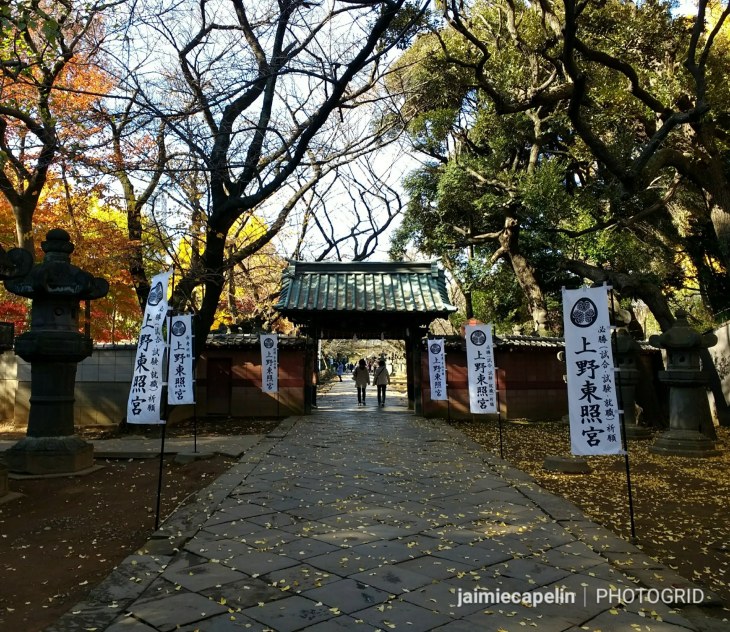
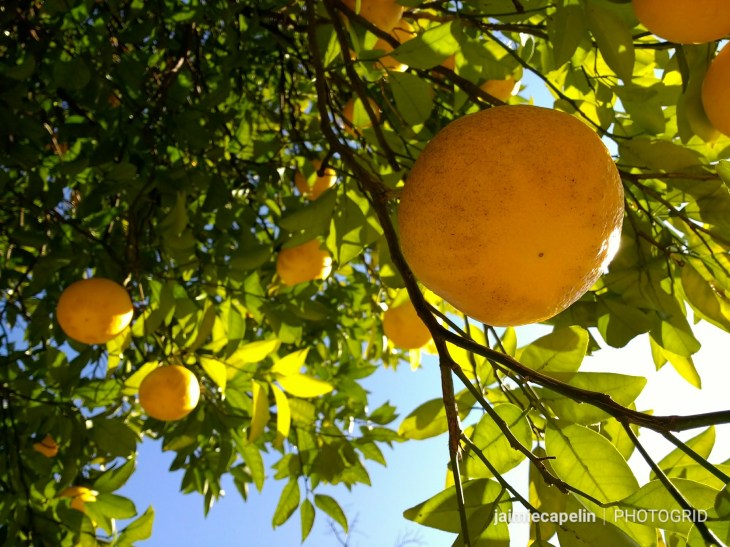
Bowing beneath a wooden torii gate, we were led down a pathway lined with hand-carved stone pillars, towards the flame of Hiroshima & Nagasaki – a haunting living-memory of the 1945 atomic bombs dropped on Japan by the US forces – preserved in a monument in the beautiful precinct of Ueno Toshogu Shrine. Yuzu trees surround the precinct, bursting with their ripening, citrus fruit. The temple itself was stunning in the midmorning, winter sun, with a solid gold facade, decorated with intricately ornate dragons, carved uniquely and coloured with shining sapphire blue and violets.

PhotoGrid_1525464403955

~ The HUB ~

Happy Hour was approaching fast, and our group was growing as more seasonal workers arrived from England. We met Jamie, a snowsports instructor working with Ash and Ellie for his first season in Japan, and we made our way to Akihabara to meet Dave and Clare, who also work with Ash and the others… (and who I knew from my previous snow seasons in New Zealand – small world!)

There are plenty of Japanese and multi-cultural bars all over Tokyo, but if you’re new to the city and looking for a cheap bevvy and fellow English speakers, you’re never very far from a HUB. This is a British-style pub, where quite often Japanese people go for the opportunity to practise their English with real Gaijins! HUBS have a typical pub menu, for very reasonable prices, and often, their Happy Hour is extended.

We sat on the red leather-bound bar seats, surrounded by classic stained-glass window booths, and sticky pub tables, listening to generic British rock music. A man sat nearby, smoking a cigar, giving it that real dirty local’s-pub-in-the-90s feel! We commenced our drinking of Happy Hour cocktails, confidence growing with each one, making the next one easier to order in broken Japanese!

~ Yakiniku in Shinjuku ~

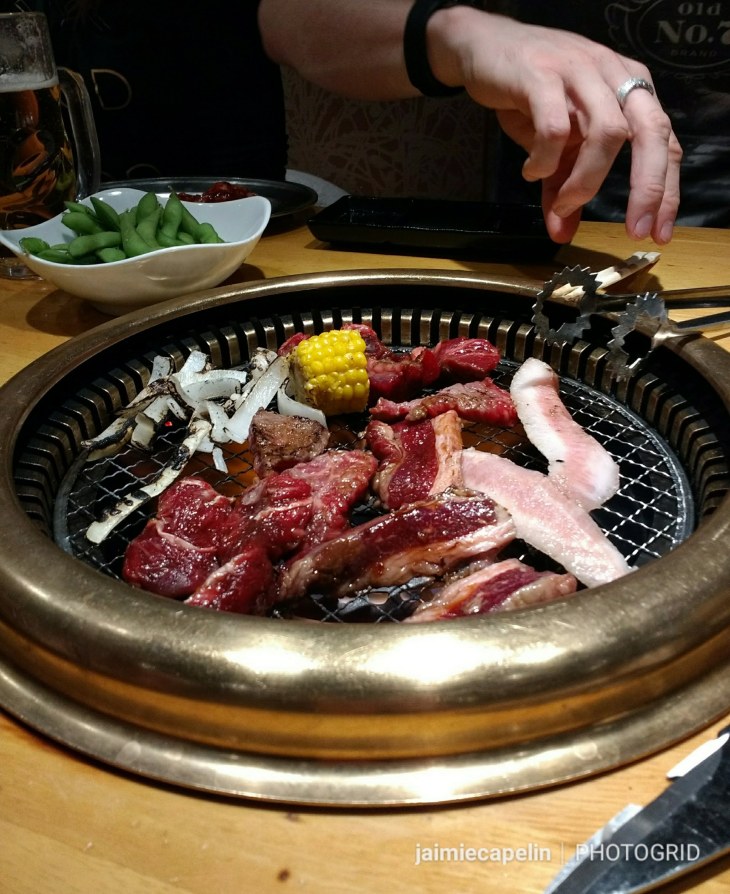
With quite an appetite growing, it was time to soak up some of the booze with some delicious, Japanese Yakiniku. Taking our shoes off before we sat down, (common dining etiquette in traditional restaurants), the waitress fired up the flame grill sunk into the centre of our table, and we began to choose platters of meat off the menu.

‘Yaki’ means grilled, and ‘niku’ means meat. You simply order your cuts raw, and cook them yourself at your table. This is a more expensive dining experience, as it is usually a flat rate, where you are given a time limit. But if you have a big appetite, you definitely get more than your money’s worth, as it’s all-you-can-eat and all-you-can-drink. It is ideal for groups, for instance, not everyone in our group knew each other yet, so it made a good introduction for bonding!

PhotoGrid_1525464834511

I started with cow tongue! Lucky I’d had a couple of drinks, or I might have over-thought it, and wouldn’t be able to tell you just how tender and tasty it was! Many steaks and rashers and various vegetables were brought out, along with endless drink top-ups, until our two-hours were up. Stuffed and merry, and well-bonded, we staggered starry-eyed through the city-lights of down-town Tokyo.

~ Seven Storeys of Snow Stuff ~

The morning after the night before… In down-town Tokyo, you tend to find entire streets dedicated to a certain product – for example, Ochanomizu Street near Akihabara, is lined specifically with musical instrument shops, and is any musician’s dream. We were, of course, heading into a ski season, therefore, the snowsports district was our destination! Taking a sobering walk from Ogawamachi Station, sipping on ‘tea lattes’ from a coffee shop in passing, and taking in the surroundings with sore heads, we made our way to Yasukunidori Street – shop after shop selling everything you need for winter sports. We browsed until it got dark, piling into tiny elevators that took us to every floor in these compact super stores. I found my snowboard jacket on the seventh floor of a shop called Victoria, and I don’t think any of us left empty-handed.

~ Electric Dreams in Akihabara ~

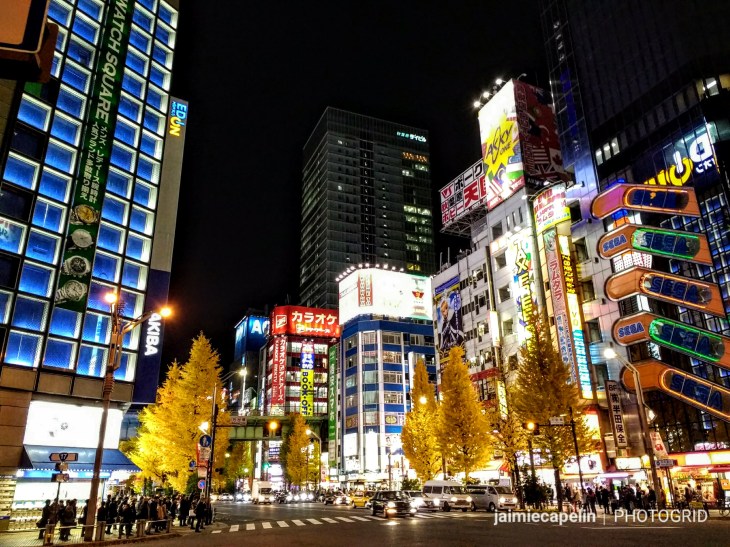
PhotoGrid_1525464305740 Known for its abundance of electrical, gaming and tech shops, this is the district for nerds, (and I say that fondly!) Enormous TV screens flicker and shout, animé characters flit on and off screen, their Japanese cartoon voices yelling happily. Theme tunes compete with one another, while music plays out from somewhere in the sky, and another tower block of stores is playing an advertisement loudly over it’s tannoy. It’s noisy; it’s bright; it’s a little bit overwhelming, but it’s great, and this is all before even entering any of the shops…
Crowds of people had flocked to a corner near a train station – business men and women of all ages, standing still in a small radius, all staring intently at their phones. I glimpsed their screens as I passed, wondering what they were doing, and realised they were all playing ‘Pokémon Go’, (a mobile gaming app, for those that don’t know, that uses location to find cute little Japanese monsters, “catch ’em all” and battle them against each other.)

Inside the stores, each floor again is dedicated to something specific, be it consoles by brand; every Nintendo game that ever existed, in order of production; trading cards, alphabetized by aisle; collector’s vinyl models of video games characters, etc. This really is the fanatic’s dream. Often, on the top floors, you’ll find the ‘Adult section’… Animé pornography is a thing – especially in Japan where real porn is EXTREMELY taboo – and there are trading card games, often played by men of a certain age, which depict provocative animé girls. These cards are displayed wall to wall, but most amusingly, due to Japanese modesty, it is someone’s job to go around the entire shop floor and strategically place little stickers over certain parts of each individual card! What a job!

~ Rush hour on the Tokyo Metro ~

Making our way back towards the metro station, we passed busy street food stalls, and interesting cafés such as owl and cat cafés. There were people everywhere, crowding around vendors for their supper; lining up for fresh Takoyaki (grilled octopus, rolled swiftly and skillfully into floury, seasoned balls with a pair of pointy metal sticks); and tucking into hot custard filled puff pastries, fresh from the baker. Smells filled the air, tantilising our senses, and by the time we got into the busy metro station, we’d been tempted enough to buy some cream-filled buns from a street stand. Delicious!

The train arrived. Like a tin can jam packed full of sardines. No one seemed to get off, but the entire platform of people was somehow squeezing on. Sometimes at rush hour, the station masters push the crowds of people onto the trains to fit as many as possible before the strictly timed doors close. I don’t remember how I claimed my place slap bang in the middle of the carriage, clinging on to a single hanging handle above me, with my feet barely touching the ground as bodies pressed against me from every direction. The crowd moved with the train like seaweed with the current, all joined together. Nobody talks on the train, and mobile phones are supposed to be kept off, or silent – talking on your phone on Japanese public transport is considered very rude.

~ Konbini Dinners ~

That evening, we were all too tired to think about spending money on going out for dinner, or cooking at the guest house, and so I had my first experience of a ‘konbini dinner’. Konbini is a word the Japanese have coined, meaning ‘convenience store’. We walked in the shop to a chorus of “Irasshaimase” (welcome) from all the staff, and was overwhelmed by the selection of products all sparkling in their strange, colourful packaging. Shelves of perfectly spherical cakes, and bread filled with sweet red bean paste, buns, pastries, and many things I couldn’t identify! I bought a box of gyoza, and a big bottle of Pocari Sweat – an electrolyte drink – and took it back to the hotel room for an early night.

There are three main convenience stores in Japan – 7eleven, Lawson’s, and Family Mart, and you will pretty much find everything in them: toiletries, first aid, stationery, hot & cold drinks, alcohol, snacks, groceries, even a selection of ready-meals that they will heat up for you instantly behind the counter! Not only do they provide microwaves, but there is usually use of a hot water earn for filling up your Cup-Noodles, an international cash machine, a scanner/printer, a recycling station, toilets, and pretty reliable wifi. These ‘konbinis’ are everywhere. In the city you might find two or three in a single street, but in rural Japan they are usually placed somewhere along the main road, away from residential areas.

~ Meiji Jingu Shrine ~ 

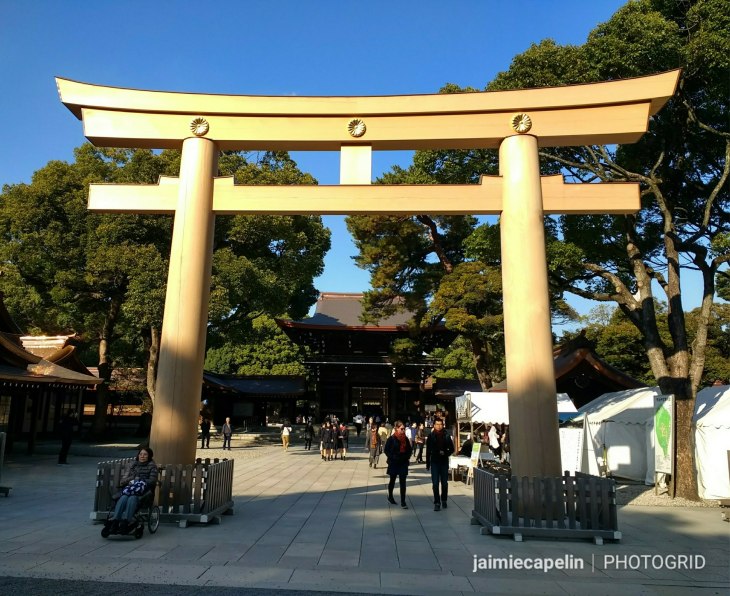
The morning presented blue skies and warm winter sun. Ellie, Dave and Clare left the city for the mountains, so Ash prepared Jamie and I for a long day of touristing and sightseeing. We entered the Meiji Jingu Shrine park at one of the north entrances, from Minami Shinjuku, walking beneath the first impressive gate onto a wooded, gravel path. The gates at every entrance, and throughout the park, are 1500 years old, and protect the shrine from evil spirits, and many people bow as they pass under them, often turning to bow again once through. The park is enormous and filled with a network of winding footpaths through woodland, fairytale streams, and gardens. In the centre of the park is the ancient Meiji Jingu Shinto Shrine.

‘Shinto’ is Japan’s oldest religion, and most traditional. It is mostly a practice of rituals, connecting present day with past ancestors, and is more of a collection of ancient Japanese beliefs than an organised religion. Buddhism is probably the most commonly practised religion in Japan, and though they are totally separate, the two religions stand side by side, with a lot of people practising both.

PhotoGrid_1525465739775

Passing through an open courtyard, we approached the purification fountain where you cleanse before entering the shrine. The water trickles from the top into a basin, equipped with wooden ladels, which you use to wash your left, then right hand. Then use the ladel to pour a little water into your cupped hand, and wash out your mouth. Rinse the ladel before replacing it.

Two perfectly round trees stand side by side outside the shrine, decorated with symbols of  thunder and rain, which represent the wish for good seasons. The birds in the trees all around the shrine park create a serene and peaceful atmosphere, despite the constant influx of tourists, worshippers, and daily processions for wedding ceremonies.

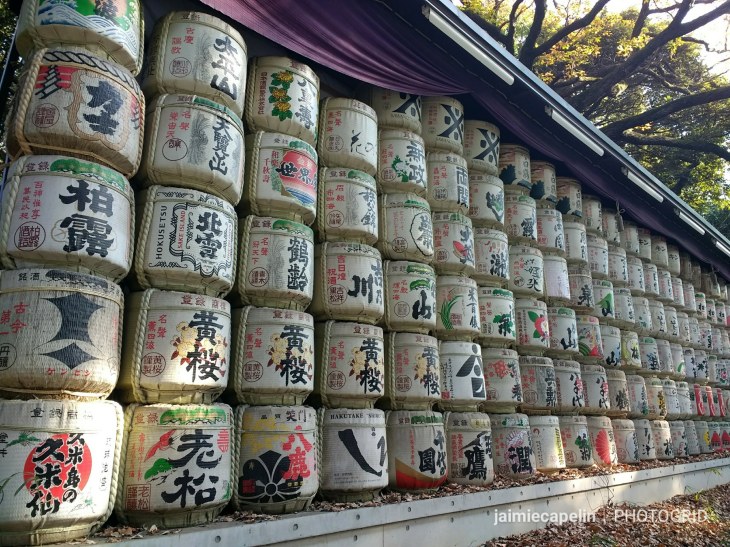
On the outer reaches of the park are two walls either side of the footpath – one is built of thousands of sake barrels; the other wines and whiskys, all donated to the emperor from around the world.

PhotoGrid_1525464915168


~ Harajuku ~

Exiting the Meiji Jingu park at the east gate, Ash introduced us to the Harajuku district – famous worldwide for its fashion. Harajuku girls strut the pavement like a catwalk, wearing anything ‘Kawai’ (cute), from novelty school uniforms, to animal ears and tails. Colour is key in Harajuku fashion, anything bright and sparkly, with enormous platforms and blue or pink hair. I found the style quite similar to cyber-punk, and wished I’d donned my best Gwen Stefani outfit, instead of going for the totally unglamorous ‘backpacker look!’

PhotoGrid_1525465504364

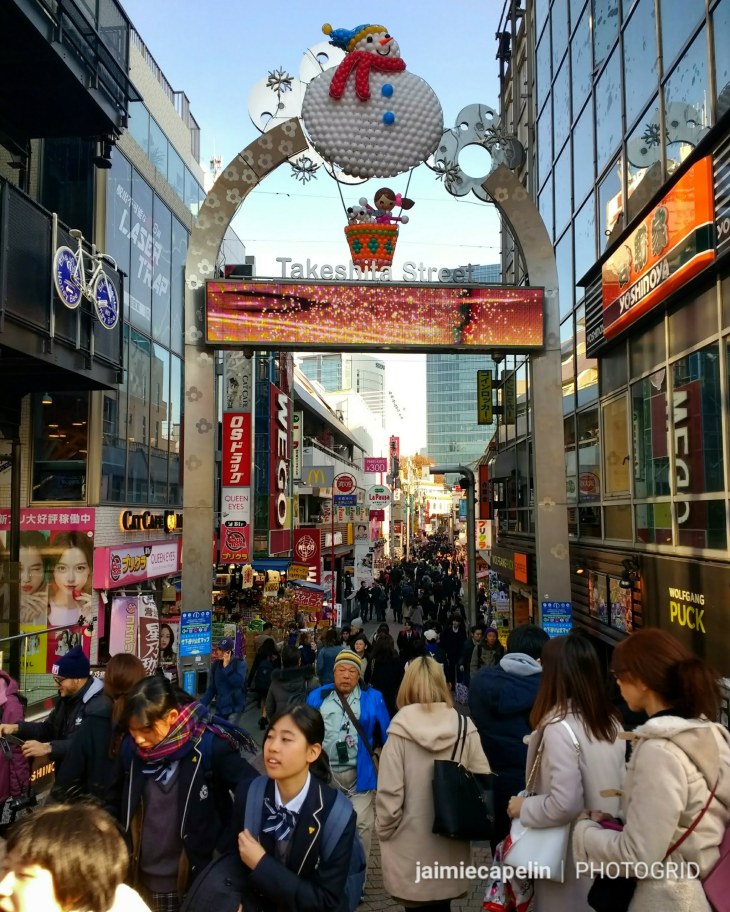
Takeshita Street is the hub of Harajuku – a narrow back street, heaving with busy clothes shops, shoe shops, and popular crepe shops! We stopped for a crepe, with strawberries, banana and cream, and marvelled at all the colour and hype happening around us. A group of girls were squealing excitedly as four identically dressed boys appeared from a building, and they had their selfies with them, while an older Western man stood on another corner, looking like a Rolling Stones extra, having his photo taken with more excited Japanese girls.

~ Shibuya Crossing ~

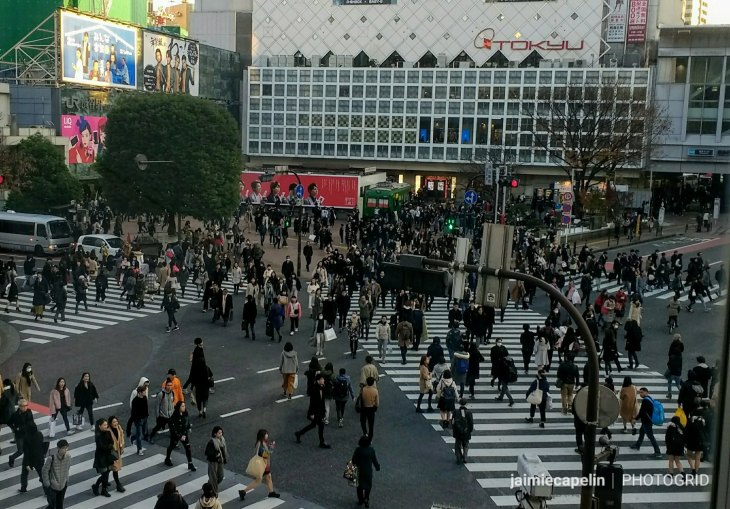
When in Shibuya, you simply must witness the crazy Shibuya Crossing, rumoured to be the world’s busiest intersection. At 2pm on a Thursday, it didn’t quite match that expectation, but was still impressive, and actually, I don’t think I’d enjoy being there at rush hour! If you don’t mind emersing yourself in a dense crowd of people just to cross the road, it’s actually quite an experience! The light turns green and thousands of people disperse across the zebra crossings in all drections like dandelion seeds.

If you’d prefer to watch from a safe distance, there is a Starbucks in the building adjacent to the crossing, which is positioned to look directly down upon it, though you will probably have to fight for a window seat. 

PhotoGrid_1525465269209

 We went for late lunch in a little restaurant Ash found, tucked secretly up on a tiny nook of a building, as most good restaurants are. Ginger fried pork and rice, and katsu chicken, served with a raw egg filled our stomachs, before we headed to Shinjuku to book our bus tickets out of town.

~ Godzilla in Shinjuku ~

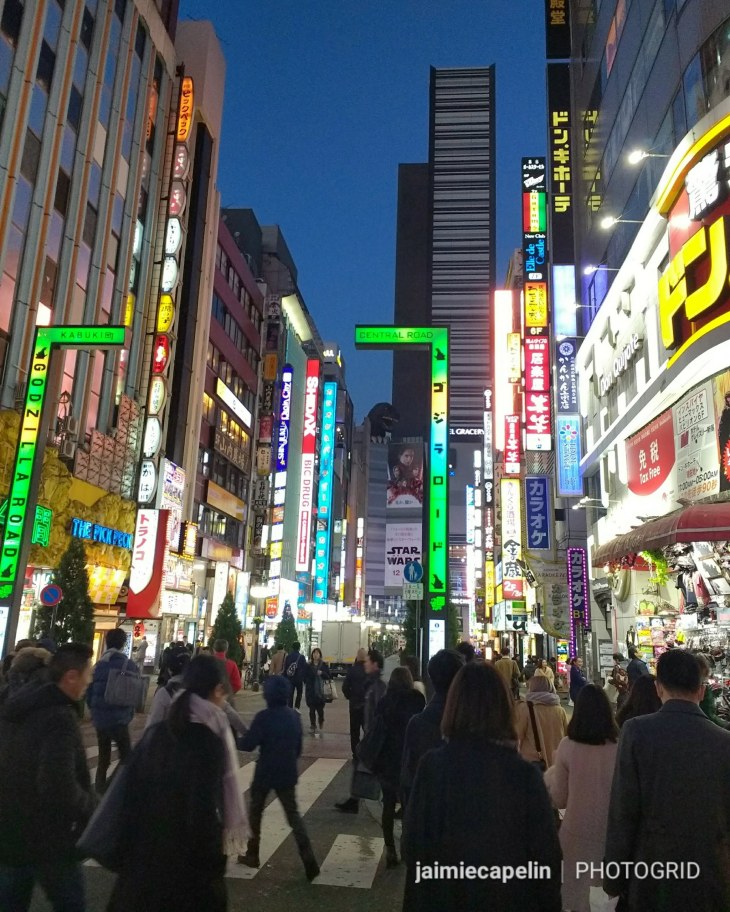
Walking from Shinjuku station, you cannot miss Godzilla, roaring down from the top of the Toho building. This is the home of the Godzilla franchise, and the studio in which it was produced, therefore it’s not surprising that the enormous, 40ft high monster guards his home, roaring occassionally into the city.

PhotoGrid_1525465397923

~ Pokémon Store ~

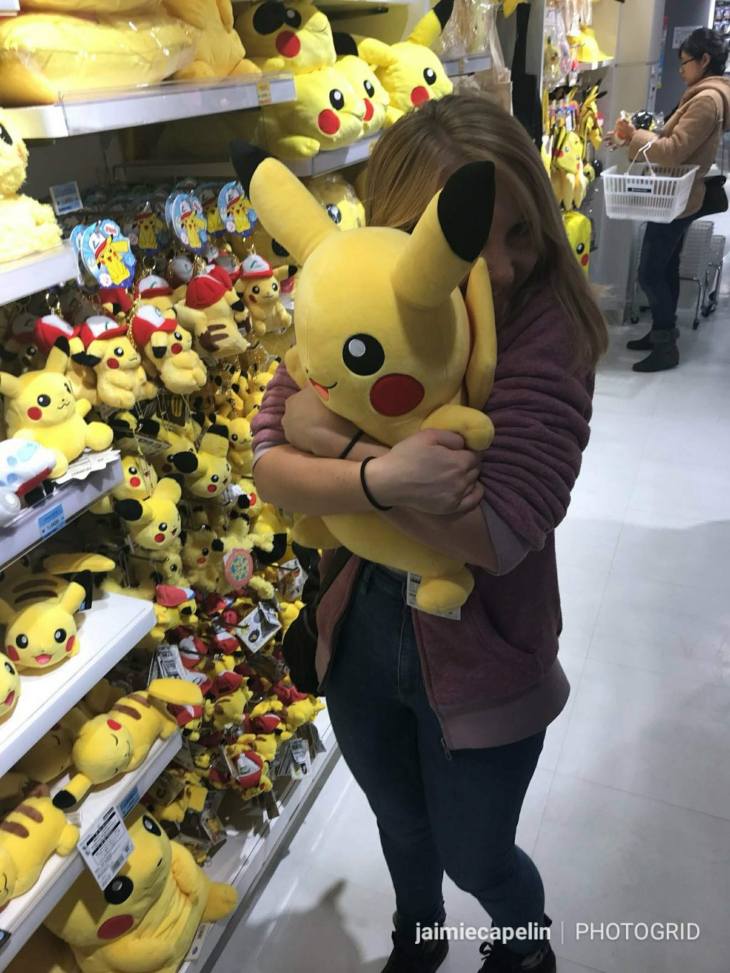
The Sunshine Building in Ikebukuro has a waterfall-wall centre-piece, surrounded by a mezzanine viewing platform, where business people sit and eat their lunch. The Pokémon Store is on the second floor, and is every 10 year old’s dream (and twenty-something year olds!) Being one of Japan’s biggest and most well-known childhood franchises, it has to be done! Plush Pikachus as far as the eye can see; key rings; T-Shirts; shoes (Pikashoes!) all lighting up the shelves with their bright colours. Ash and I cuddled every toy in the shop (completely revelling in the fact that I was watching a real life Ash choosing his pokémon,) before committing to purchase JUST ONE!

PhotoGrid_1527715272519

~ Tokyo Heights ~

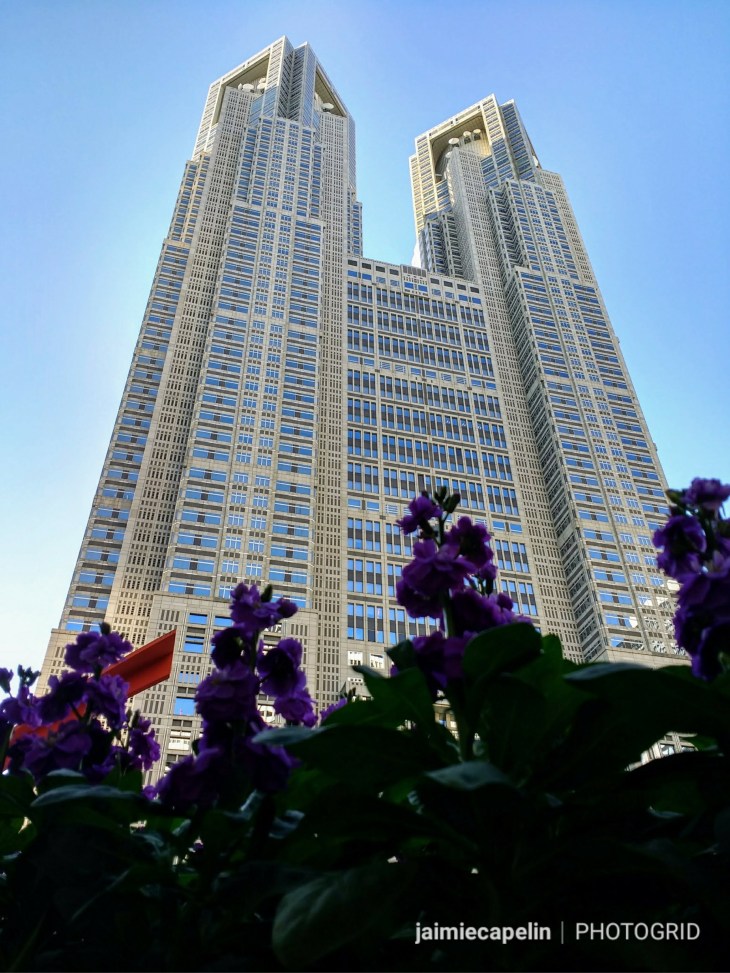
There are many famous landmarks in Tokyo from which you can take in the views of the city lights from above, two of the most iconic being the Sky Tree, and the Tokyo Tower. However, if you don’t fancy paying for the privilege of going up a famous landmark, the Tokyo Metropolitan Government Building offers 360 degree views from the 48th floor for free! The building has an East and West tower, and you can choose which side to go up, or do both! 

PhotoGrid_1525465048171

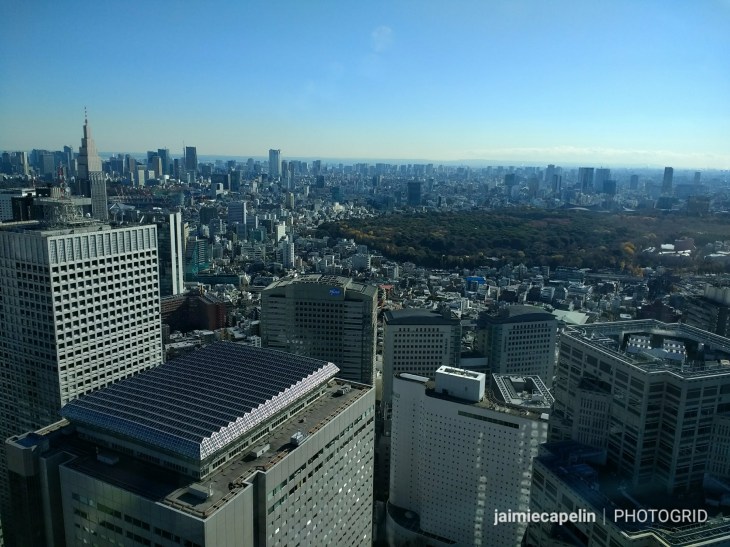
  The queue for the elevator was empty, so the steward let us straight in, and up we went to the 48th floor. A huge hall, with souvenir shops in the centre, and panoramic windows all the way around the edges stood before us. The view was breath taking, and my sudden jelly legs were well worth it! Silver skyscrapers poured over the landscape for miles, with vast, green parks and gardens in between, the low, winter sun glinting off of everything it touched. Mount Fuji sat in the distant South, a lonely plump cloud sitting neatly on top. We absorbed the sights and took a hundred photos before heading back down to Earth, but not without stamping my journal with the ink stamp provided in the tower…

Most landmarks and attractions in Japan provide a unique little stamp and ink pad for tourists to put in their journals – if in doubt, look at a nearby train station or tourist information. 

PhotoGrid_1527715250700

~ Shinjuku Bus Terminal ~

Tokyo’s main bus station is, weirdly, on top of a building, so you are required to find the elevator at street level, which I would never have looked for if Ash wasn’t there! It is located at Shinjuku Station South, (signs can be followed from inside the station). Buying tickets is relatively easy, using the multi-lingual self-service machines, and there is a large indoor waiting room, with facilities and vending machines for long waits. Finding our stop, we boarded the 3pm bus to Hakuba, and followed the setting sun into the mountains of Nagano for winter, where I’d part ways with the others, and begin my own seasonal-working adventure in Hakuba Goryu.


A Tent with a View – Camping New Zealand

“Most folks are tourists – they bumble around NZ hoping to ‘see the sights’ without expending much effort to find the truly unique uncommercialized spots. Travellers, on the other hand, are fewer. Travellers attempt to find good info about wonderful spots and experiences.” (Cook. S, NZ Frenzy Guidebook, p.91)

In March 2014, while I was living in Wanaka, New Zealand, I was invited on a roadie.

The trip was planned for 10 weeks, and we would mostly be camping.

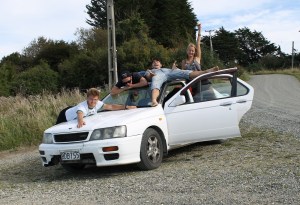
Our crew was Jonny from Edinburgh, Scotland, Yogi from Bayern, Germany, Gian from Saronno, Italy, and myself, from the Isle of Wight, England.

IMG_1688

We packed:

3 tents

4 sleeping bags

4 backpacks

2 tarps

a box of cooking equipment

a gas canister

a chair

a fishing rod

climbing gear

4 cameras of various description & a GoPro

a library of Travel Guides, leaflets and maps

and a Nissan Bluebird with a flat battery.

It was cosy to say the least.

It’s difficult to estimate how much money to take on an unplanned journey like this one, but calculating the costs of fuel, food and accommodation is the best place to start. Department of Conservation (DOC) campsites are pretty much everywhere on South Island, and are usually $6 per head, if not free; the fuel for the Nissan was about $100 between the four of us every 2-3 days; and food was mostly budget stuff we could share and cook easily on the camp-stove. All in all, Jonny recommended taking about $3000 (£1500) for a 10 week trip. I managed to save about half that, and travelled for a month, but it depends on your personal itinerary.

Although the majority of this journey was unplanned, some extent of planning is essential. Having a Plan A and Plan B and a Backup is a good way of planning without actually planning! We were always checking out alternatives in our DOC campsite guide and Lonely Planet books.

The journey began on Tuesday 18th March.

A strange mist started to engulf Wanaka’s Mt Iron, as if erasing it from the horizon of my future. But I would be back.

Milford Sound

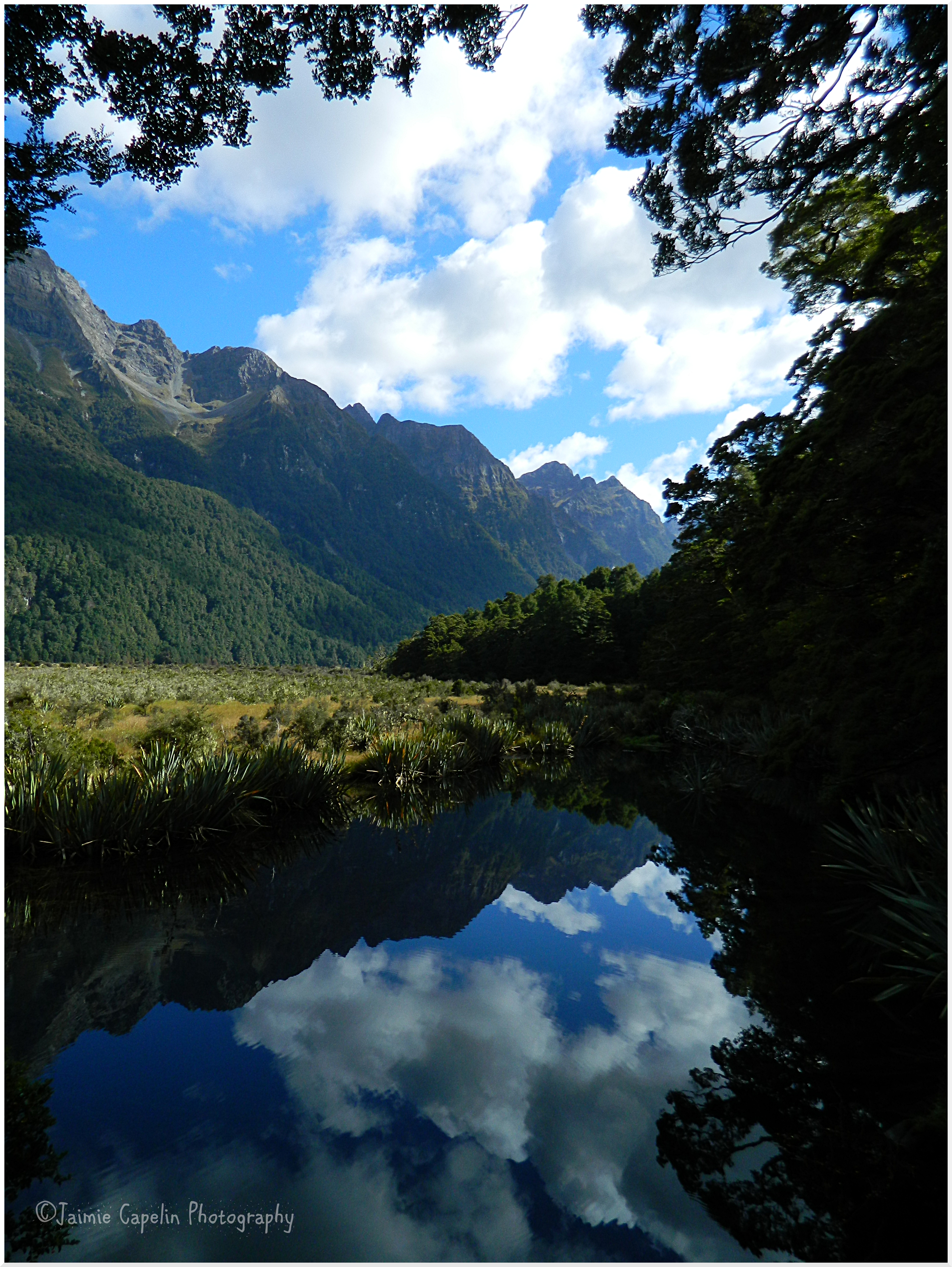
Milford Sound is one of New Zealand’s most iconic locations. We camped in the wet and humid fiordland, where there was nothing but rain and sandflies, and a sense of uncertain magic in the air. Steamy mist engulfed the green sea mountains, and the four of us sheltered in the car beneath a tree, relying on a bag of wine to keep us warm! This place is also known as Ata Whenua, (Shadowland), where between the boggy planes are rushing rivers and twisted goblin forests.

DSCN6776(2)

The 120km drive from Te Anau to Milford Sound is “a visual cornucopia of delight,” (Cook, S. NZ Frenzy Guidebook, p.196). The mountains begin to approach you on the horizon through the Eglinton Valley, rising up around you, craggy and piercing and belittlingly big. Then you go through damp woodland, passing glacial rivers and pools, finally breaking out at the entrance to Homer’s Tunnel. We simply had to pull over and get out. 360degrees of rocky mountain faces, with fresh waterfalls cascading from sheer mile high drops.

Homer’s Tunnel itself was eerie and quiet. It goes right through the heart of the mountain, and you can see each chisel and pickaxe mark in the walls from when it was dug in the late 1930s; the signatures of over a decade of hard labour.

We emerged out the other side, suspended high up among mountains on a road that winds down to sea level. All around are glistening rocks and dramatic peaks and even New Zealand’s only mountain parrot – the Kea – came out to play, terrorising family picnics at the viewpoints.

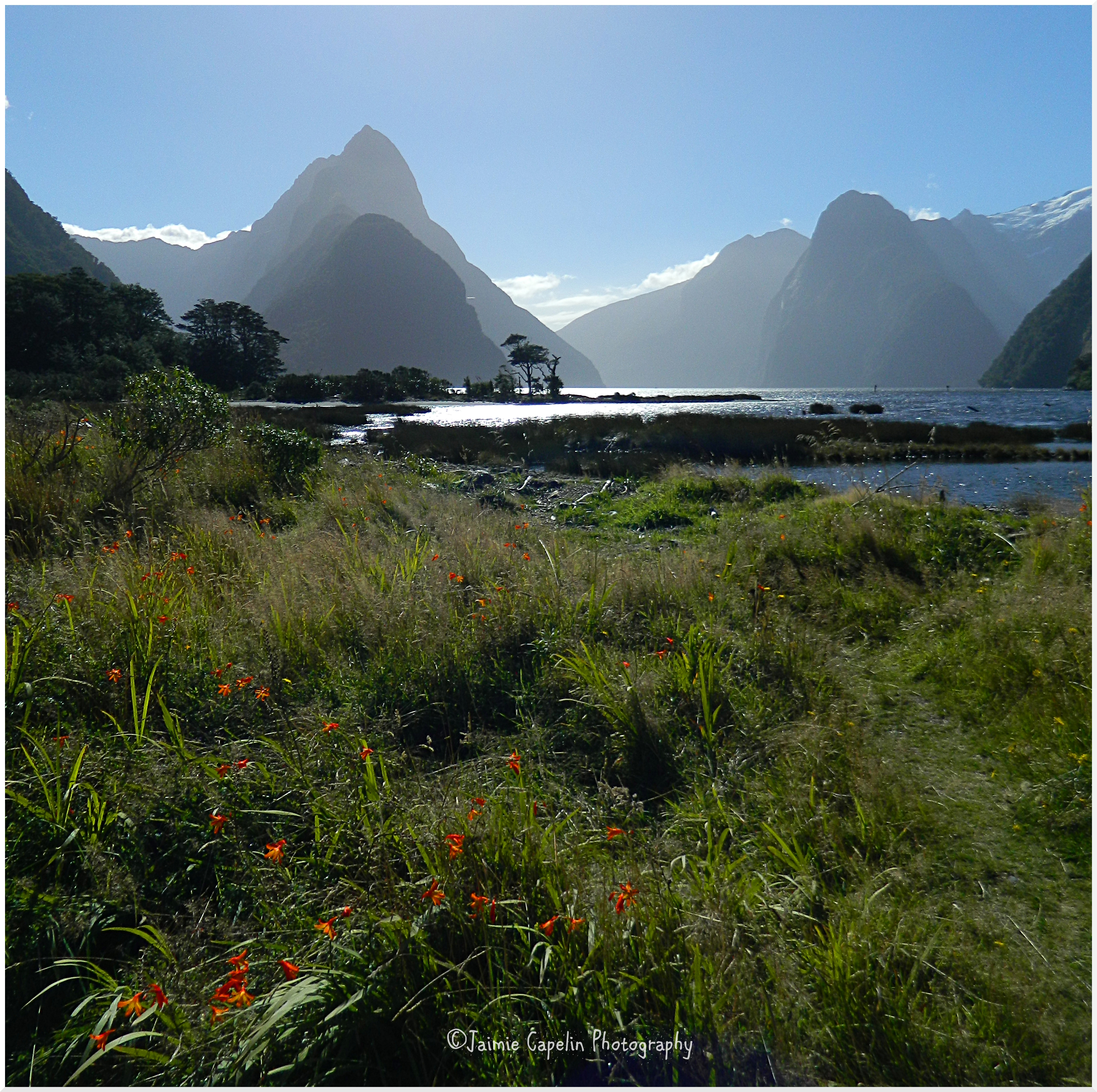
On arrival at the gateway to Milford Sound, we celebrated with a compulsory cider from the pub, and then went on the foreshore walk. This is well worth it – especially if you’re on a budget and want to avoid tourists! The walk loops around the shore line, not even 20 minutes, with perfect unspoilt views. The sun hovered over Mitre Peak, casting a dense haze over the seascape with a golden tinge, and The Bowen Falls projected water off the side of the mountain as the spectacular sailing ships drifted across the foreground.

DSCN6814(2)

We made our way back from Milford Sound in neutral, clenching our buttocks every time we went up hill, as we’d all forgotten that Te Anau is the last place to fill up the petrol tank!

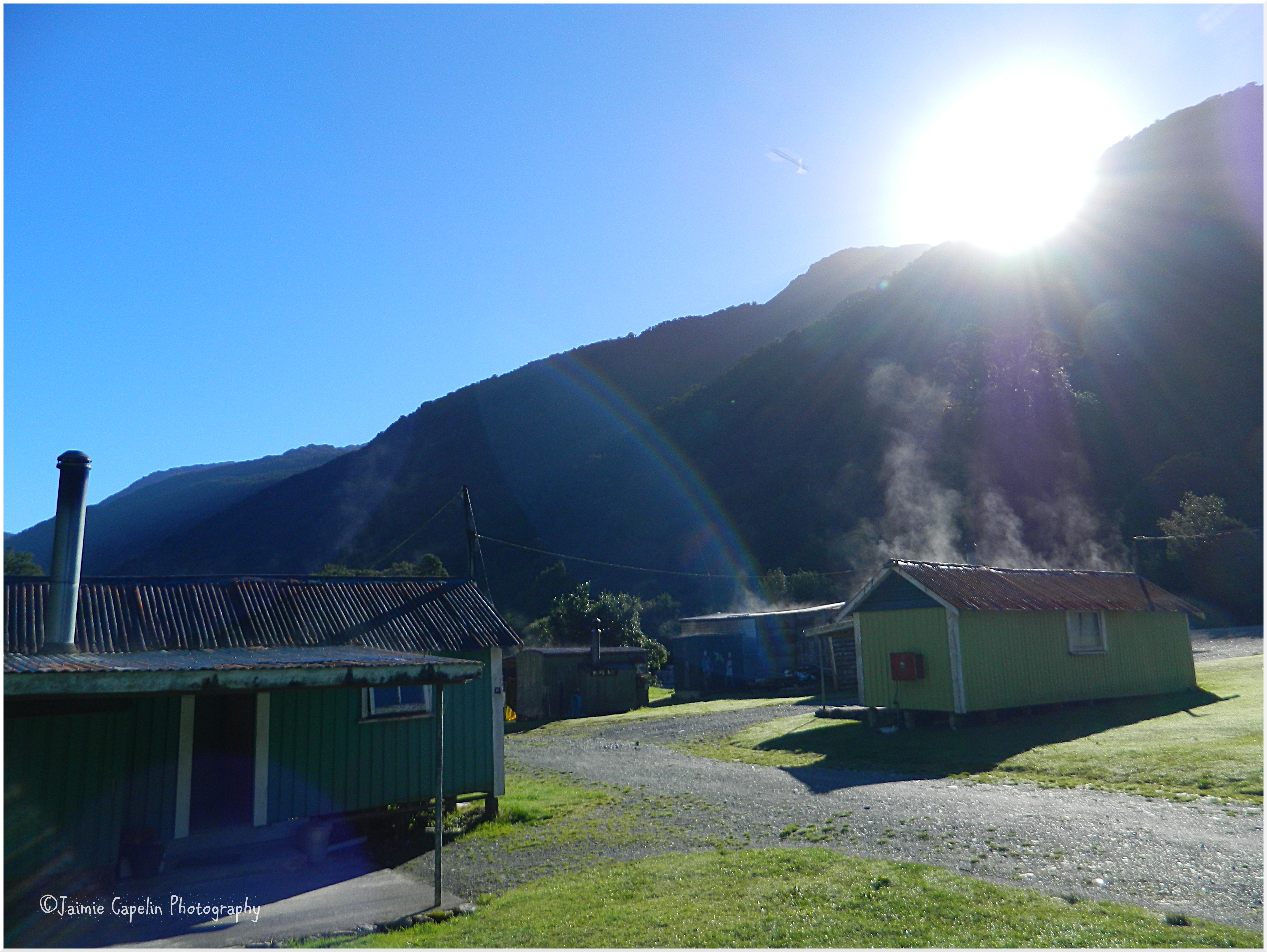
That night, we found a beautiful campground in The Hollyford Valley, with wood-burner powered shower huts and a crystal river running right through. It was here that Jonny befriended a character called Ludwig – a French fisherman with a bottle of cognac… but that story’s for another time…

DSCN6828(2)

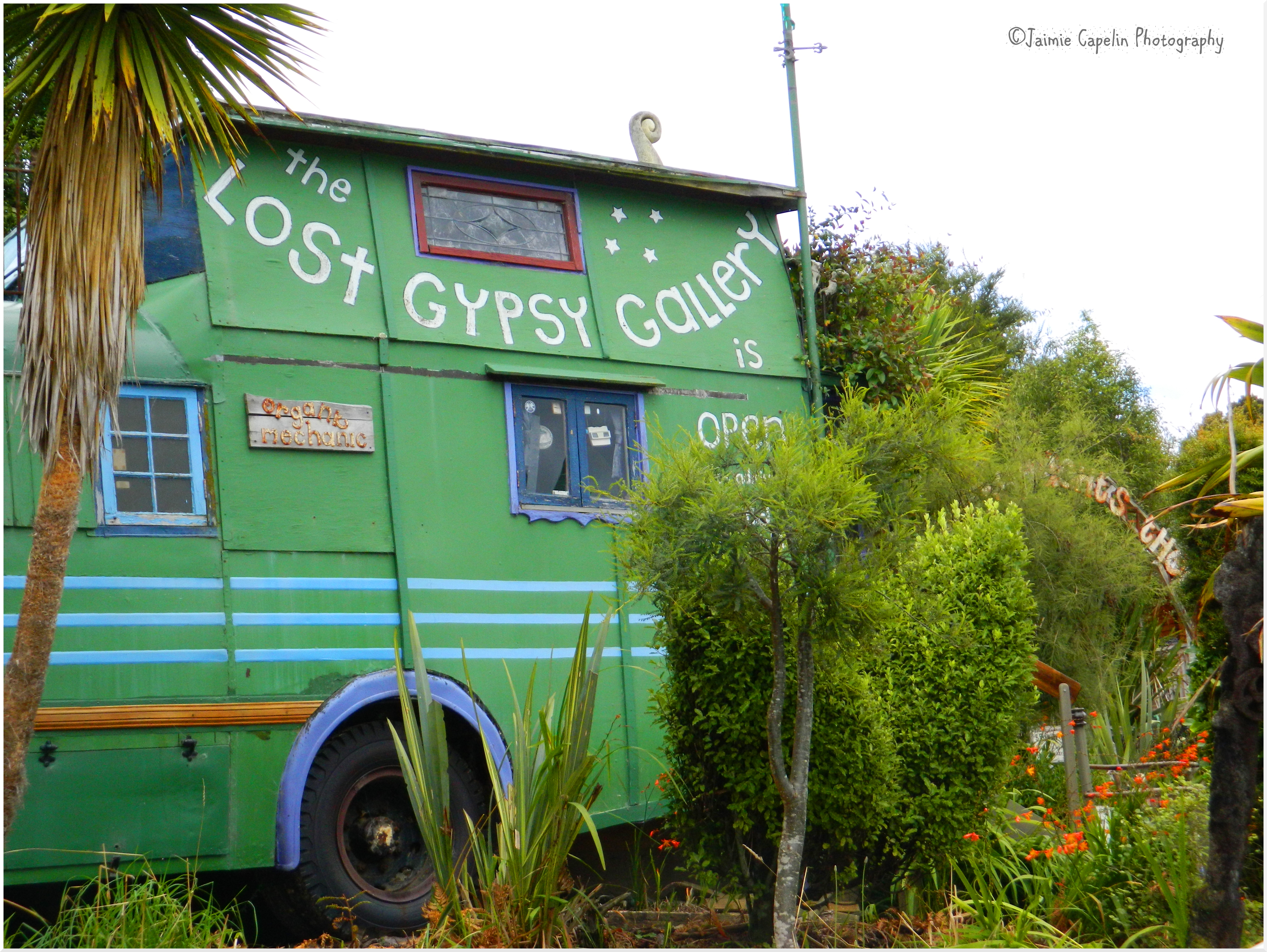
The Lost Gypsy Gallery

In The Catlins Forest, New Zealand’s far south, we camped at a place called Curio Bay, where we spent the morning of a crimson sunrise surfing with Hector Dolphins. Our surf instructor, a local man called Nick, advised us to go to The Lost Gypsy Gallery, just up the road in Papatowai.

A small group of artists and inventors have put together a compilation of strange, interactive works, mainly made out of recycled junk. An old gypsy caravan, which appears to have grown into the bushland, is choc full of gadgets, experiments and puzzles, while the garden behind – “The Winding Thoughts Theatre” – which you can enter for a donation of $5, is a cornucopia of clever, tactile mechanisms that make you feel like you’re back at the water tray in kinder garten!

DSCN7012(2)

Dunedin

This topsy turvy old city is twinned with Edinburgh, and while Jonny ceremoniously wore his kilt the whole time we were there, the only real likeness to Scotland was the weather! It was however, a fantastic place to meet people and enjoy the Gaelic bar culture, with real pints on pump, and of course, New Zealand’s very own Speights Brewery.

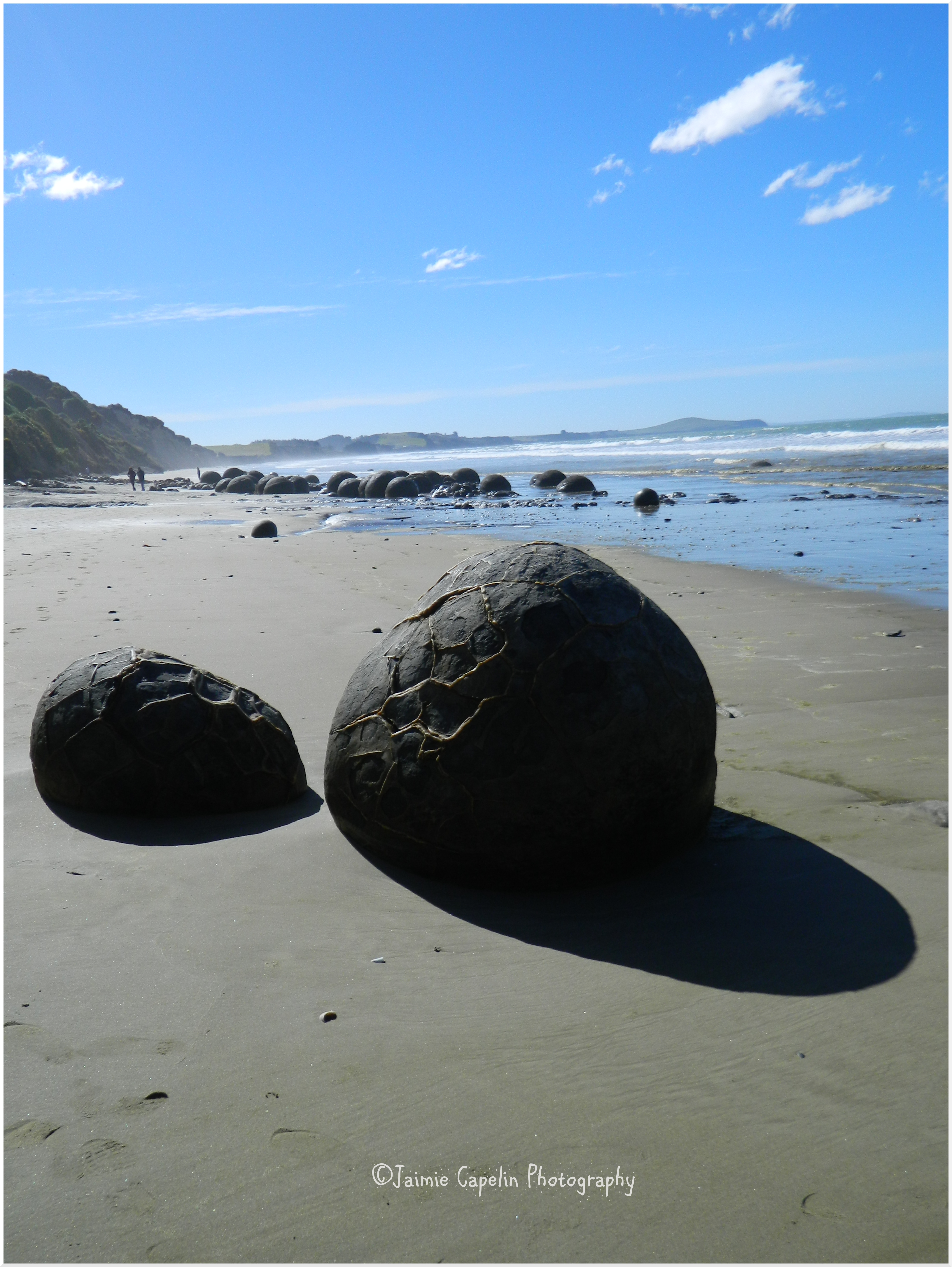
Moeraki Boulders

North of Dunedin, along the East Coast highway, lie the science phenomenon, the Moeraki Boulders. Huge round dinosaur eggs of rocks, all clustered together on the beach with waves crashing against them. Maori legend has it that the ancient canoe, Arai-te-uru, sailing from Hawaiki, was wrecked, and the boulders are the fossilized eel baskets and kumara washed up from the wreck. Scientists say that they are concretion formations eroded from the cliffs.

DSCN7119(2)

West Coast

From the calm and quiet east coast, we cut inland across Mckenzie Country and the Lakes, sleeping mainly in fields hours from any tarmacked roads, where the stars outshone our campfire. Stopping for breaks at the spectacular Lake Tekapo, and Mt Cook – home of Sir Hilary Edmund – we made our way to the wild West Coast.

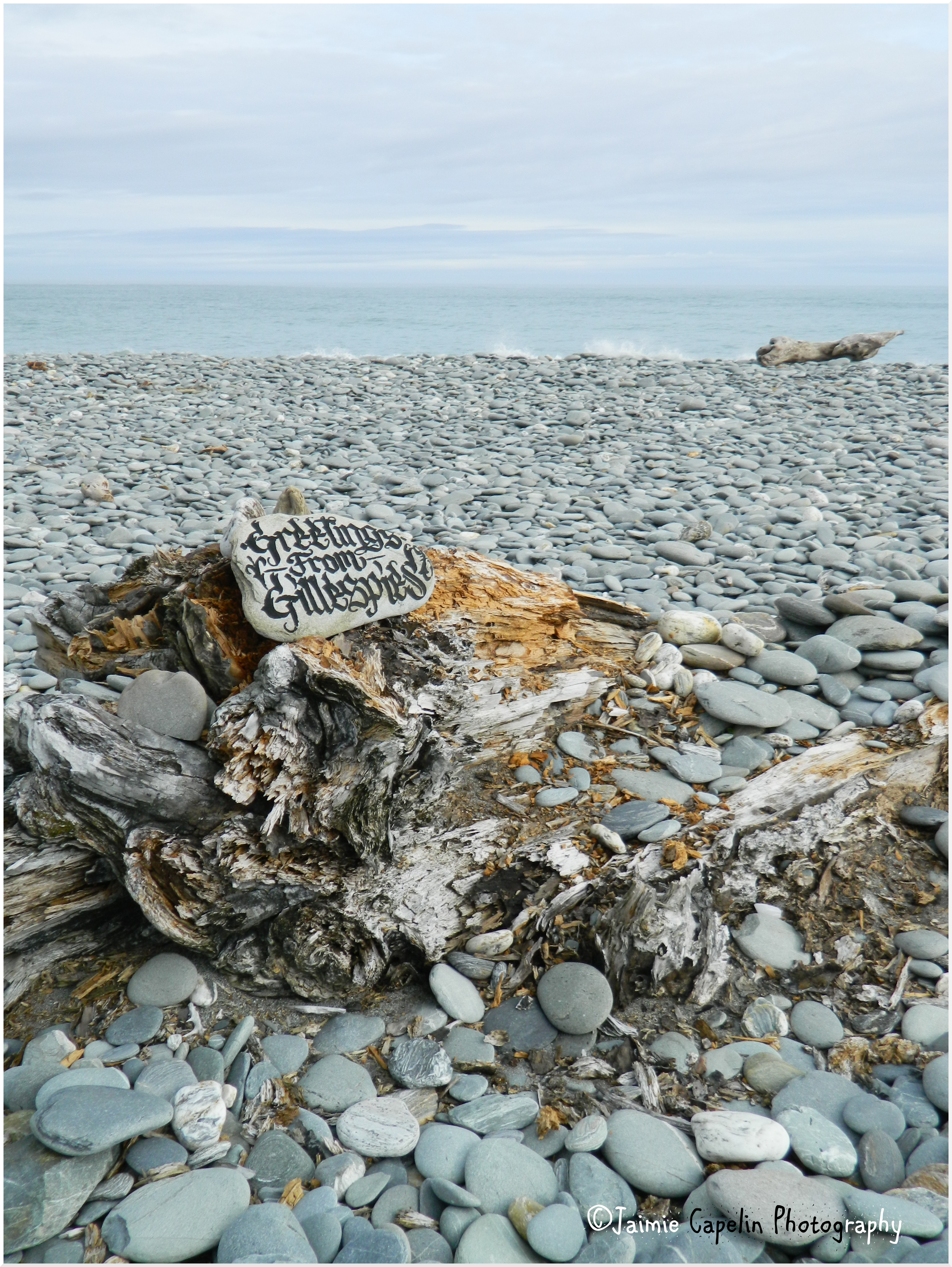
We got through the bleak village of Haast and headed south along the coast, through rainforest, windy trees, and mountain views, until we reached a little place called Jackson’s Bay. It’s a desolate place with just the ocean and a tiny cabin called The Cray Pot, where fresh fish and crayfish are caught, cooked and served with chips in baskets. Jonny and I enjoyed huge helpings of butterfish, while the boys cowered in the car from the ferocious sandflies.

Making our way north along the hair-raising cliff-edge road, we passed little bays and houses built on the edge of wild beaches. We took the scenic walks to both Fox Glacier and Franz Josef Glacier, which have decreased in size a lot since the last time I saw them in 2007. We passed through the quaint little town of Hokitika, filled with galleries and greenstone factories, and made for Arthur’s Pass.

DSCN7230(2)

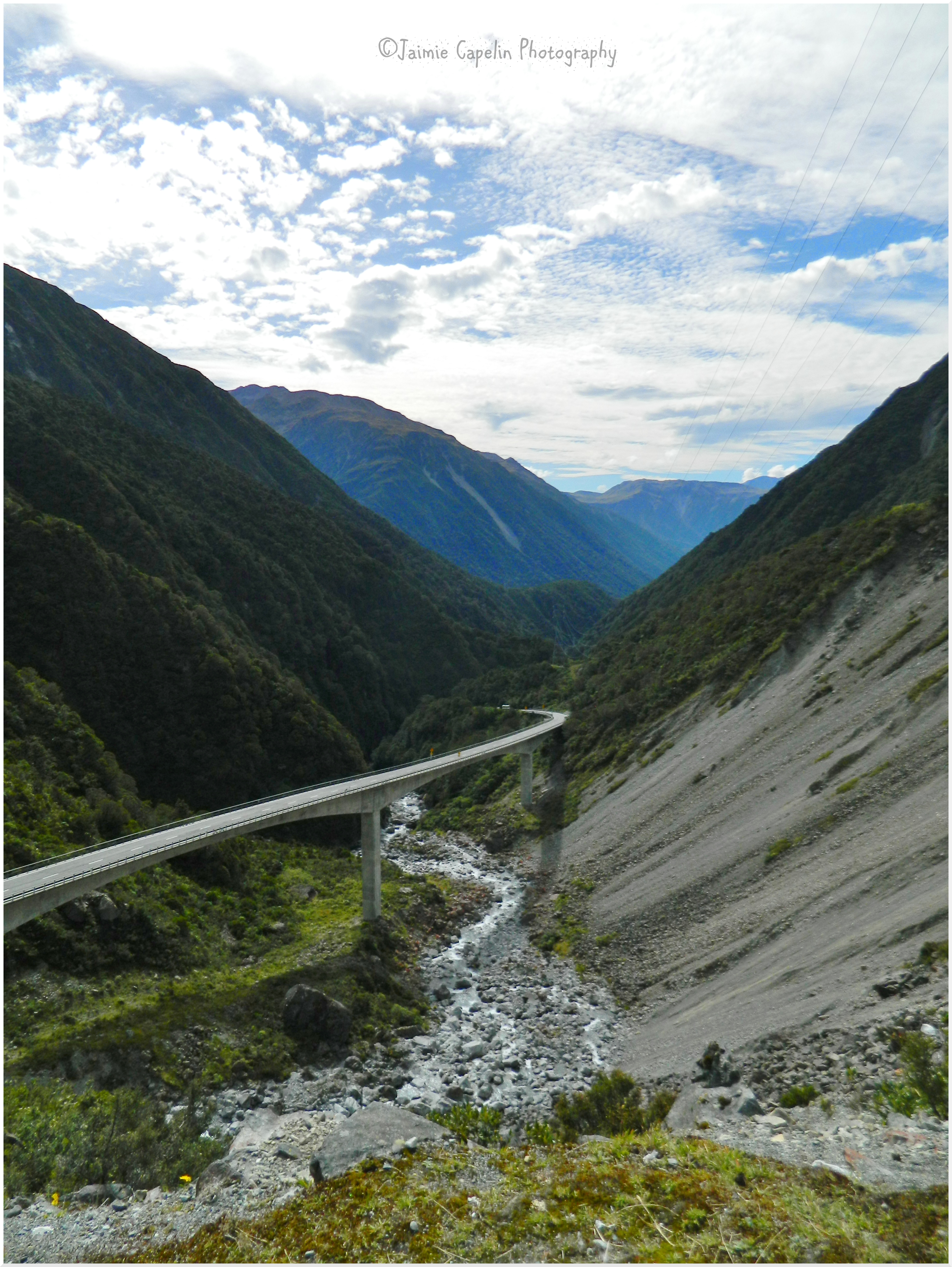
Arthur’s Pass

Lush mountains that look like they’re wearing big woolly green fleeces line the horizon; with rivers running in between. The road criss-crosses with the Alpine Train track before winding up the steep ascent into the pass. Through the mountains, the road is a high-raised flyover, cutting right through the scenery. We stopped at the top, where a group of Kea came to investigate our car, picking and pulling at the rubber seals on the doors and tapping on the back window. They are extremely intelligent mountains parrots; curious and tactile, with a beautiful rainbow of colours on the underside of their wings.

DSCN7303(2)

We lost Jonny further up the Pass, at Castle Rocks, a top climbing destination. These formations loom over the dusty grasslands, framed by grey mountains that look oil painted. They are sacred and were once home to Maori tribes, serving as good shelter and protection.

Akaroa

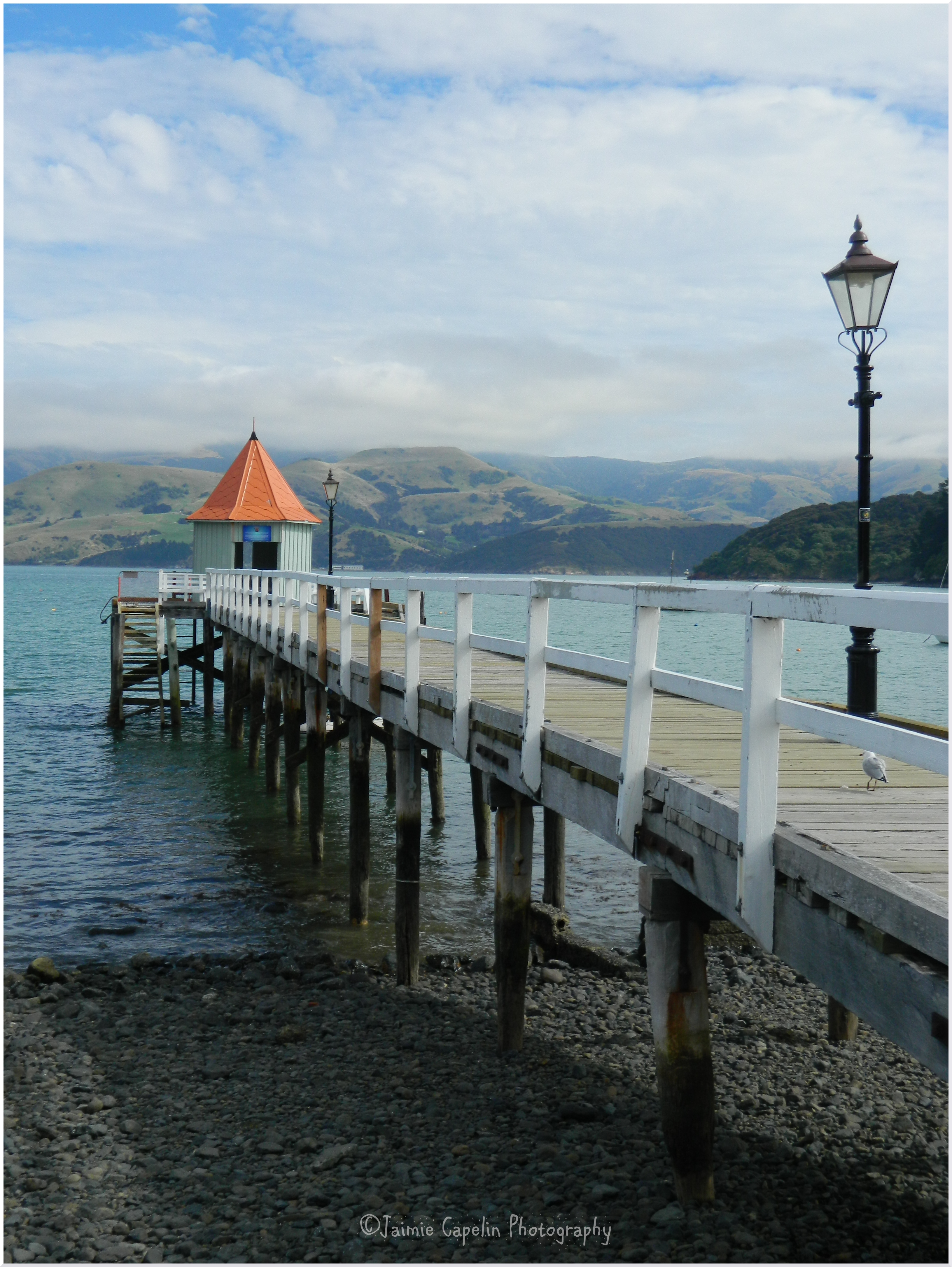
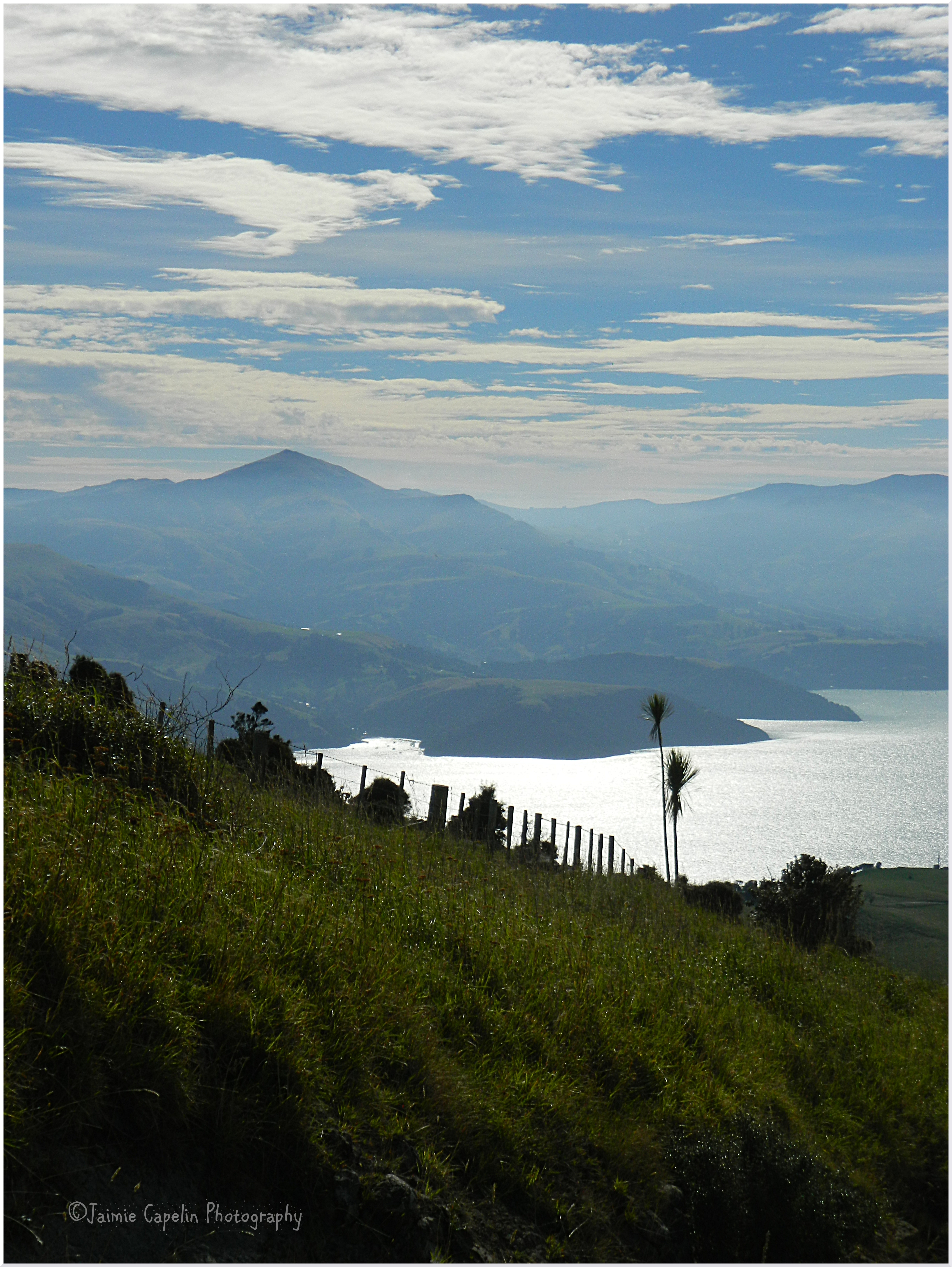
Matt – a good friend Jonny and I know from Cardrona – offered us a place to stay at his home in the little French town of Akaroa. Akaroa is a sheltered harbour on the south of Banks Peninsula near Christchurch. Occupied by the French in 1840, this pretty town has French road names, French shops and cafes, and a generally French look about it, with window boxes and blue, white, red striped flags on the buildings.

DSCN7338(2)

Matt shared a quirky house with a few local lads he worked with. They had a stream filled with eels running through their garden, which they’d feed leftovers, and in the evenings they’d light the BBQ and play darts in their garage where they’d built a little bar, and get up to boyish shenanigans.

Matt took us to the Bay Heads – the southern tip of Akaroa, reached by driving off-road and through private farmland, (we had to stop and ask the farmer). With a couple of friends and a few beersies, we sat on top of the blustery cliff, watching dolphins playing in the ocean below.

DSCN7378(2)

Abel Tasman – Paddling Paradise
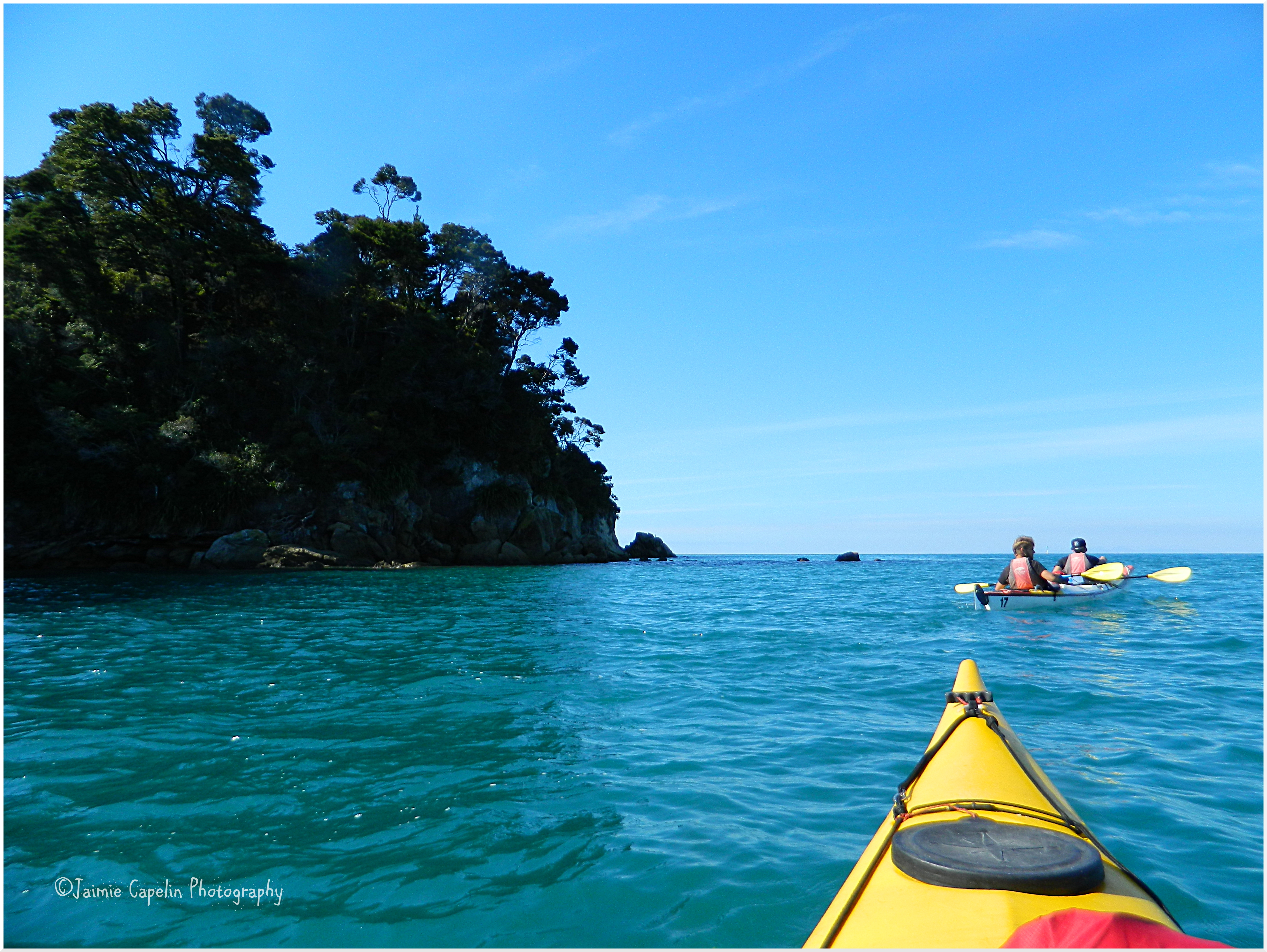
Abel Tasman was probably one of the most beautiful and worthwhile adventures. There are many 1-5 day journeys to choose from – we chose to kayak for 2 days and hike for 1. There are even water taxis, which will transport you from bay to bay.
We booked the excursion at the i-Site centre in Motueka, and met at the water taxi base the following morning for instructions. A guide provides you with your kayaks, running you through launching, berthing and safety procedures. You are also provided with a map and instructions on where to leave your kayak while camping, and then you’re off!

DSCN7459(2)

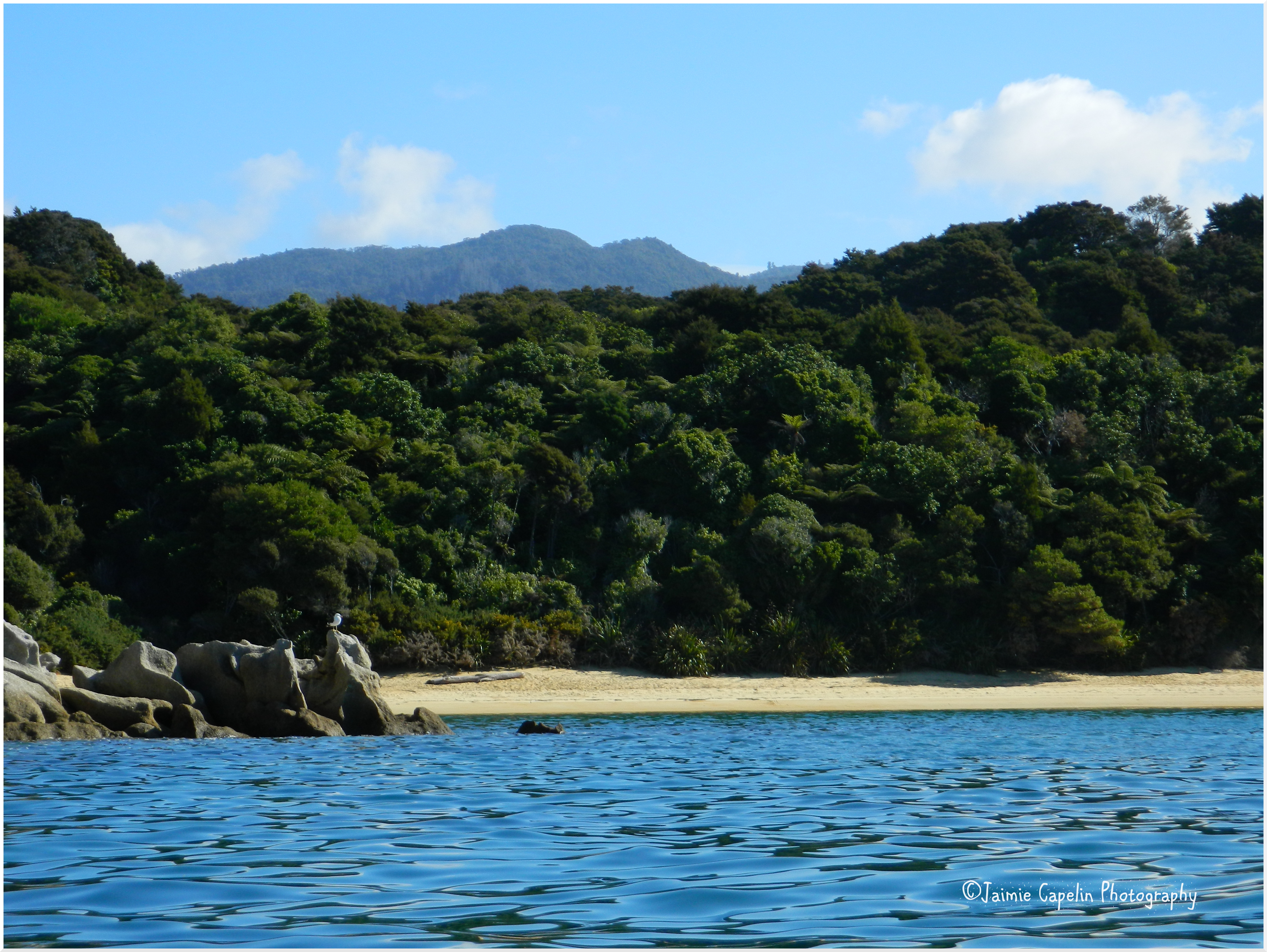
Beautiful blue ocean; lush green mountains; golden bays only accessible by boat; natural rockery smothered with wildlife; unexplored islands dotted along the coastline. Complete serenity, just the salty breeze on your skin, and the ripples of the sea gently lapping the side of the kayak. As you paddle up to various bays, you are overcome by the twittering in the trees; a cornucopia of different sounds, from the Fantail to the Tui to the Bellbird. Shags dive in the shallows, disappearing and then popping up somewhere else. A couple may perch on the rocks, wings outstretched to dry in the sun. If you’re lucky, you’ll see the baby seals, lolloping along the rocks, then slipping into the sea and swimming over to investigate, twisting and dancing in the water.

DSCN7452(2)

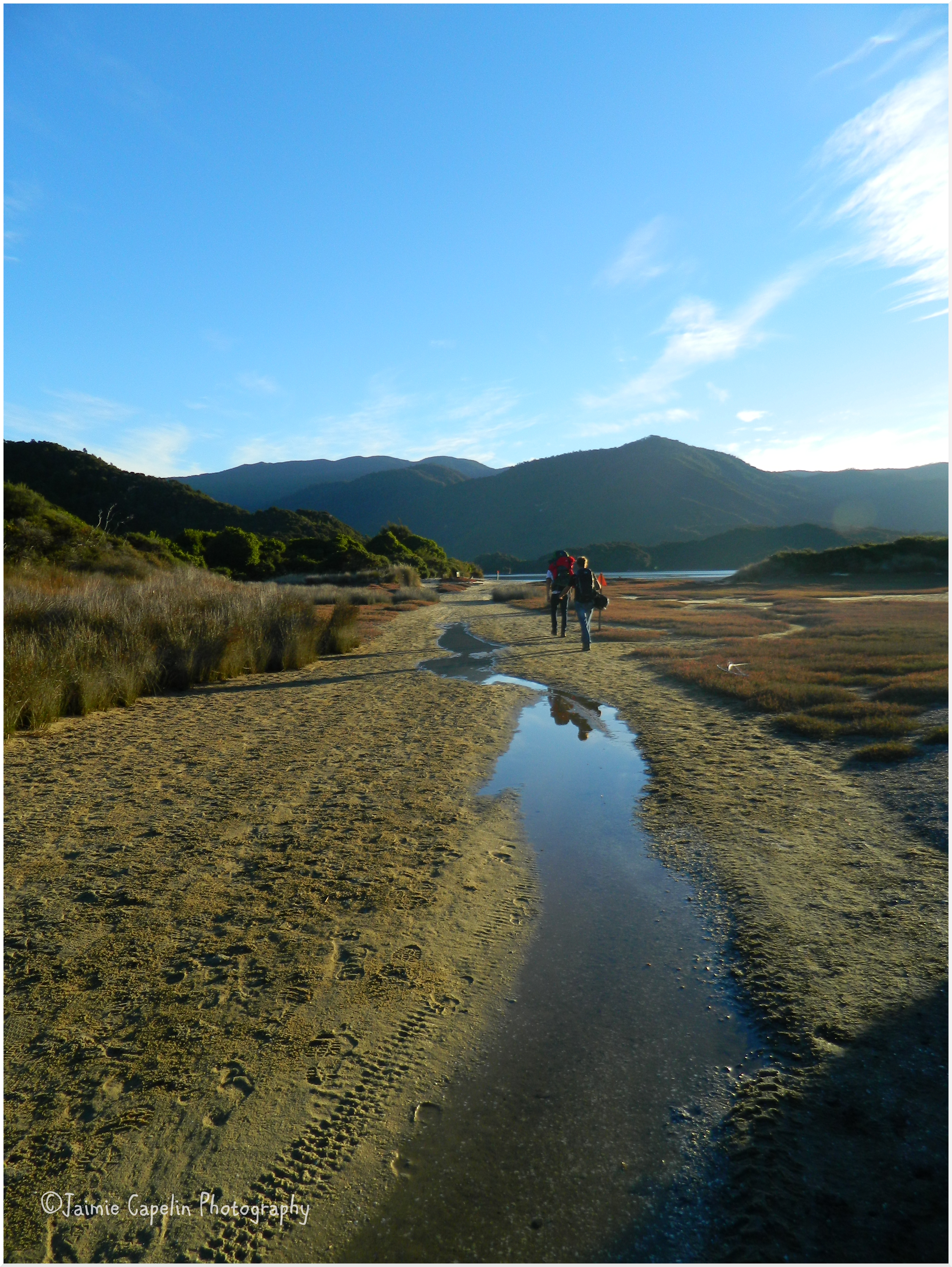
We camped by the beach, setting our tents in the shelter of trees, and rising with the sun and the birds to pack up and carry our kayaks down to the water’s edge. On the second night, we stayed at Awaroa Bay, where the beach is only accessible at low tide. Packing up early in the morning, we tied our boots to our backpacks, rolled up our trousers, and made the beach crossing. Even at low tide I was wading through knee deep water, with tiny seashells spiking the soles of my feet. Any later and we’d be swimming!

DSCN7534(2)

The hike crosses from boardwalks, to bushland paths, to soft, sandy beaches. It is challenging terrain, climbing up cliff side mountains, and then sinking in sand, but every step is more than worth it. The colours alone are breath taking, and the only people you see are there for the exact same reason as you.

Barrytown

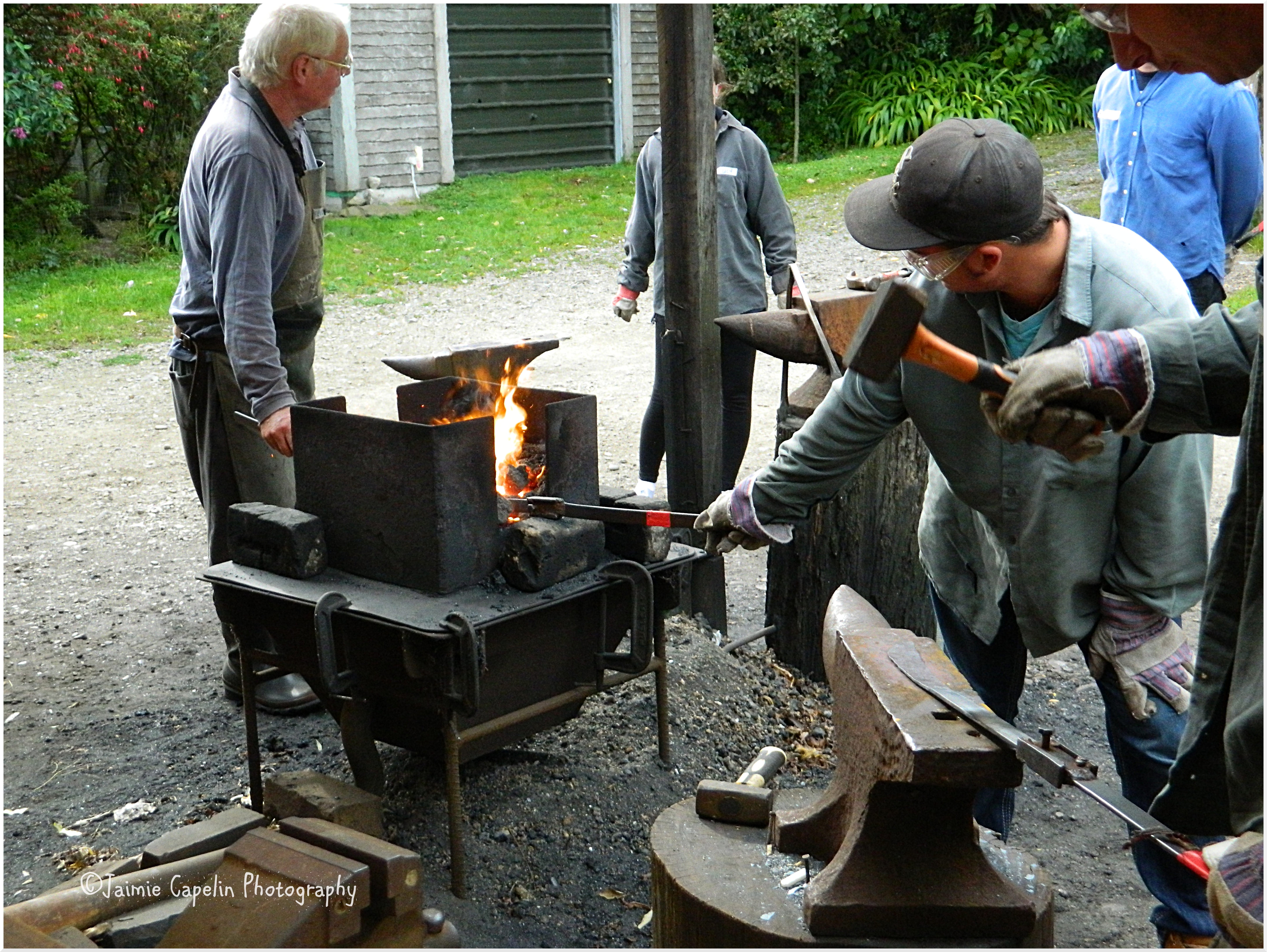
In a house on the cliffs of Barrytown, on the West Coast near Punakaiki, live Steven and Robyn the blacksmiths. Yogi and I went to the knife making workshop the couple have been running for years, welcoming travellers into their house and teaching them how to make knives! Here we met 3 Canadians; Joe, Justin and Danielle, a Dublin guy called Adam, a Dorset girl called Lucy, and a German called Raphael. We all donned big shirts, (like the paint shirts you have to wear at primary school), heat protective gloves, and a pair of googles.

We forged the steel in the forge fire, hammering the blade into shape on huge anvils before cooling it for 10 seconds in a bucket of water and duck poo! After sawing and essential sanding, we moved onto the handle, which we cut from New Zealand Rimu wood.

Steven took an interest in each of his clients, remembering each one’s name and making jokes all the time. He remembered me as ‘The Mighty Mouse’, and had an association for everyone. Shoes and work shirts off, it was time to break for lunch. Robyn invited us all into her kitchen for a smorgasbord of toastie goodies and tea, where we nattered and played with the dog before going to see the other animals and play on the enormous 30ft swing. It was like being at Grandma’s house!

After lunch, we perfected our individual knives, giving them a mirror shine, and finally protected the handles with Kiwi polish, topping off the day with a glass of homemade “Barrypagne” champagne.

DSCN7585(2)

Our exploration of South Island was complete, so it was time to make the transition to the North Island. We took the Bluebridge ferry from Picton to Wellington; about a 4 hour crossing, and began a week of Autumnal weather in New Zealand’s windy capital. From there we went up the east coast, through Palmerston North, Wanganui, up the Surf Highway to Taranaki, along the Forgotten Highway inland towards Taraunui, Waitomo, and Aroha, and ended in Tauranga.

The North Island has a larger population, less open space (but still heaps), and therefore DOC campsites are hard to come by. Camping is more expensive, and the weather confined us to shelter and so we moved quickly from town to town. Eventually, in Aroha, the main tent was taken down in the night by the monsoon and the camping trip came to a harsh end.

Some of the best moments while travelling are in uninteresting places, and while they stand bold in memory, they are not captivating to an audience. Evenings in strange campgrounds, sometimes infused with wine, sometimes not; or moments of car madness from simply sitting too long. When you’re with a new group of people so diverse, you cherish those moments where you laugh and share little nuggets of togetherness that only those who were there will understand.

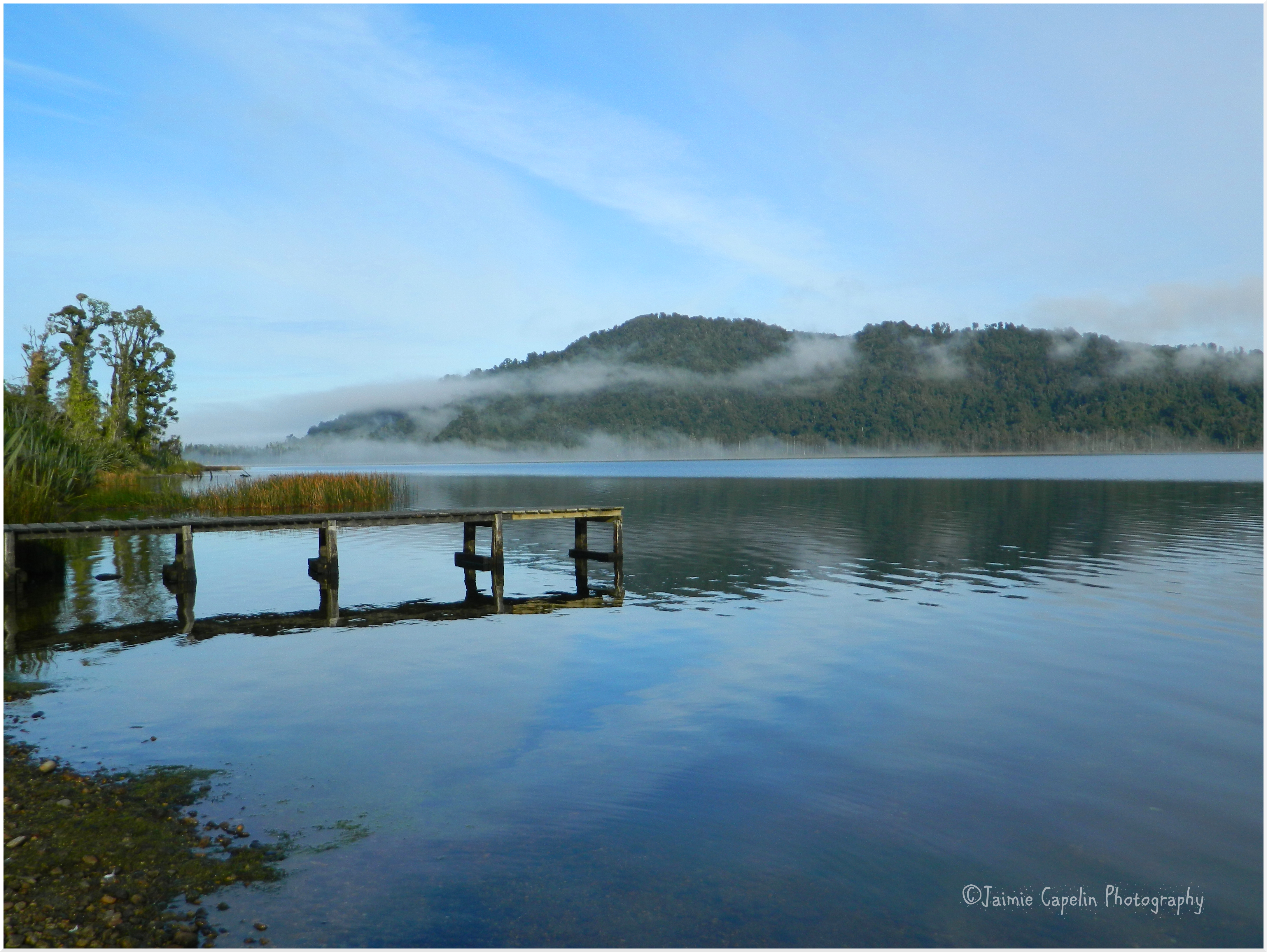
One of my favourite spots was Lake Ianthe on the West Coast. It took us a while just to find the D.O.C campground, which was hidden down a track to the water’s edge. There’s only room for about 8 tents there, but the location suggests not many people go there.

DSCN7288(2)

The evening was so serene. Yogi tried his luck fishing, while the sun lowered in the sky, casting some gorgeous colours across the water. Another group of campers built a big fire and cooked their fish and potatoes on it, and I sat on the edge of the little pontoon taking it all in.

Another of my favourite spots was Kakanui on the East Coast, right on the edge of the Pacific ocean. We camped on the cliff just above the beach, which had drift logs strewn across it. The waves were beautifully ferocious, and we watched as people surfed and kayaked them.

There was a little tree in the corner of this camp area, with branches all low and twisted. For some reason I was drawn it, and kept finding myself perched on the overhanging branch, legs swinging, watching the other campers. We sat for ages here, picnic blanket out, music playing, sunshine blazing, Jonny carving driftwood with his penknife. I put my tent up early, so the sun would warm it up. The boys, however, waited until the sun was faded and the wind picked up. It was amusing watching them try and pitch their tent when the canopy kept flying away! After all that, the evening drew in cold, and I ended up sleeping in their tent anyway to keep warm.

That was the night Yogi sat in his fold-up chair with his pipe, and said; “In years to come, we’ll all meet up again, and we’ll bring our kids and they’ll play together, while we try to remember everything about this trip!” We laughed a lot, and Gian made flatbreads on the campstove, and we sang and joked.

The next morning we unzipped the tent onto a glorious scene of crashing blue waves under a yellow sky, and we drove away from the campsite with a light and airy feel of content.

Yet another of my favourite places was Orepuki, down on the south coast between Invercargill and the Catlins. It reminded me of a little village back home on the Isle of Wight called Brooke. The characters we met in the local pub, mixed with the sunset on the beach, and the stargazing, and the French cyclist who let me play his tiny guitar around the campstove, made this tiny place very significant.

DSCN6928(2)

Thanks for reading! You can watch the video documentary I made on this journey at https://www.youtube.com/watch?v=Lqs7xMVCaPY

Wanaka in Winter

DSCN5321(2)

“Far over the misty mountains cold…”

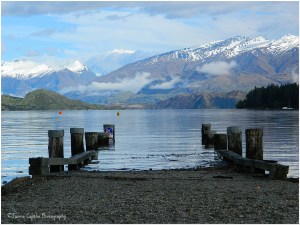
Down on South Island, nestled on the lip of the lake in the Mt Aspiring Range, is a little town called Wanaka…

~The Sweet Smell of Wood Smoke~

            Back roads of Wanaka.
            Snow peaks, fog faded
            Rooftop scuds of chimney smoke
            Pine trees, winter leaves
            Logs piled up to the windowsill
            Icy fingers, frozen toes
            Pompom hats, rosy nose
            Streetlights glimmer, Pavements shimmer
            Frost bites
            Breath spirals rising
            Precious moments round the burner 

When I first arrived in Wanaka, I stayed with Grainne (an old friend from uni) and her friend Jess, in a cosy little house, stacked up to the windowsills with firewood, tucked in on the top road by the BMX track. We stayed with a handful of other travelers, where we spent a week drinking tea; circling room ads in ‘The Messenger’, and taking Jake (the slightly crazy resident chocolate Labrador) for walks. It was Corey – a Canadian friend of Jess’s – who picked us up from Queenstown airport on the 10th of June in his white converted camper van, and drove us to Wanaka along the Crown Range. Grainne and I sprawled on the bed he’d installed in the back of the van, watching the clouds and mountain tops float by the draped back windows.

We arrived at the snug little house at 4pm, where we met Corey’s girlfriend and lady of the house – Britney; Nick, a quiet fitness fanatic who quickly became everyone’s personal trainer, and Matt (Jake the dog’s dad) a hard working businessman from Auckland. They were an unrelated family unit, and some of the loveliest people I’ve met. A little later, two more arrived: an arty Canadian surfer chick – Janelle, and her Finnish travelling companion, Anna. We got the wood burner going, (which Jake the dog hogged like a hearth rug) and sat around drinking earl tea. Later, we filled the living area with duvets and pillows and watched one of Janelle’s films called ‘Like Crazy’, which taught us we shouldn’t fall in love on a holiday visa…

The clouds didn’t lift for the entire first week we were there, leaving us in some vague belief that our plane had never left Auckland and we were living in some ‘Truman Show’ parody with an unfinished set. But then one day, Grainne and I were strolling by the park, and up in the sky before us appeared a cut out of mountain peaks through a gap in the cloud – eerily faint as though covered with a sheet of tracing paper. The Mount Aspiring Range are some of the most spectacular mountains I’ve ever seen. They look how mountains should look – pointy and jagged and covered in snow, filling up the sky.

~Family Values~

1294518_10151586376345800_254982647_o
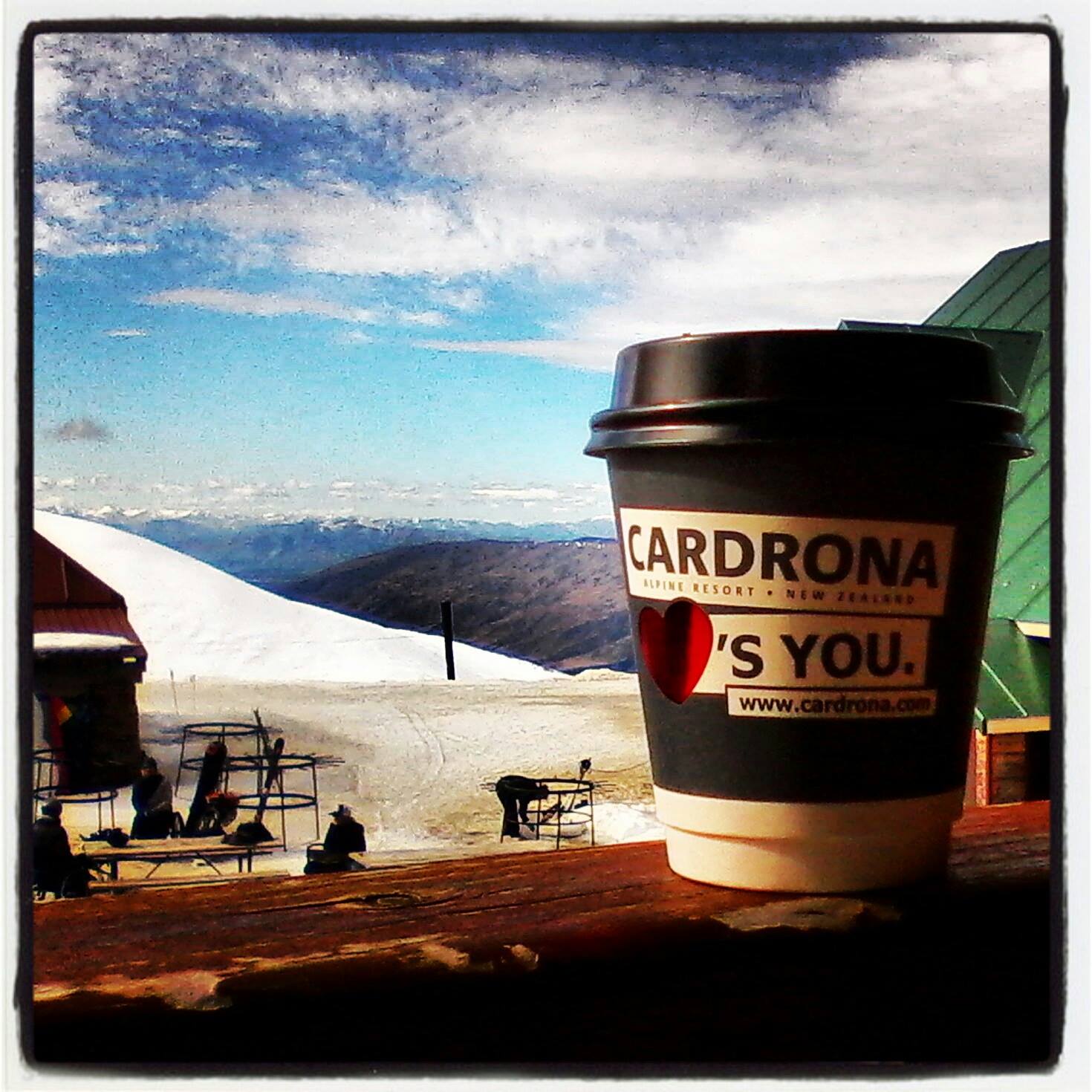
Cardrona Alpine Resort has been feeding Wanaka’s snow-lust for 35 years, with a terrain of 345 hectares, ranging from 1670m to 1860m high. People travel from all over the world to play in the snow at Cardrona, and the field plays host to many national events, which this year included the Winter Games; Snowsports International Paralympic World Cup; Snowsports NZ Freeski; Snowboard Junior Nationals, and Winter Olympics Spring Camp.

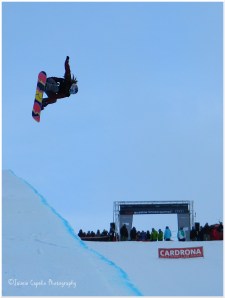
 DSCN4442(2)    [The Women’s Half Pipe World Cup Finals, Winter Games]
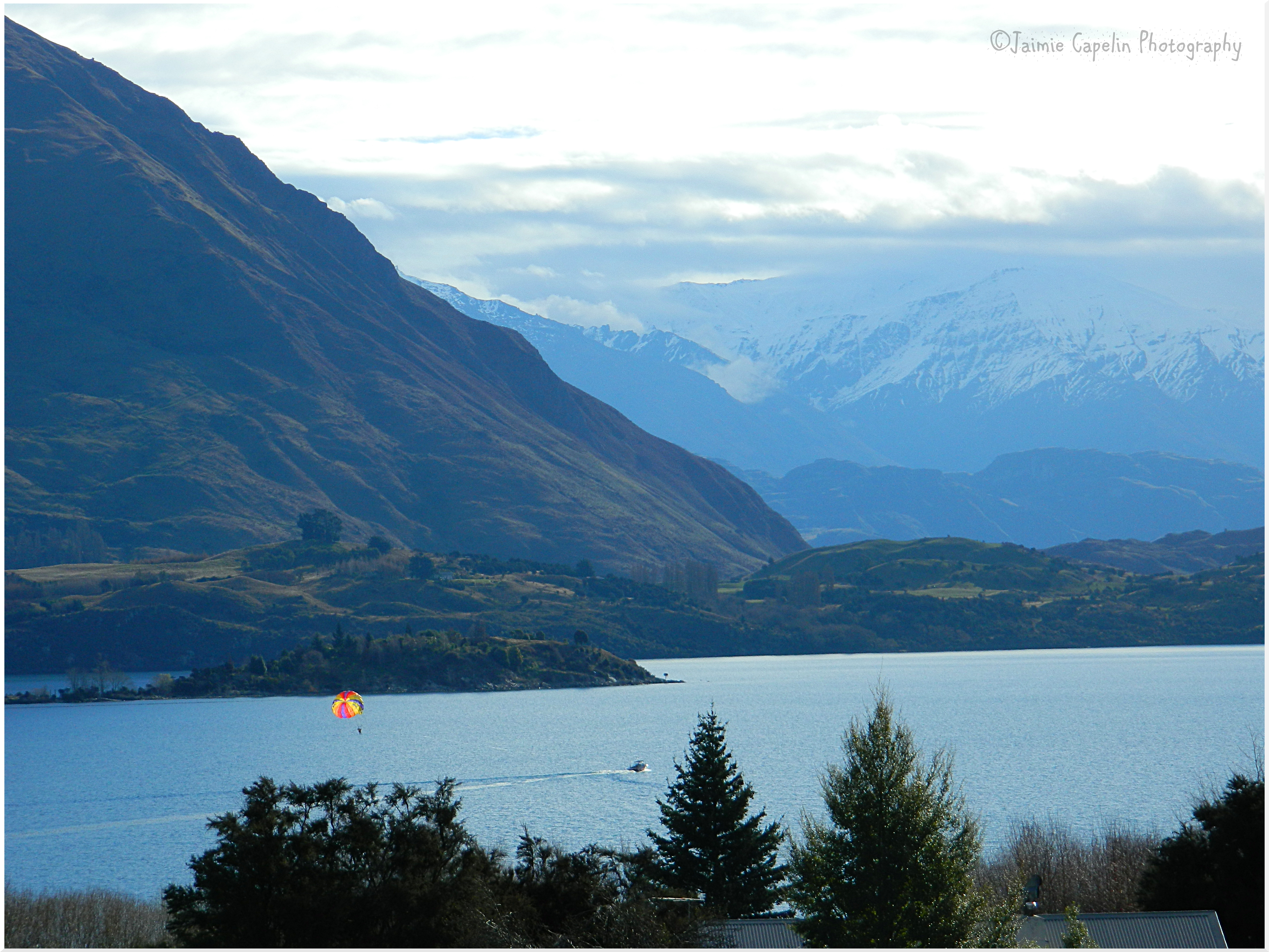
In the beginning a string of headlights would snake up the mountain track against a moody backdrop of the mountain silhouettes. The peaks would glow in the morning moonlight as the convoy of rental vans drove us to work, reaching the top in time for the bloody-Mary sunrise. Now that spring is approaching the sun has already bleached the landscape before we’ve left our front doors, and it seems the hills are always on fire.

Back in June – about a week before the mountain opened to the public – it all started. The 2013 Cardrona F&B team spent the week getting acquainted and building ‘the family’. We did lots of paperwork, learnt to fit chains, gave mouth-to-mouth to a plastic dummy, got shown around the mountain, did more paperwork, had various training sessions, did more paperwork, played in the snow and partied hard. The work vans picked us up from the town office at 7am every morning, and we’d be back in town at around 5, just in time for happy hour at Water Bar.

Eventually, I was able to quit my couch-surfing career. Kai, Sean and Christian – lads from work – moved into a motel with an Australian called Tom, and shortly the neighbouring motel became free. I moved in with a ‘Despicable Me’ German called Bastian; a Michael Jackson obsessed Malaysian called Tze, and a small Welsh sci-fi artist called Rhys (who quickly adopted me as his sister and liked to bully me in a very brotherly manner). Within weeks the whole block of motels became a Cardrona staff hotel!

There is a series of snapshot images on the road I go along everyday between Cardrona and Wanaka. A scattering of bee boxes littered on the grass beneath a tree. Behind runs a babbling stream, coursing over miniature rockery with the mountains rising on the backdrop. Sheep dabble in the grass lands around, grazing lazily as we gaze out of the van windows, hardly noticing each other. Usually, a brilliant blue sky canopies the view, leaving a crystal tint every unique colour. The second snapshot is of little wooden fences and neatly cropped copse – possibly an orchard, but there’s no fruit at this time of year to clarify that. The icy, silver-yellow sunlight falls dappled on the ground between the leaves and twigs, and the little wooden fences cast criss-cross shadows. The drive back towards Wanaka presents you with sun-stricken panoramas of countryside, which pans out onto snowy peaks beyond. Before you reach the town, you glimpse a vast stretch of Lake Wanaka drenched with golden light and framed with the jagged mountainous horizon, a different shade of sky everyday.

~Snowboarding~

SAM_5252(2)
The heart of winter. Not what you normally think about at home, in the middle of August, when you’re clinging on to every last ray of summer, and each last grain of sand that sticks between your toes. But here it’s winter. Not damp, shivery, grey winter, but crisp, colourful winter, in which every sunset paints the lake a different story. If you’ve ever been on a ski holiday, you will appreciate the sheer thrill of zooming down a mountain side with nothing but bluebird skies and crystal views, spraying up waves of fresh powder around you with every turn; cool speed brushing your face… If, like me, you grew up on a small island on the edge of a country corrupt with money and politics, you may not have even seen a ski field, and learning is the most challenging fun you can have.

Waste Busters is a recycling centre on the outskirts of town, which funnily enough recycles things. You can buy practically anything for under $10, so, naturally, I got my first snowboard gear there. My actual snowboard came from Will and Esther, a lovely couple who lived next door to Corey and Britney. Grainne and I surfed on their couch a couple of nights and Esther happened to be selling her old board – a little Rossignol, red and blue, with a hooded creature holding a lantern on the tail end, which always reminded me of a Ra’zac out of Christopher Paolini’s ‘Eragon’. It served me well all season, until it mysteriously vanished on the last day…

Adrenaline pumped through me, getting on that chairlift for the first time. Nervously sliding up to it and letting it take control, for I knew that once I was on that chair, that was it, there was no going back. At first it felt like trying to ride a tea tray downhill over ice cubes, but with a touch of practice and encouragement from friends (a hard shove and endless amounts of laughter) I learnt to control my board.

The first time I got stuck in a whiteout was fairly early on in the season; one of the first times I went over the other side of the mountain to Captains. The mist came in while we were having coffee in Captain’s Cafe ($2.50 with staff discount!) By the time we’d realised how bad it was, they’d already closed the lifts, so we were forced to take the lower cat track back across the Whitestar lift. Now, I wasn’t very confident, especially on cat tracks. People were zooming past me, vanishing into the fog, and my friends were long gone. (You can’t stop to wait for people on a cat track, as they are flat, if you stop you can’t start again). The wind was pushing me back, slowing me down and blowing me off course. I couldn’t see the edge of the track where the sheer drop would surely kill me, and no matter how low I got, I couldn’t pick up any speed. Frustrated, I took off my bindings and attempted to walk, but with sheet ice beneath my feet and my board under my arm acting as a wind-sail, I was simply blown backwards with ever step I took. It ended with me sitting on the bank, arms folded, refusing to move, while Greg tried to coax me along from a few meters ahead. But at least I know I’m not the only one who had a cat track tantrum… (Miss Stokes!)

But snowboarding wasn’t all hardwork and horror. On the whole it is the most exhilarating sport I’ve tried so far. You’re out there in this beautiful landscape with brilliant people who just want to have fun. You skate up to the chairlift, do the barrier dance (a kind of gyrating motion against the barrier so it can detect your lift pass in your pocket), sit on the chair anticipating where you’ll ride, chatting with others on the lift and watching the pros in the park below. You weave down the slopes, racing your mates (or just trying to keep up), bunny hopping over mogles left by skiers, carving edges up the sides and stopping occasionally to throw a snowball or two. At the end of the season, we had to take a snowboarding assessment, and now I am an intermediate snowboarder!

(Thanks to Bez who gave me that first push at the top of McDougals and never failed to catch me all the way down my first run. Thanks to “Dutch” Sam for teaching me to turn and giving me that kick of confidence. Thanks to Wilko for taking me over the kickers in McDougals Park and being my witness for my first air. Thanks to TimTam and Lauren for giving me heaps of ride breaks. And thanks to Greg for believing I was better than I was.)

~Living For The Weekend~

DSCN4302(2)

The drive up the Cardrona track is hairy at the best of times, but when you’re in the passenger seat of your friend’s well-loved, well-used Ford Escort, with no chains and no brake pads, you can do nothing but laugh and hope. Greg and I would meet on our days off and drive up the mountain, teeth clenched, buttocks tensed, swerving away from the cliff edge on globules of mud and ice, or spinning out on fresh, unplanned snow. I think of cold, sunny drives and loud hip-hop and rock; singing along to the likes of Will Smith, Slim Shady and Foo Fighters to drown out the sound of the wheel bearings shaking to pieces. I think of sunglasses and laughing at nothing and all those threats of handbrake turns.

Occassionally, we would give the mountain a miss, and spend our day off in town eating gellato icecream by the lake and chilling on the deck, go for lunch and shopping in Queenstown, or go for a drive in the countryside…

~A Picnic at Glendhu Bay~

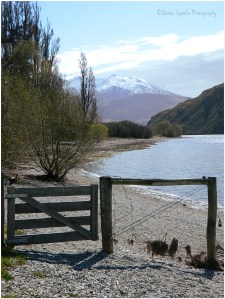
Blues of oceans, far out in the midst of clear-sky-nowhere. Sunshine breathes through the silent chill of winter. Spring on the horizon. A curve of sand stretches around the lake, curling into the distance where the leafless trees merge into the carvings of the mountain. White peaks brightly shard the sky, dazzling like new knives. The water laps my ears between songs of Muse and Metallica, while little yellow-faced birds scamper about the stones. A twist of smoke rises up and licks the cold while the car bonnet toasts our bottoms. White puff-ball clouds on the sky; avocado and strawberries on our lips.

DSCN4501(2)


Out in the depths of Lake Wanaka lies Ruby Island – a tiny nature reserve, which you can only reach by boat, or in our case, one kayak, one punctured dinghy and a blow-up bed… a good group of us made it over, Bez, Stokes, Sean, Paul, Olivia, Greg and myself. We walked around the island, jumped off the jetty into the lake, and had a BBQ feast before the paddling mission back to land.

The season is over now and I have begun spring work in a vineyard just outside of town. But I’ve learnt a lot, achieved more and made friends for life. See you next year Cardrona!  
DSCN5226(3)