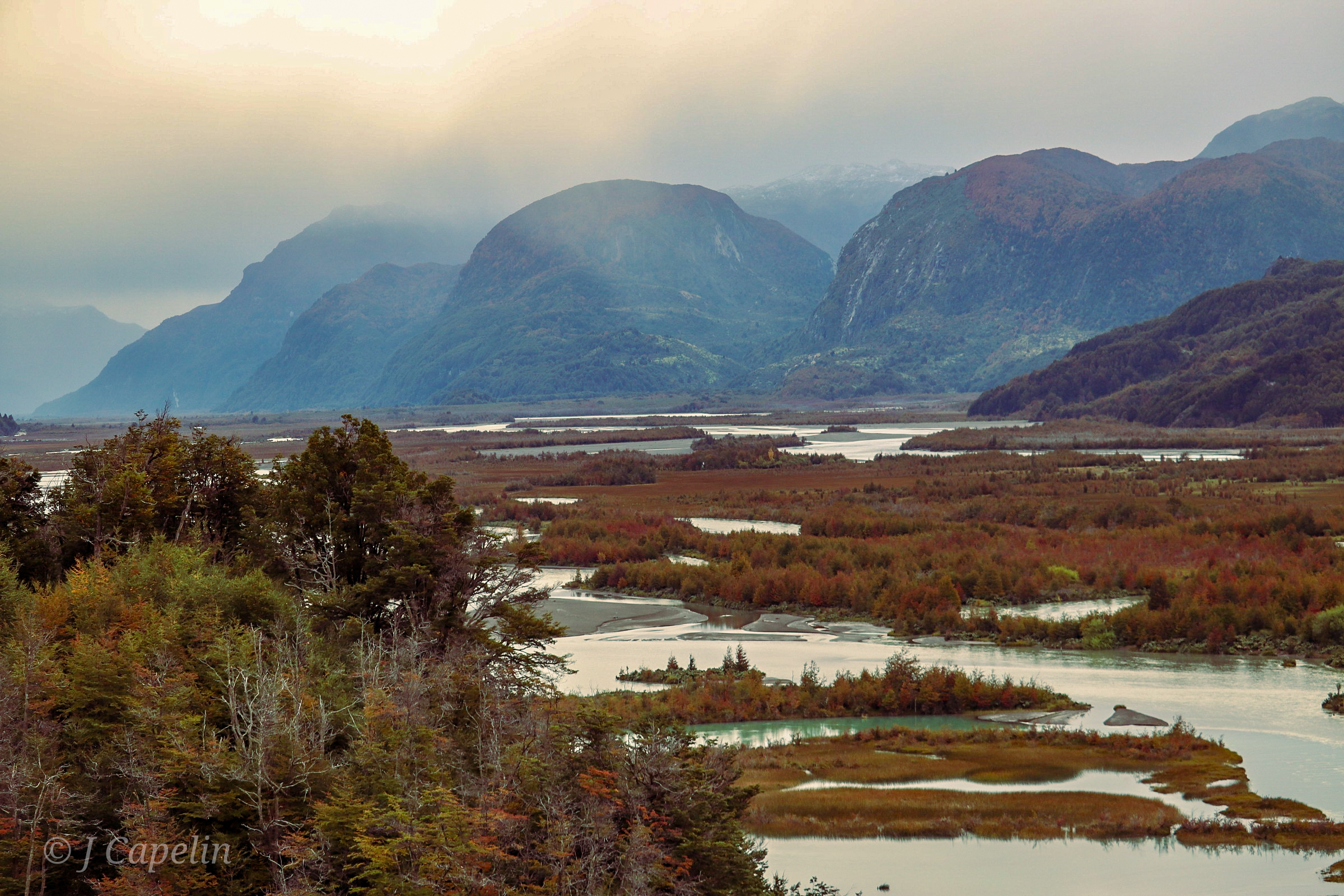
Patagonia | Dipping a Toe in Chelenko

15–23 minutes

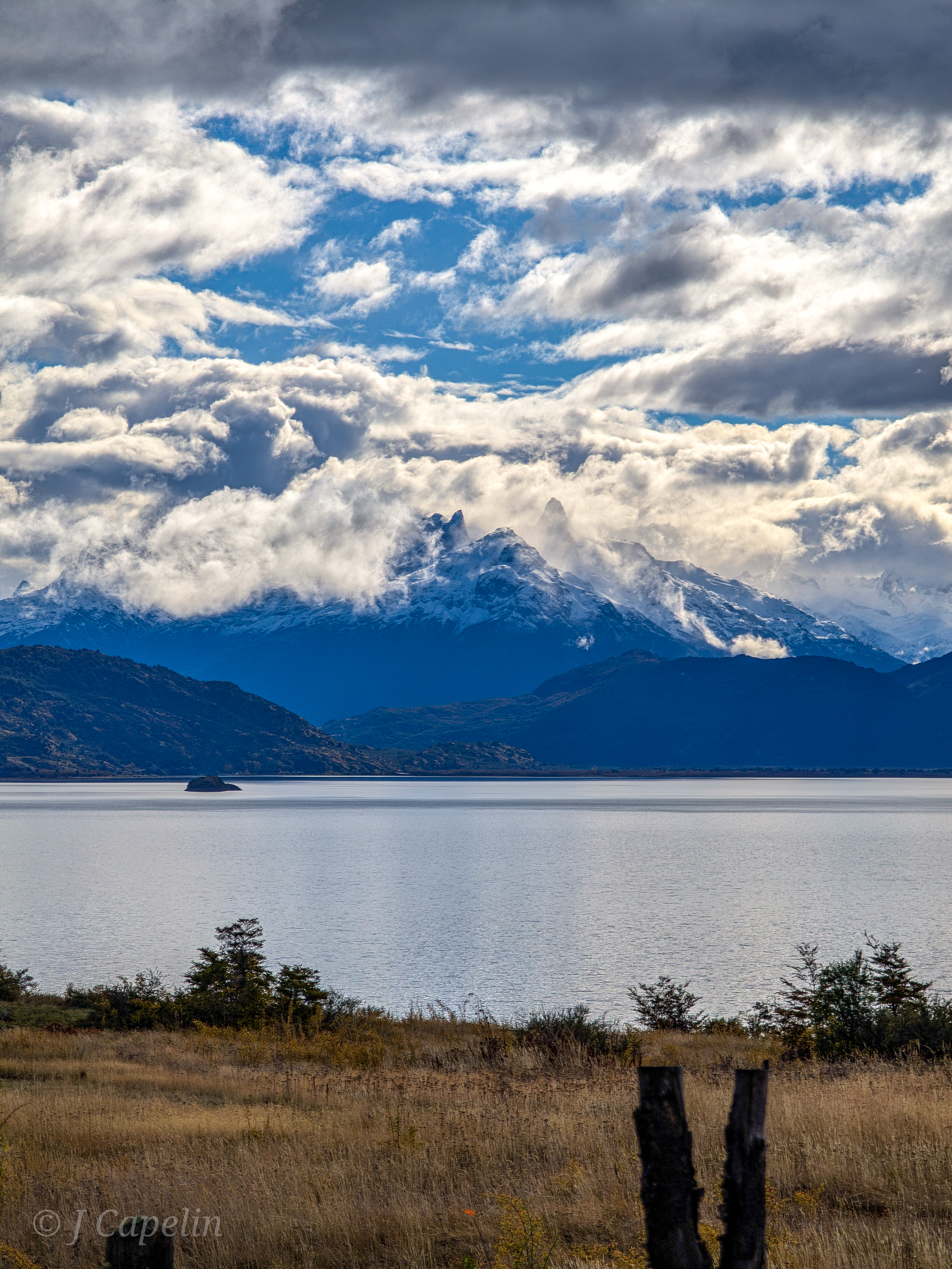
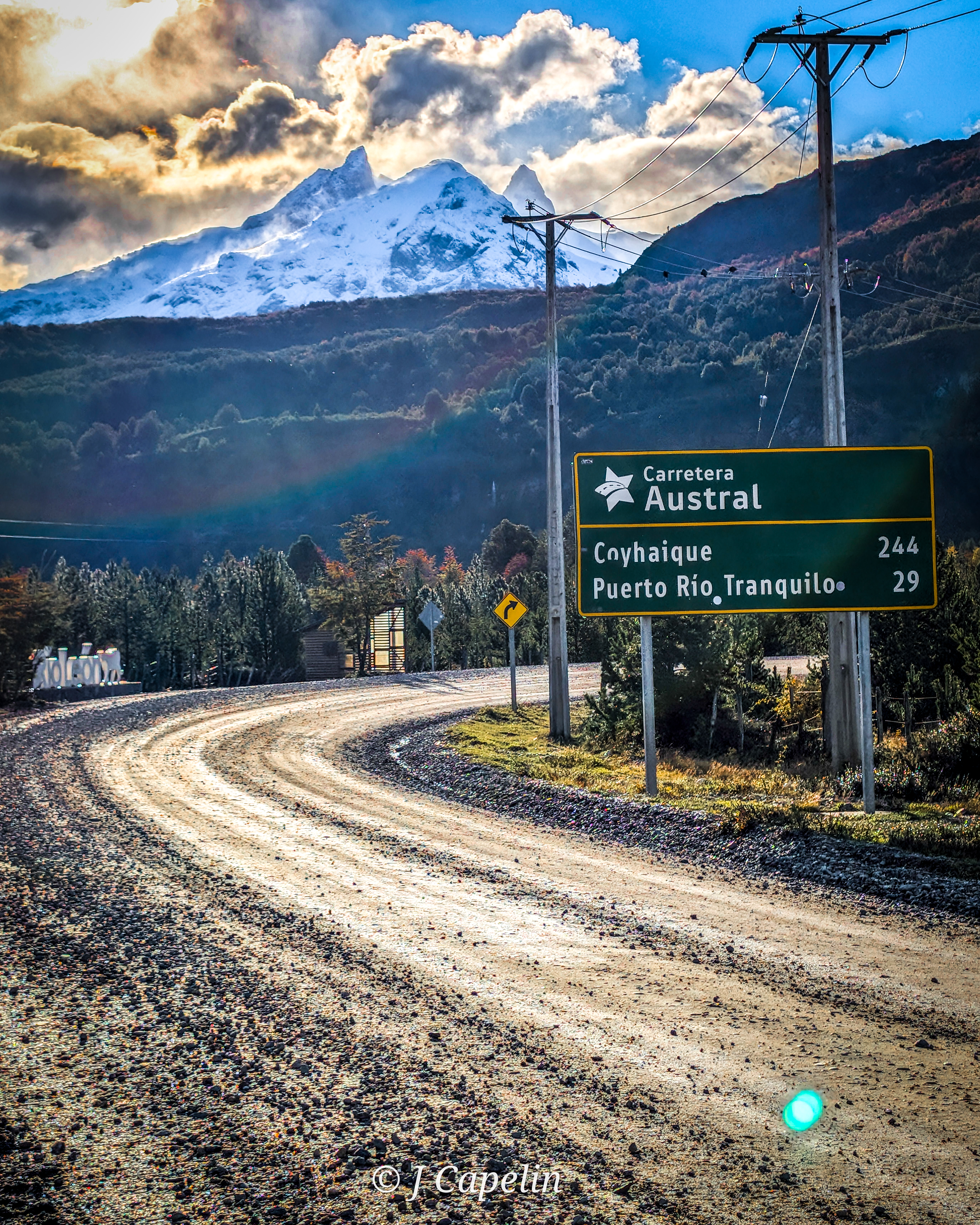
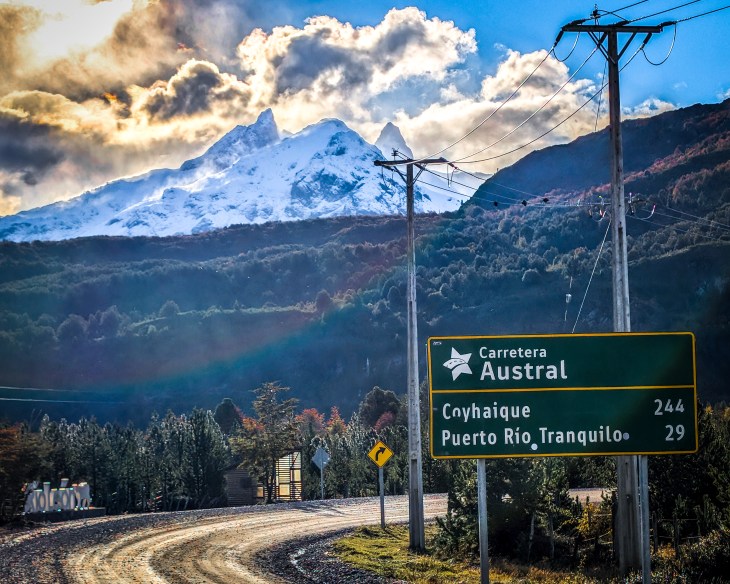
Dust clouds billow behind the car, pursuing us and clinging to the rain soaked rear window. Another corner of mud and loose gravel, and another minor slide out as the tyres lose their traction. We haven’t seen another car for a while, does anyone else know about this “famous” highway? Carretera Austral – the great Southern Highway, seemingly to Nowhere. If Nowhere consists of weather-veiled mountains of extraordinary scale; aquamarine lakes that stretch beyond the borders of the country, and a 1,240km highway (half of which is unpaved) that stops at a dead end in the middle of this vast, dramatic landscape, then this is Nowhere.

But there is something in the atmosphere here, even through the immense grey of rain and fog, I can feel it: ancient magic in the air. And when the mist moves in great curls, you think a section of sky will be revealed, and instead a mountain peers down, then you know you are Somewhere.
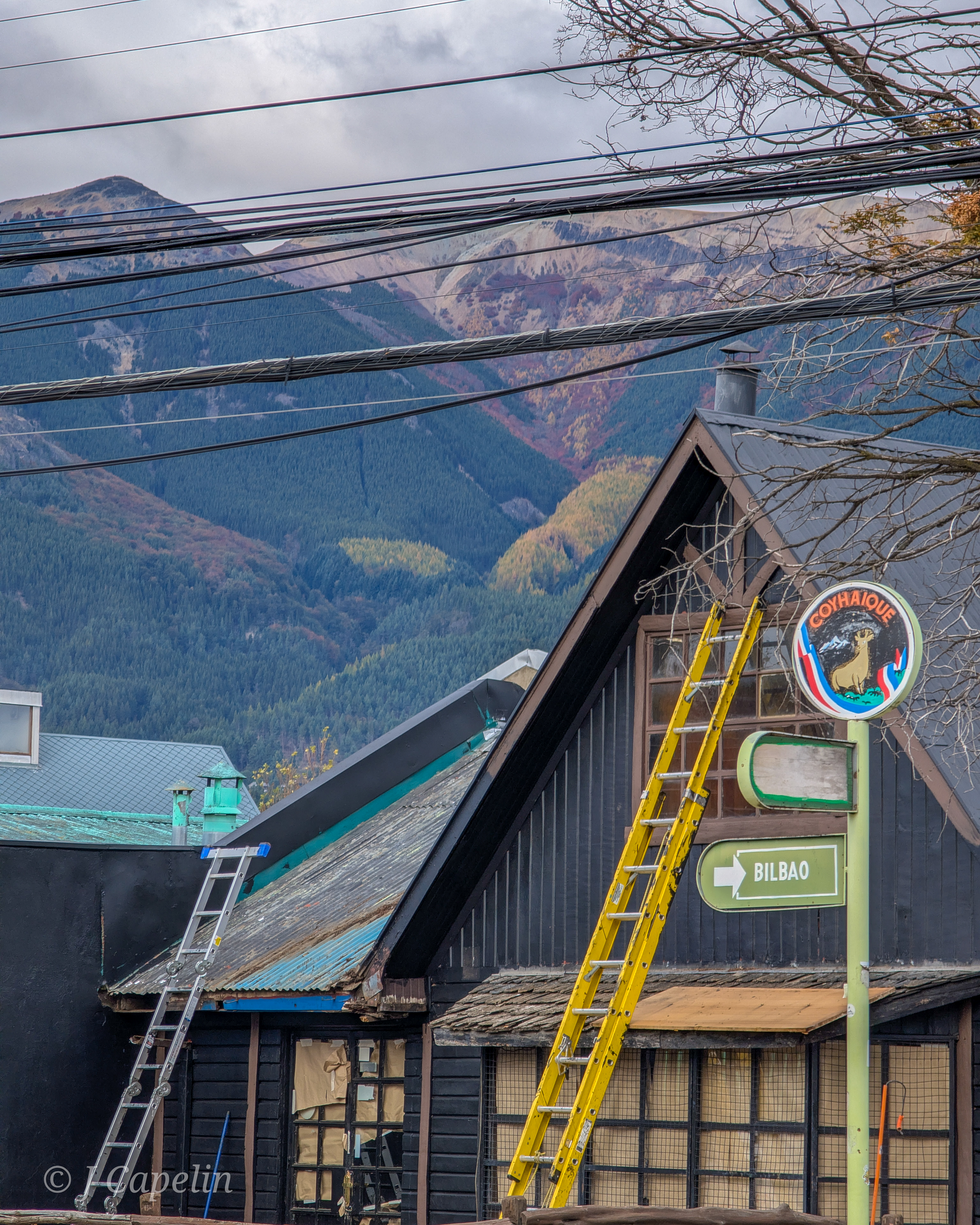
My journey begins in Coyhaique, the biggest city along Chile’s Carretera Austral, and the closest city to Balmaceda airport. Two cars full of brothers-in-law and their partners, my partner, and me.

Car Hire in Balmaceda (click for more)

Balmaceda is a tiny, remote village with a tiny but significant airport. There are several hire car kiosks operating at Balmaceda airport, which you can book online prior to arrival. https://aeropuertodebalmaceda.cl/servicios/?lang=en

The smoky air of Winter’s approach fills my lungs in Coyhaique. The small wooden buildings with pitched rooftops make it feel much less like a city, and more like a small town, with the colours of the surrounding mountains visible from any angle. We seek coffee and lunch in a beautiful cafe, where the sun breaks the cloud and warms my back through a cheerful little window, before heading to a supermarket for essentials.
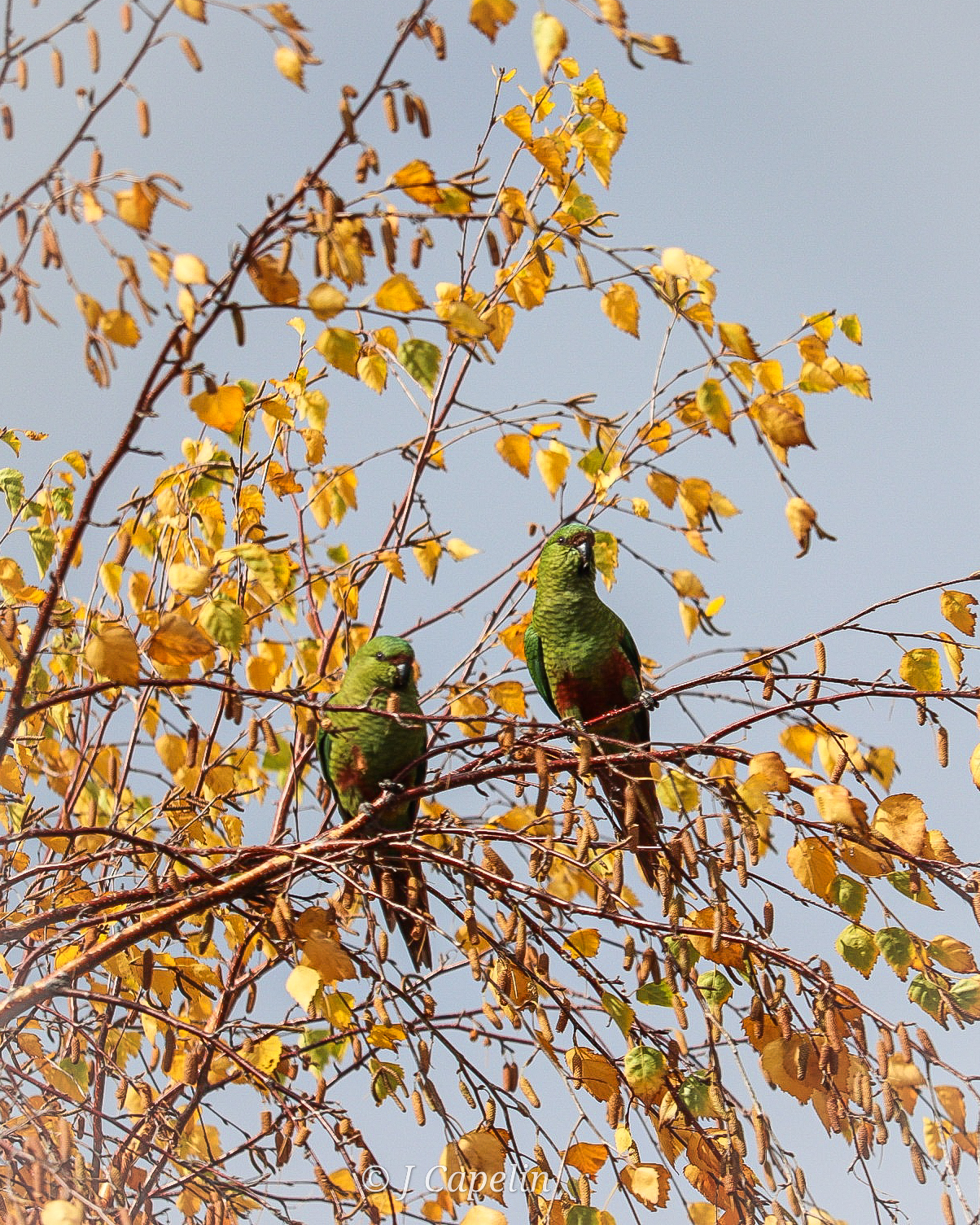
Coyhaique Essentials

We follow Route 7 south along the Carretera Austral, eagles and the odd condor soaring alongside the dark mountains in the distance. The dramatic landscape seems to get closer, sloping forests of vibrant fiery shades, and a brilliant blue river that snakes and tumbles alongside the highway. Past the tiny town of Villa Cerro Castillo, the road winds through a dramatic valley, when suddenly, the road surface ceases to exist! Rumbling off the smooth asphalt onto dirt and gravel, this isn’t the end of the highway. No, this is just the beginning.

Carretera Austral

Due to the nature of the landscape, the Carretera Austral is a constant work in progress. At least 50% of the 1,240km highway is unpaved. The sheer length of the route, mixed with its remote position, and seasonal storms, means that there isn’t any point trying to pave the southern half, as it will need redoing before it even gets finished! Workers re-level and patch up the gravel highway in sections all year round, so you will always find roadworks somewhere along the way.
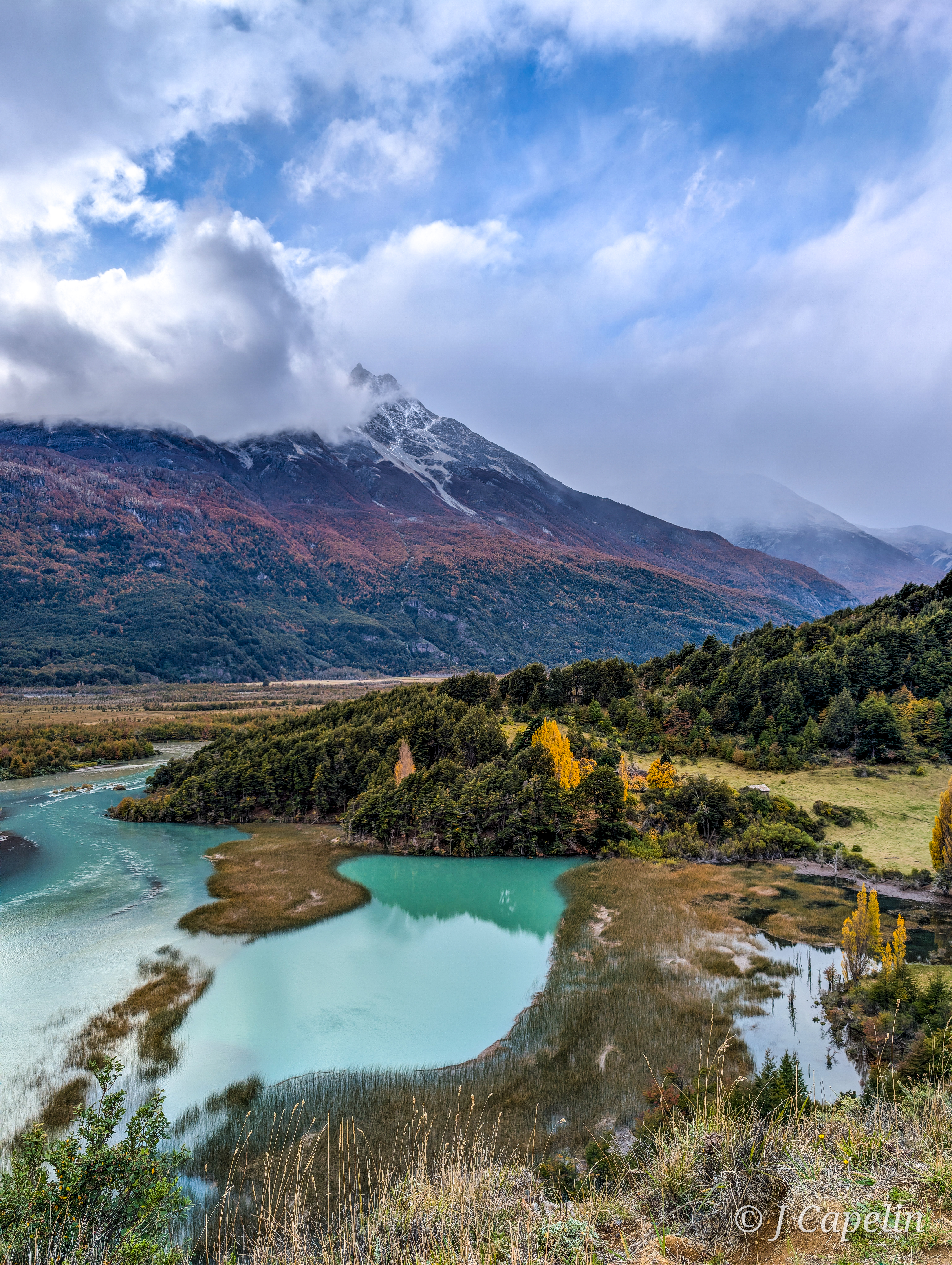
Rain smudges the windscreen with hues of grey, not a view in sight, just an endless gravel road blurred at the edges. No one speaks for tiredness and concentration. There was much discussion in the planning stages of this Chile trip, whether or not we should go to Patagonia. Of course, everyone wanted to, it was just a matter of time and money, as it would be a short side quest to the main trip. We knew it was coming into the down season; that the weather might be awful, and a lot of places would be closed. We also knew we’d only have time to visit one part. So if we couldn’t do Patagonia ‘whole-heartedly,’ should we do it at all?

Best Seasons for Travelling

High Season: Dec – Feb (Summer)
Pros: Mild temperatures, better weather, vibrant colours, active wildlife
Cons: Trails and attractions get very busy, high demand pushes prices up, it can be very windy

Shoulder Seasons: Oct – Nov (Spring) & Mar-Apr (Autumn)
Pros: Spring flowers or autumn colours, less crowded, cheaper
Cons: Unreliable weather, some tours may not operate, some businesses are closed

Down Season: May – September (Winter)
Winter in Patagonia is known for its freezing temperatures, wet weather, and lack of daylight hours. While it is peak ski season, travelling can be treacherous and you can expect flight cancellations and impassable roads. Many people who live in Patagonia leave during winter to escape the dark, isolating conditions. That said, winter is the best time of year to see marine life. If you travel to Patagonia during winter, be aware there are limited options as most places close, and be prepared with supplies and safety kits. Choose an accessible base with flexibility in case travel plans get cancelled.

Night has fallen, somewhere between the clouded mountains and the rain, without anyone noticing. We finally pull in to our destination – Chelenko Lodge – private cabins on the General Carrera lakefront, about 20 minutes outside of Puerto Rio Tranquilo. We are all grateful for the warm, comfortable beds!

The Giants of Chelenko

‘Chelenko’ is the indigenous name of General Carrera Lake and means “turbulent waters.” It comes from the Aonikenk Tehuelche people native to southern Patagonia. These very people are the reason Patagonia has its name today. In 1520, Portuguese explorer, Ferdinand Magellan encountered the Tehuelche people for the first time, and was surprised by their height. Standing around 6ft tall, while the average European at the time was around 5ft 3, Magellan described them as giants, originally naming them ‘Patagones’ after a fictional monster, ‘Pathagón’ from a popular Spanish novel at the time, Amadís of Gaul.

Sadly, European colonisation devastated these indigenous groups, and their populations declined, assimilated and were displaced.

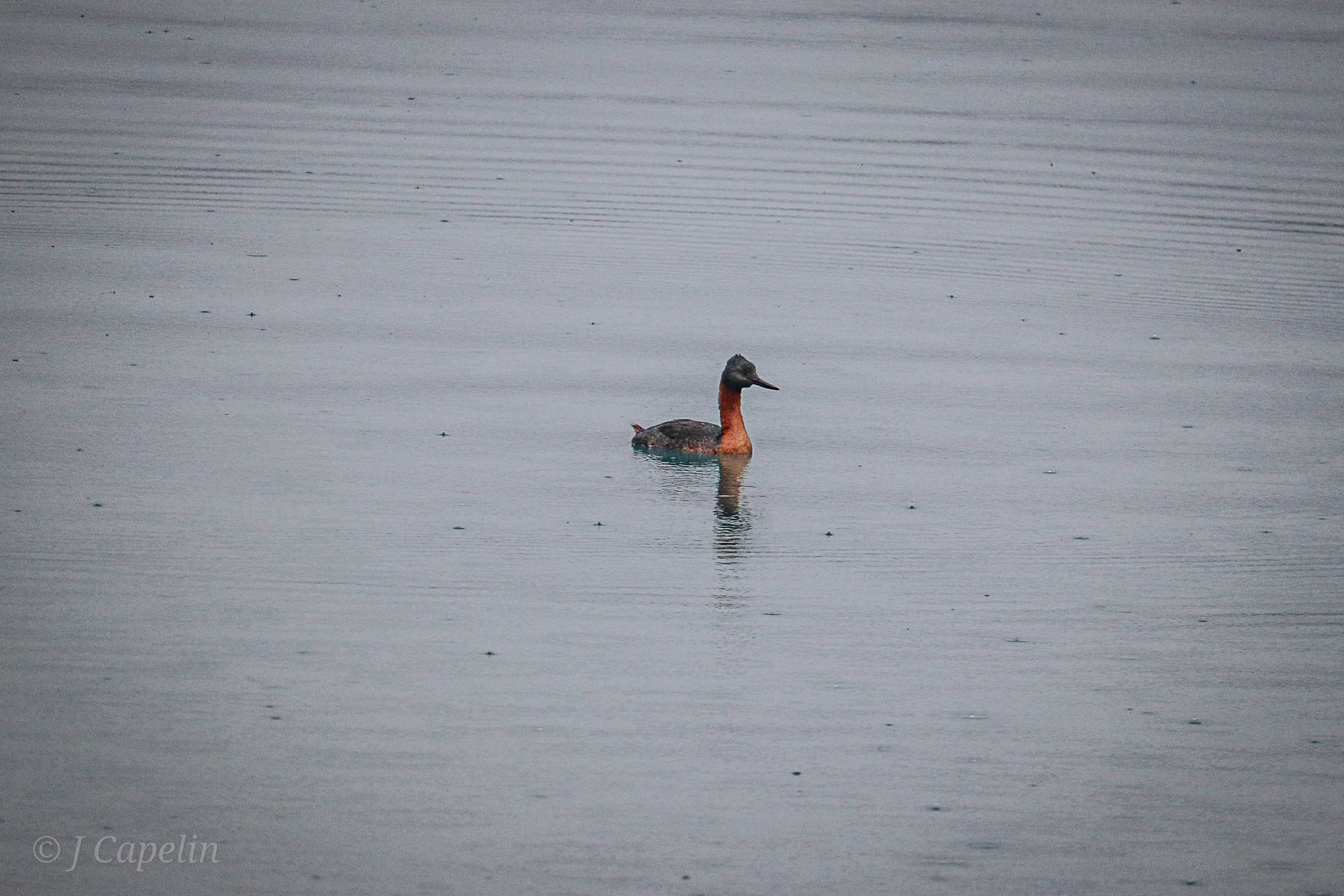
Morning arrives just as night fell – slow and discreet. The little town of Puerto Rio Tranquilo doesn’t awaken until later in the day, and there are no sights to be seen in this persistent rain cloud, so the morning is spent in our cosy cabin, drinking instant coffee, wrapped in a pile of duvet, watching a Huala bird dive for fish in the rain-tattooed lake.
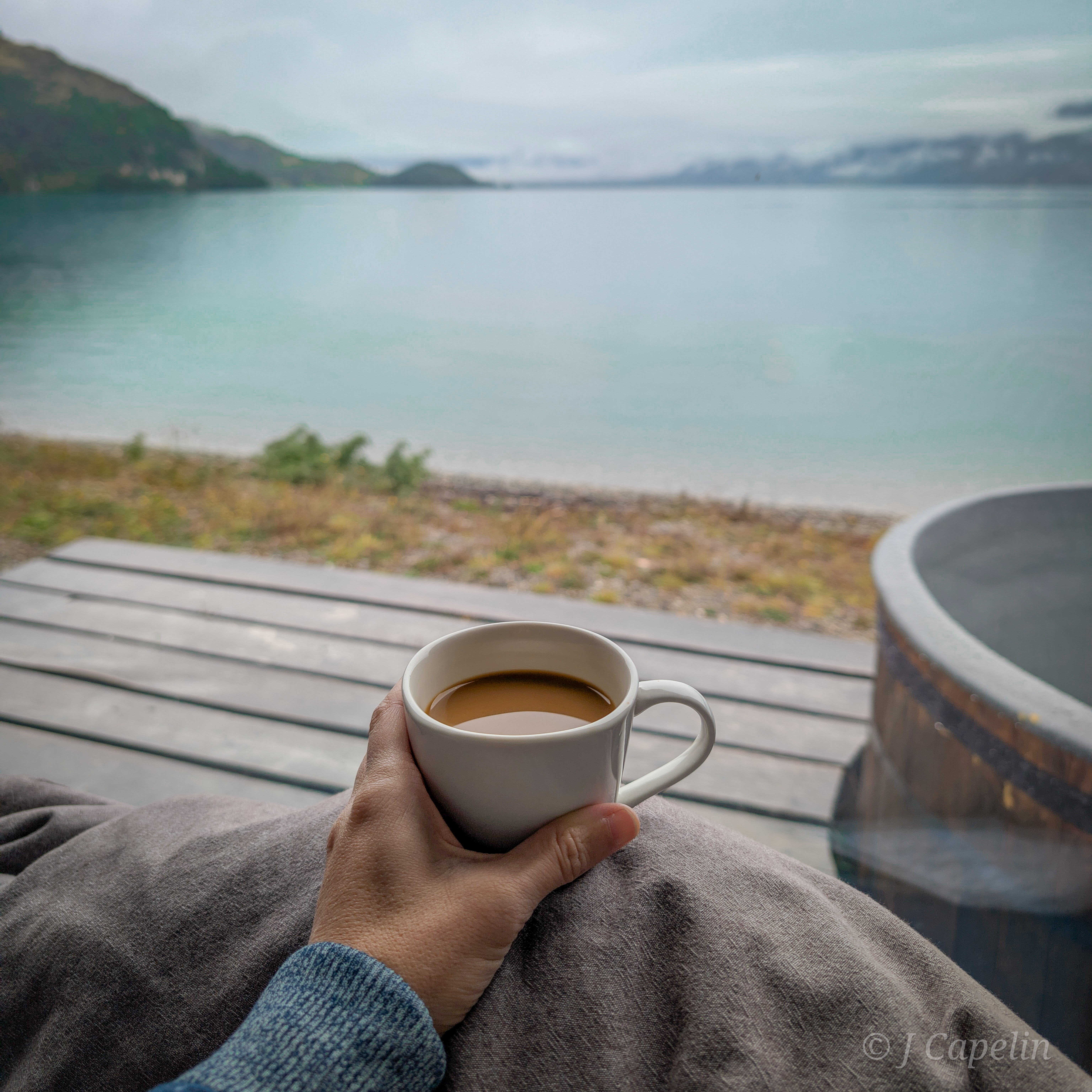
The light doesn’t improve as we approach midday, but Café La Estación – one of the cafes in town – is now open, and we enjoy another hot drink by their wood burner before trying our luck and venturing out for a drive. The stubborn cloud breaks as we leave Puerto Rio Tranquilo and the sky cracks open at the horizon ahead. A line of snowy mountains shines through the burst seam, the road shimmering with wet reflection. With a boost of enthusiasm, we follow the sky south.
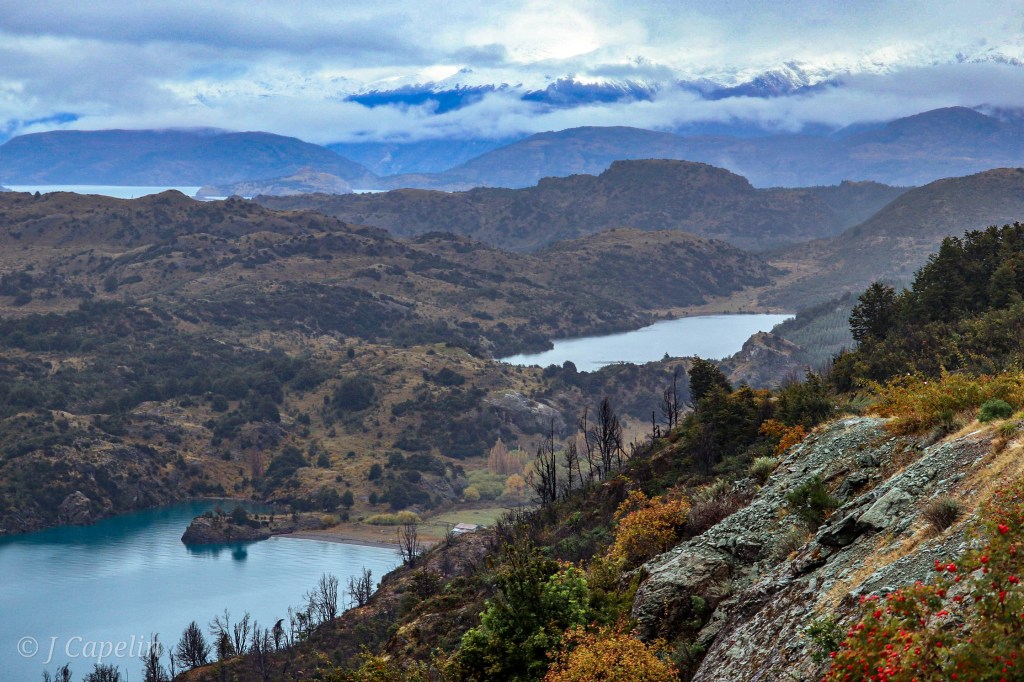
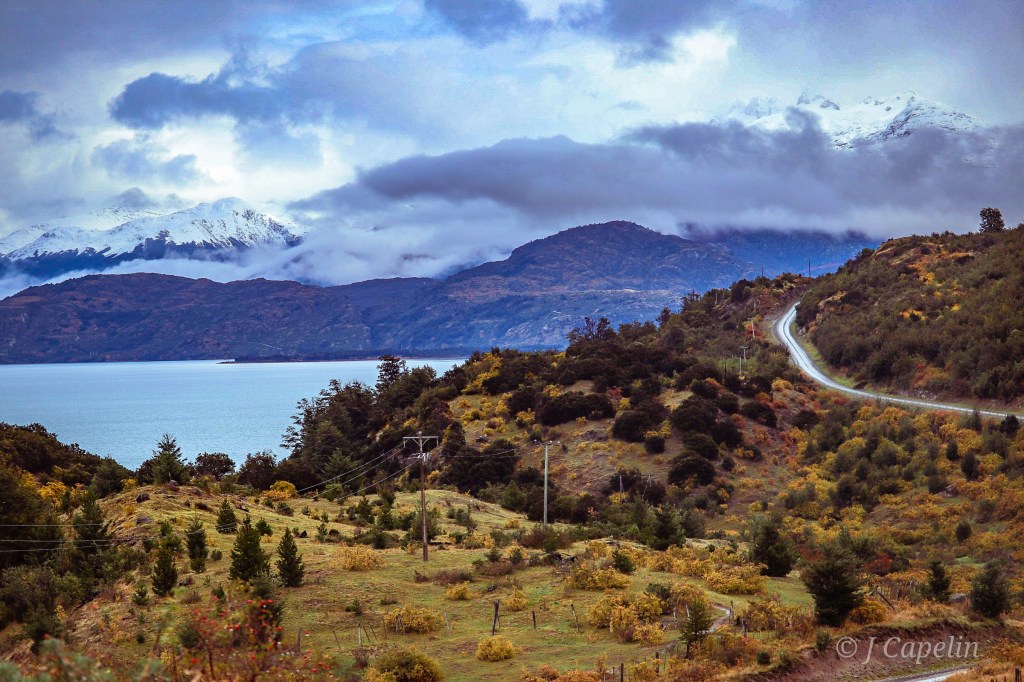
The dirt highway winds and stretches before us, pines and colourful Beech trees either side; cows, goats and horses munching leaves on the verge. The clouds drift, opening windows of sky and snow peaks, gradually clearing to reveal tremendous panoramas around each bend.
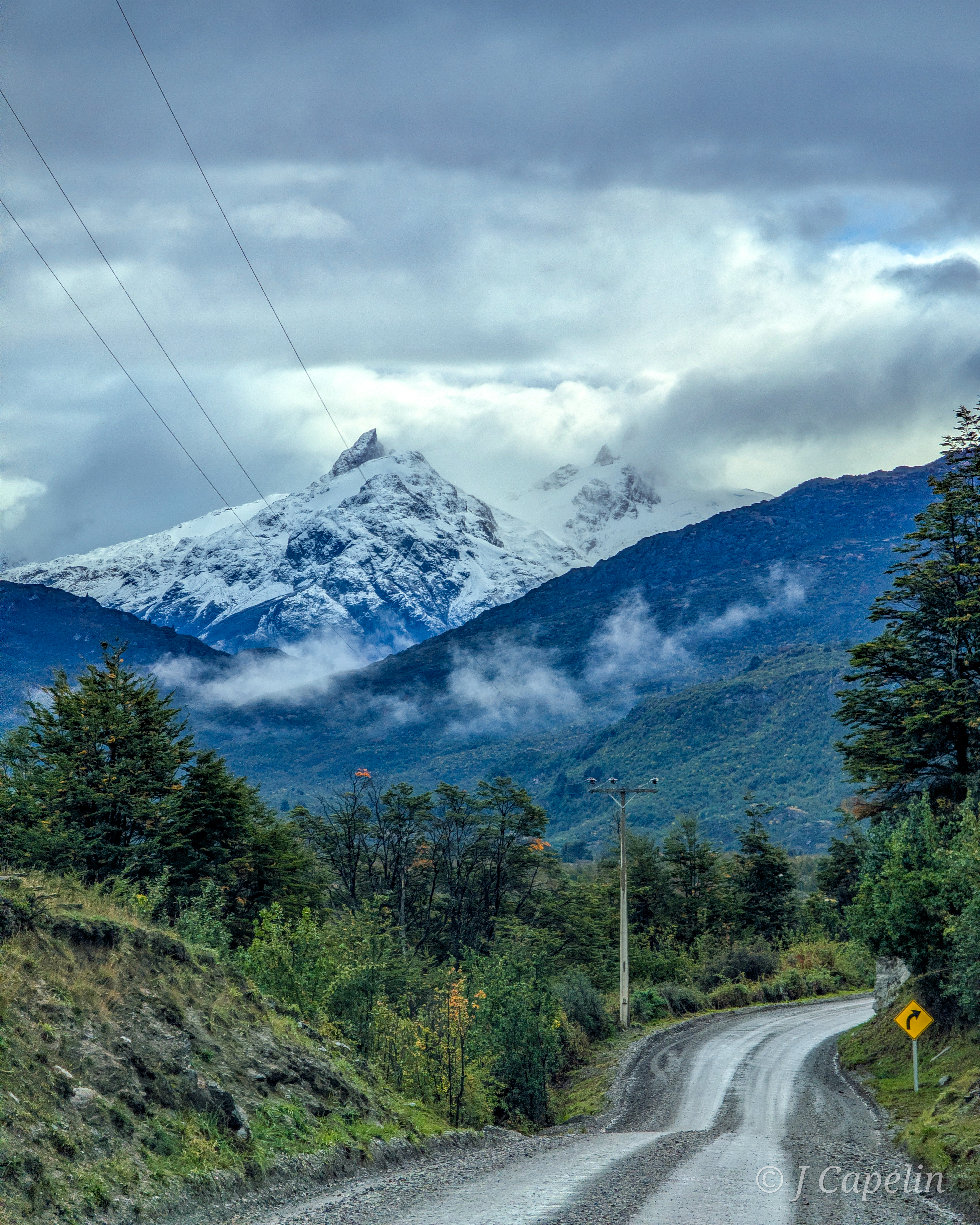
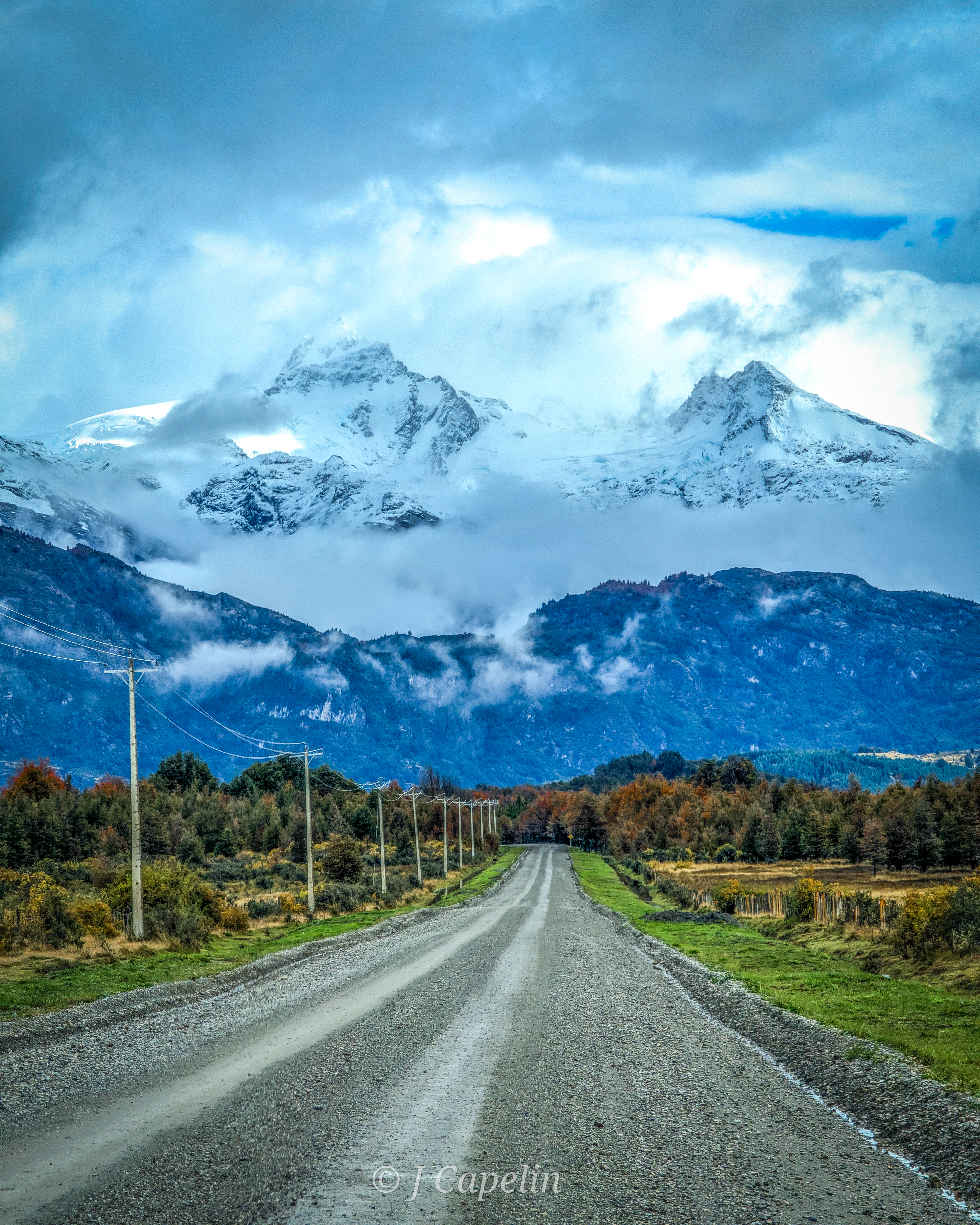
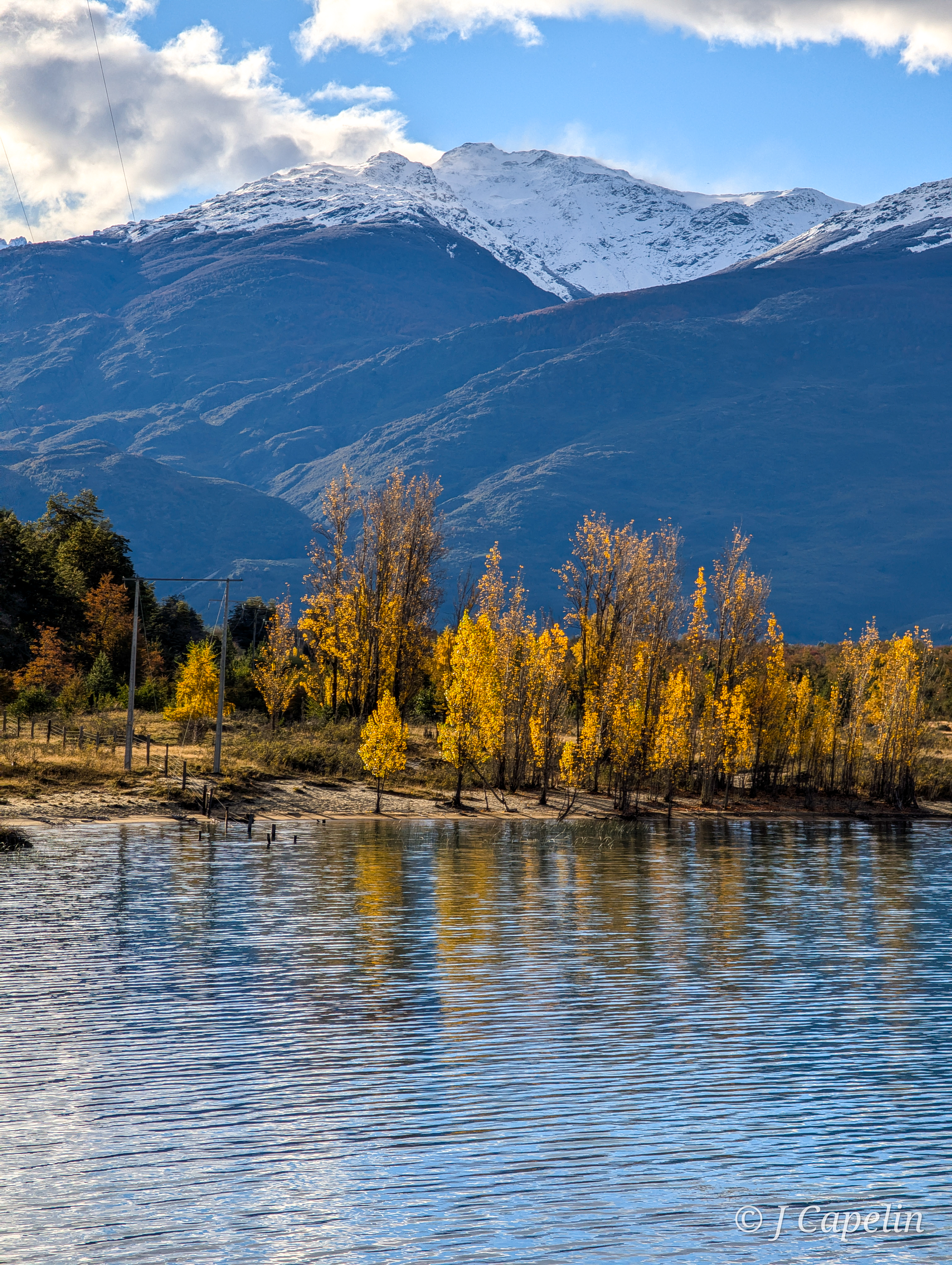
We come around the lake’s edge, crossing a river and weaving around inlets where little boats are moored in pebbly bays lined with poplars. It all looks strangely familiar, and I have to remind myself I’m not in the Southern Lakes of New Zealand!
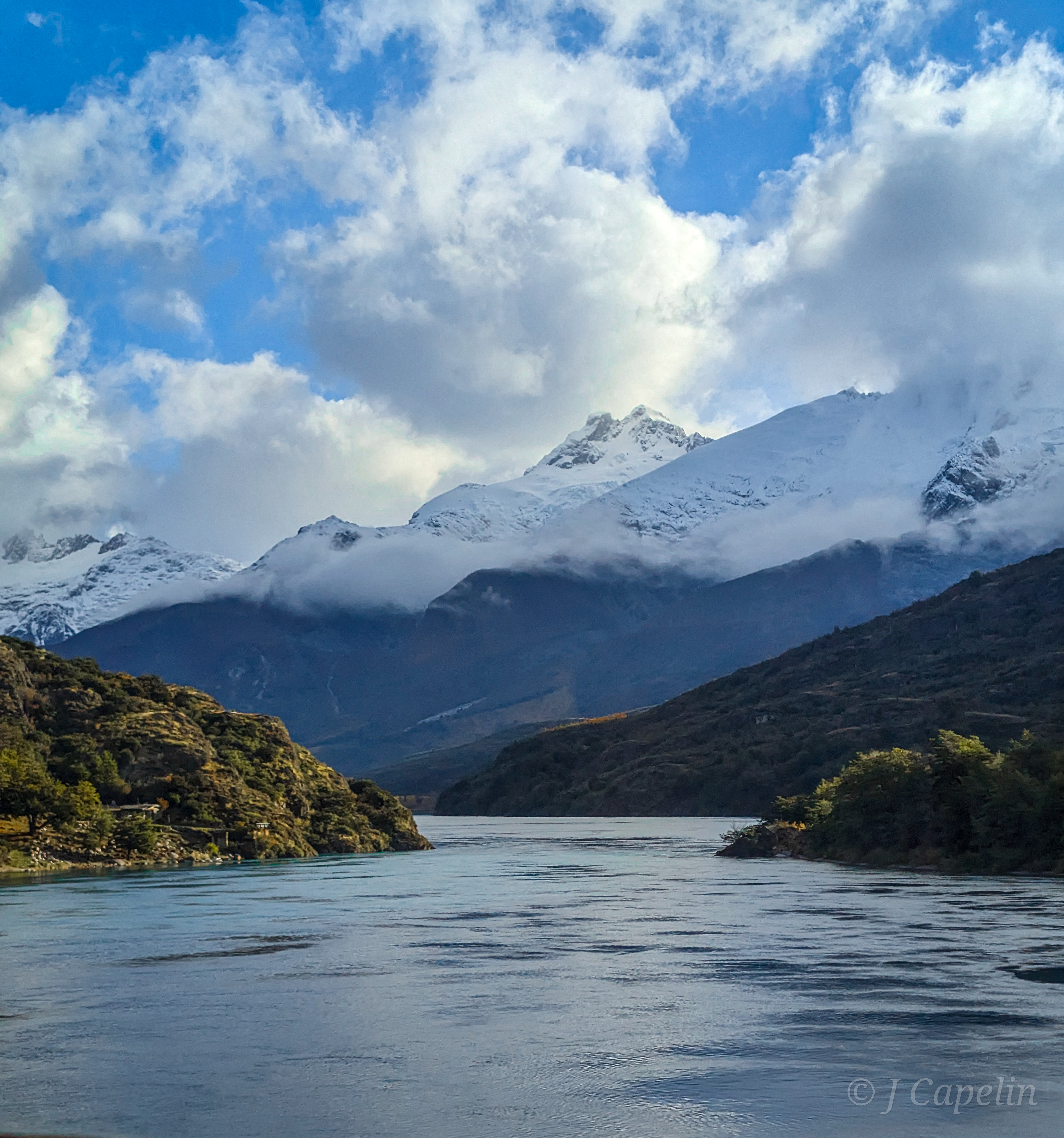
Rounding a corner, we come to a little red suspension bridge, as if someone has stuck a Golden Gate Bridge miniature out here. It crosses the turquoise cascades where Lake Bertrand and General Carrera meet. Between two steep headlands, Lake Bertrand stretches beyond, reflecting an enormous mountainscape, layered white with glaciers – the edge of the Northern Patagonian Ice Field.
The Patagonian Ice Fields

Once upon a time, around 21,000 years ago, Patagonia was covered by one giant ice field, like Antarctica. Nowadays, there are three smaller remnants in the high altitudes of the Patagonian Andes; the Northern Ice Field, the Southern Ice Field, and the Cordillera Darwin Ice Field at the very bottom of the continent. These three ice fields are still the largest area of ice in the Southern Hemisphere outside of Antarctica, and if they melt, the sea level will rise 15mm all around the world!

We arrive at a fork in the road, where the Carretera Austral leads up a steep ledge to El Mirador Tres Lagos – view of the three lakes.
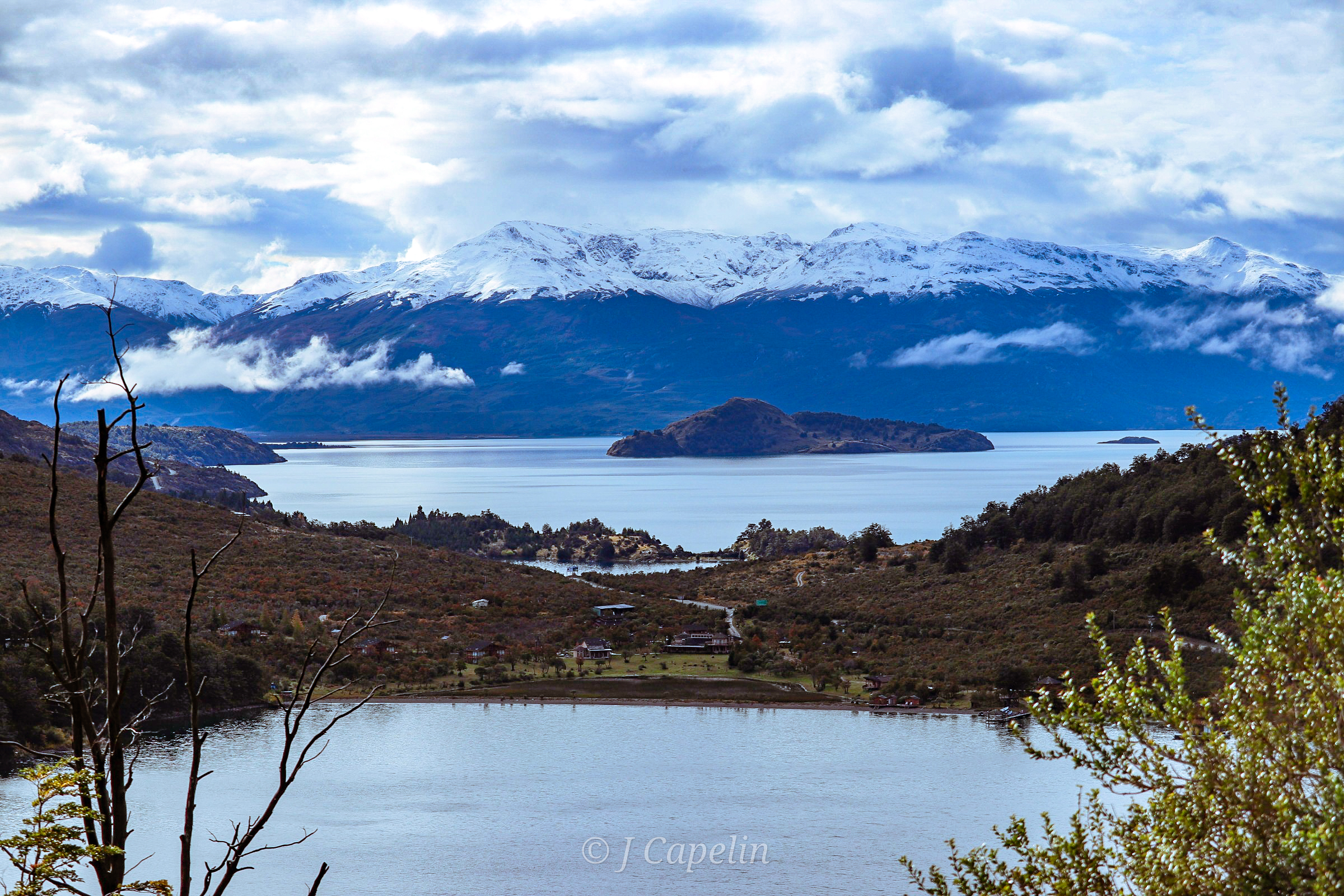
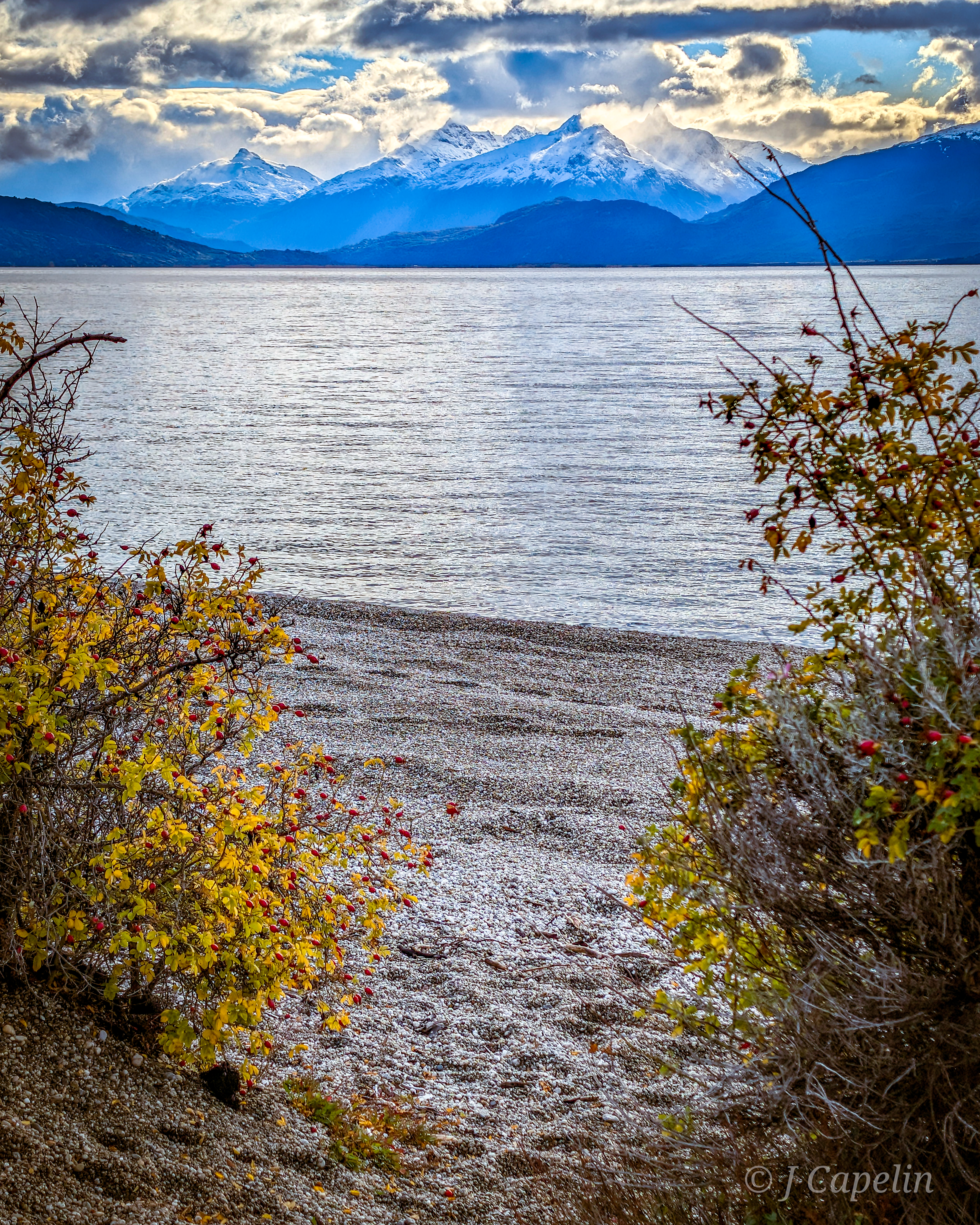
At the fork, we head along Route 265 around the southern side of Lago General Carrera, through the pretty little commune of Puerto Guadal, where dogs and chickens chase each other in the quiet residential streets. A little way out of the town is the spectacular Cascada El Maqui – a waterfall, which you can see from the road cascading down the hillside, and a short drive onwards is Playa Larga. This beautiful lakeside beach provides impressive mountain views and water so clear it could be textured glass. We see someone coming out of the freezing water in their swim shorts, and we are not inspired to copy!
Lago General Carrera

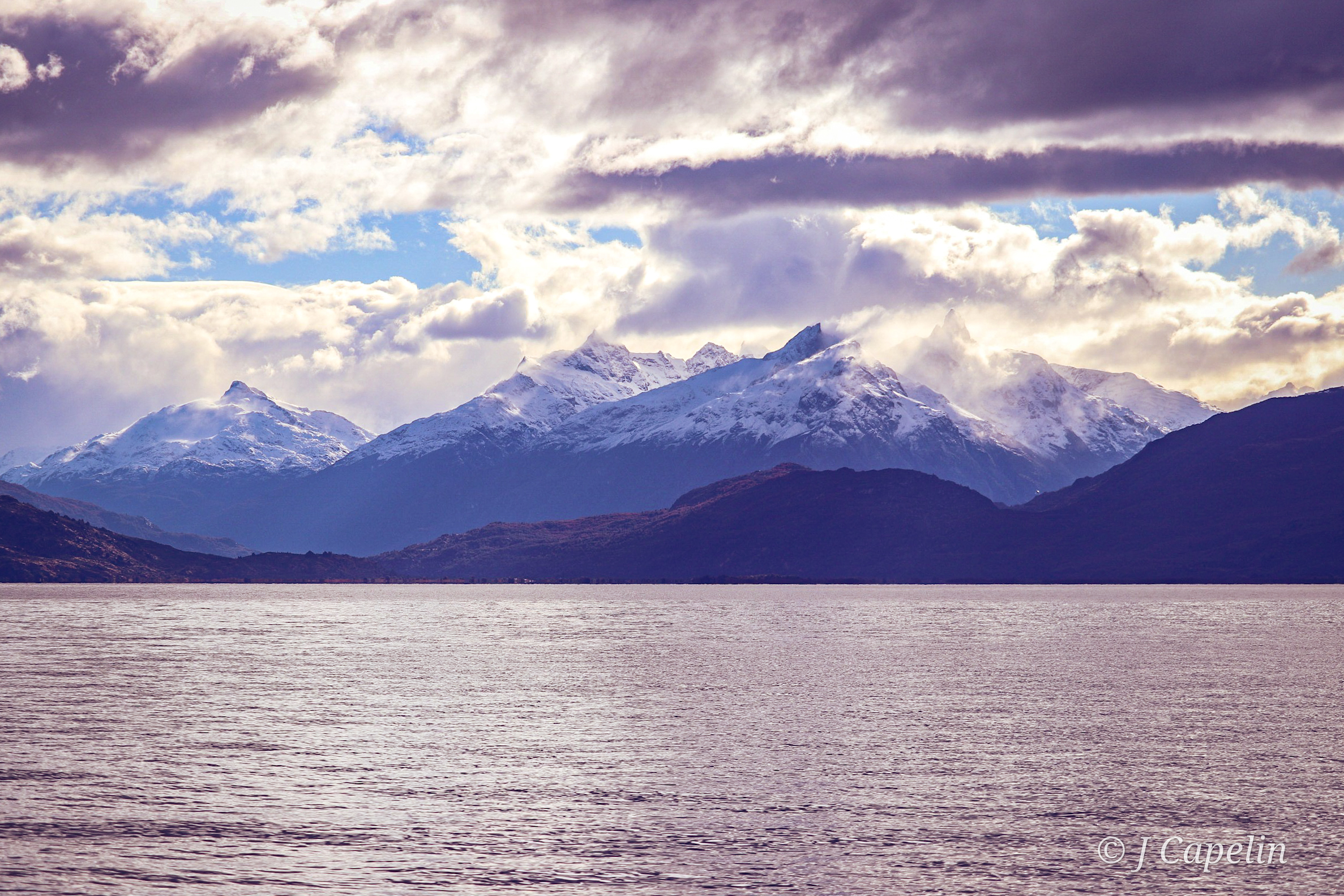
Yes, this is still General Carrera Lake, or ‘Chelenko.’ Playa Larga is a 67km drive around the lake from Puerto Rio Tranquilo, and is still only on the western tip, so we’re essentially dipping a toe in the massive region. General Carrera is both Chile’s and Argentina’s largest lake, with an area of 1,850km². The border of the two countries runs through the middle of the lake, meaning it has two official names: Lago Buenos Aires in Argentinian, and Lago General Carrera in Chilean. It would take approximately 12 hours without stopping to drive around the entire lake.

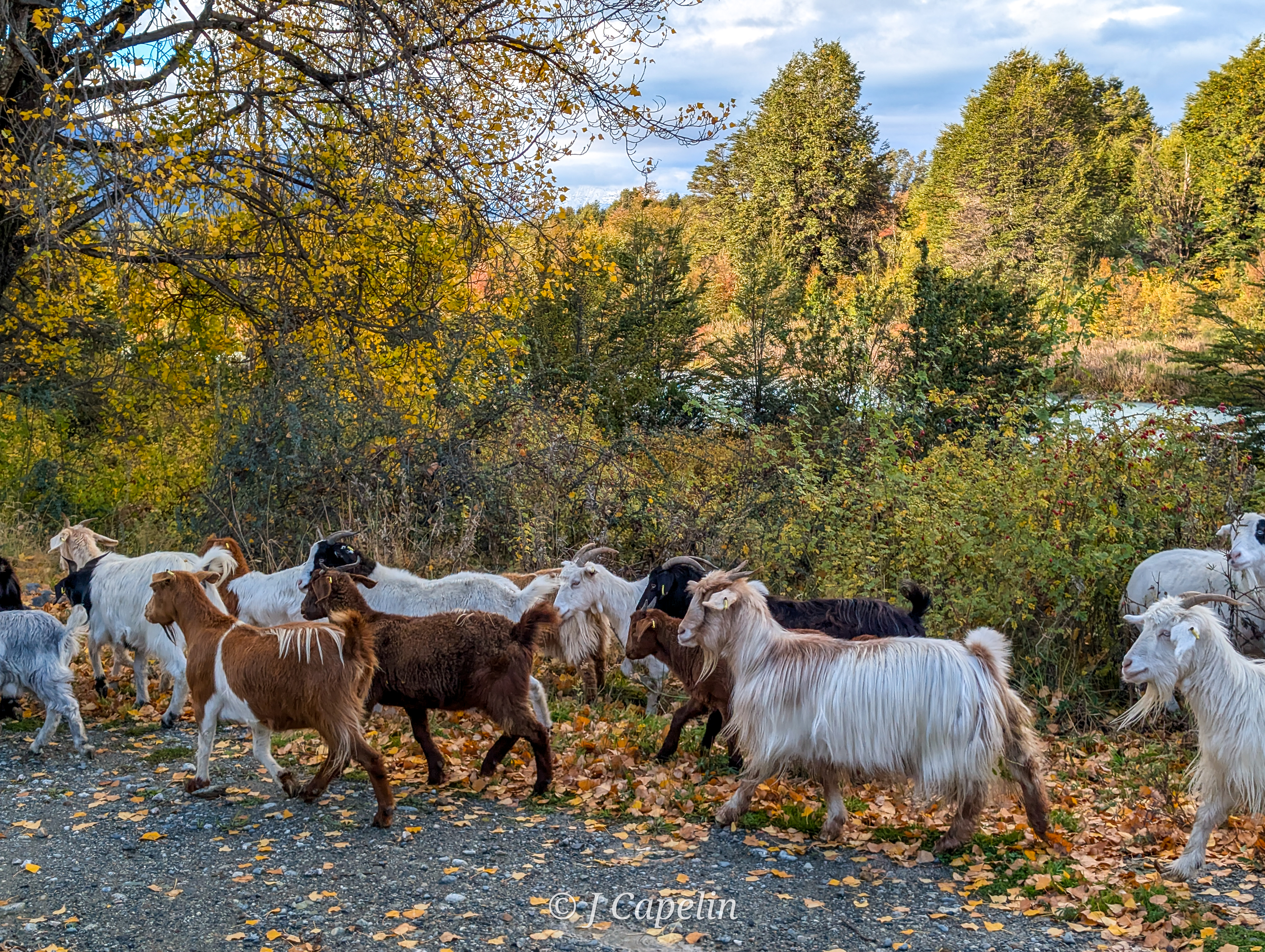
The drive back brings yet more perspectives, and with the late afternoon sun now shining, there are new shapes and colours in the landscape. A herd of goats decide to guide us slowly along part of the track.
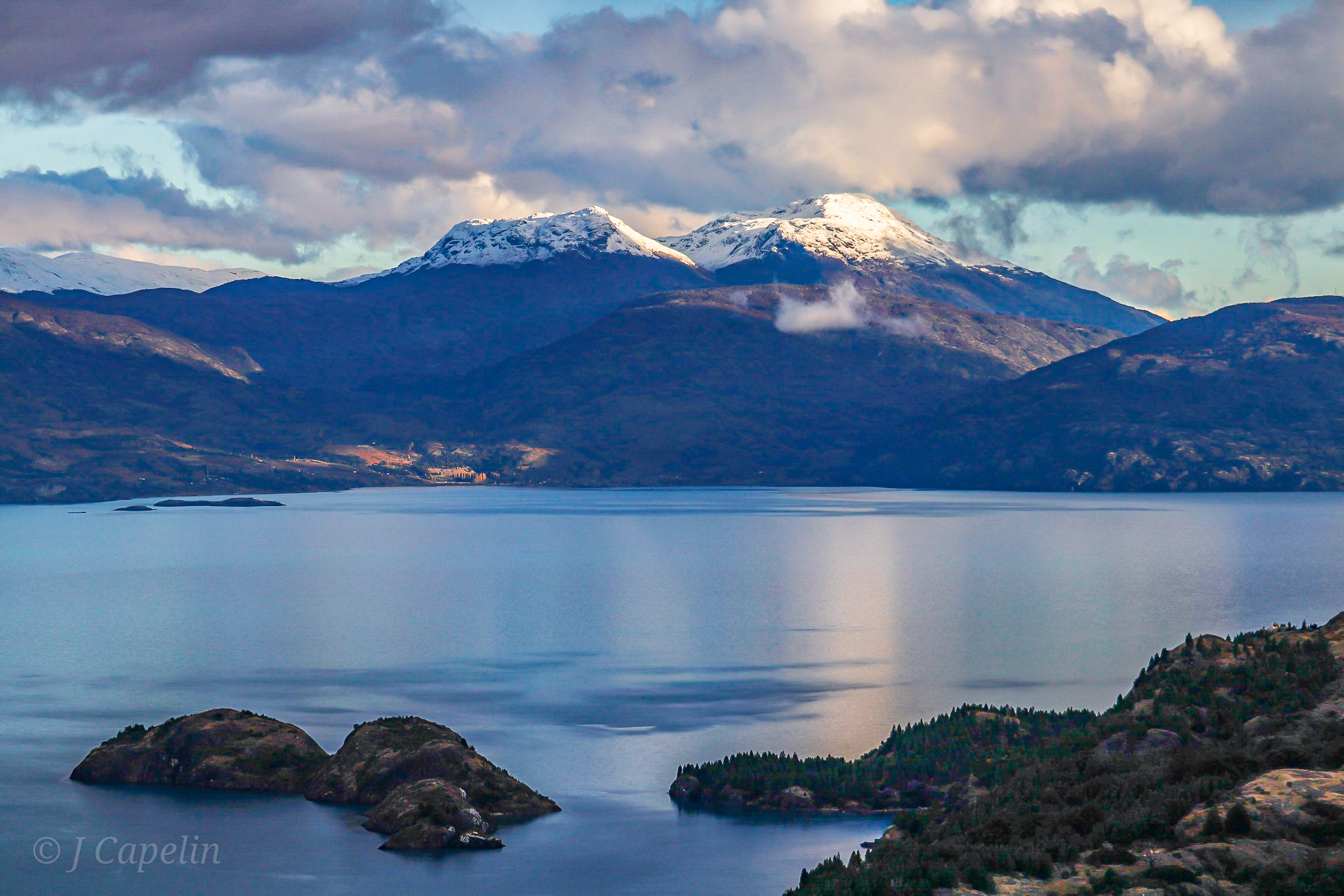
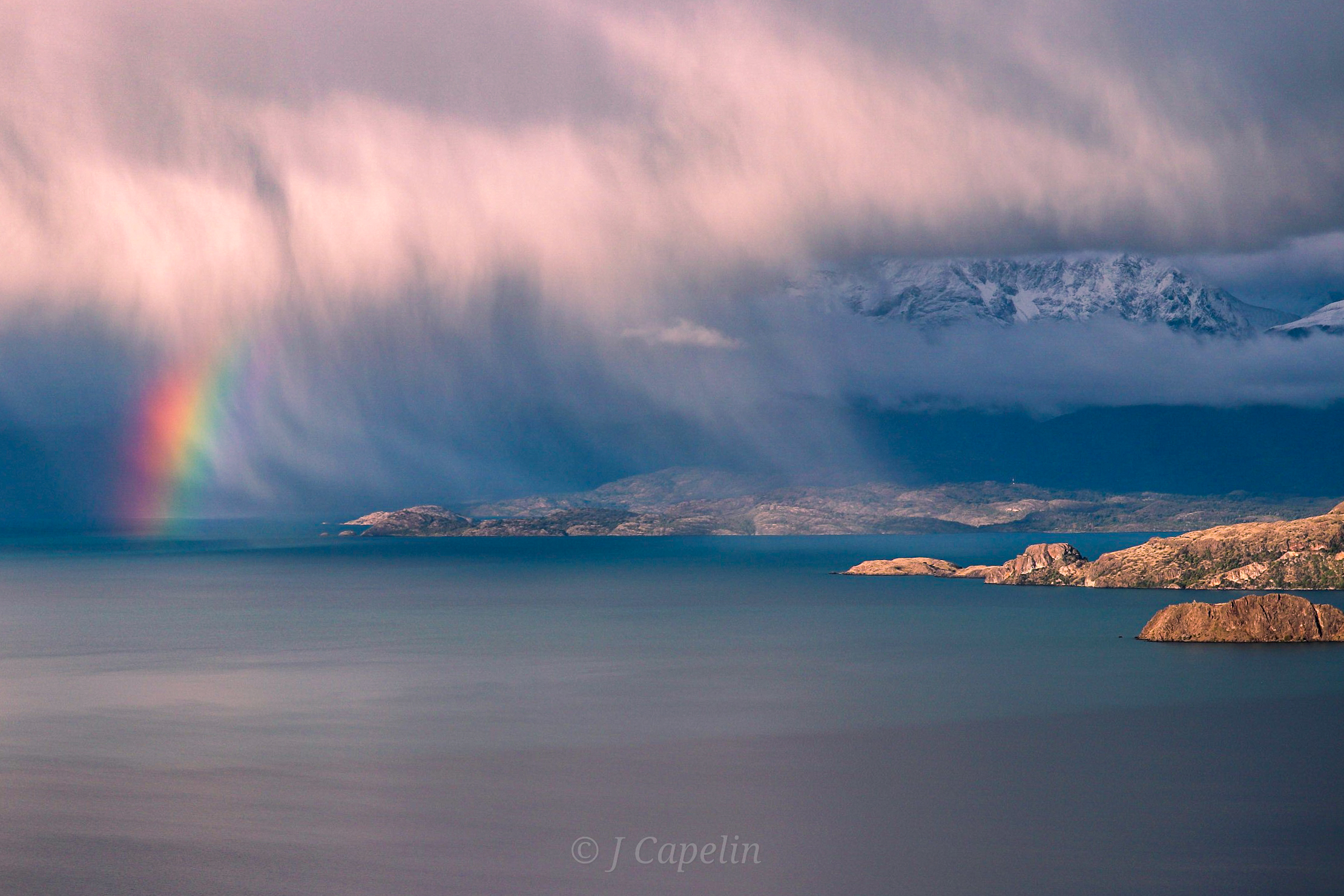
As we turn around the next corner, a new view appears before us where mist had lingered earlier. Little sun-brushed islands pebble-dash the flat lake; a great swooshing cloud over them indicating rain. In shadow beyond, a line of snowcapped mountains peer out from the cloud, and to the left, one of the brightest rainbows I’ve ever seen pours from the cloud into the lake.
As we draw closer to Puerto Rio Tranquilo, a tiny flash of black in the roadside grasses makes us slow down. A black Gato Güiña (or Kodkod in English) pauses to look at us, before slinking across the road and disappearing into the bushes in a flash!

Gato Güiña

Gato Güiñas or Kodkods are the smallest species of wild cat in the Americas. Typically they have leopard-print-like fur, but there is a rare melanistic phenotype that is black, and these are known to inhabit this particular part of Patagonia south of Puerto Rio Tranquilo. They are smaller than domestic cats, with small heads and long bodies, and in my opinion move like a ferret.
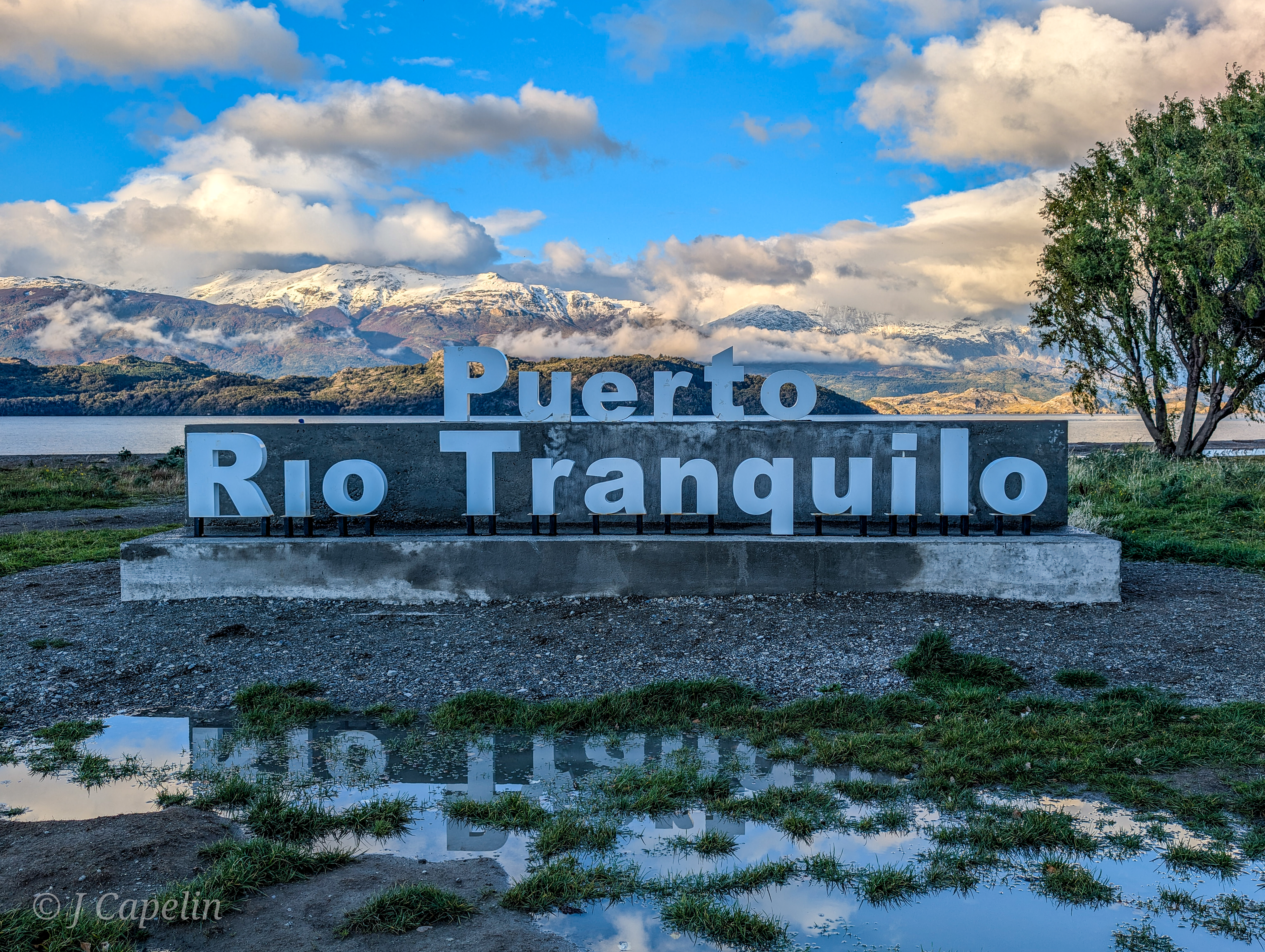
Puerto Rio Tranquilo

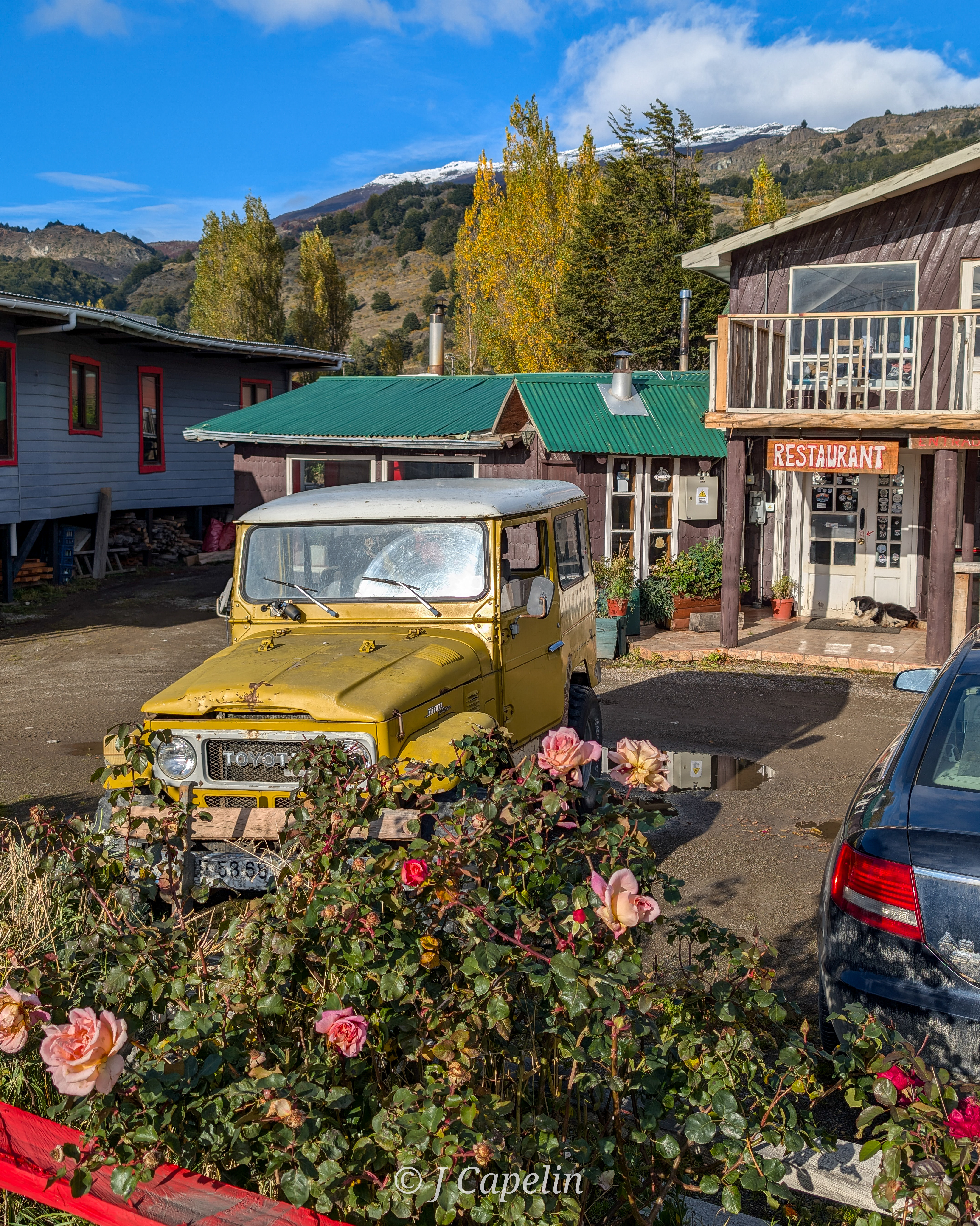
The pretty little town on the lakefront is a tourist hub during the summer months, but this time of year it operates just enough to get by. It seems very quiet, but for the dogs that welcome us with tail wags every time we walk down the street. After all, it wouldn’t be a true Chilean town without a pack of friendly dogs.
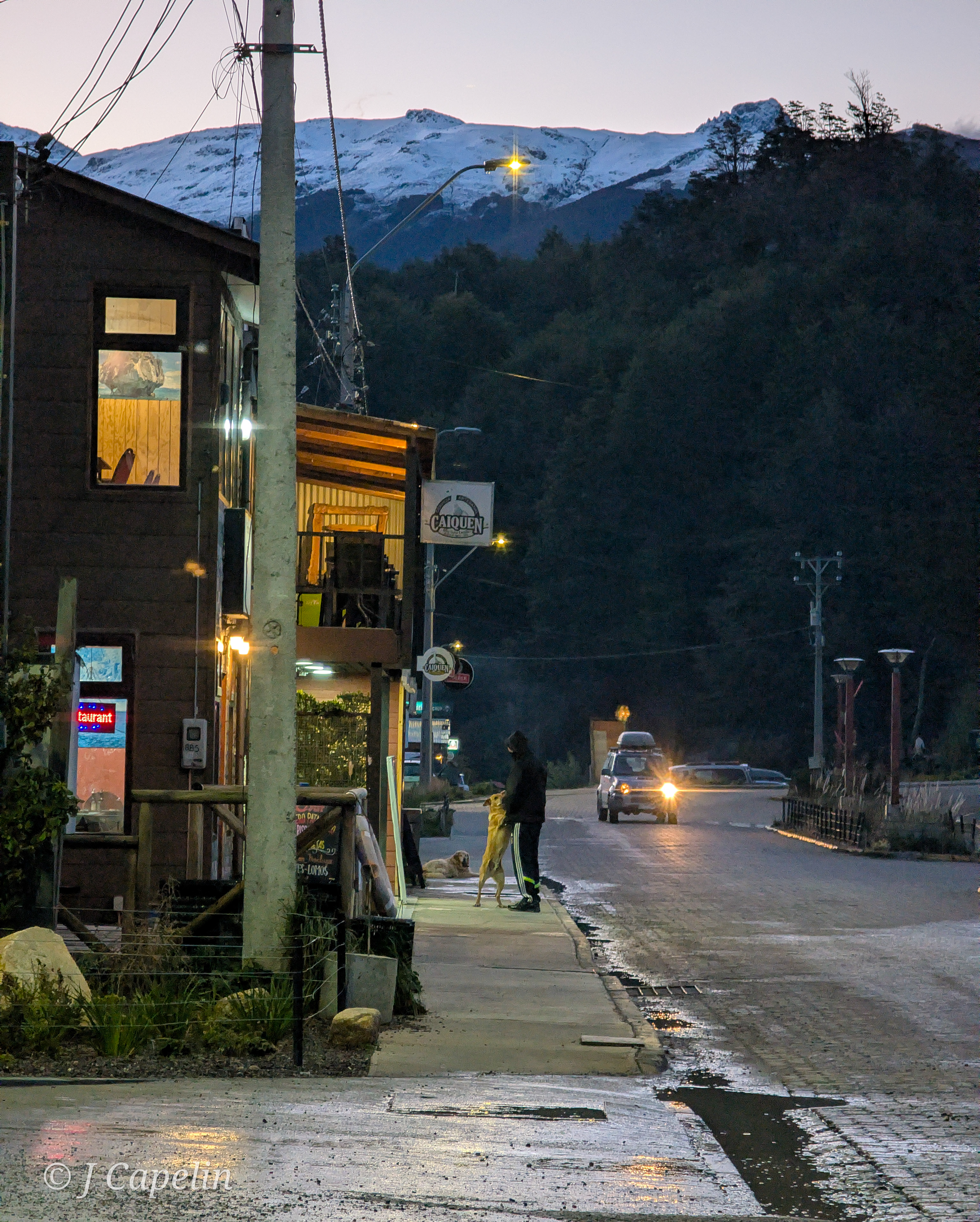
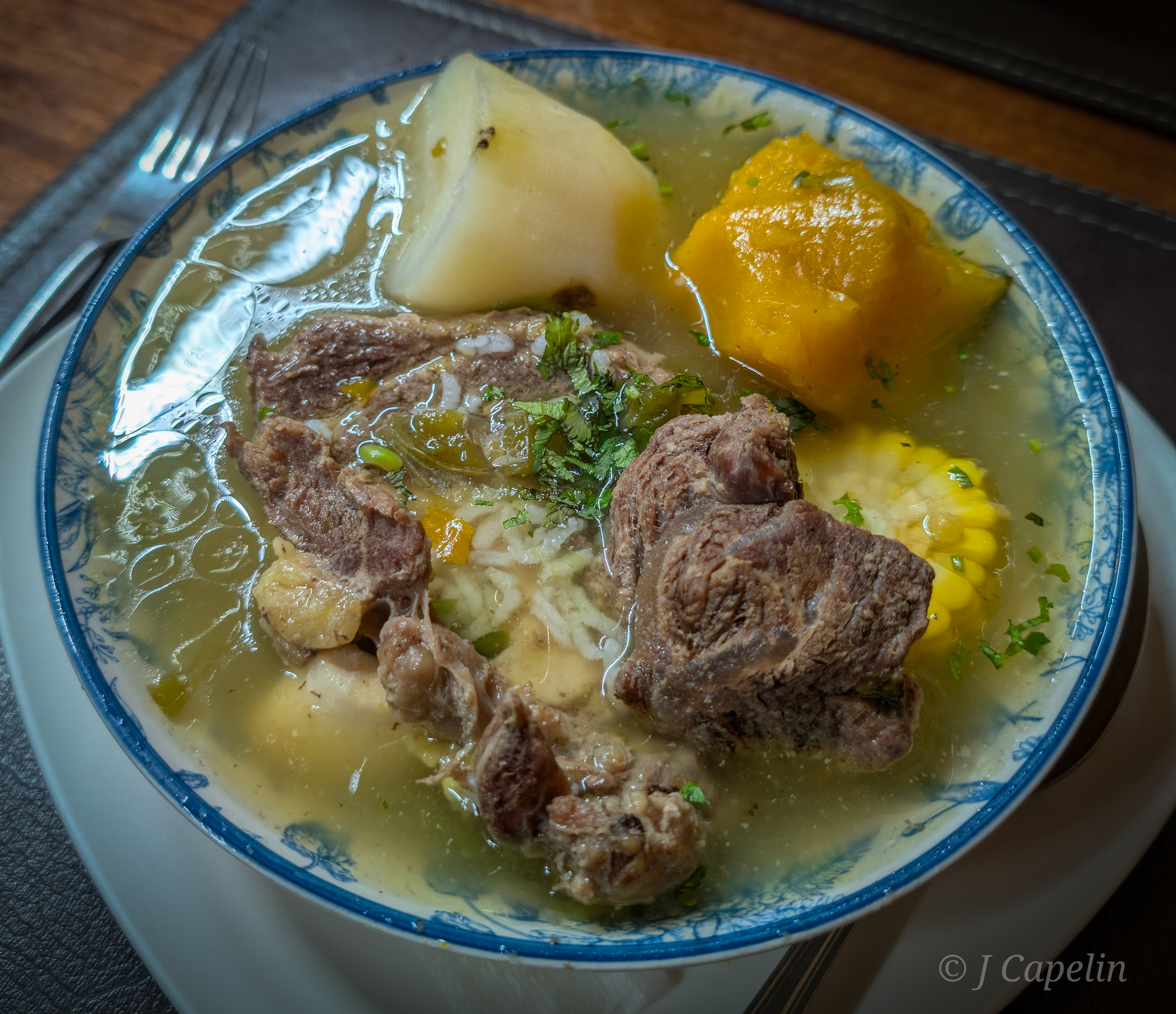
We enjoy dinner at Restaurante Turístico Pia, which is actually bustling, but quiet enough that we can walk in without booking. Here I get to try a popular local dish – Cazuela Vacuno – a kind of soupy stew with a joint of beef in it, chunky vegetables and rice; homey, tasty, and perfect for the cold weather. The waitress also recommends the Patagonian Pisco Sour, a take on Chile’s signature cocktail, with the addition of a sweet, purple syrup from Calafate berries, which grow in Patagonia.
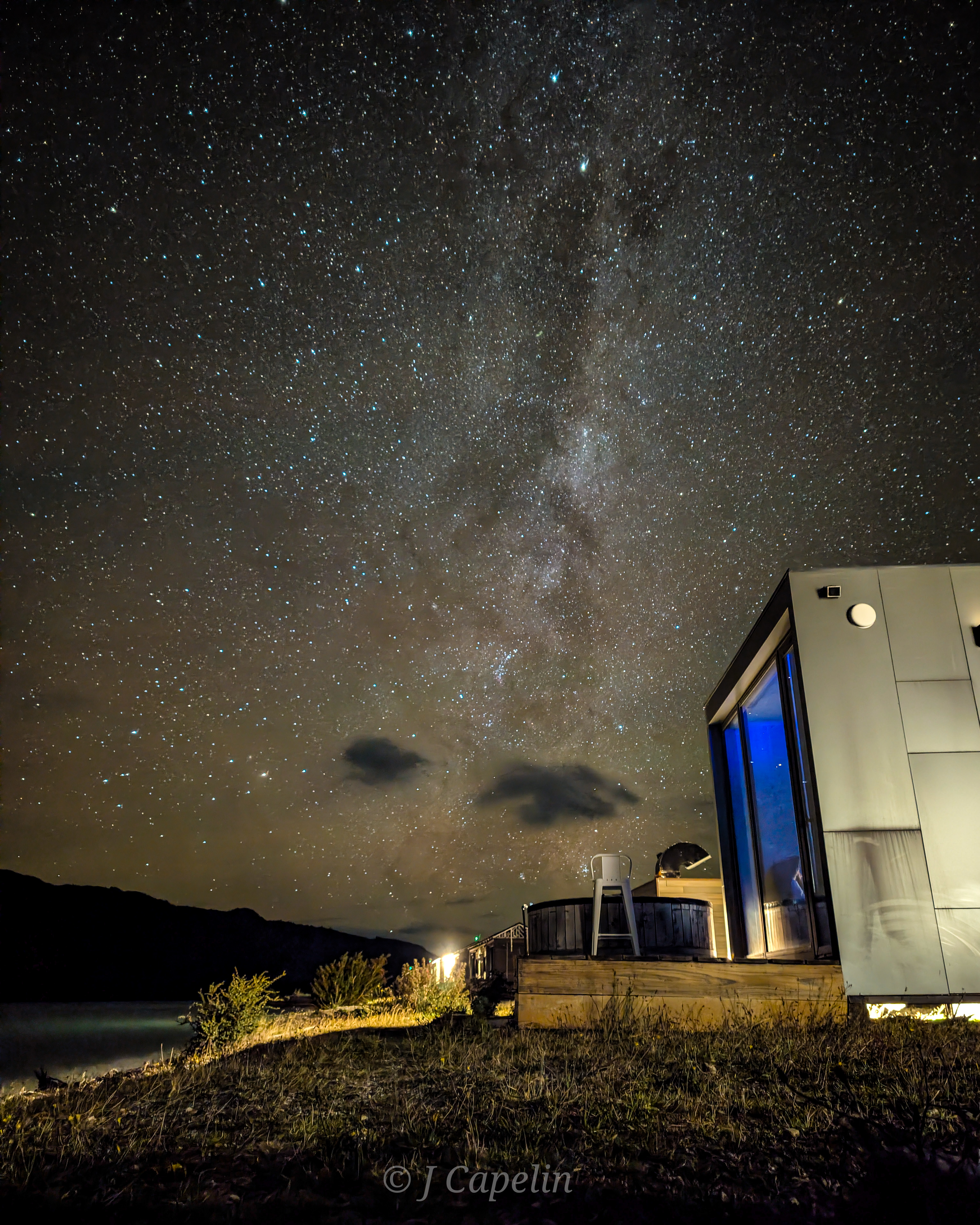
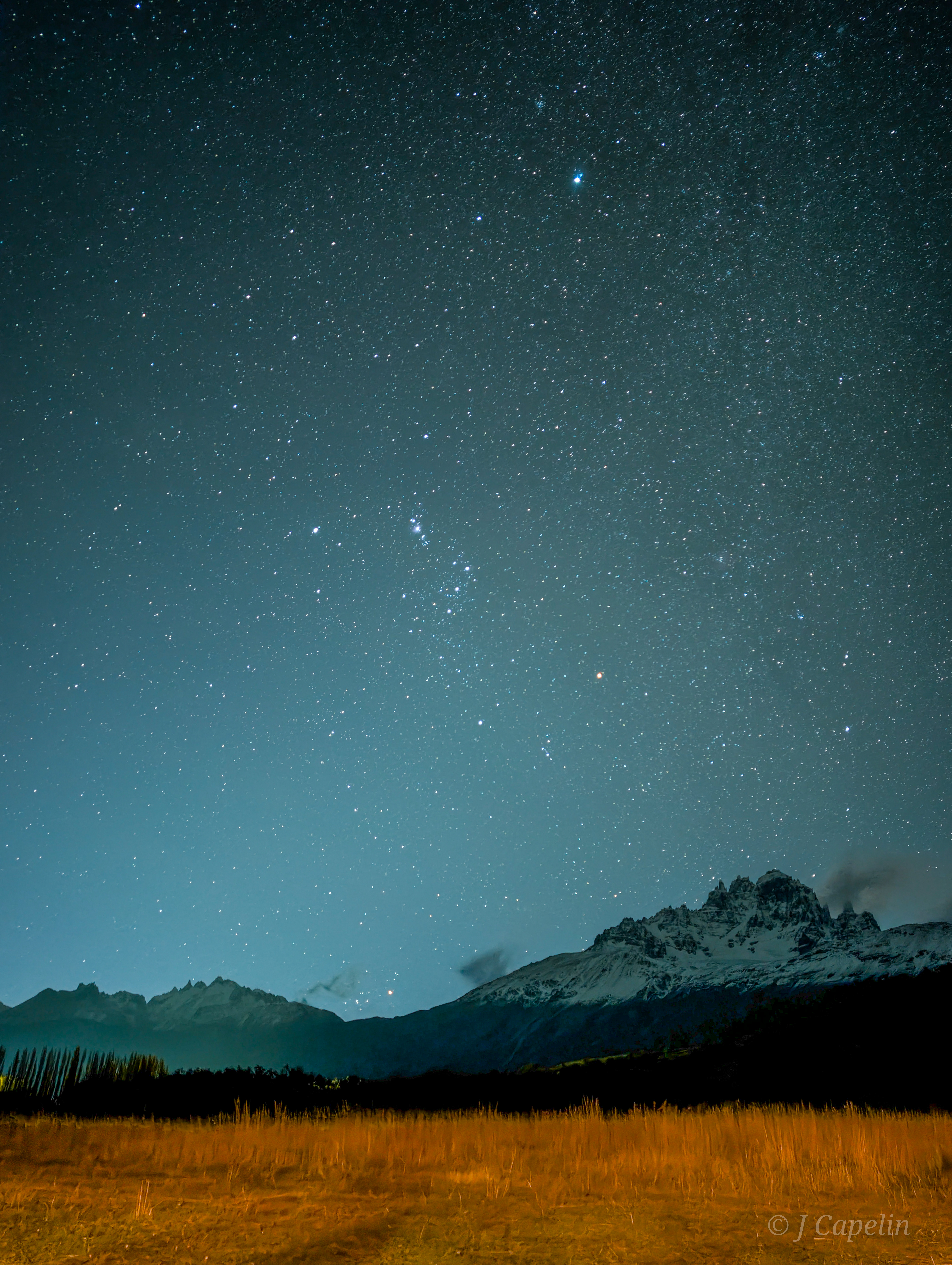
When we arrive back at Chelenko Lodge, the Milky Way is streaking the sky like a bright trail of glitter. Shooting stars flash beyond the silhouetted mountains as the lake gently laps the pebbles.
The Marble Caves

Morning arrives, calm and promising after a clear, freezing night. The mountain snowline has crept lower, and we are in for a glistening wintery day.
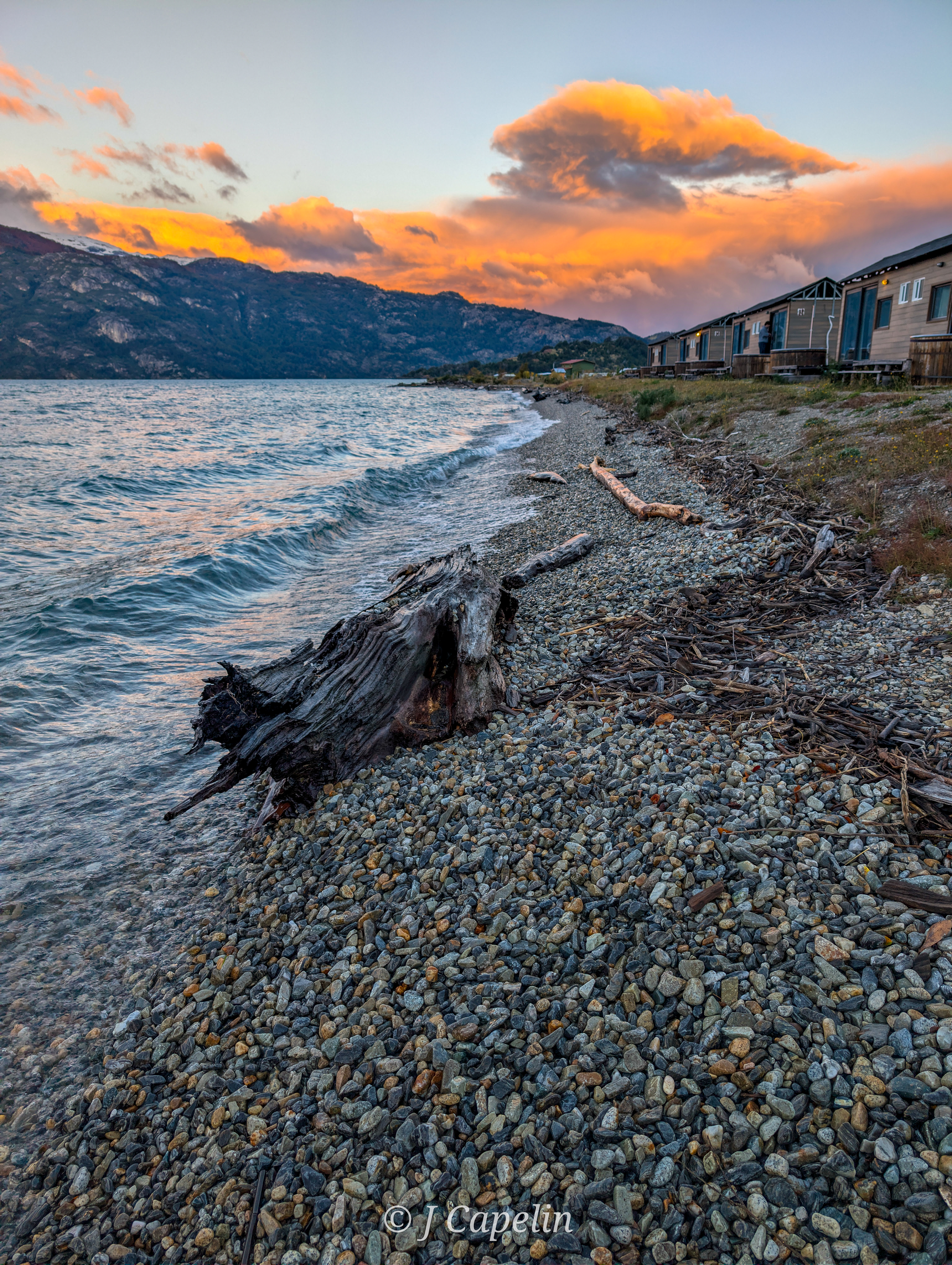
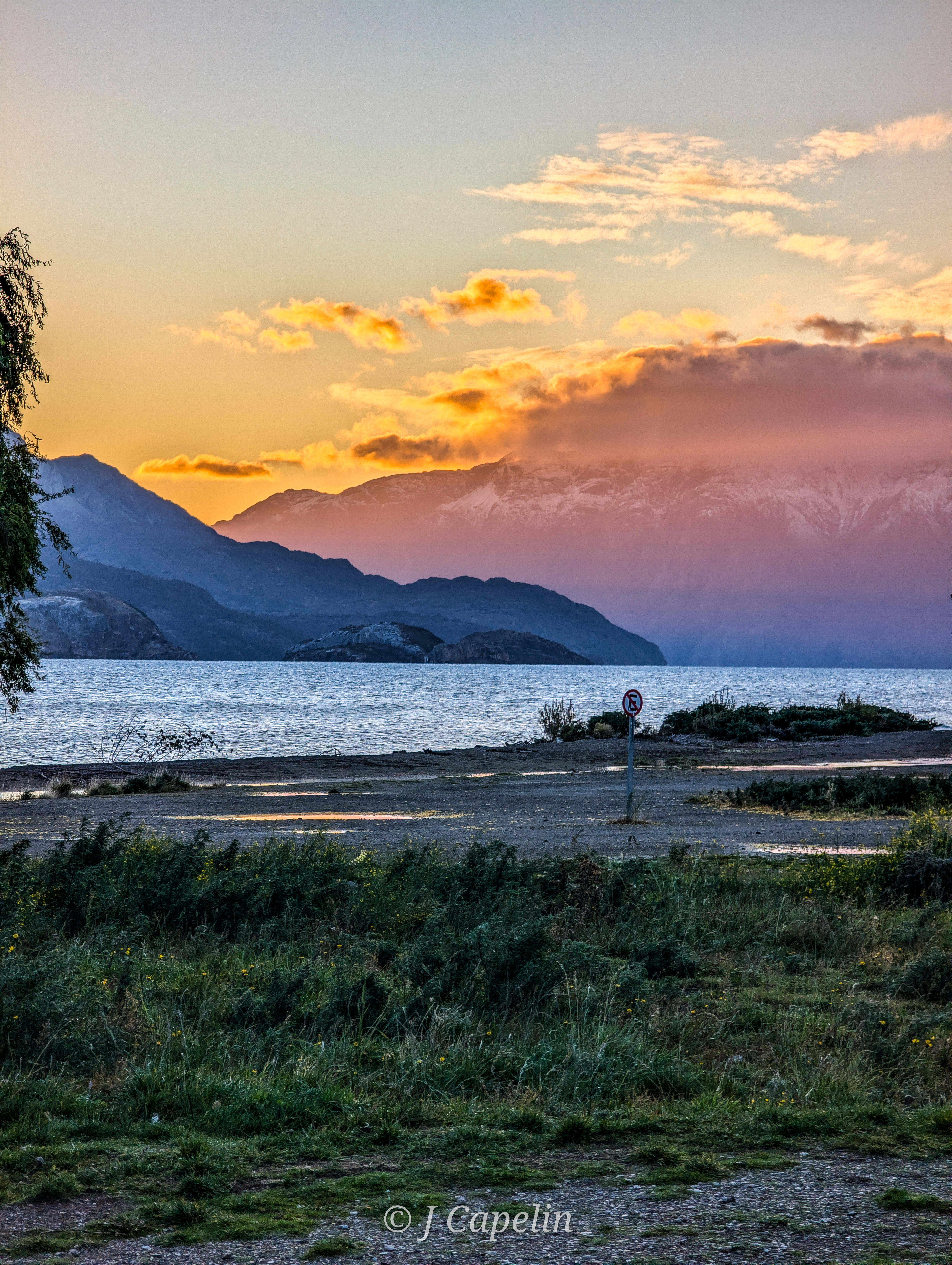
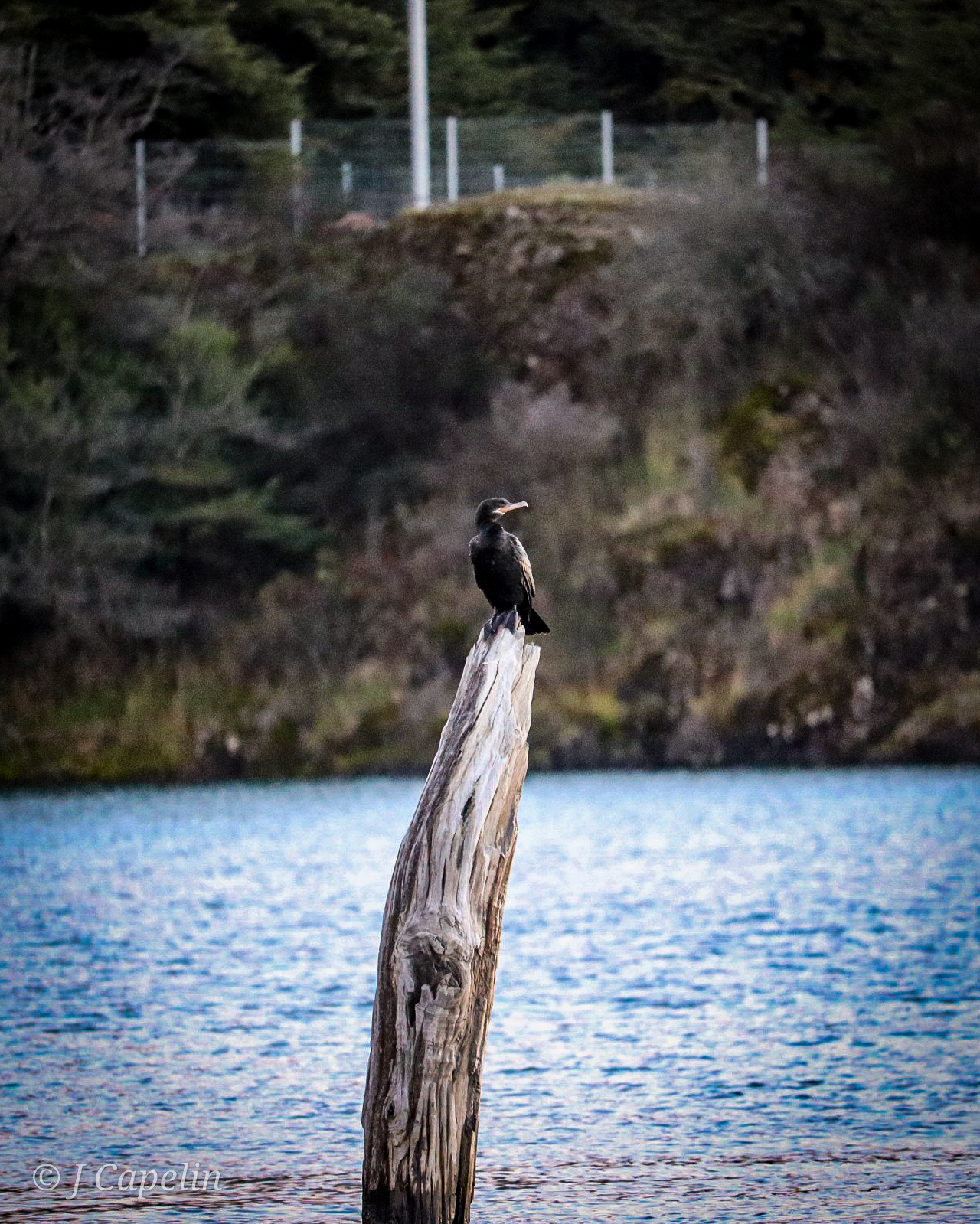
A gorgeous orange sky preludes the sunrise as we make our way to town for our prebooked boat tour. We meet the tour guide, Carolina at the cabins by the lake, and sign our lives away, before donning lifejackets and climbing aboard a little 11 seater power boat, captained by Felipe. It’s a freezing, crystal clear morning on General Carrera Lake, and a ‘Yeco,’ (Neotropic Cormorant) sits on a post watching us as we steer out of the pretty harbour.
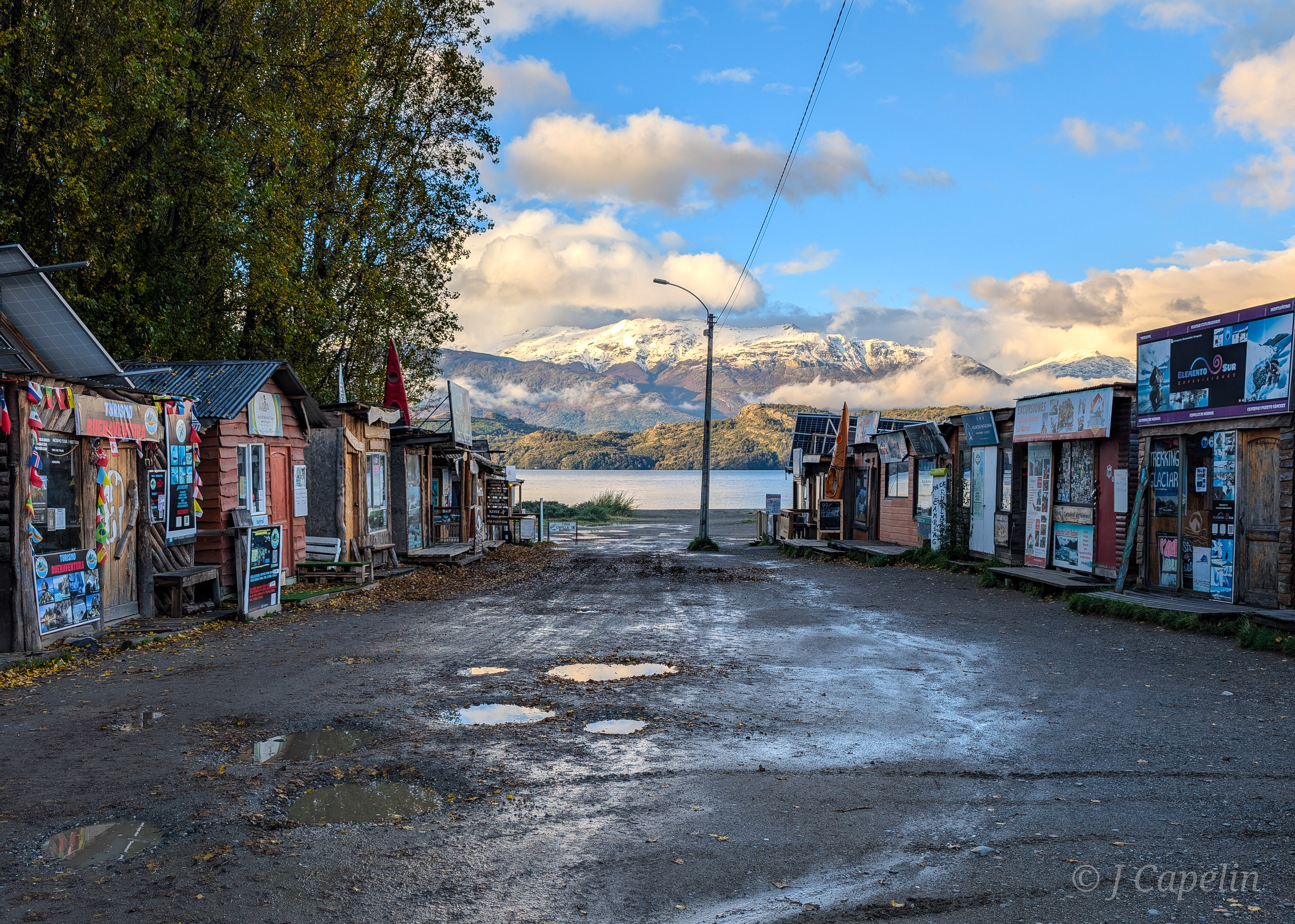
Zooming across Chile’s largest lake, the sun rising between snowy peaks into a clean, blue sky, we eventually come to our first caves along the shoreline.
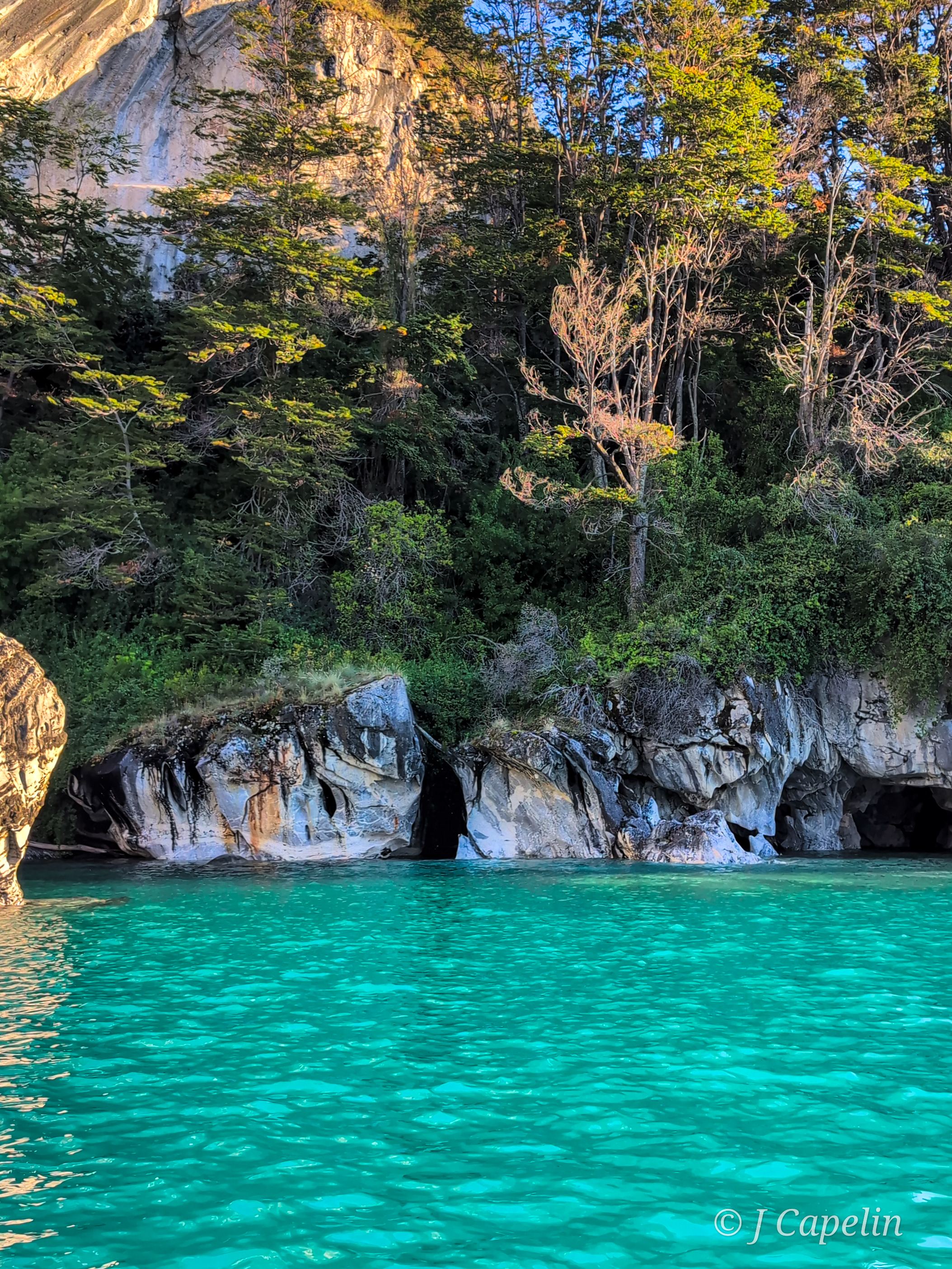
Felipe navigates the boat expertly into a few of the bigger caves, allowing us to touch the marble ceiling in one of them. The glacial water looks like Powerade, its milky turquoise sheen enhanced by the white marble below the surface.
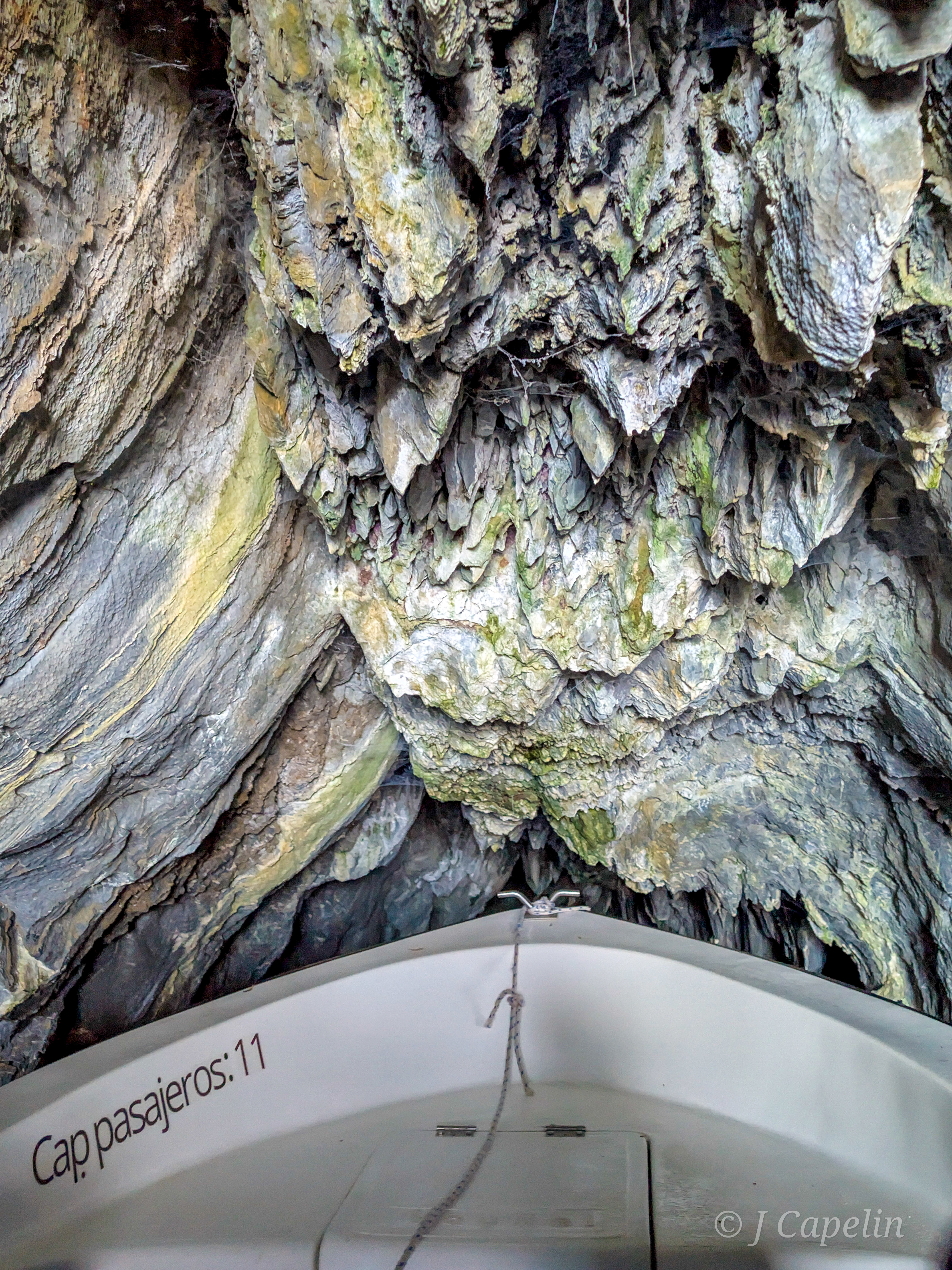
Little windows eroded into the marble walls over thousands of years cast sunlight into the caves, leaving little drops of gold on the water in its wake.
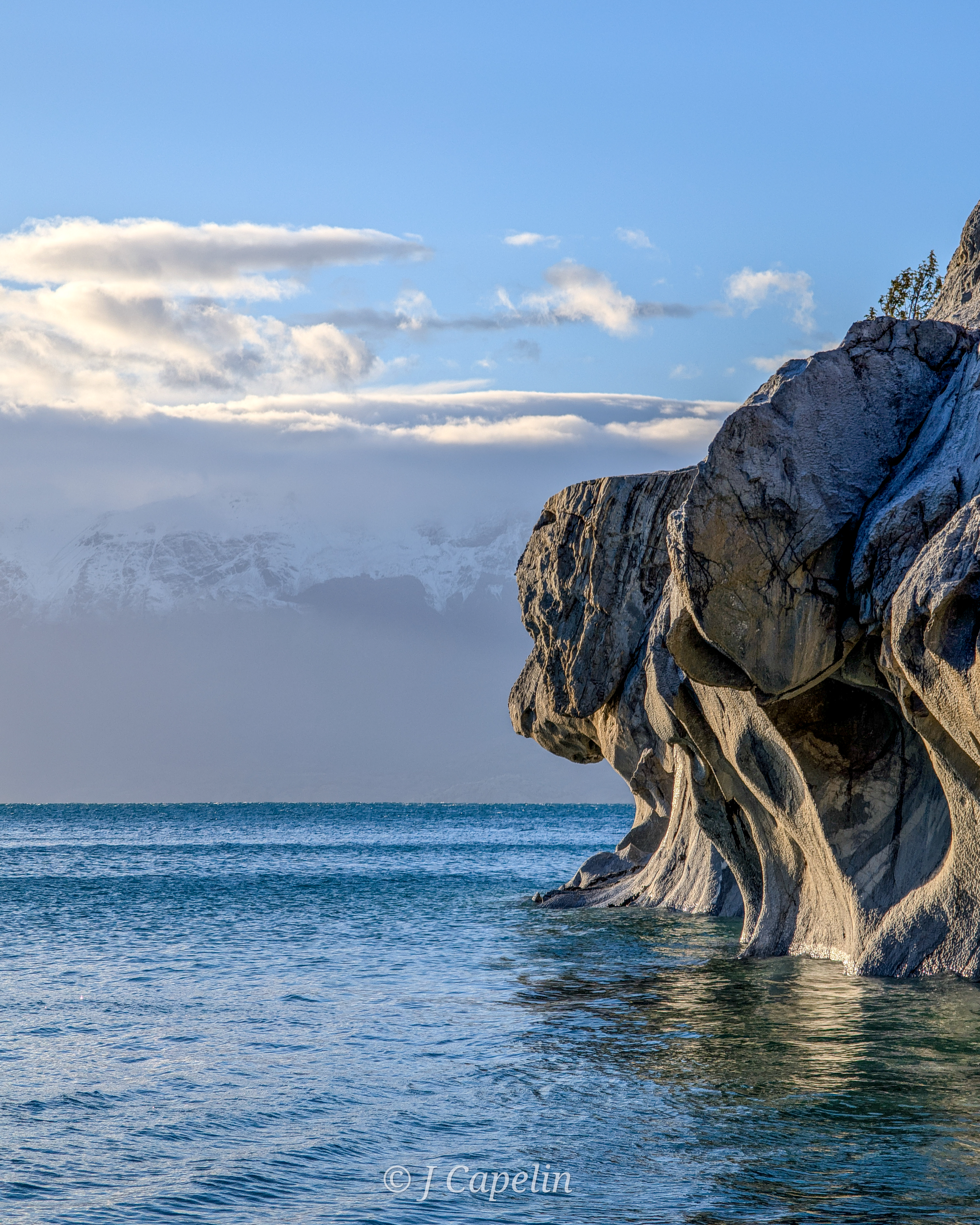
Can you see the marble dog staring at the lake?

As we skirt the coastline a little Fire-Crowned hummingbird zips over, hovers above the boat and darts to and fro to look at each of us! Carolina calls it a Pica, short for ‘Picaflor’ and the moment feels like magic.
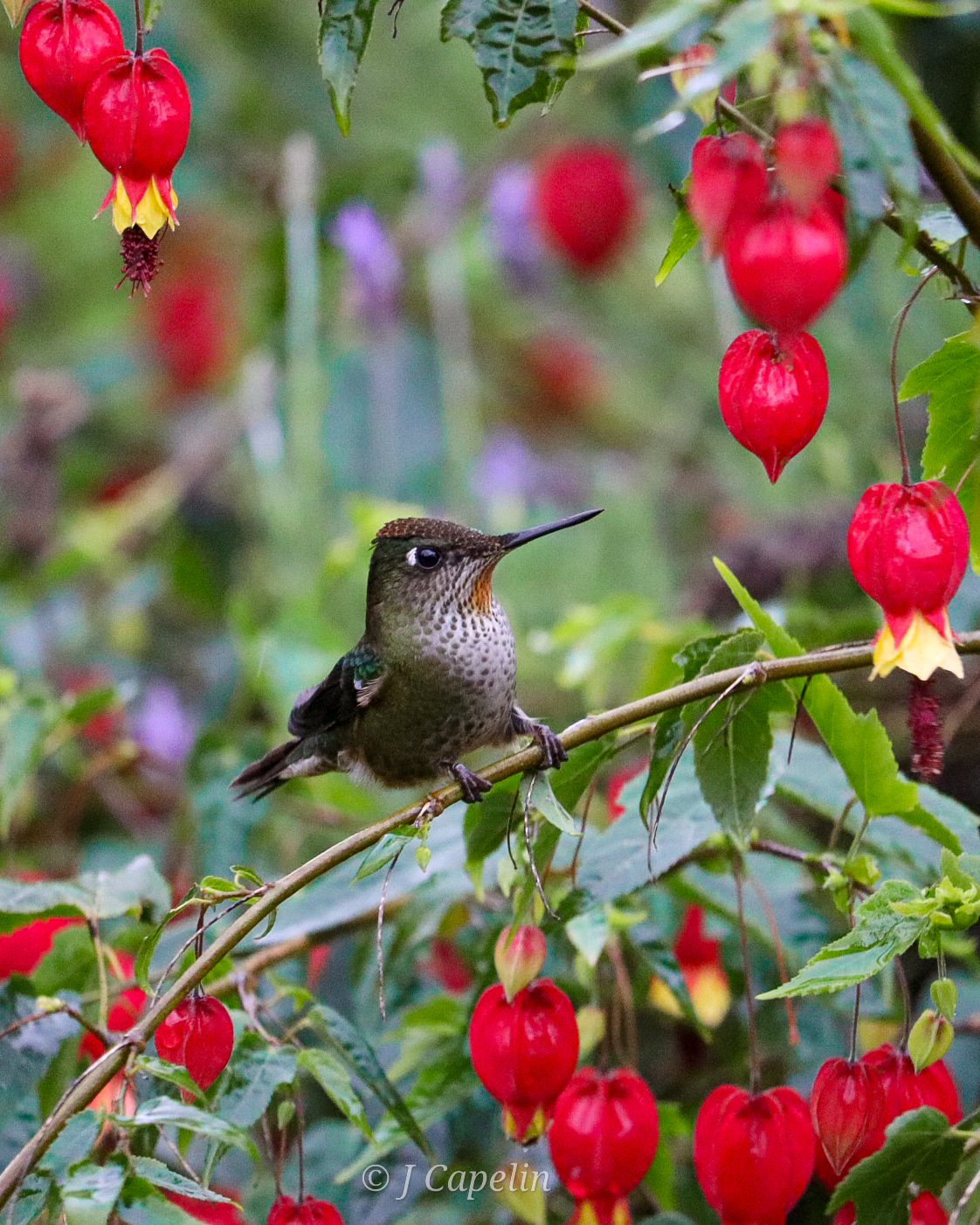
Fire-Crowned Hummingbird – photograph taken near Puerto Varas, at the top of Patagonia.

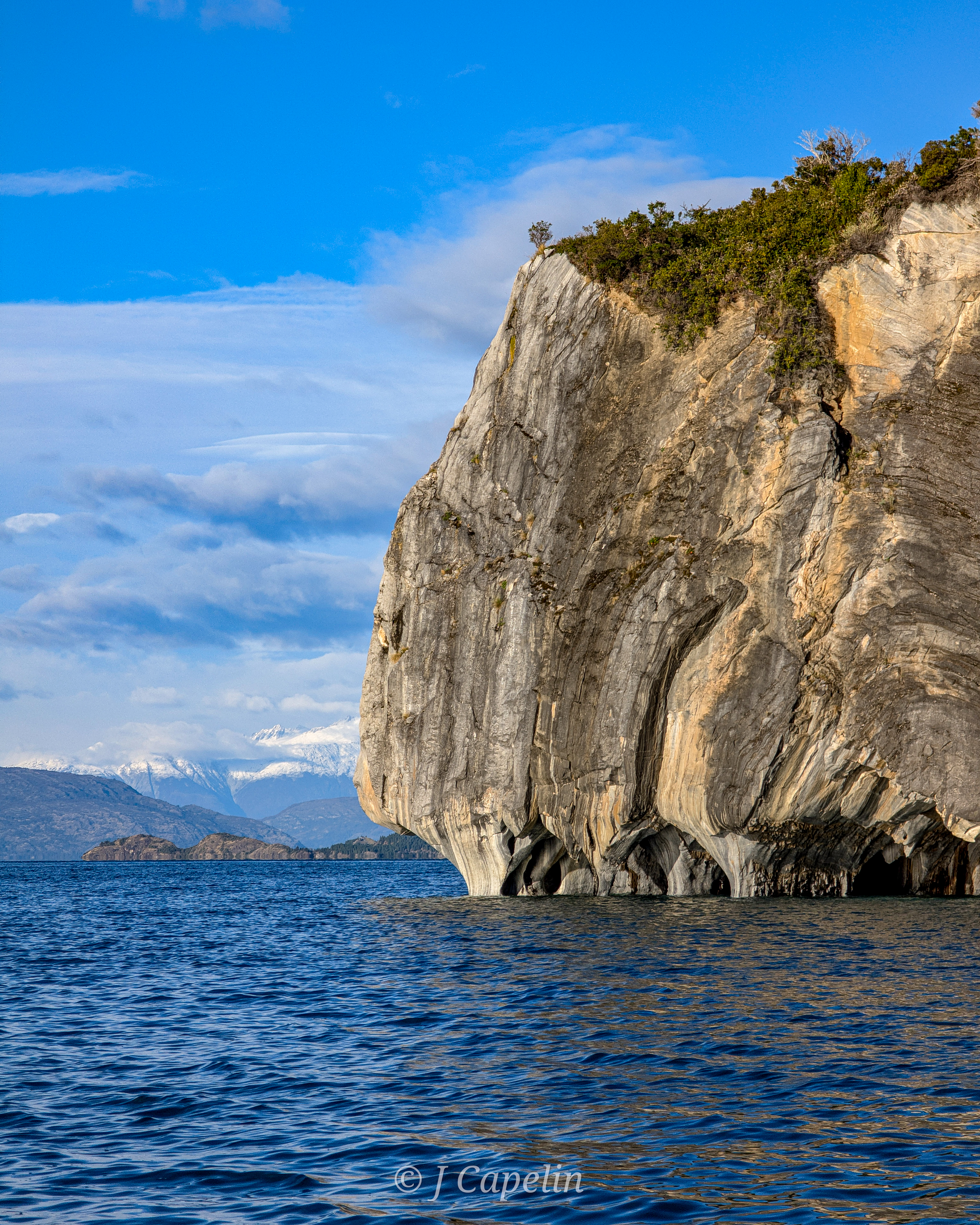
Making our way to the famous Marble Cathedral and Chapel standing like a beacon in the lake, Felipe revs up the engine and takes us for a fast, panoramic spin around the formations. The sun popping in and out of marble windows, and the wind in our hair, it is stunning.
History of The Marble Caves

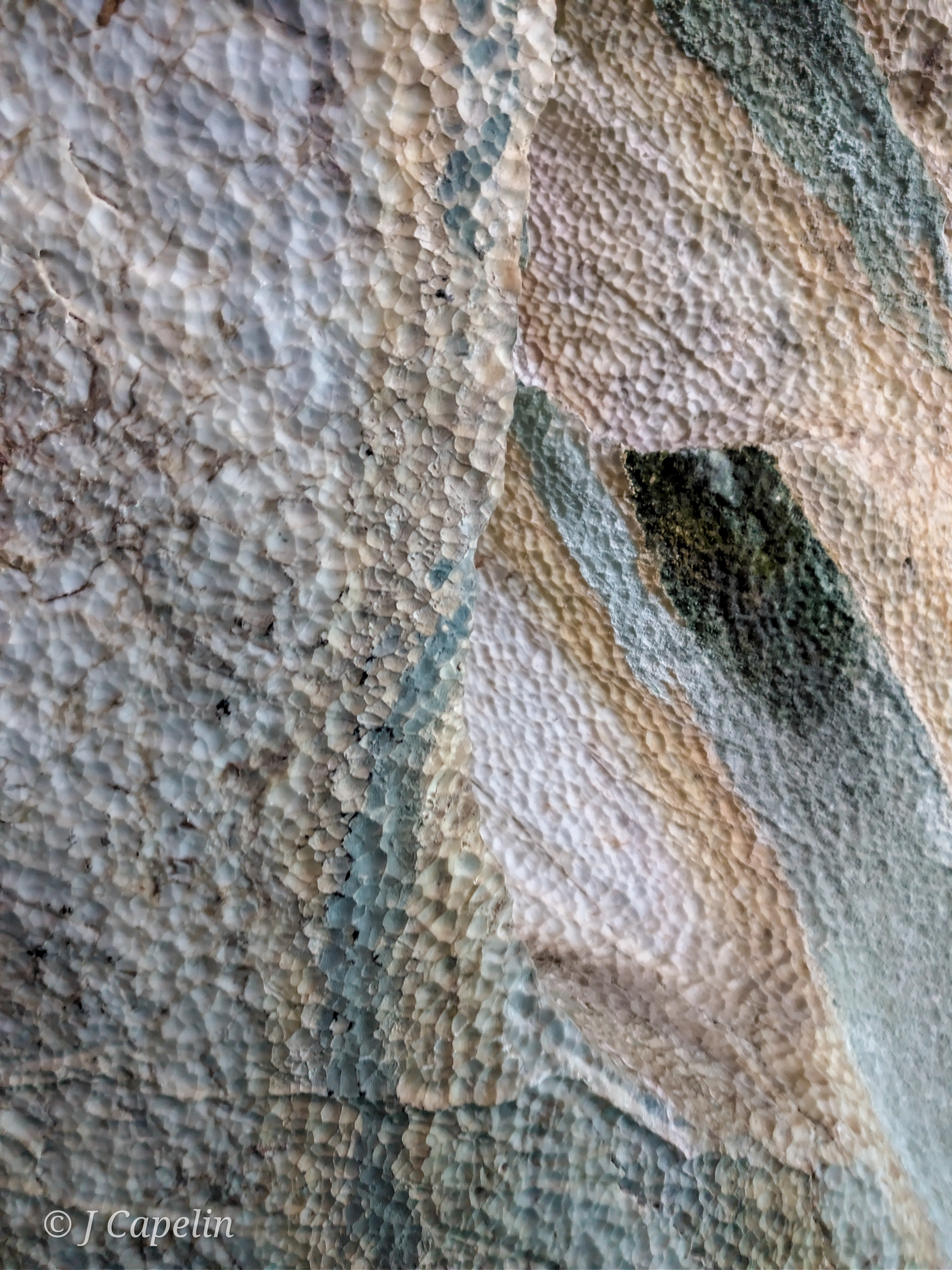
Formed over the last 15,000 years, the marble caves are the result of the ever changing climate. The marble cliffs themselves were formed millions of years ago, when the limestone deposits in the region were subject to underground heat and high pressure, compressing them into Calcium Carbonate Marble. Then, when the ice fields shrunk, and ancient glaciers melted into General Carrera Lake, this giant marble peninsula was suddenly standing in this glacial water. This ‘turbulent water,’ as the name Chelenko suggests, has since been eroding beautiful smooth holes in the marble, giving them unique swirling textures that you really have to see to behold.

The adrenaline pumping, we continue to zoom far out into the lake at high speed, much further than they usually go on this tour. Because it is the quiet season, we are the only boat on the water, so with no time or space constraints, we are able to experience something unique. Carolina points in the direction of the Argentinian border, stating that it would take another 4 hours at this top speed to reach Argentina!
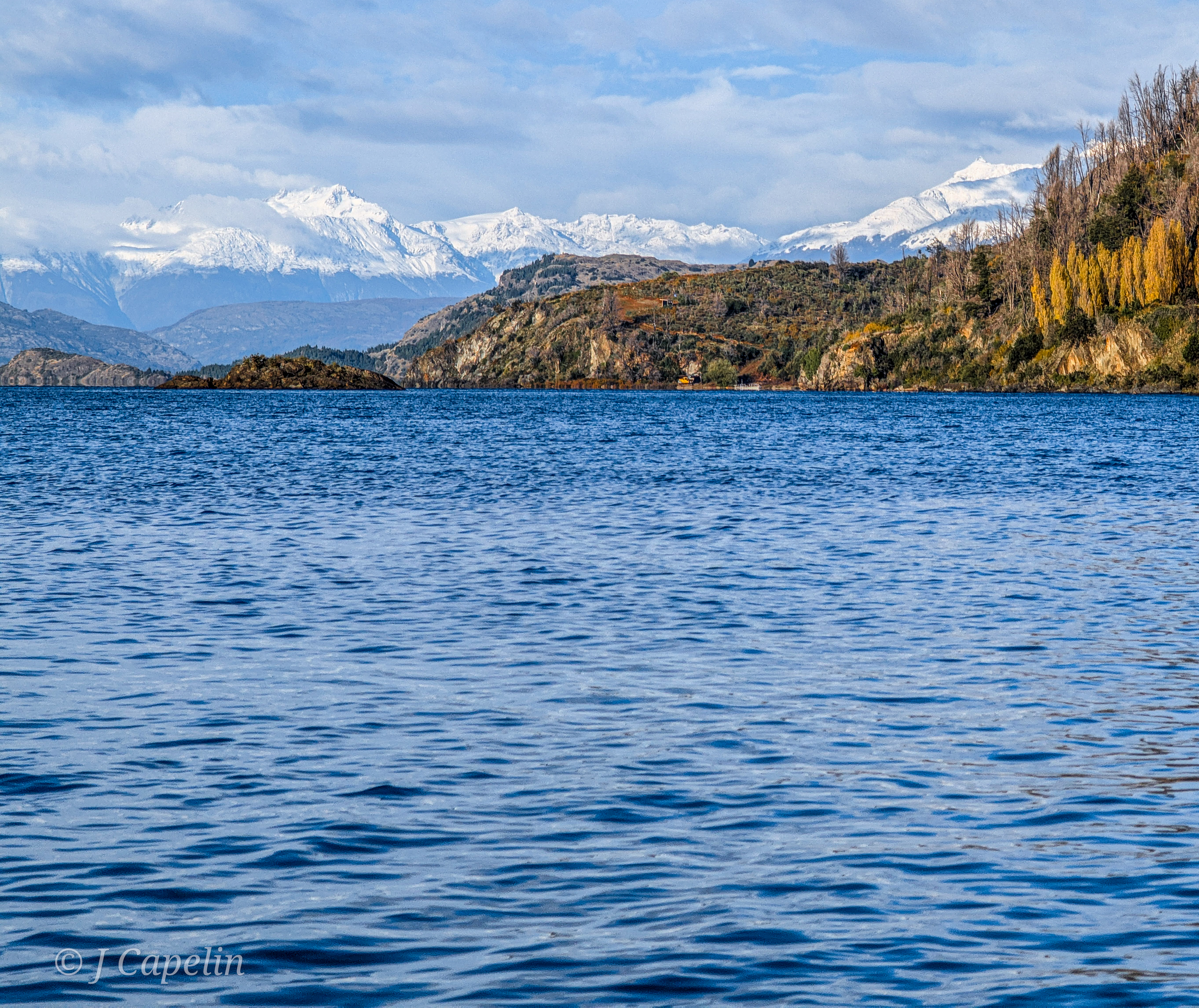
The way back to the harbour is fast and rough, heading straight into the wind and the waves. We brace ourselves, making our bodies as small as possible on our seats, as the little boat bumps and slams across the water, finally bringing us back to the serene harbour.
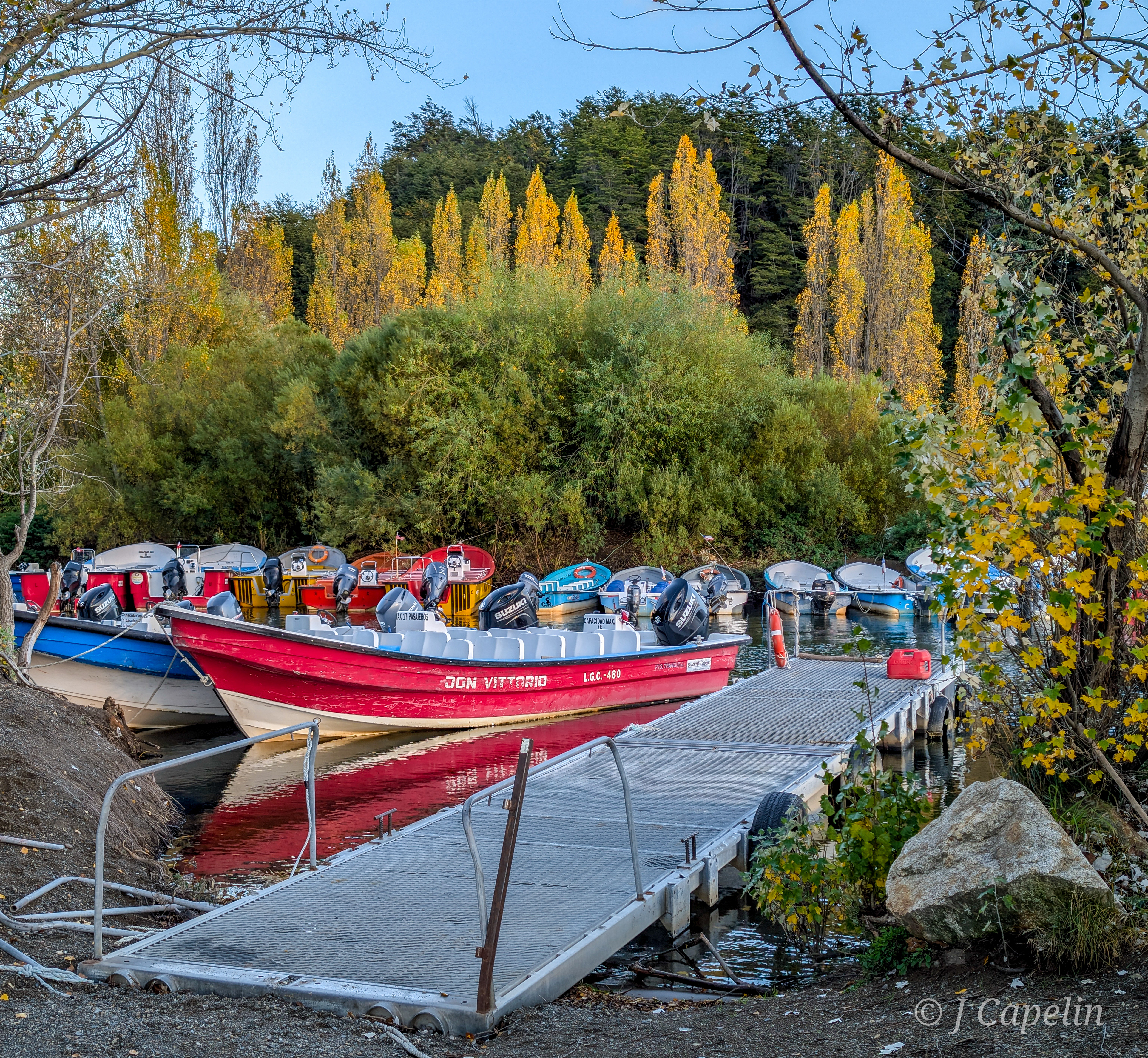
Marble Cave Tours

This boat tour was with Aoni Expediciones – https://www.aoniexpediciones.cl/en
There are also kayak tours, which take a little longer and some fitness is required – some of my group did the kayak tour on the rainy morning. They said it was freezing cold, but the rain didn’t take away from the experience because they spent more time kayaking inside the caves and through tunnels, and that it was an unforgettable experience. Either way, if you are in Chilean Patagonia, you MUST see the Marble Caves!

I didn’t personally dip a toe in Chelenko, but one of us did fall out of a kayak, so I think that counts!

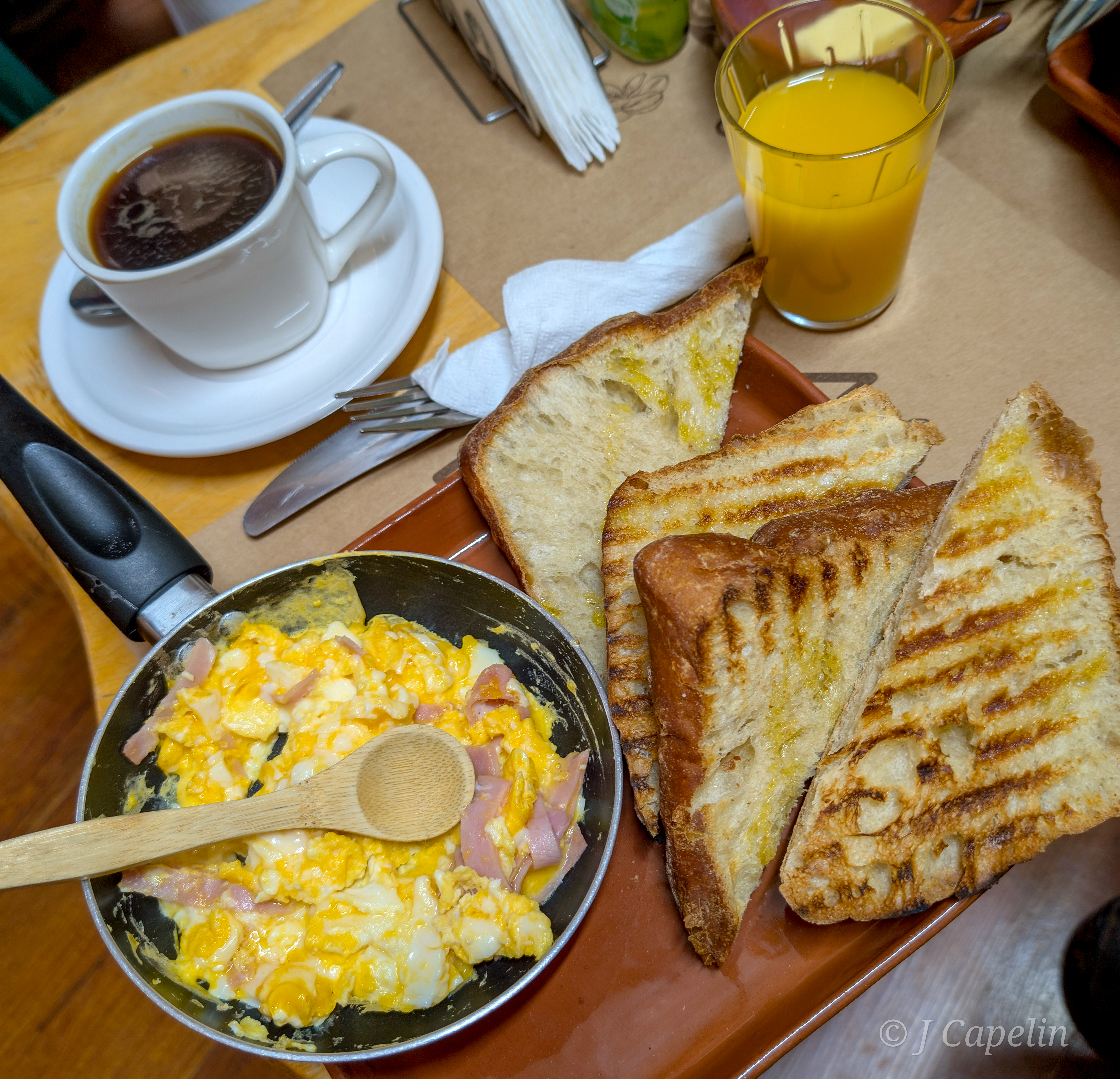
A hot coffee and brunch is essential after a morning on the water, so we meet the rest of our group in our favourite little cafe to thaw out, before hitting the Carretera Austral for a scenic drive to our next destination…
Villa Cerro Castillo

Back up Route 7 we go for 2 and a half hours, finally arriving at Villa Cerro Castillo. Pulling into our massive lodge on the river plains of Río Ibáñez, the surroundings take my breath away. It feels different up here; drier, and more like the old Andean country where you’d imagine wild Guanacos roaming the grasslands, and men wearing ponchos!
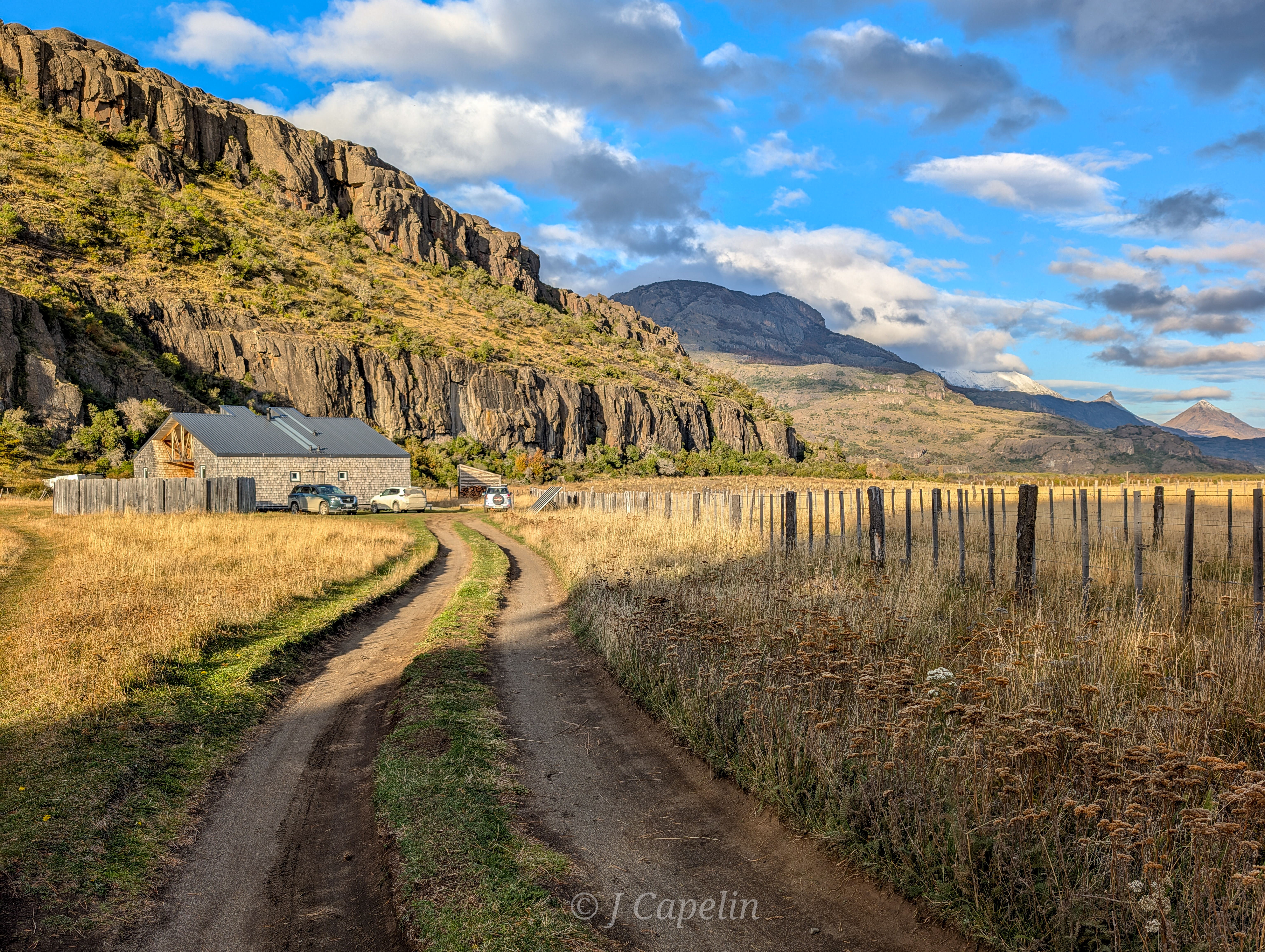
The village itself has a couple of blocks of tiny wooden houses, a primary school, and a number of small, independent stores, which open on alternating days of the week. That said, it seems that deliveries come scarcely, as there is a lack of fresh goods. We scrounge up some ingredients for dinner, happy to support some local business.

Places to Eat

While a few of the restaurants in Villa Cerro Castillo are closed for winter, there are a couple that stay open:
‘Restaurant y Cafe Campesino El Castillo’ is known for pizzas, empanadas, and Tres Leches cake.
‘El Arbolito’ is an artisan gift shop with self-serve coffee and homemade cakes.
‘Restaurante Villarrica’ is famous for their giant Chilean sandwiches, range of steaks, generous serves of fries, and they have an extensive drinks menu.
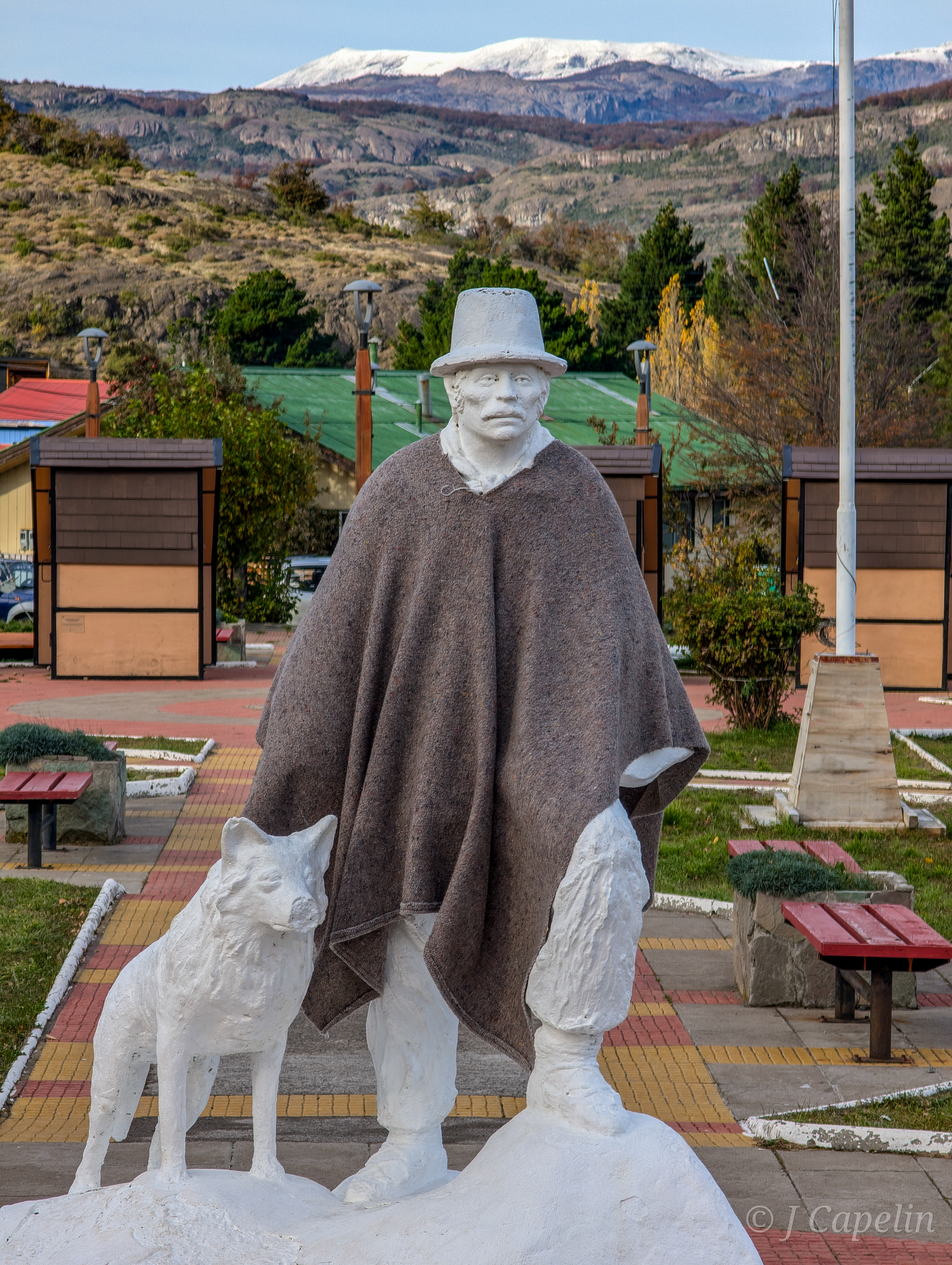
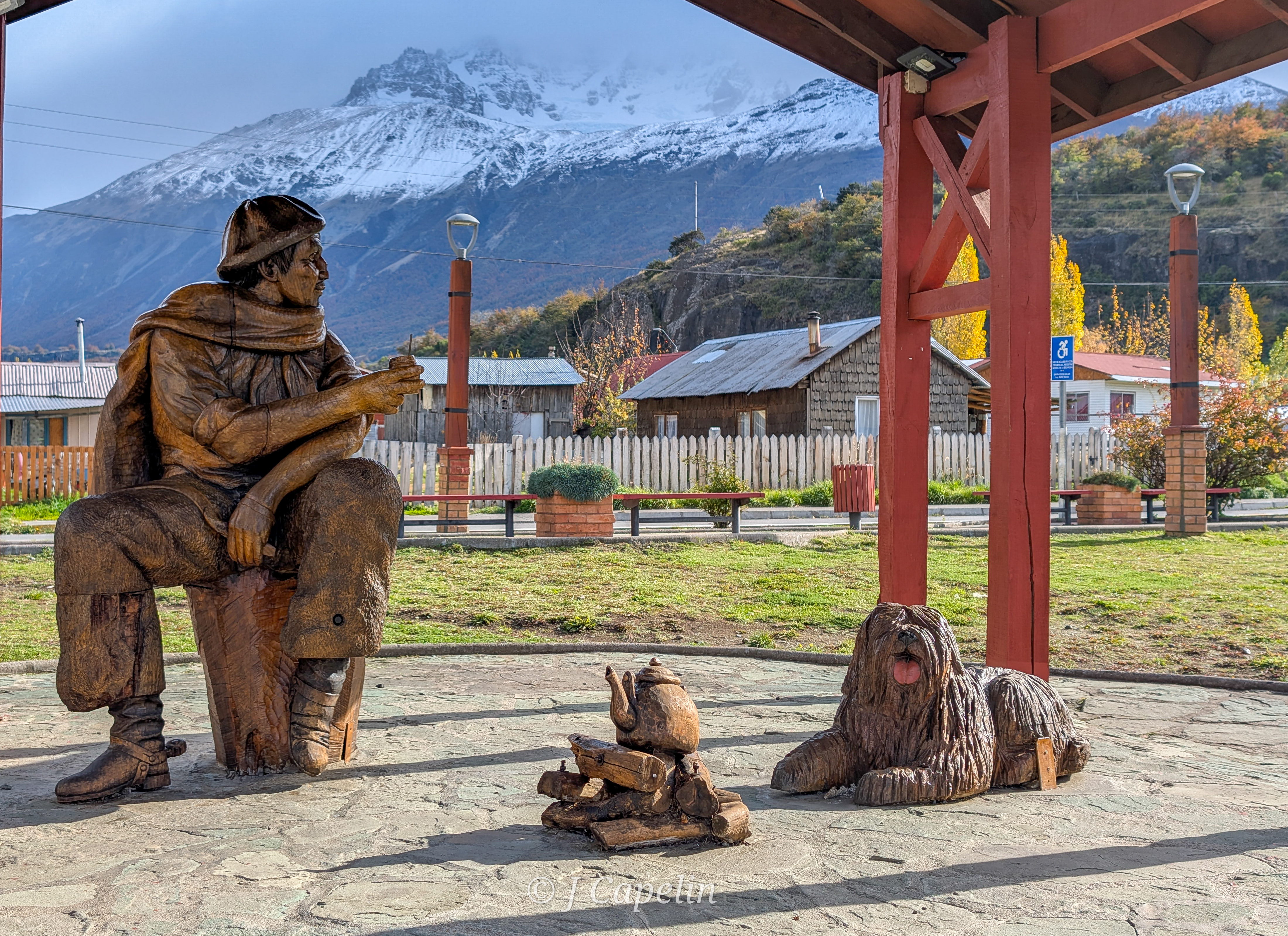
On the village green the local dogs congregate, rushing over to see what we’ve bought, while a group of chickens peck about in the grass.
The village is overlooked by an impressive mountain peak of the same name. Cerro Castillo’s jagged turrets pierce the sky, glaciers hanging from its ridges, and hidden from view near the top is a vibrant glacial lagoon.
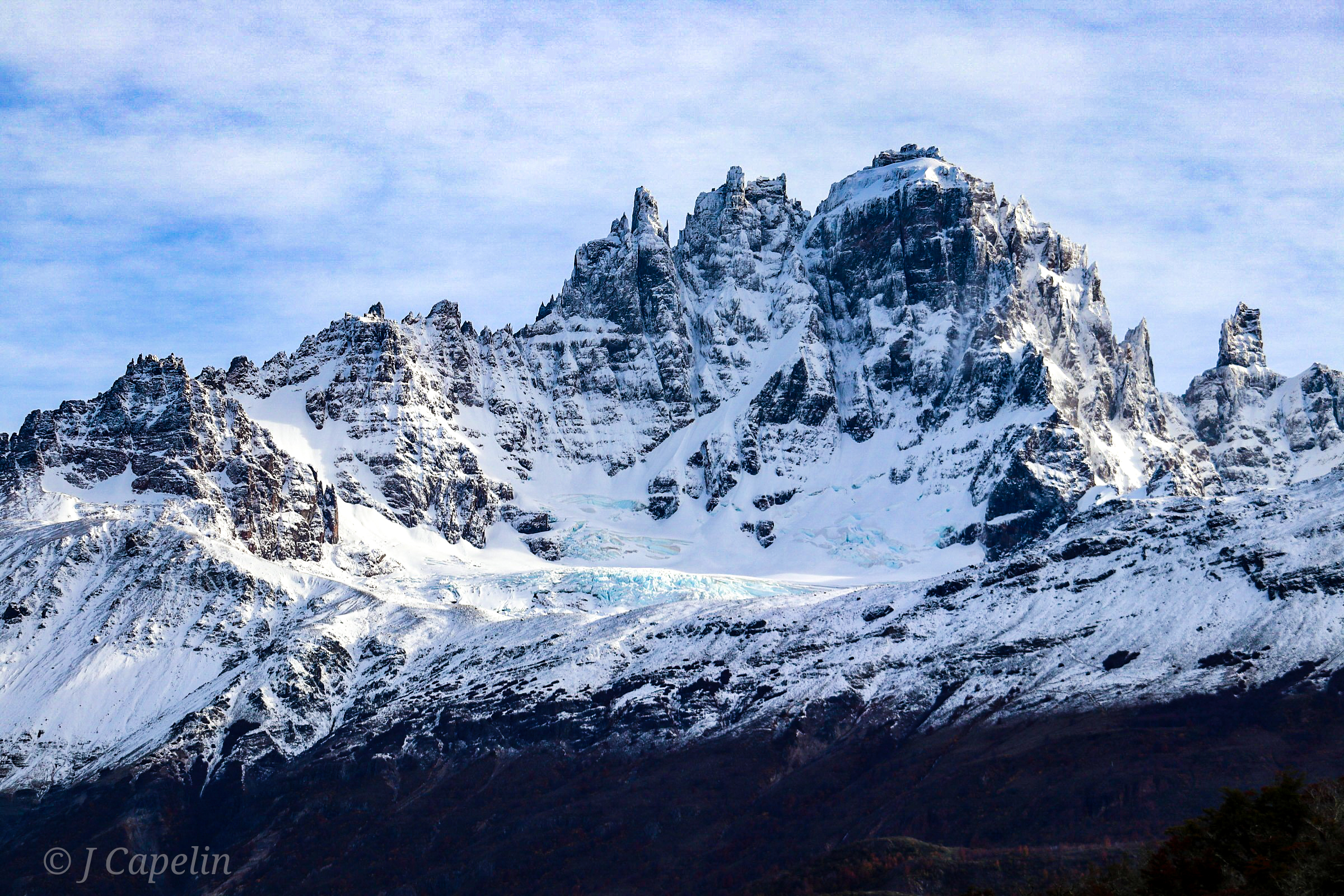
Cerro Castillo National Park

Cerro Castillo peak is the centre-piece to this national park, which is a popular spot for hiking in the summer months. The day hike to the blue lagoon on Cerro Castillo is notoriously steep and has a high difficulty rating; it is recommended to hire a guide. The multi-day hike crosses the national park, taking 3 to 5 days, and requires all the necessary back country gear, including safety devices. There are also national park fees, which must be paid before you go.

Thick snow has already covered the top half of Cerro Castillo peak, and so we scratch the day hike to the blue lagoon from our itinerary, realising that we can’t access enough information, due to having very limited internet, and the tourist information centre is close for the season. So we find a much smaller, safer hike for 7 fairly tired people with no phone service!
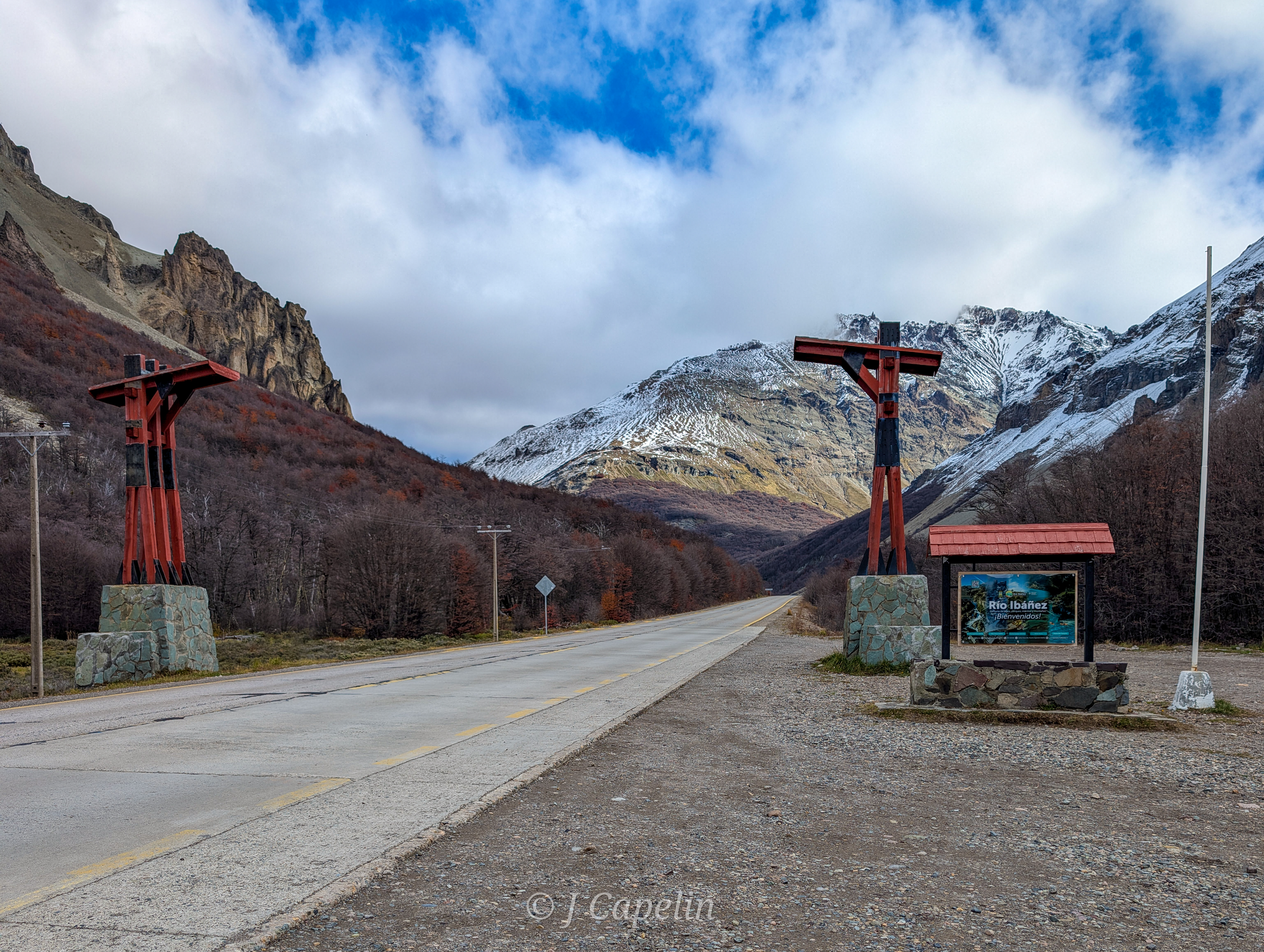
Arco Comuna Río Ibáñez

We drive about 40 mins northbound along the Carretera Austral, arriving at Laguna Chiguay. Nestled in between mountains and woodland in all its autumnal glory, the lagoon is currently dry; the rains are due to start around May.

The path leads up the hillside through a twisting forest, tufts of moss on all the spindly tree trunks, and mushrooms litter the floor like tiny fairy houses. At the top of the loop, a little platform looks over the valley, colourful trees layer the hillsides, with snowy ridges beyond.
We descend into a wooded campsite, which is closed for the season, much like everything else. It feels eerily quiet, with only the gentle rush of the wind in the trees. I half expect a witch to appear in the window of one of the empty wooden cabins.

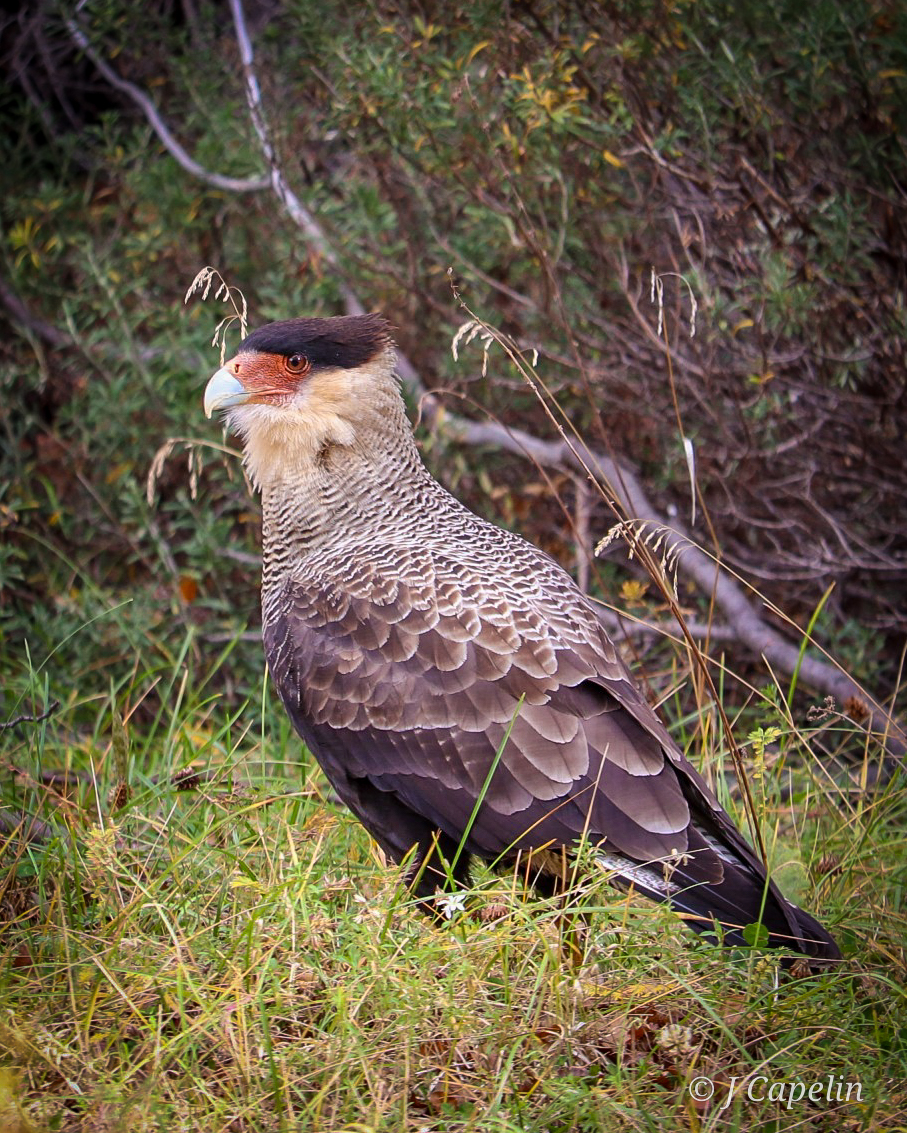
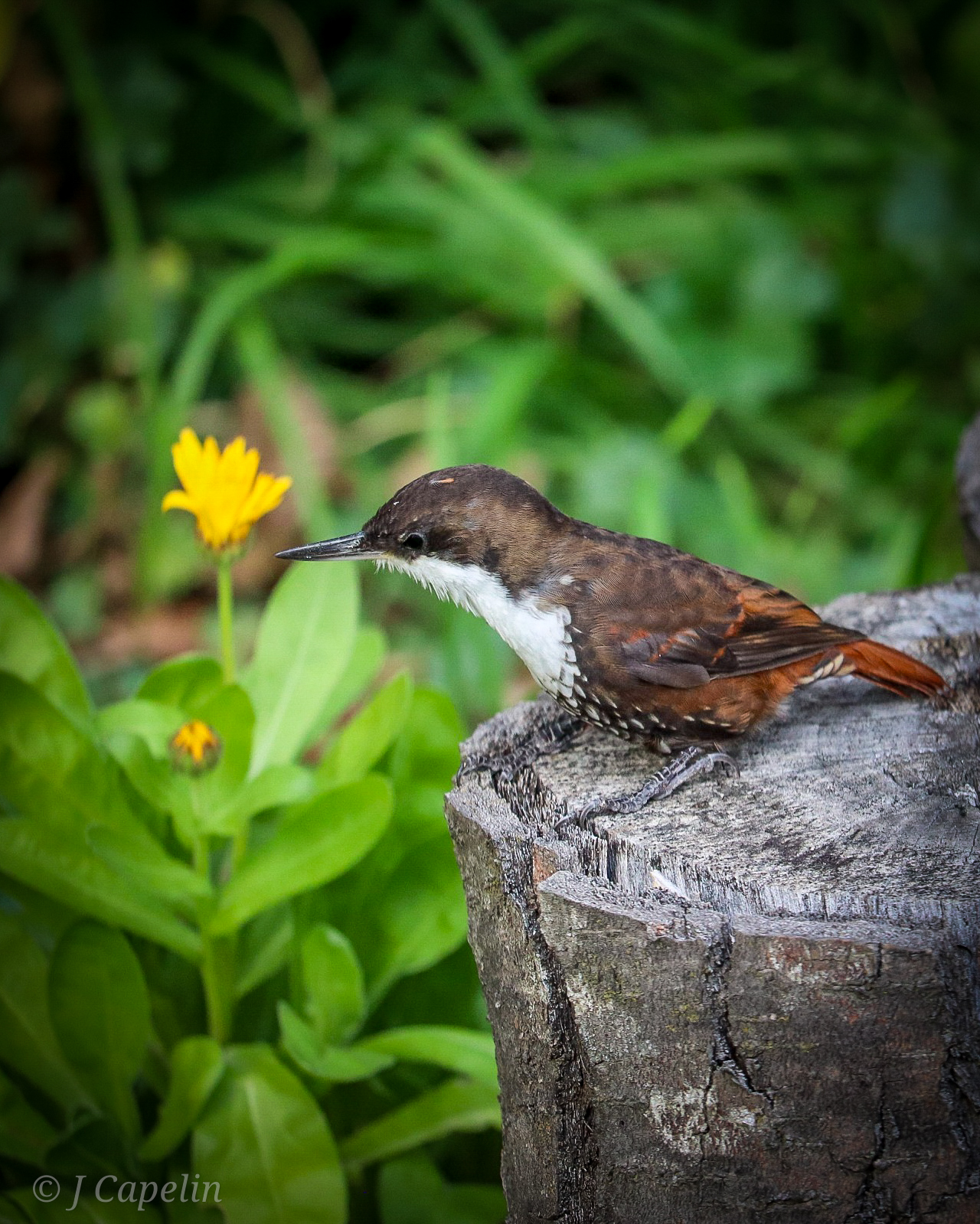
At the end of the trail we spot two massive birds on the ground, brown and white with beards! We stay still and quiet, expecting them to fly off, but they are completely unphased by us! They are Southern Caracaras – a kind of falcon.
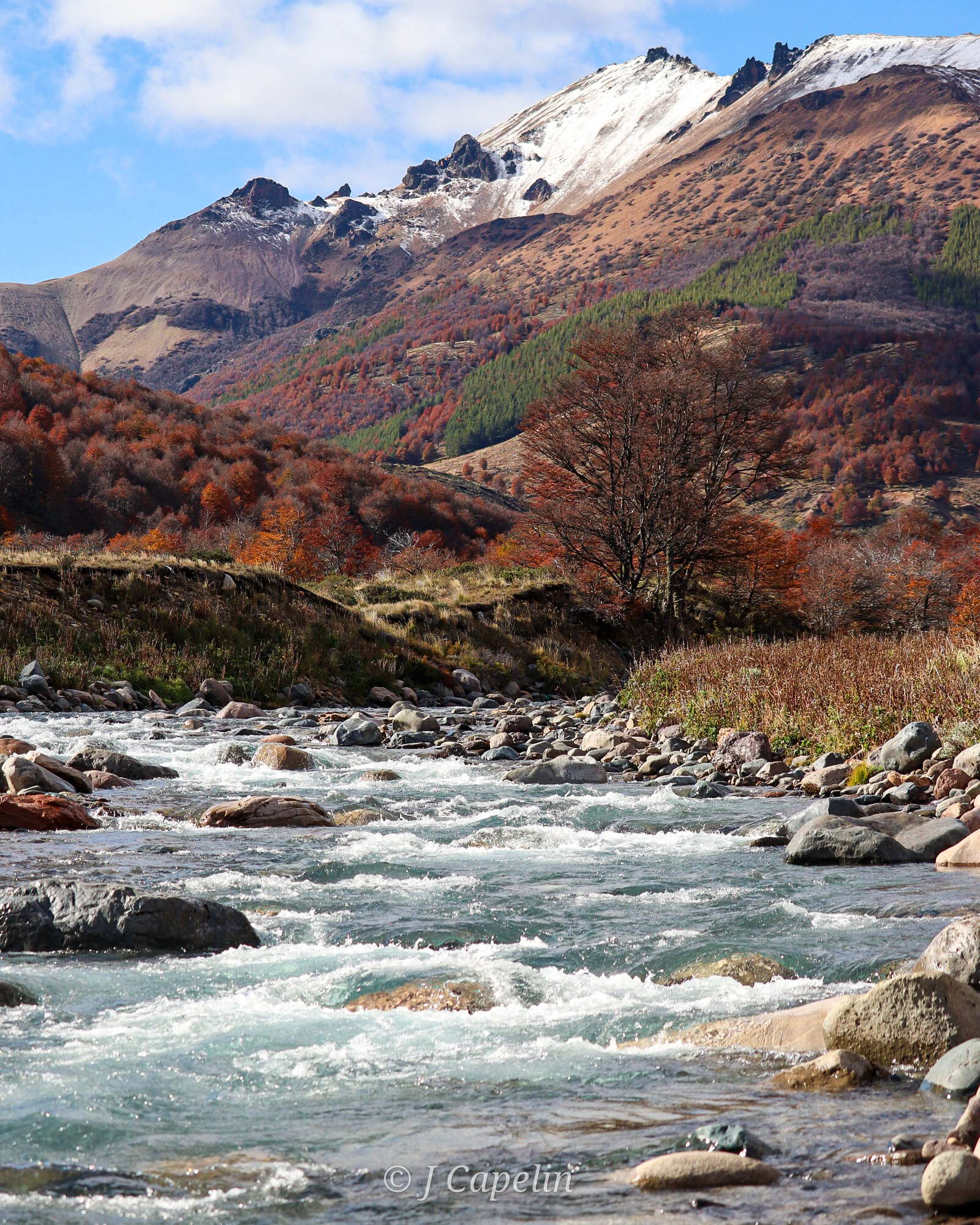
On the drive back, we stop at the edge of the beautiful Rio Blanco, hoping to catch a glimpse of the native deer, ‘Huemules.’
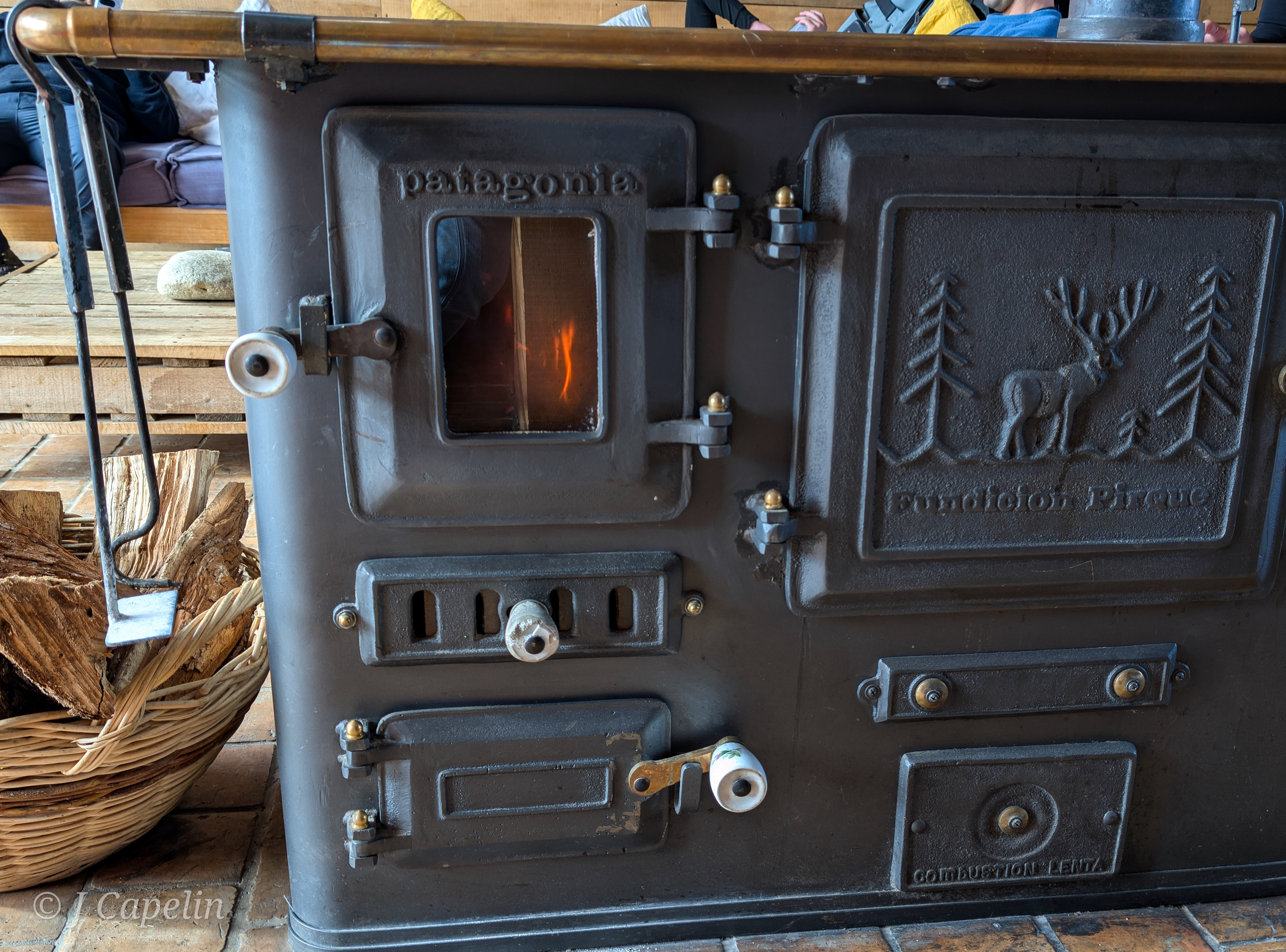
Our mornings in Villa Cerro Castillo are slow and chilly, sitting by the aga fire with the sun pouring over the landscape outside the window. We play fetch with a resident dog, and watch eagles and condors circling high above the grasslands.
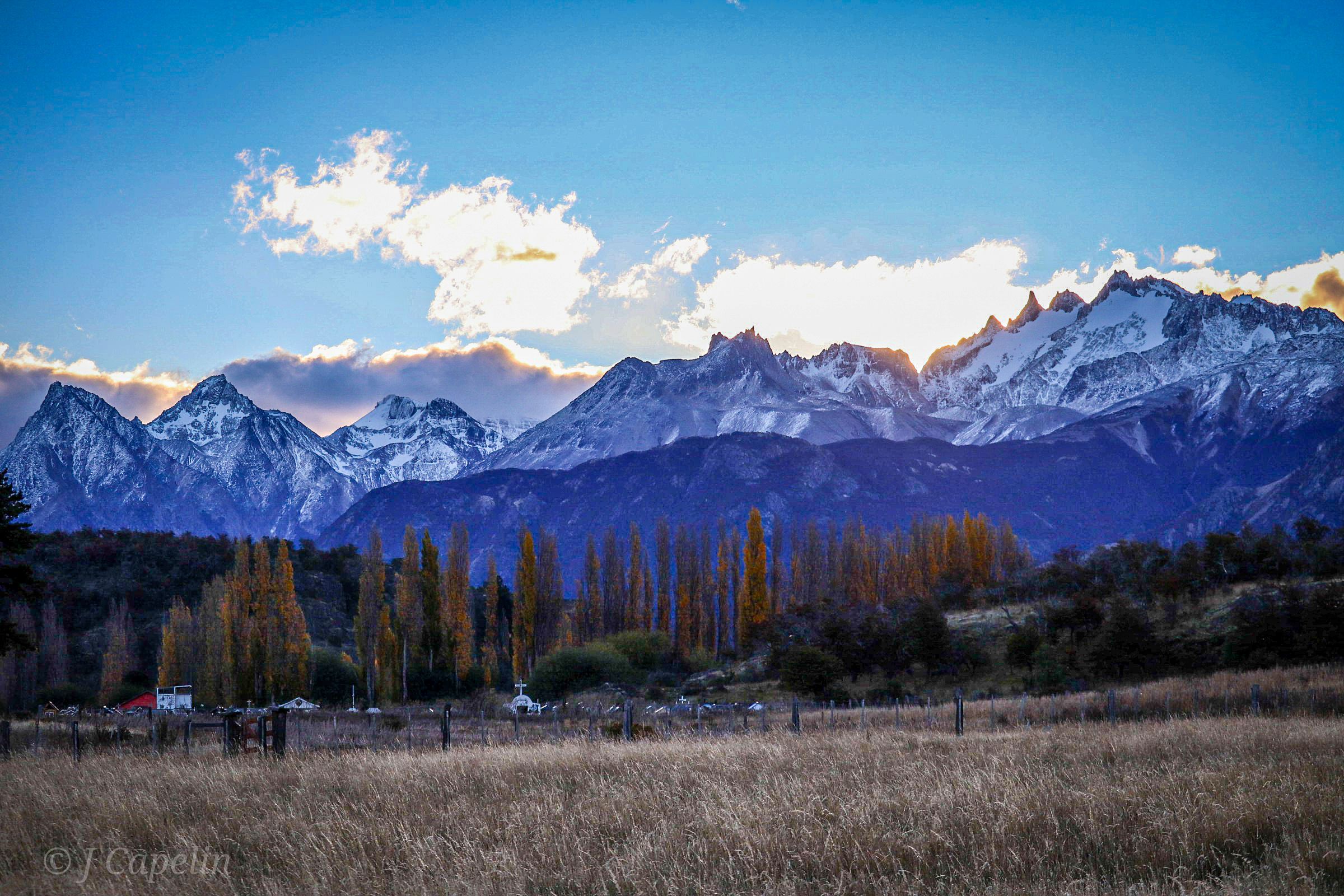
View from our lodge

We visit a little gift shop in the village called El Arbolito, which sells cakes and gifts and all kinds of locally made trinkets, many sporting the red handprint, or the symbol of two Guanacos, (native animals similar to llamas.)
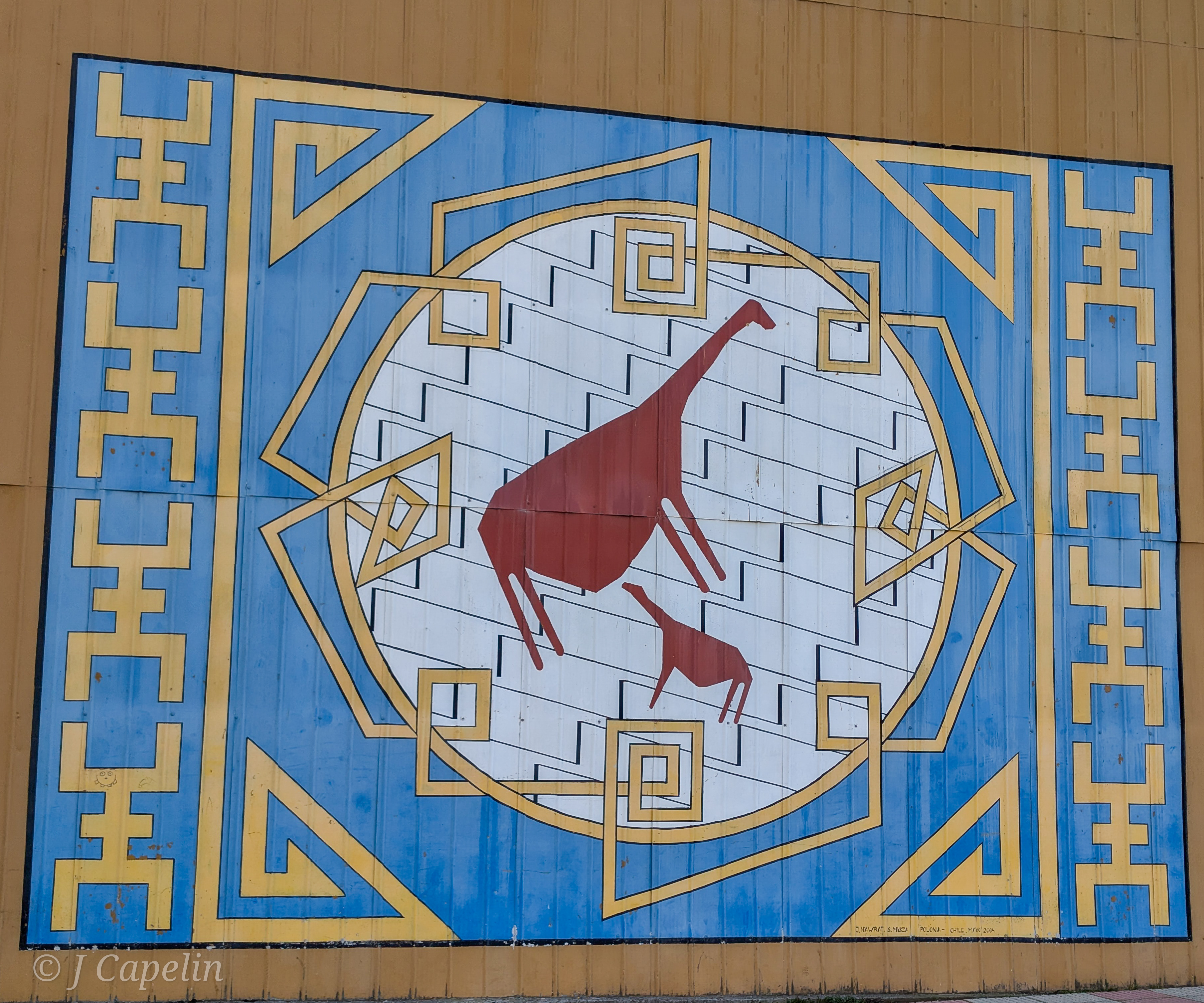
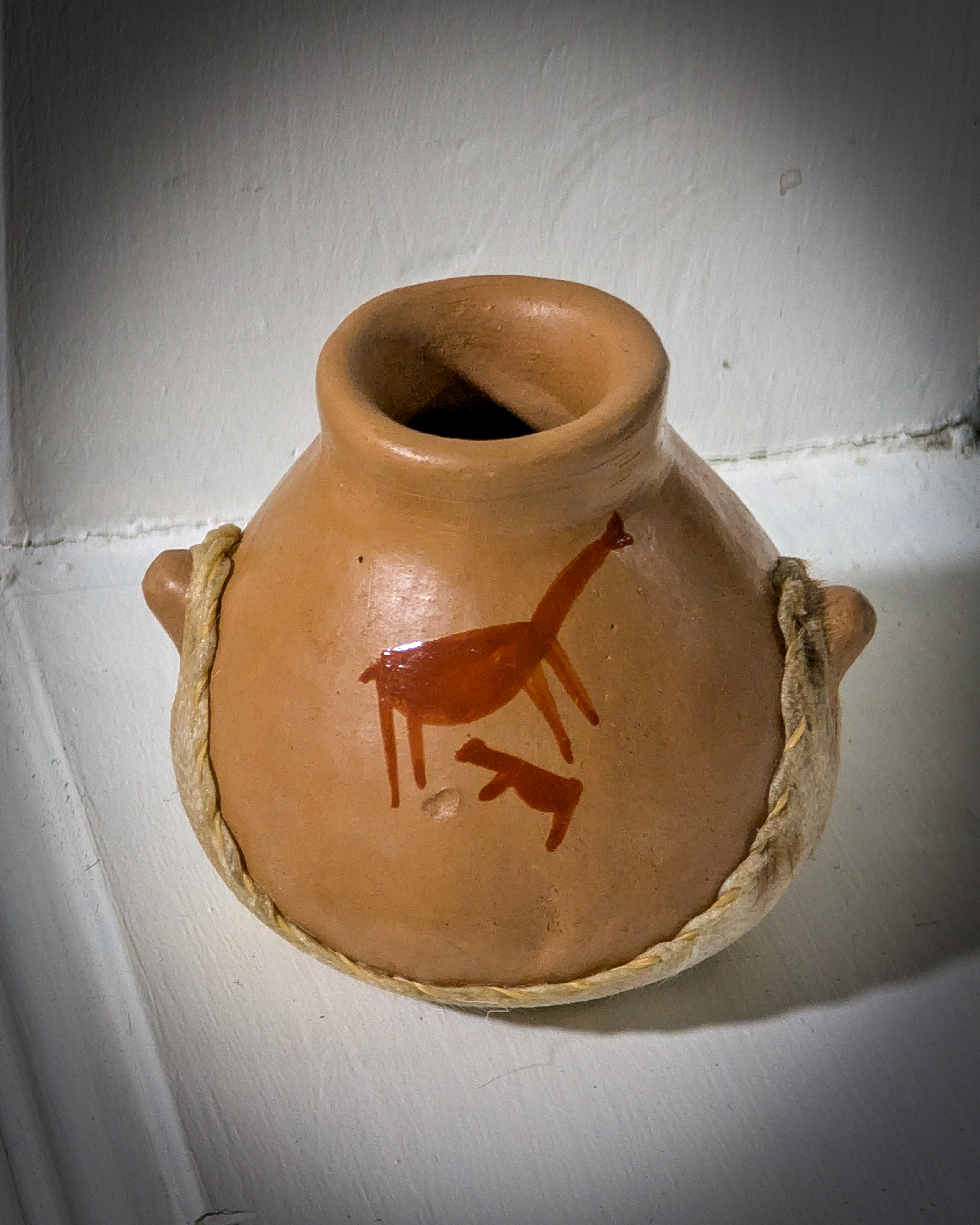
The Ancient Symbols

Just outside of Cerro Castillo is an archeological site called ‘Paredón de las Manos’, or ‘The Wall of Hands.’ This natural rock wall is covered in 3,000 year old red paintings made by the ancient Tehuelche people. The most prominent paintings are hand prints, with a few noted outlines of Guanacos and hunters. There is a modern day mural in the village by the school, featuring two Guanacos in the Tehuelche style. The symbol represents the hope for prosperity, as the presence of the native animal was very important to successful survival.

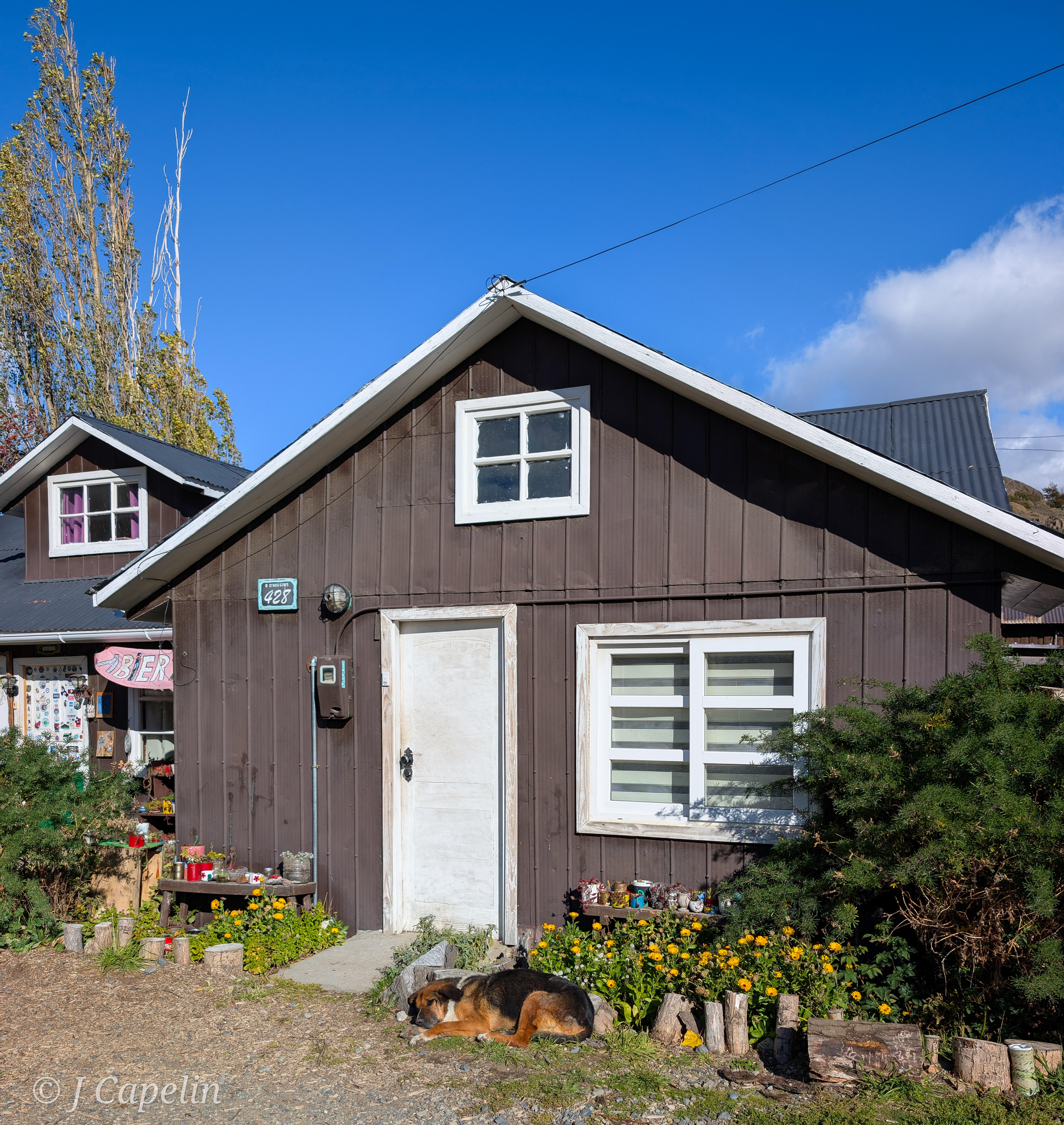
Resident dogs lay in the sun outside, some of them trotting over for an opportune head-scratch. Little birds flit between the plants, while a ginger cat watches, wide eyed and ready to pounce. (Spoiler: the birds are much too fast for the cat!)
In the evening we build a fire in the lodge’s firepit area, and sit beneath these impressive mountains, watching the stars and wondering if we are in turn being watched from the shadows by some wild cat.
In the end, we could hold out for a social-media-perfect holiday, spending a fortune on ticking off items in a crowd of tourists in the peak season. Or we could go now, while we’re all here together, and just experience it in all its wild reality. It’s always Patagonia, and it’s always impressive, no matter what time of year you go.

Thank you for being here, readers! If you enjoyed this blog, please like and share, or buy me a coffee!

Up Next….

Exploring Australia ~ Atherton Tablelands

7–10 minutes

Leaving Queensland’s Bruce Highway north of Tully, between endless banana plantations, and veering left into farming territory, we headed along the narrow road towards The Misty Mountains. Banana trees whizzed by the windows on either side, while the mountains rose ever closer before us, their looming clouds crawling black across their peaks. Eventually, we joined the Palmerston Highway west, where the road climbed and twisted through rainforest and waterfalls, until we levelled out onto a rolling, green plateau.

Millaa Millaa Falls Circuit

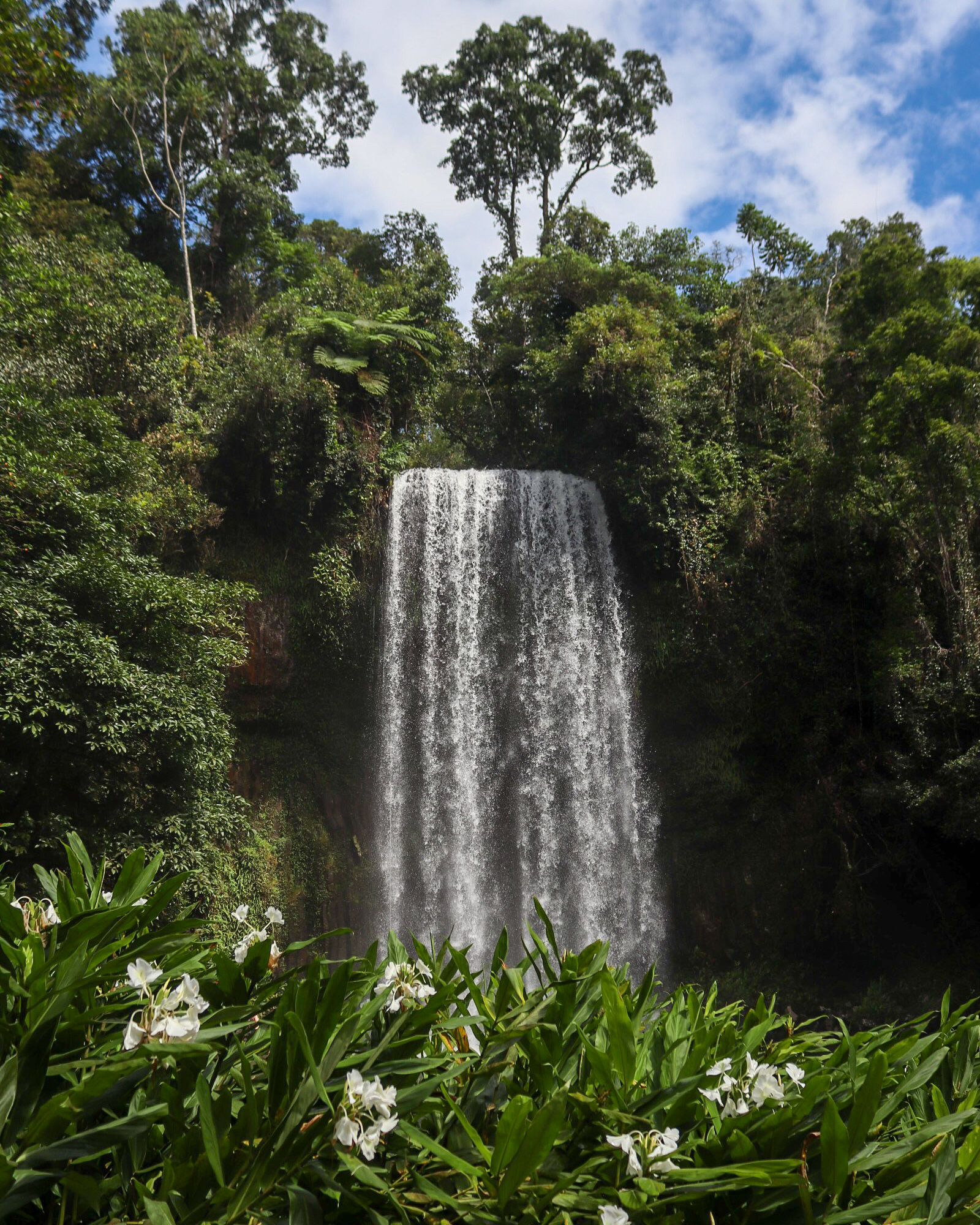
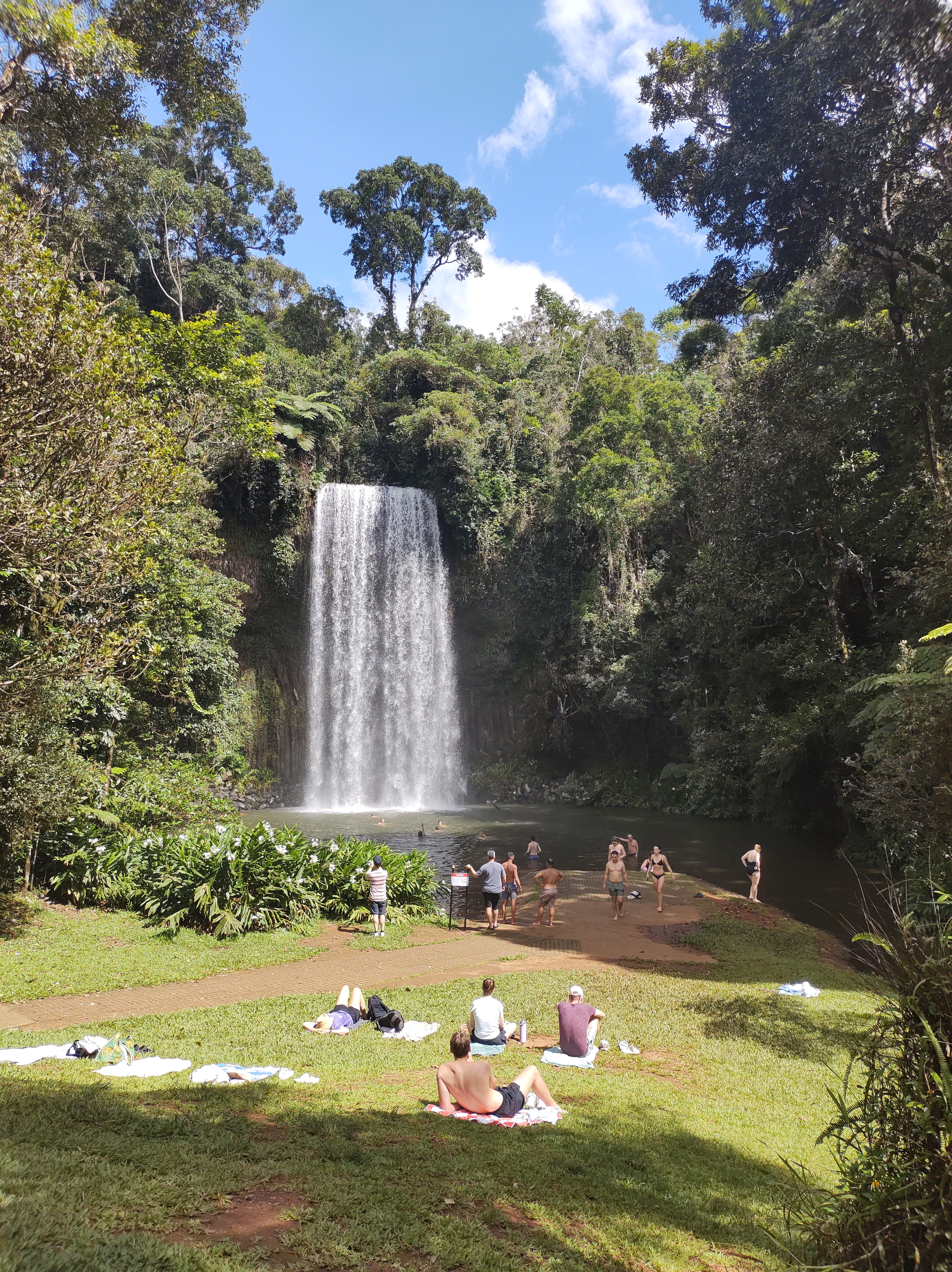
A 17km scenic drive just off the Palmerston highway took us to three waterfalls. Firstly, Millaa Millaa Falls, the most famous for swimming, sunbathing and picnicking.

Over hills and through farmland, with rolling views that reminded me of the English countryside, we drove to the next waterfall. The Zillie Falls viewpoint from the top of the waterfall was quite overgrown, with no clear path down, so I couldn’t tell you how big it was, but it sounded impressive!

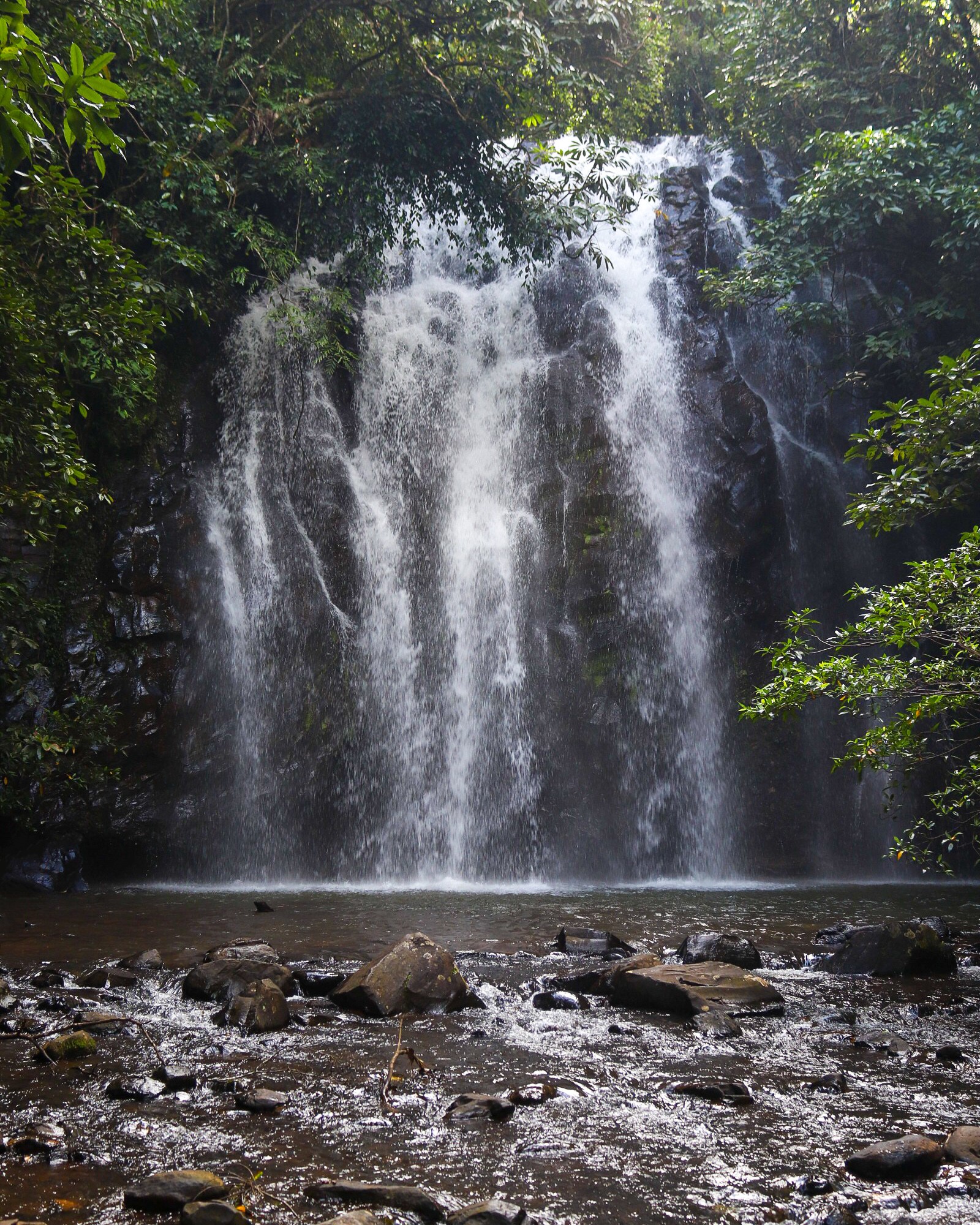
Thirdly, Ellinjaa Falls, where we descended on foot through ancient rainforest. The path met the dark, rocky creek, and plenty of people were swimming and crossing the rocks for photo opportunities, while the waterfall rushed on the backdrop.

Crater Lakes National Park

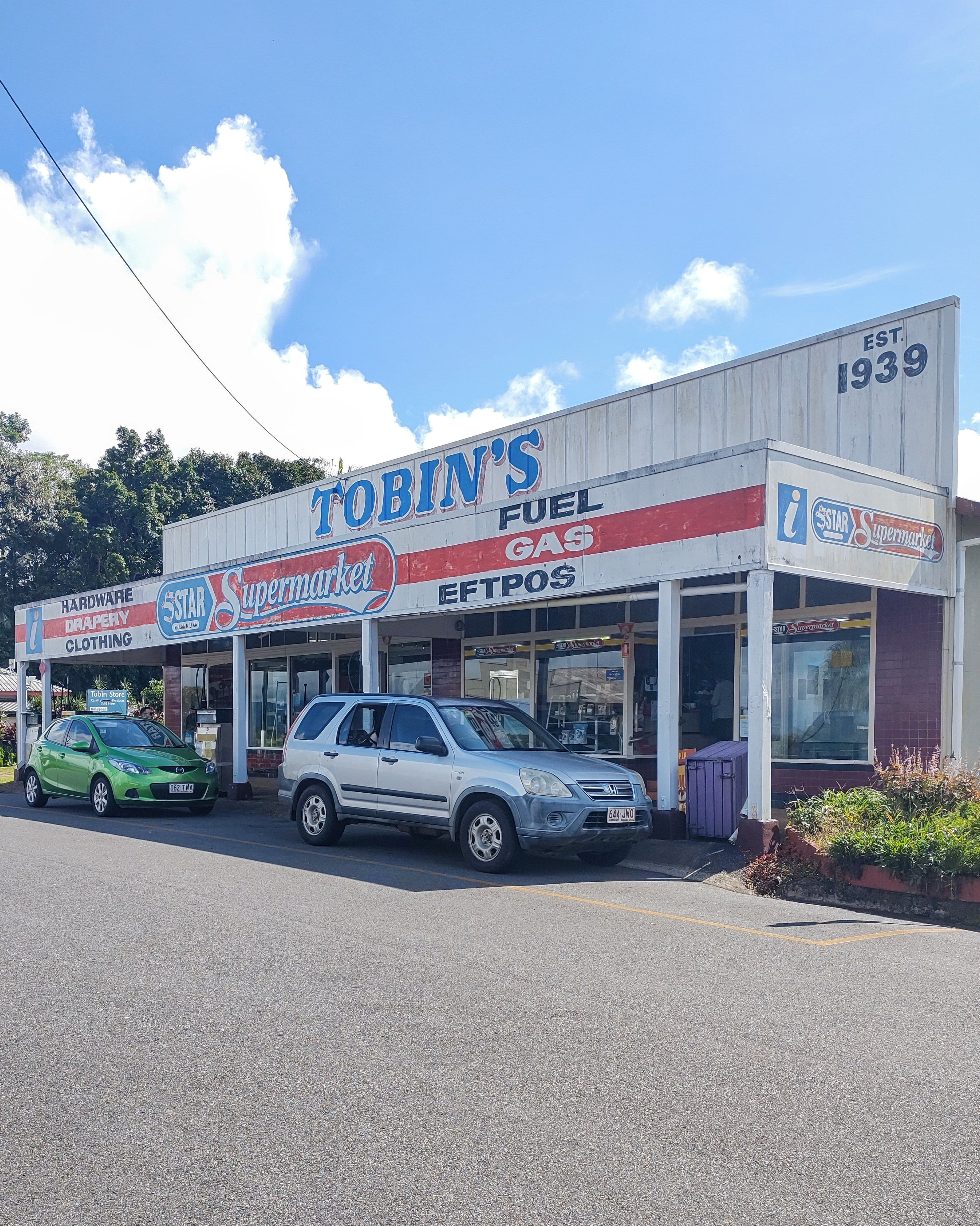
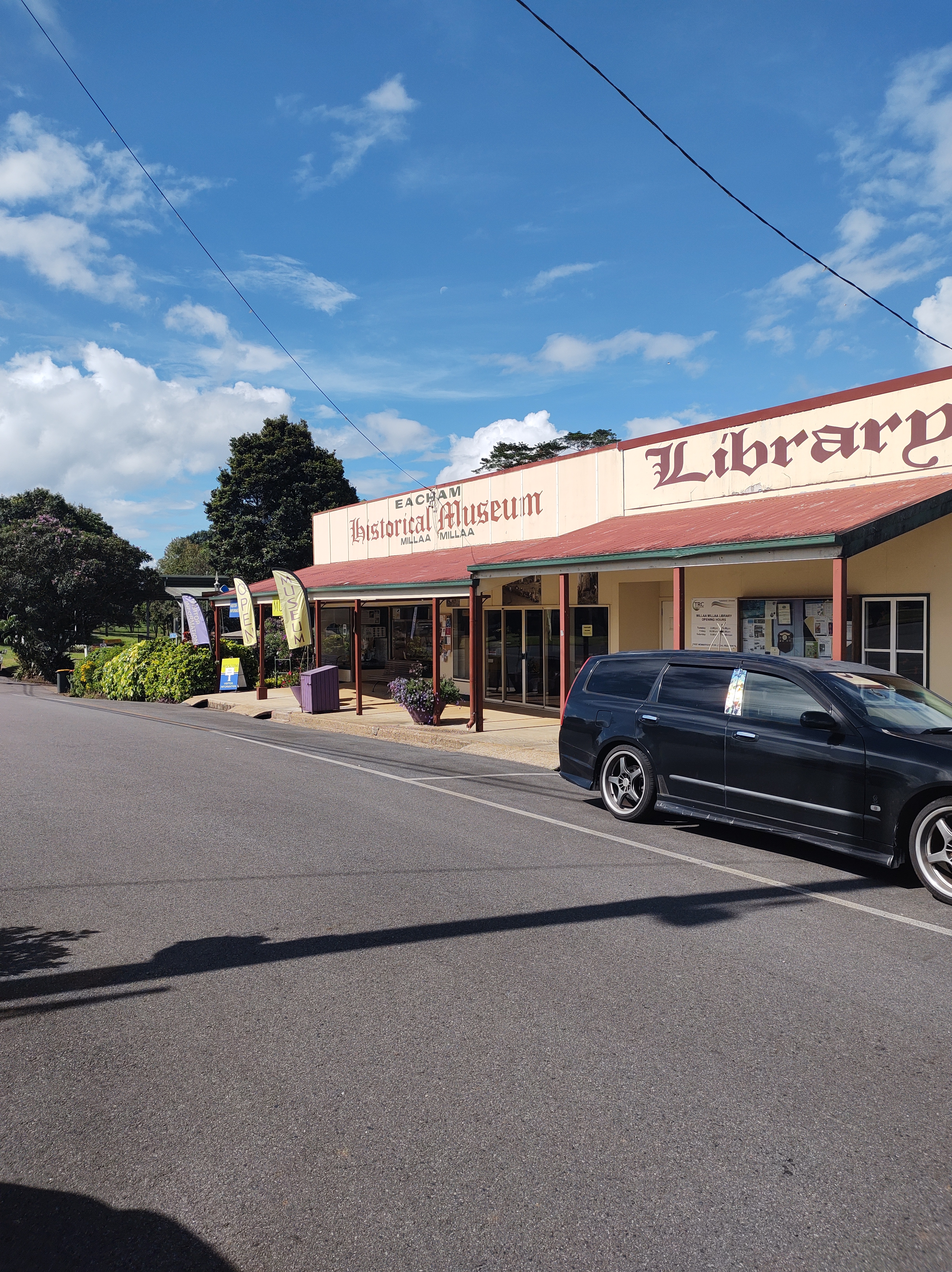
After stopping for fuel in the old village of Millaa Millaa, we drove north, through Malanda, towards Eacham and our accommodation on the edge of Crater Lakes National Park. Down a long, unsealed driveway through the trees, we arrived at Chambers Wildlife Rainforest Lodges. Big wooden huts on stilts stood nestled in the rainforest, with open decks perfect for wildlife spotting. Inside, we had a kitchen, living space, and a cosy ensuite bedroom at the back.

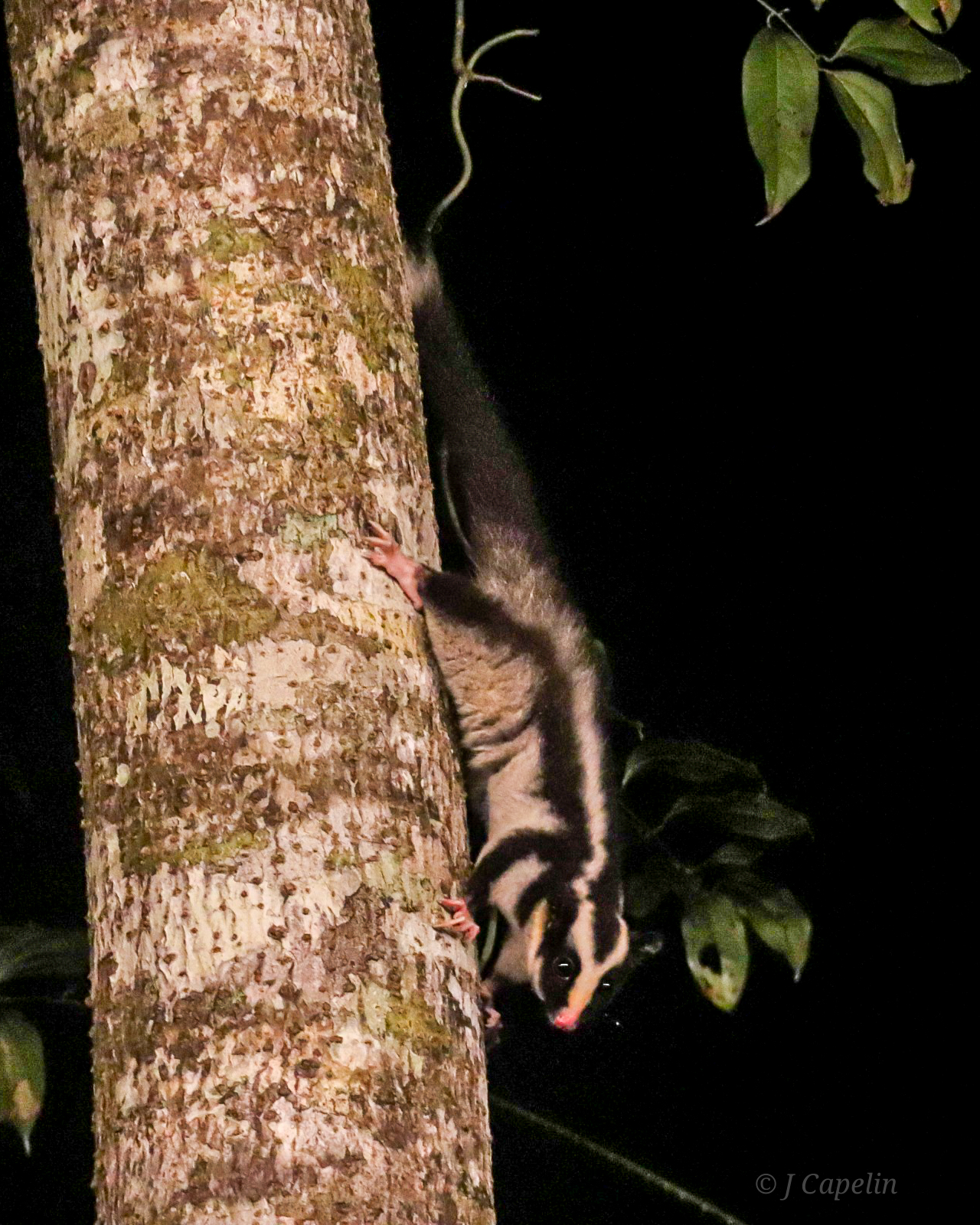
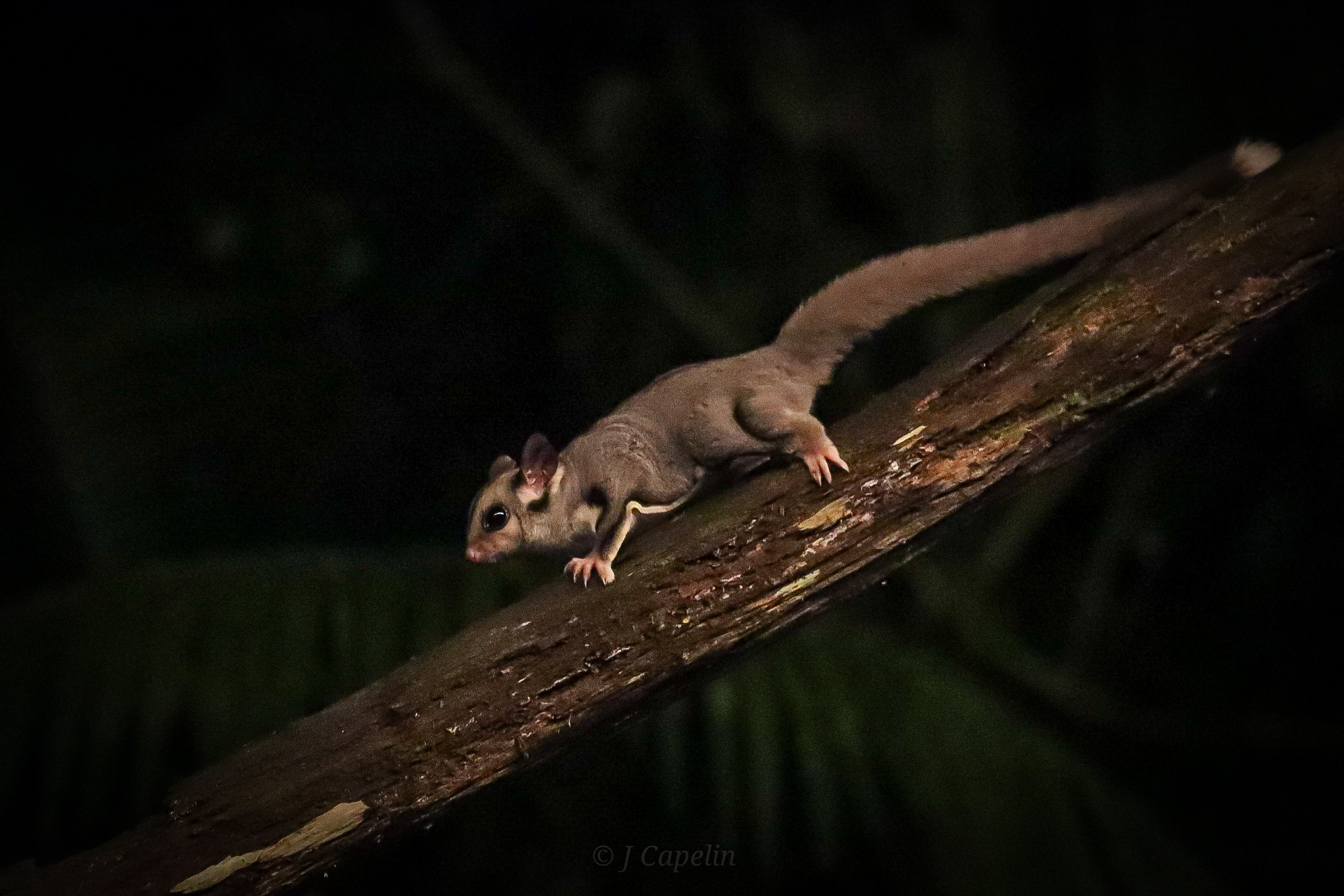
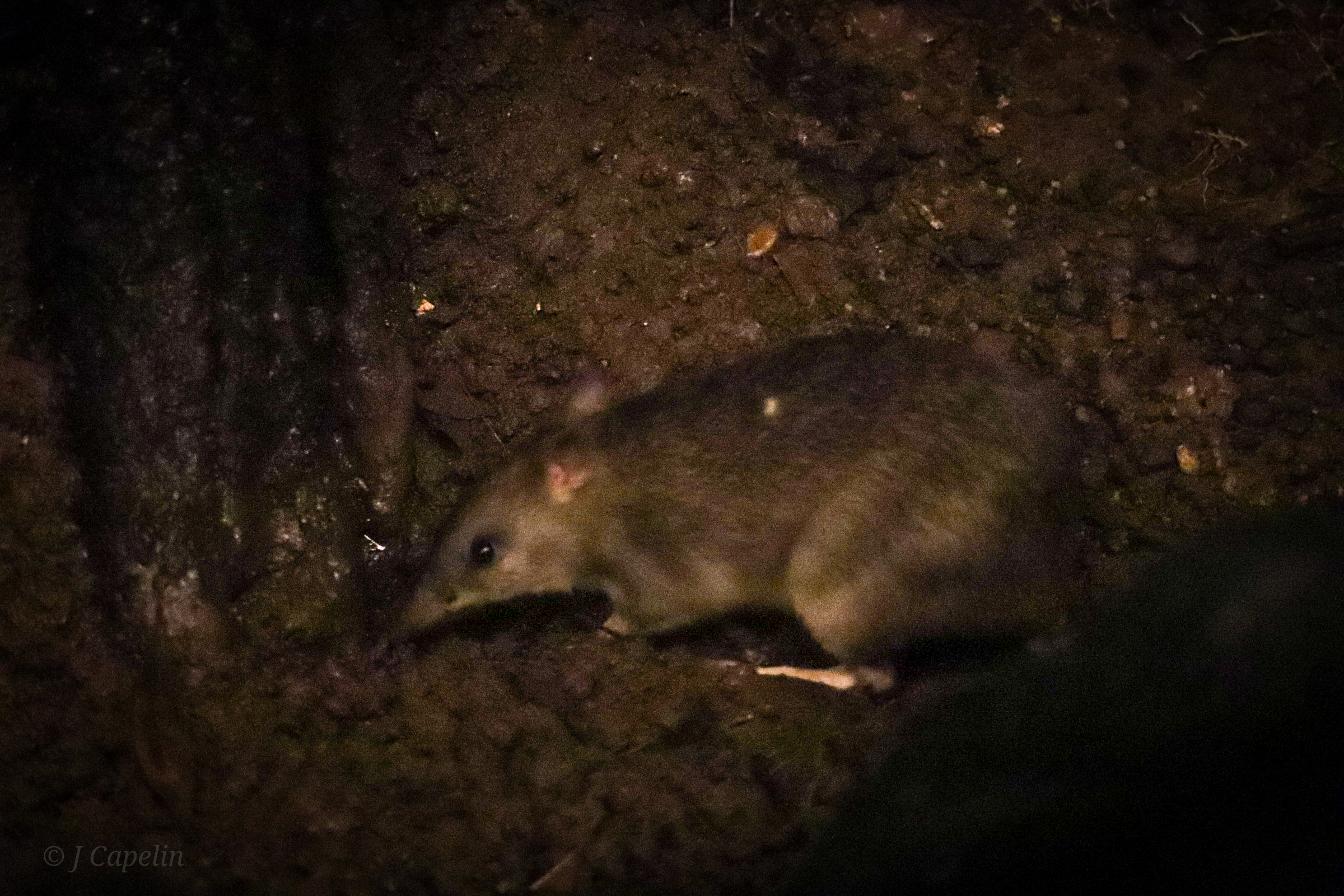
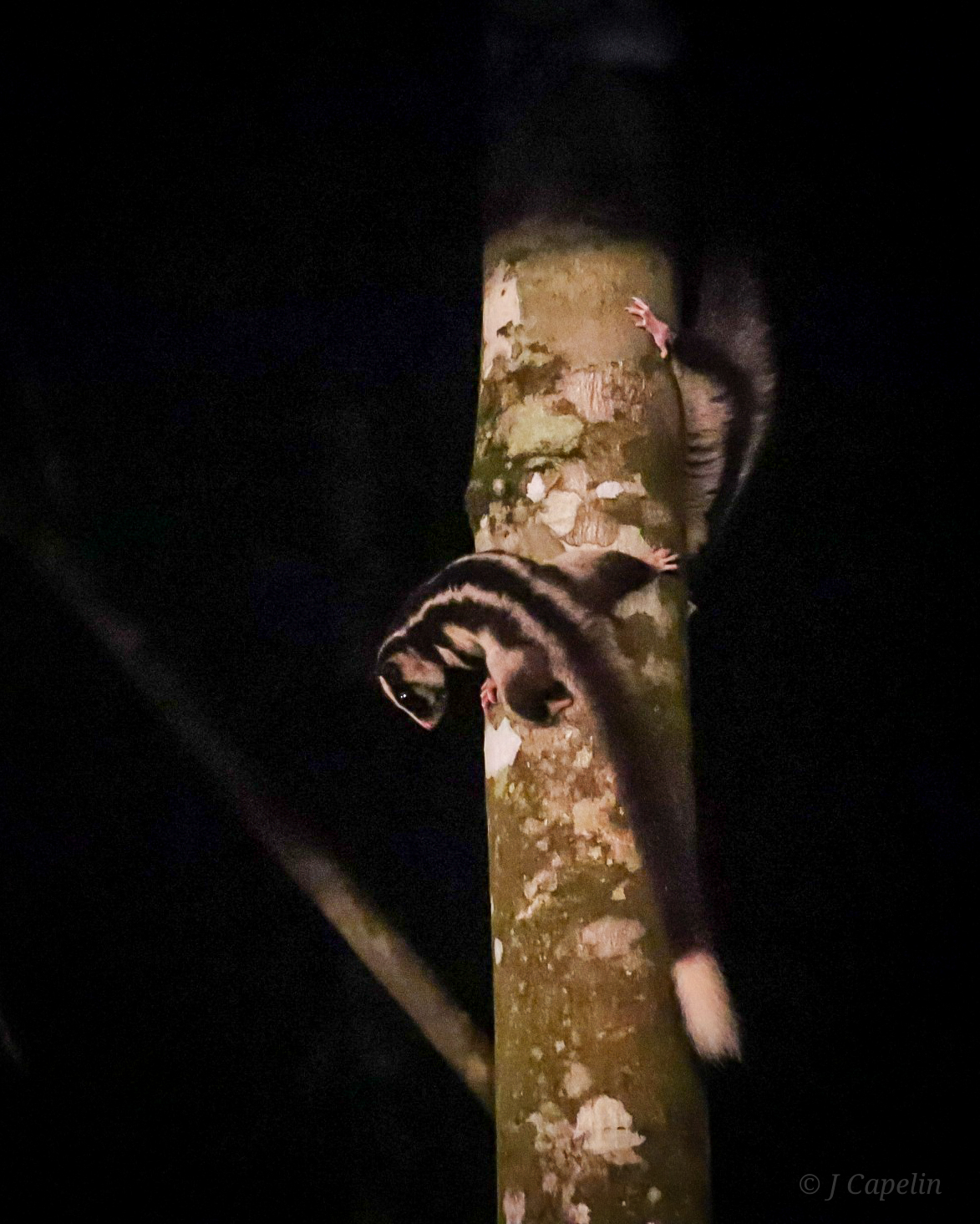
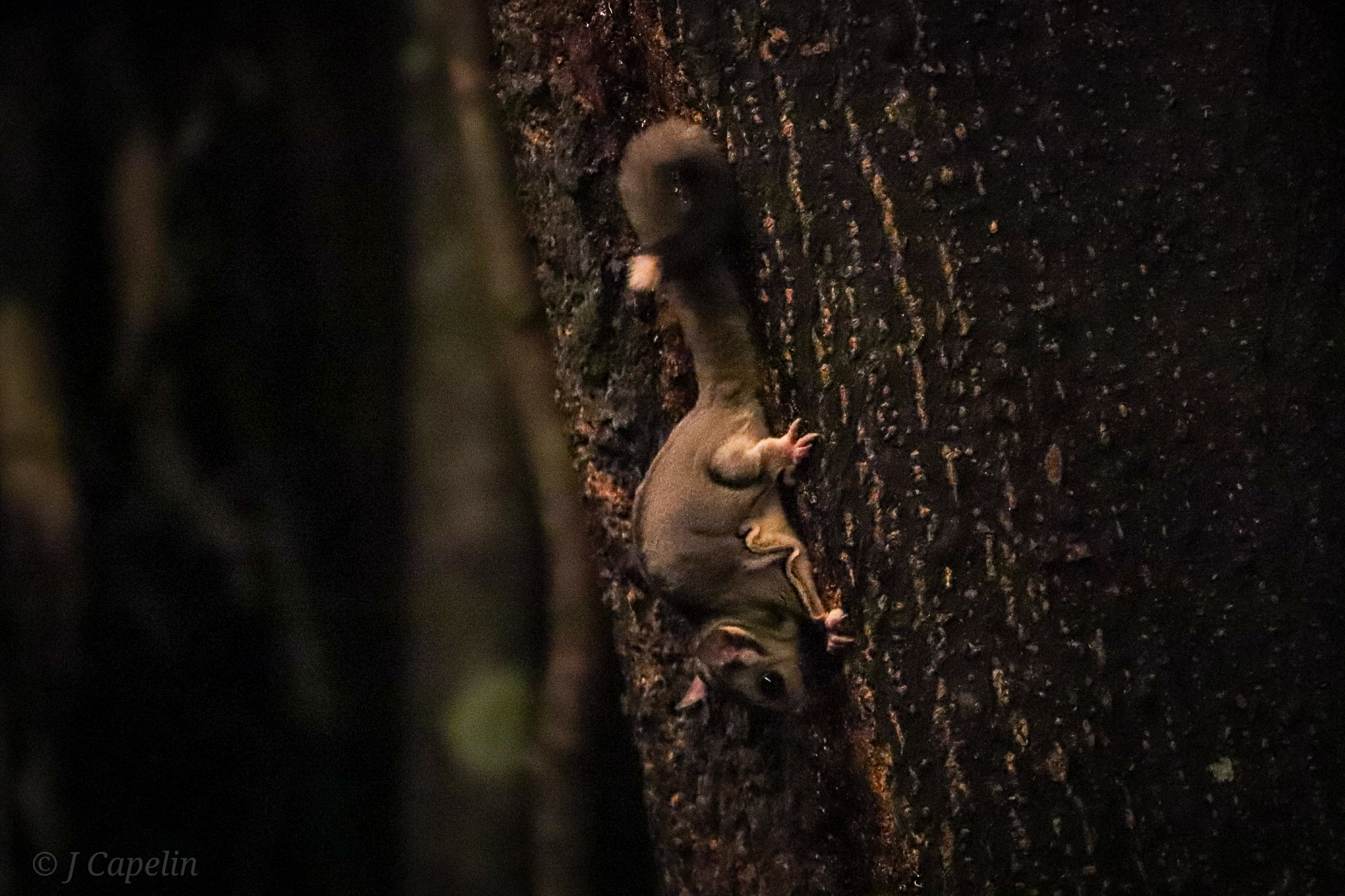
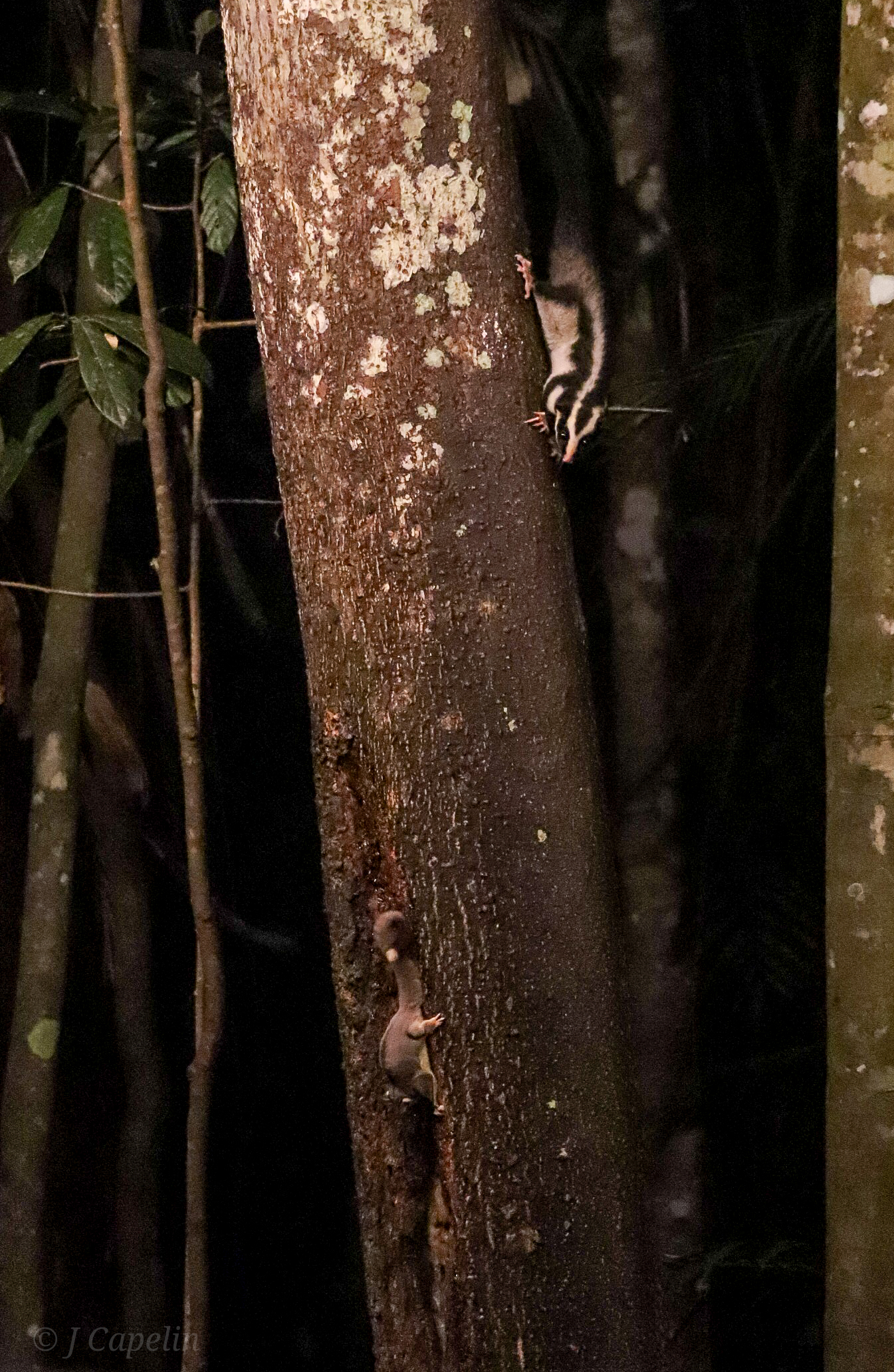
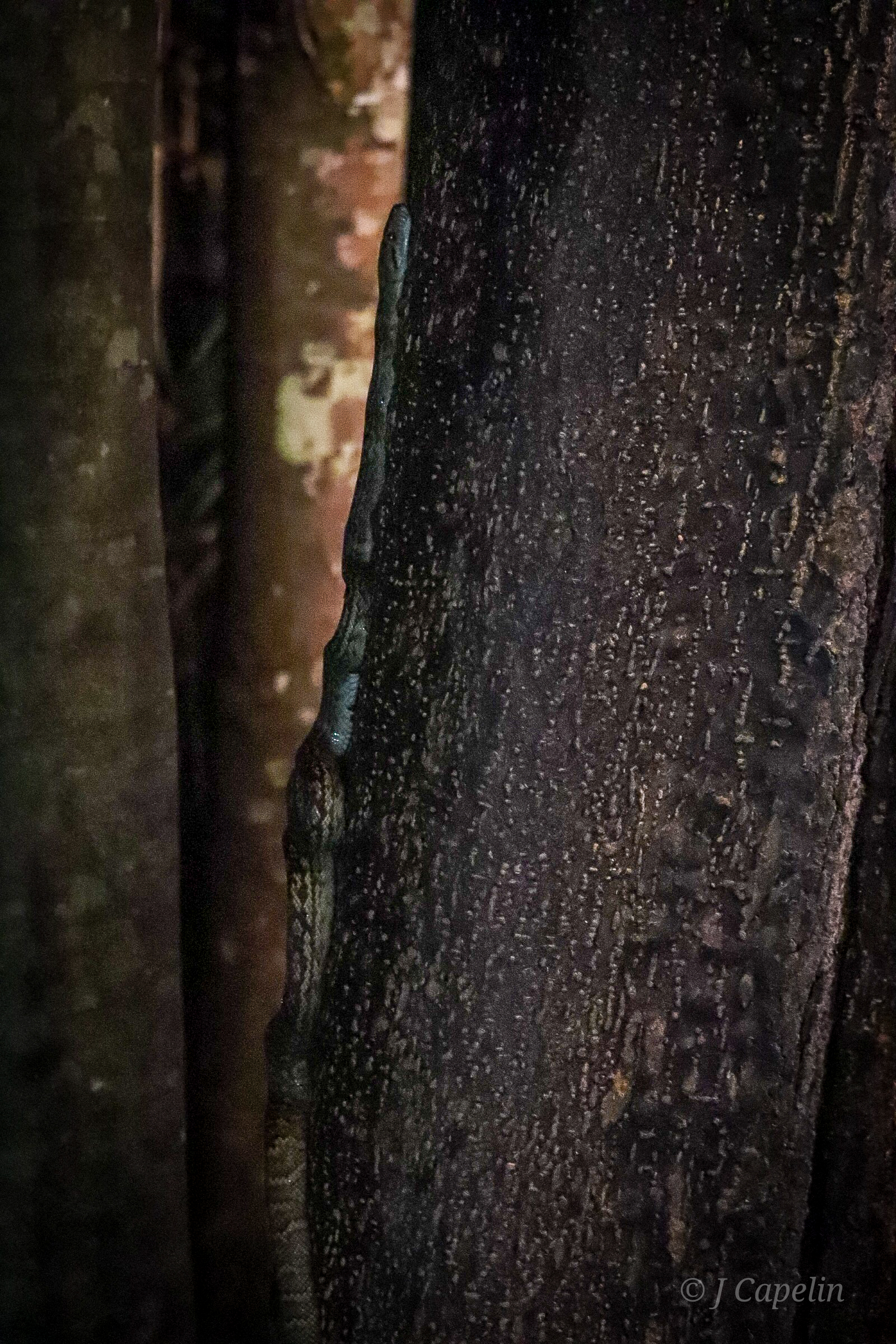
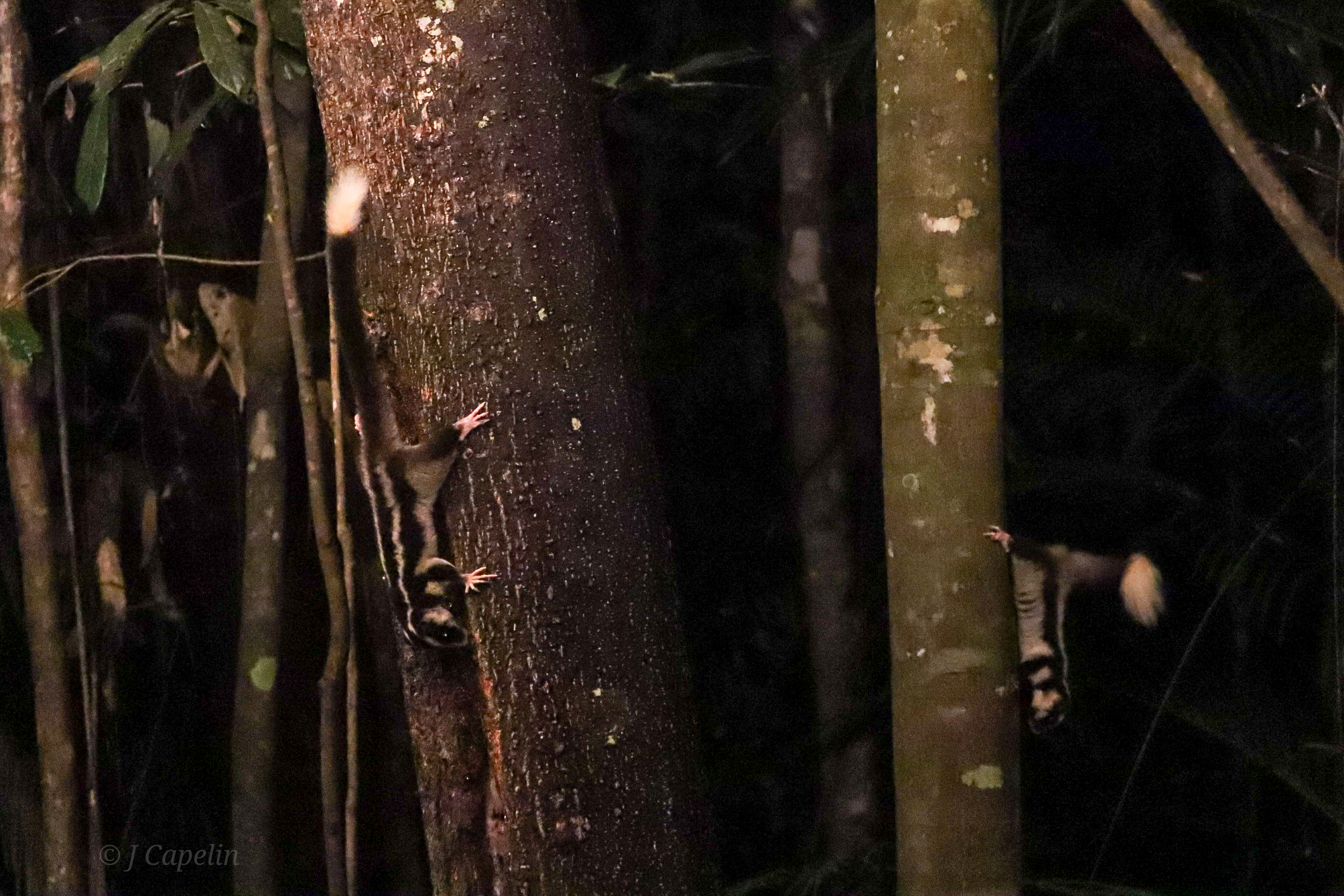
When nightfall landed, we made our way to the retreat’s viewing deck; my favourite thing about the accommodation. A little wooden hut (like an old bus shelter with rows of benches inside) sat on the edge of the rainforest, with a soft, amber light shining into the trees. Most nights shortly after sunset, one of the staff members would put some natural sweet nectar concoction on the nearby trees to entice the local wildlife. We sat there, silent and still, among other guests, until we heard a gentle rustling in the canopy above us. Then, out of the shadows, quiet and cautious, a Striped Possum appeared on the tree trunk, staring back at us! Everyone froze, and the possum went about its business. More rustling from above, and a pale shape glided past like a small ghost, landing wide-eyed and sprawled on the branch – a Krefft’s Glider, better known as a Sugar Glider! Once the tree-dwellers left, a Long-Nosed Bandicoot came snuffling around the base of the tree, while an Amethystine Python waited keenly on the neighbouring tree trunk…

Striped Possum
Krefft’s Glider (Sugar Glider)
Long Nosed Bandicoot

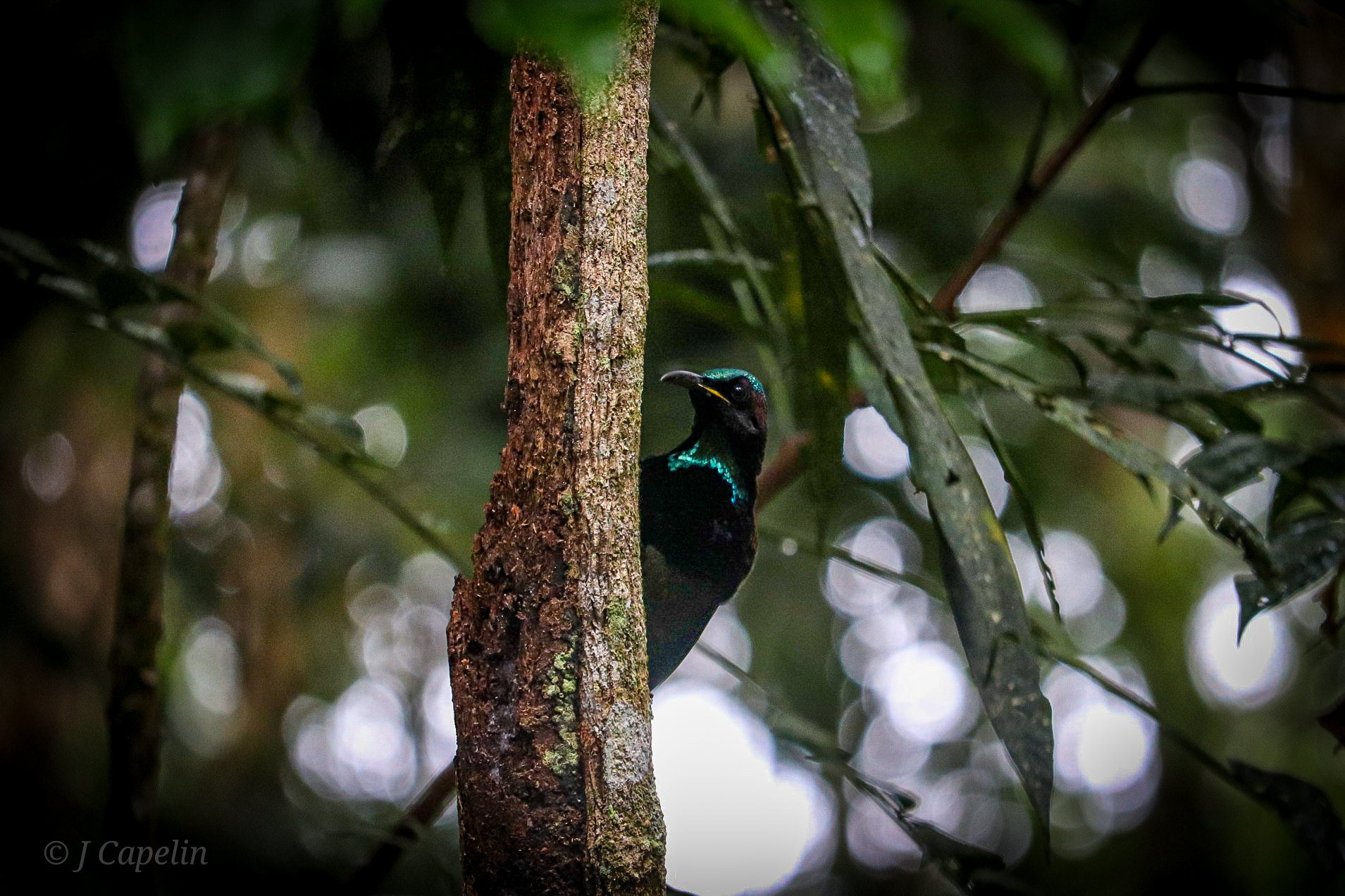
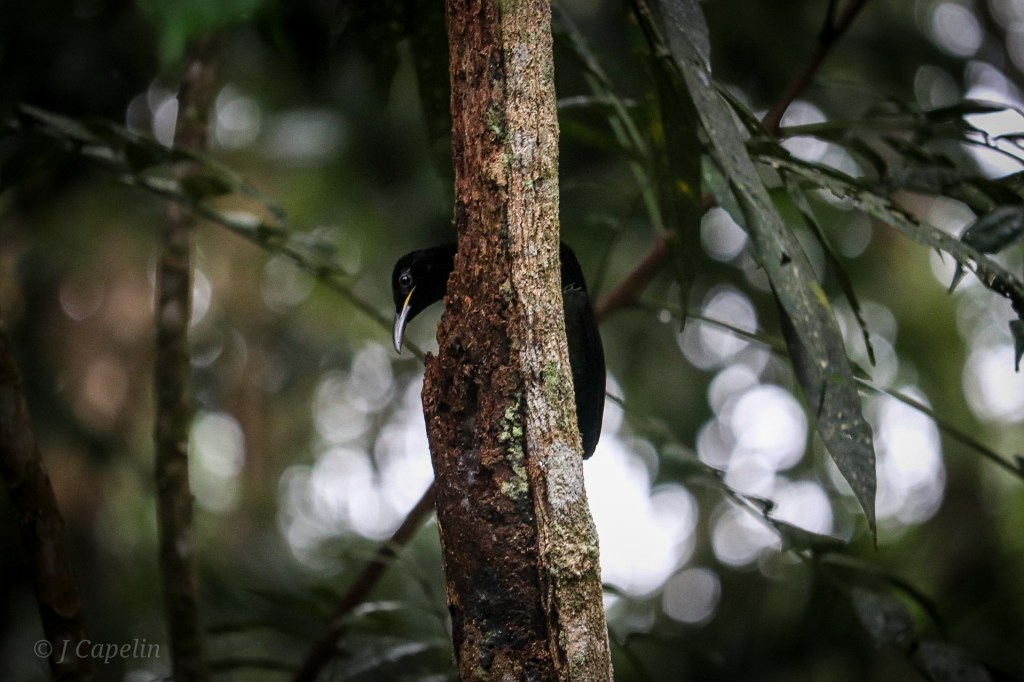
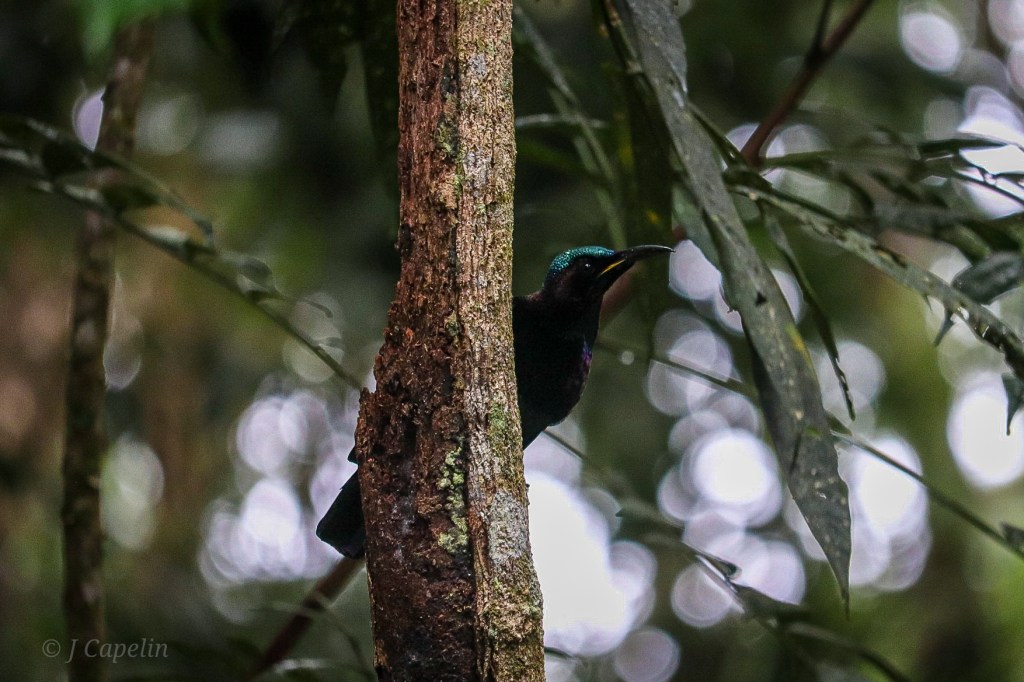
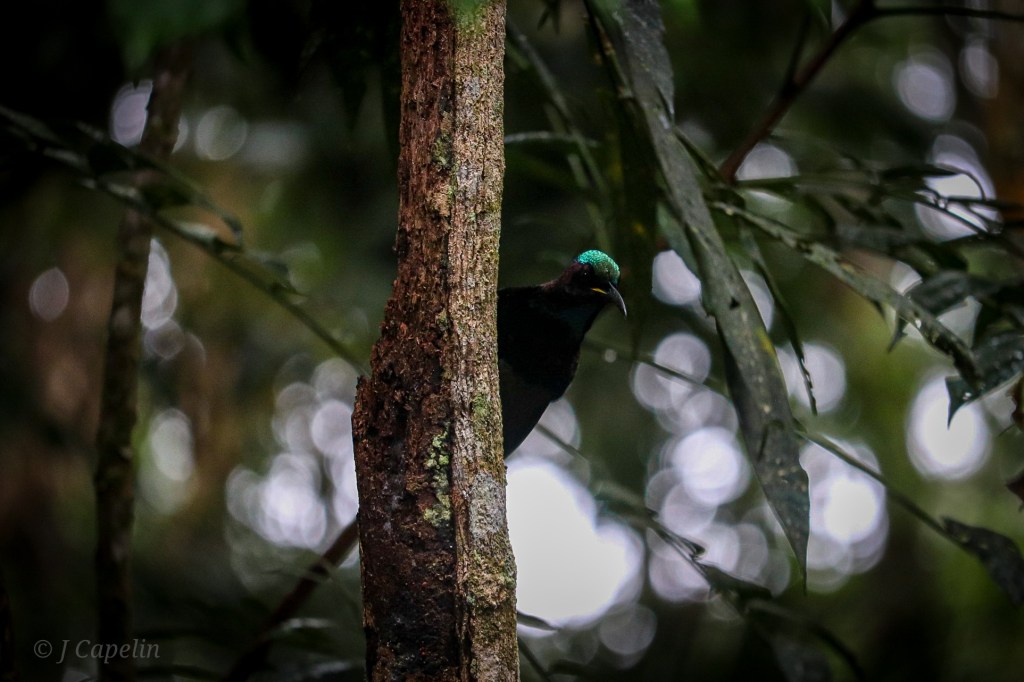
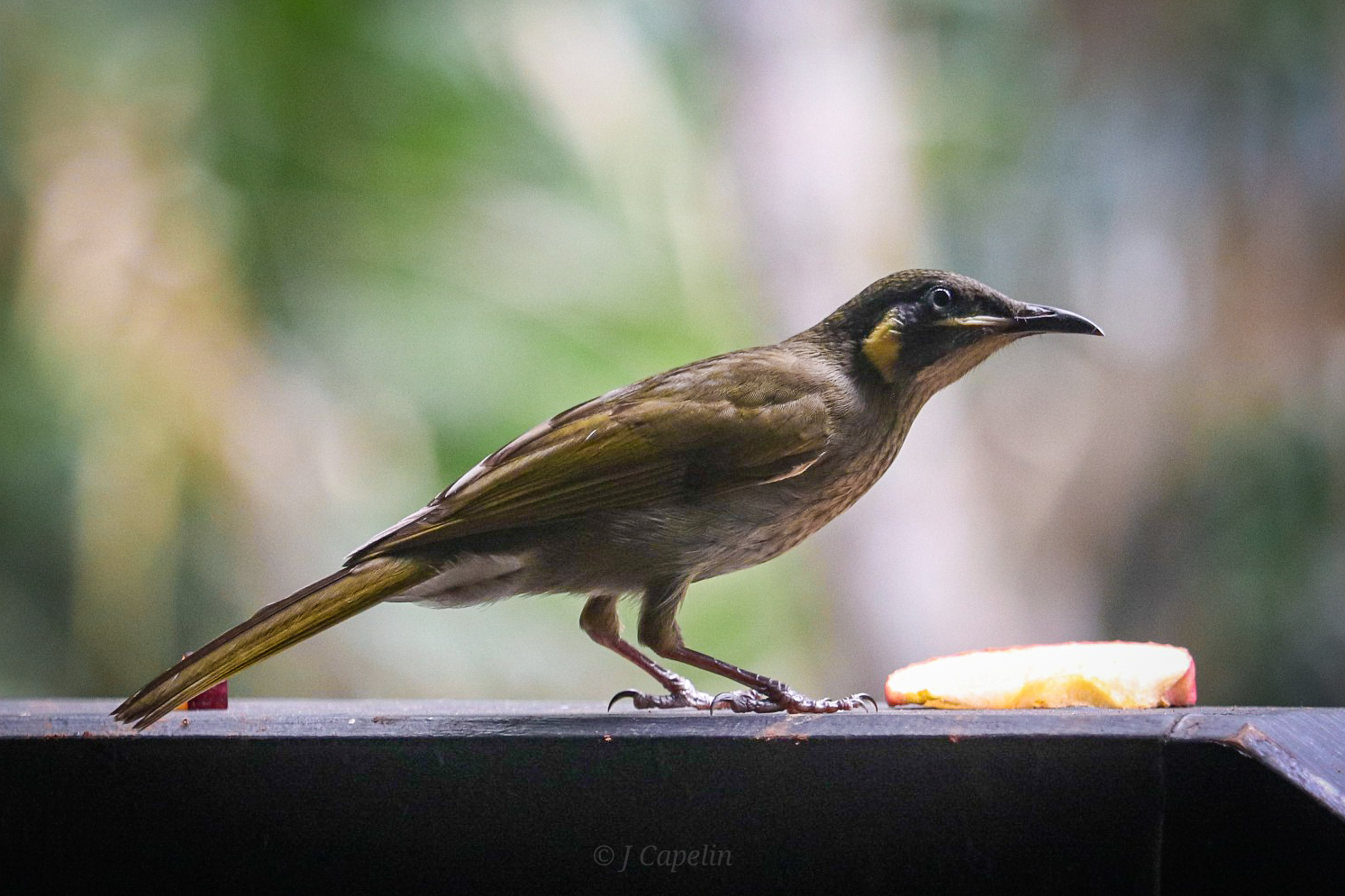
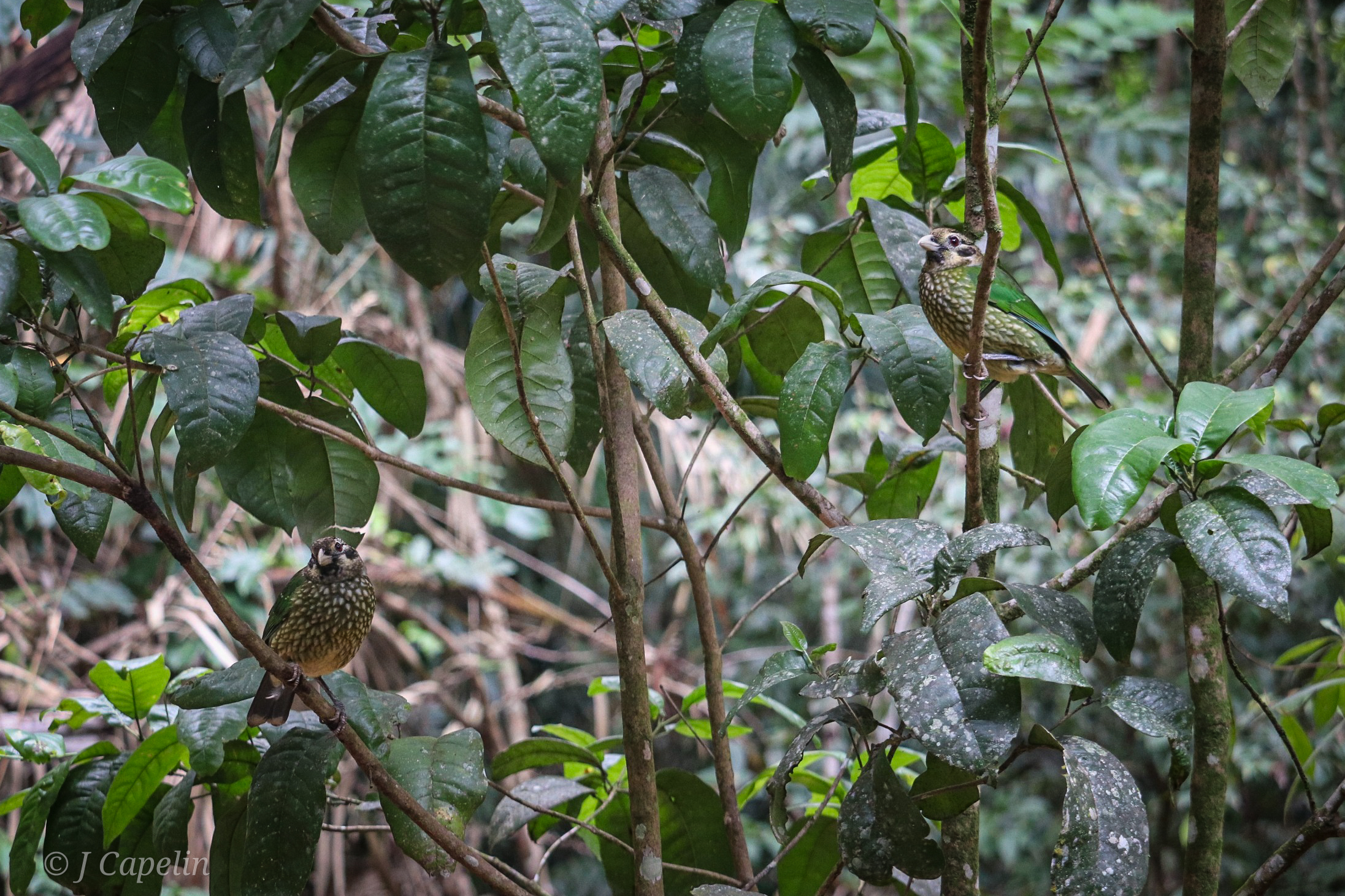
Waking up to a sound collage of bellbirds and whipbirds echoing through the patter of rain in the trees, I spent the morning on the deck, as Rifle Birds, Catbirds and Lewin’s Honey Eaters came to steal some of my apple.

The many angles of the Victoria’s Riflebird
Lewin’s Honey Eater
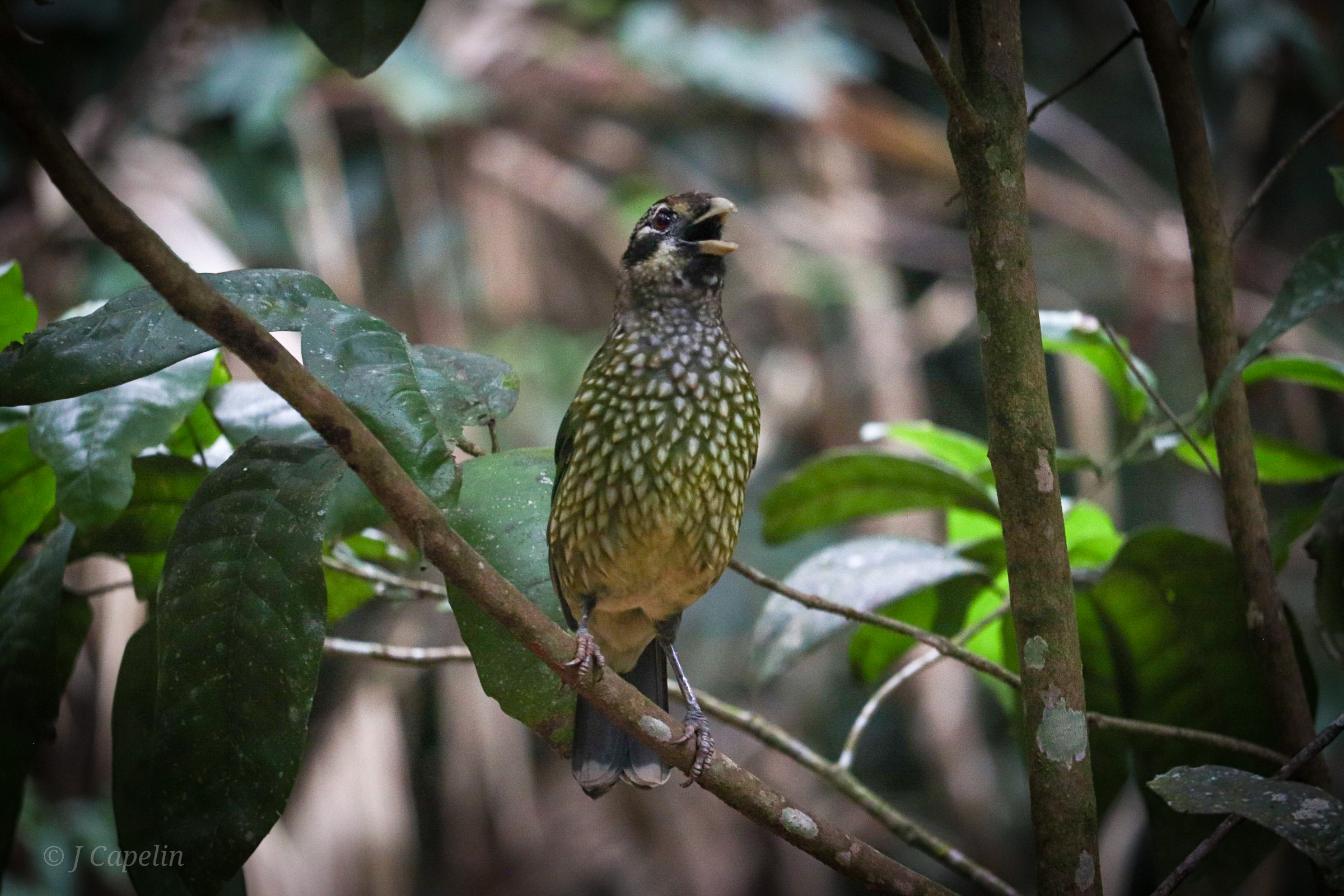
A pair of Green Catbirds
Have you ever heard a Green Catbird’s cry?

From the Rainforest Lodges, there was a walking circuit along the border of Crater Lakes National Park, which led down to the creek where platypus live, and through the dense rainforest. We only managed half the walk before the leeches found their way onto our socks!

Yungaburra

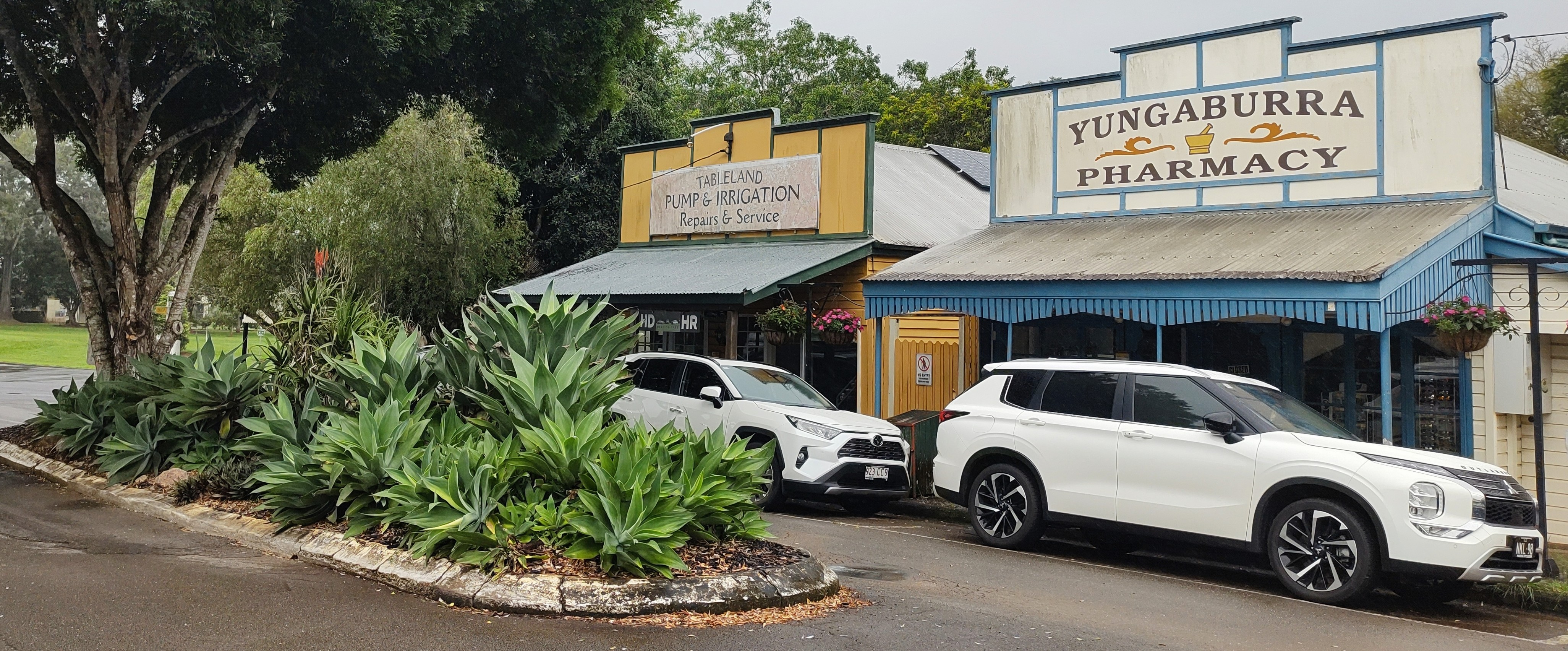
The tranquil little village of Yungaburra is known as the heart of the Tablelands, with its heritage late 1800s – early 1900s shopfronts and churches. We spent a serene, rainy morning walking along Peterson Creek, which runs along the edge of the village, through a pocket of native Mabi rainforest; an endangered ecosystem that can only be found in the Atherton Tablelands. Keeping our eyes peeled for the illusive platypus as the rain gently tattooed the surface the of the water, while birds watched us from between the leaves.

Emerald Dove

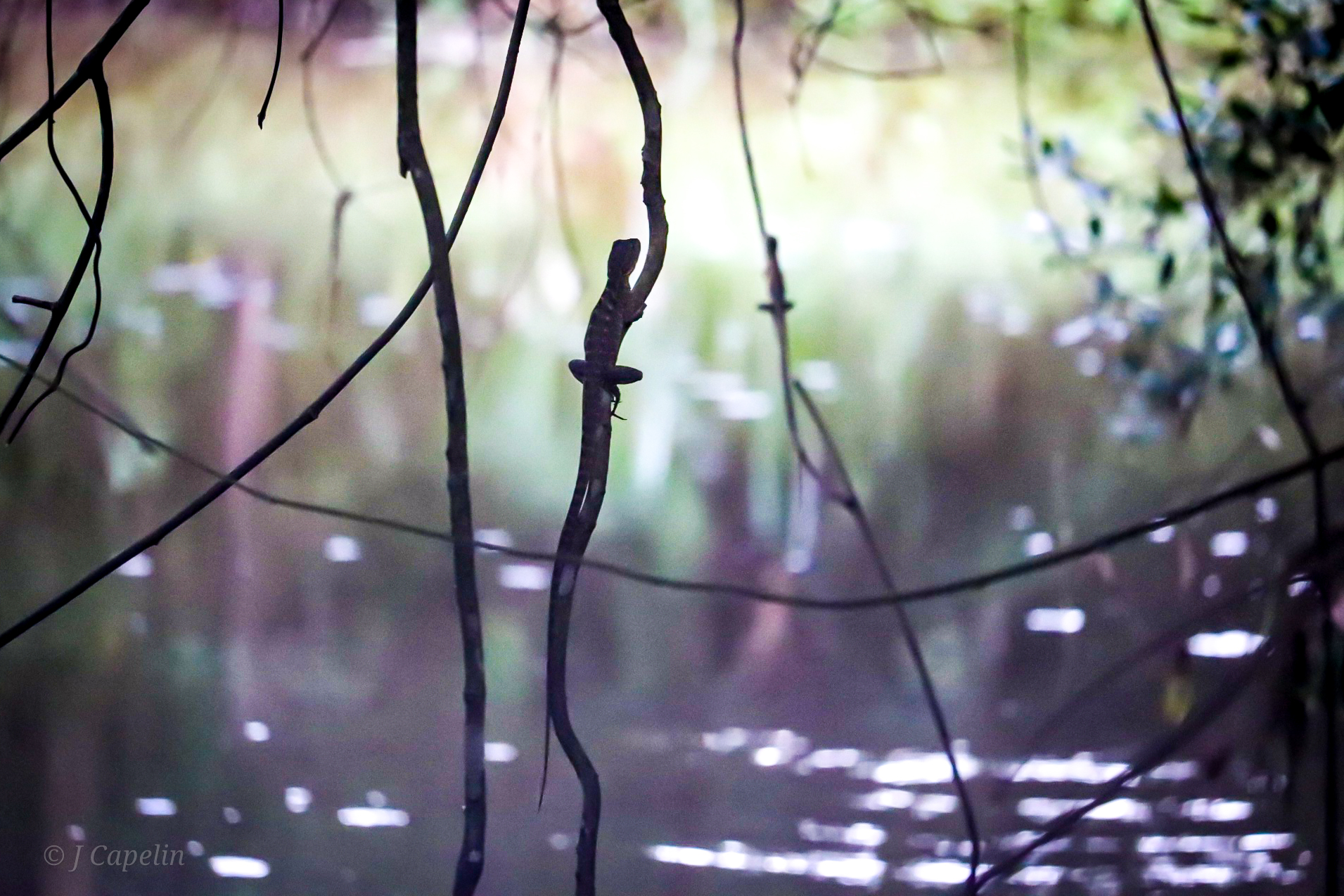
There is a platypus viewing platform further downstream, which takes you under the road bridge for a closer glimpse at the water, but we weren’t lucky there either. There were baby water dragons dangling from tree vines over the creek here, which I’ve never seen before!

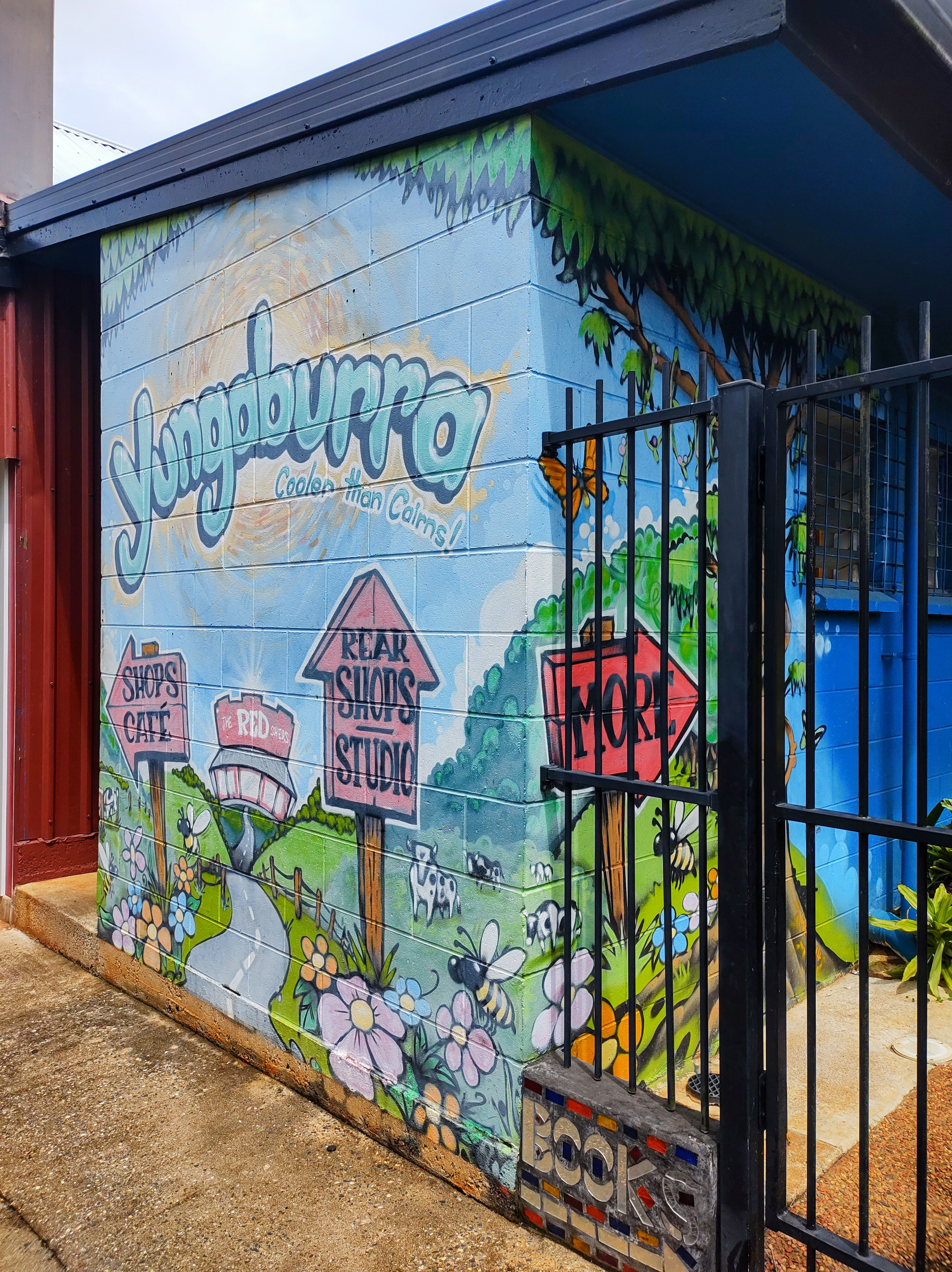
The streets of Yungaburra village were lined with flower-filled hanging baskets and native plants, bringing so much colour to the grey weather, and attracting big Ulyses Butterflies with their bright azure wings. Little boutique shops welcomed us in for a mosey, with local art on display and handcrafted things, and while the dark sky continued to drizzle outside, we enjoyed a cosy brunch in the café on the corner – ‘Mr. Belson,’ which was originally the old bank, built in 1912 by Arthur Herbert Belson.

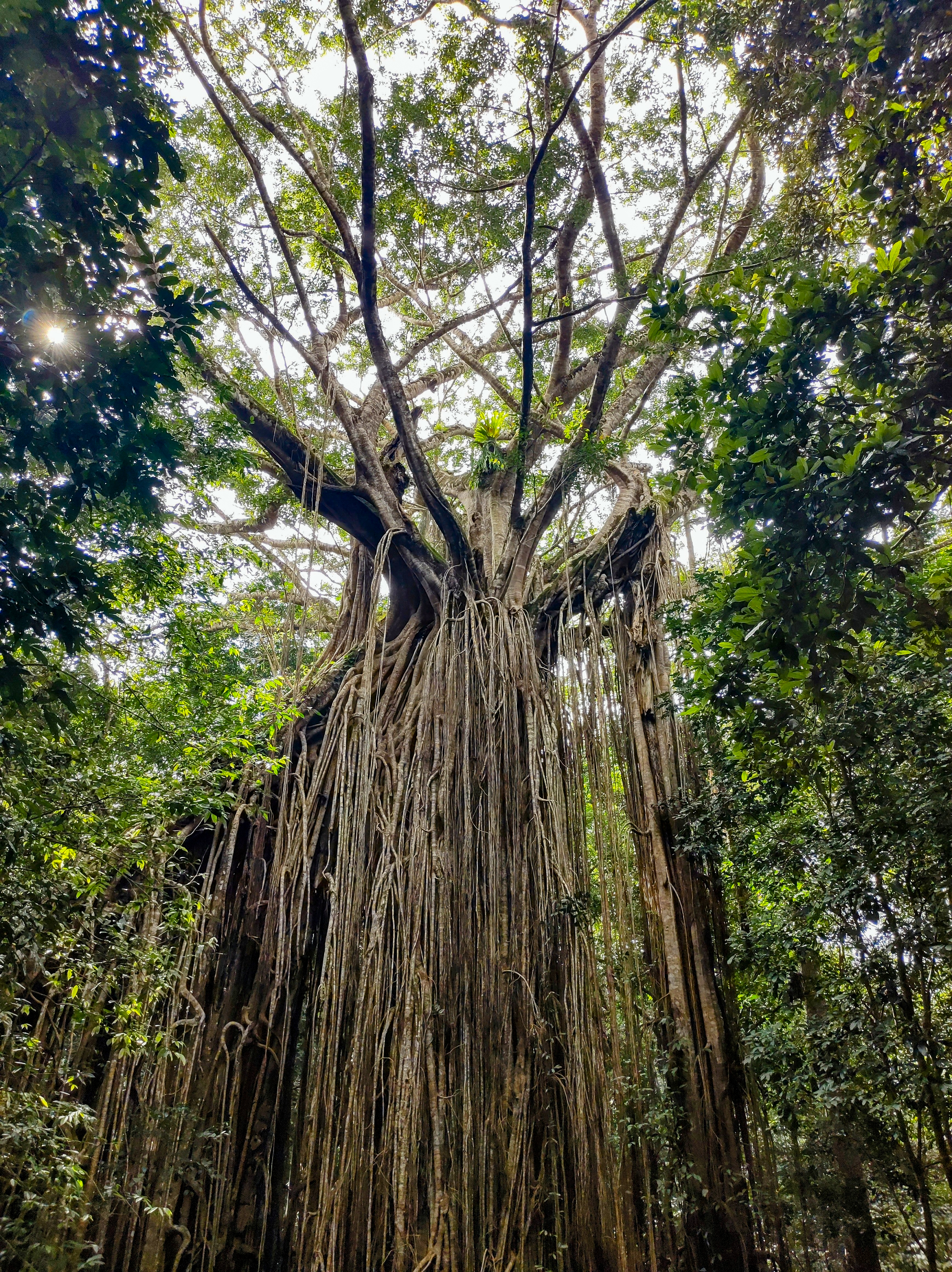
A short drive from Yungaburra village, we found the Curtain Fig Tree. This is just one spectacular example of Australia’s fig trees, which are huge, natural sculptures of the rainforest.

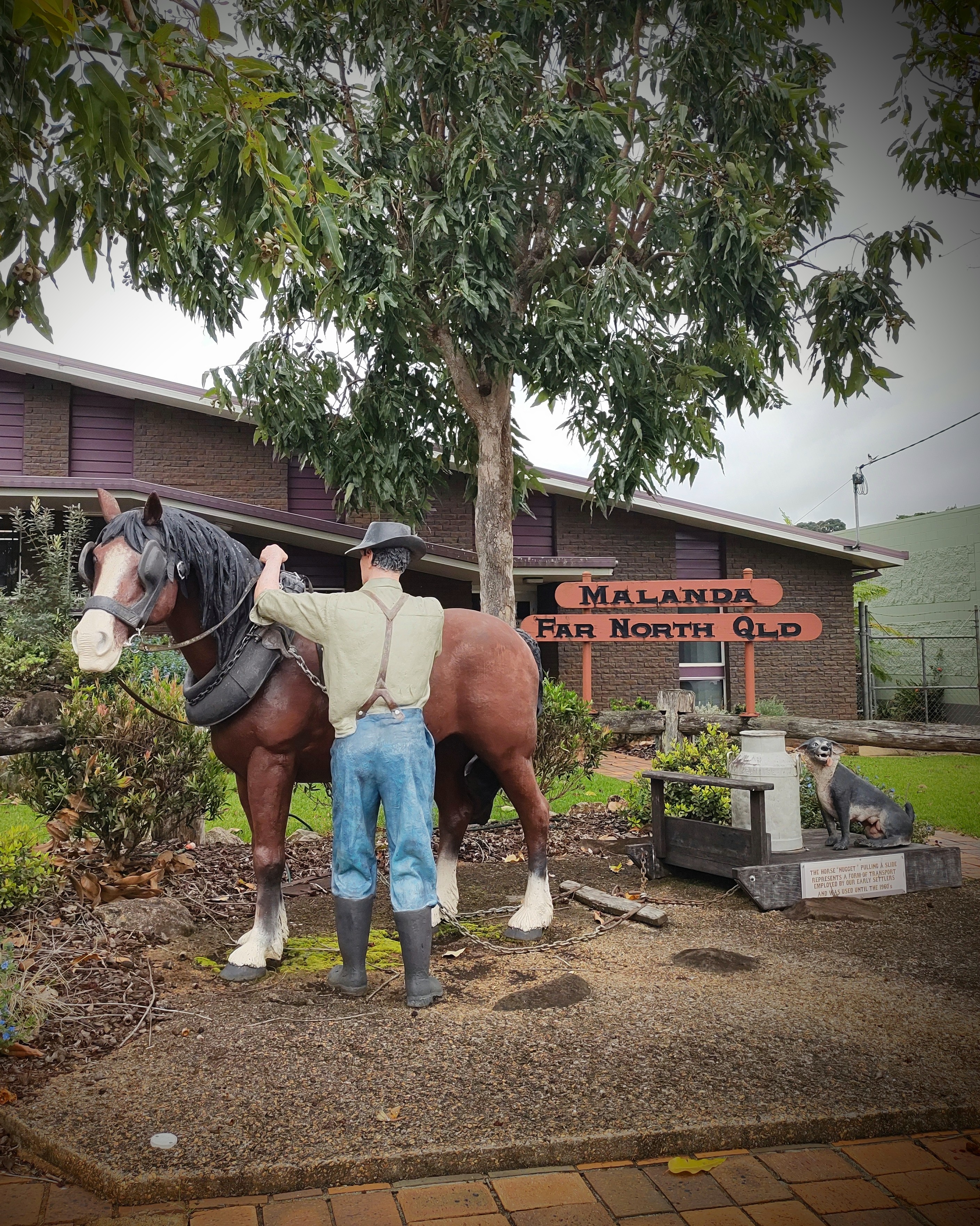
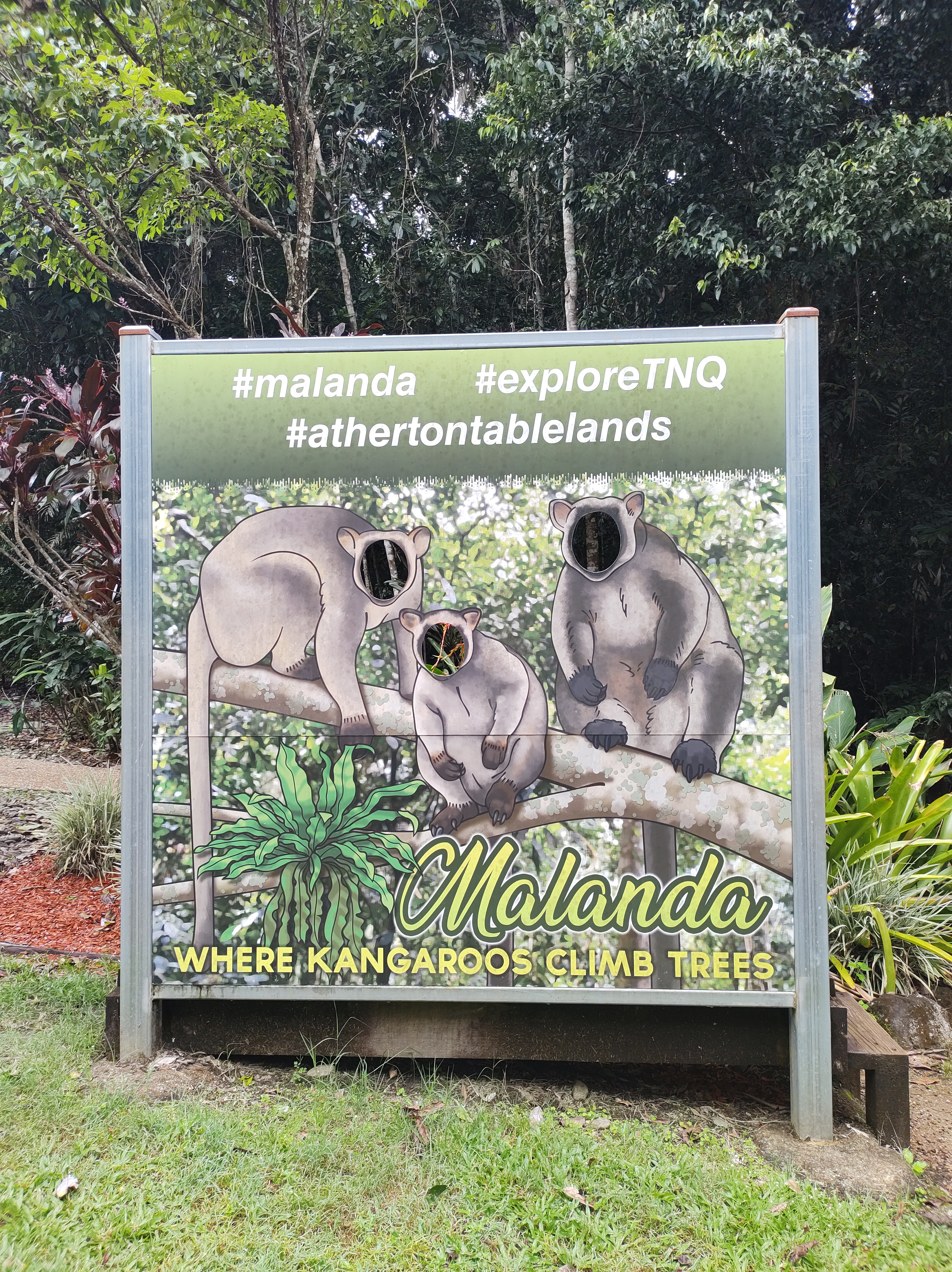
Malanda

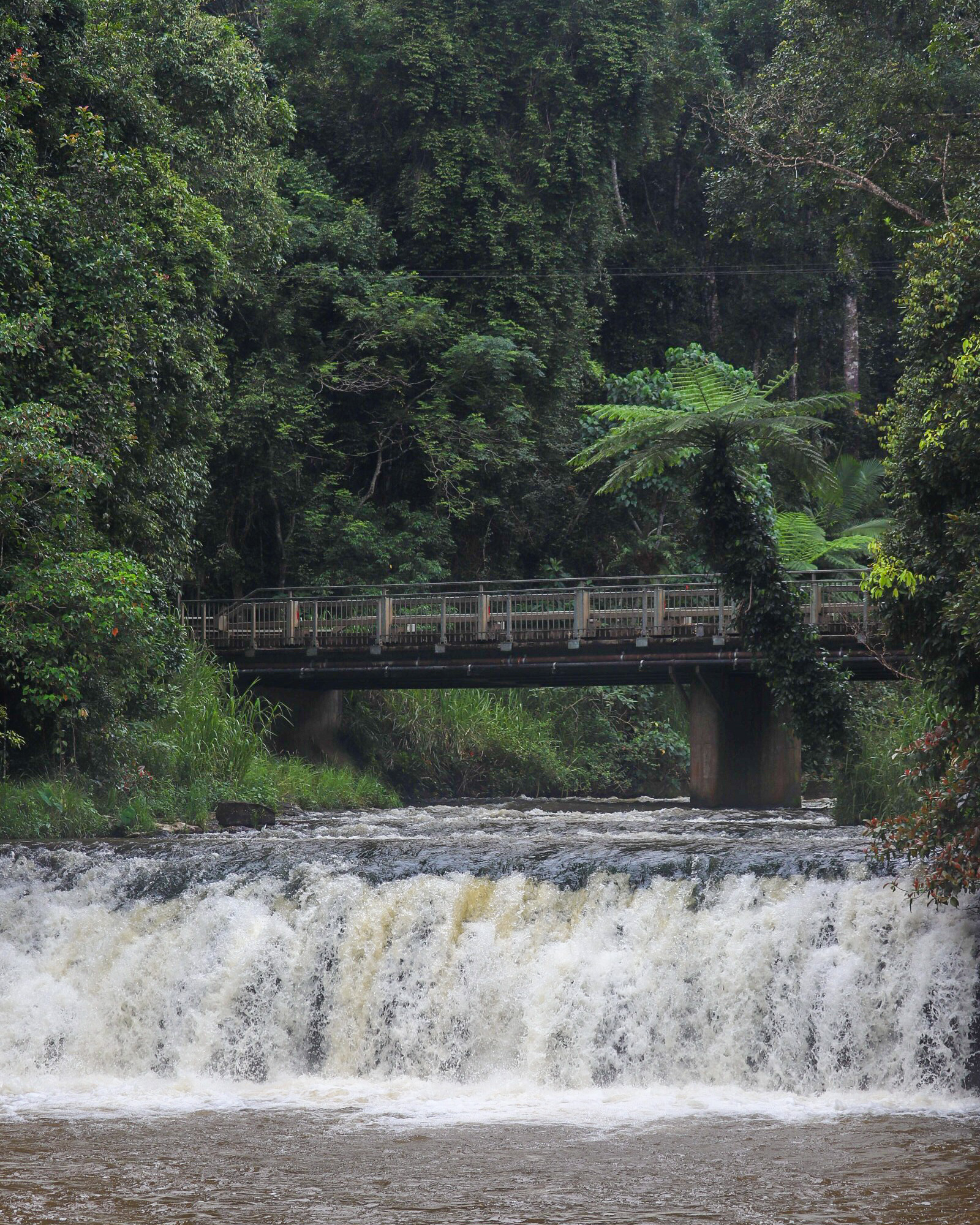
This sleepy little town steeped in natural history and dairy farming, is surrounded by lush rainforest. Malanda Falls pours through the forest, which has local indigenous heritage, and so much wildlife, including the Lumholtz Tree Kangaroo.

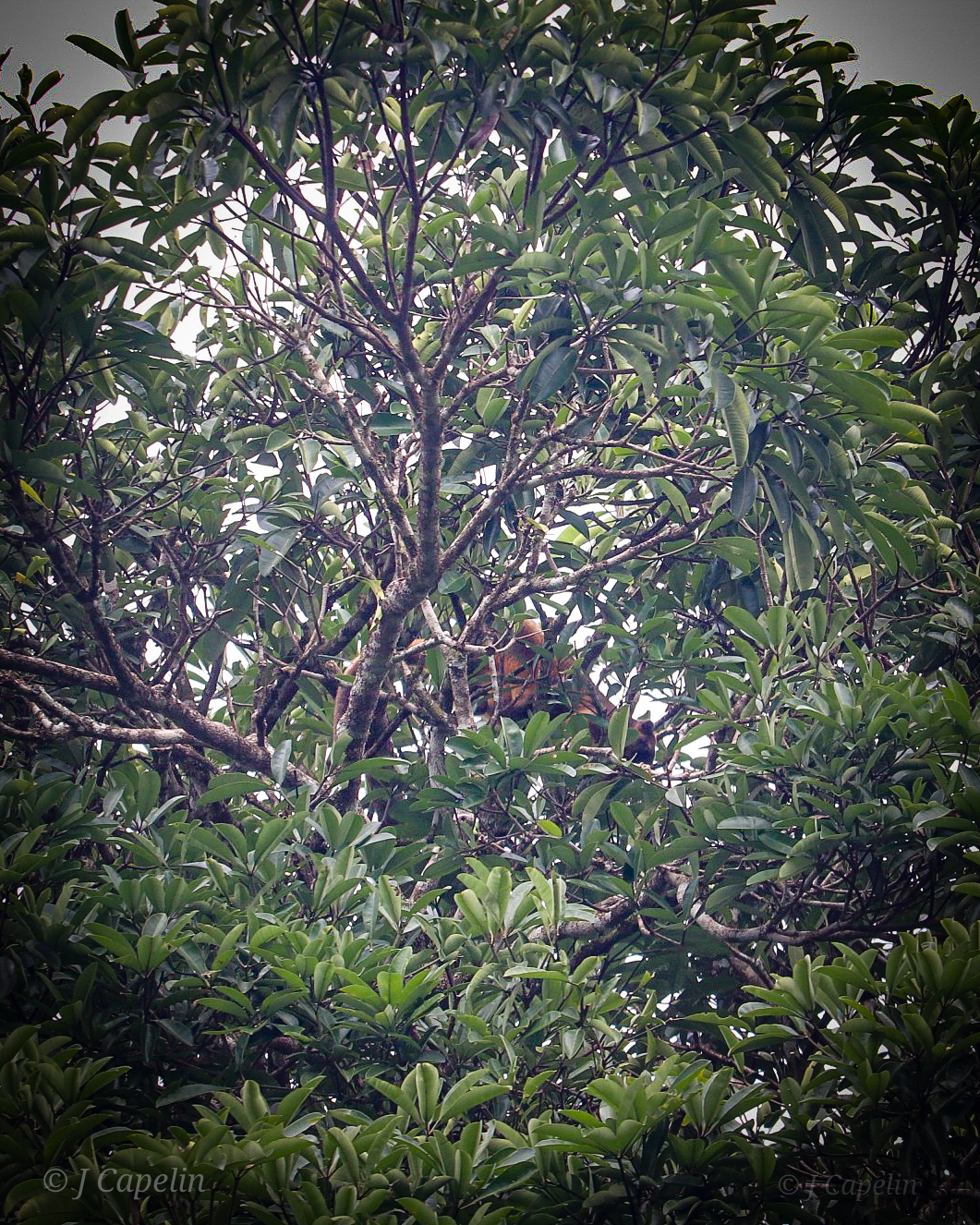
We followed the rainforest trail along the creek and through the trees, glimpsing catbirds and pademelons, but it was difficult to spot anything directly above us in the dense, high canopy. It wasn’t until we got back to the carpark on the other side of the road, we saw a group of people staring up at the edge of the rainforest. Low and behold, well hidden in the branches at the very top of a tree was a Lumholtz Tree Kangaroo!

Can you make out the Tree Kangaroo’s head facing to the right, and the tail hanging down through the branches to the left?
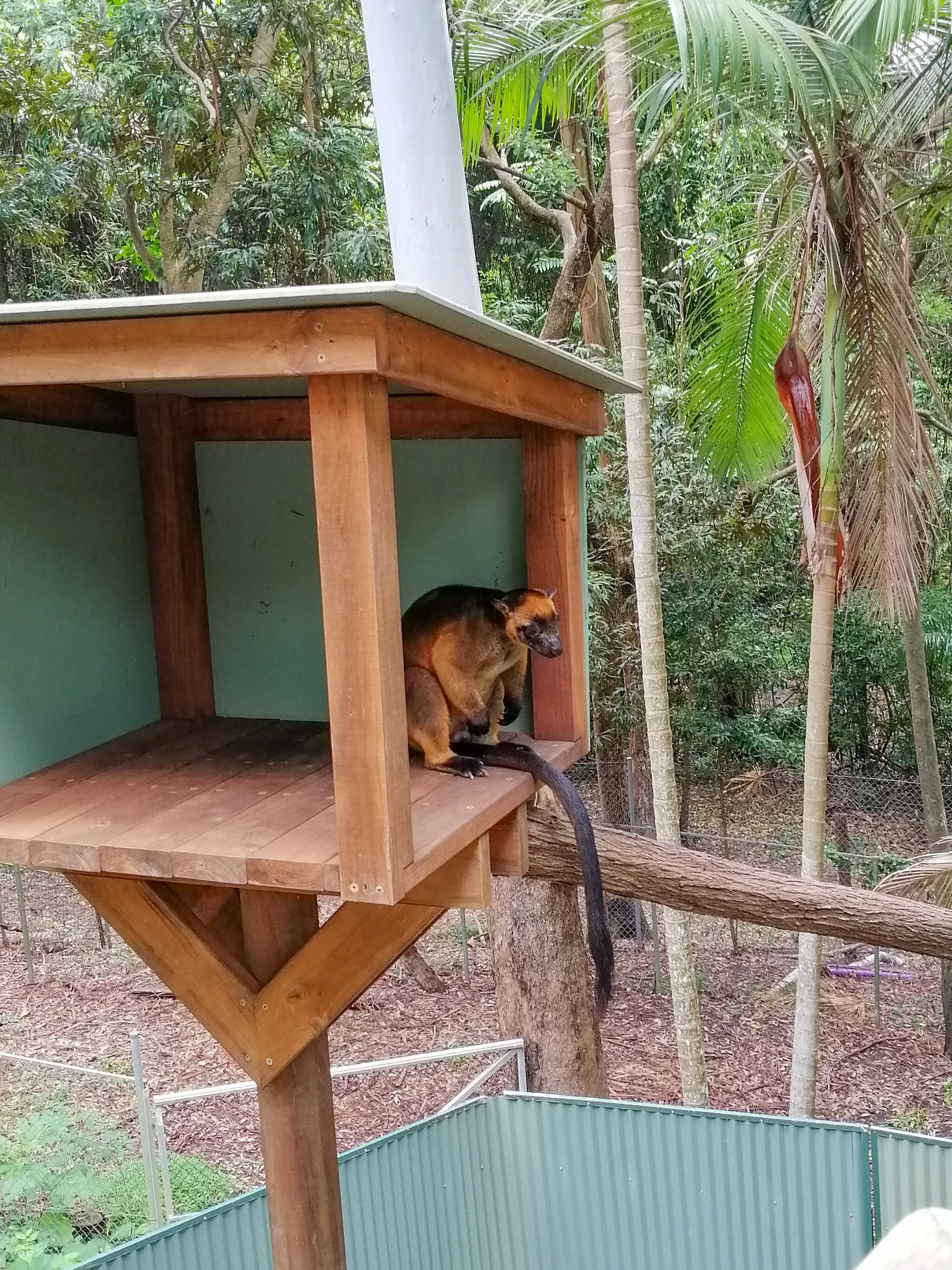
Here is a clearer photo of one I saw at Currumbin Wildlife Sanctuary a few years ago.

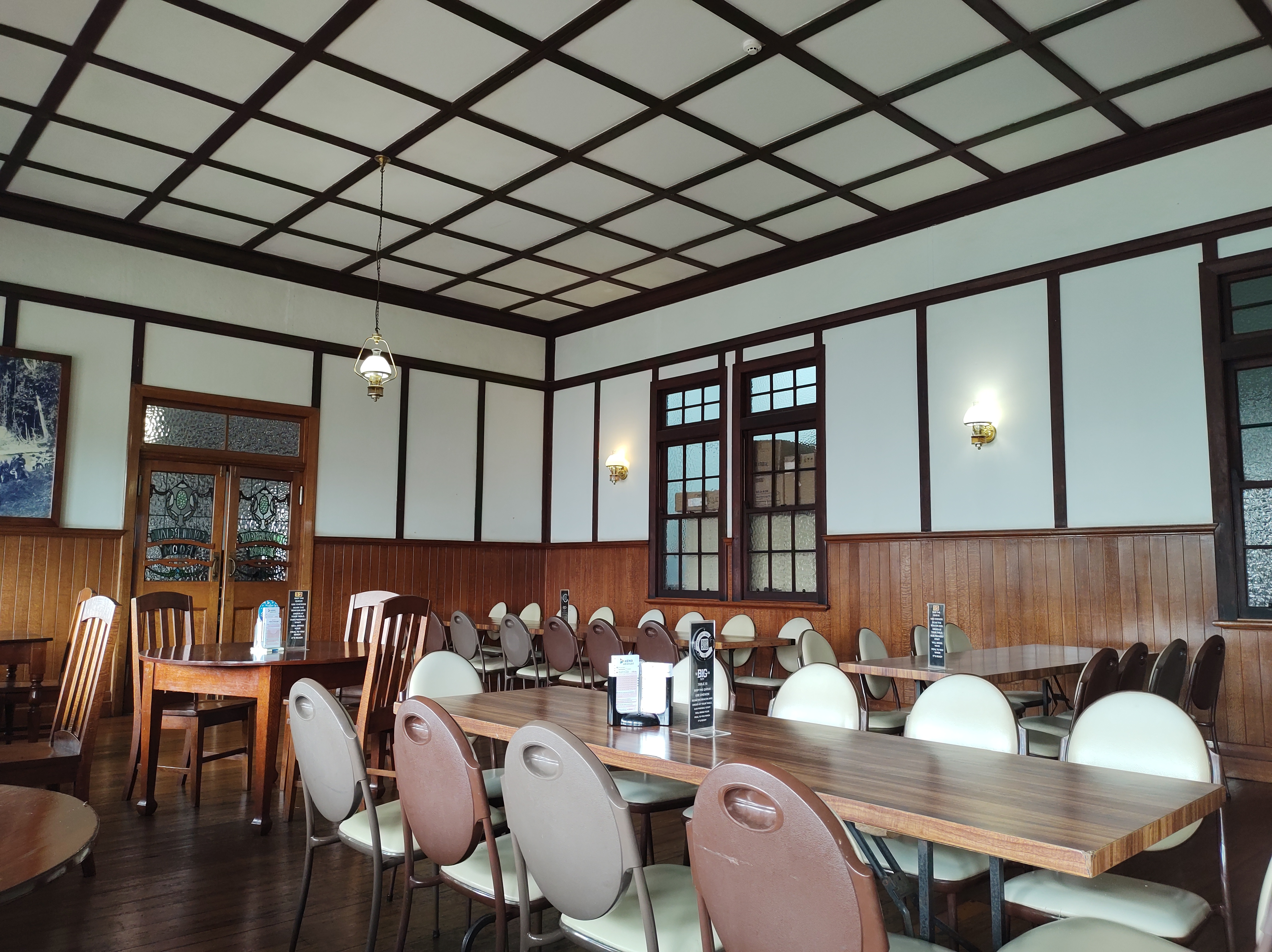
Back in the town, we enjoyed a classic pub lunch in The Big Pub – Australia’s largest wooden hotel, built in 1911 in just six months! The pub is still under the management of the original family, and maintains its original design.

Lake Eacham

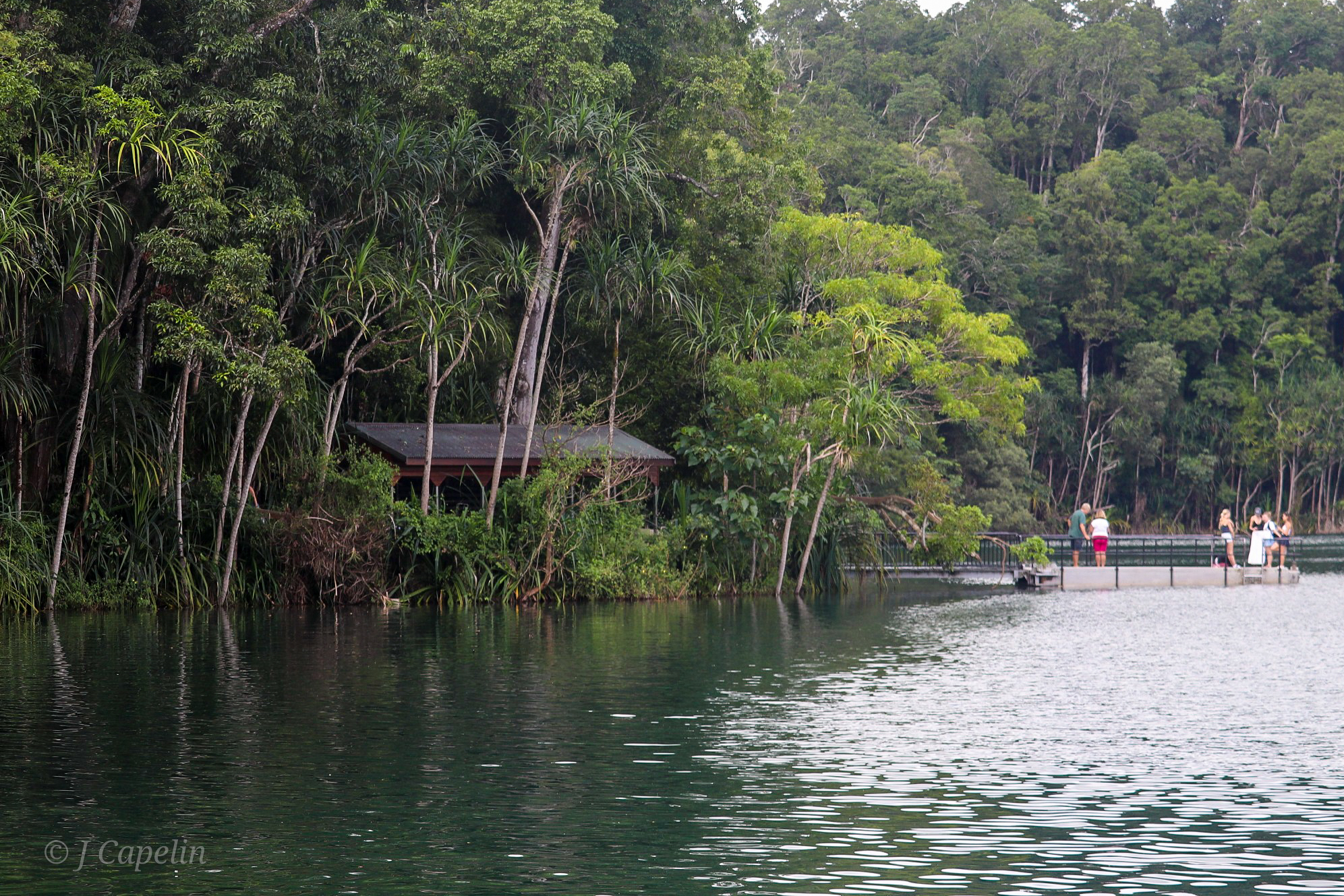
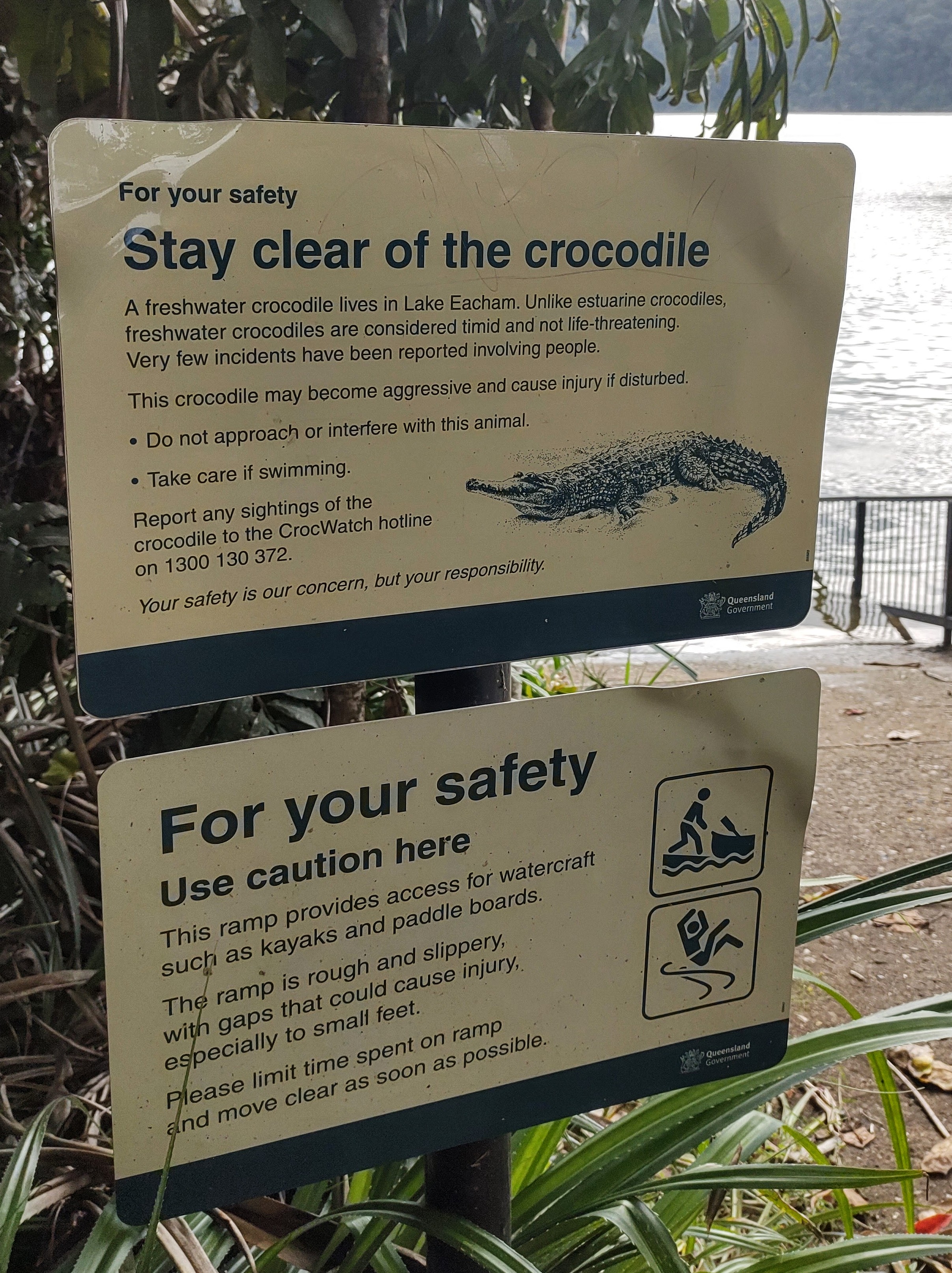
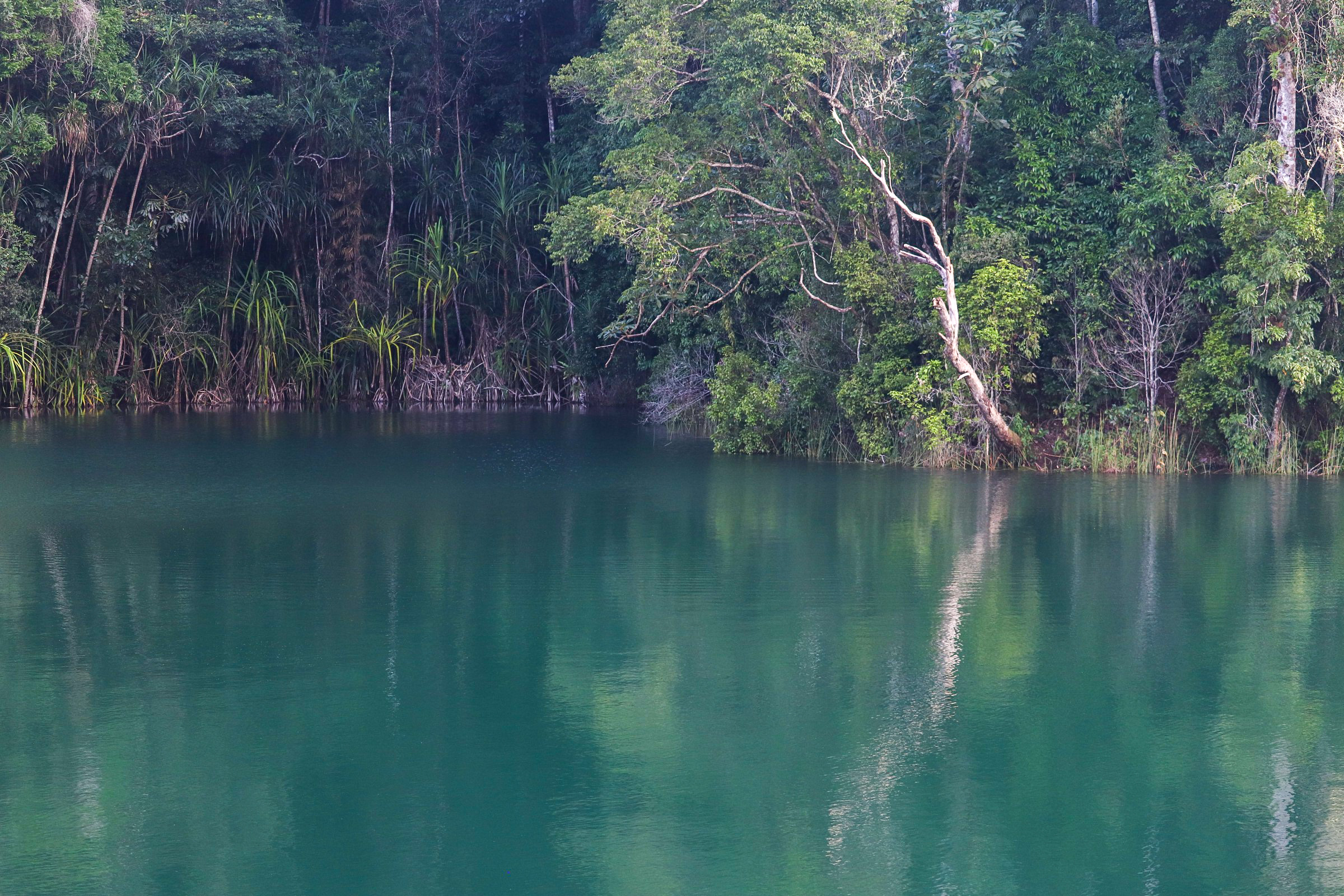
In the heart of the Crater Lakes National Park lies Lake Eacham, a beautiful ecosystem formed by volcanic activity, surrounded by rainforest and shared by humans and wildlife. The picnic area on the lakefront was busy in the morning. It was overcast, but the sun kept peeping through, and the air was warm. Children played in the water, swimming and launching kayaks and paddleboards, despite the large sign warning of the resident crocodile!

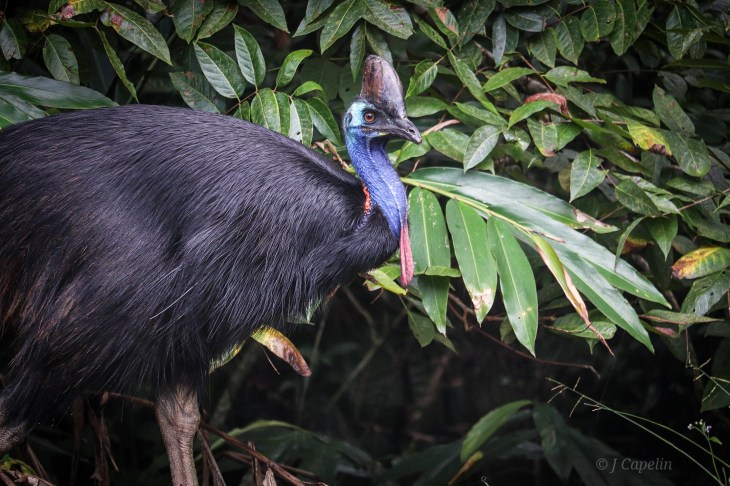
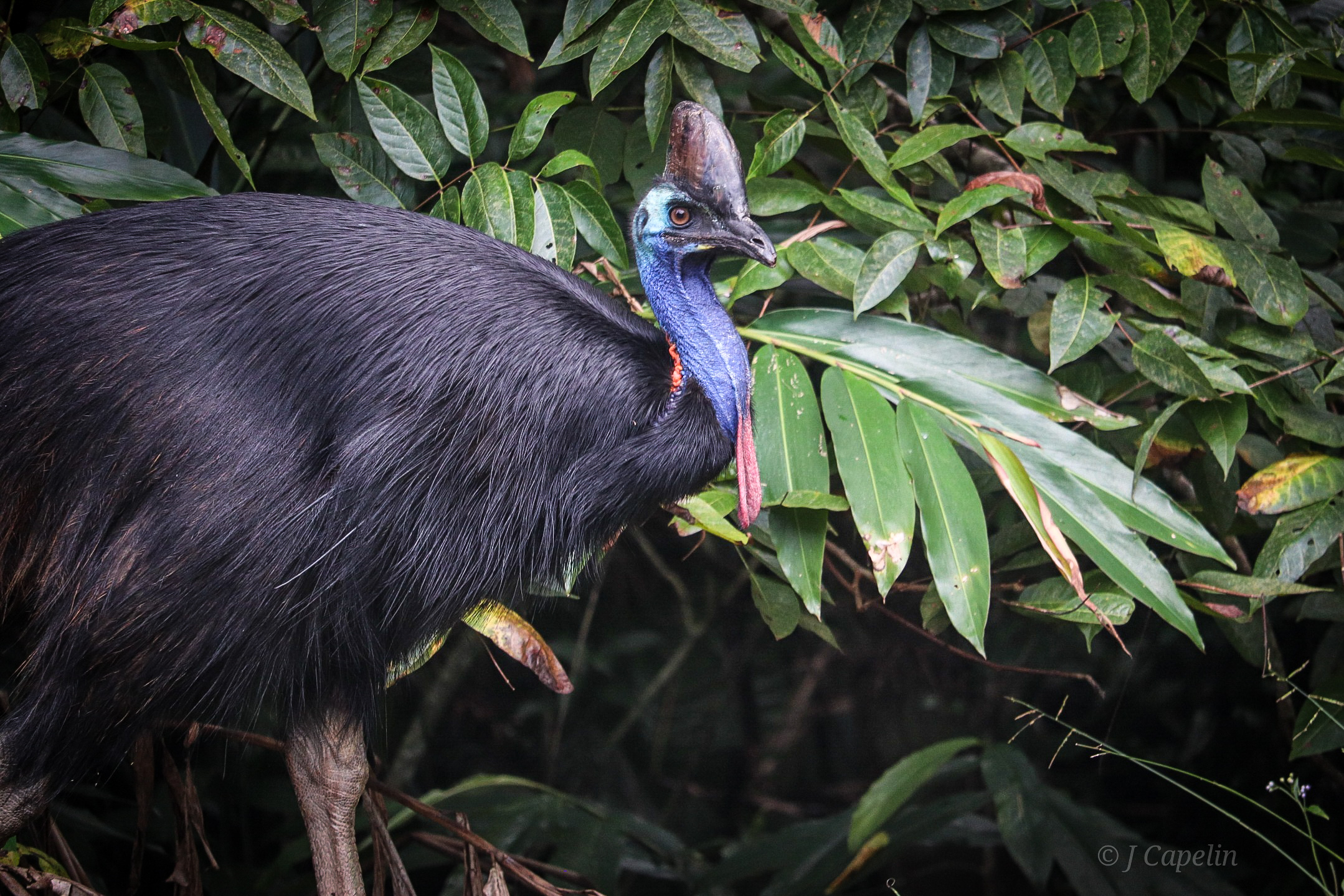
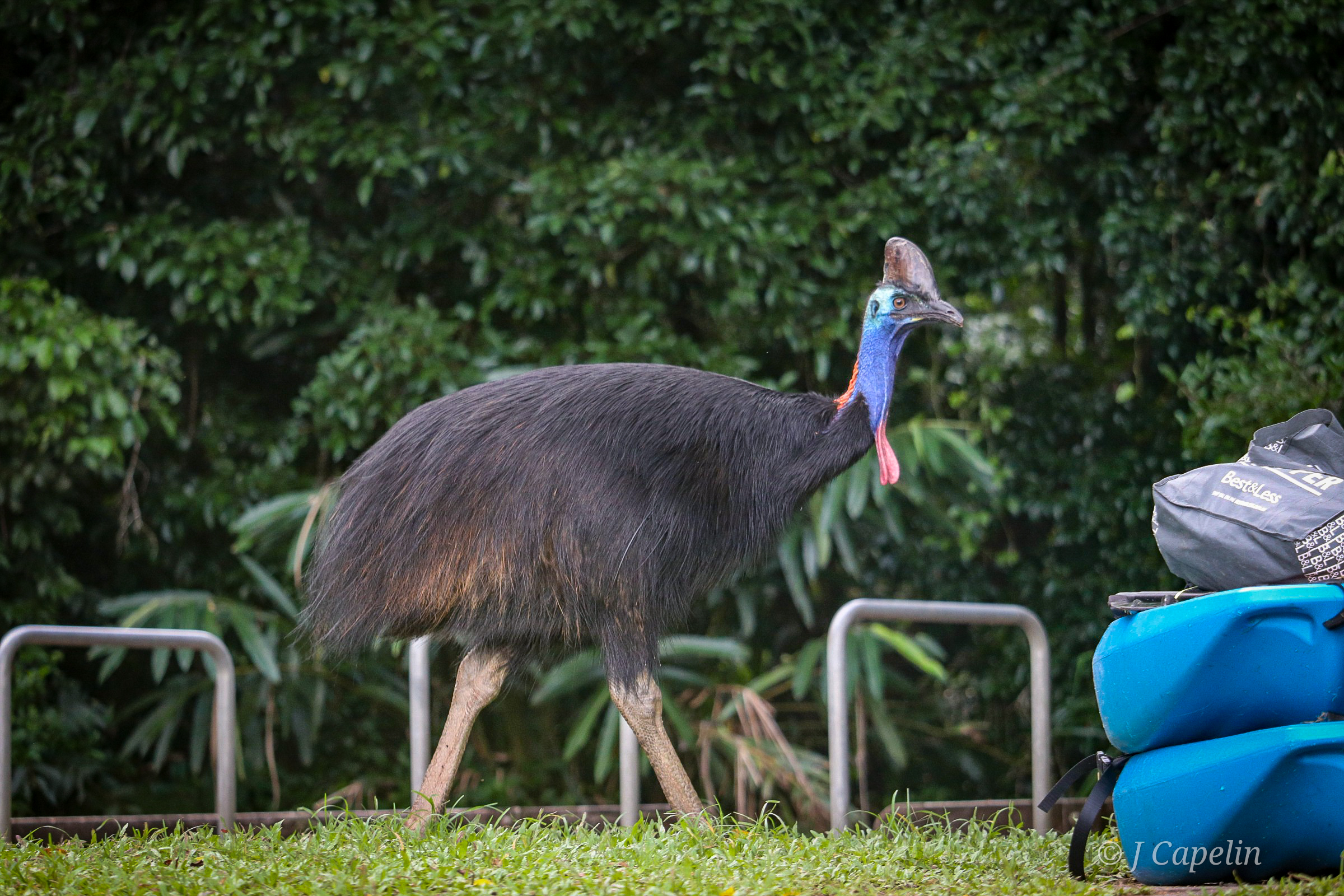
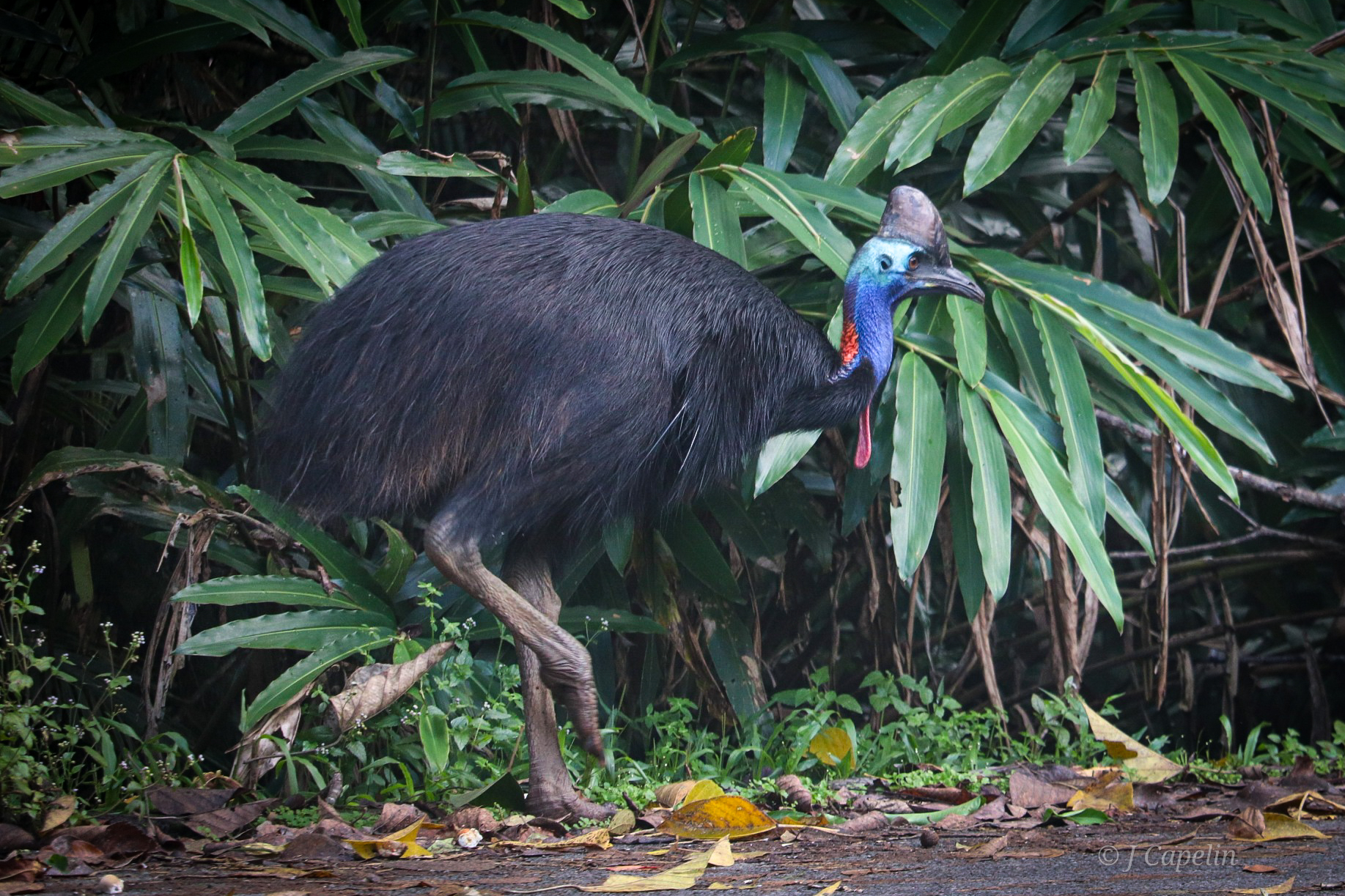
Families prepared breakfast picnics on the grass, with fruit and pastries and coffee flasks, when suddenly I heard a child yell, “Cassowary!” I whipped around, and there was the giant bird, plodding into the grass area, pausing to peruse the picnics on display. It was interesting to see how everyone reacted, and quite evident that these were mostly locals and not tourists. Those who could moved away to a safe distance, while the others who didn’t have time simply stayed still and calm until the Cassowary moved on. The whole park went quiet, everyone just watching until the Cassowary slowly plodded away. I waited until it was on the other side of the carpark before I took a picture with my zoom lens. Even then, when it turned and looked directly at me, I knew it was time to disappear!

Southern Cassowary

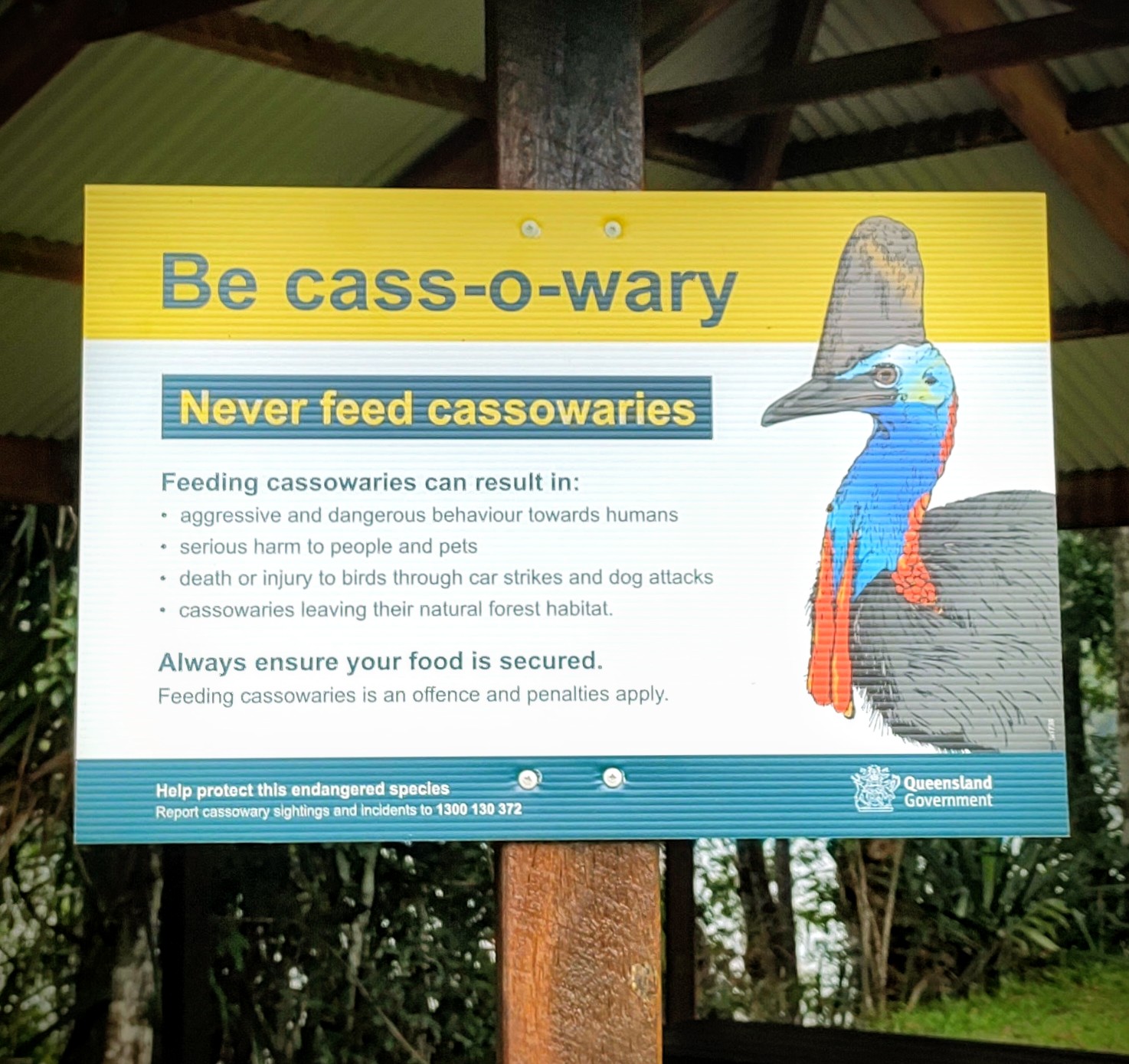
Southern Cassowaries can grow to 6ft tall and are Australia’s largest bird by mass; the second largest in the world after the ostrich. Emus can be just as tall, but weigh considerably less. Cassowaries are endangered and declining, therefore are rare to see, being confined to a very small area of Far North East Queensland. They need a very specific habitat and don’t mix well with humans. Though they can be curious, especially around food, they can quickly become skittish and territorial, with the capacity to fatally harm with those long talons and powerful legs.

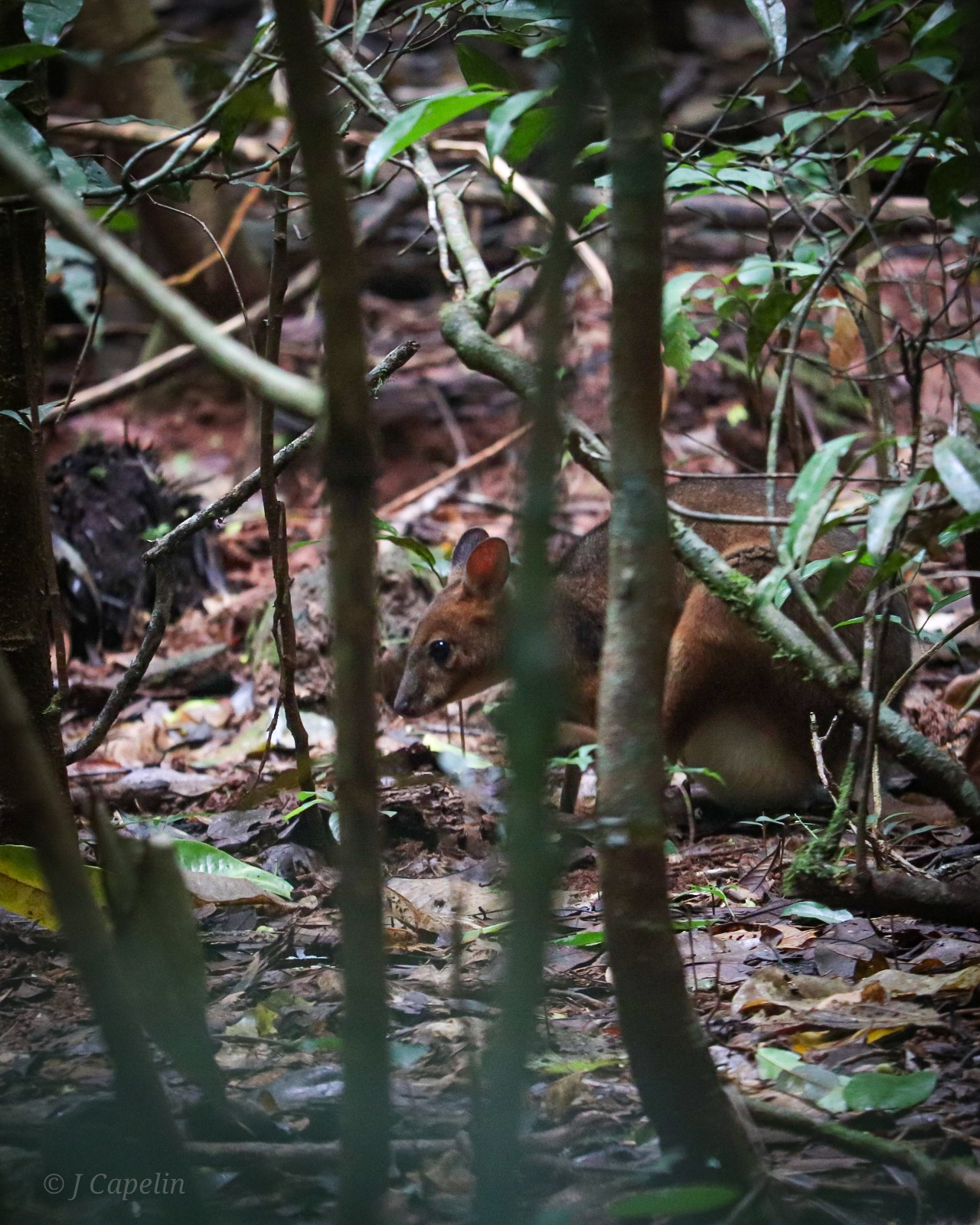
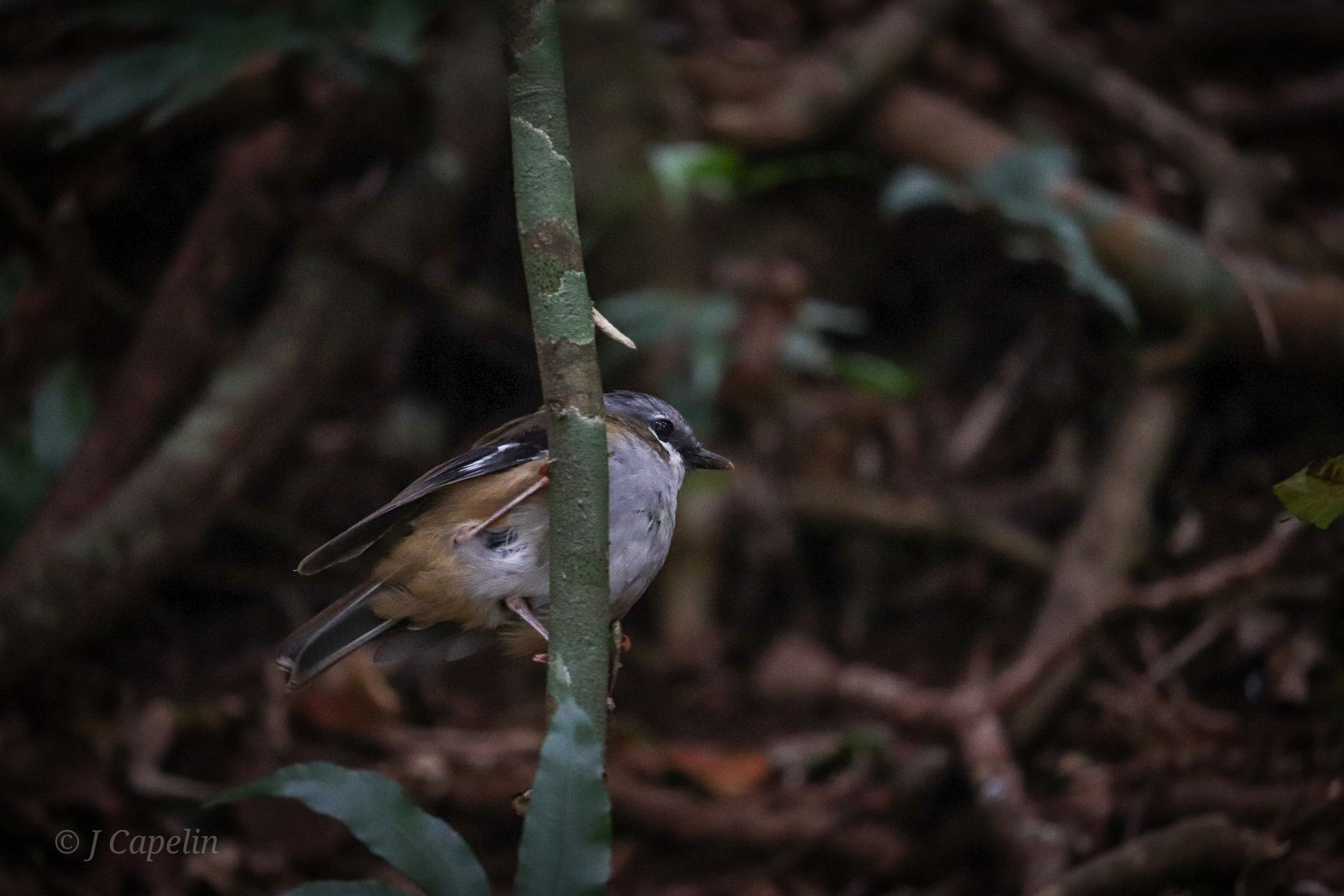
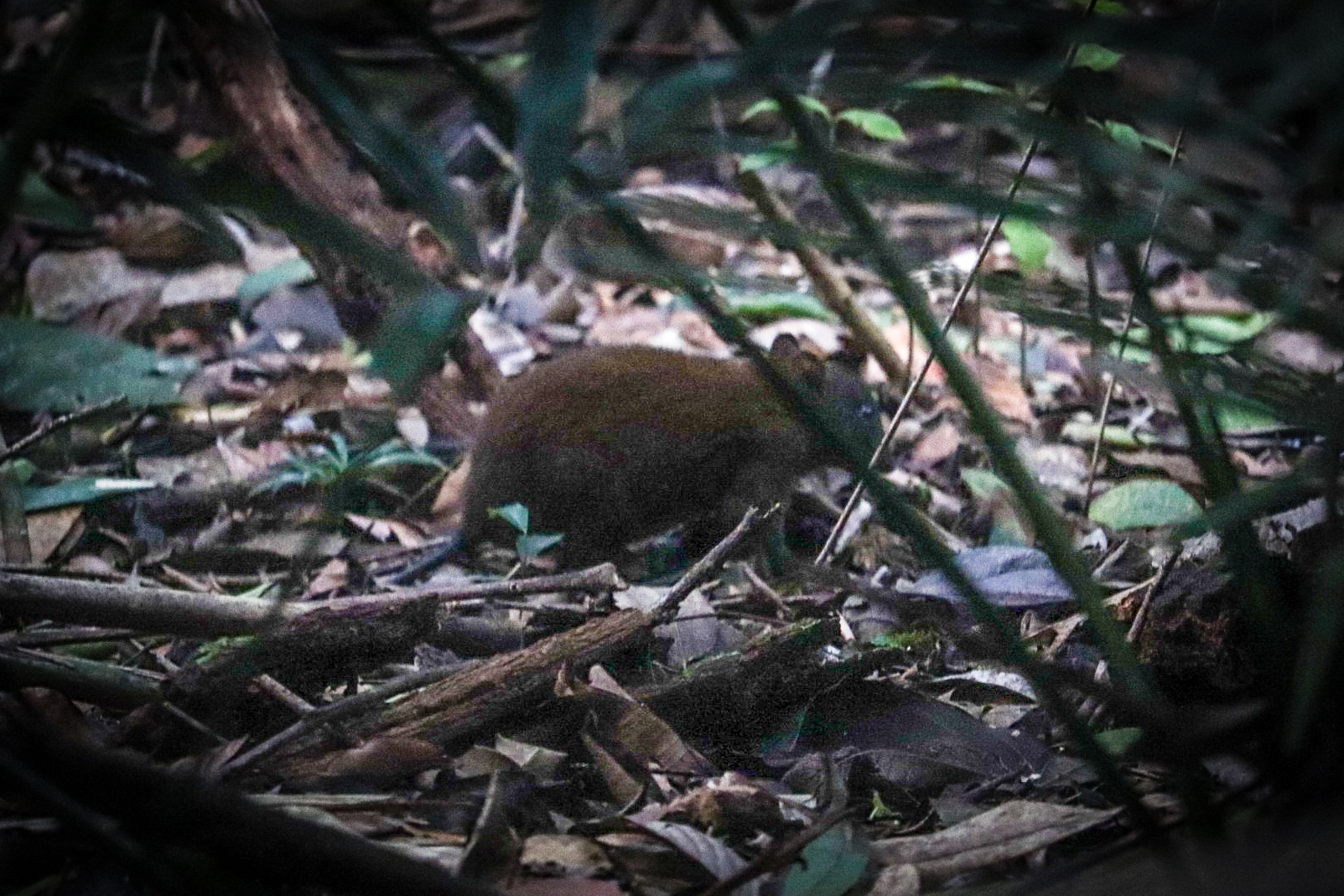
Later in the evening, we walked the Lake Eacham Circuit; a beautiful, relaxing walk, which took around an hour, circling the volcanic lake through the rainforest. The evening sun began to sink lower in the sky beneath the clouds, pouring gold over the trees and the ripples on the water. A little Grey-headed Robin followed us through the woods, and I saw a tiny Musky Rat-Kangaroo hop into the bushes, which is only found in this pocket of North East Queensland. Cormorants and turtles surfaced in the shallows, while people jumped into the lake and enjoyed a sunset swim.

A Grey-headed Robin
A blurry glimpse of a Musky Rat-Kangaroo

Atherton

The morning we left the Tablelands was dark and moody again; drizzle smudging the windows slightly while the windscreen wipers screeched. We went through Atherton – the main town in the region, with an agricultural history making it a prime location for backpackers looking for farm work. The town’s main street stood strong with colonial and art deco buildings lining the road. Hostels and pubs advertised their lodgings and lunch specials, and there seemed to be plenty of cafes and banks, and even a shopping centre. It is said to have a vibrant culture with an abundance of community arts and sports, while the surrounding land is prolific with crops such as sugar cane, mangoes, coffee, peanuts, tea, corn, macadamia nuts, avocados, berries, and there are also cattle and dairy farms. Here we left the gloomy highland skies behind us, along with the enchanting rainforests and their mythical animals, and we continued into the North to our next destination…

Atherton

If you enjoyed this blog, please like & share, & consider making a one-off donation and ‘Buy Me A Coffee.’ Click the link below!

https://www.buymeacoffee.com/jaimiescapers

Thank you for reading! Here are some other blogs you may have missed.

The Roof of Africa: Climbing Kilimanjaro

24–36 minutes

This blog is best viewed in Desktop format.

Mount Kilimanjaro (for the fact lovers):

  • LOCATION: Tanzania, Africa
  • ELEVATION: 5,895m
  • MOUNTAIN TYPE: Stratovolcano
  • VOLCANIC ACTIVITY: Dormant
  • AGE: 3 million years
  • LAST ERUPTION: 150,000 – 200,000 years ago
  • VOLCANIC CONES: Shira, Kibo, Mawenzi
  • SUMMIT: Uhuru Peak (Kibo Cone)
  • FIRST ASCENT: 6 October 1889 by Hans Meyer & Ludwig Purtscheller

Welcome to Tanzania

It was the evening of my Birthday, and the plane touched down blowing brown dust clouds around Kilimanjaro International Airport. Stepping off the plane onto the tarmac, I followed my group across the runway, through the doors into the little airport.

It had been a busy year, training and fundraising for my local charity, The Hampshire & Isle of Wight Air Ambulance, for which I was climbing Mount Kilimanjaro. The initial part of the challenge; the part I found most difficult (talking myself up, running public events, being ‘outgoing,’ persuading people to donate their money) was complete, and it was time for the part I was most excited about – climbing the mountain! I was part of a group of 23 British strangers, including the Air Ambulance representatives, Ian, Sophie and Tim the medic who were leading the event, but we had all become friends through months of training exercises and fundraising events. Now we’d finally arrived in Africa, and warmth greeted us beneath the night sky as we were transferred to our base at the Weru Weru River Lodge.

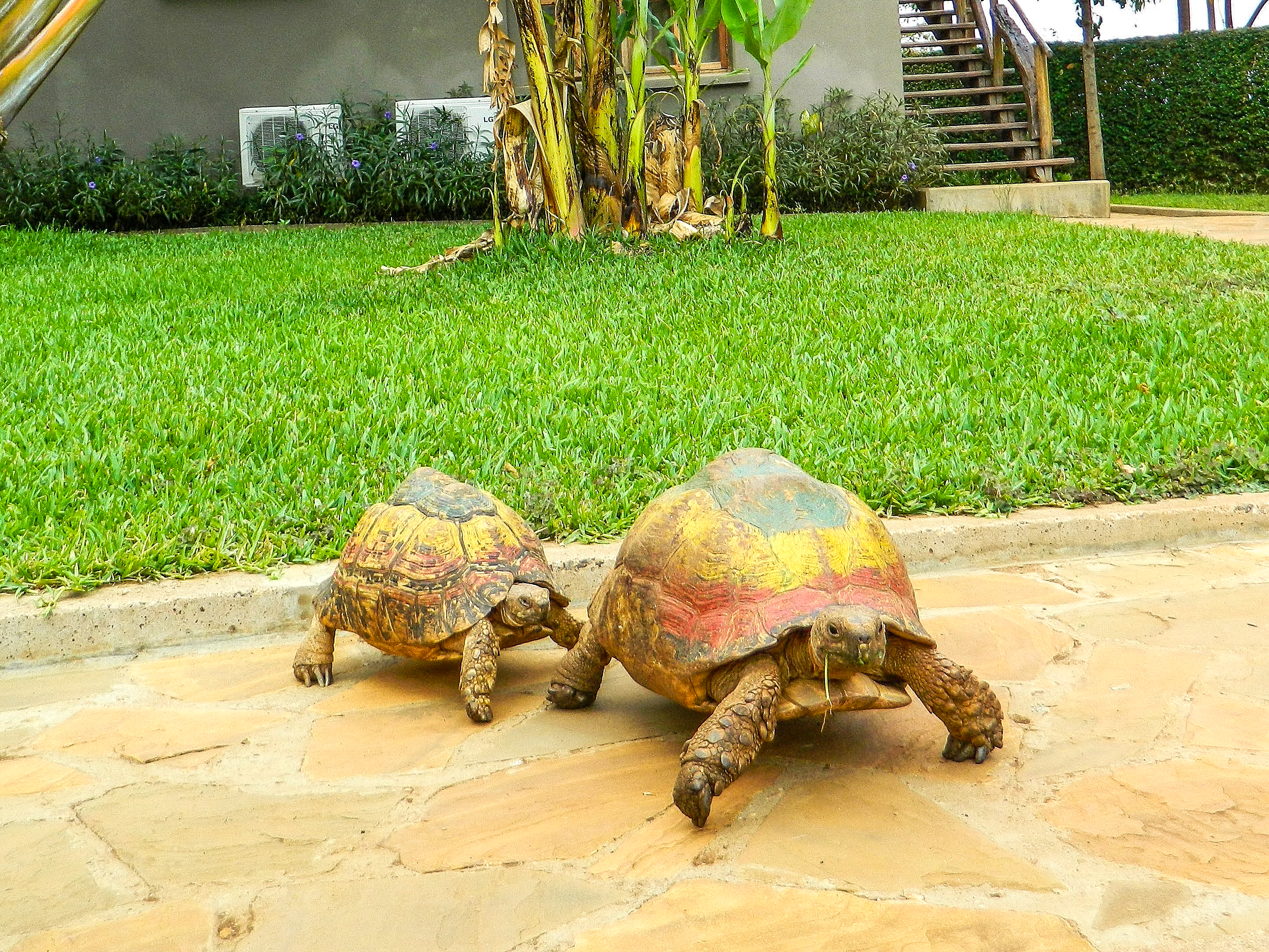
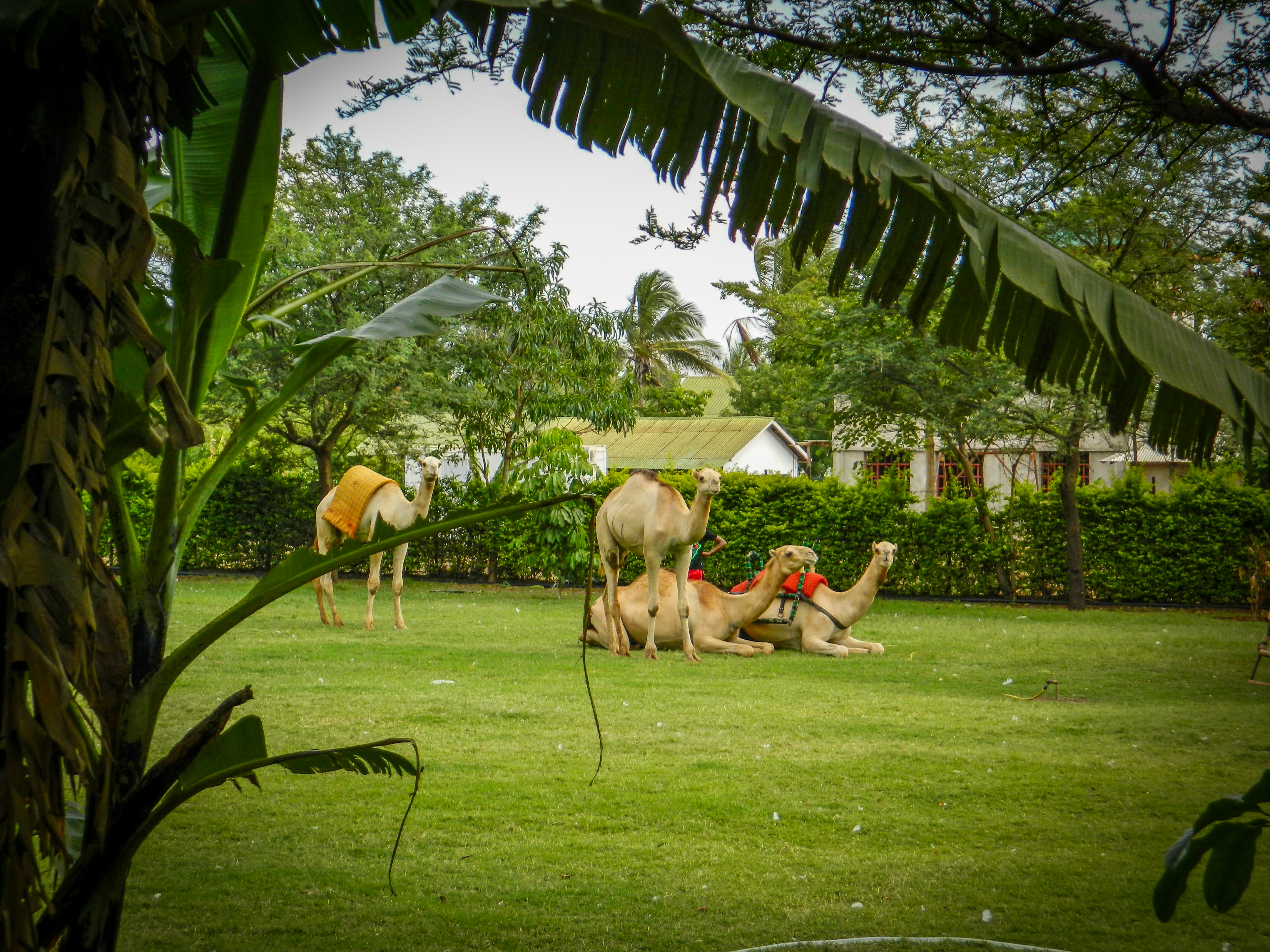
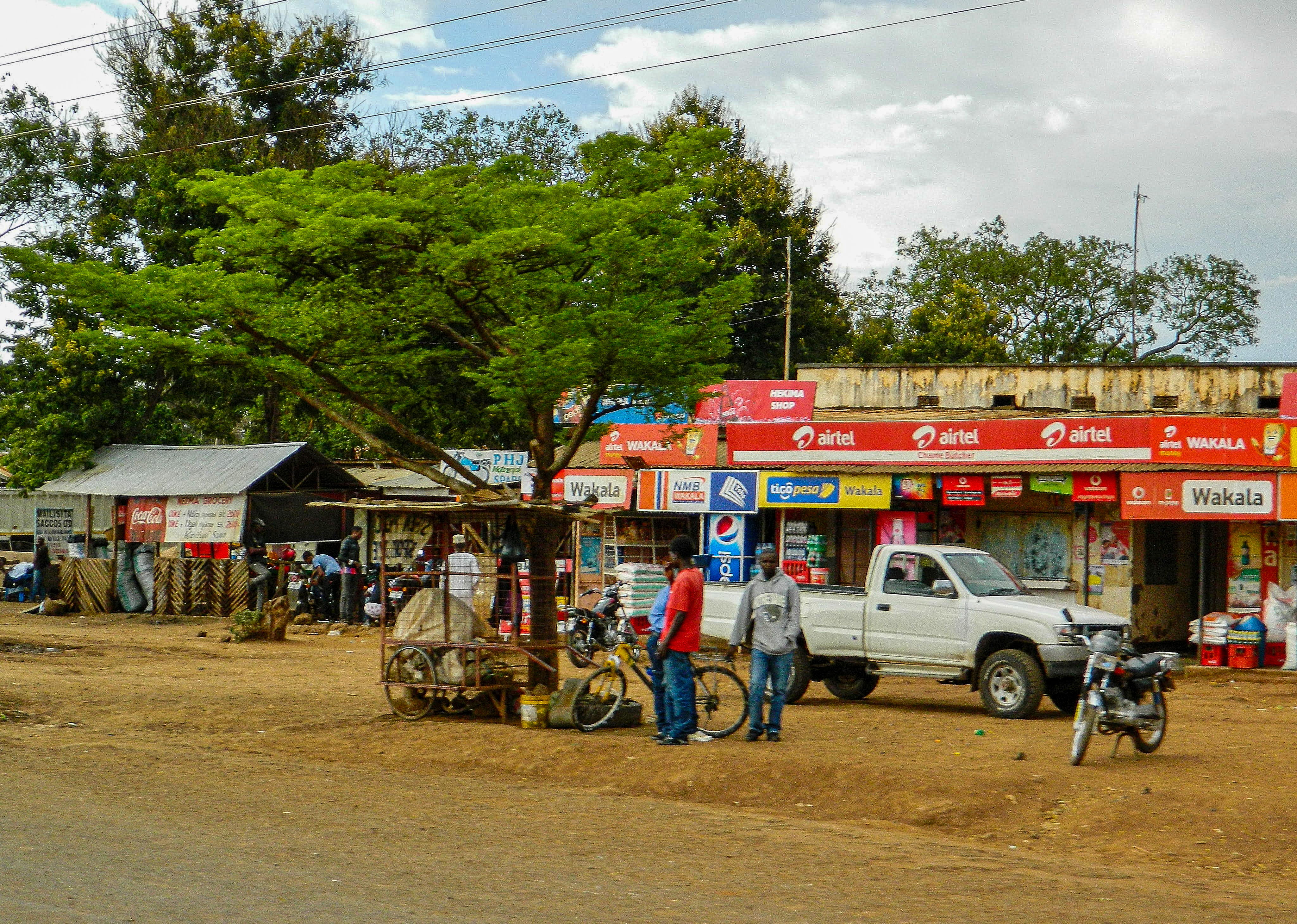
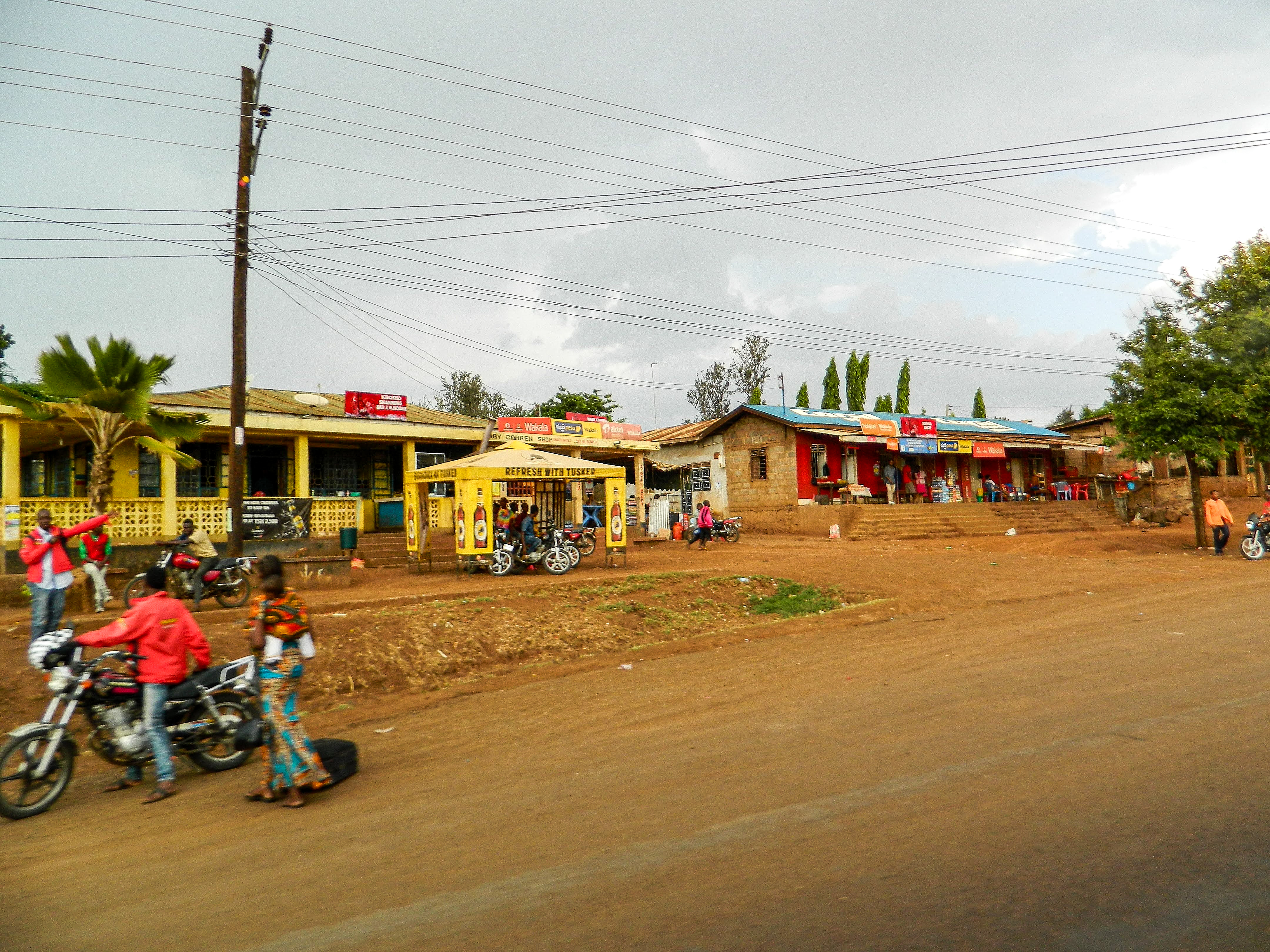
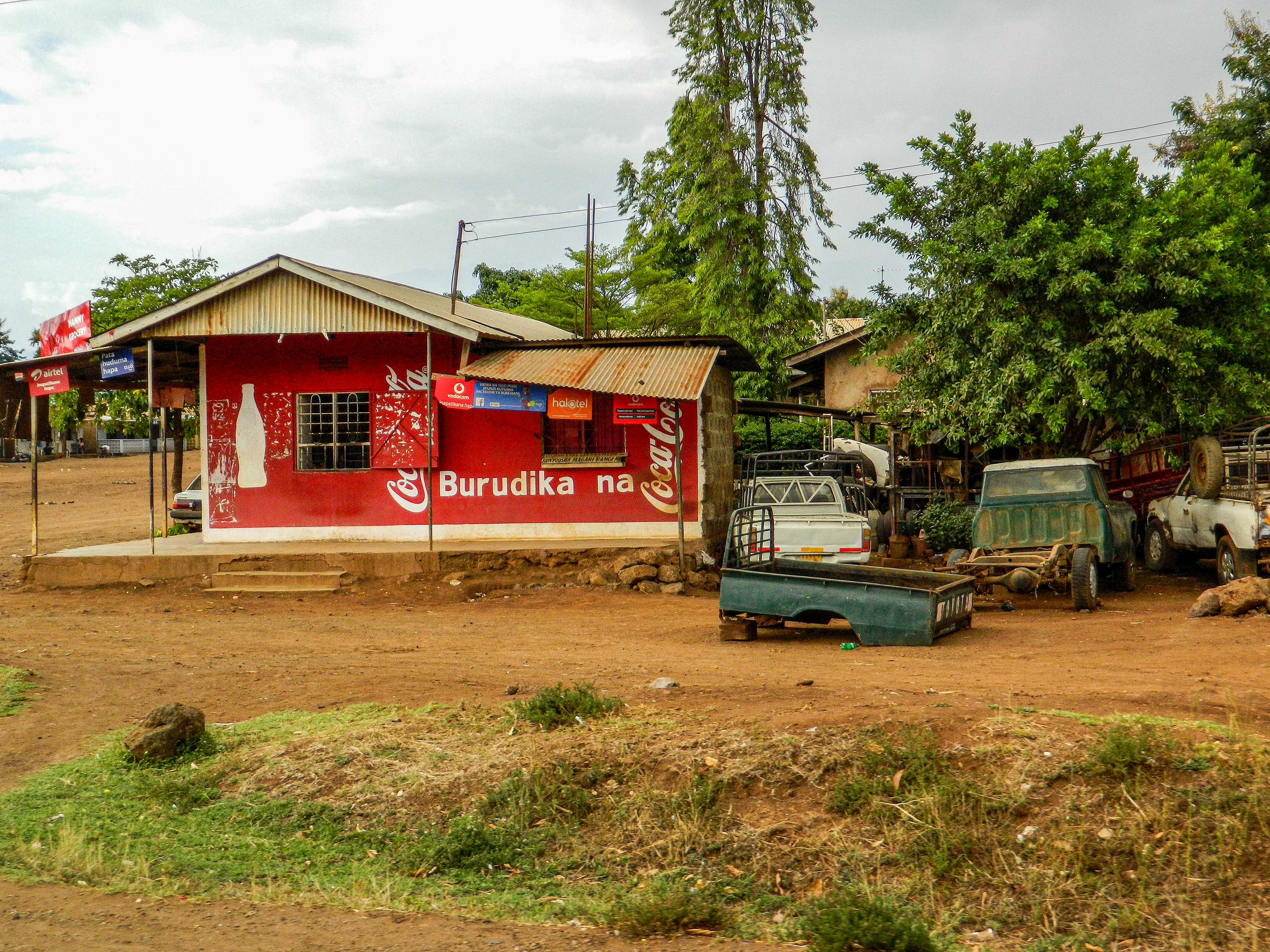
Corrugated iron shop fronts whirred past the windows, clustered between little trees on the roadside. Dogs sniffed around outside a petrol station, and people gathered on benches outside little bars, sharing a drink or evening meal. Bonfires were lit on sandy scrubland, as mopeds with 2 or 3 people on the back sped by, and occasionally a shape in the shadow turned out to be someone sitting on the verge sticking his thumb up as we drove by. The Weru Weru River Lodge was amazing – luxury I was not used to! They had resident tortoises and camels roaming about the grounds, and trees full of native birds. We were greeted by the staff with handshakes, and we enjoyed a local Kilimanjaro beer before turning in to our ensuite rooms with stylish wooden furniture and balconies overlooking the national park. A welcome bit of comfort before spending the next seven nights in a tent!

(Click on the photos to enlarge them.)

Prep Day

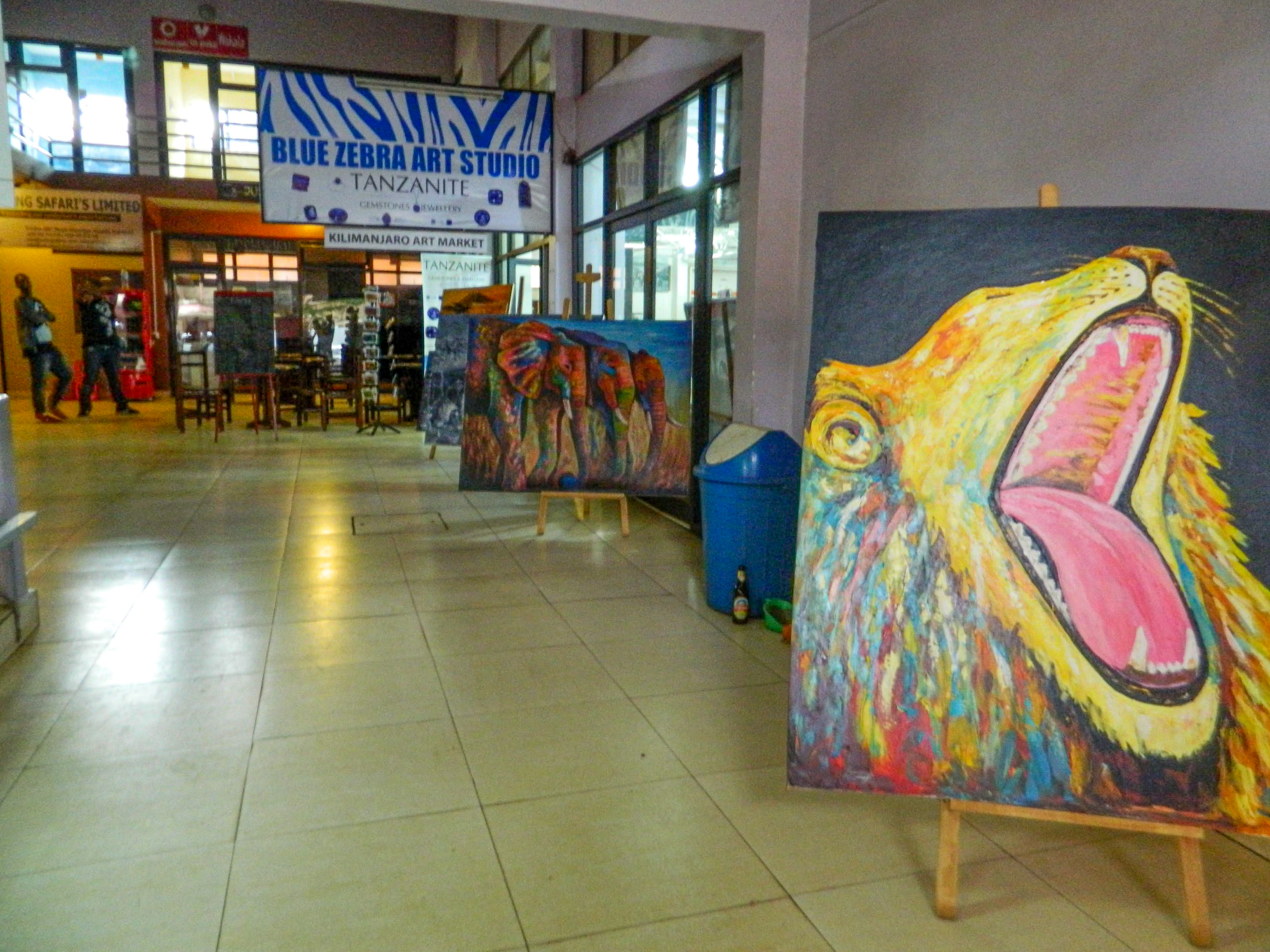
Anticipation running high, our group met with our head guide, Julio, an incredible Tanzanian man with a tonne of local experience, knowledge and wisdom. He briefed us with the itinerary, all the safety measures, and put some of our worries at ease, before individually inspecting each of our kit. Julio’s most important lesson was to ‘Respect The Mountain,’ because you can’t win when you argue with nature. Once we were all set, the guides took us into Moshi to look around a local arts market – to help take our minds off the impending Kilimanjaro challenge. There was a tremendous thunderstorm with torrential rain that tattooed the tin roof so loudly we couldn’t hear each other speak. The shop’s power went out in the storm, and we were introduced to some street vendors who were selling the classic Kilimanjaro safari hats, for which we bartered playfully while we waited for the storm to pass: “$8, come on sister!” (I wasn’t very good at bartering, but I got one for $6!)

Day One – “Polē Polē”

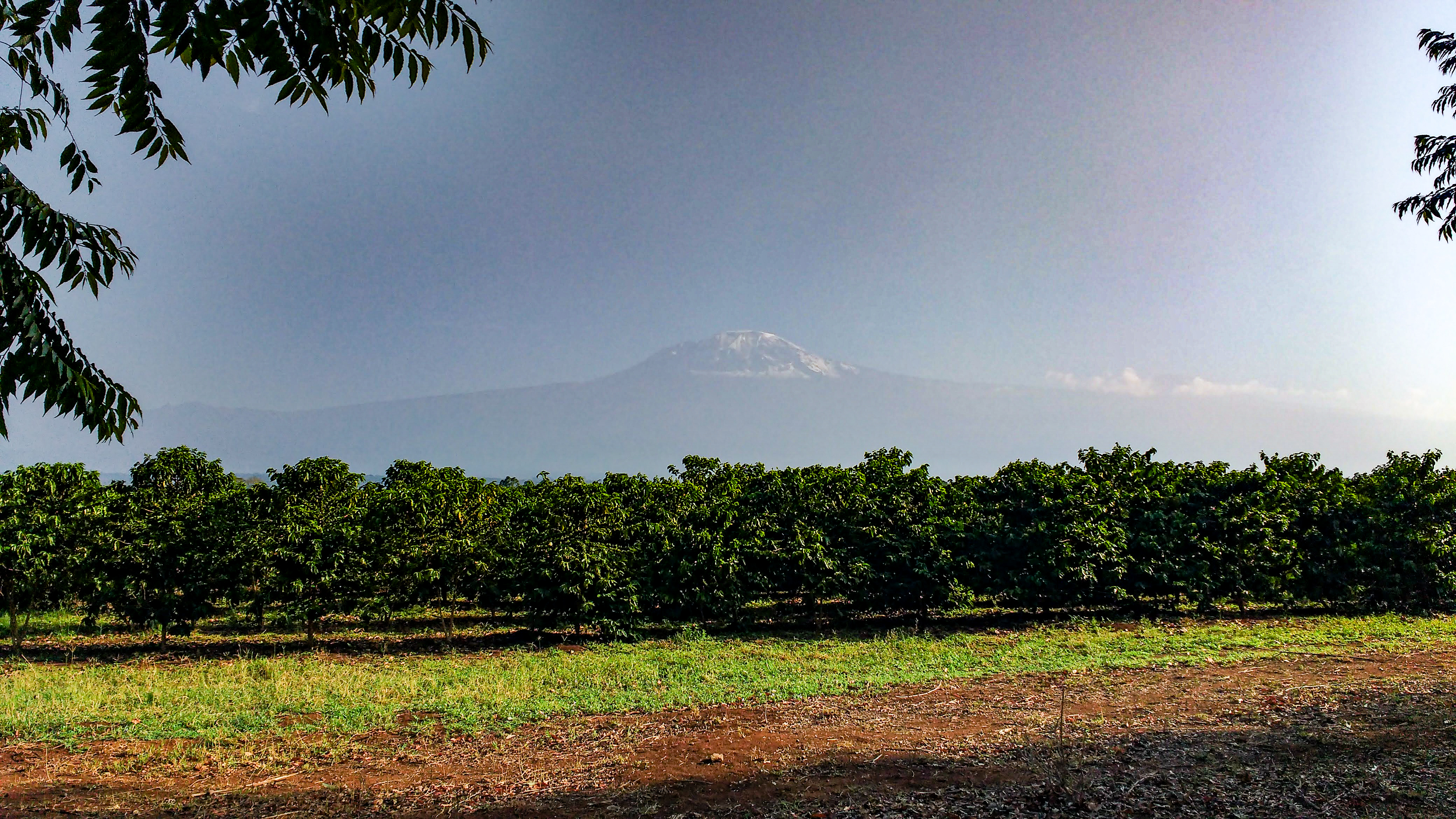
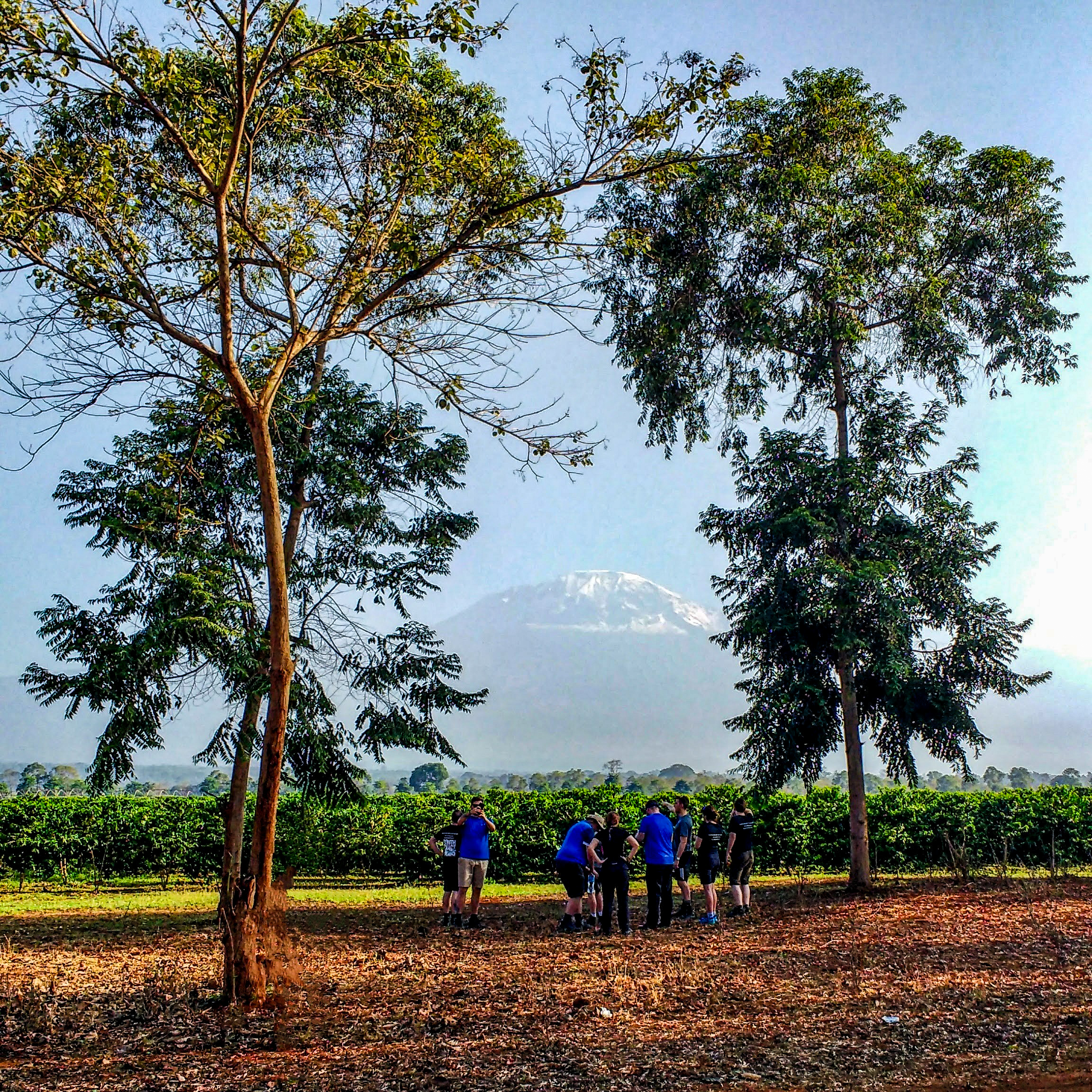
Mount Kilimanjaro made its first appearance in the morning, looming hazily over the coffee plantations surrounding the lodge. Its top was dipped in snow, bright against the blue sky. We were transferred from the lodge at 9am on a minibus, passing through bustling villages, where the locals smiled and waved, sometimes high fiving us through the bus’s open windows. Big yellow dogs lay asleep outside shops adorned with giant coca cola adverts, and workers strolled along the roadside with machetes and baskets of bananas balanced on their heads.

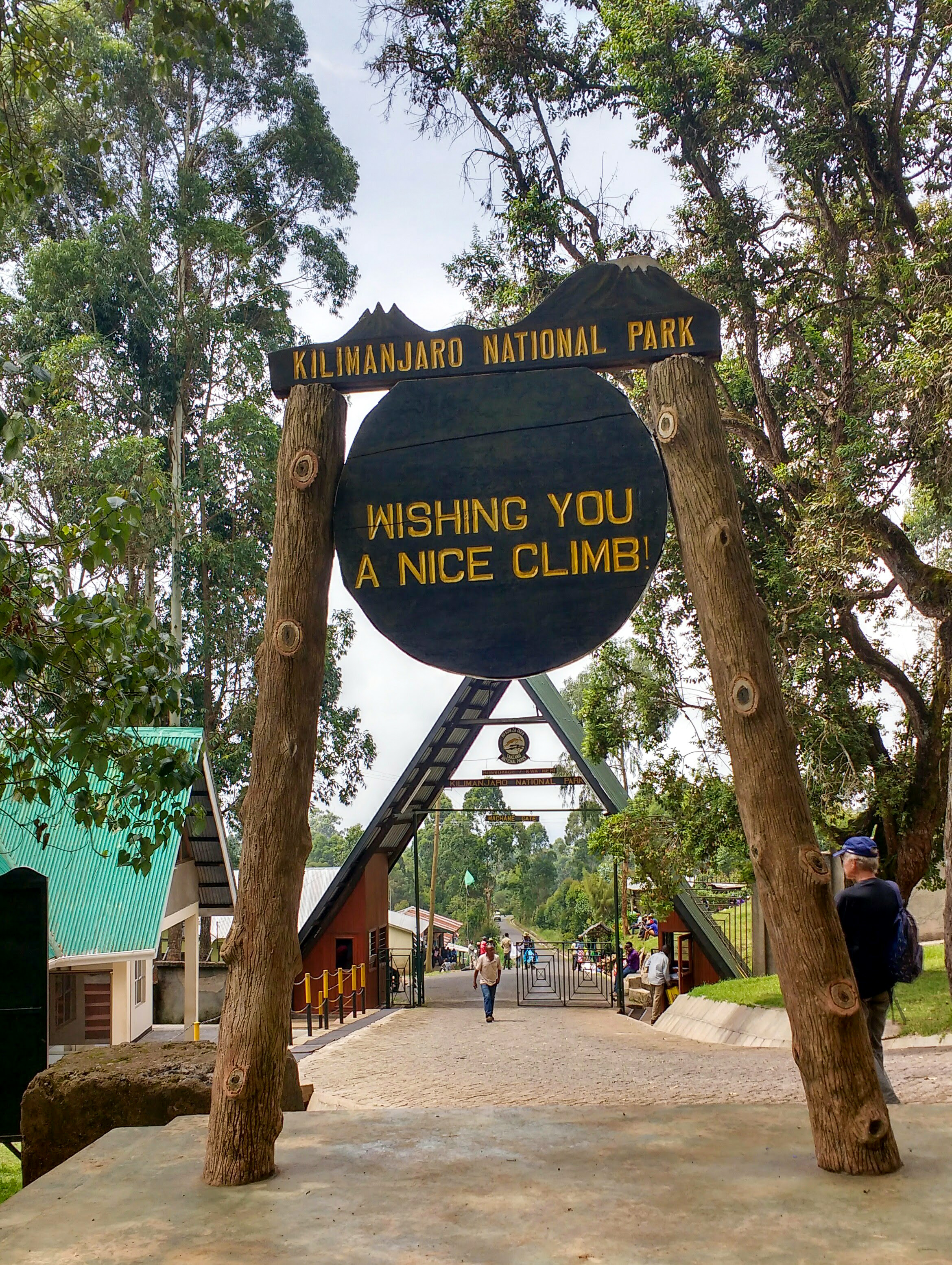
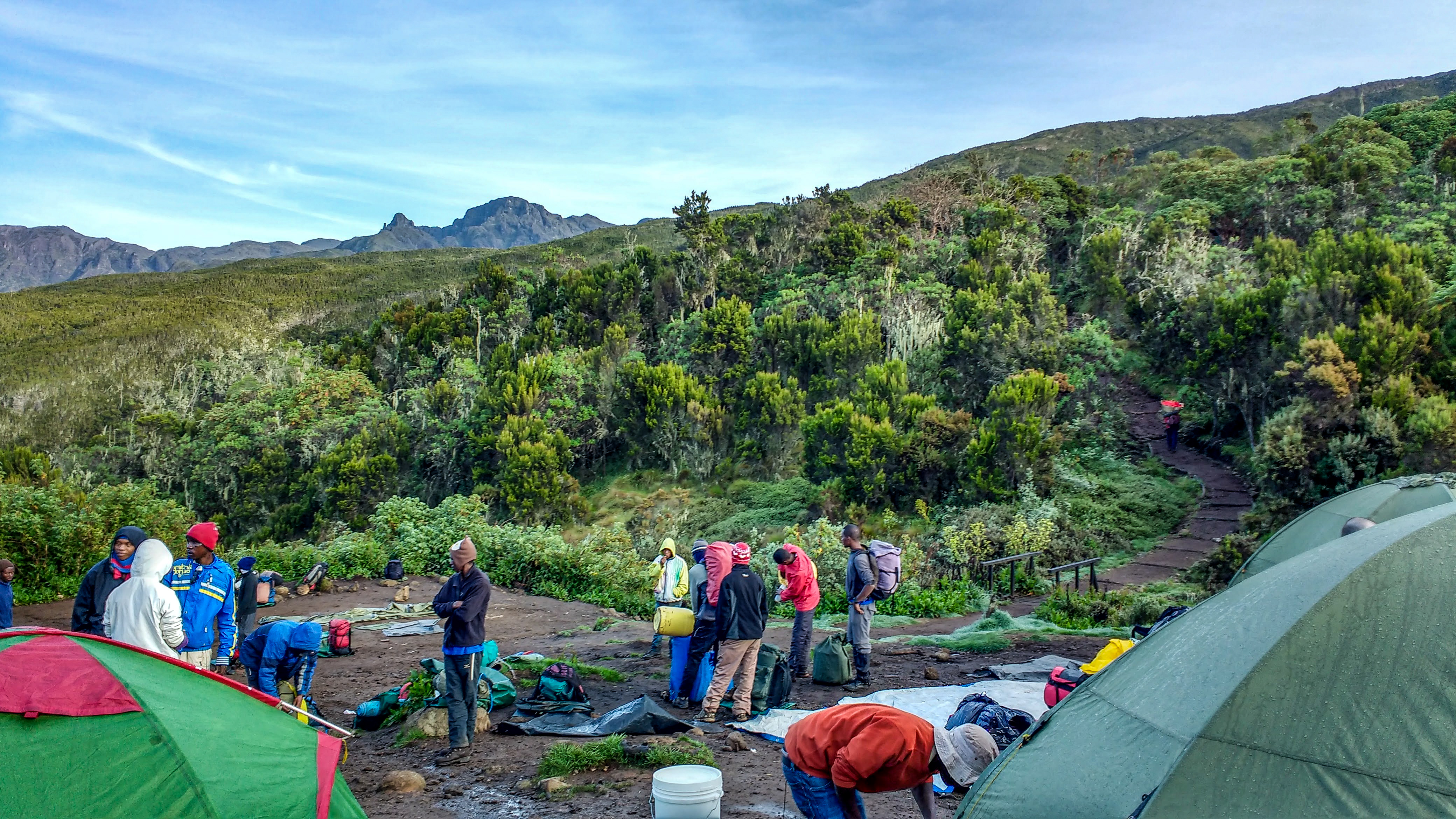
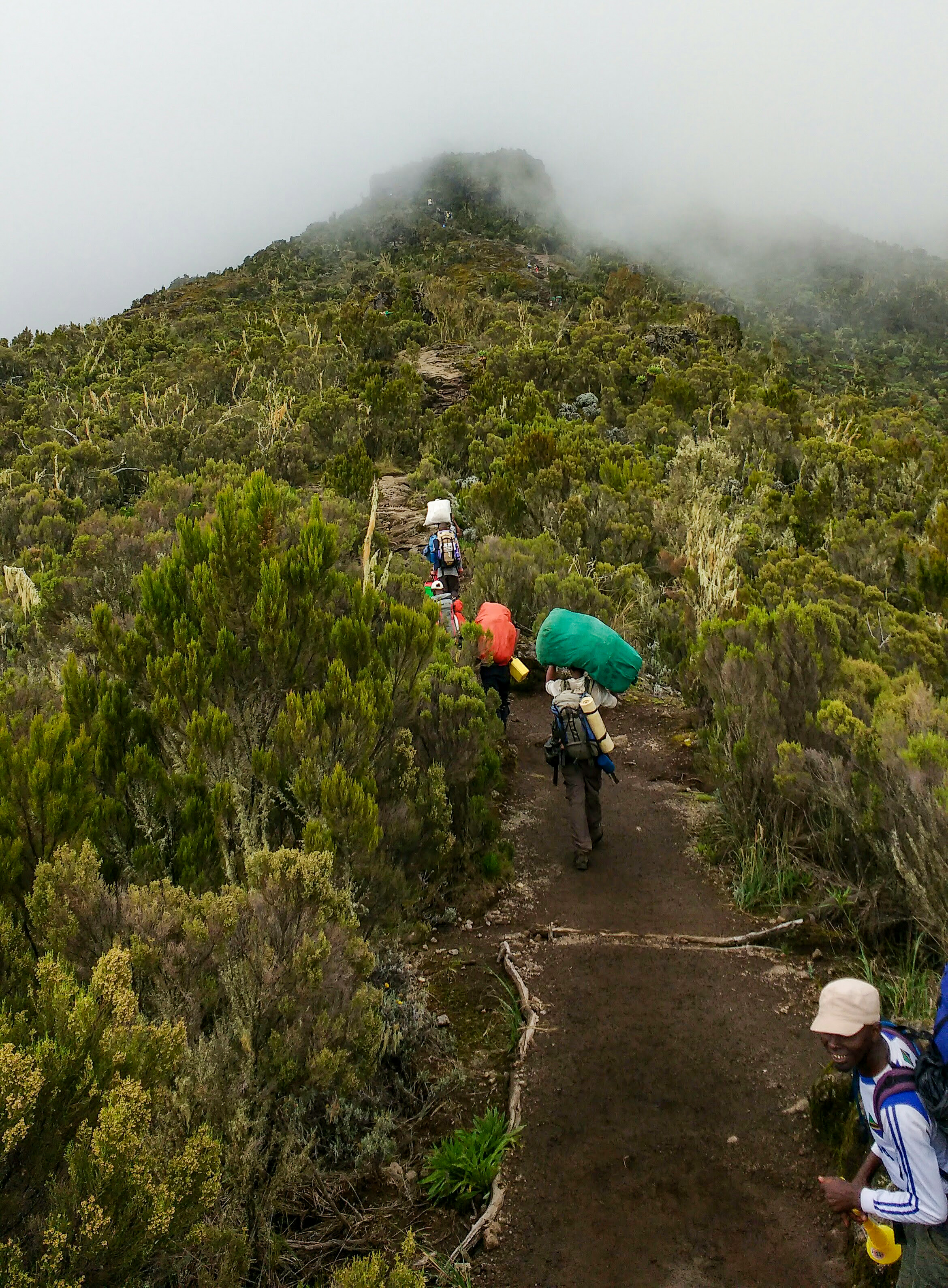
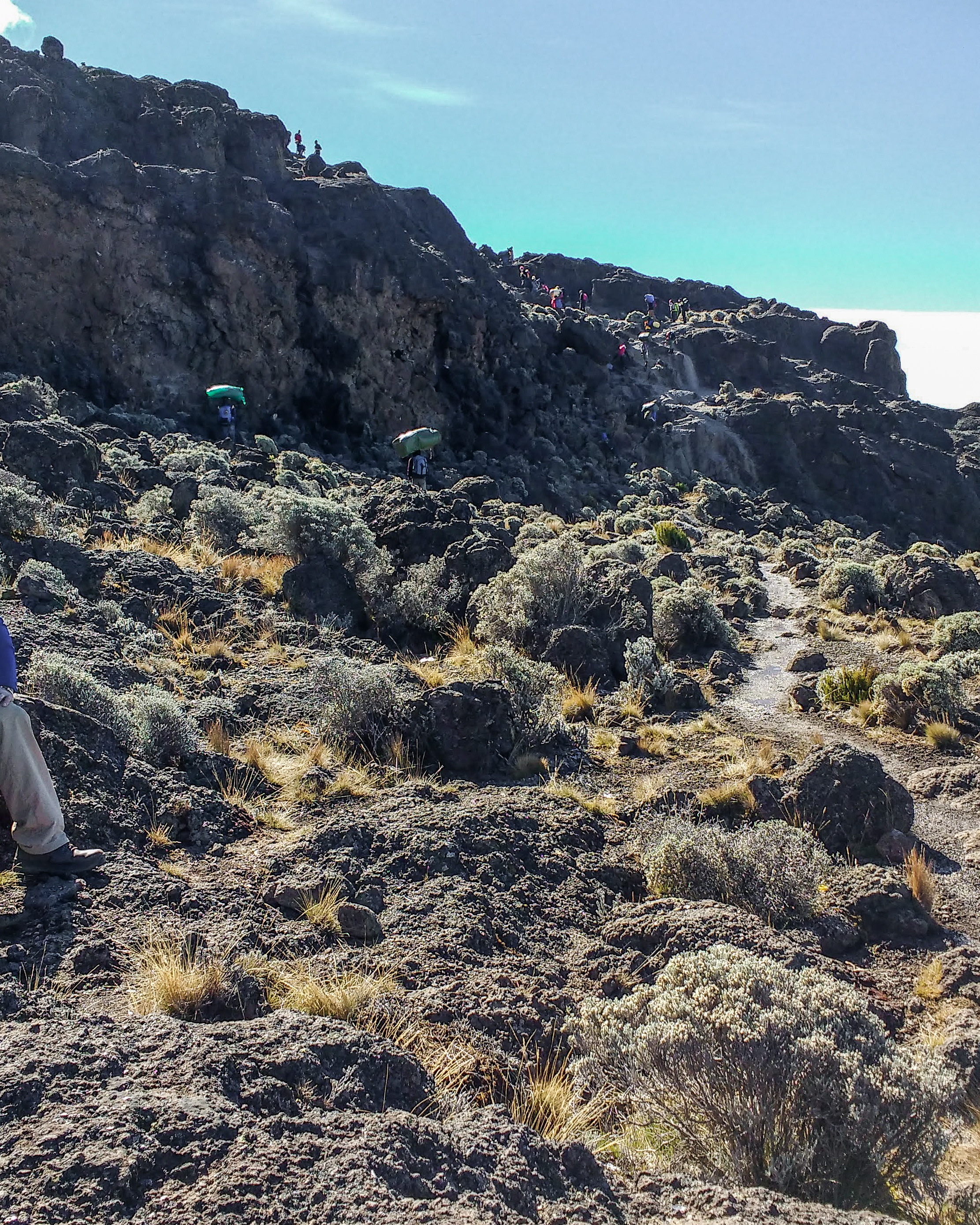
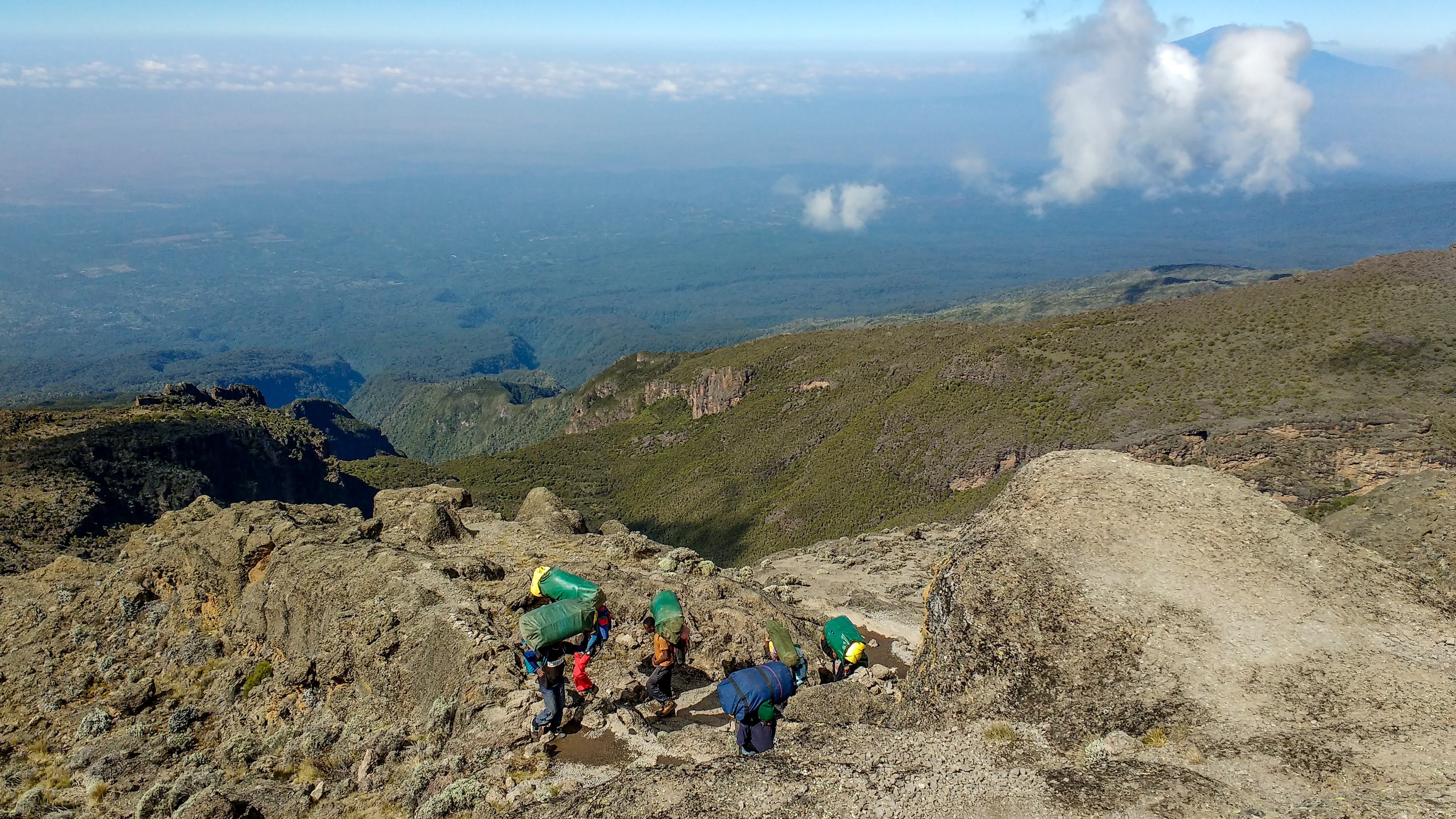
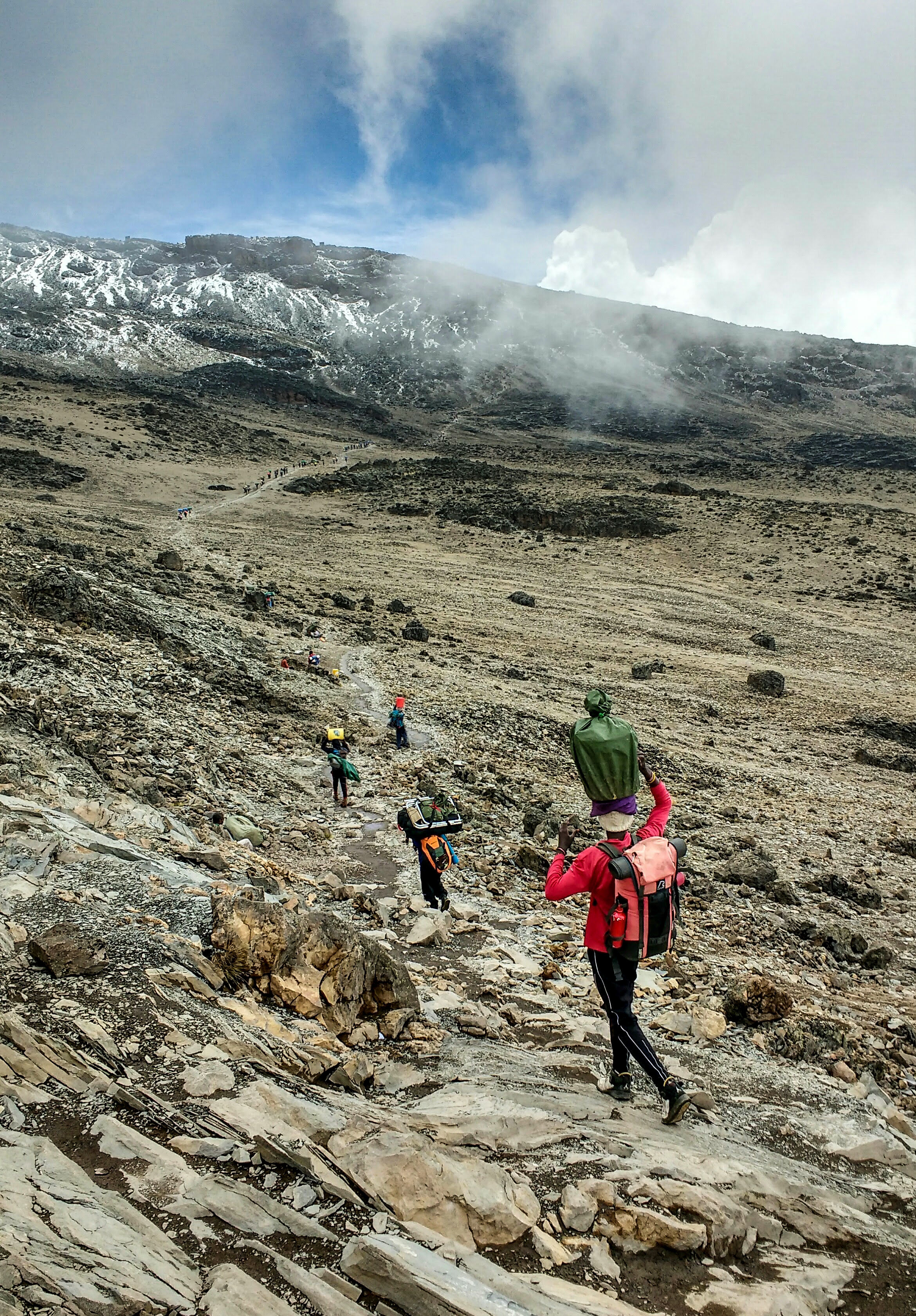
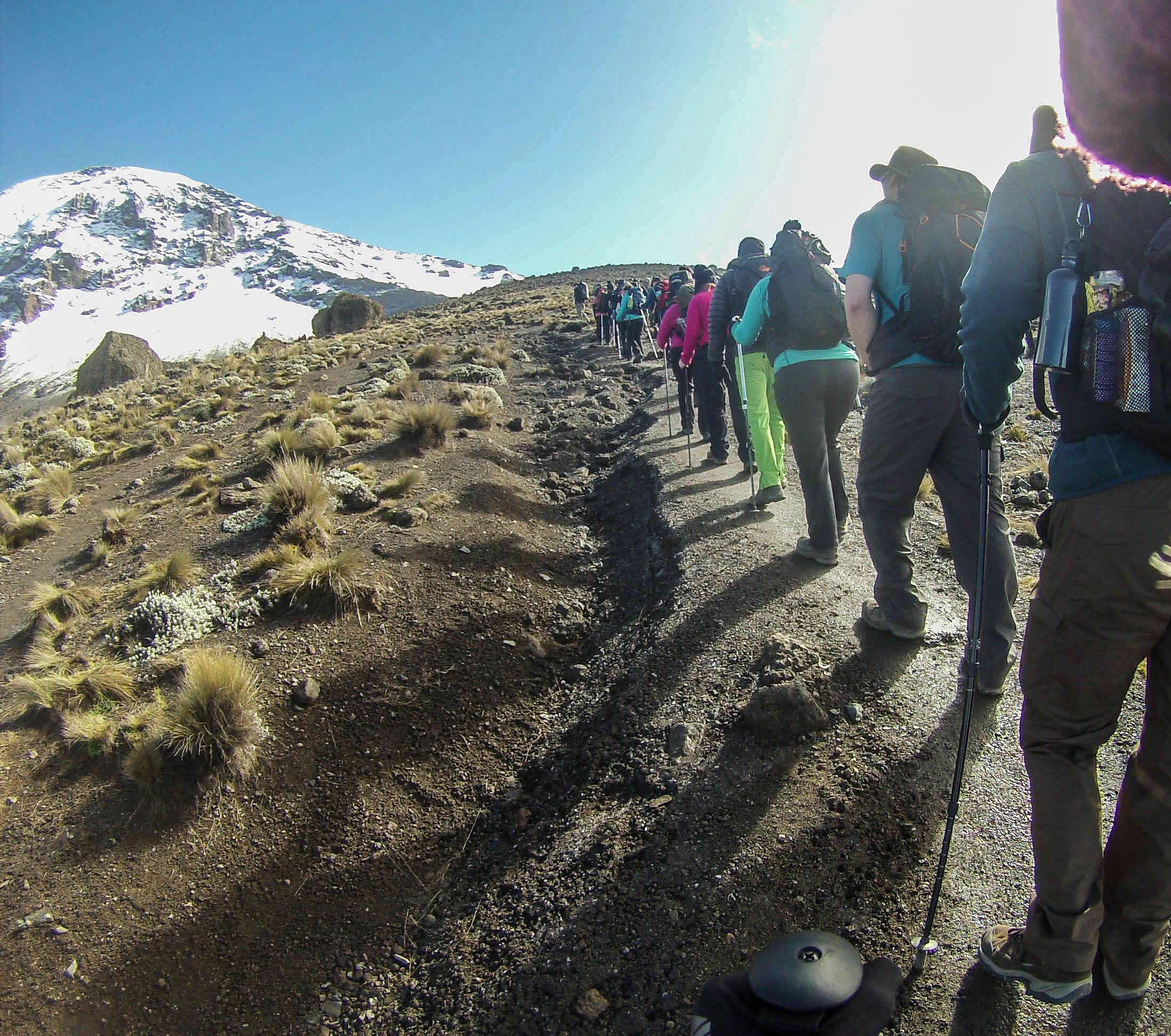
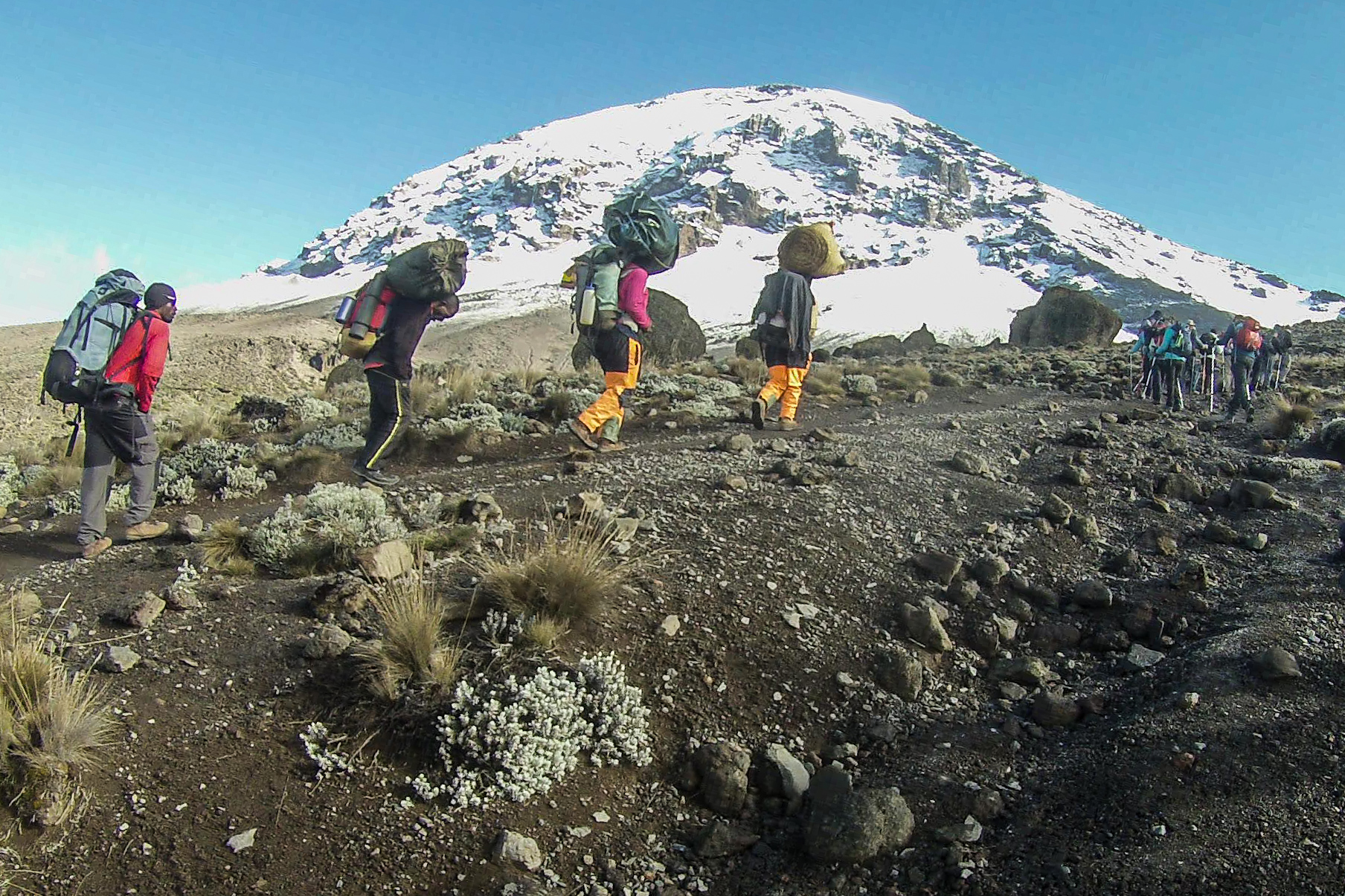
We piled out of the mini bus at Machame Gate – one of eight trailhead gates at the base of Kilimanjaro. After signing a register, we did some final kit checks and gathered with our team of local guides for a sort of pre-game huddle. Ian made sure to check in with everyone individually, despite his own nerves. Finally, we got the ‘go-ahead’, and we ceremoniously passed through the gates onto the mountain trail, the guides repeating “Polē Polē,” (Swahili for slowly slowly.) The pace felt too slow at this stage, but it was essential to acclimatise. Meanwhile, a huge team of porters – our ‘Rafiki’ (friends) – gathered all the luggage; tents, mess tents, food, kitchen equipment, chairs, tables, anything else you can think of, and carried the large packs over their heads while they traversed the mountain on foot, overtaking us at three times our speed! I found this a bit controversial at first, but the tour groups’ main priority is to have everyone back down the mountain in one piece, so they go to great lengths to look after you, so you can focus on completing your challenge safely. A tip for the porters was also included in the price of the excursion. We were extremely thankful for them!

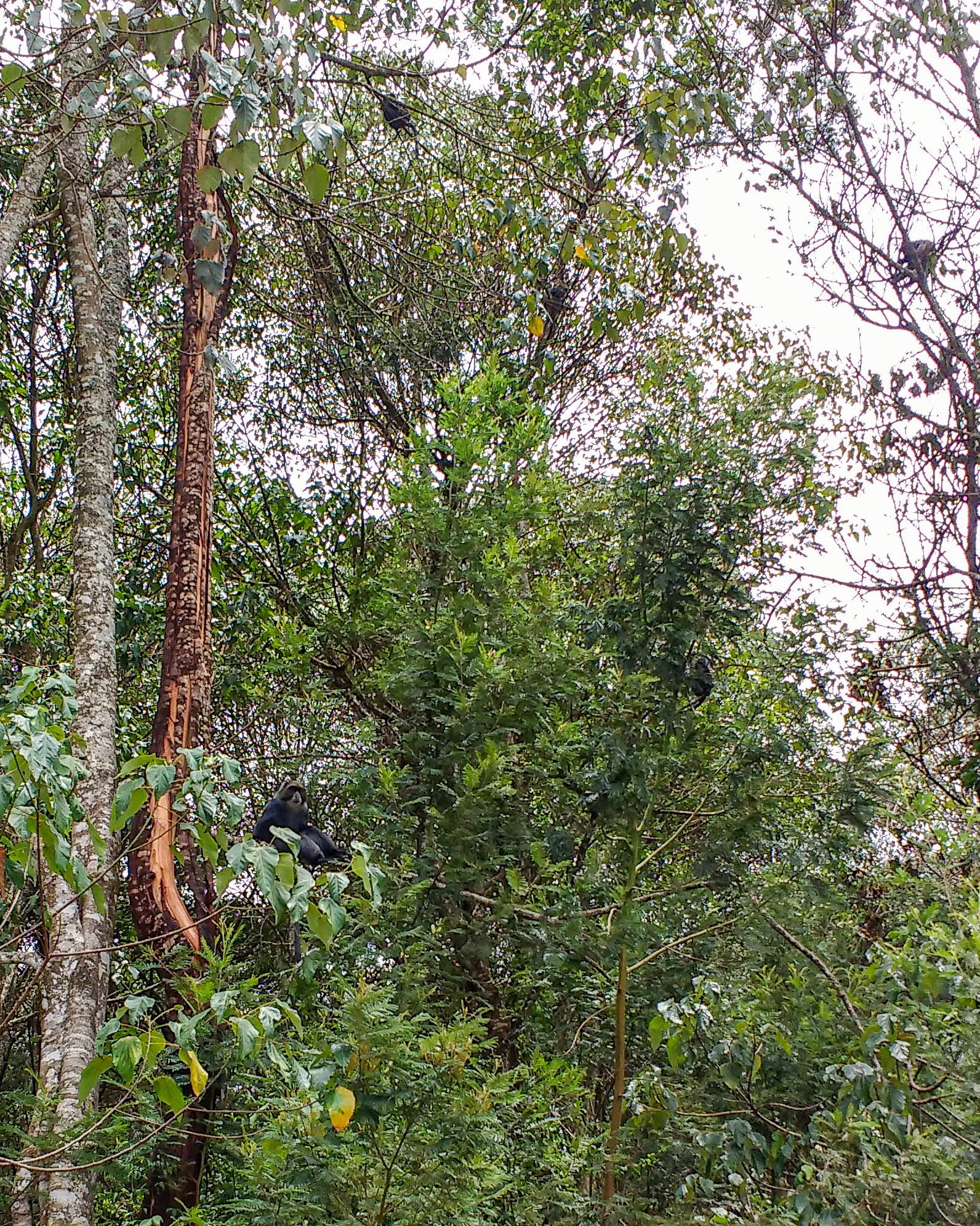
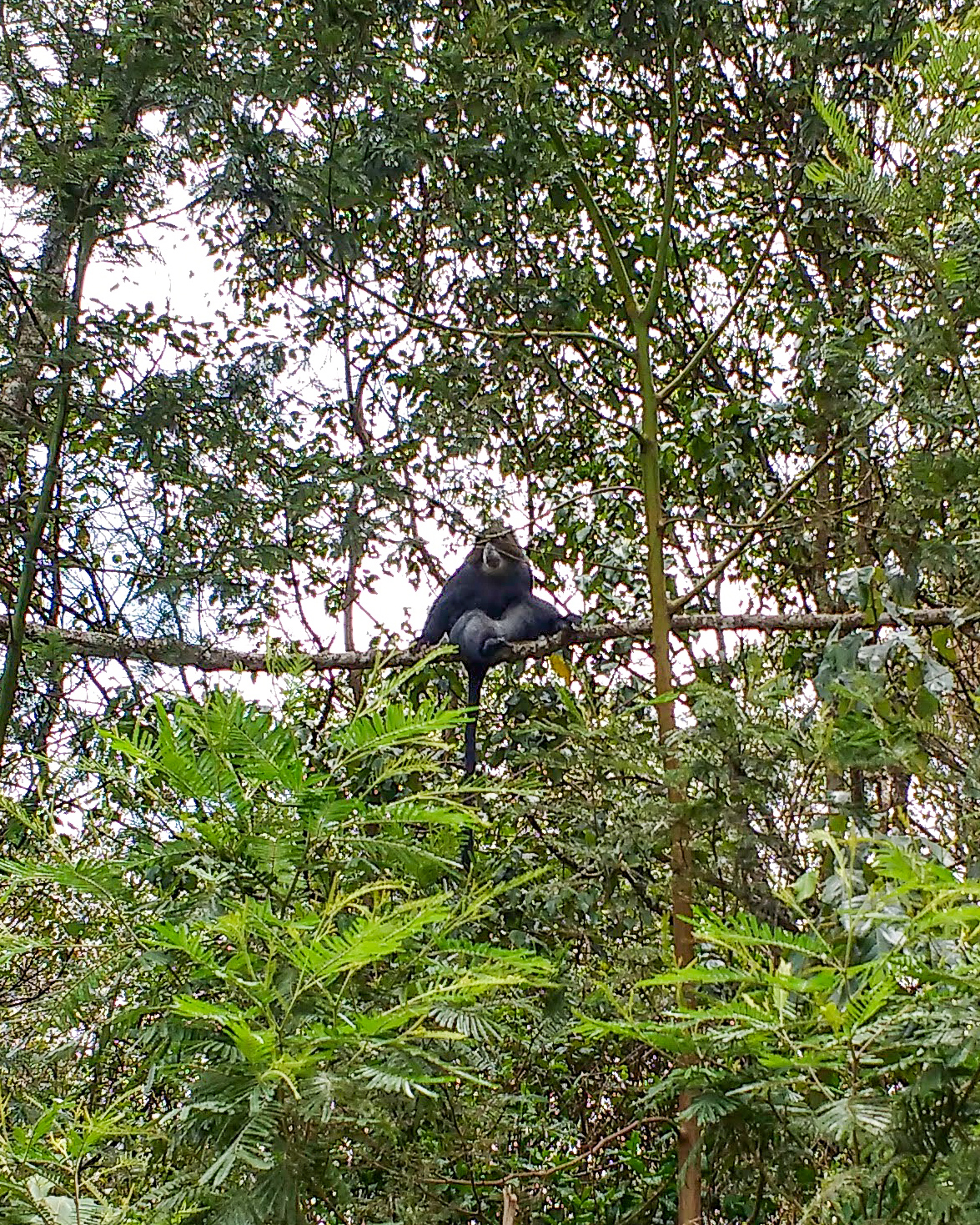
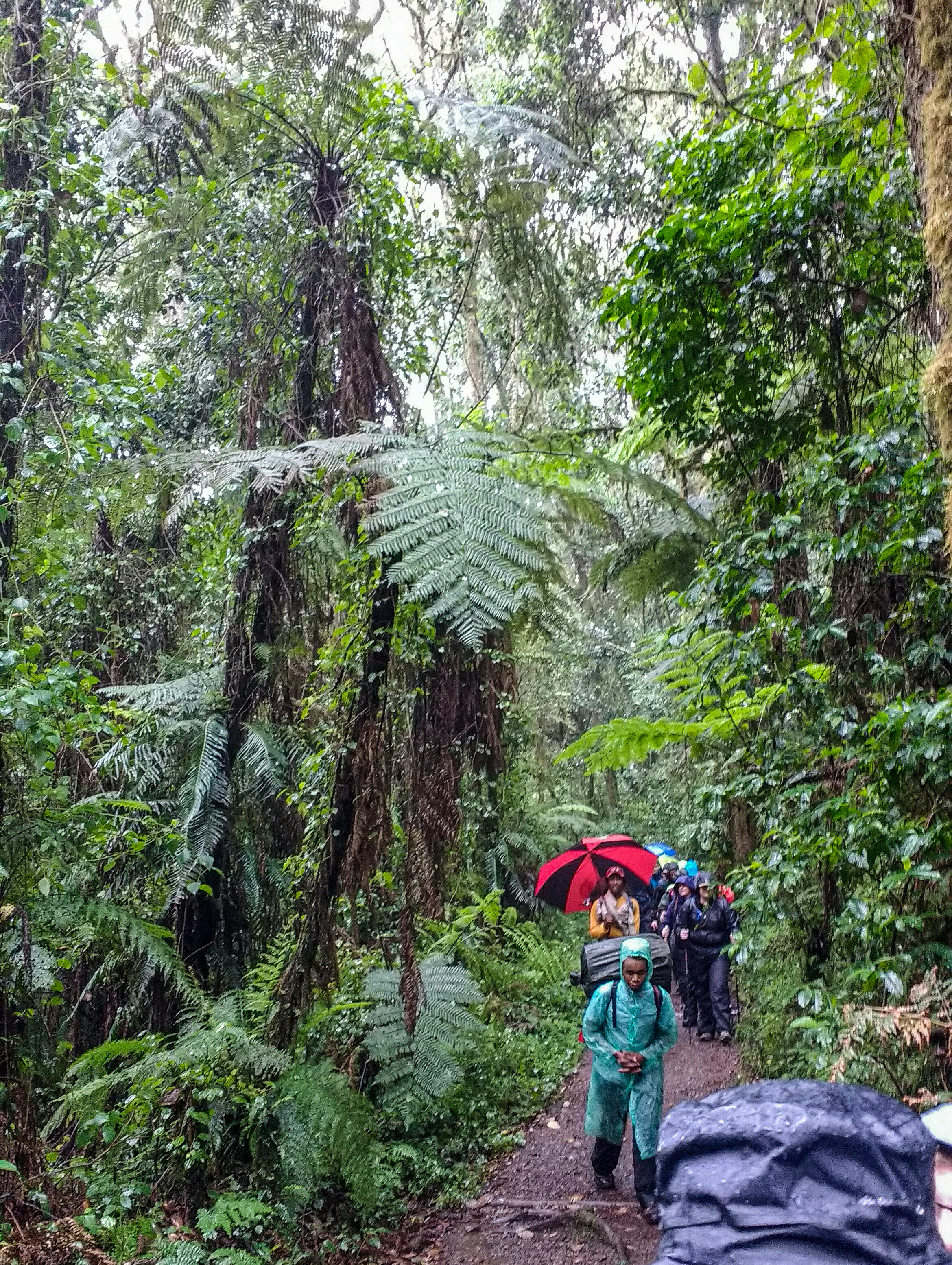
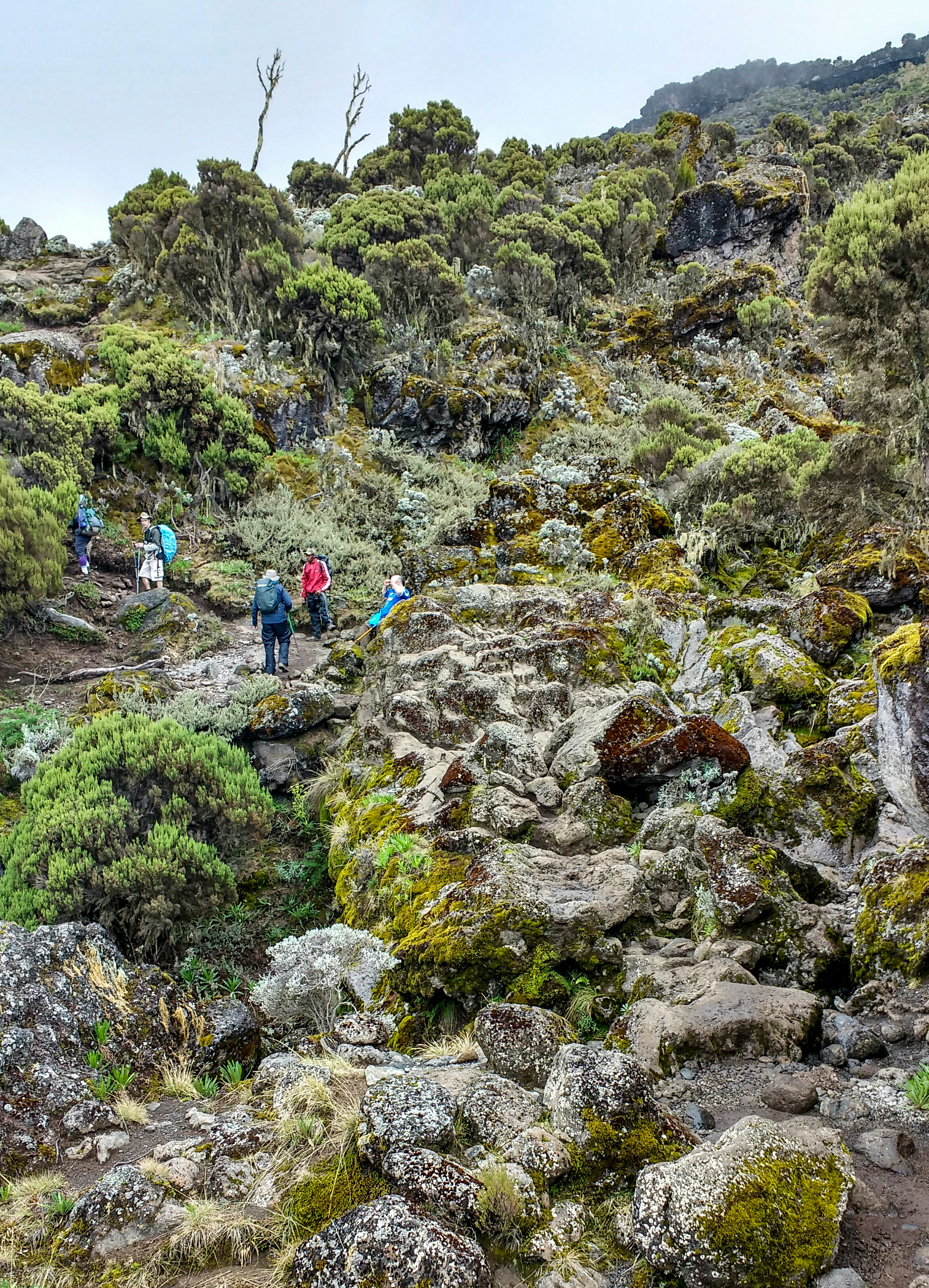
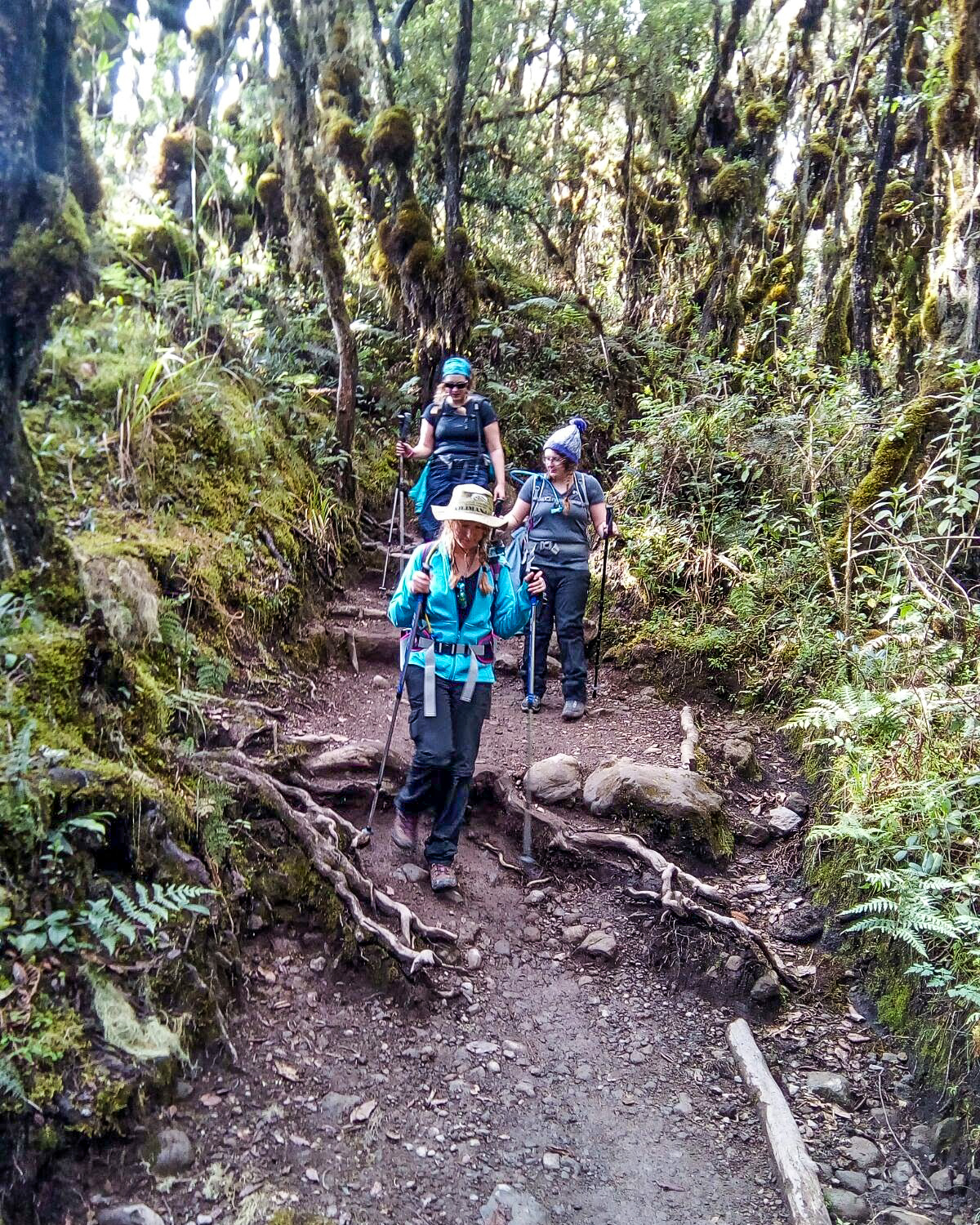
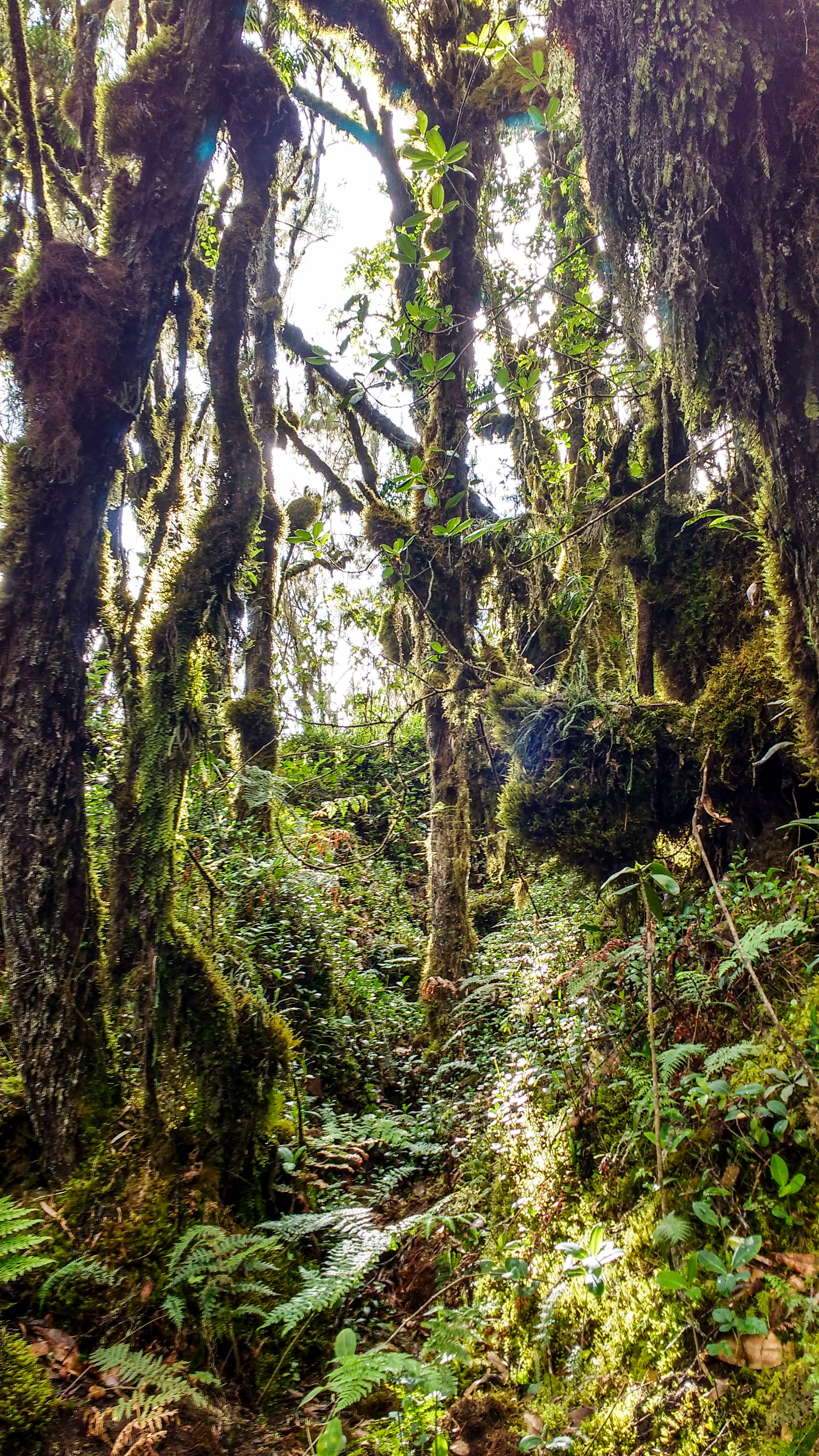
Blue Monkeys watched us curiously from the trees as we trekked into the cloud rainforest. Time was lost in the climb, as the forest grew taller and denser; the footpath becoming narrower. The first toilet stop wasn’t too traumatising – as you can imagine, the long drops get more horrendous the further you go up! After that, the heavens opened and we waterproofed up, walking to the serene soundtrack of the African rainforest.

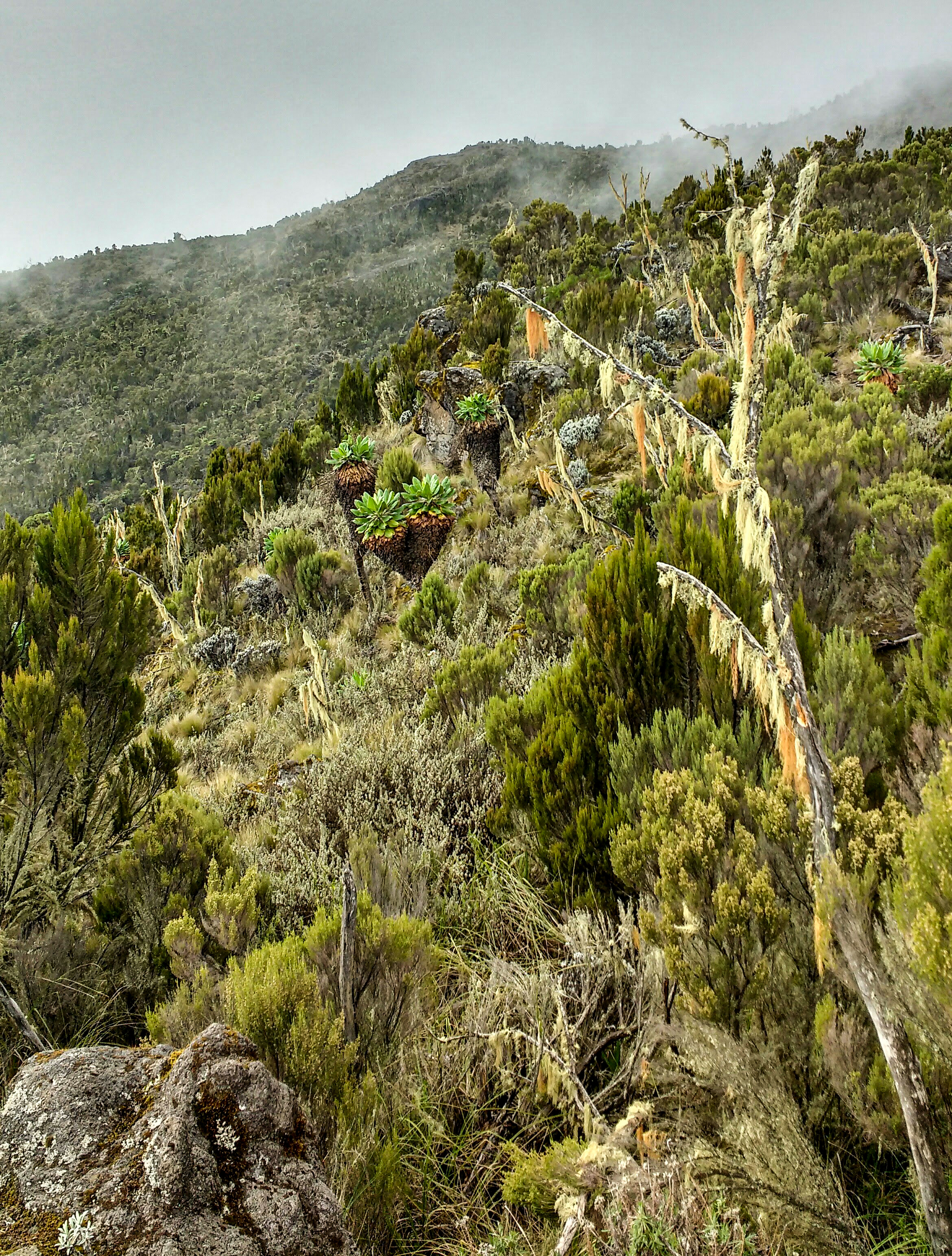
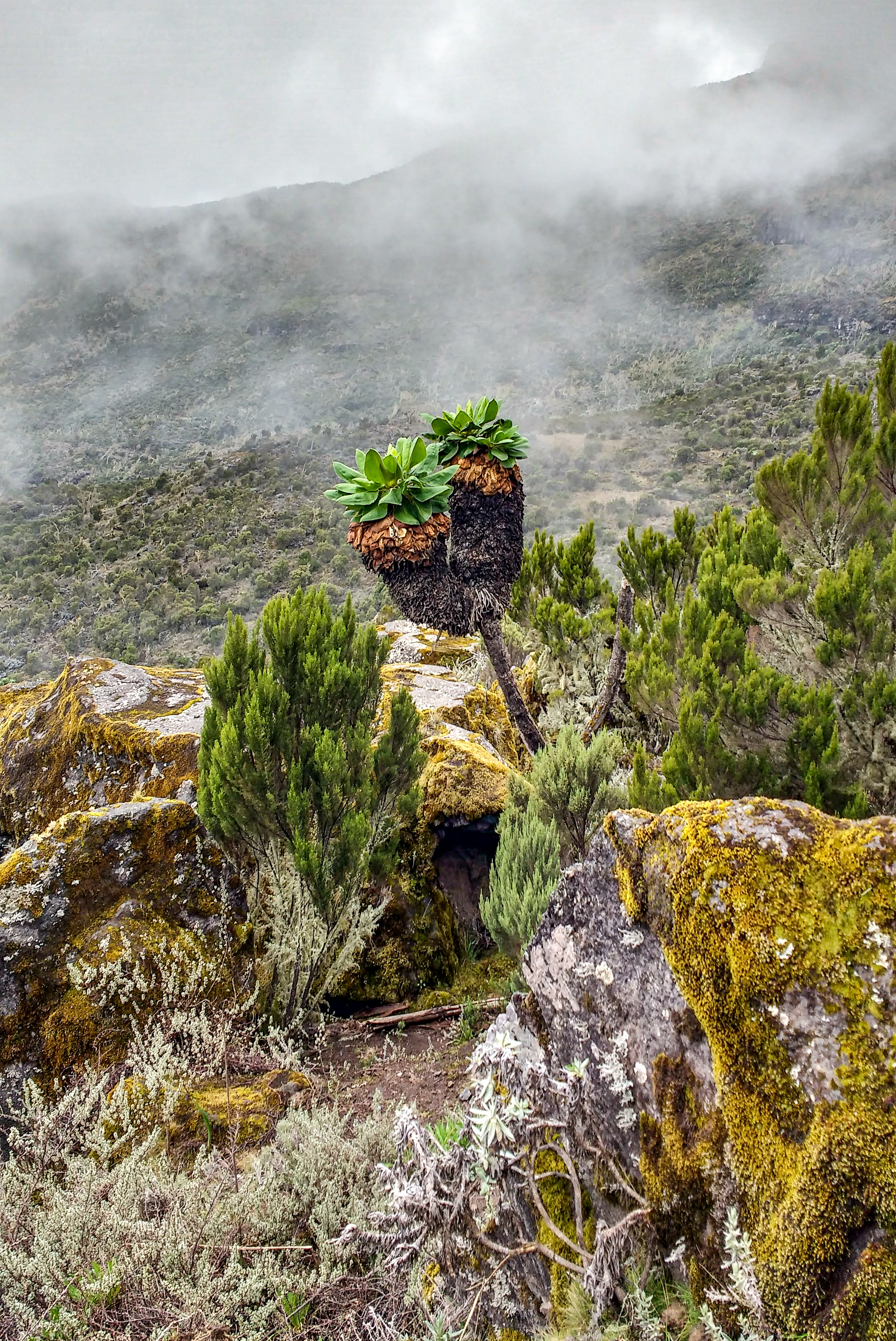
(My mountain photos were taken on a 2015 Android phone… click to see them in their full pixelated glory!)

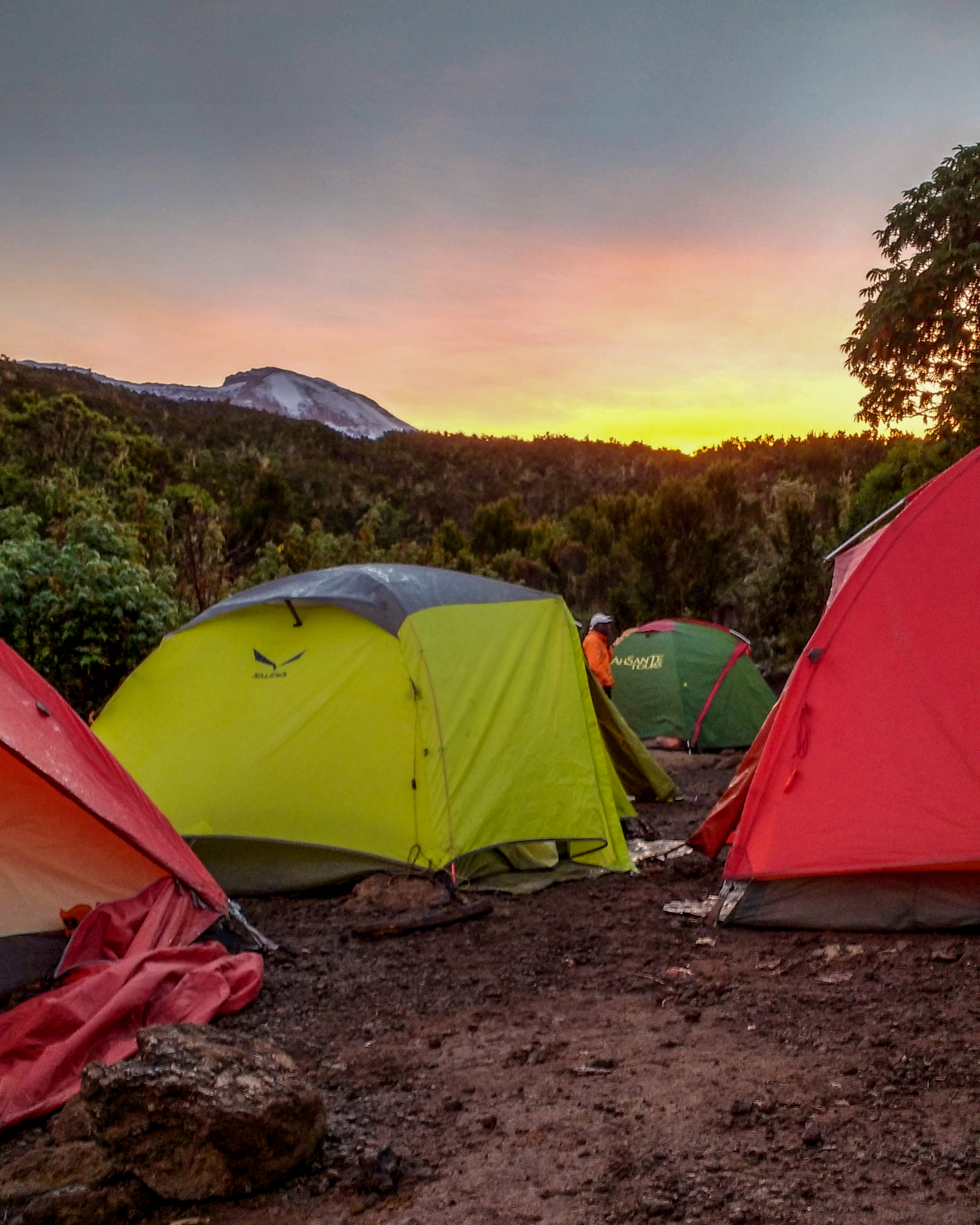
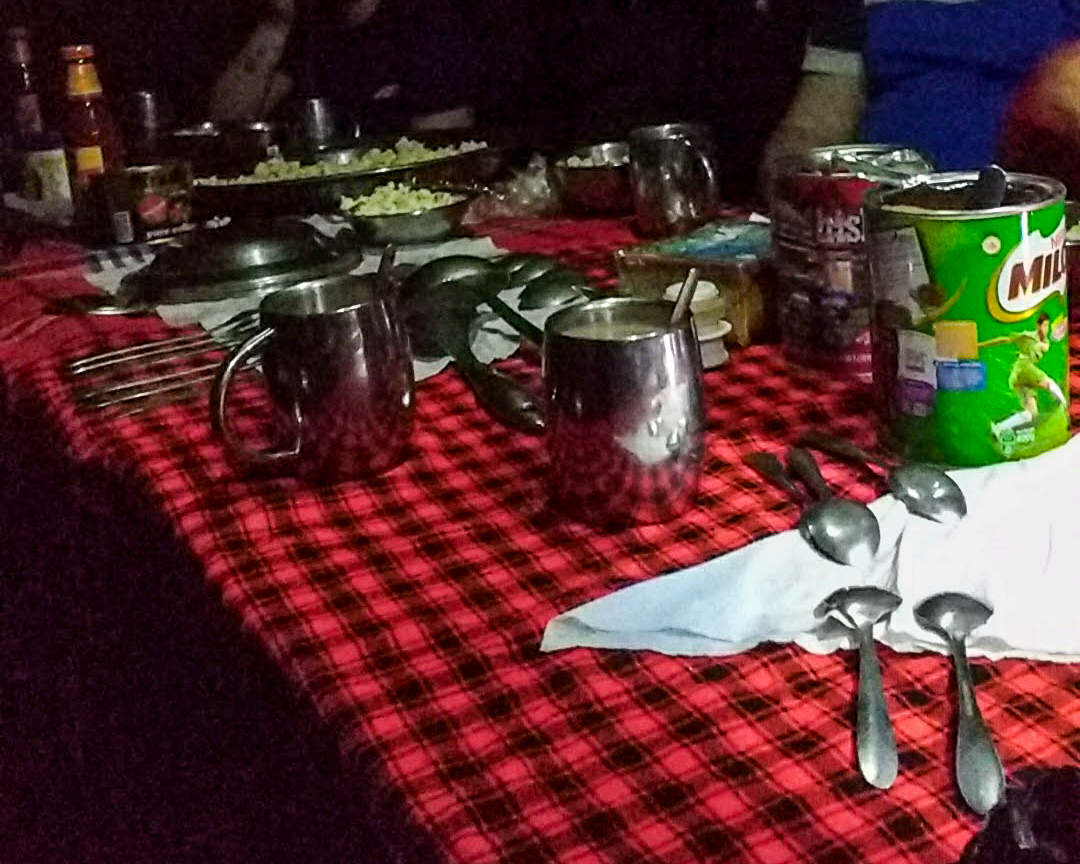
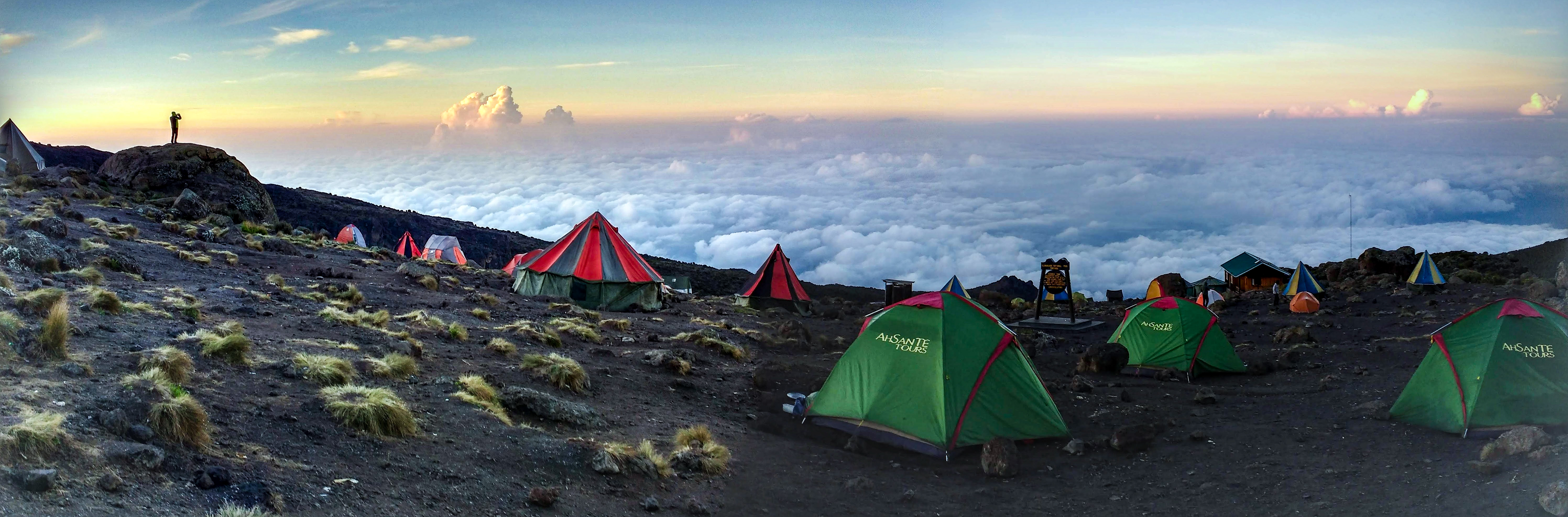
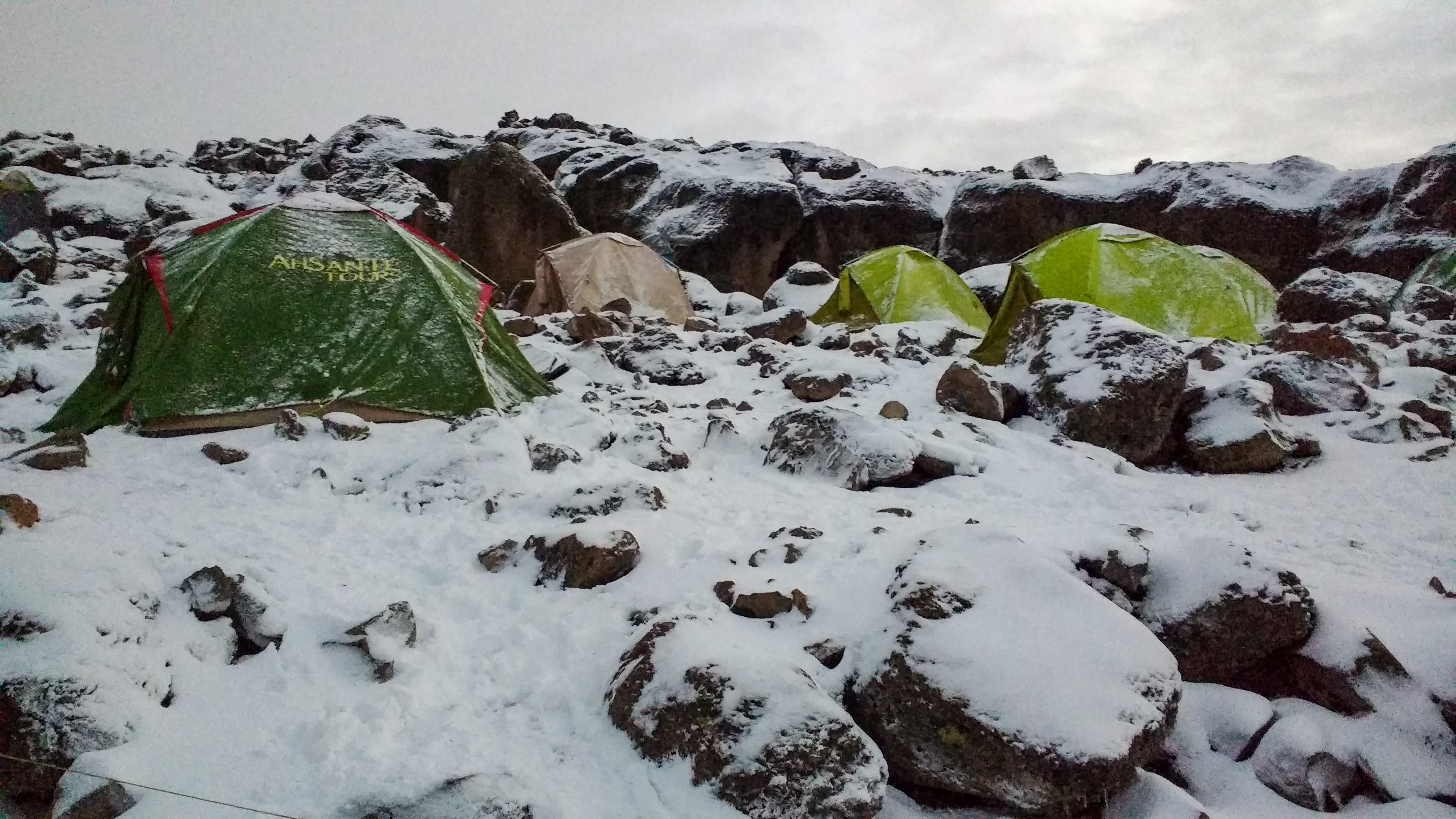
We had our first lunch stop perched on logs beneath the cloud forest canopy – miscellaneous deep fried things we couldn’t identify – regardless, it was quite tasty! Hiking up and up through the dense forest, to around 1,200m elevation, with glimpses of vast sky stretching over miles and miles of flat African plains between the trees, we finally broke out of the cloud forest and reached our first camp just before nightfall. The porters or ‘Rafiki’ had already built our fold-away settlement, and we were escorted to our respective tents to drop off our day packs. Tea, milo and popcorn was waiting for us in the mess tent, where we sat around a trestle table on fold up chairs, barely believing our tired eyes that we were receiving such luxuries from the amazing team of Rafiki. Then dinner was served… skin soup to start, followed by beef stew with roast potatoes on the side, with sliced avocado for afters before staggering back to our tents for our first night’s rest on the mountain.

Day Two – “Kilimanjaro, Hakuna Matata”

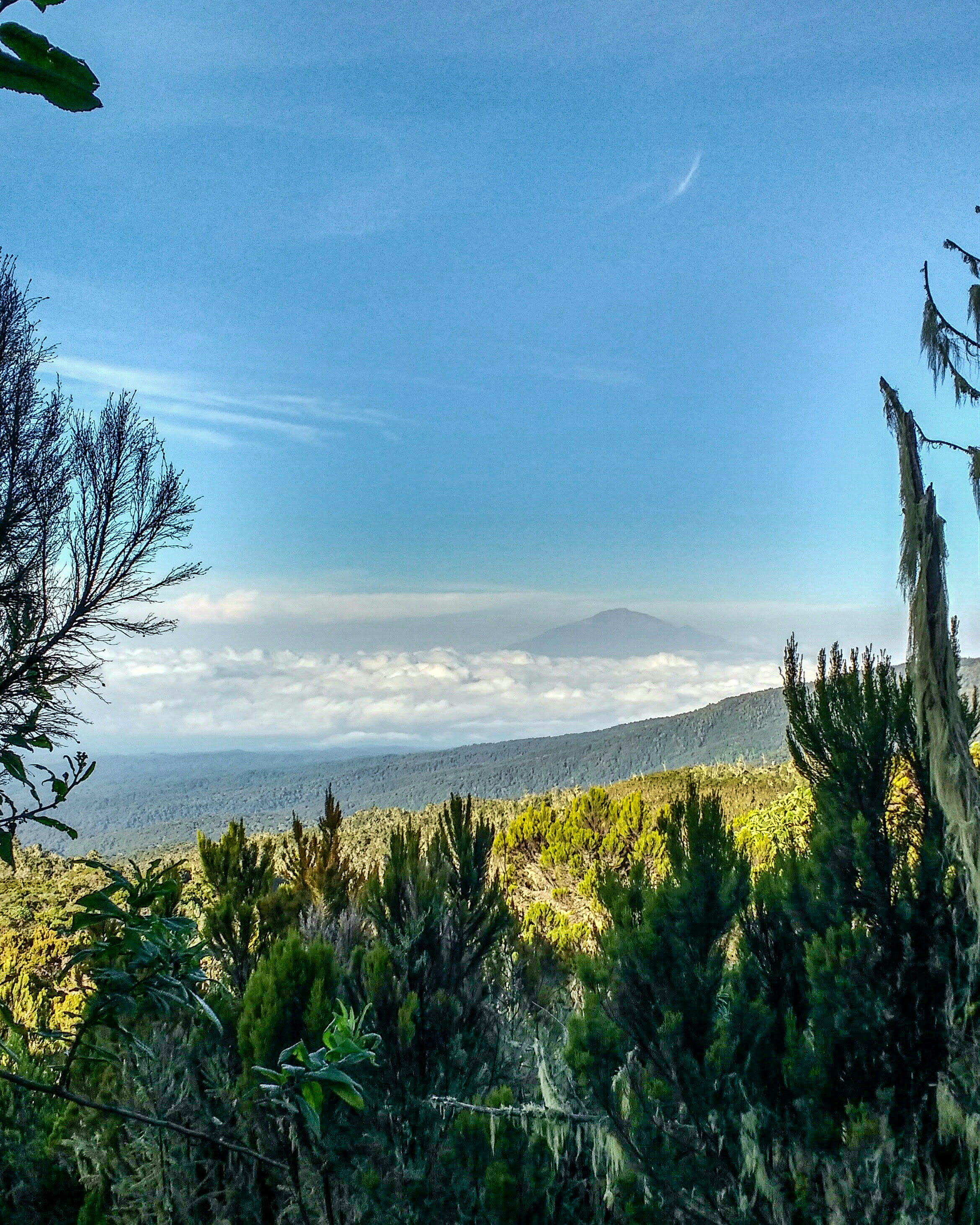
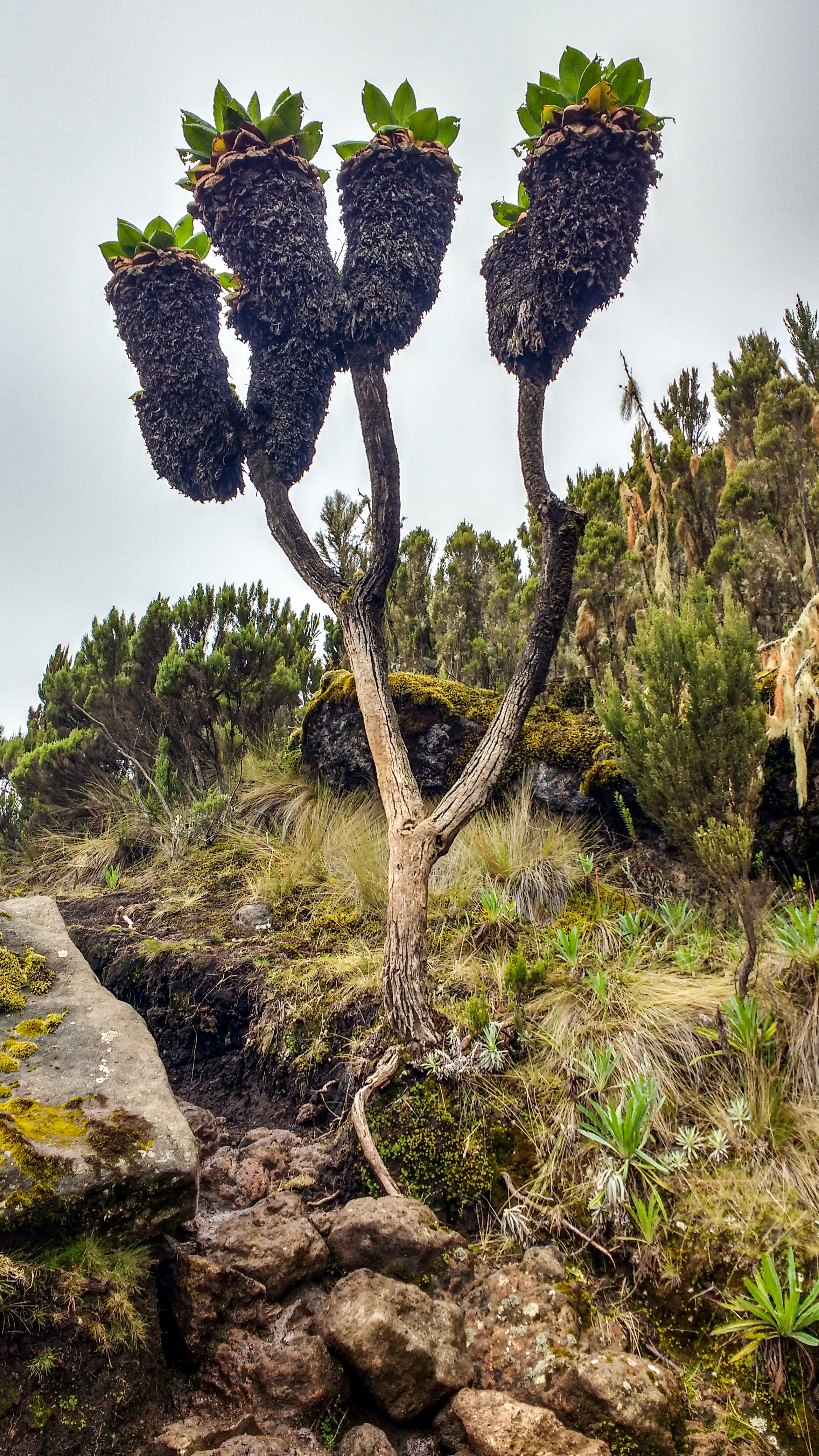
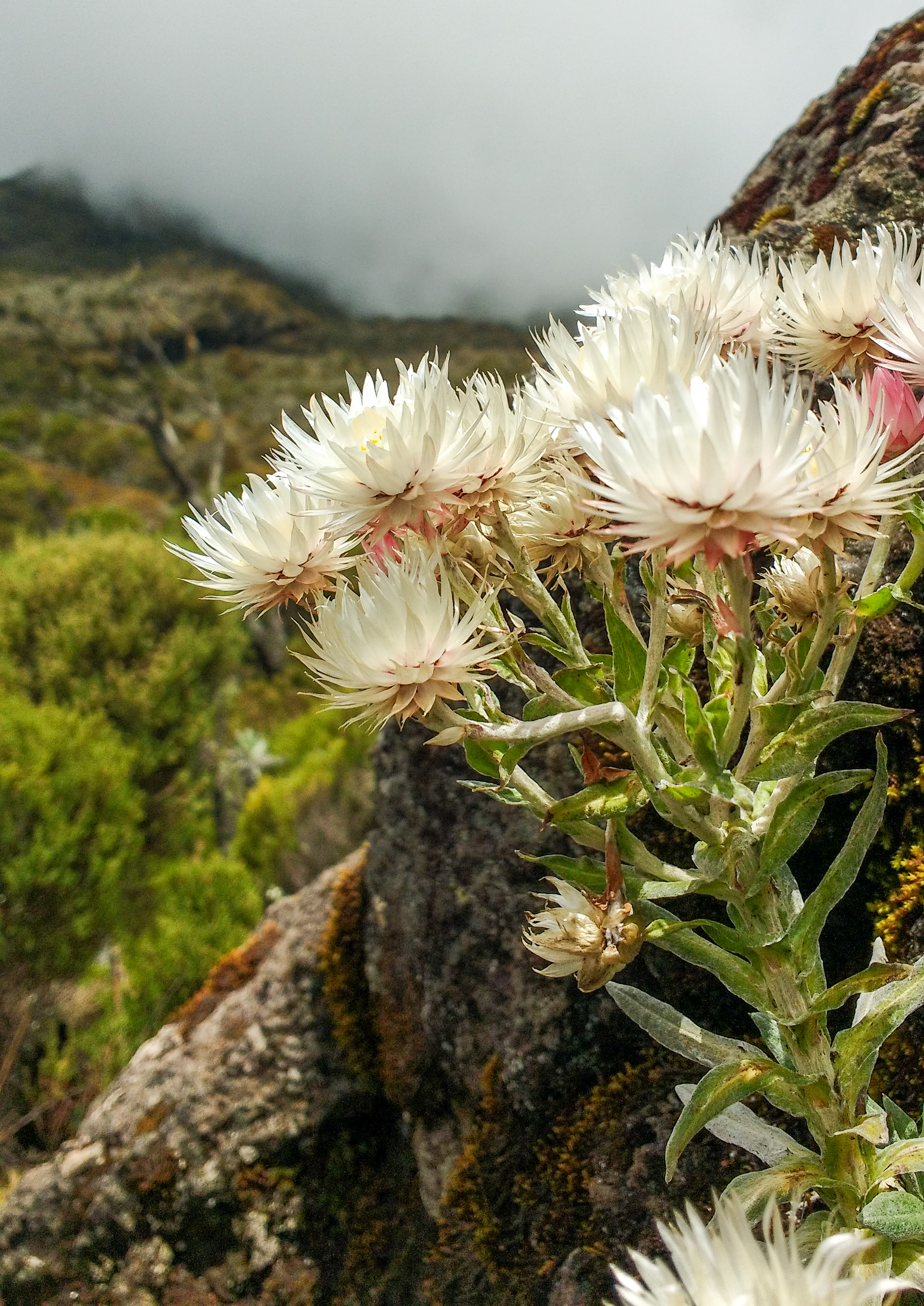
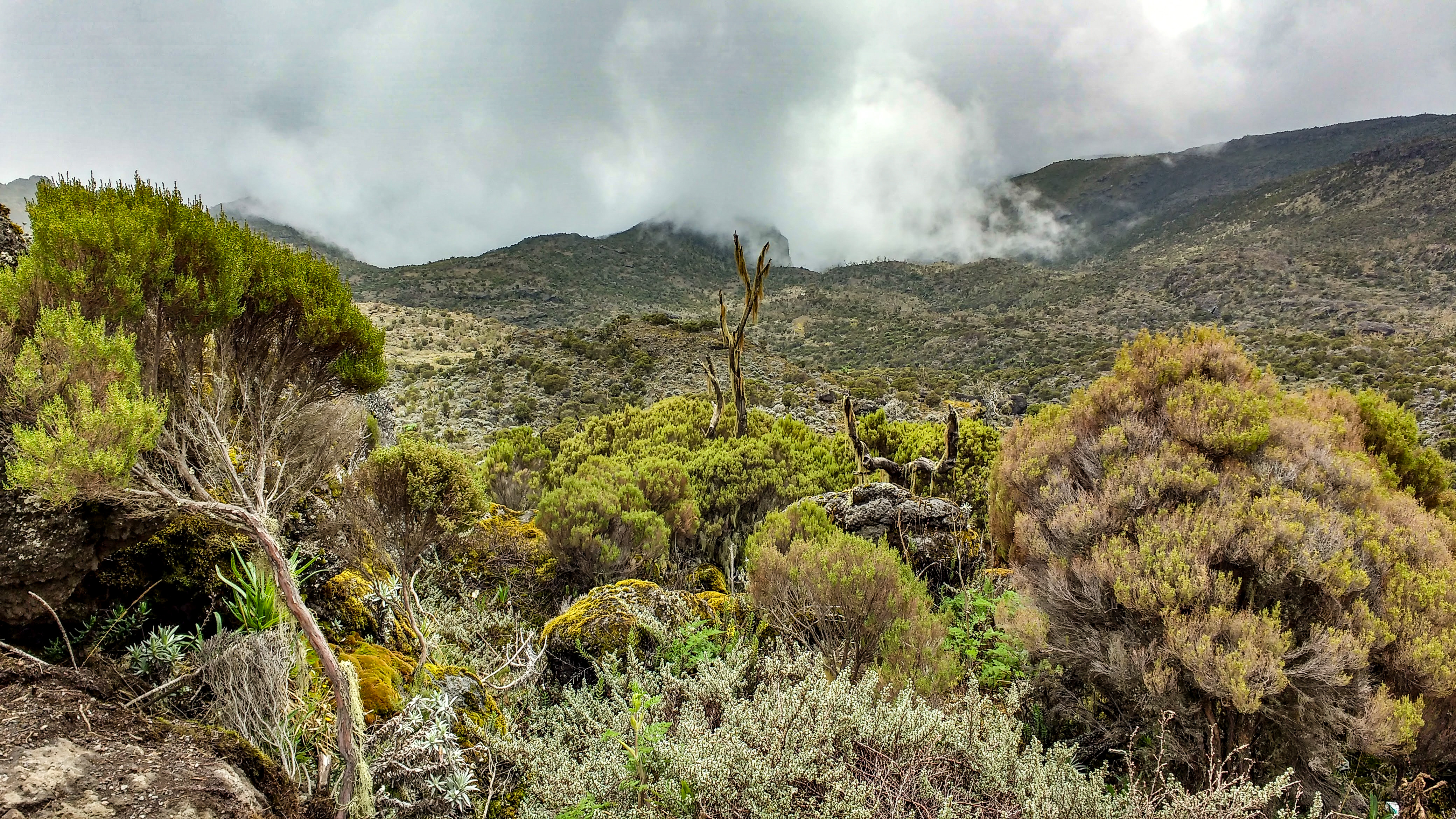
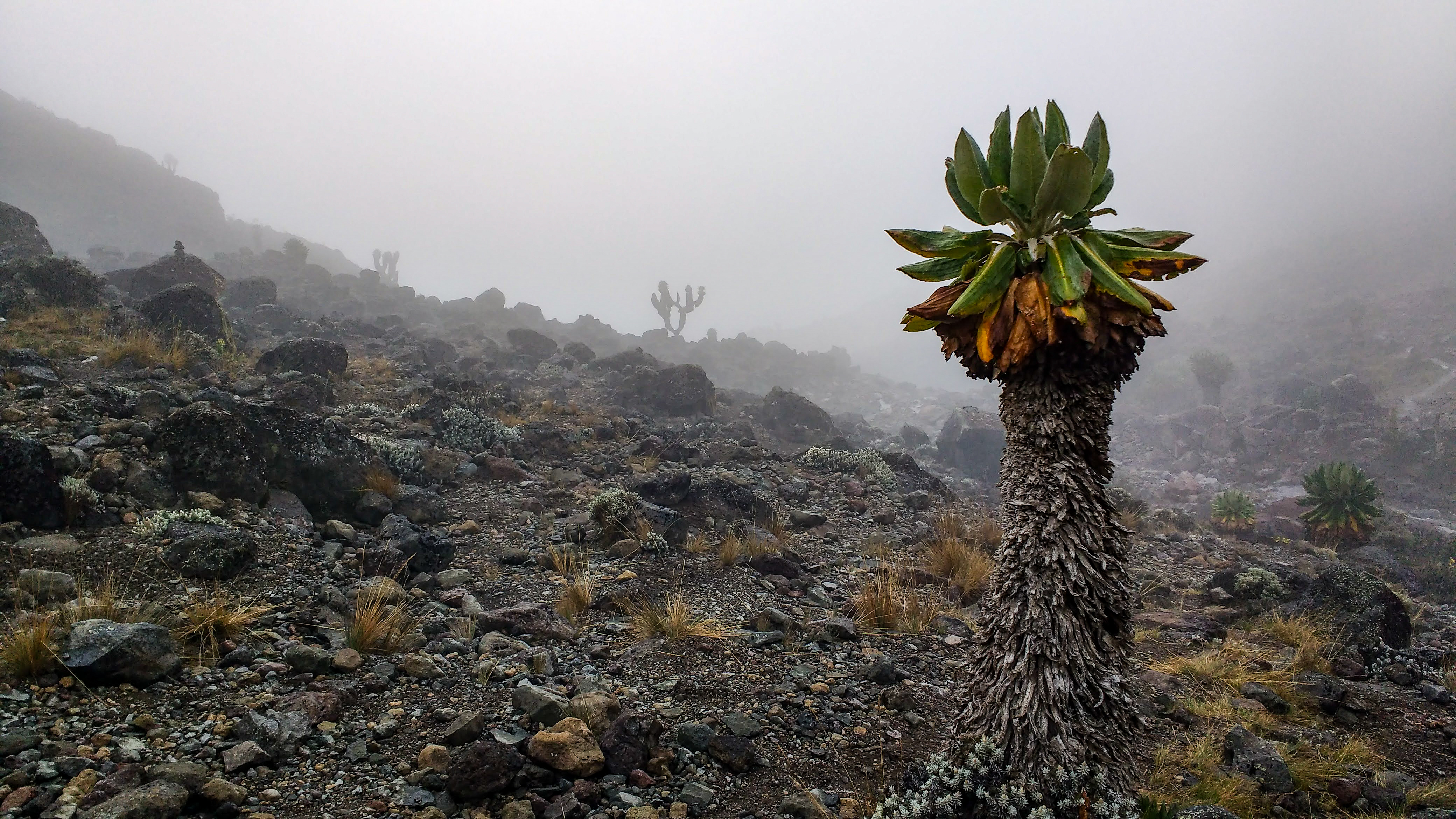
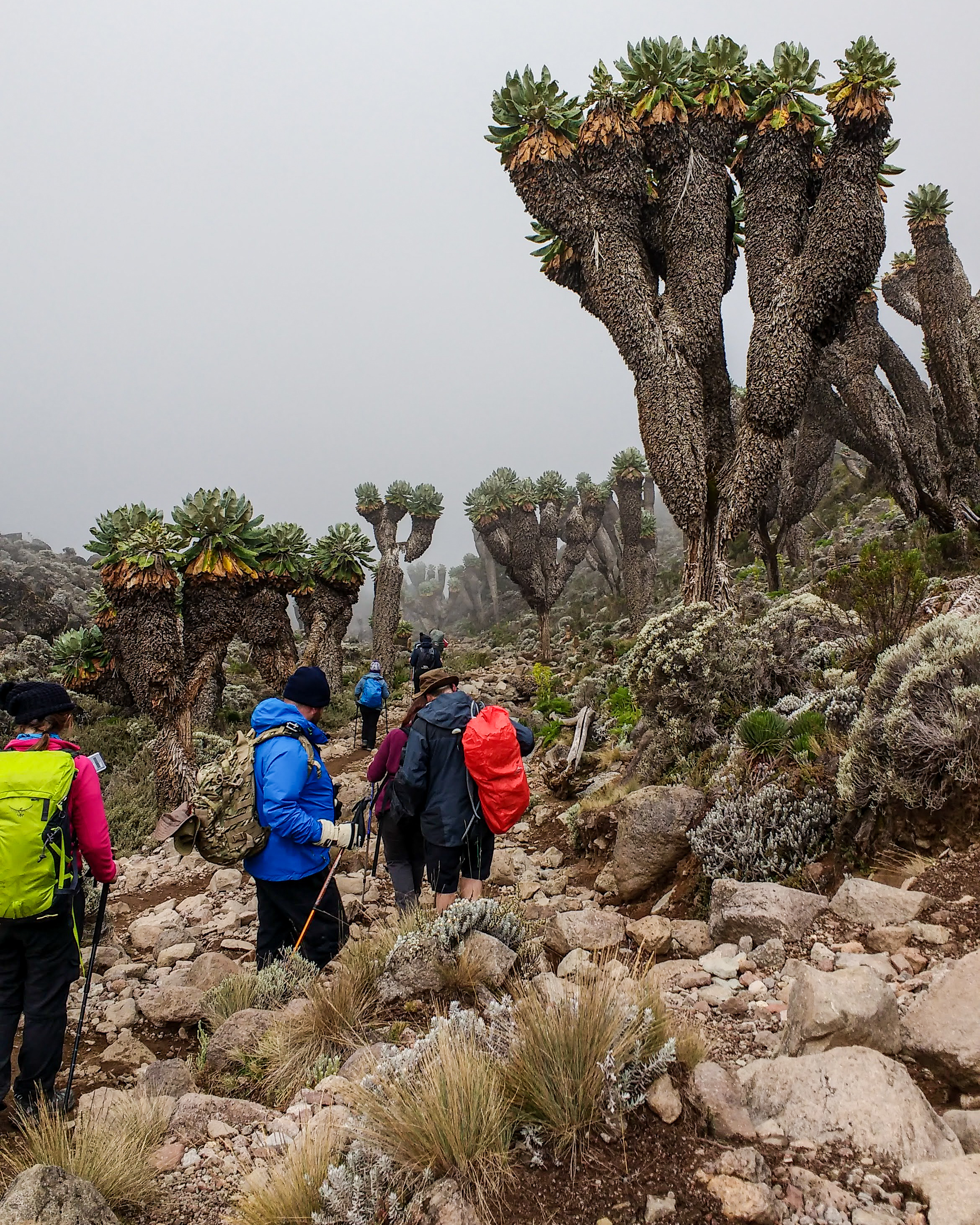
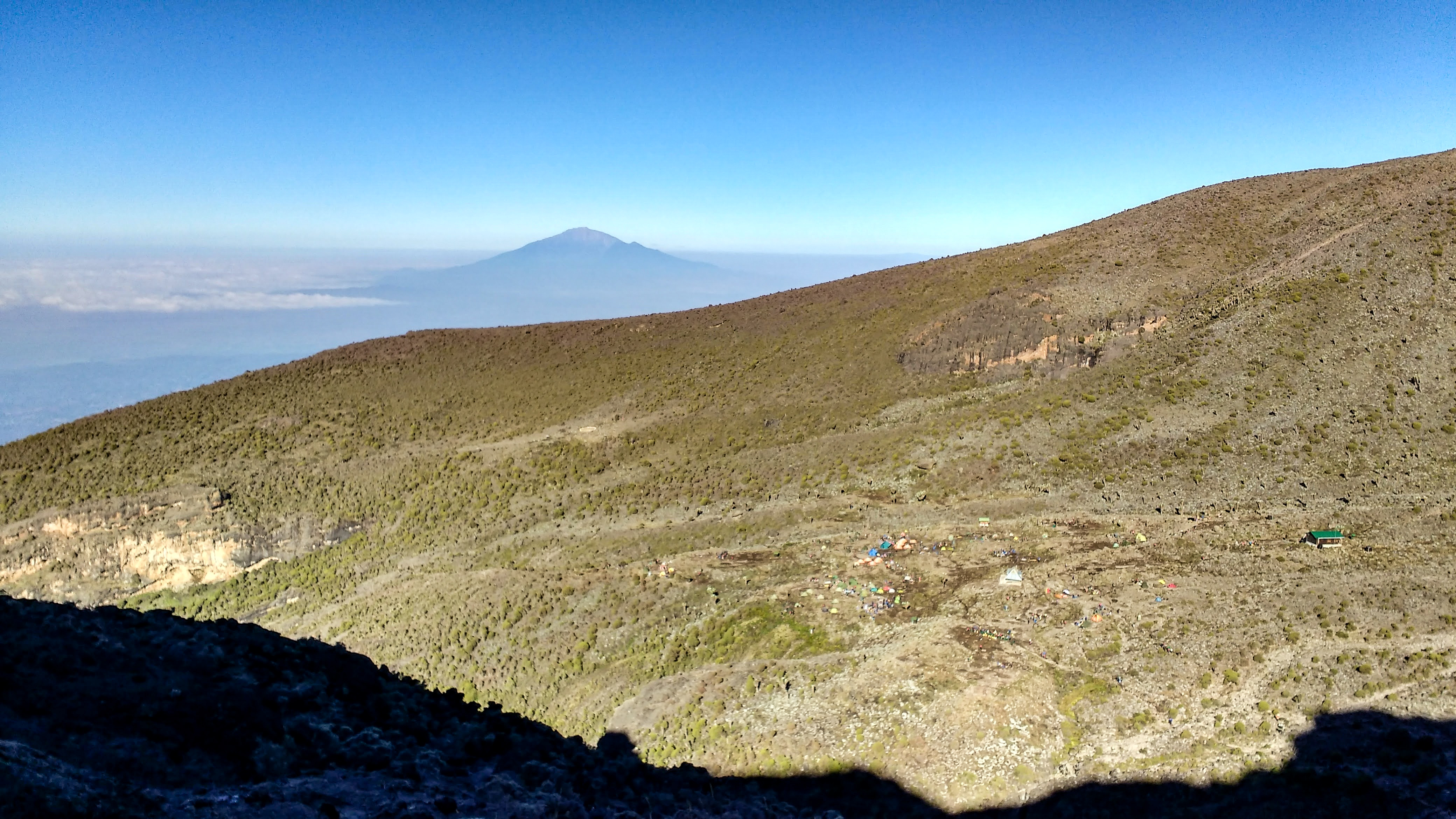
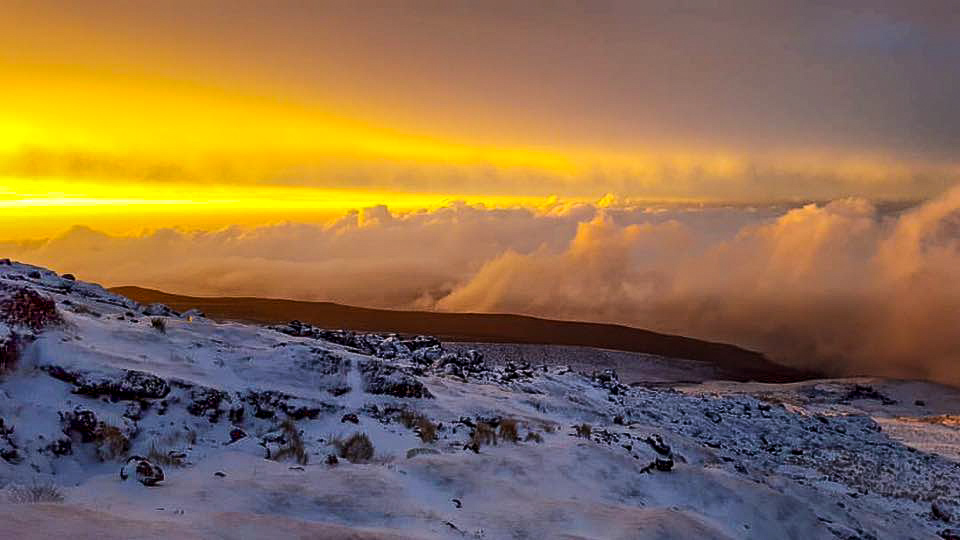
Our 5:30am wake up call came with a cup of Kilimanjaro tea delivered straight to our zip up door! “Asante Sana!” (Thank you very much!) Daylight lapped at the edges of the sky as we dressed and packed our things. The sky turned pink over the snowy peak above us and the sun began to rise. After a bowl of porridge and a sausage, we set off around 7:30am, climbing in glorious sunshine. Spirits were high for most of the group, and we rose up out of the bush to a pristine view of the cloud rainforest below and breaking the horizon was Mount Meru – Tanzania’s second highest volcano. As we climbed into the afternoon, clouds rolled in, engulfing the scenery in patches of fog. The plant life around us changed, with unique flowers and trees popping up between rocks and moss. One of our guides, ‘Prof’ passed the time chatting about the local wildlife in Tanzania’s plains, comparing their hunting techniques. Prof also carried a vuvuzela, which he intermittently trumpeted on to boost morale and give us all a giggle!

After a snack stop in the company of Aaron, Si, Steph, and Tom, (the others were scattered further ahead and behind) we scaled the steepest bit of the day, scrambling up a rock face and passing other-worldly caves with miniature waterfalls and rockpools high in the mountain mist. Prof reminded us that the cloud was dangerous for UV: he carefully painted some of Si’s sun cream on his own cheeks and nose and said that Masai men wear white paint like that for ceremonies as a mark of manhood! We met with two other guides, Henry and Ibra, and collectively they taught us some Swahili phrases:

  • Nina Njaa – I’m hungry
  • Ndio – Yes
  • Mbu – Mosquito
  • Poa kichizi kama ndizi kwenye friji – Cool & crazy like a banana in the fridge!
  • kazi nzuri – Good job

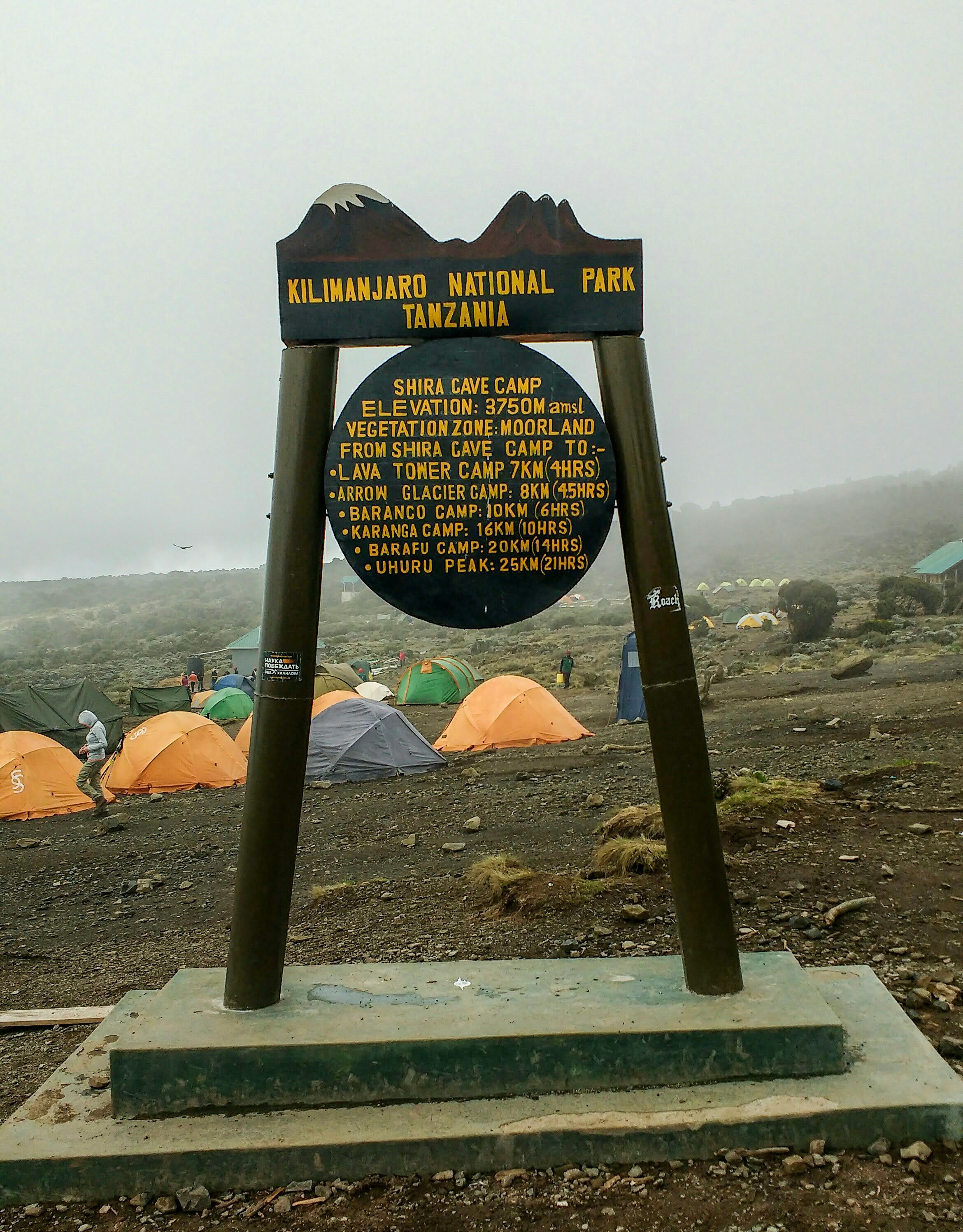
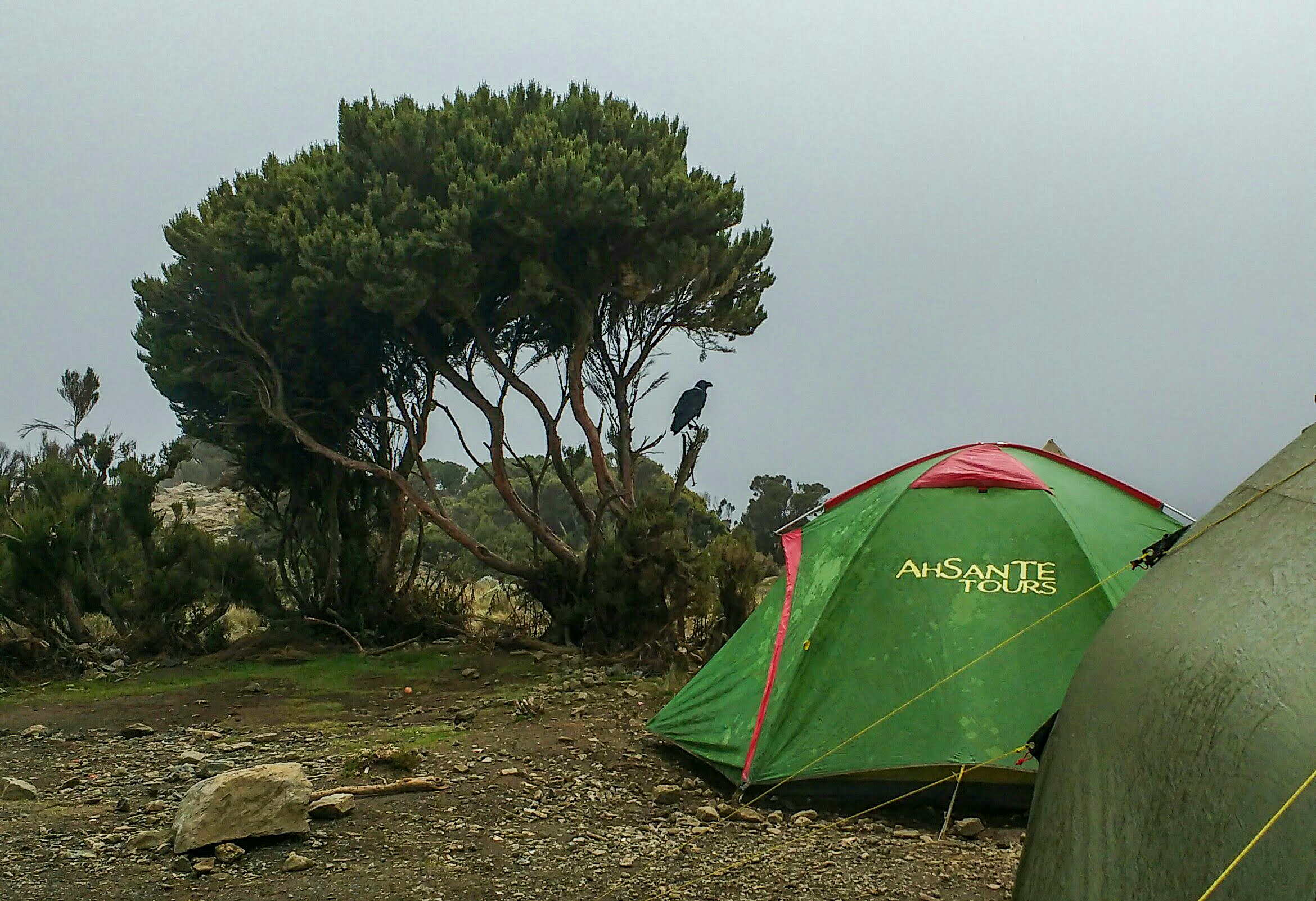
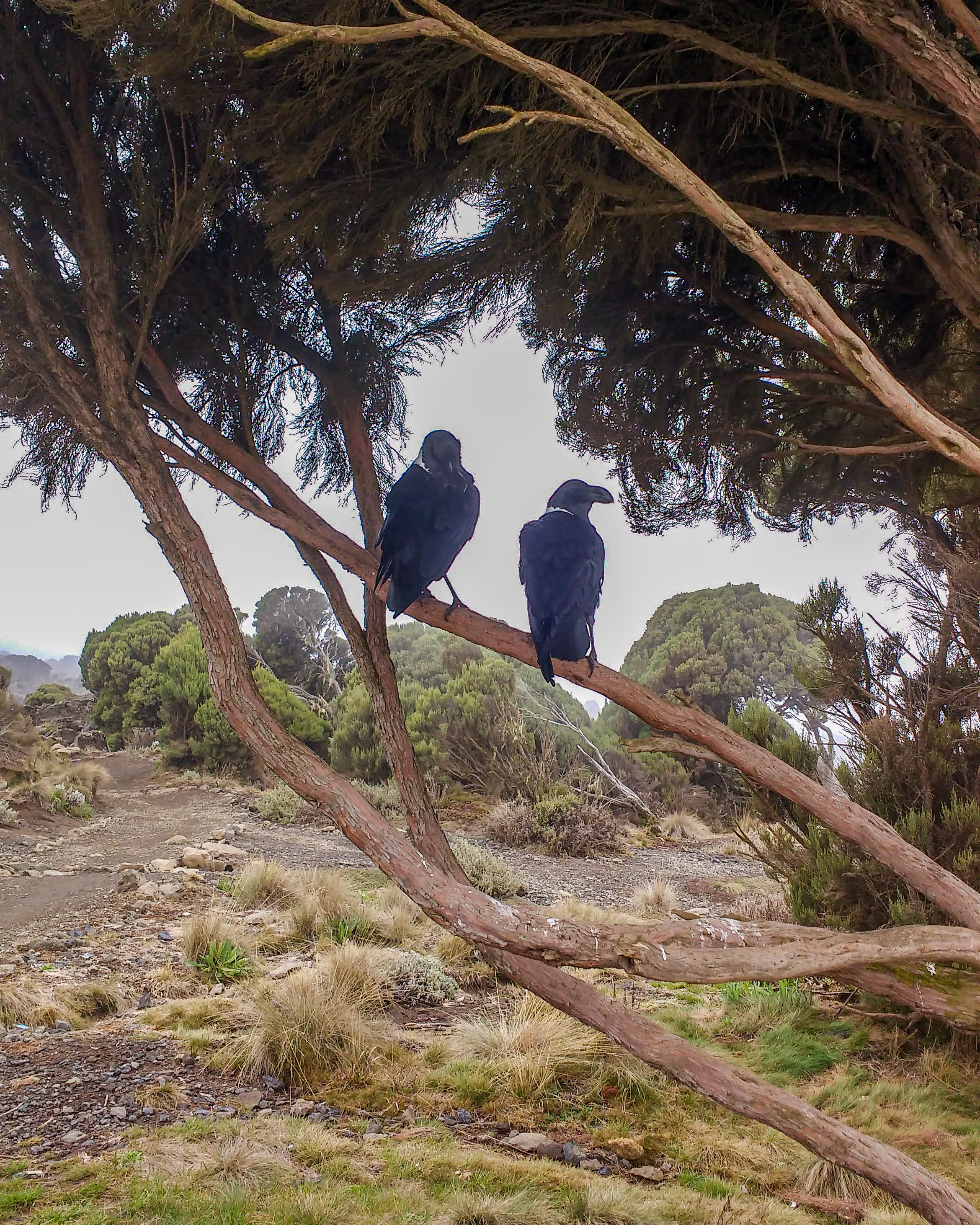
We descended into the misty Shira Cave Camp, where we were greeted with high fives and fist bumps from our Rafiki, and shown to our tents. Enormous White-necked Ravens hopped about the landscape, pecking at the dirt with their bulbous beaks. A couple of them were preening themselves in a tree, silhouetted on the fog. Lunch was served in the mess tent; spaghetti and vegetable curry with cheese on top – we gave the Chefs a round of applause.

The afternoon at Shira Cave Camp was a bit different to the usual schedule – after a shorter day of walking, we had time to rest in anticipation of tomorrow’s big day of acclimatisation. Before dinner, the entire team of guides and porters began a dancing and singing circle, giving us some motivational African entertainment. We learned the words to ‘Jambo Bwana’ and we sang and danced until we had all gone silly!

Jambo, jambo Bwana (Hello, hello Sir)
Habari gani (How are you?)
Mzuri sana (Very fine)
Wageni, mwakaribishwa (Foreigners, you’re welcome)

Kilimanjaro, hakuna matata (Kilimanjaro, there is no problem)

Tembea pole pole, hakuna matata (Walk slowly, slowly, no problem)
Utafika salama, hakuna matata (You’ll get there safe, no problem)
Kunywa maji mengi, hakuna matata (Drink plenty of water, no problem)

There was a small matter of our guides asking us to sing a song from England for them, and we all had some sort of brain paralysis and mutually started singing ‘Freed from Desire,’ but as a football chant… let’s pretend that didn’t happen! That evening, the clouds rolled away and the stars shone so brightly over camp. Somewhere in the distance beyond Mount Meru a storm lit the sky in silent purple strobes, and I slept well.

Day Three – “Headaches and Fried Potatoes”

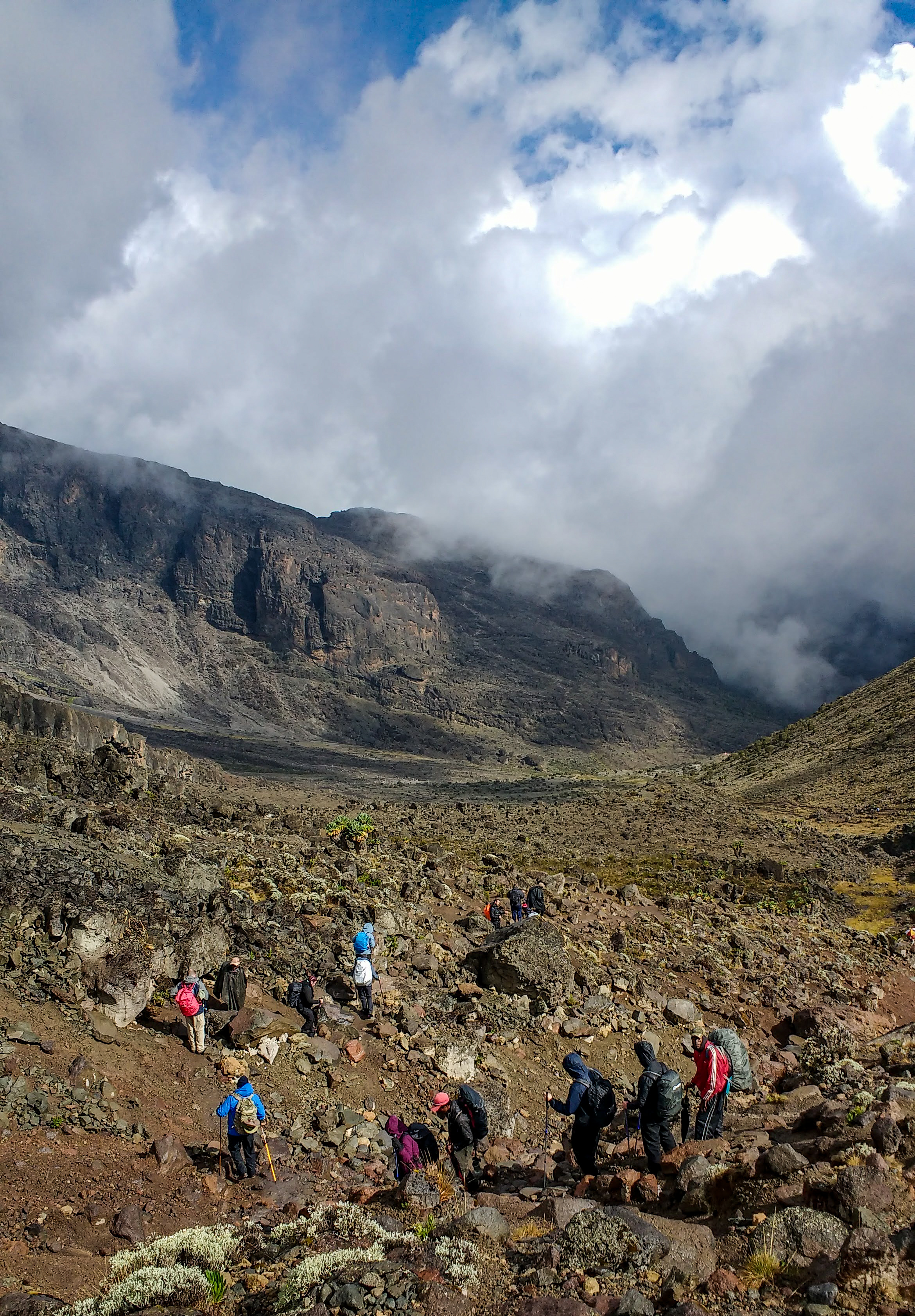
We said farewell to two of our group this morning – it was sad to break up the group, but they decided they’d reached their limits, which is a difficult and respectable thing to do. We had risen before dawn for a quick breakfast and began the tough trek into the beautiful rising sun at 7:30. It was glorious and warm, but as the hours passed and we climbed higher into cloud, the chill crept in quickly. We were gaining altitude fast, and the land became very bleak as we crossed into the Alpine Desert, with nothing but huge boulders and red mud. Much of the group began to feel the effects of altitude, suffering with pressure headaches and struggling to catch our breath. It really made me sensitive to the cold and the exhaustion, but with a piece of ginger and some ibuprofen, I managed to stay on top of it. The guides made sure we stopped regularly and sipped our water steadily.

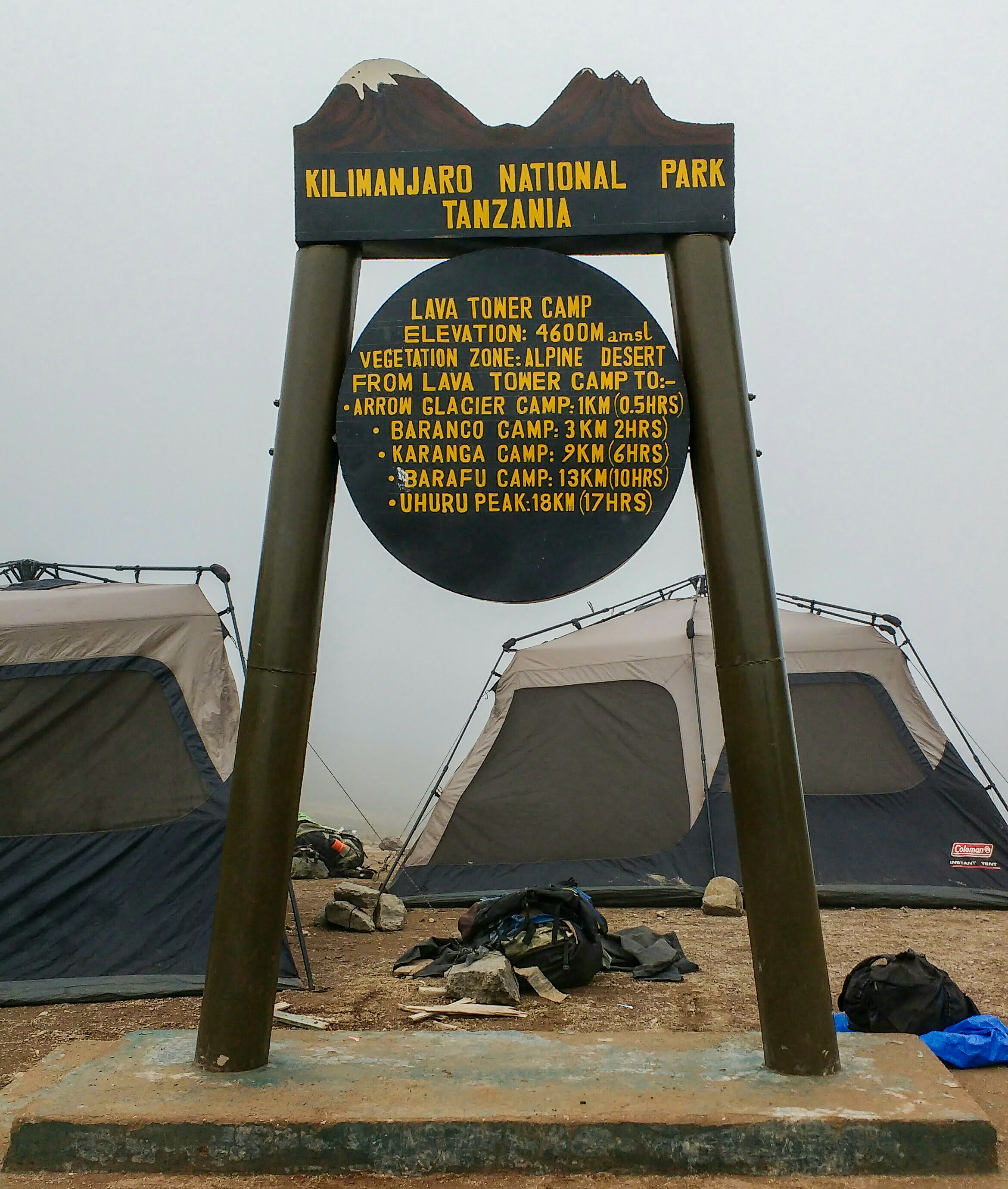
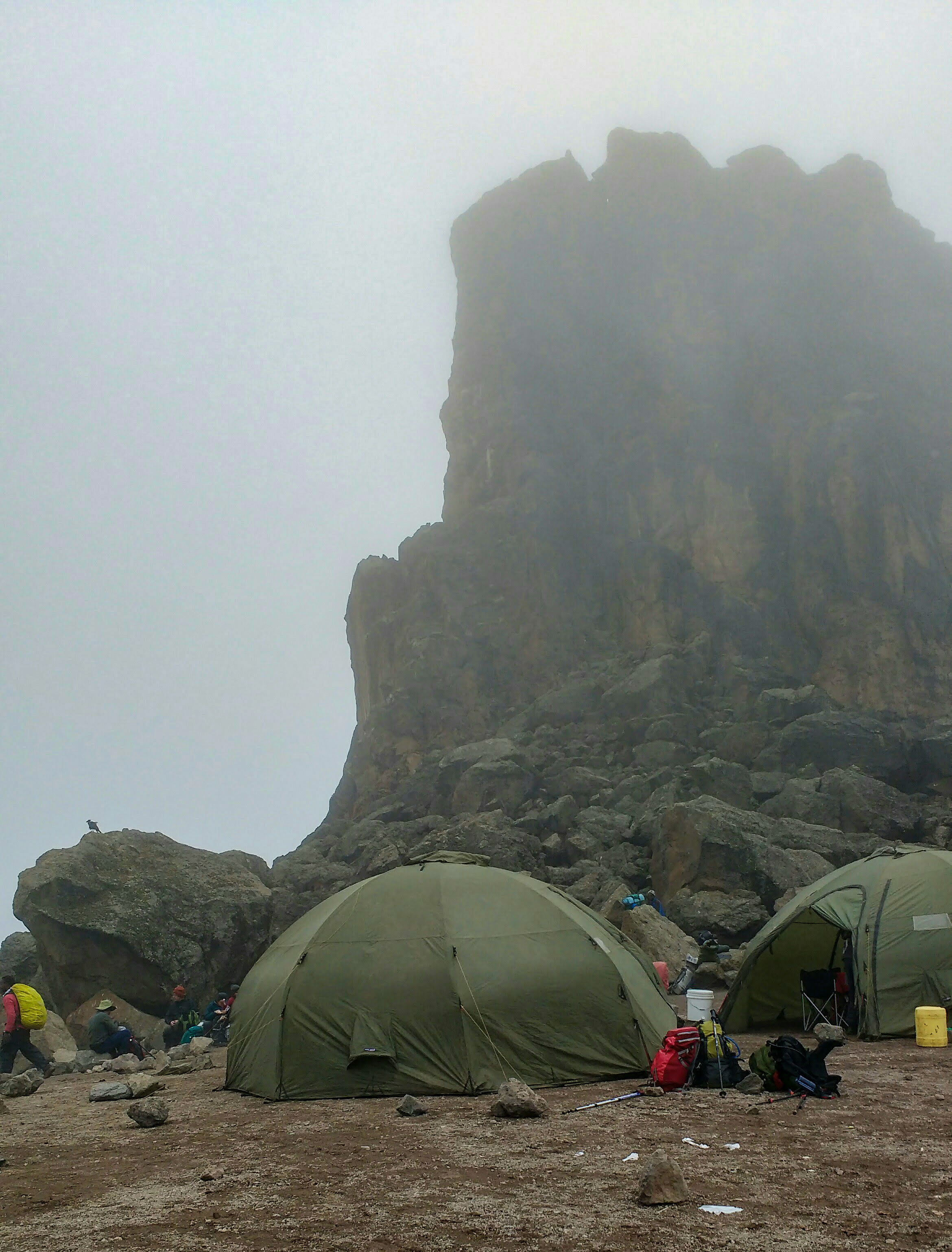
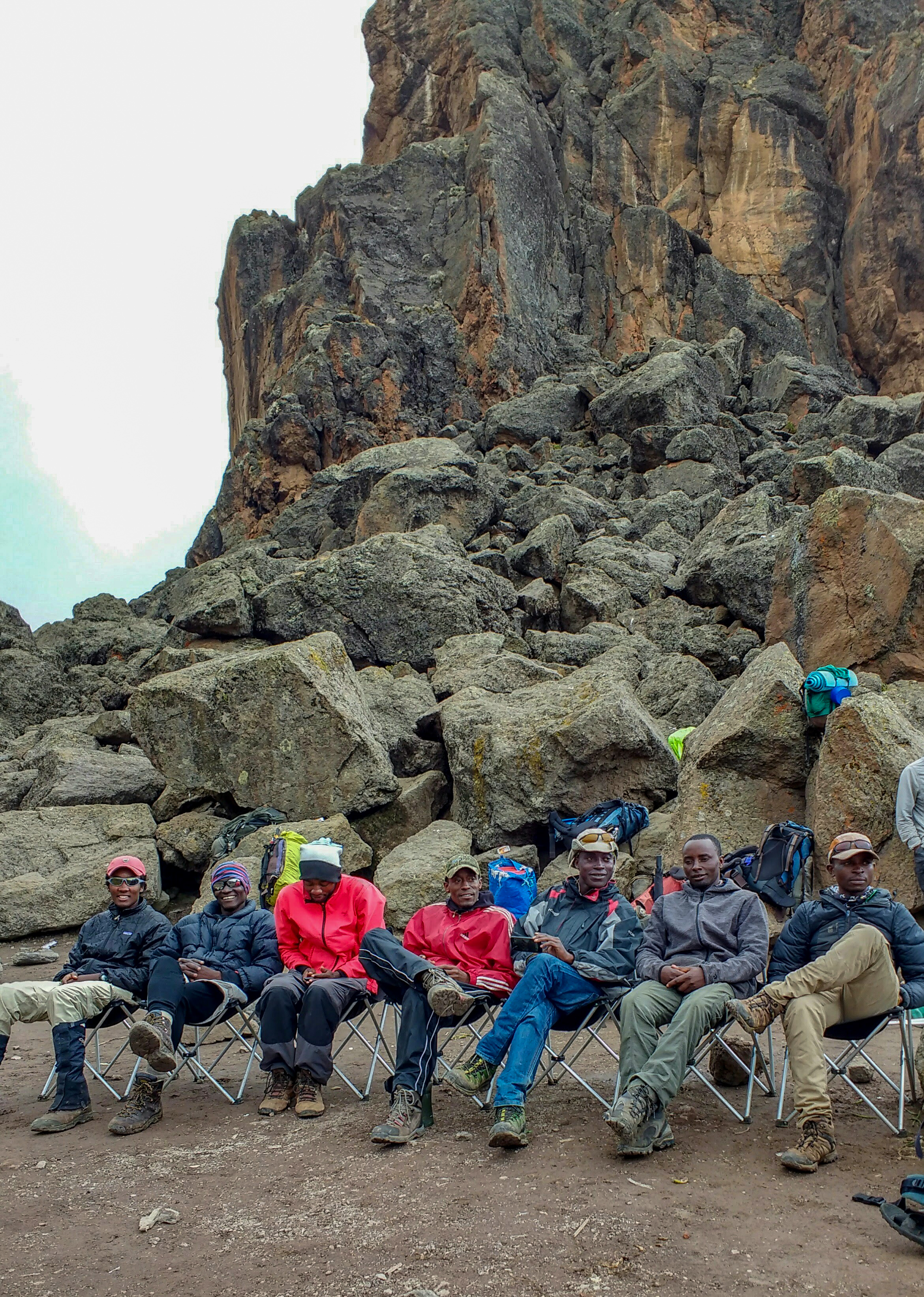
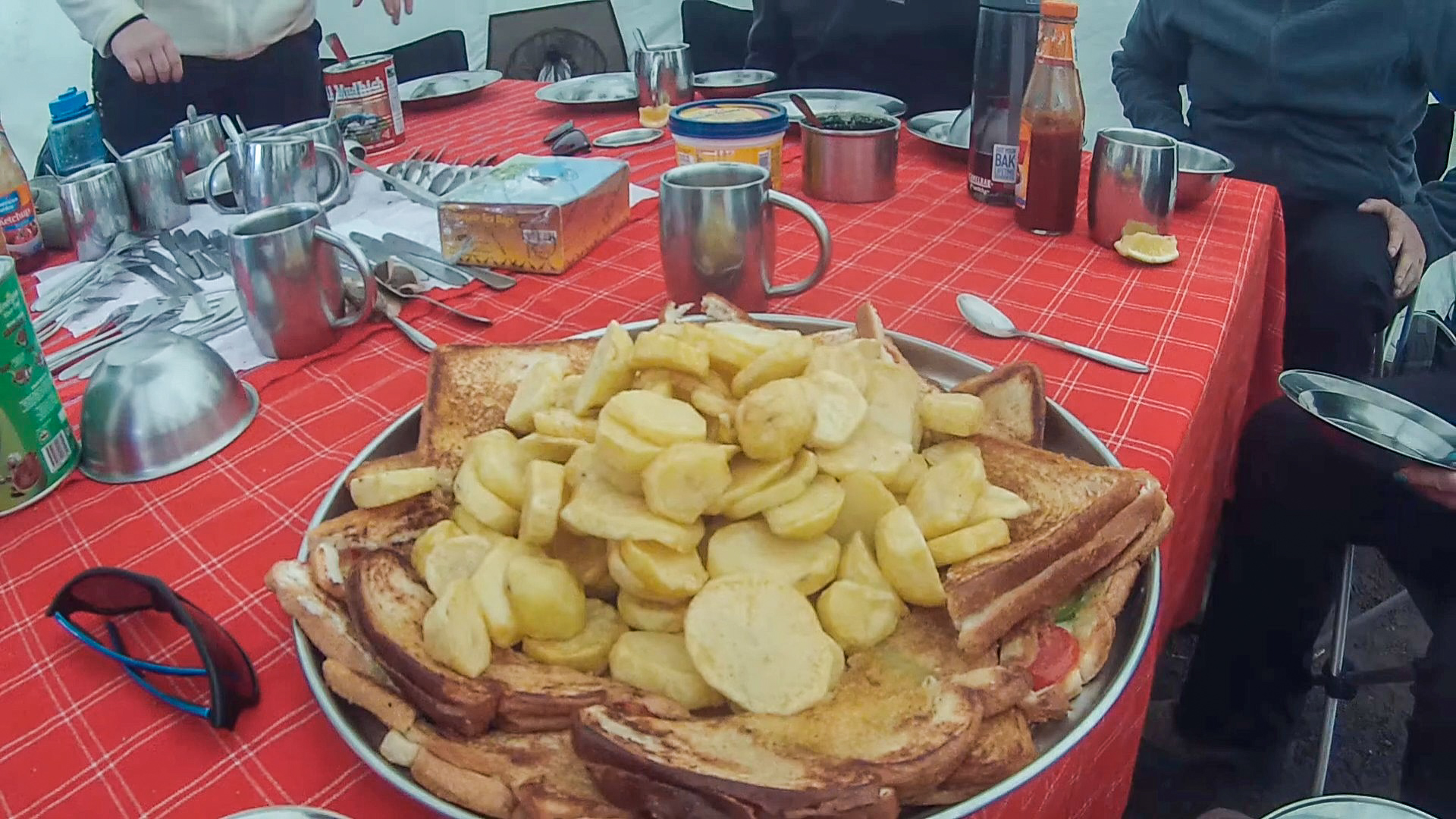
We climbed the vast, rocky landscape up to the Lava Tower, mist skimming the ground beneath our feet, finally reaching an altitude of 4,600m. This was our acclimatisation hike, and the highest point of our trek until we reached the Kibo Cone. From here we’d descend again – this exercise would, in theory, make our summit attempt much easier in terms of getting our bodies used to the altitude. Our Rafiki had already arrived and put up the mess tents beneath the tower of solidified lava, where we were treated to hot fried potatoes, cheese toasties and cake! Since altitude sickness feels a bit like a hangover, hangover food was extremely welcome! Even those who were sick to their stomach felt better after the feed, and we continued hiking down the other side of the Lava Tower, across streams and little waterfalls on this strange barren landscape.

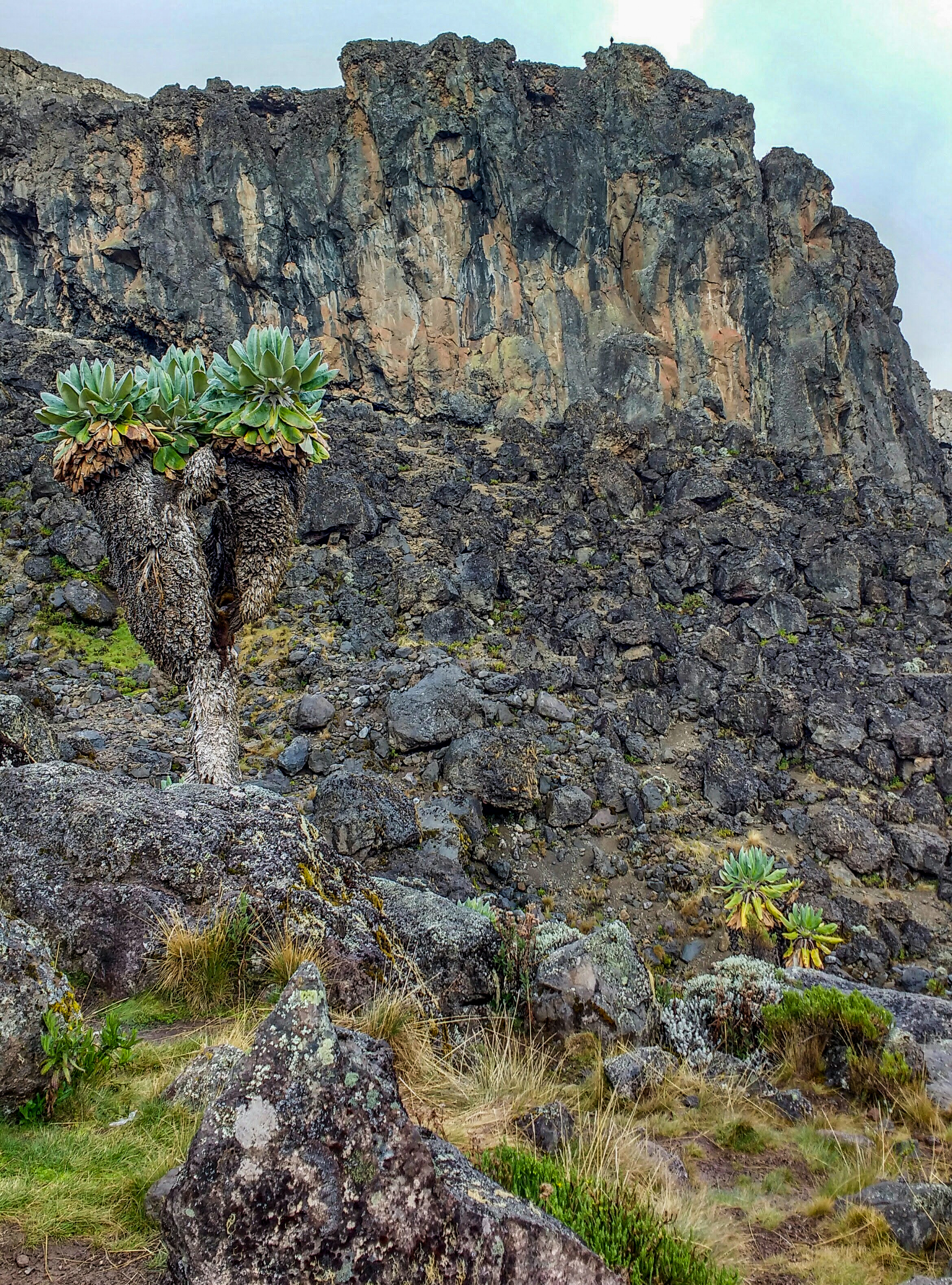
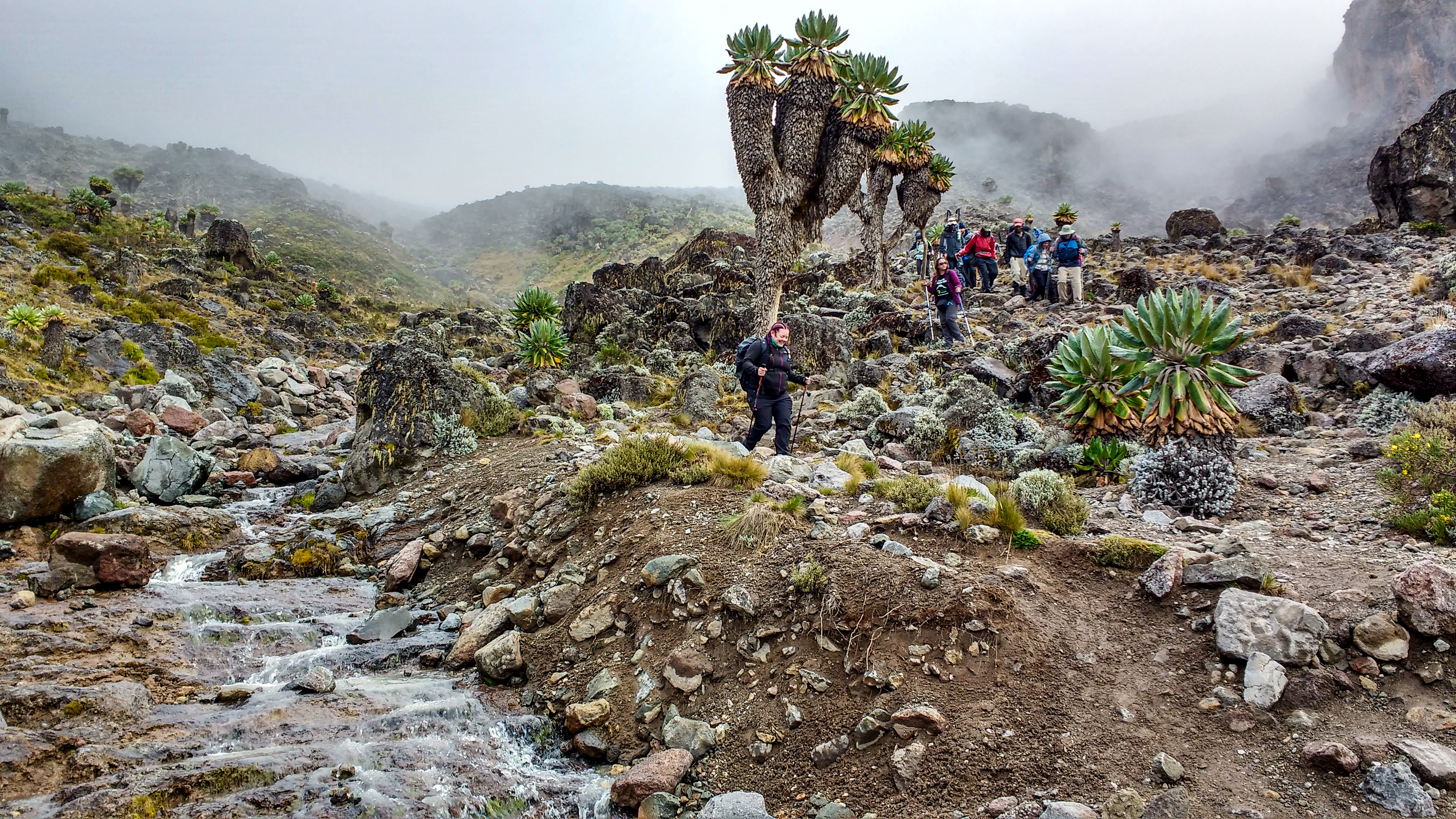
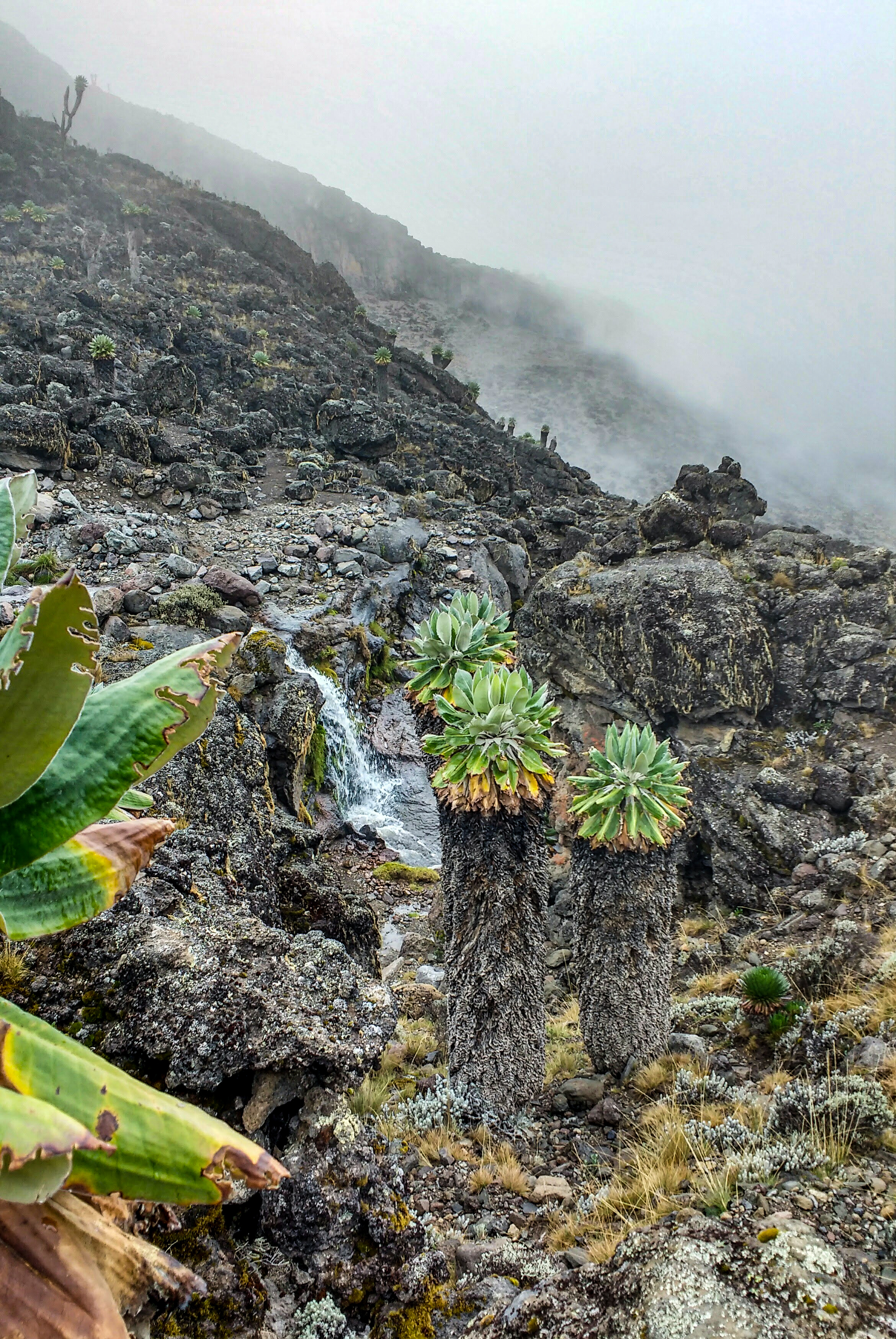
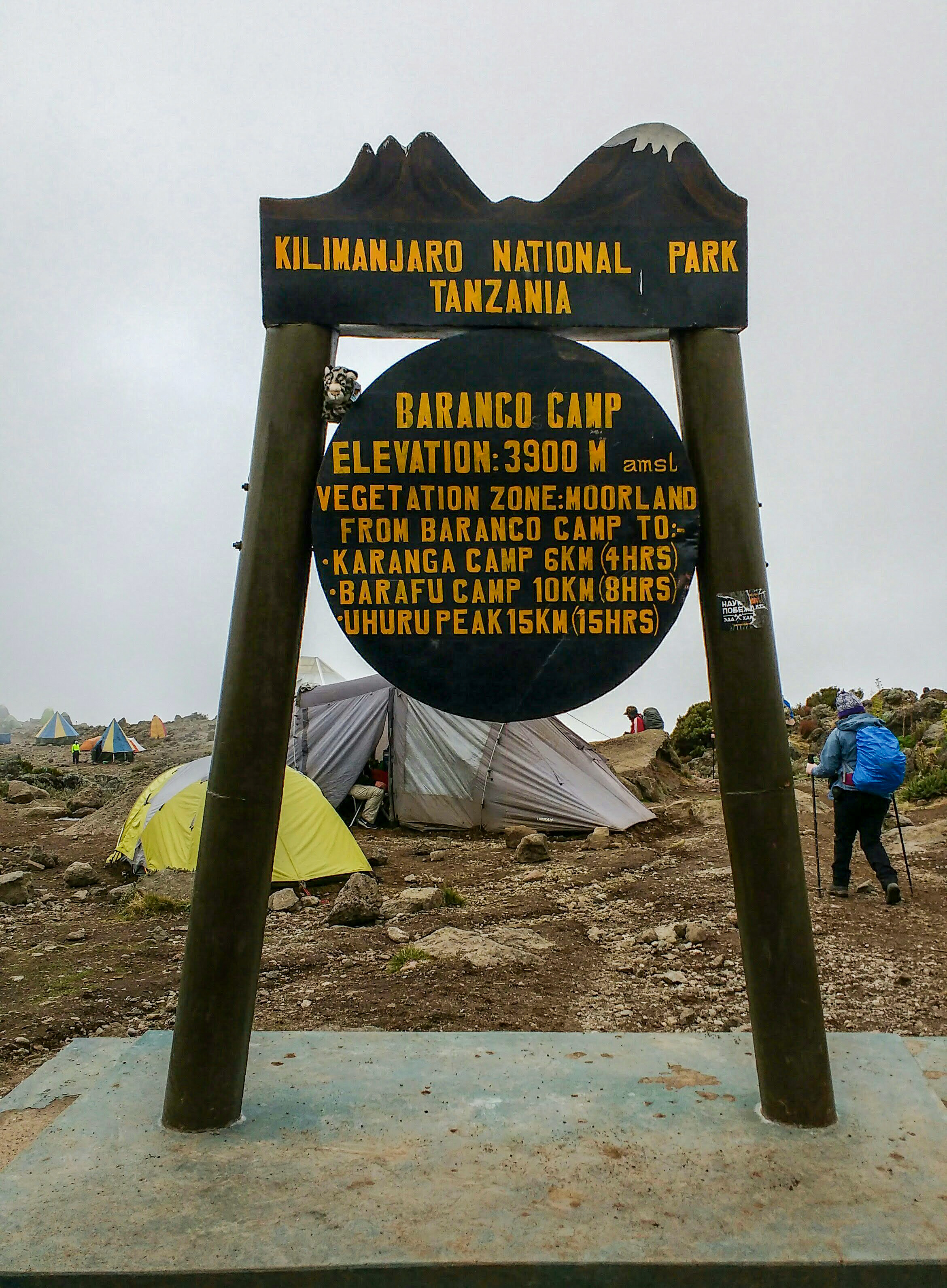
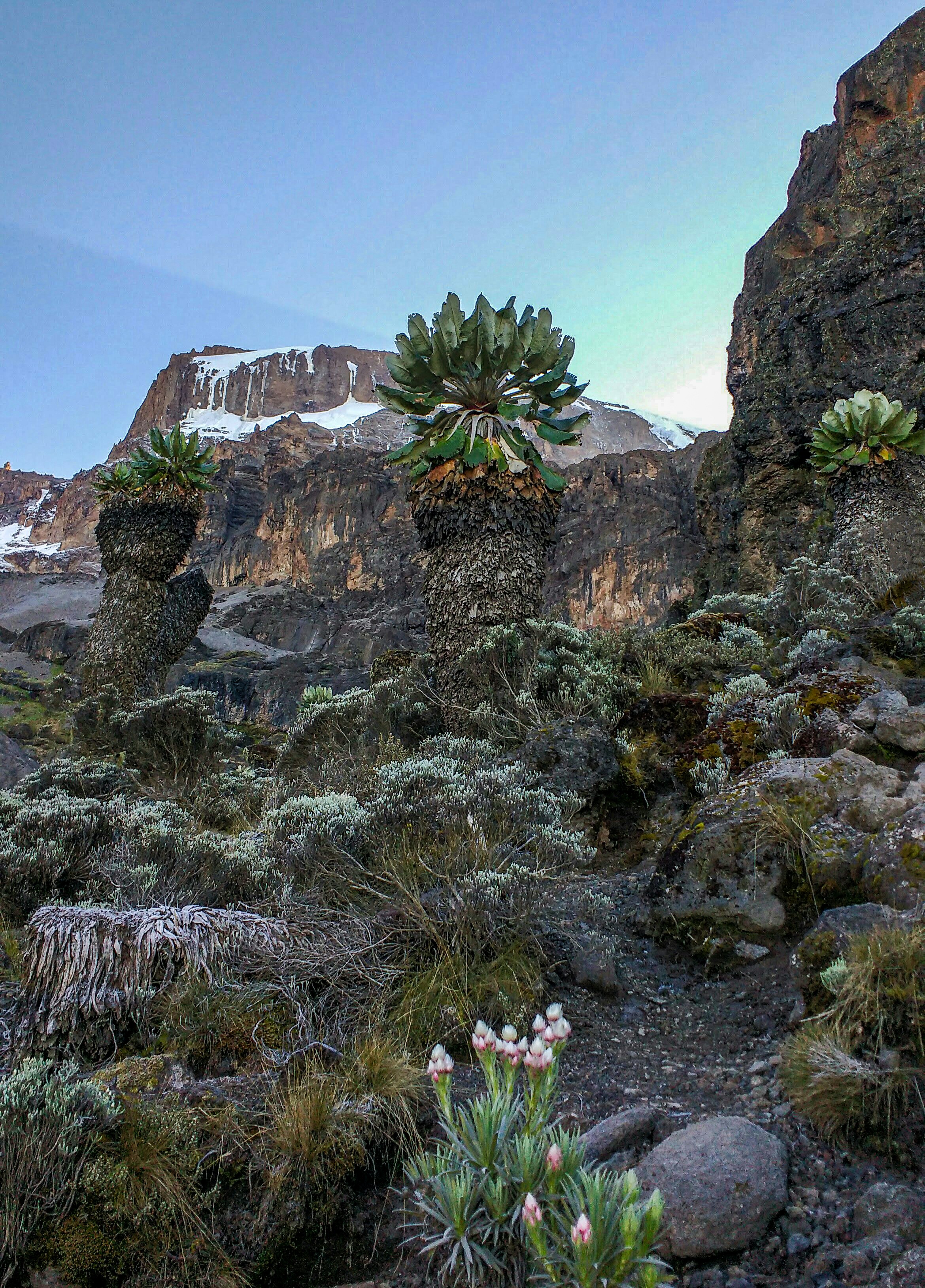
It began to hail quite heavily as we trekked, which then turned into snow, and we plodded ever onwards until we started to see vegetation again. Strange, almost cactus-like trees, and flowers growing in the mist, surrounded by little rocky waterfalls. Eventually, we found ourselves gladly at Barranco Camp, where Macaroni and Bolognese went down a treat for dinner. We were informed that Barranco Camp was the highest point for rescue helicopters to land on our route – from here on up, if we got injured, we’d have to rely on being wheeled back down on a ‘Mountain Taxi,’ which we’d discover in a day or two… Once again, the stars were stunning and we could see lights far below in the real world. I watched a little Four-Striped Grass Mouse hopping around outside the tent under the looming Barranco Wall; the infamous cliff we would be scaling in the morning.

Day Four – “On Top Of The World”

We were ready to leave Barranco Camp at 7am, with the sky just lighting up at the edges, and we sang Happy Birthday in Swahili to Grace. I had awoken with a painful, swollen red face, which I think was a combination of yesterday’s morning sun, and an allergic reaction to my SPF50 sun cream – great combination! Tim – our group medic – advised me to borrow a different sun cream and keep applying tea tree gel. The group reacted very sympathetically to my appearance, which in turn made me feel very self conscious. In all this commotion, I didn’t get a chance to fill my water bottles, leaving camp with under 2 litres of water – not ideal. As we began climbing I was forcing back tears, feeling on the back foot, but I was soon brought back to reasoning by the stunning surroundings.

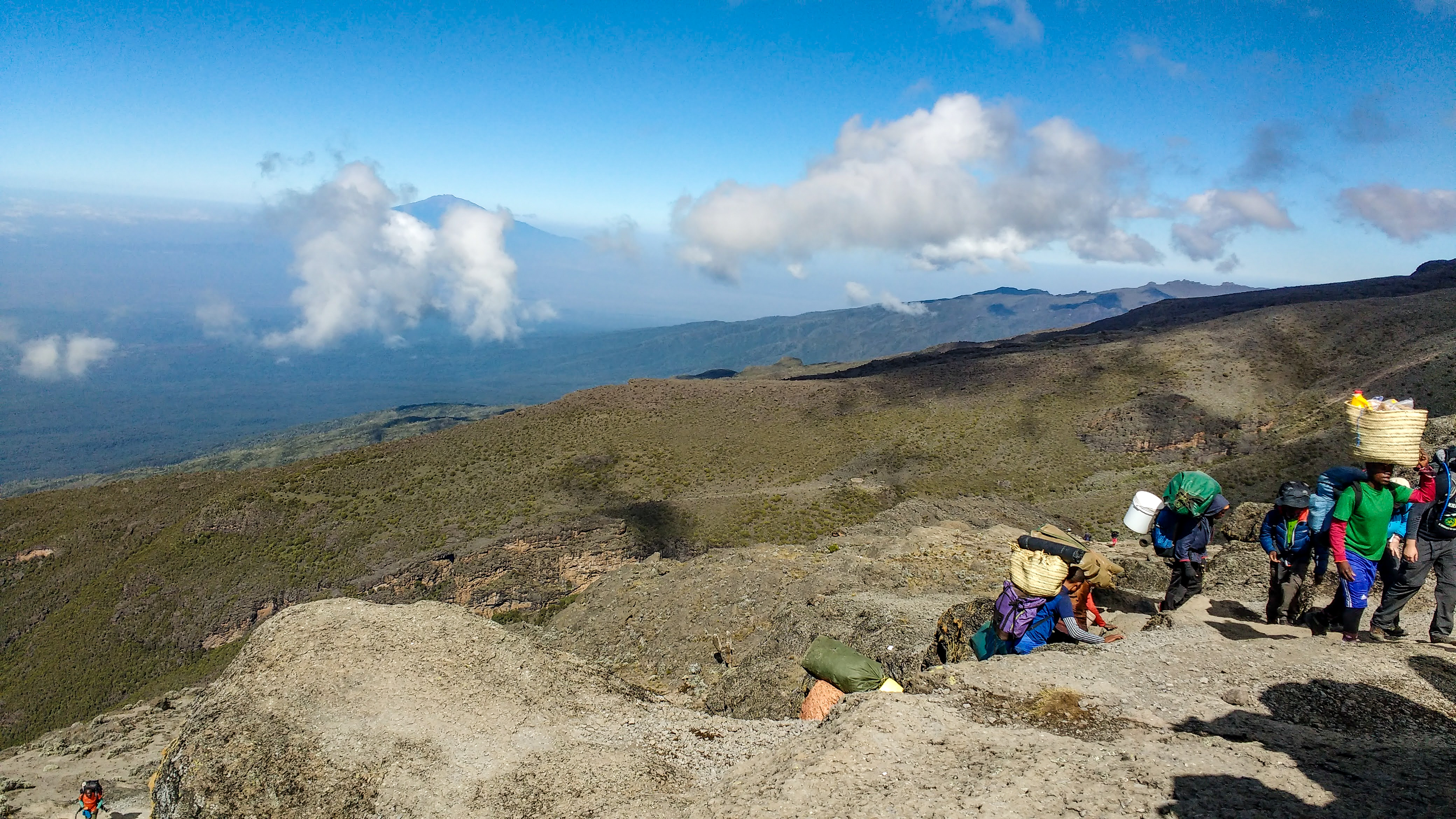
More than two hours of hoisting ourselves up sheer cliffs, edging along narrow ledges, giving one another leg ups, and even climbing on our guides’ knees, the camp was slowly falling into the distance beneath us, tiny green tents dotted on a real-life map. The valley and rainforest stretched out to blurry lines towards Mount Meru on the horizon, and the sun rose up over the wall to meet us. We sang and danced the ‘Barranco Shake’ while our Rafiki trooped past us with bags and baskets balanced on their heads. Grace stopped to tie a shoelace for one of them so he didn’t have to put down his pack! Maximum respect!

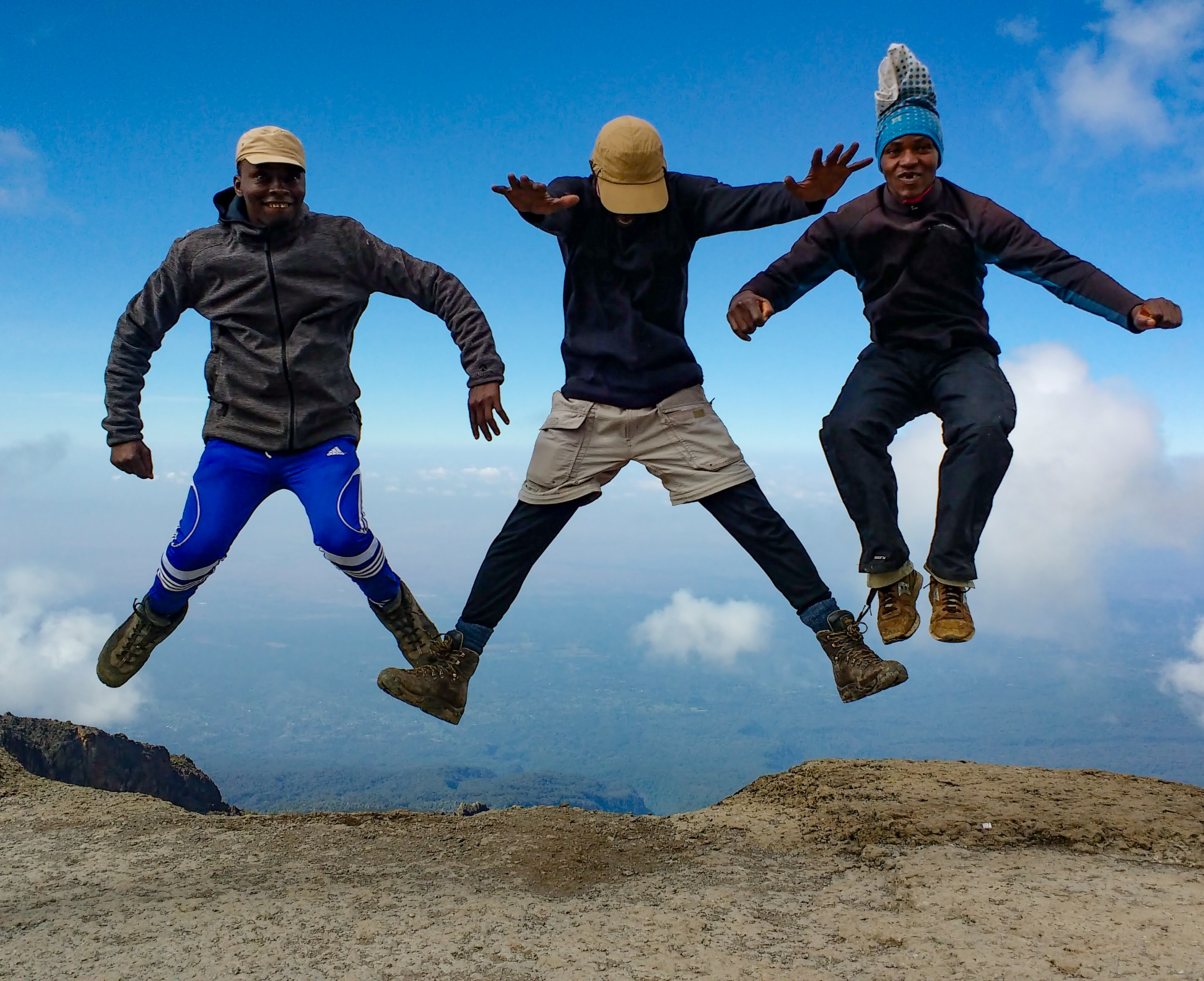
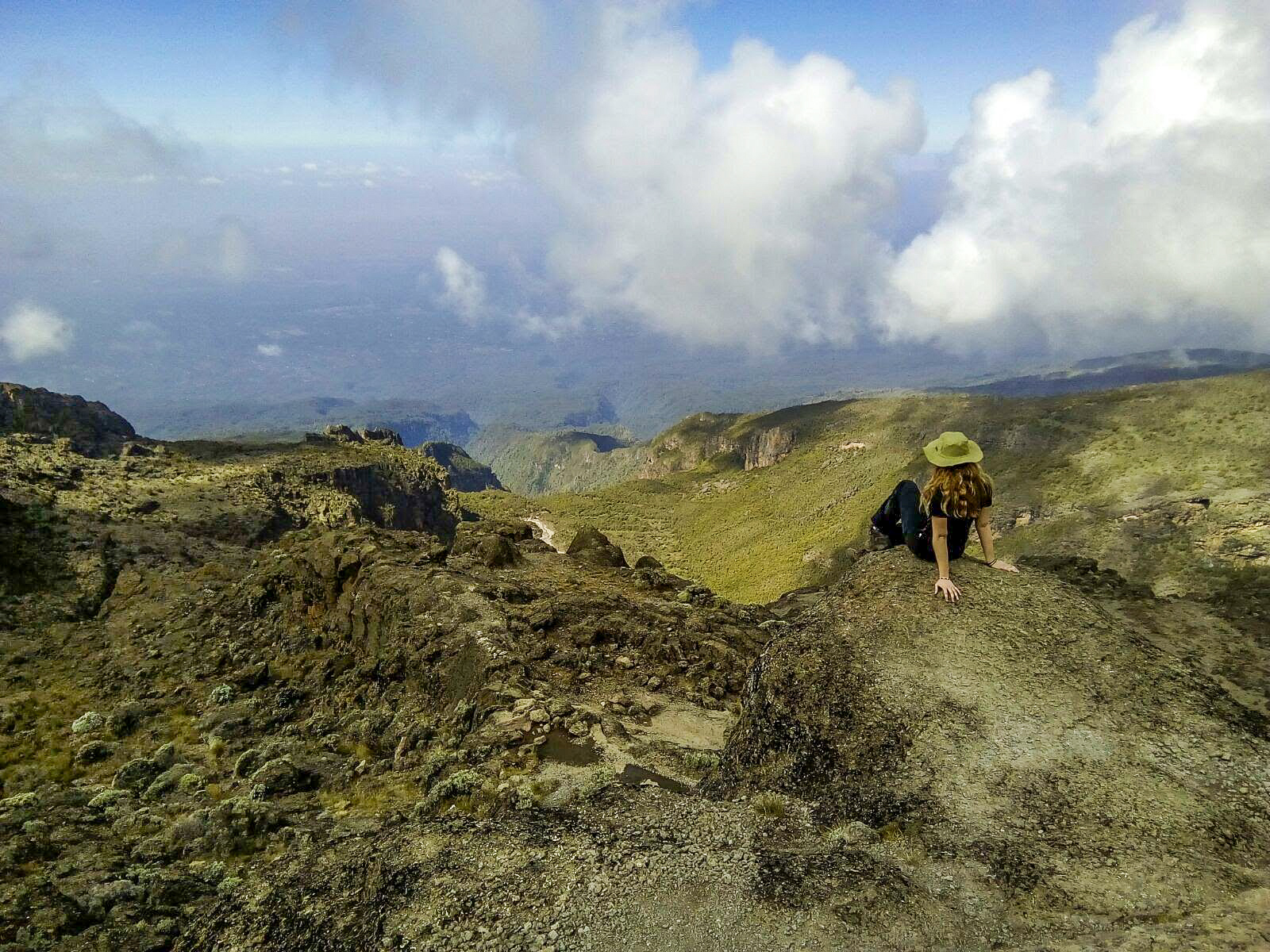
At the top of the wall the way ahead levelled out beneath the blazing sun, and the view was glorious, like looking out of an air plane! We took lots of photos, jumping in the air with our guides, and gave ourselves a moment on top of the world to take it all in.

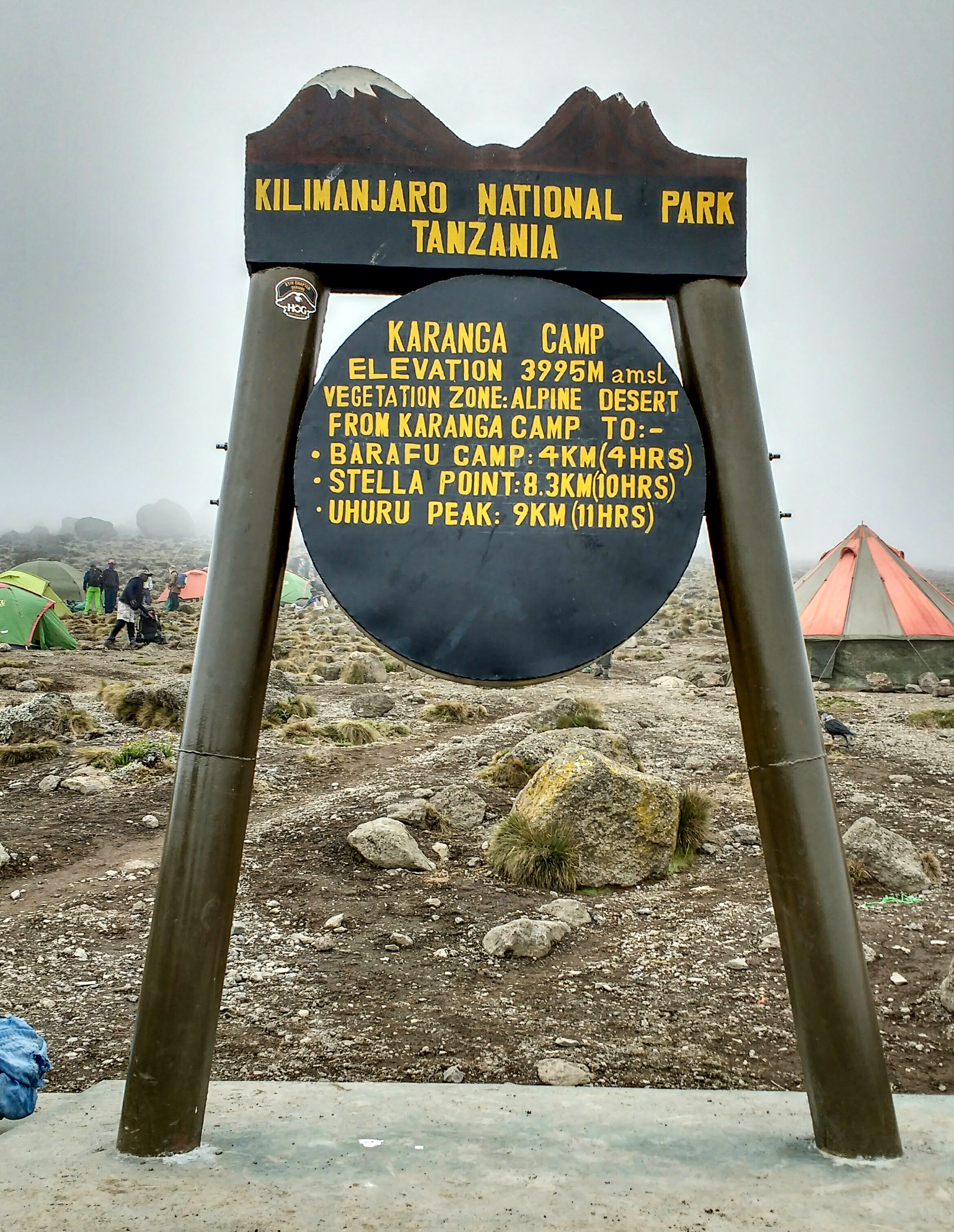
As cloud started to pour in again, we took the zig-zagging path up through the valley to Karanga Camp, all singing as we went. After we arrived, there was an epic thunderstorm and the mountain summit drifted in and out of view in the mist. Then it hailed! We had dinner and Birthday cake, and then we all ran back to our tents through the torrential rain to settle down for a long sleep.

Day Five – “Way of the Stone Stacks”

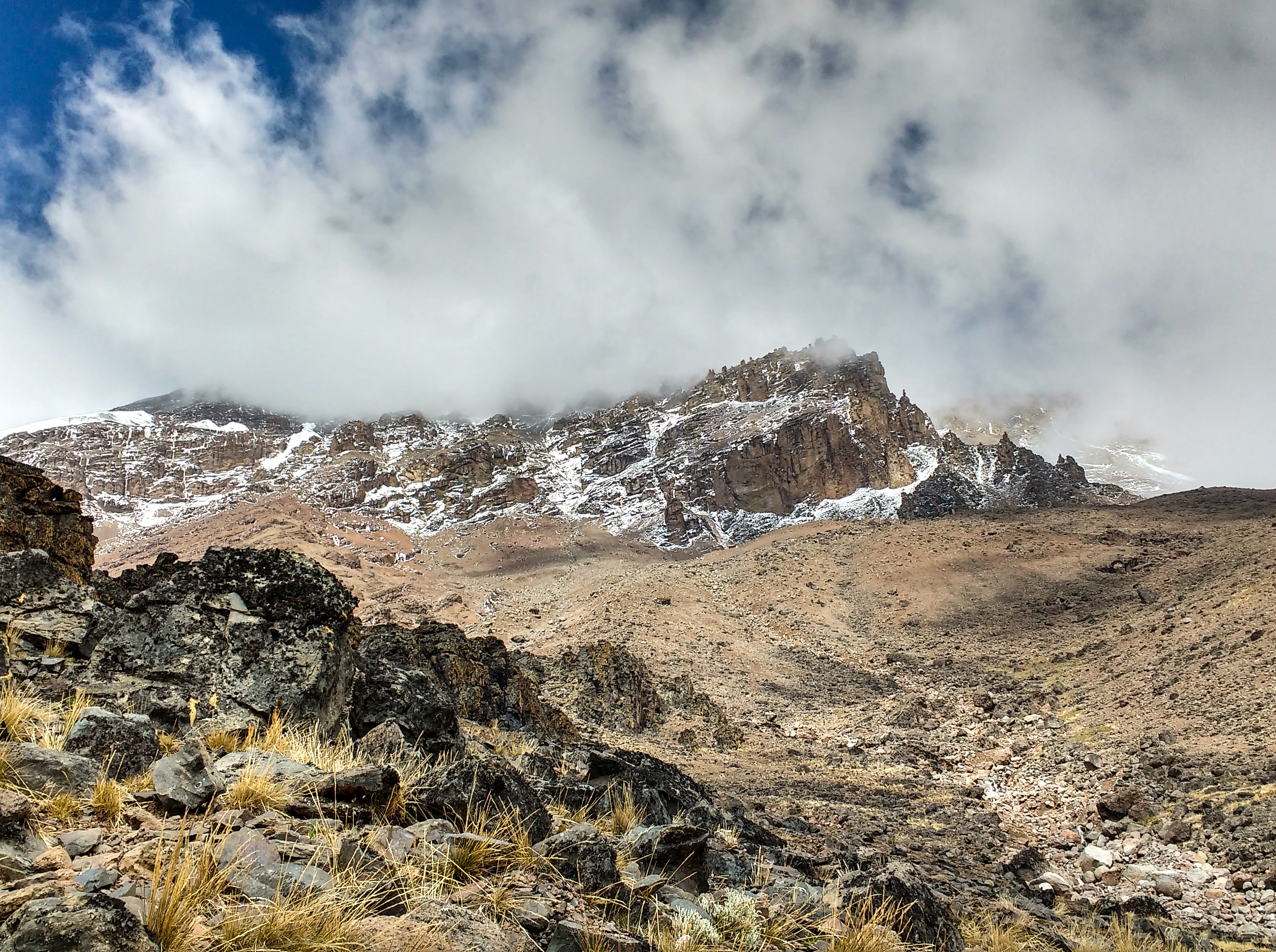
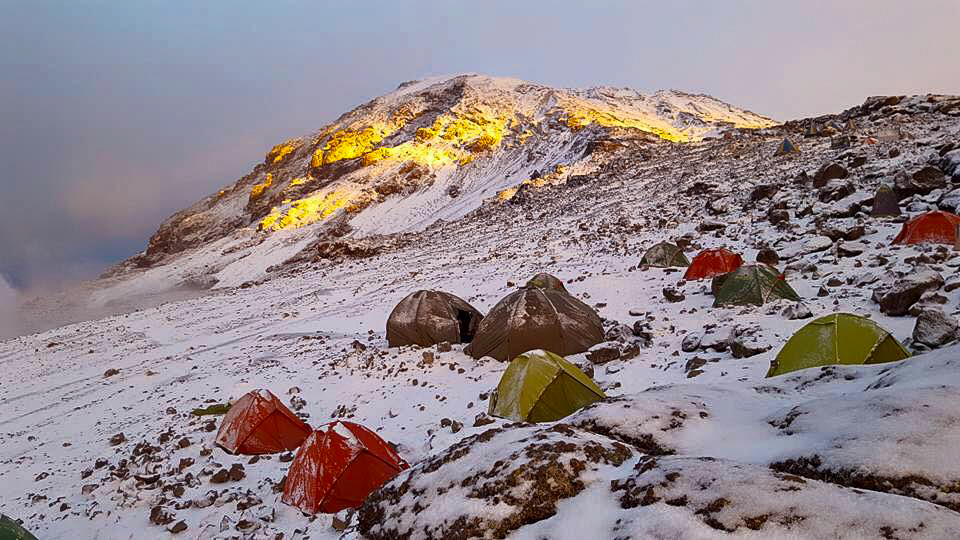
We were granted a lie in until 7am! But we were all up at 5:30 anyway. Our Rafiki brought tea to our tents as usual, saying “Habari za Asubuhi,” (Good Morning) and we went for breakfast, which today included some waxy yams that were quite interesting… We bid farewell to one more of the group, who left valiantly and proud, and some tears were shed. The summit loomed over Karanga Camp, and the snow line was lower than the day before, but the sky was blue and the sun was rising, making the snowy peak look like candy.

Morning at Karanga Camp

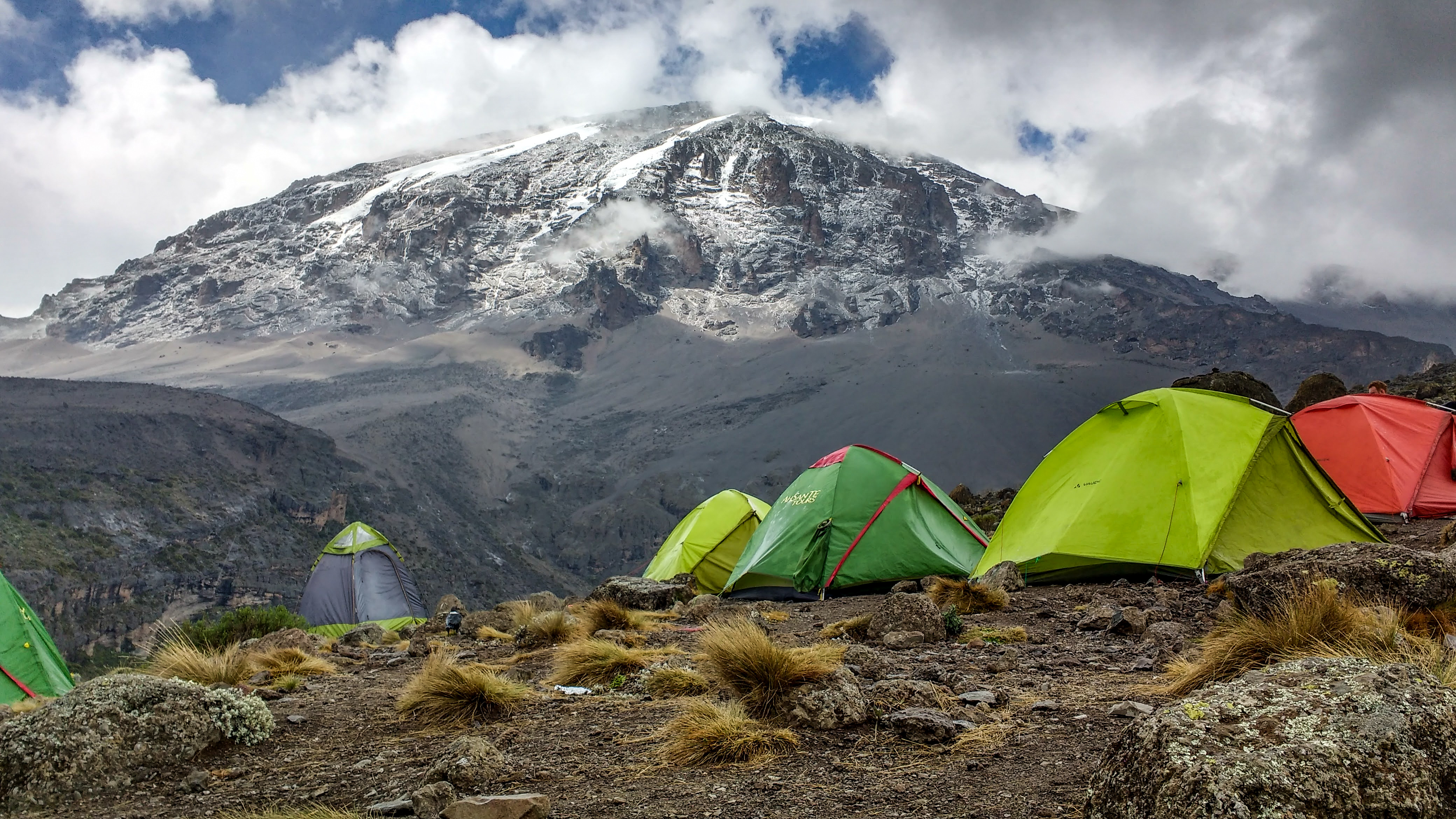
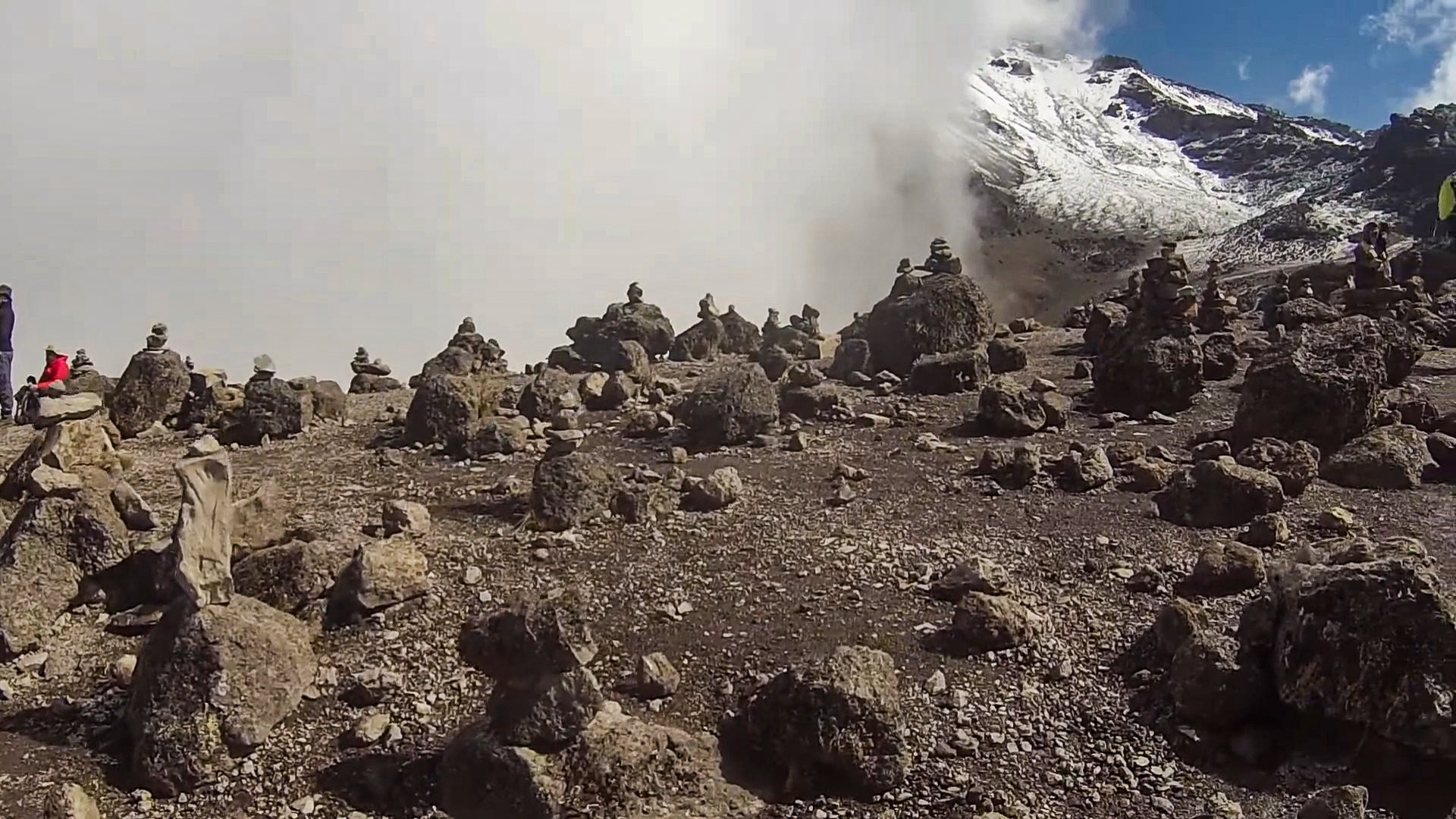
Today’s hike was short, but extremely “Polē Polē” due to the thin air. We crossed the stark, desert-like slope between strange walls of cloud, where hundreds of previous hikers had made stone stacks all around us, like something from another world. A couple of people in our group were really struggling – it wasn’t an easy ride – but we all made it up across the steep, rocky plain around the base of Kibo Cone to Barafu Camp by 1pm. Lunch was at 1:30pm – mashed potato and lentil curry, followed by one last briefing before our summit attempt began at 11pm.

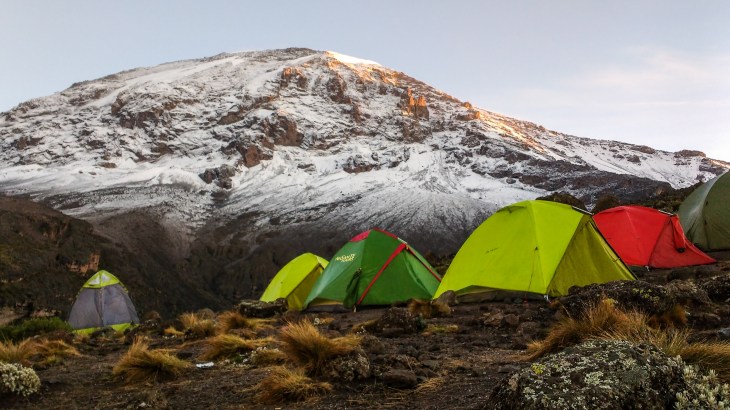
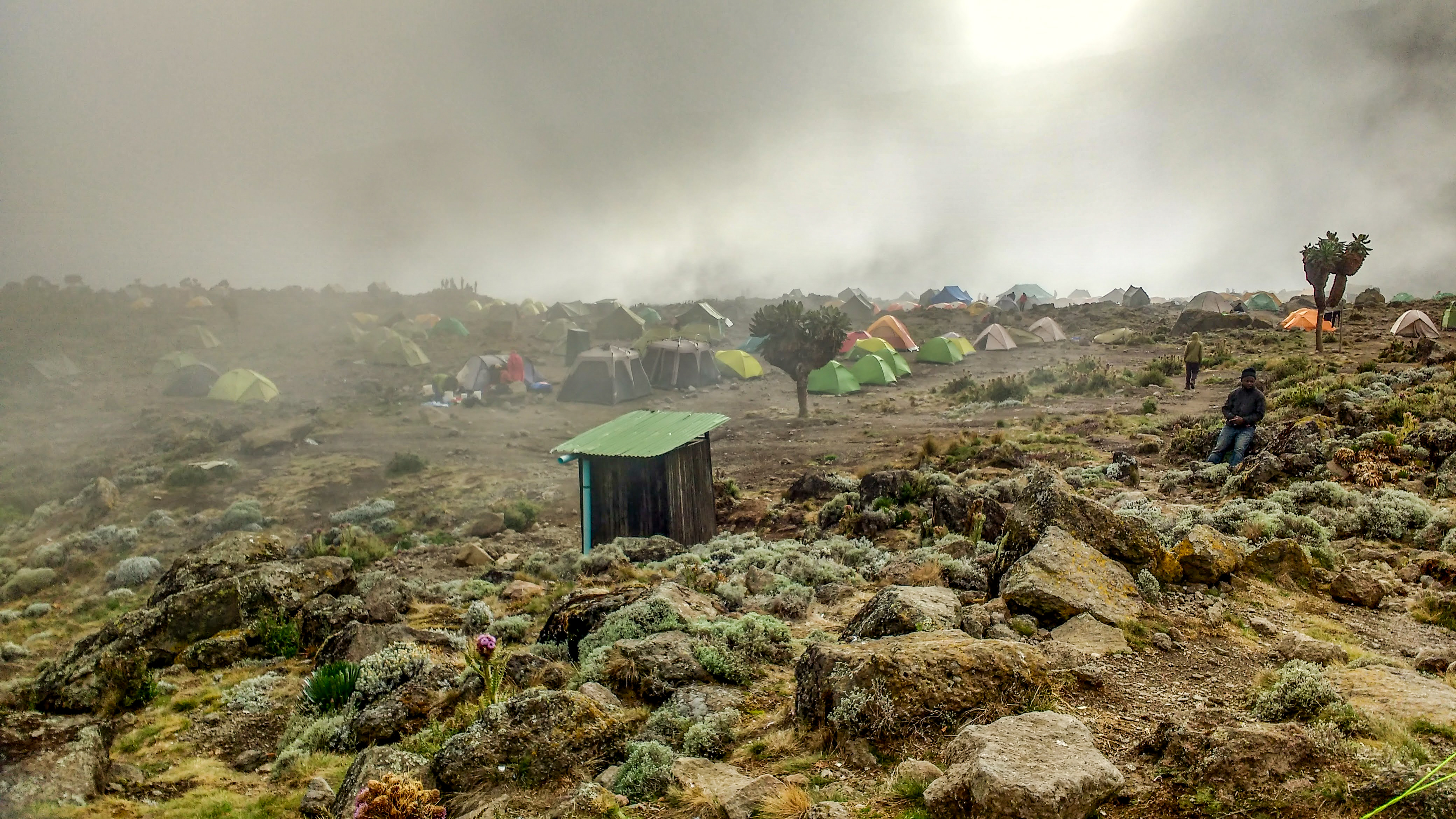
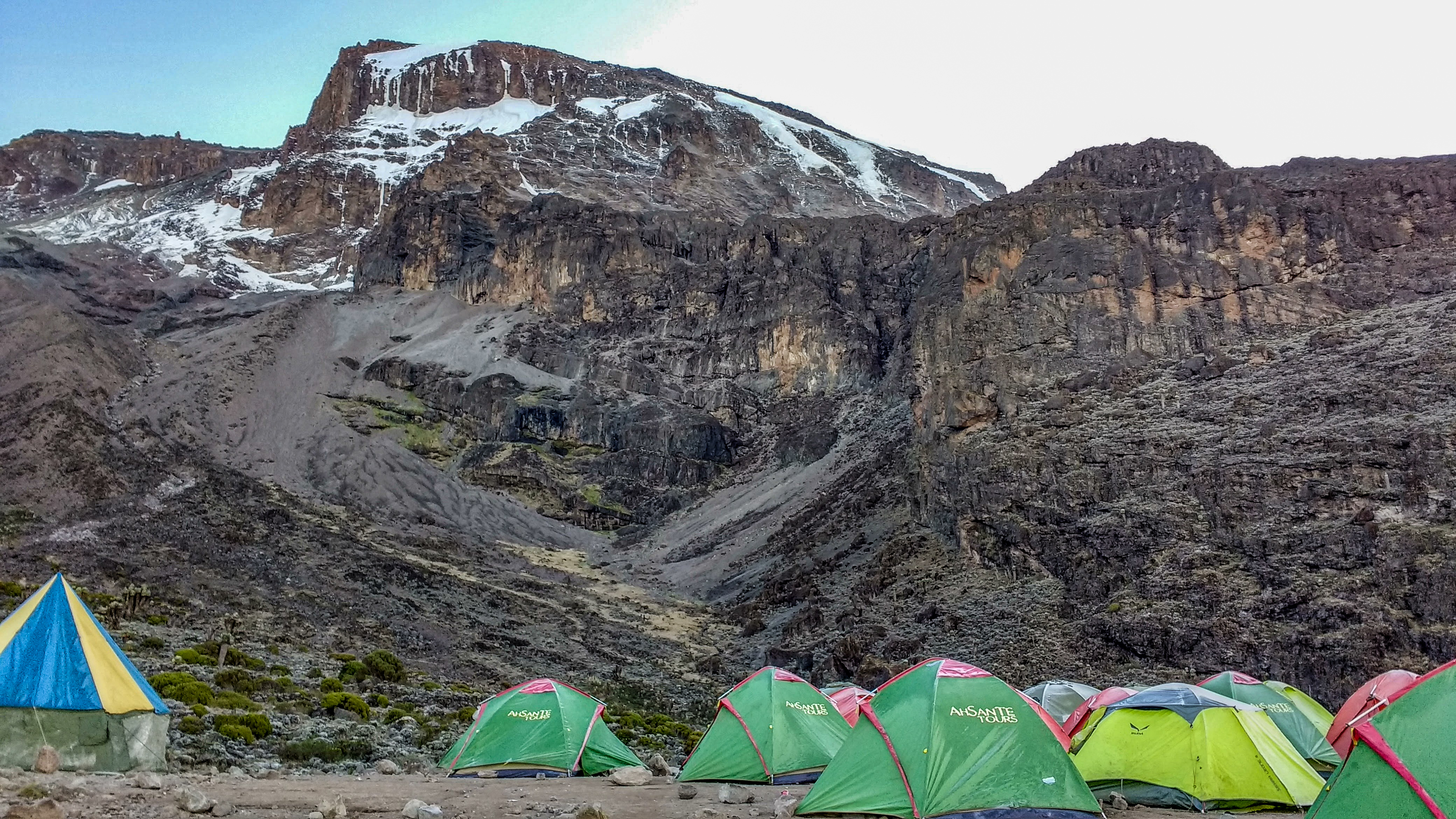
Barafu Camp sits at the base of Kibo Cone at around 4,673m, on a sparse, windswept slope. Even as I sat talking with Si, wind gusts punched into the tent, howling and rattling the door zips. The temperature here typically ranges between 4°C and -29°C, so high quality kit and a certain level of fitness are requirements. From here, it is a shuffling 6-7 hour hike, 1,255 metres to the top of Kibo Cone to Uhuru Peak – The Roof of Africa: the highest volcano outside of South America, and the top of the tallest free-standing mountain in the world.

“Up”

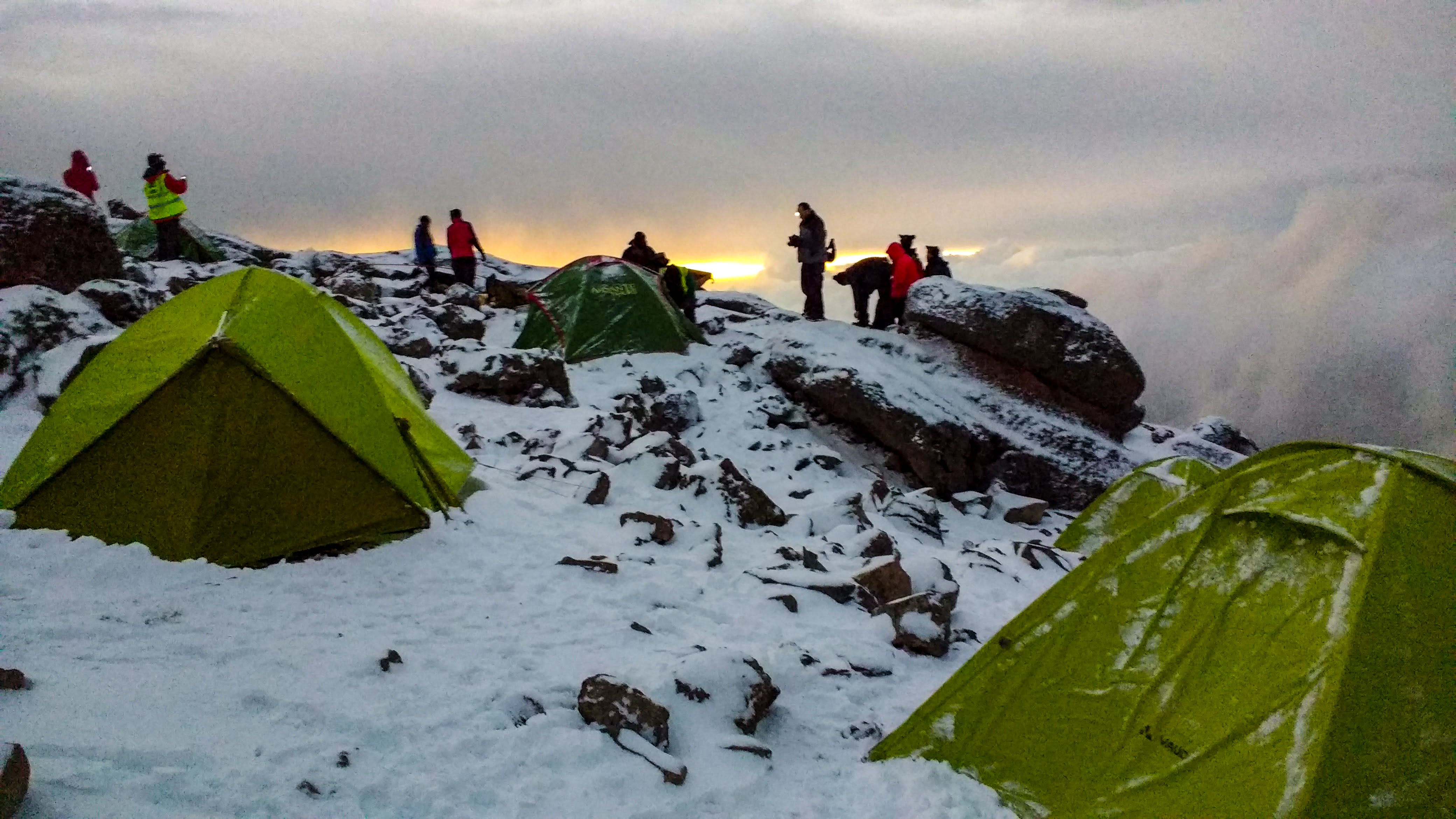
After a long, anxious afternoon rest, we were summoned from our tents at 10pm. Wearing every layer I’d brought with me, my pockets were stuffed with food and medication for easy access; phones and cameras buried deep in our layers to keep the batteries from freezing so we could get that long-awaited sunrise shot at Uhuru Peak. We congregated in the mess tent for our last supper – a massive plate of spaghetti – and made sure to fill our water containers. We followed our guides single file through Barafu Camp by head torch light, quiet anticipation buzzing through us. It had already begun to snow before we left camp, a light, gentle snow, and I sensed a subtle twinge of concern on Julio’s face. Maybe this bit was always stressful for the guides. Flashes of lightning from the clouds below us lit the snow pink and thunder rumbled around the mountain, and we grinned at one another through our face coverings. We trooped in a neat line through the darkness, a guide positioned between every second or third person – experienced pioneers of the mountain, who had become our friends – making sure nobody got left behind.

The snow was falling fast and thick now, coating the path ahead as we crossed into what is known as ‘The Arctic Zone’, so we were relying solely on the direction of the guides. Freezing wind whipped our faces while the lightning grew more frequent, shedding ultraviolet flashes on the snowy summit above, and thunder applauded loudly, echoing around the volcano cone. The whole group stopped in the shelter of a large rock, as the guides wanted to make sure we were all coherent, and taking in enough fluid and sustenance. But one of our group members wasn’t ok, acting delirious from altitude sickness, so Ian and Julio made the tough call to send him back to camp with another guide. We’d stopped for a moment too long and everyone was feeling the brutal cold as the wind grew stronger. Pushing forwards into the dead of night, the wind picked up more and more energy as we climbed closer to the summit. Snow was lashing down in sharp stones of ice, blowing sideways into our faces, fusing the fabric of our hats and face covers to our skin. Miniature icicles stuck to my eyelashes, and despite layers of thermal gloves, my fingertips were getting so cold they were painful. I had to stop to find a handwarmer – Julio helped me, rubbing my hands to get the blood flowing, but eventually we decided to just keep trekking on as we risked getting even colder by just standing there.

The weather was horrendous now. Snow somehow covered our tracks before our feet had left the ground. We couldn’t see, could barely breathe for the wind, and our faces stung. Si was close behind me, and Gemma was ahead, her poles skidding as the gale-force wind whipped the icy ground from beneath her feet. But we were determined! Heads down, one foot after another, all muttering little pep-talks under our breath, thinking about that first glimmer of sunrise.

We reached a change in the path and Julio halted us in our tracks, telling us to wait in the shelter of another big rock. We followed his orders, it was probably just another drink stop, or to let the rest of the group catch up, but he’d disappeared from our sight. Si, Gemma and I shivered, agreeing that we’d have to get moving soon or we’d freeze to death. As we stared up at the line of lights walking ahead of us, searching for Julio, our hearts dropped. The line of head torches were all facing us, coming back towards us. I froze, and Gemma and Si shared my silence. What did it mean? Julio re-appeared, gesturing for us to turn back.

“We have to go back. The storm is too bad; it’s too dangerous,” he was serious, rushing on to convey the message to the others. I couldn’t turn around. I simply watched as our team walked back past me in the wrong direction; I couldn’t make my feet move. We’d been walking for over four hours – just 600 metres to go! We couldn’t be quitting, not now!

“Down”

Everyone’s water had frozen hours ago. I saw people melting their eyelashes between their fingertips in order to see. My hat was literally frozen on to my forehead. I couldn’t feel my feet. But all of this felt numb compared to the feeling in my chest. I didn’t want to return to camp, not with just a few more hours to struggle through until we reached the top. It was in our grasp, so close, the closest we’ll ever be – we’d been walking for five days, what’s five hours more!? I wasn’t thinking rationally, and everything in my soul was fighting against what was happening, but my limbs just plodded on, numbly following the group back to camp, dragging my hiking poles behind me. I didn’t want to be alone, but at the same time I couldn’t talk to anyone. I placed myself behind Ben and Luke, and in front of Katie and Jack. No one spoke. A few of us shared glances of mutual disappointment. Luke was sobbing and Sophie quietly walked with him for a bit. Even our guides looked devastated – not for themselves, they do this frequently – but for us. They’d worked so hard to get our group this far, seen our relationships grow and our determination to reach the top. Now all they could see was our dream shattered across our faces. A year of hard work, training, fundraising and mentally preparing, convincing ourselves, ‘we can do this!’ Building a huge expectation and failing… it all came crashing down like an angry avalanche.

The path back down was very treacherous with the constant battling snow, and the never-ending stream of feet shuffling down made the path like an ice rink. Several people fell several times. Sophie slipped and just kept going as if she were on a slide, while a guide yelled ‘Polē Polē’ as she went shooting past him. She was ok, a bit bruised, but in a few days we’d be able to look back and find it hilarious. Not right now. Jack slipped behind me, unfortunately doing a number on his ankle, making it difficult for him to walk at all. Julio and all the other guides were incredible, running back and forth, asking individuals if they were OK, fashioning themselves into human railings, sometimes physically lifting us to a safer foot hold. Prof appeared behind me, I glanced at him and he was looking at me with concern. “You OK?” he asked. I shrugged, “Just sad,” I said. Prof just gave a little nod, took my hand and walked beside me for a little while, until he needed to help someone else.

Tents gradually started to come into view as we made our way slowly into the higher reaches of Barafu Camp. The weather had subsided; it was no longer snowing down here and the wind only came in occasional gusts. We arrived at our camp at the time we should have been arriving at the summit, and all our Rafiki were applauding and cheering, which we didn’t want to hear. The sun was rising, dangerously orange through the lingering storm clouds. Some people stayed up to watch it, but for the first time in my life, it was the last thing I wanted to see.

Day Six – “An Emotional Rollercoaster”

Si appeared at the tent with instructions from Julio, to rest for an hour and regroup in the mess tent. I must have slept, for when I opened my eyes I felt that sense of impending doom, of reality falling back into my consciousness. It wasn’t a bad dream. It was quiet and I was alone – immediate negativity flooded me – they’re reattempting the summit and have left without me! But I snapped myself out of it, pulled on my damp shoes and went to the mess tent. There were only seven of the group there, all sitting extremely quietly. I edged in and found myself a seat, forcing myself to eat a piece of fried bread the cooks had somehow mustered up (we weren’t supposed to be there for breakfast.) Conversation was sparse, and tears were flowing around the group, catching on to the next person as we exchanged eye contact. Suddenly, Tim appeared in the entrance and said we have three options. None of them were to have another go, so I didn’t hear the rest. Everyone went to pack their bags and prepare for the descent down the mountain, but Si and I just sat there.

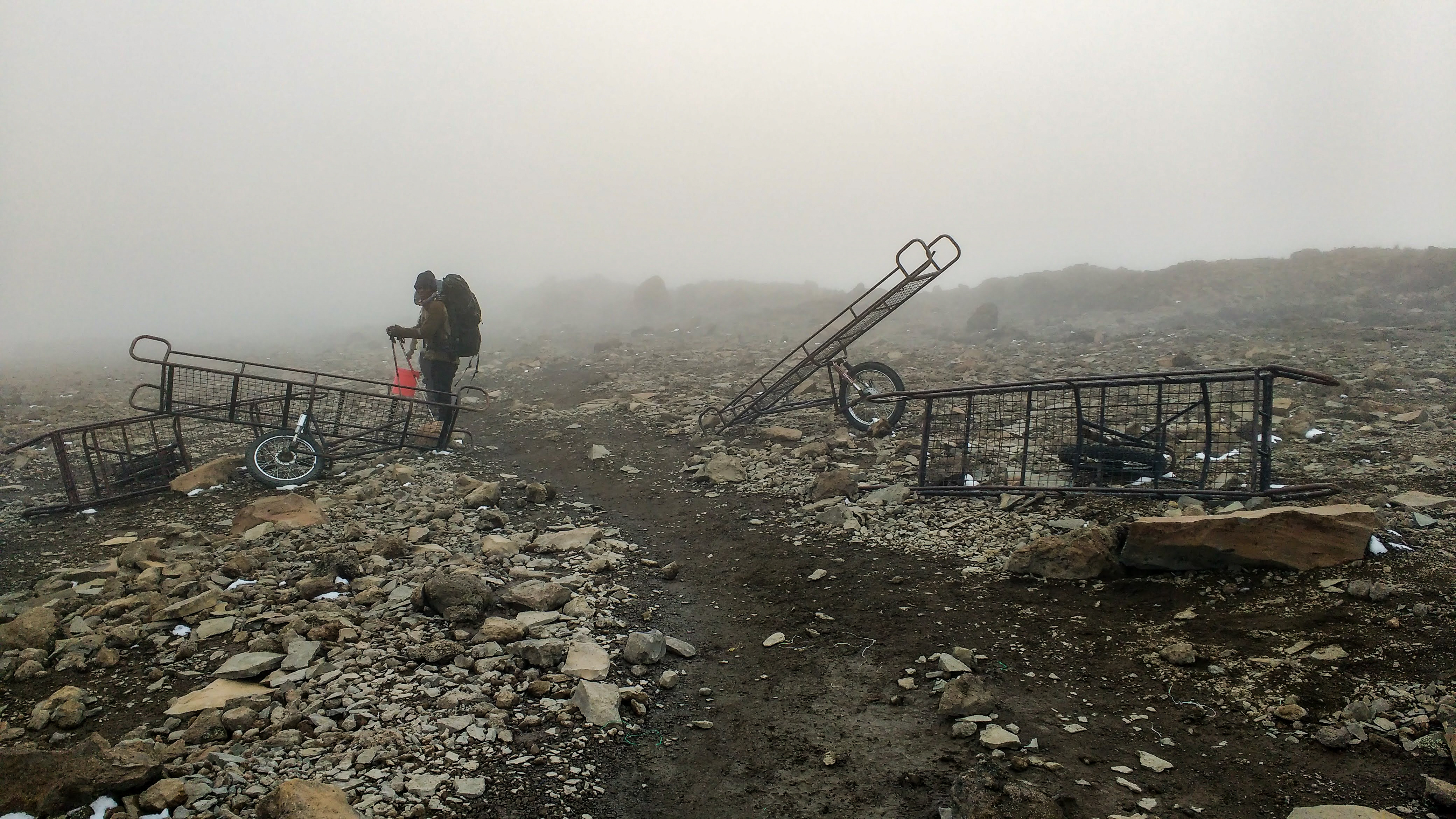
Julio sent some of our Rafiki to get a ‘mountain taxi’ or ‘Kilimobile’ for Jack, who was struggling to walk on his busted ankle. They returned with a big mesh wheelbarrow, like a metal stretcher with a bicycle wheel on the bottom! Wrapped in his sleeping bag, they laid Jack on the ‘Kilimobile’ and strapped him in, so just his smiling face was showing, and a small group of Rafiki grabbed all sides of the stretcher and wheeled him down the mountain. He was probably back at the lodge with a nice cold beer within half an hour!

Meanwhile, me and Si agreed that we really weren’t ready to pack it all in. I went back to my tent and started throwing things haphazardly into my bag, when Si appeared at the tent again. “If there’s any possible chance, would you want to try again?” he said, fire in his eyes. “Hell yes.” I responded without a second thought, and with a nod, Si disappeared again. I followed him back into the mess tent, where we sat down with Tim and Ian. Si made his pitch, raw with emotion, and they understood how important it was to us, but they were talking us out of it – there were too many complications. By this stage it would be near impossible to pull off. The guides and porters were doing a job, and they no doubt had to be back in time for their next tour, and if we took an extra day we’d have to pay for it too, which isn’t cheap. Not to mention the unprecedented snowstorm up there. This was just the harsh reality of nature.

“I had to ask,” Si kept saying as we packed our bags. I was ever so glad he did. At least we’d fought to try. As we could hear the group starting to leave outside, I rushed to put my shoes back on. Julio came to our tent, calling for us, “Yep, just coming!” I called, but he popped his head in and put his hand on my shoes to stop me. He told us he wanted to try anything to get us to the summit and told us to just wait a couple of minutes so he could check the options. He acknowledged that we were both strong enough and well acclimatized. Julio made a few calls on his radio and spoke to various people, suggesting we could join another tour group who were summiting today. We’d have to leave now, and we’d reach Uhuru Peak at 7pm, in the dark. Then we’d have to get all the way back down the mountain the following day. It was a lot, with no time for any more rest. I was exhausted, and Si looked it too, though adrenaline had us both wired. Julio got back on his radio to confirm, but the final answer came. “OK, I think we have to go down now,” he relayed to us, “they just told me there was a fatality up there, so we’ll go down.” That was the final decision. We didn’t argue with that. I’d been so hyper focused on completing the challenge, that I almost neglected to Respect The Mountain.

“Safe”

Julio led me and Si down at his quick pace, so we were able to catch the rest of the group within half an hour. We stopped at Millennium Camp for our last cooked lunch from the amazing chefs and continued the steep descent through the rainforest on the Mweka Route – the mountain’s shortest and steepest trail. Sunshine pouring through the rainforest (and potentially extreme fatigue) seemed to lift the world from our shoulders as we got closer to the bottom, and a few of us had already begun planning Kilimanjaro Challenge ‘Take Two,’ which made us feel better. At Mweka Camp, a medical car picked us up in shifts, taking us to a coach that would bring us back to the Weru Weru River Lodge.

Having descended a day early, we had an extra day at the Lodge, where we all got together and had a pool party in beautiful Lodge grounds! Together we reflected on the journey, marvelled at the guides and porters, and praised Ian and Tim for making very hard but necessary decisions for the safety of the entire group. Julio revealed that there hadn’t been a snowstorm like that on Kilimanjaro in many years, and it wasn’t normal for the season. We were all very thankful that we had each other, and that we came back as a team; grateful that we were all safe. It would have felt very wrong summitting without the rest of the group, and as we blew off some steam, I was able to appreciate what we had achieved. Later, the River Lodge threw us a celebration dinner in the garden, and we received certificates because we’d exceeded 5,200m elevation. Everyone was there, including our guides, and we all had a merry amount to drink!

In hindsight, the real challenge for me was the fear of not being able to complete it. I already don’t like building up other people’s expectations if I can’t fulfil them, which was my initial fear in the fundraising part of the challenge. Then I had to face that fear, and sit with it, which I had done everything in my control to avoid. Myself and a few others in the group always said we’d get together one day and try again, and that was a comforting prospect as we felt we had unfinished business! It has taken years, but I am finally content with my attempt. We might not have touched the frozen sign on top of Uhuru Peak, but we DID climb Kilimanjaro. We DID see the plains of Africa from above the clouds. We DID catch our breath at the highest altitudes we’ve ever stood. We DID hike into the Arctic Zone in an adverse snow storm in the middle of the night. We DID see the violent, pink lightning illuminating the clouds beneath us. We DID watch the sunrise from the highest volcanic cone in Africa. We DID witness the power of the Mountain, and we DID survive to tell the tale.

Maximum Respect!

If you enjoyed this blog, please share, & consider making a one-off donation to my ‘Buy Me A Coffee’ page, where you can also check out my art works inspired by my travels. Copy & paste the link below into your browser! And thank you for reading.

buymeacoffee.com/jaimiescapers: The Roof of Africa: Climbing Kilimanjaro

Puffin Island

A Trip to Scotland’s Jewel of the Forth

4–7 minutes

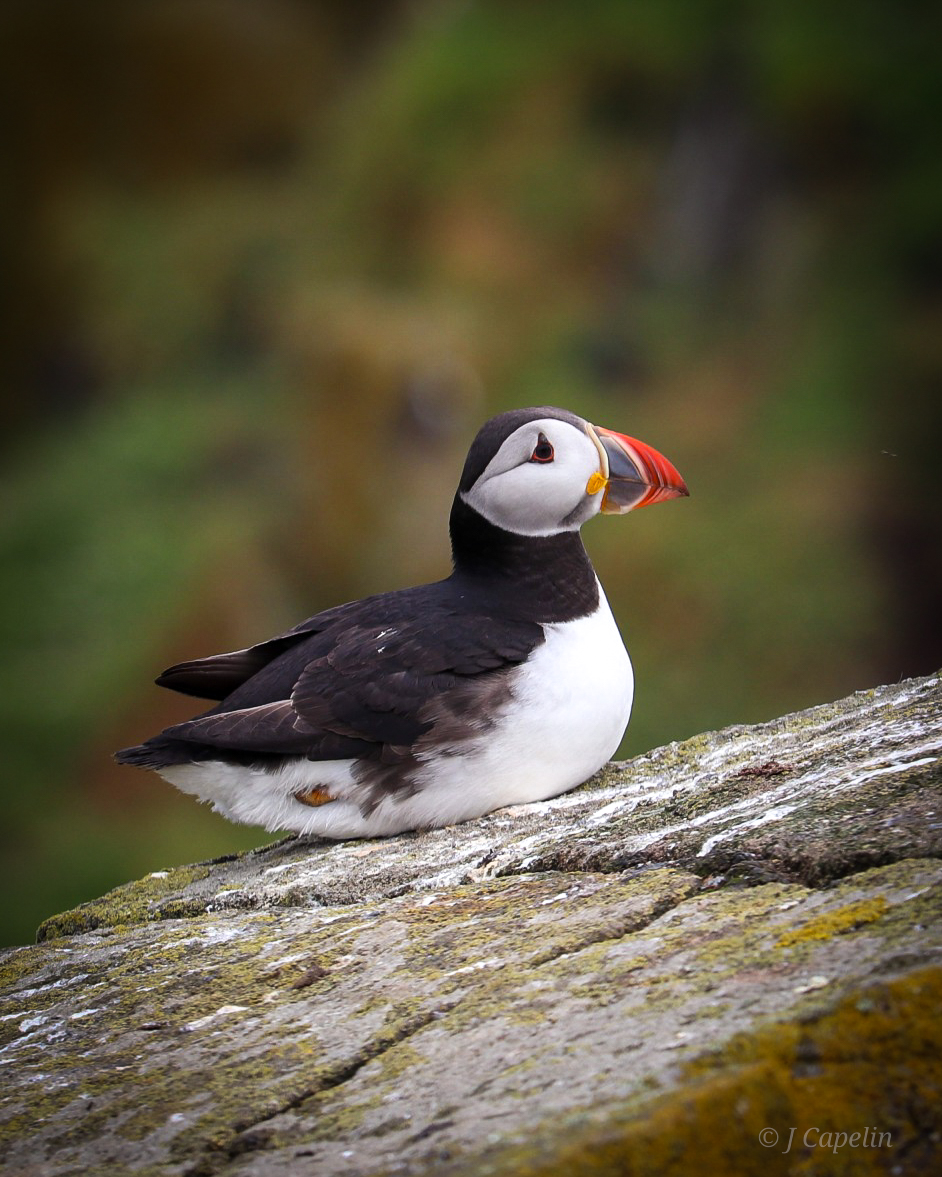
Fog veiled the harbour of Dunbar in Scotland the morning I arrived for the boat trip out to the Isle of May, and my heart sank at the prospect of spotting any wildlife. I’d been planning this trip for months, hoping to photograph the island’s birdlife, including everyone’s favourite – Puffins!

Dunbar Castle remains over harbour entrance

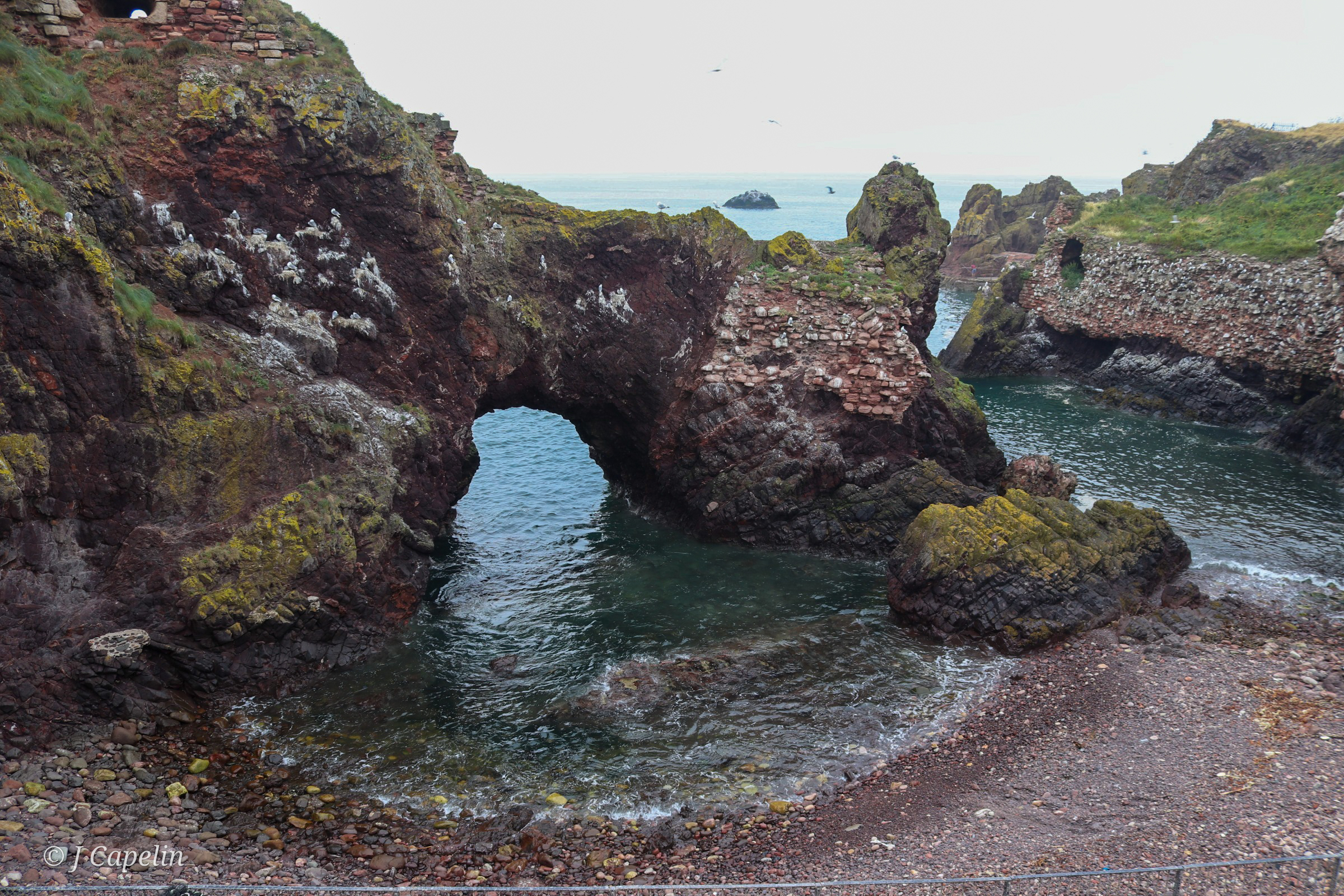
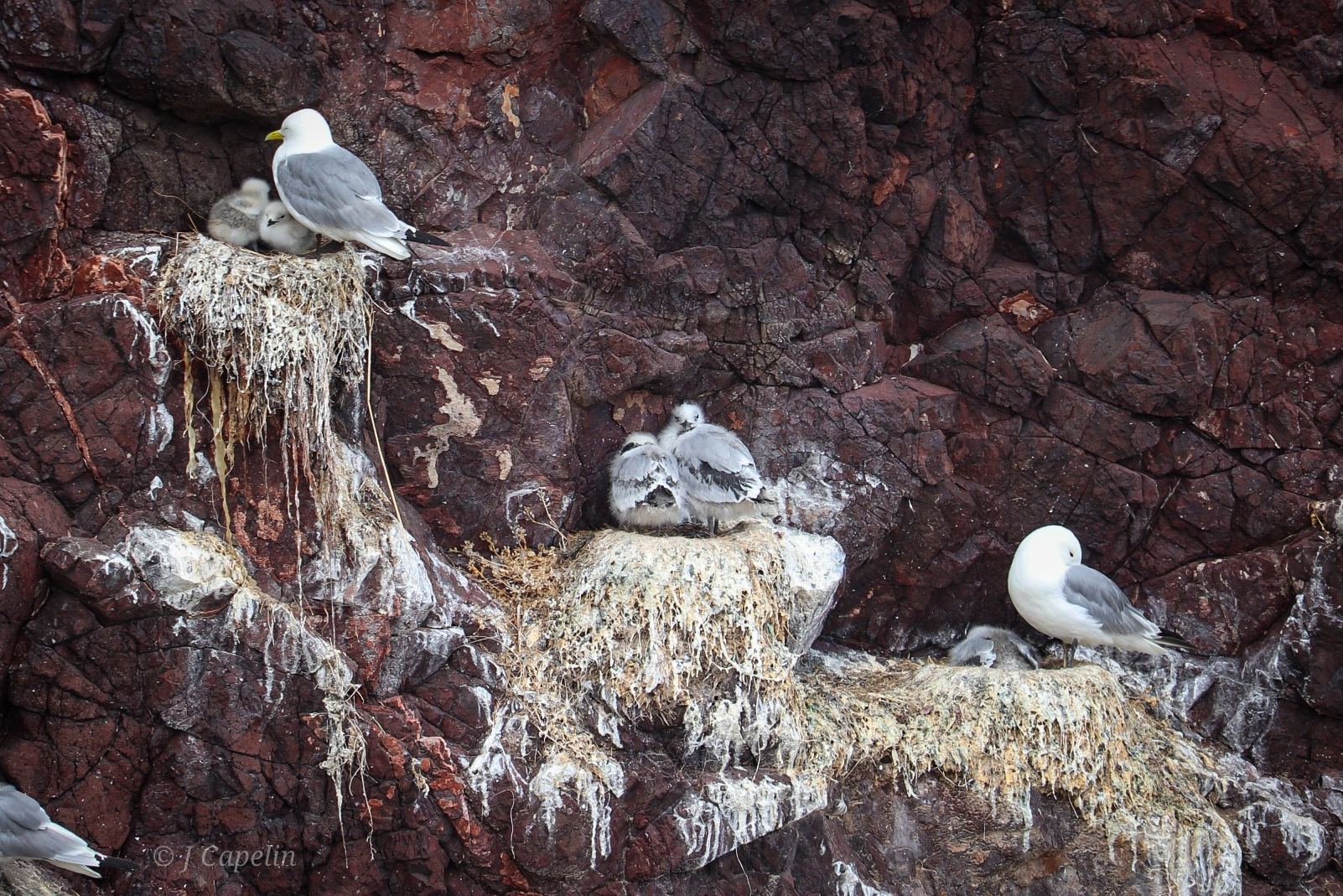
I wandered up Dunbar’s quietly bustling high street, with its blue and yellow bunting zig-zagging between the historical buildings, and strolled around the old harbour, admiring its ruined castle perched on the edge in the sea mist. Hundreds of seagulls and their fluffy chicks were nesting all over the ruins, like an apartment block for birds!

The ‘Blue Wild’ boat tour set sail from the ancient harbour at 1pm – at the tide’s convenience. It was a little 12 seater speed boat, and when the captain told us we were lucky to have these still conditions because 50% of the tours had been cancelled due to the weather, and that the waves could normally reach 2 metres high, my heart lifted again.  

It is best to give yourself some leeway when booking, in case of bad weather. I gave 3 days grace, and planned things that could be swapped around if needed, but even this was cutting it fine, as the weather we got was much better than what was forecast!

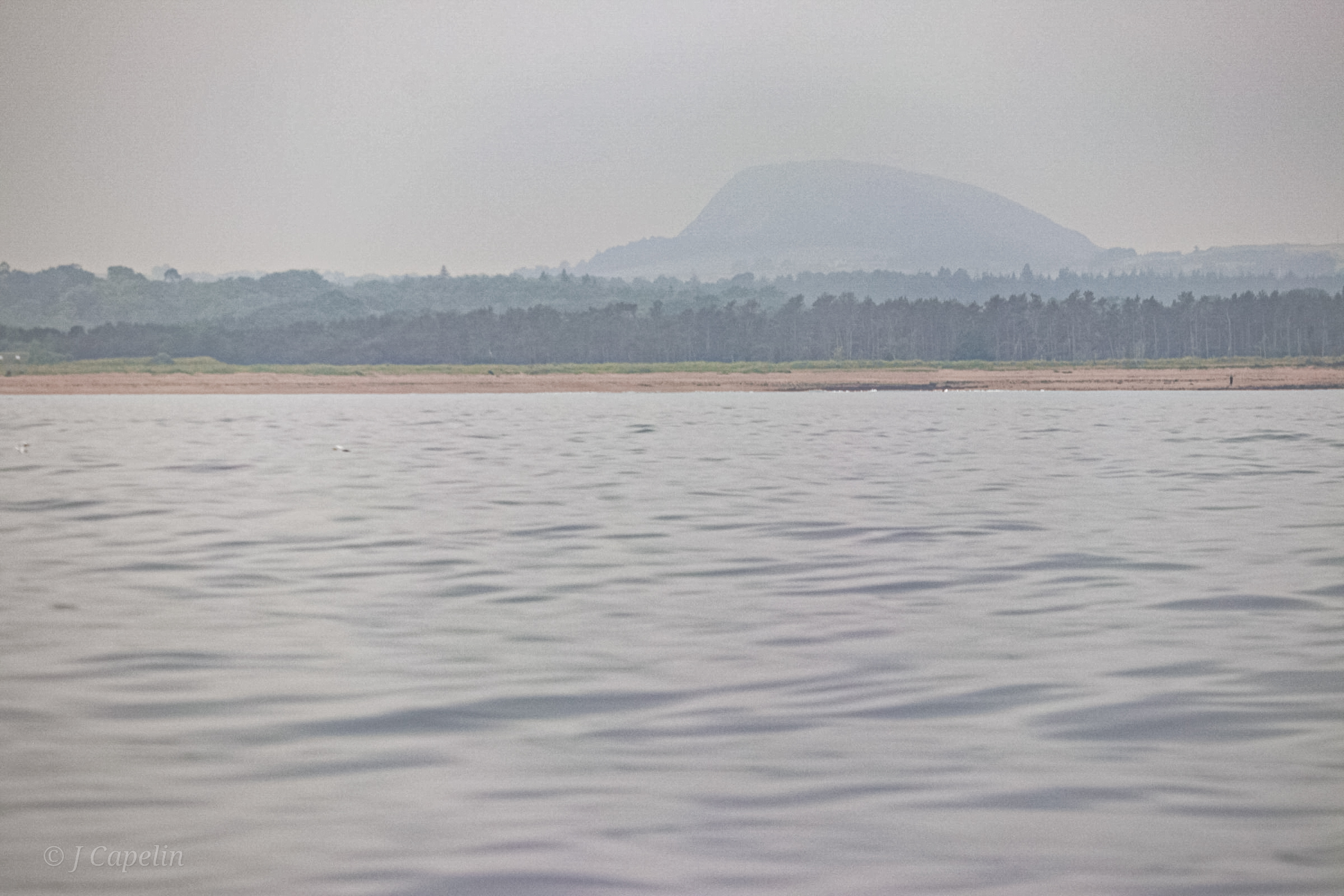
We slid out of the harbour on a white sheet of smooth sea glass that blended into the foggy sky. The sight out of the window was like an abstract painting as we skimmed across Scotland’s abnormally flat Firth of Forth, with silhouetted layers of grey landscape whizzing past in the distance.

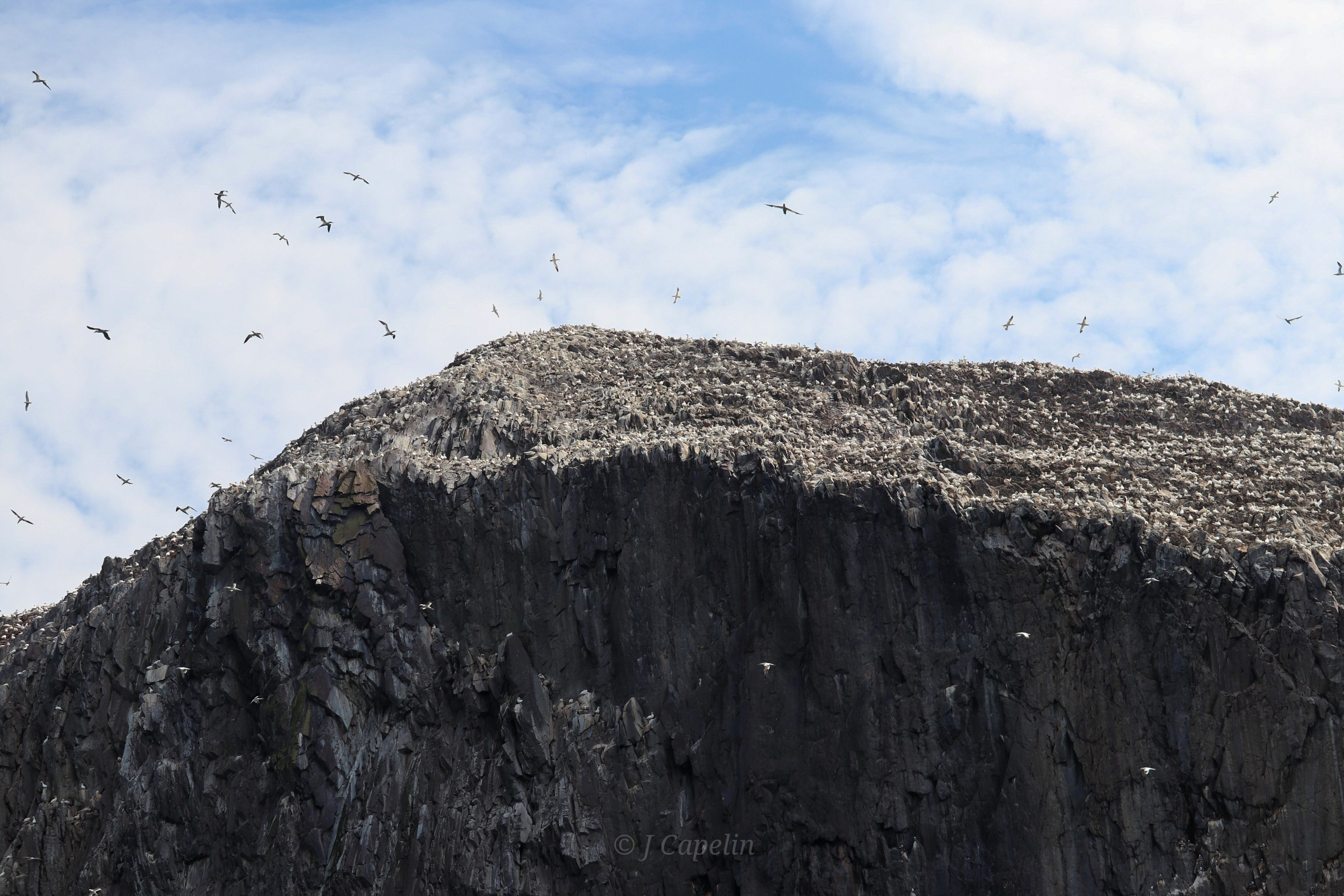
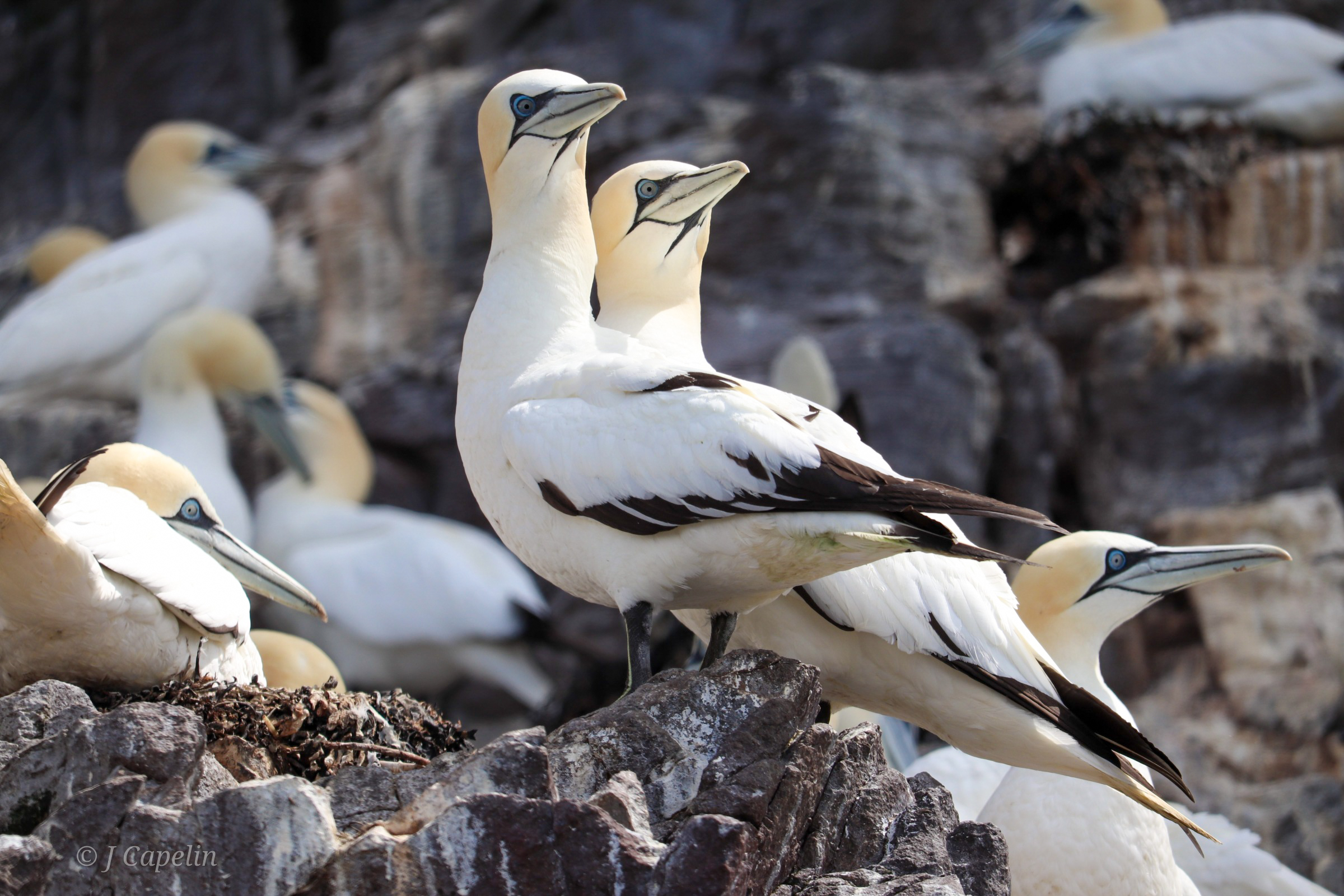
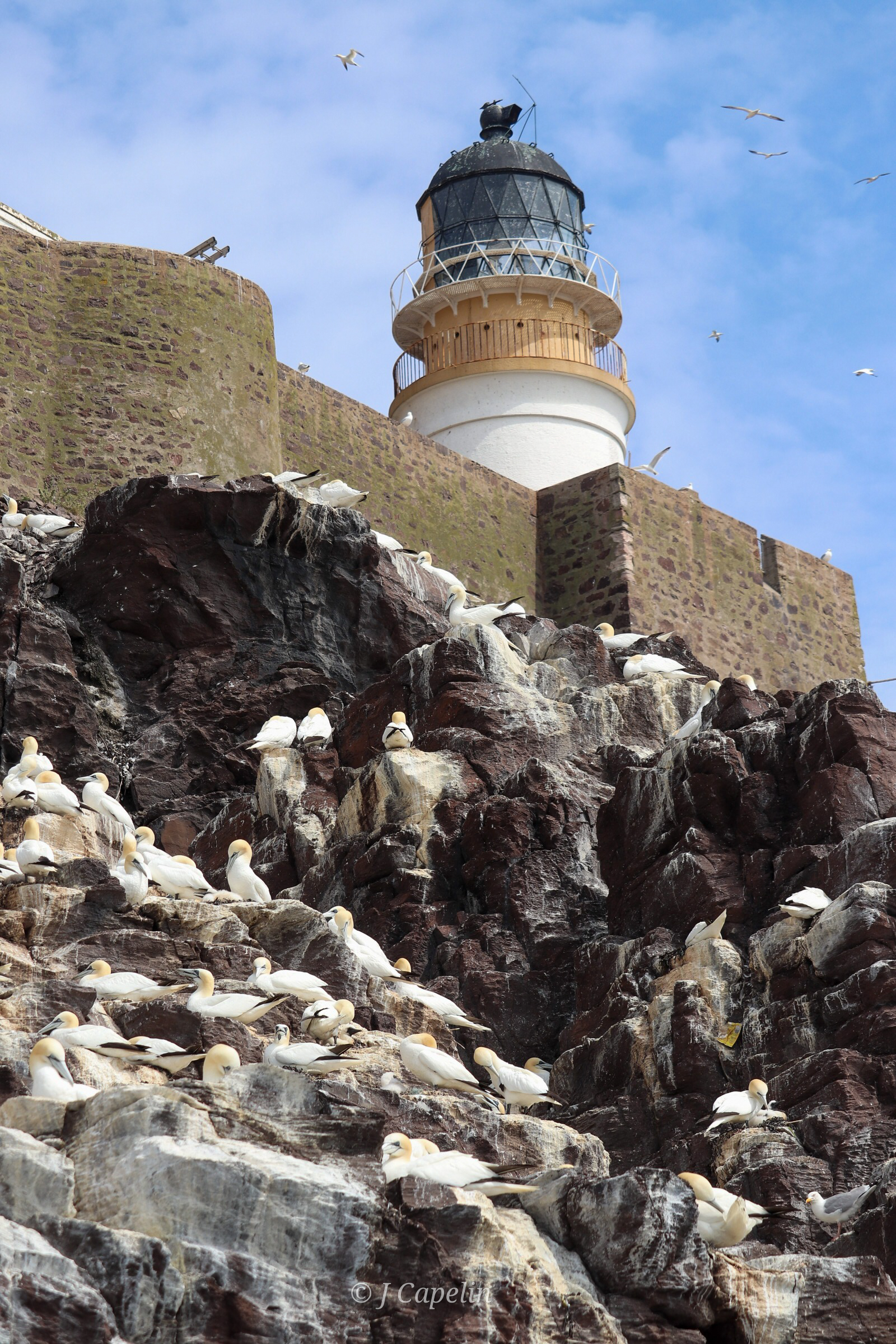
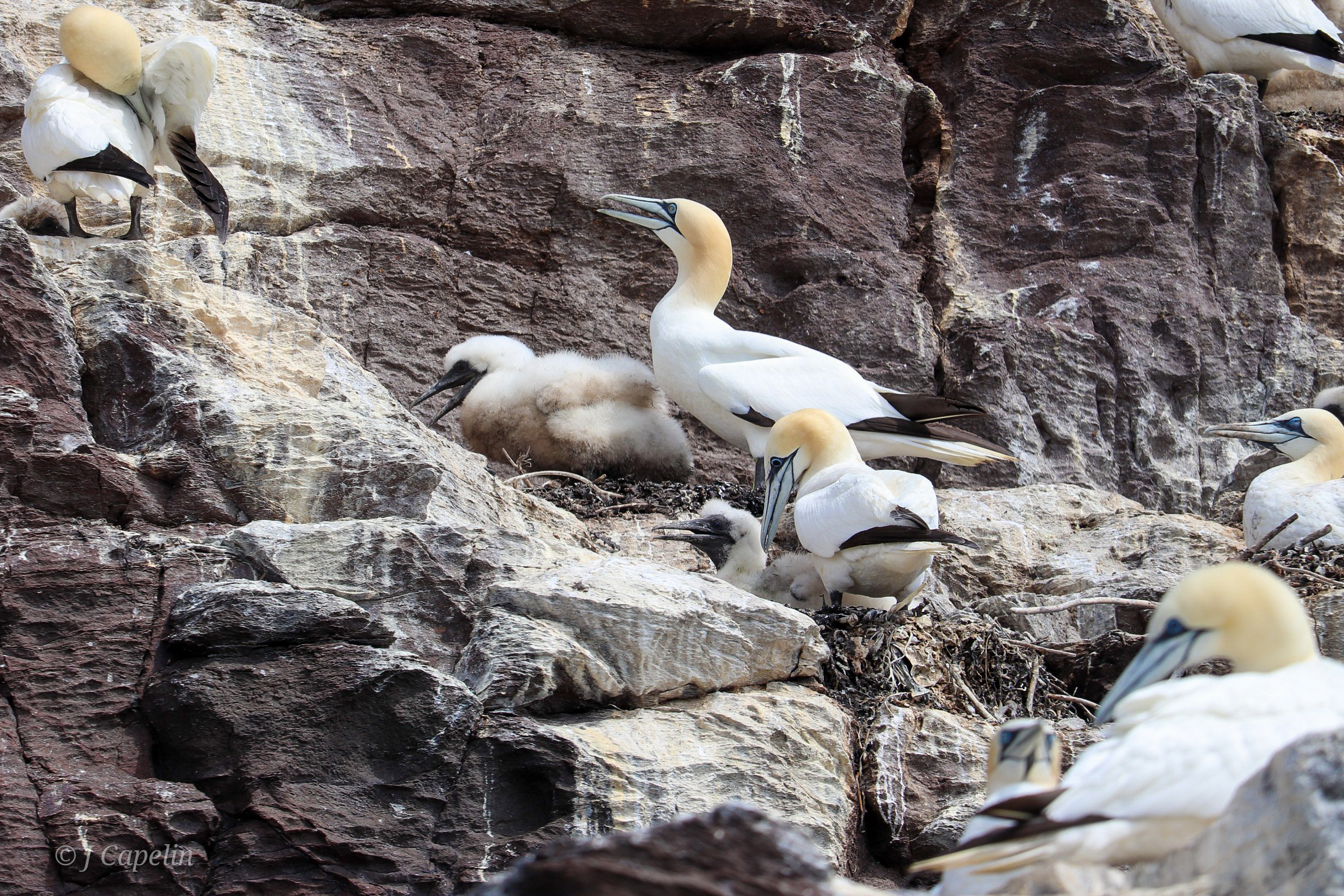
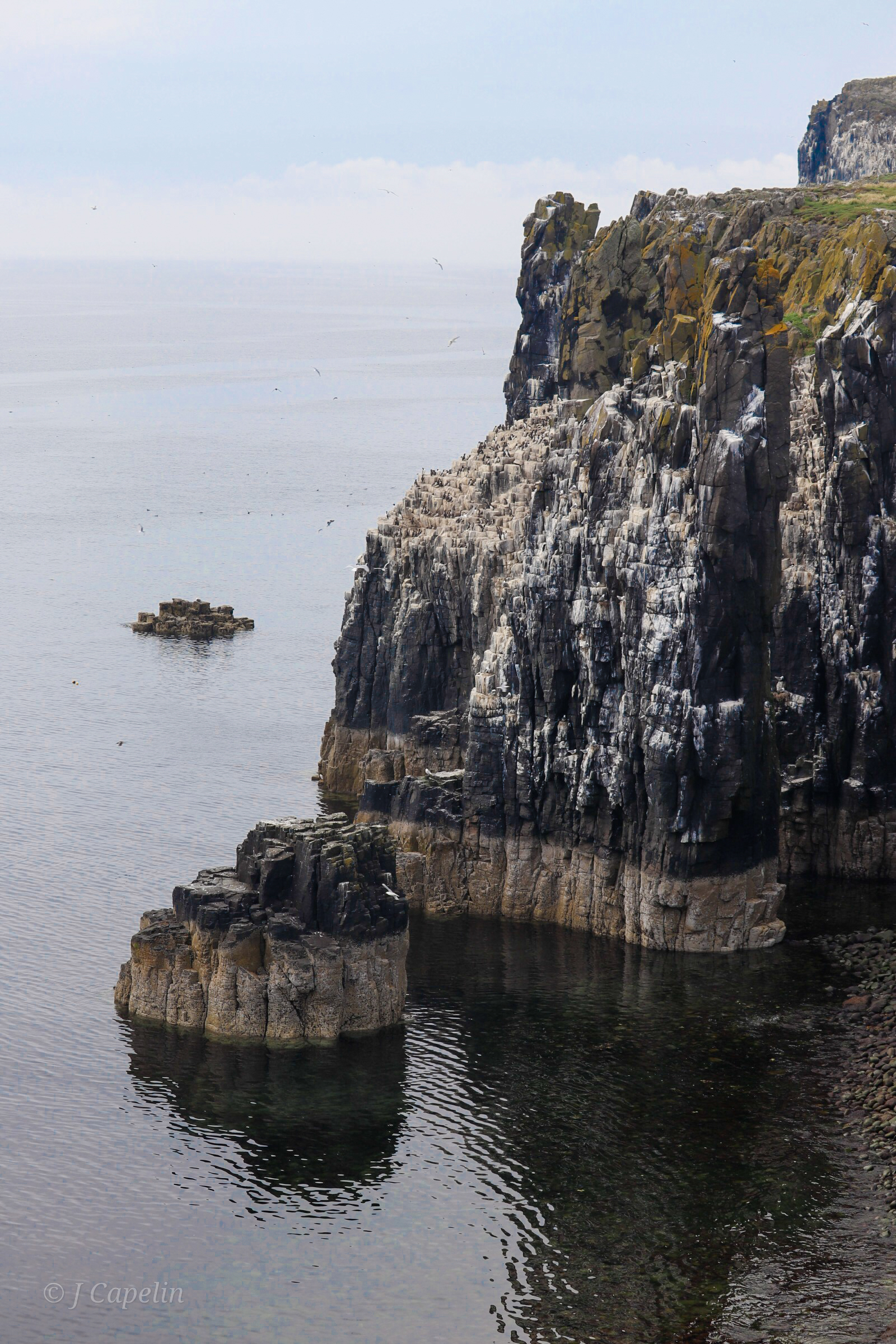
Azure brushstrokes began to appear on the surface of the water as the fog thinned, and seabirds came into abundance, floating and diving around the boat. The Bass Rock loomed up ahead, a giant rock island, famously home to the world’s largest colony of Northern Gannets. As we slowly circulated the island, the sheer magnitude of the colony became evident. The entire surface of the rock was like an ice cream dipped in sprinkles, only the sprinkles were Gannets! Over 150,000 of the birds nest here between Feb and October. I’ll be honest with you, I didn’t have much thought or feeling about Gannets before, but this was amazing to see and I could appreciate how beautiful they are with their blushed heads and piercing blue eye shadow, lined with black.

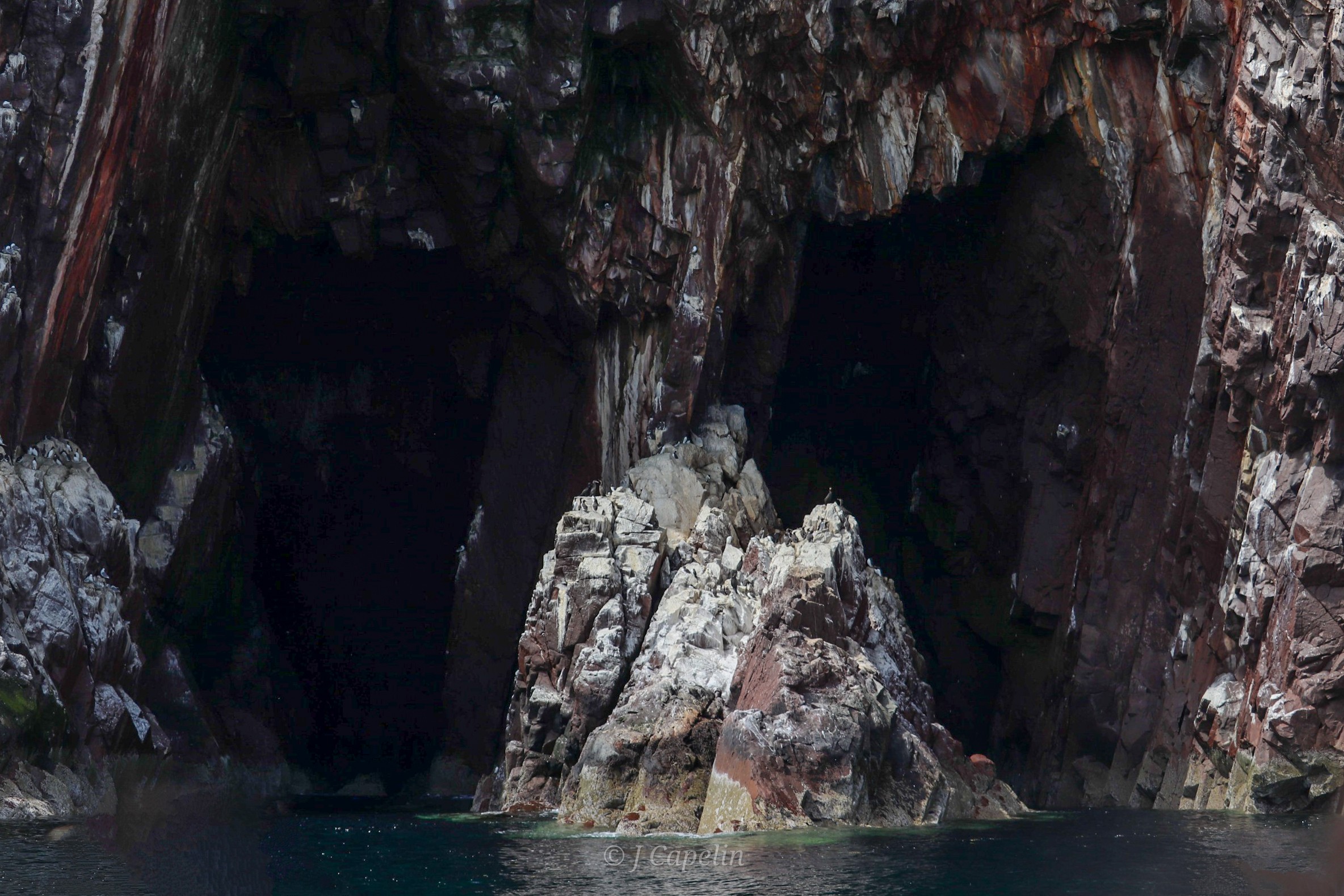
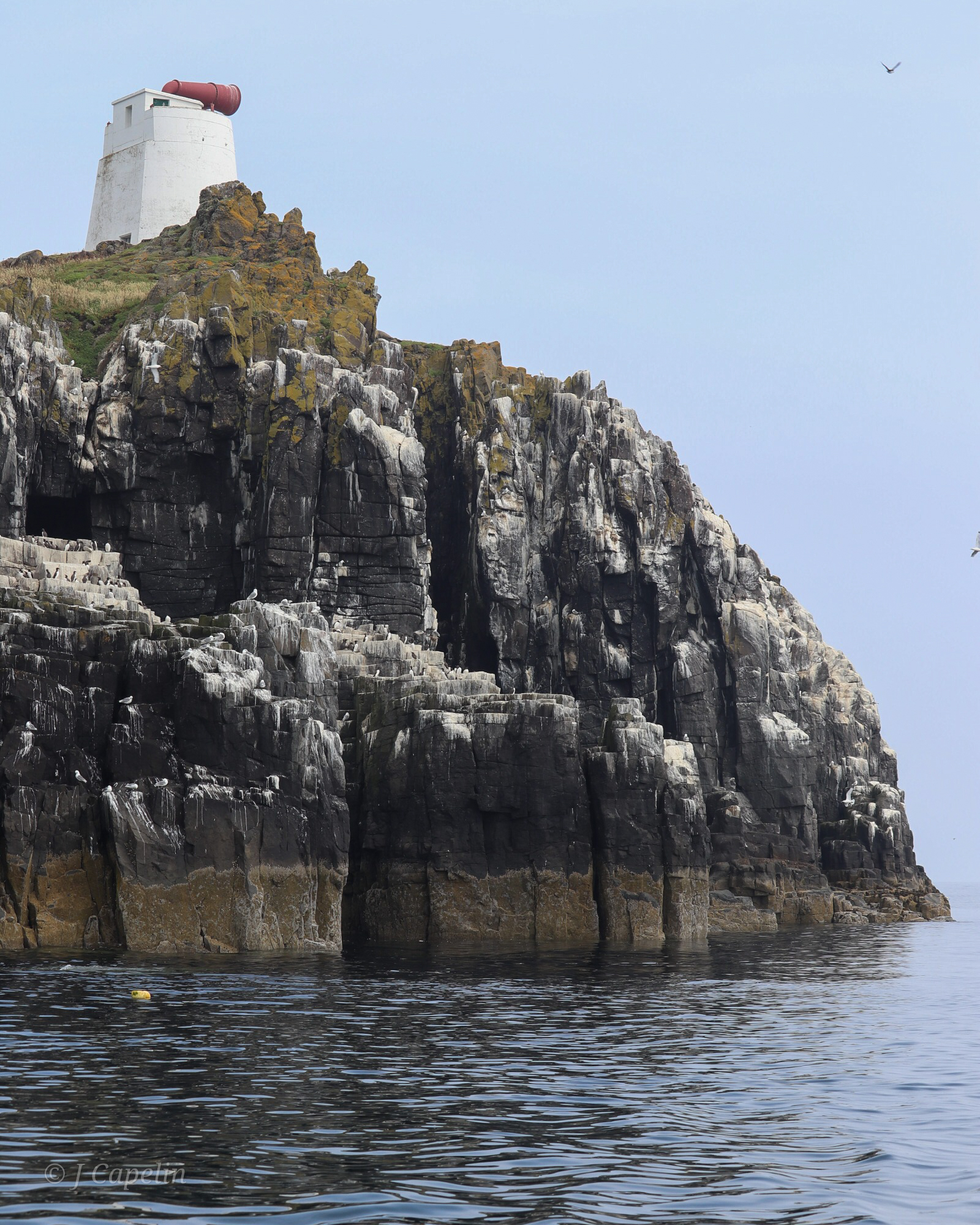
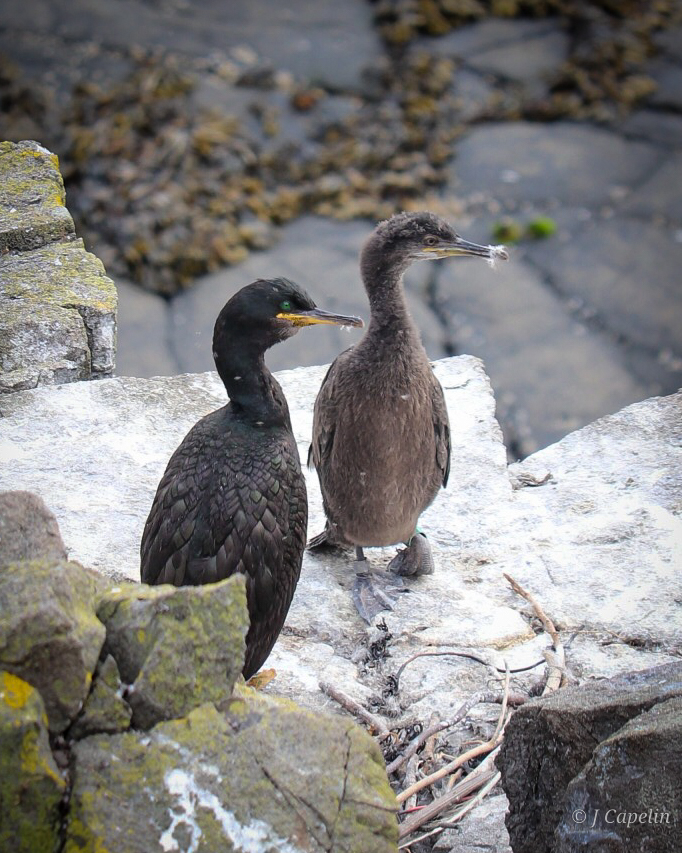
Enormous sea caves etched deep under the island were guarded by Shags, standing atop shards of rock, their outstretched wings drying under the freshly cleared sky. We bobbed beneath the Bass Rock Lighthouse, craning our necks to take in the vast amount of Gannets. Their monstrous fluffy, white chicks were littered all over the cliff, which was dripping with their waste like candle wax, and the cacophony of the birds filled the air.

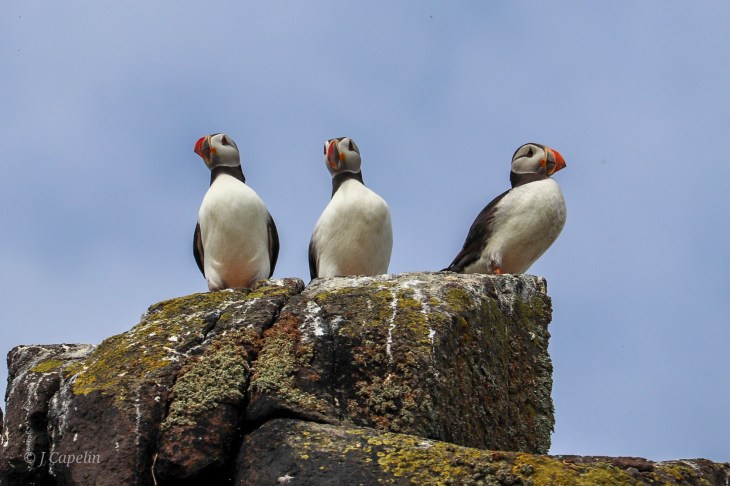
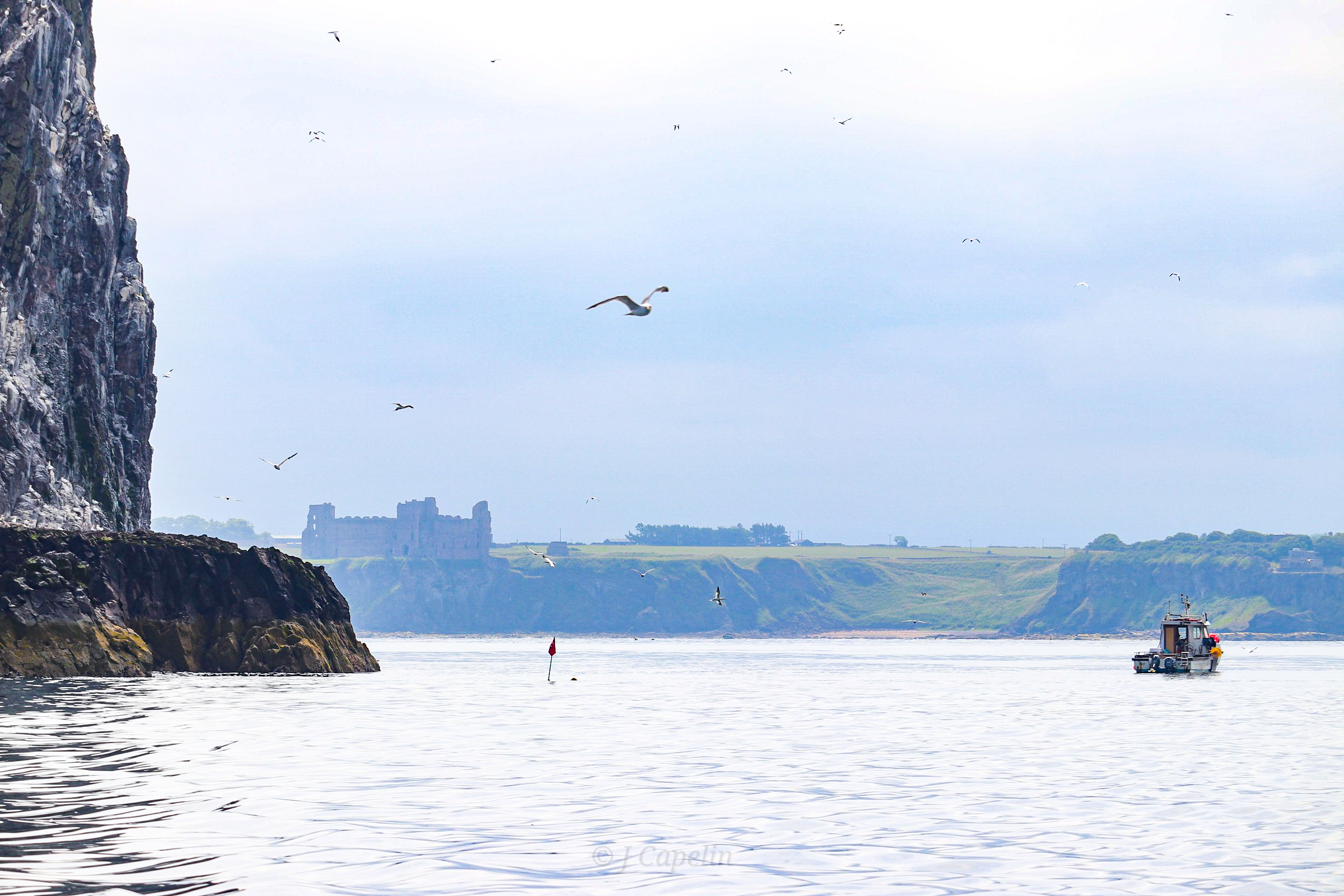
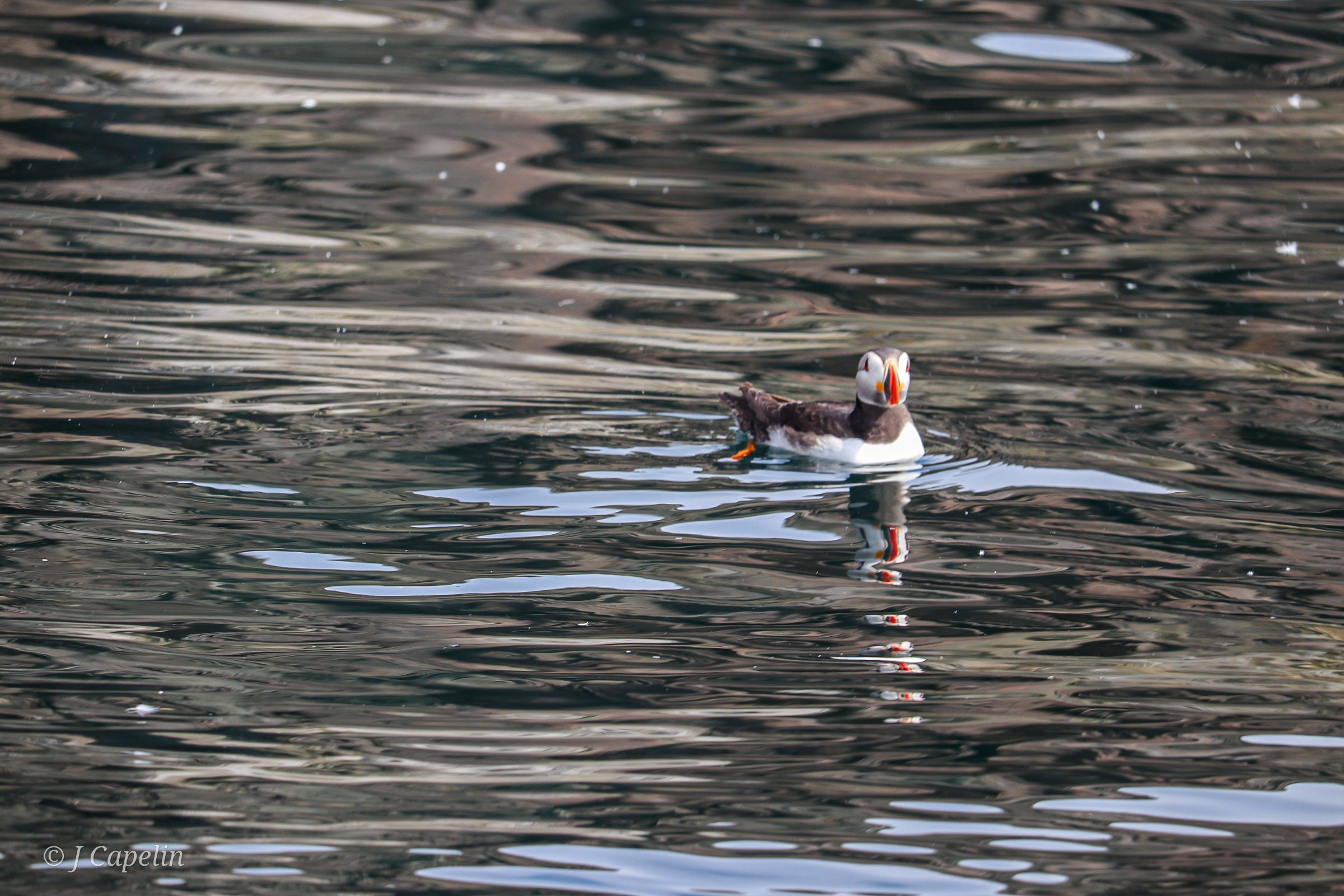
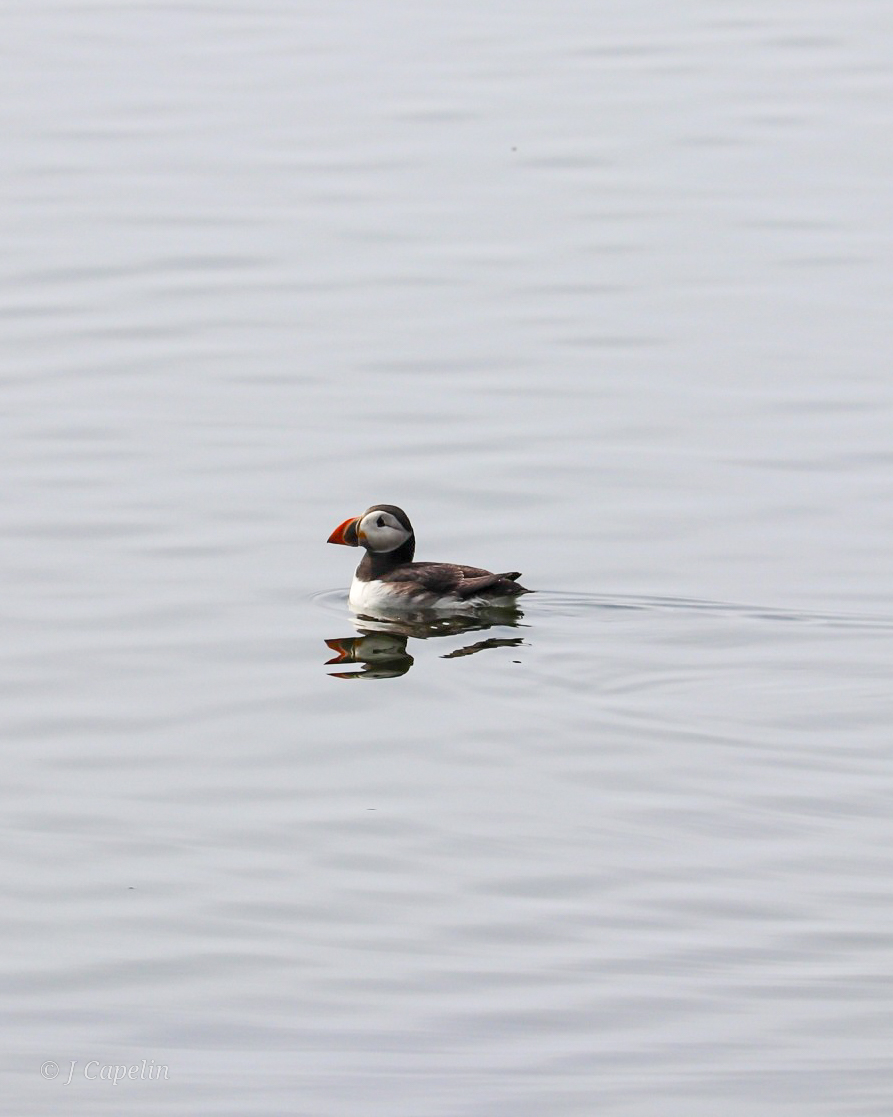
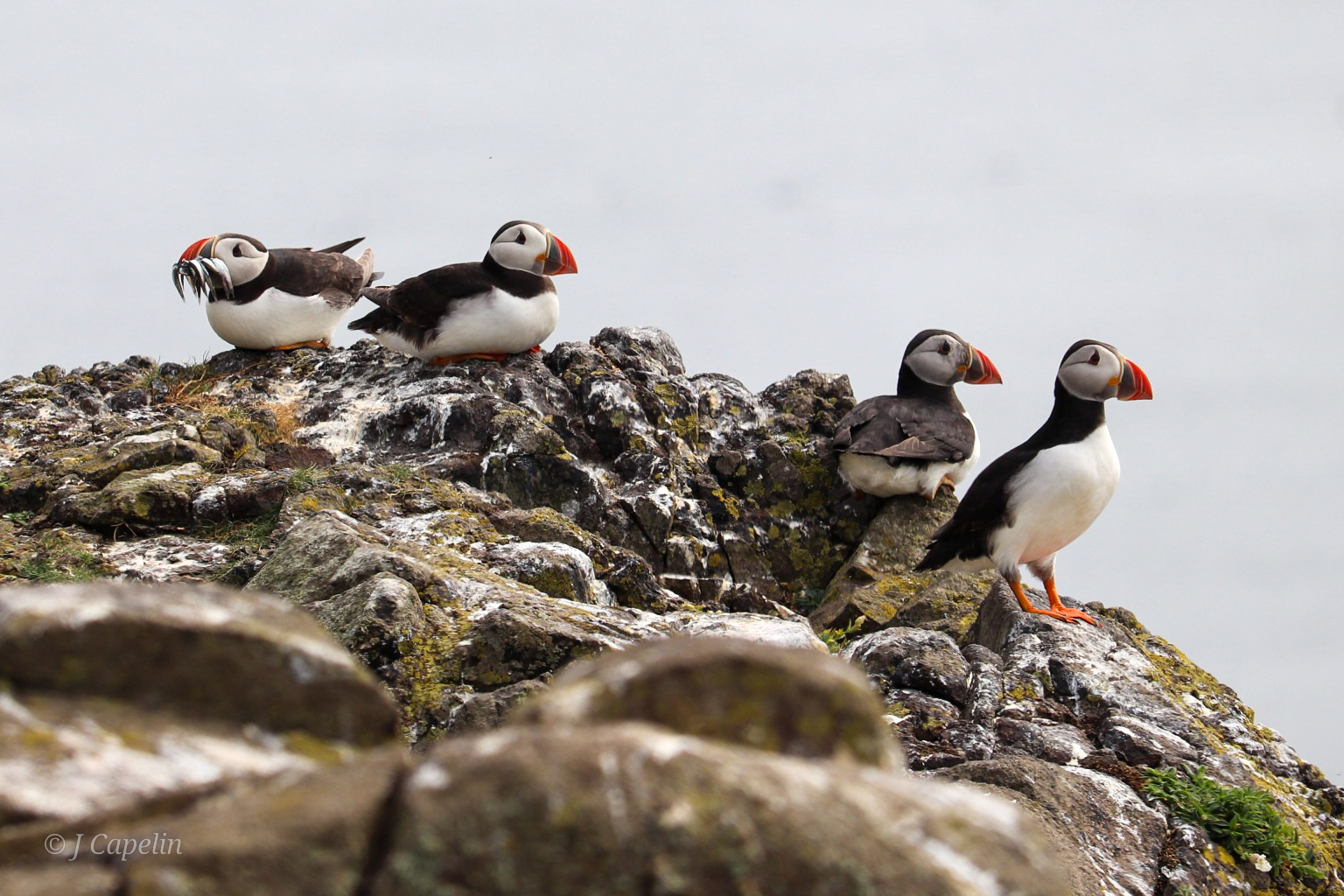
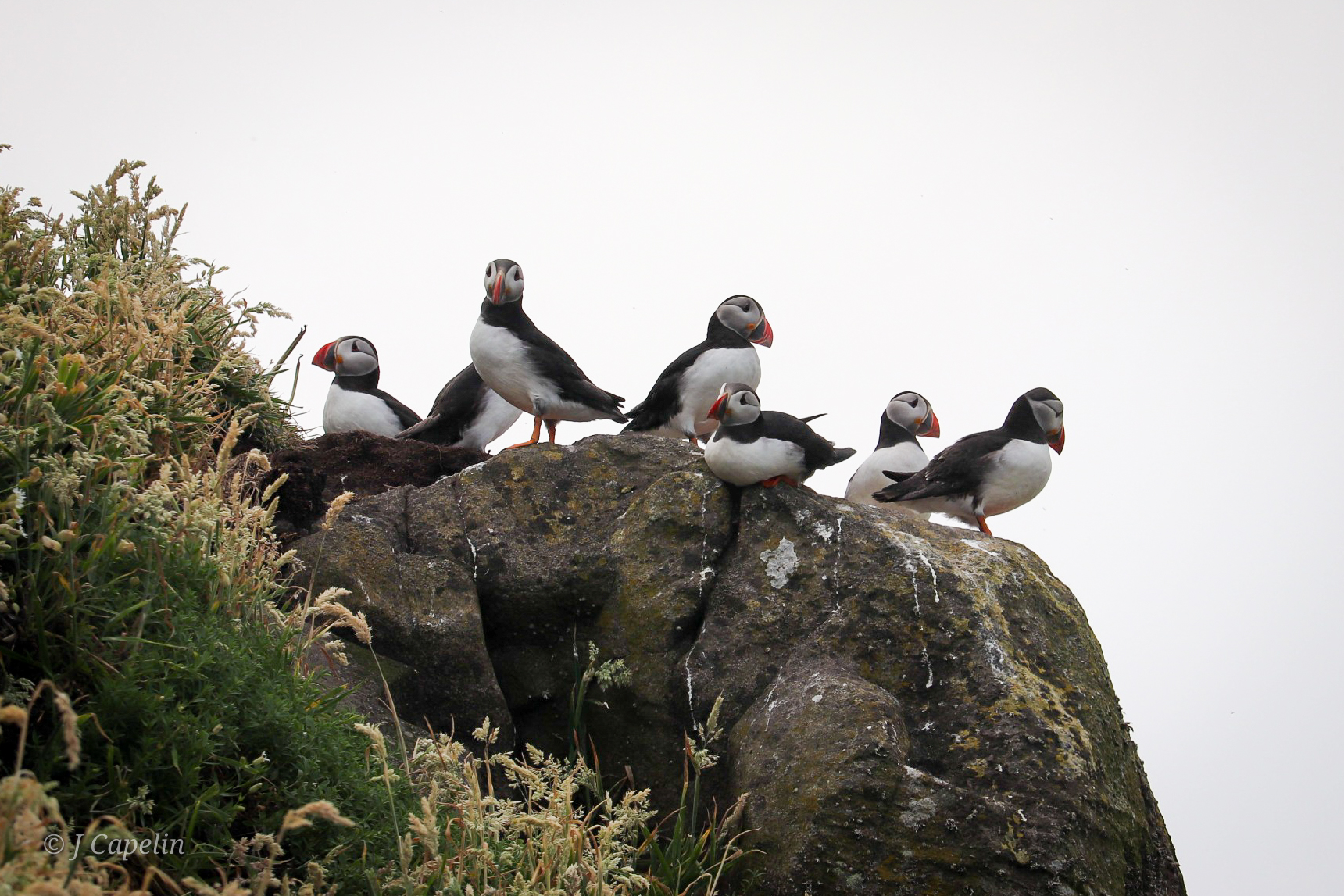
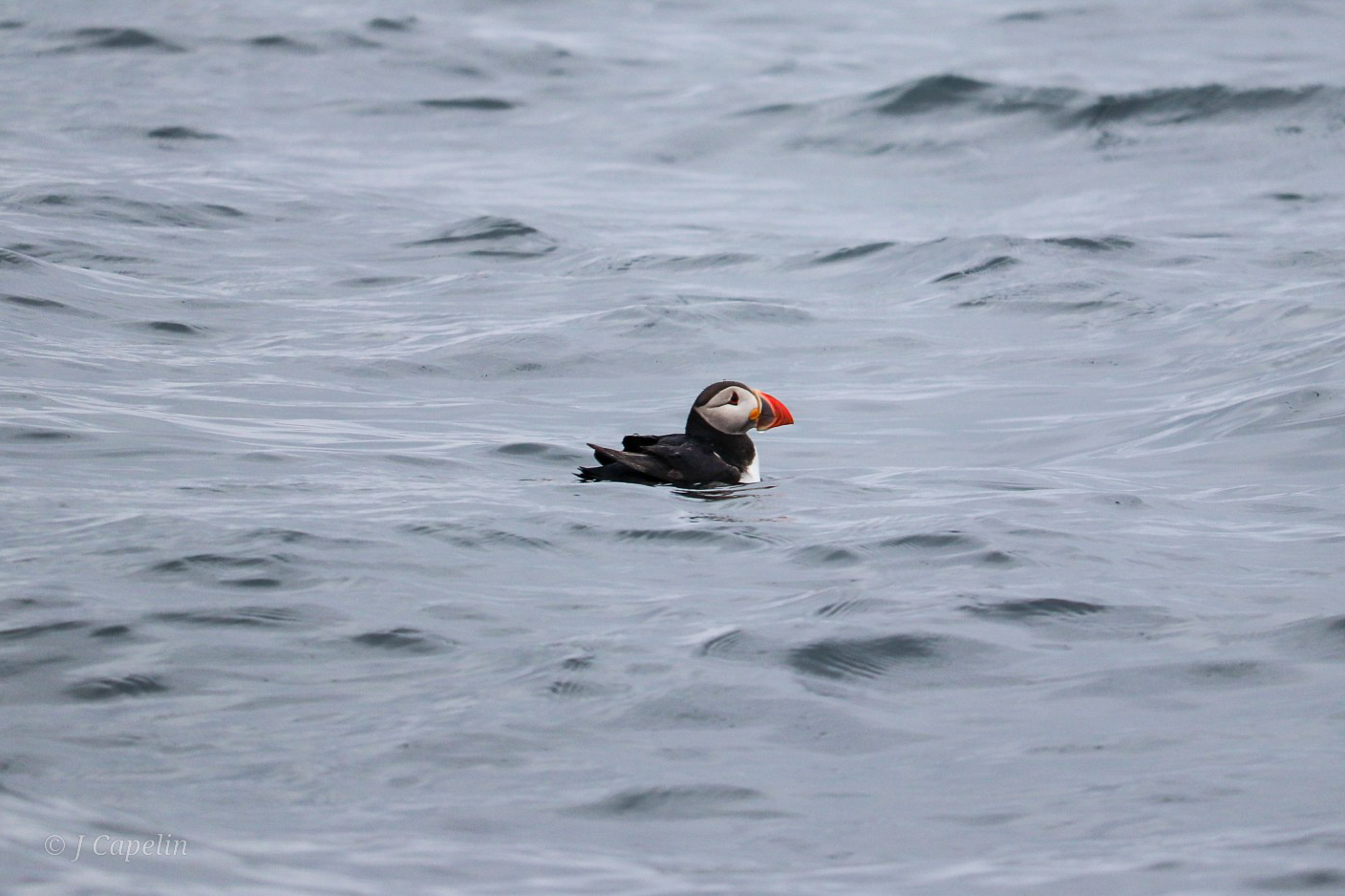
Then one of our group yelled and pointed to the back of the boat – a single Puffin was paddling along behind us, on an idyllic backdrop of Tantallon Castle on the coastline beyond. Very demure.

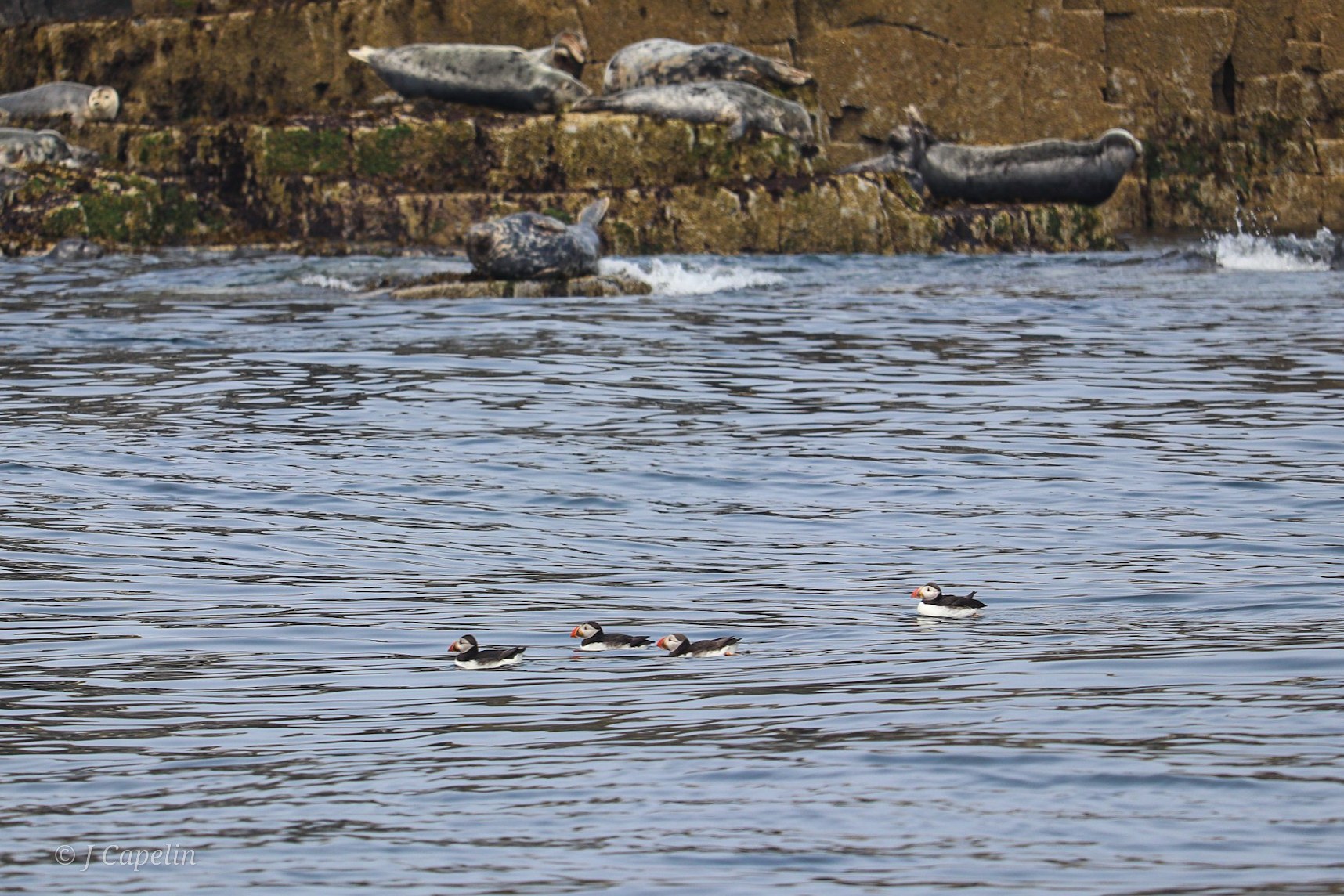
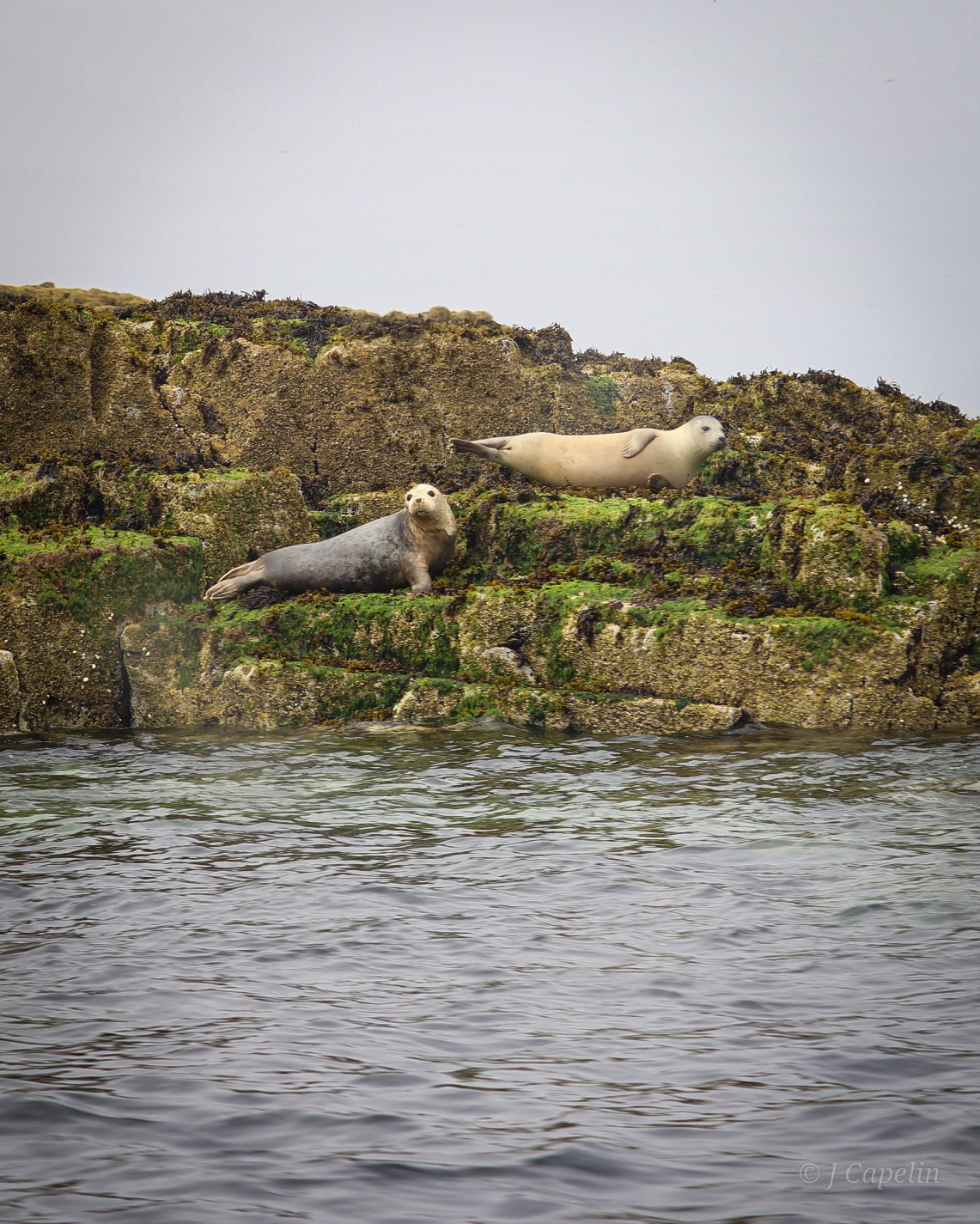
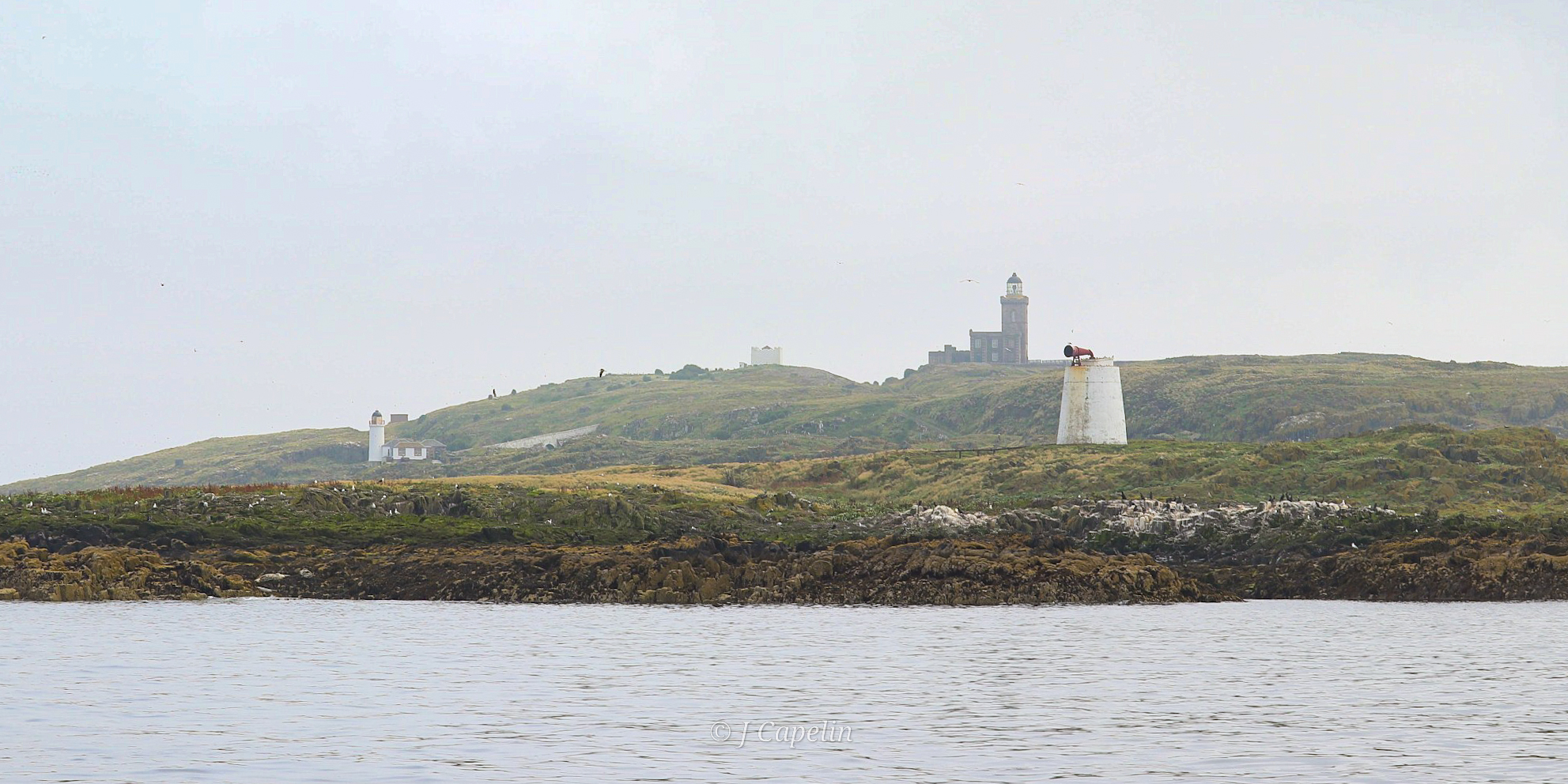
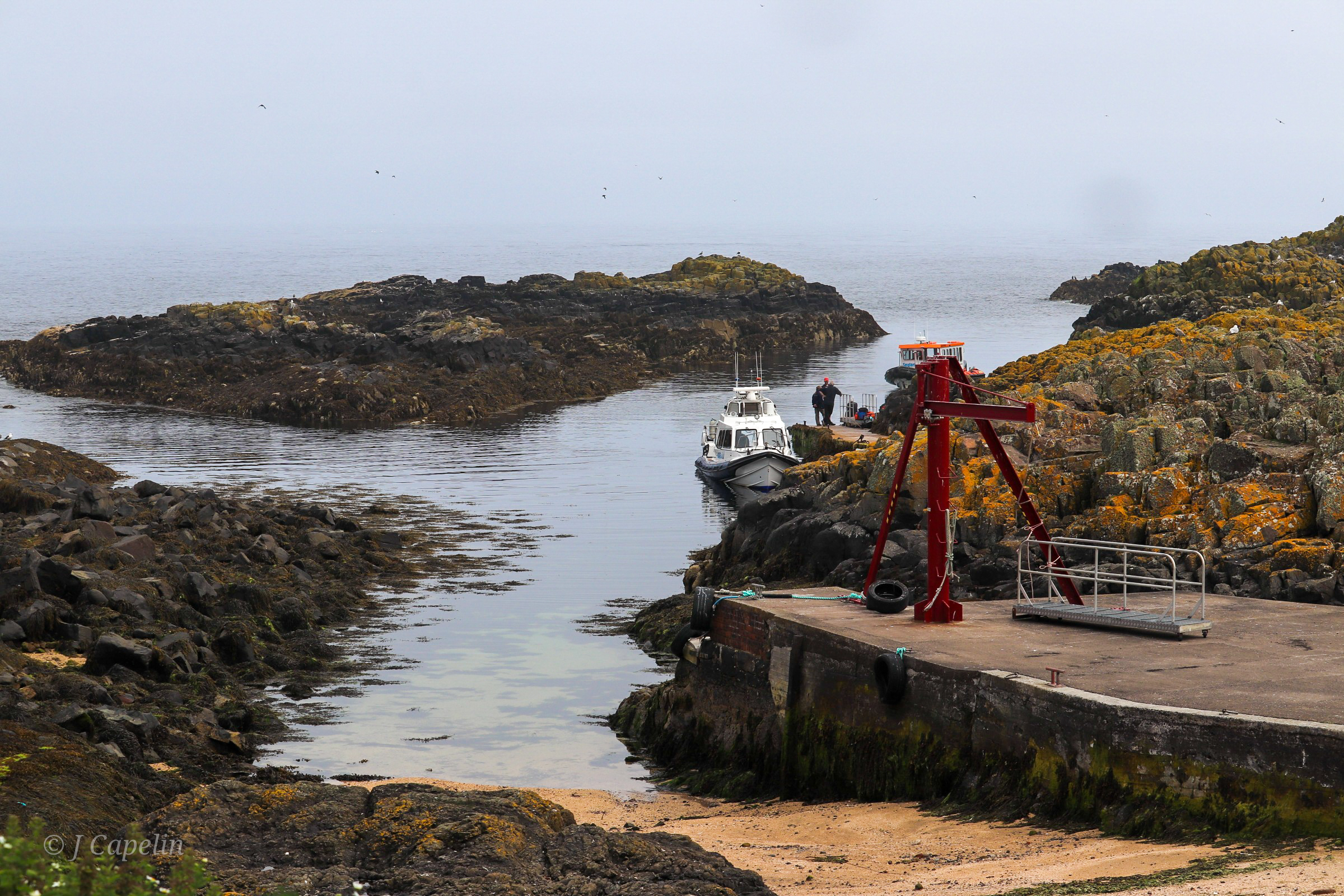
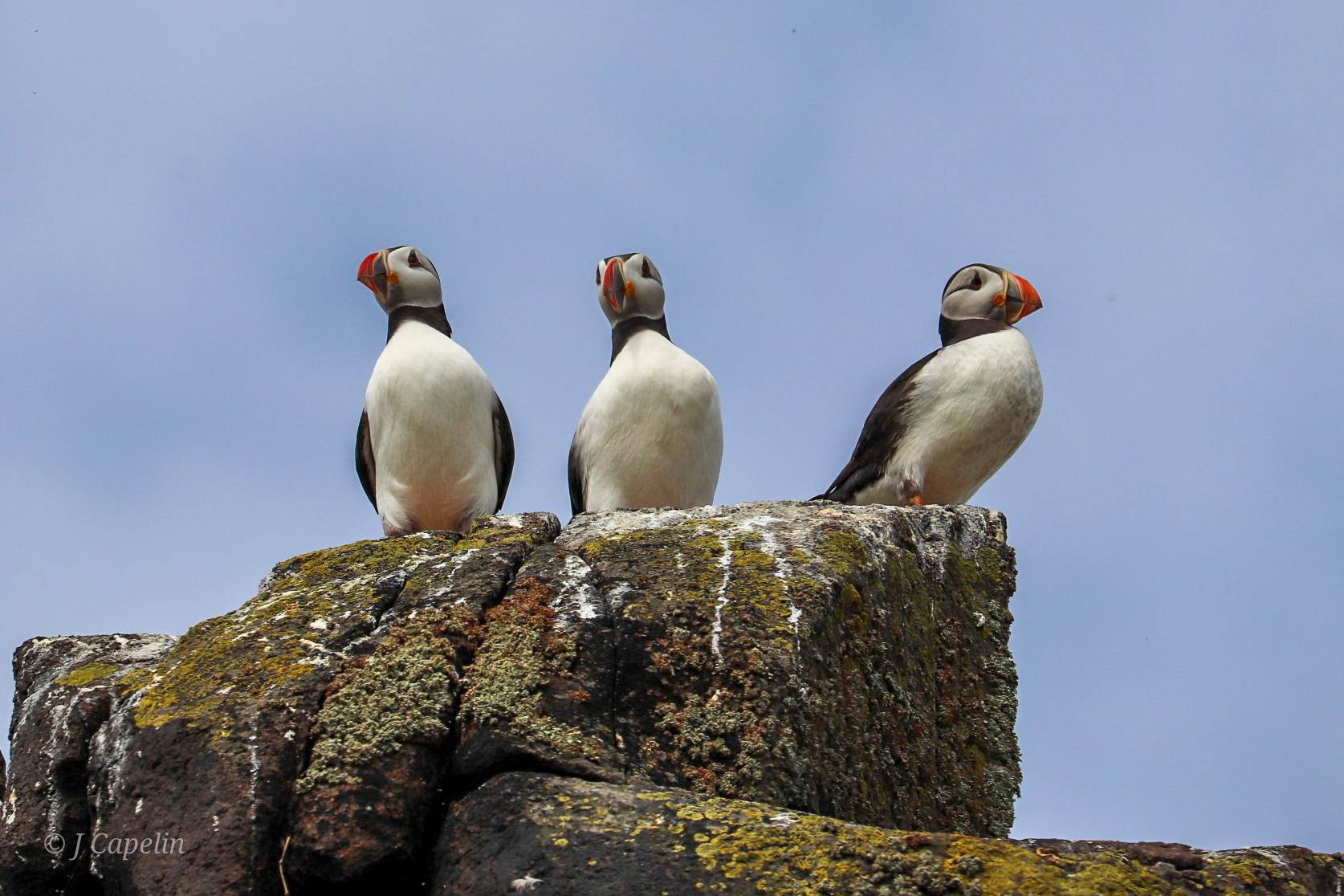
We sailed on to the Isle of May, which was surrounded by Grey Seals lounging around on the rocks and twirling in the watery mouths of the sea caves. As we came around the island to make port we could already see puffins on the cliff ledges and on the water, along with Terns, Kittiwakes, Shags, Gulls and Jellyfish.

There was still a layer of fog on the sea as we circled the island, but once we stepped off the boat the July afternoon sun was burning through.

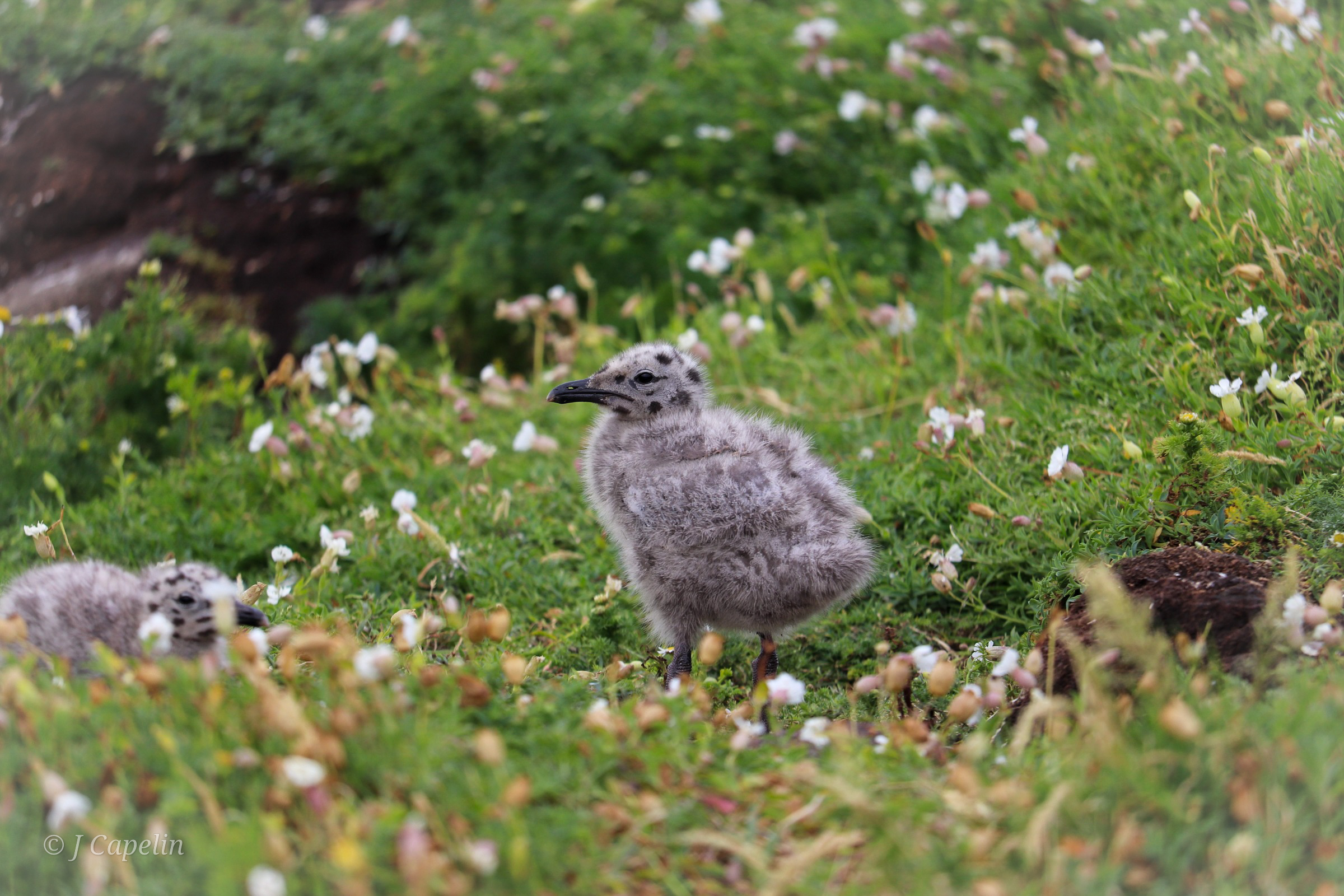
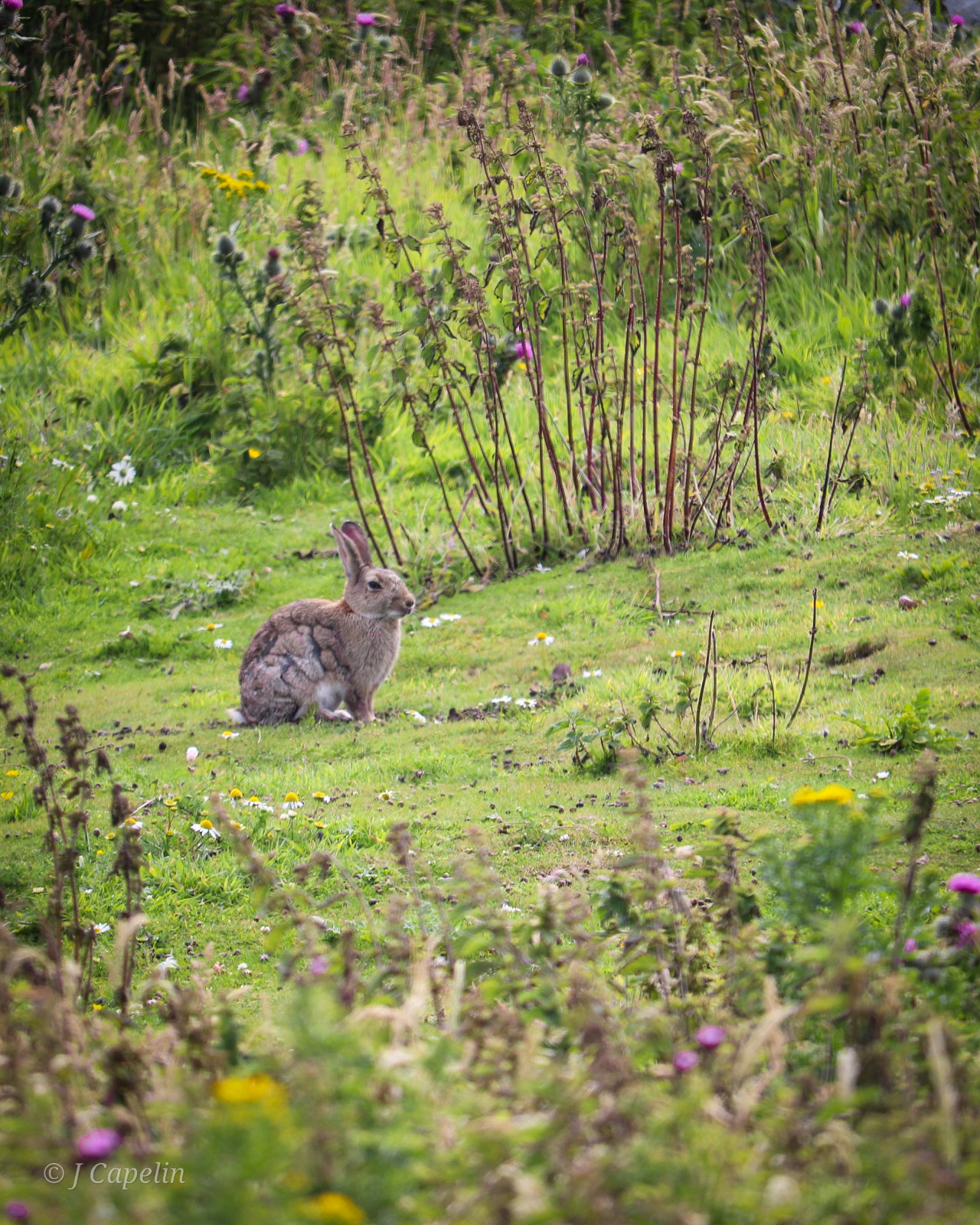
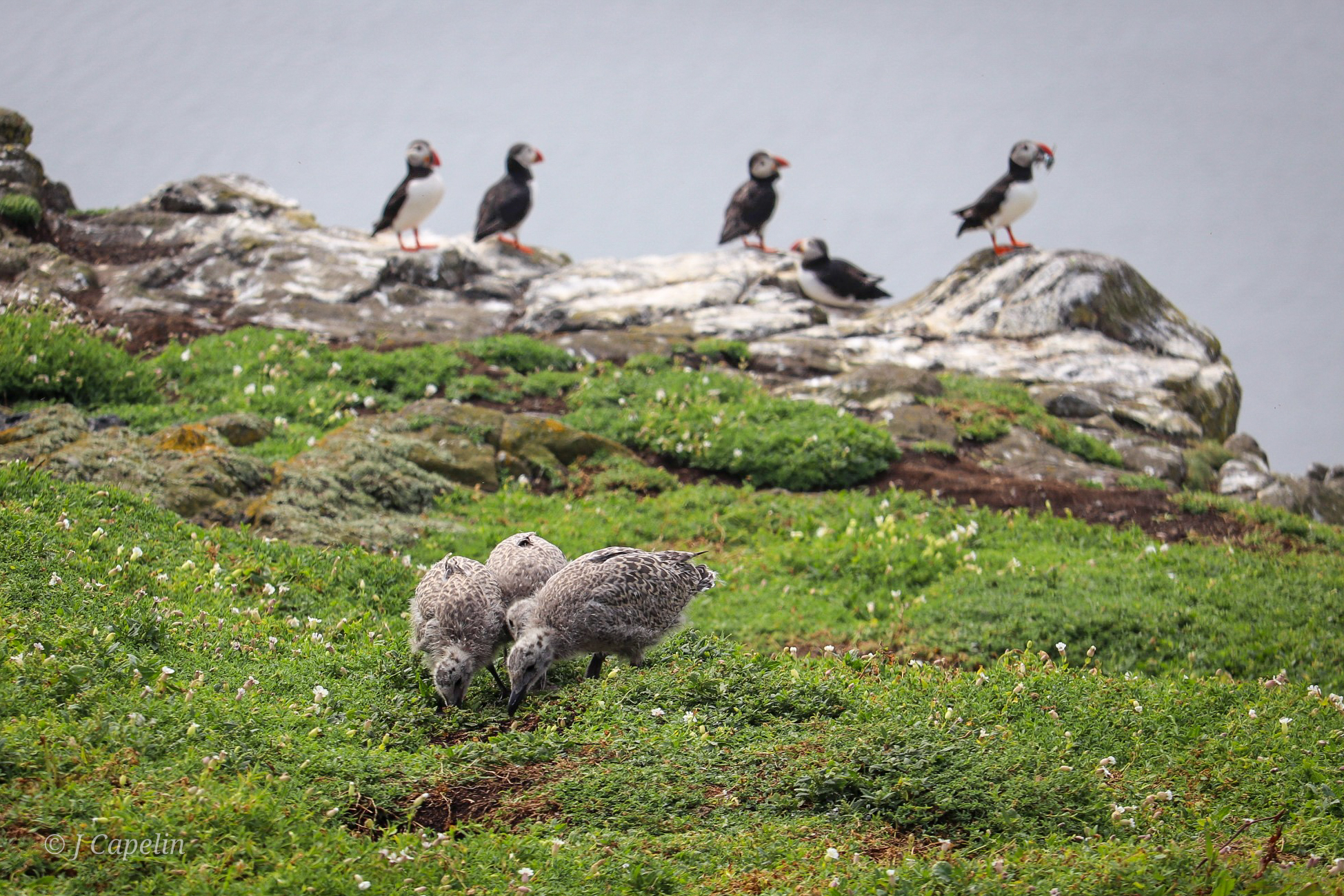
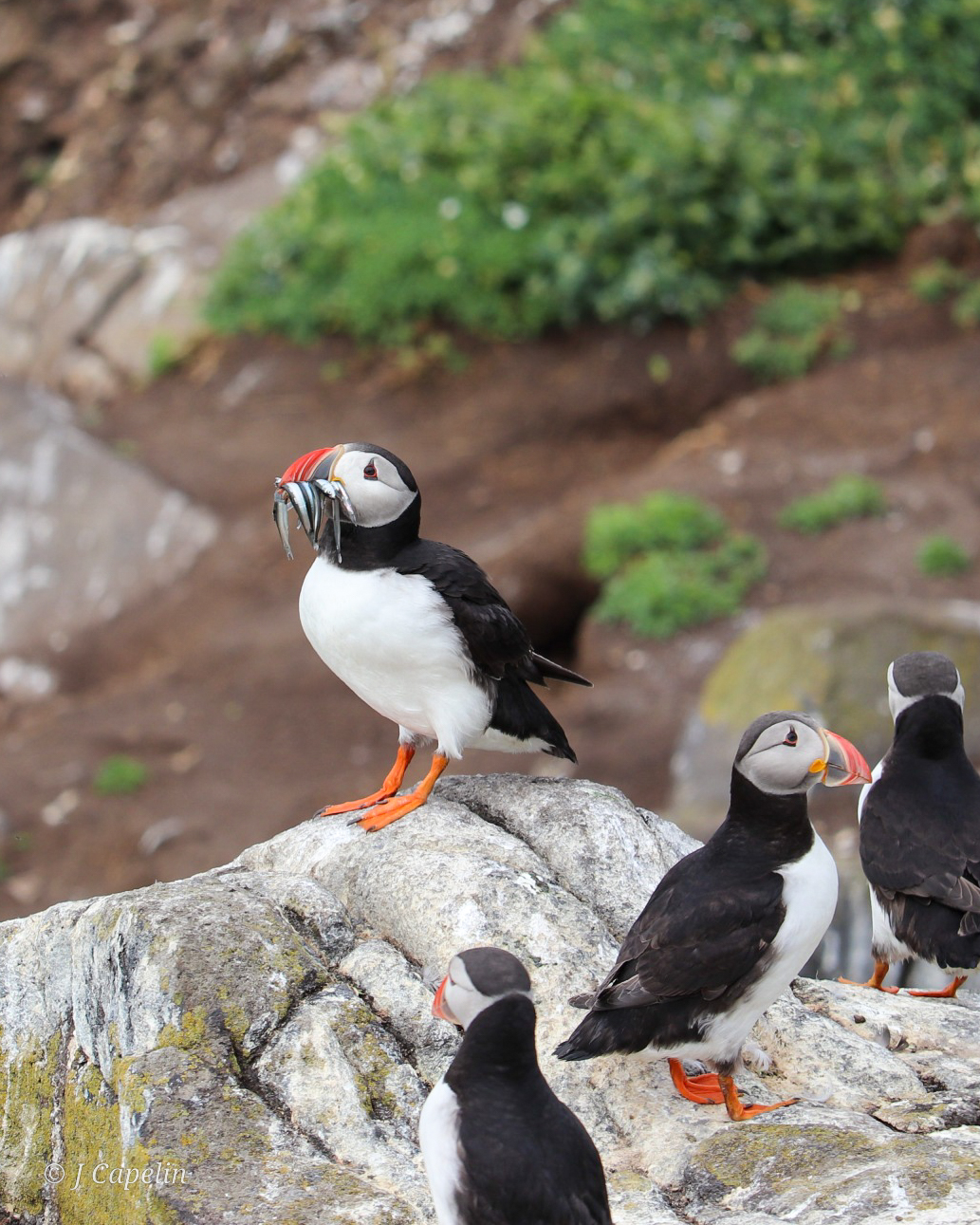
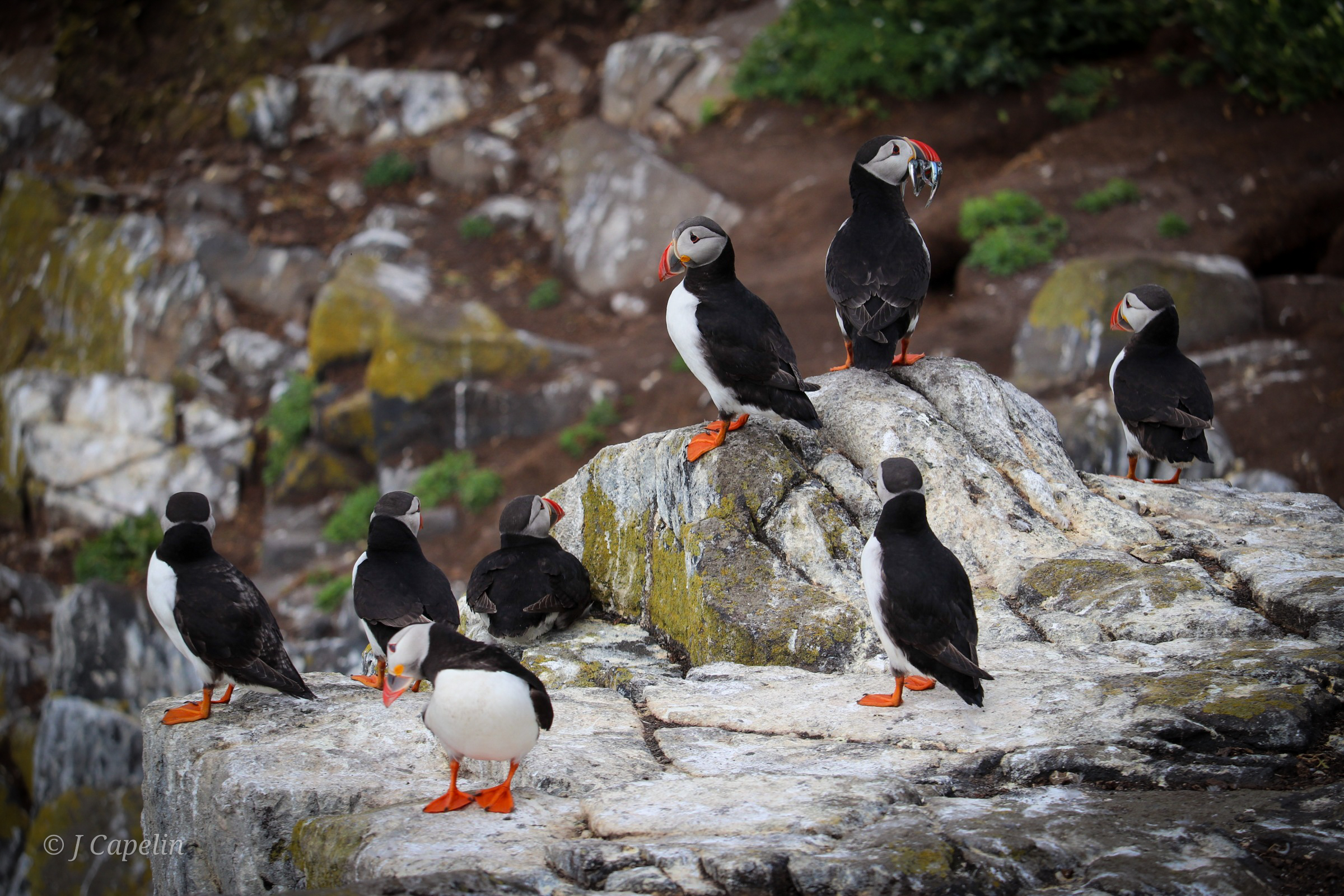
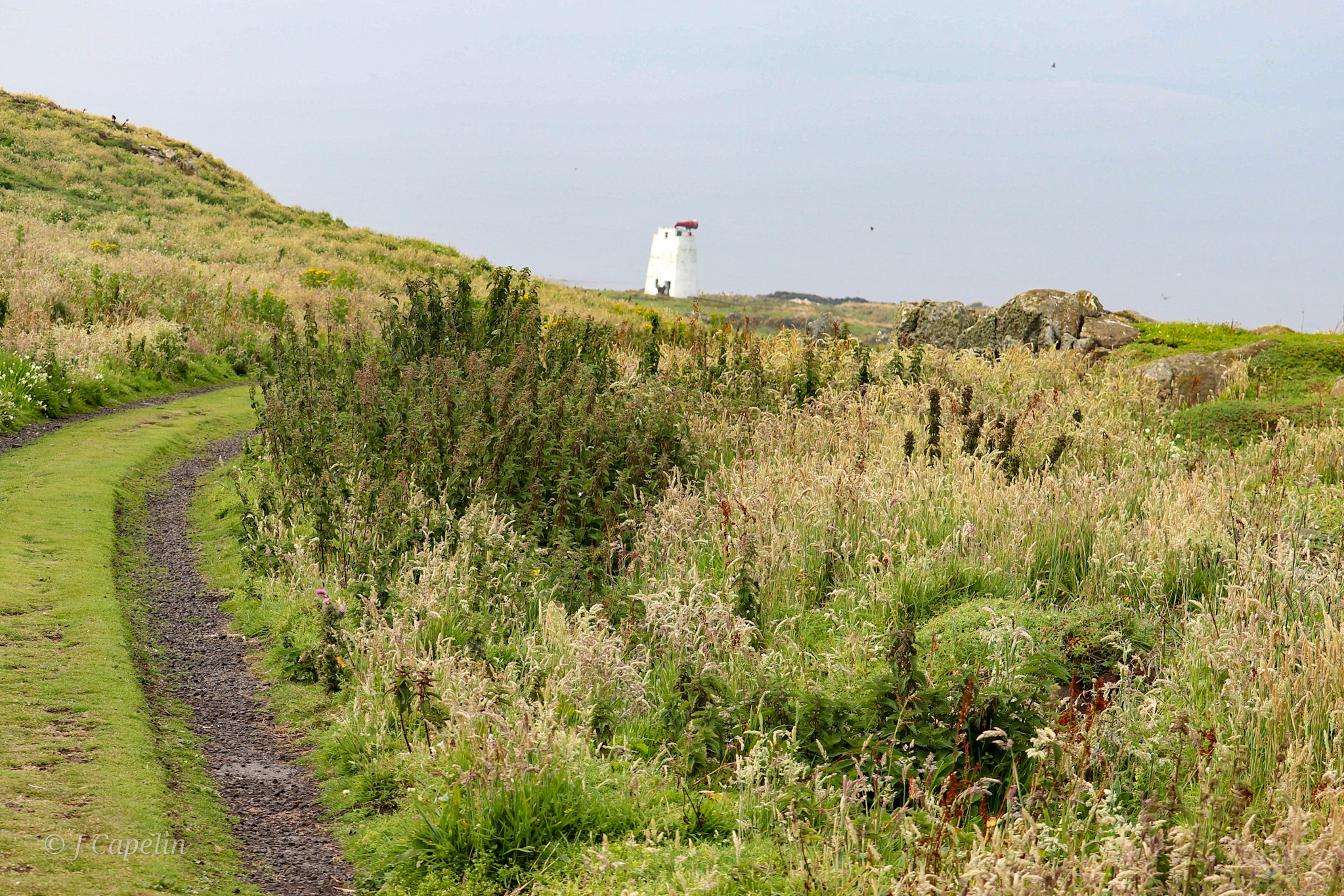
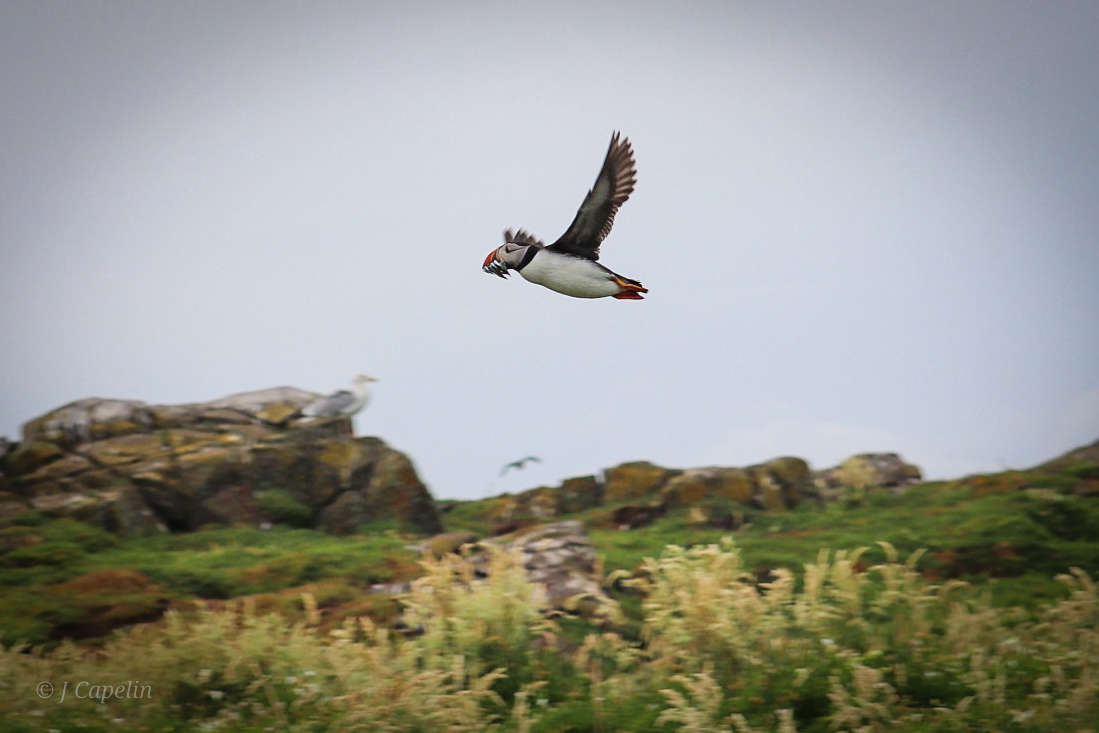
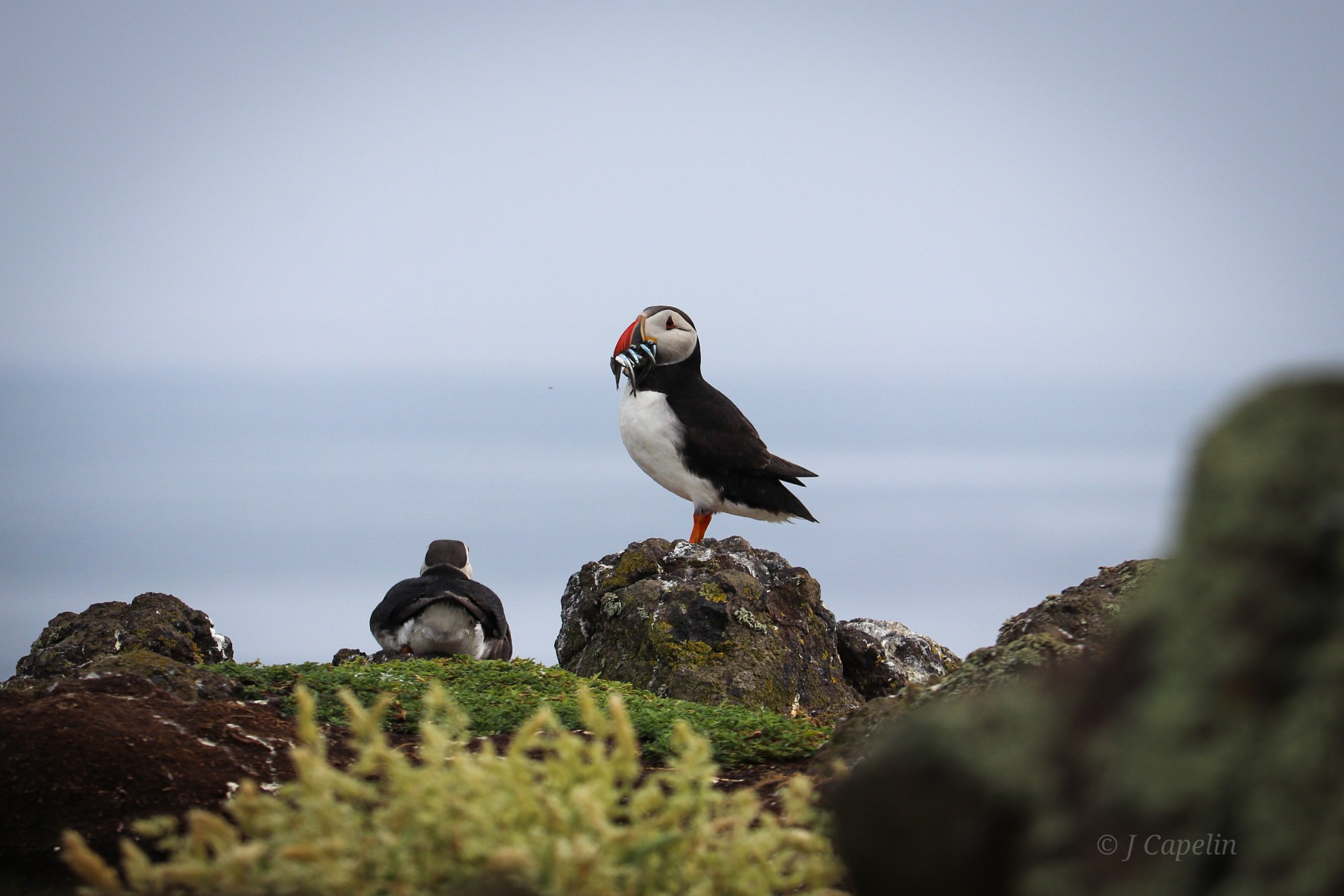
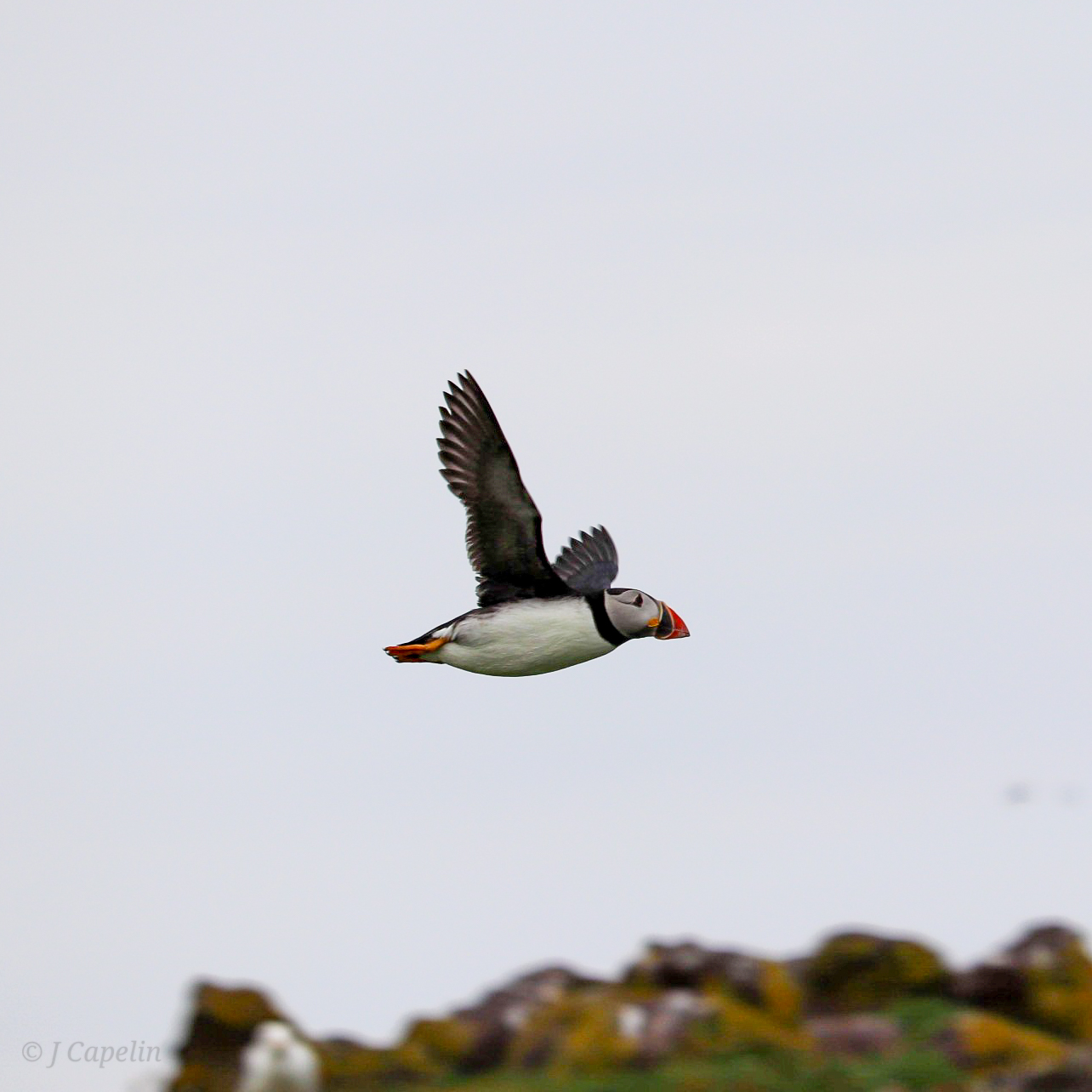
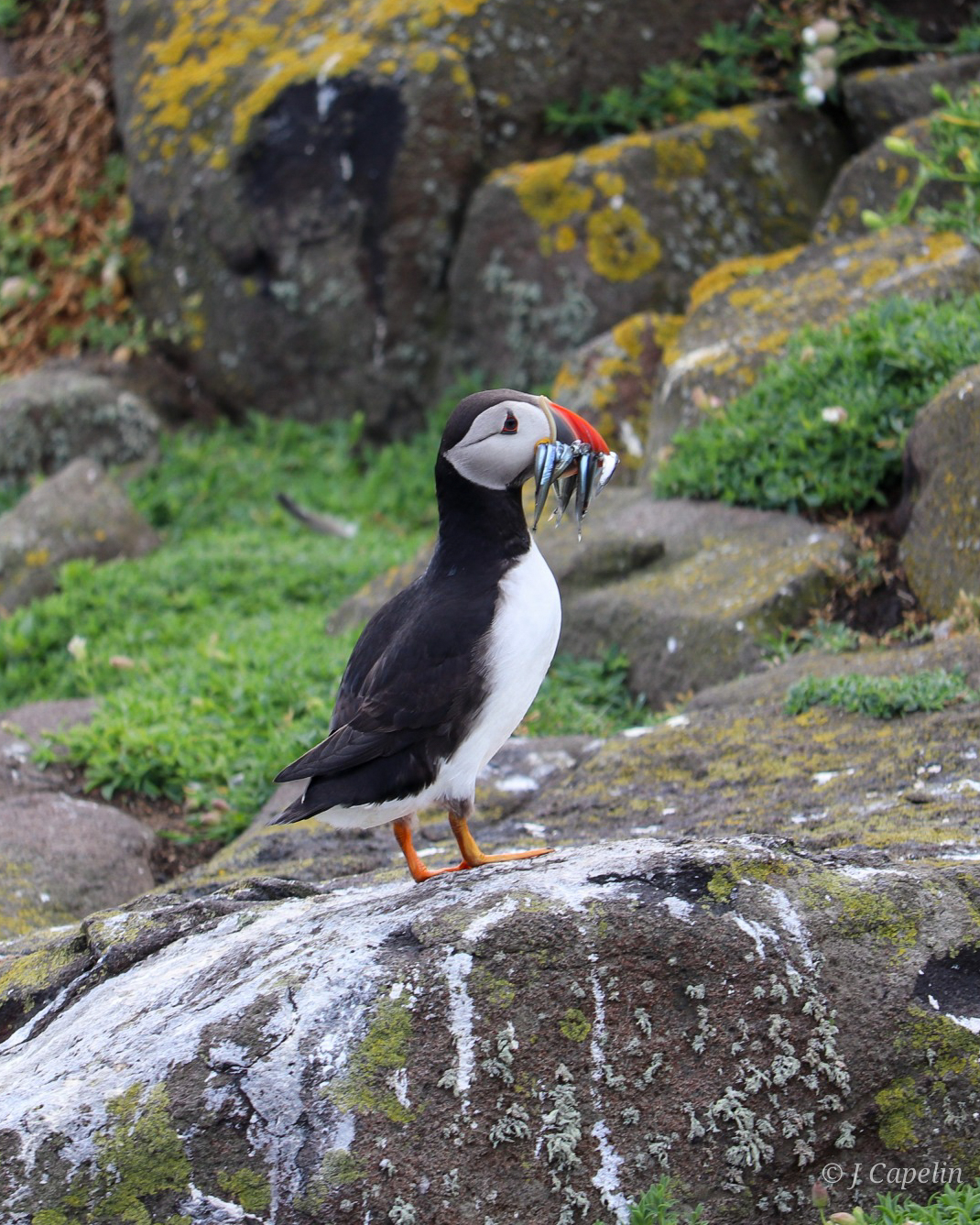
Fluffy grey seagull babies toddled around between tussocks, like butter wouldn’t melt, but the guide informed us that there were no Arctic Terns nesting here because those cute little baby gulls had eaten all their chicks. We strolled up the hill to the Main Lighthouse spotting big rabbits lolloping in the long grass and thistles, stopping at the Loch on the way. Puffins were watching us from all around as the footpath cut between high banks, and as they flew over I noticed the fish hanging out of their beaks and their big orange feet sticking out behind them!

Meandering down the headland to Bishop Cove there were Puffin burrows absolutely everywhere, highlighting the importance of sticking to the footpath. I watched three baby seagulls putting their heads in the burrows, while the parent Puffins waited anxiously from a distance. It was hard to watch the sad reality that some of these Puffins might be coming back to an empty burrow.

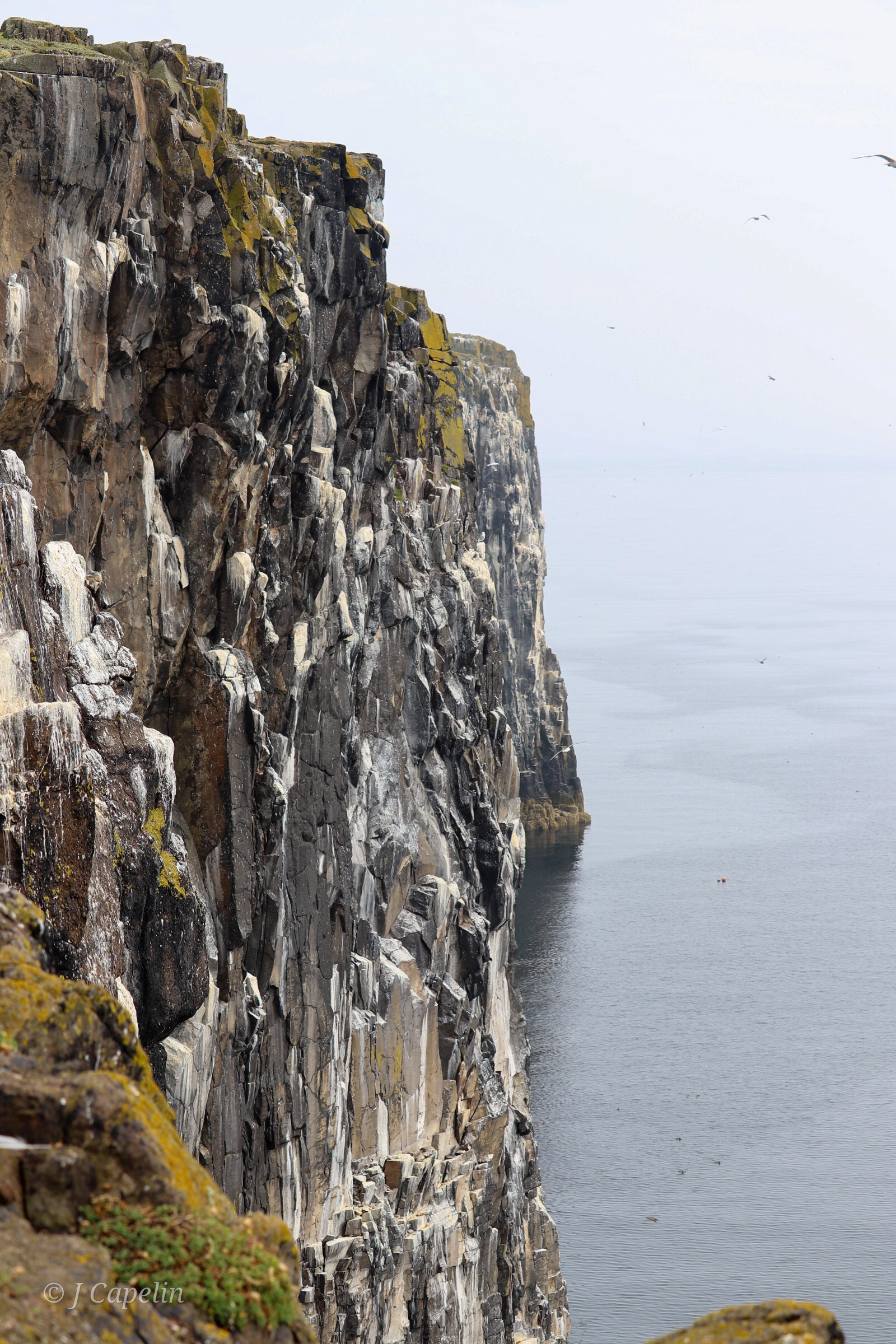
The spectacular cliffs of Bishop Cove were alive with birds, the grand white pillars holding the island up out of the crystal water below. We followed the path down to a cove known as Alterstanes, where we got some nice Puffin close ups. Then we looped back along the lower boardwalk, ‘Holyman’s Road’ along a vast, rocky coastline, to the south point of the island.

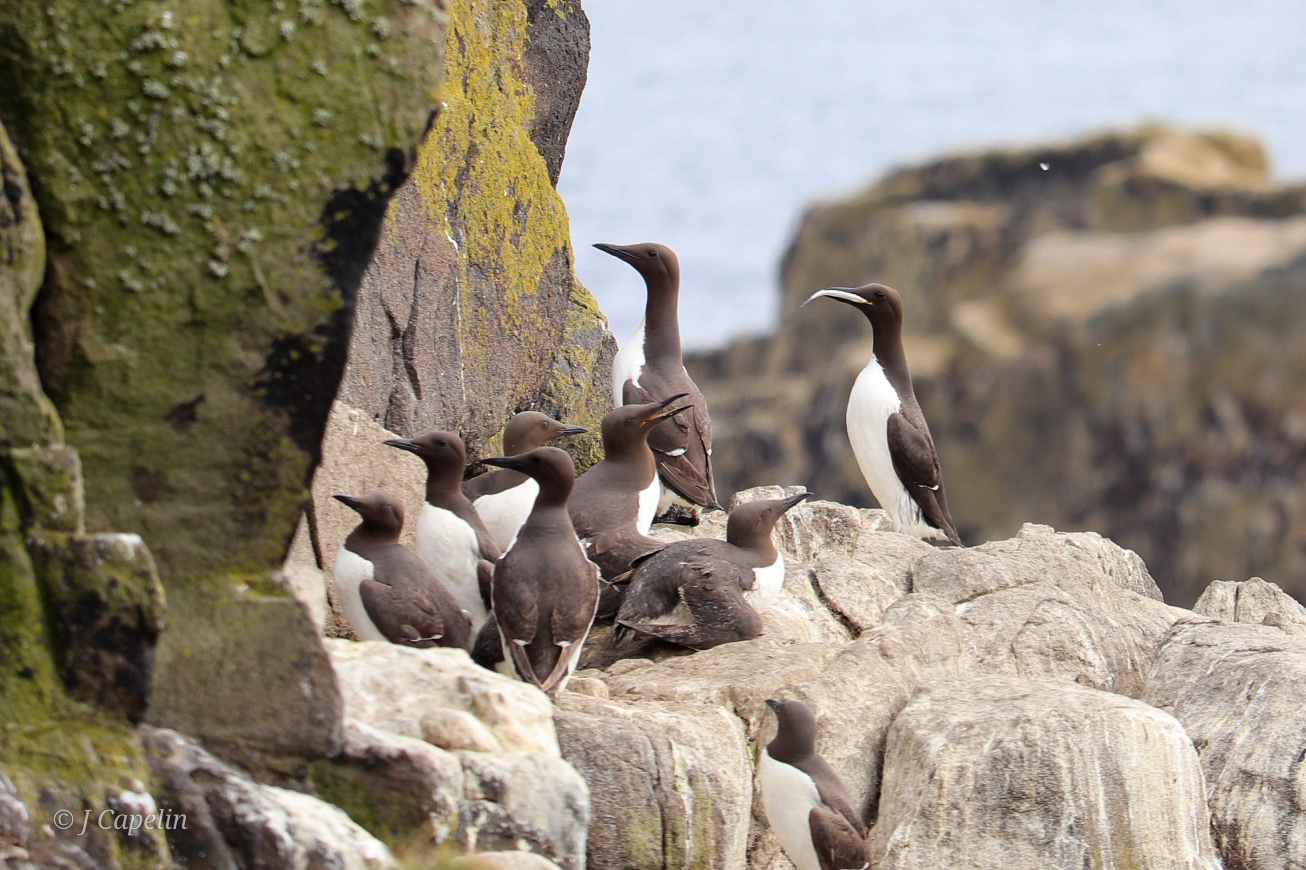
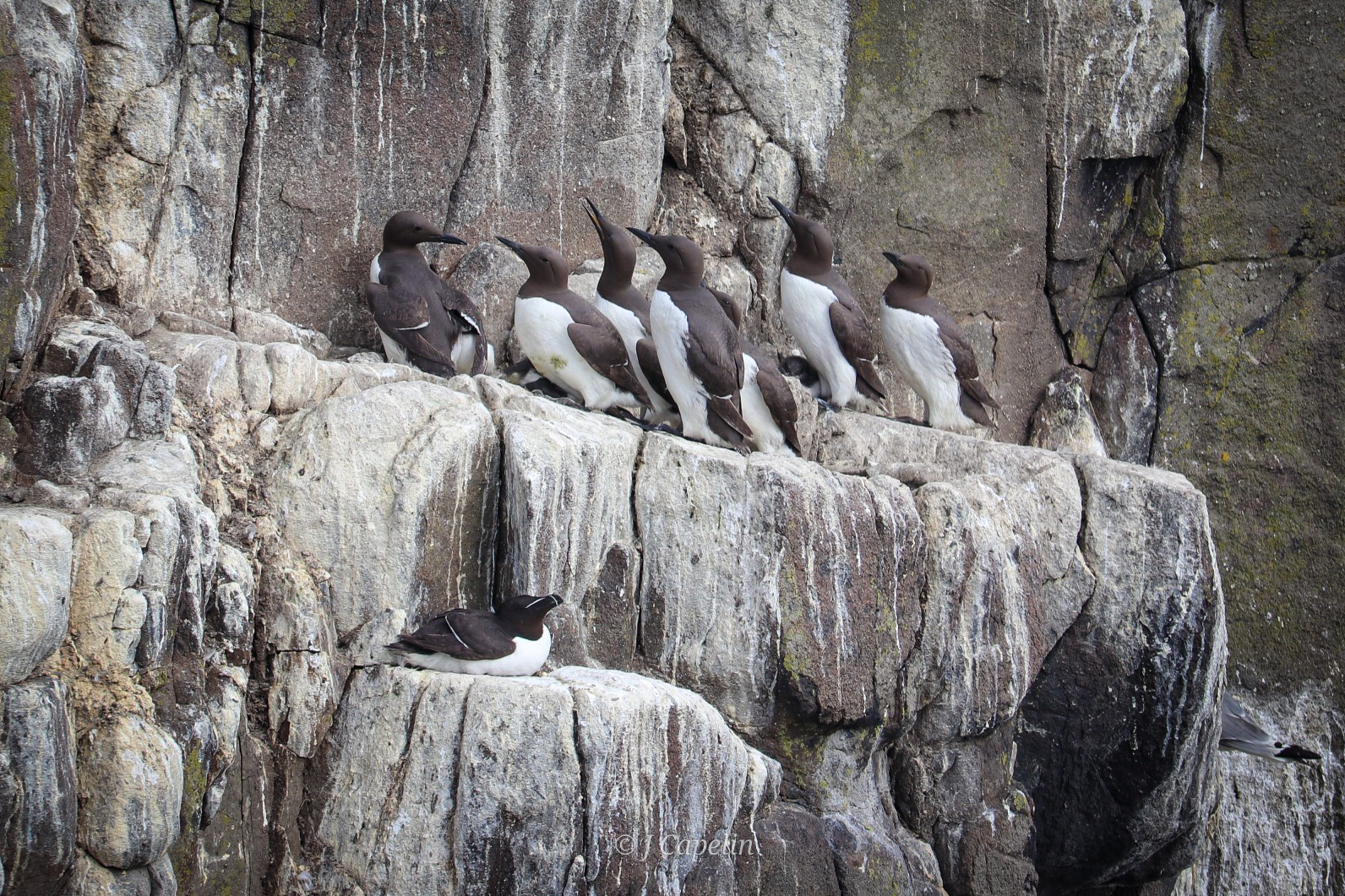
The high cliffs around the South Horn were teeming with Kitiwakes, Shags, and Guillemots and Razorbills, nicknamed the Penguins of the North. A North Sea wind began to gust in, bringing dark clouds, so I donned my jacket and crouched on the rocks, watching as Puffins flew in from the sea, fish spilling from the edges of their beaks.

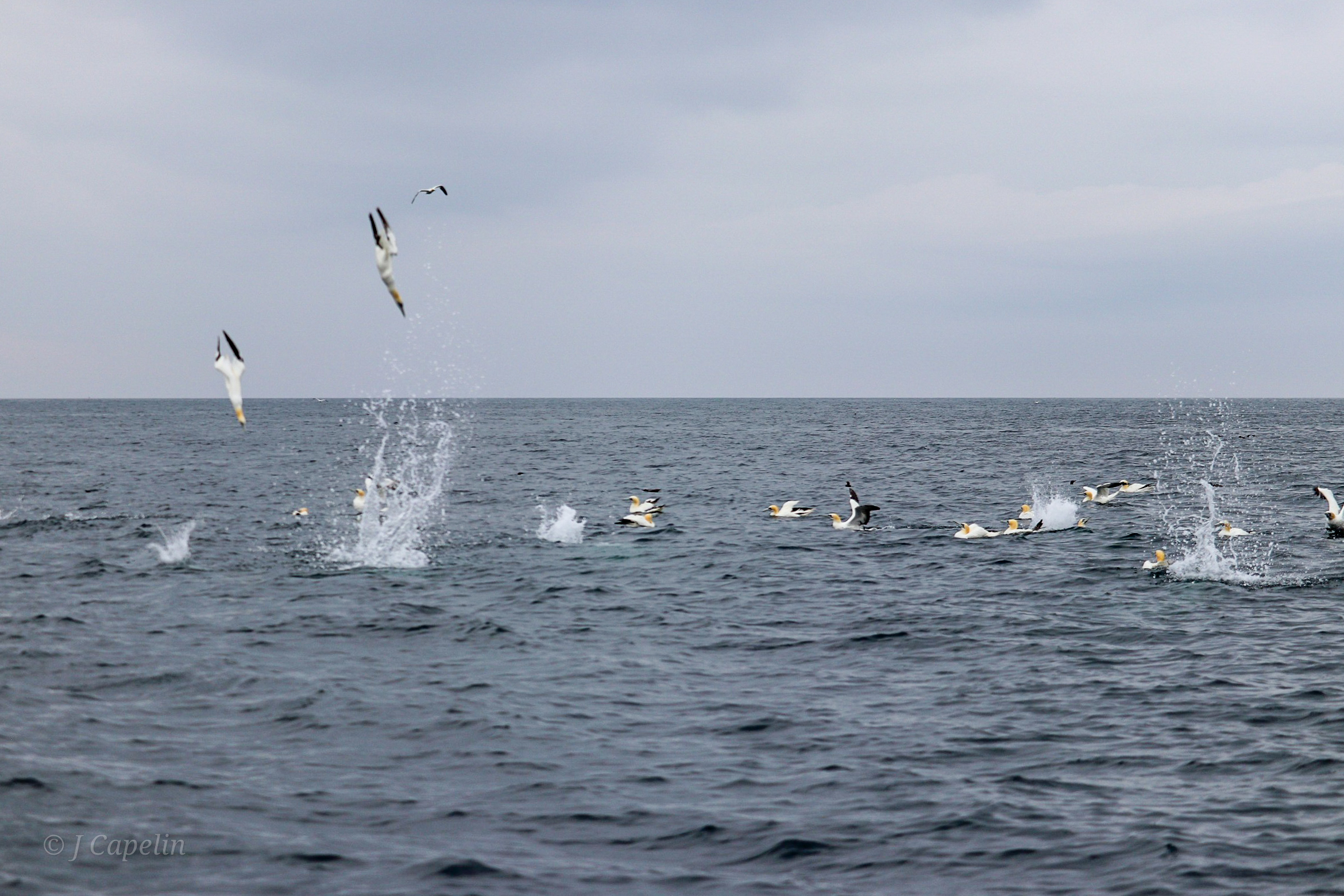
It had started to rain by the time we got back on the boat and departed back to Dunbar. On the journey back, I could swear I saw something big and grey breach the water – a dolphin or a whale – but no one else noticed. Moments after, the boat was stopped so we could watch a large number of Gannets diving. The captain was telling us that sometimes Minke Whales could be spotted amongst diving birds, as they feed on the same fish, and just as we began to pull away, there it was again – a Minke Whale! It breached two more times, and this time everyone saw! It was a magical moment to end a perfect day, and with the driving rain setting in, I was happy to get back to the cosy accommodation in Edinburgh and look through my photos.     

Diving Gannets

Te Waipounamu ~ A Winter Road Trip

15–23 minutes

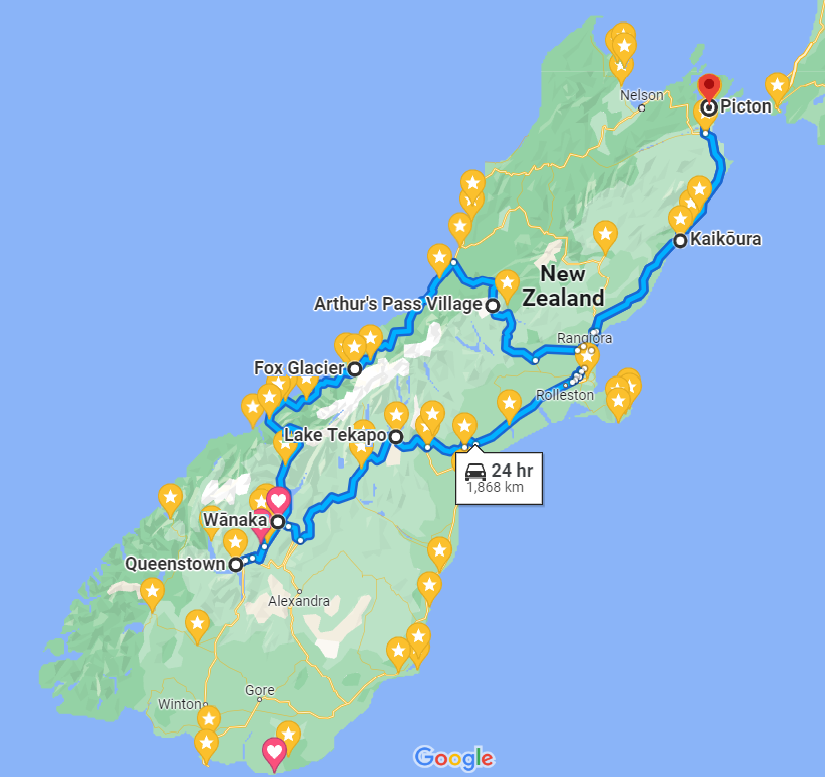
15 nights on New Zealand’s South Island, travelling to some of my favourite parts of the World for the first time since Lockdown.

Te Waipounamu is South Island’s official name; ‘wai’ meaning ‘waters,’ and ‘pounamu’ meaning ‘greenstone.’

We drove around 2,000km in 14 days!
(Click for more info whenever you see this little black arrow.)

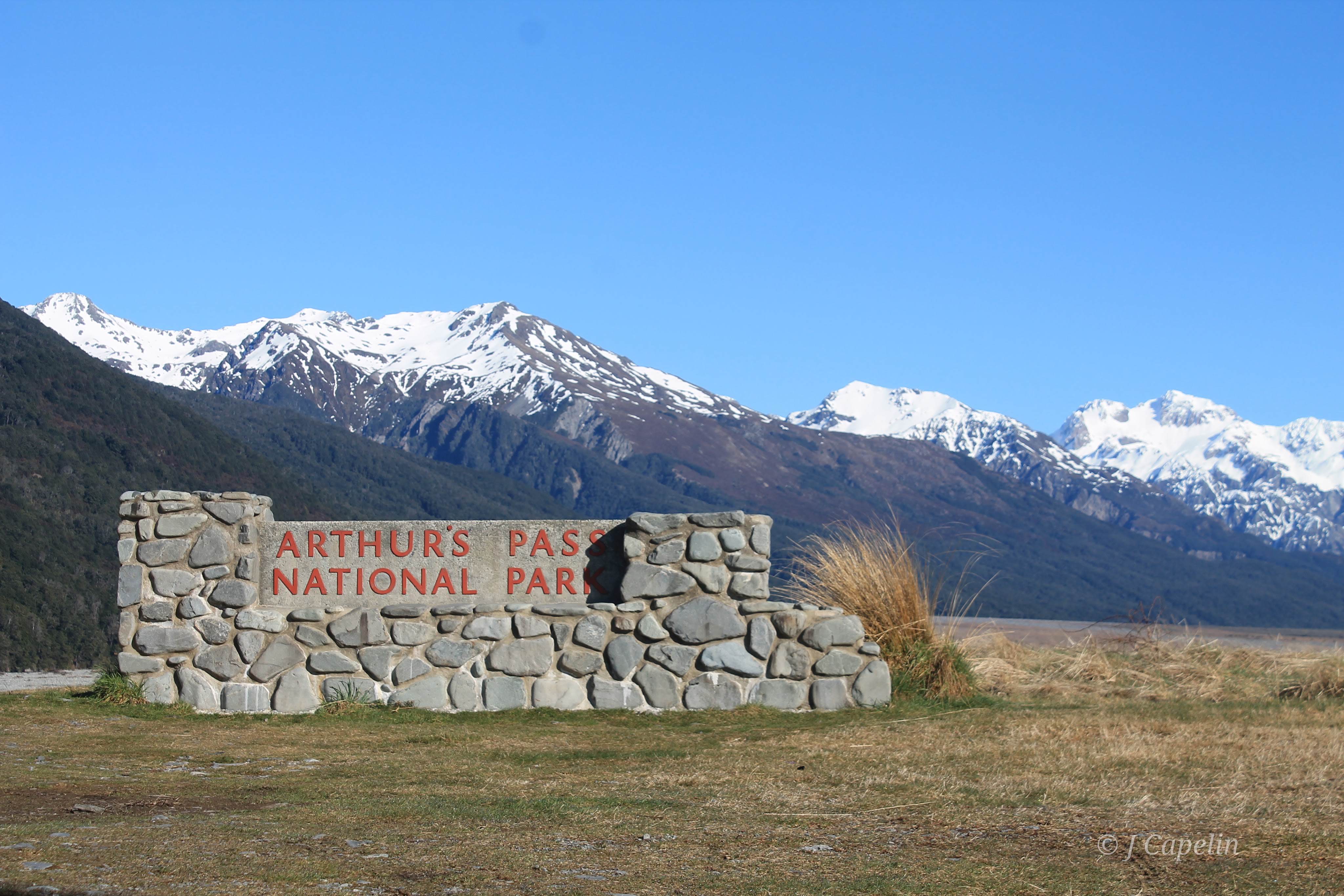
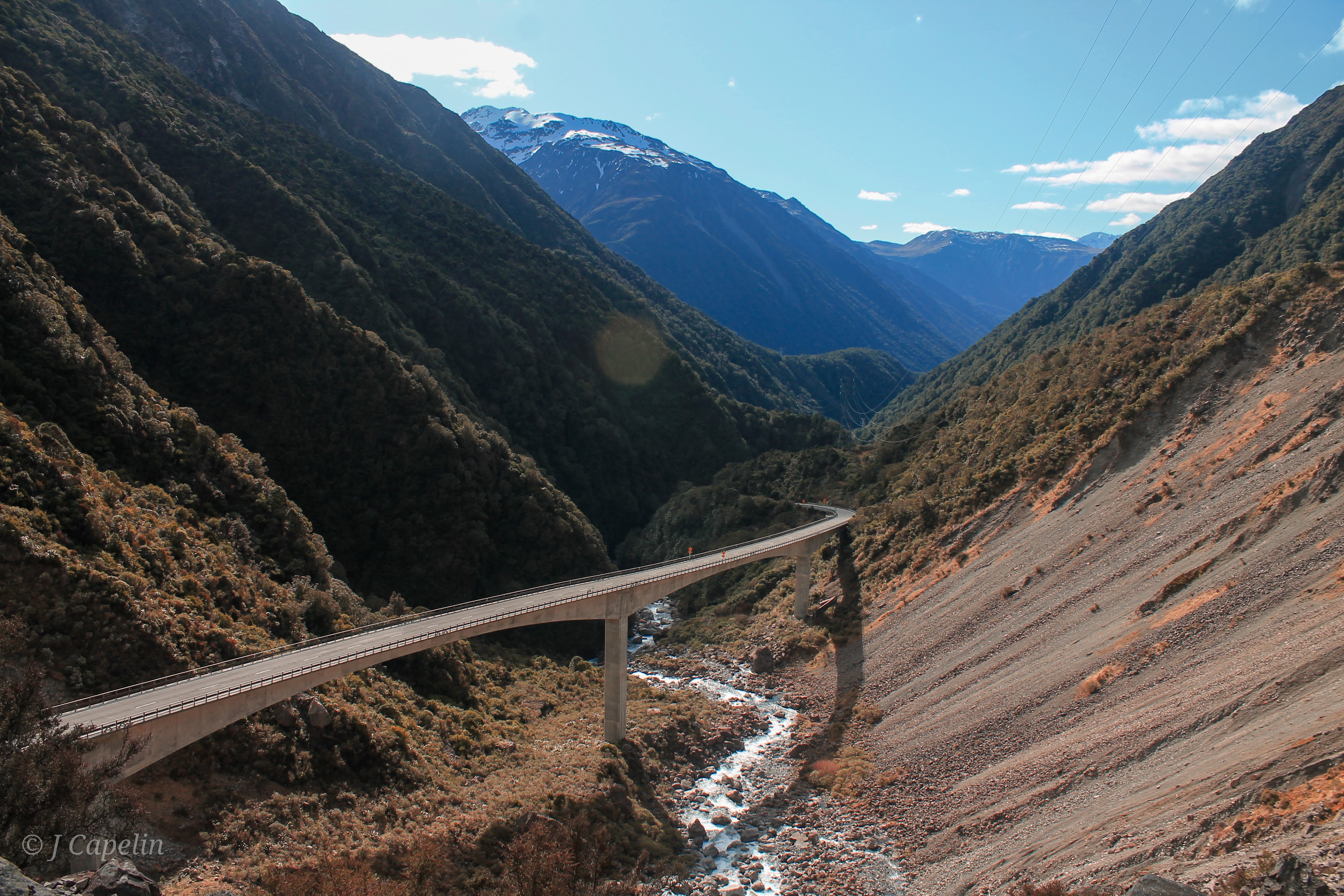
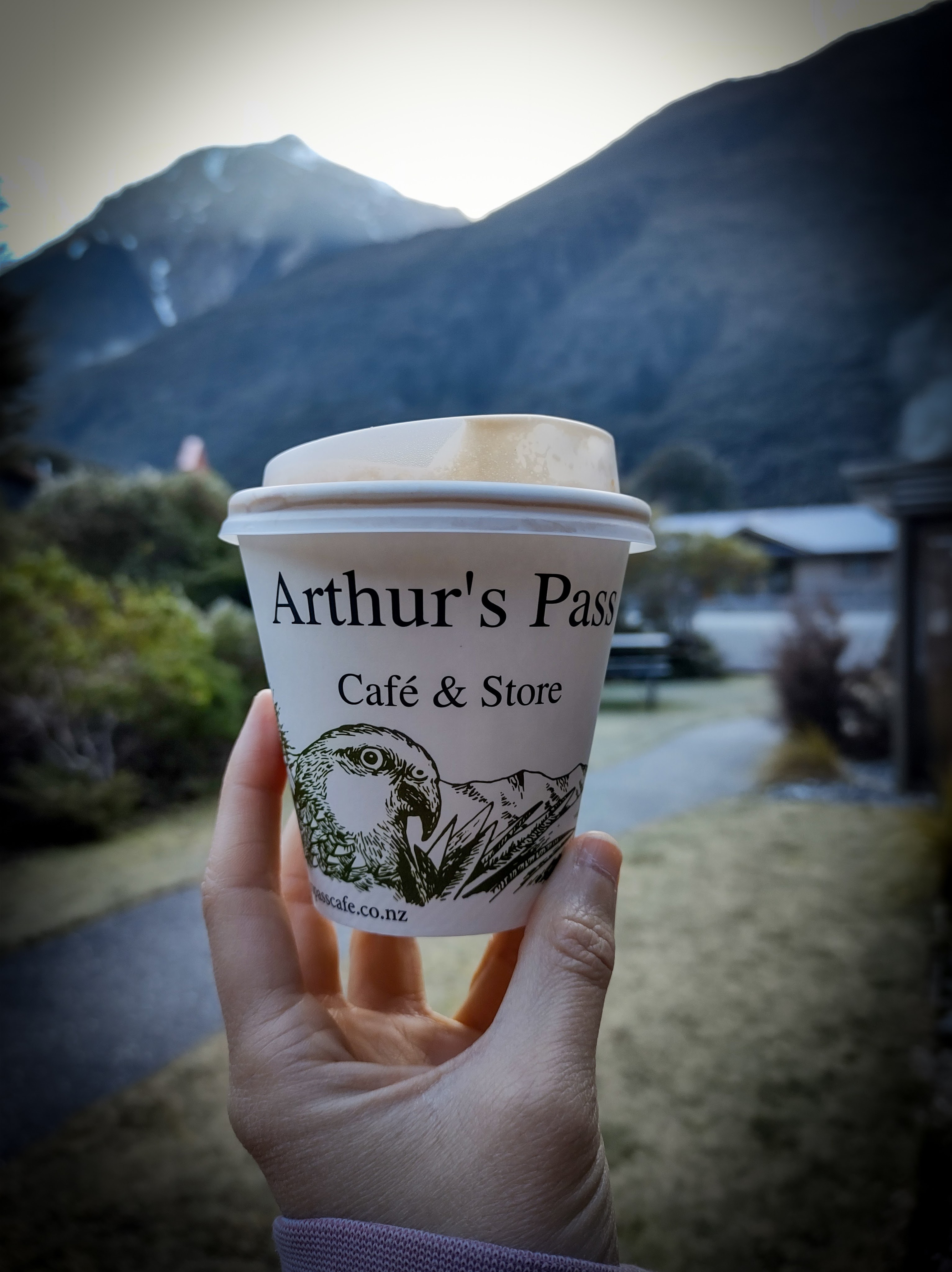
The original plan was to drive all the way up the West Coast to Nelson, but devastating floods took out most of the roads during the start of our trip, so we had to make a last minute detour through Arthur’s Pass.

Budget

Our overall budget in New Zealand Dollars was around $5,800 between two of us.
To save money, I pre-booked all our accommodation and transport, and got early bird ski passes.

  • Interislander Ferry – Flexible Return for 2 adults: $256 NZD
  • Omega Car Rental, Picton – 14 days: $773 NZD
  • Accommodation for 15 nights (through Booking.com): $1,778 NZD
  • Cardrona & Treble Cone Ski Resorts – x2 Earlybird Multiday Passes for 4 days: $680 NZD

We spent around $290 on petrol, which left us with around $2,000 for general supplies. This went mostly on food and drink, which was definitely the most expensive part of our trip.

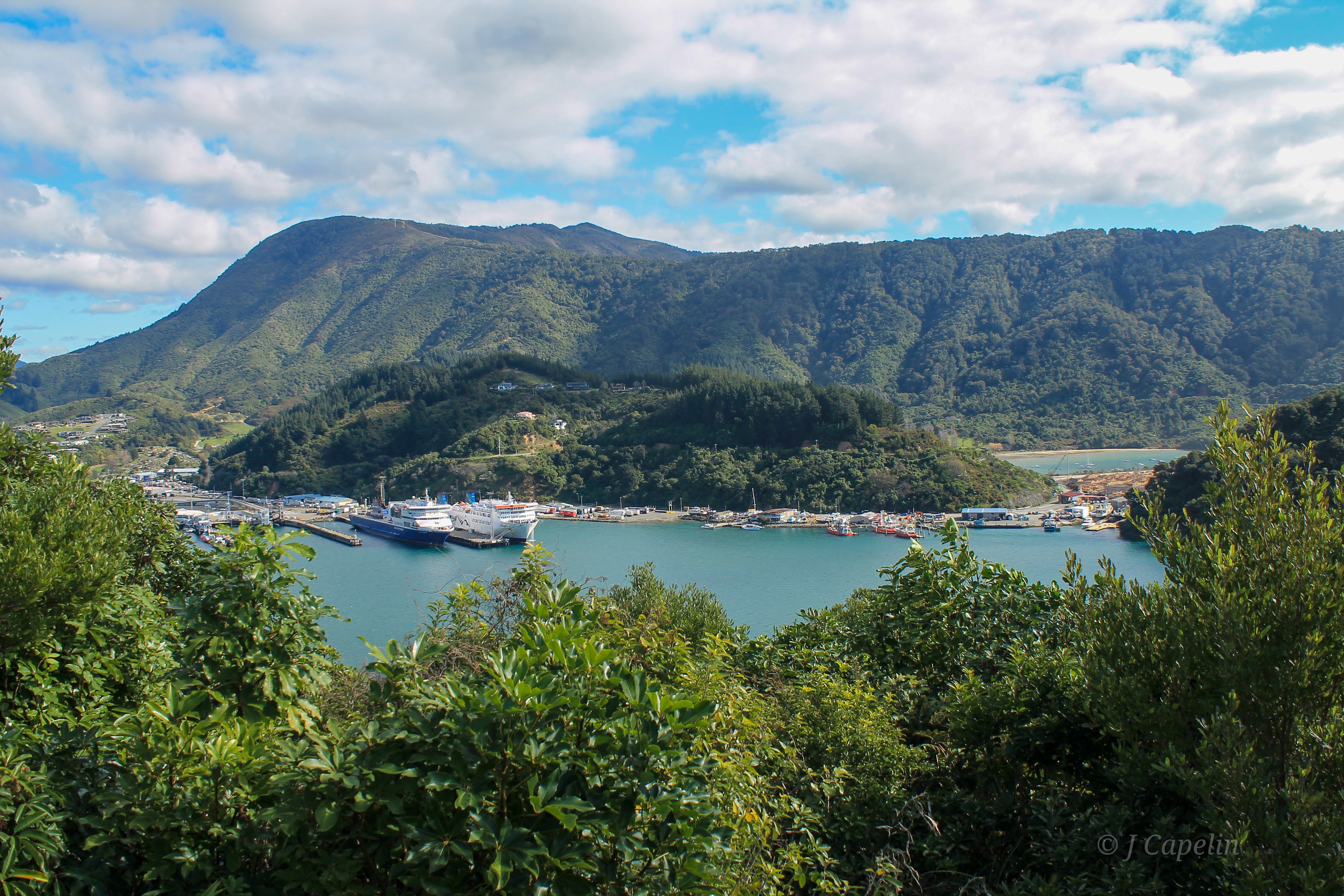
Starting in Wellington, we caught the Interislander ferry to Picton – a 3.5 hour crossing in good weather – arriving late in the evening. We stayed overnight, collecting our hire car from Picton Omega the following morning, and made our way to Kaikōura.

Kaikōura

Who doesn’t love a good seaside town? Where a storm is always imminent; the ceaseless rush of the Pacific Ocean gently fills your ears, gulls call distantly on the wind, and with the snow-capped mountains hugging its perimeter, you can always expect the unexpected in Kaikōura. Kai means food and kōura means crayfish, and you can find plenty of places in and around the area serving up this classic NZ dish.

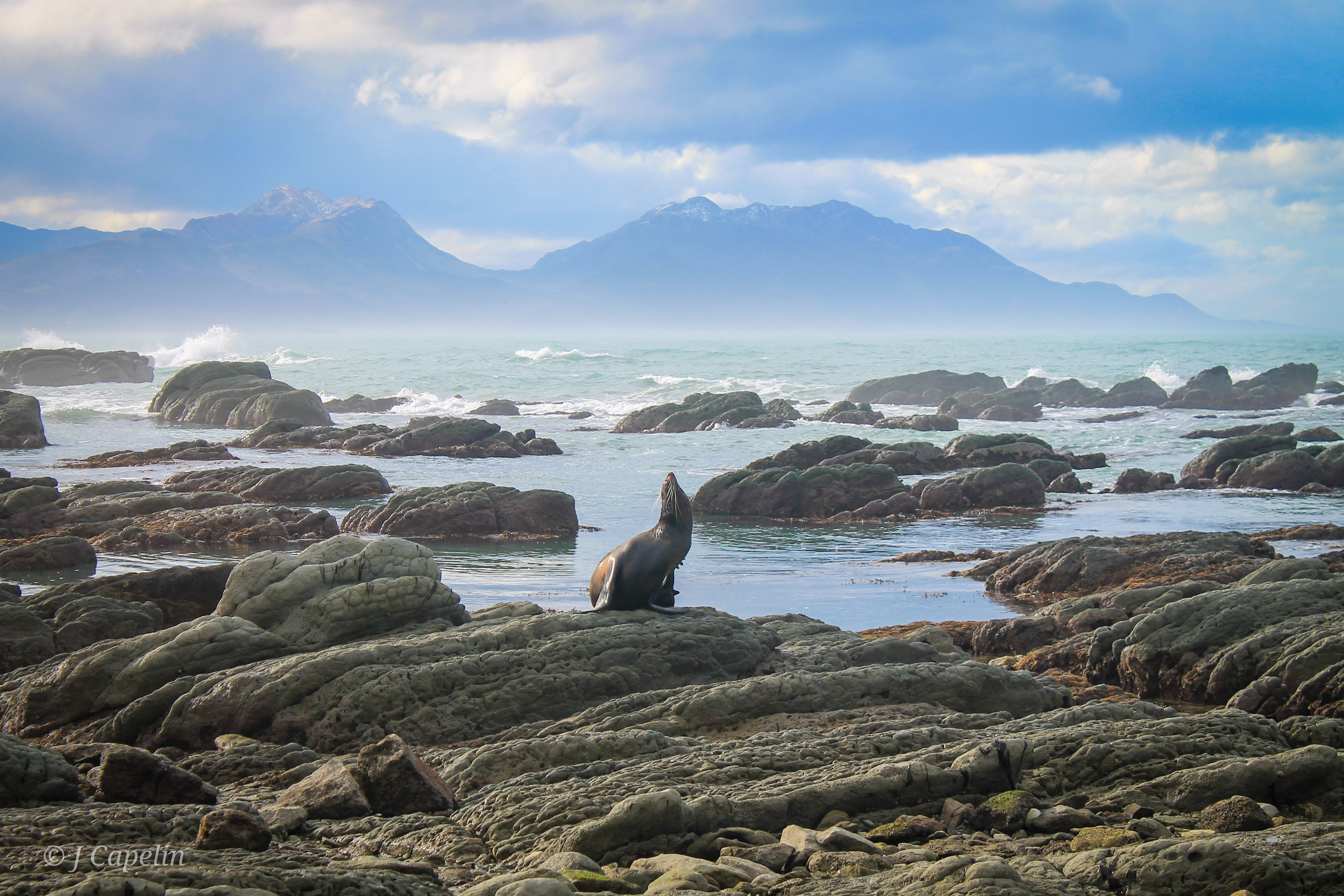
Fur Seal Colony

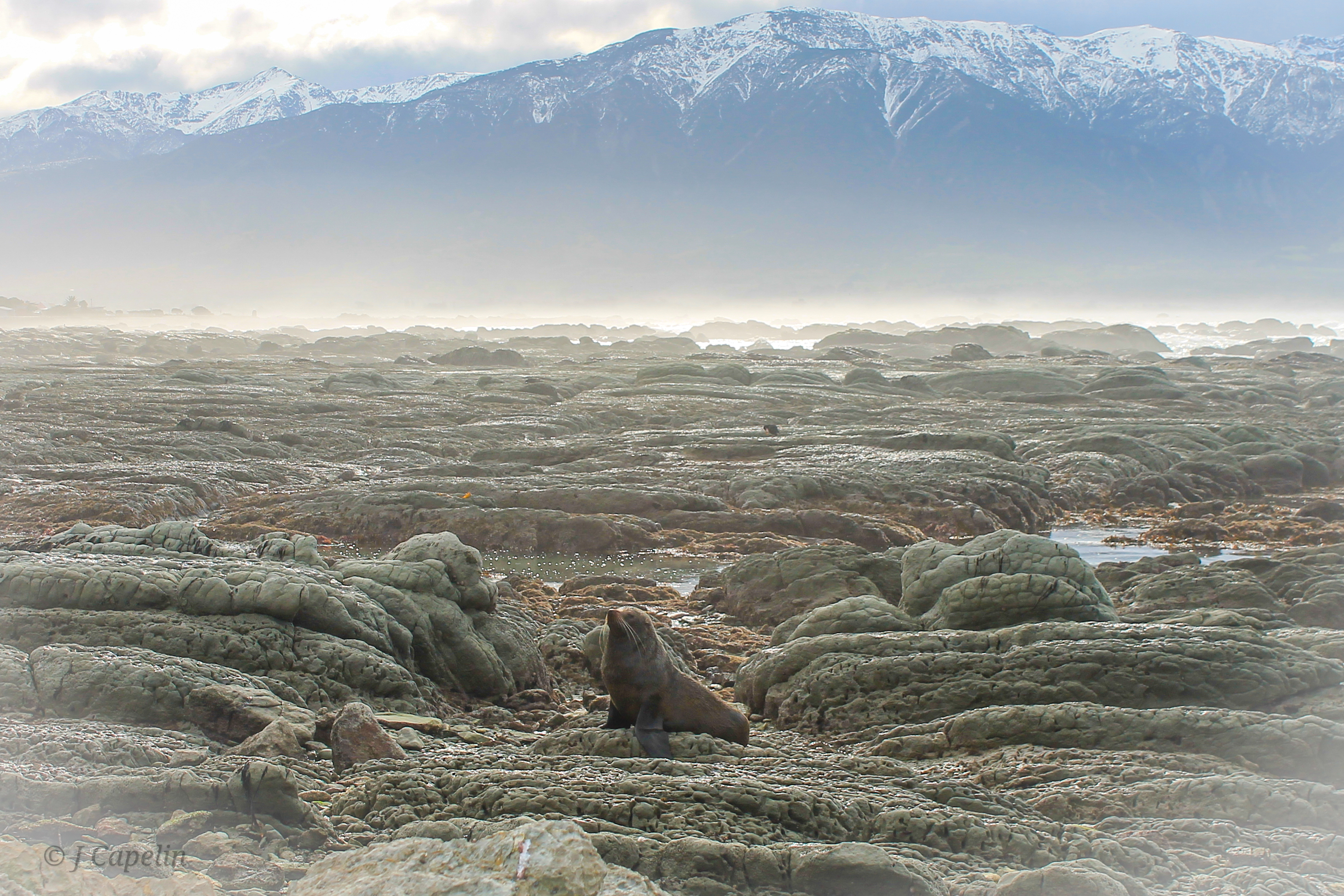
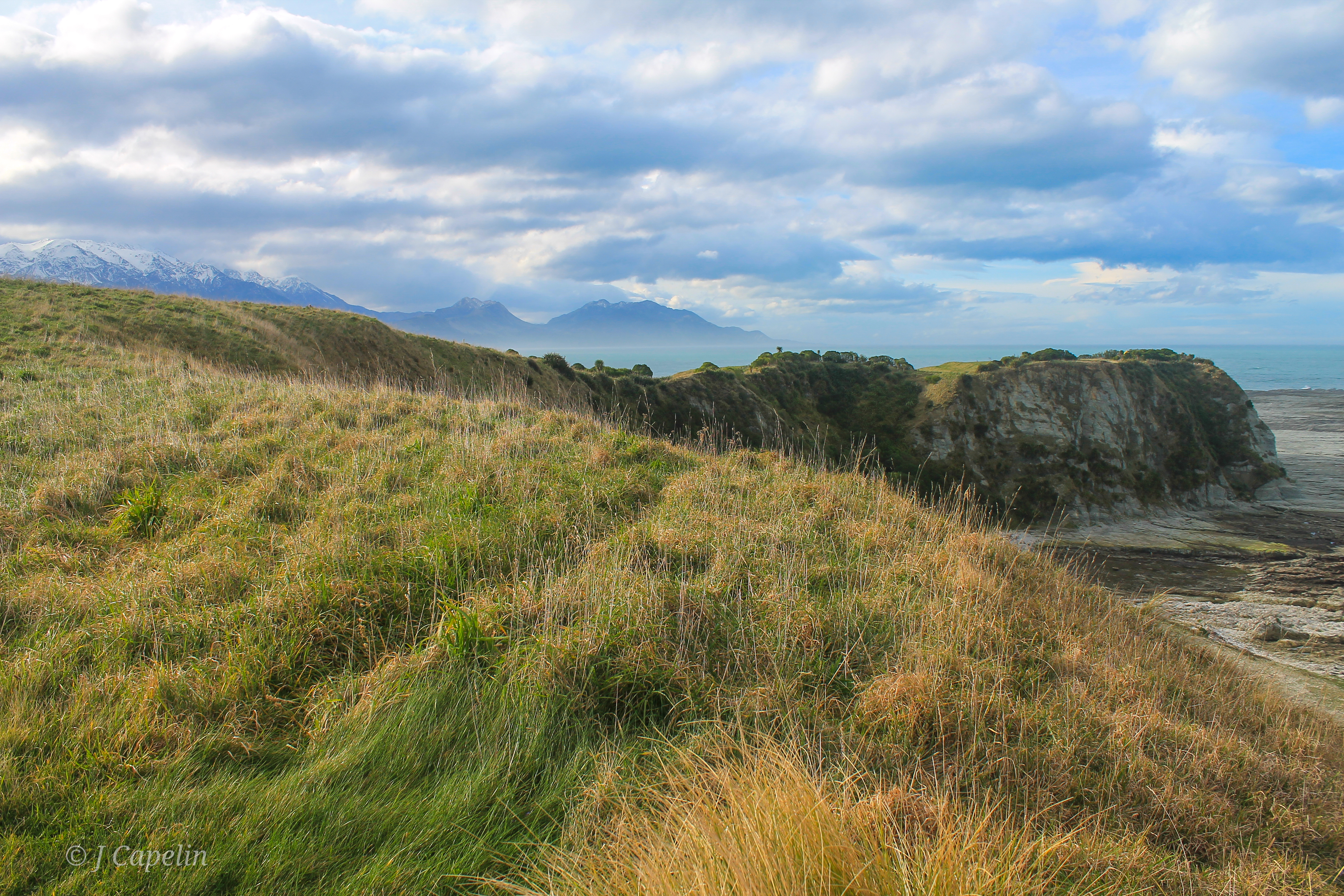
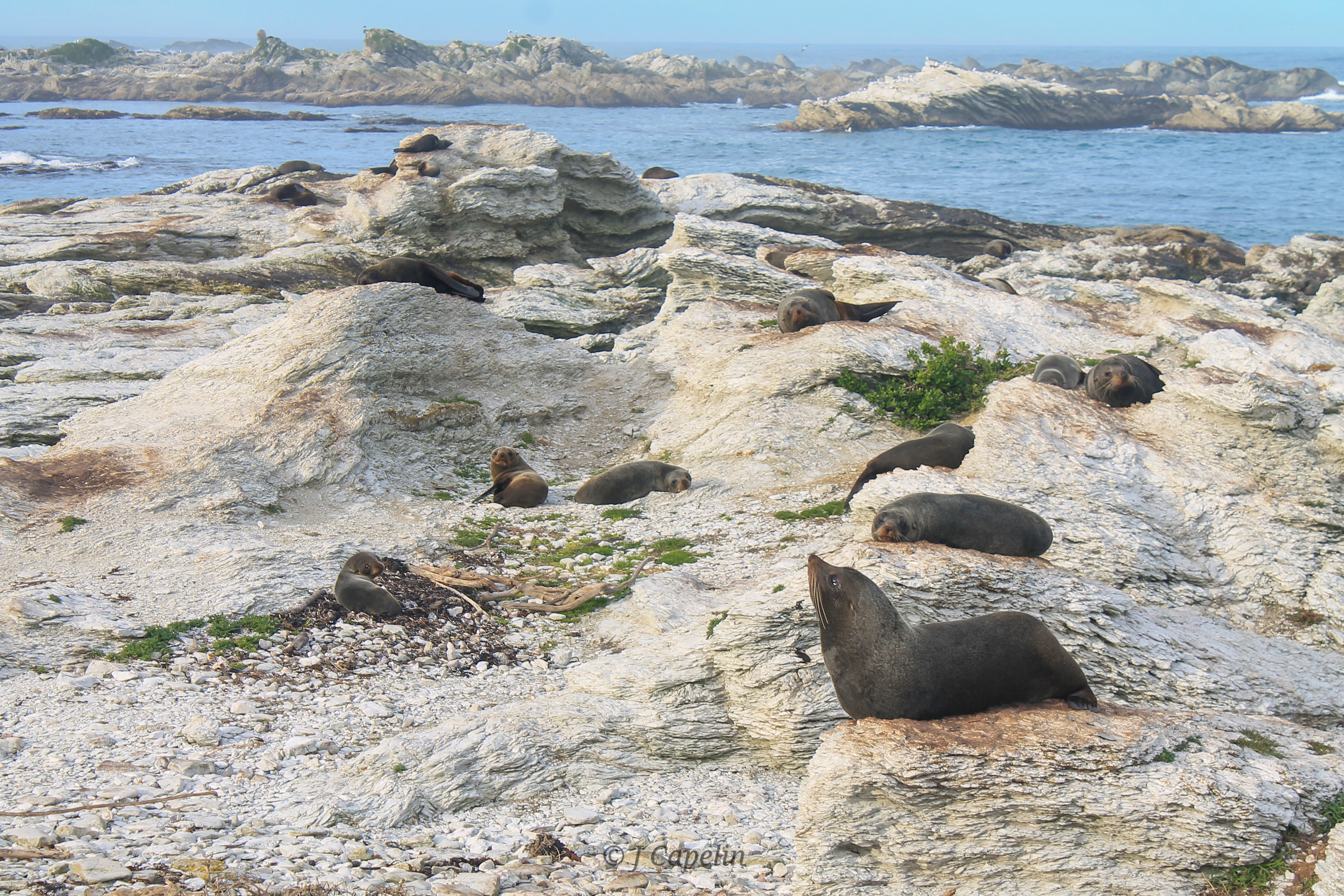
We took an afternoon walk along the Kaikōura Peninsula Walkway, (11.7km – allow a generous 3 hours) which climbs up over the headland, past lush pastures full of cows, with panoramic views of the Kaikōura coast and mountains, and a bird’s eye view of hundreds of fur seals scattered below the cliff.

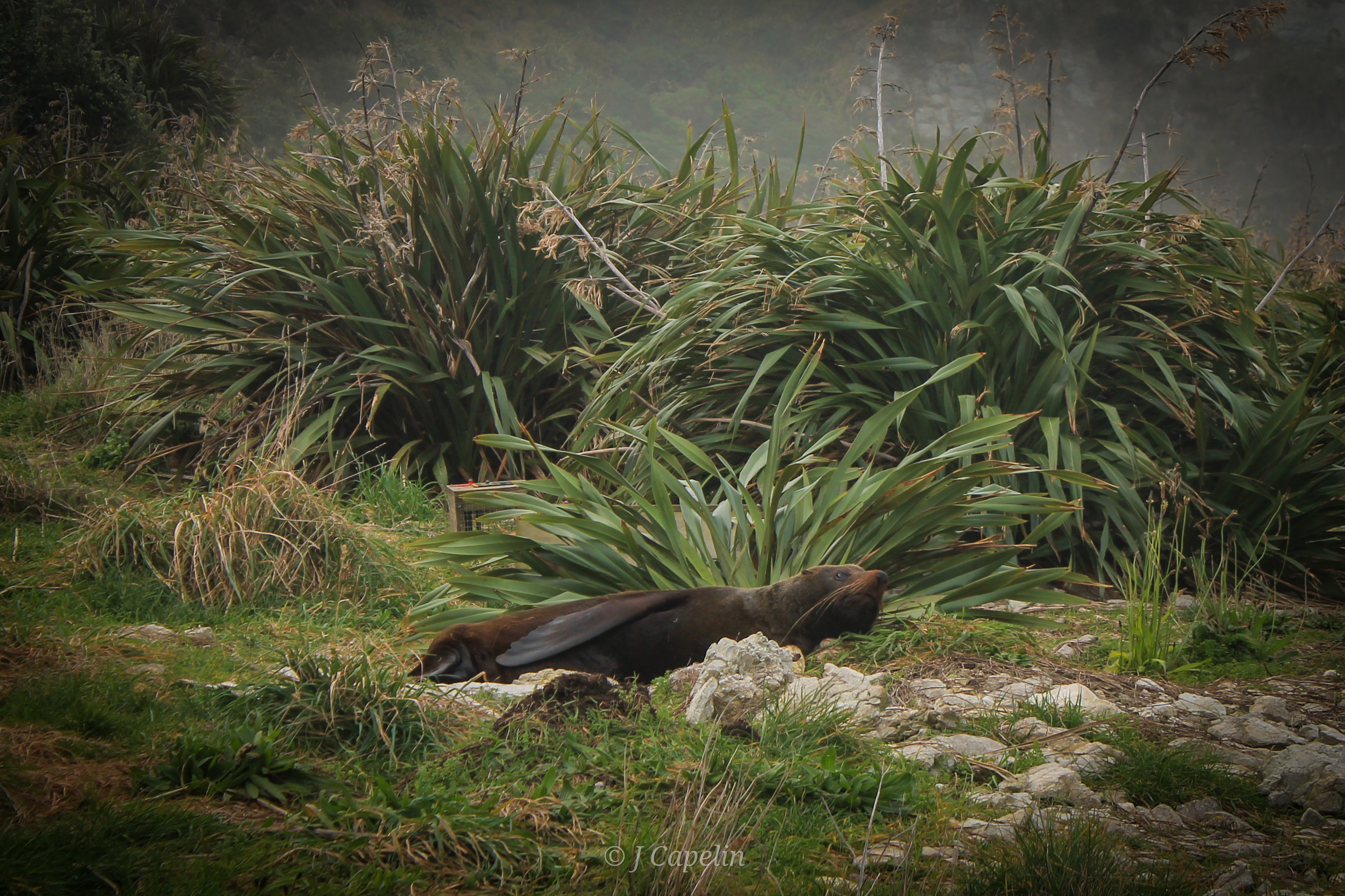
The walkway loops back down the cliff and along the beach, back towards the carpark. It’s recommended you keep 20 metres away from the fur seals, and watch where you step! The path took us through some long grass at the top of the beach, and before I knew it I had an enormous fur seal at my knees, roaring at me tremendously. I gave it lots of space, and by the time my heart had started beating again, it laid back down and we were able to give it a wide birth!

There were hundreds of fur seals sprawled all over the rocks, up the beach, in the grass, and on the path! (We made sure to find a safe route around them, because you really don’t want to get yourself cornered by these beasts!) We witnessed a couple of large males having a fight; thrashing their heads around and letting out rumbling roars. During the winter months (May-September) you can see seals with their pups all along the rocky peninsula.

South Bay is another pretty reserve to explore on the south side of the Kaikōura peninsula. Stunning views across the bay lead your eyes up to the mountains, and there’s plenty of wildlife to be seen. You can follow the boardwalk across the coastline; there were shags nesting noisily in the trees, and the setting sun cast a lovely orange glow on the sea.

Accommodation: Sierra Beachfront Motel <$100 NZD – 1 night
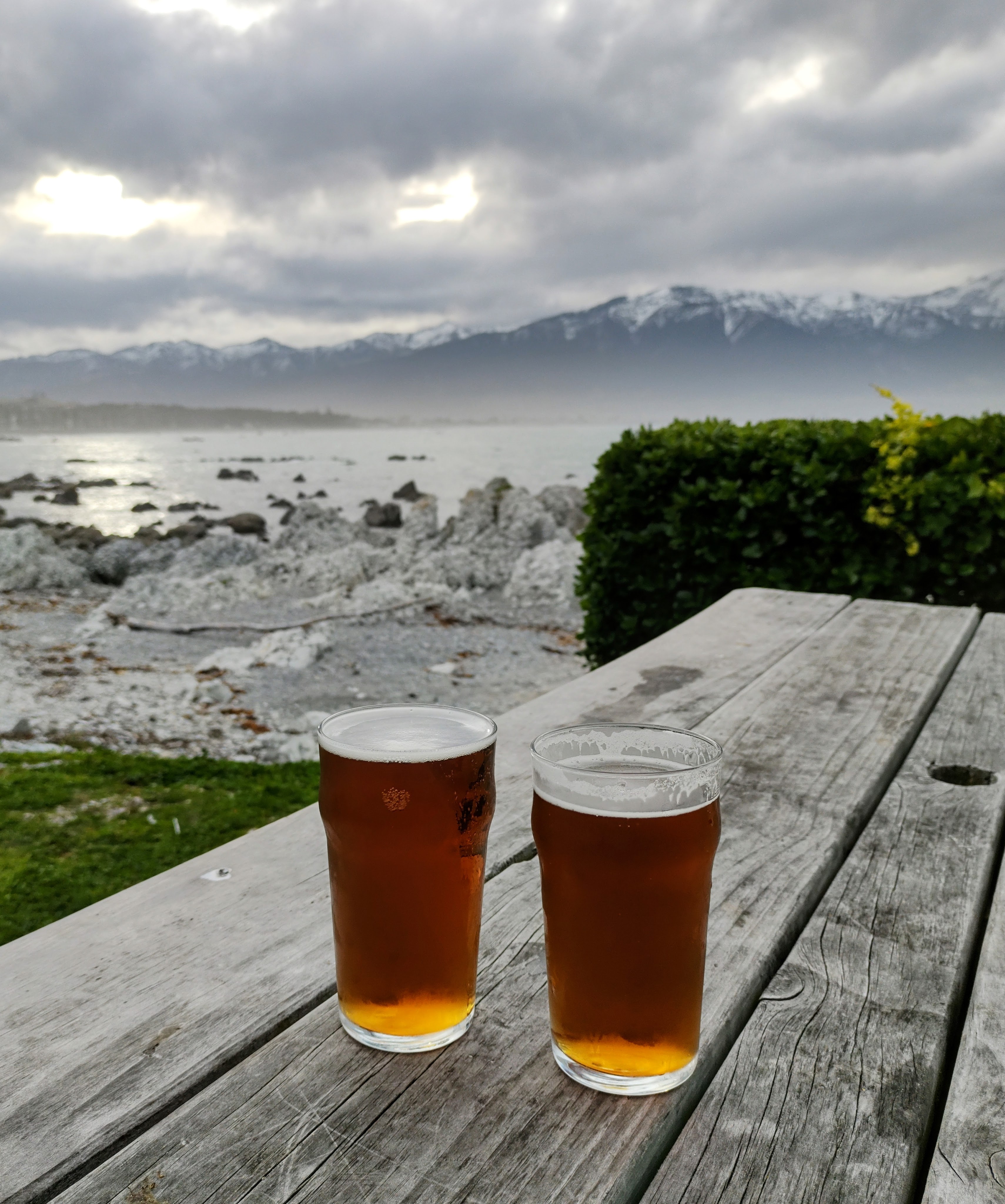
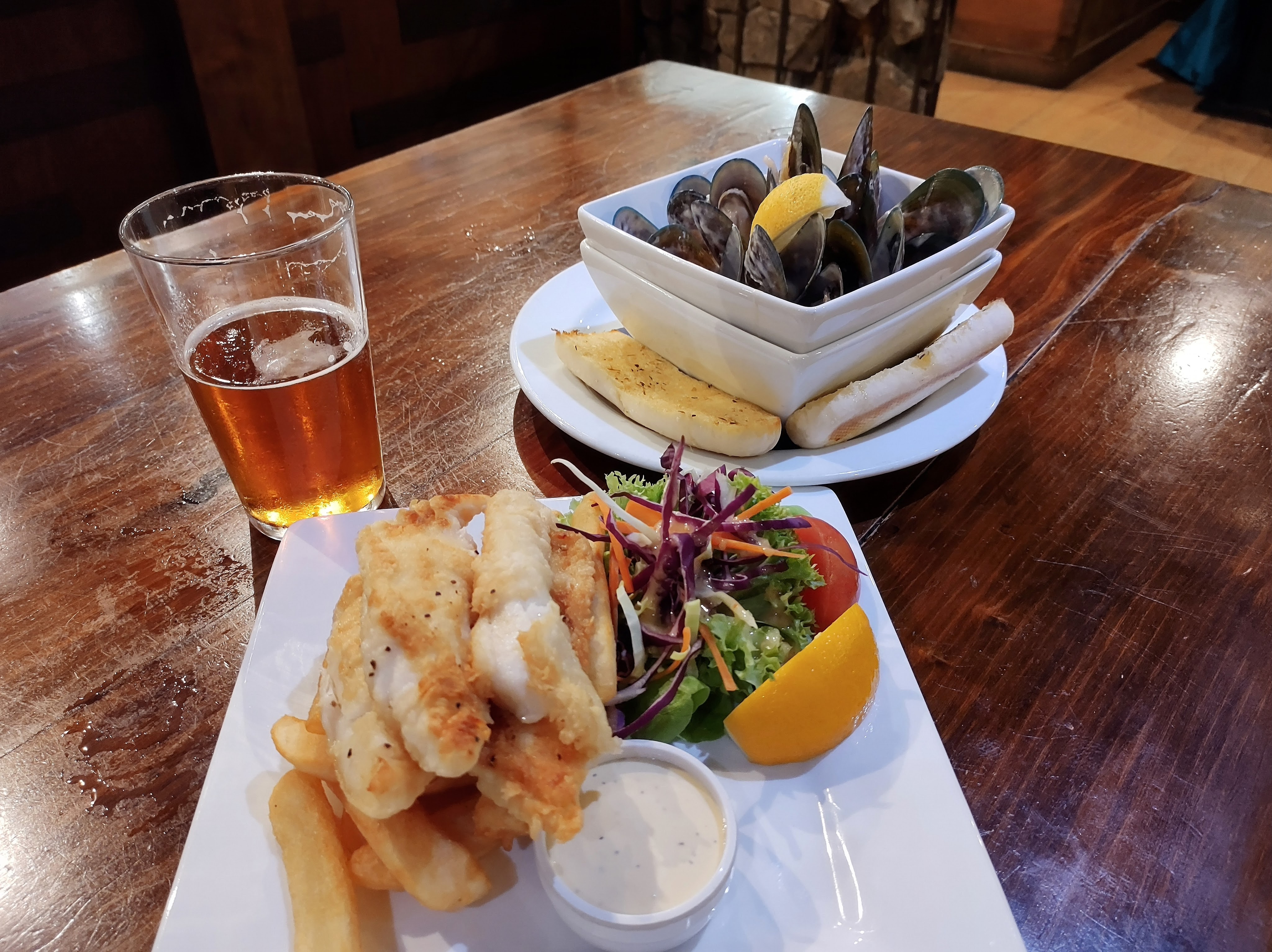
Food & Drink: The Pier (pub/restaurant), The Whaler Bar & Restaurant (Local seafood, pub food, beer), Bee Box (Coffee)
Drive Time: Picton – Kaikōura: 2 hours

Lake Tekapo

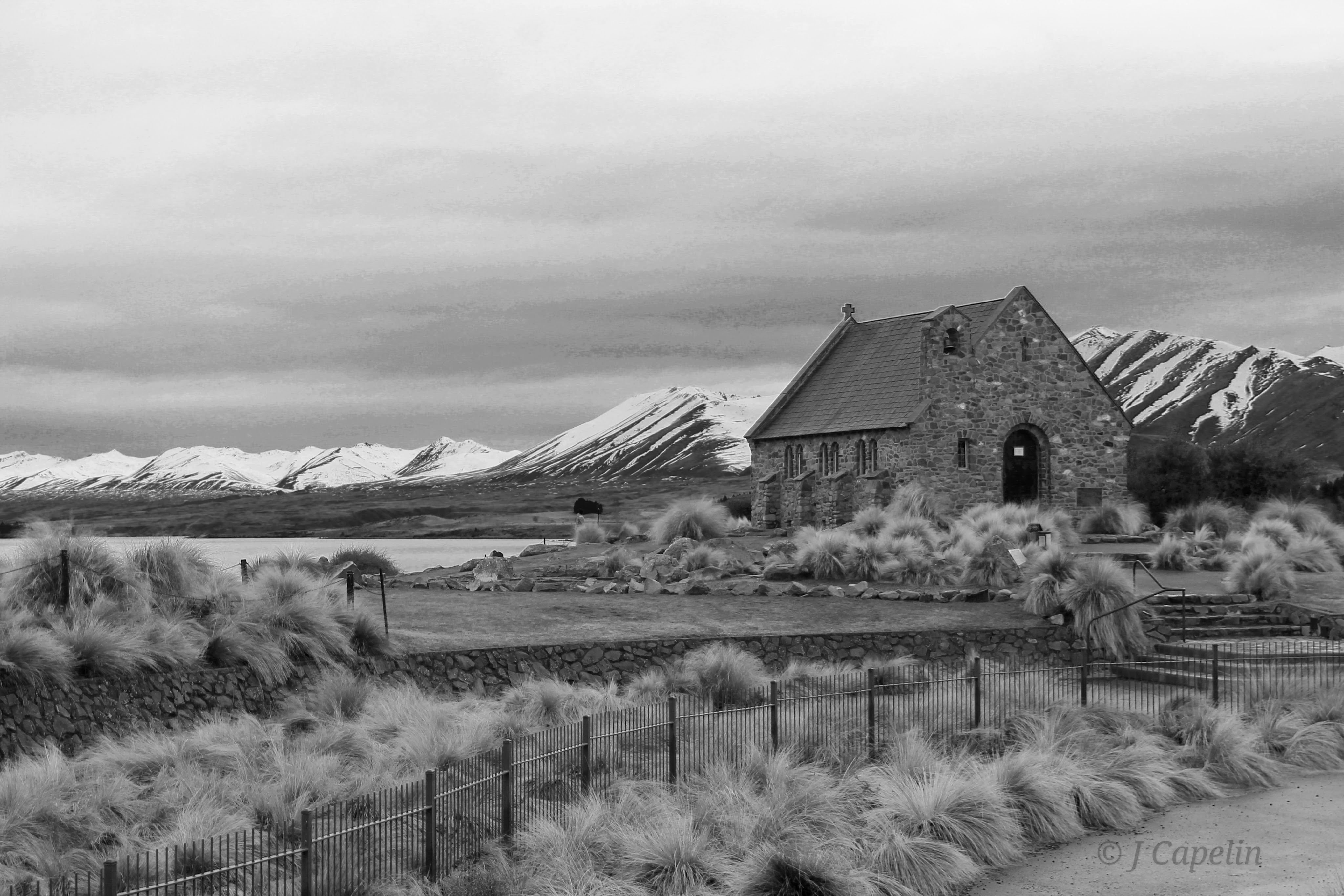
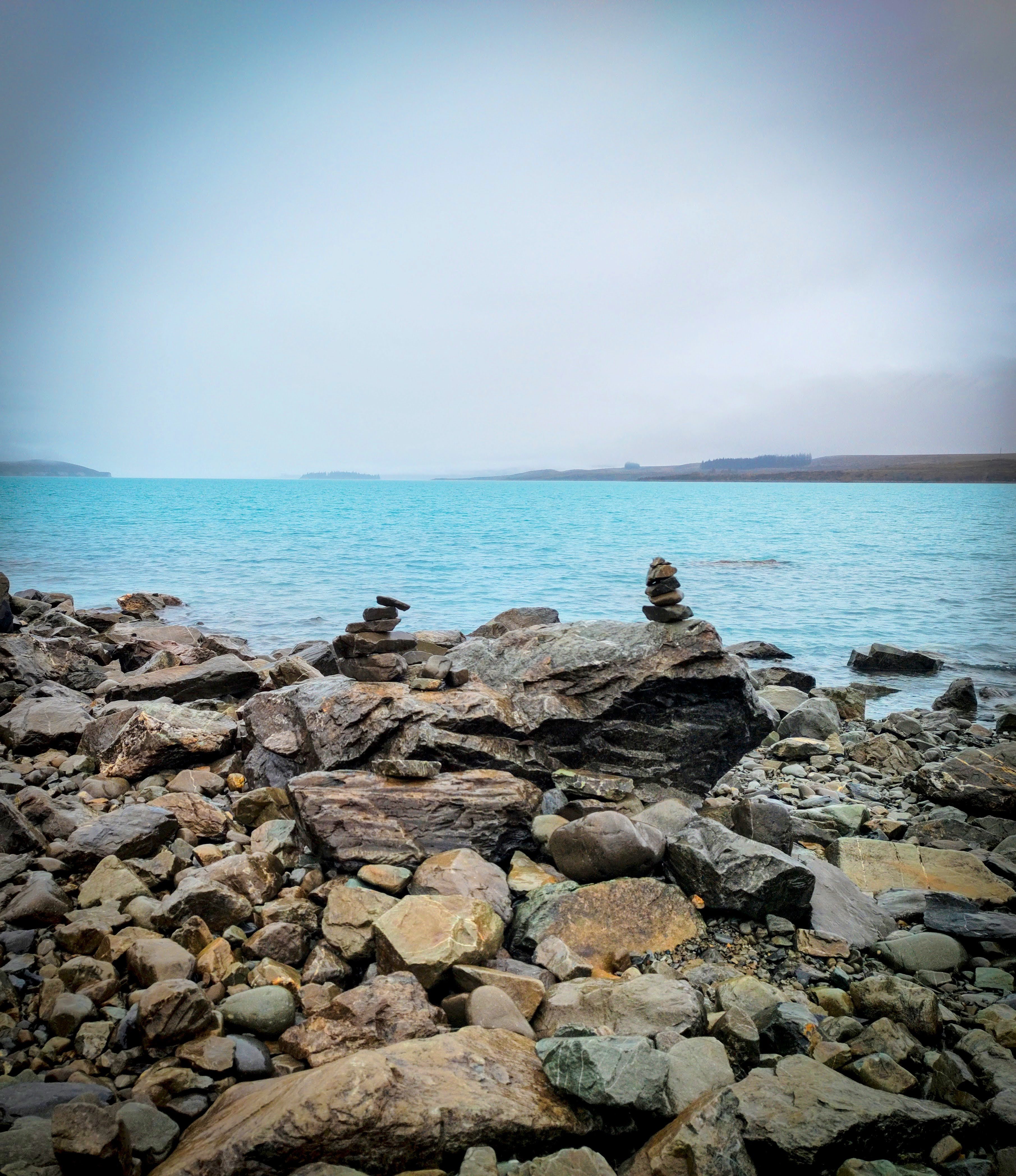
A long drive south with the sun peeping between rain clouds over the earthquake-broken landscape. As we veered inland the sky turned black and heavy rain lashed the windscreen while we wound our way up the treacherous mountain pass towards Mackenzie Country. Set amidst the mountain wilderness, Lake Tekapo was wet and murky, low cloud shrouded the lake; a veil concealing the spectacular backdrop. We strolled down to The Good Shepherd Church – a pretty, little stone building by the lake, where stacks of silver stones and sepia tussocks surround the brilliant turquoise lake front.

Church of The Good Shepherd

Lake Tekapo’s brilliant turquoise colour comes from rock minerals ground up in glaciers, which are deposited in the surrounding rivers and lakes when the glaciers melt and move. This is why most of the South Island’s lakes and rivers have such stunning water.

Lake Tekapo is famous for its night-sky. The small township’s proximity to the mountains (and not much else) means it has zero light pollution, bringing tourists from all over the World to look at the milky way. So, of course, it rained the night I brought my partner here, after telling him about it for so many years! But mountain weather like this brings its own atmosphere and mysterious beauty. It was still night at 5am when the rain stopped, so we wrapped ourselves up and ventured down to the lake. The cloud had lifted, revealing the wintery mountains that frame Lake Tekapo, but a cold mist still lingered across the sky, covering the stars. The moon glared through, its halo lighting up the snow on the mountains as they slowly turned purple, and we sat on the cold rocks with a hot coffee waiting for it to get light.

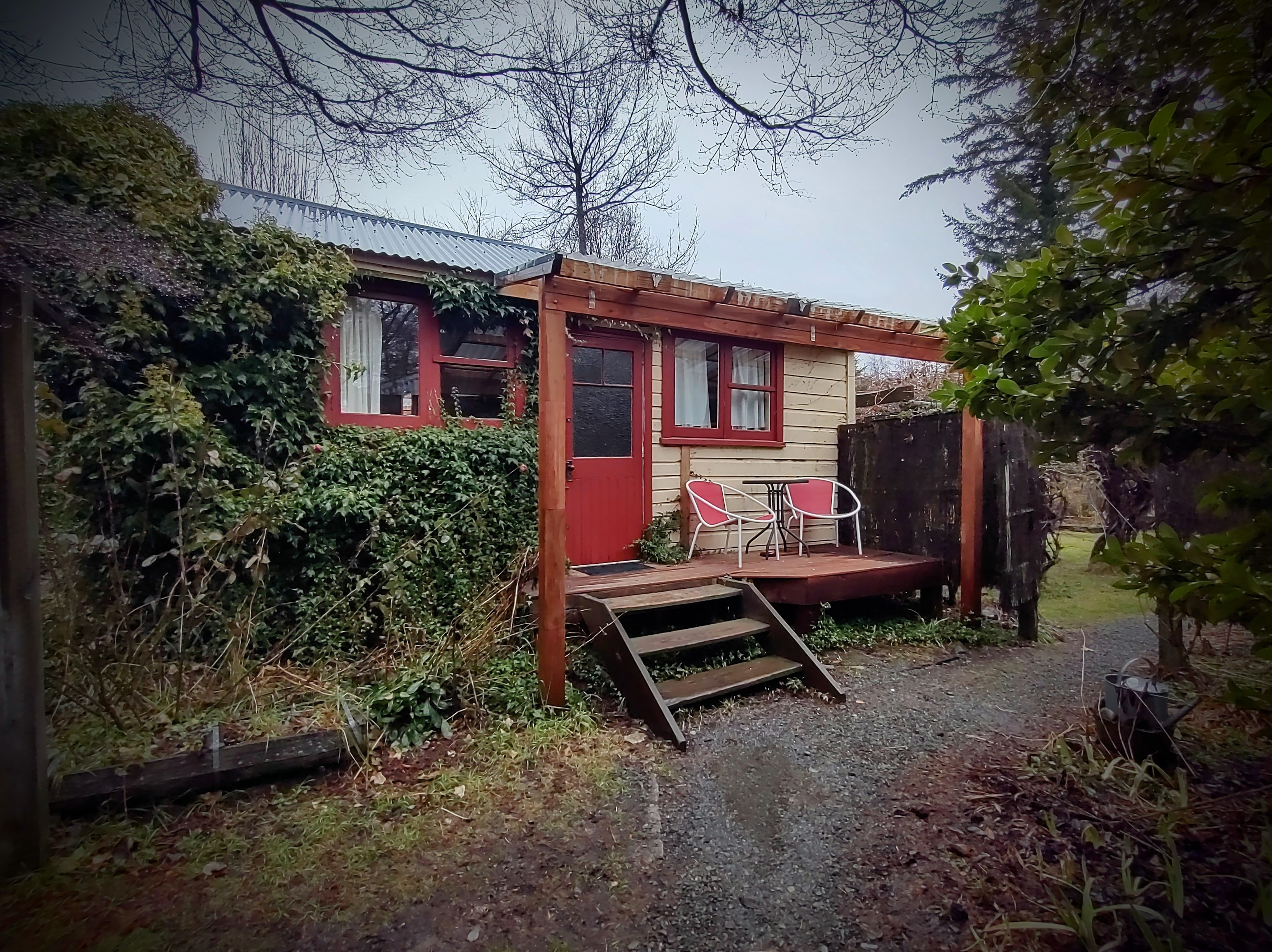
Accommodation: Lake Tekapo Cottages <$120 NZD – 1 night
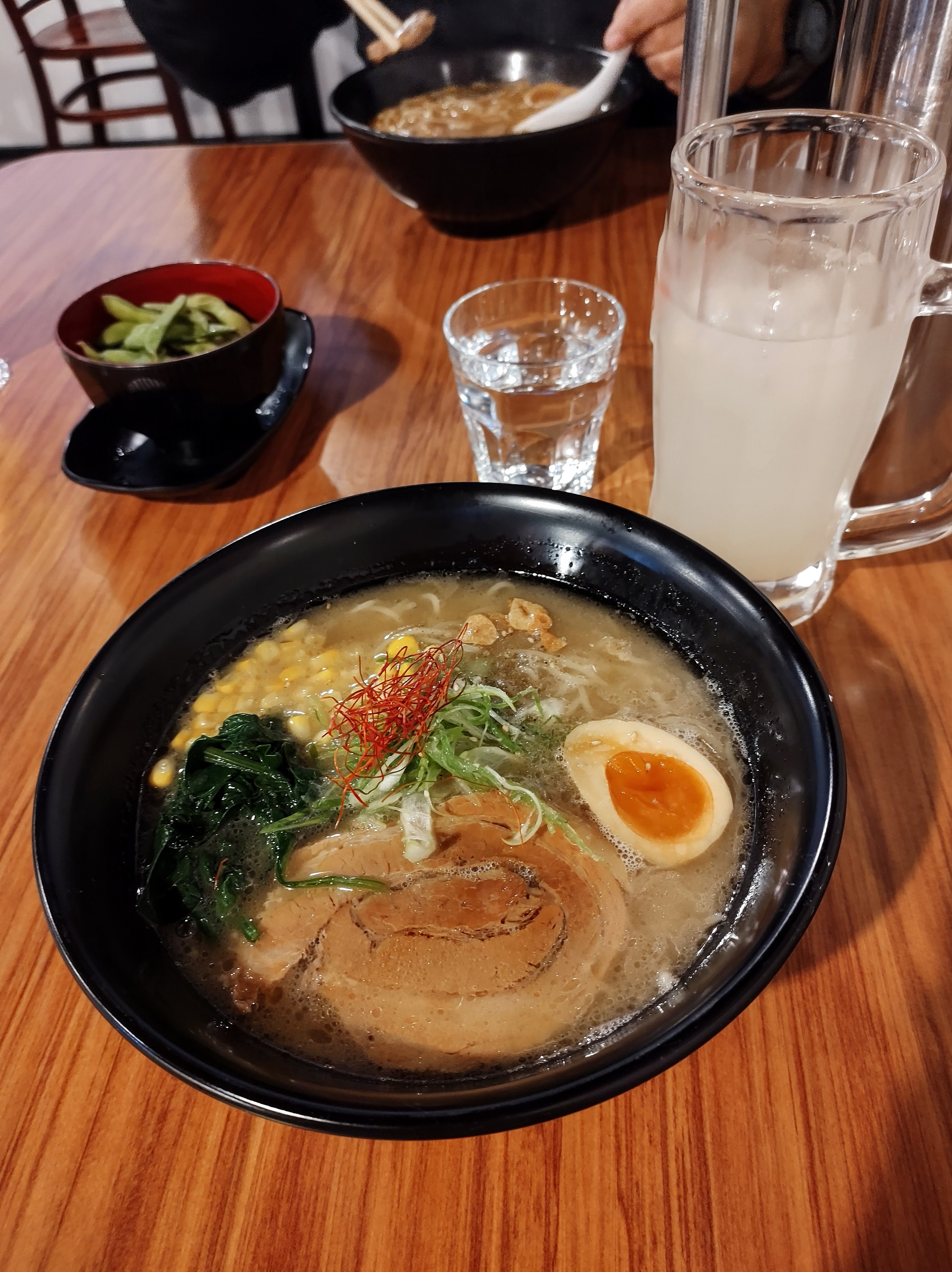
Food & Drink: Ramen Tekapo (Japanese ramen), Doughboys Bakery (early morning coffee), Greedy Cow Cafe (brunch)
Drive Time: Kaikōura – Lake Tekapo: 5.5 hours

Aoraki

A bright sky led us South through Mackenzie Country to Lake Pukaki, and I thoroughly enjoyed driving this leg. The open road in the early morning; jagged touches of snow between icy lakes and streams – New Zealand was beginning to show us the Winter Wonderland it could be. The road to Aoraki (Mt Cook) skirts the Western edge of Lake Pukaki, and Aotearoa’s tallest mountain rises up over the lake before you as you approach. There is a small community at the end of the road, and a tourist information centre about as big as the village, complete with an Edmund Hillary exhibition (it’s no surprise that one of the first people to summit Everest grew up with this as his back yard.)

Scenic flights are an option to see this iconic landscape, along with things like heli-skiing and mountain climbing, but hiking (or ‘tramping’ as they say in NZ) is the most popular activity (and it’s free!) There are at least 12 hikes in the national park, ranging from 10 mins to 3 days. We chose two short hikes; one in each section to get the most out of our time.

You can download the Department of Conservation walking track guide here > https://www.doc.govt.nz/parks-and-recreation/places-to-go/canterbury/places/aoraki-mount-cook-national-park

Kea Point – Village Section

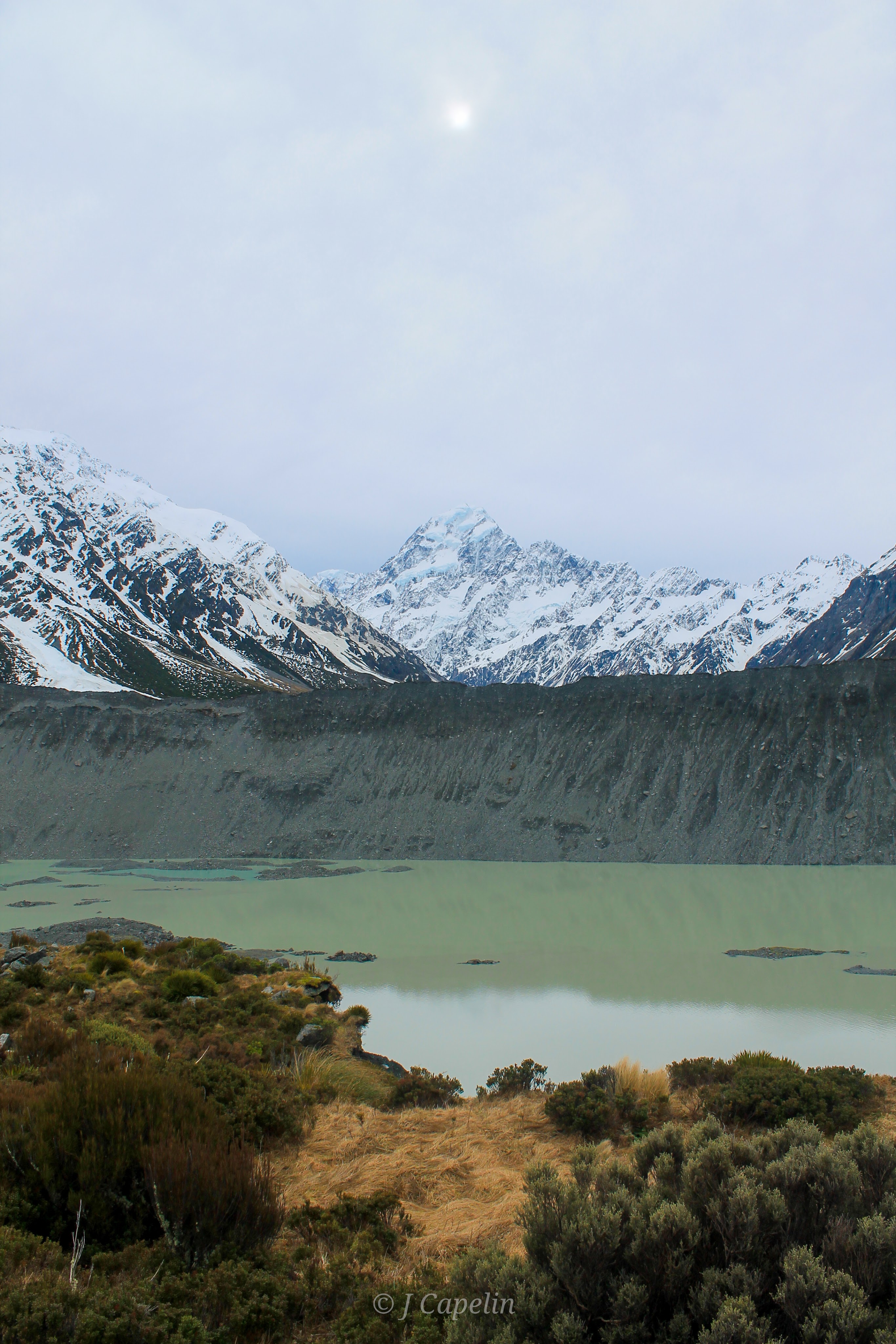
Gently ascending through Alpine scrubland around the foothills, the path opens out into a 180 degree viewing platform over The Hooker Valley. The light was flat and glaring, but at least the clouds were high enough to see the mountain peaks. Mueller Glacier and Mt Sefton stand across the milky hues of the Glacier Lake, while Aoraki (Mt Cook) looms in the background.
Walking Time: 50 mins return from White Horse Hill Campground.

Blue Lakes & Tasman Glacier – Tasman Valley Section

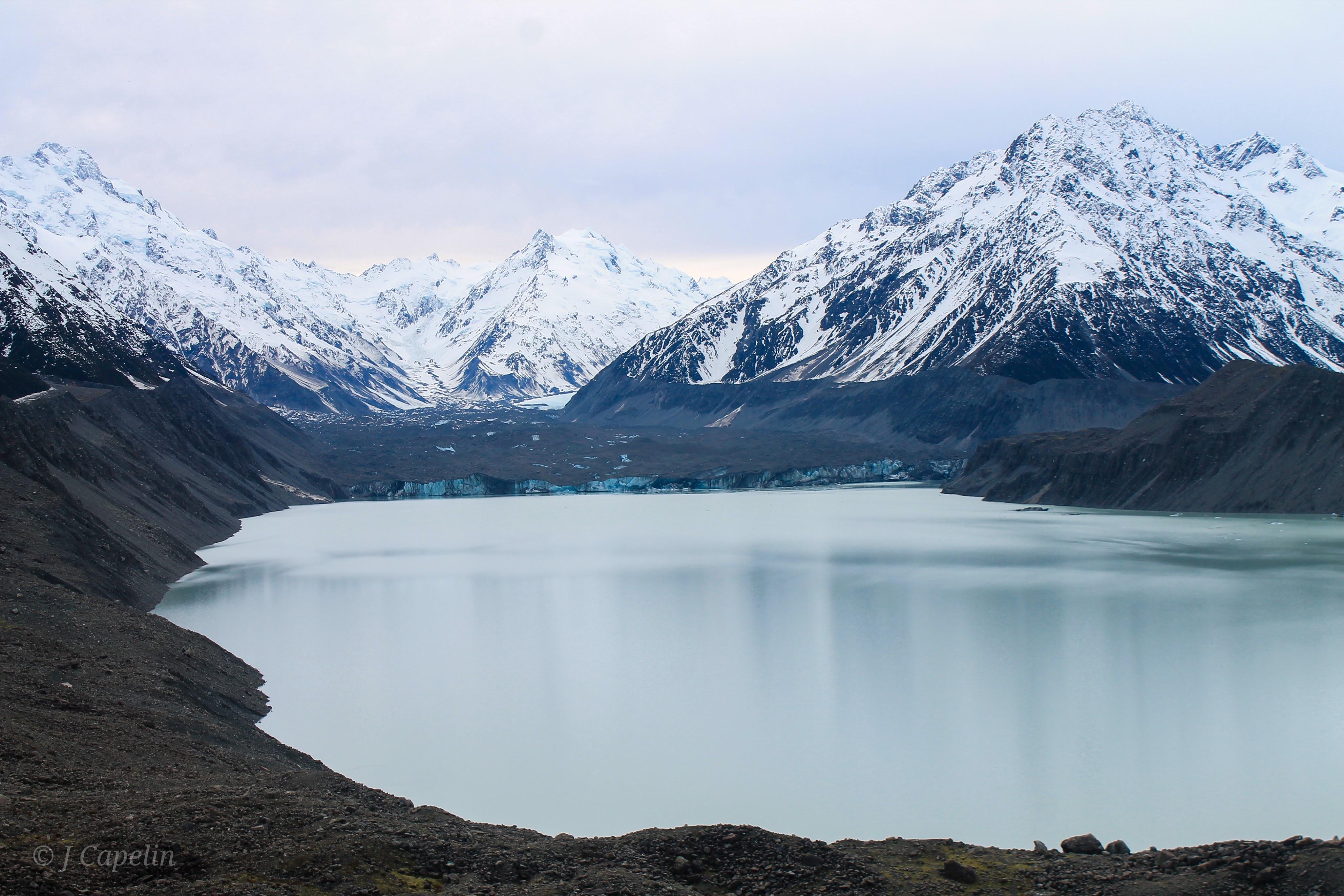
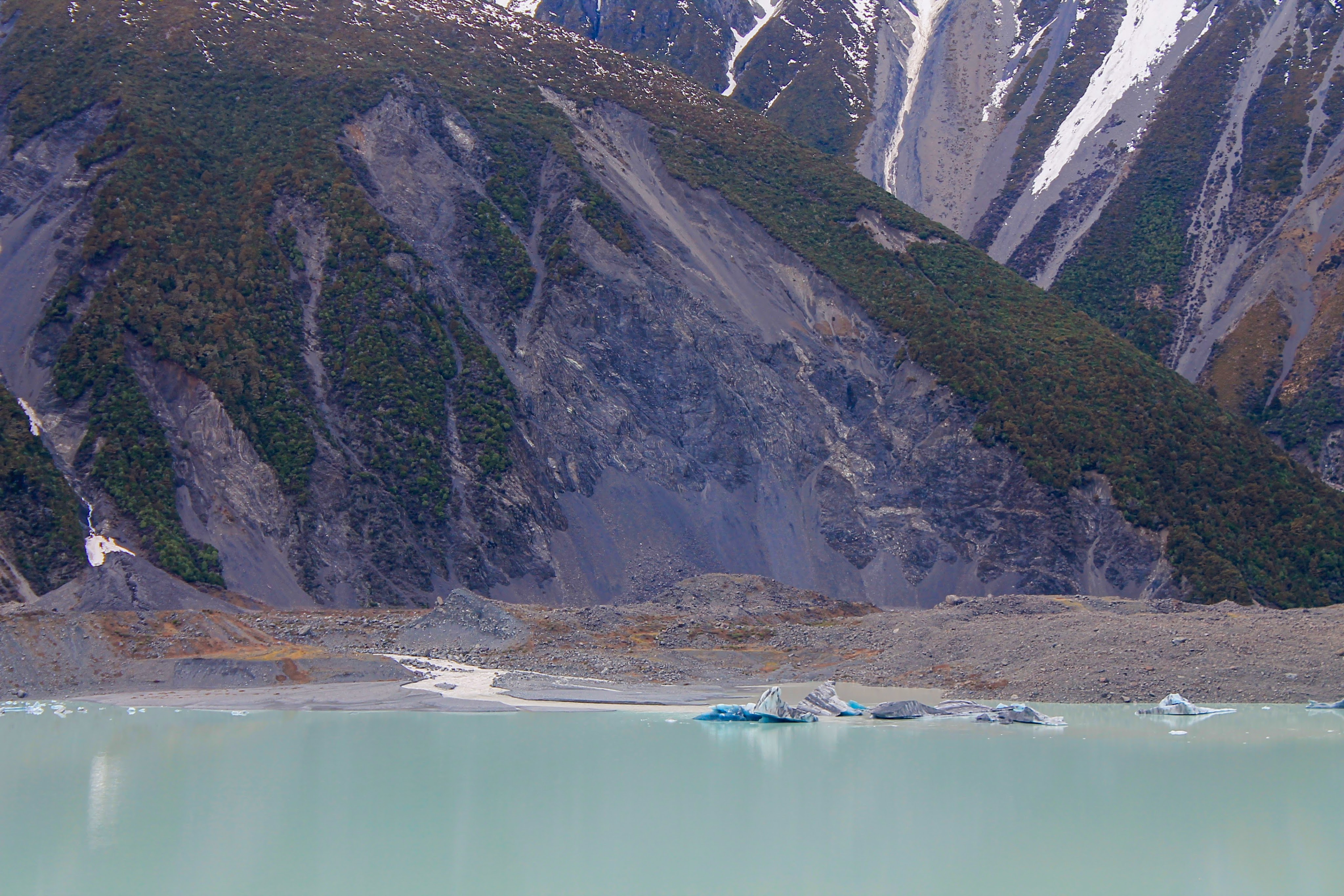
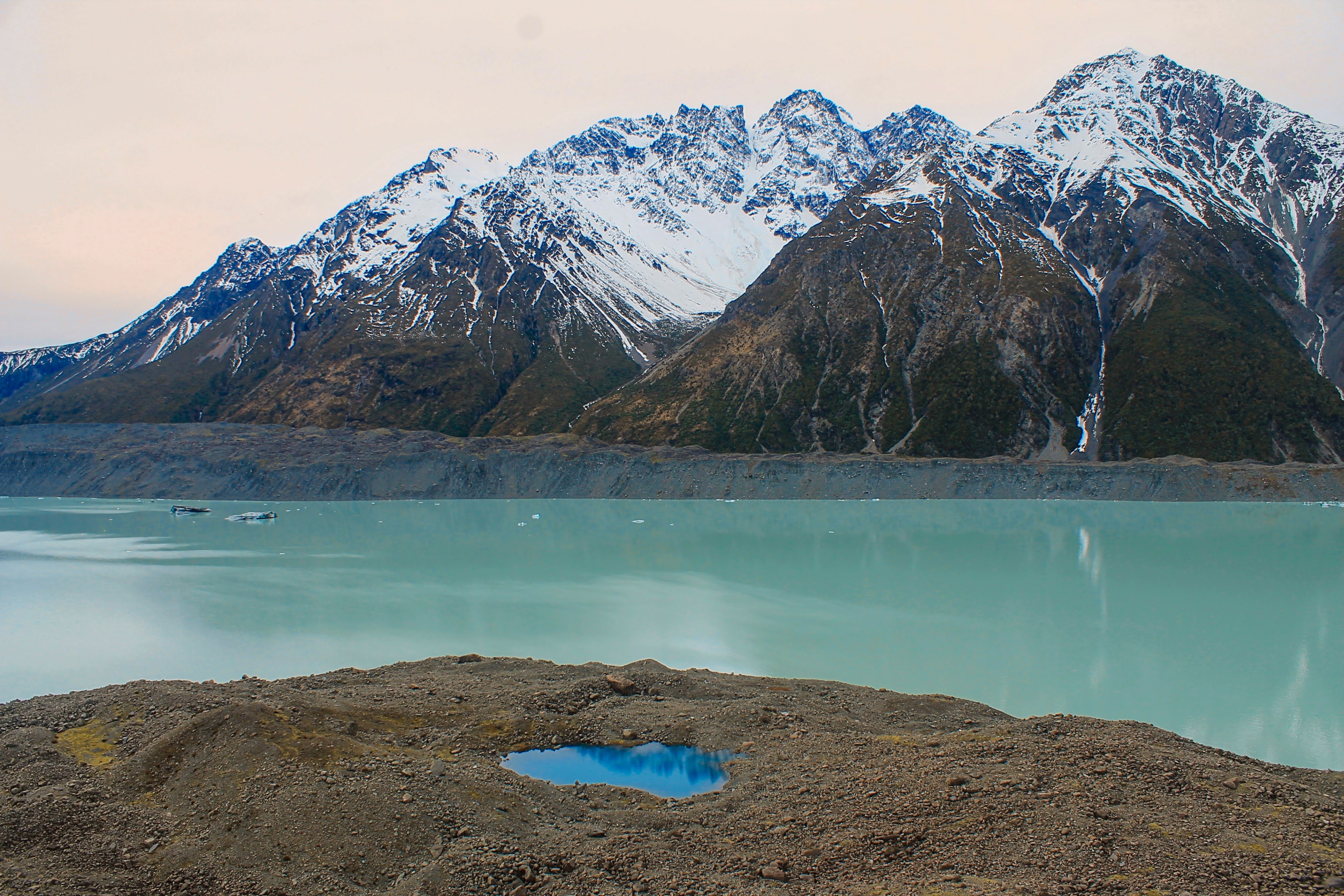
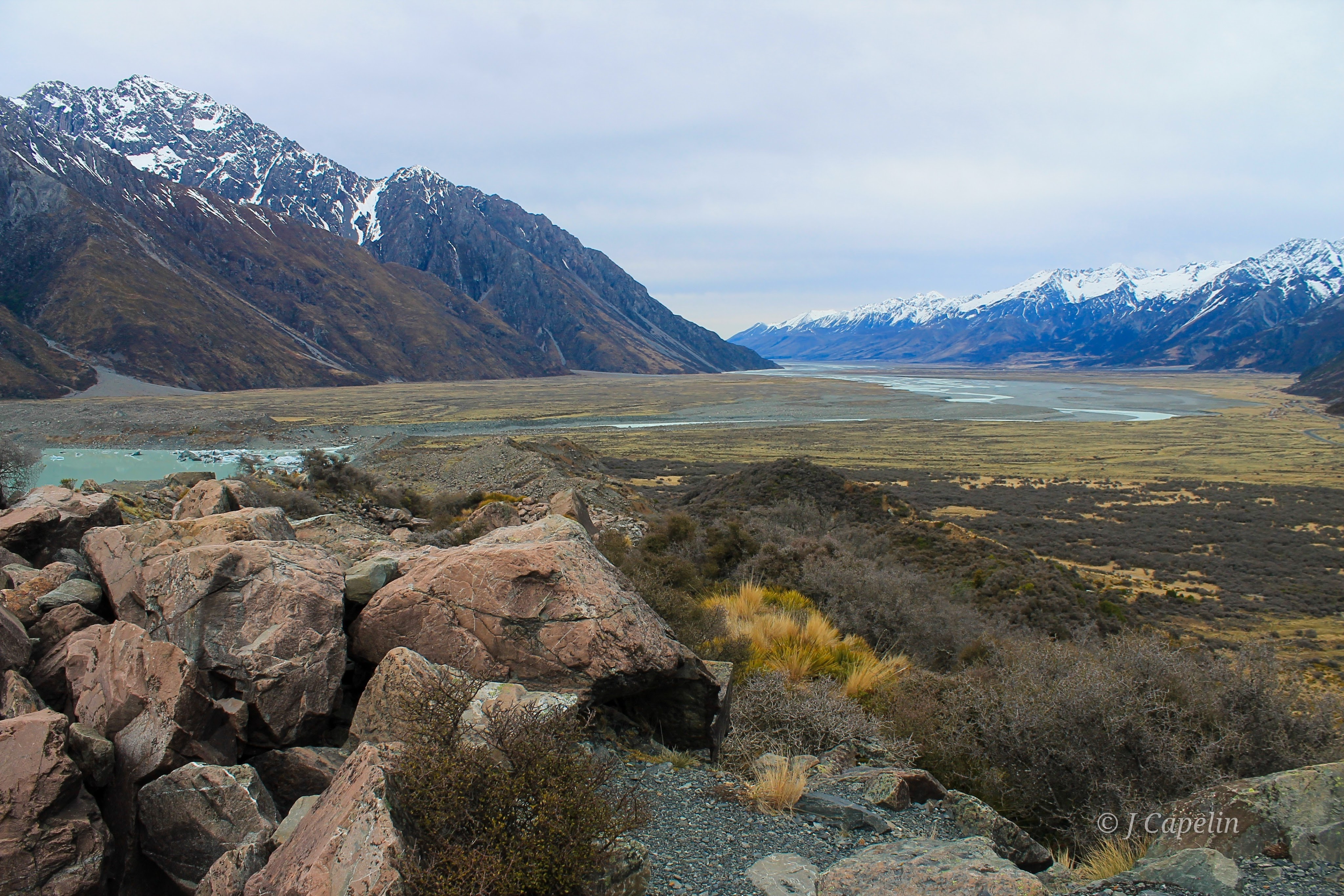
A rocky staircase winds up the moraine wall, revealing an other-worldly panorama at the top. Haupapa Glacier encroaches from the mountains into its lake, where blue-dipped icebergs drift. Back to the South, the Tasman River meanders through the valley where it eventually fills Lake Pukaki.

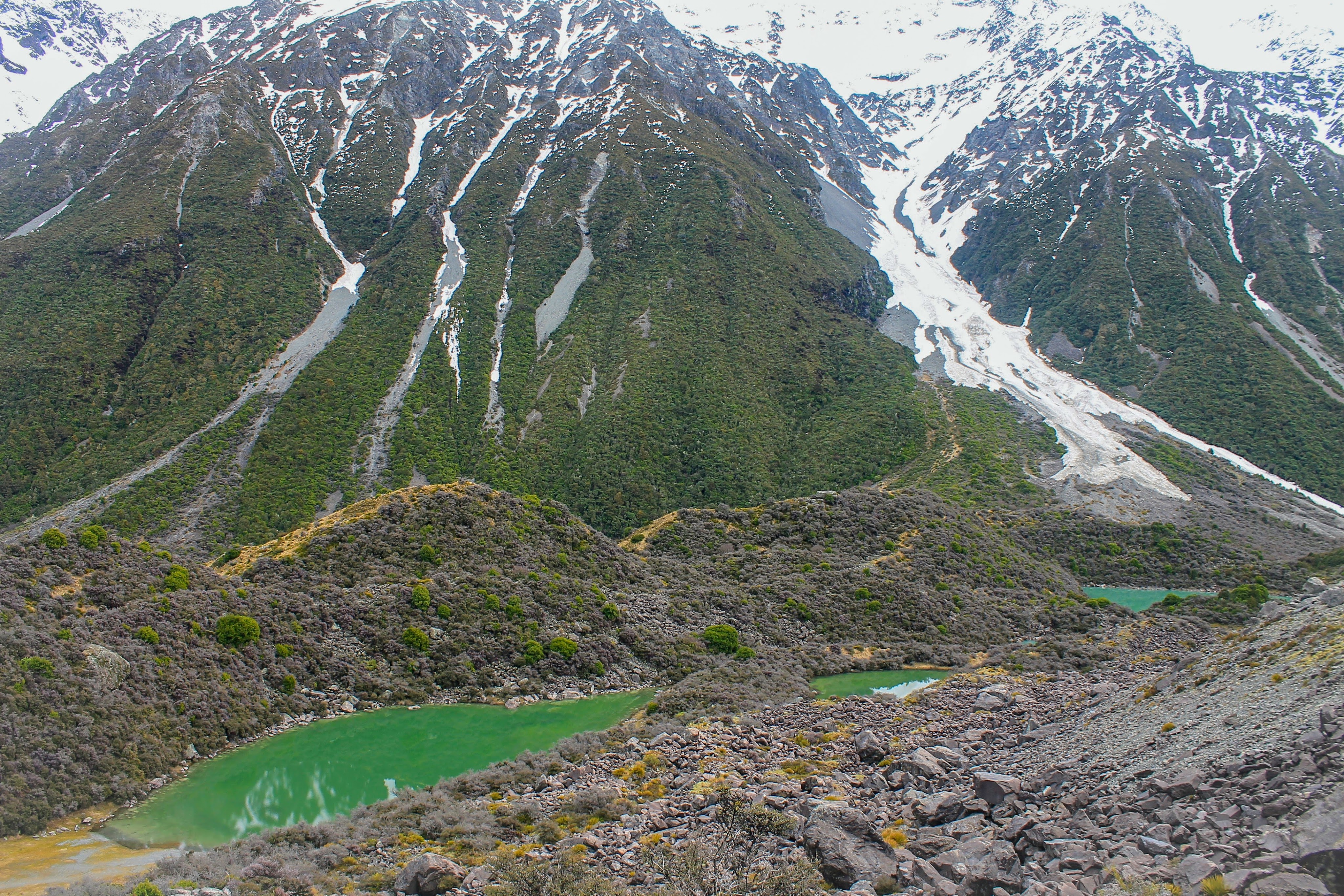
On the return walk, we stopped to admire the contrasting reflections in the Blue Lakes, nestled between snow peaks.

The Blue Lakes are actually green since the freezing glacial water no longer feeds them, due to shrinking glaciers. This has made the water warmer, and allowed green algae to grow. Despite this, the Department of Conservation still deem the pools safe to swim in during summer.

Walking Time: 30 mins return from Blue Lakes Carpark.

(Click on any photo to enlarge.)

Drive Time: Lake Tekapo – Aoraki: 1 hour 15 mins

Wānaka

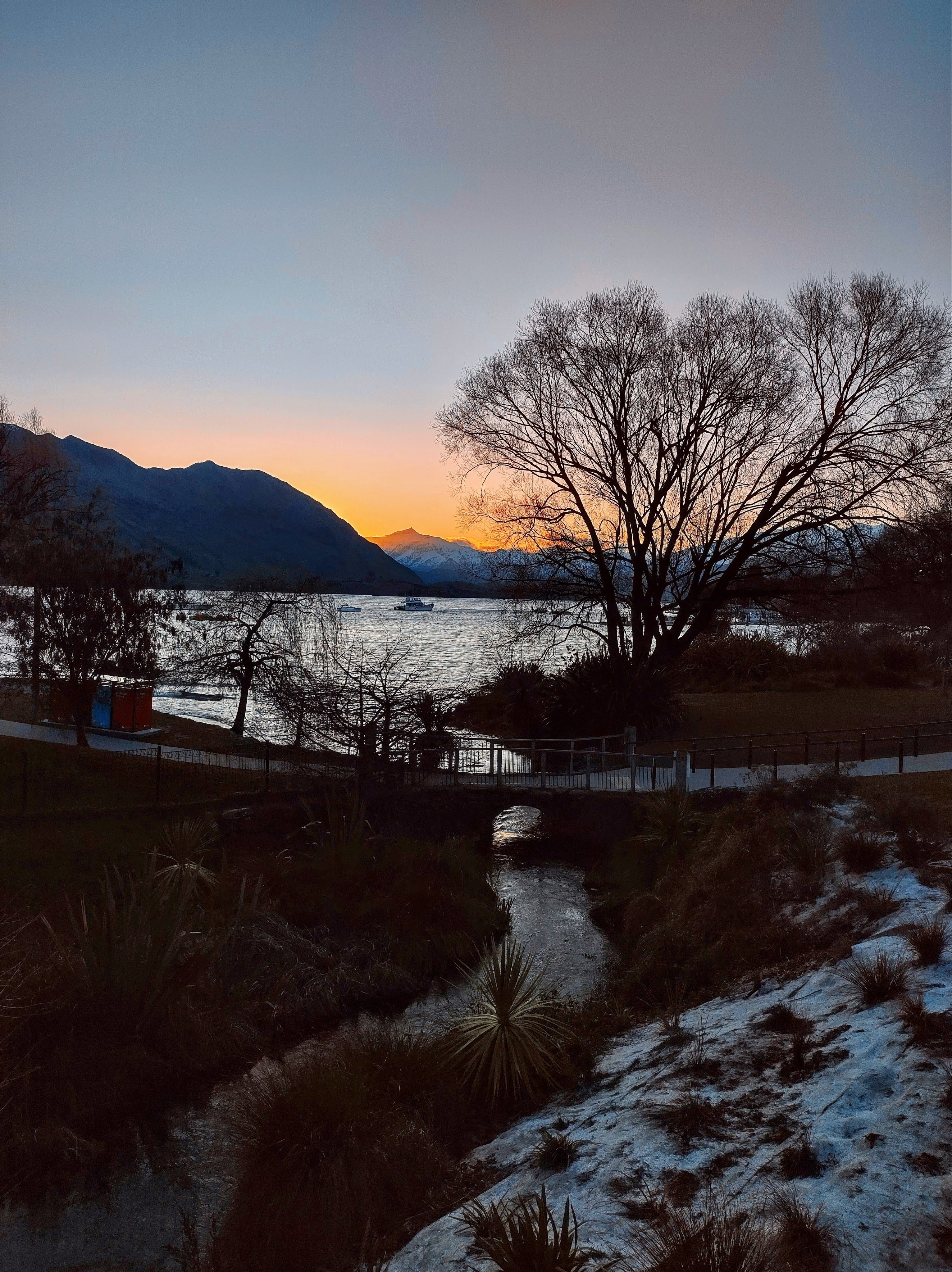
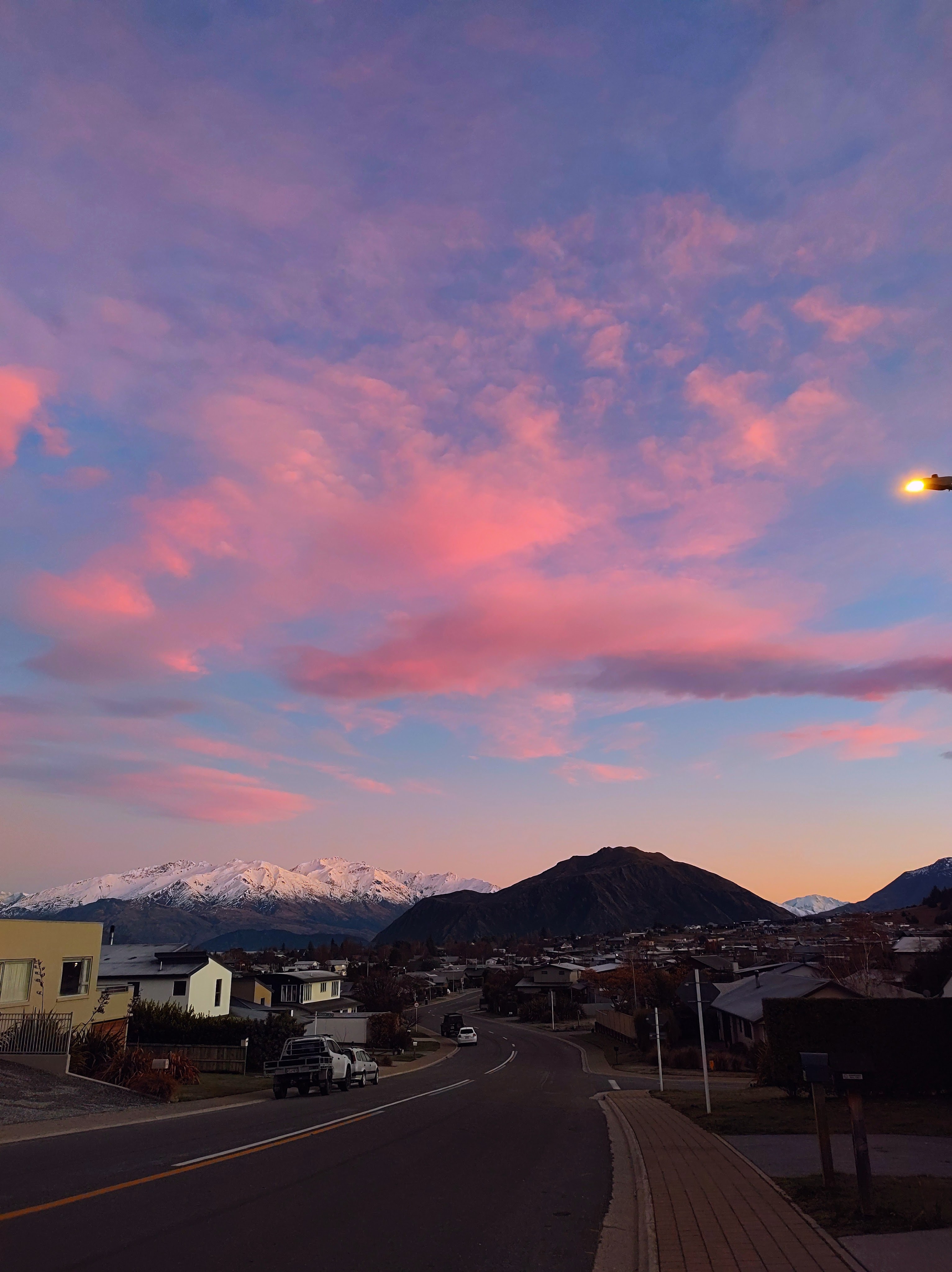
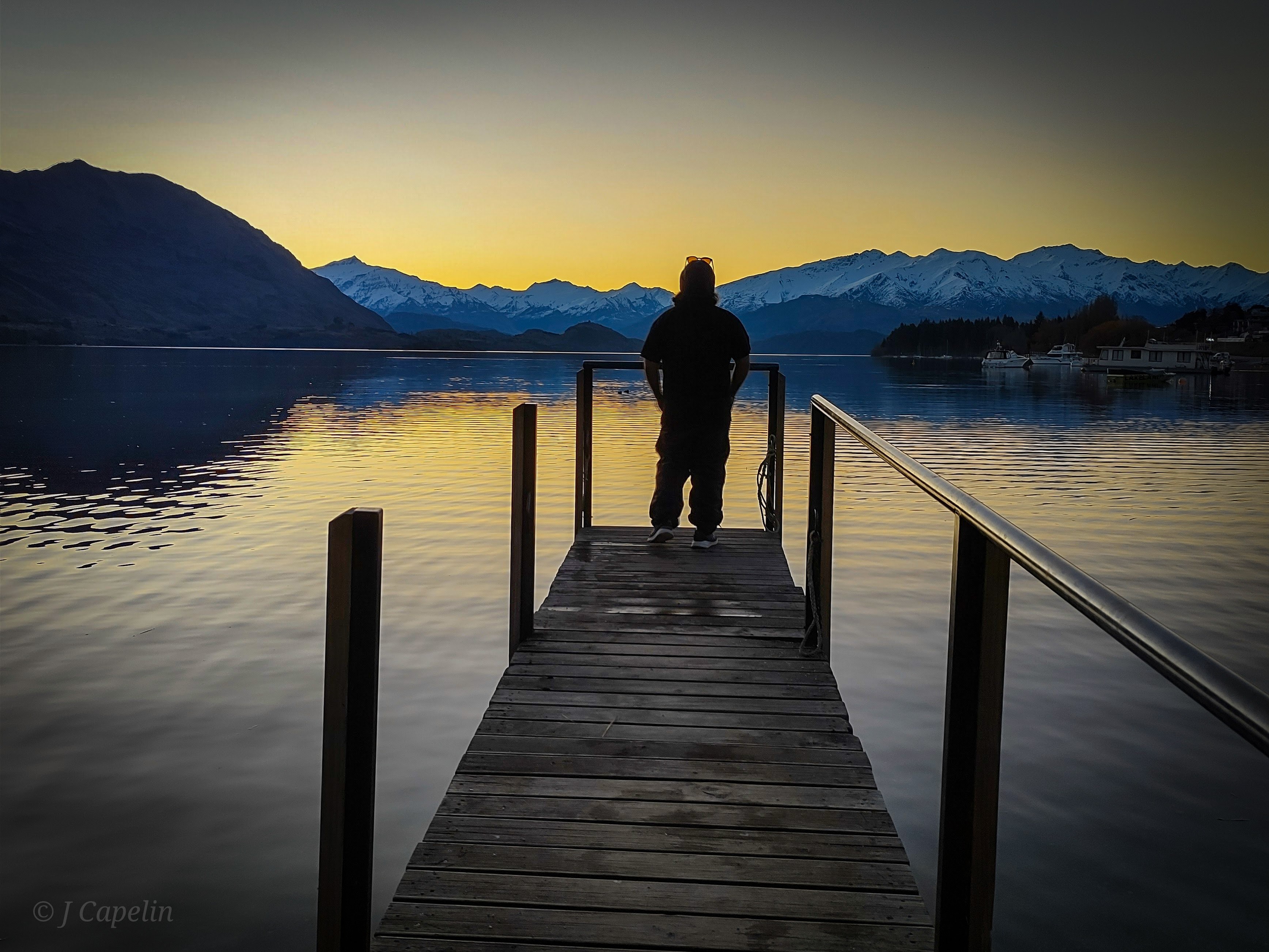
When I came to Wānaka to live many years ago, I described the season as a ‘crisp, colourful winter, in which every sunset paints the lake a different story.’ I vividly remember the smell of wood smoke from the chimneys beneath dark snow clouds, and the stacks of firewood under the coloured lights in Post Office Lane. Well none of that has changed, and coming back to visit always makes part of me feel like I’m home.

We used Wānaka as a base for snowboarding, visiting the nearby towns, and of course taking in the local sights. There are several stunning hikes around Wānaka and Mt Aspiring National Park, but we didn’t have the hiking gear for winter, so we stuck to the more local walks.

Mount Iron

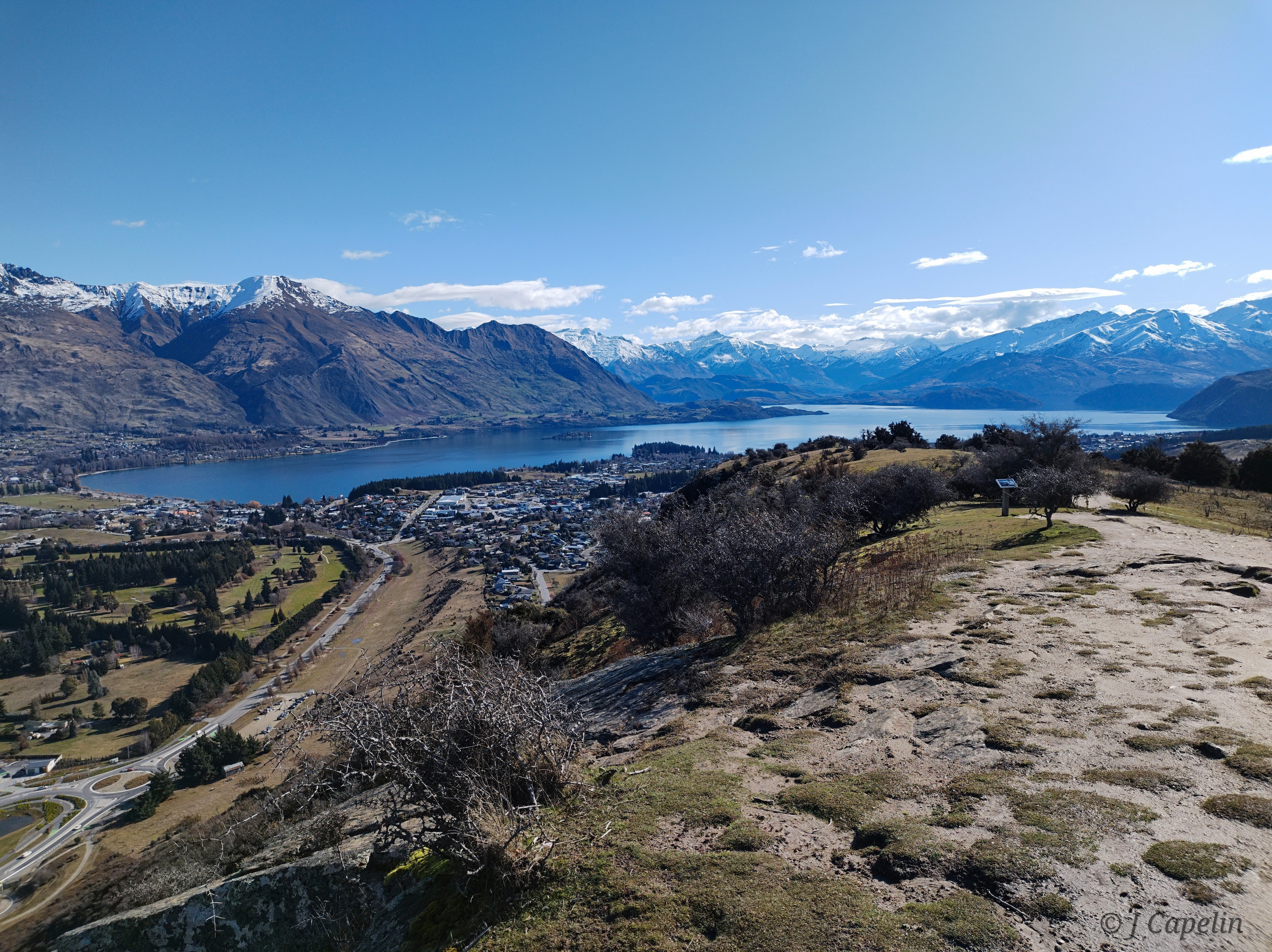
The local exercise hill, Mt Iron, is a fairly short but steep walk. The sun had the warmth of spring on its breath as we climbed and we were soon in our T-shirts, quads burning by the time we reached the top. The spectacular view across the town and the lake stole the fresh mountain air from our lungs.

Waterfall Creek Track

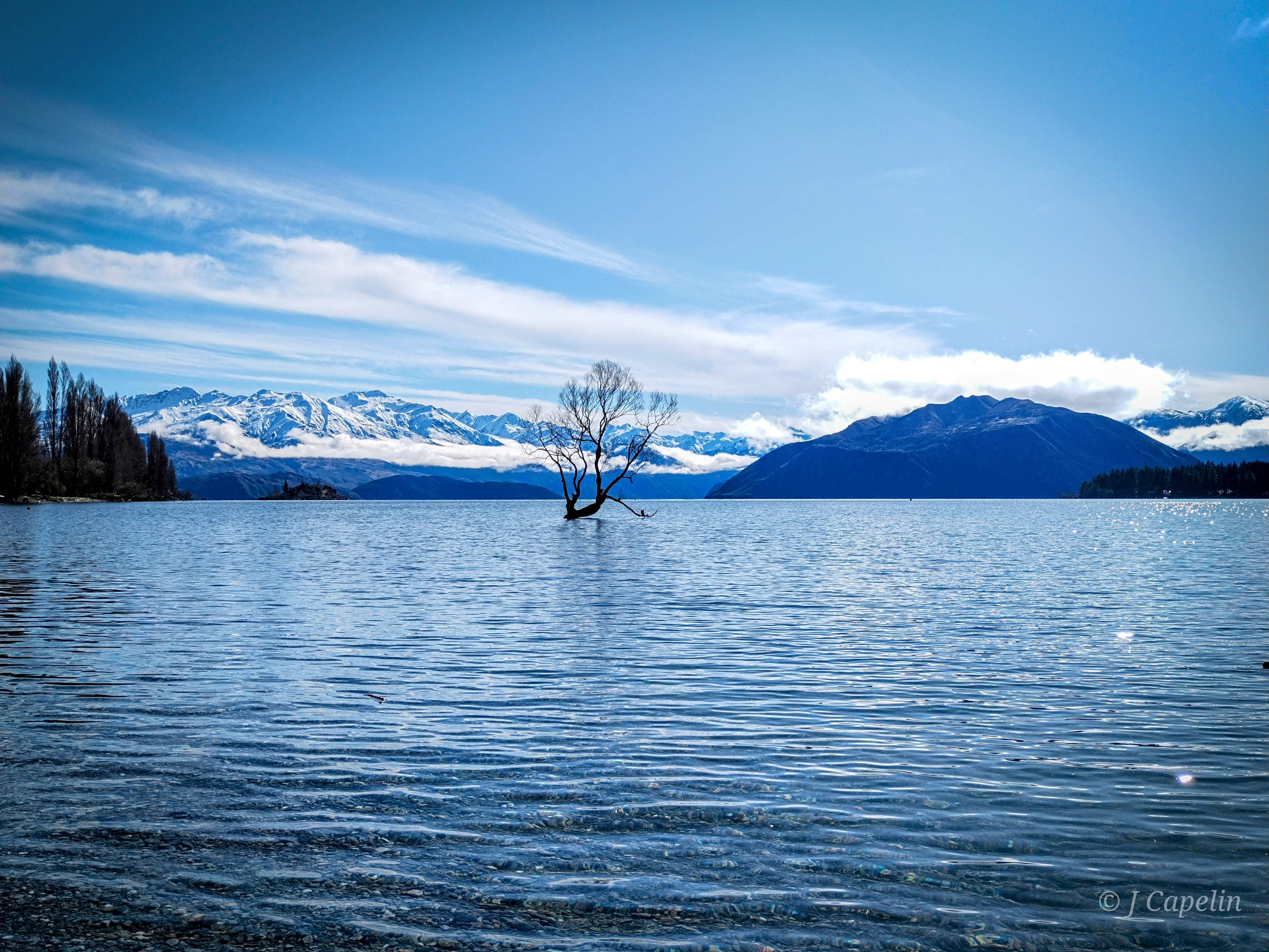
A gorgeous flat walk around Lake Wānaka, which takes you along side the pebbly waterfront, and past the tapering vines of Rippon Vineyard. This walk provides good views of Ruby Island, and of course, the Wānaka Tree – thanks to instagram, this tree in the lake is famous, and nowadays it attracts many tourists aiming for that perfect shot.

Beacon Point

One evening we headed to Beacon Point for sunset. It was freezing, but the view of Mt Aspiring National Park across the lake was perfect under the setting sun.

Around Town

We spent hours wandering around the little town, window shopping for local crafts and stopping in bars and pubs for refreshment. All the while that stunning lake is right there, tempting your eyes for a glance, and every time you look it seems to get more beautiful. There is so much variety of food, drink, fashion and gifts in Wānaka, there’s something for everyone.

The cost of living is generally high in NZ, and eating out can get expensive. Wānaka’s supermarkets may be some of the more expensive in the country, but it’s a cheaper alternative. We found that New World does takeaway style meals for two – much better than your average ready meal – and all you need in your accommodation is a microwave. We also utilised their bakery section for quick on-the-go lunches.

It’s worth mentioning the impact of the pandemic on the hospitality sector. Every food & drink venue was either fully booked or closed due to staffing. The hospitality staff were holding on by their fingertips, battling understaffing, and the isolation restrictions in place at the time. There were signs in windows screaming out for employees, or asking for your patience because they simply didn’t have enough staff. Unfortunately due to rent inflation, travellers were less likely to take these seasonal jobs because there was nowhere affordable to live, which is an ongoing issue globally.

Accommodation: Private Studio on Kings <$1,190 NZD – 8 nights
Food & Drink: Water Bar (Pub food), La La Land (Cocktails), Curbside Coffee & Bagels (Coffee cabin), Kai Whakapai (All day cafe/bar), Big Fig (All day cafe, hearty home style food), Patagonia (chocolate shop – best chilli hot chocolate), Burrito Craft (Mexican food trailer), Wanaka Beerworks (Brewery)
Drive Time: Aoraki – Wānaka: 2 hours 20 mins

Cardrona & Treble Cone

Cardrona and Treble Cone are two separate ski fields, both about a 40 minute drive from Wānaka, who have teamed up so you can use their lift passes at both locations. Cardrona is located on the Crown Range road and is a great, family friendly ski resort for all abilities, though it is notoriously busy these days. Cardrona is an old haunt for me, and we got treated to a nostalgic ‘Cardie’s’ sunrise on my return.

After a big day of sliding around in the early spring snow, we paid a visit to Cardrona’s old gold mining village at the bottom of the mountain, and the beautiful Cardrona Hotel, where the atmosphere was pumping and Après Ski beers were flowing.

Treble Cone is located in the Aspiring National Park, and has the most stunning views across Lake Wānaka. The terrain is steeper than Cardrona and is better for more experienced skiers and snowboarders. They used to say Treble Cone was the locals’ mountain, and it still felt that way for the most part. The staff seemed more ‘at home’ here, and while the skiing was more serious, the whole place had an heir of casual familiarity, like walking into your local pub.

Arrowtown

Over the Crown Range Pass, about 20 minutes from Queenstown, is a pretty little gold mining town from the 1860s – Arrowtown. The Crown Range road is an adventure in itself, winding through the mountain peaks before weaving down the opposite side with valley views on every hairpin bend.

We arrived in Arrowtown mid-morning and the little colonial high street lined with gold shops was already bustling. We walked around the Chinese village – where some of the first migrant miners lived, finishing with a stroll along the river, before making our way onwards to Queenstown.

Drive Time: Wānaka – Arrowtown: 1 hour

Queenstown

The place to be during NZ winter. The air is crisp, the pubs have their log burners crackling, and the line outside Fergburger is 3 miles long. Queenstown is an easy day trip from Wānaka (mountain road conditions providing) and it’s the adventure hub of New Zealand. There are a lot of tourist attractions and thrill seeker activities in this part of the world, with information and booking centres dotted all over town. However, we were quite content with just soaking up the atmosphere. We watched the old steamboat, the T.S.S Earnslaw, chug back and forth across Lake Whakatipu; admired The Remarkables (the impressive mountain range,) trod the boardwalks and browsed the abundance of bars and souvenir shops until the sun disappeared and turned the whole town pink and sparkly.

Food & Drink: Fergburger (quality burger bar,) The World Bar (pub,) Whakatipu Brewing (Tap room.)
Drive Time: Wānaka – Queenstown: 1 hour 15 mins

Mount Aspiring National Park – Haast Pass

Leaving Wānaka for the West Coast, we drove alongside the neighbouring Lake Hāwea, and up the ridge between the two lakes into Mt Aspiring National Park. Passing through the tiny community of Makarora at the top of Lake Wānaka, we came to The Blue Pools Track – a beautiful short walk, and a popular swimming destination in the summer. We crossed the suspension bridges over the glacial river that gushes down from the Mt Aspiring Range through a forest-covered gorge, gently pooling before pouring its magical, clear blue water into Lake Wānaka.
Walking Time: 1 hour return

Continuing to the Otago / West Coast border, we drove through the Haast Pass, where the driving views become more and more like Jurassic Park. There are view points and short walks dotted all along the Pass, each one as beautiful as the next, so it’s worth giving yourself plenty of time. You’re completely in the back country wilderness here, so bring a picnic!

West Coast

We finally reached Haast, where the river meets the wild ocean. Beautifully desolate beaches sit at the foot of the ever changing mountains, home to nothing but sandflies, and the West Coast road winds through a variety of landscapes with more viewpoints along the way.

Fox Glacier

Finally, we reached our destination for the night – Weheka (Fox Glacier village.) I don’t know if it was the time of year, or the time of the week, but we felt like the only people in the village – the road there had been pretty deserted too, which is unusual. But with the place to ourselves, and a few hours of daylight left, we went exploring.

Fox Glacier – traditionally ‘Te Moeka o Tuawe,’ can be glimpsed from the village all the way to the coast. The glacier streaks down the western valley between Aoraki (Mt Cook) and Mt Tasman, ending 250m above sea level in the lush rainforest of Westland’s Tai Poutini National Park.

Gillespies Beach

11km down a narrow, unsealed road, which curves and twists and bumps through the forest of Westland Tai Poutini National Park, is Gillespies Beach. A Department of Conservation Campsite sits at the end of the road, leading over the grass and to the ocean. Stones smoothed by the sea lay scattered all over the black sand between driftwood logs and sturdy tufts of Flax, and through the sea spray you can see Fox Glacier shimmering between the peaks behind the beach.

Lake Matheson

On the way back to Weheka village from Gillespies Beach, we visited Lake Matheson. It is a small lake by Queenstown and Wānaka standards, but with an impressive view. We walked the complete circuit around the lake as the sun set, making it very dark in the ferny rainforest that surrounds it, but the changing colours reflected in the water off the snowy peaks were breath taking. Endangered Kiwis live in this forest, so as it grew dark we listened out for their high pitched trill in the trees.
Walking Time: 1 hour 30 mins

Accommodation: Sunset Motel <$83 NZD – 1 night
Driving Time: Wānaka – Fox Glacier: 3.5 hours

Franz Josef Glacier

The following morning, we continued our journey up the West Coast, stopping at Franz Josef Glacier, traditionally ‘Ka Roimata o Hine Hukatere.’ I found it interesting to visit this glacier and compare the photos from my previous visits; it’s an eye-opener just how quickly the glaciers are shrinking.

Arthur’s Pass

As if the mountains so far hadn’t been dramatic enough, we ventured inland to Arthur’s Pass. The road climbs, getting gradually more extreme as you scale the sheer ledges, suspended in the mountains by some feat of engineering. This mountain wilderness is home to Kea – the alpine parrots endemic to New Zealand’s South Island. These cheeky fellas are very curious and tactile, and if you stop too long they may peel the rubber seals off your car windows just for fun! We encountered a pair with their baby fledgling at the Otira Viaduct Lookout, where I was lucky enough to capture their beautiful feathers in flight. (Click on the images below.)

Devil’s Punchbowl Falls

This short walk crosses the river from Arthur’s Pass Village, and climbs through beech forest to a viewpoint at the foot of the waterfall. All the way we could hear the rushing force of water crashing down the mountainside, and feel the cool spray clinging to our skin.

Walking Time: 1 hour return

Kura Tawhiti / Castle Hill

Rolling plains expand into the foothills below the mountains, covered in limestone rock formations. This is an official ‘tōpuni’ site; a symbolic cloak of protection to the local Māori, and has always been a significant meeting place. Nowadays Kura Tawhiti attracts rock climbers and walkers to admire the strange land.
Walking Time: 20 mins

Just the drive itself through the mountain pass is stunning, but there are many side tracks, hikes and ski resorts to explore along the way if you have time. Morning mist slithered through the valleys, plunging the road into darkness every so often, a great contrast to the brilliant blue sky reflected in the river.

Accommodation: Mountain House YHA < $95 NZD – 1 night
Food & Drink: Bealey Hotel (Pub,) Arthur’s Pass Store (Cafe / general store)
Drive Time: Fox Glacier – Arthur’s Pass Village: 3.5 hours

Picton

As the road descended into the Canterbury flats, and the snow-capped mountain peaks grew smaller in the wing mirrors, I couldn’t help but feel a little sad. There’s a certain magic in the mountains of Te Waipounamu that I crave, but Spring was officially in the air and a change of scenery was waiting for us in the Marlborough Sounds.

We drove back up the east coast, via Kaikōura for a night, and were greeted with warm sunshine at Picton – the gateway between North and South Island. It was like two different worlds, a day apart, going from the cold blues of bleak mountain wilderness to the sub-tropical greens of the Sounds and their beaches. This is why I love New Zealand!

Snout Track

The carpark for the Snout Track is situated on Victoria Domain Road, and is in itself, a viewpoint. The walk took us along the ridge of the peninsula that encases Waikawa Bay, with gorgeous views of the Marlborough Sounds and islands. We walked through the sub-tropical rainforest, fantails following our trail as we stirred up mosquitoes, all the way down to the tip of ‘The Snout.,’ where the blue sea lapped at the rocks while large sea birds soared above.

Walking Time: 2 hours 15 mins

The Marlborough region is famous for its wine, so while in the area, it would be rude not to try some! In the morning, we watched the Interislander ferry come in on the shimmering Sounds, before boarding back to Wellington.

Accommodation: Atlantis Backpackers < $90 NZD – 1 night
Food & Drink: Cortado (Pizza restaurant,) Le Café (café,)
Drive Time: Arthur’s Pass – Kaikōura: 4 hours. Kaikōura – Picton: 2 hours

Great Barrier Reef – Lady Musgrave Island

A real desert island, complete with a tropical lagoon and reef oasis, sits around 95km off the coast of Bundaberg in Queensland. Lady Musgrave Island. Part of the Bunker Group, this is the southernmost section of the famous Great Barrier Reef and plays host to a magical menagerie of sea life.

Ok, David Attenborough voice aside, this was my favourite Great Barrier Reef experience so far. Taylor and I booked the ‘Lady Musgrave Experience’ Day Tour for late February, and I was not disappointed! Between January and March is turtle hatching season, and many mother turtles are still laying their eggs through February. The tour did get cancelled on the day I’d booked it for due to dangerous offshore wind conditions (went to the Bundaberg Rum Distillery instead – never a bad thing!) The tour was easily rescheduled for the following day, at no extra cost, and went ahead as planned.

6:45am: Checked in at Bundaberg Port Marina
7:00am: Boarded the “Reef Empress” ready for departure

Boarding the “Reef Empress”

The morning was warm, full of promise, with the first blue sky we’d seen in days. All passengers were assigned to a group as we boarded the boat; Turtles, Clownfish and Dolphins – we were Dolphins. This was simply for the rotation of activities once we reached the island. The crossing was a rough 2 hours, the majority of passengers needed paper bags, clutching their heads and holding on for dear life. We took our ginger tablets and sat watching the crew running around cleaning patches on the floor and disposing of used paper bags. They were incredible, remaining upbeat and cheerful the whole time.

A rough crossing

2 hours later, we pulled into a big semi-circular reef lagoon, with the gold and green island in the centre. Firstly, I need to talk about the colour of the sea. You couldn’t even paint it. It was blue, yes, a light, bright blue with stripes of turquoise and green wherever the reef lay below, but it was iridescent, backlit if you will, shining like fluorescent light!

On the Pontoon

Anyway, we stepped off the boat onto the enormous three-storey pontoon, (with an underwater viewing room below deck, and glamping style beds on the top deck for the overnight experience) and the first thing I saw as I gazed out across the reef was a turtle! It was just floating on the surface about 20 metres away, its shell all clean and beautiful.

The Glass-Bottomed Boat

After a brief snorkeling run-through, the 3 groups broke off. The Dolphin group were on the glass-bottomed boat first. Our guide was Tyson, and he floated us over the different types of coral: staghorn, brain, boulder, plated, finger…. As he was explaining that the white tips on the coral is actually regrowth, not bleaching, a Brown Booby Bird swooped low next to the boat, majestically stealing our attention.

Next, Tyson steered us over a ‘turtle cleaning station’, a part of the reef where little fish nibble all the algae off the turtles’ shells. We could see the silhouettes of 4 turtles being cleaned far beneath the surface, and as we drifted over, one swam right up to the glass, giving us all a clear glimpse of its beautiful pristine shell, before popping its head up right beside the boat! Tyson said that was the closest he’d ever seen a wild green turtle and was pretty stoked himself!

Green Turtle under the Glass Bottomed Boat

Lady Musgrave Island

We pulled up on Lady Musgrave Island, where another guide, Jordan, met us for a walk around Capricornia Cays National Park. The sand is white, broken coral, with flecks of pink, and is so sharp you are advised to wear footwear at all times. One of the deadliest creatures of the ocean can be found on this beach – Cone Snails, which might look like a pretty, pink shell to collect, but the creature has a tiny barb that it fires through an opening in its shell, which has the ability to kill a person in half an hour. It wouldn’t be Australia if something wasn’t trying to kill you…

Iridescent Waters
Coral Beach

Behind the beach is a dense canopy of green Pisonian Grandis trees, and then you notice the birds. I’m not sure if the noise or the smell hits you first, but when you notice the sheer amount of little black sea birds nesting in the trees, you really get a sense of the wildness of this island. They have no predators here, and they’re everywhere, diving, swooping, pooping, screaming, and they appear to wear little white hats, hence their name: White Capped Noddy Terns. They inhabit the Pisonian forest, and are part of an intense circle of life, see, the island is basically a pile of coral; the birds nest in the trees, and their poop helps fertilise the trees. The trees also produce these sticky, sappy traps, which capture some of the Terns in a slow and sticky death, essentially using the birds as plant food. Gnarly.

The Edge of the Pisonian Forest
A White Capped Noddy Tern Chick in its nest
Pisonian Forest

But aside from the stench, the forest was beautiful to walk through. I also spotted a couple of Buff Banded Rail birds scratching about on the ground, and some tiny Capricorn Silver Eyes darting about the branches. We came out on the other side of the island, onto the beach, where sun bleached logs litter the coral sand.

A wild beach
A Bridled Tern rests on a log; a White Capped Noddy Tern flies overhead

Then came a turtle, just a dark shape in the shallow water, moving closer to the beach. Then came another, and another! They didn’t leave the water, but one came so close to the shore that Jordan identified that it wasn’t big enough to be of nesting age (30), so she must have just been curious! We strolled back around the island along the beach, and hopped back on the glass-bottomed boat, back to the Pontoon for lunch.

Snorkelling on the Reef

Finally it was our turn to snorkel, the part I’d been looking forward to all day. After a quick lunch of salads and cold meats, we quickly got our gear on and jumped in the reef lagoon. The first thing you see are little groups of little black and white fish, swimming for a close up of your funny goggles. As you get closer to the coral shelf, schools of tiny blue fish shimmer like a glittery curtain as they dart back and forth in unison.

Scissortail Sergeant Fish
Blue Green Chromis & Lemon Damsels
Whitley’s Sergeant Fish around purple coral
Moorish Idol
Butterflyfish

Parrot Fish have beaks that enable them to feed on the coral.

They come in a huge array of colours, you can see the orange one’s teeth-like beak.

Chinese Trumpet Fish
Fox Face Rabbit Fish
Plated, Staghorn and Brain coral

The coral is beautiful here, splashes of colours somehow pop under the water. I was so engrossed in watching interesting fish appearing from the reef that the turtles caught me off guard! Taylor caught my eye, signalling to me under the water, and pointing ahead; there it was, appearing out of the murkiness, coming towards us, so majestic, as though flying beneath the waves. This Green Turtle was about the size of a grown man’s torso. Her tail was barely visible, showing she was female, and she swam right underneath us. I turned and followed her for a short while, before she dived into the depths of the reef.

Female Green Turtle

The second turtle was skimming along a shallow shelf of reef at my eye level, flapping her flippers, and surfacing a few metres away. I popped my head up too and saw her floating on the surface!

Giant Clam
Sea Cucumber
Green Parrot Fish
Blue Parrot Fish

After an hour of solid snorkelling, we sat on the edge of the pontoon sipping on a Gin Mule, dangling our feet in the ocean. On the boat ride back, we saw an Olive Sea Snake wriggle by in the waves, and several dolphins.

Facts of the Day:

  • The Great Barrier Reef is roughly the same size as Japan.
  • You can’t visit the adjacent Fairfax Islands because they were used for target practice by the Australian Military in the 1940s, and there is likely to be live ammunition still scattered on the islands.
  • Without the birds, there would be no trees on Lady Musgrave Island, and without the trees there would be no birds. Without either of these, the island would be a bank of dead coral, and may have been washed or eroded away.
  • Corals are actually living invertebrates related to jellyfish and anemones.
  • Coral relies on its resident algae to survive. Photosynthesis in the algae creates food for the coral.
  • Some corals actually catch small fish and plankton to feed on.
  • The tiny white tips you see on the coral reef is not bleaching; it is in fact regrowth.
  • The colour you see on coral is actually produced by the algae as a form of sun protection. The deeper the coral, the less colour it will have, as it will have less sun exposure.
  • Coral Bleaching is caused by rising temperatures and pollution that kills the coral’s algae. When the algae is gone, the coral dies.

Tongariro Alpine Crossing – New Zealand

The Tongariro Crossing had been on my bucket list for about 6 years, and finally, in January 2019, my opportunity arrived. Friends of mine, Simon & Mike, two brothers from back home, happened to be visiting New Zealand while I was staying with family there, and so we decided to take on the crossing together. According to my Strava app (which may or may not be accurate) it is about 14 miles (22km), with an elevation gain of about 2,762ft (850m), and crosses between 3 of New Zealand’s iconic active volcanoes. It is recommended that you fully plan the journey, with plenty of water, snacks, sun protection, good hiking shoes with support, and layers of clothing. Always check the weather, as whatever the weather is doing at ground level, it changes fast and will be at least 5 degrees colder at the crater.

A January Day, 2019

5:30am – Summer Bellbirds ‘pinged’ outside the Turangi motel, on the south side of Lake Taupo, as my hiking buddies and I awoke to make bacon sarnies. After breakfast, we packed up the car and set off beneath the grapefruit sky to Ketetahi Long Stay Car park, about half an hour’s drive from Turangi.

7:00am – We boarded the shuttle bus from Ketetahi Long Stay Car Park to Mangatepopo Hut – the opposite side of Tongariro National Park, to the start of the Tongariro Crossing.

^Prep & Conditions Board at the start of the track, Mangatepopo^

7:30am – 5°c, clear, light winds – As the sun hid behind the mountains before us, we checked all our gear, stretched our legs and used the facilities. We began hiking, gently climbing the grassy hillside, the sun making its glaring appearance over the crest and quickly raising the temperature to T-shirt weather. Through the sulphurous pumice fields, we hiked, where white daisies sprout from the rough, black earth.

^Pumice Fields^

The path led onto a boardwalk, which crossed the silty plains of strange moss, framed by dark, jagged rock. Mount Ngauruhoe – known for portraying Mt. Doom in Lord of the Rings – loomed over the pathway, puffs of mist unfurling from its craters, casting its long, morning shadow over the landscape.

^Mount Ngauruhoe – the youngest & most active vent in the area – last erupted in 1977^

We began to climb; rock and man-made steps paving the lung-squashing incline. As we did, a panoramic view of the vast national park stretched out behind us.

^Tongariro National Park looking West^

Suddenly we were level and a giant plateau of sandy rock appeared before us, surrounded by an uneven black rim. We followed the trickle of hikers across the plateau, at the foot of impressive Ngauruhoe, and began to scale the lip on the other side.

^View back across the plateau & Mt. Ngauruhoe^

A fast, thick fog was moving over the summit, so we paused on the steep side of the lip for lunch. The air quickly became cool and dark, and it wasn’t long before we, and fellow hikers around us, had donned thermal jackets.

^The skiddy ascent to Red Crater / Mound of lucky stone stacks at the summit^

The route up is a treacherous combination of loose scree and sand, on both sides of the summit of Tongariro’s Red Crater, making footing impossible, and you have to kind of cross country ski your way over. At the top, a huge mound of rocks and pebbles marks the summit, built over the years by each hiker adding a stone. You feel like you’re on the edge of the world, especially when you can’t see through the dense fog!

^The Red Crater, formed around 3000 yrs ago, coloured due to oxidised iron in the rock – last erupted 1926, but Tongariro has many craters, some of which last erupted in 2012^

Skidding down the other side, the fog began to break, revealing the dramatic Red Crater. Clouds rushed over the landscape, thinning more and more until the brilliant Emerald Lakes shone through, patchy sunlight glistening on their surface.

^Emerald Lakes, Tongariro^

This is it – the iconic view of the Tongariro Crossing. The national park is a stretch of green, far and wide, all the way to the horizon where it meets the blue, fluffy clouded sky. Mountains drop down to hills, rainforests, rivers and vast plains. On the edge of the foreground three emerald and blue lakes stand out from the grey, volcanic rock, regardless of the weather. Curls of steam rise from the rock all around, that rich, boiled egg smell filling your nostrils.

^Emerald Lake, Tongariro^
^Emerald & Blue Lakes, Tongariro^
^Descent from the Red Crater / Steam rising from volcanic rock^

We continued across the next plain, looking back on the three iconic volcanoes lined up like a postcard; Tongariro – jagged and broken at the forefront, Ngauruhoe – the perfect volcano shape in the centre, and snowy Ruapehu peeping out from behind.

^Trio of Volcanoes – Ruapehu, Ngauruhoe, and Tongariro^

The walk down to Ketetahi is a neverending zig-zag, through bushland and rock, which never seems to get closer to the end. Lake Taupo shines on the horizon below, before the path eventually drops into rainforest, and quickly descends down wooden steps, joining a cascading river down to Ketetahi.

^Descent to Ketetahi^

2:00pm – 13°c, sunny – Once we reached the Ketetahi end of the Tongariro Crossing, it was another 20min walk along the dusty road to the Long Stay Carpark. The hike back to the car felt long, but far from disappointing! The landscape is marvellous, and there’s plenty of nature to see; we were three satisfied & very happy hikers. Our moving time was about 5 hours, all the photo stops and snack breaks made it much longer, but why rush through an experience like that?

^Reaching the end of the crossing at Ketetahi^

Our Tongariro adventure ended at the car park, where the car wouldn’t start, and the next adventure began – getting home!

^View across Lake Taupo to Tongariro National Park, from Taupo^

Nakasendo Trail pt.3 – Journey through the Heart of Japan

~ Breakfast in Tsumago ~

I awoke with the birds at sunrise, beneath the warm yellow canvas of the tent, somewhere in the woodland surrounding the ancient Japanese post town of Tsumago. It had been the first night camping so far that I hadn’t woken up shivering in the night, and the quietness of the castle ruins was unreal underneath the clear stars, surrounded by mountains.

Mic, my travel partner, had a noticeable spring in his step as we began to pack up camp, and we both felt fresh and excited to complete the final (and most historical) leg of the Nakasendo Trail. Ensuring we’d left no mess or litter in the ancient countryside, we made our way into Tsumago-juku for breakfast.

Tsumago-juku was just as bustling in the early morning, with fresh tourists and hikers just arriving off the first shuttle bus from Nagiso station, bright eyed and ready to sight see. We went to a tea house, taking off our shoes at the door, and sitting down crossed-legged on the tatami mat floor next to the fire. The lady who lived there brought two strong coffees, placing them on the little table, before scurrying off back to her living room, from which we could hear the radio.

PhotoGrid_1528324087148.jpg

Traditional Japanese Tea Room

Suddenly, the radio program was intersected by a loud instructive voice, which was also echoing outside in the street. Mic and I looked at each other, concern crossing my mind and his face, but we couldn’t understand the words (and even if we did speak fluent Japanese, I think we’d have struggled through the fuzz and crackle), and there was no reaction from the residents.

I remembered hearing something similar in the mornings when I was living in Hakuba – at the time I put it down to the local train station, but in hindsight, it was probably too far away to hear, and I’m not sure they even made announcements. I read about the “5pm Bell”: a nickname for what is formally known as Sichoson bosai gyosei musen hoso, which is just as much of a mouthful in English – “Local government disaster administration wireless broadcast!” This is a daily test of an emergency broadcasting system, which is blasted out of old-fashioned loud speakers attached to poles in the streets, at the same time everyday. It was introduced in the late 1960s, following a deadly earthquake, and has run like clockwork ever since, with each town having it’s own broadcast, tune and time schedule. Although this is an efficient safety measure in a land of earthquakes, volcanoes, tsunamis, and potential Korean missiles, it still sends shivers down my spine, as it reminded me that for such a beautiful, kind-natured culture, it has such a dark and harrowing history, and still has so much to fear. I find it quite boggling that a country that excels in advanced technology, still uses old fashioned, traditional methods, and will continue to until they stop working. It is like something out of a futuristic, sci-fi apocalypse war movie!

PhotoGrid_1529440541382.jpg

Mochi Skewer (or Dango) – sweet snack made of rice starch

With this revelation, we drank our coffee, paid the lady, and went to the next shop to sit in its little ornamental garden in the morning sun, and eat beef skewers and mochi while watching the koi swim around in a pretty fish pond.

~ The Original Nakasendo ~

PhotoGrid_1528843803825-1.jpg

Leaving Tsumago-juku on the Nakasendo

The Kanji symbols for Nakasendo literally translate as 中 = central; 山 = mountain; 道 = route. Following the roaring river out of Tsumago, we passed through more Edo style villages, fully inhabited, with pretty gardens making use of the water flow in many creative and useful ways. Some had little fish farms in their gardens, and there were quirky, homemade water features incorporating the ancient stream, along with more original, wooden water wheels.

PhotoGrid_1528843710782-1.jpg

Original Nakasendo Way

Climbing into the mountains towards the river’s source, we began the ascent up the original cobbled path into the forest. Part way up the incredibly steep incline, we came across an Ishibotoke – a ‘rest-in-peace pagoda’ dedicated to the black cattle that used to carry the merchants’ heavy loads up the steep hills of the Nakasendo. And here we were lugging our own heavy packs!

~ Bear Bells ~

PhotoGrid_1529703246191.jpg

First Bear Bell

Every few hundred metres you come across a bell at the side of the path – these are bear bells – you are supposed to ring them to scare off any nearby bears… (apparently there are brown bears, and black grizzly bears in Japan, and all reliable sources confirm this… but I’m still skeptical!) I counted 12 bear bells between Tsumago and Magome, which are fun to ring loudly and deafen your fellow hikers!

~ Odaki & Medaki Waterfalls ~

PhotoGrid_1529793979957.jpg

Odaki Waterfall

On the border between Nagano and Gifu, a little road takes you down towards the roaring sound of the Odaki and Medaki waterfalls. Legend has it that the larger, more impressive fall is male, and the serene and modest one is female. It is said that travellers in the Edo era would bathe in the falls for good fortune before continuing their journey to the next post town. This was a beautiful place to pause and take in the nature, especially as we were lucky enough to get a moment without any other tourists. The light beams through the woodland, while birds twitter somewhere above, to the sound of rushing, bubbling water, trickling over rocks and swirling into the river.

PhotoGrid_1529703309487-1.jpg

Medaki Waterfall

Soon we came to an ancient rest house, with a 200 year old weeping cherry blossom beside it. As I stood admiring the beautiful drooping blooms, an old man wearing traditional robes and a rice farmer’s hat invited us into his traditional house, which was open to the public. He was giving out free Ocha tea for tourists hiking the Nakasendo.

We welcomed the break, and the opportunity to get out of the scorching valley sun for ten minutes, and sat down enjoying the refreshment, chatting with some fellow English and Aussie travellers who were doing the route in the opposite direction. They warned us of a big climb to come, and they weren’t lying!

PhotoGrid_1528843742888.jpg

Pouring Ocha in the Traditional Rest House

The hike up to the ridge continues along the original cobbles, which are rugged and warn, and don’t necessarily make the trek any easier on your feet. The path follows through thick, ancient woodland, with enormous trees, some of them protected and even worshipped. The river still flows down in the opposite direction beside the path, babbling rockery and green moss bringing music and colour to the scene.

PhotoGrid_1529703325056-1.jpg

Following the River

~ Magome-juku ~

Following the long road winding down from the ridge, we finally reached the iconic post town of Magome-juku, with its dramatic mountain backdrop. The little winding street etches down the hill; paved with wooden buildings either side, trees and flowers decorating the edges, and between houses, you can look down over crops and rice paddies, Mt. Ena looming impressively over the scenery. To me, Magome appeared slightly more modern than Tsumago, which could be due to its location – closer to the main highway, and only a short drive from Nakatsugawa, therefore easily accessible and closer to modern civilization.

PhotoGrid_1528843761118.jpg

Magome-juku

We followed our noses towards a tantalising smell coming out of a busy restaurant. The board outside boasted of ‘Chef’s Special Hot Curry Soba’, and we were sold! Taking our shoes off (gladly, and a little self-consciously) we sat down on the tatami mats and ordered two well-earned beers, and Mic finally got his Soba noodles!

PhotoGrid_1528843781057.jpg

Mt. Ena

After basking in the sun and making use of the local wifi -researching where to camp and browsing the local shops, we bought a couple of deliciously malty, local dark beers – Kisoji Beer – and cracked them open for our final hike of the day. There was a river with an onsen complex down in the valley, about an hour away on foot. The walk was pleasant, following along the Old Nakasendo, which has been converted into the main highway, carving through the stunning Ena-Yama mountains, the evening heat reaching 24 degrees celsius. We came to the small village of Misaka on the Ochiai River, about a 20 minute drive from Nakatsugawa, where we set up camp on the river bank, and spent our evening relaxing in the onsen of the nearby ‘Kua Resort Yuzawa’ complex.

~ The Shinkansen Bullet Train ~

The following morning was bright and warm once again, and we were able to catch the free shuttle bus from the ‘Kua Resort Yuzawa’ complex to Nakatsugawa Station. From here we caught a train to Nagoya: Chubu region’s largest city, where the sun was unbearable, and we realised it was time to change out of our winter attire for good, and dig out the summer clothes from the bottom of our backpacks!

PhotoGrid_1530227347821.jpg

Shinkansen Ticket – Nagoya

Nagoya station is an underground network of ticket machines and passages leading to various platforms. Mic and I joked about catching the Shinkansen – the Japanese Bullet Train – and then both realised there was nothing actually stopping us! But where to? We knew we wanted to head for Kyoto, and it was the cheapest and quickest route from Nagoya, so we went to the nearest ticket machine and bought two tickets. Only, they weren’t complete tickets. We couldn’t get through the barrier; the train was going to leave without us! So, to prevent a terrible Harry Potter parody, Mic went straight to the ticket office to sort it out.

If you are buying a ticket for the Shinkansen, and aren’t machine savvy, I’d recommend cutting out the moment of panic, and going straight to the ticket office, as they are usually English speaking and very helpful.

Notably, the Shinkansen is definitely the more luxurious way to travel, with our short trip costing 6,000yen each – that’s £42 at the current exchange rate.

At 200mph, the Japanese Bullet Train pushes you into the back of your seat, and blurs your eyes as it accelerates across the country. It is incredibly smooth for something so fast, and the journey from Nagoya to Kyoto only takes 30 minutes. That’s 84 miles, the equivalent to a 2 hour drive, past towns and mountains and the south side of Lake Biwa.

We were soon arriving in Kyoto, at the end of the Nakasendo, where Gerry, Cam and Zac were already staying. After quickly finding a very reasonable Air BnB, it was time to reunite with our friends and compare our stories of tough climbs and freezing nights in tents, before falling asleep in a comfortable bed above the warm glow of down town Kyoto.
PhotoGrid_1530229682132.jpg

Nakasendo Trail pt.2 – Walking the Way of the Water Wheels

Have you ever woken up with a layer of ice on the inside of your tent? It had been another below-freezing night on the Yabuhara river bank, deep in the Kiso Valley in the heart of Japan, and even our sleeping bags were a tad frosty. But we’d slept, and after completing the first leg of the Nakasendo Trail the day before, I don’t think anything would have prevented sleep. The ‘samui’ (cold) nights we’d experienced while camping so far weren’t letting up, but at least the day temperatures were reaching the high-teens.

PhotoGrid_1528927465607.jpg

Frosty Lodgings

~ Breakfast of Champions ~

After thawing out the tent in the rising heat of the morning sun, my travel companion Mic and I washed and drank from the river, packed our backpacks and set off to the nearby Yabuhara train station. Breakfast was a great and unexpected find. I’d remembered seeing a sign in a window for fresh bakes the night before, (Japan has really mastered the art of delicious pastries) and we headed back there on the off-chance it was open. It was, but when we stepped inside, it seemed to be a craft shop, selling unique, handmade trinkets, but no food. We were just about to leave, when I noticed it was connected to what looked like a community centre, where a group of ladies were sitting around a large table doing an origami workshop. They all cheerfully called, “Konnichiwa” as we edged in, spotting a stand at the side of the room, covered in fresh breads and pastries, and also coffee! We paid and took our bag of loot, and our coffee in paper cups, the origami ladies waving goodbye as we left, and ate the lot while waiting for our train.
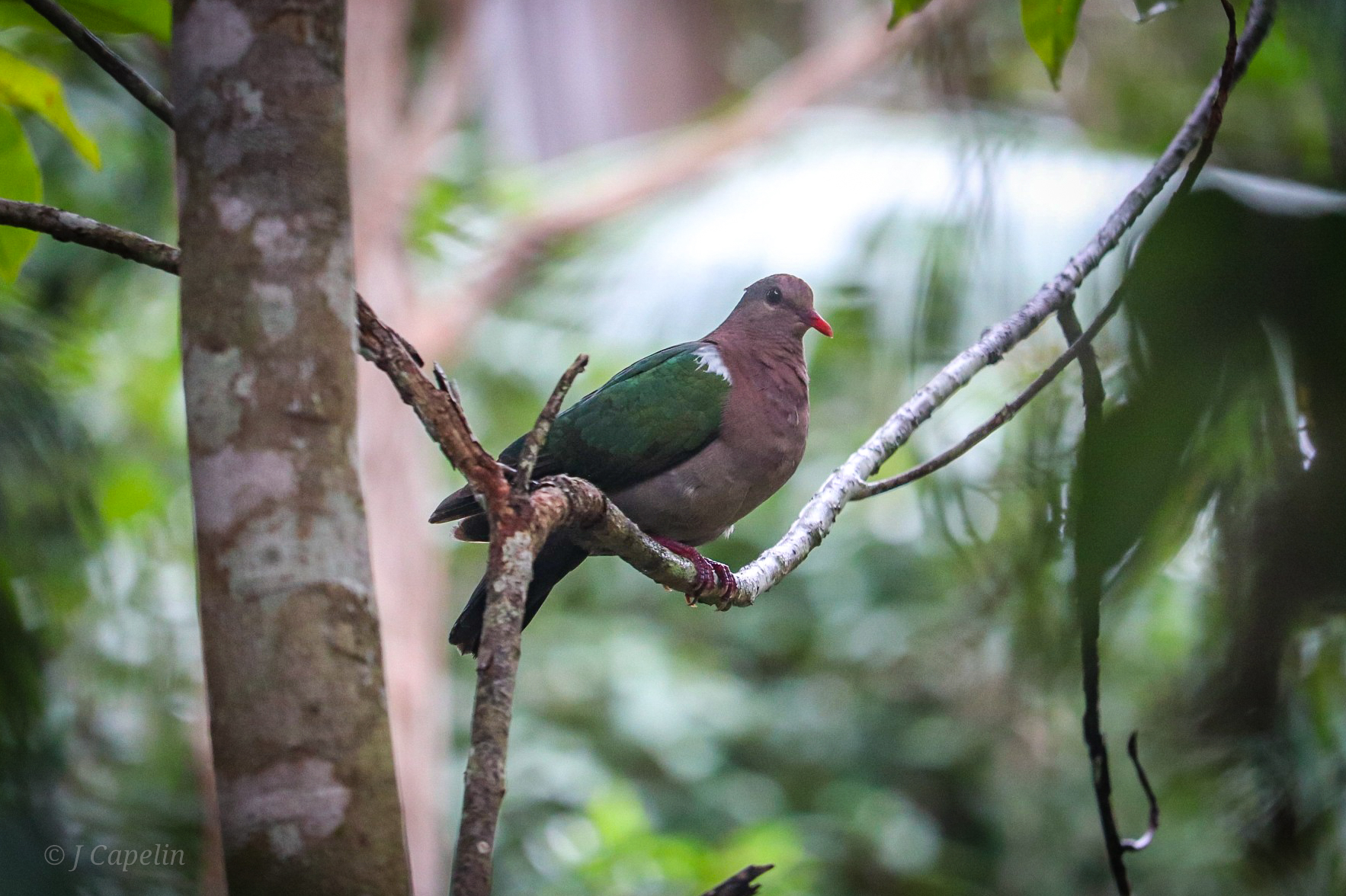
PhotoGrid_1528843572041.jpg

Breakfast of Champions

~ Nagiso ~

A 50min train ride through pictoresque scenery; window seats; a kindle in Mic’s lap, a notebook in mine, we enjoyed the opportunity of soft chairs, prior to embarking on the second leg of our hike, from Nagiso to Tsumago-juku.

Nagiso was another sleepy little town, a little more equipped for passing hikers and tourists, with a handful of little shops and cafes by the station, their keepers perched outside on fold up chairs, watching the world go by. This is the base for most tourist companies running shuttles between Tsumago and Magome – the two most touristic Post Towns on the Nakasendo Trail, which book-end the last remaining original part of the ancient road. It is also a starting point to the old Nakasendo Pass, which follows closely where the original road would have led to Tsumago – this is what we were doing.

~ Nakasendo ~

We bought lunch in a local grocery store, repacked our backpacks, ensuring the weight was evenly distributed, and began the trek. The Nakasendo Pass to Tsumago begins just metres away from Nagiso station, and ascends beside the river, past a mini shrine on the left, and an old steam engine on the right. Blue skies added enhanced colour to our beautiful surroundings, with the river and gorge fading off into the distance behind us, and the temperature was rising, so we were soon changing into our shorts.

This part of the trail joins up with a country lane, passing through rural residential areas. The incline is small compared to the Torii Pass between Narai and Yabuhara, and the scenery is less dramatic, more serene, with pretty farmland and hills. We passed hillside shrines, which reminded me of the tiny worship houses built into the Catalonian mountains of Spain, and small villages with the authentic Edo era wooden houses, and wooden water wheels turning.

PhotoGrid_1528843601877.jpg

A Working Water Wheel

Every now and then, between the farms and old villages, we’d pass a great big modern new-build, with lots of land and fancy cars parked on the drive, in contrast to the ancient history etched into the landscape. A few cherry and plum blossoms were already in full bloom, dappling pink sunlight on the grass below, and teasing at what the following few weeks in Japan had to offer.

PhotoGrid_1528843617981.jpg

Early Cherry Blossoms


~ Tsumago-jo Castle ~

We reached a fork in the road; the right leading up hill to Tsumago-jo Castle remains, the left leading to Tsumago-juku. Leaving our backpacks trustingly against the sign post, we took the right-hand fork, up a steep incline, passing through dense bamboo forest, from which a wooden bridge once connected the castle grounds, and is now filled with earth. The sound of the birds twittering and echoing through the bamboo was incredible, and Mic was forced to patiently endure my excitement about being in my first bamboo forest! Not another human in sight; just endless bamboo, quietly creaking and making the light fresh and green.

PhotoGrid_1528844189797.jpg

Filled-in-bridge curving round the bamboo forest

We passed the place where the ‘Hori-Kiri’ (moat) once was, and up through the woodland past the ‘Obi Kuru Wa’ (defensive stone wall). The top of the mount was a large, circular plateau, with big rune stones strewn about, commemorating the wooden, Edo era castle that once stood there. It offered 360degree mountain views, leading our eyes down through the valley, with Tsumago-juku ahead. Behind us lay the Central Alps, snow peaks bright in the afternoon sun.

PhotoGrid_1528843643065.jpg

Kiso Valley & Central Alps, from Tsumago-jo ruins

Back down to the road, we collected our backpacks and descended to the little post town of Tsumago-juku – soon to be my favourite place on the Nakasendo Trail.

~ Tsumago-juku ~

PhotoGrid_1528843821921.jpg

Entering Tsumago-juku

Turning the corner leading down along the narrow road, following the stream on the left, and the classic Edo era wooden houses along the right, the view zigzags down the valley before you.

PhotoGrid_1528843844233.jpg

Tsumago Water Wheel

A wooden water wheel turns, splashing the stream part way down, while miniature ornamental gardens decorate the courtyards, with flora and forna filling each available space between. The green mountains surrounding the post town create a lush frame for the picture-perfect foreground.

PhotoGrid_1528843862832.jpg

Ornamental Courtyard

Tsumago was the 42nd of 69 post towns on the original Nakasendo between Kyoto and Tokyo, and is now one of the best preserved Edo era post towns, and a popular tourist destination. You can reach Tsumago by travelling to Nagiso on the Chuo Main Line railway, and catching one of the shuttle buses, or hiking the old Nakasendo. Ironically, it was the building of this railway line that caused Tsumago to fall into poverty, until it was revamped for tourism in the 1970s. I think the best thing about this town is that even though it thrives purely on tourism, none of it is staged. Tsumago is fully inhabited, and therefore completely authentic, as the locals you meet selling their goods actually do live there, and make their living by making and selling traditional products to travellers, just as they would have in the Edo era.

PhotoGrid_1528843695433.jpg

Tsumago-juku

There are lots of Ryokan guest houses in Tsumago, where you can get the full experience, with tatami mat rooms, onsens, and traditional meals. You can also get your luggage shuttled between towns, so you can enjoy a leisurely hike, but if like us, you enjoy a challenge and want to save a bit of money, I’d fully recommend going off the grid!

PhotoGrid_1528843664005.jpg

Tsumago-juku

A beautiful afternoon was spent wandering up and down, exploring the shops with different foods, coffee and tea houses, groceries stores, souvenirs, and of course, bottle shops filled with expensive sake. Beside the last house at the very end of the town, where the road continues onwards along the Nakasendo towards Magome, there is a life-size straw horse, apparently a symbol for good fortune, which is the first thing you’d see if you’re walking to Tsumago from Magome, as most people do.

PhotoGrid_1529259002813.jpg

Straw Horse for Good Fortune

Another little statue we began to notice outside a lot of buildings was the Tanuki – a sort of raccoon – wearing a straw hat and a dappy smile. They seemed to be outside all the ryokans and restaurants, so we guessed they were a symbol of hospitality, and once you notice them, you realise they’re everywhere! On some research I’ve discovered that they were originally Chinese evil spirits; shape shifters and tricksters. The Japanese, with their imaginative compassion, adapted this folklore, and the Tanuki is seen as benevolent and cheeky: a welcoming and wealth-bringing icon.
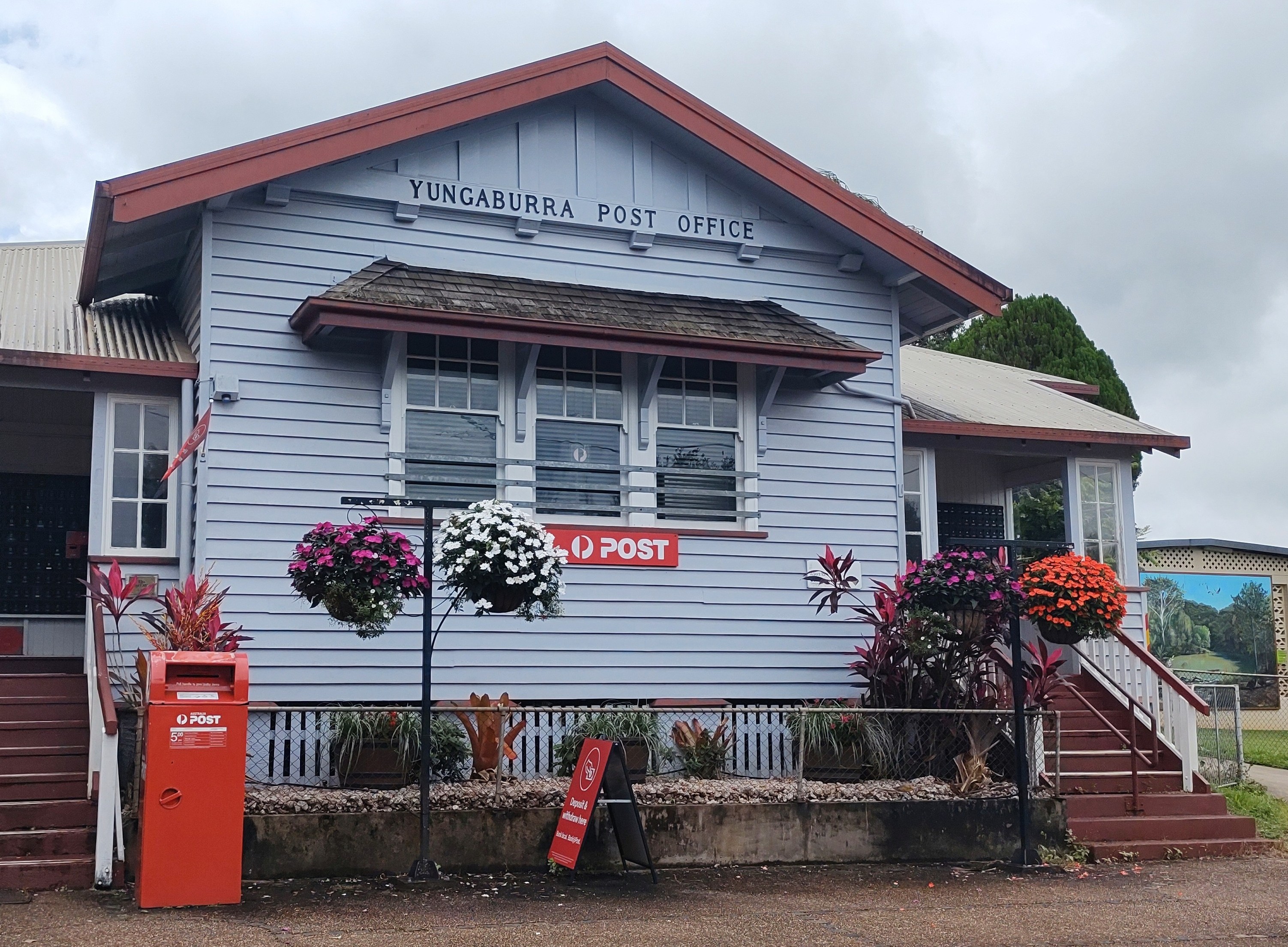
a_tanuki-transparent-found-on-web-TN_1

Tanuki

With the evening sun turning the wooden houses red, and the shadows growing long on the ground, our stomachs were beginning to rumble. Once again, there was no place in Tsumago to pitch a tent, and a last minute ryokan would have cost the earth, so we decided to back track a little way. We passed an old chap wearing a woven hat, and selling something from authentic bamboo steamers with delicious aromas coming out. Steamed buns! We purchased six with different fillings, which he wrapped in bamboo paper and bid us farewell with a smile, and we hiked back up towards Tsumago-jo ruins.
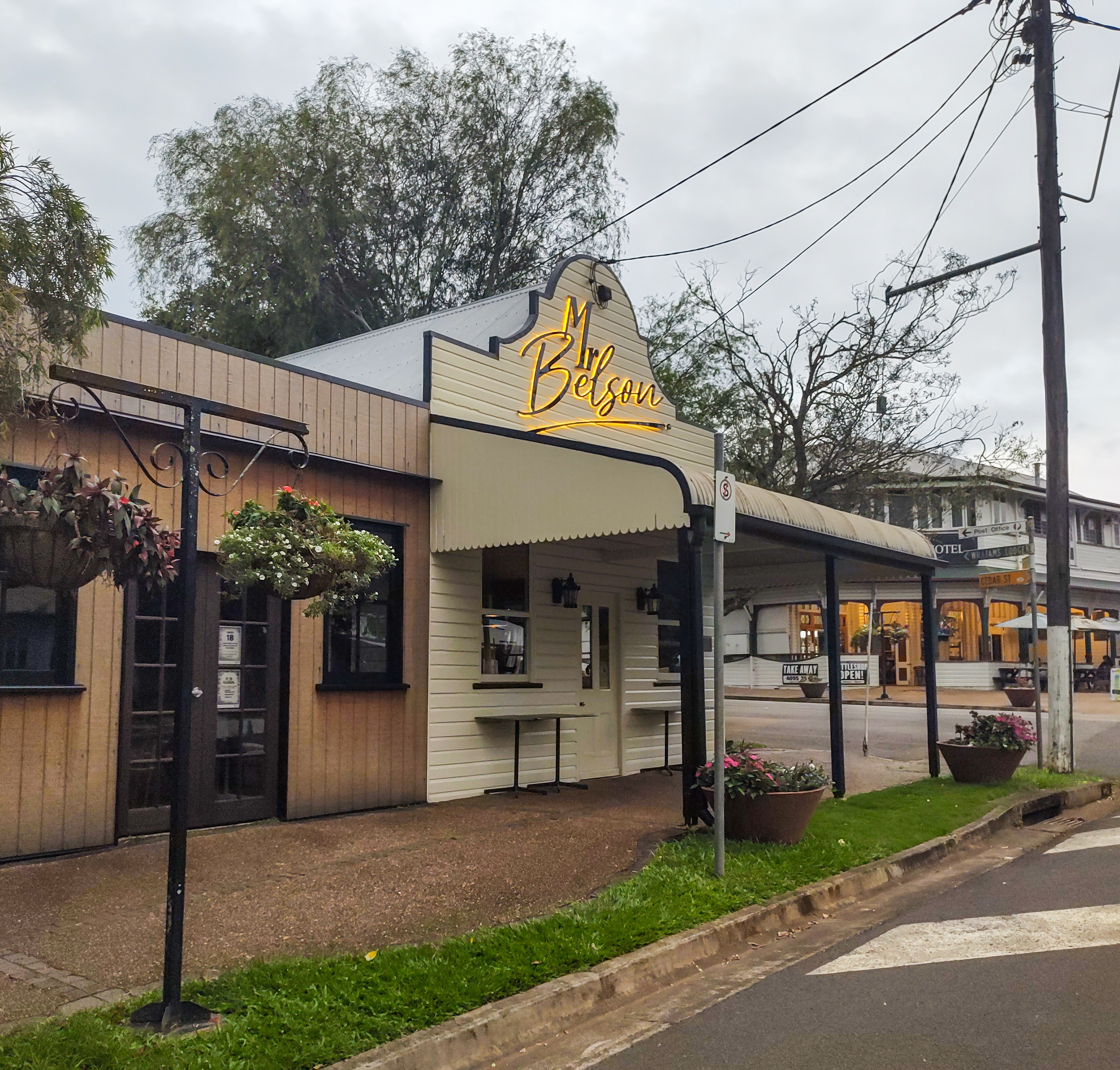
PhotoGrid_1528844263980.jpg

Traveller’s Supper

~ Camping in the Castle Ruins ~

The sun was setting, painting the valley with vivid colour, and we ate our steamed buns while they were still hot and delicious – my favourite had a walnut filling; Mic’s was eggplant. We pitched the tent on some nearby scrubland with valley views – previous campers had used this spot, and their was a ready-made fire pit. The sun set, and the flames rose, and the temperature didn’t drop! Finally, spring breathed in the night sky, and it was going to be the first comfortable night’s sleep in a long time.


Nakasendo Trail pt.1 – ‘Samui’ in Ancient Japan

Work had come to an end. The snow was melting, and the ski lift queues had disappeared. The season was over, and it was time to leave Jimmy’s House in Hakuba, with all its inhabitants the winter had collected. Moving out was sad, saying goodbye to the family of strangers I’d adopted over the last 4 months, all going separate ways; but it wouldn’t be bye for good.

The Nakasendo Trail is the ancient road between Tokyo and Kyoto, which was used by Samurai and merchants in the Edo era, between the 1600s and 1800s. Small parts of the old road still remain intact, and are open to tourists to hike and experience all year round. Mic (also from Jimmy’s House) and I both desired to backpack the trail, so we set off on our adventure at the end of the snow season in mid-March…

~ Camping in Matsumoto ~

PhotoGrid_1528323906118.jpg

Road to Matsumoto

Somewhere on a hill near Minami-Matsumoto Station, across a vast stretch of paddies and crops, we set up camp. Our view was of the Matsumoto suburbs across the valley, to the dramatic mountains on the other side. Mic and I had left Jimmy’s House, catching the 12:30pm train from Kamishiro station to Matsumoto, with fellow housemates, Gerry, Cam and Zac somewhere closely behind. (Zac had recommended the camping spot, and the three of them were to meet us there on their bicycles, commencing their own bike-packing journey.) We’d walked for around 45 minutes in the warm sunshine through a network of rice fields until we reached the foot of the mount. Passing two shrines, and some of the first cherry blossoms of the season, we climbed the steep, snowy path to the plateau, which was to be our home for the next two nights.

PhotoGrid_1528323931733.jpg

Room with a View

As dusk began to creep at the edges of the horizon, and our camp set up, we gave up waiting for the three boys, assuming they’d found somewhere else for the night, and we walked in twilight to the nearest 7eleven convenience store for dinner. An hour later, we traipsed back up the hill to our tent, finding ourselves following three tyre tracks in the snow! “Bikes! Three of them!” Mic exclaimed, and as we climbed, torch light beamed down the hill, and we heard Zac, Cam and Gerry cheering.

Our tents floated on the snow, lit from within like wish lanterns, with the stars strewn across the clear sky competing with the lights from the city below. Sitting around Mic’s campfire, spinning yarns and trying to keep warm, one by one we turned in, and endured our first freezing cold night, sleeping on the snow.

That was the coldest I have ever been in memory. We’d somehow convinced ourselves that snow was an insulator, but alas. It was anything but! The boys were all up at dawn, having given up on sleep; Zac, Gerry and Cam preparing for an early departure on their bikes. Meanwhile I was still huddled in a ball in my sleeping bag, with some deluded belief I’d stop shivering and fall asleep soon. Though they were the worst two nights, the mornings that followed were beautiful.

The sun rose behind the trees, slowly spreading a thawing warmth over us. I sat in the tent, packing and readying for the day ahead, while Mic did his yoga stuff outside on a patch of grass. Two birds of prey circled above us, calling to eachother, gliding and diving gracefully against a sapphire sky. The town clocks chimed from somewhere below, as the sun melted the snow, and all felt peaceful. This is a very tranquil, happy place in my memory.

PhotoGrid_1528324032933.jpg

First Camp

~ Matsumoto Castle ~

Standing bold between water and mountain, Matsumoto-jo is a premier historic castle, dating back to 1594, and is a Japanese national treasure. You can walk around the castle’s moat for free, passing beneath the impressive defensive gate, and through the park with a pictoresque red bridge that arches over the vibrant green moat. As with many important buidings, hundreds of Koi swim around in the waters, multi-coloured, enormous and gawping. As well as sharing their name with a Japanese synonym for ‘affection’, Koi are an important symbol of strength. In Japanese folklore, the little Koi in the Golden River wanted to swim in the Blue River, beyond the Great Waterfall. Any fish that showed the courage to swim upstream into the waterfall, grew wings and was transformed into a dragon by the gods.

PhotoGrid_1528323970696.jpg

Matsumoto-jō

We wandered through the sunny city and met with another Jimmy’s Housemate – Jake, who took us to an onsen before dinner.

~ Japanese Onsen ~

These luxurious public bath houses are definitely something you should try at least once! I have to admit, it took me ages to go to my first onsen, because I was nervous. After all, you have to be naked! Men and Women are separated in public onsens: women enter through the red veil, and men enter through the blue. When I finally went to my local onsen in Hakuba Goryu, I had the whole place to myself, which is great if you’re feeling uncomfortable about waltzing about in a public space with no clothes on, but it meant I had no one to follow and learn the etiquette from. So, when I strolled into the onsen in Matsumoto with my towel wrapped around my torso, with at least 20 Japanese women – who had clearly left their towels in the locker room – pretending not to look at me, I felt very Gaijin! Quickly stuffing my towel on a nearby shelf and submerging myself up to my neck in the hot water, I subtly watched the other women. They were simply relaxing, washing, quietly chatting and laughing among themselves, totally naked and totally comfortable, not judging another soul, and I quickly realised I had nothing to worry about. I thoroughly enjoyed the array of different spas, including a jet stream massage seat, and multiple outdoor spas. Relaxing in an outdoor lounger, submerged in warm water beneath a beautiful magnolia tree, I watched dusk fade the sky, breathing a cool breeze on my face.
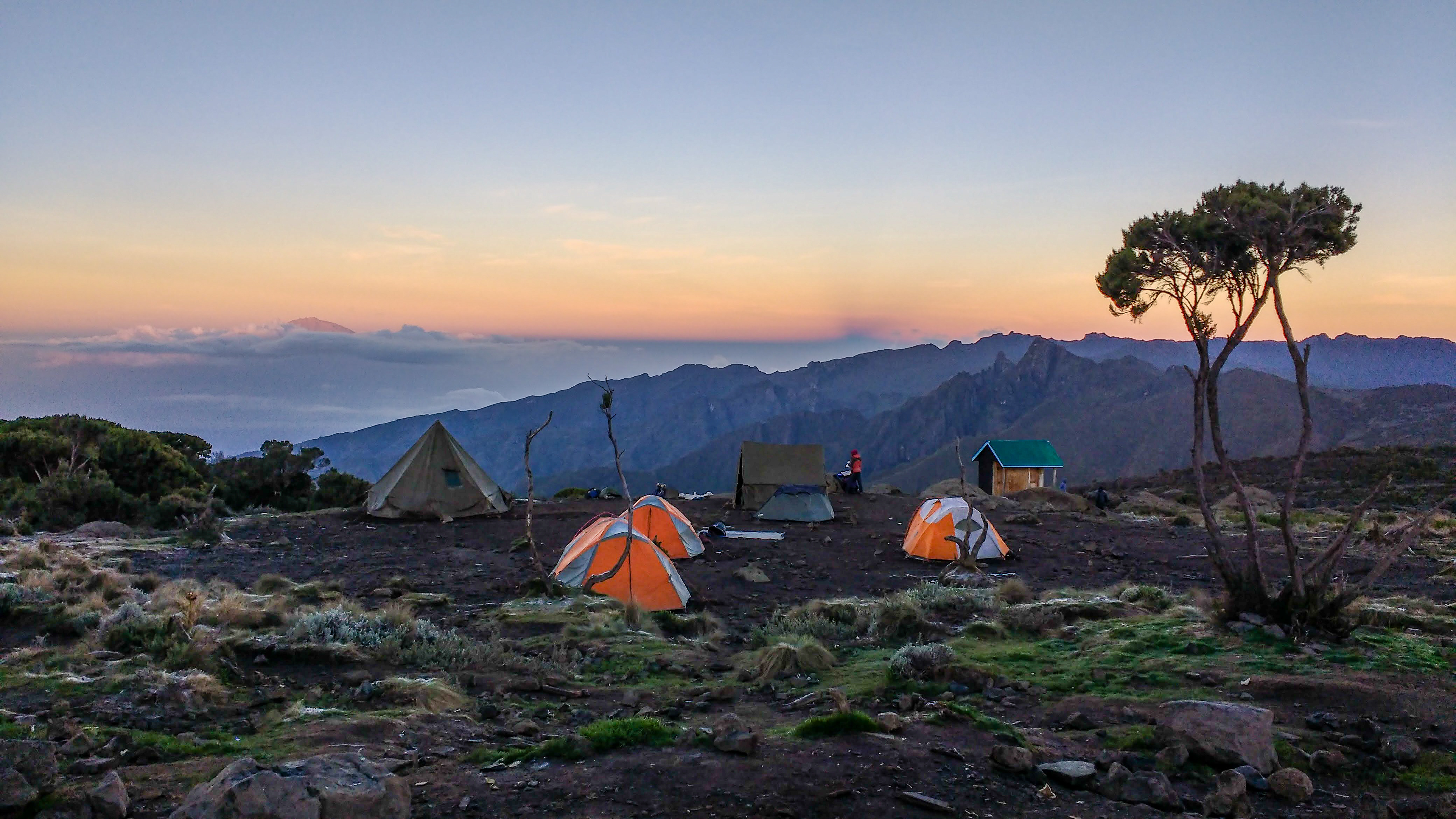
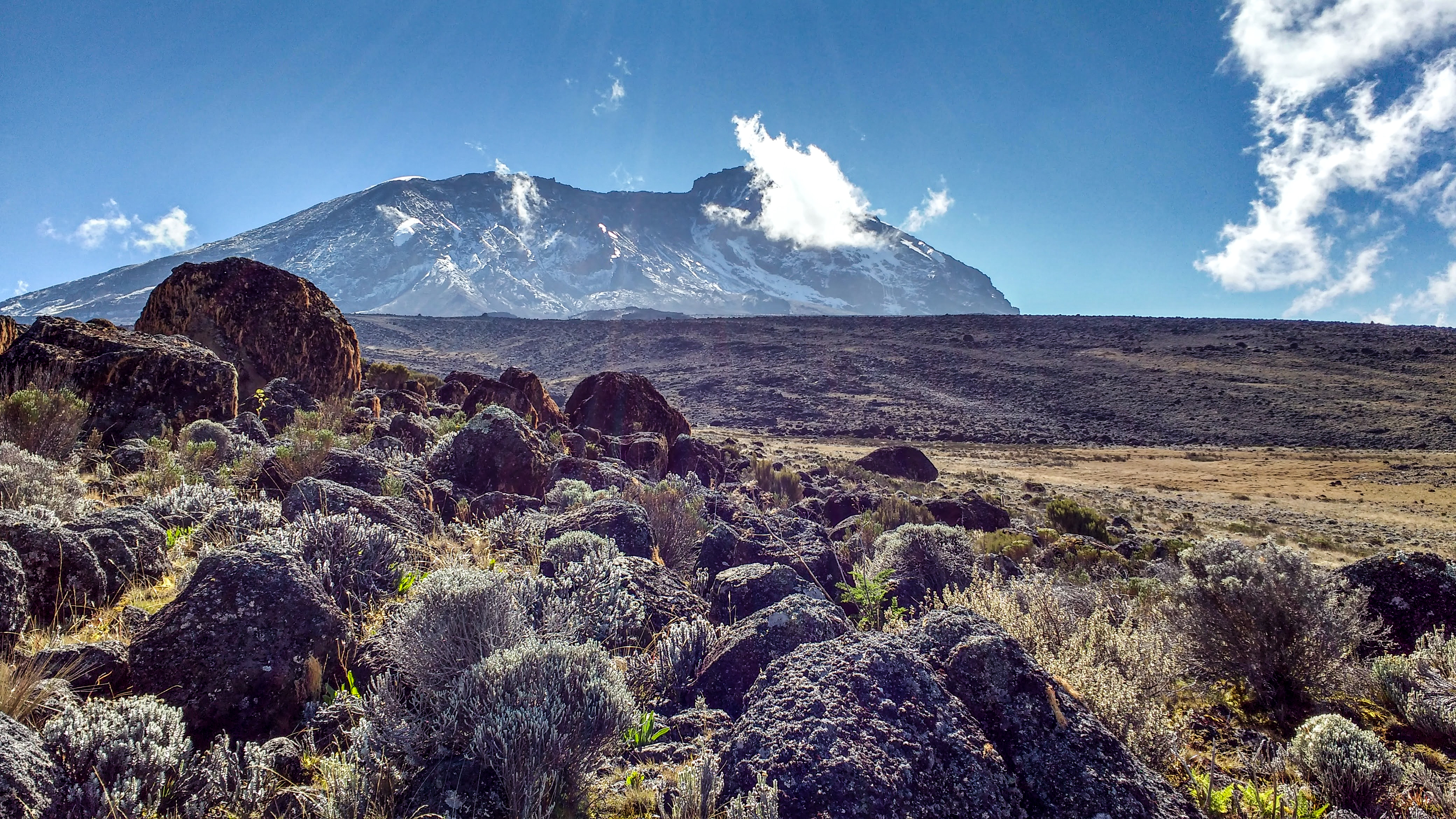
~ Yakitori and Beer with Jake ~

I met with Jake and Mic in the lobby, and we headed across to a nearby Yakitori resaurant. Yaki means grilled, and tori means bird, but Yakitori can cover just about any meat or vegetable that can be skewered and grilled. We ordered everything on the menu and washed it down with a mug of Asahi, raising our glasses to ‘Kampai’ (cheers) to good food and good times.

~ A Train to the Middle of Nowhere ~

Our second morning in our tranquil camping spot was severely interrupted… I’m going to be totally honest here – if you’re a fellow traveller, and you’re planning on free camping, that’s great! We searched the web on free camping in Japan before embarking, and it is accepted, provided you are respectful and discreet. But, DO NOT LIGHT A FIRE, unless you are in a place with a designated fire pit, or you could be fined up to 30,000yen. We learnt this the hard way. Now we know.

Leaving Matsumoto on the sunny March morning, trudging through rapidly melting snow, we caught the train on the Chuo Mainline Railway to Kiso-Hirasawa. It felt like we were back in the Hakuba Valley, where the tracks cut round mountain bases and through evergreen trees, passing occassional communities of a few houses in the woods.

A cold wind blew, though the sky was deceivingly blue. There wasn’t a soul in sight as we got off the train, yens at the ready to pay at the ticket booth in the station, but there was no one there! The tiny village of Kiso-Hirasawa was deserted too, and we found a small park nestled between houses, to sit and enjoy our 7eleven sandwiches out of the wind. The village had a narrow street lined with old Japanese buildings – which were all closed for lunch – Mic likened it to Nizawa Onsen: another ski town, famous for its hot springs. The street eventually met with the main road, adjacent to the Kiso river.

We walked along the highway to the next town – Narai – which took around 30 minutes, and while the walk was rather dull, with trucks passing at high speed and our backpacks cutting into our shoulders, the traditional Post Town was worth it on arrival!

PhotoGrid_1528324048403.jpg

Evening in Narai-juku 

Narai (Narai-juku) is the midpoint of the Nakasendo highway, which connected Tokyo and Kyoto in the Edo era. It is also the northern most Post Town, and still resembles it’s authentic purpose from that period.

~ An Unplanned Detour ~

I really wanted to stay and emerse myself in the ancient Japanese culture, but most places were already closed, and with no space to camp, and no available accommodation, we were forced to move on for the night. The man at the Narai tourist information centre was very helpful, firstly telling us we were crazy for wanting to camp because it was “samui” (cold), and secondly recommending a nearby Chinese restaurant where we could eat before our journey. Mic found a guesthouse two stops away on the train, and although it was a little more than our desired budget, we knew we’d thank ourselves for it later. …Or would we?

Darkness had fallen fast and heavy by the time we’d had dinner, and we caught the train to Harano. “It’s about an hour’s walk from Harano station,” Mic said, consulting Google Maps on his phone. Rubbing my sore shoulders, I smiled and nodded. “No problem!”

More than two hours later, we more or less collapsed through the lobby. The guesthouse was nestled in mountain peaks, at the top of a very long, very steep, very dark winding road. We’d hiked it in the pitch black of night, with just the aid of my head torch, passing nothing but ominous woodland, a few uninhabited houses, and what sounded like mountain rivers and rapids in the dark. Both of us ached; my shoulders and hips were bruised from my backpack, and I was very concerned about the rest of my backpacking plans. It felt like the longest two hours of my life, and there were moments when I didn’t know if I’d ever make it to the guesthouse.

The worst feeling of dread, and fear of letting us both down, was quickly turned into the best feeling of relief, and hope yet. A hot bath, and soft, white linen, fresh on an actual bed with an actual mattress, and a cosy wall lamp mounted above. My head hit the pillow and I was gone.

Morning came, bringing fresh sunshine into the room through the white curtains. We made the most of the included breakfast, realising as we stared out the dining room window, that we were quite literally somewhere in the mountains. A young shiba-inu who’d barked at us the night before, was sunbathing on the porch, and the kind hotel owner agreed to drive us back down the mountain to the train station.

DSCN0204.JPG

Sunbathing Shiba-inu

We drove for at least 20 minutes, past peaks and ridges and enormous dams; rivers cascading down into the valley. Our host pointed out a huge, white-capped mountain peak – Mt. Ontake – the second tallest active volcano in Japan, at 3067m. He told us we were in the Central Alps, and we would have had quite a long walk ahead of us to get back on track!

Back at Harano station, we soaked in the warm, valley sun, and gazed up at the mountains we’d hiked the night before, in awe of ourselves! Had it been light when we arrived and we’d known that was where we were going, I don’t think either of us would have even attempted it! The train took us back to Narai, and we continued where we left off.

~ Narai- juku ~

PhotoGrid_1528753052347.jpg

Exploring Narai-juku

The little Post Town was thriving in the morning sun. All the little wooden shops were open, and tourists were bustling up and down the narrow street, checking out the authentic goods for sale. You can buy lots of traditional, hand crafted lacquerware in the Kiso valley, as that is the region’s oldest trade, and you’ll see it displayed in almost every shop you pass in Narai, as well as homemade flavoured rice crackers, perfect energy snacks for hiking.

https__lh3.googleusercontent.com_-cIYjCuzKt0c_Wx7nv6X-lUI_AAAAAAAA1Iw_fqO8Utr5bLQC4hr271SPWIH-IPdzPamtACHMYBhgL_DSCN0201.JPG

Narai Bridge

We checked out the arch bridge, inspired by a Japanese drum, and built out of 300yr old Cypress trees, and walked the length of the town, passing six ancient water fountains. We originally thought these fountains were linked to hidden shrines, but on further research, discovered that they are the original water fountains that supplied water to travellers and villagers in the Edo era, and are still very much used today.

https__lh3.googleusercontent.com_-eiqipBBPQ88_Wx7nv6TMHrI_AAAAAAAA1Hc_RqoGFleOGekwOqcyxO9qmUmMjP9Uxzd4QCHMYBhgL_DSCN0225.JPG

Traditional Water Fountain

Finding a tiny coffee shop along the street, with a door shorter than me, and flowers in baskets decorating the exterior, we decided to go in. We enjoyed some fresh drip coffee and marvelled at the miniature architecture inside the old building.

After purchasing some rice crackers for the road, we headed to the far end of Narai-juku, following signs for the Torii Pass.

PhotoGrid_1528324074432.jpg

~ Torii Pass ~

The Torii Pass crosses the mountains between Narai and Yabuhara – the next Post Town on the Nakasendo Trail – and is a steep ascent. It is most popular to do the route in the other direction, as it is slightly more downhill, but it made sense for us to do it backwards from our starting point in the Nagano Prefecture.

Leaving from Narai-juku late morning, we hiked up the stone-cobbled path, ascending into evergreen woodland, and crossing a gully with a river flowing down it. There was compacted snow on the path from the get go, so with our heavy packs on our backs, (Mic and I had swapped for the day, as his was a slightly better fit, even though they weighed the same) and careful footing, we were slow-going.

PhotoGrid_1528843477737.jpg

Start of the Torii Pass

Despite the snowy alpine altitude on the cusp between winter and spring, the sun beat down through the trees and we were in shorts and singlets in no time! We passed some Japanese locals who laughed at us, exclaiming that word again, “samui” (cold) while in their thermal fleeces, but in our defence, they weren’t carrying 18kilos on their backs, and they were going down hill! Another couple of hikers passed by, telling us to keep our eyes open for snow monkeys, as they’d just seen some crossing the gorge.

PhotoGrid_1528843497934.jpg

Old Rest House

Passing an original rest house – an old wooden structure like a bus shelter – we paused for a drink before continuing up the strenuous footpath. We turned a corner, and sure enough, there was a snow monkey, clinging to an overhanging branch right beside us, looking right at us before fleeing. Then I started noticing them everywhere, flying down the banks by the dozen, scampering over logs across the river to the other side, screaming to each other, babies in tow. Mic wasn’t as lucky – he wasn’t wearing his glasses.

PhotoGrid_1528843515875.jpg

Climbing the Torii Pass

The path zig-zagged higher and steeper yet into the reaches of the mountain, snow and ice underfoot, up to the ridge where the road forked and began to descend to Yabuhara. From the path, we saw a big, stone torii gate, standing atop a mound covered in cedar trees. Climbing the stone steps up, we discovered an ancient, sacred Shinto shrine, overlooking Mt. Ontake volcano in the distance. There is a collection of ancient structures, surrounded by stone figures of samurai and monks, each figurine scattered with silver yen, and silhouetted against the golden mountain backdrop, in the light falling through the cedar trees.

PhotoGrid_1528843545766.jpg

Ancient Monk Statue

The path curved downwards, past postcard views of the Kiso Valley, along treacherous puddles of ice and frozen moss, until it flattened out into a cobbled woodland path, eventually widening into a road that meets up with the highway at Yabuhara. We’d successfully completed the first leg of our Nakasendo journey.

~ Yabuhara ~

Evening was approaching early as the sun threatened to disappear behind a peak, leaving us in the shadow of the mountains. Our backpacks were heavy, our bodies tired, and ducking down a steep, narrow residential road, Mic and I could almost taste dinner on our tongues, following the Westernized signposts for Yabuhara Post Town. Mic had already spotted a sign for a soba noodle restaurant, written in English, and was hungrily saying that he could smash a bowl of noodles!

We arrived at the top end of Yabuhara’s main street, to find it deserted, and the soba restaurant closed. “That’s alright, we’ll find something else!”

Yabuhara Post Town, like Narai, is a narrow, winding street lined with old wooden buildings. However, unlike Narai, it was more residential, with genuine houses, grocery shops, a clothes shop, a few barbers and a bottle shop. Everything was closed. We decided it was because it wasn’t 5pm yet, and usually restaurants open then for dinner, so we set off to find a camping spot.

PhotoGrid_1528927340229.jpg

Second Camp

We scoped out an ideal patch on the river bank, and as we pitched our tent, a local dog walker stopped to ask if we were camping there. Mic and I looked at each other nervously, “Hai,” (yes) we responded, and tried to ask if it was alright: “Kyampu OK?” The dog walker wafted the question away with his hand, “Yes, yes, OK, OK!” making an ‘OK’ symbol with his hand. Phew! But then he laughed and shook his head, “samui!” (cold). We all laughed, and he wished us good luck and continued with his walk.

He wasn’t lying. The sun was setting and the temperature was dropping rapidly. Stomachs growling, we walked the length of Yabuhara – we hadn’t eaten since our hotel  breakfast in the mountains – even the traditional guest houses were closed. Concern growing, we came across a man who’d just stumbled out of a doorway leading upstairs to the sound of people laughing and singing. “Sumimasen!” (excuse me) Mic said, grabbing his attention, and asking him where we could find dinner. The man doubled over, laughing, shaking his head. “No dinner! No shop!” he said, and then, pointing up the stairs, “Drink! Come, come!” he insisted, and with a shrug, we followed him up into a little bar.

~ Dinner with the Locals ~

Five senior men sat in a line at the bar, each with their own entire bottle of Suntory whisky. The bar lady welcomed us, introducing herself as Mayumi, and the men all budged up so we could sit down between them. Mayumi poured us a glass of whisky each, donated kindly by the man I’d sat next to, and gave us both half a banana. She asked if we liked Yakisoba, and 15 minutes later, she produced two large bowls of noodles, filled with vegetables, seafood, pork, and delicious flavours, and watched with a warm, satisfied smile as we tucked in. I felt like a lost orphan in a story who’d just been taken in by a sweet grandmother!

The evening went on in swigs of whisky, with several phonecalls to wives, telling them to set up the spare beds for a couple of Gaijins they’d just found, repeating that word “samui” over again – too cold to camp. Then the microphones came out, and suddenly it was a karaoke bar! The old chap next to me did a Frank Sinatra duet with Mic, while I clacked some castanets, stifling my histerics!

As the hour grew late, Mic and I put on our jackets and asked Mayumi-chan what we owed. She looked at the chaps, and they all agreed, nothing! A gift from them! Shaking hands and saying “Arigato Gozaimas” (thank you very much) many times, we bid farewell to our new friends, overwhelmed by their limitless kindness, and made our way back to the river for another chilly night. At least there was no snow.

PhotoGrid_1528928011558.jpg

Dinner with the Locals

… To Be Continued …