Osaka – A Taste of Japan

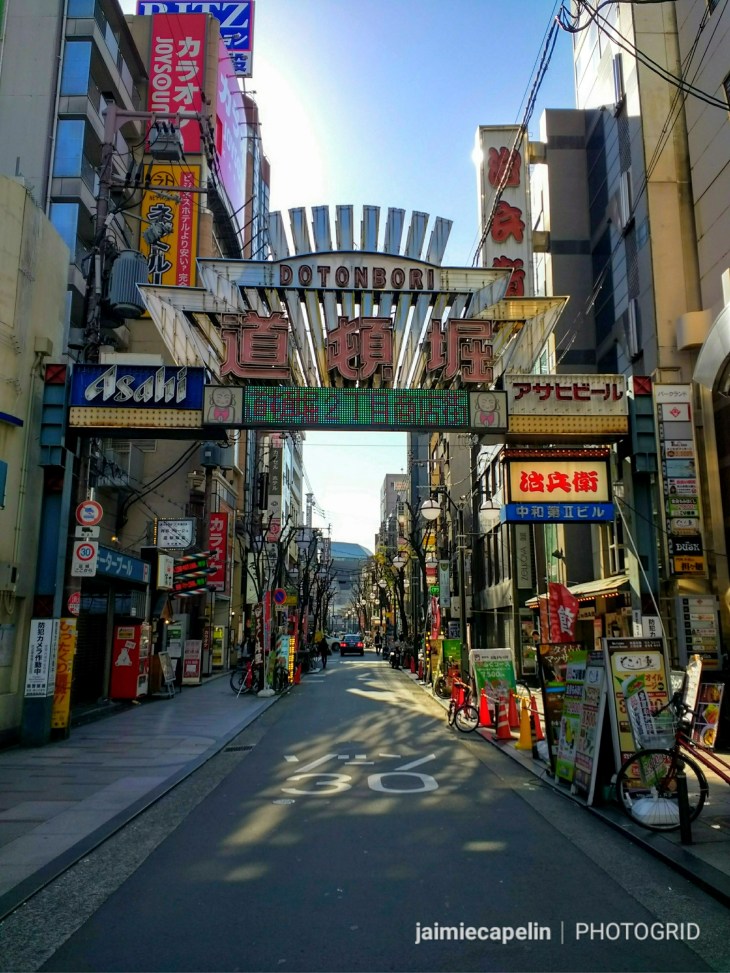
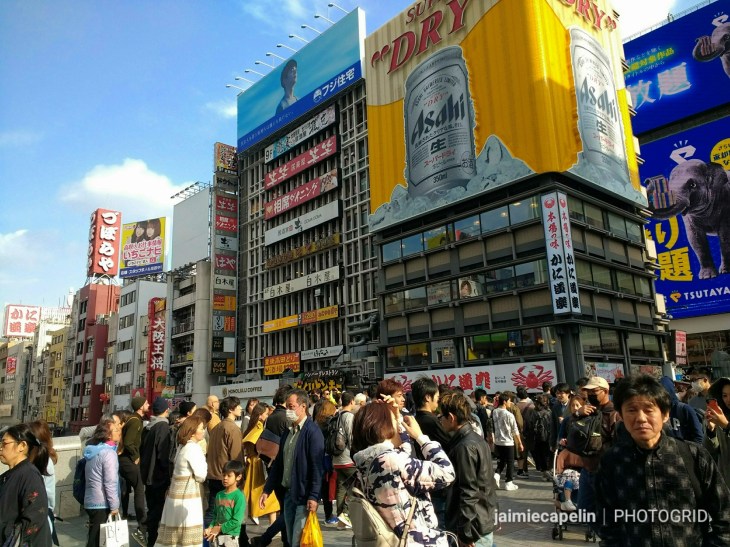
Osaka is known as Japan’s food capital, or the “nation’s kitchen”, and is famous for its street food and markets. It was the centre for rice trade during the Edo period, and remains Japan’s second largest city.

~ Osaka’s Best Ramen? ~

Let’s talk ramen. Originating in China, ramen is a warming Japanese classic, made with wheat noodles in a meat broth. Osaka introduced me to ‘Tonkotsu’, which means pork bone broth – a super creamy broth compared to the soy, miso and salt ones I’d had previously, and my new favourite!

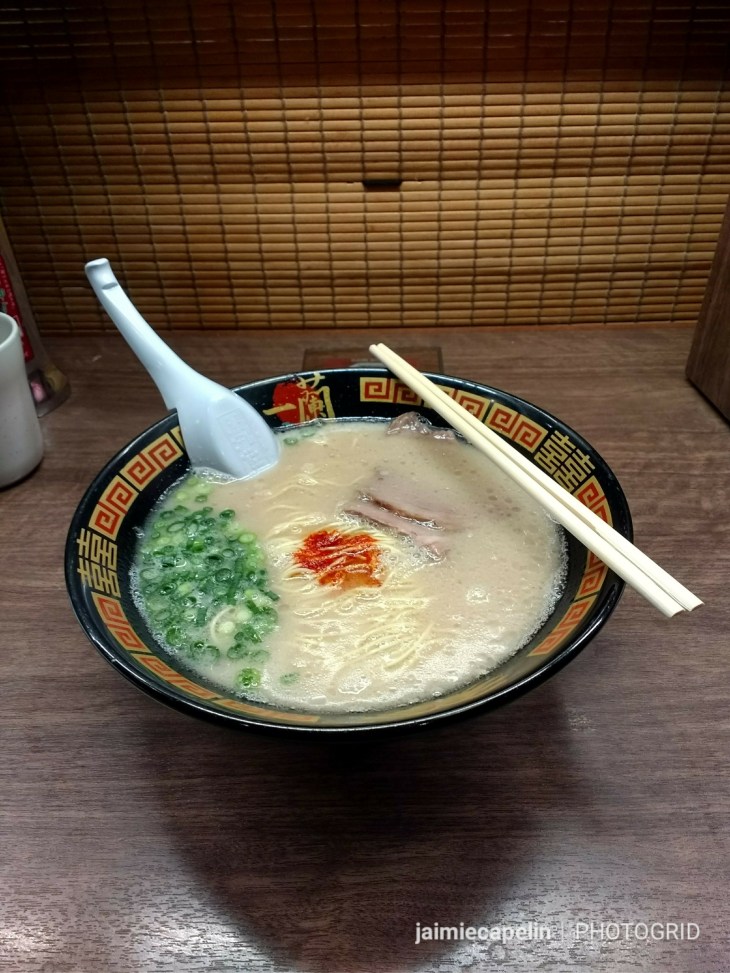
“Ichiran” is one of the most sought after ramen restaurants in Osaka. People will queue up for hours for a seat at the popular noodle bar. It was a good opportunity for a reunion with some old housemates from Hakuba, and the four of us were lucky enough to have a minimal wait time. We lined up along the river beneath the Don Quijote ferris wheel; the sun was warm and low, a canal of sunlight reflecting the length of the river as party boats floated by, through the forest of skyscrapers.

PhotoGrid_1531087872922.jpg

The doorman went along the line, handing out cards with a list of options on – level of richness, level of spice, texture of noodles, amount of garlic, and so on and so forth, on which we circled our preferences from 1 to 5. This is all written in English as well as Kanji, and ensures no time is wasted.

On entering “Ichiran” we made our meal selection on the vending machines, putting in our money in exchange for a ticket. We then joined another queue, waiting for seats to come free. A circuit board of flashing lights on the wall indicate to the doorperson which seats are available, occupied, and pending. We stared, slightly hypnotised by the hectic blinking lights, unable to make head nor tail of them! Eventually, 4 lights in a row went green, and we were quickly ushered into the noodle bar. We sat down in a line, facing a wall with a little bamboo blind in the centre, which suddenly opened. A pair of hands appeared through the hole, and took my ticket and preference card! For the British children of the 90s, it was remarkably like “The Handy Men” in ‘ZZZAP!’ The booths can be sectioned off on each side for an even more private experience, or opened up for groups. Shortly, a pair of hands appeared again, presenting a large bowl of aromatic ramen. Rich, creamy tonkotsu broth, filled with noodles and sliced pork, beautifully spiced.

PhotoGrid_1531087949418.jpg

With “Ichiran”, you get the modern, Japanese city experience – the vending machine culture that we hear about from Tokyo, with very little human contact – essentially, the fast food chain of ramen. It is the best ramen in Osaka, in many peoples’ opinions, but I found another…

It had been raining for two days, and I’d wasted a length of time laying on the heated rug of the Air bnb, occasionally popping out for coffee, so I was overdue a taste of local culture. Around the corner from Awaji Station, was a rated ramen restaurant with a Japanese name, written in Romanjis – “en no suke syou len.” There was a small queue outside, which is always a good sign of a locally rated restaurant, and we were greeted with pleasure and seated quickly. We didn’t understand anything on the menu, so it was a classic Gaijin case of point at the picture and smile, but the cooks took it upon themselves to explain the different dishes in English. I ordered the classic tonkotsu pork ramen, and it was the richest, thickest, most satisfying flavour. There was plenty of soy sauce, garlic, and hot spice available to add to taste, and beautifully tender slices of pork – just writing about it is making my mouth water! At the end of the meal, the cook followed us out, asking if everything was alright, and we sung praises as they deeply bowed us out the door.

While I enjoyed the experience of “Ichiran”, and the ramen lived up to its delicious expectation, (I actually finished the entire bowl, which is unusual for me!) I personally enjoy it when you can watch the chefs preparing the food, and communicate with them, so they get the credit they deserve and you get a more personalized experience.

***

PhotoGrid_1531087910027.jpg

~ Sushi Nigiri ~

Osaka is a cornucopia of tastes and textures to try, from ancient cultural dishes to modern fusions of flavour. One of the classics, loved all over the globe, is Sushi. But what I was about to experience wasn’t quite like your western supermarket sushi.

In the thriving backstreets of Nippombashi, full of locals who all seem to know each other, we discovered a tiny sushi bar, among many fish mongers with tanks full of live, or freshly caught fish. As we were seated, one of the other customers leaned over and said, “oishi-desu!” which means, “It’s delicious!” It’s always nice to feel welcome, and the locals know best!

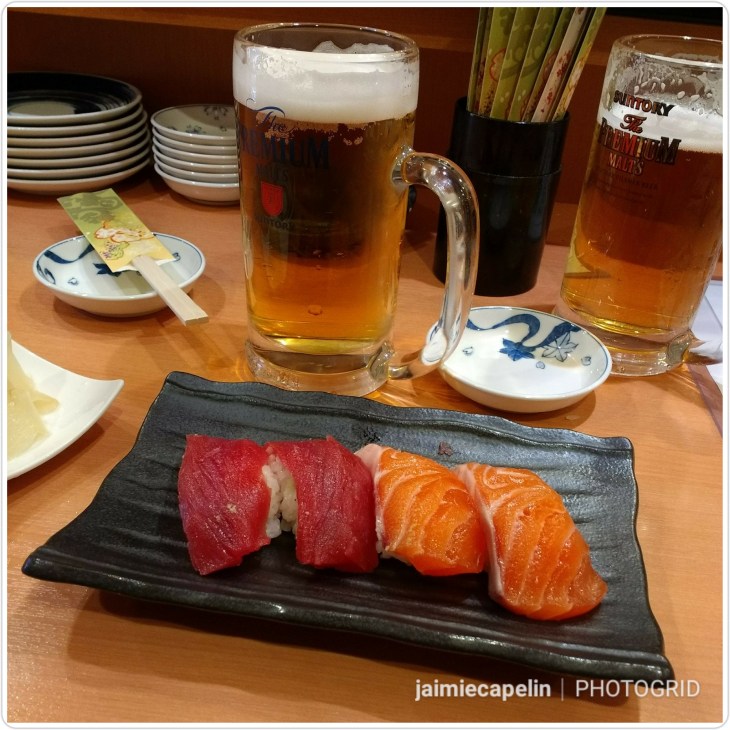
I was recommended the salmon sashimi, tuna nigiri, and egg sushi. Now, sashimi refers to slices of fresh, raw fish or meat, where as nigiri is specifically raw fish on a bed of sushi rice. The chef took the order, and dashed across the road to a fish monger, where he picked the freshest fish. He brought it back, and performed an impressive ritual with his Usuba knife, slicing very quickly and precisely. He served up the dishes, along with a welcome pint of Suntory Premium Malt beer, and the friendly locals seated beside us (who were very interested in our verdict on the sushi) chanted, “itadakimasu!”

PhotoGrid_1531087474639.jpg

I was advised to pick up the sushi sideways with my chopsticks, and dip it in the soy sauce fish side down – that way the rice doesn’t fall apart – and popped the bitesize piece in my mouth. It was rich and so fresh, I could taste the ocean on my lips. The flavours were less “fishy” than I’d anticipated, and the soy sauce really complimented it, with little slices of pickled ginger to refresh the pallet between mouthfuls. I couldn’t eat very much, as I found it quite stodgy, but with a swig or three of Japanese beer, it was the perfect, authentic experience.

If you’re a first timer, like I was, I’d recommend salmon nigiri, but there are plenty of options for those who want to be more adventurous.

***

~ Takoyaki ~

Take a stroll from any of the central metro stations in Osaka, and you will find hubs bustling with street food vendors. Takoyaki is a popular Japanese snack, commonly consumed at the end of a night out, much like the British kebab – except Takoyaki is much less ‘dirty!’

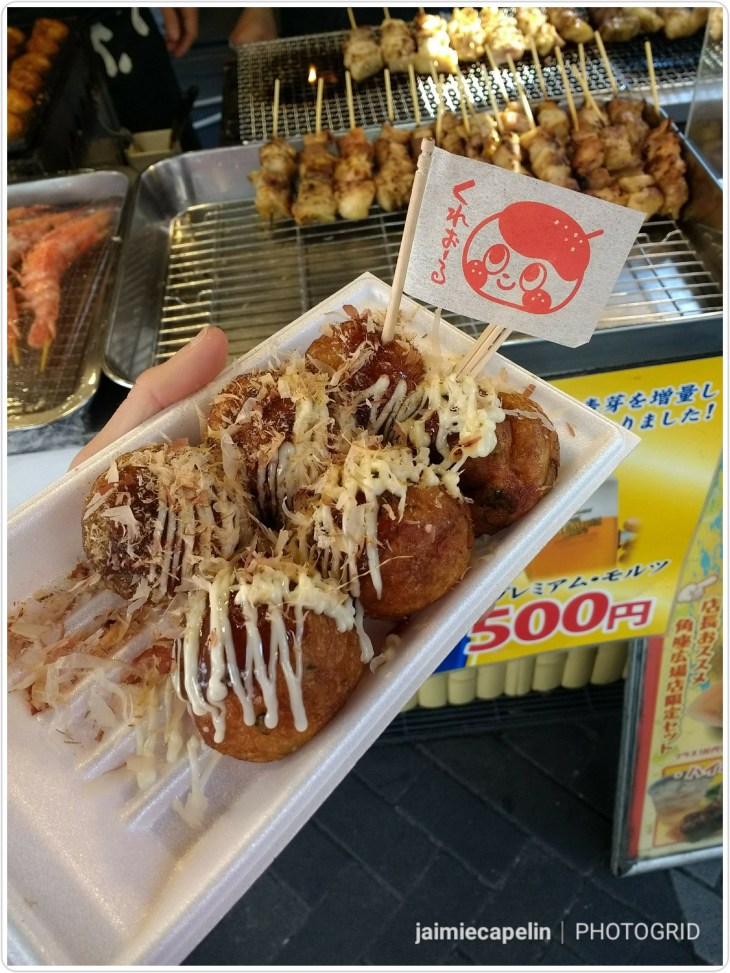
Tako means octopus, and Yaki means grilled, and apart from some wheat flour batter, tenkasu (which is leftover tempura), and a pinch of green onion and pickled ginger, there’s not much else to it!

PhotoGrid_1531087754048.jpg

The Takoyaki is served up fresh and hot, after the cook has impressively rolled the batter into perfect ball shapes, in the blink of an eye, using pointy sticks! They are usually brushed with a zingy brown sauce, similar to worcestershire sauce, drizzled with kewpie mayonnaise, and then sprinkled with shavings of dried fish. They’re usually served with cocktail sticks to eat them with.

It wasn’t quite what I expected – I think I was imagining something along the lines of breaded scampi, but this was something else… Put one in your mouth and it pops as you bite it, the middle oozes out, releasing hot, juicy flavour, heavy on the octopus, and with a little ‘bite’ in the texture. These were a hit with my seafood loving friends, with their crispy, grilled shells, filled with fishy richness, but if you’re trying for the first time, I wouldn’t recommend doing it with a hangover!

***

PhotoGrid_1531088092697.jpg

~ Kuromon Market ~

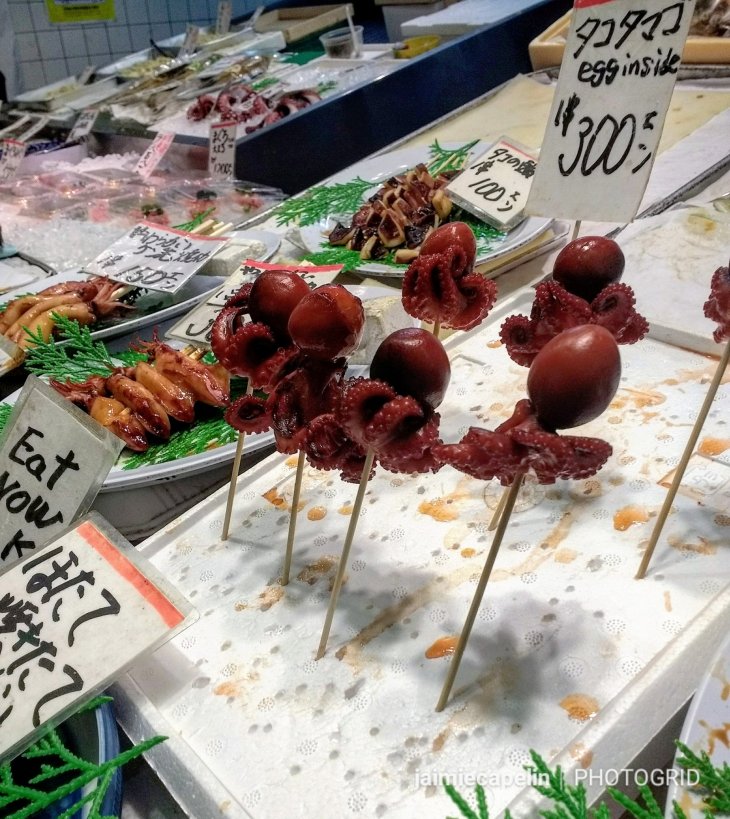
Kuromon Market is famous for its seafood. It is a huge, covered market place, with enormous faux sea creatures hanging from the tapered, glass ceiling, giving the illusion you are strolling along the seabed, with the creatures swimming above you. The market originates from the Edo Period (1600s to mid 1800s), and apart from the addition of modern refrigeration and food hygiene, the market’s operation is still very authentic, bringing with it a fantastic atmosphere for absorbing some culture.

You walk through the crowded market strip, people casually eating a baby octopus off a stick while browsing, or choosing a deep fried cuttlefish to snack on while they select what to take home with them. Vendors with their fresh catch of the day available for wholesale will also have their knife skills handy, to quickly slice up a raw fish of your choice and hand it over on a bed of sushi rice, ready to be popped directly in your mouth in exchange for a few yen. Kuromon has designed a flexible shopping experience, with the option of purchasing whole ingredients for home cooking later, and freshly served up snacks for immediate consumption. You’ll often find small areas where you can stand and eat, as you don’t want to get caught up blocking the tide of people.

IMG_20200507_162814_337

There are also fresh meat sections, sweet shops, and fruit & veg stands, serving up fresh smoothies and juices on demand. We found a little kiosk with a display of coffee beans from all over the world. They had a bean roaster going, which you could see inside of, and the aromas produced were enough to hypnotise your hands into your wallet, and so I finished my trip to Kuromon Market with hot, delicious coffee.

***
~Coffee~

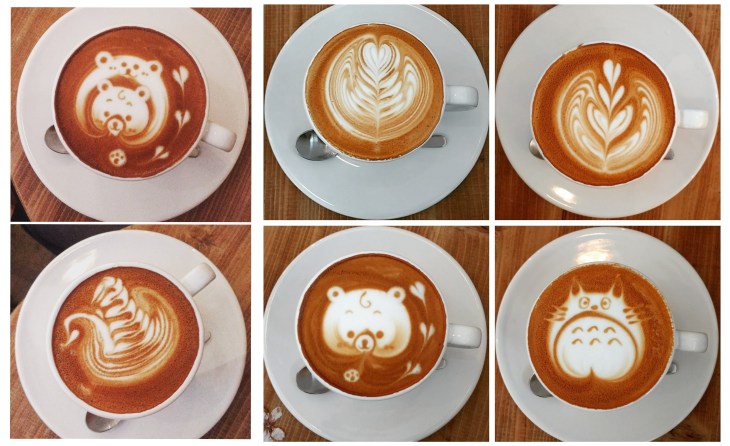
While we’re on the subject of coffee, let me end this piece by taking you back to the rainy rug-hugging days in the Air bnb. I’d been using the weather as an excuse to catch up on writing, and the local coffee shop was a wonderful place to break it up and help inspire me. It is called “Loca Coffee”, located in the East Awaji shopping district of Osaka, and the barista who served me every day was a young man, who could not only make a really flavoursome coffee, but had exceptional latte art skills. It’s not really surprising that Artisan coffee shops and latte art is kicking off in the cities of Japan, because it’s in their nature to make everything look “kawaii” (cute) and taste “sugoi” (awesome). Pair an aromatic coffee with Japanese sweets and desserts, and you’ve got a mouth watering combination, and that’s exactly what “Loca Coffee” does. I loved going back each day to see what pattern or character I’d get on top of my coffee!

JapanCoffee

Kyoto – Sakura Season Highlights

~ Kyoto – a little history ~

Kyoto was once the Imperial capital city of Japan, for a thousand years, until 1869 when the Imperial court was transferred to Tokyo. The city suffered extensively from the Onin war in the mid 1400s, and wasn’t restored fully until the 1700s – the Edo era – when it flourished as one of Japan’s 3 major cities, along with Edo (now known as Tokyo) and Osaka.

Nowadays, Kyoto is famous for its Buddhist temples, Imperial palaces, Shinto shrines, Geisha culture, and its beautiful sakura spots in spring.

My experience of Kyoto and the nearby prefectures was broken up into hectic pieces, linked together by the inexpensive train network of the Kansai region. Every day was an adventure of finding the next resting place for the night. It was a unique and spectacular way of seeing the region, if not utterly exhausting, but there was always an ideal little camping spot at the end of the road eventually, which made the hard work worthwhile, and meant I got to explore places I would never have seen otherwise!

On the nights I actually stayed in the city, I used Air BnB, which proved very useful and great value for money.

Kyoto put out all the stops while I was there, and I was incredibly lucky to catch the city in its prime, with fantastic weather, at the height of sakura season.

~ Sakura Festival ~

Sakura is the Japanese name for cherry blossom, and Japan is obsessed with it! To the extent of flavouring their chocolate and candy with it, decorating their beer cans with cherry blossom, and having an annual festival, nation wide, dedicated to the dainty blossom. From around March, the weather forecast will include a cherry blossom forecast, and people flock from all over the world just to see the trees in bloom. With this, accommodation becomes high in demand, prices go up, and the public transport becomes very busy, so be prepared and book early!

Why? – The cherry blossom season symbolises the Buddhist concept of mono no aware – ‘the pathos of all things’, and celebrates the constant changing of everything, appreciating its fleeting beauty. There is a humble sadness in this concept, as it is meant to remind us that all beautiful things are passing, much like life itself.

~ Cycling through Sakura ~

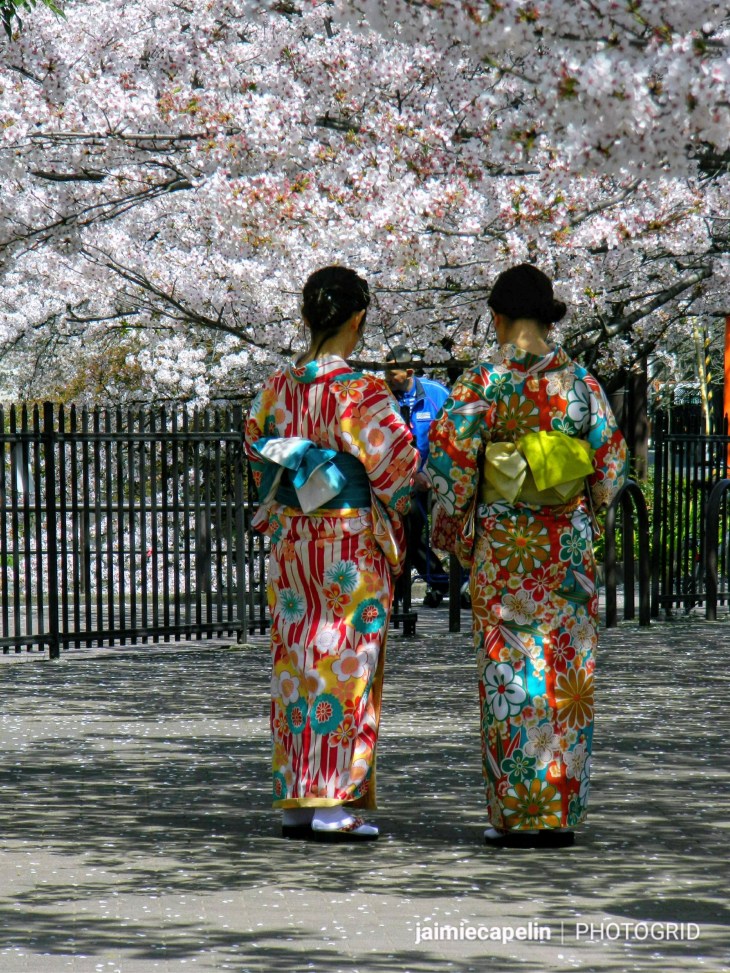
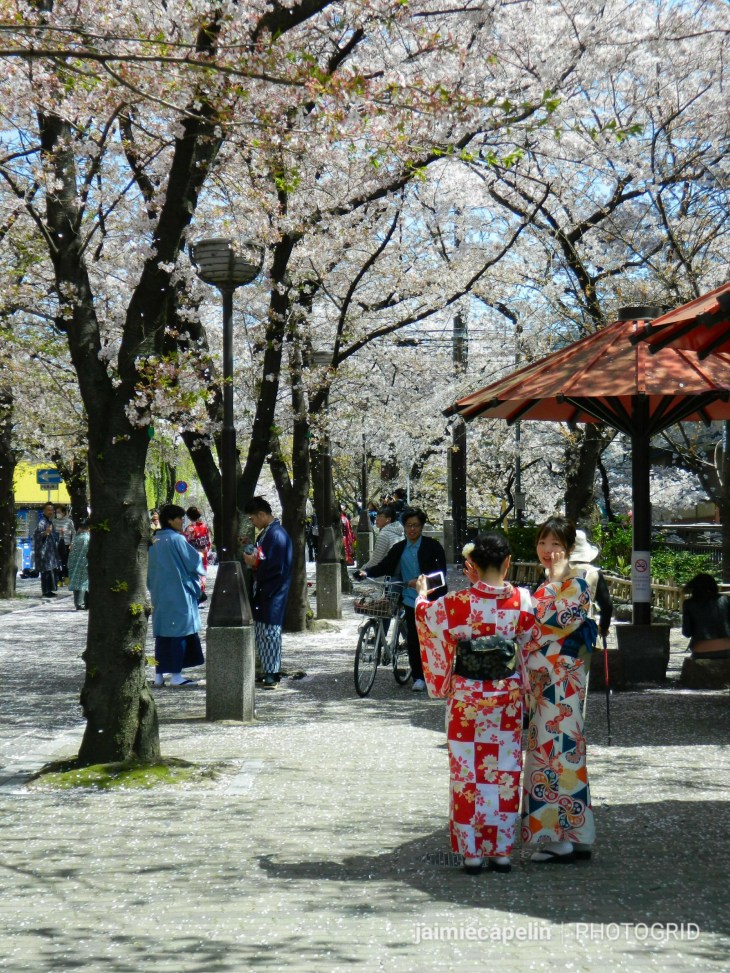
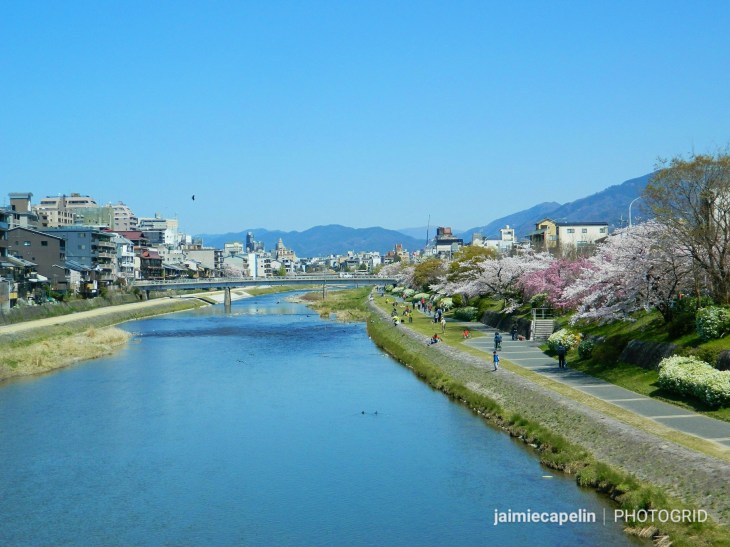
On the first full day in Kyoto, Mic and I hired bicycles. Cycling is a simple and popular way of getting around the city, and there are cycle hire shops dotted around everywhere. We cycled beneath warm blue skies, towards the Kamo River, which runs north to south through the centre of the city. Busy footpaths follow either side of the river, lined with cherry blossoms, where men and women posed for photographs beneath the trees in their unique kimonos.

PhotoGrid_1531171578959.jpg

Crossing the river along one of its many busy bridges, we found a popular ‘sakura spot’ – located on Google Maps – an area where the blossoms are at their peak. Every corner you turn, you come across another cluster of pink canopy, with soft flurries falling down like snowflakes, and girls in beautiful kimonos everywhere.

PhotoGrid_1531171647135.jpg

Hiring bikes is usually a really efficient way of getting around the city and seeing the sights, (and a great excuse to indulge in the street foods without feeling guilty!) However, the deeper we got into the city, the harder it was to manoeuvre. The streets were so busy, with cars and pedestrians fighting for space, that even pushing our bicycles was near enough impossible. We finally reasoned with locking our bikes up and going to find lunch on foot.

PhotoGrid_1531171995943.jpg

Kamo River

~ Tofu ~

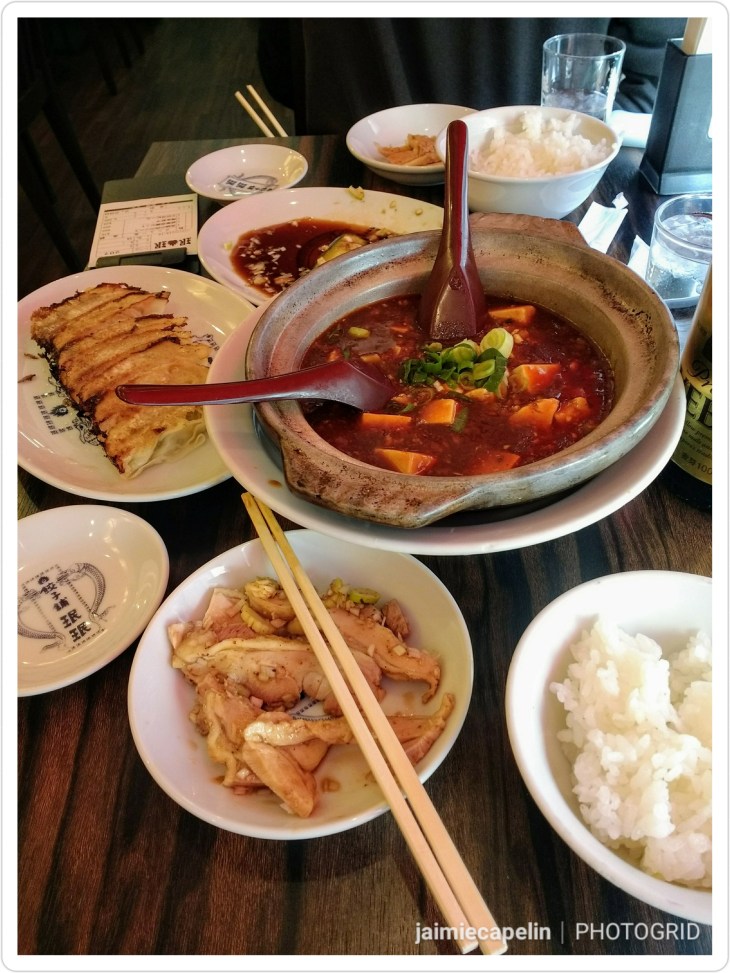
Yumi, a friend and colleague I met in Hakuba, is originally from Kyoto, and she advised that I must try a tofu dish while in Kyoto, as the city is locally known for its variety of tofu specialities. We found a tiny but busy restaurant just across from Gion Corner, and sure enough, it had a special tofu dish: ‘Mapo Tofu’ – a salty tofu soup, with chicken and gyoza on the side.

PhotoGrid_1531171078254.jpg

Mapo Tofu

~ Hanami in Mariyama Park ~

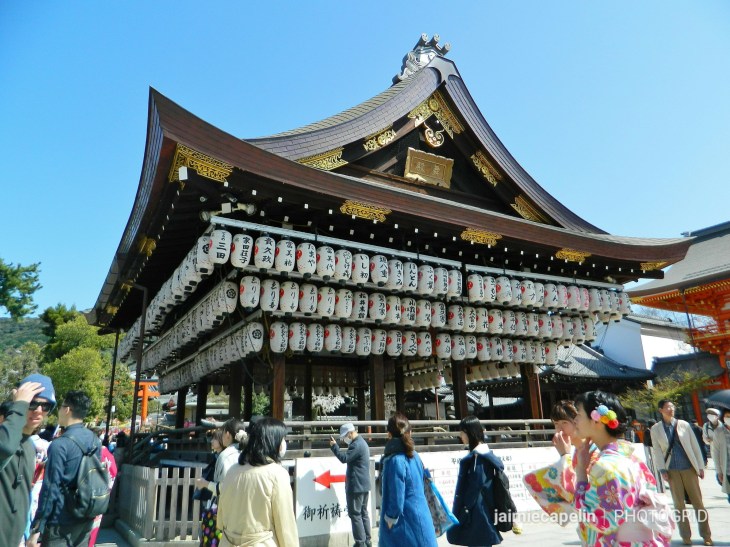
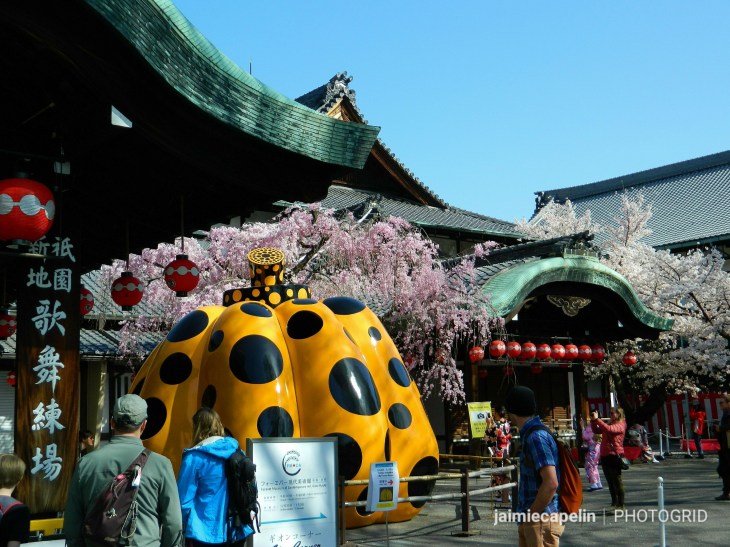
Following a dense crowd up the stone steps of the impressive entrance gate to Yasaka Shrine, we went into the gardens of Mariyama Park. Yasaka Shrine stands bold in the main courtyard, hordes of people gather around to ring the giant bell and pray, while the stage covered with hundreds of lanterns makes a wonderful photo opportunity.

PhotoGrid_1531172037149.jpg

Yasaka Shrine stage

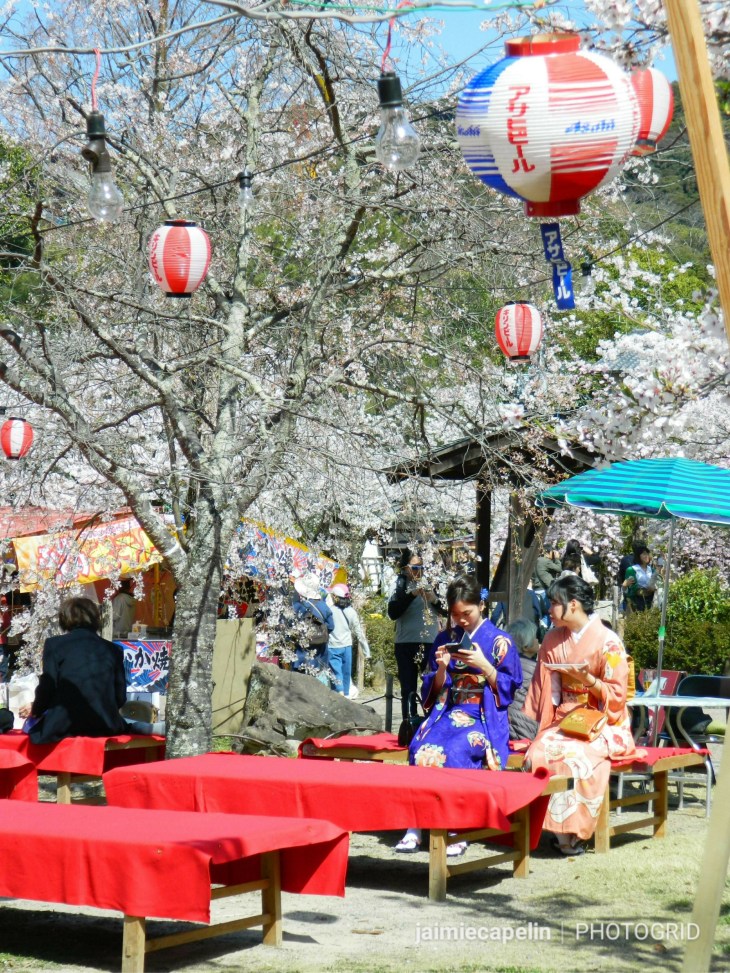
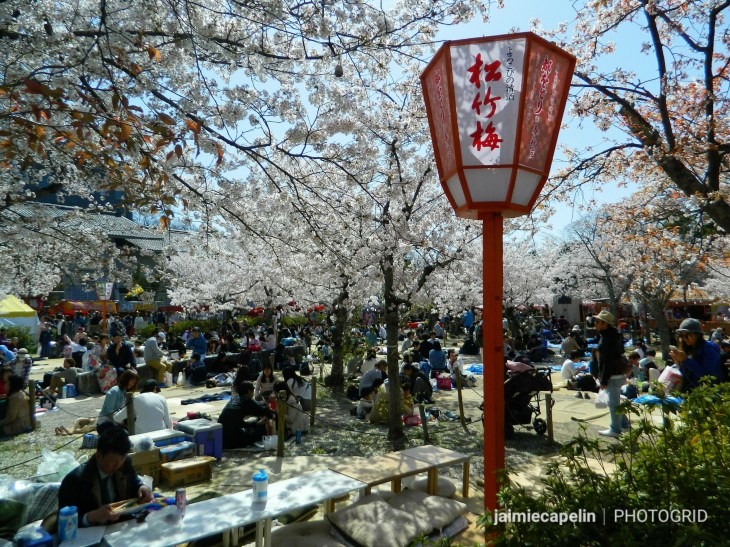
A network of walkways lead through all manner of plant life, but most importantly, cherry blossom. Mariyama Park is a popular Hanami spot at this time of year, and the whole park was decorated with lanterns and picnic areas. Hanami means flower viewing, and this is associated with spending hours beneath the cherry blossom, feasting and drinking sake.

PhotoGrid_1531171728000.jpg

Lunch beneath the Sakura

Throughout the park, food stalls thrived in the sunshine, serving up traditional Japanese street food, from takoyaki, to crab sticks; okonomiyaki to mochi; and many sweet treats like fruit dipped in chocolate and sprinkles.

PhotoGrid_1531172085988.jpg

Hanami in Mariyama Park

~ Gion Corner ~

Retrieving our bikes, we cycled up to nearby Gion Corner, also known as Geisha Corner. This is a unique theatre, in which you can see seven traditional arts of the Geisha, including dance, comedy and music. You can also experience a genuine tea ceremony, and learn about the etiquette. The Yasaka Hall and surrounding buildings, is where the Maiko (Geisha in training) stay and learn to become a Geiko (Full Geisha), and the area surrounding the Yasaka Hall is quite closed off to the public for their safety and privacy.

PhotoGrid_1531172126811.jpg

Gion Corner

~ Imperial Gardens ~

The sky was pumping out sunshine, and we spent the afternoon cycling along the river, appreciating the colour and the cherry blossoms, coming to rest on its grassy banks to soak up the sun and watch the birds of prey swoop and dive over the water. On the way back through the city, we passed the Imperial Palace and its famous gardens. The palace was home to the Emperor and his family, until 1868 when he moved to Tokyo Imperial Palace.

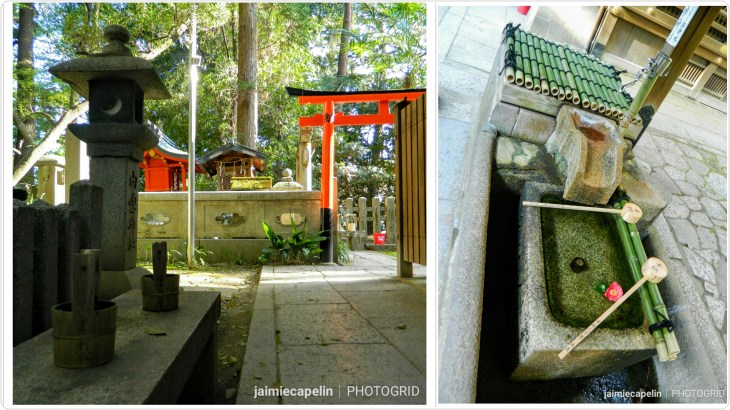
The Imperial gardens are open to the public throughout the day, and the broad gravel paths stretch through vast lawns and tree groves. Most locals use the gardens as a serene shortcut through the city, and though at first it does appear to be nothing but a gravel path through a fairly plain park, don’t knock it too quickly! As we cycled around, wheels spinning out in the thick gravel, we began to notice hidden gems in the trees: little footpaths sneaking off between the bushes. Tiny water gardens with birds and ducks frollicking, and pretty little shrines in the woodland, so well hidden you would never guess they were there.

PhotoGrid_1531516161482.jpg

Shrine to Shinto God of Music, Imperial Gardens, Kyoto

~ Coffee & Curry ~

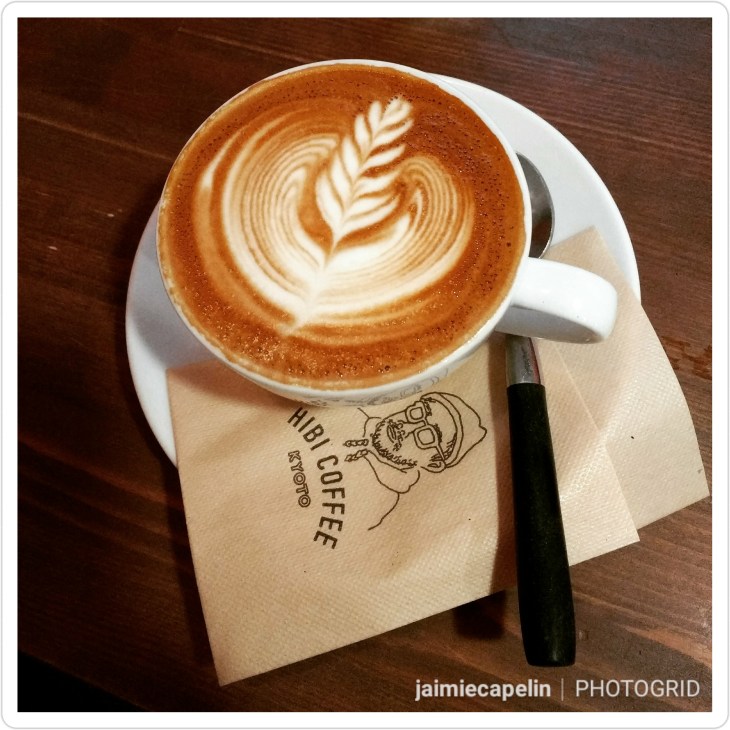
After a long and exhausting bike ride along the busy city streets, we deposited our bikes back at the hire shop, and followed a blackboard sign for coffee and curry into an alley way, lined with beautiful plants. The tiny homemade curry restaurant at the end of the alley was called Asipai, and was teamed up with Hibi Coffee, and together they made a truly unique and delicious dining experience to end our first busy day in Kyoto.

PhotoGrid_1531514832833.jpg

Hibi Flat White

~ Nijo Castle ~

By sheer coincidence, a very good friend from home happened to be visiting Kyoto with her parents at the time I was there, and so with both of us cramming a lot of touristing in to a short amount of time, I suggested we meet at Nijo Castle in the morning. This was on recommendation from ANOTHER friend from home, who’d been to the castle a few weeks before and said it was his favourite sight in the city. (Thank you, Simon, it was a great suggestion!)

There was quite a queue for the ticket booth on the street outside the castle entrance, but in true, organised Japanese fashion, the queue moved very quickly. Tickets were 600yen – £4 / $5US – which is ridiculously good value, when you consider you’d have to pay between £10 and £20 to visit any English Heritage castle! AND you get a nice little paper ticket to keep, with a picture of the castle on it, perfect for sticking in your travel journal! The simple things.

My friend, Abi, met us at the gates, and after doing all the hugging, jumping, giggling things girls do when they meet after a long period of time, we crossed the draw bridge into the castle grounds, pulling faces at the hordes of Koi in the moat below as we went.

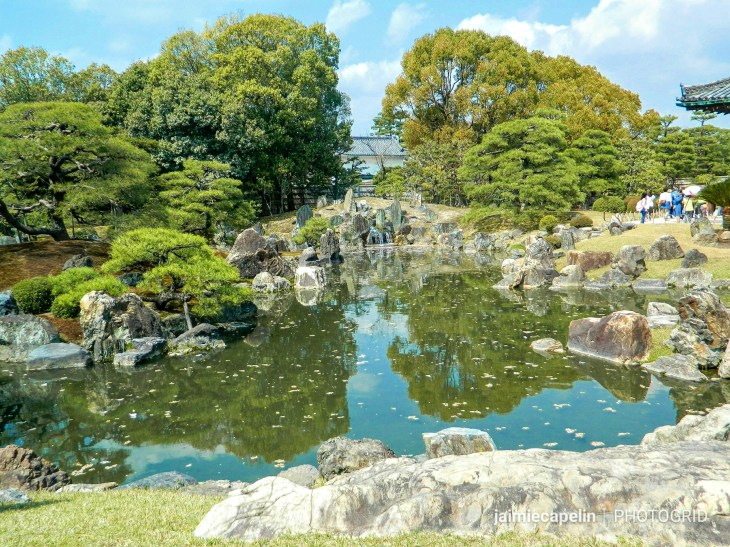
The vast gardens are spread with ponds and trickling waterfalls, beautiful plants, and of course, thriving sakura. We breathed in the spring sunshine, catching up on lost time, and having a few ‘extended family’ photos beneath the cherry blossom.

PhotoGrid_1531172179618.jpg

Nijo Castle Gardens

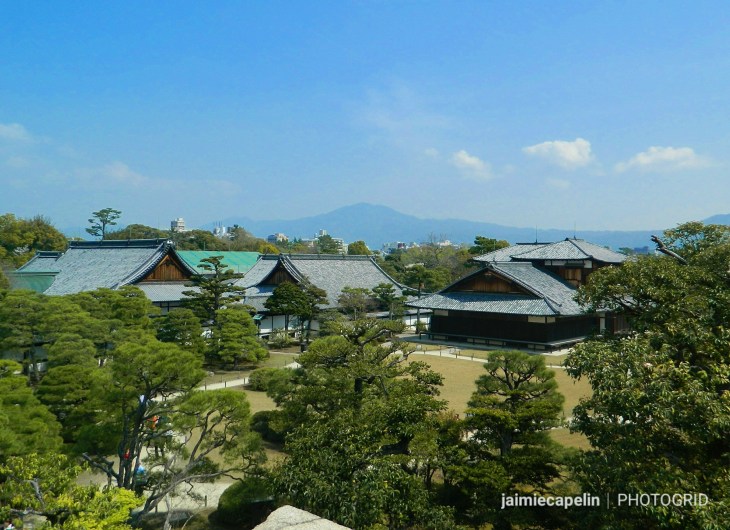
The castle was built in 1679, and its large, wooden Keep was struck by lightning and burned down in 1750. A viewing platform stands in its place, overlooking the palace, and the surrounding gardens and moat.

PhotoGrid_1531172213904.jpg

View of Ninomaru Palace from the Keep, Nijo Castle

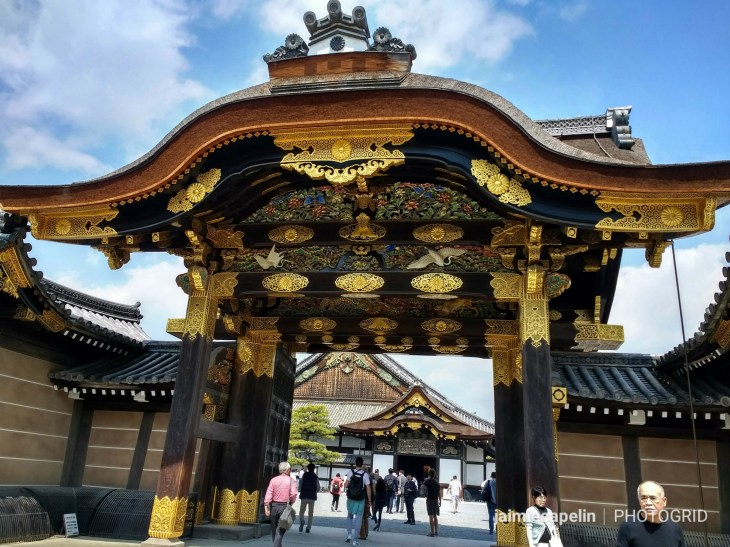
Ninomaru Palace stands in the centre of the castle grounds, beyond the spectacular Karamon Gate. The gate is smothered with intricate animal figures, and flowers in rich colours and gold leaf.

PhotoGrid_1531171459654.jpg

Karamon Gate

Inside the palace, you must remove your shoes and shuffle along the smoothed-through-time floorboards, which squeak and whistle with each step, giving them the name: “The Nightingale Corridors.” The palace rooms are vast tatami rooms, with authentic floors woven from rice straw. Murals cover the walls depicting tigers, leopards and cranes. No one in Japan had seen a tiger in that period, so the paintings are impressions inspired by sketches and hides imported from China. Thus, the tiger paintings have a certain mythical, Eastern-dragon look about their faces. Be sure to look up as you walk the labyrinth of corridors, as even the ceilings are decorated with individually painted flowers and delicate metal fixtures.

No direct light is allowed in the palace, therefore all the blinds are drawn, and photography is banned, to help preserve the colours and richness of the ancient rooms.

Walking around the beautiful grounds some more, enjoying the warm sunshine and the array of flora, we came across a courtyard market; gazebos and stalls selling all kinds of gifts and souvenirs. A man waved us over, offering a taste of lemon sake, which tasted nicer than any sake I’d tried before, so we went away with a bottle to share later!

~ Nishiki Market ~

Bidding farewell to Abi and her family, as they had a tour booked, Mic and I headed south from the castle to find the place famous for street food – Nishiki Market. On the way, we passed some street entertainment drawing a small crowd on a sunny street corner. Everyone was dancing, while a three-piece jazz band played, led by a clarinetist, backed by a jazz guitar and a double bass.

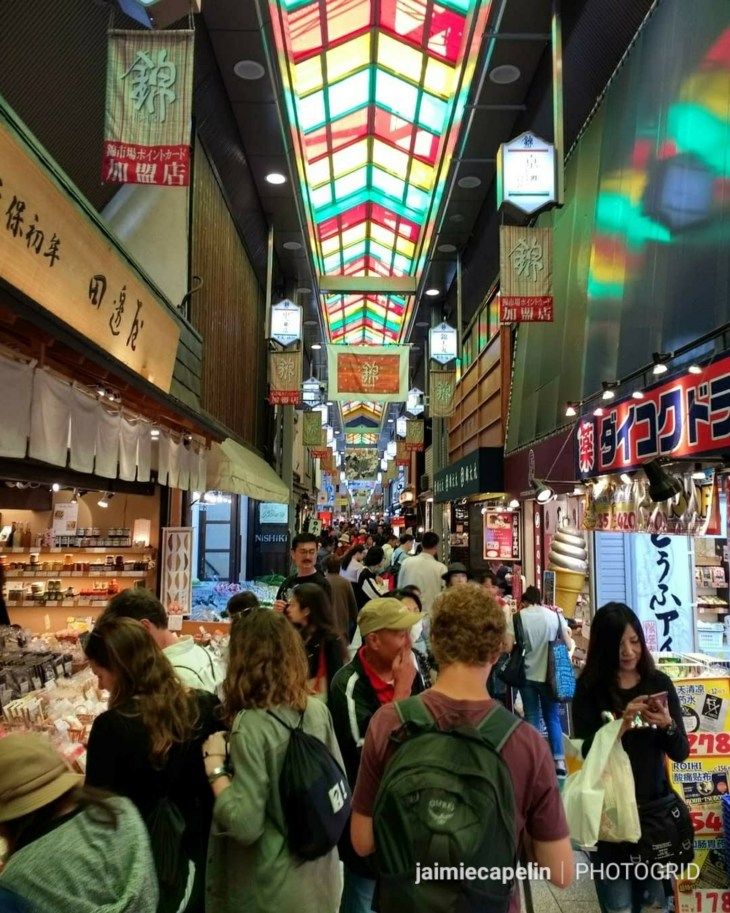
Walking through the busy shopping streets of downtown Kyoto, we followed Google maps to Nishiki Market, joining the hustle and bustle beneath the long strip of stained glass canopy, purchasing and nibbling as we shuffled along in the dense crowd.

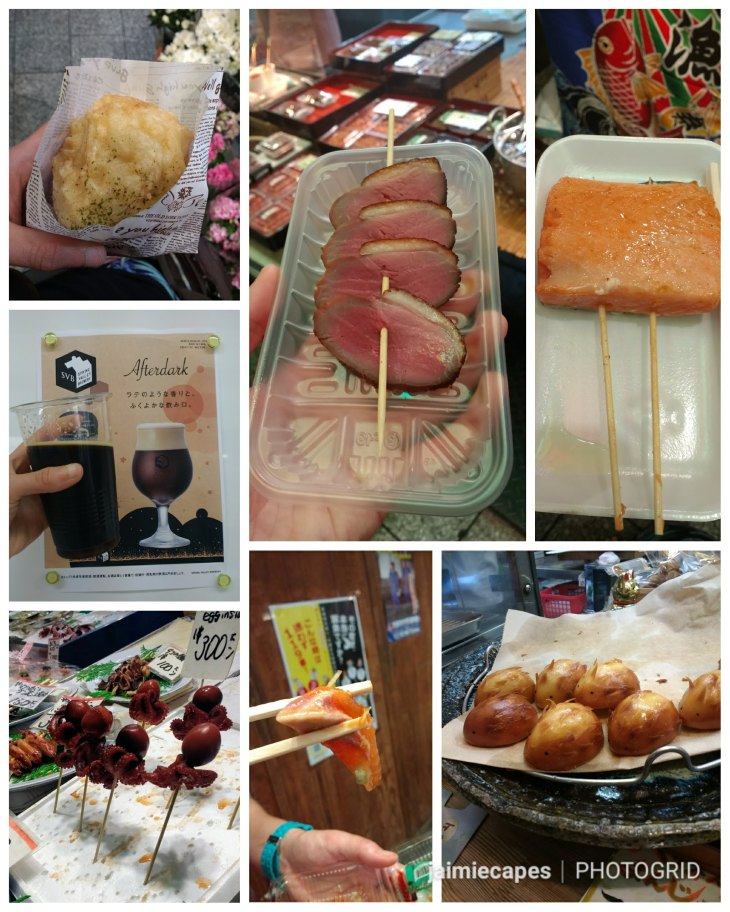
We tried salmon sashimi, smoked duck, grilled lemon salmon, sushi, and some peculiar potato balls that had a particularly bouncy texture! Finishing with a refreshing craft beer, we browsed the array of questionable foods, among baby octopus on sticks, loose tentacles, cuttle fish, and some funky looking vegetables – snozzcumber comes to mind – I later learned these were called Bitter Melon.

PhotoGrid_1522799996170-1.jpg

Treats from Nishiki Market

Nishiki Market can get horribly busy, with crowds packing into the narrow space for their fix of delicacies, so be prepared to get hot and sticky! The Japanese are generally a polite and reserved culture, but they are also used to the busy, overpopulated cities, and will happily glide through the crowds. The tourists, however, are likely to get pushy.

PhotoGrid_1531171277622.jpg

Nishiki Market

~ Fushimi-Inari Shrine – The Walk of a Thousand Gates ~

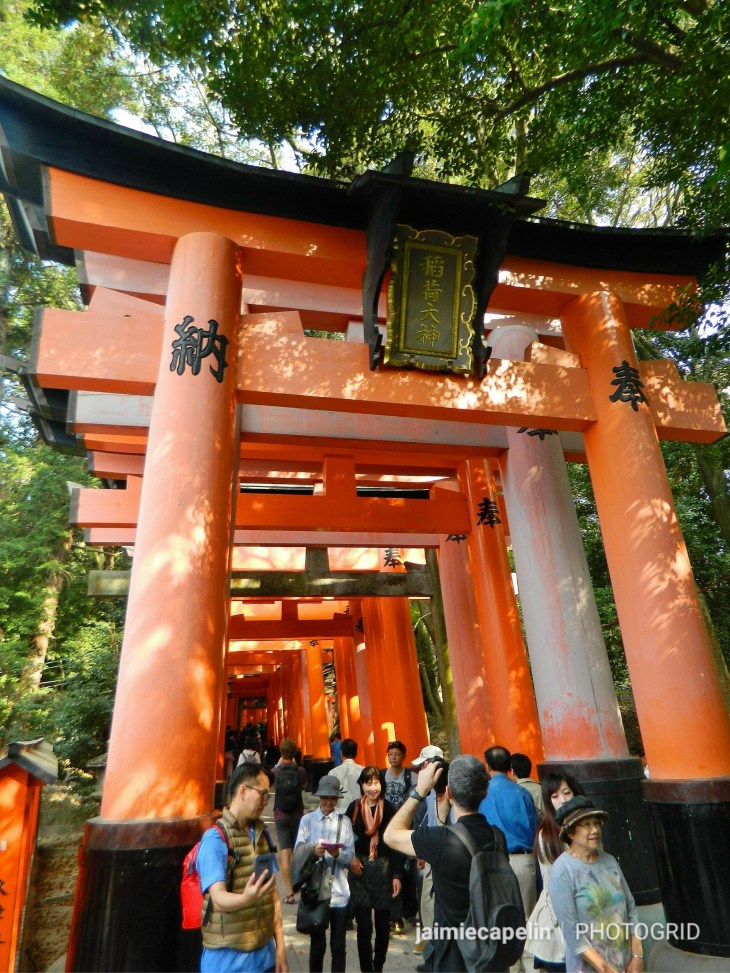
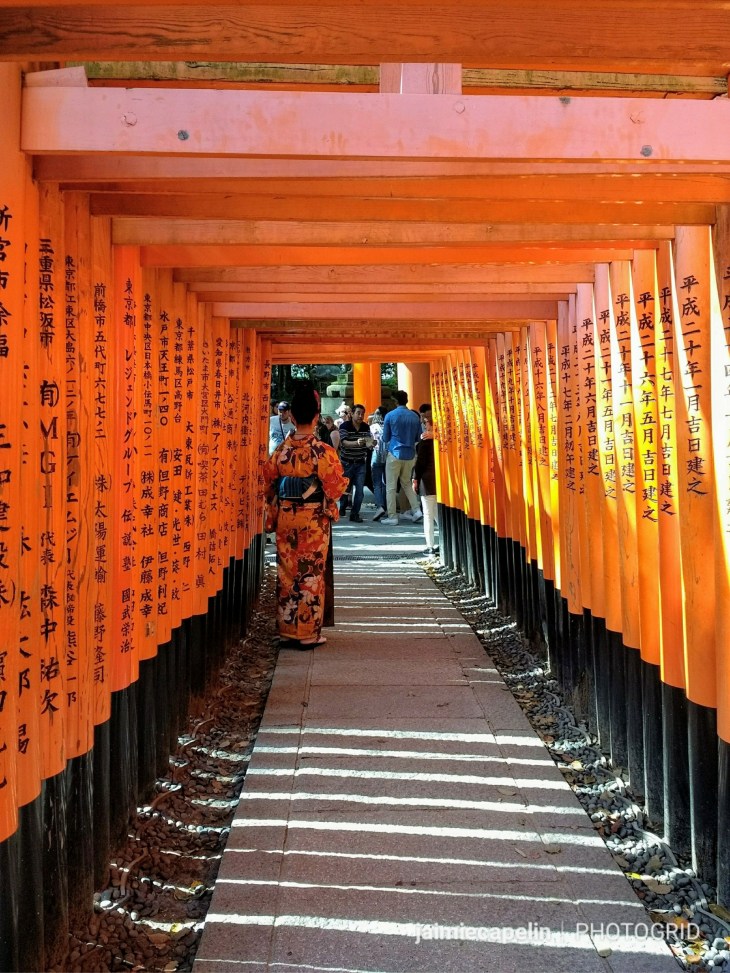
Fushimi-Inari, or ‘The Walk of a Thousand Gates’ actually has around 10,000 gates! The total hike can take 2-3 hours, climbing through a tunnel of torii gates to the summit of Mt. Inari-san, at 233m high.

Catching the train to Fushimi station in the South East quarter of main Kyoto, there was no need to find directions, as we just joined the crowd of people moving up the hill.

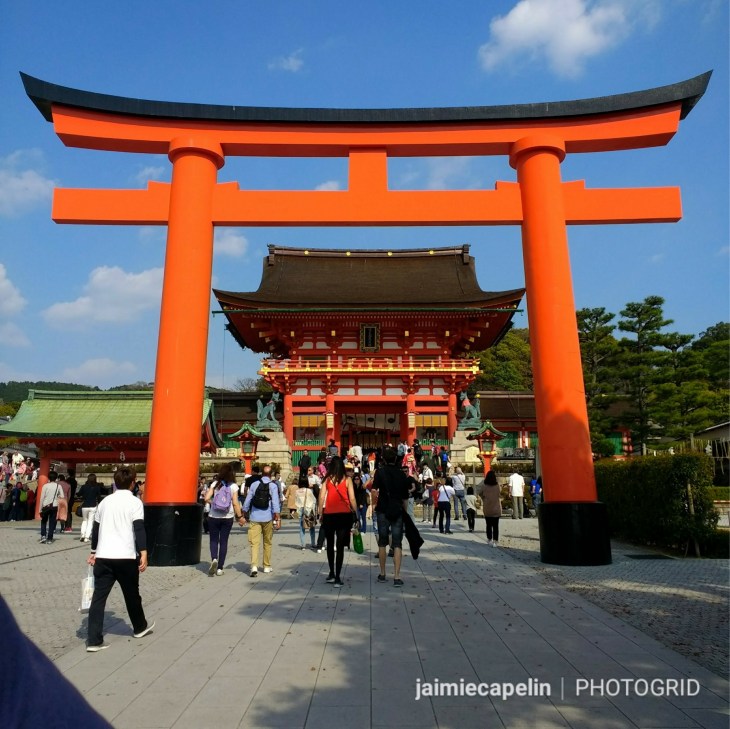
PhotoGrid_1531171410957.jpg

Entrance to the Main Precinct

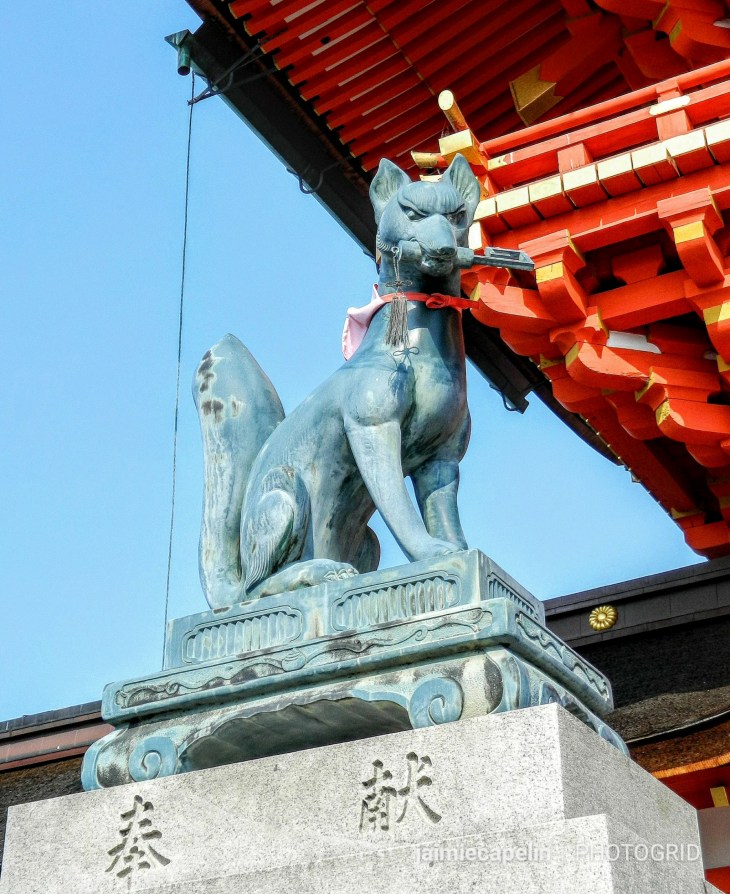
Beneath one of the impressive entrance torii gates, you will notice that this shrine is guarded not by dragon-dogs, but by foxes. The fox is the messenger of the God Inari, for whom this shrine exists, and Inari is the God of rice harvest and commerce. The fox often holds a key between its teeth, representing its guarding of the rice store.

PhotoGrid_1531685439659.jpg

Inari’s Messenger – the Fox

Through the main precinct and around the subshrines and gardens, we noticed the crowd thickening as we climbed the stone steps into the trees, and found the entrance to the inner shrine. The first enormous torii gate is breath taking, framed by trees, and backed by another torii, and another, and on and on as far as you can see.

PhotoGrid_1531172348235.jpg

This part of the shrine gets particularly busy, with crowds fighting for that perfect selfie. But get used to it; this is the theme for the next hour or so, as the torii gates transform in shape and size as you climb further up the mount. In fact, we noticed that the further you climb, the less people there are, so save your perfect selfie for somewhere near the top!

The walkway climbs through beautiful Japanese woodland, with birds fluttering and tweeting above, where sunlight streams through bamboo and sakura, spring flowers bloom, and the red gates cast lines of orange along the ground. There are ponds and streams, and shrines upon shrines in the network of torii gates, which shrink and change, keeping the hike fresh on the eyes. Japanese girls celebrating the Sakura Festival in their best kimonos, were climbing the never ending stone stairs in wooden flip-flops, creating an ambient ‘clopping’ sound.

PhotoGrid_1531172451461.jpg

A girl in a kimono looks on quietly at the rush of tourists

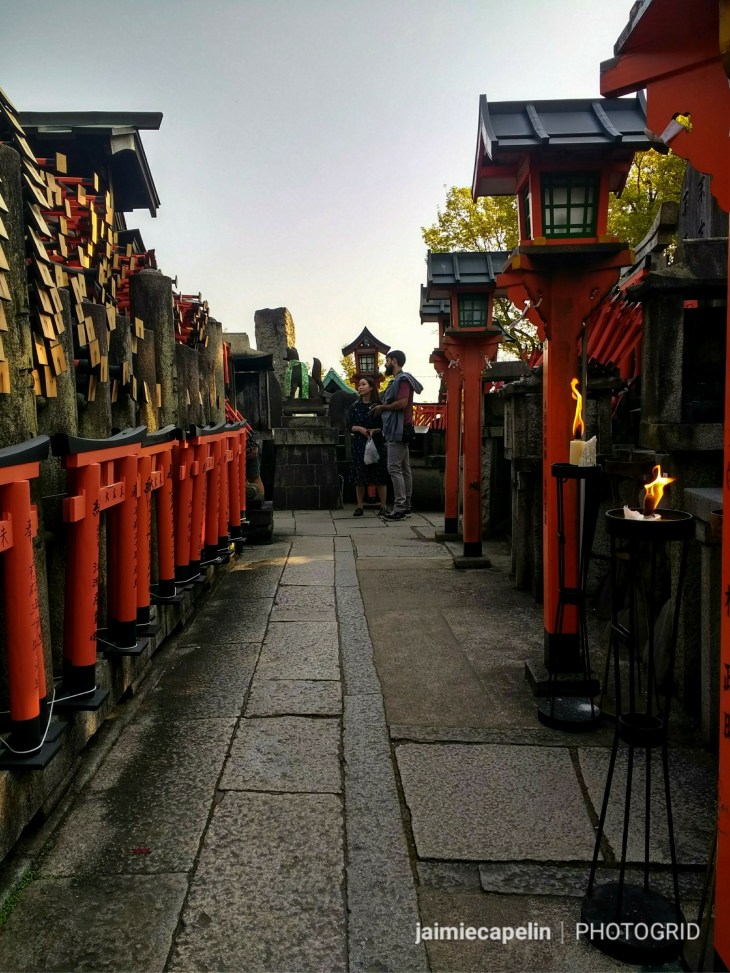
Towards the top, you are treated to a grand view of Kyoto, stretching beyond towards Osaka, and then you are just a few more steps away from the main shrine at the top. Signs forbid photography on the stone steps entering the Kami-no-Yashiro shrine, which stands atop the 233m summit of Mt. Inari-san. Miniature replicas of the red torii gates are stacked all around the shrine, filling all available space, and candles dance in the breeze. There is a quiet stillness here, high above the city, surrounded by nature, a perfect opportunity for a moment of zen!

PhotoGrid_1531688900033.jpg

Kami-no-Yashiro Shrine

Continuing in the direction we were travelling, we began the long descent down the other side of the mount. I can’t glaze over the fact it was rather strenuous on the knees, but the magical scenery was enough of a distraction. Woodland grottos filled with shrines, and waterfalls for Shinto worshippers to bathe and pray in, while the paths of torii gates forked in multiple directions through the trees. There are maps at the road-forks if you should need them, but generally you can just follow the crowd all the way down to the exit.

~ Kiyomizudera Temple ~

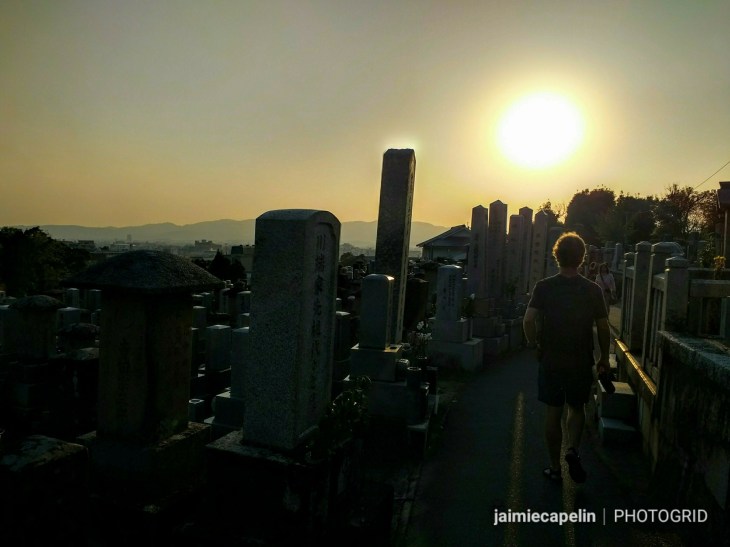
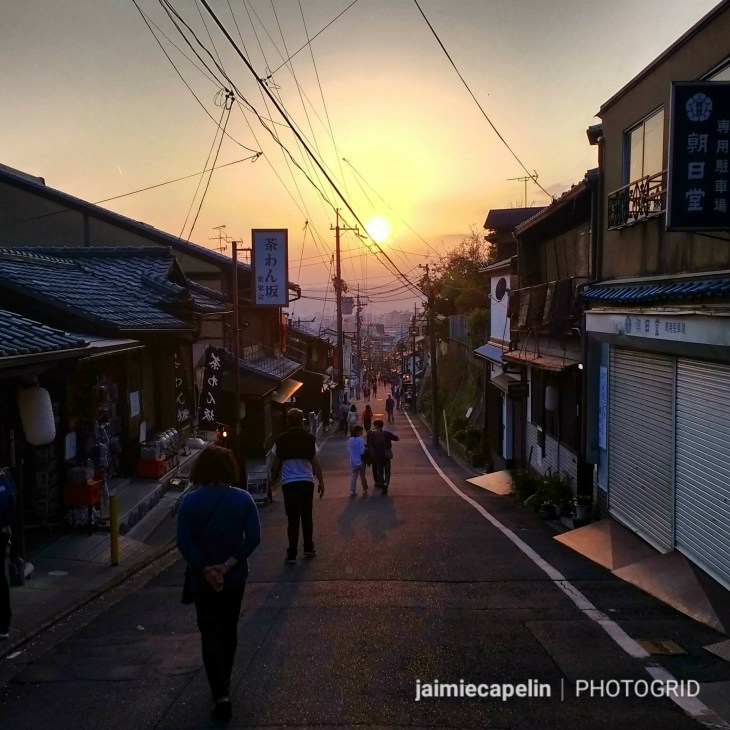
The final thing on my bucket list for the day, was another recommendation from my Japanese friend, Yumi. This is her favourite temple in Kyoto, and I was keen to see what the fuss was about. With just over an hour before sunset, we hopped on the train, for about 10 minutes northbound from Fushimi station. It was quite a long walk from the train station to the back entrance of Kiyomizudera Temple, (as we wanted to avoid catching a bus in the intense city traffic), and we found ourselves walking through an endless hilltop cemetery, with shrines and temples dotted on either side. Unfortunately, a bypasser kindly warned us that the back entrance to the temple was now closed, and we’d have to walk around to the front, and we passed on the message to others walking in hope of getting to the temple.

PhotoGrid_1531691648299.jpg

Kyoto Cemetery

Once we finally reached Kiyomizudera Temple, the sun was beginning to set, and they’d begun the ‘night time viewing’, for which you have to pay an entry fee. It was at this point we realised we’d crammed far too much into one day, and with throbbing feet and tired eyes, we decided we didn’t have the energy to get our money’s worth!

PhotoGrid_1531171334281.jpg

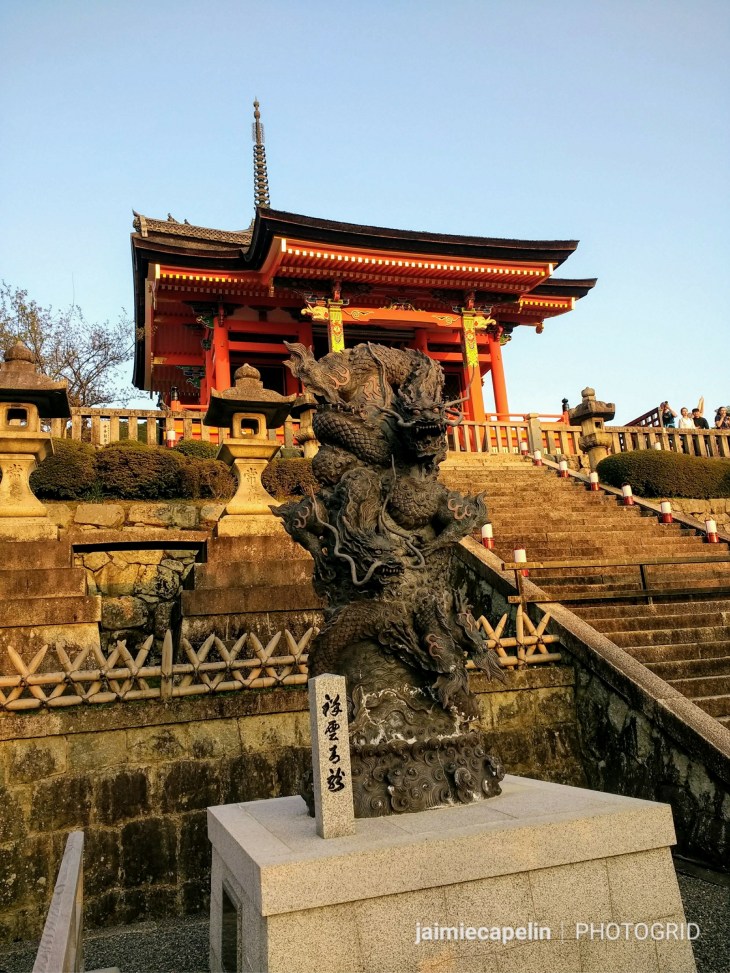
Dragons guard the entrance to Kiyomizudera Temple

So, with the setting sun twinkling through the sakura, and illuminating the temple’s red and gold exterior, we took a moment to appreciate the view, (after all it was stunning) and made our way back down the hill, across the city to our accommodation, to drink our well earned lemon sake we’d almost forgotten about!

PhotoGrid_1531691869338.jpg

Homeward Bound after Walking 30km around Kyoto

~ Arashiyama and the Bamboo Forest ~

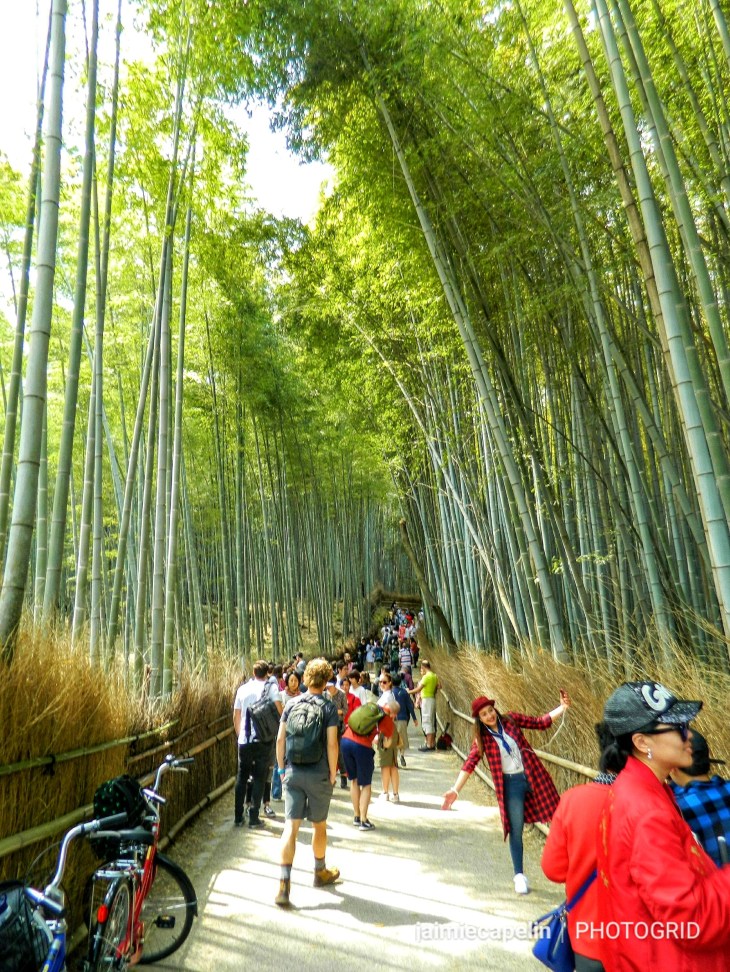
About a 30 minute train ride out of Kyoto is Arashiyama, where you can see snow monkeys, go hiking in the mountains, boating on the river, and walk through the famous bamboo forest. In hindsight, I would have liked to have spent a lot more time in Arashiyama, as every corner we turned there was another wonder to explore. As is the theme with this trip, there were hordes of people in Arashiyama, mostly heading for the bamboo grove, but if you switch off from the tourists and their selfie sticks, and just look up and around you, it is possible to fully appreciate the vast nature and serenity of the bamboo forest. Listen carefully to the gentle knocking and creaking of the wood, as it sways and rustles in the breeze, catching the sunlight through its sprouting canopy.

PhotoGrid_1531171884327.jpg

Sagano Bamboo Grove, Arashiyama

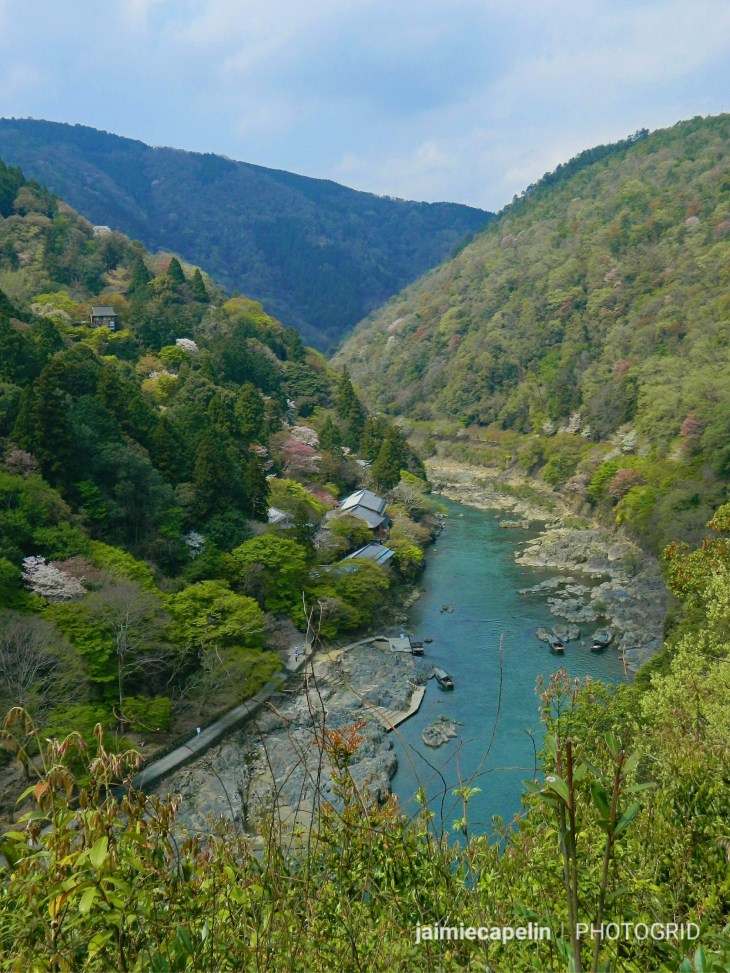
The forest leads into a huge park, where you might encounter a snow monkey or two if you’re lucky. The park climbs into the hillside, giving a spectacular view down into the gorge and the mountains beyond.

PhotoGrid_1531171927552.jpg

Õi River, Arashiyama

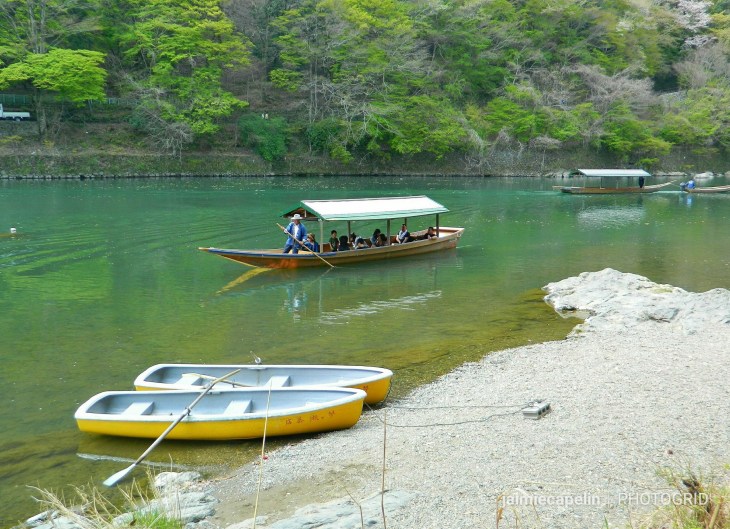
Following the steps down through the gardens, we came out on the river bank, which was dotted with fancy cafes and restaurants, while punting tour boats floated along the turquoise water.

PhotoGrid_1531172275957.jpg

Punting on the River, Arashiyama

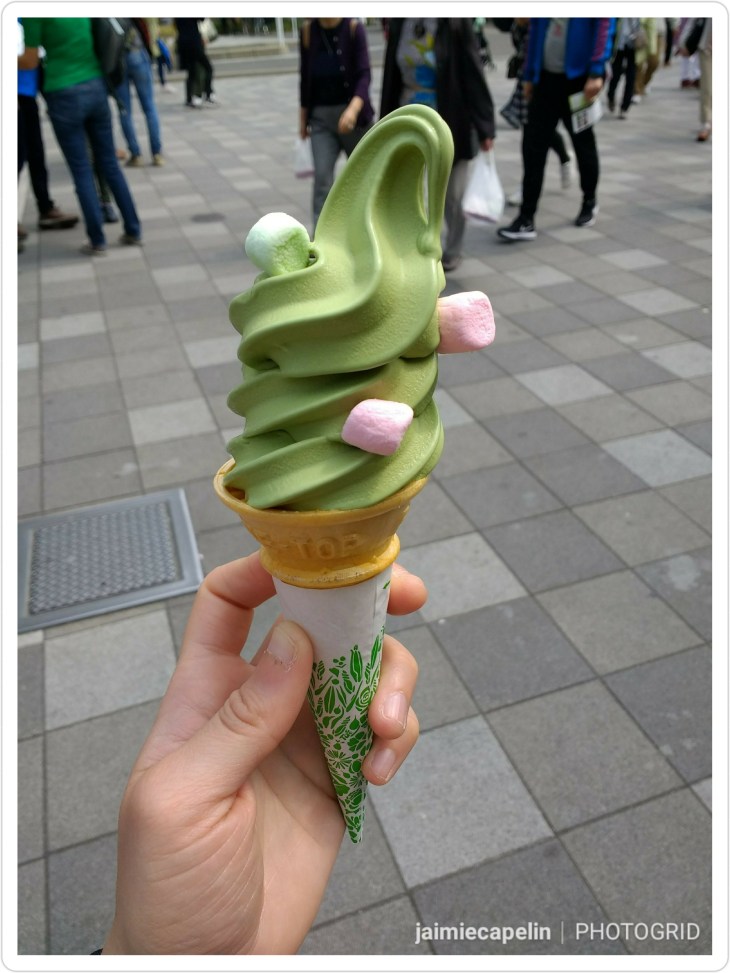
Strolling back through the town, I browsed the traditional kimono style clothes shops, marvelling at the array of rich and unique fabrics. Before getting back to the station, we went to a street vendor and tried some matcha ice cream – a Japanese favourite – bitter sweet green tea flavoured.

PhotoGrid_1531688748236.jpg

Matcha Ice Cream

Our time in Kyoto was up, and it was time to join our friends in Osaka. It was exhausting, but Kyoto was easily my favourite city. Maybe it was the Sakura festival, the glorious weather, and the fact everything was buzzing, but if you can get past the crowds, I’d fully recommend visiting at this time of year.

If I can give any kind of advice, it would be don’t rush to see everything! Kyoto is huge, and there is so much to see, I don’t know how you are supposed to choose. But with over 1600 temples and 400 shrines, you’ll find it difficult to miss out!

Nakasendo Trail pt.3 – Journey through the Heart of Japan

~ Breakfast in Tsumago ~

I awoke with the birds at sunrise, beneath the warm yellow canvas of the tent, somewhere in the woodland surrounding the ancient Japanese post town of Tsumago. It had been the first night camping so far that I hadn’t woken up shivering in the night, and the quietness of the castle ruins was unreal underneath the clear stars, surrounded by mountains.

Mic, my travel partner, had a noticeable spring in his step as we began to pack up camp, and we both felt fresh and excited to complete the final (and most historical) leg of the Nakasendo Trail. Ensuring we’d left no mess or litter in the ancient countryside, we made our way into Tsumago-juku for breakfast.

Tsumago-juku was just as bustling in the early morning, with fresh tourists and hikers just arriving off the first shuttle bus from Nagiso station, bright eyed and ready to sight see. We went to a tea house, taking off our shoes at the door, and sitting down crossed-legged on the tatami mat floor next to the fire. The lady who lived there brought two strong coffees, placing them on the little table, before scurrying off back to her living room, from which we could hear the radio.

PhotoGrid_1528324087148.jpg

Traditional Japanese Tea Room

Suddenly, the radio program was intersected by a loud instructive voice, which was also echoing outside in the street. Mic and I looked at each other, concern crossing my mind and his face, but we couldn’t understand the words (and even if we did speak fluent Japanese, I think we’d have struggled through the fuzz and crackle), and there was no reaction from the residents.

I remembered hearing something similar in the mornings when I was living in Hakuba – at the time I put it down to the local train station, but in hindsight, it was probably too far away to hear, and I’m not sure they even made announcements. I read about the “5pm Bell”: a nickname for what is formally known as Sichoson bosai gyosei musen hoso, which is just as much of a mouthful in English – “Local government disaster administration wireless broadcast!” This is a daily test of an emergency broadcasting system, which is blasted out of old-fashioned loud speakers attached to poles in the streets, at the same time everyday. It was introduced in the late 1960s, following a deadly earthquake, and has run like clockwork ever since, with each town having it’s own broadcast, tune and time schedule. Although this is an efficient safety measure in a land of earthquakes, volcanoes, tsunamis, and potential Korean missiles, it still sends shivers down my spine, as it reminded me that for such a beautiful, kind-natured culture, it has such a dark and harrowing history, and still has so much to fear. I find it quite boggling that a country that excels in advanced technology, still uses old fashioned, traditional methods, and will continue to until they stop working. It is like something out of a futuristic, sci-fi apocalypse war movie!

PhotoGrid_1529440541382.jpg

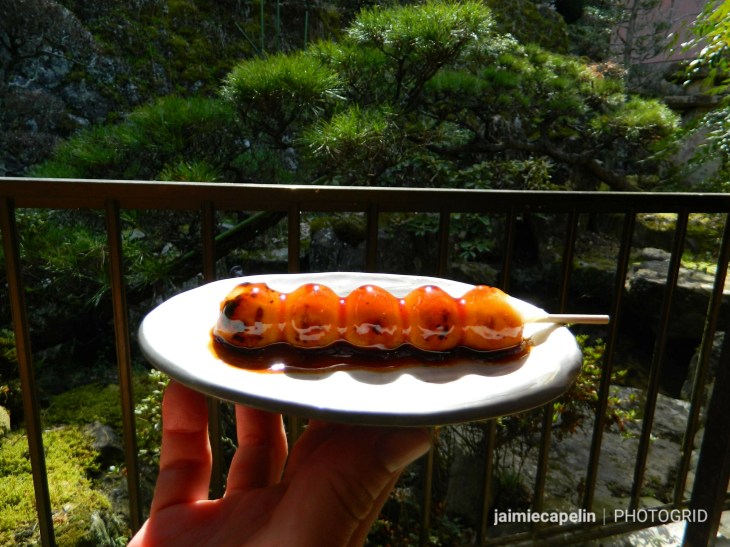
Mochi Skewer (or Dango) – sweet snack made of rice starch

With this revelation, we drank our coffee, paid the lady, and went to the next shop to sit in its little ornamental garden in the morning sun, and eat beef skewers and mochi while watching the koi swim around in a pretty fish pond.

~ The Original Nakasendo ~

PhotoGrid_1528843803825-1.jpg

Leaving Tsumago-juku on the Nakasendo

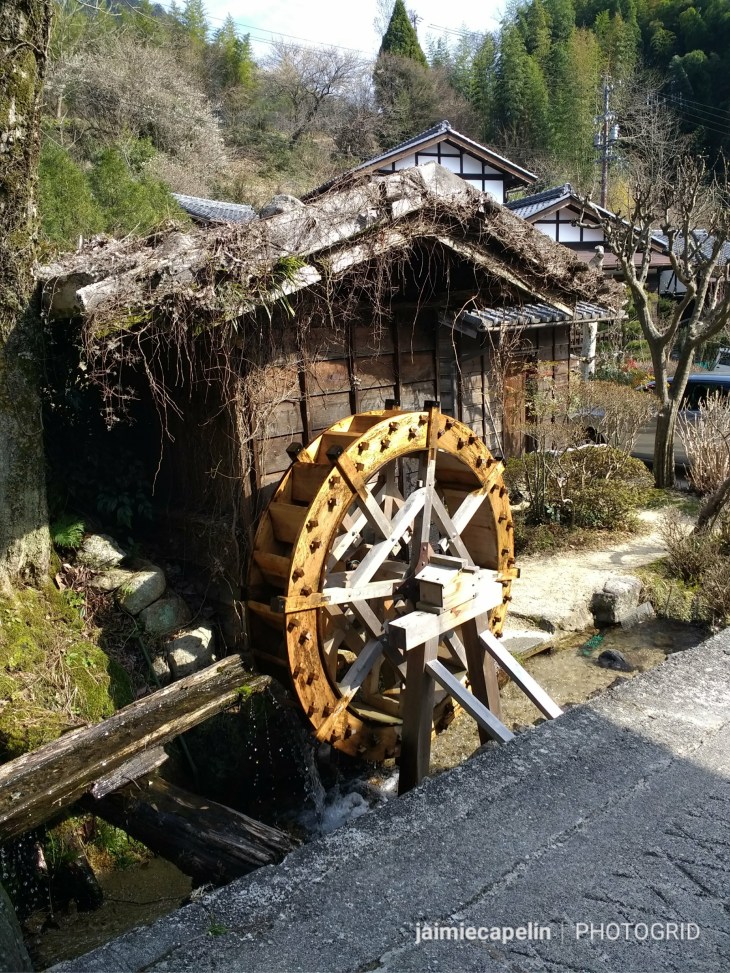
The Kanji symbols for Nakasendo literally translate as 中 = central; 山 = mountain; 道 = route. Following the roaring river out of Tsumago, we passed through more Edo style villages, fully inhabited, with pretty gardens making use of the water flow in many creative and useful ways. Some had little fish farms in their gardens, and there were quirky, homemade water features incorporating the ancient stream, along with more original, wooden water wheels.

PhotoGrid_1528843710782-1.jpg

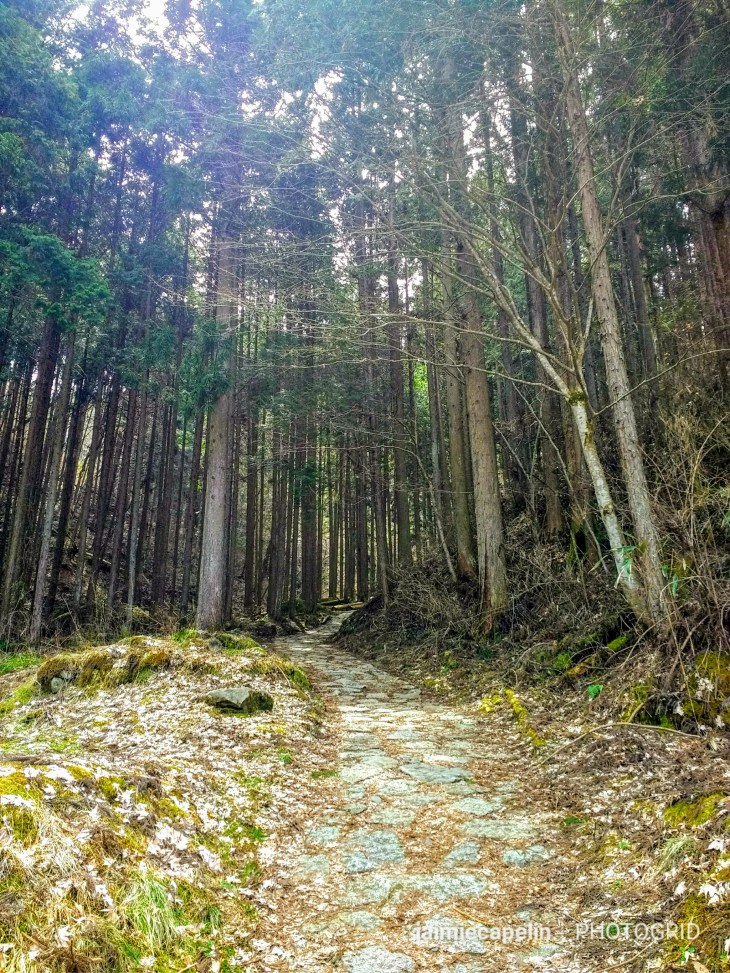
Original Nakasendo Way

Climbing into the mountains towards the river’s source, we began the ascent up the original cobbled path into the forest. Part way up the incredibly steep incline, we came across an Ishibotoke – a ‘rest-in-peace pagoda’ dedicated to the black cattle that used to carry the merchants’ heavy loads up the steep hills of the Nakasendo. And here we were lugging our own heavy packs!

~ Bear Bells ~

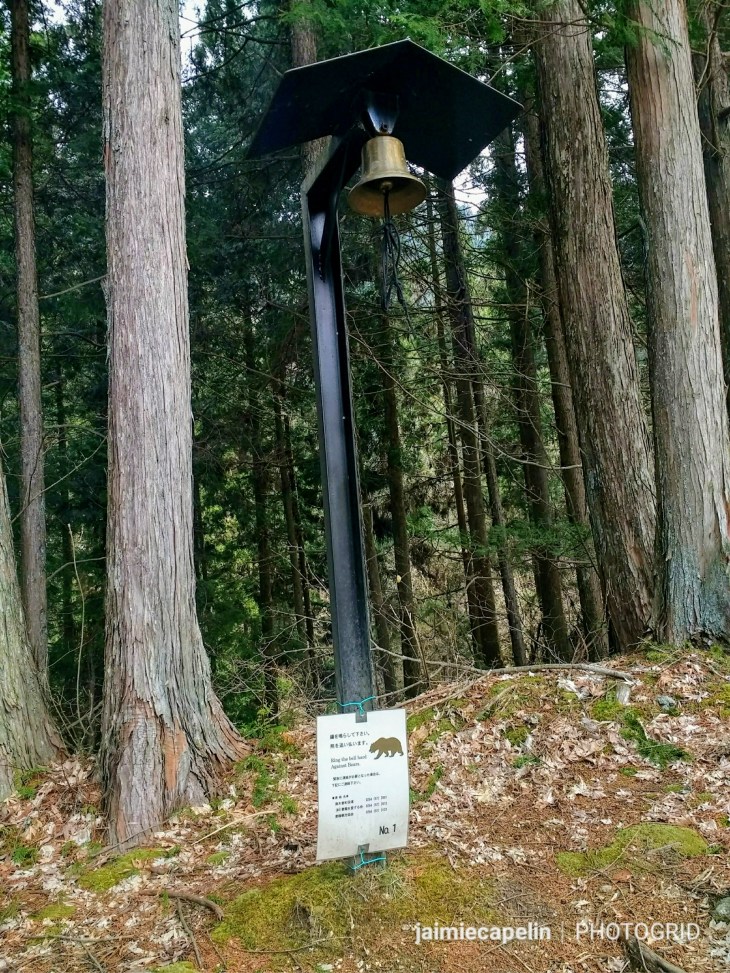
PhotoGrid_1529703246191.jpg

First Bear Bell

Every few hundred metres you come across a bell at the side of the path – these are bear bells – you are supposed to ring them to scare off any nearby bears… (apparently there are brown bears, and black grizzly bears in Japan, and all reliable sources confirm this… but I’m still skeptical!) I counted 12 bear bells between Tsumago and Magome, which are fun to ring loudly and deafen your fellow hikers!

~ Odaki & Medaki Waterfalls ~

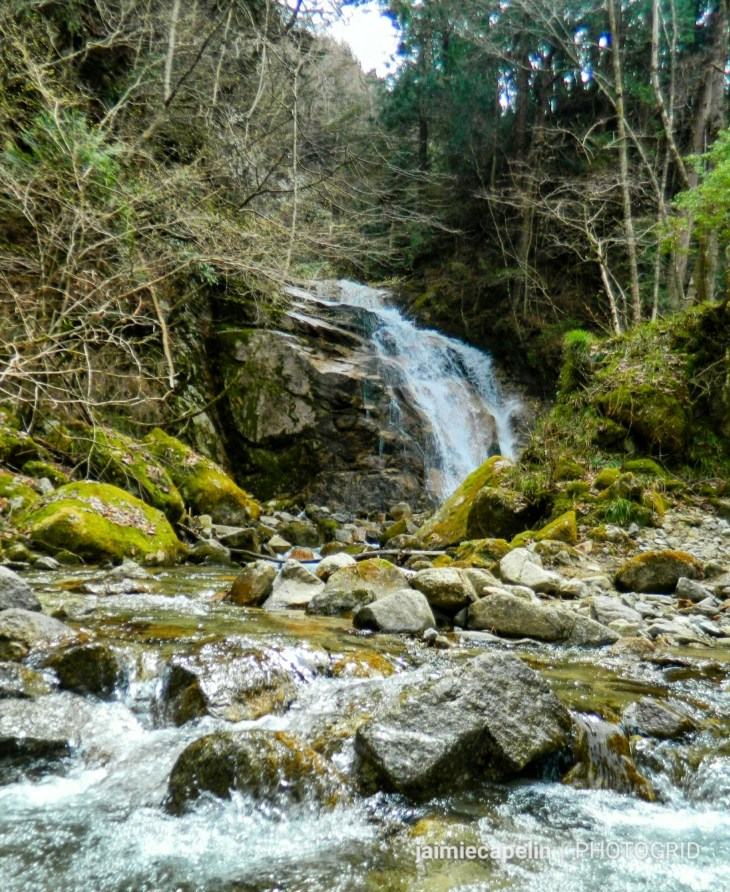
PhotoGrid_1529793979957.jpg

Odaki Waterfall

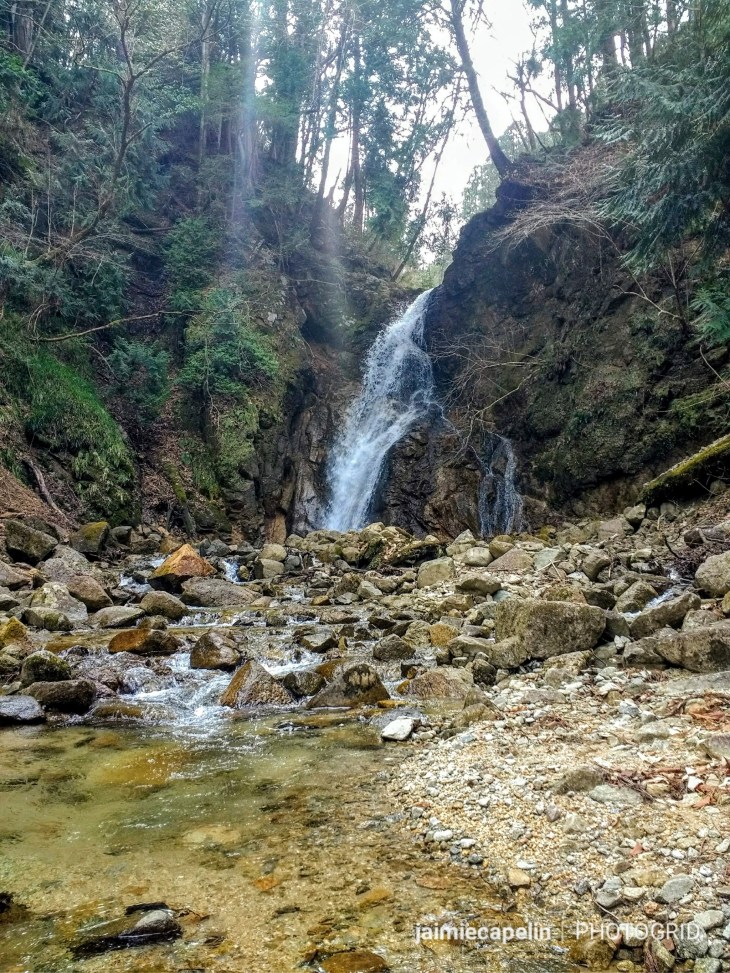
On the border between Nagano and Gifu, a little road takes you down towards the roaring sound of the Odaki and Medaki waterfalls. Legend has it that the larger, more impressive fall is male, and the serene and modest one is female. It is said that travellers in the Edo era would bathe in the falls for good fortune before continuing their journey to the next post town. This was a beautiful place to pause and take in the nature, especially as we were lucky enough to get a moment without any other tourists. The light beams through the woodland, while birds twitter somewhere above, to the sound of rushing, bubbling water, trickling over rocks and swirling into the river.

PhotoGrid_1529703309487-1.jpg

Medaki Waterfall

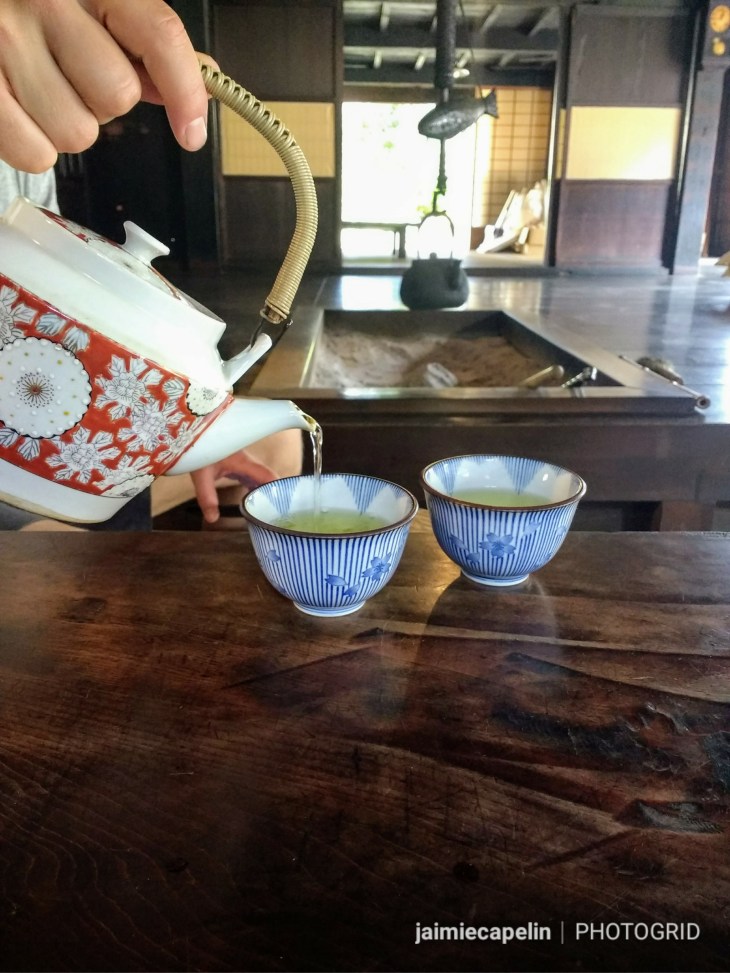
Soon we came to an ancient rest house, with a 200 year old weeping cherry blossom beside it. As I stood admiring the beautiful drooping blooms, an old man wearing traditional robes and a rice farmer’s hat invited us into his traditional house, which was open to the public. He was giving out free Ocha tea for tourists hiking the Nakasendo.

We welcomed the break, and the opportunity to get out of the scorching valley sun for ten minutes, and sat down enjoying the refreshment, chatting with some fellow English and Aussie travellers who were doing the route in the opposite direction. They warned us of a big climb to come, and they weren’t lying!

PhotoGrid_1528843742888.jpg

Pouring Ocha in the Traditional Rest House

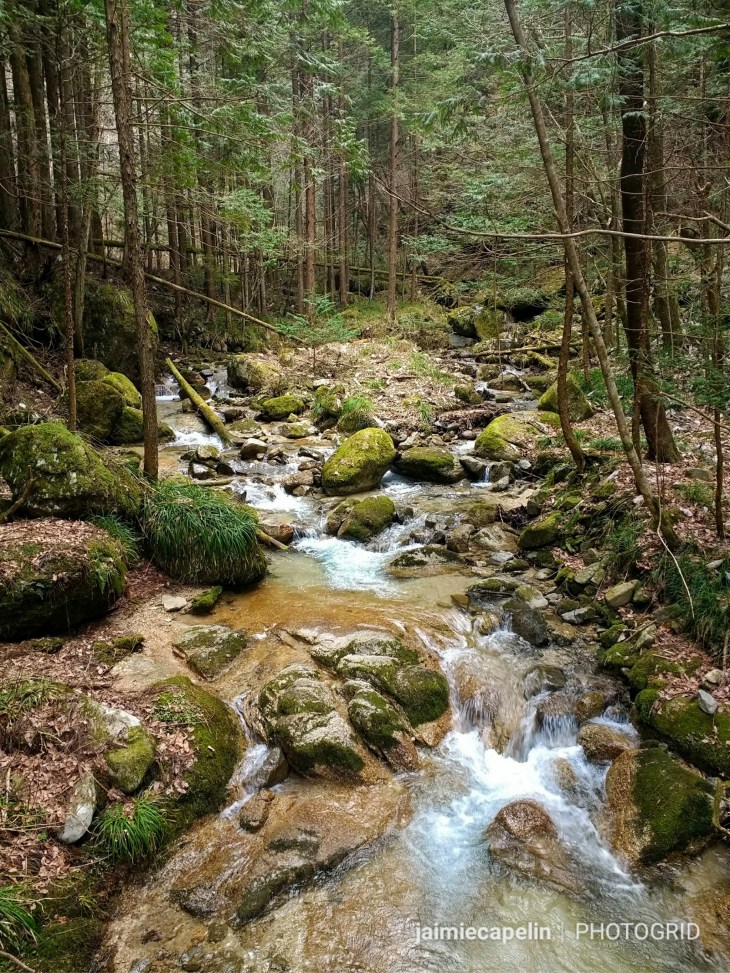
The hike up to the ridge continues along the original cobbles, which are rugged and warn, and don’t necessarily make the trek any easier on your feet. The path follows through thick, ancient woodland, with enormous trees, some of them protected and even worshipped. The river still flows down in the opposite direction beside the path, babbling rockery and green moss bringing music and colour to the scene.

PhotoGrid_1529703325056-1.jpg

Following the River

~ Magome-juku ~

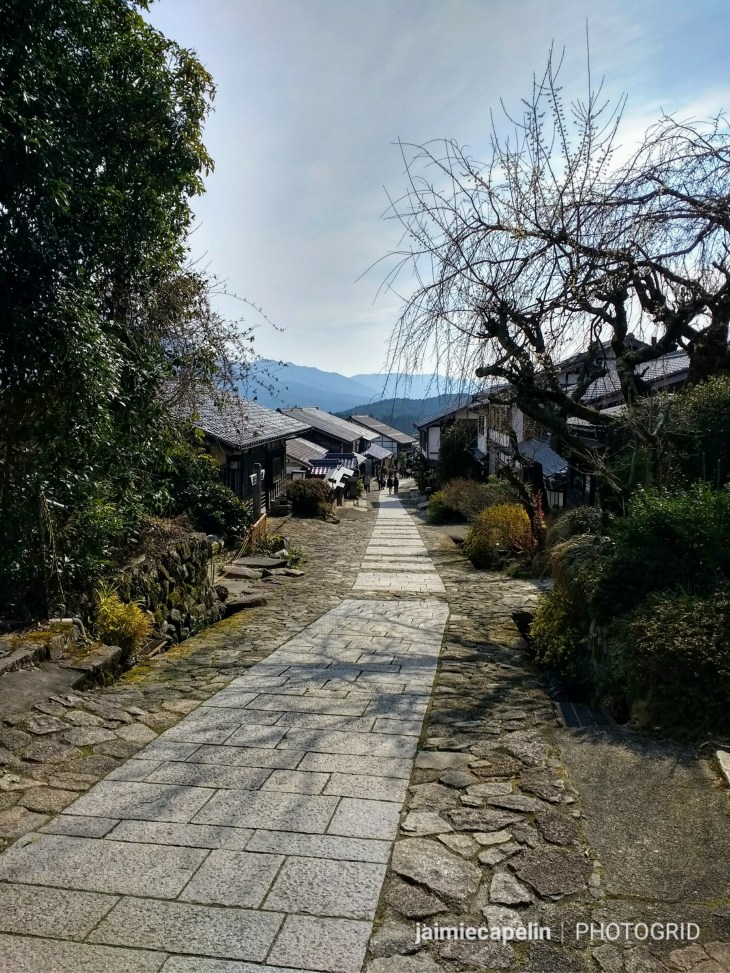
Following the long road winding down from the ridge, we finally reached the iconic post town of Magome-juku, with its dramatic mountain backdrop. The little winding street etches down the hill; paved with wooden buildings either side, trees and flowers decorating the edges, and between houses, you can look down over crops and rice paddies, Mt. Ena looming impressively over the scenery. To me, Magome appeared slightly more modern than Tsumago, which could be due to its location – closer to the main highway, and only a short drive from Nakatsugawa, therefore easily accessible and closer to modern civilization.

PhotoGrid_1528843761118.jpg

Magome-juku

We followed our noses towards a tantalising smell coming out of a busy restaurant. The board outside boasted of ‘Chef’s Special Hot Curry Soba’, and we were sold! Taking our shoes off (gladly, and a little self-consciously) we sat down on the tatami mats and ordered two well-earned beers, and Mic finally got his Soba noodles!

PhotoGrid_1528843781057.jpg

Mt. Ena

After basking in the sun and making use of the local wifi -researching where to camp and browsing the local shops, we bought a couple of deliciously malty, local dark beers – Kisoji Beer – and cracked them open for our final hike of the day. There was a river with an onsen complex down in the valley, about an hour away on foot. The walk was pleasant, following along the Old Nakasendo, which has been converted into the main highway, carving through the stunning Ena-Yama mountains, the evening heat reaching 24 degrees celsius. We came to the small village of Misaka on the Ochiai River, about a 20 minute drive from Nakatsugawa, where we set up camp on the river bank, and spent our evening relaxing in the onsen of the nearby ‘Kua Resort Yuzawa’ complex.

~ The Shinkansen Bullet Train ~

The following morning was bright and warm once again, and we were able to catch the free shuttle bus from the ‘Kua Resort Yuzawa’ complex to Nakatsugawa Station. From here we caught a train to Nagoya: Chubu region’s largest city, where the sun was unbearable, and we realised it was time to change out of our winter attire for good, and dig out the summer clothes from the bottom of our backpacks!

PhotoGrid_1530227347821.jpg

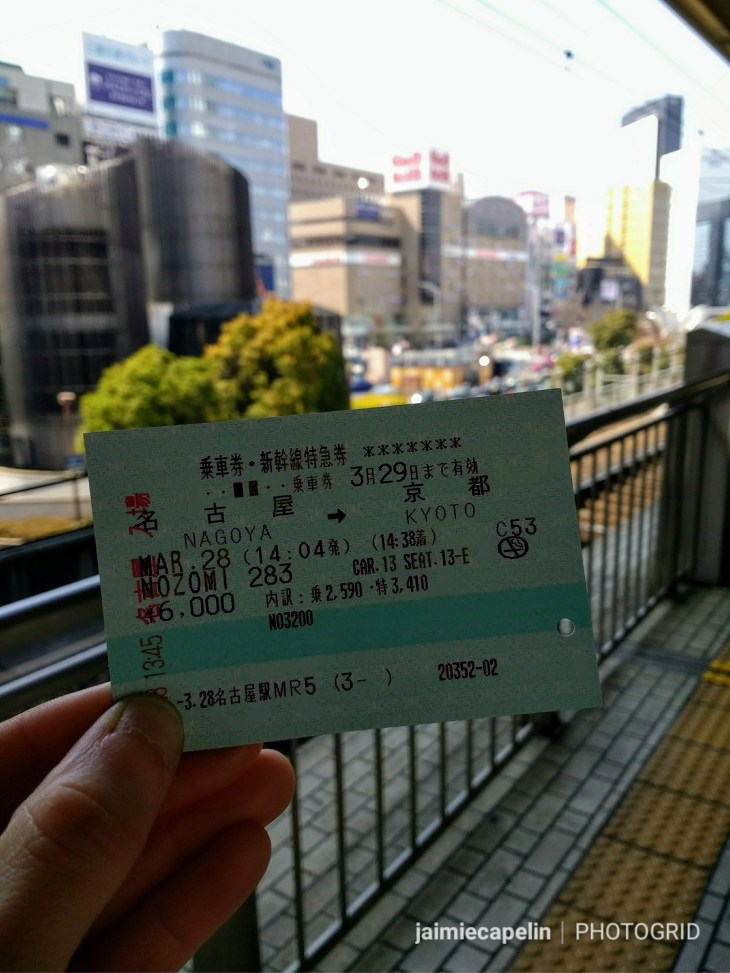
Shinkansen Ticket – Nagoya

Nagoya station is an underground network of ticket machines and passages leading to various platforms. Mic and I joked about catching the Shinkansen – the Japanese Bullet Train – and then both realised there was nothing actually stopping us! But where to? We knew we wanted to head for Kyoto, and it was the cheapest and quickest route from Nagoya, so we went to the nearest ticket machine and bought two tickets. Only, they weren’t complete tickets. We couldn’t get through the barrier; the train was going to leave without us! So, to prevent a terrible Harry Potter parody, Mic went straight to the ticket office to sort it out.

If you are buying a ticket for the Shinkansen, and aren’t machine savvy, I’d recommend cutting out the moment of panic, and going straight to the ticket office, as they are usually English speaking and very helpful.

Notably, the Shinkansen is definitely the more luxurious way to travel, with our short trip costing 6,000yen each – that’s £42 at the current exchange rate.

At 200mph, the Japanese Bullet Train pushes you into the back of your seat, and blurs your eyes as it accelerates across the country. It is incredibly smooth for something so fast, and the journey from Nagoya to Kyoto only takes 30 minutes. That’s 84 miles, the equivalent to a 2 hour drive, past towns and mountains and the south side of Lake Biwa.

We were soon arriving in Kyoto, at the end of the Nakasendo, where Gerry, Cam and Zac were already staying. After quickly finding a very reasonable Air BnB, it was time to reunite with our friends and compare our stories of tough climbs and freezing nights in tents, before falling asleep in a comfortable bed above the warm glow of down town Kyoto.
PhotoGrid_1530229682132.jpg

Nakasendo Trail pt.2 – Walking the Way of the Water Wheels

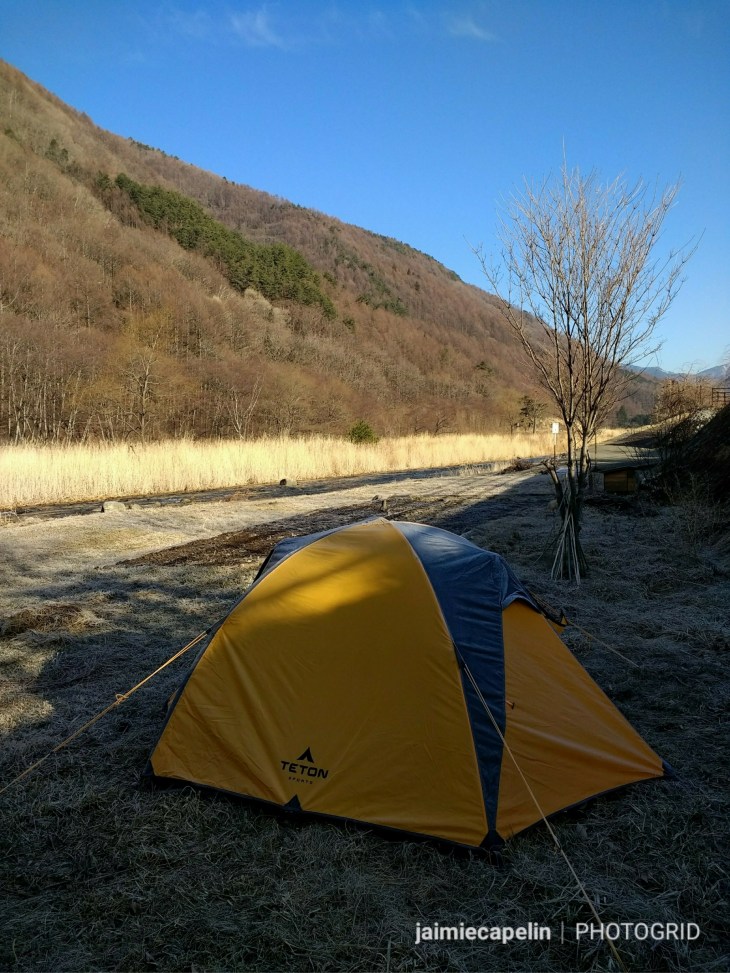
Have you ever woken up with a layer of ice on the inside of your tent? It had been another below-freezing night on the Yabuhara river bank, deep in the Kiso Valley in the heart of Japan, and even our sleeping bags were a tad frosty. But we’d slept, and after completing the first leg of the Nakasendo Trail the day before, I don’t think anything would have prevented sleep. The ‘samui’ (cold) nights we’d experienced while camping so far weren’t letting up, but at least the day temperatures were reaching the high-teens.

PhotoGrid_1528927465607.jpg

Frosty Lodgings

~ Breakfast of Champions ~

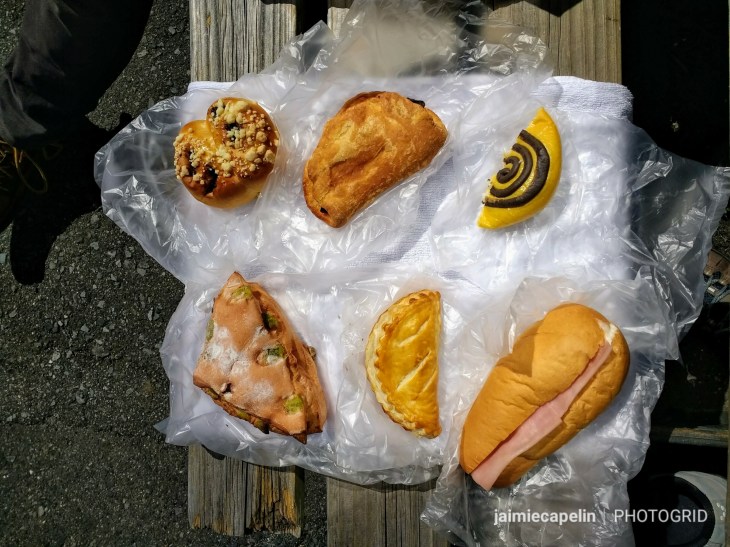
After thawing out the tent in the rising heat of the morning sun, my travel companion Mic and I washed and drank from the river, packed our backpacks and set off to the nearby Yabuhara train station. Breakfast was a great and unexpected find. I’d remembered seeing a sign in a window for fresh bakes the night before, (Japan has really mastered the art of delicious pastries) and we headed back there on the off-chance it was open. It was, but when we stepped inside, it seemed to be a craft shop, selling unique, handmade trinkets, but no food. We were just about to leave, when I noticed it was connected to what looked like a community centre, where a group of ladies were sitting around a large table doing an origami workshop. They all cheerfully called, “Konnichiwa” as we edged in, spotting a stand at the side of the room, covered in fresh breads and pastries, and also coffee! We paid and took our bag of loot, and our coffee in paper cups, the origami ladies waving goodbye as we left, and ate the lot while waiting for our train.

PhotoGrid_1528843572041.jpg

Breakfast of Champions

~ Nagiso ~

A 50min train ride through pictoresque scenery; window seats; a kindle in Mic’s lap, a notebook in mine, we enjoyed the opportunity of soft chairs, prior to embarking on the second leg of our hike, from Nagiso to Tsumago-juku.

Nagiso was another sleepy little town, a little more equipped for passing hikers and tourists, with a handful of little shops and cafes by the station, their keepers perched outside on fold up chairs, watching the world go by. This is the base for most tourist companies running shuttles between Tsumago and Magome – the two most touristic Post Towns on the Nakasendo Trail, which book-end the last remaining original part of the ancient road. It is also a starting point to the old Nakasendo Pass, which follows closely where the original road would have led to Tsumago – this is what we were doing.

~ Nakasendo ~

We bought lunch in a local grocery store, repacked our backpacks, ensuring the weight was evenly distributed, and began the trek. The Nakasendo Pass to Tsumago begins just metres away from Nagiso station, and ascends beside the river, past a mini shrine on the left, and an old steam engine on the right. Blue skies added enhanced colour to our beautiful surroundings, with the river and gorge fading off into the distance behind us, and the temperature was rising, so we were soon changing into our shorts.

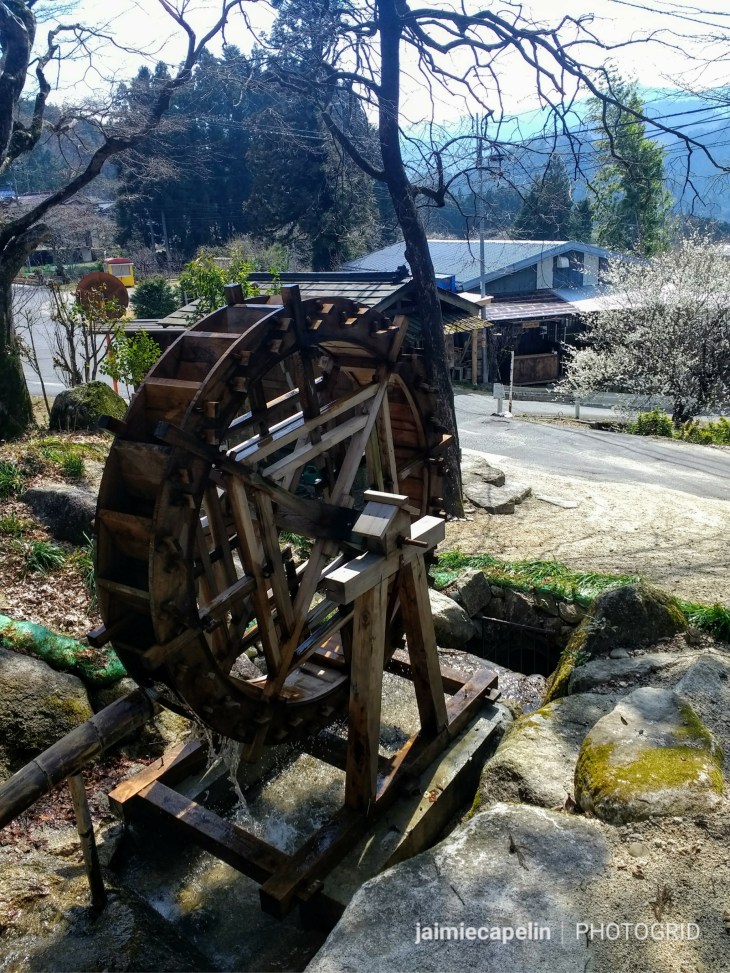
This part of the trail joins up with a country lane, passing through rural residential areas. The incline is small compared to the Torii Pass between Narai and Yabuhara, and the scenery is less dramatic, more serene, with pretty farmland and hills. We passed hillside shrines, which reminded me of the tiny worship houses built into the Catalonian mountains of Spain, and small villages with the authentic Edo era wooden houses, and wooden water wheels turning.

PhotoGrid_1528843601877.jpg

A Working Water Wheel

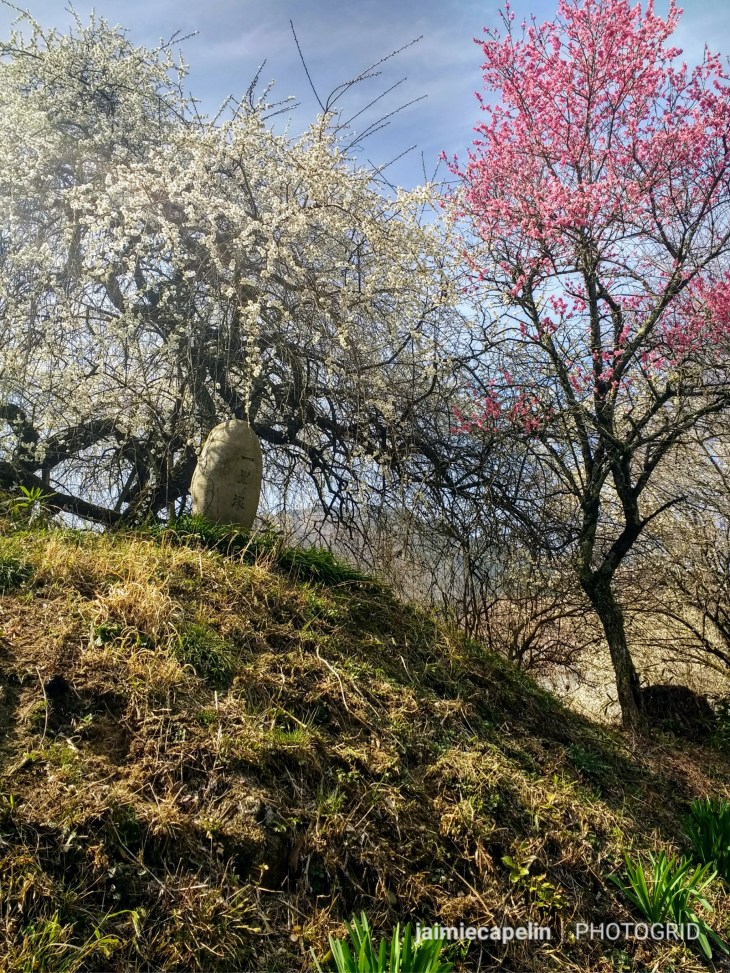
Every now and then, between the farms and old villages, we’d pass a great big modern new-build, with lots of land and fancy cars parked on the drive, in contrast to the ancient history etched into the landscape. A few cherry and plum blossoms were already in full bloom, dappling pink sunlight on the grass below, and teasing at what the following few weeks in Japan had to offer.

PhotoGrid_1528843617981.jpg

Early Cherry Blossoms


~ Tsumago-jo Castle ~

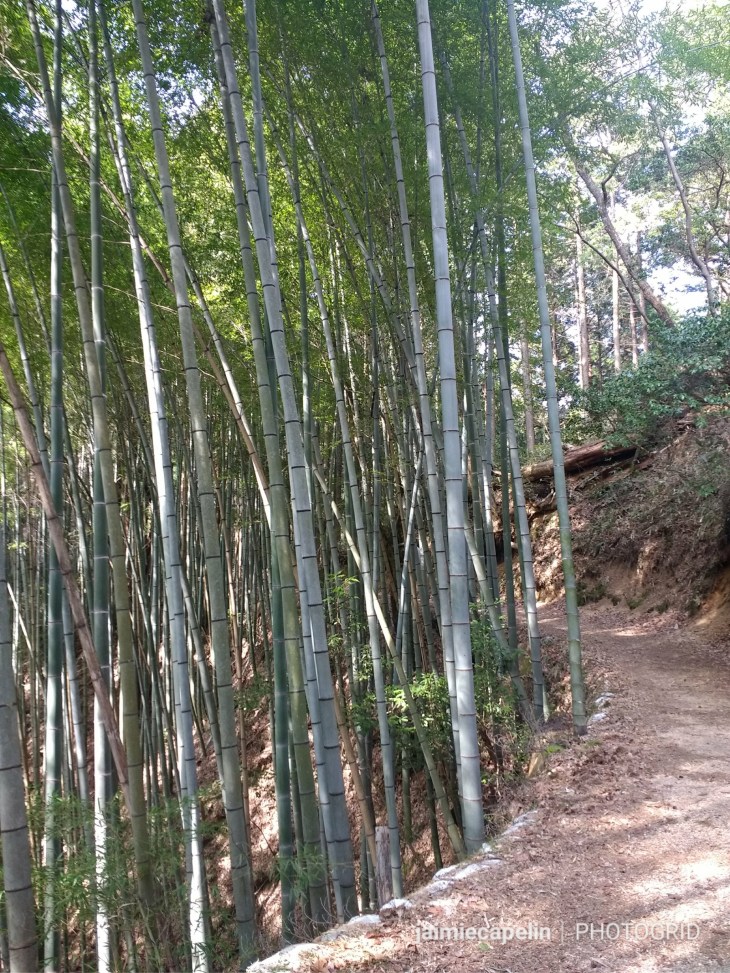
We reached a fork in the road; the right leading up hill to Tsumago-jo Castle remains, the left leading to Tsumago-juku. Leaving our backpacks trustingly against the sign post, we took the right-hand fork, up a steep incline, passing through dense bamboo forest, from which a wooden bridge once connected the castle grounds, and is now filled with earth. The sound of the birds twittering and echoing through the bamboo was incredible, and Mic was forced to patiently endure my excitement about being in my first bamboo forest! Not another human in sight; just endless bamboo, quietly creaking and making the light fresh and green.

PhotoGrid_1528844189797.jpg

Filled-in-bridge curving round the bamboo forest

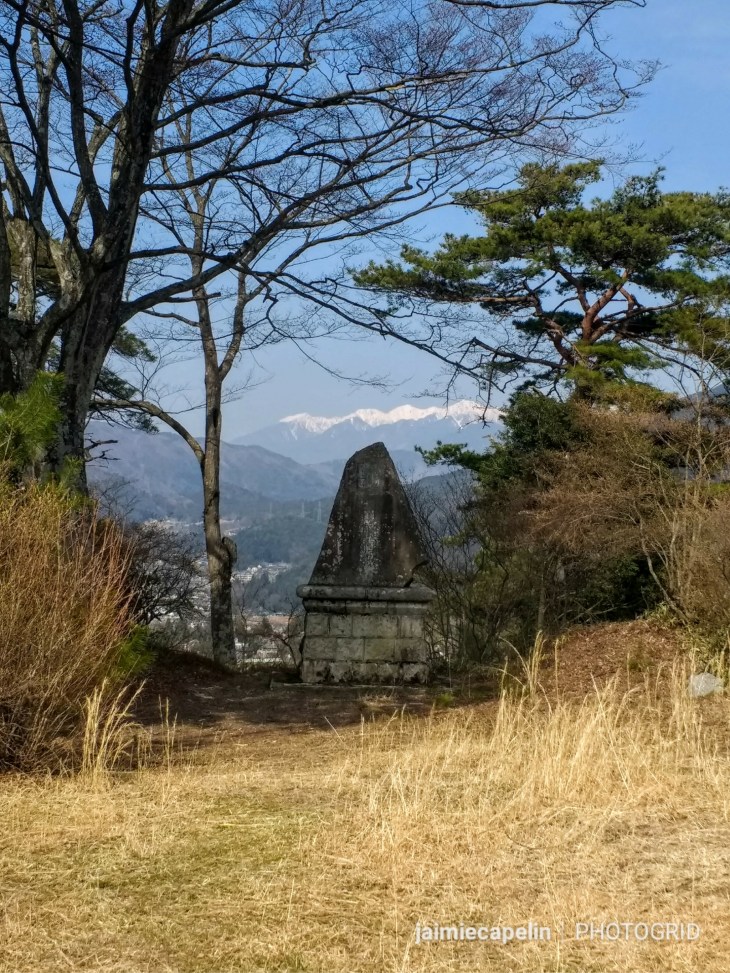
We passed the place where the ‘Hori-Kiri’ (moat) once was, and up through the woodland past the ‘Obi Kuru Wa’ (defensive stone wall). The top of the mount was a large, circular plateau, with big rune stones strewn about, commemorating the wooden, Edo era castle that once stood there. It offered 360degree mountain views, leading our eyes down through the valley, with Tsumago-juku ahead. Behind us lay the Central Alps, snow peaks bright in the afternoon sun.

PhotoGrid_1528843643065.jpg

Kiso Valley & Central Alps, from Tsumago-jo ruins

Back down to the road, we collected our backpacks and descended to the little post town of Tsumago-juku – soon to be my favourite place on the Nakasendo Trail.

~ Tsumago-juku ~

PhotoGrid_1528843821921.jpg

Entering Tsumago-juku

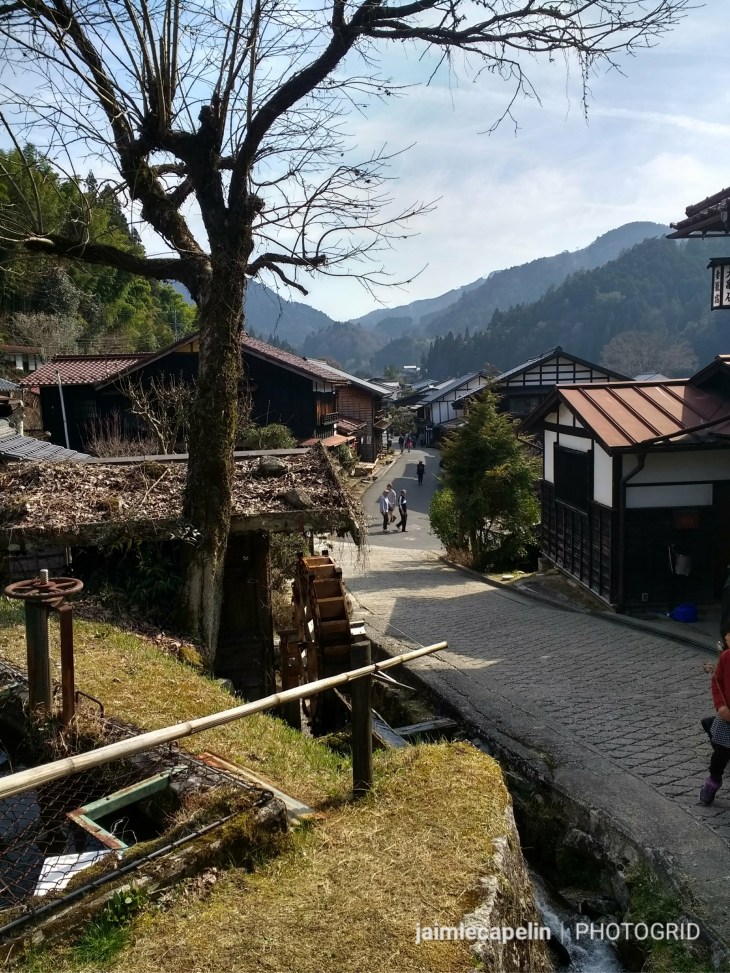
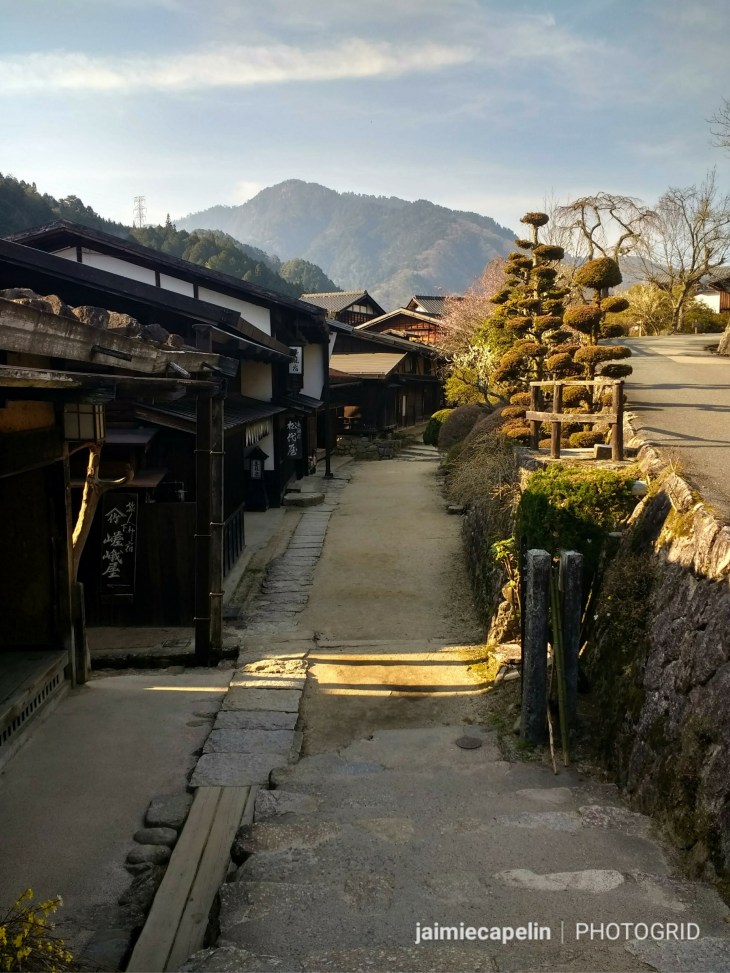
Turning the corner leading down along the narrow road, following the stream on the left, and the classic Edo era wooden houses along the right, the view zigzags down the valley before you.

PhotoGrid_1528843844233.jpg

Tsumago Water Wheel

A wooden water wheel turns, splashing the stream part way down, while miniature ornamental gardens decorate the courtyards, with flora and forna filling each available space between. The green mountains surrounding the post town create a lush frame for the picture-perfect foreground.

PhotoGrid_1528843862832.jpg

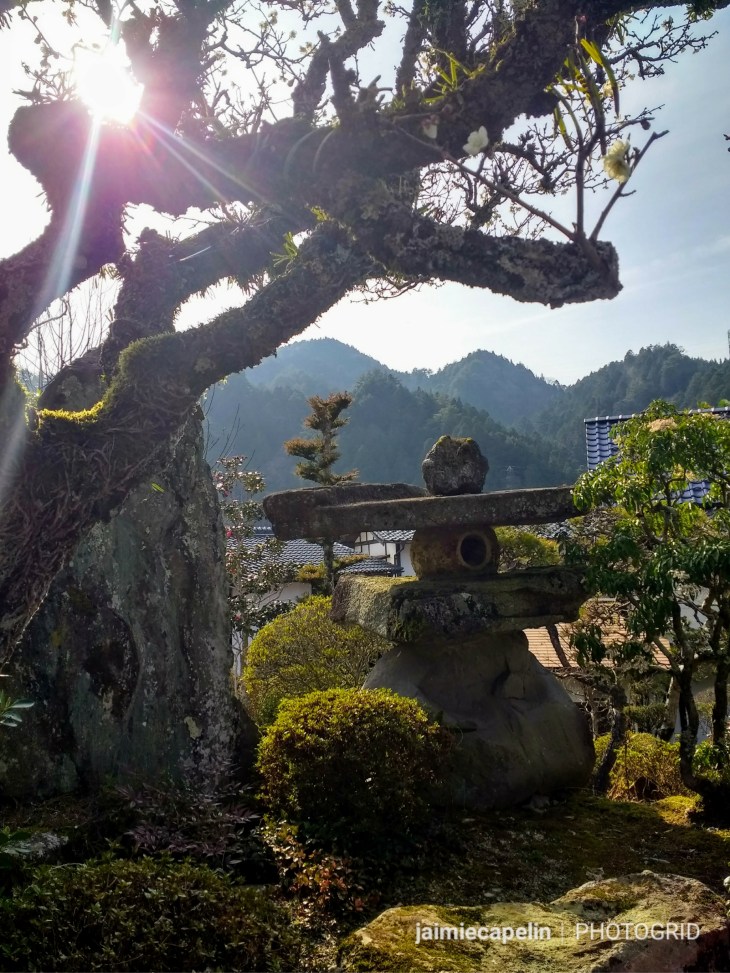
Ornamental Courtyard

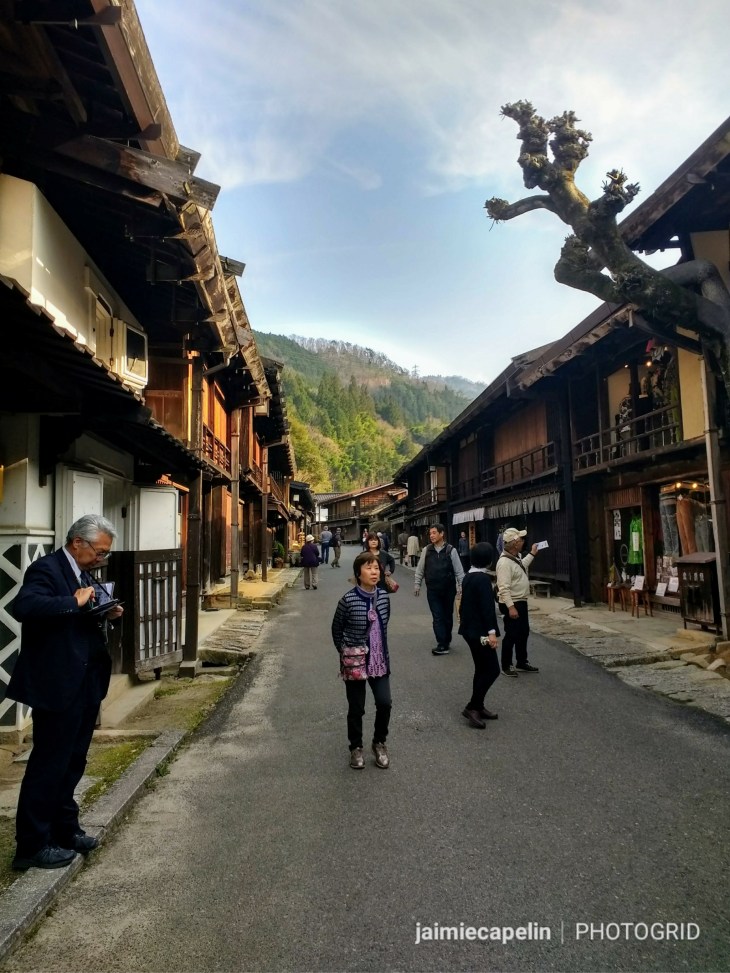
Tsumago was the 42nd of 69 post towns on the original Nakasendo between Kyoto and Tokyo, and is now one of the best preserved Edo era post towns, and a popular tourist destination. You can reach Tsumago by travelling to Nagiso on the Chuo Main Line railway, and catching one of the shuttle buses, or hiking the old Nakasendo. Ironically, it was the building of this railway line that caused Tsumago to fall into poverty, until it was revamped for tourism in the 1970s. I think the best thing about this town is that even though it thrives purely on tourism, none of it is staged. Tsumago is fully inhabited, and therefore completely authentic, as the locals you meet selling their goods actually do live there, and make their living by making and selling traditional products to travellers, just as they would have in the Edo era.

PhotoGrid_1528843695433.jpg

Tsumago-juku

There are lots of Ryokan guest houses in Tsumago, where you can get the full experience, with tatami mat rooms, onsens, and traditional meals. You can also get your luggage shuttled between towns, so you can enjoy a leisurely hike, but if like us, you enjoy a challenge and want to save a bit of money, I’d fully recommend going off the grid!

PhotoGrid_1528843664005.jpg

Tsumago-juku

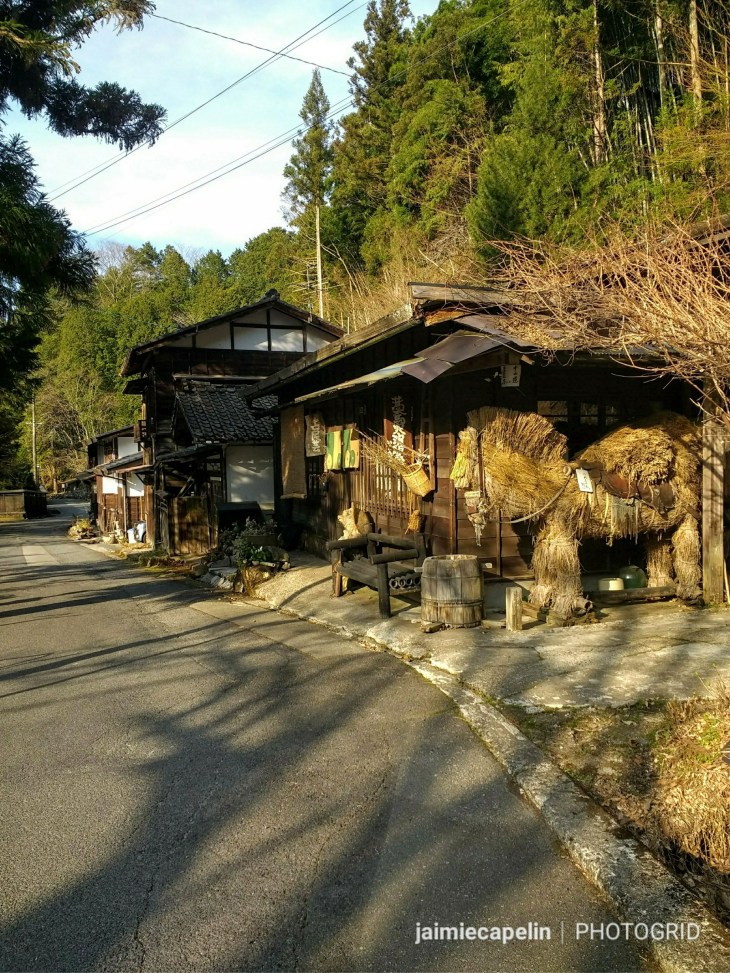
A beautiful afternoon was spent wandering up and down, exploring the shops with different foods, coffee and tea houses, groceries stores, souvenirs, and of course, bottle shops filled with expensive sake. Beside the last house at the very end of the town, where the road continues onwards along the Nakasendo towards Magome, there is a life-size straw horse, apparently a symbol for good fortune, which is the first thing you’d see if you’re walking to Tsumago from Magome, as most people do.

PhotoGrid_1529259002813.jpg

Straw Horse for Good Fortune

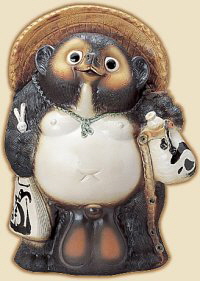
Another little statue we began to notice outside a lot of buildings was the Tanuki – a sort of raccoon – wearing a straw hat and a dappy smile. They seemed to be outside all the ryokans and restaurants, so we guessed they were a symbol of hospitality, and once you notice them, you realise they’re everywhere! On some research I’ve discovered that they were originally Chinese evil spirits; shape shifters and tricksters. The Japanese, with their imaginative compassion, adapted this folklore, and the Tanuki is seen as benevolent and cheeky: a welcoming and wealth-bringing icon.

a_tanuki-transparent-found-on-web-TN_1

Tanuki

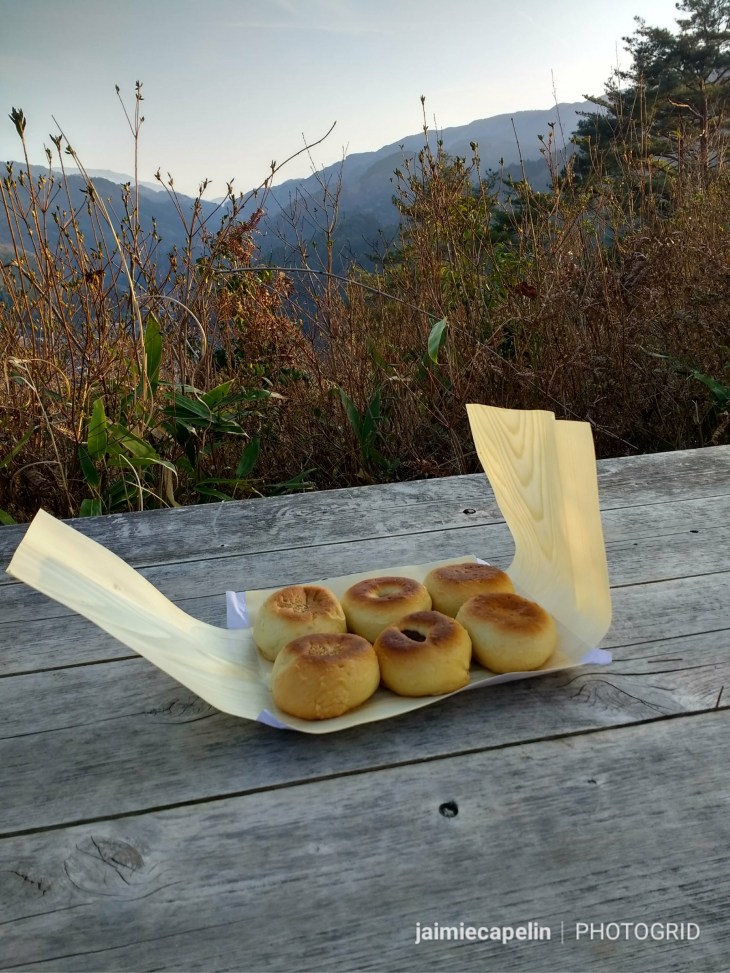
With the evening sun turning the wooden houses red, and the shadows growing long on the ground, our stomachs were beginning to rumble. Once again, there was no place in Tsumago to pitch a tent, and a last minute ryokan would have cost the earth, so we decided to back track a little way. We passed an old chap wearing a woven hat, and selling something from authentic bamboo steamers with delicious aromas coming out. Steamed buns! We purchased six with different fillings, which he wrapped in bamboo paper and bid us farewell with a smile, and we hiked back up towards Tsumago-jo ruins.

PhotoGrid_1528844263980.jpg

Traveller’s Supper

~ Camping in the Castle Ruins ~

The sun was setting, painting the valley with vivid colour, and we ate our steamed buns while they were still hot and delicious – my favourite had a walnut filling; Mic’s was eggplant. We pitched the tent on some nearby scrubland with valley views – previous campers had used this spot, and their was a ready-made fire pit. The sun set, and the flames rose, and the temperature didn’t drop! Finally, spring breathed in the night sky, and it was going to be the first comfortable night’s sleep in a long time.


Nakasendo Trail pt.1 – ‘Samui’ in Ancient Japan

Work had come to an end. The snow was melting, and the ski lift queues had disappeared. The season was over, and it was time to leave Jimmy’s House in Hakuba, with all its inhabitants the winter had collected. Moving out was sad, saying goodbye to the family of strangers I’d adopted over the last 4 months, all going separate ways; but it wouldn’t be bye for good.

The Nakasendo Trail is the ancient road between Tokyo and Kyoto, which was used by Samurai and merchants in the Edo era, between the 1600s and 1800s. Small parts of the old road still remain intact, and are open to tourists to hike and experience all year round. Mic (also from Jimmy’s House) and I both desired to backpack the trail, so we set off on our adventure at the end of the snow season in mid-March…

~ Camping in Matsumoto ~

PhotoGrid_1528323906118.jpg

Road to Matsumoto

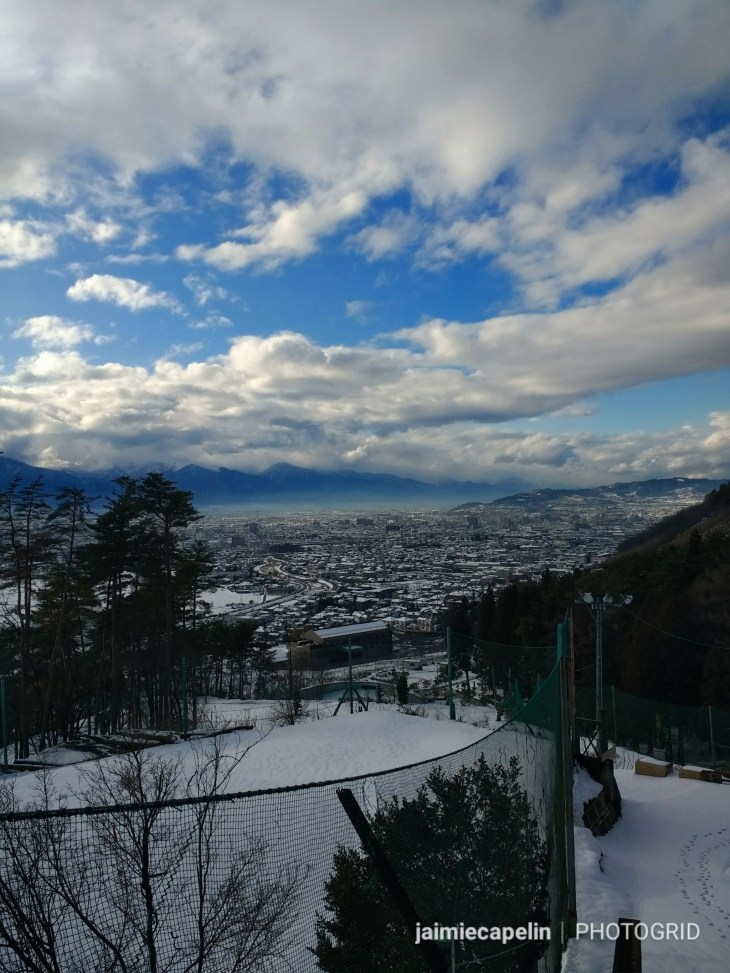
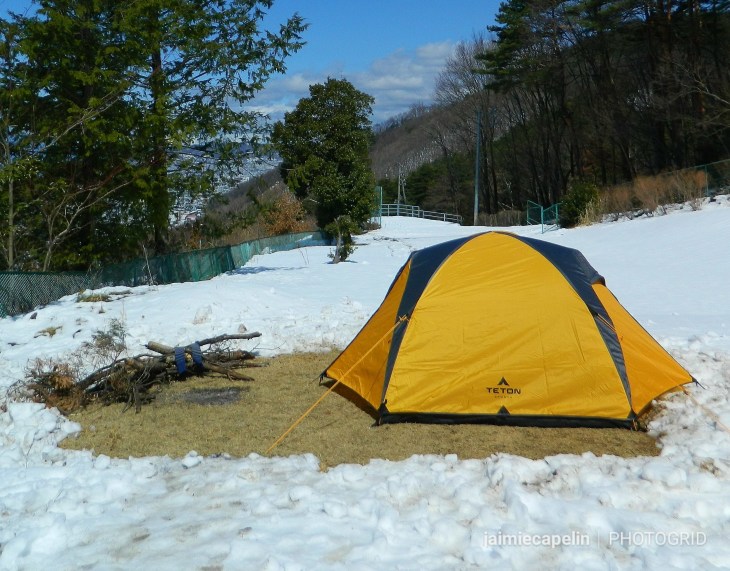
Somewhere on a hill near Minami-Matsumoto Station, across a vast stretch of paddies and crops, we set up camp. Our view was of the Matsumoto suburbs across the valley, to the dramatic mountains on the other side. Mic and I had left Jimmy’s House, catching the 12:30pm train from Kamishiro station to Matsumoto, with fellow housemates, Gerry, Cam and Zac somewhere closely behind. (Zac had recommended the camping spot, and the three of them were to meet us there on their bicycles, commencing their own bike-packing journey.) We’d walked for around 45 minutes in the warm sunshine through a network of rice fields until we reached the foot of the mount. Passing two shrines, and some of the first cherry blossoms of the season, we climbed the steep, snowy path to the plateau, which was to be our home for the next two nights.

PhotoGrid_1528323931733.jpg

Room with a View

As dusk began to creep at the edges of the horizon, and our camp set up, we gave up waiting for the three boys, assuming they’d found somewhere else for the night, and we walked in twilight to the nearest 7eleven convenience store for dinner. An hour later, we traipsed back up the hill to our tent, finding ourselves following three tyre tracks in the snow! “Bikes! Three of them!” Mic exclaimed, and as we climbed, torch light beamed down the hill, and we heard Zac, Cam and Gerry cheering.

Our tents floated on the snow, lit from within like wish lanterns, with the stars strewn across the clear sky competing with the lights from the city below. Sitting around Mic’s campfire, spinning yarns and trying to keep warm, one by one we turned in, and endured our first freezing cold night, sleeping on the snow.

That was the coldest I have ever been in memory. We’d somehow convinced ourselves that snow was an insulator, but alas. It was anything but! The boys were all up at dawn, having given up on sleep; Zac, Gerry and Cam preparing for an early departure on their bikes. Meanwhile I was still huddled in a ball in my sleeping bag, with some deluded belief I’d stop shivering and fall asleep soon. Though they were the worst two nights, the mornings that followed were beautiful.

The sun rose behind the trees, slowly spreading a thawing warmth over us. I sat in the tent, packing and readying for the day ahead, while Mic did his yoga stuff outside on a patch of grass. Two birds of prey circled above us, calling to eachother, gliding and diving gracefully against a sapphire sky. The town clocks chimed from somewhere below, as the sun melted the snow, and all felt peaceful. This is a very tranquil, happy place in my memory.

PhotoGrid_1528324032933.jpg

First Camp

~ Matsumoto Castle ~

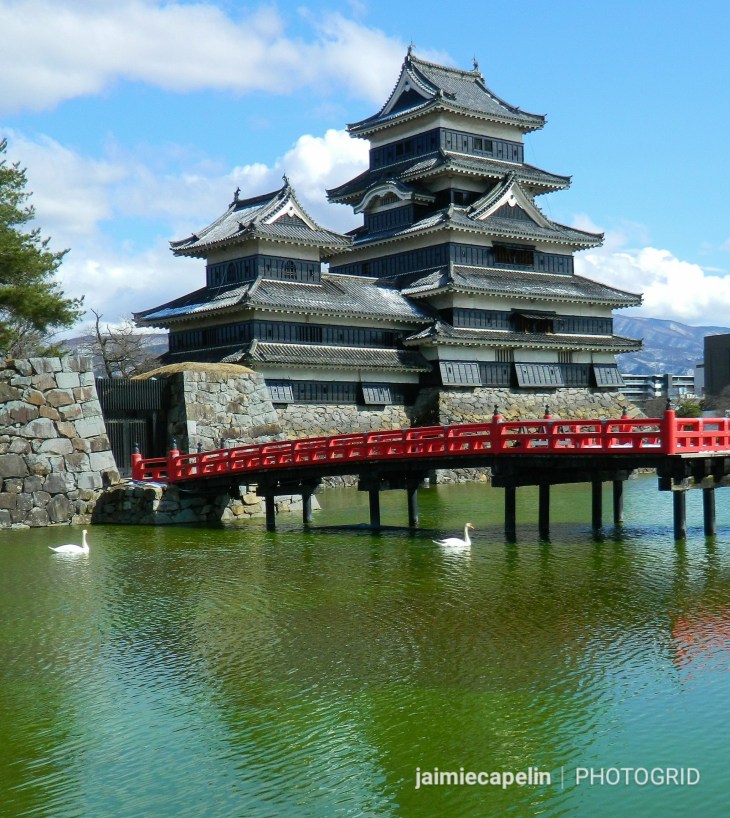
Standing bold between water and mountain, Matsumoto-jo is a premier historic castle, dating back to 1594, and is a Japanese national treasure. You can walk around the castle’s moat for free, passing beneath the impressive defensive gate, and through the park with a pictoresque red bridge that arches over the vibrant green moat. As with many important buidings, hundreds of Koi swim around in the waters, multi-coloured, enormous and gawping. As well as sharing their name with a Japanese synonym for ‘affection’, Koi are an important symbol of strength. In Japanese folklore, the little Koi in the Golden River wanted to swim in the Blue River, beyond the Great Waterfall. Any fish that showed the courage to swim upstream into the waterfall, grew wings and was transformed into a dragon by the gods.

PhotoGrid_1528323970696.jpg

Matsumoto-jō

We wandered through the sunny city and met with another Jimmy’s Housemate – Jake, who took us to an onsen before dinner.

~ Japanese Onsen ~

These luxurious public bath houses are definitely something you should try at least once! I have to admit, it took me ages to go to my first onsen, because I was nervous. After all, you have to be naked! Men and Women are separated in public onsens: women enter through the red veil, and men enter through the blue. When I finally went to my local onsen in Hakuba Goryu, I had the whole place to myself, which is great if you’re feeling uncomfortable about waltzing about in a public space with no clothes on, but it meant I had no one to follow and learn the etiquette from. So, when I strolled into the onsen in Matsumoto with my towel wrapped around my torso, with at least 20 Japanese women – who had clearly left their towels in the locker room – pretending not to look at me, I felt very Gaijin! Quickly stuffing my towel on a nearby shelf and submerging myself up to my neck in the hot water, I subtly watched the other women. They were simply relaxing, washing, quietly chatting and laughing among themselves, totally naked and totally comfortable, not judging another soul, and I quickly realised I had nothing to worry about. I thoroughly enjoyed the array of different spas, including a jet stream massage seat, and multiple outdoor spas. Relaxing in an outdoor lounger, submerged in warm water beneath a beautiful magnolia tree, I watched dusk fade the sky, breathing a cool breeze on my face.

~ Yakitori and Beer with Jake ~

I met with Jake and Mic in the lobby, and we headed across to a nearby Yakitori resaurant. Yaki means grilled, and tori means bird, but Yakitori can cover just about any meat or vegetable that can be skewered and grilled. We ordered everything on the menu and washed it down with a mug of Asahi, raising our glasses to ‘Kampai’ (cheers) to good food and good times.

~ A Train to the Middle of Nowhere ~

Our second morning in our tranquil camping spot was severely interrupted… I’m going to be totally honest here – if you’re a fellow traveller, and you’re planning on free camping, that’s great! We searched the web on free camping in Japan before embarking, and it is accepted, provided you are respectful and discreet. But, DO NOT LIGHT A FIRE, unless you are in a place with a designated fire pit, or you could be fined up to 30,000yen. We learnt this the hard way. Now we know.

Leaving Matsumoto on the sunny March morning, trudging through rapidly melting snow, we caught the train on the Chuo Mainline Railway to Kiso-Hirasawa. It felt like we were back in the Hakuba Valley, where the tracks cut round mountain bases and through evergreen trees, passing occassional communities of a few houses in the woods.

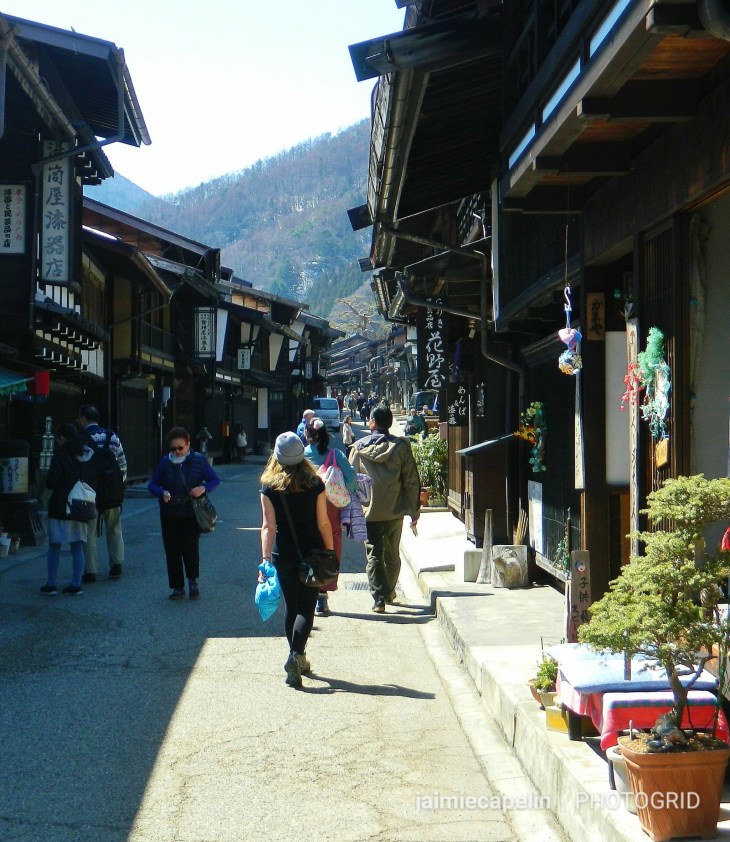
A cold wind blew, though the sky was deceivingly blue. There wasn’t a soul in sight as we got off the train, yens at the ready to pay at the ticket booth in the station, but there was no one there! The tiny village of Kiso-Hirasawa was deserted too, and we found a small park nestled between houses, to sit and enjoy our 7eleven sandwiches out of the wind. The village had a narrow street lined with old Japanese buildings – which were all closed for lunch – Mic likened it to Nizawa Onsen: another ski town, famous for its hot springs. The street eventually met with the main road, adjacent to the Kiso river.

We walked along the highway to the next town – Narai – which took around 30 minutes, and while the walk was rather dull, with trucks passing at high speed and our backpacks cutting into our shoulders, the traditional Post Town was worth it on arrival!

PhotoGrid_1528324048403.jpg

Evening in Narai-juku 

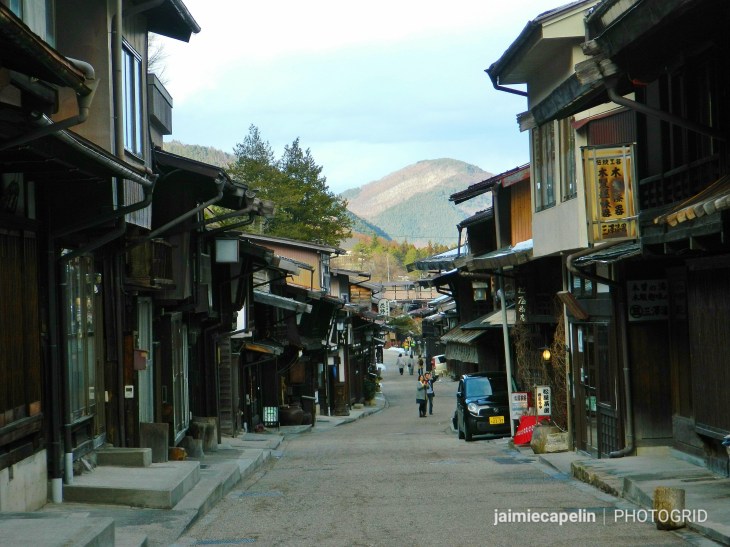
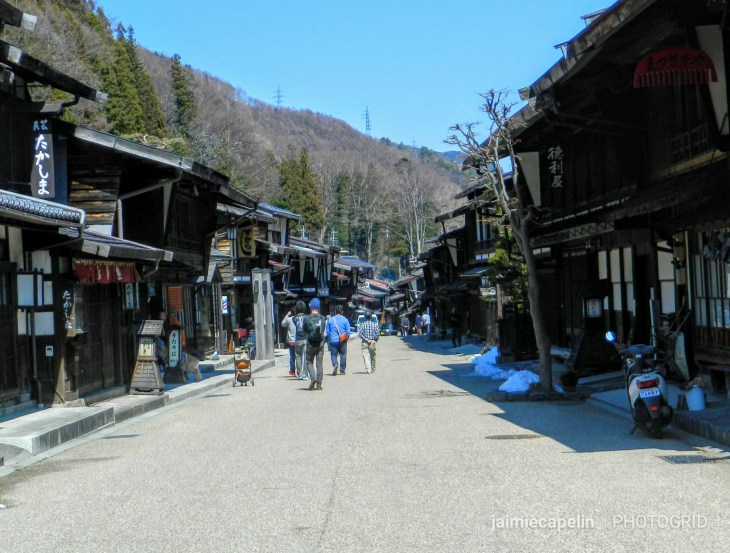
Narai (Narai-juku) is the midpoint of the Nakasendo highway, which connected Tokyo and Kyoto in the Edo era. It is also the northern most Post Town, and still resembles it’s authentic purpose from that period.

~ An Unplanned Detour ~

I really wanted to stay and emerse myself in the ancient Japanese culture, but most places were already closed, and with no space to camp, and no available accommodation, we were forced to move on for the night. The man at the Narai tourist information centre was very helpful, firstly telling us we were crazy for wanting to camp because it was “samui” (cold), and secondly recommending a nearby Chinese restaurant where we could eat before our journey. Mic found a guesthouse two stops away on the train, and although it was a little more than our desired budget, we knew we’d thank ourselves for it later. …Or would we?

Darkness had fallen fast and heavy by the time we’d had dinner, and we caught the train to Harano. “It’s about an hour’s walk from Harano station,” Mic said, consulting Google Maps on his phone. Rubbing my sore shoulders, I smiled and nodded. “No problem!”

More than two hours later, we more or less collapsed through the lobby. The guesthouse was nestled in mountain peaks, at the top of a very long, very steep, very dark winding road. We’d hiked it in the pitch black of night, with just the aid of my head torch, passing nothing but ominous woodland, a few uninhabited houses, and what sounded like mountain rivers and rapids in the dark. Both of us ached; my shoulders and hips were bruised from my backpack, and I was very concerned about the rest of my backpacking plans. It felt like the longest two hours of my life, and there were moments when I didn’t know if I’d ever make it to the guesthouse.

The worst feeling of dread, and fear of letting us both down, was quickly turned into the best feeling of relief, and hope yet. A hot bath, and soft, white linen, fresh on an actual bed with an actual mattress, and a cosy wall lamp mounted above. My head hit the pillow and I was gone.

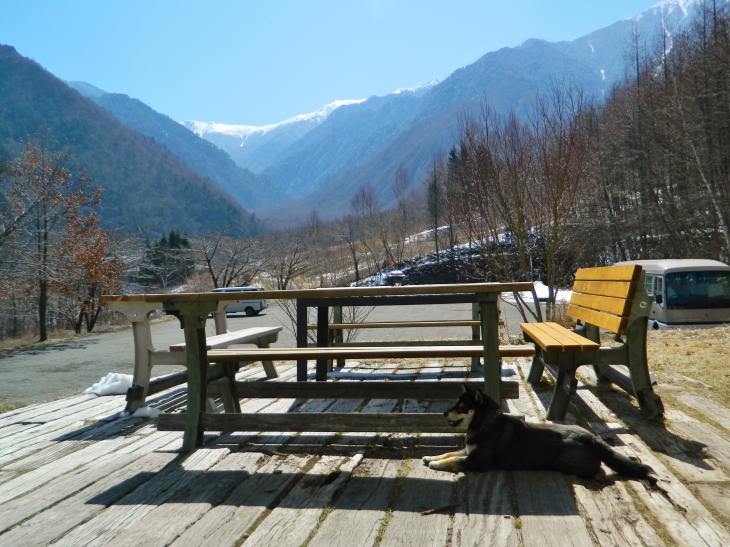
Morning came, bringing fresh sunshine into the room through the white curtains. We made the most of the included breakfast, realising as we stared out the dining room window, that we were quite literally somewhere in the mountains. A young shiba-inu who’d barked at us the night before, was sunbathing on the porch, and the kind hotel owner agreed to drive us back down the mountain to the train station.

DSCN0204.JPG

Sunbathing Shiba-inu

We drove for at least 20 minutes, past peaks and ridges and enormous dams; rivers cascading down into the valley. Our host pointed out a huge, white-capped mountain peak – Mt. Ontake – the second tallest active volcano in Japan, at 3067m. He told us we were in the Central Alps, and we would have had quite a long walk ahead of us to get back on track!

Back at Harano station, we soaked in the warm, valley sun, and gazed up at the mountains we’d hiked the night before, in awe of ourselves! Had it been light when we arrived and we’d known that was where we were going, I don’t think either of us would have even attempted it! The train took us back to Narai, and we continued where we left off.

~ Narai- juku ~

PhotoGrid_1528753052347.jpg

Exploring Narai-juku

The little Post Town was thriving in the morning sun. All the little wooden shops were open, and tourists were bustling up and down the narrow street, checking out the authentic goods for sale. You can buy lots of traditional, hand crafted lacquerware in the Kiso valley, as that is the region’s oldest trade, and you’ll see it displayed in almost every shop you pass in Narai, as well as homemade flavoured rice crackers, perfect energy snacks for hiking.

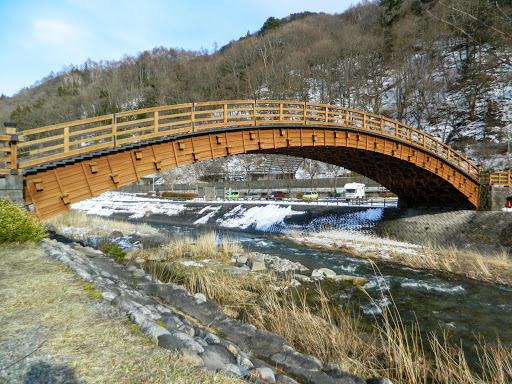
https__lh3.googleusercontent.com_-cIYjCuzKt0c_Wx7nv6X-lUI_AAAAAAAA1Iw_fqO8Utr5bLQC4hr271SPWIH-IPdzPamtACHMYBhgL_DSCN0201.JPG

Narai Bridge

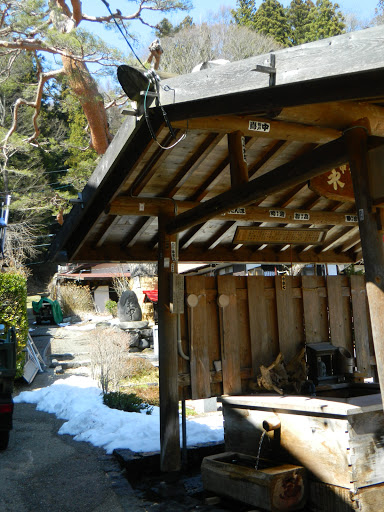
We checked out the arch bridge, inspired by a Japanese drum, and built out of 300yr old Cypress trees, and walked the length of the town, passing six ancient water fountains. We originally thought these fountains were linked to hidden shrines, but on further research, discovered that they are the original water fountains that supplied water to travellers and villagers in the Edo era, and are still very much used today.

https__lh3.googleusercontent.com_-eiqipBBPQ88_Wx7nv6TMHrI_AAAAAAAA1Hc_RqoGFleOGekwOqcyxO9qmUmMjP9Uxzd4QCHMYBhgL_DSCN0225.JPG

Traditional Water Fountain

Finding a tiny coffee shop along the street, with a door shorter than me, and flowers in baskets decorating the exterior, we decided to go in. We enjoyed some fresh drip coffee and marvelled at the miniature architecture inside the old building.

After purchasing some rice crackers for the road, we headed to the far end of Narai-juku, following signs for the Torii Pass.

PhotoGrid_1528324074432.jpg

~ Torii Pass ~

The Torii Pass crosses the mountains between Narai and Yabuhara – the next Post Town on the Nakasendo Trail – and is a steep ascent. It is most popular to do the route in the other direction, as it is slightly more downhill, but it made sense for us to do it backwards from our starting point in the Nagano Prefecture.

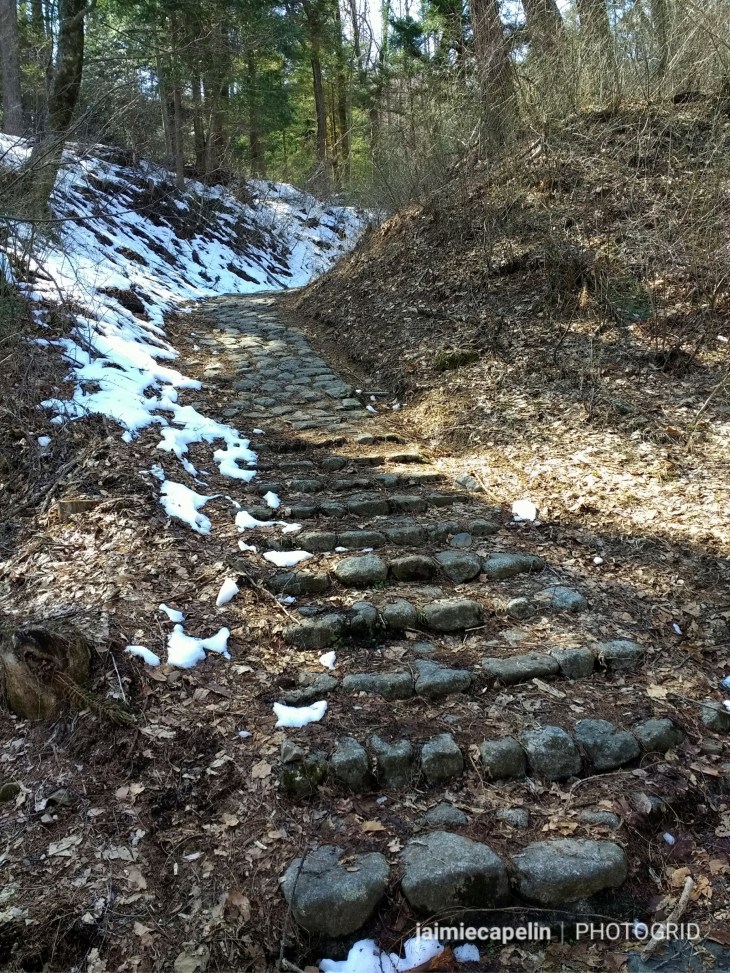
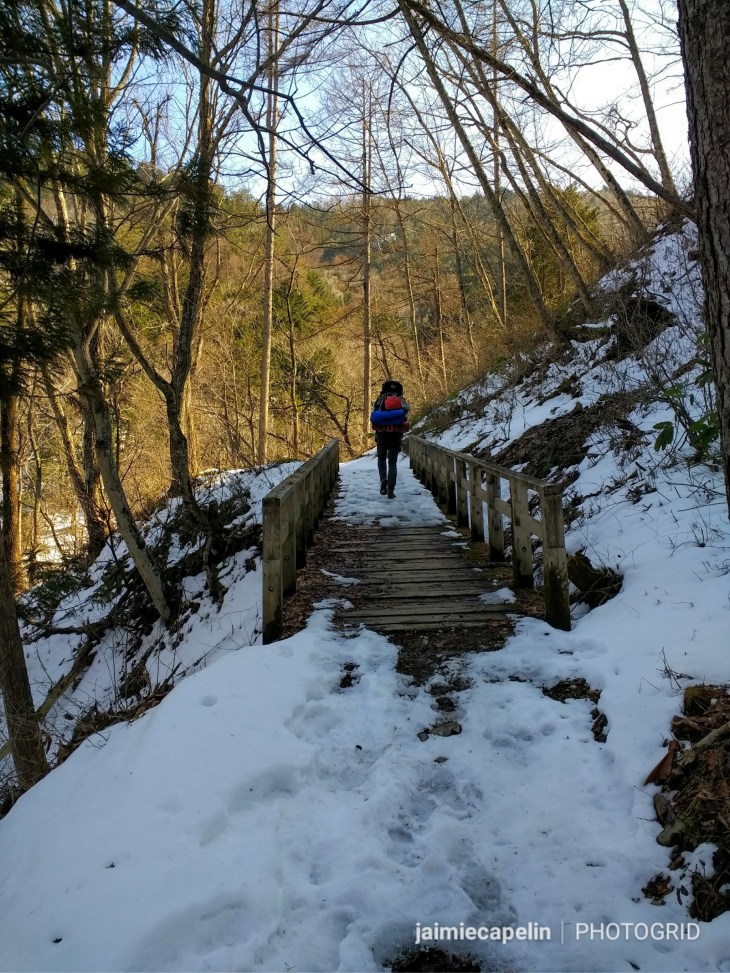
Leaving from Narai-juku late morning, we hiked up the stone-cobbled path, ascending into evergreen woodland, and crossing a gully with a river flowing down it. There was compacted snow on the path from the get go, so with our heavy packs on our backs, (Mic and I had swapped for the day, as his was a slightly better fit, even though they weighed the same) and careful footing, we were slow-going.

PhotoGrid_1528843477737.jpg

Start of the Torii Pass

Despite the snowy alpine altitude on the cusp between winter and spring, the sun beat down through the trees and we were in shorts and singlets in no time! We passed some Japanese locals who laughed at us, exclaiming that word again, “samui” (cold) while in their thermal fleeces, but in our defence, they weren’t carrying 18kilos on their backs, and they were going down hill! Another couple of hikers passed by, telling us to keep our eyes open for snow monkeys, as they’d just seen some crossing the gorge.

PhotoGrid_1528843497934.jpg

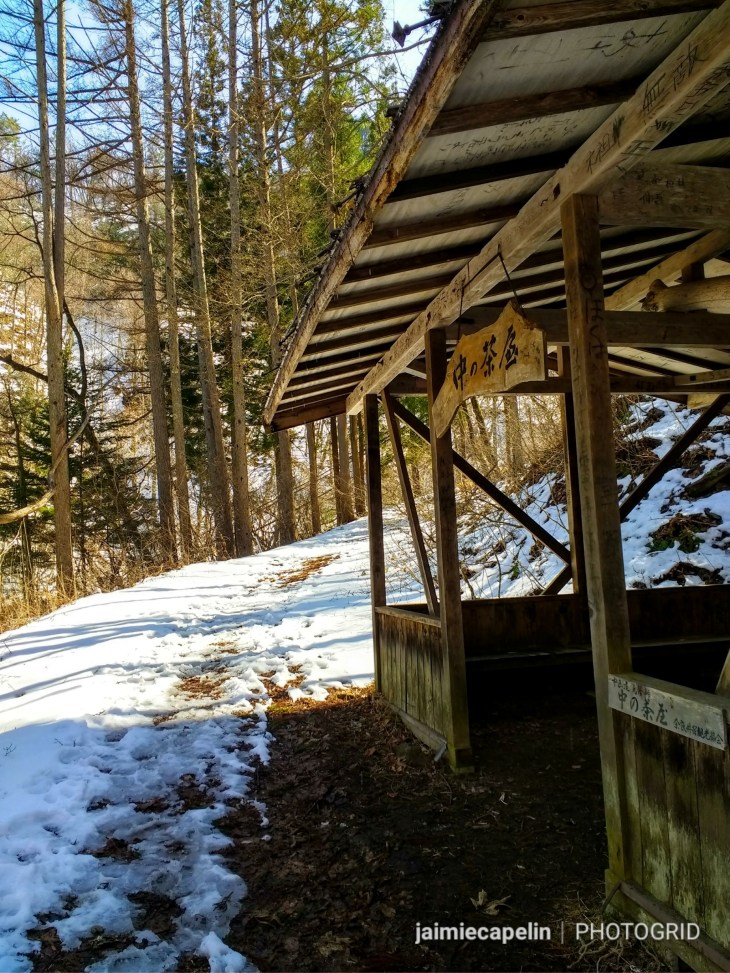
Old Rest House

Passing an original rest house – an old wooden structure like a bus shelter – we paused for a drink before continuing up the strenuous footpath. We turned a corner, and sure enough, there was a snow monkey, clinging to an overhanging branch right beside us, looking right at us before fleeing. Then I started noticing them everywhere, flying down the banks by the dozen, scampering over logs across the river to the other side, screaming to each other, babies in tow. Mic wasn’t as lucky – he wasn’t wearing his glasses.

PhotoGrid_1528843515875.jpg

Climbing the Torii Pass

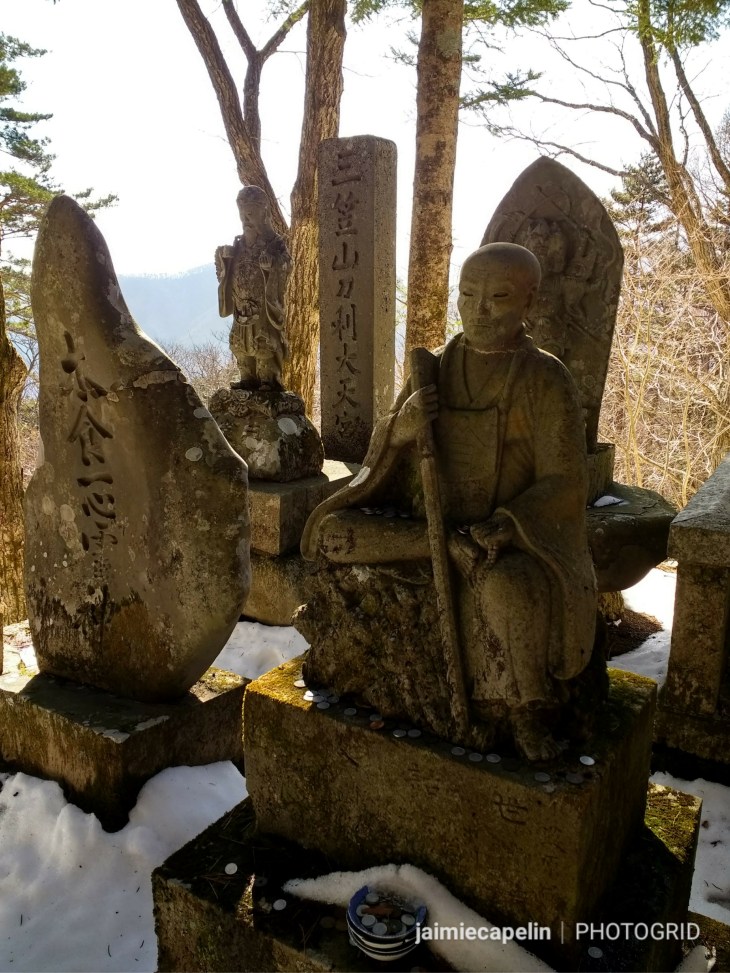
The path zig-zagged higher and steeper yet into the reaches of the mountain, snow and ice underfoot, up to the ridge where the road forked and began to descend to Yabuhara. From the path, we saw a big, stone torii gate, standing atop a mound covered in cedar trees. Climbing the stone steps up, we discovered an ancient, sacred Shinto shrine, overlooking Mt. Ontake volcano in the distance. There is a collection of ancient structures, surrounded by stone figures of samurai and monks, each figurine scattered with silver yen, and silhouetted against the golden mountain backdrop, in the light falling through the cedar trees.

PhotoGrid_1528843545766.jpg

Ancient Monk Statue

The path curved downwards, past postcard views of the Kiso Valley, along treacherous puddles of ice and frozen moss, until it flattened out into a cobbled woodland path, eventually widening into a road that meets up with the highway at Yabuhara. We’d successfully completed the first leg of our Nakasendo journey.

~ Yabuhara ~

Evening was approaching early as the sun threatened to disappear behind a peak, leaving us in the shadow of the mountains. Our backpacks were heavy, our bodies tired, and ducking down a steep, narrow residential road, Mic and I could almost taste dinner on our tongues, following the Westernized signposts for Yabuhara Post Town. Mic had already spotted a sign for a soba noodle restaurant, written in English, and was hungrily saying that he could smash a bowl of noodles!

We arrived at the top end of Yabuhara’s main street, to find it deserted, and the soba restaurant closed. “That’s alright, we’ll find something else!”

Yabuhara Post Town, like Narai, is a narrow, winding street lined with old wooden buildings. However, unlike Narai, it was more residential, with genuine houses, grocery shops, a clothes shop, a few barbers and a bottle shop. Everything was closed. We decided it was because it wasn’t 5pm yet, and usually restaurants open then for dinner, so we set off to find a camping spot.

PhotoGrid_1528927340229.jpg

Second Camp

We scoped out an ideal patch on the river bank, and as we pitched our tent, a local dog walker stopped to ask if we were camping there. Mic and I looked at each other nervously, “Hai,” (yes) we responded, and tried to ask if it was alright: “Kyampu OK?” The dog walker wafted the question away with his hand, “Yes, yes, OK, OK!” making an ‘OK’ symbol with his hand. Phew! But then he laughed and shook his head, “samui!” (cold). We all laughed, and he wished us good luck and continued with his walk.

He wasn’t lying. The sun was setting and the temperature was dropping rapidly. Stomachs growling, we walked the length of Yabuhara – we hadn’t eaten since our hotel  breakfast in the mountains – even the traditional guest houses were closed. Concern growing, we came across a man who’d just stumbled out of a doorway leading upstairs to the sound of people laughing and singing. “Sumimasen!” (excuse me) Mic said, grabbing his attention, and asking him where we could find dinner. The man doubled over, laughing, shaking his head. “No dinner! No shop!” he said, and then, pointing up the stairs, “Drink! Come, come!” he insisted, and with a shrug, we followed him up into a little bar.

~ Dinner with the Locals ~

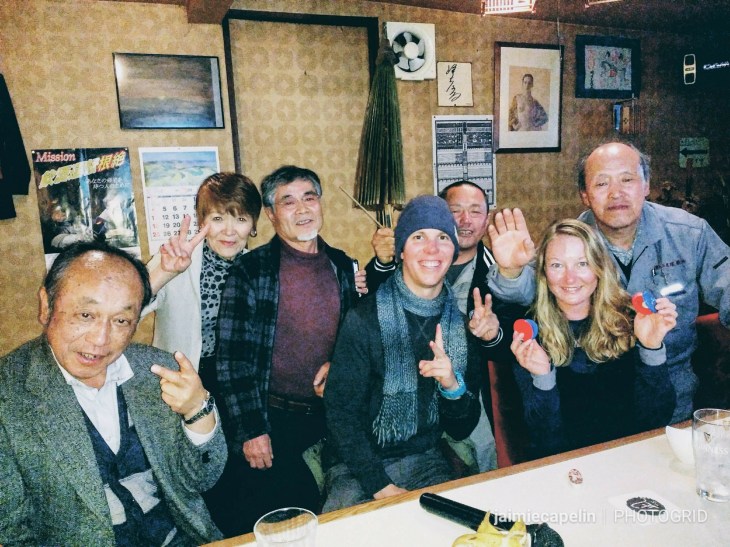
Five senior men sat in a line at the bar, each with their own entire bottle of Suntory whisky. The bar lady welcomed us, introducing herself as Mayumi, and the men all budged up so we could sit down between them. Mayumi poured us a glass of whisky each, donated kindly by the man I’d sat next to, and gave us both half a banana. She asked if we liked Yakisoba, and 15 minutes later, she produced two large bowls of noodles, filled with vegetables, seafood, pork, and delicious flavours, and watched with a warm, satisfied smile as we tucked in. I felt like a lost orphan in a story who’d just been taken in by a sweet grandmother!

The evening went on in swigs of whisky, with several phonecalls to wives, telling them to set up the spare beds for a couple of Gaijins they’d just found, repeating that word “samui” over again – too cold to camp. Then the microphones came out, and suddenly it was a karaoke bar! The old chap next to me did a Frank Sinatra duet with Mic, while I clacked some castanets, stifling my histerics!

As the hour grew late, Mic and I put on our jackets and asked Mayumi-chan what we owed. She looked at the chaps, and they all agreed, nothing! A gift from them! Shaking hands and saying “Arigato Gozaimas” (thank you very much) many times, we bid farewell to our new friends, overwhelmed by their limitless kindness, and made our way back to the river for another chilly night. At least there was no snow.

PhotoGrid_1528928011558.jpg

Dinner with the Locals

… To Be Continued …

Tokyo – Memoirs of a Gaijin

 Gaijin – literally means ‘foreigner’, and contrary to popular belief, is not intended to be insulting.

After around 12 hours of being airborne, I touched down at Narita Airport and was instructed to go and wait in a small side room at passport control. Bleary eyed and dying for a shower, I observed a lot of exchanging of foreign words, and many different people asked me the same questions and scrutinized my passport, and after a long, anxious wait, I was presented with my Gaijin Card – my ticket to reside temporarily in Japan.

This is standard procedure if you are entering on a working holiday visa, and can take hours if it’s busy, so ensure that any onward travel arrangements are flexible. 

 Now, I’m a quiet country girl, and when I think of major cities, not only do I imagine noise and lights, polluting smells and dirtiness, and too many rowdy people, but I expect it to be EXPENSIVE! I was about to discover how delightfully wrong that preconception was. I met with Ash and Ellie in the airport, two snowsports instructors from England, who I’d eventually be travelling to Hakuba with for the winter season, and we made our way into Tokyo.
PhotoGrid_1525465443893

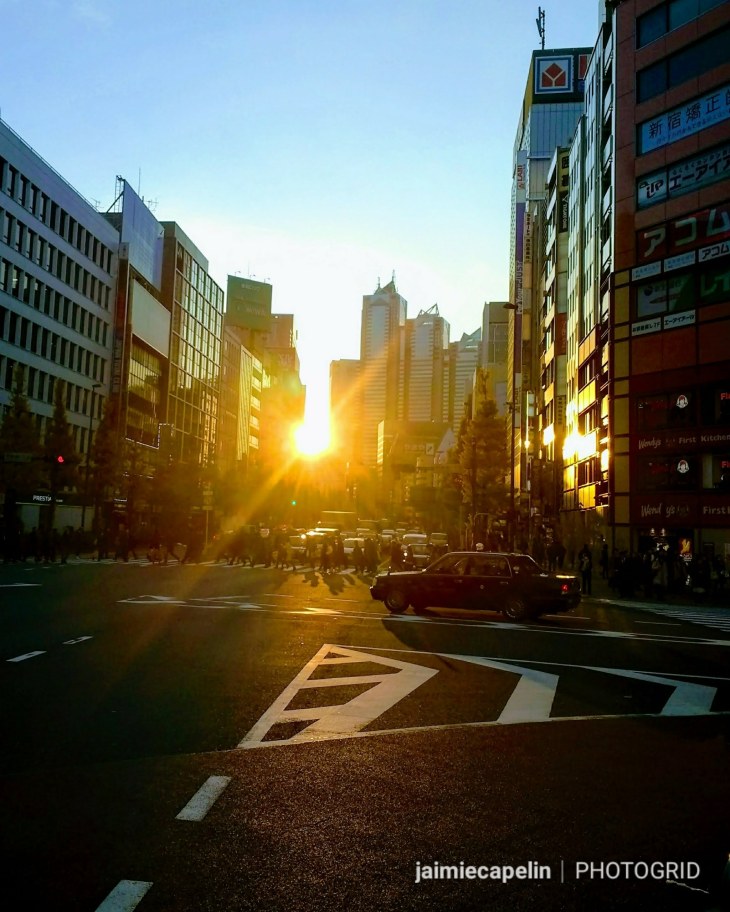
There are many budget-friendly options for transport to Tokyo from Narita, the bus to Shinjuku (right in the heart of Tokyo) generally being the cheapest. But because of the suburban location of our accommodation, it made sense for us to catch the Keisei train to Ueno. This took about an hour and a half, and the sun was shining hot on the backs of our heads, while we hugged our backpacks between our knees.

Like most major cities, Tokyo’s train network is pretty simple to get your head round. The main thing to watch out for when planning your journey is whether it is on the JR (Japan Rail), the metro, or another service, as they all use separate tickets. A typical Google Maps route will tell you what line each train operates on, but the most efficient thing to do is purchase a rail card, or ‘Passmo’, which can be topped up as often as necessary. These can be obtained from ticket machines at most stations, and will cover all train lines.  

Our hotel was a short walk from Minami Senju Metro Station, only three stops from Ueno. I was lucky to be travelling with Ash who had recommended the particular hotel for its brilliant value for money. We stayed in twin tatami rooms; comprised of traditional Japanese futons laid out on woven tatami mat floors. The sound of the busy city traffic echoed up from the road several floors below as the sun streamed in through the open windows. We chose our beds and settled our belongings, freshening up after our long journey, and headed out into the afternoon city sun.

There are plenty of accommodation options to choose from in Tokyo, so it’s probably best to decide where you want to be based and go from there. But often, you will find a tatami room in a hotel or guest house cheaper than a hostel dorm. Shoes are usually left by the front door in most guest houses, but if not, they should never be worn on a tatami mat.  

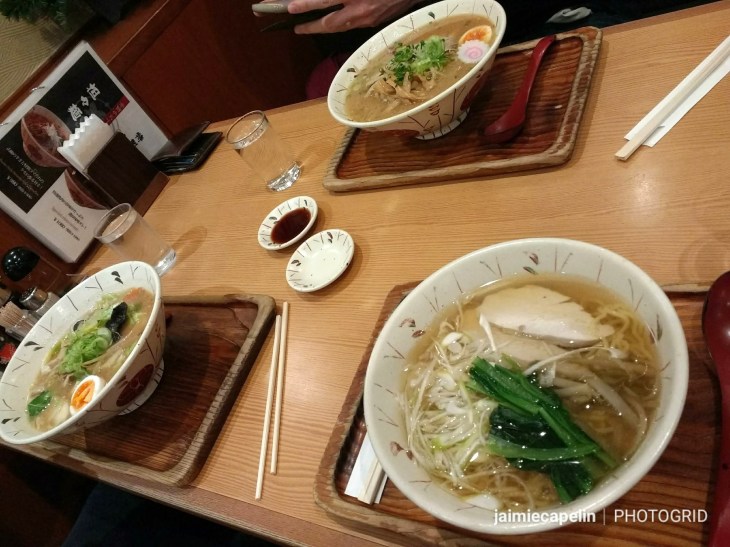
   When you’re in an iconic place on a tight budget, you have to decide where you want your money to go. For instance, my budget was prioritized for food! Japanese cuisine is world renowned for being beautiful, weird and wonderfully tasty, so I wanted to try as many things as my purse would allow. Our first stop was Asukusa, to a little ramen restaurant near Nakamise shopping street. You can rarely go wrong with ramen, with different soup bases to choose from, most commonly miso, soy and salt, and many additional toppings, not to mention my favourite part – gyoza – the little fried pork dumplings, dipped in soy and vinegar. You can usually find ramen for a very reasonable price, and it makes for a good, hearty meal.
PhotoGrid_1527282071207

Full and satisfied, we followed Nakamise shopping street through the market, beneath the gate with enormous hanging lanterns. Colours and smells filled the air as we passed stand after stand, overflowing with unique and handcrafted goods, and bustling with people.

You can buy street food everywhere, and the more you look, the harder it is to choose. Sweets, mochi, cakes, balls of custard deep fried in pistachio batter, sweet bread, melon pan, seafood, sushi, steamed buns, you name it! 

What is really noticeable about Tokyo, (and Japan in general) is how clean it is! Surprisingly, you don’t see any bins anywhere, so where does all the rubbish go!? Japanese culture is highly respectful, and everyone follows unspoken rules of general consideration to one another, carrying their trash home, keeping their voices and mobile phones quiet in public, and keeping their germs to themselves by wearing face masks.

~ Sensō-ji Temple ~

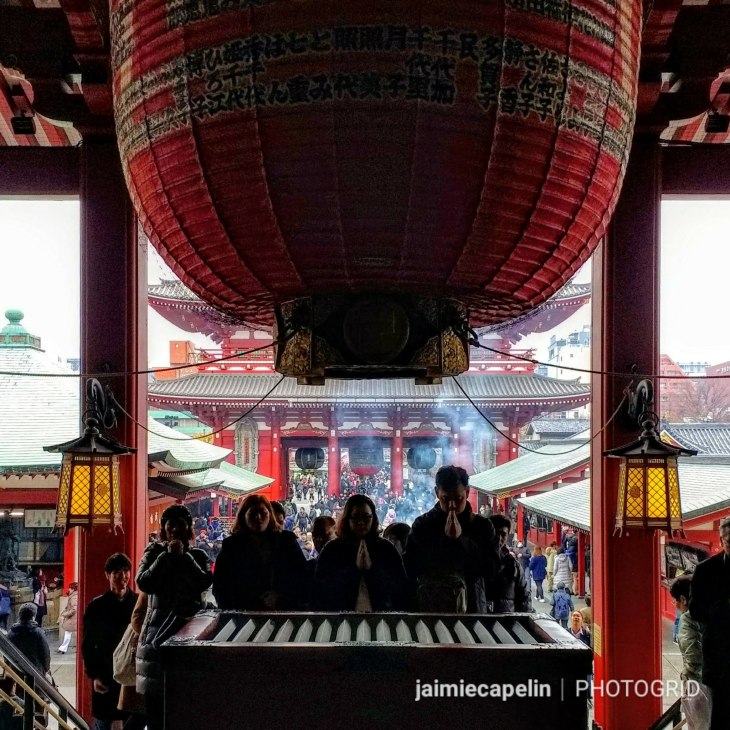
 At the opposite end of the food market lies the impressive Sensō-ji Temple, brilliant red laced with gold;  the five tiered Shinto pagoda standing adjacent to it like a backdrop out of an old samurai movie. Sensō-ji is Tokyo’s oldest and one of its most significant Buddhist temples. In a large basin at the front, groups of individuals burned incense, available for purchase from a nearby street vendor, wafting and bathing in the smoke as a cleansing ritual. We climbed the steps to the facade of the temple, where we joined a line of people taking it in turns to make an offering and pray to the gods.
PhotoGrid_1525463905908

~ Temple Etiquette ~

   There are thousands of temples in Japan that can be accessed for free, but it is respectful to make an offering of small change (apparently the 5 yen coin is designed for this very purpose, and is worth less than an English penny!) The customary routine is to throw the coin into the offering box, bow twice, clap your hands twice, bow again deeply, and then pray. If there is a bell, ring it prior to this to awaken the gods. Of course, you don’t have to be a devout Buddhist to do this – plenty of tourists from other religions, or no religion at all, join in with the culture out of interest and respect.

  Beyond the Sensō-ji Temple are beautiful gardens; little arched footbridges over ponds and streams teaming with colourful Koi. A multitude of different seasonal trees and plants line the path, ensuring a beautiful frame for the temple all year round.
PhotoGrid_1527282032951

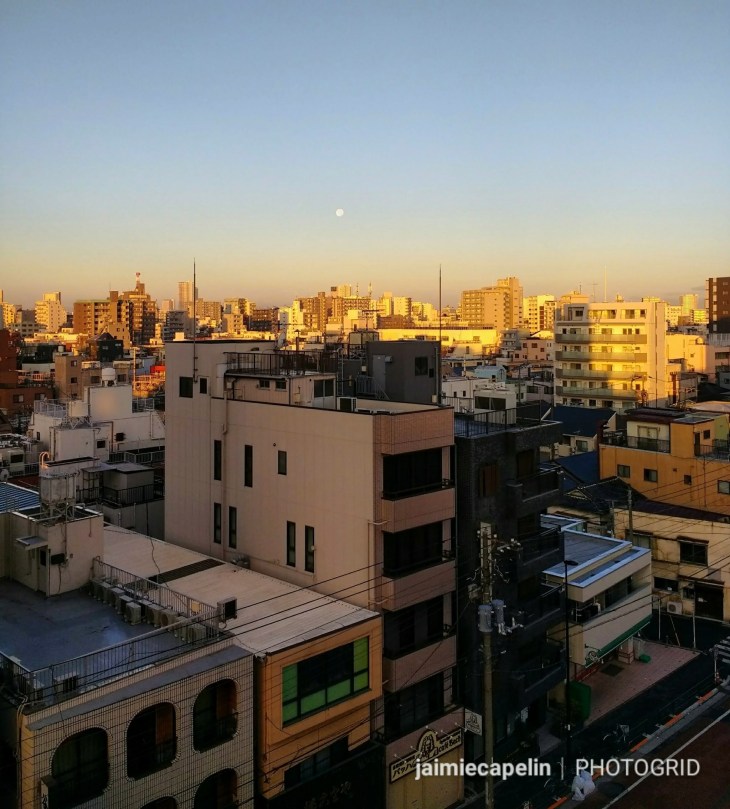
 Wide awake at 5am, jet lag imminent, I saw the sun rise and the moon fade over the buildings outside the hotel window. Make your way through any town or city in Japan, and you are sure to find the streets dotted with vending machines. If you’ve forgotten your morning coffee, or need a quick refreshment, simply slot your spare change in and out pops a can of hot coffee, or tea, chocolate, cold juice, soft drinks, water, even soup! I trialled a hot can of coffee; very sweet and not very strong, but I wouldn’t knock it if nothing else was available!

Breakfast in Japan is much like dinner – rice-based, usually with fish, vegetables or salad – though most places will now offer bread and pastries. If you are self catering and want something more ‘breakfasty,’ you can buy cereal in most supermarkets.

After a cheeky cheat breakfast at McDonalds, Ash and I made our way to Ueno. Crossing the road outside Ueno station, we walked along the side streets, where vendors were setting up hundreds of market stalls all along the already buzzing shop fronts.

There were fish stalls, fruit stalls, candy, bags of dried goods and nuts, souvenirs, clothes, and much more. Arcades with loud tunes coming out of them, where grown adults sat in endless rows inside, gambling in a game called ‘Pachinko:’ little silver balls spinning round in circular basins, like a strange, up-right pinball, making an awful, clattering racket. Every other shop is a snowsports shop, or a restaurant with rich aromas wafting out. The market vendors all welcome you in their native tongue as you pass by, trying to tempt you in with their array of exotic goods.

~ Ueno Park ~

Back onto the main road, Ash led the way up some large stone steps, through a canopied courtyard, and into peaceful Ueno Park, with shrines nestled between the trees. Wandering past a museum that was showcasing some ancient British art, (and drawing quite a crowd), we climbed up a mound that had become a sacred resting place, covered in colourful trees and swarming with chirrupping birds. Out in the central area of Ueno Park, people strolled around a big peaceful water fountain, while a man played a cello beautifully, attracting a small crowd.
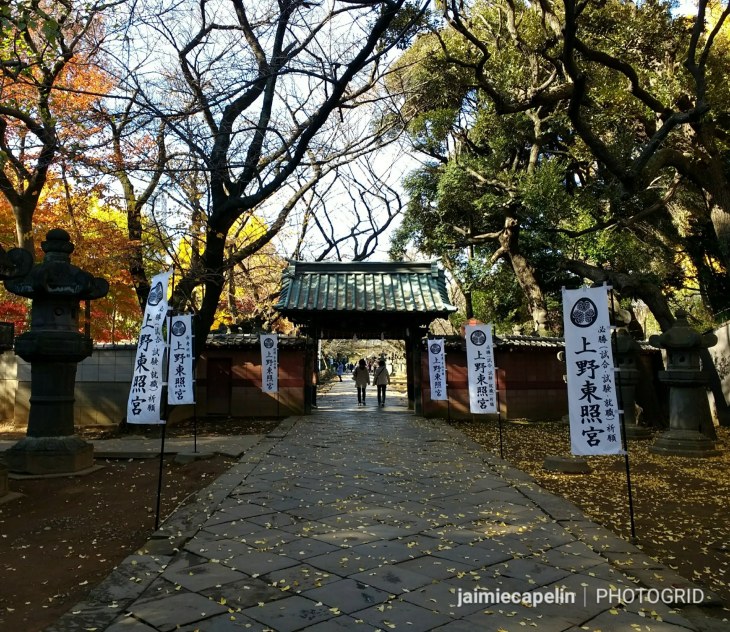
PhotoGrid_1525464628388

~ Ueno Toshogu Shrine ~ 

Bowing beneath a wooden torii gate, we were led down a pathway lined with hand-carved stone pillars, towards the flame of Hiroshima & Nagasaki – a haunting living-memory of the 1945 atomic bombs dropped on Japan by the US forces – preserved in a monument in the beautiful precinct of Ueno Toshogu Shrine. Yuzu trees surround the precinct, bursting with their ripening, citrus fruit. The temple itself was stunning in the midmorning, winter sun, with a solid gold facade, decorated with intricately ornate dragons, carved uniquely and coloured with shining sapphire blue and violets.
PhotoGrid_1525464403955

~ The HUB ~

Happy Hour was approaching fast, and our group was growing as more seasonal workers arrived from England. We met Jamie, a snowsports instructor working with Ash and Ellie for his first season in Japan, and we made our way to Akihabara to meet Dave and Clare, who also work with Ash and the others… (and who I knew from my previous snow seasons in New Zealand – small world!)

There are plenty of Japanese and multi-cultural bars all over Tokyo, but if you’re new to the city and looking for a cheap bevvy and fellow English speakers, you’re never very far from a HUB. This is a British-style pub, where quite often Japanese people go for the opportunity to practise their English with real Gaijins! HUBS have a typical pub menu, for very reasonable prices, and often, their Happy Hour is extended.

We sat on the red leather-bound bar seats, surrounded by classic stained-glass window booths, and sticky pub tables, listening to generic British rock music. A man sat nearby, smoking a cigar, giving it that real dirty local’s-pub-in-the-90s feel! We commenced our drinking of Happy Hour cocktails, confidence growing with each one, making the next one easier to order in broken Japanese!

~ Yakiniku in Shinjuku ~

With quite an appetite growing, it was time to soak up some of the booze with some delicious, Japanese Yakiniku. Taking our shoes off before we sat down, (common dining etiquette in traditional restaurants), the waitress fired up the flame grill sunk into the centre of our table, and we began to choose platters of meat off the menu.

‘Yaki’ means grilled, and ‘niku’ means meat. You simply order your cuts raw, and cook them yourself at your table. This is a more expensive dining experience, as it is usually a flat rate, where you are given a time limit. But if you have a big appetite, you definitely get more than your money’s worth, as it’s all-you-can-eat and all-you-can-drink. It is ideal for groups, for instance, not everyone in our group knew each other yet, so it made a good introduction for bonding!
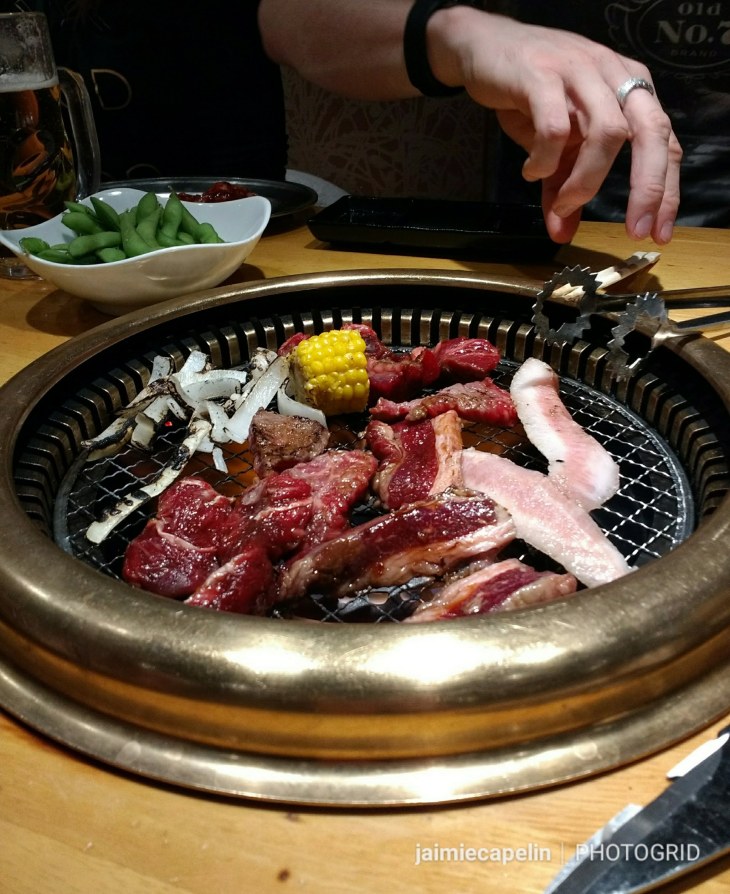
PhotoGrid_1525464834511

I started with cow tongue! Lucky I’d had a couple of drinks, or I might have over-thought it, and wouldn’t be able to tell you just how tender and tasty it was! Many steaks and rashers and various vegetables were brought out, along with endless drink top-ups, until our two-hours were up. Stuffed and merry, and well-bonded, we staggered starry-eyed through the city-lights of down-town Tokyo.

~ Seven Storeys of Snow Stuff ~

The morning after the night before… In down-town Tokyo, you tend to find entire streets dedicated to a certain product – for example, Ochanomizu Street near Akihabara, is lined specifically with musical instrument shops, and is any musician’s dream. We were, of course, heading into a ski season, therefore, the snowsports district was our destination! Taking a sobering walk from Ogawamachi Station, sipping on ‘tea lattes’ from a coffee shop in passing, and taking in the surroundings with sore heads, we made our way to Yasukunidori Street – shop after shop selling everything you need for winter sports. We browsed until it got dark, piling into tiny elevators that took us to every floor in these compact super stores. I found my snowboard jacket on the seventh floor of a shop called Victoria, and I don’t think any of us left empty-handed.

~ Electric Dreams in Akihabara ~
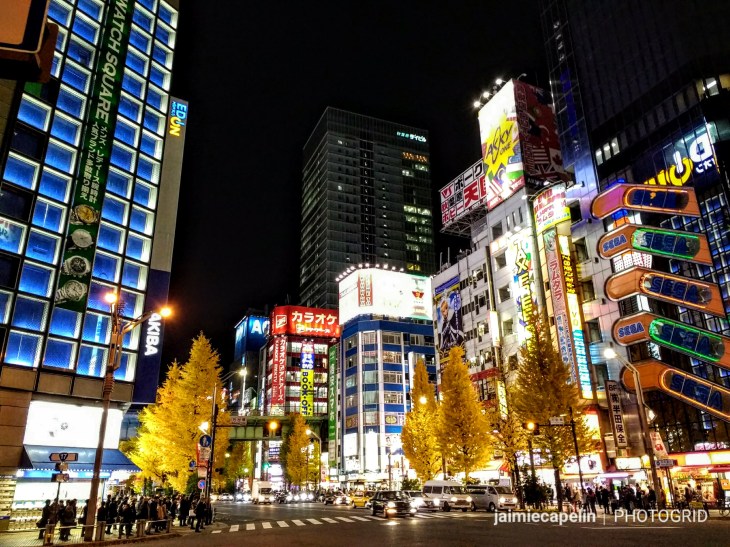
PhotoGrid_1525464305740 Known for its abundance of electrical, gaming and tech shops, this is the district for nerds, (and I say that fondly!) Enormous TV screens flicker and shout, animé characters flit on and off screen, their Japanese cartoon voices yelling happily. Theme tunes compete with one another, while music plays out from somewhere in the sky, and another tower block of stores is playing an advertisement loudly over it’s tannoy. It’s noisy; it’s bright; it’s a little bit overwhelming, but it’s great, and this is all before even entering any of the shops…

Crowds of people had flocked to a corner near a train station – business men and women of all ages, standing still in a small radius, all staring intently at their phones. I glimpsed their screens as I passed, wondering what they were doing, and realised they were all playing ‘Pokémon Go’, (a mobile gaming app, for those that don’t know, that uses location to find cute little Japanese monsters, “catch ’em all” and battle them against each other.)

Inside the stores, each floor again is dedicated to something specific, be it consoles by brand; every Nintendo game that ever existed, in order of production; trading cards, alphabetized by aisle; collector’s vinyl models of video games characters, etc. This really is the fanatic’s dream. Often, on the top floors, you’ll find the ‘Adult section’… Animé pornography is a thing – especially in Japan where real porn is EXTREMELY taboo – and there are trading card games, often played by men of a certain age, which depict provocative animé girls. These cards are displayed wall to wall, but most amusingly, due to Japanese modesty, it is someone’s job to go around the entire shop floor and strategically place little stickers over certain parts of each individual card! What a job!

~ Rush hour on the Tokyo Metro ~

Making our way back towards the metro station, we passed busy street food stalls, and interesting cafés such as owl and cat cafés. There were people everywhere, crowding around vendors for their supper; lining up for fresh Takoyaki (grilled octopus, rolled swiftly and skillfully into floury, seasoned balls with a pair of pointy metal sticks); and tucking into hot custard filled puff pastries, fresh from the baker. Smells filled the air, tantilising our senses, and by the time we got into the busy metro station, we’d been tempted enough to buy some cream-filled buns from a street stand. Delicious!

The train arrived. Like a tin can jam packed full of sardines. No one seemed to get off, but the entire platform of people was somehow squeezing on. Sometimes at rush hour, the station masters push the crowds of people onto the trains to fit as many as possible before the strictly timed doors close. I don’t remember how I claimed my place slap bang in the middle of the carriage, clinging on to a single hanging handle above me, with my feet barely touching the ground as bodies pressed against me from every direction. The crowd moved with the train like seaweed with the current, all joined together. Nobody talks on the train, and mobile phones are supposed to be kept off, or silent – talking on your phone on Japanese public transport is considered very rude.

~ Konbini Dinners ~

That evening, we were all too tired to think about spending money on going out for dinner, or cooking at the guest house, and so I had my first experience of a ‘konbini dinner’. Konbini is a word the Japanese have coined, meaning ‘convenience store’. We walked in the shop to a chorus of “Irasshaimase” (welcome) from all the staff, and was overwhelmed by the selection of products all sparkling in their strange, colourful packaging. Shelves of perfectly spherical cakes, and bread filled with sweet red bean paste, buns, pastries, and many things I couldn’t identify! I bought a box of gyoza, and a big bottle of Pocari Sweat – an electrolyte drink – and took it back to the hotel room for an early night.

There are three main convenience stores in Japan – 7eleven, Lawson’s, and Family Mart, and you will pretty much find everything in them: toiletries, first aid, stationery, hot & cold drinks, alcohol, snacks, groceries, even a selection of ready-meals that they will heat up for you instantly behind the counter! Not only do they provide microwaves, but there is usually use of a hot water earn for filling up your Cup-Noodles, an international cash machine, a scanner/printer, a recycling station, toilets, and pretty reliable wifi. These ‘konbinis’ are everywhere. In the city you might find two or three in a single street, but in rural Japan they are usually placed somewhere along the main road, away from residential areas.

~ Meiji Jingu Shrine ~ 

The morning presented blue skies and warm winter sun. Ellie, Dave and Clare left the city for the mountains, so Ash prepared Jamie and I for a long day of touristing and sightseeing. We entered the Meiji Jingu Shrine park at one of the north entrances, from Minami Shinjuku, walking beneath the first impressive gate onto a wooded, gravel path. The gates at every entrance, and throughout the park, are 1500 years old, and protect the shrine from evil spirits, and many people bow as they pass under them, often turning to bow again once through. The park is enormous and filled with a network of winding footpaths through woodland, fairytale streams, and gardens. In the centre of the park is the ancient Meiji Jingu Shinto Shrine.

‘Shinto’ is Japan’s oldest religion, and most traditional. It is mostly a practice of rituals, connecting present day with past ancestors, and is more of a collection of ancient Japanese beliefs than an organised religion. Buddhism is probably the most commonly practised religion in Japan, and though they are totally separate, the two religions stand side by side, with a lot of people practising both.
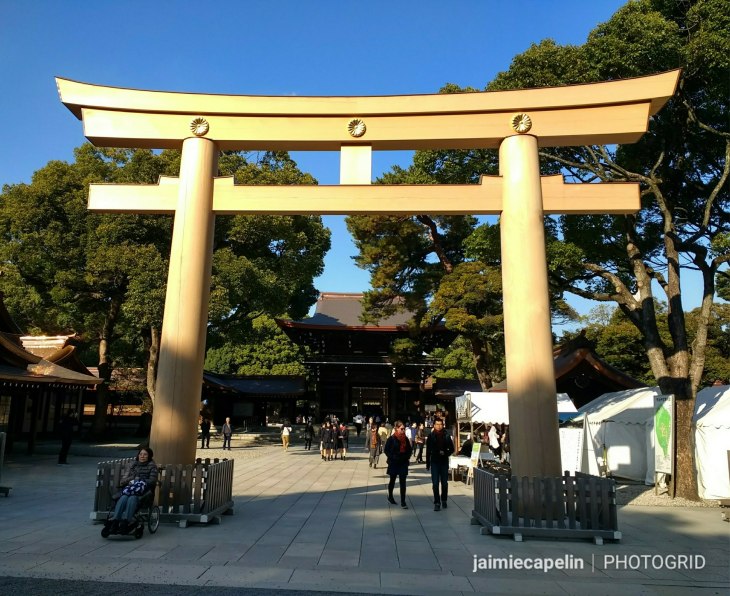
PhotoGrid_1525465739775

Passing through an open courtyard, we approached the purification fountain where you cleanse before entering the shrine. The water trickles from the top into a basin, equipped with wooden ladels, which you use to wash your left, then right hand. Then use the ladel to pour a little water into your cupped hand, and wash out your mouth. Rinse the ladel before replacing it.

Two perfectly round trees stand side by side outside the shrine, decorated with symbols of  thunder and rain, which represent the wish for good seasons. The birds in the trees all around the shrine park create a serene and peaceful atmosphere, despite the constant influx of tourists, worshippers, and daily processions for wedding ceremonies.

On the outer reaches of the park are two walls either side of the footpath – one is built of thousands of sake barrels; the other wines and whiskys, all donated to the emperor from around the world.
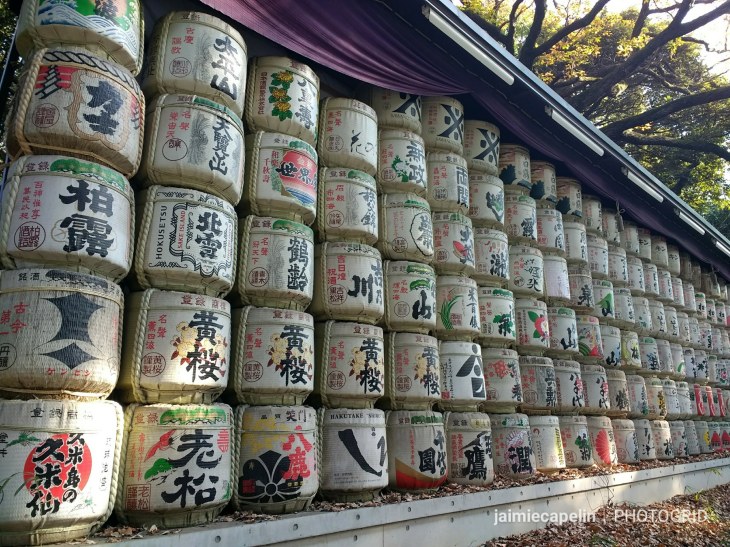
PhotoGrid_1525464915168


~ Harajuku ~

Exiting the Meiji Jingu park at the east gate, Ash introduced us to the Harajuku district – famous worldwide for its fashion. Harajuku girls strut the pavement like a catwalk, wearing anything ‘Kawai’ (cute), from novelty school uniforms, to animal ears and tails. Colour is key in Harajuku fashion, anything bright and sparkly, with enormous platforms and blue or pink hair. I found the style quite similar to cyber-punk, and wished I’d donned my best Gwen Stefani outfit, instead of going for the totally unglamorous ‘backpacker look!’
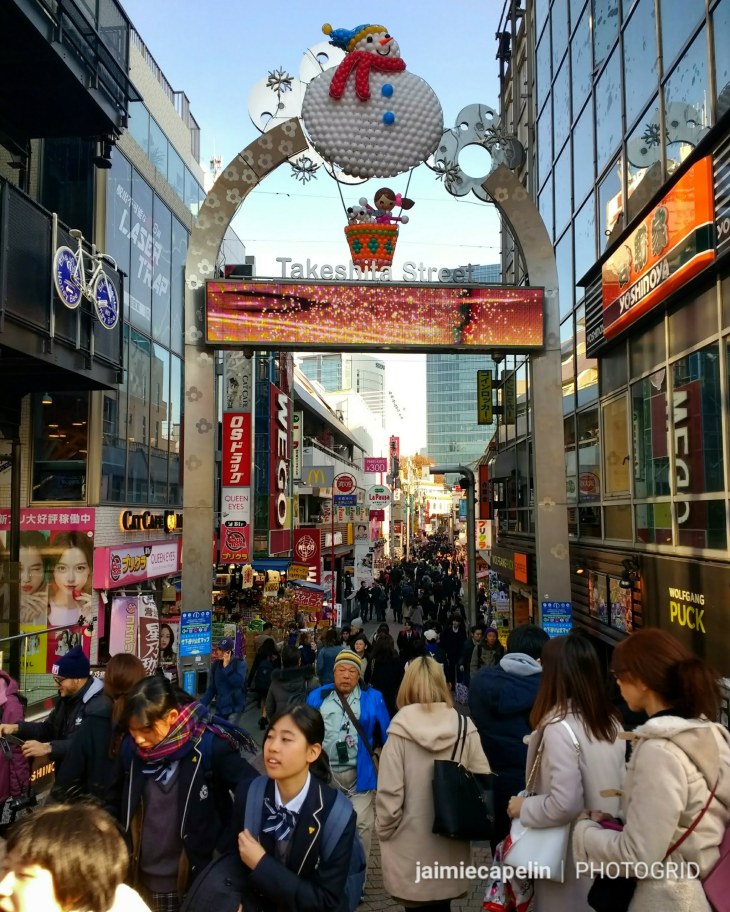
PhotoGrid_1525465504364

Takeshita Street is the hub of Harajuku – a narrow back street, heaving with busy clothes shops, shoe shops, and popular crepe shops! We stopped for a crepe, with strawberries, banana and cream, and marvelled at all the colour and hype happening around us. A group of girls were squealing excitedly as four identically dressed boys appeared from a building, and they had their selfies with them, while an older Western man stood on another corner, looking like a Rolling Stones extra, having his photo taken with more excited Japanese girls.

~ Shibuya Crossing ~

When in Shibuya, you simply must witness the crazy Shibuya Crossing, rumoured to be the world’s busiest intersection. At 2pm on a Thursday, it didn’t quite match that expectation, but was still impressive, and actually, I don’t think I’d enjoy being there at rush hour! If you don’t mind emersing yourself in a dense crowd of people just to cross the road, it’s actually quite an experience! The light turns green and thousands of people disperse across the zebra crossings in all drections like dandelion seeds.

If you’d prefer to watch from a safe distance, there is a Starbucks in the building adjacent to the crossing, which is positioned to look directly down upon it, though you will probably have to fight for a window seat. 
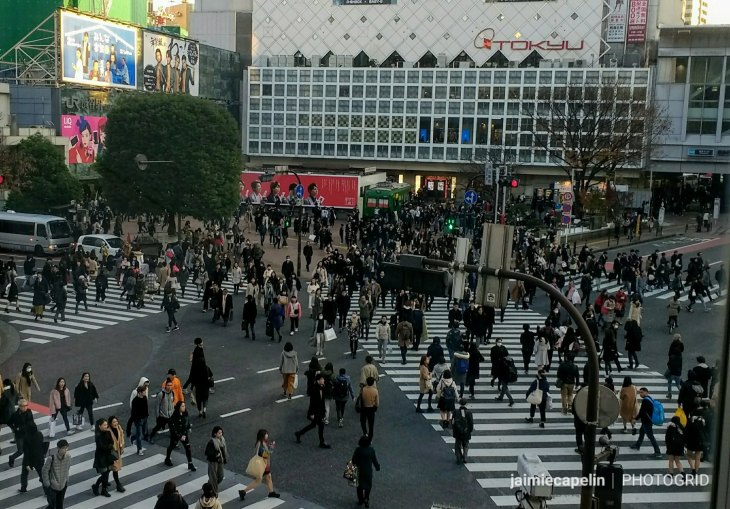
PhotoGrid_1525465269209

 We went for late lunch in a little restaurant Ash found, tucked secretly up on a tiny nook of a building, as most good restaurants are. Ginger fried pork and rice, and katsu chicken, served with a raw egg filled our stomachs, before we headed to Shinjuku to book our bus tickets out of town.

~ Godzilla in Shinjuku ~

Walking from Shinjuku station, you cannot miss Godzilla, roaring down from the top of the Toho building. This is the home of the Godzilla franchise, and the studio in which it was produced, therefore it’s not surprising that the enormous, 40ft high monster guards his home, roaring occassionally into the city.
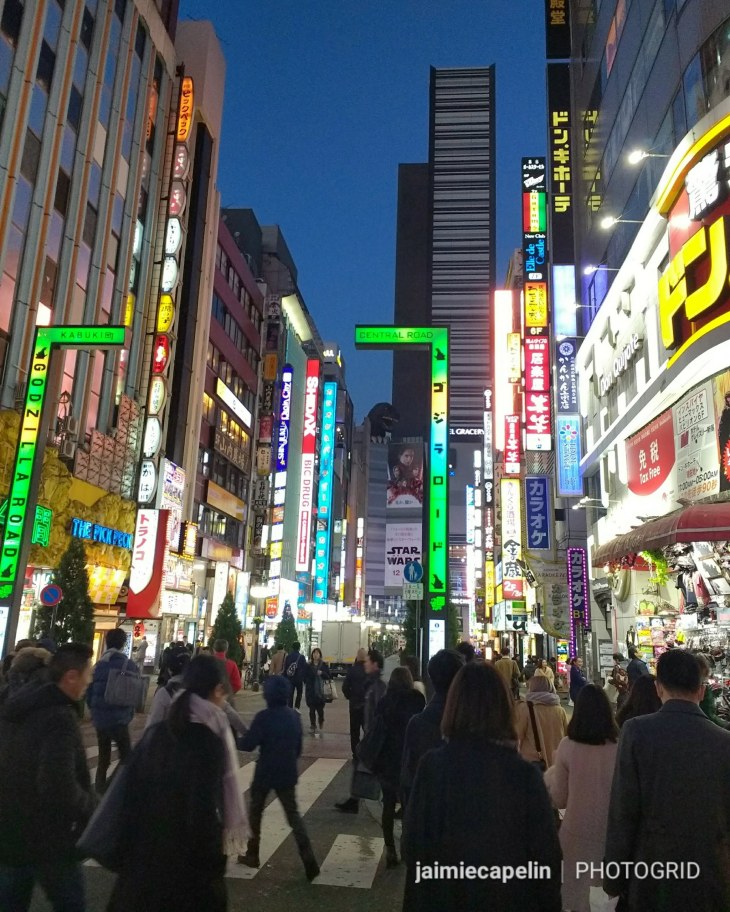
PhotoGrid_1525465397923

~ Pokémon Store ~

The Sunshine Building in Ikebukuro has a waterfall-wall centre-piece, surrounded by a mezzanine viewing platform, where business people sit and eat their lunch. The Pokémon Store is on the second floor, and is every 10 year old’s dream (and twenty-something year olds!) Being one of Japan’s biggest and most well-known childhood franchises, it has to be done! Plush Pikachus as far as the eye can see; key rings; T-Shirts; shoes (Pikashoes!) all lighting up the shelves with their bright colours. Ash and I cuddled every toy in the shop (completely revelling in the fact that I was watching a real life Ash choosing his pokémon,) before committing to purchase JUST ONE!

PhotoGrid_1527715272519

~ Tokyo Heights ~

There are many famous landmarks in Tokyo from which you can take in the views of the city lights from above, two of the most iconic being the Sky Tree, and the Tokyo Tower. However, if you don’t fancy paying for the privilege of going up a famous landmark, the Tokyo Metropolitan Government Building offers 360 degree views from the 48th floor for free! The building has an East and West tower, and you can choose which side to go up, or do both! 
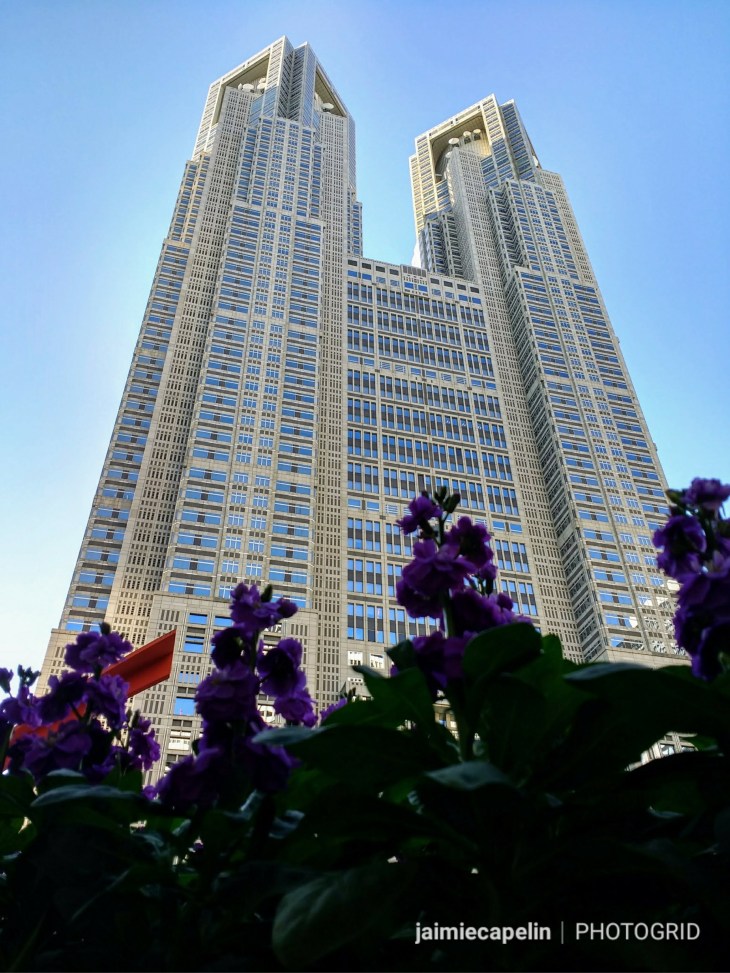
PhotoGrid_1525465048171

  The queue for the elevator was empty, so the steward let us straight in, and up we went to the 48th floor. A huge hall, with souvenir shops in the centre, and panoramic windows all the way around the edges stood before us. The view was breath taking, and my sudden jelly legs were well worth it! Silver skyscrapers poured over the landscape for miles, with vast, green parks and gardens in between, the low, winter sun glinting off of everything it touched. Mount Fuji sat in the distant South, a lonely plump cloud sitting neatly on top. We absorbed the sights and took a hundred photos before heading back down to Earth, but not without stamping my journal with the ink stamp provided in the tower…

Most landmarks and attractions in Japan provide a unique little stamp and ink pad for tourists to put in their journals – if in doubt, look at a nearby train station or tourist information. 
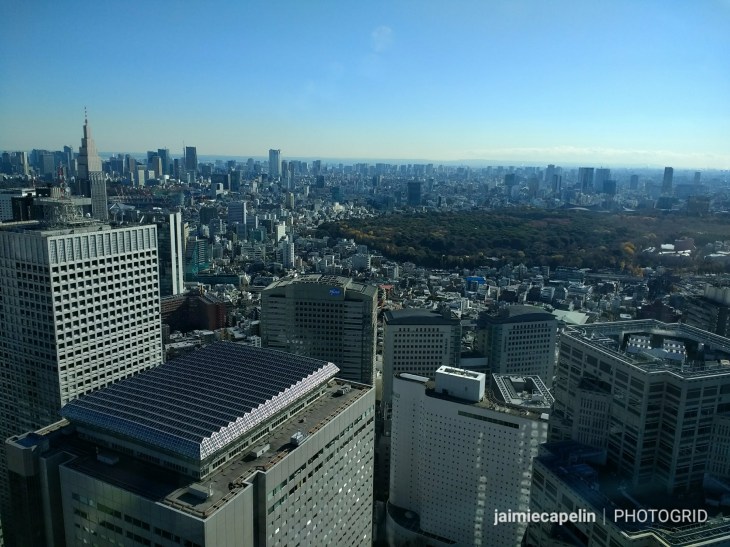
PhotoGrid_1527715250700

~ Shinjuku Bus Terminal ~

Tokyo’s main bus station is, weirdly, on top of a building, so you are required to find the elevator at street level, which I would never have looked for if Ash wasn’t there! It is located at Shinjuku Station South, (signs can be followed from inside the station). Buying tickets is relatively easy, using the multi-lingual self-service machines, and there is a large indoor waiting room, with facilities and vending machines for long waits. Finding our stop, we boarded the 3pm bus to Hakuba, and followed the setting sun into the mountains of Nagano for winter, where I’d part ways with the others, and begin my own seasonal-working adventure in Hakuba Goryu.

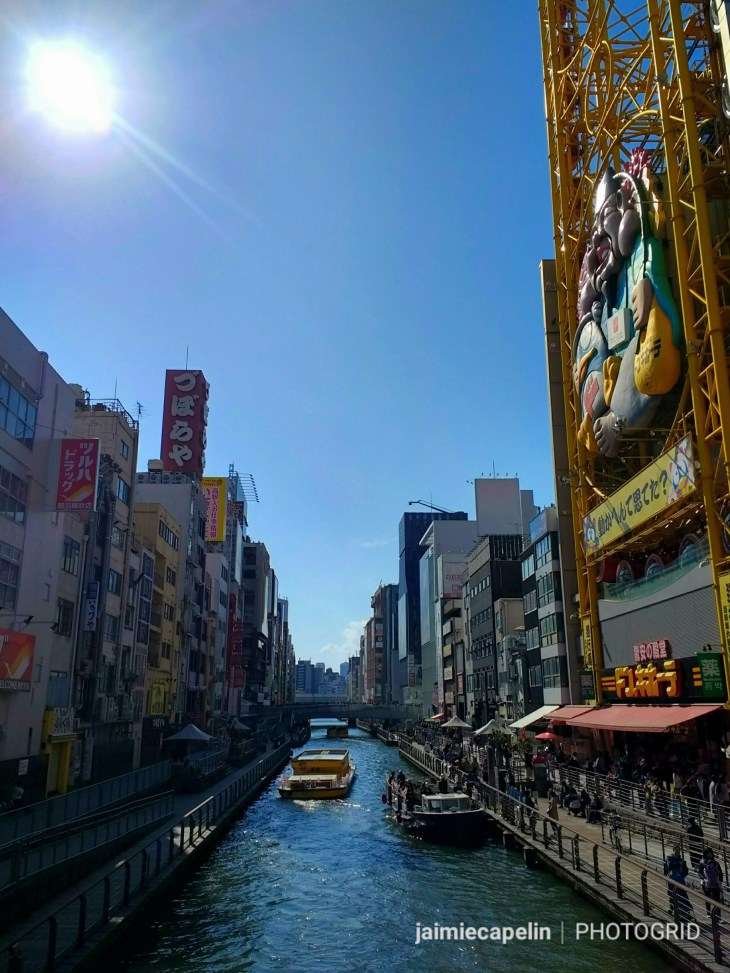
 

Okinawa, Japan – A Series of ‘Not Ideal’ Events

Okinawa is the last place I visited in Japan before flying back to the UK, and therefore the freshest to write about, which is why I have chosen it as my first Japan blog.

It is the biggest and most populated of the Ryukyu Islands, half way between mainland Japan and Taiwan in the East China Sea, and is home to Japan’s most critical American military base. Okinawa is quite different to mainland Japan, and wasn’t altogether what I expected…

I was travelling from Osaka city with two companions from the previous season, Taylor and Mic, and after several weeks of backpacking, all three of us were ready to sit on a sunny beach on a tropical island and relax. We’d planned our routes and times thoroughly, and were feeling pretty confident. Here, it is probably important to note that Osaka has two international airports, and they are nowhere near each other. Kansai Airport is where you’d likely catch a flight to Okinawa from, while Osaka International is the one Google Maps will default to, if you’re not quite specific enough… We went to the wrong airport.

A hair raising, hour-long taxi ride later, (worth more than the cost of our flight), we arrived at the RIGHT airport, about 3 minutes too late. The budget airline were able to put us on the next available flight, which was roughly nine hours later. So our first day in sunny Okinawa was spent in Kansai Airport’s domestic terminal. Not ideal.

Fortunately, nothing went wrong with our flight. The runway staff finished loading the luggage hold, stood in a line beside the plane, and bowed in unison, waving us off in true Japanese fashion as we taxied to take-off. Our flight took about 2 hours, with stunning in-flight views of the sunset, before descending over the twilit islands of Ryukyu. Our plan was to catch the bus into Naha city, near to where our pre-booked Air bnb was located. However, we’d arrived nearly 10 hours later than expected, and the island’s public transport isn’t very forgiving… We’d missed the last bus to Naha by minutes, and had already spent half a week’s budget on taxis that day, so, with a heavy sigh and some uncertain giggling, we adjusted our backpacks and began the two hour trek beneath the stars into the city.
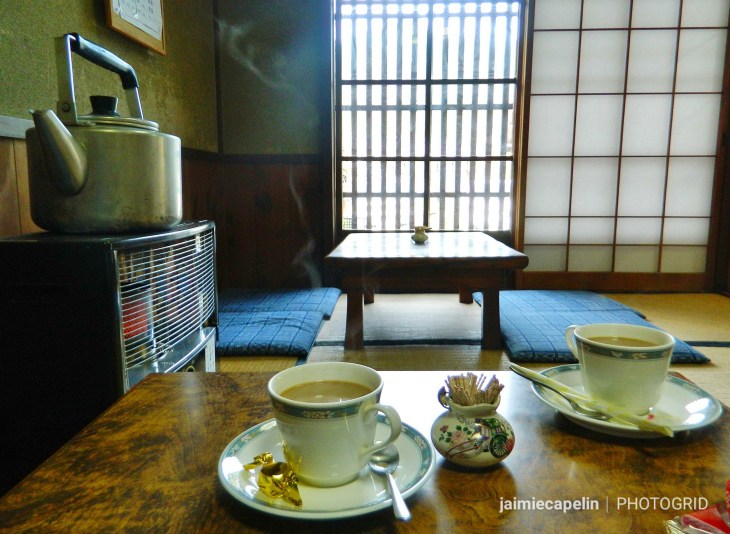
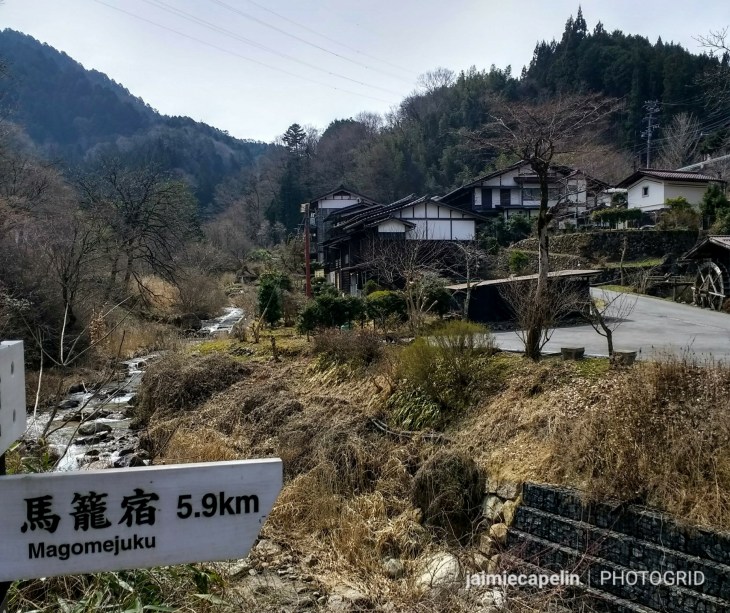
At least it wasn’t raining. In fact, the temperature was noticeably warmer than mainland Japan, and despite the heavy luggage and worn out bodies, the walk was quite pleasant. We eventually reached our Air bnb, (via a supermarket for some instant noodles) and after a fairly disappointing shower, and an even more disappointing “instant” dinner, (which required the miniature kettle to be refilled three times), it was time to call it a day. Taylor went to close the sliding doors dividing the rooms, and found that only one door moved, sliding uselessly in the middle of the large door frame. He peered through the wide open gap, and let out a slightly maniacal laugh.

“That’s not ideal,” Mic said.

PhotoGrid_1525819526921

~ Kokusaidori Street ~

Morning came with the sound of birds twittering in the trees, and the shush of traffic a couple of blocks away. There was a bit of blue in the sky, and it was bright and warm. We drank the free coffee provided by the Air bnb, and took off down the road to the main international strip, about 10 minutes away on foot.

Kokusaidori Street – noise; both visual and audio – sales men and women attempt to catch your attention at every shop entrance, ornamental dragons in multi-coloured pairs line the displays in all shapes and sizes. Novelty toys, mugs, T-shirts, and generic holiday paraphernalia fill your peripherals as far as the eye can see. Enormous jars of habu sake, (rattle snakes drowned in Japanese liquor) stand in stacks, going for 400,000 yen a pop, the snakes inside hissing silently at by-passers. Fiberglass fronted restaurants boast of rare delicacies; puffa fish gawp out from tanks. We even saw a very small tank outside a seafood restaurant, with a live turtle in it – I quickly walked on and tried not to ask too many questions.

Following the street up, we turned off beneath the canopied Heiwa dori Street, through a network of arcades and alleys lined with street sellers, leading into the wonders of Makishi Market, where Okinawa’s strangest delicacies can be found. We stumbled upon the seafood hall by meer accident, filled with stalls and restaurants of all kinds. A grid of long tables laid out like an enormous canteen, played host to hungry punters, while lobster, squid, fresh fish, shellfish, everything you could imagine, was served on platters shaped like small boats!

PhotoGrid_1525819601886

At the intersection marking the end of Kokusaidori Street, we discovered an underground food hall in the basement level of the Ryubo building. We browsed the deli counters, bakeries, fish mongers, and enjoyed a varied lunch, accompanied by special blend coffee, and topped off with some delicious Japanese beer from the world craft beer counter. Happily satisfied after a good feed, we headed back outside, eyes directed at the sky in hope of beach weather! Unfortunately it was windy and grey, (though we had no idea what was in store for us) so we continued to browse Kokusaidori street, soaking up the bustling atmosphere with a local ‘Orion’ beer in hand from one of the many Lawson’s convenience stores.

PhotoGrid_1525817480981

~ Shisa Dogs ~

These goofy looking statues are everywhere, bearing similarities to Chinese Dragons, they are somewhere between a lion and a dog, and these are the little trinkets that fill every souvenir shop. Shisa Dogs are a Ryukyuan tradition from Okinawan folklore, believed to protect places from evil, and are often seen on rooftops, or guarding the entrance to most buildings. They always come in pairs; the right-hand Shisa Dog has its mouth open to ward off evil spirits, while the left-hand one’s mouth is closed to keep good spirits in. Often the pairs have cheeky facial expressions, and are depicted to be cheerful and amusing, sometimes painted in vibrant colours, reminding me of Disney’s ‘Stitch.’ The Shisa Dogs were one of my favourite things about Okinawa, giving the place a little touch of character.

PhotoGrid_1526156957197

~ Naha Beach ~

Advertised up and down the main strip as one of Naha’s hot-spots, it was quite amusing how unspectacular it was when we arrived! However, despite the small radius of beach, surrounded by concrete walls, and the noisy highway bridge crossing the water, the sand is clean and white, and the water is crystal clear. A sectioned off lido protects swimmers from box jellyfish, and a lifeguard patrols the beach. Trees fill the park behind, where dozens of stray cats frolic in the grass, prowling on picnics. The facilities also include toilets, showers, and even a hire shop for all your seaside needs, from parasols to inflatable tyres. Apart from sunshine, what more can you really ask for?

PhotoGrid_1525819483307

For dinner we found a pub serving Taco Rice – an Okinawan dish coining taco filling, and Japanese rice. Finished with a big dollop of salsa, it is a blander version of chilli con carne; a sort of Japanese/American compromise, washed down with a refreshing glass of Orion.

PhotoGrid_1525817300790

The night took us to a penthouse bar, where we couldn’t figure out what language to order our drinks in. With the only other customers being American, and the bar girl responding to my broken Japanese in English, I felt like a proper tourist! The boys smashed out a game of Foos ball, I destroyed a game of jenga way too early on, and we all found out the hard way that you should never strawpedo Guinness!

~ The American Village ~

It’s super easy to hire a car, as long as you have your international driver’s license, passport, and a better sense of direction than us. We went to the airport on the monorail – which loops Naha city on a regular basis throughout the day time – to find the best selection of car hire. After walking around the terminal, looking in all the wrong places, we couldn’t for the life of us find a car hire desk! Of course, it was really easy, slap bang in the middle, impossible to miss, and once we got there, we simply picked our price range, chose our insurance policy, and hopped on a shuttle to the depot. After a quick exchange of details and money, we were given our car – a little white cube on wheels. These little Japanese cars don’t have much of a kick, and the top speed limit in Okinawa is 60kmph, which makes driving very economical and cheap. As there are no trains around the island, and buses can be irregular and expensive, hiring a car is definitely the best value for money.

PhotoGrid_1525817518881

Heading north, we joined the highway out of the city. The landscape rose and fell, every inch littered with white and grey tower blocks, as though several boxes of starwars lego had been emptied across the land. As we approached the American Village, fast food restaurants began to pop up by the dozen alongside the highway; McDonalds, KFC, Dominoes, Denny’s, and so on and so forth. Pulling up in the village, it was like stepping out into one of those replica towns at Disney World – each building with a brightly painted facade, and palm trees spaced neatly between perfect paving slabs.

Making a bee line for coffee, we entered an arcade of cafes and restaurants along the waterfront promenade. We were welcomed at the door and shown to our seats in American fashion, by a smiley, English speaking waitress, where we enjoyed perfectly rosetta’d lattes, watching the moody weather roll in off the East China Sea, and quietly wondering whether we were supposed to leave a tip, or if like the rest of Japan, it was considered rude…

PhotoGrid_1525819360922

The village is a jumble of American style burger shops, cafes, and tack shops selling American souvenirs. There is a ferris wheel on top of a building filled with arcades and novelty shops. White sand bays surround the village, where we dipped our feet in the warm water beneath an ominous black sky.

Driving out of the American Village, we passed ‘Round One’ – a chain of indoor arcades and sports activities. An entire level is packed with arcade machines, pinging and popping and singing, lights flashing, enormous cuddly Pokémon willing you to defeat the impossible and win them! We decided to stick with the day’s American theme, and played ten pin bowling. Not until we’d begun our game did we realise we were supposed to hire bowling shoes from a vending machine. Yes, a vending machine! Oh well, that saved a thousand yen – Gaijin card well played… Oops!

~ Island Hopping ~

There are tonnes of little islands off the coast of Okinawa that you can take day trips to via ferry or plane, and they are said to be stunning. Unfortunately, we were on a budget, and the weather forecast was looking a bit temperamental – the ferries are known to stop running if there are any signs of bad weather. So for fear of being trapped on a desert island in a storm with no money, (and the way our luck was going, the chances were high) we made a mutual decision to go and explore some closer islands, accessible by bridge.

We headed north-west, the sun behind us, and eventually came to countryside! The concrete jungle fizzled out, and we could see the sparkling ocean ahead, our hopes alive for finally getting our tropical island swim! We even stopped at a Lawson’s and got a picnic for our glorious beach day, and could already smell the salty air and sun cream in anticipation.

Crossing our first bridge onto the tiny Yabuchi Island in the Uruma district, the road narrowed into a winding dirt track, leading seemingly to a dead end. Parking up, we continued on foot, and just through the trees we found the entrance to Janeh Cave. 6500 year old arrow heads made of shell were excavated here in 1960, along with claw-shaped pottery. These finds suggested that sea routes between Southern China and the islands were extensive much earlier than first thought.

PhotoGrid_1525859797187

We entered the cave, stalactites looming down on us; fossils jutting out of the rock. You can see gaping squares in the ground, strewn with tarpaulin, where archaeologists have scarred the ancient rock. Deeper into the cave and the temperature dropped. Cool moisture clung to my skin, and that eerie feeling came over that makes the hairs stand up on the back of your neck. We tried to hold our ground, egging each other on to peek around the next pitch-black corner, but it got too narrow; the shadows too surreal, and so we went back to the light.

Pretty coves surround Yabuchi island, with volcanic rock formations jutting out the edges of the turquoise sea, where bridges stretch off in different directions. Though it was beautiful, the spikey rock made the water inaccessible.

PhotoGrid_1526138548515

Then, all of a sudden, it was raining. Fine, wet rain, which had the three of us sheltering under an arch of rock, rolling our eyes. Certainly not ideal. We ran back to the car, and searching for a rainbow as the sun burned through again, we made our way to the next island.

A long bridge takes you to Henza island, which is mostly industrial land, belonging to the Idetsu oil company. Henza leads on to Miyagi and Ikei, which are home to many tourist beaches, the first being Tonnaha Beach, in the north-most cove of Miyagi Island. A track leads down to a seawall, beyond which is more white sand and clear sea, decorated with coral and picturesque rocks. We watched hermit crabs scurry about on the sand, playing peek-a-boo from their colourful shells. An oil rig sits off-shore of Tonnaha Beach, obscuring the silhouette of Okinawa main island across the sea in the distance.

Another bridge and another beach – Ikei Beach – which we had to access through a building. A lady came out and welcomed us, asking for 500 yen per person to enter the beach… many of the tourist beaches in Okinawa are pay-on-entry; a concept we couldn’t get our heads around, growing up with the freedom of having beaches on our doorsteps. The sky wasn’t making any promises, and it was beginning to drizzle, so onwards we went! Every beach on Ikei Island was asking for money just to enter, and with the weather on the turn again, and most of our picnic already eaten, Mic suggested finding a seaside coffee shop and watching the rain.

PhotoGrid_1526228033075.jpg

On our drive around the islands, we saw many impressive tombs, unlike the burial sites in mainland Japan. Often randomly placed, like on the edge of a crop field, or next to a convenience store, they are grand and haunting. ‘Haka’ tombs are unique to Okinawa, though their origins have been traced back to ancient Southern China; designed to be like houses for the departed, sometimes we’d see an enormous cluster of tombs, where an entire family is laid to rest, little offerings like bundles of herbs or flowers laid down at their doors.

The final island – Hamahiga – linked off the south of Henza Island, had so much potential, had we been there a month or two later. The coffee shop we’d aimed for was still closed for the down season, and the only other people we saw were a group of workmen, who all stopped and waved enthusiastically as though they hadn’t seen anyone for days either! At the end of the island we came across a salt factory, with a beautiful hidden bay beyond. We even considered going for a swim in the rain, but agreed that we’d only be doing it for the sake of it, so, feeling quite fed up, we hopped back in the car and drove back towards Lawson’s for a cold coffee out of the chiller and wifi.

Then the monsoon came. It hammered the windscreen so we could no longer hear the music. The wipers flailed manically, but couldn’t clear the view. Traffic had slowed down significantly, the road spray preventing anyone from seeing the vehicle in front, or the road for that matter. Tyre-deep flash floods appeared from nowhere, and all vision was a wet, monochrome blur. Beach day was cancelled.

We took ourselves back to Naha, where we waited for the rain to ease off before going to a local ramen restaurant for dinner, but by the time we’d finished eating, the storm was back with a vengeance. Floor-length skirts and flip-flops in ankle-deep water is definitely not ideal, I was trying to say beneath the drumming on my umbrella, while cars splashed by causing mini tsunamis. It was time to go back to the apartment and drink wine, while the crack of forked lightning echoed across the night sky outside.

~ Zanpa Beach & Maeda Point ~

Morning began late, with a heavy head from a glass too-many of wine, but the sun was shining fresh after last night’s storm, and I was feeling like a weight had been lifted from my shoulders. We were on the road to Cape Zanpa, and Maeda Point – I volunteered not to drive, so Mic took the wheel while Taylor and I kept ourselves quiet with a cheeky McDonalds, like two happy children. We passed The American Village around halfway, and continued up the coast, past large American bases; their big, white bungalows fenced in with barbed wire. At first, we continued past Zanpa Beach, assuming it was another pay-to-enter resort, and found ourselves in the neighbouring bay, looking at an array of coral reef formations, like the foundations of ancient building remains.

PhotoGrid_1525819431567

Mic made the journey across the reef to test the water, and in the meantime, Taylor and I sussed out Zanpa Beach, realising that we could access it easily without any sign of having to pay. So there we went. The grasslands above the beach were laden with public BBQs, probably thriving with off-duty military men and their families in the summer months. The beach itself hosted a number of water activities – you could hire paddle boards, kayaks, jet skis; have a go at tubing or even try one of their jet packs. It had a swimming lido, as most tourist beaches do, to protect from dangerous jelly fish, and the lifeguard sat on his plinth, observing under blue skies. It seemed too good to be true – the sun was gleaming down; the sand was hot and the sea was cool. Towels laid out ready, the three of us ran into the ocean, (you can almost hear the slow-running music playing in the background) and we swam and floated about, while fish darted about our legs. Drying in the sun, I laid on my towel, hangover washed away by the ocean, and finally felt like I was on holiday. It was ideal!

Once dry and crispy from the sun, we got back in the car and made a point of going to Maeda Point… (sorry). Cape Maeda was exactly what we’d been looking for, with quirky little coffee shops and authentic restaurants. There were little beach-town houses rather than tower blocks, and pretty, natural bays with no expensive resorts or lines of parasols. Following Mic’s satnav instructions, I drove along a track to a car park, where we got out and followed a line of scuba divers down the footpath to Maeda Point. A viewing podium leered on the edge of the cliff, protected by two Shisa Dogs, looking out onto a most stunning cove, smothered in reef.

PhotoGrid_1525819460008

Below, groups of divers and snorkelers explored the sea life at the water-logged entrance to the renown Blue Cave. I think the three of us could have stayed there all day, but the hire car had to be back at the depot by 5pm, so we made our way reluctantly back to the city.

Dinner was a treat. It was Taylor’s last night in Japan, and he chose Okinawan seafood down in Heiwa dori Street market. We went for some of the tamer dishes on the menu, (as opposed to boiled fish eyes and tuna gizzards) which were freshly and expertly prepared to order within the shop. I was pleasantly surprised, tasting the rubbery squid tentacle, salmon sashimi, and tasty tempura tuna, and we ended up getting seconds of the delicious grilled tuna! That was definitely worth making our wallets lighter.

The remainder of my time in Okinawa was mostly reserved for packing, and after bidding Taylor farewell, we prepared for our individual onward journeys. Mic and I shared a last meal on the island, at one of the Okinawan restaurants along Kokusaidori Street, where we tasted some classic local produce. It is very similar to Japanese food, but with an island twist – egg and tofu with bitter melon – a kind of peppery celery that looks like a snozzcumber, but adds a lot of flavour and crunch to a dish. We had Okinawan dry soba, which was enriched with chicken and vegetables, and a side of pork fat potatoes.

Despite many ‘not ideal’ moments, Okinawa was an enjoyable experience – certainly different, and quite amusing in hindsight! If I found myself there again, I would hire a car from start to end, and consider staying in a few different locations, leaving space to go to some of the other off-shore islands… And stock up on Orion beer for when the monsoons roll in!