
Osaka is known as Japan’s food capital, or the “nation’s kitchen”, and is famous for its street food and markets. It was the centre for rice trade during the Edo period, and remains Japan’s second largest city.
~ Osaka’s Best Ramen? ~
Let’s talk ramen. Originating in China, ramen is a warming Japanese classic, made with wheat noodles in a meat broth. Osaka introduced me to ‘Tonkotsu’, which means pork bone broth – a super creamy broth compared to the soy, miso and salt ones I’d had previously, and my new favourite!
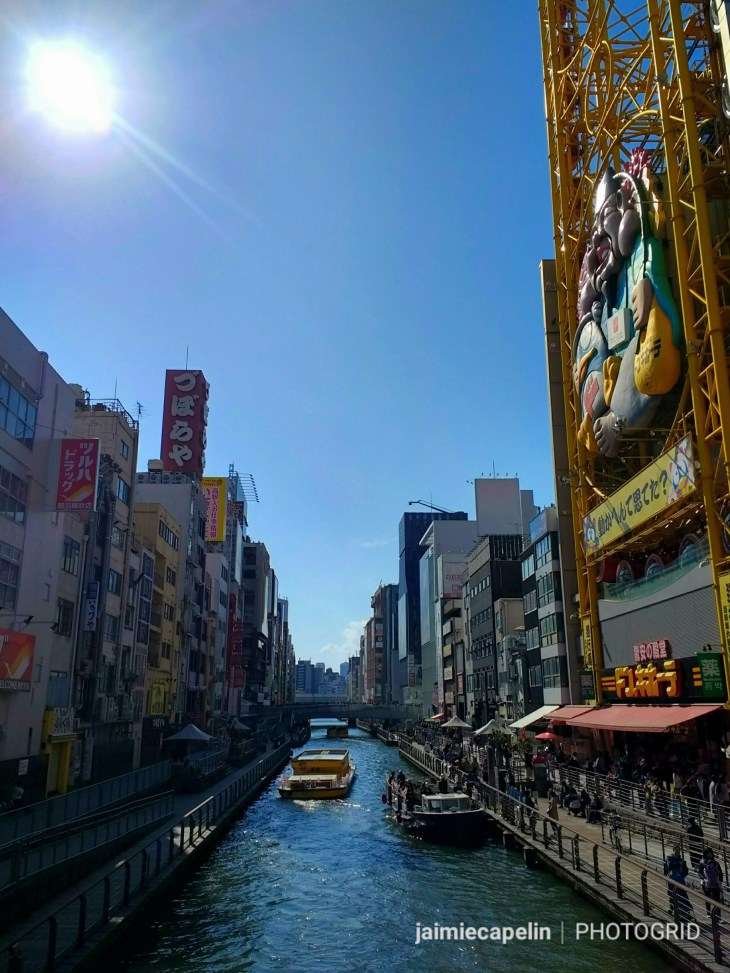
“Ichiran” is one of the most sought after ramen restaurants in Osaka. People will queue up for hours for a seat at the popular noodle bar. It was a good opportunity for a reunion with some old housemates from Hakuba, and the four of us were lucky enough to have a minimal wait time. We lined up along the river beneath the Don Quijote ferris wheel; the sun was warm and low, a canal of sunlight reflecting the length of the river as party boats floated by, through the forest of skyscrapers.
The doorman went along the line, handing out cards with a list of options on – level of richness, level of spice, texture of noodles, amount of garlic, and so on and so forth, on which we circled our preferences from 1 to 5. This is all written in English as well as Kanji, and ensures no time is wasted.
On entering “Ichiran” we made our meal selection on the vending machines, putting in our money in exchange for a ticket. We then joined another queue, waiting for seats to come free. A circuit board of flashing lights on the wall indicate to the doorperson which seats are available, occupied, and pending. We stared, slightly hypnotised by the hectic blinking lights, unable to make head nor tail of them! Eventually, 4 lights in a row went green, and we were quickly ushered into the noodle bar. We sat down in a line, facing a wall with a little bamboo blind in the centre, which suddenly opened. A pair of hands appeared through the hole, and took my ticket and preference card! For the British children of the 90s, it was remarkably like “The Handy Men” in ‘ZZZAP!’ The booths can be sectioned off on each side for an even more private experience, or opened up for groups. Shortly, a pair of hands appeared again, presenting a large bowl of aromatic ramen. Rich, creamy tonkotsu broth, filled with noodles and sliced pork, beautifully spiced.
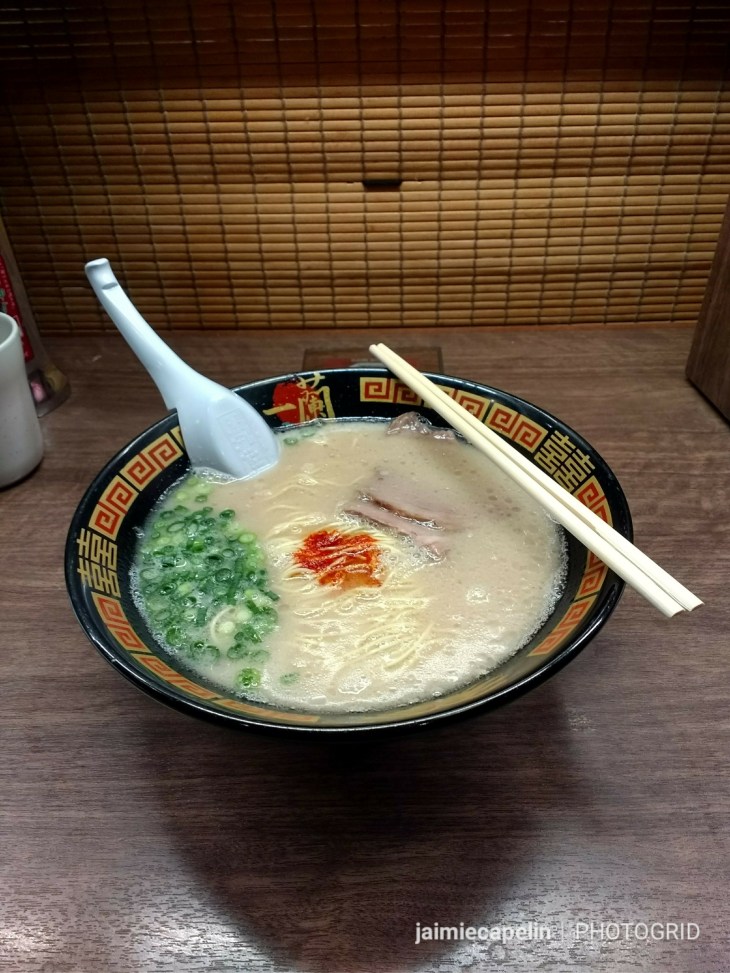
With “Ichiran”, you get the modern, Japanese city experience – the vending machine culture that we hear about from Tokyo, with very little human contact – essentially, the fast food chain of ramen. It is the best ramen in Osaka, in many peoples’ opinions, but I found another…
It had been raining for two days, and I’d wasted a length of time laying on the heated rug of the Air bnb, occasionally popping out for coffee, so I was overdue a taste of local culture. Around the corner from Awaji Station, was a rated ramen restaurant with a Japanese name, written in Romanjis – “en no suke syou len.” There was a small queue outside, which is always a good sign of a locally rated restaurant, and we were greeted with pleasure and seated quickly. We didn’t understand anything on the menu, so it was a classic Gaijin case of point at the picture and smile, but the cooks took it upon themselves to explain the different dishes in English. I ordered the classic tonkotsu pork ramen, and it was the richest, thickest, most satisfying flavour. There was plenty of soy sauce, garlic, and hot spice available to add to taste, and beautifully tender slices of pork – just writing about it is making my mouth water! At the end of the meal, the cook followed us out, asking if everything was alright, and we sung praises as they deeply bowed us out the door.
While I enjoyed the experience of “Ichiran”, and the ramen lived up to its delicious expectation, (I actually finished the entire bowl, which is unusual for me!) I personally enjoy it when you can watch the chefs preparing the food, and communicate with them, so they get the credit they deserve and you get a more personalized experience.
***
~ Sushi Nigiri ~
Osaka is a cornucopia of tastes and textures to try, from ancient cultural dishes to modern fusions of flavour. One of the classics, loved all over the globe, is Sushi. But what I was about to experience wasn’t quite like your western supermarket sushi.
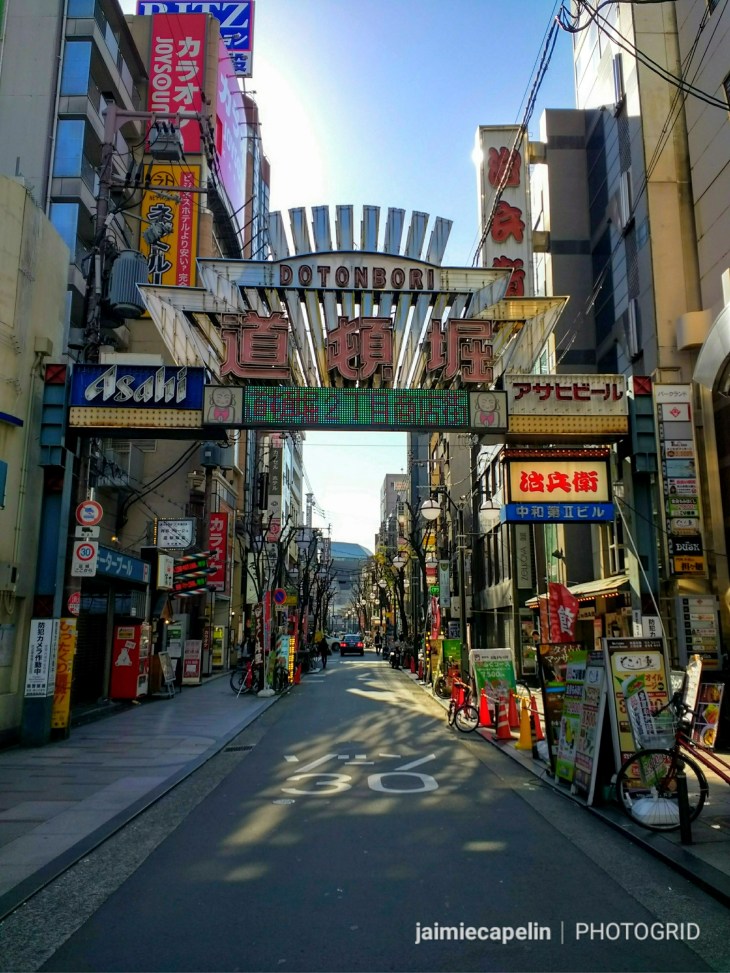
In the thriving backstreets of Nippombashi, full of locals who all seem to know each other, we discovered a tiny sushi bar, among many fish mongers with tanks full of live, or freshly caught fish. As we were seated, one of the other customers leaned over and said, “oishi-desu!” which means, “It’s delicious!” It’s always nice to feel welcome, and the locals know best!
I was recommended the salmon sashimi, tuna nigiri, and egg sushi. Now, sashimi refers to slices of fresh, raw fish or meat, where as nigiri is specifically raw fish on a bed of sushi rice. The chef took the order, and dashed across the road to a fish monger, where he picked the freshest fish. He brought it back, and performed an impressive ritual with his Usuba knife, slicing very quickly and precisely. He served up the dishes, along with a welcome pint of Suntory Premium Malt beer, and the friendly locals seated beside us (who were very interested in our verdict on the sushi) chanted, “itadakimasu!”
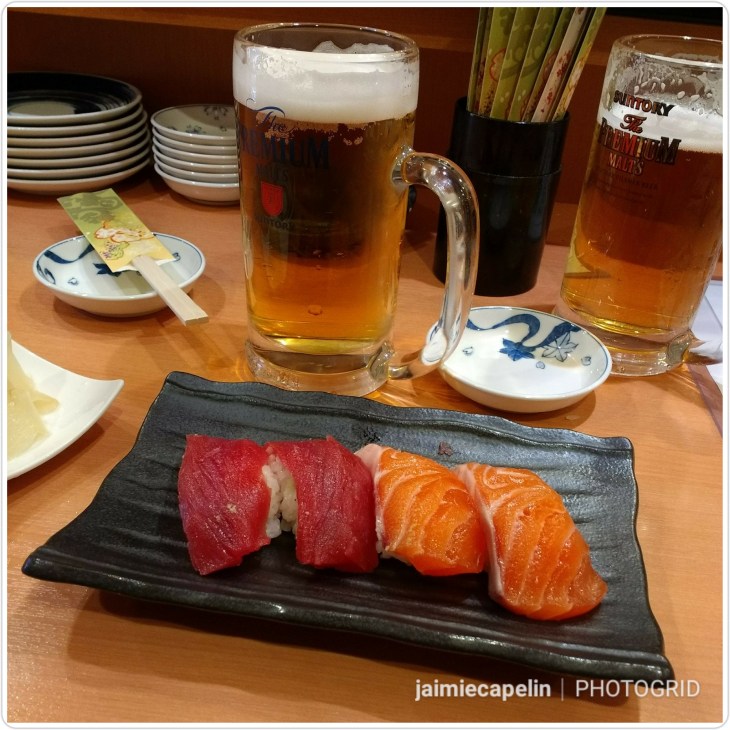
I was advised to pick up the sushi sideways with my chopsticks, and dip it in the soy sauce fish side down – that way the rice doesn’t fall apart – and popped the bitesize piece in my mouth. It was rich and so fresh, I could taste the ocean on my lips. The flavours were less “fishy” than I’d anticipated, and the soy sauce really complimented it, with little slices of pickled ginger to refresh the pallet between mouthfuls. I couldn’t eat very much, as I found it quite stodgy, but with a swig or three of Japanese beer, it was the perfect, authentic experience.
If you’re a first timer, like I was, I’d recommend salmon nigiri, but there are plenty of options for those who want to be more adventurous.
***
~ Takoyaki ~
Take a stroll from any of the central metro stations in Osaka, and you will find hubs bustling with street food vendors. Takoyaki is a popular Japanese snack, commonly consumed at the end of a night out, much like the British kebab – except Takoyaki is much less ‘dirty!’
Tako means octopus, and Yaki means grilled, and apart from some wheat flour batter, tenkasu (which is leftover tempura), and a pinch of green onion and pickled ginger, there’s not much else to it!
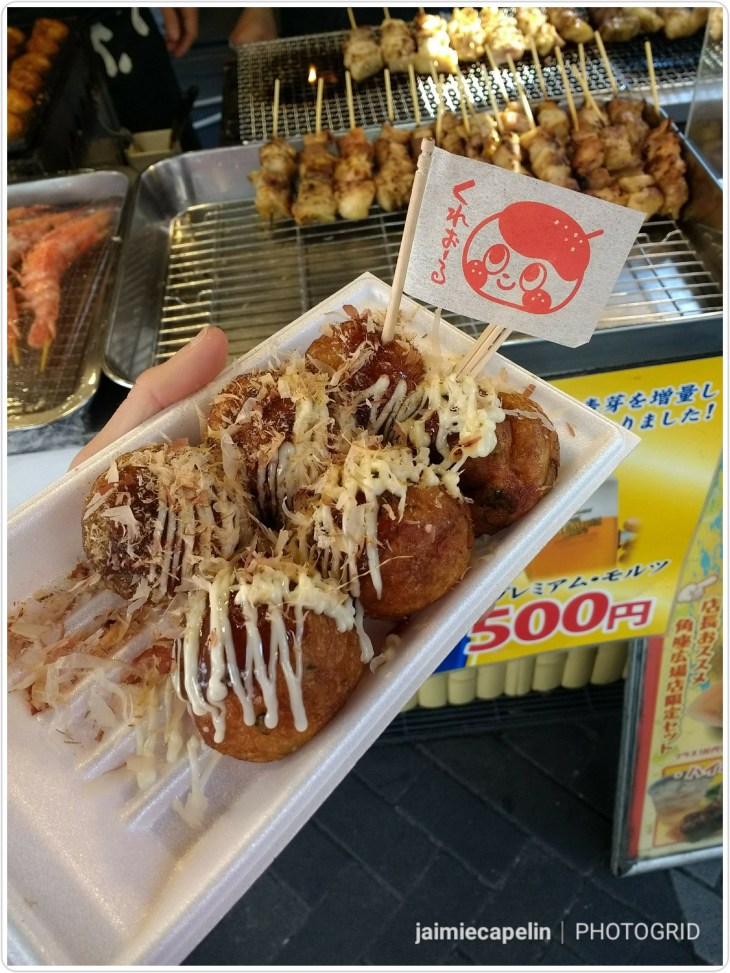
The Takoyaki is served up fresh and hot, after the cook has impressively rolled the batter into perfect ball shapes, in the blink of an eye, using pointy sticks! They are usually brushed with a zingy brown sauce, similar to worcestershire sauce, drizzled with kewpie mayonnaise, and then sprinkled with shavings of dried fish. They’re usually served with cocktail sticks to eat them with.
It wasn’t quite what I expected – I think I was imagining something along the lines of breaded scampi, but this was something else… Put one in your mouth and it pops as you bite it, the middle oozes out, releasing hot, juicy flavour, heavy on the octopus, and with a little ‘bite’ in the texture. These were a hit with my seafood loving friends, with their crispy, grilled shells, filled with fishy richness, but if you’re trying for the first time, I wouldn’t recommend doing it with a hangover!
***
~ Kuromon Market ~
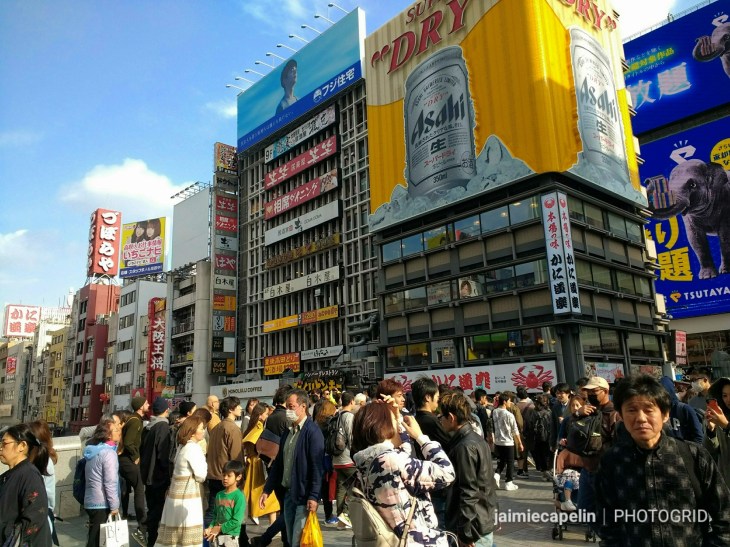
Kuromon Market is famous for its seafood. It is a huge, covered market place, with enormous faux sea creatures hanging from the tapered, glass ceiling, giving the illusion you are strolling along the seabed, with the creatures swimming above you. The market originates from the Edo Period (1600s to mid 1800s), and apart from the addition of modern refrigeration and food hygiene, the market’s operation is still very authentic, bringing with it a fantastic atmosphere for absorbing some culture.
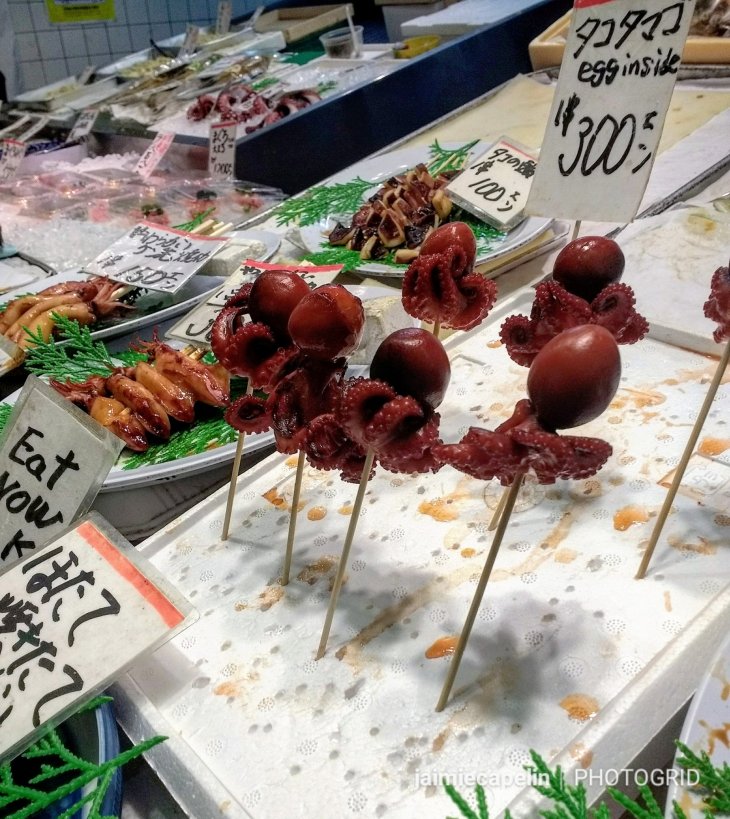
You walk through the crowded market strip, people casually eating a baby octopus off a stick while browsing, or choosing a deep fried cuttlefish to snack on while they select what to take home with them. Vendors with their fresh catch of the day available for wholesale will also have their knife skills handy, to quickly slice up a raw fish of your choice and hand it over on a bed of sushi rice, ready to be popped directly in your mouth in exchange for a few yen. Kuromon has designed a flexible shopping experience, with the option of purchasing whole ingredients for home cooking later, and freshly served up snacks for immediate consumption. You’ll often find small areas where you can stand and eat, as you don’t want to get caught up blocking the tide of people.
There are also fresh meat sections, sweet shops, and fruit & veg stands, serving up fresh smoothies and juices on demand. We found a little kiosk with a display of coffee beans from all over the world. They had a bean roaster going, which you could see inside of, and the aromas produced were enough to hypnotise your hands into your wallet, and so I finished my trip to Kuromon Market with hot, delicious coffee.
***
~Coffee~
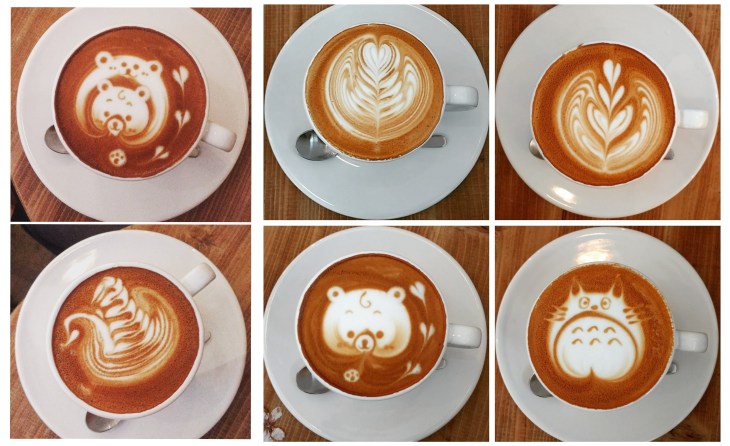
While we’re on the subject of coffee, let me end this piece by taking you back to the rainy rug-hugging days in the Air bnb. I’d been using the weather as an excuse to catch up on writing, and the local coffee shop was a wonderful place to break it up and help inspire me. It is called “Loca Coffee”, located in the East Awaji shopping district of Osaka, and the barista who served me every day was a young man, who could not only make a really flavoursome coffee, but had exceptional latte art skills. It’s not really surprising that Artisan coffee shops and latte art is kicking off in the cities of Japan, because it’s in their nature to make everything look “kawaii” (cute) and taste “sugoi” (awesome). Pair an aromatic coffee with Japanese sweets and desserts, and you’ve got a mouth watering combination, and that’s exactly what “Loca Coffee” does. I loved going back each day to see what pattern or character I’d get on top of my coffee!
 Jaimie's Travels